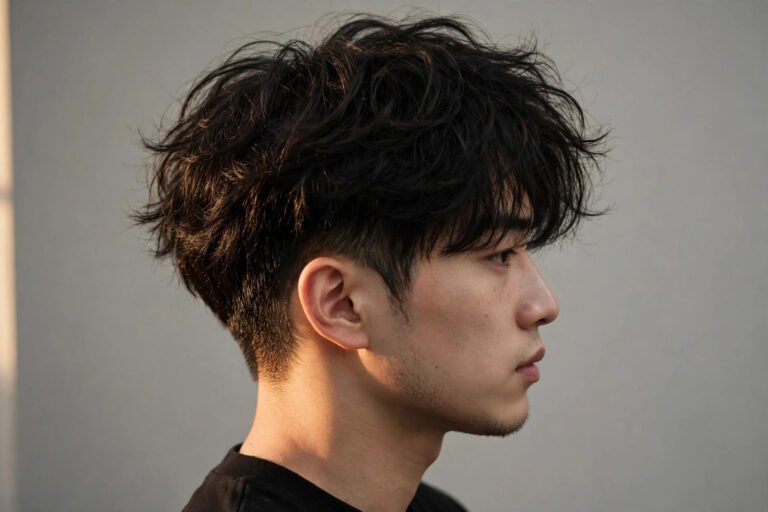
Modern Mullet Men 2026: 36 Soft, Sharp & Groomed Styles
The modern mullet men are asking for in 2026 looks nothing like the mullet your uncle wore in 1987. Gone are the harsh disconnects, the greasy back, and the irony. What has taken their place is a genuinely sophisticated haircut — softer, smarter, and groomed to the millimeter — that keeps the classic short-front-long-back DNA while rebuilding everything around it with texture, blended layers, and fade work borrowed from the best of modern barbering. It is the haircut that lets you look sharp in a boardroom and rebellious on a Friday night without changing a thing.
If you have been watching men’s hair trends this year, you have seen the mullet coming. It has been climbing for three straight years, and 2026 is the year it fully goes mainstream. In this guide, I break down what the modern mullet actually is, why every major trend report names it one of the standout cuts of 2026, how to style it at home in under five minutes, and — the main event — thirty-six distinct modern mullet styles for men, each photographed and broken down with cut details, face-shape advice, and styling products. Find two or three versions that match your hair type, screenshot them, and bring them to your barber.
What Is the Modern Mullet for Men?
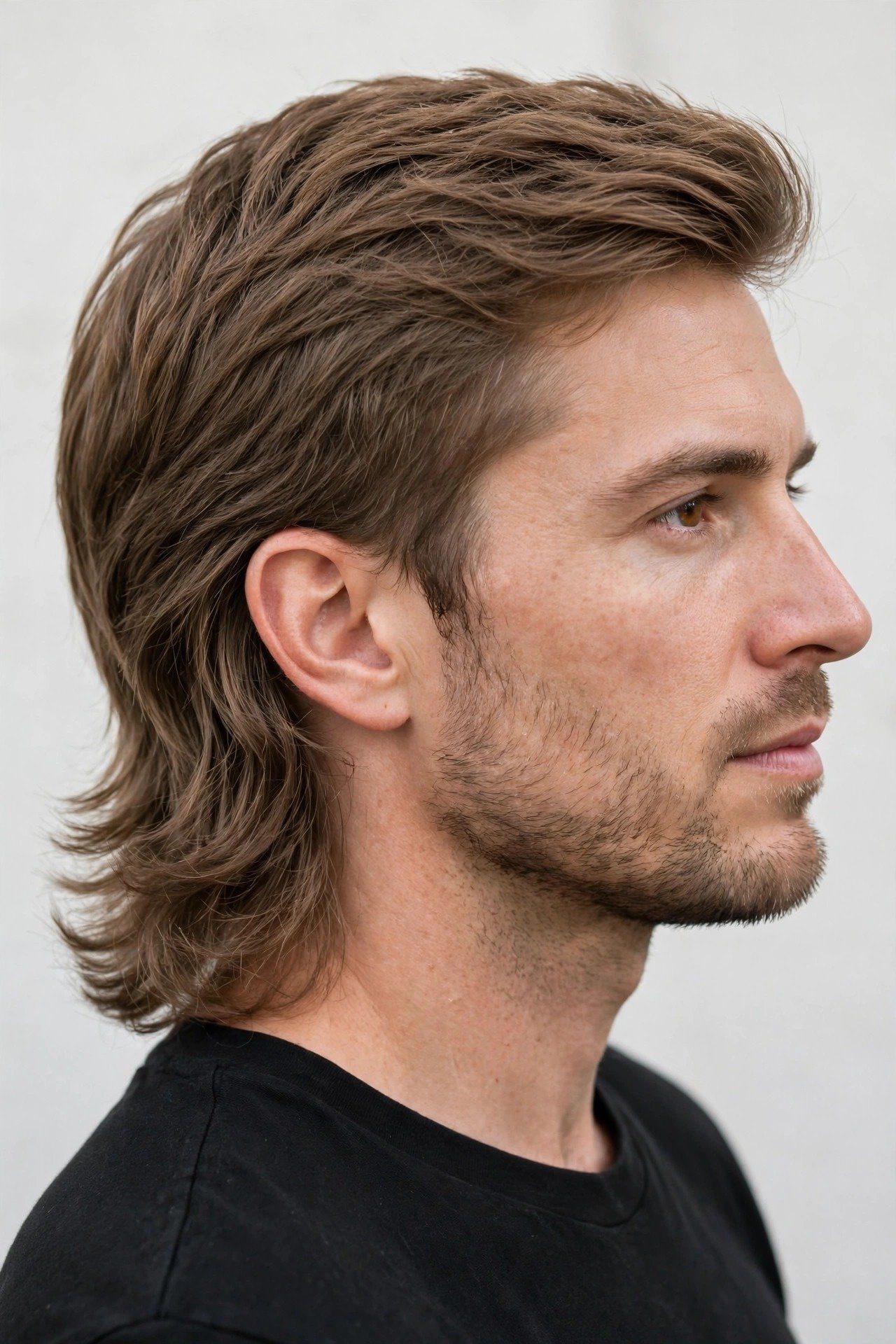
The modern mullet is defined by its silhouette: shorter hair through the front, crown, and sides, with length that flows into a longer, shaped back section. That is the entire architecture — the same “business in the front, party in the back” geometry the classic made famous, but rebuilt for 2026 with one decisive difference: the transitions are seamless. Where the 1980s original disconnected the top from the back with a hard, visible line, the modern version uses layered blending, point cutting, and taper or fade work so the short front melts into the long back with natural flow and movement.
Length is the first variable your barber tunes. The top typically sits between two and five inches — long enough to show texture and direction, short enough to keep its shape. The sides are where the 2026 identity really shows: instead of the long, curtain-like sides of the original, most modern versions use a taper, low fade, or skin fade through the sides, sometimes even a burst fade around the ear. The back keeps the signature length — anywhere from the nape to the shoulders — but it is shaped with layers so it sits with intention rather than hanging like an afterthought. The result reads as deliberate, not accidental.
It helps to understand how the modern mullet differs from its closest cousins, because barbers hear these confused constantly. The wolf cut is the shaggier sibling: heavy, choppy layers all over, usually with bangs, worn messier and more uniform in length front to back. The modern mullet keeps the front-to-back length difference that defines it — the back is meaningfully longer than the front. The shag is all-over layers with no strong length statement anywhere. If you like the wolf cut’s texture but want a clearer silhouette and a more groomed finish, the modern mullet is your cut. Accio’s 2026 trend forecast names the Modern ‘Soft’ Mullet as one of the ten defining cuts of the year, precisely because of this refined balance.
The cut works across textures because its mechanics are about blending, not hair type. Straight hair gives you the cleanest, most architectural version — the fade-to-length transition looks crisp and the back lies smooth. Wavy hair is arguably the natural home of the soft mullet, since waves create the flow the cut wants with almost no styling effort. Curly and coily hair gives you a sculptural, voluminous version that looks incredible with a tapered silhouette through the sides. Fine hair benefits because the shorter front and sides create density where it counts, while the back provides the illusion of length. Thick hair is simply tamed by the layering — the weight is removed internally so the shape holds.
Length preferences also split the modern mullet into personalities. The soft or “baby” mullet keeps the back modest — just a couple of inches below the collar — and reads almost like a textured crop with ambition; it is the version for men testing the waters. The mid-length mullet sits at the classic sweet spot, nape-length and clearly a mullet without being dramatic. The long mullet commits fully, shoulder-grazing and unmistakable, for men who want the style to be a statement. Every version below belongs to one of these families, and knowing which family you want before your appointment is the single most useful thing you can tell your barber.
Why the Mullet Is Trending Again in 2026
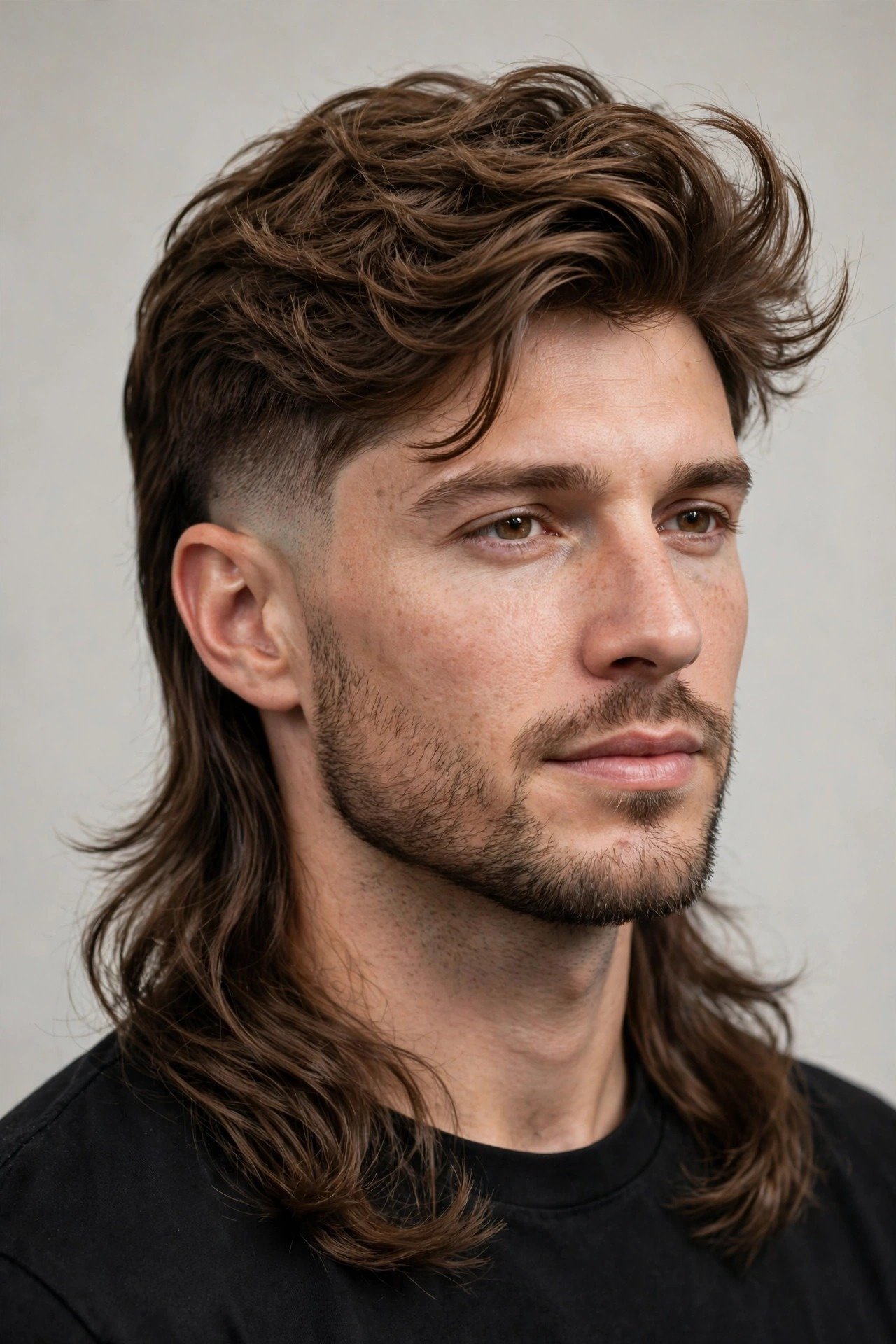
The mullet’s comeback is not a rumor — it is documented across every major 2026 men’s grooming report. Perfect Corp’s 2026 men’s hair trends roundup calls the Modern Mullet with a skin fade the standout trend for younger men, noting that the 2026 version pairs a clean high fade with intentional, textured length in the back for what they describe as a rebellious yet groomed look. When one of the industry’s most-watched trend sources singles out your haircut as the defining style for an entire demographic, the trend is no longer emerging — it has arrived.
The deeper story is the soft revolution. Accio’s “10 Men’s Haircut Trends Set to Dominate 2026” places the Modern ‘Soft’ Mullet at number two and describes it with deliberate language: seamlessly blended layers that connect the shorter front and sides to the longer back, often paired with a subtle taper fade instead of a blunt disconnect. Their stylist-focused guides add that the “soft tech” mullet replaces stark contrasts with organic transitions — texture over drama. The message across every source is the same: 2026’s mullet wins by being softer, not louder. It is the mullet for men who want edge without costume.
The cycle timing makes sense if you look at what dominated the last five years. The mid-2020s were the era of the tight, sculpted crop — everything short, crisp, and controlled. Trends always swing against the previous era, and the mullet is the perfect rebellion: longer, looser, more expressive, yet still barber-sharp when it needs to be. Salon Magazine Canada’s autumn/winter 2026 men’s trend coverage notes the soft mullet remains a key style heading into the colder months, which is telling — winter trends favor cuts with more length and texture, and the mullet is the natural flagship. Even adjacent roundups like Hashtag Legend’s seven best men’s hairstyles of 2026 keep the layered wolf cut in the conversation, and the wolf cut is the mullet’s closest relative — the same texture-first energy with a different silhouette.
Celebrity adoption has done the rest. High-profile actors have been photographed on red carpets wearing soft, blended mullets — groomed, camera-ready, and unmistakable — and each appearance moves the cut further from irony into legitimacy. Social platforms have amplified it: Pinterest boards of soft mullets and taper-fade mullets have become appointment fuel, and TikTok’s barber community has turned the transformation — tight sides, revealed flow — into one of the platform’s most satisfying before-and-after formats. A cut that photographs this well and transforms this dramatically is built for the social era.
Finally, there is the practicality argument, which in 2026 is the real argument. The year’s dominant grooming direction is matte over shiny, movement over rigidity, low-effort wear over product-heavy sculpting — and the soft mullet is the perfect vessel. It looks good for weeks, not days: the layered back grows out gracefully, the faded sides are refreshed in ten minutes, and the daily routine is a fingertip of matte clay worked through dry hair. It is one of the few genuinely expressive men’s cuts that still qualifies as wash-and-go. That combination — distinctive but low-maintenance — is why the trend has depth, not just hype.
How to Style the Modern Mullet at Home
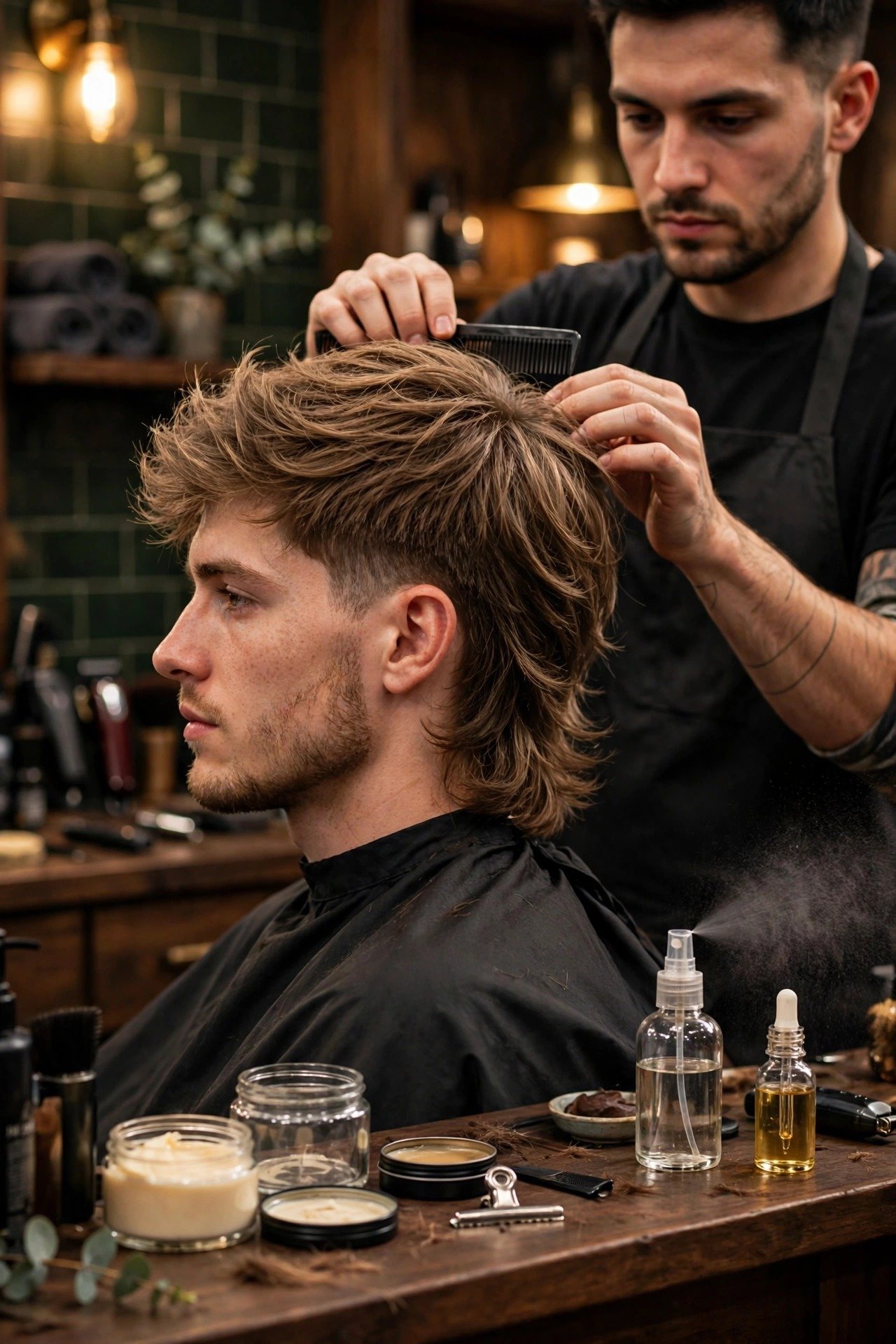
Here is the entire daily routine for a modern mullet: towel-dry your hair until it is damp, not dripping. Warm a pea-sized amount of matte clay or texture paste between your palms. Work it through the top and crown with your fingers, pushing the hair forward and slightly outward to show the texture. Run what is left on your hands through the back length, separating pieces so the layers do not clump into a solid sheet. Walk out the door. That is genuinely it — three to five minutes, no comb, no heat tools. The cut does the architectural work; the product just adds definition.
Product choice matters more than technique. Matte clay is the default for 2026 — it gives hold and texture without shine, which matches the year’s grooming direction exactly. If your hair is fine, a sea salt spray misted on damp hair before the clay adds grip and the illusion of density, especially through the back length. If your hair is thick or coarse, a light cream or leave-in conditioner keeps the back from puffing up while looking natural. What to avoid: high-shine gels and heavy waxes, which drag the mullet backward into greasy retro territory and kill the modern finish. Less product is always better than more — you can add a second pea-sized touch, but you cannot subtract an overloaded back without rewashing.
Drying is optional and directional. Air-drying works perfectly for wavy and curly mullets and gives the most natural, flowing result — scrunch the back gently with a towel and let the texture do its thing. If you want extra control on straight hair, hit the back with a blow dryer on medium heat for a minute, pointing the airflow downward along the hair’s direction so it lies smooth and shaped. Some men like to finish with a light mist of texture spray through the back for separation, but that is a bonus step, not a requirement. The modern mullet is one of the few expressive men’s cuts that genuinely qualifies as low-effort daily wear.
At the barbershop, the consultation is where the cut is won or lost, so walk in with specifics. Say “modern mullet” first, then describe the three dials: top, sides, back. For the top, specify length — “about three inches, textured” — and whether you want it forward, swept, or messy. For the sides, name the finish: low taper for subtle, mid fade for balance, skin fade for contrast, or burst fade for the curved modern look. For the back, specify the length — “just below the collar,” “nape length,” “shoulder length” — and whether you want it layered for movement or blunter for weight. Mention your hair’s behavior — “it sticks up at the crown,” “the back flips out when it grows” — because a good barber adjusts the internal layering to compensate. Bring a reference photo from the thirty-six ideas below; “like number seven but with a lower fade” is worth a thousand words of description.
Face-shape tuning is straightforward. Round faces gain definition when the sides are faded tighter and the top carries a little height, adding angles where the face is soft. Long or oblong faces are balanced by keeping the top flatter and letting the back length sit a touch shorter, so nothing adds vertical emphasis. Square faces — the mullet’s natural best friend — can wear almost any version, since the strong jawline echoes the cut’s confident geometry. Heart-shaped faces do well with a fuller top and softer sides that balance a narrower chin. Oval faces, as usual, can wear everything. The universal rule: the back should never be so long that it overwhelms the front, or so short that the mullet silhouette disappears — proportion is what separates the modern version from a mullet in name only.
36 Modern Mullet Ideas for Men in 2026
Below are thirty-six modern mullet variations, each photographed and broken down so you know exactly what to ask for. I have ordered them from the most timeless to the most adventurous, so you can stop scrolling when you hit your comfort level — or keep going if you are feeling bold.
1. The Classic Soft Mullet
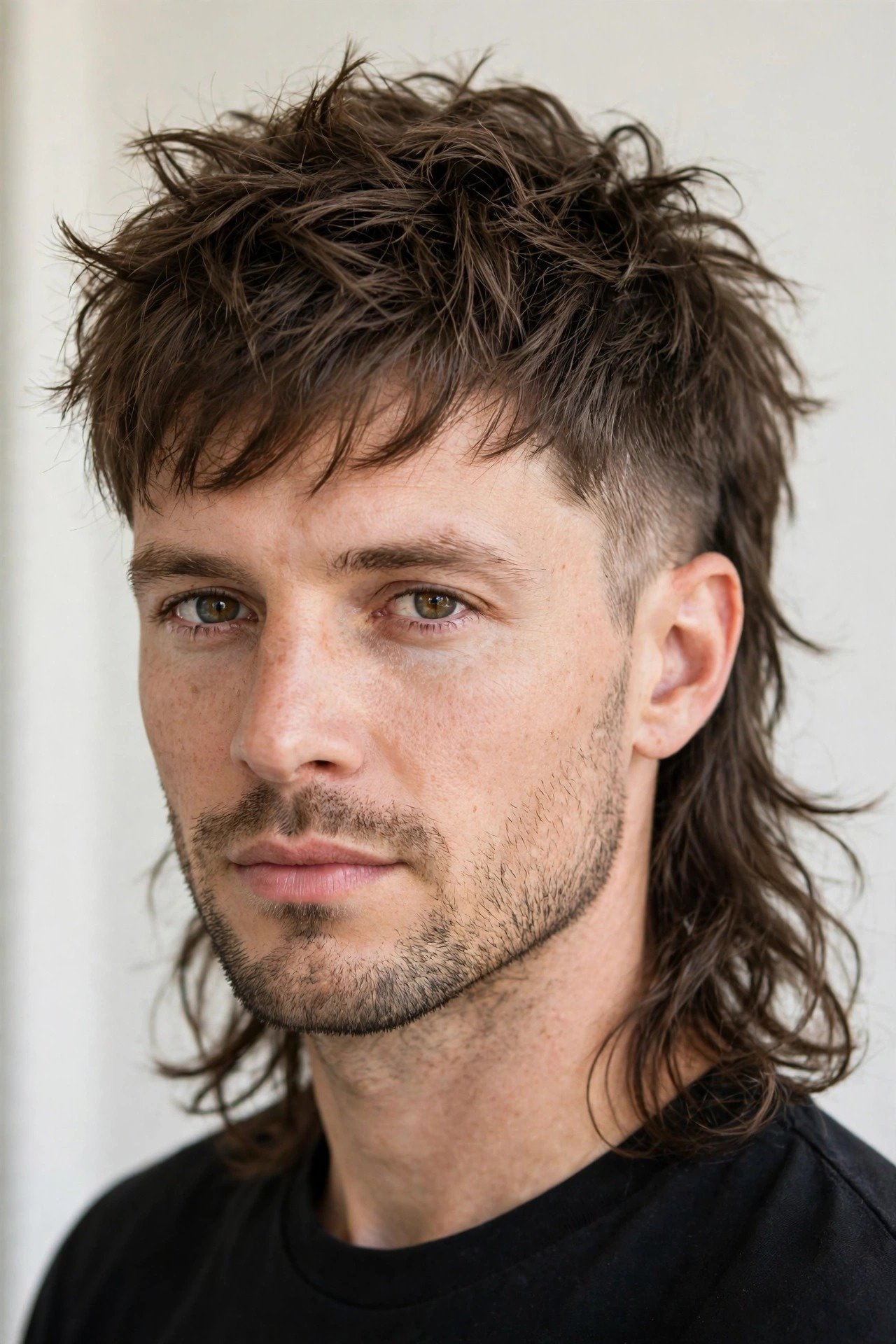
The one that started the revival. The classic soft mullet keeps the top at two to four inches with natural texture, the sides softly tapered rather than faded, and the back at collar-to-nape length with gentle layers that create flow without drama. What separates the 2026 version from the eighties original is the blending: there is no visible disconnect anywhere, just a smooth gradation from short front to long back. This is the version for men who want the mullet’s unmistakable silhouette without any fashion risk — recognizable, but never costumed.
It suits every face shape and nearly every hair type, which is why barbers recommend it as the entry point. Straight hair wears it cleanest, wavy hair wears it most effortlessly, and even fine hair works because the shorter top keeps density where it matters. Maintenance is a trim every four to five weeks to keep the back’s shape; the sides can be tidied less often since there is no sharp fade to lose its edge. Ask your barber for a soft mullet with tapered sides and blended layers, and specify your back length — “just below the collar” is the sweet spot. Style with a pea-sized amount of matte paste through dry hair, pushing the top forward and separating the back pieces with your fingers. If you have never worn a mullet, start here.
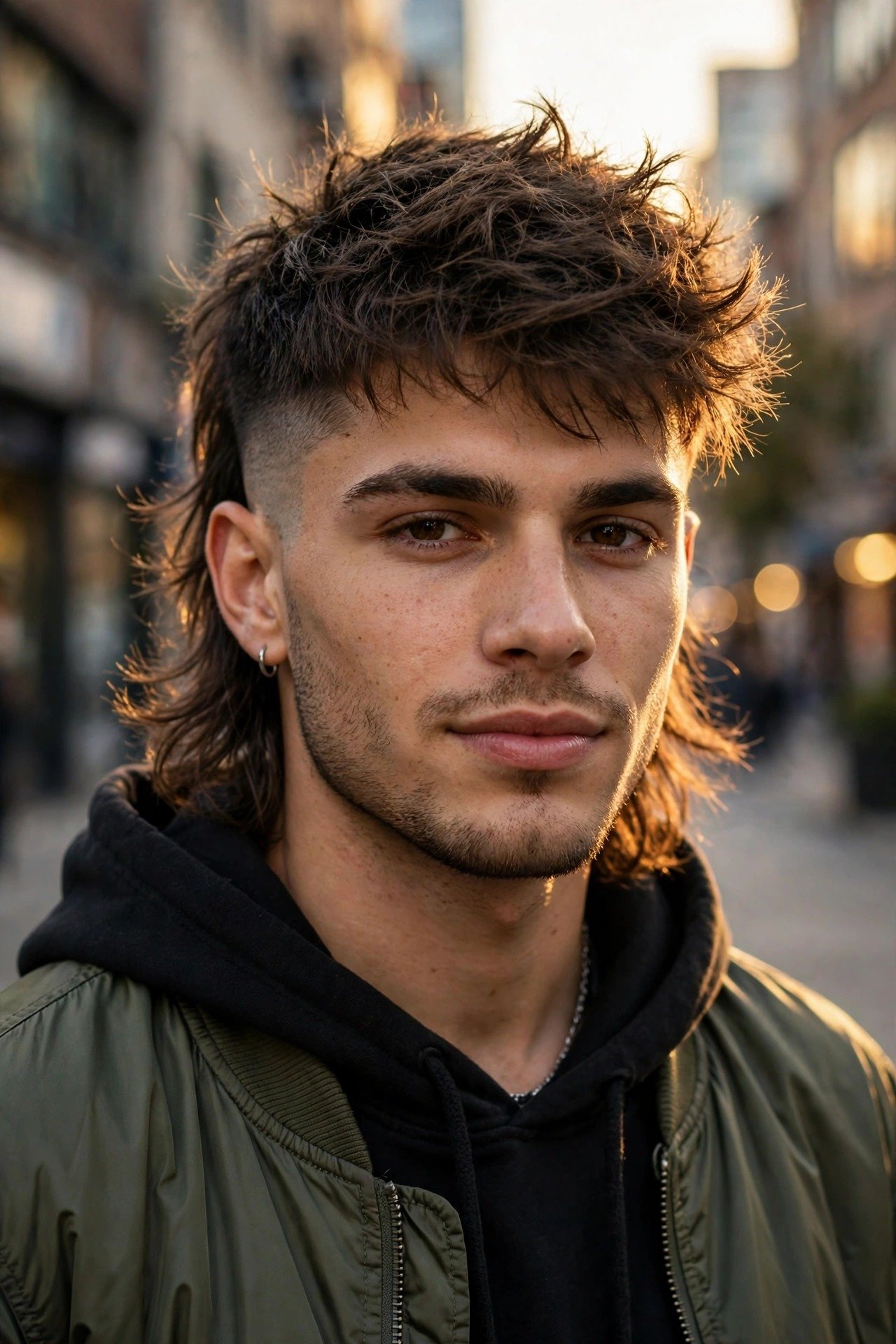
2. The Skin Fade Mullet
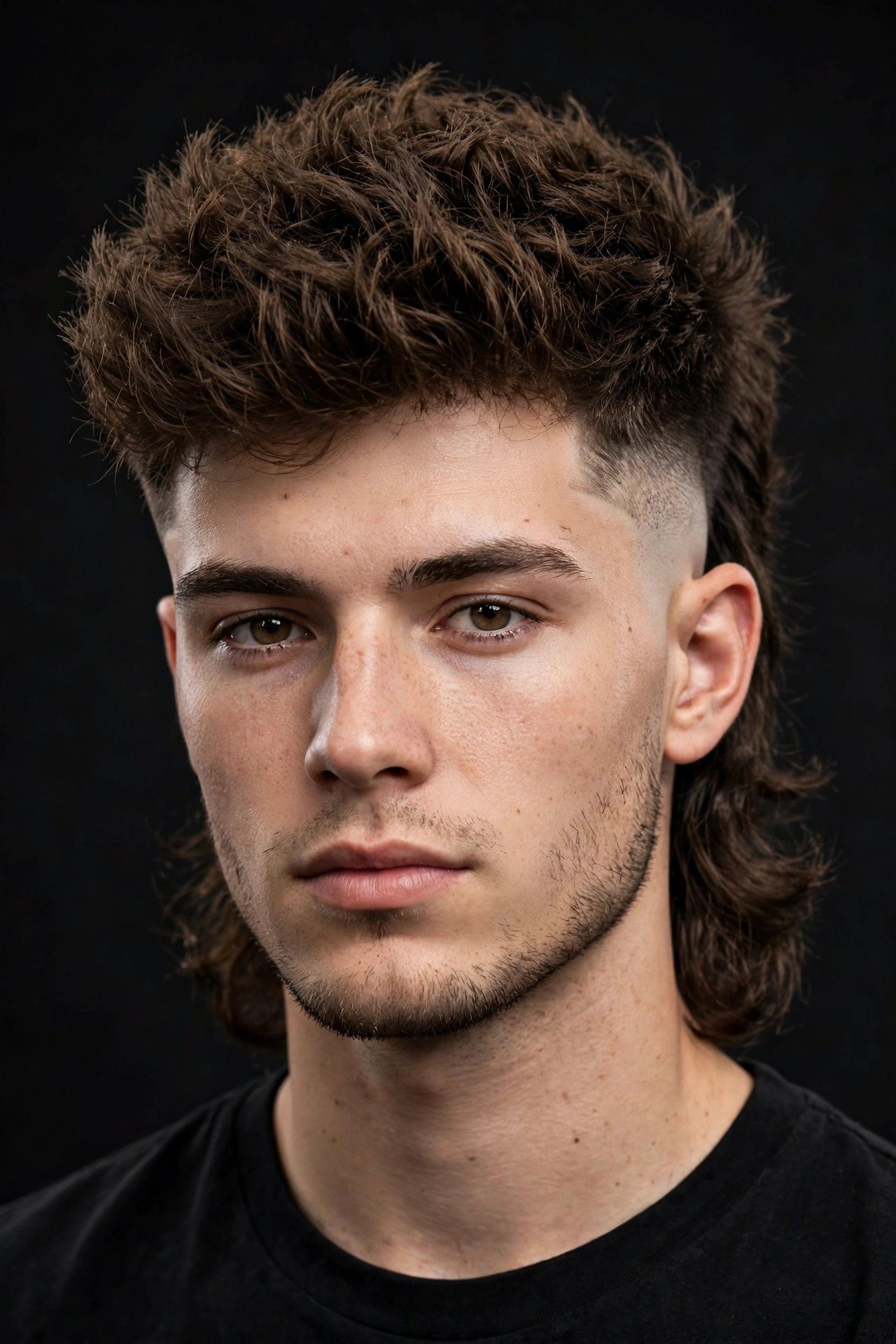
The boldest mainstream version, and the one Perfect Corp singled out as the standout trend for younger men in 2026. The skin fade mullet takes the sides down to bare skin — usually a mid or high fade — creating maximum contrast with the textured top and the longer, groomed back. The effect is dramatic and deliberate: the fade says precision, the back says rebellion, and together they make the haircut’s strongest statement. This is the version you see on runways and red carpets because it photographs beautifully — the sharp fade frames the face while the back provides the movement.
It flatters square and oval faces best, since the high contrast adds structure, and it suits straight to wavy hair where the top’s texture can stand up against the tight sides. Men drawn to high-contrast fade work should also see our guide to modern Caesar cut styles, which explores the same fade-forward 2026 language on a shorter silhouette. The trade-off is maintenance: a skin fade needs refreshing every two to three weeks to keep its crispness, so budget for more frequent barber visits. Ask your barber for a mid skin fade blended into a three-to-four-inch textured top, with the back layered to your chosen length. At home, style the top with matte clay for definition and keep the back light — a sea salt spray through the back gives movement without weight. This is the mullet at its most confident; wear it like you mean it.
3. The Textured Top Mullet
If the classic soft mullet is the suit, the textured top mullet is the same suit worn with the top button undone. The defining feature is aggressive texture through the crown — point cutting, slicing, and razor work that breaks the top into separated, piece-y chunks — while the sides stay tapered and the back flows with layered movement. The texture does all the styling work for you: even air-dried, the top has dimension and the back has life. It is the most popular mullet variant in barbershops right now because it looks effortless while being technically precise.
It suits thick and wavy hair best, where the texture has real material to work with, and it flatters oval, square, and heart-shaped faces. Fine hair can wear it too if the texture is cut internally rather than relying on length. Ask for heavy texture on top — “point-cut it, break it up” — with tapered sides and a layered back. Style with matte clay or paste: warm it between your palms, work it through the dry top, and pinch individual pieces for separation. The back just needs a light touch of product to keep the layers distinct. For men who want the mullet to look current rather than classic, this is the version to get.
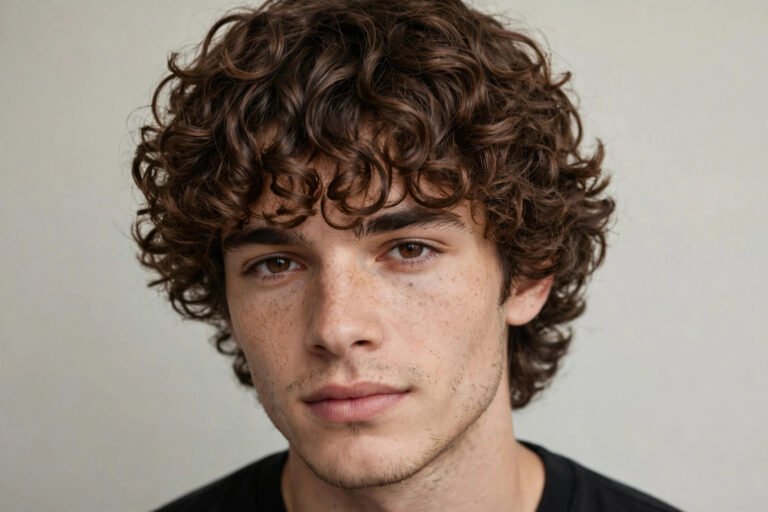
4. The Curly Soft Mullet
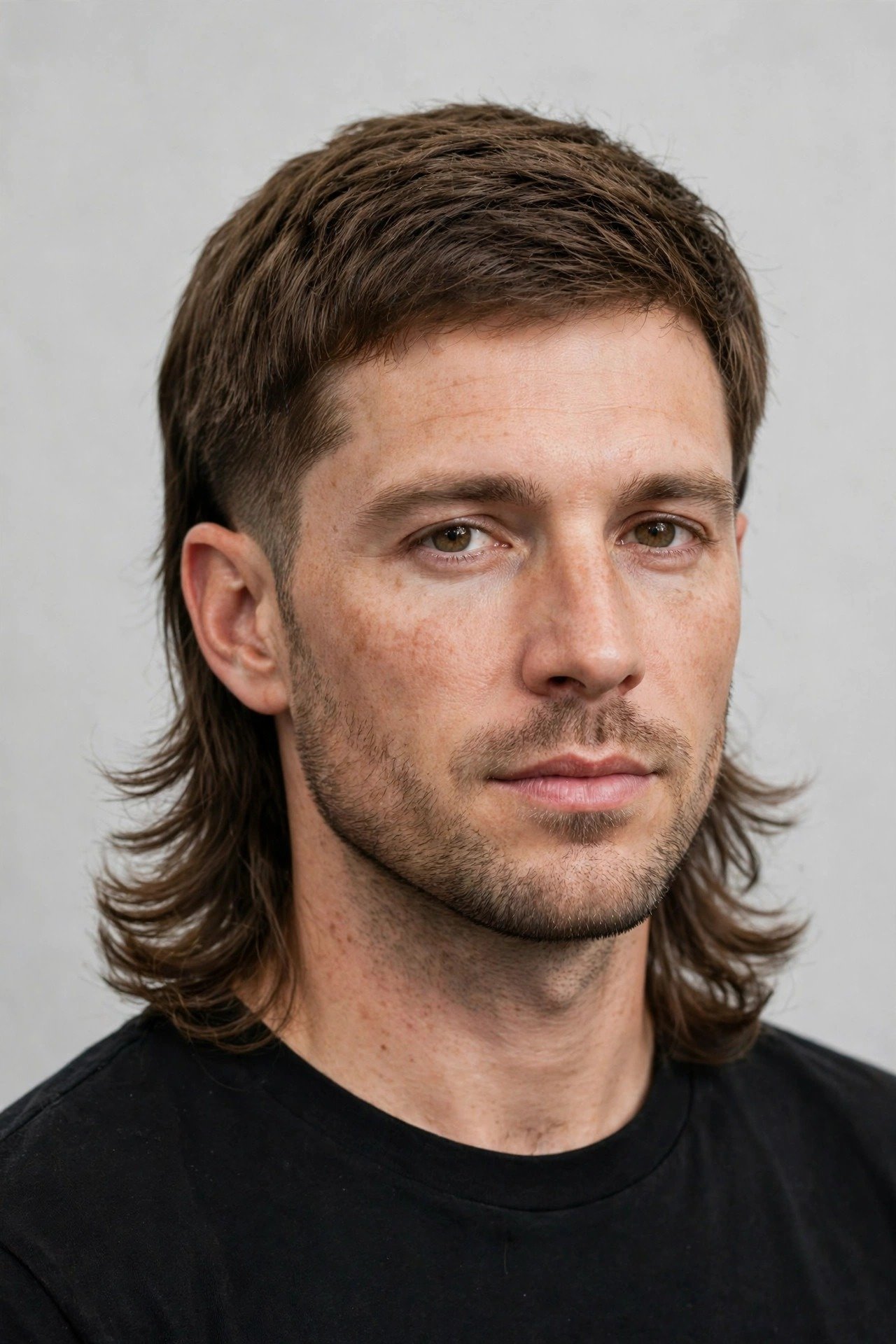
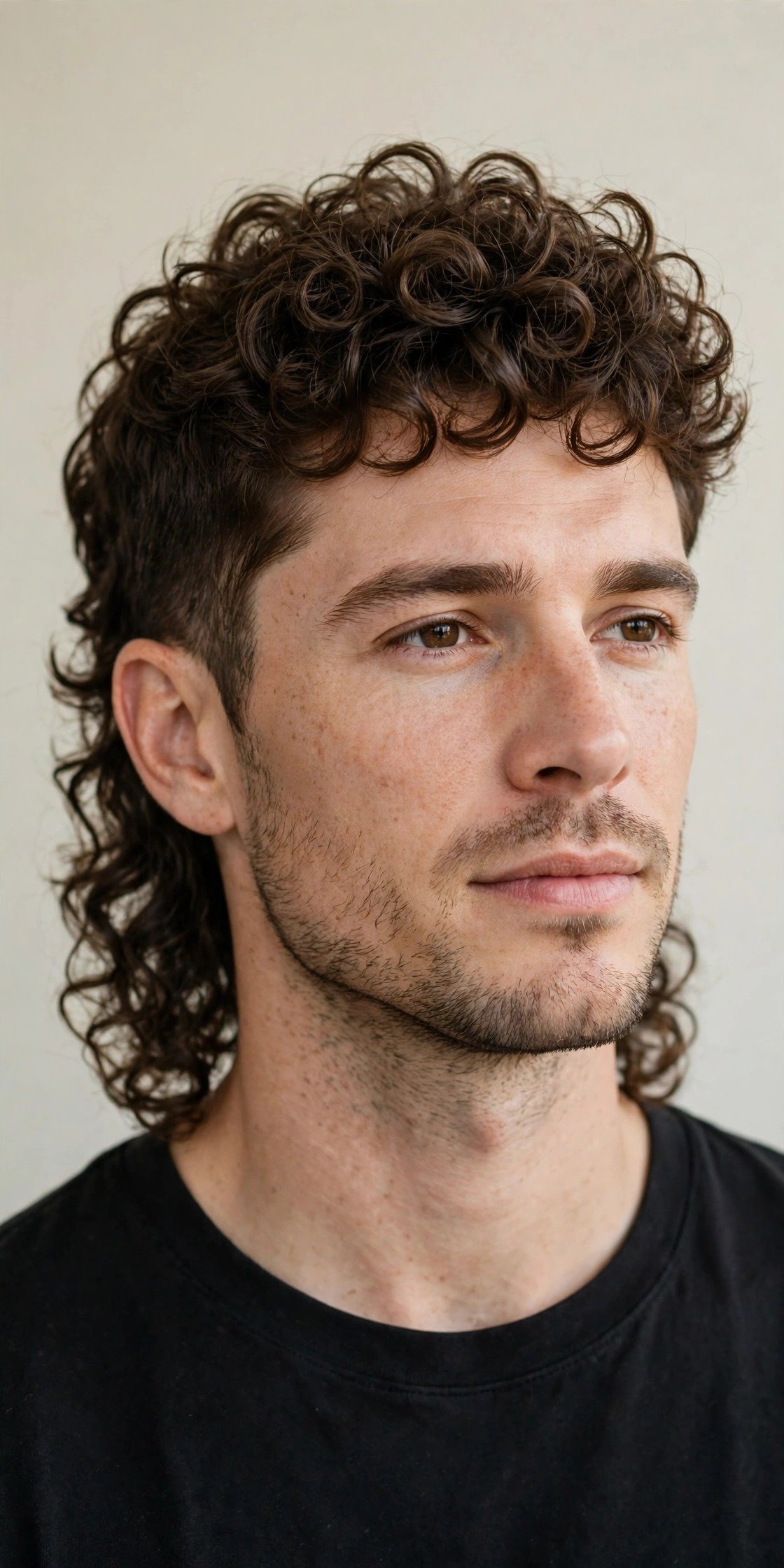
Curly hair and the modern mullet were made for each other. The curly soft mullet lets your natural curl pattern define the shape — defined, springy curls through the top, sides shaped close or tapered to frame the face, and the back left longer so the curls cascade with weight and movement. The layers are cut to work with the curl, not against it, so the shape holds without daily manipulation. It is one of the most distinctive versions on this list, and one of the lowest-effort once the cut is right.
It suits medium to tight curl patterns best, and flatters round and square faces because the vertical length of the back elongates the silhouette. The key at the barbershop is finding someone who cuts curly hair dry or in its natural state — the curl shrinkage changes everything, and a barber who only cuts wet will take off too much. Ask for shaped, tapered sides with the top and back left long enough to show full curl, layered internally to remove bulk. Style with curl cream or a light leave-in on damp hair, scrunch the back gently, and air-dry or diffuse. Maintenance is a shape-up every six to eight weeks. Your curls are the feature here — the cut just gives them a stage.
5. The Wavy Soft Mullet
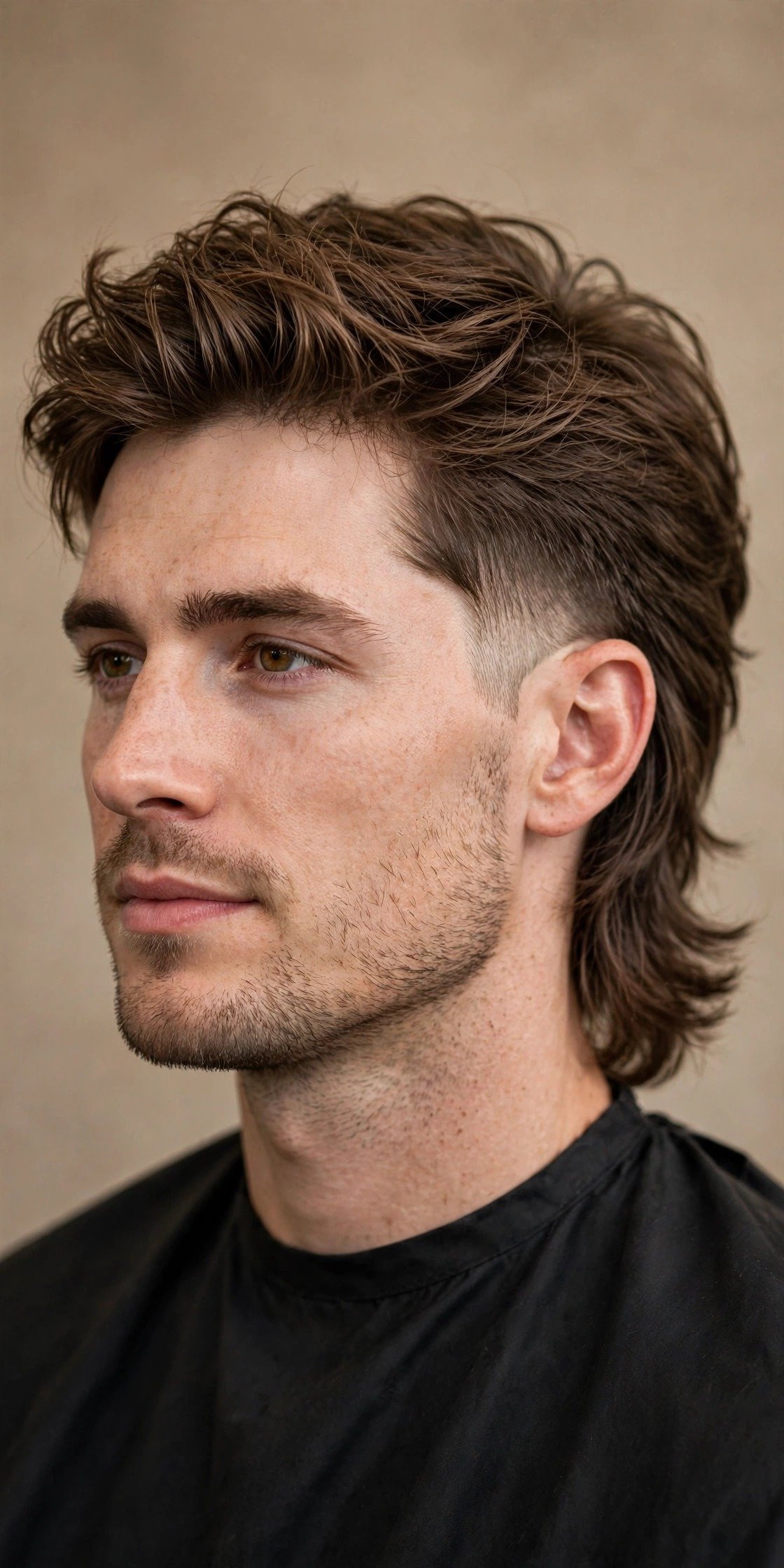
The wavy soft mullet is the version the haircut gods intended. Natural waves do everything the style asks for — flow, movement, texture — with almost no styling input. The cut is simple: a two-to-four-inch top left long enough to show the wave, sides softly blended so the waves continue around the ear, and a back with long layers that let the waves fall in ribbons rather than bulk. It is the mullet at its most effortless, and arguably the version that defines 2026’s “soft” identity better than any other.
It suits naturally wavy hair of any density, and flatters oval, oblong, and heart-shaped faces — the wave’s width balances narrower chins beautifully. At the barbershop, ask for long layers throughout and minimal thinning, since removing too much weight makes waves frizz instead of flow. Style on damp hair with a light curl cream or sea salt spray, scrunch gently, and air-dry; the worse your styling technique, the better it tends to look. Maintenance is a reshape every six weeks. If your hair has any natural wave at all, this is the mullet version to try first.
6. The Sleek Straight Mullet
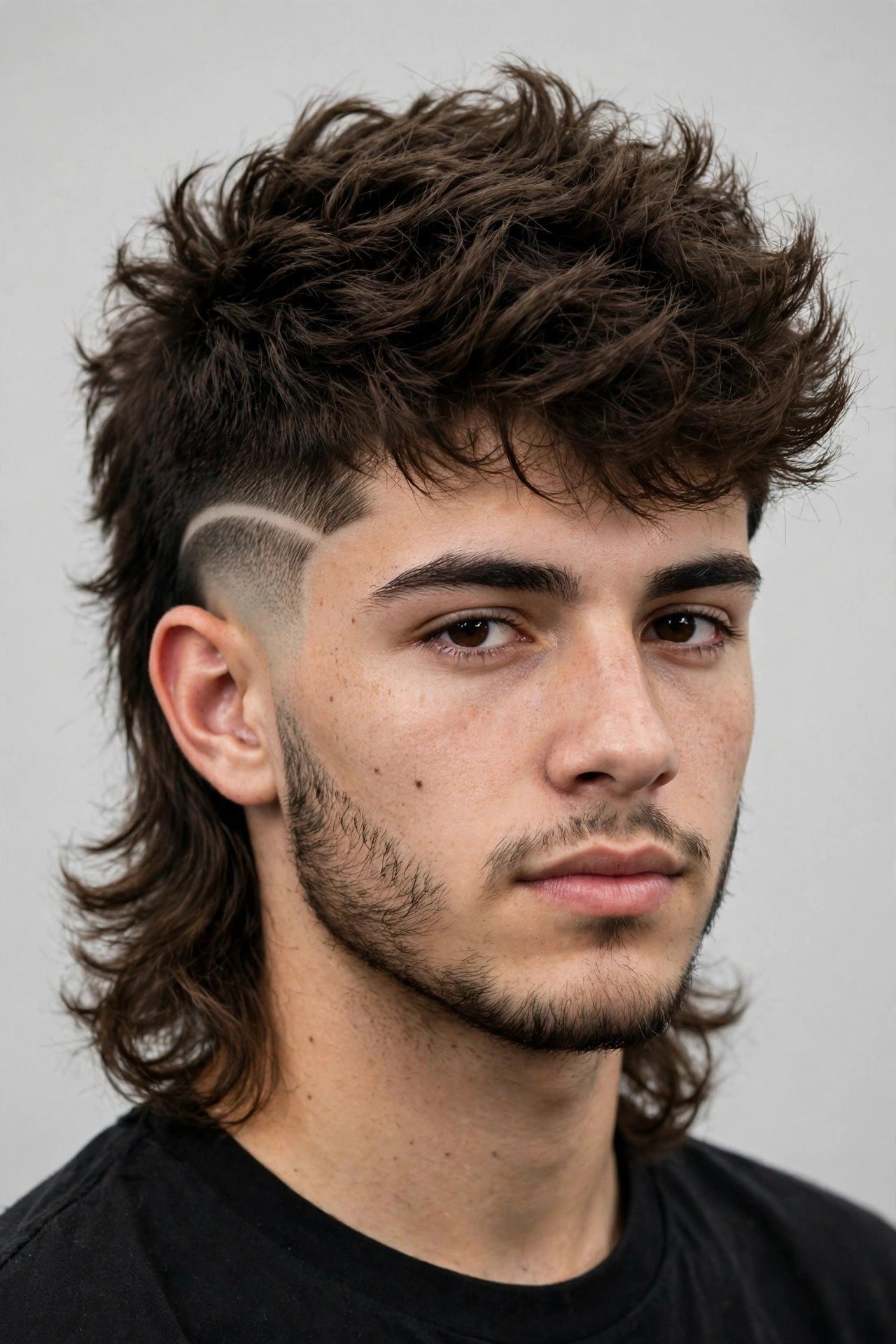
The sleek straight mullet is the architectural one — the version for men whose hair lies flat and who want the cut to look deliberate and refined. Straight hair is cut with clean, precise layering: a smooth top with subtle texture at the ends, sides tapered neatly so the line from temple to back is crisp, and the back kept smooth and shaped so it lies flat with intention. There is no messiness here; the appeal is geometry. It is the mullet as a designed object, and on straight hair it looks sharper than almost any other men’s cut in 2026.
It suits straight, medium-to-thick hair best and flatters square and oval faces, where the clean lines echo strong bone structure. The styling routine is the most precise of any mullet on this list: blow-dry the back downward on medium heat with a paddle brush for smoothness, then work a small amount of light pomade or styling cream through for control without stiffness. A heat protectant is worth adding if you blow-dry daily. Ask your barber for clean, precise layering with tapered — not faded — sides, and specify that you want the back to lie smooth. Trim every four weeks to keep the lines exact. For men who like their grooming sharp and controlled, this is the mullet.
7. The Burst Fade Mullet
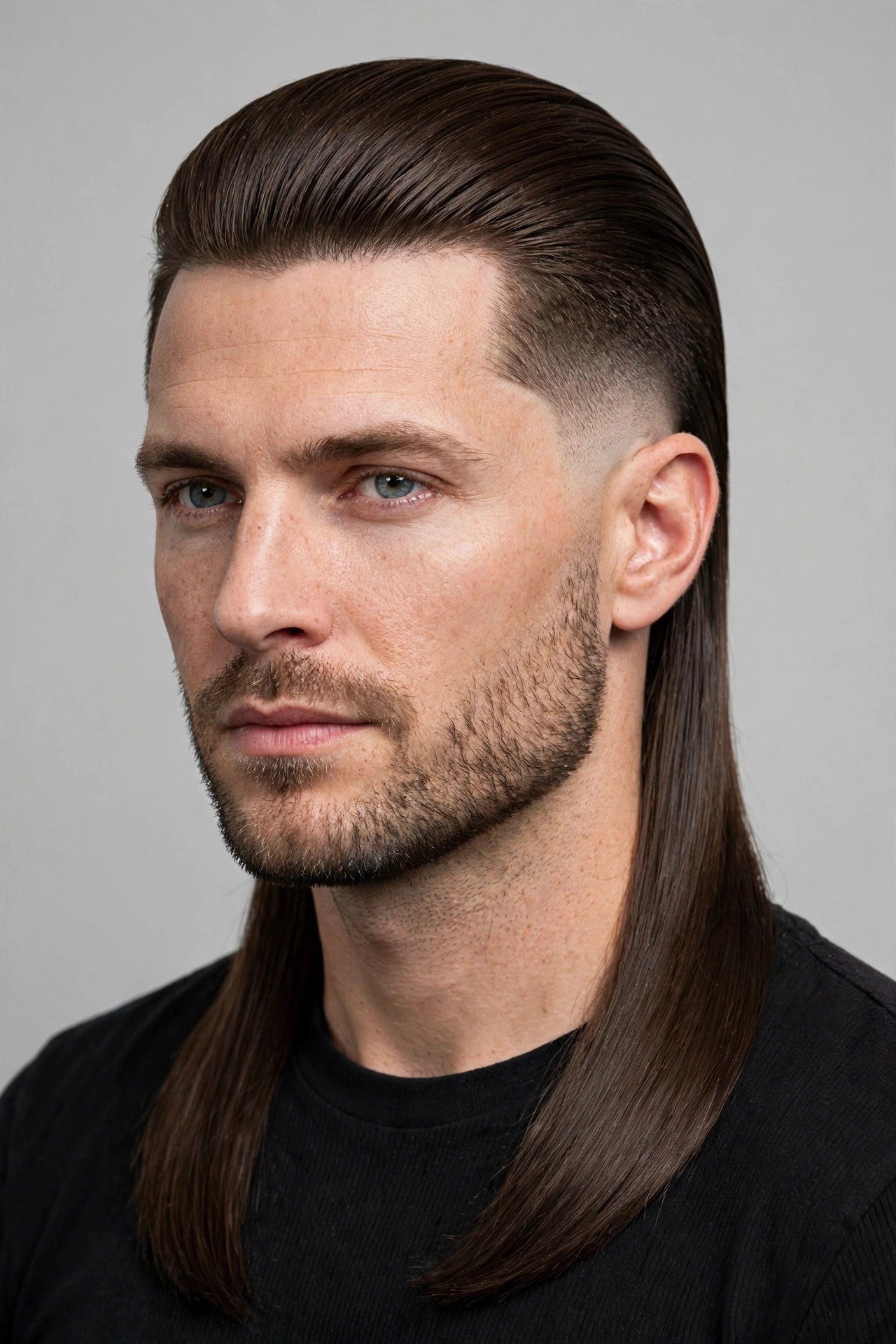
The burst fade mullet is the 2026 fusion cut — the mullet’s silhouette crossed with the year’s most-requested fade shape. The burst fade curves around the ear in a smooth arc, leaving the back of the head full while the sides drop away, which makes it a natural partner for the mullet: the fade hugs the temples and ears while the back flows untouched. The top stays voluminous and textured, so the overall effect is bold from the front and flowing from behind. It is one of the most photographed mullet variants on social media this year because the fade’s curve is so visually satisfying.
It suits straight to wavy hair with medium density and flatters round and oval faces — the curved fade adds dimension where flat sides would not. The burst fade needs refreshing every two to three weeks, so this is a higher-maintenance choice; book the fade clean-ups and let the back grow. Ask your barber specifically for a burst fade (not a drop fade — the burst curves around the ear while the drop fades diagonally down the back) blended into a textured top, with the back layered for flow. Style the top with matte clay for volume and leave the back light. If you want the mullet version that reads most “2026,” this is it.
8. The Low Taper Mullet
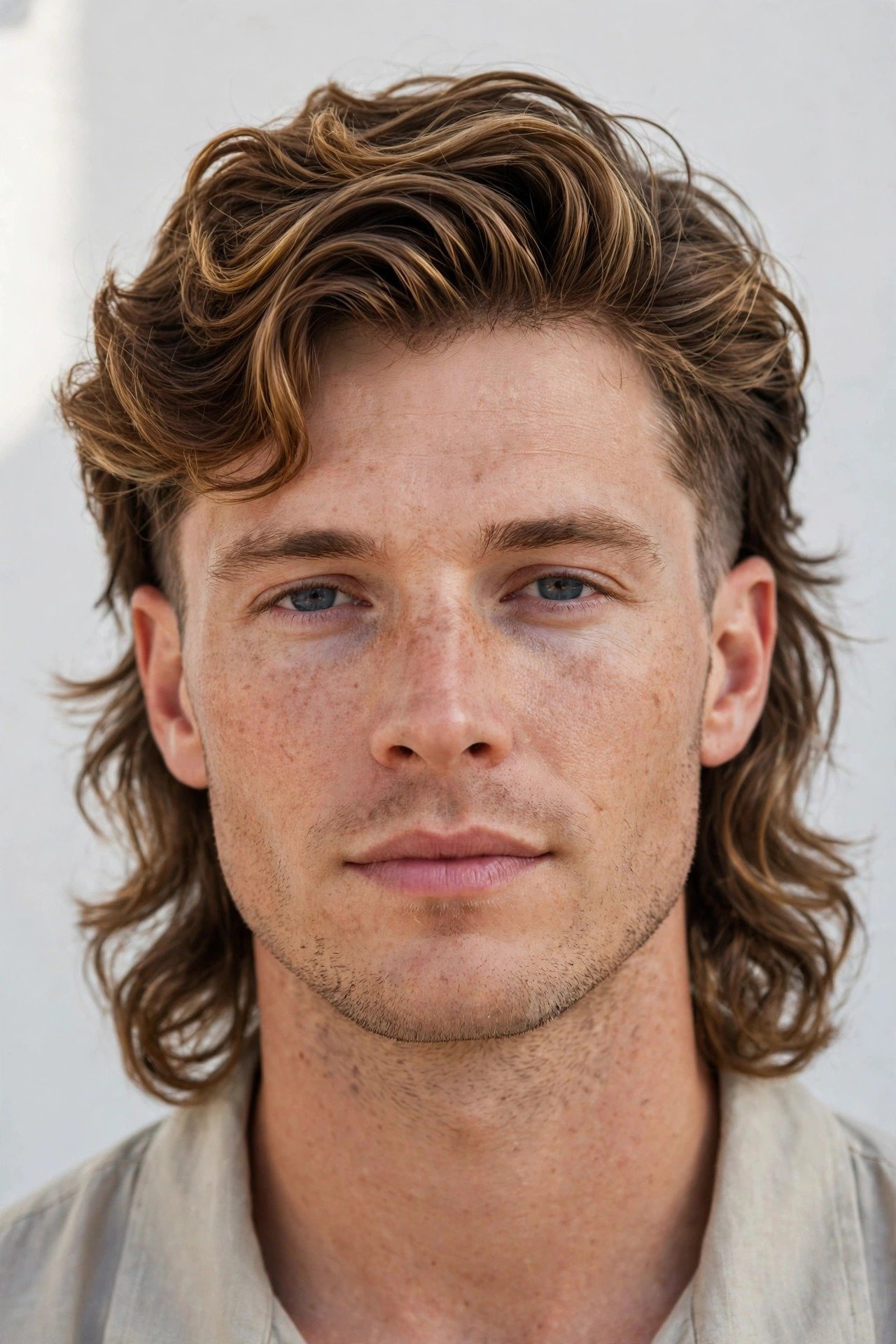
The low taper mullet is the quiet achiever — the version for men who want the mullet’s silhouette in a package that works everywhere. The sides are softly tapered, shortest at the sideburns and neckline, blending up into natural length above the ear; there is no harsh fade line anywhere. The top stays textured and movable, and the back keeps a soft, layered length that reads groomed rather than wild. It is the mullet a creative director wears — trend-aware, but never loud.
It suits all hair types and flatters all face shapes, which makes it the safest mullet on this list for first-timers with conservative workplaces. It pairs beautifully with the broader low-taper moment in men’s grooming: our guide to temple fade styles covers the same precision-around-the-edges philosophy. Ask your barber for a low taper — emphasize tapered, not faded — with a textured top and a layered, collar-length back. Maintenance is a taper clean-up every three weeks and a full shape-up every six. Style with light matte paste, forward through the top, separating the back pieces. For the man who wants the mullet without the announcement, this is the one.
9. The Wolf Cut Mullet

The wolf cut mullet lives at the intersection of the two biggest texture trends of 2026. It borrows the wolf cut’s heavy, choppy layering and piece-y fringe and grafts them onto the mullet’s signature front-to-back length difference. The result is wilder than a standard mullet but more structured than a pure wolf cut — the fringe and crown have that shattered, rock-star texture, while the back keeps enough length to read unmistakably as a mullet. It is the version for men whose style leans creative, musical, or street.
It suits thick, wavy to straight hair best — the choppy layers need density to look intentional rather than thin — and flatters oval and heart-shaped faces, where the fringe adds balance. This is a scissor-heavy cut, so choose a barber or stylist comfortable with razor and point-cutting work; ask for “wolf-cut texture on top with real mullet length in the back.” Style with sea salt spray on damp hair, scrunch, and let it air-dry messy — perfection ruins this one. A trim every six to eight weeks keeps the layers from collapsing. If your wardrobe is black boots and band tees, this mullet already belongs to you.
10. The Shaggy Layered Mullet
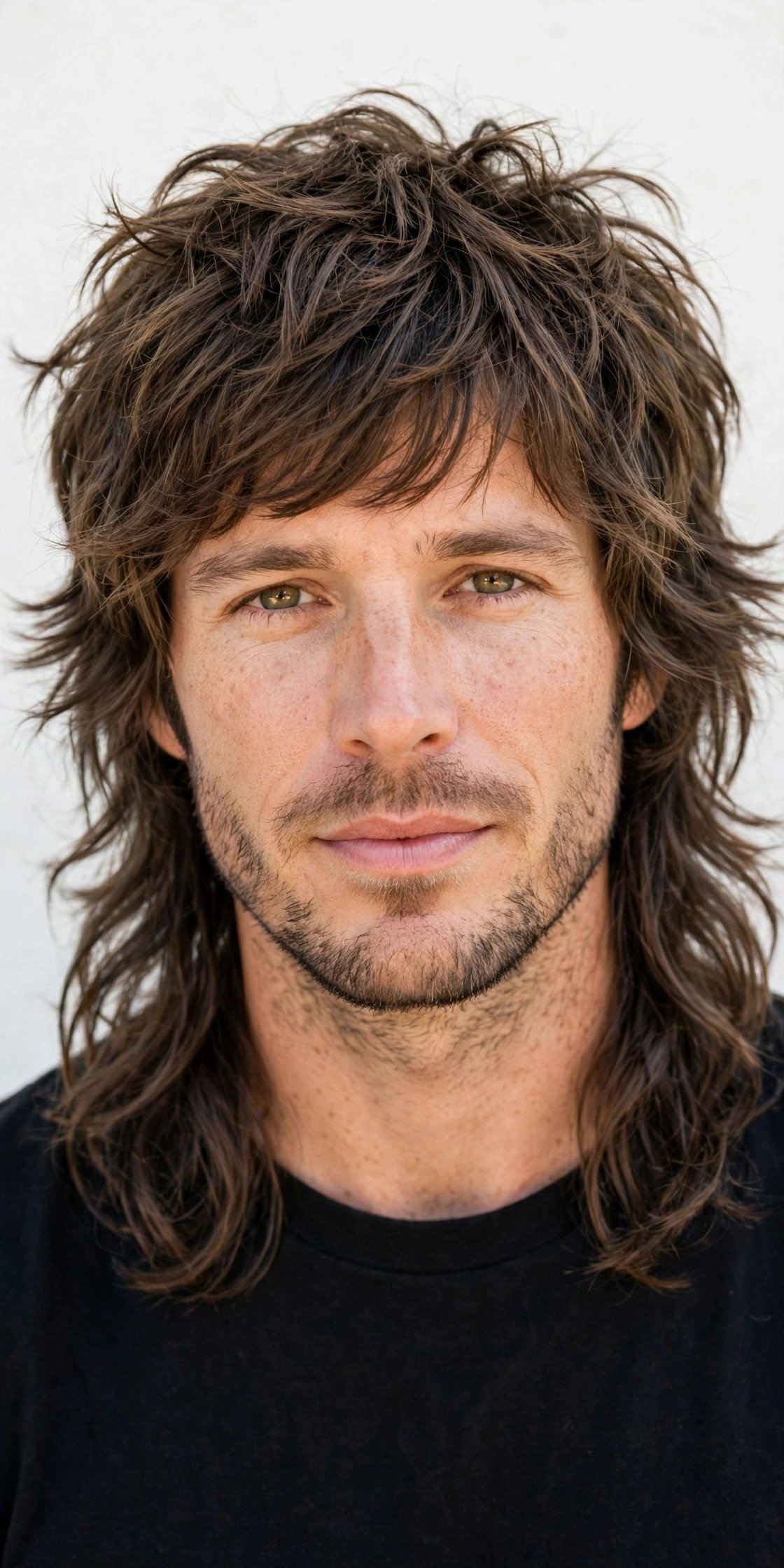
The shaggy layered mullet is the grown-out, lived-in cousin of the family — the version that looks like it styled itself. Loose layers run from crown to back with no hard lines anywhere, the sides are left soft and natural, and the whole cut has that “two weeks after a great haircut” energy permanently. It is the mullet for men who hate fussy hair: the layers are the styling, and the messier it gets, the better it looks. In a year when low-effort grooming dominates, this version is philosophically perfect.
It suits medium to thick hair with any texture — waves and curls amplify the effect — and flatters most face shapes because the softness is universally forgiving. The barber brief is simple: “long layers everywhere, keep the sides soft, back to the nape or beyond, nothing blunt.” Maintenance is the easiest on this list: reshape every eight weeks, and the grow-out is graceful because there is no fade to lose. Style with a light texture cream on damp hair or nothing at all; finger-comb and go. If you want a mullet you can genuinely forget about between appointments, this is the one.
11. The Disconnected Mullet
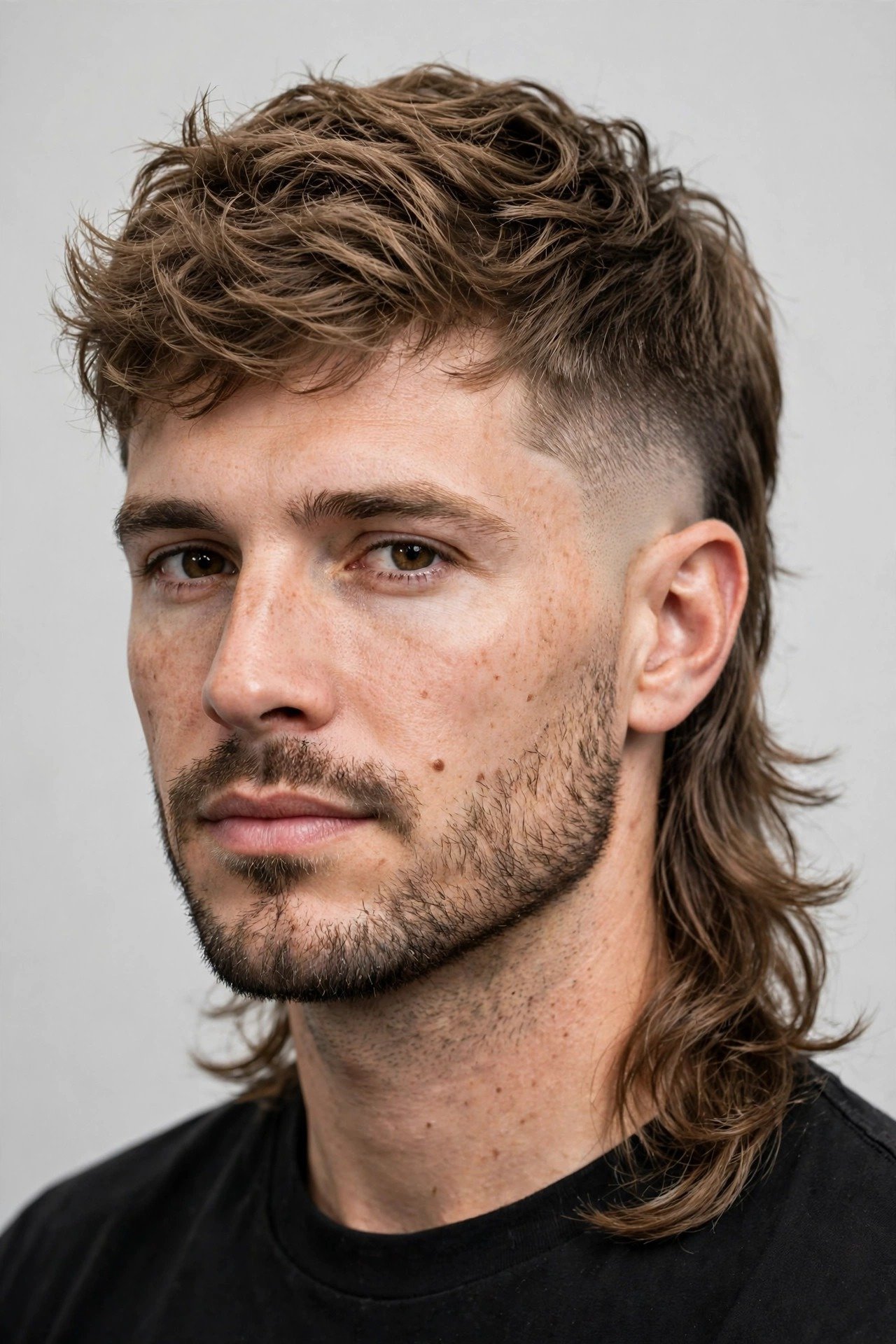
The disconnected mullet is the one deliberate throwback on this list — the version that keeps a visible separation between the short top and the long back, but executes it with 2026 precision instead of eighties chaos. The top is cropped short and textured, the sides are faded tight, and the back drops away in a clean, intentional length with a crisp transition line. It is the mullet as a statement piece: there is no mistaking what it is, and it makes no apology. Men who choose this one know exactly what they are doing.
It suits straight to wavy hair best — the disconnect reads cleanest on hair that lies predictably — and flatters square and oval faces where the contrast adds architecture. The sides need a fade refresh every two to three weeks to keep the disconnect sharp, so this is a barber-regular’s cut. Ask for a short textured crop on top, a tight fade on the sides, and a disconnected back at your chosen length — “leave the line visible” tells your barber you want the disconnect deliberate, not blended. Style the top with matte clay pushed forward and keep the back product-light. Not for the timid — and that is the point.
12. The Mid Fade Mullet
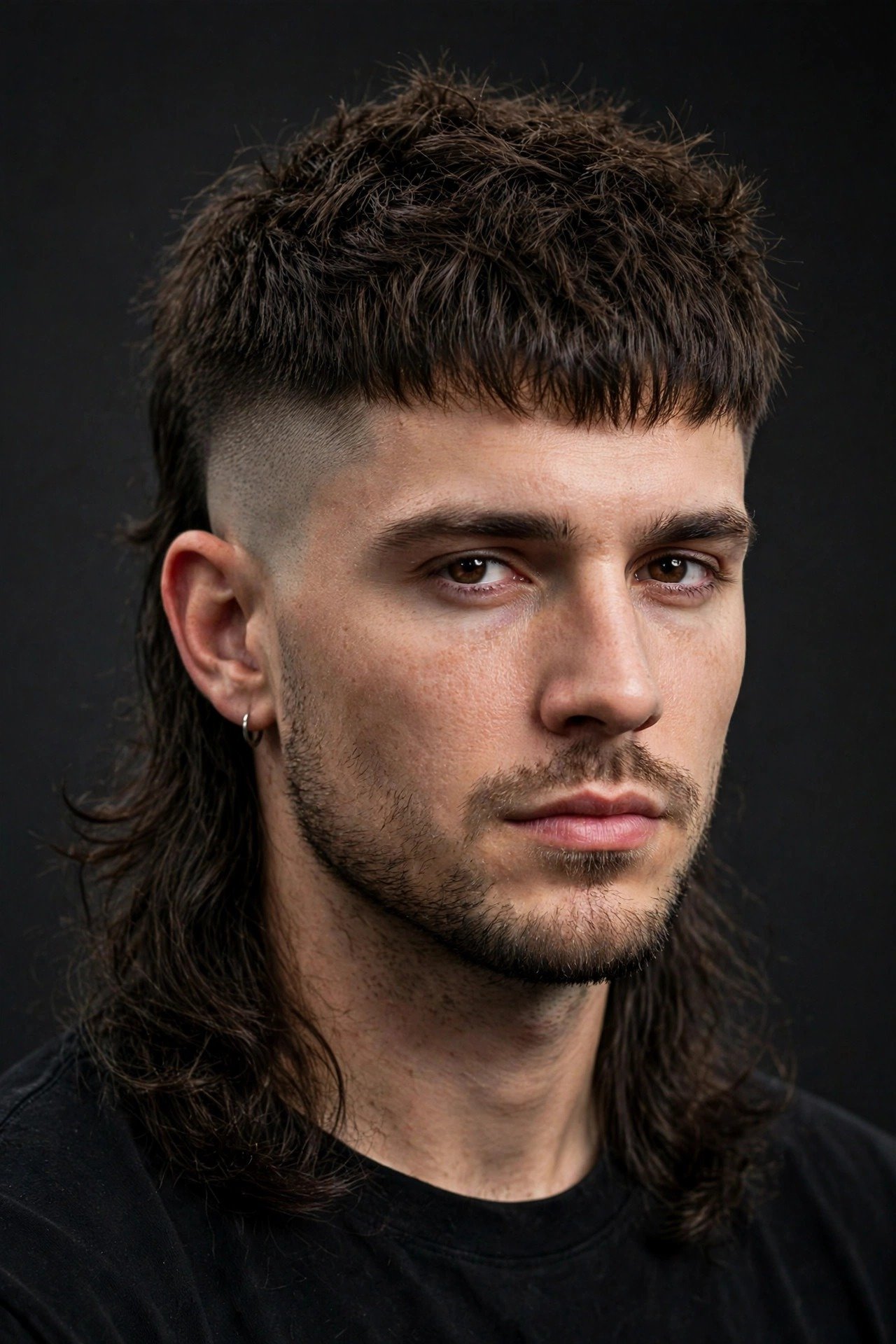
The mid fade mullet is the balanced center of the fade family — not as subtle as the low taper, not as aggressive as the skin fade. The fade starts around the temples and arcs through the sides, creating a clean, sculpted frame that transitions into the textured top and the longer back. It is the Goldilocks mullet: enough contrast to look modern and sharp, enough restraint to work in most settings. For many men, this is simply the default modern mullet, and barbers report it as one of the most-requested configurations of 2026.
It suits all hair types and flatters round and oval faces especially well — the mid fade’s height adds structure without overwhelming. Maintenance is a fade refresh every three weeks with a full reshape every six. Ask your barber for a true mid fade (starting around the temple) blended into a two-to-four-inch textured top, with the back layered to collar length or beyond. Style the top with matte clay for separation and the back with a light cream or sea salt spray. If you cannot decide between the taper and the skin fade versions, stop deciding — this is the one.
13. The Temple Fade Mullet
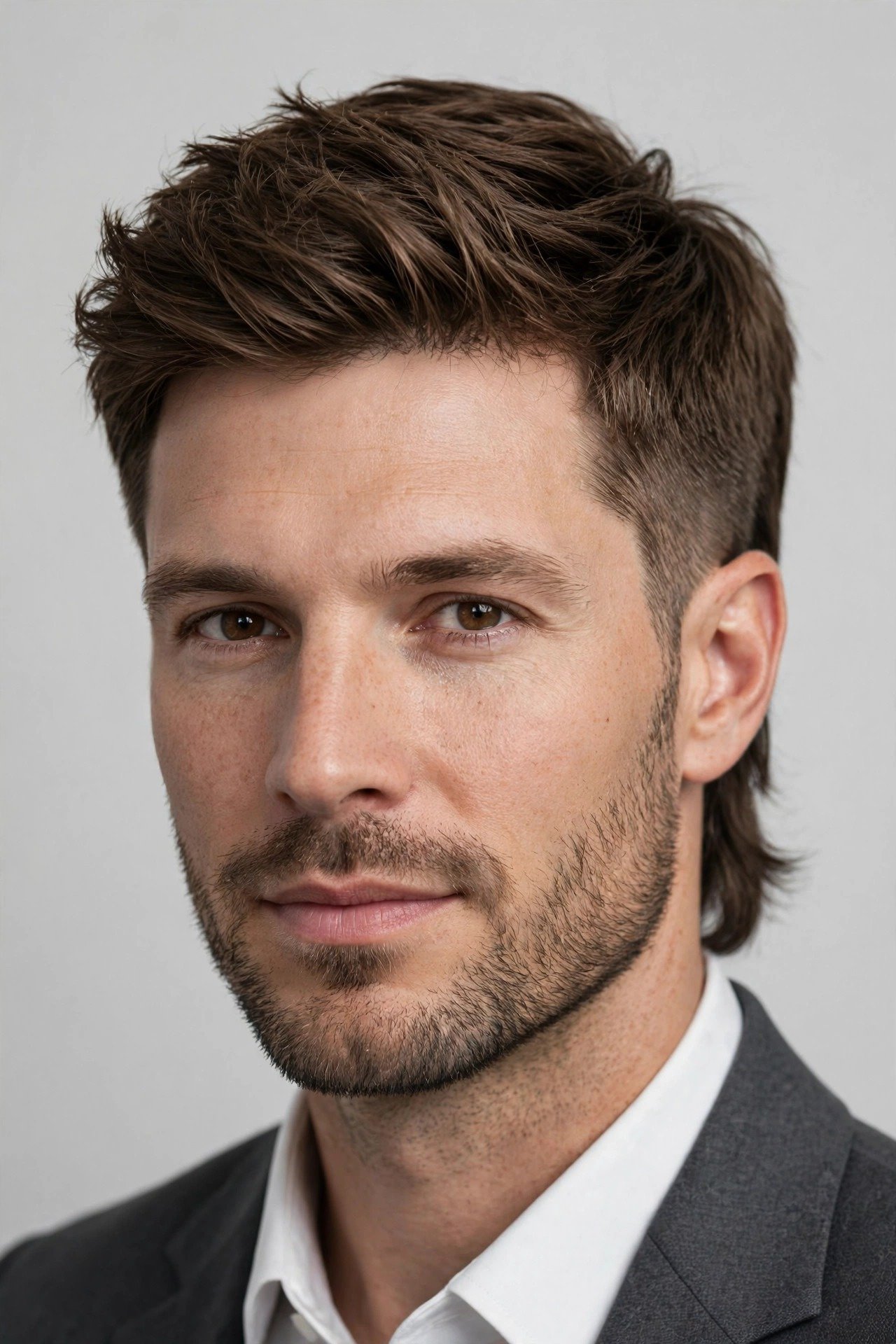
The temple fade mullet is the precision play — the mullet’s flowing silhouette sharpened with one of barbering’s cleanest details. The fade concentrates on the temple zone, dropping to skin or near-skin right where the hairline meets the face, while the rest of the sides keep their length and blend into the textured top and the longer back. The effect is a crisp, architectural frame around the face sitting on top of the mullet’s relaxed flow. It is the version for men who love the mullet’s personality but want their edges immaculate.
It suits straight to wavy hair and flatters square and oval faces, where the sharp temple frame echoes strong lines. Our full guide to temple fade styles covers the technique in depth — the same ten-minute detail that transforms this cut. Ask your barber for a temple fade (to skin or shadow, your call) on an otherwise full mullet, with the top textured and the back layered. The temple zone needs a touch-up every one to two weeks to stay crisp. Style the top with matte clay and the back light. Small detail, outsized payoff.
14. The Surfer Flow Mullet
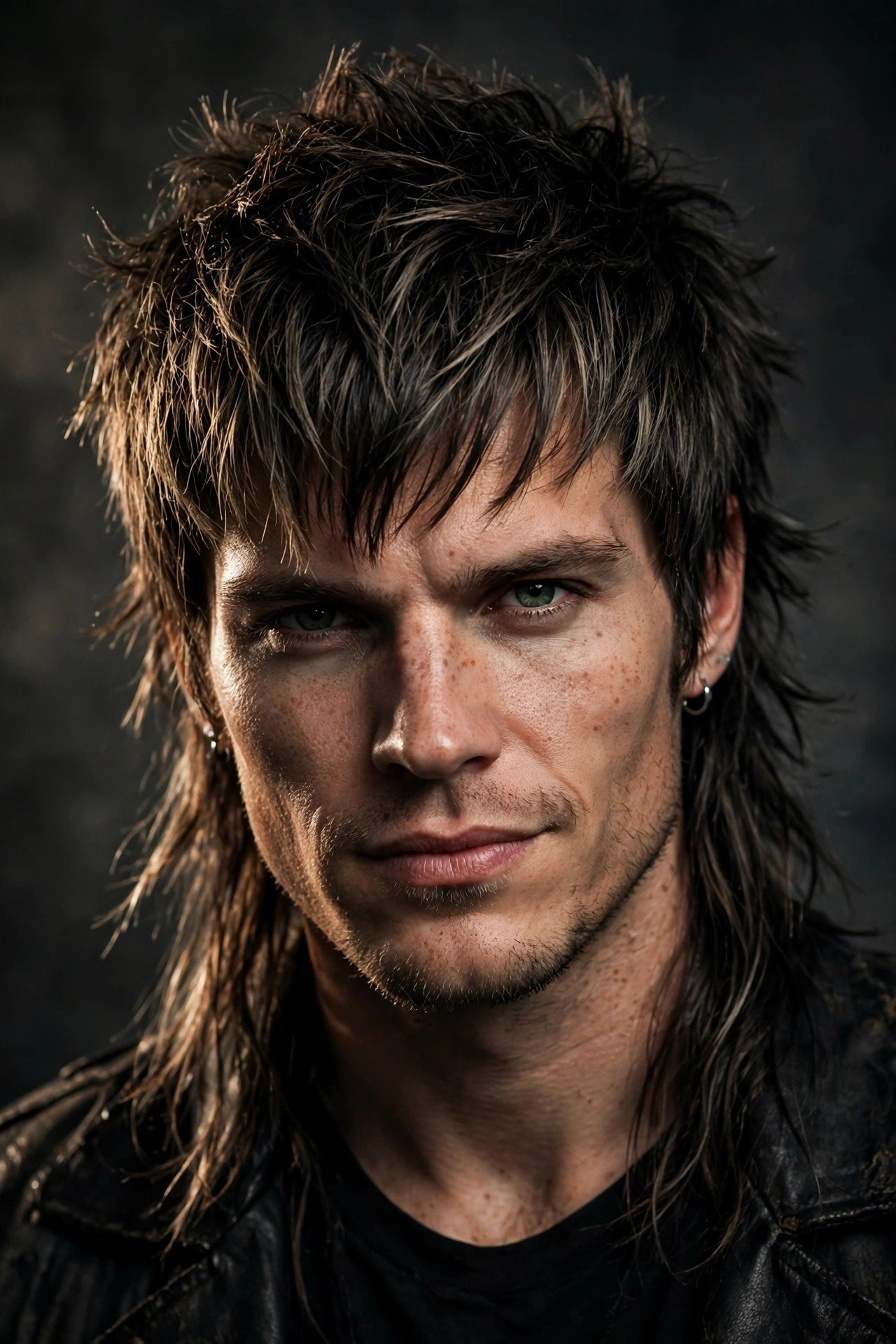
The surfer flow mullet is summer that never ends — a grown-out, beachy interpretation where the back flows long and loose with natural wave and sun-lightened texture. The top stays medium length with a center or off-center part, the sides grow soft and natural with no fade in sight, and the back falls past the nape in free, moving layers. It is the least barbered mullet on this list, and deliberately so: the whole point is hair that looks like it was shaped by salt water and wind rather than clippers.
It suits naturally wavy, medium-to-thick hair best and flatters oval and oblong faces — the width of the waves balances longer face shapes. Growing it takes patience: from a short cut to true flow is six to nine months, with trims every eight to ten weeks just to shape the ends. Ask your barber to “shape it like a mullet but keep everything long and soft — long layers, no fade.” Style with sea salt spray on damp hair and air-dry; a little sun-lightening or balayage through the ends completes the look. For men whose lifestyle is more boardwalk than boardroom, this is the mullet.
15. The Professional Mullet
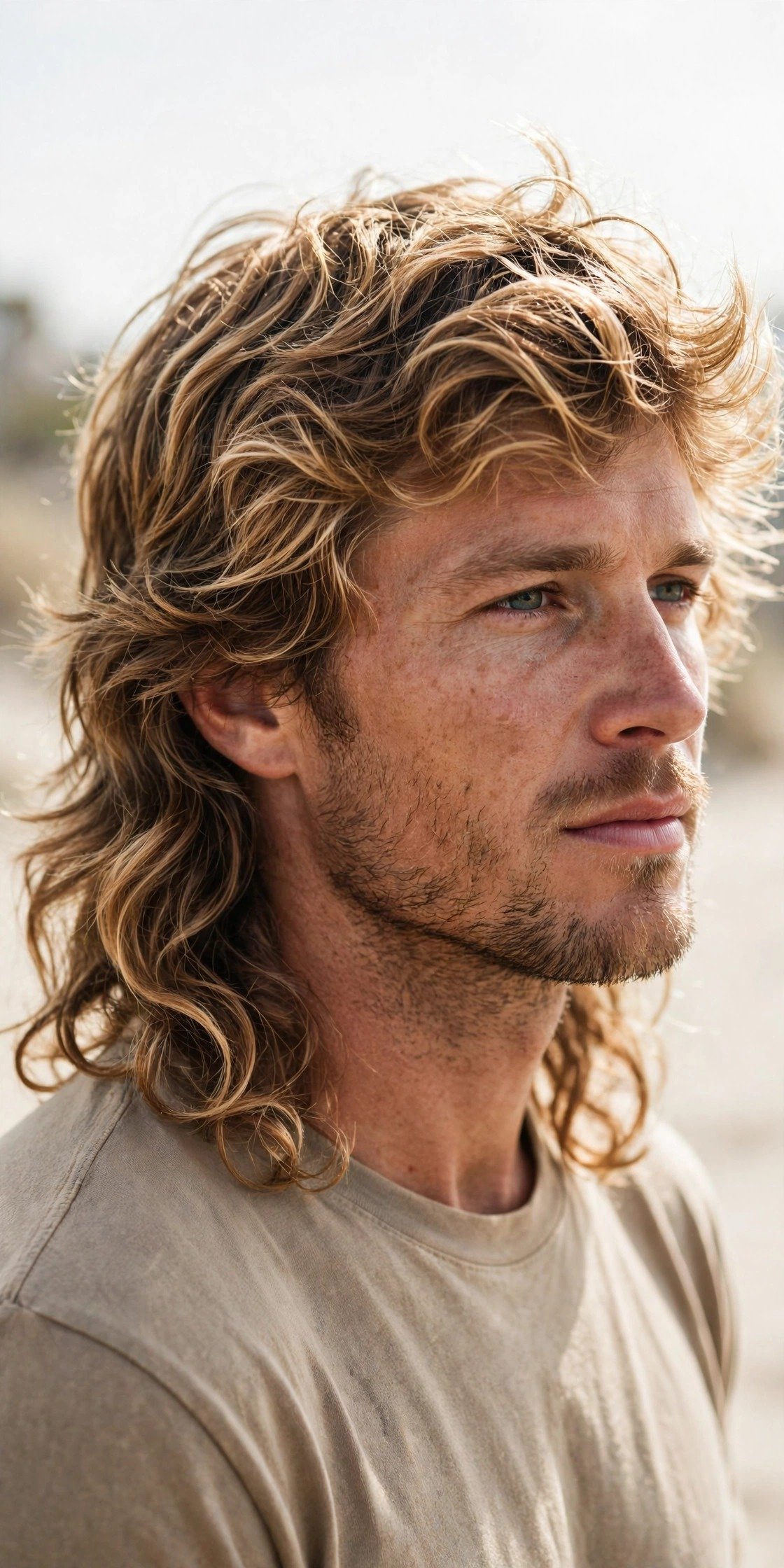
Yes, a mullet can go to the office — the professional mullet is proof. This version keeps everything controlled: a neat, textured top at modest length, sides tapered clean with no fade drama, and a back kept short — just grazing the collar — with tidy, shaped layers. From the front it reads as a sharp textured crop; only from the side does the extra back length reveal itself. It is the mullet’s undercover identity, and it works in finance, law, and client-facing roles where the bolder versions would raise eyebrows.
It suits straight to wavy hair and flatters all face shapes, though keeping the back modest is what sells the professionalism — collar-grazing, never shoulder. The consultation script matters: “a soft mullet, but keep it office-safe — tapered sides, textured top, back just below the collar, everything neat.” Maintenance is a trim every four weeks to keep it tidy. Style with a light matte paste or cream — never anything shiny — pushing the top forward and smoothing the back. If you love the mullet silhouette but your dress code is non-negotiable, this is your version.
16. The Modern Rocker Mullet
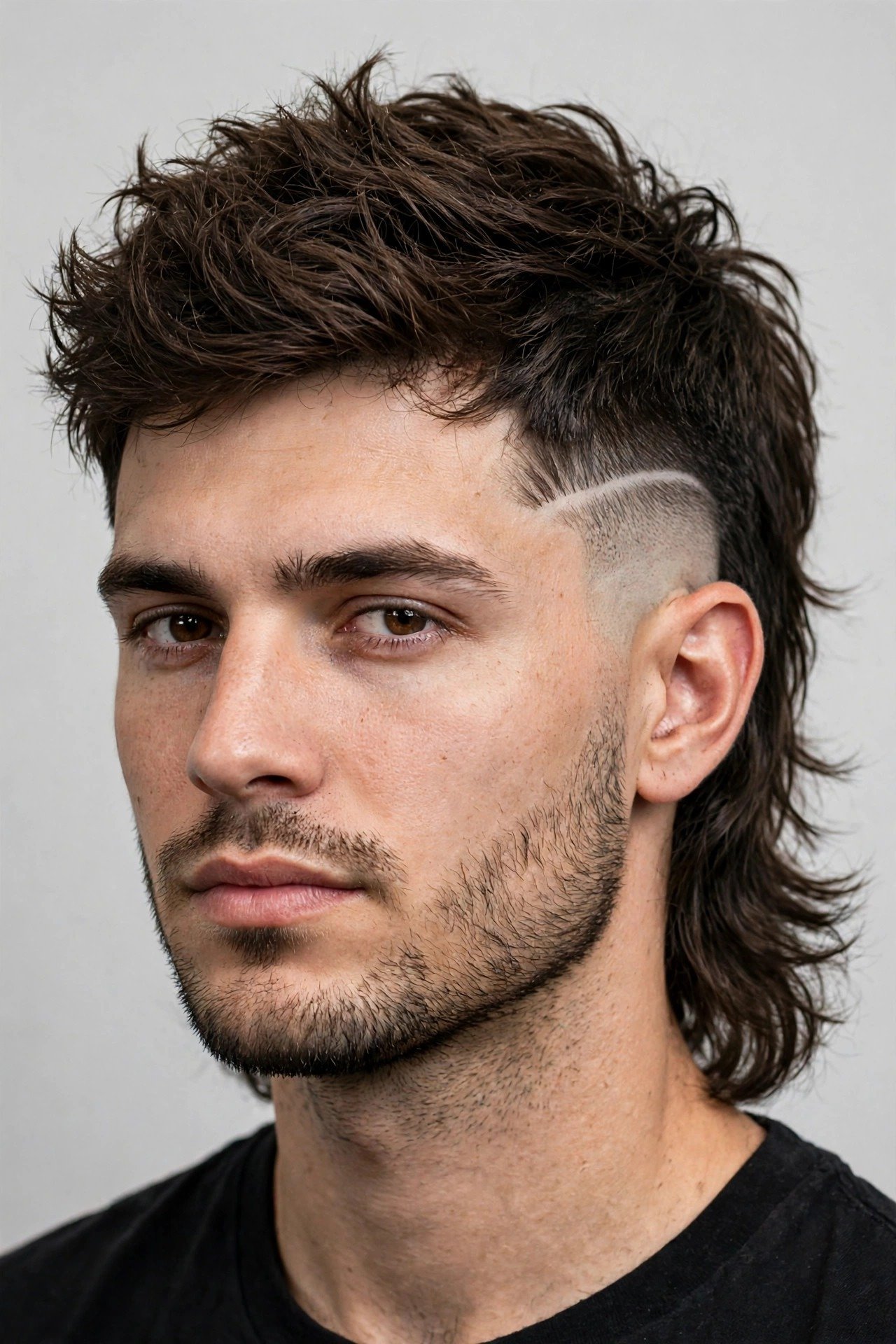
The modern rocker mullet takes the cut back to its musical roots and rebuilds it for 2026. Think heavy, piece-y layering through the crown, a textured fringe with attitude, and a back with real length and movement — but cut with modern blending so it reads as intentional edge rather than eighties costume. It is the mullet as stage presence: bolder than the soft versions, more refined than the retro original. Guitarists, drummers, and anyone whose personal style runs loud will feel at home here.
It suits thick, wavy to straight hair best — the layers need weight to look powerful — and flatters oval and heart-shaped faces where the fringe and volume add balance. Ask your stylist for “rocker layers on top with a real mullet back — choppy, textured, but blended, not disconnected.” Style with sea salt spray and matte paste, working the product through dry hair and pulling pieces apart for that lived-in, just-off-stage texture. A trim every six weeks keeps the layers lively. This is the mullet with a soundtrack.
17. The Hockey Flow Mullet
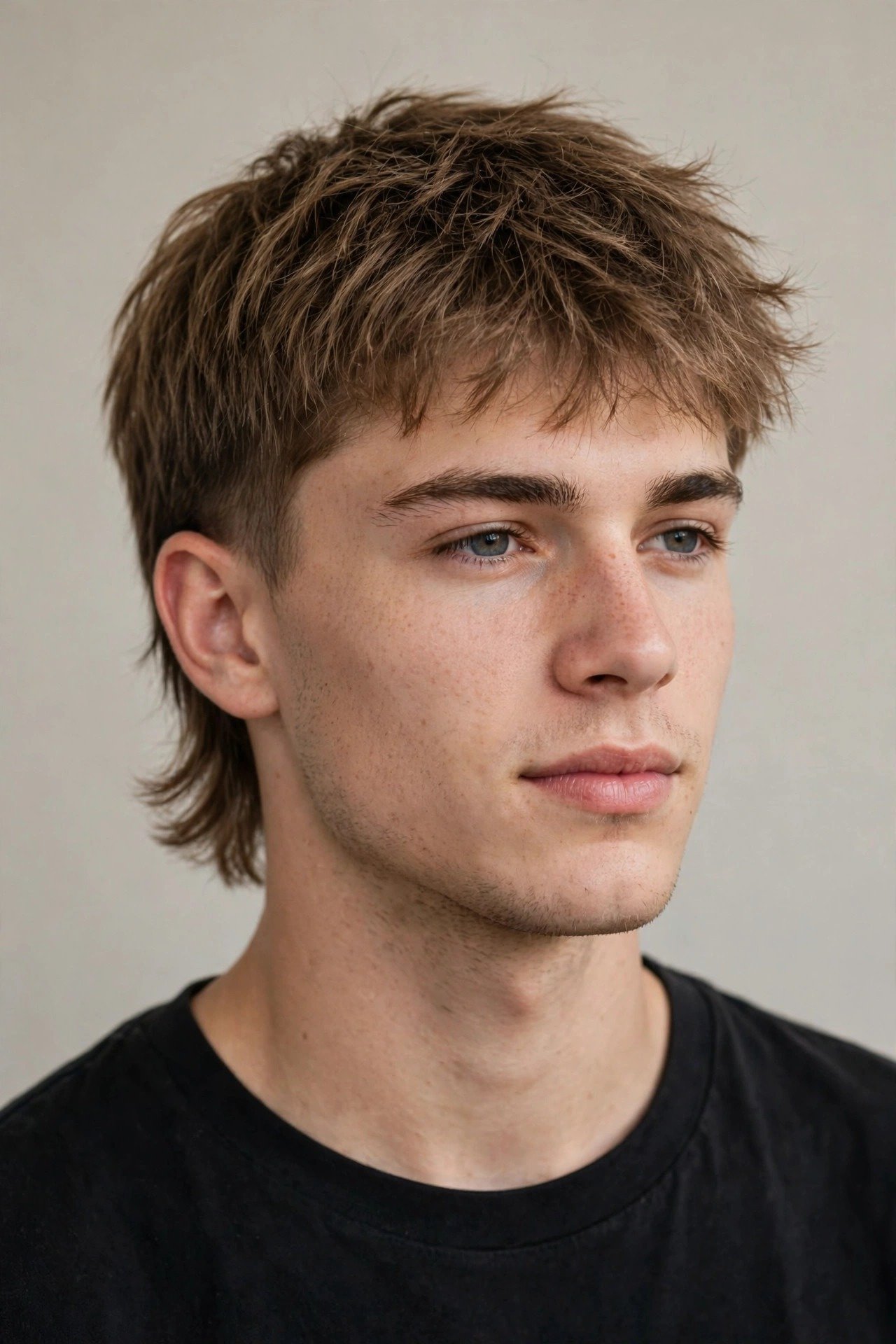
The hockey flow mullet is the sports world’s gift to the trend — the legendary “flow” rebuilt with mullet structure. The back grows long and thick with real weight, the top stays medium with a natural part, and the sides are kept full rather than faded. It is the most masculine, most substantial version of the cut: hair with presence. Hockey players have worn some version of this for decades, and in 2026 the barber world has finally caught up, refining the flow with proper layering so it has shape instead of just mass.
It suits thick, straight to wavy hair best — you need density for real flow — and flatters square and oval faces. Growing it requires commitment: six to twelve months from short, with shaping trims every eight weeks to keep the back from going triangular. Ask your barber for “hockey flow with mullet structure — keep the back long and full, layer it for shape, top medium with texture.” Style with a light cream on damp hair and let it air-dry; the weight does the work. If you have the hair for it, there is no more impressive mullet.
18. The Softened Skullet
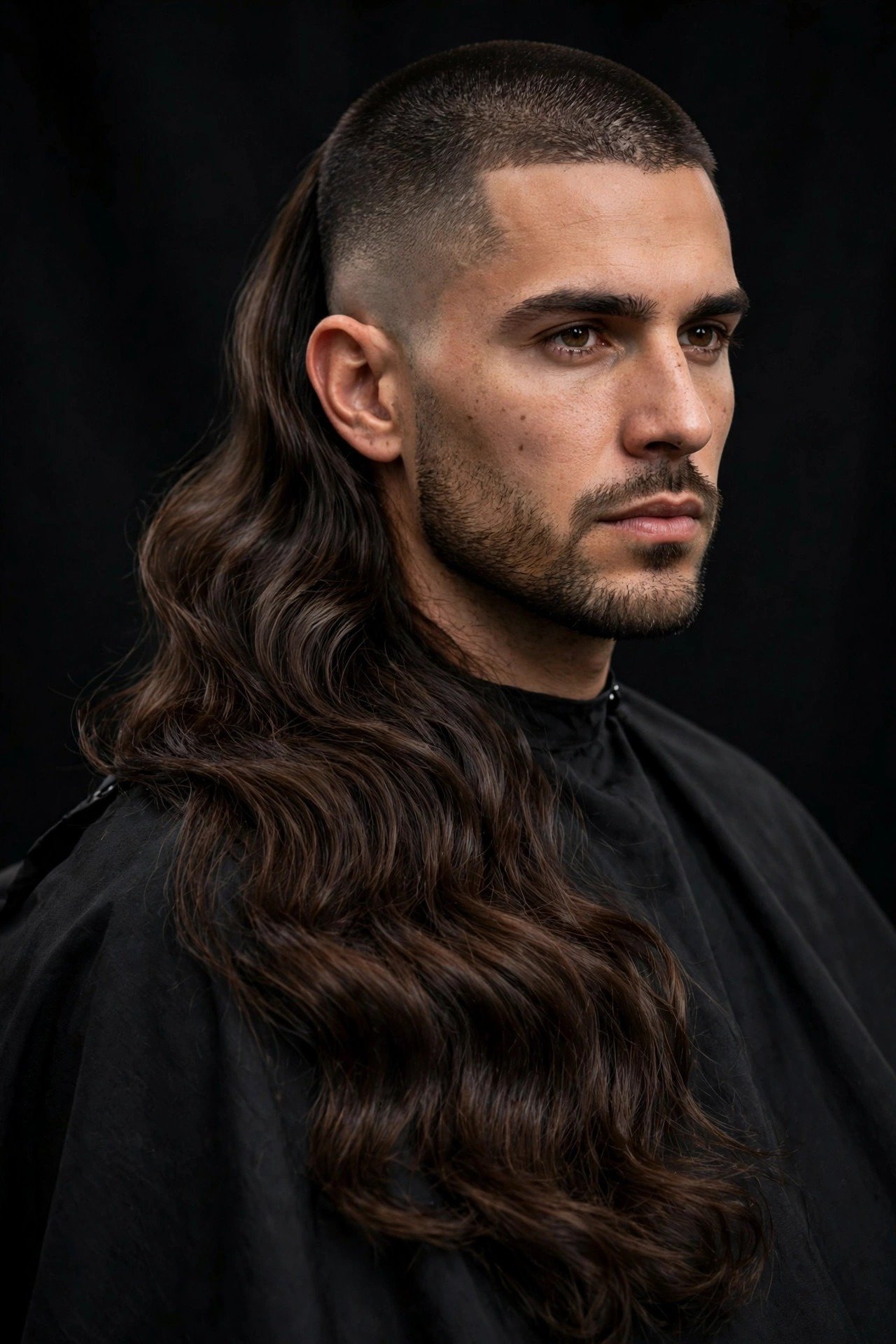
The skullet — shaved or near-shaved top, long back — was the eighties’ most extreme mullet, and in 2026 it returns in a softened, wearable form. The top is faded very short or buzzed with texture, the sides are faded tight, and the back flows long with shaped layers. The modern softening matters: where the original looked accidental, the new version is all intention — crisp fade work up top, deliberate shaping in the back. It is the mullet’s boldest silhouette and not for the faint of heart, but worn with confidence it is genuinely striking.
It suits straight to wavy hair and flatters oval and oblong faces — the short top and long back add balanced proportions. This is a specialist cut: find a barber confident with both skin fades and long-hair shaping, and be explicit — “buzzed textured top, tight fade, back long and layered, keep the transition clean.” The fade needs refreshing every two weeks; the back needs shaping every eight. Style the top with a touch of matte clay and leave the back natural. The softened skullet is a commitment, but it is the one mullet nobody forgets.
19. The Mini Mullet
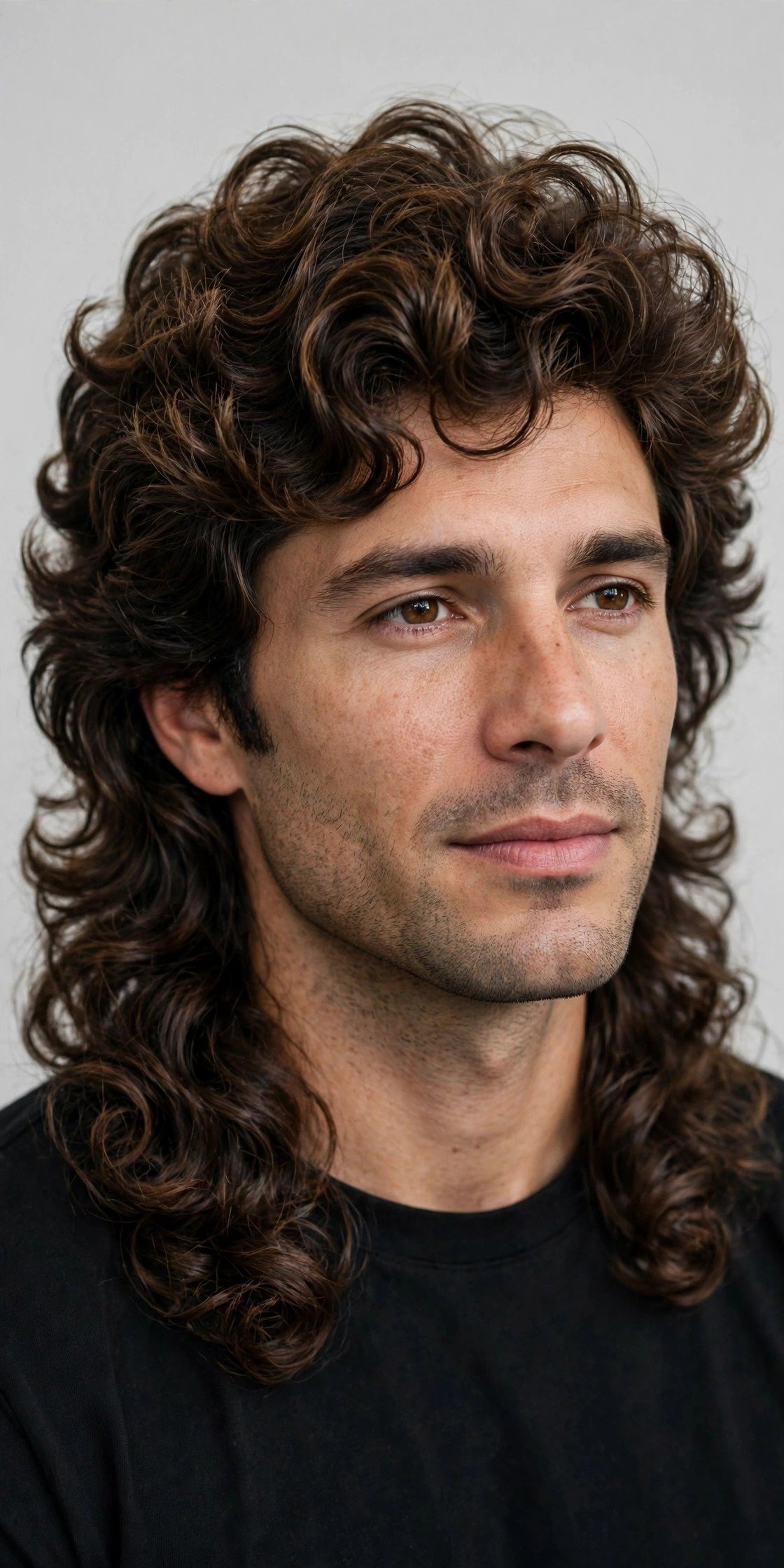
The mini mullet — also called the baby mullet — is the gateway version, and it has surged in search interest through 2026 as the entry point for younger men. The back is kept modest, just a couple of inches below the collar, and the overall cut reads almost like a textured crop with ambition. The sides are softly tapered, the top is textured and forward, and the back has just enough length to create the mullet’s signature silhouette without any drama. It is the version you get when you are mullet-curious but not mullet-committed.
It suits all hair types and flatters all face shapes, and it is the most workplace-friendly version after the professional mullet. Accio’s trend coverage notes the “white-collar mullet” framing — edgy enough to feel current, restrained enough for any setting. Ask your barber for “a mini mullet — keep the back short, just enough to show the shape, tapered sides, textured top.” Maintenance is a trim every five weeks. Style with a fingertip of matte paste. For the curious first-timer, the mini mullet is the perfect low-risk experiment.
20. The Permed Mullet
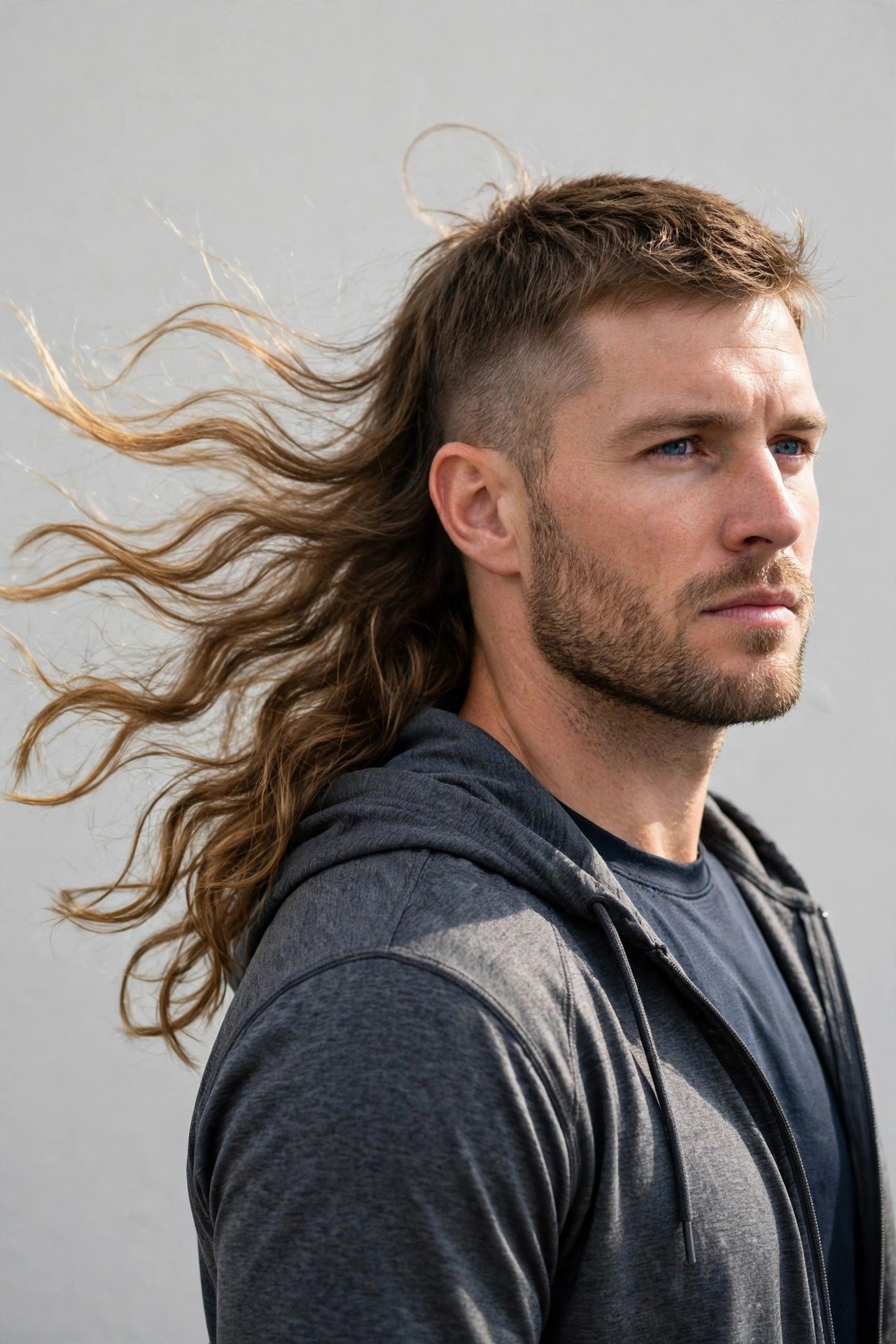
The permed mullet is the texture cheat code. If your hair is straight and you want the waves, curls, and volume that make mullets look their best, a modern perm delivers them — soft, defined, natural-looking waves through the top and back that hold their shape for months. Today’s perms are nothing like the tight eighties coils: larger rods and modern solutions create loose, touchable texture that looks like you were born with it. On a mullet, the added body through the back is transformative.
It suits straight, medium-to-thick hair best and flatters most face shapes, adding volume where faces need it. The perm itself takes one to two hours at the salon and lasts three to six months; book a stylist experienced with men’s perms and ask for “loose, natural waves — not tight curls — on a mullet shape.” Aftercare matters: sulfate-free shampoo, a leave-in conditioner, and no heat styling for the first 48 hours. Style with curl cream on damp hair and air-dry. If your straight hair has always wanted to be wavy, the permed mullet is the answer.
21. The Ash Blonde Mullet
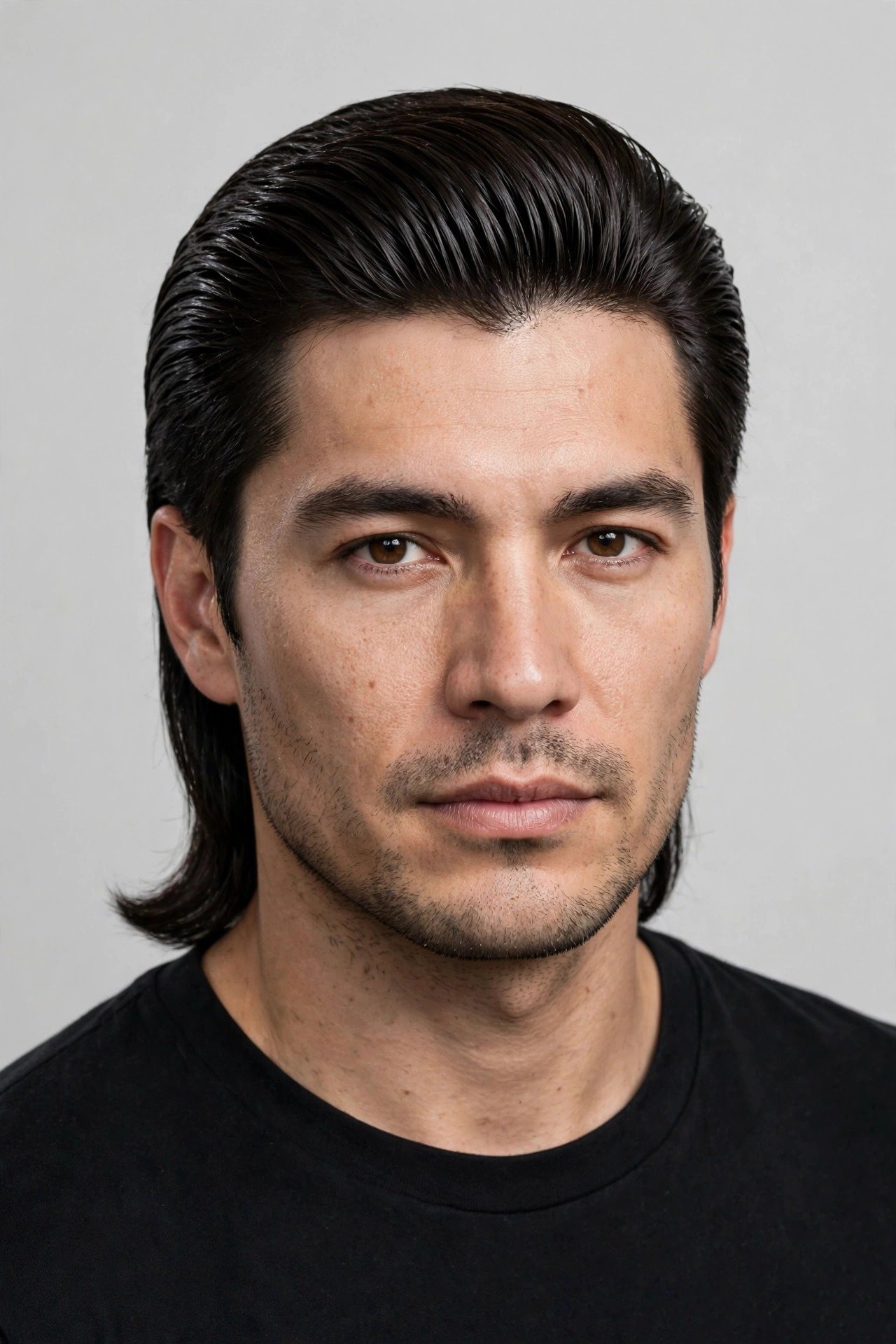
The ash blonde mullet is the cool-toned color play — a smoky, muted blonde laid over the mullet’s silhouette, giving the whole cut a fashion-forward, editorial edge. Ash blonde works beautifully on the modern mullet because the cool tone emphasizes the cut’s texture: every layer and fade transition reads more clearly in matte, ashy color than in glossy dark hair. It is the version for men who want their mullet to look styled even when they have done nothing to it.
It suits light to medium skin tones best and flatters oval and square faces. Getting there requires bleaching to a pale base and toning to ash — book a colorist experienced with men’s blonding, and expect a two-to-three-hour appointment. Maintenance is real: purple shampoo weekly to kill brassiness, a toner refresh every four to six weeks, and deep conditioning since bleached hair dries out. Ask for the cut first, then the color — “ash blonde toner over a soft mullet.” If you are ready for a mullet that photographs like a magazine cover, this is it.
22. The Platinum Mullet
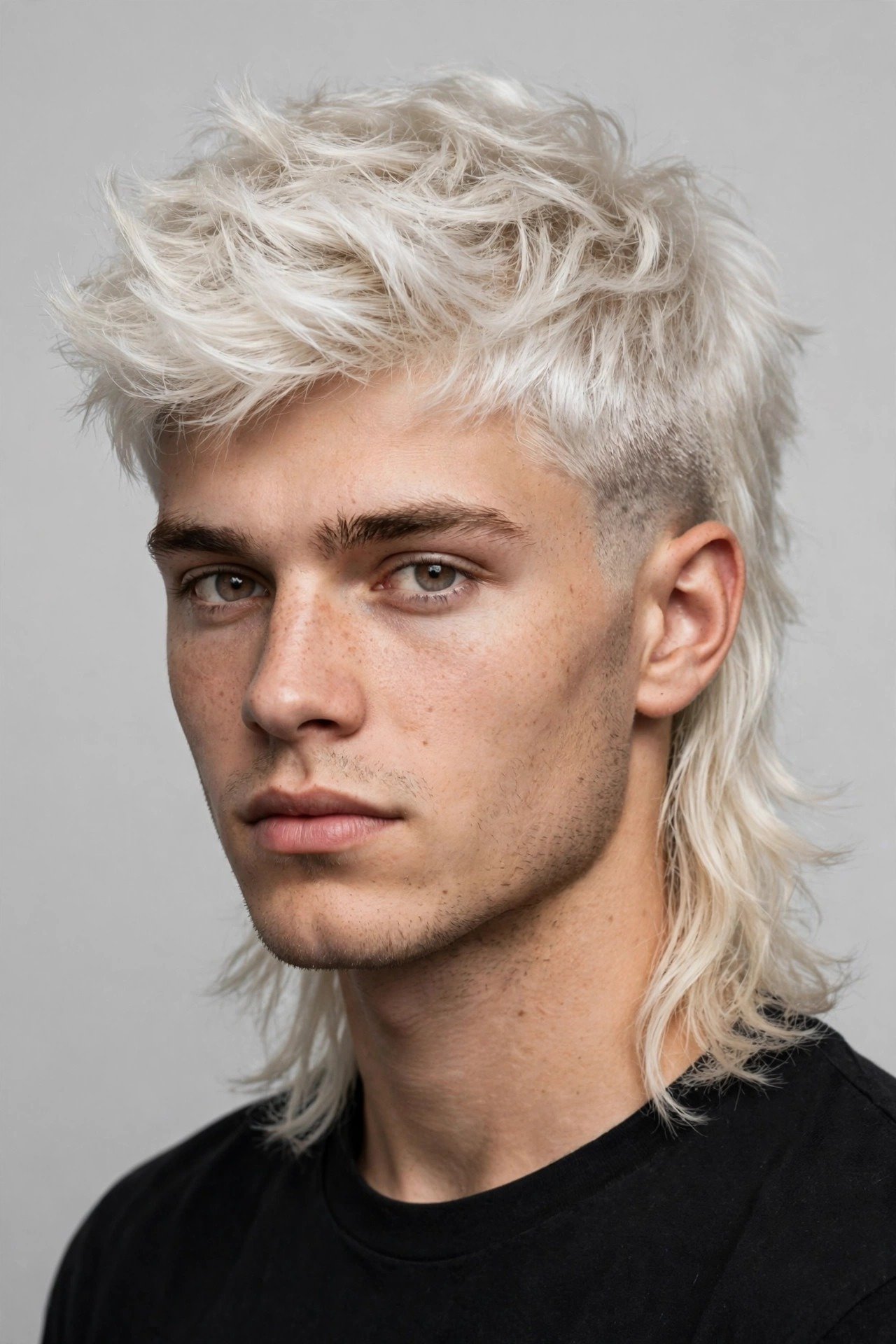
The platinum mullet is maximum impact — the boldest color on this list on one of the boldest cuts. Icy, near-white blonde over a faded, textured mullet turns every head in the room; the contrast between the pale hair and the skin fade is electric. It is the version for men who want the mullet as pure statement, and it has a strong runway and music-scene pedigree in 2026. There is no subtle version of this — it is all in, all the time.
It suits most skin tones but works best with cool undertones, and flatters square and oval faces where the high contrast adds definition. The process is intensive: bleaching dark hair to platinum takes multiple sessions, and the hair needs bond-building treatments throughout. Maintenance is the highest on this list — root touch-ups every three to four weeks, purple shampoo, and serious conditioning. Book a colorist who does platinum regularly and be honest about your hair’s history. The platinum mullet is a lifestyle choice, but nothing else looks like it.
23. The Dark Espresso Mullet
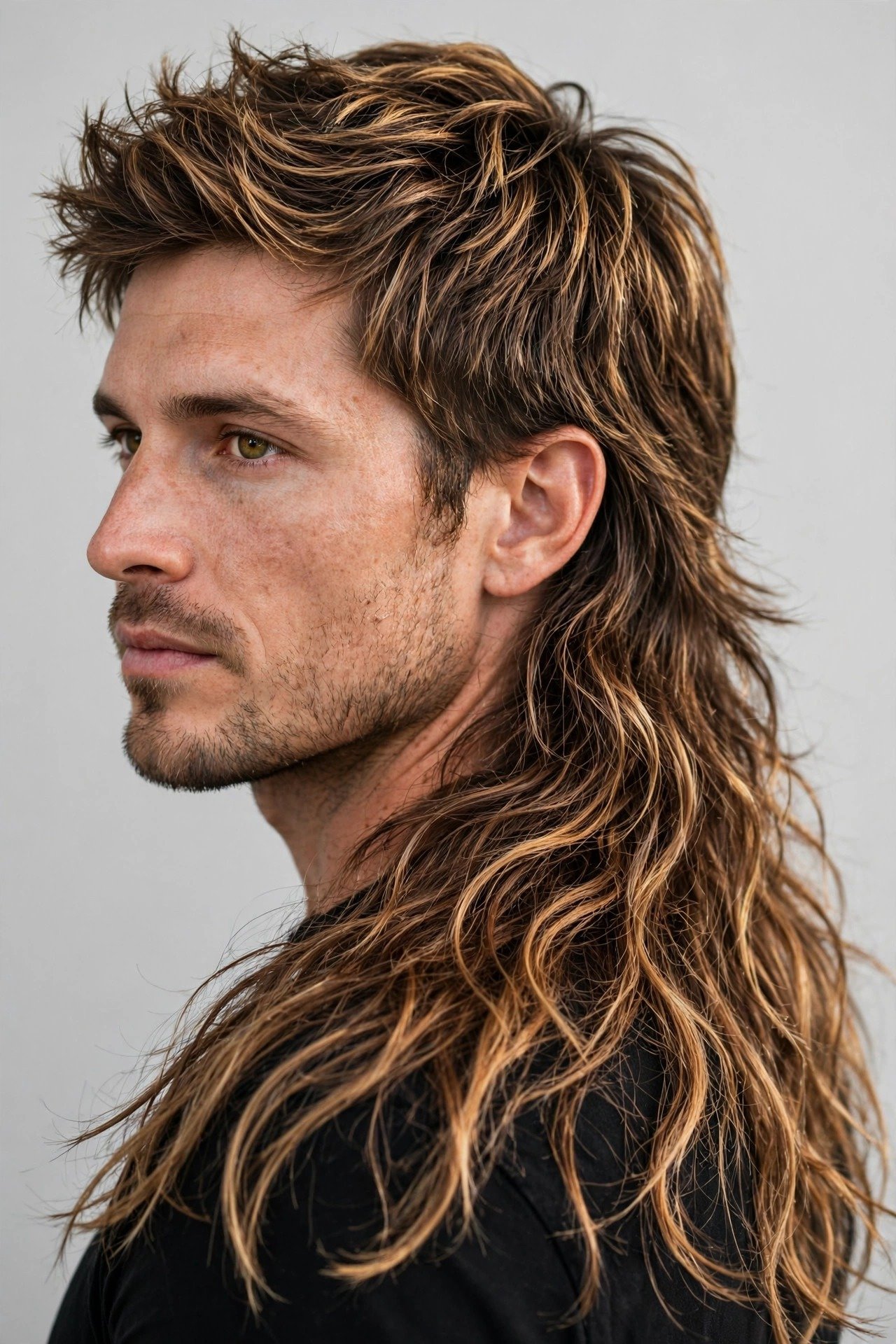
The dark espresso mullet is the sophisticated dark horse — a rich, near-black brown that gives the mullet’s silhouette depth, shine, and quiet luxury. Dark color makes the cut’s shape do all the talking: the fade transitions look sharper, the back’s layers look more defined, and the overall effect is polished rather than loud. It is the version for men who love the mullet’s architecture but want their color to whisper. On camera and in person, it reads as expensive.
It suits medium to deep skin tones beautifully and flatters all face shapes. If your hair is not naturally dark, a single-process espresso color is one of the lowest-commitment color services — forty-five minutes, minimal damage, grows out softly. Maintenance is a gloss refresh every six to eight weeks to keep the richness. Ask your colorist for a level-two-to-three espresso with a clear gloss on top for shine. Style with a light cream for control. For the man who wants the mullet’s edge in its most refined form, this is the one.
24. The Highlighted Mullet
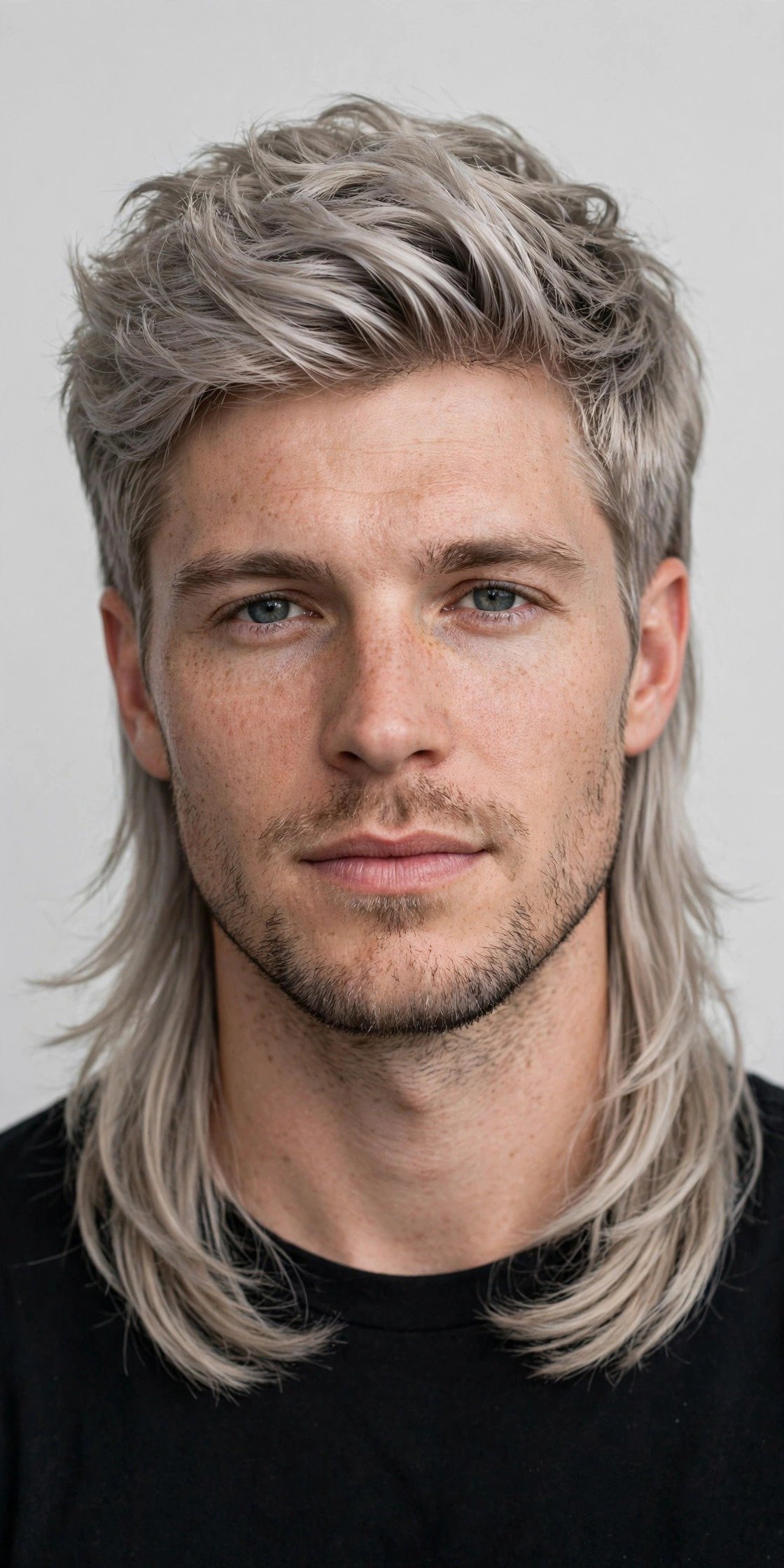
The highlighted mullet adds dimension without commitment — sun-kissed or caramel highlights woven through the top and back, catching the light on every layer the cut creates. Highlights and mullets are a natural pairing because the cut’s whole identity is layered movement, and dimensional color makes each layer visible. The effect is effortless and expensive-looking: hair that seems to have natural variation, like it spent a summer outdoors. It is the most universally flattering color option on this list.
It suits all skin tones — your colorist matches the highlight shade to your undertones — and flatters all face shapes, since the dimension adds life everywhere. Balayage or foilyage through the top and back takes one to two hours and grows out gracefully with no harsh line. Maintenance is a highlight refresh every eight to twelve weeks. Ask for “dimensional highlights through the top and back of the mullet — natural, sun-kissed, not stripey.” Style with sea salt spray to show off the dimension. If you want your mullet to look richer without going bold, start here.
25. The Copper Mullet
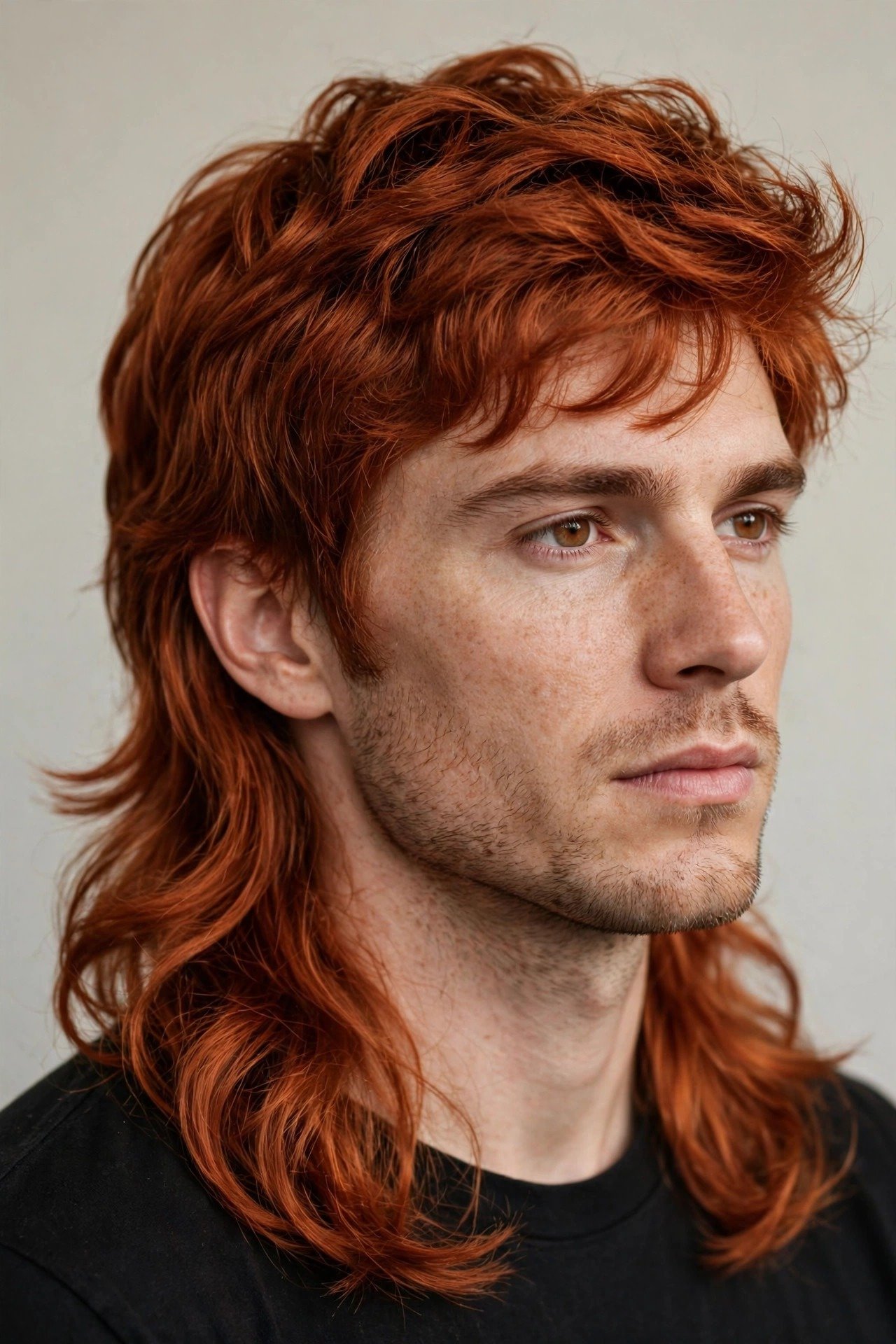
Copper is having a moment in men’s color, and the mullet is its perfect canvas. The rich, warm red-orange tone turns the cut’s layers into ribbons of color — every fade transition and back layer catches the light differently. It is bold without being unnatural, warm without being brassy, and it has a distinctive energy that suits the mullet’s confident personality. Men who wear copper mullets do not blend into crowds, and that is the point.
It suits fair to medium skin tones with warm undertones best and flatters oval and heart-shaped faces. Copper fades faster than any other fashion color, so commit to color-depositing conditioner and sulfate-free shampoo; expect a gloss refresh every four to six weeks. Book a colorist for a single-process copper — one to two hours — and ask them to match the depth to your skin tone. Style with light cream to keep the color’s shine. If you want your mullet to have a signature, copper is it.
26. The Two-Tone Mullet
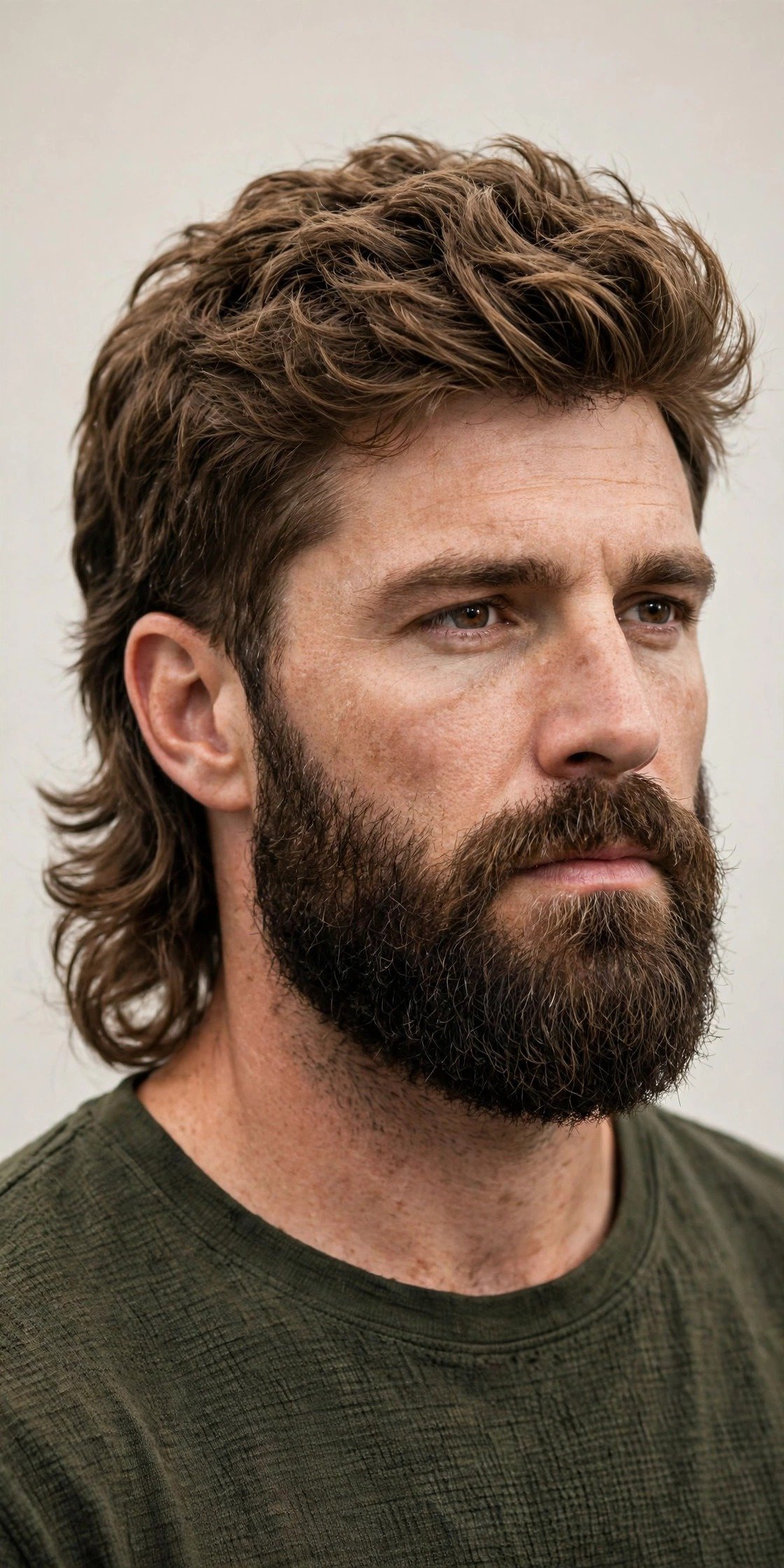
The two-tone mullet splits the cut’s personality in half — literally. Dark roots melting into bleached ends (or the reverse) turns the front-to-back length difference into a color story too: the contrast maps exactly onto the mullet’s architecture, with the top in one tone and the flowing back in another. It is the most graphic version on this list, and it works because the cut already has two zones — the color just makes the duality explicit. Street style’s favorite mullet in 2026.
It suits all skin tones — the contrast is the point, not the match — and flatters oval and square faces where the visual split adds interest. The process combines bleaching the ends with keeping or deepening the roots; book a colorist experienced with two-tone work and expect a two-to-three-hour session. Maintenance is moderate: the roots grow out naturally into the dark section, so touch-ups are about the blonde ends every six to eight weeks. Ask for “dark roots, bleached ends on a mullet — keep the transition soft, not a hard line.” If your style is already bold, this mullet keeps up.
27. The Mullet with Beard
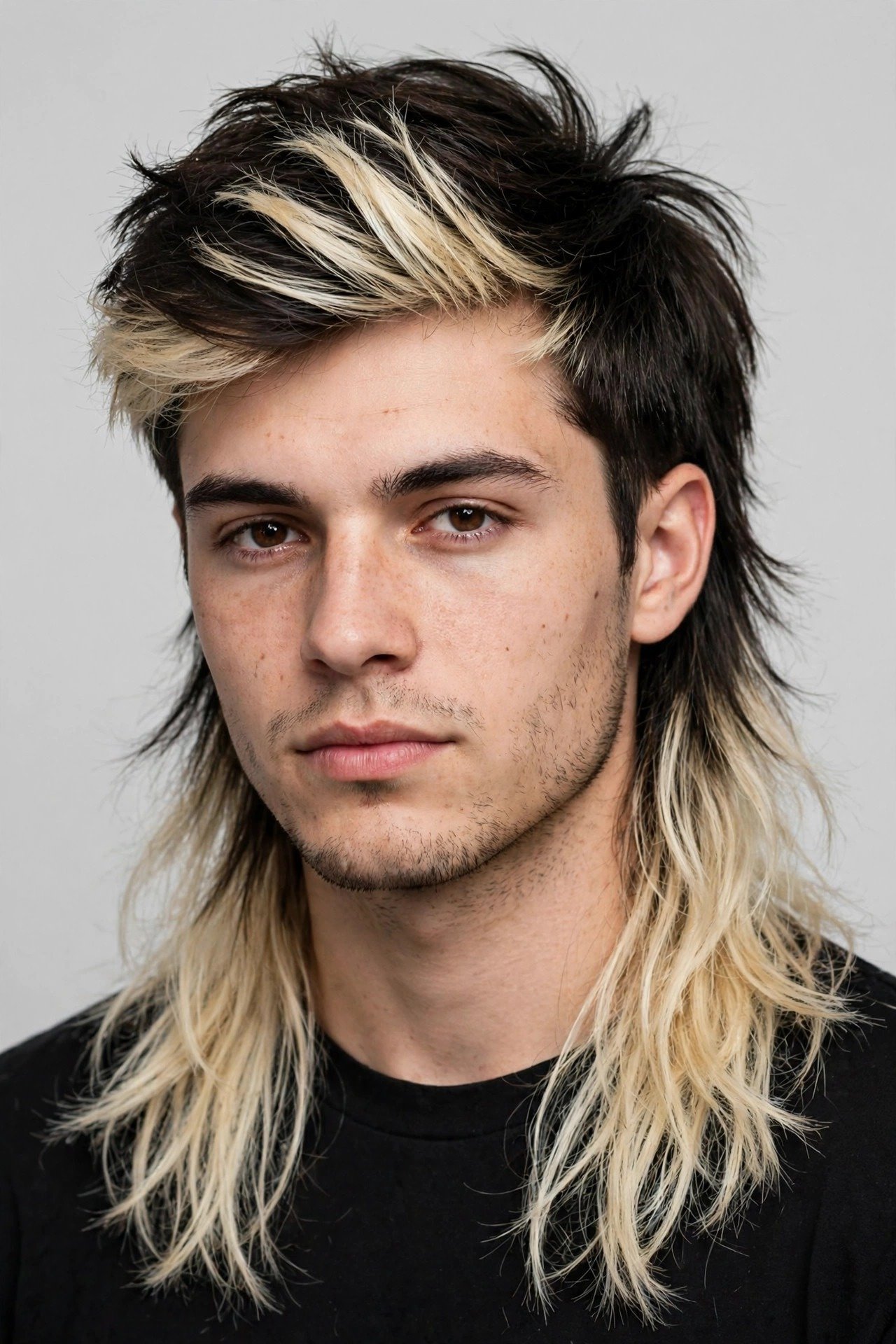
The mullet-beard combination is pure masculine geometry — flowing length in the back, fullness on the jaw, and the fade work connecting them into one continuous silhouette. A well-groomed beard does for the lower face what the mullet does for the back: adds presence and frames the features. The key is the transition: the sideburns should blend the fade into the beard’s cheek line with no harsh break, so the whole head reads as one designed shape. Done right, it is one of the most powerful looks in men’s grooming.
It suits men who can grow substantial facial hair and flatters round and oval faces — the beard adds length and angles. Our guide to buzz cuts with beards covers the same blending principles at the sideburn. Tell your barber to “connect the fade into the beard — blend the sideburns, keep the cheek line clean.” Maintain the beard with oil daily and a trim every one to two weeks, on the same schedule as the mullet’s fade so everything grows out evenly. The mullet and the beard are one look — groom them as one.
28. The Mullet with Glasses
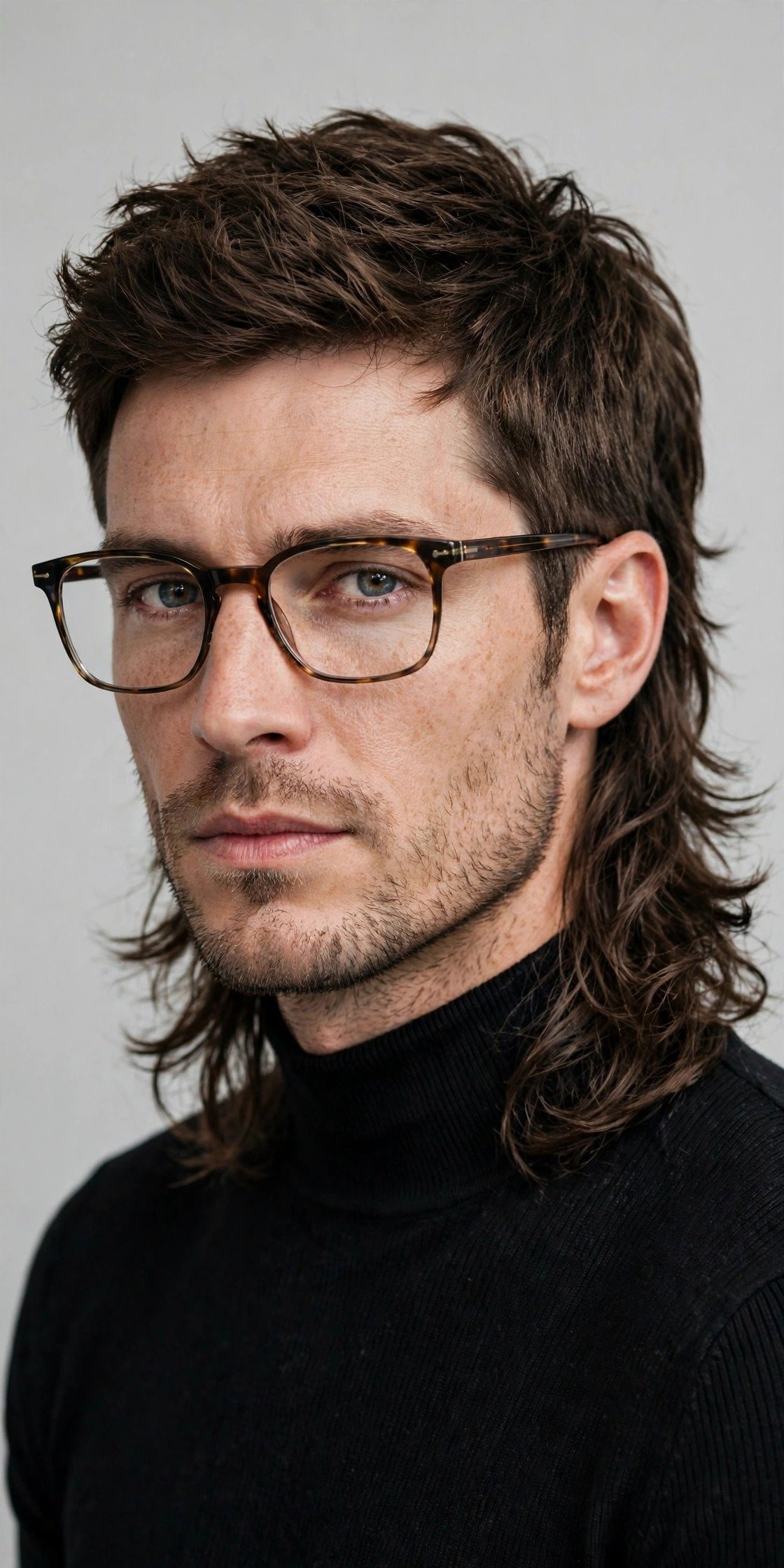
Glasses and mullets are a better pairing than most men realize — the frames give the cut’s front a focal point, and the mullet gives the glasses an edge they would not have with a plain crop. The trick is proportion: keep the top textured but controlled so it does not compete with the frames, and let the back carry the cut’s personality. A clean taper through the sides keeps the area around the glasses neat. The overall effect is intellectual-cool — the kind of look that works in creative offices and on weekends alike.
It suits all face shapes — match the frame shape to your face as you normally would — and all hair types, though keeping the sides tidy matters most for glasses wearers. Ask your barber for “a soft mullet with clean, tapered sides — I wear glasses, so keep the temple area neat.” Style the top with light matte paste pushed back or to the side, away from the frames. If you wear glasses daily, this is the mullet version designed around you.
29. The Extra-Long Back Mullet
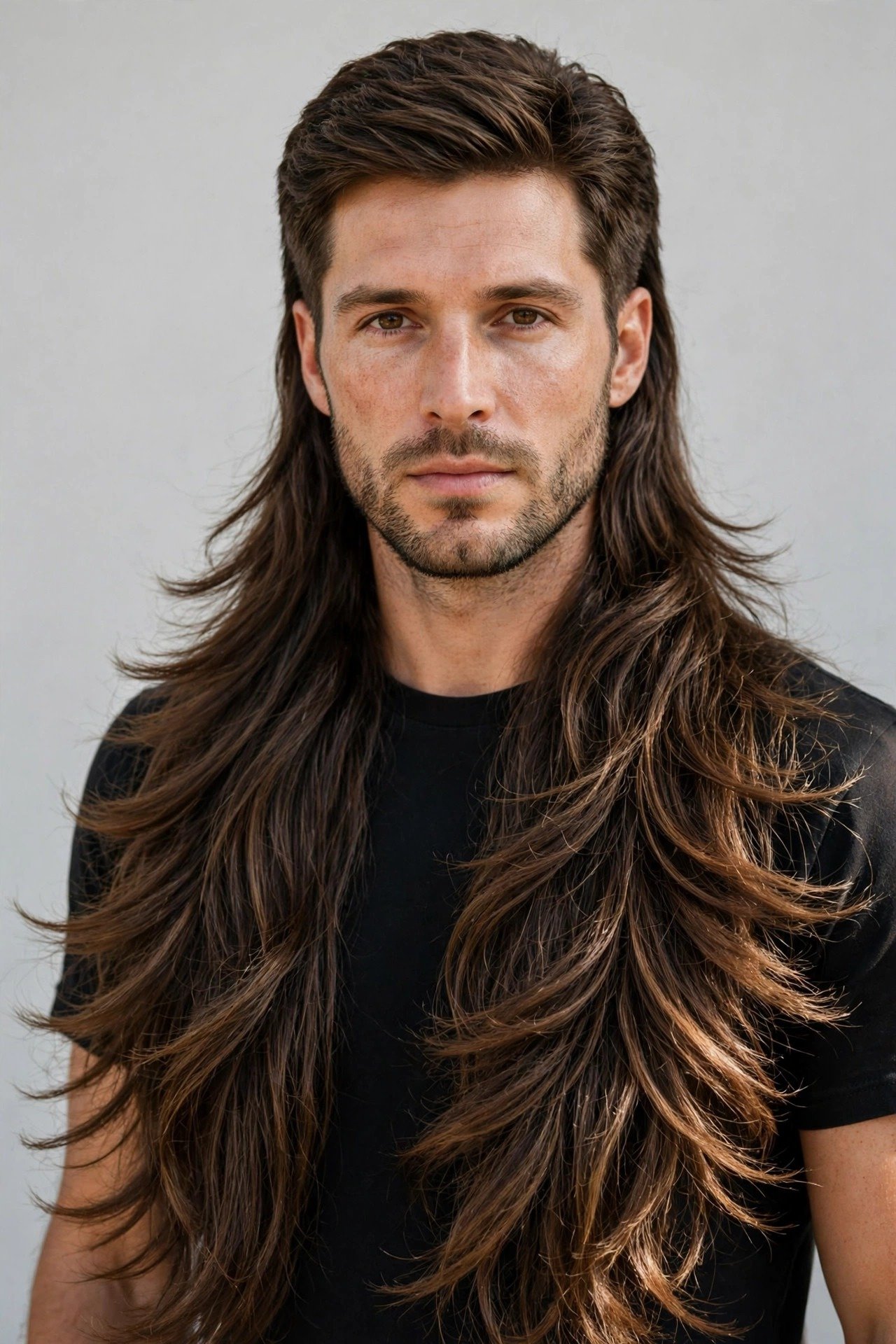
The extra-long back mullet is the full commitment — the back grown to shoulder length or beyond while the front stays short and the sides stay controlled. This is the mullet’s most dramatic silhouette, and in 2026 it works because the shaping is modern: long layers keep the back from going triangular, the sides are tapered or faded so the head keeps its structure, and the top is textured so the front holds its own against all that length. It is not a subtle cut, but it is a magnificent one.
It suits thick, straight to wavy hair best — you need density for real length — and flatters square and oval faces. Growing it is the long game: twelve to eighteen months from short, with shaping trims every eight to ten weeks to keep the layers alive. Ask your barber for “a mullet grown long — keep the sides controlled, layer the back for shape, top textured.” Style with a leave-in conditioner and light cream; long hair needs moisture. If you have always wanted to see how far your hair can go, this mullet is the journey.
30. The Choppy Mullet
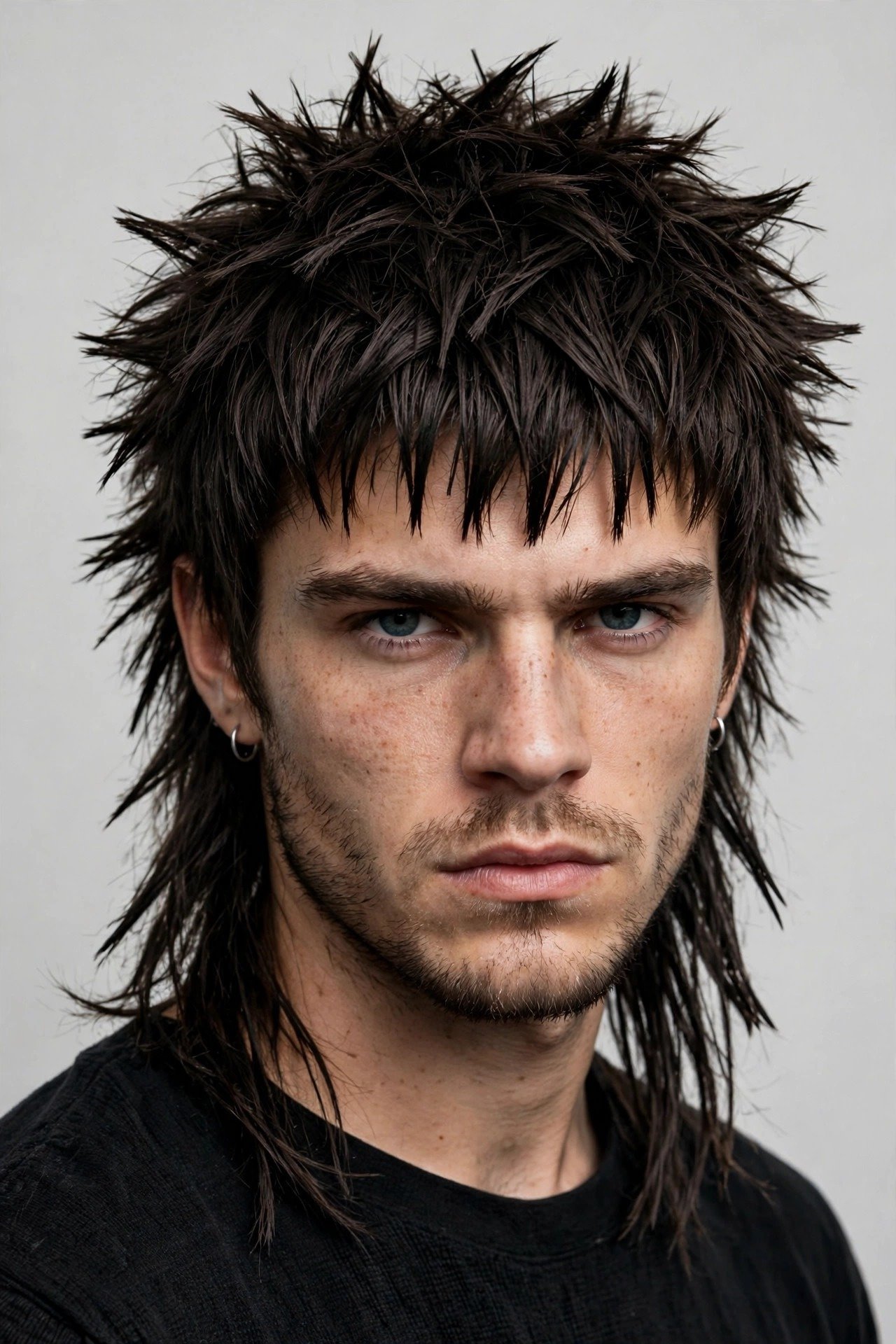
The choppy mullet is texture turned up to eleven — razor-cut, shattered layers throughout the top and back that create maximum separation and movement. Every piece of hair seems to go its own direction, and that is exactly the point: the choppiness is the style. It is the mullet for men who find the soft versions too polite. On thick, wavy hair it looks like controlled chaos; on straight hair it looks like deliberate, architectural edge.
It suits thick hair best — fine hair can look stringy with this much choppiness — and flatters oval and heart-shaped faces where the texture adds width. This is a razor-heavy cut, so choose a stylist who loves texture work; ask for “choppy, razor-cut layers everywhere on a mullet shape — I want maximum separation.” Style with matte paste on dry hair, pulling pieces apart aggressively; sea salt spray adds grit. A trim every six weeks keeps the chop fresh. If your aesthetic is leather jackets and loud music, this mullet already matches.
31. The Curtain Mullet
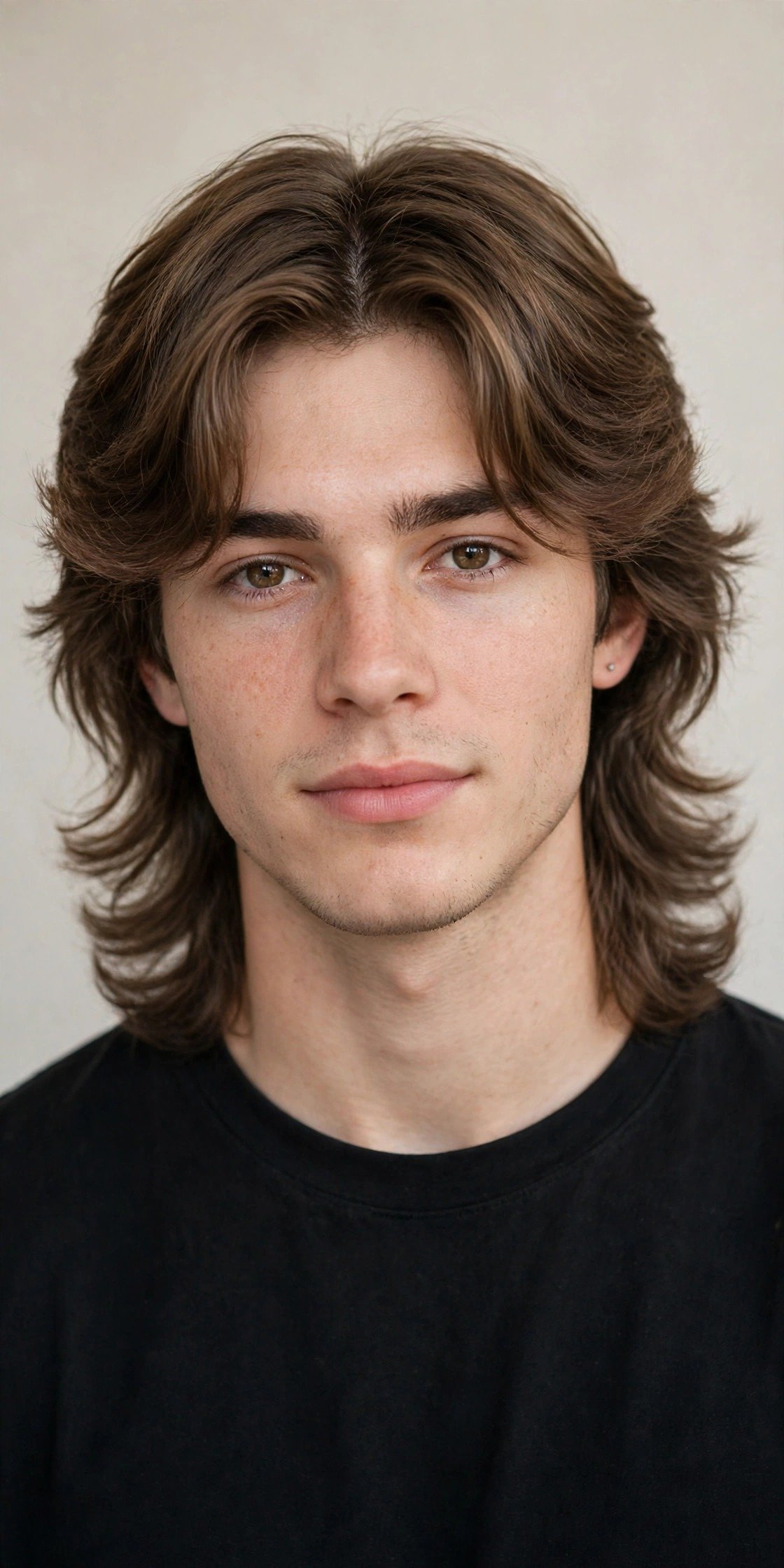
The curtain mullet fuses two defining trends of the decade — the center-parted curtain fringe and the soft mullet — into one seamless cut. The front falls in soft, face-framing curtains from a middle part, the sides blend gently, and the back keeps the mullet’s signature length. It is romantic, youthful, and incredibly wearable: the curtain softens the mullet’s edge while the back keeps it from being just another pretty-boy cut. Gen Z’s favorite mullet variant, and one of the most requested in 2026.
It suits straight to wavy, medium-density hair best and flatters oval, oblong, and diamond faces — the curtains add width where faces are narrow. Ask your barber for “curtain bangs up front on a soft mullet — center part, face-framing, back to the collar with layers.” Style by parting damp hair down the middle, applying a light cream, and letting it air-dry; a round brush adds polish for evenings. Trim every five to six weeks to keep the curtains at the right length. If you want the mullet’s coolest, softest face, this is it.
32. The Coily Texture Mullet
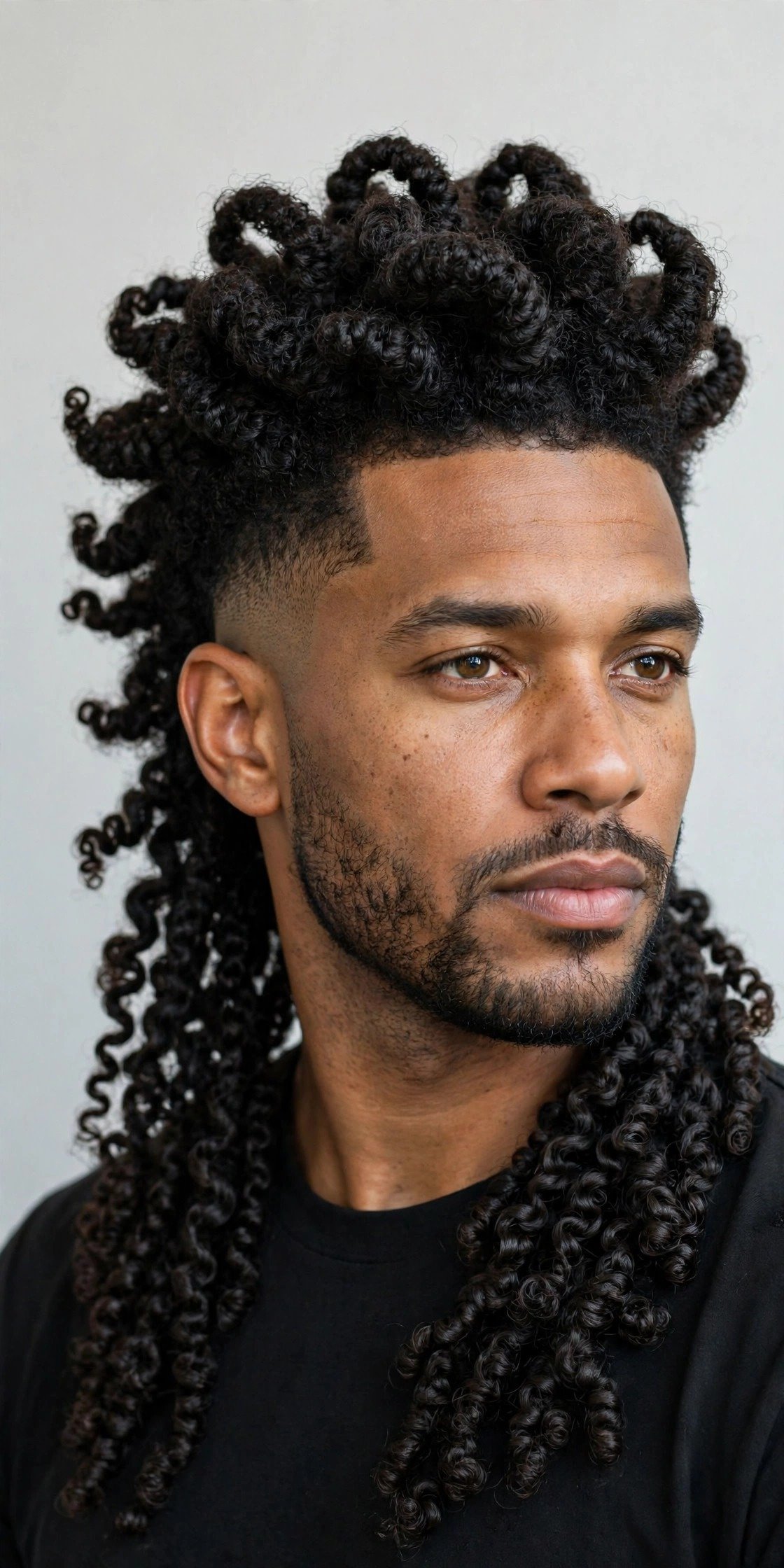
The coily texture mullet is the cut’s most sculptural form — tight coils shaped into the mullet’s silhouette, with tapered sides that frame the face and a longer, voluminous back that shows off the coil pattern at full glory. Coily hair gives the mullet something no other texture can: real, architectural volume that holds its shape all day with minimal product. The taper through the sides keeps the silhouette crisp while the top and back celebrate the texture. It is a stunning, distinctive version of the cut.
It suits type 4 coily hair best and flatters round and square faces — the vertical volume elongates and balances. The critical step is finding a barber or stylist experienced with coily hair who cuts it in its natural state; ask for “tapered sides, top and back left long enough to show full coil, shaped — not thinned.” Moisture is everything: leave-in conditioner, curl cream, and a satin pillowcase at night. Style on damp hair with cream, defining coils by section, and let it dry fully before touching. For coily hair, this mullet is not just a style — it is a showcase.
33. The Slicked-Back Mullet
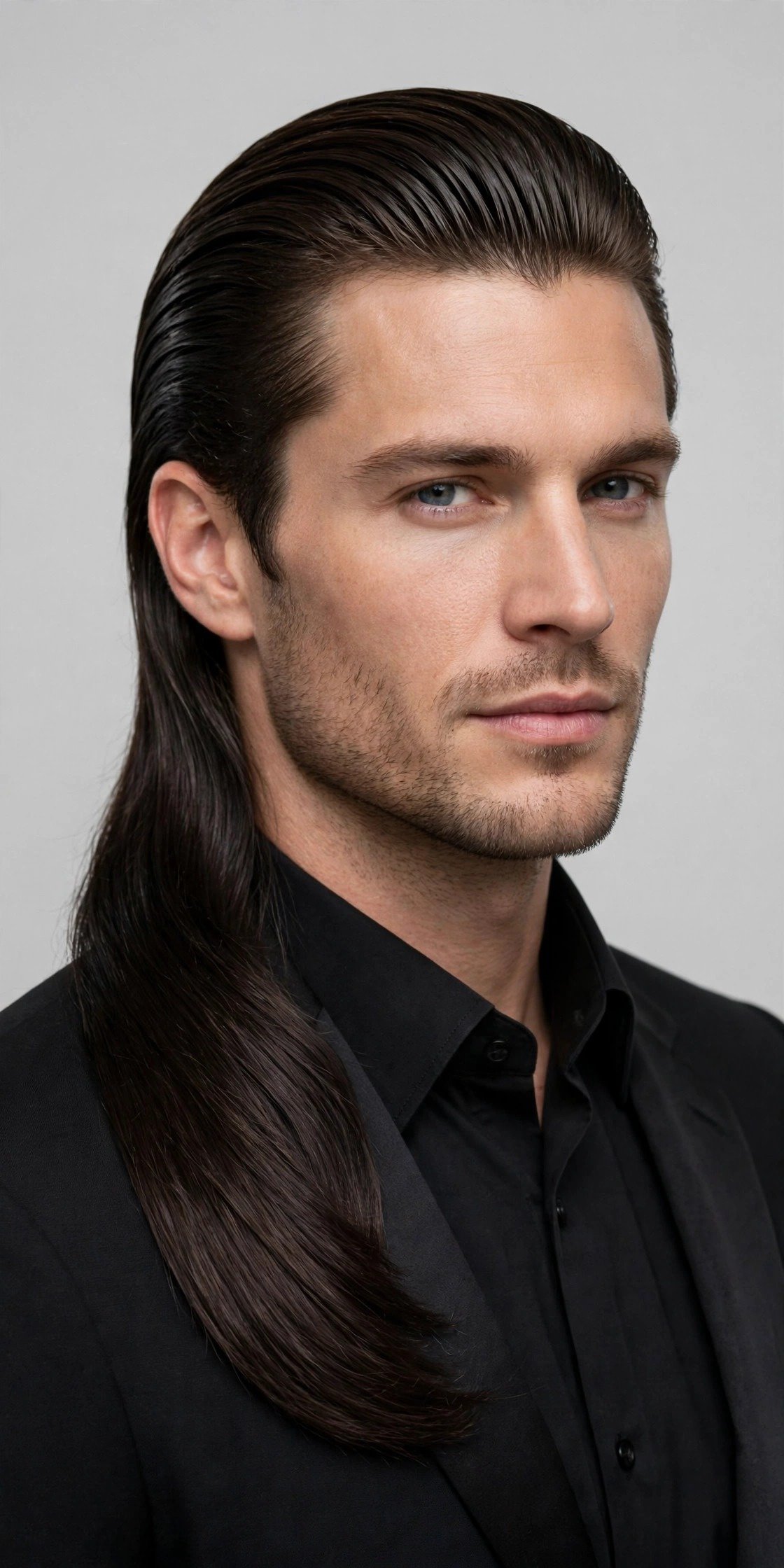
The slicked-back mullet is the cut’s evening identity — the same architecture, but styled with the top swept back and the back smoothed into a polished, controlled shape. It is the version for nights out, formal events, and men who like their edge dressed up. The styling does the transformation: a stronger-hold product and a comb turn the everyday textured mullet into something sleek and deliberate. If you already wear a mullet, this is less a new cut than a new way to wear it.
It suits straight to wavy hair best and flatters square and oval faces — the swept-back top exposes the face fully, so strong features shine. The barber brief is a standard soft or textured mullet; the magic is in the styling. On damp hair, apply a medium-hold pomade or cream, comb everything straight back, and let it set; a blow dryer on low heat adds smoothness. For extra polish, finish with a light shine spray. Keep the back neat with trims every six weeks. The slicked-back mullet proves the cut’s range — one haircut, two personalities.
34. The Bleached Tips Mullet
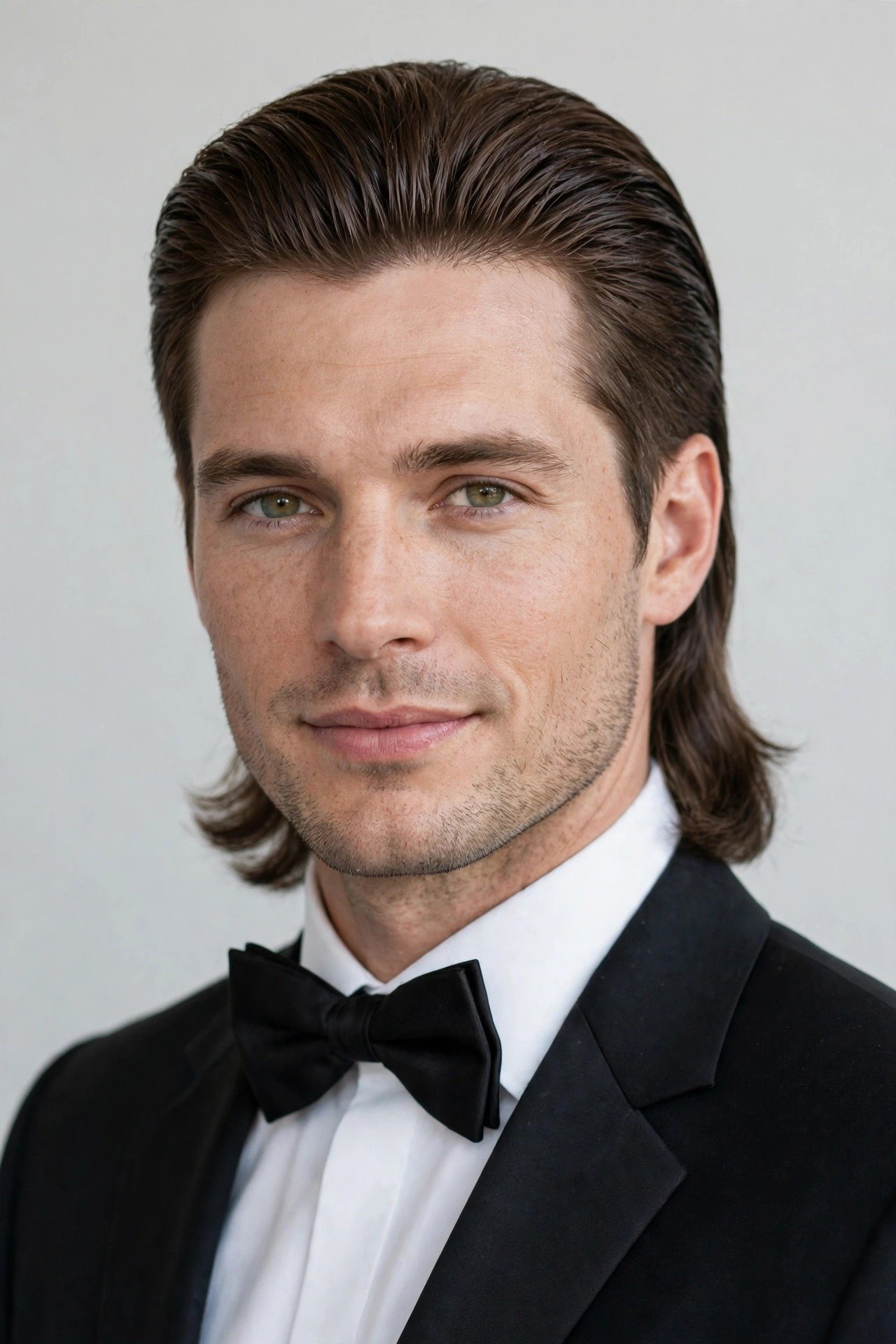
The bleached tips mullet is the playful color play — natural dark roots with bleached, golden tips through the back and top, like the hair caught the sun and kept it. It is sometimes called the dip-dye mullet, and it works beautifully on the cut because the mullet’s layers give the bleached ends dozens of surfaces to catch the light. The effect is youthful, summery, and low-commitment: the roots stay your natural color, so grow-out is graceful and touch-ups are about the ends only.
It suits naturally dark hair best and flatters all face shapes — the color draws the eye to the texture, not the bone structure. The process is a simple bleach on the ends, one to two hours; ask your colorist for “bleached tips on the mullet — keep the transition soft and natural, not a hard line.” Maintenance is a toner refresh every six to eight weeks and conditioning, since bleached ends dry out. Style with sea salt spray to show off the two-tone texture. If you want color without the commitment of a full bleach, this is the sweet spot.
35. The Undercut Mullet
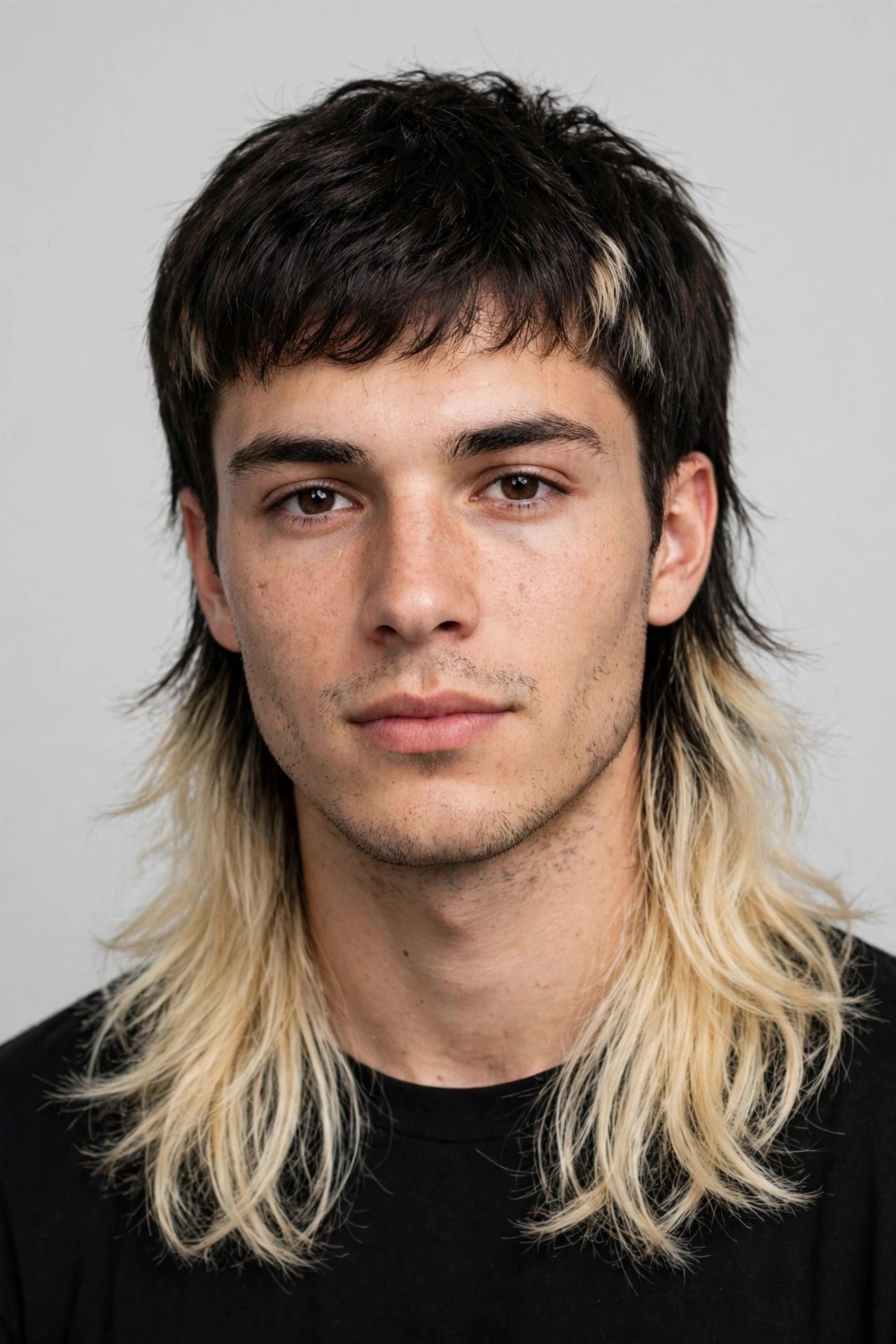
The undercut mullet is the cut’s boldest structural statement — the sides taken down in a sharp, uniform undercut while the top stays long and flows into the mullet’s signature back. Where fades blend, the undercut disconnects deliberately: the contrast between the tight sides and the flowing length is the entire point. It is the version for men who want the mullet’s drama amplified, and it has a strong streetwear and creative-industry following in 2026. Not subtle, not sorry.
It suits straight to wavy, medium-to-thick hair best and flatters oval and square faces where the contrast adds architecture. The undercut needs a clean-up every two to three weeks to keep the disconnect sharp — this is a high-maintenance choice. Ask your barber for “a true undercut on the sides — one length, no fade — with a long textured top flowing into a mullet back.” Style the top with matte clay for volume and keep the back light. If the disconnected mullet was not bold enough for you, this is the next level.
36. The Wedding-Ready Mullet
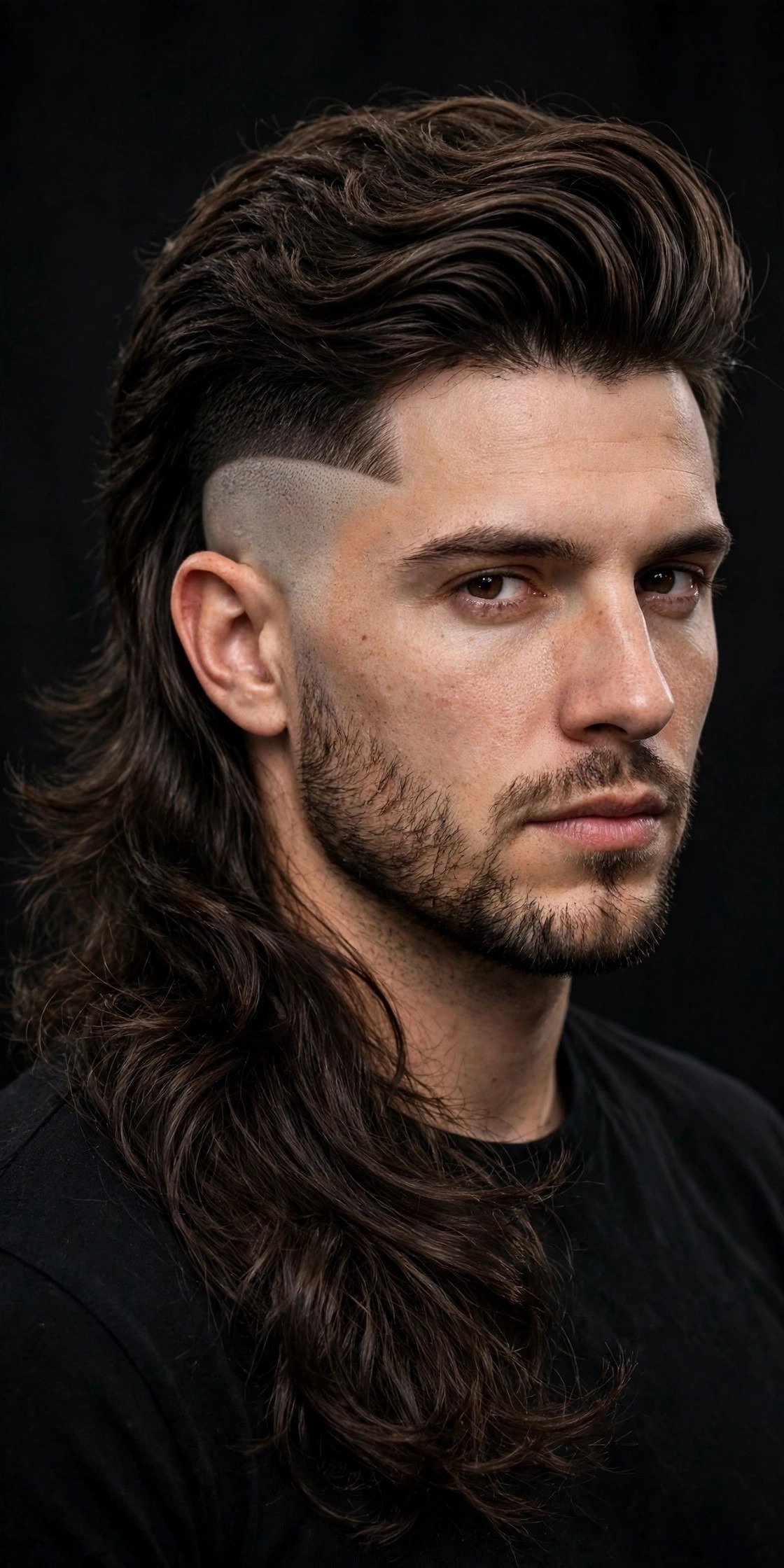
The wedding-ready mullet is the cut’s formal proof — a soft mullet styled to perfection for the biggest days: clean taper through the sides, textured top with polished control, and the back shaped, smoothed, and finished so every layer sits exactly where it should. It is the version that silences anyone who ever said a mullet cannot be elegant. Grooms, groomsmen, and formal-event attendees are wearing this in 2026, and the photos are spectacular — the cut’s personality shines through even in black tie.
It suits all hair types with the right styling and flatters all face shapes. The cut itself is a standard soft mullet, kept fresh with a trim one week before the event; the styling is where it becomes wedding-ready. Book a barber or stylist for the day: blow-dry the back smooth, define the top with a medium-hold cream, and finish with a light-hold spray that photographs without stiffness. A trial run two weeks before is worth it. The wedding-ready mullet is the final answer to the only question that matters — can a mullet be classy? Yes, absolutely.
Modern Mullet Maintenance
Keeping a modern mullet sharp is about rhythm, not effort. The sides and any fade work are the fast-growing part — a taper or fade loses its crispness in two to four weeks, so book clean-ups on that cycle even when the rest of the cut does not need touching. Many barbers offer quick side-and-neckline touch-ups at a reduced price between full appointments; ask yours. The top and back are slower: a full reshape every six to eight weeks keeps the layers alive and the silhouette intentional. The grow-out is graceful by design — the layered back actually improves for a few weeks before it needs attention.
Washing and conditioning matter more for mullets than for short cuts because the back length is older, more exposed hair. Wash two to three times a week with a quality shampoo — daily washing strips the natural oils the back needs — and condition every wash, focusing on the mid-lengths and ends. If your back is past the nape, a weekly deep-conditioning mask keeps it from going dry and frizzy. Heat protectant is non-negotiable if you blow-dry. And sleep on it: a silk or satin pillowcase reduces friction on the back length overnight, which is the difference between waking up with flow and waking up with a tangle.
Between appointments, the neckline is your tell. A fuzzy neckline makes even a fresh mullet look neglected, so learn to clean it yourself with a trimmer or book the quick touch-ups. Watch the sides for puffiness — as the taper grows out, the area above the ear can start to wing out; a tiny amount of product smoothed downward buys you another week. And resist the urge to trim the back yourself: the layered shaping is the hardest part of the cut to get right, and a DIY snip at the nape is visible from every angle. Leave the architecture to your barber; you handle the daily styling.
Modern Mullet FAQs
What is a modern mullet for men?
A modern mullet is a men’s haircut with shorter hair through the front, crown, and sides and longer, shaped length at the back — the classic mullet silhouette rebuilt with 2026 techniques. The key differences from the 1980s original are seamless blended layers instead of harsh disconnects, modern fade or taper work through the sides, and textured, groomed finishes. The result keeps the iconic short-front-long-back geometry but reads as sophisticated and intentional rather than retro or ironic.
Are mullets still in style for men in 2026?
Yes — the mullet is one of the defining men’s haircuts of 2026. Perfect Corp’s 2026 men’s trends roundup calls the Modern Mullet with a skin fade the standout trend for younger men, Accio’s “10 Men’s Haircut Trends Set to Dominate 2026” ranks the Modern ‘Soft’ Mullet at number two, and Salon Magazine Canada’s autumn/winter 2026 coverage notes the soft mullet remains a key style. The 2026 version succeeds by being softer and more groomed than the original — texture over drama, blended transitions over disconnects.
What face shapes suit a modern mullet?
The modern mullet is versatile enough to flatter every face shape with the right tuning. Round faces benefit from tighter faded sides and a little height on top for definition. Long or oblong faces are balanced by a flatter top and a slightly shorter back. Square faces can wear almost any version since the strong jawline echoes the cut’s geometry. Heart-shaped faces do well with a fuller top and softer sides. Oval faces can wear everything. Discuss your face shape at the consultation — the top length, fade height, and back length are all adjustable.
How do I ask my barber for a modern mullet?
Walk in with three specifics: top, sides, and back. Say “modern mullet,” then describe the top (“about three inches, textured”), the sides (“low taper,” “mid fade,” “skin fade,” or “burst fade”), and the back (“just below the collar,” “nape length,” or “shoulder length”). Mention your hair’s behavior — cowlicks, crown quirks, how the back flips when it grows. Most importantly, bring a reference photo from the thirty-six styles above; “like number seven but with a lower fade” tells your barber more than any description. Confirm the back length twice — it is the hardest part to fix.
How long does it take to grow a modern mullet?
From a short haircut, a true mullet takes six to nine months: the front and sides are kept trimmed while the back grows. A mini or baby mullet is achievable in three to four months. The hockey flow and extra-long versions need twelve to eighteen months. During the grow-out, get shaping trims every eight weeks so the back develops layers instead of bulk — the awkward phase is real, but regular shaping keeps it looking intentional rather than neglected.
Is the modern mullet high maintenance?
Less than it looks. Daily styling takes three to five minutes — a fingertip of matte clay or texture paste worked through dry hair. The fade or taper needs refreshing every two to four weeks depending on how sharp you like it, and the full cut needs reshaping every six to eight weeks. The layered back grows out gracefully, which is why the mullet qualifies as low-effort despite its expressive silhouette. Colored versions (platinum, copper, two-tone) add real maintenance — factor in toner and conditioning routines before committing.
Can I wear a modern mullet to the office?
Absolutely — choose the right version. The professional mullet (number 15) and the mini mullet (number 19) are designed for conservative workplaces: tapered sides, controlled top, back kept at or just below the collar. From the front they read as sharp textured crops. The low taper mullet (number 8) also works in most offices. Save the skin fade, disconnected, and extra-long versions for creative fields and weekends. When in doubt, keep the back modest and the sides neat — grooming discipline sells the cut in any setting.
What products should I use for a modern mullet?
Matte clay or texture paste is the foundation — pea-sized, worked through dry hair for definition without shine. Sea salt spray on damp hair adds grip and beachy texture, especially through the back. Light creams or leave-in conditioners control thick or coarse hair and keep the back from puffing. Curl cream for curly and coily versions. Avoid high-shine gels and heavy waxes, which drag the cut backward into greasy retro territory. Less product is always better than more — the cut does the architectural work.
Does a modern mullet work with curly or coily hair?
Beautifully — curly and coily hair are among the best textures for the modern mullet. Curls give the cut natural volume, movement, and shape with minimal styling; the curly soft mullet (number 4) and coily texture mullet (number 32) are built around letting the natural pattern lead. The key is a barber who cuts curly or coily hair in its natural state and layers internally to remove bulk without thinning the shape. Moisture is essential — leave-in conditioner and curl cream, plus a satin pillowcase at night.
How is a modern mullet different from a wolf cut?
They are close cousins with one decisive difference: the mullet keeps a clear front-to-back length difference — the back is meaningfully longer than the front — while the wolf cut distributes heavy, shaggy layers more evenly all over, usually with bangs. The wolf cut is messier and more uniform in length; the mullet has a defined silhouette with a longer back. If you like the wolf cut’s texture but want a clearer shape and a more groomed finish, the modern mullet is your cut. The wolf cut mullet (number 9) sits exactly at the intersection.
Conclusion
The modern mullet’s 2026 moment is not a nostalgia gimmick — it is the logical endpoint of where men’s grooming has been heading for years. Every major trend report points the same direction: softer structures, natural texture, low-effort wear, and personal expression over rigid uniformity. The mullet, rebuilt with blended layers and modern fade work, is the perfect vessel for all four. It is the rare haircut that is simultaneously a statement and wash-and-go, rebellious and groomed, retro and completely current.
What makes this guide’s thirty-six versions work is that they are not thirty-six different haircuts — they are thirty-six tunings of one great idea. The fade height, the back length, the texture, the color: these are dials, and your barber turns them to fit your hair, your face, and your life. A mini mullet for the cautious, a skin fade mullet for the bold, a professional mullet for the office, a permed mullet for the texture-hungry. The cut meets you where you are.
So screenshot your two or three favorites, book the appointment, and bring the photos. Tell your barber the top, the sides, and the back — and then let the layers do what they do. The modern mullet men are wearing in 2026 is not your uncle’s haircut. It is better: softer, sharper, and built for the way men actually live now. The back has never looked this good.