32 Preppy Bob Haircuts for Women 2026: Polished, Classic & Effortlessly Chic
The preppy bob is having its biggest moment in years. In 2026, this polished, collegiate-inspired haircut has moved far beyond its country-club roots to become one of the most requested styles in salons everywhere — a haircut that reads as put-together without trying too hard. Think clean lines, healthy shine, and a silhouette that looks expensive from every angle. Whether you favor the razor-sharp classic or a softer, more modern interpretation, there is a preppy bob variation that will flatter your face shape, suit your hair texture, and fit your daily routine.
What makes the preppy bob different from other bob haircuts is its discipline. This is not a messy, undone bob or an edgy, choppy cut. The preppy bob is defined by precision: smooth surfaces, deliberate partings, ends that sit exactly where they should, and a finish that looks groomed from morning to night. It is the haircut equivalent of a perfectly pressed blazer — timeless, versatile, and quietly confident. Beauty editors confirm the bob family is dominating right now — browse this roundup of the hottest bob haircuts for every hair type to see how wide the trend stretches.
Below you will find 32 preppy bob variations for 2026, each with detailed guidance on who it suits, exactly what to ask your stylist for, how to style it at home, which products to use, and how to keep it looking sharp between appointments. After the ideas, you will find a complete styling guide, a maintenance plan, and answers to the most common questions about the preppy bob.
1. The Classic Preppy Bob
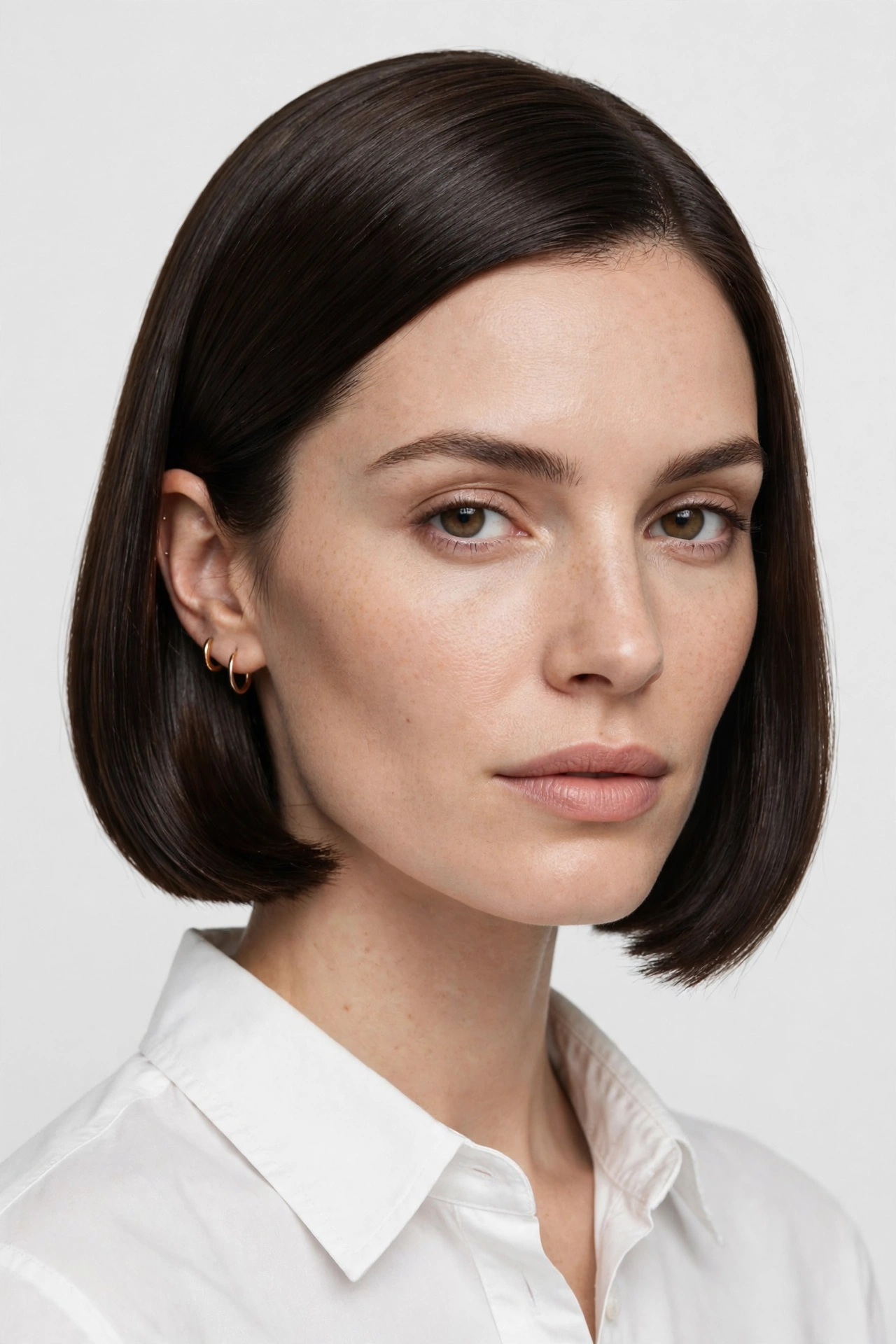
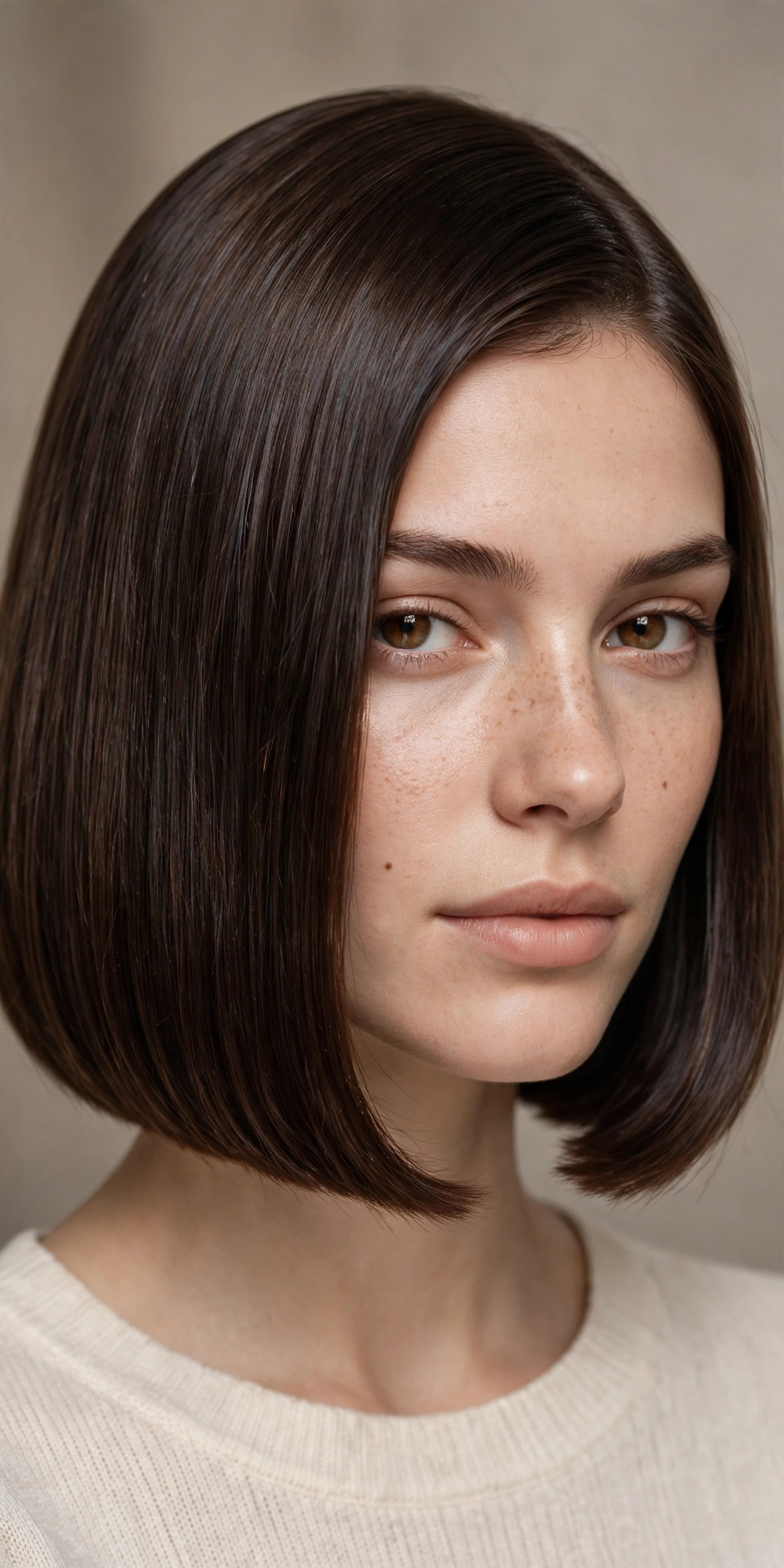
The classic preppy bob is the foundation everything else is built on: a chin-to-jaw-length cut with clean, even ends, a neat side or middle part, and a smooth, polished finish. There are no layers to speak of, no texture, no drama — just one immaculate line that swings when you move and catches the light with a healthy gloss. This is the haircut that defined polished femininity for decades, and in 2026 it looks as fresh as ever because precision never goes out of style.
This cut suits oval, heart, and square face shapes beautifully, as the even perimeter softens strong jawlines while framing the cheekbones. It works best on straight to slightly wavy hair with fine to medium density; very thick or very curly hair will need significant smoothing work to achieve the signature sleekness. If your hair is naturally straight, this is the lowest-maintenance polished cut you can own.
Ask your stylist for a one-length bob cut to the jawline or just below, with a clean perimeter and minimal texturizing — emphasize that you want a sharp, blunt edge, not softness. Bring reference photos showing the exact length and parting you want.
To style, blow-dry with a paddle brush pulling sections downward and slightly under, then run a flat iron over the ends for that glassy finish. Use a heat protectant before styling and a pea-sized amount of smoothing serum after. A light-hold hairspray keeps flyaways in check without stiffness. Maintenance is straightforward: trims every six to eight weeks to keep the line crisp, and a weekly deep-conditioning mask to maintain the shine that makes this cut sing.
2. The Preppy Bob with Side Part

A deep side part is the fastest way to give the classic preppy bob more shape and movement. By shifting the part several inches off-center, you create natural volume at the crown, an elegant sweep across the forehead, and an asymmetrical frame that flatters nearly every face shape. This small change transforms the bob from symmetrical and demure to dynamic and sophisticated — it is the version most often seen on polished professionals and socialites.
The side-part preppy bob is exceptionally flattering for round and square faces, because the diagonal line across the forehead breaks up width and creates the illusion of length. It also works wonderfully for anyone with a high forehead or a cowlick at the front hairline, since the deep part redirects growth patterns. Fine hair benefits enormously from the volume the deep part creates at the roots.
Ask your stylist to cut the bob with your intended part in mind — the lengths should be balanced for a side part, which usually means the heavier side sits slightly longer. Request a clean perimeter at jaw length with the part carved in while the hair is damp so it falls naturally.
Styling starts with a volumizing mousse at the roots on damp hair. Blow-dry using a round brush, lifting at the crown on the heavy side of the part. Set the part with the tail of a comb while hair is warm, then lock it with a light mist of flexible-hold hairspray. A shine spray on the lengths adds the preppy polish. To maintain, refresh the part each morning with a comb and water spritz; the cut itself needs trims every six to eight weeks.
3. The Sleek Straight Preppy Bob

When the preppy bob goes ultra-sleek, it becomes a statement of pure polish. This variation takes the classic shape and finishes it with a glass-like, frizz-free straightness that looks almost liquid — every strand aligned, every reflection sharp. It is the red-carpet version of the preppy bob, and in 2026 it is a favorite for evenings, events, and anyone whose personal style leans minimalist and refined.
This look demands naturally straight or straightened hair; wavy or curly textures can achieve it but will need dedicated heat styling each time. It suits oval and long face shapes especially well, as the vertical sleekness elongates. Those with fine to medium hair will find it easiest to maintain, since the style relies on hair lying flat and smooth rather than holding volume.
Ask your stylist for a blunt one-length bob with absolutely no layering, cut slightly longer in front (a whisper of an A-line) to keep the silhouette interesting. Request that the ends be cut blunt and the interior left full so the hair has enough weight to hang straight.
The styling routine is non-negotiable: apply heat protectant to damp hair, blow-dry smooth with a paddle brush in downward sections, then flat-iron in thin passes from roots to ends. Finish with an anti-frizz serum and a shine mist. A silk pillowcase helps preserve the sleekness overnight. Maintenance means trims every five to six weeks — split ends destroy the glassy effect — plus a keratin or smoothing treatment every few months if your hair tends toward frizz.
4. The Preppy Bob with Curtain Bangs
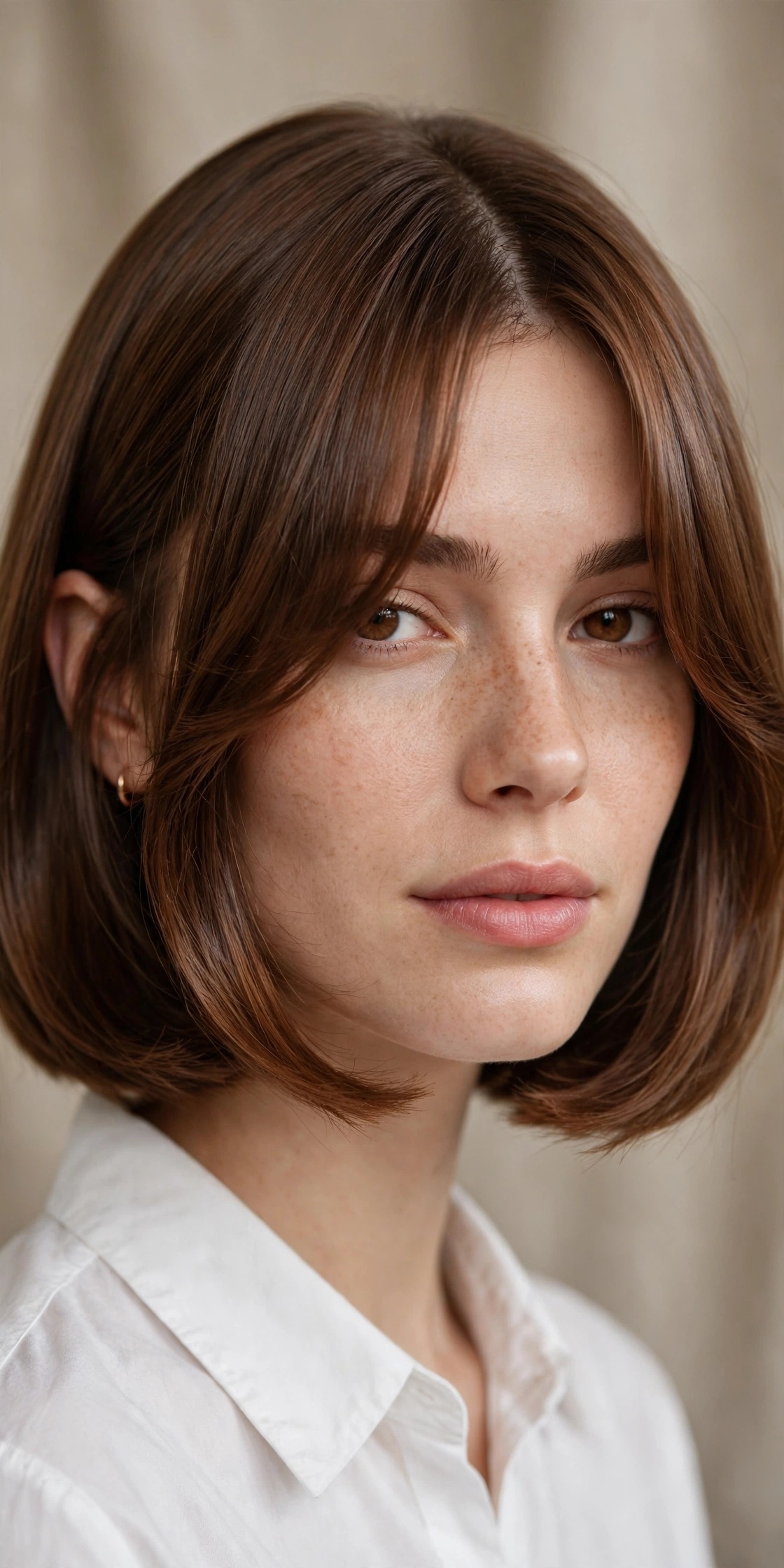
Pairing a preppy bob with curtain bangs creates a beautiful tension between structure and softness. The bob itself stays crisp and polished, while the parted, face-framing fringe adds movement, youthfulness, and a flattering frame around the eyes and cheekbones. This combination has become one of the most requested salon pairings of 2026 because it keeps the preppy discipline while adding a touch of romantic ease.
Curtain bangs suit nearly every face shape — they are particularly kind to round faces (the parted fringe elongates) and to high foreheads (the fringe provides soft coverage without a heavy blunt bang). They work on straight, wavy, and even loosely curly hair, as the bangs can be styled to blend with your natural texture. For more inspiration on fringe styling, see our guide to curtain bangs for women in 2026.
Ask your stylist for a classic preppy bob at jaw length plus curtain bangs that part in the middle and taper from the cheekbones down to blend into the bob’s perimeter. The bangs should be cut dry or nearly dry so the stylist can see how they fall with your natural texture.
To style, blow-dry the bangs first (they set fastest) using a small round brush, sweeping each side away from the center part. Then style the bob as usual with a paddle brush. A texturizing spray on the bangs keeps them piecey rather than helmet-like. Trim the bangs every three to four weeks — they grow out faster than the bob — and use dry shampoo at the fringe roots between washes to prevent separation.
5. The Layered Preppy Bob
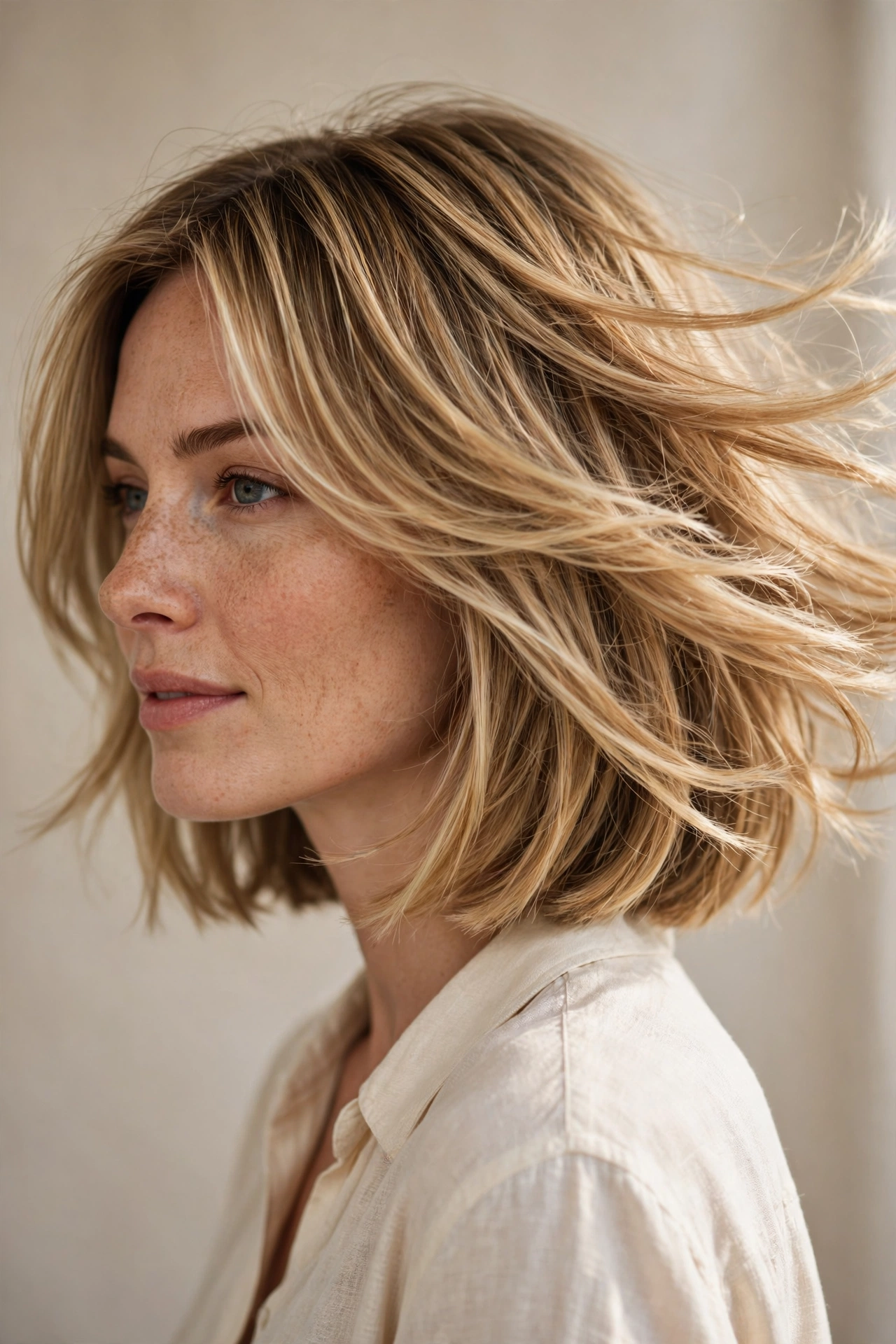
A layered preppy bob keeps the polished spirit of the classic while adding interior movement that makes the hair swing, bounce, and feel lighter. The layers here are subtle and strategic — long, blended layers through the mid-lengths and ends rather than choppy, visible steps. The result is a bob that still reads as preppy and groomed but has more life and dimension than the one-length version. If you love our long layered bob variations, this shorter take keeps the same flattering movement in a crisper package.
This is the ideal preppy bob for thick or heavy hair, because the layers remove bulk without sacrificing the clean outline. It also suits wavy hair beautifully, as the layers encourage natural wave to form. Round faces benefit from the vertical movement the layers create, and anyone who finds a blunt bob too severe will prefer this softer structure.
Ask your stylist for a jaw-length bob with long, invisible layers cut into the interior — emphasize blended, not choppy. The perimeter should stay fairly clean so the preppy line remains visible, with the layers doing their work underneath.
Style with a round brush to enhance the layered movement, flicking the ends slightly under or out depending on your mood. A volumizing mousse at the roots plus a light texturizing cream on the ends gives definition without frizz. Layers grow out gracefully, so trims can stretch to eight weeks, but ask your stylist to check the layer balance at each visit so the shape does not collapse.
6. The Preppy Bob with Subtle Waves
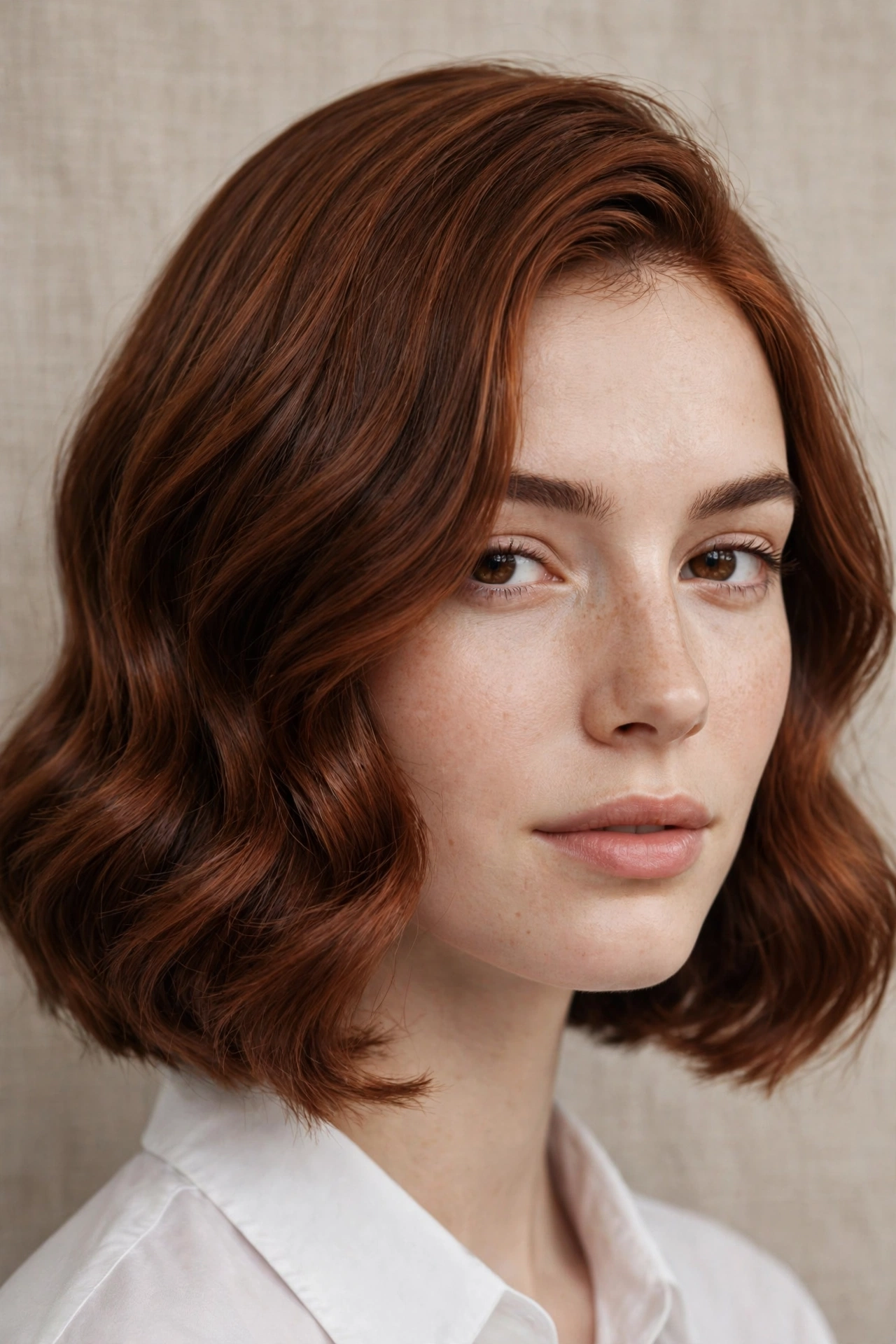
Not every preppy bob needs to be pin-straight. The subtle-wave version keeps the precise cut and neat parting but finishes the lengths with soft, loose waves that add dimension and a touch of effortlessness. The key word is subtle — these are polished, uniform waves, not beachy tousles. Think old-money weekend rather than surf trip: refined, expensive-looking movement that still reads as groomed.
This variation is a gift for naturally wavy hair, which can achieve the look with minimal heat. It also suits fine hair, because the waves create the illusion of fullness and body. Oval, heart, and diamond face shapes are especially flattered, as the waves add width exactly where these shapes need it — through the cheekbones and jawline. If your hair holds a curl well, this is one of the easiest preppy bobs to maintain.
Ask your stylist for a classic jaw-length preppy bob with a clean perimeter, cut to work with your natural wave pattern. If your hair is straight, request very subtle long layers to help the waves form and hold.
To style, apply a wave-enhancing mousse to damp hair and blow-dry with a diffuser or a round brush, then wrap two-inch sections around a one-and-a-quarter-inch curling iron, leaving the ends out for a modern finish. Brush through gently with a wide-tooth comb to soften. A flexible-hold hairspray preserves the wave without crunch. Refresh on day two with a light mist of water and a scrunch — no need to reheat-style the whole head.
7. The Chin-Length Preppy Bob
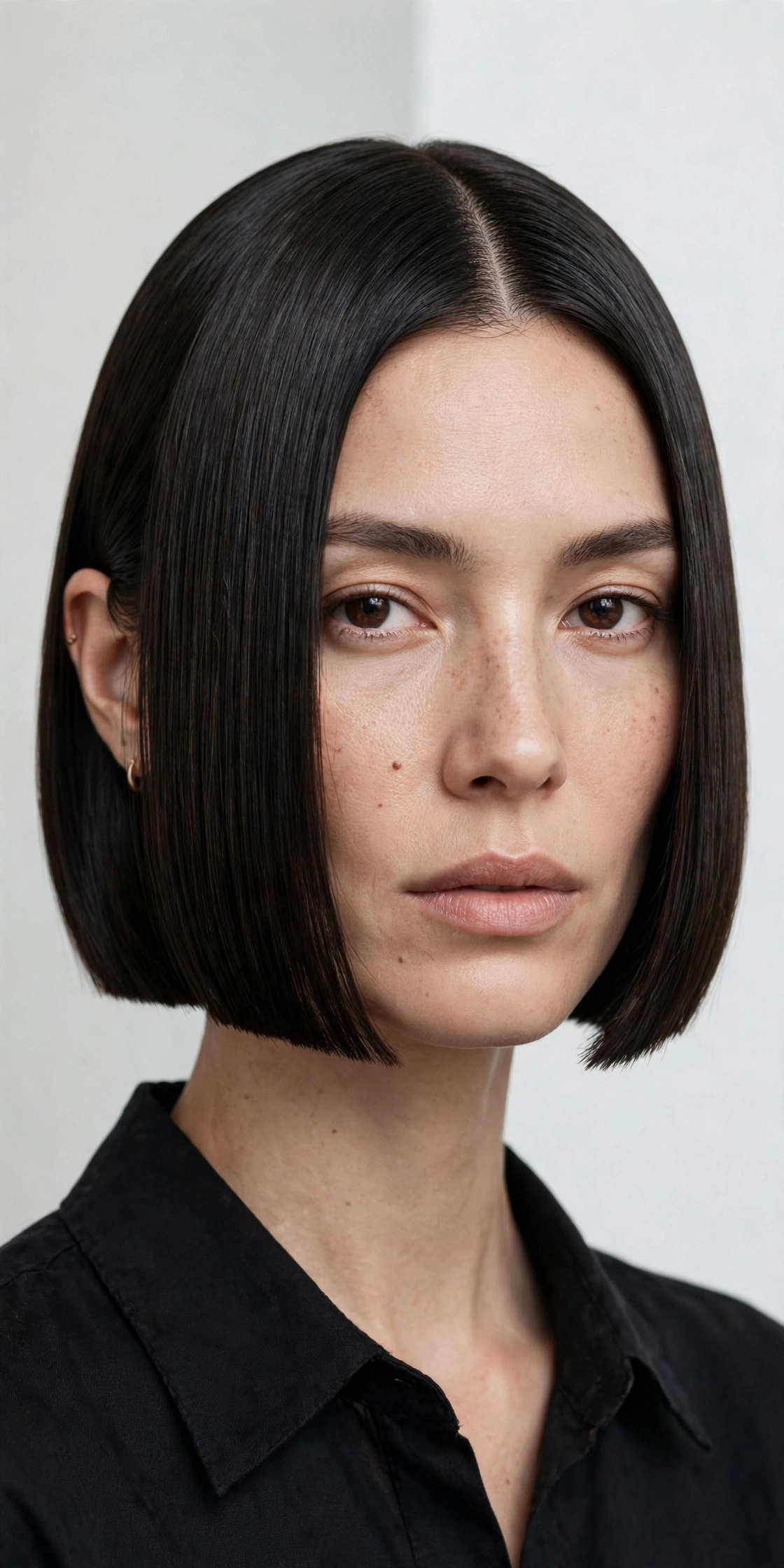
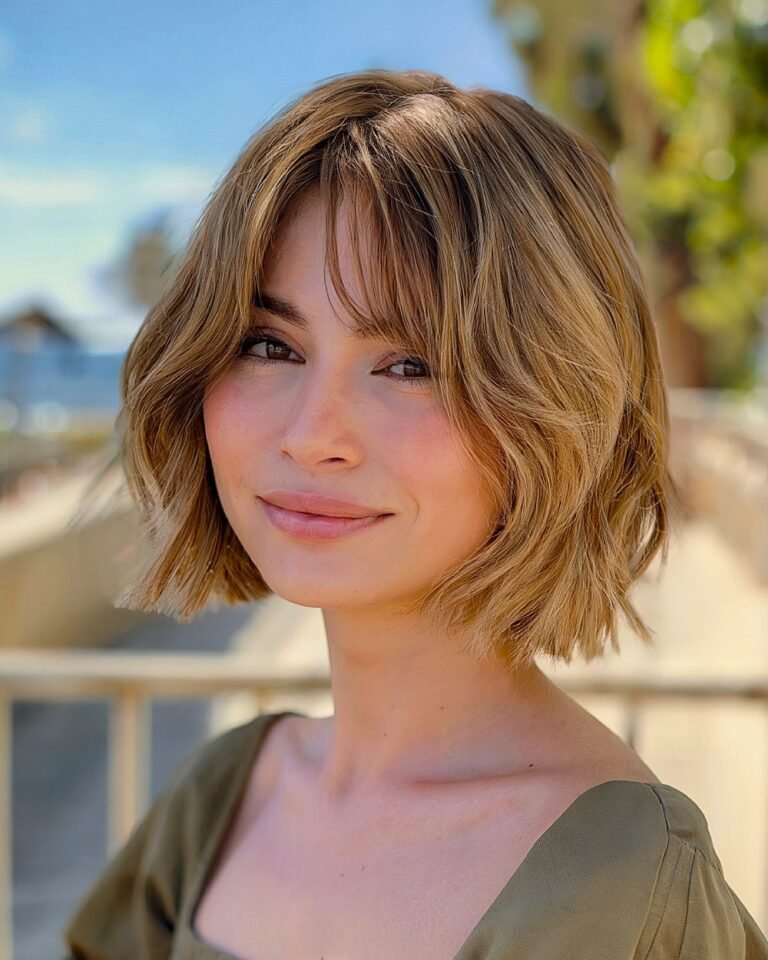
Cutting the preppy bob to true chin length creates its most gamine, striking iteration. At this short length, the cut becomes architectural — every angle is visible, the jawline is showcased, and the overall effect is bold yet impeccably refined. This is the preppy bob at its most fashion-forward, favored by women who want a short cut that still feels feminine and polished rather than edgy.
The chin-length preppy bob is magnificent on oval and heart-shaped faces, where it highlights cheekbones and draws attention to the eyes. It works on petite frames especially well, as the short length keeps proportions balanced. Fine to medium hair is ideal; very thick hair at this length can pouf outward unless carefully thinned at the interior. A defined jawline is this cut’s best friend.
Ask your stylist for a bob that sits exactly at the chin (not above, not below), with a precise perimeter and a part that suits your face — middle parts look strikingly modern at this length, side parts softer. Request minimal layering so the graphic line stays strong.
Styling is quick: blow-dry smooth with a small paddle brush, tucking the ends slightly under. A flat iron pass on the front sections gives extra sharpness. Because short hair shows regrowth fastest, this cut needs trims every four to five weeks to hold its architecture. Use a smoothing serum daily — at chin length, every flyaway is visible — and consider a gloss treatment every couple of months to keep the shine mirror-like.
8. The Preppy A-Line Bob
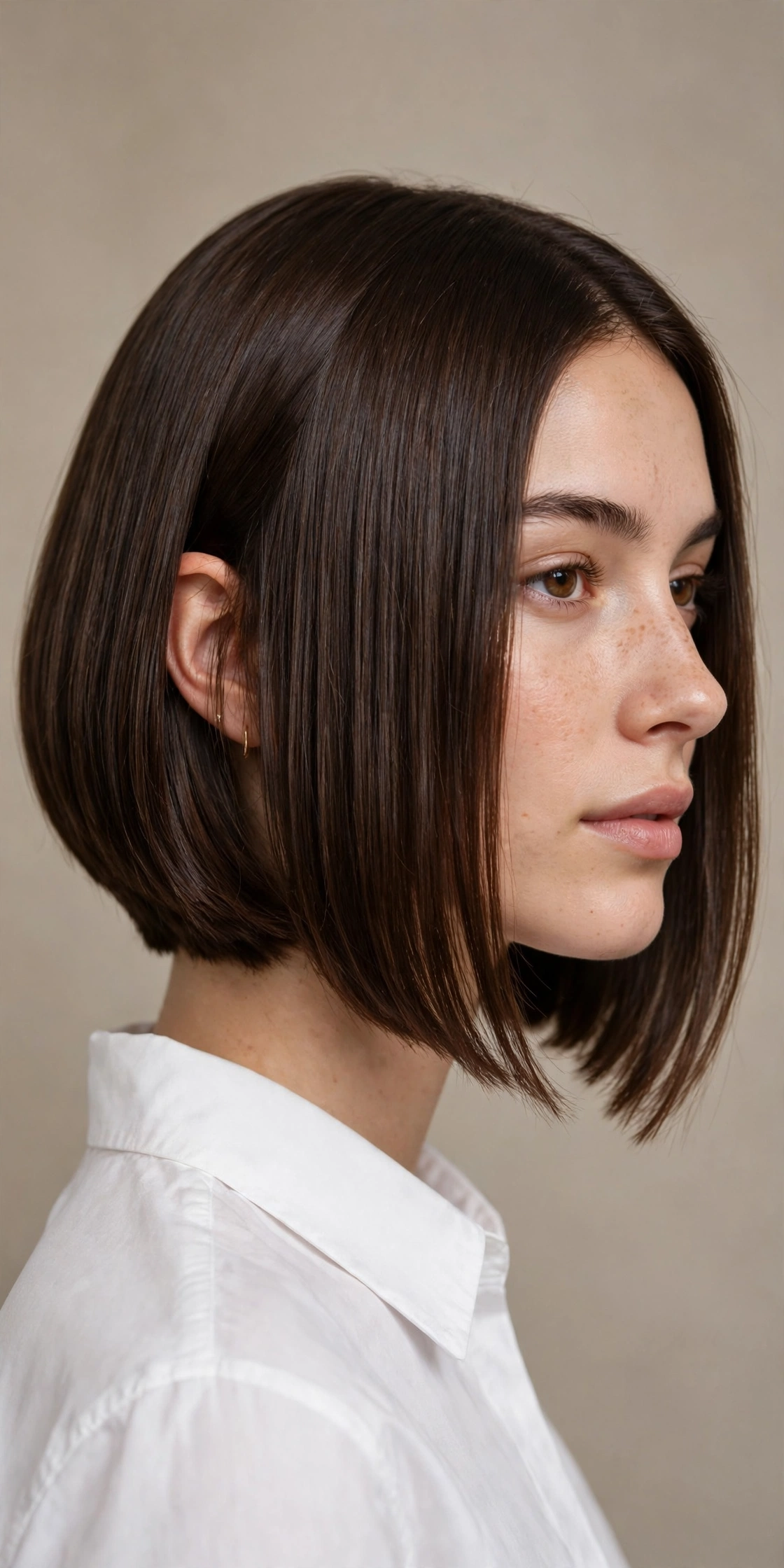
The A-line preppy bob brings subtle drama through its silhouette: shorter at the back, gradually lengthening toward the front, with the longest pieces framing the face. This angled shape adds sophistication and a sense of intention to the cut — it looks designed rather than simply grown out. In 2026, the A-line remains a salon staple because it flatters so widely while keeping the preppy code of polish and precision.
The A-line is one of the most universally flattering bob shapes. The longer front pieces elongate round faces, soften square jawlines, and draw the eye downward in the most elegant way. It suits straight and slightly wavy hair best; the angle is most visible when the hair is smooth. Women with fine hair love the A-line because the stacked weight at the back creates built-in volume.
Ask your stylist for an A-line bob with the back at the nape and the front reaching the chin or just below — specify how dramatic you want the angle (subtle for classic preppy, more pronounced for fashion-forward). The perimeter should be clean and the graduation smooth, with no visible steps.
Style by blow-drying the back sections flat against the nape and the front sections forward and slightly under to emphasize the angle. A round brush works well for the front pieces. Finish with a shine serum to highlight the sleek line. The A-line grows out noticeably as the back catches up to the front, so book trims every five to six weeks to preserve the angle.
9. The Preppy Bob with Blunt Ends

Blunt ends are the exclamation point of the preppy bob. When the perimeter is cut with zero softening — a single, decisive line — the hair looks thicker, healthier, and more deliberate. This variation is about impact through simplicity: no layers, no texture, no graduation, just a bold horizontal edge that makes fine hair look twice as full and gives the whole cut a confident, graphic quality.
Blunt ends are transformative for fine or thin hair, creating the illusion of density that layering would destroy. The look suits oval, long, and heart-shaped faces; round faces should pair it with a side part or face-framing length to avoid emphasizing width. It works best on straight hair, where the blunt line is crispest, though smooth blow-dried waves can also carry it.
Ask your stylist explicitly for blunt, one-length ends with no texturizing or point-cutting at the perimeter — many stylists soften edges by default, so be clear. The cut should sit at the jawline or chin, and the interior should be left as full as possible.
Styling focuses on showcasing the edge: blow-dry straight down with a paddle brush, then flat-iron the last two inches for maximum sharpness. A tiny amount of smoothing cream on the ends prevents them from flipping. Because the blunt line is the entire point, trims every five weeks are essential — even a quarter inch of uneven growth softens the effect. Sleep on silk to reduce friction that frays the ends.
10. The Textured Preppy Bob
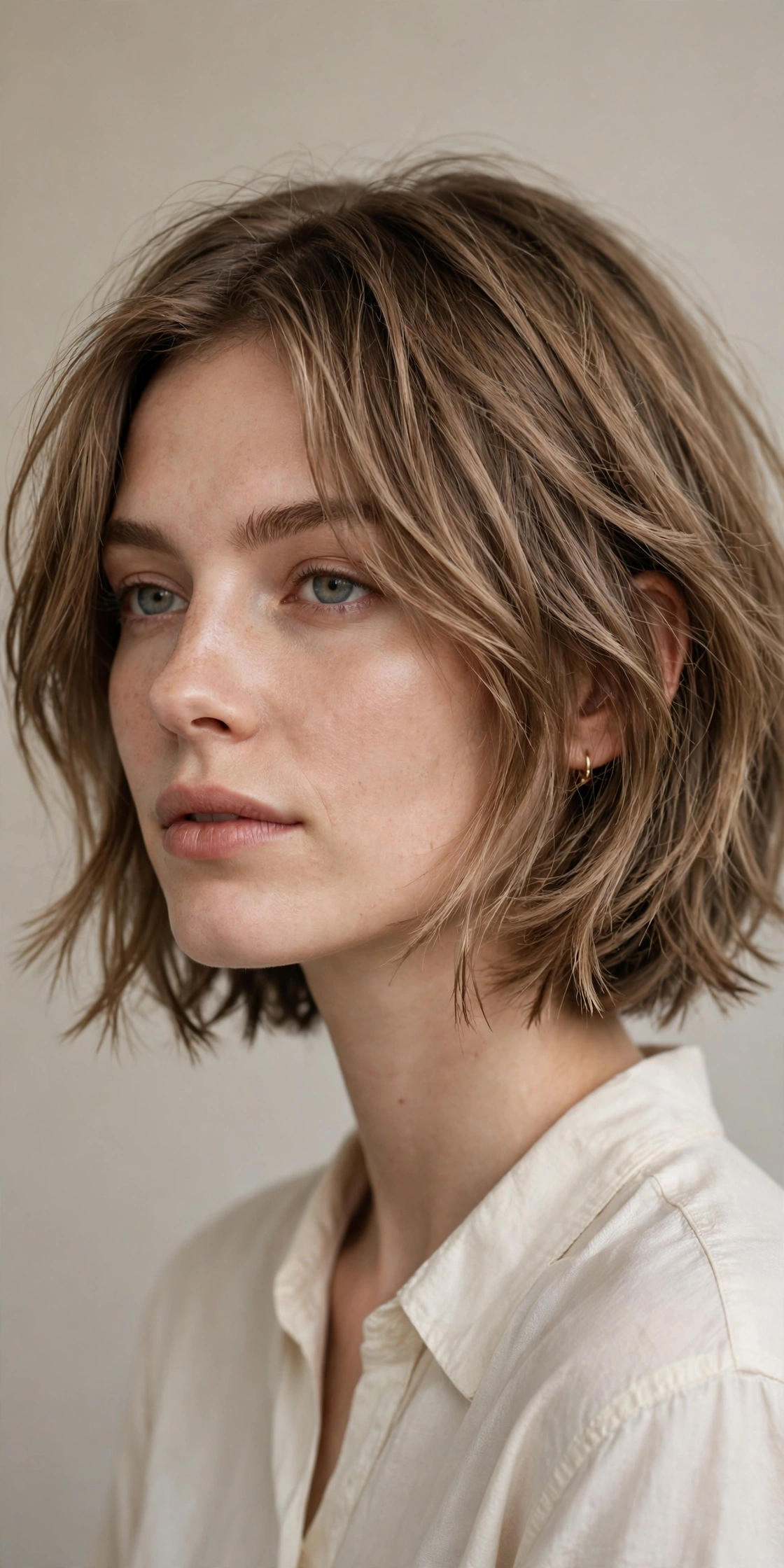
The textured preppy bob proves that polish and texture are not opposites. Here, the classic preppy shape gets subtle interior texture — point-cutting and invisible layering that create movement and pieceiness while the overall silhouette stays neat and controlled. It is the preppy bob for women who want their hair to look alive rather than lacquered, with a finish that is refined but not stiff.
This version is ideal for thick, heavy hair that would look helmet-like in a blunt cut, and for wavy hair that needs shaping rather than fighting. It flatters square and round faces because the textured ends break up the perimeter’s hard line. Anyone who finds the classic preppy bob too severe — or who wants a lower-maintenance grow-out — will prefer this forgiving variation. It shares some DNA with the soft wolf cut, though it stays firmly in polished territory rather than going shaggy.
Ask your stylist for a preppy bob with textured ends — point-cutting through the last inch and soft interior layers. Emphasize that you want movement, not choppiness; the outline should still read as clean from a distance.
Style with a texturizing spray on damp hair, blow-dry with your fingers or a vent brush for natural movement, and define the ends with a pea-sized amount of styling cream. The texture means second-day hair often looks better than first-day, so this is a great wash-and-go option. Trims every seven to eight weeks keep the texture fresh without constant upkeep.
11. The Preppy Bob with Face-Framing Layers
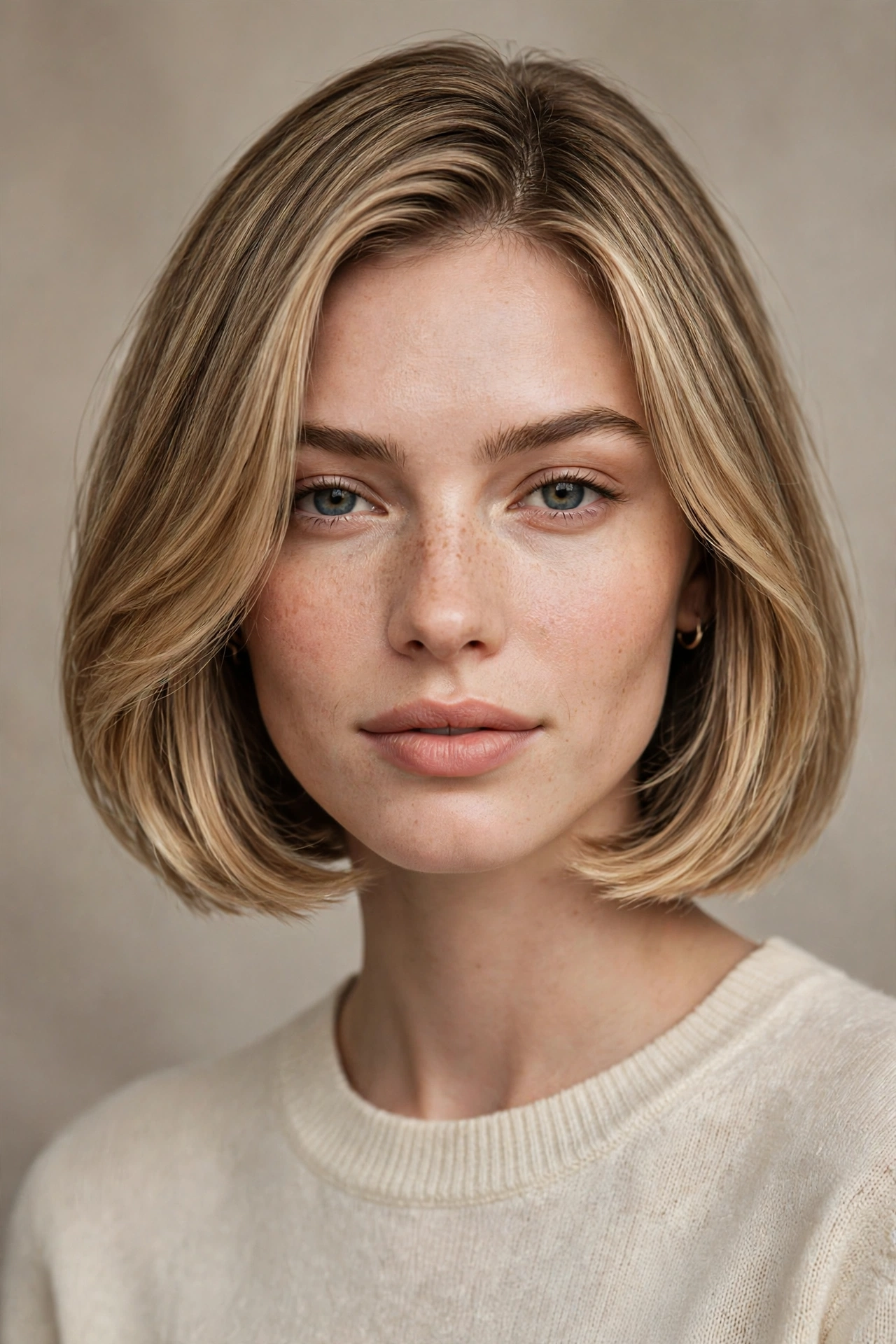
Face-framing layers are the most flattering detail you can add to a preppy bob. These are soft, graduated pieces cut around the front — shorter at the cheekbones, lengthening to meet the bob’s perimeter — that draw attention to your eyes, soften the transition from bangs to lengths, and give the cut a custom-fitted feel. The back stays classically preppy and clean while the front does all the flattering work.
Almost every face shape benefits from face-framing layers: they slim round faces, soften square jawlines, and add interest to long faces. They are especially valuable for women growing out bangs, as the layers bridge the awkward stage beautifully. All hair textures can wear them, though the effect is most visible on straight to wavy hair where the layering shows.
Ask your stylist for a classic preppy bob with face-framing layers starting at the cheekbones and blending down into the perimeter. The layers should be subtle — this is refinement, not a shag — and cut to fall naturally with your part.
To style, blow-dry the front sections with a round brush, rolling them away from the face for an open, lifted effect. A light volumizing spray at the roots of the face-frame gives lift that lasts. Curl the face-framing pieces away from the face with a flat iron for special occasions. These layers grow quickly, so ask your stylist to refresh them at each trim (every six weeks) even if the bob’s length is holding.
12. The Voluminous Preppy Bob
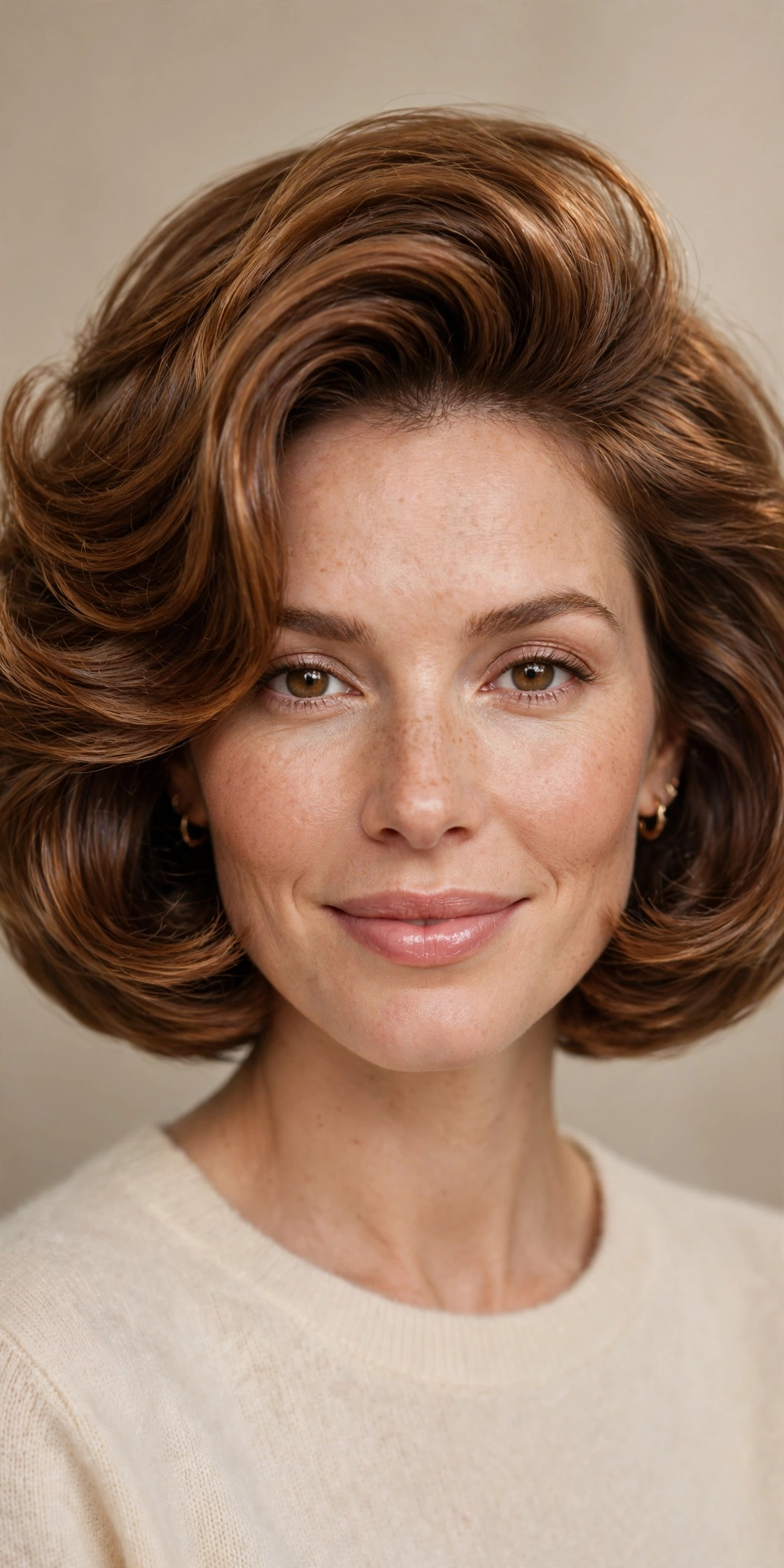
Volume takes the preppy bob from neat to magnificent. This variation keeps the polished cut and finish but builds serious body at the roots and through the lengths — the kind of full, bouncy bob that turns heads. It is unapologetically glamorous while staying within preppy bounds: the shape is controlled, the surface is smooth, but the silhouette has presence and drama.
The voluminous preppy bob is a dream for fine or flat hair, as the styling techniques create fullness that the hair would not have on its own. Round faces should be cautious — too much width at the sides can emphasize roundness — so keep the volume concentrated at the crown. Oval, long, and heart-shaped faces wear this beautifully. Medium to thick hair achieves it most easily, but fine hair can get there with the right products.
Ask your stylist for a preppy bob with subtle layers to support volume, cut at jaw to chin length. Request that the shape be slightly rounded rather than flat so the volume has a form to follow.
The styling ritual: apply volumizing mousse to damp roots, then blow-dry upside down for initial lift before refining with a large round brush, over-directing each section upward. Velcro rollers at the crown for ten minutes while you do makeup add lasting height. Finish with a flexible-hold hairspray — never a heavy one, which collapses volume. A root-lifting powder on day two revives the lift. Trims every six to eight weeks; ask your stylist to keep the layers that support the volume.
13. The Preppy Bob with Deep Side Part
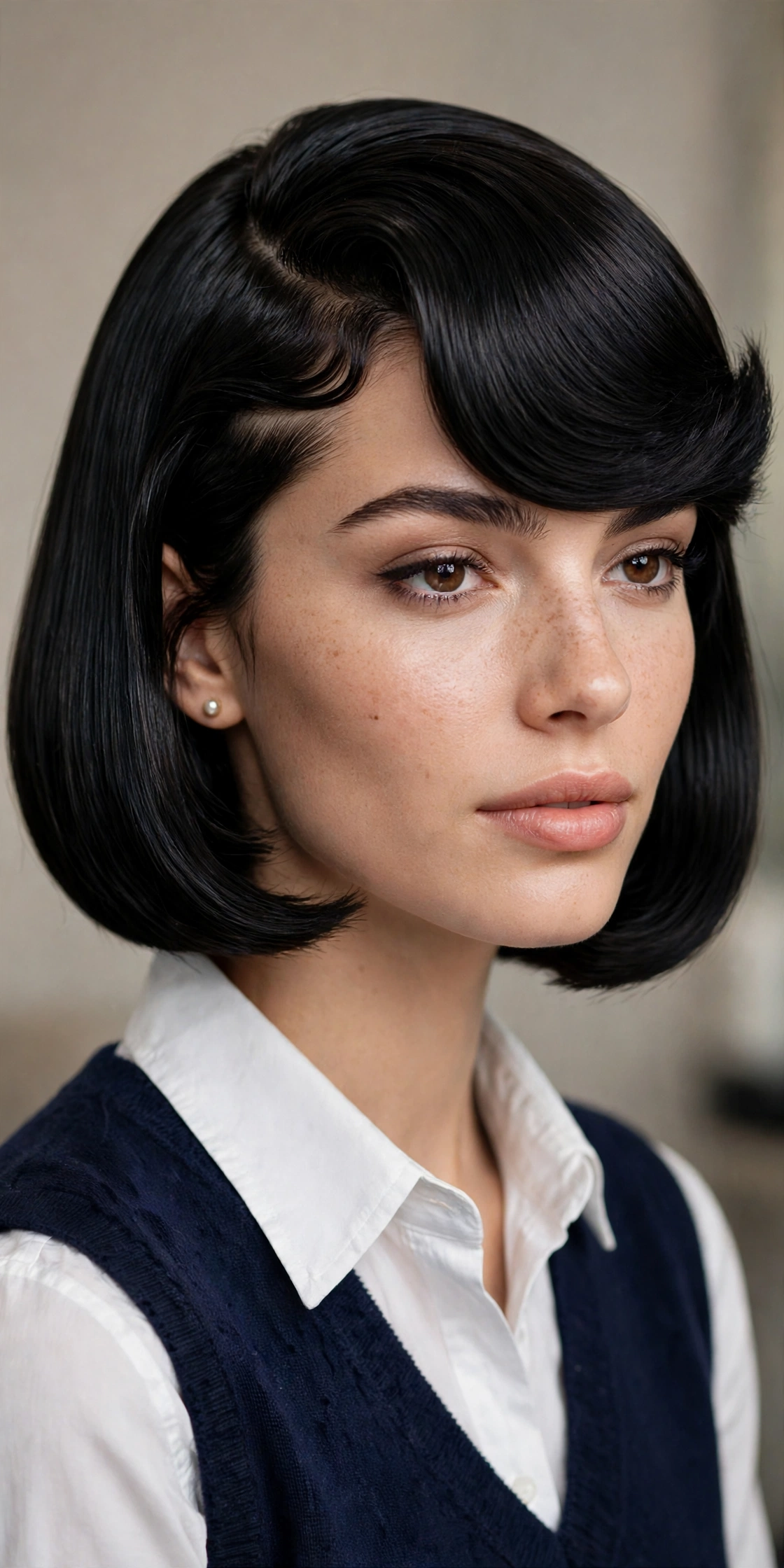
While section two covered the side-part bob, the deep side part deserves its own spotlight as a distinct styling choice with its own character. We are talking about a part carved dramatically off-center — nearly at the temple — creating a sweeping curtain of hair across the forehead and maximum asymmetry. This is old-Hollywood glamour filtered through preppy restraint: bold in structure, immaculate in finish.
The deep side part is extraordinarily flattering for square and round faces, as the strong diagonal visually narrows and lengthens. It also works magic on fine hair, creating the illusion of twice the volume on the heavy side. Women with prominent foreheads or asymmetrical features find that a deep part artfully redirects attention. It suits straight and wavy textures; very curly hair may fight the severe part.
Ask your stylist to design the bob’s balance around a deep side part — the heavy side needs enough length and weight to sweep, while the lighter side should be tucked-friendly. Have the part carved while hair is damp so it sets in the right place.
To style, create the part with a tail comb on damp hair, apply volumizing mousse to the roots of the heavy side, and blow-dry with a round brush directing everything away from the part. A bobby pin behind the ear on the light side keeps it neat. Set with hairspray. The part needs daily re-establishing — use a comb and a spritz of water each morning — but the cut itself is standard preppy maintenance with trims every six to eight weeks.
14. The Asymmetric Preppy Bob

The asymmetric preppy bob is for the woman who loves polish but refuses to be predictable. One side sits at the chin while the other extends an inch or two longer — a deliberate, architectural imbalance that is still executed with preppy precision. The finish stays sleek and groomed; only the silhouette breaks the rules. In 2026, this is the preppy bob’s fashion-forward edge, seen on runways and red carpets alike.
Asymmetry flatters round faces by creating diagonal lines that slim, and it gives long faces a welcome horizontal interruption. It suits confident personal style — this is not a shy haircut. Straight hair shows the asymmetry most crisply, though smooth waves work too. Fine to medium density is ideal; the cut relies on clean lines rather than bulk.
Ask your stylist for an asymmetric bob with a one-to-two-inch difference between sides, specifying which side should be longer (many women prefer the longer side on their “good side” for photos). The shorter side typically sits at the chin, the longer at or below the jawline. Insist on a precise, intentional-looking difference — vague asymmetry just looks like a bad haircut.
Style sleek to emphasize the graphic line: blow-dry smooth, flat-iron, finish with shine serum. Tuck the shorter side behind the ear to exaggerate the difference. This cut reveals regrowth quickly since the asymmetry depends on exact lengths — trims every four to five weeks are non-negotiable.
15. The Preppy Bob with Tucked Sides
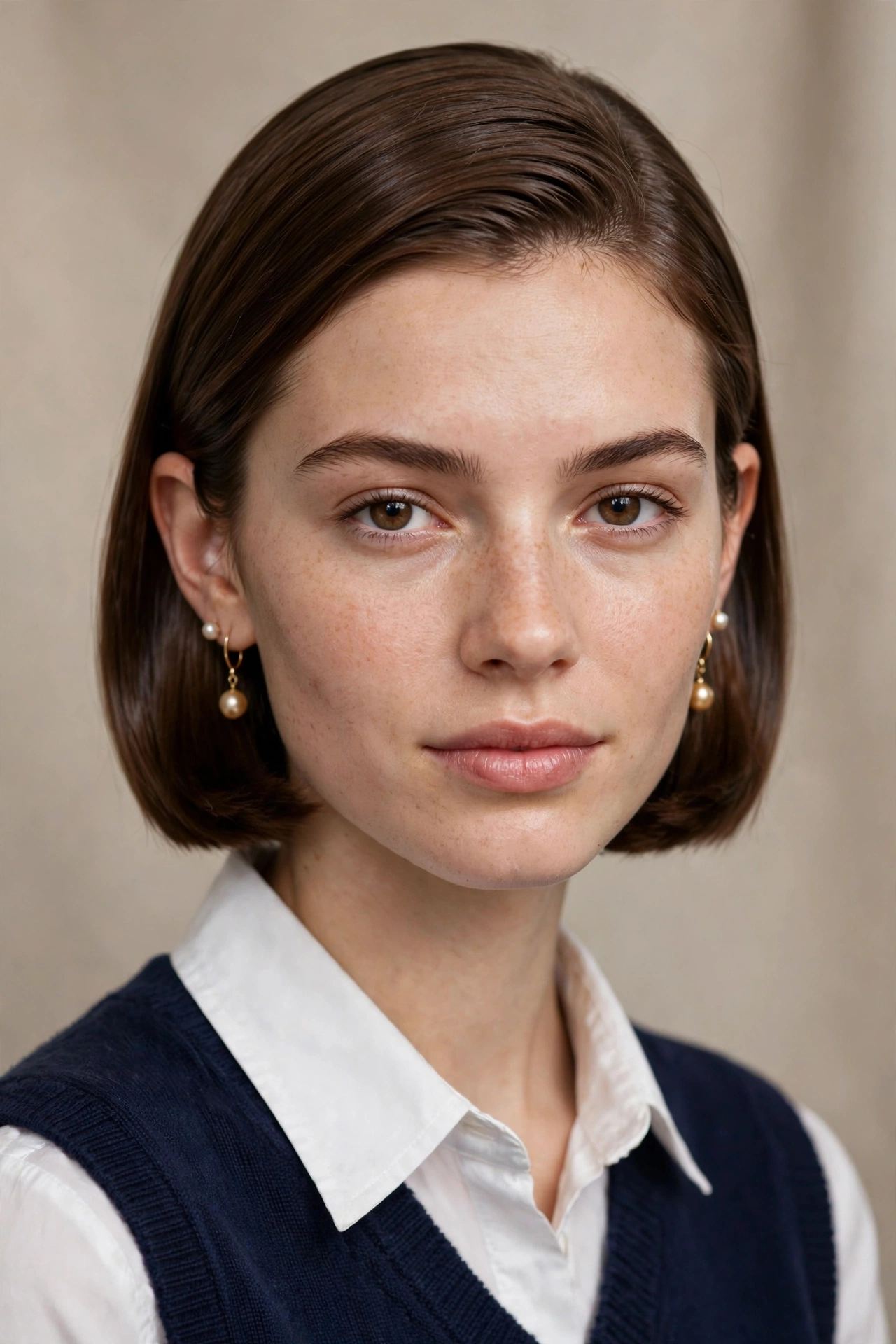
Sometimes the chicest preppy bob styling is the simplest: both sides tucked neatly behind the ears. This is less a distinct cut than a signature way of wearing the preppy bob that deserves its own mention — it showcases the jawline, displays earrings, opens up the face, and gives the whole look an air of crisp, collegiate confidence. It is the styling equivalent of rolling your sleeves with precision.
The tucked look suits oval, heart, and diamond faces beautifully, as it puts the bone structure on full display. It works on any hair texture that can be smoothed, and it is particularly practical for women who wear glasses or statement earrings. Fine hair tucks most obediently; thick hair may need pinning.
Ask your stylist for a preppy bob cut to tuck cleanly — jaw length or slightly longer, with the front pieces long enough to stay tucked without springing out. A slight A-line helps the front stay put behind the ears.
To style, blow-dry smooth as usual, then tuck both sides firmly behind the ears, using the warmth of your hands to set the tuck. A bobby pin crossed behind each ear invisibly secures thick hair. A light hairspray mist locks everything. For extra polish, flat-iron the tucked sections so they lie perfectly flat. This styling grows out fine with any preppy bob; maintain the underlying cut with trims every six to eight weeks.
16. The Polished Preppy Lob
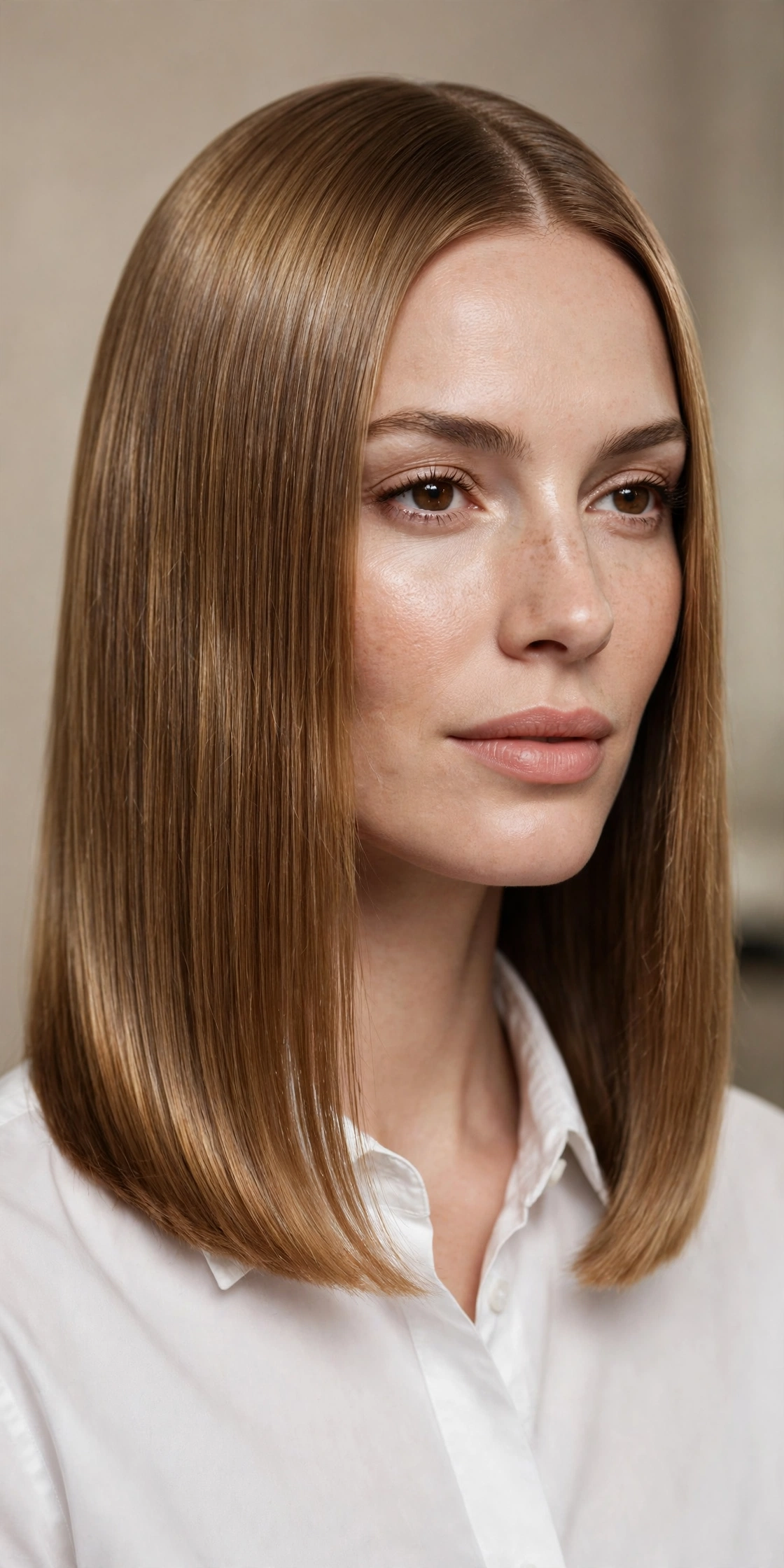
The preppy lob — the bob’s longer sister, grazing the collarbone — offers all the polish of the classic with more versatility and a softer, more forgiving grow-out. At this length, the hair can be worn sleek and straight, tucked, waved, or even pulled into a small low ponytail, making it the most adaptable preppy cut. For 2026, the collarbone-grazing lob is the safe-landing choice for women growing out shorter bobs or dipping a toe into short hair for the first time.
The lob flatters virtually every face shape and works on the widest range of hair textures, which is why stylists recommend it so often. It is especially kind to round faces (the extra length elongates) and to thick hair (the weight keeps it controlled). If you are nervous about going short, this is your cut.
Ask your stylist for a one-length cut hitting the collarbone, with a clean perimeter and optional subtle long layers for movement. Specify whether you want it blunt (thicker look) or slightly textured (softer look).
Style it like a classic preppy bob — blow-dry smooth, finish sleek — or add loose waves for variety. The length makes it the most low-maintenance preppy option: trims every eight to ten weeks suffice, and the grow-out is graceful rather than awkward. A weekly mask keeps the longer lengths healthy and shiny.
17. The Preppy Bob with Soft Curls

Soft curls give the preppy bob a romantic, feminine dimension without sacrificing its groomed character. We are not talking about tight ringlets or bohemian waves — these are smooth, uniform, polished curls, each one defined and glossy, arranged with intention. The silhouette stays controlled and the parting stays neat; only the texture becomes luxurious. This is the preppy bob dressed for dinner.
This variation suits special occasions beautifully but can absolutely be worn daily by women whose hair holds curl well. It flatters oval, heart, and long faces, as the curls add flattering width. Medium to thick hair holds the curls longest; fine hair will need strong prep products. Naturally curly or wavy hair can achieve this with less heat than straight hair.
Ask your stylist for a preppy bob with subtle layers to help curls form — one-length hair can look triangular when curled, so a little interior shaping prevents that. Jaw length is ideal; longer bobs give the curls more room to develop.
To style, apply a curl-defining mousse and heat protectant to damp hair, blow-dry smooth first (never curl wet hair), then wrap one-inch sections around a one-inch curling iron in the same direction. Let each curl cool completely before touching, then brush through gently with a boar-bristle brush for that soft, unified finish. A flexible-hold hairspray preserves the shape. Pin curls overnight to extend the style to day two. Trims every six to eight weeks.
18. The Preppy Bob with Micro Bangs
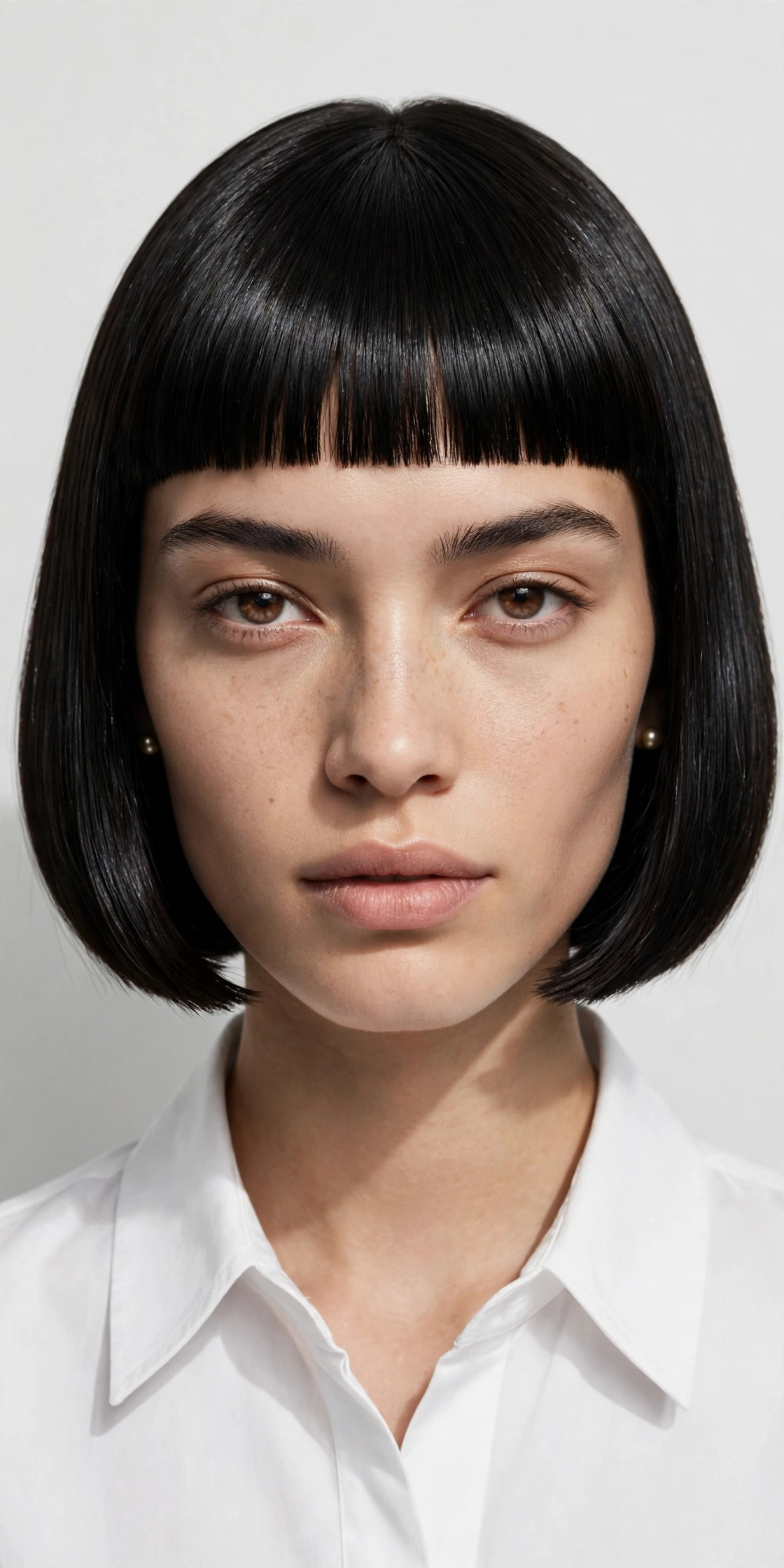
Micro bangs — a short, straight-across fringe sitting well above the eyebrows — bring an artful, fashion-editor edge to the preppy bob. The contrast is delicious: the bob stays classic and polished while the tiny fringe adds boldness and personality. This is the preppy bob for women with strong personal style who want their haircut to say something.
Micro bangs suit oval and long faces best, as the short fringe visually shortens the forehead and balances proportions. They demand confidence and strong features — prominent eyes and cheekbones shine with this cut. Straight hair is essential for the fringe itself; the bob can be straight or softly waved. This is not the choice for anyone who likes to hide behind their hair.
Ask your stylist for a classic preppy bob plus micro bangs cut about an inch above the brows, straight across with a very slightly softened edge. Have the bangs cut dry so the length is exact — wet bangs shrink as they dry and can end up too short.
Style the bangs first with a small round brush or a mini flat iron, keeping them perfectly straight. Then style the bob as usual. The fringe needs trimming every two to three weeks to hold its graphic length — learn to trust your stylist with this; DIY micro-bang trims go wrong fast. A tiny amount of styling cream keeps the fringe piecey rather than solid.
19. The Subtle Undercut Preppy Bob
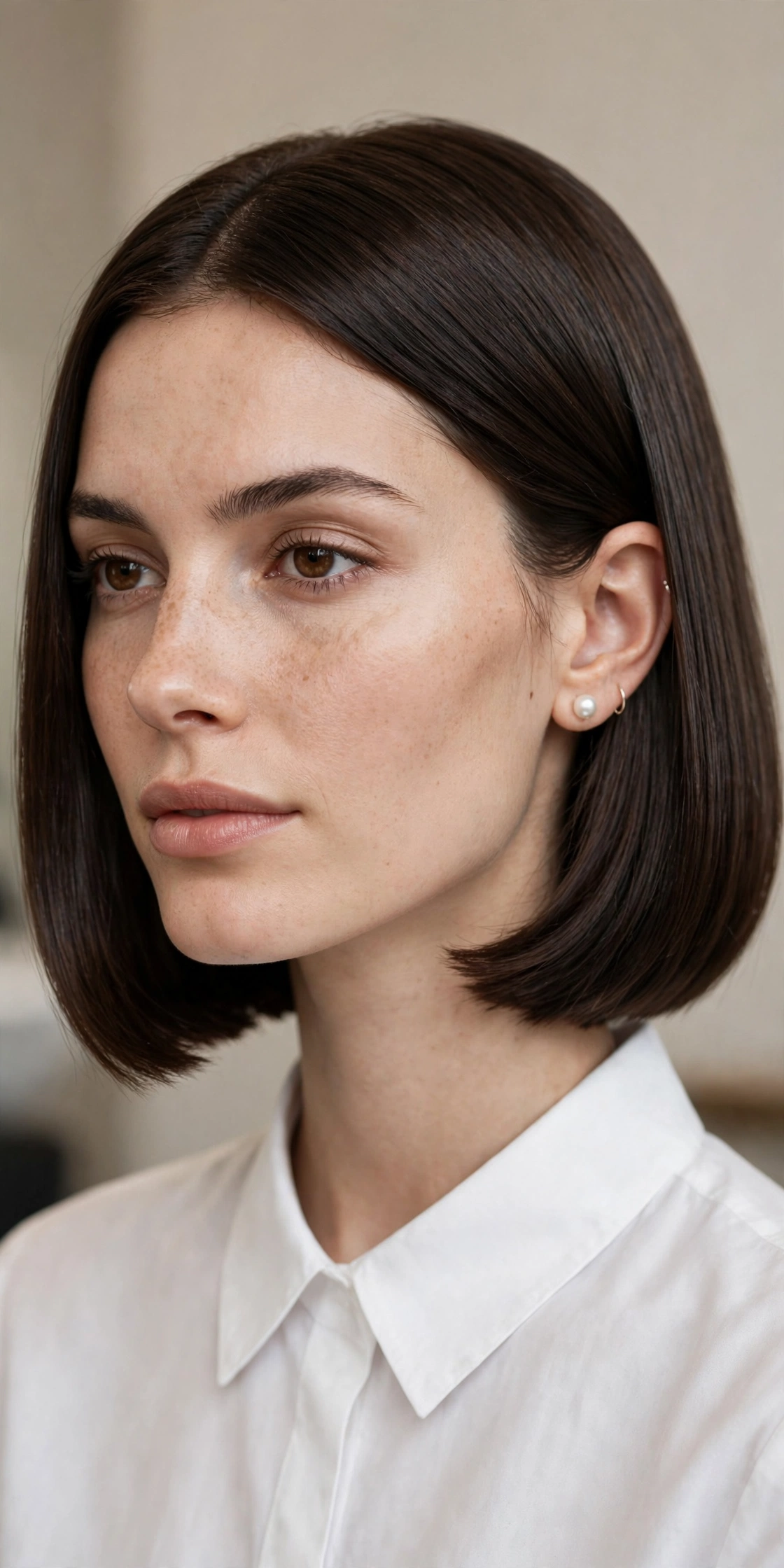
A hidden undercut is the preppy bob’s best-kept secret: the top layers stay long, sleek, and perfectly preppy, while a discreet shaved or closely clipped section underneath at the nape removes bulk and weight. From the outside, no one knows it is there — the hair falls exactly as a classic preppy bob should. But the cut feels lighter, dries faster, and sits flatter against the neck, which is transformative for thick hair.
This is designed for women with thick, heavy, or dense hair who love the preppy look but fight bulk and pouf. It also suits anyone who runs hot — the undercut improves airflow at the nape. All face shapes can wear it since the visible silhouette is unchanged. It is ideal for the woman who wants a practical secret inside a polished exterior.
Ask your stylist for a nape undercut (clippered short, not shaved to skin unless you prefer) hidden beneath a classic preppy bob. Specify how high you want it — a low nape undercut is most discreet. The top layers must be long enough to cover it completely when worn down.
Styling is identical to the classic preppy bob — the undercut only makes it easier. The hidden section needs its own maintenance: have it re-clipped every four to six weeks or it grows into an awkward fuzzy layer. When wearing hair up, the undercut may peek out — decide whether you love that or want the top arranged to cover it.
20. The Preppy Bob with Highlights

Well-placed highlights elevate the preppy bob from beautiful to luminous. Fine, woven highlights through the top layers and around the face add dimension that makes the sleek cut look multi-tonal and expensive — light catches different strands at different angles, creating movement even when the hair is perfectly straight. In 2026, the preppy highlight palette leans natural: honey, caramel, champagne, and soft golden tones rather than stark contrasts.
Highlights suit every face shape since they are a color detail, not a structural one. They are most transformative on medium to dark base colors, where the dimension is most visible, and they flatter all skin tones when the tone is chosen correctly (warm golds for warm skin, cool champagnes for cool skin). Fine hair gains visual thickness from the dimension.
Ask your colorist for fine babylights or subtle woven highlights, one to two shades lighter than your base, concentrated through the crown and around the face. Emphasize natural and blended — preppy means no harsh lines or visible regrowth bands.
Style as you would any preppy bob, noting that highlighted hair shows shine beautifully — a gloss serum is your best friend. Color-treated hair needs extra care: use sulfate-free shampoo, a weekly color-safe mask, and a UV protectant. Gloss or toner refreshes every six to eight weeks keep the tone from going brassy; full highlight touch-ups every ten to twelve weeks.
21. The Preppy Bob with Balayage
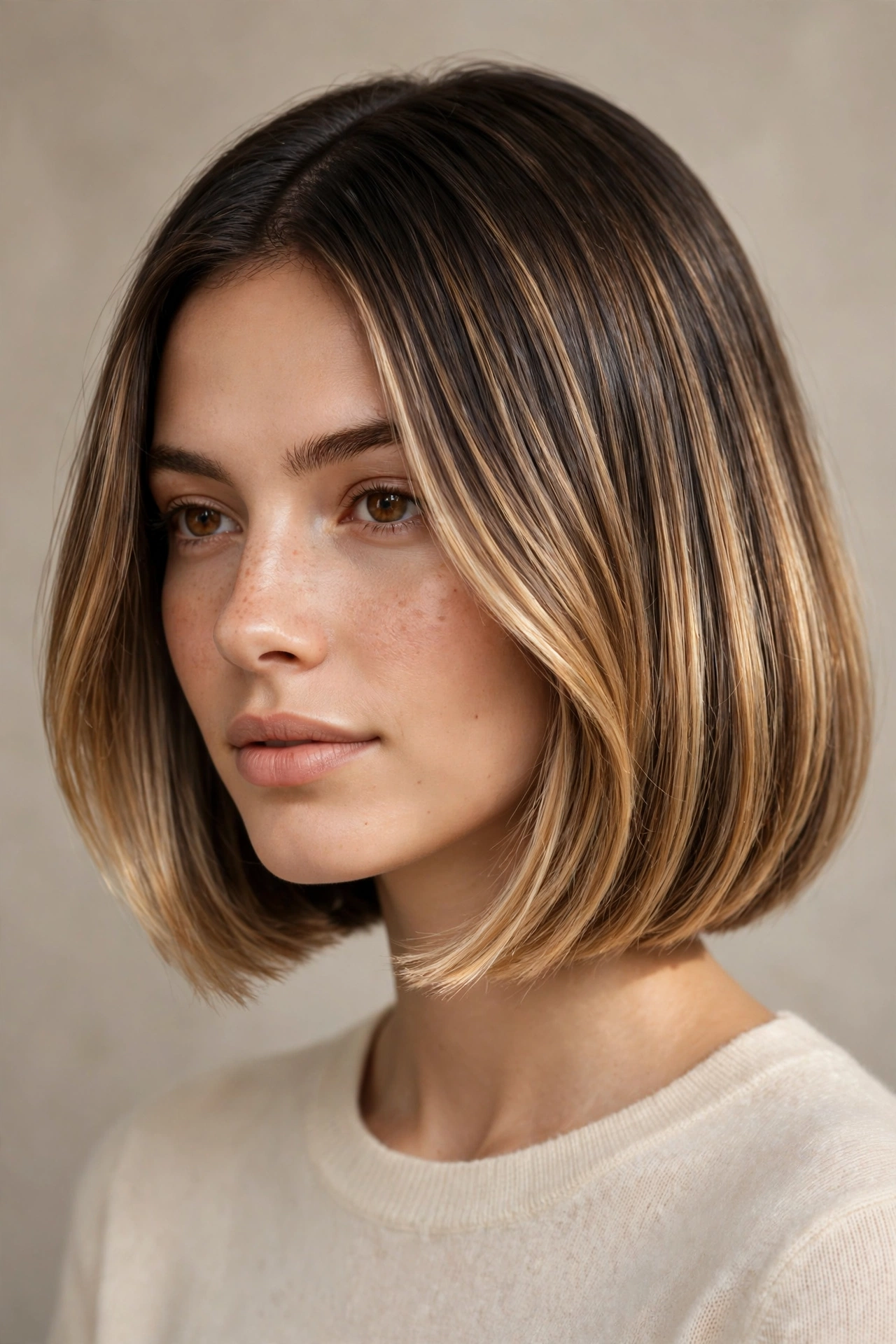
Balayage brings sun-kissed, hand-painted dimension to the preppy bob — softer and more graduated than traditional highlights, with lightness concentrated through the mid-lengths and ends. On a preppy bob, balayage must be executed with restraint: the effect should whisper rather than shout, adding depth and a expensive-looking glow while the cut’s clean lines stay the star. The result is a bob that looks naturally sun-lit even in winter.
Balayage flatters all face shapes and is particularly beautiful on medium to long bobs where the gradient has room to develop. It suits warm and neutral skin tones especially well, though cool-toned balayage exists for cooler complexions. It is the lowest-maintenance color option here because the regrowth is diffused — no harsh lines.
Ask your colorist for a subtle balayage, keeping the roots close to your natural color and painting lightness through the ends with a soft, blended transition. On a preppy bob, request that the face-framing pieces stay slightly brighter for a natural contouring effect.
Styling follows the classic preppy routine; balayage looks best with a smooth, shiny finish that shows off the dimension. Use color-safe, sulfate-free products and a weekly mask. Tone refreshes every eight to ten weeks prevent brassiness. Full balayage touch-ups are needed only two to three times a year, making this the busiest woman’s color choice.
22. The Preppy Bob with Money-Piece Highlights
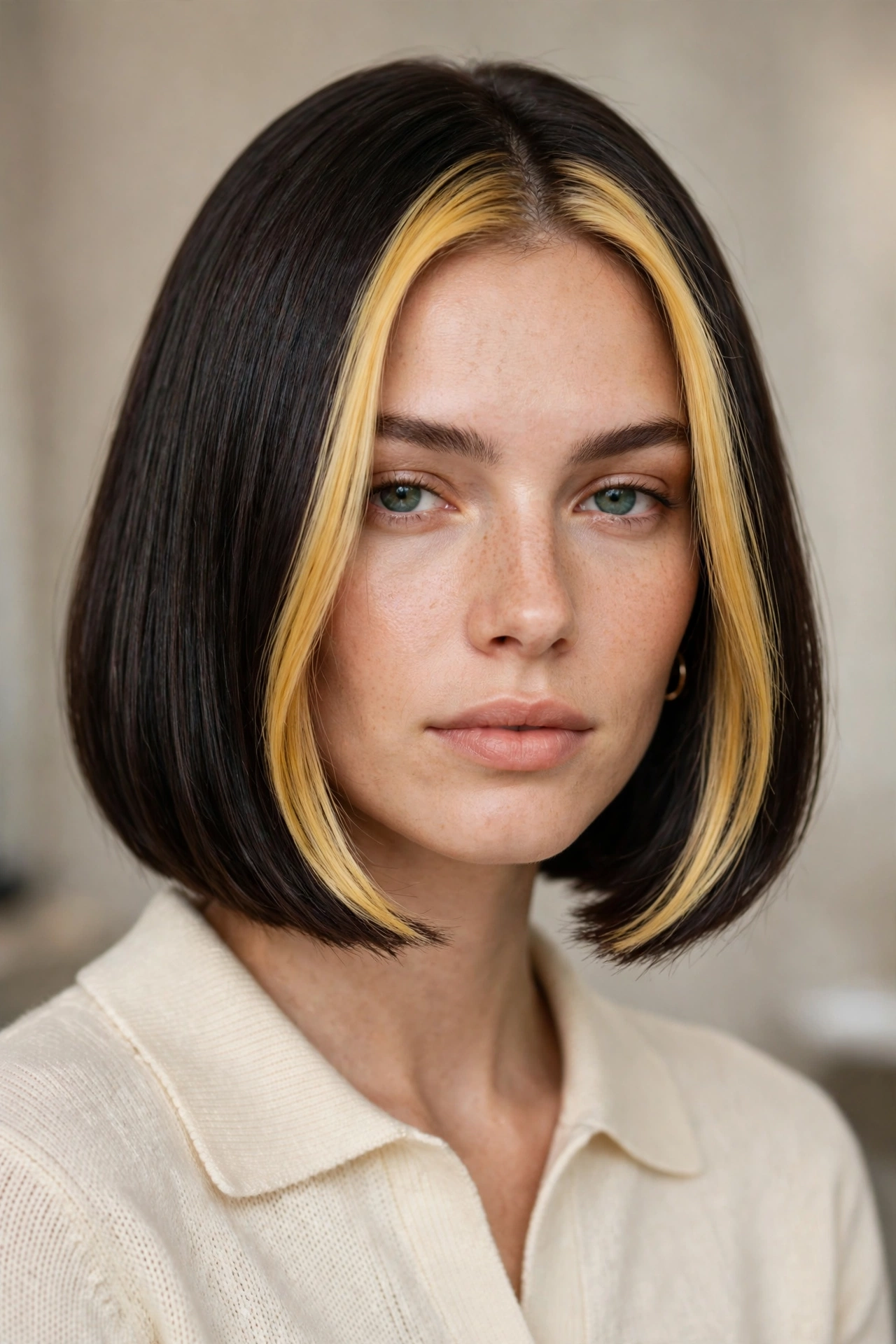
The money piece — two face-framing streaks of brightness around the front — is the highest-impact, lowest-commitment color detail for a preppy bob. These bold-but-blended highlights draw light to the face, brighten the eyes, and add a contemporary edge to the classic cut without coloring the whole head. In 2026, the preppy money piece is softer than the stark versions of years past: noticeable, but harmonious.
The money piece suits everyone because it is fundamentally about brightening the face — it is especially flattering on medium to deep base colors where the contrast glows. Round and square faces benefit from the vertical brightness, which elongates. It works on all textures, though the effect is crispest on straight or smoothed hair.
Ask your colorist for face-framing highlights two to three shades lighter than your base, blended softly at the roots so there is no harsh line. The pieces should start at the part and frame the face down to the bob’s ends.
Style the front sections smoothly to showcase the brightness — a flat iron pass on the money pieces makes them gleam. Use purple or blue toning shampoo (depending on your highlight tone) once a week to prevent brassiness, plus color-safe conditioner. The money piece grows out visibly, so plan touch-ups every eight weeks, though the small section makes appointments quick and affordable.
23. The Wet-Look Preppy Bob
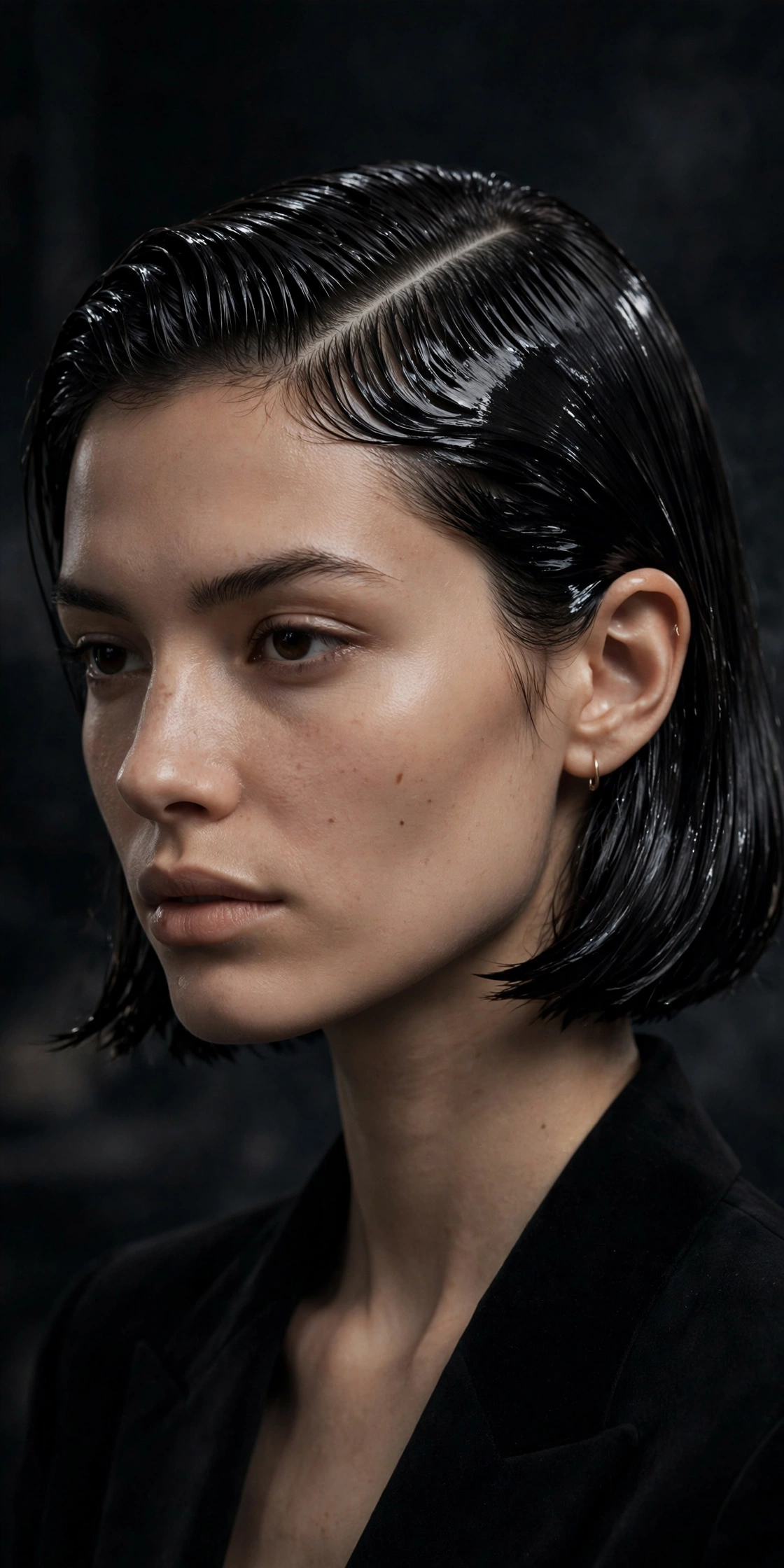
The wet-look preppy bob is the after-dark alter ego of the classic — the same precise cut, slicked with gloss product for a high-shine, just-stepped-out-of-water finish. It is editorial, confident, and undeniably striking: a hairstyle that looks expensive and intentional. In 2026, the wet look has moved from runway to real life for evenings, events, and anyone whose style runs bold.
This is a styling variation, not a cut, so it suits any face shape wearing a preppy bob. It works best on straight or straightened hair where the slick finish reads cleanest, and on medium to thick density that can carry the product without looking stringy. Fine hair can wear it but needs a light hand with product.
No special cut is needed — any preppy bob works. Tell your stylist you plan to wear it wet-look occasionally so they keep the perimeter sharp, which the style showcases.
To style, apply a generous amount of strong-hold gel or wet-look cream to damp hair, comb it straight back or into a deep side part with a fine-tooth comb, and let it air-dry or diffuse on low — do not blow-dry smooth, which kills the effect. A gloss spray over the top amplifies the shine. This is a one-night style; wash it out the same evening, as the product load is heavy. Clarify with a deep-cleansing shampoo afterward.
24. The Preppy Bob with Braided Accent

A single slim braid woven along the part or above one ear adds a charming, collegiate detail to the preppy bob without disturbing its polish. This is the equestrian-weekend version of the cut — refined, a little playful, and utterly preppy in spirit. The braid should be neat and small, an accent rather than a feature, keeping the overall impression groomed.
This styling suits all face shapes and works on any preppy bob long enough to braid a section — chin length and longer. It is lovely for keeping front pieces off the face while looking intentional, making it practical for workdays and outdoor events. All textures can braid, though sleek hair gives the neatest result.
No cut modification is needed. If you wear this often, mention it to your stylist so they keep the front sections long enough to braid comfortably.
To create it, take a half-inch section at the part or above the ear and weave a tight three-strand or fishtail braid, securing with a small clear elastic and pinning the tail discreetly underneath. Smooth the rest of the bob as usual. A light hairspray keeps the braid neat. This is a day style — take the braid out before sleeping to avoid kinks. The underlying cut follows standard preppy maintenance.
25. The Preppy Bob with Headband Styling
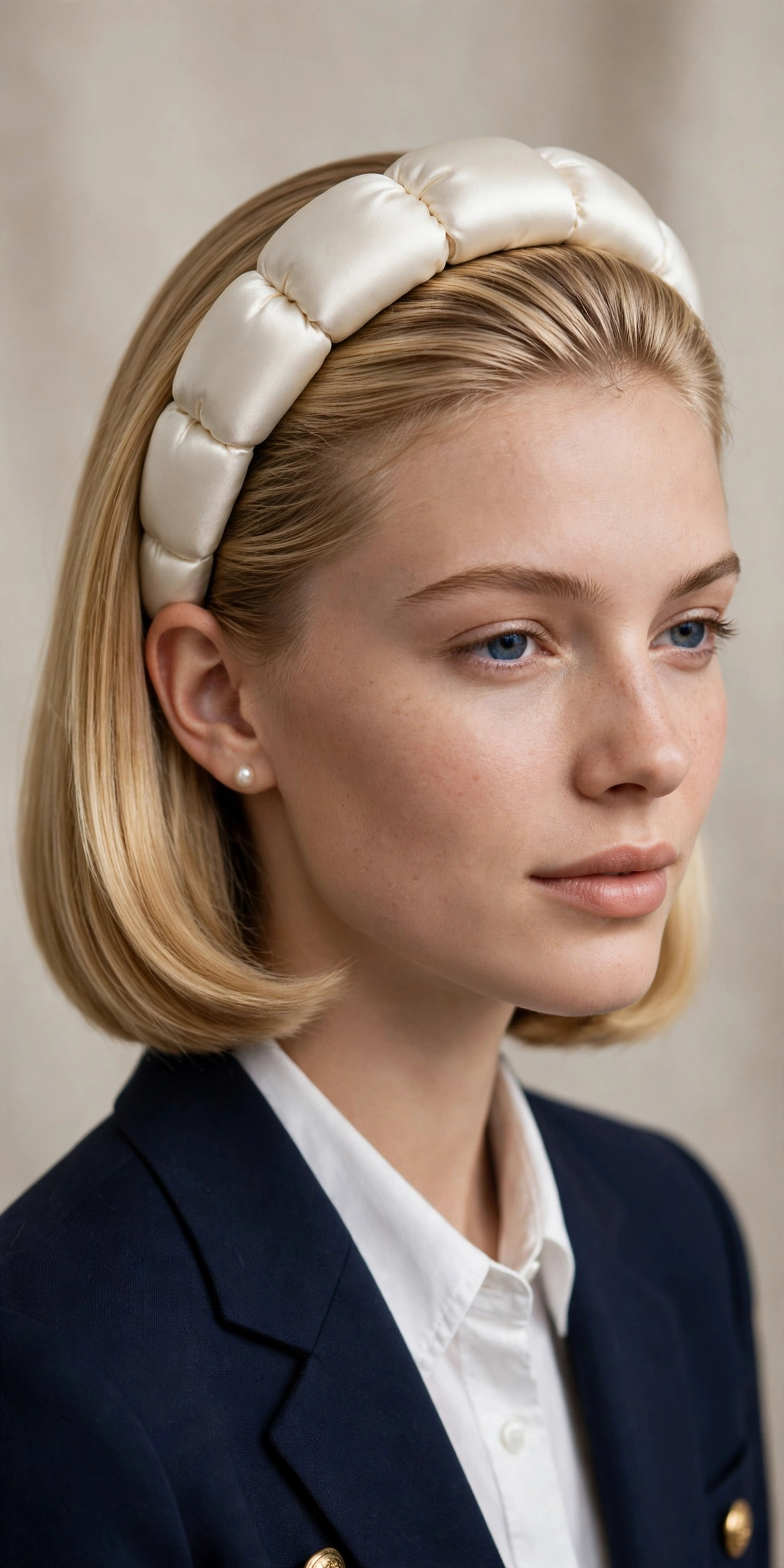
The headband is the preppy bob’s natural accessory — a padded, silk, or tortoiseshell band that pushes the hair back with collegiate perfection. This styling celebrates the preppy aesthetic at its most iconic: think classic campus style, polished and put-together. The headband keeps the cut’s clean lines visible while adding a finishing touch that makes the whole look feel deliberate and dressed.
Headband styling suits oval, heart, and long faces particularly well, as pushing the hair back opens the face and showcases features. It is practical for growing-out bangs or on days when the front needs directing. All hair textures work, though the bob should be smoothed first for the most refined result. This is also the perfect solution for second-day hair that needs a lift.
No cut changes are needed — any preppy bob takes a headband beautifully. If you wear headbands daily, tell your stylist so they can ensure the front layers sit well when pushed back.
To style, smooth the bob as usual, then place the headband about an inch behind the hairline, pushing the front sections back. Gently lift the crown hair behind the band for a touch of volume. A light hairspray keeps everything in place. Choose headbands that do not snag — silk-covered or smooth plastic — to protect the hair’s finish. Rotate headband styles rather than wearing the same tight band daily to avoid breakage at the pressure point.
26. The Preppy Bob for Fine Hair
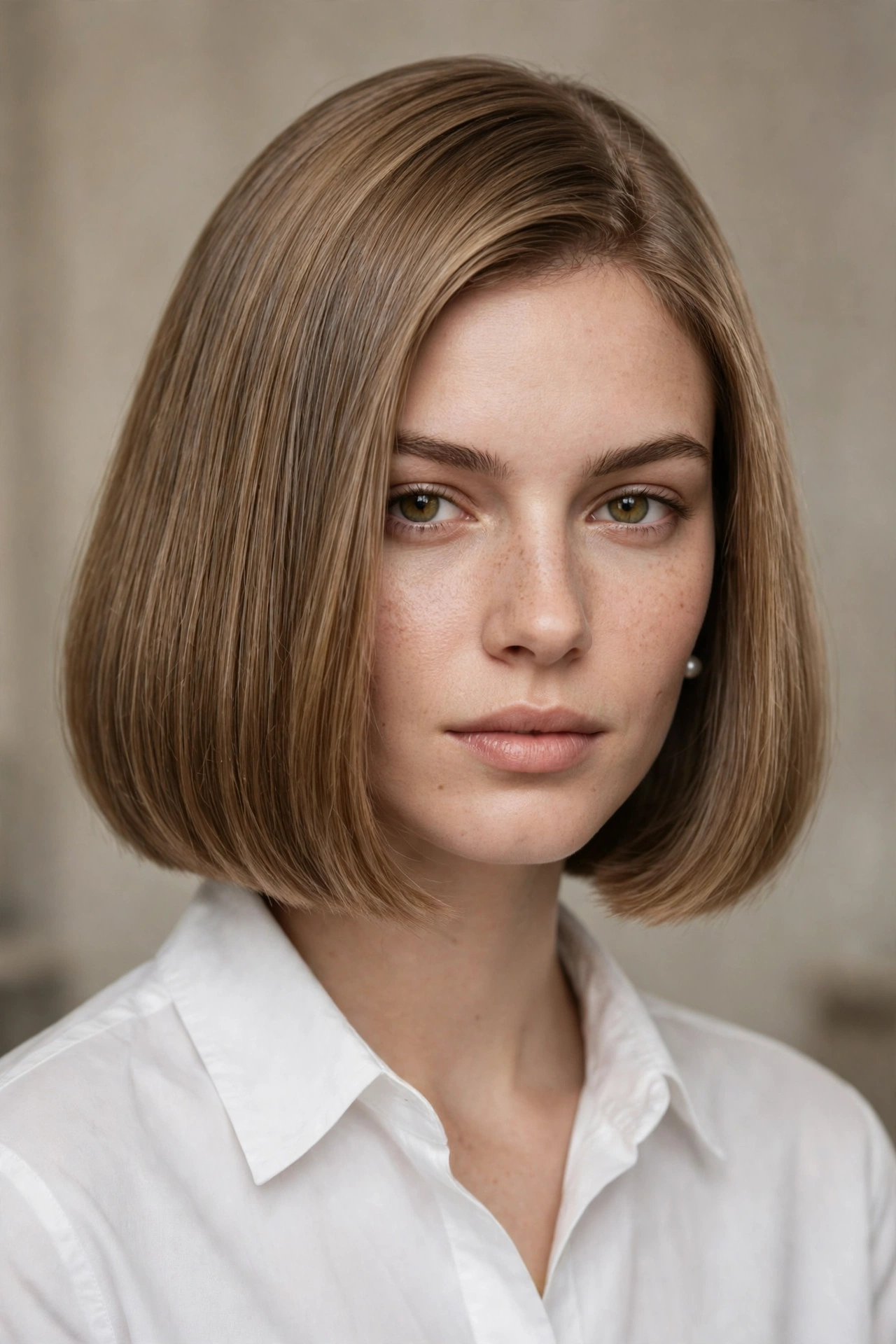
Fine hair and the preppy bob are a match made in heaven — provided the cut is designed for density. The key is a blunt, one-length perimeter with no layering to remove precious bulk, cut at chin to jaw length where fine hair looks fullest. Strategic undercutting is avoided; instead, the interior stays full so every strand counts. The result is a bob that makes fine hair look thicker, healthier, and more substantial than it is.
This is specifically engineered for fine, low-density hair on any face shape — though round faces should add a side part for balance. The principles also help thinning hair look fuller. Straight fine hair achieves the sleek preppy finish most easily; wavy fine hair should be smoothed.
Ask your stylist for a blunt one-length bob with zero layers, cut no longer than jaw length (longer lengths drag fine hair flat). Request a clean, thick perimeter — ask them not to texturize the ends, as that thins the edge visually.
Styling is about building body without weight: apply a lightweight volumizing mousse to damp roots only, blow-dry with a round brush lifting at the crown, and finish with a root-lifting spray. Avoid heavy serums and oils, which flatten fine hair — use a featherlight shine mist instead. Wash frequently, as fine hair shows oil fastest; dry shampoo at the roots extends the style. Trims every five to six weeks keep the blunt edge thick-looking.
27. The Preppy Bob for Thick Hair
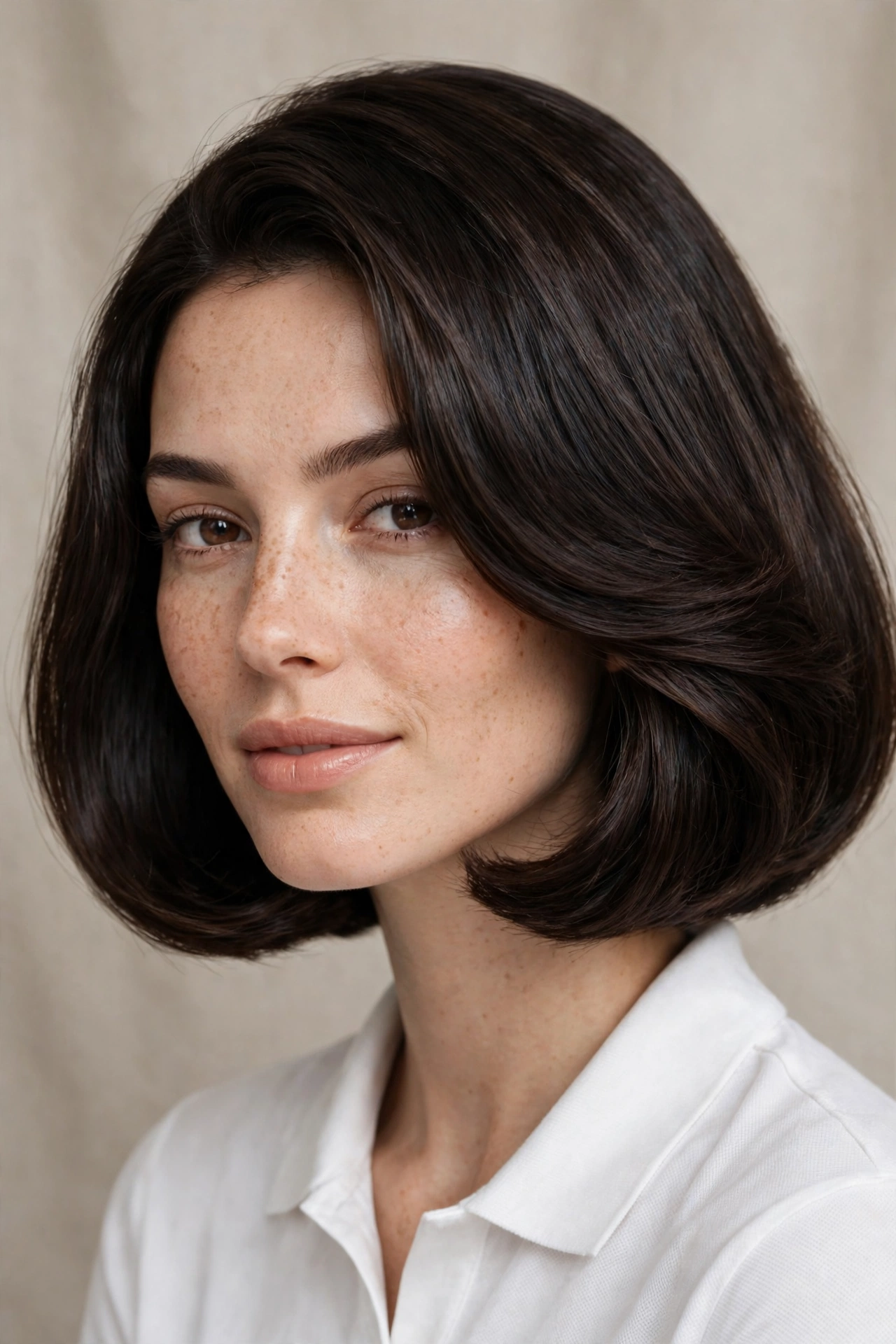
Thick hair gives the preppy bob incredible presence — but only when the bulk is properly managed. The strategy here is invisible interior layering and careful weight removal that preserve the clean outer silhouette while preventing the dreaded triangle or helmet effect. Done right, thick hair produces the most luxurious preppy bob of all: full, swinging, and glossy with natural body that fine hair can only dream of.
This approach serves thick, dense, or coarse hair on every face shape. The weight of thick hair actually helps the preppy sleekness — it hangs beautifully once shaped. Wavy-thick hair is ideal, as the natural texture adds body; straight-thick hair looks incredibly expensive when smoothed.
Ask your stylist for a preppy bob with significant interior layering and weight removal — use the words “remove bulk but keep the outline clean.” A slightly longer length (jaw to shoulder) gives the weight room to distribute. Discuss a hidden undercut if the density is extreme.
To style, apply a smoothing cream to damp hair to control the interior, then blow-dry in sections with a large round brush — do not rush this; thick hair needs thorough drying to stay smooth. A flat iron pass seals the finish. Anti-frizz serum is essential. Because thick hair grows out with more noticeable bulk return, trims every six weeks keep the interior shaping fresh. A keratin treatment once or twice a year dramatically eases daily styling.
28. The Preppy Bob for Curly Hair
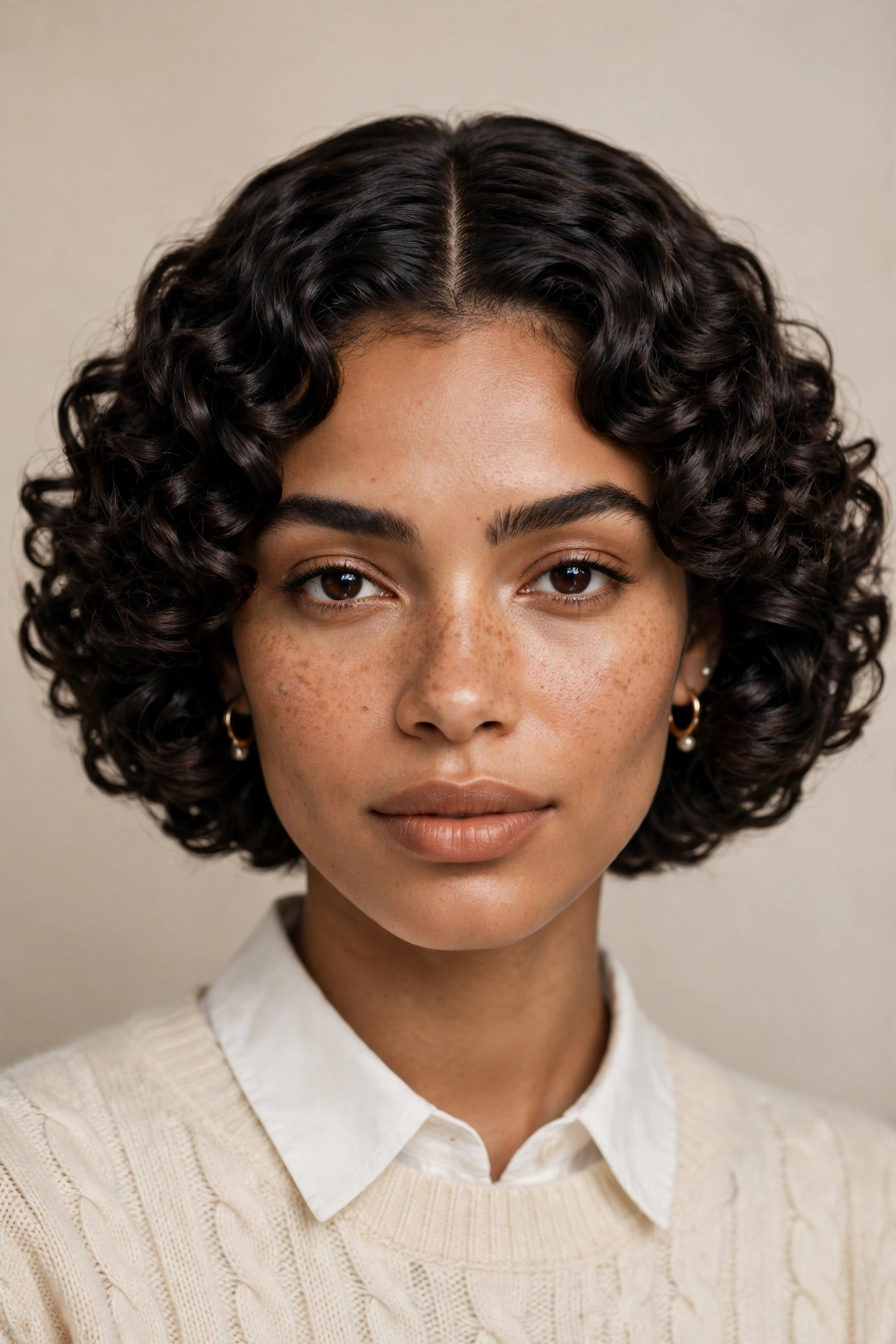
A preppy bob on curly hair is about honoring the curl pattern within a polished framework. The cut follows curly-hair principles — dry cutting, longer layers, shaped to the curl — while the styling aims for defined, frizz-free, uniform curls rather than wild volume. The parting stays neat, the silhouette stays controlled, and the finish gleams. It is proof that preppy polish is an attitude, not a texture. For more curly inspiration, explore our curly butterfly cut ideas.
This suits women with wavy to coily patterns who want structure without straightening. All face shapes can wear it; the volume of curls flatters long faces especially by adding width. The cut must be done by a stylist experienced with curly hair — this is non-negotiable for the shape to work.
Ask your stylist for a dry curly cut in a bob shape — longer than you think, since curls spring up significantly. Request shaped layers that encourage the curls to stack in a rounded, controlled silhouette rather than a triangle. Bring photos of curly bobs specifically, not straight ones.
To style, apply leave-in conditioner and curl cream to soaking-wet hair, define curls in sections, then diffuse on low heat or air-dry. A light gel cast scrunched out once dry gives definition without crunch. Pineapple the hair overnight to preserve the shape. Curly bobs need trims every eight to twelve weeks — curls hide growth well — but never let a non-curly specialist touch the shape.
29. The Preppy Bob with Middle Part
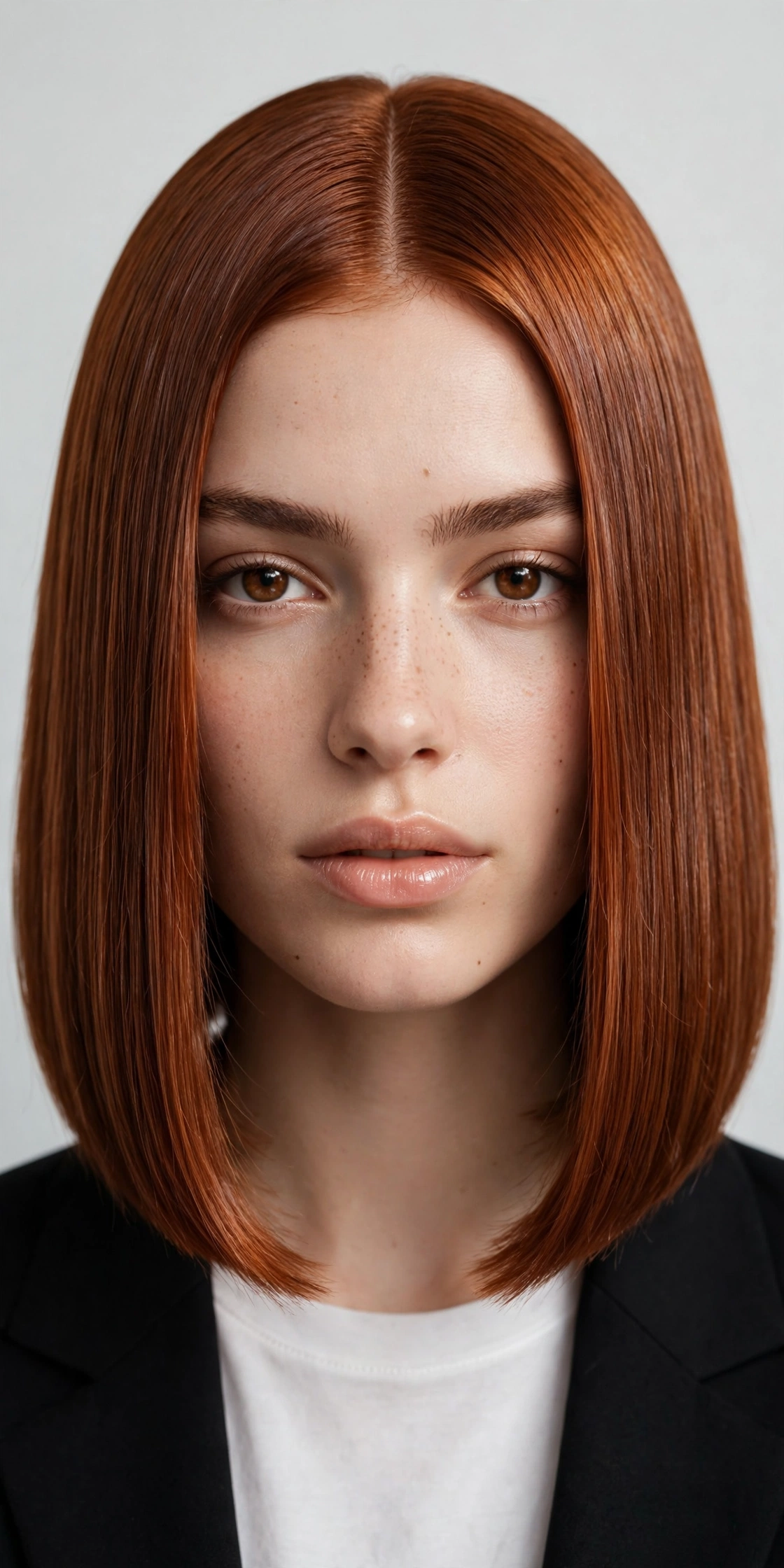
The middle part gives the preppy bob its most symmetrical, modern, and striking presentation. Hair falls in two equal curtains, framing the face with perfect balance — a look that is both timeless and completely current in 2026. The middle part emphasizes the cut’s precision like nothing else: any unevenness shows, which is exactly why it looks so sharp when executed well.
The middle part flatters oval faces most famously, but it also suits heart-shaped faces (balancing a wider forehead) and long faces (the symmetry is harmonious). Round faces can wear it if the bob has enough length to elongate — chin-length middle parts emphasize roundness, so go jaw-length or longer. It demands reasonably symmetrical features, as the part puts facial balance on display.
Ask your stylist to cut the bob with a middle part in mind — the two sides must be exactly even, which means cutting with the hair parted as you will wear it. Specify your preferred length; jaw-length middle-part bobs look fashionably severe, while longer versions soften.
To style, part with a tail comb on damp hair, blow-dry each side smoothly downward with a paddle brush, and flat-iron for symmetry. The part must be precise — re-establish it daily. A shine serum on both sides equally keeps the mirror effect. Trims every six weeks maintain the even lengths that make this style work.
30. The Preppy Bob with Feathered Ends
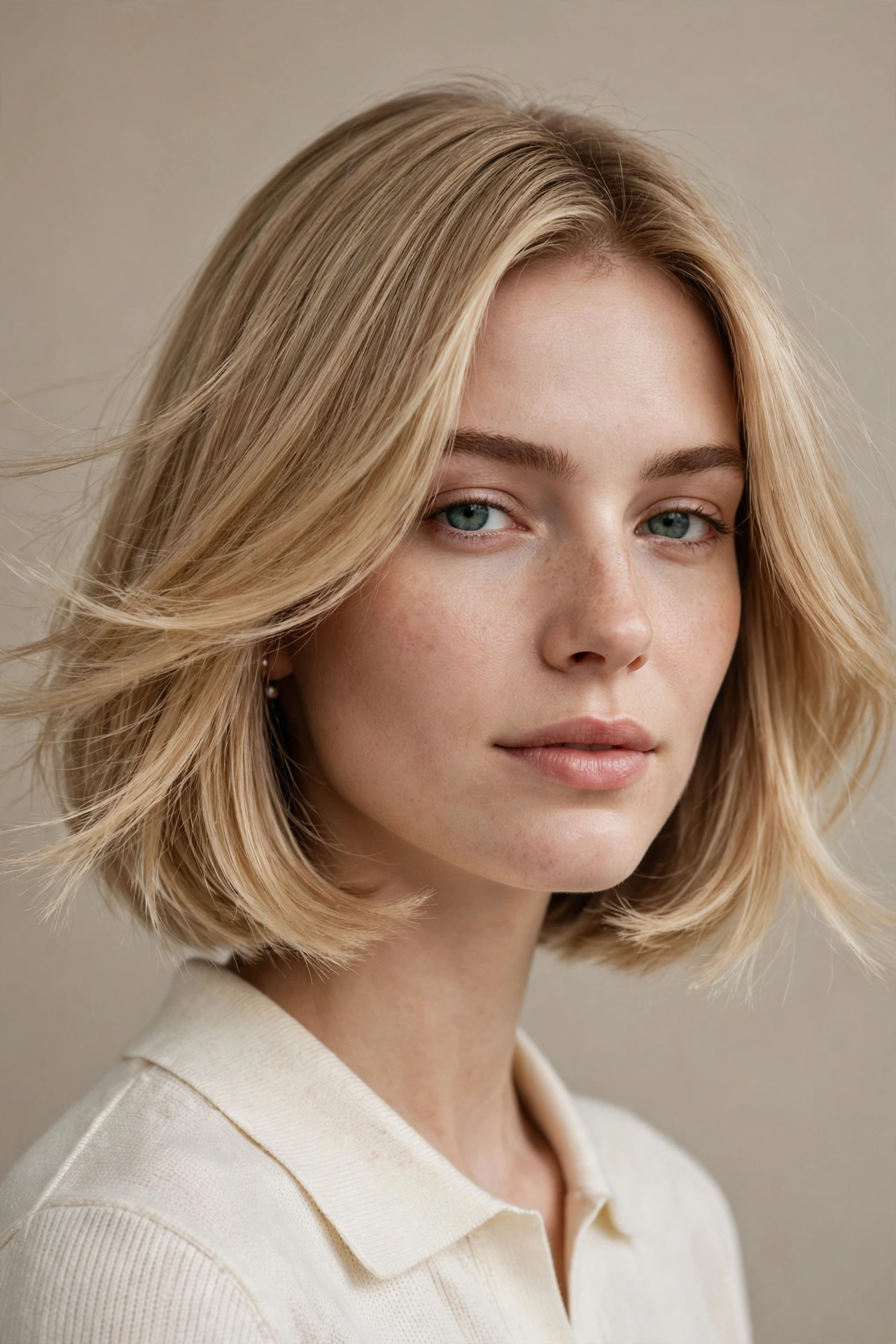
Feathered ends soften the preppy bob’s edge with the lightest possible touch — the last half-inch of hair is finely point-cut so it tapers rather than stopping bluntly. The silhouette stays preppy and controlled, but the finish feels airier and more forgiving. This is the ideal compromise for women who find blunt ends too severe but still want a polished, groomed cut.
Feathered ends flatter every face shape and are particularly kind to square jawlines, as the soft edge does not add visual weight. They work on all textures, though the feathering is most visible on straight to wavy hair. Fine hair should feather lightly (too much removes the edge’s fullness); thick hair can feather more generously.
Ask your stylist for a preppy bob with softly feathered ends — point-cutting through the last half inch, keeping the overall line clean. Emphasize soft, not choppy; you want a whisper of texture, not visible steps.
Style by blow-drying with a round brush, flicking the feathered ends slightly under or outward for movement. A light texturizing cream on the ends enhances the feathering. This finish grows out more gracefully than blunt ends, stretching trims to seven or eight weeks. The feathering needs refreshing at each appointment to stay delicate rather than ragged.
31. The Preppy Bob with Glossy Finish

Sometimes the variation is not in the cut but in the finish — and a glass-gloss preppy bob is unmistakable. This is the classic shape elevated by an almost reflective shine: hair that looks liquid, healthy, and impossibly lustrous. The gloss comes from a combination of hair health, the right products, and occasionally an in-salon glossing treatment. In 2026, shine is the ultimate luxury signal in hair.
A glossy finish enhances every face shape and every preppy bob variation — it is a universal upgrade. It shows best on darker hair colors, where the reflection is most dramatic, but blonde and red bobs glow beautifully too. All textures can achieve it, though the hair must be smooth first; gloss on frizz just highlights the frizz.
Ask your stylist about a clear gloss or glaze treatment — a demi-permanent shine service that takes twenty minutes and lasts four to six weeks. For the cut itself, any preppy bob works; mention you want to maximize shine so they keep the ends healthy.
At home, the routine is: sulfate-free shampoo, a weekly shine mask, heat protectant always, and a finishing gloss serum or shine spray. Cold-water rinses seal the cuticle for extra reflection. Silk pillowcases reduce dulling friction. Avoid over-washing, which strips natural oils — dry shampoo between washes preserves both style and shine. Book gloss refreshes with your trim appointments.
32. The Modern Preppy Bob 2026
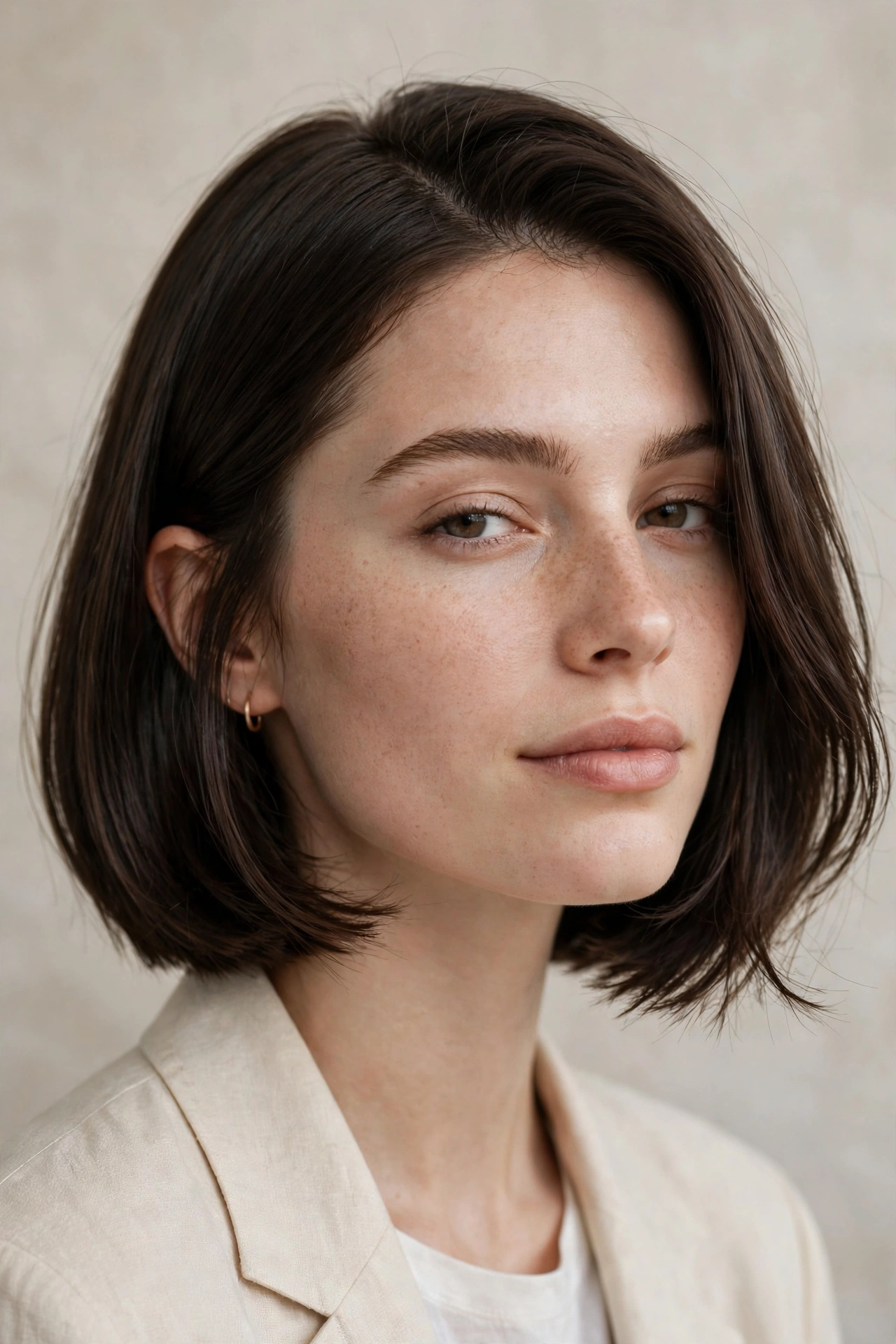
The 2026 update to the preppy bob keeps the DNA — precision, polish, grooming — but relaxes the rules just enough to feel current. The perimeter is clean but not razor-blunt; the finish is smooth but has a hint of lived-in movement; the parting is neat but not shellacked. It is preppy for the modern woman: still the most polished bob in the room, but with a quiet ease that says she did not spend two hours achieving it.
This is the most versatile preppy bob — it suits every face shape, every texture, and every lifestyle, because it is designed as a framework rather than a rigid formula. It is the recommended starting point for anyone new to the preppy bob in 2026, and the easiest to personalize with your stylist. The wider bob movement backs this up — Allure has called the evolving bob 2026’s biggest haircut trend, so this cut keeps you squarely in the fashion conversation.
Ask your stylist for a contemporary preppy bob: jaw-length, clean perimeter with the softest whisper of texture at the very ends, a part that suits your face, and subtle interior shaping for natural movement. Bring photos of both classic and modern versions so they understand the balance you want.
Style with a round brush for smoothness, then break up the finish with a tiny amount of texturizing cream — just enough to keep it from looking stiff. This is a wash-and-go-friendly preppy bob: air-drying with a smoothing cream works on good hair days. Trims every seven weeks keep it fresh. The modern preppy bob is not about perfection — it is about looking polished with ease.
How to Style a Preppy Bob
Styling a preppy bob is a skill that rewards routine — once you learn the sequence, the whole process takes fifteen minutes or less. The preppy finish depends on three things: smoothness at the roots, control through the lengths, and a polished perimeter. Every styling session should address all three.
Start with freshly washed hair and a heat protectant applied evenly from mid-lengths to ends — this is non-negotiable for any heat styling, as the preppy bob’s shine depends on healthy, undamaged hair. If your hair is fine, add a lightweight volumizing mousse at the roots; if it is thick, work a smoothing cream through the lengths. Comb through with a wide-tooth comb to distribute product and detangle gently.
Rough-dry your hair to about eighty percent using your fingers or a paddle brush, directing the airflow downward — always downward, since drying upward creates frizz that fights the preppy smoothness. Once mostly dry, section the hair into four quadrants and work through each with a round brush (for volume and movement) or a paddle brush (for maximum sleekness). Pull each section taut and follow the brush with the dryer’s nozzle pointed down the hair shaft. Pay special attention to the roots: lift slightly for volume or smooth flat for sleekness, depending on your chosen variation. The ends deserve focus too — roll them under for classic preppy, flick them out for playful, or keep them straight for severe.
Once dry, assess the finish. If you want extra polish, run a flat iron over the top layers and the ends in thin sections — one slow pass per section is more effective than multiple quick ones. For wave or curl variations, this is when you add heat styling, working in consistent sections for a uniform result. Finish with products in this order: a pea-sized amount of smoothing serum or oil on the ends first (never the roots), then a light mist of shine spray over everything, then flexible-hold hairspray only where needed — typically the part and any flyaway-prone areas. The preppy rule is that products should be invisible: if anyone can see or feel product in your hair, you have used too much.
For second-day styling, do not rewash unless needed. Spritz the roots with dry shampoo, massage in, then brush through. Smooth the lengths with a flat iron pass and refresh the part with a tail comb. A silk scarf or loose topknot overnight preserves the style and reduces morning work to five minutes. With practice, the preppy bob becomes one of the fastest polished styles to maintain — the precision of the cut does half the work for you.
Maintenance & Care
A preppy bob looks effortless only when the maintenance is disciplined. The cut’s power comes from its precision, and precision fades with growth — so the maintenance schedule is the real secret behind every flawless preppy bob you admire.
Trims are the foundation. Book every five to eight weeks depending on your variation: blunt and asymmetric cuts need five weeks, classic and layered cuts manage six to eight, and curly or textured versions stretch longest. Do not wait until the shape collapses — a preppy bob that has lost its line just looks like an overgrown haircut. Many salons offer complimentary bang or perimeter trims between full appointments; ask yours.
At home, the care routine centers on shine and smoothness. Use a sulfate-free shampoo to preserve natural oils and any color treatments, and condition every wash with a focus on the ends. A weekly deep-conditioning or shine mask keeps the hair reflective — the preppy bob’s gloss is its signature, and dull hair undermines the whole effect. Always use heat protectant before blow-drying or ironing; heat damage creates frizz and split ends that no product can hide.
Color maintenance matters if your bob has highlights, balayage, or a money piece: toning shampoos prevent brassiness, and gloss refreshes every six to eight weeks keep the tone expensive-looking. Even virgin hair benefits from a clear gloss treatment twice a year.
Between appointments, protect the cut. Sleep on a silk or satin pillowcase to reduce friction and preserve smoothness. Avoid tight ponytails that dent the shape — use silk scrunchies loosely if you must tie it back. In humid weather, an anti-frizz serum is essential; in dry winter air, a humidifier and extra conditioning prevent static that ruins the sleek finish. With this discipline, your preppy bob will look freshly cut far longer than the calendar suggests.
Frequently Asked Questions
What exactly is a preppy bob?
A preppy bob is a polished, precisely cut bob haircut — typically chin to jaw length — characterized by clean lines, a neat parting, smooth finish, and an overall groomed appearance. Unlike messy or textured bobs, the preppy version emphasizes discipline: even ends, controlled shape, and healthy shine. It draws inspiration from classic collegiate style but has been updated for 2026 with softer, more wearable variations.
Which face shape suits a preppy bob best?
The preppy bob is remarkably versatile. Oval faces can wear any variation. Round faces do best with side parts, A-lines, or longer lengths that elongate. Square faces are softened by layered or textured versions and face-framing pieces. Heart-shaped faces suit chin-length cuts with volume at the jaw. Long faces benefit from volume at the sides and bangs. The key is choosing the right parting and length for your proportions — a good stylist will customize these details.
How often should I trim a preppy bob?
Every five to eight weeks, depending on the variation. Blunt, asymmetric, and chin-length cuts need trims every four to five weeks to hold their precise lines. Classic and layered bobs can go six to eight weeks. The preppy bob depends on precision, so waiting too long between trims is the fastest way to lose the look — the cut simply stops reading as intentional once the perimeter softens.
Can I get a preppy bob with curly hair?
Absolutely. A preppy bob on curly hair uses curly-cutting techniques (usually dry cutting) to create a controlled, rounded bob shape with defined, frizz-free curls. The parting stays neat and the silhouette stays polished — the texture is simply curls instead of straight hair. Find a stylist experienced with curly hair, as the cutting approach is completely different from a straight bob.
What products do I need for a preppy bob?
The essentials are: a heat protectant (non-negotiable), a smoothing serum or lightweight oil for the ends, a flexible-hold hairspray, and dry shampoo for second-day refresh. Depending on your hair type, add volumizing mousse (fine hair), smoothing cream (thick hair), or curl cream (curly hair). A weekly deep-conditioning mask maintains the shine that defines the style.
How do I ask my stylist for a preppy bob?
Bring reference photos showing the exact length, parting, and finish you want — this matters more than terminology, since “preppy” means different things to different stylists. Specify: the length (chin, jaw, or collarbone), the part (middle, side, or deep side), whether you want blunt or soft ends, and whether you want layers. Mention that you want a polished, groomed finish rather than a messy or textured one.
Is the preppy bob high maintenance?
It is medium maintenance. Daily styling takes ten to fifteen minutes once you learn the routine, and the cut needs regular trims every five to eight weeks. However, the precision of the cut does much of the work — a well-cut preppy bob falls into shape easily. It is less daily work than a pixie (which needs constant restyling) but more than a long layered cut (which hides growth better).
Will a preppy bob work for thin or fine hair?
Yes — the preppy bob is one of the best cuts for fine hair. A blunt, one-length perimeter with no layers creates the illusion of thickness and density. Keep the length at chin to jaw level where fine hair looks fullest, add a side part for volume, and use lightweight volumizing products. Avoid heavy oils and over-layering, which make fine hair look thinner.
What is the difference between a preppy bob and a classic bob?
The terms overlap significantly — a preppy bob is essentially a classic bob worn with extra polish and intention. The preppy version emphasizes collegiate-inspired grooming: immaculate partings, glossy finishes, and a put-together feel. A classic bob can be worn messy or undone; a preppy bob is defined by its discipline. In practice, the 2026 preppy bob includes modern, slightly relaxed variations of the timeless classic shape.
Can I wear a preppy bob if I am over 40?
The preppy bob is one of the most age-versatile haircuts in existence. Its polish reads as sophisticated rather than young, making it flattering at every age. Women over 40 often prefer slightly softer variations — face-framing layers, subtle texture, or a side part — which keep the look fresh rather than severe. The cut’s groomed quality complements mature personal style beautifully.