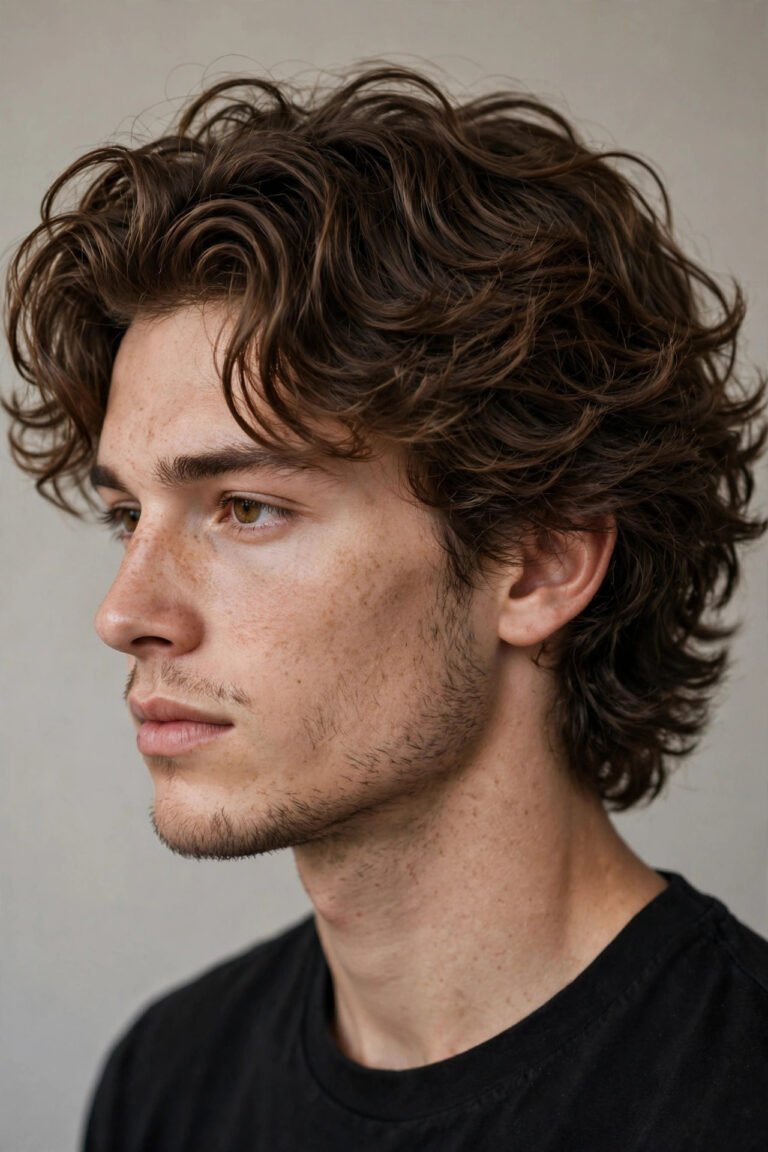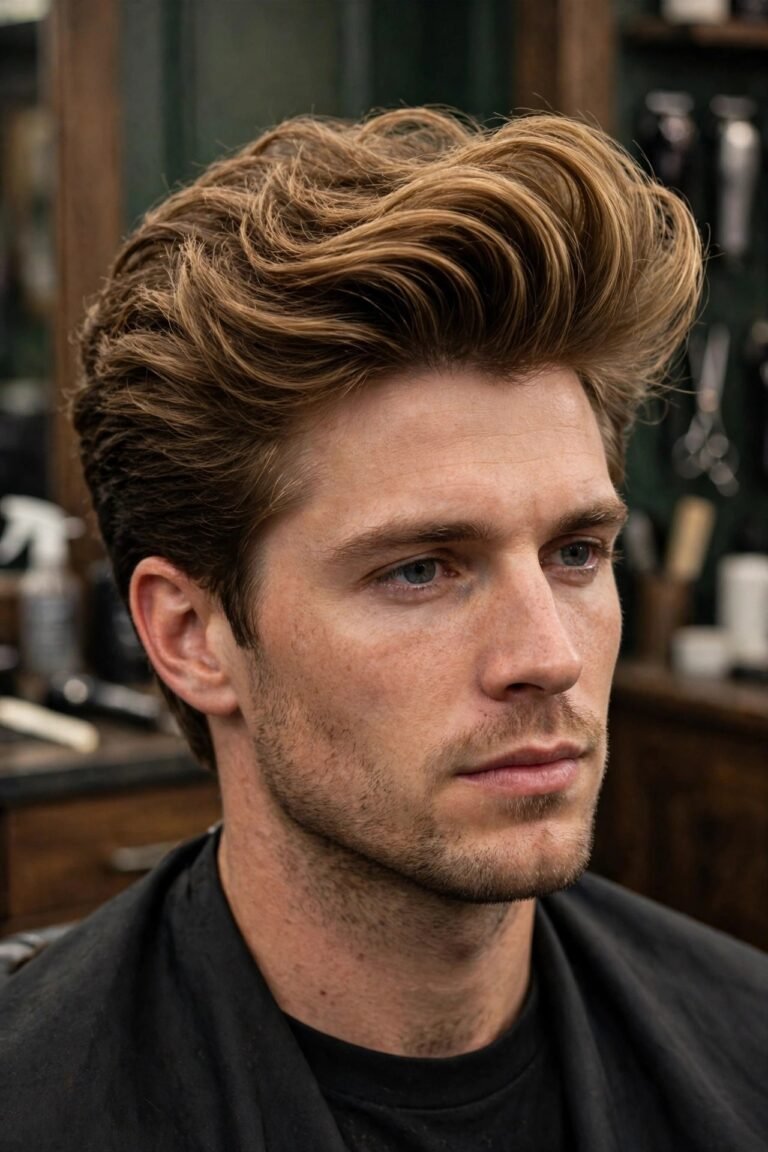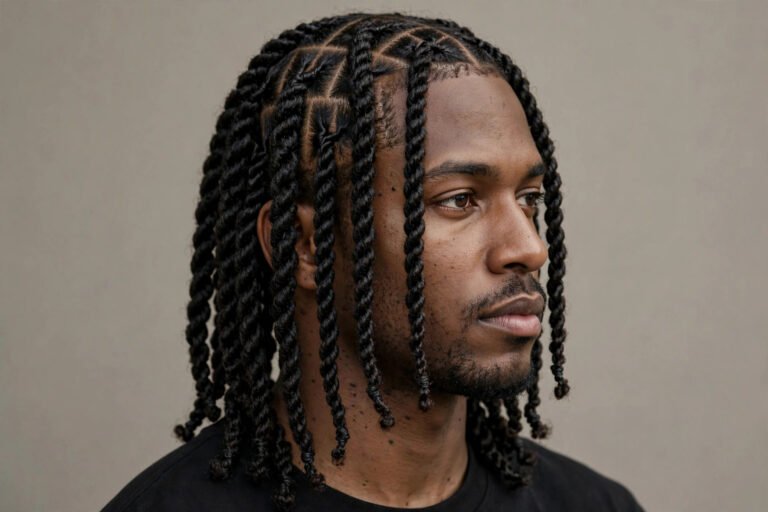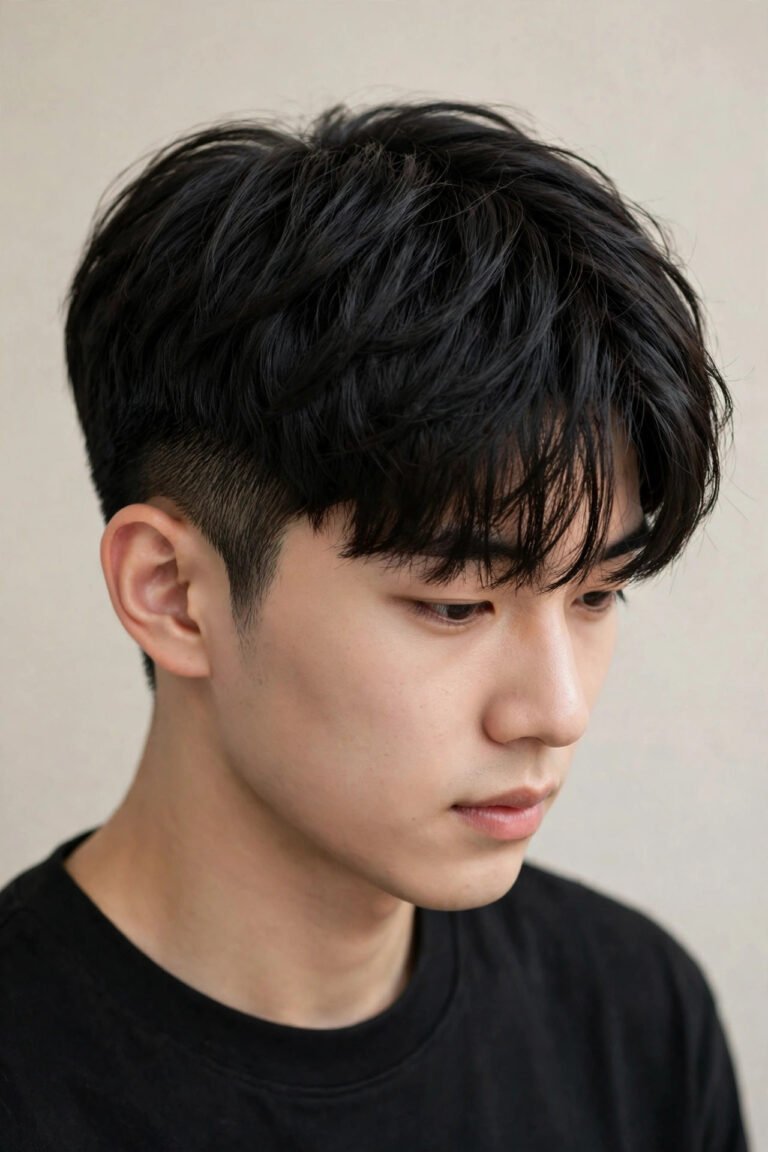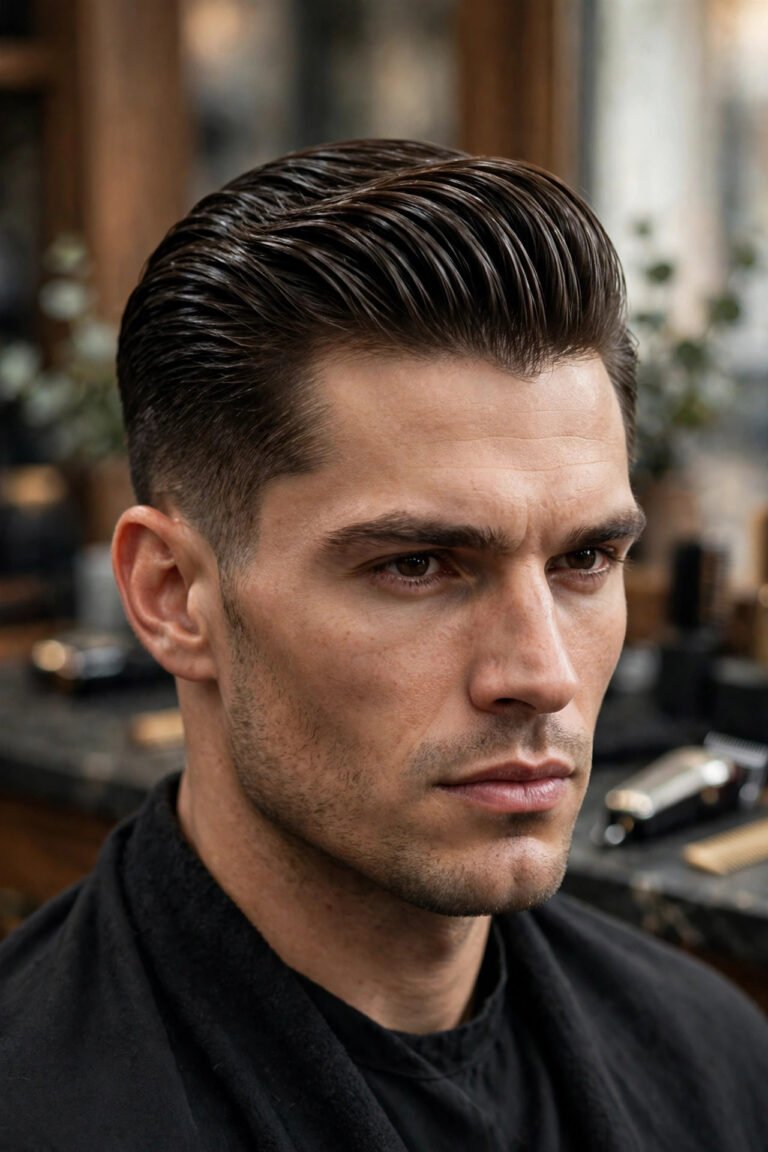
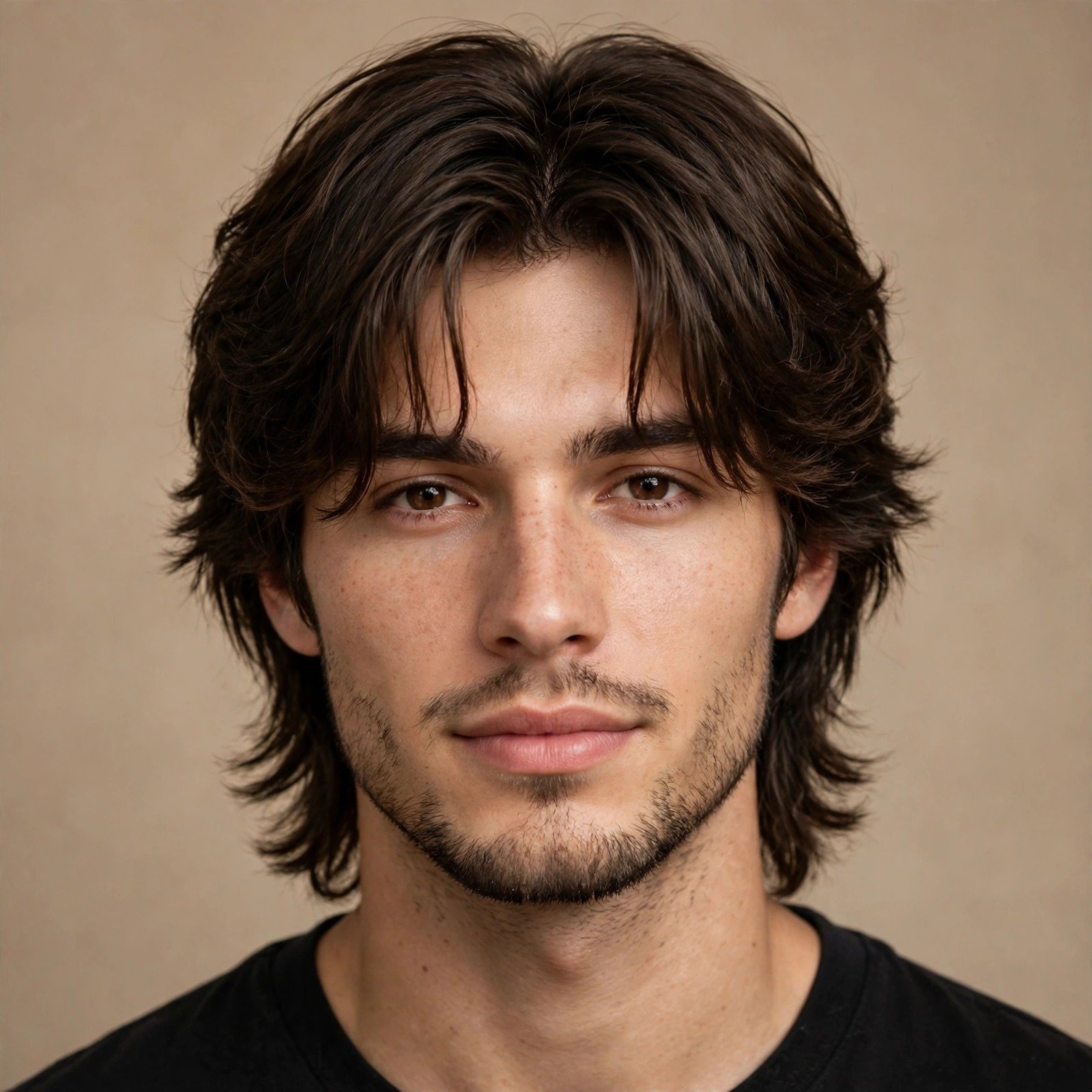
36 Soft Wolf Cut Ideas for Men 2026
If you have spent any time around men’s grooming content this year, you have already seen the soft wolf cut men are wearing everywhere — that grown-out, layered, effortlessly textured haircut that sits somewhere between a shag and a mullet, minus the 1980s excess. Pinterest searches for the style are up more than 1,150 percent year over year, barbers from London to New York cannot stop cutting it, and Esquire’s 2026 trend forecast put the whole grown-out shag family right at the top of the list. The buzz is real, and it is not going away.
Here is the thing, though: the classic wolf cut can feel like a lot. Too choppy, too wild, too committed for most guys’ daily lives. The soft wolf cut is the grown-up answer — the same DNA, but with gentler layers, softer edges, and a finish that works as well in a boardroom as it does at a music festival. It keeps the movement and attitude that made the original go viral, then sands down the parts that made it hard to wear.
This guide is the most complete breakdown of the soft wolf cut for men you will find anywhere. You will get 36 distinct soft wolf cut ideas for 2026 — every one tailored to a different hair type, face shape, lifestyle, or vibe — plus the exact script for asking your barber for the cut, a realistic styling routine that takes under ten minutes, face-shape and hair-type guidance, maintenance rules, and answers to the questions guys actually ask before committing. Whether your hair is straight, wavy, or curly, short-ish or already halfway to your shoulders, there is a version of this cut with your name on it.
What Is the Soft Wolf Cut?

The soft wolf cut is a medium-length layered haircut built on three ideas: volume at the crown, feathered layers through the mid-lengths, and soft, tapered length at the back and nape. Think of it as the gentler sibling of the viral wolf cut that exploded out of Japanese and Korean street style a few years back. Where the original version leans on aggressive, choppy layering and dramatic contrast between short crown layers and a long back, the soft wolf cut blends everything. The transitions are seamless, the ends are textured rather than jagged, and the overall silhouette reads relaxed instead of rebellious.
To understand the cut, it helps to know its parents. The wolf cut was always a hybrid — part shag, part mullet. It borrowed the shag’s all-over layers and the mullet’s shorter-front-longer-back shape, then dialed both up. The soft version keeps the hybrid DNA but turns down the drama. Layers around the crown are cut slightly longer, which removes the “spiky disconnect” look that can make the classic wolf cut feel costumey. The back keeps enough length to show movement, but it is shaped and tapered so it never turns into a full mullet. And the front almost always features some kind of fringe — curtain bangs, a wispy middle part, or soft face-framing pieces — which is what gives the style its approachable, wearable feel.
Length-wise, you generally need four to seven inches on top to get a proper soft wolf cut, with the back reaching anywhere from the collar to a few inches below it. That puts it firmly in medium-length territory, which is one reason it photographs so well and wears so easily. The cut is overwhelmingly a scissor cut — clippers play a minor role, maybe a light taper around the ears and neckline if you want a cleaner edge, but most versions stay fully scissored for maximum softness.
One more thing worth knowing: the soft wolf cut is a texture-forward style, which means it looks best when your hair’s natural movement is allowed to do the talking. Straight hair gets piece-y separation, wavy hair gets effortless bend, and curly hair gets incredible volume and shape. If you are coming from a world of skin fades and hard parts, the soft wolf cut will feel like a completely different philosophy — less precision, more personality.
Why the Soft Wolf Cut Is Trending in 2026
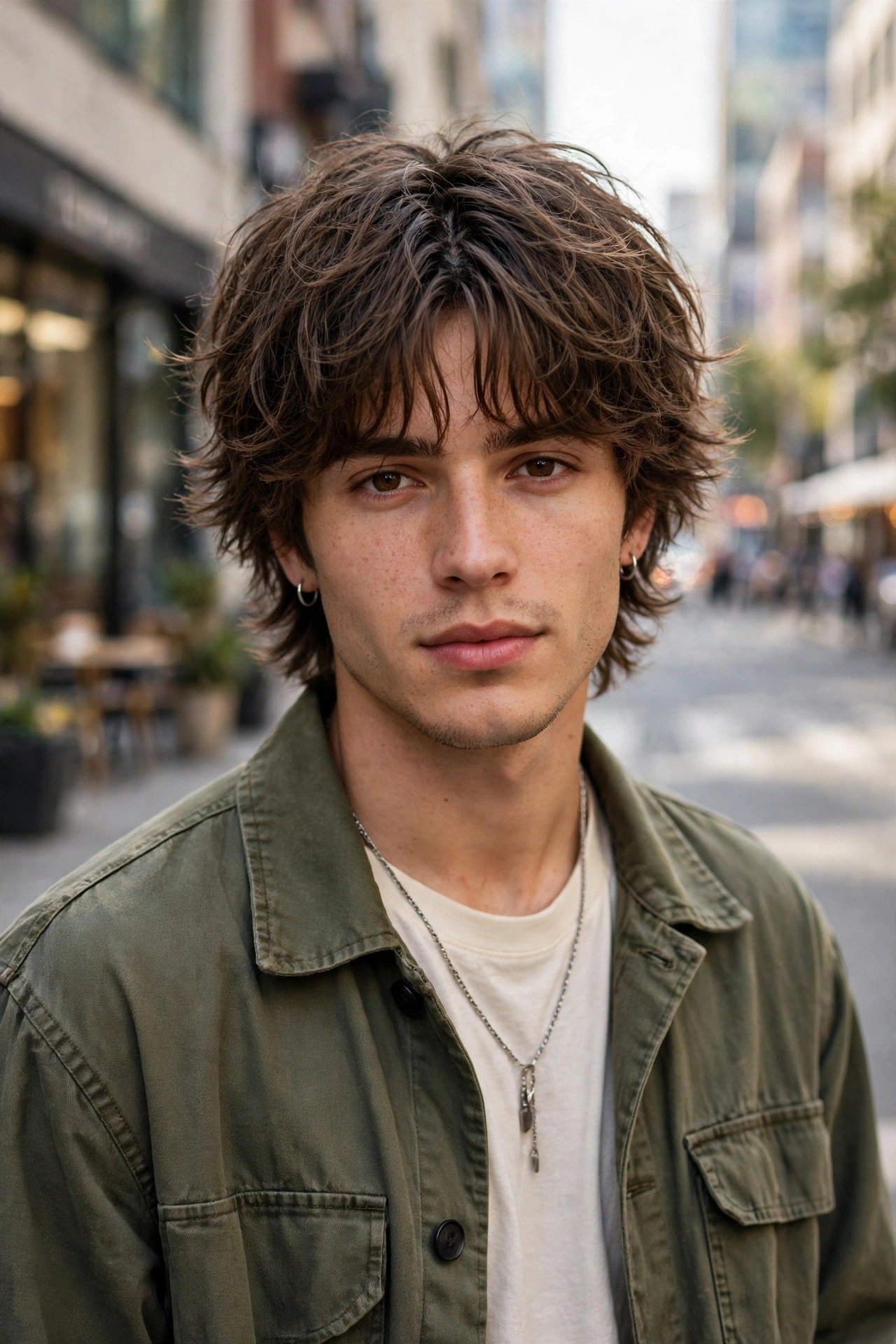
Few men’s hairstyles have ever moved as fast as the soft wolf cut has in 2026. The numbers tell the story: Pinterest grooming data from October 2026 shows searches for “soft wolf cut men” up 1,154 percent year over year, with “modern wolf cut men” climbing 553 percent in the same period. Those are not incremental gains — that is a full-blown cultural shift, the kind that happens when a haircut stops being a niche internet thing and becomes what guys actually ask for in the chair.
The professional tastemakers agree. Esquire’s forecast of the biggest men’s haircut trends for 2026 named the grown-out shag and wolf-cut family as a top contender for cut of the year, with stylists praising its soft, long layers, natural movement, and lived-in texture around the face. When the traditional barbershop establishment and the TikTok algorithm agree on something, you know it has real staying power.
So why now? The biggest driver is fade fatigue. For the better part of a decade, men’s hair was dominated by sharp fades, hard parts, and styles that needed heavy product and a barber visit every two weeks to look right. A lot of guys are simply tired of that maintenance cycle. The soft wolf cut is the opposite proposition: it grows out gracefully, looks better with a little lived-in texture, and stretches the time between appointments. In an era where natural-looking hair is winning, that is a powerful pitch.
Culture is doing the rest of the work. K-pop idols and K-drama leads have been wearing softer layered cuts for years, and their global influence keeps pushing the aesthetic westward — our guide to trendy Korean hairstyles for men even has a dedicated wolf-cut section, which shows how deeply the style is embedded in that world. Add in the broader 2026 return of 90s and Y2K aesthetics, the indie-music revival look, and a generation of guys who grew their hair out during the long-hair boom and now want shape instead of just length, and you get a perfect storm.
There is also a practical reason the soft wolf cut is winning: versatility. It works on straight, wavy, and curly hair. It flatters round, square, oval, and heart-shaped faces with small adjustments. It can be dressed up for a wedding or dressed down for the weekend. And unlike the more extreme version, it does not read as a “statement” — it reads as a guy with great hair. That wearability is exactly why barbers expect this one to outlast the trend cycle and settle in as a modern classic.
36 Soft Wolf Cut Ideas for 2026
Here is the main event: 36 soft wolf cut ideas covering every hair type, length, and vibe. Each one is a genuinely distinct take on the cut — different layering, different fringe, different attitude — so you can find the version that fits your hair and your life. Save your favorites and bring them to your barber.
1. The Classic Soft Wolf Cut
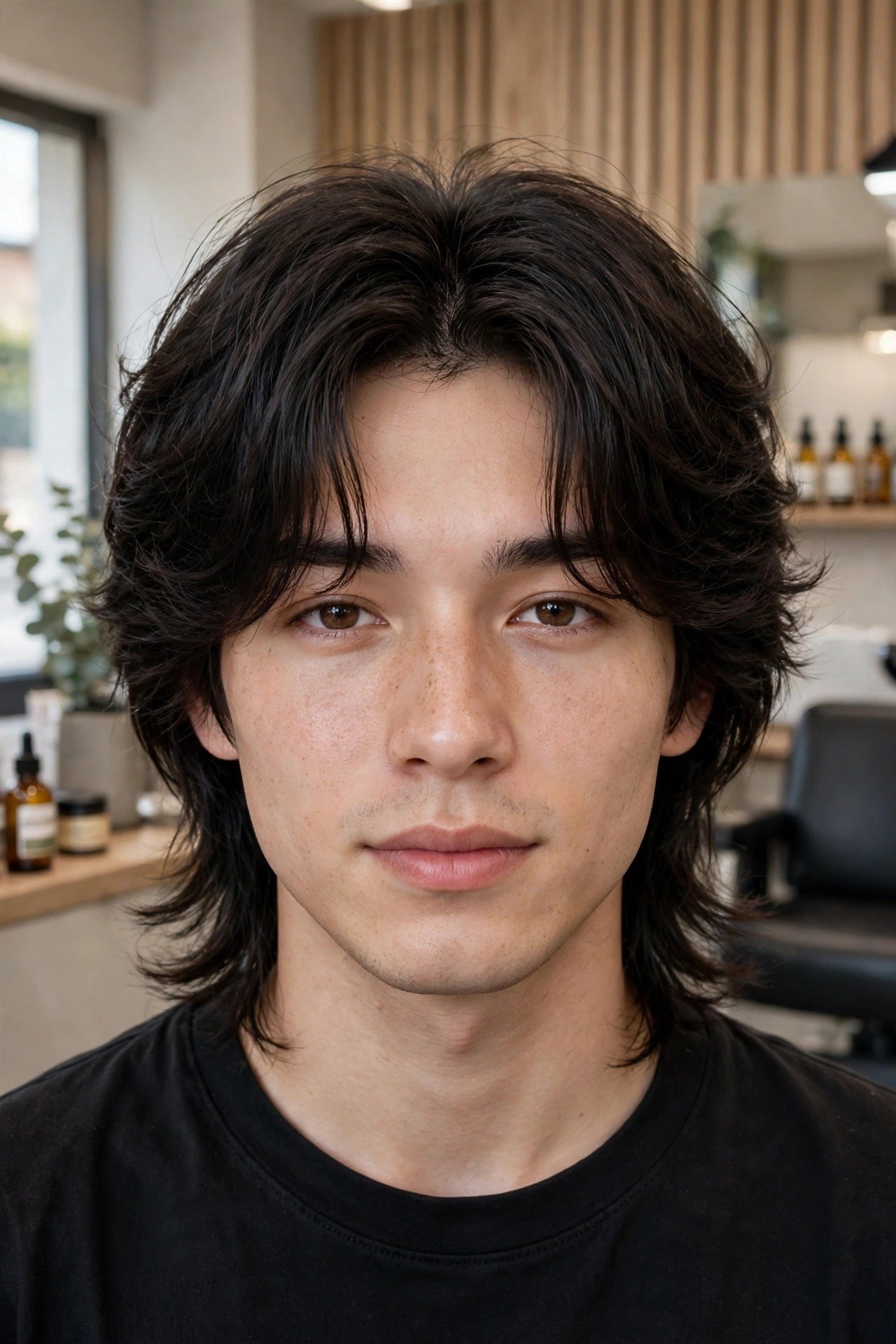
The one that started it all. The classic soft wolf cut keeps everything in the middle of the road: medium length all over, softly blended crown layers, a gentle curtain fringe, and a tapered back that stops well above mullet territory. It is the safest entry point into the trend and the version most barbers will default to if you just ask for “a soft wolf cut.” What makes it work is restraint — the layers create movement without any single section screaming for attention, and the fringe is long enough to tuck behind the ears on days you want it out of your face. Ask your barber for soft, blended layers with no harsh disconnect, and tell them you want the back shaped rather than left to grow wild. Style it with a pea-sized amount of matte cream worked through dry hair, scrunching the ends upward for separation. This is the cut for the guy who wants to be on-trend without looking like he is trying, and it suits straight, wavy, and loosely curly hair equally well.
2. The Curtain Fringe Soft Wolf Cut
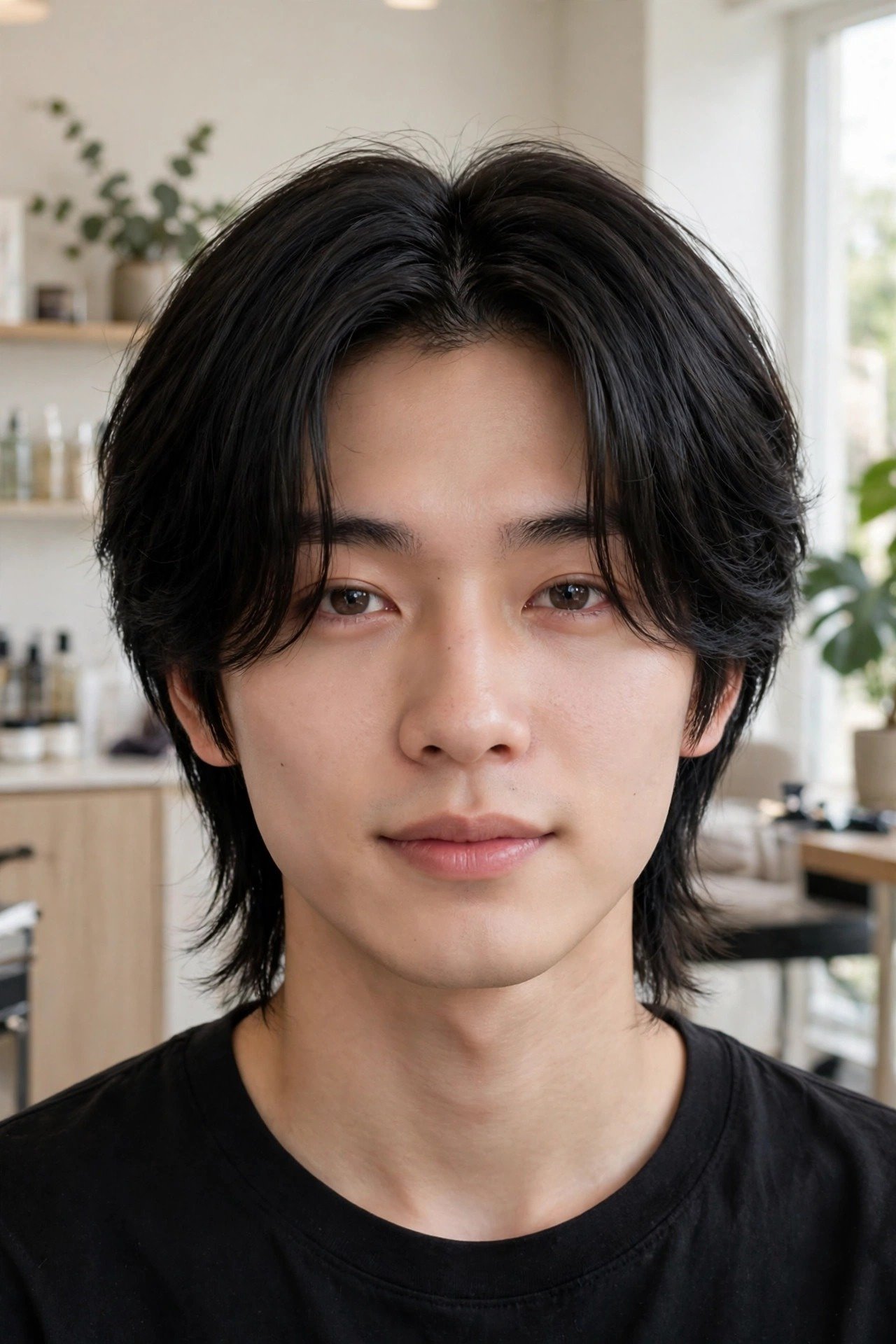
If there is a signature detail of the 2026 soft wolf cut, it is the curtain fringe. A center part with the front sections falling on either side of the face gives the cut its romantic, 90s-heartthrob energy, and it flatters more face shapes than almost any other fringe option because the part elongates the face while the falling pieces soften the jawline. For this version, the front pieces should be cut to cheekbone or jaw length so they frame rather than cover your face. The rest of the cut follows the classic blueprint: layered crown, textured mid-lengths, tapered back. Guys with round or square faces benefit most here, since the vertical lines of the curtain part draw the eye downward. To style, part your hair down the middle while it is damp, then blow-dry the front sections away from your face with a round brush or just your fingers to set the curtain shape. A light texturizing spray keeps it from falling flat by midday. This is also the easiest version to grow out, since a longer curtain fringe just becomes more dramatic face-framing.
3. The Curly Soft Wolf Cut
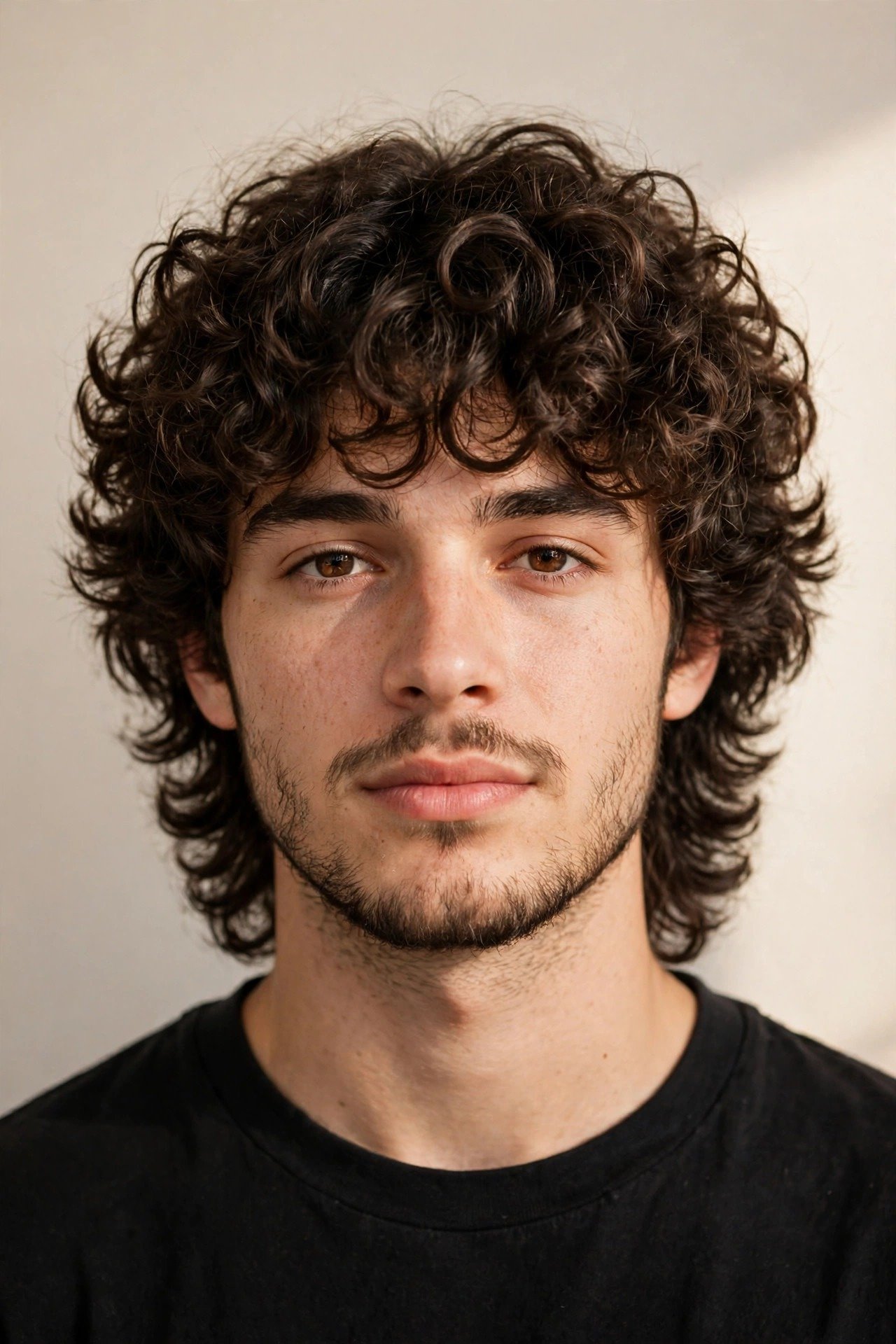
Curly-haired guys, this might be the best version of the cut for you. Curls and the soft wolf cut are a natural match because the layering that defines the style is exactly what curly hair needs to avoid the dreaded triangle shape — weight removed from the sides, volume encouraged at the crown, and length preserved at the back for that flowing silhouette. The key difference from a straight-hair wolf cut is that your barber should cut it dry or at least account for shrinkage, since curls bounce up significantly shorter than they look when wet. Ask for a rounded overall shape with the curls left longer on top and through the back, and keep the fringe area generous so the curls can fall naturally over the forehead. If you want more ideas for working with your natural texture, our guide to curly hair taper fade combinations covers the shorter end of the spectrum. Style with curl cream on soaking wet hair, scrunch upward, and either diffuse on low heat or air dry — never brush it dry. The result is bold, distinctive, and full of personality, with the soft layering keeping the volume controlled rather than chaotic.
4. The Wavy Soft Wolf Cut

If your hair has natural wave, the soft wolf cut was practically designed for you. Waves give the cut effortless movement that straight hair has to work for, and the layered structure enhances every bend instead of fighting it. This version leans into an undone, beachy feel — think surfer-meets-indie-musician. Ask your barber for longer layers, five to six inches on top, point-cut at the ends so the waves can separate naturally. The fringe can be a soft curtain or a loose middle part; either way, keep it long enough to move. Styling is beautifully simple: scrunch a small amount of sea salt spray or light mousse into damp hair and let it air dry. The less you fuss with it, the better it looks, which is the whole philosophy of the cut. Wavy-haired guys often find this is the first haircut that makes their natural texture feel like an asset rather than a problem to solve. It grows out gracefully too, since longer waves just add to the flow.
5. The Textured Soft Wolf Cut

This is the editorial version — the one you see in fashion shoots and on the most style-forward guys on your feed. The textured soft wolf cut takes the classic blueprint and pushes the piece-y separation further: your barber uses point cutting, slide cutting, or even a razor through the mid-lengths and ends to create distinct, separated strands that catch the light. It works best on thick hair that can handle aggressive texturizing without looking thin. The payoff is incredible dimension — every layer reads individually, and the cut looks different from every angle. To style, work a small amount of texturizing powder or matte paste through dry hair, focusing on the mid-lengths and ends, then pull small sections apart with your fingers. This is a higher-maintenance version in terms of styling effort, but the visual impact is unmatched. Fair warning: this cut needs a skilled barber. Bad texturizing looks choppy; good texturizing looks expensive. Bring reference photos and be specific about how separated you want the pieces.
6. The Soft Wolf Cut with Tapered Sides
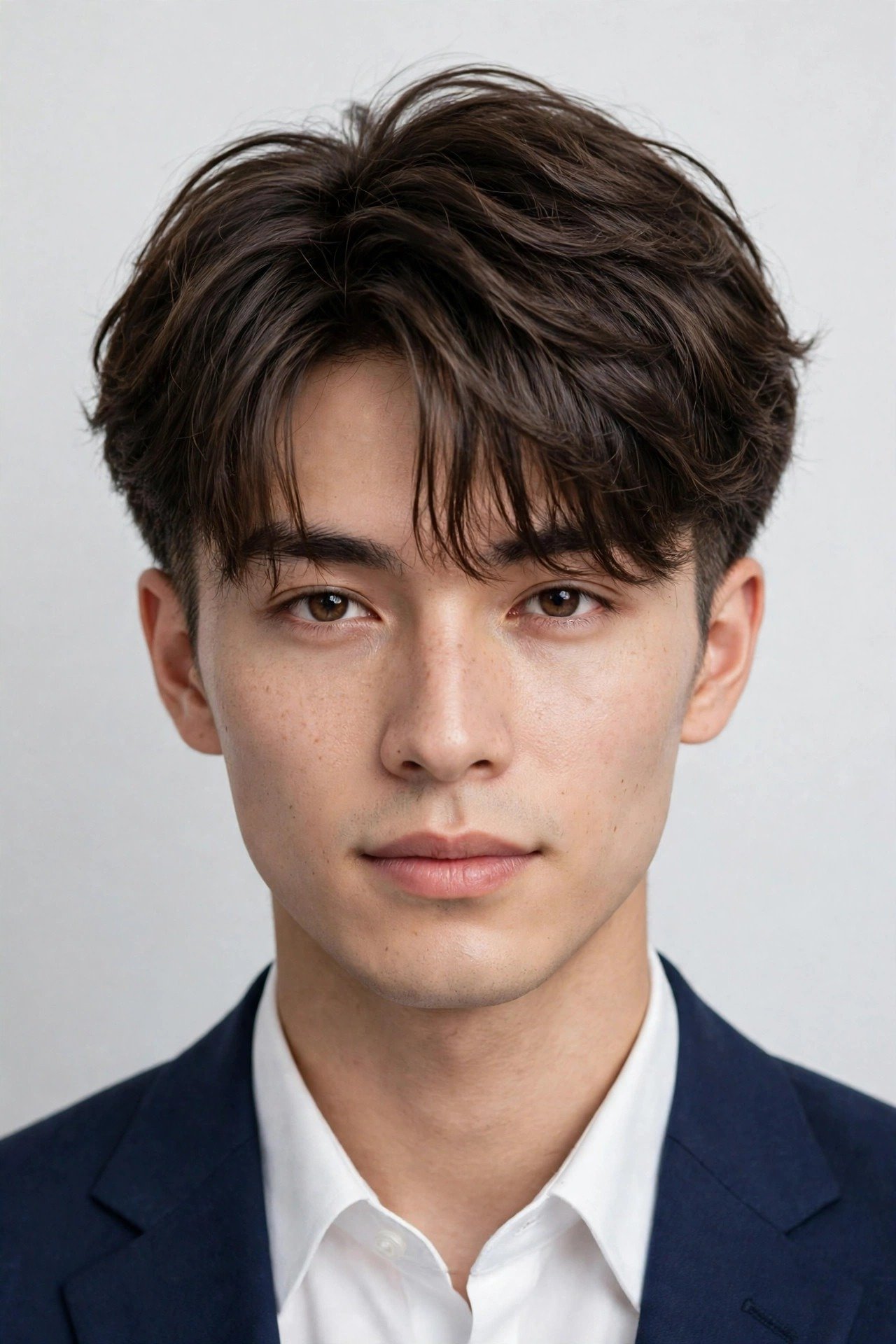
Want the wolf cut’s flow on top but need to keep things neat for work? The tapered-sides version is the perfect compromise. The top keeps the full soft wolf cut treatment — layered crown, textured lengths, curtain or side-swept fringe — while the sides are scissor-tapered for a cleaner silhouette. This is not a skin fade; the taper is gradual and soft, going from longer at the top of the side down to shorter near the ears without ever looking shaved. Ask your barber specifically for a “scissor over comb taper” rather than a clipper fade to keep the softness consistent with the rest of the cut. The contrast between the voluminous top and the neat sides creates a sharp, modern look that reads professional while still being clearly on-trend. Styling focuses on the top — blow-dry with volume at the crown, texture through the lengths — while the tapered sides take care of themselves. This is arguably the most versatile version on this list for guys navigating offices, client meetings, and weekends in one haircut.
7. The Middle Part Soft Wolf Cut
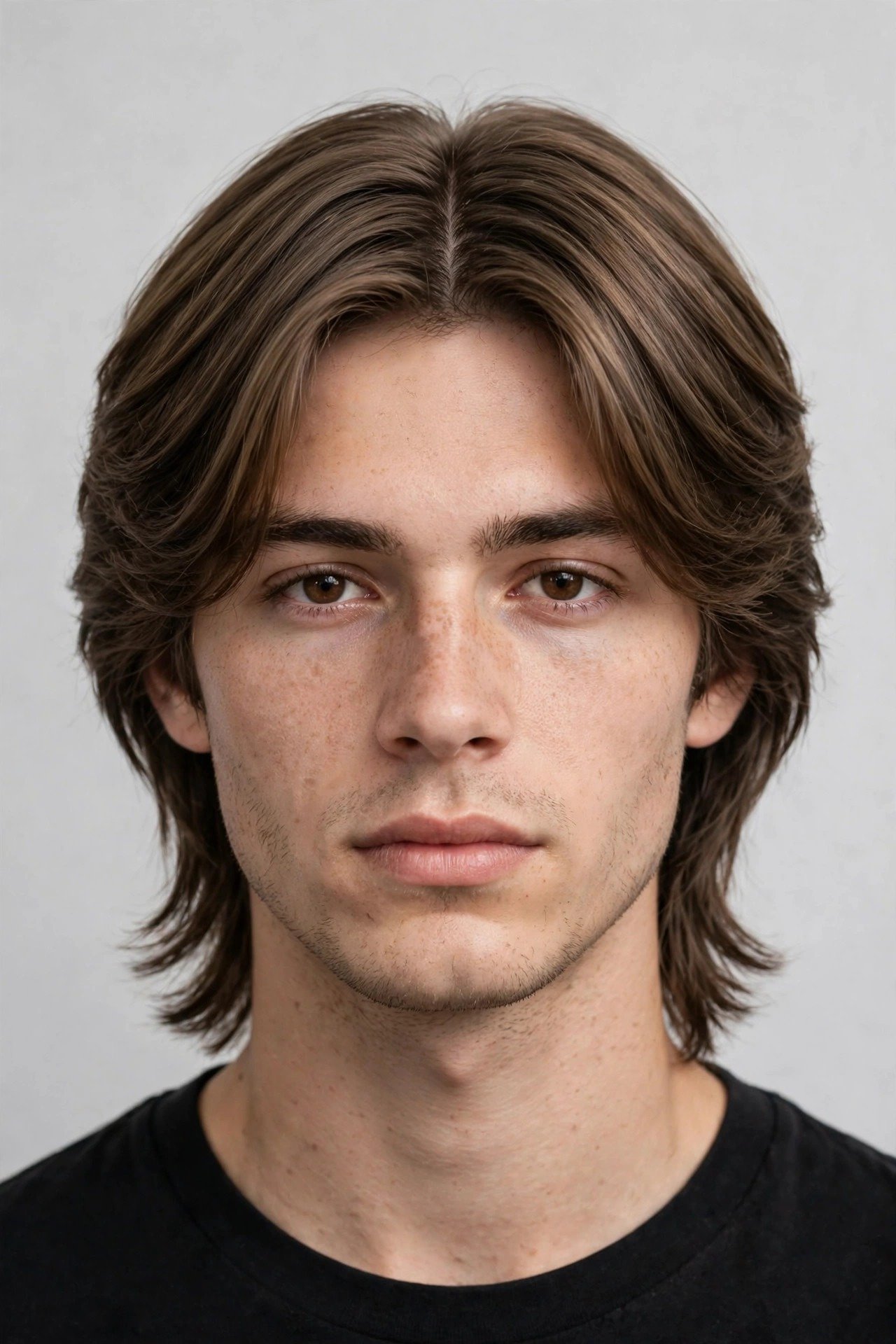
Clean, symmetrical, and quietly confident. The middle part soft wolf cut takes the classic layering and organizes it around a precise center part, which gives the whole style a more polished, intentional feel. This is the version for guys who like the wolf cut’s texture but want it to look deliberate rather than undone. The part should sit naturally where your hair wants to split — forcing a center part against your growth pattern is a losing battle — and the layers fall symmetrically on both sides. Keep the crown layers slightly longer here to avoid too much lift at the part, which can look severe. This version photographs beautifully and works especially well for oval and oblong faces, since the symmetry emphasizes balanced proportions. Style by parting damp hair down the middle, blow-drying each side away from the face, and finishing with a light cream for control. It is the most “put together” take on the trend, and it transitions seamlessly from day to evening.
8. The Side-Swept Soft Wolf Cut

Not everyone wants a center part, and the side-swept version is the answer. Here the fringe is directed to one side, creating an asymmetric frame that softens angular features and adds a relaxed, romantic feel. This is particularly flattering for guys with strong jawlines or prominent foreheads, since the diagonal line of the sweep breaks up harsh angles. Ask your barber to leave extra length on the side you will sweep toward — about an inch more than the opposite side — so the sweep has enough weight to sit properly. The rest of the cut follows the standard soft wolf blueprint. Styling is straightforward: blow-dry the fringe to the side while damp, using your fingers rather than a comb for a natural finish, and add a dab of matte clay on the ends for definition. The side-swept version also hides a receding hairline or high forehead better than almost any other variation, which makes it a smart pick for guys in their late twenties and thirties who want the trend without exposing what they would rather not.
9. The Shaggy Soft Wolf Cut
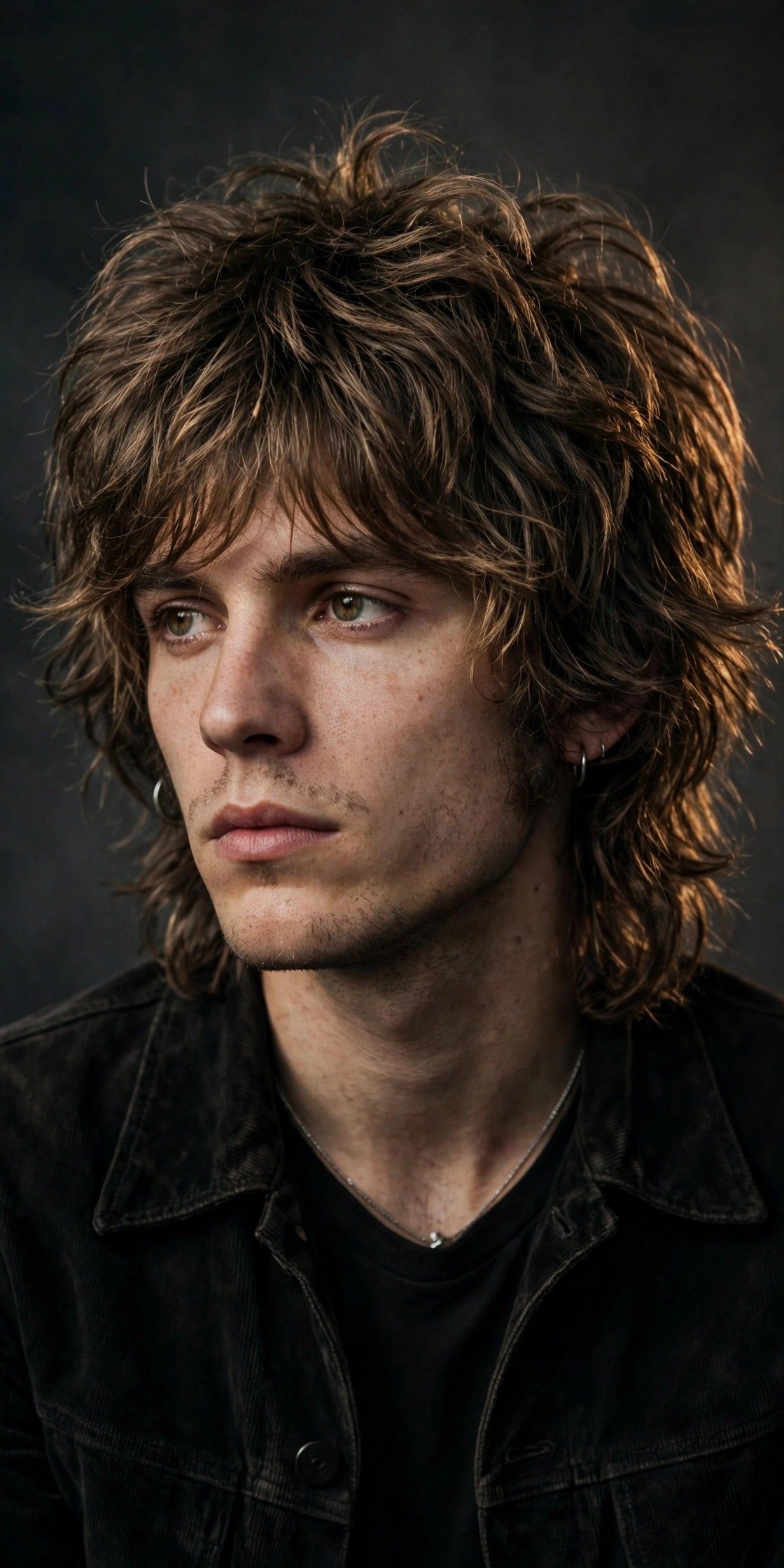
This one leans into the cut’s shag DNA. The shaggy soft wolf cut features more visible layering throughout — still blended, but with enough variation in length that the layers read clearly. It has a 70s rock-star energy: think indie frontman, not 80s metal. The key is that the shagginess comes from layering, not from mess — every piece is intentional, even if it looks carefree. Ask your barber for “visible but blended layers” and make sure the ends are point-cut rather than blunt. This version suits guys with thick hair best, since the layering removes the bulk that would otherwise turn into a mushroom. Style with sea salt spray on damp hair, scrunch, and let it air dry for maximum shag. A little texturizing powder at the roots on day two revives the lift. If you play guitar, skate, or just dress like you do, this is probably your version.
10. The Layered Soft Wolf Cut

The layered soft wolf cut is all about the architecture. Where some versions hide their layering, this one celebrates it — cascading, clearly defined layers that create incredible movement and a sense of flow from crown to nape. It is the most “haircut-forward” version on this list, the one people notice as a great cut rather than just great hair. The layering needs to be precise: each layer should graduate smoothly into the next with no visible steps. This demands a genuinely skilled barber, so choose someone with a strong cutting portfolio, not just a fade specialist. The payoff is a cut that moves beautifully — it bounces when you walk and shifts naturally in the wind. Works on straight, wavy, and curly hair, though the effect is most dramatic on straight to wavy textures where the layers are most visible. Style with a blow dryer and a vent brush, directing hair away from the face to emphasize the cascade, then finish with a lightweight serum for shine. This is the connoisseur’s wolf cut.
11. The Soft Wolf Cut with Undercut

For the guy who wants edge. The soft wolf cut with undercut keeps all the layered flow on top but disconnects it from clippered sides and back — usually a number two or three guard. The contrast is dramatic: soft, flowing length up top against crisp, clean sides. It is the boldest version on this list and definitely a statement, but the “soft” layering on top keeps it from tipping into costume. This works best on thick hair that can handle the weight of the long top without the sides for support. Be honest with yourself about maintenance: the undercut needs re-clipping every two to three weeks to stay sharp, which partly defeats the low-maintenance appeal of the wolf cut. But if you love contrast and do not mind the upkeep, this is a head-turner. Style by pushing the top back or to the side with matte paste; the undercut takes care of itself. Pair it with a clean neckline and you have one of the sharpest looks in this entire guide.
12. The Messy Soft Wolf Cut
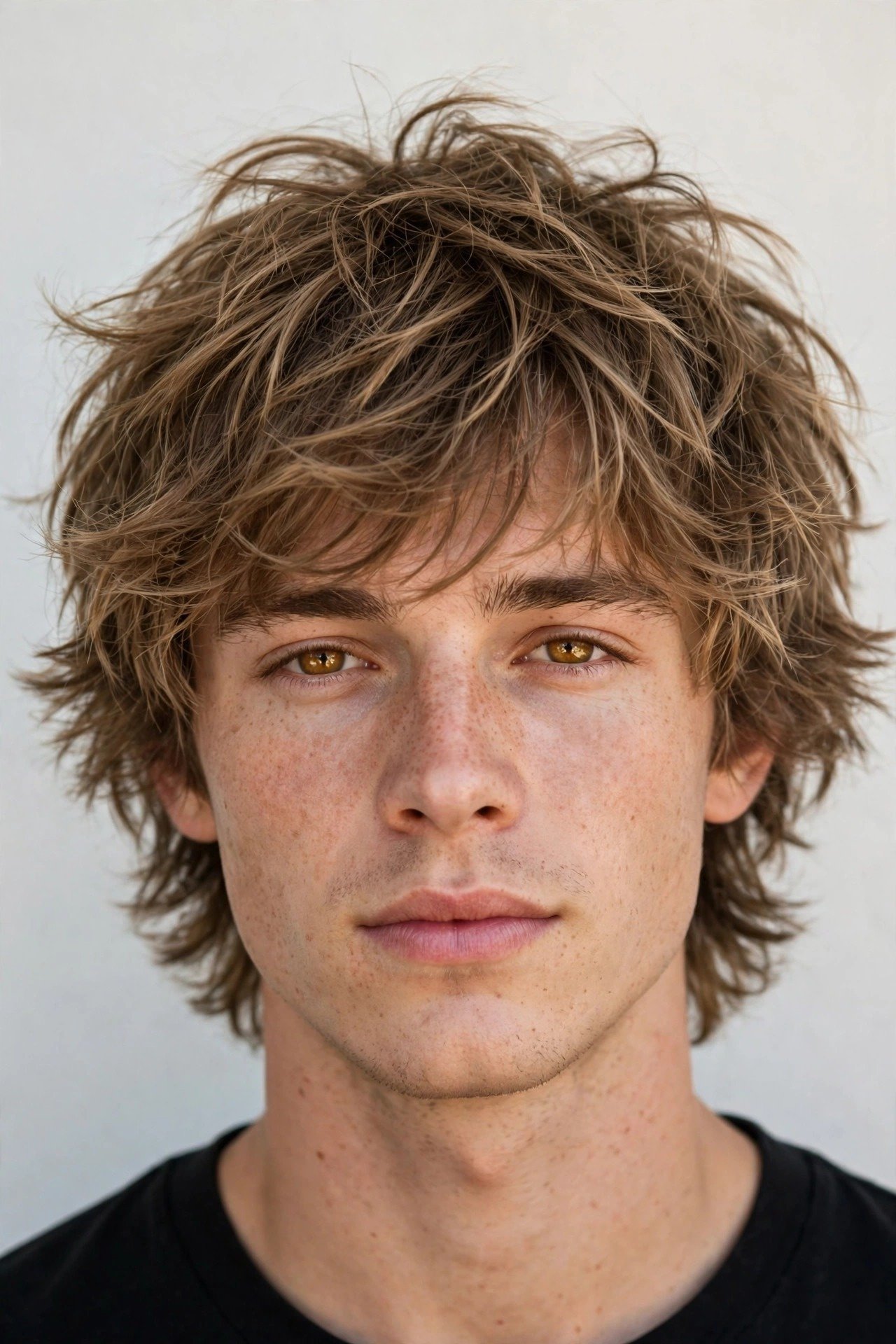
The messy soft wolf cut embraces imperfection as a strategy. This is for the guy who wants to look like he just rolled out of bed — in the best possible way. The cut features choppy-but-soft layers throughout with no attempt at uniformity; your barber should razor-cut or deeply point-cut the ends to create jagged, uneven texture that looks organic. Here is the secret though: “messy” haircuts require the most intentional cutting. Randomness has to be designed, or it just looks unkempt. The styling routine is gloriously low-effort: towel dry, work in some texturizing spray, shake your head, done. It works best on wavy or thick straight hair with enough body to hold the texture. Fine hair can struggle here since it tends to fall flat rather than hold separation. This is the ultimate “I woke up like this” version of the trend, and in 2026, that effortless energy is exactly what the culture rewards. Just remember the line between artfully messy and actually messy is a good barber — choose wisely.
13. The Polished Soft Wolf Cut
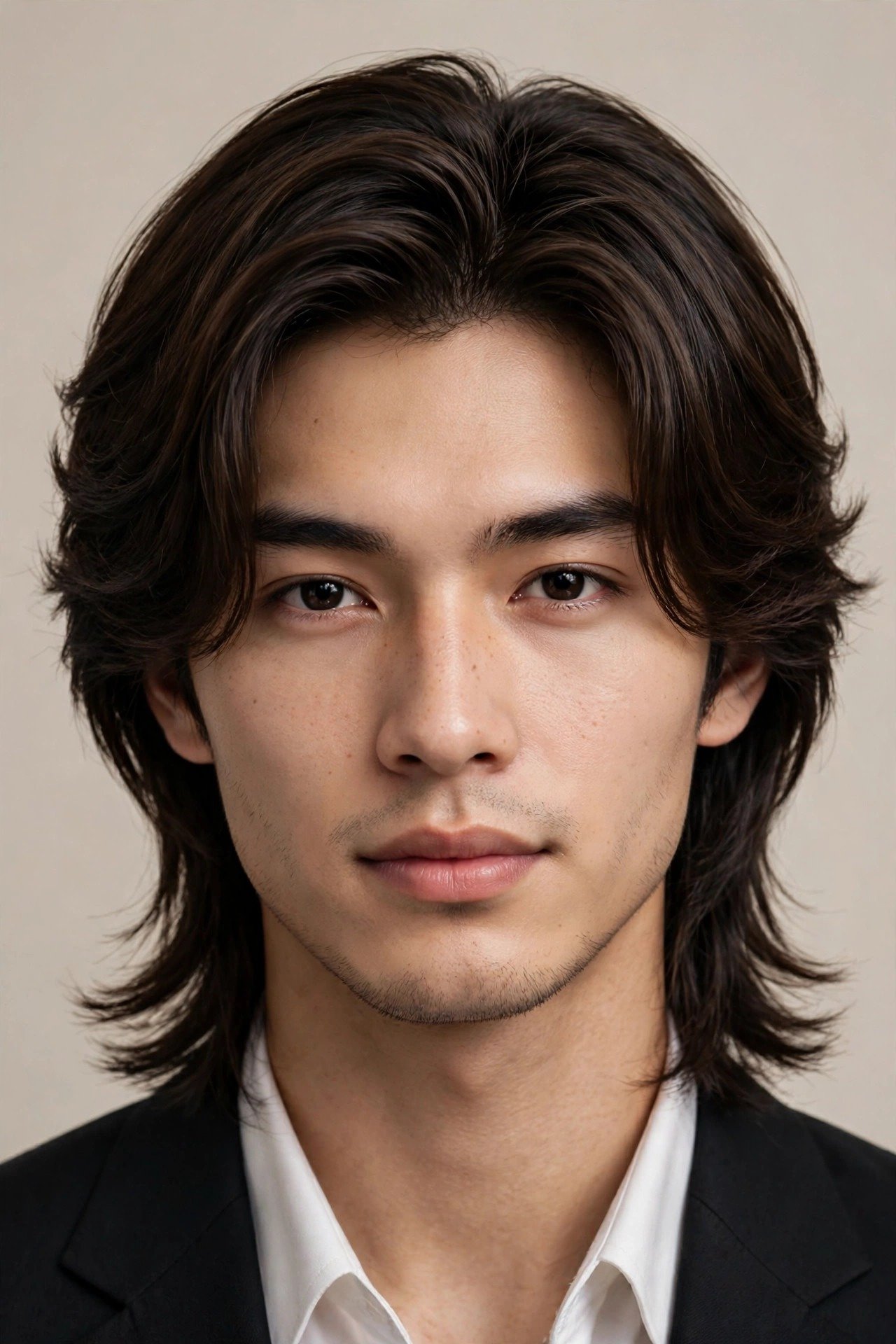
The polished soft wolf cut proves the trend is not just for the effortlessly-messy crowd. Here the layers are smooth, the ends are clean, and the overall finish is refined — the wolf cut’s shape with a red-carpet finish. This version works beautifully for formal occasions, weddings, and professional settings where you want the modern silhouette without the undone texture. Ask your barber to keep the layering soft but the ends relatively clean, with minimal point cutting. The styling is where the polish happens: blow-dry smooth with a round brush, then finish with a lightweight shine serum or a tiny amount of pomade for control. The result reads sophisticated rather than edgy, which makes it a great choice for guys who love the shape of the trend but dress sharp. It also photographs incredibly well — smooth hair reflects light, so every layer shows. If your lifestyle runs more suits than streetwear, start here.
14. The Soft Wolf Cut with Bangs
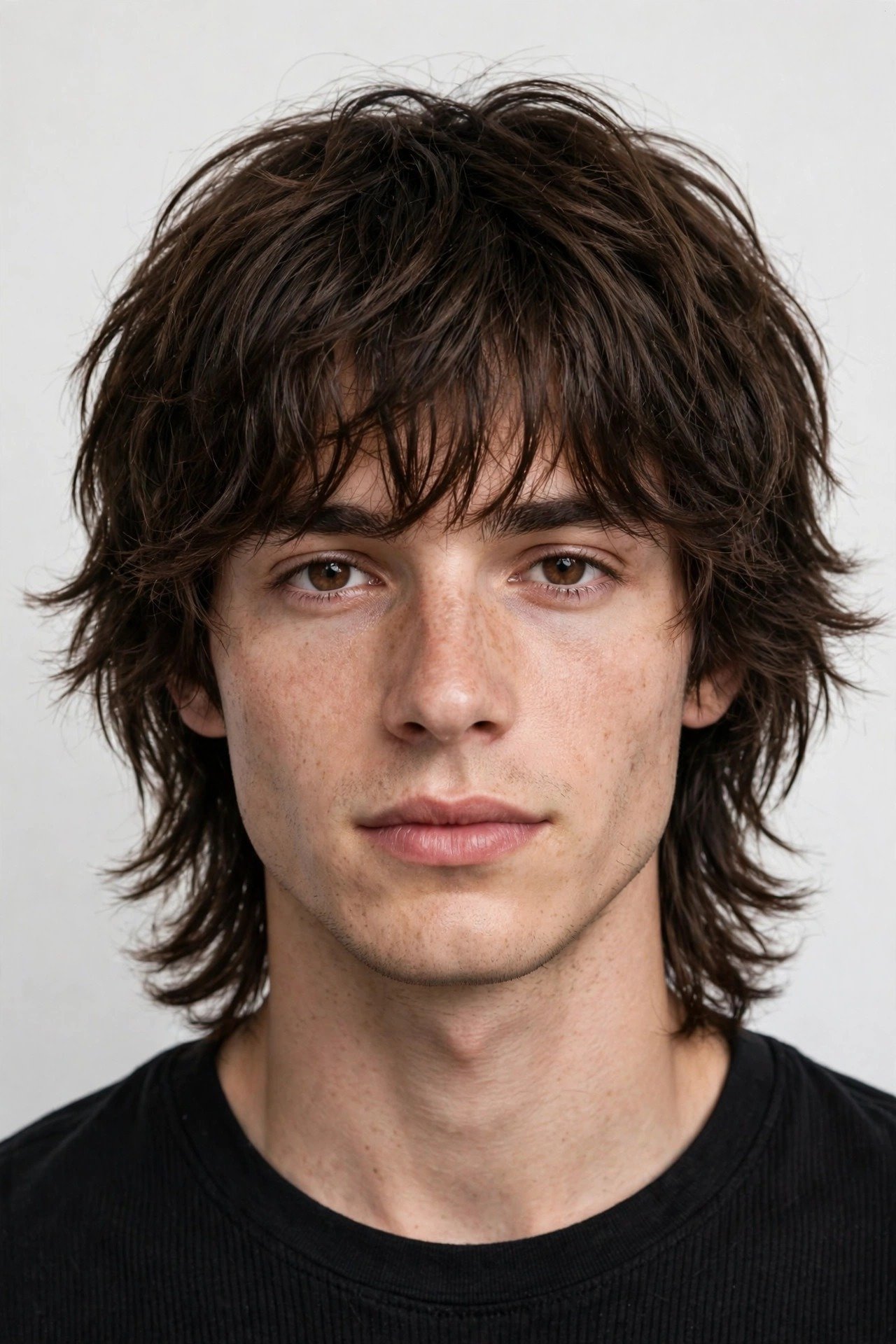
While most soft wolf cuts feature a curtain or side-swept fringe, this version goes for fuller bangs worn across the forehead. It is a bolder, more fashion-forward choice that gives the cut a distinctive frame and works wonders for guys with longer foreheads or those who want to draw attention to their eyes. The bangs should be textured and piece-y rather than blunt — think soft separation, not a straight-across block. Ask your barber to cut the bangs to eyebrow length with plenty of point cutting so they move naturally. The rest of the cut stays true to the soft wolf blueprint with layered crown and tapered back. Styling: blow-dry the bangs forward with your fingers, then pinch small sections with a tiny amount of matte cream for definition. This version needs the bangs trimmed every three to four weeks to keep them out of your eyes, so factor that into your maintenance expectations. It is a strong look with a lot of personality — not for the shy.
15. The Long Soft Wolf Cut
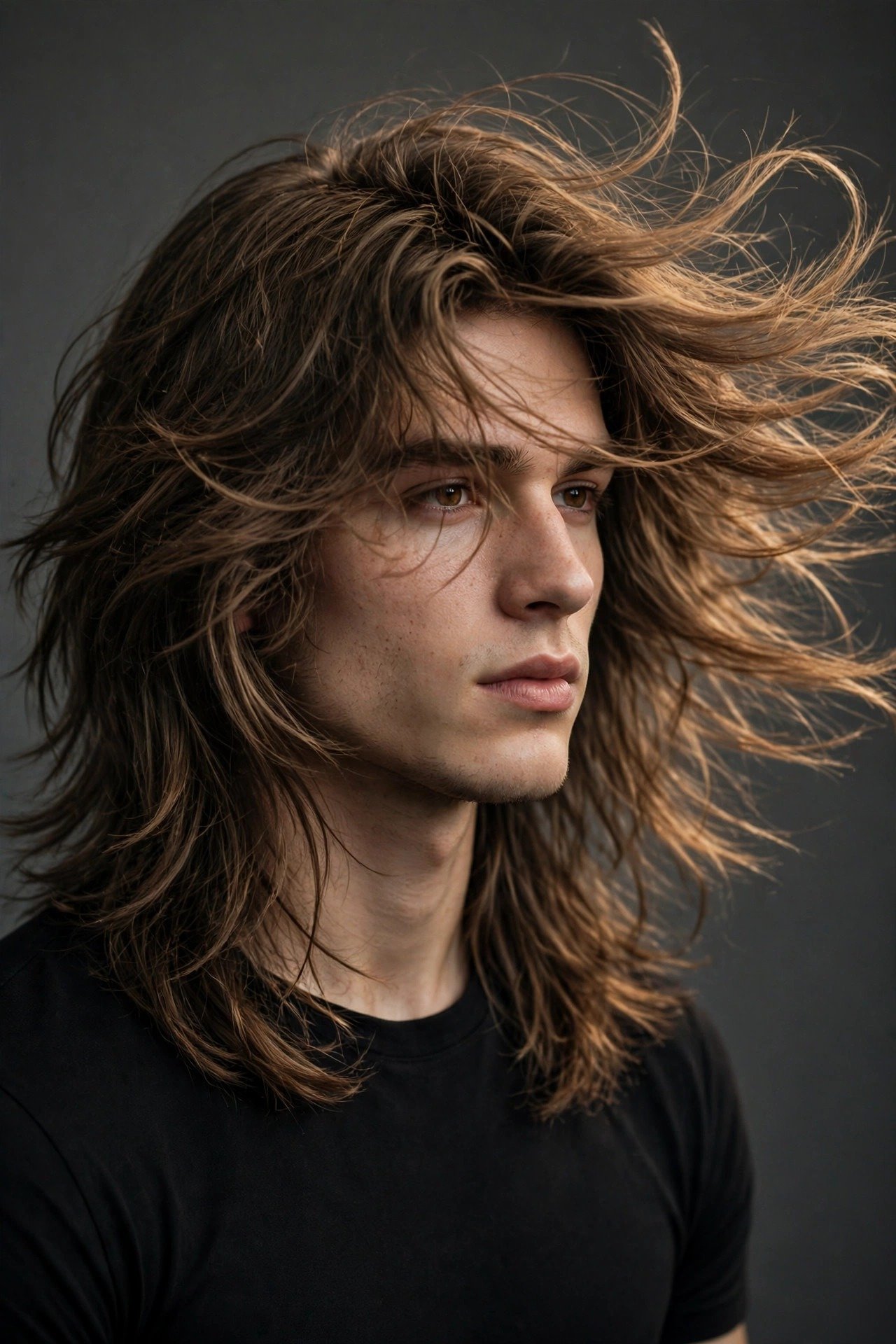
For the committed. The long soft wolf cut takes the standard blueprint and extends it — the back reaching past the collar toward the shoulders, the layers long and flowing, the overall effect dramatic and unmistakable. This is a 12 to 18 month grow-out project if you are starting from short, and it requires patience through multiple awkward phases. But the payoff is a powerful, flowing look with incredible movement. The cut needs long, graduated layers to prevent the hair from hanging like a curtain, plus face-framing pieces in the front so it does not overwhelm your features. Maintenance matters more at this length: trims every eight to ten weeks to remove split ends, regular deep conditioning, and careful detangling. Style with sea salt spray or a light cream on damp hair and let it air dry for natural flow. The long version is not for everyone, but if you can grow it and maintain it, it is one of the most striking looks a man can wear in 2026. It also pairs beautifully with a beard for the full flowing-man aesthetic.
16. The Medium-Length Soft Wolf Cut

If the long version is a commitment and the classic is the safe bet, the medium-length soft wolf cut is the sweet spot most guys should aim for. The back sits right at the collar, the top runs four to six inches, and everything is proportioned for maximum wearability. This is the length where the cut does its best work: long enough to show the layering and movement, short enough to style in minutes and keep neat. It suits virtually every face shape and hair type, which is why barbers recommend it as the default. Ask for the standard soft wolf cut but specify collar-length back — that one detail keeps it in the wearable zone. Styling takes five minutes: blow-dry with a little volume at the crown, work matte cream through the mid-lengths, done. It grows out gracefully, works in professional settings, and transitions easily into the longer version if you decide to keep growing. When in doubt, choose medium.
17. The Soft Wolf Cut with Highlights
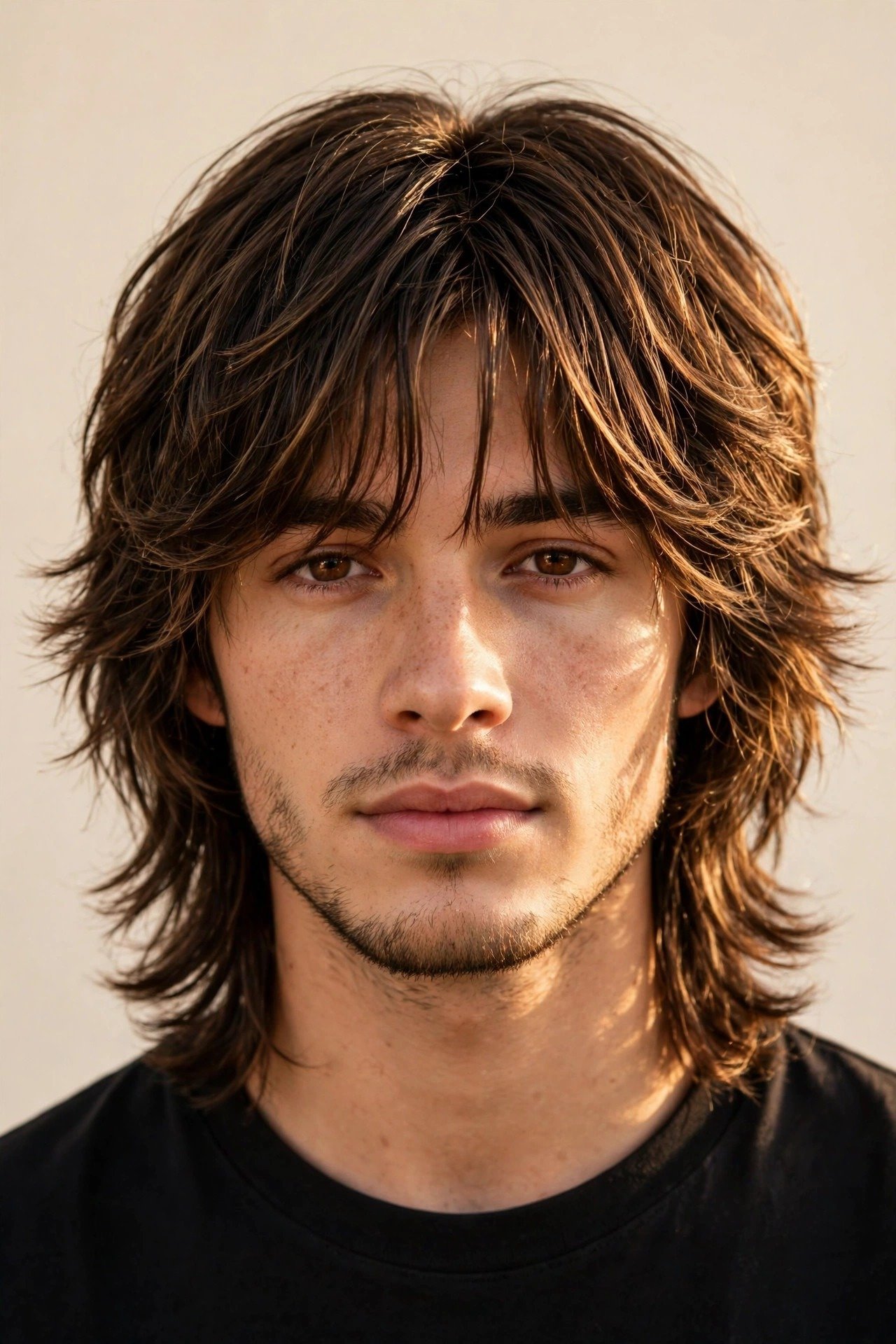
Color takes the soft wolf cut to another level. Subtle highlights — caramel, honey, or sun-kissed blonde tones woven through the layers — emphasize every bit of the cut’s dimension and make the texture pop in a way that single-tone hair cannot. The key word is subtle: chunky or high-contrast highlights will fight the cut’s softness. Ask your colorist for balayage or lived-in highlights focused on the mid-lengths and ends, keeping the roots natural for easy grow-out. This works on all base colors, from dark brown to dirty blonde, and it is especially effective on wavy and curly hair where the color catches each bend. Maintenance means a gloss or toner every eight to twelve weeks and color-safe shampoo at home. The combination of dimensional color and layered texture is genuinely head-turning — it is the version of the cut that gets compliments from strangers. Just make sure your barber and colorist are on the same page about the layering, since the cut should come first and the color should follow the layers.
18. The Soft Wolf Cut for Thick Hair
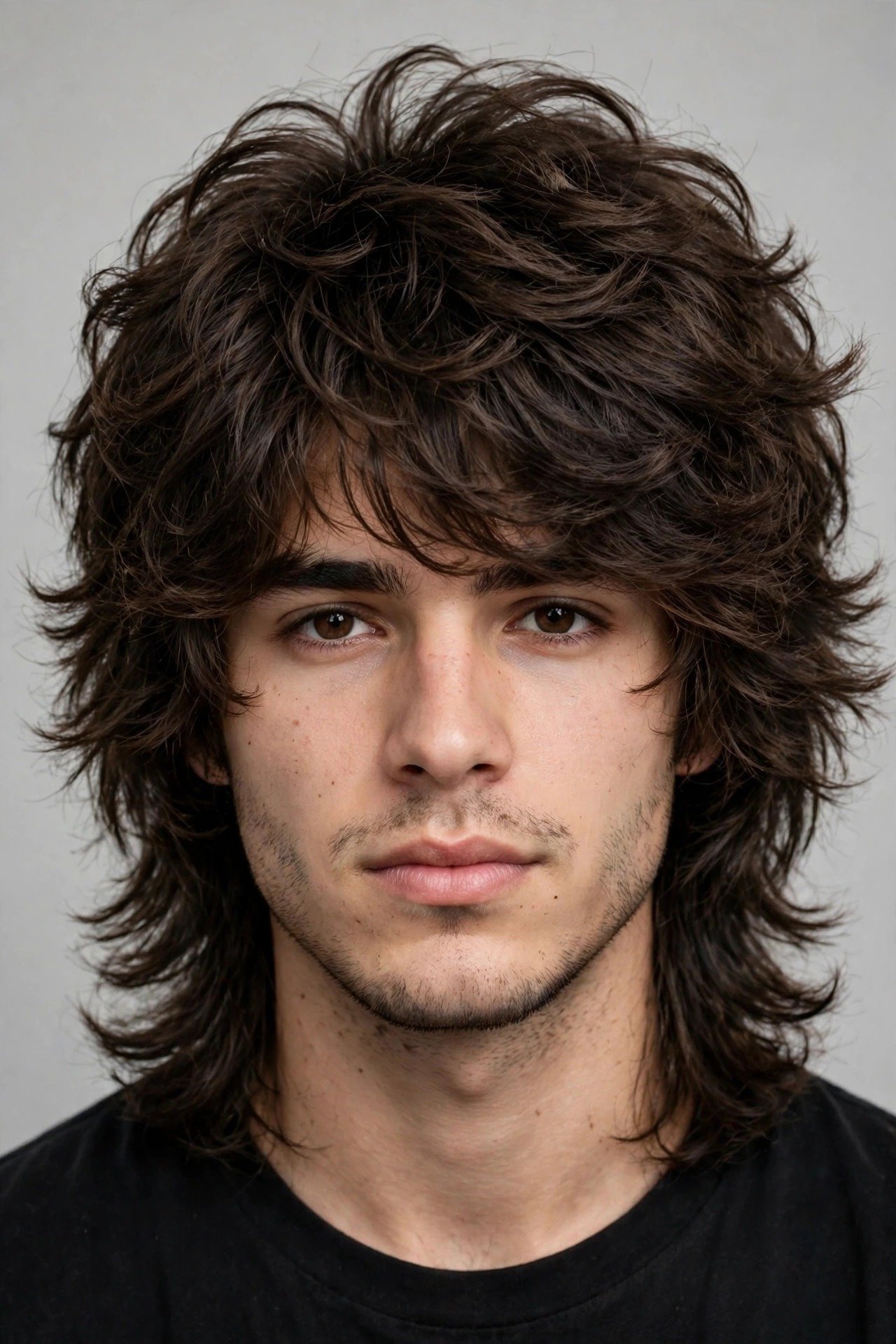
Thick-haired guys, the soft wolf cut might be the best thing that ever happened to you. The layering that defines the style is exactly the tool needed to remove the bulk that makes thick hair unmanageable, and the result is hair that finally moves instead of sitting like a helmet. The critical detail: your barber must debulk properly. Thinning shears, slide cutting, or razor work through the interior removes weight without creating frizz, and the layers need to be long enough that the hair still has body. Too-short layers on thick hair spring up and create width; longer layers lie better and show the texture. Ask specifically for interior weight removal and long, blended layers. At home, a lightweight leave-in conditioner keeps thick hair soft and manageable, and matte paste gives control without adding heaviness. Avoid heavy waxes and oils that weigh everything down. Done right, this version turns your hair’s density from a problem into the star of the show — the volume and texture that thick hair provides naturally is exactly what the wolf cut is trying to achieve.
19. The Soft Wolf Cut for Fine Hair
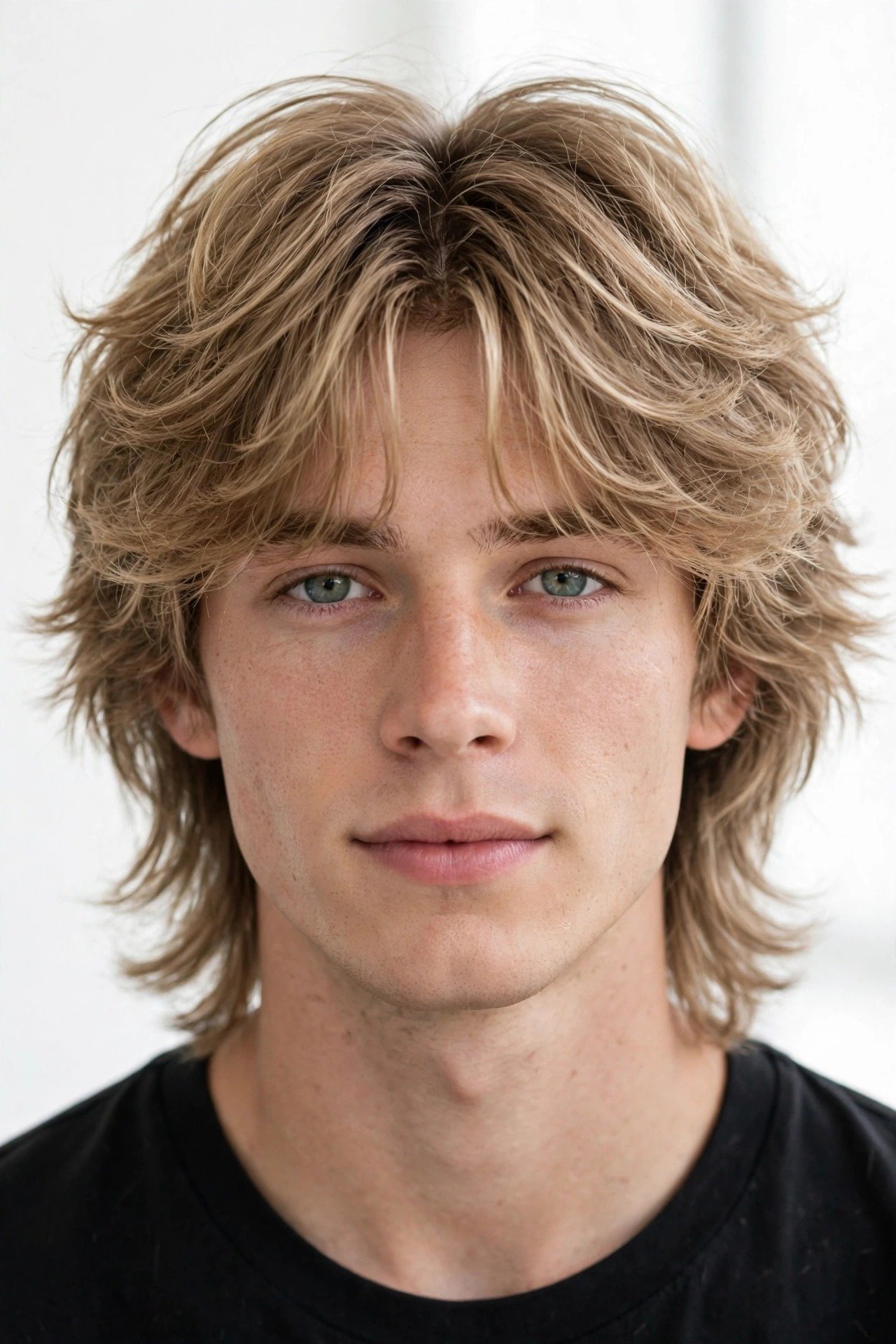
Fine hair and wolf cuts can work beautifully together — with the right approach. The danger is over-layering, which removes the little density fine hair has and leaves it looking wispy. The solution is strategic, minimal layering: keep the layers longer and fewer, focus the texture at the ends rather than throughout, and let the cut’s natural volume at the crown do the heavy lifting. Ask your barber to go easy on the thinning shears — fine hair rarely needs debulking — and to keep the perimeter relatively solid so the ends look full. At home, volume is everything: blow-dry upside down for root lift, use a texturizing powder or volumizing mousse rather than heavy creams, and avoid anything oily that flattens fine hair. A matte paste applied only at the ends gives separation without weight. Done right, the soft wolf cut actually makes fine hair look thicker, because the layered crown creates the illusion of density. It is one of the smartest cuts a fine-haired guy can choose.
20. The Soft Wolf Cut for Straight Hair

Straight hair shows every detail of a haircut, which makes the soft wolf cut both rewarding and demanding for straight-haired guys. The layering is fully visible, so precision matters — but when it is done well, the result is sleek, architectural, and incredibly sharp. The key for straight hair is texture at the ends: without natural wave to create separation, your barber needs to point-cut aggressively enough that the pieces separate on their own. Otherwise the cut can hang flat and look like a grown-out bowl. Ask for strong point cutting through the mid-lengths and ends, and consider a curtain fringe, which gives straight hair natural movement at the front. Styling straight hair into a wolf cut is about creating piece-y definition: a small amount of matte clay worked through dry hair, twisting individual sections between your fingers. A quick blast with the blow dryer adds volume at the roots. Straight-haired guys also benefit most from the polished version of this cut, since sleekness is their natural advantage.
21. The Soft Wolf Cut with Face-Framing Layers

This version puts the emphasis exactly where the name suggests: on layers cut specifically to frame and flatter your face. The front sections are sculpted — longer pieces that start at the cheekbones and graduate down, shorter wisps around the temples — while the back stays true to the soft wolf shape. It is essentially a customized version of the cut, because the face-framing should be tailored to your bone structure: longer framing for round faces to add length, softer framing for square faces to ease the jawline, balanced framing for oval faces. This is the version to ask for if you have ever felt that haircuts “do not suit your face” — a good barber will read your features and cut the framing accordingly. Bring photos of yourself from angles you like and dislike; it helps enormously. Style the framing pieces with a round brush or your fingers, directing them slightly away from the face for an open, flattering effect. This is the most personalized take on the trend, and it shows.
22. The Soft Wolf Cut with a Low Taper

The low taper version keeps the wolf cut’s full flow while cleaning up the edges. The taper sits low — just around the ears and neckline — leaving the sides long enough to blend into the top. It is the subtlest way to add structure to the cut, and it is perfect for guys who want the trend but work in environments where fully grown-out sides feel too casual. Unlike the tapered-sides version, which slims the whole side profile, the low taper only tidies the perimeter. Ask your barber to keep the sides scissor-cut and long, with just a soft taper at the very bottom near the ears and nape. The contrast is minimal but the effect is real: the cut looks intentional and maintained rather than grown-out. Styling is identical to the classic version. This is also the easiest version to maintain between appointments, since the low taper grows out invisibly and the top just gets more flowing. If you want the wolf cut with training wheels, this is it.
23. The Soft Wolf Cut with a Mid Fade
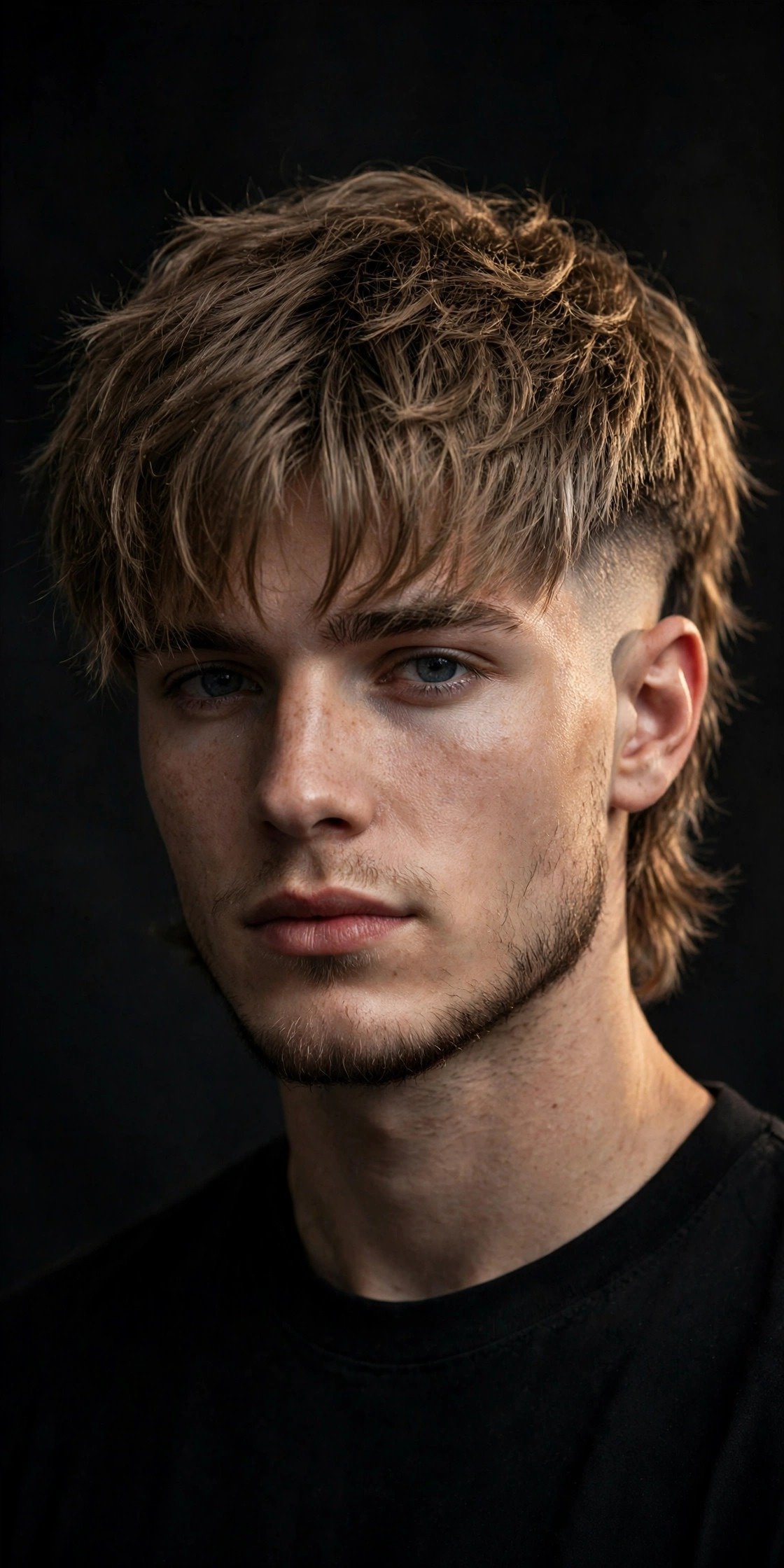
For guys coming from the fade world who are not ready to give it up entirely. The mid fade version pairs the soft wolf cut’s layered top with a proper fade on the sides — not a taper, a real graduated fade starting around the temple. The contrast is striking: the fade’s precision against the top’s softness creates one of the most modern silhouettes in this guide. The key is the blend point — the fade should transition into the longer top without a harsh line, which requires a barber comfortable with both clipper work and scissor layering. Ask for the fade to start at mid-height and blend up into at least four inches of layered top. This version needs the fade refreshed every two to three weeks, so it is higher maintenance than most wolf cuts, but the payoff is a cut that bridges two eras of men’s grooming. It is also the version that photographs most dramatically, since the contrast reads clearly even in a quick phone photo. If your barber is a fade specialist learning the wolf cut, this is the version they will nail first.
24. The Korean-Inspired Soft Wolf Cut
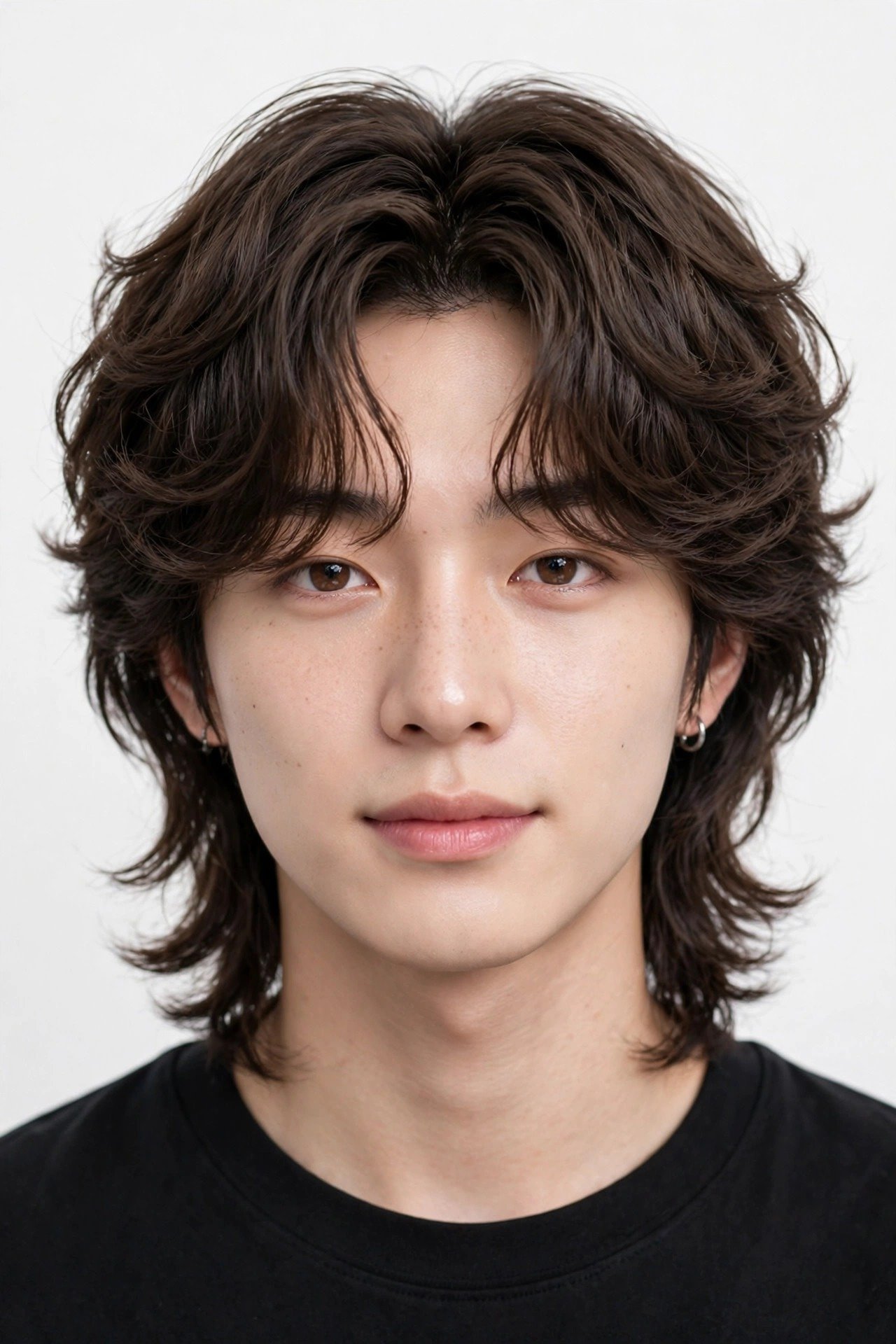
Given the wolf cut’s roots in Korean and Japanese street style, this version is almost a homecoming. The Korean-inspired soft wolf cut emphasizes what K-style does best: softness, precision, and healthy-looking texture. The layering is more meticulous than the Western rock-influenced versions, the ends are softer, and the overall finish is polished rather than undone. Many Korean barbers will add a soft perm — loose, natural-looking waves rather than tight curls — to create the airy texture that defines the look, which is a game-changer for straight-haired guys who want the style without daily heat styling. If you want to explore this world further, our guide to trendy Korean hairstyles for men breaks down the full aesthetic, including its dedicated wolf-cut section. Ask for soft, precise layering with a natural finish, and ask about a Korean-style soft perm if your hair is straight and resistant to texture. The result is the most refined version of the trend — fashionable, flattering, and endlessly wearable.
25. The 90s-Inspired Soft Wolf Cut
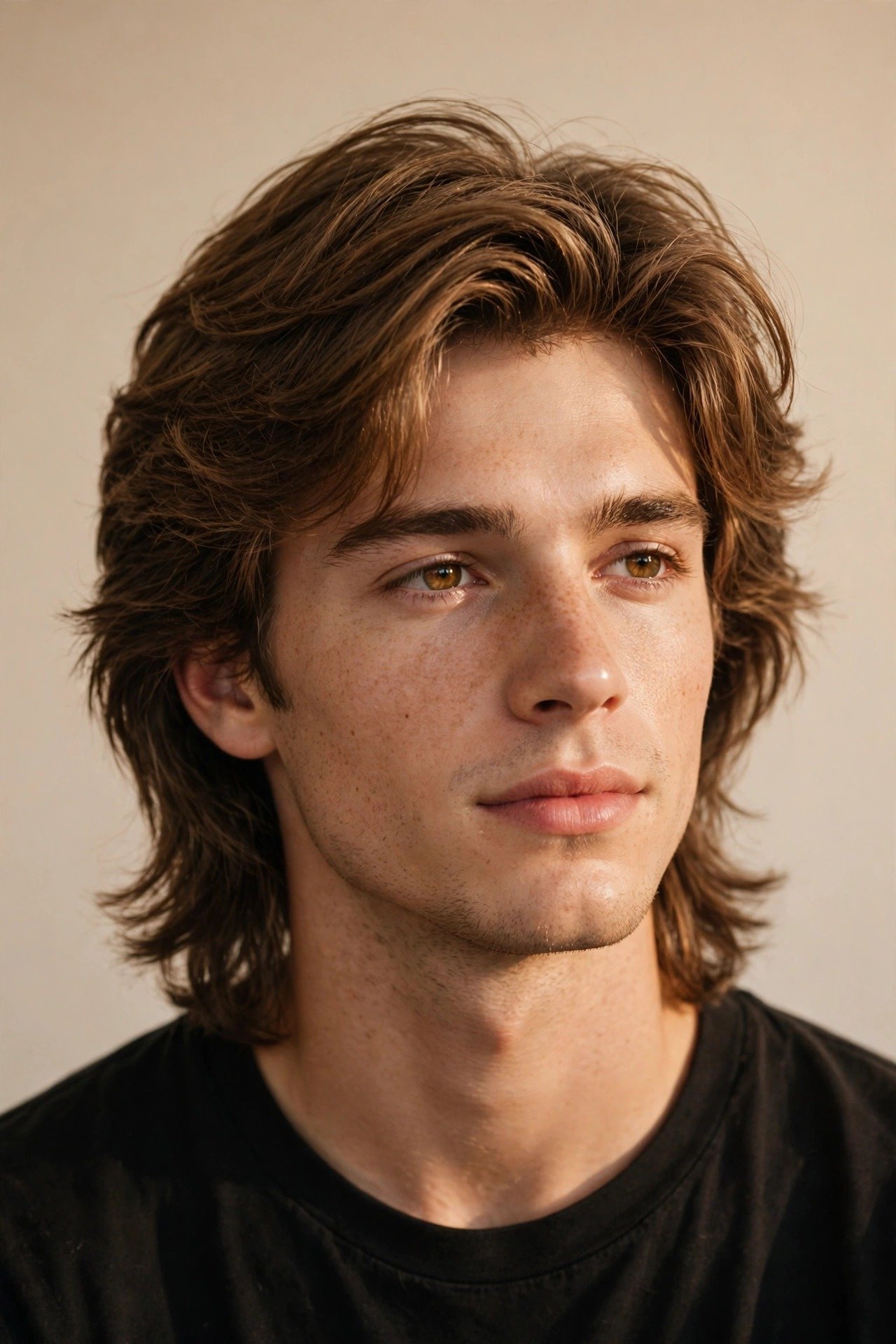
The 90s are back in a big way, and this version channels the era’s heartthrob hair directly. Think young Leonardo DiCaprio or a boy-band lead singer: soft, touchable layers, a deep side part or loose curtain, and that effortlessly pretty quality that defined a decade of posters on bedroom walls. The 2026 update keeps the romance but adds modern texture — the layers are more piece-y, the finish less blow-dried-perfect than the original. Ask your barber for soft, face-framing layers with a side part, keeping everything touchable rather than structured. This version suits guys with softer features and works beautifully on straight to wavy hair. Style with a light cream on damp hair, part to the side, and let it fall naturally — the goal is handsome, not edgy. It is the most universally flattering version on this list and the one least likely to raise eyebrows anywhere, which is exactly its charm.
26. The Soft Wolf Cut with a Beard
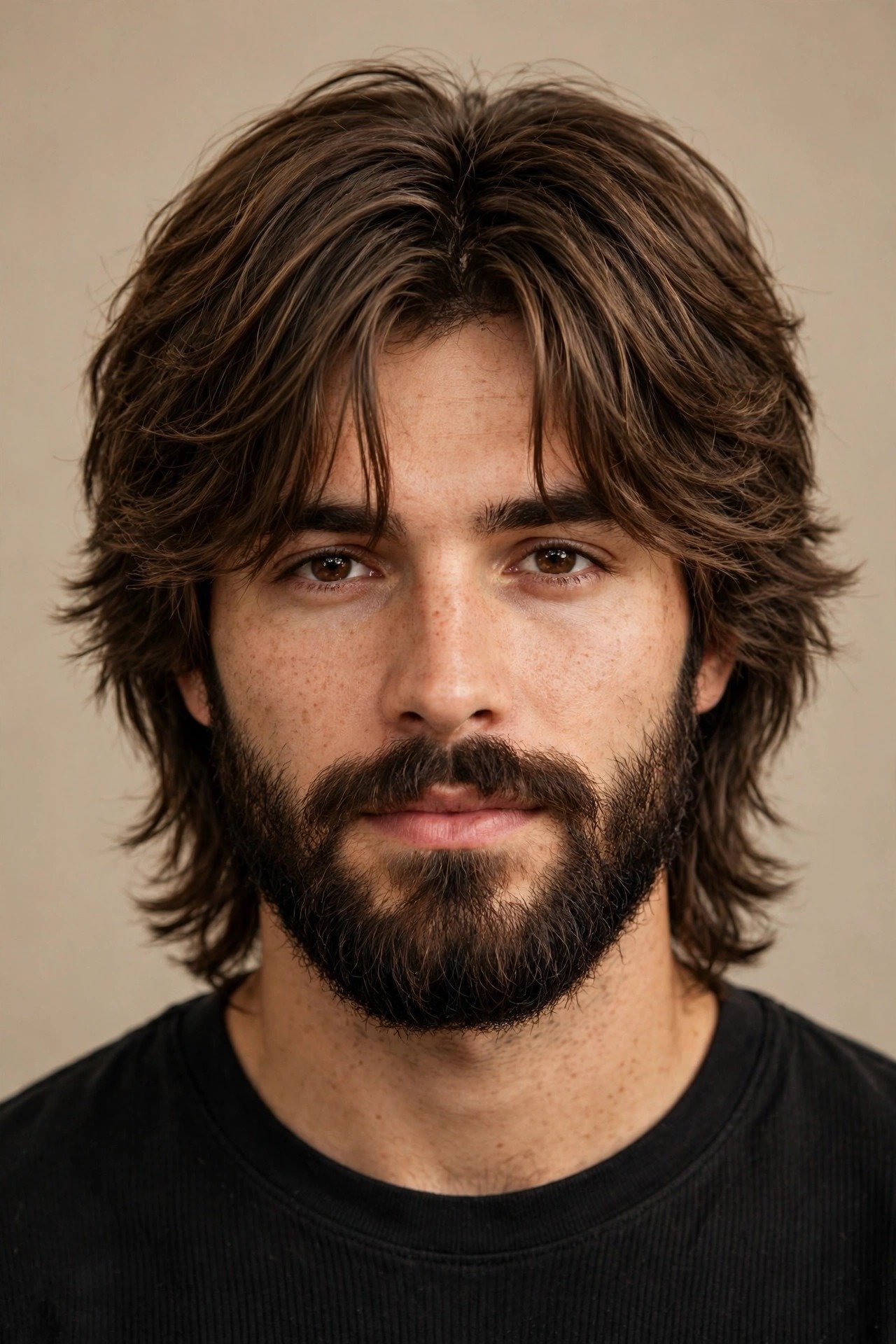
Long hair plus beard is a combination as old as time, and the soft wolf cut might be its best modern expression. The layered flow on top balances beautifully against facial hair, creating a cohesive, masculine look with serious presence. The key is proportion: the beard should be groomed and shaped, not wild, or the whole thing tips into mountain-man territory. Keep the beard’s cheek lines clean and the neckline defined, and let the hair provide the softness. The wolf cut’s face-framing layers actually work with a beard rather than against it — the layers draw the eye up while the beard anchors the jaw. This pairing suits oval, oblong, and diamond faces especially well, since the beard adds width where longer faces need it. Style the hair as you would the classic version; for the beard, a good beard oil and regular trimming keep it intentional. Together, they are greater than the sum of their parts — one of the strongest looks a man can wear right now.
27. The Tousled Soft Wolf Cut
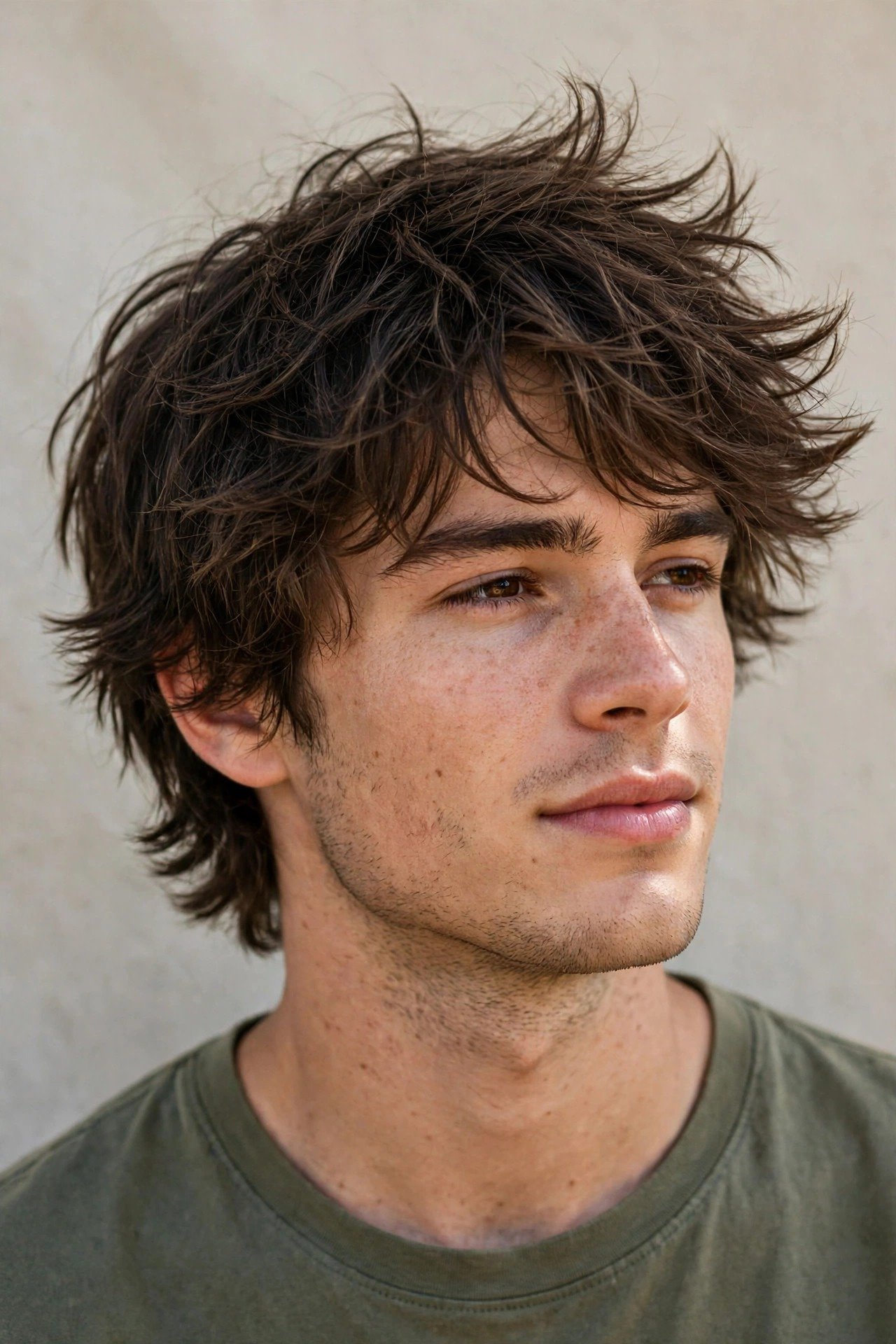
The tousled version is the soft wolf cut at its most carefree. Every layer is encouraged to go its own way, creating a windswept, just-came-from-the-beach effect that looks incredible in motion. The cut itself is similar to the textured version but styled for maximum separation and minimum neatness. This is the version for guys with naturally unruly hair who have spent years fighting it — stop fighting. Ask your barber for piece-y layers with plenty of point cutting, then style with sea salt spray on damp hair, scrunching aggressively and letting it air dry. A quick shake of the head is the finishing tool. It works best on wavy to curly hair, where the natural texture does half the work. The tousled wolf cut has a youthful, energetic quality that suits casual lifestyles — creatives, students, anyone whose uniform is a t-shirt. It is not the version for the boardroom, but it was never trying to be.
28. The Soft Wolf Cut with Volume
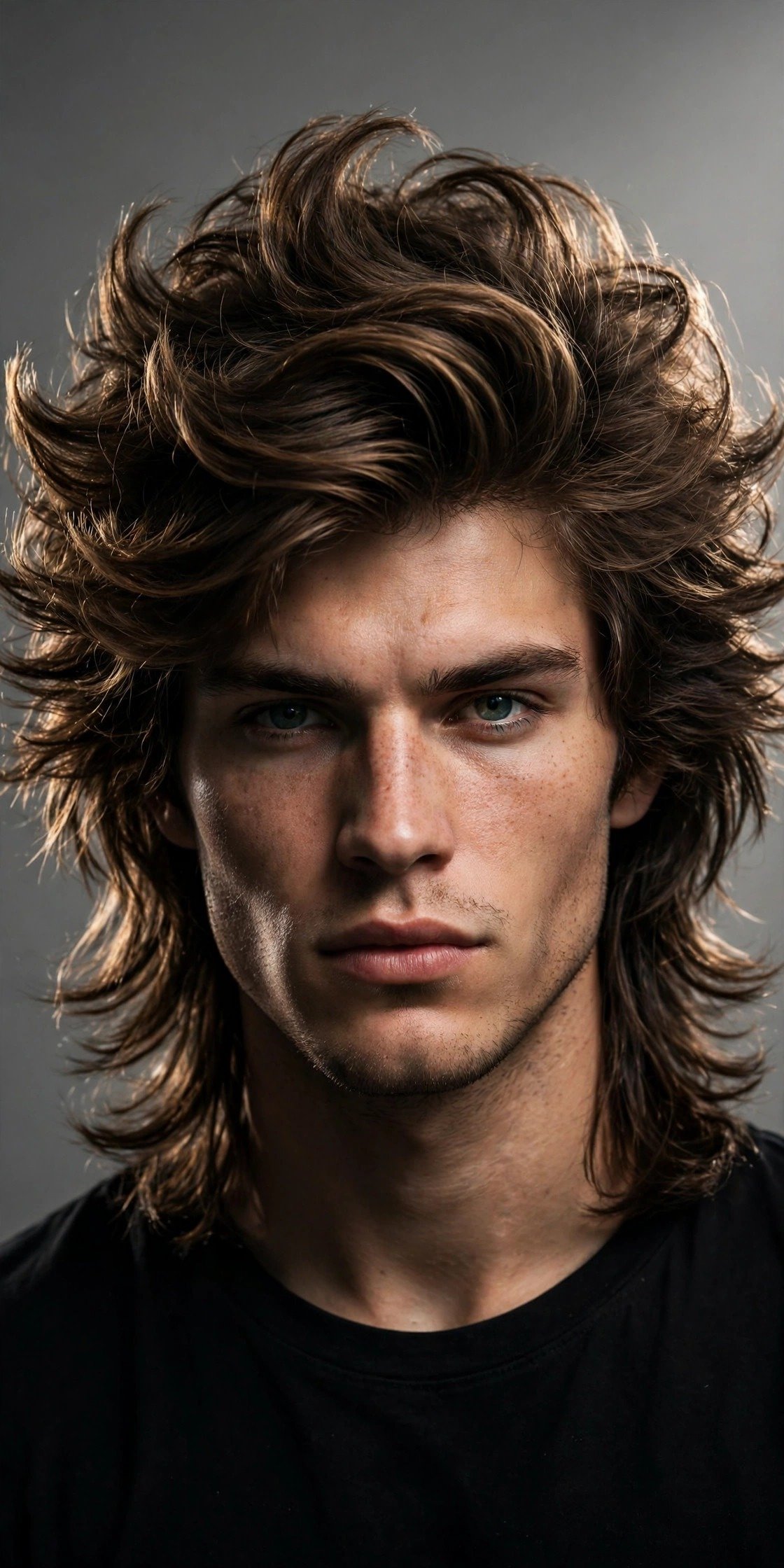
Some guys want presence, and the voluminous soft wolf cut delivers it. This version maximizes lift at the crown and fullness through the lengths, creating a bigger, bolder silhouette than the standard cut. The layering is cut slightly shorter at the crown to encourage lift, and the styling does the rest: blow-dry upside down, use volumizing mousse on damp hair, and finish with texturizing powder at the roots. This version suits guys with fine to medium hair who want their hair to look as full as possible, and it is particularly flattering for longer face shapes, since the width balances length. Be honest about the styling commitment — volume does not happen by itself, and this version needs five to ten minutes with a blow dryer to look its best. But the payoff is a cut with real drama and confidence. If you have ever wished your hair had more presence, this is the version that gives it to you.
29. The Airy Soft Wolf Cut
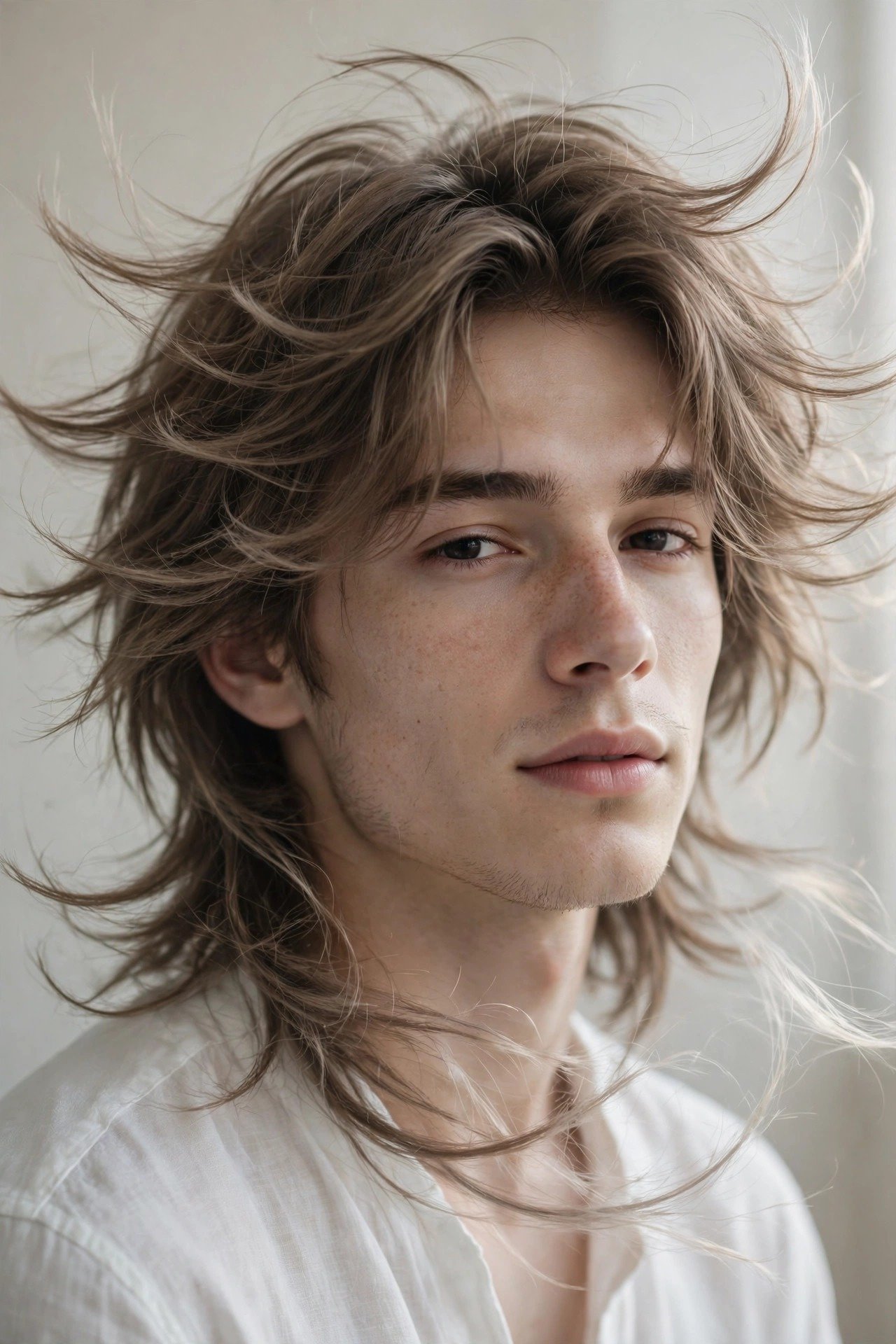
The airy soft wolf cut is the lightest, most delicate version of the trend. The layers are feathered to remove weight, the ends are wispy, and the overall effect is hair that seems to float. It is a beautiful choice for guys with fine to medium hair who want movement without bulk, and it has an elegant, almost editorial quality. The cutting technique matters enormously here — feathering and slide cutting create the airiness, and a heavy-handed barber will destroy it. Ask specifically for “light, airy layers with feathered ends” and make sure they understand you want weight removed, not length. Styling should be minimal: a lightweight mousse on damp hair, blow-dry with a round brush for gentle lift, and hands off afterward. Heavy products are the enemy of this version — they collapse the airiness instantly. The airy wolf cut is the most refined, subtle take on the trend, perfect for guys who want the style’s DNA without its drama.
30. The Office-Friendly Soft Wolf Cut

Yes, you can wear the wolf cut to a corporate job — with the right version. The office-friendly soft wolf cut keeps the layered shape but reins in the wildness: neater sides, a controlled fringe that can be tucked or swept, clean neckline, and an overall finish that reads “stylish professional” rather than “weekend.” Ask your barber to keep the layers soft but the perimeter clean, with tapered sides and a fringe long enough to style neatly. The styling is what sells it: blow-dry smooth, use a light-hold cream instead of texturizing spray, and take an extra minute to smooth flyaways. Keep the length at the conservative end — collar at most. This version proves the trend’s versatility: the same cut that looks edgy tousled can look boardroom-ready with different styling. As workplace dress codes keep relaxing, expect to see this version everywhere. It is the wolf cut for guys who mean business — literally.
31. The Edgy Soft Wolf Cut
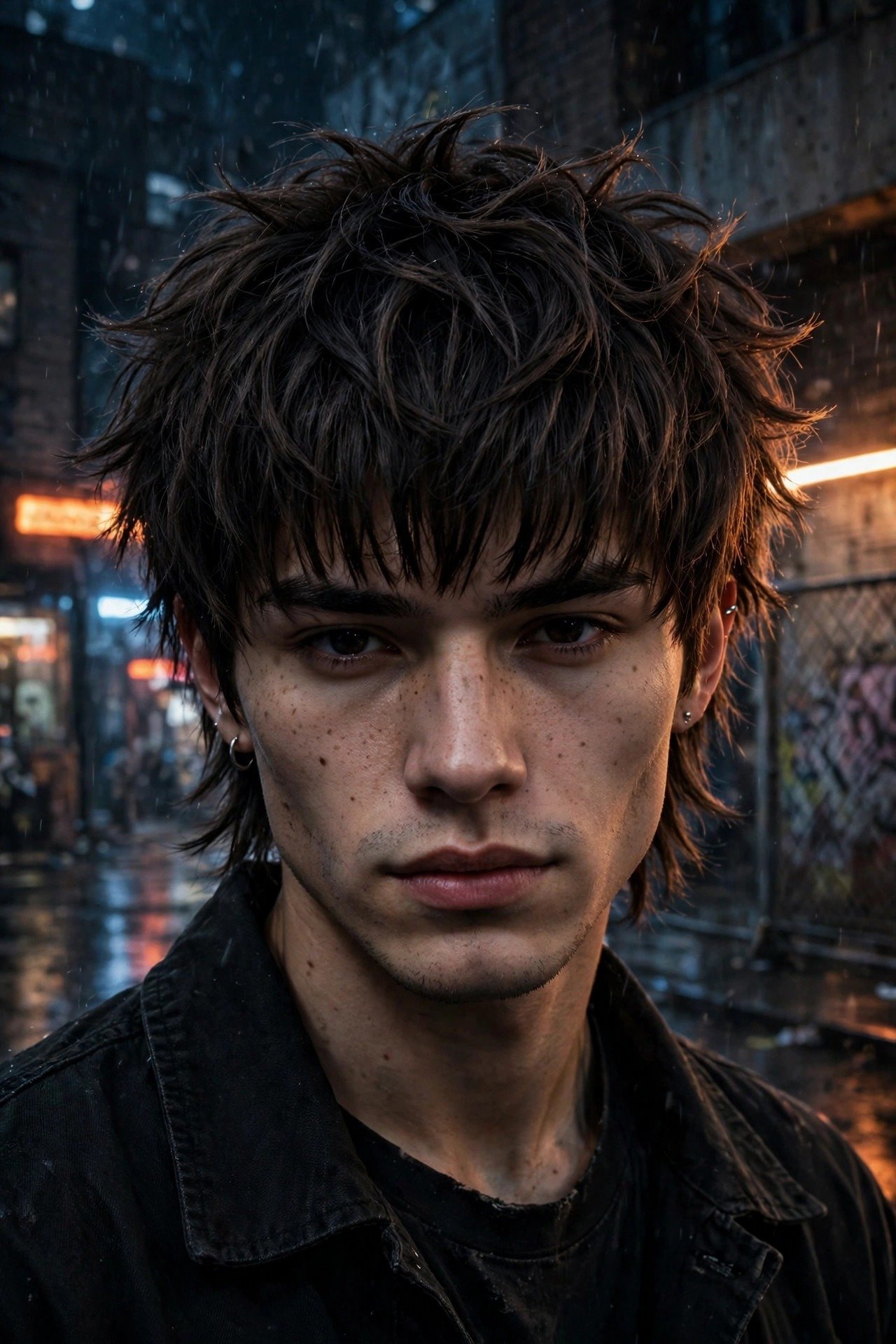
The edgy version pushes the soft wolf cut as far toward attitude as it can go without becoming the full aggressive wolf cut. Shorter crown layers, more visible texture, a fringe with real presence — it is the version for guys who want the trend with the volume turned up. The line between “soft” and “edgy” here is in the ends: keep them textured rather than blunt and the cut stays wearable, but the shorter layers give it unmistakable bite. This suits younger guys and creative types best, and it pairs well with streetwear and bolder personal style. Ask your barber for shorter, more disconnected crown layers with a strong fringe, but insist on softening the transitions so it does not become a full shag-mullet hybrid. Style with matte paste for piece-y definition and do not be afraid of height at the crown. This is the version that gets noticed — wear it like you mean it.
32. The Soft Wolf Cut with Blonde Balayage

If highlights are a step up, full blonde balayage is a leap — and on the soft wolf cut, it is a spectacular one. The hand-painted blonde sweeps through the layers, getting lighter toward the ends, which emphasizes every bit of the cut’s movement and gives it a sun-bleached, California energy. This works best on medium to dark blonde or light brown bases; on very dark hair the contrast can be striking, which is a look in itself but requires more maintenance. Ask your colorist for a lived-in balayage with a soft root melt so the grow-out is graceful. Maintenance is real: toner every six to eight weeks, purple shampoo to fight brassiness, and regular conditioning since lightening is demanding on hair health. But the visual payoff is enormous — blonde balayage plus layered texture is one of the most eye-catching combinations in men’s hair right now. If you have ever wanted to go blonde, the wolf cut is the perfect vehicle for it.
33. The Soft Wolf Cut with Dark Roots

The dark-roots version is the low-maintenance answer to colored wolf cuts. Natural dark roots melt into lighter mid-lengths and ends — whether that lightness comes from previous color, sun, or intentional balayage — creating depth and dimension with almost zero upkeep. It is the “lived-in” color philosophy applied to the wolf cut, and it suits the cut’s effortless ethos perfectly. If you are growing out old color, this version turns the awkward grow-out phase into a deliberate style. If you want the look intentionally, ask your colorist for a root shadow or “reverse balayage” that keeps the roots deep and natural. The contrast between dark roots and lighter ends also enhances the perception of layering, making the cut look even more textured than it is. This is the smartest colored version for guys who do not want to live at the salon — the grow-out is the style.
34. The Feathered Soft Wolf Cut

The feathered version is all about the ends. Using feathering and razor techniques, the hair is cut so the ends taper to soft, wispy points rather than blunt edges, creating a light, floating finish that moves beautifully. It is closely related to the airy version but with more emphasis on the perimeter — the outline of the cut itself is soft and feathery rather than defined. This works wonderfully on medium to thick hair, where the feathering removes weight while preserving length. On fine hair, go easy — too much feathering can make the ends disappear. Ask your barber for feathered ends with a razor or feathering shears, keeping the interior layers soft. Style with a light cream on dry hair, pinching the ends to emphasize the feathering. The result is one of the most touchable, natural-looking versions of the trend — hair that looks like it was shaped by wind rather than scissors.
35. The Permed Soft Wolf Cut
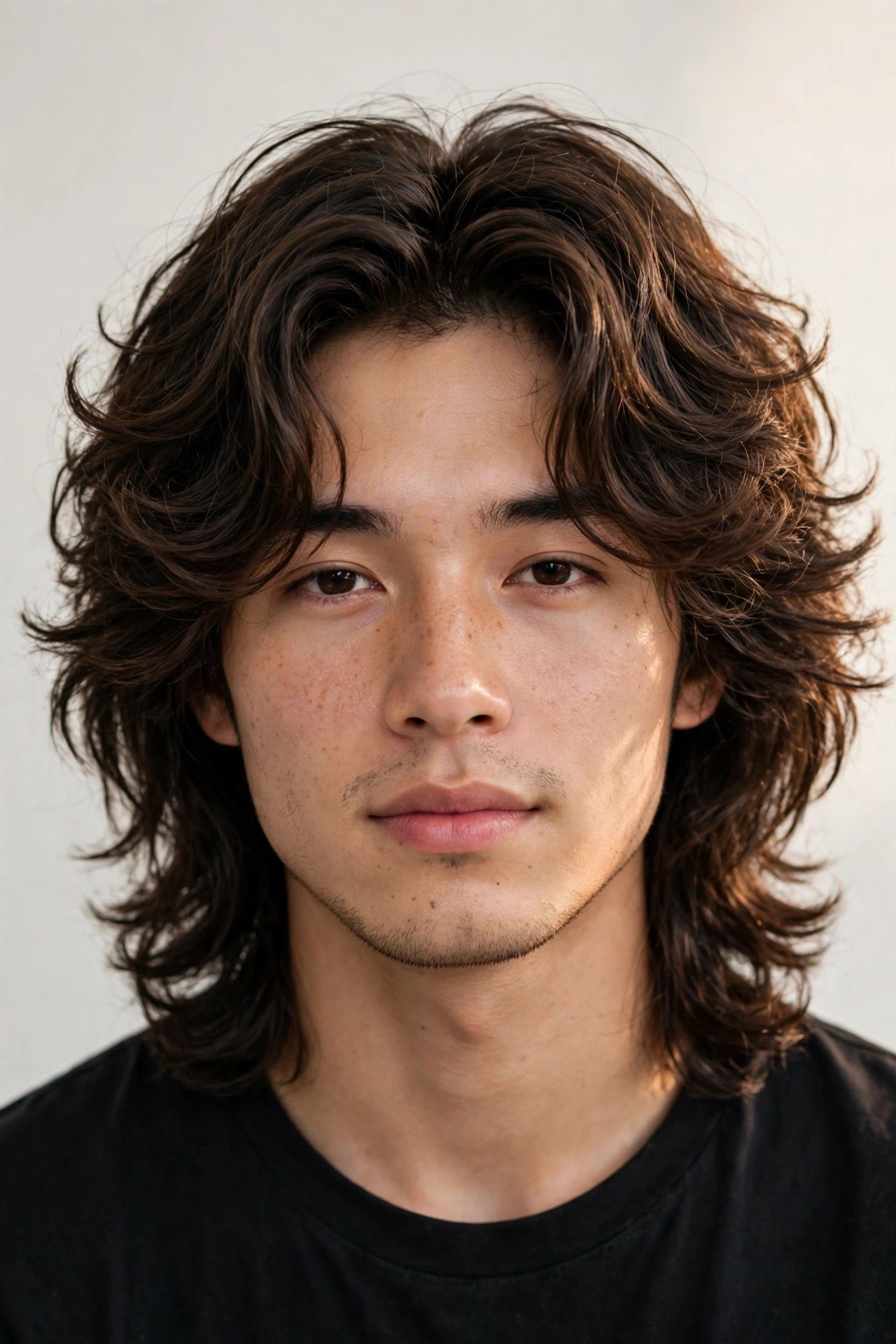
For straight-haired guys who want the wolf cut’s texture without daily heat styling, the perm is the cheat code. A soft perm — loose waves, not tight curls — gives straight hair the natural-looking bend and body that makes the wolf cut come alive, and it lasts for months. This is the technique behind many of the best-looking wolf cuts you see on social media; the “effortless” texture is often chemistry, not genetics. Ask for a loose, natural-looking perm focused on the mid-lengths and ends, keeping the roots relatively straight for a natural grow-out. The perm loosens over the first two weeks, so it is always cut slightly tighter than the target. Maintenance means sulfate-free shampoo, regular conditioning, and avoiding excessive heat. The perm grows out gracefully over three to four months, at which point you can re-perm or let your natural texture take over. If your straight hair has ever frustrated your styling efforts, this version changes everything.
36. The Statement Soft Wolf Cut
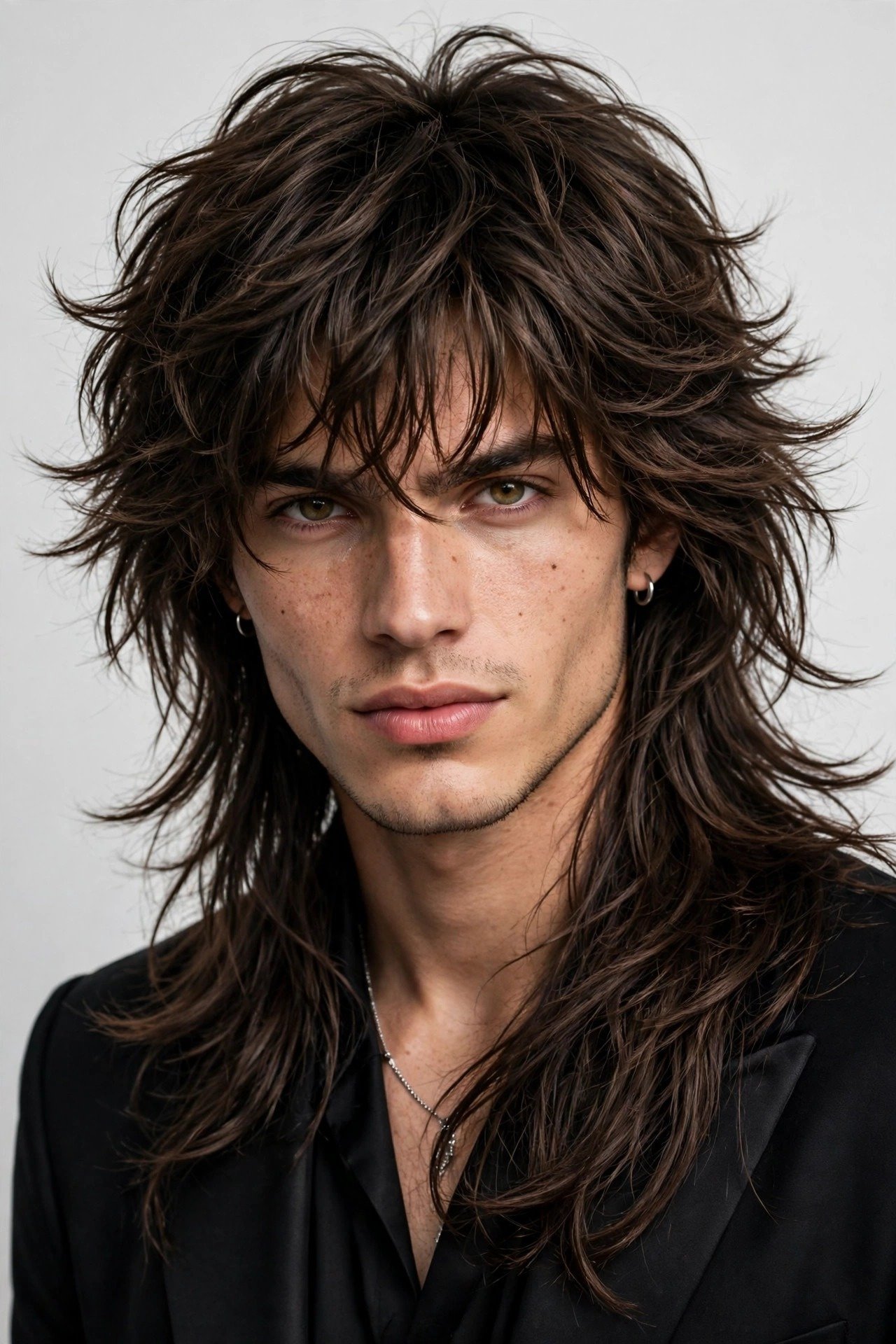
We close the list with the boldest wearable version: the statement soft wolf cut. Maximum texture, dramatic fringe, longer length, styled with real intention — this is the wolf cut as a deliberate fashion choice, worn by guys who treat their hair as part of their identity. It borrows the best of the edgy, textured, and long versions and combines them into one unapologetic look. This is not the version for blending in; it is for the guy whose personal style is already distinctive and wants his hair to match. The cutting needs to be impeccable — at this level of drama, any flaw shows — so invest in a top-tier barber. Styling takes ten to fifteen minutes: blow-dry for volume and direction, layer products (mousse for body, paste for definition), and finish with a light hairspray for hold. The statement wolf cut is the exclamation point at the end of this list — proof that the soft wolf cut is not just a safe trend but a genuinely expressive one. Wear it with confidence, because that is the whole point.
How to Ask Your Barber for a Soft Wolf Cut
Walking into the barbershop and saying “give me a wolf cut” is how guys end up with something they did not want. The term covers too much ground — from the aggressive original to the soft version in this guide — so you need to be specific. Here is the exact script that gets you the right cut.
Start with the name, then immediately qualify it: “I want a soft wolf cut — the blended, wearable version, not the choppy aggressive one.” That single sentence eliminates the biggest risk, which is a barber defaulting to the dramatic original. Then describe the three zones. For the top and crown: “soft, blended layers with volume at the crown, nothing disconnected or spiky.” For the sides: describe your preference — “keep the sides scissor-cut and long,” “give me a soft scissor taper,” or “I want a mid fade on the sides” — depending on which version from this guide you chose. For the back: “shaped and tapered at the nape, longer than the front but not a mullet — collar length” (adjust to your chosen length). For the front: “a curtain fringe” or “a side-swept fringe” or “soft face-framing pieces,” with the length specified — cheekbone, jaw, or eyebrow.
Bring reference photos — three is the magic number. One showing the overall shape you want, one showing the fringe detail, and one showing the back length. Photos eliminate the translation problem between what you describe and what your barber pictures. Show them on your phone, let your barber study them, and ask: “Can you do this with my hair type?” A good barber will tell you honestly if your texture needs an adjustment — straighter hair might need more point cutting, curlier hair might need dry cutting — and that conversation is where great haircuts are born.
Finally, talk maintenance before the first snip. Ask how often you will need trims to keep the shape (usually six to eight weeks for the top, sooner for the fringe), whether your hair type needs any special cutting approach, and what products they recommend for your texture. A barber who answers these thoughtfully is a barber you should keep. The soft wolf cut lives or dies on the quality of the layering, so this is not the cut to get from the cheapest chair in town — find someone with layered cuts in their portfolio.
How to Style a Soft Wolf Cut
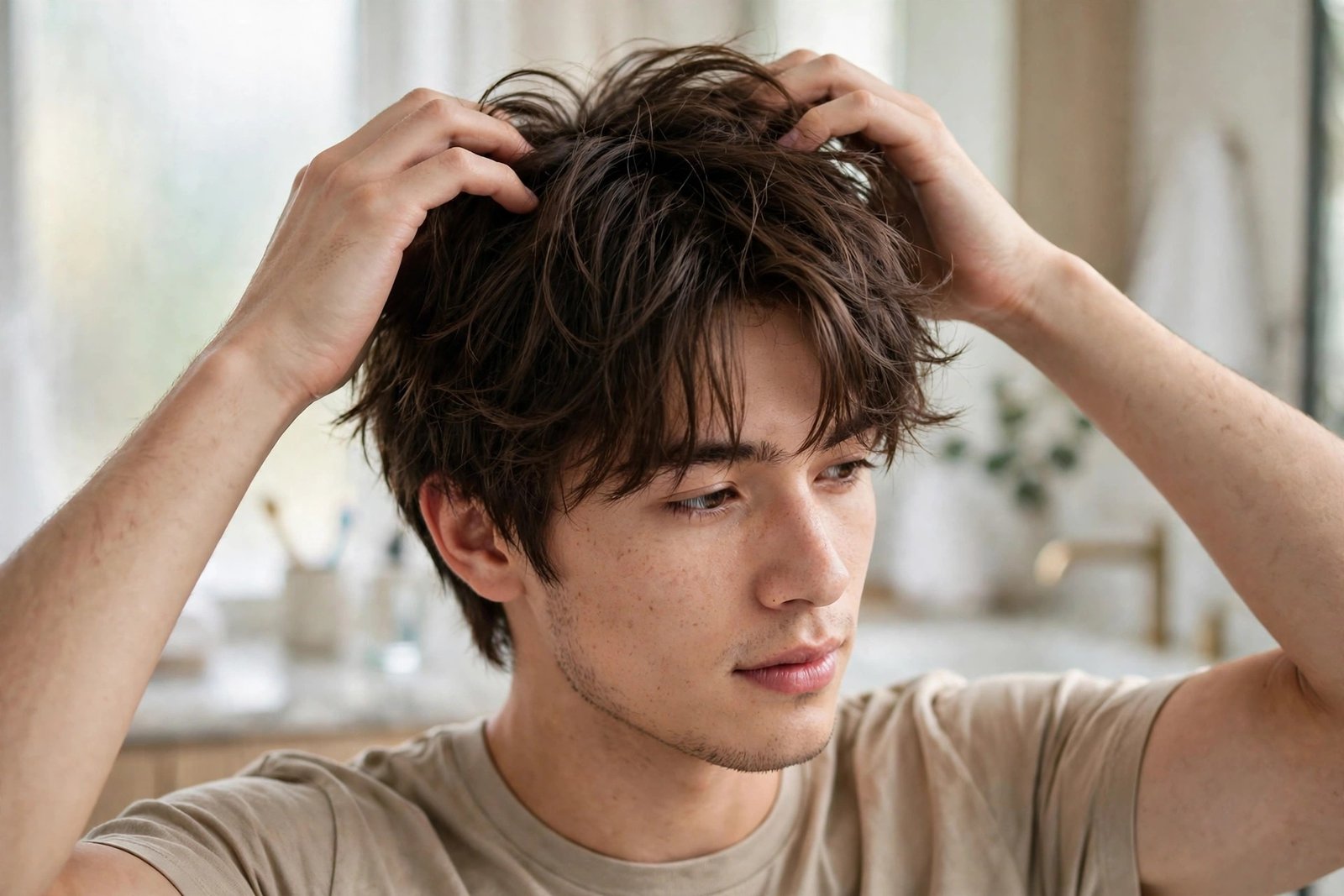
The good news: the soft wolf cut is one of the lowest-maintenance trending cuts to style daily. The better news: a simple, consistent routine makes it look dramatically better than the “just wake up” approach. Here is the routine that works for most versions and hair types.
Start with damp, towel-dried hair — not dripping, not dry. If your hair is wavy or curly, apply your leave-in product now: curl cream for curls, light mousse or sea salt spray for waves. For straight hair, a volumizing mousse at the roots gives the cut the lift it needs. Then blow-dry, and this is where most guys go wrong — they either skip it entirely or blast randomly. The technique: use a blow dryer on medium heat, directing the hair away from your face with your fingers or a vent brush, lifting at the crown for volume. For curtain fringes, direct each side away from the part. Two to three minutes is enough; you are setting direction and building root lift, not achieving a salon blowout.
Once dry, apply your finishing product — and use less than you think. A pea-sized amount of matte clay or matte paste, warmed between your palms, worked through the mid-lengths and ends. The goal is separation and definition, not hold; the cut’s shape should do the structural work. For piece-y definition, twist small sections between your fingers. For a more undone finish, just rake your fingers through and shake. Finish with a light mist of texturizing spray if you want extra grit, or leave it clean for the polished versions.
A few product rules specific to this cut. Matte finishes beat shiny ones — shine makes layered cuts look greasy rather than textured. Lightweight beats heavy — thick waxes collapse the layering that is the whole point. And less beats more — you can always add product, but removing it means rewashing. For second-day hair, which honestly looks better on a wolf cut than fresh-washed hair, revive with a spritz of water mixed with a little sea salt spray, scrunch, and go. The lived-in texture that Esquire’s stylists praise is literally what day-two hair gives you for free. London grooming experts Heist make the same point in their 2026 men’s hair trends guide: a diffuser plus sea salt spray is the essential toolkit for the grown-out shag family, and the soft wolf cut is no exception. If you want deeper product guidance for textured styles, our textured fringe guide covers the matte products that work best across similar cuts.
Face Shapes and Hair Types for the Soft Wolf Cut
One of the soft wolf cut’s greatest strengths is how adaptable it is — but “adaptable” does not mean “identical for everyone.” Small adjustments by face shape and hair type are what separate a good wolf cut from a great one.
For round faces, the goal is elongation. Keep the crown layers slightly longer for height, choose a curtain fringe or middle part over a full fringe (the vertical lines lengthen the face), and avoid too much width at the sides — skip the voluminous version and lean toward the tapered-sides or low-taper cuts. For square faces, softness is the strategy: the cut’s natural texture already helps, but emphasize it with a side-swept fringe and softer face-framing layers that ease a strong jawline. Avoid the edgy version’s harsh disconnects. For oval faces, congratulations — nearly every version works, so choose by hair type and lifestyle rather than face-shape rules. For oblong or rectangular faces, add width: the voluminous version, a fuller fringe, and avoiding excessive crown height keep the face from looking longer. For heart-shaped faces, balance a wider forehead with volume through the mid-lengths and a fringe that adds width at the temples — the curtain fringe version is ideal.
Hair type adjustments matter just as much. Straight hair needs the most aggressive point cutting to create separation, benefits from volumizing products, and shows the cut’s architecture most clearly — precision is everything. Wavy hair is the easiest match: enhance the natural bend with sea salt spray or light mousse, keep the layers long enough for waves to form, and enjoy the lowest-maintenance version of the cut. Curly hair needs dry cutting or shrinkage-aware cutting, a rounded overall shape, and curl-specific products — but rewards you with the most dramatic, distinctive version. Coily hair can absolutely wear the cut with the right barber; the layering principles are the same, but the shaping needs a curl and coil specialist. Fine hair wants fewer, longer layers and volumizing products; thick hair wants serious debulking and longer layers that lie properly.
The honest truth: there is a soft wolf cut for every face shape and hair type, but not every version suits every guy. The 36 ideas above are organized so you can match your combination — find your face shape, find your hair type, and the right versions will jump out. When in doubt, the classic, medium-length, and curtain fringe versions are the safest universal picks.
Maintaining a Soft Wolf Cut
The soft wolf cut is lower maintenance than a fade, but it is not a no-maintenance cut. The layering that makes it look great is also what needs periodic refreshing — grown-out layers lose their shape and the cut drifts from “effortless” to “unkempt.” Here is the maintenance schedule that keeps it sharp.
Book trims every six to eight weeks. This is the sweet spot: frequent enough to keep the layers defined and the ends healthy, infrequent enough to let the length grow if you are growing it out. Tell your barber you want a “shape-up, not a re-cut” — they should refresh the layering and clean the perimeter without removing meaningful length. If your version includes a fringe, the fringe needs attention every three to four weeks; bangs that grow into your eyes ruin the whole look. Many barbers will do a quick fringe trim between full appointments for little or no charge — ask.
Between appointments, the non-negotiables are simple. Do not over-wash: two to three times a week is plenty for most guys, since the cut looks better with natural oils adding texture. When you do wash, use a quality shampoo and always condition the mid-lengths and ends — layered ends are prone to dryness and split ends, which destroy the soft finish. A weekly deep-conditioning mask is worth it, especially for longer versions or color-treated hair. Get a silk or satin pillowcase if you are serious; it genuinely reduces morning frizz and preserves the previous day’s styling.
Watch for the warning signs that you have waited too long: the back starts flipping outward uncontrollably, the layers lose their graduation and the cut looks one-length, the fringe will not stay where you put it, or the ends look frayed and dry. Any of those means book the trim now, not next month. And if you are growing the cut out — from classic to long, for example — keep the six-to-eight-week schedule anyway; growing out gracefully requires shaping along the way, not neglect. A good grow-out plan with your barber turns the awkward phases into deliberate stages.
FAQs About the Soft Wolf Cut
What is the difference between a soft wolf cut and a regular wolf cut for men?
The regular wolf cut uses aggressive, choppy layering with dramatic contrast between short crown layers and a long back — it is bold and intentionally wild. The soft wolf cut keeps the same basic shape but blends the layers seamlessly, softens the ends, and tones down the contrast. The result is wearable and versatile rather than statement-making: it works in professional settings, grows out gracefully, and suits more face shapes. Think of it as the wolf cut’s refined, grown-up sibling.
How long does my hair need to be for a soft wolf cut?
You generally need four to seven inches on top for a proper soft wolf cut, with the back reaching the collar or slightly below. If your hair is currently short, expect a grow-out period of four to eight months to reach the minimum length. During the grow-out, regular shaping trims keep things looking intentional — ask your barber for a grow-out plan rather than just waiting. The medium-length version at collar length is the most achievable starting target for most guys.
Is the soft wolf cut good for straight hair?
Yes, with the right cutting technique. Straight hair shows every detail of the layering, so your barber needs to point-cut aggressively enough to create separation — otherwise the cut can hang flat. A curtain fringe helps by adding natural movement at the front, and matte clay worked through dry hair with finger-twisting creates the piece-y definition straight hair does not get on its own. Many straight-haired guys also add a soft perm for lasting texture, which is one of the most popular upgrades for this cut.
How often should I get a soft wolf cut trimmed?
Every six to eight weeks for the overall shape, with fringe trims every three to four weeks if your version has bangs. The layered structure loses its definition as it grows, drifting from effortless to unkempt — regular shape-ups keep the graduation crisp without removing length. If your version includes a fade or undercut on the sides, those need refreshing every two to three weeks. Many barbers offer quick fringe trims between full appointments.
Can I wear a soft wolf cut to a professional office job?
Absolutely — choose the office-friendly version. Keep the sides tapered and neat, the fringe controlled and tuckable, the neckline clean, and the length at collar level or above. Style it smooth with a light-hold cream rather than tousled with texturizing spray. The cut’s shape is modern but not extreme, and with polished styling it reads as fashionable-professional. As workplace dress codes continue relaxing, this is one of the safest on-trend choices for corporate environments.
What products do I need to style a soft wolf cut?
The core kit is small: a volumizing mousse or sea salt spray for damp hair, a matte clay or matte paste for dry-hair definition, and optionally a texturizing spray for extra grit. Curl cream replaces the mousse if your hair is curly. That is genuinely it — the cut is designed to work with minimal product. The two rules: matte finishes over shiny ones, and less product than you think you need. Heavy waxes and oils collapse the layering that makes the cut work.
Does the soft wolf cut work for curly or coily hair?
Beautifully — curls might be the best match for this cut. The layering removes the bulk that creates triangle-shaped curly cuts, encourages volume at the crown, and preserves length at the back for the flowing silhouette. The key is cutting it dry or accounting for shrinkage, keeping a rounded overall shape, and using curl cream on soaking wet hair with diffusing or air drying. For coily hair, work with a barber who specializes in coils; the layering principles are identical but the shaping technique differs.
How is the soft wolf cut different from a shag or a mullet?
All three share DNA, which is why they get confused. The shag is all-over layers with no strong front-to-back contrast — uniform texture everywhere. The mullet is defined by dramatic short-front, long-back contrast. The soft wolf cut sits between them: it has the shag’s layering and the mullet’s longer back, but everything is softened and blended so neither extreme dominates. If the shag is texture everywhere and the mullet is contrast everywhere, the soft wolf cut is balance everywhere.
Will the soft wolf cut still be in style next year?
All signs point to yes. With Pinterest searches up over 1,150 percent year over year and Esquire naming the grown-out shag family a top 2026 trend, the cut has moved past fad status into established-trend territory. More importantly, its fundamentals — natural texture, low maintenance, versatility across hair types — align with the broader direction of men’s grooming, which keeps moving away from high-maintenance precision cuts. Barbers expect it to settle in as a modern classic rather than burn out, especially the softer, more wearable versions in this guide.
Conclusion
The soft wolf cut earned its place as 2026’s defining men’s haircut the honest way — not through a single viral moment, but by being the right cut at the right time. It answers fade fatigue with low-maintenance flow, answers the demand for natural texture with layering that works with your hair instead of against it, and answers the versatility question with 36 genuinely different versions for every hair type, face shape, and lifestyle. Whether you go classic, curly, Korean-inspired, or full statement, the formula is the same: soft layers, honest texture, and a cut that looks like you — only better.
Your next step is simple. Pick two or three favorites from this guide, save their photos to your phone, and book the barber — not the cheapest chair, but someone whose portfolio shows layered cuts done well. Bring the photos, use the script from the barber section, and have the honest conversation about your hair type. Six to eight weeks from now, when the layers have settled and the texture is doing its thing, you will understand why over a thousand percent more guys searched for this cut than last year. For more flow-focused inspiration in a similar spirit, check out our flow hairstyle ideas for men — and welcome to the best hair decision you will make this year.