Birkin Bangs Women 2026: The French-Girl Fringe Guide
Birkin Bangs Women 2026: The French-Girl Fringe Guide
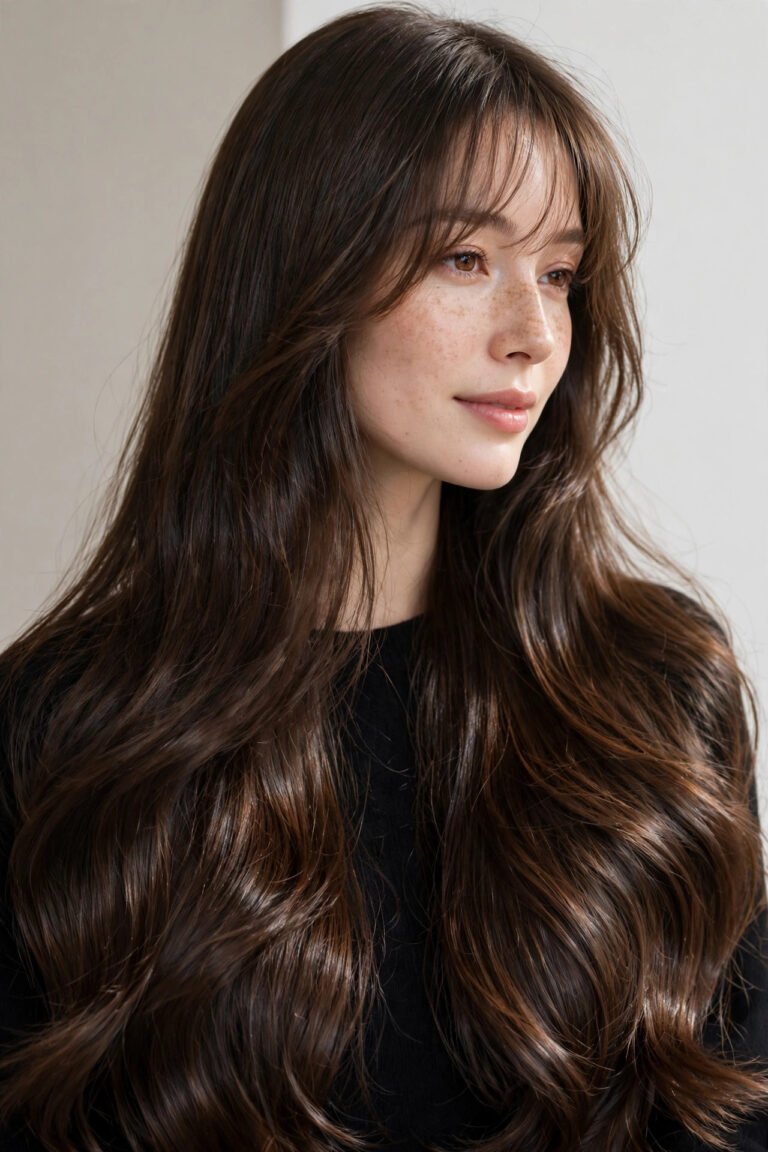
There is a particular kind of fringe that makes a woman look like she just stepped off a Paris street in 1969, even if she is actually standing in a grocery store in Ohio. It is soft, a little messy, barely-there in places, and it falls right around the eyebrows like it grew that way on purpose. Those are birkin bangs, and they are having their biggest moment in decades.
Named after Jane Birkin — the British-French singer, actress, and style icon whose hair defined an entire era of cool — birkin bangs are the wispy, feathered, eyebrow-grazing fringe she wore through the late sixties and seventies. They are not blunt. They are not thick. They are the kind of bangs that look best when you stop fussing over them, which is exactly why they work so well in 2026.
This year, the appetite for over-styled, over-filled, over-everything hair has finally run its course. Women are asking their stylists for cuts that look good on day three, that grow out without drama, and that do not require a forty-minute routine. Birkin bangs check every one of those boxes. They soften a forehead, frame the eyes, and give even the simplest ponytail or messy bun a deliberate, finished look. And unlike a heavy blunt fringe, they forgive you when you skip a trim.
In this guide, you will find everything you need to know before getting birkin bangs: the story behind them, why 2026 is their year, which face shapes and hair types they flatter, exactly what to say at your appointment, a five-minute styling routine you can actually stick to, how to maintain and grow them out, the mistakes that ruin them, and how they compare to curtain bangs, bottleneck bangs, and every other fringe competing for your forehead. Let us get into it.
What Are Birkin Bangs? The Jane Birkin Story Behind the Fringe
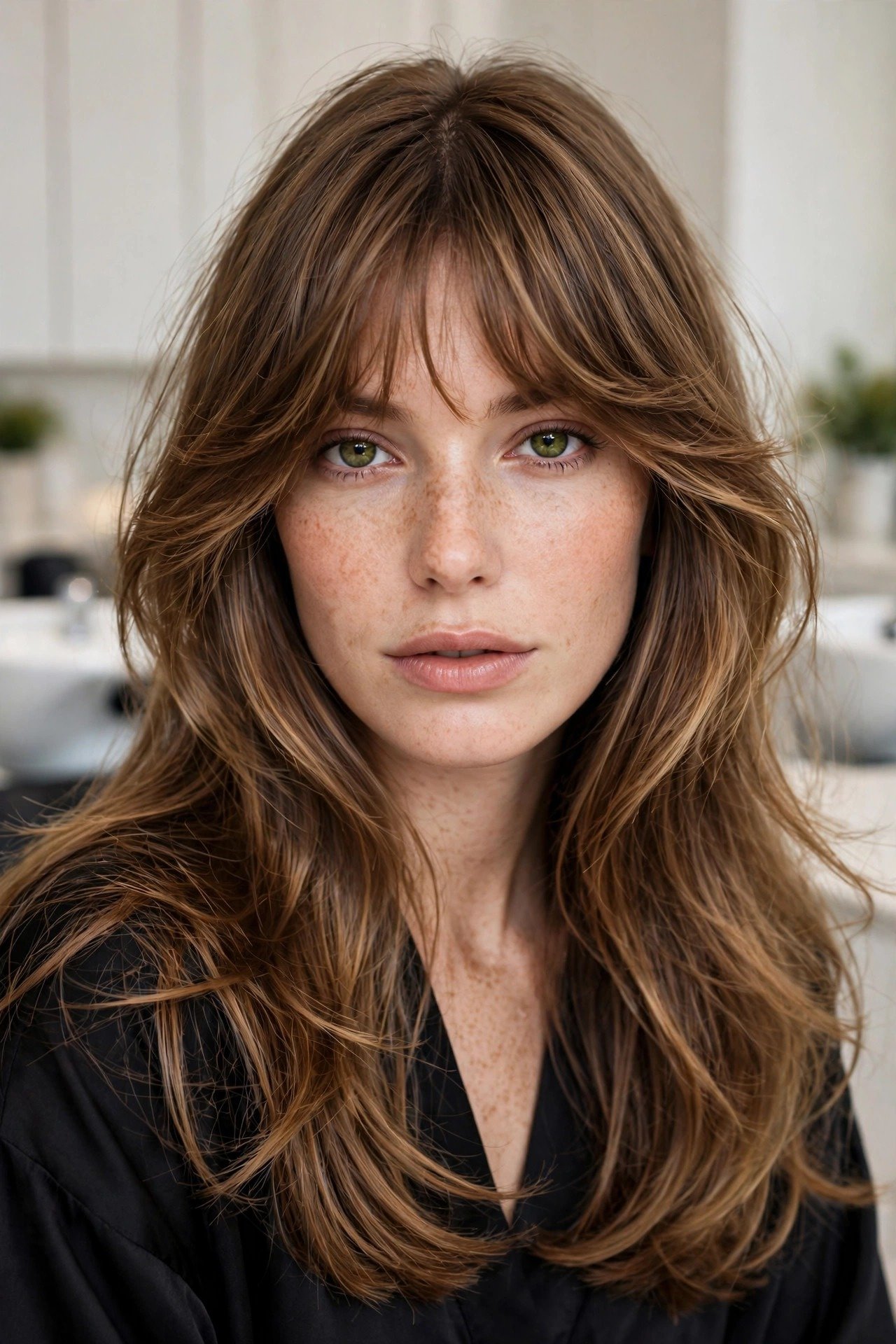
To understand birkin bangs, you have to understand Jane Birkin herself. Born in London in 1946, Birkin moved to France in the late sixties, recorded the infamous duet “Je t’aime… moi non plus” with Serge Gainsbourg, and became the face of a whole aesthetic: basket bags instead of handbags, white t-shirts, flared jeans, and that hair. Long, straight, center-parted, with a fringe that seemed to exist in a permanent state of just-grown-out. It was never perfect, and that was the entire point.
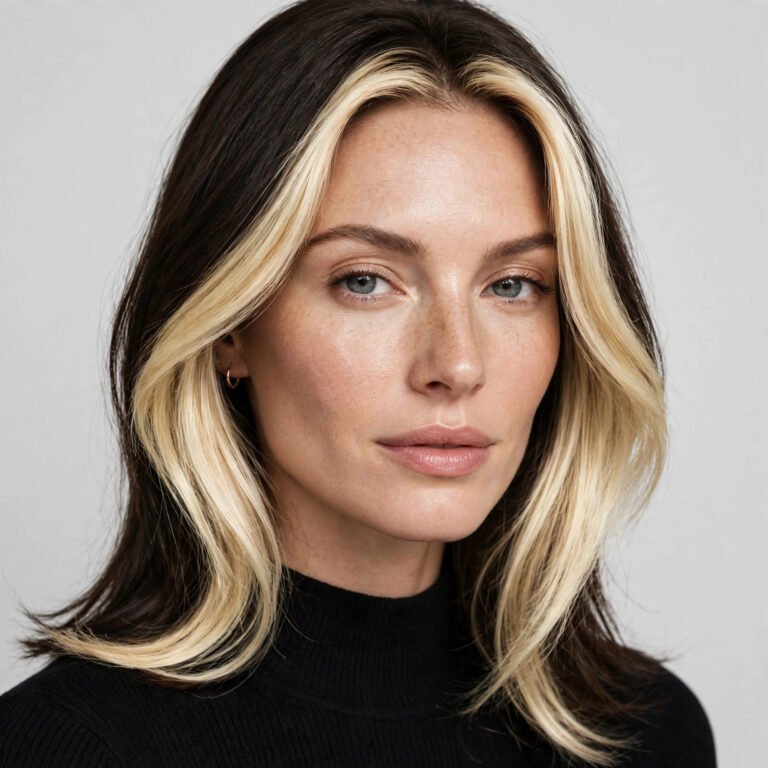
Her bangs had a very specific anatomy, and if you want the real thing in 2026, these are the details to nail. First, the length: birkin bangs sit at or just below the eyebrows, never up at mid-forehead. They are long enough that you can push them to the side if you want, which is part of their charm. Second, the texture: they are wispy and feathered, cut with the ends thinned out so you can see bits of forehead through them. This is the opposite of a blunt, heavy bang where the bottom edge is one solid line. Third, the shape: they are slightly longer at the outer corners than in the middle, with the longest pieces blending into face-framing layers at the temples. That gentle curve is what keeps them from looking like a ruler-straight strip across your forehead.
Straight hair is the easiest canvas. The cut falls exactly as intended, the wispiness shows cleanly, and styling takes minutes. The main risk with straight hair is that the bangs can look too perfect and flat, losing the Birkin messiness. Ask your stylist to point-cut the ends aggressively — that is the technique where the scissors snip vertically into the ends instead of cutting straight across, creating the feathered edge. A little texturizing spray or dry shampoo at the roots keeps them from lying like a curtain of glass. If your straight hair is very fine, keep reading the fine-hair section too.
Wavy hair might actually be the ideal texture for modern birkin bangs. The natural wave gives you the piecey separation and movement for free — the thing straight-haired women have to manufacture with product. The key adjustment: have them cut dry, or at least cut longer than you think you need. Wavy hair springs up as it dries, and bangs cut to brow length when wet can end up mid-forehead when dry. A good stylist will cut wavy bangs in their natural dried state and work with the wave pattern instead of against it. Style by scrunching in a pea-sized amount of light curl cream and letting them air-dry, or diffuse on low for five minutes.
Curly hair can absolutely wear birkin bangs, and when done right they are stunning — soft ringlets grazing the brows with longer curls framing the temples. But the cut has to be curl-by-curl, dry, by someone who genuinely understands curly hair. Never let anyone cut your curly bangs wet and straightened “to see the length” — that is how you end up with bangs three inches shorter than planned once the curls spring back. Ask for them longer than the classic recipe, because curls eat length. Maintenance is simple: refresh in the morning with a spray bottle of water mixed with a little leave-in conditioner, scrunch, and go. Pineapple your hair at night (a loose high ponytail) to keep the bangs from getting crushed.
Thick, dense hair needs weight removed or birkin bangs will turn into a heavy shelf. The fix is internal texturizing — your stylist thins from underneath and through the mid-lengths of the bangs so the top surface stays smooth but the bulk disappears. Done well, thick hair actually holds the Birkin shape beautifully because it has enough body to keep the wispiness from going limp. The mistake to avoid is over-thinning the ends into nothing; you want feathered, not shredded. A little smoothing cream on the ends keeps thick bangs from poufing in humidity.
Fine or thin hair is where strategy matters most. The good news: birkin bangs require less hair than a blunt fringe, so you are not sacrificing much density from the rest of your head. The bad news: if they are cut too thin, they can look stringy and separate into sad little strands. The sweet spot is keeping them just dense enough to read as a fringe while still letting light through. Ask your stylist to keep the section slightly narrower and to avoid over-texturizing. For styling, a root-lifting spray or a tiny bit of volumizing mousse at the roots before blow-drying gives fine bangs the body they need. Dry shampoo is your best friend — it adds grit and fullness, and second-day fine bangs often look better than freshly washed ones.
Exactly What to Tell Your Stylist: The Appointment Script
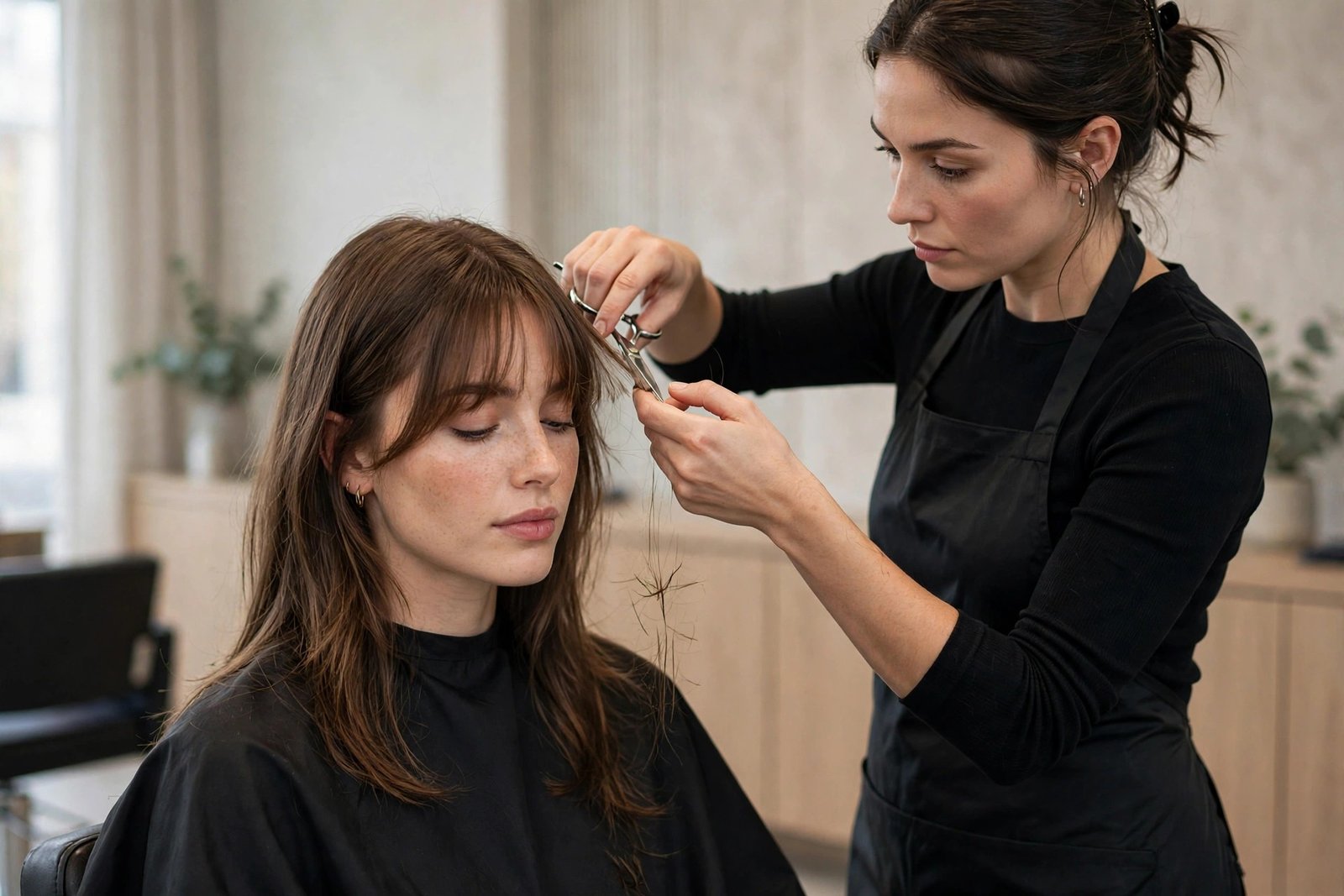
Most bad bangs are not the result of a bad stylist — they are the result of a vague consultation. “I want bangs like Jane Birkin” means nothing if your stylist is twenty-three and has never seen a photo of her. Walk in prepared, and you will walk out with the fringe you actually pictured.
Bring three photos, not one. One photo of Jane Birkin herself in the seventies — the reference that defines the look. One photo of a modern woman with your hair texture wearing birkin bangs. And one photo of what you do not want (a blunt heavy fringe, or bangs cut too short). That third photo is the most underused consultation tool in existence. It takes ten seconds to show and it prevents the most common miscommunications. Save them to your phone in a dedicated album so you are not scrolling past vacation photos while the stylist waits.
Use these exact words. Stylists respond to specific technical language. Say: “I want soft, wispy bangs that hit just below my eyebrows — feathered at the ends, not blunt. Slightly longer at the outer corners, blending into face-framing pieces at my temples. Narrower than a full fringe, so you can see a bit of forehead through them.” That one paragraph contains every defining feature: length, texture, shape, and width. If your stylist nods and repeats it back accurately, you are in good hands. If they look confused, show the photos again and consider whether this is the right stylist for a precision fringe cut.
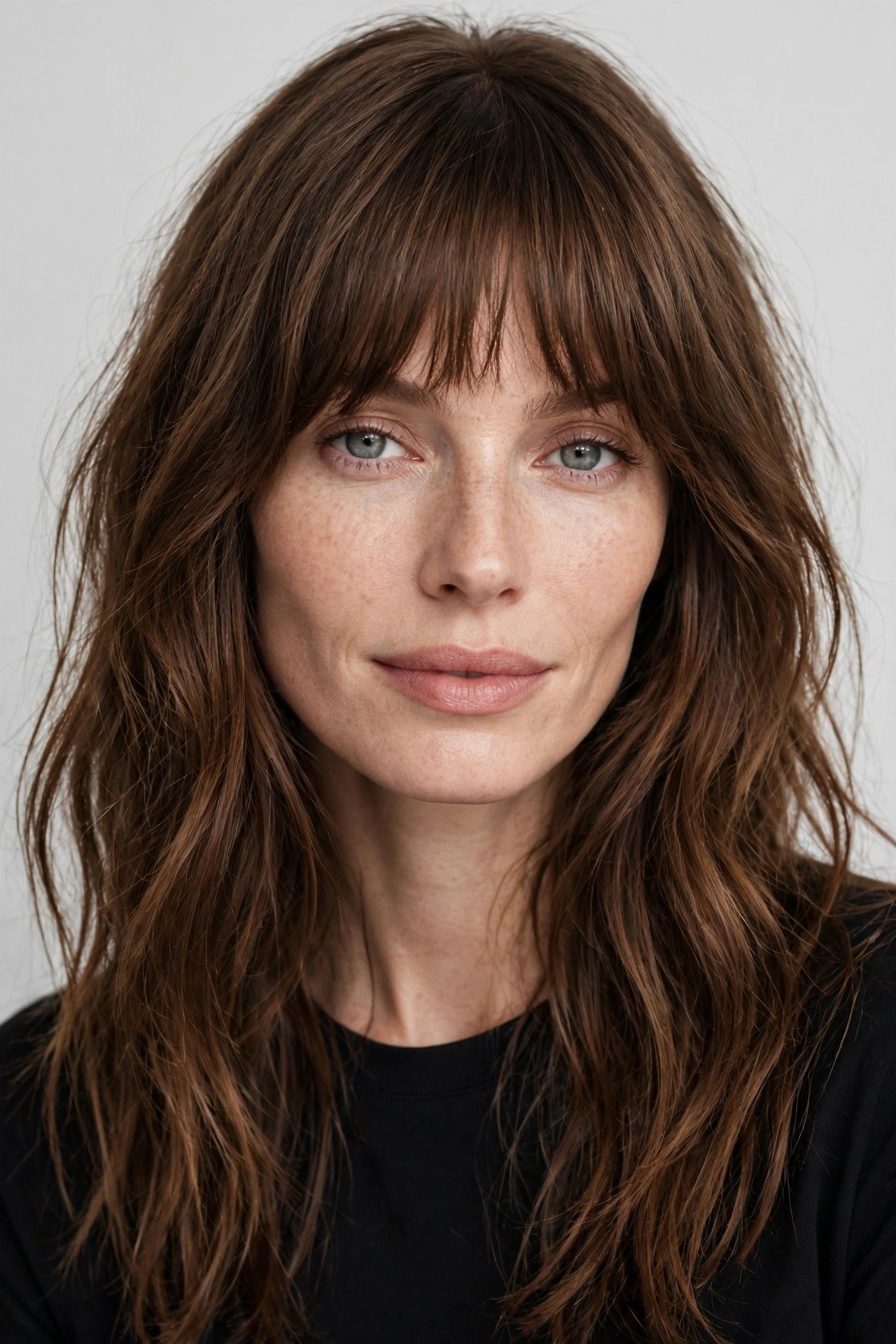
Most birkin bangs disasters come from a short list of repeatable errors. Learn them now and you will never have to live through the grow-out regret.
Mistake 1: Cutting them too short. This is the number one killer. Birkin bangs live at or below the eyebrows — cut them to mid-forehead and you no longer have birkin bangs, you have a different haircut entirely. The fix is prevention: tell your stylist “longer is safer” and remind them you can always go shorter next time. If it already happened, the recovery is patience plus styling — sweep them to the side, use a little pomade to train them down, and wait the four to six weeks for the length to return.
Mistake 2: Cutting them wet without accounting for shrinkage. Hair looks longer when wet — on straight hair the difference is small, but on wavy or curly hair, bangs cut to brow length when wet can spring up inches shorter when dry. Always insist on a dry refinement pass, and on textured hair, insist on a fully dry cut. If your bangs came out too short from a wet cut, there is no quick fix; styling them with a bit of weight (cream, not mousse) and sweeping them aside buys time while they grow.
Mistake 3: Making them blunt instead of feathered. A solid, straight-across bottom edge is the opposite of the Birkin look. It reads heavy, severe, and very un-French. The cause is usually a stylist cutting straight across without point-cutting or texturizing the ends. The fix is a correction appointment: ask the stylist to point-cut into the ends and remove weight so light passes through. This is a five-minute fix for someone who knows what they are doing.
Mistake 4: Ignoring the cowlick. Cutting bangs over an unaddressed cowlick is like building on a fault line — everything looks fine until the first wash, and then one section flips in a direction of its own choosing. The fix has to happen at the consultation: point out your cowlick, discuss cutting with it in mind (usually slightly longer through that section), and learn the blow-dry-against-the-growth technique. Post-cut, daily training with heat and a little styling cream keeps it in line.
Mistake 5: Cutting the section too wide. Birkin bangs are narrower than a full fringe — they should not stretch all the way to your temples in a wide block. Too wide, and they overwhelm the face and lose the delicate quality. Unfortunately, width cannot be uncut; the fix is growing the outer edges out and blending them into the sides, which takes a few weeks. Prevention is showing your stylist exactly where you want the bangs to start and stop, using your fingers at the consultation.
Mistake 6: Over-styling them every single day. Daily high-heat flat-ironing on thin, feathered ends leads to breakage, and broken ends on wispy bangs look frizzy and thin instead of soft. Birkin bangs are designed to need less heat, not more. Blow-dry to shape, touch up only the stubborn pieces, and let texture do the rest. If your ends are already fried, a micro-trim to remove the damage plus a week of heat-free styling will bring them back.
Mistake 7: Skipping trims until they are in your eyes. Because birkin bangs grow out gracefully, it is tempting to skip maintenance entirely. But there is a line between artfully grown-out and just overgrown — once they are constantly in your eyes and you are pushing them aside fifty times a day, they have stopped being a style choice. The fix is the three-to-four-week trim rhythm, or at minimum a DIY dusting of the ends when they start bugging you. Five minutes with the twist method beats a month of annoyance.
Birkin Bangs vs. Curtain Bangs vs. Bottleneck Bangs: Which Fringe Wins?
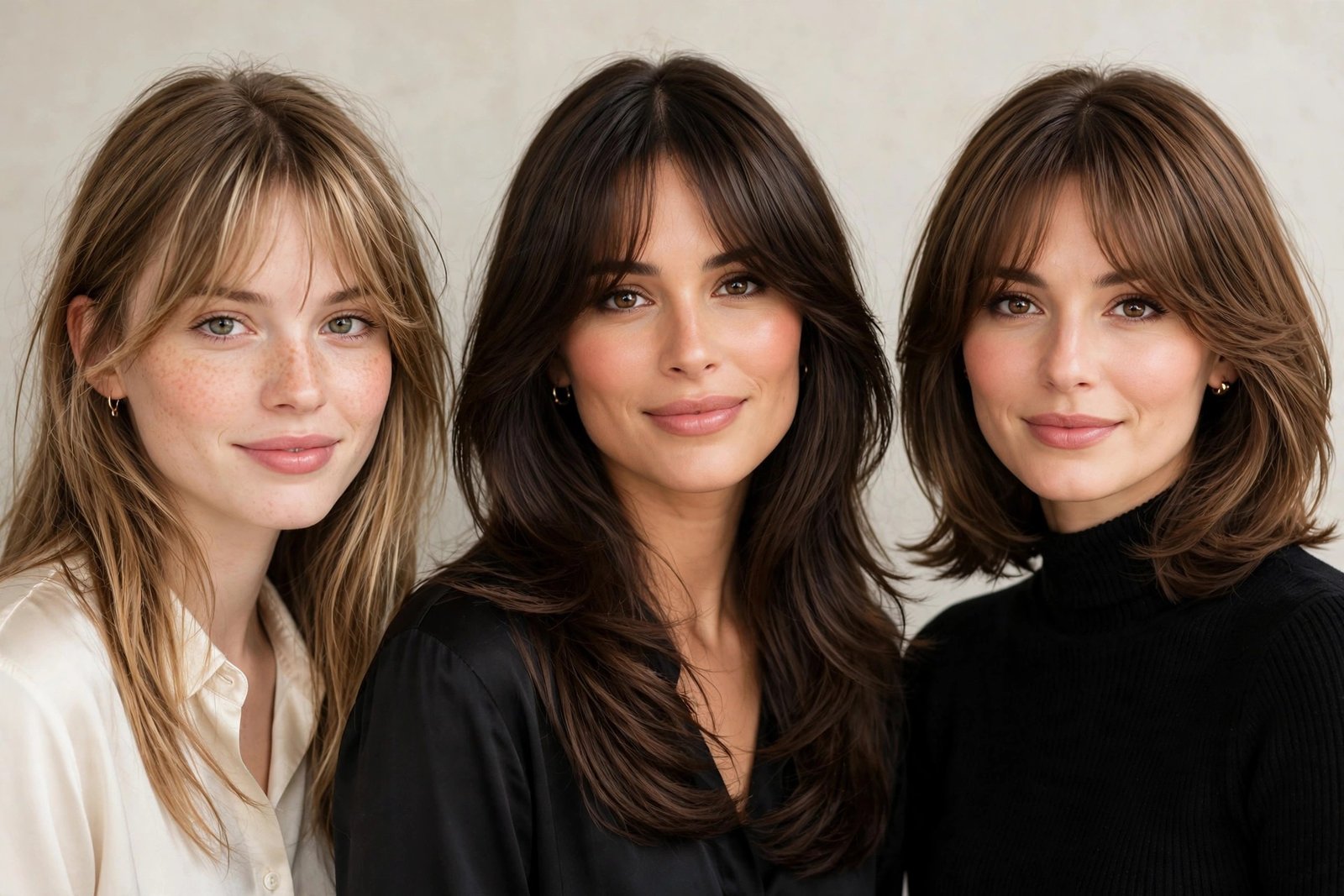
The fringe world is crowded right now, and the names blur together. Here is the straight comparison so you can pick with confidence instead of guessing.
Curtain bangs are birkin bangs’ closest relative, and the two get confused constantly. The difference: curtain bangs are parted down the middle (or off-center) and swept to both sides like curtains, longer overall — usually cheekbone to chin length — with the shortest piece in the center at the brow. They frame the face from the sides. Birkin bangs are worn falling forward across the forehead, shorter overall, with the emphasis on the brow-grazing front rather than the swept sides. Think of it this way: curtain bangs open the forehead up; birkin bangs dress it. Curtain bangs are the better pick if you want your forehead mostly visible and you love a middle part. Birkin bangs win if you want that soft coverage across the brow and the unmistakable French-girl feel. The good news: they convert into each other easily. Growing out birkin bangs naturally creates curtain bangs, and curtain bangs can be trimmed forward into birkin bangs.
Bottleneck bangs are the trendy newcomer — named because their shape mimics a bottle’s neck: narrow and shorter in the center, widening and lengthening toward the temples. They are essentially a more sculpted, deliberate cousin of birkin bangs, often worn with a slight curtain part. The main difference is structure: bottleneck bangs have a more defined shape with a clearer short-to-long gradient, while birkin bangs are softer and more uniform in their wispiness. Bottleneck bangs photograph as more “styled”; birkin bangs read as more effortless. Choose bottleneck if you like visible shape and do not mind a bit more styling precision. Choose birkin if “I woke up like this” is the goal.
Baby bangs (micro bangs) sit well above the eyebrows — sometimes mid-forehead — and make a bold, editorial statement. They are high-impact and high-commitment: they demand confidence, frequent trims, and they do not grow out gracefully. Birkin bangs are their opposite in spirit — soft where baby bangs are sharp, forgiving where baby bangs are fussy. Only pick baby bangs if you want your fringe to be the loudest thing about your look.
Blunt bangs are the heavy, thick, straight-across fringe — the classic Cleopatra-to-mod shift cut. They are striking and they demand attention, but they also demand daily styling, show every imperfection, and grow out badly. Birkin bangs give you maybe seventy percent of the face-framing impact with thirty percent of the maintenance. If you love the idea of bangs but have a low tolerance for daily fuss, birkin wins walking away.
Side-swept bangs are the 2000s throwback — a deep side part with the fringe swept diagonally across the forehead. They are flattering and easy to grow out, but they read dated to many eyes in 2026 unless deliberately styled as a retro reference. Birkin bangs feel current in a way side-swept bangs currently do not.
The decision shortcut: want maximum softness and minimum effort with a French-girl feel? Birkin bangs. Want your forehead open with face-framing from the sides? Curtain bangs. Want visible sculpted shape? Bottleneck bangs. Want drama? Baby or blunt bangs. And remember — of all of these, birkin bangs are the easiest to change your mind about later, which makes them the smartest first fringe if you are on the fence.
Frequently Asked Questions About Birkin Bangs

How long do birkin bangs take to grow out?
Because they start out wispy and long at the sides, birkin bangs grow out more gracefully than any other fringe. Expect them to blend into curtain-style face-framing pieces within two to three months of your last trim, and into full face-framing layers by month four or five. There is no truly awkward phase — just sweep them to the sides as they lengthen. If you want out faster, a single grow-out shaping appointment blends them into your layers immediately.
Can I get birkin bangs with curly hair?
Yes, and they look fantastic — soft curls grazing the brow with longer pieces at the temples. The non-negotiable rules: get them cut dry, curl by curl, by a stylist experienced with curly hair, and ask for more length than you think you need because curls spring up as they dry. Refresh them in the mornings with a water and leave-in conditioner mist rather than rewetting fully.
Do birkin bangs work with glasses?
They work beautifully with glasses — Jane Birkin herself often wore them with frames. The key is cutting them with your glasses on so the length is checked against your specific frames. As a rule, the bangs should fall just below the top rim of your glasses or graze the brows without bunching against the frames. Bring your everyday pair to the appointment, not just your prescription sunglasses.
Are birkin bangs high maintenance?
Compared to other fringes, no — they are among the lowest-maintenance bangs you can get. Daily styling takes about five minutes (often less on second-day hair), and they actually look better slightly lived-in. The one real commitment is a trim every three to four weeks to keep the length in the sweet spot, though the DIY twist method makes at-home maintenance very doable.
What is the difference between birkin bangs and wispy bangs?
Wispy bangs is the broad category — any thin, feathered, see-through fringe. Birkin bangs are a specific recipe within it: brow-grazing to just-below-brow length, feathered ends, slightly longer at the outer corners blending into temple pieces, and a narrower width than a full fringe. All birkin bangs are wispy bangs, but not all wispy bangs have the Birkin proportions and that seventies French-girl character.
Will birkin bangs make my forehead look smaller?
Yes — that is one of their best tricks. By covering the forehead with soft, textured hair, they visually shorten it, which is why they are so flattering on longer face shapes and high foreheads. Unlike a heavy blunt fringe, though, the wispiness keeps the effect soft rather than severe, so the forehead looks balanced, not hidden.
The Final Word on Birkin Bangs in 2026
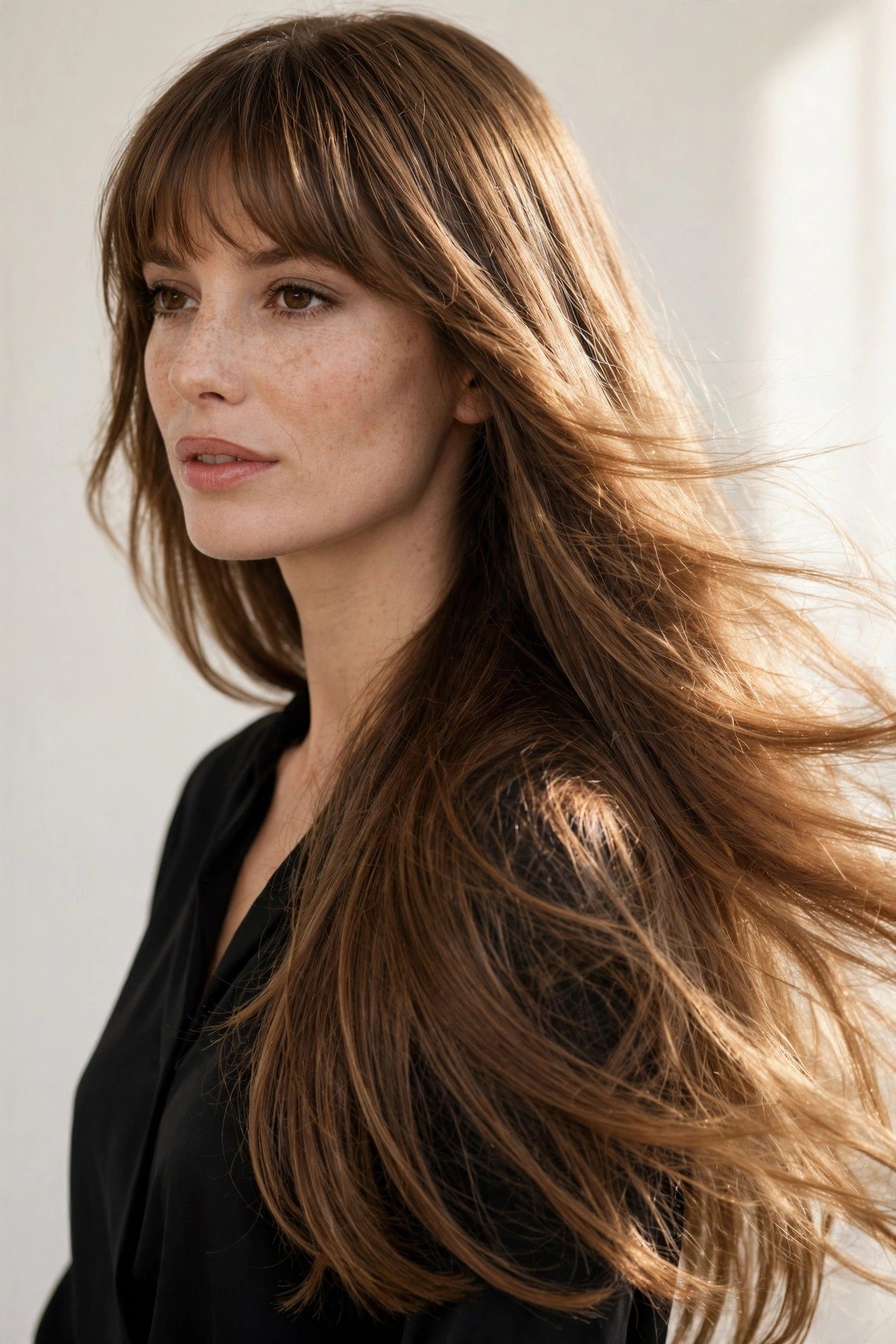
Here is what it comes down to: birkin bangs are the rare haircut that delivers on all of its promises. They give you the face-framing magic of a fringe without the daily battle. They flatter nearly every face shape and work with nearly every hair texture, as long as the cut is adjusted to yours. They style in five minutes, look better on day two, and grow out without punishing you for changing your mind. In a year when everyone wants beautiful hair with a realistic routine, that combination is unbeatable.
The women who love their birkin bangs most are the ones who walked into the salon prepared — reference photos in hand, the right words ready, and honest about their hair texture and styling tolerance. Do that part well and the rest takes care of itself. Book the trim rhythm, learn the side-to-side blow-dry, keep dry shampoo in your bag, and let the fringe do what it was designed to do: look effortlessly French while you get on with your life.
Jane Birkin wore her bangs like she had somewhere better to be than the mirror, and fifty years later that attitude still reads as the height of cool. In 2026, the coolest hair is the hair you do not have to think about. Get the cut, give it a week to settle, and enjoy the compliments.