Wispy Bangs Women 2026: The Soft Fringe Guide
What Are Wispy Bangs? The Soft Fringe Everyone Wants in 2026
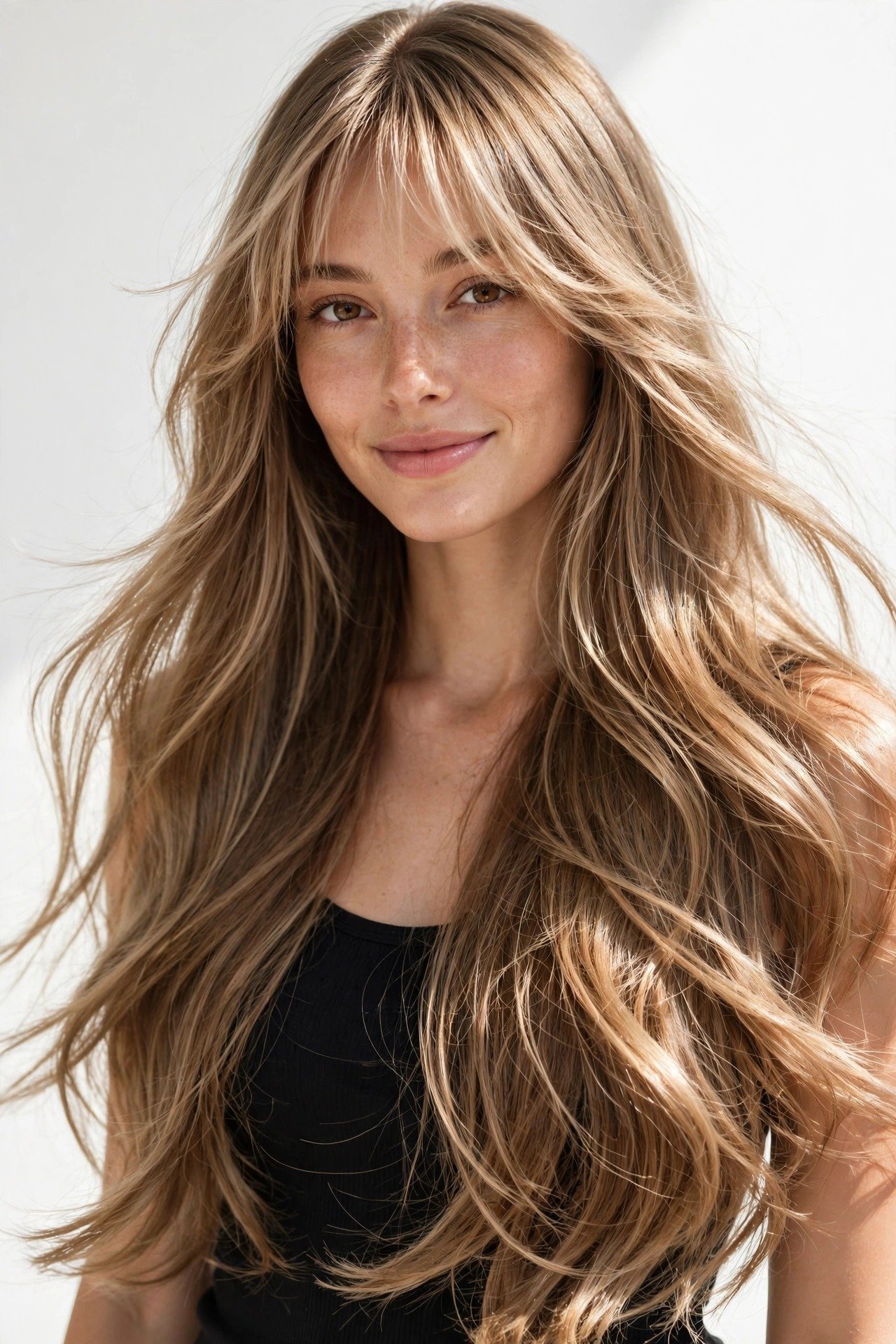
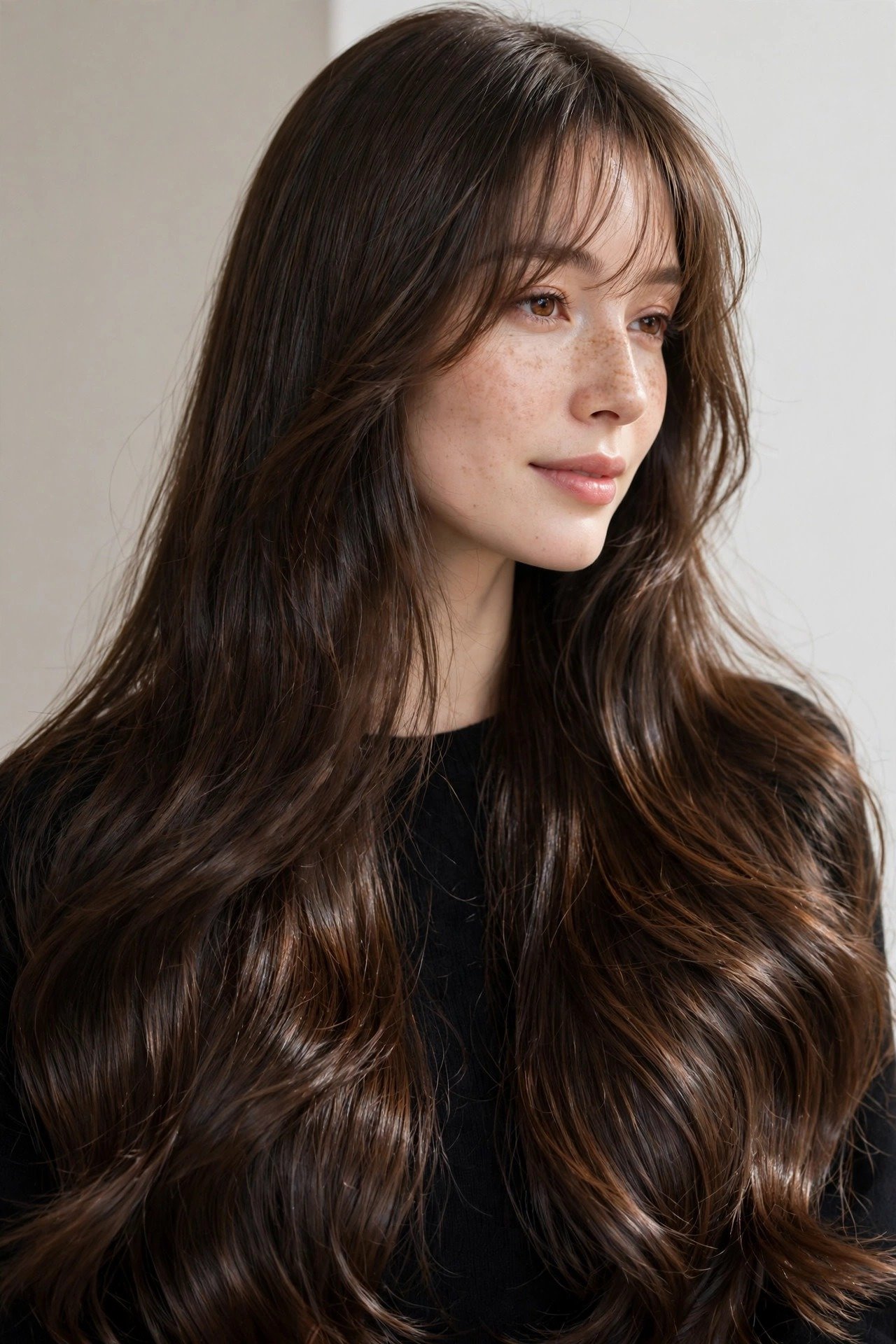
Wispy bangs are the lightest, airiest version of fringe you can get. Unlike blunt bangs that form a solid curtain across the forehead, wispy bangs are cut with a feathered technique that leaves deliberate gaps between strands, allowing skin to peek through. The result is a soft, romantic frame for the face that feels effortless rather than severe. Think of the difference between a heavy velvet curtain and a sheer linen one — both cover the window, but one lets the light through.
The technique behind wispy bangs is called point cutting or feathering. Instead of cutting straight across, the stylist holds the scissors vertically and snips into the ends at an angle, creating varied lengths that taper naturally. This removes bulk and creates the characteristic separated strands. The bangs are typically cut to fall between the eyebrows and the eyelashes, though length can be customized. What makes them “wispy” is the texture — each strand is thinned just enough to move independently, catching light and air as you move.
In 2026, wispy bangs have evolved beyond the basic feathered fringe. Stylists are now combining them with face-framing layers that start at the cheekbones and blend seamlessly into the bangs, creating one continuous soft frame. The Pinterest 2026 Beauty Trend Report recorded a 166% increase in searches for “wispy bangs hairstyles” and a 394% spike for “French bob with wispy bangs,” confirming this is not a passing fad but a defining look of the year. Celebrity hairstylist Nick Stenson describes them as “wispy toward the center and gradually lengthening out by the cheekbones to blend seamlessly with the rest of your hair.”
What sets wispy bangs apart from other fringe types is their forgiveness. Blunt bangs demand precision — one crooked snip and the whole line looks off. Curtain bangs require daily styling to maintain their part. Wispy bangs, by contrast, look better slightly imperfect. A strand out of place just adds to the effortless charm. This low-maintenance quality is a major reason for their 2026 dominance, as beauty trends shift toward lived-in, natural-looking hair that doesn’t demand hours of upkeep.
Why Wispy Bangs Are the Biggest Bang Trend of 2026
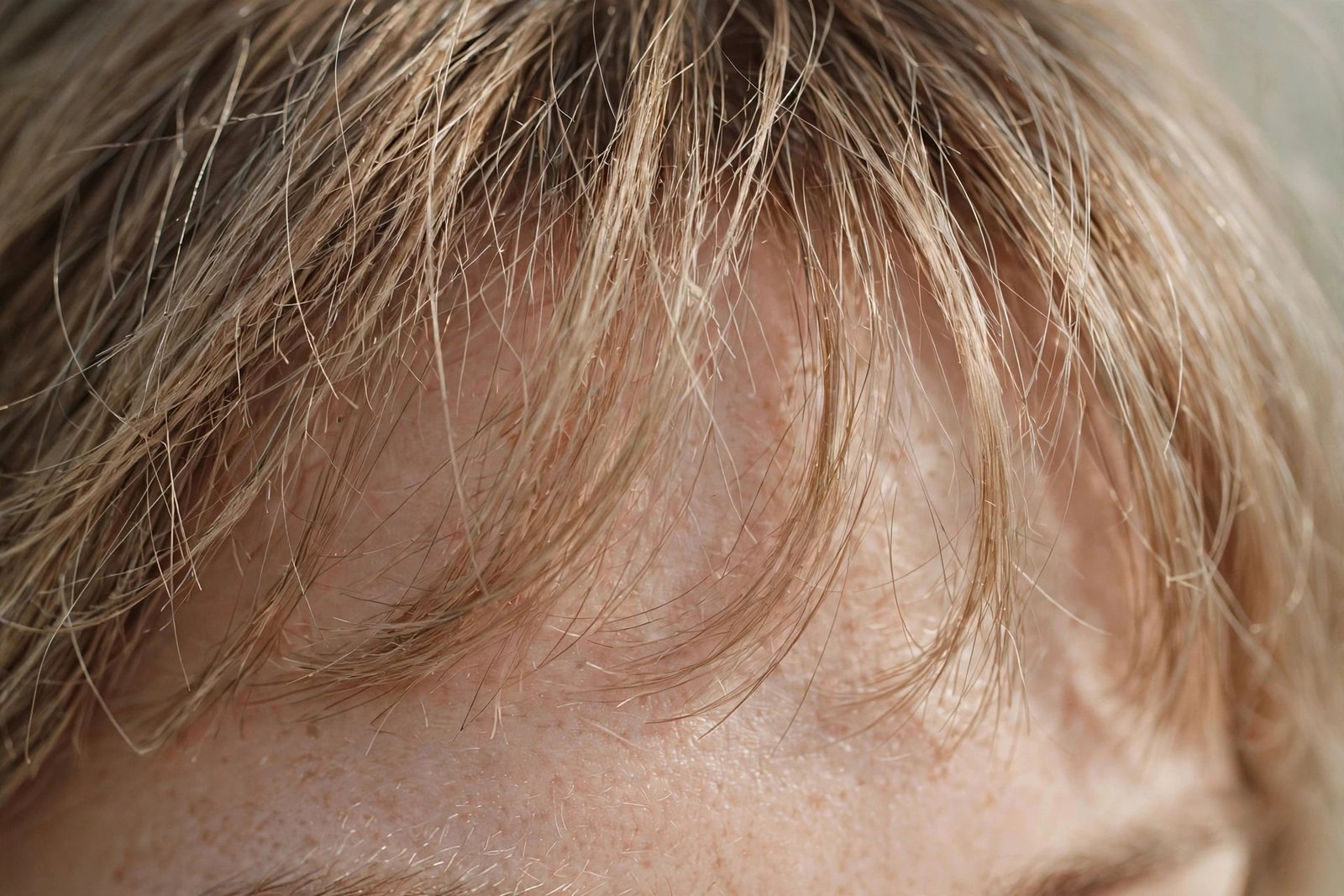
Several converging trends have pushed wispy bangs to the top of 2026’s most-requested list. First is the broader movement away from heavy, structured shapes toward softer, more natural looks. Celebrity hairstylists report that clients are explicitly asking to avoid the “heavy upkeep of a blunt fringe.” After years of bold, high-maintenance styles, there’s a collective desire for hair that looks beautiful without constant intervention. Wispy bangs deliver exactly that — they grow out gracefully, require minimal styling, and flatter a wide range of face shapes.
Second is the Korean beauty influence, which continues to shape global hair trends. Korean “air bangs” or “see-through bangs” — the wispiest of all wispy bangs, made of just two or three strands barely skimming the forehead — have crossed over from K-pop styling into mainstream salons. This ultra-light version proved that bangs don’t need to be a commitment; they can be a whisper of a style choice. Western stylists adapted the concept into something slightly fuller but equally airy, creating the modern wispy bang.
Third is versatility. Wispy bangs work with virtually every hair length and texture. They pair beautifully with the year’s dominant cuts — the lob, the French bob, long layers, even pixies. They can be worn straight, wavy, or curly. They suit fine hair (adding the illusion of texture) and thick hair (removing bulk around the face). This universality means stylists can recommend them confidently to almost any client, which accelerates trend adoption.
Finally, there’s the grow-out factor. The number one reason women avoid bangs is fear of the awkward growing phase. Wispy bangs eliminate this concern — as they grow, they simply become face-framing layers, which is a desirable style in itself. There’s no blunt line to grow out, no harsh regrowth. This makes them the perfect “gateway bang” for anyone who’s always wanted fringe but feared the commitment.
Best Face Shapes for Wispy Bangs: A Complete Guide
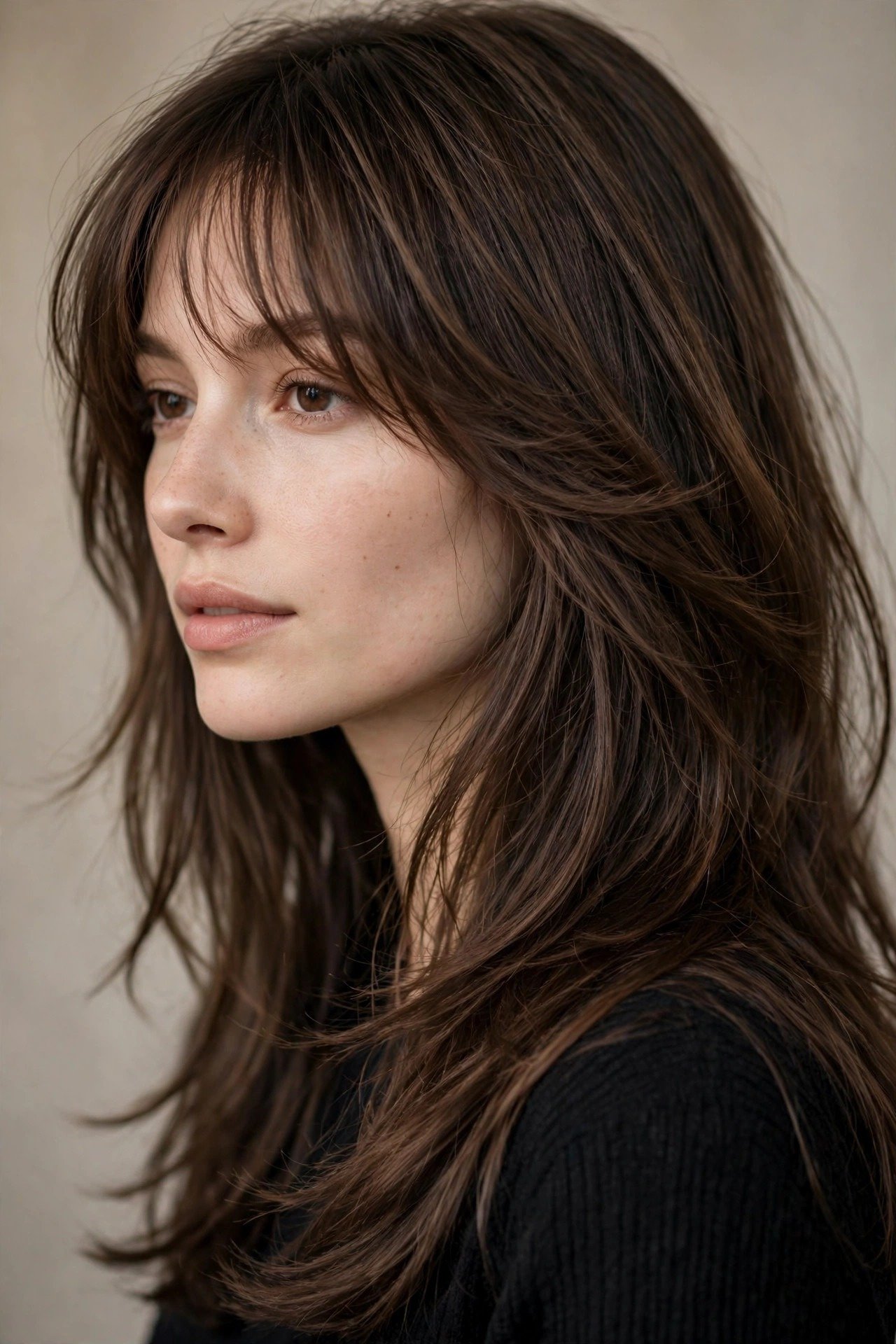
The good news is that wispy bangs flatter nearly every face shape — but the ideal length, density, and styling vary. Here’s how to customize them.
Round faces: Wispy bangs are excellent for round faces because the vertical lines and forehead exposure create the illusion of length. Ask for bangs that are slightly longer at the sides, blending into cheekbone-grazing layers. This draws the eye downward and adds definition. Avoid cutting them too short across, which can emphasize width. A center-parted wispy bang that opens in the middle works particularly well.
Oval faces: The most versatile shape — almost any wispy bang works. Oval faces can handle shorter, fuller wispy bangs that hit at the brow, or longer versions that sweep to the sides. This is the face shape where you can experiment most freely with density and length.
Square faces: Wispy bangs soften the strong jawline characteristic of square faces. The key is keeping them light and textured rather than dense. Longer wispy bangs that blend into face-framing layers help break up angular lines. Side-swept styling is particularly flattering, as the diagonal line contrasts with the jaw’s horizontal emphasis.
Heart-shaped faces: Wispy bangs balance a wider forehead against a narrower chin beautifully. They add softness to the forehead without adding width. Keep them piece-y and textured, and consider slightly longer lengths that draw attention toward the eyes and cheekbones rather than the forehead width.
Long faces: Wispy bangs are ideal for long faces because they visually shorten the forehead. A slightly fuller wispy bang that hits at or just below the brows works best. The horizontal line across the forehead breaks up vertical length. Pair with volume at the sides (waves or layers) to add width.
Diamond faces: With narrow forehead and chin but wide cheekbones, diamond faces benefit from wispy bangs that add softness to the forehead. Keep them light and airy, blending into layers that fall past the cheekbones to avoid emphasizing their width.
12 Wispy Bangs Styles to Try in 2026
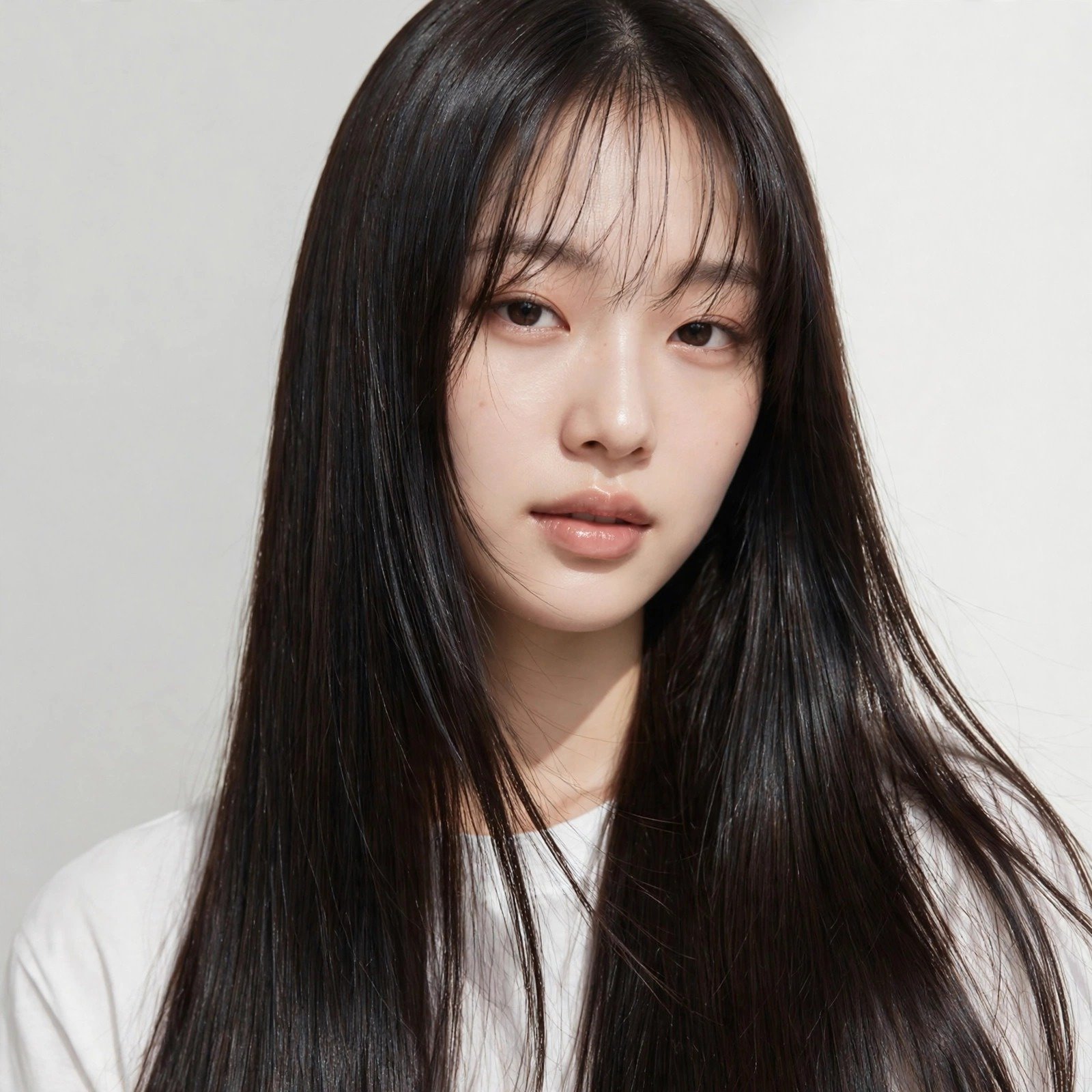
1. Classic Feathered Wispy Bangs: The original — evenly feathered across the forehead, hitting at brow level. Timeless and universally flattering.
2. Korean Air Bangs: The sheerest version, with just a few strands touching the forehead. Minimalist and modern.
3. Wispy Curtain Bangs: A hybrid — parted in the center like curtain bangs but cut with wispy texture. The best of both worlds.
4. Long Wispy Bangs: Extending past the brows to the cheekbones, blending into layers. Perfect for those who want fringe without forehead coverage.
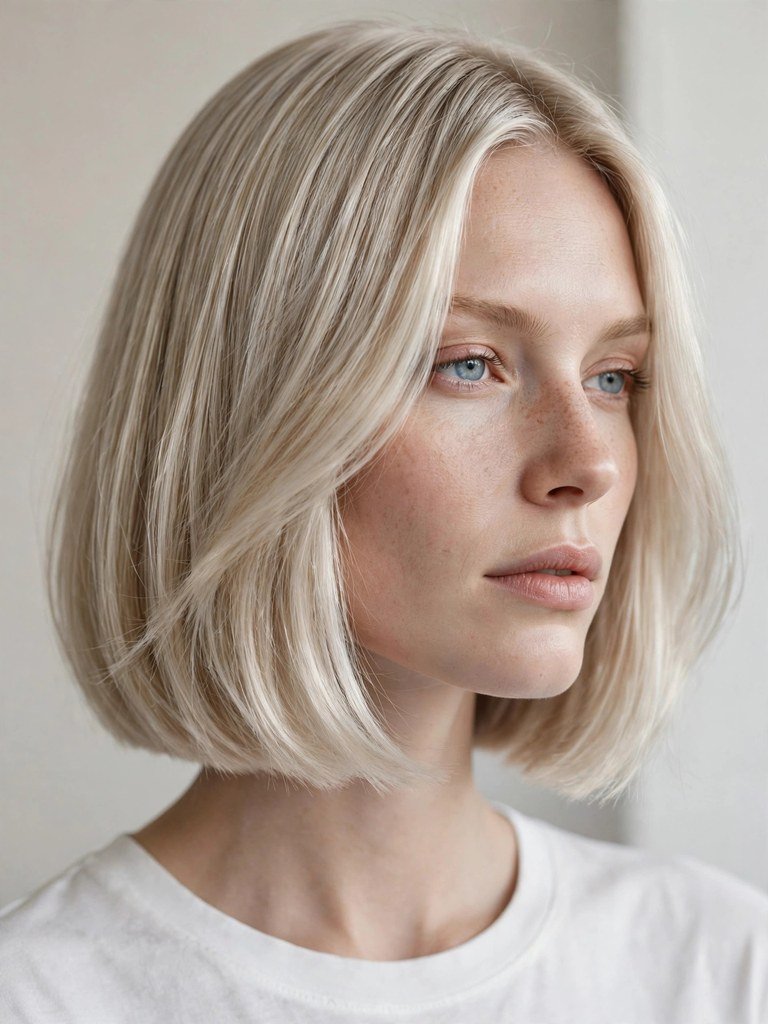
5. Wispy Bangs with a Lob: The Pinterest-viral combination. A collarbone-grazing lob with light bangs is 2026’s most requested pairing.
6. Wispy Bangs with a French Bob: Searches up 394%. The chin-length French bob gets softness and movement from wispy fringe.
7. Curly Wispy Bangs: Adapted for curl patterns — shorter in the center, longer at the edges to account for shrinkage. Celebrates natural texture.
8. Side-Swept Wispy Bangs: Worn swept to one side for an asymmetric, face-slimming effect. Great for square and round faces.
9. Wispy Bangs with Long Layers: The 90s supermodel revival — long, bouncy layers with a light fringe. Maximum movement and volume.
10. Micro Wispy Bangs: Cut well above the brow with feathered texture. Edgy but softened by the wispiness.
11. Wispy Bangs with a Pixie: A textured pixie gets feminine softness from a wispy fringe. The contrast between short sides and soft bangs is striking.
12. Grown-Out Wispy Bangs: The intentional grow-out — bangs long enough to tuck behind ears but still framing the face. Effortlessly chic.
How to Cut Wispy Bangs at Home: Step-by-Step
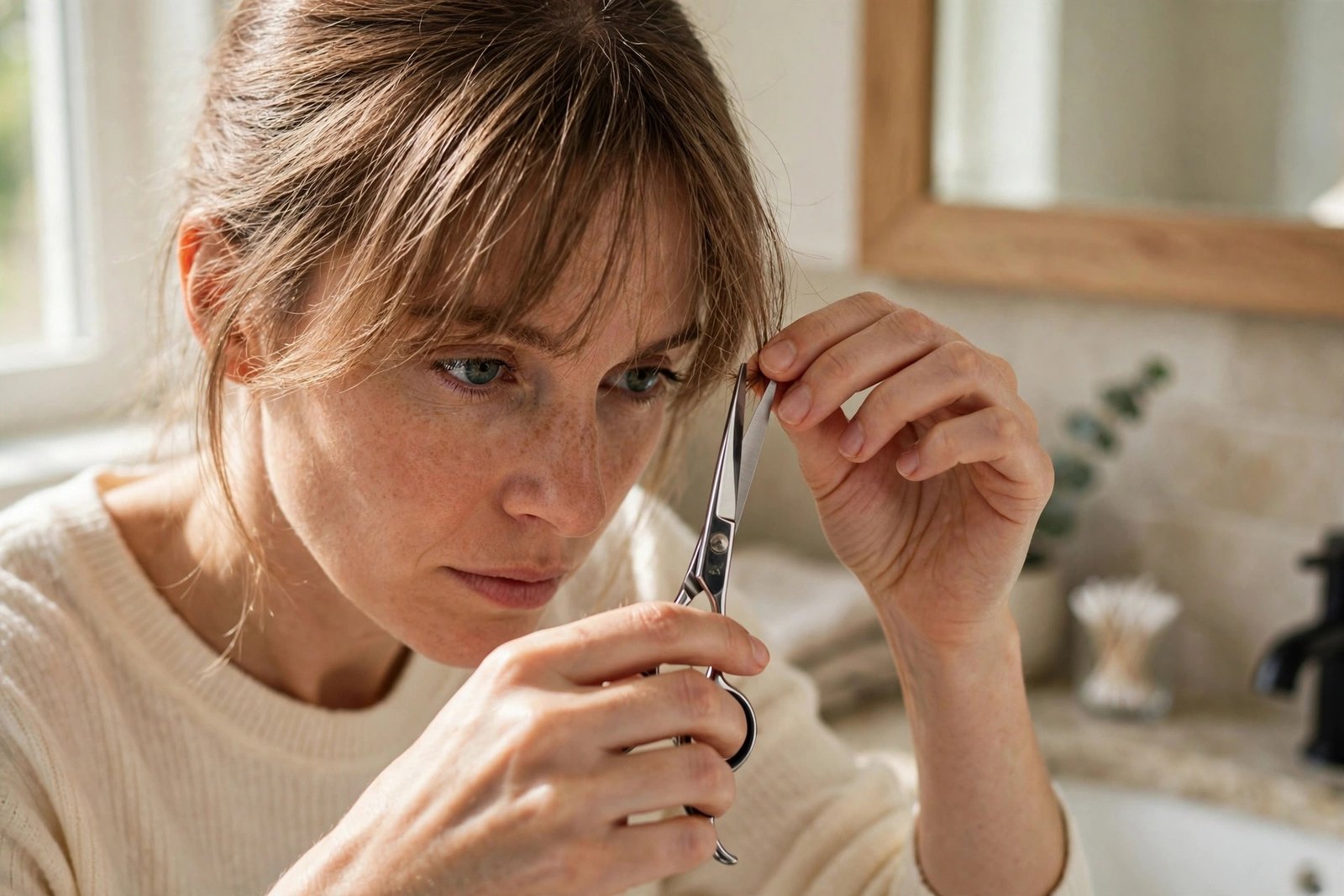
While a salon cut is always recommended for the initial shape, trimming wispy bangs at home between appointments is very doable because the style is forgiving. Here’s how.
What you need: Sharp hair-cutting scissors (not kitchen or craft scissors), a fine-tooth comb, hair clips, and a spray bottle with water.
Step 1: Start with dry hair. Wet hair appears longer, and you’ll cut off more than intended. If your bangs are styled, make sure they’re in their natural fall position.
Step 2: Section out your bangs. Use the comb to create a clean triangle section from the crown to the outer corners of the eyebrows. Clip the rest of your hair back.
Step 3: Comb the bangs straight down. Don’t pull — let them fall naturally.
Step 4: Hold scissors vertically (pointing up toward the ceiling). This is the key to wispiness — vertical snips create texture, horizontal cuts create bluntness.
Step 5: Starting from the center, make small upward snips into the ends, removing no more than a quarter inch at a time. Work outward toward the sides, leaving the outer strands slightly longer.
Step 6: For extra wispiness, take small vertical sections and twist them gently, then snip into the twisted ends. This creates natural separation.
Step 7: Shake out and assess. Remember — you can always cut more, but you can’t add length back. When in doubt, stop.
The golden rule of at-home bang trims: cut less than you think you need. Wispy bangs look best when they’re slightly imperfect, so don’t chase perfect symmetry.
How to Style Wispy Bangs for Every Occasion
Everyday natural: The beauty of wispy bangs is that they often need no styling. After washing, let them air dry in their natural fall. If they need a little direction, use your fingers to arrange them while damp. A tiny amount of lightweight styling cream on the ends adds definition without weight.
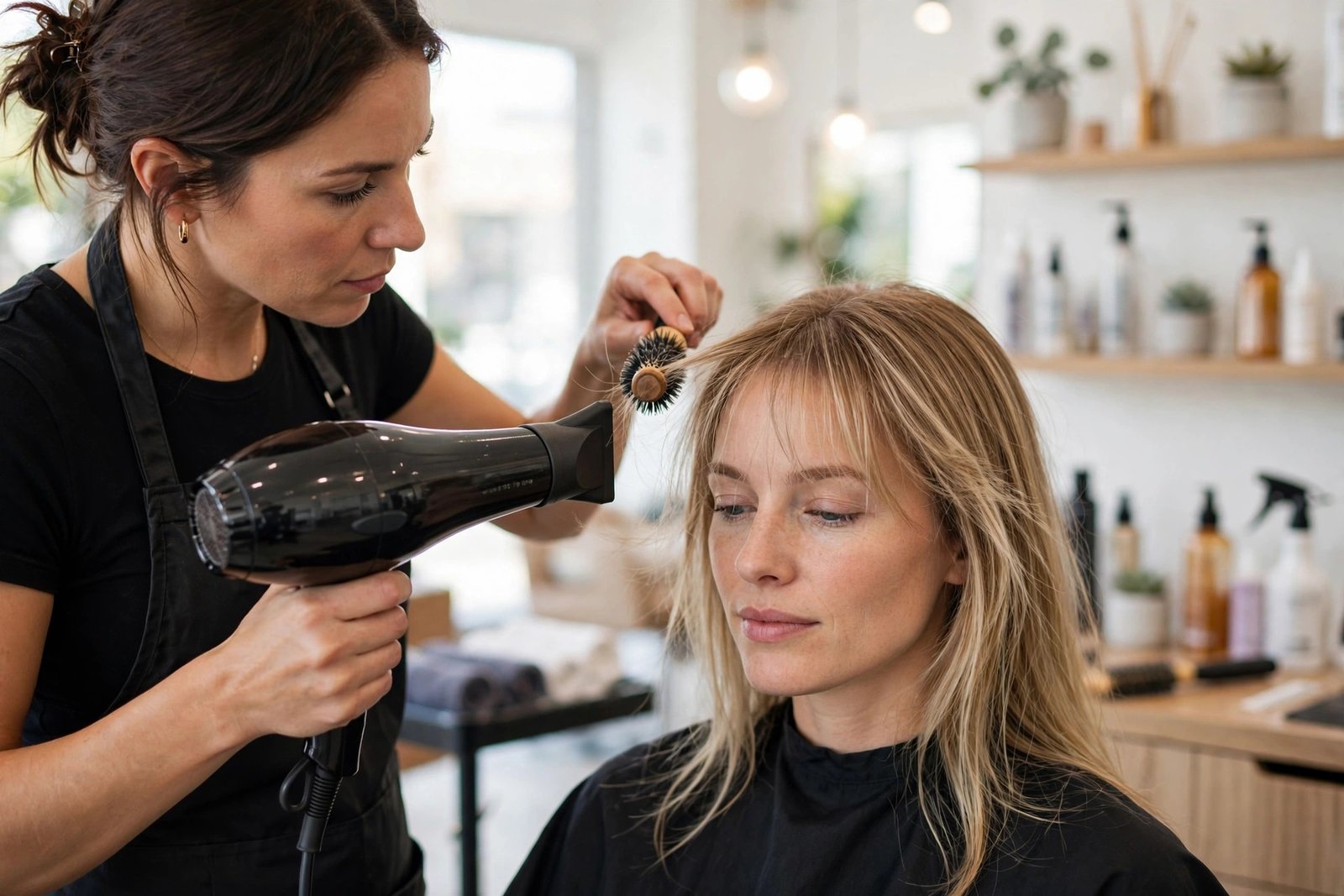
Sleek and polished: For a more refined look, blow-dry bangs with a small round brush, rolling them under slightly. Use the concentrator nozzle and direct airflow downward to prevent frizz. Finish with a light-hold hairspray misted from 12 inches away — never spray directly, which creates stiffness.
Textured and piece-y: Apply a pea-sized amount of texturizing paste or wax to dry bangs, pinching small sections between your fingers to create separation. This emphasizes the wispy texture and gives an edgy, modern finish.
Curly/wavy: Scrunch a curl-defining cream into damp bangs and either diffuse on low heat or air dry. Don’t brush curly bangs when dry — this creates frizz. If needed, refresh with a water mist and rescrunch.
Updos: Wispy bangs are perfect with updos because they soften the hairline. When pulling hair back, leave the bangs out and let a few face-framing pieces fall naturally. For a sleek bun, smooth bangs to the side with a light pomade.
Second-day hair: Revive flat bangs with dry shampoo at the roots, massaged in with fingertips. If the ends look limp, a quick pass with a flat iron on low heat (just the ends, not the roots) restores movement. Avoid over-washing — bangs get oily faster than the rest of your hair because of forehead contact, so consider washing just the bangs in the sink between full washes.
Wispy Bangs for Different Hair Types
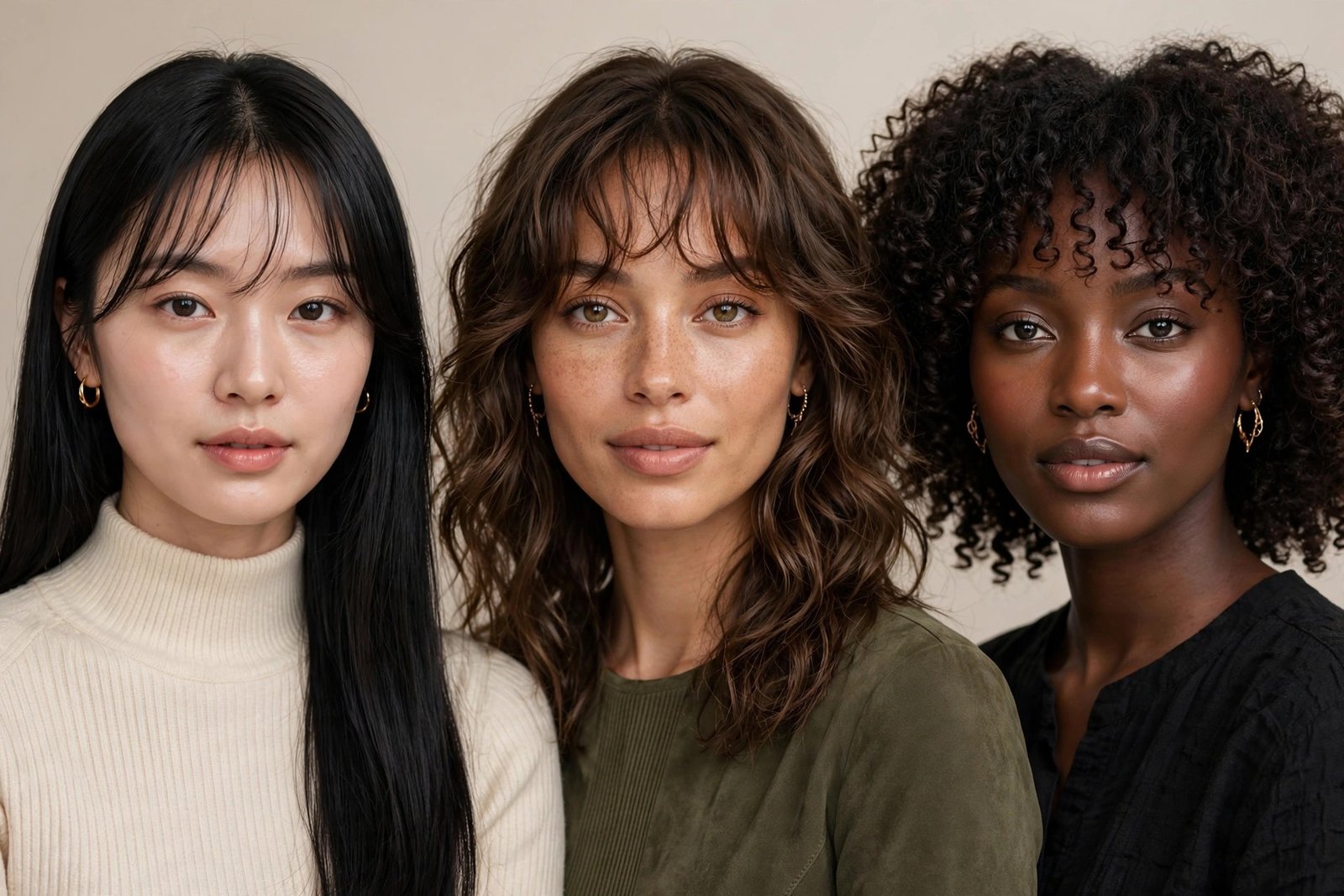
Fine hair: Wispy bangs are ideal for fine hair because they don’t require density to look good. The feathered technique actually makes fine hair appear more textured. Ask your stylist to keep them on the longer side — very short wispy bangs on fine hair can look sparse. A root-lifting spray adds body.
Thick hair: Thick hair needs significant thinning for wispy bangs to work. Your stylist should use thinning shears to remove bulk from underneath, keeping the top layer intact for a soft appearance. Without proper thinning, thick-hair bangs will look heavy rather than wispy. This is the hair type where professional cutting matters most.
Straight hair: The easiest hair type for wispy bangs — they fall naturally into place. The main consideration is that straight bangs show every imperfection, so the initial cut should be precise. Day-to-day styling is minimal.
Wavy hair: Wavy hair gives wispy bangs beautiful natural movement. The waves enhance the feathered texture. Allow bangs to air dry to encourage the wave pattern, and don’t fight the natural direction — work with it.
Curly hair: Curly wispy bangs are stunning but require a curl-specialist stylist. Bangs must be cut dry, curl by curl, accounting for shrinkage (curly bangs spring up significantly when dry). The result is a soft, romantic frame that celebrates texture. Refresh with water and curl cream between washes.
Coily hair: Wispy bangs can be adapted for coily textures with a stretched or silk-pressed finish, or worn in their natural coily state for a bold, beautiful look. Consult a stylist experienced with your specific curl pattern.
Maintenance Guide: Keeping Wispy Bangs Fresh
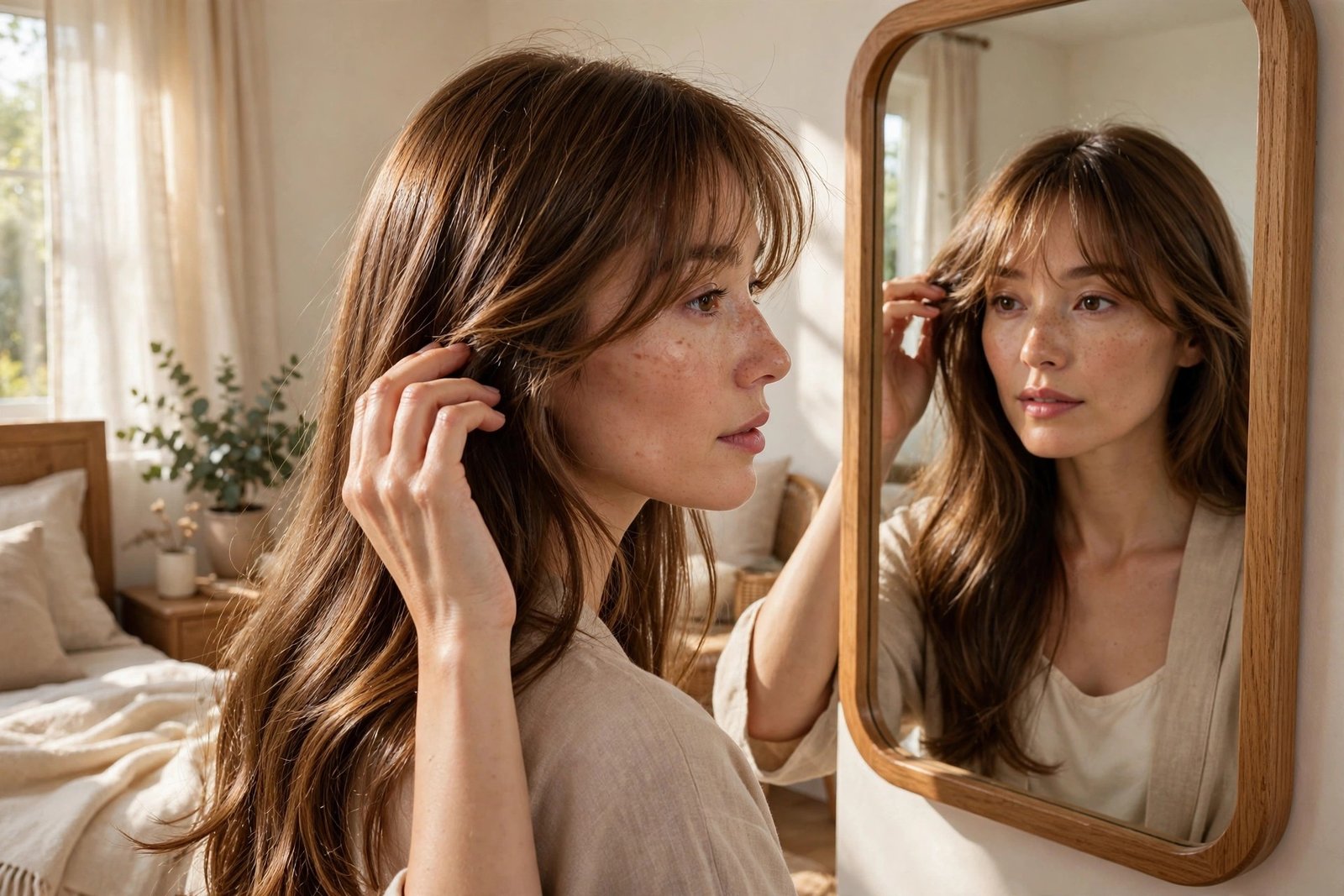
Trim schedule: Wispy bangs need trimming every 3-4 weeks to maintain their shape. Because they’re textured, they grow out more gracefully than blunt bangs, so you can stretch to 5-6 weeks if needed. Many salons offer complimentary bang trims between appointments — ask yours.
Washing: Bangs get oily faster than the rest of your hair due to contact with the forehead (and skincare products). If your bangs look greasy but the rest of your hair is fine, wash just the bangs in the sink with a small amount of shampoo. This extends the time between full washes.
Products to avoid: Heavy oils, thick creams, and silicone-heavy serums weigh down wispy bangs and make them look stringy. Stick to lightweight formulas. Also avoid applying moisturizer or sunscreen directly to the forehead without blotting — these transfer to bangs and cause greasiness.
Sleeping: To prevent bangs from getting flattened or cowlicked overnight, try a silk pillowcase (reduces friction) or loosely pin bangs up with a soft clip. In the morning, a water mist and quick finger-styling usually restores them.
Growing out: When you’re ready for a change, growing out wispy bangs is painless. As they lengthen, start sweeping them to the sides — they’ll naturally become face-framing layers. Use bobby pins or a headband during the transition. Within 2-3 months, they’ll blend fully into layers.
Seasonal considerations: In humid weather, wispy bangs may frizz or curl. A humidity-resistant styling cream helps. In dry winter air, static can make them fly away — a tiny amount of leave-in conditioner tames flyaways.
Frequently Asked Questions About Wispy Bangs
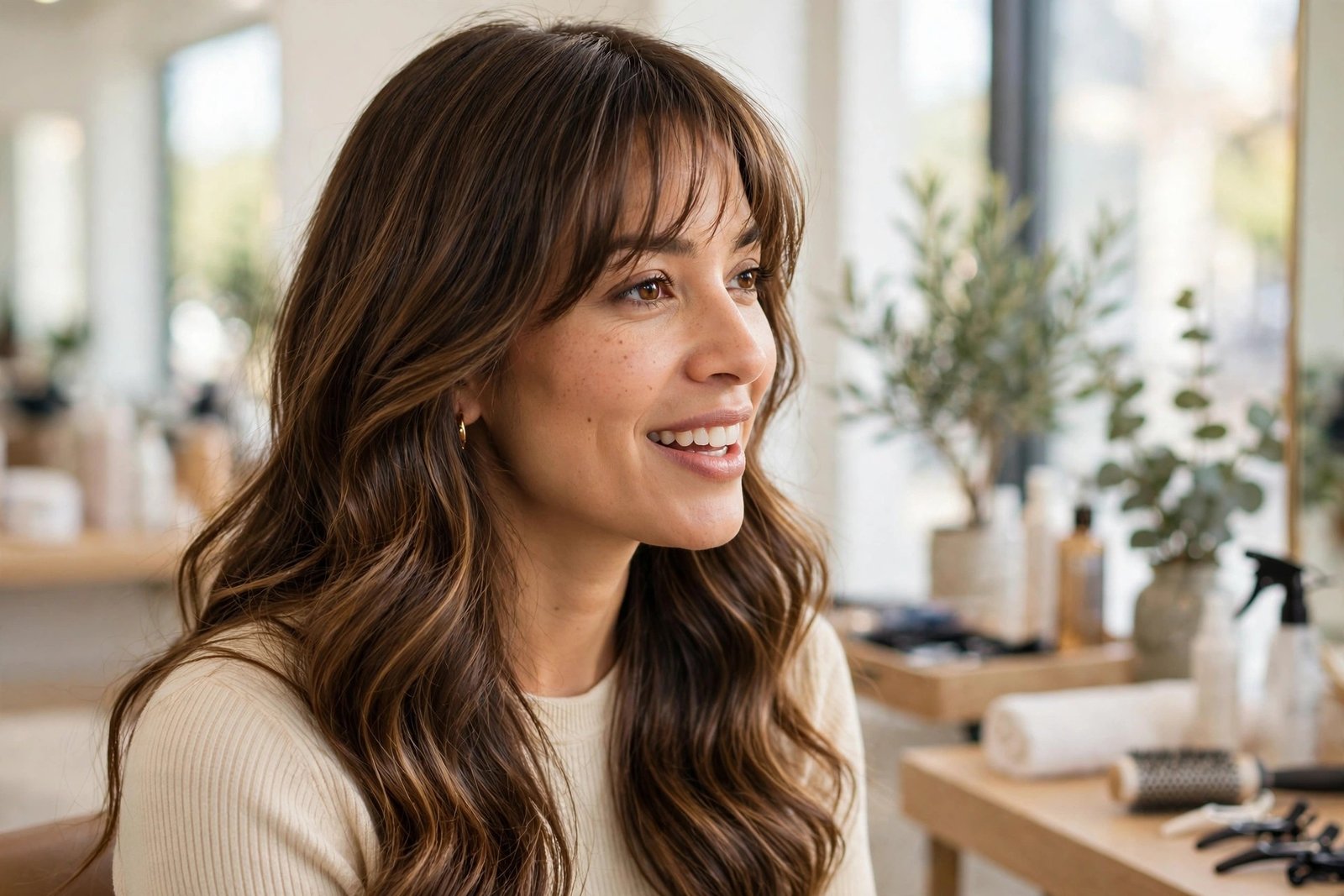
Do wispy bangs work for thin hair? Yes — they’re actually ideal for thin or fine hair. Because they’re feathered and textured, they don’t require density. They create the illusion of texture and movement without needing thick hair.
How often do wispy bangs need trimming? Every 3-4 weeks for optimal shape, though they grow out gracefully so you can stretch longer than blunt bangs. Many salons offer free bang trims between full appointments.
Can I get wispy bangs if I have curly hair? Absolutely. Curly wispy bangs are beautiful, but find a stylist experienced with curly hair who cuts bangs dry to account for shrinkage. The result is a soft, romantic frame.
What’s the difference between wispy bangs and curtain bangs? Curtain bangs are parted in the center and sweep to each side, framing the face like curtains. Wispy bangs fall straight across the forehead (though they can be parted) with a feathered, separated texture. Wispy curtain bangs combine both — center-parted with wispy texture.
Will wispy bangs suit my round face? Yes. The vertical lines and forehead exposure create the illusion of length, which flatters round faces. Ask for slightly longer sides that blend into cheekbone layers.
How do I prevent my wispy bangs from looking greasy? Wash just the bangs between full washes, use dry shampoo at the roots, avoid heavy products, and blot skincare from your forehead before it transfers to your hair.
Conclusion: Why Wispy Bangs Deserve a Try in 2026
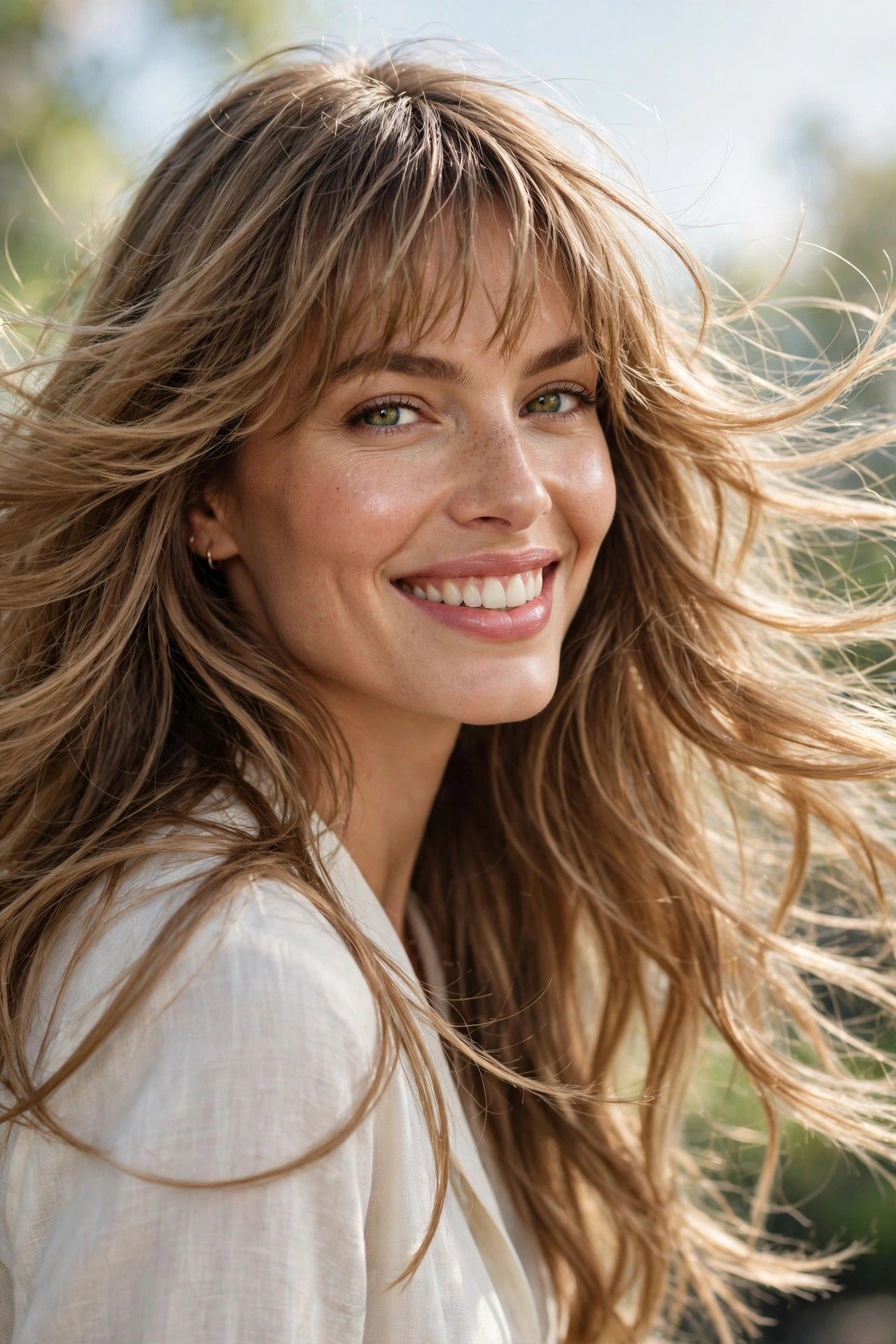
Wispy bangs have earned their place as 2026’s defining fringe for good reason. They’re the rare trend that combines fashion-forward style with genuine practicality — soft enough to flatter every face shape, light enough to work with every hair texture, and forgiving enough to grow out without drama. In a year when beauty is moving toward effortless, lived-in looks, wispy bangs are the perfect expression of that philosophy.
Whether you opt for barely-there Korean air bangs, romantic curtain-wispy hybrids, or classic feathered fringe, there’s a version of this trend that will work for you. The key is finding a stylist who understands the feathering technique and can customize the length and density to your face shape and hair texture. Bring reference photos, communicate clearly about maintenance expectations, and don’t be afraid to start longer — you can always go shorter.
The best part? If you’ve always wanted bangs but feared the commitment, wispy bangs are your answer. They’re the lowest-risk fringe you can get, with the highest style payoff. In 2026, there’s never been a better time to take the plunge.
Celebrity Wispy Bangs Inspiration: Who Wears Them Best
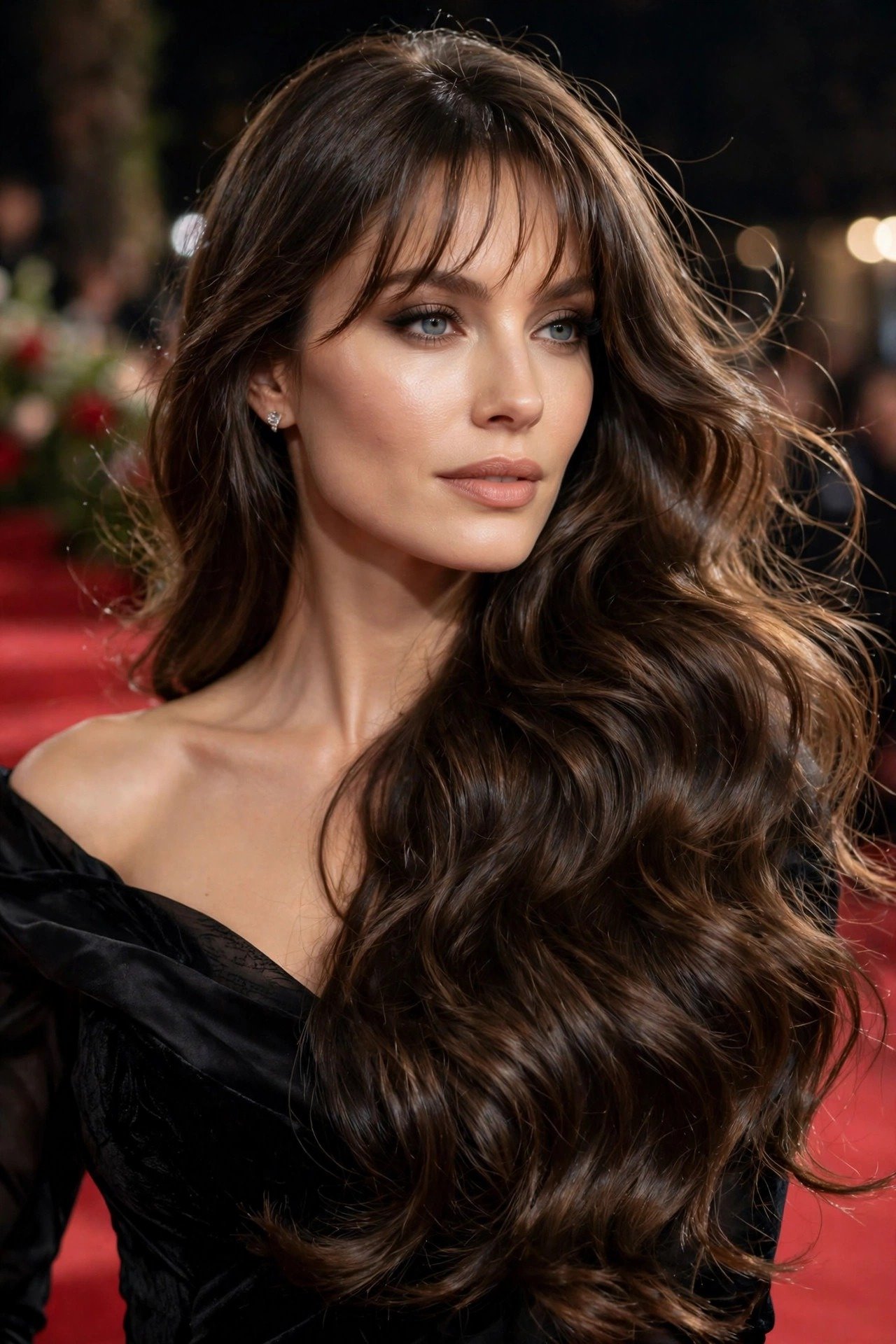
Celebrities have been instrumental in popularizing wispy bangs, each bringing their own interpretation to the trend. Their red carpet and street style appearances provide endless inspiration for different ways to wear this versatile fringe.
The Korean Wave: K-pop idols and Korean actresses pioneered the sheerest version of wispy bangs — the “air bang.” Stars like IU and Bae Suzy have worn variations that barely graze the forehead, proving that bangs can be a subtle accent rather than a bold statement. Their styling is characteristically soft, often paired with long, straight hair or gentle waves. The Korean approach emphasizes natural-looking texture, with bangs that appear untouched by styling tools.
Hollywood Adaptation: Western celebrities adapted the trend into something slightly fuller but equally airy. Dakota Johnson’s signature wispy fringe — worn with her characteristic long layers — became one of the most requested salon references of the past few years. Her version hits at brow level with soft feathering that blends into face-framing pieces. Similarly, Taylor Swift’s occasional forays into wispy bangs territory (particularly during her folk era) showed how the style complements romantic, vintage-inspired aesthetics.
The French Girl Take: French icons like Jane Birkin (whose eponymous bangs are having their own revival) and contemporary French actresses favor a slightly undone wispy bang that looks effortlessly chic. The French approach is less about precision and more about attitude — bangs that look like you cut them yourself (but better). This pairs perfectly with the year’s “lived-in” beauty philosophy.
Runway Influence: Fashion week runways for Spring/Summer 2026 featured wispy bangs prominently, often paired with sleek, straight hair for contrast — soft fringe against polished lengths. This high-fashion endorsement cemented wispy bangs as more than a casual trend; they’re a legitimate style choice for formal and editorial contexts too.
When bringing celebrity inspiration to your stylist, focus on the elements you like rather than expecting an exact replica. Your face shape, hair texture, and lifestyle all influence how a particular wispy bang will look on you. A good stylist will adapt the reference to suit your individual features.
Best Products for Wispy Bangs: What to Buy
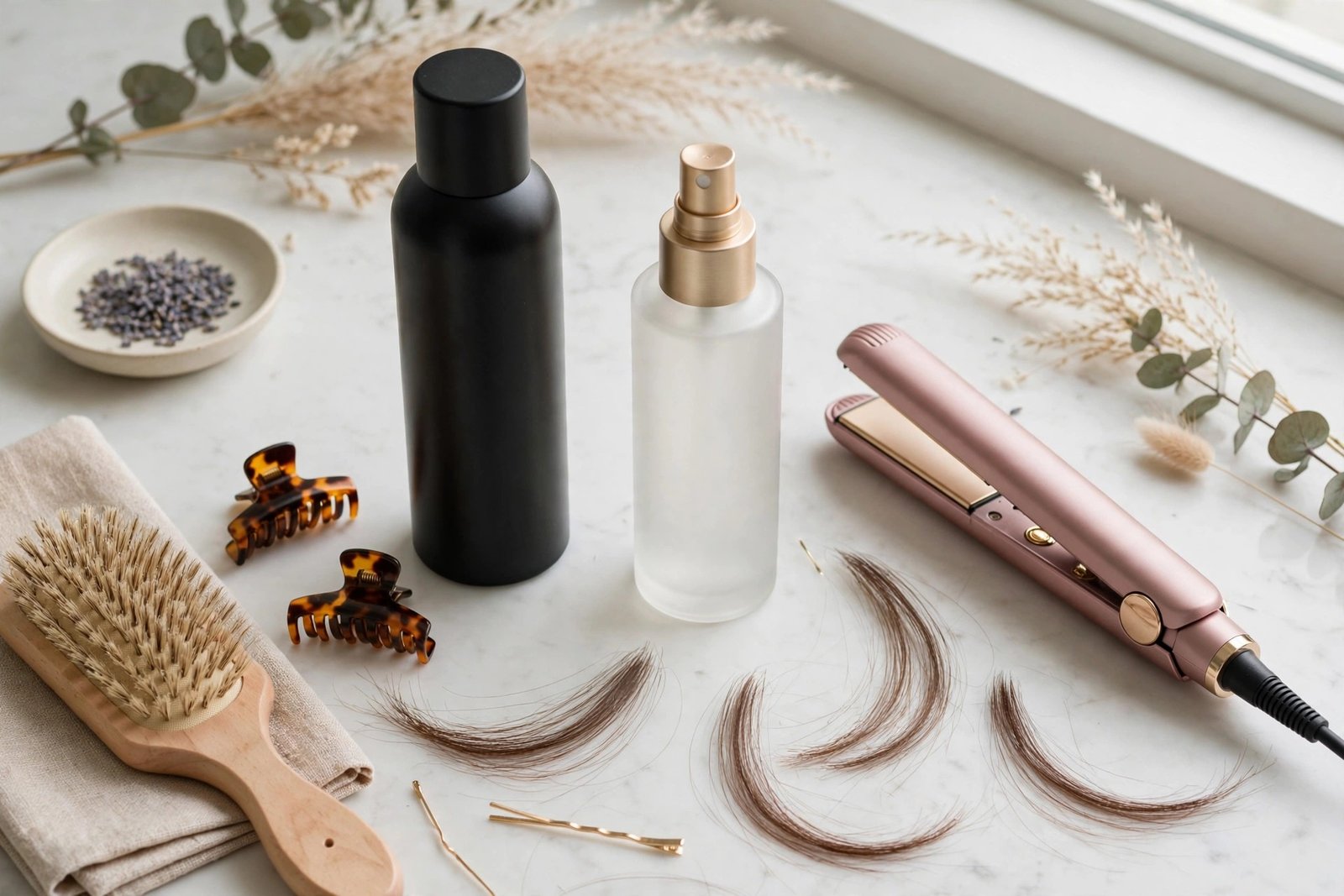
The right products make the difference between wispy bangs that look effortlessly chic and ones that fall flat (literally). Here’s what to stock in your arsenal.
Dry shampoo: The number one essential for bang wearers. Bangs get oily faster than the rest of your hair because they sit against your forehead, absorbing oils and skincare products. A good dry shampoo applied at the roots absorbs excess oil and adds volume. Apply it before bed as a preventive measure — it works better when given time to absorb. Batiste, Klorane, and Living Proof all make excellent options for different hair types and budgets.
Lightweight texturizing spray: To enhance the piece-y, separated look that defines wispy bangs, a texturizing spray is invaluable. Unlike heavy waxes, sprays distribute evenly and don’t weigh hair down. Spray onto dry bangs from 8-10 inches away, then pinch small sections between your fingers to create definition. Oribe Dry Texturizing Spray and Ouai Texturizing Hair Spray are salon favorites.
Heat protectant: If you use heat tools on your bangs (flat iron touch-ups, blow dryer), a heat protectant is non-negotiable. Bangs are the most visible part of your hair and the most susceptible to heat damage because they’re styled most frequently. A lightweight spray protectant shields without adding weight.
Light-hold hairspray: For keeping bangs in place without stiffness, a flexible-hold hairspray is ideal. Mist from a distance — never spray directly onto bangs, which creates a helmet-like finish. The goal is touchable hold that allows natural movement.
Mini flat iron: A small flat iron (half-inch or three-quarter-inch plates) is perfect for quick bang touch-ups. It’s more precise than a full-size iron and heats up quickly for morning fixes. Use on the lowest effective heat setting to minimize damage.
What to avoid: Heavy serums, thick pomades, and oil-based products are the enemies of wispy bangs. They clump strands together, eliminating the airy separation that defines the style. If you must use oil (for dry ends), apply only to the very tips and use the tiniest amount.
Common Wispy Bangs Mistakes and How to Avoid Them
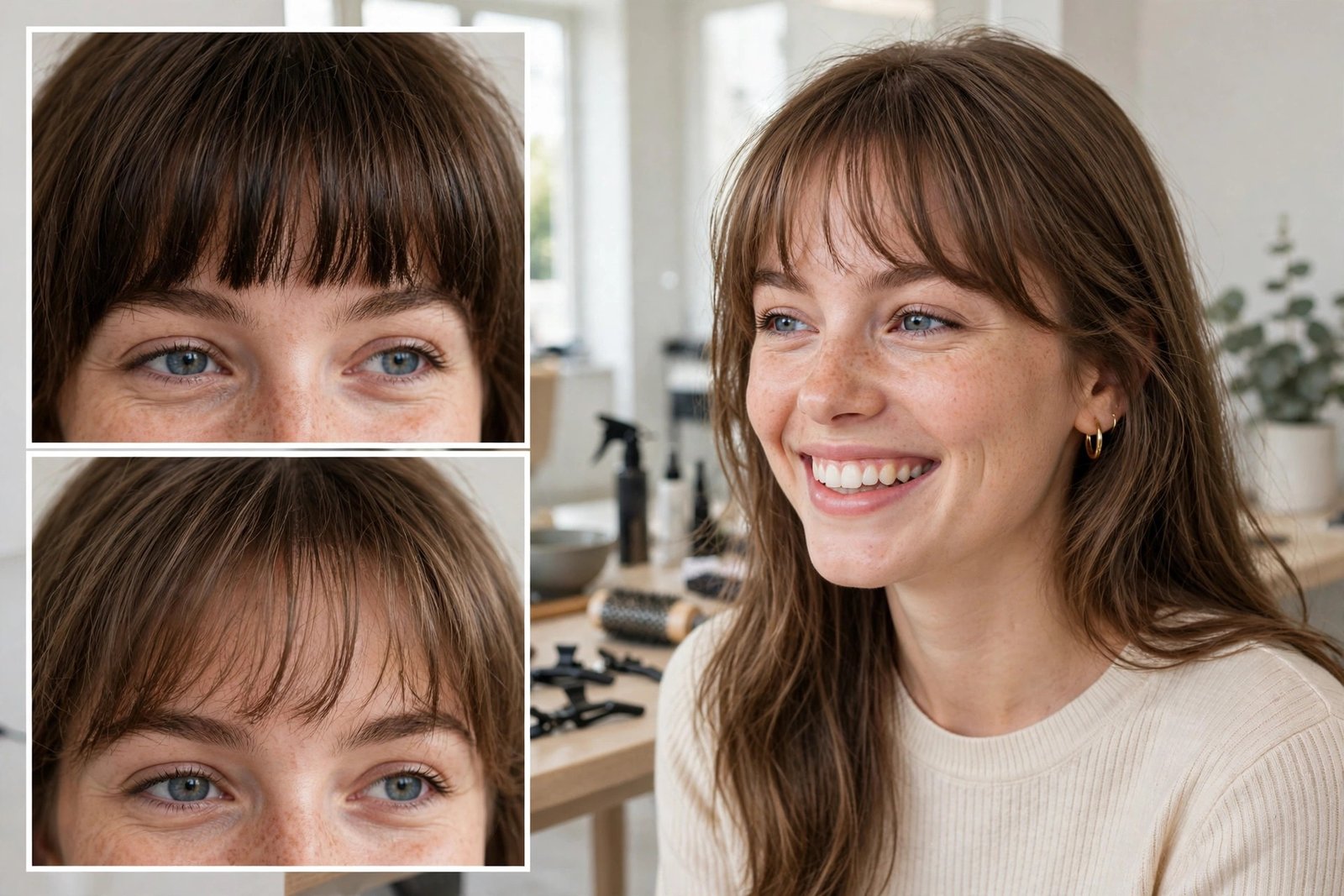
Mistake 1: Cutting them too short initially. It’s tempting to go for dramatic baby bangs, but wispy bangs look best when you start longer and adjust. You can always cut more, but growing out too-short bangs takes months. Start at brow level and go shorter only if you love the look.
Mistake 2: Using dull scissors. Dull scissors crush hair rather than cutting it cleanly, creating split ends and frizz. This is especially problematic for wispy bangs, where each strand is visible. Invest in proper hair-cutting shears — they make an enormous difference.
Mistake 3: Cutting wet hair. Wet hair stretches and appears longer. When it dries, it springs up shorter than expected. Always trim bangs when dry (or at most slightly damp) to see the true length.
Mistake 4: Over-styling. The charm of wispy bangs is their effortlessness. Over-blow-drying, excessive product, or too much heat styling defeats the purpose. Embrace slight imperfection — it’s the point.
Mistake 5: Ignoring your hair texture. Wispy bangs on pin-straight hair behave very differently from wispy bangs on curly hair. Work with your natural texture rather than fighting it daily. If you have curly hair and want straight bangs, be realistic about the daily styling commitment.
Mistake 6: Neglecting skincare transfer. Moisturizer, sunscreen, and foundation migrate from your forehead to your bangs, causing greasiness and breakouts. Blot your forehead after applying skincare, and consider using oil-absorbing sheets during the day if you’re prone to shine.
Mistake 7: Getting them cut by someone inexperienced with the technique. Wispy bangs require specific point-cutting and texturizing skills. A stylist who only does blunt cuts may leave them too thick or uneven. Ask to see photos of their previous bang work, or find a stylist who specializes in fringe.
Wispy Bangs vs. Other Fringe Types: Which Is Right for You?
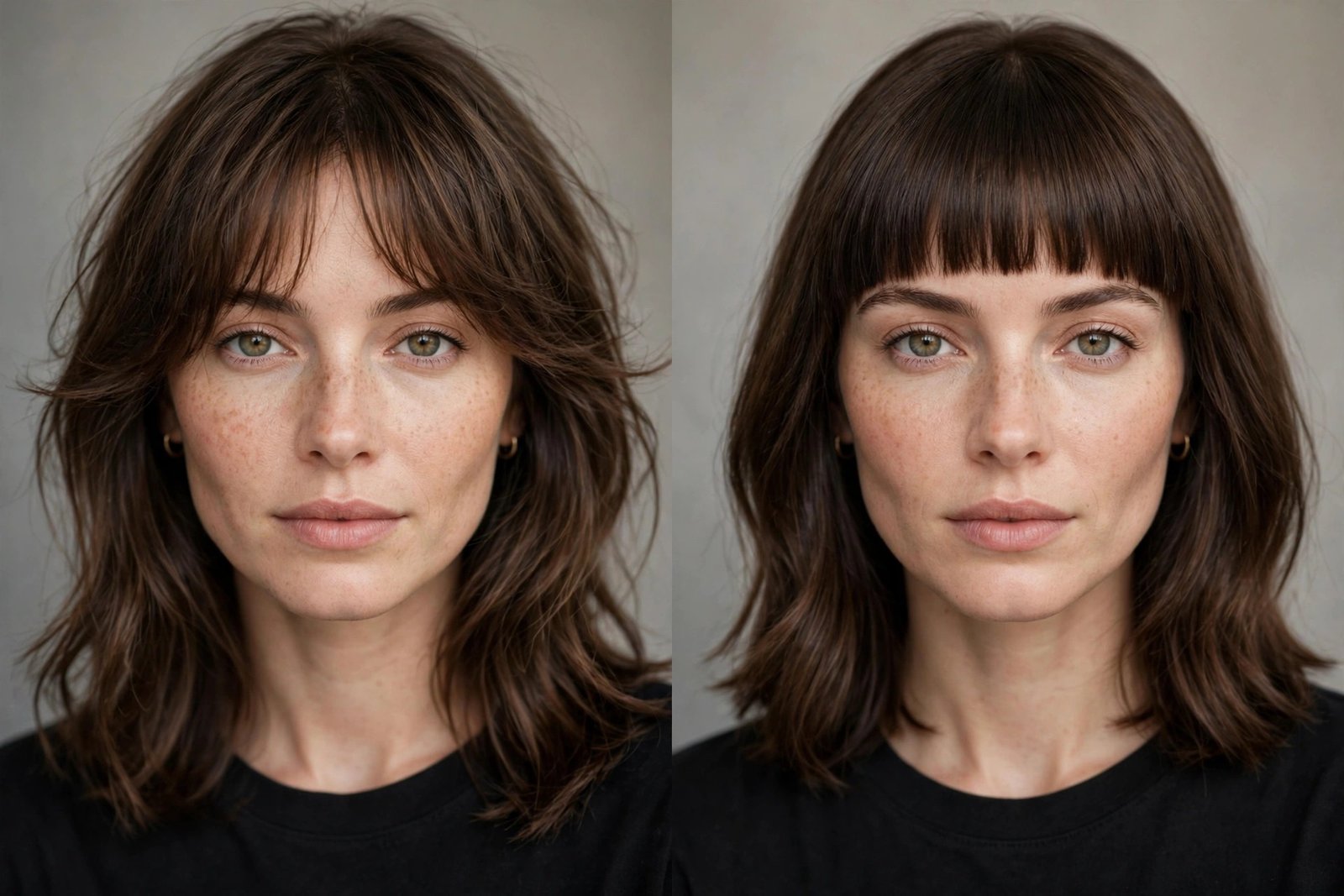
Choosing the right fringe can feel overwhelming with so many options. Here’s how wispy bangs compare to the other major types, so you can make an informed decision.
Wispy Bangs vs. Blunt Bangs: Blunt bangs are cut straight across with no texturing, creating a solid, dramatic line. They’re bold and high-impact but demand precision cutting and frequent trims (every 2-3 weeks). They suit oval and long faces best but can overwhelm petite features. Wispy bangs are the softer, more forgiving alternative — less dramatic but far more versatile and low-maintenance. Choose blunt for statement-making impact; choose wispy for effortless versatility.
Wispy Bangs vs. Curtain Bangs: Curtain bangs are longer, parted in the center, and sweep to each side. They’re excellent for framing the face and growing out, but they require daily styling to maintain the center part and swoop. Wispy bangs can be worn with or without a part and generally need less styling. The two can be combined into “wispy curtain bangs” — arguably the most popular hybrid of 2026. Choose curtain for a 70s-inspired frame; choose wispy for all-over softness.
Wispy Bangs vs. Baby Bangs: Baby bangs (micro bangs) are cut well above the eyebrows, creating an edgy, fashion-forward look. They’re bold and draw significant attention to the eyes and brows. However, they’re the highest-maintenance fringe — they grow out quickly and the short length leaves no room for error. Wispy baby bangs soften the edginess with texture. Choose baby bangs for avant-garde style; choose wispy for wearable softness.
Wispy Bangs vs. Side-Swept Bangs: Side-swept bangs are longer and worn swept to one side, creating an asymmetric look. They’re flattering and easy to grow out but offer less forehead coverage and can look dated if not cut with modern texture. Wispy bangs provide more versatility in styling (straight, parted, or swept). Choose side-swept for classic asymmetry; choose wispy for modern texture.
The verdict: If you want the lowest-maintenance, most forgiving, most universally flattering fringe, wispy bangs win. They’re the best choice for first-time bang wearers, busy lifestyles, and anyone who wants style without stress. The other fringe types have their place, but none match wispy bangs for the combination of beauty and practicality that defines 2026 hair trends.