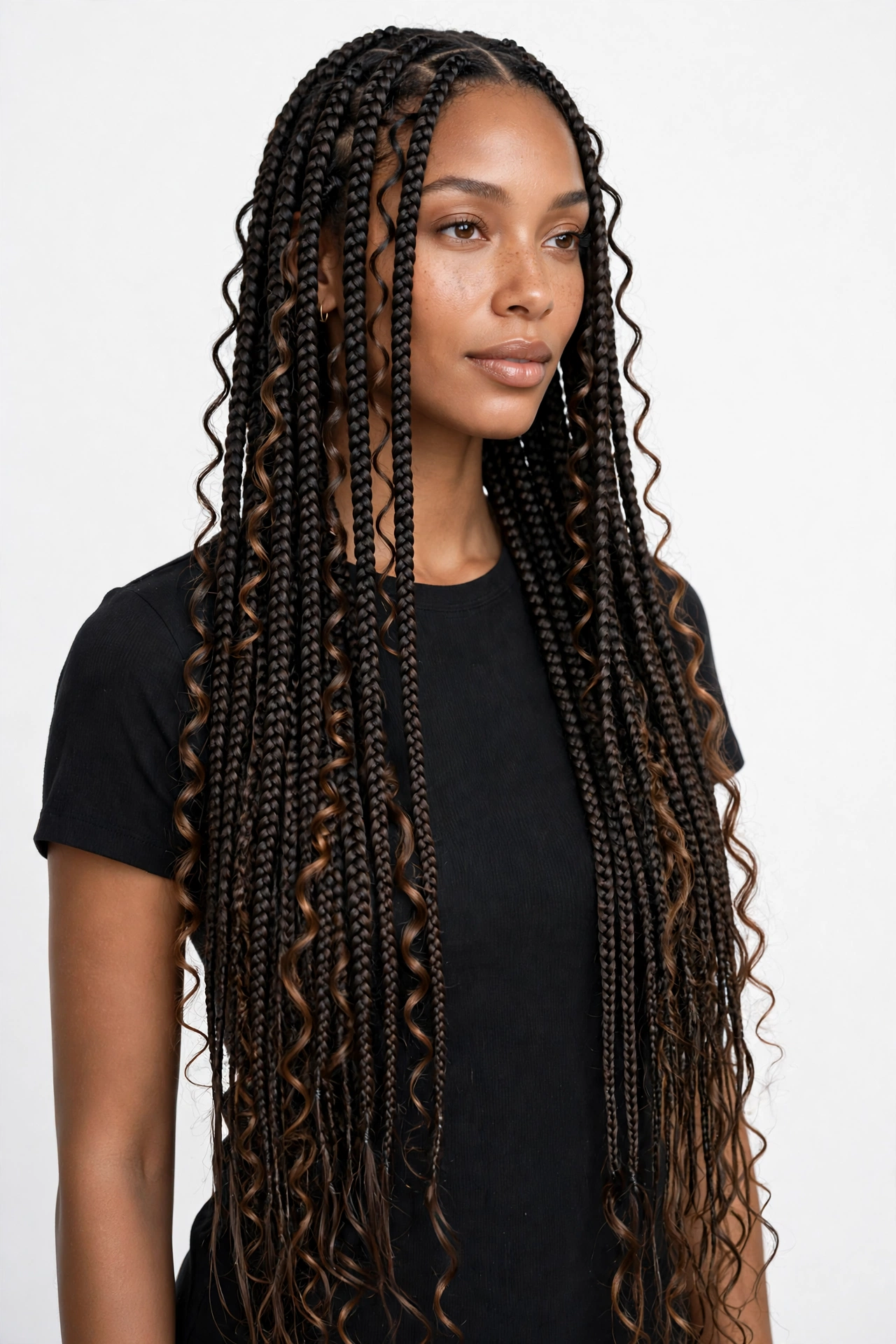
Knotless Braids Women 2026: 20 Lightweight Protective Styles
Knotless Braids Women 2026: 20 Lightweight Protective Styles
If you have ever walked out of a braid appointment with a headache and a silent prayer that your edges survive the night, this one is for you. Knotless braids have completely taken over 2026, and honestly? It is about time. Instead of anchoring every braid with a tight knot right at your scalp, your braider starts with your own hair and feeds the braiding hair in gradually, a little at a time. The result is a braid that lies flat from the very root, swings like it is growing out of your head, and does not pull your forehead back like a facelift.
I have watched clients go from flinching every time a braider touched their hairline to falling asleep in the chair during a knotless install. That is not an exaggeration. My stylist told me last spring that her knotless bookings had doubled in six months, and she was not surprised one bit. “Girls are tired of the bumps,” she said, sectioning off my hair. “They want the length without the pain tax.” And she is right. In 2026, the whole conversation around protective styles has shifted toward scalp health, and knotless braids are sitting right at the center of it.
In this guide, I am breaking down everything: what knotless braids actually are, why they are trending harder than ever this year, and 20 lightweight styles — from boho knotless with loose curls to chin-grazing bobs to honey-blonde colored sets — plus the real talk on install time, cost, maintenance, and takedown. Whether this is your first set or your fiftieth, you will leave knowing exactly what to ask for at your next appointment.
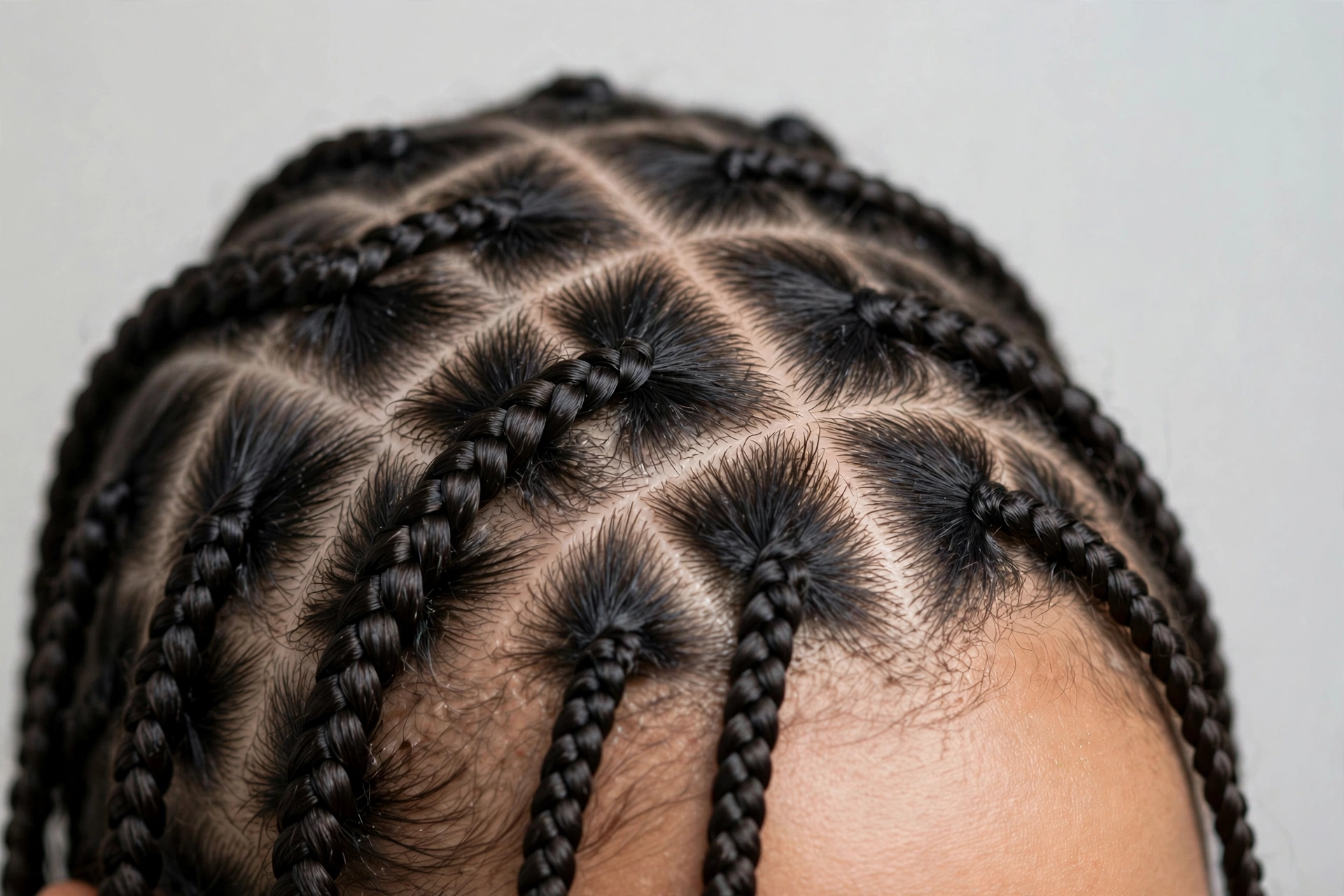
What Are Knotless Braids?
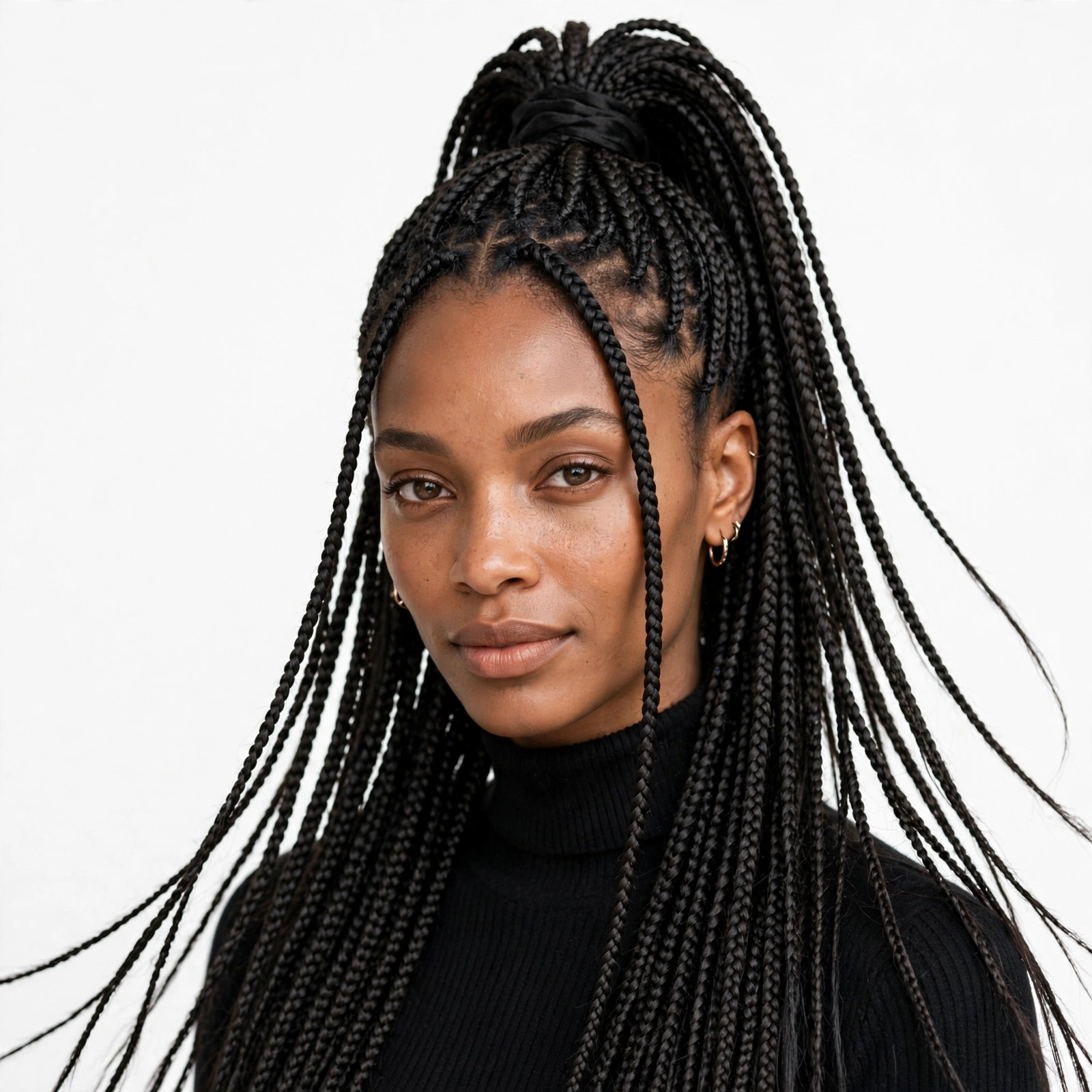
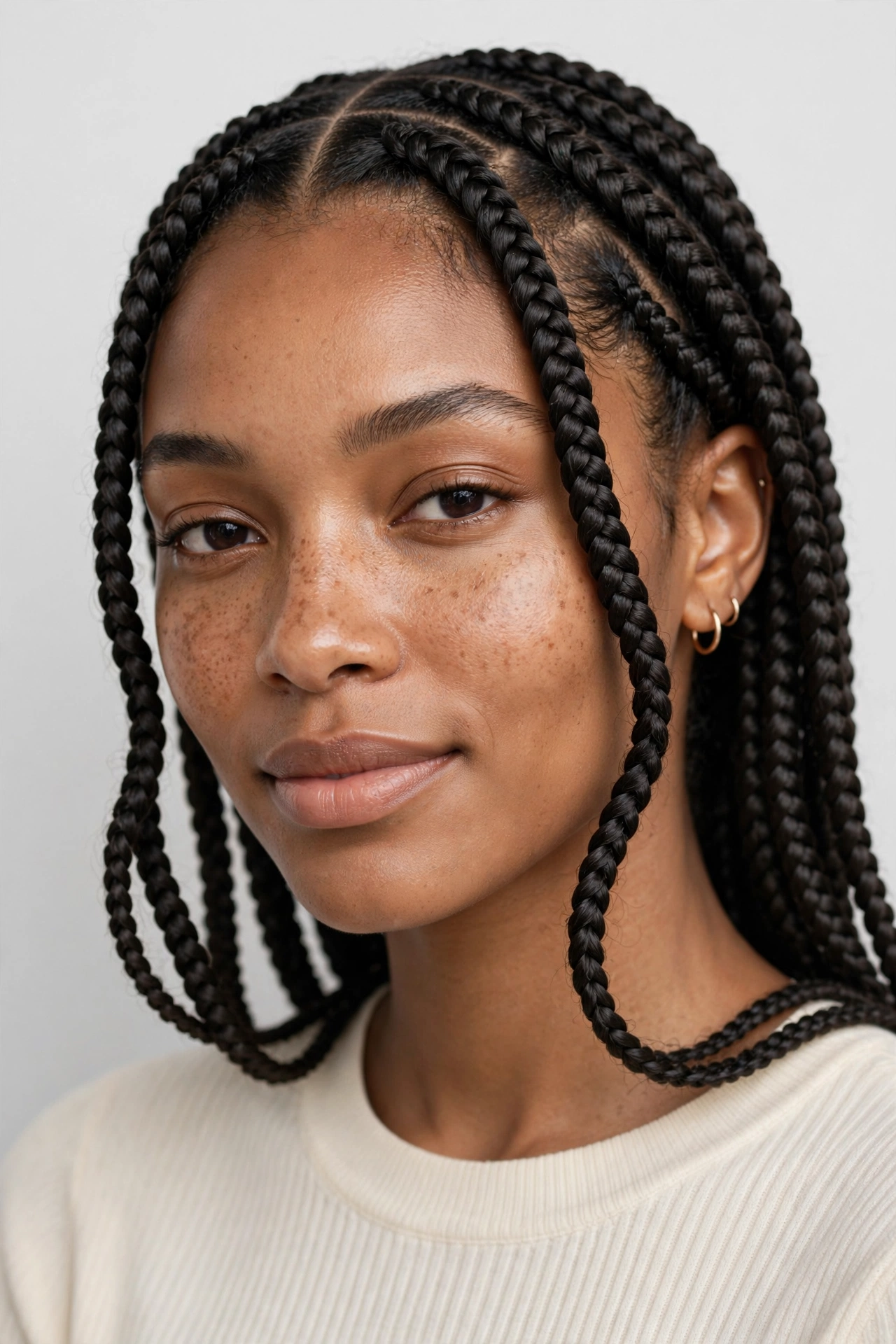
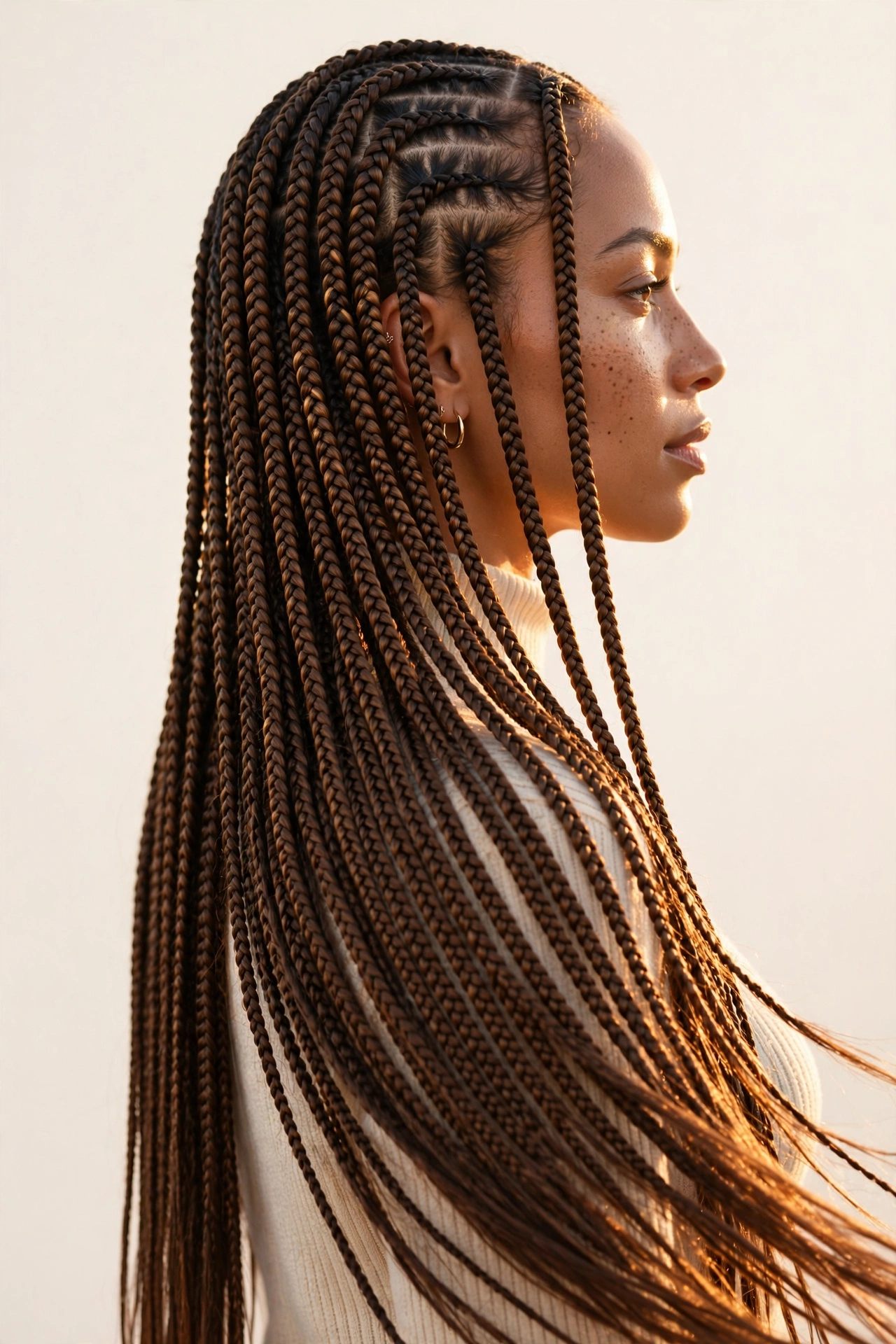
Knotless braids are a feed-in braiding technique. Instead of wrapping extension hair around your roots and locking it in with a knot, your braider starts the braid with your own natural hair — just the first inch or two — and then feeds small pieces of braiding hair in gradually as she works her way down. Each braid emerges from the scalp lying flat, with no bump, no anchor, and no hard knot digging into your hairline.
Here is the difference that matters. Traditional box braids fold the extension hair around your roots and tie it off in a knot. That knot is where all the tension lives. It is the reason your first three days in box braids can feel like your scalp is in a vice, and the reason so many of us have watched our edges thin out over the years. With knotless braids, the weight of the extensions is distributed along the whole length of the braid instead of hanging off your roots. The set feels lighter the moment you stand up from the chair — sometimes a full pound lighter on a waist-length install.
Knotless braids come in four main sizes. Small knotless braids (pencil-thin) give you the most styling versatility and the most natural look, but they take 7 to 9 hours and cost the most. Medium knotless braids are the sweet spot most clients land on — 5 to 7 hours in the chair, 6 to 8 packs of pre-stretched braiding hair, and they last a solid 6 to 8 weeks. Large and jumbo knotless braids take 3 to 5 hours, cost less, and look bold and chunky, but they do not last as long. Lengths run from a chin-grazing bob all the way to butt-length mermaid sets.
Why Knotless Braids Are Trending in 2026
The scalp-health conversation finally won. For years, women quietly accepted the pain of braids as the price of a cute protective style. Then the videos started: braiders demonstrating the feed-in technique, clients moving their fresh braids freely on day one, and — most convincing of all — women showing their edges thriving after back-to-back knotless installs. The #knotlessbraids tag has racked up billions of views, and appointment books are proof it is not just a scroll-by trend.
Practically speaking, knotless braids solve the two biggest complaints about braids. First, there is no break-in period. Traditional braids need three or four days before you can pull them into a bun without wincing; knotless sets go into a high ponytail the same evening. Second, the parting is flexible from day one — middle, side, zigzag — because there is no stiff knotted base locking the direction. Add in the fact that they photograph like your hair just grew that long, and you have a style that works for the office, the gym, and every event in between.
In 2026, the trend has splintered into a dozen directions, which is exactly why this guide has twenty ideas. Boho knotless — braids with loose curly pieces left out all over — is the biggest variant by far. Colored sets (honey blonde, copper, burgundy) are everywhere. Triangle parts, beaded ends, and goddess-style curly tips have all had their viral moments this year. More braiders now specialize exclusively in knotless work, which means the quality floor has risen: cleaner parts, lighter sets, and finishes that actually last.
20 Knotless Braid Styles to Try in 2026
These are the twenty sets I keep seeing requested, screenshotted, and rebooked. Some are timeless, some are pure 2026, and every single one works with the knotless technique. I have noted the size, length, and wear time for each so you can walk into your appointment knowing exactly what to say.
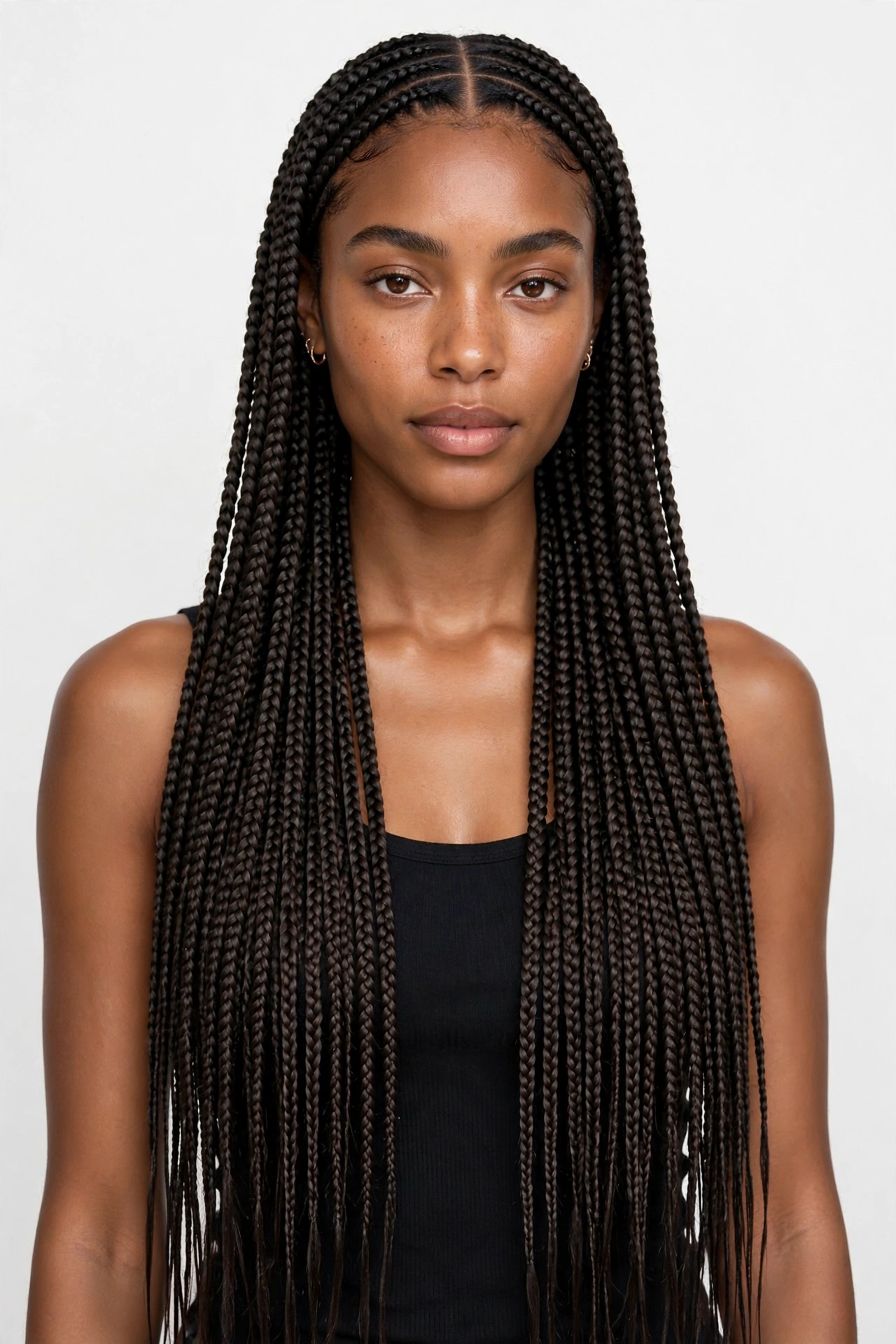
1. Classic Medium Waist-Length Knotless Braids
This is the set that started it all, and it is still the most requested knotless style for a reason. Medium-sized braids hitting right at the waist, clean middle or side part, no accessories — just perfect, even braids. It is the jeans-and-white-tee of protective styles: it goes with everything and never looks dated. Expect about 6 to 8 hours? No — mediums run 5 to 7 hours in the chair and use 6 to 8 packs of pre-stretched hair.
What I love about this one is the styling range. Because the roots are flat and flexible, you can flip the part on day one, pull it into a low ponytail for the gym, or twist it into a top knot for dinner. Waist length gives you drama without the neck ache of butt-length sets, and mediums hold their neatness for a full 6 to 8 weeks with basic care. If you are getting knotless braids for the first time, start here.
2. Boho Knotless Braids
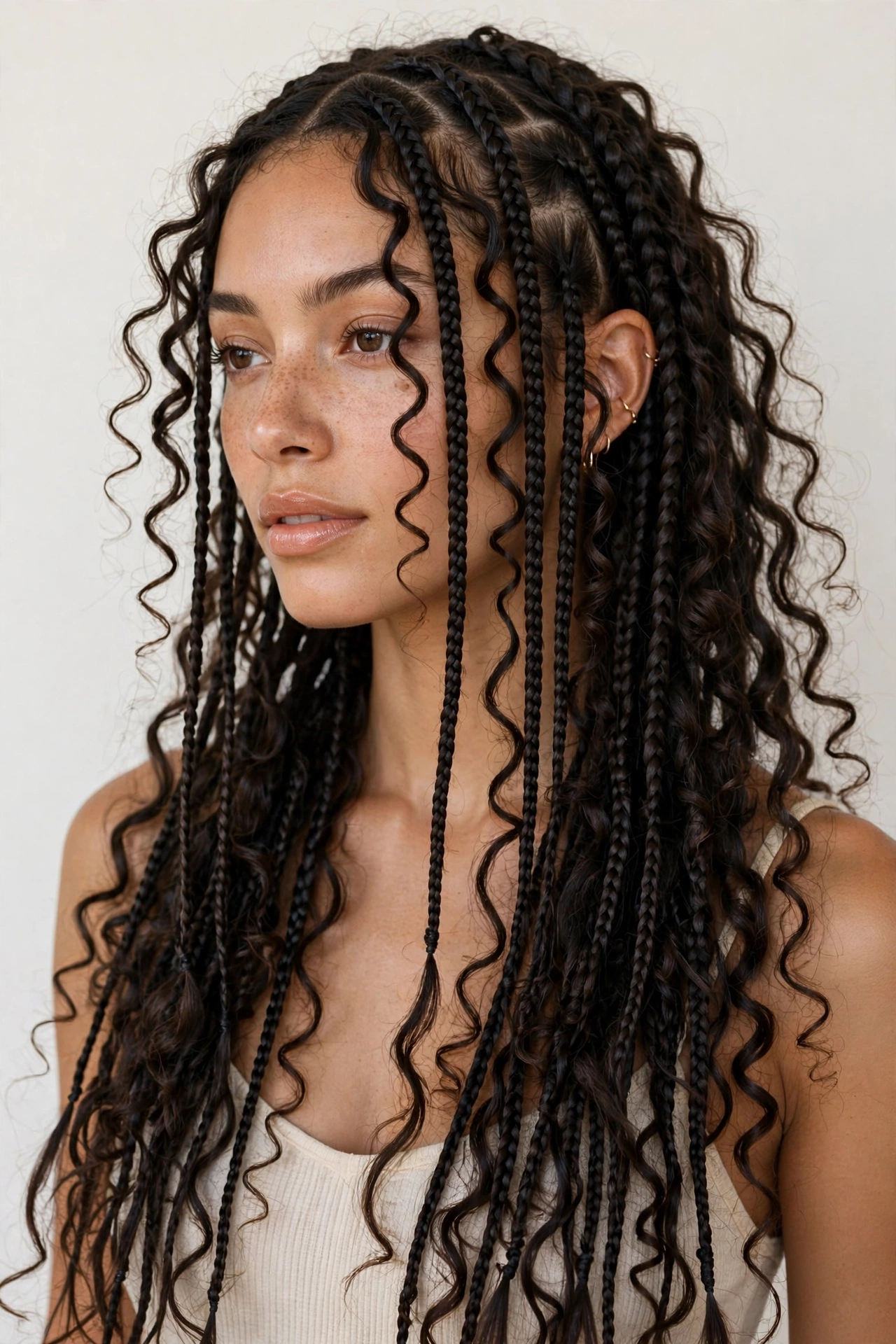
Boho knotless braids are the biggest knotless variant of 2026, full stop. The technique is the same, but your braider leaves loose curly pieces out at intervals throughout the braids — at the roots, mid-shaft, and ends — so the whole set looks soft, romantic, and a little undone. It is the braid equivalent of beach waves: polished, but not trying too hard.
Fair warning: boho sets need more maintenance than classic knotless. Those loose curls tangle if you ignore them. A light leave-in conditioner on the curly pieces every few days and a satin bonnet at night will keep them defined. Ask your braider to use human-hair blend curls rather than synthetic if you want the pieces to last — synthetic curls frizz out in about two weeks, while human-hair blend curls stay pretty for the full 6-week wear. Worth the extra $30 to $50.
3. Goddess Knotless Braids
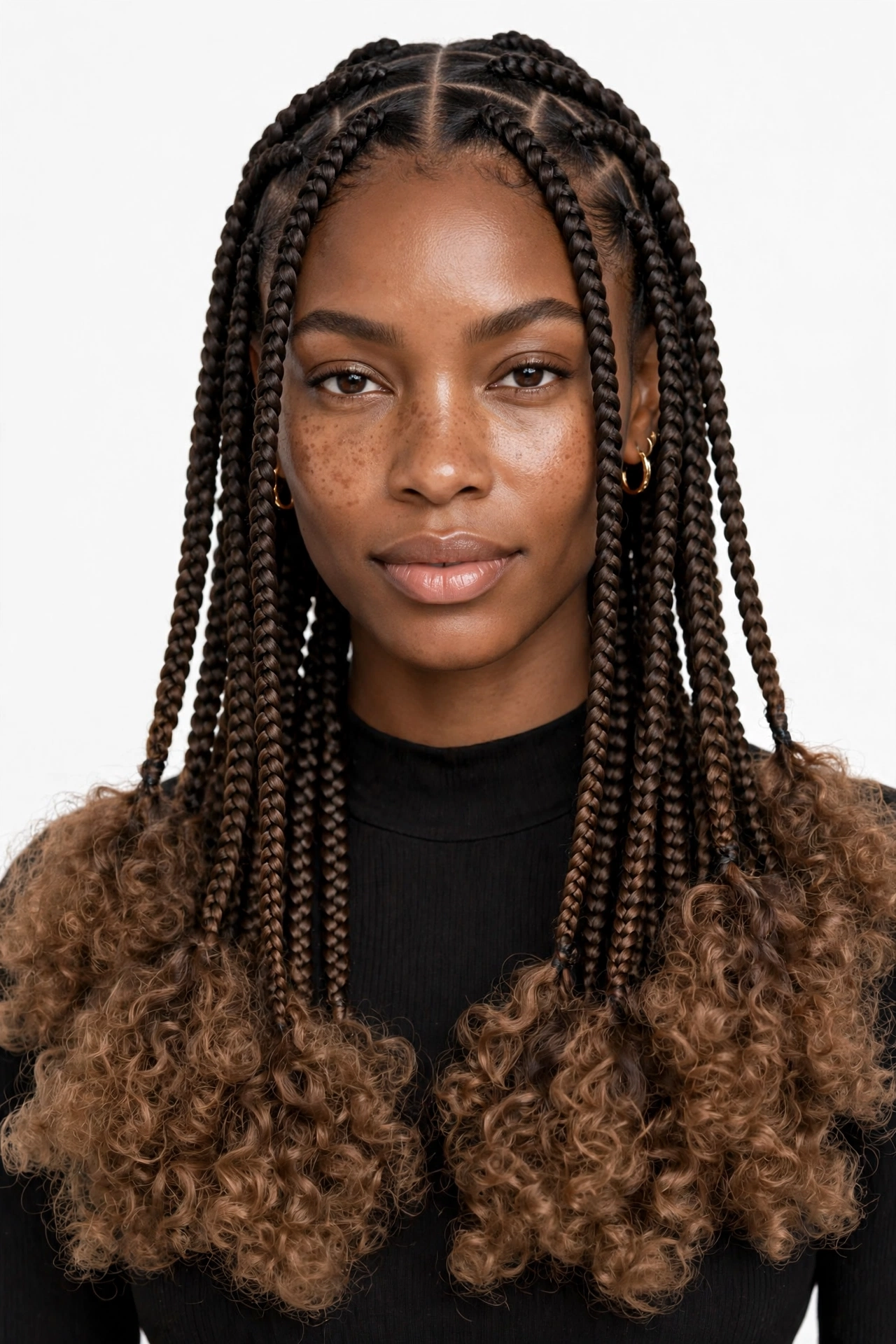
Goddess knotless braids keep the braids sleek and neat from root to mid-length, then let the last few inches dissolve into loose curls. You get the structure of braids with the softness of curls at the ends, and the effect is genuinely striking — it reads expensive. This is the set I recommend when someone wants knotless braids for an event like a wedding or a vacation.
The curly ends are the maintenance point here, just like boho. Wrap the ends in a satin scarf at night — not just the bonnet over everything, but a separate wrap for the bottom six inches — and refresh the curls with a little mousse and water in a spray bottle in the mornings. Goddess sets photograph beautifully in a high ponytail because the curly ends fan out. Plan on 6 to 7 hours for a medium waist-length goddess install.
4. Chin-Length Bob Knotless Braids
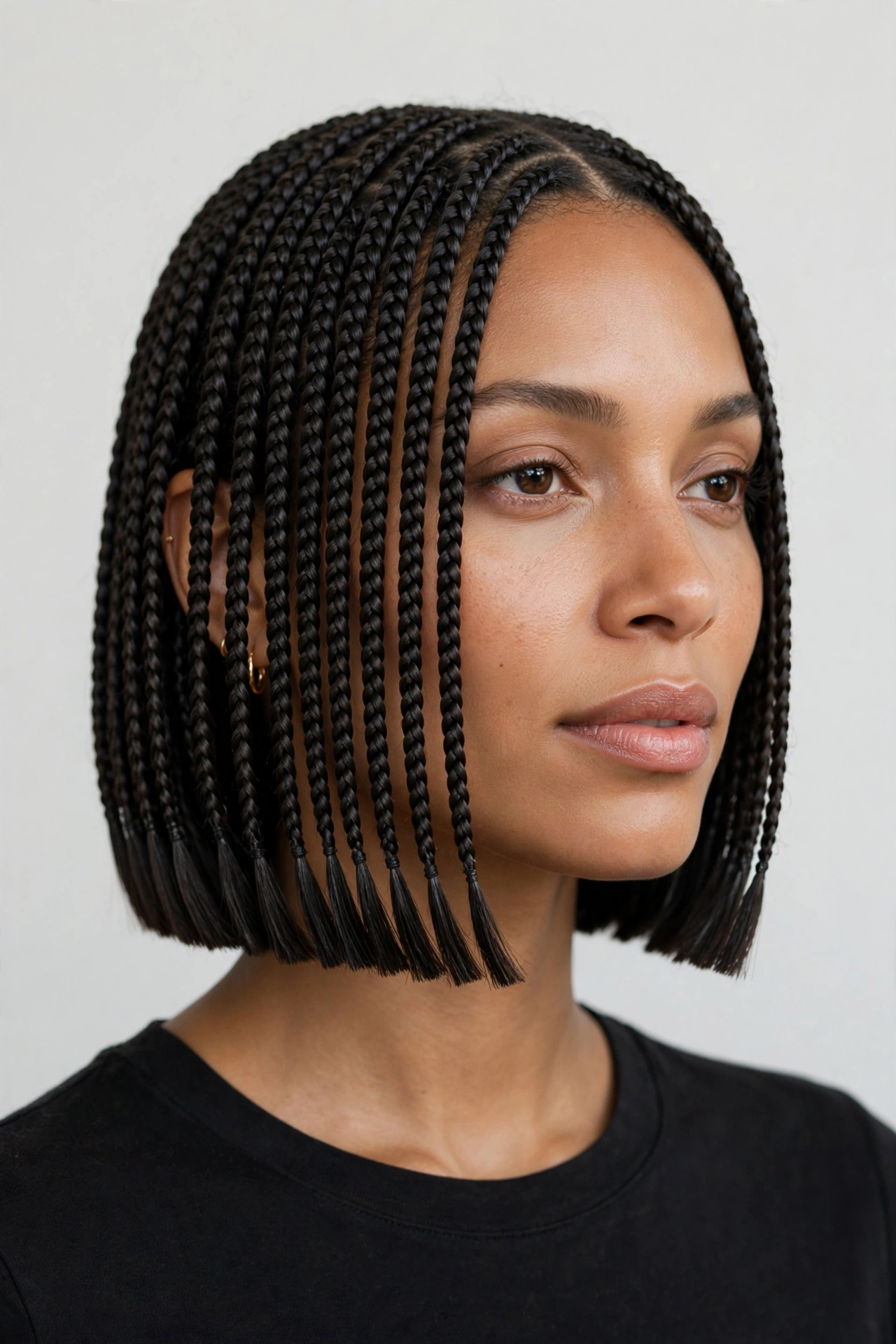
Short hair girls, this is your moment. The knotless bob — braids cut blunt right at the chin or jawline — is one of the freshest silhouettes of 2026. It is chic, it is lightweight, and it takes a fraction of the time: 3 to 4 hours instead of 7. The blunt ends swing when you walk, and the whole style frames the face in a way that long braids just do not.
A knotless bob is also the smartest choice if your hair is on the finer side or you are recovering from breakage, because the short length puts almost no weight on your roots. Style it with a deep side part for drama or a middle part for symmetry. My tip: ask for the ends to be sealed with hot water and a tiny bit of mousse so they stay blunt and do not unravel. You will get 4 to 6 weeks of wear, which is plenty for the price — bobs typically run $120 to $180.
5. Knotless Braids Styled in a High Bun
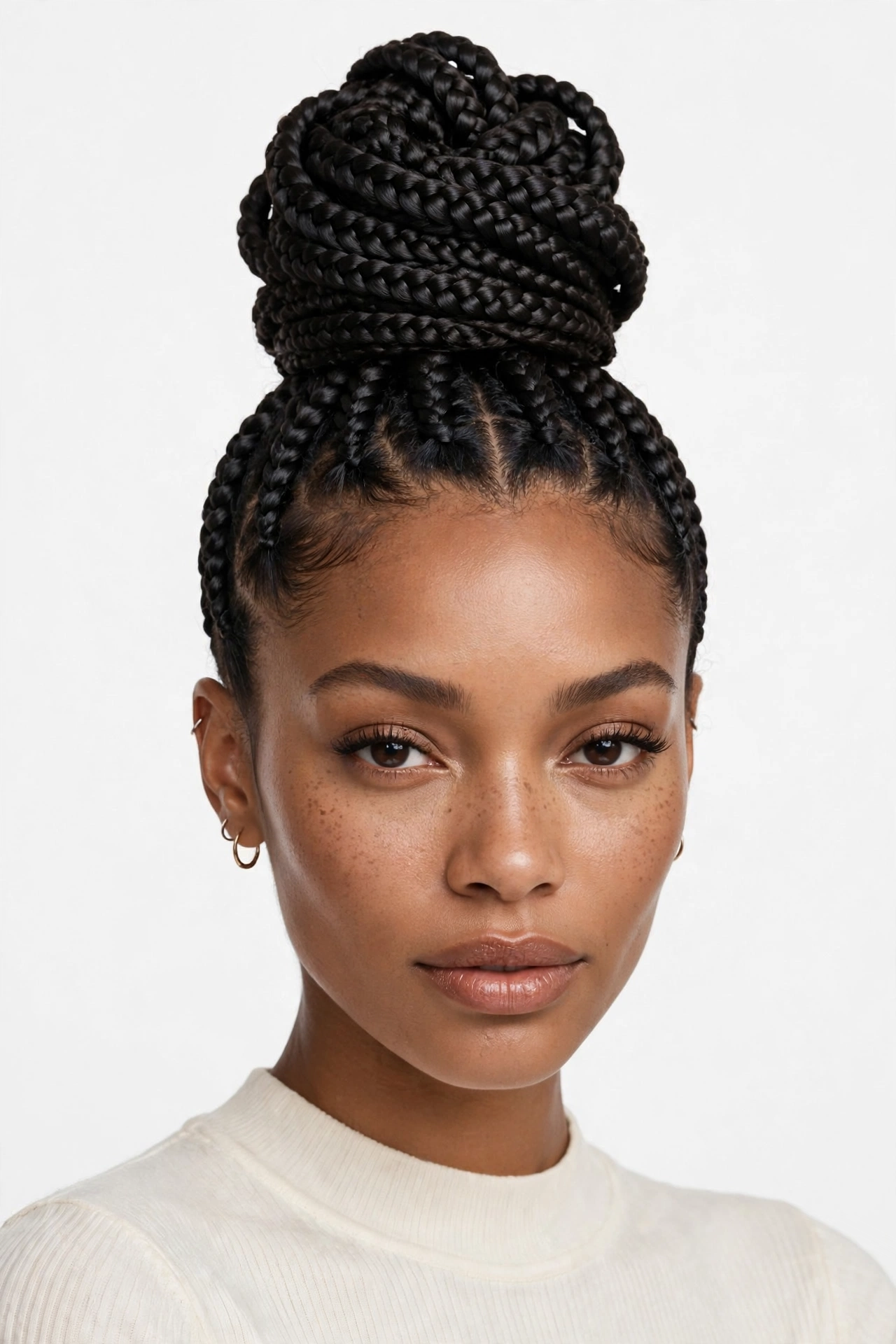
Here is the thing nobody tells you about traditional braids: you cannot put them up for the first week without pain. Knotless braids? You can pile them into a high bun the same night you leave the salon. That day-one versatility is half the reason people switch. A high bun on a waist-length knotless set looks sculptural — all that length coiled up top, edges laid smooth, face fully on display.
To get the bun without frizzing your roots, gather the braids loosely — never yank — twist the length around itself, and pin with two or three large bobby pins. Silk scrunchies are your friend here; tight elastic bands will dent the braids and rough up the parts. This style is also a great longevity trick: wearing your knotless braids up for the last two weeks of the install hides new growth at the roots and buys you an extra week of wear.
6. Honey-Blonde Colored Knotless Braids
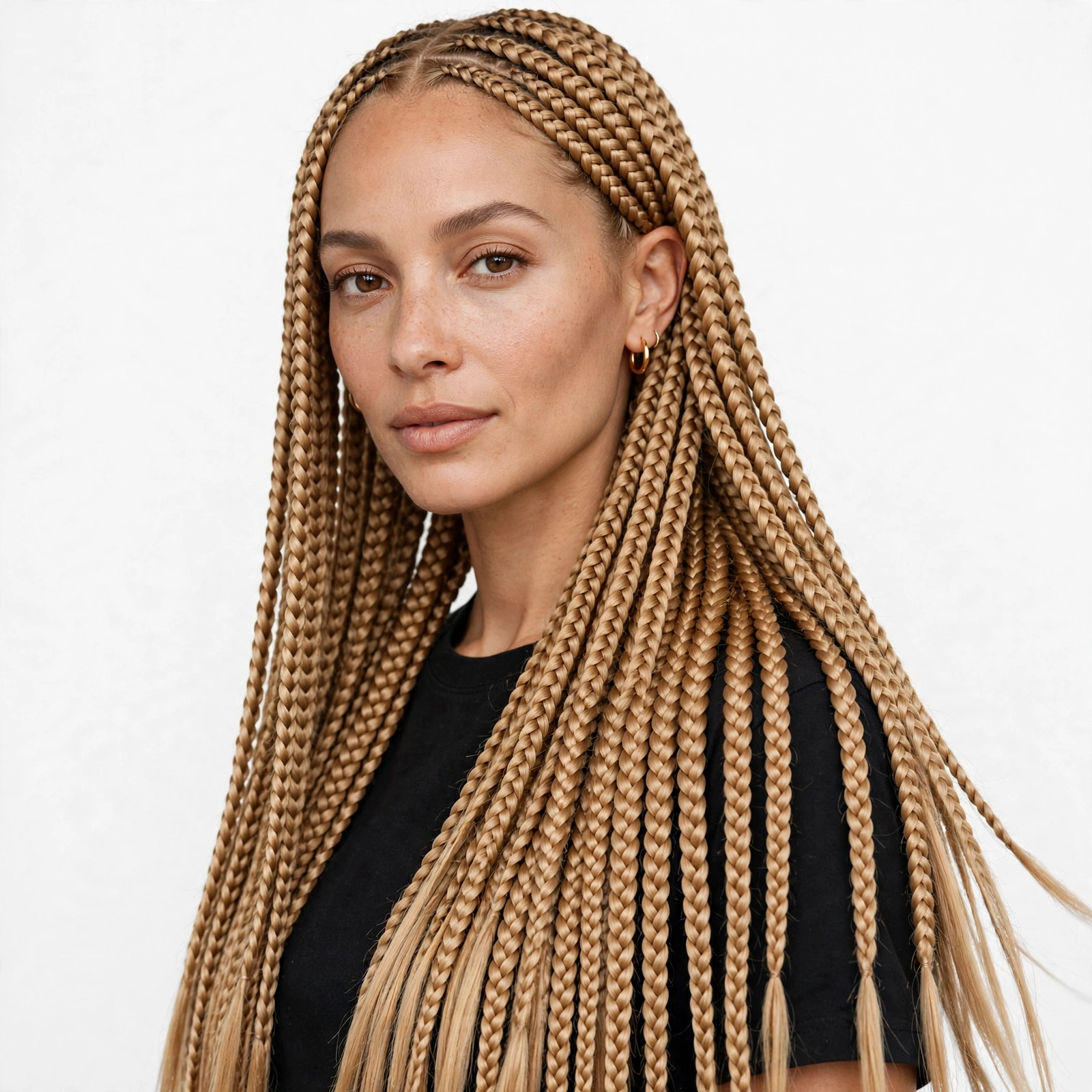
Colored knotless braids are having a massive 2026, and honey blonde is the shade leading the pack. It is warm, it glows against deep skin tones, and — practical bonus — it is a color you can wear to the office without a second thought. The trick to colored braids looking expensive instead of cheap is the blend: ask your braider to mix two or three close shades (like 27, 30, and 613) rather than one flat color.
One thing to know: colored braiding hair can feel a little drier and coarser than black, so the set may look slightly less sleek by week five. A light braid sheen spray once a week fixes that. Cost-wise, colored hair runs $2 to $4 more per pack, and most stylists charge a $20 to $40 color upcharge on the install. For the impact — strangers will stop you — it is money well spent.
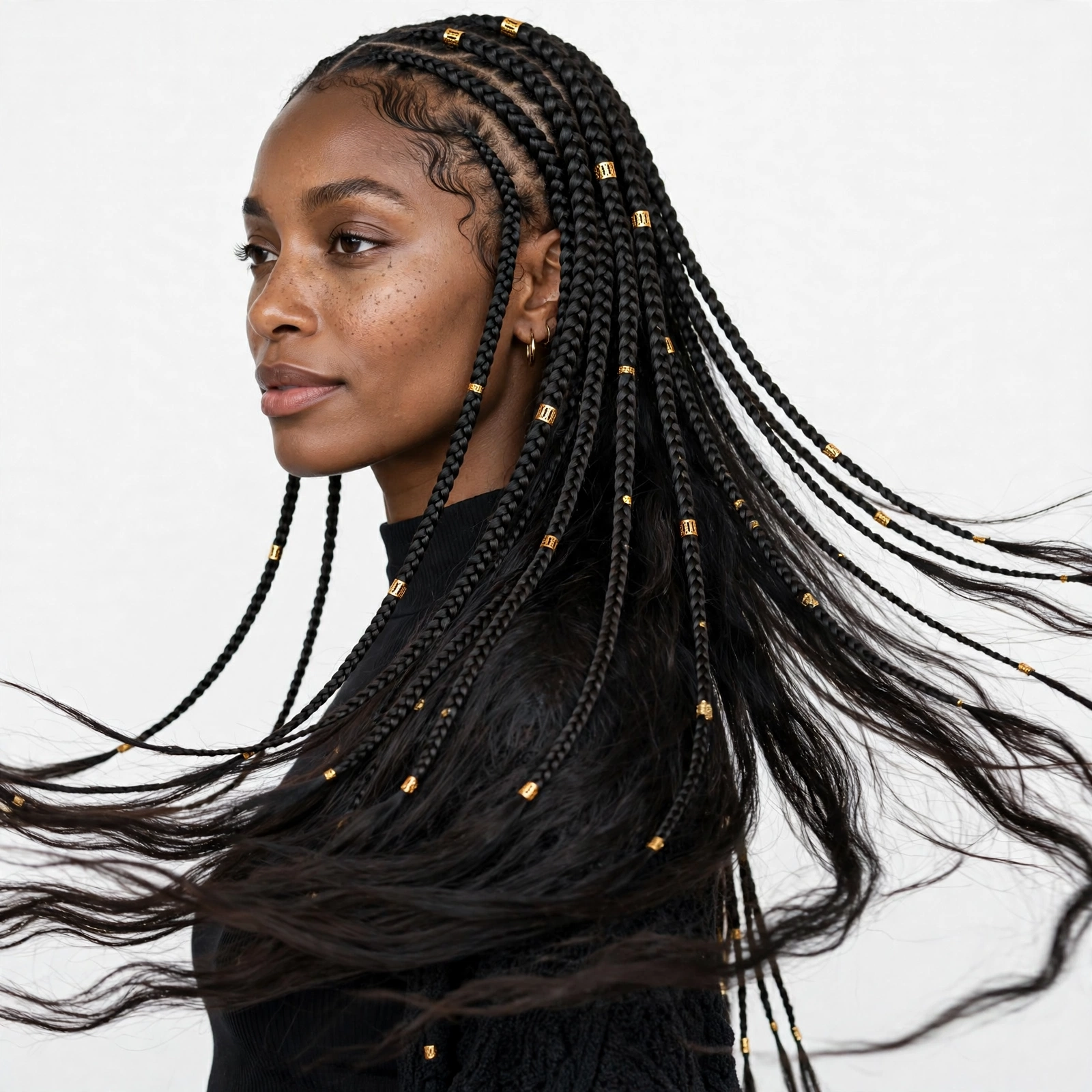
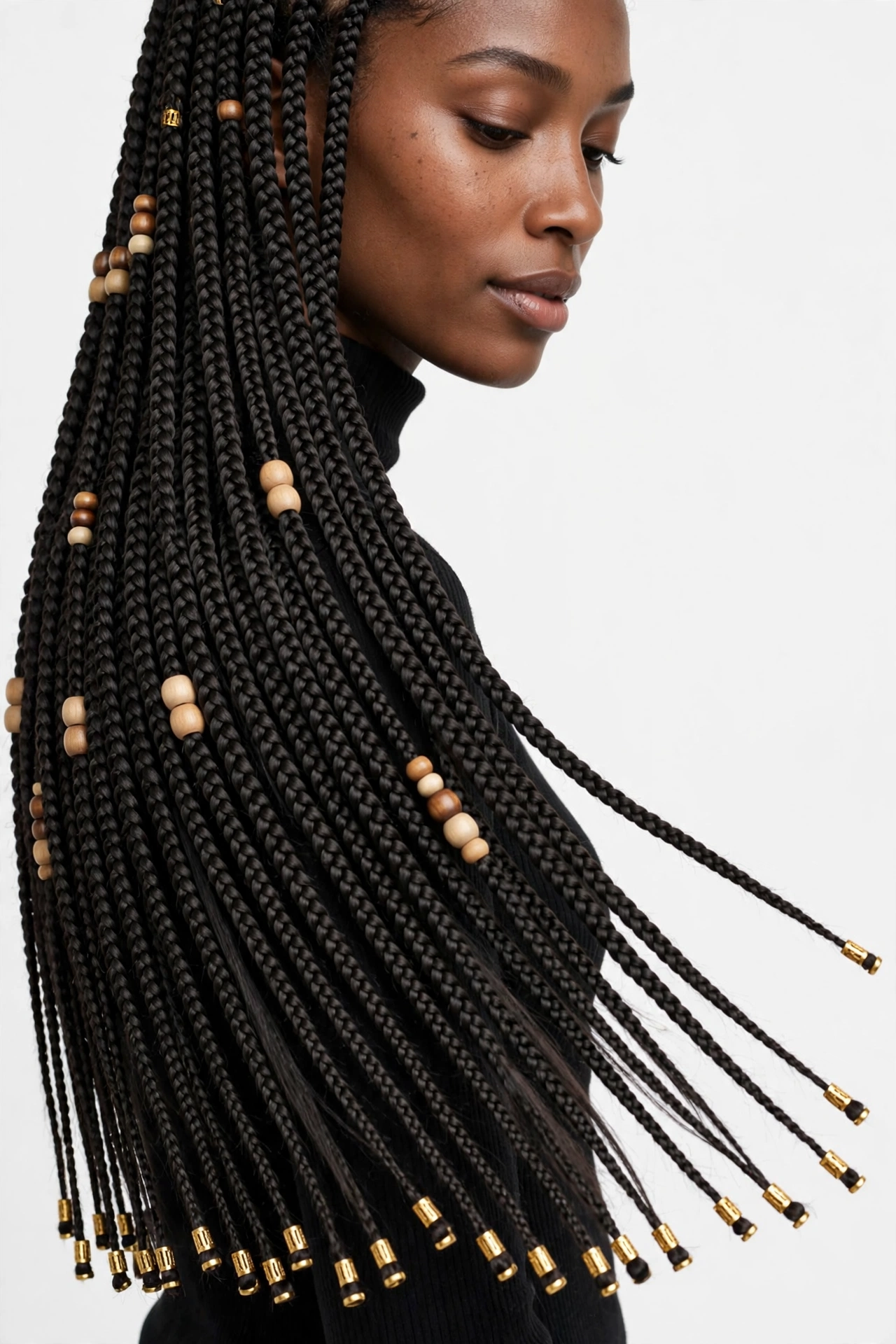
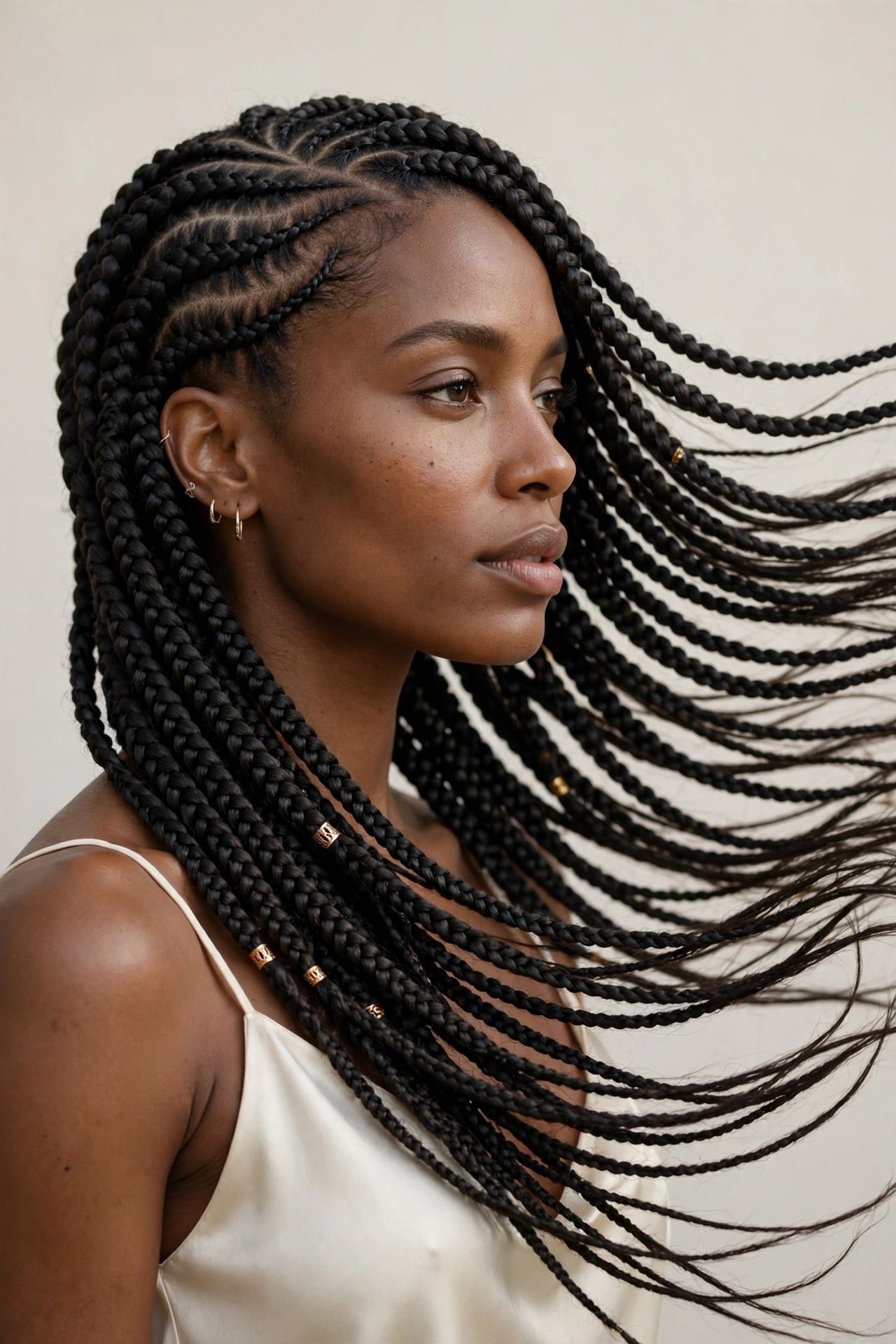
7. Knotless Braids with Wooden Beads and Gold Cuffs
Accessories are back in a big way, and knotless braids are the perfect canvas. Wooden beads at the ends of a few face-framing braids give an earthy, festival-ready feel; small gold cuffs scattered along the length read more polished and luxe. The best part is that accessories make a simple set look intentional — a plain medium knotless install goes from “nice braids” to “where did you get those” with about $10 of beads.
Installation is easy: most braiders will add beads and cuffs during the appointment for a small fee, or you can do it yourself with a beader tool from the beauty supply store. One caution — heavy metal beads on every braid add real weight, which defeats the whole lightweight point of knotless. Keep it to 8 to 12 accent braids. And if you sleep with beads, double up on the bonnet, because beads love to snag satin.
8. Small Knotless Braids
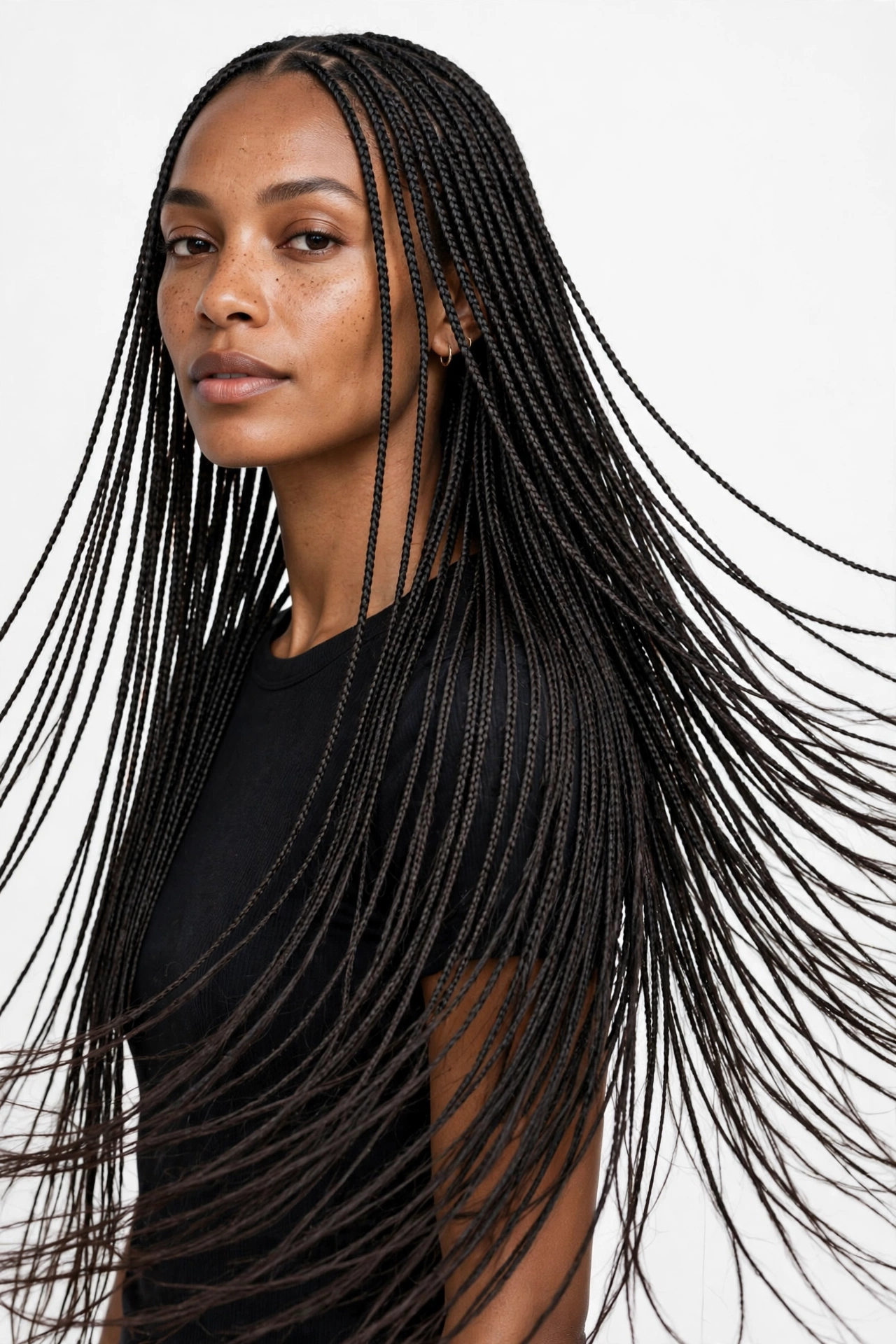
Small knotless braids — pencil-thin or finer — are the most natural-looking option on this list. From a few feet away, a small knotless install genuinely reads like long, straight natural hair. You also get the most styling freedom: the thin braids move like real hair, so buns, ponytails, and half-up styles all sit beautifully. If versatility is your top priority, smalls win.
The trade-offs are real, though. Small knotless braids take 7 to 9 hours — bring a charger, snacks, and a show to binge — and they are the priciest option, typically $250 to $400 depending on your city. They also take the longest to take down, about 3 to 4 hours. But they last the longest too: a careful small knotless set can go 8 to 10 weeks. For a style you will live in for two months, the math works.
9. Jumbo Knotless Braids
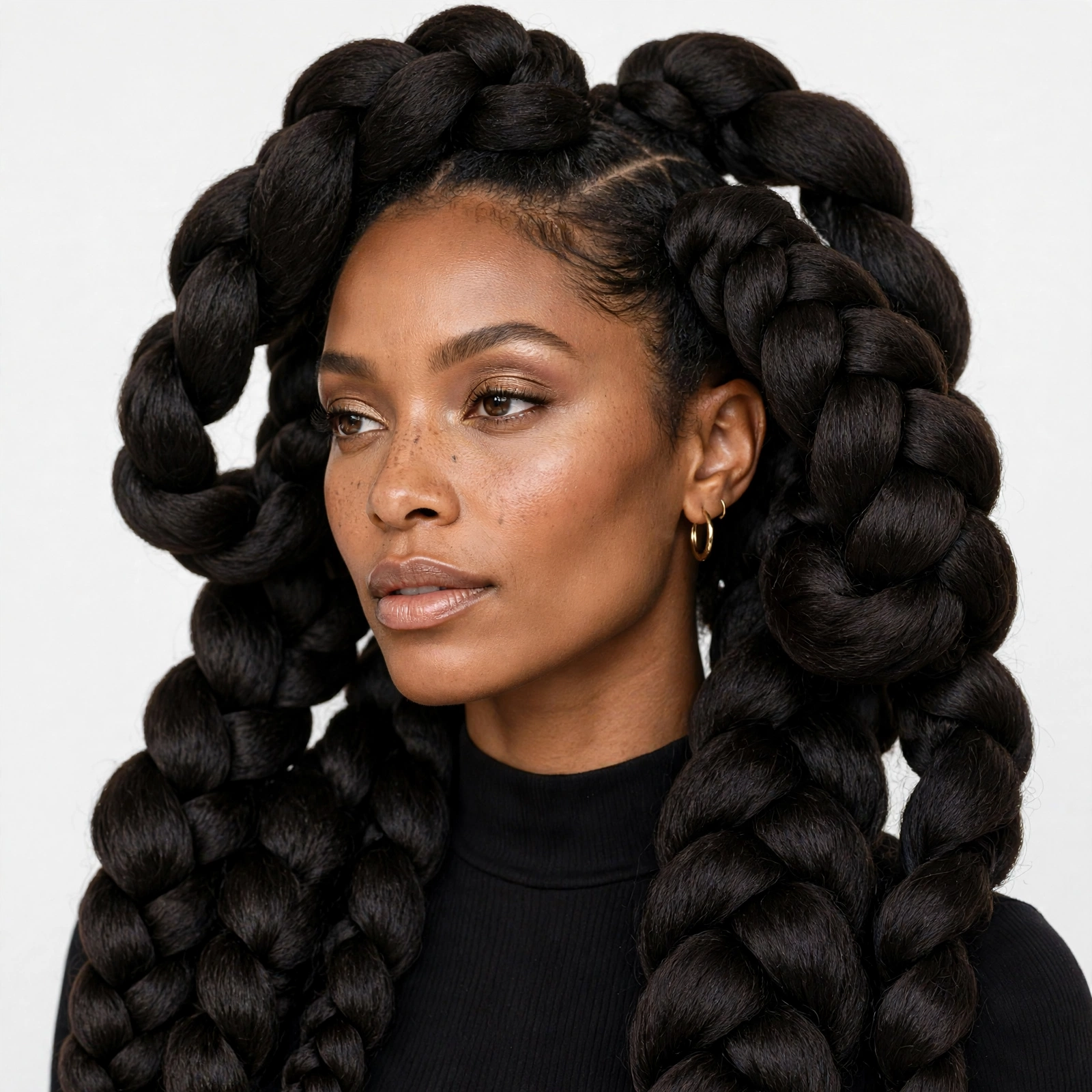
Jumbo knotless braids are for the girls who want to make an entrance. Thick, chunky braids — usually 10 to 14 of them total — that read bold from across the room. The knotless technique matters even more at this size, because jumbo braids carry real weight; the feed-in method keeps that weight off your roots so you do not spend the week with a tension headache.
The practical upside is speed: a jumbo install takes 3 to 4 hours, and it is one of the most affordable knotless options at $100 to $160. The downside is longevity — jumbos loosen faster, so plan on 3 to 5 weeks of wear. Style them in a side part for maximum drama, and keep a bottle of edge control handy, because thick braids at the hairline need a little help staying sleek. This is a perfect “try knotless for the first time” size.
10. Peekaboo Red Knotless Braids
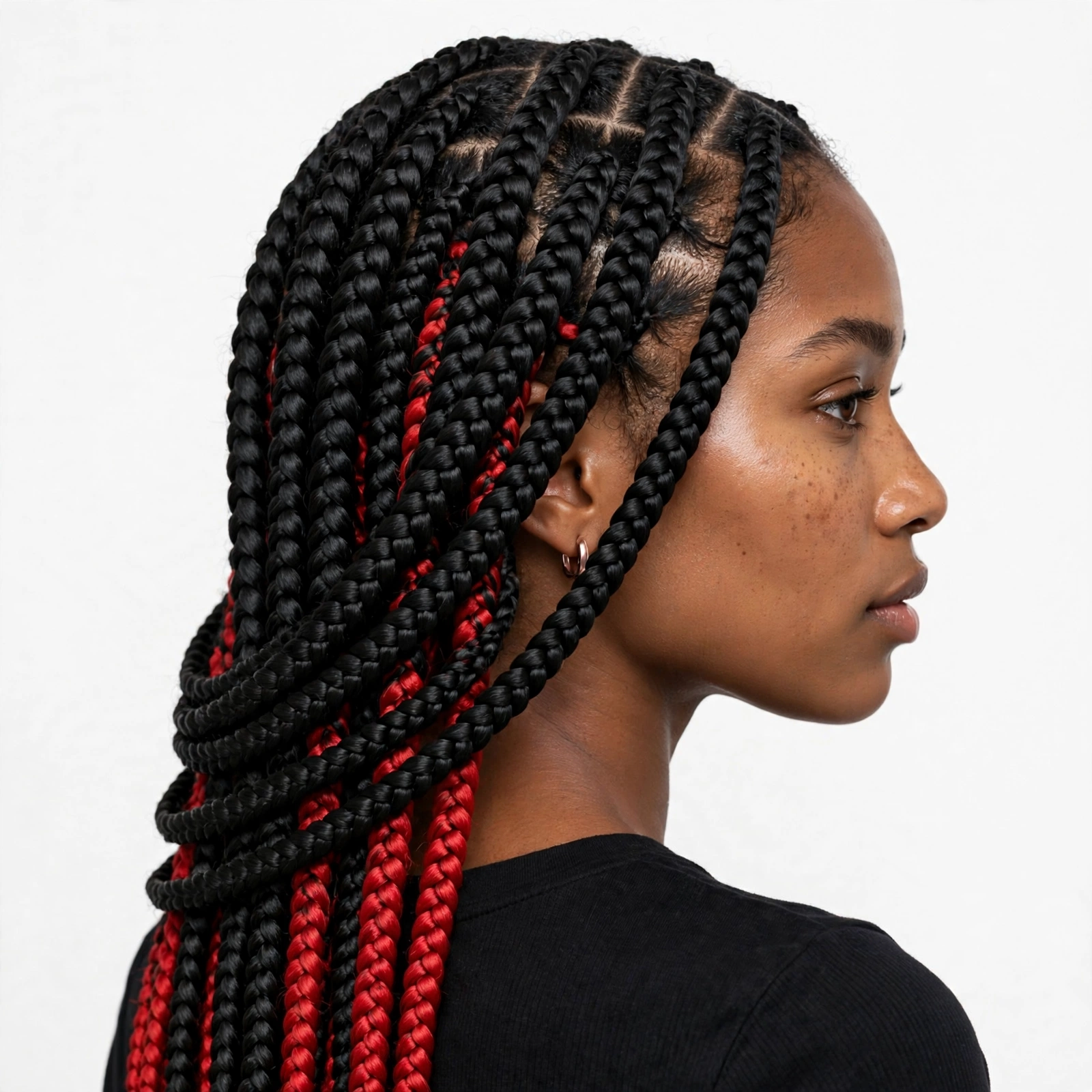
Peekaboo color is the clever girl’s way to do colored braids: the top layer stays black, and a vivid shade — cherry red is the 2026 favorite — hides underneath. From the front you look classic; when the braids move, flashes of red appear. It is the hair equivalent of a red-soled shoe. Subtle until it is not.
Ask your braider to place the red braids in the bottom two rows and a few around the nape so the color peeks through naturally. You will need 2 to 3 packs of red braiding hair on top of your 6 black packs. The contrast looks best on medium or large braids where each braid is visible. Maintenance is the same as any knotless set, though red hair can bleed a little color when wet — rinse with cool water for the first couple of washes.
11. Knotless Braids with Curly Ends
Not quite goddess, not quite boho — this is the middle ground where every braid ends in a soft curl instead of a blunt tip. The curly ends give the whole set movement and bounce, and they soften the silhouette beautifully on longer lengths. If blunt ends feel too severe on you, this is your fix.
Your braider will create the curls by leaving the last two inches of each braid unbraided and rod-setting or flexi-rodding them, or by using pre-curled braiding hair. To keep the curls springy, scrunch a little curl-defining cream into the ends every few days and pineapple the ends (gather just the bottom inches) inside your bonnet at night. This style wears 5 to 7 weeks, and the ends actually look better a little lived-in.
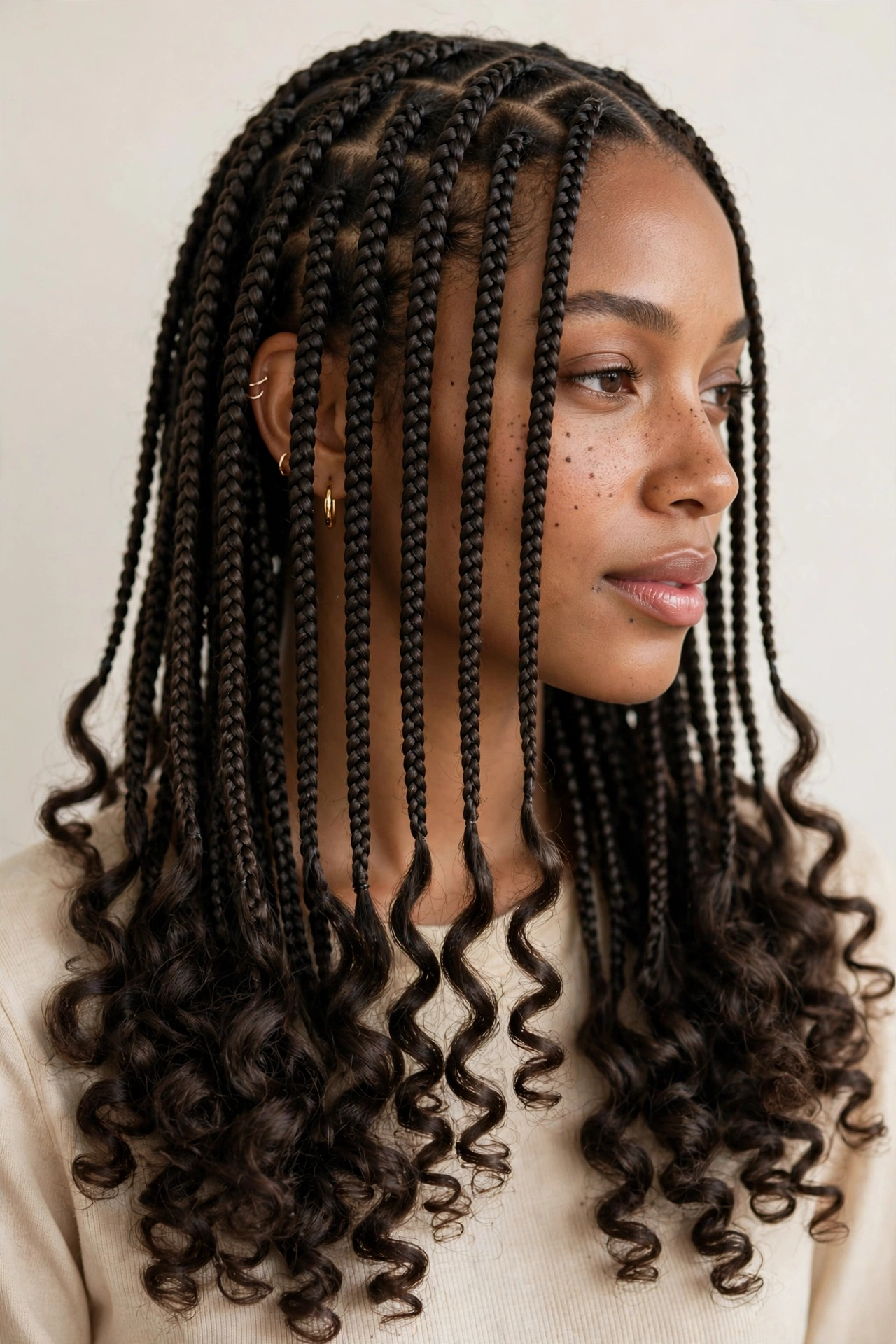
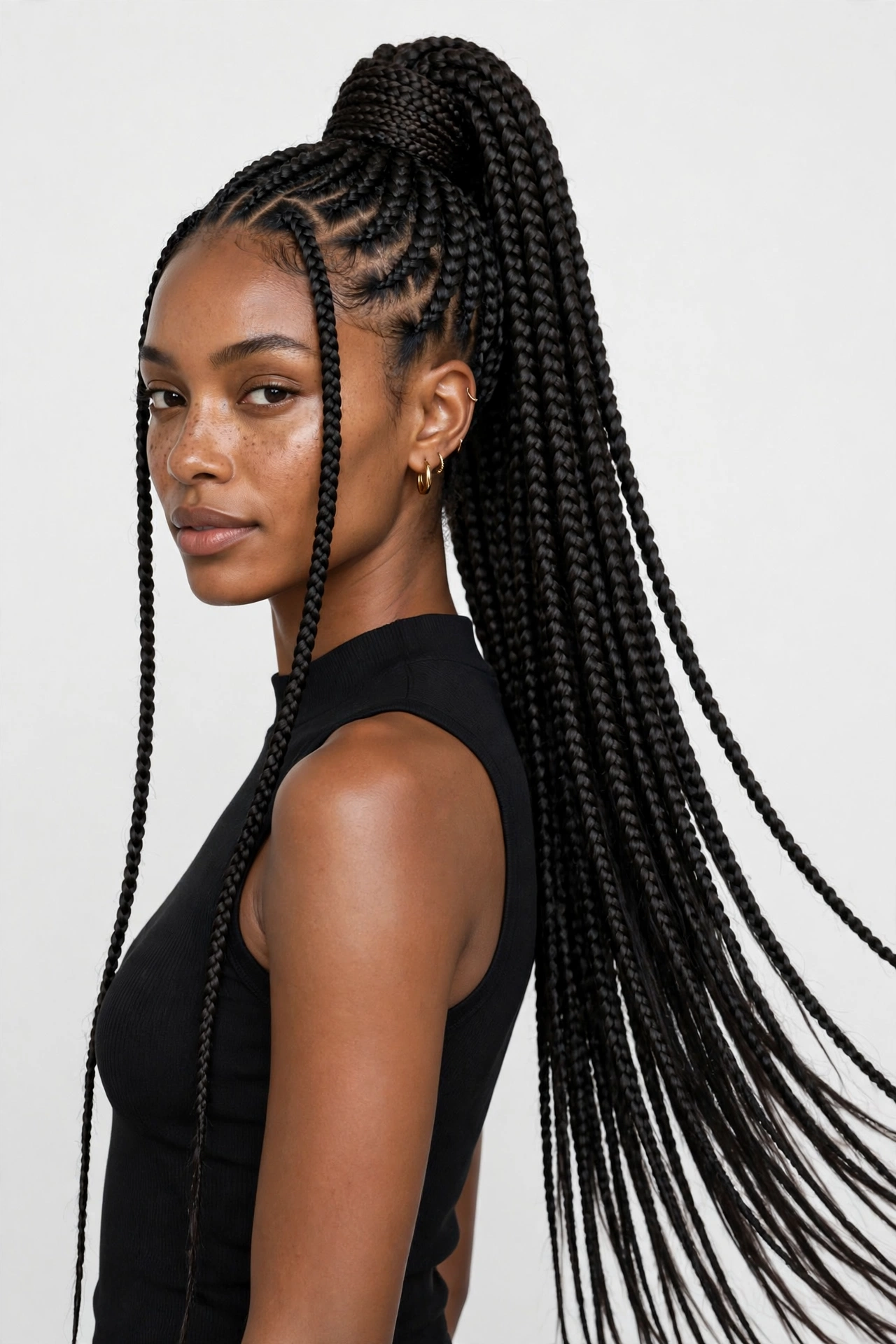
12. Half-Up Knotless Braids Ponytail
This is less a distinct install and more the styling move that sells every knotless set — but it deserves its own spot because it is the photo everyone saves. A half-up ponytail on waist-length knotless braids gives you the best of both worlds: length flowing down your back, face open and lifted. The flat knotless roots make the ponytail sit smoothly, with none of the lumps you get from knotted braids.
For the sleekest version, brush the top section back with a boar-bristle brush and a dab of edge control, secure with a snag-free band, then wrap one braid around the base to hide the band and pin it underneath. Leave the bottom half loose or curl the ends for extra polish. Pro tip: this style photographs best on day 3 to 10, when the roots are still immaculate but the braids have relaxed into a natural fall.
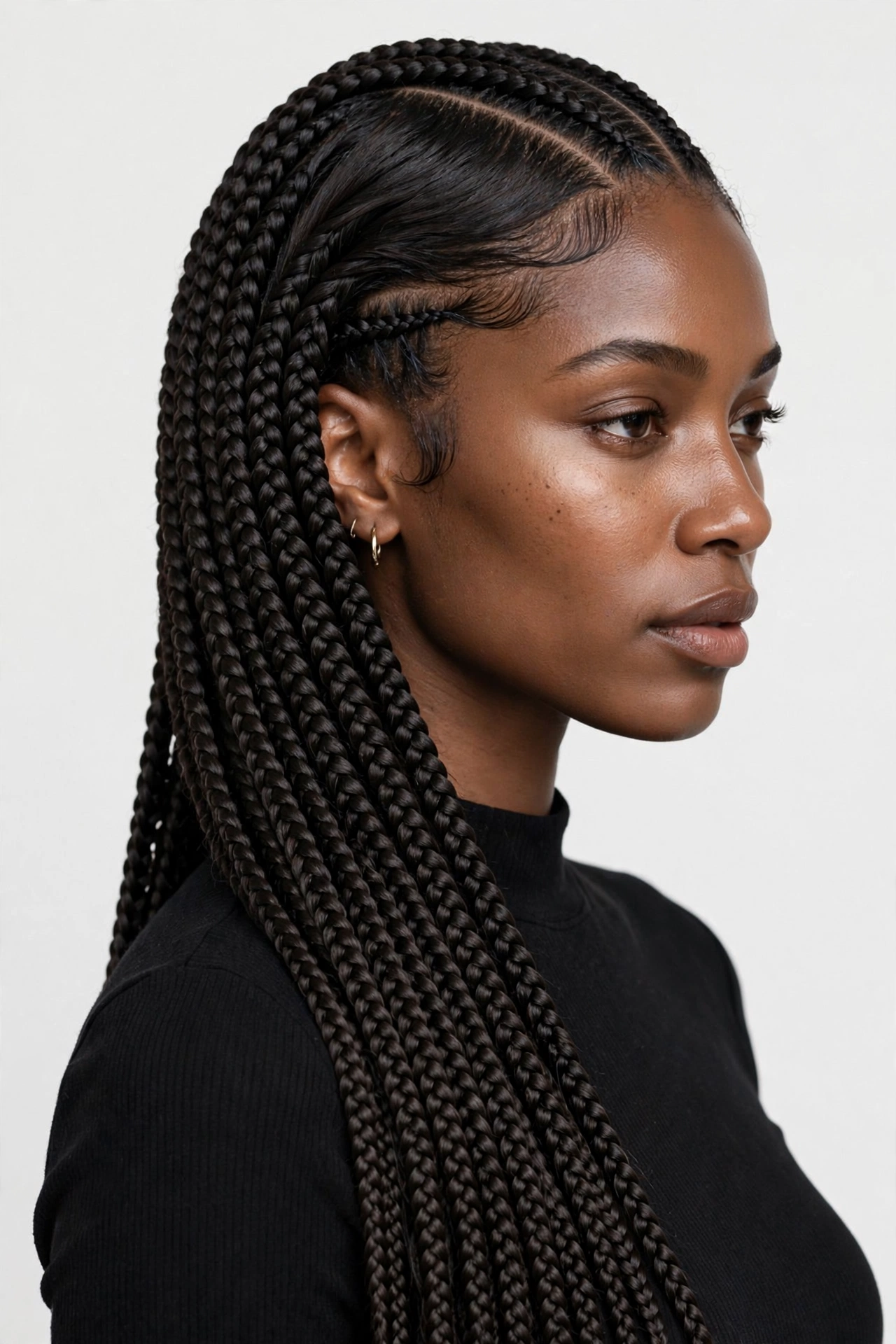
13. Knotless Braids with a Deep Side Part
The deep side part is the fastest way to make a simple knotless install look editorial. Parting the braids far to one side creates an asymmetric cascade — volume piled on one side, sleek and close on the other — and it flatters nearly every face shape. This is the parting I suggest for photos, events, and first dates. It just reads glamorous.
Because knotless roots are flexible from day one, you can switch between a middle part for the office and a deep side part for the evening without fighting stiff braids. To keep the side part crisp, train it with a little edge control along the part line for the first few days. One note: a deep side part puts slightly more braids on one side, so if your set is very long, balance the weight when you sleep to avoid neck strain.
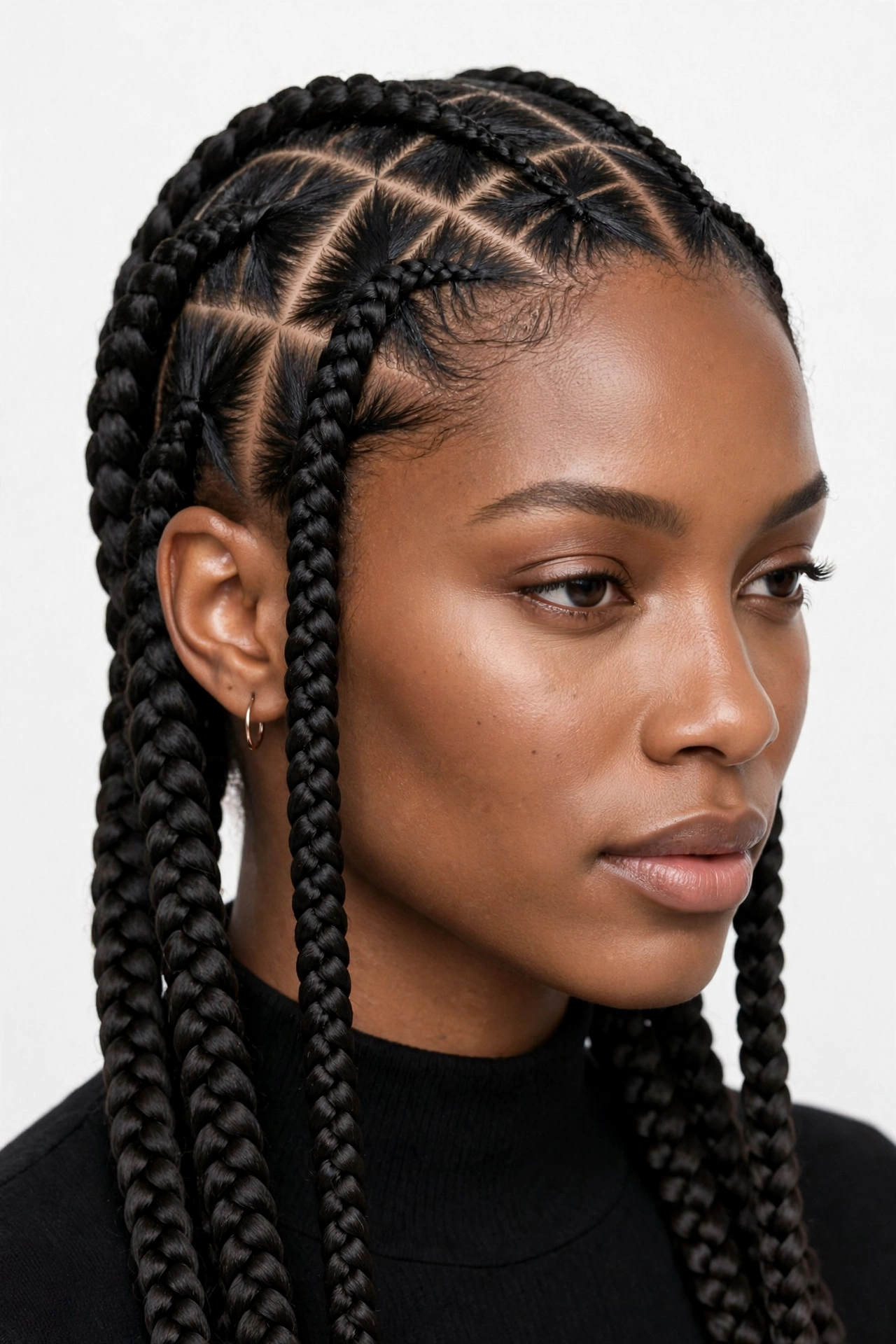
14. Triangle-Part Knotless Braids
Triangle parts are the detail that separates a good install from a great one. Instead of the usual square sections, your braider parts the hair into neat triangles at the scalp. The geometric pattern looks intentional and artful — it is one of those things people cannot quite name but definitely notice. Triangle parts photograph beautifully, especially in updos where the pattern is visible.
Not every braider does clean triangle parts, so this is one to confirm when you book — ask to see photos of their parting work specifically. Triangle parts work best on medium and small braids, where the pattern reads clearly. They do not affect wear time or maintenance at all; it is purely an aesthetic upgrade. Expect a small upcharge of $10 to $25 for the extra parting time.
15. Knotless Lemonade Braids
Lemonade braids — the side-swept style Beyoncé made iconic — get a knotless upgrade in 2026. All the braids sweep from one side of the head to the other in a dramatic cascade, exposing one side of the scalp in clean, curved rows. The knotless feed-in makes the swept rows lie flatter and more comfortably than the traditional version ever did.
This is a statement style, not an everyday one — it is asymmetric by design, so it limits your styling options for the wear period. But for a vacation, a festival, or a stretch where you just want to feel like the main character, nothing beats it. Because half the head carries the braid weight, keep the size medium or large rather than small, and do not wear it longer than 4 to 5 weeks to protect the exposed side.
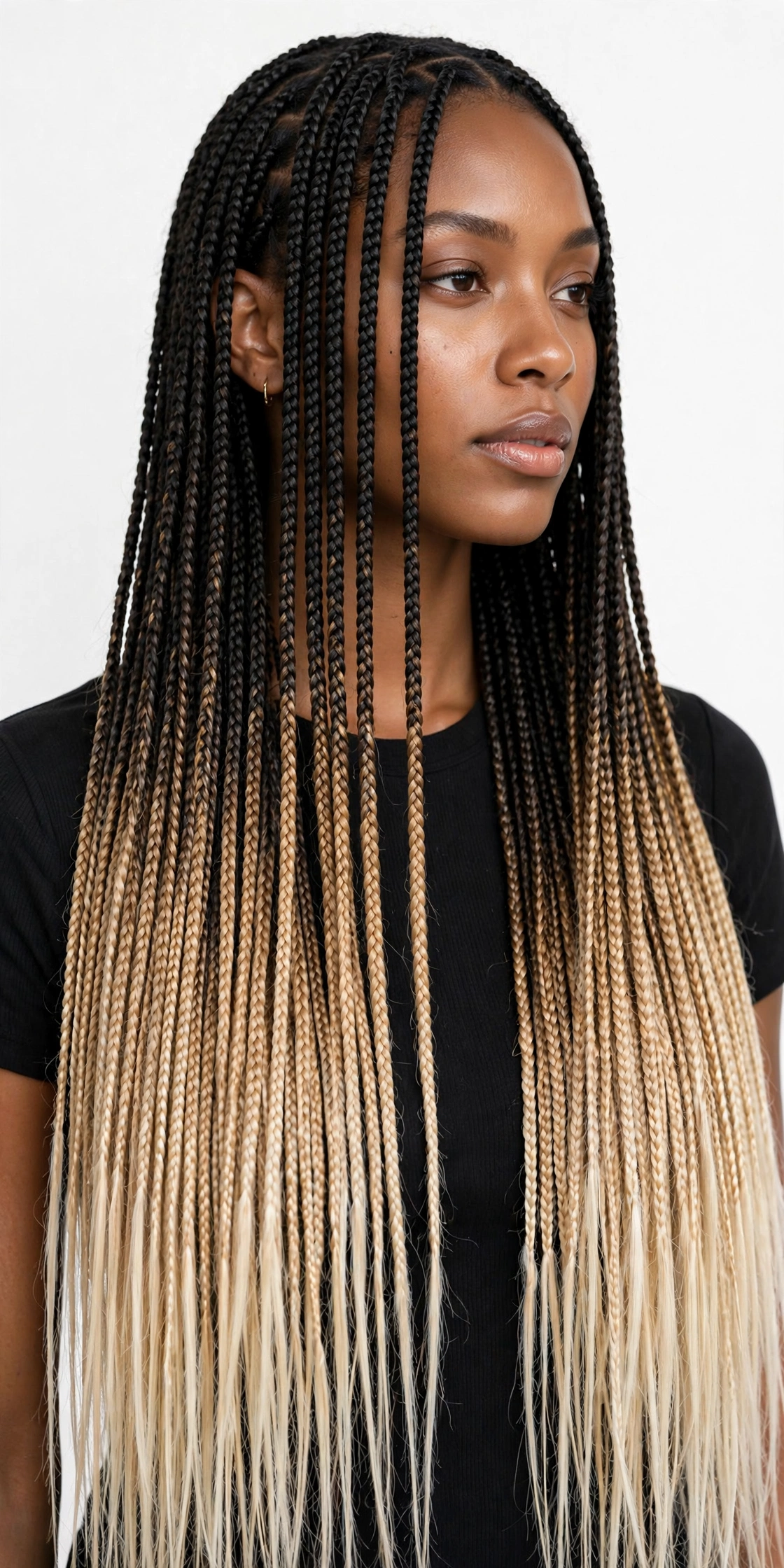
16. Ombre Knotless Braids
Ombre braids fade from dark roots to lighter ends — black melting into honey blonde is the classic, but burgundy-to-copper and brown-to-caramel are gorgeous too. The gradient gives long braids dimension and movement that a single color cannot, and the dark roots mean new growth blends invisibly, which genuinely extends how fresh the set looks.
You can buy pre-made ombre braiding hair, but the best results come from your braider custom-blending: starting with black packs at the root and transitioning through a mid-tone to the light ends. It takes a bit more skill and about 30 extra minutes. Ombre sets cost $20 to $50 more than single-color installs. One tip: ombre shows frizz more than solid black, so keep braid sheen spray in your routine from week one.
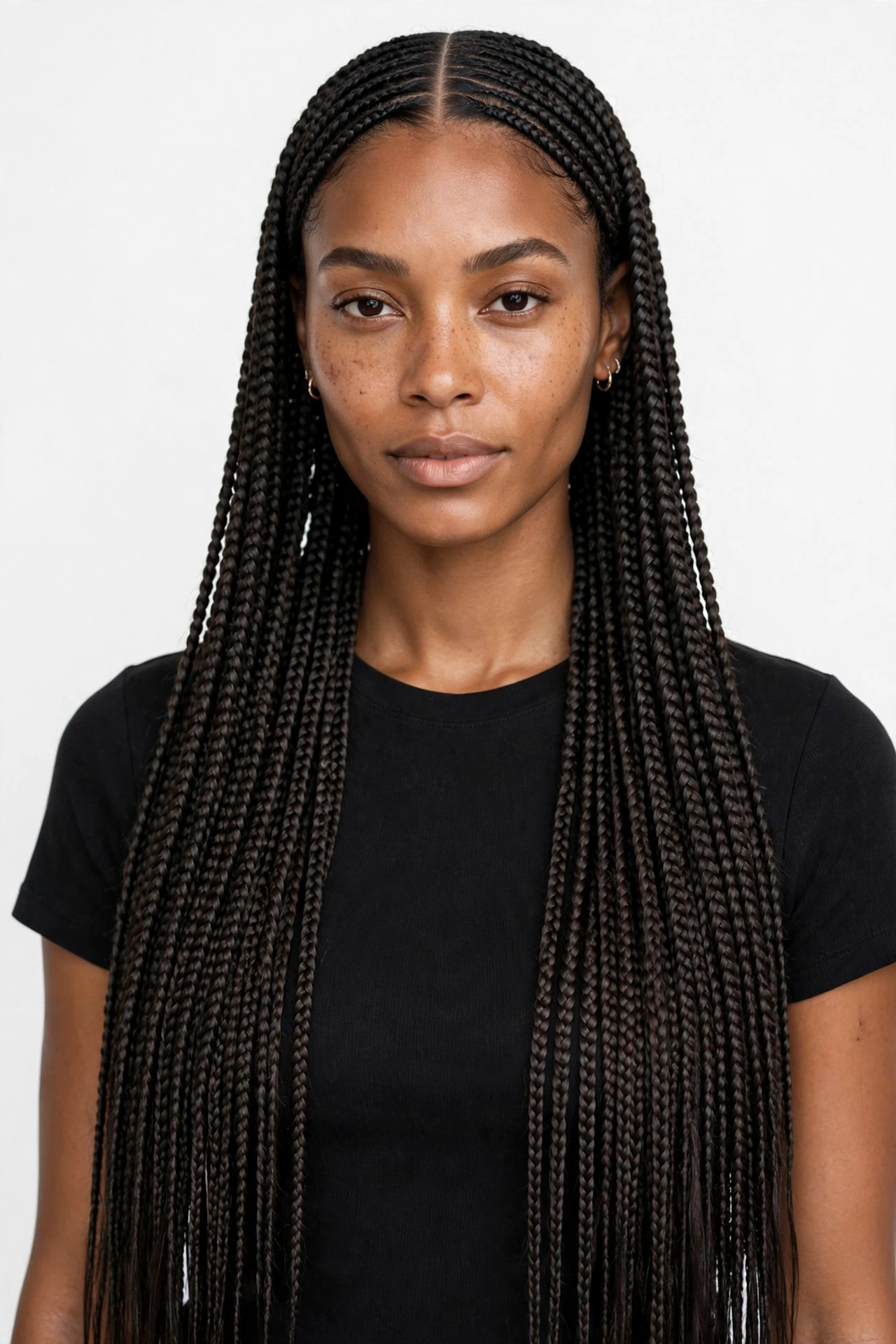
17. Knotless Braids with a Middle Part
The middle part is the quiet luxury of knotless braids. Perfectly symmetrical, braids falling evenly on both sides, everything balanced. It is the parting that lets the braids themselves be the star — no asymmetry, no distraction. On medium and small knotless sets, a crisp middle part looks so clean it borders on architectural.
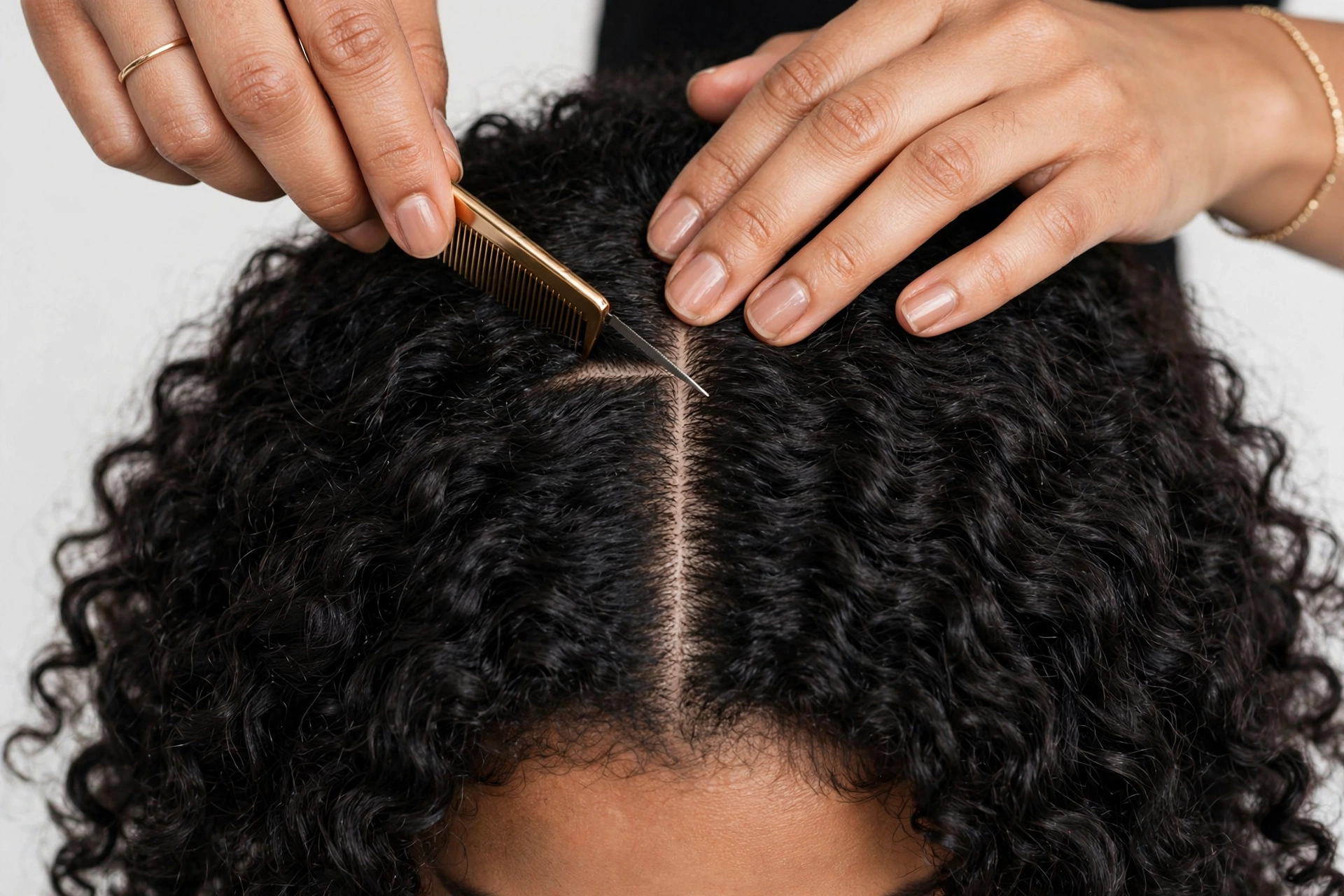
A middle part also happens to be the most flattering option for round and heart-shaped faces, because the even fall on both sides creates the illusion of length. Keep the part line sharp with a rat-tail comb and a touch of edge control for the first week, and it will train itself. If your braider’s parts are even slightly crooked, a middle part will expose it — so this style doubles as a quality test of your braider’s parting game.
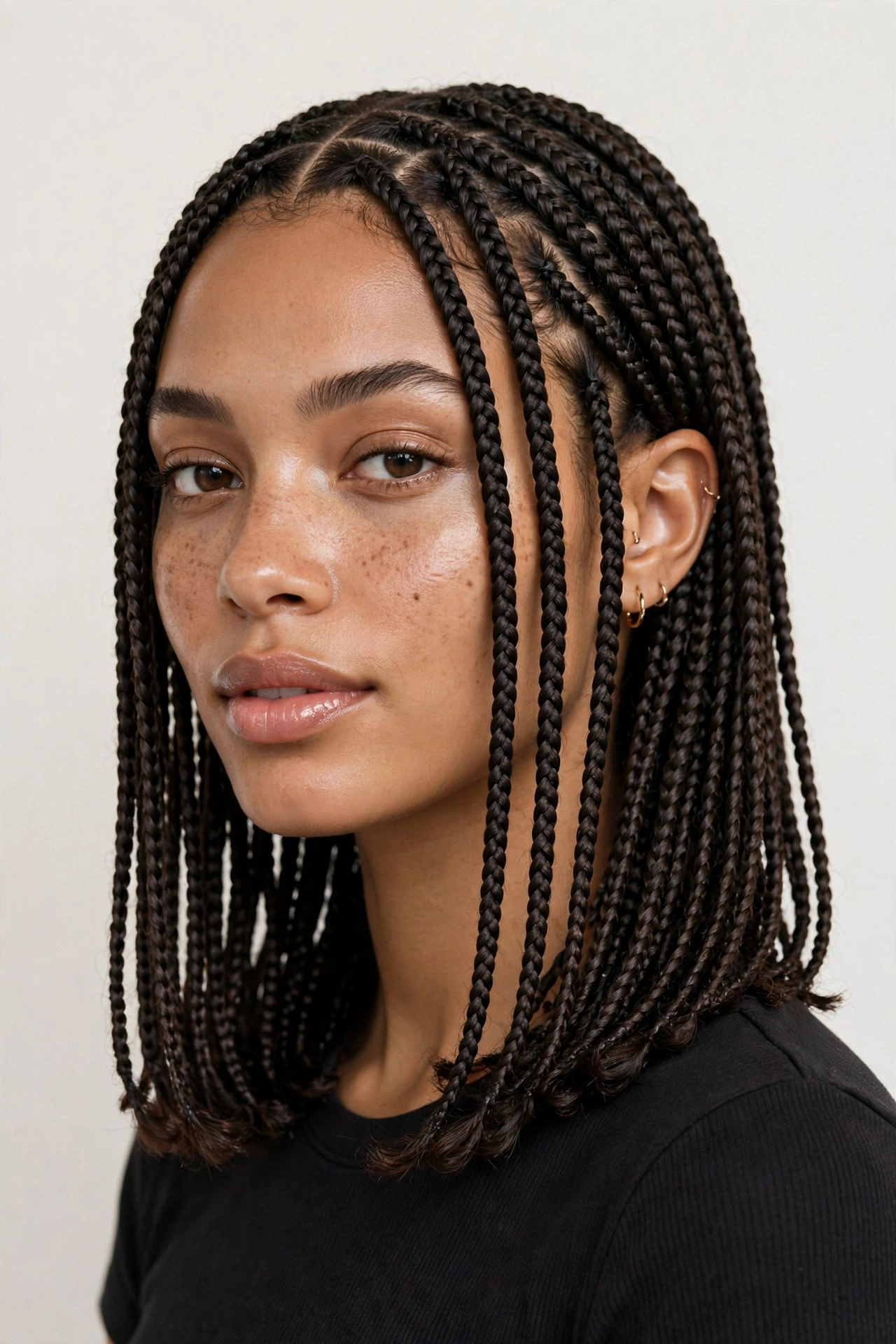
18. Short Shoulder-Length Knotless Braids
Not everyone wants waist-length hair, and shoulder-length knotless braids are the proof that shorter can be better. This length is the easiest to live with: it does not get caught in car doors, it does not take ten minutes to put up, and it dries fast after washing. It is the “I have a life” length, and I mean that as a compliment.
Shoulder-length sets take 4 to 5 hours and use fewer packs (4 to 6), so they cost less — usually $130 to $190. The shorter length also means less weight and less tangling at the ends. Style it flipped out at the ends with a little mousse for a retro feel, or keep it straight and sleek for the office. You will get 5 to 6 weeks of wear, and takedown takes under two hours.
19. Knotless Fulani Braids
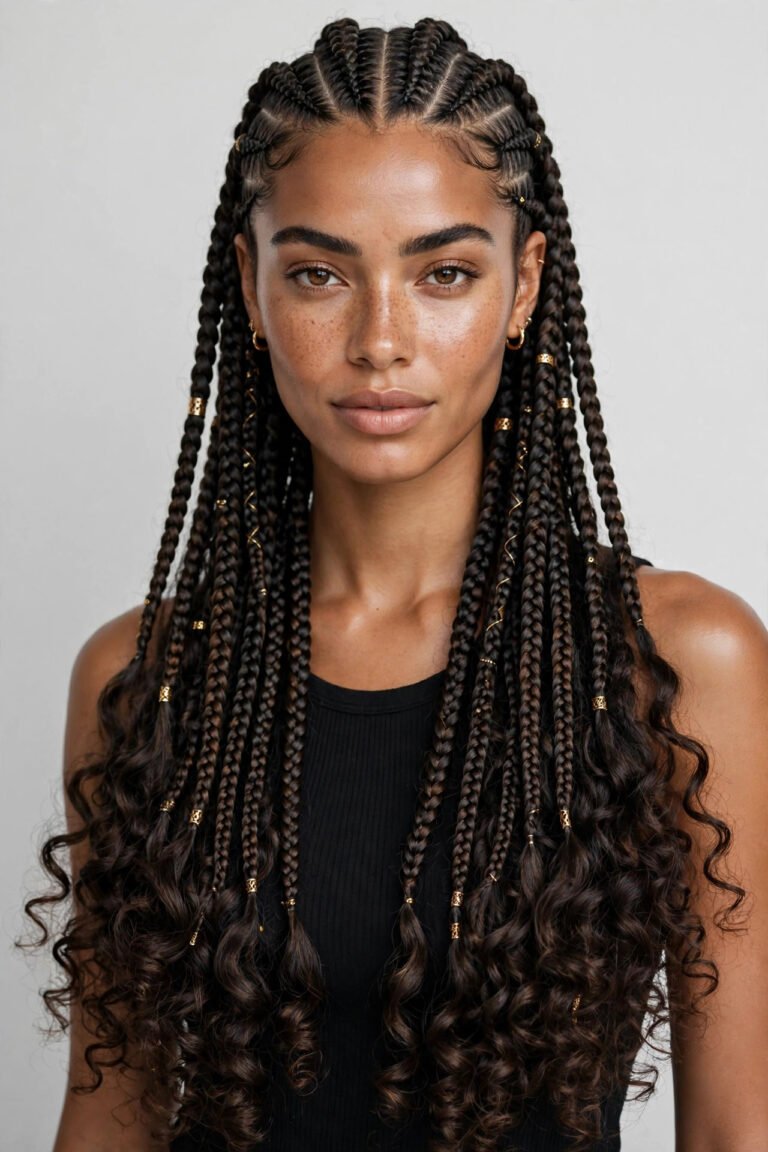
Fulani-inspired knotless braids blend two techniques: thin cornrows across the front and crown — often with a signature center braid — flowing into loose knotless braids at the back. The combination is rich with heritage and visually stunning. The cornrowed front keeps everything off your face, which makes this one of the most practical styles on the list for workouts and hot weather.
Because the front is cornrowed, the install takes a bit longer (6 to 8 hours) and you need a braider who is genuinely skilled at both techniques — do not hand this to a generalist. The cornrow section typically needs refreshing before the knotless back does, so plan on 5 to 6 weeks of wear. Beads on the front cornrows are traditional and gorgeous; keep them small and wooden to stay authentic to the style’s roots.
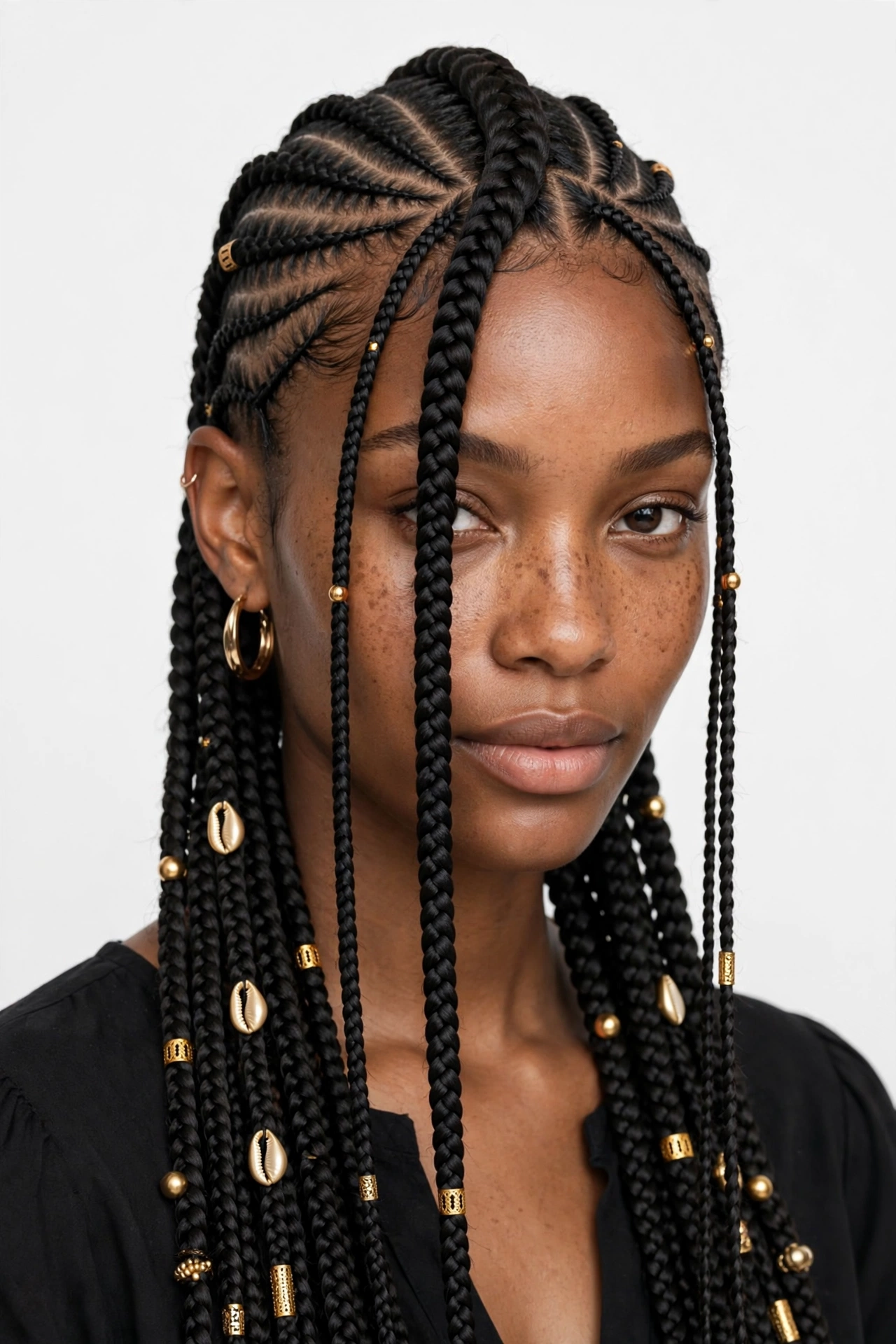
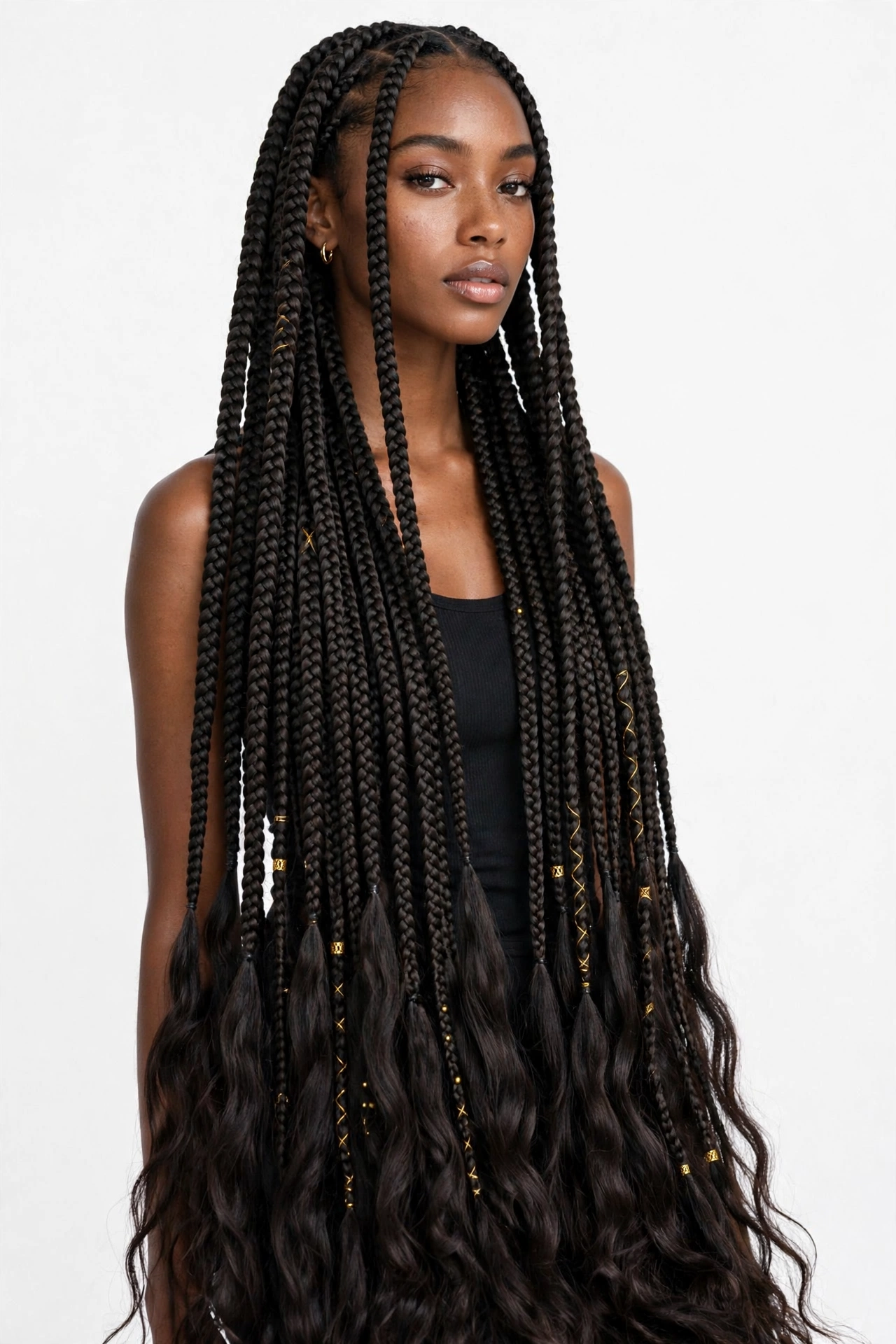
20. Butt-Length Mermaid Knotless Braids
The grand finale: knotless braids that hit below the butt. This is pure drama, the set that gets photographed at every angle. Extra-long knotless braids move like water when you walk, and there is simply nothing else that makes this kind of impact. If you have ever wanted to know what it feels like to have mermaid hair, this is the closest you will get.
Let us be practical, though. Butt-length sets take 8 to 10 hours, need 8 to 10 packs of hair, and cost $280 to $450. They are heavy even with the knotless technique, so medium or large size — not small — is the smart choice to keep the weight manageable. Sleep with the braids in a loose topknot inside your bonnet, never let them drag on the floor (bathroom floors are filthy), and plan your takedown for a full afternoon. Wear it for 6 weeks max; the ends tangle beyond that.
How to Ask Your Stylist for Knotless Braids
Walking into a braid appointment with the right words saves you from the wrong hair. Here is a script you can use almost word for word: “I want medium knotless braids, waist length, with a middle part. I want the feed-in method — no knots at the roots. Can you show me your parting work before we start?” That one sentence tells a good braider everything: size, length, part, technique.
Bring reference photos — three is the magic number. One of the overall style, one close-up of the roots so she sees the flat feed-in finish you expect, and one of the length on a body similar to yours so there is no misunderstanding about where “waist length” lands. Screenshots beat descriptions every time; “medium” means different things to different braiders, but a photo does not lie.
Ask these four questions before she picks up the comb. One: “Do you use pre-stretched hair, and is it included in the price?” (Pre-stretched tapers naturally and saves an hour; some braiders charge extra for it.) Two: “How long will this take?” — if she says three hours for small waist-length knotless, she is rushing, and rushed feed-in means sloppy roots. Three: “What is your touch-up policy if a braid unravels in the first week?” Good braiders fix their work free within 7 to 10 days. Four: “Can I see the color blends in person?” Braiding hair looks different under salon lights than on a phone screen.
Finally, agree on the price before a single braid goes in — not after. A medium waist-length knotless install in 2026 runs $180 to $300 in most US cities, more in New York and LA, less in smaller towns. If the quote is under $120 for smalls, ask why; quality feed-in work takes time, and time costs money. Pay the deposit happily. Your edges will thank you.
How to Style Knotless Braids at Home
The beauty of knotless braids is that they style like your own hair from day one. No waiting for the roots to loosen. Here are the everyday styles that actually work, with the details that make them look polished instead of thrown together.
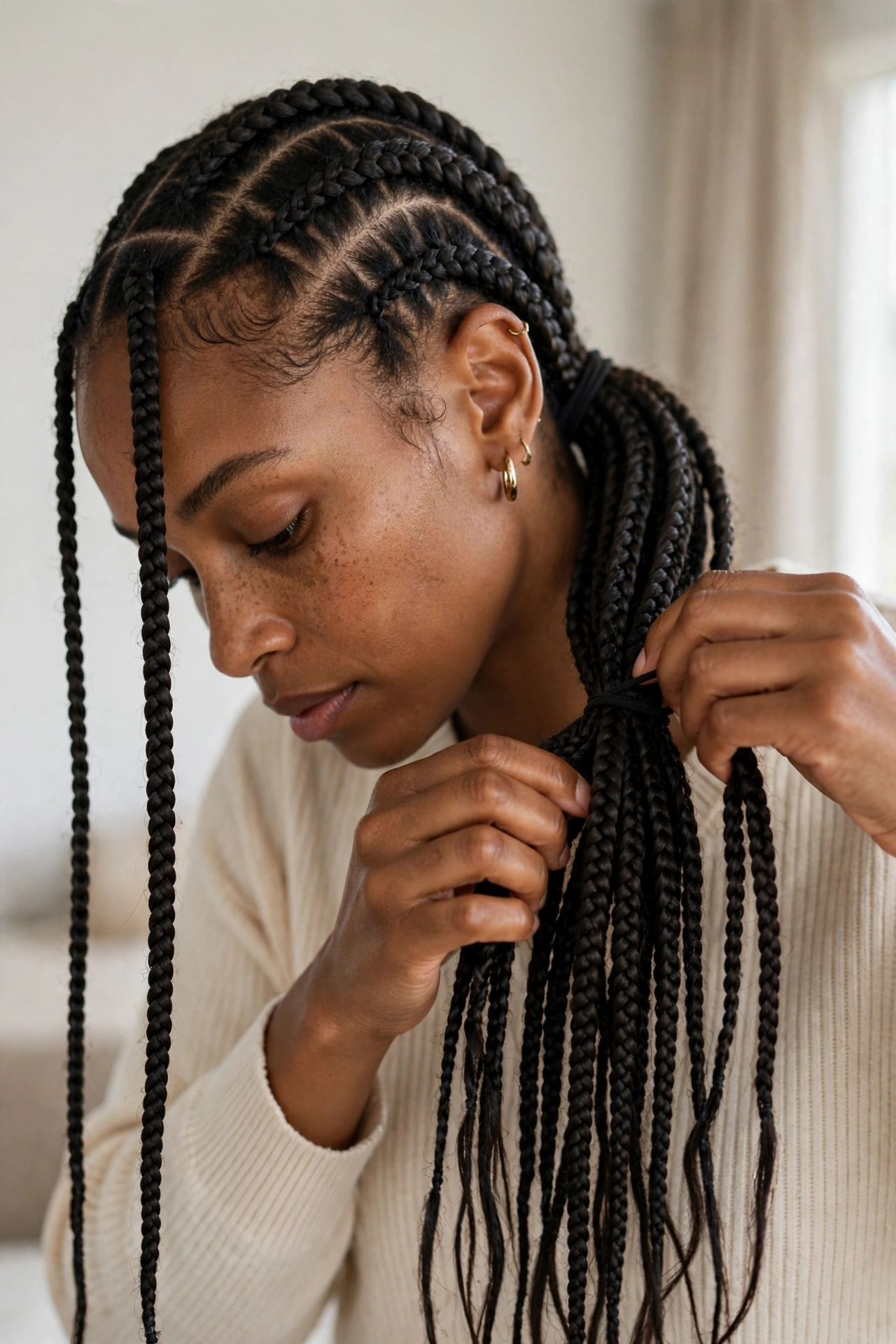
The sleek low ponytail is your workhorse. Brush the braids back with a boar-bristle brush, smooth the hairline with a pea-sized amount of edge control, and secure at the nape with a snag-free elastic. Wrap one braid around the base and pin it underneath to hide the band — that single trick takes the style from gym to dinner. For a high ponytail, flip your head upside down, gather everything at the crown, and secure. The flat knotless roots mean no lumps at the gather point, which is the whole reason this style looks better on knotless than on traditional braids.
Space buns and top knots deserve a mention because they are the fastest way to look put-together on a lazy day. Split the braids into two sections, twist each into a bun, and pin. Keep them loose — tight buns on braids cause the same tension problems we are trying to avoid. For evenings, try a side-swept style: part the braids deeply to one side, sweep everything over one shoulder, and pin a few braids behind the ear on the empty side with decorative pins.
Two rules for all at-home styling. First, never style dry, brittle braids — spritz with a little water and leave-in conditioner before manipulating them, especially after week four when the hair is drier. Second, vary your styles. Wearing the same tight ponytail in the same spot every day creates tension in one place, which is exactly what knotless braids are supposed to prevent. Rotate between up, down, and half-up through the week.
Will Knotless Braids Suit You? Face Shapes and Hair Types
Short answer: yes, almost certainly. Knotless braids are one of the most universally flattering protective styles because the size, length, and parting are all adjustable. But a few tweaks make the difference between a set you like and a set you love.
For round faces, height is your friend — a high bun, a half-up ponytail, or a deep side part adds vertical lines that elongate. Avoid a center part with the braids hanging flat on both sides, which can widen the face visually. For oval faces, you have the easiest job: every parting and length works, so choose based on lifestyle. Square faces soften beautifully with curly-ended or boho knotless styles; the softness at the ends balances a strong jawline. Heart-shaped faces do best with volume at the bottom — goddess ends or a shoulder-length bob — which balances a narrower chin.
Hair type matters less than people think, because the braiding hair does most of the structural work. That said: if your natural hair is fine or low-density, stick to small or medium braids and avoid very long lengths — the braid needs enough of your hair at the root to grip. If your hair is thick and dense, you can carry any size, but tell your braider if your hair shrinks a lot; she may need to blow-dry it straighter at the roots for the cleanest feed-in. Short natural hair (under 3 inches) can still get knotless braids, but the grip is weaker — medium size and shoulder length is the safest combo. And if you are deciding between braid families entirely, our guide to french curl braids covers the curliest alternative.
Maintaining Knotless Braids
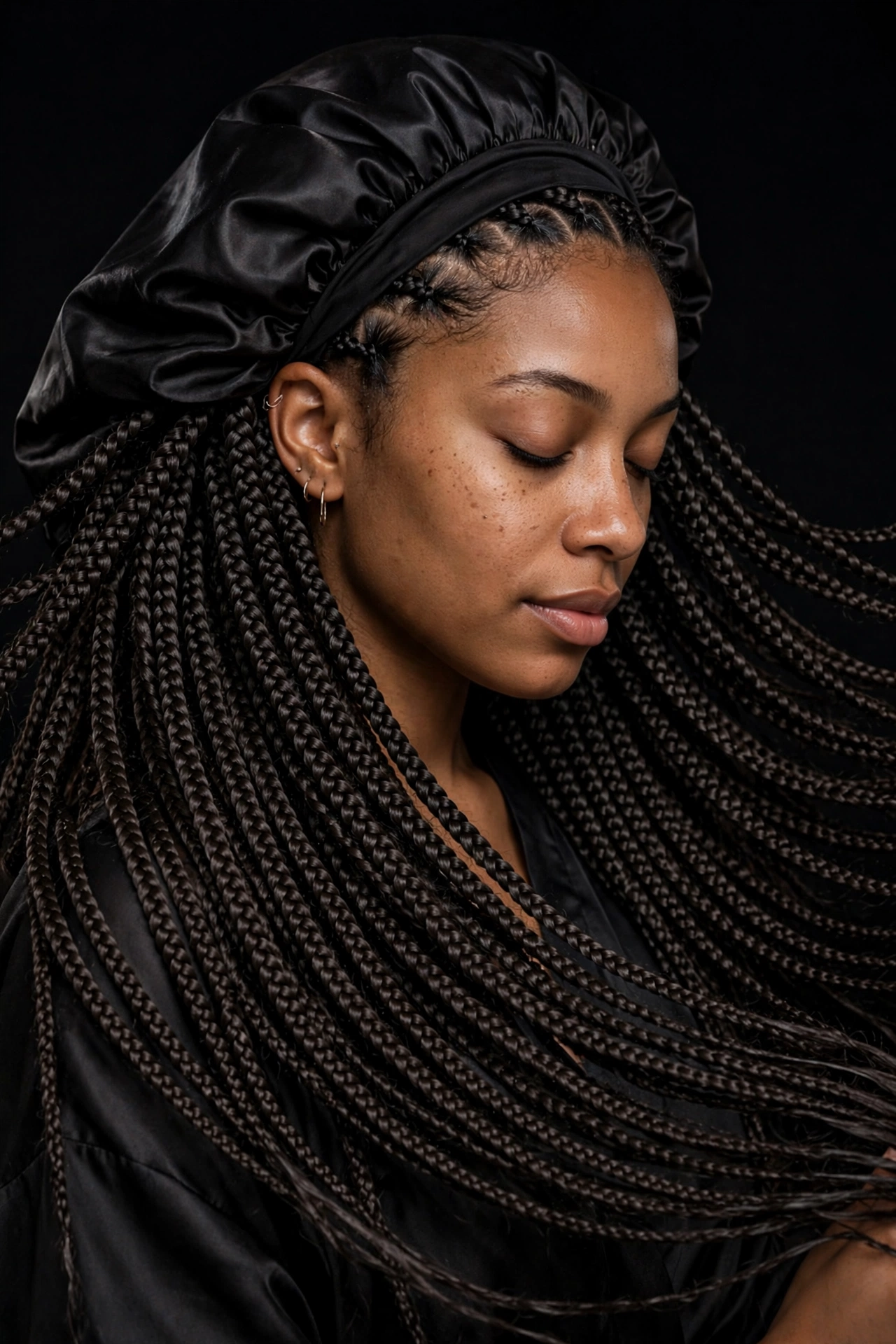
A knotless install is an investment — protect it like one. The nightly routine is non-negotiable: a satin or silk bonnet every single night, no exceptions. Cotton pillowcases create friction that frizzes the roots and roughs up the parts; satin keeps everything smooth. For very long sets, loosely coil the braids into a topknot before the bonnet goes on — never tight, just contained.
Moisture is the second pillar. Your scalp is still skin, and braids do not pause its needs. Once a week, part the braids in sections and apply a light oil — jojoba or grapeseed, not heavy castor oil — directly to the scalp, then massage with your fingertips. Follow with a braid sheen spray on the lengths to keep the synthetic hair looking fresh. If buildup appears at the roots (white flakes, itchiness), do not scratch — use a diluted apple cider vinegar rinse on a cotton pad along the parts.
Yes, you can wash knotless braids. Every 2 to 3 weeks, dilute your shampoo with water in an applicator bottle, squeeze it along the parts, massage gently, and rinse thoroughly — the most common mistake is leaving shampoo residue in the braids, which causes itching. Let them air-dry completely; damp braids under a bonnet are a mildew risk. Between washes, a dry shampoo on the scalp keeps things fresh. With this routine, a medium knotless set genuinely lasts 6 to 8 weeks. For contrast, if you ever want a break from braids entirely, low-maintenance short curly styles and a bouncy blowout are the lowest-effort alternatives worth knowing.
FAQs About Knotless Braids
These are the five questions I get asked about knotless braids more than any others — answered straight, no fluff.
How long do knotless braids last?
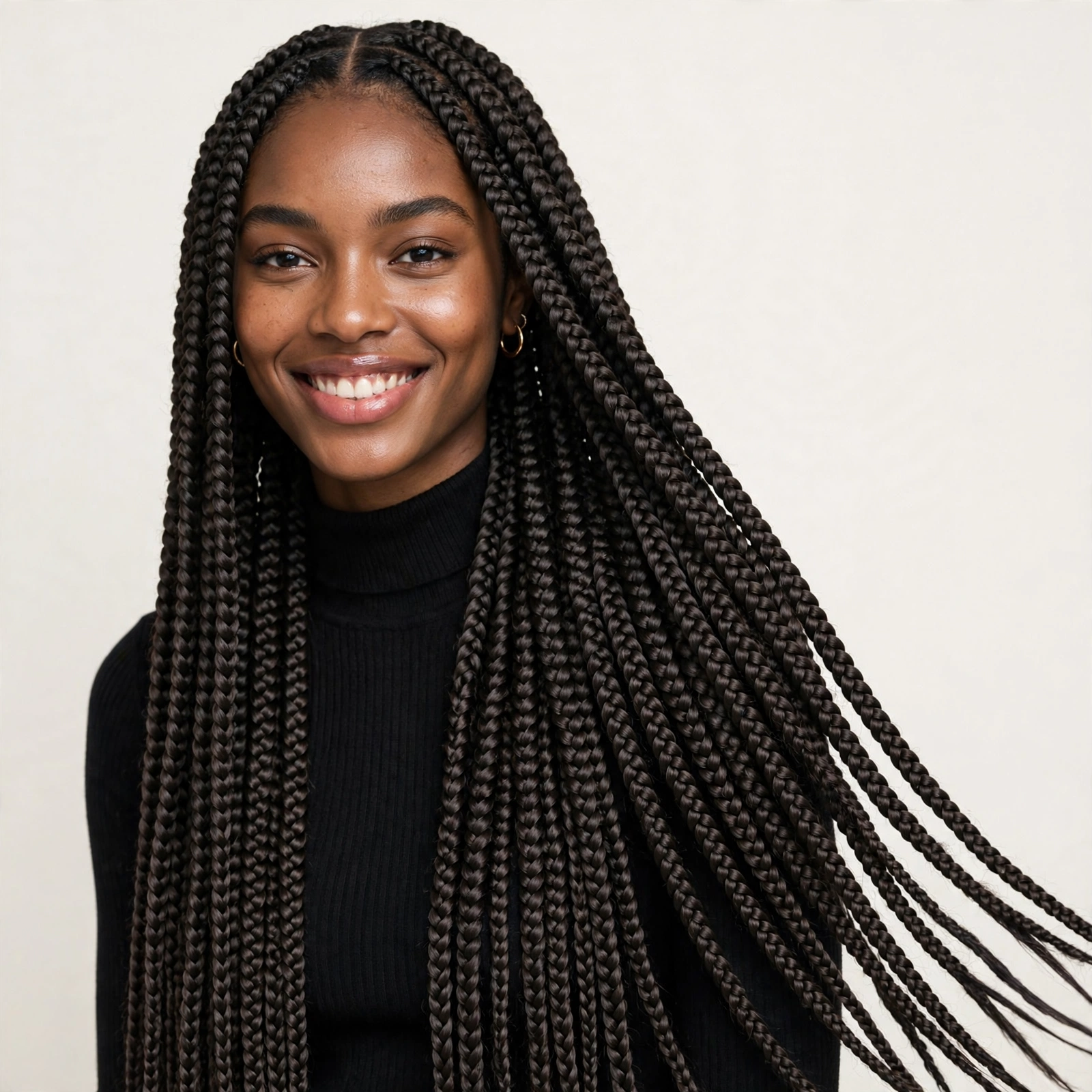
A medium knotless install lasts 6 to 8 weeks with proper care. Smalls can stretch to 8 to 10 weeks; jumbos usually look fresh for 3 to 5. The real signal is your new growth: once the roots have grown out more than an inch and the parts are getting fuzzy, it is time to take them down. Wearing braids past their prime is how breakage happens — the weight of grown-out braids pulls on new growth.
Do knotless braids hurt?
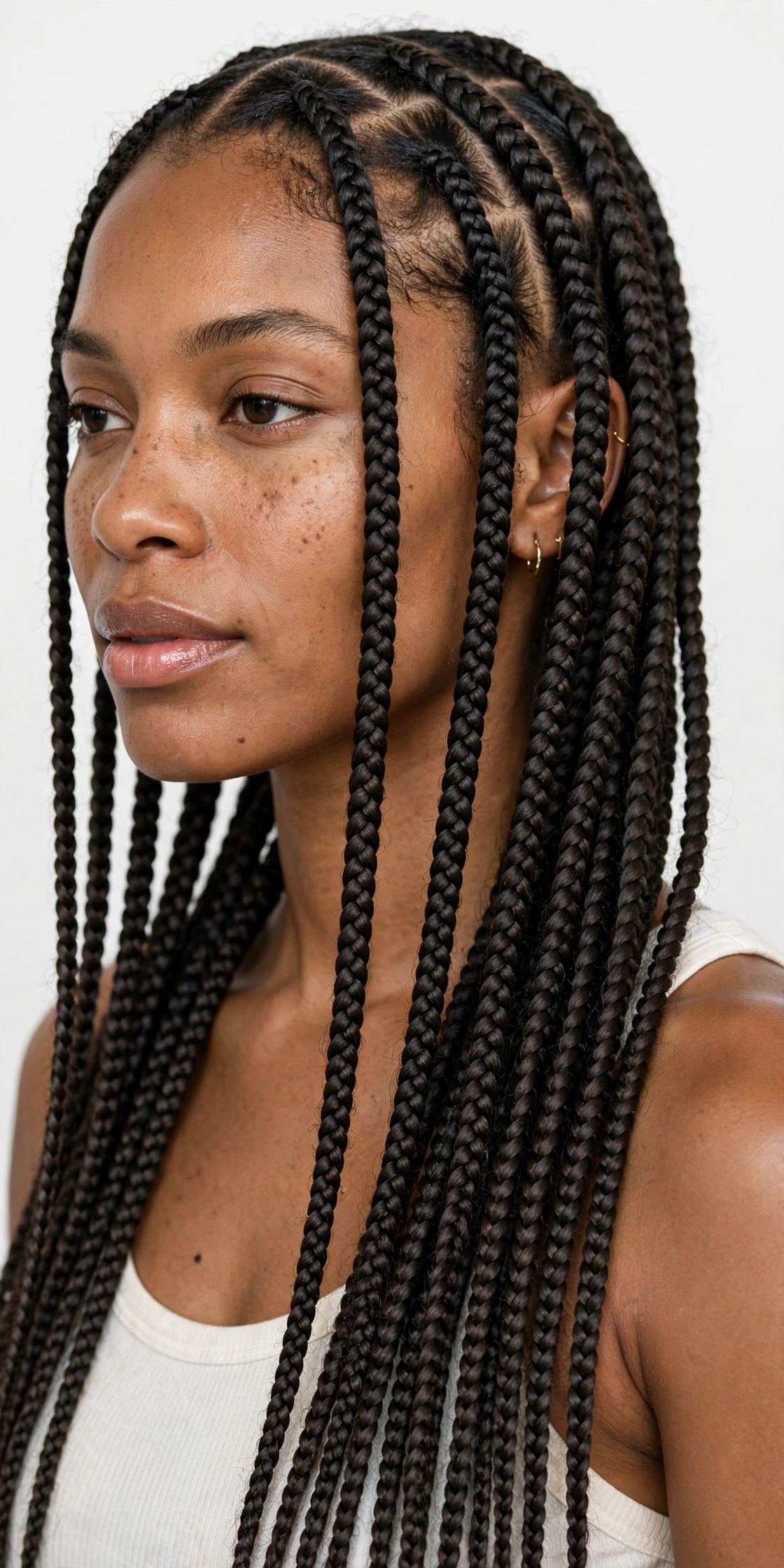
They should not. That is the entire point. You might feel mild tightness for the first day as your scalp adjusts, but there should be no throbbing, no bumps, and no headache. If your braider is pulling hard enough to hurt, speak up in the moment — a good braider will loosen her grip without attitude. Pain is not the price of neat braids; it is a sign something is wrong. Essence’s stylist breakdown of knotless braids makes the same point: the feed-in technique exists specifically to end the era of painful installs.
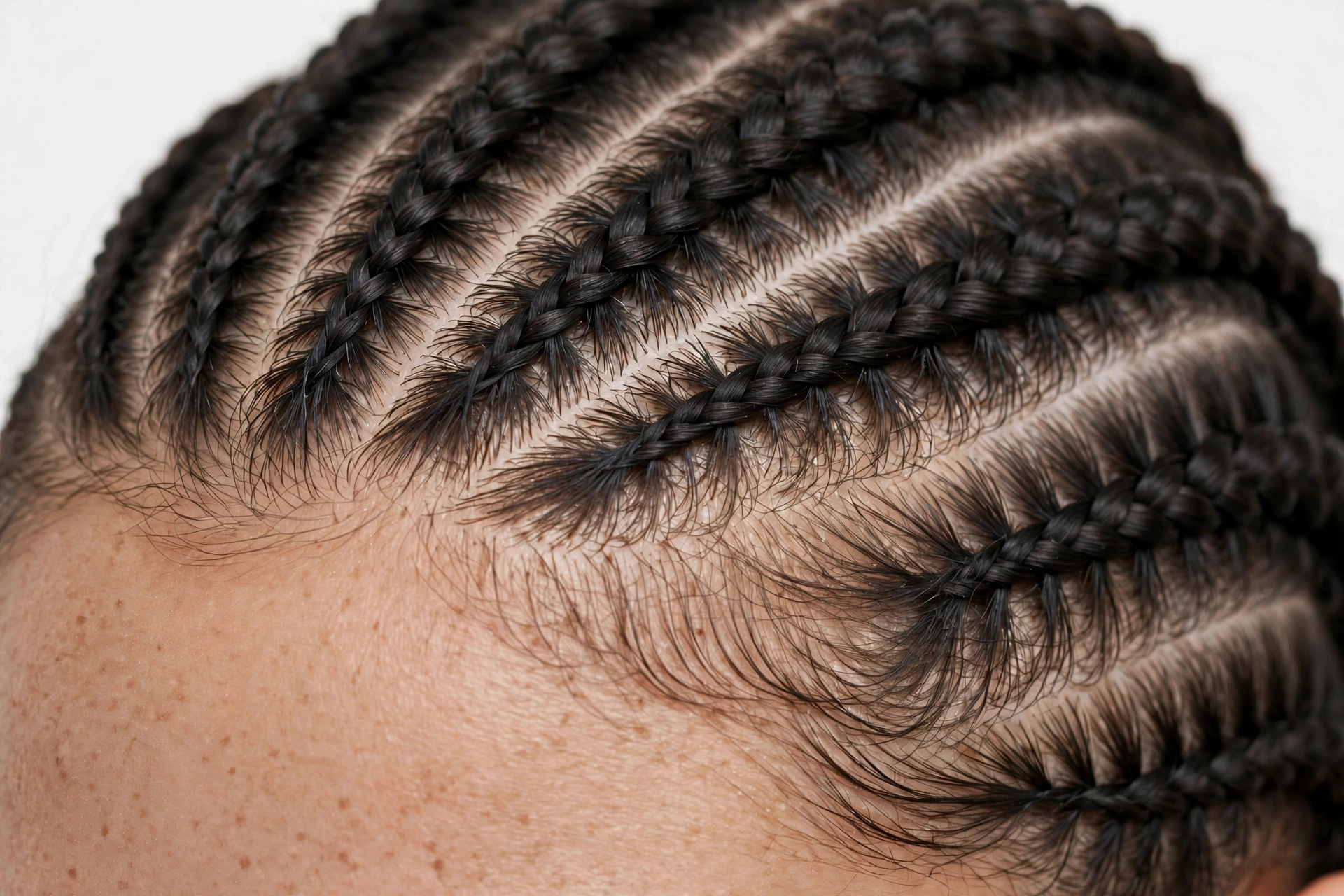
How long does it take to install knotless braids?
Plan for 4 to 8 hours depending on size and length. Smalls: 7 to 9 hours. Mediums: 5 to 7 hours. Large: 4 to 5 hours. Jumbos: 3 to 4 hours. The feed-in technique is slower than knotting, which is why knotless costs more — you are paying for the braider’s time and skill. Eat a real meal before your appointment, bring water and a charger, and do not schedule anything important for that evening. Rushing a knotless install is how you get sloppy roots.
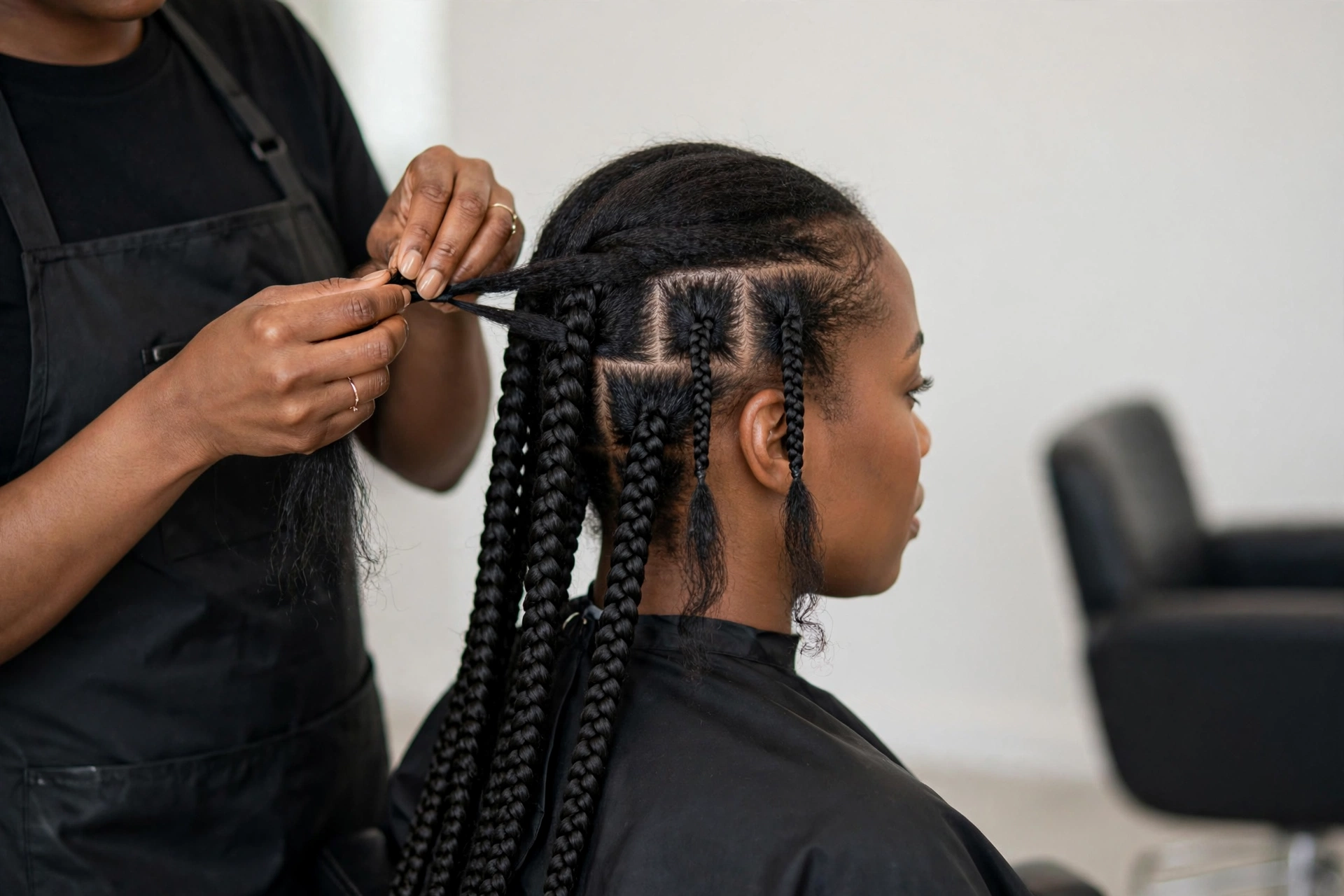
Can you wash knotless braids?
Yes — and you should, every 2 to 3 weeks. Dilute shampoo with water in an applicator bottle, apply along the parts, massage gently with your fingertips, and rinse very thoroughly. The number one mistake is leaving product residue in the braids, which causes itching and buildup. Squeeze (do not rub) the lengths with a microfiber towel, then let them air-dry completely before covering them. Never put a bonnet over damp braids.
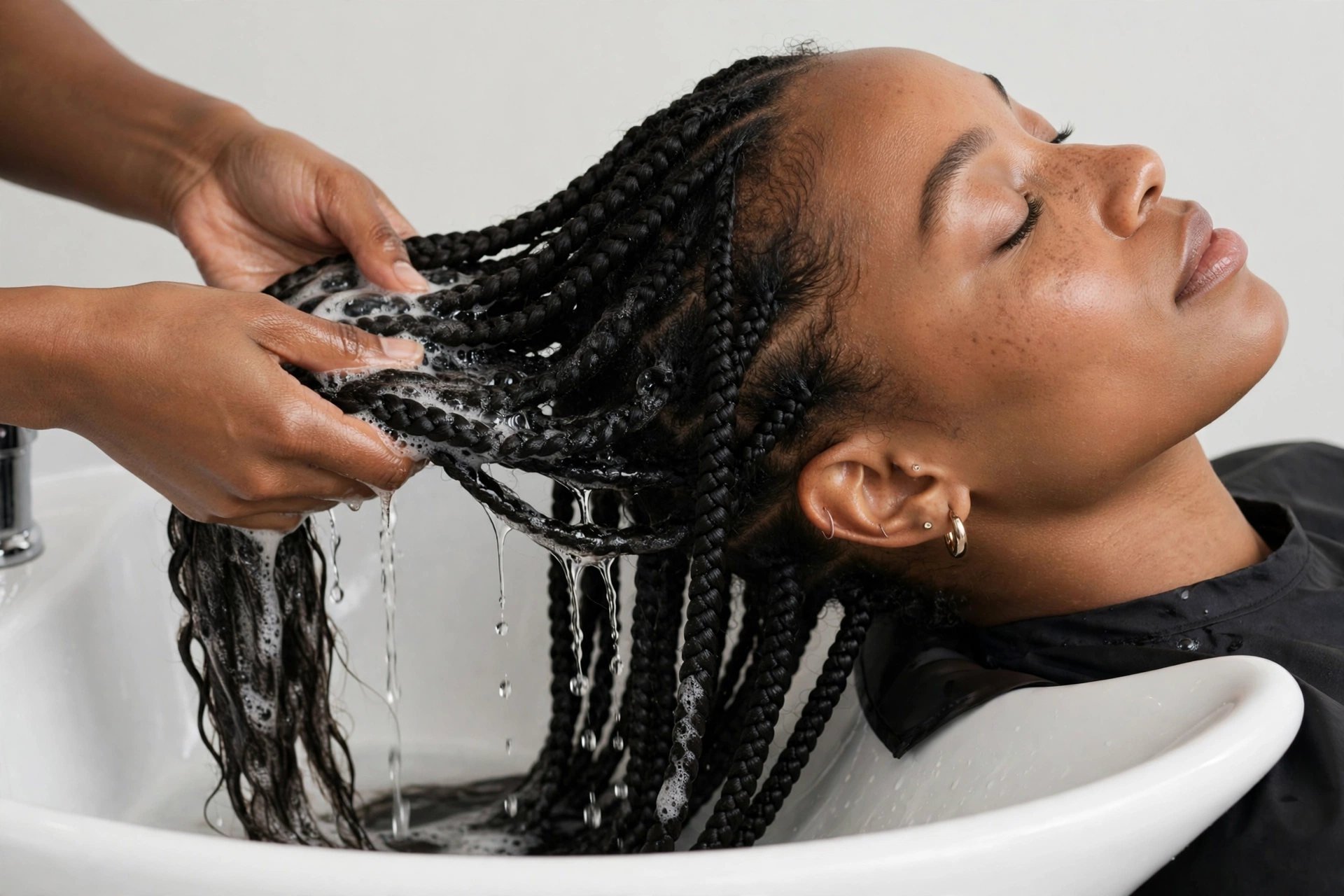
How do you take down knotless braids without breakage?
Patience and lubrication. Work one braid at a time: snip the very end (below your natural hair), unravel the extension hair, then gently separate your shed hair from the braid. Spray each braid with a detangling leave-in before you start pulling it apart — dry takedown is where breakage happens. Expect a lot of shed hair; that is normal accumulation from 6 to 8 weeks, not damage. After takedown, do a full wash day: clarify, deep condition for 20 minutes, and give your hair at least a week of rest before the next install.
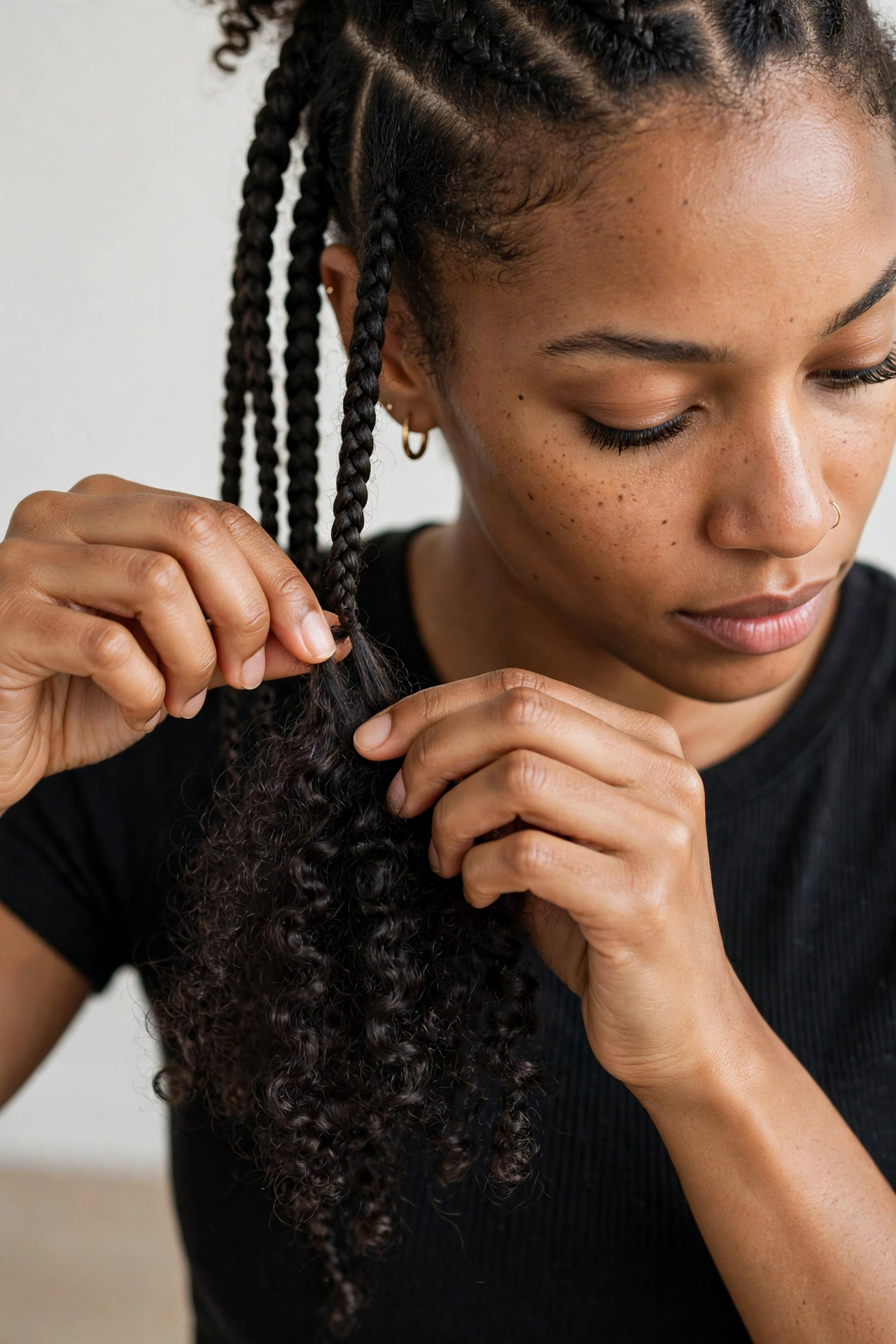
Final Thoughts
Knotless braids earned their 2026 crown honestly. They took everything people loved about braids — the length, the versatility, the weeks of not thinking about your hair — and removed the one thing nobody loved: the pain. The feed-in technique is gentler on your edges, lighter on your head, and more natural-looking than knotted braids ever were.
If you take one thing from this guide, let it be this: choose your braider like you choose a dentist. Look at her parting work, ask about her touch-up policy, and do not bargain-hunt on the install that sits on your head for two months. A great knotless set from a skilled braider will have you getting compliments in week seven. A rushed cheap set will have you counting the days until takedown.
Book the appointment. Bring the reference photos. And enjoy the strangest luxury of all — braids so comfortable you forget you are wearing them.
Conclusion
Knotless braids continue to dominate protective styling in 2026 because they deliver everything women want: comfort, versatility, and hair health. Unlike traditional box braids, the feed-in technique eliminates tension at the roots, which means less breakage, less pain, and edges that stay intact. From waist-length goddess braids to chic bob-length styles, there’s a knotless look for every occasion.
To get the most from your install, moisturize your scalp regularly with a lightweight oil and wrap your braids in a silk scarf at night. Most styles last six to eight weeks with proper care. Whether you’re protecting natural hair or simply want a low-maintenance statement look, knotless braids in 2026 prove that protective styles can be both healthy and head-turning.