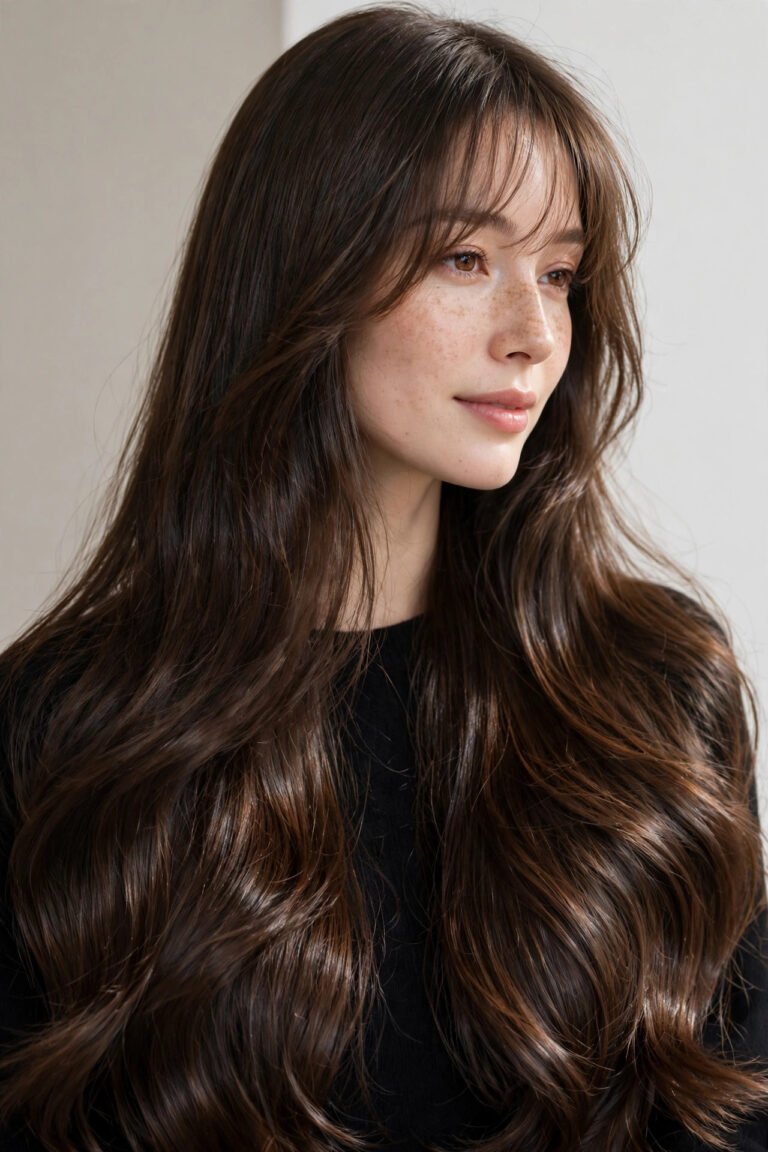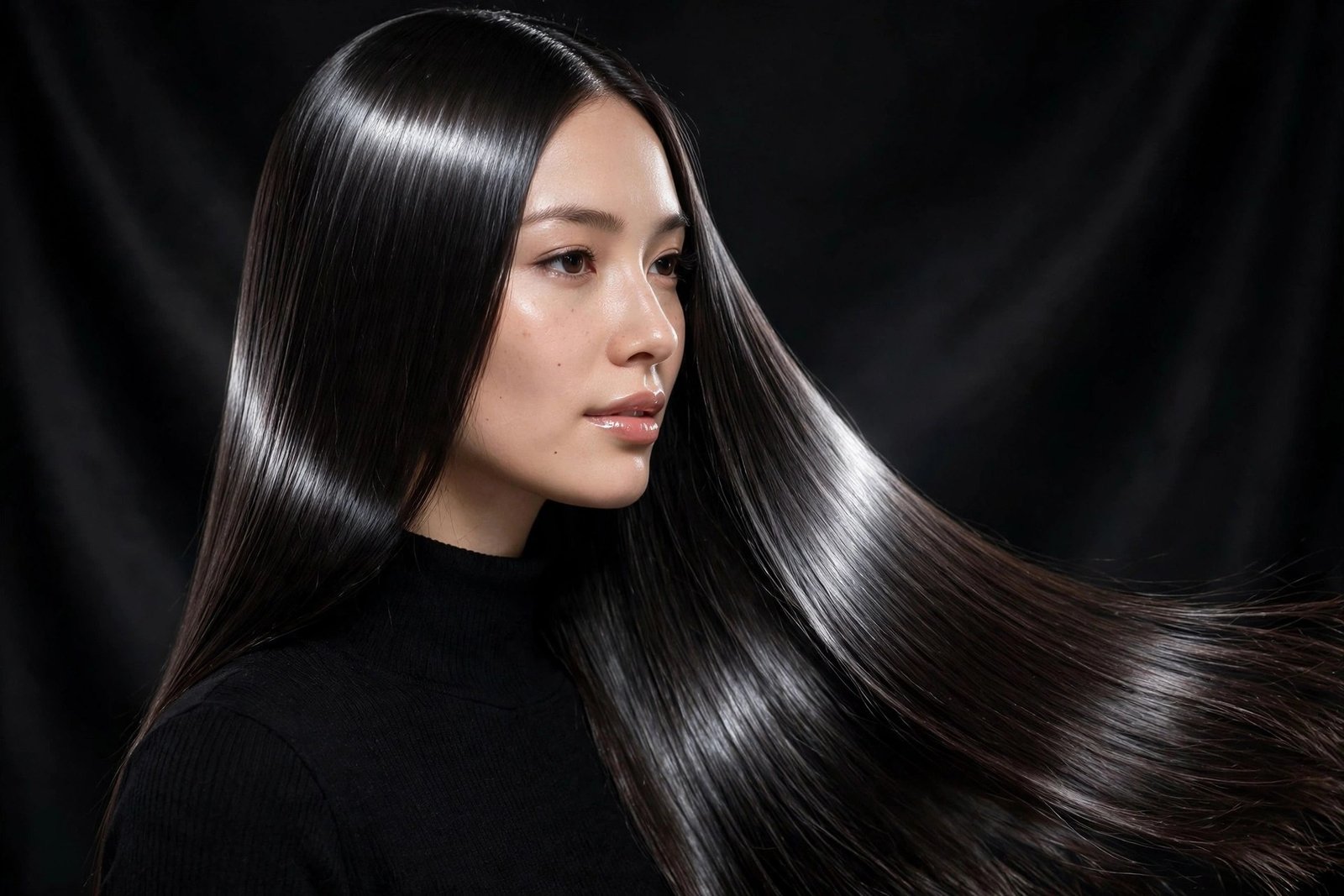
Glass Hair Women 2026: 16 Mirror-Shine Styles
If you’ve been on Pinterest lately, you’ve seen it — that impossible, liquid-looking hair where the light slides across it like a pane of wet glass. That’s glass hair, and if you’re a woman eyeing the trend in 2026, let me be straight with you before you go further: this is not a wash-and-go hairstyle. Glass hair women post about online is the result of healthy hair, a precise blowout, and a flat iron in the right hands. Skip any one of those steps and you get “sort of straight hair,” not the mirror.
I’ve watched this trend move from Korean beauty salons to every red carpet and bridal board in the last few years, and I’ve also watched women fry their hair chasing it with the wrong tools. So this guide is the honest version. You’ll get what glass hair actually is, whether your hair can pull it off (with a checklist that might save you a bad salon visit), the exact step-by-step routine that creates the shine, sixteen styles to choose from, the salon treatments genuinely worth your money, and how to keep frizz from ruining the effect between washes.
Here’s what I’m not going to do: I won’t pretend every hair type achieves the same result, I won’t recommend products I wouldn’t put on a client’s head, and I won’t tell you a drugstore flat iron on dry damaged hair will get you there. The women who wear glass hair well all share one thing — hair that’s in genuinely good condition first. Everything else is technique.
By the end of this article you’ll know your starting point, your routine, your style, and your maintenance plan. That’s the whole game. Let’s start with what glass hair really means, because half the confusion about this trend comes from the name itself.
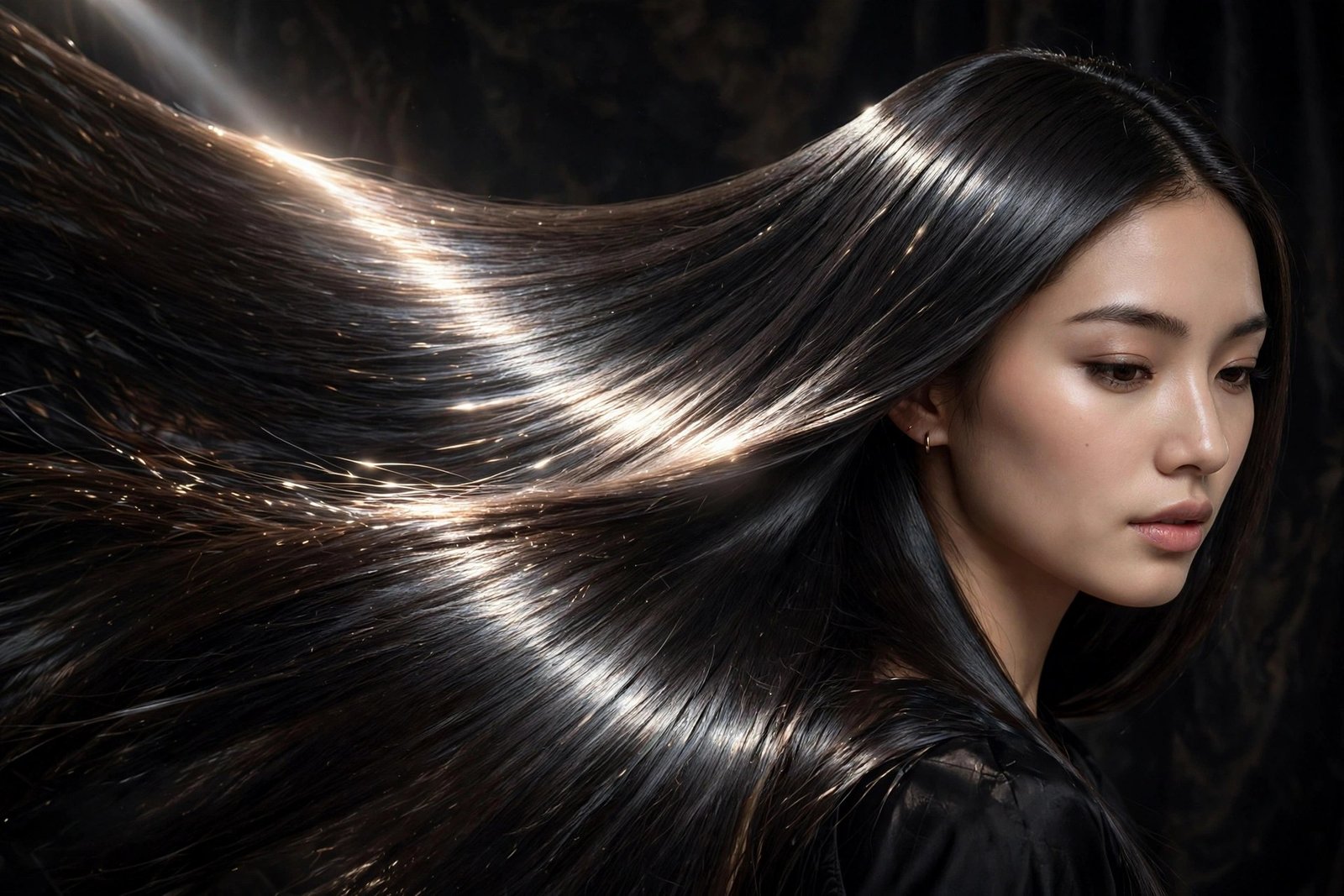
What Is Glass Hair, Really?
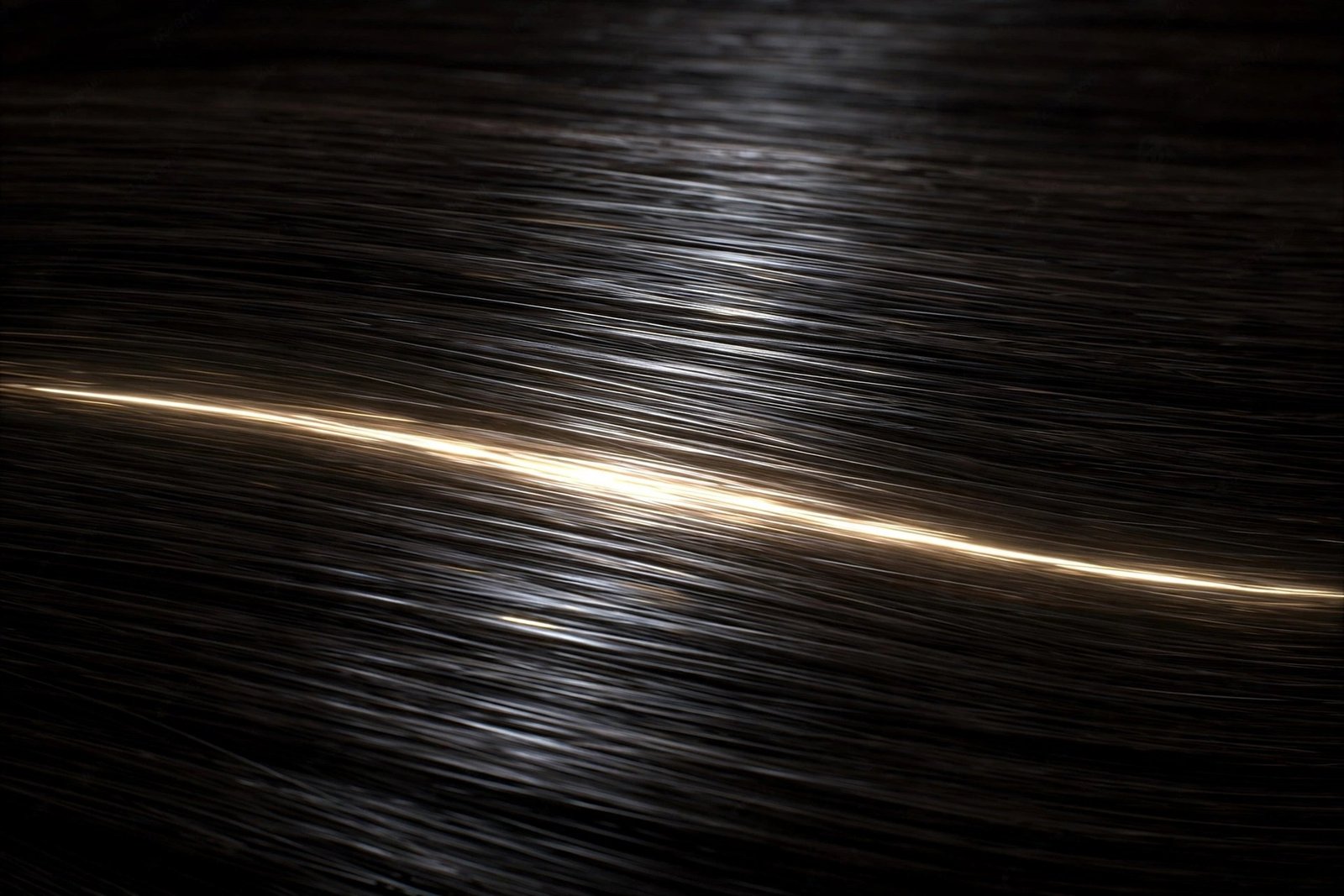
Glass hair is ultra-smooth, pin-straight hair with a mirror-like reflective quality — light bounces off the surface instead of scattering through it. When your hair is healthy, the outer layer of each strand (the cuticle) lies flat like roof shingles, and a flat cuticle reflects light in one clean direction. When hair is damaged or frizzy, the cuticle lifts and light scatters everywhere, which is why damaged hair looks dull no matter how much serum you pile on. Glass hair is, at its core, a flat-cuticle hairstyle. The “glass” is physics, not magic.
The look came out of the Korean beauty scene, where precision blowouts and gloss treatments have been standard for years. It jumped to Western Pinterest and salons because it photographs beautifully — and because it reads as expensive. A one-length blunt cut with a mirror finish says “I take care of myself” louder than almost any other hairstyle right now. Celebrities have worn it on runways and red carpets for seasons, and in 2026 it’s firmly mainstream: brides request it, offices are full of it, and the Pinterest boards for glass hair women keep adding thousands of saves a week.
What separates glass hair from “just straightened hair”? Three things. First, the reflection — genuine glass hair has a continuous shine line that runs down the length without breaking up into frizz or flyaways. Second, the precision of the cut — glass hair almost always sits on blunt, one-length cuts or very clean long layers, because wispy, shredded ends scatter light and kill the mirror. Third, the health baseline — this style cannot hide damage. It amplifies whatever your hair’s condition actually is, good or bad. Split ends under glass hair look worse, not better.
One more thing worth knowing: glass hair is a finish, not a cut. You can wear it on a bob, a lob, waist-length hair, with bangs or without. The cut gives the shape; the finish gives the glass. Below you’ll find sixteen styles that all use the same mirror finish on different shapes, lengths, and colors — pick the one that fits your hair and your life, not just the one that looks best in a photo.
Can Your Hair Do Glass Hair? (Honest Hair-Health Check)
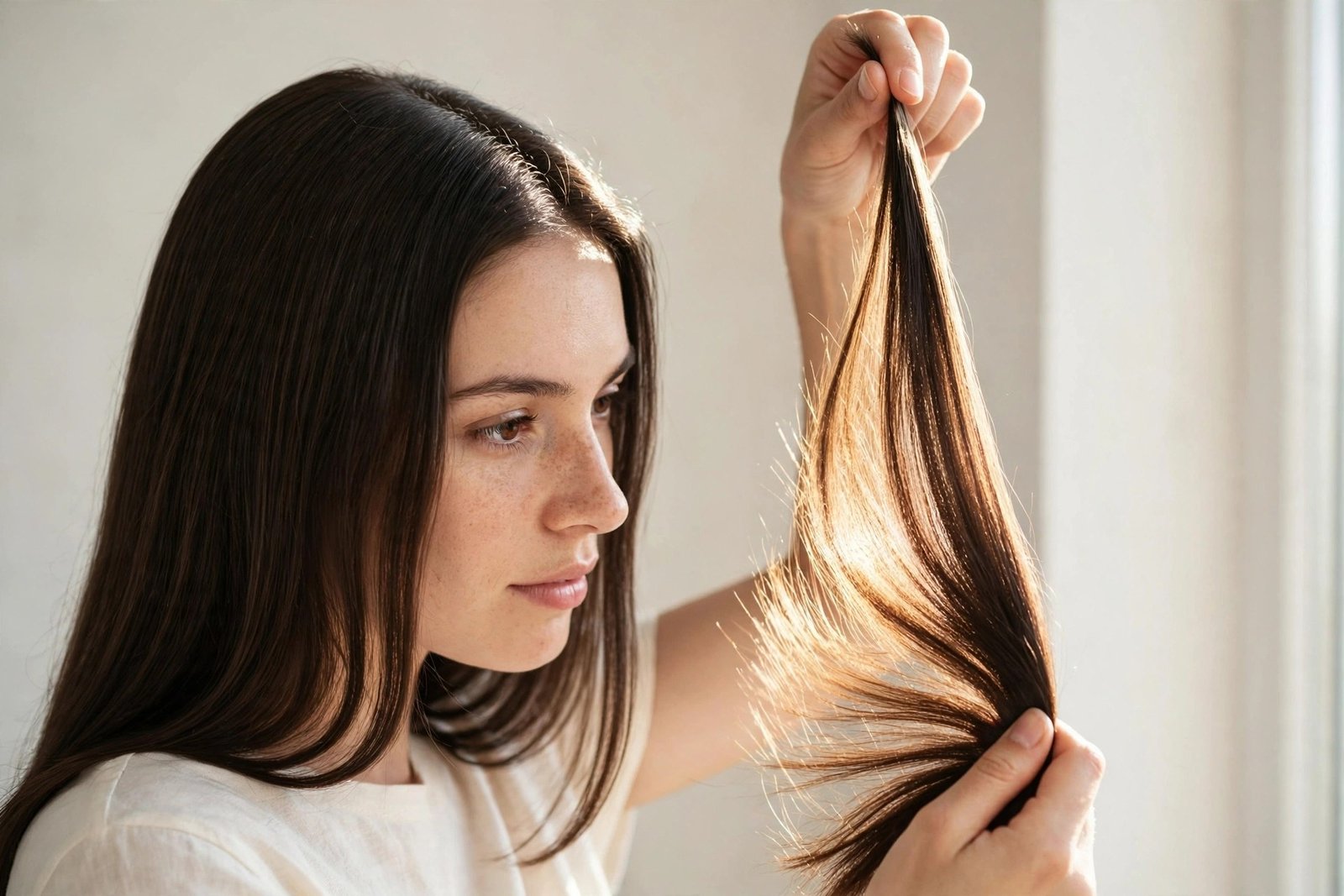
Before you book anything or buy anything, run this honest check. Glass hair fails on damaged hair every single time, and I’d rather you hear that from me than discover it after an expensive salon appointment. Answer these questions truthfully and you’ll know exactly where you stand.
First: how does your hair behave when air-dried? If it dries reasonably smooth with minimal frizz, your cuticle is in decent shape and you’re a good candidate. If it dries into a puff of frizz even after conditioner, your cuticle is raised and you’ll need weeks of repair work before the mirror shows up. Second: do you have split ends? Run your fingers down a section of hair — if the ends feel rough or catch, the glass finish will spotlight every one of them. A fresh trim is non-negotiable for this style.
Third: what’s your chemical history? Hair that’s been bleached multiple times, relaxed, or permed within the last few months is porous — it drinks in product and still looks dull because the surface is too rough to reflect light evenly. That doesn’t mean glass hair is impossible forever; it means you need a deep-repair phase first (mask treatments, a gloss, no more lightening for a while). Fourth: density. Fine hair can absolutely do glass hair — it actually gets shiny faster — but it needs volumizing prep at the roots so it doesn’t fall flat against the scalp. Thick, coarse hair takes longer to smooth but holds the finish beautifully once it’s there.
The verdict most women get from this check: “your hair can do it, but not this week.” That’s normal and fine. The women with the best glass hair spent a month or two getting their hair healthy first — regular trims, weekly masks, less heat — and then the routine below took them the rest of the way. If your hair is already healthy, virgin, and medium to long, you’re the easy case and the mirror is one good blowout away.
The Glass Hair Routine: Step by Step
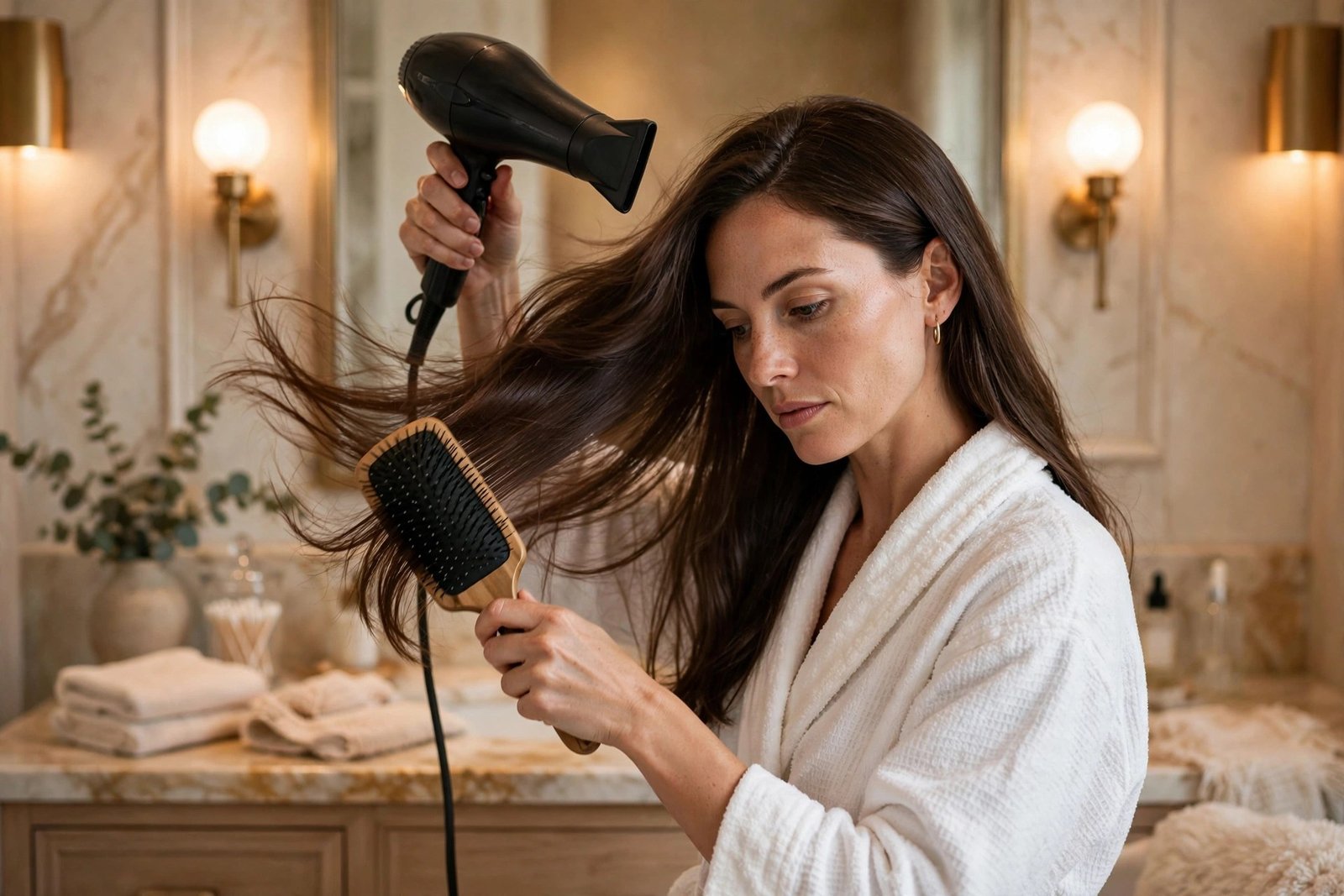
This is the part that matters. The shine isn’t one product — it’s a sequence, and the order counts. Do it right and the mirror shows up. Skip a step and you’ll wonder why your hair looks “nice but not glass.” Set aside forty-five minutes to an hour the first few times; you’ll get faster.
Start in the shower. Wash with a smoothing or keratin-infused shampoo, but condition like you mean it — a rich conditioner or a hair mask, left on for five full minutes, combed through with a wide-tooth comb while it sits. This is where the flat cuticle begins. Rinse with cool water, not hot, because hot water roughs the cuticle back up. Gently squeeze (don’t rub) with a microfiber towel or an old cotton T-shirt — regular terry towels create frizz exactly where you can’t afford it.
On damp hair, apply your prep products in this order: a heat protectant through the mid-lengths and ends first (non-negotiable — flat ironing unprotected hair is how people burn their way out of this trend), then a pea-sized amount of smoothing serum or a lightweight oil, ends only. Heavy oils will make fine hair greasy and limp, so if your hair is fine, keep product to the bottom third. Comb everything through so the product is even — clumps of serum create shiny spots and dull spots, which reads as uneven.
Now the blowout, which is where glass hair is actually made. Fit the nozzle attachment on your dryer — this concentrates the airflow and is the difference between smooth and frizzy. Work in sections, and use a paddle brush, pulling each section taut while you direct the nozzle downward, from roots to ends, always following the hair’s direction. The downward airflow is the whole trick: it pushes the cuticle flat. Dry the roots first, then the lengths. Take your time on each section until it’s completely dry — hair that’s 90 percent dry will frizz as the last bit of moisture evaporates, and you’ll be starting over.
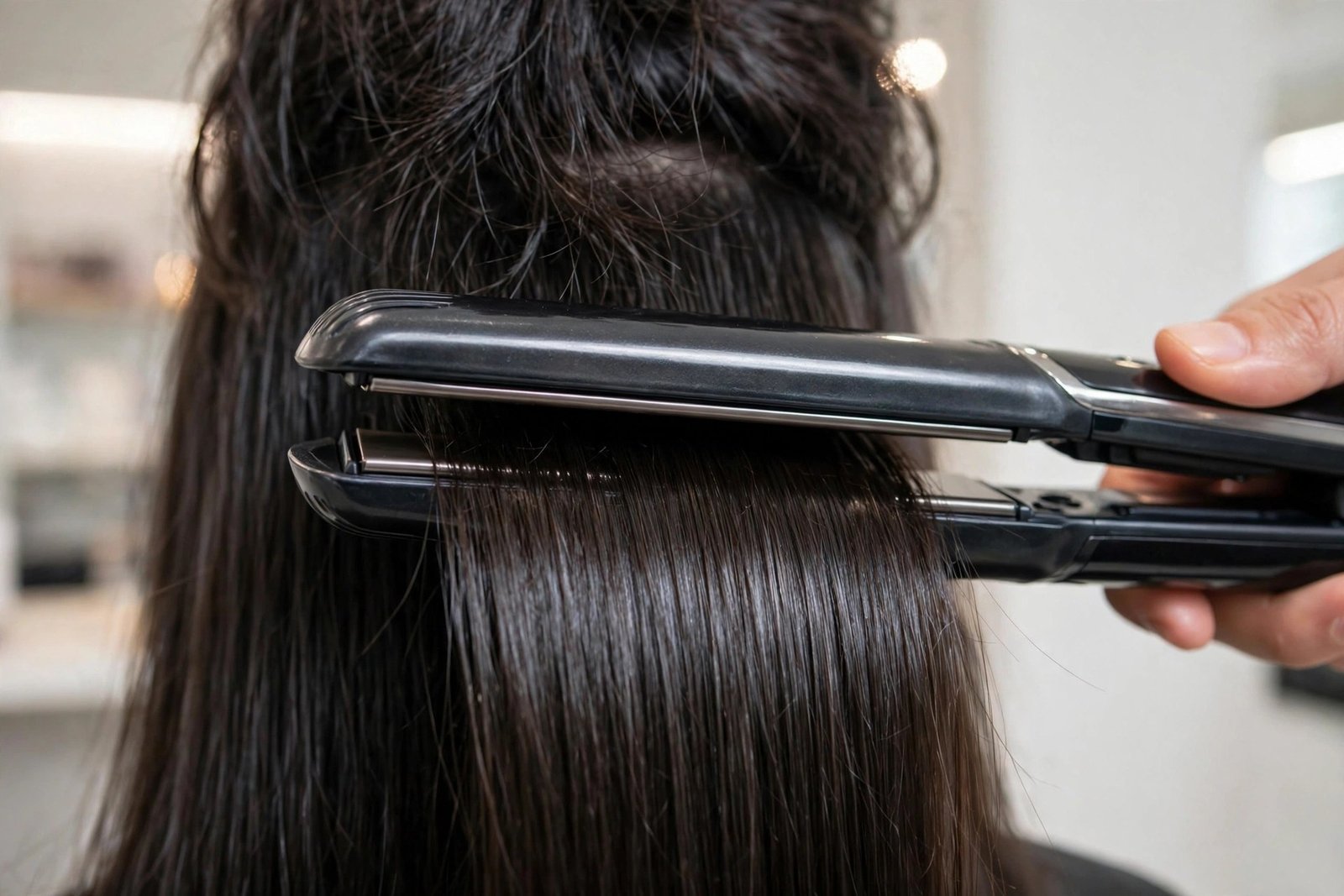
Once every section is bone-dry and smooth, move to the flat iron. This is where precision matters. Take small sections — about an inch wide, no more. Larger sections don’t get evenly heated, and the middle of a thick section stays slightly wavy, which breaks the mirror. Set the iron to the lowest temperature that works for your hair: fine hair usually needs around 300–340°F, medium hair 350–375°F, coarse hair up to 400–410°F. Higher than you need just creates damage that shows up as dullness in a week. One slow pass per section, iron moving steadily, never stopping in one spot. If a section isn’t straight after one pass, your section was too thick — split it and try again rather than re-ironing.
Finish with shine, and go light. A drop or two of lightweight shine serum or a gloss mist over the surface, smoothed with your palms — not combed, which can disturb the finish. Some women finish with a blast of the dryer’s cool shot, which sets the cuticle flat. Stand in front of a window or a lamp and check for the shine line: a continuous streak of light running down the hair. If you see it, you’ve done it. If you see it in patches, those patches got less heat or less tension — you know what to fix next time.
Glass Hair Styles 1–3: The Classic Mirror Cuts
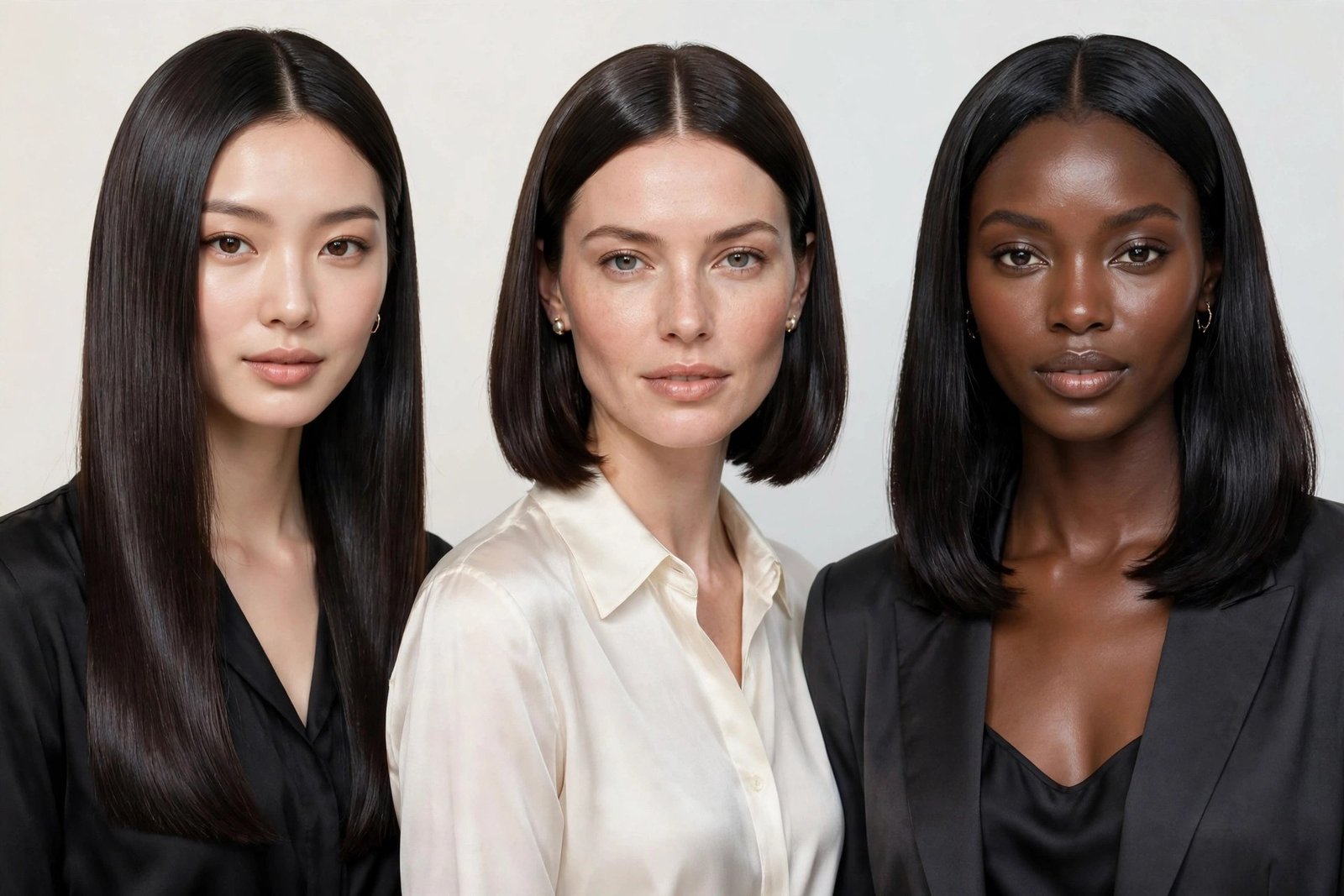
If you want the purest version of this trend, start here. These are the cuts that made glass hair famous — blunt, precise, and built for maximum reflection. Everything about these styles is about the edge: sharp, clean, and deliberate.
1. The One-Length Blunt Cut
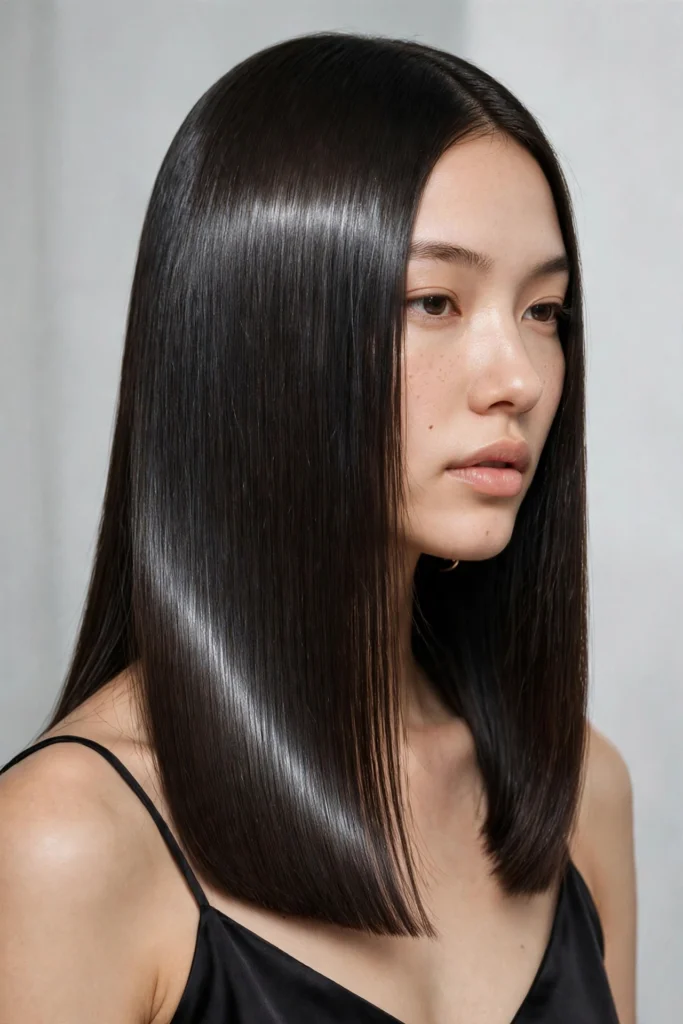
This is the glass hair archetype. Hair cut to one even length — usually between the collarbone and mid-back — with a blunt, sharp bottom edge and no layers. Why it works: a single clean edge gives light one uninterrupted surface to bounce off, and the blunt ends read as healthy and intentional. Ask your stylist for a true one-length cut with the ends cut straight across, not point-cut or thinned. On medium to thick hair this style is almost self-shining once you do the routine. On fine hair, it can look thin at the bottom — ask for a slightly shorter length and keep the ends fresh with trims every six to eight weeks, because a blunt edge shows damage immediately.
2. Blunt Bob with Center Part
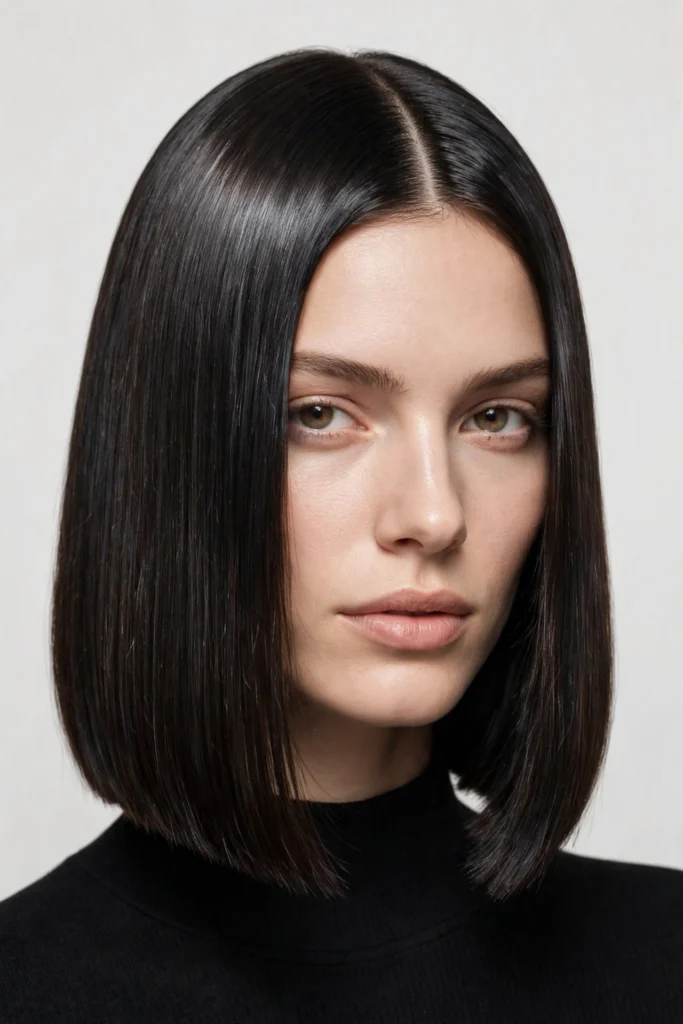
The bob version is the most pinned glass hair style of 2026, and it’s easy to see why. A chin-to-shoulder-length blunt bob with a razor-sharp center part doubles the mirror effect — the part creates a symmetry line and the short length means the shine reads instantly, even from across the room. This cut suits oval, heart, and square faces beautifully; the center part elongates rounder faces too, though very round faces should ask for a slightly longer, jaw-skimming length. The maintenance reality: bobs need trimming every four to six weeks to keep that edge crisp, and the center part needs the flat iron right at the roots to lie flat. But day to day, a bob is the fastest glass hair to style — ten minutes with the iron and you’re done.
3. The Sleek Lob
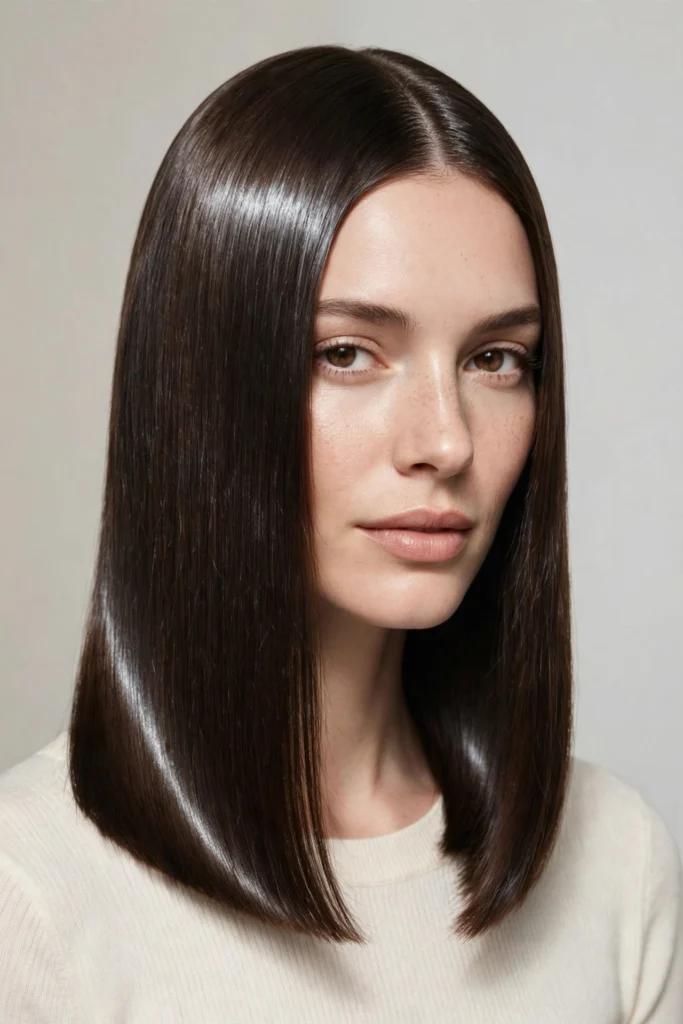
The lob — a long bob hitting around the collarbone — is the compromise cut for women who want the blunt glass look without committing to short hair or growing out long hair. It has the same sharp bottom edge as the one-length cut, just shorter, and it sits in the sweet spot where styling takes twenty minutes instead of forty. This is the style I’d recommend to first-timers: it’s flattering on almost every face shape, it grows out gracefully, and if you decide glass hair isn’t for you, you’re one appointment away from adding layers. Keep the ends blunt and the part clean, and the lob gives you ninety percent of the mirror with half the daily effort of very long hair.
Glass Hair Styles 4–6: Long Glass Looks
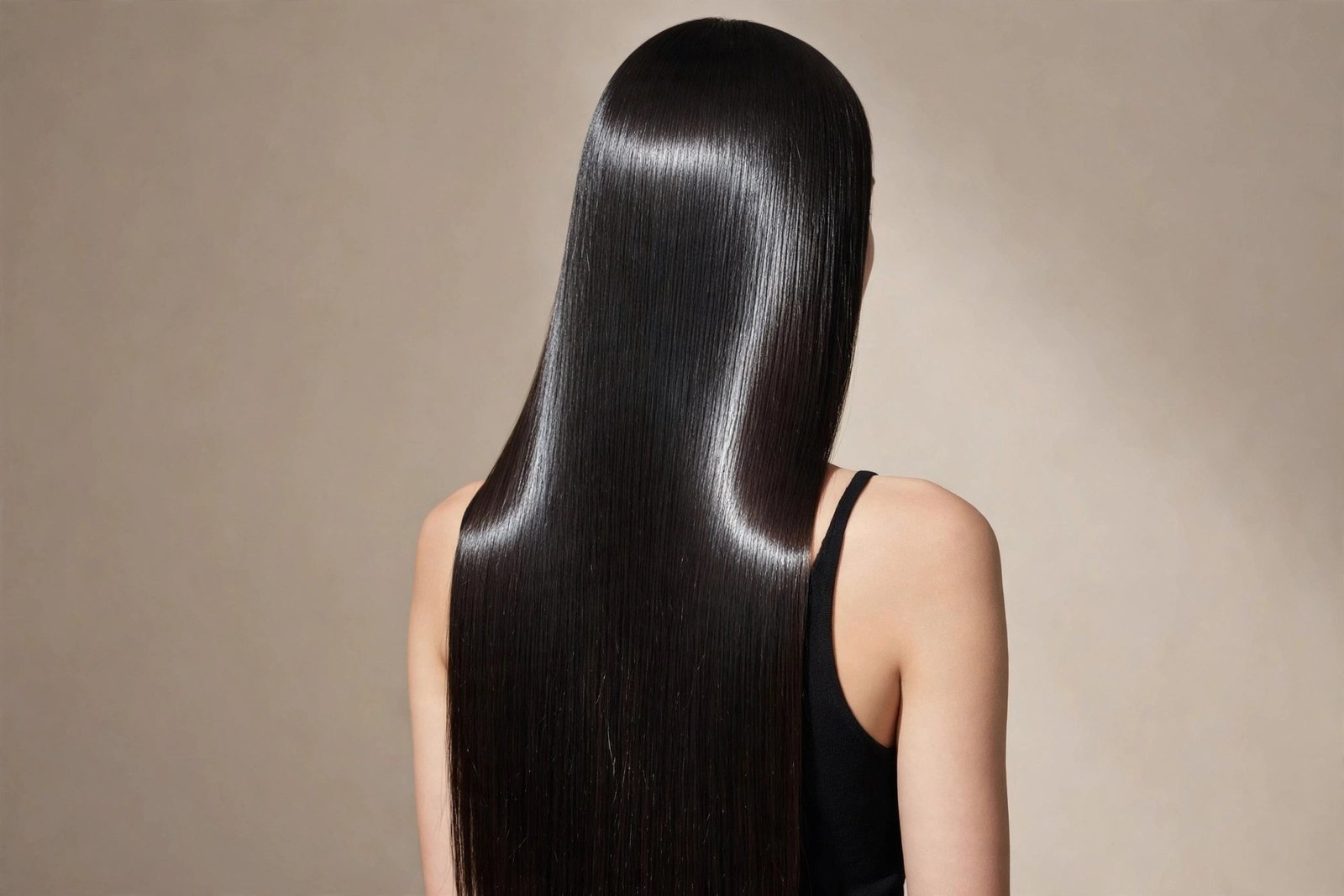
Long hair is where the glass effect is most dramatic — there’s simply more surface for the light to travel across. But long glass hair is also the most demanding: more hair means more blowout time, more flat-iron sections, and zero tolerance for split ends. If you’re committed, the payoff is unmatched.
4. Long One-Length Glass Hair
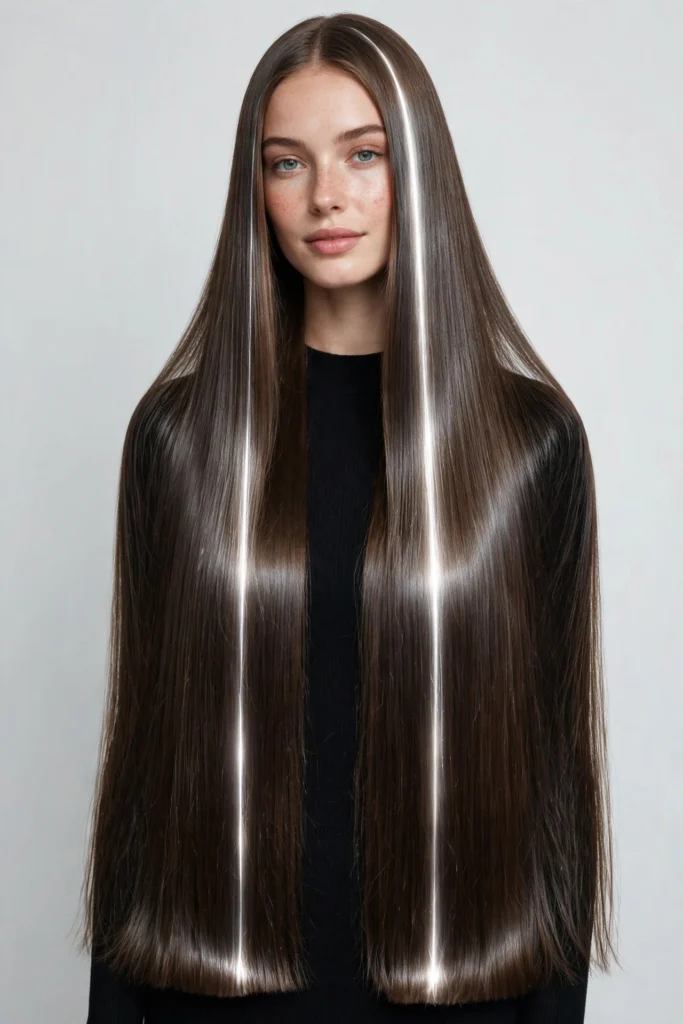
Waist-length or mid-back hair, cut dead straight across, styled to a liquid mirror. This is the showstopper — the style that stops people on the street. The honest truth: it takes a full hour to style from wet, and it needs trims every eight weeks to keep the ends from going wispy. It’s also heavy, so fine hair should skip this length and choose style 5 or 6 instead. For thick, healthy hair, though, nothing beats it. Sleep in a loose low braid or a silk bonnet to protect the finish overnight, and in the morning you can often refresh with just the flat iron on the top layer instead of starting over.
5. Glass Hair with Long Face-Framing Layers
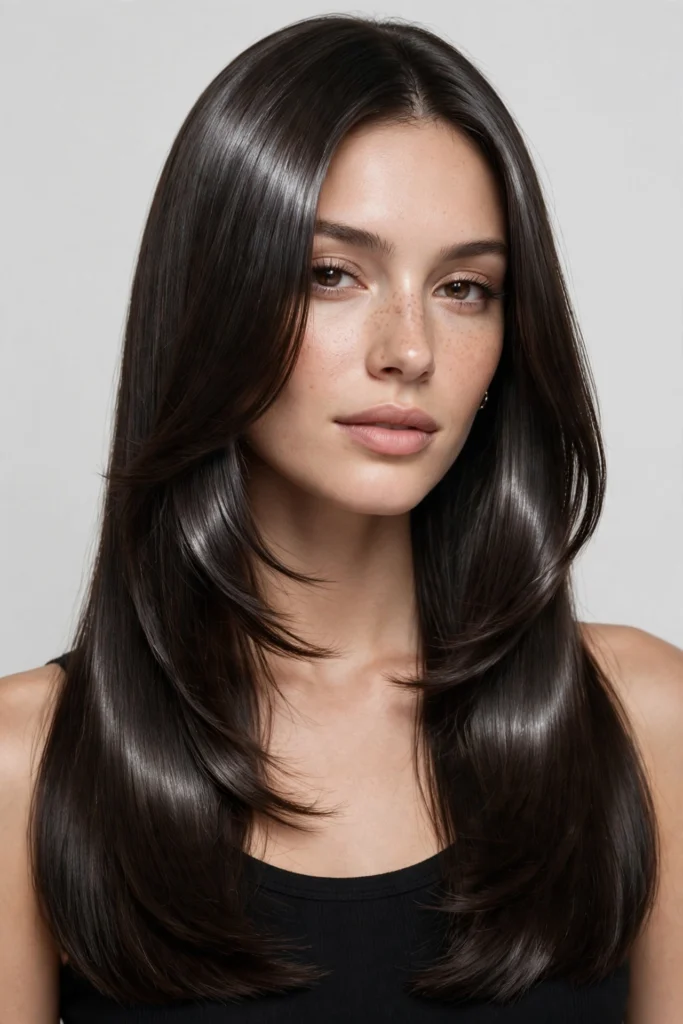
If one-length feels too severe, long face-framing layers are the answer. The back stays one length for the mirror effect, while soft layers around the face (starting at the chin or collarbone) add movement and keep the style from looking like a curtain. This is the most wearable long glass style — the layers photograph beautifully, they flatter every face shape, and they give you styling options like tucking one side behind the ear without breaking the sleek line. The layers need to be long and blended, not short and choppy; choppy layers create frizz points that interrupt the shine. Tell your stylist: “long layers, face-framing only, keep the back blunt.”
6. The Glass Mermaid Length
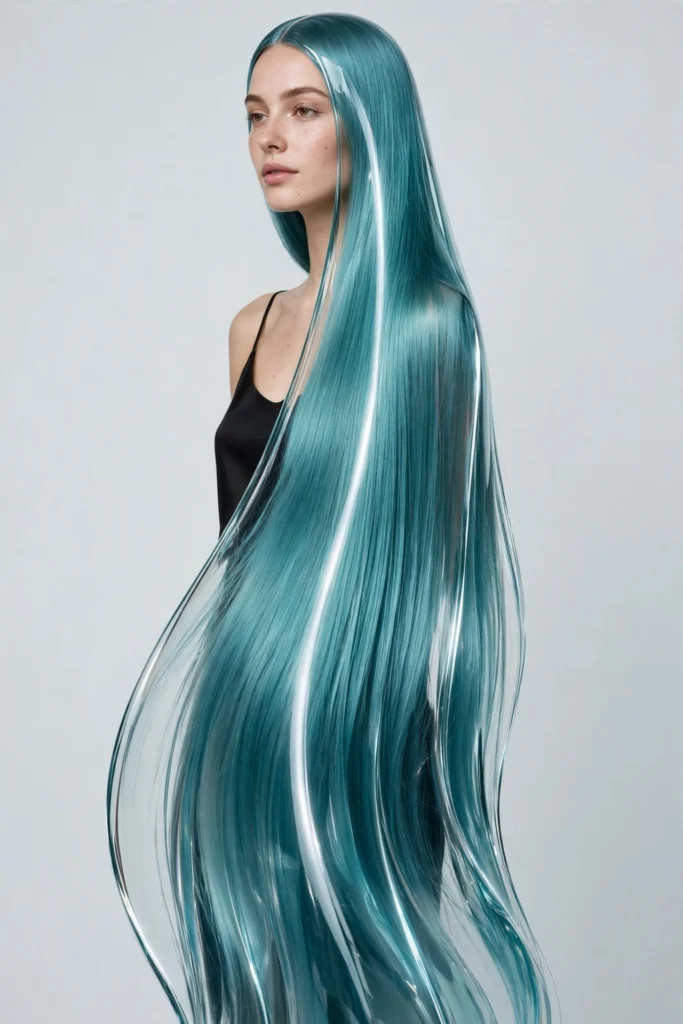
For the women whose hair is already very long — past the waist — glass hair turns it into something almost surreal. At this length the shine line runs for two feet or more, and the effect in motion is genuinely striking. The rules here are strict: this only works on healthy, unbleached or carefully maintained hair, because at this length every centimeter of damage shows. You’ll want a salon gloss every six to eight weeks (more on those below), a silk pillowcase, and the patience for a long routine. This isn’t an everyday style for most women — it’s a special-occasion or content-creator look — but if your hair is already there and healthy, the glass finish is the most dramatic thing you can do with it.
Glass Hair Styles 7–9: Dark, Rich Mirror Shine
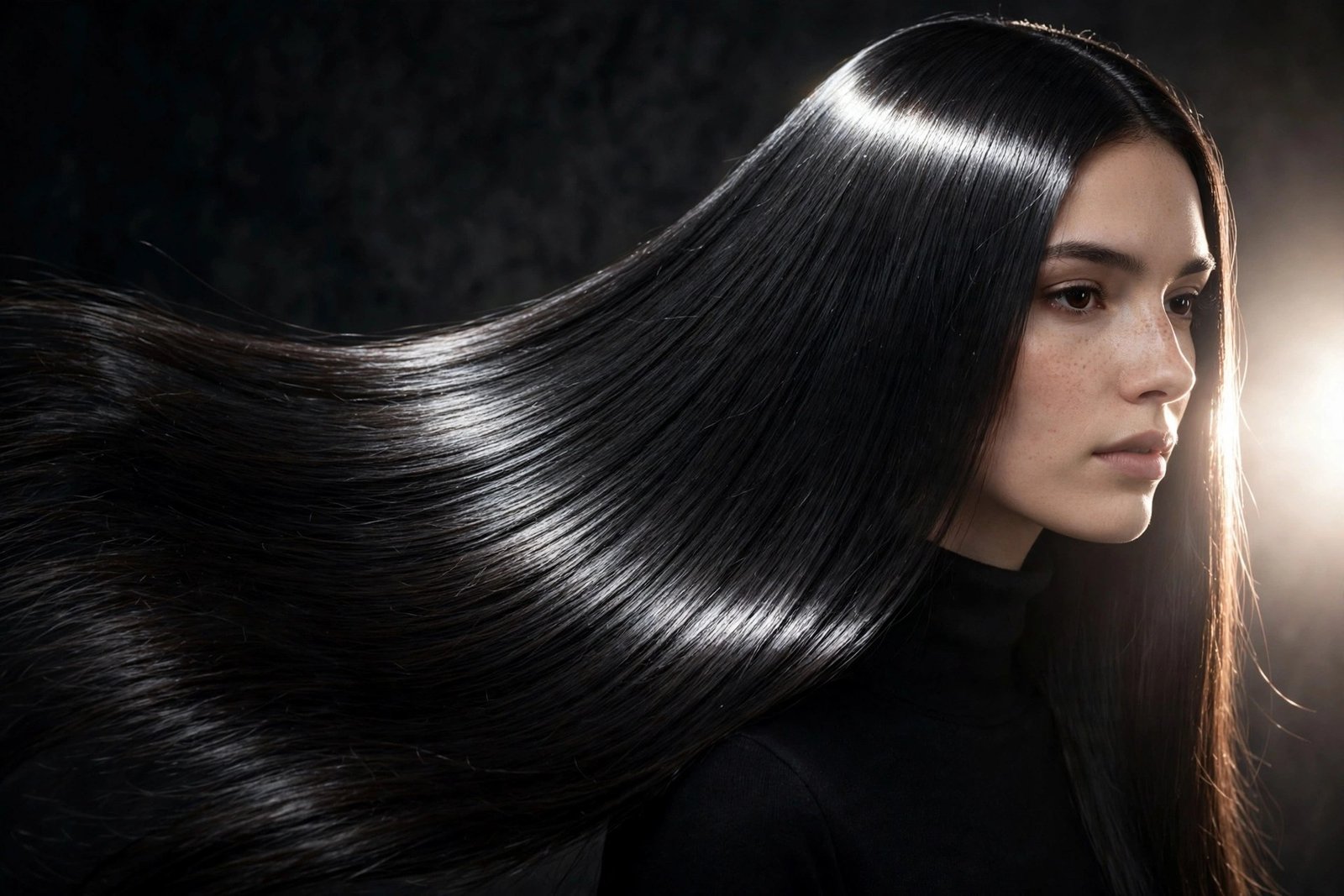
Here’s something stylists know and Pinterest doesn’t always show: dark hair reflects more dramatically than light hair. A dark, glossy base gives the deepest, most liquid-looking mirror. If your hair is naturally dark, glass hair is your home turf.
7. Jet-Black Glass Hair
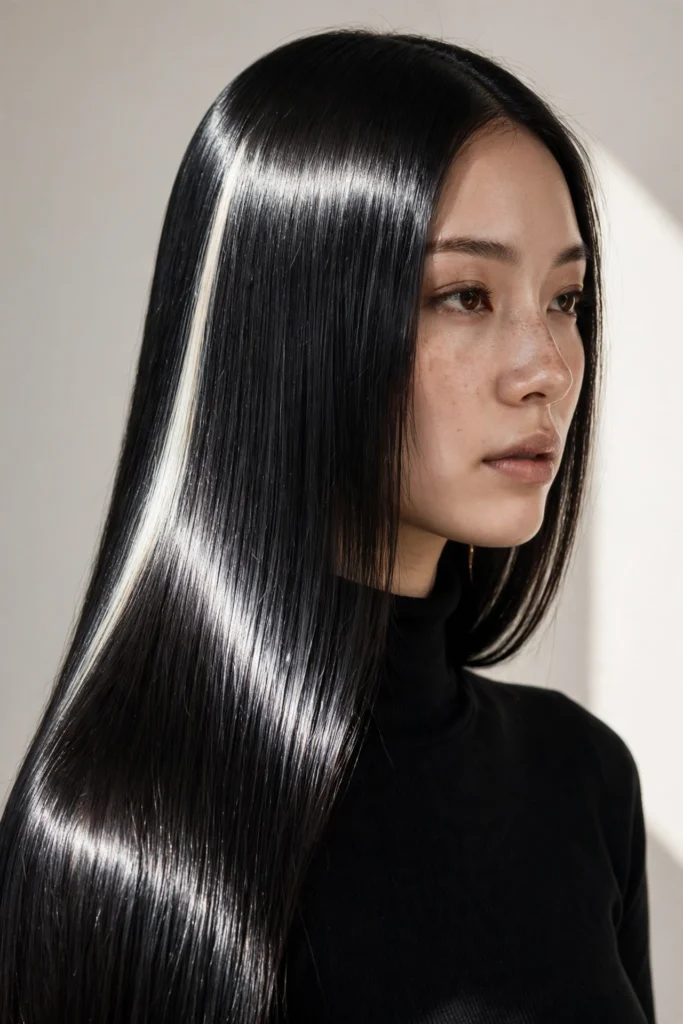
Jet black plus the glass finish is the highest-contrast shine you can get — the dark base makes the light streak look almost white-hot by comparison. This is the style on half the viral glass hair pins, and it works on every skin tone when the black is the right depth (blue-black for cool undertones, soft black for warm). If your hair isn’t naturally this dark, a single-process color or a gloss in the darkest brown-black will get you there; just know that going black is a commitment, because lifting it later is a project. Keep it rich with color-safe shampoo and a gloss refresh every six weeks, since faded black looks flat, not glassy.
8. Espresso Glass Hair
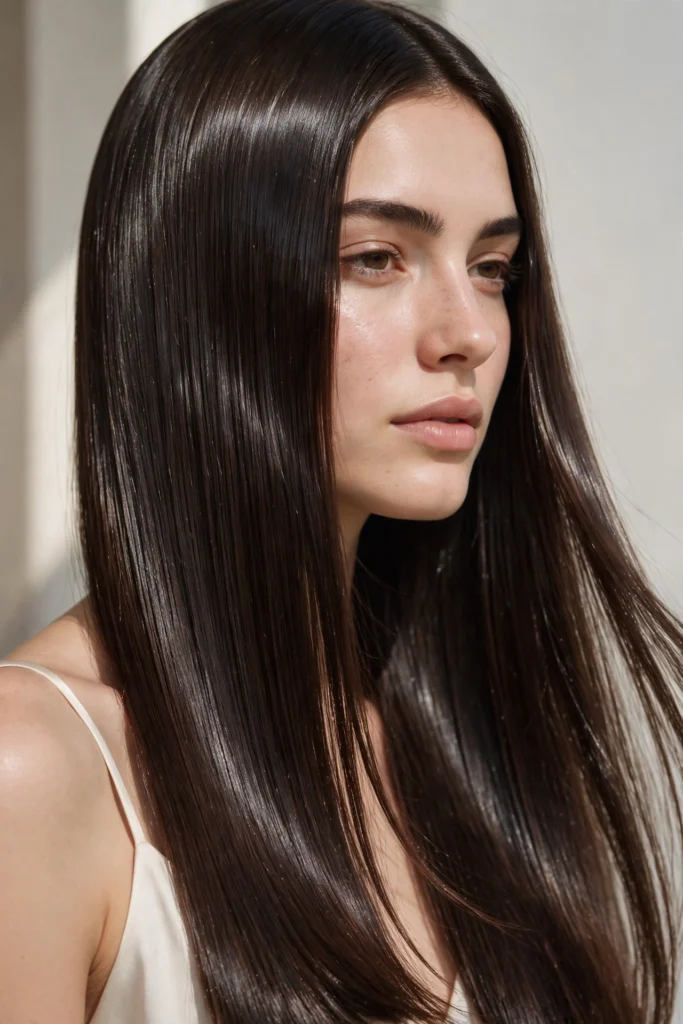
Espresso — a deep, cool brown — is the wearable version of jet black. It has nearly the same mirror depth but looks softer and more natural in daylight, and it’s far easier to maintain if your roots are brown. This is the shade I’d point most brunettes toward: ask for a level 3 or 4 cool brown with a gloss on top, and the shine will read as expensive without the severity of true black. It also grows out more gracefully, which matters if you’re not a every-four-weeks salon visitor. In 2026, espresso is quietly the most-requested glass hair color in salons because it photographs like black but lives like brown.
9. Midnight Blue-Black Glass Hair
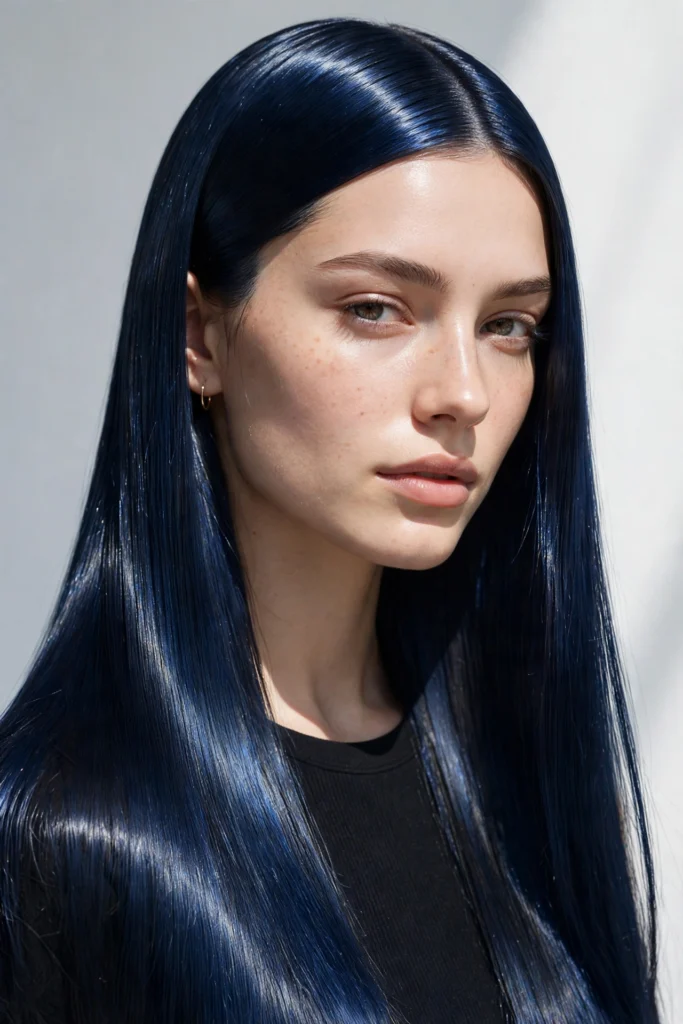
A blue-black tint over dark hair gives the mirror a cool, almost metallic edge — in sunlight or flash photography it throws a subtle navy shimmer that’s unmistakable. This is achieved with a blue-black gloss or toner rather than permanent dye, so it’s lower commitment than it looks; the tone fades over six to eight weeks. Fair warning: blue-based tones can grab unevenly on porous or previously colored hair, so this one is best done in a salon, not from a box. On healthy dark hair it’s a genuinely striking twist on the classic glass look.
Glass Hair Styles 10–12: Glass Hair on Light and Warm Tones
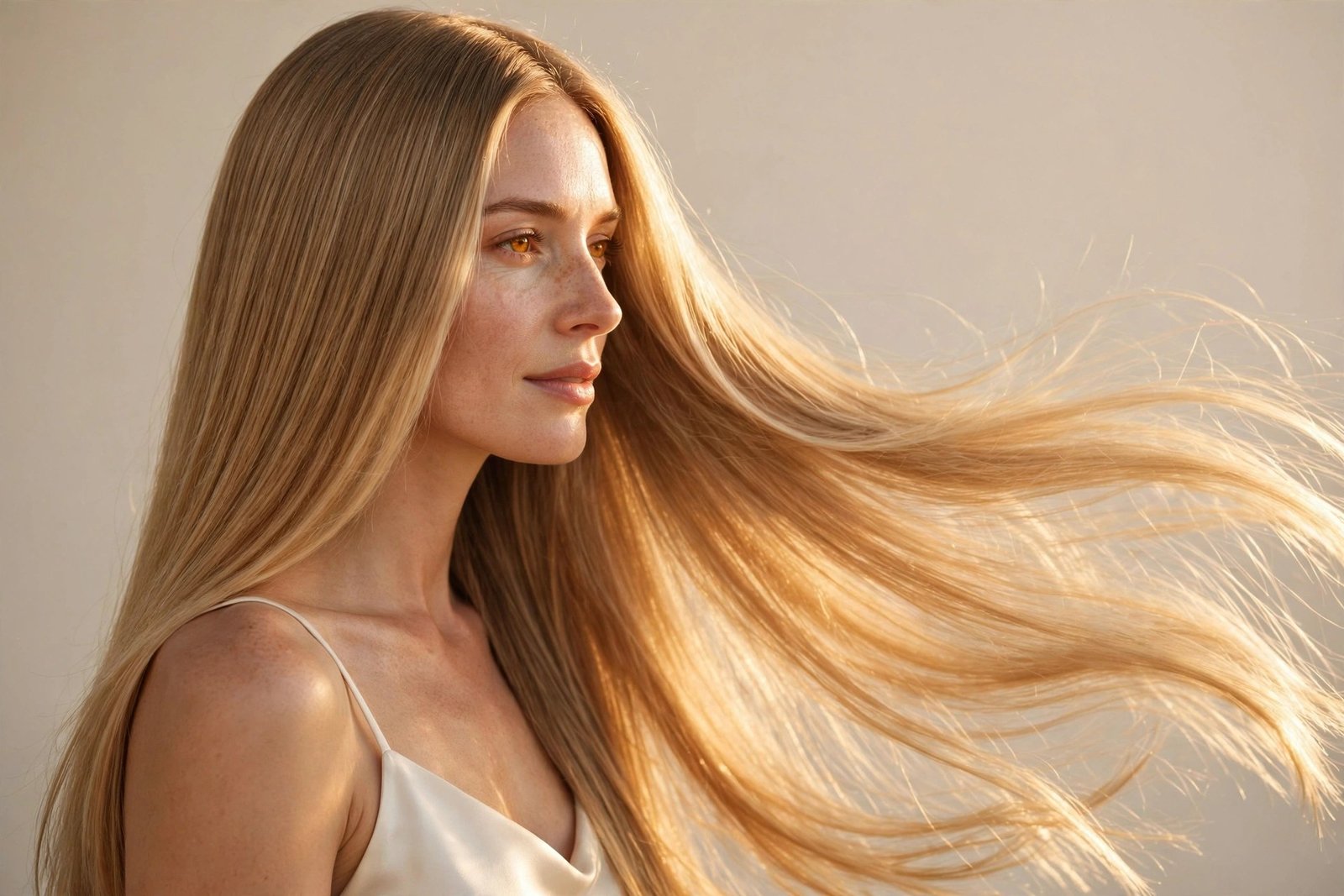
Blondes and redheads: you can absolutely wear glass hair. The mirror reads differently on light hair — softer, more luminous than liquid — but it’s just as real. The key difference is that light hair shows every bit of damage, so the health baseline matters even more here.
10. Honey Blonde Glass Hair
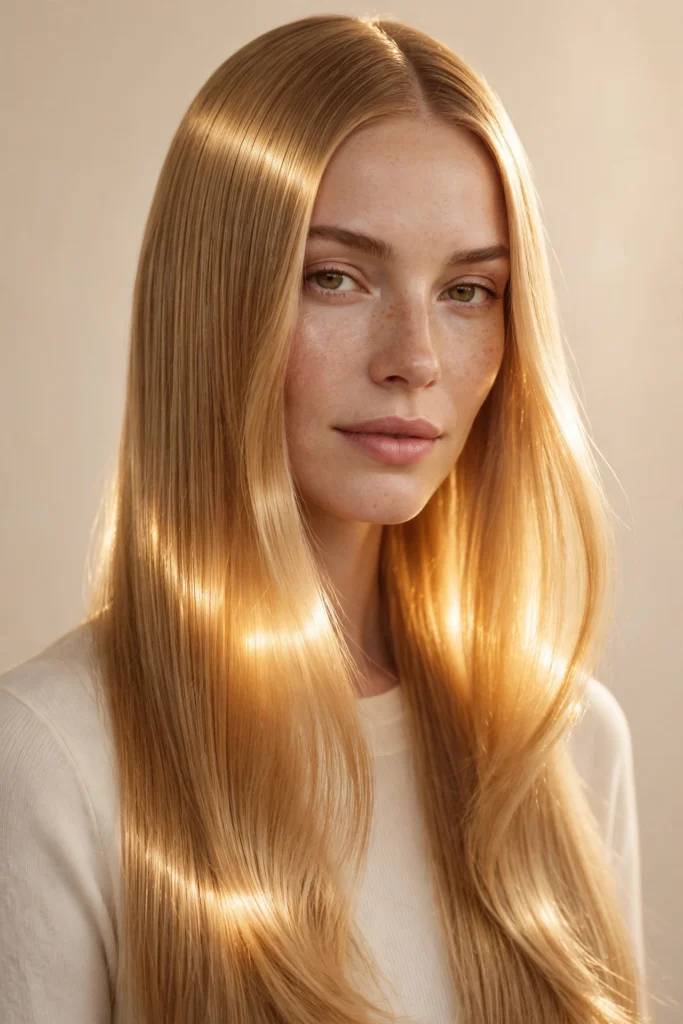
Warm honey blonde with a glass finish glows — the light doesn’t just reflect, it seems to come from inside the hair. This works best on blonde that’s been kept healthy: no overlapping bleach, regular toning, and a purple shampoo used sparingly (overused purple shampoo dulls the shine). Ask your colorist for a honey or golden blonde with a clear gloss on top; the gloss seals the cuticle and is doing half the mirror work. Fine blondes should keep the length at or above the collarbone so the ends stay thick enough to reflect cleanly.
11. Copper and Red Glass Hair
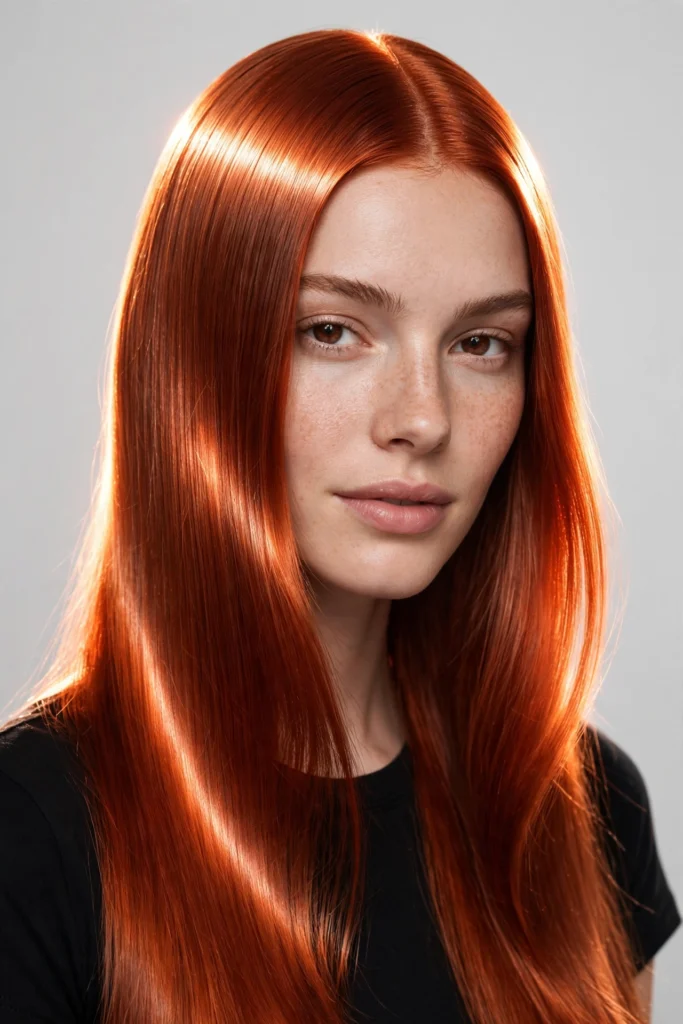
Copper and rich red are having a real moment in 2026, and the glass finish takes them somewhere special — red hair is naturally reflective, and smoothing it to a mirror makes the color look almost backlit. The challenge is fading: red molecules wash out faster than any other color, and faded red looks dull, which is the enemy here. Use color-depositing conditioner or a red gloss every two to three weeks, wash in cool water, and keep heat protectant religious — heat fades red faster. If you’re willing to maintain the color, copper glass hair is one of the most head-turning styles on this list.
12. Champagne Balayage Glass Hair
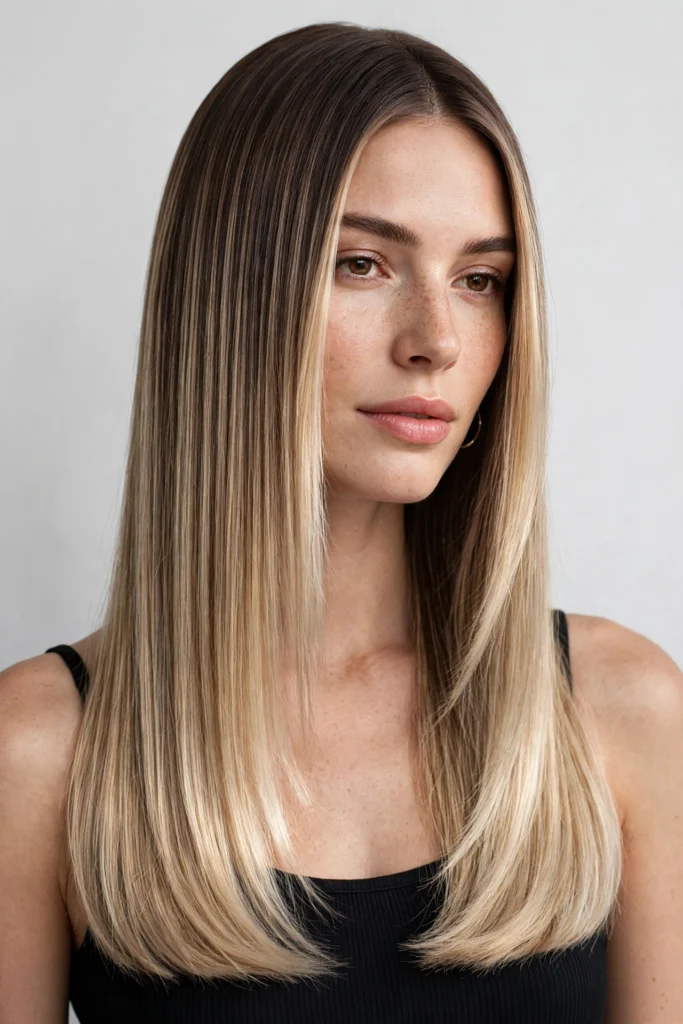
Balayage and glass hair sound contradictory — balayage is about soft dimension, glass is about uniformity — but a champagne balayage with a glass finish works because the colorist keeps the blonde ribbons soft and the overall base polished. The mirror shows up best when the balayage is subtle: think face-framing brightness and gentle ends, not high-contrast stripes. Every balayage needs a toner refresh and a gloss to stay glassy, so budget for a salon visit every eight to ten weeks. The result is dimension you can see in the shine itself — the light catches the lighter pieces first, and the effect is luminous rather than flat.
Glass Hair Styles 13–14: Parts and Bangs
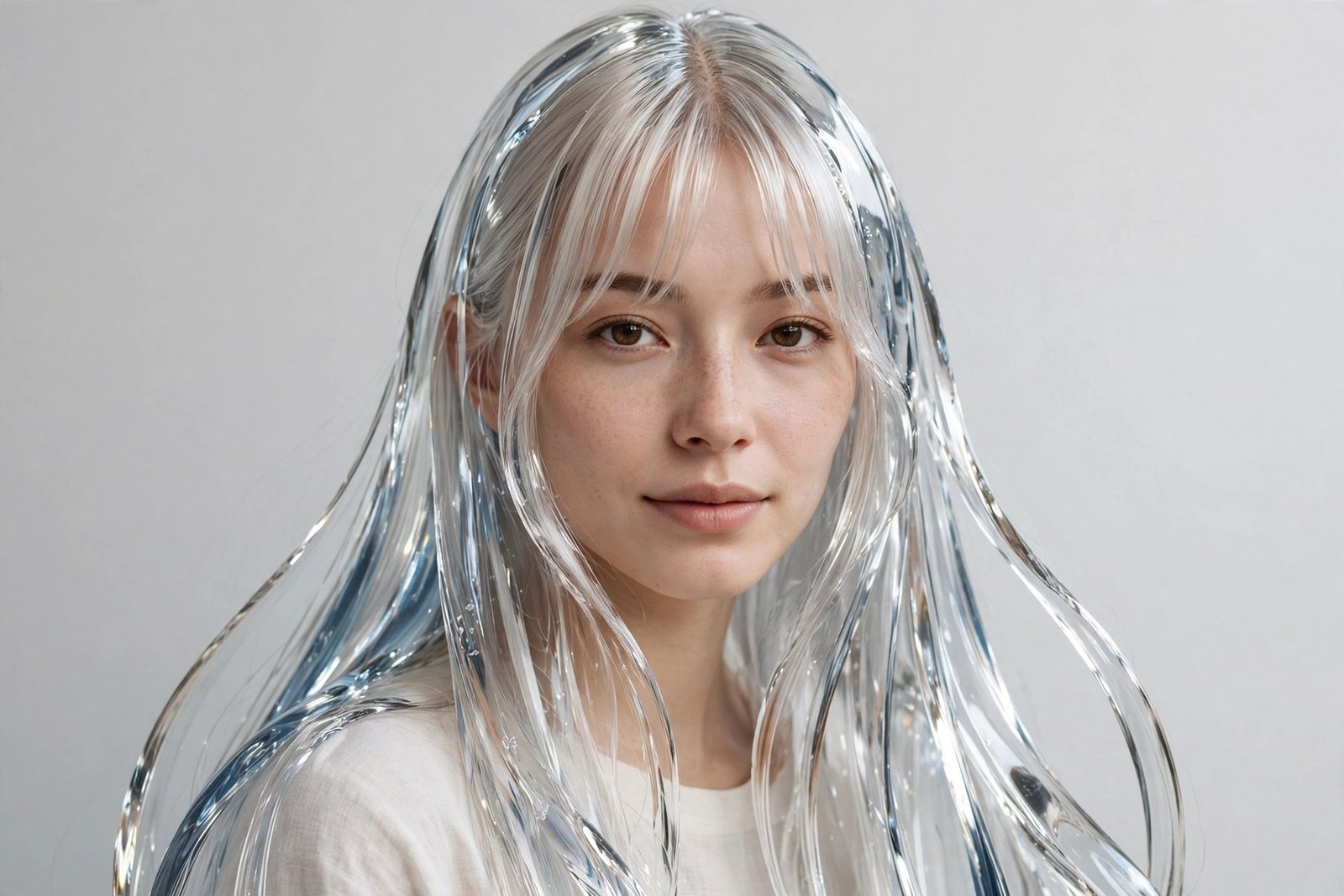
The part is the frame of glass hair, and bangs are its biggest risk. Both are worth getting right, because a sloppy part or frizzy bangs will undermine an otherwise perfect mirror.
13. Glass Hair with Curtain Bangs
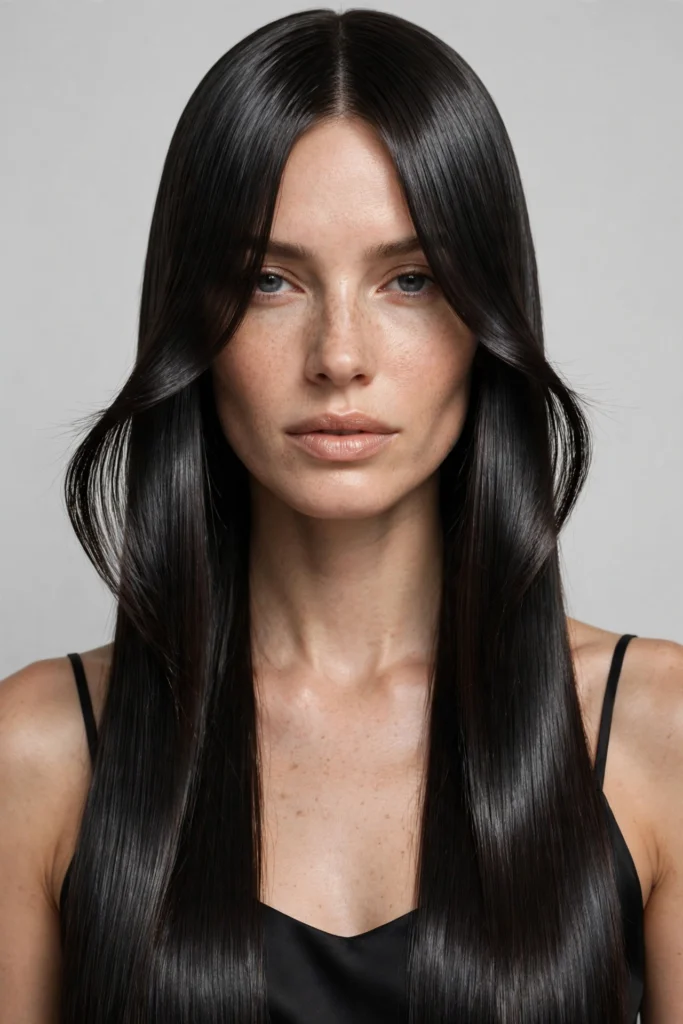
Curtain bangs — parted in the middle and swept to each side — are the only bangs I’d recommend with glass hair. They’re long enough to smooth with the flat iron, they blend into the lengths, and they frame the face without creating a frizz zone. The critical detail: curtain bangs must be styled every single day. They sit on the forehead, they pick up oil and sweat, and unstyled curtain bangs will wave and frizz while the rest of your hair is glass — the contrast is brutal. Keep a small flat iron or a heated brush just for the bangs, and dry shampoo at the roots keeps them fresh between washes. Done right, curtain bangs plus glass lengths is one of the most polished combinations in 2026.
14. The Deep Side Part
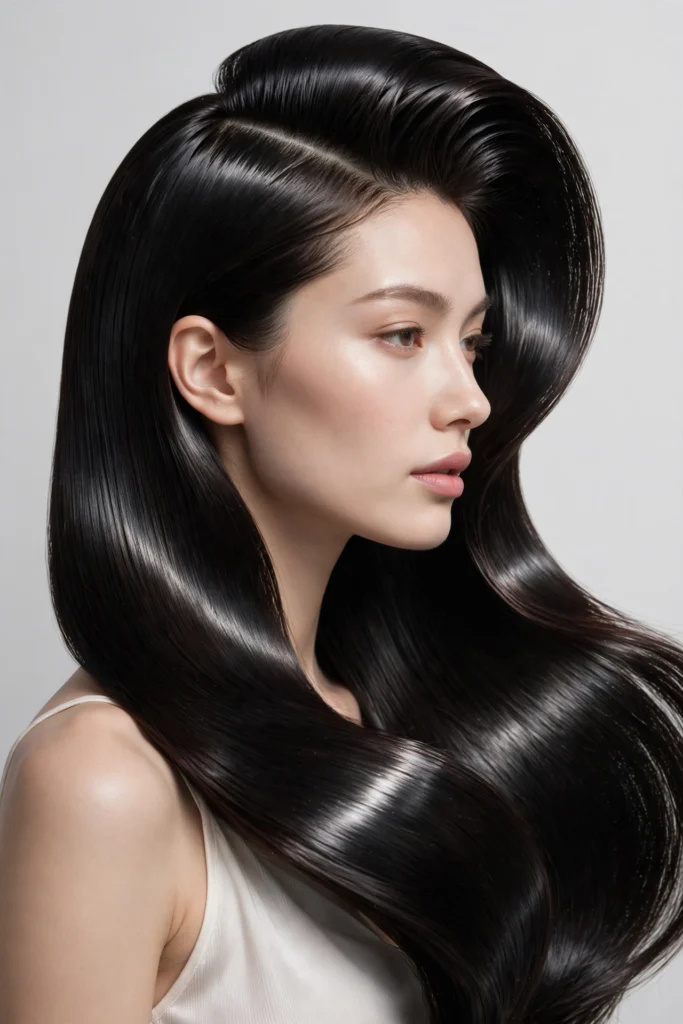
A deep side part gives glass hair drama and volume at the crown — instead of the severe symmetry of a center part, you get a sweeping line and a curtain of hair falling to one side. This part suits round and square faces especially well, because the diagonal line breaks up width. Styling it is simple: part wet hair where you want it, blow-dry the roots in that direction (roots trained the wrong way will fight you all day), and flat-iron the heavy side in one smooth sheet. The deep side part also hides fine-hair flatness at the crown better than a center part does, since the overlap creates natural lift.
Glass Hair Styles 15–16: Occasion Glass
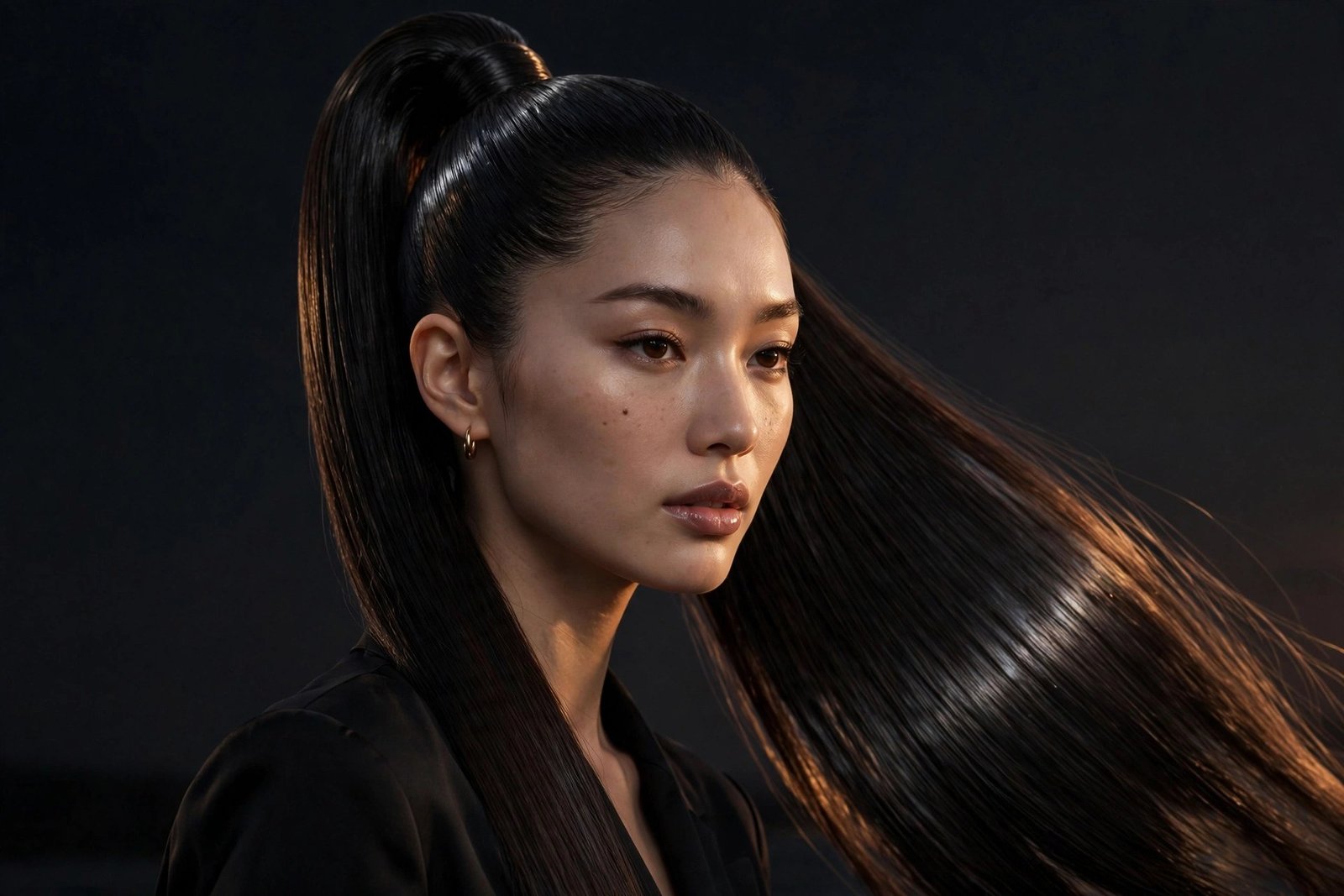
Glass hair doesn’t have to mean hair worn down. The same mirror finish elevates updos and evening looks — and a sleek updo is often the practical answer when humidity or wind makes wearing it down a losing battle.
15. The Glass Ponytail
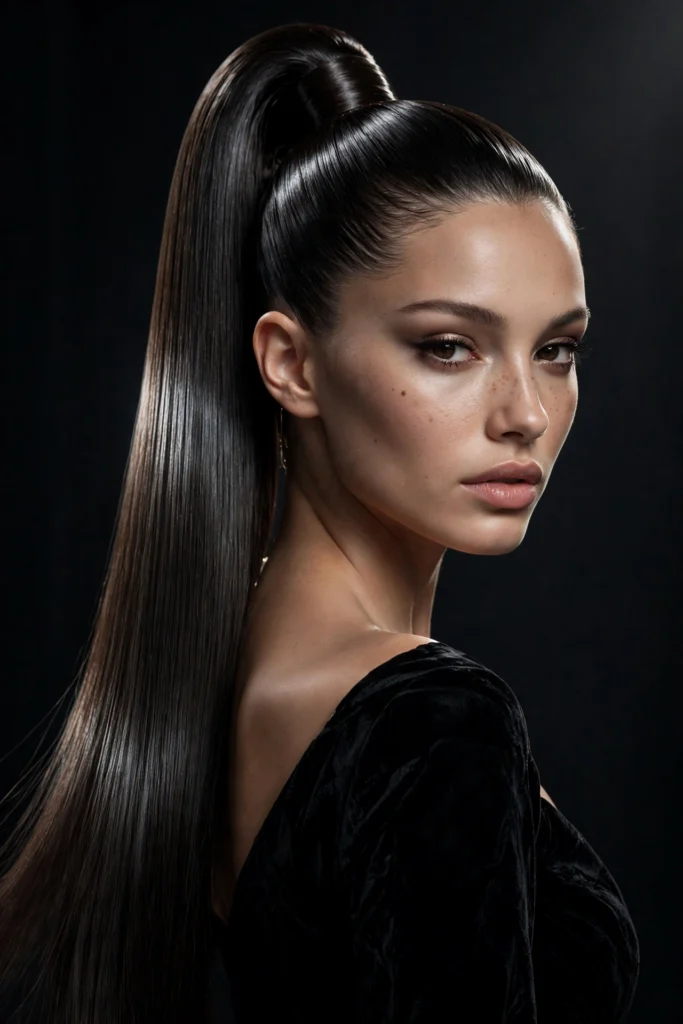
A high, snatched ponytail with the glass finish is a red-carpet staple for a reason: every strand pulled smooth, the tail ironed to a mirror, not a flyaway in sight. The technique: do the full routine first, then gather the hair with a smoothing brush (a boar-bristle brush is ideal), secure it high, and flat-iron the tail in sections. Wrap a small section of hair around the elastic to hide it — that’s the detail that separates a sleek ponytail from a gym ponytail. Gel or edge control at the hairline keeps baby hairs down; this is the one glass style where a firm-hold product is appropriate, because the style depends on everything staying exactly in place.
16. Wet-Look Glass Hair
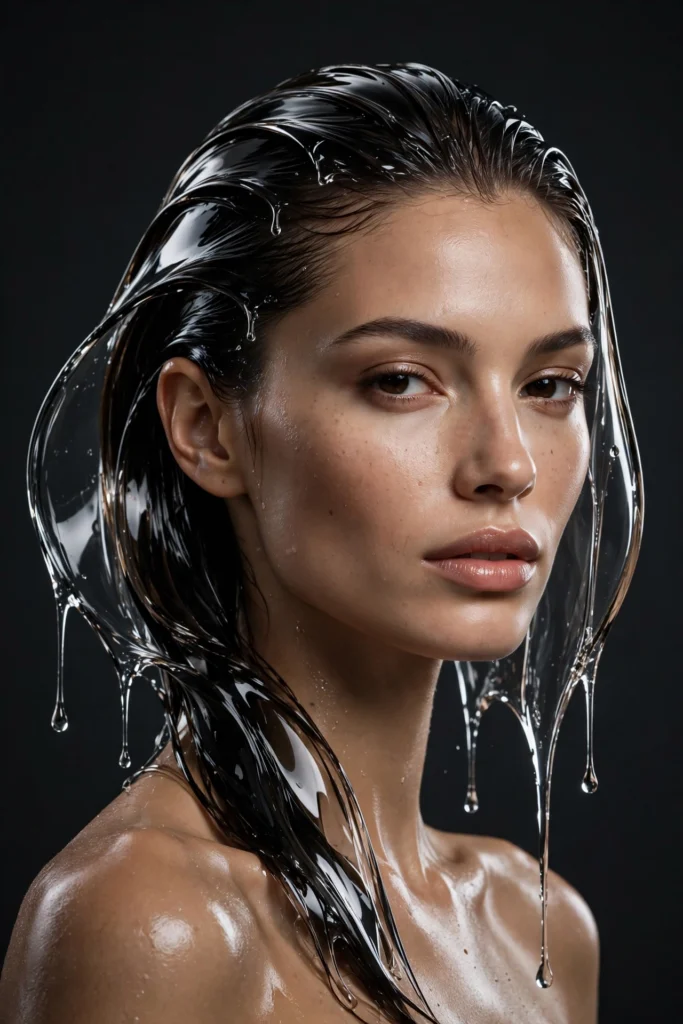
The wet look is glass hair pushed to its extreme — high-shine, almost dripping, with a deliberate damp appearance. It’s an evening and editorial style, not a daily one: it uses more product (a wet-look gel or gloss cream worked through damp hair, then left to air-dry or diffused on low), and it will transfer onto clothes and pillowcases. Save it for nights out, events, and photos. The upside is that it’s actually easier than true glass hair — the product does the smoothing work — and it holds up in humidity better than a dry mirror finish. Think of it as glass hair’s glamorous, high-maintenance cousin.
Salon Treatments Worth Paying For
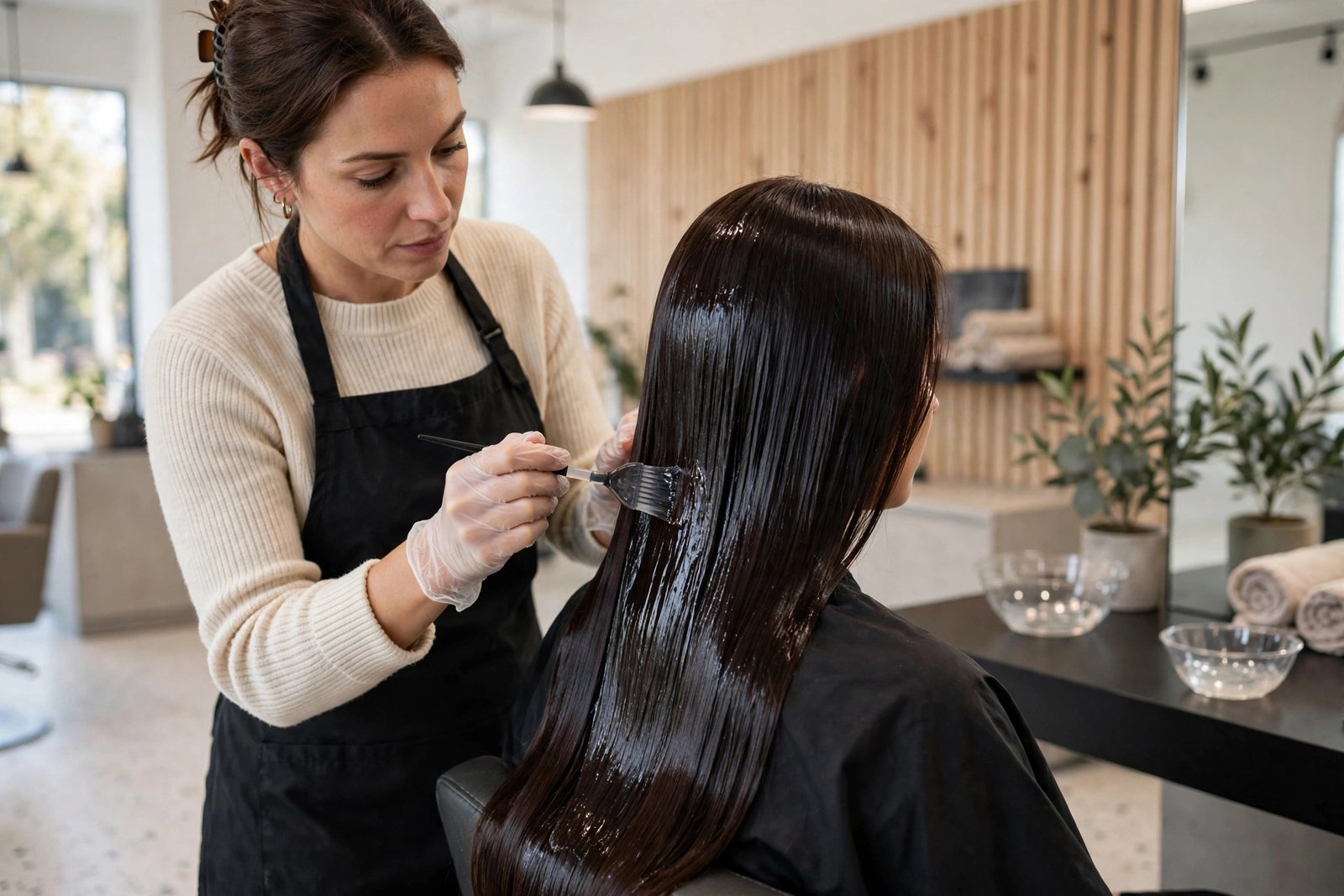
At some point most glass hair wearers visit a salon for a boost, and some of these treatments are genuinely worth it. Here’s my honest ranking, from most to least valuable for the mirror effect.
A clear gloss or demi-permanent glaze is the single best salon investment for glass hair. It deposits shine and a whisper of tone without lifting or damaging, seals the cuticle flat, and lasts four to six weeks. Most salons charge for it as an add-on, and it’s the closest thing to buying the mirror directly. Get one every six to eight weeks and your at-home routine gets dramatically easier — the gloss does half the smoothing work for you.
Keratin treatments (and their gentler cousins, smoothing treatments) are the heavy artillery. They chemically smooth the hair for two to four months, cutting blowout time in half and making frizz nearly impossible. They’re genuinely transformative for coarse, curly, or frizz-prone hair that wants the glass look. The honest downsides: cost, the two-to-three-day no-wash period after application, and the formaldehyde question — ask your salon exactly which formula they use and how they ventilate, because cheap keratin with high formaldehyde is not worth the shine. For fine hair, ask for a light or express version; a full-strength keratin can make fine hair too flat.
Japanese straightening (thermal reconditioning) is the permanent option — it restructures the hair stick-straight for six months or more. It’s the closest to a “set it and forget it” glass hair solution, and on the right hair it’s stunning. But it’s also the most committing: it doesn’t work well on bleached or fragile hair, growing-out roots need touch-ups, and a bad application causes breakage that’s very hard to fix. Only consider this with a stylist who does it regularly and can show you healed results, not just day-one photos.
What I’d skip: expensive “miracle” oil treatments marketed as shine cures (a good at-home mask does the same job), and any salon that promises glass hair in one visit on severely damaged hair. If your hair needs repair, the honest salon will tell you to do a month of masks and trims first. That’s the salon you should trust.
Maintenance and Frizz Control
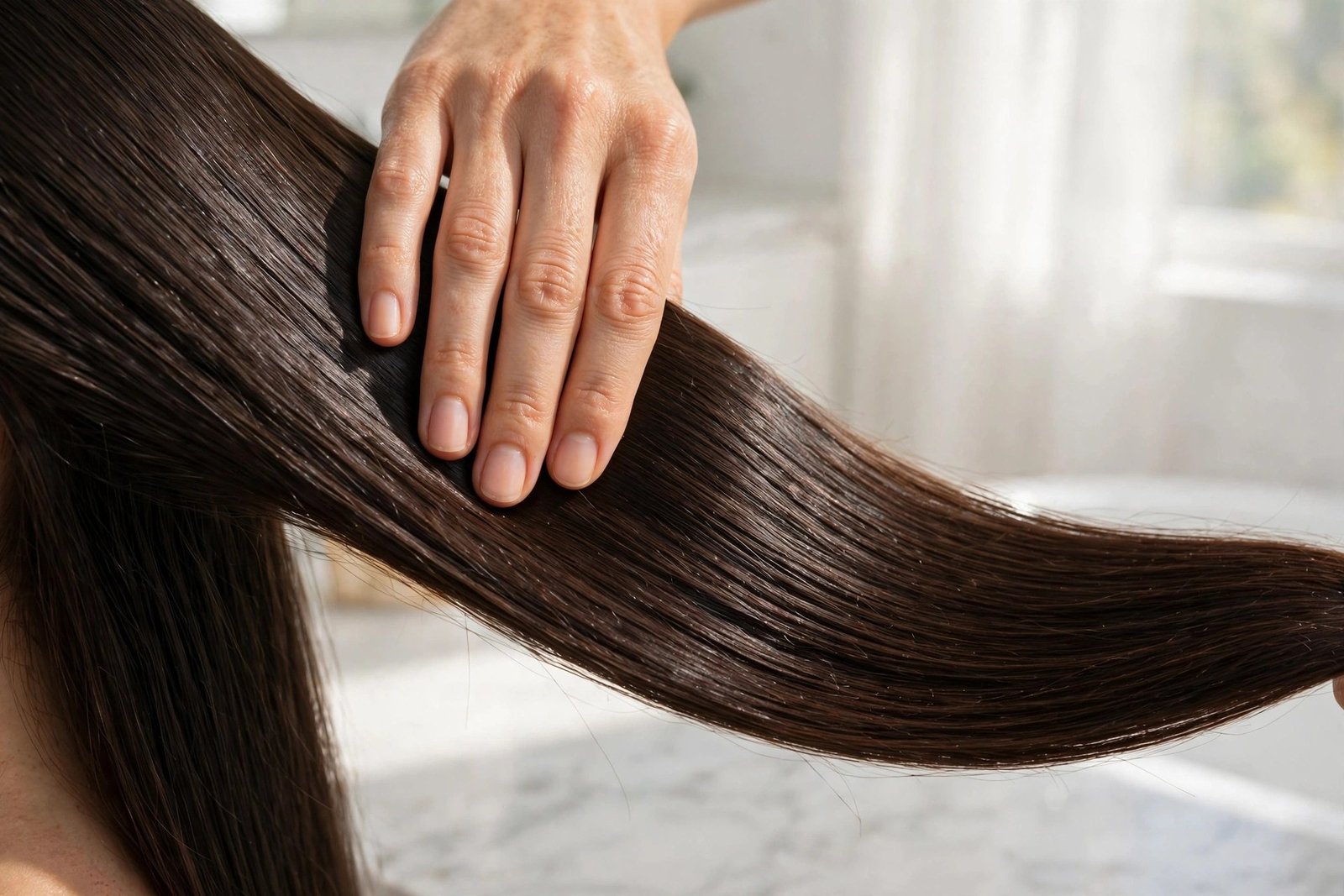
Getting the mirror is one skill; keeping it is another. Glass hair’s enemy is everything that roughs up the cuticle: humidity, friction, overwashing, and time. Here’s how to defend the finish between styling sessions.
Humidity is the number one killer. Moisture in the air swells the hair shaft and lifts the cuticle, which is why a perfect morning mirror can be a frizzy halo by afternoon in damp weather. The defense is a humidity-resistant finishing product — an anti-humidity serum or spray applied as your last step — and realistic expectations: on truly humid days, wear the glass ponytail (style 15) instead of fighting the air. A silk scarf over the hair on rainy commutes sounds old-fashioned and works brilliantly.
Friction is the silent second killer. Cotton pillowcases rough up the cuticle overnight — switch to silk or satin and you’ll notice the difference in one week. Sleep with hair in a loose low ponytail or braid, or in a silk bonnet if your hair is long. Tight elastics with metal parts cause breakage; use silk scrunchies or spiral ties. And stop towel-drying aggressively — that habit alone ruins more glass hair attempts than any product choice.
Washing strategy matters more than most women expect. Every wash strips the oils and resets your work, so the goal is fewer, better washes: most glass hair wearers wash two to three times a week, using dry shampoo at the roots between washes. When you do wash, the full routine — mask, cool rinse, heat protectant, blowout, iron — is the price of the mirror. Between full routines, you can refresh: flat-iron just the top layer and the ends, smooth a drop of serum over the surface, and the shine comes back in ten minutes. That’s the real daily maintenance — not a full restyle every morning, but a smart refresh that protects your ends from daily heat.
Finally, trim on schedule. Split ends travel upward and scatter light, and no serum repairs a true split — it only glues it temporarily. Every six to eight weeks for blunt cuts, every four to six for bobs. A glass hair wearer who skips trims is polishing a surface that’s crumbling underneath, and the mirror always reveals it eventually.
FAQ
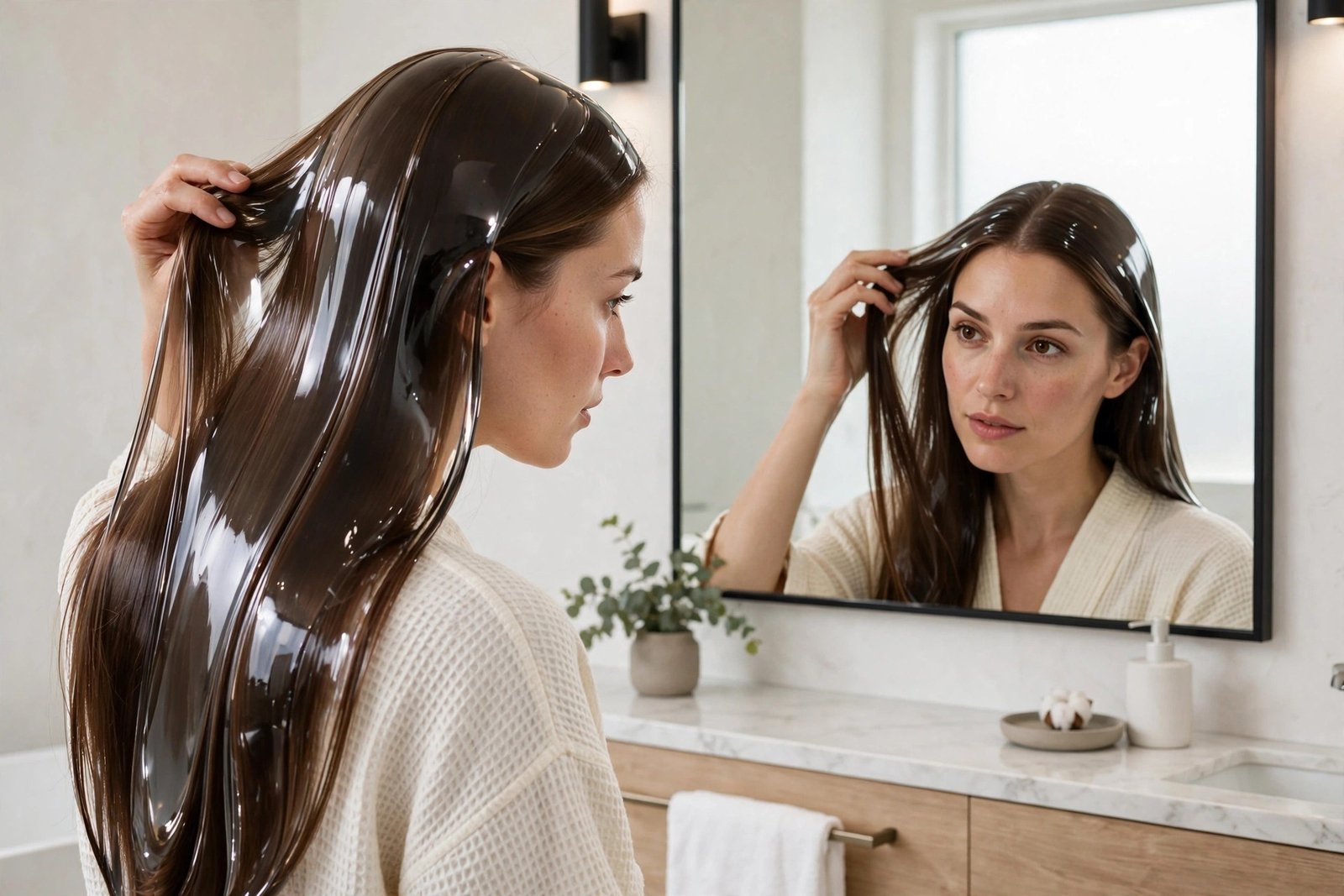
The questions I hear most from women considering glass hair — answered the way I’d answer them in the salon chair.
How long does glass hair take to style each day?
From wet hair: forty-five minutes to an hour for long hair, twenty to thirty for a bob or lob, once you know the routine. From dry, second-day hair: a ten-minute refresh with the flat iron on the top layer and ends is usually enough. The full routine is a wash-day investment; the daily cost after that is small. Women who try to rush the wet-to-dry process are the ones who end up with frizz — the blowout can’t be hurried, because any remaining dampness becomes frizz later.
Can fine or thin hair get glass hair?
Yes, with adjustments. Fine hair actually achieves shine quickly because there’s less surface to smooth, but it goes limp and greasy-looking if you use products meant for thick hair. Use volumizing mousse at the roots before blow-drying, keep oils and serums to the bottom third of the hair only, and choose shorter lengths (bob to collarbone) so the ends stay thick enough to reflect cleanly. Avoid keratin treatments at full strength — they can make fine hair too flat — and ask for an express or lightweight smoothing treatment instead. The mirror is absolutely achievable; the routine just needs a lighter hand.
Does glass hair work on curly or wavy hair?
It can, but be honest about the cost. Curly and wavy hair needs the full routine every wash day — blowout plus flat iron — and in humidity the natural texture will try to return. Many women with curls get a keratin smoothing treatment first, which makes the daily routine dramatically easier and longer-lasting. Without it, you’re looking at an hour of heat styling per wash and a style that may not survive a humid day. Some women with loose waves find the routine manageable; women with tight curls usually do better with the keratin-first approach. There’s no shame in either path — it’s about matching the method to your texture.
How do I keep glass hair from getting frizzy in humidity?
Layer your defenses: an anti-humidity finishing serum or spray as the last styling step, a silk scarf or hood for rainy commutes, and a realistic backup plan. On high-humidity days, the sleek glass ponytail holds up far better than hair worn down, because pulled-back hair has less exposed surface for moisture to attack. Keep a travel flat iron and a small serum in your bag for midday touch-ups on the top layer. And if you live somewhere humid year-round, a keratin treatment is honestly the most practical foundation — it makes the hair itself humidity-resistant rather than relying on products alone.
Is daily flat ironing going to damage my hair?
Daily high-heat ironing will damage any hair over time — that’s the honest answer. The women who wear glass hair long-term manage heat intelligently: heat protectant every single time without exception, the lowest effective temperature (not the iron’s maximum), one pass per section instead of repeated passes, and full wash-day routines only two to three times a week with quick refreshes between. Regular trims remove the gradual wear before it shows. If you notice increasing dryness, dullness, or breakage, that’s your hair telling you to cut back — add a weekly mask, lower the temperature, or take a heat-free week. The mirror depends on healthy hair, so protecting the hair is protecting the style.
Conclusion
Glass hair looks effortless, and that’s the trick — it’s one of the most technique-dependent styles you can wear. But now you know the whole picture: it’s a flat cuticle reflecting light, built on healthy hair, created with a precise blowout and flat iron, chosen in a cut that suits your face and your patience, boosted by a salon gloss every couple of months, and defended daily against humidity and friction.
Sixteen styles, one routine, zero shortcuts. Run the hair-health check honestly, pick the style that fits your actual hair rather than your dream hair, and give the routine two weeks before you judge it — the first attempt is practice, the fifth is when the mirror shows up. Your glass hair is waiting on the other side of good technique. Go get the shine.