Fulani Braids Women 2026: 18 Stunning Tribal Braid Styles
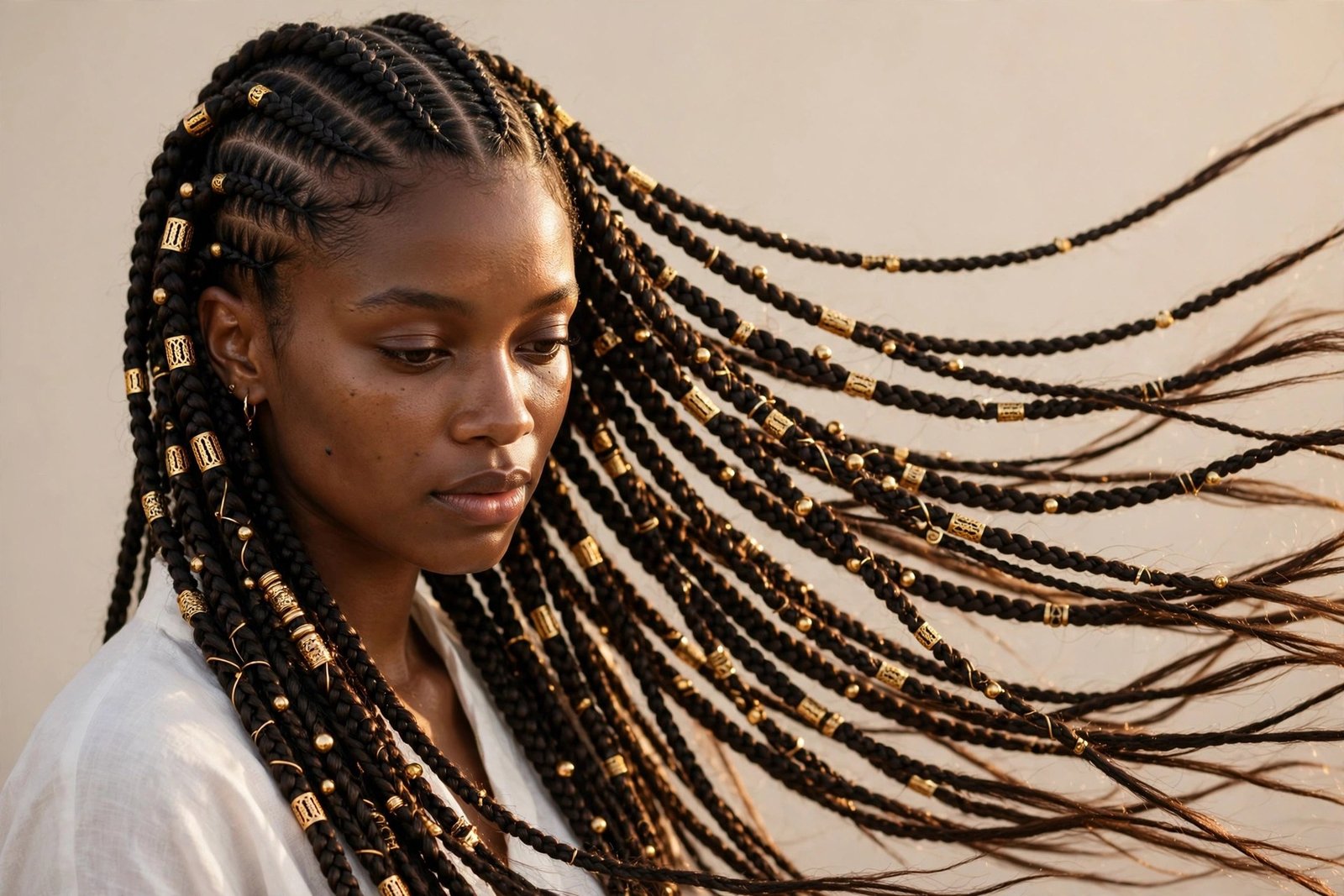
The first time I saw a full set of fulani braids in person, I understood why this style has outlasted centuries of trends. A woman walked into the salon with cornrows running in perfect rows down the center of her head, gold cuffs catching the light, and beads clicking softly every time she moved. It wasn’t just a hairstyle. It was a statement with history behind it — and she wore it like she knew exactly what that history was.
Fulani braids are having one of their biggest moments in 2026, and honestly, it’s overdue. Protective styling has gone mainstream, natural hair is being celebrated louder than ever, and women are looking for styles that carry meaning instead of just looking pretty. Fulani braids check every box: they’re beautiful, they’re protective, they last for weeks, and they connect you to one of the richest hair traditions on the planet.
But here’s the thing I want to say up front, because it matters. This is not a trend that was invented on social media. Fulani braids come from the Fulani people of West Africa, and the cornrows, beads, and adornments all carry cultural weight. Wearing them with respect — knowing where they come from, supporting braiders who know the craft, treating the style as heritage and not a costume — is part of doing this style right. I’ll talk more about that below.
This guide covers everything: the history and heritage behind fulani braids, how long the appointment takes and what it costs in 2026, eighteen distinct styles grouped so you can actually choose one, how to accessorize with beads and cuffs, how to keep your scalp healthy while the braids are in, and how to take them down without wrecking your hair. If you’re thinking about getting Fulani braids, this is the whole playbook.
One more note before we start. Every head of hair is different, every braider works differently, and prices vary by city. I’ve aimed for honest, practical guidance — not salon brochure talk. Let’s get into it.
What Are Fulani Braids? (History and Heritage)
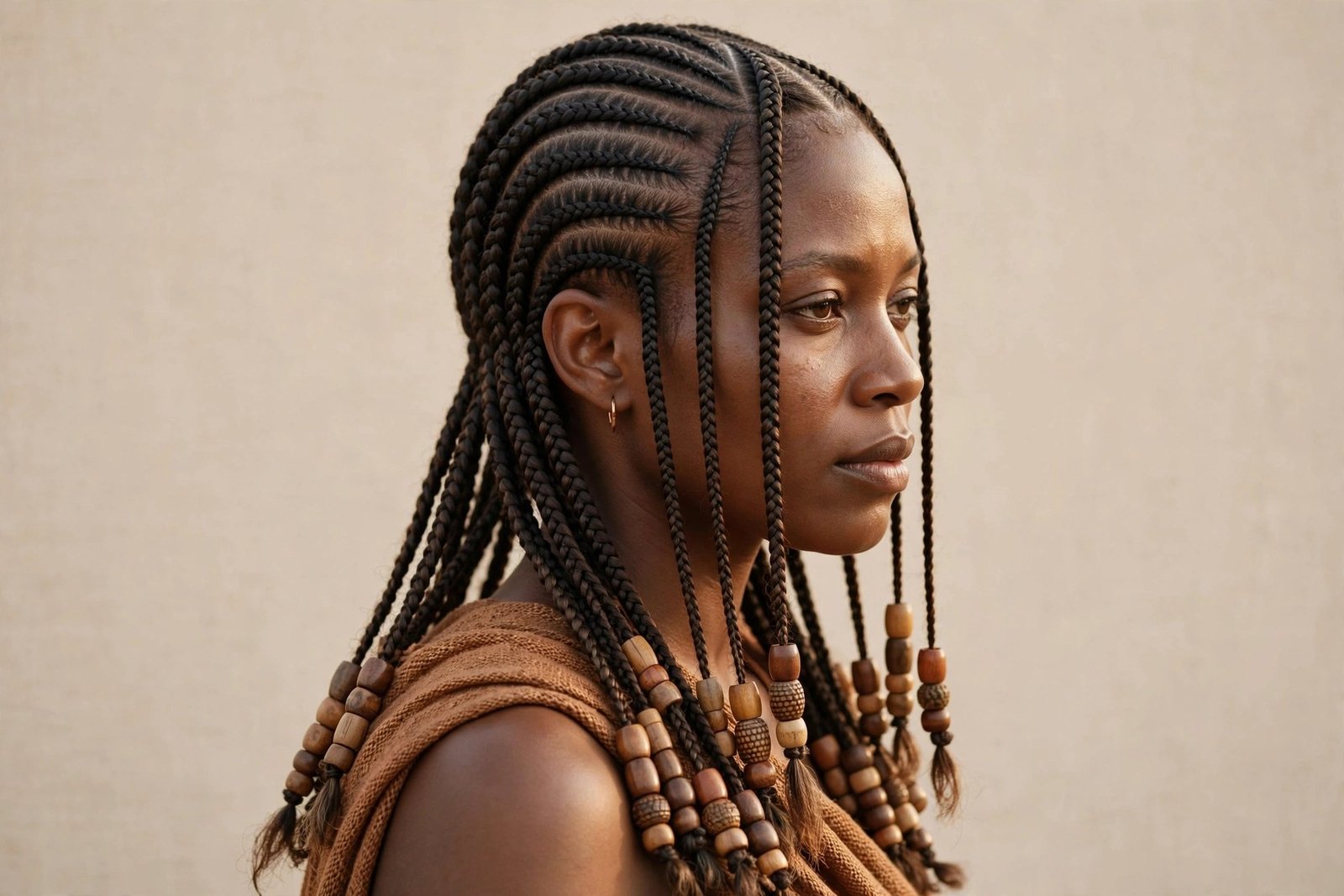
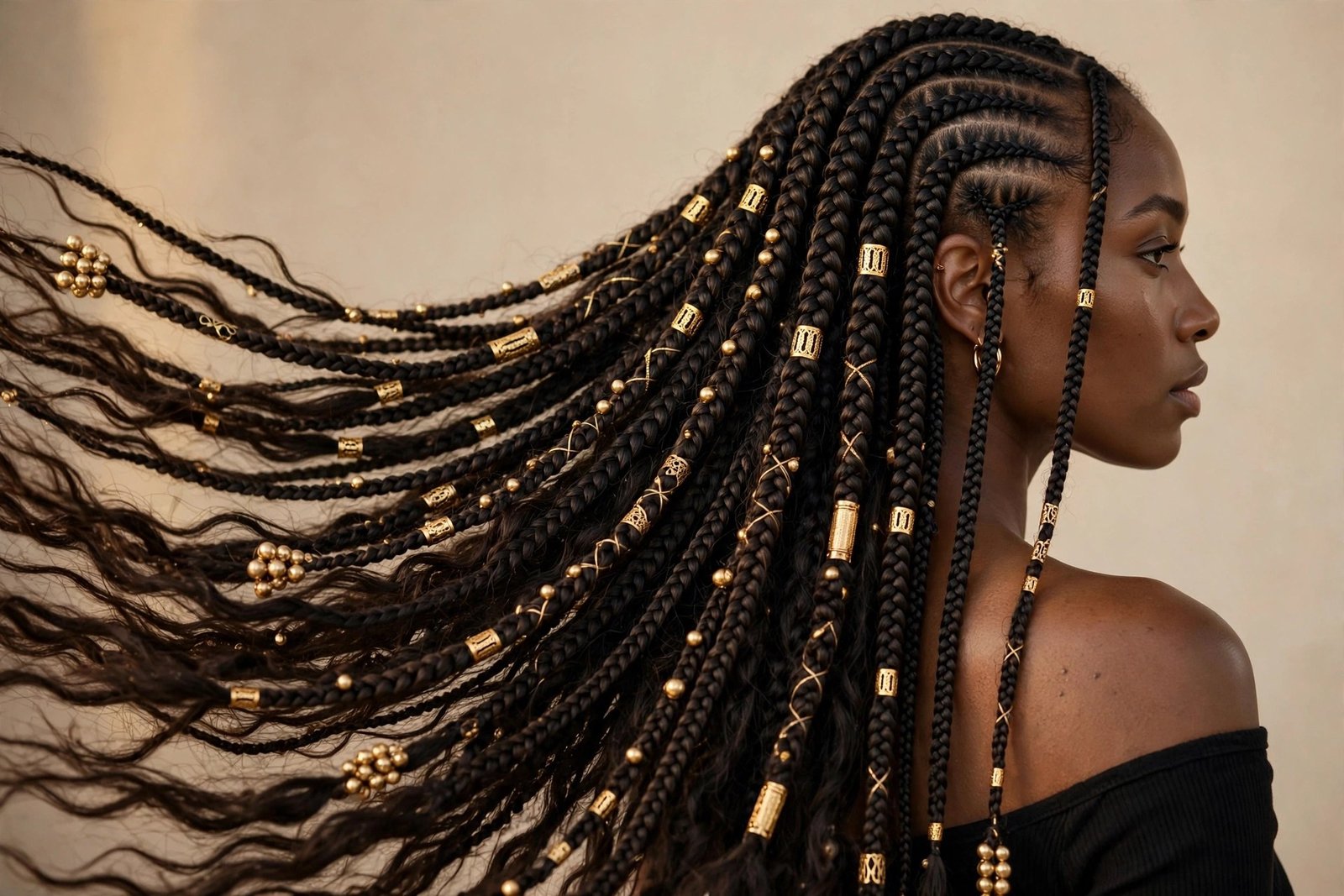
Fulani braids are a traditional braided hairstyle originating with the Fulani (also called Fula or Peul) people, one of the largest ethnic groups in West Africa, spread across countries like Senegal, Mali, Guinea, Nigeria, and Cameroon. The signature look is distinctive and hard to mistake: cornrows braided straight down the center of the head from forehead to nape, flanked by cornrows or individual braids on the sides, often with a single braid hanging down the middle of the forehead, and finished with beads, metal cuffs, rings, or cowrie shells.
Among the Fulani, hair was never just decoration. Braided styles communicated things: age, marital status, social standing, even wealth. The beads and silver coins woven into the hair historically signaled family prosperity. Certain patterns were worn for ceremonies and celebrations. When you look at classic Fulani braiding, you’re looking at a visual language — one that long predates the modern protective-style movement by centuries.
The style traveled the way culture always travels: with people. Through the African diaspora, Fulani-inspired braiding showed up in the Caribbean, the Americas, and Europe, evolving as it went. By the late 1990s and 2000s, artists and public figures were wearing Fulani-style braids on red carpets and in music videos, and the style entered mainstream fashion vocabulary. What’s happening in 2026 is less a new trend and more a homecoming — a generation rediscovering the style through natural-hair communities, Pinterest boards, and braiders who specialize in the traditional patterns.
So what separates fulani braids from regular cornrows? The architecture. Standard cornrows can run in any direction, but the Fulani signature is that central column of braids running front to back, with the sides braided in complementary patterns, plus the adornment. Beads and cuffs aren’t optional extras here — they’re part of the style’s identity. Modern versions add twists: feed-in techniques for a seamless hairline, curly ends, color blends, jumbo sizing. The bones stay the same.
A word on wearing them well. If you have West African heritage, these braids are yours in the deepest sense — wear them proudly. If you don’t, you can still wear them beautifully, but do it with knowledge. Learn the name. Learn where it comes from. Book with braiders who respect and understand the style. Don’t treat a centuries-old cultural marker like a festival costume. Respect is the difference between appreciation and appropriation, and it’s not complicated: know the roots, honor the craft, and wear the style — not the stereotype.
How Long Do Fulani Braids Take and How Much Do They Cost?
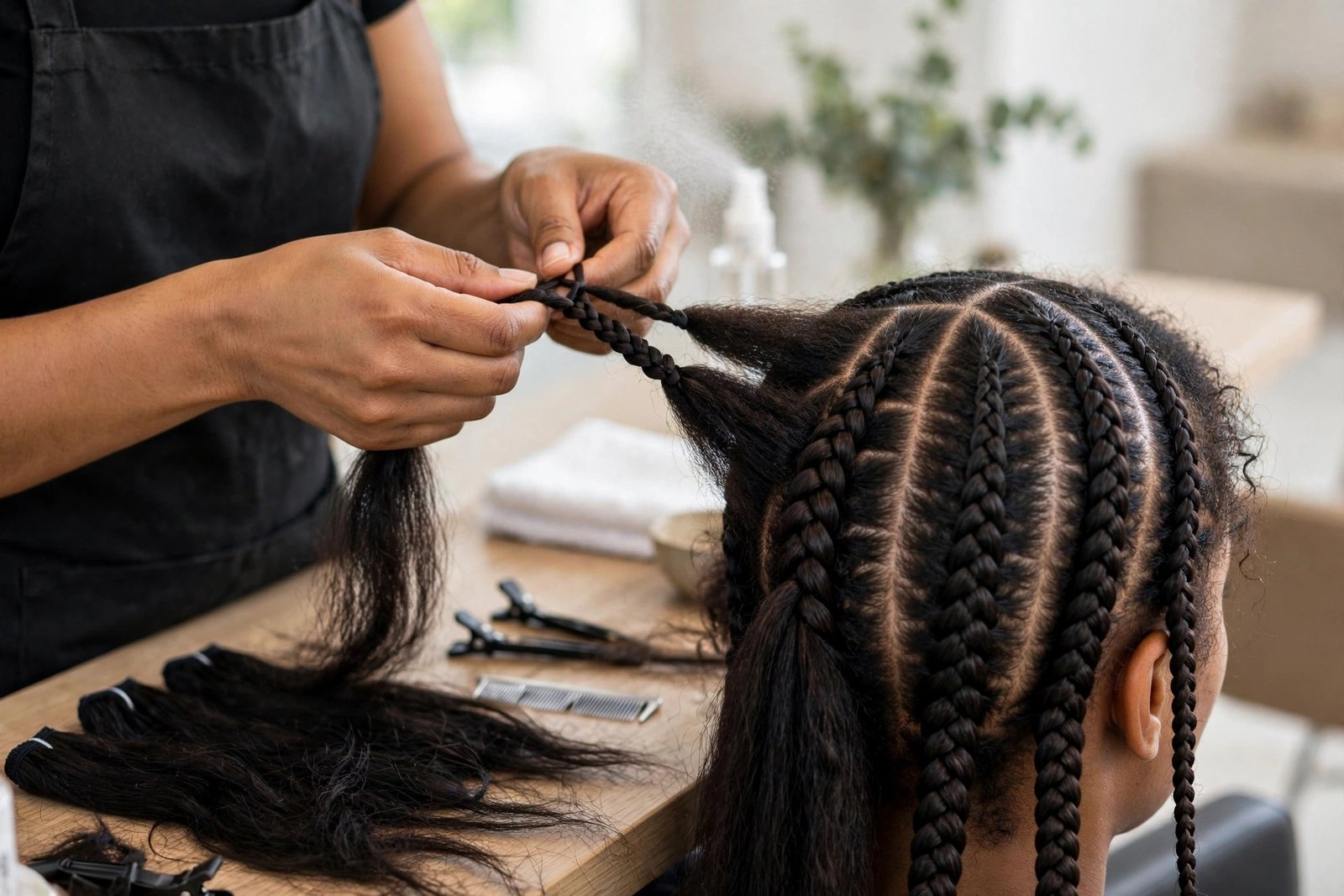
Let’s talk logistics, because the appointment is a real commitment. A full set of fulani braids typically takes between four and eight hours in the chair. Jumbo or large-sized braids with fewer rows can be done in three to four hours by a fast braider. Small, intricate patterns with lots of rows and beadwork can push past eight hours — bring snacks, charge your phone, and clear your day. This is not a lunch-break appointment.
Cost in 2026 varies a lot by city and by braider reputation. In most US cities, expect to pay somewhere in the range of $150 to $350 for a full install, with high-demand braiders in major metros charging more. Extensions add to the price if you don’t bring your own hair — pre-stretched braiding hair is the standard ask. Beads and cuffs are sometimes included and sometimes an add-on, so ask when you book. Outside the US, prices differ, but the rule holds: skilled braiding is skilled labor, and it costs accordingly.
Here’s my honest advice on choosing a braider. Don’t shop on price alone. Look at their portfolio — actual photos of their installs, not stock images — and specifically look for Fulani patterns, not just box braids. Read reviews that mention edges and tension. A good braider asks about your hair history, checks your edges, and doesn’t braid so tight your forehead is begging for mercy. A bad braider saves you fifty dollars and costs you your hairline. The math is simple.
Before your appointment, prep matters. Wash and deep-condition your hair a day or two before, and arrive with it stretched — either blow-dried on low heat or banded overnight. Clean, product-free, detangled hair braids faster and holds the style longer. Skip heavy oils and leave-ins on appointment day; product buildup under braids causes itch and shortens the style’s life. And eat before you go. You’ll thank me at hour five.
Fulani Braids Styles 1–3: Classic Heritage Looks
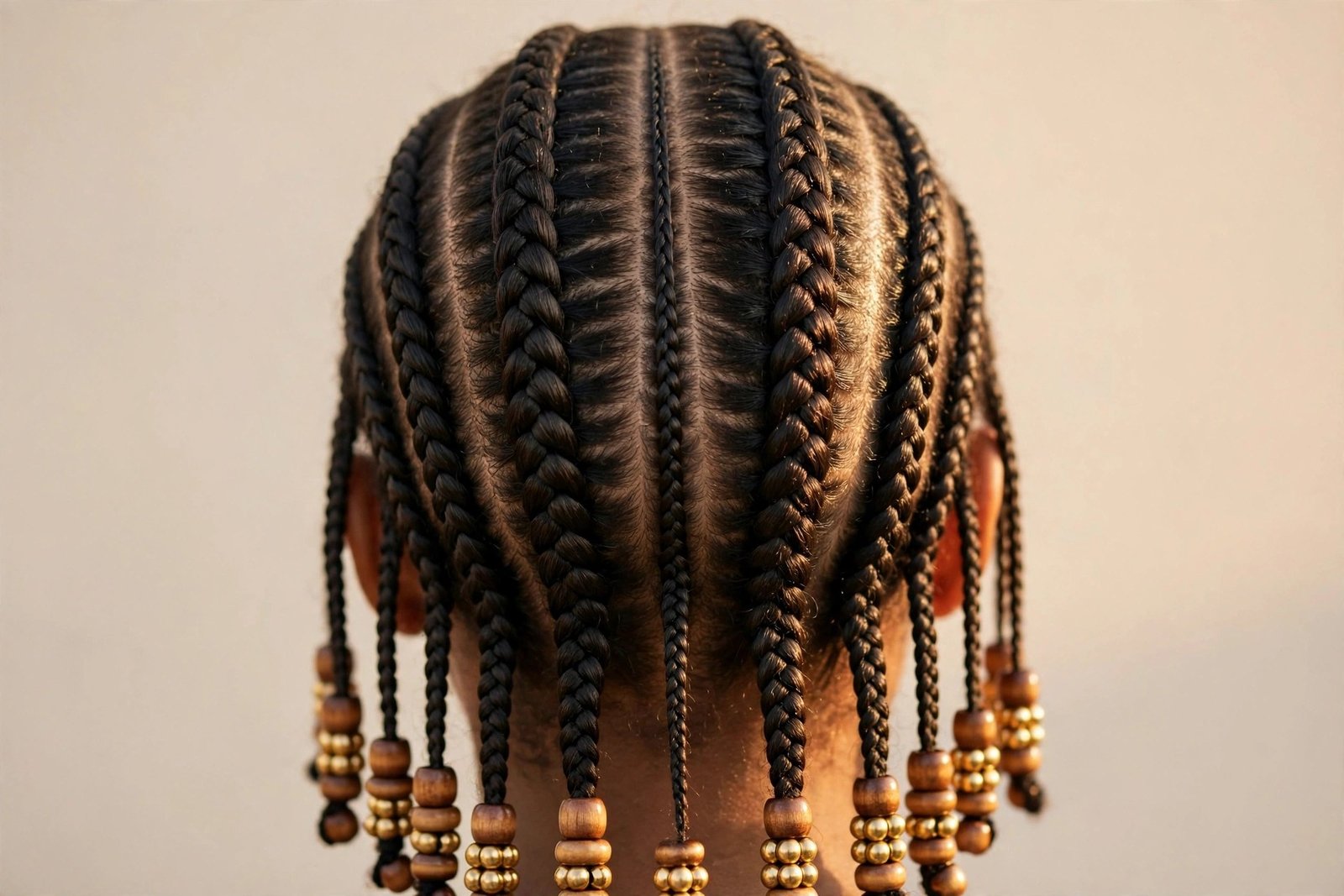
Start with the foundations. These three are the closest to the traditional Fulani pattern — the styles everything else on this list is built from. If it’s your first time getting fulani braids, beginning here is never the wrong move.
1. The Classic Heritage Fulani
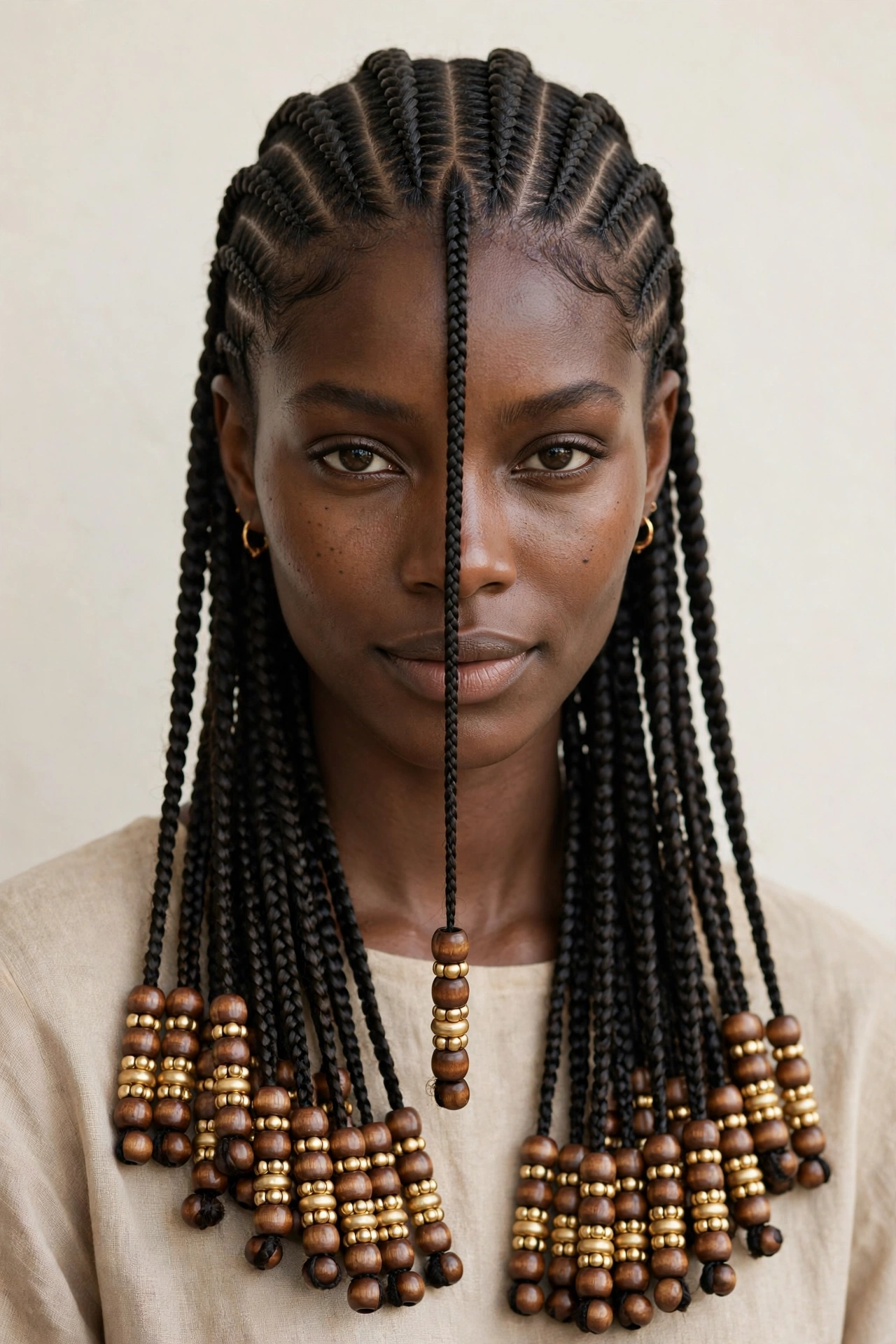
This is the blueprint: cornrows running in clean rows down the center of the head, smaller braids framing the sides, a single slim braid at the center of the forehead, and wooden or gold beads stacked on the braid ends. No extensions needed if your hair has decent length — the traditional version was always done on natural hair. It reads elegant, grounded, and unmistakably Fulani.
Ask your braider for medium-sized cornrows with a defined center column and beaded ends. This style suits every face shape because the center parting is naturally balancing. It lasts the full four to six weeks easily, and it ages gracefully — even as new growth comes in, the pattern still reads clean. If you only get one style from this list, make it this one.
2. Feed-In Fulani Braids
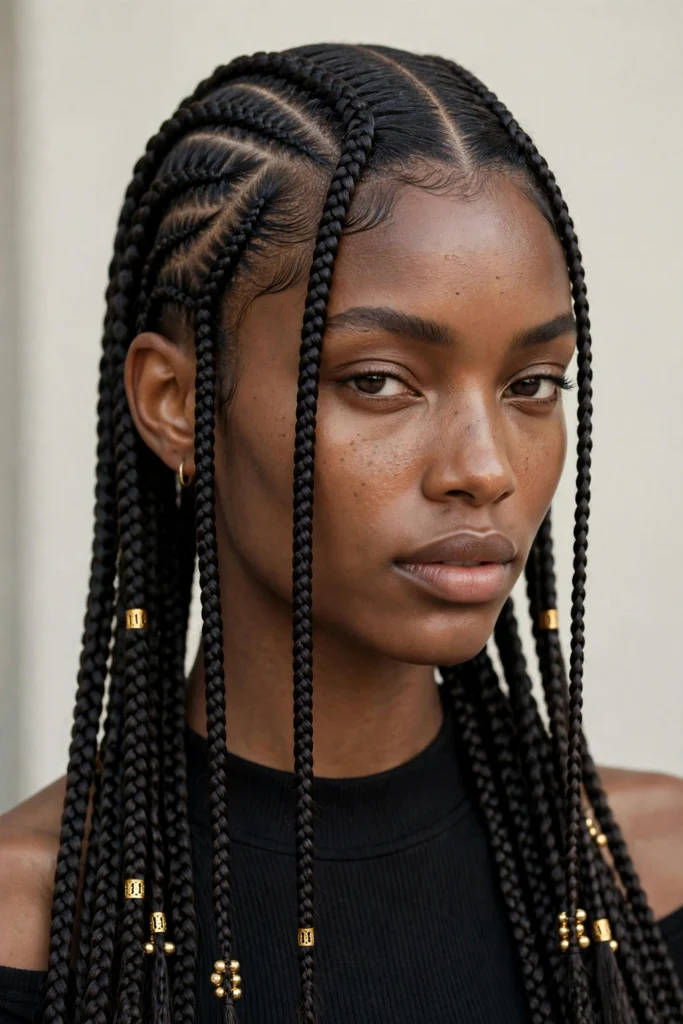
The feed-in technique changes how the braid starts. Instead of a visible knot at the hairline, the braider gradually feeds in extension hair so the braid appears to grow straight out of your scalp. On Fulani patterns this looks incredibly natural — the center rows melt into your hairline with no bumps, no tension points, and a much sleeker finish.
This is the version to choose if your edges are fragile or you’ve had tension headaches from braids before. The gradual feed-in distributes pulling across the braid instead of concentrating it at the knot. Tell your braider you want a knotless feed-in start on the center rows. It takes a little longer in the chair, but your hairline will thank you for the entire six weeks.
3. Stitch-Braid Detail Fulani
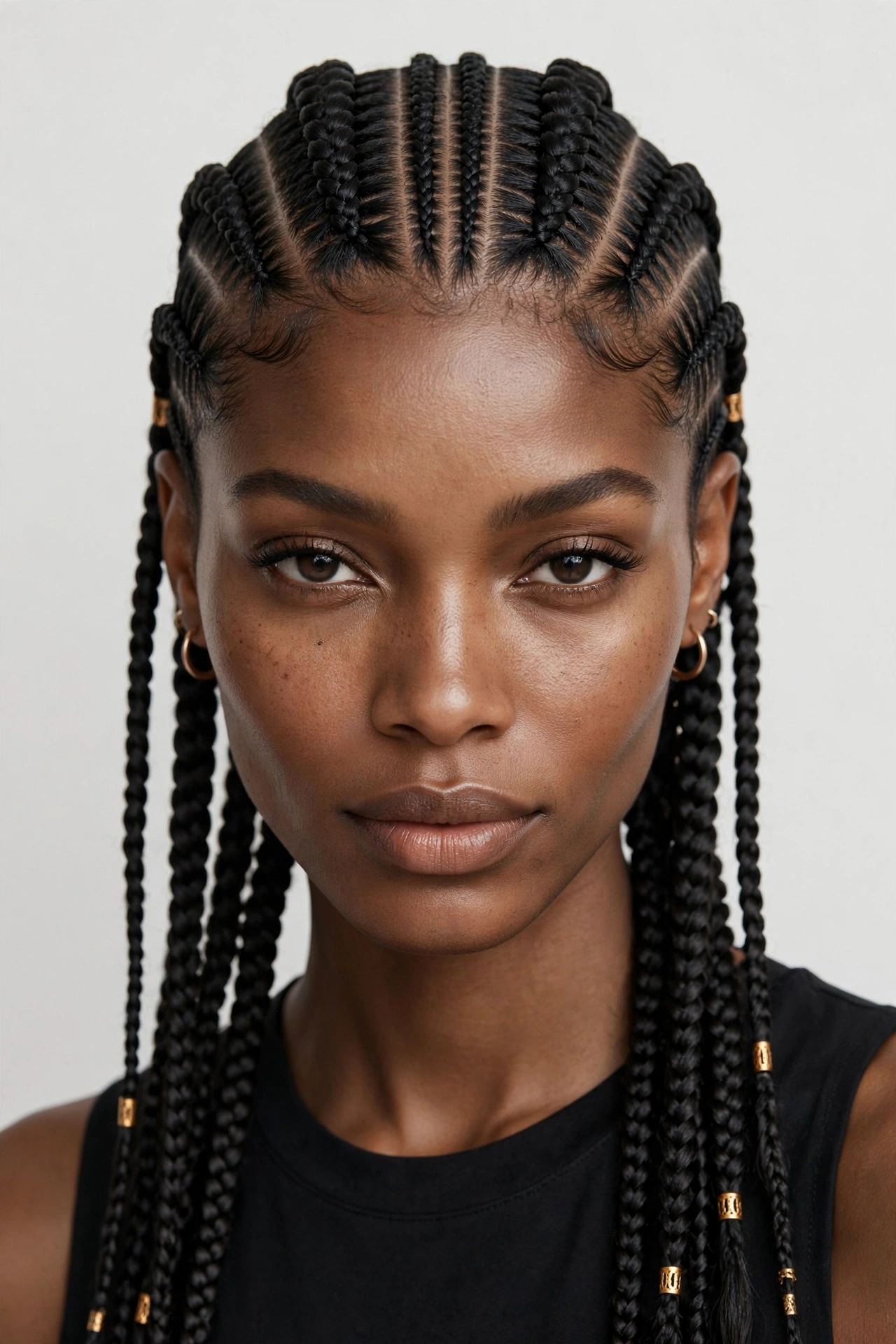
Stitch braiding is a technique where the braider uses a precise underhand motion — sometimes with the pinky finger guiding — to create razor-sharp partings with a raised, almost embroidered look to each cornrow. Applied to the center column of a Fulani install, it gives the traditional pattern a hyper-crisp, couture finish that photographs beautifully.
Fair warning: stitch braids sit close and can feel snug the first day or two. This style is best on healthy, dense hair that can handle the precision. Ask for medium stitch rows down the center with simpler braids on the sides for contrast, and keep the beads minimal — gold cuffs at the ends are enough. The technique is the decoration here.
Fulani Braids Styles 4–6: Length, Ends, and Drama
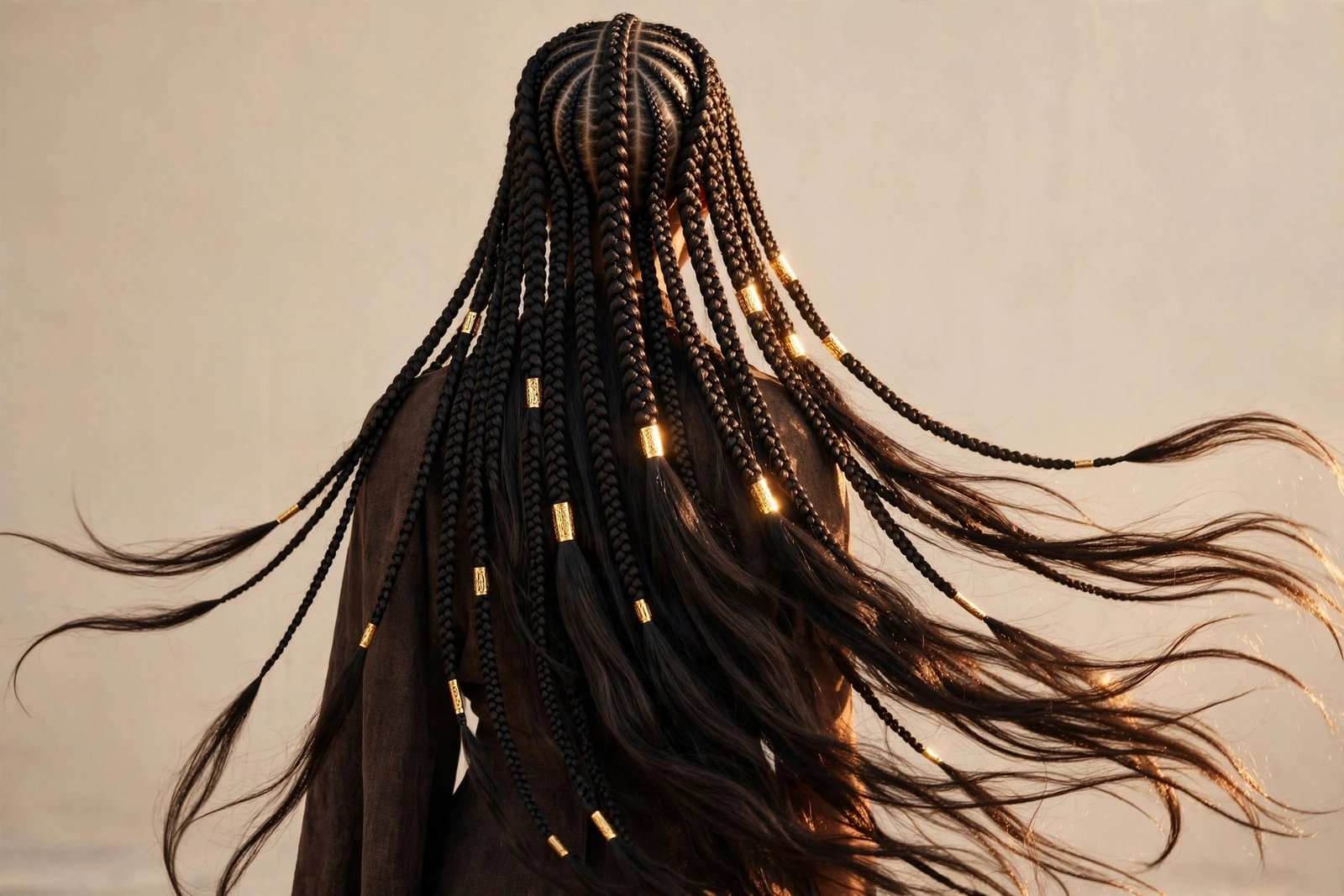
Now we play with silhouette. Length and ends change the whole personality of fulani braids — from regal and dramatic to soft and romantic. These three are about what happens below the shoulders.
4. Waist-Length Goddess Fulani
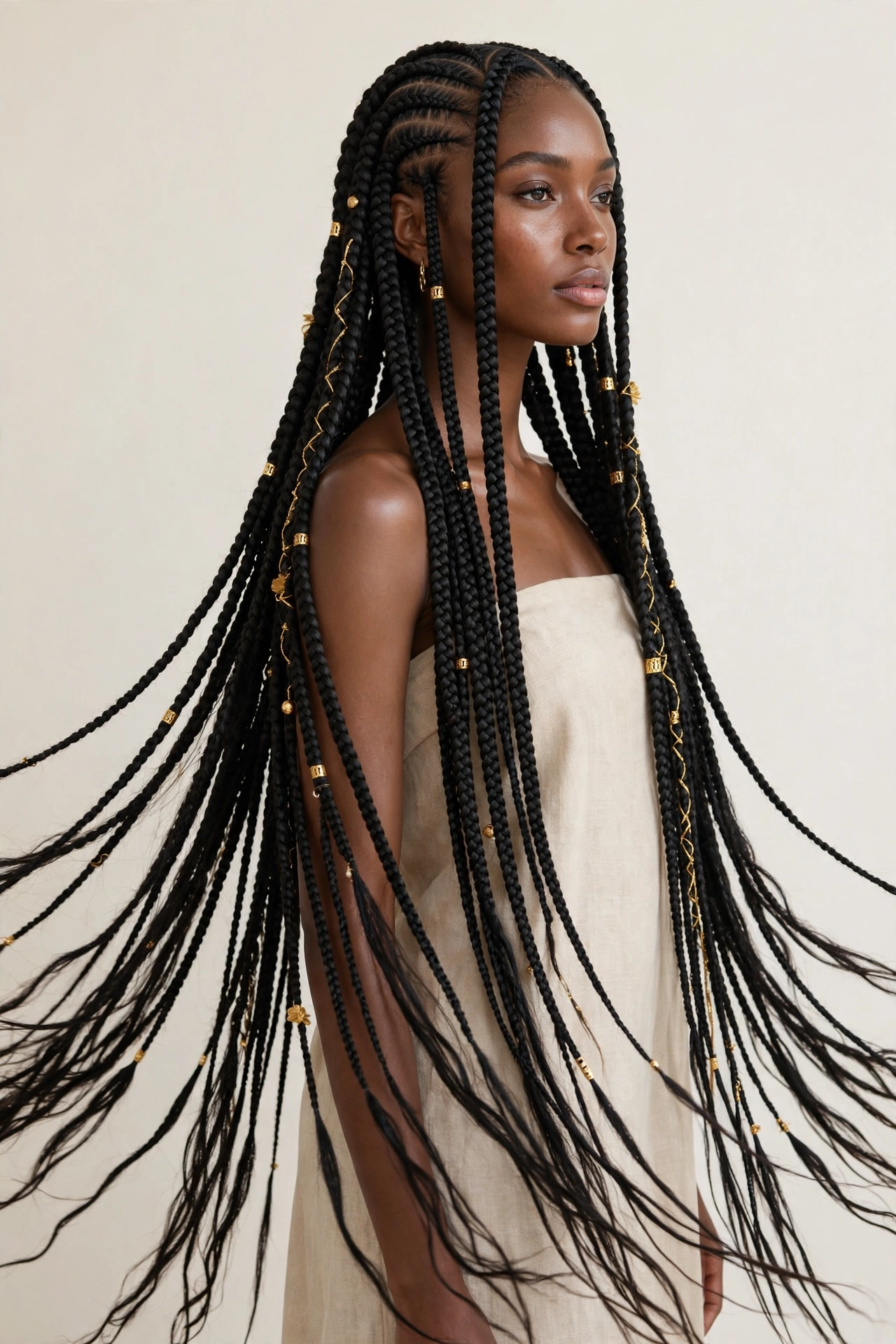
Take the classic pattern and extend it all the way down — braids falling past the waist, with the center column and side braids all carrying full extension length. This is the red-carpet version of Fulani braids: dramatic, regal, and impossible to ignore. The weight of the length actually helps the braids hang beautifully, though your neck will notice the first few days.
Long installs need long-term thinking. The extra weight means extra tension on your roots, so this style is only for strong, healthy hair — and even then, keep it to four weeks rather than six. Sleep with the braids in a loose high bun or silk scarf to prevent tangling at the ends. When it’s done right, waist-length Fulani braids are genuinely one of the most striking hairstyles a woman can wear.
5. Fulani Braids with Loose Curly Ends
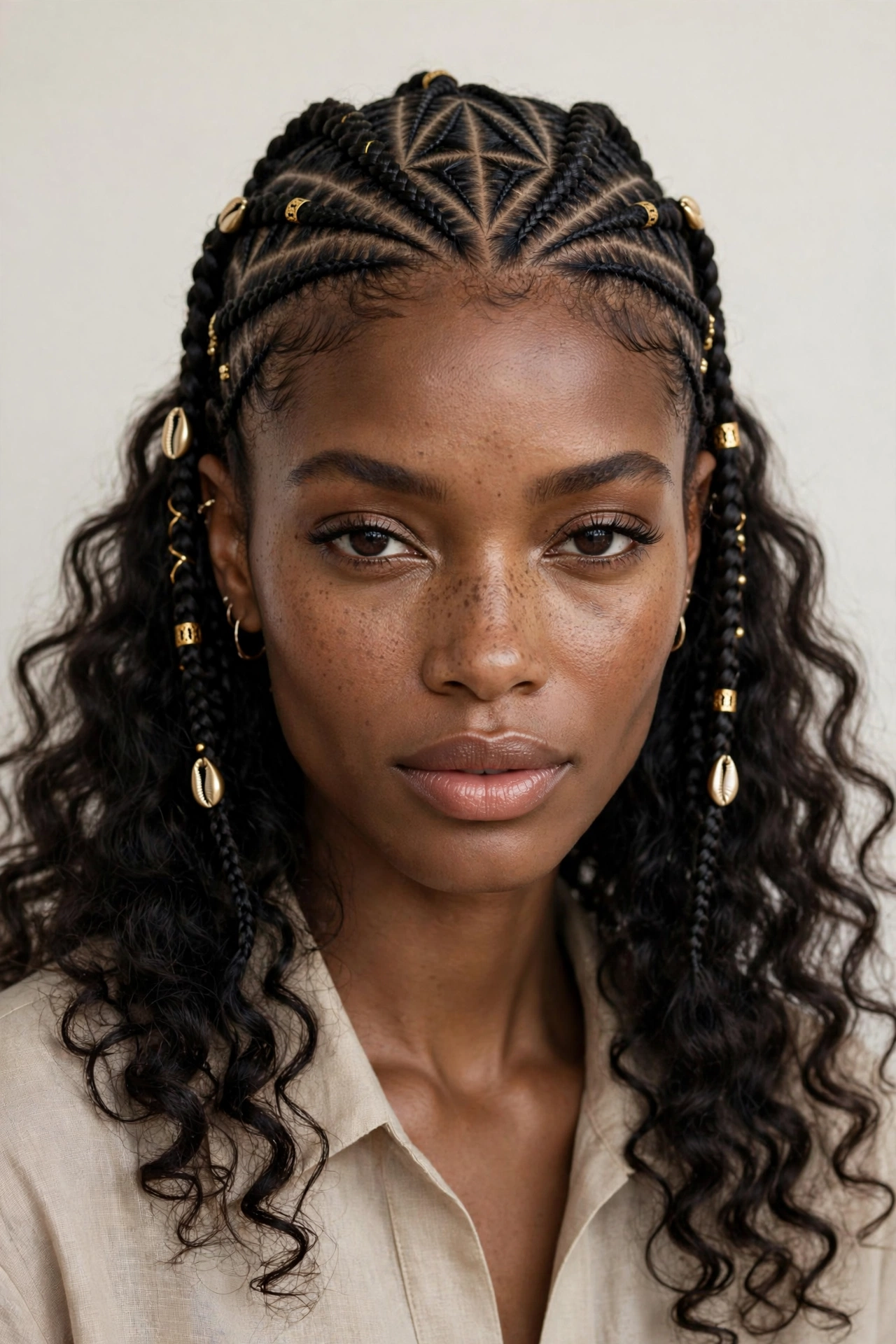
Instead of braiding all the way down, the braider stops partway and leaves the ends loose and curly — either your natural curl pattern or curly extension hair. The contrast is gorgeous: sleek, geometric cornrows up top dissolving into soft, free curls at the ends. It gives the traditional style a romantic, bohemian softness that works beautifully for weddings and events.
The curly ends need their own care routine. They’ll tangle if you ignore them — apply a light leave-in or curl cream to the ends every few days and finger-detangle gently. At night, pineapple the curls or twist them loosely so you don’t wake up to a matted situation. This style is slightly higher maintenance than fully braided ends, but the payoff in softness and movement is worth it.
6. The Shoulder-Grazing Fulani Bob
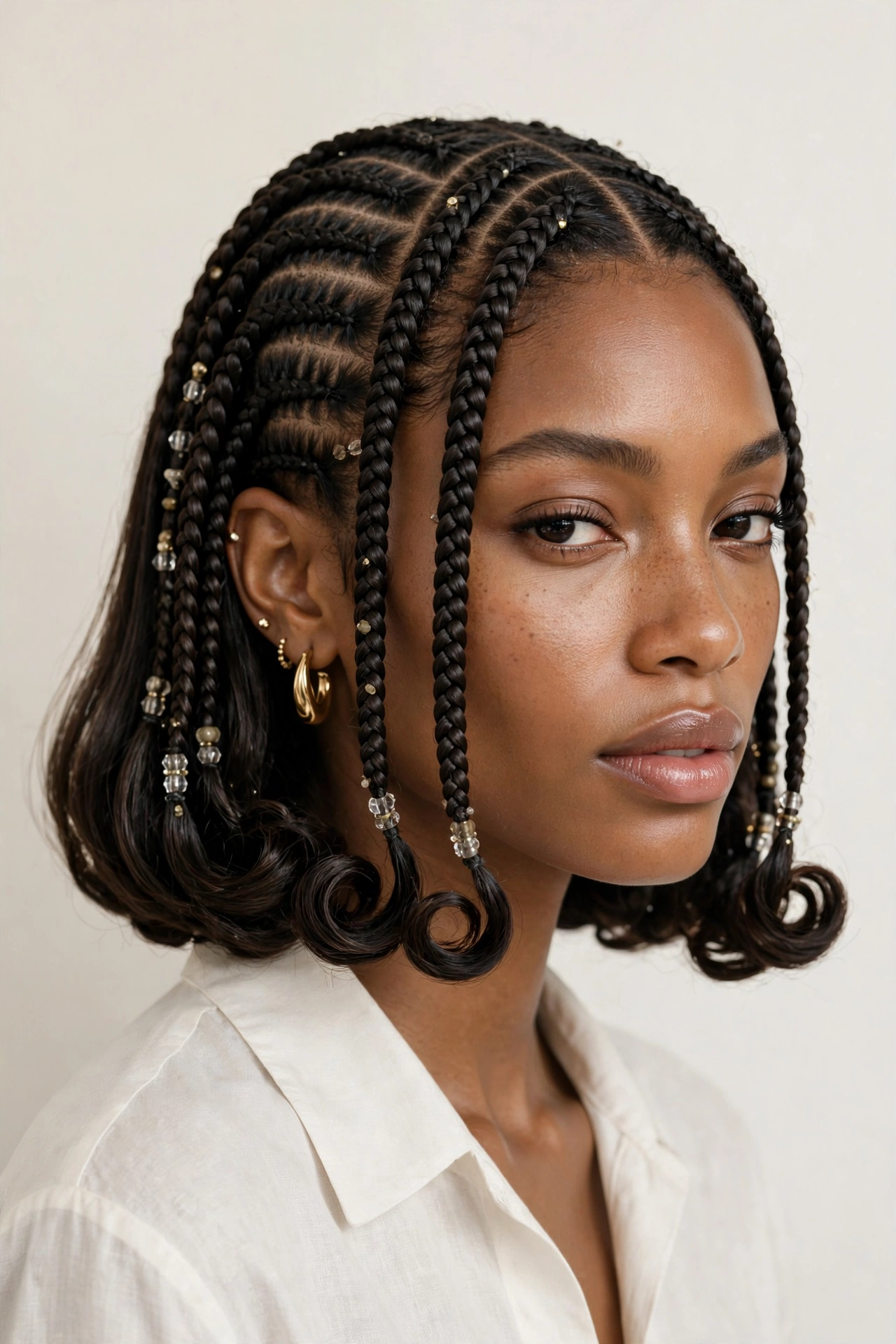
Who says Fulani braids have to be long? The bob version keeps the classic center-column pattern but cuts the length to shoulder level or just above, with the ends often curled under or left with a blunt braided finish. It’s fresh, modern, and — practically speaking — much lighter and easier to live with than a waist-length install.
This is my top recommendation for first-timers and for anyone who works out regularly, because the shorter length means less weight, less sweat trapped in the braids, and faster wash days. It also grows out gracefully. If you like the idea of Fulani braids but the thought of eight hours and waist-length weight makes you hesitate, the bob is your entry point. For more short-hair inspiration, our guide to the blunt bob covers the unbraided version of this silhouette.
Fulani Braids Styles 7–9: Color and Statement Accents
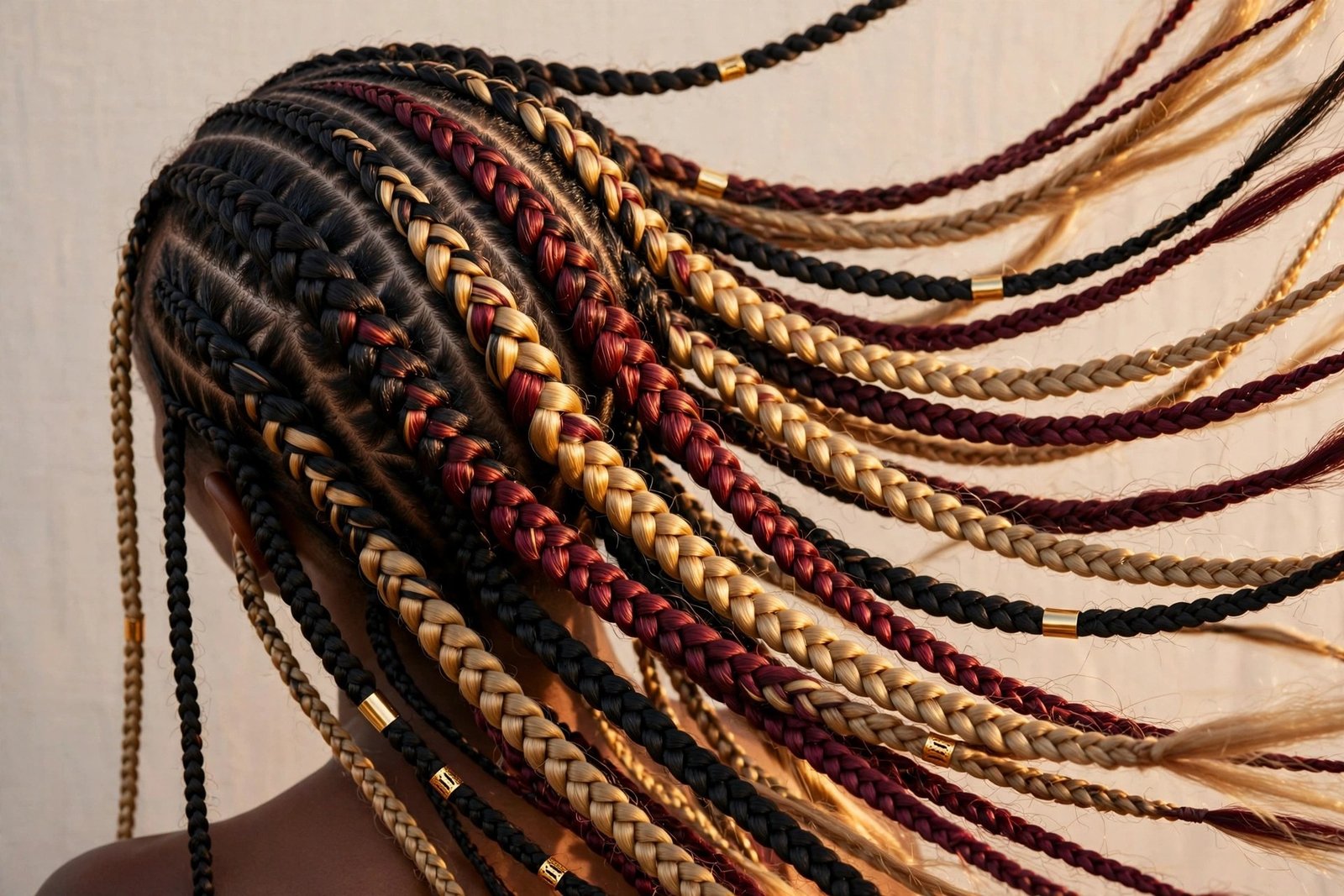
Color on braids is commitment-free experimentation — the dye never touches your real hair. These three styles use color and metallic accents to turn the traditional pattern into a personal statement.
7. Honey-Blonde Accent Fulani
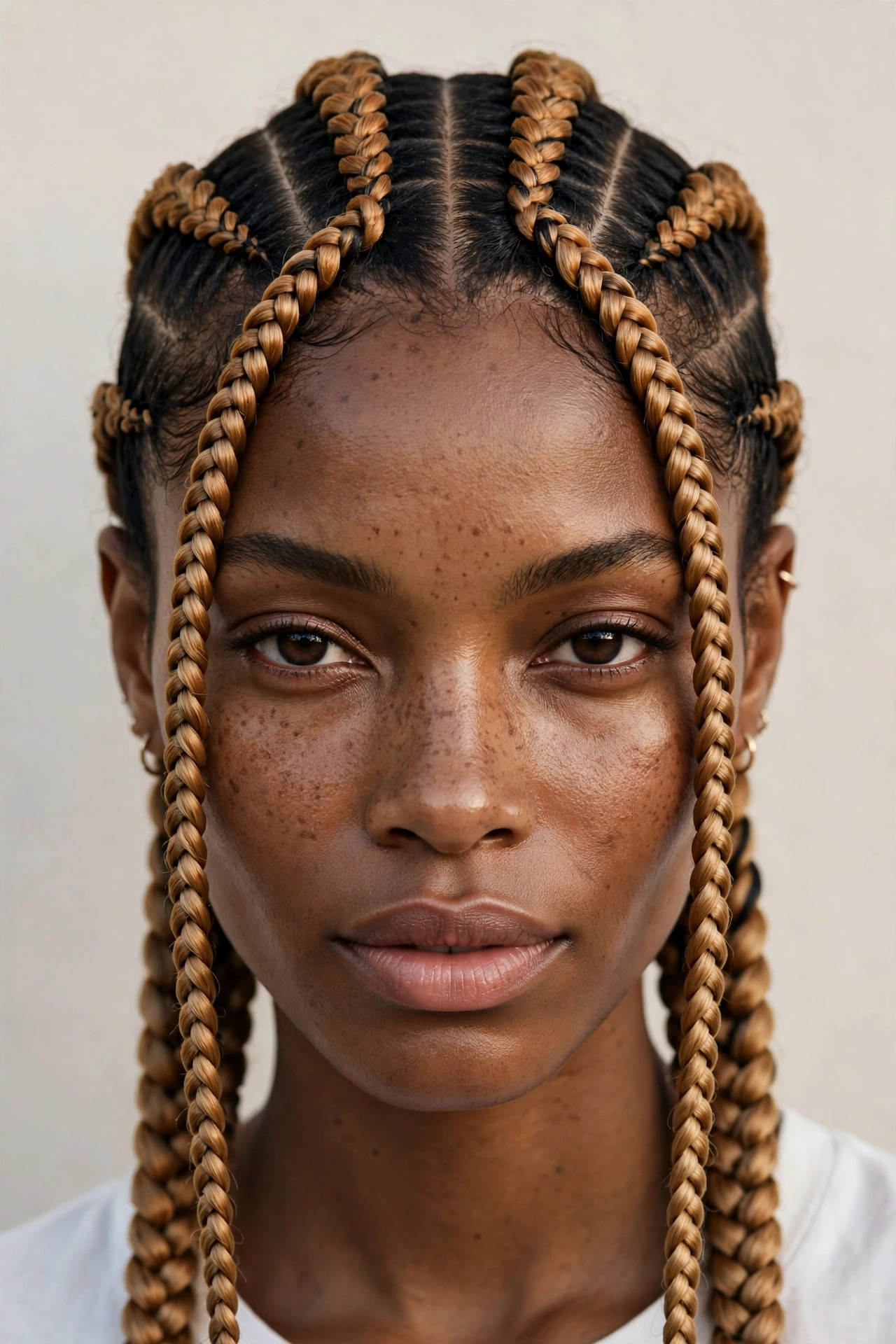
Warm honey-blonde braiding hair woven through the center rows — or just the two face-framing braids — against dark natural roots. The effect is dimensional and sun-kissed without the damage of bleaching your own hair. In 2026 this is one of the most requested color placements, because it brightens the face in a way that’s flattering on deep skin tones especially.
Ask your braider to use the blonde only as an accent — full-head blonde braids wash out the pattern’s definition. The sweet spot is the center column or alternating rows. One practical note: lighter braiding hair shows buildup faster, so keep products light and wash on schedule. The color does the talking; keep everything else minimal.
8. Burgundy and Copper Blend Fulani
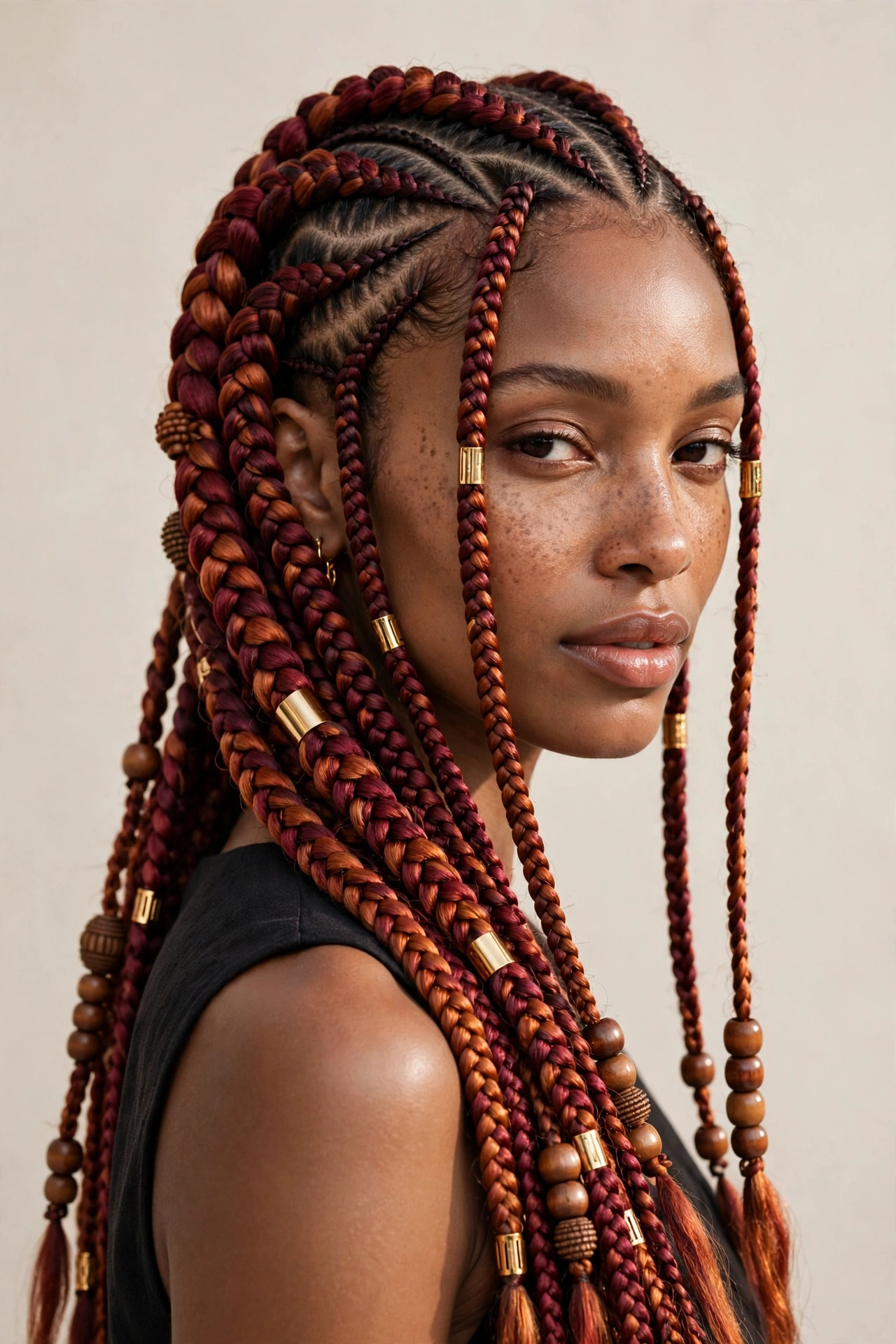
Deep burgundy, copper, and auburn tones braided through the Fulani pattern give the style a rich, autumnal depth that looks expensive. These warm tones catch light beautifully as the braids move, and they pair naturally with gold cuffs and wooden beads — the whole palette feels cohesive and intentional.
This works on every skin tone, but it sings on warm undertones. You can go subtle with burgundy tips on the ends or bold with full-length color blends. If you’re nervous about color, start with the ends only — it reads as an ombre effect and grows out invisibly since it’s all extension hair anyway. When you take the braids down, your natural hair is exactly as you left it.
9. Gold Cuffs and Rings Statement Fulani
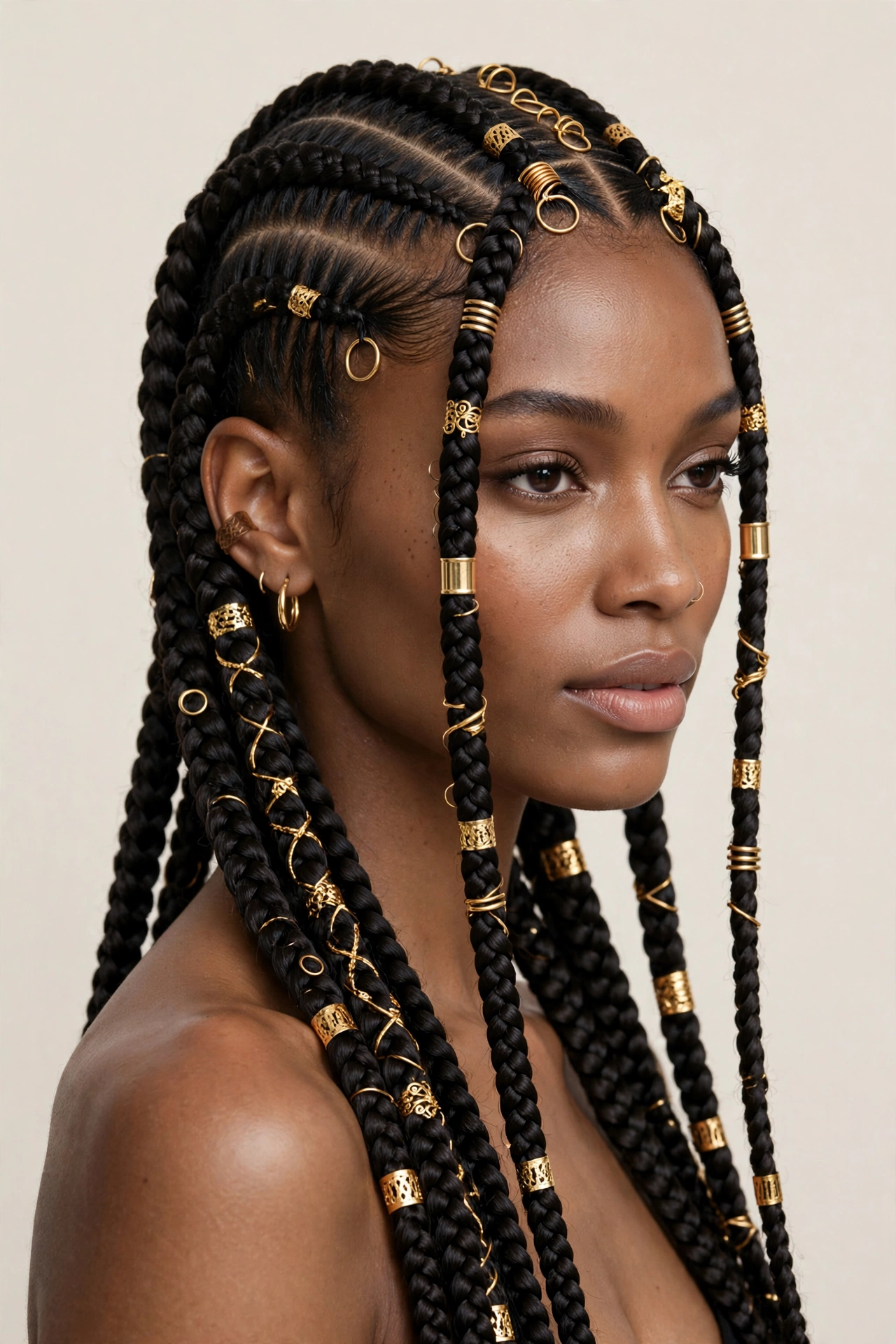
Sometimes the statement isn’t color — it’s metal. This style keeps the braids themselves classic black or dark brown and loads the architecture with gold cuffs, rings, and coils placed deliberately along the center rows and the forehead braid. Each piece catches light as you move. It’s jewelry for your hair, and it honors the traditional Fulani use of adornment as status and beauty.
Placement matters more than quantity. A few well-placed cuffs beat twenty random ones — ask your braider to distribute them asymmetrically along the center column for an editorial feel. Buy quality metal, not plastic-coated pieces that chip in a week. And remove cuffs before deep-washing so they don’t trap moisture against the hair.
Fulani Braids Styles 10–12: Updos, Buns, and Ponytails
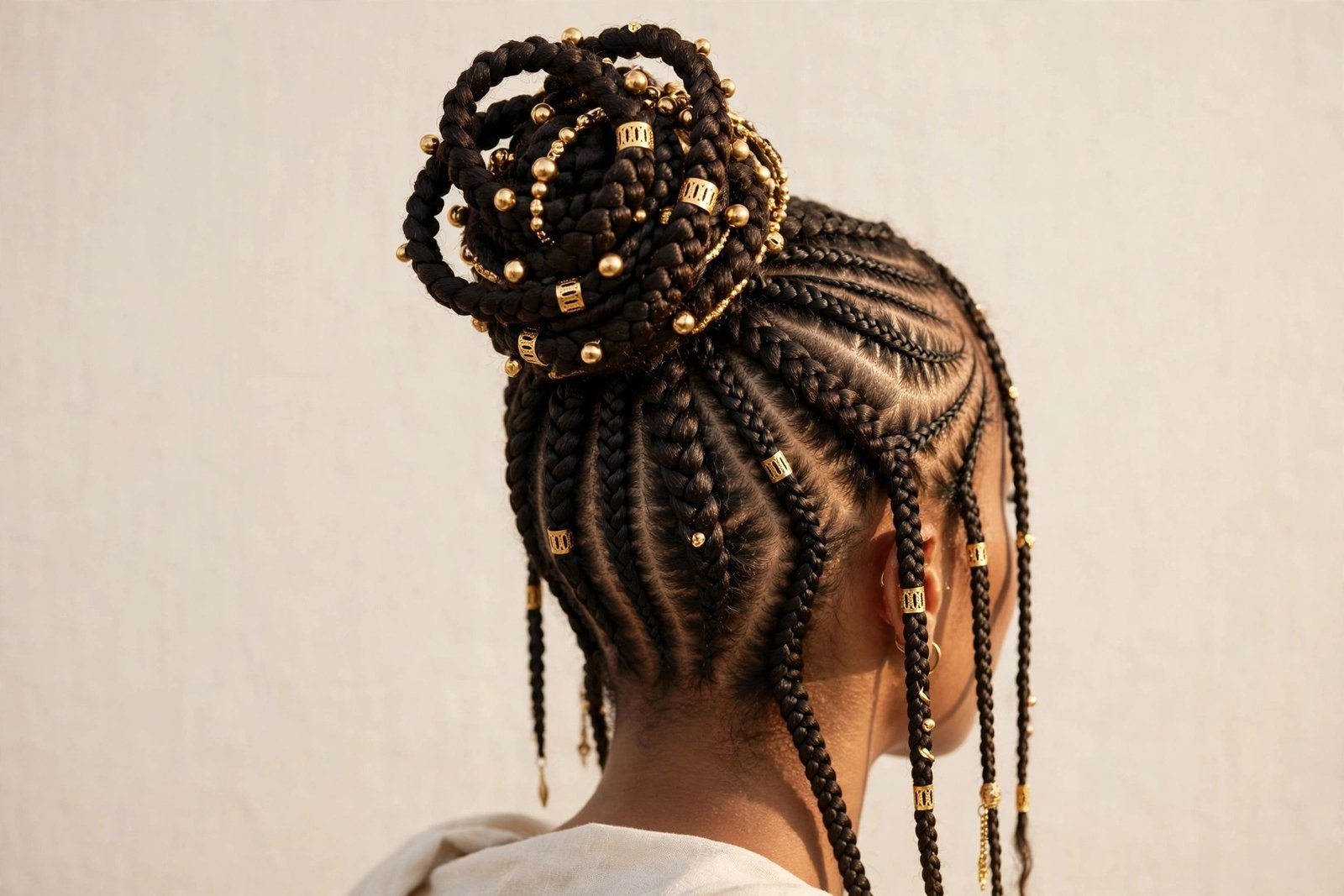
Fulani braids don’t have to hang loose. The braided base is a perfect foundation for updos — the cornrows give buns and ponytails structure that loose hair can’t match. These three take the style from daytime to occasion.
10. The High Top Knot Fulani
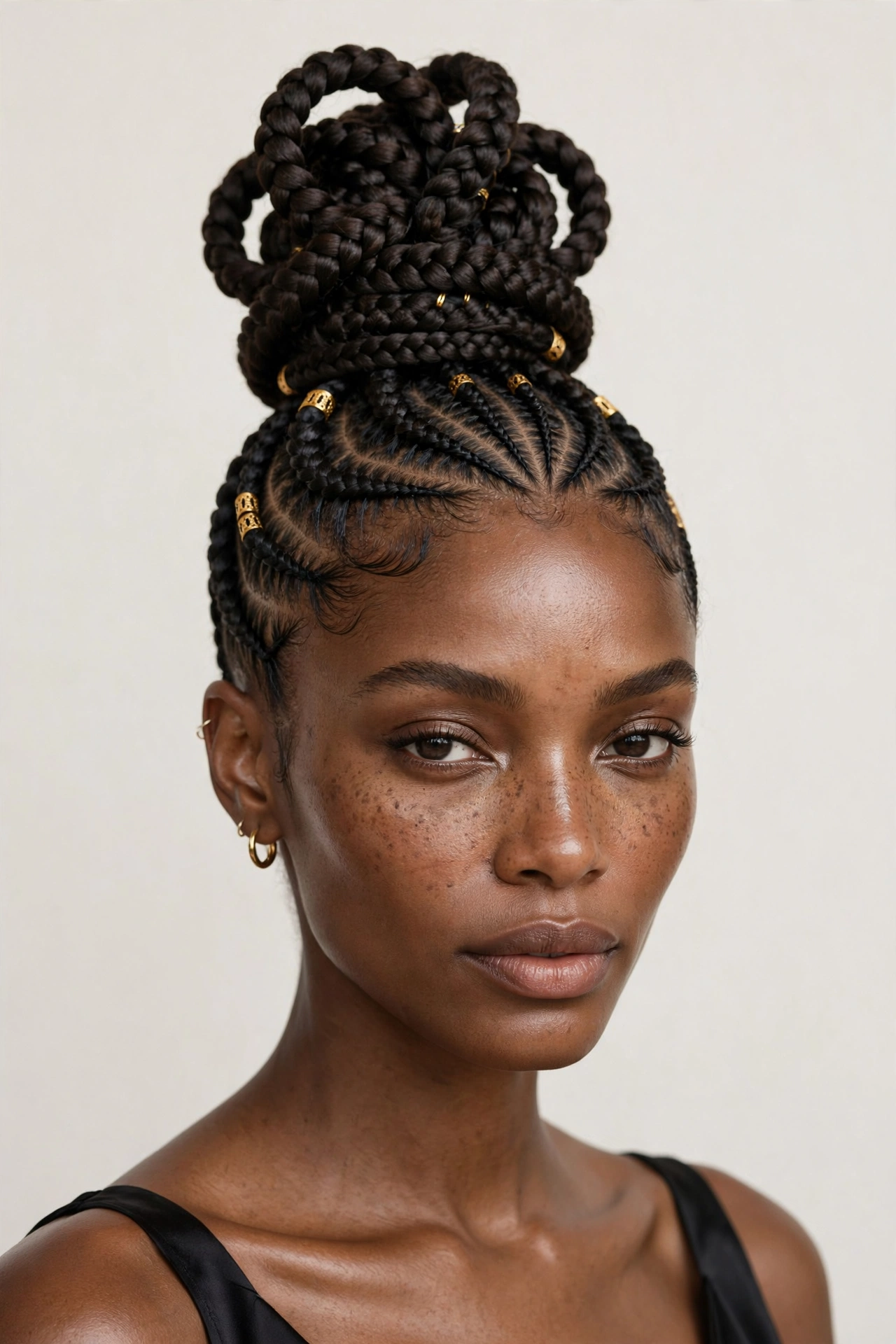
Gather all the braids into a high, sculptural top knot — the cornrow pattern stays visible at the front and sides, and the mass of braids coils into a crown-like bun on top. It’s regal, it’s practical, and it shows off the pattern’s architecture better than wearing the braids down. This is the style for hot weather, workouts, and days when you want your neck free.
Don’t pull the knot too tight — the whole point of Fulani braids as a protective style disappears if the updo is strangling your edges. Coil loosely and pin rather than wrapping elastic bands repeatedly around the same spot. A silk scrunchie instead of a thin elastic makes a real difference over six weeks of daily updos.
11. Double Space Buns Fulani
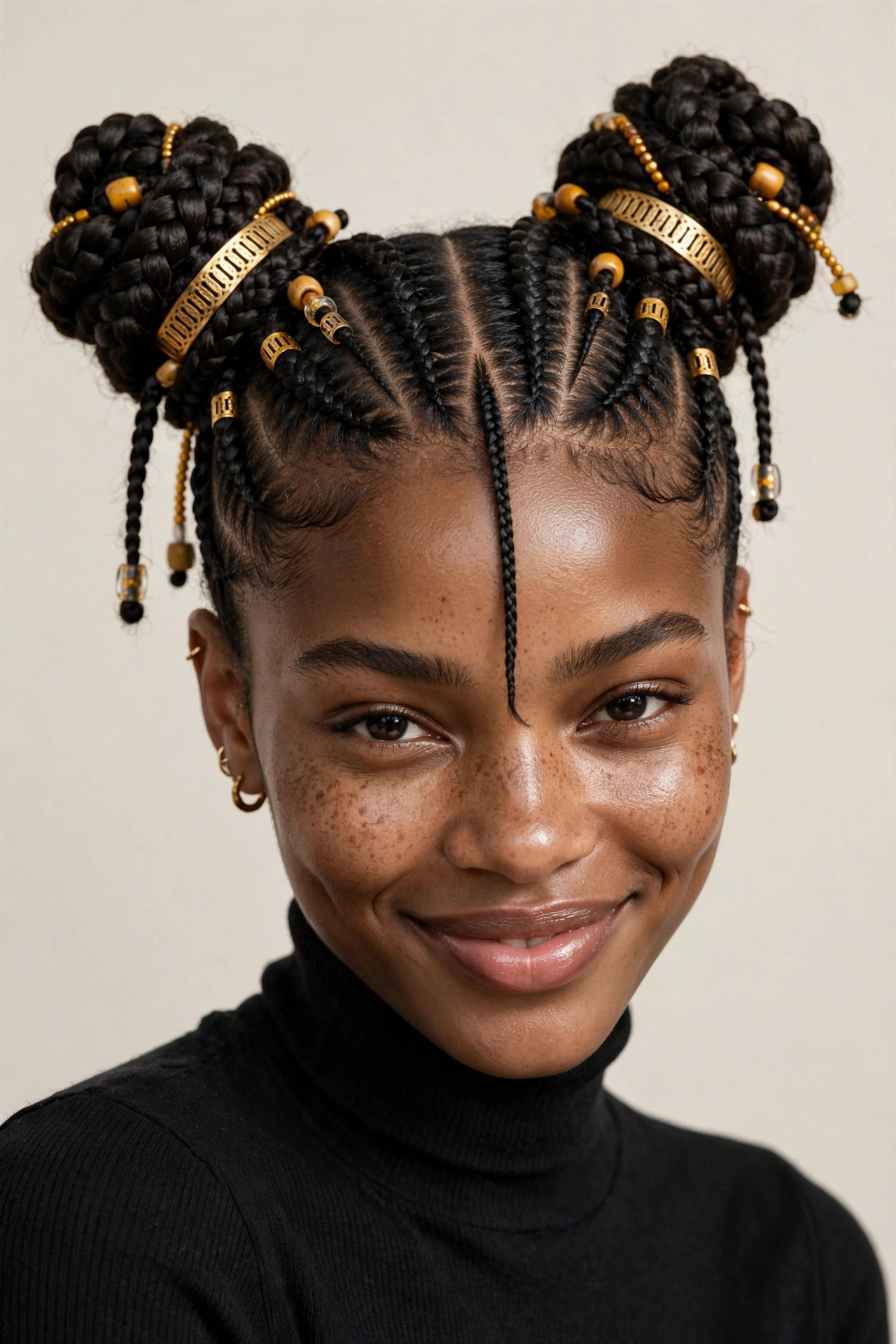
Split the braids into two high buns — one on each side — with the center cornrows parted down the middle to frame them. Playful, youthful, and very 2026. The Fulani pattern keeps it from reading childish; the beads and cuffs keep it grown. It works for festivals, concerts, and any day you want the style to have energy.
Keep the parting clean — that’s what makes this look intentional rather than messy. Leave the forehead braid down between the buns if your install has one; it becomes the centerpiece. This style photographs incredibly well, which is half the point. Just remember the same rule as the top knot: secure firmly but not painfully.
12. Low Sleek Ponytail Fulani
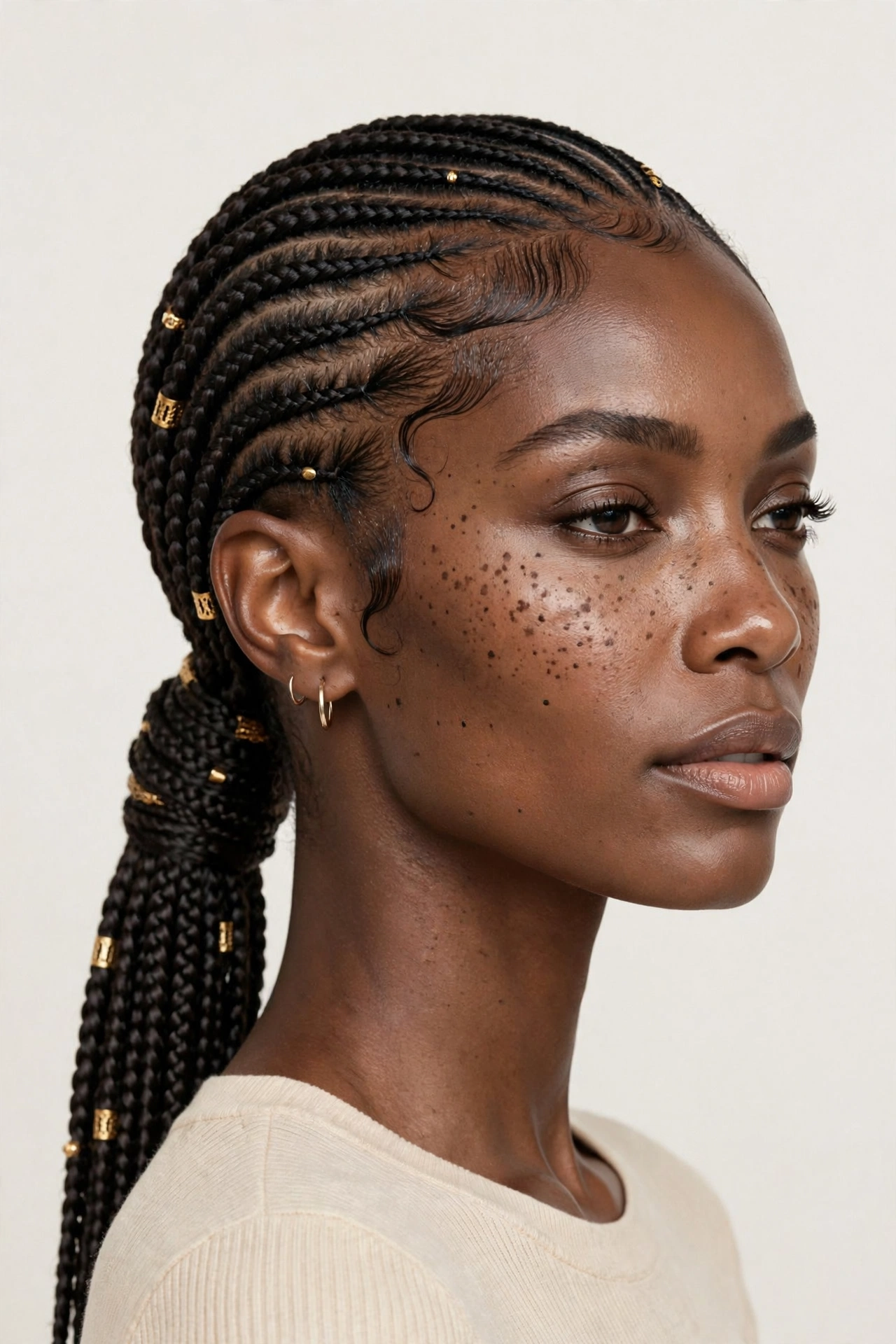
Sweep all the braids back into a low ponytail at the nape, then wrap a few braids around the base to hide the elastic. The cornrows flow back like water into the tail. It’s sleek, professional, and boardroom-appropriate while still being unmistakably Fulani. For office settings or formal events, this is the most polished way to wear the style.
The wrap-around-base detail is what elevates it — ask your braider to leave two longer braids free specifically for wrapping when they install. Use edge control sparingly at the hairline for that glassy finish, and tie a silk scarf around the edges for twenty minutes after styling to lay everything flat. Understated, but in the best way.
Fulani Braids Styles 13–15: Pattern Play and Partings
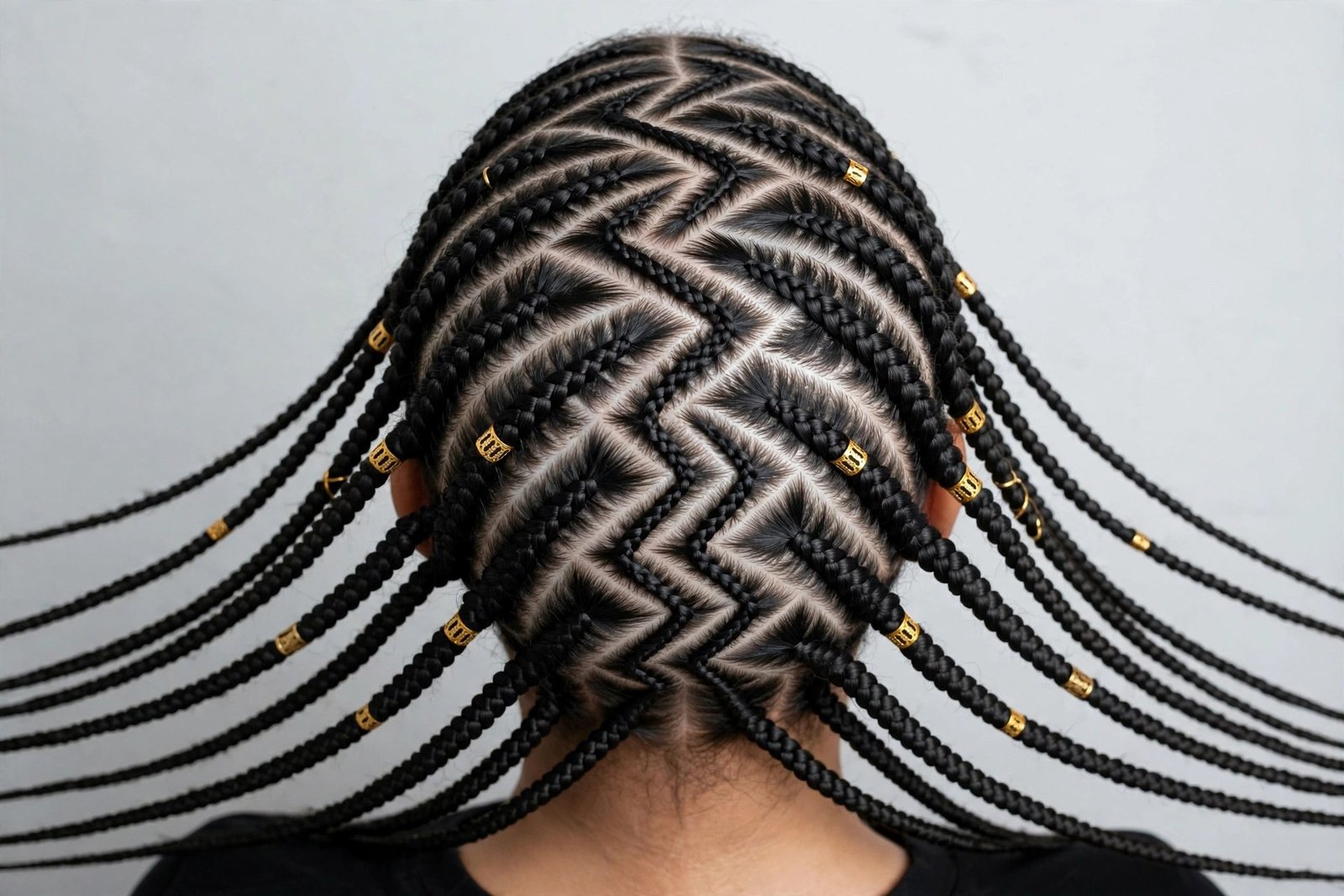
The center column is the soul of fulani braids — and it’s also a canvas. These three styles experiment with the pattern itself: the partings, the direction, and the geometry of the rows.
13. Zigzag Center-Row Fulani
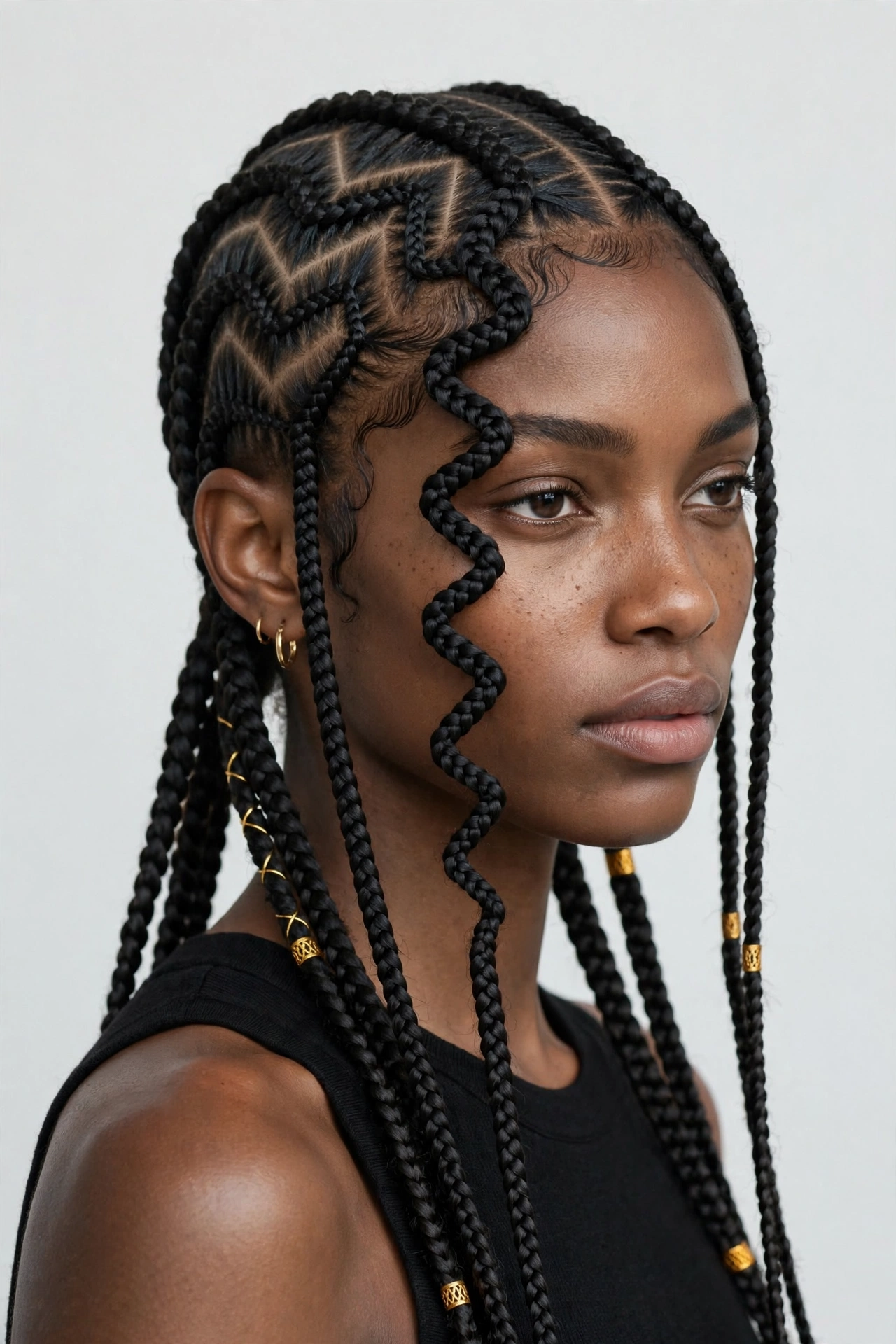
Instead of straight rows down the center, the partings zigzag — creating a lightning-bolt geometry that runs front to back. The braids themselves are standard cornrows; it’s the parting pattern that does the work. The result is edgier and more graphic than the classic, with a kind of architectural energy that stands out in a crowd.
This needs a braider with genuinely sharp parting skills — fuzzy zigzags look accidental, crisp ones look deliberate. Ask to see zigzag or patterned parting work in their portfolio before you book. Keep the sides simpler than the center so the geometry has room to breathe. Bold partings plus heavy beads is too much; pick one statement.
14. Side-Swept Fulani
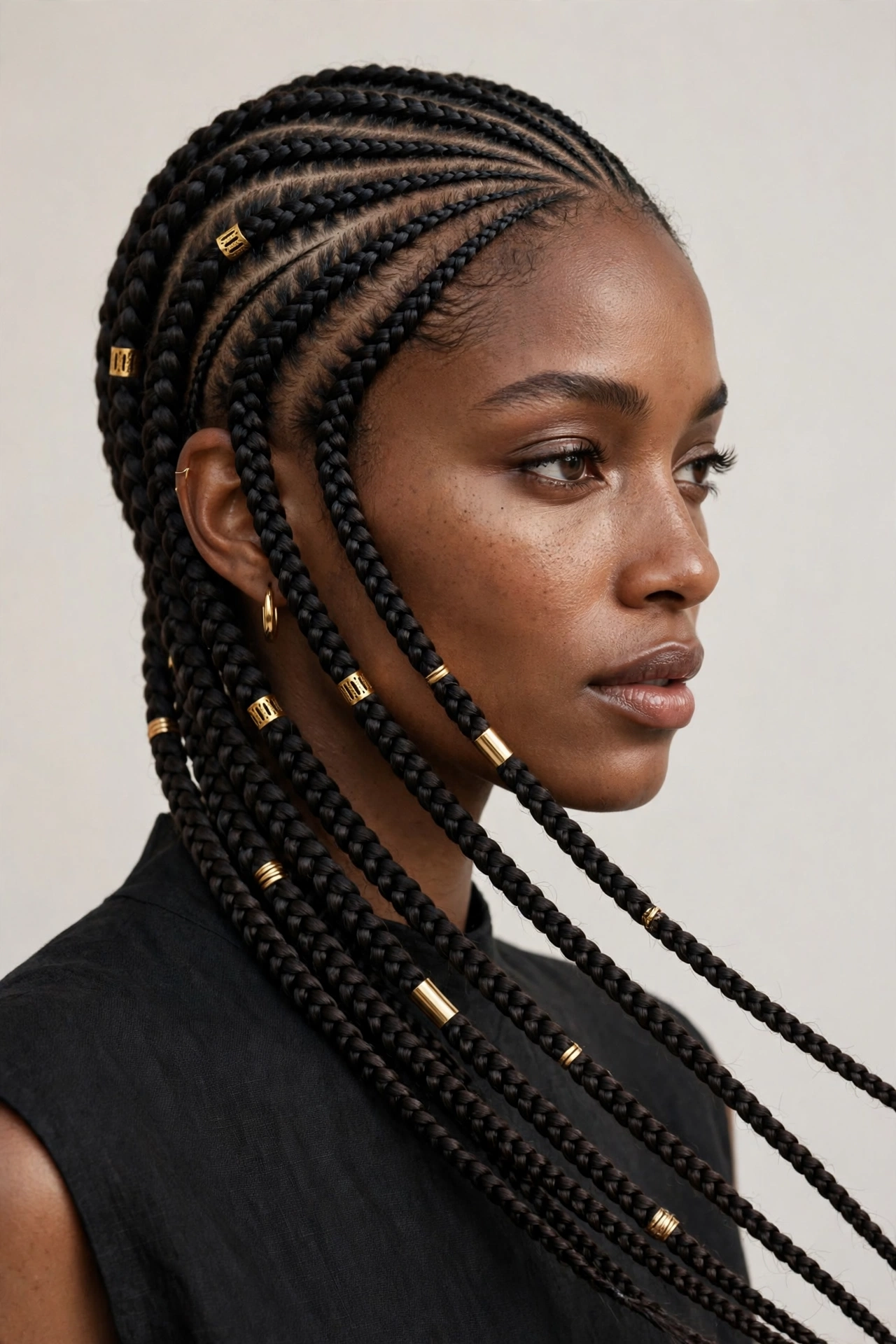
Break the symmetry: braid the center column so it sweeps diagonally to one side instead of running straight back, with the side braids following the same directional flow. It gives the traditional pattern an asymmetric, fashion-editorial feel — like the classic style caught mid-movement. Unexpected, and it flatters round and square face shapes by creating diagonal lines.
The sweep direction should follow your natural growth patterns where possible — fighting the hair’s direction creates tension and shortens the style’s life. This is a good style to discuss in a consultation rather than springing on the braider day-of, because the sectioning is genuinely different from the standard map. When it’s planned well, it’s stunning.
15. Fulani with a Curly Crown
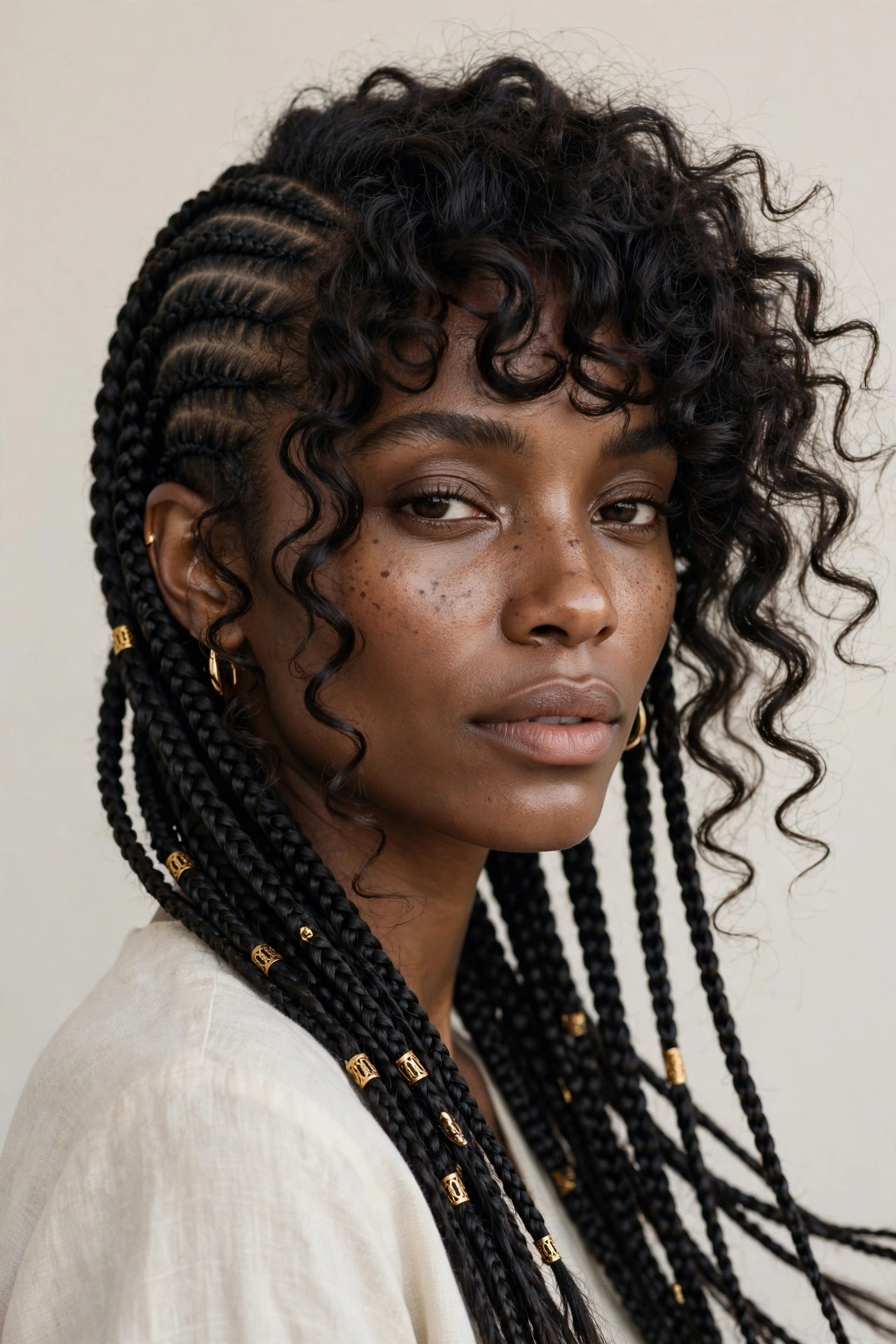
Here’s a beautiful hybrid: the back and sides are fully braided in the Fulani pattern, but the crown and front hairline are left out in natural curls — a curly fringe and edges framing the face while the braids flow behind. The contrast between the sleek geometric braids and free, soft curls is striking, and it gives you the best of both worlds.
The leave-out needs daily attention — it’s the only part of your real hair exposed, so moisturize the curls, define them with a light cream, and protect them at night with the rest of the style under a bonnet. This style is best for women whose curl pattern is defined enough to hold its own next to the braids. If your leave-out is a different texture story than the braids, the contrast can look unintentional rather than designed.
Fulani Braids Styles 16–18: Modern 2026 Favorites
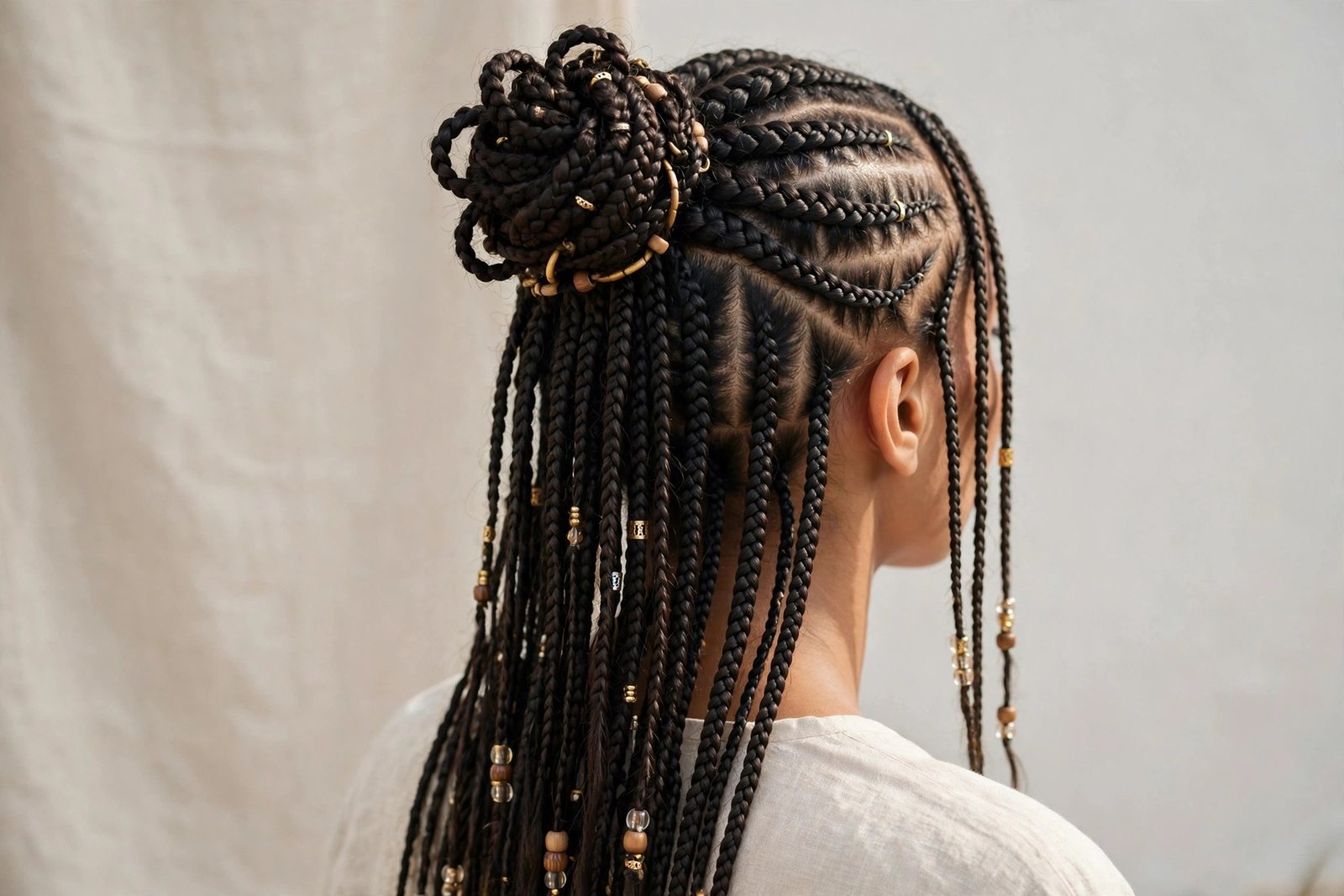
The last three are the styles dominating feeds and salon request lists in 2026 — modern interpretations that keep the heritage bones but speak the current language.
16. Half-Up, Half-Down Fulani
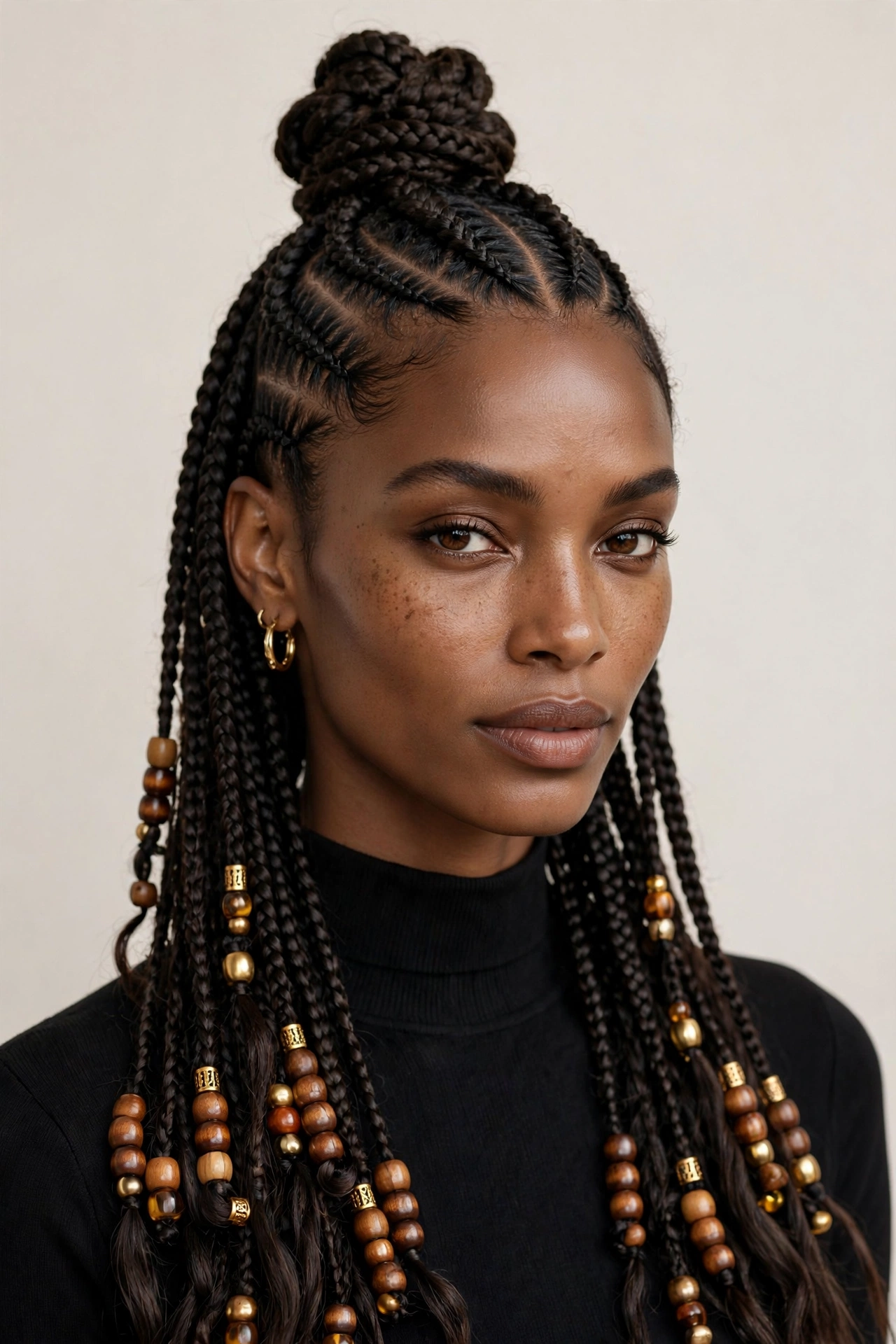
Gather the top half of the braids into a bun or ponytail while the rest falls free down the back. The center cornrows stay visible up top, the beads swing with the loose braids below. It’s the most versatile style on this list — casual enough for daytime, pretty enough for evening, and it takes thirty seconds to switch between wearing it up or down.
This is also the most forgiving style as the install ages. When new growth starts softening the pattern at week five, the half-up styling disguises it completely. If you want maximum wear out of your appointment, this is the styling trick that gets you there. Loose braids plus a top knot is the combination I see lasting longest in real life.
17. Jumbo Statement Fulani
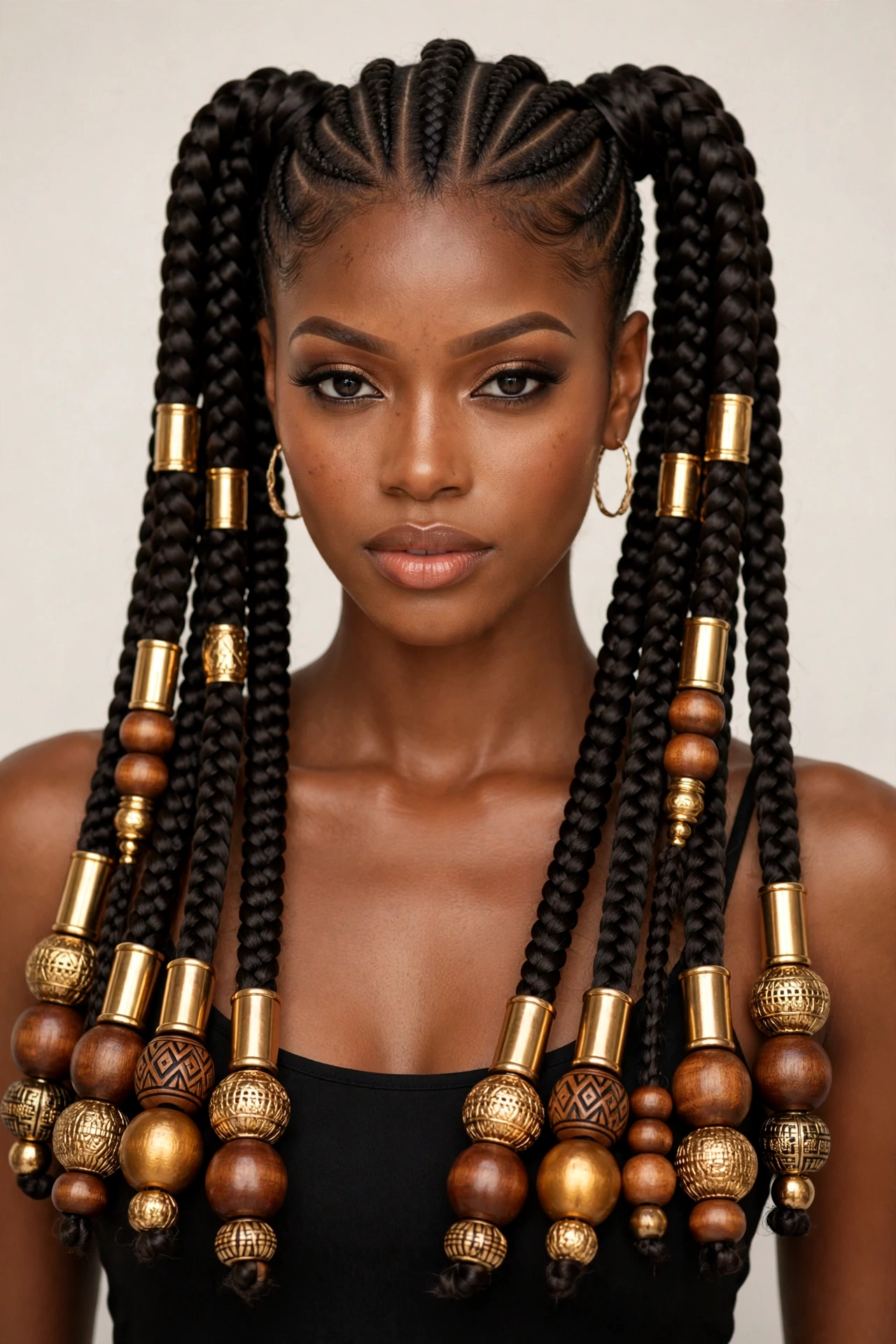
Go big: thick, chunky cornrows — maybe six to eight total — in the Fulani layout, with oversized beads and cuffs. Fewer braids means less time in the chair (three to four hours) and a bolder, more graphic look. Jumbo braids have a confidence to them; the pattern reads from across the room.
The trade-off is tension distribution. Thicker braids pull on fewer root points, so each point carries more load — this style demands a braider who understands weight distribution and doesn’t over-tighten. It’s also heavier, so plan for four weeks of wear rather than six. But for impact per hour in the chair, nothing on this list beats it.
18. Cowrie Shell and Bead Adornment Fulani
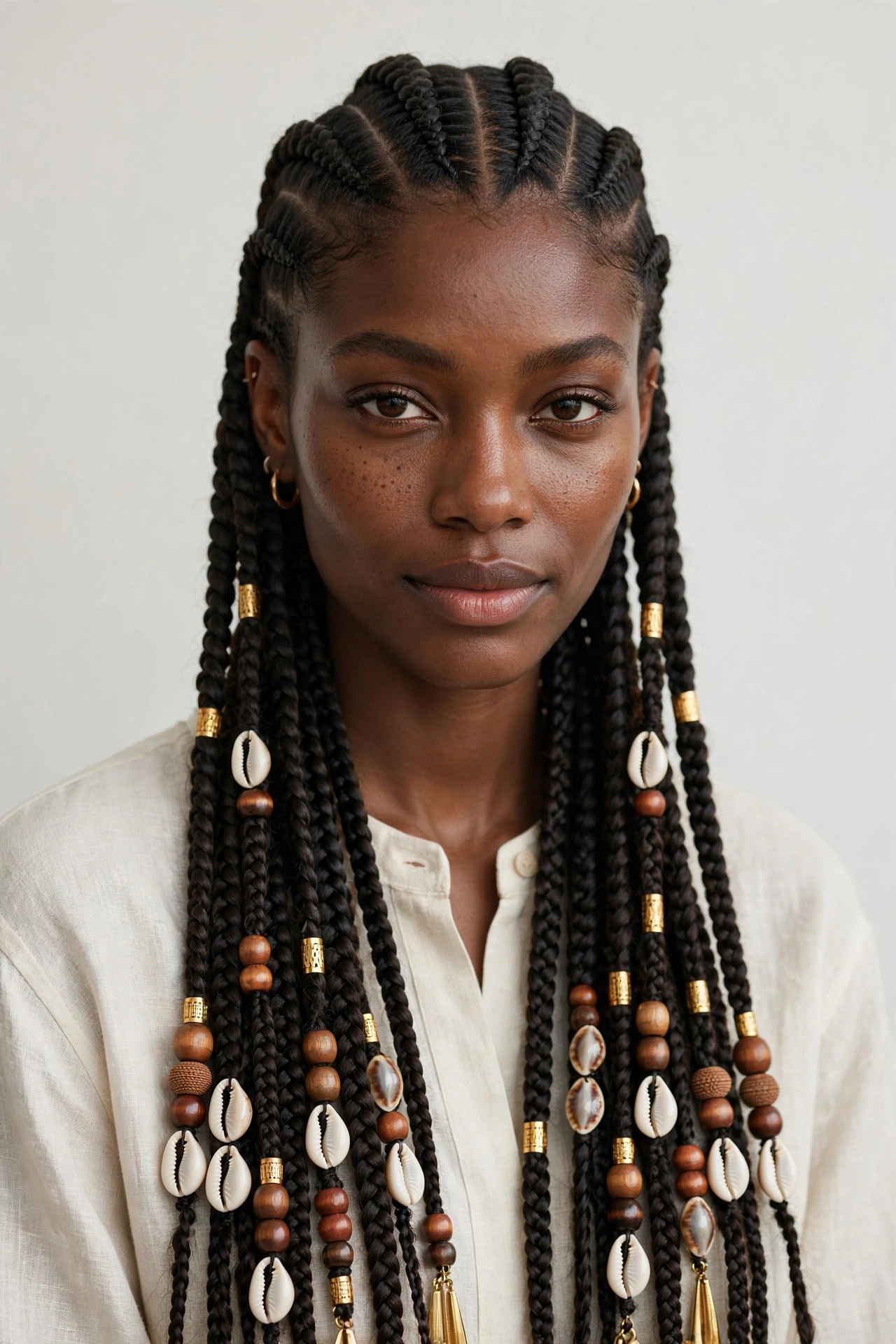
The most traditionally rooted of the modern styles: classic Fulani braiding finished with cowrie shells alongside the beads. Cowries carry deep meaning across West African cultures — prosperity, fertility, protection, connection to heritage. Wearing them in your braids is wearing history, and in 2026 more women are choosing adornment with meaning over decoration for its own sake.
Source real shells, not plastic imitations — the real ones have a weight and luster that fakes can’t match, and they last through the whole install. They’re typically threaded onto the ends of braids or wired onto cuffs. A word of care: shells are hard and can snag fine fabrics, so be mindful with silk scarves at night. Meaningful, beautiful, and unmistakably connected to the style’s origins.
Beads, Cuffs, and Accessories: The Complete Guide
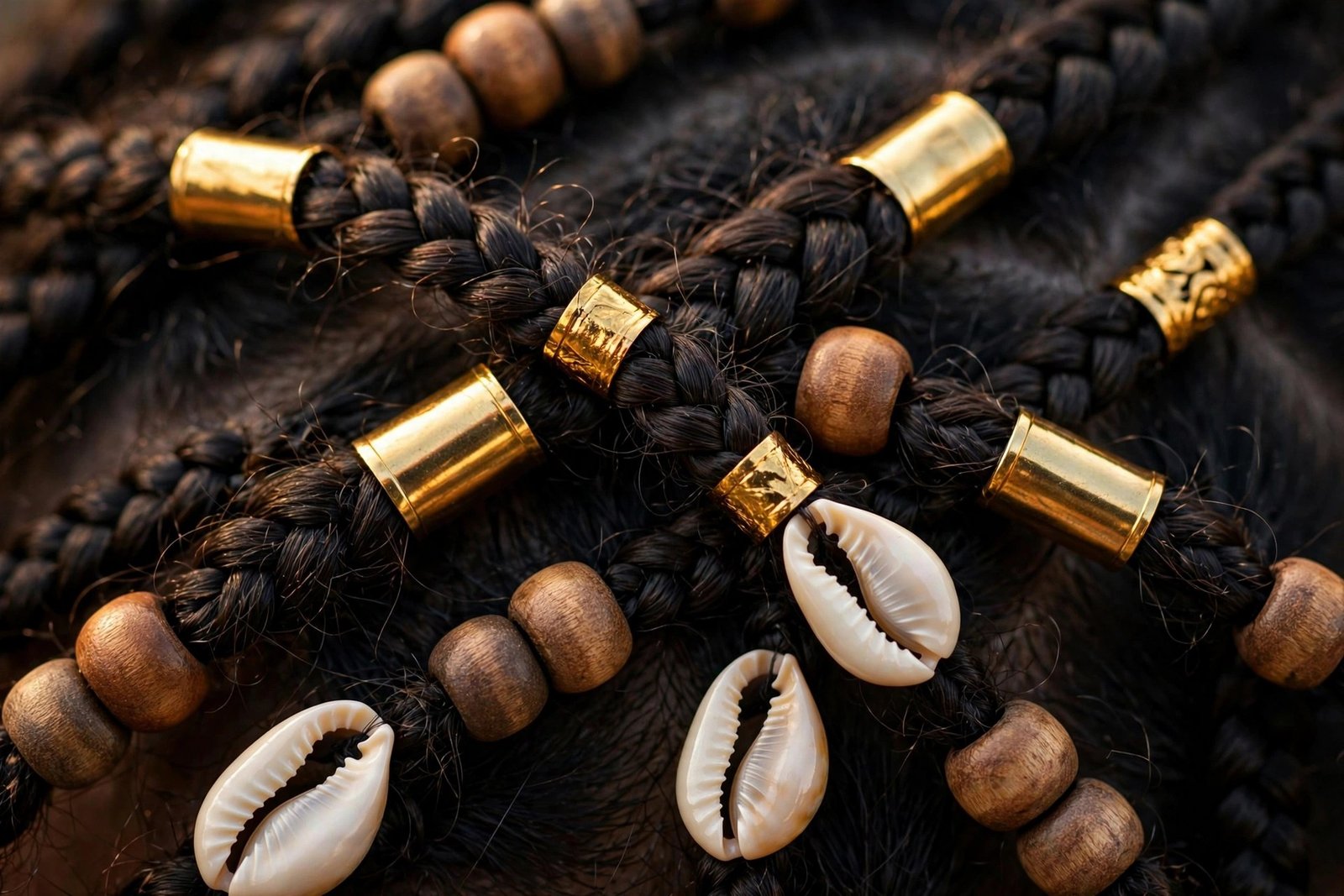
Adornment is not the finishing touch on fulani braids — it’s part of the style’s DNA. The beads, cuffs, and shells are what lift the cornrow pattern from beautiful braiding into Fulani braiding specifically. So it’s worth choosing them deliberately rather than grabbing whatever the salon has in a drawer.
Start with beads. Wooden beads are the traditional choice — lightweight, warm, and they develop a beautiful patina over weeks of wear. Glass and clay beads add color; metal beads add weight and shine. Size matters: beads that are too small slide off or look lost, beads that are too big overwhelm the braid. Your braider will match bead size to braid thickness — this is one of those details that separates experienced Fulani braiders from generalists.
Cuffs and rings are the modern staple. Gold-toned cuffs are the classic look, but silver, copper, and antique-brass finishes all work — pick the metal that flatters your skin tone the way you’d pick jewelry. They’re usually crimped gently onto the braid with pliers or slid on before the braid is finished. Quality matters enormously here: cheap coated cuffs chip within days and the exposed base metal can discolor. Solid or well-plated pieces cost more and look better for the entire install.
Cowrie shells deserve their own mention. Beyond their beauty, they carry centuries of meaning in West African cultures — used historically as currency and as symbols of prosperity and protection. Threading real cowries into your braids connects the style directly to its roots. If you wear them, know what they mean. That knowledge is part of wearing the style well.
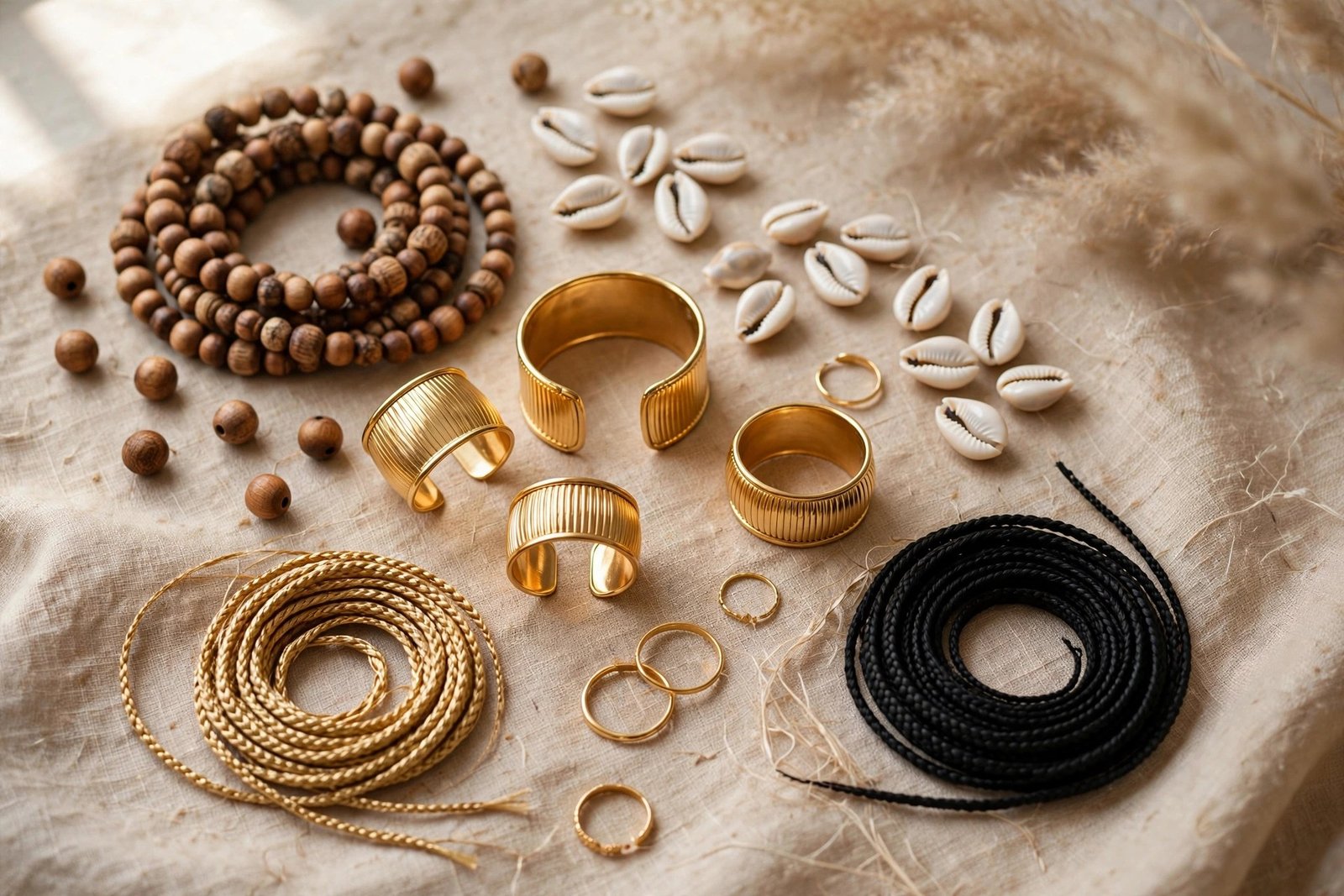
Thread wrapping is the quieter adornment option: colored thread wrapped tightly around sections of braid, sometimes in patterns. It’s lightweight, inexpensive, and adds color without beads’ weight or noise. Black and gold thread on dark braids is a classic combination that reads luxurious.
Practical care for adorned braids: beads and shells add weight, so an install that’s heavily adorned shouldn’t stay in as long — plan on four weeks. Remove metal cuffs before washing so water doesn’t get trapped underneath; dry beaded ends thoroughly after every wash, because damp beads against hair breed mildew smell faster than you’d think. And sleep with adorned braids loosely contained — beads rattling against a pillow all night will loosen the braids at the roots.
Scalp Care While Your Fulani Braids Are In
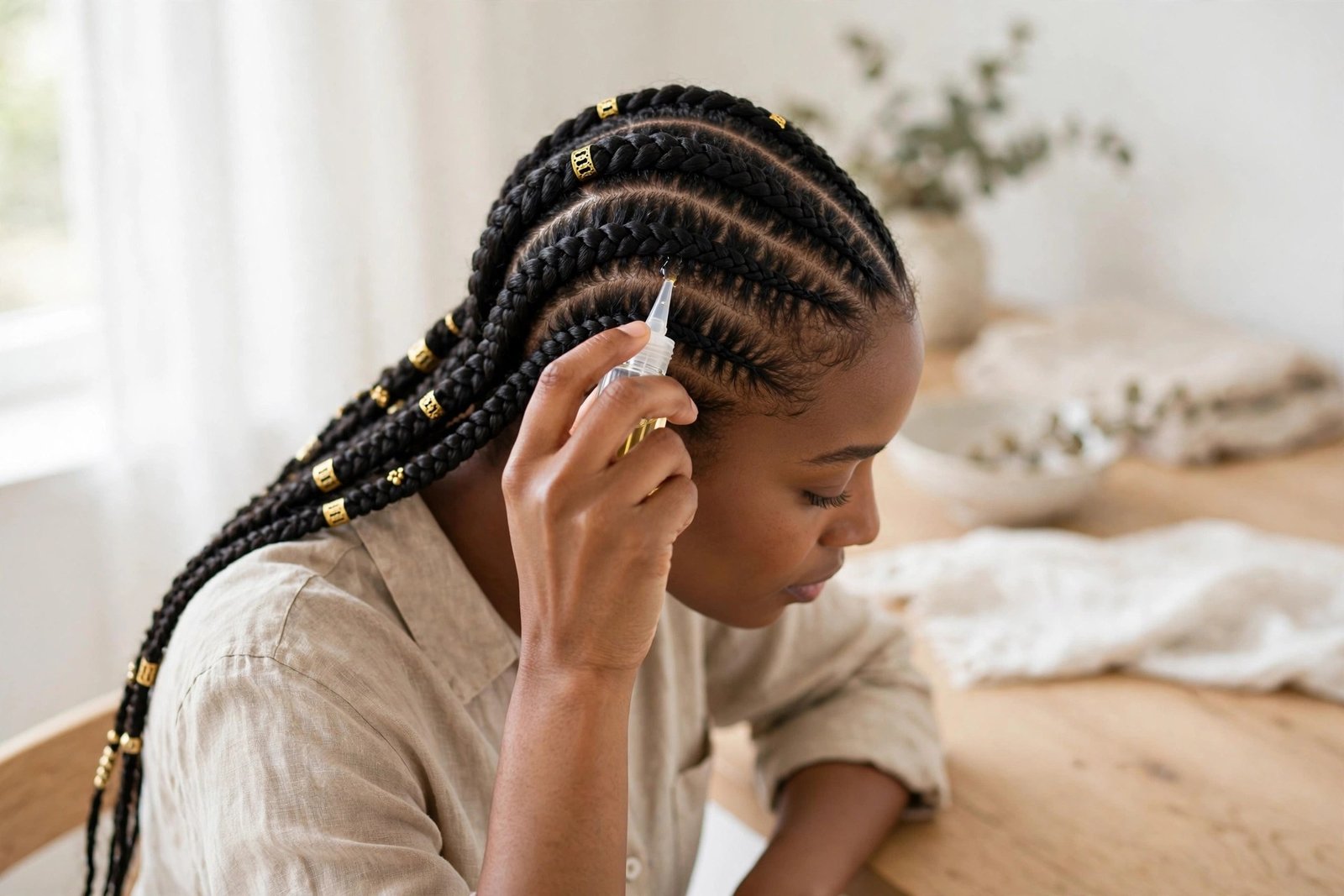
Here’s the truth about protective styles: they only protect if you maintain what’s underneath. Your scalp is doing all the work for four to six weeks — carrying the weight, growing the hair, staying healthy under braids. Treat it well and your take-down will be a joy. Neglect it and you’ll pay at removal.
Oil lightly and regularly — two to three times a week. The key word is lightly. A nozzle applicator bottle lets you get oil directly onto the scalp between the rows without drenching the braids. Jojoba oil is the best all-rounder because it mimics the scalp’s natural sebum; a drop of tea tree oil mixed in helps with itch. What you must avoid is heavy buildup: thick butters, heavy greases, and layering product upon product. Buildup under braids causes itching, flaking, and that sour smell nobody warns you about.
Wash every one to two weeks. Yes, you can wash braids — the idea that you shouldn’t is outdated and wrong. Dilute your shampoo with water in an applicator bottle, apply directly to the scalp, massage gently with your fingertips (never nails), and rinse thoroughly. The critical step is drying: braids that stay damp grow mildew. Sit under a hooded dryer or use a blow dryer on the roots until everything is fully dry. Never go to bed with damp braids.
For itch, reach for witch hazel on a cotton pad dabbed along the parts, or a braid spray formulated for itch relief — not more oil, which just feeds buildup. And respect the first 48 hours: some tightness is normal, pain is not. If you have bumps, throbbing, or can’t comfortably move your forehead, go back to the braider to have the perimeter loosened. Protecting your edges is more important than a style lasting an extra week. Traction alopecia — hair loss from sustained pulling — is real, it’s often permanent, and it’s almost always preventable. No style is worth your hairline.
Take-Down and Aftercare: Doing It Right
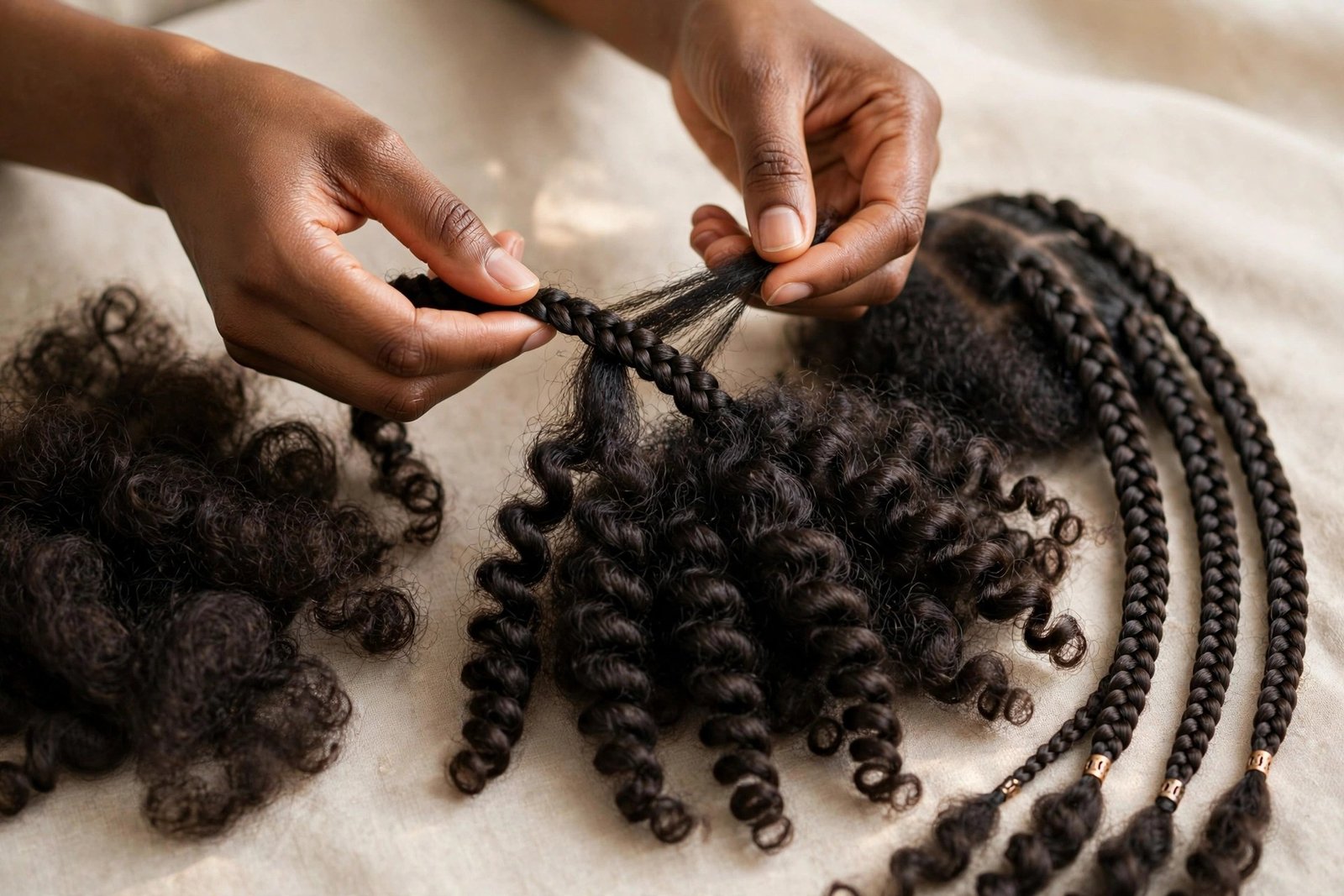
All good things end, and braids are no exception. The take-down is where protective styles are won or lost — I’ve seen women preserve months of growth through careful removal and lose it all in one impatient evening. Give yourself time. A full take-down takes two to four hours, and rushing it is how breakage happens.
Timing first: four to six weeks is the sweet spot for fulani braids. Eight weeks is the absolute maximum, and honestly, pushing past six is where matting starts. Signs it’s time: heavy new growth making the roots puffy, frizz you can’t smooth, persistent itch that washing doesn’t fix, or braids that feel heavy and tired. Don’t mourn the style — celebrate what it protected.
The process: work in sections, braid by braid. If you have extensions, cut the extension hair a few inches below where your natural hair ends — never cut close to your own ends. Apply oil or a slippery conditioner to each braid as you unravel it; dry unraveling causes friction and breakage. Unravel slowly down to the root, then finger-detangle before moving on. Keep a trash bag nearby for shed hair, because there will be a lot of it — and that’s normal. You shed 50 to 100 hairs a day; six weeks of shed hair coming out at once looks alarming but it’s just math.
Once the braids are out, don’t just re-braid or heat-style immediately. Your hair needs a reset: a clarifying shampoo to remove six weeks of buildup, followed by a deep conditioning treatment — and give it real time, not a five-minute rush. Assess honestly: if your hair feels dry, lean moisture; if it feels mushy and over-soft, it needs protein. Then give your hair a break — at least a week or two of rest before the next install. Your edges, especially, need recovery time between braided styles. The women with the healthiest long-term braided hair are the ones who rest between installs without exception.
Fulani Braids FAQ
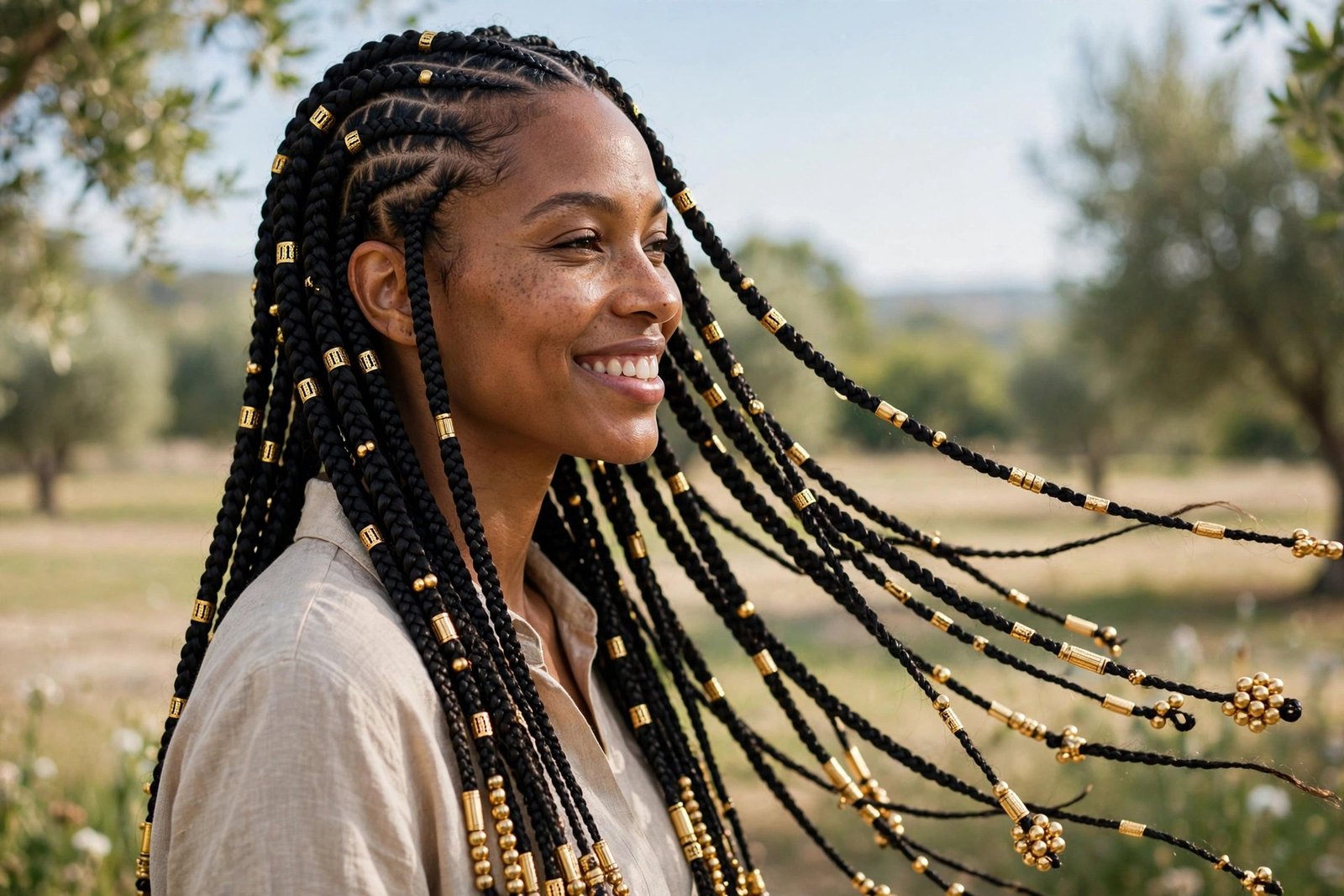
The questions I hear most about fulani braids — from women considering their first install and from veterans comparing notes.
How long do Fulani braids last?
Four to six weeks is the realistic range for most installs. Smaller, neater braids on healthy hair can stretch toward six; jumbo styles, heavy beadwork, and very active lifestyles land closer to four. Past eight weeks you’re risking matting at the roots and unnecessary tension damage. The style will tell you when it’s done — frizz, puffy new growth, and itch that doesn’t resolve with washing are your signals. Plan your take-down appointment when you book the install so you’re not tempted to stretch it.
Will Fulani braids damage my hair?
Done right, they’re protective — that’s the whole point. Done wrong, they cause traction alopecia, breakage, and edge loss. The difference is almost entirely about tension and duration. Braids should never hurt beyond mild first-day snugness; bumps, throbbing, or headaches mean they’re too tight, full stop. Keep installs to six weeks max, rest between styles, and maintain your scalp while they’re in. Also be honest about your hair’s current state — braiding over already-damaged, fragile hair doesn’t protect it, it finishes it. Get a trim and a deep condition first if your ends are struggling.
Can I wash Fulani braids? How often?
Yes, and you should — every one to two weeks. Use diluted shampoo in an applicator bottle applied straight to the scalp, massage with fingertips, rinse thoroughly, and dry completely with a hooded or blow dryer. Skipping washes leads to buildup, itch, and odor; the old advice to never wash braids is simply wrong. What you shouldn’t do is soak the full length aggressively or scrub the braids themselves — focus the washing on the scalp, let the rinse water run through the lengths, and dry everything fully.
I’m not Black — can I wear Fulani braids?
This is a fair question and it deserves a straight answer. Fulani braids are a heritage style of the Fulani people of West Africa, and they carry cultural meaning — they’re not a neutral fashion trend. That doesn’t automatically make wearing them wrong, but it does make wearing them ignorantly wrong. If you wear them, do it with knowledge: learn the history, say the name correctly, book with braiders who understand the style, and don’t treat it as a costume or a festival look. Appreciation means honoring the source. If you’re not willing to learn the roots, pick a different style.
How much hair length do I need for Fulani braids?
Your natural hair should be at least three to four inches long for the braider to grip and cornrow securely — shorter than that and the braids won’t hold. But length is rarely the real barrier, because extensions do the heavy lifting in most modern installs. Even with shorter natural hair, feed-in techniques can create full, long Fulani styles. What matters more than length is hair health: strong roots handle the tension, fragile or over-processed hair doesn’t. If your hair is very short or very fragile, talk to the braider in a consultation first — a good one will tell you honestly whether to wait.
Conclusion
Eighteen styles, one heritage. That’s really what fulani braids come down to in 2026: a centuries-old West African tradition that’s still evolving, still beautiful, and still being worn by women who understand what it means. Whether you choose the classic heritage pattern, waist-length goddess drama, or a modern half-up style with cowrie shells, you’re wearing something with roots deeper than any trend cycle.
My parting advice is simple. Choose a braider who respects the craft and your edges in equal measure. Prep your hair properly and don’t cheap out on the appointment. Care for your scalp like the style depends on it — because it does. Take the braids down on time, rest your hair between installs, and wear the beads knowing what they stand for. Do those things and Fulani braids will do what they’ve always done: protect your hair and make you look incredible doing it.
Pick your style from the list, book the chair, and clear your day. Your braids are waiting — and so is the history that comes with them. Wear it well.