Temple Fade Men 2026: 14 Sharp Temple-Tapered Styles
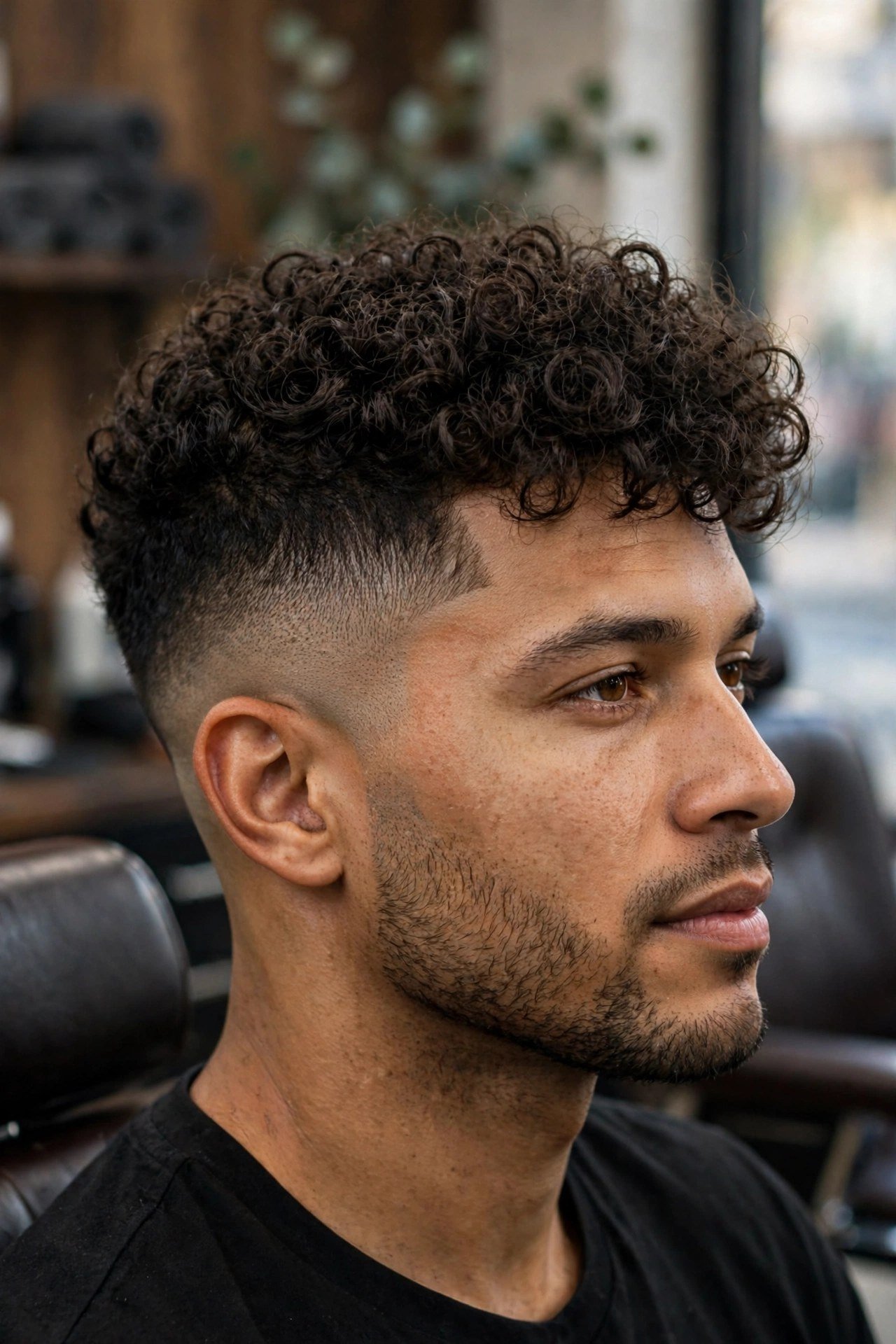
There’s a detail showing up in barbershops right now that changes a whole haircut without touching most of it: the hair around the temples fades down to skin or near-skin while everything else stays exactly as it was. That little move is the temple fade — the temp fade — and it’s the cut temple fade men have been requesting by name all through 2026. It takes maybe ten extra minutes in the chair, and it makes the difference between a haircut that looks fine and one that looks finished.
Here’s the honest version of what it is. Your barber takes the clippers to the temple area — that strip where your hairline meets your face, right above the sideburns — and tapers it down clean, then blends it back up into the fuller hair above. The sides and back stay longer. The top doesn’t get touched. What you get is a sharp, deliberate frame around your face, like someone drew a clean line where the hair meets the skin. It reads as precision, and precision is the whole point.
This cut grew up in Black barber culture, where the temp fade has been a staple for years, and it never really left. Walk into any shop with a strong lineup game and you’ll see it on the regulars. It’s all over professional sports too — basketball, football, the guys whose cuts have to look sharp under arena lights and hold up for a full game. A temple fade pairs with just about everything textured: short curls, twists, waves, afros, locs, even a plain buzz cut. If you’ve got something going on top, a temple fade gives it a frame.
What I like most about it is that it’s a detail, not a commitment. A full fade reshapes your whole head of hair. A temple fade leaves your haircut intact and just sharpens the edges — the temples and usually the neckline. That makes it one of the lowest-risk upgrades in the barber’s playbook. Hate it? It grows out in two weeks and nobody remembers. Love it? You’ll wonder why you waited.
In this guide I’m covering the full picture: what a temple fade actually is, how it’s different from a full fade (because barbers hear these confused every day), exactly what to say in the chair so you walk out with what you pictured, fourteen styles to pick from — the quiet classics through the loud ones — and the real maintenance schedule, because a temple fade that’s gone fuzzy is just a rumor of a good haircut. Let’s get into it.
What Is a Temple Fade, Really?
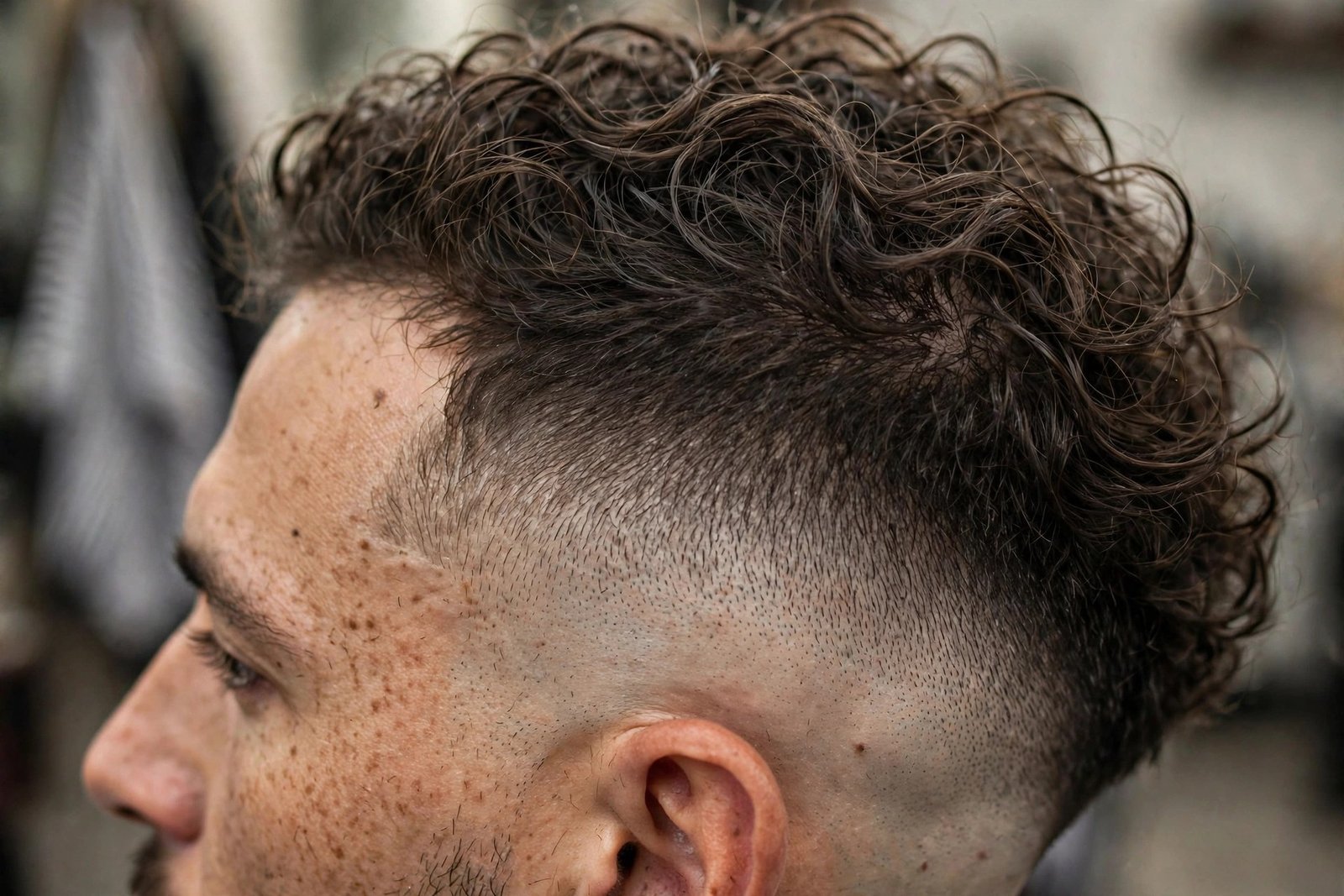
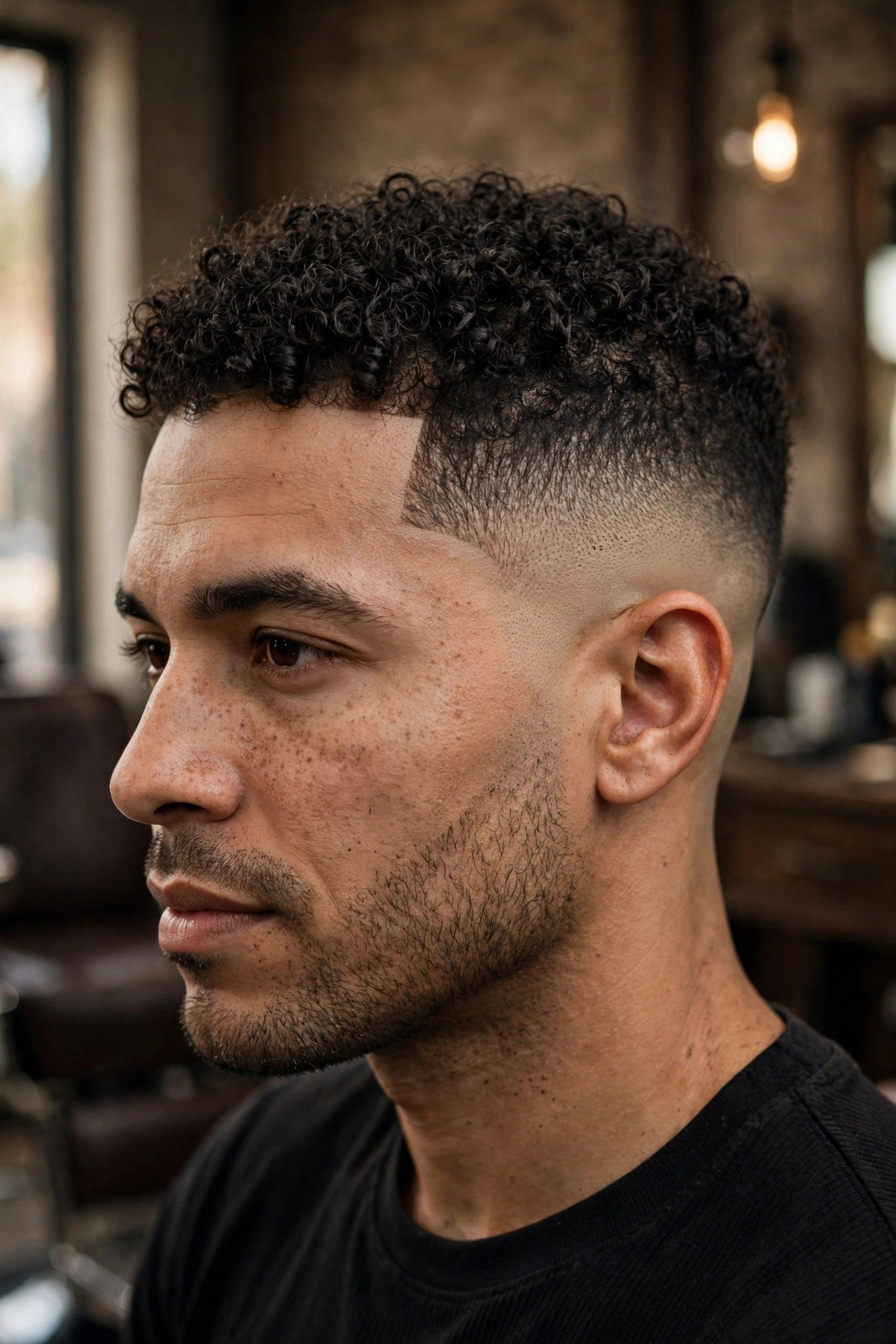
A temple fade is a fade concentrated on one specific zone: the temples. Your barber tapers the hair around the temples — the area right at the corners of your hairline — down to skin or very short, then blends that short section up into the longer hair above and beside it. The key word is concentrated. The rest of your sides can stay full, the back can stay full, the top stays untouched. Only the temple zone gets the fade treatment, which is why it reads as a detail rather than a haircut.
Most temple fades come with a cleaned-up neckline as part of the deal. That’s the second half of the signature look: sharp temples up front, tidy neckline in the back, and your actual hairstyle sitting untouched in between. Some barbers also sharpen the sideburn area as they blend, so the whole perimeter of the cut looks deliberate. When it’s fresh, the effect is almost architectural — clean edges framing whatever you’ve got on top, whether that’s coils, curls, waves, or twists.
The reason this cut has such deep roots in Black barber culture is that it was built for textured hair. The lineup — that sharp, straight edge across the forehead — is sacred in the shop, and the temple fade is its natural partner. Together they create the crispest hairline in men’s grooming: boxed across the front, faded at the temples, blended into the sides. Barbers who grew up cutting this style can do it in their sleep, and the best ones turn the blend into something close to art. You can spot a shop that knows temp fades the second you walk past the waiting chairs.
In 2026 the temple fade has picked up new life because grooming has swung toward precision details. The big, dramatic transformations had their moment. Now the guys getting compliments are the ones whose cuts look considered — every edge intentional, every transition smooth. The temple fade is the purest version of that idea. It’s a small intervention with an outsized payoff, and it works on just about every head it touches. If your current cut feels like it’s missing something but you can’t name it, there’s a decent chance the missing thing is right at your temples.
Temple Fade vs Full Fade: Know the Difference
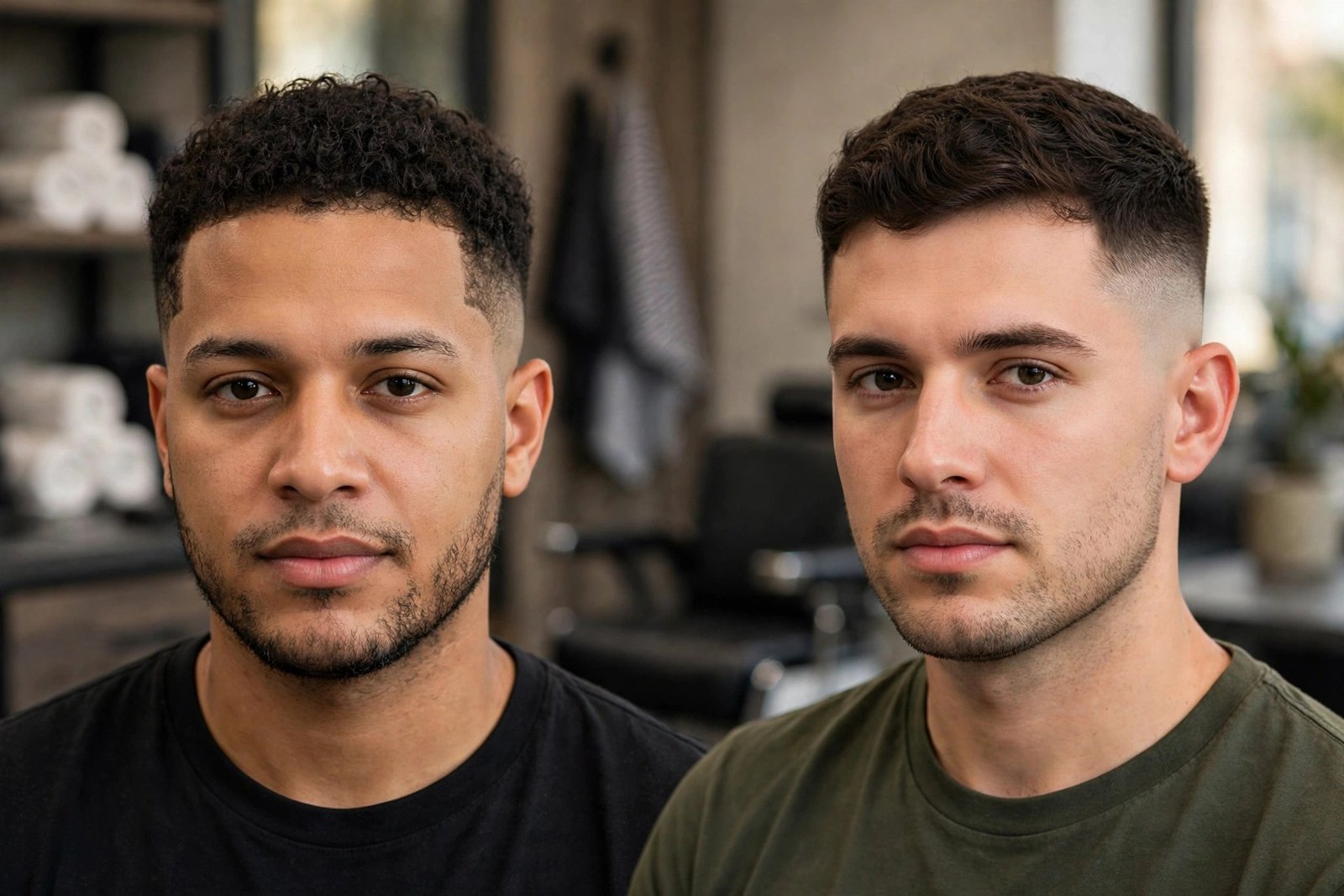
Barbers hear these two confused constantly, so let’s settle it. A full fade takes the sides and back of your head down through the fade — short at the bottom, gradually longer toward the top — all the way around. It’s a whole-head haircut. A temple fade touches only the temple zone. The sides above and behind the fade stay at their normal length, the back stays full, and the overall shape of your haircut doesn’t change. One is a haircut; the other is a precision detail added to a haircut.
That difference changes everything about the experience in the chair. A full fade is a twenty to thirty minute operation that reshapes how your head looks from every angle. A temple fade is a ten to fifteen minute addition — your barber can add it to almost any existing cut without starting over. It also changes the grow-out. A full fade grows out visibly and unevenly; within two weeks the bottom is stubbly and the blend is gone. A temple fade grows out more gracefully because there’s simply less faded area to lose its shape, though the crisp temple edge does soften and that’s the part you’ll want touched up.
So which should you pick? Get the full fade when you want the sides and back shorter overall — when you’re going for that clean, sculpted, high-contrast look. Get the temple fade when you like your current length on the sides but want the cut to look sharper and more deliberate. A lot of guys run both concepts together, by the way: a low or mid fade on the sides with an extra-sharp temple fade at the front is one of the most requested combinations in 2026. And if you’re growing your hair out — growing an afro, growing twists, growing anything — the temple fade is the move that keeps the grow-out looking intentional instead of neglected.
How to Ask Your Barber for a Temple Fade

The words matter less than you think and the photo matters more than you think. Walk in and say “temple fade” or “temp fade” — every barber knows both names — and then show a picture of exactly what you want. I keep saying this in every guide because it keeps being true: “temple fade” means slightly different things to different barbers, and a photo ends the debate before it starts. Save two or three reference photos on your phone. One should show the temple area clearly from the side, because that’s the part you’re actually asking for.
Then get specific about the details, because the temple fade has variables. First: how low do you want it to go? “To the skin” gives you the sharpest, highest-contrast edge — the temple area goes fully bald at the bottom of the blend. “Shadow” or “not to skin” keeps a little stubble at the shortest point, which looks softer and grows out more forgivingly. Second: how wide? Some guys want a tight fade hugging the hairline; others want it carried an inch or two back for a bolder frame. Third: the neckline — say whether you want it tapered and cleaned up to match, because most barbers will do it as part of a temp fade but you should confirm.
Here’s the script that works: “Give me a temple fade — take the temples down to skin [or keep it shadow, your call], blend it up into the sides, keep everything else exactly where it is, and clean up the neckline to match.” If you want a lineup with it, add: “And box me up across the front.” That’s the whole consultation. It takes thirty seconds and it tells your barber everything: the zone, the depth, what not to touch, and the finish.
One warning from the chair: make sure your barber actually does temple fades regularly. It’s a blend-heavy cut and the temple area is unforgiving — there’s no hiding a choppy blend right next to your face. Ask to see their work or check their page before you sit down. A barber who mostly does scissor cuts and beard trims can technically do a temp fade, but a barber who does them all day will do it better, faster, and cleaner. This is not the cut to bargain-shop. Find the person whose temple fades you already admire on other heads, and go to them.
Temple Fade Styles 1–3: The Classics for Men

Every style list needs its foundation, and for the temple fade the foundation is three looks that have been getting requested for years and aren’t going anywhere. These are the safe bets — the ones that work on the most heads, suit the most situations, and give you the cleanest introduction to what a temple fade can do. If this is your first temp fade, start here.
1. Classic Temple Fade with Curly Top
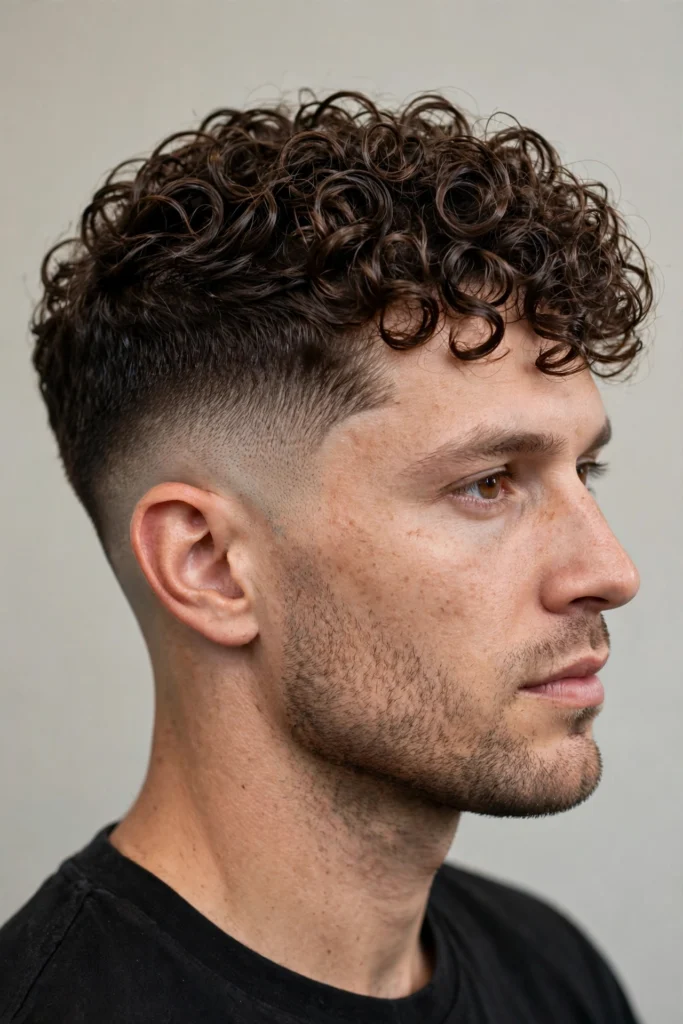
The definitive temple fade pairing. Short to medium curls on top — a couple of inches, enough to show real texture — with the temples faded clean and the sides kept fuller than a full fade would allow. What makes this combination the classic is balance: the softness of the curls against the hard precision of the faded temples. The curls do the talking up top, the fade does the framing, and neither one fights the other. Ask your barber to keep the curls’ length intact and focus the clippers only on the temple zone and neckline.
Styling this at home is straightforward, which is part of its staying power. Moisturize the curls — a leave-in conditioner or curl cream, nothing fancy — and let them do what they want. The temple fade does the structural work, so the top can stay loose and natural. Touch up the temples every one to two weeks to keep the edge crisp; the curls themselves just need a trim every month or so to keep their shape. This is the style I point to when a guy says he wants to look sharper without changing his actual hair. It works in an office, on the court, everywhere.
2. Temple Fade with 360 Waves
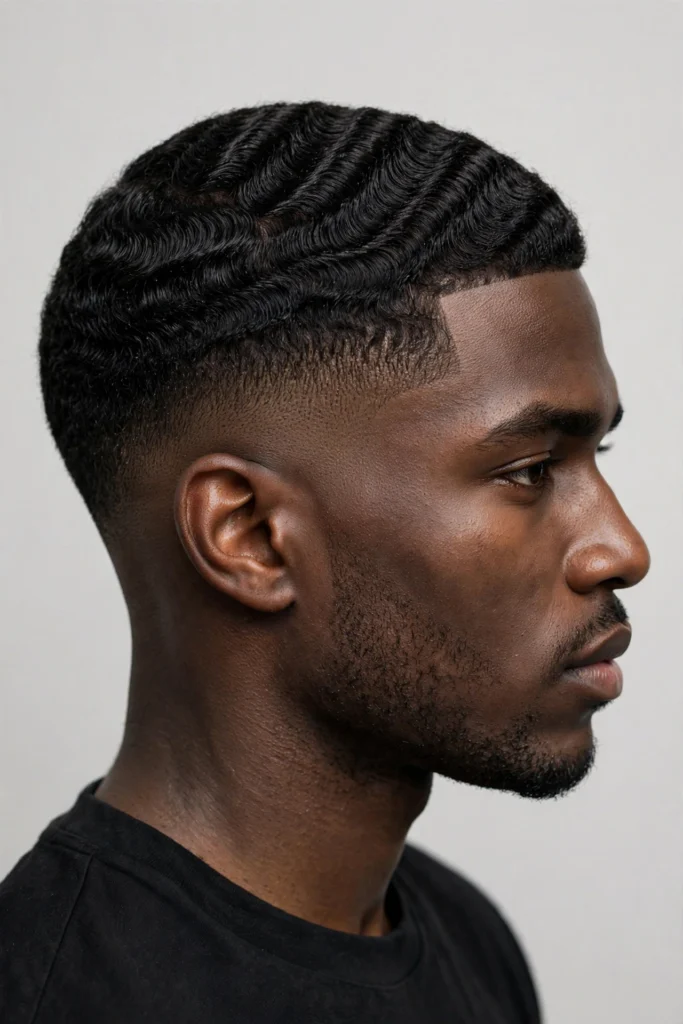
Waves plus a temple fade is one of those combinations that looks like it was always meant to exist. The 360 ripple pattern covers the top and crown, and the faded temples carve a clean border around it — the waves get a frame, and the frame makes the waves look deeper. This pairing has serious history on the East Coast, where wavers have been running temp fades for years, and in 2026 it’s as strong as ever. The key detail: the fade should blend into the wave pattern around the temples rather than cutting a hard box into it, so the ripple flows naturally into the taper.
Tell your barber exactly that — “blend the temp fade into the waves, don’t edge it hard at the temple.” A barber who defaults to aggressive temple edges will give you a different, boxier look than the smooth flow this style wants. Maintenance is the standard waver’s routine: brush twice daily, durag nightly, and a temple touch-up every two weeks to keep the border sharp. The waves themselves keep spinning through every touch-up as long as the top length stays untouched. If you’re already waving, this is the single easiest upgrade you can make — it takes fifteen minutes and changes the whole presentation.
3. Temple Fade with Box Lineup
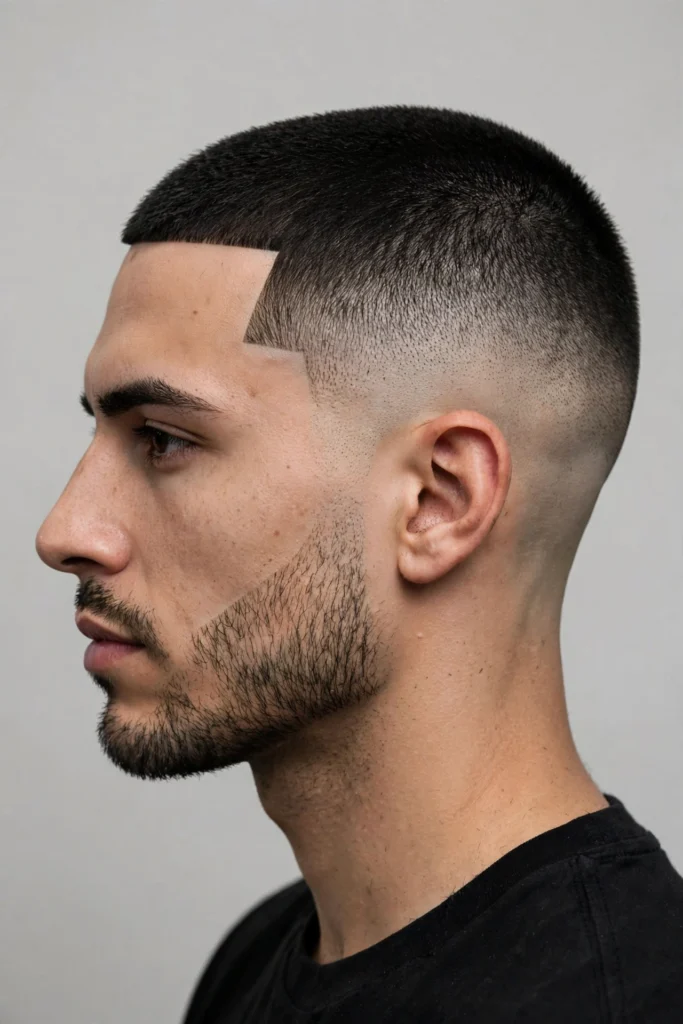
The sharpest hairline in the game. A box lineup — straight across the forehead with crisp squared corners — combined with faded temples is the full precision package. The lineup defines the front, the temple fade defines the sides of the hairline, and together they create a hairline that looks drawn on with a ruler. This is the cut you see on the guys whose edge-up game is the whole point: every line intentional, every corner sharp. It demands a barber with a steady hand and a good straight razor, because there’s nowhere to hide.
Be honest with yourself about the maintenance before you commit. A box lineup plus temple fade looks perfect for about a week. By week two the corners soften and the temple edge fuzzes, and by week three it reads as a different haircut. If you want this look, you’re signing up for a touch-up every seven to ten days — or you’re learning to edge yourself up at home with a detail trimmer, which plenty of guys do. The payoff is real, though. Nothing photographs better, nothing looks cleaner in person, and when all the lines are fresh it’s the most deliberate a haircut can look. High maintenance, high reward — that’s the deal and it’s worth knowing before you sit down.
Temple Fade Styles 4–6: Texture and Twists for Men

This is where the temple fade earns its reputation in textured-hair barbering. Twists, coils, and crops all sit on top while the temples get the fade treatment, and the contrast between structured edges and free texture is what makes these styles photograph so well. If your hair has natural texture, this group is your home turf.
4. Temple Fade with Short Twists
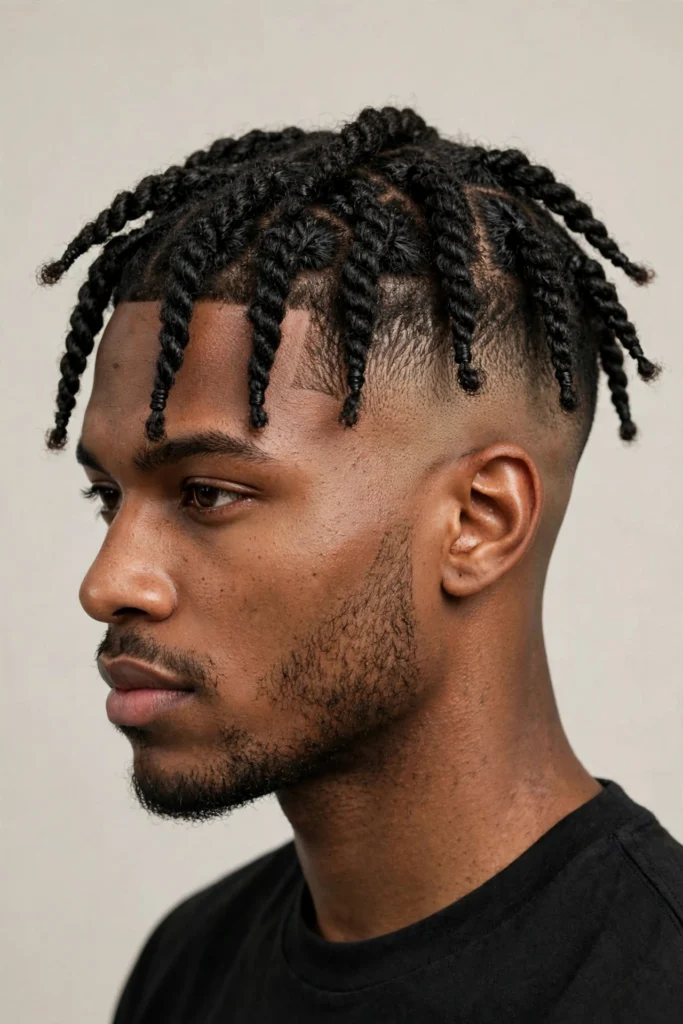
Short two-strand twists on top with faded temples is one of the most requested combinations in shops right now, and it’s easy to see why. The twists give you texture and movement, the temple fade gives you the clean frame, and the whole thing looks intentional from every angle. Keep the twists short — an inch or two — so they sit neat and defined, and let the barber fade the temples down while leaving the sides at a length that blends into the twist pattern. The result is structured but not stiff, which is exactly the lane most guys want to live in.
Twists need moisture to stay defined — a light twisting butter or cream when they’re fresh, then just water and a little oil for daily upkeep. The temple fade is what keeps the style looking like a haircut rather than just a hairstyle: when the temples go fuzzy, the whole thing starts reading messy, so stay on that one-to-two-week touch-up rhythm. Retwist every two to four weeks depending on how fast your hair grows and how neat you like the parts. This style works for just about every occasion, and it ages well through the week — day-one crispness softens into something more natural, and both stages look good.
5. Temple Fade with Tapered Afro
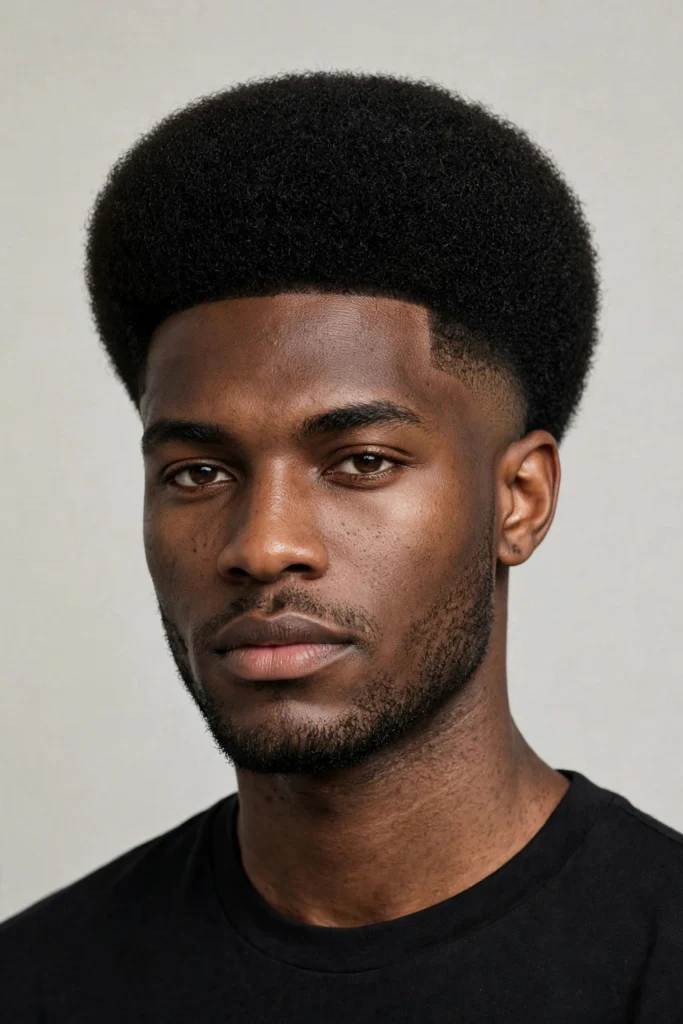
The afro stays, the edges get the treatment. A tapered afro with a temple fade keeps the fullness and shape of the afro up top while the temples fade down clean — it’s the grown-out-friendly version of precision. This works especially well if you’re in that in-between stage of growing your hair out, because the temple fade keeps the perimeter looking deliberate while the top does its thing. Your barber shapes the afro, fades the temples, and cleans the neckline, and suddenly the grow-out looks like a plan instead of an accident.
The shape of the afro matters more here than the length. Ask your barber to keep the silhouette even and rounded — or squared, if that’s your preference — and to blend the temple fade up into the afro’s sides so there’s no harsh shelf where the fade meets the fullness. Pick the afro out regularly to keep the shape, moisturize so it doesn’t dry out and shrink unevenly, and get the temples touched up every two weeks. This is a great style for guys who want length and sharpness at the same time, and it suits rounder and oval faces particularly well because the height on top adds structure.
6. Temple Fade with Textured Crop
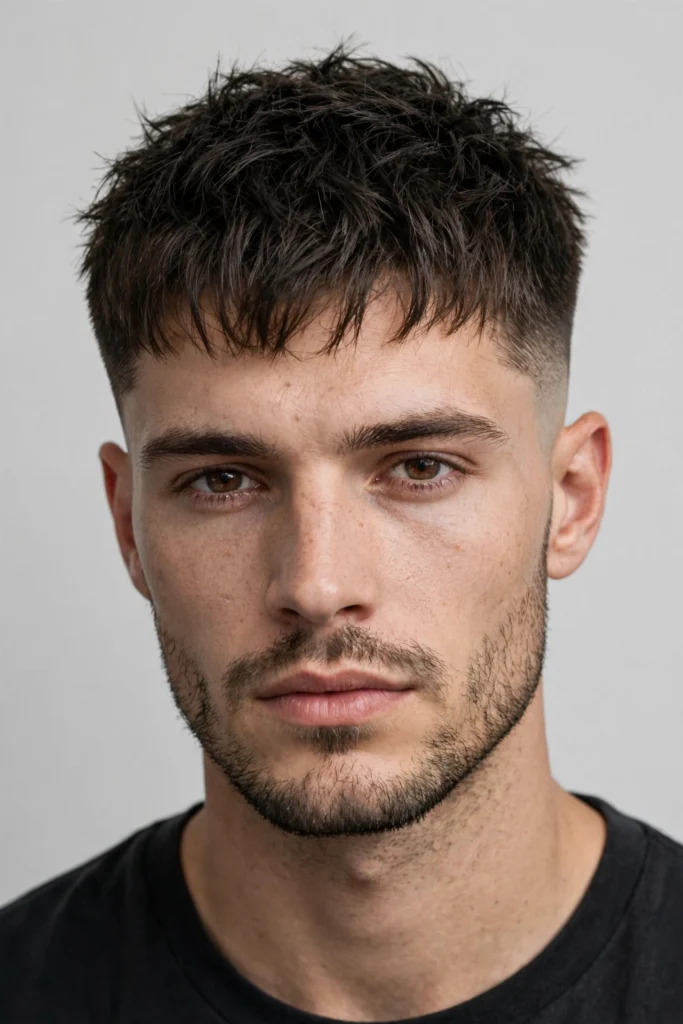
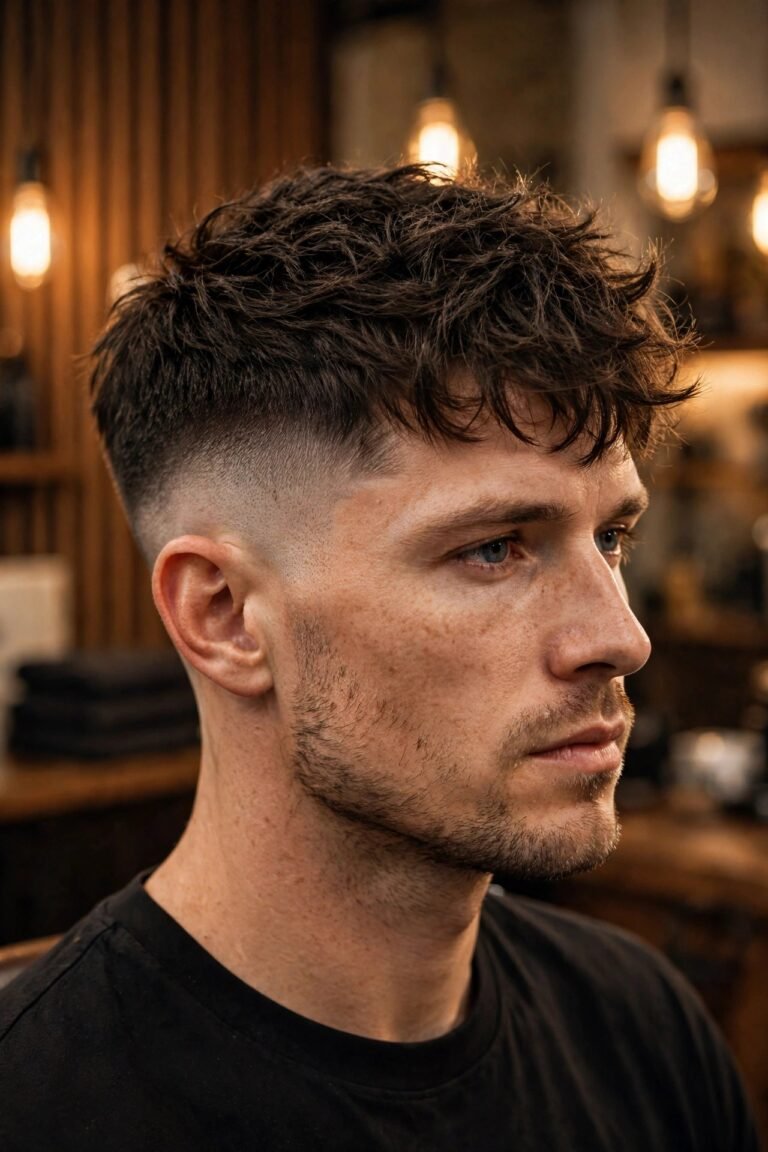
The textured crop — short, choppy, forward-styled top — gets a sharper attitude with a temple fade. The crop itself is low-maintenance and modern; adding the faded temples takes it from casual to considered. This pairing works on straight, wavy, and curly hair alike, which makes it one of the most versatile styles on this list. The barber cuts the crop with texture through the top, fades the temples down, and keeps the sides neat but not skin-tight. The contrast between the messy top and the clean temples is the whole appeal.
Styling takes about ninety seconds: a fingertip of matte clay or paste, worked through the top and pushed forward or to the side, and you’re done. No comb, no precision — the crop is supposed to look a little undone, and the temple fade provides the structure that keeps “undone” from sliding into “unkempt.” Touch up the temples every two weeks and get the crop reshaped every three to four. If you want a temple fade but your hair is on the straighter side, this is your entry point — it doesn’t ask your hair to do anything it can’t.
Temple Fade Styles 7–9: Sharp Statement Looks for Men
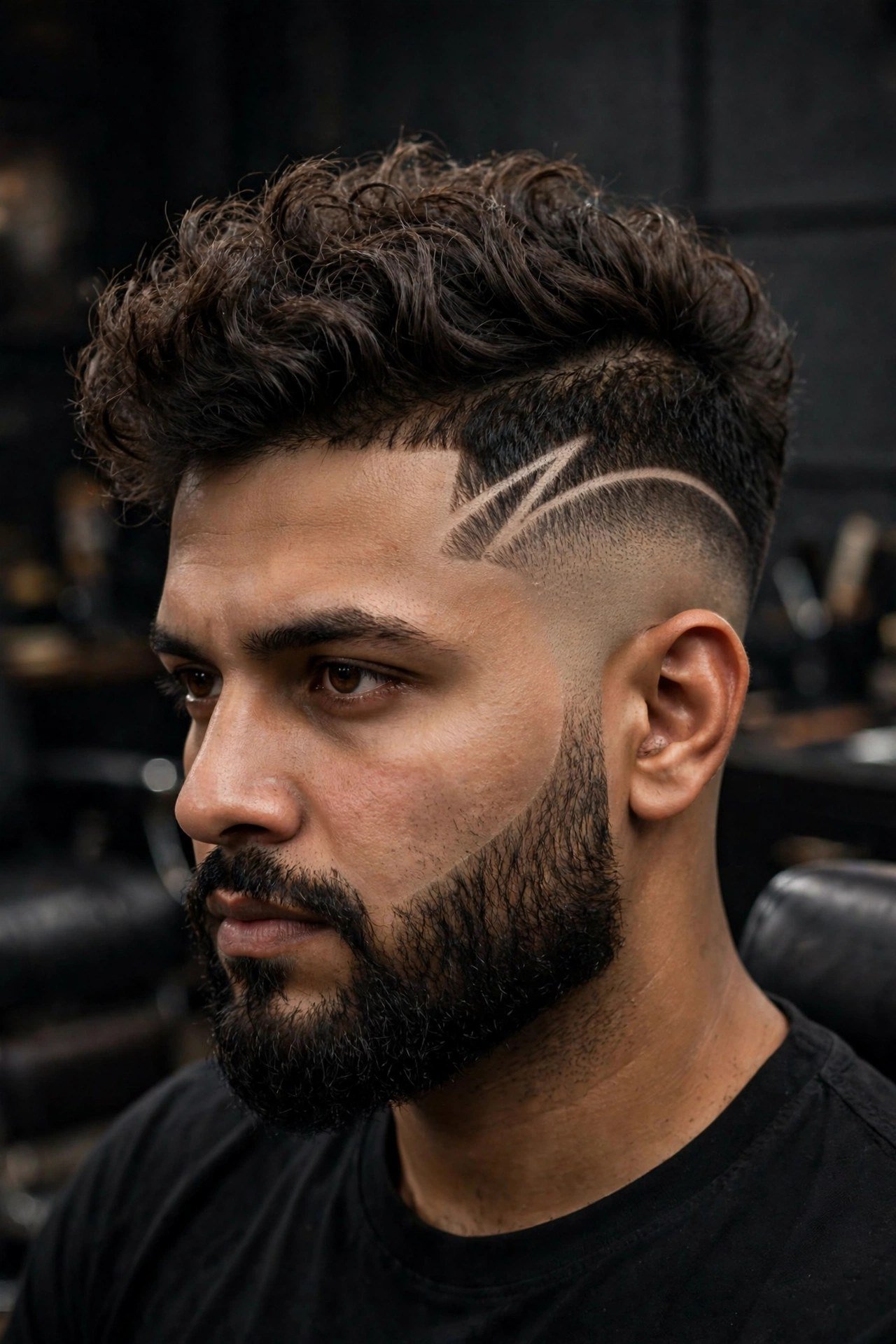
Now we turn the volume up. These three styles use the temple fade as a launchpad for something bolder — skin-tight fades, beard connections, shaved designs, length on top. They demand more from your barber and more from your maintenance routine, but they pay it back in presence. Pick one of these when you want the cut to be noticed.
7. Skin Temple Fade with Beard Blend
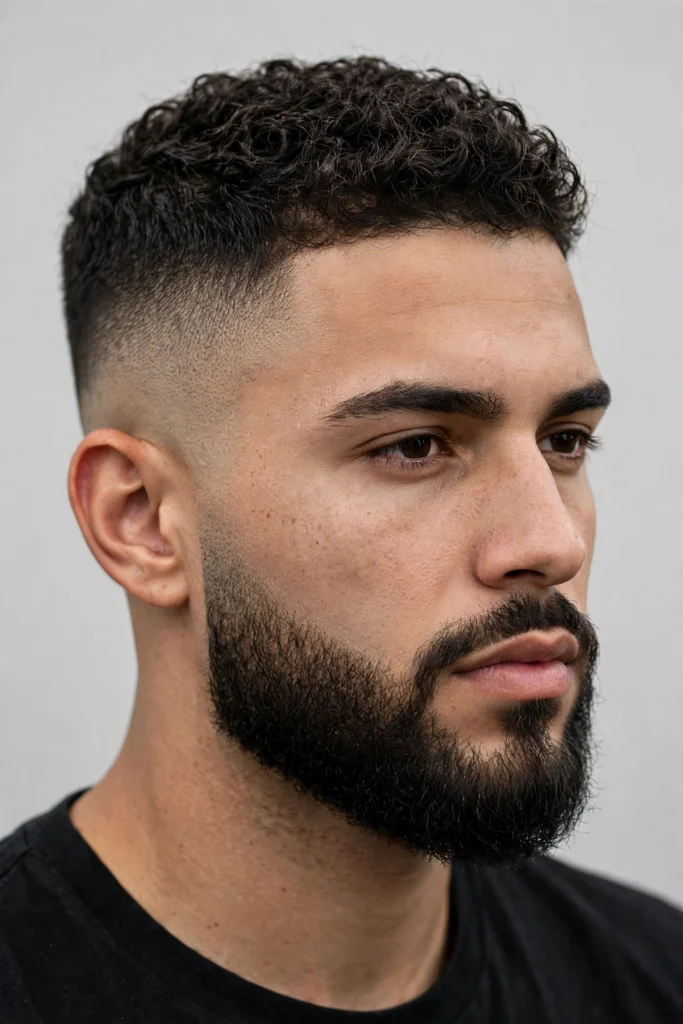
Take the temple fade all the way to skin and connect it into the beard, and you’ve got one of the most masculine full-head presentations a barber can build. The temples go fully bald at the bottom of the blend, the fade travels down through the sideburn area, and it melts into a shaped beard — no harsh line where the haircut ends and the beard begins, just one continuous flow of precision. This is advanced barbering. The blend has to be seamless across three zones — temple, sideburn, beard — and a choppy transition anywhere in that chain ruins the effect.
The beard is half the style here, so treat it that way. Keep it shaped with clean cheek and neck lines, oil it daily so it doesn’t look dry next to the crisp fade, and make sure your barber blends the fade into the beard rather than cutting a hard disconnect — unless you specifically want that sharp separation, which is its own look and works too. Maintenance is real: the skin fade needs refreshing every ten days to two weeks, and the beard needs edging just as often. But when it’s all fresh at once — skin-clean temples, blended beard, sharp lines — there’s nothing on this list that looks more put-together.
8. Temple Fade with Freestyle Design
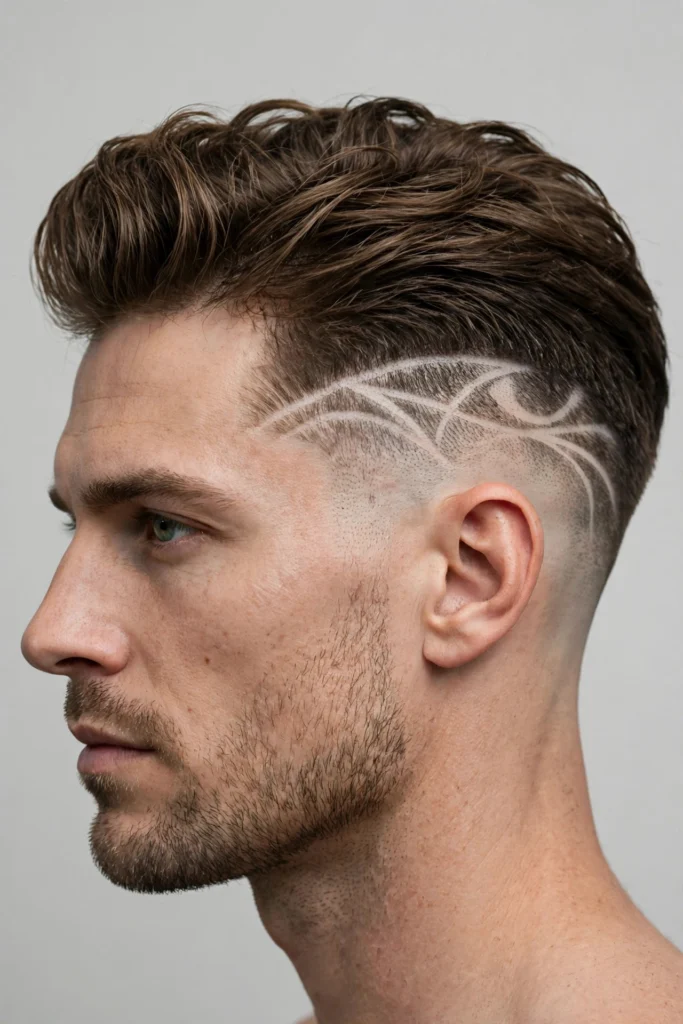
For the guys who want art with their precision. A freestyle design — curved lines, geometric shapes, a lightning bolt carved into the faded temple area — turns the temple fade into a canvas. The design sits right in the faded zone where it’s most visible, framed by the longer hair above and the clean skin below. The best design barbers treat the temple area like a small gallery wall, and the results photograph incredibly well. This is barbershop artistry at its most visible, because the design lives right next to your face where everyone looks.
Go in with a reference photo and realistic expectations. A detailed design looks perfect for about a week, decent for two, and then it grows into a suggestion of what it was — that’s the nature of shaved art on a zone this small. If you’re getting designs regularly, you’re committing to frequent shop visits. Some guys keep a subtle curved line as their everyday signature and go bigger for events, which is honestly the smartest way to run it. And choose your barber carefully: design work is a separate skill from fading, and not every great fader is a great designer. Check their design portfolio specifically before you sit down.
9. Temple Fade with Longer Top
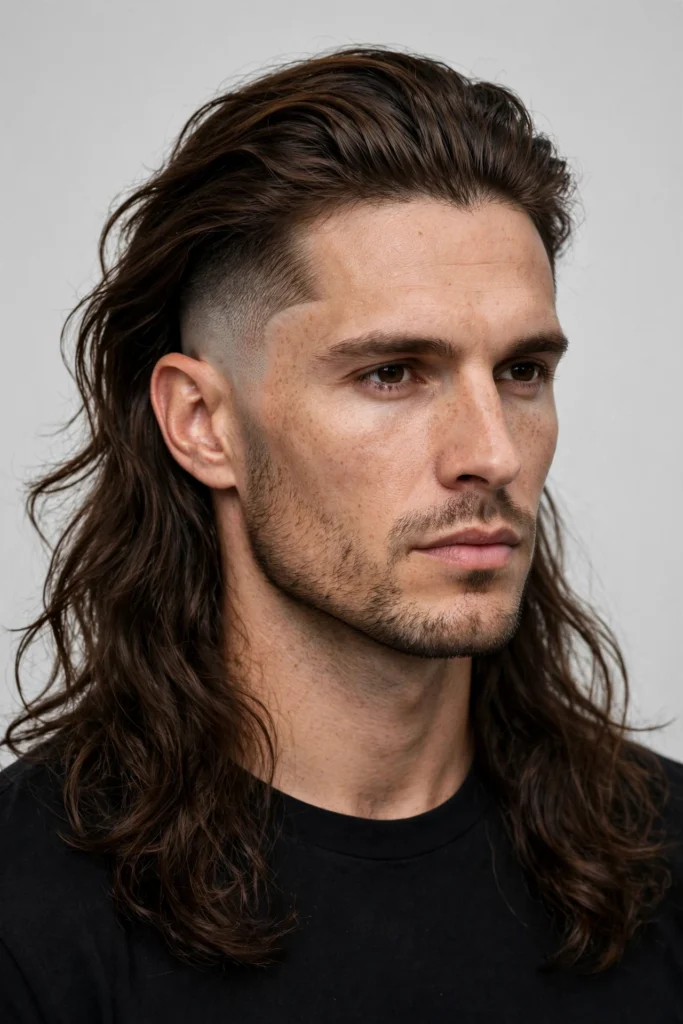
Length on top, discipline at the temples. This style keeps the top long — four inches or more, worn loose, pushed back, or tied up — while the temple fade keeps the whole thing from reading shaggy. It’s the contrast that makes it work: free, flowing hair up top against the surgical precision at the temples. Without the fade, long hair on men can look unfinished around the edges. With it, the same length looks like a choice. The barber leaves the top completely alone, fades the temples, cleans the neckline, and the haircut is done in fifteen minutes.
This is a strong option if you’re growing your hair out but don’t want to look like you’re growing your hair out. The temple fade is the signal that the length is intentional. Styling depends on your length and texture — a little leave-in conditioner, maybe a light hold product if you’re pushing it back — but the top stays natural and the fade does the structural work. Touch up the temples every two weeks; the top just needs occasional trims to keep the ends healthy. It suits oval and oblong faces well, since the length on top balances longer face shapes, and it works across hair textures from wavy to coily.
Temple Fade Styles 10–11: Low-Key Athletic Cuts for Men

Not every temple fade needs to make a statement. These two are the quiet professionals of the list — clean, low-maintenance, built for guys who train, work with their hands, or just don’t want to think about their hair. The temple fade still does its framing job; it just does it without asking for attention.
10. Low-Cut Temple Fade
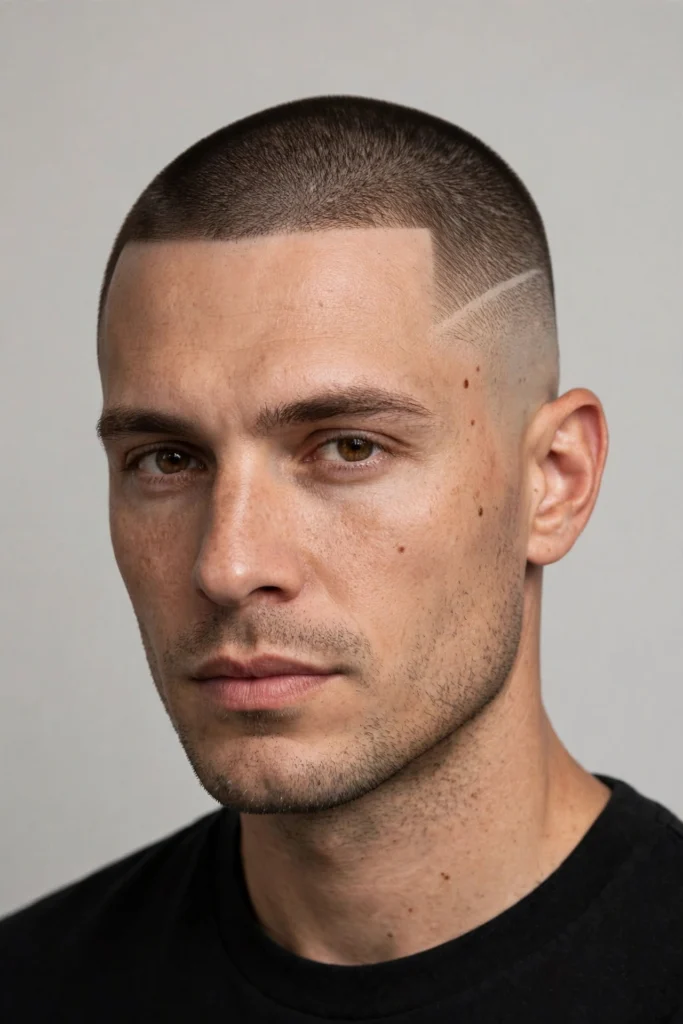
The buzz cut’s sharper cousin. Take the whole head down to a low, even cut — a 1 or 2 guard all over — and add a temple fade at the corners of the hairline. It sounds like a small addition to an already simple cut, but it changes everything: the plain buzz goes from basic to deliberate, because now there’s a designed detail right where people look. This is the haircut of guys who want to spend zero minutes on their hair in the morning and still look like they have a barber. Military-friendly, gym-friendly, summer-friendly — the low-cut temple fade asks nothing of you.
Maintenance is as simple as it gets: get the whole thing re-cut every two to three weeks, and the temple fade comes along with it. There’s no styling, no product, no routine — just the cut itself doing all the work. If you want, have your barber add a light lineup with it; on a low cut the lineup plus temple fade is the entire style, and it’s plenty. This is also the best first temple fade for a guy who’s nervous about the concept, because there’s so little hair involved that there’s nothing to get wrong. Try it once and you’ll understand the appeal immediately.
11. Temple Fade with Short Locs
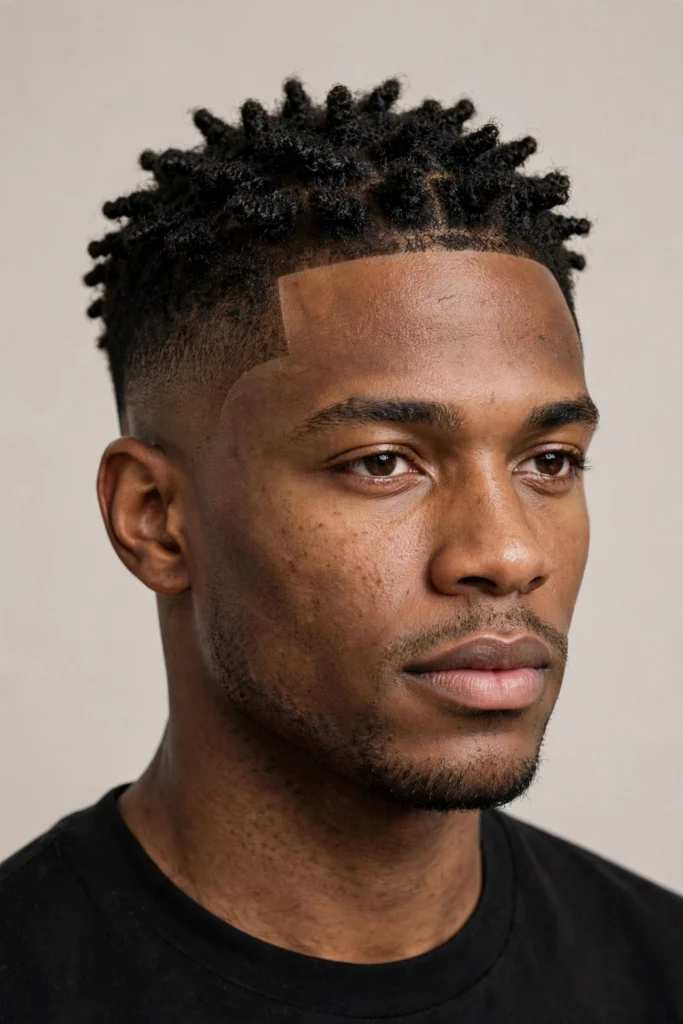
Short locs — starter locs or a neat set of short mature locs — paired with faded temples is a combination with real cultural weight and real visual payoff. The locs bring texture and character, the temple fade brings the clean frame, and together they look both rooted and sharp. The barber’s job is to fade the temples and clean the neckline without touching the locs themselves; the loctician handles the locs, the barber handles the edges, and the two crafts meet at the hairline. If your shop does both, even better — one visit, one vision.
Keep the locs moisturized and retwisted on your normal schedule — the temple fade doesn’t change loc care at all, it just keeps the perimeter crisp between retwists. One practical note: tell your barber not to cut into the locs at the temple line. Some barbers, out of habit, will try to “clean up” baby hairs and short locs around the fade zone. Say it out loud: “fade the temples, leave every loc alone.” Touch up the fade every two weeks and the whole style stays sharp. This pairing works at every loc length, but it’s at its best on short to medium locs where the faded temples are clearly visible.
Temple Fade Styles 12–14: Modern and Bold for Men

The last group is for 2026’s louder energy — height, fringe, color. These styles take the temple fade somewhere less traditional, and they’re the ones getting saved and shared the most right now. Higher commitment, higher payoff.
12. High-Top Temple Fade
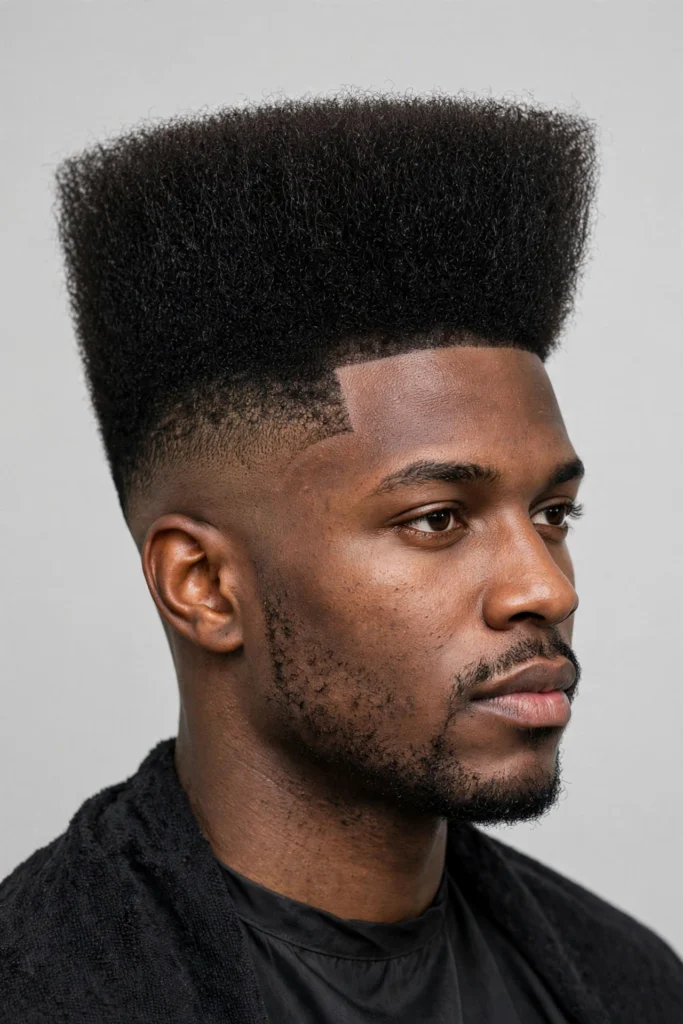
The high-top is back, and the temple fade is its perfect partner. Keep the height — flat, squared, standing tall — while the temples fade down clean underneath it. The contrast is the whole style: maximum volume on top, maximum precision at the temples. What the temple fade does here is give the high-top a modern edge; without it, a high-top can read retro, but with faded temples it reads current. Your barber shapes the top with clippers and a pick, keeping the silhouette sharp, then fades the temples to skin or shadow below it.
This cut needs a barber who understands shape, because the high-top lives or dies on its silhouette. The top should be even and deliberate — flat across, clean at the corners — and the temple fade should blend up into it without a visible shelf. At home, pick the top out to keep the height and shape, moisturize so it doesn’t dry out, and wrap it at night if you want the shape to hold. Touch up the temples every one to two weeks and reshape the top every three. It’s more work than the quiet styles on this list, but a fresh high-top with faded temples is one of the most commanding looks in men’s hair right now.
13. Temple Fade with Curly Fringe
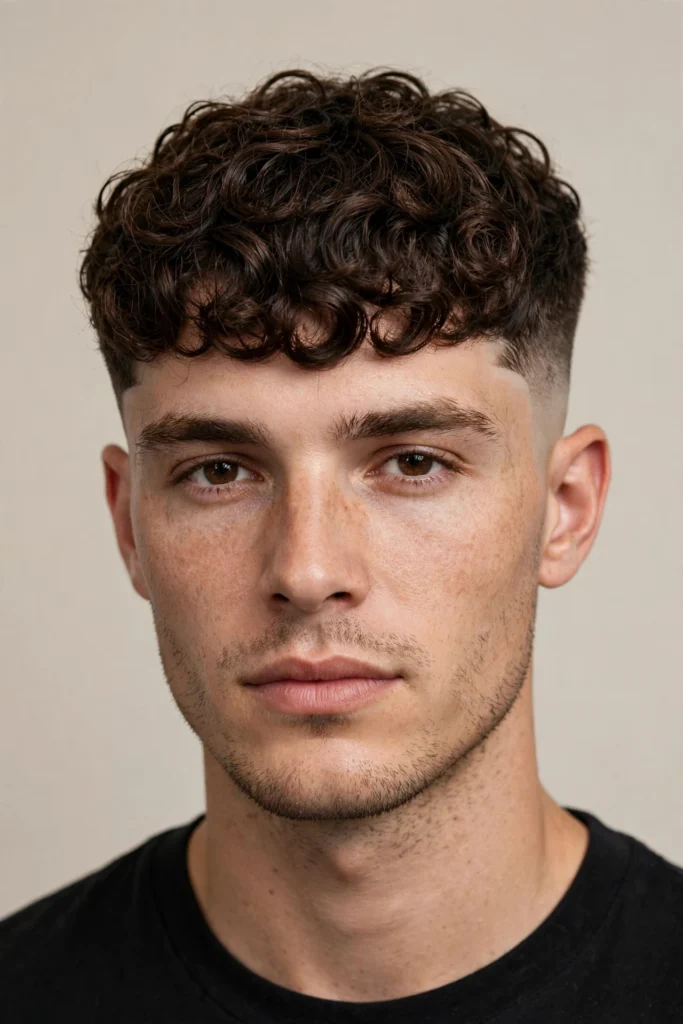
Curls pushed forward into a fringe, temples faded clean — this is the style bridging the textured-hair world and the modern fringe trend. The fringe sits across the forehead, full and forward, while the temple fade carves out the sides of the hairline so the fringe reads as a designed shape rather than just long hair falling forward. It works best on medium-length curls with enough weight to sit forward, and it suits guys who want something fashion-forward without going extreme.
Ask your barber to keep the fringe’s length and texture intact — the cutting work here is mostly in the temple zone and in shaping the fringe’s outline so it sits clean against the forehead. Style it by scrunching a little curl cream through damp hair and letting it fall forward naturally; the goal is defined but touchable, not stiff. The temple fade needs its usual two-week touch-up, and the fringe needs a trim every month or so to keep it out of your eyes and sitting right. This one’s been climbing fast in 2026, and it’s easy to see why — it’s the rare style that feels both current and wearable.
14. Dyed Temple Fade
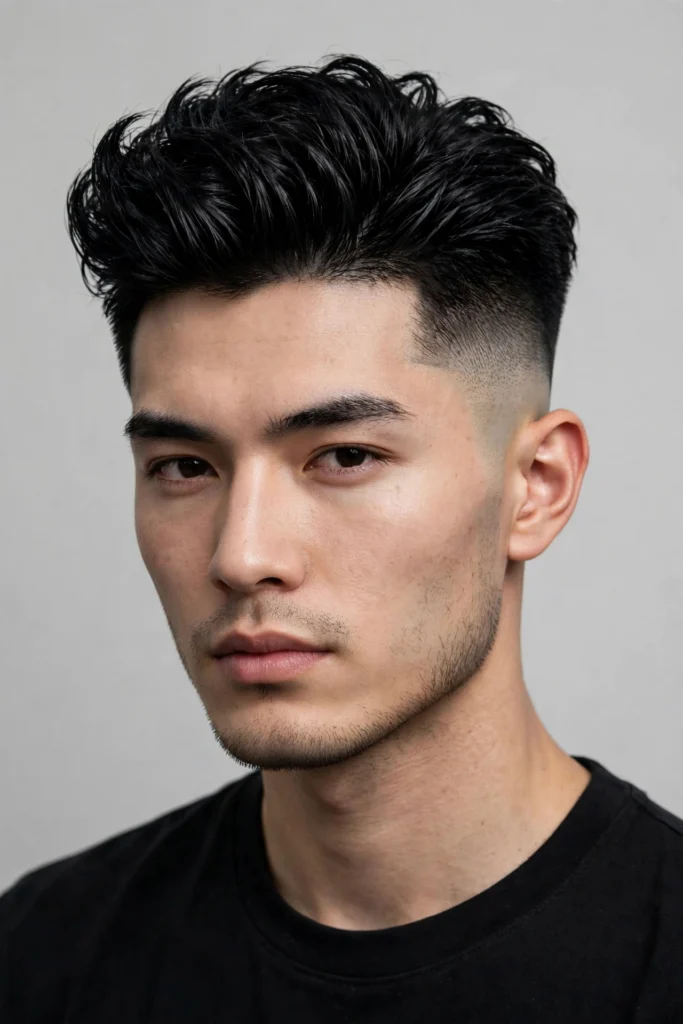
Color changes the math on a temple fade completely. A jet black rinse deepens the contrast — the faded temple goes darker at the bottom, the longer hair goes richer up top, and the whole blend looks more dramatic. A platinum or blonde top with faded temples is the loud version: the color draws every eye, and the temple fade gives all that brightness a sharp frame so it looks designed instead of chaotic. Even a subtle dark brown on naturally black hair adds a richness that photographs beautifully. The temple fade is the structure; the color is the statement.
If you dye, use color formulated for your hair texture and follow it with real conditioning, because dye dries hair out and dry hair doesn’t hold a crisp fade line well — the edges frizz instead of cutting clean. My honest take: a jet black rinse every few weeks is the sweet spot for most guys. It makes the temple fade look sharper in person and in photos, and the maintenance is minimal compared to bleach. If you go blonde or platinum, that’s a bigger commitment — bleach, toning, constant moisture — so know what you’re signing up for. Either way, get the color done before the fade appointment, so your barber is fading freshly colored hair and the blend comes out even.
Styling and Maintenance

Here’s the part nobody romanticizes: a temple fade is a maintenance haircut. The style itself is simple — most of these fourteen looks need almost no daily styling — but the temple edge is the whole point, and it has a short shelf life. Plan on a touch-up every one to two weeks. At one week it’s still crisp; at two weeks it’s softening; past that, you’re wearing the memory of a temple fade. Budget for it the way you budget for the cut itself, because the touch-up is part of the style, not an optional extra.
A lot of guys handle the in-between weeks themselves, and honestly it’s doable. A detail trimmer — one of the small cordless ones — plus a steady hand and a mirror is enough to clean up the temple edge between shop visits. Go slow, follow the existing fade line rather than trying to redraw it, and stop before you think you’re done — over-trimming the temples is how guys accidentally turn a touch-up into an emergency barber visit. Watch a couple of technique videos first, practice on the less visible spots, and never edge up right before an important event until you’ve done it successfully a few times.
Product-wise, the temple fade doesn’t ask for much beyond what your hairstyle already needs. Keep the hair moisturized — dry, ashy hair makes even a fresh fade look rough, because the skin at the bottom of the blend shows every flake. A light oil or moisturizer on the hairline area goes a long way, especially in winter. If your barber uses a razor for the lineup and temple edge, a little aftershave or witch hazel on the skin keeps irritation down. And sleep on a satin or silk pillowcase if you can — cotton pulls moisture out of textured hair overnight, and hydrated hair holds a crisp edge better than dry hair.
The honest cost math: a temple fade touch-up runs less than a full cut in most shops — you’re paying for fifteen minutes of clipper work, not a full service. Some barbers offer edge-up pricing specifically for this, and it’s worth asking about. If you’re getting touched up every two weeks at edge-up prices plus a full cut monthly, you’re spending roughly what a full-fade guy spends on bi-weekly full cuts, sometimes less. The guys who spend the most are the ones who let it grow out for a month and then need the whole thing rebuilt. Stay on schedule and the temple fade is one of the cheaper sharp looks to maintain.
FAQ

Quick answers to the questions I hear most about the temple fade — the ones guys ask in the chair, in comments, and in texts to their barber at midnight.
How long does a temple fade last?
The crisp edge lasts about one to two weeks. At the one-week mark it still looks fresh; by two weeks the temple line softens and the bottom of the blend starts growing in. Past two weeks, most guys are due for a touch-up. The good news is that a touch-up is quick — fifteen minutes in the chair, often at edge-up pricing — because the barber is just refreshing the temple zone, not recutting your whole head. If you learn to clean up the edge yourself with a detail trimmer, you can stretch shop visits to three or four weeks without the fade ever looking neglected.
Does a temple fade work on straight hair?
Yes — and this is one of its advantages over texture-dependent styles. The temple fade is a clipper detail, not a texture style, so it works on straight, wavy, curly, and coily hair alike. On straight hair it pairs especially well with a textured crop, a classic side part, or a clean buzz cut — the faded temples add edge and structure to cuts that can otherwise look plain. The one thing straight hair can’t do is the big textured-top combinations like twists or afros, but the fade itself is universal. If your hair is straight and you’ve been eyeing this cut, the textured crop pairing (style 6 above) is your best starting point.
What’s the difference between a temp fade and a taper fade?
Honest answer: the terms overlap a lot, and different barbers use them differently. Traditionally, a taper fade is a gradual fade on the sideburns and neckline that never goes fully bald — it “tapers” down but keeps some hair at the shortest point. A temp (temple) fade specifically targets the temple area and often goes to skin. In practice, many barbers use the two terms interchangeably, and plenty of shops will give you the same cut whichever word you use. What matters is the photo you show and the specifics you name: point at the temple zone, say how low you want it to go, and confirm the neckline. The vocabulary matters less than the picture.
How much does a temple fade cost?
It depends on your shop and your city, but a temple fade added to an existing cut typically costs less than a full haircut — you’re paying for fifteen minutes of precision clipper work. Many barbers offer edge-up or lineup pricing that covers exactly this: temples, lineup, neckline, no full cut. In most US shops that runs somewhere in the budget-friendly range compared to a full service, though prices vary widely by market. The real cost is frequency — every one to two weeks — so ask your barber about touch-up pricing before you commit to the style. A shop that does affordable edge-ups makes the temple fade one of the cheapest sharp looks to keep fresh.
Can I maintain a temple fade at home between cuts?
Yes, with a detail trimmer and some patience. The temple zone is small and the existing fade line gives you a guide to follow — you’re cleaning up growth along a line that’s already there, not creating a new one. Work in good light, use a mirror, go slow, and trim less than you think you need on the first pass; you can always take more off. The most common home mistake is chasing symmetry too aggressively and carving the fade higher on one side. If that happens, stop and let your barber fix it — don’t try to even it out yourself, because that’s how a small asymmetry becomes a big one. Plenty of guys handle their own temple touch-ups between shop visits and do it well; it just takes a few practice runs.
Conclusion
The temple fade is the rare haircut detail that delivers more than it promises. It takes fifteen minutes, costs less than a full cut to maintain, works on every hair texture, and makes whatever’s on top of your head look more deliberate. That’s a combination almost nothing else in the barber’s playbook can match. Whether you go with the classic curly top, the waves, the twists, or one of the louder looks, the principle is the same: sharp edges framing your hair, precision where people actually look.
If you’re getting your first one, keep it simple. Pick one of the classic three, bring a photo, tell your barber to take the temples to skin or shadow — your call — and keep everything else exactly where it is. Then stay on the touch-up schedule, because a temple fade is only as good as its edge. Two weeks, in and out, fifteen minutes. That’s the whole commitment.
Fourteen styles, one detail, zero guesswork. Find the one that fits your hair and your life, book the chair, and get those temples right. In 2026, the sharpest heads in the room aren’t the ones with the most dramatic cuts — they’re the ones where every edge looks intentional. That’s the temple fade’s whole game, and now you know how to play it.