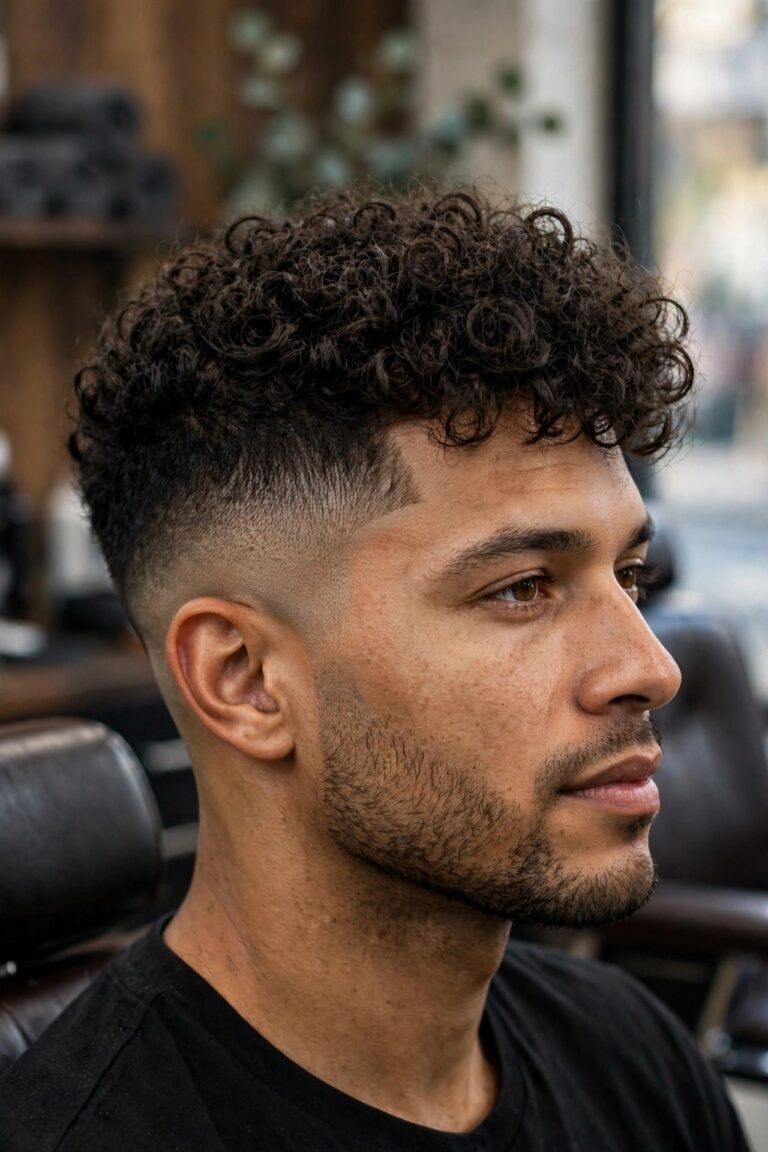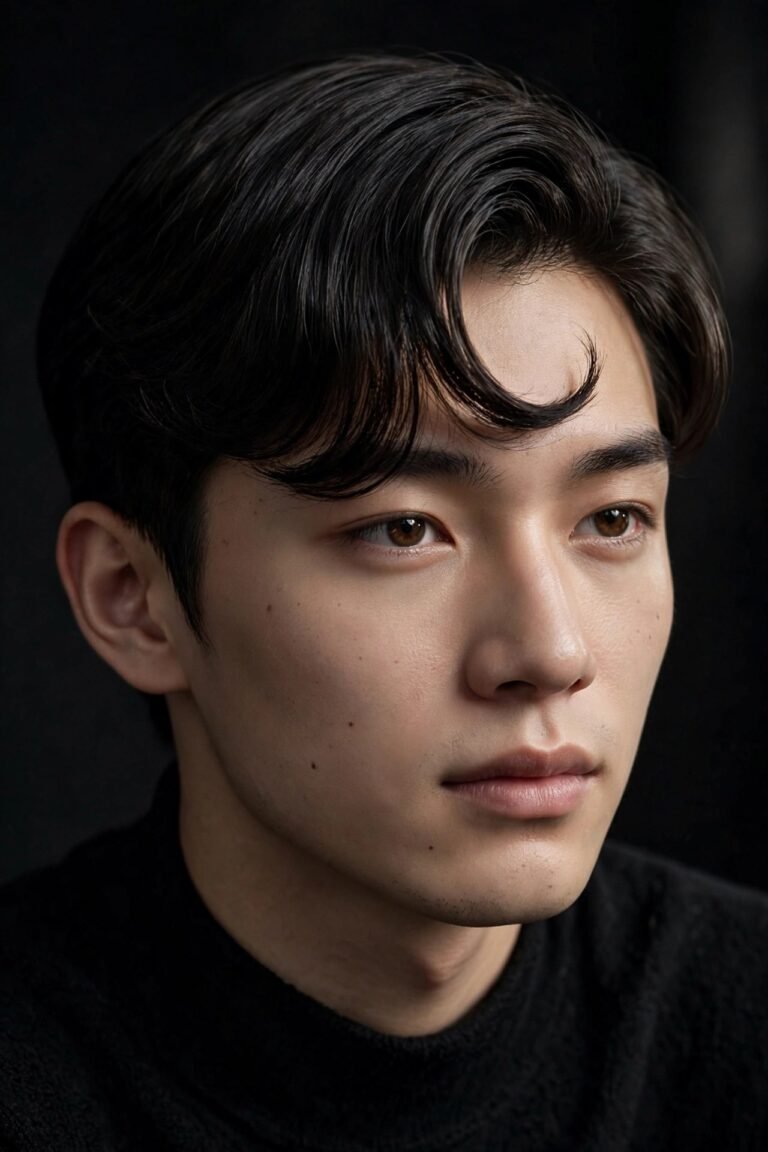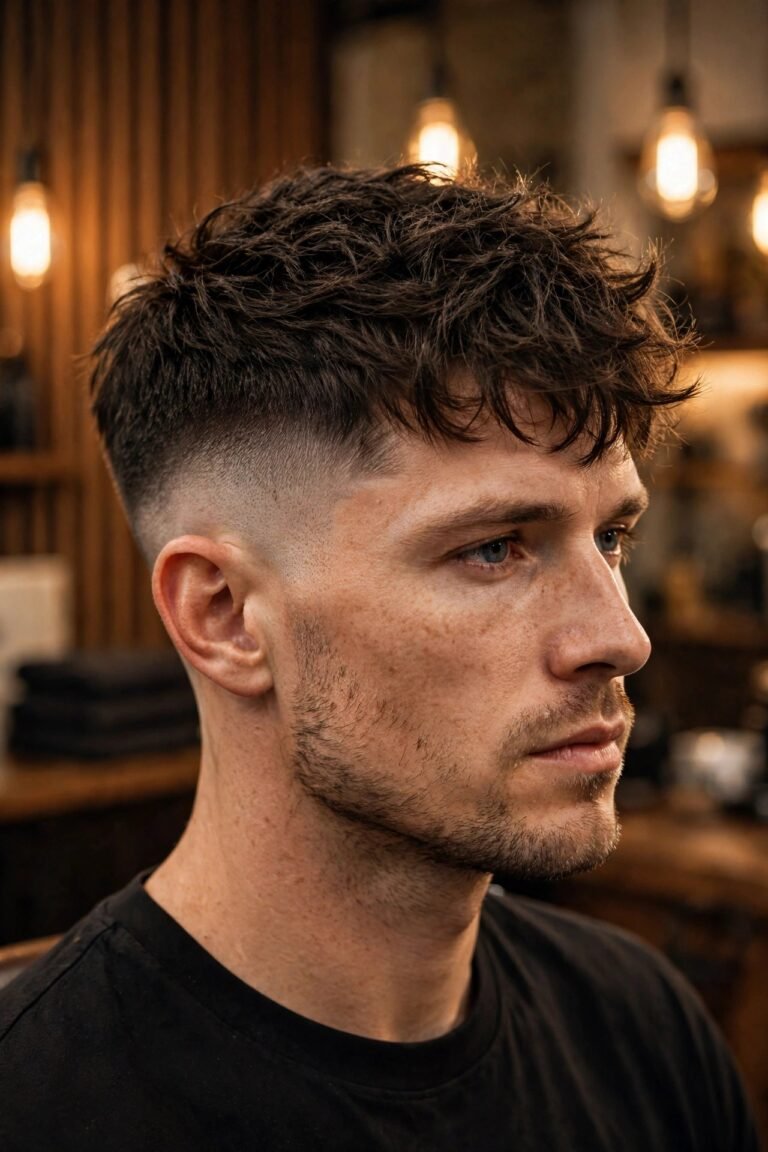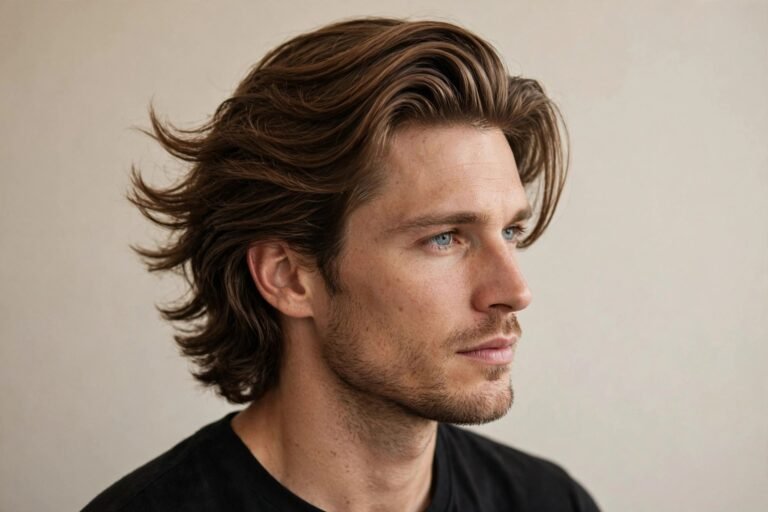
Awkward Stage Hairstyles Men 2026: 16 Ways to Survive Growing Out Your Hair
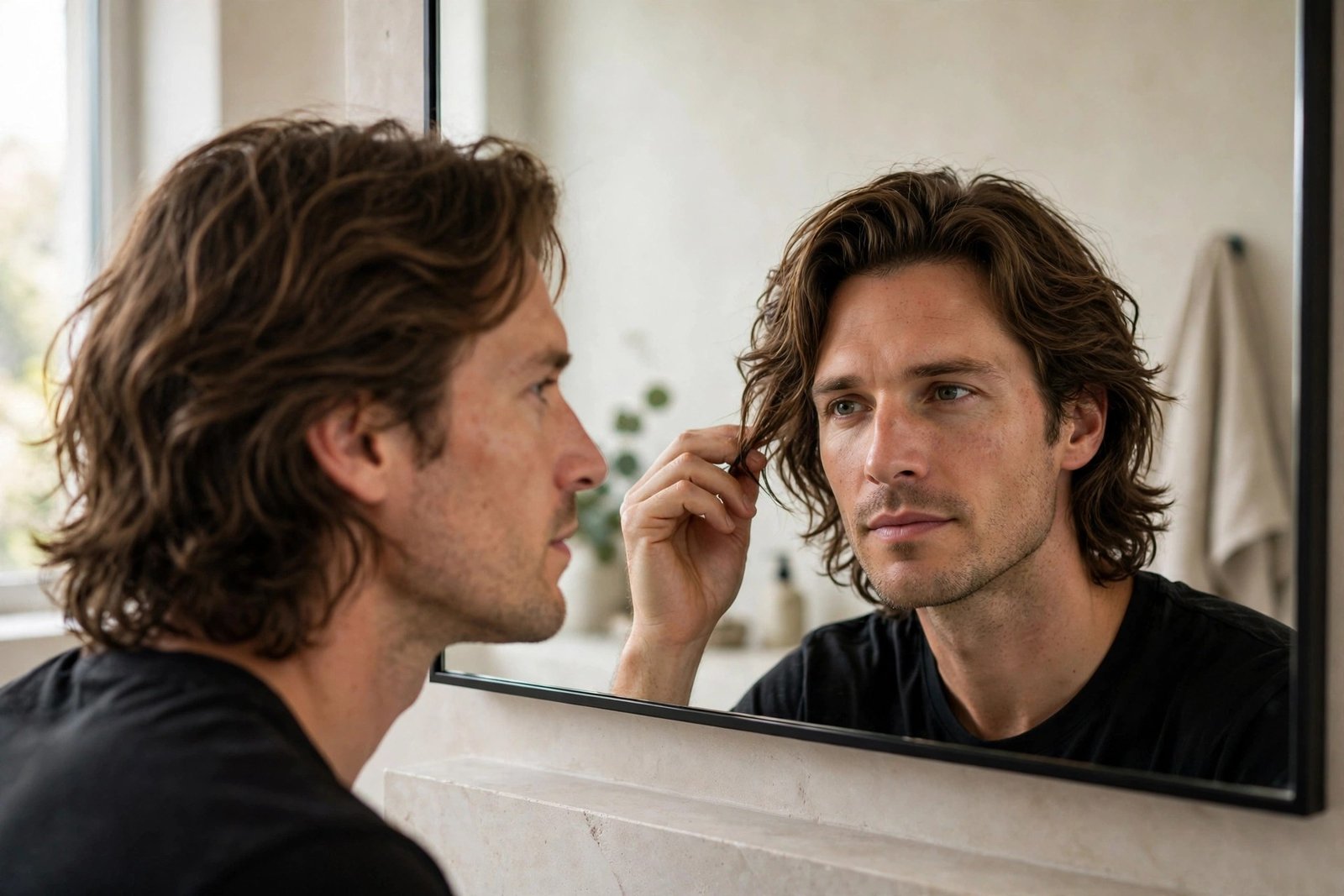
Every man who has ever grown his hair out knows the exact morning I’m talking about. You wake up, look in the mirror, and your hair is doing four different things at once. The sides flip out over your ears like tiny wings. The back curls up at your collar for no reason. The top sits flat like it’s given up. You push it around with your hands for ten minutes, and it just… refuses to be a hairstyle. That’s the awkward stage, and if you’re growing your hair out right now, you’re living in it.
Here’s the truth nobody tells you before you start: the awkward stage isn’t a failure of your hair. It’s just physics. Hair grows roughly half an inch per month, and between month two and month six there’s a window where your length is too long to look like a clean short cut but too short to tie back or style with any authority. The sides hit that in-between length first and they flip. The neckline grows into a fuzzy, uneven mess. Nothing cooperates, and it feels like everyone around you has suddenly developed opinions about your haircut — or your lack of one.
I’ve watched more guys quit growing their hair out during months three and four than at any other point, and it’s always the same story. They didn’t hate long hair. They never even got to long hair. They just couldn’t handle the six weeks where nothing worked and every mirror felt like an accusation. The guys who made it through? They weren’t luckier. They just had a plan for the awkward stage hairstyles that carry you through it — shaping trims, the right products, and a handful of go-to styles for the worst days.
This guide is that plan. We’re covering what the awkward stage actually is and why your hair behaves this way, the honest month-by-month timeline from month one to month six, and sixteen specific awkward stage hairstyles men can actually wear mid-journey — from the mini flow to early curtains to the half-up tie — so you never have to walk out of the house feeling like you gave up. We’ll also cover what to tell your barber word for word so he shapes the mess instead of cutting it off, and the small product kit that makes the difference between chaos and controlled chaos.
If you’re in month three and thinking about buzzing it all off, read this first. The awkward stage ends. Every single time. The guys with great long hair aren’t guys whose hair skipped the awkward phase — they’re guys who survived it. Let’s get you through it.

What Is the Awkward Stage, Really?

The awkward stage is the phase of growing out men’s hair — roughly months two through six — when the hair is stuck between lengths and won’t behave like any recognizable hairstyle. It’s not a medical term and it’s not something your barber puts on a chart. It’s the name the internet gave to a very real, very universal experience: the period where your hair is too long to look neat and too short to do anything with, and every section of your head seems to be growing at its own pace with its own agenda.
Why does it happen? It comes down to growth patterns and length physics. Human hair grows about half an inch — roughly 1.25 centimeters — per month, and it doesn’t grow evenly across your head. The hair at your crown and top grows a little faster than the hair at your sides and nape, and the sides reach “flip length” before the top reaches “style length.” At around two to three inches, side hair becomes too heavy to lay flat but too light to hang down, so it kicks outward over your ears. That’s the flip — the signature move of the awkward stage, and the thing that makes most guys feel like they look unkempt even when they’re trying.
Meanwhile the neckline grows into what I can only describe as a fuzz collar — uneven, wispy strands that curl in different directions and make the back of your head look unfinished. The top, at three or four inches, is heavy enough to fall in your face but not long enough to push back with any staying power. So you get the classic awkward-stage silhouette: flat on top, wings at the ears, chaos at the neck. It is nobody’s goal hairstyle. It is a phase, and like every phase, it ends — but only if you don’t quit in the middle of it.
Why is this one of the most-searched men’s hair topics on Pinterest in 2026? Because growing your hair out is one of the most visual journeys in grooming. Guys search for awkward stage hairstyles men post because they need proof — proof that other men have been exactly here, proof that there are styles that work at this length, and proof that the other side exists. Every “growing out hair men” board on Pinterest is full of timeline photos for a reason. Nobody wants to feel alone in the mirror at month four. The good news is that you aren’t, and the better news is that the awkward stage is entirely manageable once you understand what’s happening and what to do about it.
The Awkward Stage Timeline: Months 1-6
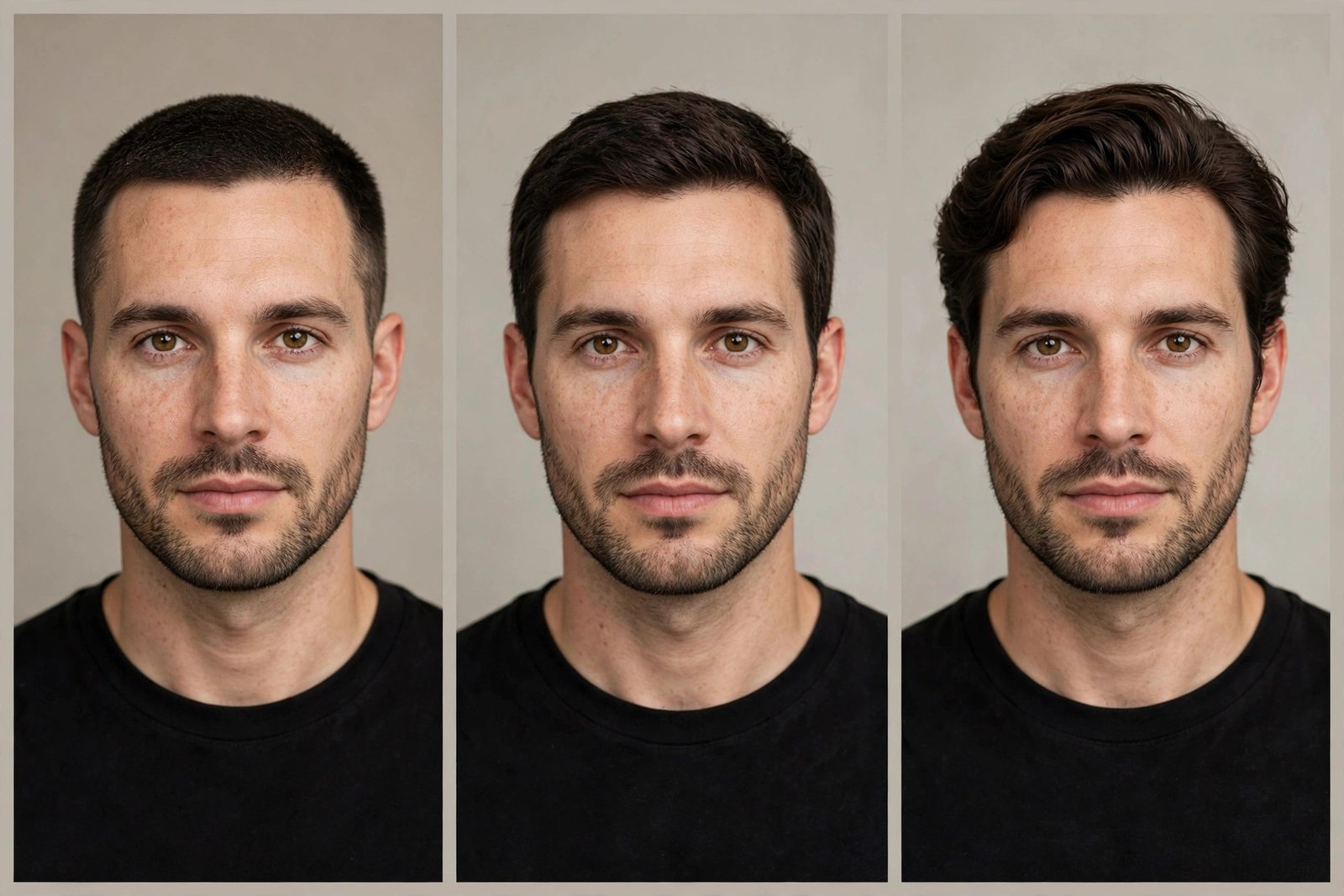
Not every week of growing out your hair feels the same. The awkward stage has its own arc, and knowing where you are in it changes everything — what styles work, whether you need a trim, and how much longer you’re going to feel strange in photos. Here’s the honest month-by-month breakdown of what your hair does, what it looks like, and what your job is at each stage.
Months 1-2: The Easy Part
The first two months are the honeymoon. You’re growing out from a short cut — maybe a textured crop, a fade that’s grown in, or a short scissor cut — and honestly, it still looks like a haircut. The shape is still there. The sides are still relatively neat. You might notice the top getting a little longer and floppier than you’re used to, and your barber’s fade is growing into a soft, natural blend, but nobody is asking you uncomfortable questions yet. This is the easiest part of the journey, and a lot of guys mistake it for how the whole thing will feel. It will not. Enjoy this.
Your job in months one and two is simple: don’t touch it, and start training the direction you want. If you’re growing toward a middle part — curtains, flow, whatever — start parting it that way now, even if it won’t stay. Hair has memory, and the direction you push it every day for two months is the direction it’ll want to go in month five. Wash it, condition it, leave it alone. If your neckline starts looking scruffy around week six, you can clean it up yourself with a trimmer, or book a quick neckline tidy at the shop. That’s it. No shaping needed yet. You’re just a guy with slightly longer hair, and life is good.
Months 3-4: The Real Awkward Stage
Welcome to the wall. Months three and four are the actual awkward stage — the reason this guide exists. Your hair is now roughly two to four inches long in most areas, and this is exactly the length where physics turns against you. The sides flip out over your ears. The back kicks up at the collar. The top is long enough to fall into your eyes but too short to slick back or tuck anywhere. You have entered the zone where no single style works for a full day, and where your hair looks different — usually worse — every time you check the mirror.
This is also when the comments start. Someone at work will ask if you’re “growing it out or just between barbers.” A well-meaning relative will suggest you look tired. Your own reflection will betray you on humid days. I’m telling you this not to scare you but to normalize it: every man with long hair has a photo from month four that he would pay to delete. Every single one. The difference between the guys with great long hair and the guys who buzzed it in frustration is not genetics. It’s that the first group had shaping trims and a plan, and the second group tried to white-knuckle through four months of flip-and-fuzz with no strategy.
Your job in months three and four is active management. This is when shaping trims matter most — a barber visit every six to eight weeks where he tapers the sides and cleans the neckline while leaving the top completely alone. This is when products earn their keep: a matte cream to control the flip, sea salt spray for texture on days you give up on neatness, a headband or beanie for the days you give up entirely. The sixteen styles in this guide are mostly built for this window. You are not trying to look finished. You are trying to look intentional. Those are very different things, and intentional is enough.
Months 5-6: The Light at the End
Somewhere around month five, the physics start working for you again. At four to six inches on top, your hair is finally heavy enough to do what you ask of it. The sides that were flipping at month four now have enough weight to tuck behind your ears or lie flat. The top can be pushed back, parted, swept — it holds. You can start tying the top half back. You might even manage a small, slightly ridiculous, deeply satisfying ponytail. The silhouette stops looking accidental and starts looking like a style that’s still developing. People stop asking questions and start saying it looks good, and you will feel like you’ve been let out of prison.
Your job in months five and six is restraint. The temptation now is to cut — to “clean it up” into a shorter style because you’re so close to something good and the urge to control it is overwhelming. Don’t. Or rather: trim, don’t cut. Keep the shaping trims going, keep the neckline clean, maybe let your barber shape the perimeter into the silhouette you’re growing toward — flow, curtains, wolf cut, whatever the goal is. You’re not done growing, but you’re done being awkward. From here on, every month looks better than the last, and the worst is permanently behind you. The guys who quit at month four never find this out. You will.
Awkward Stage Hairstyles Men Can Wear: Styles 1-4 (The Foundation Era)

The first four styles cover the beginning of the journey — months one through three — when your hair is still short enough to look like a haircut but long enough that you need a plan. These are about starting right. Get these months right and the real awkward stage gets dramatically easier, because your hair will be growing in the right direction with a shape that still reads as intentional.
1. The Clean Starting Cut
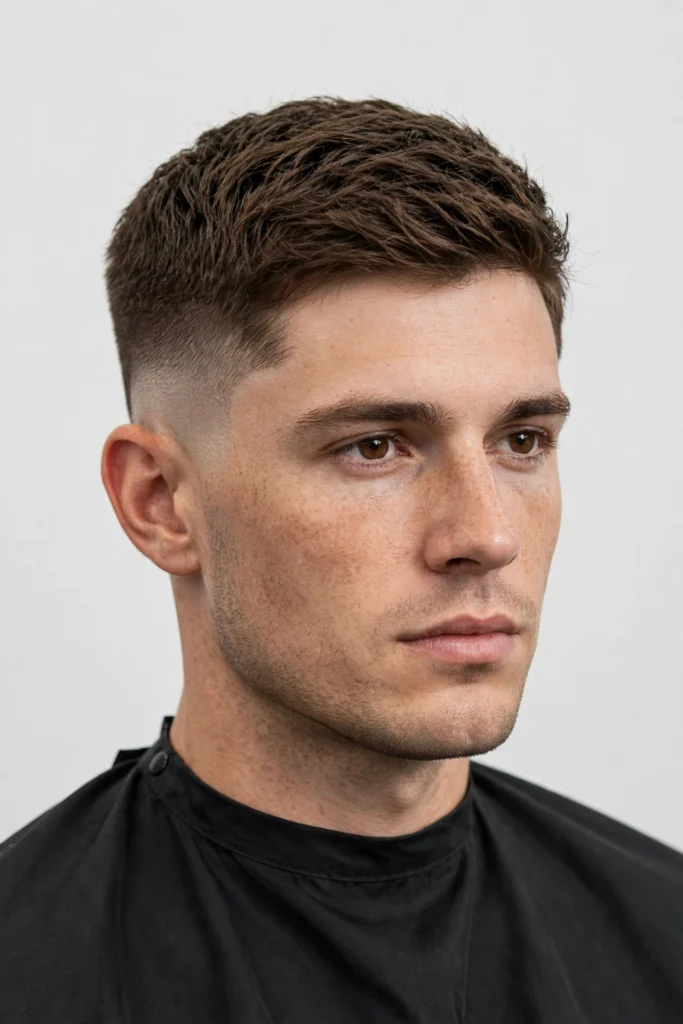
Style number one isn’t really a style — it’s the decision that makes every style after it work. If you’re starting your grow-out from a fade or a buzz, your first move should be one good scissor cut that evens everything out and sets your direction. Tell your barber you’re growing it out and ask him to blend the fade out completely — no more skin, no harsh lines — into a short, even, textured cut with the top left longer than the sides. This gives you a clean baseline. Everything grows from here at a more even pace, which means the sides and top stay in better proportion through month three.
Why does this matter so much? Because most guys start growing from a grown-out fade, where the sides are skin-tight and the top is two inches. That length gap is what creates the worst version of the awkward stage — the sides stay short and neat while the top gets long and floppy, and you end up looking like a mushroom for two months. A proper starting cut closes that gap on day one. It costs you one haircut and it saves you six weeks of weird proportions. If you already started growing from a fade and you’re reading this at month two, it’s not too late — go get the blend cut now. Your future self will thank you.
2. The Mini Flow

The flow — that pushed-back, hockey-player, windswept look — is the promised land of growing out your hair, and the mini flow is its awkward-stage preview. Once your top hits three to four inches, you can start pushing it back and to the sides with your hands, letting it fall naturally. It won’t be the full, glorious flow yet. It’ll be a shorter, scrappier version — but the silhouette is there, and more importantly, it trains your hair’s memory. Every day you push it back is a day your hair learns that back is where it lives.
The trick to making the mini flow look good instead of messy is product and direction. Work a small amount of matte cream through damp hair, push everything back and slightly off to your natural part, and then leave it alone. The mistake guys make is touching it all day — every touch breaks the shape and adds frizz. Set it once in the morning and let it be. On the sides, if they’re flipping, use the cream to press them down and back along the head. The mini flow works best on straight to wavy hair, and it photographs surprisingly well even at month three. It’s the first style in the journey that feels like a choice rather than an accident.
3. The Textured Crop Grow-Out
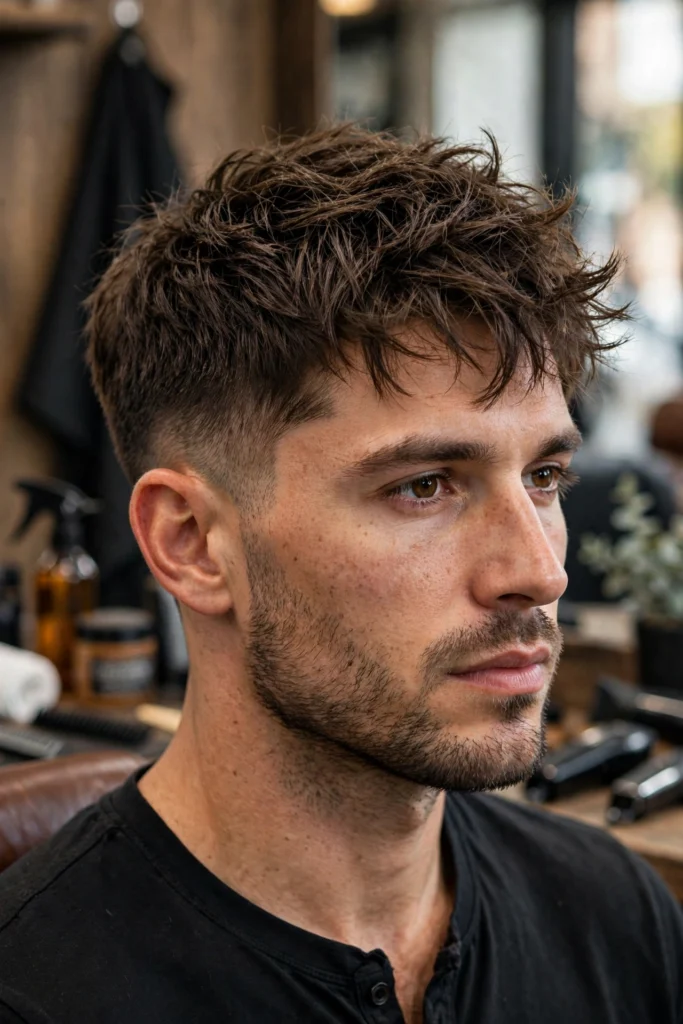
Here’s a secret weapon for months two and three: you don’t have to look like you’re growing your hair out. The textured crop grow-out is just a textured crop — short sides, messy length on top — worn deliberately while the top gains length underneath. Your barber keeps the shape tidy with light trims on the sides while the top grows from two inches toward four. From the outside, it looks like a fashionable short cut. Underneath, you’re banking length for the flow or curtains you’ll have at month six.
This is the style for guys who have jobs, weddings, or family events during the grow-out and can’t afford to look transitional. Ask your barber for a textured crop with a soft taper on the sides — no hard fade lines — and choppy texture on top. Style it forward and messy with a little matte paste. The texture hides the uneven growth, the taper keeps the silhouette clean, and nobody knows you’re on a mission. I’ve seen guys ride this style all the way to month five before switching to a pushed-back look, and their grow-out photos look suspiciously good compared to everyone else’s. There’s no rule that says the awkward stage has to look awkward.
4. Strategic Hat Days

Let’s be honest: some days, the best awkward stage hairstyle is a hat. Not every day. Not as a crutch. But strategically — on the mornings when you wake up and your hair has done something unspeakable overnight, or when you have somewhere to be and no time to fight it — a good beanie, a clean dad cap, or a bucket hat is a legitimate styling choice. There’s no shame in it. Half the men with great long hair will quietly admit that hats got them through month four.
The strategy part matters, though. Wear the hat on days two and three after washing, when your hair is at its wildest — freshly washed hair is easier to style, so save the hat for when styling fails. Let the front peek out a little; hair spilling out from under a beanie at the forehead and sides actually looks good during a grow-out and hides the flip. And keep the hats clean and simple — a plain black or navy beanie, a neutral cap. The hat should look like an outfit choice, not a disguise. On your styling days, go hatless and do the work. The rotation is what keeps you sane: style it when you can, cover it when you can’t, and never feel guilty about the cover days.
Awkward Stage Hairstyles Men Can Wear: Styles 5-8 (The Deep Awkward Months)

These four styles are built for months three and four — the true awkward stage, when the flip is real, the neckline is fuzzy, and nothing stays where you put it. These are your survival tools. They don’t try to make your hair look finished. They make it look managed, intentional, and — on good days — genuinely stylish.
5. The Ear Tuck
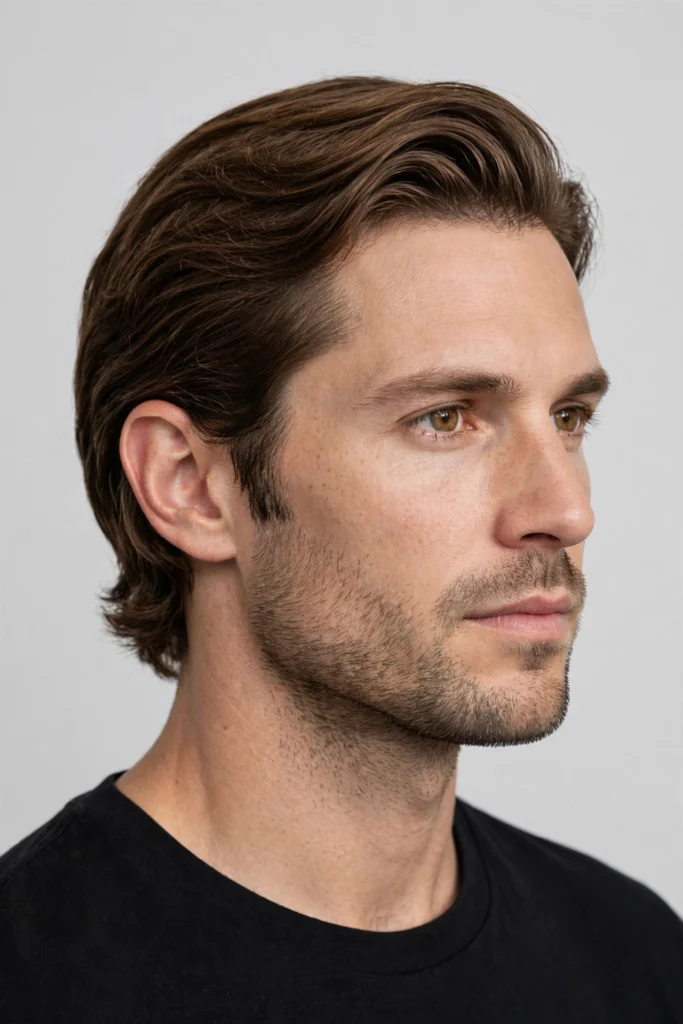
The simplest style on this list and one of the most effective. When the sides flip out over your ears — and they will — tuck them behind your ears and let the top fall over the tuck. Done well, the ear tuck turns the awkward flip from a bug into a feature: the hair sits flat against the head, the ears anchor it, and the overall silhouette reads as a deliberate medium-length style rather than a grow-out in progress. It works from about month three onward, once the sides are long enough to reach behind the ear — roughly two to three inches.
To make it hold, tuck on damp or product-loaded hair, not dry hair — dry hair springs back out within the hour. Work a little cream through the sides, tuck firmly, and press for a few seconds. The top hair falling over the tuck is what makes it look natural; if the top is too short to cover the tuck line, it’s still fine, it just reads a bit more utilitarian. Sunglasses on your head also help pin the tuck in place, which is a trick I learned from a friend who wore his way through an entire summer grow-out with the ear tuck and a pair of cheap sunglasses. Whatever works.
6. The Slicked-Back Cream Days

When your top reaches three to four inches, you gain access to the slicked-back look — the single most civilized thing you can do with awkward-stage hair. This isn’t the greasy Wall Street slick of the nineties. It’s a soft, controlled push-back using a cream or light pomade on damp hair, combed or finger-styled straight back, with the sides pressed down along the head. The result looks neat, mature, and completely intentional. It hides the flip, tames the crown, and gives your whole head one direction to follow — which is exactly what awkward hair needs.
The product choice is everything here. Heavy gel or high-shine pomade will make it look wet and dated; what you want is a matte or natural-finish cream with medium hold. Apply to damp — not wet, not dry — hair, work it from roots to ends, and push everything back with your fingers or a wide-tooth comb. If the front won’t stay back, that’s fine: let it fall slightly forward over the forehead. That’s not failure, that’s the modern textured slick-back, and it looks good. This style is your best friend for offices, dinners, and any situation where you need to look like a man with a plan. Keep the neckline clean and the slick-back reads as a real haircut.
7. The Neckline Taper Clean-Up
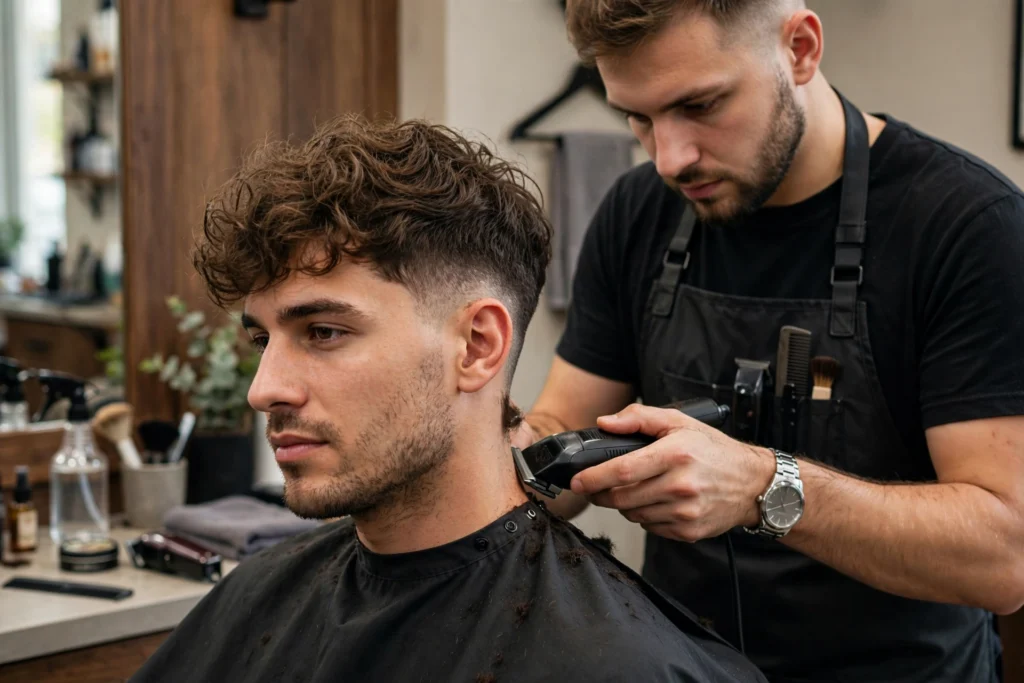
Style seven is a barber visit, not a hairstyle — and it might be the most important entry on this list. Every six to eight weeks during the grow-out, book a shaping trim where your barber tapers the sides and cleans up the neckline while leaving the top completely untouched. This is the move that separates the guys who look like they’re growing their hair out on purpose from the guys who look like they forgot barbers exist. The top keeps gaining length toward your goal; the perimeter stays neat enough that the whole thing reads as maintained.
What makes this work is the contrast. Awkward-stage hair looks worst when everything is growing wild at once — the eye has nowhere clean to rest. A tapered neckline and lightly cleaned-up sides give the eye that rest — a frame of neatness around the growing top. It takes fifteen minutes in the chair and costs a fraction of a full cut. Tell your barber exactly this: “I’m growing the top out. Taper the sides and clean the neckline, don’t touch the top, and don’t take the sides shorter than they are — just neaten them.” If he reaches for the clippers on top, stop him. That sentence, said clearly, prevents ninety percent of grow-out disasters.
8. Headband and Bandana Days

Some days your hair simply will not cooperate, and on those days, the headband is not surrender — it’s styling. A headband or bandana pushed back over the forehead pulls the front and top away from your face, controls the flop, and gives the whole head a sporty, intentional look. It works from month three onward, once there’s enough length to actually hold under a band. Athletes have been doing this forever, and there’s a reason: it looks good, it works, and it keeps hair out of your eyes while you get on with your day.
Keep it simple and masculine: a thin black or dark athletic headband, or a folded bandana in a neutral color. The wide, colorful bandana look can read costume if the rest of your outfit doesn’t support it, so match the energy — athletic band for athletic days, simple dark band for everything else. Push it back about an inch behind the hairline, not right at it; that placement looks natural rather than forced. And here’s the bonus: wearing a headband for a few hours actually trains your hair to fall back, the same way the mini flow does. So your lazy-day solution is secretly also progress. That’s the kind of efficiency the awkward stage demands.
Awkward Stage Hairstyles Men Can Wear: Styles 9-12 (Length Building)
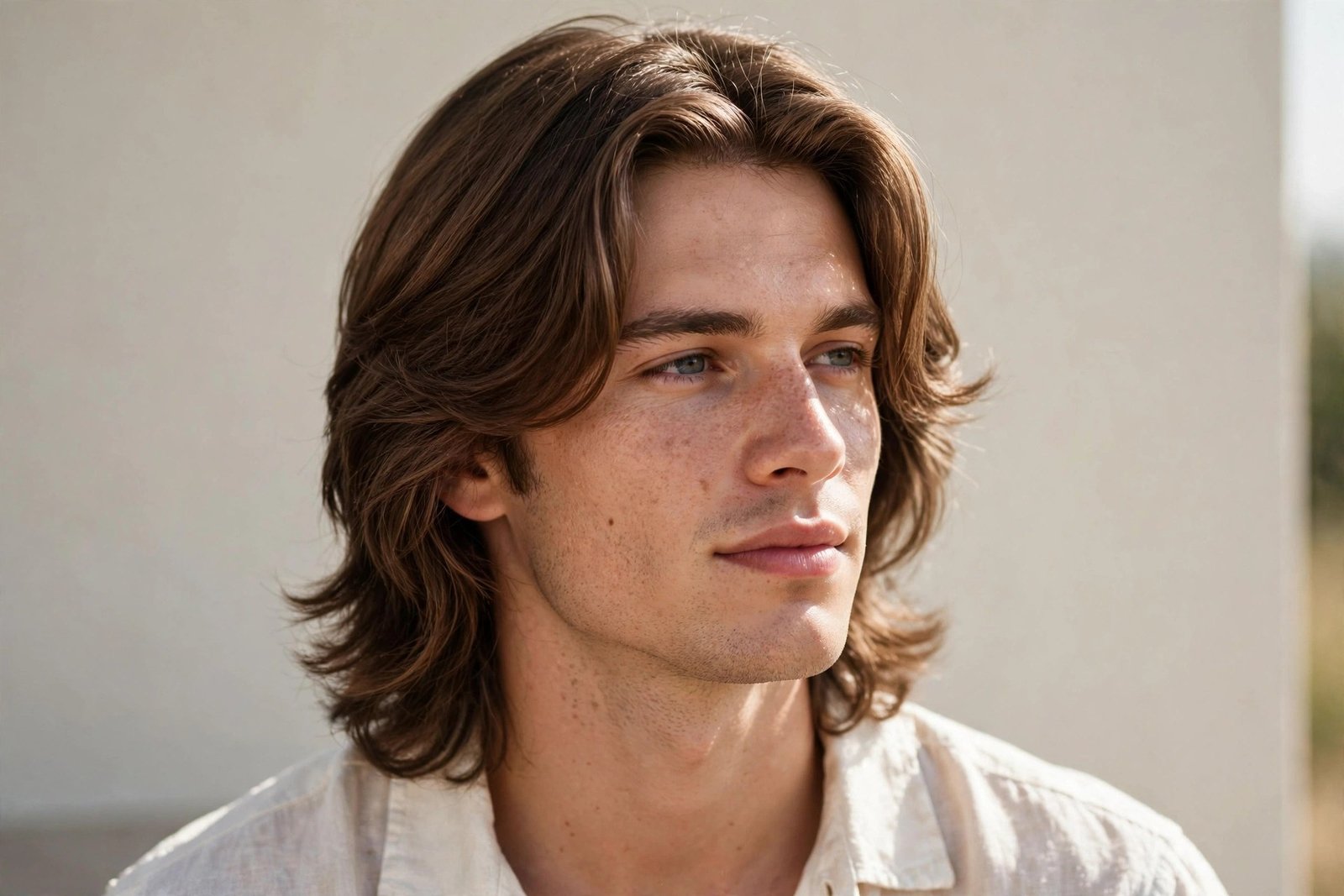
Months four and five bring the first real rewards of the journey. Your hair is now long enough in places to do things — part it, sweep it, tie parts of it back. These four styles use that new length. They won’t work at month two, but at month four and five they’re the styles that make people start saying your hair looks good, and you’ll feel the shift.
9. Early Curtains

Curtains — the middle-part, face-framing style — are one of the most popular long-hair goals in 2026, and the awkward stage is where they begin. Once your top reaches four to five inches, you can part it down the middle and let the front sections fall on either side of your face. It won’t be the full, flowing curtain yet; the front pieces will be shorter and bouncier than the goal version. But the shape is unmistakable, and it’s the first style in the grow-out that looks like a destination rather than a transition.
The key to good early curtains is the part and the front length. Find your natural center — it’s usually where your crown swirl points — and part on damp hair with a comb, then let it air-dry in place. If the front pieces flip outward at the ends, a tiny amount of cream on just the ends will weigh them down. Don’t fight the wave; curtains look better with a little natural bend in the front pieces. This style works on straight, wavy, and loose-curly hair, and it’s especially flattering if you have a longer face, because the side-falling front pieces add width at the cheeks. From month five onward, early curtains are a legitimate, fashionable hairstyle — not a compromise, not a coping mechanism. A real style.
10. The Deep Side Sweep
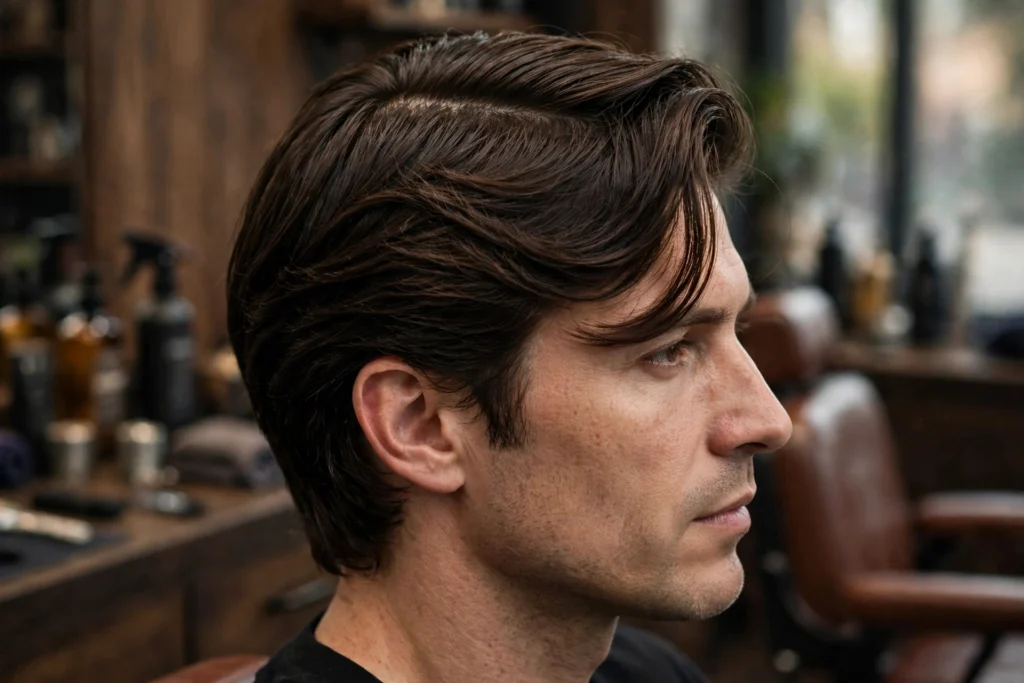
Not every guy wants a middle part, and the deep side sweep is the answer for the rest of us. Part your hair far to one side — much further over than a natural part — and sweep the bulk of the top across the forehead and over to the other side. The deep part creates volume and direction, the sweep covers the awkward front growth, and the whole thing has a classic, masculine energy that works in any setting. It needs about four inches on top to work, which puts it squarely in the month-four-and-up window.
What makes the side sweep work during the awkward stage is that it gives every section of your hair a job. The top sweeps across. The sides on the heavy side get pressed down under the sweep’s weight. The sides on the part side stay short and neat. Nothing is left to flip freely. Use a cream or light paste on damp hair, part deep with a comb, sweep with your fingers for texture, and let it set. If the sweep falls into your eyes by afternoon, that’s the style — push it back and let it fall again. The lived-in version of the side sweep looks better than the perfect morning version anyway. This is one of the most reliable awkward stage hairstyles men reach for, because it works on almost every hair type and it never looks like you’re trying too hard.
11. Salt-Spray Surfer Texture

There’s a point in every grow-out where fighting your hair’s natural texture stops working, and the smart move is to stop fighting. The salt-spray surfer look is that move: embrace the mess, but make it a styled mess. Spray sea salt spray through damp hair, scrunch it with your hands, and let it air-dry into loose, beachy, textured waves. The result looks deliberately undone — the way hair looks after a day at the beach — and it completely sidesteps the awkward-stage problem, because the style’s whole point is that the hair is doing its own thing.
This works best on wavy and curly hair, where the salt spray enhances the natural pattern, but straight-haired guys can get a version of it too — the spray adds grip and piece-y texture that makes straight hair look intentionally tousled instead of accidentally flat. The styling takes literally two minutes: spray, scrunch, walk away. No comb, no precision, no mirror-checking every hour. It’s the lowest-effort style on this list and one of the best-looking, which tells you something about how much of the awkward stage is solved by confidence rather than control. Pair it with a clean neckline and it reads as a choice. Let the neckline go and it reads as a cry for help. The neckline is doing a lot of work in this style — keep it tidy.
12. The Half-Up Tie
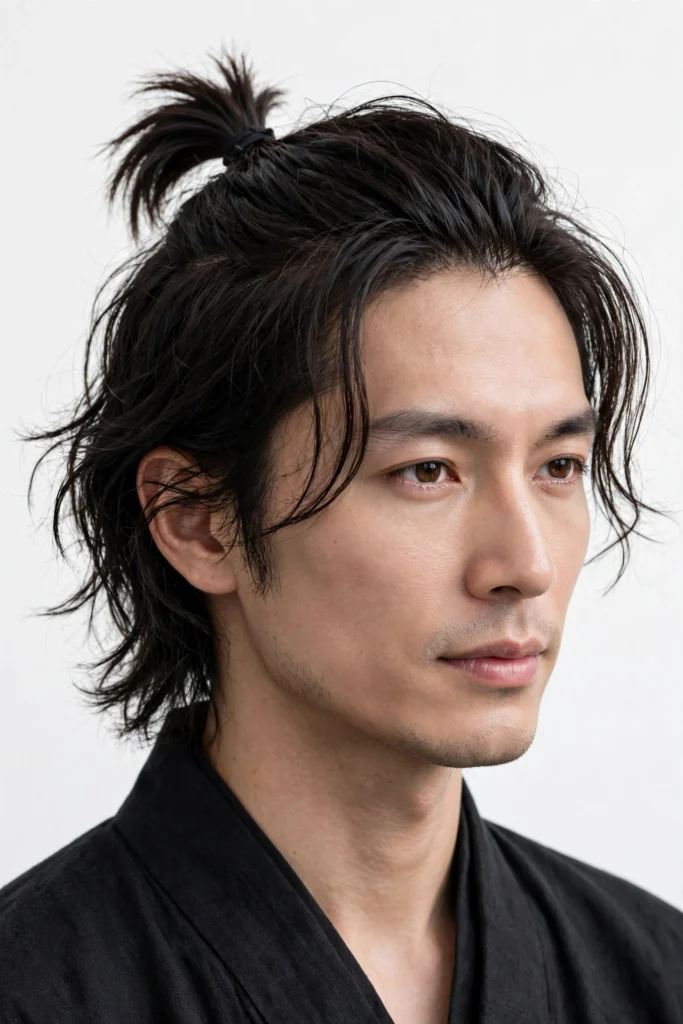
The half-up tie is the first tying style available to you, and arriving at it feels like a graduation ceremony. Once the top of your hair is long enough to gather — usually around month five — pull the top section back and tie it with a small elastic, leaving the sides and back loose. It’s the samurai-topknot’s little brother: the same energy, achievable months earlier. From the front, you look neat and pulled-together. From the side, the loose length shows you’re still growing. It’s the perfect transitional style because it is, literally, a transition.
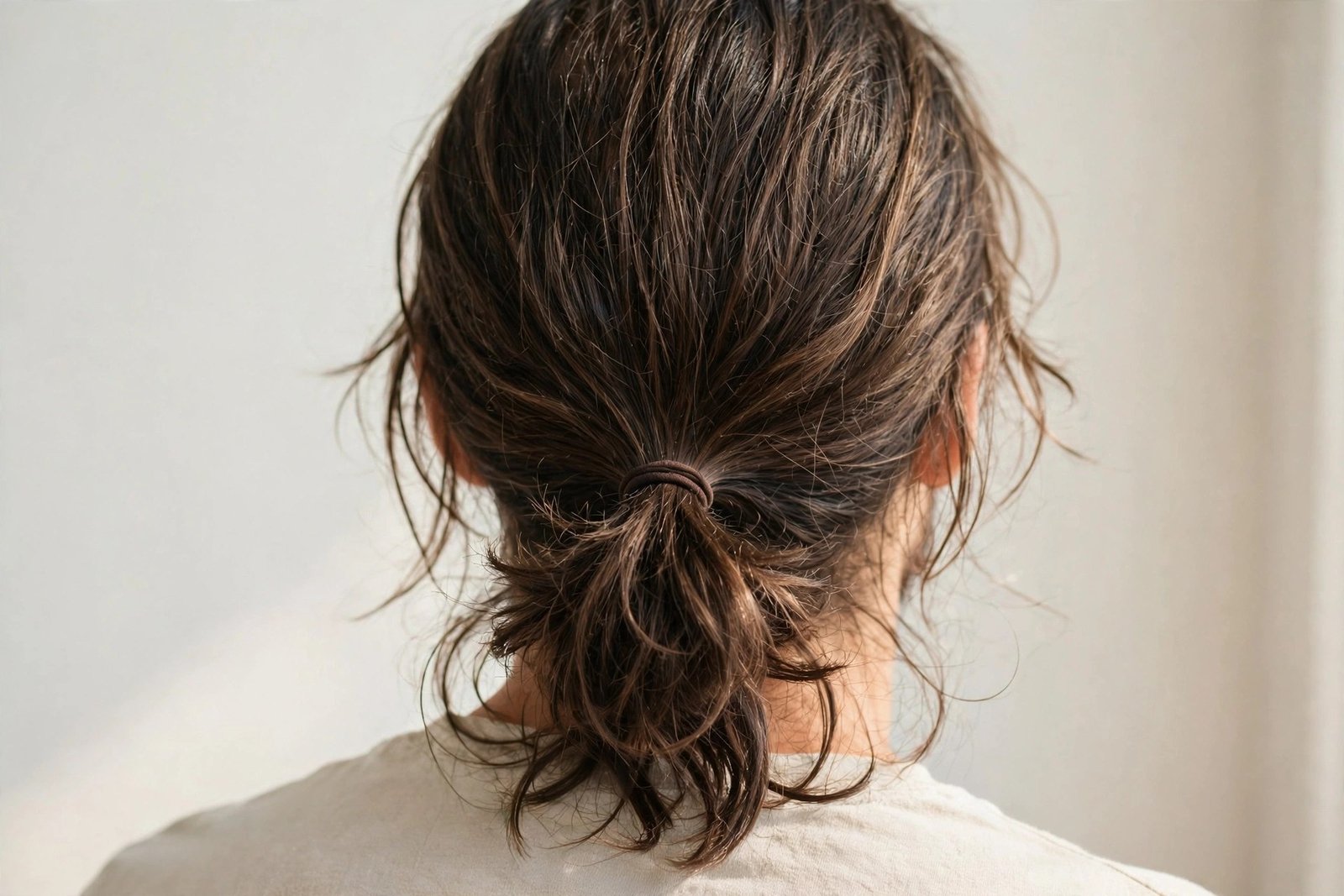
The execution matters. Gather from temple to temple — the top third of your hair — not just the very front. Tie it at the crown, not at the forehead; a tie placed too far forward looks like a fountain. Use a small, dark elastic, not a bright scrunchie situation. And keep the tie loose enough that it doesn’t pull — tight half-up ties on growing hair cause breakage at the elastic line, and breakage is the last thing you need when every millimeter counts. If the sides are still flipping, tuck them behind your ears under the tie’s structure. The half-up tie is also your preview of the full ponytail to come: every week, a little more hair reaches the elastic, and one day the whole thing goes back. You’ll know when.
Awkward Stage Hairstyles Men Can Wear: Styles 13-16 (Almost There)
Months five and six. The flip is mostly gone, the length is real, and you’re styling hair now — not managing a crisis. These last four styles are for the home stretch: they use genuine length, they look like finished hairstyles, and they’re the bridge to whatever your final goal is, whether that’s a flow, curtains, a bun, or just long hair.
13. The Mini Man Bun
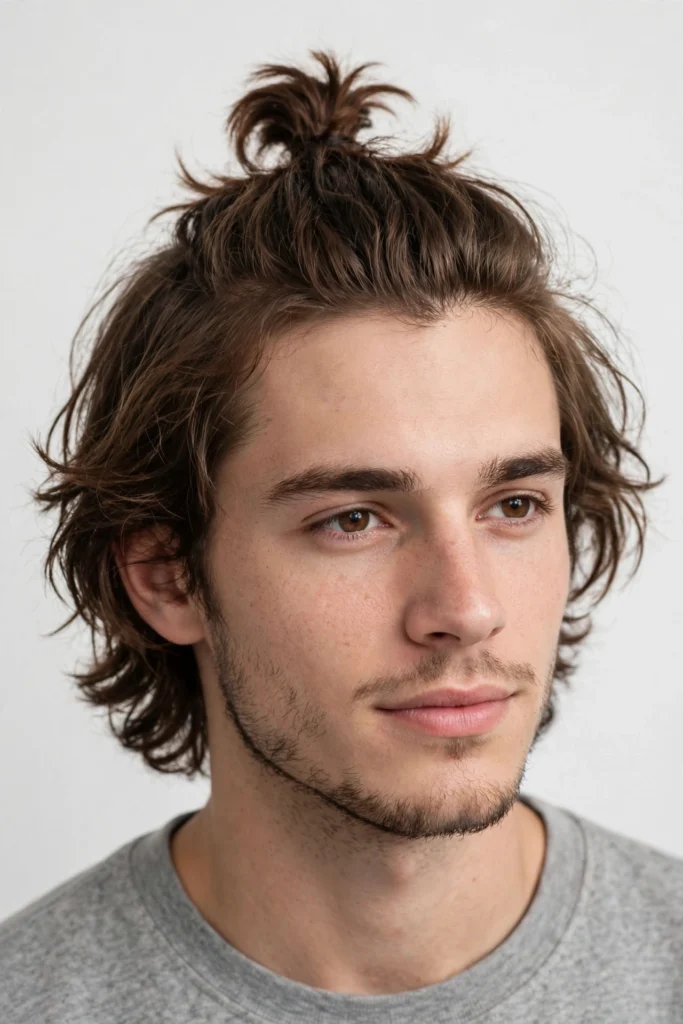
Around month six, the topknot becomes physically possible — and I want to be honest about what it looks like. The first man bun is small. It’s a little nub. It sits high on the crown and it will not look like the buns in the inspiration photos, because those belong to men with two years of growth. But it ties back, it keeps everything off your face and neck, and the feeling of getting all your hair up for the first time after six months of chaos is genuinely euphoric. Wear the nub with pride.
To make the mini bun work, gather everything you can reach — top, sides, and as much of the back as possible — twist it once, and loop the elastic. Strands will escape. Let them. The slightly undone mini bun looks better than a severe one at this length; perfection would just highlight how small it is. This is also a gym style, a work-from-home style, a hot-day style — anywhere you’d want your hair completely contained. And every time you wear it, you’re training your hair to go back, which pays off when the bun gets bigger. The mini bun isn’t the destination. It’s the proof that the destination exists.
14. The Intentional Wolf-Cut Shape
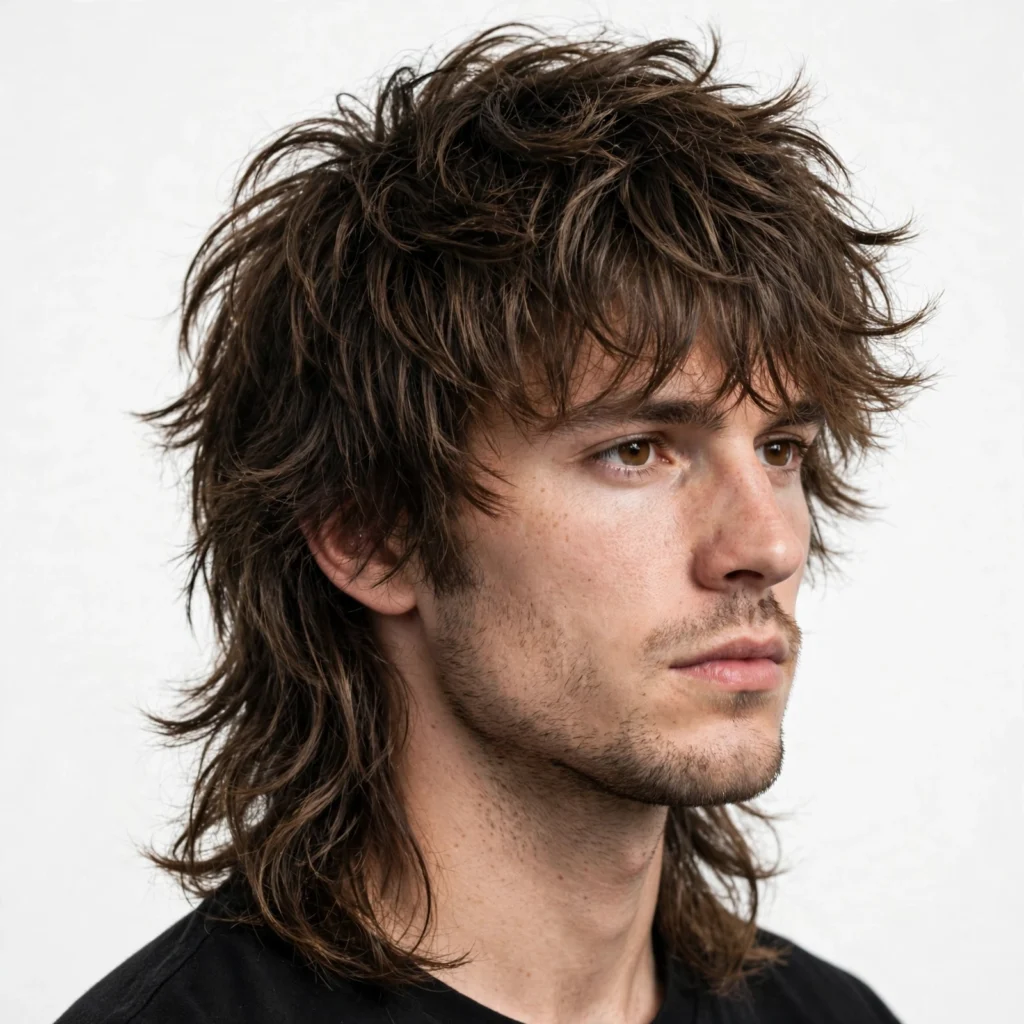
Here’s something most grow-out guides won’t tell you: at month five and six, your hair naturally wants to form a wolf-cut silhouette — shorter, textured layers on top flowing into longer length at the back and sides. The mullet-adjacent shape that the awkward stage produces by accident can be shaped on purpose by a good barber into an actual wolf cut, and the wolf cut is a legitimate, fashionable style in 2026. Instead of fighting the shape your hair is making, you hire it.
This requires a barber who understands the assignment. Ask for textured layers through the top and crown, keeping all the length at the perimeter — the back, the sides, the front pieces. No thinning the ends off, no “cleaning up” the length. The layers remove the bulky, mushroom quality that unshaped grow-outs get, while the preserved perimeter keeps your progress intact. Style it with salt spray or a light texture cream, messy and piece-y. The wolf-cut shape is the only style on this list that turns the awkward stage’s natural outcome into the goal itself — and for guys whose end goal is a shaggy, rock-and-roll kind of long hair, it might not be a transitional style at all. It might be the arrival.
15. The Low Ponytail Attempt

The low ponytail — gathered at the nape, resting on the neck — becomes possible around month six for most guys, and it’s the workhorse style of early long hair. It won’t be sleek. The front pieces will be too short and will fall out. The elastic will sit on a mound of hair that’s thicker than the tail below it. All of that is normal and all of that is fine. The low pony’s job is containment with dignity: everything back, everything controlled, you look like a man with long hair rather than a man mid-crisis.
A few practical notes. Use a fabric-covered elastic or a proper hair tie — the thin rubber bands snap hair, and at this stage every strand is load-bearing. Gather with your head tilted slightly back so the front sits smooth, then let the short front pieces fall where they want; trying to force them back just creates tension and breakage. If the nape hairs are too short to reach, that’s what the shaping trim is for — your barber can blend the perimeter so the shortest pieces still tuck. And keep a spare elastic in your pocket for the first month of ponytail life, because the early pony has a habit of escaping at the worst moments. You’ll laugh about this later. Probably.
16. The “Embrace the Mess” Textured Shag

The final style on this list is a philosophy as much as a haircut: stop trying to control it and start styling the chaos. The textured shag at month six is grown-out layers, natural wave, piece-y ends, and zero attempt at neatness — worn with confidence. Wash it, work a little texture cream or salt spray through it, shake it out, and walk out the door. The shag works because at six months your hair finally has enough length and weight to look like a style even when it’s messy. Messy at month three looks accidental. Messy at month six looks like a choice. Length is what makes the difference.
This is the style for guys whose end goal is long, natural, low-maintenance hair — the surfers, the artists, the guys who want to look like they don’t think about their hair even though they absolutely do. The maintenance is minimal: shaping trims every eight to ten weeks to keep the layers moving and the ends healthy, conditioner to keep the length soft, and that’s it. No daily styling battle. The embrace-the-mess shag is also the most honest style on this list, because it’s what your hair wanted to be all along. You spent six months fighting it into submission. Turns out it just needed time — and you needed patience. Congratulations. You made it through the awkward stage.
Shaping Trims: What to Tell Your Barber
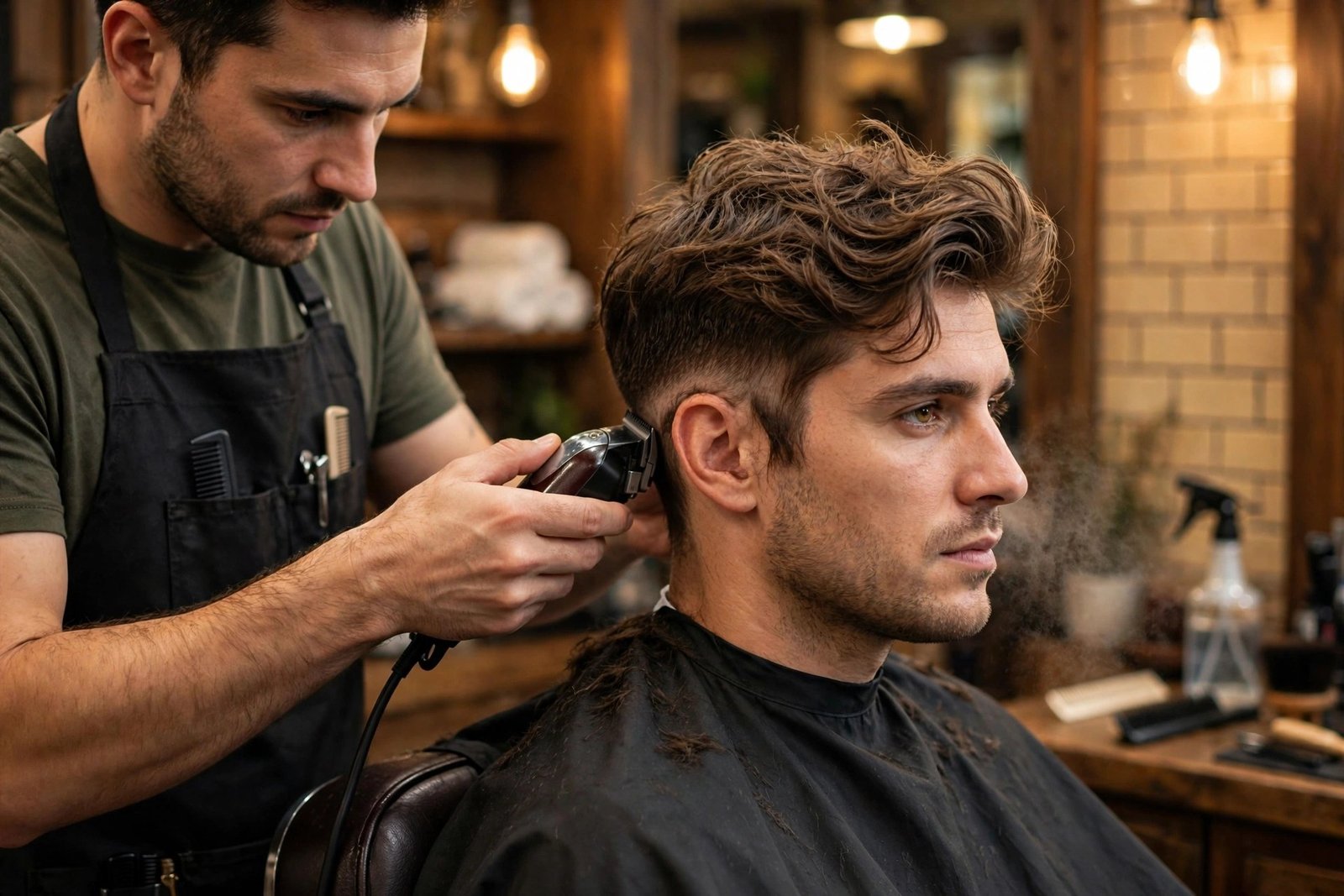
The shaping trim is the single highest-leverage move in the entire grow-out, and most guys either skip it entirely or explain it so badly that the barber cuts off two months of progress. So let’s fix that. A shaping trim is not a haircut. It’s a maintenance visit — fifteen to twenty minutes — where your barber tidies the perimeter of your growing hair while leaving the top and all your accumulated length completely alone. You get one every six to eight weeks, starting around week eight of the grow-out.
Here’s exactly what to say when you sit in the chair: “I’m growing the top out. I need a shaping trim — taper the sides lightly, clean up the neckline, tidy the edges around the ears, but do not touch the top and do not take length off anywhere except the perimeter.” Say it before he picks up the clippers. Say it clearly. The most common grow-out disaster is the barber who hears “tidy it up” and gives you a fresh fade on the sides, which resets the sides to zero and puts you back at month one on the perimeter while the top keeps growing. That sentence prevents it.
What should he actually do? Lightly taper the sides — not a fade, a taper, blending the growing sides down toward the ears without removing their length. Clean the neckline with a trimmer, taking off the fuzzy, uneven wisps that grow below your natural hairline but going no higher than the line itself. Tidy around the ears so the flip has a cleaner edge to flip from. And if the very ends of the top are splitting or thinning, he can dust them — taking off a quarter inch, no more — to keep them healthy. Healthy ends grow; split ends break, and breakage is invisible length loss that keeps you in the awkward stage longer.
What should he never do? Cut the top. Blend the top into the sides. “Even it out.” Thin it aggressively. Any of these removes the length you’re banking, and length is the entire currency of the grow-out. If your barber pushes back — some old-school barbers genuinely believe growing hair out means not visiting at all — find a barber who does grow-outs regularly. Ask around, check portfolios, look for shops that post long-hair work. The right barber is a partner in the grow-out. The wrong one is a reset button.
Products That Save You Mid-Journey

You don’t need a shelf full of products to survive the awkward stage. You need four things, used correctly. Everything else is optional. The guys who struggle most during months three and four usually fall into one of two camps: they use nothing and fight their hair dry, or they use the wrong things — heavy gels and high-shine pomades that make in-between hair look wet and desperate. The middle path is a small, correct kit.
First, a matte styling cream with medium hold. This is your daily driver — the product that controls the flip, presses the sides down, and gives the top enough structure to hold a push-back or a sweep. Apply it to damp hair, not dry: damp hair distributes product evenly and sets the shape as it dries. A dime-sized amount is enough; awkward-stage hair is short enough that overloading is easy, and too much cream makes it look greasy by noon. Work it from the mid-lengths to the ends rather than piling it on the roots, and press the sides down firmly for a few seconds after applying. The cream does the holding; your hands do the directing.
Second, sea salt spray. This is your texture weapon for the days when neatness isn’t happening — the surfer look, the messy shag, the “I give up but make it fashion” days. Spray it through damp hair, scrunch, and let it air-dry. It adds grip and separation that makes in-between hair look intentionally tousled instead of accidentally chaotic. It’s also the best friend of wavy and curly growers, because it enhances the natural pattern instead of fighting it. Use it on its own for texture days, or layer a little cream over it when you want texture with control.
Third, a decent conditioner — and I mean actually conditioning every time you wash. Growing hair gets dry at the ends faster than short hair does, because the ends are older and further from your scalp’s natural oils. Dry ends frizz, split, and break, and every broken end is length you have to regrow. Condition from the mid-lengths down, leave it in for a minute, rinse with cool water. If your hair is thick or curly, a leave-in conditioner on the ends is worth adding. This isn’t vanity; it’s length preservation.
Fourth, the supporting cast: a wide-tooth comb for detangling wet hair without snapping it, proper fabric-covered hair elastics for the half-up and ponytail months, and a headband or beanie for the cover days. That’s the complete kit. Cream, salt spray, conditioner, comb, elastics, hat. Six items, none expensive, all of them earning their place. The awkward stage is hard enough without fighting your tools — get the small things right and the big thing, the growing, takes care of itself.
FAQ
These are the questions I hear every time the awkward stage comes up — from guys in the chair, in comments, and in messages from friends who are three months in and questioning everything.
How long does the awkward stage last for men?
For most guys, the true awkward stage — the flip, the fuzz, the nothing-works phase — runs from about month two or three to month five or six of growing out. That’s roughly three to four months of genuine awkwardness inside a six-month journey to the first real long style. Hair grows about half an inch per month, so the math is fixed: you need four to six inches on top before the physics start working for you, and there’s no product or trick that grows it faster. The guys who feel like their awkward stage lasted forever usually either skipped shaping trims, which extends the messy look, or kept “cleaning it up” with cuts that reset their progress. Stay the course, trim the perimeter, and month six arrives on schedule.
Should I cut my hair during the awkward stage?
Trim, don’t cut. That’s the whole answer. Shaping trims every six to eight weeks — taper the sides, clean the neckline, dust the ends — keep you looking intentional while your length banks up. But a real cut, the kind that takes inches off the top or re-fades the sides, resets the clock. Every inch you cut is two months of growth gone, and two more months of awkward stage added to the sentence. The only good reason to actually cut during a grow-out is if you’ve decided you don’t want long hair anymore — and that’s a fine decision, just make it deliberately, not on a bad hair morning.
What do I tell my barber when growing my hair out?
Say this, word for word: “I’m growing the top out. Give me a shaping trim — taper the sides lightly, clean up the neckline, tidy around the ears, but don’t touch the top and don’t take length off.” Say it before he starts cutting. The biggest grow-out killer is miscommunication in the chair — you say “tidy it up” and he hears “fresh fade,” and two months of side growth disappear in four minutes. If your barber doesn’t do grow-out maintenance regularly, find one who does; look for shops that post long-hair work. And go every six to eight weeks. The shaping trim is what makes the difference between “growing it out” and “forgot about barbers.”
What products work best during the awkward stage?
Four things: a matte styling cream with medium hold for daily control, sea salt spray for texture on messy days, a real conditioner used every wash to prevent breakage, and the supporting tools — a wide-tooth comb, proper hair elastics, and a headband or beanie for cover days. Apply cream to damp hair, not dry. Use salt spray when you want intentional mess. Condition the ends every time. That’s the complete kit — you don’t need gels, high-shine pomades, or a dozen specialty products. Heavy, shiny products are the enemy of awkward-stage hair; they make in-between length look wet and thin. Matte and natural finishes make it look thicker and deliberate.
When can I tie my hair back while growing it out?
Most guys can manage a half-up tie around month five, when the top reaches four to five inches — gather the top section from temple to temple and tie it at the crown, leaving the rest loose. A full ponytail or mini bun usually becomes possible around month six, once the sides and back are long enough to reach the elastic. Don’t force it earlier: tying hair that’s too short creates tension at the elastic line, which causes breakage, and breakage costs you length. If only the top reaches, do the half-up and let the sides tuck behind your ears. The full tie-up is a milestone, not a race — and when it happens, you’ll feel like the entire awkward stage was worth it. It was.
Conclusion
The awkward stage feels permanent when you’re inside it, but it’s one of the most temporary phases in all of grooming — three to four months of weirdness on the way to years of great hair. Every man with long hair you admire has a month-four photo he’d rather you never see. The flip, the fuzz, the mornings nothing works — all of it is just hair doing what hair does at that length, and all of it ends the moment the length catches up with the physics.
What separates the guys who make it from the guys who buzz it off in frustration was never genetics or luck. It was a plan: shaping trims every six to eight weeks so the perimeter stays neat while the top banks length, the right four products instead of a bathroom full of wrong ones, and a rotation of styles — the mini flow, the ear tuck, the slick-back, early curtains, the half-up tie — that made every phase look intentional instead of accidental. That’s the whole secret. There isn’t a deeper one.
So if you’re reading this at month three, staring at the mirror and reaching for the clippers — don’t. Get a shaping trim this week, pick two or three styles from this list that fit your current length, and give it eight more weeks. Month six is closer than it feels, and the view from the other side of the awkward stage is worth every strange-hair morning it took to get there. Your hair isn’t failing. It’s growing. Let it.