Peekaboo Highlights Women 2026: 16 Hidden Color Ideas
Picture this: a woman with a perfectly normal-looking dark brown bob walks past you. Nothing flashy, nothing screaming for attention. Then she bends forward to pick up her bag, her hair falls forward, and suddenly there’s a flash of electric blue underneath. Or she pulls her hair into a ponytail and the whole nape lights up in rose gold. That’s the entire magic of peekaboo highlights for women — a secret your hair keeps until you decide to tell it.
I’ve been coloring hair for years, and I can count on one hand the number of trends that survive longer than a season. Peekaboo highlights are one of the rare ones. They showed up years ago, never really left, and in 2026 they’re bigger than ever — partly because Pinterest turned them into a low-commitment color phenomenon, and partly because women are done choosing between “professional” and “fun.” Peekaboo color refuses to pick a side. It lets you have both, on the same head, on the same day.
The appeal is dead simple once you think about it. Most color is a commitment you wear on your face every single morning. Roots show. Regrowth shows. A bad toner shows. Peekaboo highlights sit underneath the top layer of your hair, which means the world sees your natural color when you’re standing still — and the hidden panel only reveals itself when your hair moves, when you part it differently, or when you tie it up. It’s color with a privacy setting.
But here’s the thing nobody tells you on Pinterest: placement matters more than the shade you pick. A peekaboo panel placed half an inch too high peeks out in every Zoom call. The wrong shade of blonde under the wrong shade of brunette looks like a dye accident instead of a deliberate design. And curly hair — which shows hidden color off better than any other texture — needs a different sectioning approach than straight hair. This guide covers all of it: what peekaboo highlights actually are, how they stack up against money pieces and full highlights, exactly where the hidden color goes, sixteen ideas worth stealing in 2026, the consultation script that gets you what you want from your colorist, and the maintenance reality nobody posts about.
Whether you want a whisper of caramel under your brunette or a full rainbow panel under black hair, there’s a version of this trend with your name on it. Let’s get into it.
What Are Peekaboo Highlights, Really?
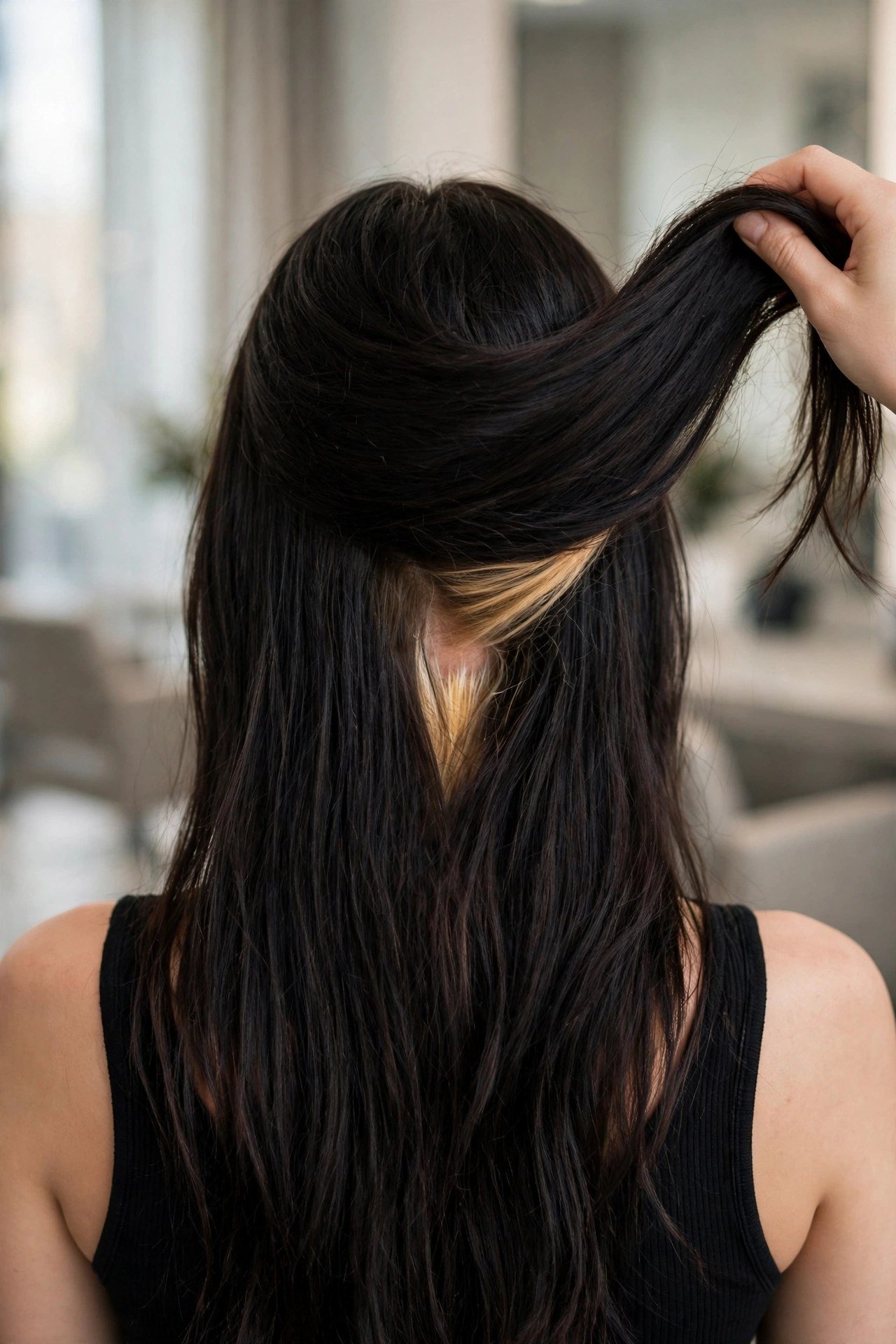
Peekaboo highlights are sections of color placed in the underlayer of the hair — underneath the top canopy — so they’re invisible when the hair hangs still and revealed when the hair moves. The colorist lightens or deposits color into a hidden panel, usually at the nape or beneath the sides, then the natural top layer falls over it like a curtain. When you walk, when the wind catches your hair, when you put it in a ponytail or flip your part, the hidden color flashes through. Still hair, secret hair. Moving hair, statement hair.
This isn’t a new invention. The underneath-panel idea has been around in various forms for decades — chunky hidden lowlights in the early 2000s, the under-dye trend that ran through the 2010s, the two-tone “undercut color” looks that came with shaved nape designs. What changed in 2026 is the refinement. Colorists stopped treating the hidden panel as a rebellious statement and started treating it as a placement technique — a way to give a client dimension, personality, and a color she loves without touching the visible surface of her hair at all.
The technique itself is straightforward but specific. Your colorist sections off the top layer of hair — usually the top third to half, depending on how hidden you want the panel — clips it up and out of the way, and works only on the exposed underlayer. That panel gets lightened to whatever level your chosen shade needs, then toned or filled with the target color. The top canopy is left completely alone. That’s the whole trick. When the top layer drops back down, it covers the colored panel edge to edge, and nobody knows anything until you want them to.
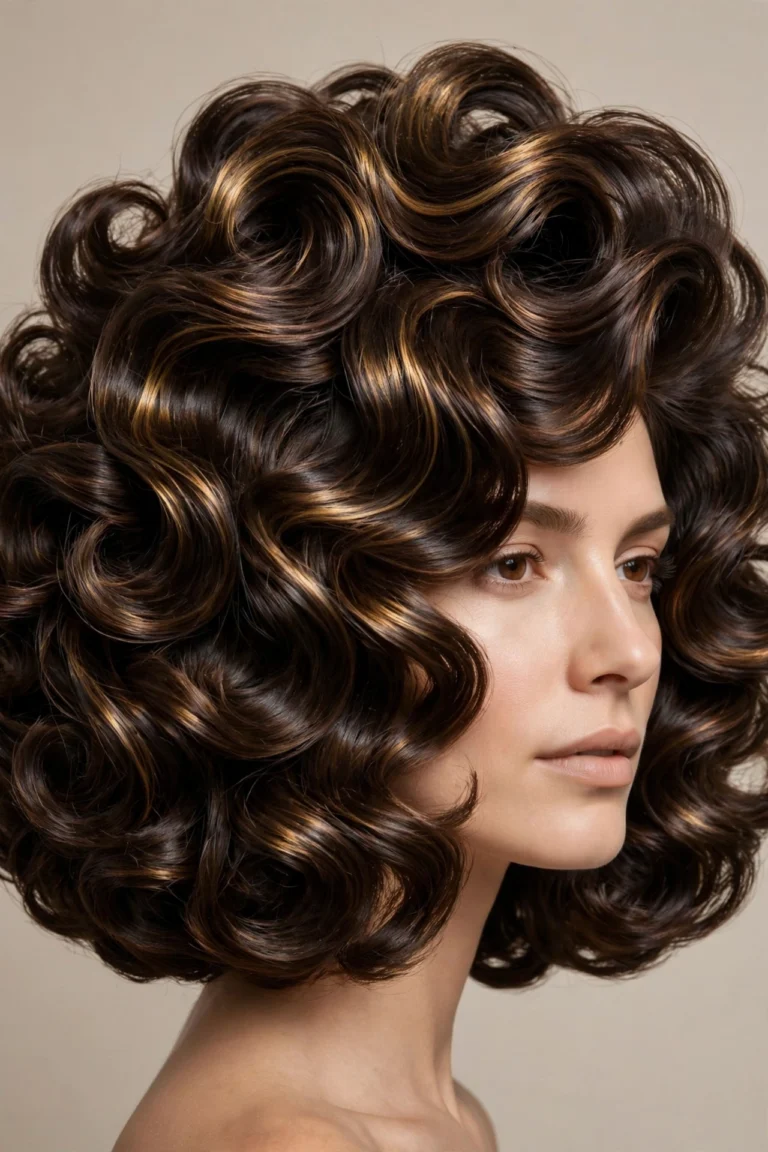
Who’s it actually for? Honestly, almost anyone. It’s the color equivalent of a reversible jacket. Women in conservative workplaces get it because the hidden panel doesn’t show in a neat bun or a center part. Women with commitment issues get it because regrowth hides under the canopy for months. Women with naturally dark hair get it because the contrast between a dark top layer and a bright under-panel is the most dramatic reveal in the game. And women with curly and coily hair get it because curls separate and open up as they move, which means curly hair shows hidden color off more beautifully than any straight texture possibly can. The only person I’d talk out of it is someone whose hair is too short to layer — you need enough top-layer length to actually cover the panel, and on a pixie that math doesn’t work.
Peekaboo vs Money Piece vs Full Highlights
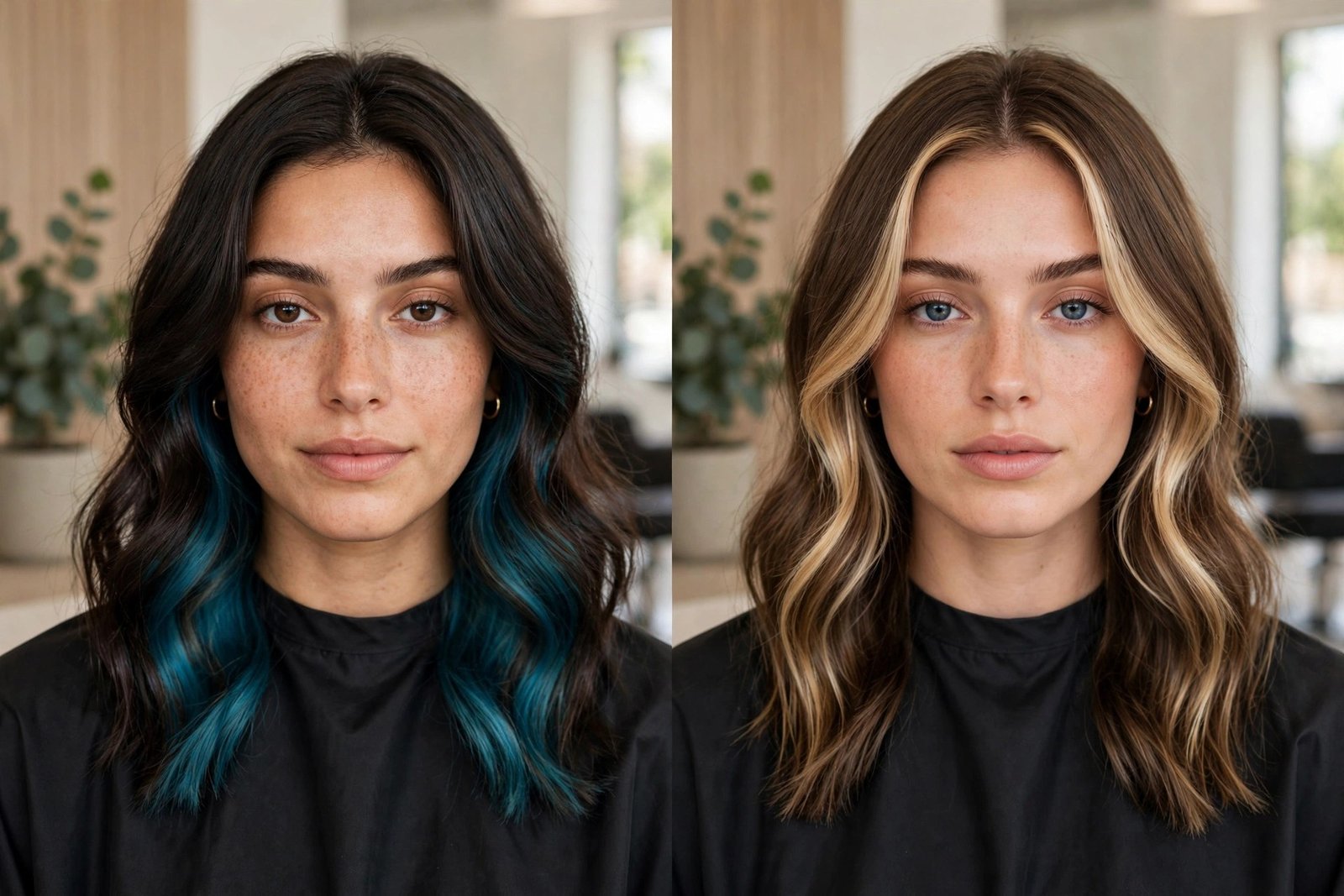
Women walk into consultations mixing these three up constantly, so let’s clear it up once and for all. Peekaboo highlights live underneath the hair and hide. A money piece sits right at the front hairline, framing the face, and is designed to be seen every second of the day. Full highlights are woven through the entire head, top layer included, for all-over dimension. Same word — “highlights” — three completely different jobs.
The money piece is the extrovert of the group. Two face-framing sections, usually brighter than everything else, placed where the light hits first and where every photo catches them. It’s gorgeous and it’s everywhere in 2026, but it’s also the highest-maintenance of the three: roots show at the hairline within four to six weeks, the toner fades fastest because those front pieces take the most sun and heat styling, and there’s nowhere to hide a grow-out. If your lifestyle includes regular salon visits and you like your color front and center, the money piece is your move. If you’d rather not think about your color for three months, it’s not.
Full traditional highlights are the middle ground. Foils woven through the whole head give you that classic dimensional blonde or brunette, visible from every angle, and they suit women who want their color to be part of their everyday look. But they’re the biggest time and money commitment of the three. A full head of foils takes two to four hours in the chair depending on your hair’s density, costs accordingly, and needs a refresh every six to eight weeks to keep the regrowth from looking stripey. Beautiful, classic, and absolutely not low-maintenance no matter what anyone tells you.
Peekaboo color is the introvert — and I mean that as the highest compliment. The appointment is shorter because your colorist is only working on one panel, not a full head of foils. The price is lower for the same reason. And the grow-out is the gentlest in the business: since the colored panel sits under the canopy, regrowth stays hidden for months, and most women refresh the panel every eight to twelve weeks instead of every six. The trade-off is visibility — if you want your color to show in every selfie, peekaboo isn’t going to do that for you. It rewards movement and styling instead of stillness. Pick the technique that matches how you actually live, not how the Pinterest photo was posed.
Placement Guide: Where the Hidden Color Goes
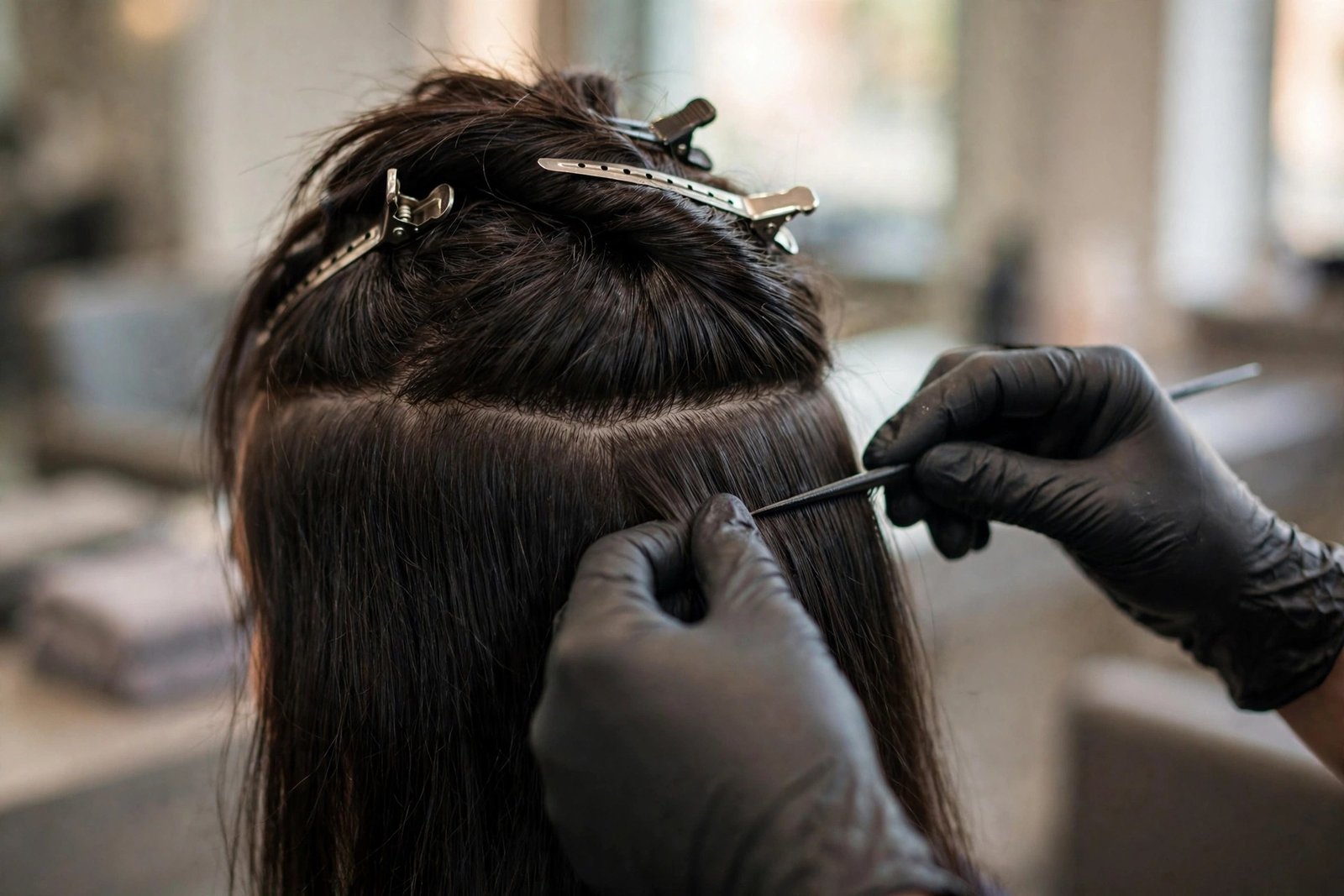
Placement is the whole game with peekaboo highlights, and it’s where a good colorist earns her money. The classic placement — and the one I’d recommend to any first-timer — is the nape underlayer. Your colorist takes a horizontal section across the back of the head, roughly from ear to ear, covering the bottom third of the hair. The panel sits low, which means it’s completely invisible from the front and sides when your hair is down, and it explodes into view the moment you put your hair up. If your main goal is a ponytail reveal or an updo surprise, the nape panel is the placement you want.
The second classic is the underneath side panels. Instead of (or in addition to) the nape, the colorist works a panel under each side, hidden beneath the hair that falls over your ears. This placement shows when you tuck your hair behind your ears, when the wind moves it, or when you flip your part to the other side. It’s a more frequent, more casual reveal than the nape panel — less “special occasion surprise,” more “fun detail people keep noticing.” Women who wear their hair down most of the time usually prefer this one, because they actually get to see it without styling.
Then there’s the deeper, more technical stuff. A skilled colorist can place a panel that follows your part — so the color only shows when you switch from a center part to a side part, or vice versa. She can run a thin panel right along the hairline at the nape for a subtle under-glow effect. On curly hair, the panel often gets placed slightly higher and wider than on straight hair, because curls spring up and separate — a panel placed where it would hide on straight hair can end up permanently visible on a tight curl pattern. This is exactly why you want a colorist who has done hidden color on your hair texture before, not someone figuring it out on your head.
How thick should the panel be? This is the question that separates a good result from a disappointing one. Too thin — a half-inch sliver — and the color barely registers even when revealed; it reads as an accident, not a design. Too thick — more than half the hair — and it stops being peekaboo and starts being two-tone, which is a different trend with different maintenance. The sweet spot for most women is a panel covering the bottom third of the hair’s density, roughly two to three inches tall at the nape on medium-length hair. Go thicker if your hair is very dense or very long, because a thick curtain of top hair will swallow a thin panel whole. And always remember: you can add more color in a second appointment, but you can’t un-bleach a panel that’s too aggressive. Start conservative, live with it for a month, then decide if you want more.
16 Peekaboo Highlight Ideas for Women 2026 (Ideas 1–3): Classic Blonde Under Dark
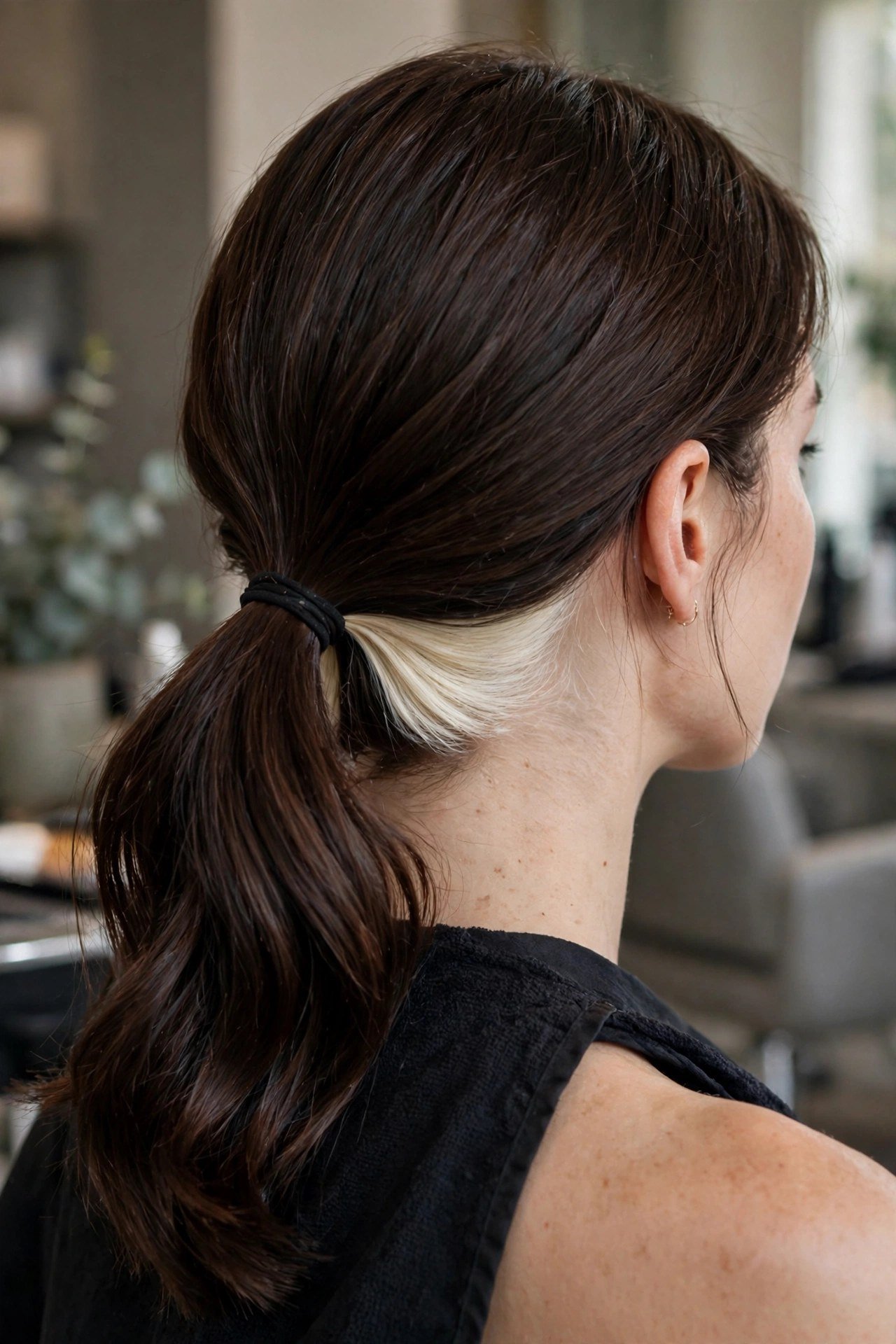
The most requested peekaboo look in salons right now isn’t a wild color at all — it’s blonde hiding under brunette. There’s a reason this is the entry point for half the women who try hidden color. The contrast is dramatic, it flatters almost every skin tone when the blonde is toned right, and if you ever get tired of it, blonde under dark grows out and blends back more gracefully than any vivid shade. These three are the classics. Start here if it’s your first panel.
Idea 1: Platinum Blonde Panel Under Dark Brown
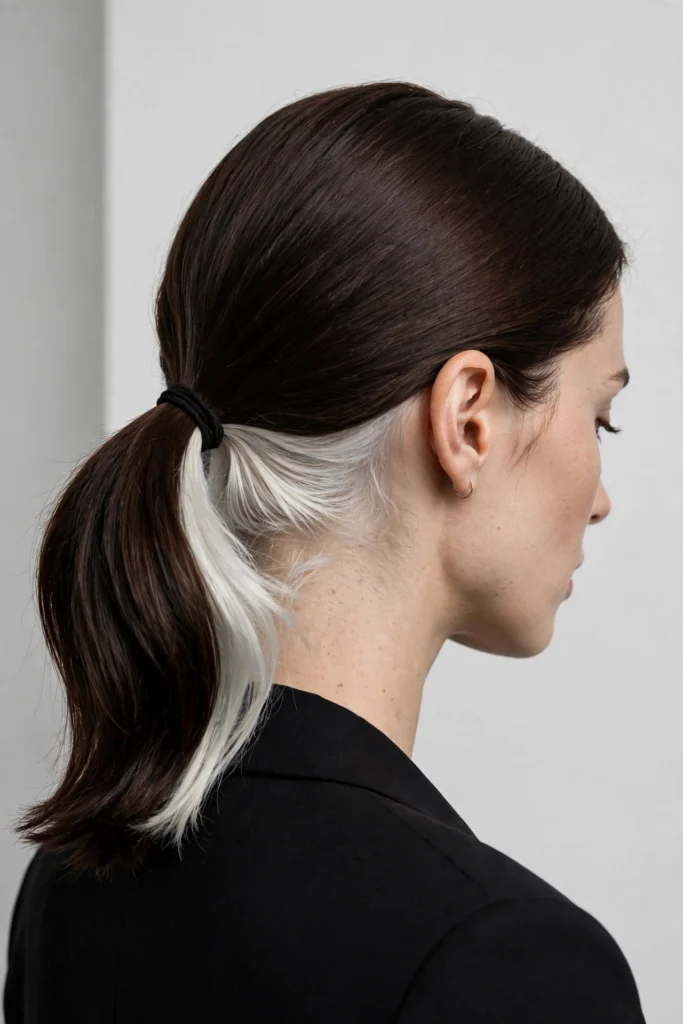
This is the highest-contrast peekaboo there is, and it’s the one that photographs best. A cool, icy platinum panel under a rich dark brown canopy gives you that black-and-white photograph effect every time your hair moves. On straight hair the reveal is sharp and graphic — the platinum flashes like a stripe. On wavy hair it softens into something more dimensional, the platinum weaving through the brown as the waves separate. The catch is the bleach. Getting dark brown hair to true platinum means lifting through several levels, which takes time and a colorist who knows how to keep the hair healthy through it. Expect a longer appointment and a bond-builder treatment in the mix. And the toner matters enormously here: an ashy or silver toner keeps the panel icy, while a warm toner will push it toward gold within weeks. Tell your colorist you want to stay cool-toned and she’ll formulate accordingly.
Maintenance-wise, platinum is the neediest blonde on this list — not because the roots show (they’re hidden, remember) but because platinum fades fastest. A purple shampoo once a week keeps the panel from going brassy, and plan on a toner refresh around the eight-week mark even if the regrowth doesn’t bother you. Who suits it best? Women with cool or neutral undertones, and anyone whose dark brown is natural rather than dyed — virgin hair lifts cleaner and faster than previously colored hair, which can mean the difference between one lifting session and two.
Idea 2: Honey Blonde Under Espresso
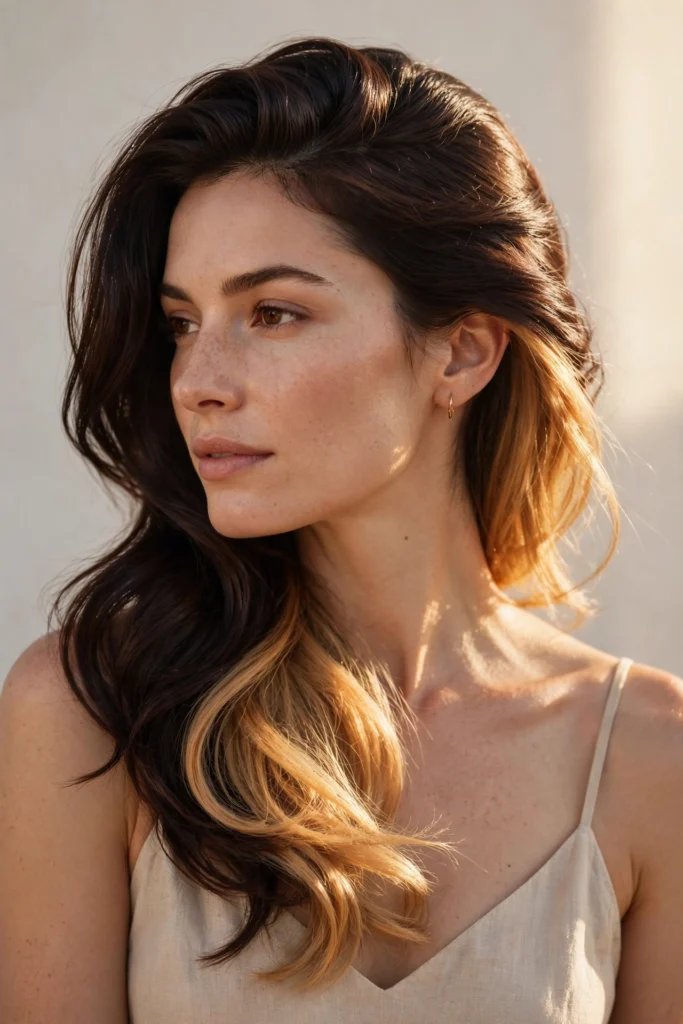
If platinum feels too stark, honey blonde under espresso is the warmer, softer version of the same idea. The honey tones — golden, amber, warm — sit against deep espresso brown like light through dark wood. It’s rich instead of graphic, and it has a warmth that flatters olive and warm skin tones in a way icy platinum never will. This is also a kinder bleach job than platinum. Espresso hair typically only needs to lift to a level 7 or 8 for honey tones to take, which means less damage, a shorter appointment, and hair that stays healthier through the process.
What I love about this one is how it behaves in different lighting. Indoors it reads as a subtle warmth under the hair — people will think your hair just has beautiful dimension. In sunlight the honey panel lights up and the contrast gets bolder. It’s two looks for the price of one, and it’s the peekaboo I’d recommend to a woman who wants hidden color she can wear to a board meeting and a wedding in the same week. The upkeep is gentler too: honey tones fade more gracefully than platinum, a sulfate-free shampoo and a gloss refresh every ten weeks keeps it rich, and the regrowth line stays invisible under the canopy for months.
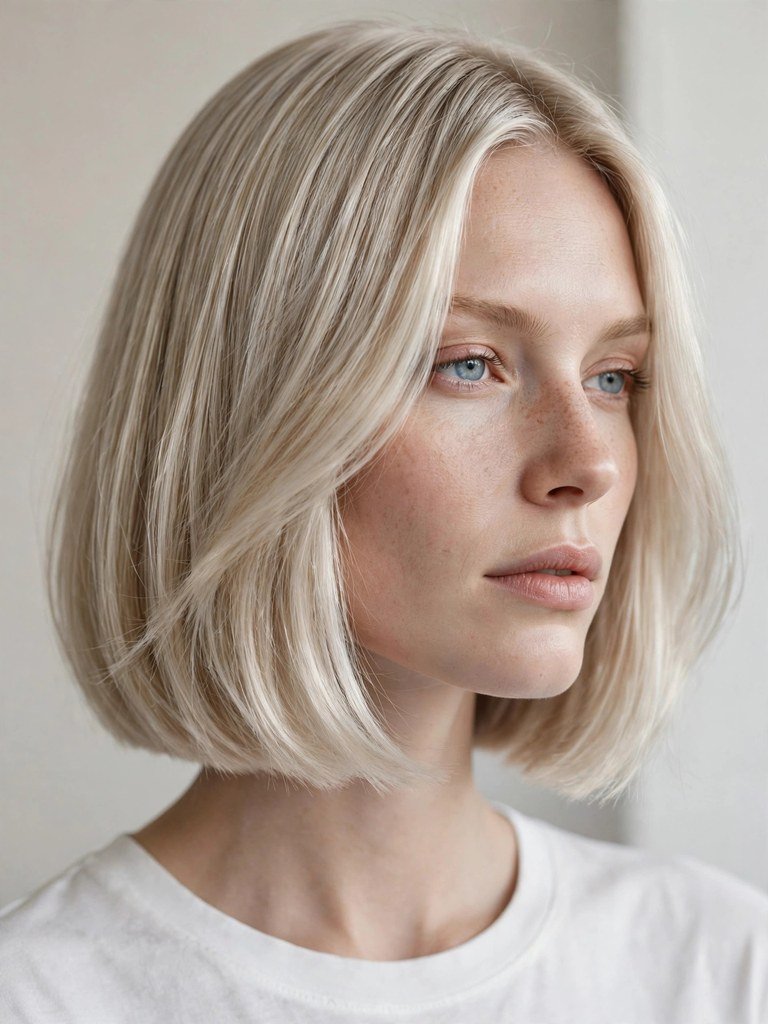
Idea 3: Champagne Blonde Under Light Brown
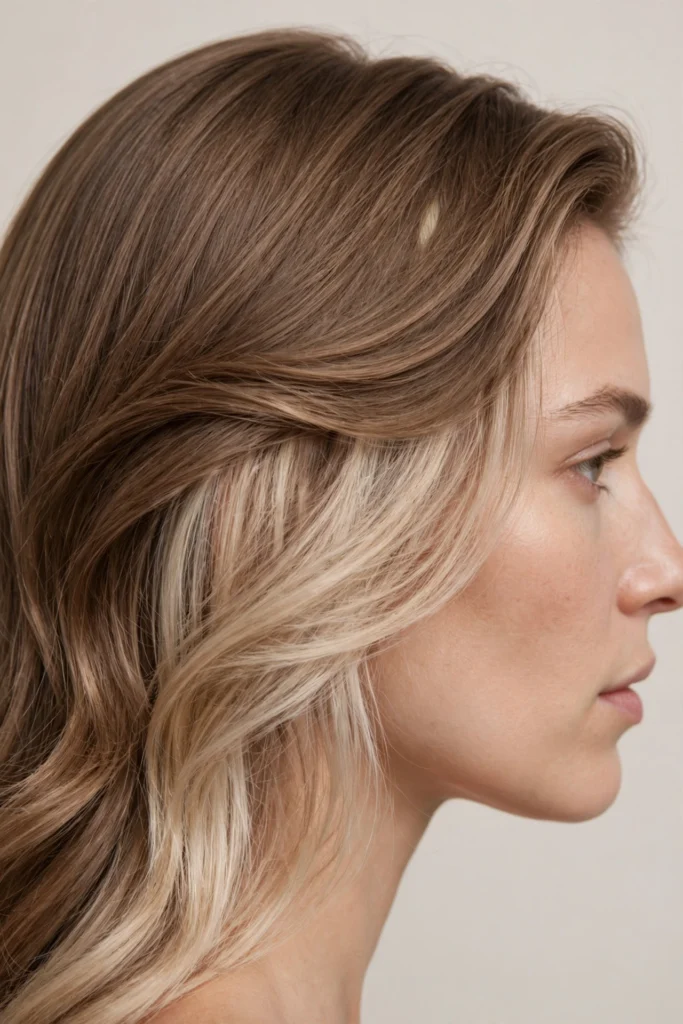
For women who are already light brown or dark blonde, the move is a champagne blonde panel — a soft, beigey, expensive-looking blonde that reads as luxury rather than contrast. This is the quietest peekaboo on this list and deliberately so. There’s no dramatic reveal here; instead, when your hair moves, people see flashes of a lighter, brighter blonde woven under your natural color, and it makes the whole head look thicker and more dimensional. Colorists call this kind of placement “internal dimension,” and it’s the trick behind a lot of celebrity hair that looks naturally perfect on camera.
Because the lift is minimal — light brown to champagne is often only two or three levels — this is the least damaging blonde peekaboo you can get, and the fastest appointment of the three. It’s also the most forgiving if the toner fades, because champagne fading toward your natural light brown just looks like… your hair. No harsh lines, no emergency salon visits. If you’re peekaboo-curious but nervous, this is your training-wheels panel. Live with it for three months, and if you find yourself wishing the reveal were bolder, you already know the placement works for you and you can go brighter next time.
Peekaboo Highlight Ideas 4–6: Warm and Romantic
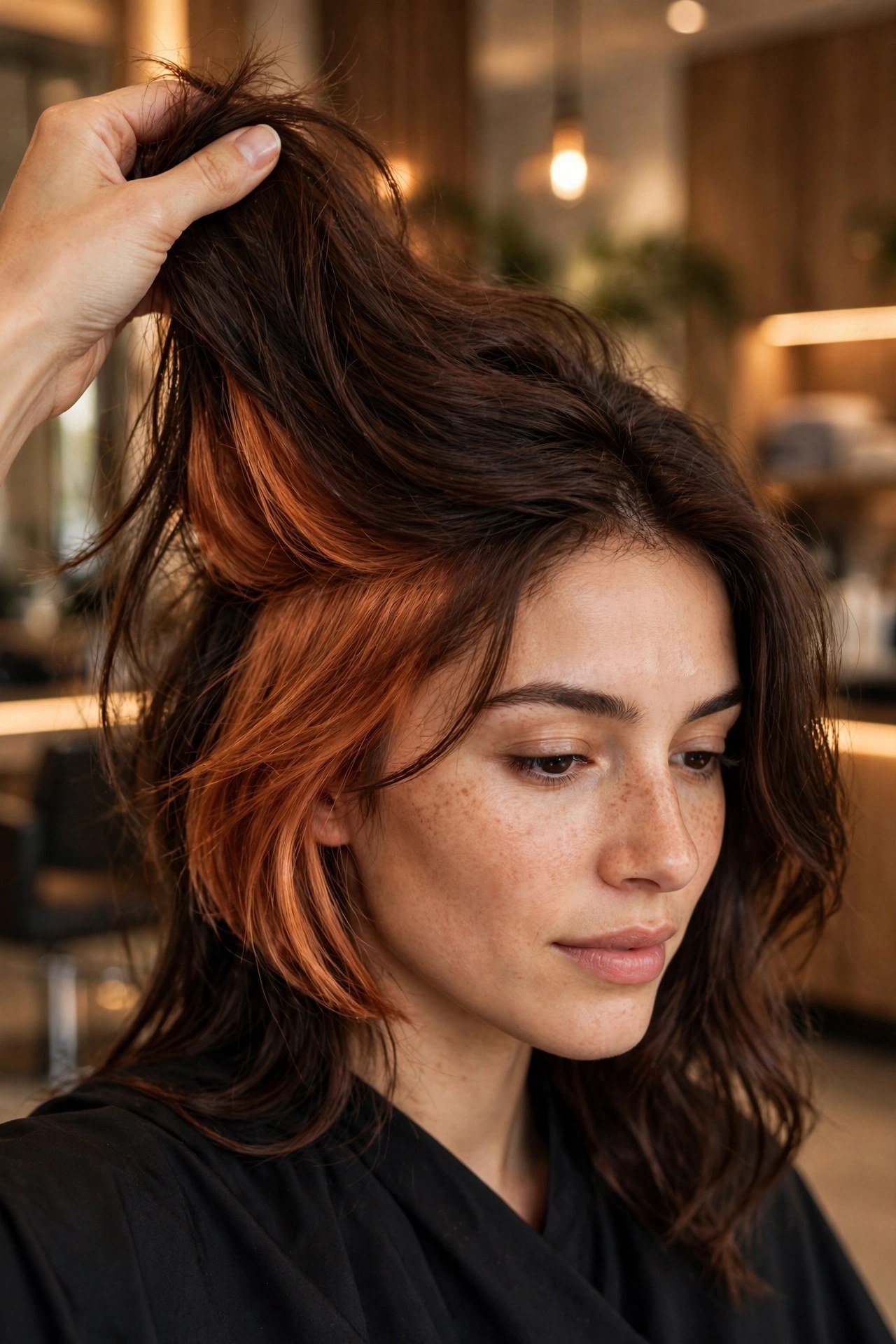
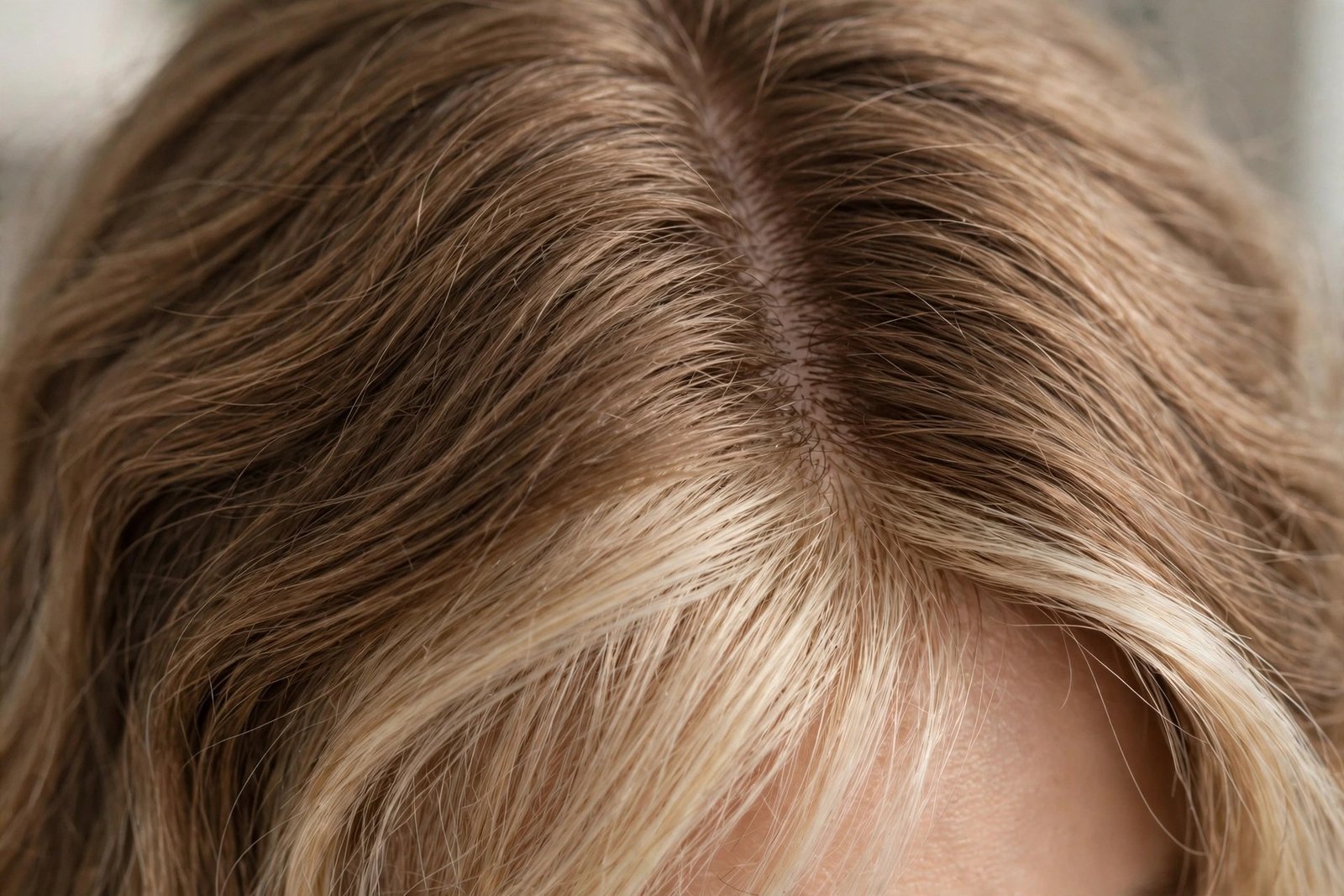
Not everyone wants blonde. The warm family — copper, caramel, rose gold — is having its biggest moment in years in 2026, and hidden placement is the smartest way to wear it. Warm tones fade faster than cool tones on the visible surface of the hair because they take the most sun and heat damage. Underneath, protected by the canopy, they hold their richness far longer. These three ideas are for women who want their hidden color to feel romantic and rich rather than bold.
Idea 4: Copper Peekaboo Under Chocolate Brunette
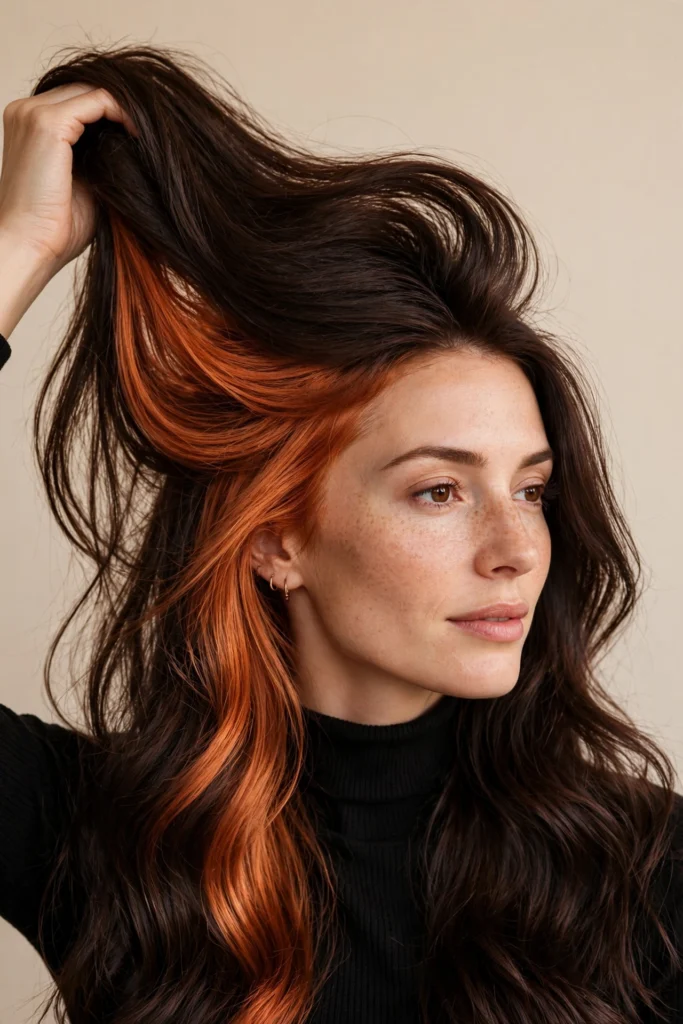
Copper is the shade of the moment and it deserves the hype. A true copper — that bright, penny-like, orange-red gold — under a deep chocolate brunette is one of the most striking warm combinations in this entire guide. The chocolate canopy is cool and dark, the copper panel is warm and fiery, and the temperature contrast between them is what makes the reveal so arresting. It’s autumn in hair form, and it works year-round because the chocolate top keeps it grounded.
The practical notes: copper is a fading shade by nature — red and orange molecules are larger and wash out faster than other color molecules. That’s true everywhere, but the hidden placement buys you real extra time, because the panel doesn’t get sun exposure or daily heat styling the way surface color does. Still, wash with cool water and a color-safe shampoo, and expect the copper to soften toward a strawberry-gold by week eight or so. Many women actually prefer the faded version — it’s softer and more wearable. If you want to keep the fire bright, a copper color-depositing conditioner once a week does the job without a salon visit. Skin-tone wise, copper flatters fair skin with warm undertones beautifully, and it’s stunning against green and hazel eyes.
Idea 5: Caramel Ribbons Under Dark Brown
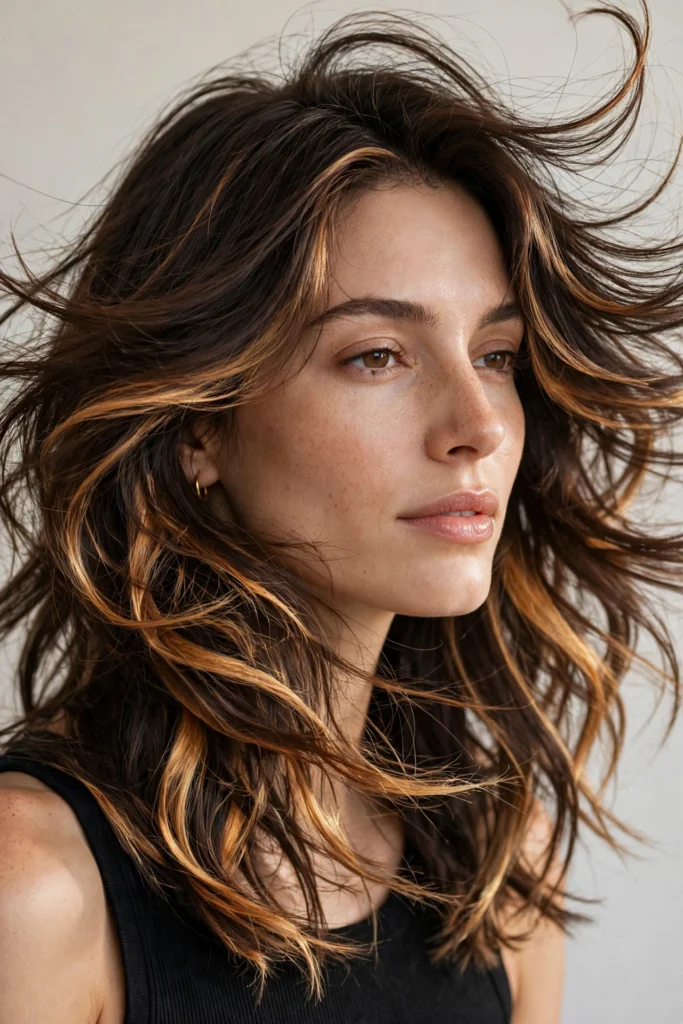
Caramel is the comfort food of hair color — sweet, warm, universally flattering — and as a peekaboo it’s the definition of subtle luxury. Instead of one solid panel, ask for the caramel placed as soft ribbons through the underlayer: a few wider woven sections rather than a block of color. When the hair moves, you get ribbons of golden caramel flashing through the dark brown instead of a single stripe. It’s more dimensional, more natural-looking, and more forgiving of grow-out than a solid panel.
This is the peekaboo I’d put on a woman who’s never colored her hair before and is scared of damage. The lift is moderate, the ribbons can be placed with a balayage-style hand-painted technique that keeps the bleach off the scalp and processes gently, and caramel is one of the most forgiving shades as it fades — it just gets softer and more golden, never brassy-orange the way some blondes do. It also plays beautifully with the hair’s natural warmth, which means the toner lasts longer and the grow-out line is nearly invisible. If your goal is hidden color that makes people say “your hair looks amazing” without being able to pinpoint why, caramel ribbons are the answer.
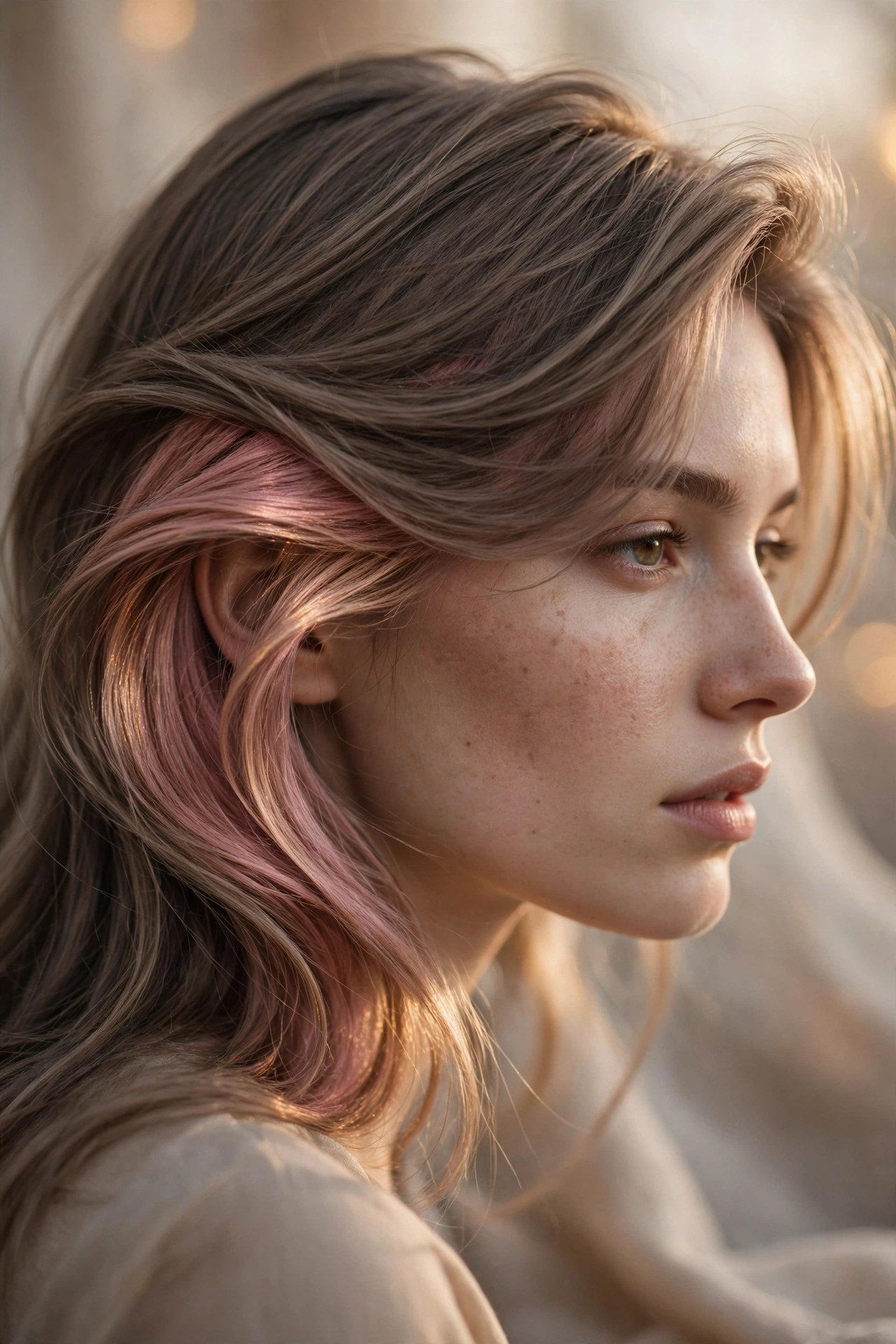
Idea 6: Rose Gold Under Ash Brown
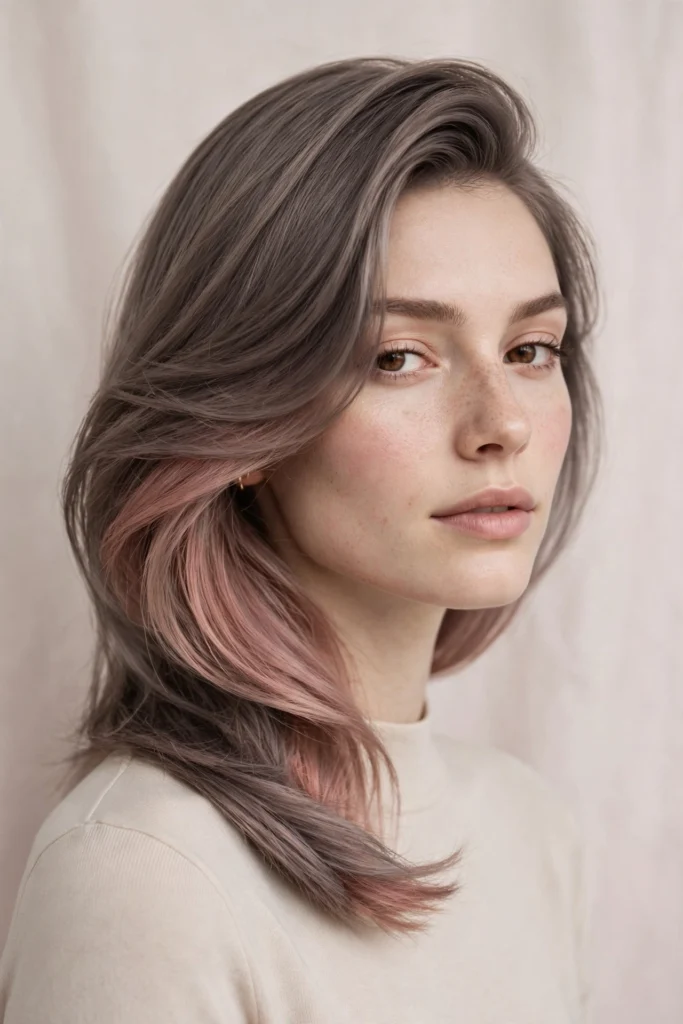
Rose gold refuses to die, and in 2026 it’s matured into something softer and more wearable than the bright pink-gold of its peak years. The current version is a dusty, muted rose — think the inside of a seashell rather than a metallic iPhone. Under an ash brown canopy, which is cool and slightly grey, the warm rose panel creates a temperature contrast that’s subtle from a distance and gorgeous up close. This is the most feminine, romantic peekaboo on the list, and it photographs like a dream.
The formulation matters more here than with almost any other shade. Rose gold is a custom mix — your colorist is blending pink, gold, and sometimes a drop of copper or violet to get the exact dusty tone — so bring reference photos and be specific about whether you want it pinker or more golden. The shade also fades faster than natural-looking colors, softening toward a pale blush blonde over six to eight weeks. The good news: the faded version is still pretty, and a rose-gold gloss refresh is a quick, cheap salon visit compared to a full re-lighten. Best on fair to medium skin tones; on very deep skin tones the rose can wash out, so ask your colorist to deepen the pink if that’s you.
Peekaboo Highlight Ideas 7–9: Bold Vivid Colors
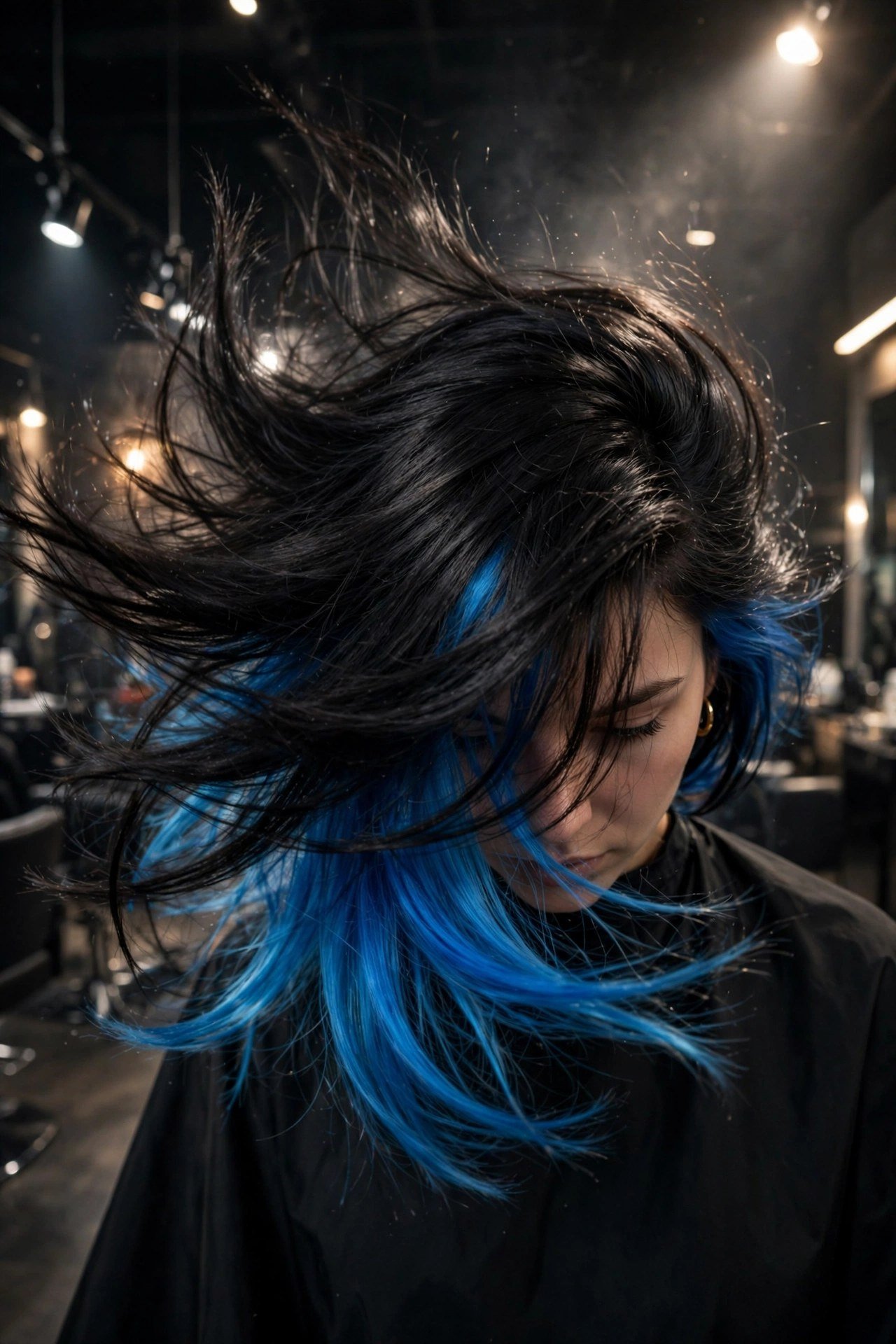
Now we get to the reason half of Pinterest is obsessed with hidden color. Vivid shades — blue, red, green — are the most dramatic thing you can put under your hair, and peekaboo placement is the only way most adult women can actually wear them. A full head of electric blue is a lifestyle. A hidden panel of electric blue is a secret you control. These three are the boldest ideas in this guide, and they’re the ones that get the strongest reactions.
Idea 7: Electric Blue Panel Under Jet Black
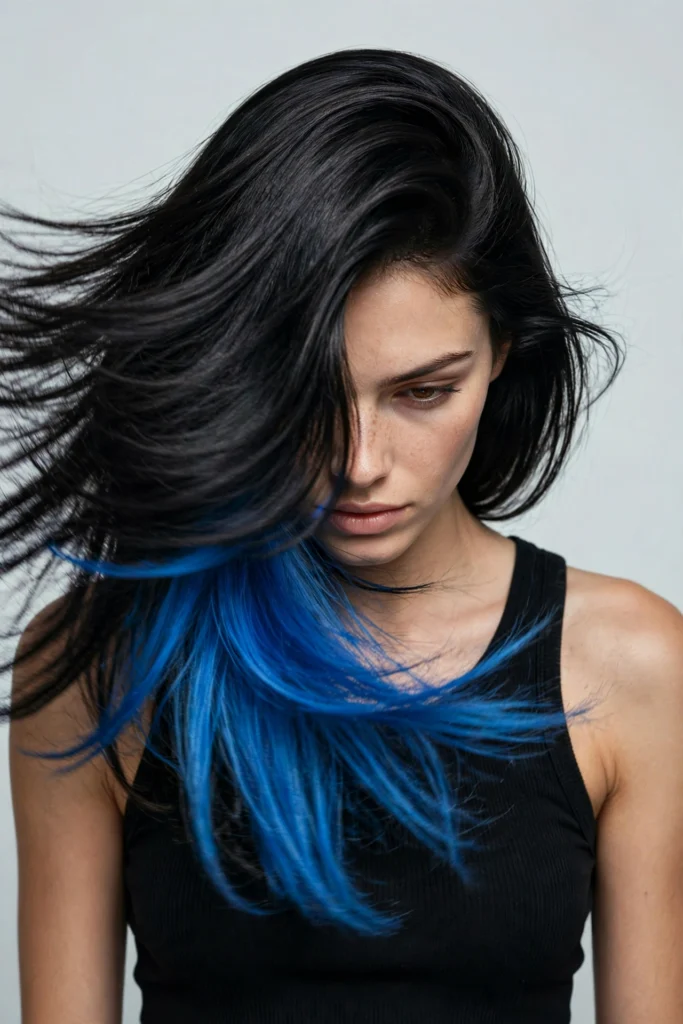
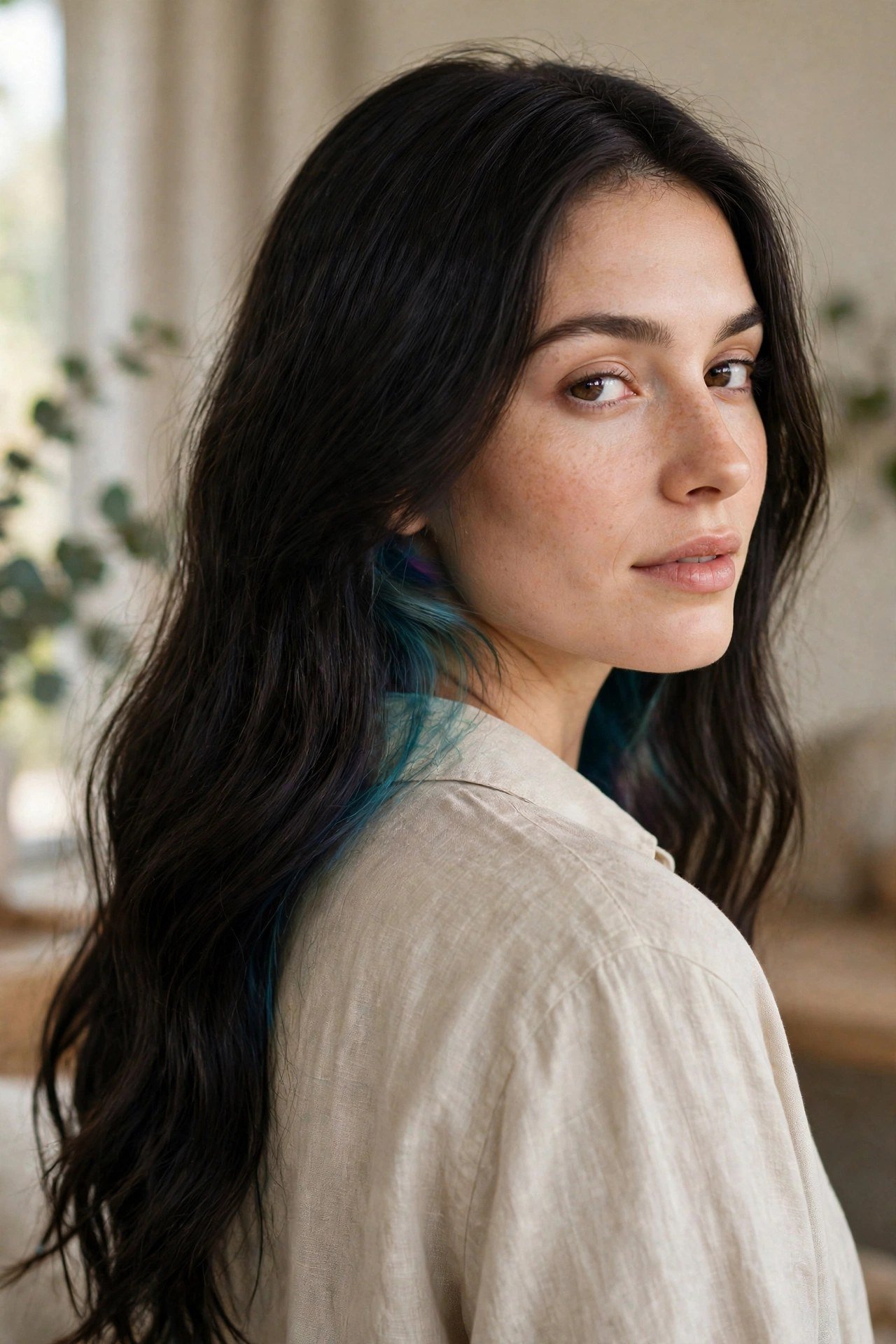
Blue under black is the iconic peekaboo — the look that launched a thousand Pinterest boards. The reason it works so well is pure color theory: black hair is the darkest possible canvas, and electric blue against it has maximum contrast. When the panel is hidden, you look like you have completely normal black hair. When it reveals — in a ponytail, in the wind, when you bend forward — it’s a shock of color that looks almost unreal. No other combination in this guide gets this strong a reaction.
Here’s what you need to know before you book it. Blue is a staining color — it grabs onto the hair and doesn’t let go, which is great for longevity and terrible if you change your mind. Faded blue goes through a denim phase that some women love and some hate, so know which camp you’re in. The panel needs to be lifted quite light for true electric blue to show — blue over dark orange undertones goes muddy — so this is a real bleach job, and the health of your hair matters. Use a color-safe, sulfate-free shampoo, wash in cool water, and the blue will stay vivid for six to ten weeks. When it fades, a blue color-depositing conditioner brings it back without bleach. One more honest note: blue can bleed onto pillowcases and light-colored clothing for the first week or two. Sleep on a dark pillowcase and rinse well, and it’s a non-issue.
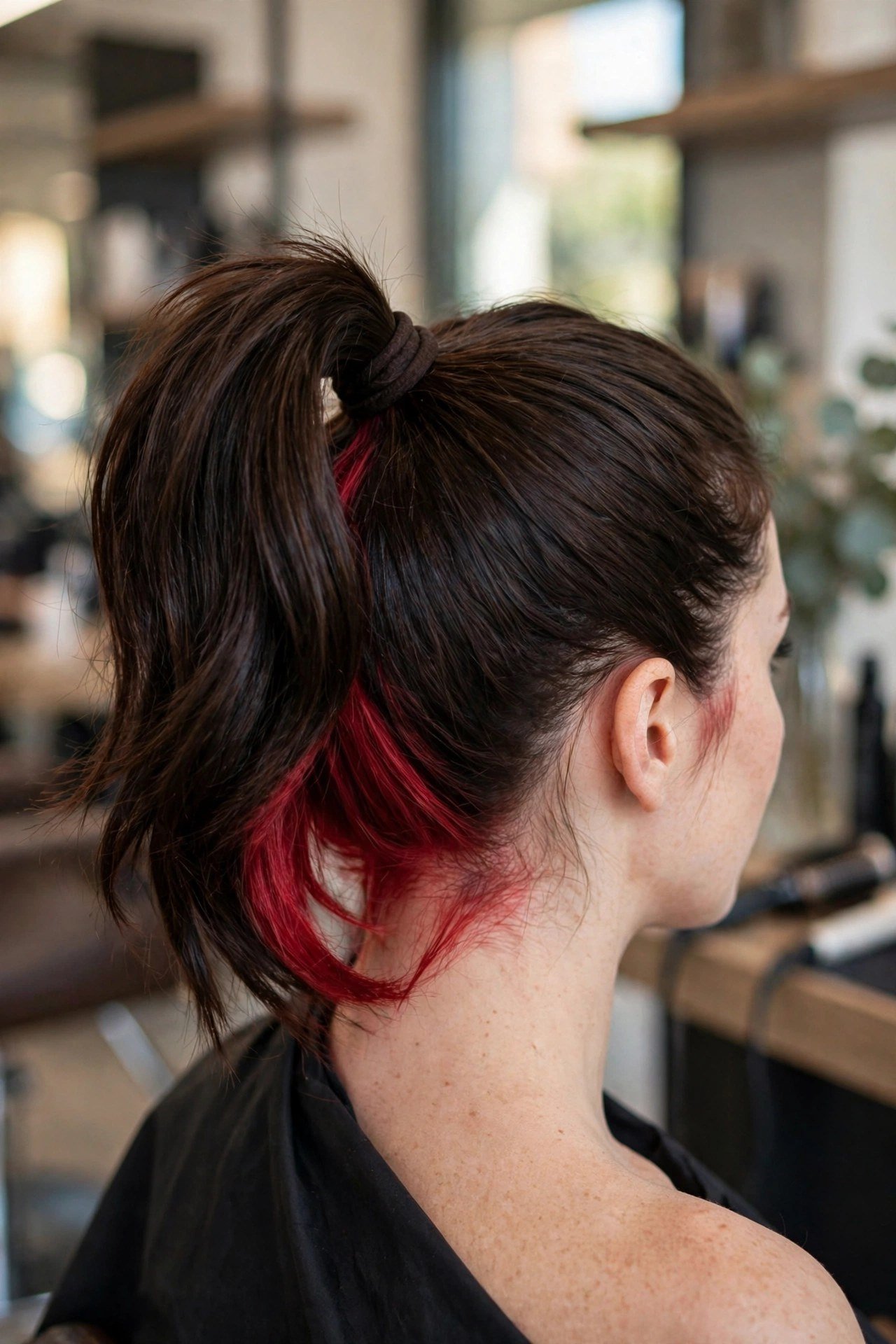
Idea 8: Cherry Red Under Dark Brown
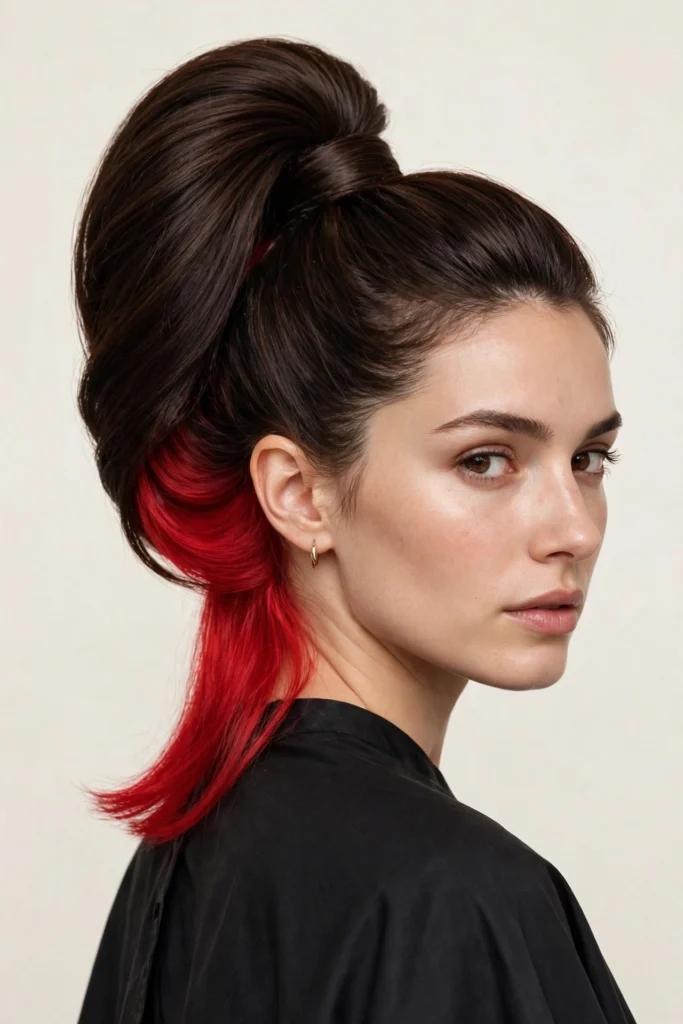
Cherry red — that bright, juicy, almost-neon red — under dark brown is pure drama. Where copper is warm and autumnal, cherry is loud and electric. It’s the peekaboo equivalent of red lipstick: hidden most of the time, devastating when it shows. On dark brown hair the contrast is slightly softer than blue-on-black, which makes it a touch more wearable day to day, but the reveal is just as striking. This is the panel for a woman who wants her hidden color to have a personality.
Red is the fastest-fading color family in existence — the molecules are large and they rinse out with every wash, no matter what the dye brand promises. Hidden placement slows it down considerably because the panel avoids sun and heat, but plan on the cherry softening toward a rich auburn-red by week six. The maintenance playbook: cool water washes, color-safe shampoo, and a red depositing conditioner every week or two. The upside of red’s fading nature is that it’s also the easiest vivid to remove or change later — unlike blue, it doesn’t stain permanently. If you’re vivid-curious but worried about commitment, cherry is the smartest first vivid. It gives you the full drama with the easiest exit.
Idea 9: Emerald Green Under Black
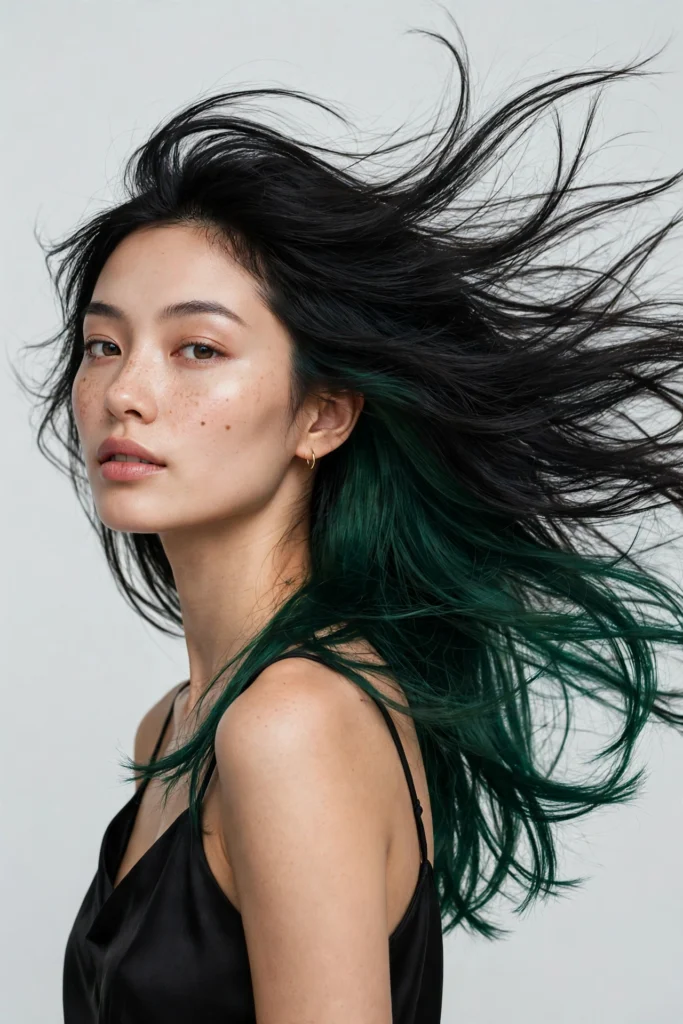
Green is the underdog of vivid peekaboos and it’s criminally underrated. Emerald — deep, rich, jewel-toned green — under black hair is sophisticated in a way blue sometimes isn’t. Blue reads playful; emerald reads luxurious. It has the same maximum-contrast drama as blue-on-black, but the jewel tone feels more grown-up, more intentional. In 2026 I’m seeing more women ask for emerald than any other green, and the ones who get it tend to keep it the longest.
The technical notes are similar to blue: the panel needs a clean, light lift for the emerald to read true rather than muddy, and green is also a stainer, so it holds well and exits slowly. Faded emerald goes through a teal phase that’s genuinely beautiful — many women prefer it to the fresh color. One thing to watch: green over hair with strong yellow undertones can go slightly olive, so your colorist needs to lift past the yellow stage and tone the panel cool before depositing the green. Get that step right and the emerald is flawless. Maintenance is the standard vivid playbook — cool water, sulfate-free shampoo, green depositing conditioner for refreshes — and the panel will stay rich for eight to twelve weeks.
Peekaboo Highlight Ideas 10–12: Soft Pastels and Smoky Tones
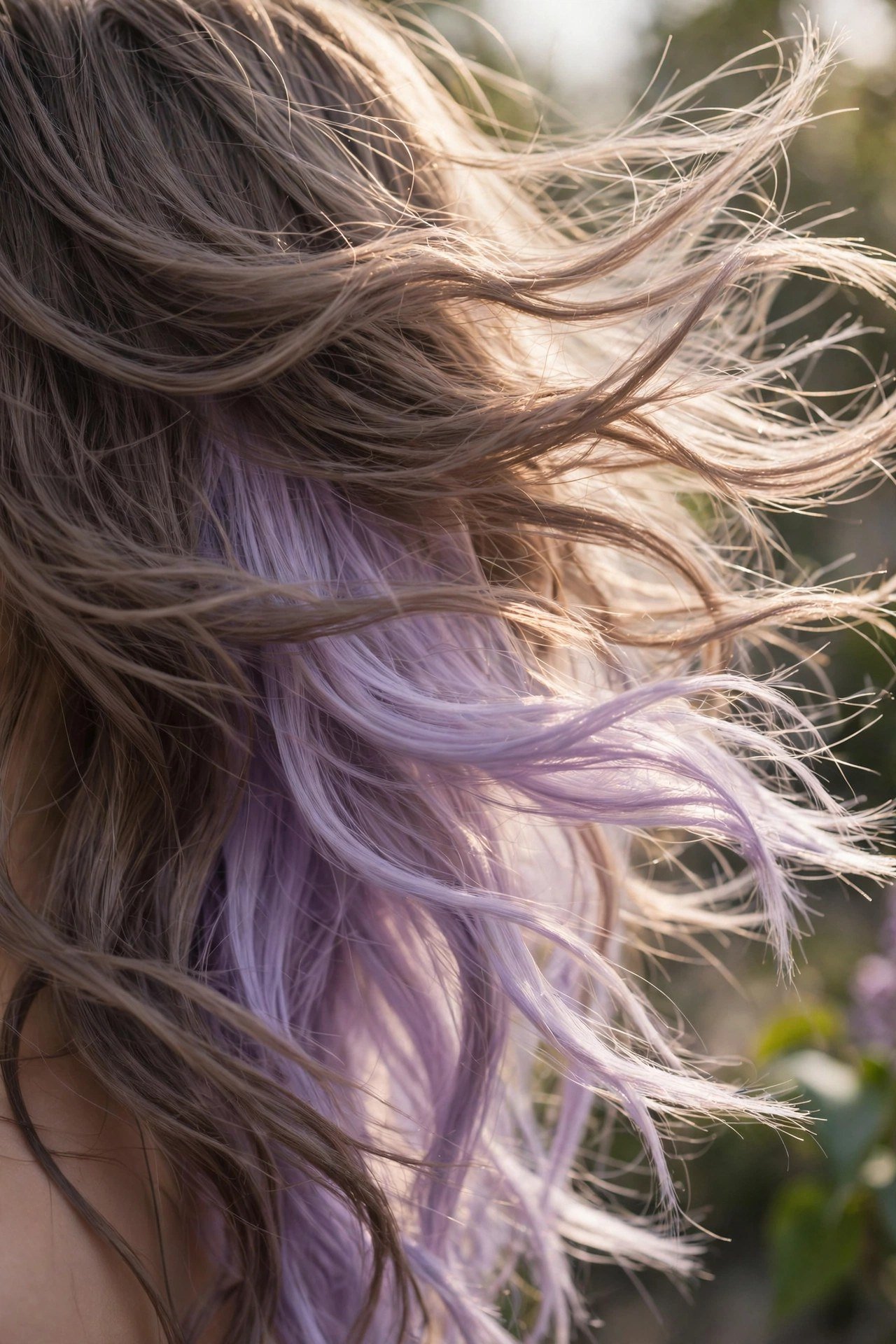
Pastels are the opposite energy from vivids — dreamy instead of dramatic, soft instead of shocking. But don’t mistake soft for boring. A pastel panel under dark hair has an ethereal quality that vivid colors can’t touch, and in 2026 the trend has shifted from bright cotton-candy pastels toward smokier, muted versions that look expensive rather than costume-y. These three are the prettiest ideas on the list.
Idea 10: Lilac Under Ash Brown
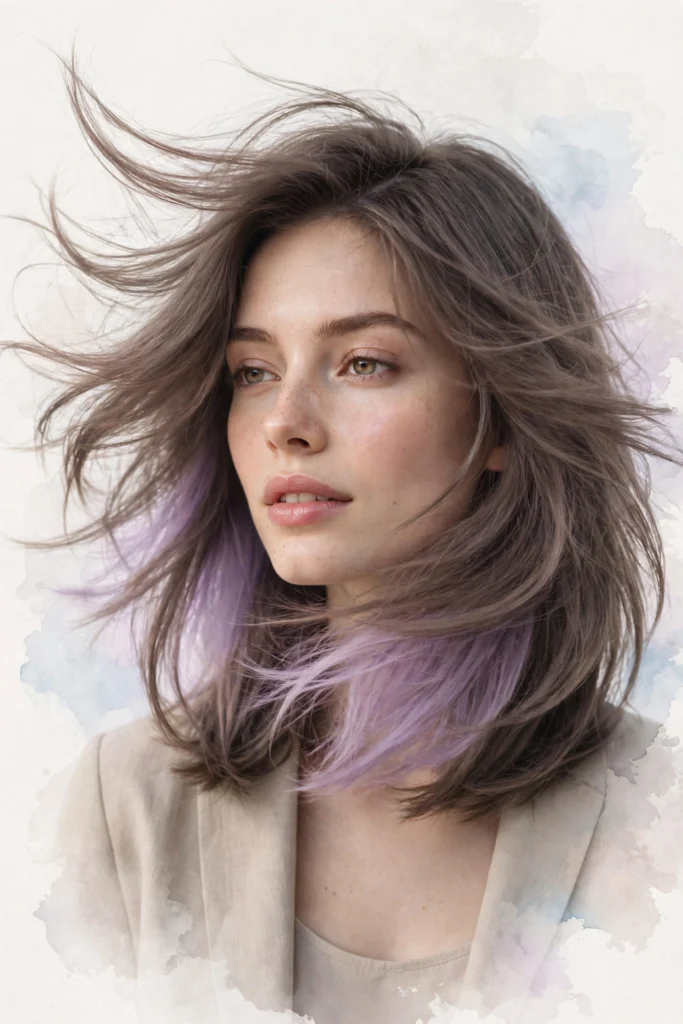
Lilac — soft, powdery purple — under ash brown is the pastel peekaboo done right. The ash brown canopy is cool and muted, the lilac panel is cool and dreamy, and because they’re in the same temperature family the combination looks harmonious rather than clashing. When the panel reveals, it looks like a watercolor wash under the hair. It’s the hidden color equivalent of whispering instead of shouting, and on women with cool undertones it’s flat-out gorgeous.
The honest truth about pastels: they fade fast. Pastel shades are diluted by nature — less pigment in the formula — so they wash out quicker than any other color family. Expect the lilac to soften toward a silvery lavender within three to four weeks and to be mostly gone by week eight unless you refresh it. The maintenance is a pastel-purple depositing conditioner once a week, which is easy and cheap, but it is a weekly commitment. The lift underneath also needs to be very light — pastels only show on pale blonde hair — so this is a significant bleach job hiding under an innocent-looking result. Worth it? If you love the look, absolutely. Just go in with open eyes about the upkeep.
Idea 11: Silver-Grey Under Charcoal Black
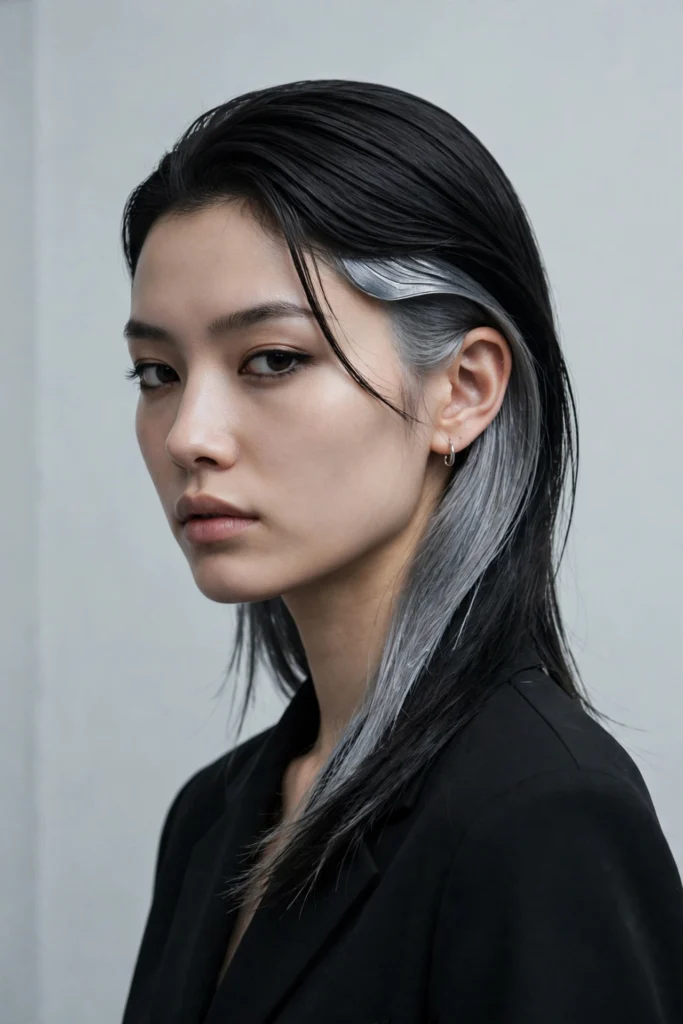
Silver under black is the most fashion-forward peekaboo in this guide. It’s stark, modern, and a little bit cyberpunk — a metallic silver panel flashing under near-black hair looks like something from a sci-fi film in the best possible way. In 2026 this is the panel I see on women in creative industries, on stylists themselves, on anyone whose personal style runs sleek and architectural. It’s not warm, it’s not soft, and it doesn’t try to be. It’s a statement.
Technically, this is one of the hardest panels to execute well. Silver needs the lightest possible lift — we’re talking pale yellow, nearly white — and then a precise grey toner that doesn’t go blue or purple. On previously colored black hair, getting there can take two sessions, and your colorist should be honest with you about that in the consultation rather than promising it in one go. The silver also fades relatively quickly toward a soft grey-blonde, which is still pretty but loses the metallic punch. A silver depositing conditioner helps, but the real answer is a toner refresh every six to eight weeks. This is a high-maintenance panel disguised as a low-maintenance placement — the placement is easy, the shade is demanding. Know that going in.
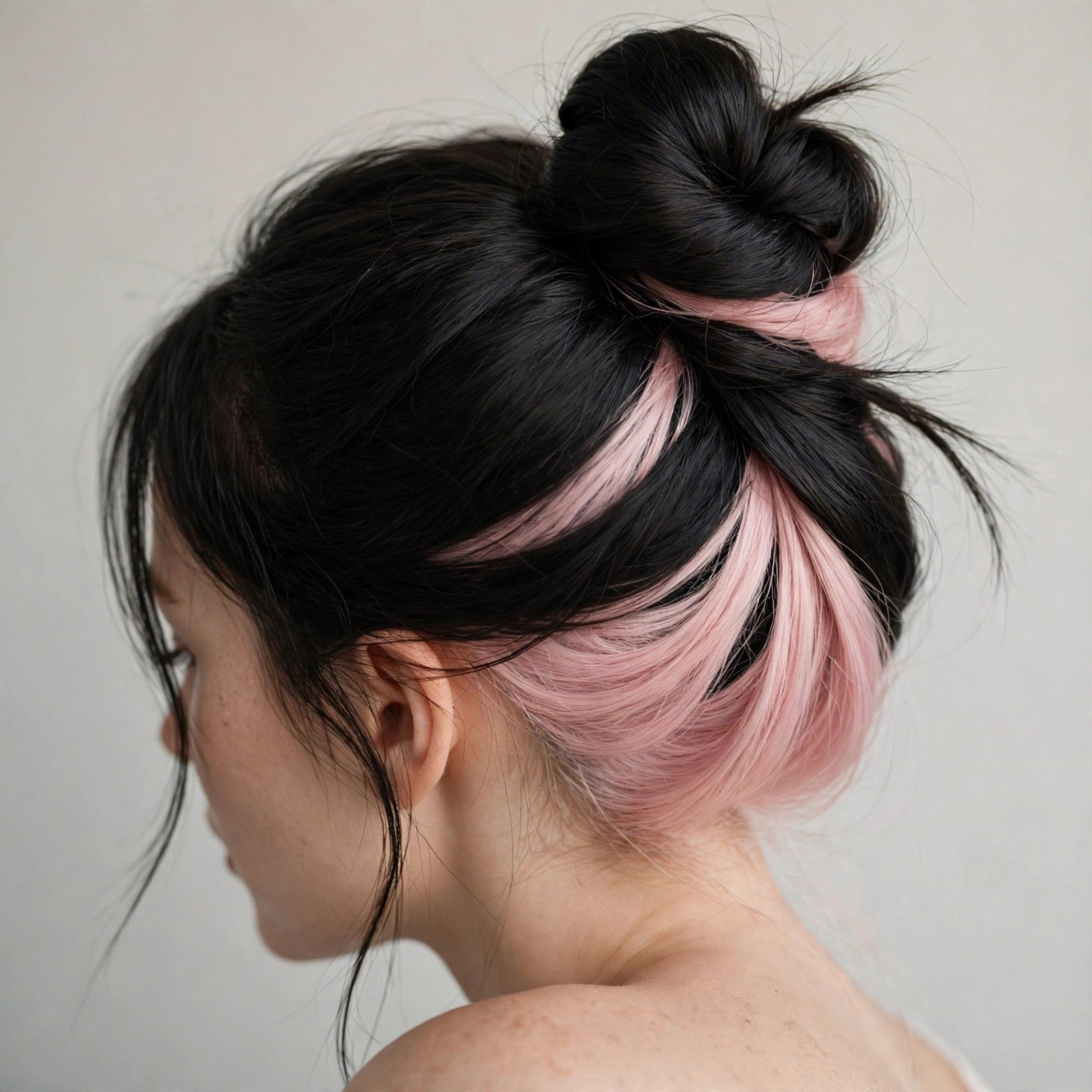
Idea 12: Pastel Pink Under Soft Black
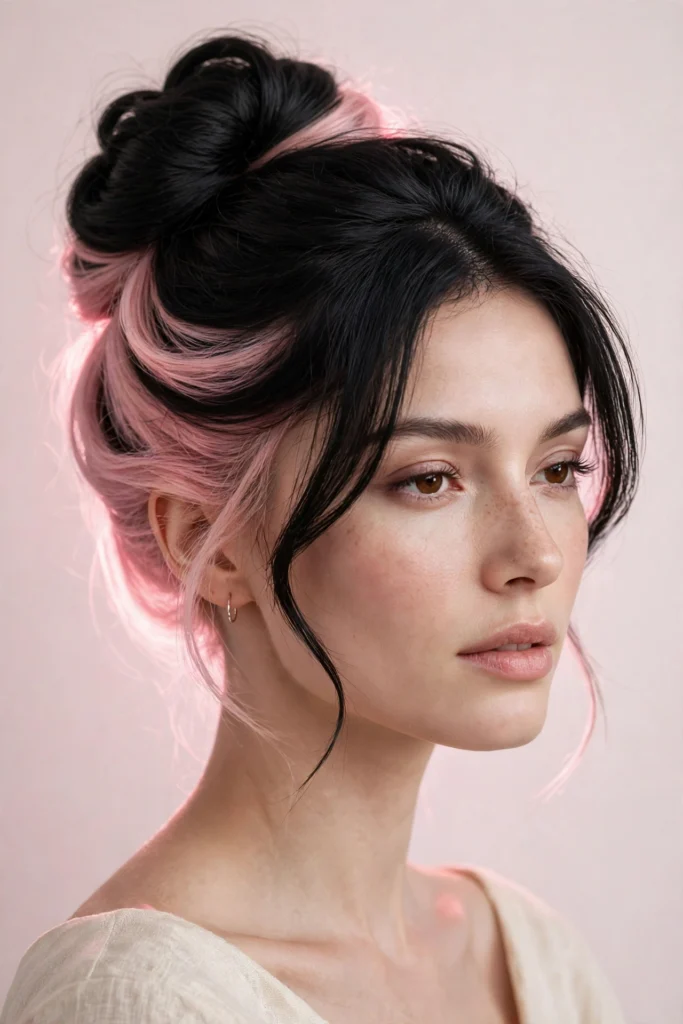
Pastel pink under black is the sweetheart of the pastel family — softer than cherry red, warmer than lilac, and universally flattering in a way few pastels manage. Against soft black hair (not jet black — a natural, slightly softened black), the pink panel glows. It’s romantic without being childish, and it’s the peekaboo I’d recommend to a woman who wants pastel but worries about looking too young or too trendy. The softness of the black keeps the whole thing grounded and grown-up.
Same pastel rules apply: the panel needs a very light lift, the pink will fade within weeks, and a pink depositing conditioner is your best friend. But pink has one advantage over lilac — as it fades, it goes through a beautiful blush-blonde phase that looks intentional and pretty, whereas faded lilac can go slightly grey and dull. Pink is also the most forgiving pastel if the lift isn’t perfectly even, because warm tones hide unevenness better than cool ones. If this is your first pastel, pink is the safest entry point, and under black hair the reveal is pure magic.
Peekaboo Highlight Ideas 13–14: Rich Reds and Warm Depth
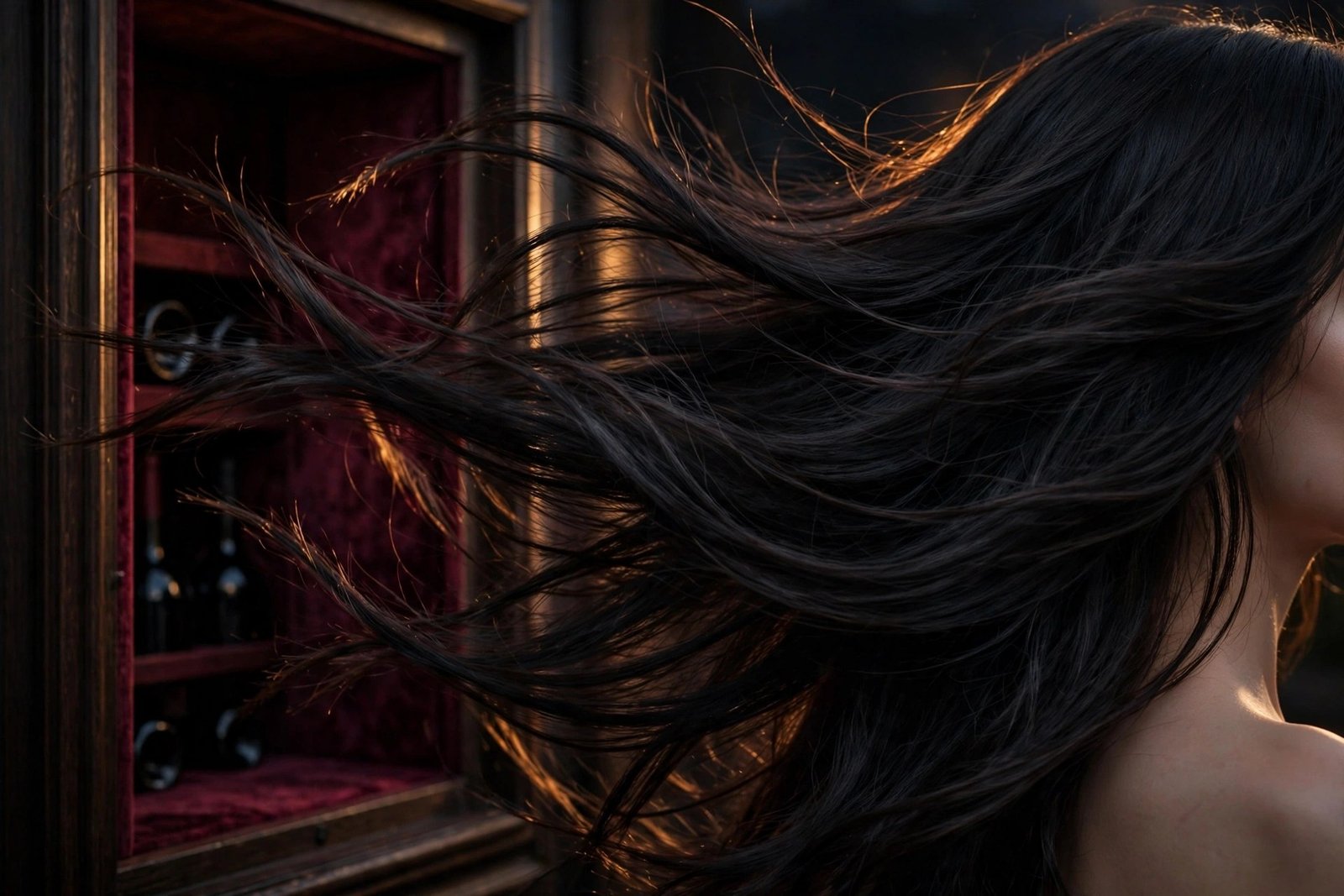
Some women don’t want contrast — they want depth. These two ideas are for brunettes who want their hidden color to feel like a richer, deeper version of what they already have. No shock factor, no vivid drama. Just warmth and richness that makes the whole head of hair look more expensive when it moves. They’re the most “adult” peekaboos on the list, and they’re perfect for women who want hidden color they never have to explain.
Idea 13: Auburn Melt Under Dark Brown
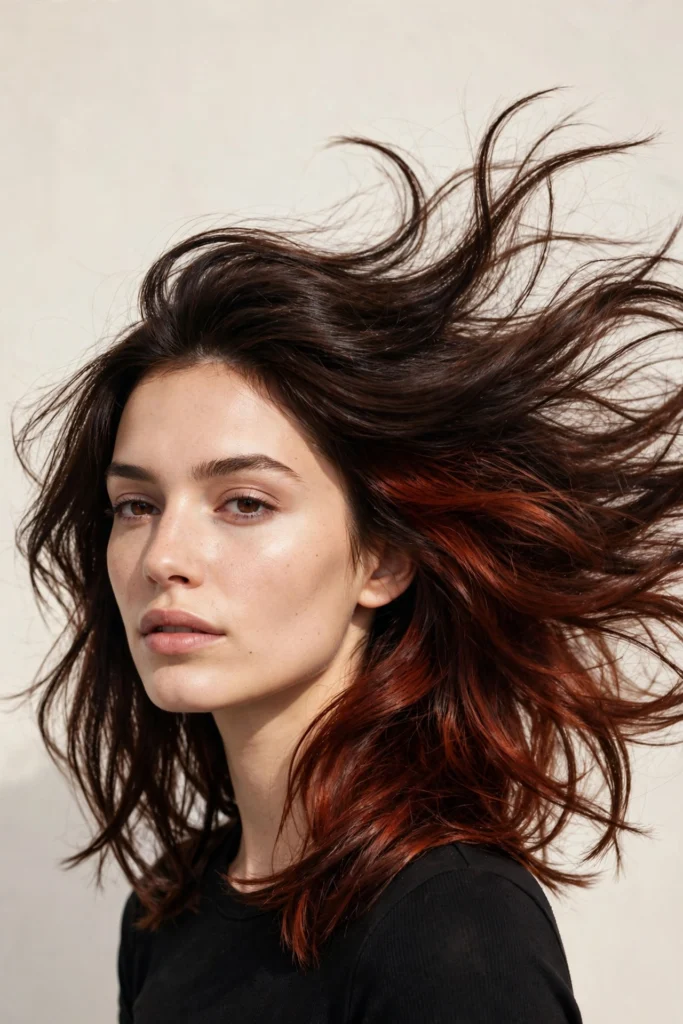
An auburn panel — that rich red-brown that sits exactly between brown and red — melted under dark brown hair is the most natural-looking peekaboo in this entire guide. When it’s hidden, nobody knows. When it reveals, it doesn’t read as “colored panel” — it reads as your hair having incredible natural dimension, like the sun found the red undertones that were always there. Colorists love this one because it’s the easiest sell to a nervous client and the hardest for anyone to clock as artificial.
The lift is minimal — dark brown to auburn is often just a few levels, and on some hair the colorist can deposit the auburn directly with a high-lift tint rather than a full bleach. That means healthier hair, a shorter appointment, and lower cost. The fade is graceful too: auburn softens toward a warm brown that blends seamlessly with the canopy, so even if you never refresh it, there’s no ugly grow-out phase. This is the peekaboo for the woman who says “I want something different but I don’t want anyone to know I did something.” It’s also the best choice for very conservative workplaces — even in a ponytail, it reads as natural dimension rather than fashion color.
Idea 14: Burgundy Wine Under Black
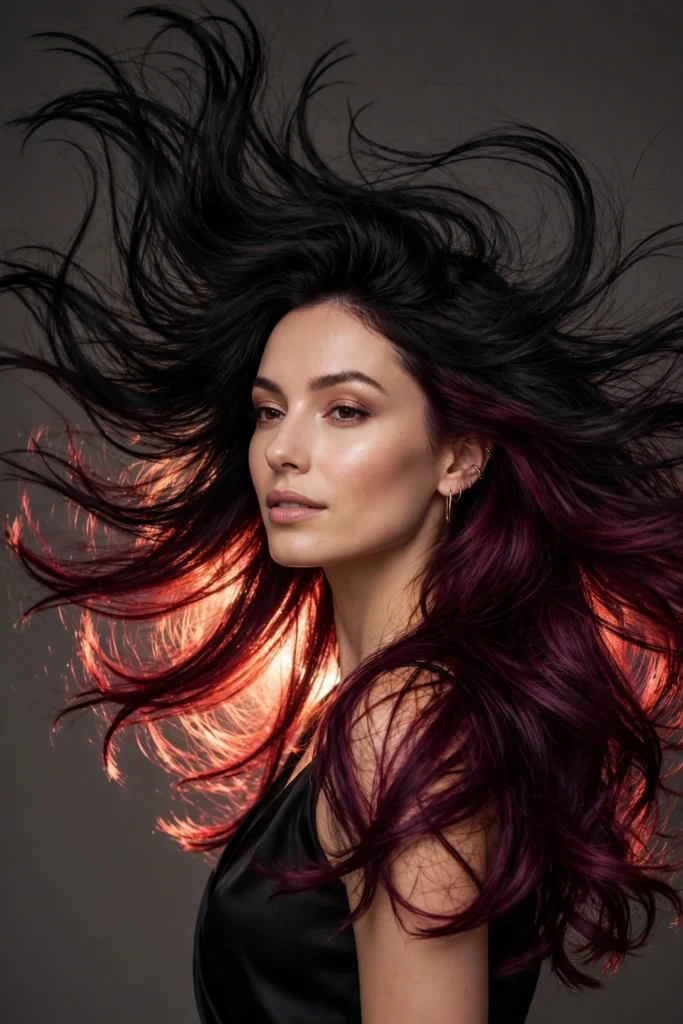
Burgundy — deep, wine-dark red-purple — under black hair is pure evening glamour. It’s the hidden color equivalent of a dark red wine: rich, sophisticated, a little bit dangerous. In low light the panel barely shows, just a hint of warmth in the underlayer. In bright light or sunlight it ignites — deep red flashes under the black that look absolutely luxurious. This is the peekaboo I’d put on a woman who wears a lot of black, gold jewelry, and red lipstick. It matches an entire aesthetic.
Burgundy is one of the kindest vivid-adjacent shades to maintain. The depth of the color means it fades slowly, and as it fades it goes through a gorgeous deep-cherry phase rather than anything awkward. On black hair the lift needed is moderate — you’re not going platinum under there, just light enough for the wine tones to show — so the bleach damage is manageable. A color-safe shampoo and cool water keep it rich for ten to twelve weeks, and a burgundy gloss refresh in between keeps the wine tones from going flat. Of all the dramatic options in this guide, this is the one with the best drama-to-maintenance ratio. Maximum impact, minimum fuss.
Peekaboo Highlight Ideas 15–16: Statement Panels
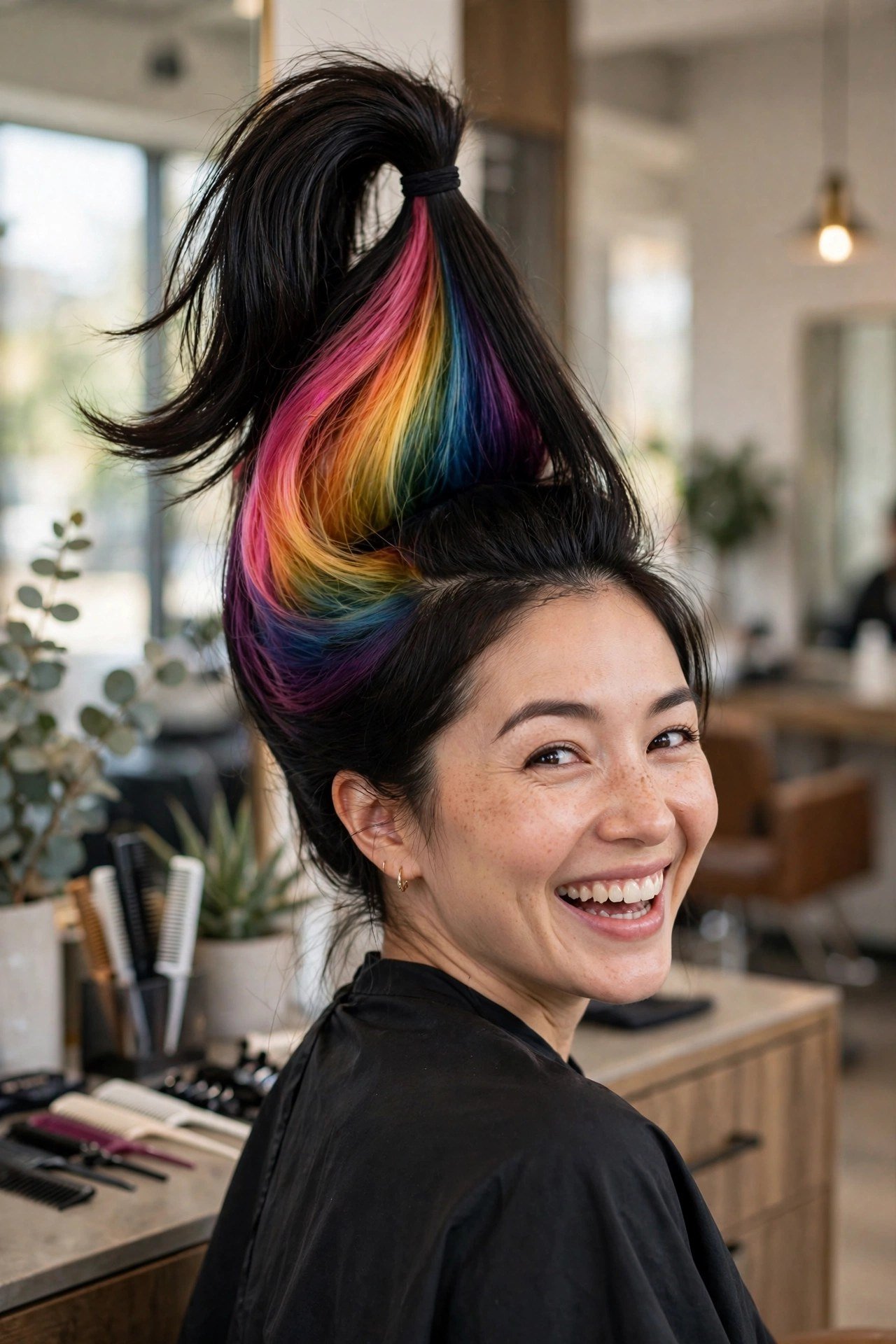
We’ve covered the classics, the warms, the vivids, the pastels, and the rich tones. These last two are for the women who want their hidden color to be the main event — the panels that get photographed, the ones people ask about, the ones that make the whole trend worth it. If you’ve read this far and nothing above felt bold enough, these are yours.
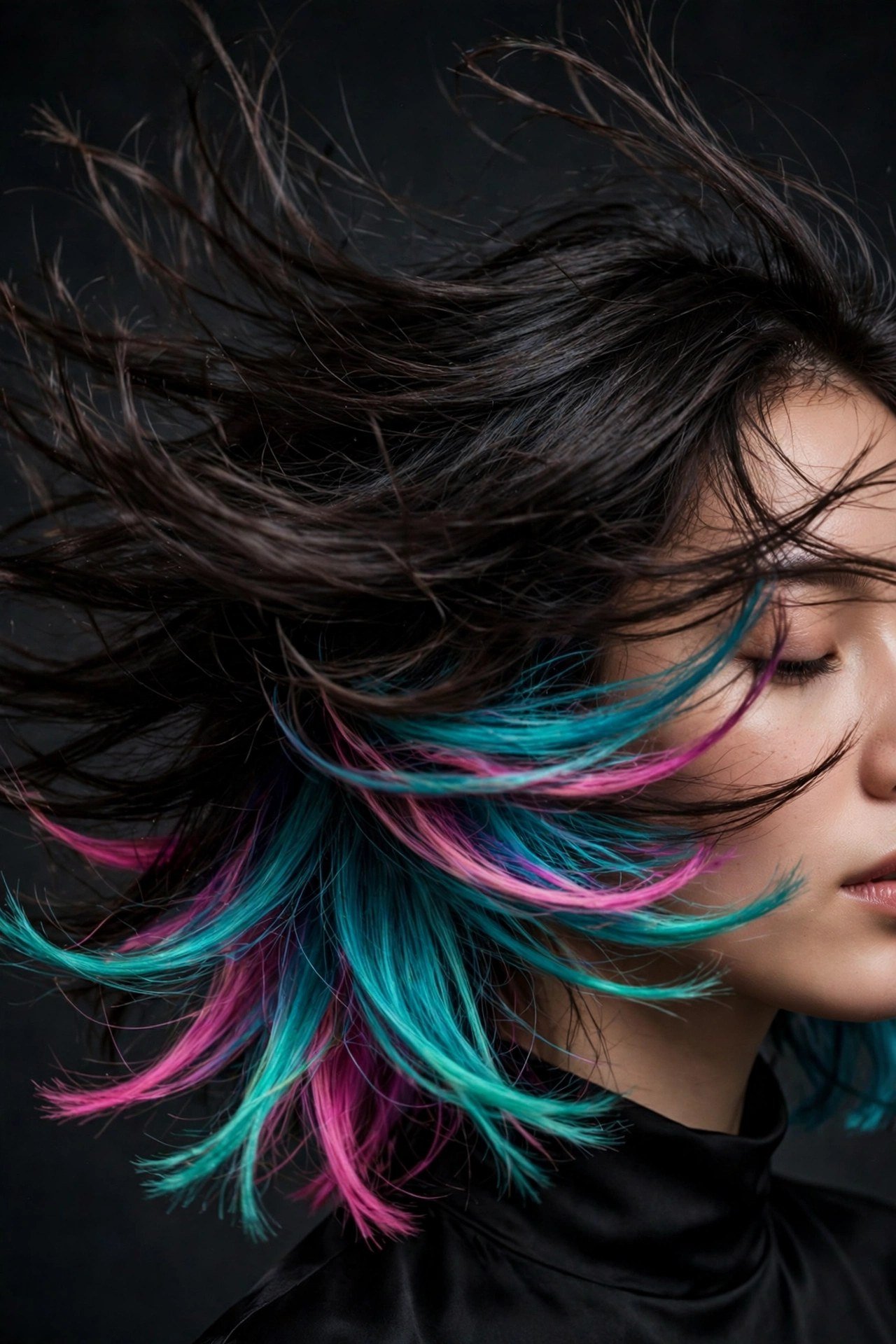
Idea 15: Rainbow Hidden Panel Under Dark Hair
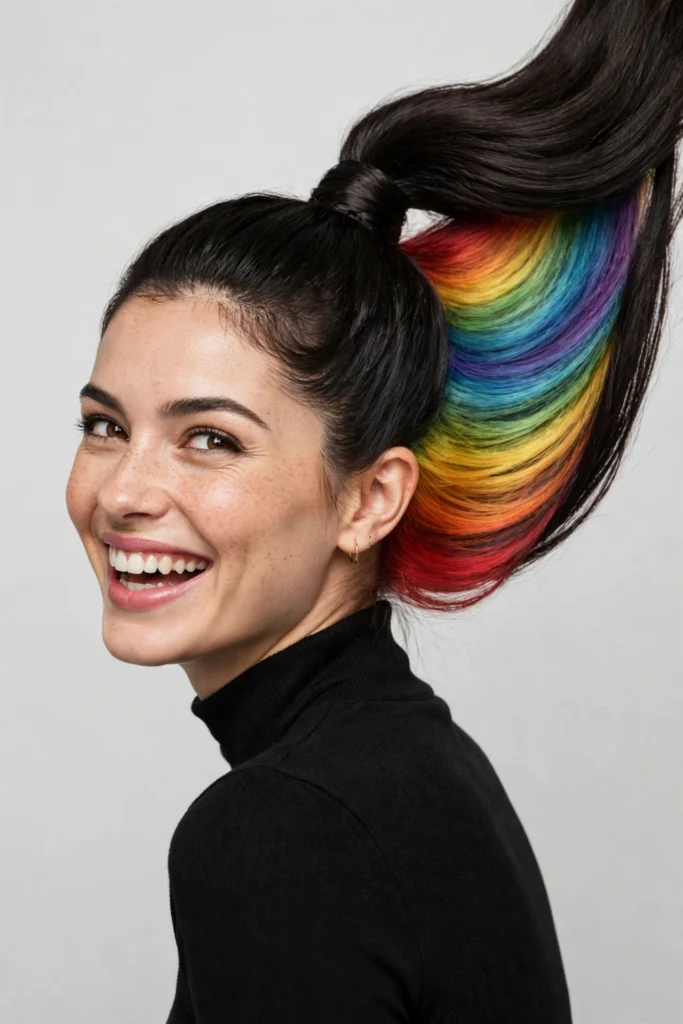
The full rainbow panel — red, orange, yellow, green, blue, purple blended across the underlayer — is the undisputed queen of peekaboo color. Hidden under dark hair, it’s completely invisible. Revealed in a ponytail or a hair flip, it’s a full spectrum that stops conversations. There’s a reason this is the most-saved peekaboo image on Pinterest year after year: no other hidden color delivers this much payoff. It’s not subtle, it’s not natural, and it’s not trying to be. It’s joy, hidden under your hair.
Let’s be real about what it takes. A rainbow panel is the most technically demanding color in this guide — your colorist is formulating and applying five or six shades in a specific order so they blend without turning muddy where they meet, and the panel needs a clean, even, very light lift underneath or the whole thing goes dull. It’s the longest appointment on this list and the most expensive, and it should be done by someone who has actually done rainbow panels before, not someone willing to try. Maintenance is the full vivid playbook times six: cool water, sulfate-free everything, minimal heat, and individual color-depositing conditioners if specific shades fade faster than others. But here’s the thing — women who get the rainbow panel almost never regret it. It’s the kindest thing you can do for hair that’s been through a lot: hidden, protected, and joyful.
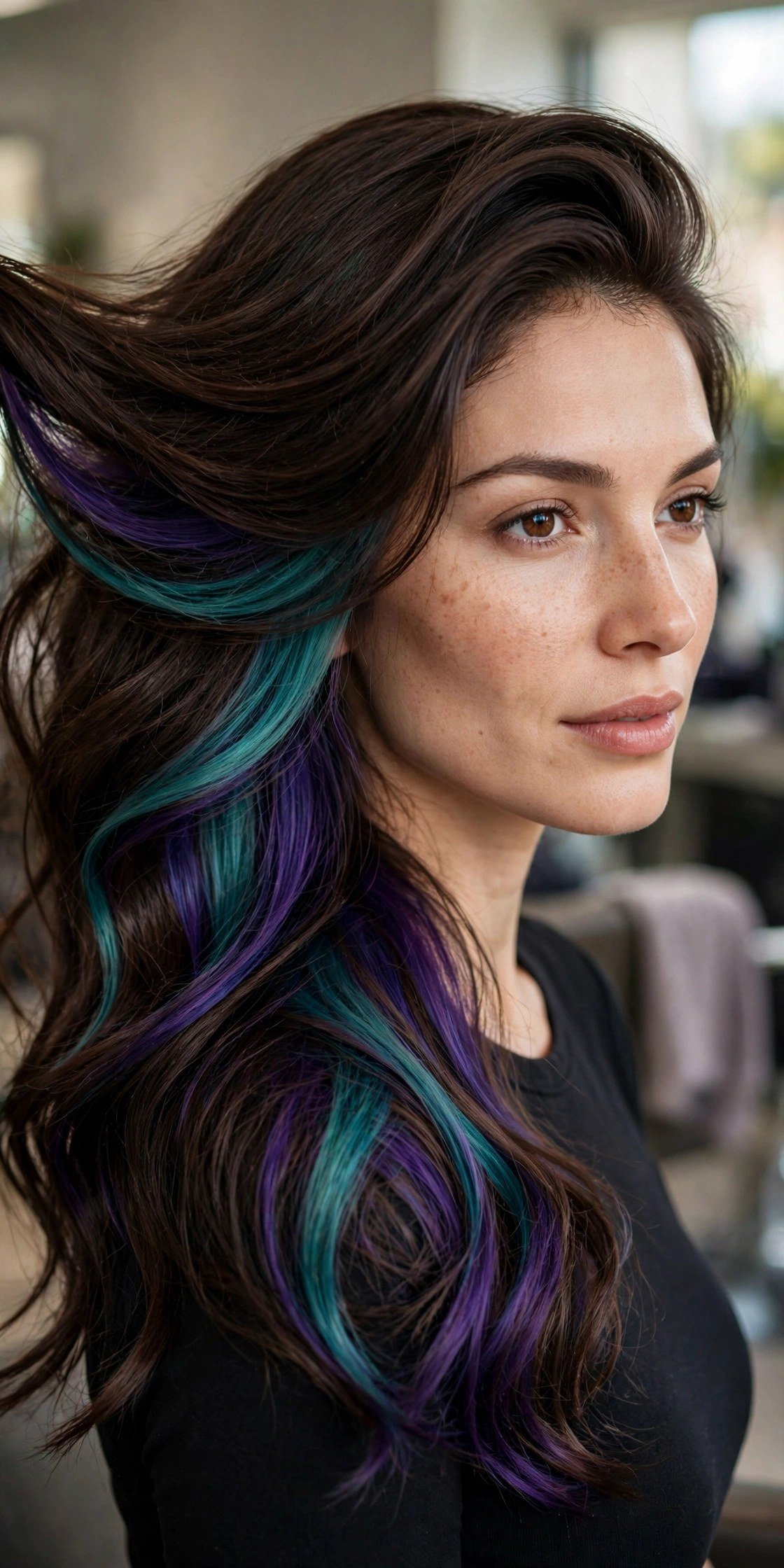
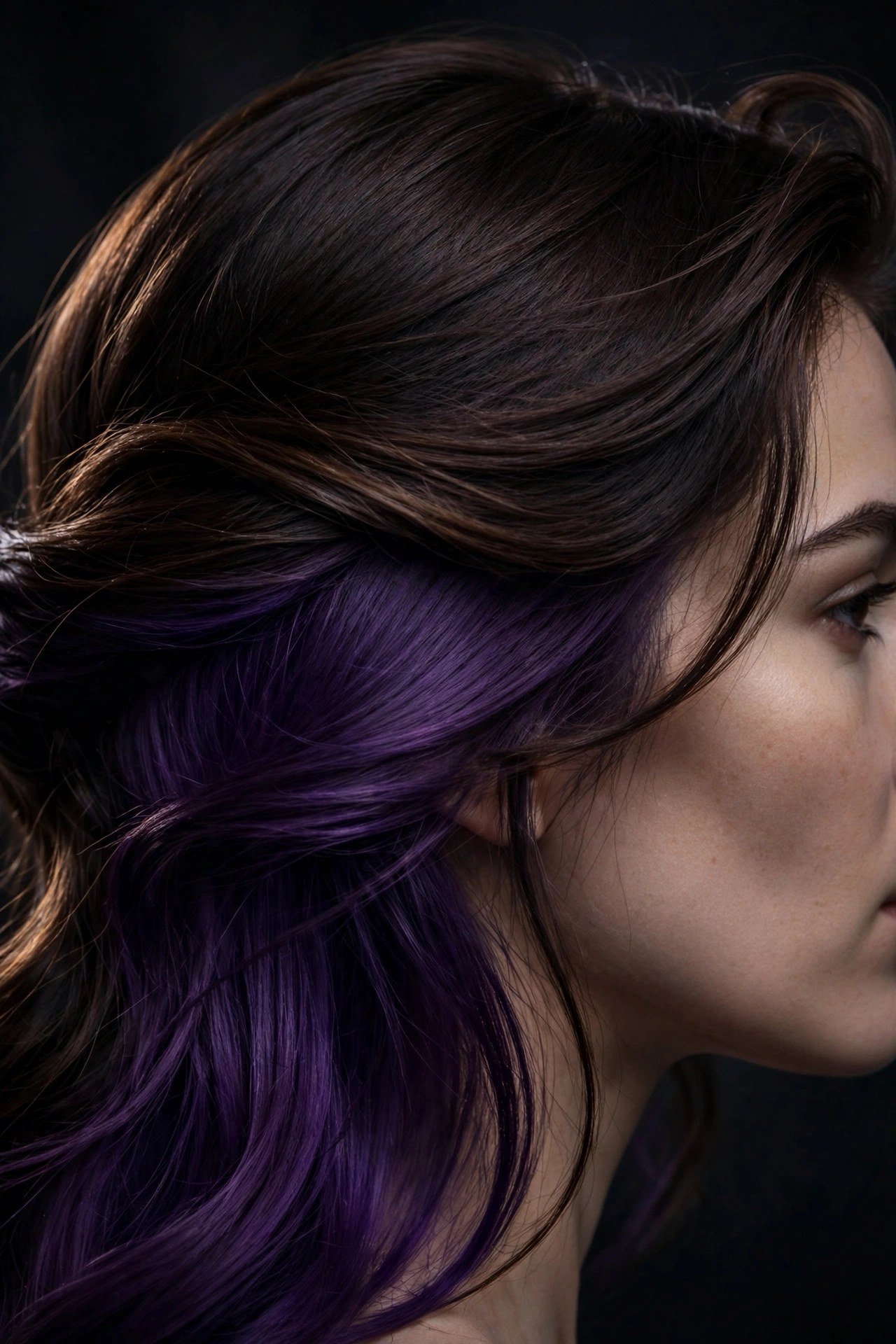
Idea 16: Violet Under Brunette
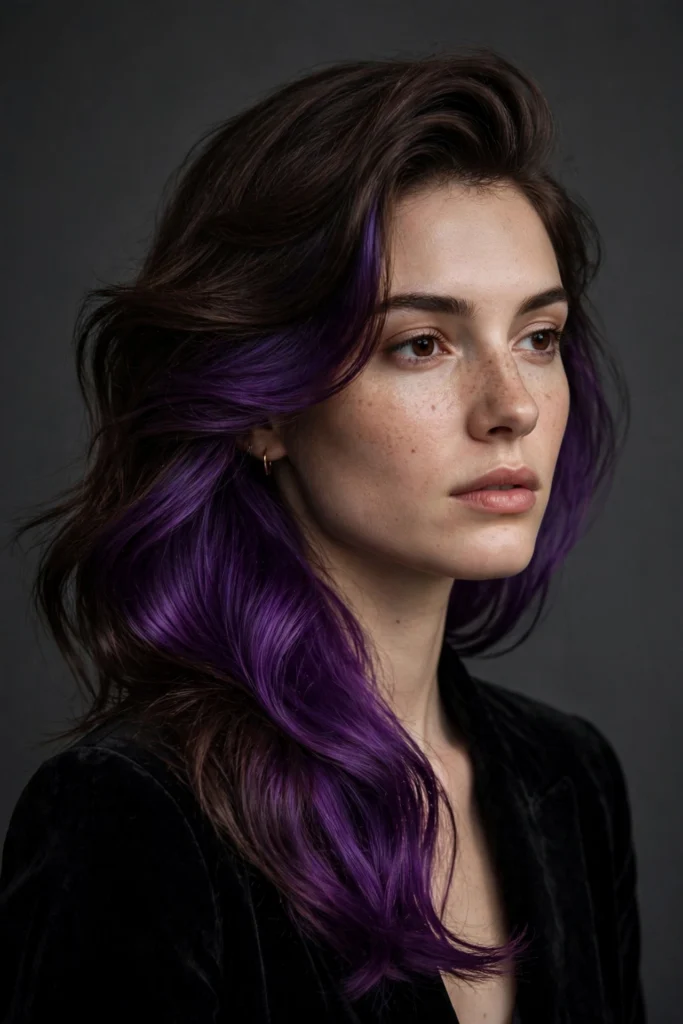
We end with violet — deep, rich purple under brunette — because it’s the perfect closing argument for hidden color. Violet is bold enough to feel like a statement and wearable enough to live with every day. Under brunette the purple reads as luxurious rather than punky, especially in deeper grape and plum tones rather than bright neon purple. It’s the vivid for women who find blue too cold and red too common. And in 2026, purple is quietly having a renaissance across fashion and beauty, which means your hidden panel is right on time.
Violet sits in the middle of the vivid maintenance spectrum: it holds better than red, fades faster than blue, and goes through a beautiful dusty-mauve phase as it softens that many women prefer to the fresh color. The lift needed is moderate-to-significant depending on how bright you want it — deep plum shows on a moderate lift, bright violet needs pale blonde underneath. A purple depositing conditioner once a week keeps it rich for two to three months. And like all hidden color, the regrowth stays invisible under the canopy, so the only maintenance you’re really doing is keeping the tone fresh. It’s a strong finish to this list: maximum personality, minimum daily effort, and a reveal that never gets old.
How to Ask Your Colorist for Peekaboo Highlights
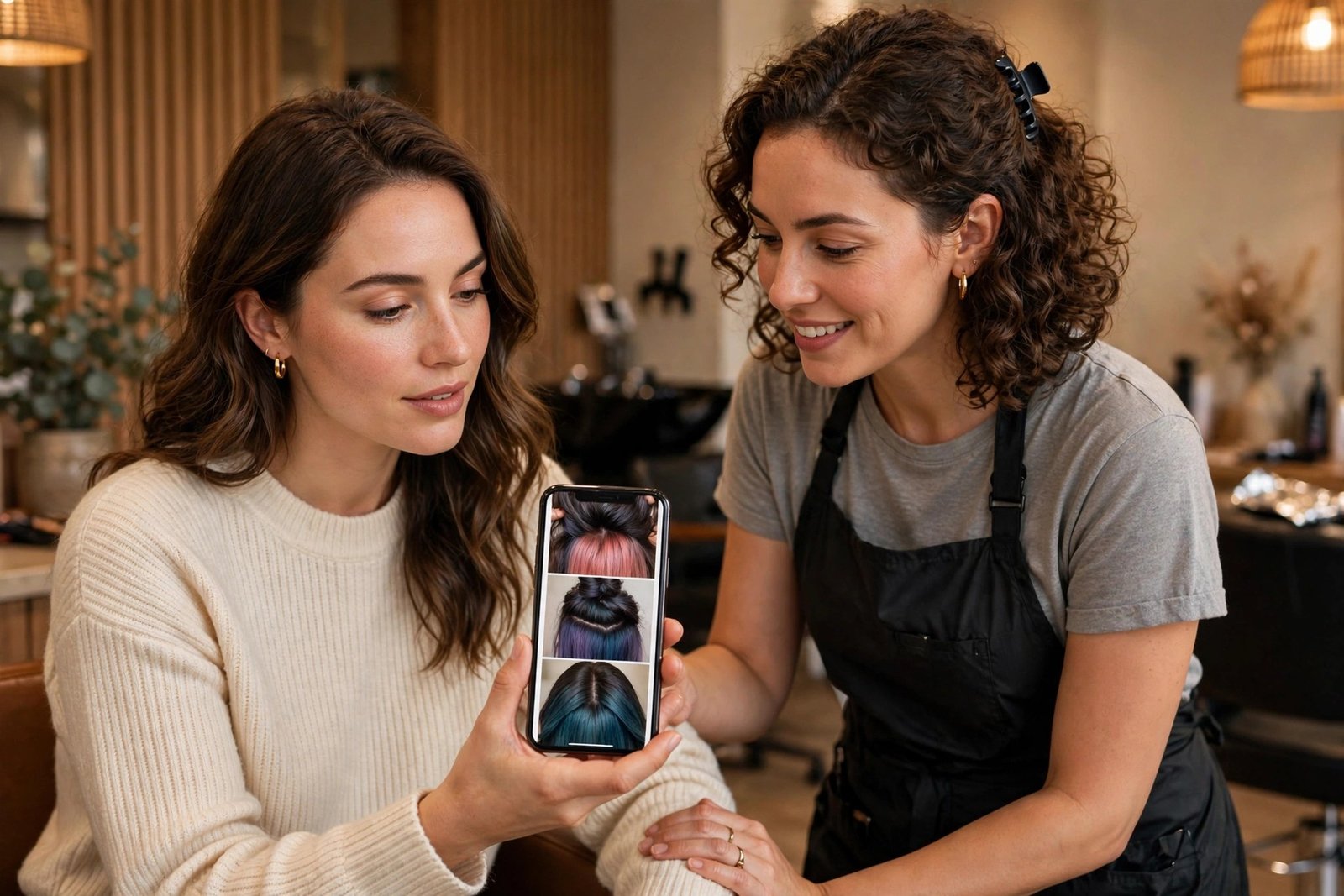
The consultation is where good peekaboo color is won or lost, and most women walk in under-prepared. They show one Pinterest photo, say “I want this,” and hope for the best. Don’t do that. A great consultation takes five minutes and saves you from the three most common disappointments: a panel that’s visible when you wanted it hidden, a shade that looks nothing like the photo, and a bill that’s twice what you expected. Here’s the exact script.
Start with placement, because that’s the decision everything else hangs on. Say: “I want a hidden color panel. I want it at the nape” — or under the sides, or both — “and I want it completely covered when my hair is down.” Then say the magic words: “Can you show me where the top section will fall?” A good colorist will section your hair right there in the consultation chair and show you the line. If she can’t or won’t, that’s information. The panel’s position determines whether your colorist is coloring two inches of underlayer or half your head, so nail this down before anyone mixes bleach.
Next, talk bleach level honestly. Show your reference photos — bring three, not one, and make sure they show the panel both hidden and revealed — and ask: “How light does my hair need to go for this shade, and can my hair handle that in one session?” This is the question that prevents damage. If your hair is previously colored dark and you want pastel pink, the honest answer might be two sessions. A colorist who tells you that is protecting your hair; a colorist who protects her booking. Ask about bond-builder treatments too — they’re worth the add-on cost on any panel that needs significant lift.
Then cover the practical stuff people forget to ask. How thick will the panel be? (Bring it back to the sweet spot: bottom third of density.) What toner will she use, and how will it fade? What’s the refresh timeline for this specific shade — not “highlights in general,” but the copper or the blue or the lilac you’re actually getting? And what’s the total cost, including the toner refresh you’ll need in two months? Peekaboo panels are cheaper than full highlight appointments, but vivid and pastel shades need more frequent toning than natural-looking ones, so get the full picture. Finally, ask to see her previous hidden-color work — not her balayage portfolio, her actual peekaboo panels. Placement is a specific skill, and you want proof she’s done it.
Maintenance and Grow-Out: The Real Story
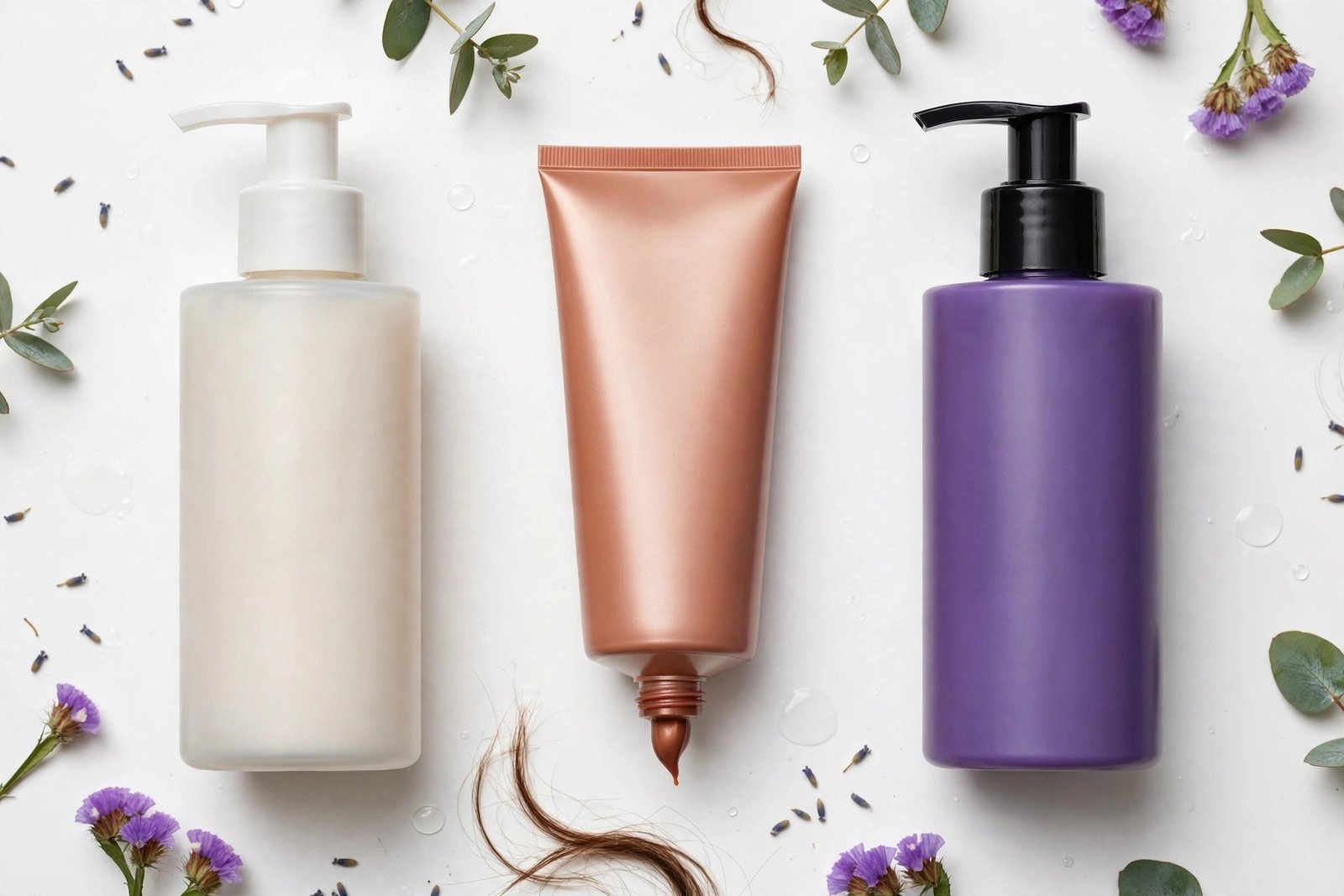
Here’s the honest maintenance picture, shade by shade and habit by habit. The headline is true: peekaboo highlights are lower-maintenance than any other color technique, because regrowth hides under the canopy. Most women refresh the panel every eight to twelve weeks, compared to every six for full highlights or every four to six for a money piece. But “lower maintenance” doesn’t mean “no maintenance,” and the shade you choose sets the real schedule.
Natural-looking panels — caramel, honey, auburn, champagne — are the easiest to live with. They fade gracefully, the regrowth line is nearly invisible, and many women stretch refreshes to twelve or even sixteen weeks without anyone noticing. Your main job is keeping the tone fresh: a sulfate-free shampoo, washing in lukewarm rather than hot water, and a gloss or toner refresh when the color starts looking flat. That’s genuinely it. These panels are the closest thing to wash-and-forget color that exists.
Vivid and pastel panels need more attention, but it’s home maintenance, not salon maintenance. Cool water washes — hot water opens the cuticle and rinses color out faster. Sulfate-free, color-safe shampoo, always. Wash less often if you can; dry shampoo on the top layer keeps the whole head fresh without touching the panel. And invest in a color-depositing conditioner in your shade — blue for blue, copper for copper, pink for pink. Used once a week, it tops up the pigment and can easily double the time between salon refreshes. Keep heat styling off the panel where possible; the canopy protects it most of the time anyway, but direct flat-ironing over a vivid panel fades it fast.
Grow-out is where peekaboo color quietly beats everything else. Because the colored panel sits under virgin top hair, the regrowth happens out of sight. There’s no harsh line, no skunk stripe, no emergency root touch-up. When you’re ready for a refresh, your colorist just re-works the panel — she doesn’t have to blend it into months of grown-out foils. And if you ever want out entirely? You have options that full-highlight clients don’t. You can let it grow and trim the panel away over a few haircuts, since it’s all in the underlayer. You can have it toned back toward your natural color in a single appointment. Or you can just… stop refreshing it, and let it fade into a soft memory of color that nobody but you knows is there. Try doing that with a grown-out money piece.
FAQ: Peekaboo Highlights for Women
The questions I hear most from women considering hidden color — answered straight, no salon-speak.
Will peekaboo highlights damage my hair?
Any time bleach touches your hair there’s some level of damage — that’s chemistry, not opinion. But peekaboo color is one of the least damaging ways to go blonde or vivid, for two reasons. First, only the underlayer panel gets lightened, so the visible surface of your hair — the part that takes sun, heat, and daily styling — stays completely virgin and healthy. Second, the panel itself is protected by the canopy afterward, so it doesn’t take the ongoing environmental beating that surface color does. The damage risk concentrates in one place: the lifting appointment itself. That’s why the consultation questions about bleach level and bond-builder treatments matter so much. A skilled colorist lifting carefully with modern lightener and a bond builder does minimal damage. A rushed job on compromised hair does real damage. The technique is safe; the execution is everything. If your hair is already fragile from previous bleaching, be honest about it in the consultation and consider a less demanding shade — caramel over platinum, burgundy over silver.
How long do peekaboo highlights last?
It depends on the shade family, and the range is wide. Natural-looking panels — caramel, honey blonde, auburn, champagne — hold their tone for ten to sixteen weeks and the placement stays invisible indefinitely; you’re refreshing for tone, not for regrowth. Vivid panels — blue, green, cherry red, violet, rainbow — stay at full intensity for six to ten weeks, then soften into faded versions that many women keep for another month or two before refreshing. Pastels are the shortest-lived: lilac and pastel pink start softening within three to four weeks and usually need a refresh or a depositing conditioner routine by week eight. The placement itself never “grows out” the way surface highlights do — the panel stays hidden under the canopy no matter how long it gets. So the real answer is: the color lasts as long as the shade family allows, and the hidden effect lasts as long as you have enough top-layer hair to cover it.
Do peekaboo highlights work on curly hair?
They don’t just work on curly hair — curly hair might be the best canvas for them. Curls separate and open as they move, which means the hidden panel reveals itself constantly and naturally, in a way straight hair can’t match. Every bounce shows a flash of color. That said, the placement needs adjusting for curl patterns. On tight curls and coils, a panel placed where it would hide on straight hair can spring up and stay permanently visible, so the colorist should place it slightly lower and check the coverage with your hair in its natural dry state — not stretched wet. Also worth knowing: curly hair is naturally drier than straight hair, and bleach makes dryness worse, so the aftercare matters more. Deep condition regularly, keep the panel moisturized, and the color will stay vibrant instead of going dull. If your curls are your pride, tell your colorist to be conservative with the lift and generous with the bond builder.
Can I get peekaboo highlights on short hair?
It depends on how short. On a bob or lob — chin-length and longer — absolutely. There’s enough top-layer length for the canopy to cover a nape or side panel, and short hair actually shows hidden color off beautifully because there’s less weight pressing the layers together. On a pixie or very short crop, it’s genuinely difficult: there isn’t enough top hair to hide a panel, so what you’d get is closer to two-tone color than true peekaboo. That’s a fine look in its own right, but it’s not the hidden-reveal effect. The test is simple: gather the top layer of your hair as if you were sectioning for the panel, and see if what you can clip up fully covers what’s underneath. If yes, you’re a candidate. If the “top layer” is basically all your hair, wait until it grows out or choose a different technique. And on short hair, placement precision matters even more — there’s less room for error, so choose your colorist carefully.
Are peekaboo highlights appropriate for conservative workplaces?
This is one of the top reasons women choose hidden color, and the answer is: yes, with the right placement and shade. A nape panel in a natural-looking shade — caramel, honey, auburn — is invisible in every professional hairstyle: down, in a low bun, in a neat ponytail. Nobody at work will know it exists unless you show them. The risk cases are side panels in vivid shades, which can flash when you tuck your hair behind your ears or when office air conditioning catches it, and very thick panels that peek out at the ends. If workplace invisibility is the priority, tell your colorist exactly that: “I need this completely hidden when my hair is down and in a low bun.” She’ll place the panel deeper and keep it narrower. Thousands of women in law, finance, medicine, and education wear hidden vivid color every day with zero issues. The whole point of the trend is that you control who sees it.
Conclusion
Peekaboo highlights earned their place as 2026’s defining color trend the honest way: they solve real problems. They give you color without the commitment, personality without the workplace risk, and dimension without the maintenance schedule of traditional highlights. Whether it’s a whisper of champagne under light brown or a full rainbow panel under black, the mechanism is the same — a secret your hair keeps until you decide otherwise. Few trends offer that much control.
If you’re ready to try it, start where this guide started: pick your shade family honestly based on the maintenance you’re willing to do, not just the photo you loved. Natural tones for the low-effort life, vivids if you’ll commit to the depositing conditioner, pastels if you love the ritual of refreshing. Then have the real consultation — placement, bleach level, panel thickness, total cost including the refresh. Bring the photos. Ask the questions. The women who love their peekaboo color five months later aren’t the ones who picked the prettiest Pinterest image; they’re the ones who picked the right panel for their actual life.
And the next time your hair catches the wind, or you pull it up on a hot day, and someone’s eyes go wide at the color hiding underneath — enjoy that moment. That’s the whole point. Still hair, secret hair. Your move.