Mohawk Men 2026: 16 Bold Styles From Classic to Modern
Mohawk Men 2026: 16 Bold Styles From Classic to Modern
Few haircuts say as much as the mohawk. Strip the sides, leave a bold band of hair down the center, and you have a style that has meant rebellion, pride, discipline, and pure showmanship at different points in history. In 2026, the mohawk haircut for men is in the middle of a fascinating second act — not just as a punk statement, but as a genuinely versatile family of cuts that ranges from office-safe to full-throttle.
Here is what changed: barbers stopped treating the mohawk as one haircut and started treating it as a spectrum. On one end sits the classic spiked mohawk your mind probably pictures first. On the other end sits the faux hawk, the burst fade mohawk, and the textured crop mohawk — cuts that borrow the mohawk’s DNA (short sides, a defined strip of length on top) without demanding that you look like you are heading to a 1982 concert. Most men in 2026 live somewhere in the middle, and that is exactly where this guide lives — a complete handbook to the mohawk haircut men are actually wearing right now.
Below you will find 16 distinct mohawk styles, each with an honest breakdown: what it looks like, who it suits, how to ask your barber for it, how to style it in the morning, and what the upkeep really costs you in time and money. You will also get the real history of the cut, a practical guide to matching a mohawk to your face shape and hair type, and answers to the questions every man asks before committing — including whether you can pull one off with a job. Let us get into it.
The Real History of the Mohawk Haircut
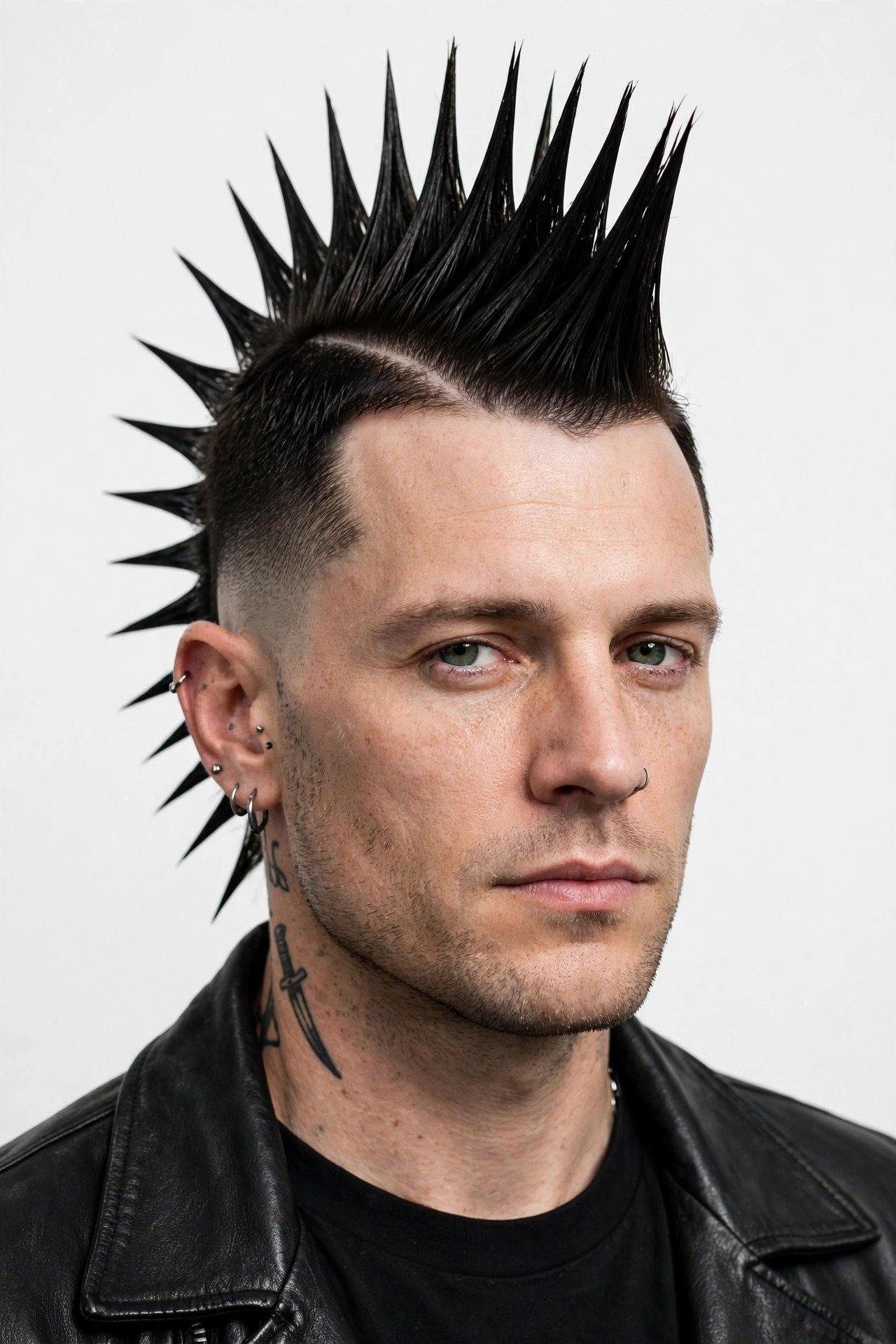
Before you wear a haircut with this much history, it is worth knowing where it actually came from — because the popular story is mostly wrong. The name points to the Mohawk Nation (the Kanien’kehá:ka people), but they did not traditionally wear this style. Early European accounts describe the distinctive shaved-sides look among other Indigenous peoples of the Northeast woodlands, including the Pawnee, whose warriors wore a roached strip of hair as a mark of identity. The “mohawk” label was a colonial mix-up that stuck, and it has been stuck for centuries.
The cut’s modern story starts in the 1940s, of all places: with paratroopers. American soldiers in World War II — famously some of the 101st Airborne before D-Day — shaved their heads into mohawks as a intimidation tactic and a bonding ritual. It was discipline and aggression, not fashion. Then came 1970s New York and London, and everything changed. Punk took the soldier’s cut and turned it into a middle finger: tall, spiked, often dyed unnatural colors, worn by kids who had no interest in blending in. Robert De Niro’s Travis Bickle in 1976’s Taxi Driver burned the image into pop culture permanently — the unhinged veteran with the severe mohawk remains one of cinema’s most imitated looks.
Styling it: almost nothing. A tiny amount of matte product worked through the strip, pushed up with the fingers, and you are done in sixty seconds. Many wearers skip product entirely and let the short length stand on its own. Maintenance is the trade-off for the easy mornings: the high fade shows growth within days, so weekly touch-ups — at the barber or with your own clippers — keep it sharp. Own a decent pair of clippers and this becomes a five-minute home job.
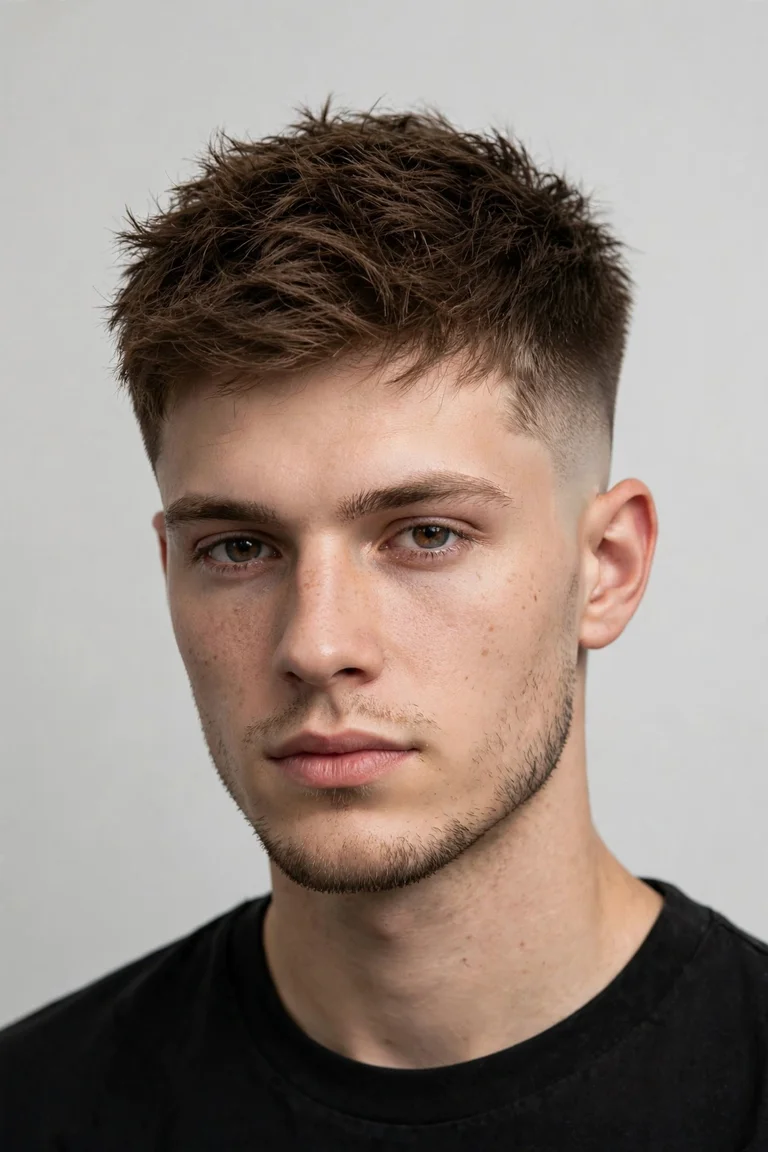
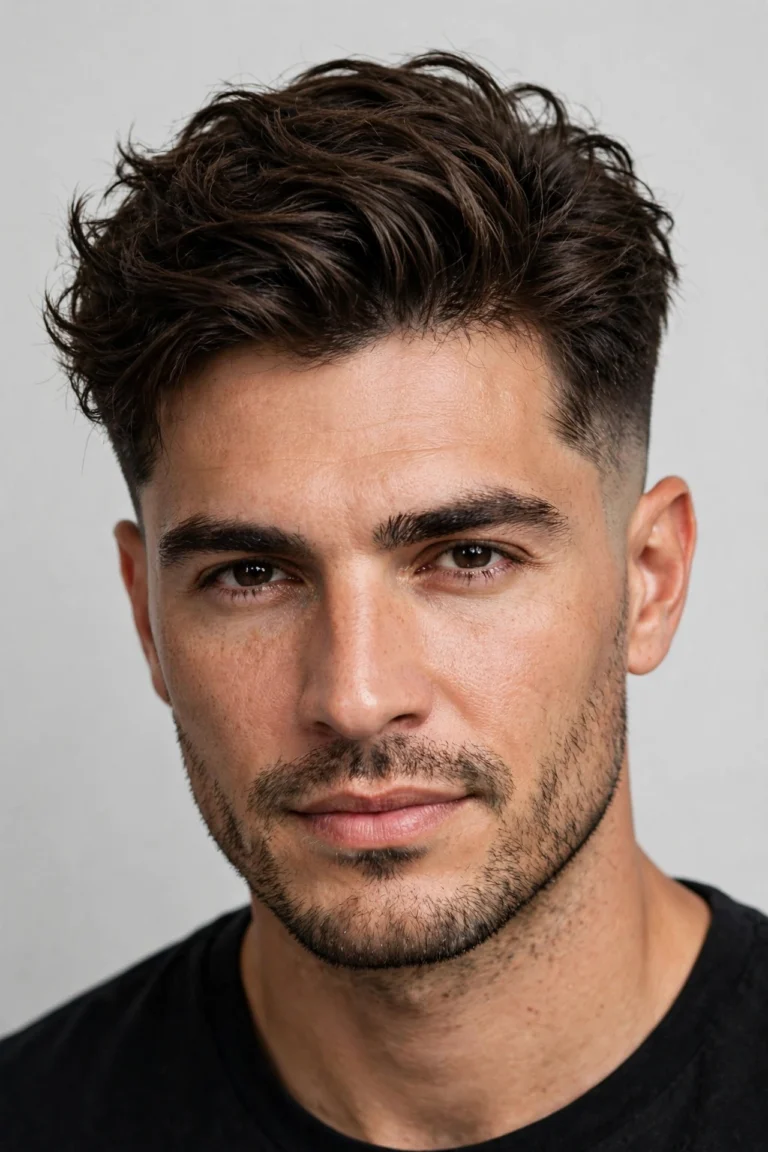
6. The Short Spiky Mohawk. The textured crop’s rebellious cousin. The sides are faded or tapered short, and the top is a strip of short, choppy texture — one to two inches — worn spiked or tousled upward. Unlike the classic mohawk, the sides here are blended rather than shaved, and unlike the faux hawk, the strip is more defined and the spikes more deliberate.
Who it suits: younger guys and anyone who wants edge without length. It is particularly good on thick, straight hair that naturally wants to stand up — the hair does half the work. Round faces benefit from the added height. It is also one of the most forgiving mohawks for DIY maintenance, since short textured tops hide uneven clipper work better than longer styles.
Styling it: the whole point is speed. Matte clay or a fiber product on dry hair, spikes pulled up with fingertips, done in two minutes. The deliberately messy finish means bedhead is a feature, not a bug — this is the mohawk for men who will never own a blow dryer. Trim every three weeks to keep the spikes from flopping over into a shapeless mop.
7. The Curly Mohawk & 8. The Wavy Textured Mohawk
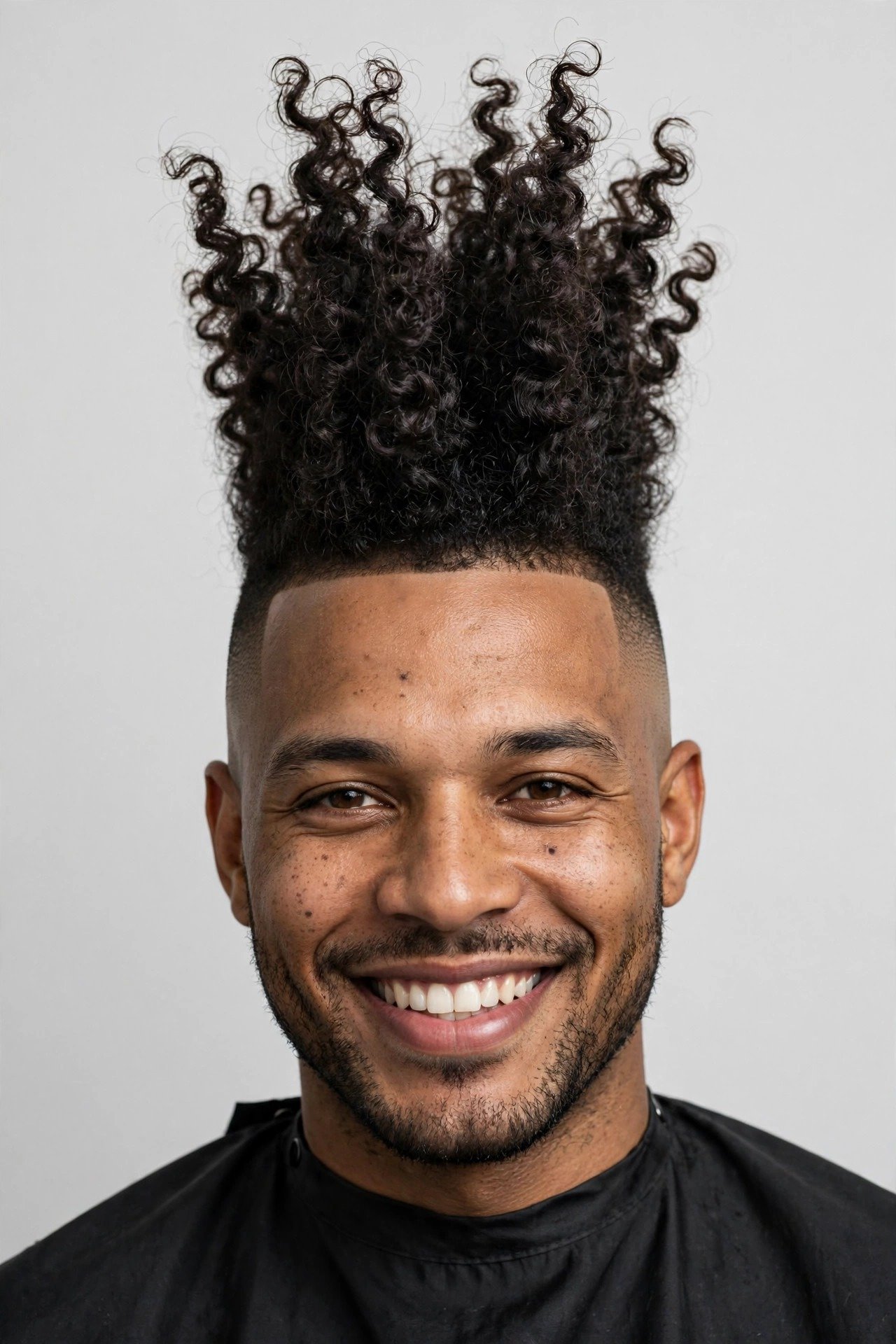
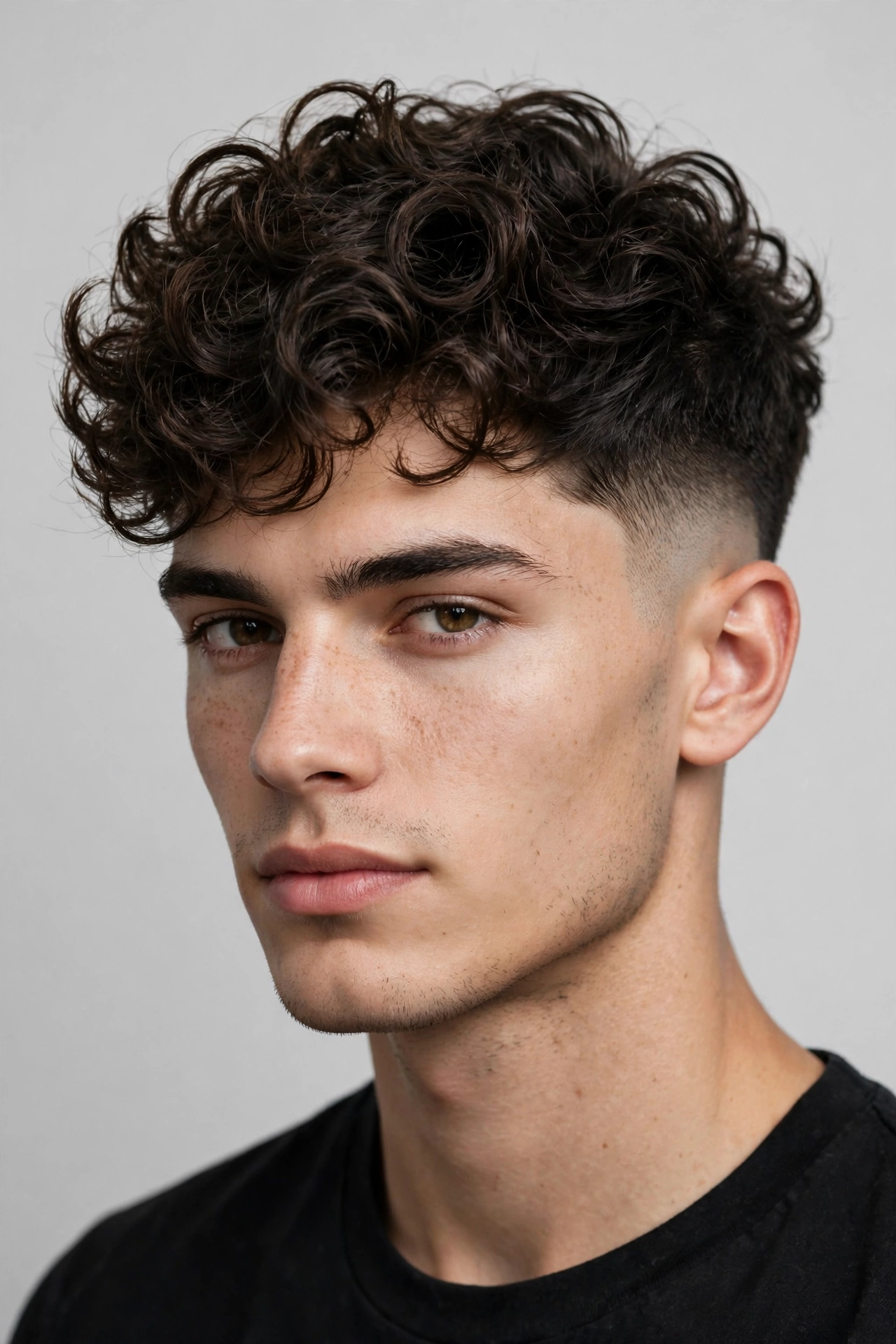
7. The Curly Mohawk. One of the best things to happen to the mohawk in recent years is men with curly and coily hair claiming it as their own. The curly mohawk keeps the sides faded or tapered short while the natural curl pattern takes center stage in a strip of glorious texture — worn tall and proud, picked out for volume or defined with curl cream. No straightening, no fighting your hair: the cut works with the curl, not against it.
Who it suits: men with 3A to 4C curl patterns — this cut was practically made for you. The volume of curly hair gives the strip a presence that straight hair can only achieve with product and heat. It flatters most face shapes because the height and width of the curls can be adjusted: more height for round faces, a bit wider for long faces. It is also a genuinely practical choice — curls contained in a defined strip are easier to manage day-to-day than curls all over.
Styling it: the routine is curl care, not mohawk styling. On wash days, apply leave-in conditioner and curl cream to damp hair, then define with a pick or fingers and let it air-dry or diffuse. At night, a satin durag or bonnet preserves the shape. Refresh mornings with a water mist and a little cream on the frizzy spots. Avoid heavy waxes and gels that crunch the curls — the goal is soft, touchable definition. Maintenance: keep the fade fresh every two to three weeks, and get the strip shaped (not thinned — a common barber error on curly hair) every six to eight weeks to control the silhouette as it grows.
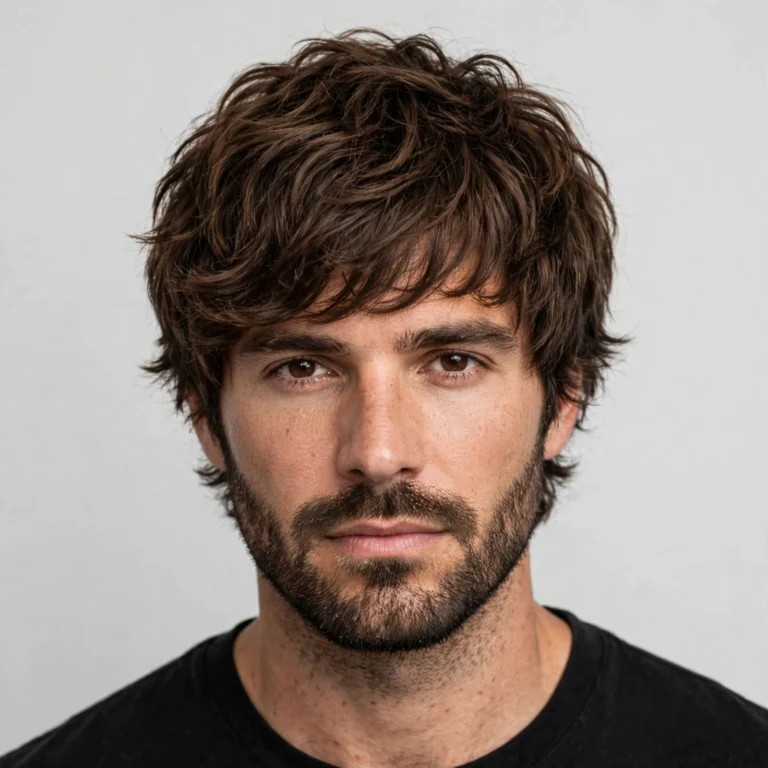
8. The Wavy Textured Mohawk. The surfer’s answer to the mohawk. Medium-length wavy hair on top in a defined strip, sides faded or undercut, the whole thing worn with loose, beachy movement instead of spikes. It is the mohawk at its most relaxed — the cut says bold, the texture says easygoing, and the combination is effortlessly cool.
Who it suits: naturally wavy hair (2A to 2C) is the sweet spot — the wave gives you free texture that straight hair has to manufacture. Great for oval and heart-shaped faces, and for men who want a mohawk that does not read as aggressive. It is also the most grow-out-friendly mohawk here: as the sides grow, it melts into a longer textured crop rather than looking unkempt.
Styling it: sea-salt spray on damp hair, scrunch, air-dry — that is the entire routine, and it takes three minutes. For more definition, a light mousse before drying and a matte paste on dry ends. Do not over-style it; the charm is in the looseness. If your waves fall flat, a diffuser on low heat builds volume at the roots. Trim the strip every five to six weeks to keep the wave pattern sitting right, and refresh the fade every three.
9. The Long Mohawk & 10. The Viking Braided Mohawk
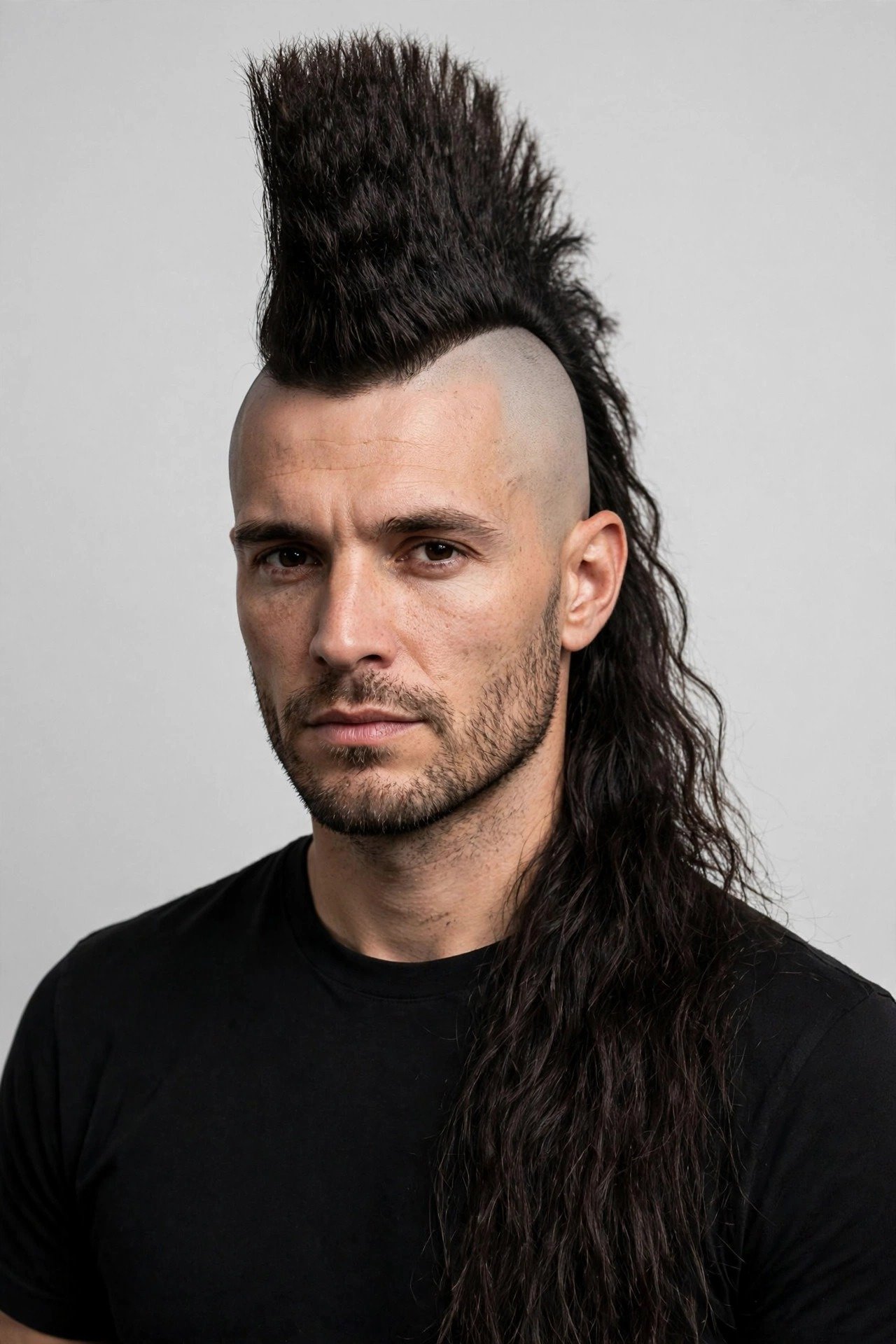
9. The Long Mohawk. Commitment in hair form. The sides are shaved or faded tight while the center strip grows long — six inches at minimum, often reaching the shoulders or beyond. Worn down, it is a dramatic curtain of hair framed by clean sides; tied back, it becomes a sharp warrior ponytail or topknot with faded sides. This is the mohawk as lifestyle, not haircut.
Who it suits: men willing to invest a year or more of growing — that is the real qualifier. It favors thick hair that can carry the weight without looking stringy, and strong features that balance the drama. Long faces should be careful: too much length on top of an already long face needs width at the sides (a lower fade rather than a skin shave) to keep proportions sane. This is not a first-mohawk choice; it is a destination for men who already know they love the silhouette.
Styling it: the long strip gives you options the short versions never will. Wear it loose with a little leave-in conditioner for movement, half-up for practicality, or fully tied for a clean warrior look. Braiding the strip loosely overnight prevents tangles and gives you natural waves in the morning. The maintenance reality: long hair needs conditioning, occasional trims of split ends (every eight to ten weeks), and sun protection if you are outdoors a lot. The sides still need regular clipper work — the contrast between maintained sides and long top is the entire look, and letting the sides go fuzzy ruins it.
10. The Viking Braided Mohawk. The long mohawk’s battle-ready sibling. The center strip is grown long and worn in braids — a single Dutch or French braid down the center, multiple smaller braids, or a braided top flowing into loose length at the back — with the sides shaved or faded. It channels Norse warrior imagery (thank the TV show Vikings for the mainstreaming) while being a genuinely practical way to manage long hair.
Who it suits: men with long, thick hair who want the mohawk identity without the daily styling battle — braids are a set-it-and-forget-it style that lasts days. It suits angular, rugged features and bigger builds; the warrior aesthetic needs some physical presence to carry it. Fair warning on the cultural note: actual Viking-era hairstyles are debated by historians, so wear it as a modern style inspired by the aesthetic, not as a historical claim.
Styling it: learn two braids — a basic three-strand and a Dutch braid — and you are equipped. Braid damp hair with a little cream for grip; the braid itself takes five to ten minutes once practiced and holds for two to three days. Sleep in a loose braid or a durag to preserve it. Decorative touches like small metal cuffs or leather wraps on the braid ends are popular and cheap. Maintenance mirrors the long mohawk: condition the length, keep the sides tight, and re-braid every few days. The sides-to-braid contrast is what makes it read as a mohawk rather than just long hair, so do not let the fade grow out.
11. The Wide Mohawk & 12. Liberty Spikes
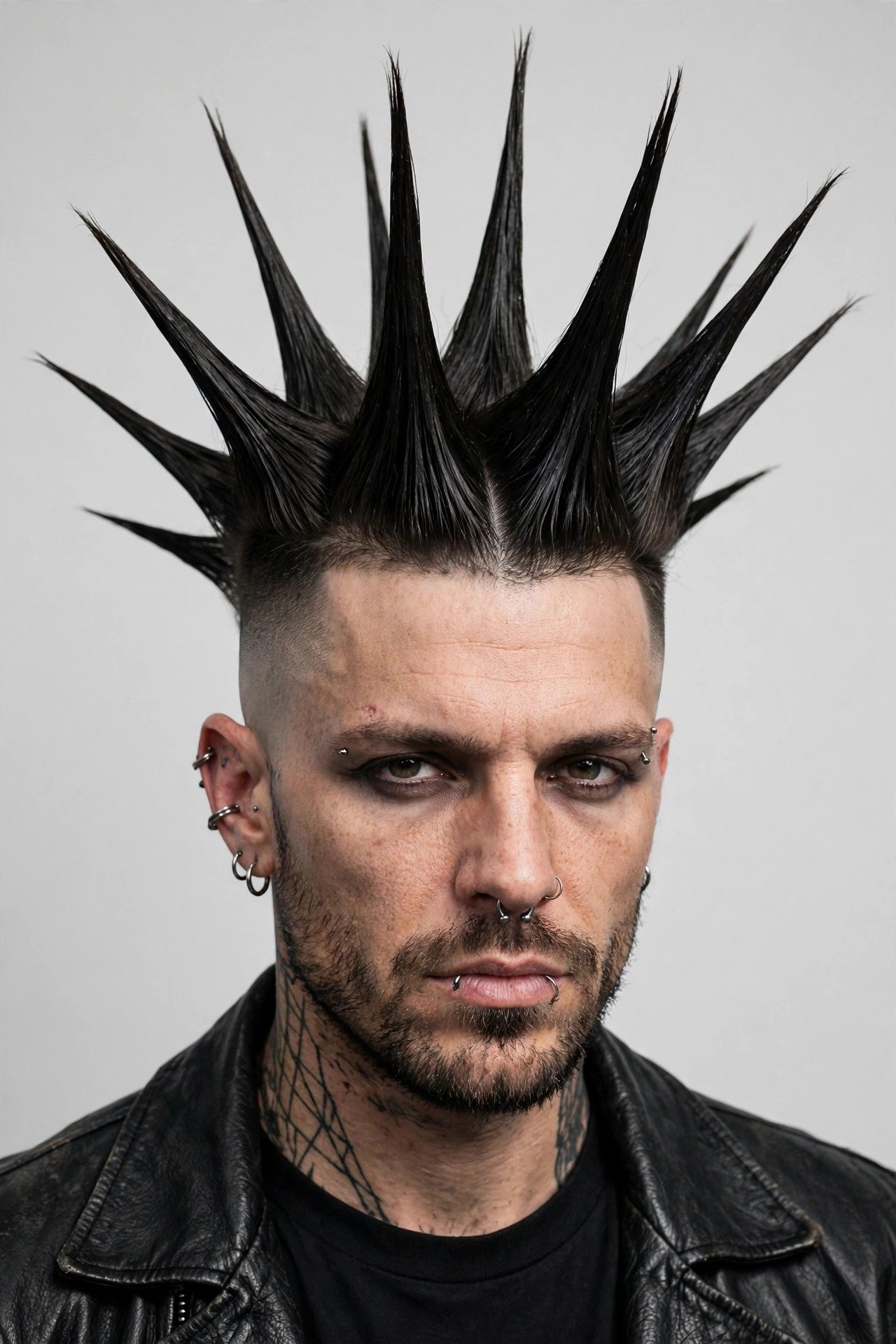
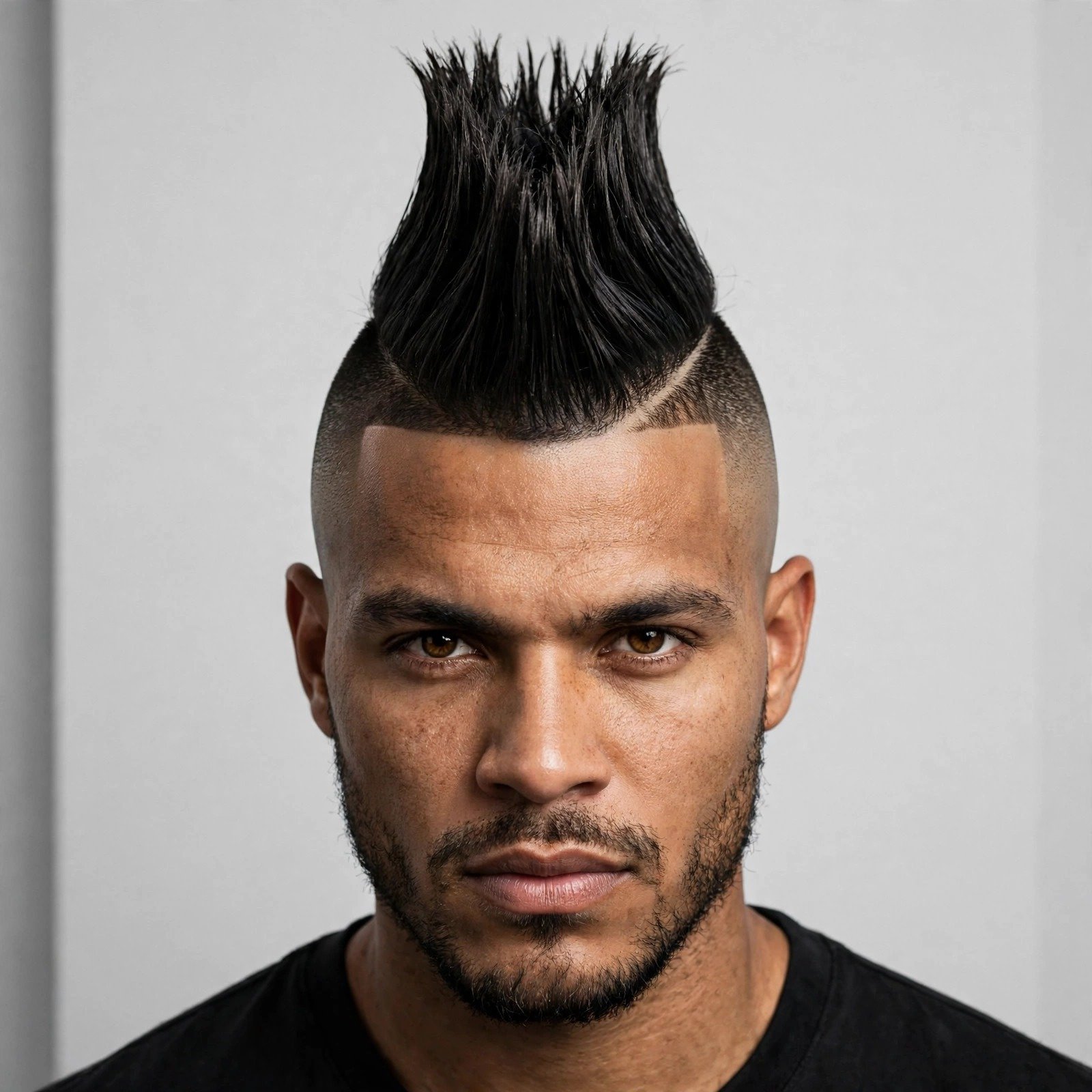
11. The Wide Mohawk. The classic mohawk’s softer, more wearable sibling. Instead of a narrow two-inch strip, the wide mohawk keeps a four-to-five-inch band of hair on top — nearly half the head — with the sides faded or shaved. The extra width changes the whole character: it reads less as a punk statement and more as a bold textured crop with attitude. Eighties new-wave bands wore versions of this, and it has been quietly coming back as men discover it is the easiest “real” mohawk to live with.
Who it suits: men who want unmistakable mohawk DNA without the extremity. The width is flattering on wider face shapes because it does not create the stark narrow-ridge effect of a classic. It works on all hair types — straight hair gets a clean architectural look, wavy and curly hair get a big textured statement. It is also the most office-tolerant of the true mohawks: worn textured and forward with matte product, it passes as an edgy crop in most workplaces.
Styling it: texture is everything. Work matte clay or paste through dry hair and build piecey separation with your fingers — the wide strip gives you room to create real dimension. For evenings, add height with a blow dryer. The wider strip means more forgiving grow-out than a narrow classic: the shape holds for three to four weeks between barber visits. Ask your barber to keep the strip’s edges clean but not razor-sharp — a slightly soft edge is what separates this from the punk original.
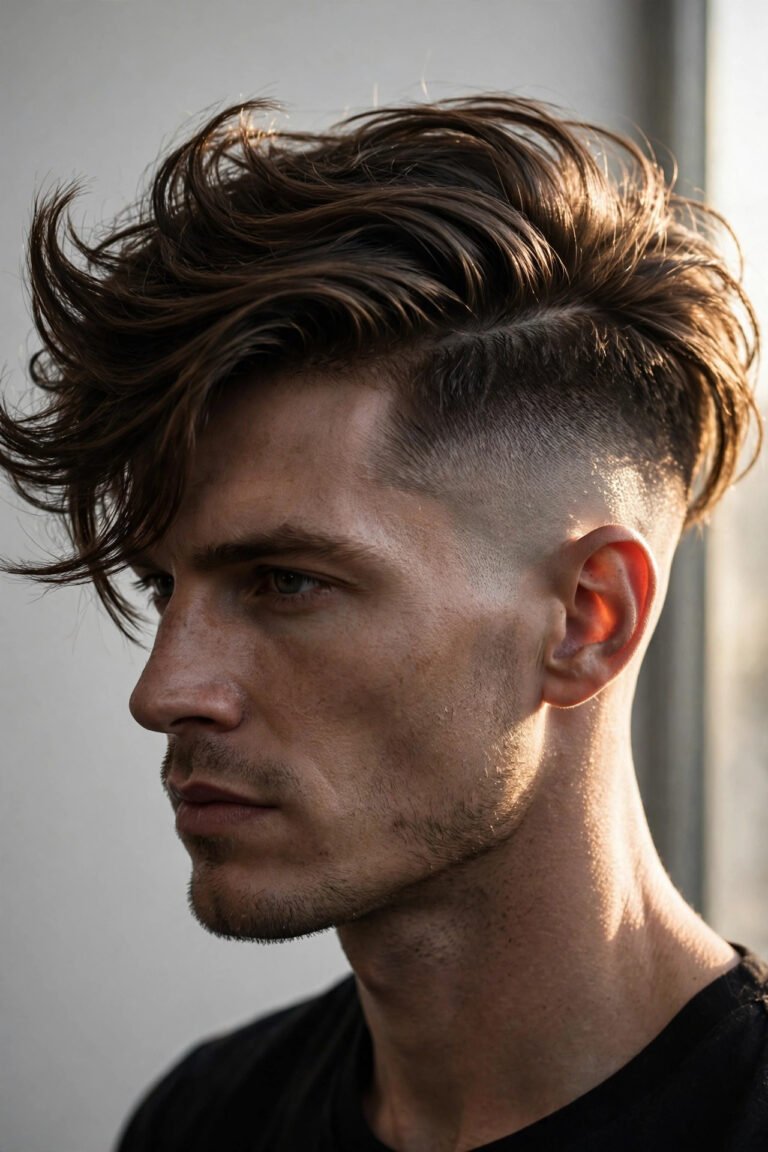
Who it suits: men with thick, straight hair that shows the disconnect line crisply — the sharper the contrast, the better this looks. It favors defined facial features and a confident personal style; this is not a cut for blending in. It is popular in creative industries and nightlife scenes where a striking silhouette is currency. Men with very fine hair should think twice: the disconnect exposes thinness on top rather than hiding it.
Styling it: the top is usually worn with volume — blow-dried up and back with a pre-styler, then locked with matte clay or a strong paste. The disconnect line needs to stay crisp, which means the sides need attention every two weeks; a grown-out disconnect just looks like an uneven haircut. This is a barber-dependent cut: find someone whose Instagram shows clean disconnect work, because the line placement makes or breaks it. Bring reference photos and discuss exactly where you want the disconnect to sit — higher placement is bolder, lower is slightly more conservative.
15. The Tapered Mohawk & 16. The Patterned Mohawk (Hair Designs)
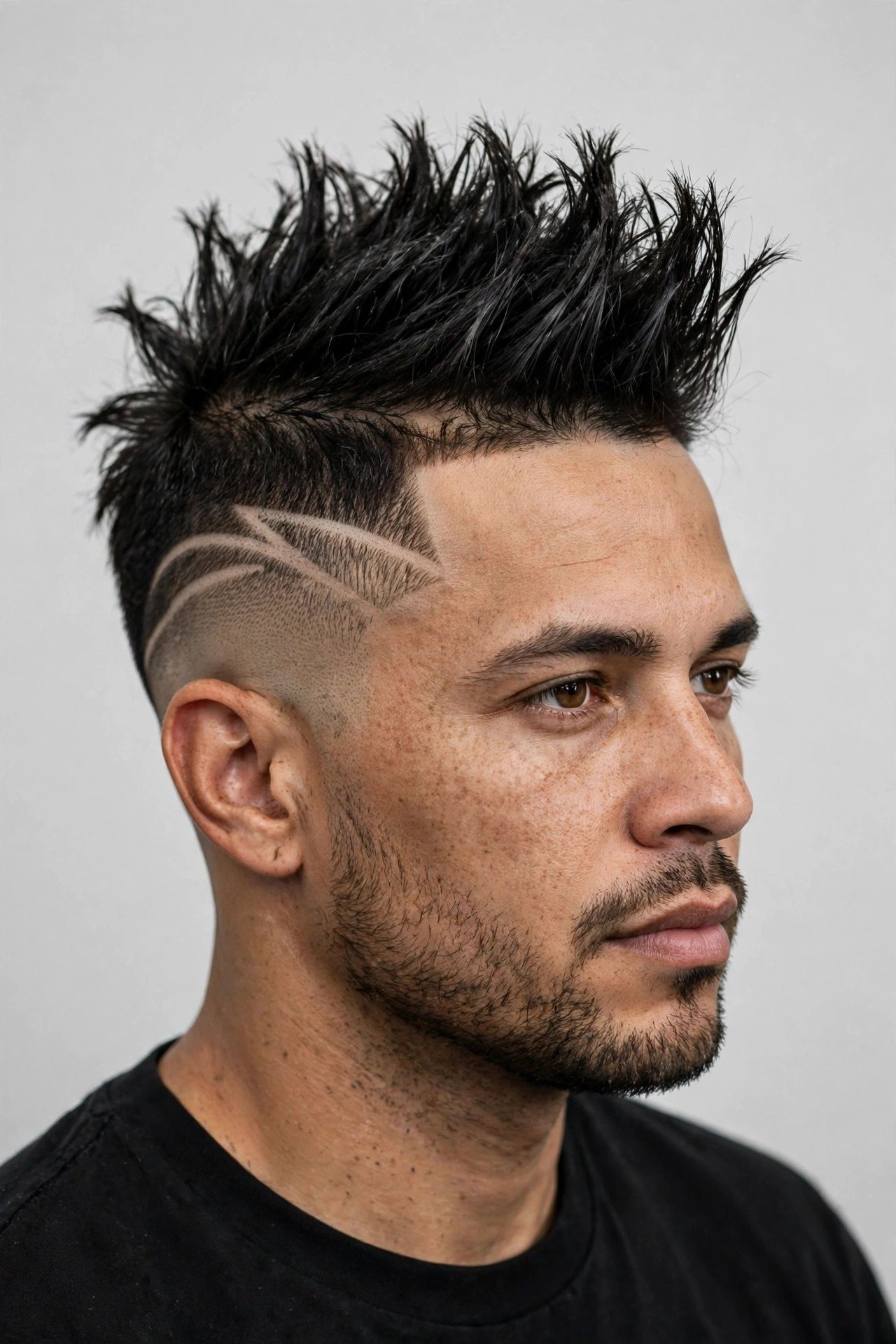
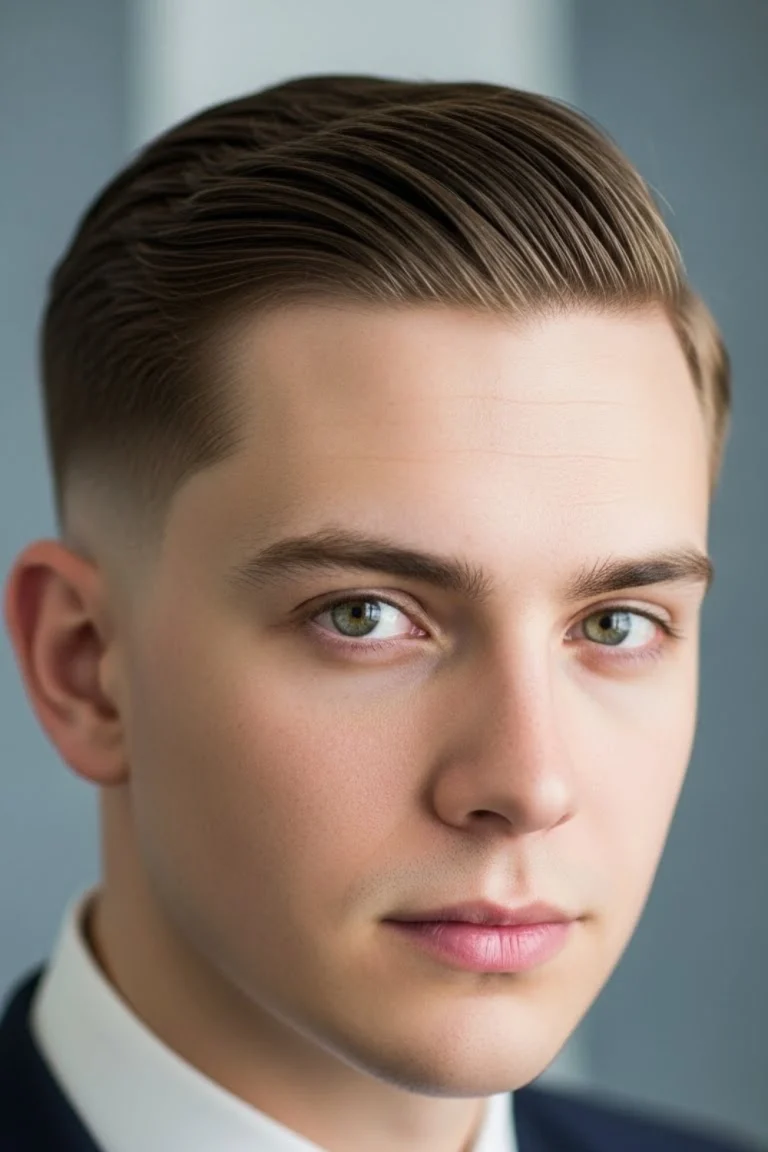
15. The Tapered Mohawk. The quietest mohawk on this list — and for many men, the smartest entry point. Instead of a skin fade or shave, the sides are tapered: gradually shortened from the top down, but never taken down to the skin. The top keeps a defined mohawk strip with real length. The result reads as a sharp, modern crop with a rebellious streak rather than a full statement cut.
Who it suits: professionals, students, and anyone whose life requires a haircut that never raises an eyebrow at work but still feels like theirs. The taper is the most conservative side treatment possible while keeping the mohawk silhouette, which makes this the best choice for a first mohawk if you are nervous. It works on every hair type and every face shape — there is genuinely no wrong candidate for a tapered mohawk.
Styling it: two minutes with matte paste, pushed up and textured — or combed neatly to the side for formal settings. The taper grows out the most gracefully of any side treatment here, so you can stretch cuts to four or five weeks. Tell your barber “tapered sides, not faded to skin, keep the mohawk shape on top” — and specify that you want the taper to follow the mohawk line rather than a standard all-around taper, which keeps the strip defined.
16. The Patterned Mohawk (Hair Designs). The mohawk as canvas. The sides are faded short and then etched with designs — geometric lines, tribal-inspired curves, lightning bolts, waves, even detailed images — using trimmers and razors, while the top keeps its mohawk strip. Barbershop artistry turned the faded side into a gallery wall, and the mohawk’s big blank sides are the perfect surface.
Who it suits: men who treat their haircut as self-expression and do not mind being a conversation starter. It is huge in barbershop culture, among athletes, and in creative scenes. The designs are temporary by nature — hair grows, designs blur — which is actually the appeal: you get a fresh piece of art every few weeks. Best on dark, thick hair where the design shows with maximum contrast against the skin fade.
Styling it: the top follows whatever mohawk variant you pair it with (burst fade and mid fade pairings are most popular), styled normally. The designs themselves need no daily care — but they need frequent barber visits, every one to two weeks, because a grown-out design looks messy rather than artistic. Find a barber who specializes in designs and check their portfolio; this is freehand artistry, and skill varies enormously. Start simple (a couple of clean lines) before commissioning anything elaborate, and remember that intricate designs cost extra — ask about pricing upfront.
Choosing Your Mohawk: Face Shapes, Hair Types & the Barber Script
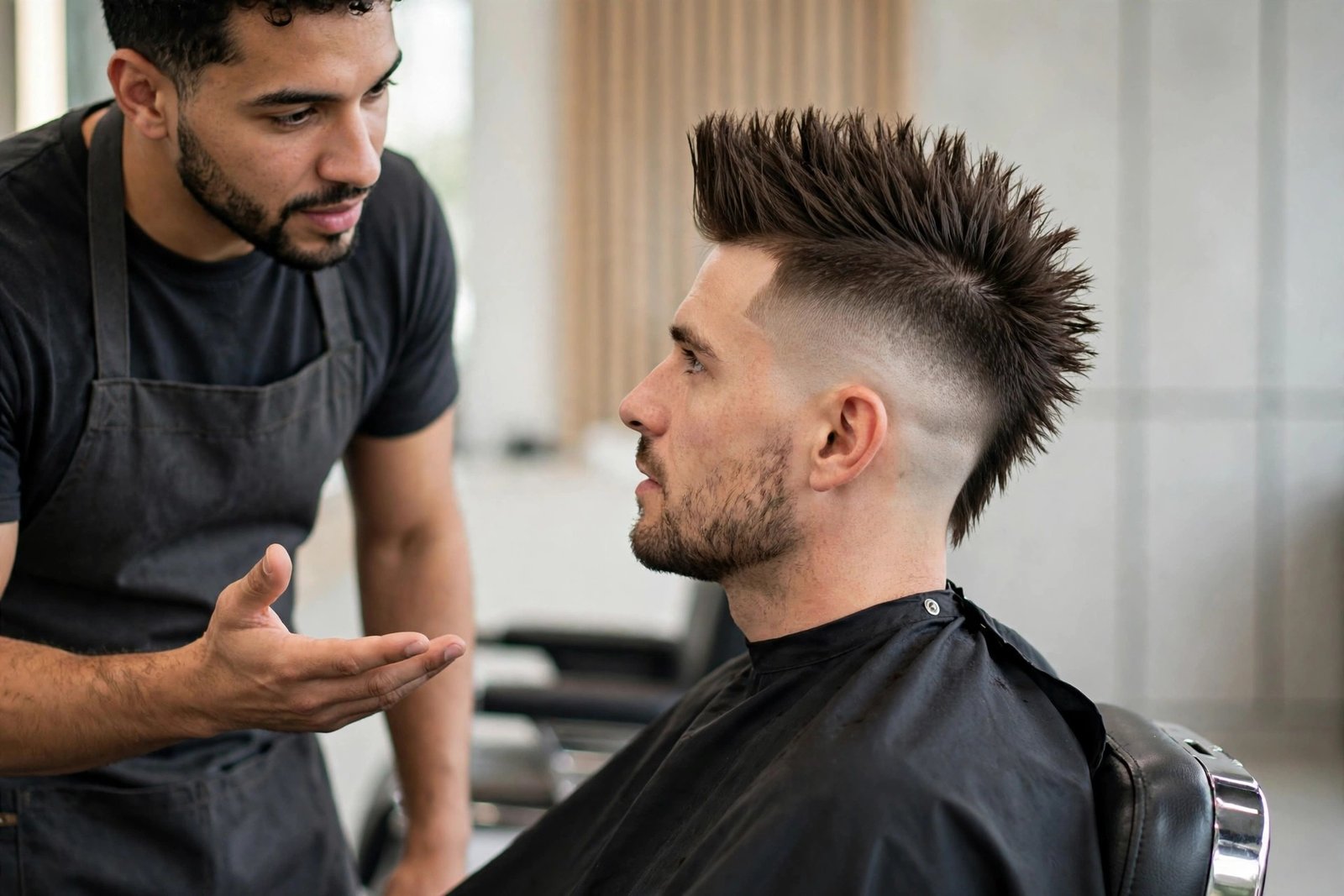
Sixteen styles is a lot of choice. Here is how to narrow it to the one that will actually look good on you — and how to walk out of the barbershop with it instead of a disappointment. Think of this as finding the mohawk haircut men with your face shape, hair type, and lifestyle keep coming back to.
Match it to your face shape. The mohawk’s superpower is verticality — every version adds height, which is a gift for round and square faces that benefit from the elongating effect. If your face is round, lean toward styles with real height on top: the classic, the faux hawk, the curly mohawk with volume. If your face is long or oblong, be careful with extreme height — the wide mohawk or the wavy textured version adds presence without stretching you further. Square faces do well with textured, slightly messy tops (faux hawk, short spiky, wavy) that soften the jawline’s angles; avoid the severest versions like the high-and-tight, which can emphasize boxiness. Oval faces can wear anything — the only decision is how bold you want to go. Heart-shaped faces (wide forehead, narrow chin) suit mohawks with some width on top, like the wide mohawk or a fuller curly version, which balance the narrower jaw.
Match it to your hair type. Thick, straight hair is the easiest — it stands up, holds shape, and does what it is told. Fine hair needs shorter versions (high-and-tight, short spiky, tapered) because long strips of fine hair go limp and stringy; a matte volumizing product helps enormously. Wavy hair is the sweet spot for the modern textured mohawks — burst fade, wavy textured, undercut — where the wave does the styling work for you. Curly and coily hair should embrace the curly mohawk and skip anything that requires straightening the strip; fighting your texture daily is a losing battle. Thinning hair: be honest about it. The high-and-tight mohawk and the short spiky version work with thinning because they keep everything short and uniform. Long strips and severe disconnects expose thin spots — do not choose a cut that puts your weakest area on display.
Match it to your life. This is the filter most men skip, and it matters more than face shape. How much morning time will you really spend? Be honest: if the answer is under three minutes, your list is the faux hawk, short spiky, high-and-tight, tapered, and wavy textured. If you will invest ten minutes, the classic, undercut, and disconnected open up. What does your job allow? The tapered, faux hawk, wide, and undercut (worn slicked) pass in conservative workplaces; the classic, liberty spikes, and patterned versions do not — plan accordingly or plan a career in something cooler. How often will you see the barber? Shaved sides and crisp designs need weekly to bi-weekly visits; tapered and blended versions stretch to a month. Pick the maintenance rhythm you will actually keep, because a grown-out mohawk just looks neglected.
The barber script — what to actually say. Walk in with two or three reference photos of the specific style you want — not “a mohawk,” the exact variant, on someone with roughly your hair type. Then say the technical specifics: which side treatment (skin shave, burst fade, mid fade, taper, undercut), how wide you want the strip (narrow classic two inches, medium three, or wide four to five), how long the top should be, and how you plan to style it daily. That last part matters — a good barber cuts differently for a man who spikes daily versus one who wears it textured. Ask what the grow-out will look like and when to come back. And the golden rule of barbershop communication: if the barber suggests something different, hear them out — they are looking at your actual head, not a photo. But if they push you toward something you do not want, hold your ground. It is your head.
The product kit. You do not need much, but you need the right things. A matte clay or paste is the daily driver for most modern mohawks — natural finish, workable hold. A strong-hold gel or wax is for the classic spikes and liberty spikes. A blow dryer is the difference between spikes that stand and spikes that flop — heat sets the shape. A light pre-styler (sea-salt spray or volumizing mousse) goes on damp hair before drying for grip and fullness. And a firm-hold hairspray locks the ambitious styles. Start with the clay and add the rest only if your chosen style demands it.
Frequently Asked Questions About the Mohawk Haircut for Men
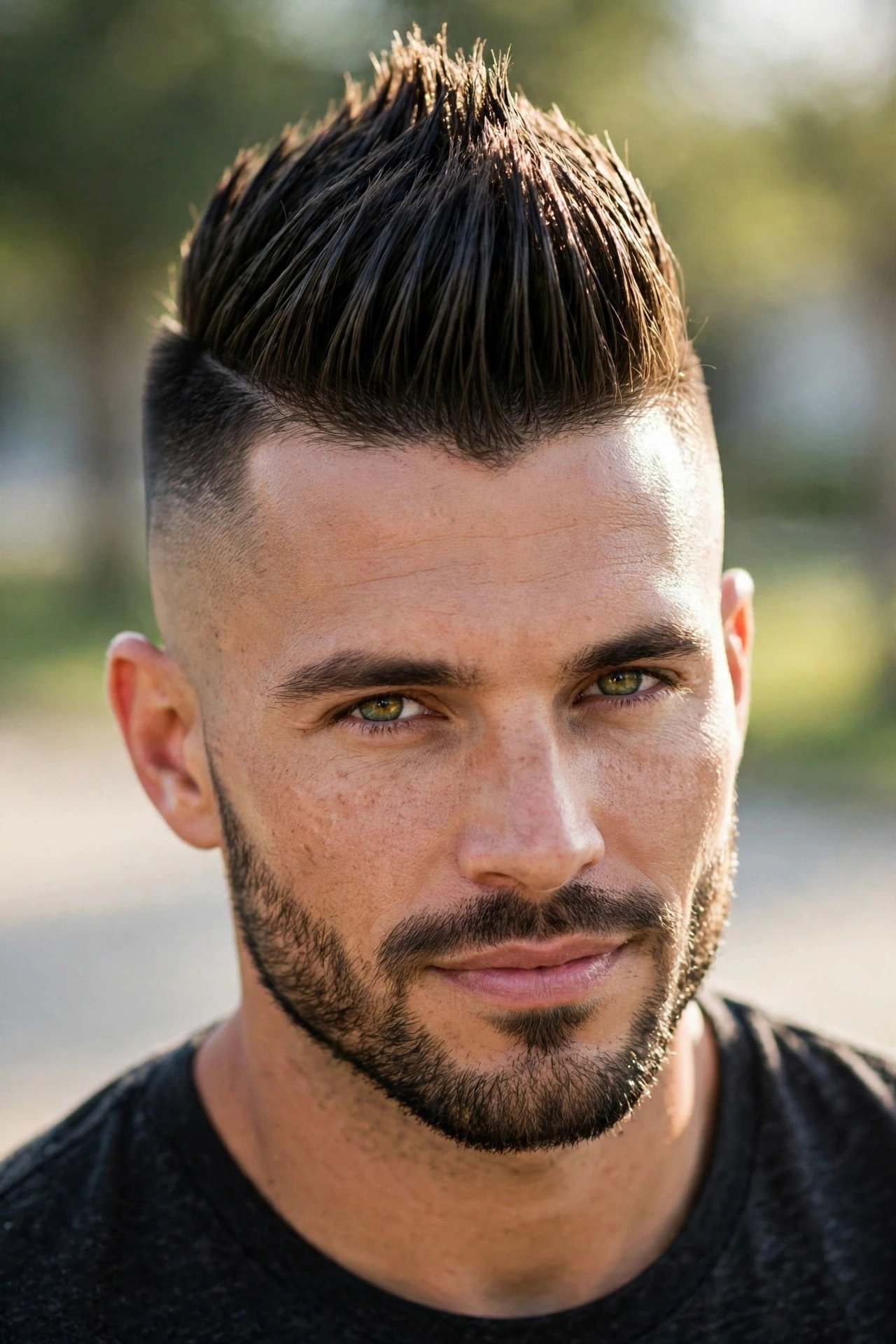
Will a mohawk suit my face shape?
Almost certainly, if you pick the right variant. The mohawk family is wide enough that every face shape has strong options: round faces get elongation from height-on-top styles like the faux hawk or classic; long faces should choose wider, less extreme versions like the wide mohawk; square faces suit textured tops that soften angles; oval faces can wear anything. The choosing guide above breaks it down in detail — match the variant to your bone structure rather than forcing one specific style.
Can I have a mohawk with a professional job?
Yes — pick from the office-safe end of the spectrum. The tapered mohawk, faux hawk, wide mohawk, and undercut mohawk (worn slicked back) all pass in conservative workplaces because they read as sharp modern cuts rather than statements. If you want the mohawk haircut men in finance, law, or client-facing roles can wear without a second glance, start with the tapered version or the faux hawk. Save the classic, liberty spikes, and patterned designs for creative industries or your off-duty life. When in doubt, start subtle — you can always go bolder at the next appointment, but you cannot un-shave sides before Monday.
What is the difference between a mohawk and a faux hawk?
A true mohawk has the sides shaved or faded very short with a distinct, defined strip of longer hair down the center — there is a clear visual break between sides and top. A faux hawk keeps the raised-center silhouette but with longer, blended sides (usually a taper or short fade) so everything flows together. The faux hawk is the wearable everyday version; the mohawk is the statement. Most of the 16 styles in this guide sit somewhere between the two extremes.
How fast does a mohawk grow out, and what does it look like?
Sides grow visibly within one to two weeks — that is why shaved and skin-faded versions need the most upkeep. The grow-out path depends on the variant: faded mohawks melt into textured crops, the wavy and curly versions grow into fuller natural styles, and the undercut version just looks like longer hair on top. Nothing grows out disastrously as long as you keep getting trims; the awkward phase only hits if you abandon maintenance entirely.
How long does it take to style a mohawk each morning?
It ranges from one minute to forty-five. The low-effort end — faux hawk, short spiky, high-and-tight, tapered, wavy textured — takes one to three minutes with fingers and matte product. The middle — classic, undercut, disconnected, curly — takes five to fifteen minutes, usually involving a blow dryer. The extreme end — liberty spikes — is a thirty to forty-five minute production. Pick the style whose routine you will actually do every day, not the one you will do twice and abandon.
Can women wear mohawks too?
Absolutely — the mohawk has never been exclusive to men, from punk-era women who wore it as fiercely as anyone to today’s undercut and curly mohawk styles that look incredible on women. The cutting and styling principles are identical; only the surrounding presentation changes. If you are shopping for inspiration beyond this guide, women-specific mohawk galleries are worth a look for ideas on softer grow-outs and longer pairings.
Conclusion
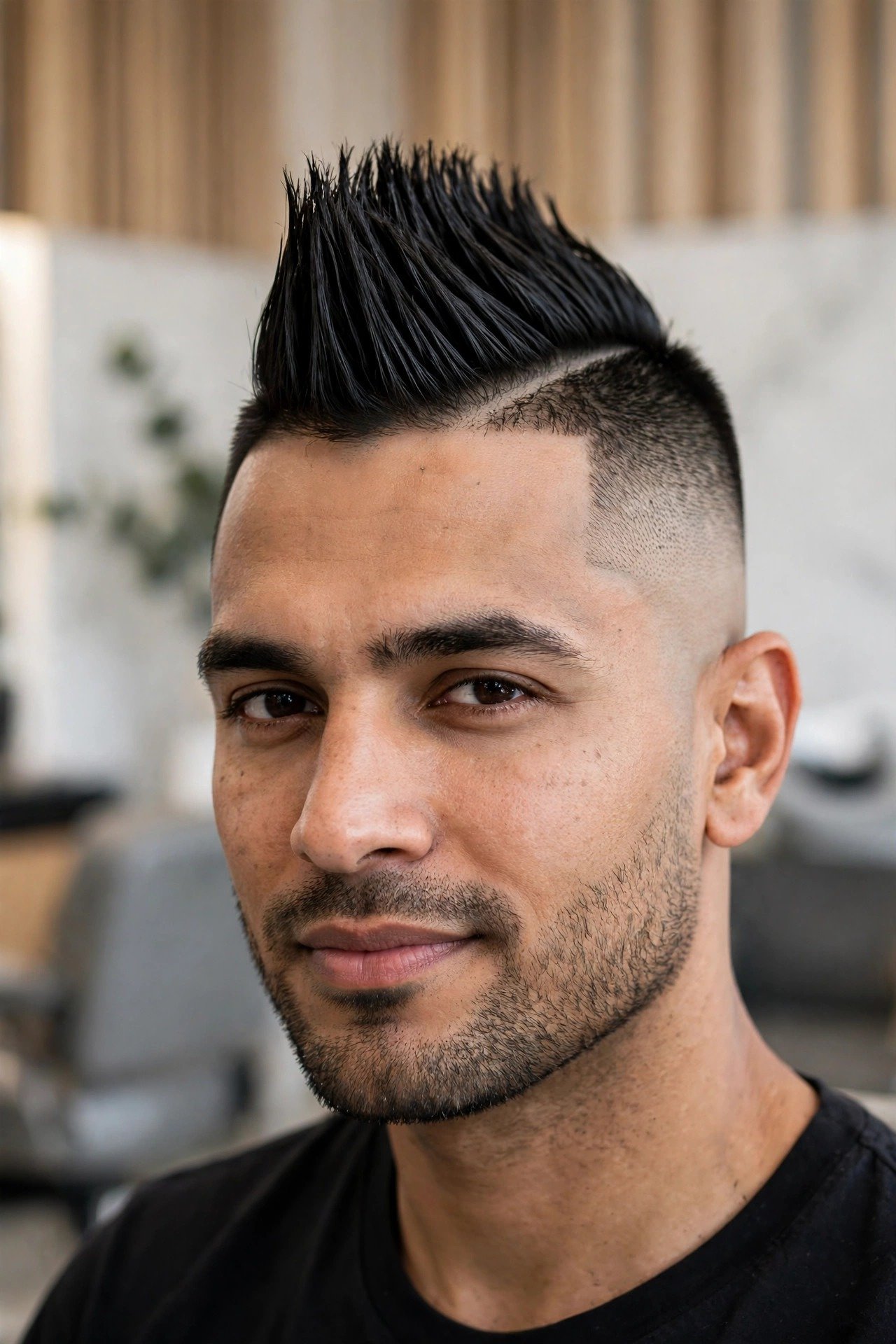
Sixteen styles, one through-line: the mohawk haircut men are choosing in 2026 is not about rebellion for its own sake — it is about deciding what your hair says and saying it clearly. Whether that is the full-throttle classic, the polished burst fade, the set-it-and-forget-it curly version, or the boardroom-safe taper, there is a variant here that fits your face, your hair, your job, and the amount of effort you will honestly put in each morning.
The men who love their mohawks most did three things right: they matched the variant to their real life (not their fantasy life), they brought reference photos and spoke specifics in the barber’s chair, and they kept up with the maintenance rhythm their chosen style demands. Do those three things and the cut takes care of the rest.
So pick your number from the sixteen, book the chair, and walk out standing a little taller. That is what the mohawk has always been for.