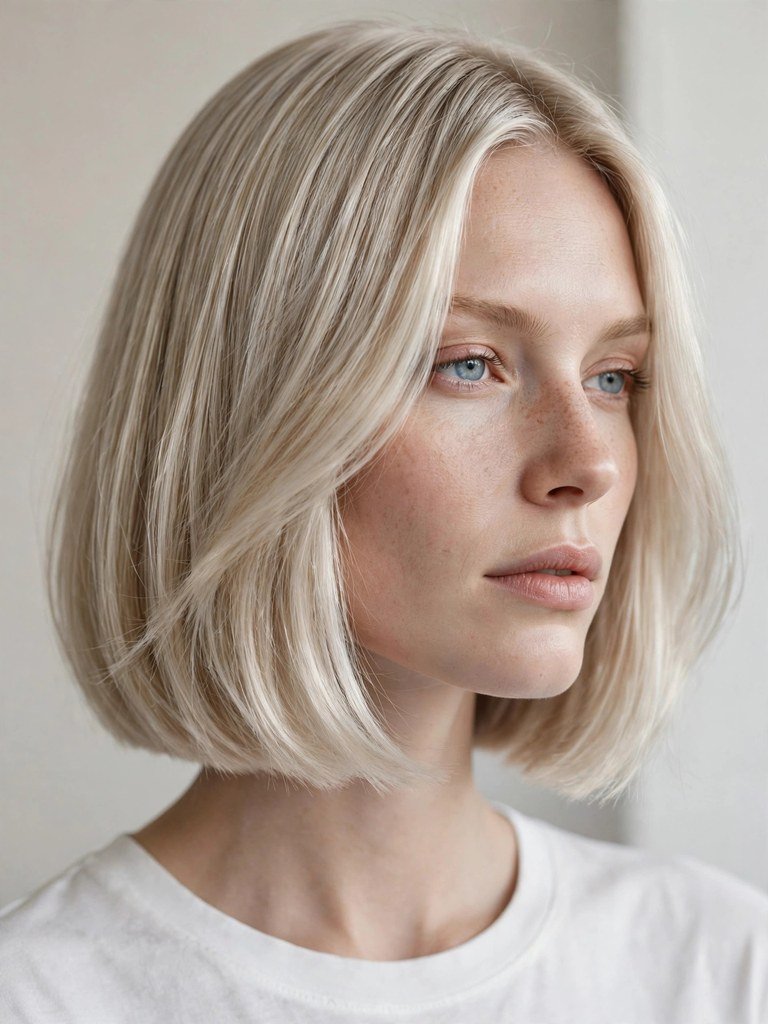
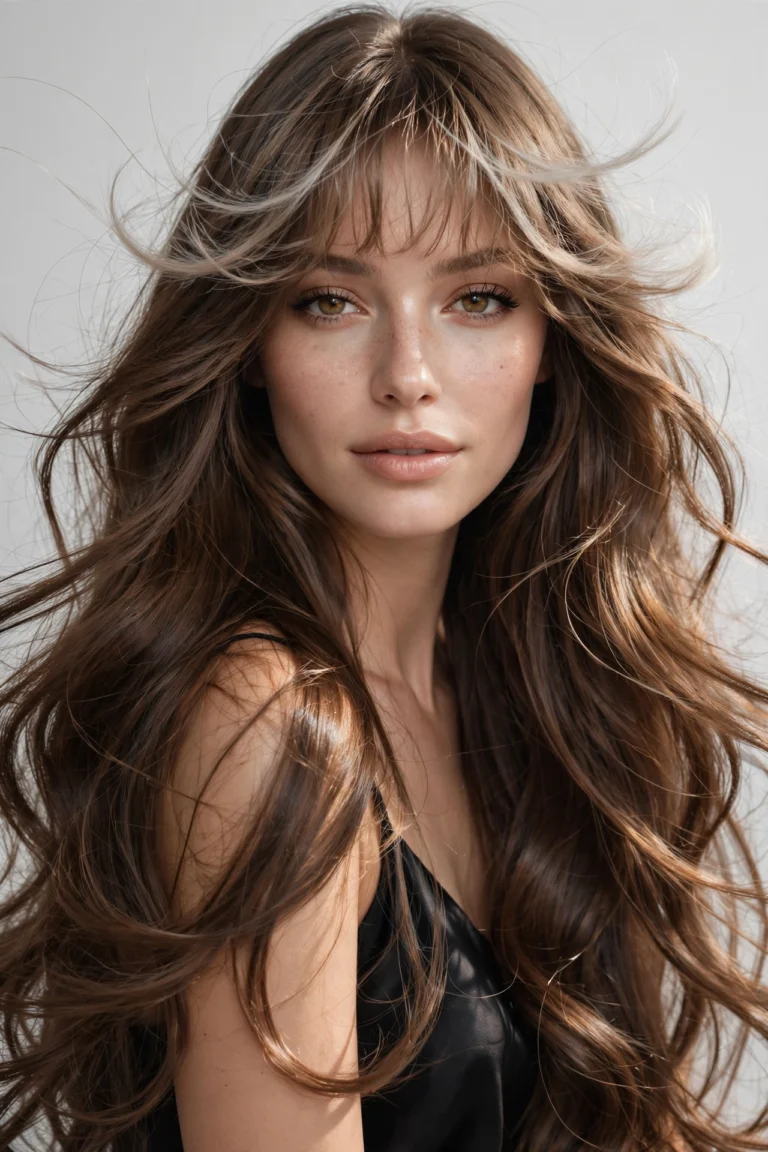
Lived-In Blonde Women 2026: 16 Low-Maintenance Dimensional Shades
Lived-In Blonde: 2026’s Smartest Blonde
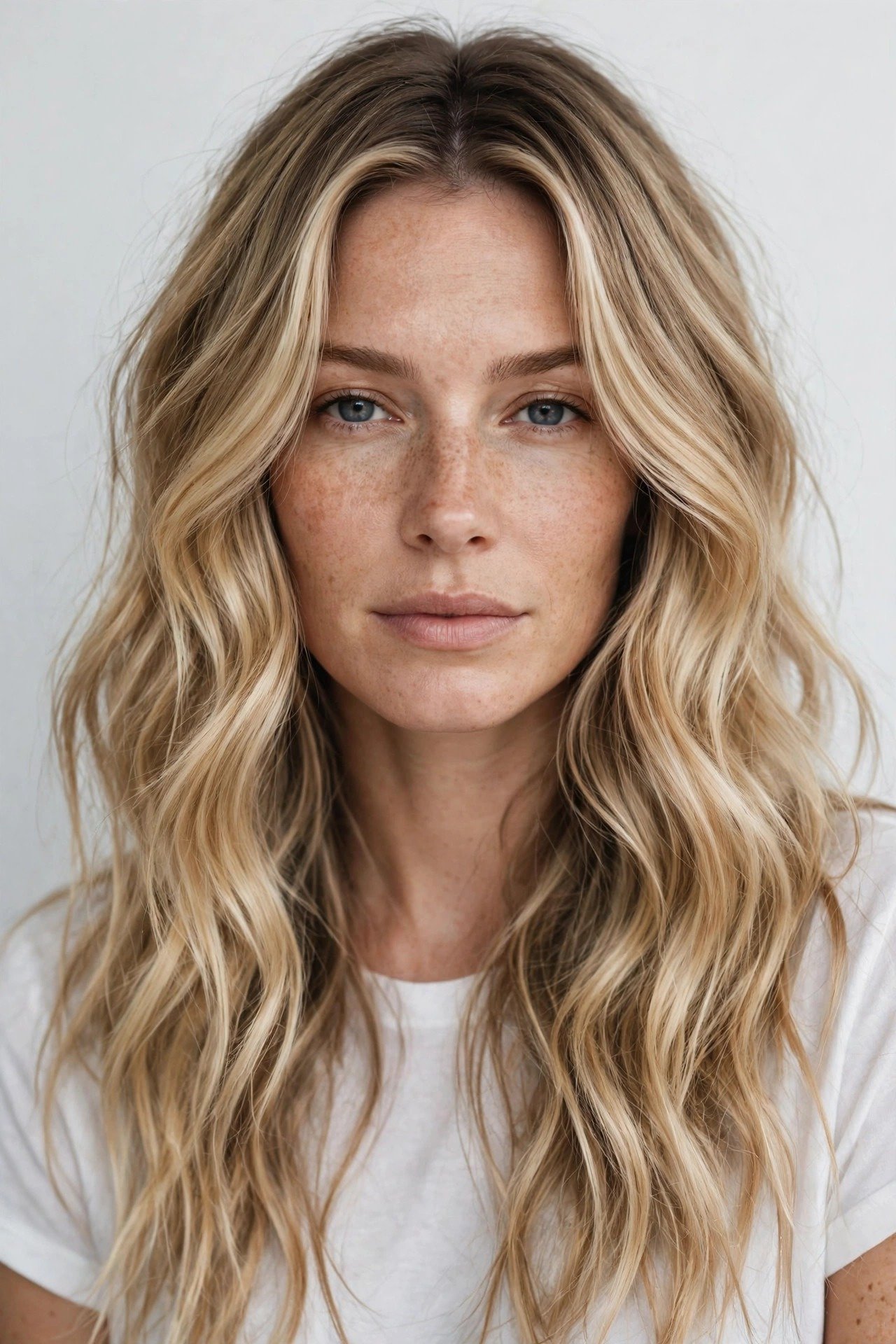
Lived in blonde is the blonde for women who’ve done the math. Traditional all-over blonde demands salon visits every four to six weeks, costs a small fortune annually, and punishes you with a harsh grow-out line the moment you miss an appointment. Lived-in blonde — dimensional blonde with a shadowed root, melted transitions, and strategically placed brightness — flips that equation: it grows out beautifully, needs touch-ups two to three times a year instead of eight, and looks more expensive precisely because it doesn’t try so hard.
What exactly is lived-in blonde? It’s a coloring philosophy, not a single shade: the colorist creates dimension by leaving depth at the root (your natural color or a shadow root), painting or foiling lightness through the mid-lengths and ends, and melting the transition so there’s no visible line of demarcation. The result reads as naturally sun-kissed hair — the kind that suggests summers outdoors rather than hours in a salon chair. Techniques include balayage, foilayage, root shadowing, root melting, and lived-in foiling; the best colorists combine several in one appointment.
This guide covers sixteen lived-in blonde shades for 2026, each with the full colorist-level breakdown: who the shade suits (skin tone, natural base color, eye color), exactly what to tell your colorist (including the technical terms that get you the right result), how the technique works, realistic cost ranges, the upkeep schedule and at-home maintenance, and the mistakes that turn dimensional blonde into damaged blonde. You’ll also get the economics — what lived-in blonde actually costs per year versus traditional blonde — because smart blonde is partly a financial decision.
The single most important thing to understand: lived-in blonde is a grow-out strategy disguised as a color. Every technique here is engineered around one question — “what will this look like in three months?” If the answer is “still beautiful,” it’s lived-in. If the answer is “a harsh line,” it’s not. For the balayage technique specifically, our honey blonde balayage guide goes deeper into the hand-painted method.
16 Low-Maintenance Dimensional Blonde Shades for 2026
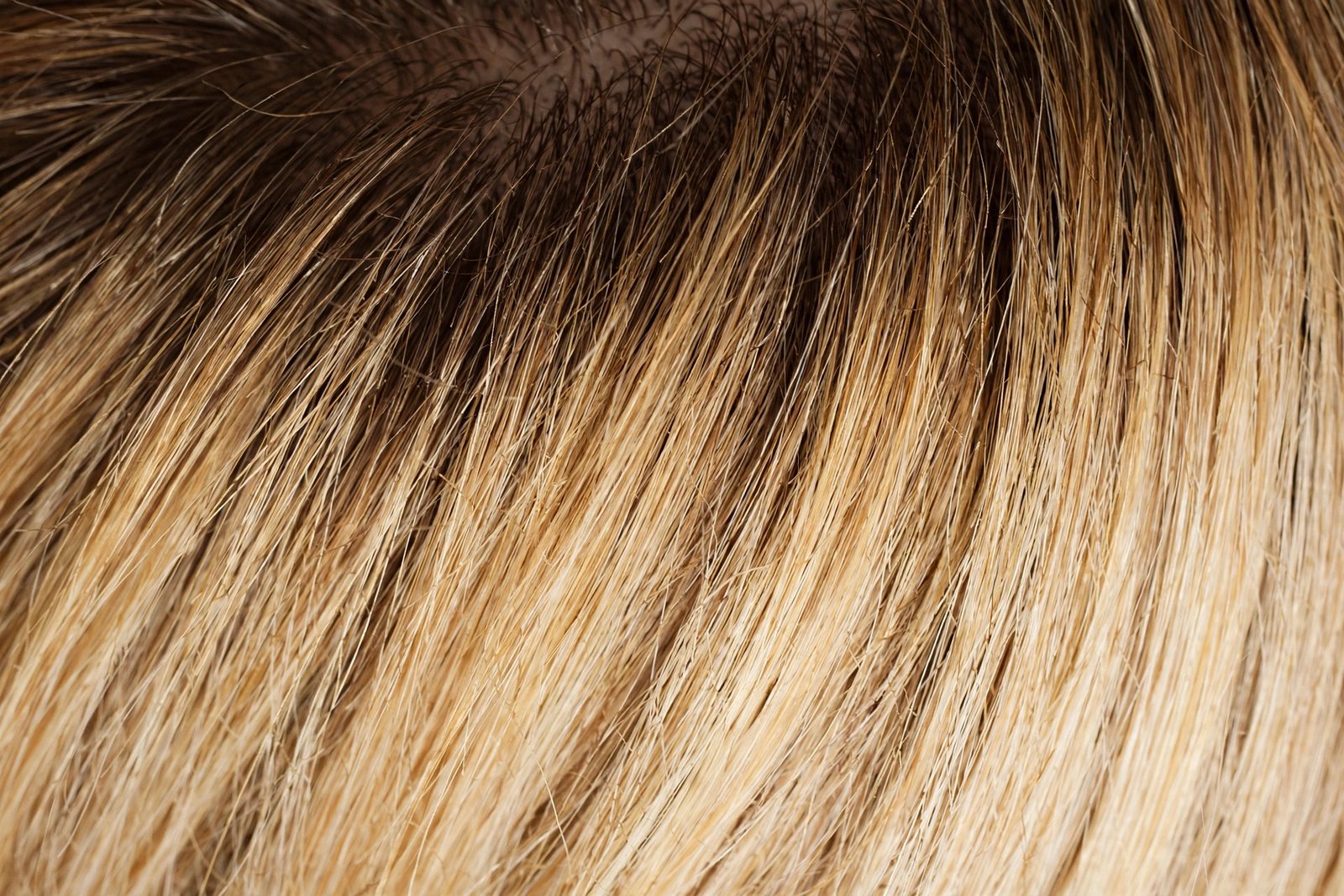
Sixteen shades, one principle: depth at the root, brightness where the light hits, and no harsh lines anywhere. Before your appointment, determine your natural base level (1 = black, 10 = palest blonde) — every consultation below references it, because what your colorist can achieve depends entirely on where you’re starting. Bring photos of the grow-out, not just the fresh color: ask to see your colorist’s healed work (3+ months out), because that’s the lived-in promise you’re buying.
1. The Root-Shadow Lived-In Blonde
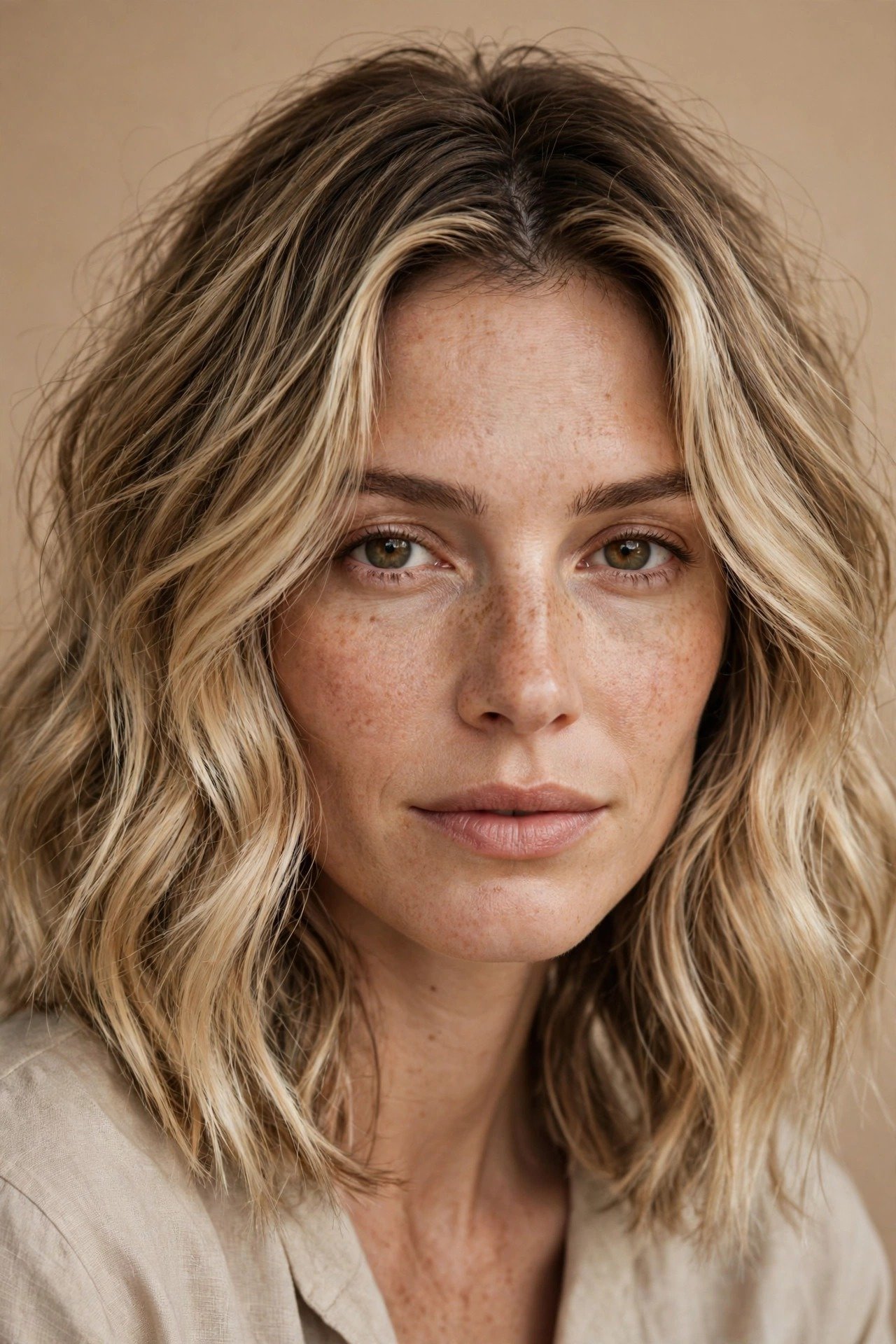
Who it suits: The root shadow — your natural root color (or a close match) shadowed 1–2 inches down over lightened hair — is the foundation technique of lived-in blonde. It suits natural bases from level 4 (medium brown) to level 8 (dark blonde); darker bases create more dramatic dimension, lighter bases create subtlety. All skin tones work — the shadow is customized to your natural color, so it always harmonizes.
What to ask your colorist: “A root shadow on my blonde — shadow my natural level [X] down 1–2 inches, melted into the blonde with no line.” Specify the shadow depth: a deeper shadow (2+ levels darker than the blonde) creates bold dimension; a soft shadow (1 level) creates subtlety. Ask for the shadow to be “melted, not striped” — the transition should be a gradient, not a band. Crucially: ask what the grow-out will look like at 3 months, and don’t accept vague answers.
How the technique works: After lightening (foils or balayage), the colorist applies a demi-permanent color matching your natural base to the root area, then blends (“melts”) it downward with a brush or comb before it processes. The demi-permanent fades gradually rather than growing out with a line — that’s the lived-in magic. Processing: 15–25 minutes. The technique adds 30–45 minutes to the appointment.
Cost: Root shadow as an add-on: $50–$100. As part of a full lived-in blonde service: included in the $250–$450 total. Annual cost with 2–3 visits: $500–$1,200 versus $1,500–$3,000 for traditional 6-week blonde maintenance.
Upkeep: Touch-ups every 12–16 weeks. At home: purple shampoo weekly (if cool-toned), bond-building treatment bi-weekly, heat protectant always. The shadow itself needs no maintenance — it fades gracefully by design.
Common mistakes: Shadow too dark (creates a visible band instead of a melt — the shadow should be close to your natural level); permanent instead of demi-permanent color (grows out with a line, defeating the purpose); and skipping the melt (a harsh shadow line is worse than no shadow at all).
2. The Balayage Lived-In Blonde
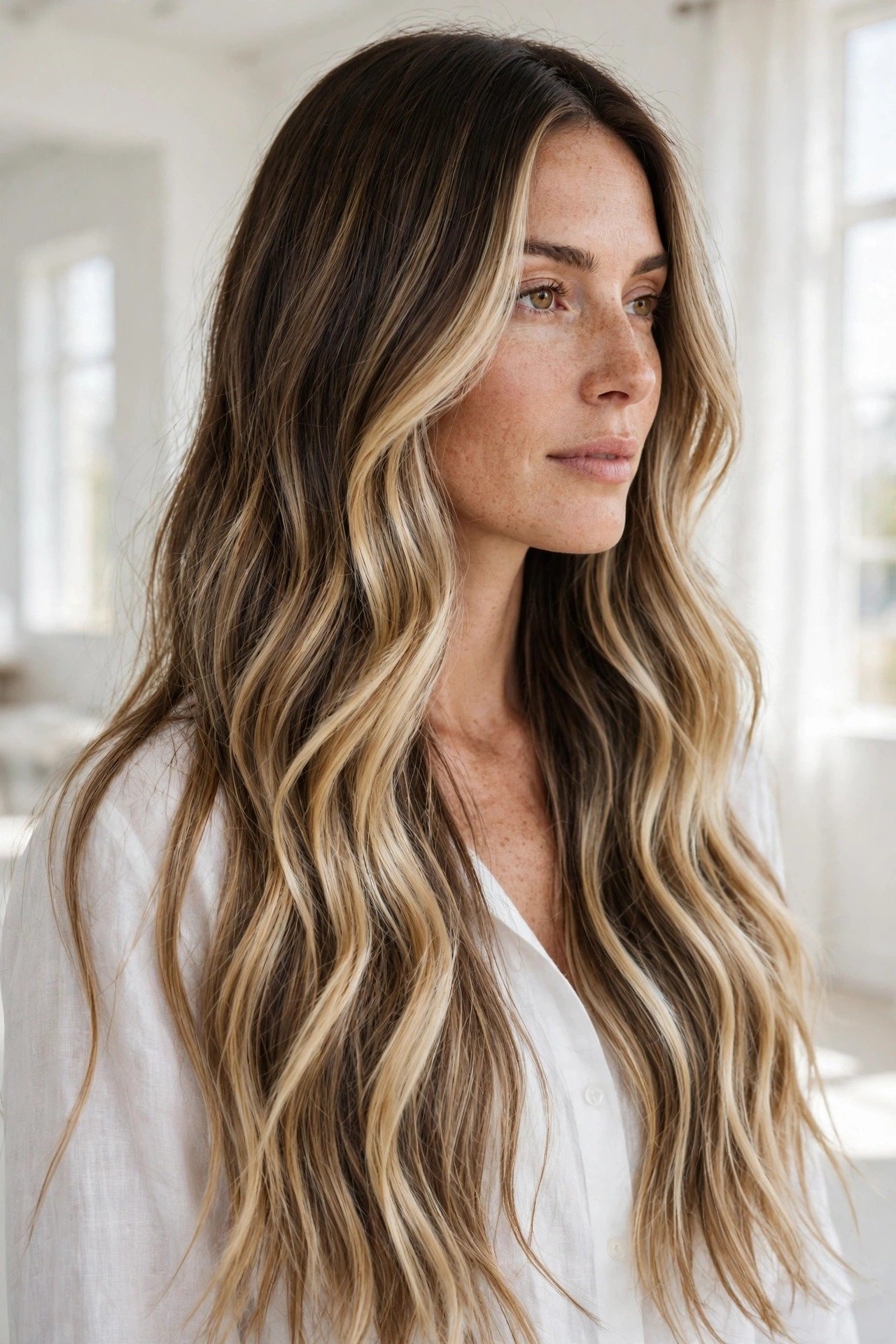
Who it suits: Balayage — hand-painted lightness swept through the hair — is the most natural-looking lived-in technique. It suits anyone wanting sun-kissed dimension; natural bases level 5–8 get the most natural result. The painted application means no foil lines, no harsh regrowth — just graduated lightness. All face shapes and skin tones; the colorist customizes placement.
What to ask your colorist: “A lived-in balayage — hand-painted brightness concentrated through the mid-lengths and ends, with my natural root left alone [or softly shadowed].” Specify the lightness: 2–3 levels lighter than base for natural, 4+ for dramatic. Specify the tone: warm honey, neutral beige, or cool ash. Ask where the brightness starts: lived-in balayage starts lower (mid-shaft) than traditional balayage — the first 3–4 inches stay natural.
How the technique works: The colorist hand-paints lightener onto sections in a sweeping motion, saturating the ends more heavily than the mid-lengths, with no foils (or occasionally film for extra lift). The open-air processing creates a soft, diffused lift — less dramatic than foils, more natural. Processing: 30–50 minutes. Total appointment: 3–4 hours.
Cost: $250–$450 for a full balayage; $150–$250 for a partial. Annual cost with 2 visits: $500–$900.
Upkeep: Touch-ups every 12–20 weeks — balayage has the softest grow-out of all techniques. Toner refresh every 6–8 weeks ($50–$80) keeps the tone clean between full appointments. At home: color-safe shampoo, weekly mask, purple shampoo if cool-toned.
Common mistakes: Expecting dramatic lift in one session on dark hair (balayage lifts gradually — dark bases need 2–3 sessions for significant blonde); the colorist starting the brightness too high (loses the lived-in effect); and neglecting toner (untoned balayage goes brassy within weeks).
3. The Honey Lived-In Blonde
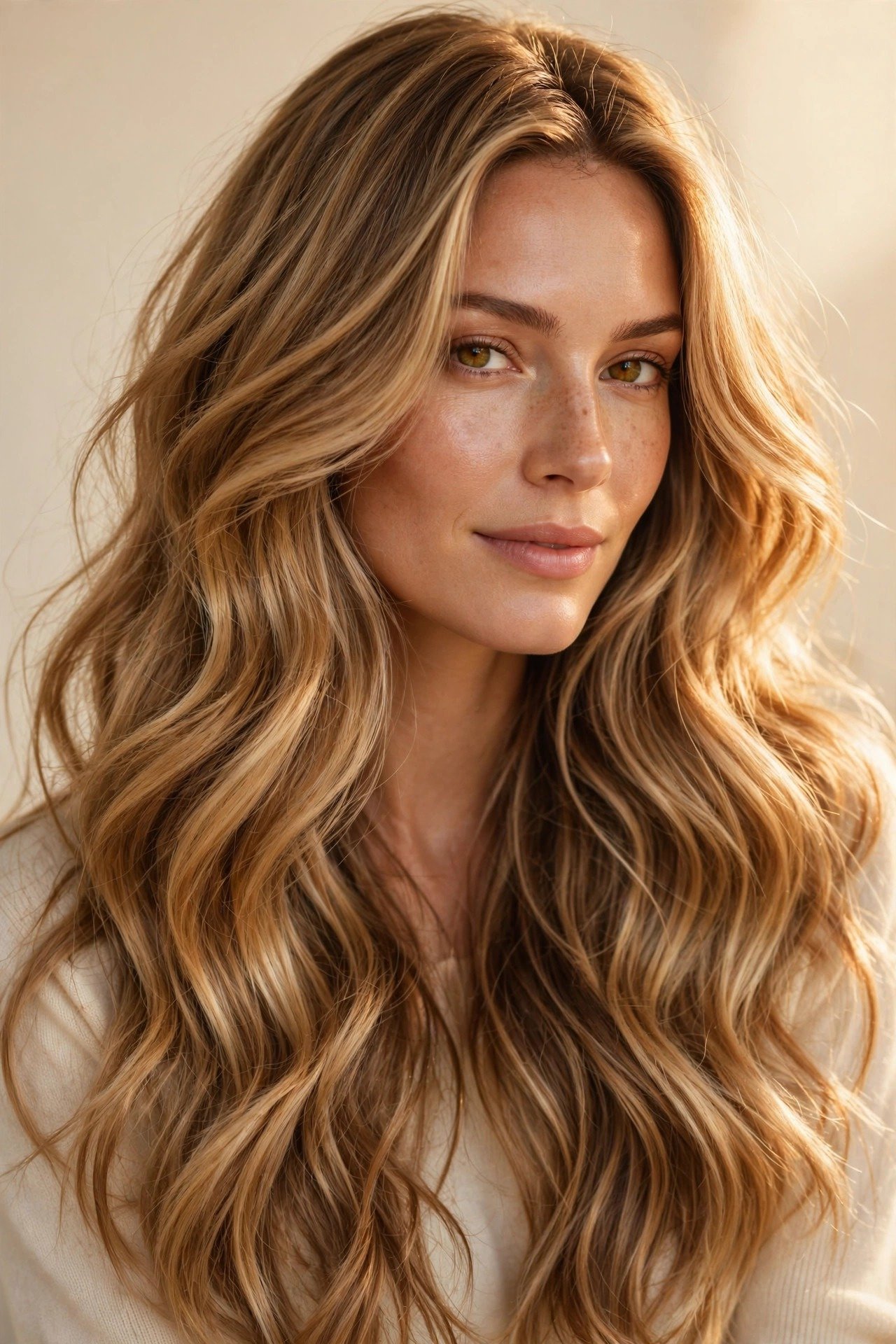
Who it suits: Honey blonde — warm, golden, rich — is the most universally flattering lived-in blonde. It suits warm and neutral skin tones especially (the golden tones echo the skin’s warmth), and it’s stunning on medium skin. Natural bases level 5–7 achieve it most easily. Green, hazel, and brown eyes glow against honey tones.
What to ask your colorist: “A honey lived-in blonde — warm golden blonde with dimensional lowlights, root shadow for grow-out.” Specify the honey depth: light honey (bright, golden) versus deep honey (richer, more amber). Ask for lowlights woven through — the contrast between the honey brightness and slightly deeper pieces is what creates the expensive dimension. Request a gloss — honey’s beauty is in its reflectivity.
How the technique works: Typically a combination: balayage or foilayage for the honey brightness, plus lowlights (demi-permanent, 1–2 levels deeper) woven through for dimension, finished with a root shadow and a golden gloss. The multi-technique approach is what separates expensive honey from flat box-color honey.
Cost: $300–$500 for the full multi-technique service. Annual cost with 2–3 visits: $600–$1,200.
Upkeep: Touch-ups every 12–16 weeks; gloss refresh every 6–8 weeks ($60–$90) maintains the golden reflectivity. At home: color-safe shampoo, weekly hydrating mask (warm tones show dryness), heat protectant. Honey fades faster than ash — the warmth literally washes out — so the gloss refreshes matter.
Common mistakes: Going too golden on cool skin (it clashes — cool skin needs a neutral honey, not a yellow one); skipping lowlights (one-tone honey looks flat); and using purple shampoo excessively (it neutralizes the warmth you’re paying for — use it sparingly, if at all, on honey).
4. The Platinum Root-Melt Blonde
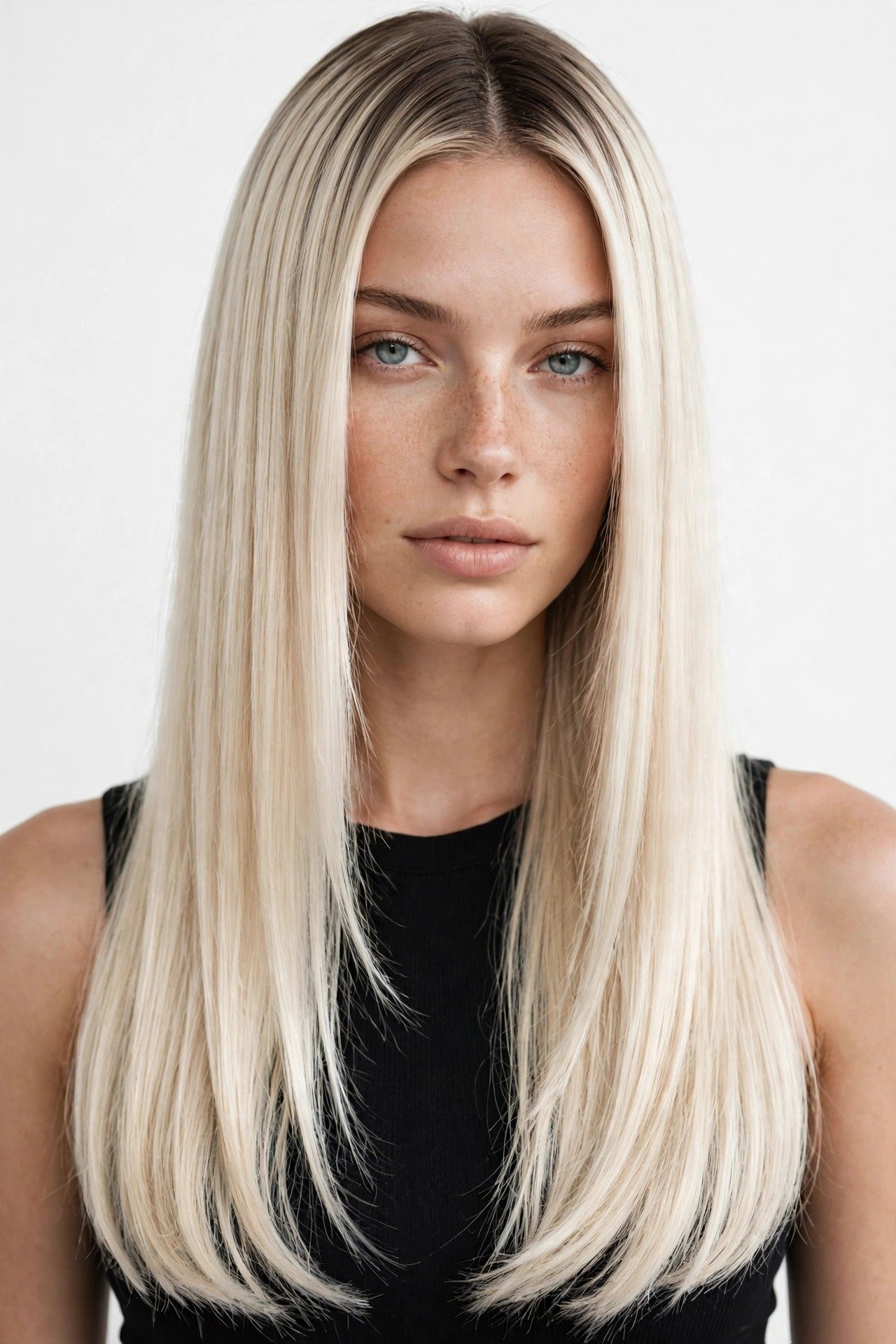
Who it suits: The platinum root-melt delivers maximum brightness with minimum maintenance — icy platinum lengths melting from a shadowed root. It suits cool skin tones best (the icy tone needs a cool canvas) and natural bases level 7+ (darker bases struggle to reach platinum healthily). Blue, grey, and green eyes are electrified by platinum. This is the boldest lived-in blonde — high impact, surprisingly low maintenance.
What to ask your colorist: “A platinum root-melt — maximum lift through the lengths, with a [natural/ash] shadow root melted in for grow-out.” Be honest about your hair’s history: platinum requires healthy hair, and previously colored or compromised hair may not survive the lift. Ask for a strand test if there’s any doubt. Specify the platinum tone: icy (blue-based), silver (neutral), or creamy (slightly warm) — they suit different skin tones.
How the technique works: Full-head foiling or double-process lightening to palest yellow (level 10), toned to platinum, then a root shadow/melt applied to create the lived-in grow-out. The root melt is non-negotiable — without it, this is high-maintenance platinum, not lived-in. Olaplex or equivalent bond-builder is used throughout. Appointment: 4–6 hours.
Cost: $350–$600+ for the initial service (the most expensive lived-in blonde). Annual cost with 2–3 visits: $700–$1,500 — still less than traditional platinum’s 6-week cycle ($2,000–$4,000/year).
Upkeep: Touch-ups every 10–14 weeks (the root melt extends what would be a 4-week platinum cycle). Toner every 4–6 weeks ($60–$100) — platinum goes yellow fast. At home: purple shampoo 2x weekly, bond-building treatment weekly, deep conditioning weekly, heat protectant always. Platinum is the highest-maintenance lived-in blonde — the “lived-in” refers to the grow-out, not the tone maintenance.
Common mistakes: Attempting platinum on compromised hair (breakage — the strand test exists for a reason); skipping toner maintenance (yellow platinum looks cheap within 3 weeks); and underestimating the at-home routine — platinum without purple shampoo and bond-building is a 6-week disappointment.
5. The Dimensional Ash Blonde
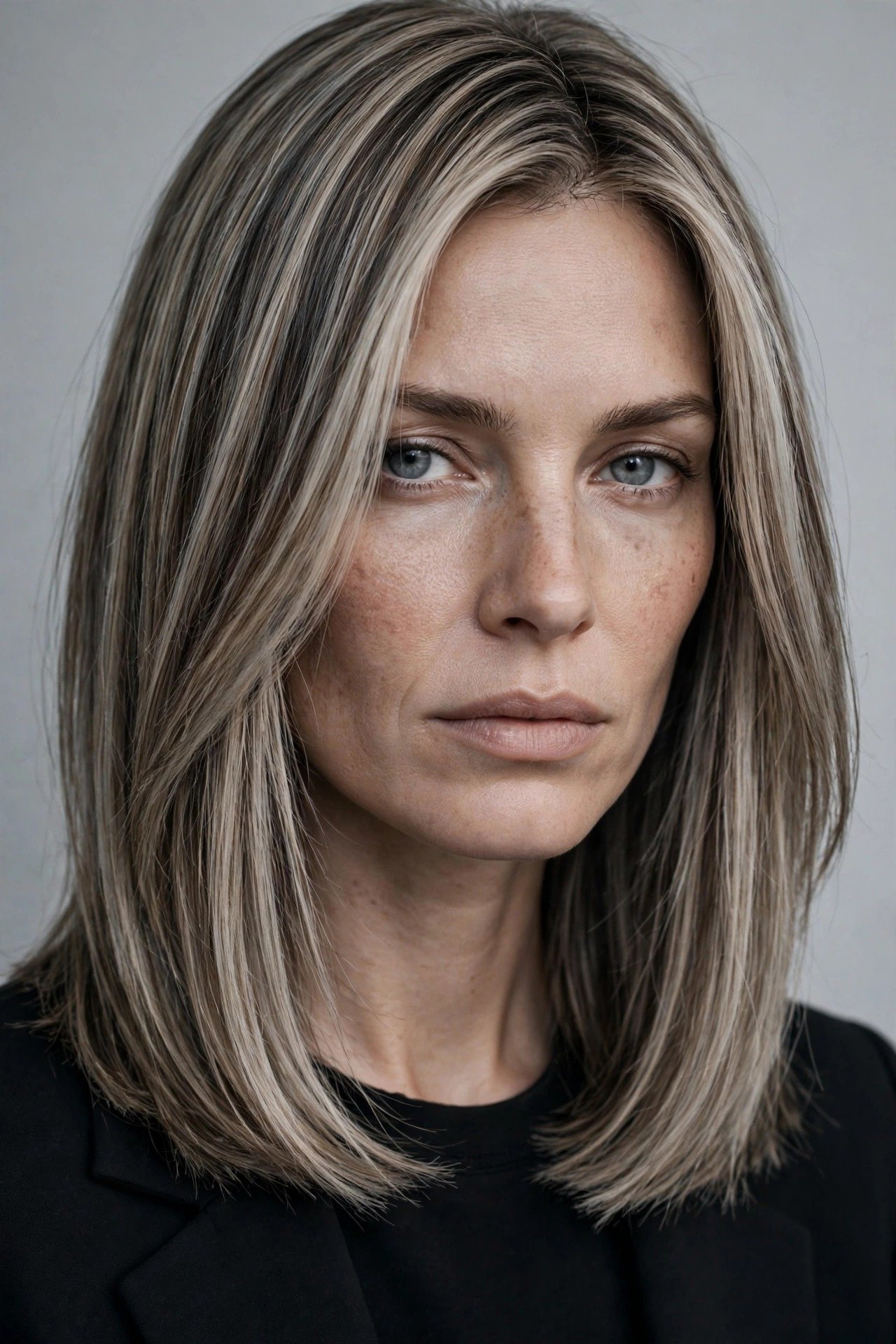
Who it suits: Ash blonde — cool, smoky, muted — is the sophisticated lived-in blonde. It suits cool skin tones (pink, blue undertones) and natural bases level 6–8. The smokiness is incredibly forgiving: it camouflages regrowth better than any other tone because the muted color reads as “natural shadow” rather than “faded color.” Blue and grey eyes are stunning with ash.
What to ask your colorist: “A dimensional ash blonde — cool, smoky blonde with depth at the root and subtle lowlights, lived-in grow-out.” Specify the ash depth: light ash (bright but cool) versus dark ash/smoky (moodier). Warn your colorist if your hair pulls warm — some hair fights ash tones, and the colorist needs to formulate accordingly (often with a stronger ash toner or a blue-based filler).
How the technique works: Lightening to the target level, then toning with an ash-based formula; lowlights in a slightly deeper ash woven through for dimension; root shadow in a cool brown. The ash toner is the star — it must be carefully formulated to avoid going grey or green (the two risks of over-ashing).
Cost: $280–$480. Annual cost with 2–3 visits: $560–$1,200.
Upkeep: Touch-ups every 12–16 weeks; toner refresh every 6–8 weeks ($50–$80) — ash fades to warmth, and the refresh restores the smokiness. At home: purple shampoo weekly, color-safe products. Ash is the most grow-out-forgiving blonde — the muted tone literally looks like natural shadow as it grows.
Common mistakes: Over-ashing (too much ash toner goes grey or greenish — trust your colorist’s formulation); choosing ash on warm skin without adjusting (it can look sallow — ask for a neutral-ash instead of a blue-ash); and heat styling without protectant (heat oxidizes ash tones to warmth faster than any other factor).
6. The Golden Butter Blonde
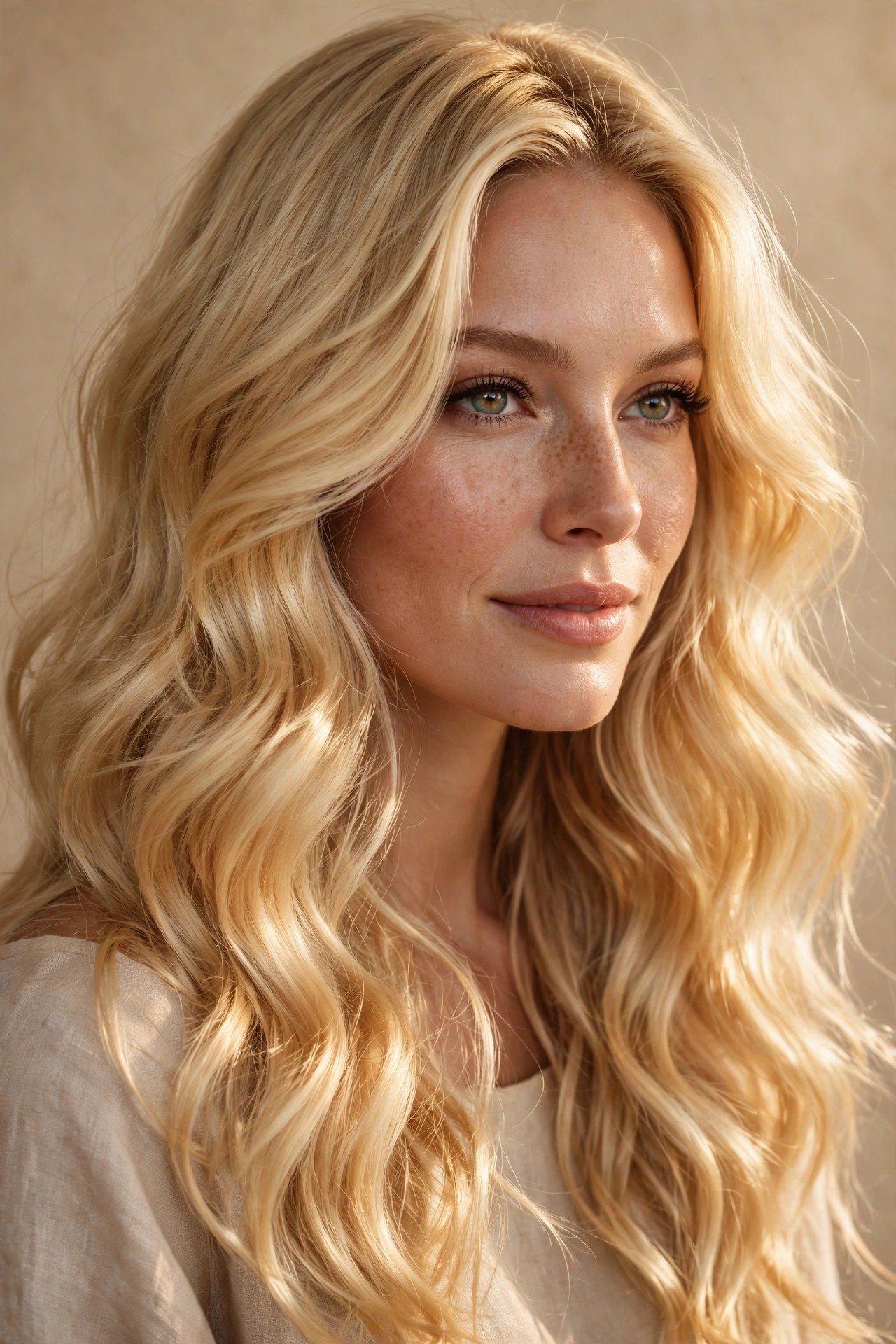
Who it suits: Butter blonde — rich, creamy, golden — is honey blonde’s more luxurious sibling: deeper, more saturated, unapologetically warm. It suits warm and neutral skin tones, medium to deep complexions especially (the richness harmonizes beautifully), and natural bases level 5–7. Brown and hazel eyes glow against butter tones.
What to ask your colorist: “A butter lived-in blonde — rich golden blonde, dimensional, with a soft root shadow.” Specify the richness: true butter (saturated gold) versus soft butter (more muted). Ask for the dimension to be built with both highlights and lowlights — butter blonde needs depth to avoid looking one-dimensional. Request a golden gloss to seal the richness.
How the technique works: Foilayage or balayage for the golden brightness, lowlights in a deeper golden-brown for depth, root shadow in your natural level, finished with a gold-toned gloss. The combination of techniques creates the “expensive” read — single-technique butter blonde looks flat by comparison.
Cost: $300–$500. Annual cost with 2–3 visits: $600–$1,200.
Upkeep: Touch-ups every 12–16 weeks; gloss refresh every 6–8 weeks. At home: color-safe shampoo, weekly hydrating mask, minimal purple shampoo (it kills the golden warmth — use only if brassiness appears, and sparingly).
Common mistakes: Overusing purple shampoo (the #1 butter-blonde killer — it neutralizes exactly the warmth you’re paying for); choosing butter on very cool skin without neutralizing (ask for a neutral-gold instead of a yellow-gold); and heat damage (golden tones show damage as dullness — protect religiously).
7. The Lived-In Blonde Lob

Who it suits: The lived-in blonde lob — dimensional blonde on a long bob cut — is the chicest short-ish blonde of 2026. It suits anyone wanting blonde without the commitment of long hair; the lob’s clean lines showcase dimensional color beautifully. All face shapes (the lob is customized by length and parting); fine to medium hair shows the dimension best.
What to ask your colorist: “A lived-in blonde on my lob — dimensional blonde with root shadow, brightness concentrated at the ends and around the face.” For the cut (if getting both): “A textured lob, collarbone length, that shows off dimensional color.” The color and cut should be planned together — the brightness should follow the lob’s shape, heaviest where the hair moves most.
How the technique works: Balayage or foilayage painted to follow the lob’s perimeter, with extra brightness at the ends (where lobs show color most) and face-framing pieces; root shadow for grow-out. The shorter length means less hair to process — appointments run 2.5–3.5 hours instead of 4+.
Cost: $220–$400 (less hair, less time, less product). Annual cost with 2–3 visits: $440–$1,000 — the most economical lived-in blonde.
Upkeep: Touch-ups every 12–16 weeks; the lob’s trim cycle (every 6–8 weeks) naturally refreshes the ends’ brightness. Toner refresh every 6–8 weeks. At home: standard blonde care — color-safe shampoo, weekly mask, purple shampoo if cool-toned.
Common mistakes: Coloring before the cut is finalized (the dimension must follow the finished shape); brightness placed too high (on a lob, high brightness grows out visibly — keep it mid-lengths and ends); and neglecting the lob’s trim cycle (grown-out lobs drag the color down). For lob styling inspiration, see our lob haircut guide.
8. Long Lived-In Blonde Waves
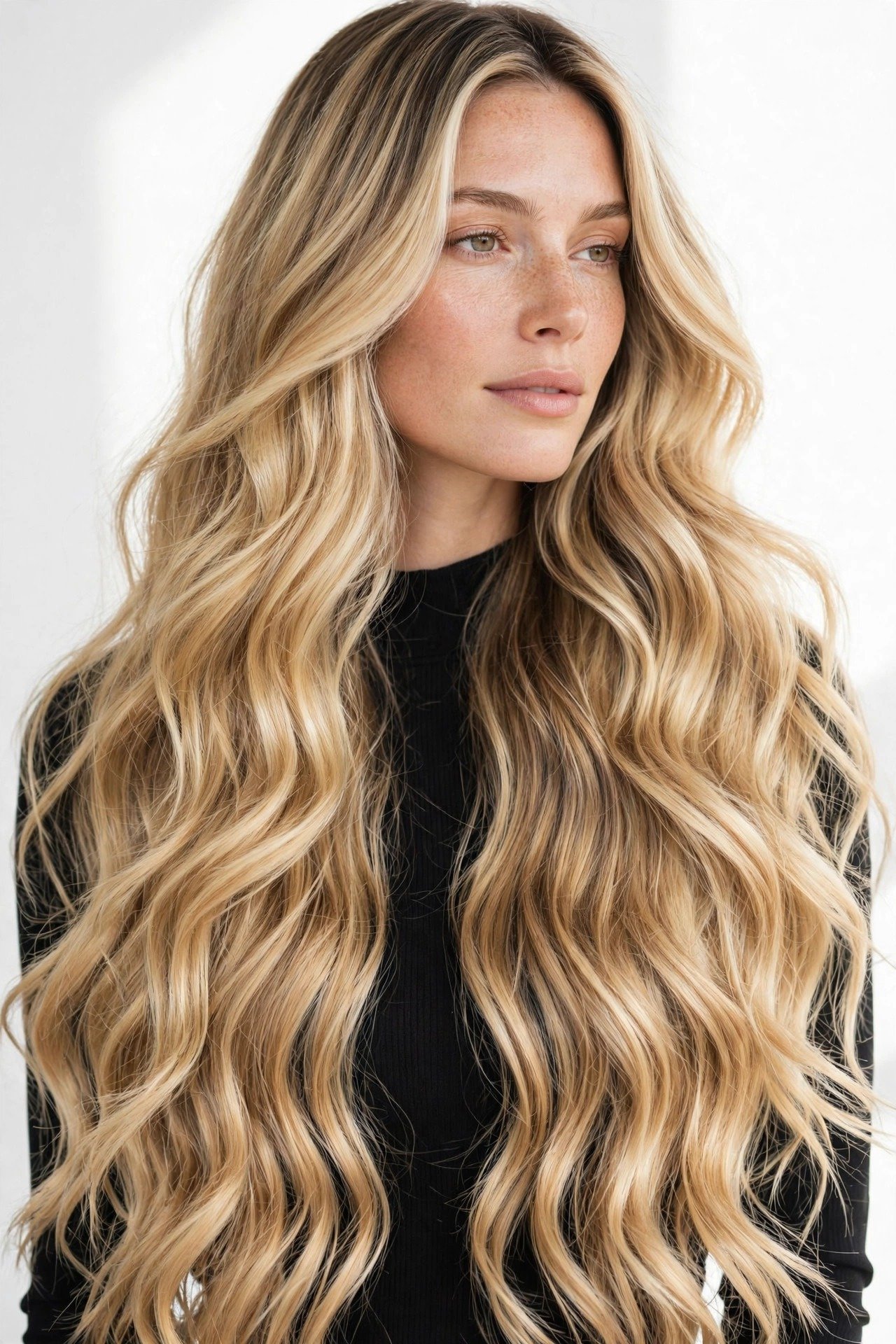
Who it suits: Long lived-in blonde waves are the aspirational blonde — waist-grazing dimensional blonde that moves like water. It suits anyone committed to long hair; the length showcases dimension better than any other canvas. Thick hair carries it best (the weight supports the length); fine hair needs careful engineering to avoid stringy ends. This is the highest-commitment lived-in blonde — in hair care, if not in salon visits.
What to ask your colorist: “A lived-in blonde for long hair — dimensional blonde with root shadow, brightness woven through the lengths, ends kept healthy.” Discuss realistic lift: long hair’s ends are old and fragile — the colorist may recommend a more gradual approach over two sessions. Ask about the “money piece” (face-framing brightness) — on long hair, it prevents the color from disappearing behind the shoulders.
How the technique works: Combination balayage/foilayage through the lengths, with careful attention to the fragile ends (lower-volume developer, bond-builder throughout); root shadow; gloss. Long-hair appointments run 4–5 hours. The colorist should check elasticity before committing to significant lift on long hair.
Cost: $350–$600+ (more hair, more product, more time). Annual cost with 2 visits: $700–$1,200.
Upkeep: Touch-ups every 12–16 weeks. At home, long blonde needs the most care: weekly deep conditioning, bond-building treatment bi-weekly, heat protectant always, silk pillowcase (reduces breakage on fragile lightened ends), and regular dusting trims (every 8–10 weeks — split ends on blonde are highly visible).
Common mistakes: Over-lightening fragile ends (they snap — listen to your colorist about realistic lift); skipping bond-building (non-negotiable on long lightened hair); and infrequent trims (blonde split ends travel fast and destroy the investment).
9. The Money-Piece Lived-In Blonde
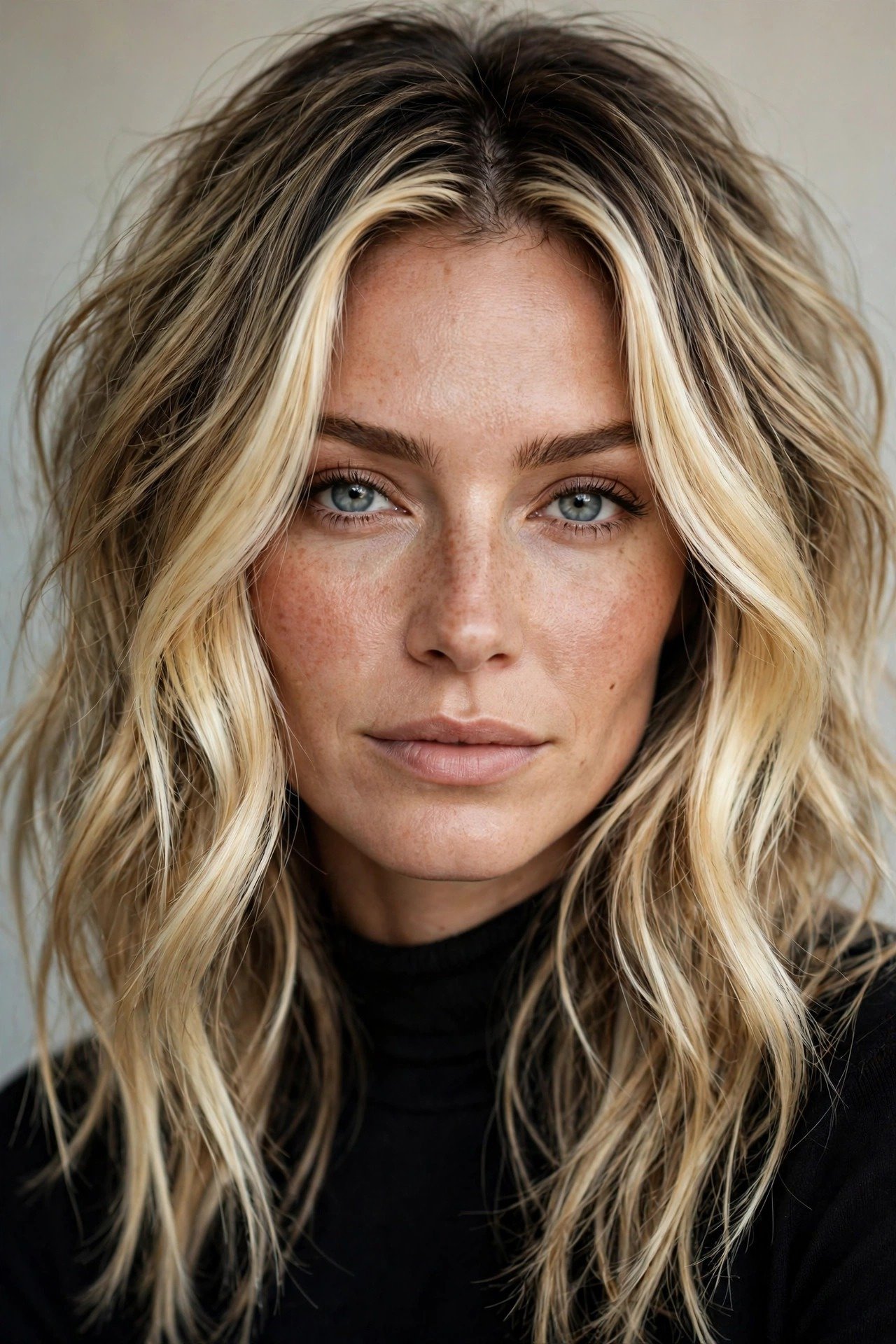
Who it suits: The money piece — bright face-framing blonde against dimensional lived-in lengths — gives maximum impact for minimum commitment. It suits anyone wanting brightness around the face without full-head maintenance; darker bases (level 4–6) get the most dramatic contrast. All face shapes — the brightness is vertical, following the face’s length.
What to ask your colorist: “A lived-in blonde with a bold money piece — brightness concentrated at the front hairline, about an inch wide each side, melted into the dimensional lengths.” Specify the money piece tone (it can match or contrast the lengths — a brighter money piece against softer lengths is 2026’s move). Ask for it to be placed to frame, not stripe — the brightness should graduate, not start abruptly.
How the technique works: The money piece is foiled separately (for maximum lift) while the lengths get balayage/foilayage; everything is toned together, then root-shadowed. The money piece processes faster (finer hair around the face lifts quickly) — the colorist monitors it separately.
Cost: $280–$480 as part of a full lived-in service; $100–$180 as a standalone money-piece refresh. Annual cost: $560–$1,000 (the money piece can be refreshed independently between full appointments — economical).
Upkeep: Full touch-ups every 12–16 weeks; money-piece-only refresh every 6–8 weeks ($100–$180) keeps the face bright between full services. At home: purple shampoo on the money piece specifically (it’s the most visible blonde and shows brassiness first).
Common mistakes: Money piece too chunky (over an inch wide reads as stripes); neglecting its toner (the face-frame goes brassy first and cheapens everything); and bleaching it on fragile hair — the hairline breaks first, and broken face-framing ruins the whole style. Our money piece guide covers the technique in depth.
10. The Lowlighted Lived-In Blonde
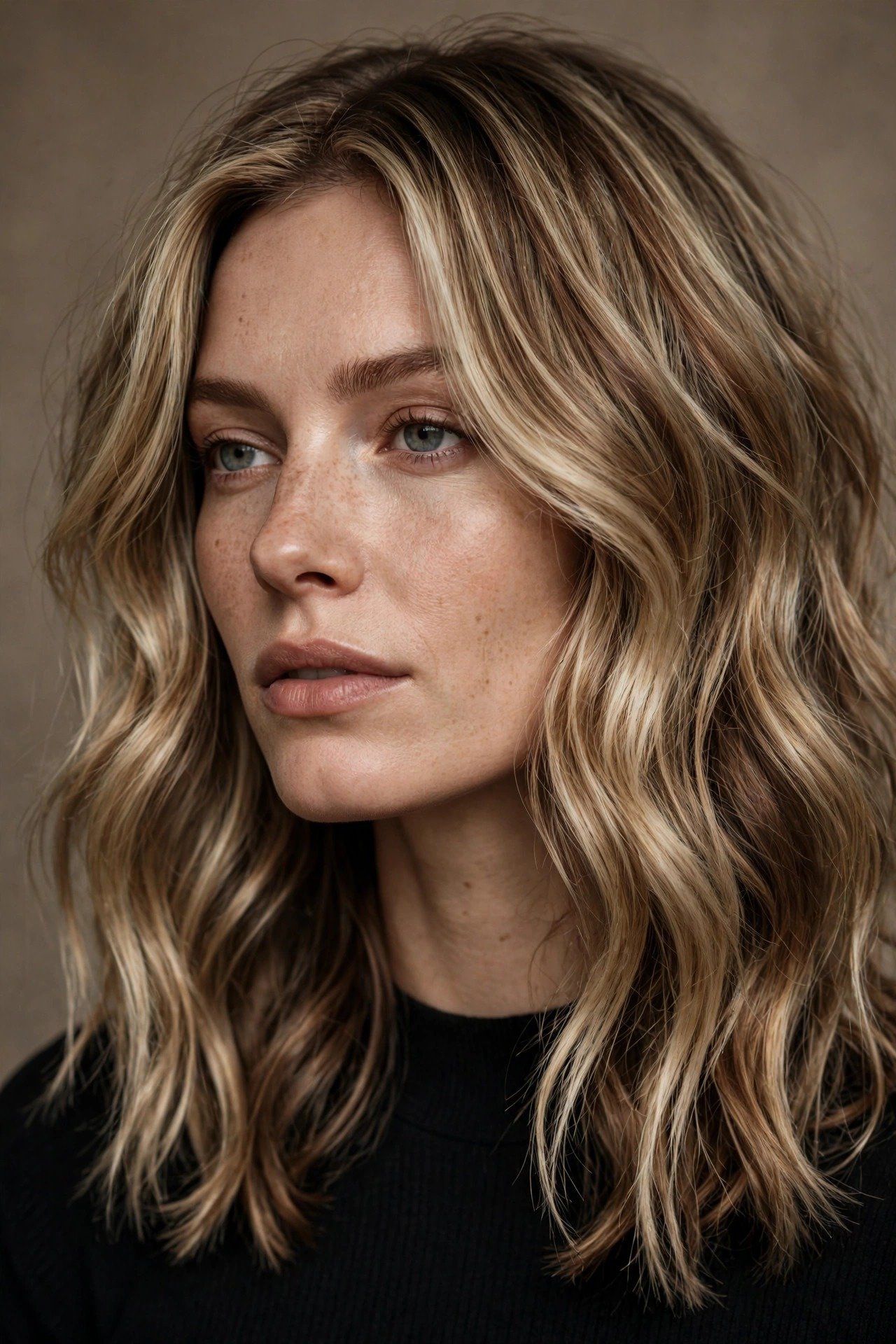
Who it suits: Lowlights — darker pieces woven through blonde — are the unsung hero of lived-in blonde: they create the depth that makes blonde look dimensional rather than flat. This suits over-lightened blondes wanting to add back dimension, natural blondes wanting richness, and anyone whose blonde looks “one-note.” All skin tones — the lowlight color is customized.
What to ask your colorist: “Add dimensional lowlights to my blonde — [caramel/honey/neutral brown] pieces woven through, keeping the overall effect blonde.” Specify the contrast: subtle (1 level deeper) for softness, bold (2–3 levels) for drama. Ask for the lowlights to be placed underneath and through the interior — they create depth that shows when hair moves, not stripes on the surface.
How the technique works: Demi-permanent color (1–3 levels deeper than the blonde) applied in foils or painted through selected sections, concentrated in the interior and underneath. The demi-permanent fades gradually — lowlights are inherently lived-in. Processing: 20–30 minutes. Often combined with a toner refresh in the same appointment.
Cost: $120–$250 as a standalone service; often bundled with toner refreshes. Annual cost: $360–$750 (3x yearly) — the most economical dimension boost.
Upkeep: Refresh every 8–12 weeks (demi-permanent fades). At home: color-safe shampoo; the lowlights need no special toning. This is the lowest-maintenance way to add dimension to existing blonde.
Common mistakes: Lowlights too dark (creates a striped, reverse-balayage effect — keep them within 3 levels of the blonde); too many lowlights (the overall effect should stay blonde — lowlights are accents, not the main event); and permanent color for lowlights (grows out with a line — always demi-permanent).
11. The Sandy Beach Blonde
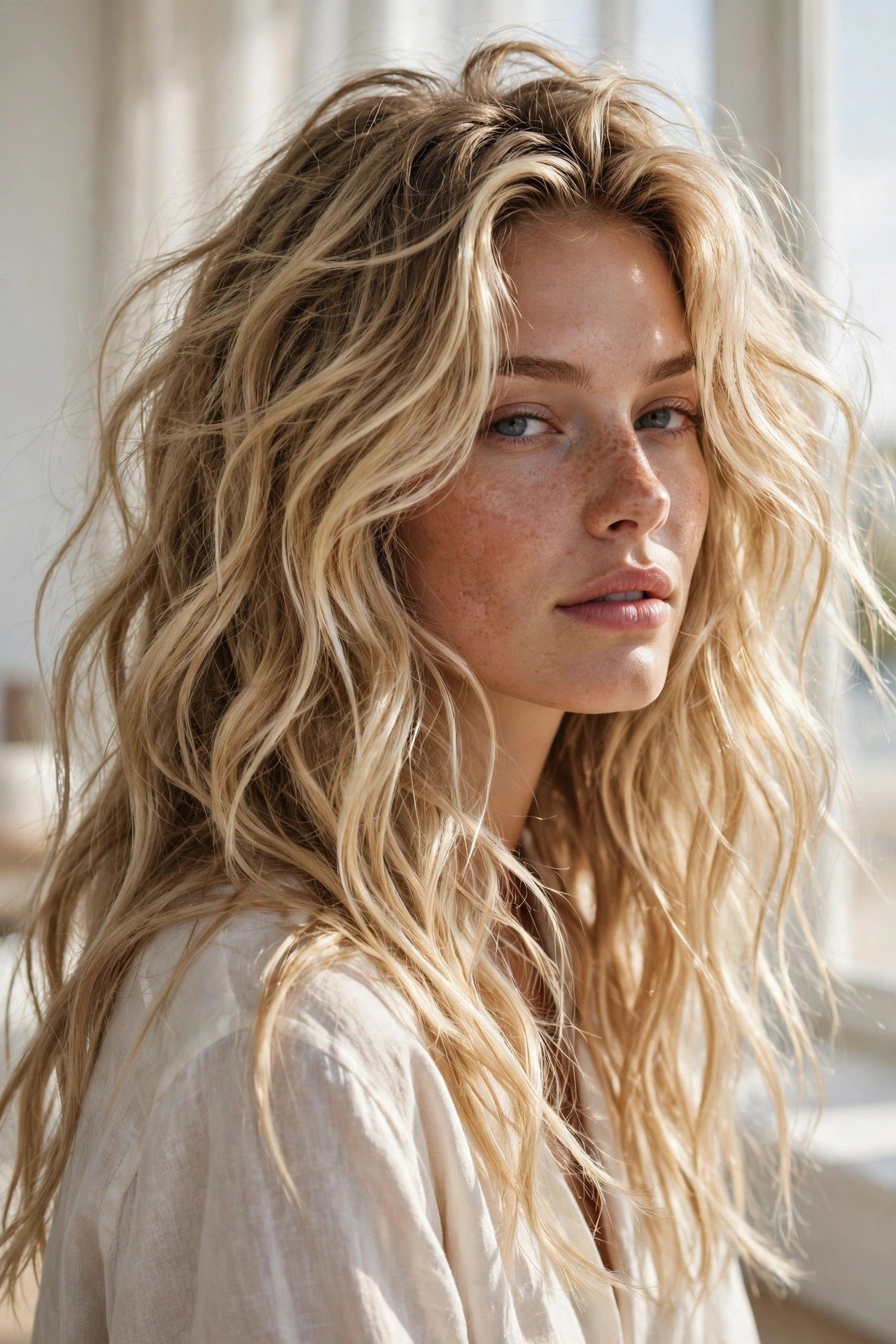
Who it suits: Sandy blonde — the neutral, sun-bleached beige blonde — is the “my hair just looks like this” blonde. It suits neutral skin tones best (the beige tone is neither warm nor cool), natural bases level 6–8, and anyone wanting blonde that doesn’t announce itself. It’s the most natural-looking lived-in blonde — the goal is for people to assume you were born with it.
What to ask your colorist: “A sandy lived-in blonde — neutral beige blonde, natural-looking, with root shadow.” Specify: not golden, not ashy — truly neutral. Ask for the dimension to be subtle: sandy blonde’s beauty is in its restraint. If your hair pulls warm, warn the colorist — achieving neutral on warm-pulling hair requires careful toning.
How the technique works: Balayage or foilayage to a neutral blonde level, toned with a beige-neutral formula, root shadow in a natural level. The toner is everything — sandy blonde lives or dies on the neutral balance. Too warm and it’s honey; too cool and it’s ash.
Cost: $250–$450. Annual cost with 2–3 visits: $500–$1,100.
Upkeep: Touch-ups every 12–16 weeks; toner refresh every 8–10 weeks (neutral tones drift warm). At home: color-safe shampoo, purple shampoo used sparingly (overuse pushes sandy toward ash — use only when warmth appears).
Common mistakes: Drifting too warm (becomes honey — not wrong, but not sandy); drifting too cool (becomes ash); and expecting one toner to hold for months — neutral is the hardest tone to maintain because hair naturally warms. For more natural blonde ideas, see our summer blonde ideas.
12. The Creamy Vanilla Blonde
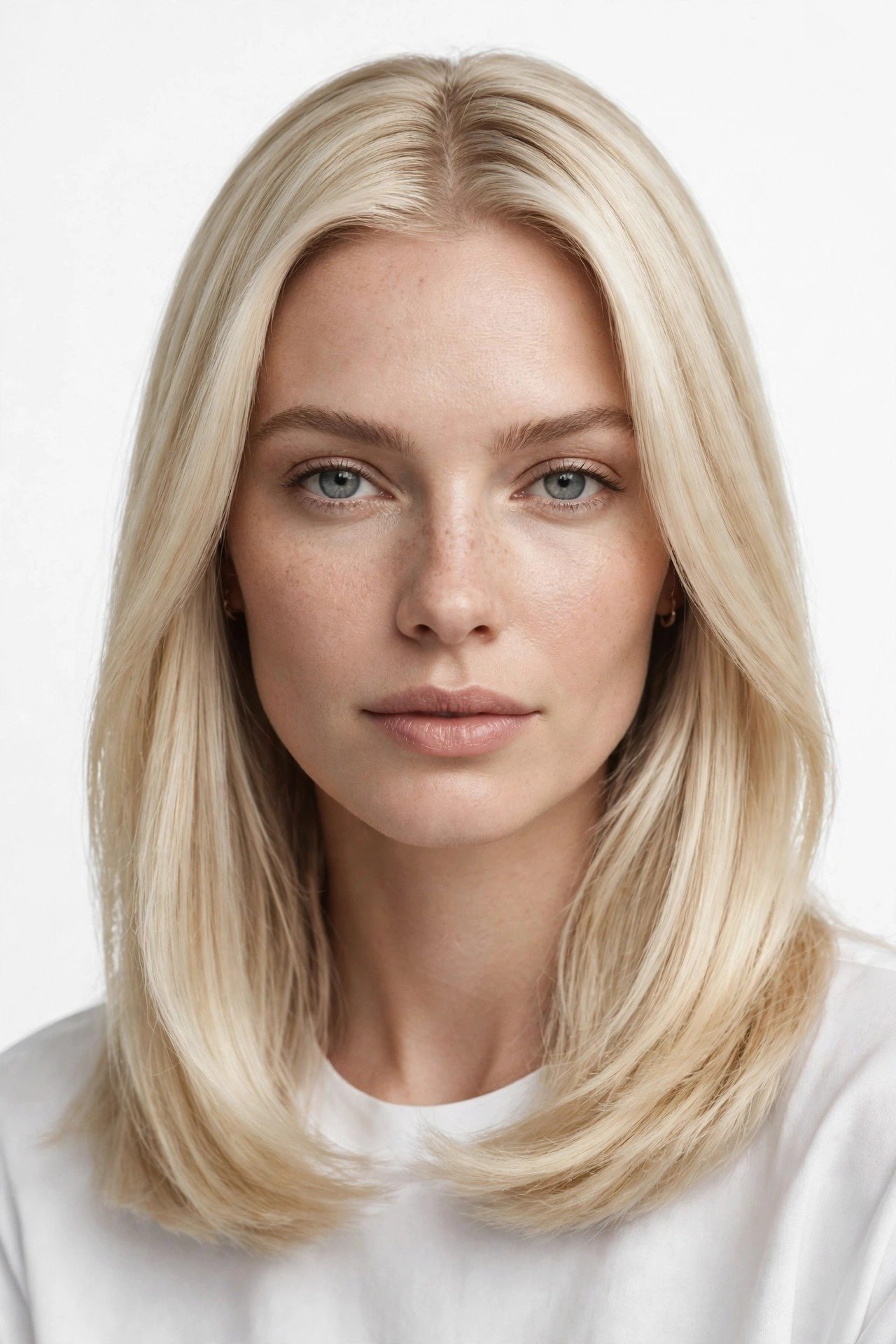
Who it suits: Vanilla blonde — soft, creamy, slightly warm pale blonde — is the gentle blonde: luminous without the severity of platinum, warm without the gold of honey. It suits fair to medium neutral-warm skin tones and natural bases level 7–9. Blue and green eyes glow against vanilla. It’s the “soft glam” lived-in blonde.
What to ask your colorist: “A vanilla lived-in blonde — creamy pale blonde, soft and luminous, with a shadowed root.” Specify: creamy, not icy (that’s platinum) and not golden (that’s honey) — vanilla sits between. Ask for the brightness to be even and soft rather than high-contrast — vanilla’s luxury is in its uniformity.
How the technique works: Foiling or foilayage to pale blonde, toned with a vanilla-cream formula (usually a pearl or creamy toner), root shadow for the lived-in grow-out. The toner must be carefully balanced — too much violet goes icy, too little goes yellow.
Cost: $300–$500. Annual cost with 2–3 visits: $600–$1,200.
Upkeep: Touch-ups every 10–14 weeks; toner refresh every 5–7 weeks ($60–$90) — vanilla’s delicate tone fades faster than deeper blondes. At home: purple shampoo weekly (gentle — don’t over-tone into icy), bond-building treatment, heat protectant.
Common mistakes: Over-toning with purple shampoo (vanilla becomes icy — use sparingly); under-lifting (vanilla needs a clean pale base — yellow underneath shows through); and skipping gloss (vanilla without shine looks chalky).
13. The Dark-Root Lived-In Blonde
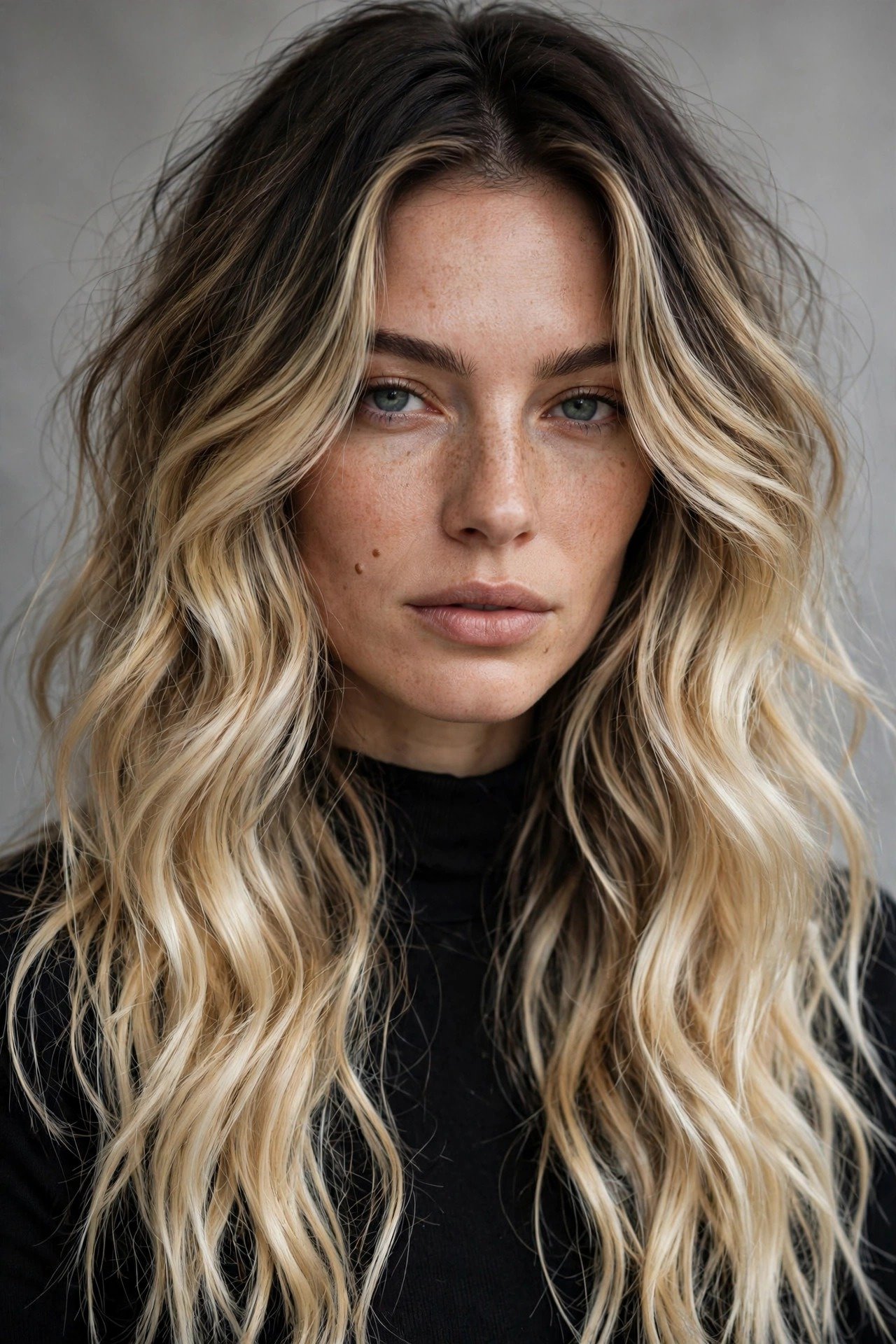
Who it suits: The dark-root blonde — significant depth at the root (3–4 levels darker than the lengths) melting into bright blonde — is the boldest lived-in contrast. It suits natural brunettes (level 3–5) who want dramatic blonde without abandoning their depth; the dark root is essentially their natural color, grown out intentionally. All skin tones — the contrast is the statement.
What to ask your colorist: “A dark-root lived-in blonde — keep my natural [level] root for 3–4 inches, melted into bright blonde lengths.” Specify the blonde brightness (the contrast is customizable — brighter blonde = bolder contrast) and the melt’s softness (it must graduate, not stripe). This is the one lived-in blonde where the root is a feature, not a bug — own the contrast.
How the technique works: The colorist lightens the mid-lengths and ends (balayage/foilayage) while deliberately leaving the natural root — then melts the transition with a shadow technique. Less root work than other lived-in blondes (your natural root does the job); more length work (the brightness must be significant to contrast the depth).
Cost: $280–$480. Annual cost with 2 visits: $560–$960 — the dark root does most of the grow-out work, so visits are fewer.
Upkeep: Touch-ups every 14–20 weeks — the longest interval of any lived-in blonde, because the root is already “grown out” by design. Toner on the lengths every 6–8 weeks. At home: standard blonde care on the lengths; the root needs nothing.
Common mistakes: The melt done poorly (a harsh line between dark root and blonde defeats the entire concept — the gradient must be seamless); going too dark at the root on a whim (it grows out fine, but the initial contrast shocks); and neglecting the lengths’ toner (bright blonde against dark root shows brassiness mercilessly).
14. The Foilayage Lived-In Blonde
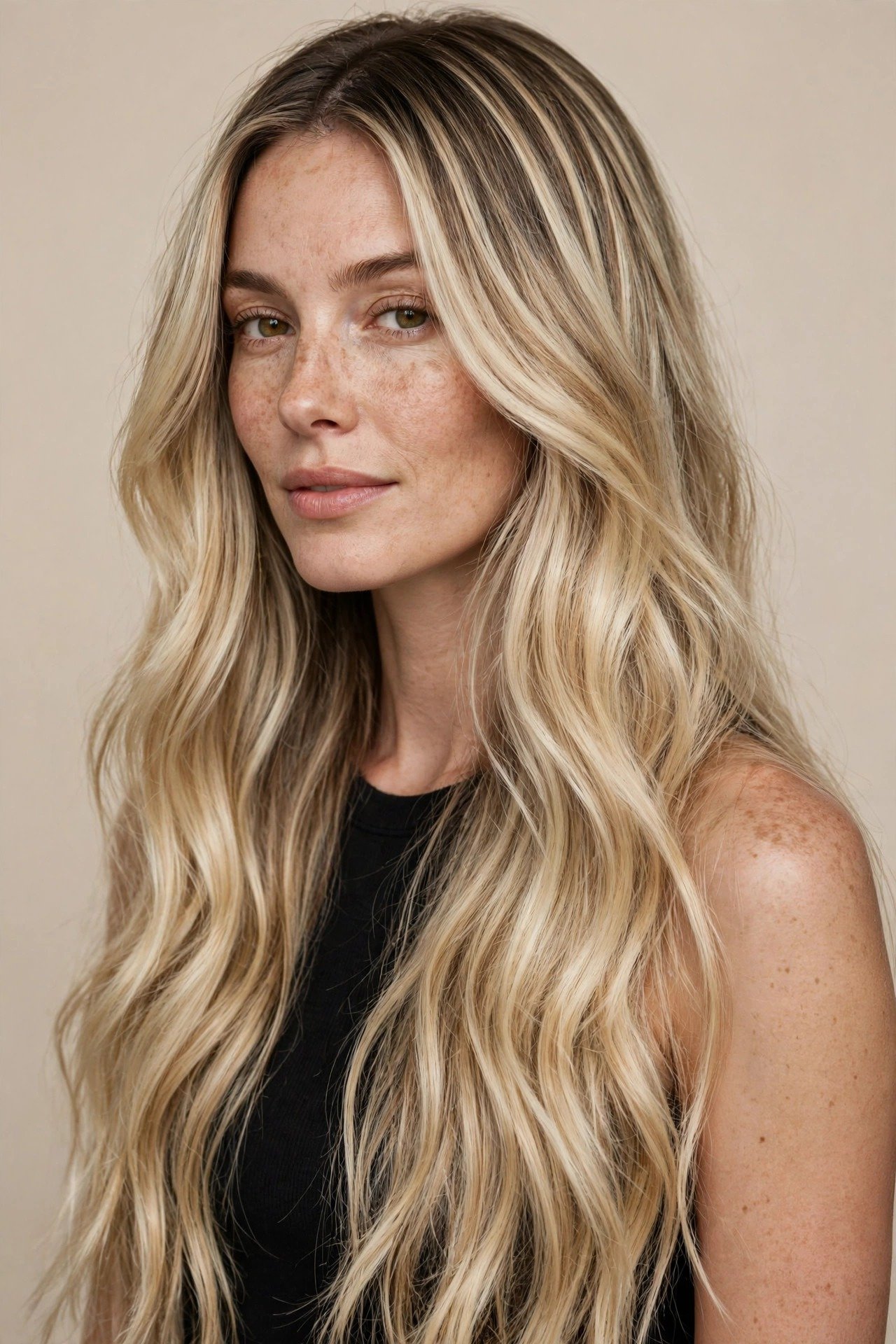
Who it suits: Foilayage — balayage’s brighter sibling, painted then wrapped in foils for extra lift — suits anyone who wants balayage’s natural placement with more brightness. Natural bases level 4–6 (darker hair that needs foils’ extra lift to reach blonde); anyone whose balayage didn’t get bright enough. It’s the problem-solver technique: natural-looking, but actually blonde.
What to ask your colorist: “A lived-in foilayage — brighter than balayage, but with the same natural placement and root shadow.” Specify the brightness target and confirm the grow-out plan: foilayage grows out softer than traditional foils (because of the painted placement) but slightly more visibly than open-air balayage. Ask about the number of sessions for your base — darker hair may need two.
How the technique works: Lightener is hand-painted like balayage, then sections are wrapped in foils — the foils generate heat, boosting lift 1–2 levels beyond open-air processing. Same artistic placement as balayage, more power. Finished with toner and root shadow. Appointment: 3.5–4.5 hours.
Cost: $300–$500. Annual cost with 2–3 visits: $600–$1,200.
Upkeep: Touch-ups every 12–16 weeks; toner every 6–8 weeks. At home: standard blonde care — the brighter lift means slightly more fragility than balayage, so bond-building matters more.
Common mistakes: Confusing foilayage with traditional foils (the placement is painted and natural — traditional foils start at the root and grow out harshly); over-processing for maximum brightness in one session (darker bases need patience — two sessions beat one damaged one); and skipping the root shadow (without it, foilayage’s brightness grows out visibly).
15. The Mushroom Taupe Lived-In Blonde
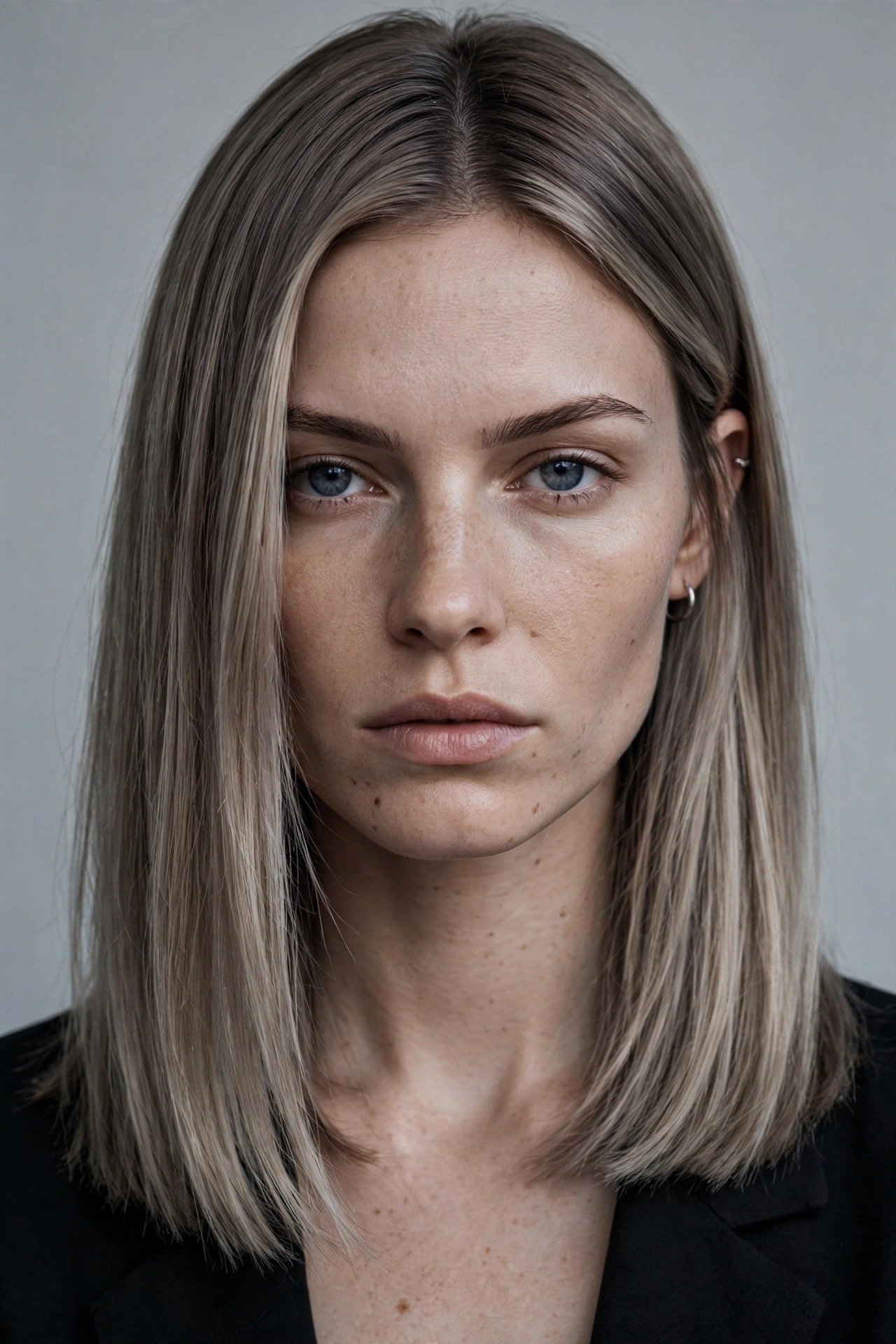
Who it suits: Mushroom blonde — the ashy, taupe, mushroom-brown blonde — is 2026’s cool-girl blonde: muted, earthy, deliberately un-golden. It suits cool skin tones and anyone tired of warm blondes; natural bases level 5–7. It’s the most fashion-forward lived-in blonde — expect questions, compliments, and the occasional confused stare from traditionalists.
What to ask your colorist: “A mushroom lived-in blonde — ashy taupe blonde, muted and cool, with depth at the root.” Specify the mushroom depth: light mushroom (blonde-dominant) versus deep mushroom (brown-dominant). Warn the colorist if your hair pulls warm — mushroom requires neutralizing warmth aggressively, and the formulation matters. Ask to see photos of their healed mushroom work — the tone shifts as it fades, and you should know where it goes.
How the technique works: Lightening to the target level, then toning with an ash-taupe formula (often a custom mix); lowlights in mushroom brown for depth; cool root shadow. The toner formulation is the entire art — mushroom is a custom color, not a tube shade.
Cost: $300–$500 (custom formulation costs more). Annual cost with 2–3 visits: $600–$1,200.
Upkeep: Touch-ups every 12–16 weeks; toner refresh every 5–7 weeks ($60–$100) — mushroom’s custom tone fades fastest. At home: purple/blue shampoo weekly, color-safe everything, heat protectant (heat warms mushroom tones rapidly).
Common mistakes: Choosing mushroom on strongly warm skin without adjusting (it can look grey and sallow — ask for a neutral-mushroom); expecting the tone to hold for months (custom ash tones fade — the refresh cycle is mandatory); and box-dye attempts (mushroom is unachievable at home — the formulation requires professional color theory).
16. The Sun-Kissed Lived-In Blonde
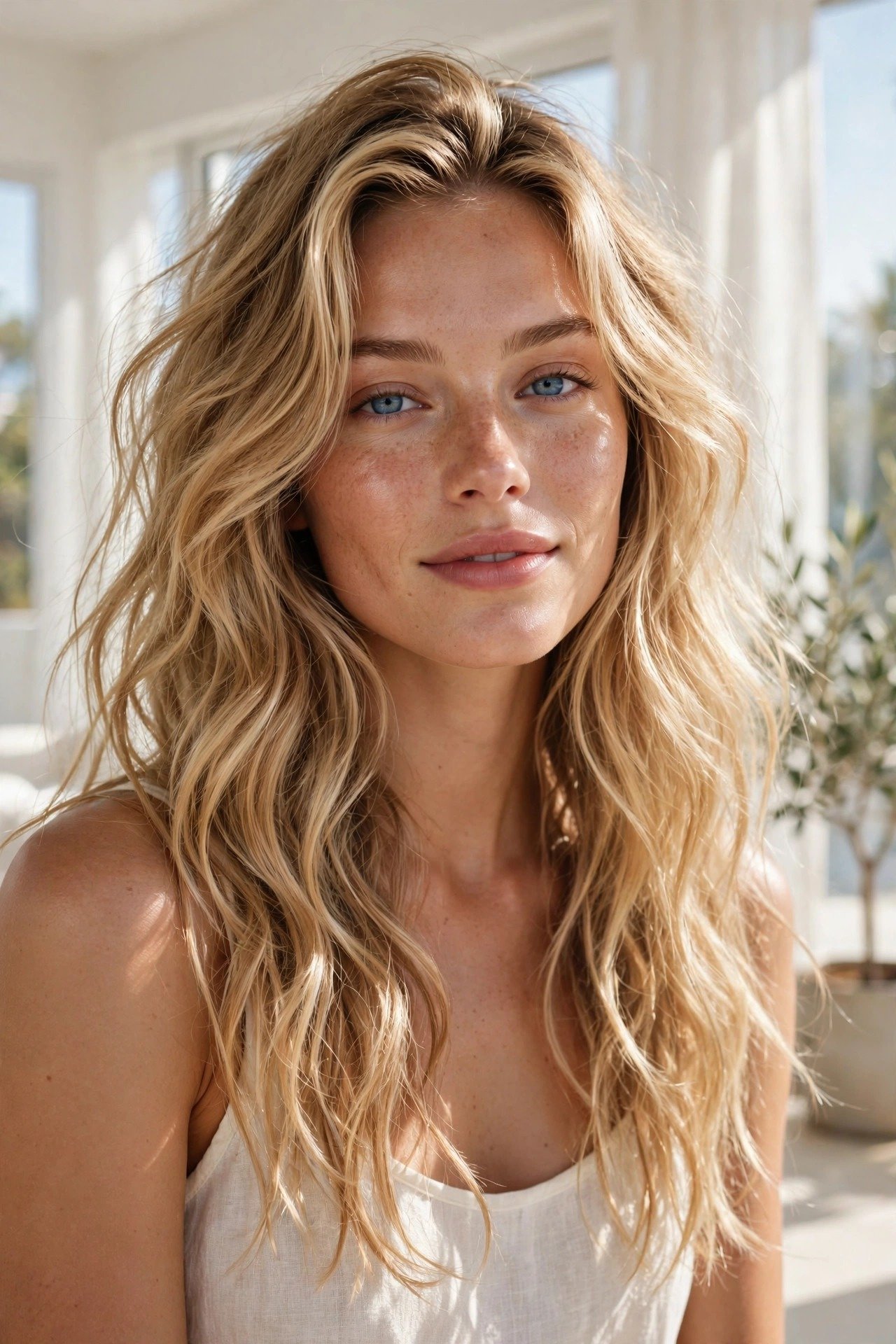
Who it suits: Sun-kissed blonde — the “I spent August outdoors” blonde, with brightness concentrated where the sun would naturally hit (hairline, part, ends) — is the most natural lived-in blonde. It suits everyone, because it’s designed to mimic nature; natural bases level 6–9 get the most believable result. It’s the subtlest transformation here — perfect for blonde first-timers or anyone wanting change without drama.
What to ask your colorist: “A sun-kissed lived-in blonde — subtle brightness where the sun would hit, natural grow-out, nothing dramatic.” Specify the subtlety: 1–2 levels of lift maximum. Ask for the brightness to be concentrated at the hairline, part line, and ends — the sun’s natural pattern. This is a “no one will know you colored it” service — say that explicitly.
How the technique works: Fine balayage or babylights concentrated at the sun-exposed zones, minimal root work (often none — the natural root is the point), soft toner. The lightest touch of all sixteen techniques — sometimes just a gloss and a few painted pieces. Appointment: 2–3 hours.
Cost: $180–$350 — the most affordable lived-in blonde. Annual cost with 2 visits: $360–$700.
Upkeep: Touch-ups every 14–20 weeks (the subtlety grows out invisibly); toner refresh optional. At home: minimal special care — color-safe shampoo and occasional mask. This is the lowest-maintenance blonde in the guide, full stop.
Common mistakes: Over-doing it (more brightness stops being sun-kissed and becomes balayage — respect the subtlety); expecting dramatic change (this is a whisper, not a statement — choose another shade if you want impact); and paying for a full balayage when you wanted sun-kissed (they’re different services at different prices — name it specifically).
Lived-In Blonde Economics: The Real Cost Comparison
Here’s the math your colorist won’t volunteer. Traditional all-over blonde (root-to-tip, 6-week cycle): $150–$300 per visit × 8–9 visits/year = $1,200–$2,700/year, plus the time cost of 8–9 half-day appointments. Lived-in blonde (2–3 visits/year): $250–$500 per visit × 2–3 visits = $500–$1,500/year, with 2–3 appointments. The savings: $700–$1,200+ per year and 5–6 fewer salon days. The per-visit cost is higher (multi-technique work takes longer), but the annual cost is dramatically lower — and the grow-out between visits actually looks good, which no traditional blonde can claim.
Budget strategy: invest in the initial appointment (the foundation determines everything — don’t bargain-hunt the first visit), then maintain with toner/gloss refreshes ($50–$100) between full services. At-home care (bond-builder, purple shampoo, masks) costs roughly $100–$150/year and extends every salon result measurably. Lived-in blonde isn’t just prettier grow-out — it’s the financially rational blonde.
What to Ask Your Colorist: The Exact Script
Walk in with this: “I’d like a lived-in blonde — [shade name/number from this guide]. My natural base is level [X], my hair history is [virgin / previously colored / previously lightened], and I want to come [2–3] times a year maximum. I want [subtle / medium / bold] dimension with a [soft / deeper] root shadow, in a [warm / neutral / cool] tone. Can you show me photos of your lived-in work at 3+ months grown out?”
The healed-work photos are the litmus test — any colorist can show fresh work; lived-in expertise shows in the grow-out. Discuss realistic lift for your base (darker hair needs more sessions — a colorist who promises platinum in one session on level-4 hair is either a genius or a liar; assume liar). Ask about bond-builder inclusion (it should be standard, not an upsell). And get the maintenance plan in writing: when to return, what toner schedule, what at-home products. A colorist who plans your year is a colorist who understands lived-in.
The Lived-In Blonde At-Home Routine
The salon creates the color; your bathroom preserves it. Washing: 2–3 times per week maximum, with sulfate-free color-safe shampoo; cool-to-lukewarm water (hot water strips toner). Toning: purple shampoo once weekly for cool-toned blondes (twice for platinum), used sparingly or not at all for warm blondes (honey, butter, golden). Repair: bond-building treatment every 1–2 weeks (lightened hair’s internal structure needs rebuilding); deep conditioning mask weekly. Protection: heat protectant before every hot tool, always — no exceptions; UV protectant spray in summer (sun oxidizes toner). Between visits: gloss/toner refresh at the salon every 6–8 weeks ($50–$100) — this single habit does more for your blonde’s longevity than any product.
The products worth the money: a quality bond-builder (the category Olaplex pioneered — use the at-home treatment, not just the shampoo), a purple shampoo matched to your tone level, and a weekly mask. Everything else is secondary. And the cardinal rule: never overlap lightener on previously lightened hair at touch-ups — the colorist should only lighten new growth. Overlapping causes breakage, and breakage is the one thing no lived-in blonde survives.
Lived-In Blonde FAQs
How often does lived-in blonde need to be touched up?
Every 12–20 weeks depending on the technique — balayage and sun-kissed stretch to 16–20 weeks, platinum root-melts need 10–14 weeks, with toner/gloss refreshes every 6–8 weeks between full appointments.
Compare that to traditional blonde’s 4–6 week cycle: lived-in blonde needs 2–3 salon visits per year versus 8–9. The toner refreshes ($50–$100) are what keep the color looking fresh between full services — they’re the highest-value appointment in blonde maintenance. Skipping them is the #1 reason lived-in blondes look tired at month four.
Will lived-in blonde work on dark hair?
Yes — but with realistic expectations: dark bases (level 1–4) typically need 2–3 sessions to reach blonde safely, and the darkest bases may never reach platinum without compromising hair health.
The lived-in techniques actually favor dark hair: the dark root is a feature (styles 1, 13), and the contrast creates the most dramatic dimension. What matters is the plan: a good colorist maps a multi-session journey (session 1: warm caramel blonde, session 2: true blonde) rather than forcing maximum lift in one appointment. Ask for the session plan upfront — “what will my hair look like after session 1, 2, 3?” Patience produces healthy blonde; rushing produces breakage.
How much does lived-in blonde cost per year?
Realistically $500–$1,500 per year: $250–$500 per full visit × 2–3 visits, plus $50–$100 toner refreshes between, plus ~$100–$150 in at-home care products.
That’s roughly half the annual cost of traditional 6-week blonde ($1,200–$2,700/year). The economics improve further with lower-maintenance shades: sun-kissed and dark-root blondes cost the least annually; platinum root-melts cost the most (more toner, more bond-building). The initial appointment is the most expensive — invest there, because the foundation determines every subsequent visit’s cost and result.
Does lived-in blonde damage hair less than traditional blonde?
Yes, measurably: less frequent lightening (2–3x/year vs. 8–9x), no overlapping lightener on previously lightened hair (the grow-out means only new growth gets processed), and techniques that use lower-volume developer on the lengths.
But “less damage” isn’t “no damage” — any lightening compromises the hair’s internal structure, which is why bond-builders (used in-salon and at home) are standard for lived-in blonde, not optional. The hair-health rules: never overlap lightener, always use bond-builder, deep-condition weekly, and listen to your colorist about realistic lift. Healthy hair holds color better and grows out better — damage control is color control.
What’s the difference between balayage, foilayage, and root shadow?
Balayage is hand-painted lightener processed in open air (softest, most natural lift); foilayage is hand-painted lightener wrapped in foils (same placement, 1–2 levels more lift); root shadow is a demi-permanent root color melted over lightened hair to create a soft grow-out (it’s a finishing technique, not a lightening one).
They’re often combined: a typical lived-in blonde uses balayage or foilayage for the brightness, then a root shadow to melt the grow-out, then a toner for the final shade. When booking, you don’t need to choose the technique — describe the result you want (brightness level, grow-out softness, tone) and let the colorist select the method. The technique serves the vision, not the other way around.
Conclusion
Lived-in blonde is 2026’s smartest color because it respects the two things traditional blonde ignored: your calendar and your budget. Its sixteen shades prove that low-maintenance doesn’t mean low-impact — from the sun-kissed whisper that no one will know you paid for, to the platinum root-melt that stops rooms, every version delivers dimension that grows out beautifully instead of growing out embarrassingly.
The three decisions that determine your result: the right shade for your skin tone and natural base (not just the photo you saved — the photo plus your colorist’s honest assessment of what’s achievable), a colorist whose healed work you’ve actually seen (fresh photos prove nothing about lived-in expertise), and the maintenance commitment your shade requires (toner refreshes are the unglamorous habit behind every great blonde). Get those three right, and you’ll understand why women who switch to lived-in blonde never go back: it’s the blonde that works as hard as you do, and looks like it barely tried.