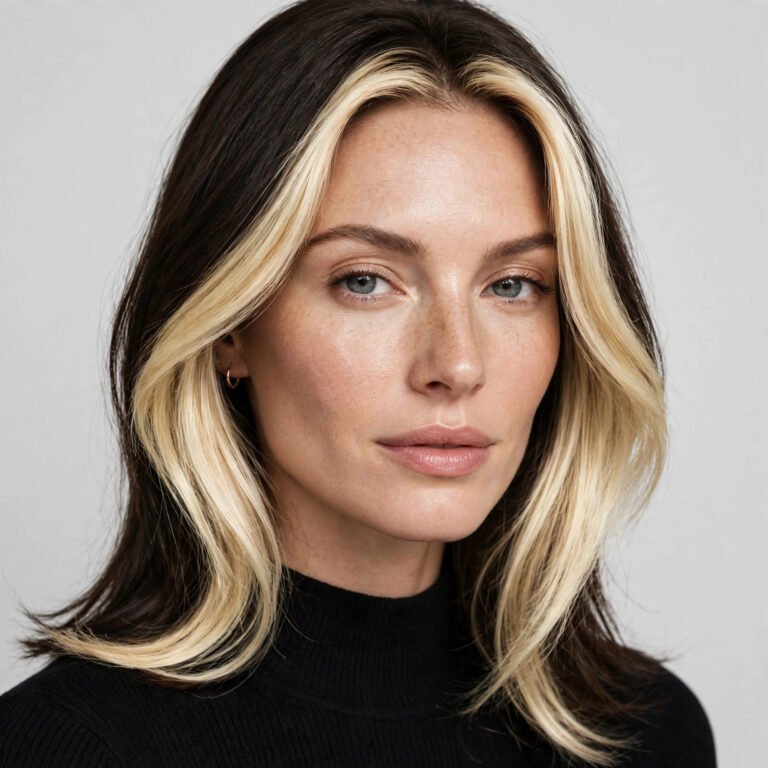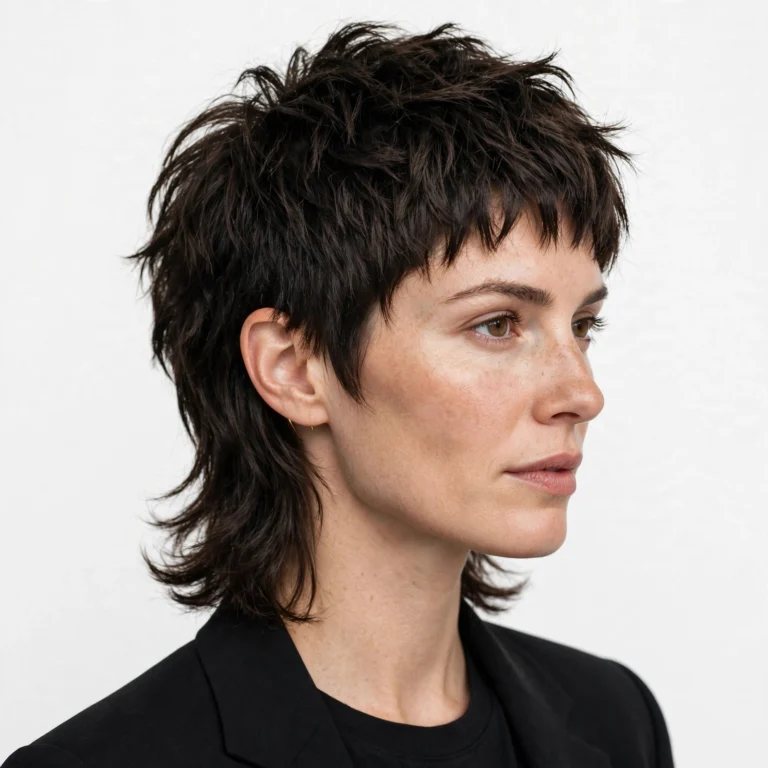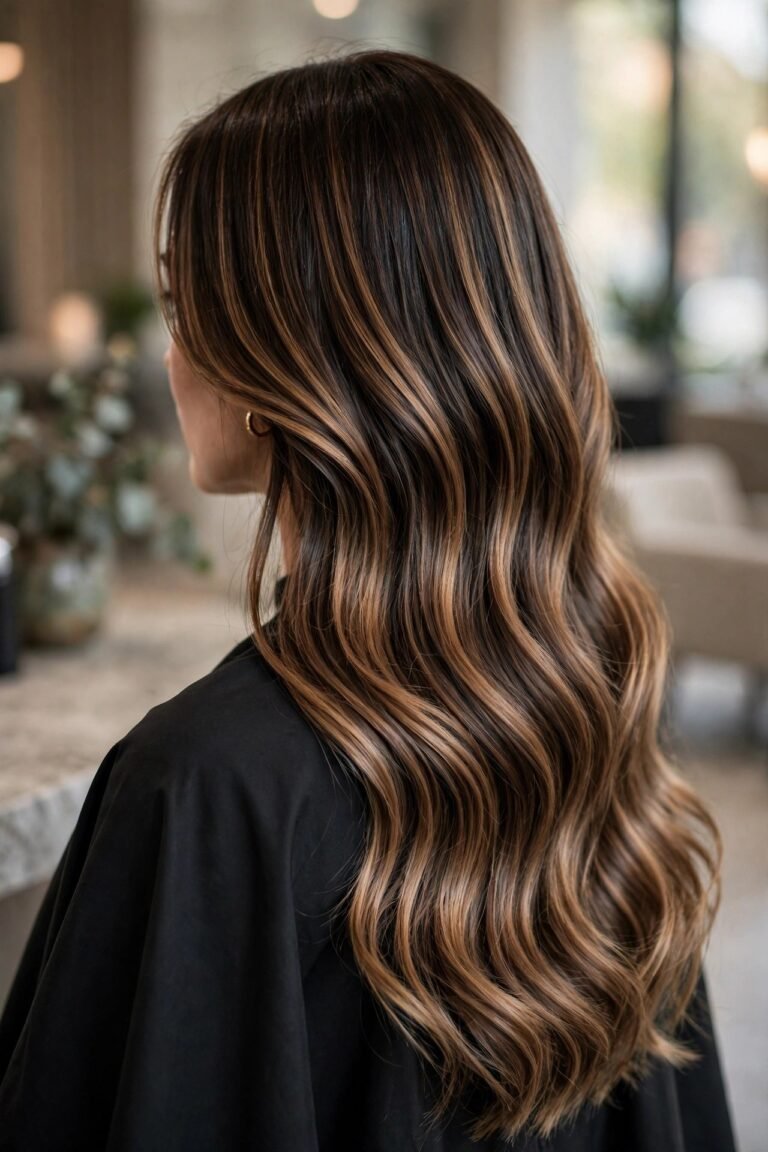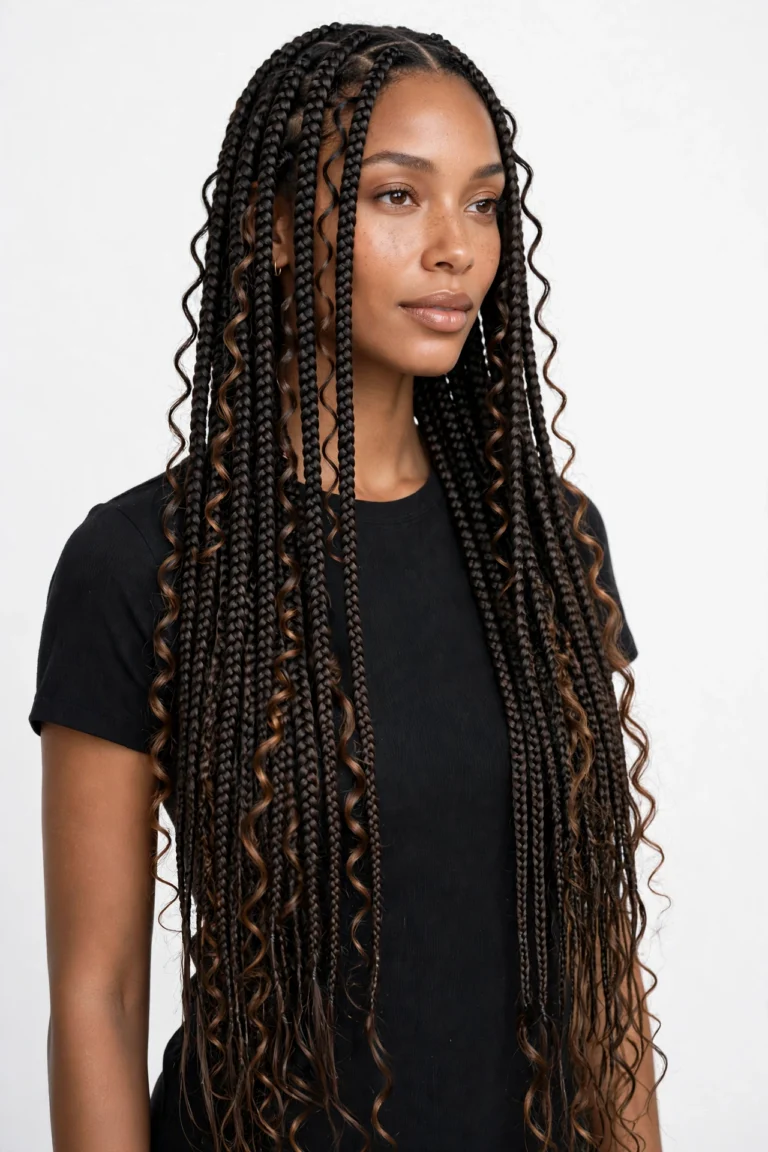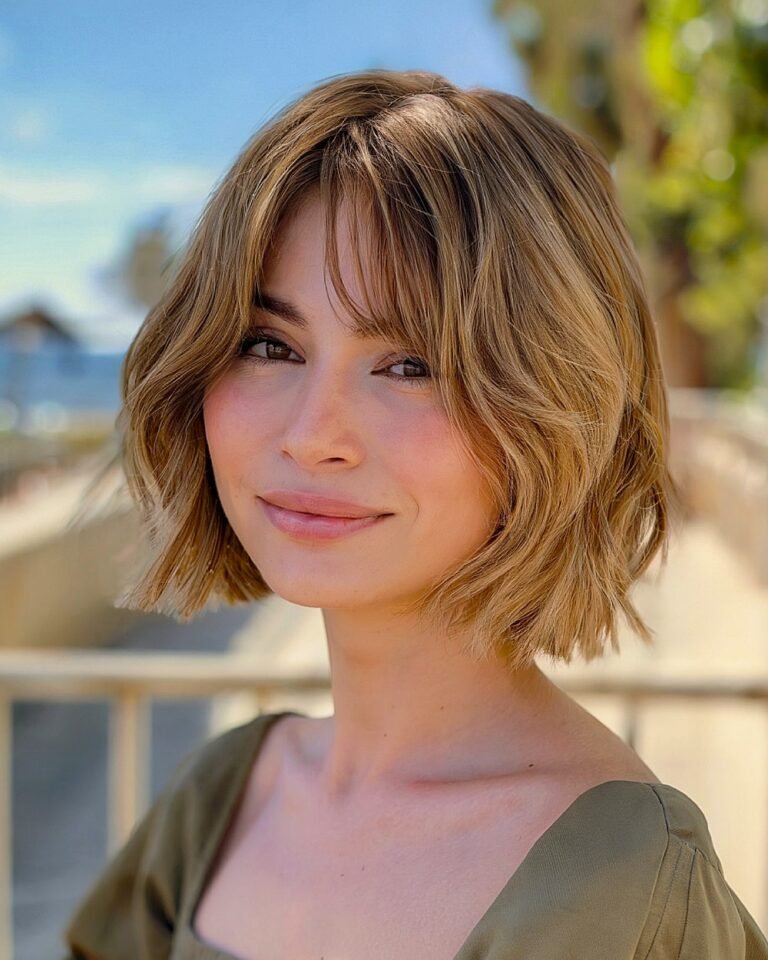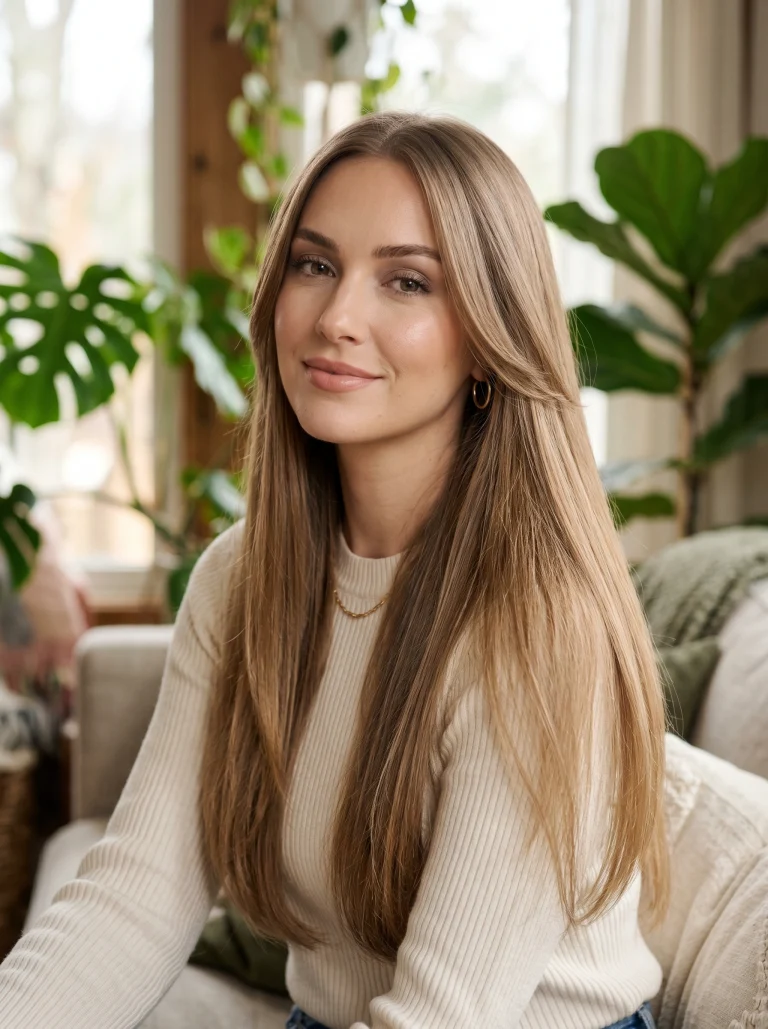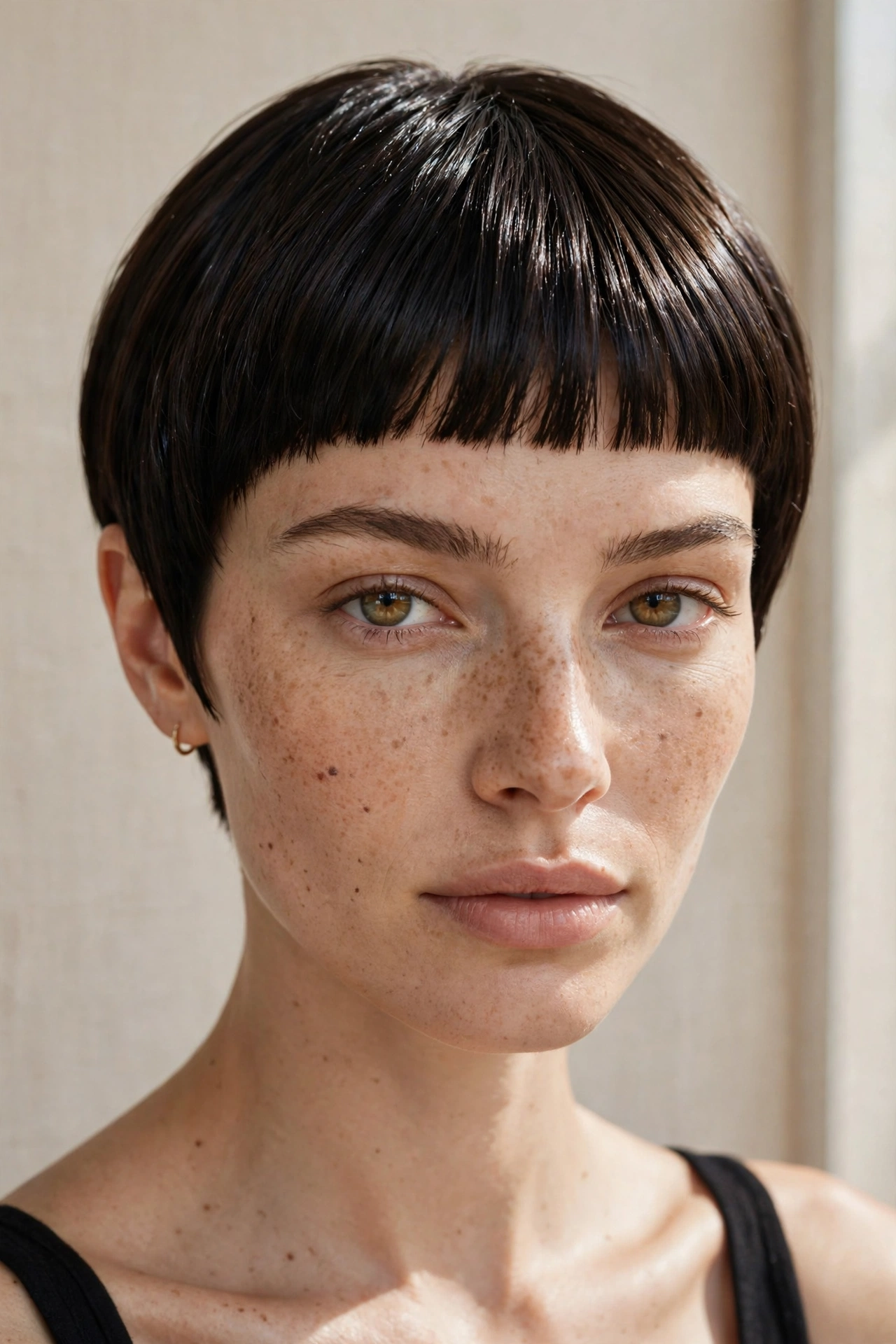
Baby Bangs for Women 2026: 15 Bold Micro Fringe Ideas
Baby Bangs for Women 2026: 15 Bold Micro Fringe Ideas
There’s a particular hush that falls over a salon when a client says the words “cut them shorter.” Not a little shorter. Way shorter. Baby bangs — that daring little strip of micro fringe sitting a good inch or two above the eyebrows — have gone from red-carpet dare to full-blown 2026 obsession, and honestly? We get it. If you’ve been searching for micro bangs women are actually wearing this year, you’ve probably noticed the same famous faces we have: Dakota Johnson, Zendaya, and Chase Sui Wonders have all stepped out with micro fringe in recent weeks, and the internet has not stopped talking about it since.
Here’s the thing nobody tells you about baby bangs: they look effortless, but they’re one of the most deliberate haircuts you can get. Every millimeter matters. Cut them a touch too long and they’re just regular bangs; a touch too short and you’ve crossed into territory you can’t un-cross for at least a month. But when they’re right — sitting somewhere between one and two inches above the brow, skimmed with intention, styled with confidence — baby bangs do something almost no other haircut can. They reframe your entire face. They make cheekbones look sharper, eyes look bigger, and an otherwise ordinary bob or ponytail look like a decision.
This guide is your complete roadmap to the baby bangs trend of 2026. We’re covering what baby bangs actually are (and what they’re not), why stylists are calling them one of the season’s most-requested bang changes, and — the main event — 15 baby bangs ideas for women, from the classic micro fringe to curly, wispy, choppy, and color-drenched versions. You’ll also get the practical stuff most articles skip: exactly what to tell your stylist, how to style baby bangs at home in under five minutes, which face shapes they flatter, and the honest truth about maintenance. Time to meet your fringe.
What Are Baby Bangs?
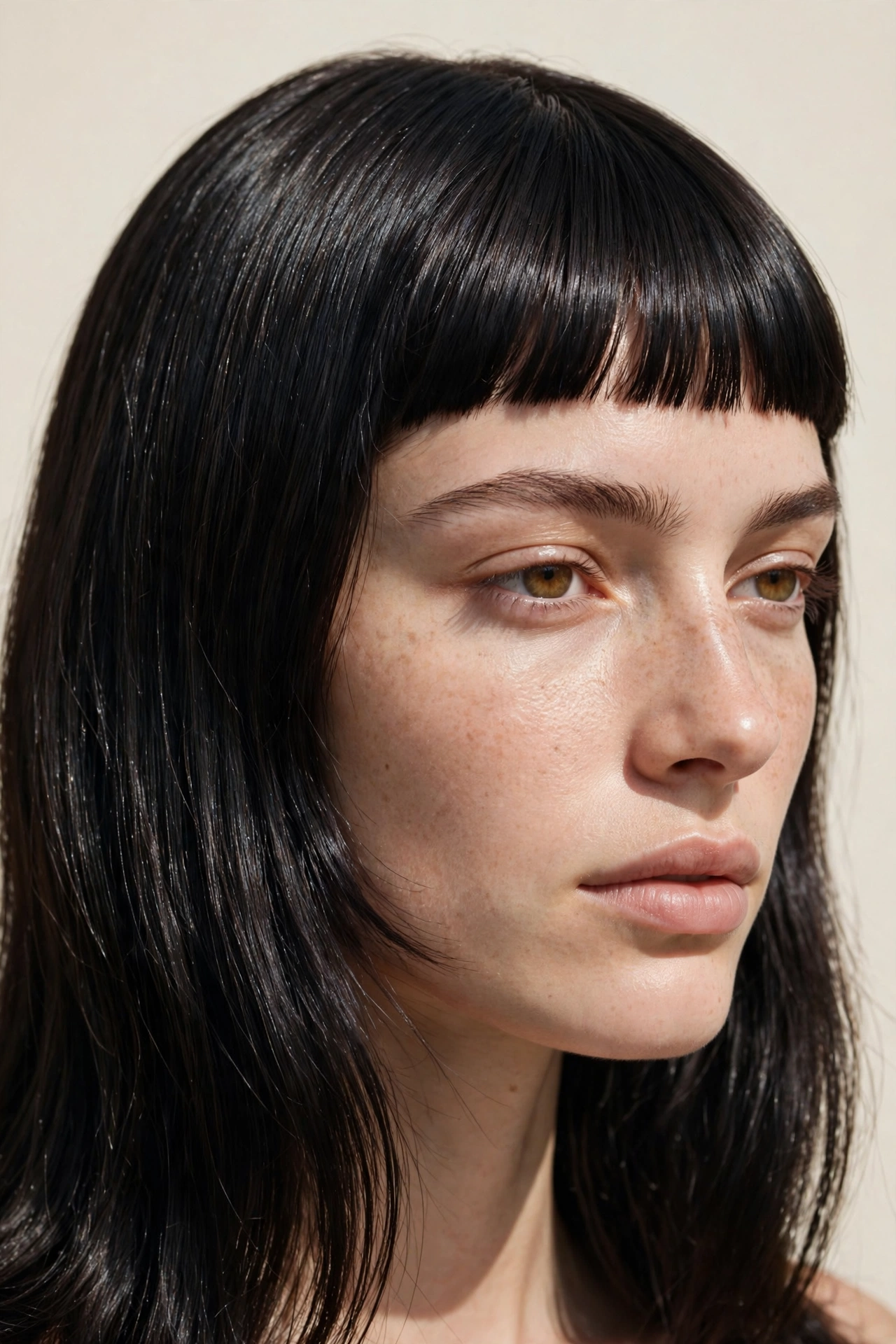
Baby bangs are a short fringe cut significantly above the eyebrows — typically anywhere from half an inch to two inches (about 1.5 to 5 cm) above the brow line. The name is literal: the fringe is cut to a length that resembles a baby’s wispy hairline, sitting high on the forehead instead of grazing the lashes like traditional bangs. Where classic full bangs aim to blend seamlessly into the rest of your haircut, baby bangs do the opposite. They announce themselves. There’s a visible gap of forehead between the fringe and the brows, and that gap is the whole point.
Don’t confuse baby bangs with curtain bangs, side-swept bangs, or even a standard blunt fringe. Curtain bangs part in the middle and fall long past the cheekbones. Side-swept bangs sweep diagonally across the forehead. Traditional blunt bangs end right around the brow. Baby bangs sit in their own category entirely: a micro fringe that exposes most of the forehead and draws every eye upward. Historically, they’ve been worn by icons who loved a little edge — think Audrey Hepburn’s cropped fringe in the ’50s, Bettie Page’s jet-black micro bangs, and more recently, Emma Watson and Rihanna’s brief but memorable micro-fringe eras. What makes the 2026 version different is how wearable it’s become. Stylists have figured out softer variations — wispy, textured, curly — that take the punk-rock edge off and leave the cool behind.
One more thing worth knowing before you book the appointment: baby bangs are sometimes called micro bangs or micro fringe, and those terms are interchangeable. “Baby bangs” tends to describe the softer, slightly longer end of the spectrum (about 1.5 to 2 inches of length), while “micro bangs” sometimes implies the ultra-short, choppy, statement-making version. In this guide, we’ll use both — because by the end of it, you’ll know exactly which one you want.
Why Baby Bangs Are Trending in 2026
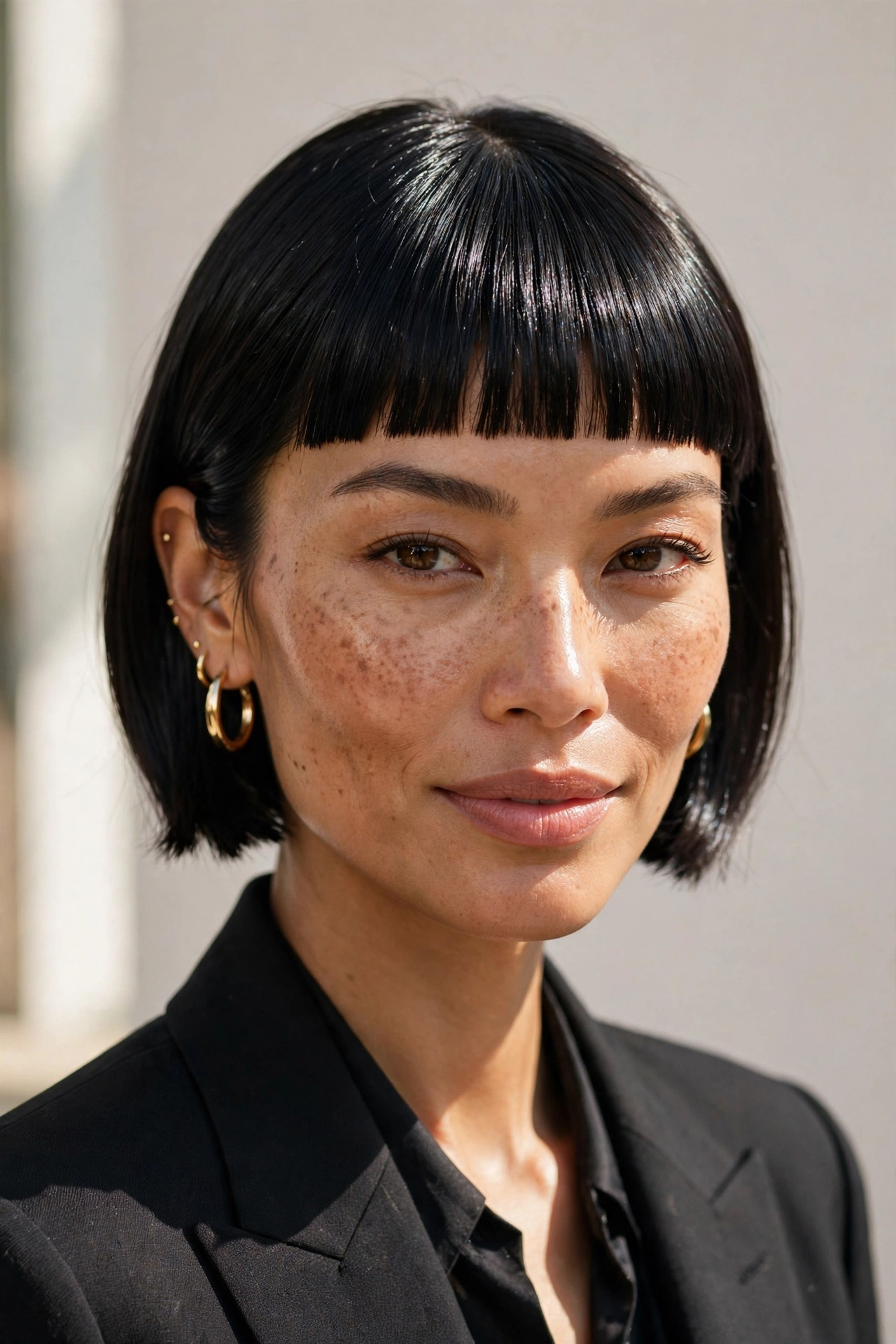
Every few years, hair swings hard in one direction, and 2026 is the year it swung short. After seasons of long, blended, lived-in everything — the curtain bangs, the face-framing layers, the “expensive brunette” uniformity — there’s a collective craving for something with intent. Harper’s Bazaar, via Yahoo, recently dubbed baby bangs “fall’s most polarizing hair trend,” and that word — polarizing — is doing a lot of work. Baby bangs aren’t a safe choice. They’re a conversation. And in a year when personal style has become the loudest form of self-expression, a haircut that starts conversations is exactly what people want.
The celebrity factor is impossible to ignore. Dakota Johnson — already the patron saint of bangs — pushed hers up into true micro-fringe territory. Zendaya, whose hair transformations reliably break the internet, stepped out with a cropped fringe that had stylists’ DMs overflowing. Chase Sui Wonders joined the micro-fringe club too. When three women with three completely different aesthetics all land on the same haircut within weeks of each other, it’s not a coincidence — it’s a trend with real momentum. Salons are feeling it: beauty analysts at perfectcorp recently called micro bangs one of the season’s most-requested bang changes, noting the spike in appointment requests specifically for short, above-the-brow fringe.
There’s also a practical undercurrent to the trend. Baby bangs are, counterintuitively, one of the lowest-commitment “big change” haircuts you can get. Unlike a pixie or a buzz cut, they grow out gracefully — a month of growth turns baby bangs into a chic longer fringe, not an awkward phase. They work with nearly every hair length, from cropped pixies to waist-length waves. And for women who’ve spent years hiding behind long layers, the forehead-baring boldness of a micro fringe feels like a genuine reset — a way to change your whole look while keeping your length.
Finally, there’s the face-framing math. By exposing the forehead, baby bangs visually lengthen the face and pull attention to the eyes and cheekbones. In the era of the “clean girl” aesthetic evolving into something bolder and more editorial, that sculptural effect is catnip. Makeup artists love them too — a micro fringe gives eyeshadow and brow work a bigger canvas, which is why you’re seeing baby bangs all over beauty editorials this season. The trend isn’t just about hair; it’s about the face as a whole composition. And right now, that composition starts an inch above the brows.
15 Baby Bangs Ideas for Women in 2026
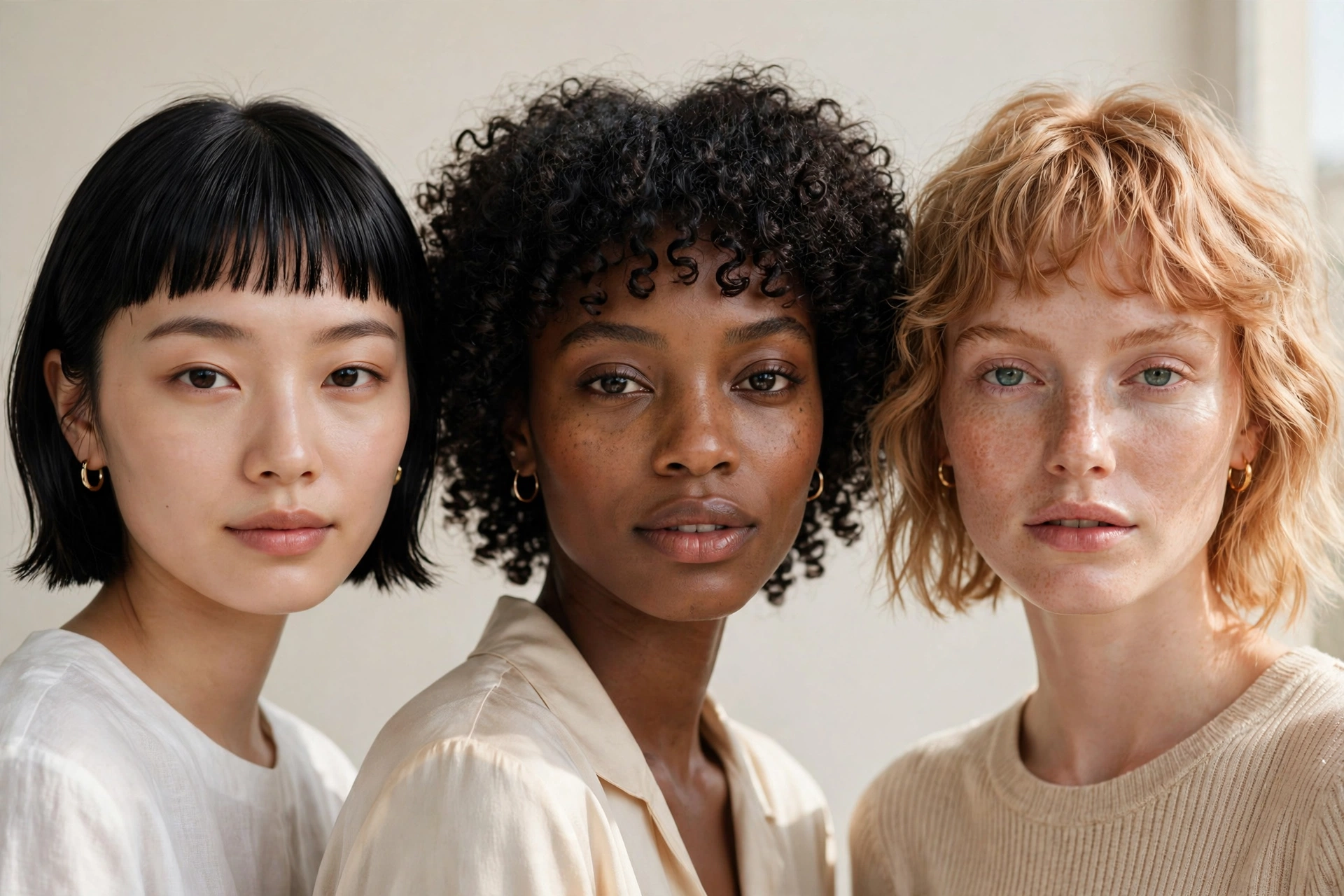
Alright — the part you came for. Below are fifteen distinct ways to wear baby bangs in 2026, covering every hair texture, length, and comfort level, from the timeless classic to the experimental. Each one includes what makes it work, who it suits, and how to keep it looking intentional instead of accidental. Save your favorites and bring them to your stylist.
1. The Classic Micro Fringe
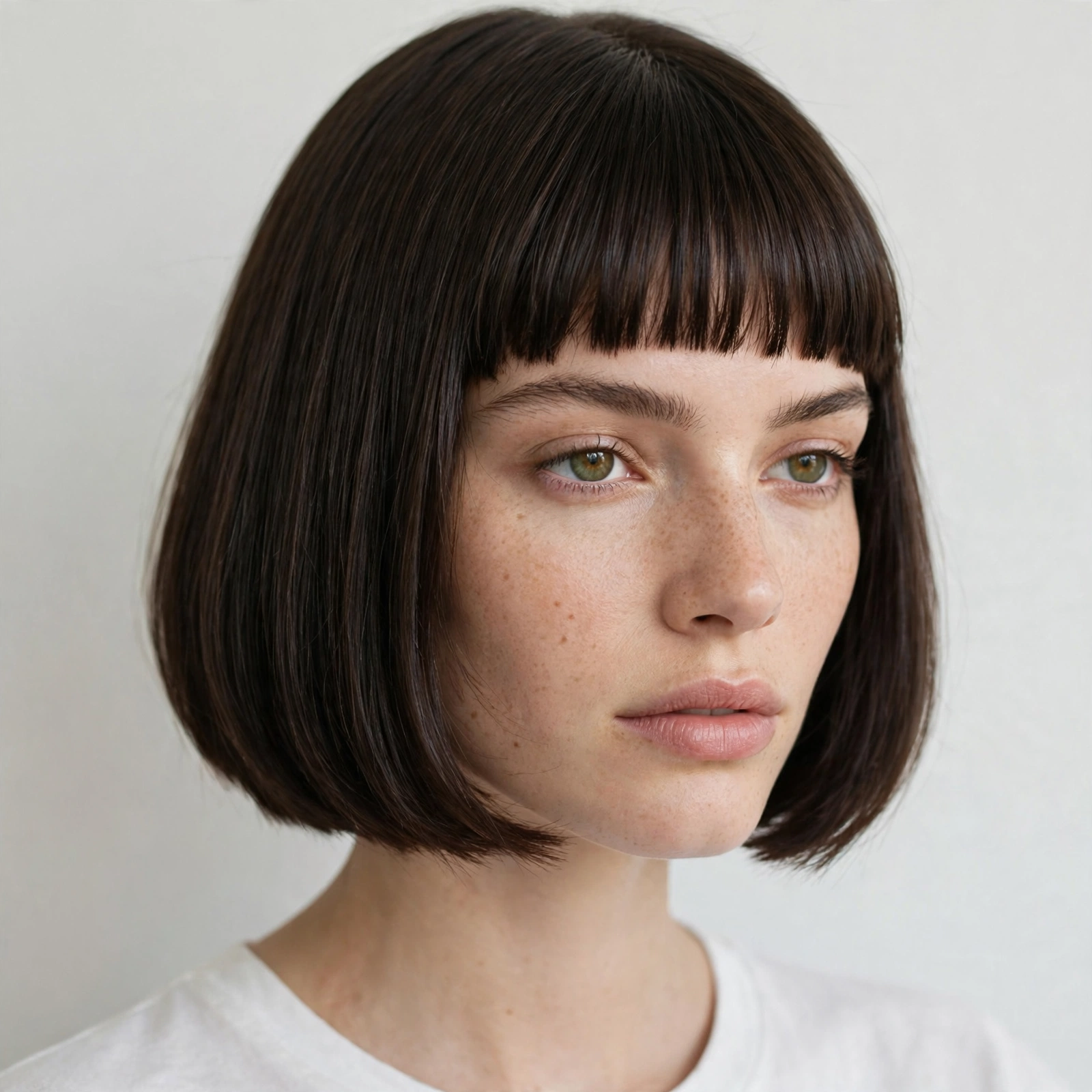
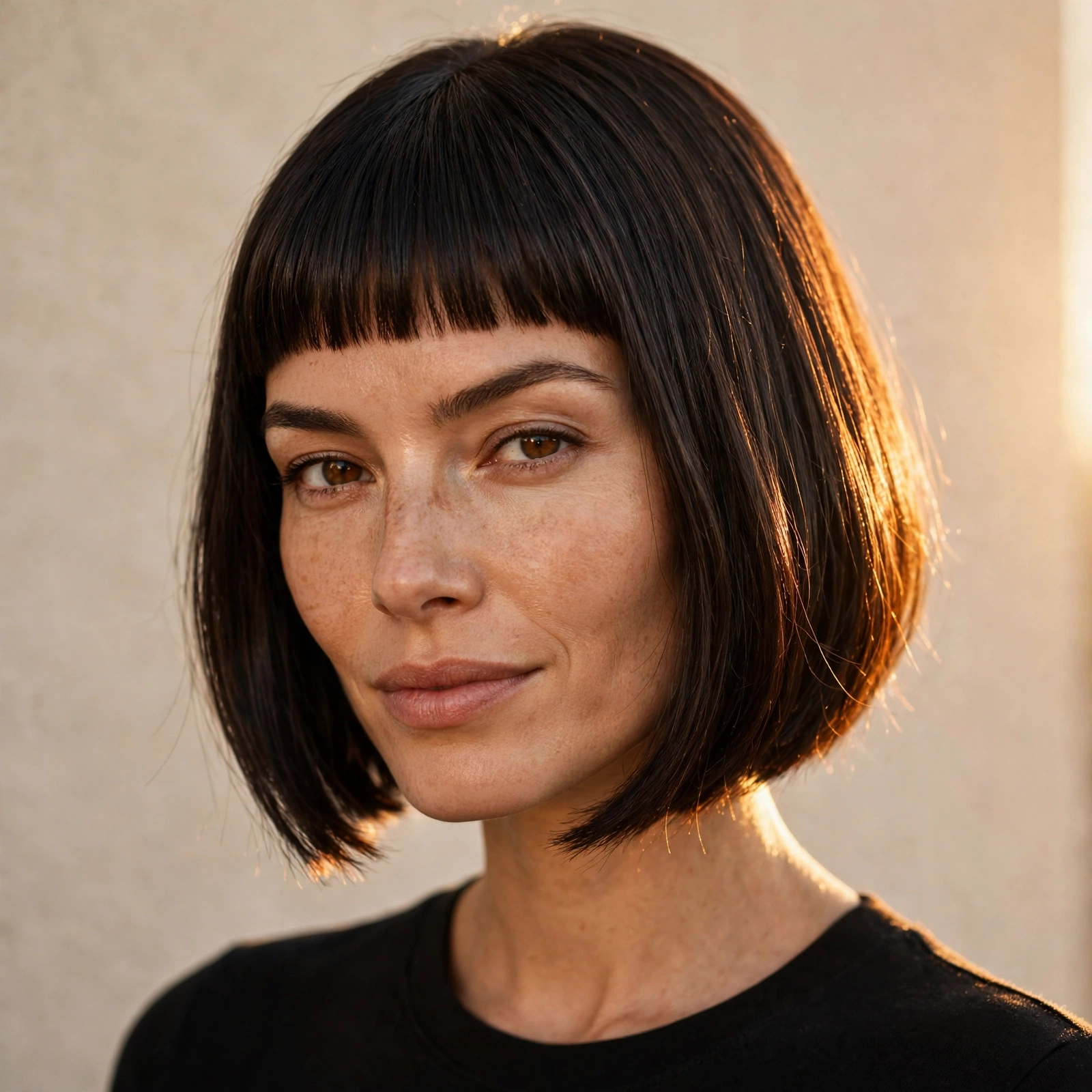
The one that started it all. The classic micro fringe is cut straight across, blunt, sitting a clean inch to an inch and a half above the eyebrows — no texture, no wisps, no apology. It’s the Audrey Hepburn reference, the French-girl staple, the version that looks like you walked out of a Parisian salon and into a film. What makes it timeless is its precision: the blunt edge creates a strong horizontal line that contrasts beautifully with soft features, and it pairs with virtually any haircut underneath, though it looks most iconic with a chin-length bob or a sleek lob.
To pull this off, your stylist should cut the fringe dry or nearly dry — wet hair shrinks as it dries, and with a fringe this short, even a quarter-inch of shrinkage changes everything. Ask for the length to sit about 3 to 4 cm above the brow at its shortest point, cut straight across with minimal point-cutting at the edges. At home, style it with a flat brush and a quick pass of a mini straightener, then press it flat against the forehead with the warmth of your palms. A pea-sized amount of smoothing cream keeps flyaways down without making it greasy. This version demands the most upkeep (trims every two to three weeks), but the payoff is a look that never, ever looks dated.
2. Baby Bangs with a Blunt Bob
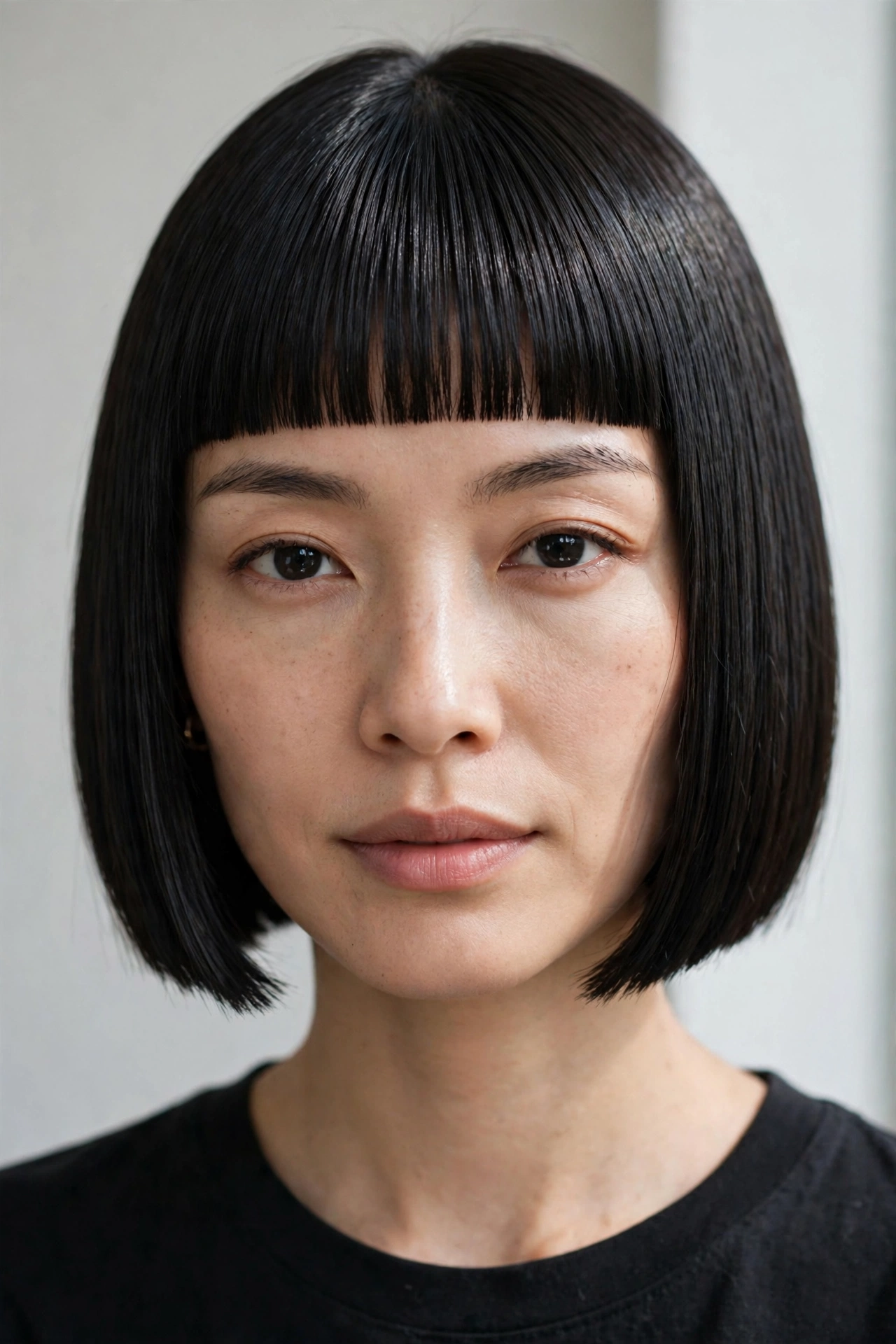
If the classic micro fringe is the icon, baby bangs with a blunt bob is the icon’s power suit. The geometry here is the whole story: a razor-sharp bob ending right at the jawline, topped with a short, straight fringe hovering above the brows. Two clean lines, one unforgettable silhouette. This pairing dominated the fall runways and it’s easy to see why — the contrast between the severe lines and the softness of an actual human face creates a tension that reads as high fashion without trying too hard.
This combination works best on straight to slightly wavy hair, because the blunt lines need smooth texture to read clearly. Ask your stylist to cut the bob first, then the fringe, so the proportions can be balanced against each other — the fringe should end noticeably higher than where the bob’s front sections begin, creating that deliberate gap. For daily styling, blow-dry the bob with a paddle brush for that glassy finish, and use a flat iron on the fringe only if needed. A shine spray (not oil, which can separate the fringe into stringy pieces) keeps both the bob and the bangs looking expensive. Fair warning: this is a high-precision cut, so find a stylist who’s genuinely confident with blunt work — wobbly lines will show.
3. Baby Bangs with Long Hair
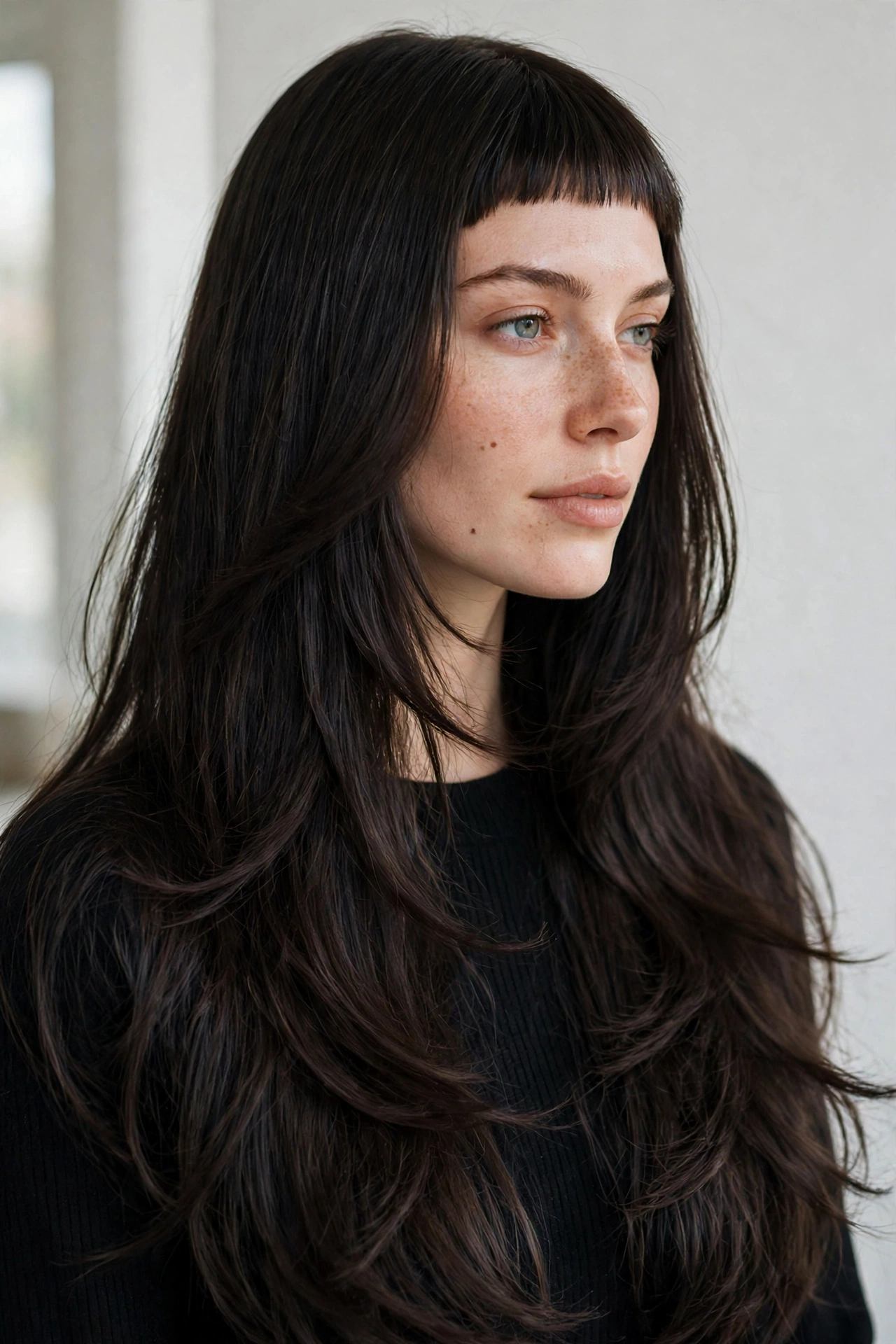
Here’s the version for everyone who wants the drama without sacrificing a single inch of length. Baby bangs with long hair create one of the most striking contrasts in all of hairstyling: an ultra-short fringe up top, waterfall lengths everywhere else. It shouldn’t work — the proportions are extreme — but it absolutely does. The fringe acts like an accessory, a bold frame for the eyes, while the long hair keeps the overall look feminine and versatile. It’s the mullet’s sophisticated cousin: business in the front takes on a whole new meaning.
The key to making this work is keeping the long hair healthy and intentional. When the fringe is this bold, limp or damaged lengths will drag the whole look down. Ask for long layers through the bottom half to create movement, and keep the fringe itself slightly textured rather than blunt — a softer edge bridges the gap between the short top and long bottom. Styling is straightforward: the long hair can be worn straight, waved, or curled however you like, while the fringe gets a quick blow-dry with a small round brush, directed straight down. One practical tip — long hair plus baby bangs photographs beautifully, but in person, make sure the fringe is the star by keeping the rest of the hair relatively simple. Too many competing elements and the look gets busy.
4. Curly Baby Bangs
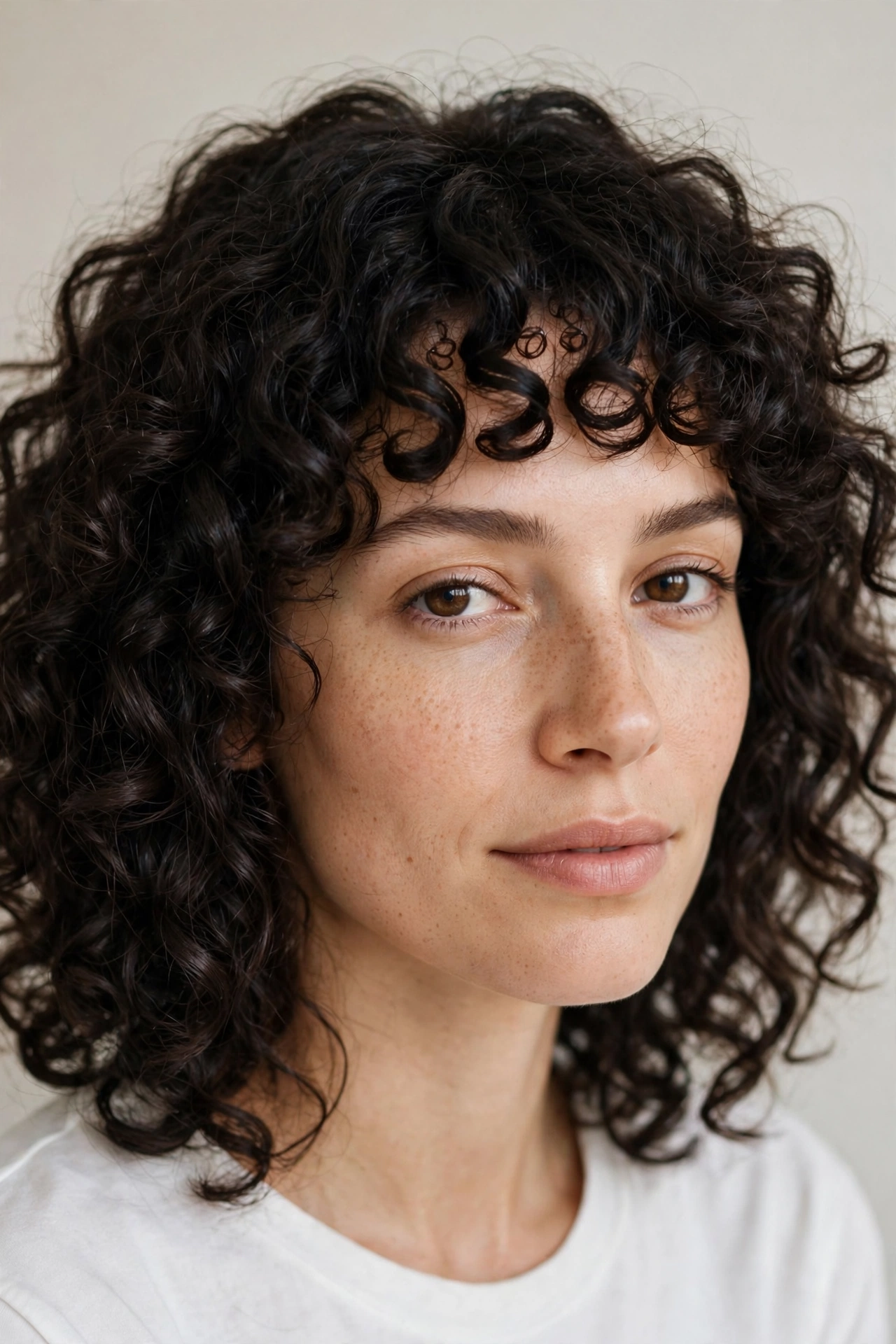
Yes — curly hair can absolutely do baby bangs, and honestly, the result might be the most charming version on this entire list. Curly baby bangs sit as a soft, springy halo above the brows, each curl doing its own joyful little thing. The texture does what straight hair can’t: it softens the severity of the short length, turning what could look severe into something playful and romantic. This is the version for women who’ve been told their whole lives that bangs “don’t work” with curls. They do. They just need a stylist who understands curl patterns.
The non-negotiable rule: curly baby bangs must be cut dry, curl by curl. Wet curls stretch, and a fringe cut to the “right” length on wet hair will spring up a full inch shorter once dry — which is how curly bangs accidents happen. Ask for a Deva-cut-style approach or any dry curl-by-curl method, and agree on the dry length before the scissors come out. Aim for the curls to land about an inch above the brow when fully dry and scrunched. At home, style with a curl cream applied to damp fringe, then either diffuse on low heat or let air-dry — and resist the urge to touch them while they dry, because frizz is the enemy of definition. A silk pillowcase helps enormously with second-day curls. Refresh in the morning with a light mist of water mixed with leave-in conditioner, scrunch, and go.
5. Wispy Baby Bangs
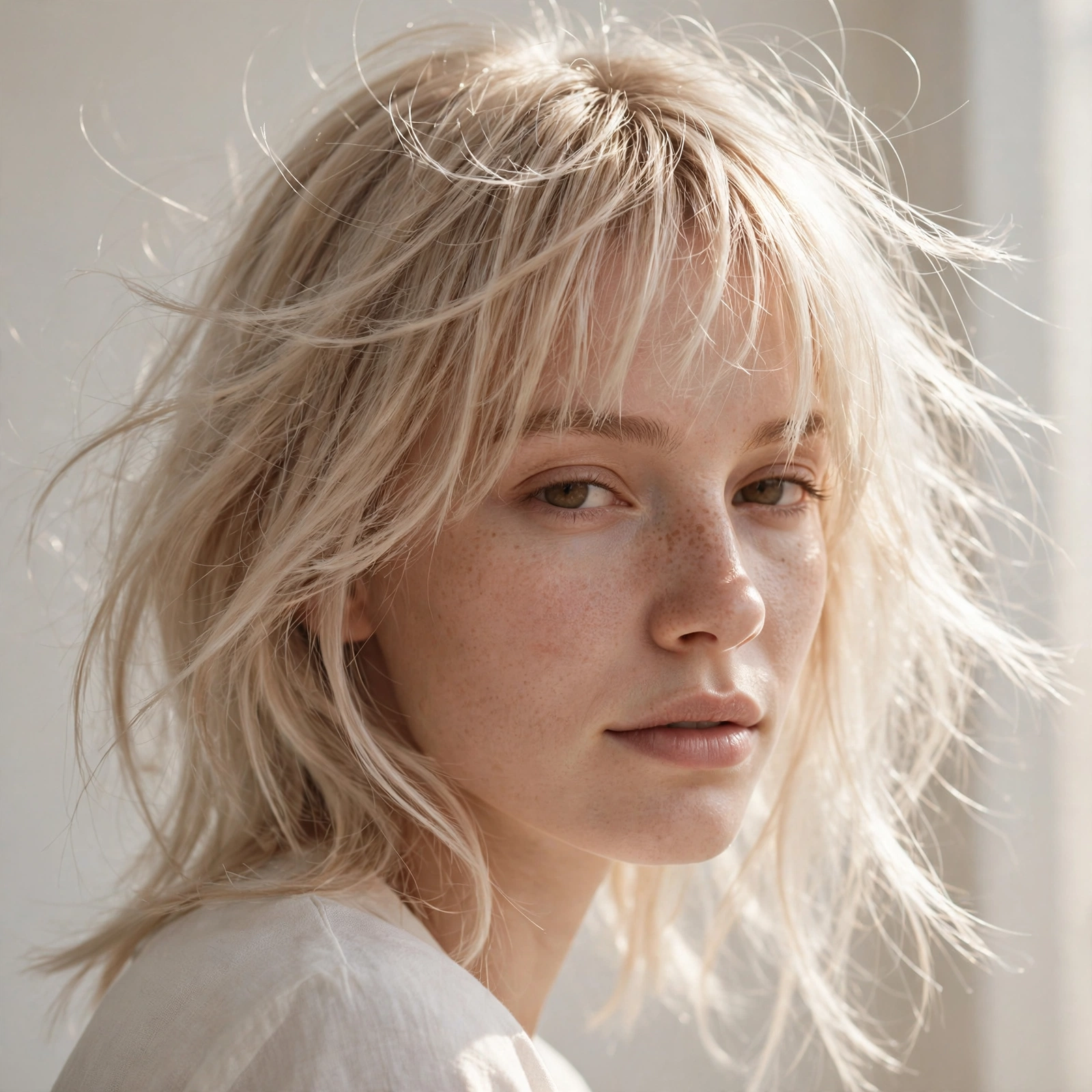
Not ready to commit to the full blunt statement? Wispy baby bangs are your entry point. Same short length — hovering above the brows — but cut with a feathered, piece-y texture that lets glimpses of forehead peek through. The effect is softer, more forgiving, and significantly easier to grow out, because the uneven texture disguises regrowth instead of announcing it. If the classic micro fringe is a bold lip, wispy baby bangs are a tinted balm: same idea, gentler delivery.
Ask your stylist for point-cutting or slide-cutting through the ends of the fringe to create that airy separation — the pieces should vary slightly in length rather than forming a solid line. This version is wonderfully low-maintenance for daily styling: a quick tousle with your fingers and a tiny bit of texturizing spray is genuinely enough most days. On flat-hair days, twist small sections of the fringe between your fingers while blow-drying to encourage separation. Wispy baby bangs also flatter a wider range of face shapes than the blunt version, because the broken edge doesn’t create as harsh a horizontal line. They’re the crowd-pleaser of the micro-fringe family — and there’s zero shame in starting here.
6. Baby Bangs with a Pixie Cut
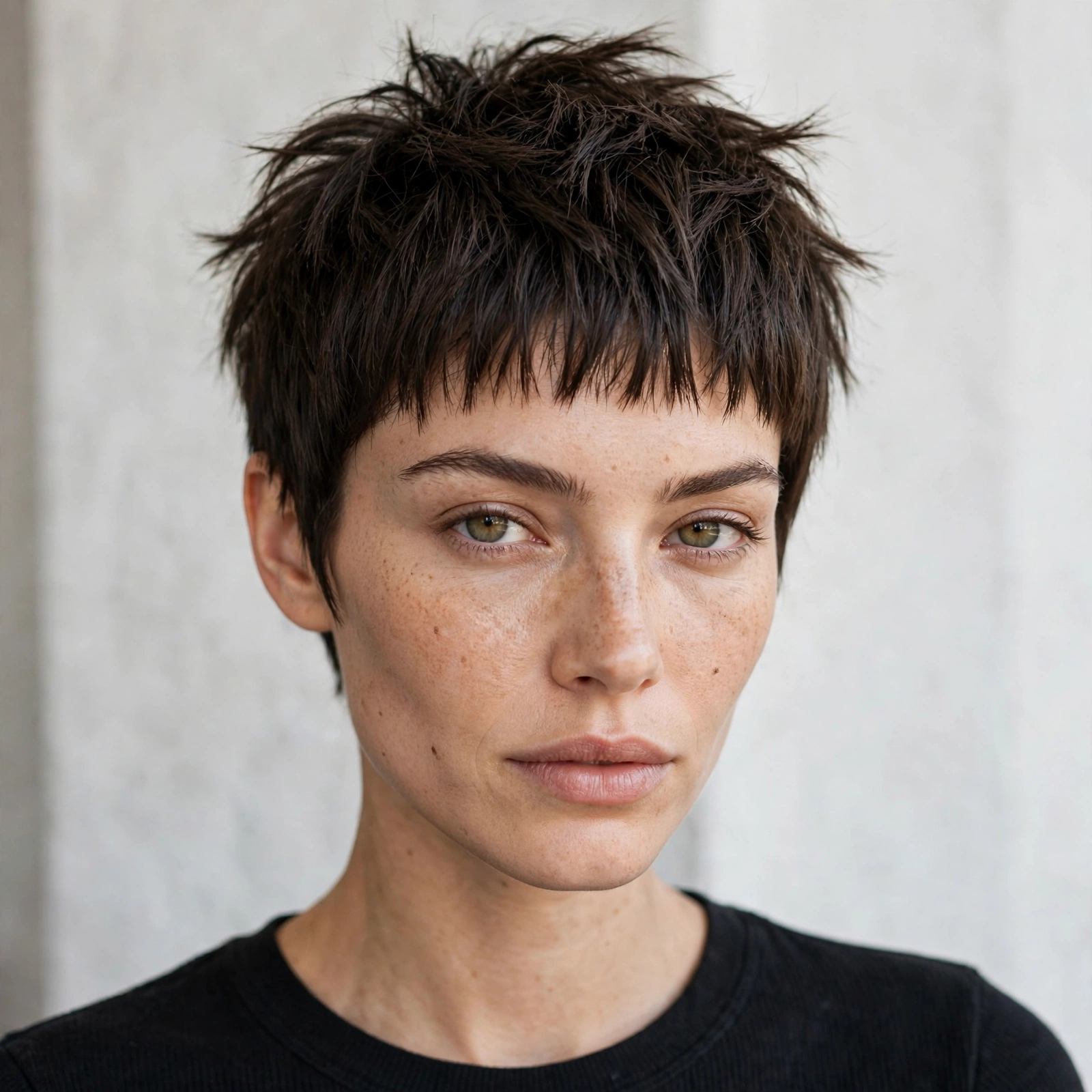
Short on short: baby bangs with a pixie cut is the boldest combination on this list, and possibly the coolest haircut of 2026, full stop. When the entire head is cropped close, a micro fringe becomes less of an accent and more of the whole architecture — it defines the hairline, frames the eyes, and gives the pixie a deliberate, editorial finish instead of a “growing out a buzz cut” vibe. This is the haircut of women who are done asking for permission. It photographs like a dream and turns heads in real life.
With a pixie, the fringe and the cut are really one continuous shape, so the consultation matters more than ever. Bring photos — several, from different angles — and talk through exactly how short the fringe should sit relative to the brows. Most pixie-with-baby-bangs cuts keep the fringe about an inch above the brow, textured at the ends so it blends into the longer top layers. Styling is refreshingly minimal: a dab of matte styling paste worked through the fringe with your fingertips gives it piece-y definition, and you can push it slightly to one side or wear it straight down depending on your mood. Grow-out is the one real consideration — a pixie with baby bangs grows into a longer pixie with longer bangs, which still looks fine, but you’ll want trims every three to four weeks to keep the shape intentional.
7. Choppy Baby Bangs
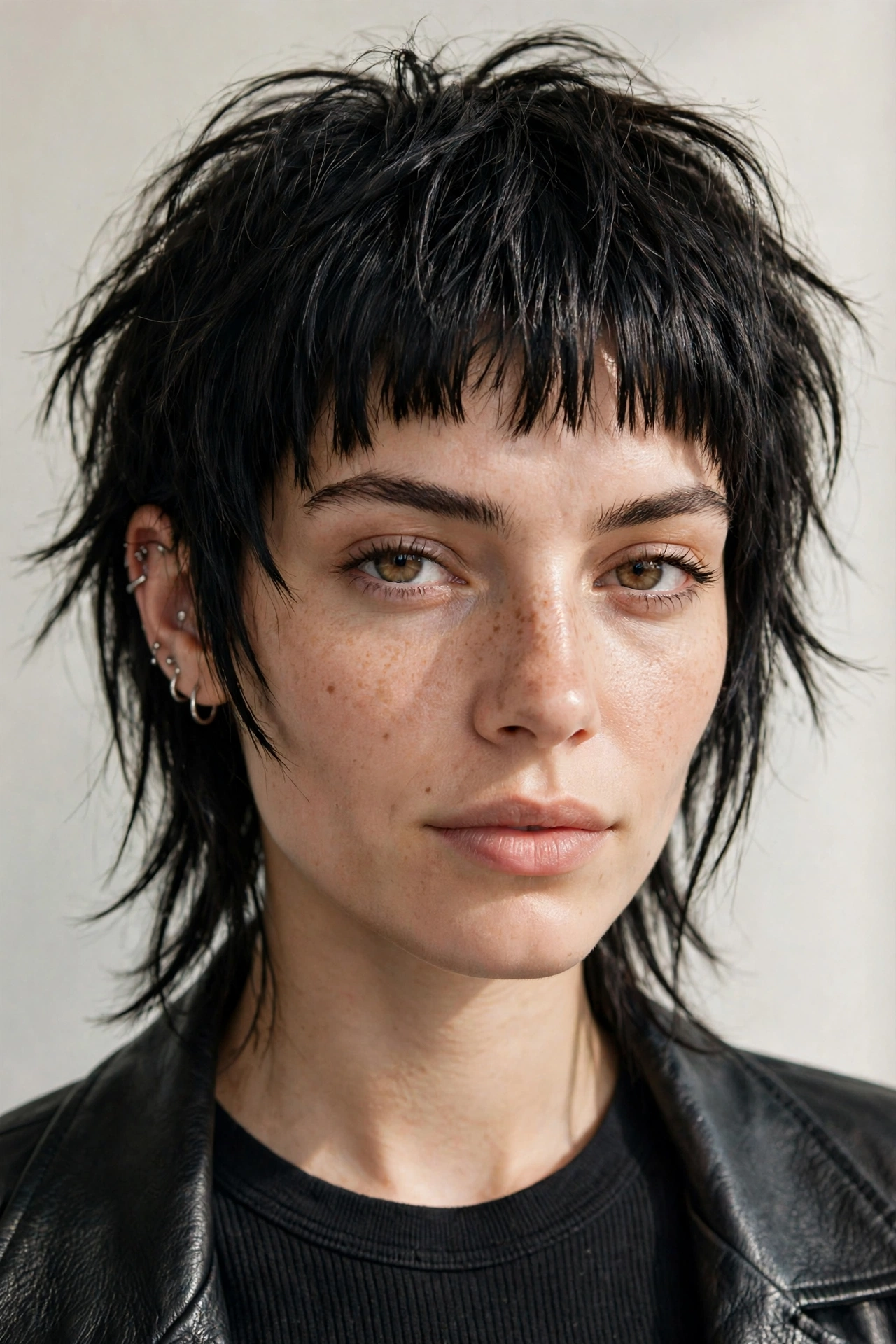
Choppy baby bangs are the downtown-cool sibling of the classic micro fringe — same short length, but with jagged, uneven ends that look deliberately undone. Think less Parisian precision, more rock-concert energy. The choppiness adds texture and movement, which makes this version incredibly forgiving: cowlicks, uneven growth, bedhead — it all just looks like part of the plan. If your hair has a mind of its own in the morning, choppy baby bangs might actually be easier to live with than the polished versions.
The technique here is all in the cutting: your stylist should use point-cutting at varying depths, possibly with a razor on the ends, to create that jagged texture. The overall length still sits above the brows, but individual pieces will vary by up to half an inch — that’s the look, not a mistake. For styling, lean into the texture: work a small amount of texturizing paste or dry wax through the fringe, pinching pieces between your fingers to emphasize the separation. A light mist of dry shampoo at the roots on day two adds grit and volume. One caution — choppy doesn’t mean sloppy. There’s a fine line between artfully jagged and genuinely uneven, and it comes down to the stylist’s eye. Check their portfolio for textured fringe work before you commit.
8. Baby Bangs with a Shag
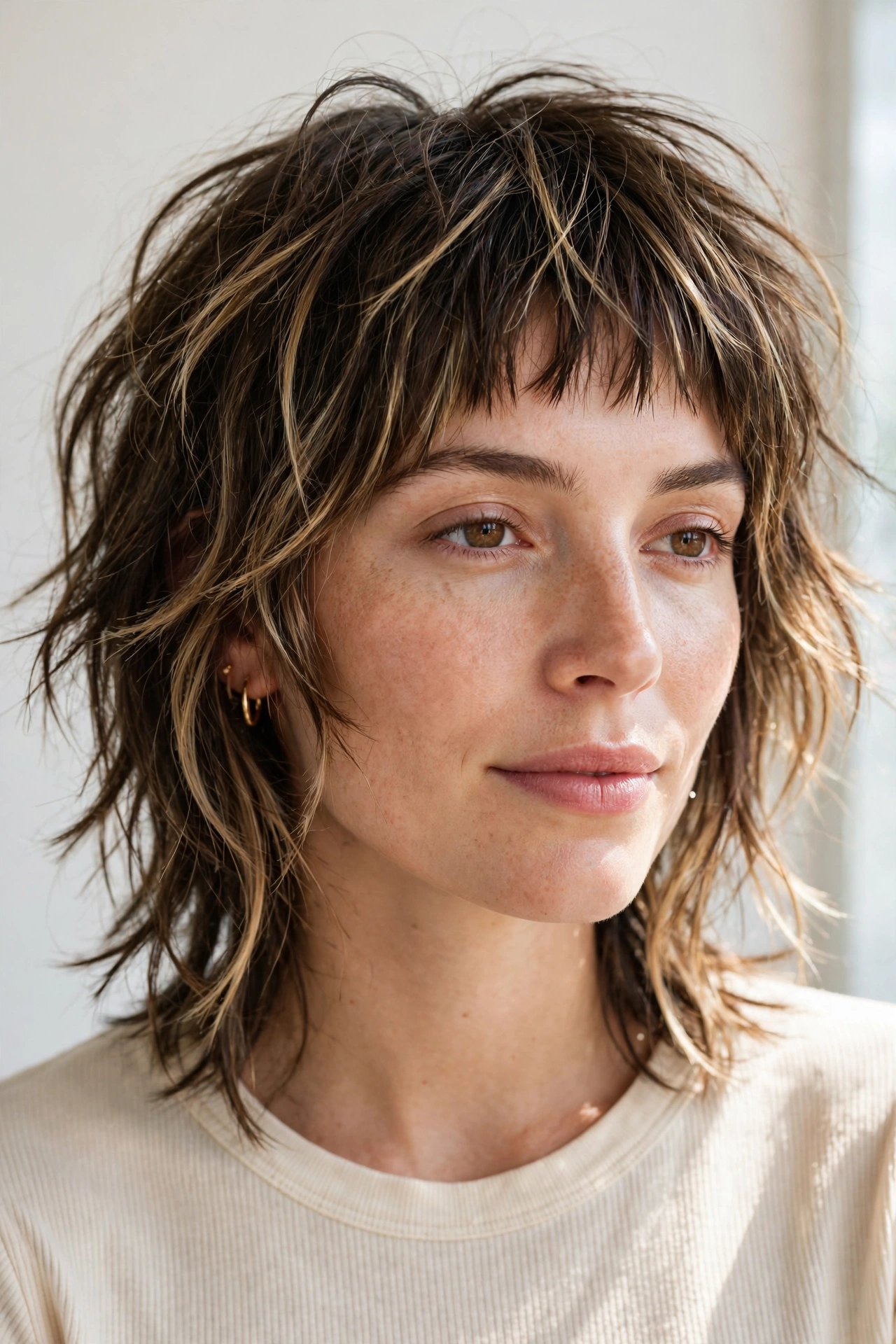
The shag and baby bangs were made for each other — both are built on texture, movement, and a healthy disregard for perfection. A shaggy cut with its choppy layers and piece-y ends flows naturally into a short, textured fringe, creating one continuous cascade of cool. This is the lowest-maintenance version of baby bangs on this list, because the shag’s whole philosophy is “the messier, the better.” Bedhead isn’t a problem here; it’s the goal. If you’ve ever wanted a haircut that looks better the less you do to it, this is the one.
Ask your stylist for a modern shag — lots of internal layers, thinned-out ends, and a fringe cut to sit about an inch above the brows with heavy texturizing. The fringe should feel like an extension of the shag’s shortest layers, not a separate element. Styling is gloriously simple: scrunch a golf-ball-sized amount of mousse into damp hair, diffuse or air-dry, and finish with a texturizing spray. Don’t brush it — brushing a shag is how you turn texture into frizz. On day two and three, revive everything with dry shampoo at the roots and a quick re-scrunch of the ends. This combination is particularly flattering on medium to thick hair, where the layers have enough density to create that coveted lived-in volume.
9. Baby Bangs with a High Ponytail
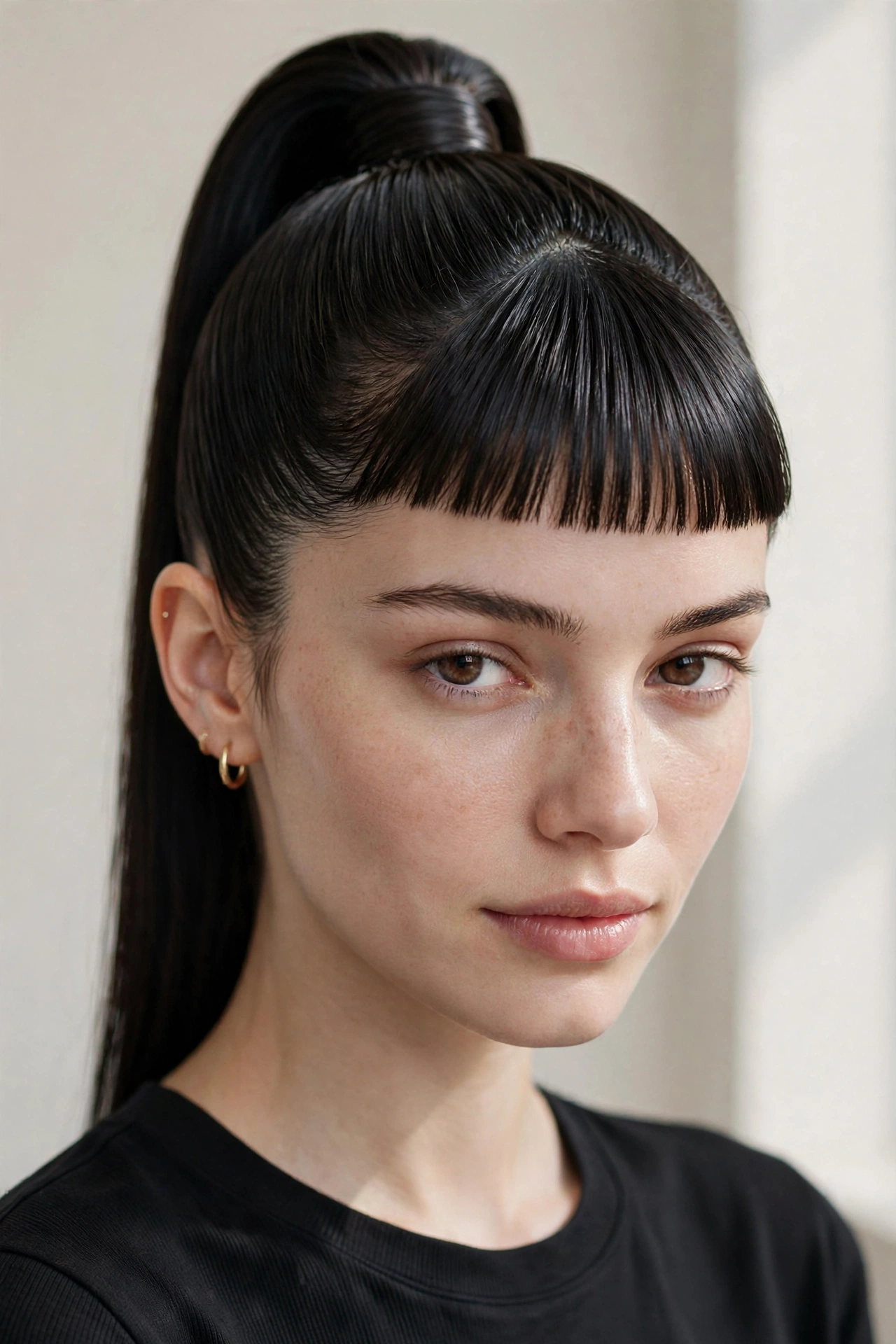
A high ponytail with baby bangs is pure attitude — it’s the hairstyle equivalent of walking into a room like you own it. Pulling all the hair up and back exposes the full architecture of the cut: the short fringe becomes the undisputed focal point, framing the eyes with nothing else competing for attention. It’s sleek, it’s sporty, it’s a little bit fierce, and it takes about three minutes to execute. This is the version you wear when you want the baby bangs to do all the talking.
The trick is in the details. Smooth the ponytail back with a boar-bristle brush and a light-hold gel for that snatched, polished finish — flyaways around the hairline will fight the fringe for attention, so tame them. Position the ponytail high, at the crown, and secure it tightly; a sleek base makes the short fringe look deliberate rather than accidental. The fringe itself needs just a quick smoothing — a mini flat iron pass or a blow-dry with a small brush. For evenings, wrap a small section of hair around the elastic to hide it, and add a pair of statement earrings: with the neck and ears exposed, jewelry becomes part of the hairstyle. This look is also a brilliant way to test-drive baby bangs mentally — pull your hair into a high pony and clip a faux fringe in place to preview the effect before committing.
10. Colored Baby Bangs
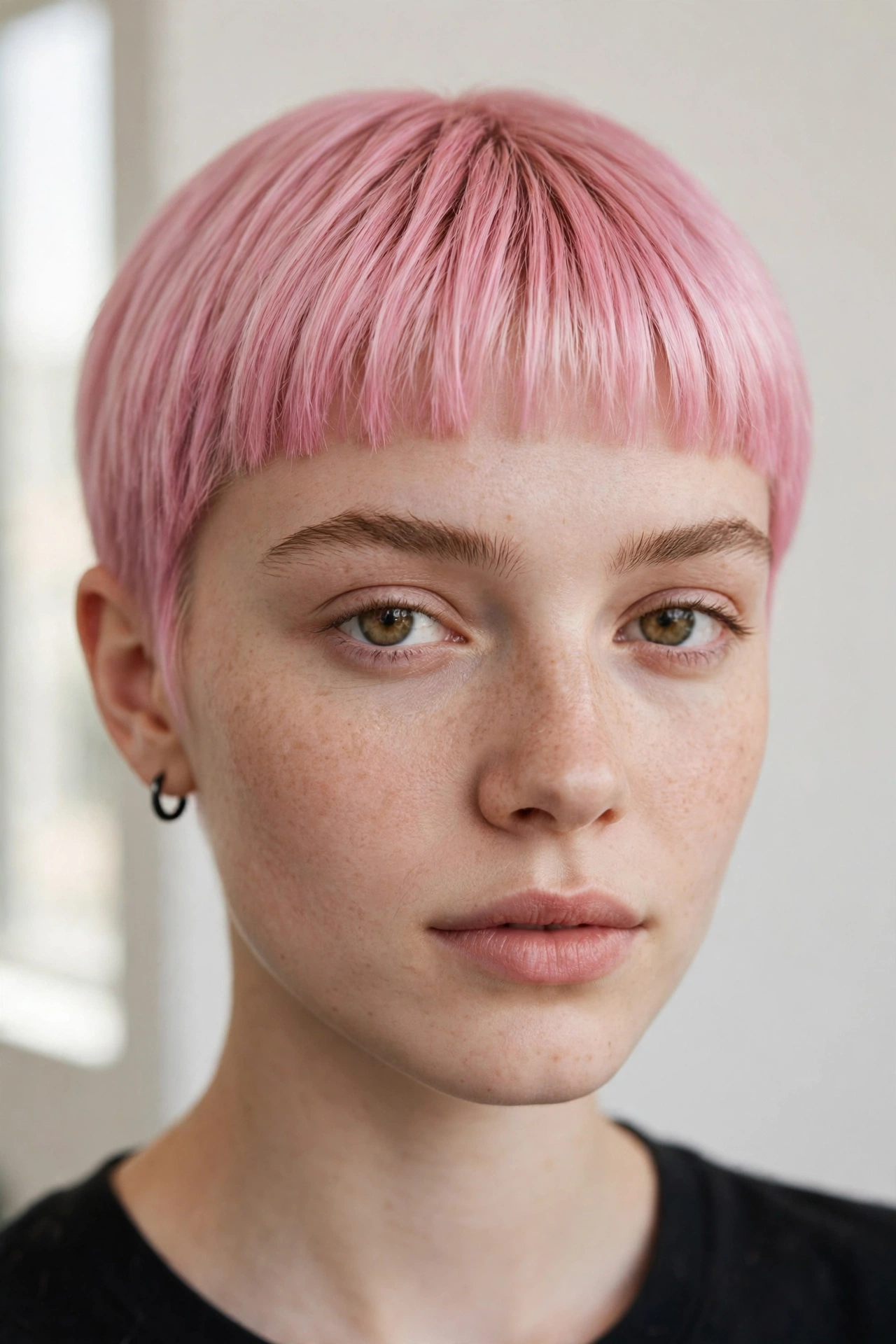
Why stop at a bold cut when you can have a bold color too? Colored baby bangs — whether that’s a vivid copper, a pastel pink, a stark platinum, or a full rainbow — take the micro fringe from statement haircut to full art piece. Because the fringe is small, it’s the perfect canvas for experimenting with color: less commitment than dyeing your whole head, less damage, and if you hate it, it grows out in weeks. A bright fringe against natural-length hair creates a color-block effect that’s endlessly photographable and endlessly fun.
There are two approaches. The first is dyeing just the fringe a contrasting color — think platinum baby bangs on dark hair, or a vivid red fringe with brunette lengths. This is high-impact and surprisingly wearable, because the color is contained. The second is an all-over color where the fringe just happens to show it off best — coppers and rich auburns look phenomenal in micro-fringe form, because the short length shows off dimension and shine. Either way, short fringe fades faster than longer hair (more washing relative to length, more sun exposure on the forehead), so invest in a color-safe shampoo and consider a gloss refresh every four to six weeks. And be honest with your colorist about your styling habits — daily heat on a freshly colored fringe will fade it fast, so heat protectant isn’t optional here.
11. Baby Bangs with Beach Waves
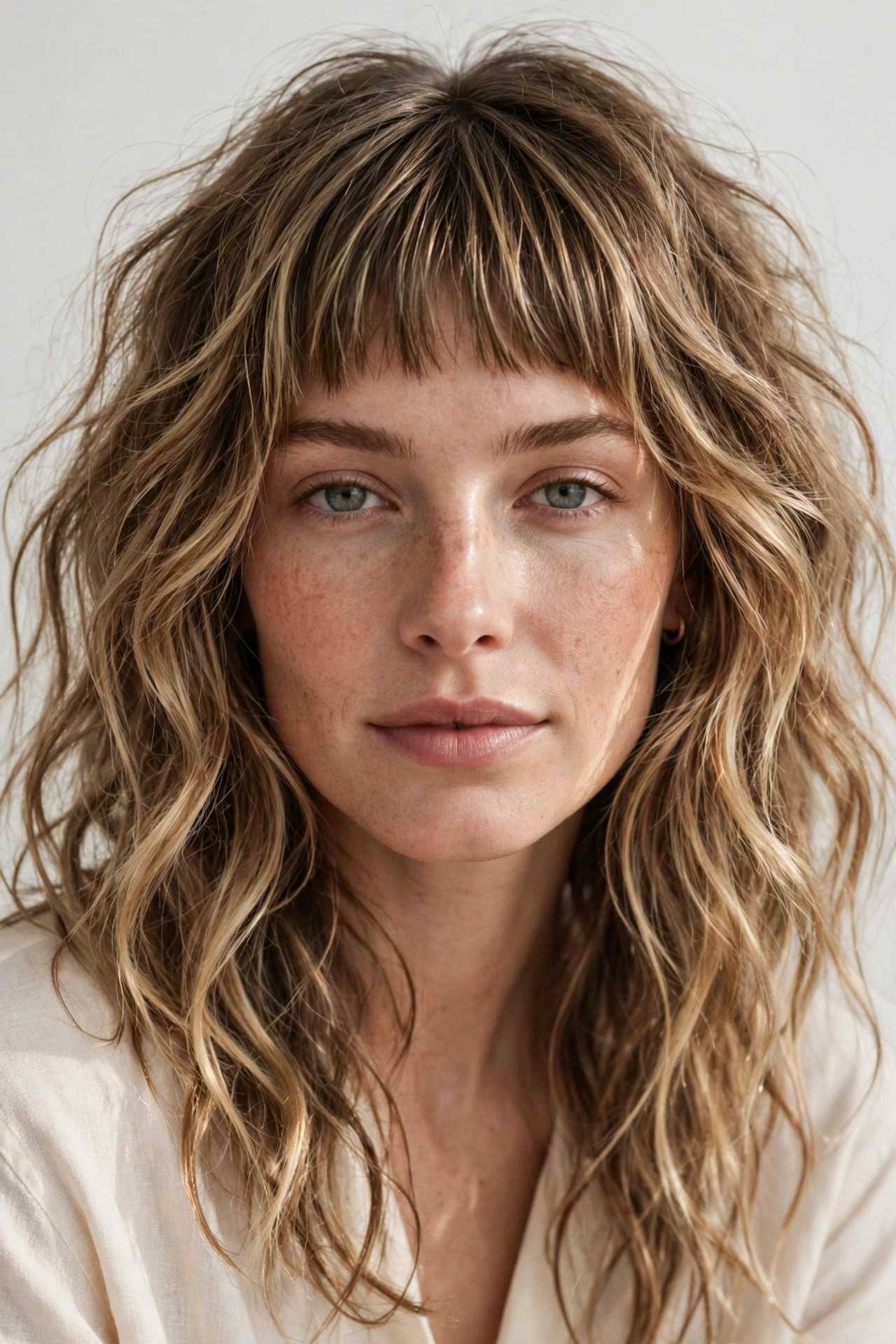
Beach waves and baby bangs shouldn’t work together — one is all about undone, salty ease, the other is a precision cut — but the contrast is exactly what makes this pairing so good. The relaxed, tousled lengths keep the short fringe from feeling severe, while the fringe gives the waves a focal point they usually lack. It’s the hair equivalent of wearing a tailored blazer with broken-in jeans: the tension between polished and casual is the entire appeal. This is also one of the most wearable versions for everyday life, because neither element demands perfection.
For the cut, ask for the fringe slightly softer than the classic version — a little texture at the ends helps it blend with the wave pattern instead of sitting apart from it. For the waves themselves, the method matters less than the finish: curl 1-inch sections away from the face with a curling wand, leaving the last inch of each section uncurled, then rake through with your fingers and mist with sea-salt spray. The fringe gets its own quick treatment — blow-dry it smooth and straight down, because wavy fringe plus wavy lengths can read as one big pouf. The one maintenance note: beach-wave texture products (salt sprays, texturizers) can make a short fringe feel gritty if they migrate up there, so apply them from the mid-lengths down and keep the fringe zone product-light.
12. Baby Bangs with Soft Curtain Pieces
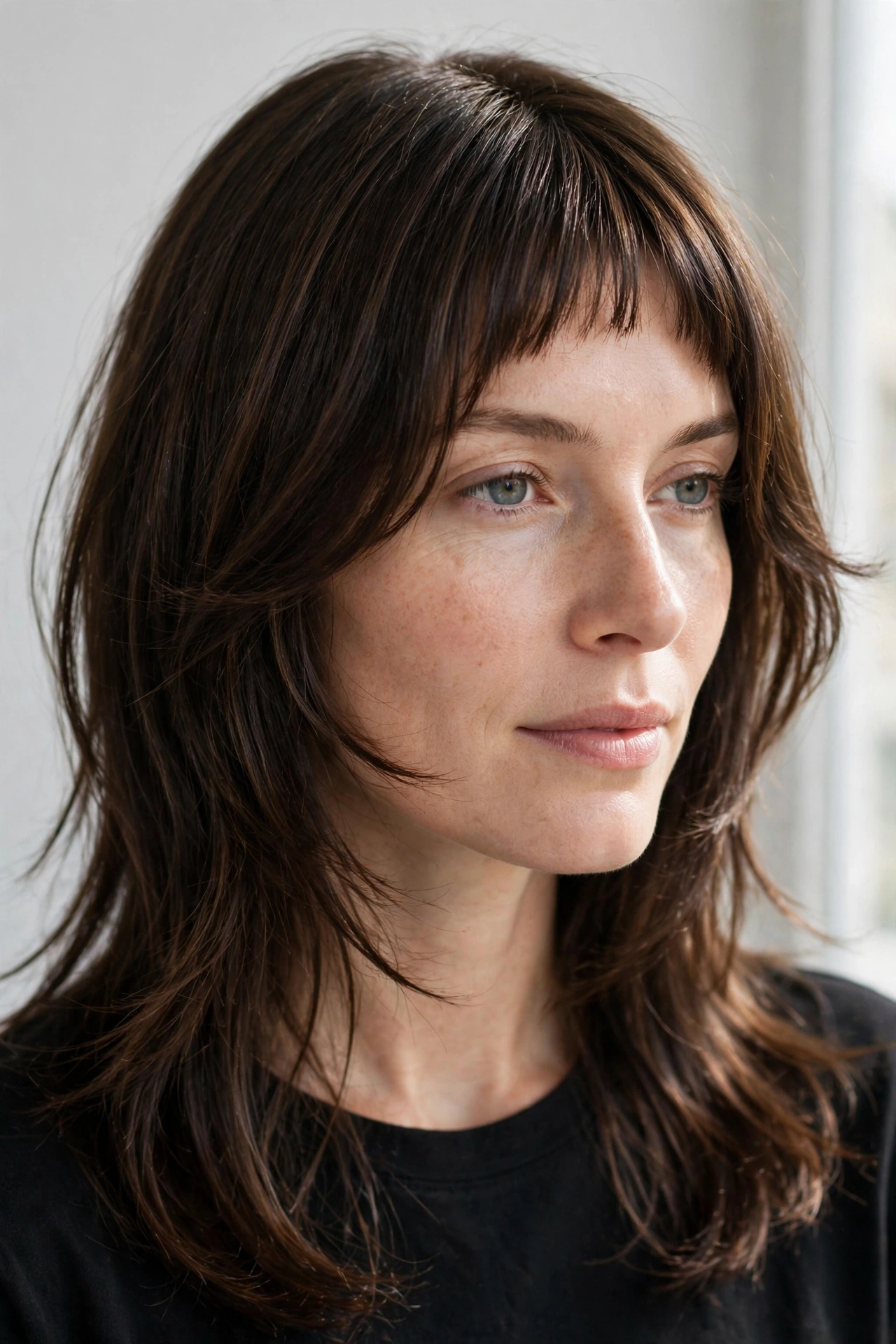
Can’t decide between baby bangs and curtain bangs? You don’t have to. This hybrid keeps the micro fringe short across the center of the forehead, then lets the outer edges graduate into longer, curtain-style pieces that sweep toward the temples and cheekbones. It’s the best of both worlds: the boldness of baby bangs up front, with the face-framing softness of curtain bangs on the sides. For women who love the micro-fringe look but worry about it being too stark, those longer side pieces are a built-in safety net — they soften the transition and make the whole cut feel more forgiving.
The cutting technique is a graduated fringe: shortest in the center (about an inch above the brows), lengthening toward the outer corners until the side pieces reach the cheekbones. Ask your stylist to blend the transition carefully — you want a smooth graduation, not a visible step. Styling takes an extra minute compared to a straight-across fringe: blow-dry the center section straight down with a small round brush, then curve the side pieces away from the face for that curtain effect. A large round brush or a quick pass with a straightener (bending the ends outward) does the job. This version also grows out beautifully, because the longer sides disguise the awkward phase — when the center gets too long, it just starts looking like regular curtain bangs, which is a perfectly good haircut to land in.
13. Baby Bangs with a Lob
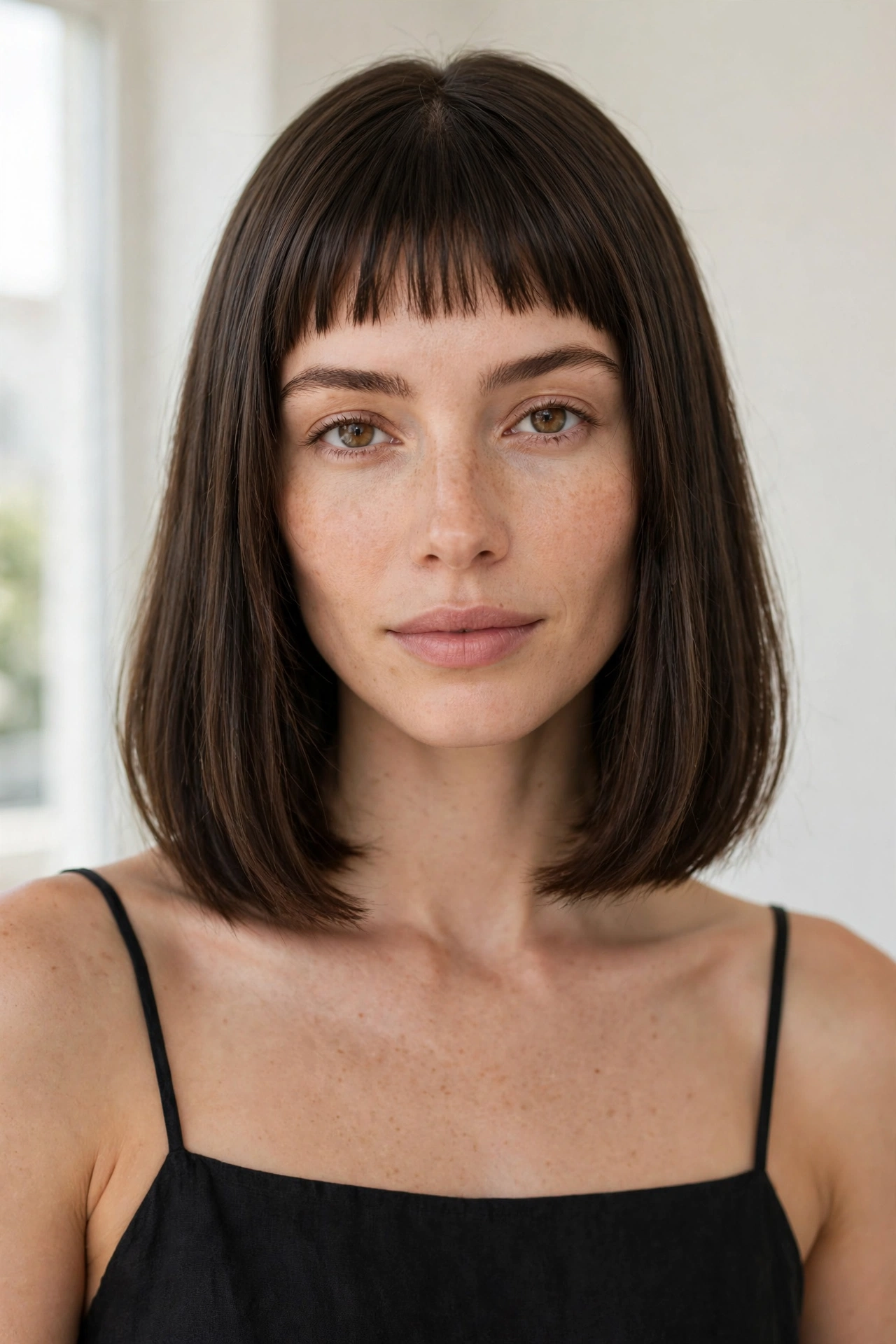
The lob (long bob) might be the most universally flattering haircut in existence, and adding baby bangs gives it an edge it didn’t know it needed. Where a lob on its own can sometimes read as “safe,” the micro fringe injects instant personality — it’s the difference between a nice haircut and a memorable haircut. The proportions work beautifully: the lob’s length (usually collarbone-grazing) balances the fringe’s shortness, creating a look that’s bold up top and effortless everywhere else. This is the version for the woman who wants to look interesting without looking like she’s trying.
Ask for a lob that hits right at or just below the collarbone, with subtle layers through the ends for movement — blunt lobs pair well with blunt fringes, while textured lobs pair better with textured fringes, so match the energy. The fringe should sit about 1 to 1.5 inches above the brows. Daily styling is the lob’s famous strong suit: it’s long enough to air-dry decently and short enough to blow out in ten minutes. Give the fringe its own dedicated minute with a small round brush, and you’re done. One practical advantage of this pairing: the lob is long enough to pull back into a low ponytail or clip up on lazy days, which means your baby bangs get to shine solo whenever you want them to.
14. Sleek Straight Baby Bangs
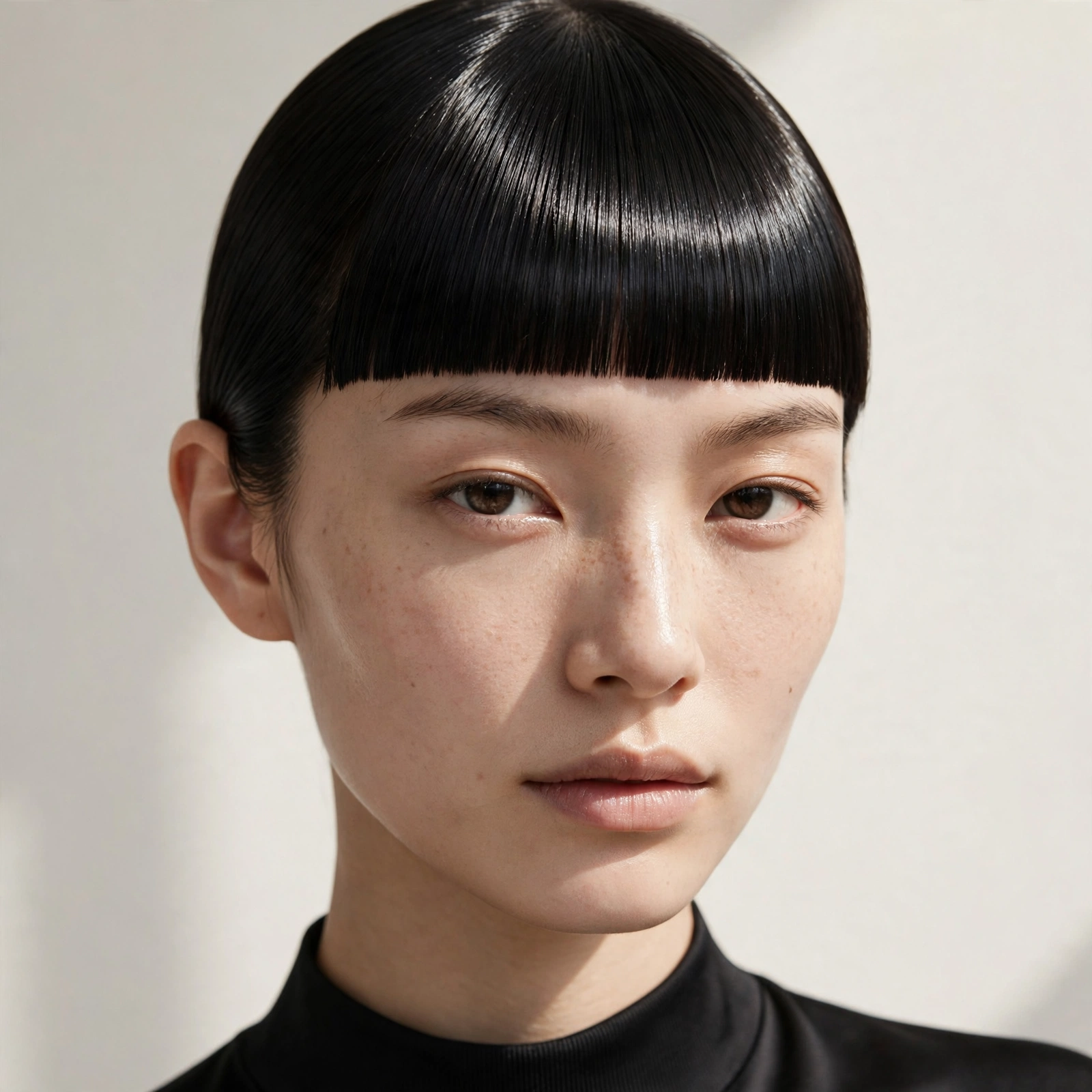
For the minimalists: baby bangs worn pin-straight, glass-smooth, with not a millimeter out of place. This is the most editorial version of the trend — the one you see in high-fashion shoots and on women who treat their hair like architecture. Sleek straight baby bangs demand healthy, smooth hair and a commitment to the flat iron, but the result is undeniably striking: a sharp, graphic fringe that looks almost sculptural against the forehead. Paired with an equally sleek cut underneath, it’s pure precision. Paired with textured or wavy lengths, the contrast is electric.
This version lives and dies by hair health and heat technique. Start with a heat protectant — always, no exceptions — and flat-iron the fringe in small sections, working from root to tip in single smooth passes. The goal is glass, not crunch: if the fringe looks stiff, you’ve used too much product or too much heat. A silicone-free smoothing serum (pea-sized, worked through the ends only) adds shine without weight. Humidity is the natural enemy here, so on damp days, an anti-humidity spray is worth its weight in gold. And be realistic about your hair type: if your hair is naturally very curly or coarse, maintaining pin-straight baby bangs daily is a significant time investment. A keratin treatment on just the fringe area can buy you weeks of easier styling — ask your stylist if it’s an option.
15. Baby Bangs with a Messy Bun
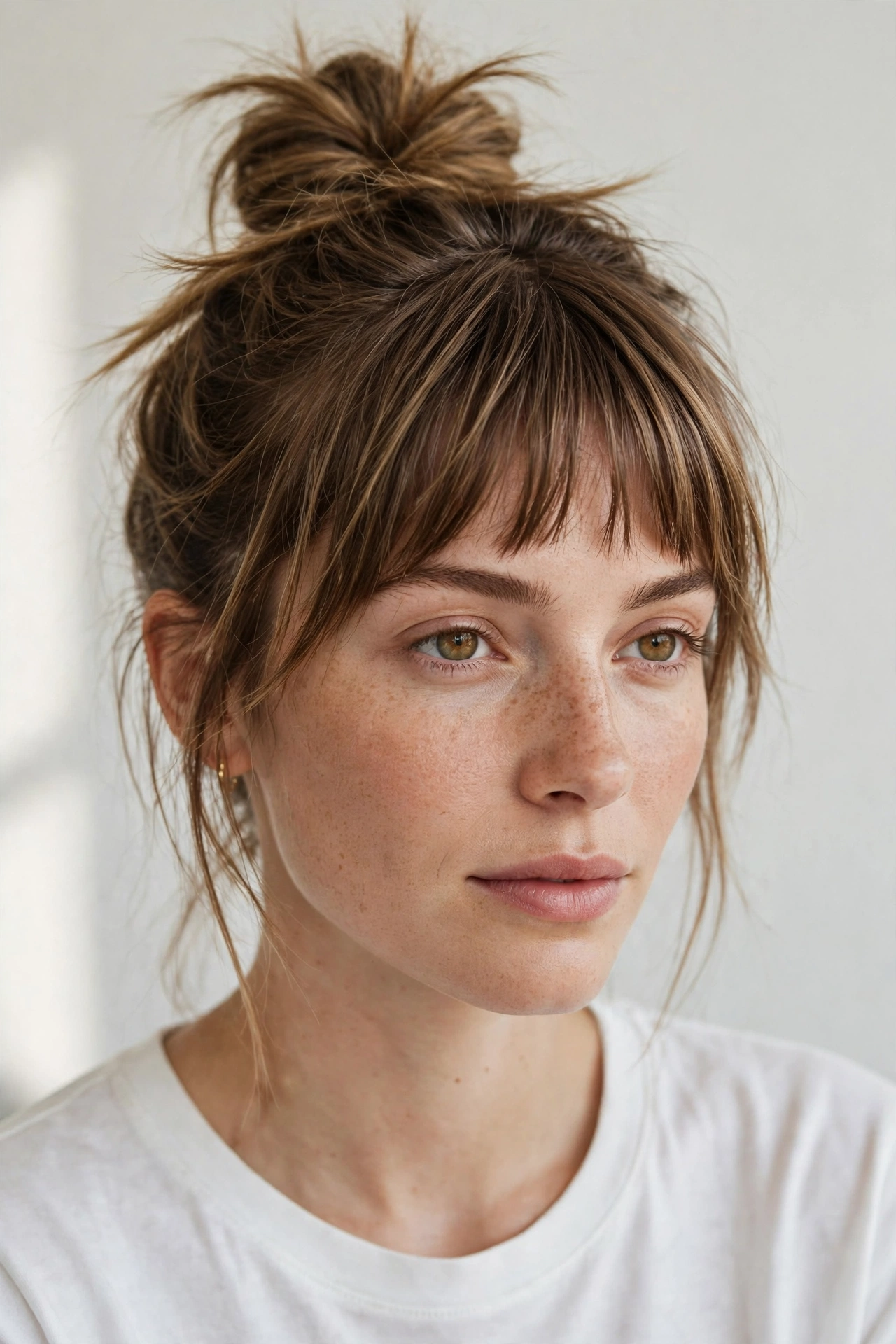
The messy bun is every woman’s off-duty uniform, and baby bangs elevate it from “I gave up” to “I meant this.” With the hair swept up, the micro fringe becomes the entire front of the hairstyle — framing the eyes, defining the look, doing all the heavy lifting while the bun does nothing at all. It’s the ultimate low-effort, high-impact combination: the bun takes ninety seconds, the fringe was already cut, and together they look like a deliberate style choice. This is the version you’ll actually wear on a Tuesday.
Execution is simple, but a few details separate a good messy bun from a sad one. Gather the hair high — crown or above — and secure it loosely, pulling out a few face-framing pieces if you like (the fringe already frames the face, so keep these minimal). Don’t over-smooth the base; a little texture at the roots keeps it from looking severe. The fringe needs almost nothing — a quick finger-comb and maybe a spritz of texturizing spray. For a dressier take, make the bun sleeker and add a bold lip; the baby bangs will handle the edge. This pairing is also the perfect argument for getting baby bangs in the first place: on the days you can’t be bothered with your hair, the fringe ensures you still look like you have a hairstyle.
How to Ask Your Stylist for Baby Bangs

Here’s an uncomfortable truth: most baby-bangs disasters aren’t the haircut’s fault — they’re communication failures. “Short bangs” means wildly different things to different people, and a stylist who’s picturing brow-grazing fringe while you’re picturing micro fringe is a recipe for tears. The fix is embarrassingly simple: bring photos. Not one — bring five or six, showing the exact length and texture you want from the front, the side, and ideally on someone with a similar hair type to yours. Photos eliminate ambiguity in a way words never can.
Beyond photos, use specific language. Say “baby bangs” or “micro fringe” explicitly, then anchor the length: “I want them sitting about an inch and a half above my eyebrows” beats “really short” every time. Discuss texture — blunt, wispy, choppy, curly — and be honest about your styling routine. If you air-dry and go, say so; a good stylist will cut the fringe to work with your real life, not an imaginary one where you flat-iron daily. Ask them to cut the fringe dry or nearly dry, especially if your hair is wavy or curly, and ask to see the length before they finalize it — once it’s cut, there’s no un-cutting it.
A few more things worth covering in the chair. Ask how the fringe will grow out and what the awkward phase looks like, so you’re not surprised in three weeks. If you have a strong cowlick at the hairline, flag it — cowlicks and micro fringes can coexist, but the stylist needs to plan the cut around them (usually by cutting the fringe slightly longer over the cowlick or adding weight there). And don’t be shy about asking for a fringe trim schedule and whether they offer complimentary bang trims between appointments — many salons do, and it makes maintenance dramatically cheaper. The consultation should take at least ten minutes. If your stylist reaches for the scissors after thirty seconds of chat, that’s your cue to slow things down.
How to Style Baby Bangs at Home
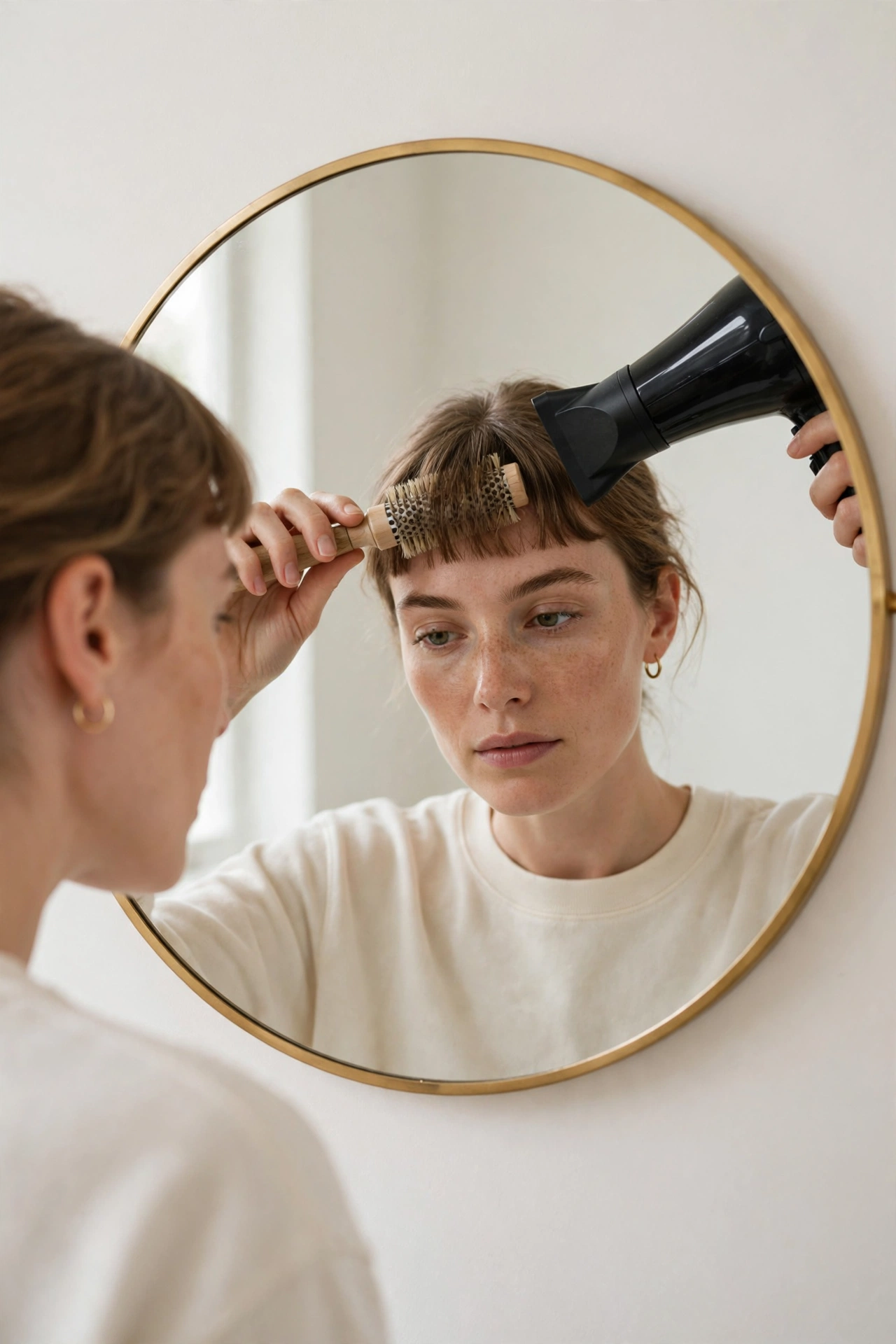
Good news: styling baby bangs at home is genuinely quick — we’re talking two to five minutes, not a whole production. The fringe is small, which means less hair to manage and faster drying times. The key principle is to style the fringe first, while it’s still damp, because short fringe sets fast — if you do the rest of your hair first and come back to dry fringe, you’ll be fighting cowlicks and weird bends that set while you weren’t looking. Get the fringe right immediately out of the shower and the rest is easy.
The basic blow-dry method: with the fringe damp, use a small round brush (or a flat paddle brush for straighter results) and direct the airflow downward, from roots to ends, keeping the dryer nozzle pointed down the hair shaft to smooth the cuticle. Work in quick passes — the fringe will dry in under a minute. For extra-smooth results, follow with a mini straightener on low heat, one pass per section. Finish by pressing the fringe flat against your forehead with your palms for a few seconds; the warmth helps it set. If your fringe tends to separate in the middle or flip to one side, blow-dry it in the opposite direction of the problem first, then sweep it back into place — fighting the natural growth pattern head-on rarely works, but redirecting it does.
Product-wise, less is more. A pea-sized amount of smoothing cream or lightweight serum controls flyaways; anything heavier will make the fringe look greasy by noon (short fringe sits against forehead skin, which produces oil — that’s just biology). Dry shampoo is your best friend for day-two fringe: spray it at the roots, wait thirty seconds, then massage and brush through. It absorbs oil and adds grip in one step. Avoid heavy oils, waxes, and anything labeled “extra hold” near the fringe — they’ll separate it into stringy clumps. And one styling hack worth knowing: on mornings when the fringe is doing something inexplicable, dampen just the fringe with water, restyle it, and leave the rest of your hair alone. A two-minute fringe reset beats a full rewash every time.
Best Face Shapes for Baby Bangs
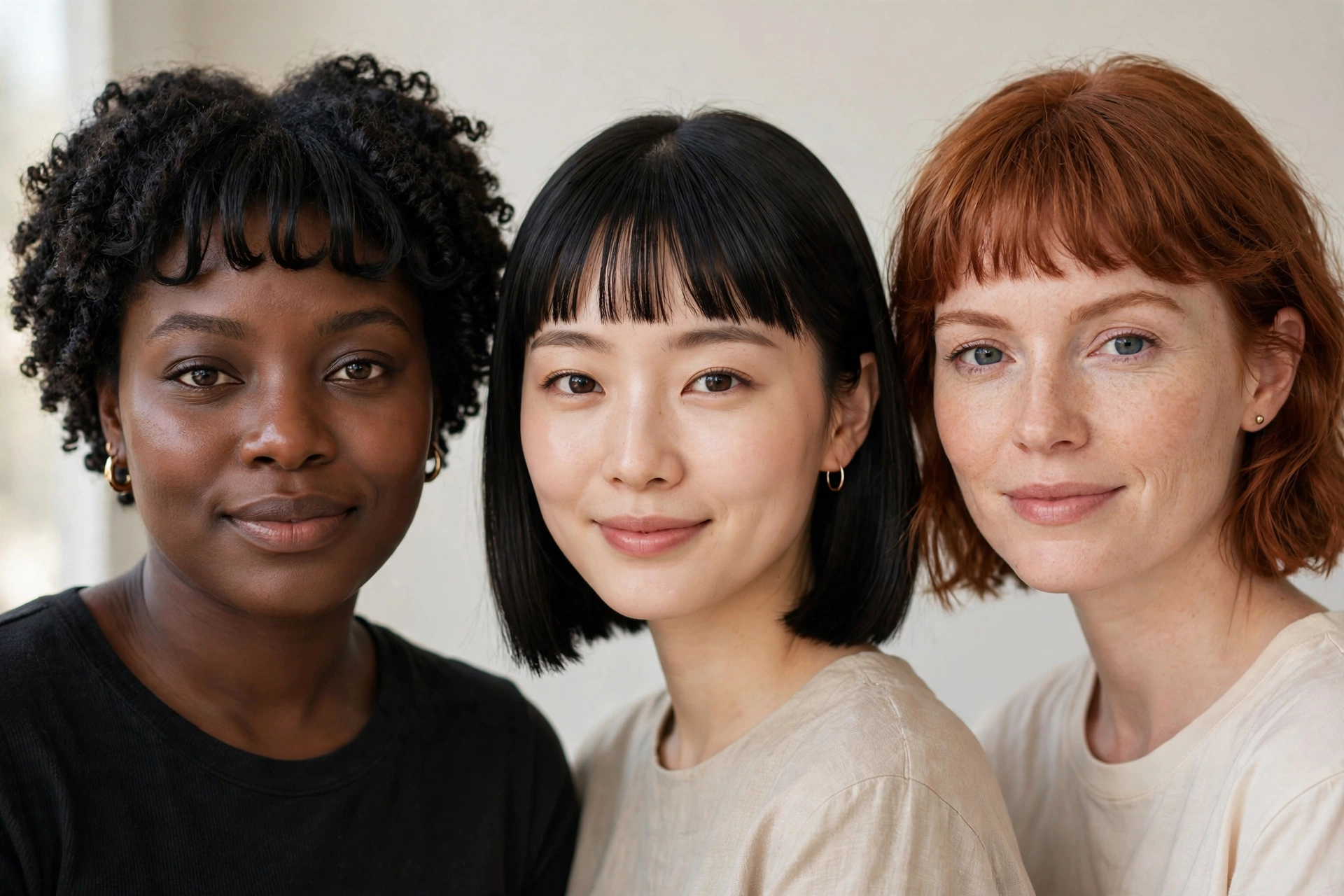
Let’s address the question everyone asks: can I pull off baby bangs? The honest answer is that baby bangs are more versatile than their intimidating reputation suggests — but the version matters enormously. This isn’t a one-size haircut. The right micro fringe for your face shape looks custom-made; the wrong one looks like a dare gone wrong. Here’s how to match the fringe to the face.
Oval faces hit the jackpot — the balanced proportions of an oval face can handle any version, from blunt classic to choppy to curly. If this is you, choose based on vibe rather than rules. Heart-shaped faces (wider forehead, narrower chin) are also excellent candidates: baby bangs cover the widest part of the forehead, creating balance, and the short length keeps attention on the eyes rather than the chin. A slightly wispy or textured version works best here, softening the forehead without adding width.
Round faces need a little strategy. A blunt, straight-across micro fringe creates a strong horizontal line that can emphasize roundness — so instead, go for textured, choppy, or slightly off-center versions that break up the line. An inch of extra length (closer to two inches above the brow than one) also helps by exposing more forehead, which visually lengthens the face. Square faces benefit from softness: wispy, feathered, or curly baby bangs ease the angles of a strong jawline, while a severe blunt fringe can double down on the geometry in a way that feels harsh. Long or oblong faces should tread carefully — baby bangs expose the forehead, which can make a long face look longer. If your face is oblong and you’re set on the trend, choose a slightly longer, fuller version that covers more forehead, and pair it with width-adding volume at the sides.
Two more factors matter as much as face shape. First, forehead size: baby bangs look best on small to medium foreheads, because there’s less exposed skin to balance. A very high forehead with a micro fringe can look disproportionate — though the curtain-hybrid version (idea #12) mitigates this beautifully. Second, hairline shape: a relatively straight, even hairline makes for the cleanest fringe; strong widow’s peaks or aggressive cowlicks need a stylist who’ll work with them, not against them. None of these are dealbreakers — they’re just variables your stylist should factor into the cut. When in doubt, book the consultation, bring the photos, and let a professional assess your specific combination. That’s literally what they’re for.
Baby Bangs Maintenance Guide
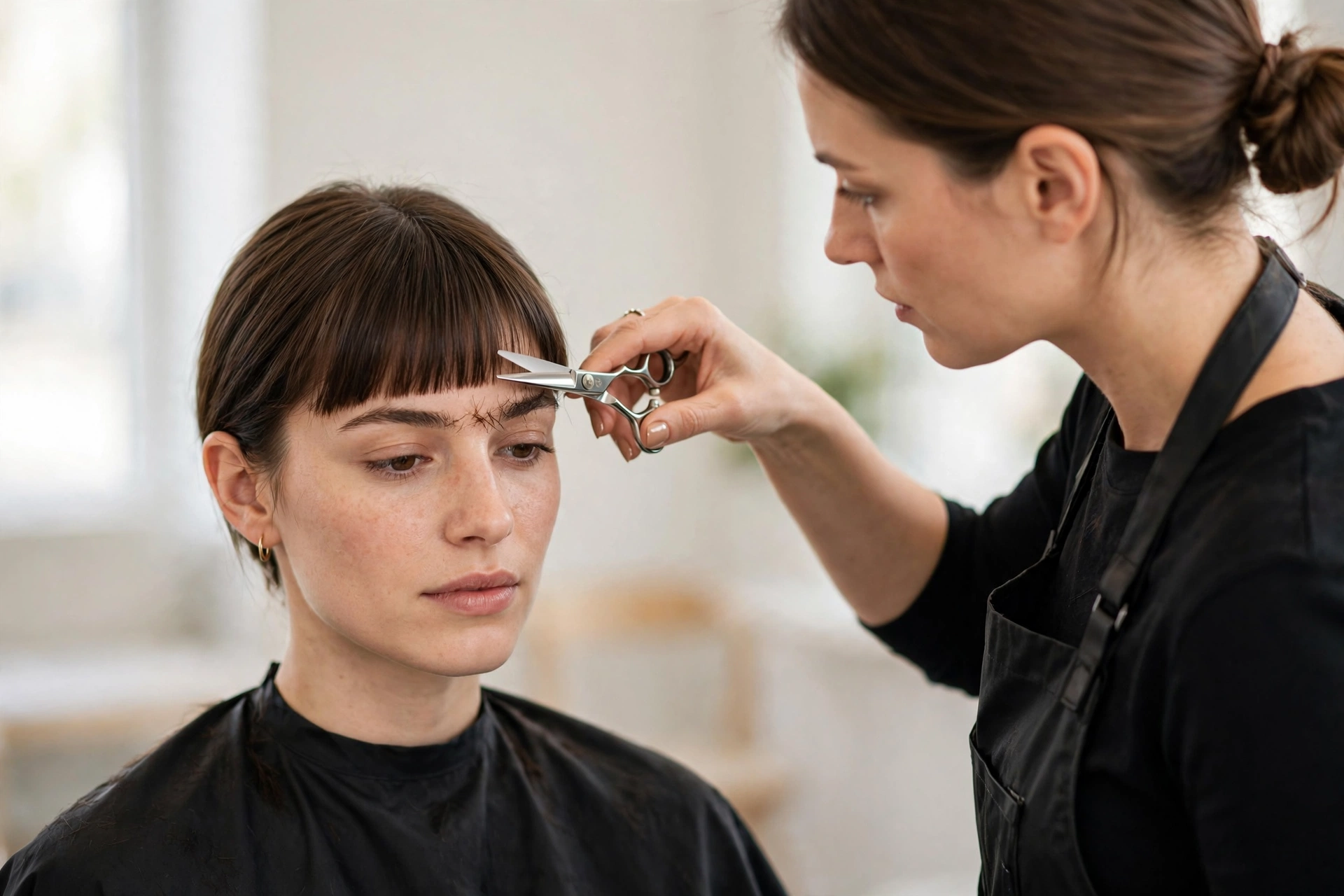
Baby bangs are a high-maintenance haircut wearing a low-maintenance disguise. They take two minutes to style — but they need trimming every two to four weeks, because a quarter-inch of growth on a micro fringe is proportionally huge. A regular fringe can coast for six weeks; baby bangs start looking like a different haircut after three. Go in with eyes open about this, budget for it (or learn to trim at home — more on that below), and you’ll never be caught in the awkward in-between.
The salon route is simplest: many salons offer complimentary or low-cost fringe trims between full appointments — typically $10 to $20, or free if you’re a regular. Book them every two to three weeks for blunt versions, every three to four for textured or wispy ones (the uneven texture hides growth better). If your salon doesn’t offer standalone trims, ask — most stylists would rather spend five minutes keeping your fringe sharp than have you attempt it yourself with kitchen scissors. Between trims, the daily routine is minimal: style the fringe first while damp, keep products light, and refresh with dry shampoo on non-wash days.
For the brave, at-home trimming is absolutely doable — with rules. Use proper hair-cutting scissors, never paper or kitchen scissors (dull blades chew the ends and cause split ends). Always trim on dry, styled hair, so you see the true length. Cut less than you think — start with an eighth of an inch, because you can always take more off. Work in small sections, cutting straight across for blunt fringes or point-cutting (snipping upward into the ends) for textured ones. And trim in good lighting with the fringe combed straight down — cutting at an angle or while distracted is how lopsided fringes happen. One honest warning: at-home trims are for maintenance, not reshaping. If the fringe needs a new shape or you’ve grown it out significantly, go back to your stylist. A botched reshape costs far more to fix than a trim appointment.
Product maintenance matters too. Because baby bangs sit directly against your forehead, they’re the first thing to look oily — forehead skincare, sunscreen, and sweat all migrate into the fringe. If you’re oily-skinned, consider blotting your forehead midday or using a mattifying primer along the hairline; it genuinely extends the fringe’s freshness by hours. Wash the fringe separately between full washes if needed — a quick sink wash of just the bangs takes two minutes and resets everything. And protect the fringe from heat damage: daily flat-ironing on such short hair adds up fast, so use heat protectant every single time and keep the iron on a low-to-medium setting.
Frequently Asked Questions
Do baby bangs suit round faces?
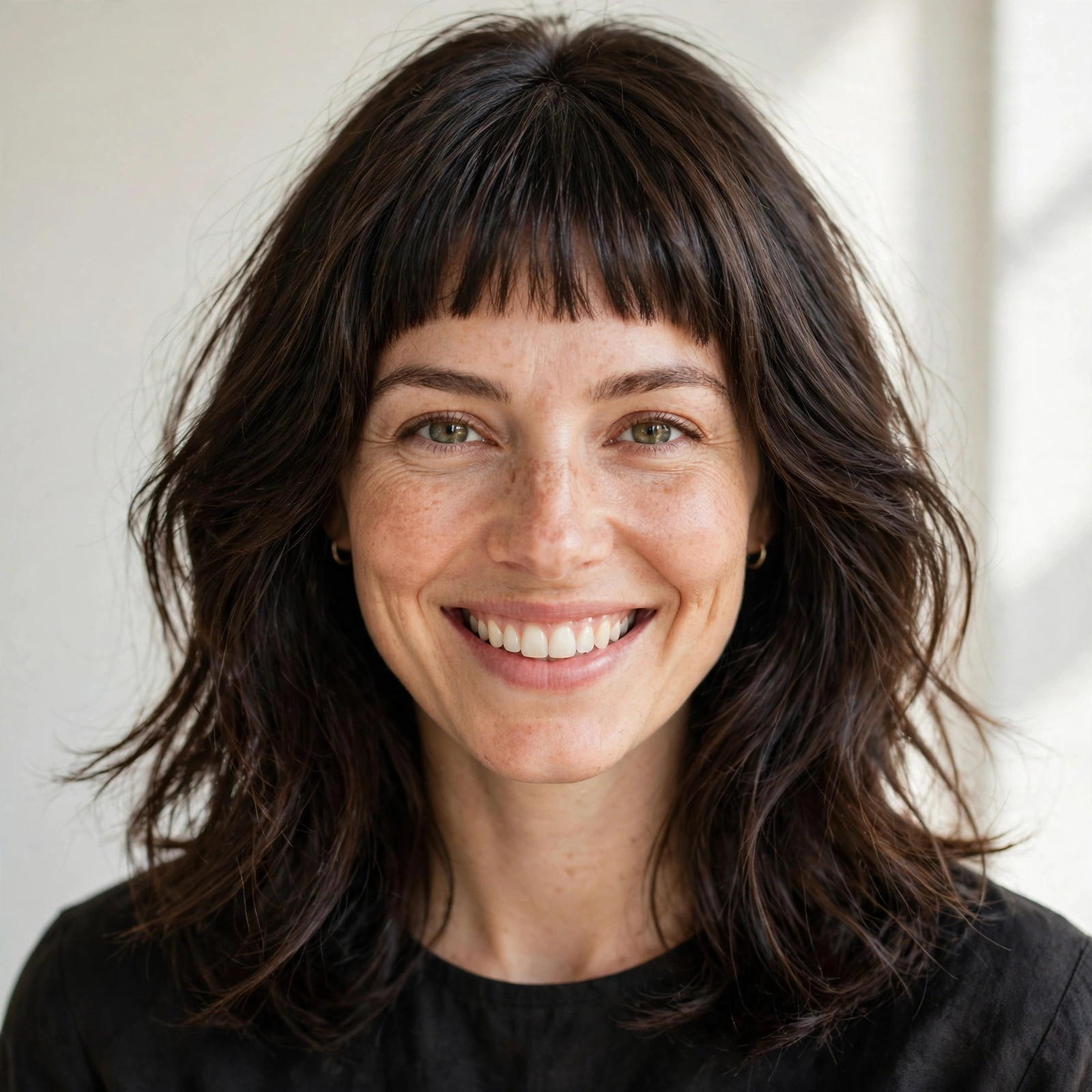
They can — with the right version. Skip the blunt straight-across fringe, which emphasizes width, and choose a textured, choppy, or slightly off-center micro fringe instead. A touch more length (closer to two inches above the brow) also helps by exposing more forehead, which visually lengthens a round face. The curtain-hybrid version is the safest bet for rounder face shapes.
How often do baby bangs need trimming?
Every two to four weeks, depending on the version. Blunt classic fringes show growth fastest and need trims every two to three weeks; wispy, choppy, or curly versions can stretch to four. Many salons offer cheap or complimentary fringe trims between appointments — ask yours. A quarter-inch of growth on a micro fringe changes the whole look, so don’t let it slide.
Can you have baby bangs with curly hair?
Absolutely — curly baby bangs are one of the prettiest versions of the trend. The critical rule is that they must be cut dry, curl by curl, because wet curls shrink dramatically as they dry. Find a stylist experienced with curly cuts, agree on the dry length before cutting, and style with curl cream and minimal touching while they dry. Frizz control (silk pillowcase, light leave-in) keeps them defined.
What’s the difference between baby bangs and curtain bangs?
Length and placement. Baby bangs (micro fringe) sit well above the eyebrows — typically one to two inches above — exposing most of the forehead. Curtain bangs are much longer, part in the middle, and sweep past the cheekbones to frame the face. They’re opposite philosophies: baby bangs are a bold statement, curtain bangs are soft face-framing. The hybrid version in idea #12 combines both.
Do baby bangs make you look younger or older?
It depends on the version and the face. Wispy, curly, and textured baby bangs generally read youthful and playful. Severe blunt micro fringes can read more editorial and mature — striking, but not necessarily “younger.” The fringe draws attention to the eyes, which tends to be flattering at any age. There’s no age limit on baby bangs; the women wearing them best in 2026 range from their twenties to their fifties.
How do I grow out baby bangs without an awkward phase?
The good news: baby bangs grow out more gracefully than most short cuts. As they lengthen, they pass through a cute longer-fringe stage before becoming full bangs. To smooth the transition, ask your stylist to blend the growing fringe into face-framing layers, use bobby pins or a deep side part to sweep them aside, and consider the curtain-hybrid shape as a deliberate grow-out style. Headbands and clips are your friends during weeks four through eight.
Final Thoughts
Here’s what it comes down to: baby bangs aren’t just a haircut — they’re a stance. In a year of safe, blended, algorithm-approved hair, choosing a micro fringe is a small act of defiance, a way of saying you trust your own eye more than the consensus. Dakota Johnson, Zendaya, and Chase Sui Wonders didn’t all land on baby bangs by accident; they landed there because the cut does something rare — it makes the wearer look like the most interesting person in the room, with almost no daily effort required.
So if you’ve been circling this trend, saving photos, wondering if you could pull it off — this is your sign. Pick your version from the fifteen above, find a stylist whose portfolio shows real fringe work, bring your reference photos, and go for it. The worst case? It grows out in a month into a perfectly good longer fringe. The best case? You find the haircut that finally feels like you. And in 2026, that’s what baby bangs are really about — not following a trend, but wearing one like you invented it.
Conclusion
Baby bangs — 2026’s boldest fringe — sit high above the brows for maximum impact. This micro-fringe opens up the face, accentuates the eyes, and gives every haircut instant editorial edge. It flatters oval and heart-shaped faces most, and pairs strikingly with bobs, pixies, and long hair alike.
Keep them trimmed every two to three weeks since even a quarter-inch of growth changes the look. Style with a mini flat iron for precision. In 2026, baby bangs are for the woman who doesn’t do subtle.