K-Pop Bob Women 2026: 20 Sleek Idol-Inspired Cuts
K-Pop Bob Women 2026: 20 Sleek Idol-Inspired Cuts
Open any K-pop idol’s Instagram in 2026 and your eyes go to the hair before anything else. Not the outfit, not the makeup. The hair. That impossibly sleek, glass-like bob with ends so sharp they look drawn with a ruler, swinging in one glossy sheet every time she turns her head. The kpop bob women are searching for right now is not just a haircut. It is a whole philosophy borrowed from Korean salons: precision cutting, mirror shine, and ends that behave exactly the way you want them to. I have watched this look travel from Seoul salon chairs to Milan runways to everyday women in under a year, and it shows no sign of slowing down.
In this guide I am going to walk you through everything that makes the K-pop bob different from every other bob on the internet. You will get 20 genuinely distinct idol-inspired bob styles, from the classic glass bob to the C-curl bob, the see-through bangs bob, and the stage-ready wet-look version. You will also learn the exact words to use at your salon appointment, how to recreate that glass finish at home with a flat iron, which face shapes and hair types wear it best, and how to keep it looking expensive between trims.
Here is why this cut deserves your attention in 2026. It photographs beautifully, it makes even unwashed hair look deliberate, and it grows out more gracefully than almost any other short cut. Whether this is your first bob or your fifteenth, there is a version on this list that will make you understand why Korean stylists treat shine as seriously as the cut itself.
What Is the K-Pop Bob?
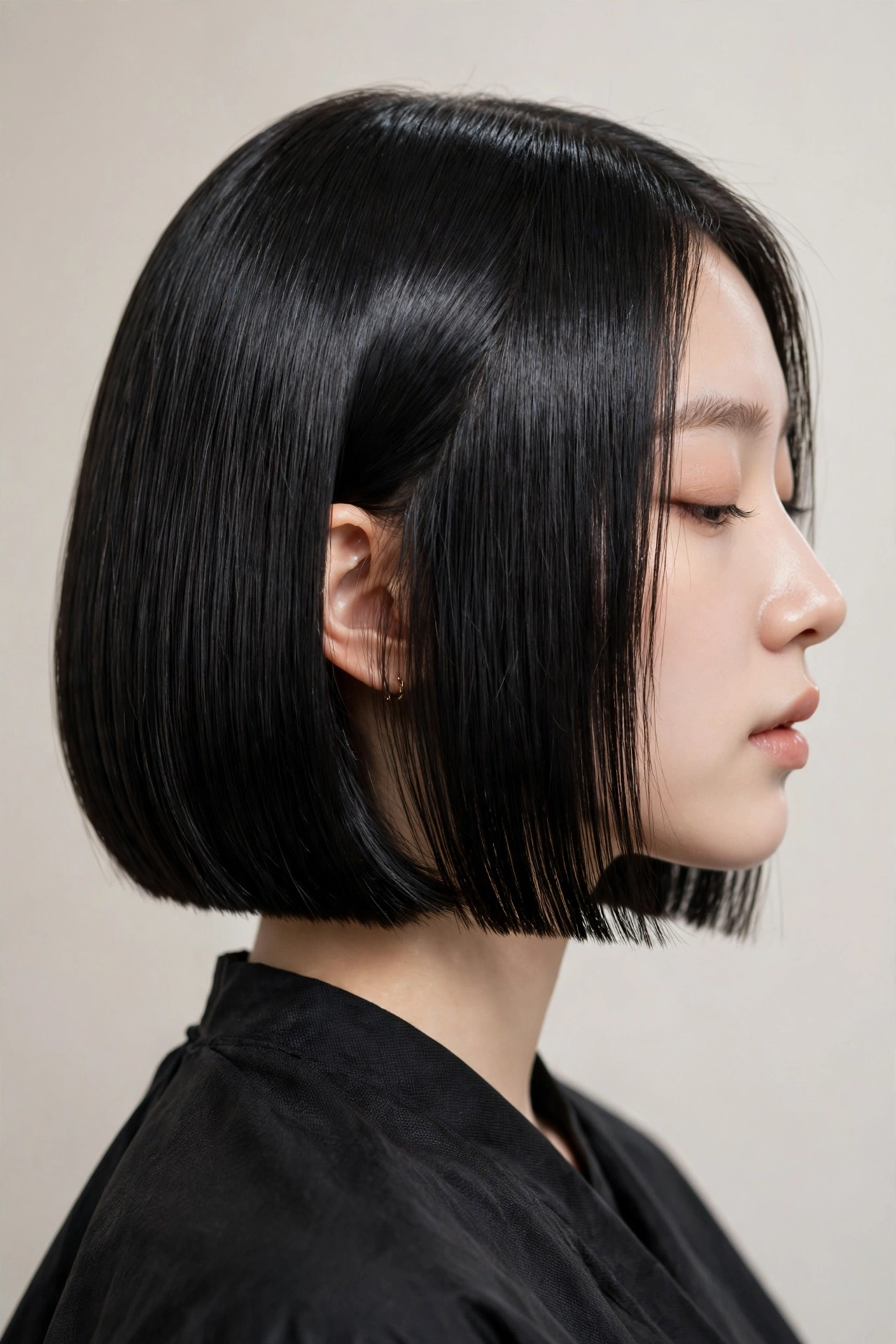
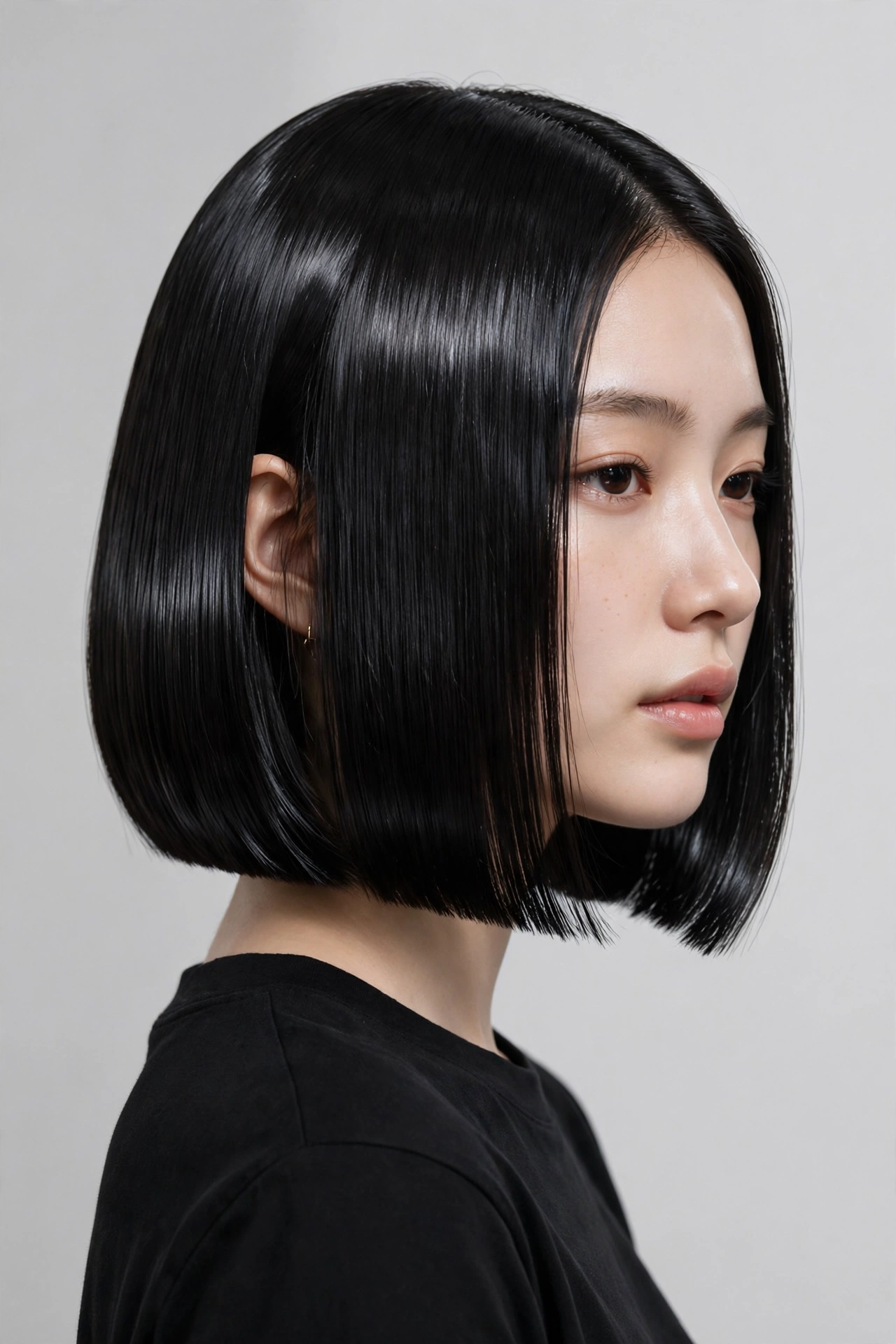
The K-pop bob is a precision-cut bob defined by three things: razor-sharp ends, a glass-like reflective shine, and a silhouette that falls in one clean, controlled sheet. Most versions sit somewhere between the chin and the collarbone, and the ends are the whole story. Korean stylists cut the perimeter with extreme precision, often finishing with a razor or thinning shears to remove any bulk that would break the smooth line. The result is hair that moves as one piece instead of separating into strands, which is exactly what gives idol hair that liquid, expensive look on camera.
It helps to know what the K-pop bob is not. It is not the textured, piecey Japanese bob cuts that lean into airy separation and an undone finish. Japanese bobs celebrate movement and texture; Korean bobs celebrate control and shine. It is also not the blunt Western bob that dominated the last few years, which tends to be worn matte and a little rough around the edges. The K-pop version is glossier, more exact, and finished with techniques most Western salons rarely use: the C-curl blowout that turns the ends under, see-through bangs cut wispy enough to show forehead through them, and glossing treatments that make dark hair reflect light like still water.
The look comes straight out of Seoul salon culture, where shine is treated as a technical skill rather than a lucky accident. Stylists in districts like Cheongdam build the finish into the appointment: the cut creates the shape, and then a combination of smoothing treatments, precise blow-drying, and shine serums creates the glass. Idol styling teams take it further for performances, but the everyday version you see on the street in Seoul is surprisingly wearable. That is the version this guide is about. Real hair, real mornings, idol-level polish.
Why the K-Pop Bob Is Trending in 2026
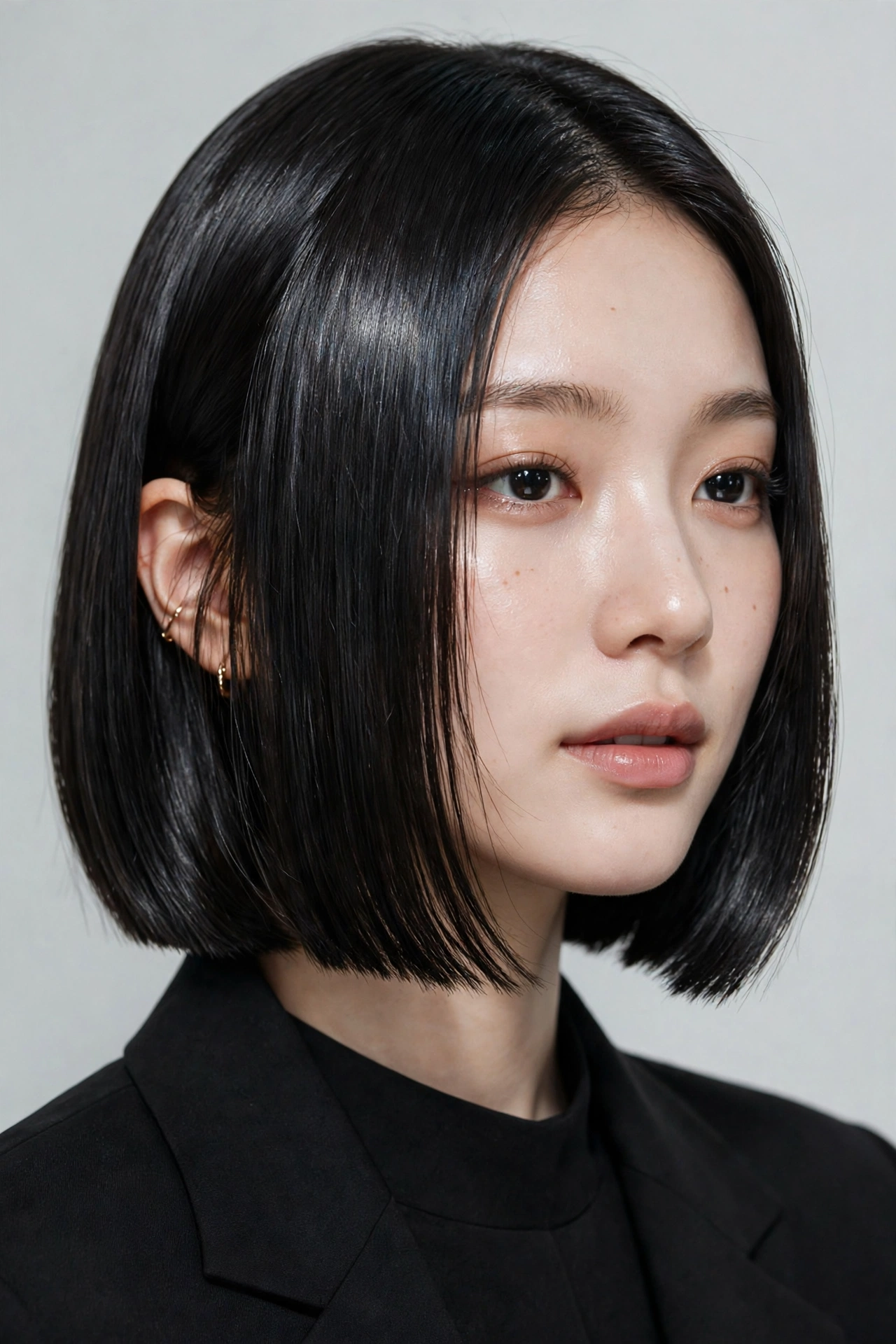
Fashion editors called it early. Grazia’s fall 2026 trend coverage singled out the “sleek precision of a K-pop bob” as one of the defining hair looks of the season, and then the idols delivered the proof. When YoonA stepped out at Milan fashion week in September 2026 with a razor-sharp bob that caught every camera flash, search interest exploded overnight. This was not a costume or a wig for a comeback stage. It was a working actress choosing the cut for real life, which is always the moment a trend stops being niche and starts being a movement.
The trend press has been building the case all year. Refinery29’s 2026 bob trends roundup covers the Korean bob as a major force in the year’s bob landscape, and Kpopmap’s guide to K-drama actresses with beautiful bobs shows just how many leading ladies have made the cut their signature. When beauty editors and K-drama costume departments agree on one silhouette, regular women follow, and salons outside Korea have spent 2026 learning the specific techniques: the C-curl finish, the see-through fringe, the gloss-first styling routine.
There is also a practical engine under the hype. The K-pop bob is one of the few statement haircuts that actually makes mornings easier. Sleek hair shows less frizz than textured cuts, the shape holds for days with minimal restyling, and dark hair, which most of the world has, looks richer and more expensive in this finish than in any other. It is photogenic without trying, professional enough for any office, and it grows out into a lob instead of an awkward in-between stage. Trends built on that combination of beauty and practicality tend to stick around, which is why stylists expect the K-pop bob to run well past 2026.
20 K-Pop Bob Styles to Try in 2026
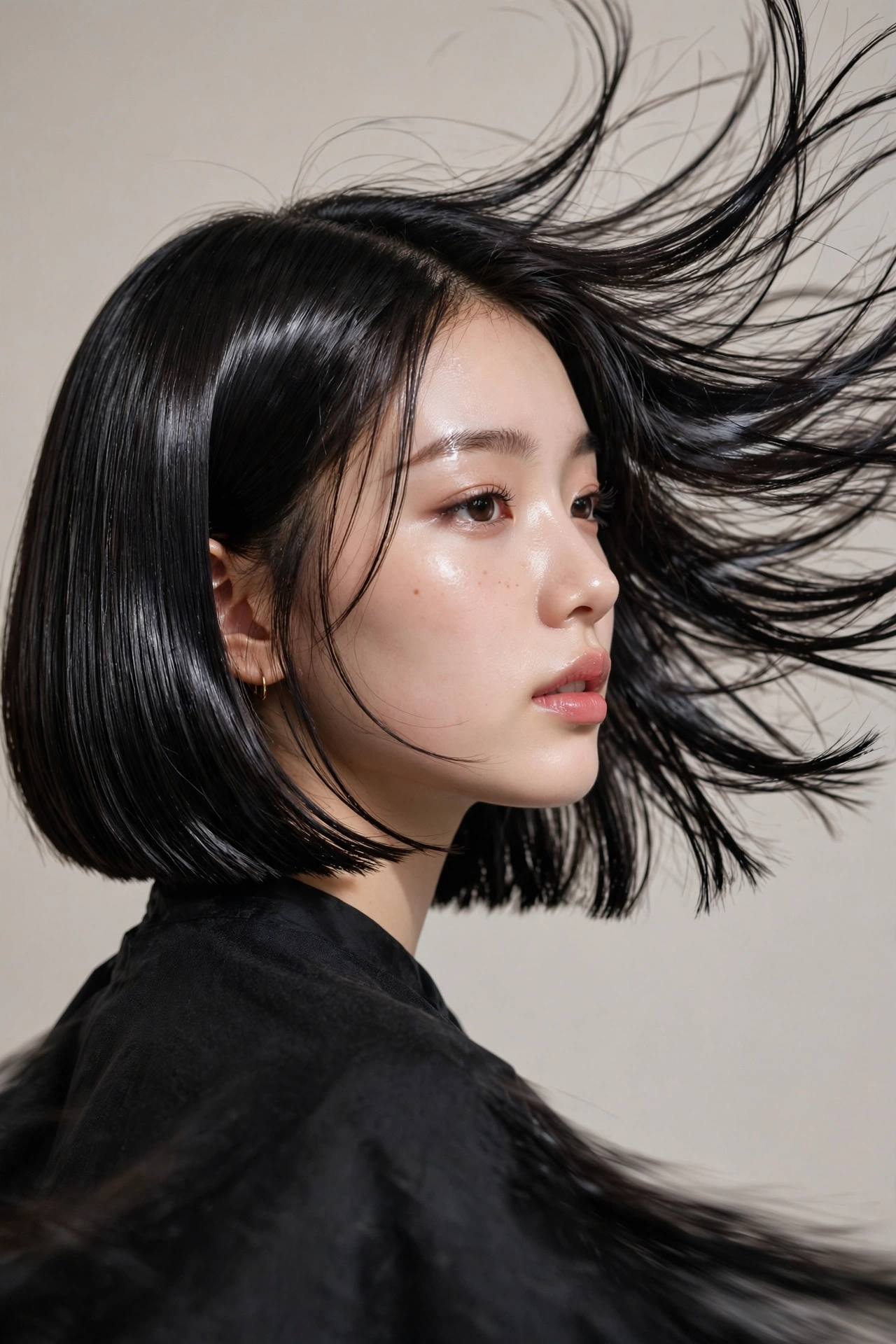
This is the fun part. The K-pop bob is not one haircut but a family of them, and the differences between family members matter. A glass bob reads polished and powerful; a C-curl bob reads soft and romantic; a see-through bangs bob reads youthful and playful. Read through these twenty like a menu, notice which ones make you lean closer to the screen, and bring your favorites to your stylist. By the end you will know exactly which idol-inspired version has your name on it.
1. The Classic Glass Bob
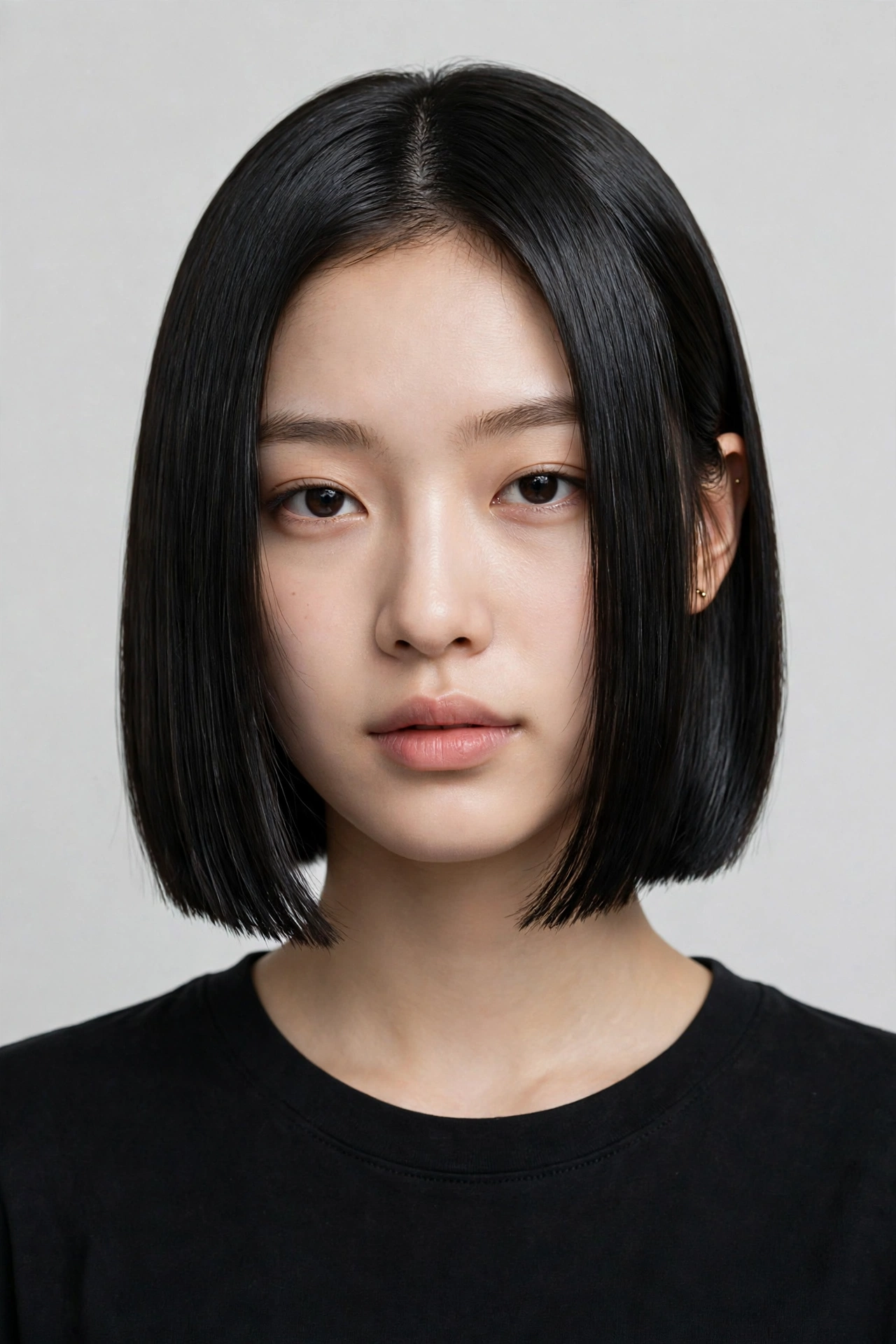
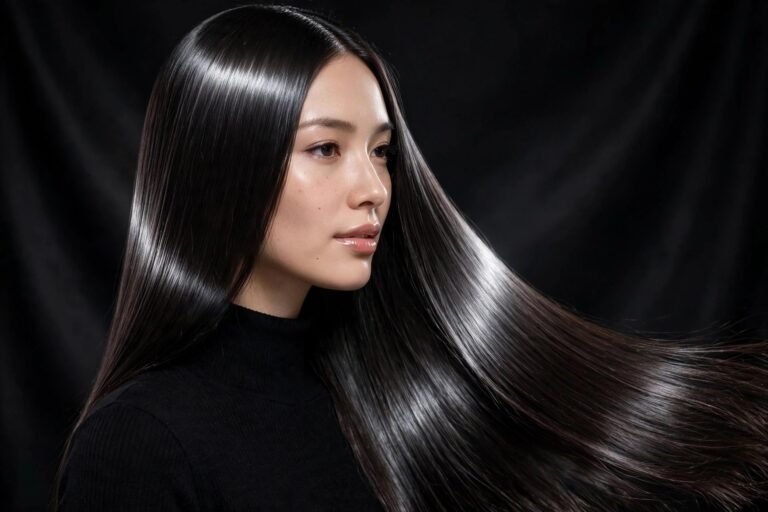
This is the blueprint everything else is built on. The classic glass bob is cut to one precise length, usually grazing the chin or sitting just below it, with a perimeter so sharp it looks drawn on. There are no visible layers, no texture, no piecey ends. The entire effect depends on the finish: hair that reflects light in one continuous sheet, the way still water reflects the sky. Korean stylists call this glass hair, and achieving it is equal parts cut and chemistry. The cut removes every bit of bulk that could break the line, and then gloss treatments and silicone-based serums fill the cuticle so light bounces instead of scattering.
At home, the glass bob lives or dies by your flat iron technique. Work in clean, dry hair with a heat protectant, set the iron between 350 and 380 degrees Fahrenheit, and pass it slowly down each section exactly once, keeping the plates fully closed so the hair comes out compressed and smooth. Finish with two drops of shine serum, pressed between your palms and smoothed over the surface, never raked through. Ask your stylist for “one length, precision perimeter, glass finish” and request a glossing treatment with the cut if your salon offers one. This is the lowest-maintenance version on the list day to day, but it shows damage faster than textured cuts, so trims every six to eight weeks are non-negotiable.
2. The C-Curl Bob
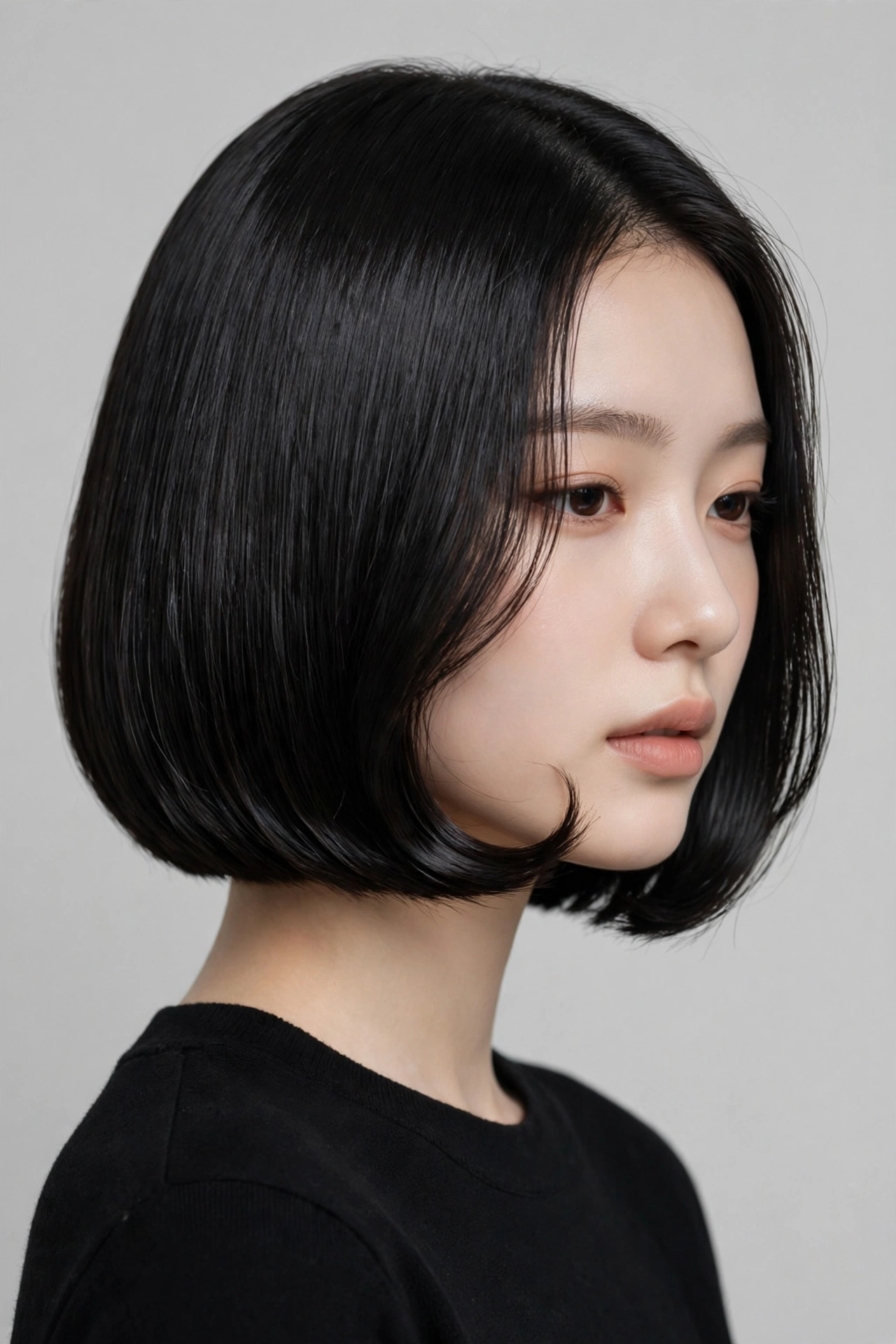
If the glass bob is about the sharp line, the C-curl bob is about what happens right at the end of it. Instead of falling pin straight, the last two inches of hair curve gently inward toward the chin, forming a soft C shape that frames the jawline. This is the default finish in Korean salons. Walk into a salon in Seoul, ask for a bob, and the stylist will reach for the round brush and turn those ends under without being asked. The inward curve does something flattering that a straight perimeter cannot: it hugs the face, softens a strong jaw, and creates the illusion of fullness at the bottom of the cut.
You can create the C-curl with a round brush and a blow dryer, which is the salon method, or with a flat iron by rotating your wrist inward as you reach the ends. For a longer-lasting version, ask about a digital perm set only on the ends, or a volume magic straight perm if your hair is thick and resistant to curl. The perm option means you wake up with the curve already in place and only need to touch it up on humid days. Tell your stylist “bob with C-curl ends” and specify how strong you want the curve. A soft bend reads modern and effortless; a deep curl reads retro and romantic. Both are correct, so pick the one that matches your wardrobe.
3. The See-Through Bangs Bob
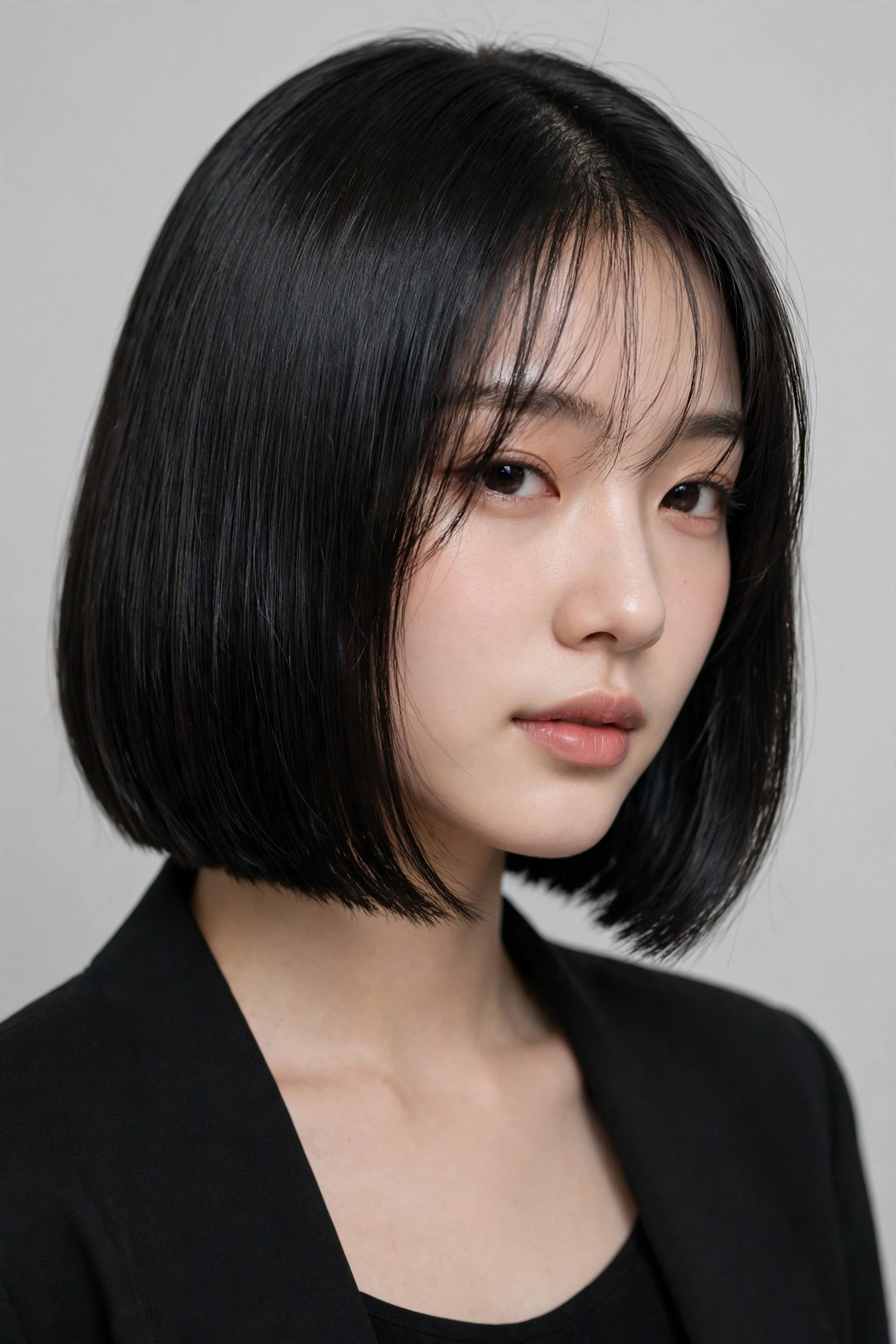
See-through bangs, also called air bangs, are the single most recognizable feature of idol styling. The fringe is cut thin enough that your forehead shows through between the strands, which keeps bangs from ever looking heavy or severe. Paired with a sleek bob, they create the classic K-pop silhouette: sharp glossy lengths, whisper-light fringe. The bangs are usually cut with thinning shears or a razor rather than straight across, and they sit slightly longer at the temples so they melt into the sides of the bob instead of forming a hard line.
Styling see-through bangs takes about ninety seconds once you learn it. On dry hair, take a small round brush or even a clean mascara spoolie, roll the bangs under lightly while applying warm air for ten seconds, and let them cool in the curved position. The goal is a soft bend, not a curl. A tiny amount of lightweight wax on the very tips keeps the strands separated and piecey all day. One honest warning: see-through bangs grow out faster than any other part of this cut, so budget for a fringe trim every three to four weeks. Many salons offer bang trims cheap or free between full appointments, and it is worth asking about.
4. The Blunt Idol Bob
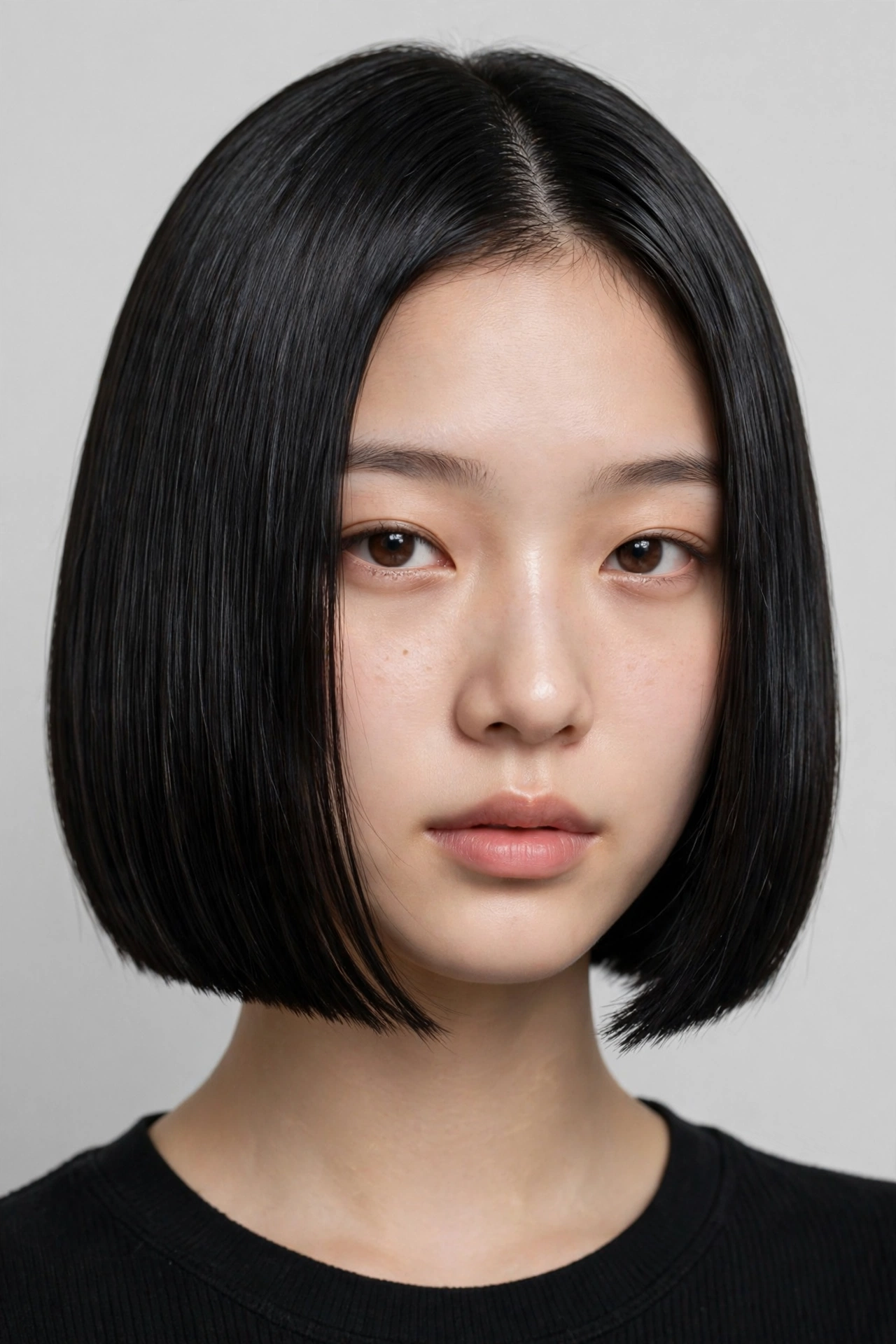
The blunt idol bob takes the precision of the classic glass bob and adds weight. The perimeter is cut heavier and thicker, with minimal texturizing, so the bottom edge has real presence. Where the classic glass bob is delicate in its sharpness, the blunt idol bob is bold. It is the version you see on idols during powerful comeback concepts, and it photographs with incredible graphic impact because the thick edge creates a strong horizontal line against the jaw. This version demands healthy ends more than any other, since there is nowhere for damage to hide in a solid perimeter.
It is worth knowing how this differs from its European cousin. The chic Italian bob is worn softer and more undone, with air-dried texture and a lived-in edge. The blunt idol bob is its opposite: controlled, glossy, exact. If your hair is thick and straight, you are the ideal candidate, because your natural density does half the work. Ask your stylist for a “blunt one-length bob with a heavy perimeter” and request minimal thinning at the ends. Style it pin straight with a flat iron and finish with gloss spray rather than serum, since spray distributes more evenly over a thick edge. Expect compliments from across the room. This cut is visible from a distance.
5. The Layered Airy Bob
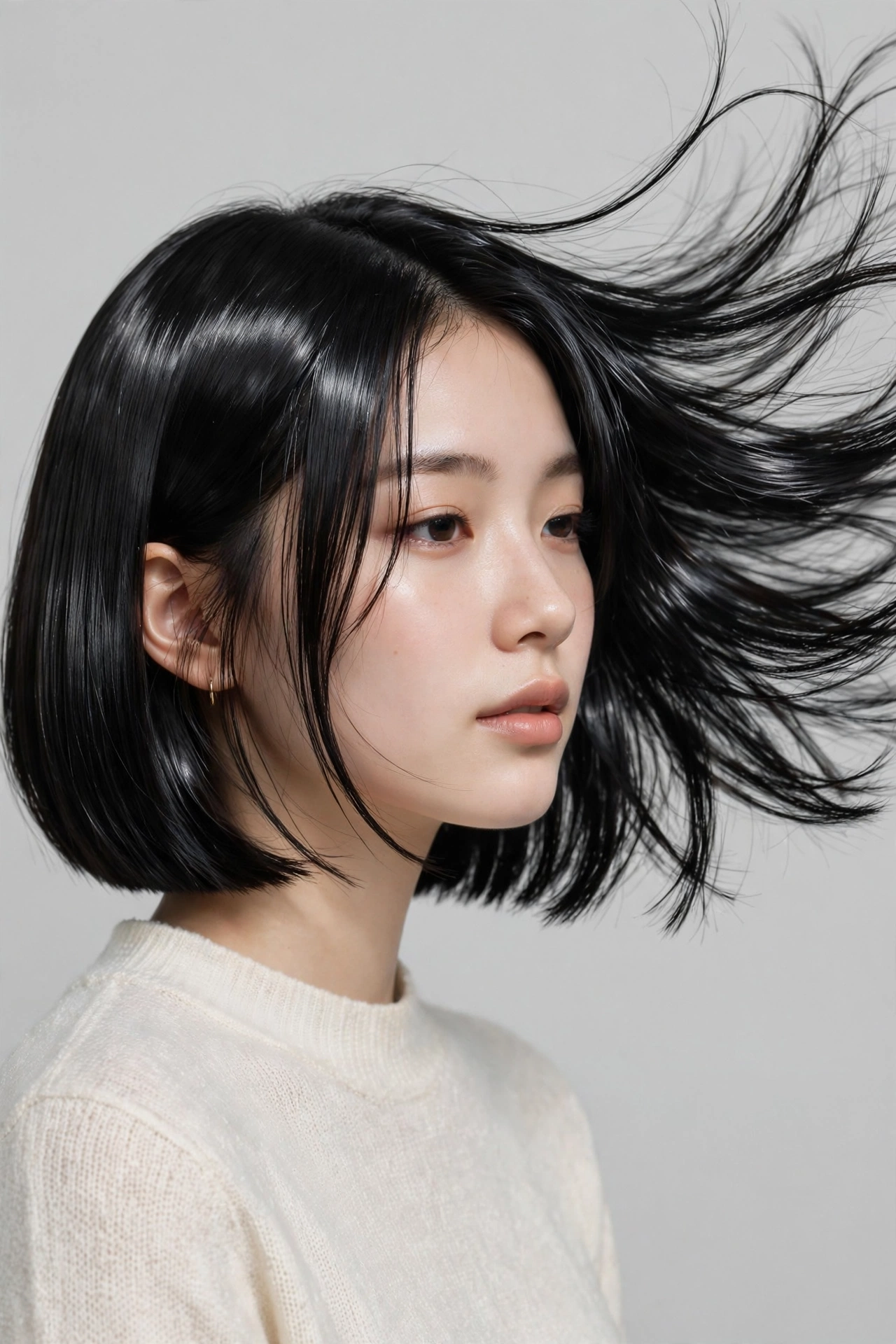
Not every K-pop bob is one length. The layered airy version uses invisible internal layers to remove weight and create movement while keeping the glossy Korean finish on the surface. From the outside it still reads sleek and controlled, but the hair swings more freely and feels half as heavy. Korean stylists call this an air cut, and it is the answer for women who love the idol look but have thick hair that would turn a one-length bob into a triangle. The layers are cut shorter inside and left long on the surface, so the shape stays clean while the bulk disappears.
This is also the most forgiving K-pop bob if your hair has natural wave or a strong growth pattern. The layers absorb the wave instead of fighting it, and the airy interior keeps the silhouette from puffing out. Styling is a round-brush blowout: lift at the roots, turn the ends under, and let the layers fall where they want. A volumizing mousse at the roots before drying gives fine-haired women the same airy body that thick-haired women get from the layering itself. Tell your stylist “bob with invisible layers, keep the surface sleek” and ask her to show you where the shortest layer sits. If it sits above the cheekbone, the cut will have real swing; if everything stays long, you will barely feel the difference.
6. The Chin-Length Bob
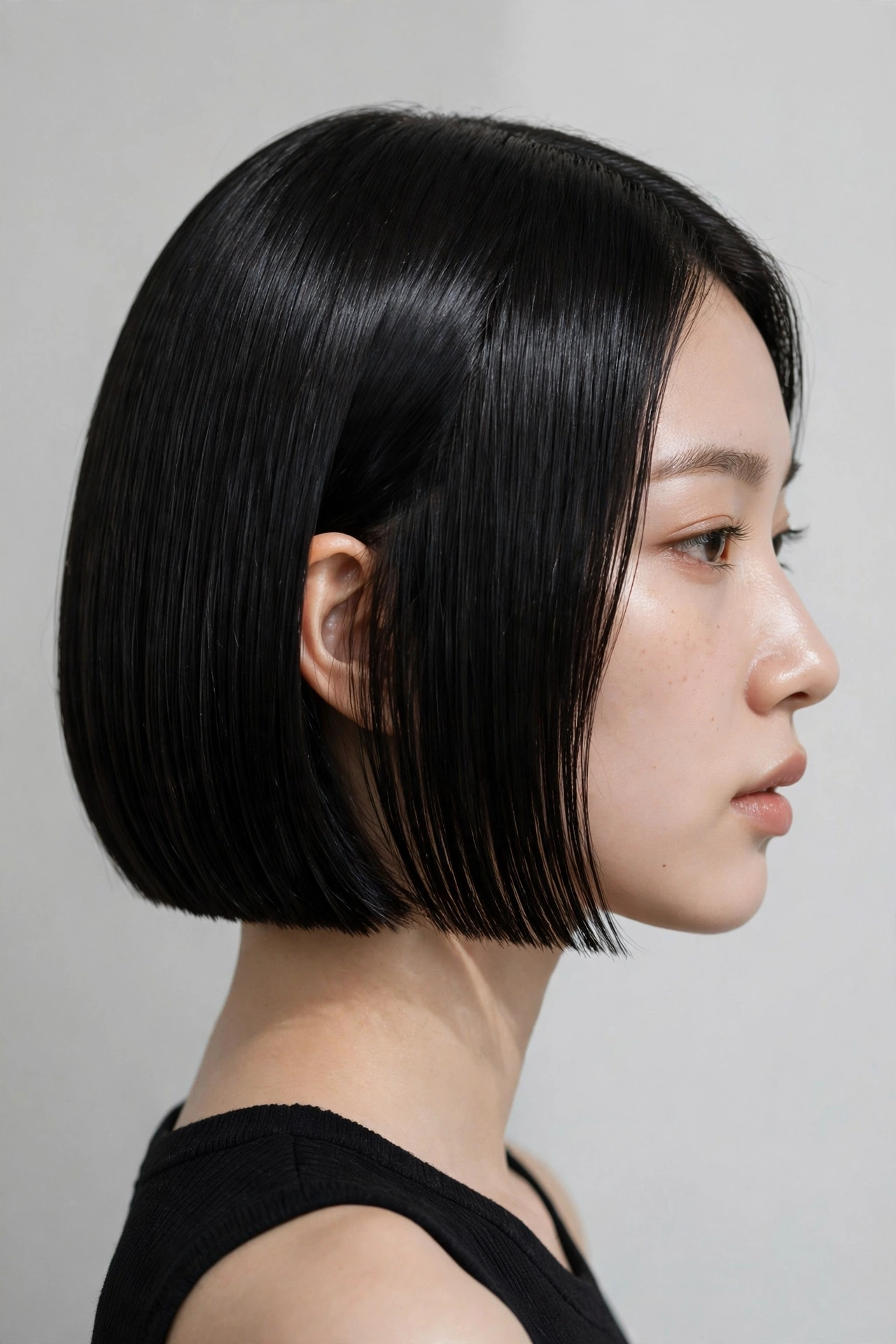
Length changes everything about a bob, and the chin-length version is the most face-framing of the family. Cut so the ends land exactly at the chin, it draws a clean horizontal line across the jaw that defines the lower face beautifully. On oval and long faces it adds welcome width; on heart-shaped faces it balances a narrower chin. It is also the most committed length here, since there is no extra hair to hide behind, which is exactly why it looks so confident. Idols wear this length when they want the cut to read as a deliberate style statement rather than just a haircut.
The styling trick with a chin-length bob is the tuck-or-flip decision. Tucked behind the ears, it is sharp and minimal and shows off earrings and jawline. Worn out with the ends turned slightly under, it is softer and more classic. Learn both, because this length rewards versatility. One caution: at chin length, even a quarter inch of uneven growth shows, so this version needs the most disciplined trim schedule of the shorter bobs. Every six weeks, no stretching it. Ask your stylist to cut it dry or to check the length dry at the end of the appointment, since wet hair at the chin can spring up noticeably once it dries.
7. The Lob-Length K-Pop Bob
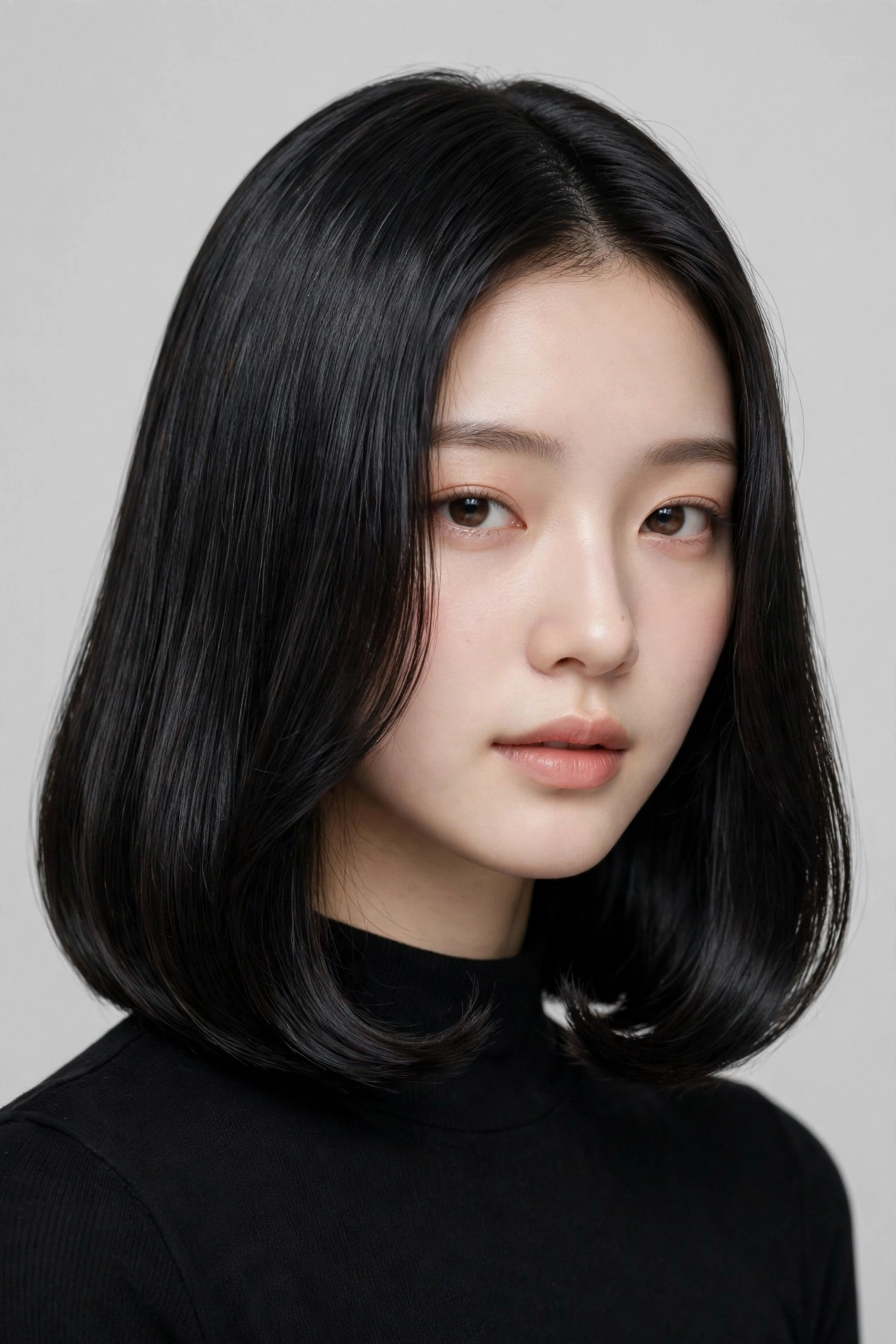
The lob, the long bob that grazes the collarbone, is the K-pop bob for women who are not ready to go short or who are growing a shorter bob out. It keeps every signature of the idol finish: the glass shine, the precise ends, the controlled silhouette. It just gives you more of it. At this length the C-curl finish becomes even more important, because straight collarbone-length ends can flip outward and look unintentional, while ends turned under look deliberate and polished. If you are browsing medium-length hairstyles for women in 2026, this is the sleekest entry on that list.
The lob is also the most versatile styling canvas in this guide. It is long enough for a low ponytail, a sleek half-up style, or soft waves, but short enough to keep the idol sharpness when worn down. The maintenance math is friendlier too: the shape survives eight to ten weeks between trims instead of six, and the ends take longer to show damage. Ask your stylist for “a collarbone lob with a precise perimeter and C-curl finish” and discuss whether you want the front pieces slightly longer than the back. A subtle longer front, just half an inch, gives the lob a face-framing angle that photographs beautifully without reading as an asymmetrical cut.
8. The Side-Parted Bob
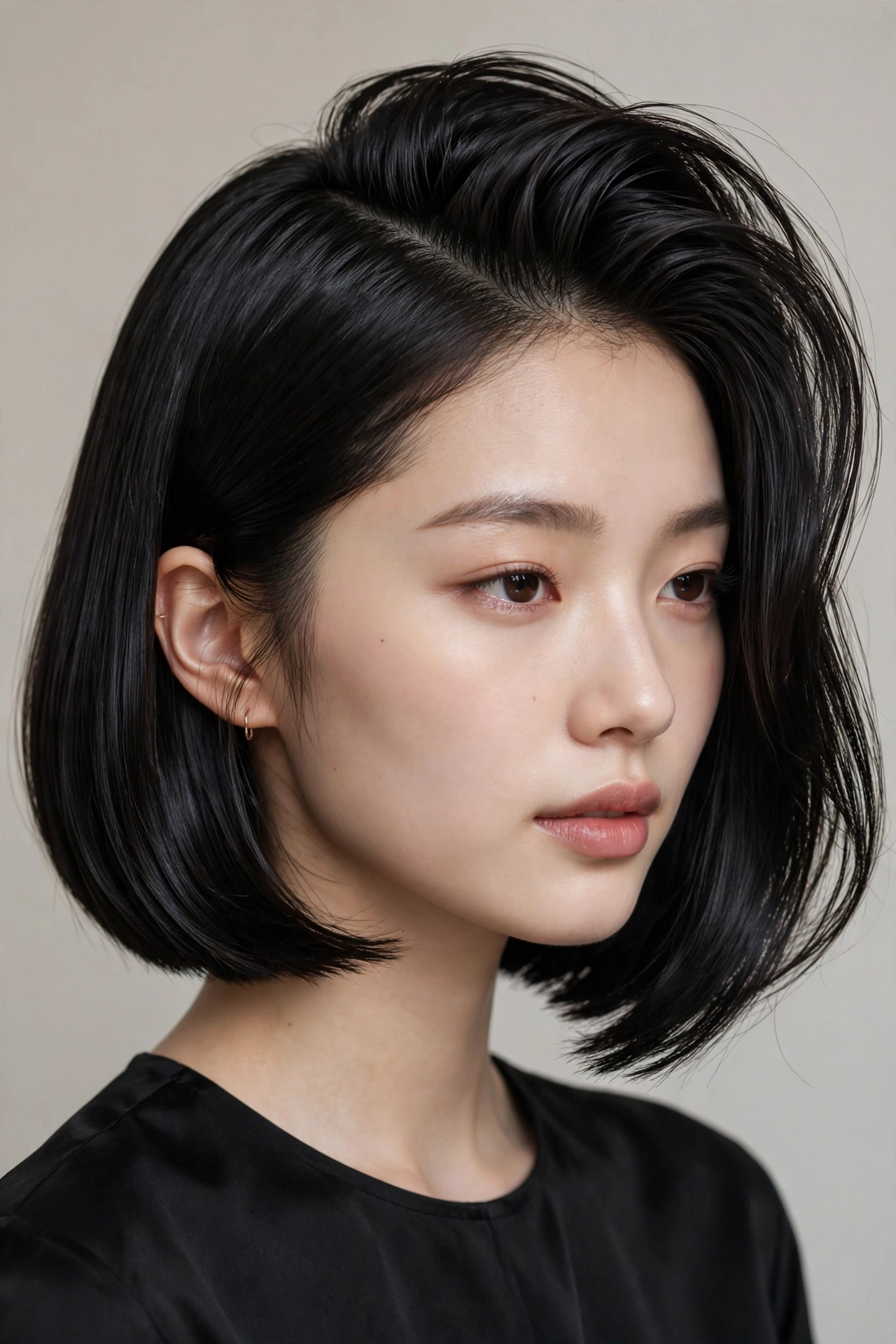
After years of middle-part dominance, the side part is back, and on a K-pop bob it does something wonderful: it creates instant volume at the crown. A deep side part lifts the roots on the heavier side and lets the hair fall in a sleek diagonal sheet, which is both more dynamic and more flattering on most faces than a flat center part. Idols wear this version for red carpets and award shows, where the asymmetry photographs with more drama than a symmetrical cut. It is the same precision bob, just parted with intention.
The key to a good side part is committing to it while the hair is damp. Part wet hair deeply, at least two inches off center, and blow-dry it in that direction so the roots set with lift. If you flip a dry middle part to the side, the roots will fight you all day. A flat iron pass over the top section keeps the sweep glossy and controlled. One styling note: a side-parted bob looks best when the heavier side is tucked behind the ear and the lighter side swings free, which creates a beautiful diagonal line across the face. Tell your stylist which side you naturally part on before she cuts, because the layers and shaping should follow your real part, not fight it.
9. The Middle-Part Glass Bob
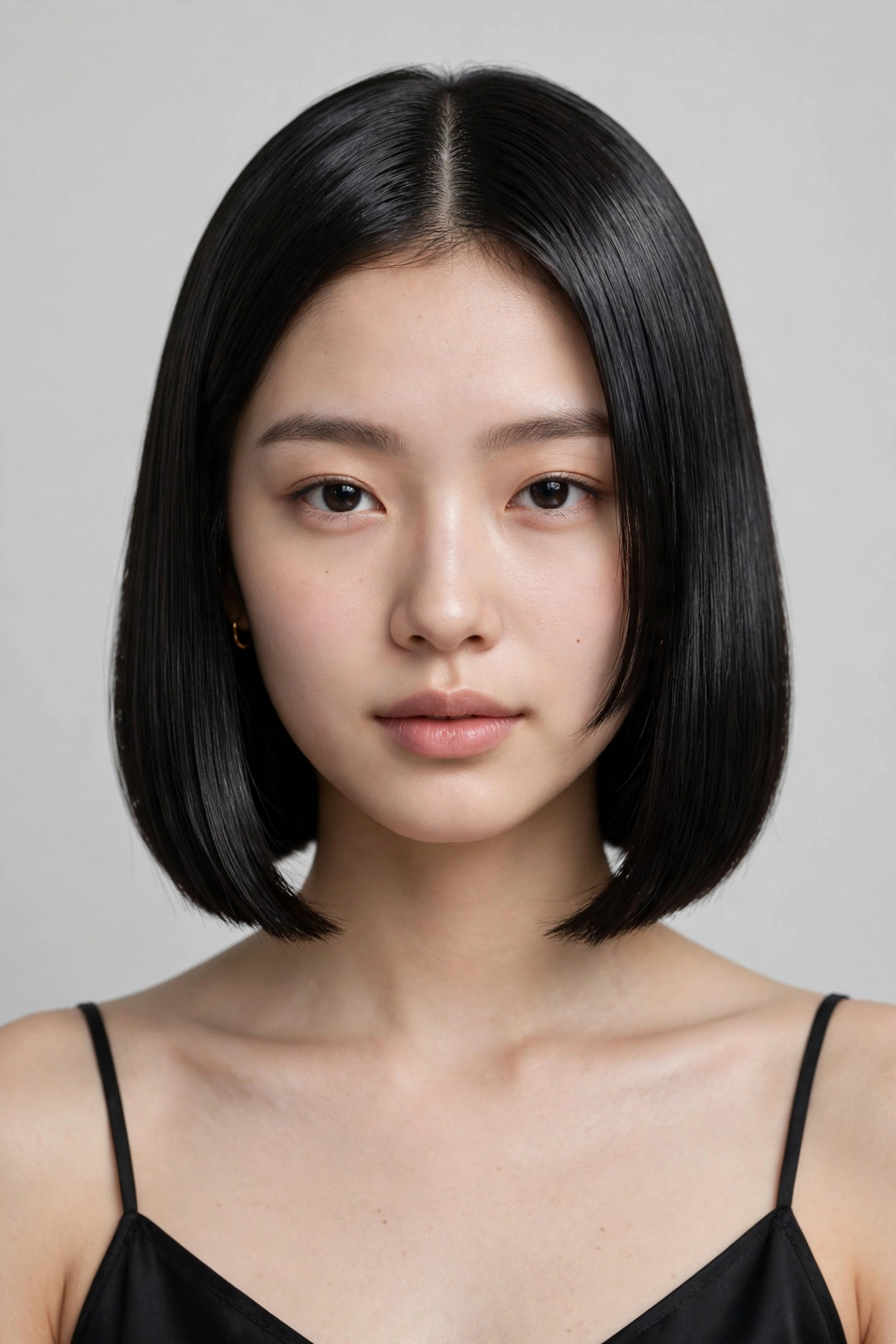
This is the idol airport look: a center part, a perfectly symmetrical glass bob, zero fuss. It is the most minimalist version on this list and, paradoxically, one of the hardest to wear well, because symmetry exposes everything. The part must be exact, both sides must match to the millimeter, and the shine must be uniform. When it works, though, nothing looks more expensive. The middle-part glass bob is what stylists photograph for their portfolios, because it proves the cut is flawless from every angle.
Precision is the whole game here. Ask your stylist to check the symmetry dry, with your natural part in place, and to cut the perimeter in small sections so both sides land identically. At home, part damp hair down the middle with the tail of a comb, blow-dry each side straight down, and finish with a flat iron, working in thin sections so every strand gets the same treatment. A center serum parting trick helps: apply shine serum before parting so the part line itself looks clean and intentional. This version suits oval and heart-shaped faces best, since the symmetry emphasizes facial balance. If your features are strongly asymmetrical, the side-parted version will flatter you more.
10. The Wavy Textured Idol Bob
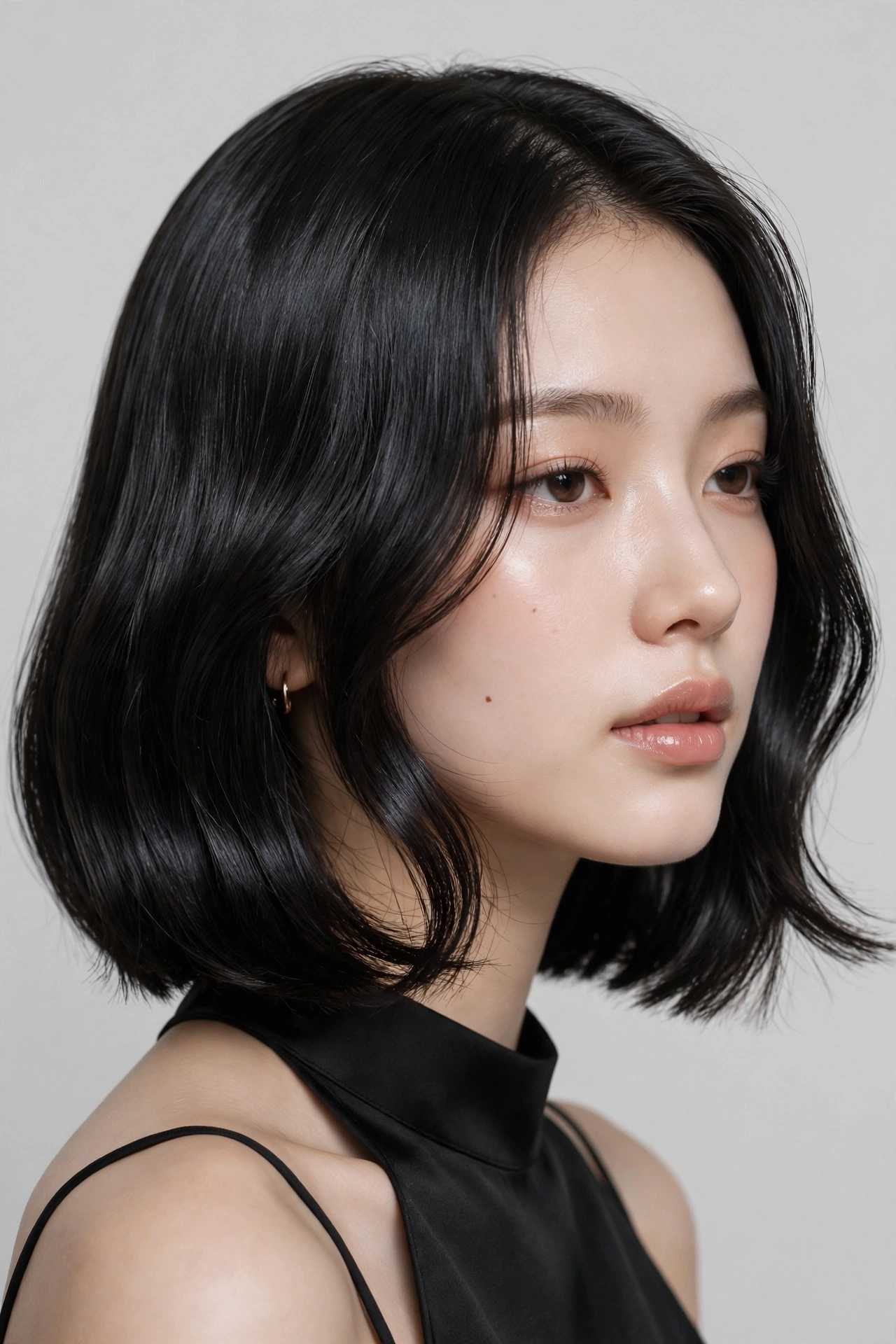
Idol hair is not always pin straight. For performances and music videos, stylists often break the glass finish into loose, glossy S-waves that catch stage lights as the idol moves. The wavy textured idol bob keeps the precision cut underneath but styles it with soft, defined waves instead of a straight finish. The waves are always polished, never beachy or messy: think smooth, uniform bends with shine intact, the kind of wave that looks expensive rather than effortless. It is the most glamorous version on this list.
Create the waves with a one-inch curling iron, wrapping sections away from the face and keeping the ends smooth rather than curled under. The trick is to brush through the curls once they cool, which merges them into soft waves, and then press a flat iron lightly over just the very ends to keep that idol sharpness. A light-hold shine spray locks everything without stiffness. This version is ideal if your hair holds a wave well, and it is the best choice for anyone who finds pin-straight hair a little severe. Tell your stylist you want the cut “with wave styling in mind,” because she may leave the ends slightly less blunt so the waves form more naturally.
11. The Hime-Inspired Bob
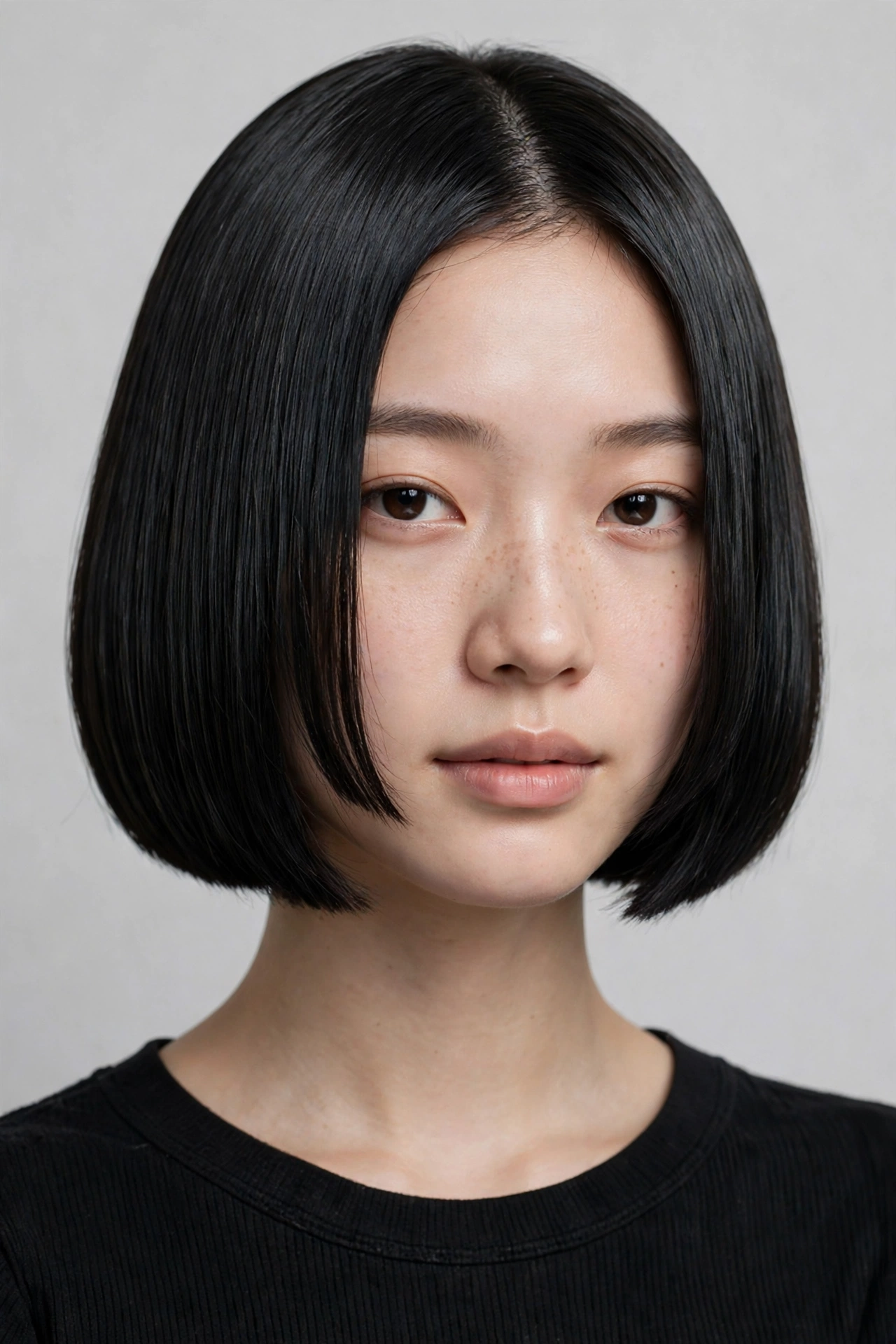
The hime cut, with its signature straight cheek-length sidelocks framing the face, has been adopted and softened by K-pop styling into something distinctly Korean. The hime-inspired bob keeps the classic bob length and glass finish at the back and sides, but the front features those unmistakable straight sidelocks, cut blunt at cheek or lip level. Idols have worn this for fantasy and traditional-inspired concepts, and it has crossed into everyday wear because the sidelocks are incredibly flattering: they slim the cheeks, frame the eyes, and add an architectural detail that a plain bob lacks.
The Korean version differs from the traditional Japanese hime in softness. Where the classic hime is severe and geometric, the K-pop take blends the sidelocks into the bob more gently and keeps the glass shine throughout so everything reads as one hairstyle. Ask your stylist for “a bob with hime sidelocks, blended softly,” and be specific about where you want the sidelocks to end. Cheek level is bold and graphic; lip level is softer and easier to grow out. Style the sidelocks pin straight with the flat iron, separate from the rest of the hair, so they keep their distinct line. This is a commitment cut, so bring reference photos and make sure you love the sidelocks before the scissors come out.
12. The Two-Tone Idol Bob
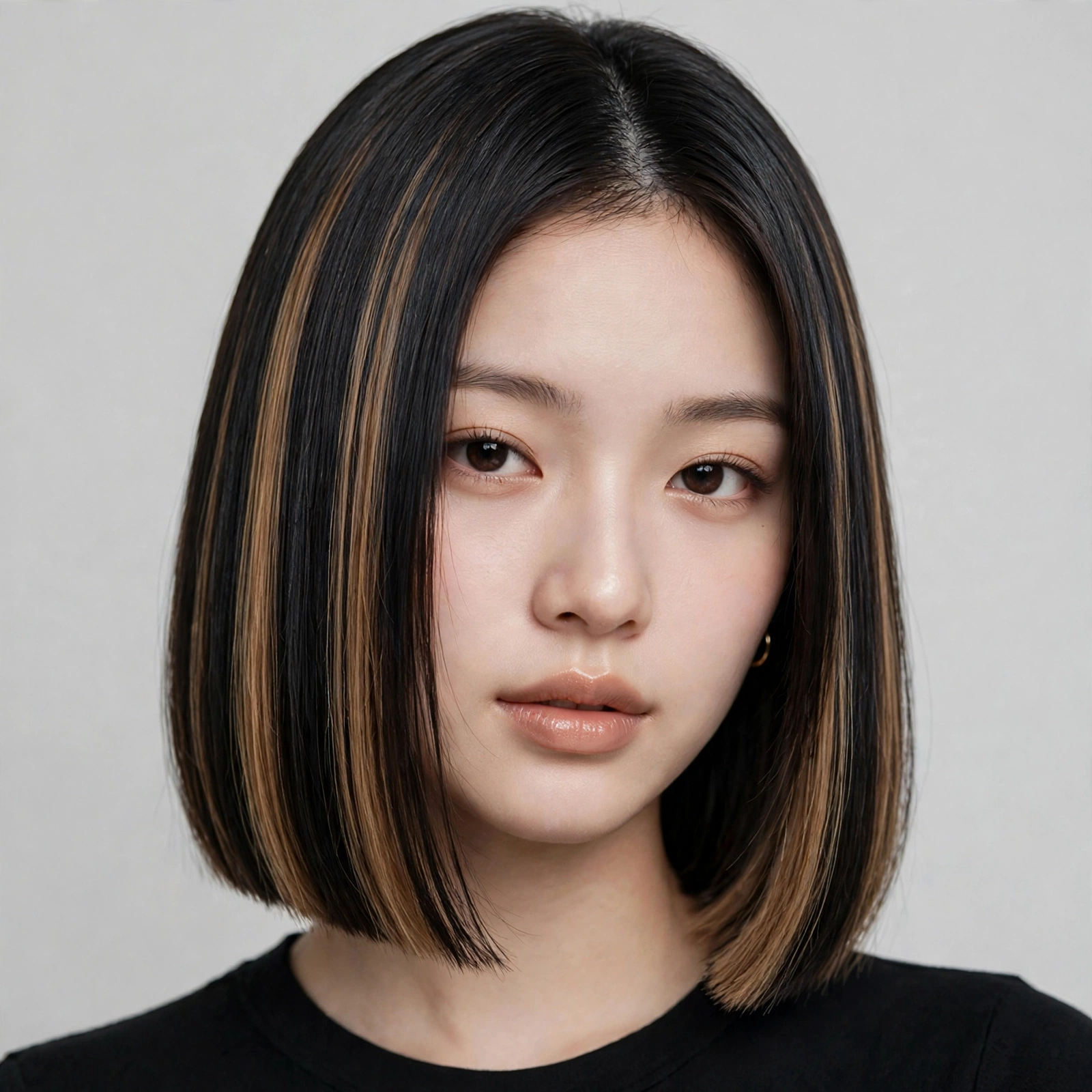
Idol comebacks live and die by hair color, and the two-tone bob is the color version of the K-pop bob. The cut stays sleek and precise, but the color is split: dark roots melting into lighter lengths, or a dark outer layer hiding a vivid peekaboo panel underneath. The contrast shows best on straight, glossy hair, which is exactly why it pairs so perfectly with the idol bob finish. When the hair swings, the two tones separate and flash, giving movement to a cut that is otherwise all about control.
The most wearable version is the subtle one: keep your natural dark base and lighten the underlayer or the last two inches by two to three levels, in a caramel or ash tone. It reads as dimension rather than drama, and it grows out without a harsh line. The bold version, a bright panel under black, needs more upkeep and a colorist who understands vivid dyes. Either way, color-treated glass hair needs extra care: a color-safe sulfate-free shampoo, a weekly gloss or toning mask, and heat protectant every single time you use hot tools. Tell your colorist you want “dimension that shows on straight hair” and ask to see the color on straightened hair before you leave, since curls hide placement mistakes that straight styling reveals.
13. The Curtain-Fringe Bob
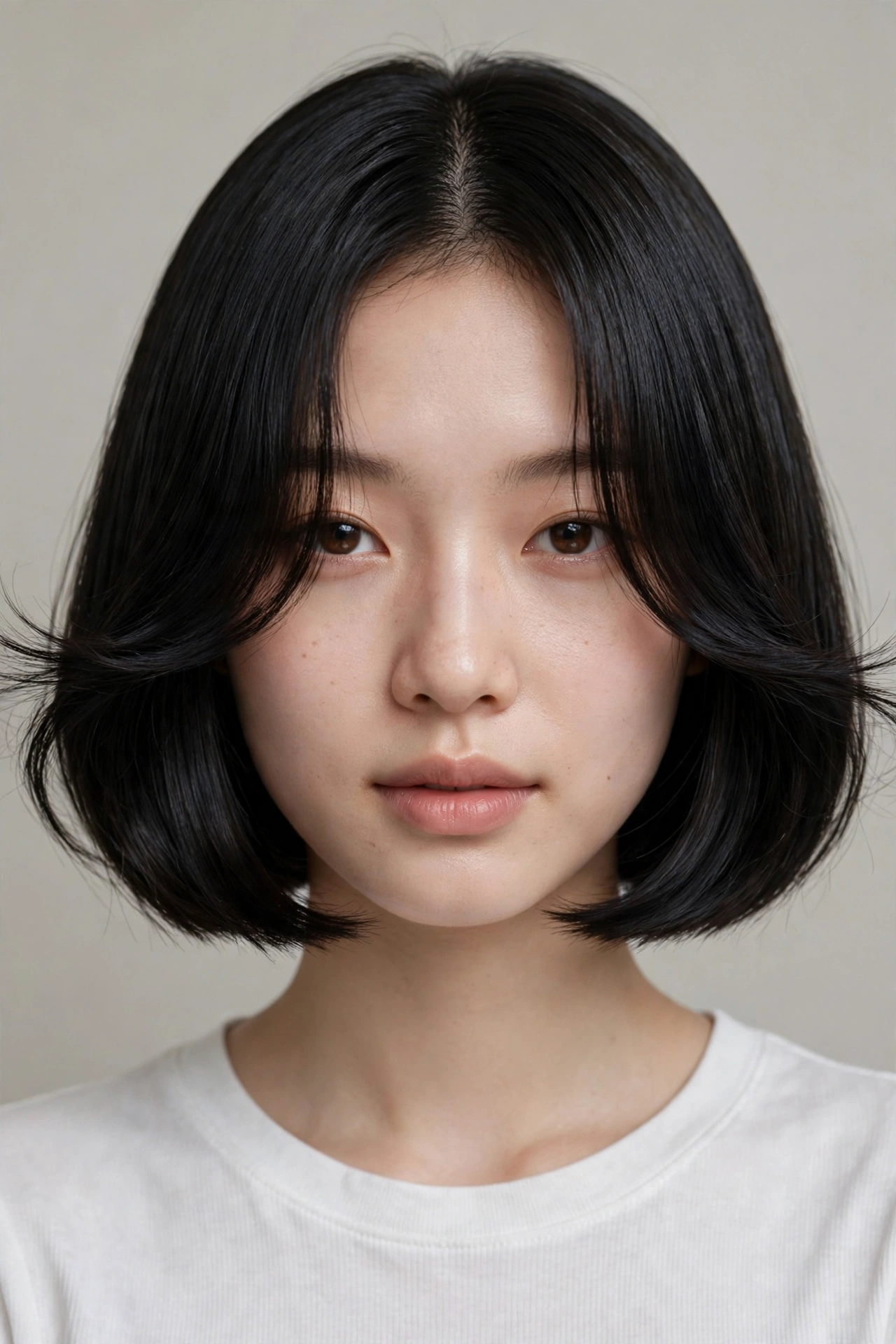
Curtain fringe is the softer sibling of see-through bangs: longer, parted in the middle, sweeping outward to frame the cheekbones. On a K-pop bob it creates a beautiful transition between the fringe and the lengths, melting the front into the sides instead of drawing a line across the forehead. This is the version for women who want fringe without the commitment of short bangs, because curtain fringe grows out seamlessly into face-framing layers. If you already love the idea of curtain bangs with long layered hair, this is that same flattering geometry translated onto a sleek bob.
The styling routine is simple and forgiving. Blow-dry the fringe with a round brush, curving each side away from the center part, and let it fall naturally. Unlike see-through bangs, curtain fringe does not need daily precision; it looks good slightly imperfect, which makes it the lowest-maintenance fringe option on this list. Ask your stylist for “curtain fringe that connects to the bob at cheekbone level” so there is no disconnect between the fringe and the sides. One tip: curtain fringe and glasses are a tricky combination, since the fringe can tangle with frames. If you wear glasses daily, ask for the fringe to start below the frames or consider the see-through bangs version instead.
14. The Micro-Bob
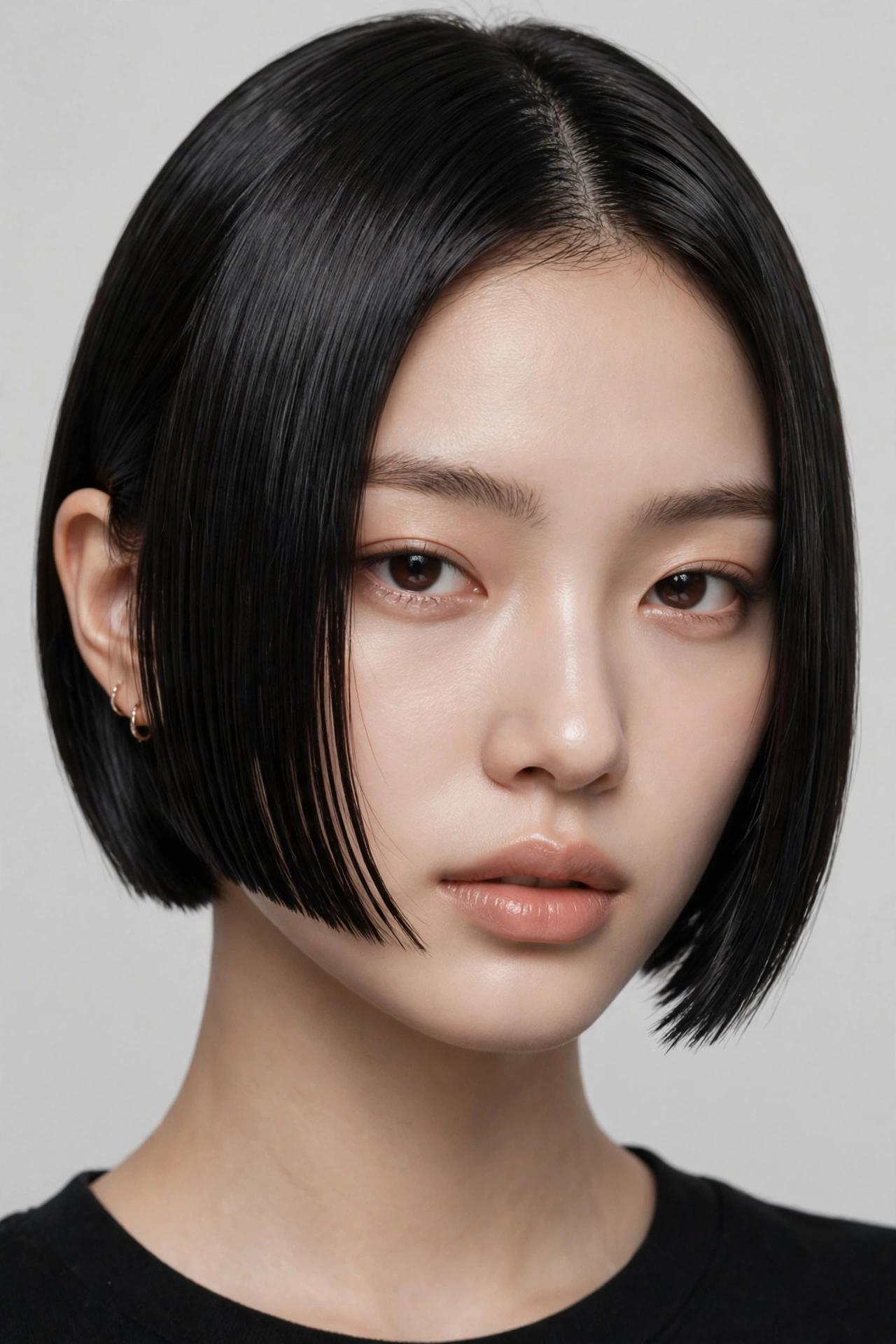
The micro-bob is the shortest version here: jaw-skimming, sometimes even lip-skimming, with all the idol precision packed into a few inches of hair. It is bold, graphic, and impossible to ignore. Idols typically debut a micro-bob for a dramatic concept change, and the effect is instant reinvention. On the right face it is the most striking cut on this list, because there is nothing between the cut and your features. Strong cheekbones, a defined jaw, good skin: the micro-bob frames all of it like a picture frame.
Honesty first: this is the highest-commitment bob here. It shows roots, regrowth, and unevenness faster than any longer version, and the grow-out phase requires patience and strategic trims. But the daily styling is the easiest of all. Wash, rough-dry, one quick flat-iron pass, done. There is simply less hair to manage. Ask your stylist whether your hair texture will cooperate at this length before committing; very curly or very fine hair can behave unpredictably when cut this short. If you get the green light, go for the full precision version: blunt perimeter, glass finish, middle or deep side part. The micro-bob only works when it looks intentional, and intentional means sharp.
15. The Tucked-Behind-Ears Bob
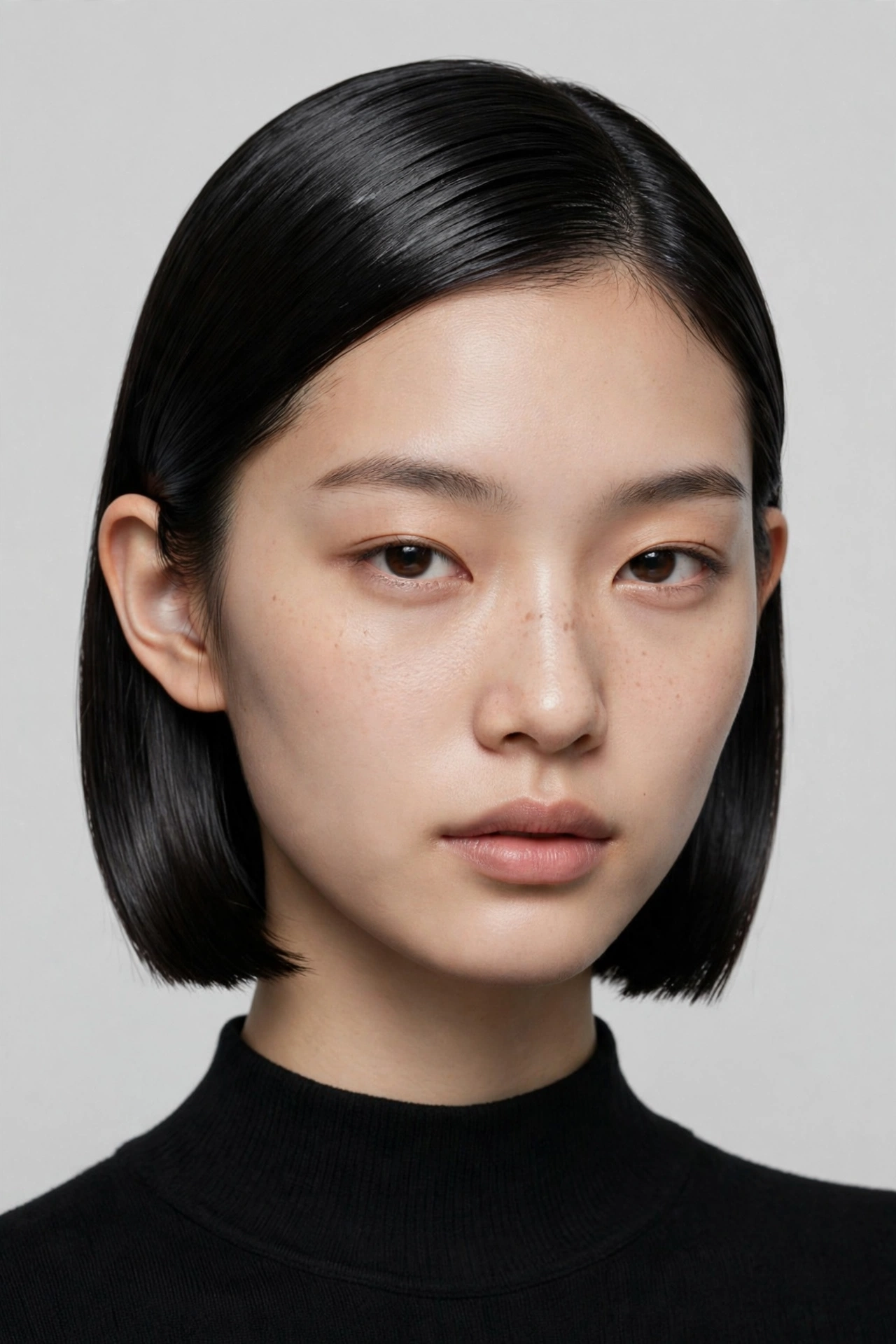
Sometimes the style is not a different cut but a different way of wearing it, and the tucked-behind-ears bob deserves its own entry because it completely changes the silhouette. Both sides smoothed back and tucked, the bob becomes a sleek frame that exposes the jawline, the ears, and whatever earrings you are wearing. Idols wear this for red carpets and close-up photography, where showing the face matters more than showing the hair. It reads confident and minimal, the hair equivalent of a clean white shirt.
The trick is making the tuck stay. Start with freshly straightened hair, because any wave will push the tuck out within an hour. Smooth a pea-sized amount of lightweight wax or pomade over the sides before tucking, which gives the hair grip against the skin, and slide one small bobby pin behind each ear, crossed for hold, if you need insurance. Statement earrings are practically required; the whole point of the tuck is to show them off. This is also a useful diagnostic: if you tuck your bob behind your ears and love what you see in the mirror, your cut has good bones. If the shape collapses, the perimeter probably needs sharpening at your next trim.
16. The Wet-Look Stage Bob
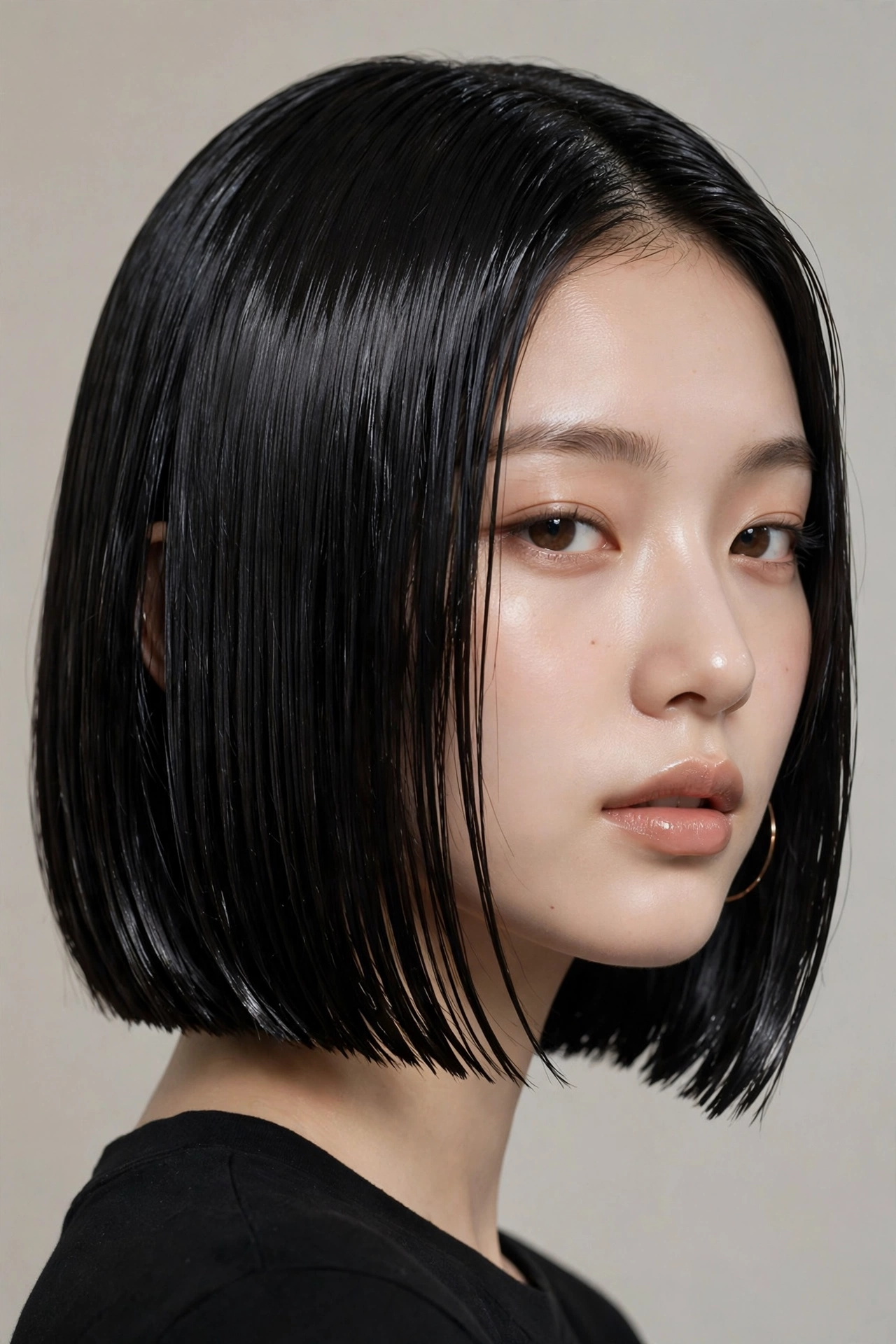
Straight from idol performance stages, the wet-look bob is the most editorial version on this list. The hair is styled to look dripping wet: saturated with high-shine gel or gloss, combed back sleek and flat against the head, every strand in place. It is not an everyday look, and it is not trying to be. This is the bob for parties, photoshoots, and nights when you want to look like you stepped out of a music video. The extreme shine photographs with incredible drama under artificial light.
Recreating it requires the right products and a light hand. Start with damp hair and work a generous amount of strong-hold wet-look gel from roots to ends, combing everything straight back or into a deep side part with a fine-tooth comb. Add a layer of shine serum or gloss spray over the top for the liquid effect. The critical mistake is using too little product, which gives you crunchy half-wet hair instead of the sleek saturated finish. Commit fully or skip it. Wash it out the same night; sleeping in heavy gel is terrible for your hair and your pillowcase. Ask your stylist to thin the interior slightly if you plan to wear this often, since saturated hair shows bulk more than dry hair does.
17. The Voluminous Root Bob
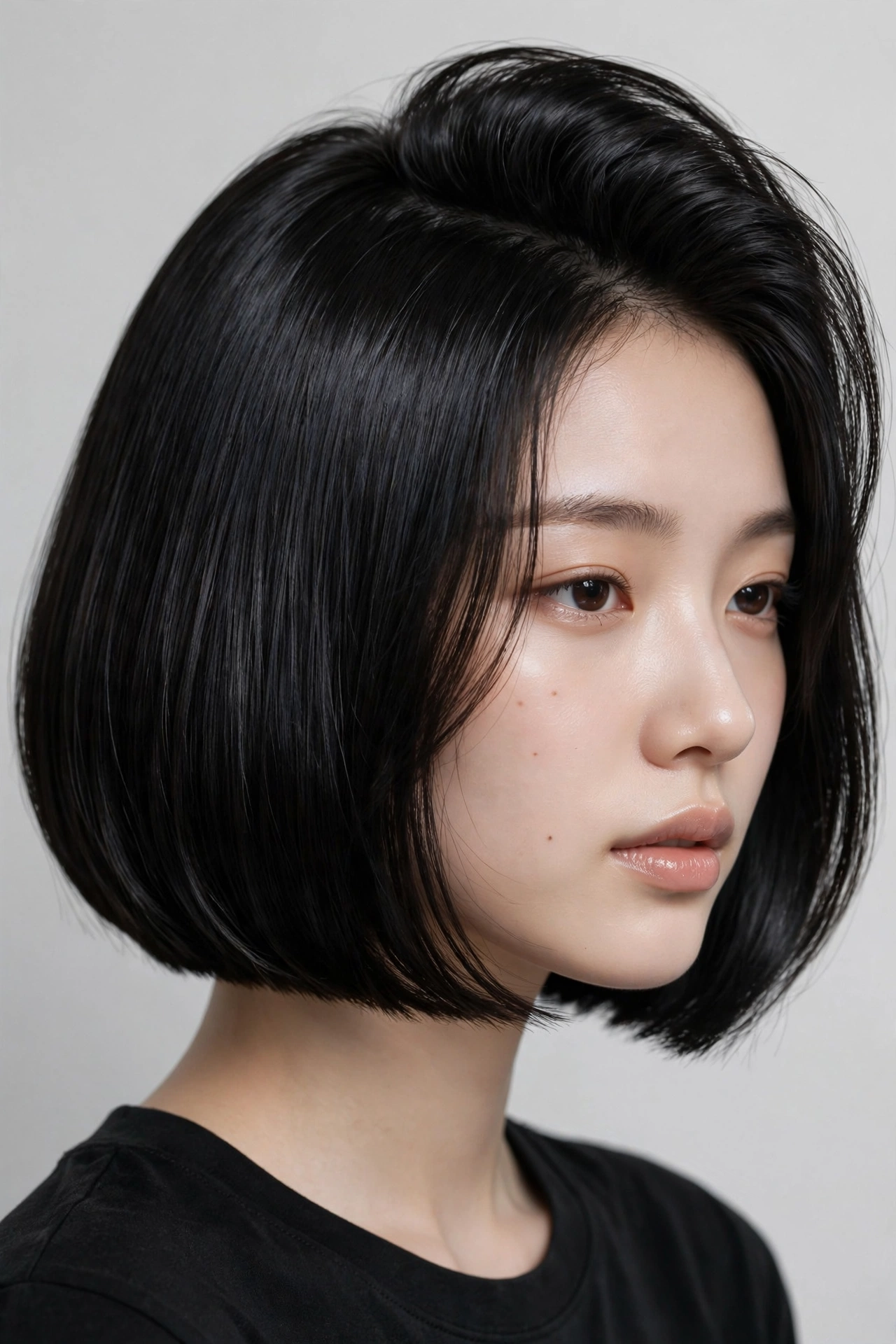
Flat roots are the enemy of the K-pop bob, and the voluminous root version solves it structurally. The lengths stay sleek and glassy, but the crown carries real lift, creating a rounded silhouette with height on top instead of a shape that hugs the skull. Korean salons achieve this with a root perm, sometimes called a volume magic perm, which lifts the roots permanently for months. It is one of the most requested salon services in Seoul, and it is the secret behind why idol bobs look full rather than flat even though the lengths are pin straight.
If a perm sounds like too much, you can fake the lift daily. Blow-dry the crown with a round brush, pulling each section up and away from the head, and set it with a shot of cool air. A volumizing powder or dry shampoo at the roots before styling gives fine hair the grip it needs to hold height. Backcombing is not recommended for this look; it creates frizz that fights the glass finish on the lengths. Tell your stylist “I want root volume with sleek lengths” and ask whether your hair type suits a root perm. Fine, straight hair is the ideal candidate. Thick hair usually has enough natural body that styling alone does the job.
18. The Asymmetrical Idol Bob
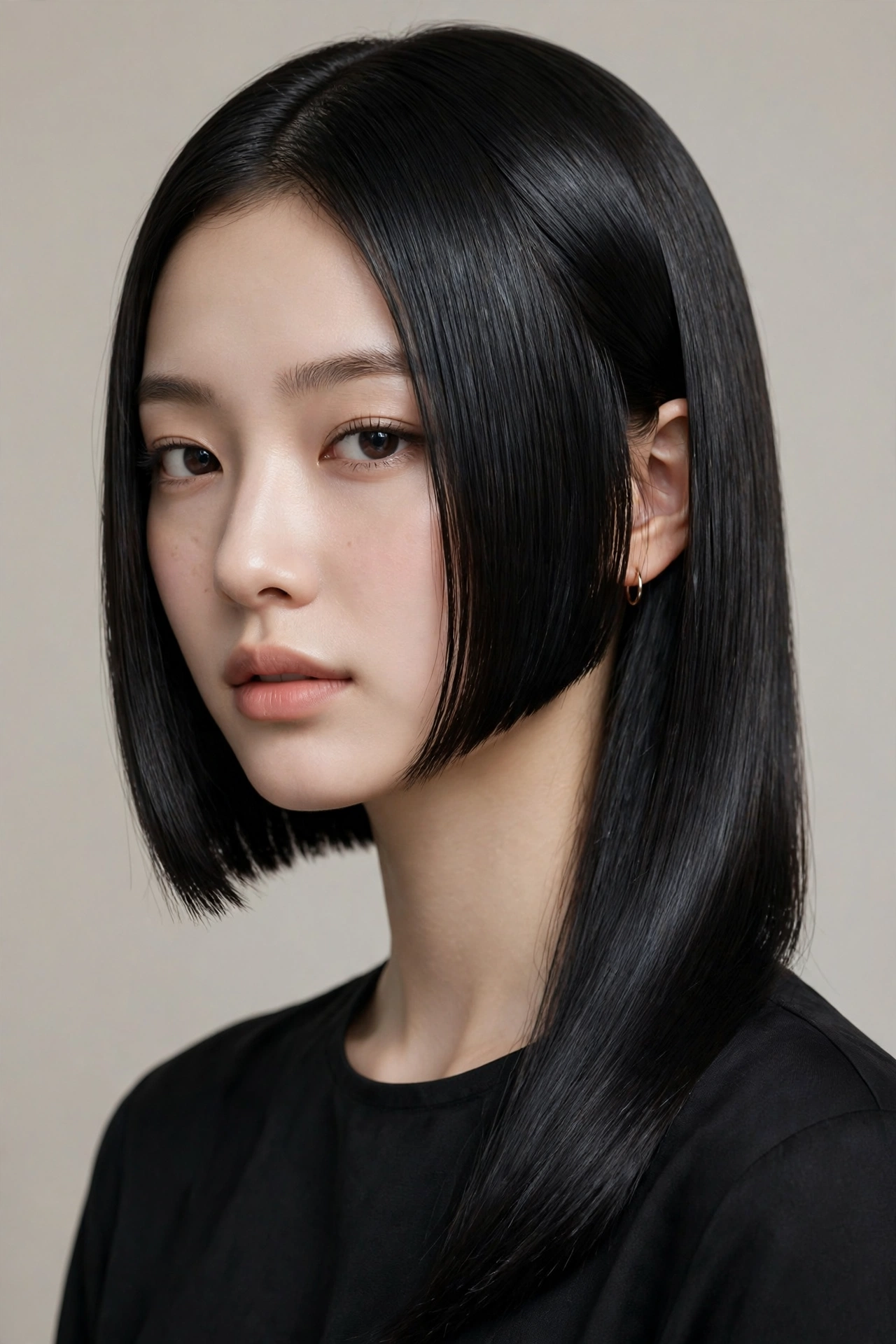
Most K-pop bobs are symmetrical, which makes the asymmetrical version stand out even more. One side is cut noticeably longer than the other, usually by one to two inches, creating a diagonal line across the jaw that is pure fashion. Idols wear this for edgy concepts and magazine covers, where the asymmetry gives photographers an interesting angle to work with. It is the most avant-garde version on this list, and it suits women who find the classic idol bob a little too safe.
The asymmetry must look deliberate, which means the cutting has to be exact. A sloppy asymmetrical bob just looks like a bad haircut, so this is not the version to try with an inexperienced stylist. Ask for the difference in writing, literally: “two inches longer on the left,” so there is no miscommunication. Style it sleek and straight to emphasize the diagonal line; waves blur the asymmetry and waste the effect. The grow-out requires management, since the two sides grow at the same rate and the difference stays constant, which means regular trims to maintain the intended angle. If you ever tire of it, the fix is simple: cut the longer side to match, and you are back to a classic bob.
19. The Copper Idol Bob
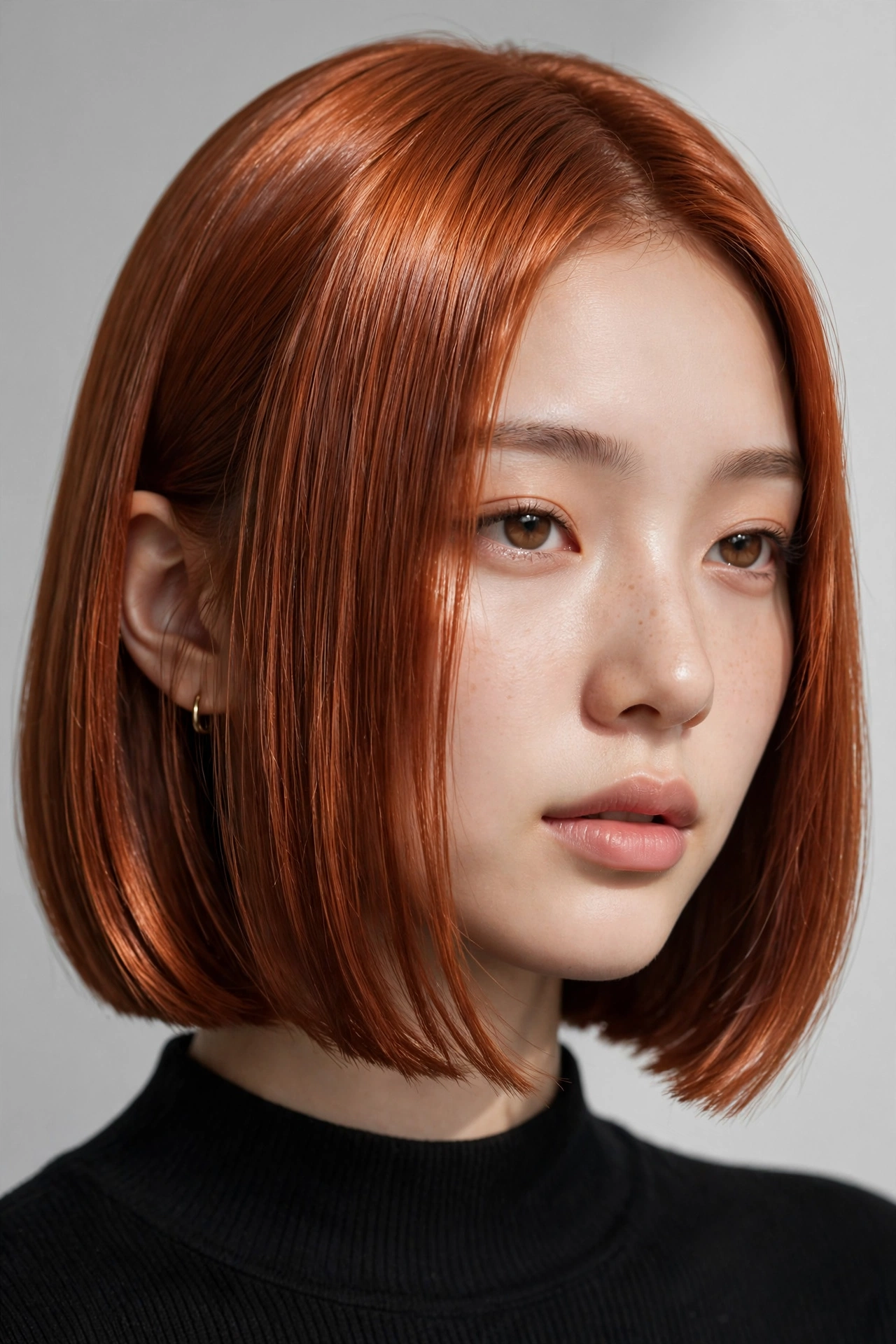
Color transforms the K-pop bob completely, and copper is the shade of the moment. Idols cycle through hair colors with every comeback, and warm copper and auburn tones have dominated recent cycles because they photograph beautifully and stand out in a sea of black hair. On a precision bob, copper does something special: the warm tone catches light differently than black, so the glass shine reads as glow rather than mirror. It is softer, warmer, and incredibly flattering on warm and neutral skin tones.
Copper is a high-maintenance color, so go in with open eyes. Warm tones fade faster than any other color family, which means a color-depositing conditioner or gloss refresh every two to three weeks to keep it rich. Wash in cool water, stretch washes as long as you can, and use color-safe products exclusively. The cut itself follows the standard idol rules: precision perimeter, glass finish, flat-iron styling. Tell your colorist you want a copper that “glows on straight hair” and ask for a gloss treatment with the color service. One strategic note: if your workplace is conservative, keep the copper in the auburn family rather than going bright. Auburn reads professional; bright copper reads statement.
20. The Grown-Out Idol Bob
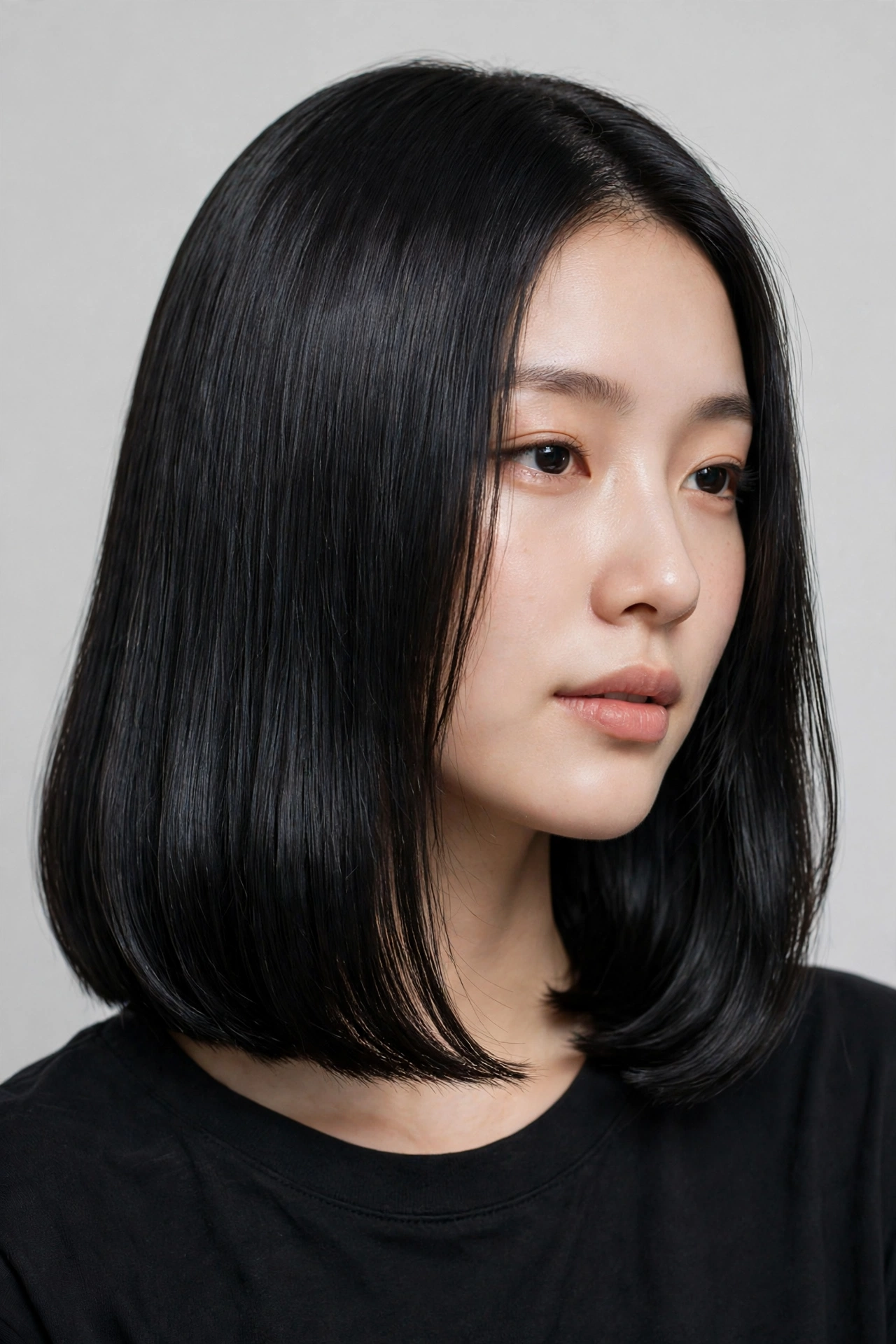
Every bob becomes this one eventually, and the grown-out idol bob deserves respect as a style in its own right rather than just a phase to survive. At shoulder length, with the precision perimeter softened by a few months of growth, the cut relaxes into something that still carries the idol DNA: the shine, the controlled ends, the healthy look. Many women discover they love this stage even more than the original bob, because it keeps the polish while adding styling options the shorter cut did not allow.
Growing a bob out gracefully is a strategy, not an accident. Get a trim every ten to twelve weeks, not to take length but to reshape: your stylist should clean up the perimeter and adjust the shape so the growing cut keeps a deliberate silhouette instead of turning into a shapeless mass. This is the stage where the lob version takes over, and where experimenting with the wavy styling from idea ten keeps things interesting. The full grow-out from chin to shoulder typically takes four to six months depending on your growth rate. Resist the urge to hack at it yourself during the awkward middle weeks. One professional reshape is worth three months of regret.
How to Ask Your Stylist
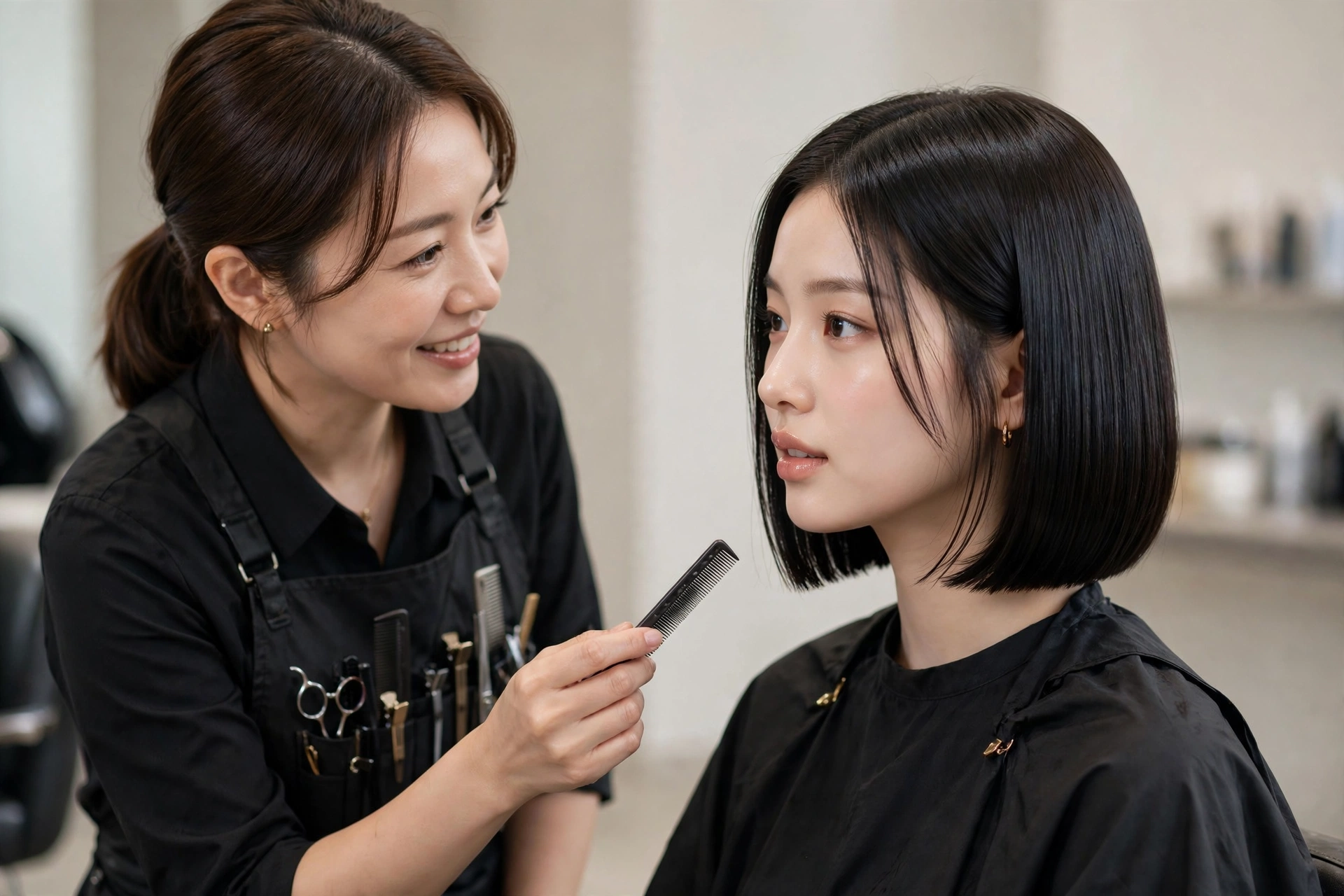
Walking in and saying “give me a K-pop bob” is a start, but it is not enough. As you have seen, there are twenty different haircuts hiding inside that phrase. The women who walk out happy are the ones who walk in specific. Start with the length: chin, jaw, or collarbone, stated plainly. Then the ends: pin-straight precision, C-curl turned under, or blunt and heavy. Then the fringe: none, see-through bangs, or curtain fringe. That three-part description, length plus ends plus fringe, eliminates most miscommunication before the scissors even come out.
Learn the Korean salon vocabulary, because the right words get you the right cut faster. “Glass hair” means the mirror-shine finish. “C-curl” means ends turned inward. “See-through bangs” means the wispy air bangs. “One length” means no layers. “Air cut” means invisible internal layers. Bring two or three reference photos saved on your phone: one showing the exact cut you want, one showing how you want it styled. Photos cross every language barrier, including the one between what you picture and what your stylist pictures. Finally, be honest about your real life: how often you will come for trims, whether you own a flat iron, how much morning effort you will actually give. A good stylist will steer you toward the version that fits your maintenance reality, and that conversation is the difference between a haircut you love for a week and one you love for two months.
How to Style It at Home
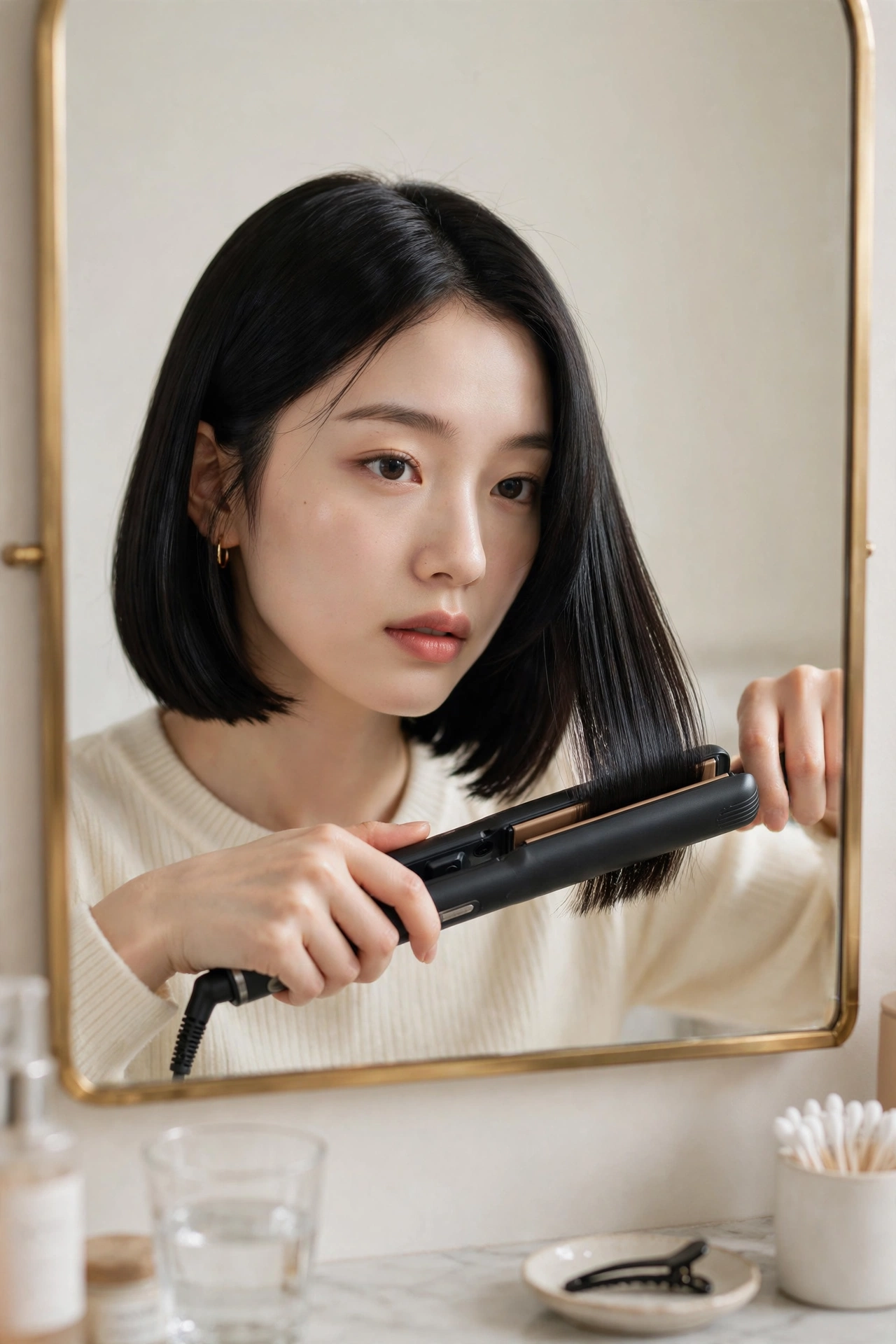
The idol finish at home comes down to a repeatable routine. Start with clean, completely dry hair and a heat protectant applied evenly from mid-lengths to ends. Set your flat iron between 330 and 380 degrees: lower for fine or damaged hair, higher for thick or resistant hair. Work in sections no wider than the iron plates, clamp near the roots, and pull through slowly and steadily in one pass. Speed is the enemy of smoothness; a slow single pass beats three fast ones. For C-curl ends, rotate your wrist inward during the last two inches. Finish with shine serum, two drops warmed between your palms and smoothed over the surface.
A few upgrades for specific situations. If your hair is fine and collapses by noon, style on fully dry hair and finish with a light-hold hairspray instead of serum, which can weigh fine hair down. If it is thick and fights you, blow-dry with a paddle brush first to remove most of the volume, then flat-iron. For bangs, style them separately with a small round brush and ten seconds of warm air, then leave them alone; touching bangs through the day transfers oil from your fingers and ruins them. The whole routine takes ten to fifteen minutes once it becomes muscle memory. Idol hair looks effortless because the technique is practiced, not because the hair is magic.
Best Face Shapes and Hair Types
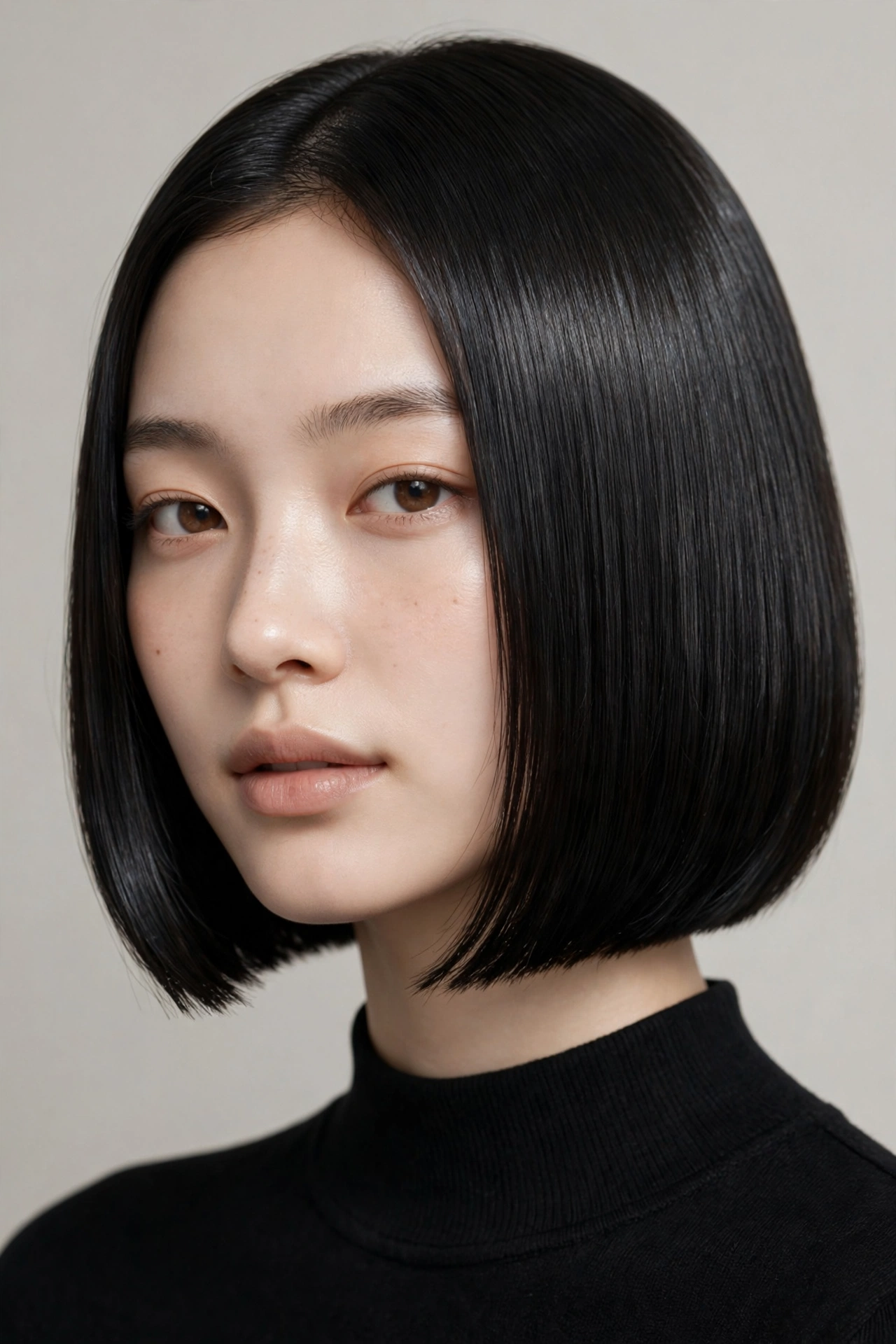
The K-pop bob is generous: it flatters more face shapes than most short cuts, as long as you pick the right version. Oval faces can wear anything on this list, so choose by personality rather than rules. Round faces do best with length: the lob version, a deep side part, or curtain fringe, all of which add vertical lines that slim the cheeks. Avoid the chin-length blunt version if your face is very round, since a strong horizontal line at the jaw can emphasize width. Square faces and strong jawlines pair beautifully with the C-curl bob, because the inward curve softens the jaw instead of echoing it.
Heart-shaped faces shine with volume at the bottom of the cut: the C-curl bob, the layered airy bob, or the wavy version all add fullness where a narrower chin needs balance. Long faces should avoid too much root height and go for width instead: see-through bangs shorten the forehead visually, and the chin-length bob adds horizontal balance. For hair types, straight and slightly wavy hair is the natural home of this cut. Thick hair needs internal layering or thinning to keep the silhouette sleek. Fine hair needs the voluminous root version or light layering to avoid looking flat. Very curly hair can absolutely wear a K-pop bob, but it requires a smoothing treatment or daily heat styling to hold the finish, so factor that into your decision. If you want to compare with the broader short-hair landscape first, our short hairstyles for women 2026 roundup puts the idol bob in context.
Maintenance
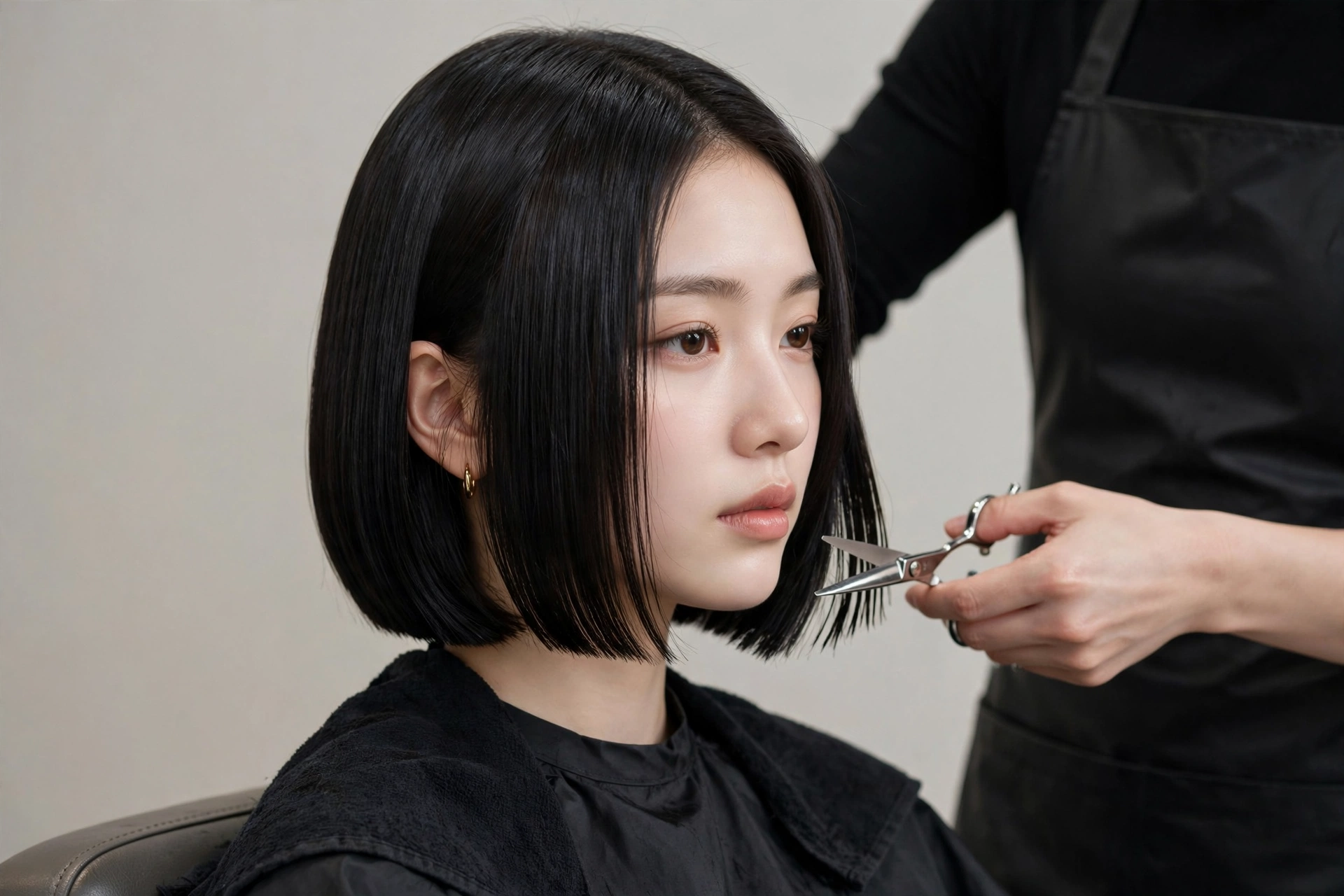
A K-pop bob is a medium-maintenance haircut hiding inside a low-effort reputation. The daily styling is quick, but the calendar discipline matters. The perimeter shows growth first: once the ends start flipping outward on their own or the line looks soft, the idol sharpness is gone. For most versions that means a trim every six to eight weeks. Bangs are on their own faster schedule, every three to four weeks. The micro-bob and chin-length versions need the strictest schedule; the lob is the most forgiving. Mark your trims like appointments that matter, because with this cut, they do.
Between appointments, protect the shine you paid for. Wash two to three times a week with a smoothing or color-safe shampoo, condition the lengths every wash, and use a weekly hair mask or gloss treatment to keep the cuticle sealed. Sleep on a silk or satin pillowcase; cotton creates friction that roughens the cuticle overnight and you will see the difference by morning. Always use heat protectant, without exceptions, since this cut shows heat damage faster than textured styles. And if you color, schedule gloss refreshes between full color appointments to keep the tone rich. The K-pop bob rewards consistency more than intensity: small regular habits beat occasional heroic treatments.
FAQs
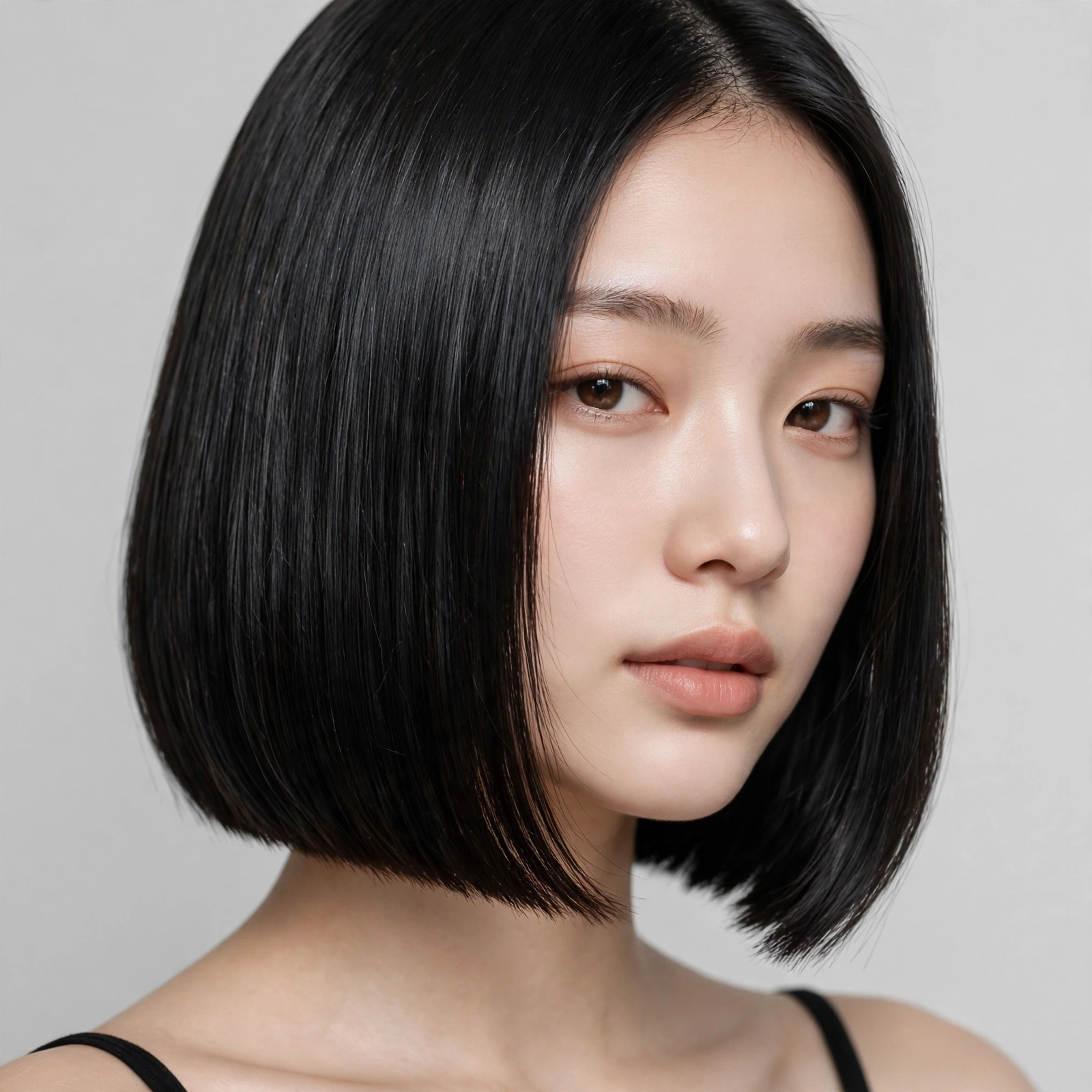
What is the kpop bob women trend, exactly?
It is the Korean salon approach to the bob: precision-cut ends, a glass-like reflective shine, and controlled styling, usually with C-curl ends or see-through bangs. It rose through K-pop idol styling and K-drama actresses, then broke into Western trend coverage in 2026 when editors named it a defining seasonal look. The core idea is that shine and precision are technical skills built into the cut and the styling routine, not accidents of good hair days.
Which kpop bob women cut suits fine hair best?
Fine hair does best with the voluminous root bob or the layered airy bob. Both add body where fine hair needs it: the root version lifts the crown structurally, and the airy version uses invisible layers to create movement without sacrificing the sleek surface. Avoid the heavy blunt idol bob on very fine hair, since the solid perimeter can look thin rather than thick. A root perm is worth discussing with your stylist if your fine hair collapses by midday.
How do I keep my kpop bob women cut glossy at home?
Four habits: a heat protectant every time you use hot tools, a flat iron pass in slow single strokes rather than fast repeats, two drops of shine serum smoothed over the finished surface, and a silk pillowcase at night. Add a weekly gloss treatment or shine mask to seal the cuticle. The biggest gloss killer is heat damage from unprotected styling, so the protectant is the single most important step.
Can I get a kpop bob women cut if my hair is wavy or curly?
Yes, with a plan. Slightly wavy hair works beautifully with the layered airy or wavy textured versions, which cooperate with your natural pattern instead of fighting it. Tighter curls need a smoothing treatment, like keratin, or committed daily heat styling to hold the glass finish. Be honest with your stylist about how much daily effort you will give, because the wrong version on curly hair becomes a high-maintenance project instead of an easy routine.
How often do kpop bob women need trims to keep the shape?
Every six to eight weeks for most versions, which keeps the perimeter sharp and the ends healthy. Bangs need their own schedule of every three to four weeks. The chin-length and micro versions need the strictest timing, while the lob can stretch to ten weeks. If the ends start flipping outward on their own or the line looks soft instead of sharp, you are overdue.
What is the difference between a kpop bob women cut and a Japanese bob?
The Korean bob prioritizes precision and glass-like shine with controlled ends, while the Japanese bob prioritizes airy texture, separation, and an undone finish. Think of it as control versus movement. Both are beautiful, but they come from different salon philosophies and suit different personalities. If you want sleek and exact, go Korean; if you want piecey and effortless, go Japanese.
Final Thoughts
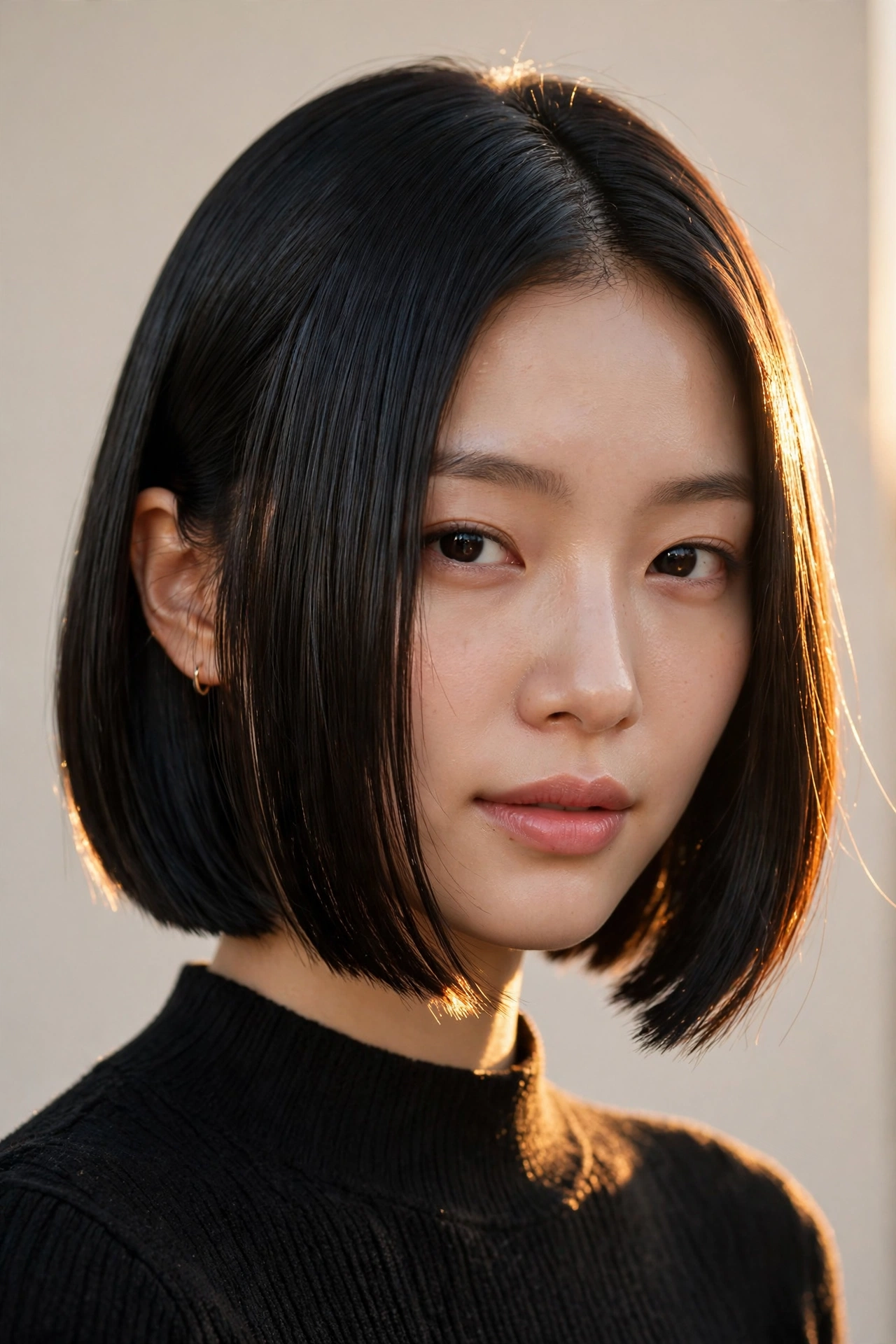
The K-pop bob earned its 2026 moment the honest way: it looks incredible and it behaves. Twenty versions, one core idea: precision ends, glass shine, hair that moves as one. Whether you choose the classic glass bob, the romantic C-curl, the playful see-through bangs, or the dramatic wet-look stage version, you are getting a cut that respects your mornings and rewards your mirror.
My honest recommendation for a first K-pop bob: start with the C-curl bob at chin to jaw length with see-through bangs. It is the most forgiving version, the most flattering on the most faces, and the truest to what Korean salons actually do every day. Bring three reference photos, learn the vocabulary from the stylist section, and give the cut one full grow-out cycle before you judge it. Most women who try the idol bob do not go back. There is a reason Seoul treats shine as a science.
Conclusion
The K-pop bob is 2026’s sleekest import — glassy, precise, and impossibly chic. Inspired by idol styling, it features razor-clean lines, mirror shine, and often a hint of an inward curve at the ends. Straight hair shows it off best, and it flatters petite and oval faces beautifully.
Achieve the signature shine with a smoothing serum and a flat iron, and keep ends trimmed every six weeks for that crisp idol finish. In 2026, the K-pop bob is your ticket to Seoul-level polish.