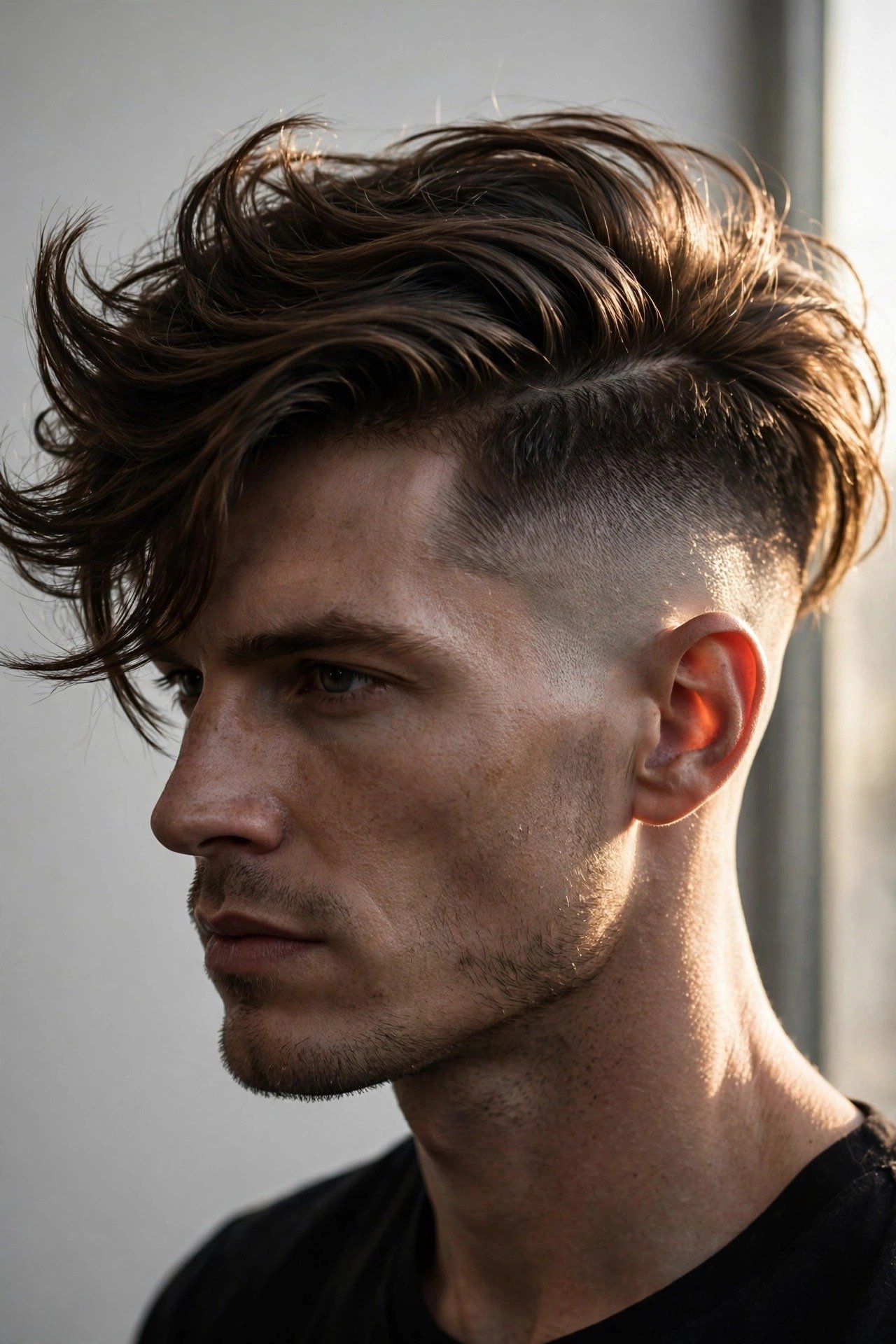
Side Swept Undercut Men 2026: The Sharp Contrast Cut
Side Swept Undercut Men 2026: 14 Styles With Contrast
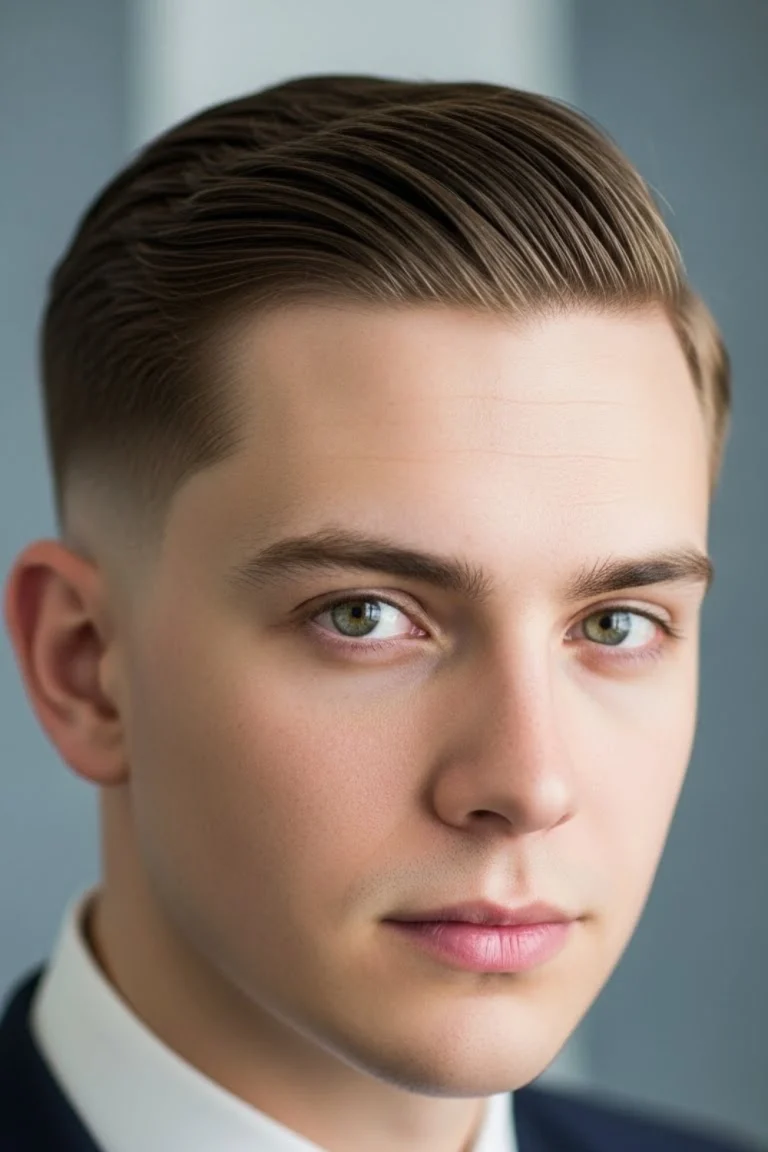
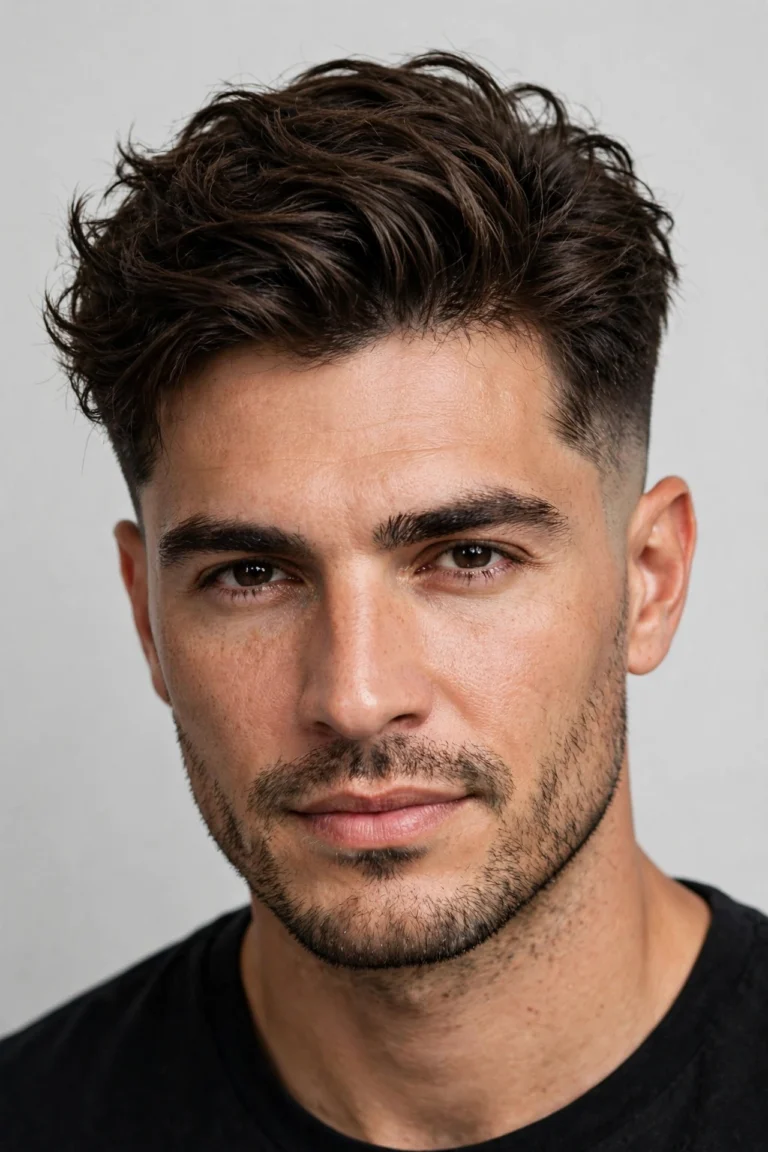
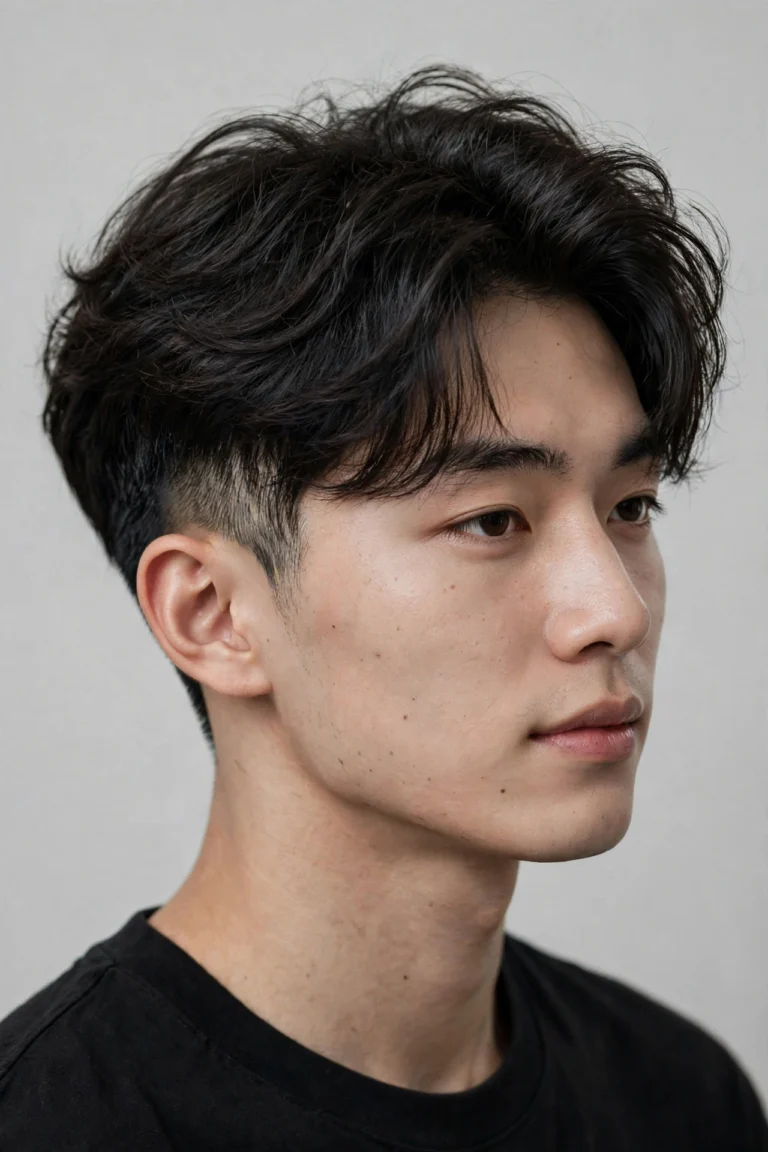
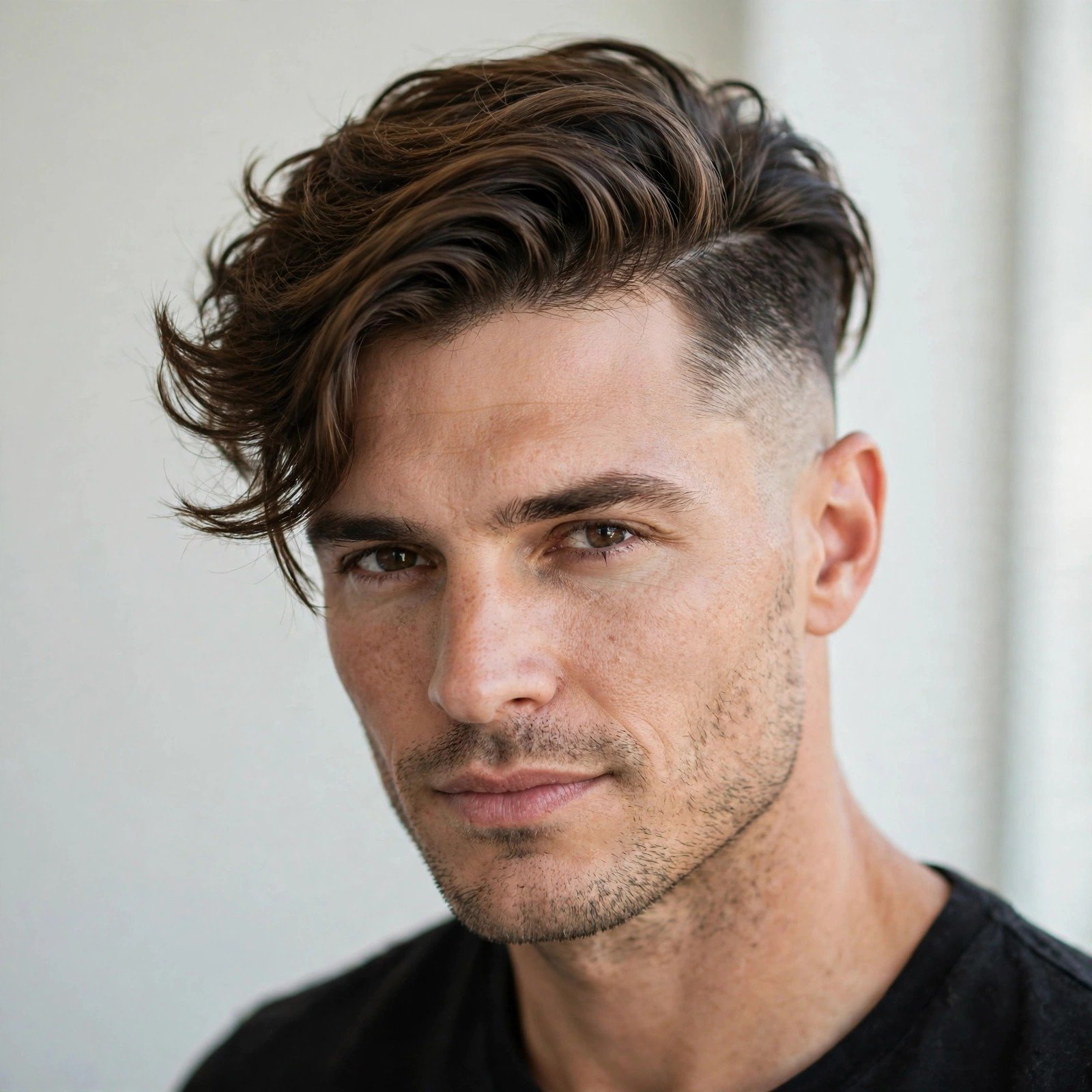
The side swept undercut is one of those haircuts that refuses to die — and in 2026 it is easy to see why. It gives you two things most cuts cannot deliver at once: sharp, deliberate contrast between the tight sides and the longer top, and a top that sweeps to the side in a way that looks polished without looking stiff. The formula is simple. The sides and back are clipped short — faded, tapered, or taken down to one uniform length — while the top stays long enough to sweep across, usually four to seven inches. That disconnect between short sides and long top is what makes the side swept undercut stand out in a crowd of fades and crops. This year’s version has moved on from the slicked, shiny undercuts of the 2010s. The 2026 side swept undercut is softer, more natural, and more wearable: matte finishes instead of wet-look gel, texture through the top instead of a flat sheet, and sides that range from skin-tight to softly tapered depending on how bold you want to go. Whether you are heading to the office, a wedding, or just want a cut that photographs well, there is a version here for you. Below are the 14 best side swept undercut men styles for 2026, plus the full playbook — how to ask for it, how to style it in five minutes, which version suits your face and hair type, what products to buy, and the mistakes that ruin the look.
What a Side Swept Undercut Actually Is (and Isn’t)
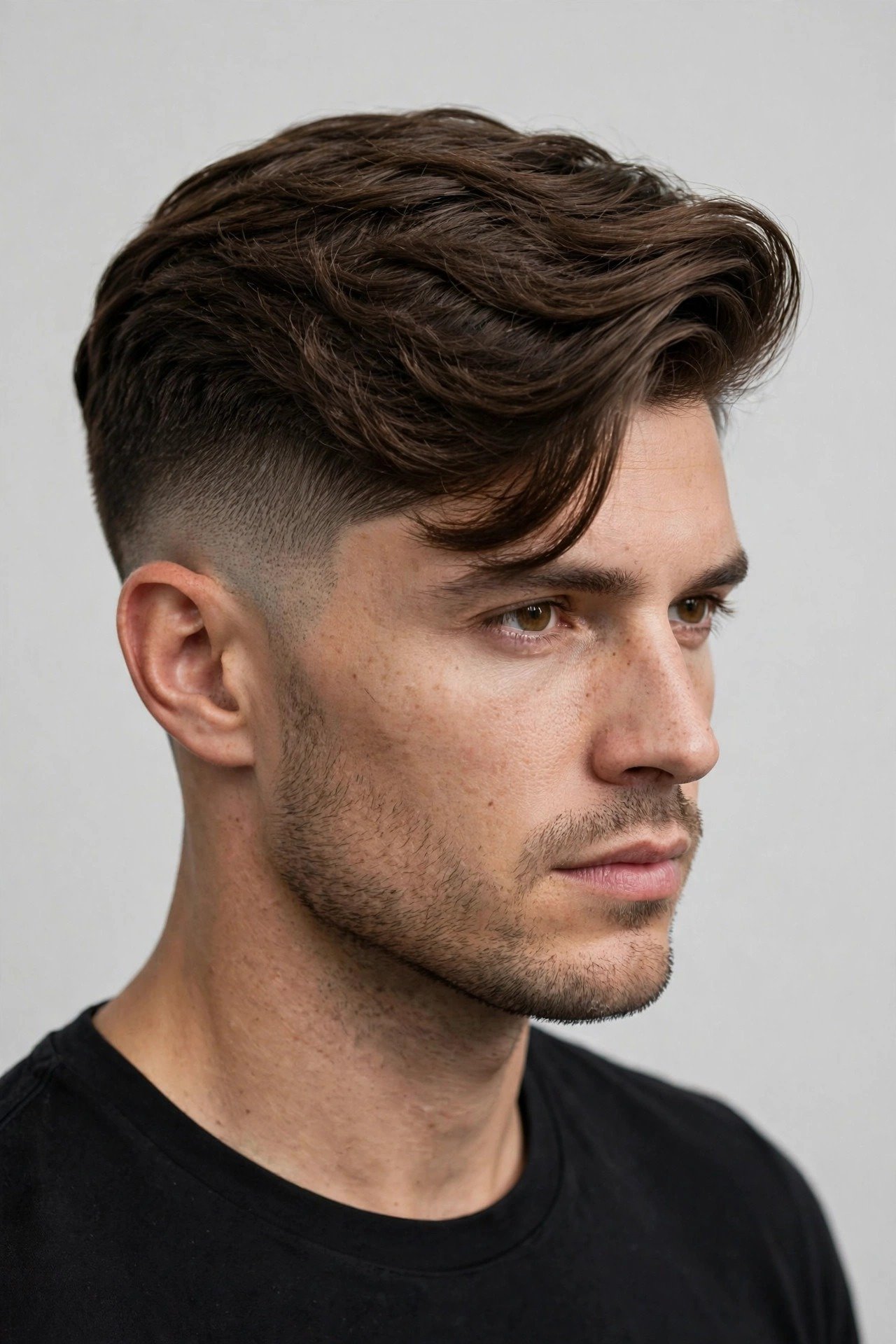
Let us get the definition straight, because barbers hear “undercut” and sometimes reach for the clippers on the whole head. A side swept undercut has three non-negotiable parts. First, the sides and back are cut short and disconnected from the top — meaning there is no gradual blend, or only a minimal one. The length drops off sharply at the parietal ridge (the widest part of the head). Second, the top is left long — four to seven inches — and worn swept to one side. Third, the sweep is the styling direction: the hair moves across the head from a side part, not straight back and not forward. What it is not: it is not a fade with a side part (fades blend gradually; undercuts disconnect). It is not a slick back (the direction is sideways, not backward). And it is not just “short sides, long top” — that description covers a dozen cuts. The disconnect plus the side sweep is the identity of this style. In 2026 the definition has loosened slightly in one direction: many barbers now do a “soft undercut” where the disconnect is less severe — the sides might be a low taper rather than a hard clipper line. This is good news if you want the look but work somewhere conservative. When you book, specify which you want: “disconnected undercut, hard line” or “soft undercut, tapered transition.” Photos help more than words, but the words keep the barber from guessing. One more thing worth knowing: the undercut grows out awkwardly if you abandon it. The sides grow into the top’s territory and the disconnect disappears into a shapeless middle phase. If you commit to a side swept undercut, commit to the maintenance — sides touched up every two to three weeks. Otherwise pick a taper-based style that grows out gracefully.
Why the Side Swept Undercut Works in 2026
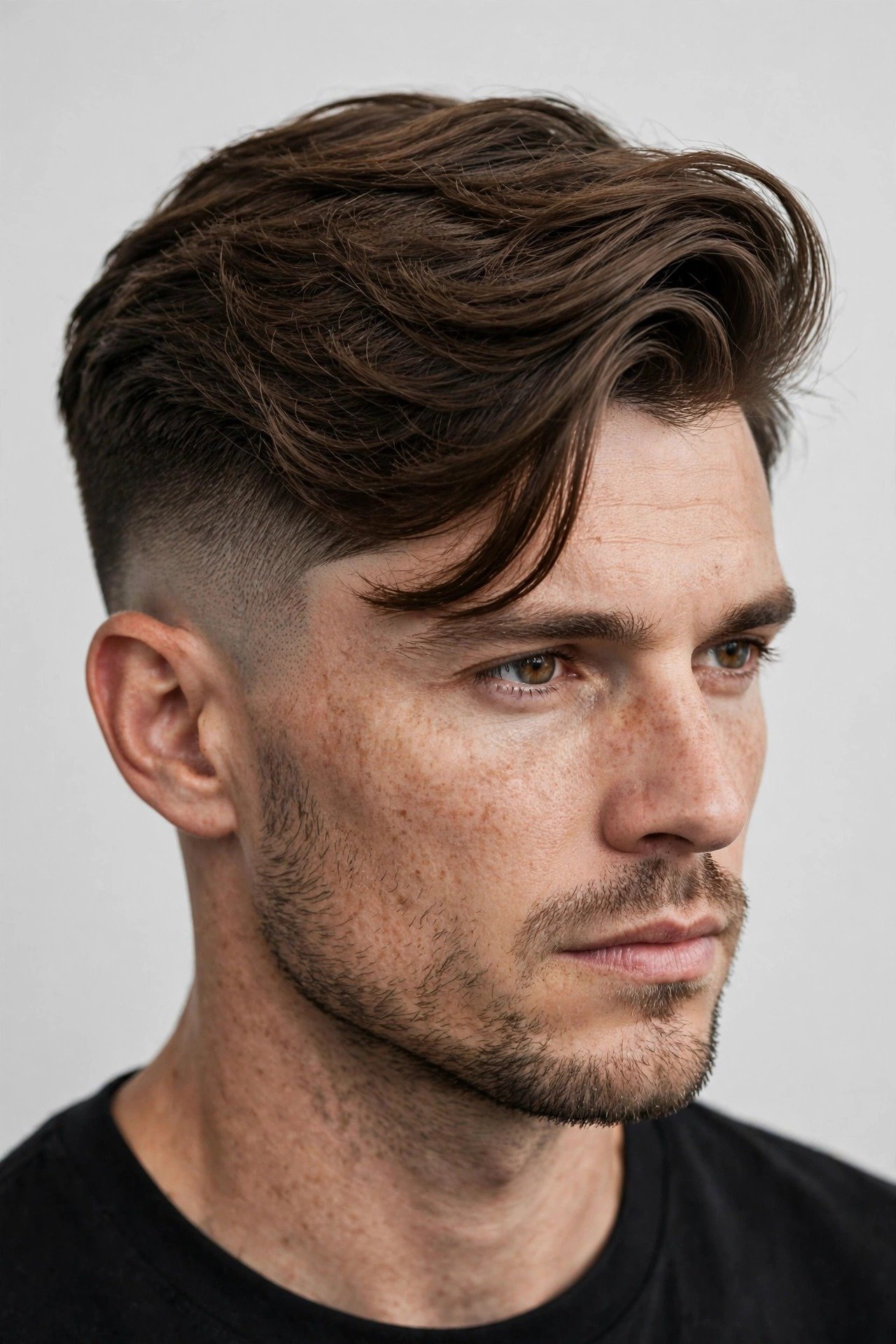
Every few years someone declares the undercut dead, and every few years it comes back stronger. Here is why the side swept undercut men are wearing in 2026 has real staying power instead of being a nostalgia trip. First, it is one of the few men’s cuts that genuinely suits both formal and casual settings. Slick the sweep down with a bit more control and it works at a wedding. Loosen it up with matte product and it works on the weekend. Very few styles cross that line so easily. Second, the contrast does visual work for your face. The short sides slim the sides of the head while the swept top adds controlled volume up high — that combination flatters round, square, and oval faces alike, which covers most men. Third, it is a low-daily-effort cut hiding behind a high-impact look. People assume an undercut takes ages to style. It does not. Once the cut is right, the sweep takes three to five minutes: blow dry to the side, product, done. The cut does the heavy lifting. Fourth, 2026’s grooming direction favors exactly this kind of deliberate contrast. The all-over messy era is maturing into styles with cleaner architecture — sharp sides, intentional top. The side swept undercut sits right in that lane. Finally, it is versatile across hair types in a way many trendy cuts are not. Thick hair, wavy hair, straight hair — the undercut structure works with all of them, because the sides are simply removed from the equation and the top is styled to its strengths. The only hair type that struggles is very fine, very flat hair, and even that has workarounds (more on that below). If you want a cut that looks like you tried without requiring you to actually try that hard, this is the one.
The 14 Best Side Swept Undercut Men Styles for 2026
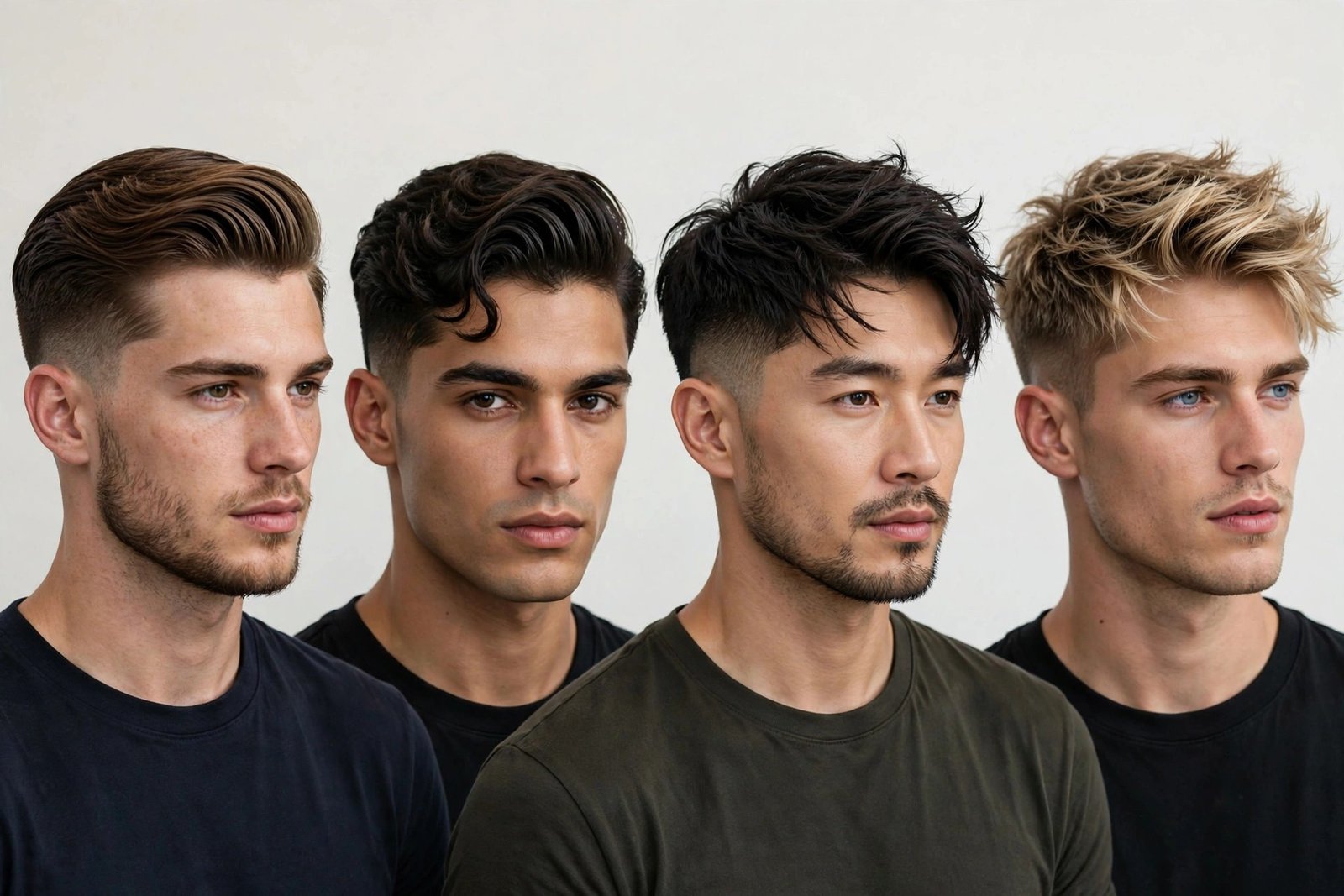
Fourteen ways to wear it, from boardroom-safe to full statement. Each style below tells you who it suits and what to ask for in the chair.
1. The Classic Side Swept Undercut. Disconnected sides clipped to a #2 or #3, top at five to six inches swept cleanly to the side with a defined side part. Neat, timeless, works everywhere. This is the baseline every other version on this list modifies. Ask for: “disconnected undercut, sides to a two, top long enough to sweep, clean side part.”
2. Skin Fade Side Sweep. The sides go all the way down to skin, creating maximum contrast with the long swept top. Bold and sharp — the fade keeps it modern while the sweep keeps it classy. Needs a touch-up every two weeks to stay crisp. Best on thick, dark hair where the contrast really shows.
3. Textured Side Sweep. The 2026 favorite: point-cut texture through the top so the sweep has movement and separation instead of lying flat. Less formal than the classic, more interesting. Matte clay is the product. This is the version to pick if your hair has any wave — the texture and the wave amplify each other.
4. The Tapered Soft Undercut. Instead of a hard disconnect, the sides taper down gradually but still sit clearly shorter than the top. The office-friendly undercut. It grows out gracefully, needs less frequent maintenance, and nobody at work will call it edgy. If you are undercut-curious but cautious, start here.
5. Long Sweep Undercut. Top at seven plus inches, swept dramatically to the side with serious flow. The romantic, editorial version. Needs the most styling time of the fourteen — blow drying is non-negotiable at this length — and regular conditioning to keep the ends healthy. Stunning on thick, wavy hair.
6. The Side Sweep With Hard Part. A razor-sharp part line shaved or carved in, with the top swept away from it. The hard part adds graphic precision that makes the whole cut look more deliberate. The line needs re-carving every couple of weeks or it softens into a normal part. Great for guys who like their grooming visibly intentional.
7. Wavy Side Swept Undercut. Built for natural wave: the top is layered to let the wave pattern move across the head, sides disconnected short. The wave does half the styling for you. Get the layers cut dry so the barber sees the true wave. A light cream is all the product this needs — heavy product kills wave.
8. The Slicked Side Sweep. The Mad-Men-adjacent version: top swept to the side with control and a bit of shine, sides tight. More polished than the 2026 matte norm, but perfect for weddings, formal events, and anyone whose workplace still expects traditional grooming. Use a medium-shine pomade, not high-shine gel.
9. Curly Side Swept Undercut. Yes, curls work with an undercut. The sides go short, the curls on top are shaped to sweep to one side with definition. The barber must cut the curls dry and individually — never let anyone cut curly hair wet and straight for this style. Curl cream, scrunch, and hands off for the rest of the day.
10. The Disconnected Crop Sweep. Shorter top — three to four inches — swept to the side over a hard disconnect. Lower maintenance than the long versions, faster to style, and the short top is more forgiving if your hair is fine. The sweep direction still reads clearly, so you keep the identity of the cut.
11. Side Sweep With Beard. The undercut plus a well-kept beard is a combination that keeps winning because the short sides flow visually into the beard while the long top balances it. Keep the beard’s cheek line clean and the transition from sideburn to beard deliberate — a messy beard plus a sharp undercut clash instead of complementing.
12. The Asymmetric Sweep. The top is cut slightly longer on the sweep side so the hair has real momentum moving across. It is a subtle barbering trick that makes the sweep look more dramatic with less styling effort. Mention it specifically: “leave the top longer on the side it sweeps toward.”
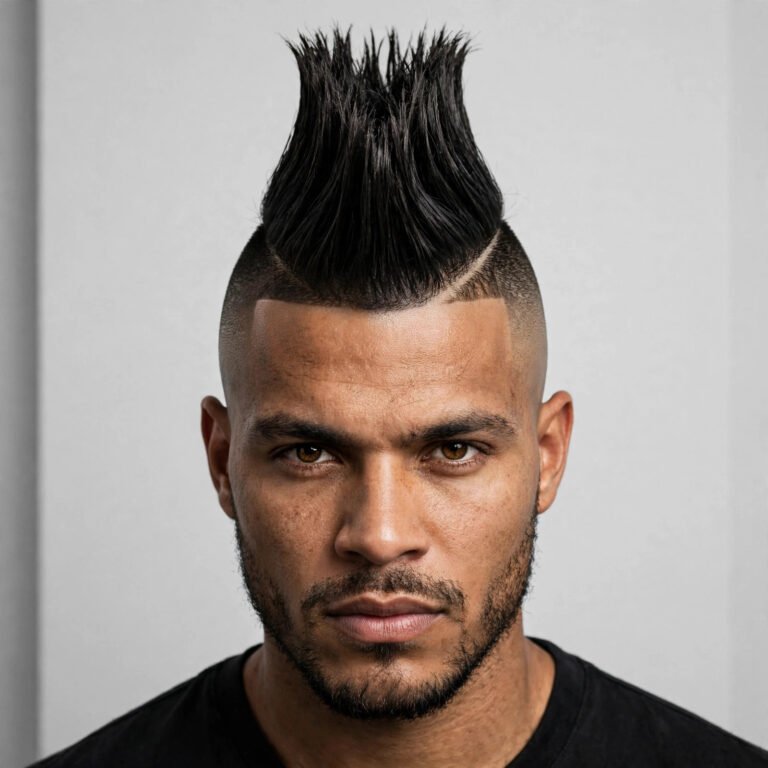
13. Undercut Sweep With Design. A shaved line, pattern, or geometric detail carved into the faded sides. The statement option — common in 2026 among younger guys and anyone in creative fields. The design grows out in two to three weeks, so it is actually a low-commitment way to experiment. Keep the top classic so the design is the accent, not a competition.
14. The Grown-Out Undercut Sweep. For guys transitioning out of an undercut or growing the top toward something longer: the sides are allowed to grow to a #4 or #5 while the top keeps sweeping. It is the graceful exit ramp. Taper the sides as they grow so the disconnect softens gradually instead of collapsing all at once.
How to Style a Side Swept Undercut: The 5-Minute Routine
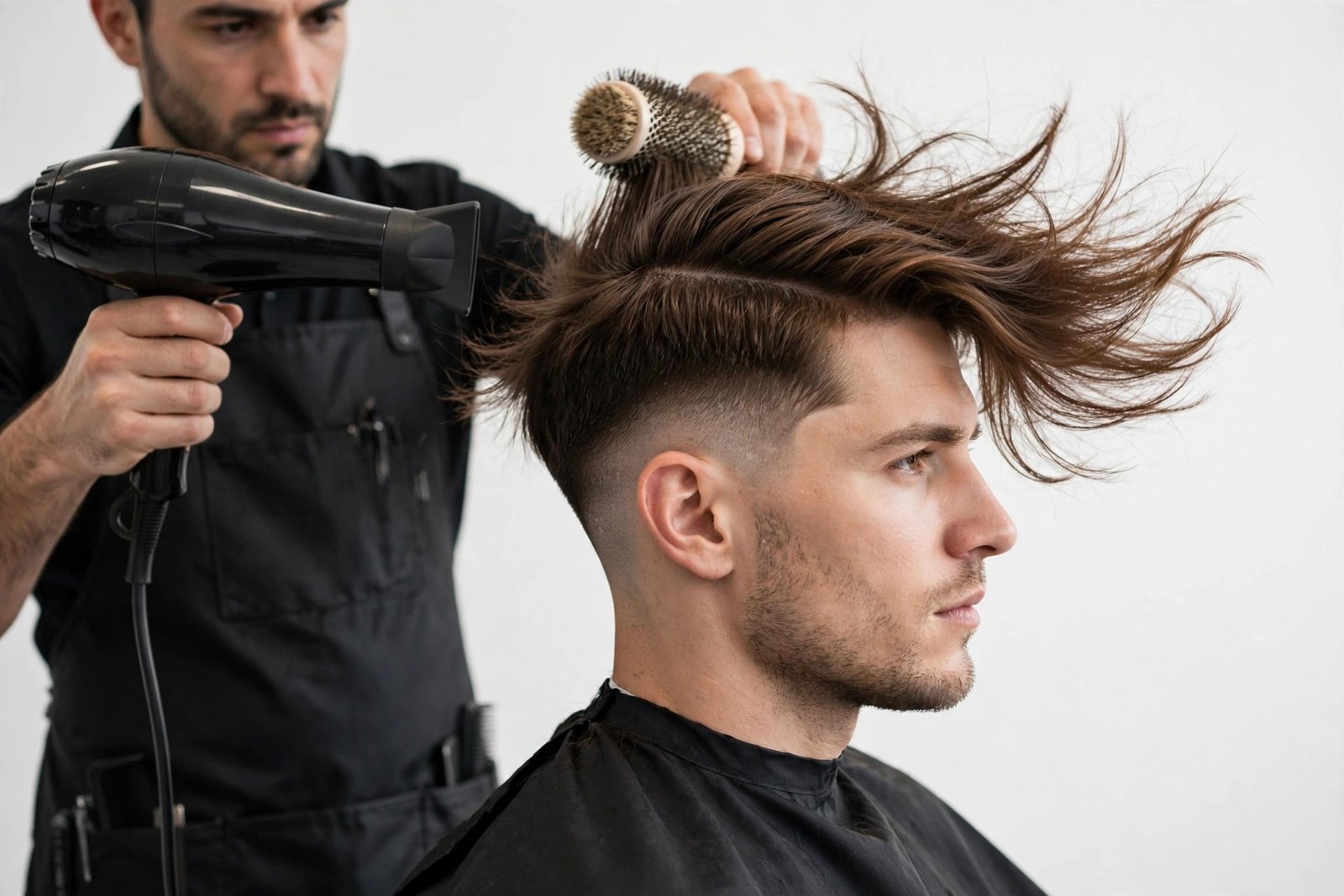
The side swept undercut looks like it takes effort. It does not — if you follow the right order. Here is the routine, start to finish.
Step 1: Start damp, not wet. Towel-dry after your shower until the hair is about 70 percent dry. If you are styling dry second-day hair, mist it with a spray bottle until it is evenly damp. Product on sopping hair slides off; product on dry hair sits on top instead of working in.
Step 2: Pre-styler for direction and volume. Work a small amount of volumizing mousse or a few sprays of sea salt spray through the damp top. This gives the sweep memory — without it, the hair falls back flat by midday, especially on fine or straight hair. Distribute evenly from roots to ends with your fingers.
Step 3: Blow dry to the side — this is the whole trick. Using medium heat, dry the top while pushing it in the sweep direction with your fingers or a vented brush. Dry the roots first, lifting slightly for volume, then smooth the lengths in the sweep direction. For extra hold, finish with a blast of cool air while holding the sweep in place — the cool shot sets the direction. This step takes two to three minutes and matters more than the product you use afterward. Guys who skip the blow dry and go straight to product are the ones whose sweep collapses by lunch.
Step 4: Product, warmed and worked through. Take a fingertip of matte clay or styling cream — start with less than you think — warm it between your palms until invisible, then work it through the top in the sweep direction. Start from the part side and move across. For the classic neat sweep, smooth the surface with your palms. For the textured 2026 version, pinch and piece the ends apart with your fingertips.
Step 5: Set the part and clean the edges. Define your part with a fingertip or the corner of a comb — it does not need to be razor sharp unless you are doing the hard-part version. Check the disconnect line: stray long hairs hanging over the short sides ruin the contrast, so tuck or trim them. A light mist of flexible hairspray from a distance locks the sweep without stiffness.
Step 6: The evening reset. If the sweep has flattened by evening, do not pile on more product. Dampen your hands, run them through the top in the sweep direction, and hit it with the dryer for thirty seconds. Product buildup plus more product equals a greasy mess; reactivation with water and heat works better.
Total time once you have done it a few times: under five minutes. The blow-dry direction is the skill; everything else is just product choice.
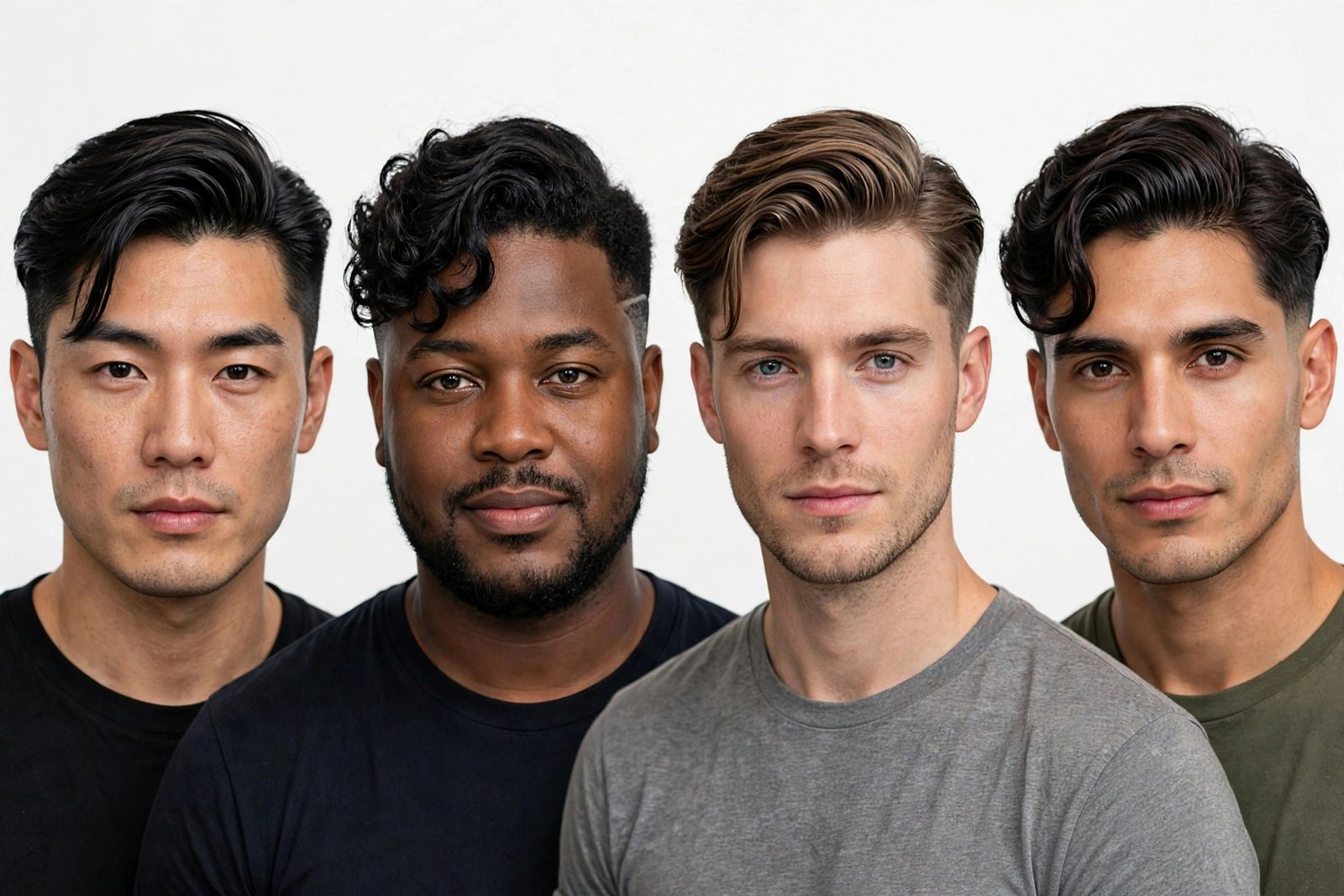
The contrast in this cut does real work on face shape — but only if the proportions point the right way.
Oval faces take the full menu. The classic side swept undercut (style 1) is the default recommendation for a reason — balanced proportions, nothing to correct. If you want more edge, go skin fade (style 2) or add a design (style 13).
Round faces need height on top and tightness on the sides — which is exactly what an undercut delivers, so this is one of the best cuts for round faces. Keep the sweep voluminous rather than flat, and keep the sides genuinely short. Avoid the grown-out version (style 14) — soft sides add width where you do not want it.
Square faces have strong jawlines that pair well with the undercut’s sharpness, but soften the top slightly — the textured side sweep (style 3) or wavy version (style 7) keeps the look from going too severe. A hard part (style 6) on a square face can look extremely sharp; great if that is the goal, too much if it is not.
Oblong faces should be careful with height. The sweep adds volume up top, which lengthens an already long face. Counter it: keep the top at moderate length, sweep it lower and flatter rather than lifted, and let the sides grow slightly fuller (the tapered soft undercut, style 4). Never combine an oblong face with a tall quiff-like sweep.
Heart-shaped faces benefit from the sweep’s width across the forehead — it balances a wider forehead against a narrower chin. The long sweep (style 5) adds volume where a heart face needs it. Pair with a beard (style 11) and the narrow chin fills out too — the undercut-beard combo is practically designed for heart faces.
Diamond faces want to avoid emphasizing cheekbone width. Keep the sides from going ultra-tight (a #2 or #3 rather than skin), and let the swept top add width at the forehead. The textured side sweep works well here because the broken-up surface softens angularity.
When in doubt, bring a straight-on photo of yourself to the barber along with your style reference photos, and ask: “which of these works with my face shape?” A good barber answers instantly — and if they cannot, find a better barber before you commit to a disconnect.
Products for the Side Swept Undercut: What to Buy
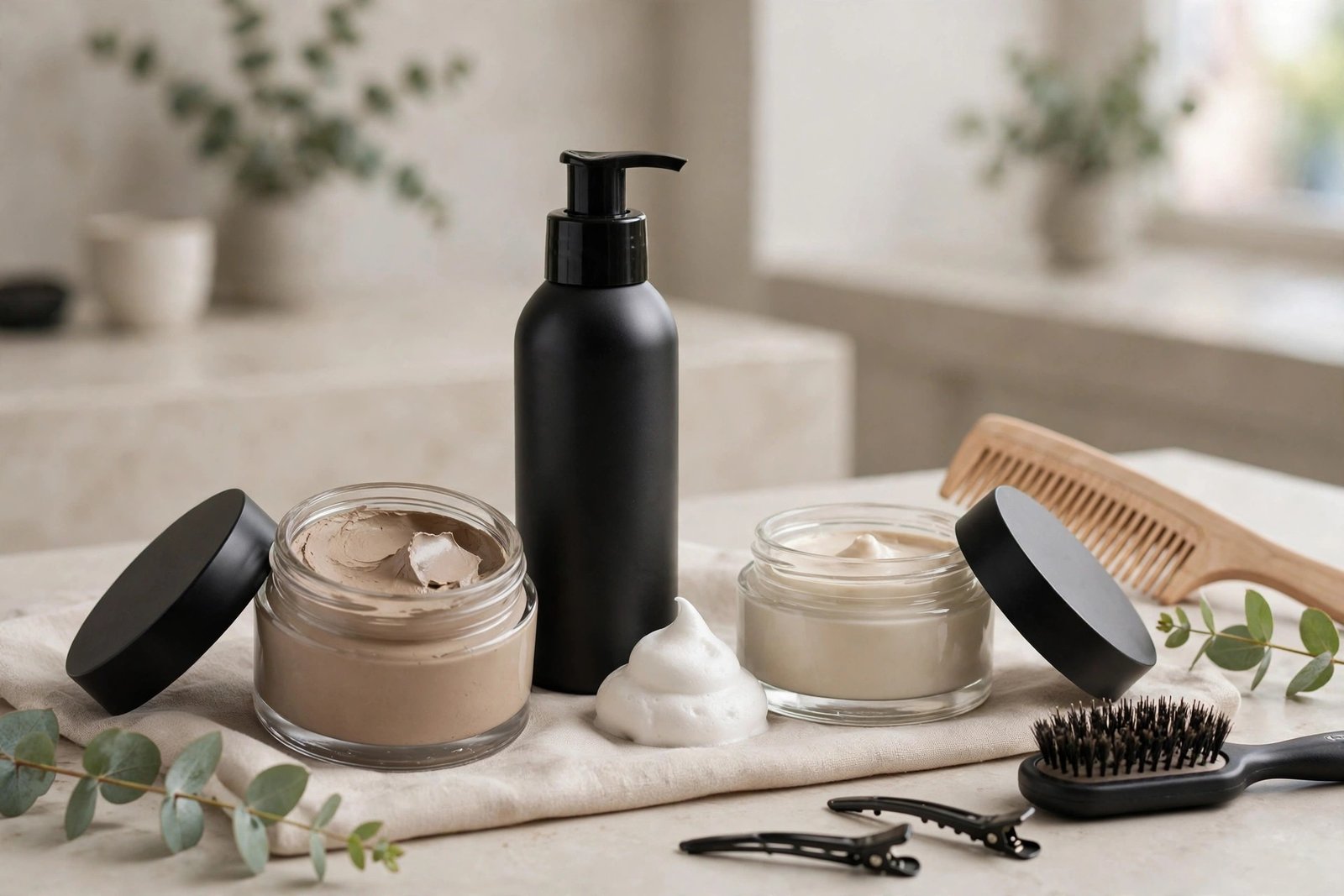
Four products cover every version of this cut. Buy for your hair type, not for the prettiest packaging.
Matte clay. The default finisher for the modern side swept undercut. Strong hold, no shine, keeps the sweep in place all day. Best for medium to thick hair. Warm it completely between your palms before applying, work it through in the sweep direction, and use less than you think — clay buildup is the number one cause of the dreaded midday collapse.
Styling cream. Lighter hold, natural finish, touchable hair. The right choice for fine hair, wavy hair, and anyone who wants the sweep to move. Creams also restyle well — damp hands and a quick reshape revive the sweep without adding more product.
Medium-shine pomade. For the slicked side sweep (style 8) and formal occasions. Gives control plus a classic sheen. Water-based pomades wash out easily; oil-based ones hold stronger but need proper shampooing to remove. Do not use pomade for the textured matte versions — shine and texture fight each other.
Volumizing mousse or salt spray (pre-styler). Applied to damp hair before blow drying, this is what gives the sweep its memory and lift. Fine-haired guys: this is not optional for you. Even thick-haired guys benefit — the sweep stays up longer with a pre-styler underneath.
Skip: high-hold gels (they make the sweep crunchy and dated), heavy waxes on fine hair, and “wet look” anything unless you are deliberately doing the slicked version. And wash properly — clay and pomade build up. A clarifying shampoo once a week, regular shampoo otherwise. Product buildup is silent: your sweep slowly stops holding and you blame the cut, when the real problem is three weeks of clay residue.
Maintenance: Keeping the Contrast Sharp
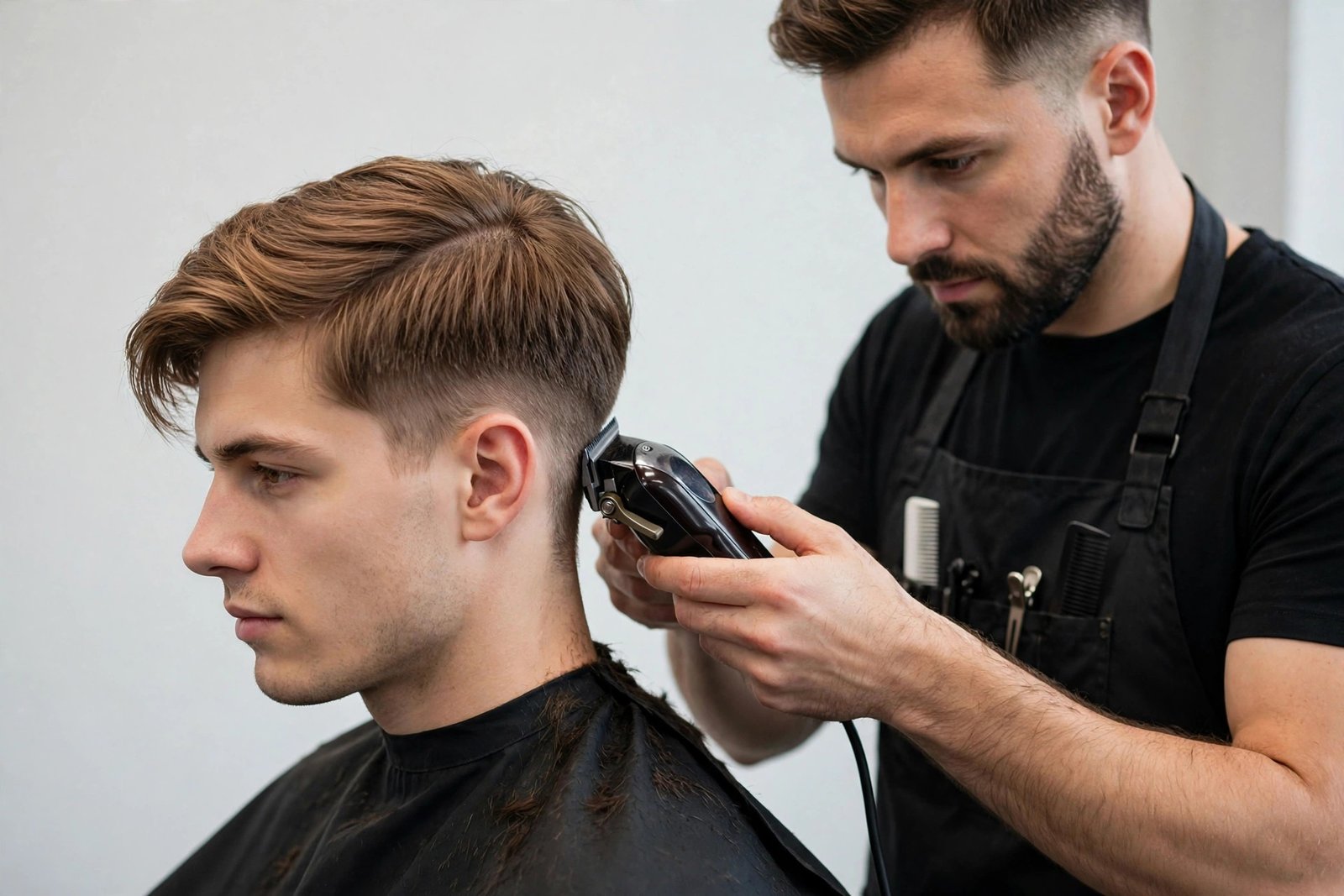
An undercut is a high-contrast cut, and contrast fades as hair grows. The maintenance schedule is the price of the look — here it is, honestly.
Sides every 2–3 weeks. This is non-negotiable for disconnected and faded versions. At three weeks the sides have grown enough to blur the disconnect line, and the whole cut loses its identity. Book the side touch-up as a quick in-between appointment — many barbers do it cheaper and faster than a full cut. The tapered soft undercut (style 4) is the exception; it can stretch to four weeks.
Top trim every 6–8 weeks. The top grows slower in visual impact, but split ends and grown-out texture still need attention. Ask for “clean up the ends and refresh the texture, keep the length and the sweep direction.” Do not let a rushed barber take length off the top without asking — regrowing sweep length takes months.
Wash 2–3 times a week. Daily washing strips the oils that help the sweep hold. Rinse with water on off days; use dry shampoo at the roots if the scalp gets oily. Shampoo the scalp, let the rinse handle the lengths.
Condition the top. Four to seven inches of hair takes abuse from daily blow drying. Conditioner on the top every wash, and a heat protectant spray before the dryer if you blow dry daily. Fried ends do not sweep — they frizz and flick in random directions.
Night routine for the sweep. Sleeping on it flat trains the hair away from the sweep direction over time. A satin pillowcase reduces friction, and longer tops benefit from loosely sweeping the hair in its direction before sleep. In the morning, the reactivation trick — damp hands, sweep direction, thirty seconds of dryer — beats a full restyle.
Watch the neckline. The undercut’s short back grows into a fuzzy neckline fast. Clean it up between appointments — either have the barber do it during the side touch-up or carefully trim it yourself with clippers and a mirror. A clean neckline is the difference between “sharp undercut” and “needs a haircut.”
Mistakes That Ruin a Side Swept Undercut

Most bad undercuts are not bad cuts — they are good cuts sabotaged afterward. Avoid these.
Letting the sides grow out. The number one killer. At four weeks without a touch-up, the disconnect is gone and you just have “longish top, medium sides” — a haircut with no identity. If you cannot commit to the touch-up schedule, get the tapered soft version that forgives growth.
Wrong product for the finish. Matte clay on a slicked formal sweep looks dusty; shiny pomade on a textured matte sweep looks greasy and confused. Match the product to the version you are wearing that day. When in doubt, matte is the 2026 default.
Skipping the blow dry. The sweep’s direction and volume come from the dryer, not the product. Product on air-dried hair gives you a sweep that surrenders by noon. Two minutes with the dryer in the sweep direction changes everything — this is the step lazy stylers skip and then blame the cut for.
Sweeping against your growth pattern. Everyone has a natural crown and growth direction. If your hair naturally falls to the left and you force a right sweep, you will fight it every morning. Work with the grain — part and sweep in the direction your hair wants to go. Show your barber which way it falls naturally before they cut.
Too much product. Undercut tops are long, and long hair plus heavy product equals flat, separated strands that show scalp. Start with a fingertip amount. The sweep should move when you shake your head — if it does not move at all, you have used too much.
Ignoring the disconnect line. Stray long hairs from the top hanging over the short sides blur the contrast that defines the cut. After styling, check the line in the mirror and tuck strays back into the top. Thirty seconds, big difference.
Getting the disconnect too high. If the barber takes the short sides too far up the head, the top looks like a small island and the proportions go wrong — especially on narrower heads. The disconnect should sit at or just above the parietal ridge, not halfway up the crown. Speak up in the chair if the clippers are climbing too high.
Side Swept Undercut: FAQ
How long does the top need to be for a side swept undercut?
Four inches is the practical minimum for a real sweep — shorter than that and the hair cannot travel across the head. Five to six inches is the sweet spot most barbers recommend. Seven plus inches gives the dramatic long sweep but needs daily blow drying and conditioning. If your top is currently short, expect three to four months of growing with trims every six to eight weeks to keep the shape while it grows.
What’s the difference between an undercut and a fade with a side part?
The transition. A fade blends gradually from short to long with no visible line. An undercut disconnects — the length changes abruptly at a visible line around the parietal ridge. That hard contrast is the whole identity of the undercut. A “soft undercut” or tapered version sits between the two: shorter sides with a quick but not razor-sharp transition. If you show your barber a photo, they will know which one you mean — but say the word “disconnected” out loud so there is no guessing.
Can I wear a side swept undercut to the office?
Yes — it is one of the more office-friendly statement cuts. The tapered soft undercut (style 4) and the classic neat sweep (style 1) read professional in almost any workplace. Keep the sides at a #2 or longer rather than skin, keep the sweep controlled rather than wild, and skip the shaved designs. In conservative industries (law, finance), the slicked side sweep with medium-shine pomade looks deliberately groomed rather than trendy.
How often do I need to get the sides redone?
Every two to three weeks for disconnected and skin-fade versions — that is what keeps the contrast sharp. Many barbers offer a quick discounted “sides only” touch-up between full cuts; ask yours. The tapered soft undercut stretches to three to four weeks. The top needs a proper trim every six to eight weeks. Budget for this before you commit — an undercut you cannot maintain looks worse than a simpler cut you can.
Will a side swept undercut suit me if my hair is thinning?
It can, with caveats. Keep the top at three to four inches with texture rather than a long slicked sweep, use thickening powder at the part, and prefer the tapered soft version over the hard disconnect — extreme contrast next to thinning hair draws attention to the thinness. The sweep direction can also help: sweeping across a thinning crown covers more scalp than sweeping away from it. Be upfront with your barber so they cut for coverage.
How do I grow out a side swept undercut without an awkward phase?
Grow the sides first while keeping the top trimmed — this closes the disconnect gradually. Get the sides tapered (not just grown wild) every three to four weeks so the transition softens in a controlled way. Once the sides reach a #4 or #5, you can transition into a classic taper cut or keep growing toward medium length. The whole grow-out takes about three to four months. Resist the urge to cut the top short in frustration halfway through — that just restarts the clock.
Conclusion: Sharp Sides, Easy Mornings
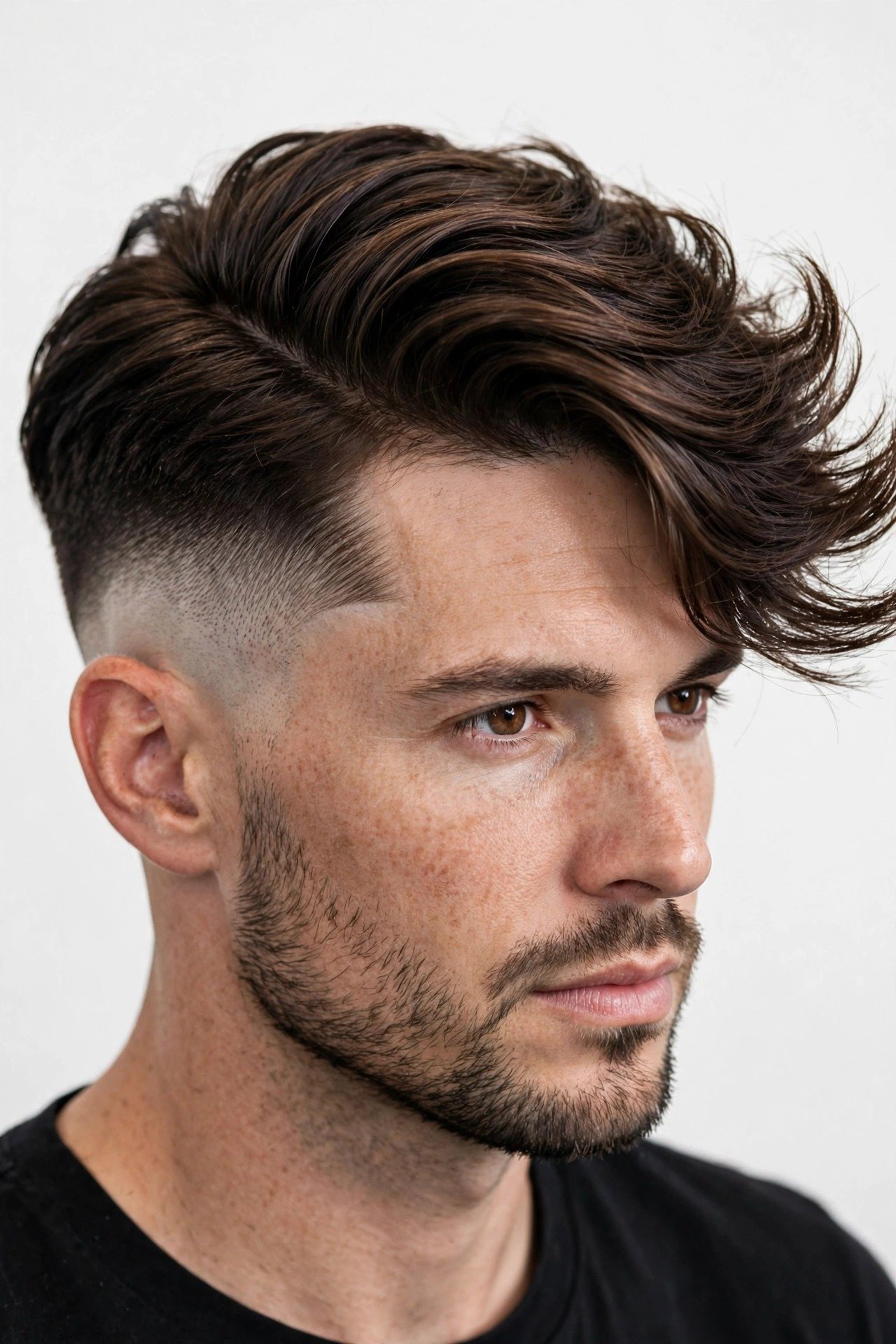
The side swept undercut earns its place in 2026 because it asks so little and gives so much: two to three weeks of sharp contrast per touch-up, five minutes of styling per morning, and a look that works from the office to the weekend without changing anything. Pick the version that matches your hair type and your maintenance honesty — the classic sweep if you want timeless, the textured sweep if you want this year’s edge, the tapered soft undercut if you want low commitment. Bring reference photos, say the word “disconnected” (or “soft” if that is what you want), and learn the blow-dry direction trick. Do that, and the mirror gives you the same sharp result every day with almost no thought. That is the whole promise of the cut — and it delivers.