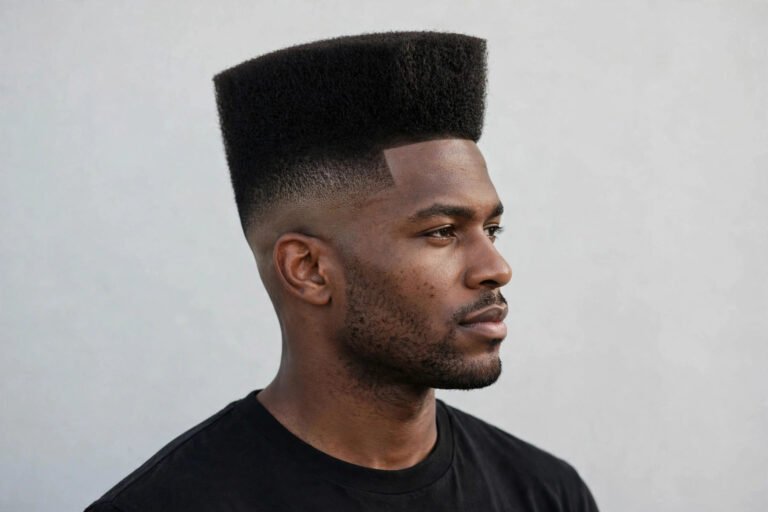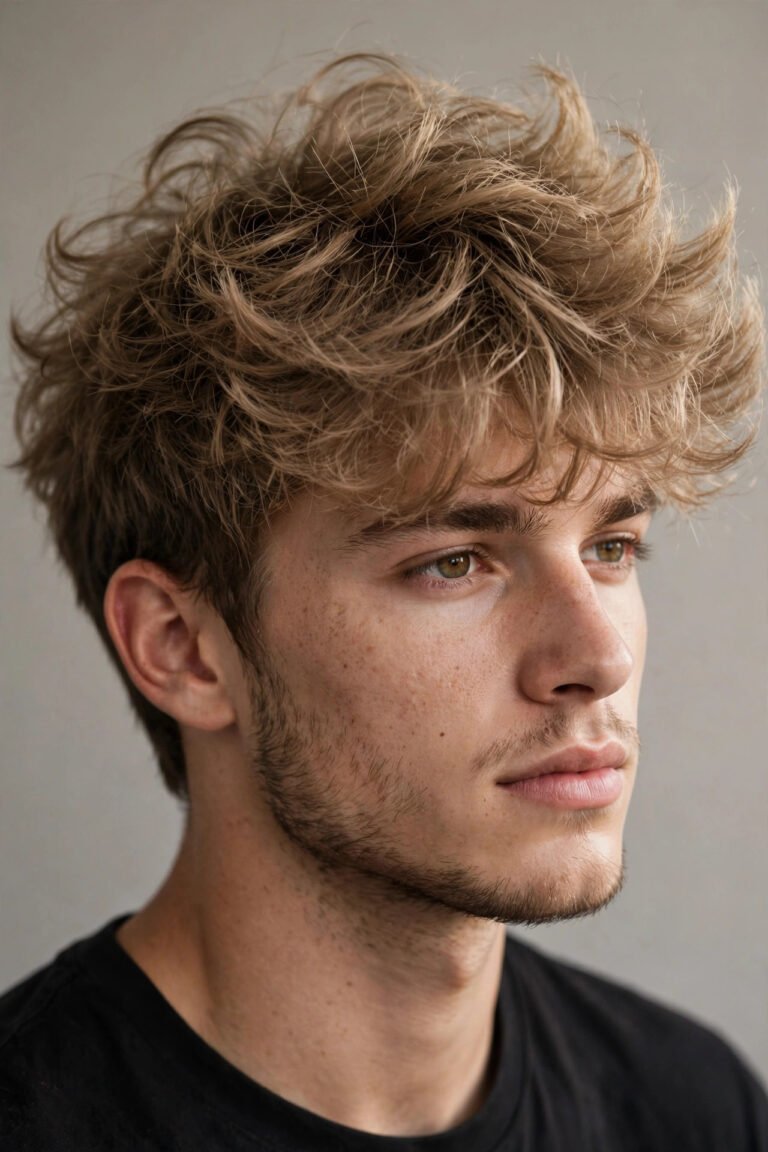
Prom Hairstyles for Men 2026: 15 Looks That Win the Night
Prom Hairstyles Men 2026: Win the Night With Your Hair
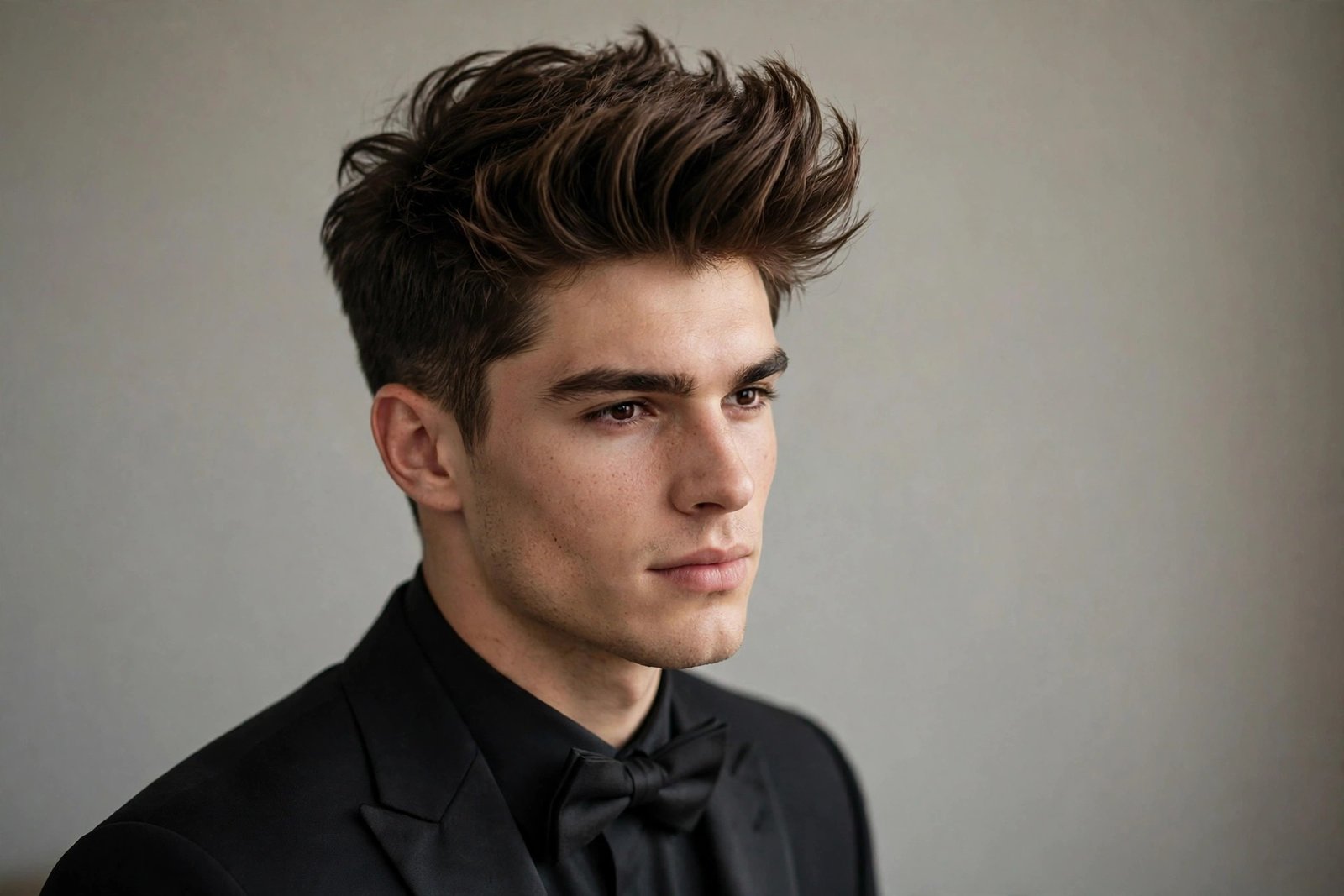
Let’s be honest about prom: your date will remember the night, your friends will remember the photos, and the photos will live on your Instagram for roughly forever. In every single one of those photos, your hair is front and center. Prom hairstyles for men aren’t just about looking clean in the mirror before you leave the house — they’re about looking clean in photo number forty-seven, at 11:30 PM, after three hours of dancing under gym lights that show absolutely no mercy.
Most guys treat prom hair as an afterthought. They rent the tux, they shine the shoes, they buy the corsage, and then on the afternoon of prom they Google “nice haircut men” in a panic and show up at the barbershop hoping for a miracle. Here’s the thing: a great prom hairstyle is 70% planning and 30% product. The cut happens a week or two before prom. The styling routine gets tested on a regular Friday night first. The product gets bought in advance, not grabbed from your little brother’s bathroom shelf at 6 PM.
This guide gives you 15 prom hairstyles men actually wear in 2026 — not runway experiments, not hairstyles that require a film crew, but real looks that survive dancing, heat, sweat, photos, and the slow dance. Each one comes with who it suits, exactly what to say to your barber, a step-by-step styling routine for prom night, the products that hold it, and the honest downsides nobody else will tell you. Some of these are timeless. Some are riding the biggest men’s hair trends of 2026. All of them photograph well, because that’s the real test.
One more thing before we start: the best prom hairstyle is the one that looks like you on your best day — not like a stranger. If you normally wear your hair messy and textured, don’t show up to prom with a helmet of gel. The goal is the sharpest version of your hair, not someone else’s. Pick the style that fits your hair type, your face, and your suit, then commit to it early enough to grow into it.
Table of Contents
- Prom Hairstyles Men 2026: Win the Night With Your Hair
- 15 Prom Hairstyles Men Are Wearing in 2026
- Prom-Night Styling Routine & Dance-Floor Survival
- Prom Hairstyles Men: Frequently Asked Questions
- Conclusion
Why Your Prom Hair Matters More Than You Think
Think about the last wedding or formal event photos you saw. What did you notice first? The suits blur together — dark jacket, white shirt, everyone dressed by the same unspoken rulebook. What stands out is the hair. Great hair is what separates “he cleaned up nice” from “who IS that guy.” And at prom, that difference gets multiplied across group photos, couple photos, the photo booth, and the candids your friends will post for years.
There’s also a confidence loop at work, and it starts about twenty minutes into the night. When you know your hair looks good, you stop checking it. You stop finding mirrors. You dance bigger, you laugh easier, you actually talk to people instead of patting the back of your head every nine minutes. Guys with bad prom hair spend the whole night managing it. Guys with good prom hair forget about it completely — which is the whole point. Your hair’s job on prom night is to hold up so well that you never think about it once.
And let’s talk about the photos, because they’re the real legacy here. Prom photos get printed, framed, posted, and dug up at reunions. Phone cameras in 2026 are brutally honest — high resolution, sharp flash, zero forgiveness for frizz, flat spots, or that weird dent where your hat was. A hairstyle with texture, shine control, and solid hold photographs like a different person than hair that fell apart by dinner. This is not vanity. It’s logistics. Plan for the camera the same way you plan for the dance floor. Among all the prom hairstyles men consider, the ones that win are chosen with the camera in mind, not just the mirror.
Matching Your Hairstyle to Your Suit and Face Shape
Your hair doesn’t exist in a vacuum — it sits right above your suit, your collar, and your date’s shoulder in every photo. The sharpest prom looks coordinate all three. A classic black tux with a peak lapel pairs beautifully with timeless hair: slick-backs, sharp side parts, the old money haircut family. These combinations read as one intentional outfit. A modern slim suit or something with texture — velvet blazer, patterned jacket — can handle more adventurous hair: textured crops, curtain fringe, defined curls. The wilder the suit, the more your hair needs to either match its energy or calm it down.
Face shape is the other half of the equation, and barbers will tell you this matters more than trends. Round faces need height on top and tightness on the sides — volume up top visually lengthens the face. Oblong or long faces need the opposite: controlled height, some width at the sides, fringe or texture across the forehead to break up the length. Square faces look incredible with softness — textured, slightly tousled styles that take the edge off a strong jawline. Oval faces can wear almost anything, which is both a blessing and a curse, because “anything” includes the bad decisions. If you don’t know your face shape, look straight into a mirror, trace your reflection with a dry-erase marker, and see which shape shows up. It takes thirty seconds and it changes every haircut decision you make afterward.
Hair type is the final filter. Straight hair holds sleek styles beautifully but fights volume. Wavy hair is the prom-night jackpot — natural texture that photographs with depth and movement. Curly and coily hair brings built-in presence; the game there is definition and shape, not taming. Thin or fine hair needs strategic cuts that create the illusion of density. Whatever your hair does naturally, the 2026 approach is to work with it rather than against it. Fighting your texture on prom night — with heat, with product, with prayer — is how you end up with hair that surrenders by 9 PM.
The Prom-Night Barber Timeline (Don’t Skip This)
Here’s the schedule that separates great prom hair from panicked prom hair. Three to four weeks before prom: get your baseline cut if your hair is long or shapeless. Tell the barber you’re growing toward a prom style and ask what length you need on top. Ten to fourteen days before prom: this is the money appointment. Get the actual prom cut. Hair always looks its best about a week after a cut — the edges soften, the shape settles, and it stops looking “freshly cut” in photos. Two to three days before prom: if anything needs a tiny cleanup — neckline, around the ears — go back for a touch-up only, not a full cut. Prom day: do not get a haircut. I repeat: do not get a haircut on prom day. You will look like you just got a haircut in every photo, and not in a good way.
Test your styling routine at least once before prom night. Pick a normal weekend evening, style your hair exactly the way you plan to, and see how it holds for four hours. Does it survive heat? Does it survive you running your hands through it (you will)? Does it look good in phone photos under bad lighting? This dry run tells you whether your product amount, your technique, or your whole plan needs adjusting — while there’s still time to fix it. The guys who test once always look better than the guys who style it for the first time at 6 PM with a corsage waiting downstairs.
Finally: buy your products early. Whatever the routine calls for — pomade, clay, sea salt spray, heat protectant — get it a week ahead and practice with it. Every product has a learning curve. Pomade applied to dry hair behaves nothing like pomade applied to damp hair. Clay needs warm hands. Sea salt spray needs damp hair and scrunching. Learning this on prom night, with the clock ticking, is how hair disasters happen. A week of practice turns product into muscle memory.
15 Prom Hairstyles Men Are Wearing in 2026
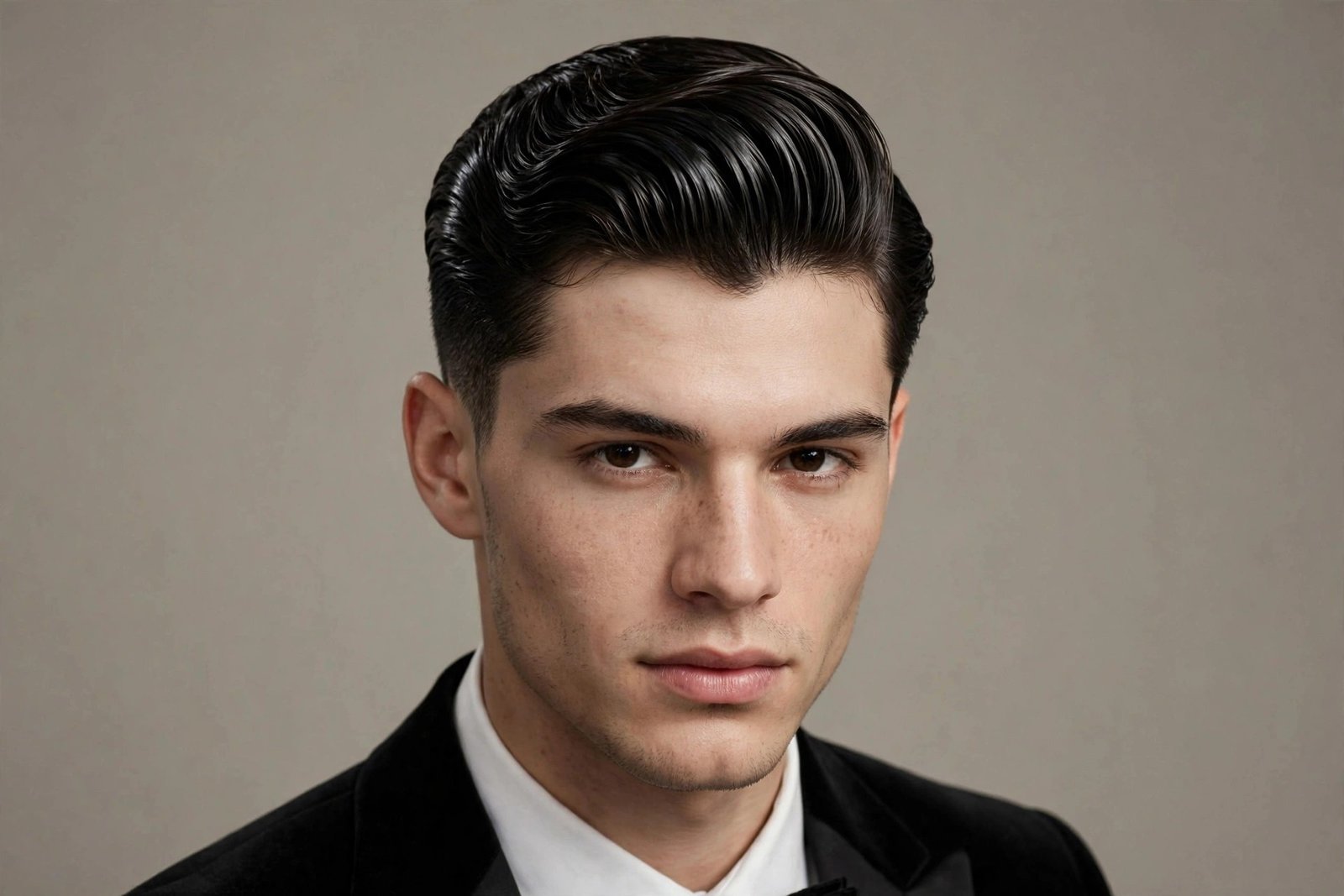
Every one of these prom hairstyles men can actually wear in 2026 is a real prom-night option — dance-tested in concept, photo-ready by design. Each includes who it suits, your exact barber script, the prom-night styling routine, products, maintenance, and the honest downside. Pick one, commit early, and test-drive it before the big night.
1. The Classic Slick-Back
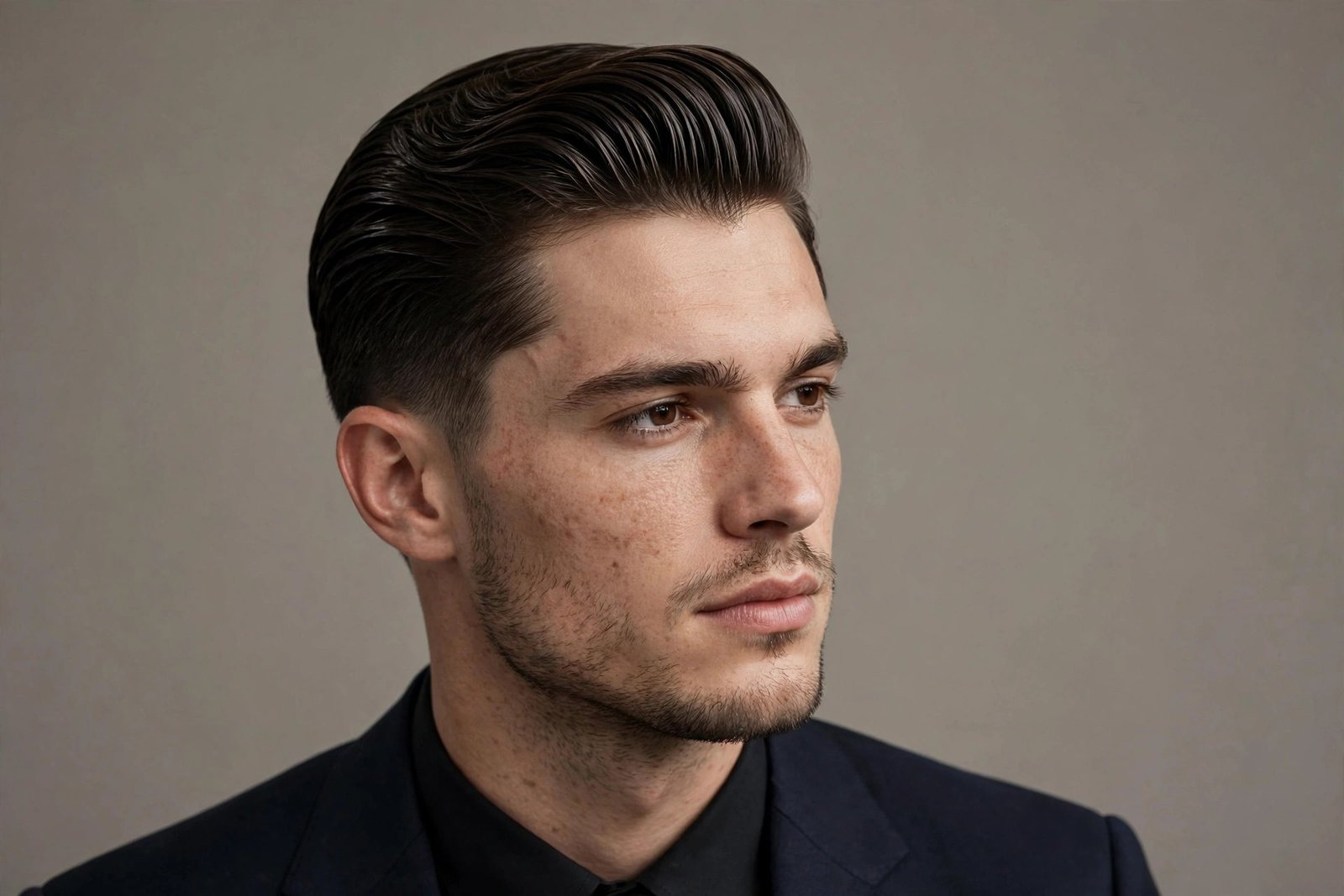
The slick-back is the tuxedo of hairstyles — it never goes out of style, it works with everything, and it makes everyone look like they own the room. Hair swept straight back off the forehead with controlled shine and clean sides. In 2026, the modern version keeps texture on top instead of the flat, wet-helmet look of decades past. It photographs like a dream because there are no flyaways for the camera flash to find.
Who it suits: Straight to wavy hair, medium length on top (3–5 inches). Excellent for square and oval faces; guys with strong jawlines look particularly sharp. Works beautifully if you have a good hairline — it puts the forehead on display, so a receding hairline is the one thing that argues against this pick.
Barber script: “Slick-back: 4 inches on top, scissor-cut with light layers for movement, tapered sides that blend into the top — no hard disconnect. I wear it swept back. Keep the top long enough to stay back without fighting me.”
Prom-night styling (10 minutes): Towel-dry to damp. Work a coin-sized amount of pomade through from roots to ends, evenly — most slick-back failures are just uneven product. Comb straight back with a fine-tooth comb, then use your fingers to add a little lift at the front so it doesn’t look pasted down. If your hair fights the direction, blow-dry it back first on medium heat, then add pomade. The blow-dryer trains the direction; the pomade holds it.
Products: medium-hold pomade with a natural-to-satin shine (water-based so it washes out). Maintenance: trim every 3–4 weeks to keep the shape; this style grows out awkwardly, with the top flopping over the tapered sides.
Honest downside: sweat is the enemy. A slick-back on a humid dance floor can migrate from “polished” to “greasy” if you over-apply product or skip the blow-dry. The fix is a strong blow-dry foundation and medium hold, not extra pomade. Also, you’ll touch it — train yourself not to. Every hand through a slick-back leaves a dent. For more on this family, see the slick-back undercut guide.
Pro tips & variations: The 2026 update is texture: ask the barber to point-cut the ends so the top has separation instead of one solid sheet. For extra staying power on thick hair, layer a light mousse at the roots before the pomade — mousse gives the structure, pomade gives the finish. Variation: a looser, finger-styled slick-back with matte clay reads more modern and less formal; the combed, satin-finish version reads classic. If your hair is wavy, let the wave show through slightly — a slick-back with a hint of wave looks expensive, not messy.
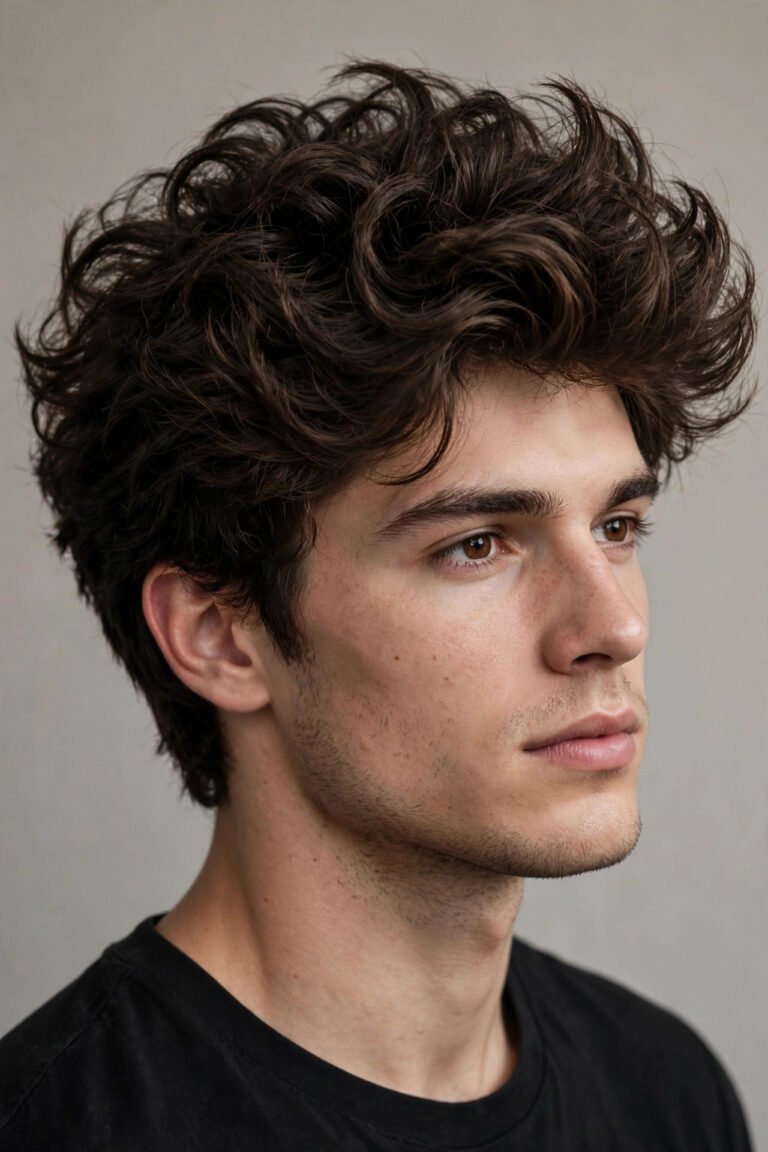
2. The Textured Quiff
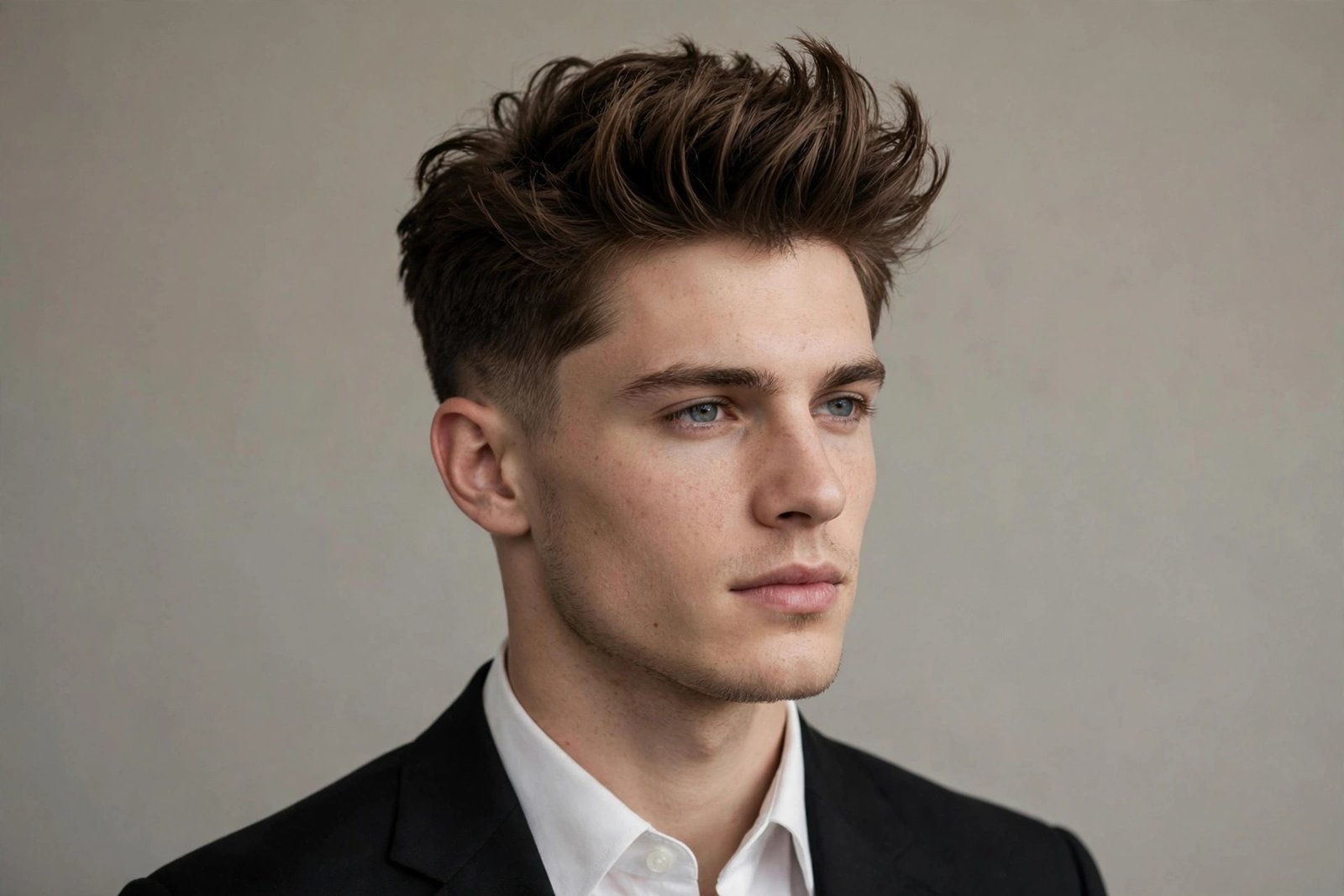
The quiff is prom royalty for a reason: height at the front, texture through the top, clean sides — it’s the hairstyle equivalent of walking in and not having to say anything. The front sweeps up and back, giving you vertical presence in photos (height photographs as confidence), while the texture keeps it from looking stiff. In 2026 the quiff has gone deliberately imperfect — a little separation, a little movement, none of the helmet-stiff 2010s version.
Who it suits: The quiff loves round faces most — the height on top visually lengthens everything. Needs 3–4 inches on top minimum; straight and wavy hair get there easiest, but curly hair makes a phenomenal quiff with the right cut. Thin hair can work if the cut builds in texture, though very fine hair may need product help to hold the lift.
Barber script: “Textured quiff: 3.5 to 4 inches on top, shortest at the crown graduating longer toward the front, heavy texture through the top, faded or tapered sides. I style it up and back. Leave enough length in front for real height.”
Prom-night styling (12 minutes): This one needs the blow-dryer — no shortcuts. Apply a golf-ball of mousse or a heat-protectant volumizer to damp hair. Blow-dry the front up and back using your fingers or a vented brush, over-directing it (dry it further back than you want it to sit — it relaxes). Once dry and lifted, warm a fingertip of matte clay between your palms and pinch it through the front and top for separation. Set with a light mist of hairspray from 12 inches away.
Products: volumizing mousse or pre-styler, matte clay, light-hold hairspray. Maintenance: trim every 3–4 weeks; the quiff’s architecture collapses as the sides grow out.
Honest downside: it’s the highest-maintenance style on this list on the night itself. Height + heat + dancing = gravity’s favorite victim. The blow-dry foundation is non-negotiable — product alone won’t hold a quiff for four hours. And wind between the car and the venue is a genuine threat; bring a travel hairspray. The payoff is worth it, but go in with eyes open. The messy quiff family has more texture-forward variations if you like this silhouette.
Pro tips & variations: Test the blow-dry direction a week before — some hair wants to go up-and-back, some wants up-and-slightly-sideways, and fighting your growth pattern all night is miserable. Variation: the “broken quiff” where the front falls slightly forward and to the side is the most 2026 version and photographs with more personality. If your hair is thick, ask for interior weight removal so the quiff doesn’t turn into a wall. Thin hair? A little texture powder at the roots before the clay gives grip that fine hair desperately needs.
3. The Sharp Side Part
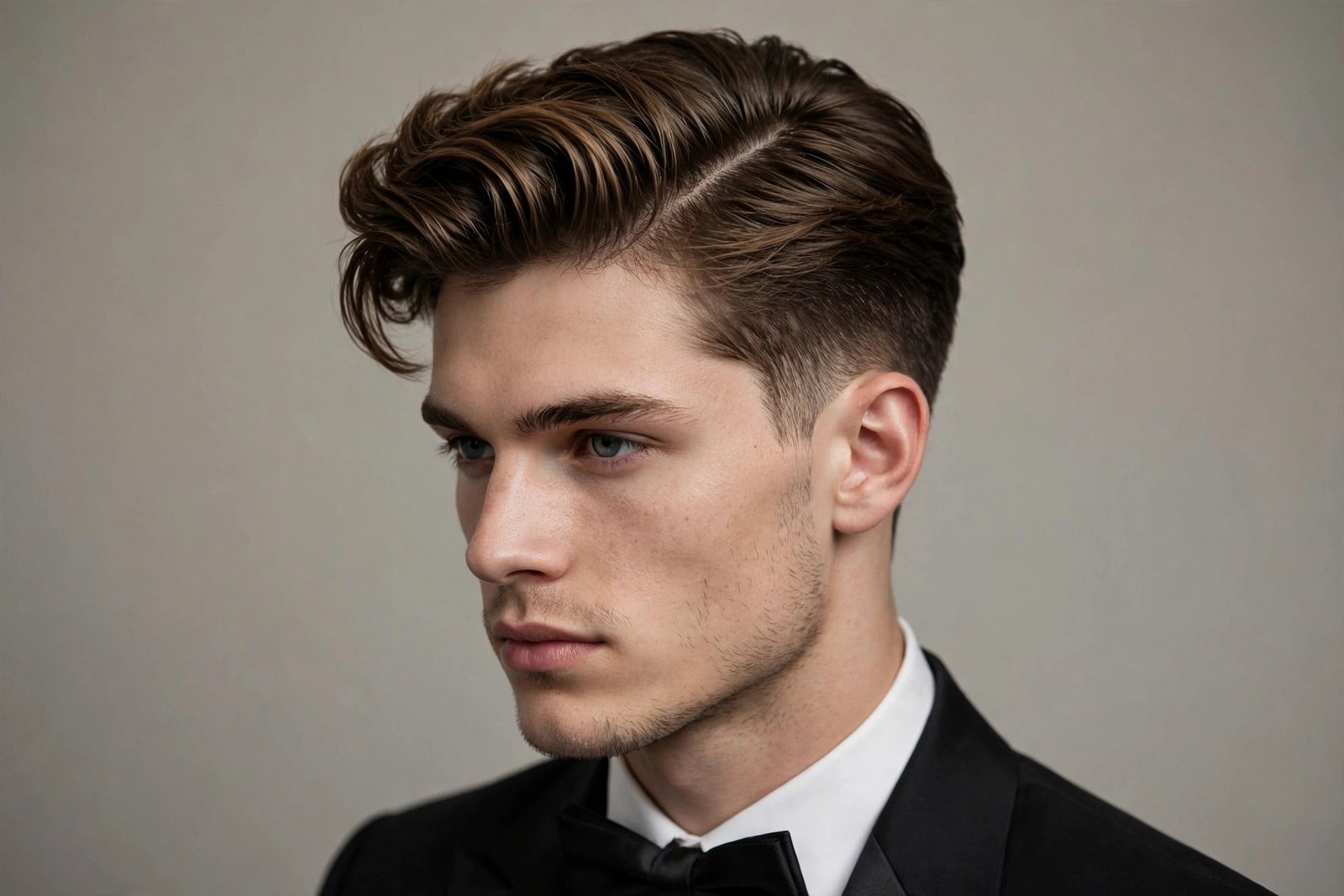
There’s a reason the side part has survived a century of trends: it’s the most universally flattering formal hairstyle ever designed. A clean part, hair swept to the side with controlled volume, neat sides — it reads as polished, intentional, and quietly confident. It won’t win “most adventurous,” but it will never look wrong in a photo, and on prom night “never wrong” is underrated. The 2026 version keeps the top textured rather than shellacked, so it moves naturally instead of sitting like a lid.
Who it suits: Nearly everyone — this is the safest pick on the list. Particularly great for guys with cowlicks (the part can work around them), straight to wavy hair, and anyone whose date’s family will be at the photos. Oblong faces should keep the top’s height modest; round faces can push a little more volume into it.
Barber script: “Classic side part: 3 inches on top with texture, scissor-tapered sides, natural part on my [left/right — know which side your hair naturally parts]. Enough length on top to sweep over, not so much it flops.”
Prom-night styling (8 minutes): Find your natural part while hair is damp — it parts where it wants to, and fighting that is pointless. Apply pomade or cream to damp hair, comb the part in with a fine-tooth comb, sweep the top over and slightly back. Blow-dry along the direction of the sweep for staying power, then a final pass with the comb. A tiny drop of product on the sides keeps them lying flat.
Products: light-to-medium hold pomade or styling cream, fine-tooth comb. Maintenance: easy grow-out; trim every 4–5 weeks.
Honest downside: it can read as “safe” — if your whole personality is adventurous and your suit is bold, a conservative side part might feel like a mismatch. It also shows scalp more than textured styles if your hair is thinning on top; the part line draws the eye. But for reliability across a six-hour night, almost nothing beats it. The deep-dive side part guide covers every variation.
Pro tips & variations: The part’s position changes everything: a part closer to the side reads classic and conservative; one drifting toward the middle reads modern. Try both in the mirror a week before. Variation: the side part with a low taper fade on the sides is the 2026 sweet spot — classic on top, current on the sides. For extra hold without stiffness, mist hairspray onto the comb (not directly onto hair) and run it through — you get hold exactly where the comb goes, nowhere else.
4. The Modern Pompadour
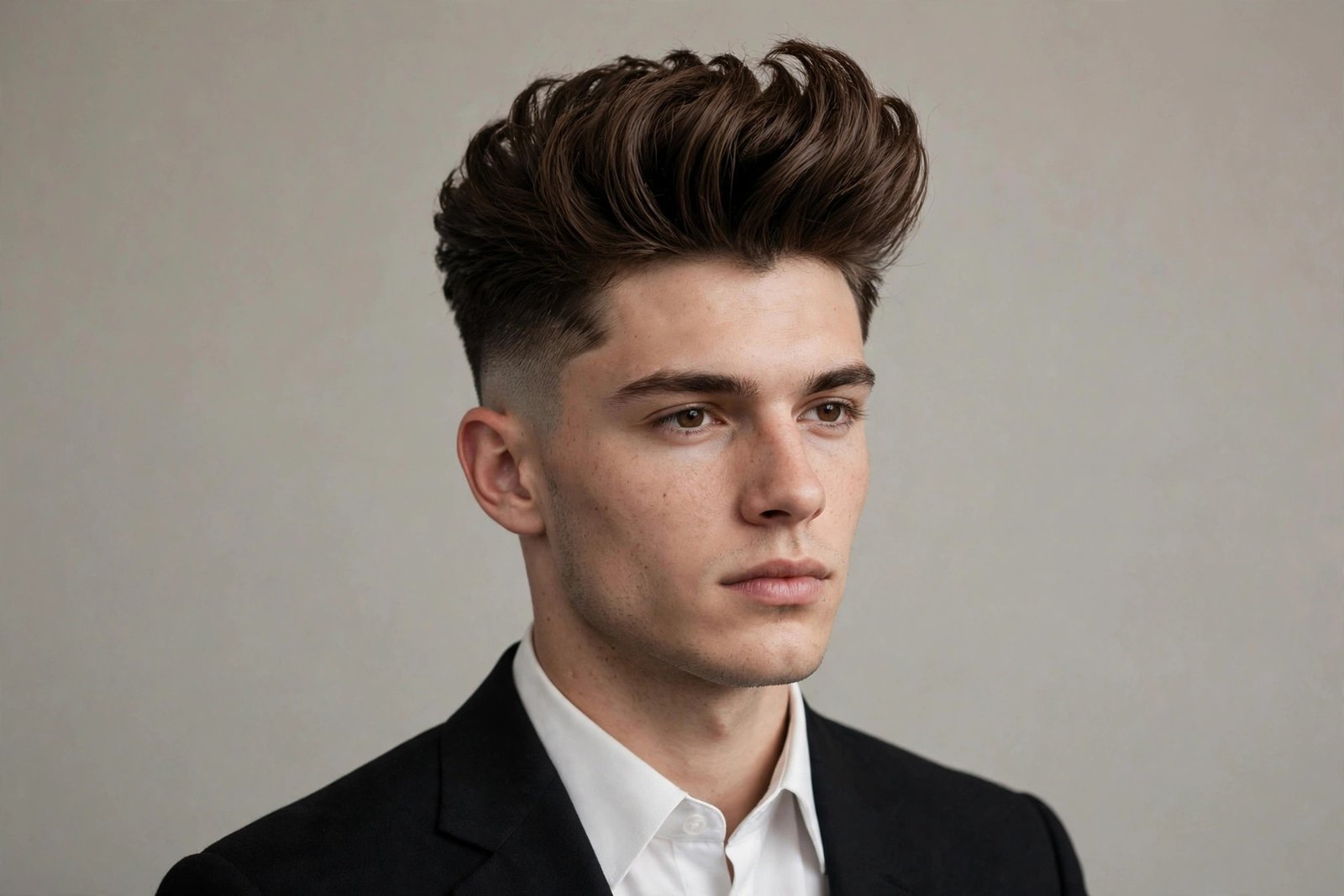
The pompadour is the showstopper of this list — serious height, serious presence, serious commitment. Hair swept up and back into a voluminous front, with the sides kept tight to emphasize the contrast. It’s the hairstyle that gets noticed from across the room, and on prom night that’s either exactly what you want or exactly what you don’t. The modern version (shorter sides, textured top, less grease) is far more wearable than the rockabilly original — this is red-carpet hair now, with a lineage going back centuries. The pompadour’s history is genuinely fascinating if you want the full story.
Who it suits: Needs length — 4–5 inches on top — and hair with enough density to build real volume. Round and square faces benefit most from the height. Straight and wavy hair build pomps most easily; curly hair can do it but needs serious length and patience. Not the pick for very fine hair unless you’re comfortable with product doing heavy lifting all night.
Barber script: “Modern pompadour: 4 to 5 inches on top, graduated shorter toward the crown, faded sides — mid or high fade. I style it up and back. Take weight out of the top so it doesn’t collapse, but leave me enough length to build height.”
Prom-night styling (15 minutes): The longest routine here, and it earns it. Mousse or volumizer on damp hair, roots to ends. Blow-dry the front straight up and back — use a round brush or vented brush, over-directing past where you want it to land. Work in sections: dry the front first (it needs the most heat), then the sides of the top. Once fully dry and standing, warm a strong-hold pomade or clay between palms and work it through from the front backward, shaping the height. Lock it with firm-hold hairspray, applied in two light layers rather than one heavy blast.
Products: volumizing mousse, strong-hold pomade or clay, firm-hold hairspray, round or vented brush. Maintenance: trim every 3 weeks — a pomp with grown-out sides loses its whole silhouette.
Honest downside: the commitment is real. Fifteen minutes of styling, a blow-dryer you must own and know how to use, and a style that demands touch-ups if the night gets wild. Humidity is a genuine threat — if your venue is outdoors or the gym’s AC is questionable, have a backup plan (a sleeker style you can convert to if the height surrenders). This is also the style most likely to make you “the guy with the big hair” in photos — own it or skip it.
Pro tips & variations: The foundation is everything: a pomp built on a proper blow-dry lasts hours; one built on product alone lasts until the first slow dance. Variation: the “short pomp” with 3 inches on top is more dance-proof and more 2026 — still reads as a pompadour, far less maintenance. If your hair is thick, thinning the interior (not the ends) is what keeps it from becoming a helmet. And practice the blow-dry twice before prom — the wrist motion of rolling the front up and back feels weird the first time and natural the second.
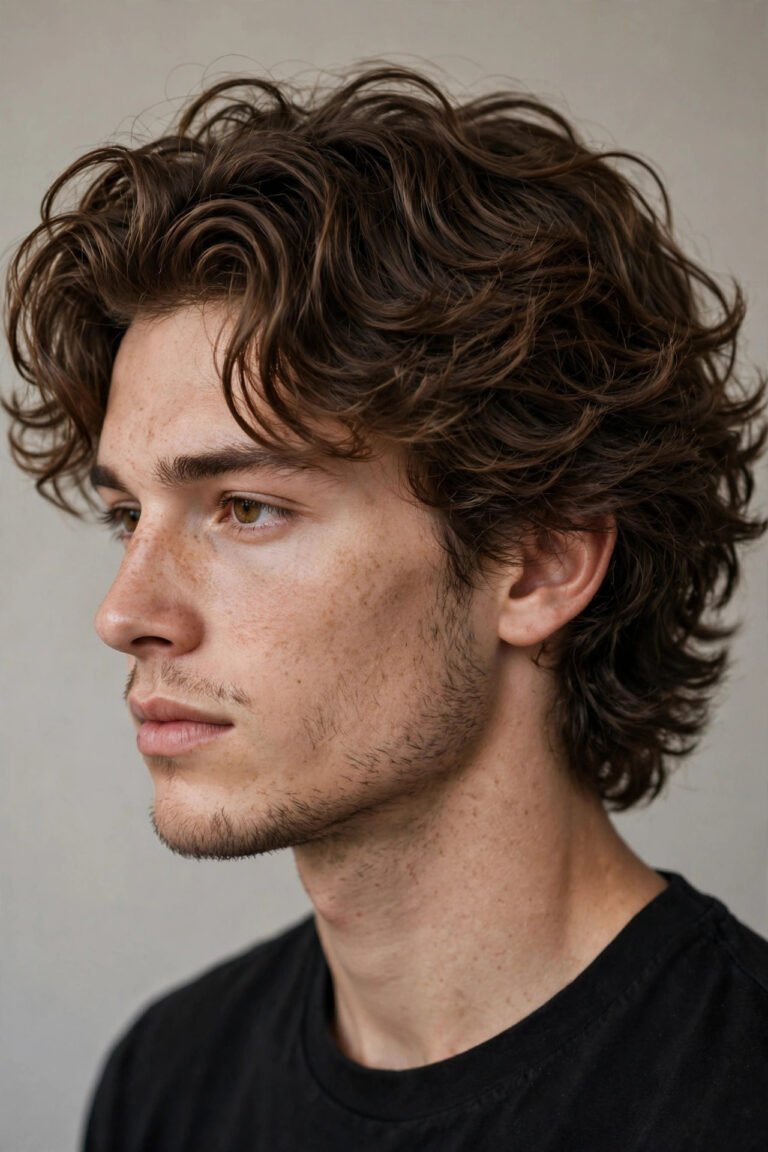
5. Curtain Fringe (Curtains)
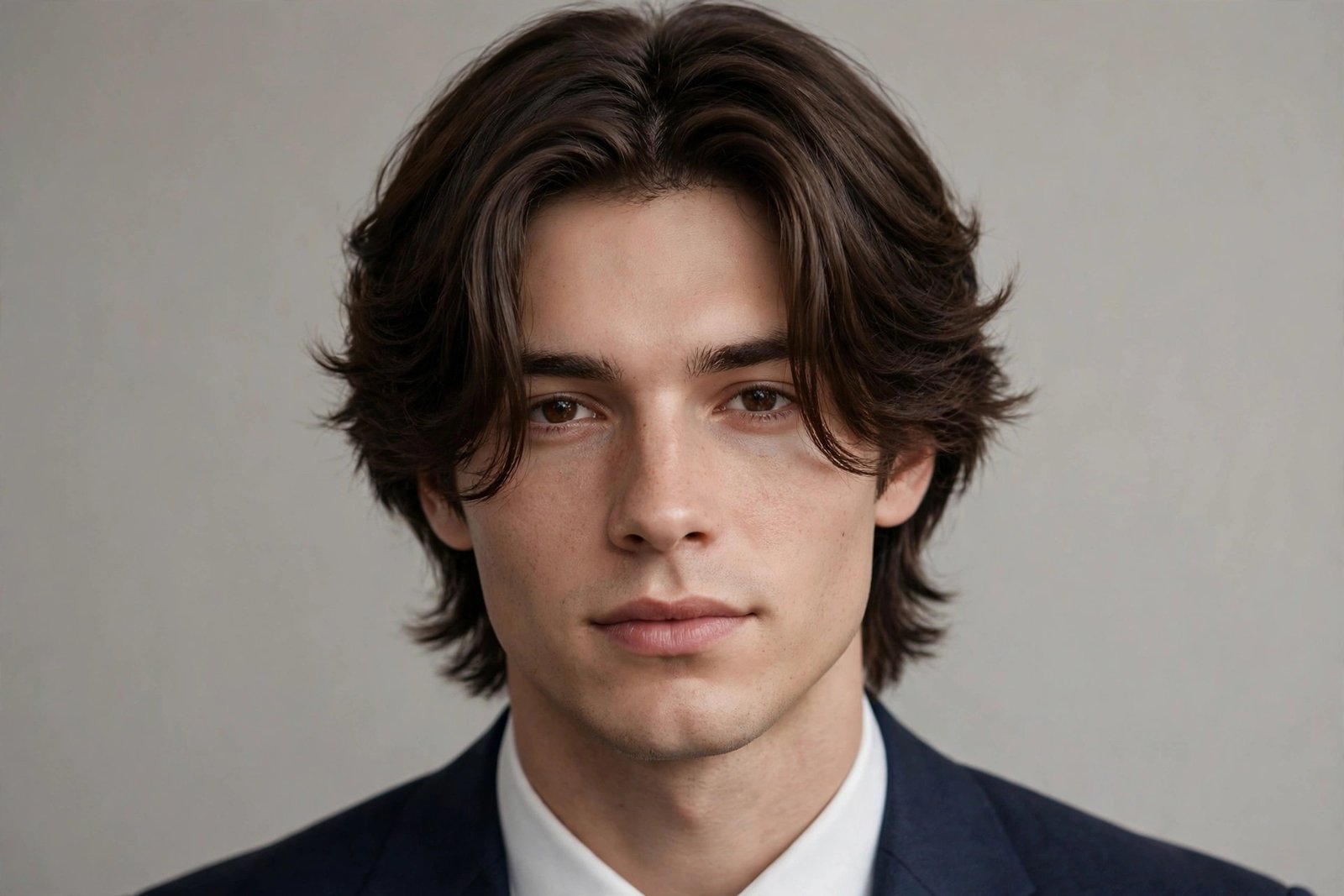
Curtains are the defining men’s hairstyle of the mid-2020s, and they hit prom perfectly: romantic, textured, photogenic from every angle, and just formal enough when styled clean. The middle-parted fringe frames the face in soft, flowing sections while the rest stays controlled. It has that effortless quality cameras love — movement, softness, dimension — while still reading as “I tried.” In 2026, curtains pair especially well with modern suits; the softness of the hair balances sharp tailoring beautifully.
Who it suits: The sweet spot is wavy to straight hair with 4–6 inches on top. Oval, oblong, and diamond faces are ideal — the fringe framing softens and balances. Square faces work too, as the softness contrasts a strong jaw nicely. Round faces should be careful: curtains add width at the cheeks, so keep the sides tight and the fringe pieces longer to draw the eye down.
Barber script: “Curtain fringe: 5 inches on top, middle part, face-framing layers starting at the cheekbones, textured ends, tapered sides that stay soft — no harsh fade. I wear it parted in the middle with the fringe falling naturally.”
Prom-night styling (10 minutes): Apply sea salt spray or light mousse to damp hair. Blow-dry with the part in place, directing each side’s fringe down and slightly outward so it frames the face — use your fingers, not a brush, to keep the texture. Once dry, a tiny amount of cream on just the ends of the fringe pieces keeps them defined without weighing them down. The back and sides should look neat; the fringe does the talking.
Products: sea salt spray or light mousse, small amount of styling cream. Maintenance: trim every 5–6 weeks; curtains grow out gracefully, which is part of their charm.
Honest downside: the middle part is a commitment in photos — it’s prominent, symmetrical, and unforgiving if the part wanders. Check it before photos. Also, curtains + wind = chaos; if you’re taking outdoor photos, bring product for touch-ups. And be honest about your hair: curtains need genuine length and some natural movement. Forcing them on short or very straight, flat hair gives you a bowl cut with ambition. The full curtains guide covers face-shape matching in detail.
Pro tips & variations: The part doesn’t have to be dead-center — a slightly off-center part looks more natural and is more forgiving. Variation: “grown-out curtains” where the fringe reaches the jawline read more fashion-forward; shorter cheekbone-length curtains read cleaner and more formal. For prom photos specifically, make sure the fringe pieces sit in front of your ears, not tucked behind — tucked curtains disappear in photos and you lose the whole effect. A light mist of flexible hairspray on the fringe (and only the fringe) keeps the frame intact through hugs, dancing, and wind.
6. The Prom Flow (Medium-Length Swept)
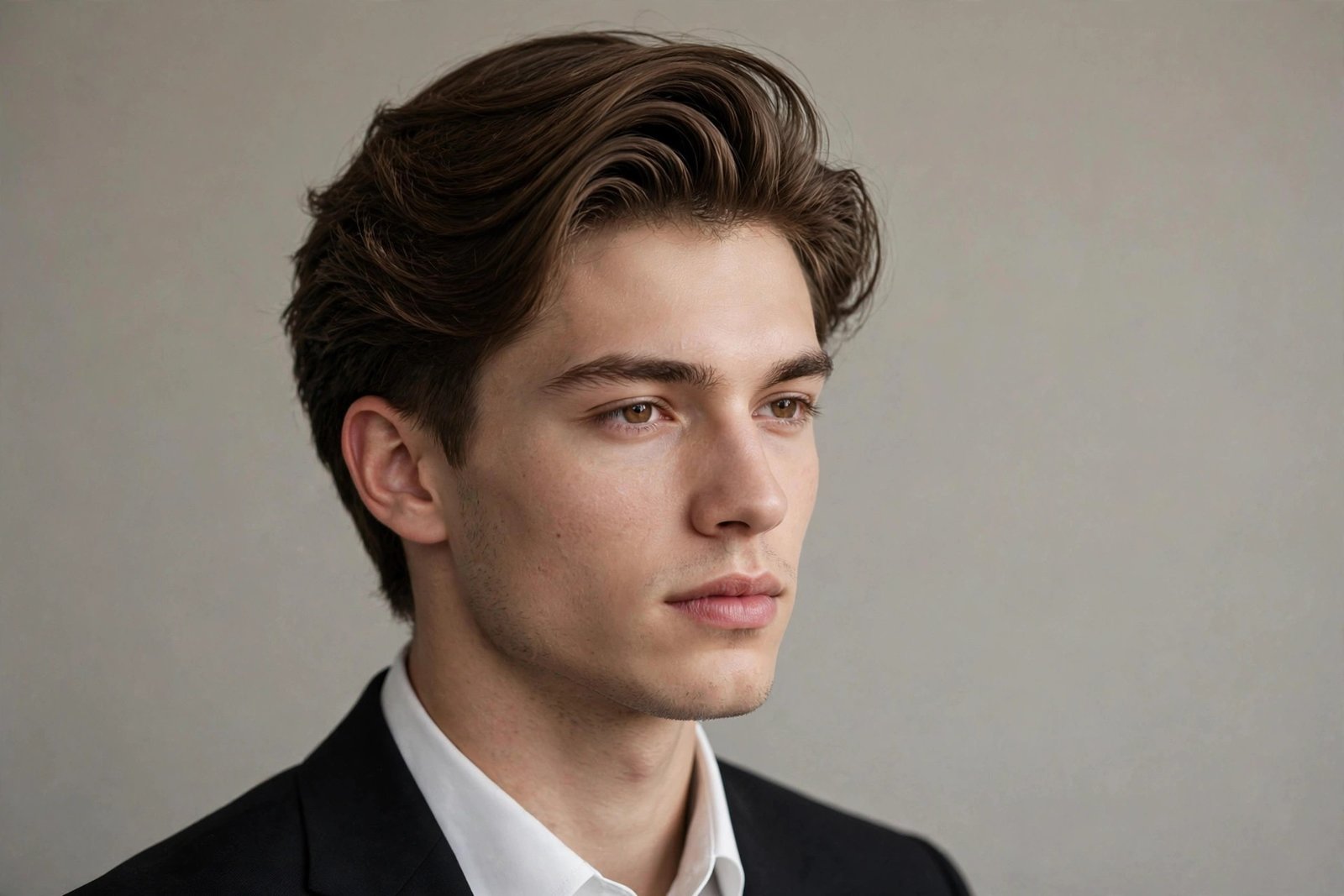
The flow is the “I woke up like this (but better)” of prom hairstyles — medium-length hair swept back with natural movement, polished just enough for the occasion. It has main-character energy without trying too hard, and it might be the most photographed men’s prom style of the last five years. The trick is that it looks effortless but isn’t: the shape comes from a good layered cut, and the polish comes from twenty minutes of intentional styling.
Who it suits: Needs 5–7 inches of length, so this is for guys who’ve been growing it out — or who start growing now for a future formal event. Straight, wavy, and curly hair all do beautiful flows; wavy is the easiest. Oval and square faces especially. The flow flatters high foreheads since everything sweeps back and up.
Barber script: “Growing a flow for prom: keep 6 inches on top, long layers to remove bulk, scissor-tapered sides that blend — I wear it swept back. Clean up the perimeter but don’t take length. Texturize the ends so it moves.”
Prom-night styling (12 minutes): Mousse at the roots of damp hair for lift. Blow-dry back and slightly up, using your fingers to create separation — the goal is volume with movement, not a slick sheet. Once dry, work a small amount of cream or light pomade through the mid-lengths and ends for polish and frizz control. Tuck the sides lightly behind the ears or leave them loose depending on the look you want. Finish with a flexible hairspray.
Products: volumizing mousse, styling cream or light pomade, flexible hairspray. Maintenance: trim every 6–8 weeks; the flow is forgiving as it grows.
Honest downside: you cannot fake this one — it needs real length, which means planning months ahead, not weeks. If your hair is currently short, this style is a “next prom” project, not a this-prom option. It also needs the most blow-drying skill on this list to look intentional rather than just long. And in group photos, long hair can visually merge with dark suit jackets — make sure there’s separation and shine so the hair reads clearly against the suit.
Pro tips & variations: The awkward stage is real — months 3–5 of growing when it’s too long to be short and too short to flow. Push through; hats and light product are your friends, not scissors. Variation: the “short flow” at 4 inches is achievable in less growing time and still reads beautifully. For photos, a flow with visible shine (a touch of pomade on the surface) photographs dramatically better than a matte flow — shine defines the strands the camera sees. Sleep the night before with it in a loose low bun to encourage the swept-back direction.
7. Wavy Tousled Crop
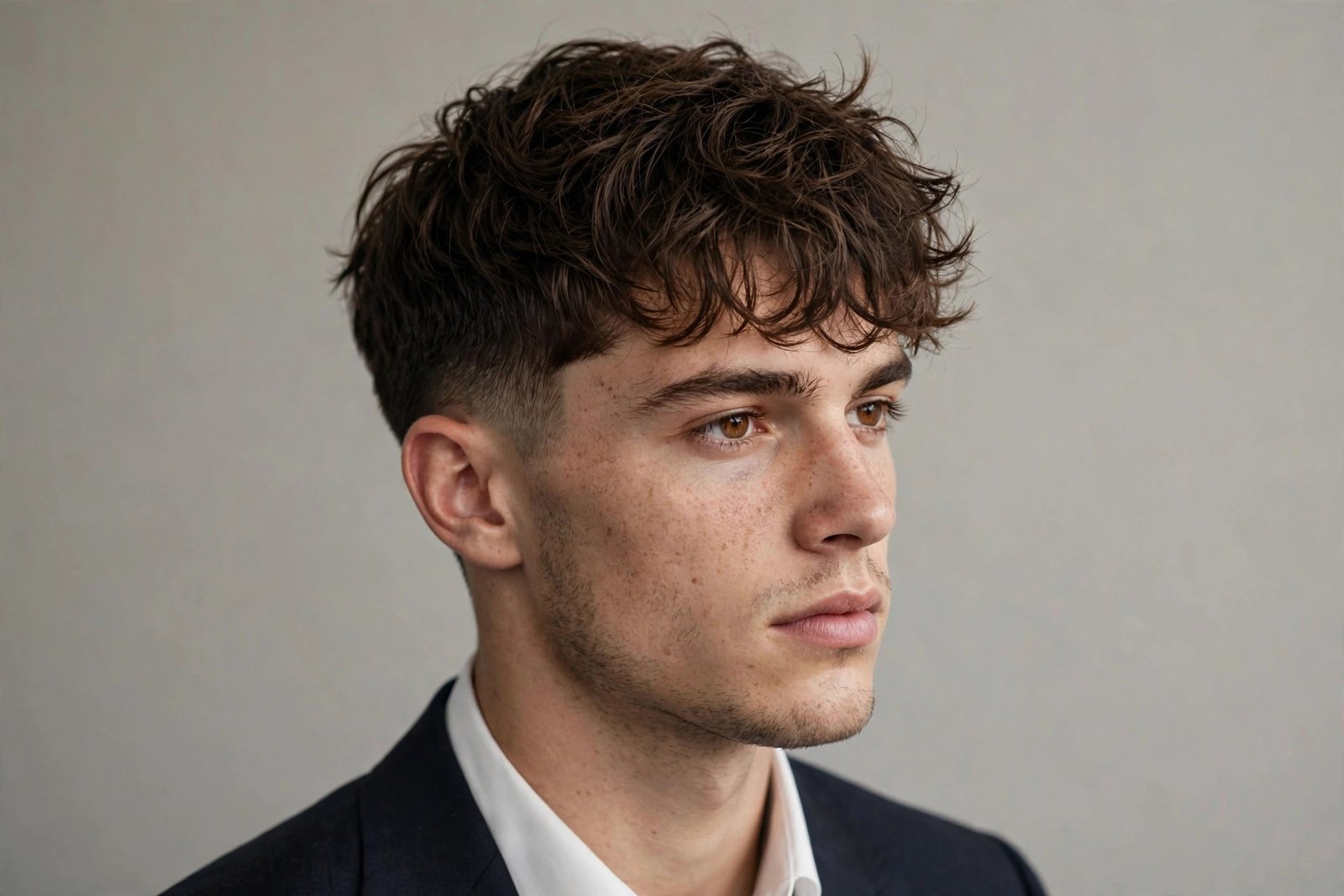
Short on the sides, textured waves on top, styled with deliberate messiness — the tousled crop is the prom pick for guys who want to look sharp without looking like they tried for two hours. The texture does the visual work: waves catch light, create shadow and dimension, and photograph with a richness that sleek styles can’t match. It’s modern, it’s masculine, and it’s one of the most forgiving styles on this list when the night gets chaotic.
Who it suits: Wavy hair is the dream candidate, but straight hair with texture cut in works too. Every face shape — the crop is that versatile. Particularly good for guys with thick hair that gets unmanageable at length, and for anyone who wants a low-drama night: this style looks good even slightly undone.
Barber script: “Textured crop: 2.5 to 3 inches on top, point-cut to enhance the wave, forward or tousled fringe, mid taper on the sides. Keep enough length on top for the texture to show — I style it messy-forward.”
Prom-night styling (8 minutes): Sea salt spray on damp hair, scrunch to encourage the wave, then either air-dry or diffuse for two minutes. Once dry, warm a pea-sized amount of matte clay or paste between your palms and pinch it through the top for definition — pinch, don’t rake. The goal is separated texture, not a solid mass. A light mist of hairspray locks it without killing the movement.
Products: sea salt spray, matte clay or paste, light hairspray. Maintenance: trim every 3–4 weeks — short textured cuts lose their shape fast as the top grows.
Honest downside: “deliberately messy” is a fine line, and crossing it means you look like you forgot prom was tonight. The difference is in the sides — keep them clean and tapered, and the messy top reads as intentional. Let the sides grow out too, and the whole thing reads as neglected. Also, very straight hair may not hold the tousle past hour three without the salt spray + clay combination doing real work.
Pro tips & variations: This is the best “dance-proof” short style here — when it gets slightly mussed from dancing, it just looks more textured. Lean into that. Variation: push the fringe slightly to one side for an asymmetric look that photographs with more interest than dead-center tousle. For fine hair, texture powder at the roots before the clay adds grit and fullness that makes the crop look twice as thick. And here’s a secret: this style looks better in photos taken from slightly below eye level, where the texture on top catches the light — tell your photographer friends.
8. Defined Curls, Shaped Up
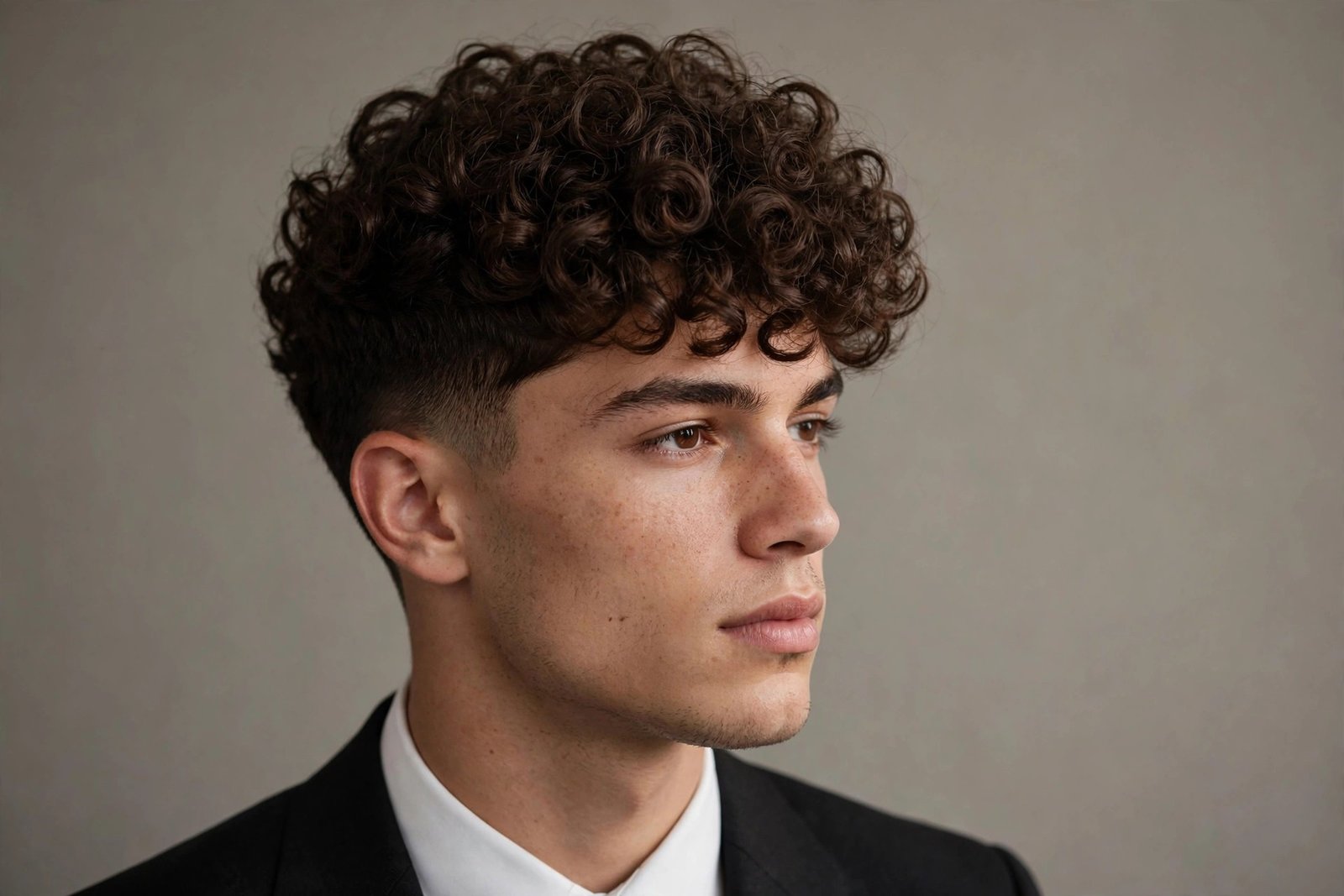
Curly hair at prom is a superpower most guys don’t realize they have. Defined, shaped curls with clean sides are striking, photogenic, and full of personality — the texture that straight-haired guys spend twenty minutes trying to fake, you were born with. The 2026 approach is shape and definition: curls with intention, a clean silhouette, and sides that frame the texture instead of competing with it. This isn’t about taming curls; it’s about presenting them.
Who it suits: Curly and coily hair, obviously — types 3A through 4C all have a version of this. The cut matters more than the curl type: shape is everything. Round faces want height on top; long faces want controlled height with fuller sides. This is also a fantastic option for guys who’ve been hiding their curls under short cuts — prom is the night to let them out.
Barber script: “Curly top with shape: keep the length on top, cut it DRY so you can see the real curl pattern, shape the silhouette — rounded, not boxy. Tapered or faded sides. I wear the curls defined and natural. Please don’t thin it out with thinning shears.”
Prom-night styling (15 minutes): Start with soaking wet hair — curls style best wet. Apply leave-in conditioner, then curl cream, raking it through in sections. Scrunch upward to encourage the curl pattern, then either diffuse on low heat or air-dry (diffusing gives more volume and lasts longer). Once fully dry — and only once fully dry — gently separate any clumps that are too big, and pick the roots slightly for shape. A light oil on the very ends adds shine for photos.
Products: leave-in conditioner, curl cream, light oil for shine. Maintenance: trim every 6–8 weeks, always dry-cut by someone who understands curls.
Honest downside: humidity is the ancient enemy — curls + humidity + dancing can mean expansion. The defense is product applied to very wet hair and a complete dry before you leave; damp curls frizz, dry curls hold. Also, never brush curly hair dry on prom day (or ever) — it turns definition into a cloud. And beware the well-meaning friend who offers to “fix” your curls with their straight-hair products. Politely decline.
Pro tips & variations: The night-before prep matters: sleep with your hair in a loose pineapple (high loose ponytail) on a satin pillowcase, and your curls will need half the morning work. Variation: a defined curly top with a sharp lineup and taper is the most formal version — the crisp edges signal “occasion” the way the curls signal “personality.” For photos, curls look incredible with a touch of shine — that light oil on the ends catches camera light beautifully. And if one curl misbehaves, don’t fight it — a single rebellious curl in photos looks charming, not messy. That’s the secret of curly hair: perfection isn’t the goal, character is.
9. French Crop with Fringe
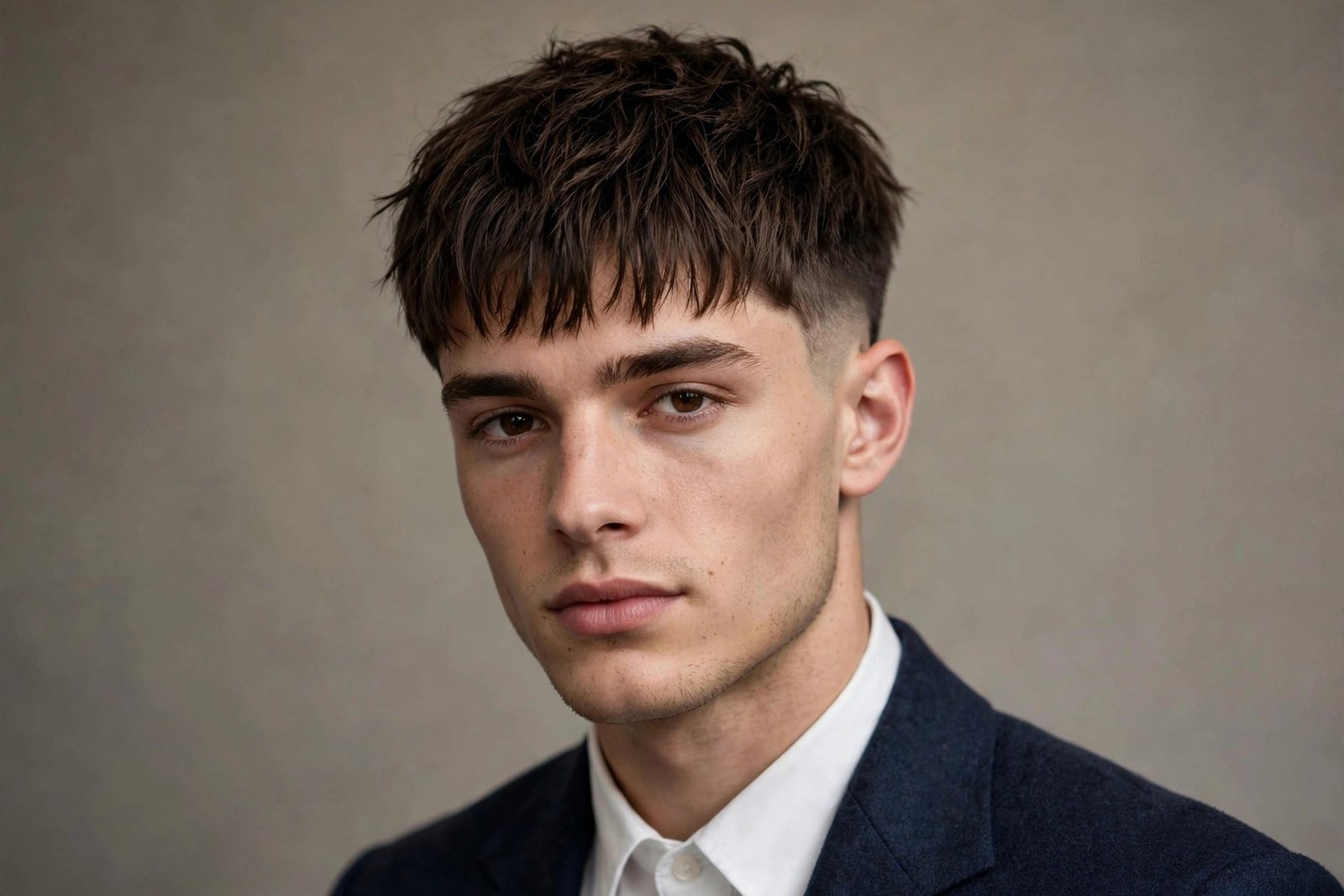
The French crop is the quiet overachiever of formal hairstyles: short, textured top with a forward fringe, faded sides, zero fuss. It looks sharp in a suit, it takes eight minutes to style, and it holds through anything. There’s something effortlessly European about it — like you didn’t overthink prom, you just showed up looking right. In 2026, the textured version (not the blunt Caesar-style) is the one to get: the texture keeps it modern and gives it life in photos.
Who it suits: Great for high foreheads and long faces — the fringe shortens the face visually. Works on straight, wavy, and curly hair. Excellent for guys with cowlicks at the front, since the forward fringe works with them instead of against them. If you have a very round face, keep the fringe textured and slightly longer rather than blunt and short.
Barber script: “Textured French crop: 2 inches on top, heavy texture, forward fringe that sits just above the eyebrows, mid fade on the sides. I style it forward and messy — keep the fringe soft, not blunt.”
Prom-night styling (8 minutes): Small amount of matte clay or paste on damp hair. Push everything forward with your fingers, creating texture as you go — pinch and twist small sections rather than combing flat. The fringe should have separation and movement, not sit like a shelf. A quick shot of hairspray keeps the fringe from migrating up as the night goes on.
Products: matte clay or paste, light hairspray. Maintenance: trim every 3–4 weeks; the fringe grows into the eyes fast.
Honest downside: it’s a short style, which means less drama and presence than the longer looks on this list — in a group photo of flows and quiffs, the crop is the quiet one. That’s either a feature or a bug depending on your personality. It also offers nowhere to hide on a bad hair day: with short hair, the cut has to be right, because there’s no length to restyle around problems.
Pro tips & variations: The fringe length is the whole decision: too short and it’s severe, too long and it’s in your eyes by dinner. Just above the eyebrows is the sweet spot. Variation: a French crop with a skin fade on the sides is sharper and more 2026; with a taper it’s softer and more classic. For prom specifically, ask the barber to keep the top slightly longer than your everyday crop — that extra half inch gives you styling options and photographs with more texture. And the fringe + suit combination is genuinely underrated: the horizontal line of the fringe echoes the horizontal lines of lapels and bow ties, and the whole look coheres.
10. Undercut with Volume on Top
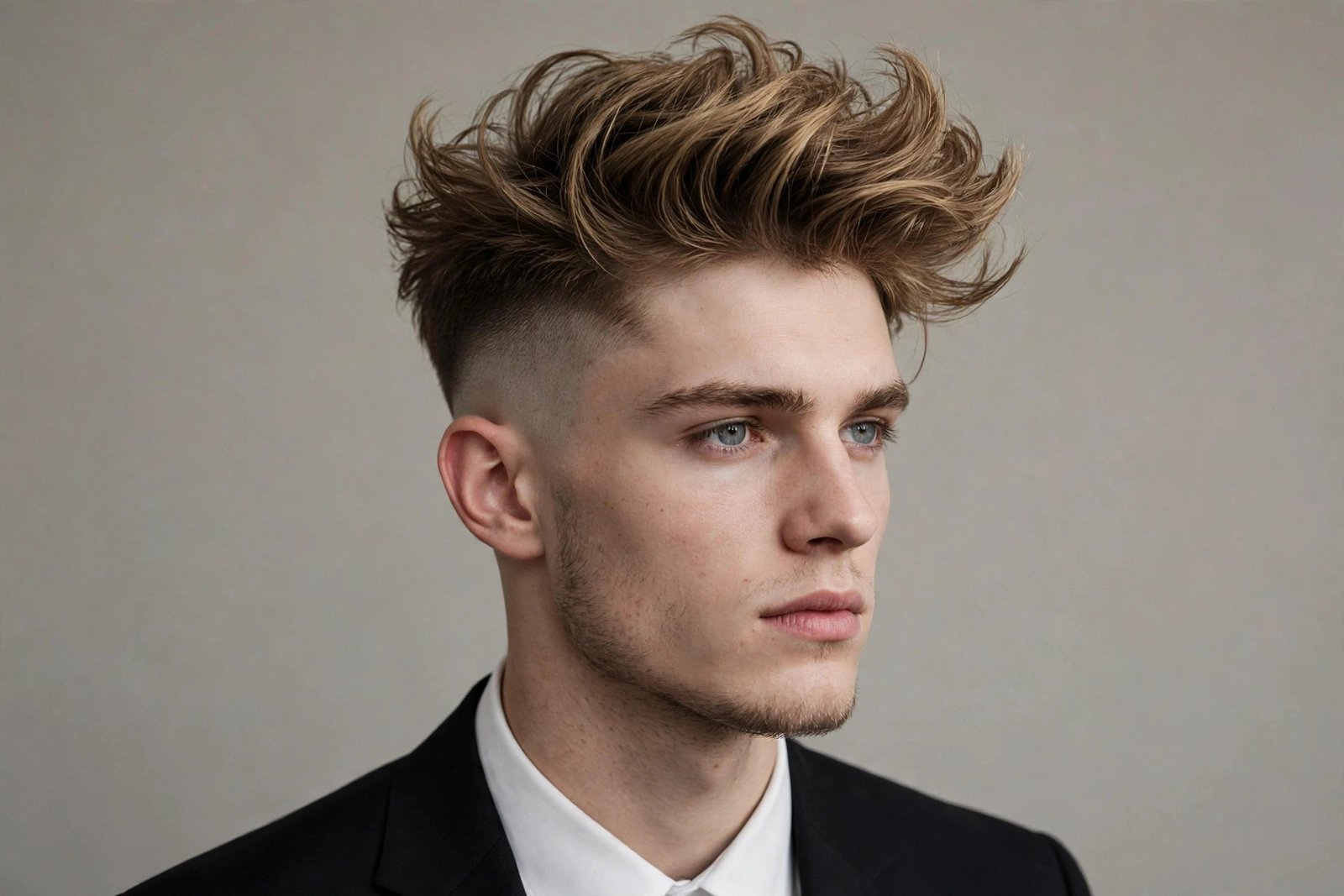
Maximum contrast, maximum impact: the undercut keeps the sides dramatically short while the top gets all the length, volume, and attention. It’s bold, it’s confident, and it creates a silhouette that stands out in every group photo. The disconnected sides make the top look even bigger and more deliberate — this is a hairstyle with opinions. For prom 2026, the top stays textured and touchable, not slicked into submission.
Who it suits: Thick hair is the ideal candidate — the contrast needs density on top to work. Round faces benefit from the height; the short sides keep width in check. Straight and wavy hair style easiest. This is a statement choice: if your personality is “blend in,” the undercut will feel like a costume. If it’s “stand out,” it’ll feel like armor.
Barber script: “Undercut: disconnected, sides clippered short [specify guard — #1 or #2], top 4+ inches with heavy texture. I style the top up and back with volume. Keep the disconnect clean — that’s the whole point of the cut.”
Prom-night styling (12 minutes): Mousse or pre-styler on damp hair, blow-dry the top up and back for volume — the sides need nothing. Once dry, work matte clay or strong pomade through the top, building height and texture. The sides should look intentionally short and clean; a little product smoothed down keeps any longer side hairs lying flat against the disconnect. Hairspray to lock the top.
Products: mousse or pre-styler, matte clay or strong pomade, firm hairspray. Maintenance: the sides need upkeep every 2–3 weeks or the contrast softens and the whole cut goes muddy.
Honest downside: the grow-out is the worst on this list — once the sides grow past the disconnect, the cut loses its entire reason for existing, and you’re in an awkward in-between for weeks. It’s also the least forgiving in wind: the tall top catches every gust. And some traditionalists (read: grandparents at the pre-prom photos) may have opinions. Know your audience.
Pro tips & variations: The guard length on the sides changes the whole vibe: #1 is aggressive, #2 is balanced, scissors-tapered is softer. For prom, #2 with a clean lineup is the sweet spot — bold but not shocking. Variation: style the top forward and textured instead of up-and-back for a completely different look from the same cut — two prom looks, one haircut, if you want a backup plan. Keep the disconnect line crisp for photos; it’s the architectural detail the camera reads. And bring a pocket comb — the top of an undercut is the one thing worth one discreet touch-up during the night.
11. The Ivy League
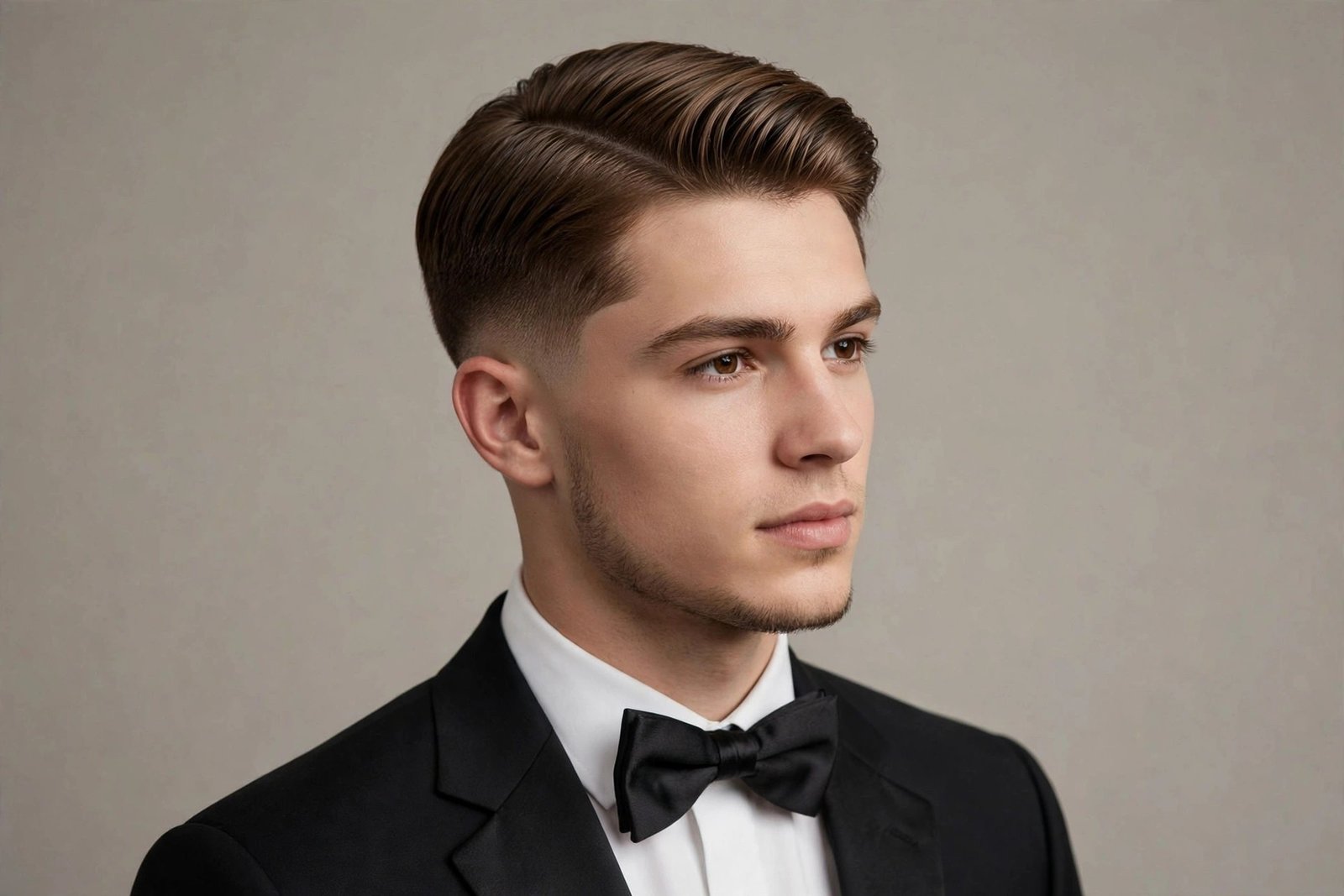
The Ivy League is what happens when a crew cut goes to a good school: short, neat, side-swept, quietly perfect. It’s the thinking man’s prom hairstyle — polished without flash, confident without volume tricks. Everything about it says you have your life together, which at eighteen is a delightful fiction, but a convincing one. It pairs flawlessly with classic tailoring and looks immaculate in every photo because there’s simply nothing to go wrong.
Who it suits: The universal donor of haircuts — works on every face shape and most hair types. Particularly good for guys with thinning hair or fine hair, since the short length and side sweep maximize the appearance of density. Also ideal if you hate styling: this is a two-minute haircut.
Barber script: “Ivy League: short all over, about an inch to an inch and a half on top, tapered sides, side-swept top with enough length to part. Clean and classic — I want it neat, not military.”
Prom-night styling (5 minutes): The fastest routine on this list. Small amount of pomade or cream on damp hair, comb or finger-style the top to the side along your natural part. That’s genuinely it. If you want a touch more polish for photos, blow-dry it into place for two minutes first — but most guys won’t need to.
Products: light pomade or styling cream. Maintenance: trim every 3–4 weeks; short and simple.
Honest downside: it’s the least dramatic option here — in a lineup of quiffs and pompadours, the Ivy League whispers while others shout. If you want to make an entrance with your hair, this isn’t it. It also exposes the hairline and forehead completely, so it’s not the pick for guys who are self-conscious about either. But for reliability-per-minute-of-effort, nothing on this list touches it.
Pro tips & variations: The difference between “Ivy League” and “just short” is the side sweep and the taper — make sure the barber leaves enough top to sweep, or you’ve just got a crew cut. Variation: the “long Ivy” with 2 inches on top gives you more styling range while keeping the neat character. For prom photos, the Ivy League’s secret weapon is the hairline — ask the barber for a clean, natural lineup (not a harsh edge-up unless that’s your style), because the short length puts your hairline in every close-up photo. A crisp natural hairline + side sweep is a timeless combination.
12. The Brooding Middle Part
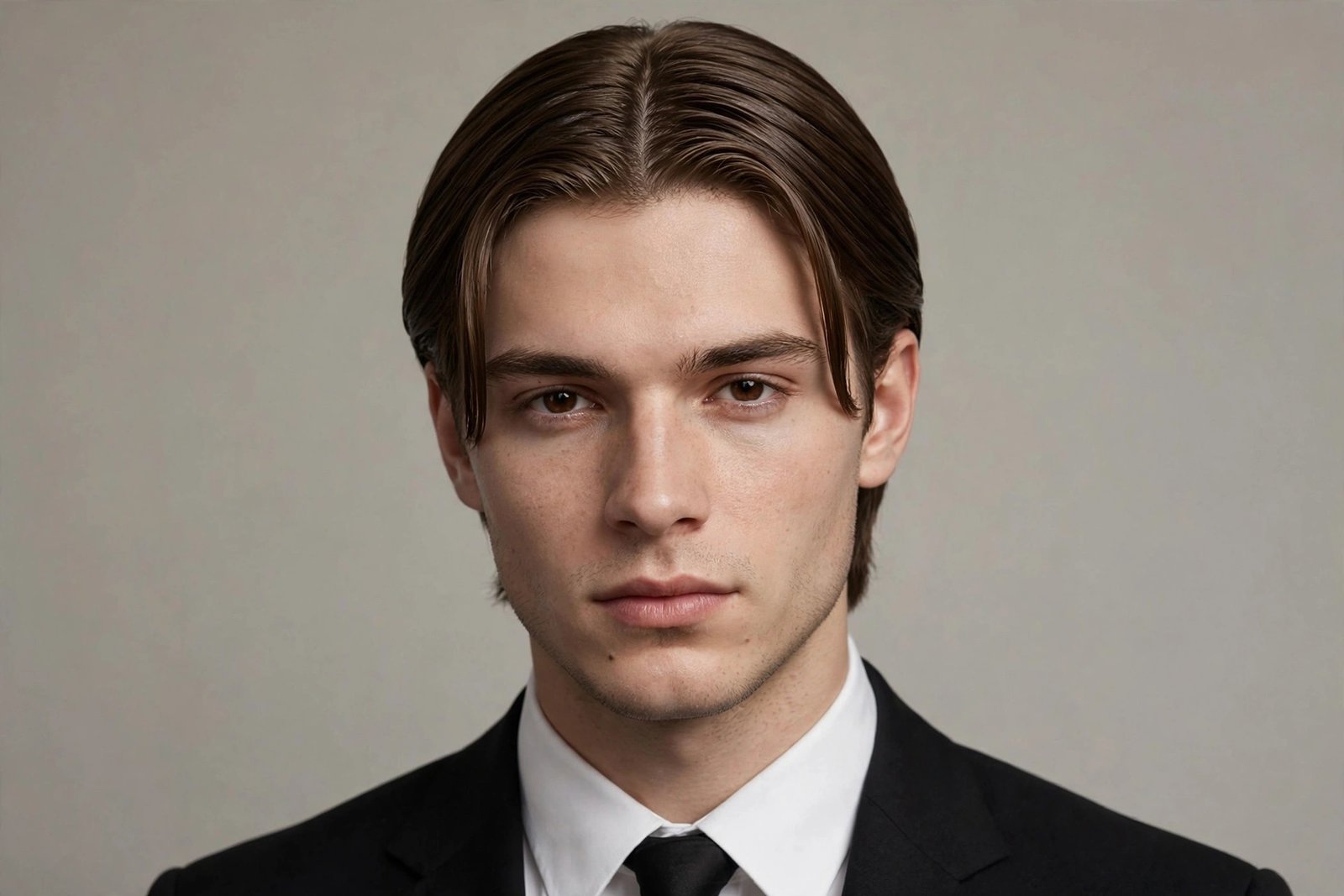
Distinct from curtains (which are soft and flowing), the brooding middle part is sleek, deliberate, and a little mysterious — hair parted dead-center and worn smooth and controlled, falling to frame the face with polished precision. It’s the hairstyle of the quiet guy who doesn’t need to try, and it has serious red-carpet energy in 2026. Think less boy-band, more leading man. The symmetry photographs beautifully, and the sleekness reads as formal without a drop of stiffness.
Who it suits: Straight to slightly wavy hair, medium length (4–6 inches on top). Oval and oblong faces are ideal — the symmetry enhances balanced features. Needs reasonably thick hair; thin hair parted down the middle can expose too much scalp along the part line. A strong jawline pairs beautifully with the softness of the falling hair.
Barber script: “Middle part, sleek: 5 inches on top, center part, long layers for movement, tapered sides. I wear it smooth and controlled, falling naturally on both sides. Keep the ends clean — they’ll be visible framing my face.”
Prom-night styling (10 minutes): Apply smoothing cream or light pomade to damp hair. Create the center part with a comb — use the bridge of your nose as your guide for true center. Blow-dry each side down and slightly back, smoothing with a brush for that sleek finish. Once dry, a tiny amount of serum on the surface tames flyaways and adds the polished shine this style needs. The part must be crisp; it’s the focal point.
Products: smoothing cream or light pomade, shine serum, fine-tooth comb. Maintenance: trim every 5–6 weeks; grows out well.
Honest downside: the center part is merciless about symmetry — if your face is notably asymmetric, a dead-center part will highlight it rather than hide it (an off-center part is the fix, but then it’s not this style). It also requires genuinely straight, cooperative hair; fighting waves or curls into sleek submission for six hours is a losing battle. And like curtains, wind is a real threat to the part’s integrity.
Pro tips & variations: The sleekness lives or dies on the blow-dry — air-drying gives you curtains, blow-drying smooth gives you this. Know which one you’re making. Variation: tuck one side behind the ear for an asymmetric detail that photographs with intrigue and keeps hair out of your face while dancing. For the part line itself, a single pass of strong-hold pomade right along the part (applied with a fingertip) keeps it from wandering — wandering parts are the #1 failure mode of this style. In photos, this style rewards a slight head tilt; straight-on symmetry can look severe, while a small angle looks editorial.
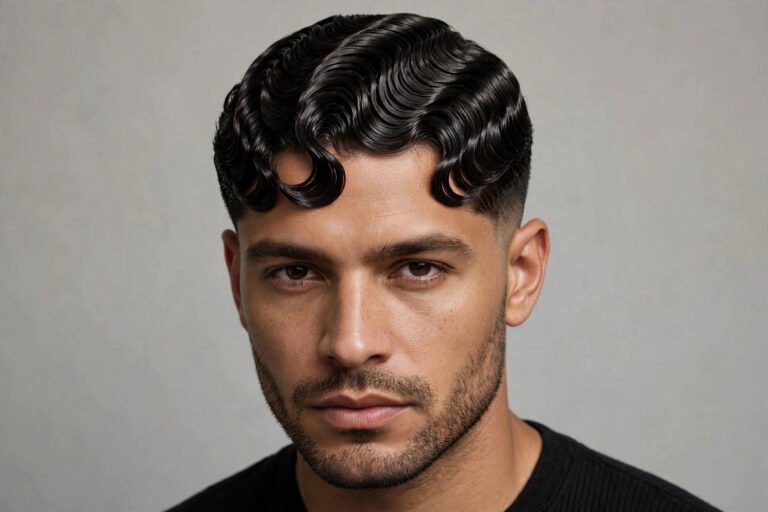
13. Old Hollywood Side Sweep
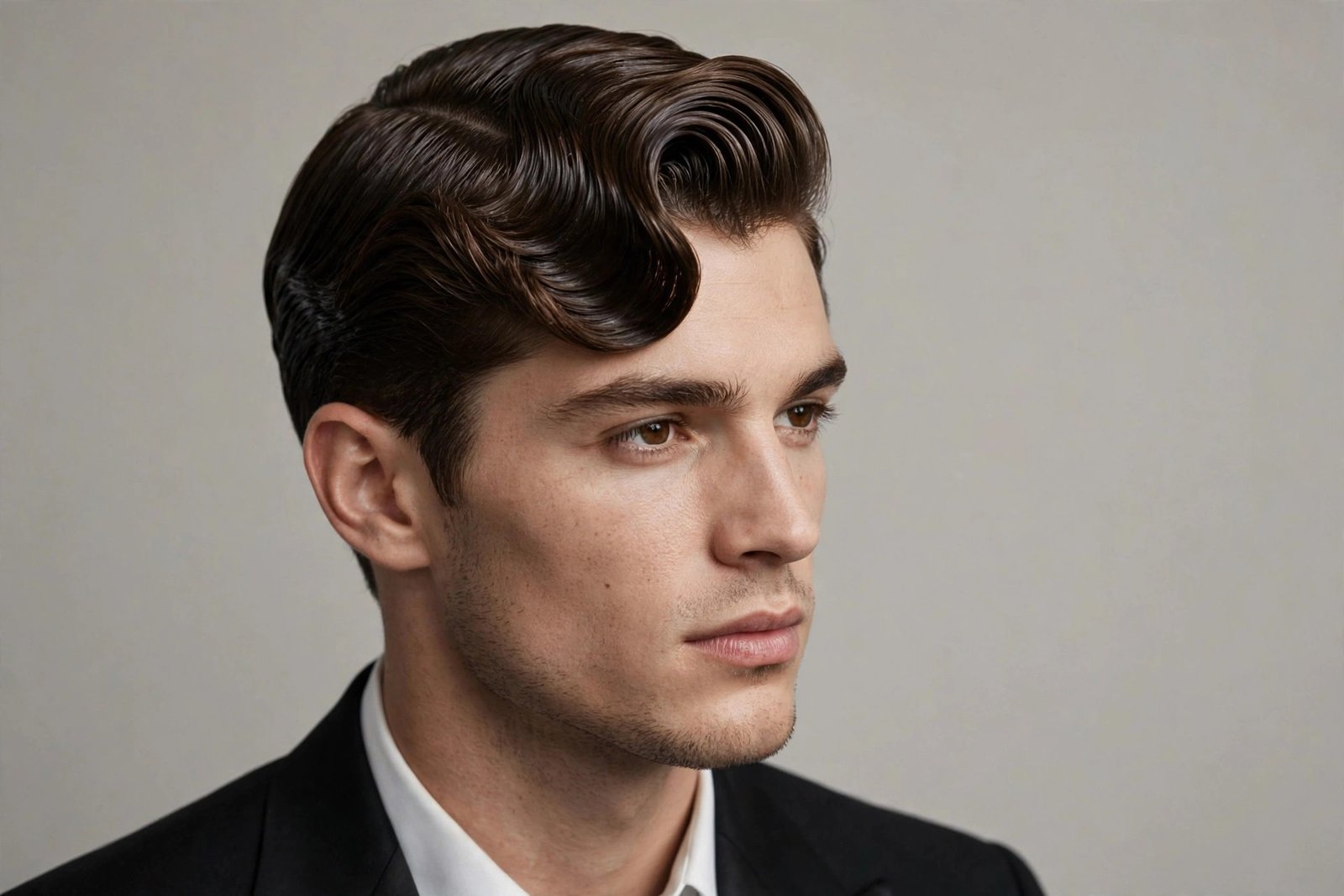
Channel the golden age: a deep side part, hair swept across with glossy polish, sculpted waves of shine — the hairstyle Cary Grant would wear if he had a 2026 barber. This is the most formal, most romantic option on the list, and it pairs with a classic tux like nothing else. The gloss is the signature: controlled shine that catches light in photos and gives the hair a liquid, expensive quality. It’s vintage without being costume, because the cut underneath is modern.
Who it suits: Straight hair takes to this best — the smooth sweep needs cooperation. Medium length on top (3–4 inches). Oval, square, and diamond faces. This is a grown-man hairstyle; it suits guys who are comfortable with polish and want the most formal option available. If your style is streetwear-casual, the mismatch will feel strange.
Barber script: “Old Hollywood sweep: 3.5 inches on top, deep side part, scissor-cut with subtle layers, tapered sides that blend smoothly. I wear it swept across with polish — classic shape, modern texture underneath.”
Prom-night styling (12 minutes): Generous (but not reckless) amount of high-shine pomade on damp hair — this style wants shine, so don’t be shy, but build in two thin layers rather than one glob. Create the deep part with a comb, then sweep the top across and slightly back, sculpting it smooth with the comb. Blow-dry along the sweep direction on low heat to set the shape, then one final smoothing pass with the comb. The surface should look almost liquid.
Products: high-shine pomade (oil-based for maximum gloss, or water-based for easier washout), fine-tooth comb. Maintenance: trim every 4 weeks; the polished shape needs clean edges.
Honest downside: shine + sweat + heat can tip from “glossy” into “greasy” — this style demands climate awareness. If the venue runs hot, go lighter on product and accept slightly less gloss. It also reads as the most “done” hairstyle here; there’s no pretending you didn’t try. And oil-based pomade — the authentic choice for maximum shine — takes real effort to wash out. Plan a proper double-shampoo for the morning after.
Pro tips & variations: The deep part is what makes it Hollywood rather than just a side part — push it further to the side than feels natural; that’s where the drama lives. Variation: the “dry Hollywood” uses matte clay instead of glossy pomade for the same sculpted shape without the shine — more 2026, less 1956, and far more sweat-resistant. For photos, glossy hair is a light-catcher: it looks incredible under direct light and can look wet under harsh flash, so check a test photo before committing to full gloss. A pocket comb is mandatory equipment — this style earns one discreet touch-up.
14. Textured Fringe Forward
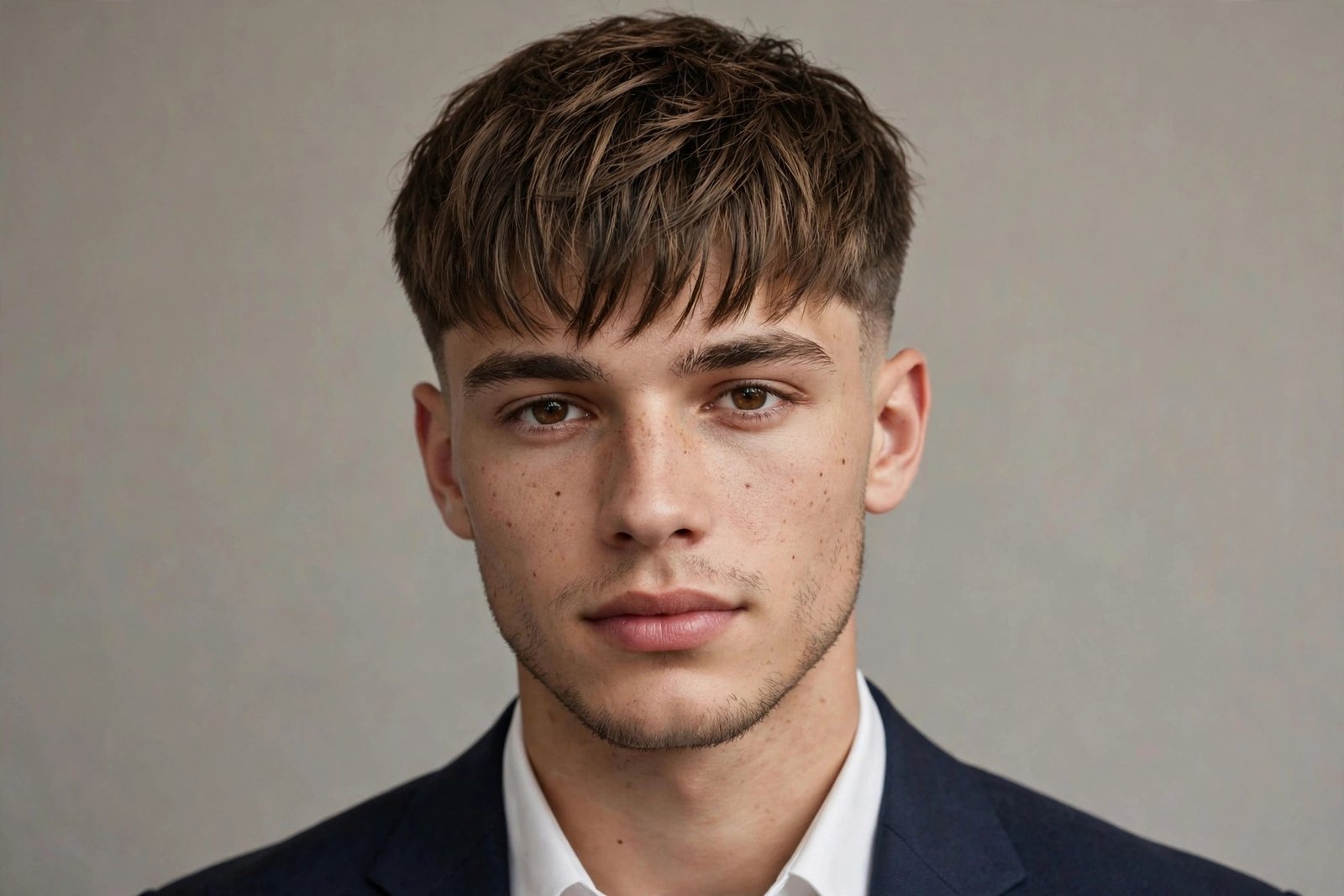
Forward, textured, youthful — the fringe-forward style brings the top down and forward in piecey, defined texture, with the sides faded clean. It’s the most current-feeling option on this list, the one that looks like 2026 rather than any other year. The forward direction is flattering in photos (it creates a frame around the face that draws the eye inward), and the texture gives it life and movement. This is the pick for guys who want to look their age, just sharper.
Who it suits: Straight to wavy hair; the texture needs some natural body to work with. Great for long faces and high foreheads — the forward fringe is the single best tool for visually shortening a long face. Round faces should keep the fringe piecey rather than heavy across, to avoid adding width. Works on fine hair better than most styles here, since the forward texture creates density illusion.
Barber script: “Textured fringe: 3 inches on top, lots of point-cut texture, fringe worn forward and piecey, skin or mid fade on the sides. Modern and textured — I want separation in the fringe, not a solid wall.”
Prom-night styling (9 minutes): Matte clay or texture paste on damp hair. Work it through with your fingers, pushing everything forward and slightly down, pinching sections to create the piecey separation. The fringe pieces should be distinct, not mushed together — think shards, not a curtain. A light hairspray mist keeps the pieces from merging as the night goes on. The sides stay clean; all the action is on top.
Products: matte clay or texture paste, light hairspray. Maintenance: trim every 3–4 weeks; the fringe grows fast and loses its edge.
Honest downside: forehead real estate: this style covers it, which is great if that’s the goal and strange if you’re used to showing it. It can also read young — if you’re going for “sophisticated adult,” the forward fringe fights that. And piecey texture + humidity can collapse into a solid damp fringe by hour four; the hairspray layer is doing real structural work here, don’t skip it.
Pro tips & variations: The pinch-and-twist technique is everything — take small sections between thumb and forefinger and twist slightly as you push forward. That’s what creates pieces instead of mush. Variation: an asymmetric fringe, swept slightly to one side as it comes forward, is more editorial and more forgiving than dead-straight-forward. For photos, make sure the fringe isn’t covering your eyes — just above or at the brows is the line; below it you disappear. And this style loves a matte finish: shine on a forward fringe reads as greasy fast, so keep products matte and hands off.
15. The Polished Fade with Defined Top
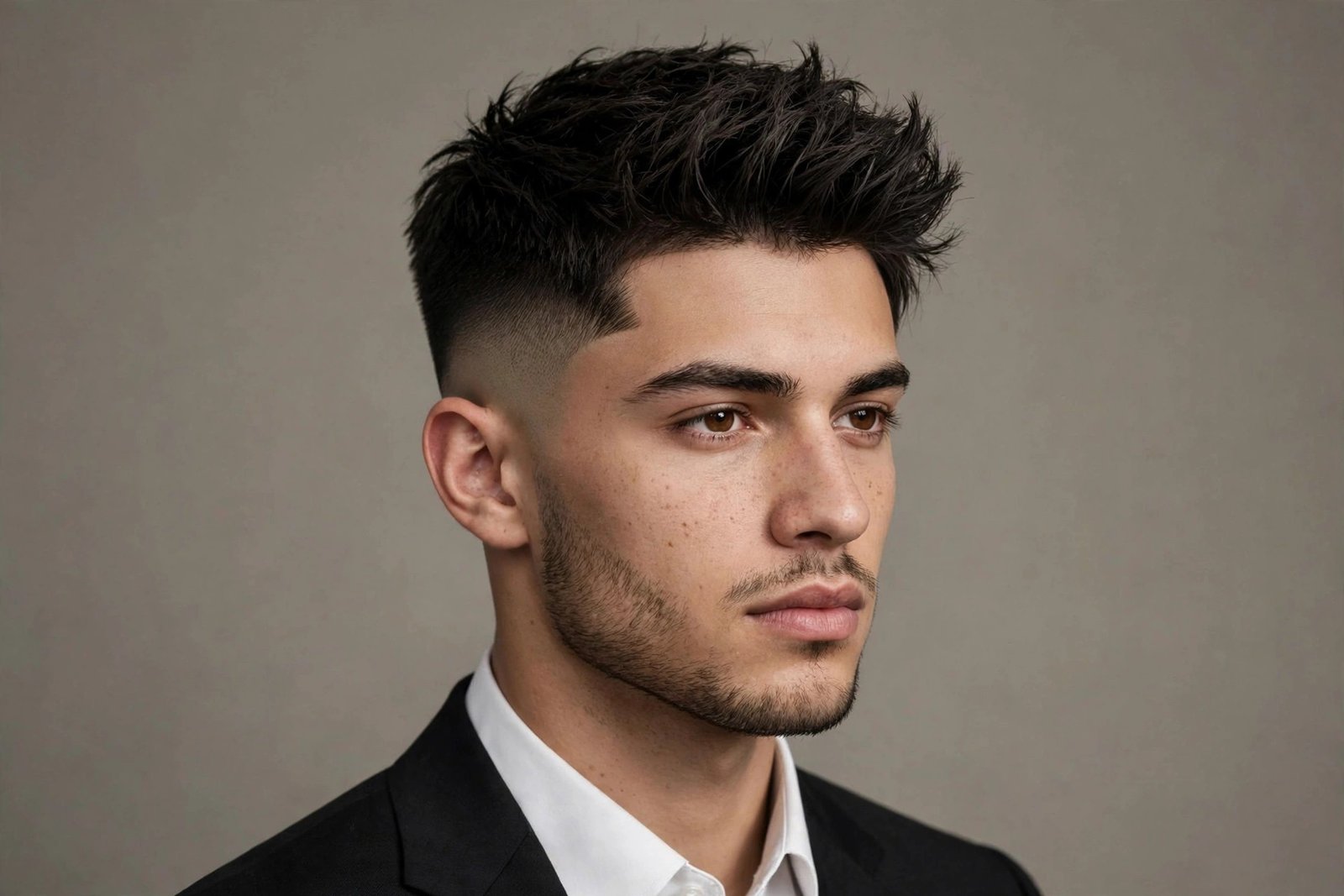
Last but far from least: the fade with a defined top is the modern classic — crisp, clean faded sides graduating into a textured, intentional top. It’s the haircut half the guys at prom will be wearing, and there’s a reason: it looks sharp on everyone, it photographs cleanly, and the contrast between the tight sides and the fuller top gives it structure that lasts all night. The prom version just turns the polish up: cleaner lineup, more deliberate texture, better product.
Who it suits: Genuinely everyone — this is the most adaptable cut in men’s barbering. The fade height and top length get customized to your face: high fade + short top for round faces (adds height), low fade + longer top for long faces (adds width). Every hair type works; the barber adjusts the top’s texture to match.
Barber script: “Prom fade: [low/mid/high — ask what suits your face] fade on the sides, 2.5 to 3 inches on top with texture, clean lineup. I want the top defined and piecey — this is for prom, so make the fade crisp.”
Prom-night styling (10 minutes): Pre-styler or mousse on damp hair for foundation. Blow-dry the top into the general direction you’ll wear it — up, forward, or to the side, your choice, but decide before prom, not during. Then matte clay or paste, worked through with fingers for definition and separation. Clean up the hairline and lineup area with a tiny bit of product smoothed down. The fade itself needs nothing — that’s the beauty of it.
Products: pre-styler or mousse, matte clay or paste. Maintenance: the fade needs refreshing every 2–3 weeks to stay crisp; the top every 4.
Honest downside: popularity — you will not be the only one. If standing out matters to you, the top needs a distinctive direction or texture to differentiate. The fade also has the shortest shelf life: by week three it’s a different haircut. Time it right (that 10–14 day window) so prom lands in the sweet spot.
Pro tips & variations: The fade height is the style: a high fade is bold and modern, a mid fade is balanced, a low fade is subtle and classic. For prom, mid is the crowd-pleaser. Variation: add a hard part (a shaved part line) for extra definition — it’s a small detail that photographs as sharp intention. Or go the other way: a taper instead of a skin fade keeps it softer and grows out gracefully. The lineup is the detail that separates a prom fade from an everyday fade — make sure it’s fresh, because every close-up photo will show it. This is the cut to choose when you want to look excellent with minimum risk.
Prom-Night Styling Routine & Dance-Floor Survival
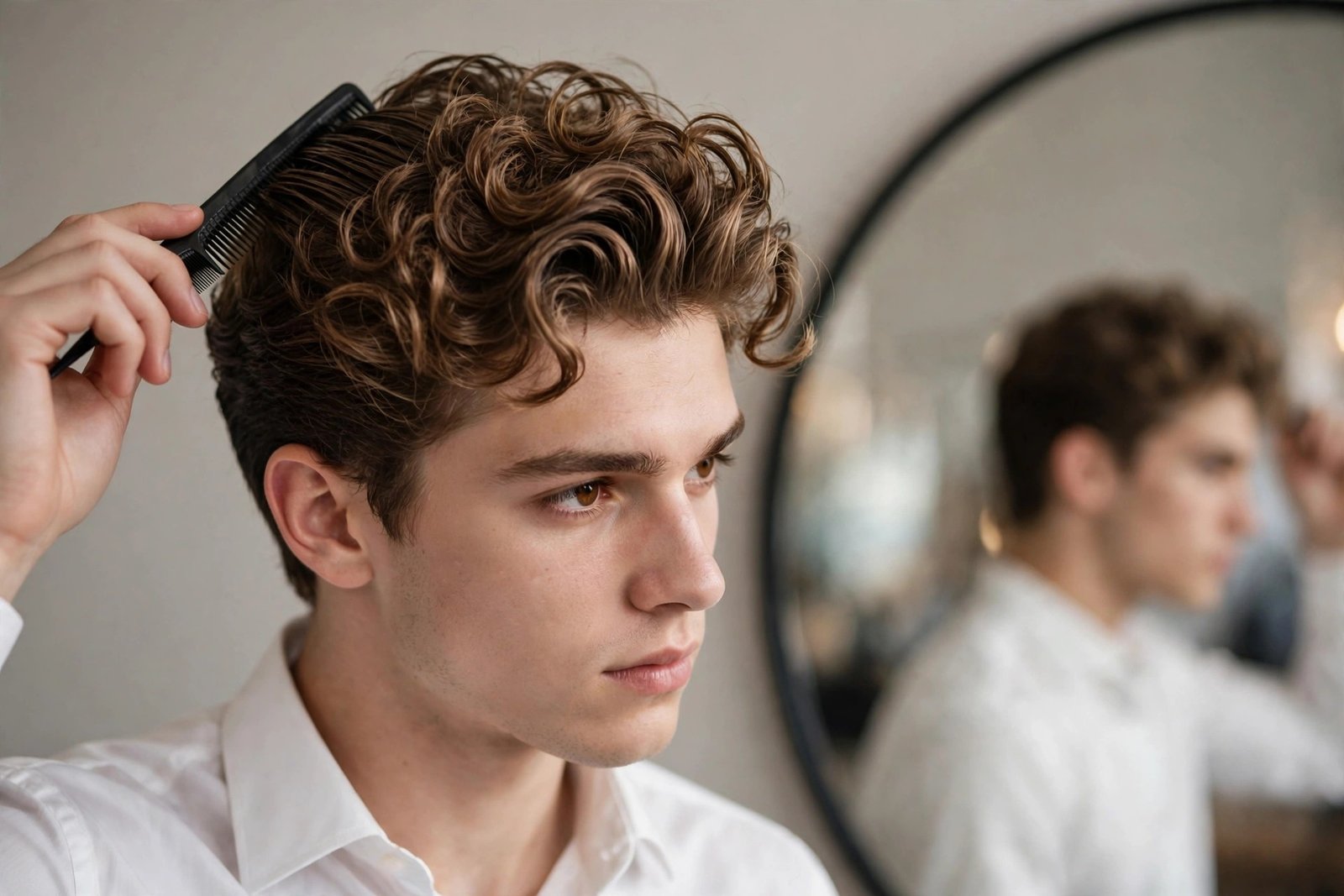
Picking the right look is half the battle. The other half is execution — and prom night is the worst possible time to improvise. This section is your battle plan: the timeline, the product kit, the techniques that make styles survive dancing, and the emergency fixes for when things go sideways. Read it once now, practice once this week, and prom night becomes routine instead of roulette.
The Prom-Day Timeline: Hour by Hour
Work backward from when you leave the house. Three hours before: shower and wash your hair. Yes, wash it — clean hair styles better than day-old hair for formal looks (the opposite of what you’ve heard about casual styles). Use conditioner; skip heavy masks that leave residue. Two hours before: this is styling time. Give yourself a full, unrushed 20–30 minutes — rushing creates the mistakes you’ll see in photos. Style on damp, towel-dried hair, not dripping wet and not dry. Apply products in the right order: heat protectant first if you’re blow-drying, then volumizers or mousses, then your main styler (pomade/clay/cream), then hairspray last as the seal.
One hour before: get dressed, then do a final check. Here’s the order that matters — style hair BEFORE putting on the dress shirt and jacket. Product on collars and lapels is a tragedy; hairspray mist settling on a dark jacket leaves visible spots. Style first, dress second, final mirror check third. Thirty minutes before: photos start, whether official or not. Do one last check in natural light if you can — bathroom lighting lies. Look for: part still in place, no product flakes, fringe where you left it, sides lying flat. During the night: hands off. The single biggest prom-hair killer isn’t dancing or heat — it’s the guy constantly touching his hair. Every touch breaks the product’s hold a little more. Trust the routine.
The night-before prep deserves its own mention. Don’t try a radically new wash routine the night before prom — no new shampoos, no experiments. Wash normally, sleep on a clean pillowcase (cotton is fine; satin is better), and if your style needs morning direction (flows, curtains, middle parts), sleep with the hair loosely going the way you want it to fall. A loose bun or loose braid for longer styles trains the direction overnight. Wake up, and half your styling is already done. This is the kind of boring preparation that separates the guys who look great all night from the guys who looked great for the first hour.
The Prom-Night Product Kit (What to Buy and What to Skip)
You don’t need a shelf of products — you need the right four or five, and you need to know them. The essentials: (1) A heat protectant spray if your style involves a blow-dryer — heat damage on prom night is invisible until it’s not, and protectant also adds grip. (2) A pre-styler: mousse or volumizing spray, applied to damp hair before drying. This is the foundation most guys skip, and it’s the difference between hair that holds and hair that gives up. (3) Your main styler: pomade for shine and control, clay for matte texture and volume, cream for natural softness. Pick based on your style’s finish, not on what your friend uses. (4) Hairspray: light-to-medium hold for most styles, firm for the architectural ones (pompadour, tall quiff). (5) A fine-tooth comb and your fingers — tools matter as much as products.
What to skip: gel — the crunchy, flaky ghost of 2000s proms. Modern prom hair is touchable; gel is not. Skip anything labeled “extra strong hold” unless your style genuinely needs architecture — strong hold without the right technique just means stiff, unnatural hair that cracks. Skip dry shampoo on prom day (it’s for dirty hair; you’re washing). And skip borrowing products you’ve never used — every product behaves differently, and prom night is not the laboratory. Grooming editors at places like GQ have been saying the same thing for years: the product matters less than knowing how to use it.
The emergency kit goes in your pocket or your date’s bag: a travel-size hairspray or a small tin of your styler, a pocket comb, and two bobby pins (don’t laugh — a bobby pin fixes a rogue section invisibly in ten seconds). Blotting papers or a handkerchief for forehead sweat — sweat running into styled hair is what breaks most styles, so managing sweat IS managing hair. A tiny towel or extra napkins from dinner work in a pinch. This kit has saved more prom nights than any single styling technique: the guys who look perfect at midnight are the guys who did one two-minute touch-up at 10 PM.
Making It Last: Dancing, Heat, Sweat, and Hugs
Let’s talk about the actual threats. Dancing is movement + heat + time. The defense is layers: product applied in thin, even layers holds longer than one thick layer. The blow-dry foundation matters more than anything — hair dried into its shape resists movement; hair just producted into shape surrenders to it. For high-movement styles (quiff, pomp, flow), the hairspray seal isn’t optional. Heat — gym venues, crowded dance floors, warm spring evenings — softens product. Matte clays handle heat better than shiny pomades (wax melts; clay holds). If your venue is known to run hot, lean matte.
Sweat is the silent killer. It starts at the hairline and works back, breaking product’s grip from the front — exactly where photos look. Prevention: a good antiperspirant applied earlier in the day, blotting (not wiping) sweat before it runs, and a hairstyle with some structure at the front (a fringe or textured front hides sweat disruption; a slick-back shows it). If you sweat heavily, tell your barber — they can cut with that in mind, keeping the front slightly shorter and more textured so it fails gracefully instead of dramatically.
Hugs, slow dances, and photo booth props are the chaos variables. Someone’s hand on the back of your head during a hug, a cheek pressed against your temple during the slow dance, a stupid hat in the photo booth — these are the moments styles die. The fix is partly product (flexible hold recovers; brittle hold cracks) and partly acceptance: a style that looks good slightly mussed (tousled crop, textured fringe, flow) survives chaos better than one that needs perfection (slick-back, Hollywood sweep). Choose your style with your actual prom night in mind, not a fantasy version of it. If you’re the guy who’ll be in the mosh pit of the dance floor, pick accordingly.
The 10 PM touch-up is a ritual worth adopting. Slip away for two minutes: blot sweat, check the mirror, smooth what’s drifted with damp hands (water reactivates most water-based products — this is the pro move), re-pinch texture where it’s flattened, one light mist of hairspray if needed. Two minutes, and you’re reset for the rest of the night. The guys who do this look fresh at midnight. The guys who don’t… don’t. It’s that simple.
After Prom: Washout, Recovery, and Keeping the Cut
The morning after, your hair has been through a war — layers of product, sweat, hairspray, and probably some dance-floor confetti. Wash it properly: shampoo twice. The first shampoo breaks up product; the second actually cleans the hair and scalp. If you used oil-based pomade, apply conditioner or oil to dry hair BEFORE shampooing — oil dissolves oil, and this pre-wash step saves you three rounds of harsh shampooing. Use lukewarm water, not hot; your scalp is already stressed.
Recover: after the double wash, use a good conditioner and leave it a few minutes longer than usual. If your hair feels straw-like from product and heat, a deep-conditioning mask once that week restores it. Don’t heat-style for a few days — give it a break. Your hair will forgive one night of heavy styling completely, as long as the aftercare is real. What damages hair isn’t one prom night; it’s the habit of heavy product without proper washing, repeated for months.
Keep the cut: here’s the thing nobody tells you — the prom haircut, timed right, is also just a great haircut. If you loved how you looked, book the next trim before you forget (3–4 weeks for most of these styles) and keep it. The barber script that got you the prom cut works just as well as an everyday script. And now you own the styling routine — the blow-dry technique, the product amounts, the touch-up habits. Prom was the excuse to learn; the skill is yours now. Some of the best everyday hairstyles start as someone’s prom-night experiment that worked too well to abandon.
Prom Hairstyles Men: Frequently Asked Questions
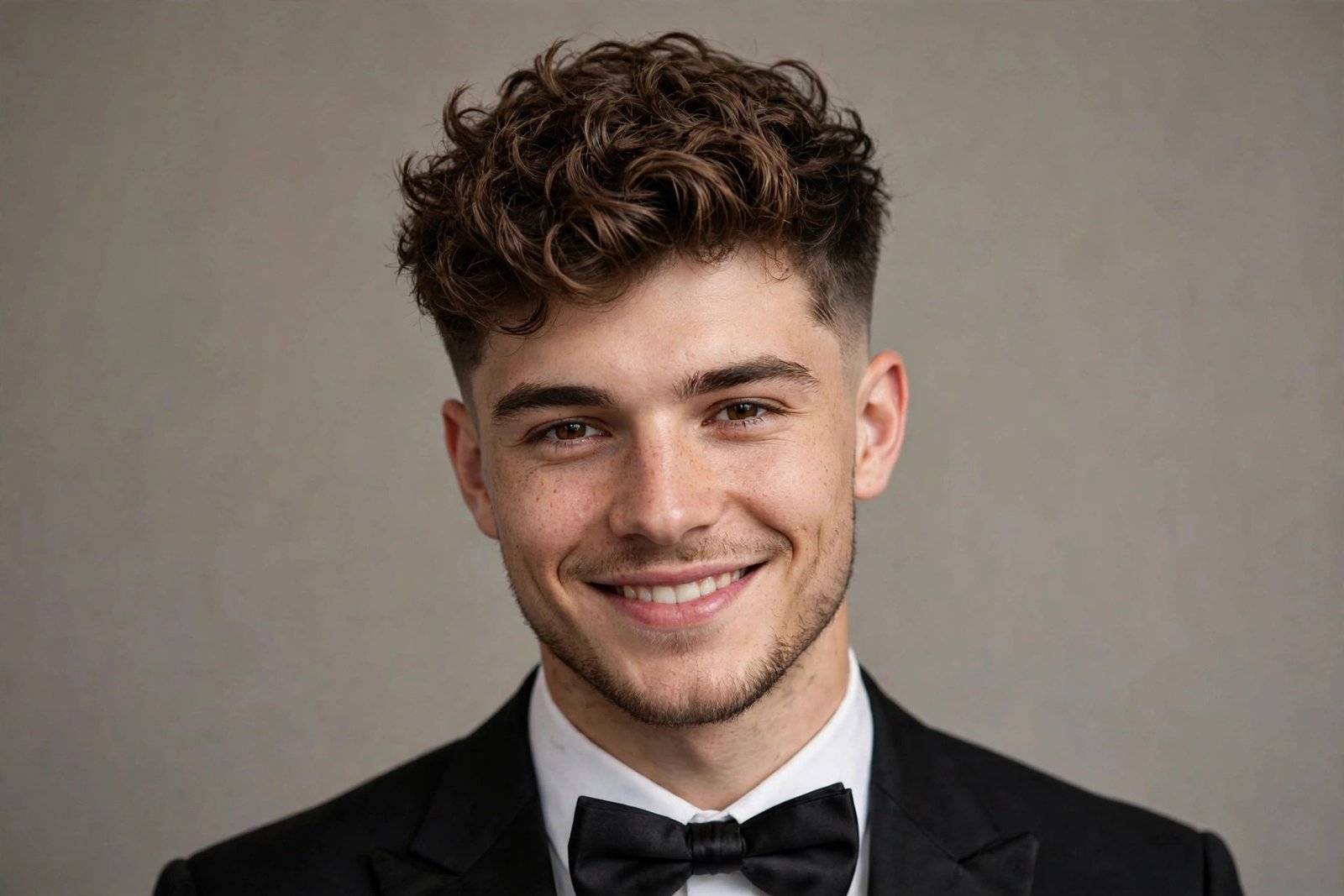
How far in advance should I get my haircut before prom?
Get the real cut 10–14 days before prom. This is the sweet spot: the cut has settled and softened (fresh cuts look harsh in photos), but it hasn’t grown out of shape. If your hair is long or you’re growing toward a specific style, get a shaping cut 3–4 weeks out, then the final cut in the 10–14 day window. Get a neckline and around-the-ears cleanup 2–3 days before if needed. Never get a full haircut on prom day or the day before — you want lived-in, not fresh-off-the-chair. And always tell the barber it’s for prom; they’ll cut with photos in mind and usually take a little extra care with the details that cameras catch.
What if it rains on prom night?
Rain is the scenario that separates the planners from the panickers. First, the umbrella situation: coordinate with your date — one good umbrella beats two people sprinting. For the hair itself: water-based products reactivate with water, which means light rain can actually let you re-smooth and reset. The real enemy is getting soaked, which kills any style. If the forecast looks wet, lean toward styles that recover well (textured crop, fringe forward, tousled looks) over ones that die when wet (sleek middle part, Hollywood sweep). Bring the emergency kit, and know this: slightly damp, re-smoothed hair with texture looks intentional. Panicking and over-touching it looks like panic. Stay calm, smooth it once, and carry on.
Can I style my prom hair myself, or should I go to a barber for styling?
Style it yourself — but practice first. Here’s why: a barber styles it perfectly at 4 PM, and then you live your life for four hours before photos. You need to know how to touch it up, which means you need to know how it was built. The winning formula is: barber does the cut (10–14 days before), you do a full practice styling session a week before, and on prom night you execute what you practiced. If you’ve truly never styled your hair and the style is complex (pompadour, tall quiff), some barbershops offer prom-day styling appointments — but book early, bring reference photos, and still learn the touch-up basics. Depending on someone else for the whole night is fragile; owning the skill is bulletproof.
How do I keep my hairstyle from falling flat while dancing?
Four layers of defense. One: the blow-dry foundation — hair dried into its shape holds; hair merely producted into shape doesn’t. Two: product layering — thin, even layers (pre-styler, then main styler, then hairspray) beat one thick layer every time. Three: the right product for heat — matte clays and waxes outlast shiny pomades on a hot dance floor. Four: the 10 PM touch-up — two minutes with damp hands (water reactivates water-based product), re-pinch the texture, light hairspray mist. Also, choose honestly: of all the prom hairstyles men wear, the ones that survive hard dancing are the styles that look good mussed (textured crop, flow, tousled fringe) over one that needs perfection. The style should match the night you’re actually going to have.
What hairstyle goes best with a tuxedo?
The tuxedo is the most formal thing you’ll wear, and classic hair honors that: slick-back, sharp side part, Old Hollywood sweep, neat Ivy League. These combinations look intentional and timeless in photos — twenty years from now, classic hair + tux still looks right, while trendy hair dates the photo instantly. That said, 2026 prom style is more flexible than old rules suggest: a textured quiff or defined curls with a tux looks modern and confident, not mismatched. The guideline is contrast management — the more classic the tux, the more room you have for modern hair, and vice versa. A wild suit + wild hair is chaos; pick one of them to be the statement. When in doubt, classic hair is never the wrong answer with a tux.
My hair is thinning — what prom hairstyle should I choose?
First: you’re not alone, and prom hair is absolutely still winnable. The rules for thinning hair are: shorter is better (long thin hair shows scalp; short thin hair looks intentional), texture over sleekness (texture creates the illusion of density; sleek styles expose), matte over shiny (shine highlights scalp; matte disguises it), and forward or textured over swept-back (swept-back exposes the hairline; forward fringe covers strategically). The Ivy League (style 11) and textured French crop (style 9) are your best friends on this list. Avoid: slick-backs, deep side parts on thinning crowns, and anything that needs volume you don’t have — fighting it looks worse than working with it. A great barber experienced with thinning hair is worth their weight in gold; tell them honestly what you’re working with and they’ll cut for density illusion. Confidence does the rest — and confidence comes from a cut you trust.
How do I make my prom hairstyle look good in photos?
Photos are a different medium than mirrors, and they reward specific things. Texture over flatness — textured hair catches light and shows dimension; flat hair disappears. Controlled shine — a little shine defines strands, but too much looks greasy under flash, so check with an actual phone photo, not just the mirror. Clean edges — hairlines, sideburns, and necklines show in every close-up; make sure they’re fresh. The part and the fringe — check them right before photos, because they’re the first things to drift. And angles matter: most guys photograph best with the chin slightly down and turned a few degrees — straight-on under overhead light is the least flattering angle for any hairstyle. Take test photos during your practice styling session, in different lighting, and study what the camera sees versus what the mirror shows. The camera is the real judge on prom night — rehearse for it.
Conclusion
Prom night is one evening, but the photos are forever — and your hair is in every single one of them. The good news is that great prom hair isn’t luck and it isn’t genetics. It’s a plan: pick one of these 15 prom hairstyles men are wearing that fits your hair type and your face, get the cut 10–14 days out, practice the styling once, buy the right products early, and walk in knowing your hair will hold. That’s the whole secret. The guys who look incredible at midnight aren’t the guys with the best hair — they’re the guys with the best preparation.
So choose your look, book that barber appointment, and do the practice run. Test it under bad lighting with a phone camera, dance around your room like an idiot to see if it holds, and do the 10 PM touch-up drill once so it’s muscle memory. Then on prom night, forget about your hair completely — that’s the real victory. When you’re not thinking about it, it means the plan worked. Have the night. The hair will take care of itself, because you took care of it first.