Finger Waves Men 2026: 14 Vintage-to-Modern Wave Styles
Finger Waves Men 2026: The Jazz-Age Classic That’s Back and Sharper Than Ever
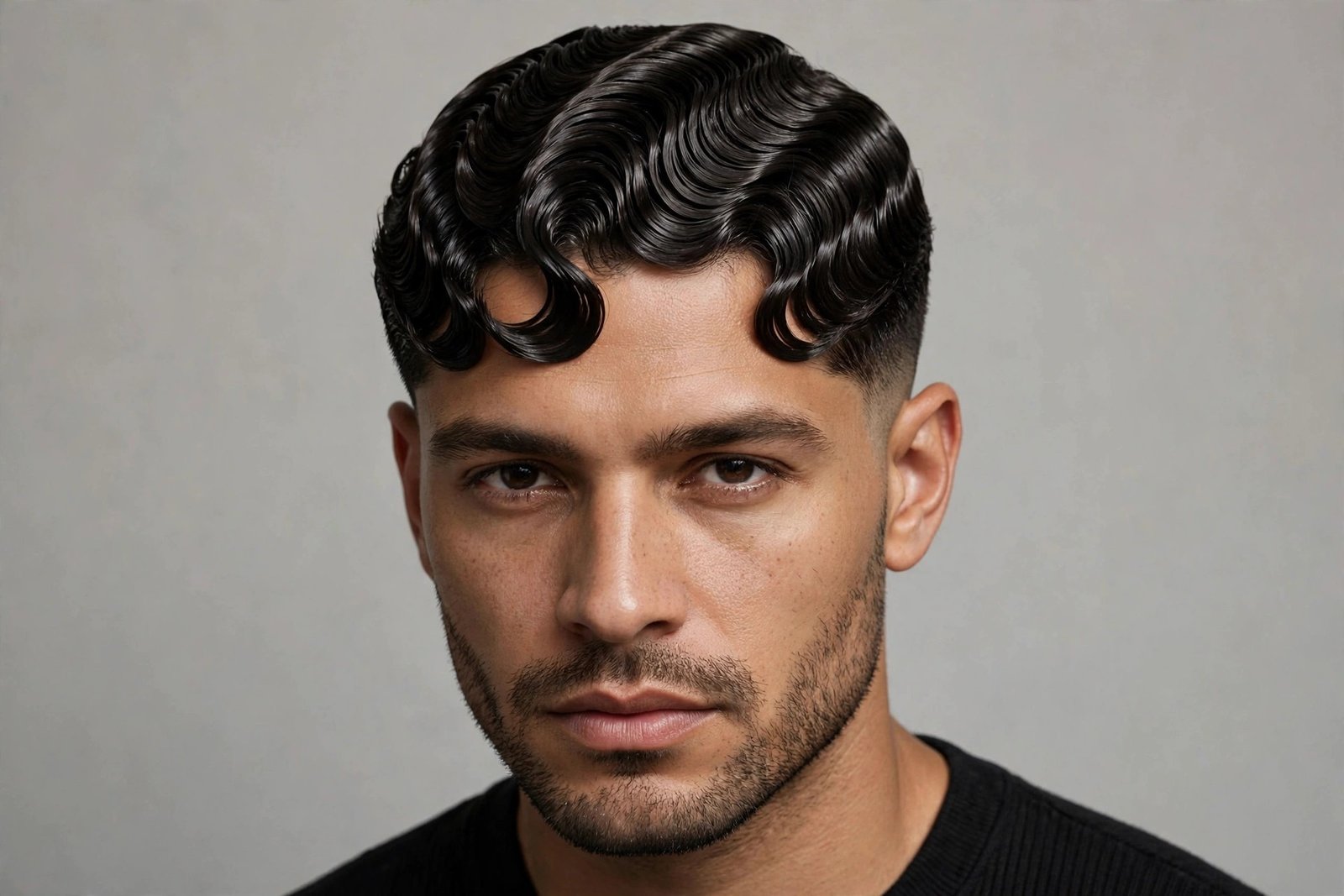
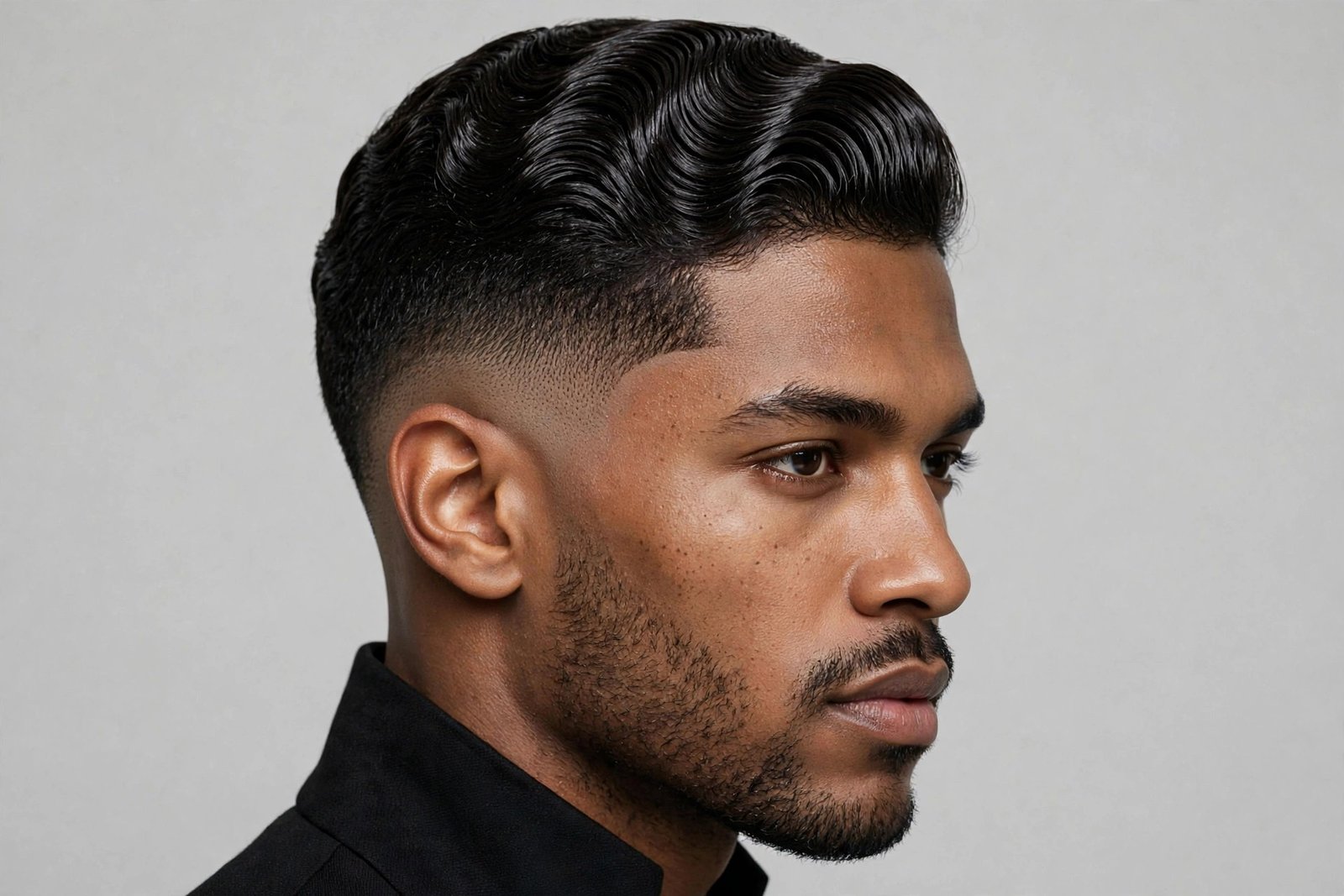
Finger waves men are wearing in 2026 didn’t come from a trend forecast — they came from a hundred years ago, and that’s exactly why they work. This is the style Josephine Baker made immortal, the style Black barbershops perfected in the 1930s, the style that showed up on runways in Paris and on block corners in Chicago at the exact same time. Finger waves are sculpted, deliberate, unapologetically precise ridges laid into the hair with gel and a comb, and they make every other “effortless” trend look lazy by comparison. There’s nothing accidental about them. That’s the point.
I’ll be honest with you: finger waves are not a wash-and-go style, and any barber who sells them to you as one is lying. This is a craft style. It takes technique, the right products, and — barbers won’t tell you this, but I will — a couple of failed attempts before your hands learn the rhythm. The comb has to pinch the ridge while you push the next valley, and your wrist has to stay loose the entire time. Get it right, though, and you walk out with something almost nobody else in the room has: waves with architecture. Structure you can see from across the street.
Inside this guide you’ll find 14 finger wave styles for men in 2026, from the authentic 1920s deep-wave original to the modern low-fade and 360-wave fusions dominating Black barbershop culture right now. You’ll get the honest history, who this style actually suits (it’s pickier than most guides admit), the exact sculpting method step by step, a maintenance routine that keeps ridges crisp for days, and answers to the questions men ask barbers about finger waves every single day.
One more thing before we start. Finger waves have a cultural weight that most hairstyle guides dance around, so I won’t. This style was carried by Black culture for a century — through jazz clubs, doo-wop groups, and the modern wave-brush era — and it deserves to be worn with respect for that lineage, not treated like a costume. Whatever your background, wear it well, keep it sharp, and understand where it came from. Now let’s build some waves.
Table of Contents
- Finger Waves Men 2026: The Jazz-Age Classic That’s Back and Sharper Than Ever
- 14 Finger Wave Styles for Men in 2026
- Sculpting, Styling & Maintenance Guide
- Frequently Asked Questions
- Conclusion
What Finger Waves Actually Are — and What They’re Not
Let’s clear up the biggest confusion first, because it costs men real money at the barber. Finger waves are NOT the same thing as 360 waves, even though the names get tossed around together. 360 waves — the full-crown ripple effect you see all over Instagram — are built over weeks with a wave brush, a durag, and consistent brushing in a circular pattern. They’re trained into the hair. Finger waves are sculpted in a single session: wet hair, strong-hold gel or sculpting lotion, and a fine-tooth comb pinching ridges into place, ridge by ridge, then set under a dryer or a wave cap until they harden. One is a training regimen. The other is a sculpture. They can absolutely be combined — and some of the sharpest looks in this guide do exactly that — but they’re different disciplines.
Historically, finger waves were invented for women in the 1920s as a softening alternative to the harsh Marcel wave done with hot irons. A hairdresser could lay them in with fingers and a comb — hence the name — and they became the defining texture of the flapper era. Black men adapted the technique in the decades that followed, merging it with pomade culture, and the style became a fixture in Black barbershops: precise, glossy, formal, the kind of hair you wore to church, to a wedding, to a night that mattered. When you see modern finger waves with a low fade, you’re looking at a century of craft in one head of hair.
What finger waves are NOT: they’re not a texture you can fake on the wrong hair type without serious work, and they’re not forgiving of a bad cut underneath. The waves sit on top of a shape, and if that shape is lumpy or the wrong length, the waves will telegraph every flaw. The canvas matters as much as the art. Any honest guide starts there, because the number one reason finger waves “don’t work” for a guy is that he asked for the waves on top of a haircut that was never built for them.
Why 2026 Is the Year of the Finger Wave — and Who It Actually Suits
Finger waves came back for three reasons, and none of them is an accident. First, the grooming pendulum swung hard toward precision after years of messy, “I woke up like this” styling — men are tired of looks that pretend effort doesn’t matter. Second, vintage Black grooming aesthetics went mainstream in a serious way: doo-wop silhouettes, tapered Afros, and sculpted waves all feed the same appetite. Third, fades got boring. When every guy in the room has some version of a mid fade with a textured top, the man with deep, glossy finger waves is the one people remember. Scarcity is a style advantage.
Now the honest part about suitability. Finger waves love medium to coarse hair with some natural bend or coil — that’s the sweet spot, and it’s why the style is dominant in Black barbershop culture. Hair that holds a ridge is hair that can be sculpted. Very fine, pin-straight hair can wear finger waves, but it needs more product, more setting time, and a realistic expectation that the ridges will soften faster. Length-wise, you need 2 to 4 inches on top for real depth; shorter than that and you’re in wave-brush territory, not finger-wave territory. Face shape is forgiving — the style adds width and polish, so it flatters square and oblong faces beautifully and can soften a strong jawline rather than fight it.
The lifestyle question matters more than most guides admit. Finger waves are a commitment style. You need a silk or satin wave cap or durag for sleep, a re-sculpt or at least a re-lay of the front ridges every couple of days, and you cannot treat this hair casually — a rough towel dry will murder a set. If you’re the guy who washes his hair daily and owns one product, either change your habits or pick a different style. But if you enjoy the ritual — and plenty of men genuinely love the ten minutes of sculpting the way others love polishing shoes — finger waves reward you every single day with hair that looks intentional.
14 Finger Wave Styles for Men in 2026
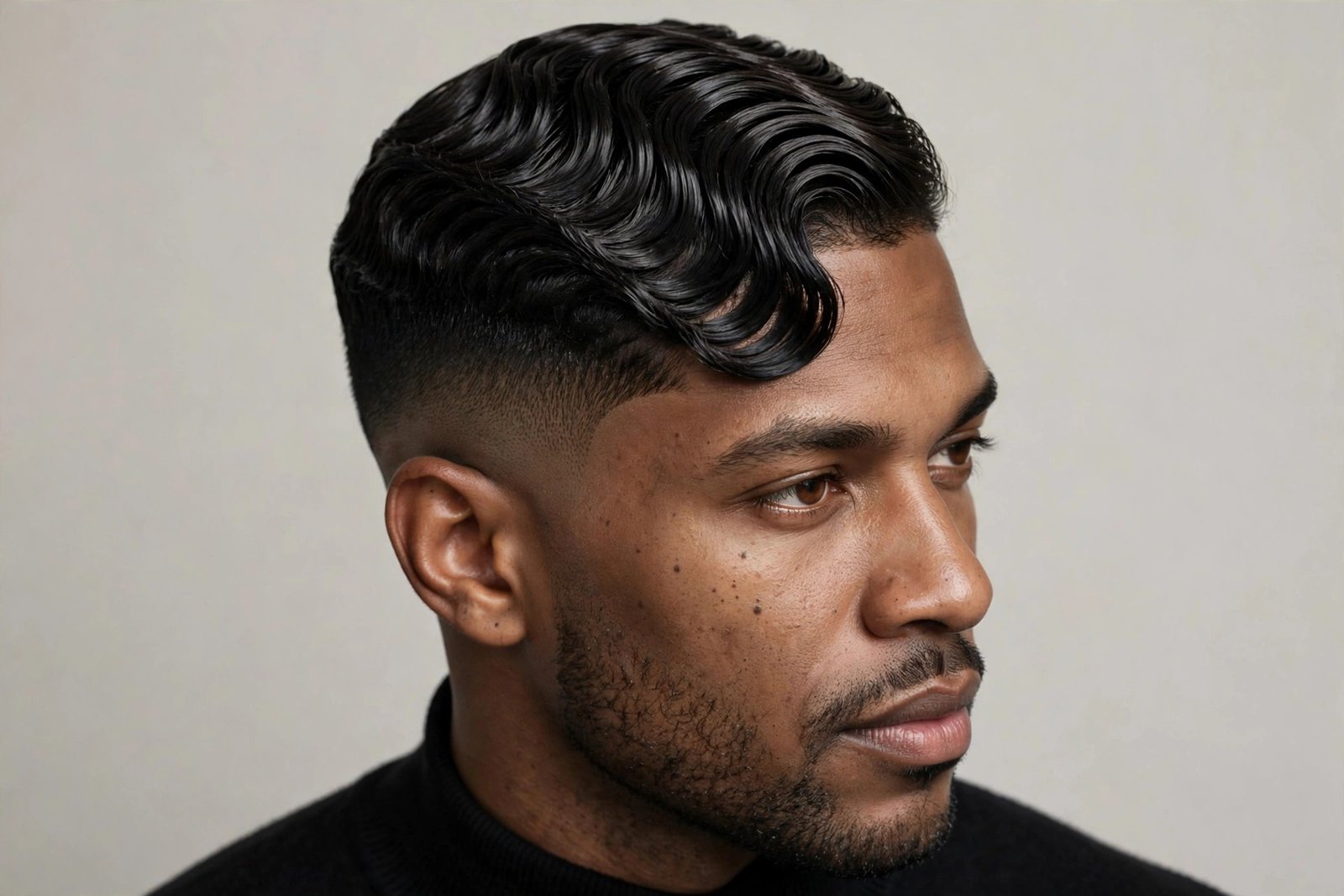
Here are the 14 finger waves men are asking for most in 2026, ordered from the authentic vintage original to the modern fusions. Every style below includes what it is, who it suits best, the exact script to hand your barber, and the honest downsides nobody posts about.
1. Classic 1920s Deep Finger Waves
This is the original — the one Josephine Baker wore, the one that defined an era. Deep, dramatic S-shaped ridges running in parallel rows across the full top of the head, each ridge pronounced enough to cast a shadow, the whole head gleaming like polished obsidian. Nothing about it is subtle. Worn at full vintage authenticity, it’s a statement that belongs at formal events, weddings, vintage-themed nights, and anywhere you want to look like you stepped out of a better-dressed century.
Who it suits: men with medium-length hair on top (3–4 inches minimum) and enough density to hold a deep ridge. It flatters oval, square, and oblong faces because the horizontal wave rows visually widen the face and add elegant structure. Coarse and coily hair holds these ridges best, but wavy or even straight hair with the right setting lotion can carry the vintage depth — you’ll just need more drying time under a hooded dryer or a wave cap.
The barber script: “I want authentic 1920s finger waves across the full top — deep ridges, side-swept direction, full vintage gloss finish. Keep the sides neat and tapered, not faded — this is a period style.” Bring a reference photo, because half of barbers under thirty have never done an authentic set. If your barber looks uncertain, find an older barber or a Black barbershop — many still do this as a matter of pride.
Maintenance is the honest cost: this is a special-occasion or high-commitment style. The ridges hold 2–4 days with a silk wave cap at night and careful re-laying of the front hairline ridges each morning. Sweat, rain, and humidity are the enemy — one humid day without protection softens the sculpture. But on the days it’s fresh, there is genuinely no sharper hairstyle on earth. I’ve seen a room go quiet when a man walked in wearing these done properly. That’s not exaggeration; it’s physics. Precision commands attention.
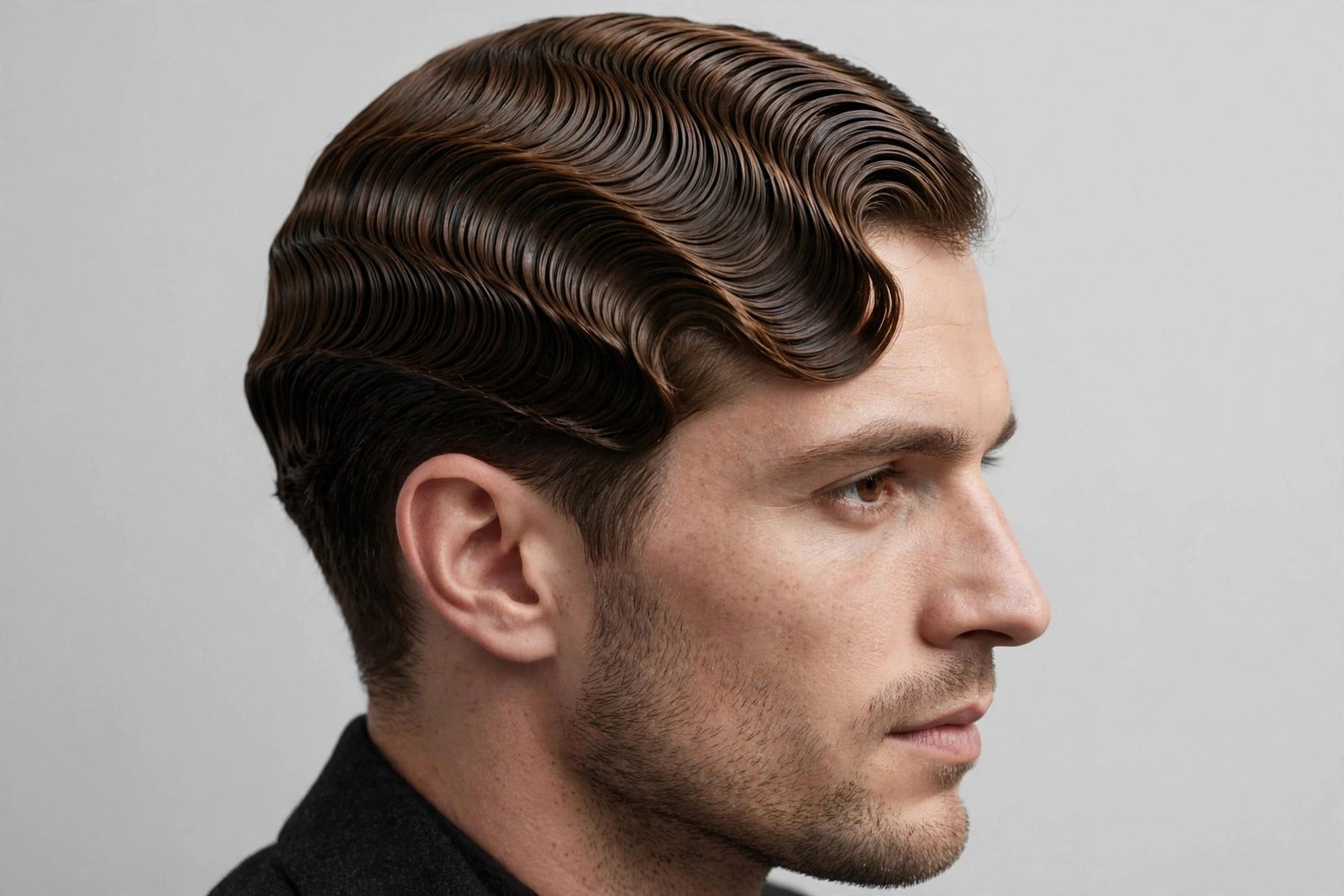
2. Modern Sculpted Finger Waves with Tapered Sides
This is the 2026 everyday version of the classic: finger waves across the top, but the sides are tapered down clean instead of left long, giving the vintage texture a modern silhouette. It reads as heritage and contemporary at the same time — the ridges say craft, the taper says right now. This is the style I’d recommend to any man trying finger waves for the first time, because it’s the most forgiving and the most wearable across settings: office, dinner, nights out, all of it.
Who it suits: almost everyone with 2.5+ inches on top. The taper customises the whole thing — a low taper keeps it classic and professional, a higher taper adds edge. Round faces benefit enormously because the wave height on top adds length to the face while the tapered sides keep width in check. This is also the best entry point for men with straighter hair, since the shorter perimeter means less hair to fight.
The barber script: “Finger waves on top, about 2.5 to 3 inches, sculpted with deep ridges running front to back. Taper the sides and back — clean but not a skin fade, keep it classic.” Then the waves themselves: most barbers will sculpt these wet at the chair and set them with a dryer. Ask for the ridges to run in the direction of your natural growth pattern, not against it — fighting the grain is how you get lifting and frizz by day two.
The honest downside: you’ll become dependent on your barber’s sculpting skill, because re-doing tapered-side finger waves at home takes practice. Budget for a touch-up every 10–14 days if you want it consistently crisp. The upside is real, though — this is the finger wave that gets compliments from strangers. There’s something about seeing deliberate, glossy ridges above a clean taper that makes people assume you’re the kind of man who has his life together. Wear it well enough and you might start believing them.
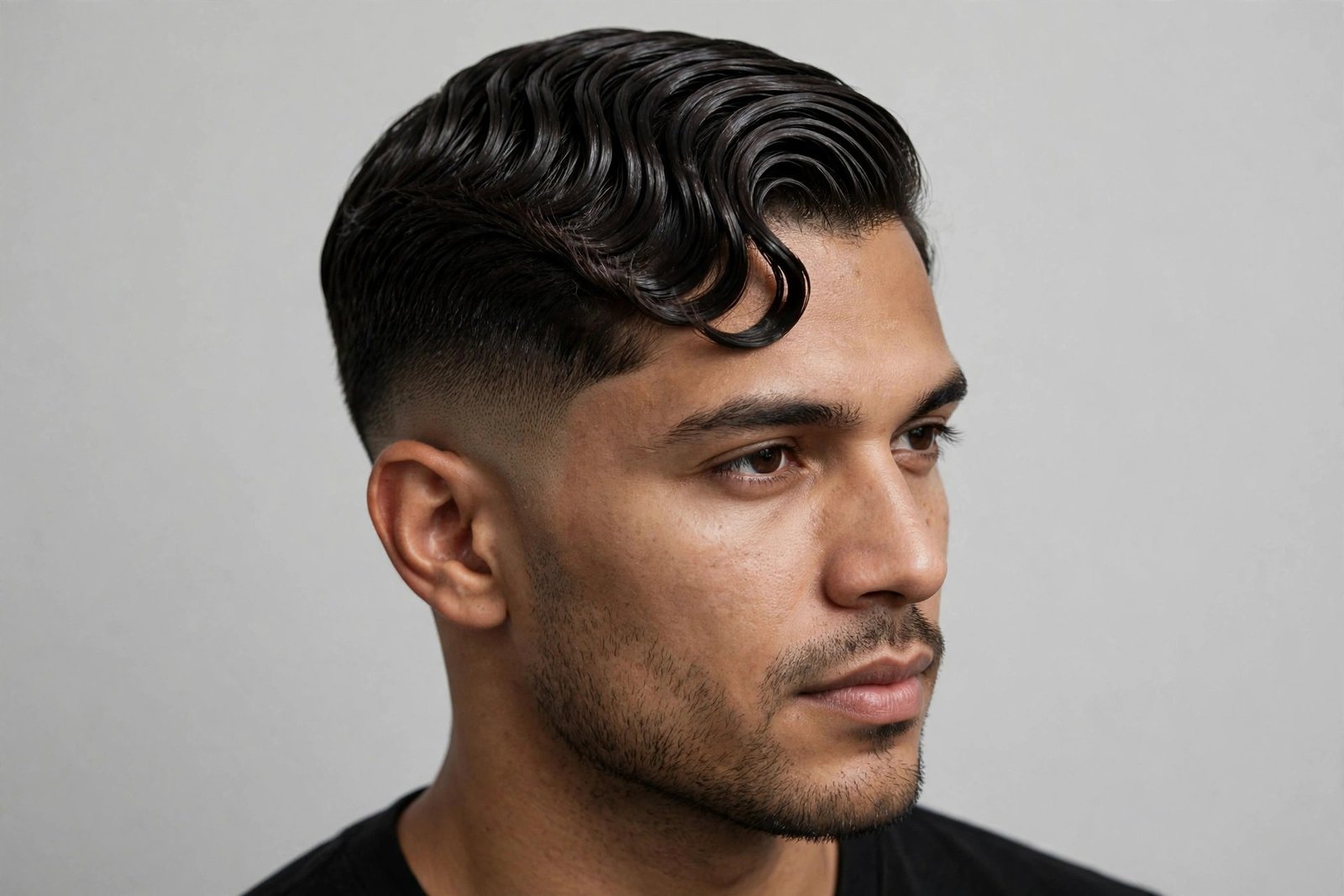
3. Finger Waves with Low Fade
Take the sculpted finger wave top and drop it onto a low fade, and you get the style currently owning Black barbershop Instagram. The low fade hugs the hairline and sideburns, fading to skin right at the bottom, while the waves sit above it like a crown. The contrast is the whole trick: soft, flowing ridges on top against the hard, surgical precision of the fade below. It’s masculine, it’s sharp, and it photographs absurdly well.
Who it suits: this is a barbershop-culture staple that looks best on coily and curly hair types, where the wave ridges hold deepest and the fade shows cleanest. It suits square and diamond faces particularly well — the fade sharpens the jawline while the waves add refined height. If your hairline is receding, talk to your barber honestly: a low fade can expose a thinning hairline, and waves drawn forward can camouflage it, but waves swept back will spotlight it. Strategy matters.
The barber script: “Low fade on the sides and back, blended smooth, and finger waves sculpted on top — I want the ridges deep and defined, running front to back.” Specify how low: some men want the fade starting barely above the ear, others want it creeping a touch higher. Also specify the top length, because “finger waves” alone doesn’t tell your barber whether you want 2 inches or 4. Numbers beat adjectives. Always.
Maintenance note: the fade needs refreshing every 1–2 weeks or the contrast dies — a grown-out fade under crisp waves looks like a mullet’s shy cousin. The waves themselves can be re-laid at home once you learn the comb technique, but the fade line is barber-only territory. Budget accordingly. And here’s a small thing nobody mentions: this style looks its absolute best on day one and two after the cut, slightly softer on days three to five. Plan your big nights accordingly — the calendar is part of the style.
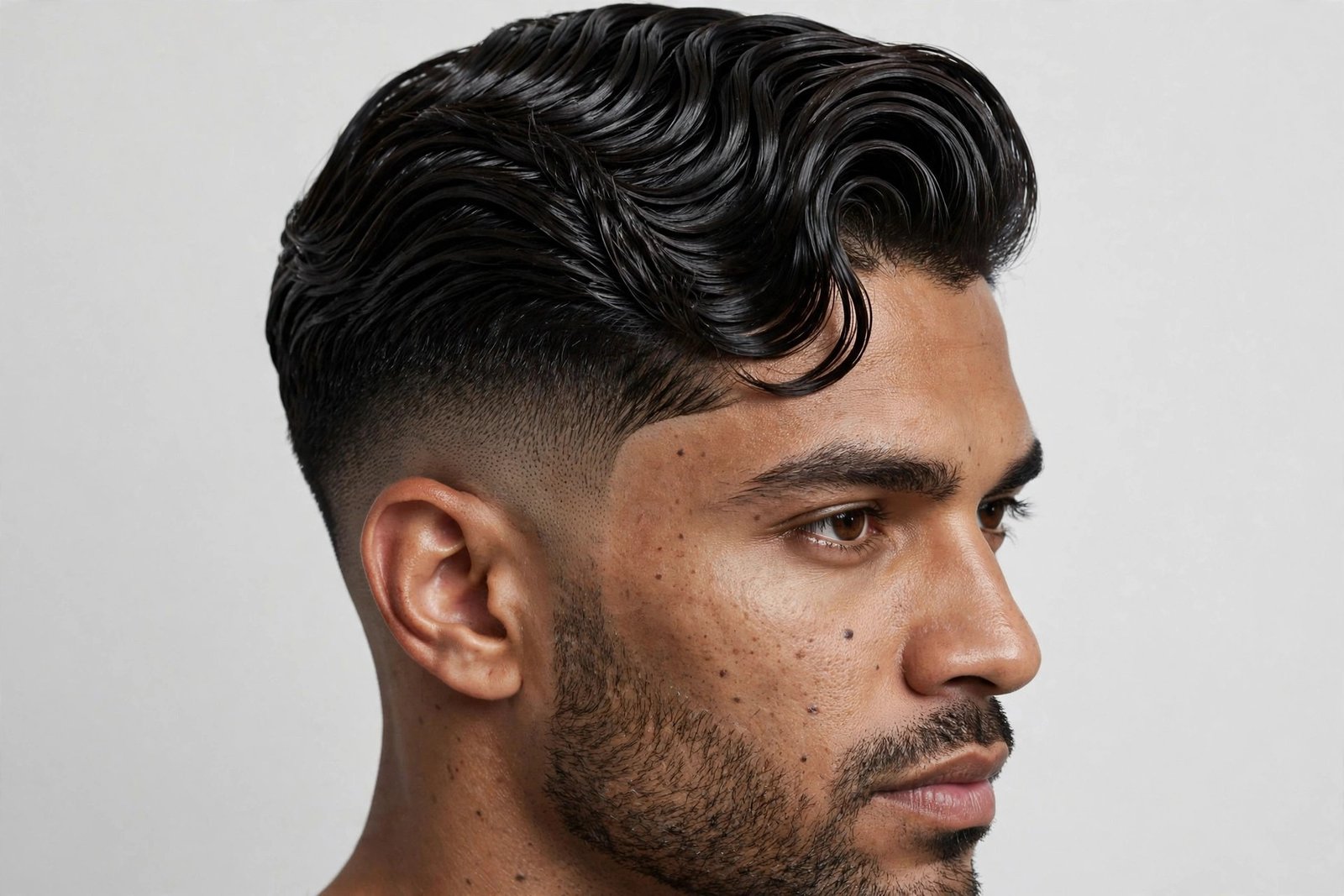
4. 360 Finger Waves on Natural Coily Hair
This is where two wave traditions merge into one head of hair: the trained, brushed-in ripple of 360 waves finished with sculpted finger-wave ridges at the crown and hairline. The 360 pattern gives you that famous all-around ripple; the finger-wave detailing adds sculpted definition where the eye lands first — the front. It’s the best of both disciplines, and it’s the style that separates the serious wave game from the casual one.
Who it suits: men with natural coily or tightly curled hair (type 3C–4C) who are already brushing. If you’re not willing to brush daily and durag nightly, don’t start here — 360s are a lifestyle before they’re a hairstyle. The finger-wave detailing on top of trained waves is the reward for that discipline, and it only works on hair that’s already laying down in pattern. Trying to sculpt finger waves onto un-trained, un-brushed coily hair is like building a house on sand.
The barber script: “I’ve got my 360s trained — I want finger-wave detailing sculpted into the crown and front, deep ridges, then set. Clean up the hairline and taper the edges.” This is specialist work; not every barber does wave detailing. Look for barbershops that advertise wave services or show 360 work in their portfolio. A regular fade barber can ruin trained waves with one careless pass of the clippers, so vet your barber like your hairline depends on it — because it does.
The honest reality: this is the highest-maintenance style on this list, full stop. Daily brushing, nightly durag, weekly wash-and-reset, re-sculpting the finger-wave detail every few days. But the men who do it will tell you the ritual becomes the point — there’s a whole community around wave culture, with forums and meetups and genuine camaraderie. If that sounds like a burden, pick another style. If it sounds like a hobby you’d love, welcome to the deep end. The results, when the pattern connects all the way around and the front ridges catch the light, are genuinely elite.
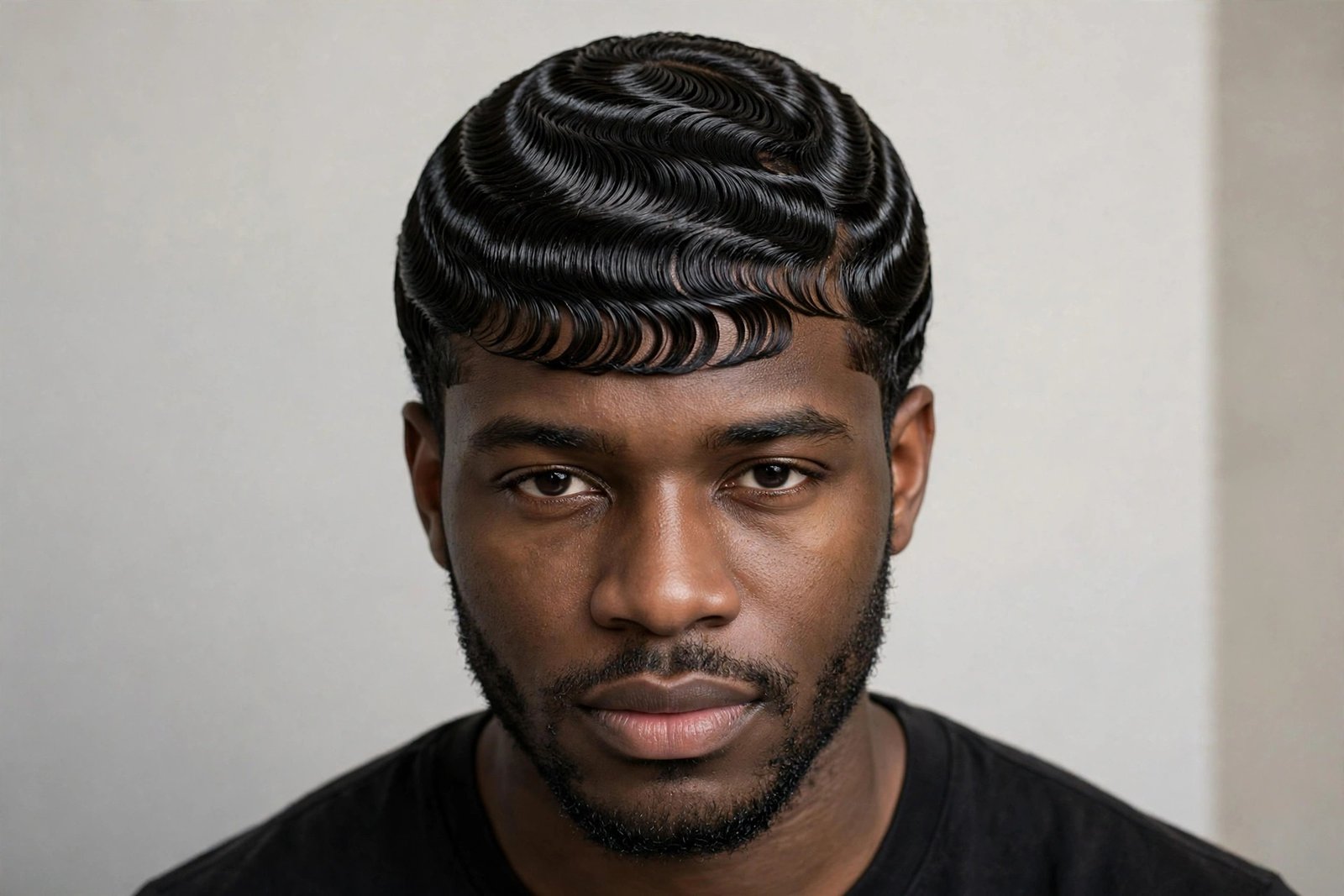
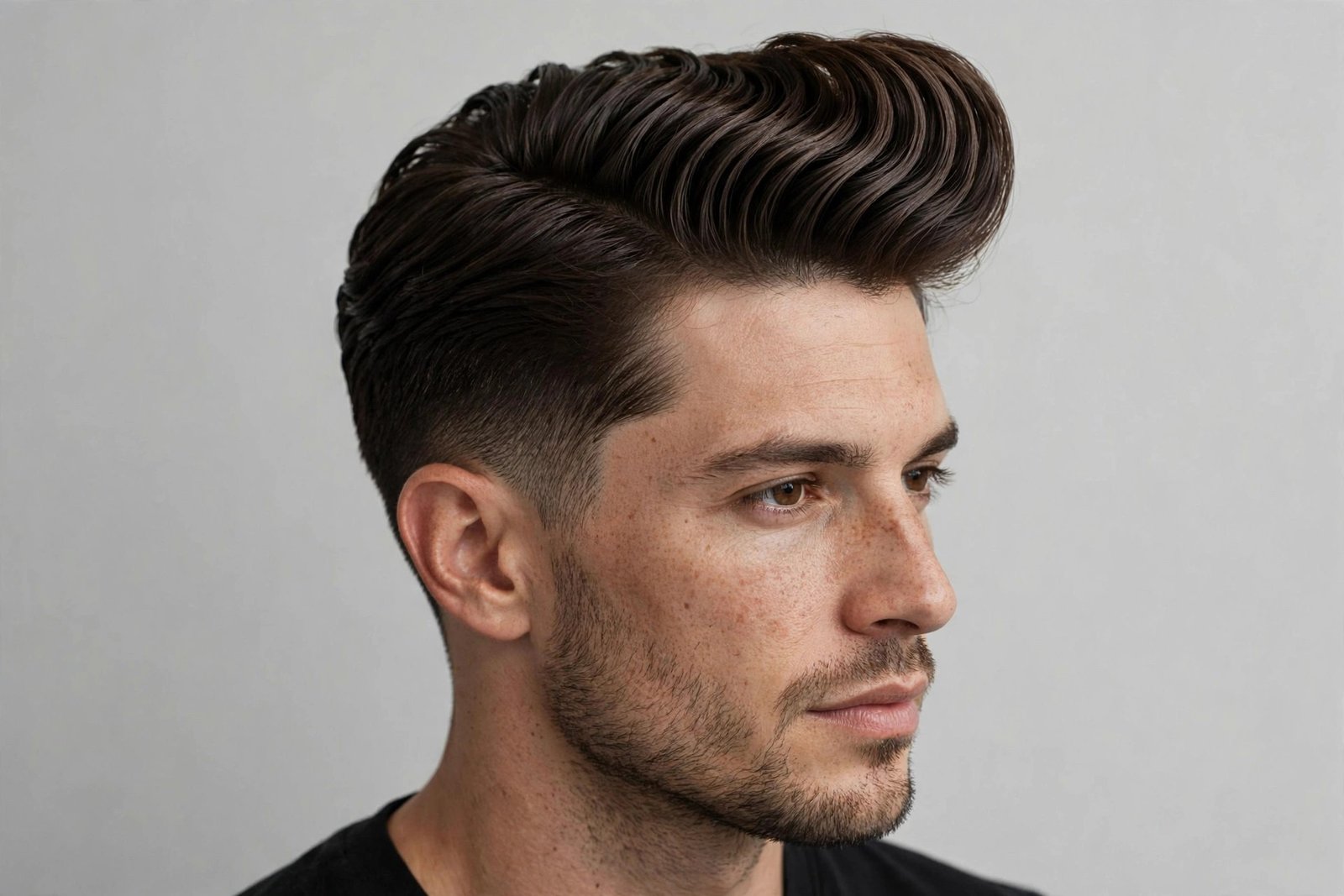
5. Finger Wave Pompadour
Now we’re having fun. The finger wave pompadour takes sculpted ridges and sweeps them upward and backward into pompadour volume — so instead of waves lying flat against the head, they rise. The ridges run diagonally across the lifted front, catching light like corduroy. It’s dramatic, it’s rockabilly-adjacent, and it’s the finger wave for men who find the classic versions too restrained. This is not a quiet style. It’s a style that enters the room half a second before you do.
Who it suits: men with thick, dense hair that can hold height — fine hair will collapse by noon without serious structural help. Longer faces should be careful, because this adds serious vertical inches; on an already long face it can look like a top hat. Square and round faces, though, get excellent balance from the added height. You also need length: 4+ inches in front to get the sweep and the ridges to coexist.
The barber script: “Finger waves swept up into a pompadour — I want the ridges visible running diagonally, big height in front, sides tapered or faded short for contrast.” This is advanced sculpting; the barber has to build the ridges while the hair is lifted, which is harder than laying them flat. Ask to see their pompadour work first. And discuss product: this style lives on strong-hold gel or a gel-pomade hybrid, set with heat. A water-based pomade alone won’t hold the ridge structure against gravity.
Downsides, honestly: wind is your nemesis, humidity is your enemy, and leaning back in a car seat will flatten one side. This is a style you wear to events, not to the gym. But the payoff is enormous — I’ve never seen a finger wave pompadour done well that didn’t get photographed by strangers. There’s a reason this silhouette has survived from the 1950s to now. Some shapes are just permanently cool.
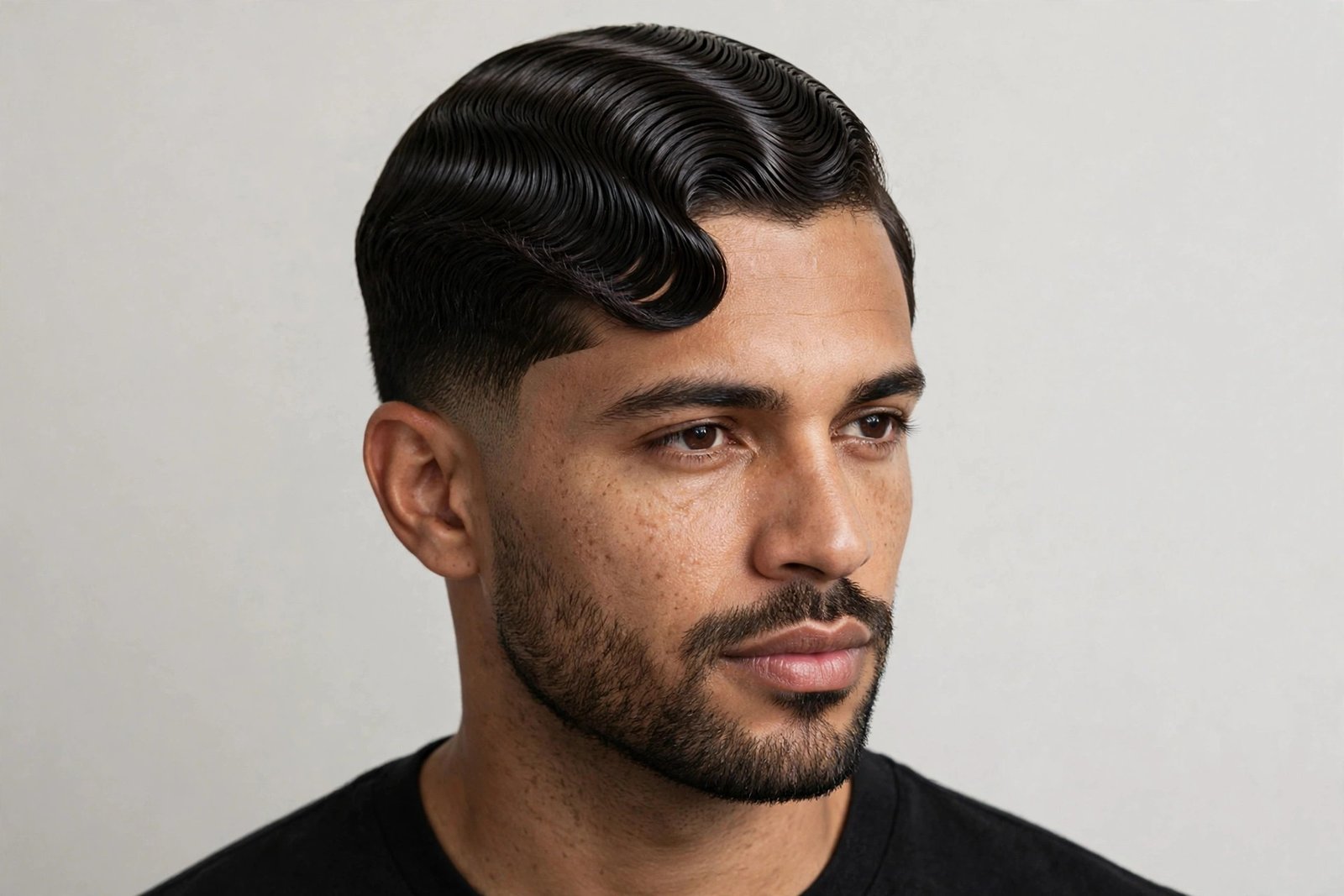
6. Side-Part Finger Waves
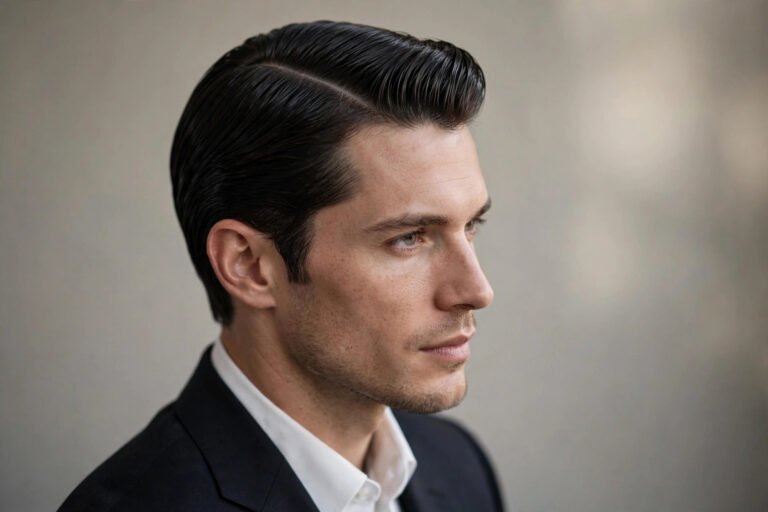
The side part is the most natural partner finger waves ever had. A crisp part line gives the waves a direction to flow from, and the asymmetry of a side part makes the parallel ridges look intentional rather than decorative. This is the boardroom finger wave — the version you wear to close the deal, meet the parents, or stand at the front of a wedding. It says precision without saying costume.
Who it suits: this is the most universally flattering finger wave on the list. The side part works with nearly every face shape, and the part placement is adjustable — a deeper part for drama, a softer part for subtlety. Men with a strong natural part line have an advantage; the waves follow the hair’s own logic. If you’re growing out a buzz cut and wondering when you can start, this is your target: once the top hits 2.5 inches, you’re in business.
The barber script: “Clean side part, finger waves sculpted flowing away from the part, neat taper on the sides.” Decide with your barber which side the part goes on — it should follow your natural growth, and a good barber will check your crown whorl before committing. Forcing a part against the grain means a lifetime of fighting it every morning. Work with the hair, not against it. That’s not philosophy; it’s physics.
If you’re pairing waves with a side part, our side part haircut guide covers part placement and maintenance in depth — the two styles share DNA. The maintenance here is moderate: the part needs re-defining every couple of days (a tail comb and a dab of product), and the waves need their nightly wave-cap protection. The part is actually the fragile bit — sleep on it wrong and you’ll wake up with a part that migrated an inch. Re-lay it damp in the morning and move on. Ten seconds, no drama.
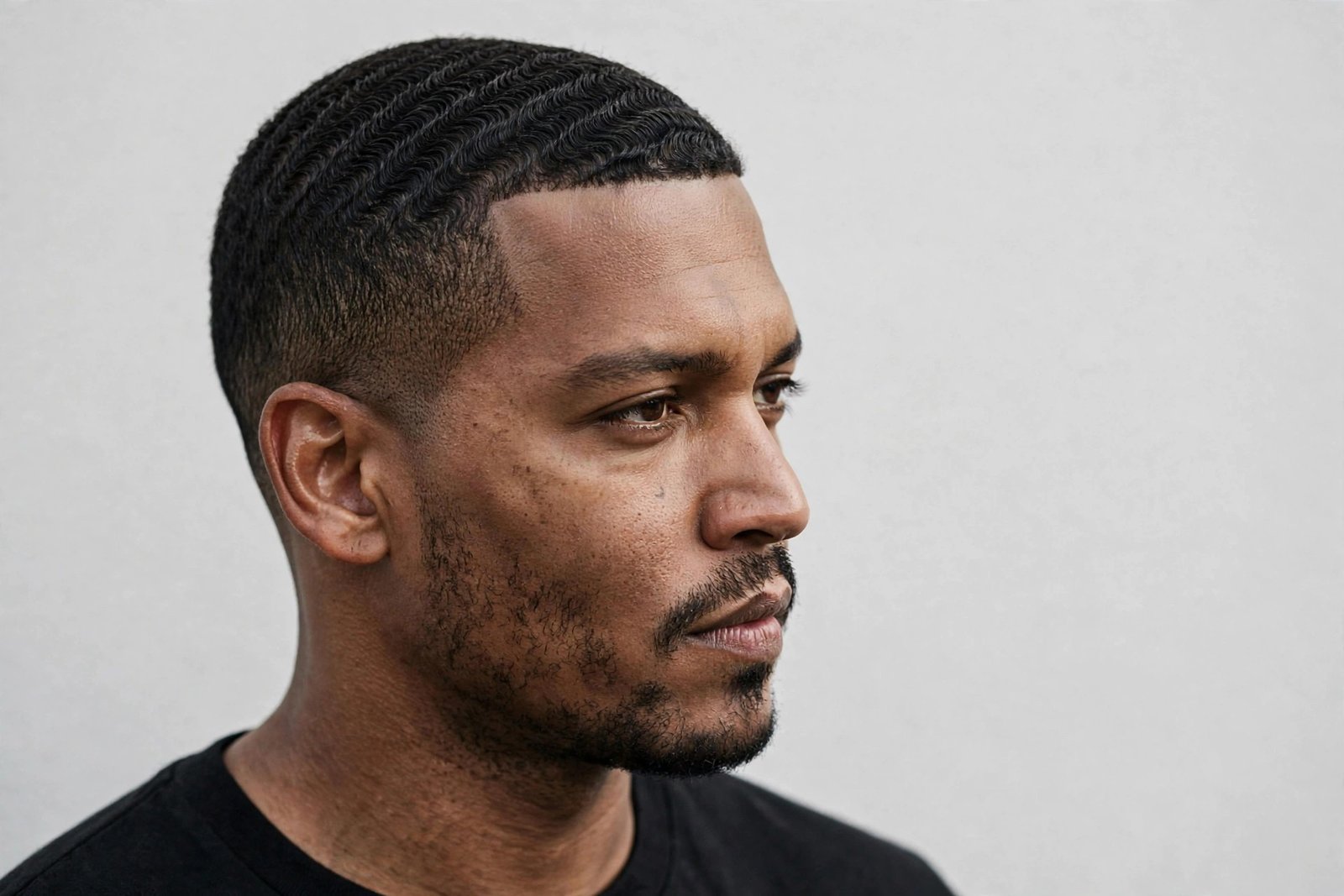
7. Short Cropped Finger Waves
Proof that you don’t need length to wear the wave. Short cropped finger waves take 1.5–2 inches on top and sculpt tight, shallow ridges into it — less drama than the deep vintage set, more texture than a plain crop. It reads as a textured crop with a secret: from a distance it looks like a sharp short cut, up close you see the sculpted ridges. It’s the introvert’s finger wave, and there’s real elegance in that restraint.
Who it suits: men who want the craft without the commitment of long-top maintenance. Shorter hair means faster sculpting (five minutes instead of fifteen), faster drying, and less product. It suits active men, men in humid climates, and men with fine hair — because at this length, even fine hair can hold a shallow ridge. It also works beautifully as a grow-out strategy: start cropped, let the top lengthen, graduate to the deeper styles on this list.
The barber script: “Short crop on top, about 1.5 to 2 inches, with shallow finger-wave texture sculpted in — not deep vintage ridges, just defined wave texture. Fade or taper the sides.” The key word is shallow. Without it, an enthusiastic barber might lay in deep ridges that overwhelm short hair and look like a topographical map. Reference photos help enormously here — “shallow” means different things to different barbers.
The trade-off: short finger waves have a shorter lifespan per set. Less hair means less product anchor, so the ridges soften faster — expect to re-touch every other day rather than every three or four. The fix is quick, though: dampen, re-lay the ridges with a comb and a pea of gel, cap it for twenty minutes while you have coffee. Honestly, this is the finger wave I’d prescribe to skeptics. Low risk, real reward, and it teaches your hands the technique for the bigger styles later.
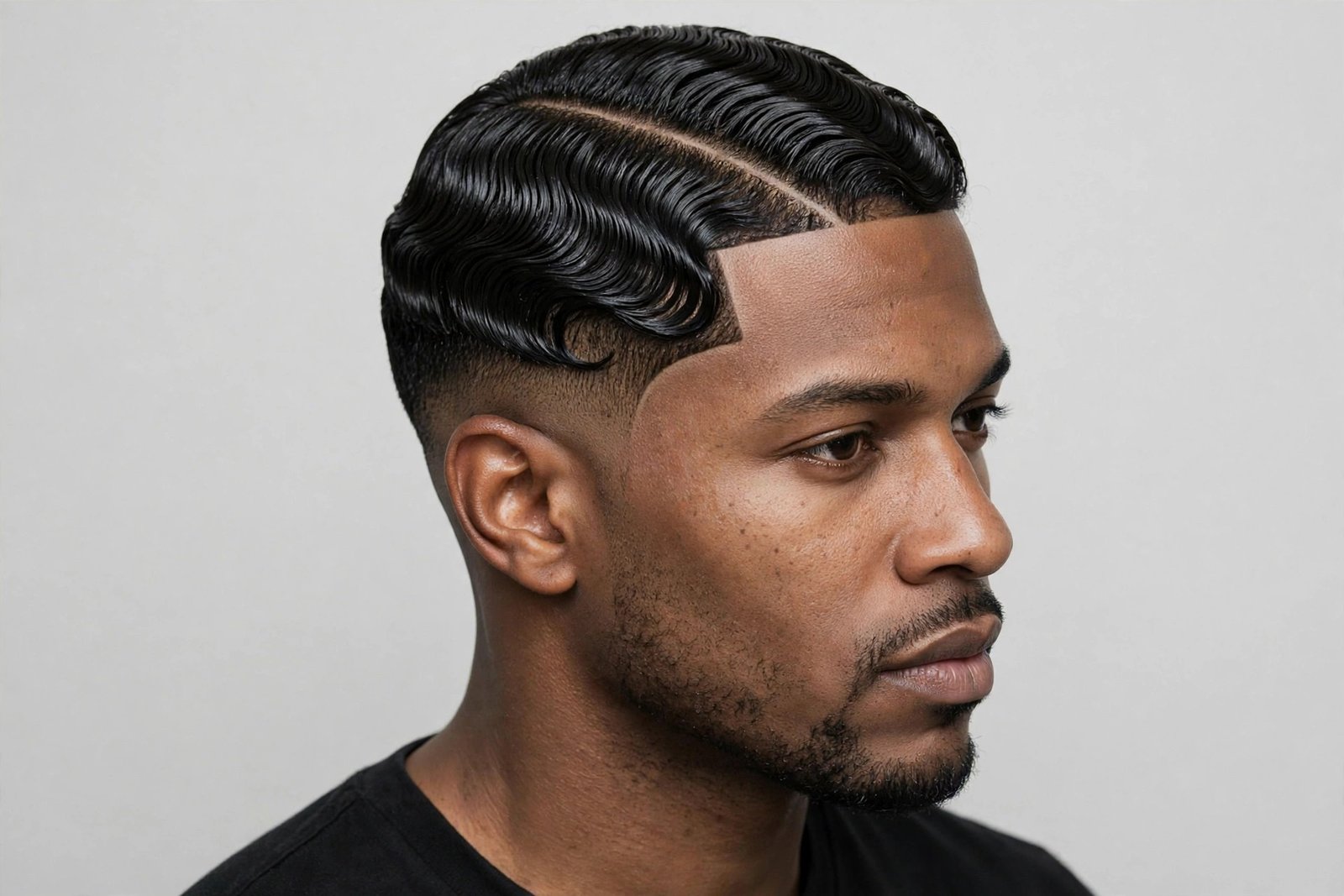
8. Finger Waves with a Hard Part
A hard part — the shaved, razor-sharp line — is the exclamation mark of men’s grooming, and pairing it with finger waves is a power move. The waves flow in ordered ridges on one side of the line; the line itself is a clean surgical break. Soft texture meets hard geometry, and the contrast makes both elements look sharper. This is the finger wave for men who like their style to have edges. Literally.
Who it suits: men who already wear hard parts or are ready for the upkeep they demand. The hard part needs re-cutting every 7–10 days or it grows into a soft part and the whole effect dulls. Face-wise, it adds strong horizontal structure, so it suits longer faces well and can overwhelm very round faces if the waves are also wide. Hair-wise, you need enough density that the shaved line reads clearly against the hair around it — very thin hair makes hard parts look patchy.
The barber script: “Hard part on [side], finger waves sculpted flowing away from it, and I want the part line kept crisp — razor finish.” Discuss placement carefully: the part should sit where your hair naturally wants to separate, and the width of the shaved line matters — too thin and it disappears, too wide and it looks like a head wound. A good barber will show you the line with a mirror before committing. If yours doesn’t offer, ask. It’s your head.
Be honest with yourself about the maintenance contract before you choose this one. Hard part + finger waves = the most barber-dependent combo on this list. You’re in the chair every week to ten days, minimum. Miss two appointments and you don’t have a style anymore, you have a reminder. But kept fresh, this is arguably the sharpest thing a man can wear in 2026. There’s a reason athletes and entertainers keep coming back to it — on camera and in person, nothing reads “put together” faster.
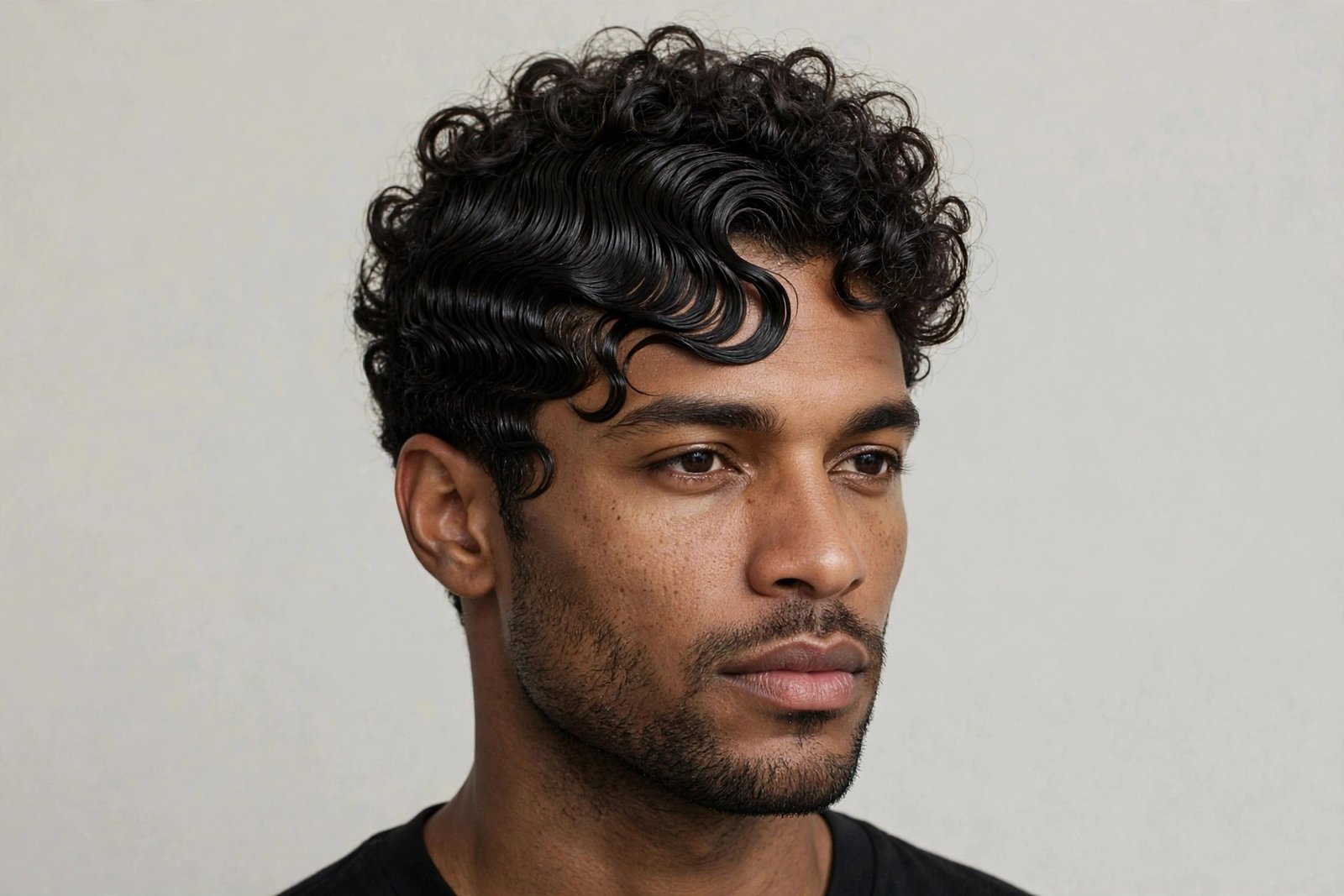
9. Finger Waves with Curly Top
For the men blessed — or cursed, depending on the day — with natural curls: finger waves across the front hairline and crown, transitioning into your natural curls toward the back and top. The sculpted waves give the front a polished, deliberate frame; the curls behind it give movement and life. It’s a hybrid that respects your texture instead of fighting it, and on the right head of hair it’s absolutely stunning.
Who it suits: men with curly to coily hair (type 3A–4A especially) who want polish at the front without relaxing or straightening the rest. The transition zone is the art — waves melting into curls has to look intentional, not like you gave up halfway. A skilled barber blends the two with the comb, letting the last ridge dissolve into the natural curl pattern. If your curls are very tight, the contrast is dramatic and beautiful; if they’re loose, the blend is seamless.
The barber script: “Finger waves sculpted across the front and hairline, blending back into my natural curls on top — I want a smooth transition, not a hard line where the waves stop.” Bring your hair to the appointment in its natural state, not straightened or stretched, so the barber can see the real curl pattern they’re blending into. This matters more than people think. Barbers sculpt what they see.
Product strategy is the make-or-break here: the waved front wants strong-hold gel for ridge definition; the curly back wants a curl cream or leave-in for soft definition. Two products, two zones, applied with intention. Our wavy hair guide covers curl-friendly products in detail if you need a starting point. Sleep protection is non-negotiable — a satin bonnet or wave cap preserves both the ridges and the curl definition. Cotton pillowcases will eat this style alive overnight. You’ve been warned.
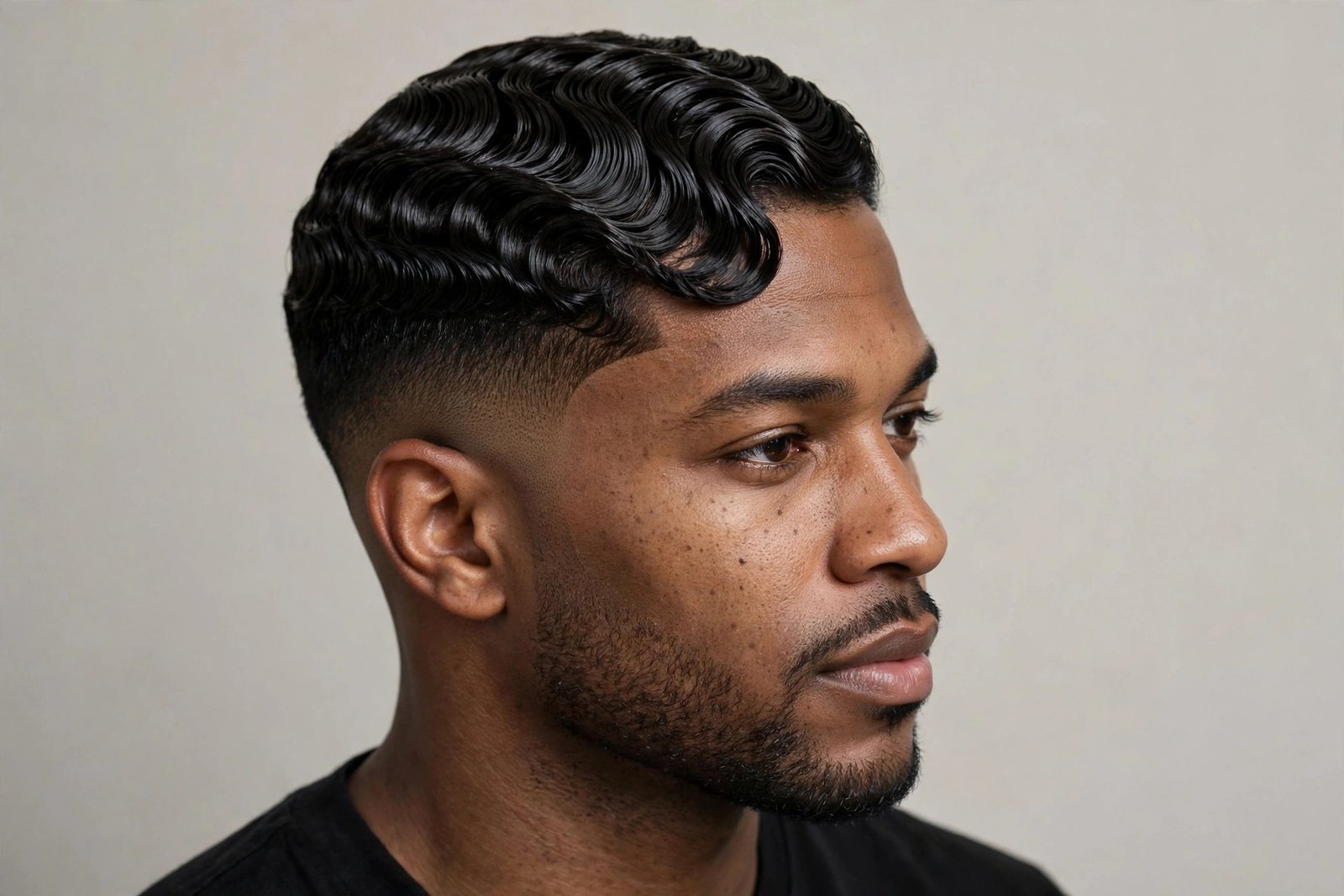
10. Finger Waves with Mid Fade
The mid fade is the workhorse of modern barbering — starting halfway up the sides, clean and versatile — and it gives finger waves a balanced, contemporary frame. Not as dramatic as a low fade, not as aggressive as a high fade: the mid fade lets the waves be the star while keeping the silhouette current. If the low-fade version is the nightclub, this is the version you wear to the office on Monday.
Who it suits: genuinely versatile across face shapes and hair types. The mid fade adds structure to round faces, keeps long faces from elongating further, and the moderate contrast flatters most complexions. It’s also the safest fade choice if you’re unsure — barbers execute mid fades in their sleep, so the risk of a botched blend is lowest here. For first-time fade wearers pairing it with waves, this is the training-wheels option that still looks elite.
The barber script: “Mid fade on the sides and back, smooth blend, finger waves sculpted on top with medium-depth ridges.” The word medium-depth is doing real work here — it tells the barber you want visible, defined ridges without the full vintage drama. Pair this with a temple fade detail at the front hairline if you want extra sharpness around the temples — the two fades layer beautifully and it’s a small addition that reads as major precision.
Maintenance sits in the comfortable middle: fade touch-ups every two weeks, wave re-laying every few days at home once you’ve learned the technique. This is the style I’d recommend to a man who wants finger waves as a lifestyle rather than an event — sustainable, repeatable, and consistently sharp. It won’t stop traffic like the pompadour version, but it will quietly make you the best-groomed man in every room you enter. Sometimes quiet wins.
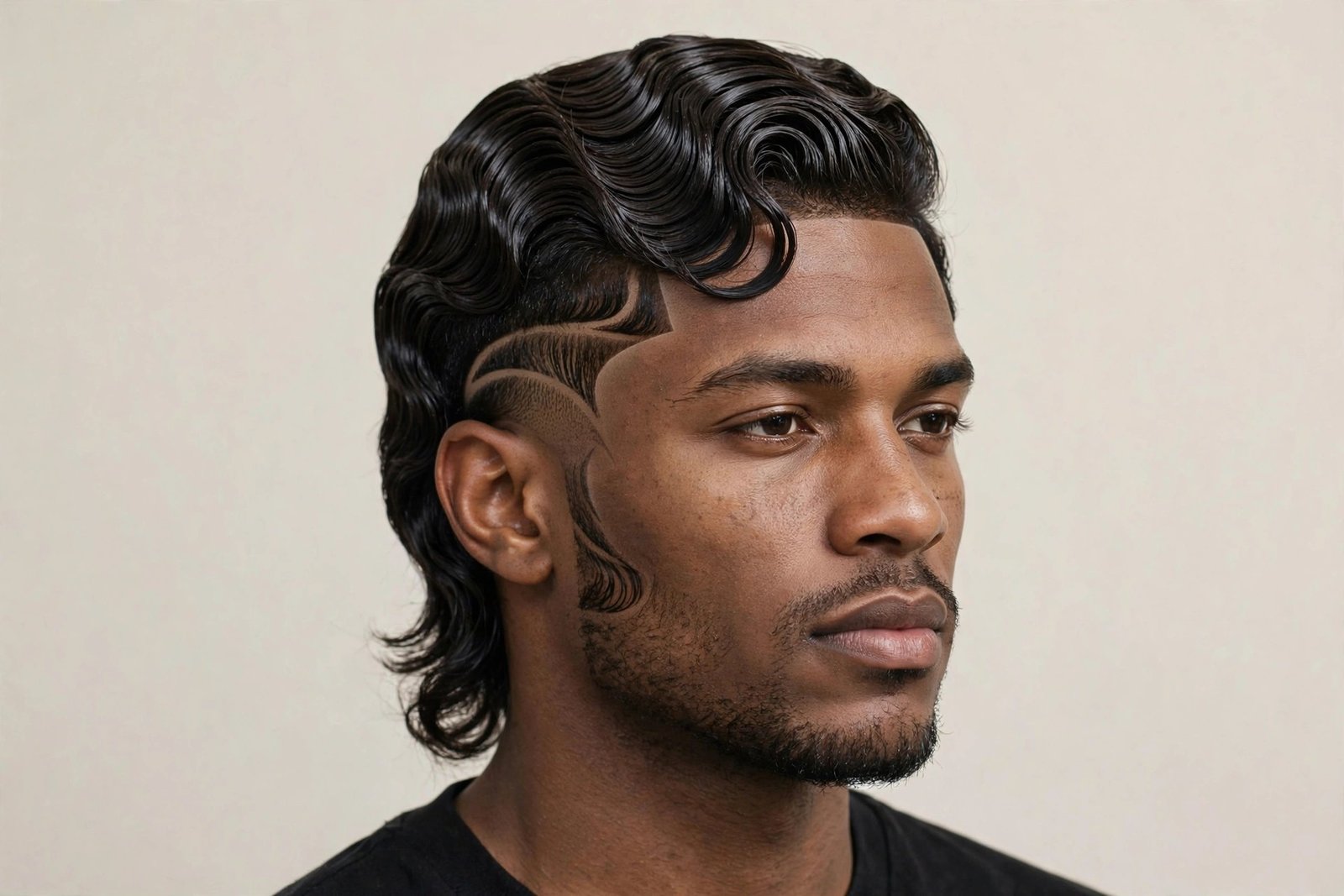
11. Finger Waves with Temple Fade
The temple fade — that precise, curved fade hugging the hairline at the temples — is a small detail with outsized impact. Paired with finger waves, it creates a frame of surgical sharpness around the sculpted texture: the waves do the talking on top, the temple fade does the whispering at the edges. It’s the detail that makes barbers nod at each other. The connoisseur’s choice.
Who it suits: men who want edge definition without committing to a full fade. The temple fade keeps hair longer through the sides and back while carving precision at the hairline — excellent for men growing out their sides, or for men whose workplace frowns on skin fades but tolerates sharp edges. It suits all face shapes, and it’s particularly kind to men with strong hairlines, because it showcases rather than hides them.
The barber script: “Finger waves on top, and I want a temple fade — sharp at the hairline and sideburns, keep the length through the sides.” Show a photo, because “temple fade” gets interpreted loosely. Some barbers will give you a mini-version of a full fade; what you want is the focused, curved detail at the temples. Precision in language gets precision in the chair. Vague requests get vague haircuts. This is a universal law of barbering.
The catch: temple fades grow out visibly fast. That crisp curve blurs within a week, and a blurred temple fade next to sharp waves looks unfinished — like wearing a tailored suit with scuffed shoes. Budget for weekly edge-ups if you want this consistently crisp, or learn to maintain the line yourself with a trimmer (steady hand required, mirror required, courage required). Many men do the weekly shop visit just for the edge-up — it’s quick, it’s cheap, and it keeps the whole style alive.
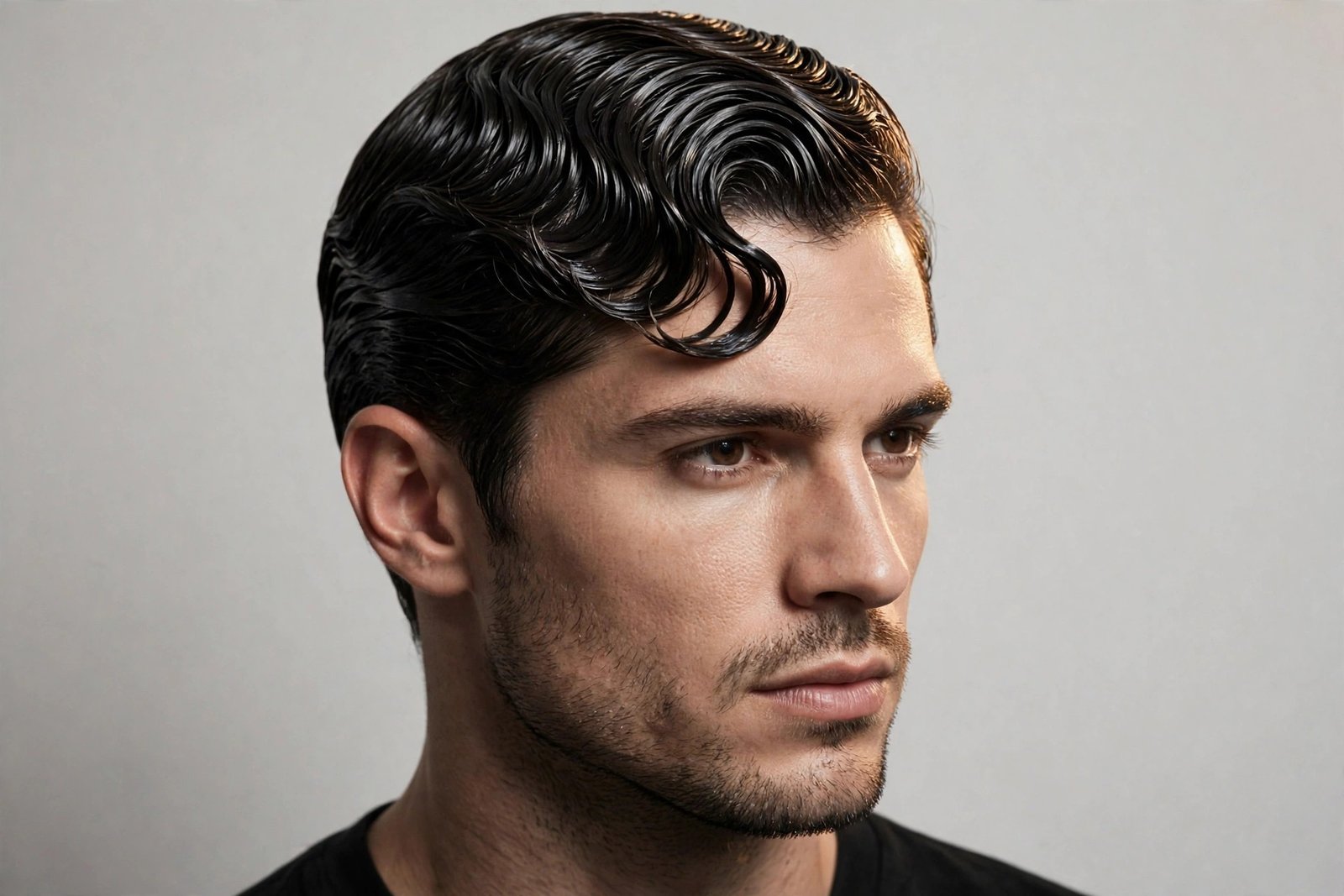
12. Wet-Look Gloss Finger Waves
Some finger waves whisper; these ones shine. The wet-look gloss version leans all the way into the shine — high-gloss gel or pomade, ridges sculpted deep, finish like black glass. It’s the red-carpet, music-video, wedding-day version of the style, and it has a lineage: this is how the waves were worn in their jazz-age prime, gleaming under club lights. A century later, under event lighting, the effect is identical. Some things don’t need updating.
Who it suits: evening events, formal occasions, photoshoots, and men who understand that shine is a commitment. The gloss finish shows every imperfection in the sculpting — a wobbly ridge can’t hide under matte texture — so this demands your best technique or your best barber. Dark hair carries the wet look most dramatically; on lighter hair the effect is softer but still striking. Fair warning: this is not a daytime office style unless your office is unusually glamorous.
The barber script: “Finger waves with a high-gloss wet finish — deep ridges, maximum shine, sides slicked neat.” Discuss product at the chair: you’ll want a high-shine strong-hold gel as the sculpting base, possibly finished with a shine pomade or a light oil sheen spray on top. Water-based products give cleaner shine; oil-based gives deeper gloss but transfers onto everything you touch. Choose based on how much you value your shirt collars.
The practical reality of wet-look: it attracts lint, dust, and anything floating in the air. It transfers to pillows, headrests, and hugs. It needs a silk wave cap for any car ride longer than twenty minutes. And yet — for the four to six hours of an event, there is nothing more striking. This is a style you wear for something, not through something. Plan the evening, wear the shine, accept the maintenance as the price of looking unforgettable in every photograph.
13. Finger Waves with Burst Fade
The burst fade — that curved, sunburst-shaped fade wrapping around the ear — is one of the most dynamic details in modern barbering, and it turns finger waves into something almost architectural. The waves flow in ordered ridges across the top while the burst fade carves a perfect arc below, like a wave breaking around a rock. It’s the most fashion-forward combination on this list, and it gets noticed. If subtlety is your goal, keep scrolling.
Who it suits: younger men, creative professionals, and anyone whose style already leans bold. The burst fade draws the eye to the ear and temple area, so it pairs best with clean facial grooming — a sharp beard line or clean shave keeps the composition tight. It suits oval and square faces well; on very round faces the curved fade can emphasise roundness, so discuss placement with your barber if that’s a concern.
The barber script: “Burst fade around the ears, finger waves sculpted on top — I want the fade curved and clean, waves with good depth.” The burst fade is technically demanding; the curve has to be symmetrical on both sides, which means your barber needs a steady hand and a good eye. Check their fade portfolio before you sit down. A lopsided burst fade is worse than no burst fade — asymmetry in a curved detail is visible from across the room.
Maintenance is real: the burst fade’s curve blurs quickly and needs weekly sharpening to keep its geometry. The waves follow the standard routine — re-lay every few days, cap nightly. This is a two-front maintenance war, and you should only enlist if you’re prepared to fight on both. But the men who wear this well look like they walked out of a style editorial, because in a sense they did — this combination is editorial by nature. Wear it like you mean it.
14. Long Swoop Editorial Finger Waves
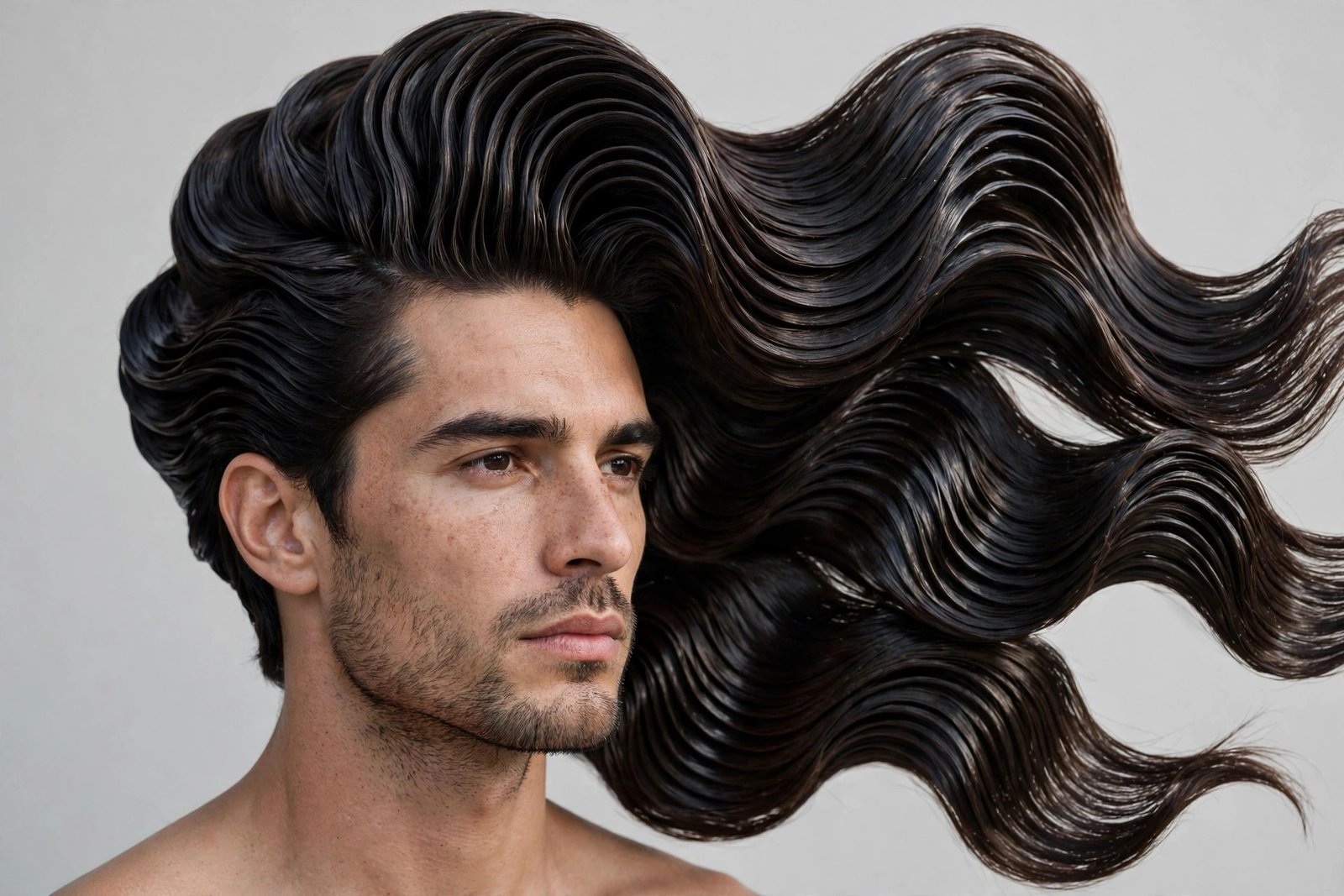
The finale, and the most artistic: long swoop finger waves, where 4–6 inches of top hair is sculpted into broad, sweeping ridges that flow in one dramatic direction — usually swept dramatically to one side or straight back like a wave frozen mid-break. This is the runway version, the photoshoot version, the version that belongs in black and white photography. It’s less a haircut and more a sculpture that happens to be attached to your head.
Who it suits: men with the length, the density, and the occasion. You need serious length on top and hair thick enough to hold broad ridges without collapsing. This suits fashion-industry men, performers, and anyone whose life includes cameras. For daily office wear it’s impractical — the swoop catches on everything and needs midday attention. But as a statement style for events, editorials, and nights that matter, it’s unmatched.
The barber script: “Long finger waves, big sweeping ridges flowing to [side/back], maximum drama — treat it like an editorial set.” This is specialist sculpting; you’re essentially commissioning a piece of hair art. Expect the appointment to take longer, cost more, and involve setting under a dryer. Discuss longevity honestly with your barber: a set this ambitious typically holds its full drama for a day or two, softening into still-beautiful waves after that.
The honest assessment: this is the least practical and most beautiful style on the list, and that’s exactly its role. Not every hairstyle needs to be daily-wearable. Some exist to be worn once, photographed forever, and remembered. If you’ve grown your hair out for months, this is the reward — one spectacular set that justifies all the awkward stages. Long-top management techniques transfer directly to maintaining length for styles like this, so keep the ends healthy while you grow.
Sculpting, Styling & Maintenance Guide
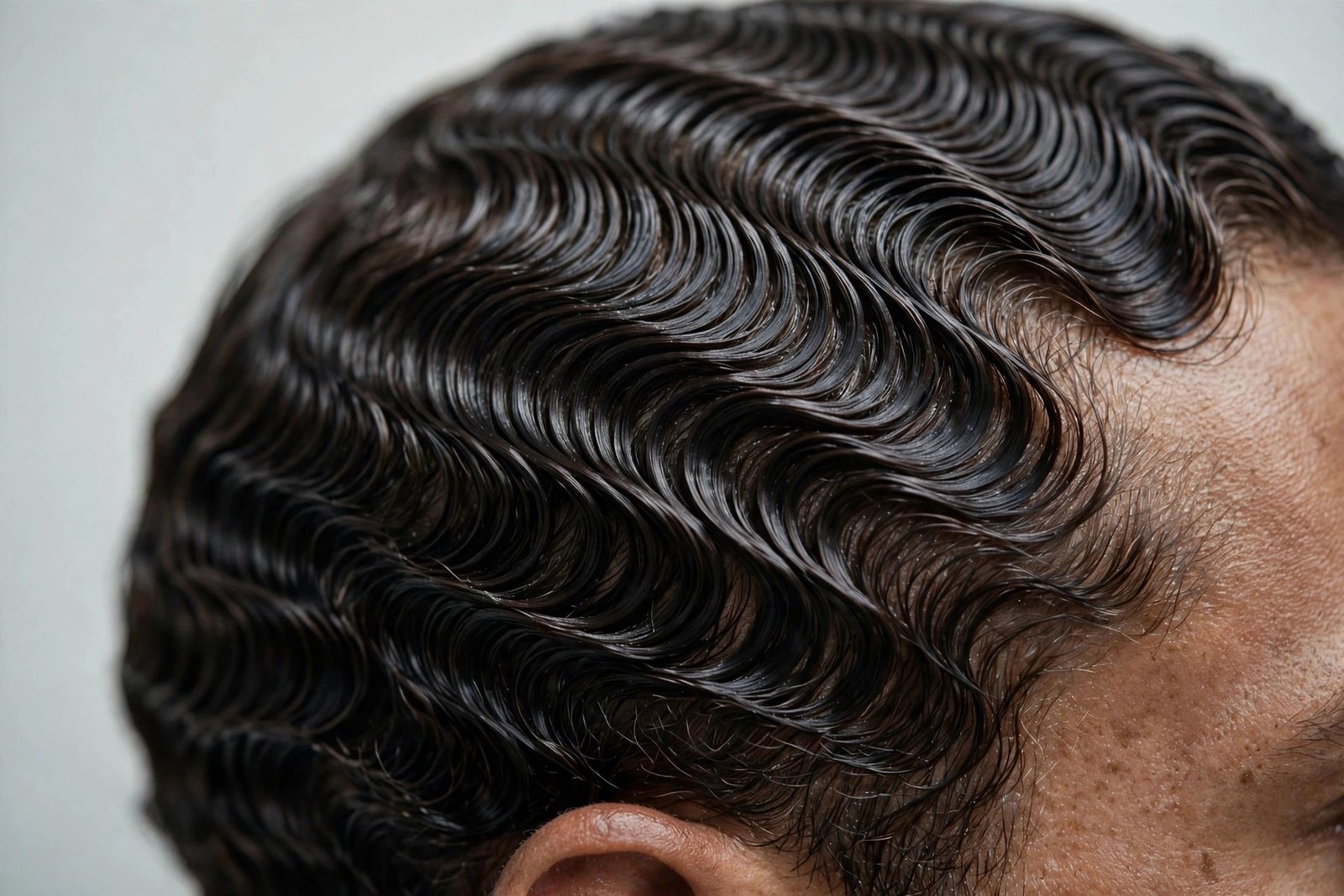
For finger waves men, the real split is 20% haircut and 80% technique — so this section is the real heart of the guide.
The Sculpting Method, Step by Step
Start with clean, damp hair — freshly washed and towel-blotted, not dripping. Apply your sculpting product (more on products below) evenly through the top, working from roots to ends. The hair should feel uniformly slick, every strand coated. Dry patches are where ridges fail, so be thorough. Comb everything in the direction the waves will flow — this is your foundation, and rushing it is the number one beginner mistake.
Now the actual technique, and read this slowly. Place your index finger (or the spine of the comb) where you want the first ridge. With a fine-tooth comb, push the hair forward against your finger to form the ridge, then — holding the ridge in place with the finger — comb the hair behind it backward to form the valley. Pinch, push, release. Move down the head and repeat, keeping the ridges parallel and evenly spaced. Your wrist stays loose; your finger stays firm. The first time you do this it feels like patting your head and rubbing your stomach. The tenth time it’s muscle memory.
Work in sections: front hairline first (this is what people see), then the crown, then the sides of the top. Keep a spray bottle handy — the hair must stay damp while you sculpt, and if a section starts drying before you’ve set the ridge, re-wet it. Dry-sculpting is how you get frizz instead of waves. Once all ridges are laid, set the whole head: either sit under a hooded dryer for 20–30 minutes, or pull on a snug wave cap and let it set for at least an hour (overnight is best for a first-timer). The set is what locks the ridges. Skip it and the waves will relax within hours.
When you remove the cap, don’t touch the ridges. Let them settle for a few minutes, then — only if needed — smooth flyaways with the lightest touch of product on your fingertips. The ridges should feel firm and look defined. If they’re soft, your product wasn’t strong enough or your set time was too short; adjust one variable at a time until you dial it in. Every head of hair has its own formula, and finding yours is part of the craft. Enjoy the process. The men who love finger waves genuinely love this part — it’s ten minutes of focused, meditative work with a visible reward.
Products That Work — and Products That Don’t
The product hierarchy for finger waves is simple: you need hold, you need moisture, and you need shine, roughly in that order. For sculpting, a strong-hold gel or sculpting lotion is the foundation — look for gels marketed for waves or curl definition, which typically have the right balance of hold and flexibility. Avoid crunchy, flaky gels (usually the cheapest ones); they shatter when the ridges move and leave white residue. A good sculpting gel dries firm but not brittle, and reactivates slightly with water for touch-ups.
For coily and curly hair types, layering is the professional secret: a leave-in conditioner or curl cream first (moisture foundation), then the sculpting gel on top (hold). The leave-in keeps the hair supple under the gel’s hold, preventing the dry, straw-like feeling that gel-alone can cause on textured hair. For straighter hair types, a setting lotion — the old-school barbershop staple — often works better than heavy gel, because it provides firm hold without weighing fine hair down. Ask at a proper barbershop supply store; they’ll know exactly what you mean.
Finishing products: a light oil sheen spray or a pea-sized amount of pomade adds the gloss that makes finger waves look expensive. Apply only after the set is complete and the ridges are locked — applying shine product before setting interferes with the hold. And the products that don’t work: matte clays and pastes (they kill shine and fight the comb), sea salt sprays (they create beach texture, the opposite of sculpted ridges), and dry shampoo (it absorbs the moisture your ridges need). Using the wrong product category is the most common reason home attempts fail. The right product makes the technique twice as easy. Spend the money; it’s cheaper than frustration.
The Nightly Routine That Saves Your Waves
Here’s the truth that separates wave men from ex-wave men: what you do at night matters more than what you do in the morning. A silk or satin wave cap — or a durag, tied snugly but not painfully — is non-negotiable. Cotton pillowcases create friction that lifts ridges and breeds frizz; silk and satin let the hair glide. This isn’t luxury, it’s engineering. A five-pound cap protects a fifty-pound haircut. The maths is obvious.
The nightly sequence: if the waves are still crisp, just cap it and sleep — don’t touch them. If the front ridges have softened, do a quick re-lay: dampen the front with a spray bottle, re-pinch the ridges with your comb and a tiny amount of gel, then cap for the night. The cap does the setting work while you sleep. In the morning, remove the cap carefully — don’t yank it off — and let the hair breathe for a few minutes before assessing. Most mornings you’ll find the waves have actually improved overnight, pressed smooth by the cap. It’s the closest thing grooming has to a free lunch.
Washing resets everything, so wash strategically: once or twice a week is plenty for most wave wearers, using a moisturising shampoo. Every wash means a full re-sculpt, so some men extend their sets with a co-wash (conditioner-only wash) mid-week, which cleans without fully stripping the product foundation. Between washes, a dry scalp can be refreshed with a witch-hazel-dampened cloth at the hairline — old barbershop trick, still works. The goal is to maximise days per sculpt. With practice, a good set lasts 4–6 days. That’s the efficiency sweet spot where finger waves stop feeling like a chore and start feeling like a system.
Troubleshooting: What Goes Wrong and How to Fix It
Ridges won’t hold: the usual suspects are insufficient product, hair that dried mid-sculpt, or hair that’s too short for the ridge depth you’re attempting. Fix by re-wetting thoroughly, adding more product than feels reasonable (beginners always under-apply), and capping for a longer set. If your hair is under 2 inches, accept shallower ridges — physics doesn’t negotiate.
Frizz and flyaways: almost always a moisture problem. The hair needed more leave-in conditioner under the gel, or you sculpted on hair that was too dry, or you touched the ridges during the set. Fix forward by improving the moisture foundation; fix today by smoothing a tiny amount of product over the flyaways with flat palms — never a brush, which breaks ridge structure. A boar-bristle brush used very gently can smooth the surface without destroying ridges, but “very gently” is doing heavy lifting in that sentence. When in doubt, palms.
Ridges look uneven or wobbly: your spacing drifted. This is a practice issue, not a product issue — the comb moved at inconsistent intervals. Slow down. Count your comb strokes if it helps: same number of strokes per ridge, same pressure. Some men mark their rhythm by working to music. Whatever keeps your hand consistent. The other cause is sculpting against the growth pattern; always check your crown whorl and work with it. And if one side consistently looks worse than the other, that’s normal — everyone has a dominant hand. Your barber can even out the worst of it at your next visit, and your non-dominant side improves with practice. Give it a month before judging yourself.
Your Barber Schedule for Permanent Sharpness
Finger waves don’t eliminate barber visits — they restructure them. The cut underneath needs maintenance on a strict schedule, and the schedule depends on your style: faded sides need attention every 1–2 weeks, tapered sides every 2–3 weeks, and the top needs reshaping every 3–4 weeks to keep the length right for sculpting. Let the top grow too long and the ridges lose definition under the weight; cut it too short and you lose ridge depth. There’s a goldilocks zone for your hair type, and your barber will find it if you go consistently.
Between full cuts, book edge-ups or line-ups: a quick 15-minute appointment to sharpen the hairline, clean the neckline, and refresh any fade. This is the highest value-per-minute appointment in grooming — it’s cheap, it’s fast, and it’s the difference between “sharp” and “growing out.” Men who wear finger waves well almost always have a standing edge-up appointment. It’s not vanity; it’s maintenance, the same as an oil change.
Finally, use your barber as a coach, not just a cutter. The finger waves men wear best all share the same secret: a barber who knows their head. Find yours, stay loyal, tip well. The relationship pays dividends in every photograph you’ll ever take.
Frequently Asked Questions
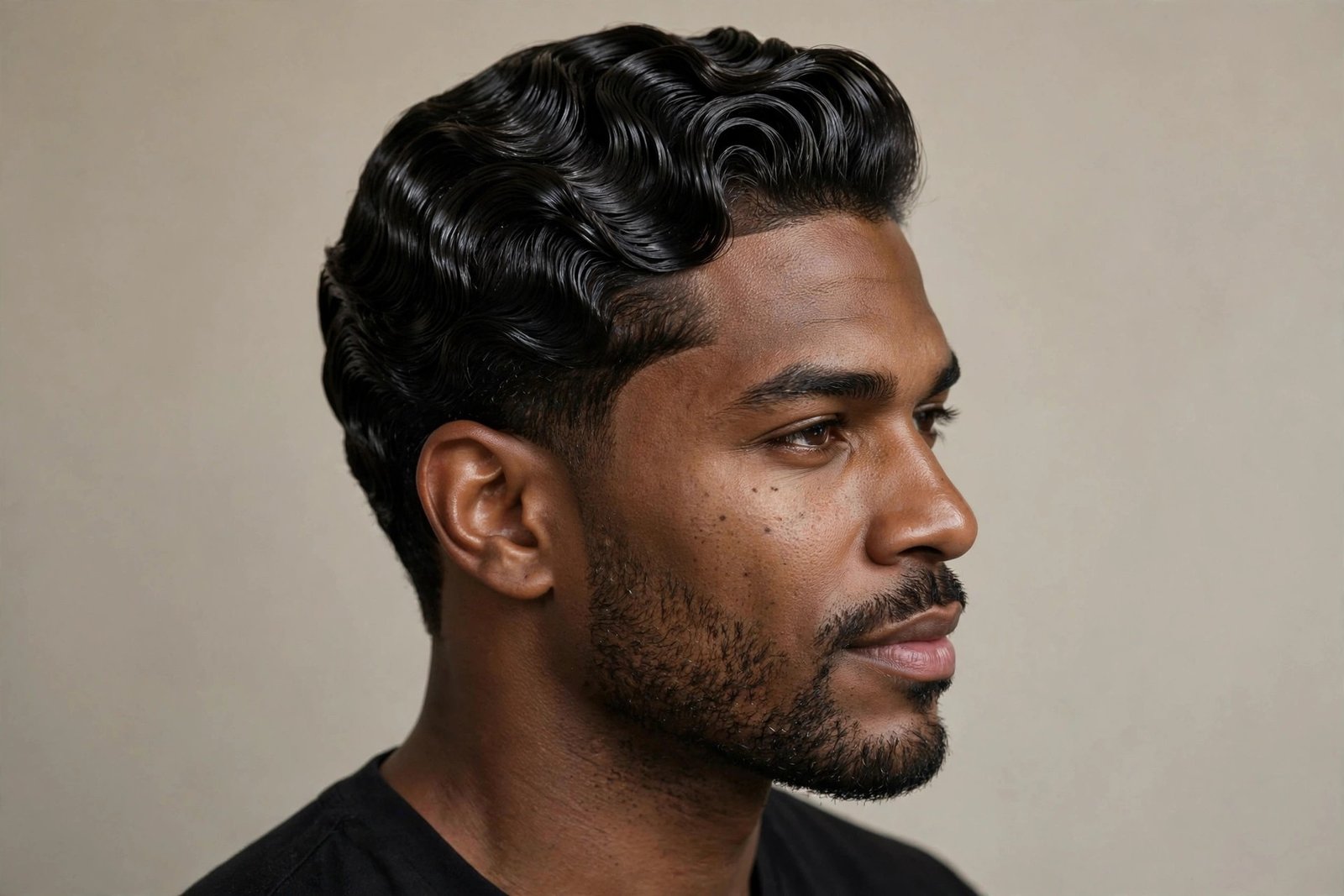
Real questions, honest answers — the things finger waves men actually ask their barbers every single day, answered the way a good barber would answer them: straight, practical, no sales pitch.
How long does it take to do finger waves at home?
A beginner should budget 30–45 minutes for a full sculpt: product application, ridge-by-ridge sculpting, and setting under a cap. An experienced hand does it in 10–15 minutes of active work plus setting time. The learning curve is real but short — most men get competent within five to ten sessions. Daily touch-ups of just the front ridges take under five minutes once you know the motion. The time investment front-loads heavily and then drops off a cliff. Stick with it through the awkward first week; your hands learn faster than you expect.
Can finger waves work on straight hair?
Yes, with caveats. Straight hair can hold finger waves, but it needs more product, a longer set time, and realistic expectations — the ridges will be softer and relax faster than on coily hair, typically lasting 2–3 days per set instead of 4–6. Setting lotion (the old-school barbershop product) often works better than heavy gel on straight hair, and a hooded dryer set gives the firmest result. Keep the ridges shallower than the deep vintage style; shallow ridges on straight hair look intentional, while forced deep ridges look like they’re fighting the hair. Work with what you have.
What’s the difference between finger waves and 360 waves?
Finger waves are sculpted in a single session with gel and a comb — ridges pinched into damp hair and set. 360 waves are trained over weeks with daily brushing in a circular pattern, building a ripple effect around the whole head. Finger waves are a styling technique; 360s are a hair-training regimen. They can be combined (finger-wave detailing on top of trained 360s is a elite barbershop look), but they’re different disciplines with different maintenance. If someone uses the terms interchangeably, they don’t know waves. Now you do.
How long do finger waves last once styled?
A well-sculpted set lasts 3–6 days depending on hair type, product, and protection. Coily hair with strong-hold gel and nightly wave-cap protection holds longest; fine straight hair holds shortest. Humidity, sweat, and rain are the main enemies — one unprotected humid day can soften a set significantly. Nightly capping is the single biggest factor in longevity. Wash day resets everything, so most wave wearers wash once or twice weekly and extend sets with touch-ups between. The finger wave’s century-long history is proof the technique is sound — longevity is about protection, not luck.
Do I need to go to a barber, or can I learn finger waves myself?
Both, in sequence. Get your first set done by a barber who knows the technique — you’ll see the correct motion, feel the right product amount, and leave with a reference standard. Then learn the home touch-up for maintenance between visits. Full home sculpting from scratch is absolutely learnable; thousands of men do it. But the barber handles the cut underneath, the fade, the edge-ups — the architecture the waves sit on. Think of it as: barber builds the house, you do the interior decorating. Skip the barber entirely and you’re decorating a house with crooked walls.
Will finger waves damage my hair?
The technique itself is gentle — no heat styling required if you air-set or cap-set, no chemicals, no tension beyond normal combing. The risk comes from products and habits: strong-hold gels with high alcohol content can dry hair out with daily use, so choose alcohol-free formulas and maintain a moisturising routine underneath (leave-in conditioner is your friend). Also, sleeping without protection causes friction breakage over time, and over-washing to reset sets strips natural oils. Done properly — good products, nightly protection, sensible wash frequency — finger waves are one of the least damaging styled looks a man can wear. Your hair will thank you for skipping the daily heat.
What should I wear to sleep to protect finger waves?
A silk or satin wave cap is the gold standard — snug enough to hold the ridges, smooth enough to prevent friction. A durag tied properly works equally well and is the traditional choice in wave culture; the key is tying it snug but not headache-tight, with the tail smoothing the front hairline. Avoid cotton anything against the hair overnight. For side sleepers, a satin pillowcase as backup protection is smart insurance. In the morning, remove the cap slowly and let the hair settle before touching it. For styling inspiration beyond waves, GQ’s grooming coverage regularly features classic techniques like these in modern contexts.
Conclusion
The finger waves men are wearing in 2026 carry a century of history, and they feel more relevant now than they have in decades — because they stand for something the current moment is hungry for: intention. Every ridge is a decision. Every set is a small act of craft in a world of algorithmic sameness. Whether your pick is the deep vintage original, the low-fade modern classic, or the full 360-wave fusion, you’re wearing a style with lineage, and that lineage shows.
Start with a barber who knows the technique. Learn the home sculpt — your hands will get it faster than you think. Protect the set at night, keep the fade sharp, and give the style the consistency it deserves. Do that, and finger waves won’t just be a hairstyle you tried once. They’ll be the thing people remember about you. A hundred years of sharp men can’t be wrong.