Claw Clip Hairstyles 2026: 15 Effortless Looks in Seconds
Claw Clip Hairstyles 2026: The 15-Second Styling Revolution
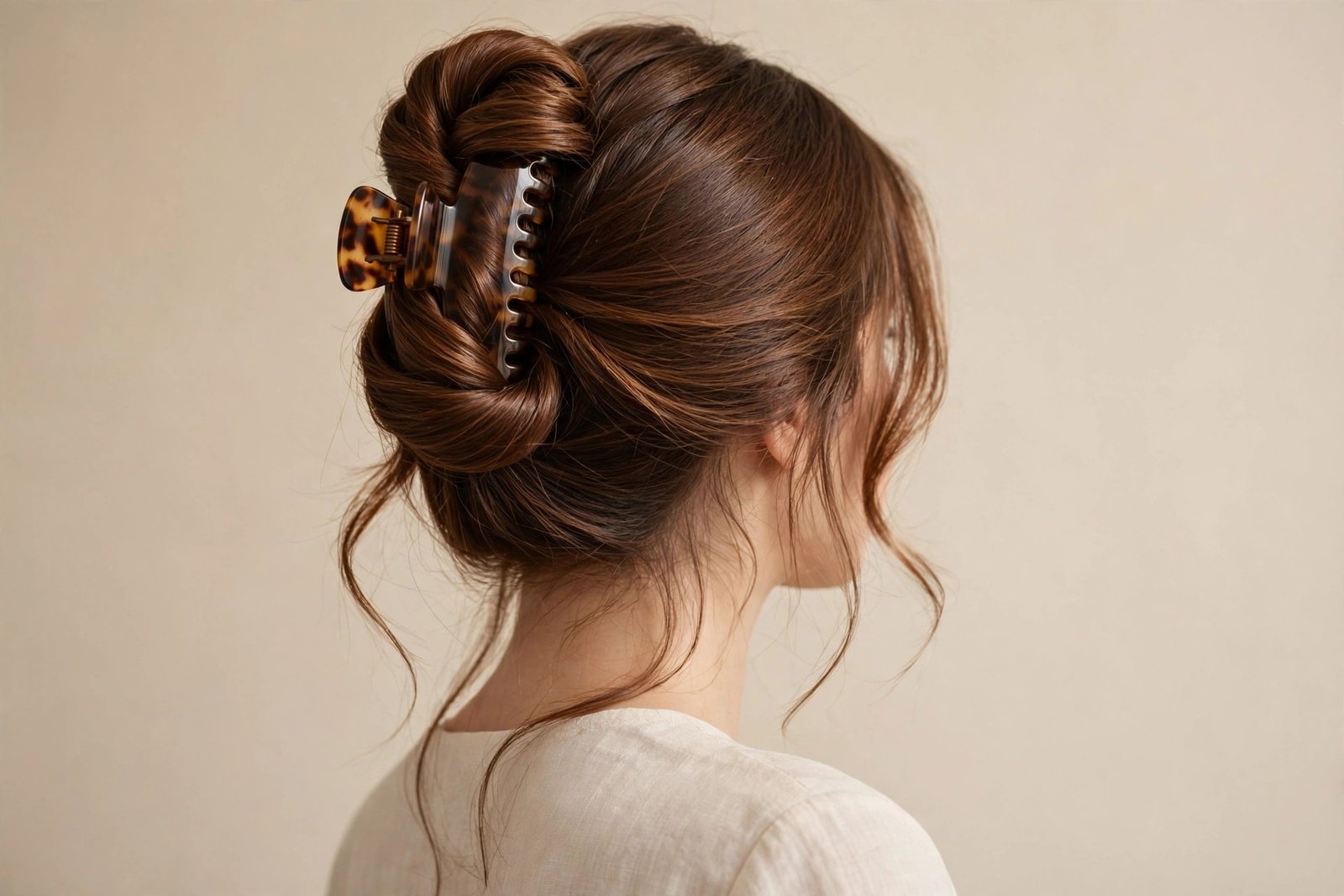
I will die on this hill: claw clip hairstyles are the single best thing to happen to busy women’s hair in the last thirty years. Not the best trend — the best practical invention. Somewhere between the scrunchie revival and the return of low-rise jeans (a comeback nobody asked for), the humble claw clip quietly clawed its way back into our lives, and honestly? It earned it. One cheap piece of plastic, fifteen seconds, and hair that looks like you tried for forty-five minutes. That is not a trend. That is a lifestyle upgrade.
Here is my confession: I own eleven claw clips. Eleven. I bought the first one ironically — one of those oversized tortoiseshell ones everyone was wearing in 2021 — and now I reach for it more than any heat tool I own. My curling iron has started collecting dust out of pure jealousy. And I am not alone: scroll any feed in 2026 and you will see claw clip styles on red carpets, in boardrooms, at school pickup lines, in the gym. The clip went from “oh, that’s cute for errands” to a genuine styling staple, and the looks people are creating with it now go way beyond the basic twist-and-go.
That is what this guide is about. Fifteen genuinely different claw clip hairstyles — not fifteen variations of “twist it up and hope” — from the polished French twist that works at weddings to the double mini-clip look that screams Y2K nostalgia, to the overnight heatless method that gives you waves while you sleep. Every style includes who it actually suits (because a trick that works on waist-length thick hair will not behave the same on a fine bob, and I refuse to pretend otherwise), exactly how to do it, and the honest downsides nobody mentions.
Inside this guide: why the claw clip came roaring back and why it is staying, how to pick the right clip for your hair type (size matters more than you think), all 15 looks with step-by-step instructions, a routine for making your clip last all day without the dreaded mid-afternoon slide, hair-care habits that keep clips from damaging your strands, and answers to the questions everyone actually asks — like whether claw clips cause breakage (short answer: usually not, but the details matter).
Table of Contents
- Claw Clip Hairstyles 2026: The 15-Second Styling Revolution
- 15 Claw Clip Hairstyles for 2026
- The Claw Clip Routine: Styling, Care & Maintenance
- Frequently Asked Questions
- Conclusion
Why the Claw Clip Came Back (and Why It Is Staying)
The claw clip’s comeback story is one of the great redemption arcs in beauty history. Born in the 80s, crowned in the 90s, banished to the land of “mom hair” in the 2000s — the clip spent a decade as the punchline of every lazy-hair joke. Then, around 2021, something shifted. Beauty editors at Byrdie started documenting the revival, celebrities wore oversized clips to actual events instead of hiding them, and Pinterest quietly filled with millions of claw clip hairstyle saves. The joke accessory became the it-accessory, and then — this is the important part — it became something better than an accessory. It became a tool people genuinely depend on.
Why did it stick? Three reasons, and none of them are about fashion. First, the claw clip is fast in a way nothing else is. A bun needs pins and practice; a ponytail needs an elastic that snaps; braids need actual skill. A claw clip needs one hand and ten seconds. Second, it is kind to hair in an era when everyone is finally taking hair health seriously. No tight elastics denting the strands, no heat, no tension headaches from a scraped-back pony. Third — and this is the one that sealed it — the 2026 aesthetic loves “effortless polish.” The whole vibe right now is looking put-together without looking like you tried. A claw clip twist delivers exactly that: intentional but relaxed, neat but not stiff.
And here is my prediction, which I will happily be held to: the claw clip is not going anywhere. Unlike most hair trends, which depend on a specific cut or color, the clip works on almost any hair. Trends that work on everyone survive. Trends that only work on one hair type die. The claw clip works on nearly everyone — and this guide will show you how to make it work on yours.
Choosing Your Claw Clip: Size, Teeth, and Material Matter More Than You Think
Walking into the claw clip aisle (or, more realistically, falling down a late-night online shopping hole) can be overwhelming. They come in roughly four sizes, and buying the wrong one is the number one reason people think “claw clips don’t work for my hair.” They do. You just bought the wrong clip. Here is the cheat sheet I give everyone.
Size first. Mini clips (under 2 inches) are for half-up styles, bangs, side sections, and fine or short hair. Medium clips (2 to 3.5 inches) are the everyday workhorses — they handle medium-length hair, most half-up looks, and finer thick hair. Large clips (3.5 to 4.5 inches) are what you want for long or thick hair worn fully up. Jumbo clips (4.5 inches and up) exist for very long, very thick, or curly hair that laughs at smaller clips. The rule is simple: the clip should be able to close around your gathered hair with the teeth overlapping slightly. If it barely closes, size up. If your hair rattles around inside it, size down.
Teeth and grip. Look at the inside of the clip. Long, widely spaced teeth grip thick hair better; shorter, denser teeth hold fine hair without slipping. Some clips have a little silicone or rubber strip along the teeth — those are gold for silky, slippery hair that slides out of everything. If your hair is the type that rejects bobby pins on principle, get the grippy ones.
Material. Cheap thin plastic clips snap — usually at the worst possible moment, usually in public. Thicker acetate or cellulose clips (the tortoiseshell-looking ones) are sturdier and look more expensive. Metal-spring hinges outlast plastic hinges by miles. And the matte finishes trending in 2026 are not just prettier; they grip better than glossy ones, which can be slippery. Spend a little more on the clip you will wear daily. Your hair will thank you, and so will your dignity when it does not snap during a work meeting.
What Hair Length and Texture Actually Work With Claw Clips
Let us clear this up, because bad advice is everywhere: claw clips work on far more hair than people assume, but not on all of it equally. Shoulder-length to long hair is the sweet spot — that is where you get the full menu of twists, buns, and updos. But short hair and bobs are absolutely in the game for half-up styles and mini-clip looks (style 10 is dedicated to my bob girls). Pixie cuts are the one length where the clip genuinely cannot do much — there is just not enough hair to gather — though even then, a mini clip can pin back a grown-out fringe section.
Texture-wise, here is the honest breakdown. Thick hair loves claw clips but needs the large or jumbo sizes and strong springs; undersized clips will pop open and launch across the room like tiny hair grenades. Fine hair needs smaller clips and a little texture help (a spritz of texturizing spray or even just second-day hair grips far better than squeaky-clean fine hair). Curly and coily hair works beautifully — the clip is actually gentler than most alternatives — but buy jumbo, and never force the clip through dry curls; gather loosely instead. Straight slippery hair is the trickiest customer: use medium clips with grip strips, and accept that a light mist of texturizing spray is your best friend.
One more thing worth saying out loud: layers and face-framing pieces are not the enemy of claw clip hairstyles. They are the whole point. Those soft bits that fall out? Leave them. The 2026 look is not the scraped-tight ballerina twist of 2003 — it is the loose, lived-in, slightly undone version. The pieces that escape are doing aesthetic work. Let them.
15 Claw Clip Hairstyles for 2026
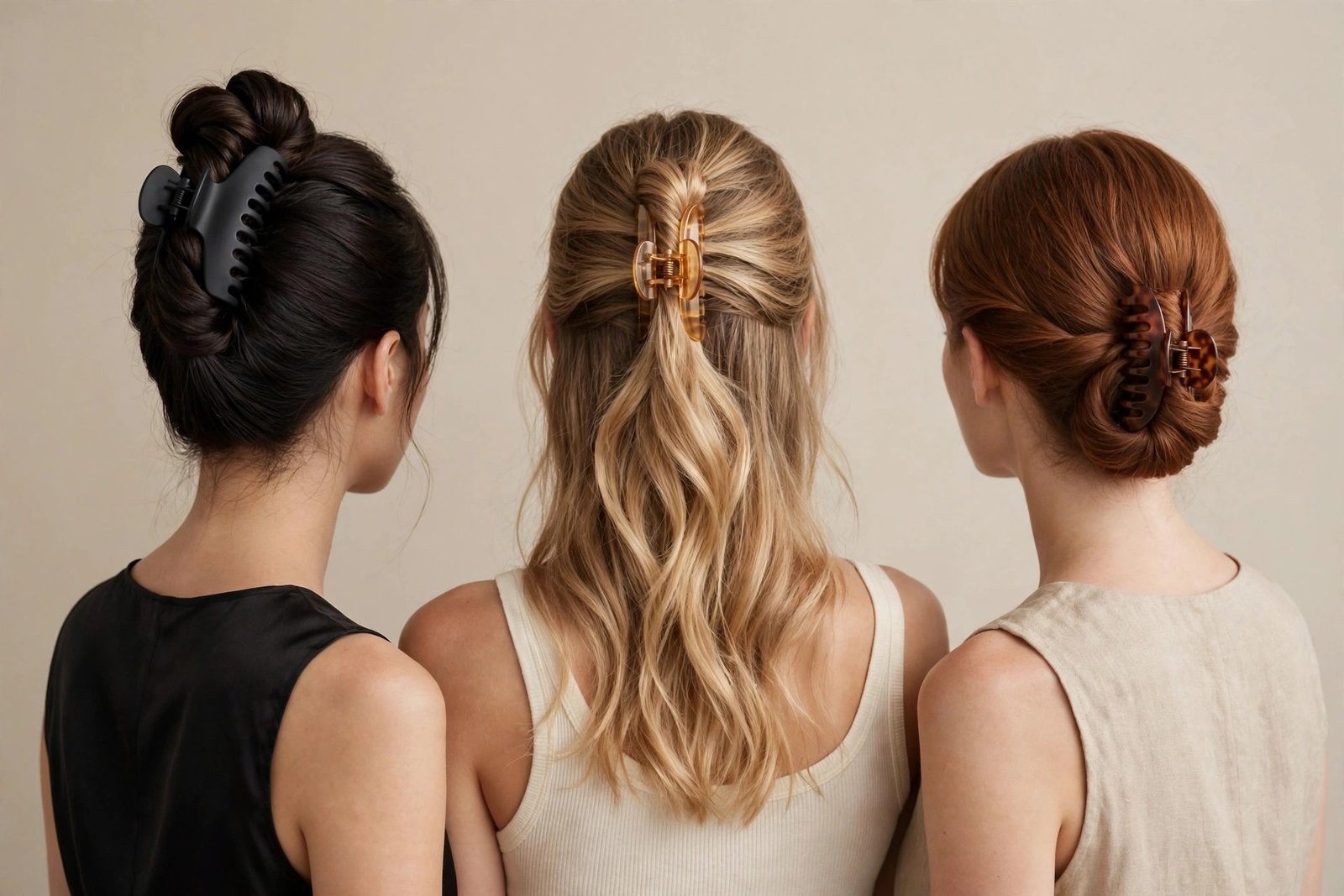
All fifteen looks below are genuinely different styles, not rebranded versions of the same twist. Each one tells you who it suits, exactly how to do it step by step, what makes it fall apart (and how to fix that), and the variations worth trying. Start with the one that matches your hair length, then steal ideas from the rest.
1. The Classic French Twist
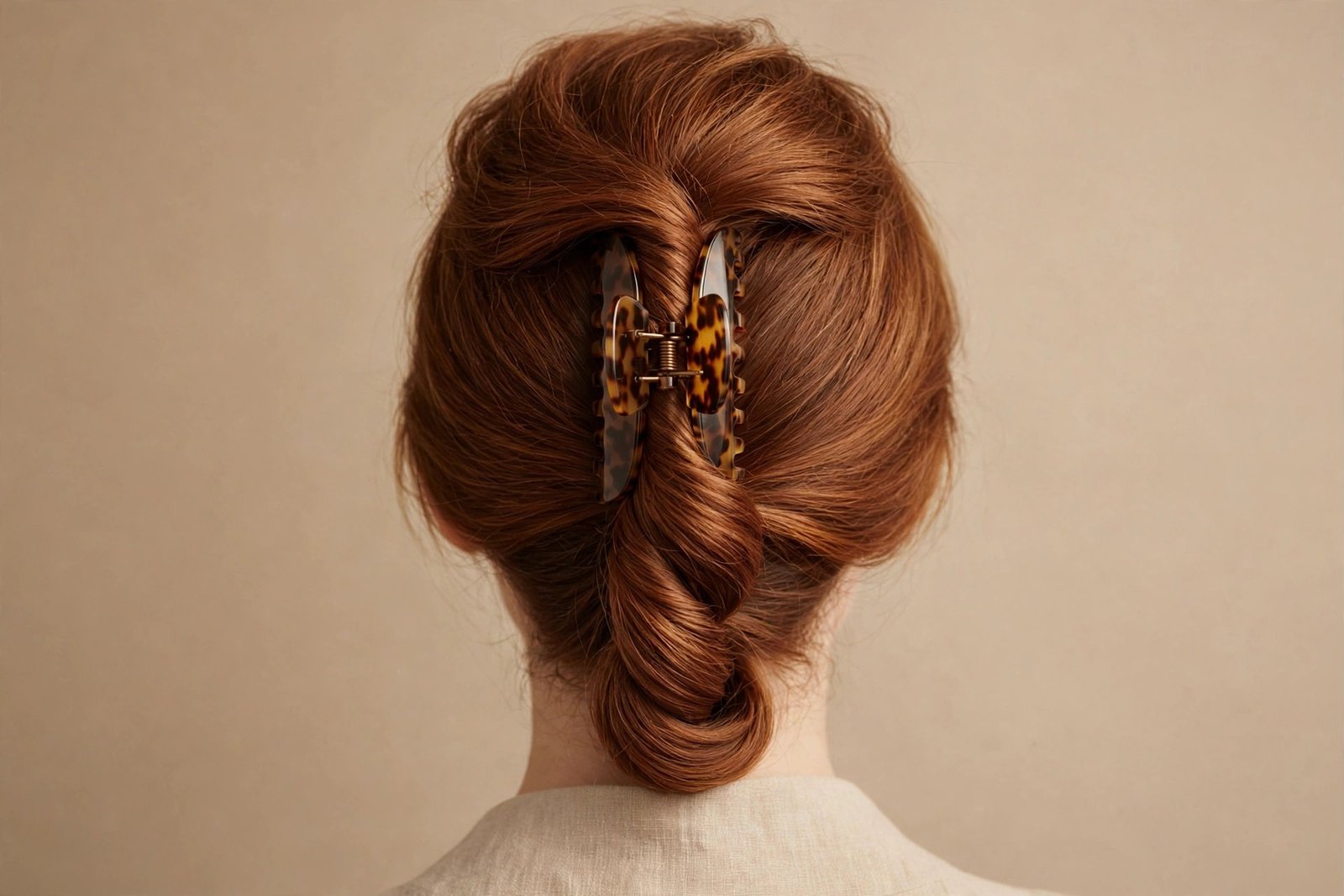
The French twist is the Audrey Hepburn of claw clip hairstyles: timeless, elegant, and secretly much easier than it looks. The idea is simple — gather your hair low, twist it upward into a vertical roll, and let the claw clip hold the whole thing in place. Done well, it looks like you spent half an hour and hired help. Done in reality: about ninety seconds in front of a bathroom mirror.
Who it suits: medium to long hair (shoulder-length and beyond), straight to wavy textures. It is the most formal look in this guide, so it shines at weddings, job interviews, and anywhere you want to look expensive. Fine hair works if you tease the crown lightly first for grip; very thick hair should use a large clip with a strong spring.
How to do it: Brush your hair smooth and gather it at the nape as if making a low ponytail — but do not use an elastic. Twist the gathered hair upward, rolling it against the back of your head, tucking the ends in as you go. Hold the roll with one hand and clamp a large claw clip vertically over it, teeth gripping the roll and the hair underneath. Pull gently at the crown for a little lift, and ease out two face-framing pieces if you have layers.
Products and staying power: A light mist of flexible-hold hairspray after clipping is all you need. Silky hair should add texturizing spray before twisting — the twist needs friction to hold. This style comfortably lasts a full workday; check the clip’s grip around hour six and re-clamp if needed.
Variations: Twist it slightly off-center for a modern asymmetric feel. Swap the tortoiseshell clip for a matte black one for evening. Leave the ends fanned out at the top instead of tucked for a softer, more romantic finish.
Honest downside: On very heavy hair, gravity is undefeated — the twist can slide down by late afternoon. The fix is a large clip with genuinely strong teeth (not the flimsy fashion ones) and twisting tighter at the base. If your hair is both long and thick, this is a half-day style, not an all-day one, and that is fine — re-twist at lunch and nobody will know.
2. The Half-Up Crown Twist
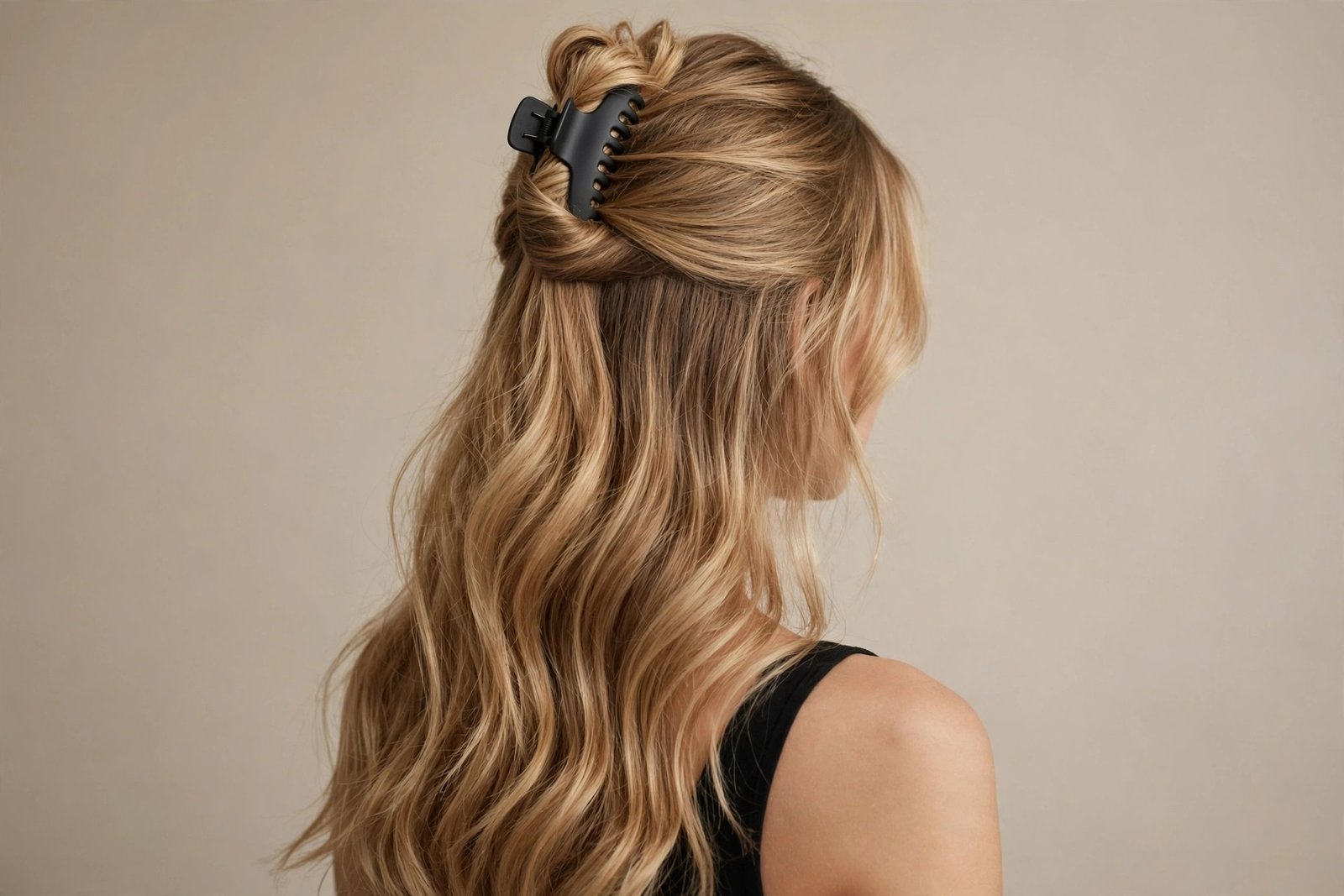
If the French twist is the elegant aunt of claw clip hairstyles, the half-up crown twist is the fun cousin who is always invited everywhere. You take the top half of your hair, give it a loose twist, and clip it at the crown — leaving the rest flowing. It takes twenty seconds, it works on nearly every hair type, and it instantly makes you look like someone who has her life together, even when the rest of you is held together by dry shampoo and optimism.
Who it suits: Almost everyone. Long hair, medium hair, wavy, curly, straight — this is the universal donor of claw clip looks. It is especially flattering if you have a rounder face, because the crown height adds length to the face. Fine hair should use a mini or medium clip so the style does not get swallowed.
How to do it: Section off the top half of your hair from temple to temple. Give that section one or two loose twists (just enough to create a little rope), then fold or bunch it at the crown and clamp a medium claw clip over it. Fan the clipped section slightly with your fingers for softness. Leave the bottom half completely alone — the contrast between the neat top and the flowing bottom is the whole look.
Products and staying power: None required for most hair. If your crown section is slippery, a quick backcomb at the roots before twisting gives the clip something to hold. Lasts all day on textured hair; fine straight hair may need one re-clamp in the afternoon.
Variations: Twist the top section into a mini bun before clipping for extra height. Pull the clipped section forward slightly for a 60s-inspired bump. Use a decorative clip — pearls, gold — and this becomes event-ready.
Honest downside: On very short hair, the “half” you are clipping might be more like a “quarter,” and the style can look sparse. If your hair is above shoulder length, stick to a mini clip and keep expectations cute rather than dramatic.
3. The 90s Messy Bun
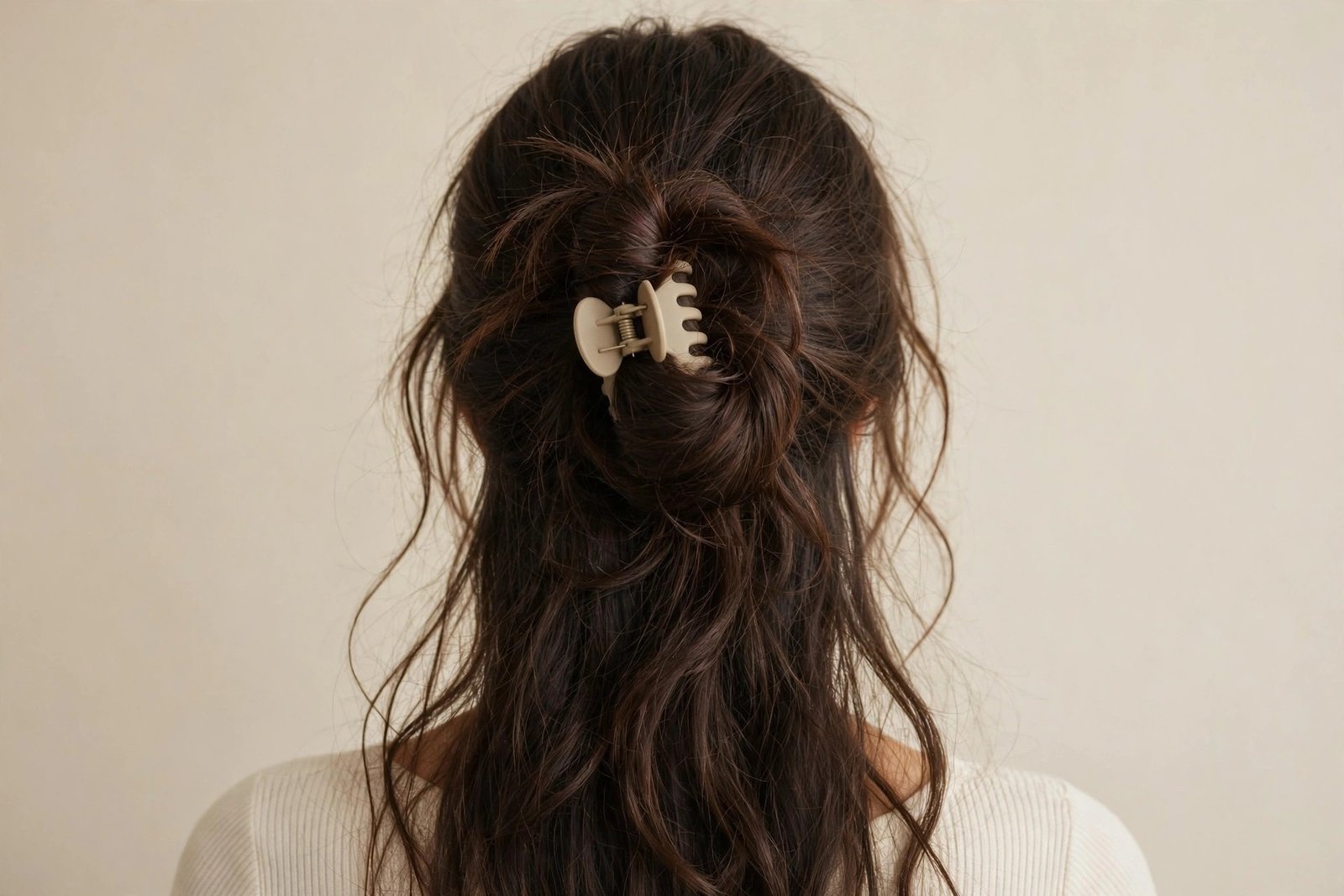
The messy bun is the look that launched a thousand claw clip purchases, and for good reason: it is the fastest route from “I just rolled out of bed” to “I look effortlessly cool” known to science (unverified, but I stand by it). You pile your hair up, twist it loosely, clip it, and let pieces do whatever they want. The messier, the better — which makes it the most forgiving style in this entire guide. There is no wrong way to do it, only degrees of right.
Who it suits: Medium to long hair; all textures. Curly girls, this is your home turf — the natural texture does half the styling for you. It is the ultimate casual style: weekends, errands, coffee dates, work-from-home days when the camera might turn on.
How to do it: Flip your head upside down and gather all your hair high on the crown. Twist the length loosely once or twice — do not overthink this — then coil it into a rough bun shape and clamp a large claw clip over the whole thing, catching the bun and the base hair. Pull out a few pieces around the hairline and ears. Shake your head once. Done. If it looks too neat, you have done it wrong — loosen it up.
Products and staying power: Dry shampoo at the roots before styling adds grip and volume — day-two or day-three hair actually works better here than freshly washed. The clip holds the weight; no pins needed. Survives most of a day; the bun will relax and soften, which only improves it.
Variations: Wear it low at the nape for a softer, more romantic version. Pair with a heatless updo routine the night before and the bun gets gorgeous natural waves when you take it down. Two mini clips instead of one large clip gives a playful deconstructed look.
Honest downside: On very long, heavy hair, a high messy bun can give you a tension headache by hour four — the weight pulls. The fix is wearing it lower (nape-level buns distribute weight better) or using two clips to share the load. Also, “messy” has a limit: if half your hair has escaped, that is not a style anymore, that is a cry for help. Re-clip.
4. The Low Twisted Chignon
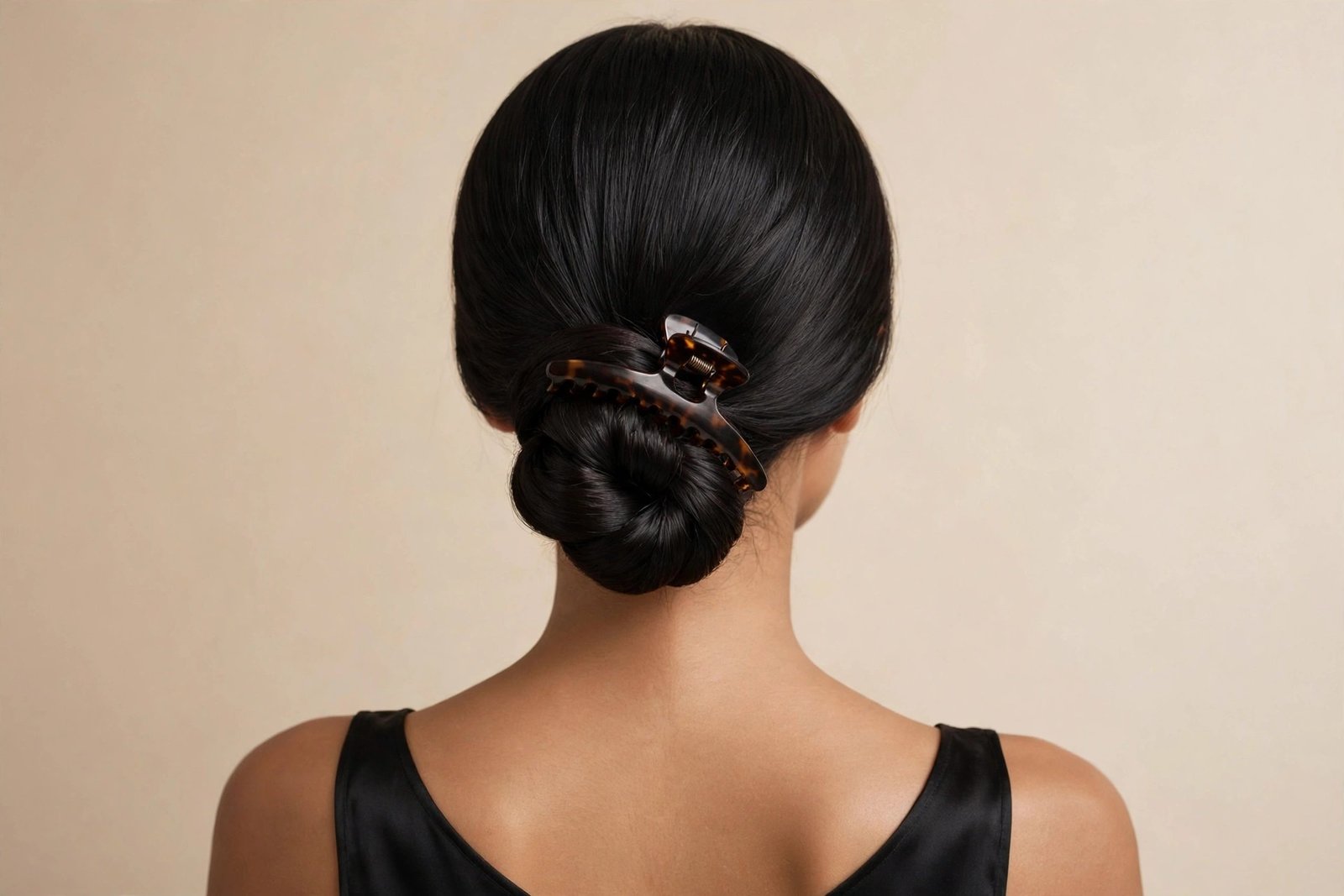
The low twisted chignon is what you wear when the French twist feels too formal but a messy bun feels too casual. It sits at the nape, it is smooth and controlled, and it has this quiet luxury thing going on — the kind of style that makes people assume you are more organized than you are. I have worn this to parent-teacher meetings and been treated like I definitely had a color-coded planner. I did not. The chignon lied for me, and I am grateful.
Who it suits: Medium to long hair, straight to wavy. Oval and heart-shaped faces wear it beautifully; if your face is rounder, keep some volume at the crown rather than pulling everything flat. It is office-perfect and dinner-perfect — the rare style that works for both without changing a thing.
How to do it: Part your hair wherever you like (middle for sleek, side for soft). Smooth it back and gather at the nape. Twist the length firmly — tighter than the messy bun — and coil it into a neat roll or knot at the nape. Clamp a medium-to-large claw clip horizontally over the coil, hiding the clip slightly under the twist if you can. Smooth the surface with your palms and finish with hairspray.
Products and staying power: Smoothing serum on the lengths before twisting gives that polished finish; flexible hairspray locks it down. This is one of the longest-lasting claw clip hairstyles — the low position means gravity is working with you, not against you. Easily an 8-to-10-hour style.
Variations: Braid the length before coiling for a textured chignon. Wrap the twist around the clip so the clip peeks out as an accessory rather than hiding. Add a deep side part and tuck one side behind the ear for old-Hollywood softness.
Honest downside: This style shows every bump and lump, so it demands smoother prep than the forgiving messy looks — brush thoroughly and do not skip the serum if your hair is frizz-prone. It is also less comfortable for side-sleepers if you wear it past bedtime; take it down before the couch nap.
5. The Curly Pineapple-Up
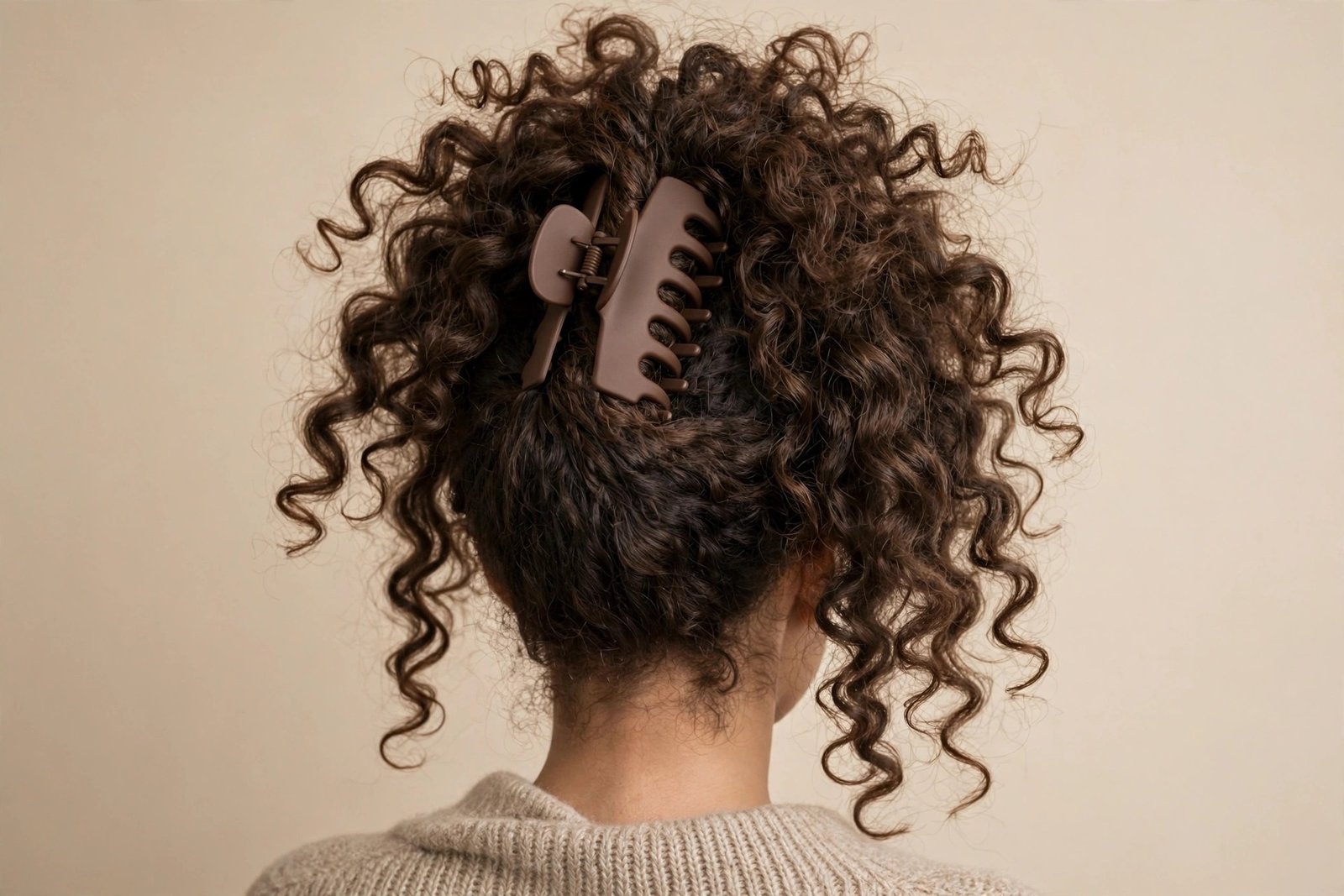
Curly girls have been pineapple-ing their hair at night for years — gathering curls high on the head to protect them while sleeping. The claw clip version takes that protective trick and turns it into a daytime style: curls piled high, secured with a jumbo clip, ends cascading freely. It shows off your curl pattern, keeps hair off your neck, and takes about a minute. The curl community figured this out before the trend cycle did, as usual.
Who it suits: Curly, coily, and very wavy hair, medium to long. The more volume your hair has, the better this looks — this is a style where big hair is the entire point. Shorter curls (above the shoulders) can do a modified version with a medium clip gathering just the top.
How to do it: Flip your head forward and let your curls fall. Gather them loosely at the very top of your head — do not smooth, do not brush, do not disturb the curl clumps more than necessary. Wrap a jumbo claw clip around the base of the gathered curls, letting the ends fan out freely in all directions. Fluff the curls gently with your fingers to shape. The goal is a fountain of curls, not a contained bun.
Products and staying power: Apply your usual curl cream or gel to damp hair and let curls fully form before clipping — the clip goes on styled hair, not wet hair. Refresh the curls at the ends with a water mist if they flatten. Lasts all day; the clip is gentler on curls than any elastic.
Variations: Position it slightly forward for a retro 50s feel, or dead-center top for maximum height. Leave the front hairline curls out and define them separately for a framed look. A satin-lined or smooth-tooth jumbo clip reduces friction on delicate curls.
Honest downside: You need a genuinely jumbo clip — regular “large” clips will not close around dense curly volume, and forcing them can snap the clip or crush your curl pattern. Also, this style is high-visibility by design; if you are having a “hide today” day, pick the low chignon instead.
6. Double Mini Clips (Y2K Revival)
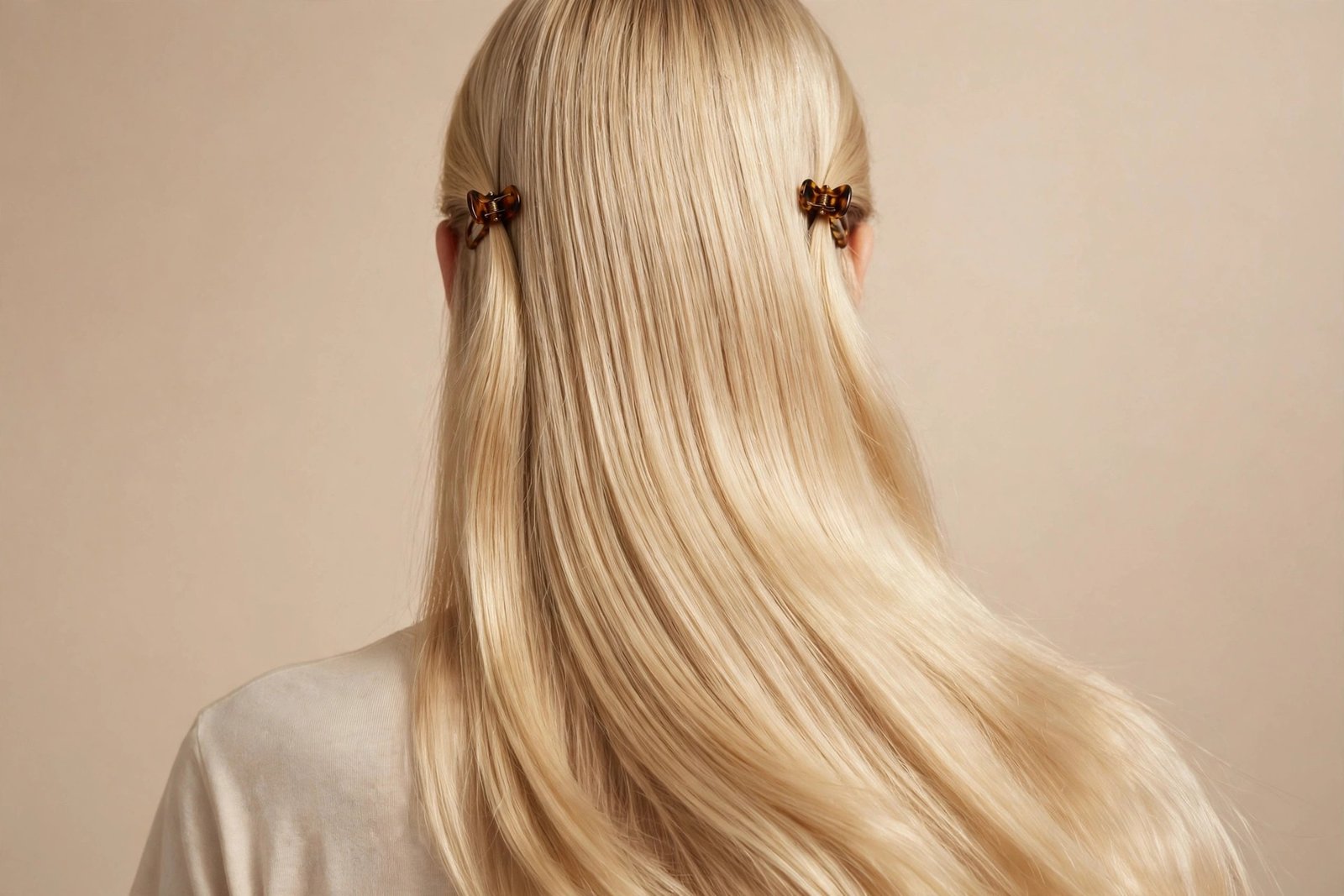
Two tiny claw clips, one on each side, holding back the front sections — and suddenly it is 1999 and everything is great. The double mini-clip look is pure Y2K nostalgia, and it has come back harder than anyone expected because it is genuinely cute, not just ironically cute. It keeps hair out of your face, adds a little visual interest, and works as both a full style and a “my bangs are growing out and I have given up” survival tactic.
Who it suits: Every length from bob to long. It is especially beloved on medium-length hair and on anyone growing out bangs or face-framing layers — those awkward in-between pieces finally have a job. Round faces benefit from the slight lift at the temples.
How to do it: Part your hair in the middle (or wherever it naturally falls). Take a 1-to-2-inch section from each side of your part, near the front. Twist each section once away from your face, pull it back slightly, and clamp a mini claw clip over it, just above the ear. Let the rest of your hair do whatever it wants — straight, wavy, curly, all fine.
Products and staying power: Nothing needed. The sections are small and light, so even mini clips hold them all day. If the sections are silky, twist them twice for extra grip before clipping.
Variations: Clip the sections higher for a space-bun-adjacent feel, or lower near the ears for subtlety. Mismatched clip colors (one tortoiseshell, one black) lean into the playful 90s energy. Four mini clips — two per side, stacked — is the maximalist version for festivals.
Honest downside: Mini clips on thick hair sections can pop open if the section is too chunky — keep the clipped sections slim. And let us be real: this is a young, playful look. It is adorable at brunch and concerts; it may raise eyebrows in a courtroom. Know your room.
7. The Braid-Wrap Clip
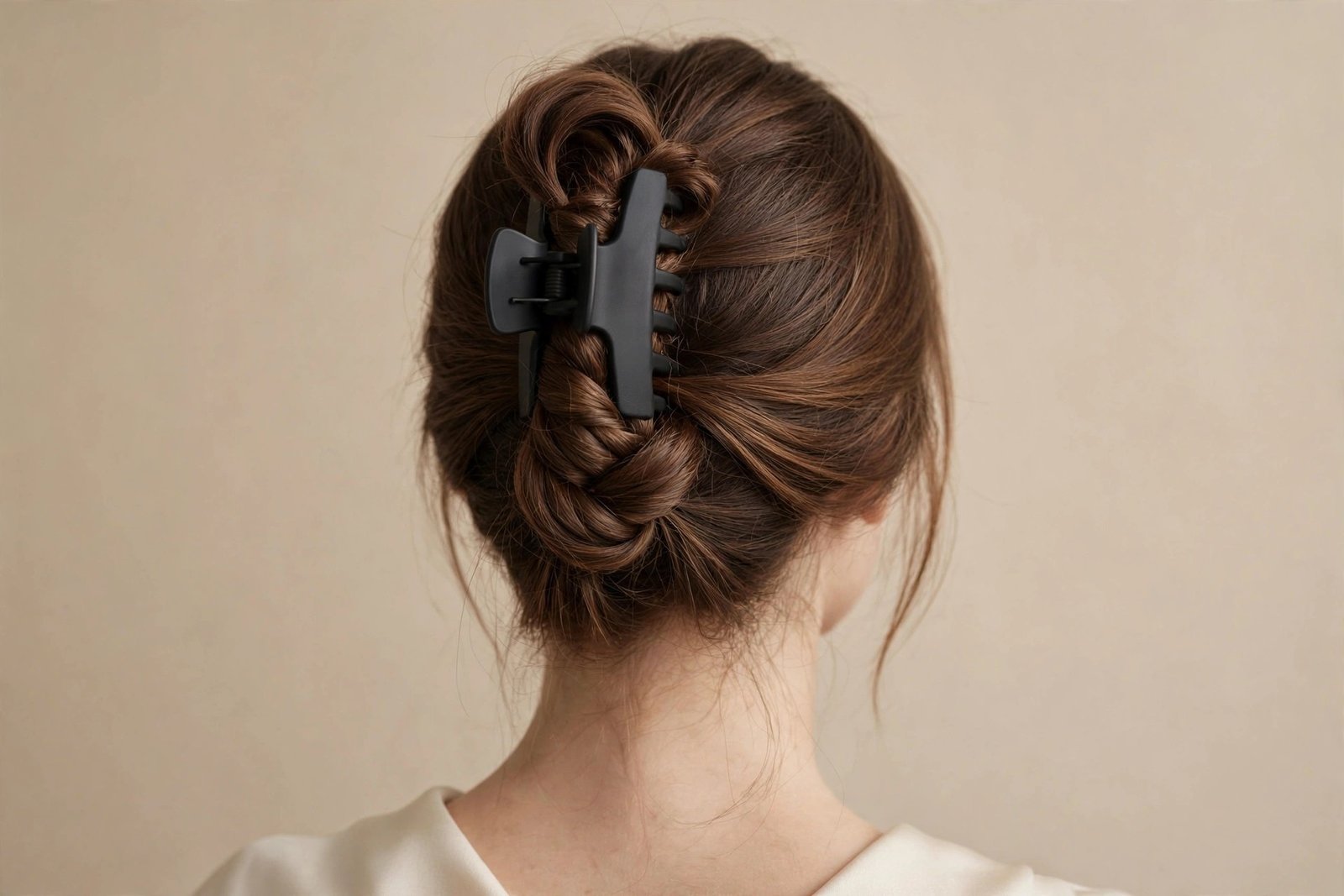
Here is a trick that looks like it requires braiding skills and a team of assistants: braid your hair, fold the braid up, and clip the whole thing in place. What you get is this gorgeous textured column of braid held by a single clip — intricate-looking, structurally sound, and honestly easier than a French twist. People will ask how long it took. Say “oh, a few minutes” with a mysterious smile. It took four.
Who it suits: Medium to long hair that can hold a braid — straight, wavy, or loosely curled. If your hair is too short to braid to a useful length, this one has to wait. Works beautifully on second-day hair, which braids with more grip and texture than freshly washed hair.
How to do it: Make a simple three-strand braid starting at the nape — low and loose, not tight. Secure the end temporarily (or just hold it). Fold the braid upward against the back of your head, tucking the tail under. Clamp a large claw clip vertically over the folded braid, catching both the braid and the hair at your crown. Remove the temporary elastic if you used one, tucking the tail invisibly. Pancake the braid gently — pull the edges outward — for extra fullness.
Products and staying power: Texturizing spray before braiding gives the braid grip and a fuller look. This is one of the most secure claw clip hairstyles because the braid’s texture locks into the clip’s teeth — it genuinely lasts all day, through wind and mild chaos. For more braided inspiration, the bubble braid guide pairs beautifully with this technique.
Variations: Two braids (pigtail braids) folded up side by side and clipped together for a double-wrap. A fishtail braid instead of a three-strand for extra intricacy. Leave the braid hanging and clip it halfway up — a braided half-up that is criminally easy.
Honest downside: The fold point can create a visible bump where the braid bends — pancaking the braid hides it, but on very thick braids the bump is just physics. Accept it or choose the French twist instead. Also, taking it down at night means unbraiding, so this is not the style for people who hate undoing braids.
8. The High Volume Twist
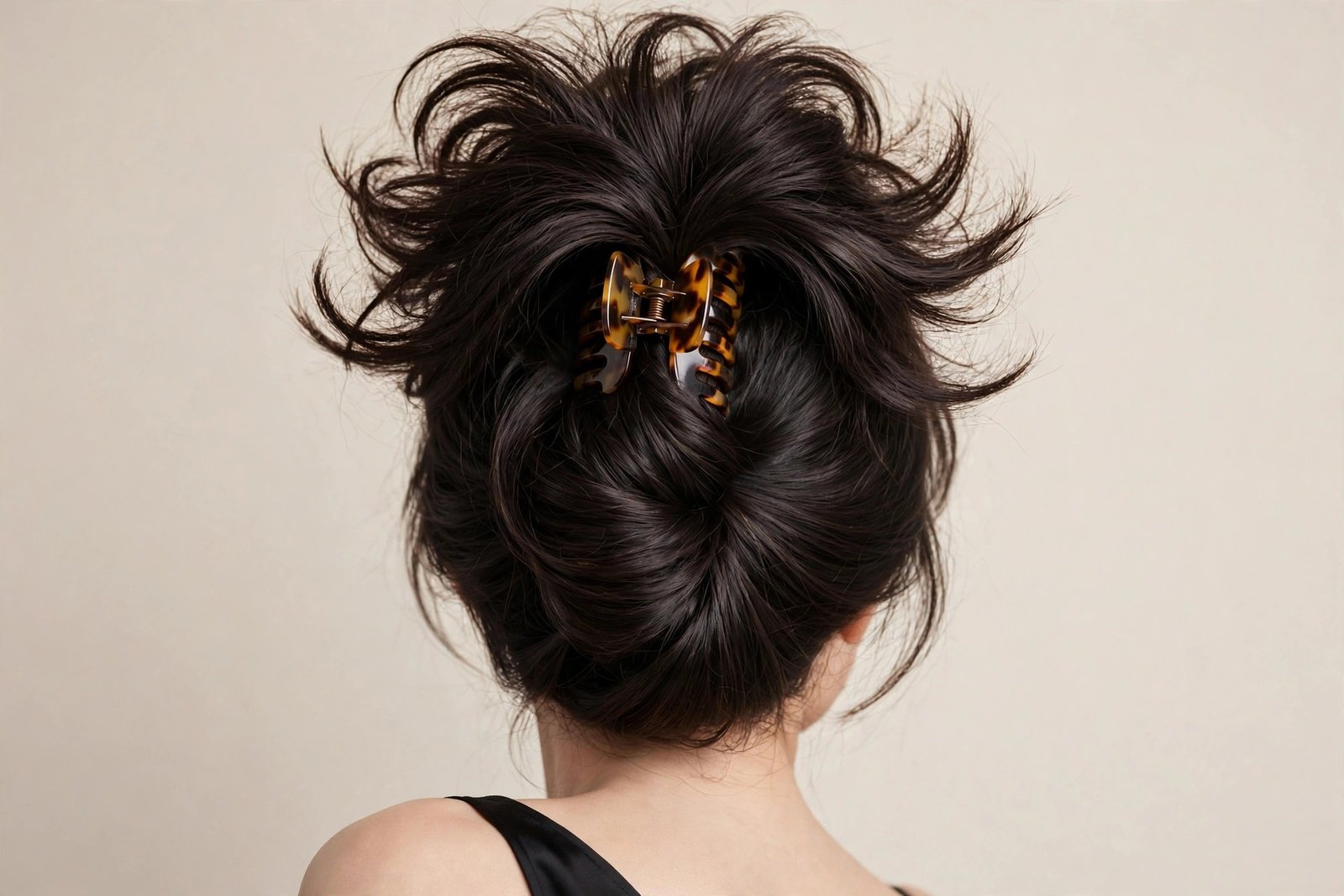
The high volume twist is the drama queen of claw clip hairstyles, and I mean that as the highest compliment. Hair piled high, twisted with maximum lift at the crown, ends fanning out at the top — it gives you height, presence, and the kind of silhouette that makes an outfit look intentional. This is the style for days when you want your hair to do the talking: nights out, events, photos, or just a Tuesday when you feel like being the main character.
Who it suits: Medium to long hair with some density — fine hair can do it with teasing and texturizing spray, but naturally thick hair gets there easiest. Longer faces should keep the height moderate (too much vertical adds length); rounder and square faces can go big and love it.
How to do it: Flip your head upside down and gather everything high on the crown. Backcomb the roots lightly for lift — this is the one style where teasing is not optional, it is structural. Twist the length upward firmly, coil it into a high twist or bun, and clamp a large claw clip over it vertically. Now the important part: gently pull the hair at the crown upward and outward to build height, and fan the ends at the top. The silhouette should be big and proud.
Products and staying power: Volumizing mousse at the roots on damp hair (or dry shampoo on dry hair) plus texturizing spray before twisting. Strong-hold hairspray after. This style holds well because the high position lets the clip teeth bite into the thickest part of the gathered hair — expect a full evening of wear.
Variations: Smooth the surface for a polished high twist, or keep it piecey and textured for a rocker feel. A deep side part before gathering adds asymmetry and drama. Wrap a small section of hair around the base of the twist to hide the clip for a seamless look.
Honest downside: All that height comes with weight, and weight worn high can ache by the end of a long night — this is an evening style, not an all-day office style, for most people. Fine hair will also need a touch-up re-tease around hour four as the volume settles. Bring the clip’s little sister (a medium backup) in your bag if you are committing to a long night.
9. The Sleek Center-Part Twist
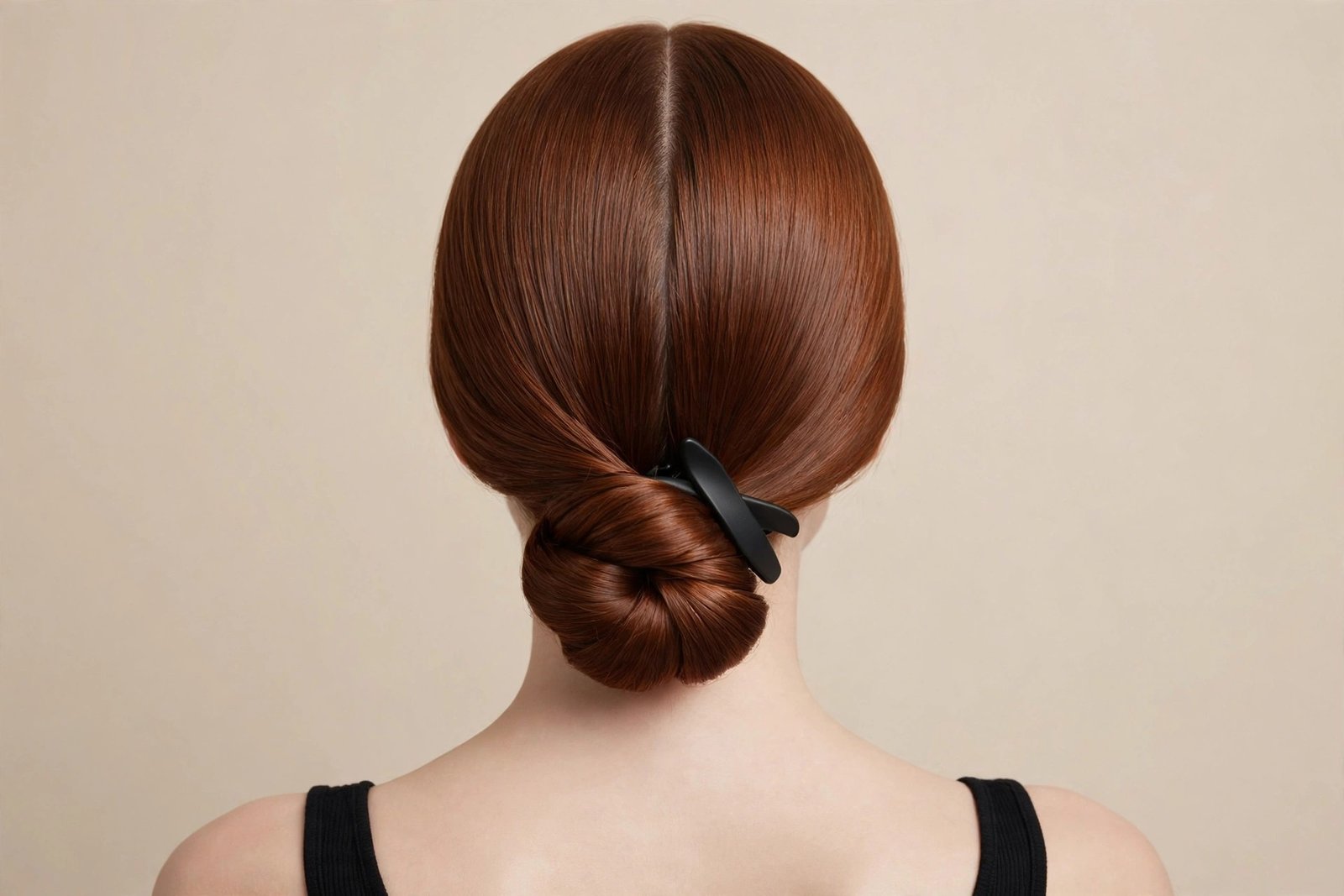
The sleek center-part twist is minimalism in hair form: a clean middle part, glassy-smooth lengths, and a low twist held by a simple matte clip. No fuss, no flyaways, no apologies. It is the 2026 answer to the “clean girl” aesthetic, and it works because the contrast is so satisfying — severe polish up top, effortless ease in the method. Ten seconds of work that reads as ten thousand dollars of grooming.
Who it suits: Straight to slightly wavy hair, medium to long. The sleek finish demands smoothness, so very curly or coily hair would need significant straightening prep — possible, but it stops being a quick style. Oval, heart, and diamond faces wear the center part best; very round faces may prefer a slightly off-center part for softness.
How to do it: Create a precise center part with a comb. Apply smoothing serum through the lengths and brush everything sleek — the top must be immaculate, because this style has nowhere to hide. Gather at the nape, twist smoothly (no bumps, no texture), and clamp a medium matte clip horizontally. Check the part in the mirror from the front: it should be a clean line. Tame any flyaways with a tiny bit of serum on your palms.
Products and staying power: Smoothing serum is non-negotiable; a light-hold hairspray or edge control at the hairline keeps the part crisp. The smooth texture actually helps the clip grip — sleek hair compresses neatly into the teeth. Lasts all day with minimal attention.
Variations: Tuck the twist’s ends under for a seamless loop, or leave them out for a slightly softer finish. A glossy black or deep tortoiseshell clip keeps the minimalist palette; a gold clip adds quiet luxury. Pair with a bold lip and you are done — the hair is the accessory.
Honest downside: This is the least forgiving style in the guide — bumps, frizz, and regrowth all show. It also demands the most prep (serum, brushing, part precision), so the “fifteen seconds” claim comes with an asterisk: fifteen seconds plus five minutes of smoothing. Still fast. Just not magic.
10. The Bob Half-Up
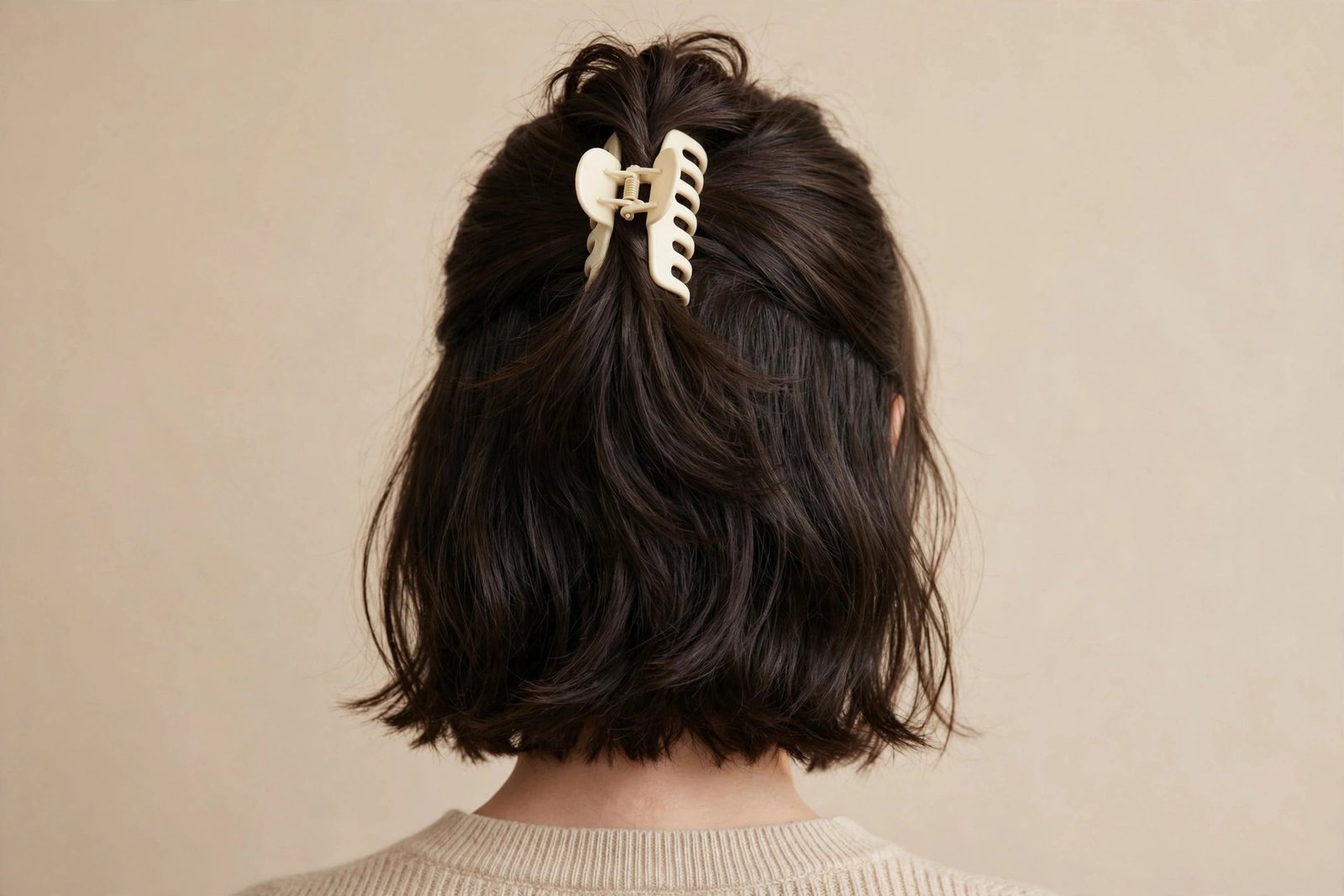
Bob girls, this one is for you — because somewhere along the way, the internet decided claw clips were only for long hair, and that is simply false. The bob half-up takes the top section of a chin-to-shoulder bob, twists it lightly, and clips it back, giving you lift at the crown and a break from hair in your face. It is cute, it is practical, and it takes a bob from “I woke up like this” to “I styled this” in under a minute.
Who it suits: Bobs and lobs, chin-length to collarbone. Straight, wavy, or curly bobs all work — curly bobs get gorgeous texture contrast. It is particularly great for growing-out bobs, when the front pieces are at that awkward in-between stage.
How to do it: Section the top half of your bob from temple to temple — on a bob this is a smaller section than on long hair, and that is fine. Give it one loose twist and clamp a medium (not large) claw clip at the crown. The key: do not try to include the shorter bottom layers; let them fall naturally around the clip. Fan the clipped section slightly for softness.
Products and staying power: A little texturizing spray helps shorter layers grip. The style is light, so even a medium clip holds it all day. If the bottom layers of your bob flip outward (as bobs love to do), a quick pass with a straightener or a tuck behind the ears handles it.
Variations: Two mini clips instead of one medium for a playful look. Clip the top section slightly to one side for asymmetry. Add a tiny braid into the top section before clipping for detail.
Honest downside: On very short bobs (above the chin), there may not be enough top hair to make the style read clearly — it can look like a random clip rather than a style. Chin-length and longer is the sweet spot. Also, the bottom layers will do what bobs do (flip, kick out, misbehave) — embrace it or smooth it, but do not fight it for an hour.
11. The Face-Framing Soft Twist
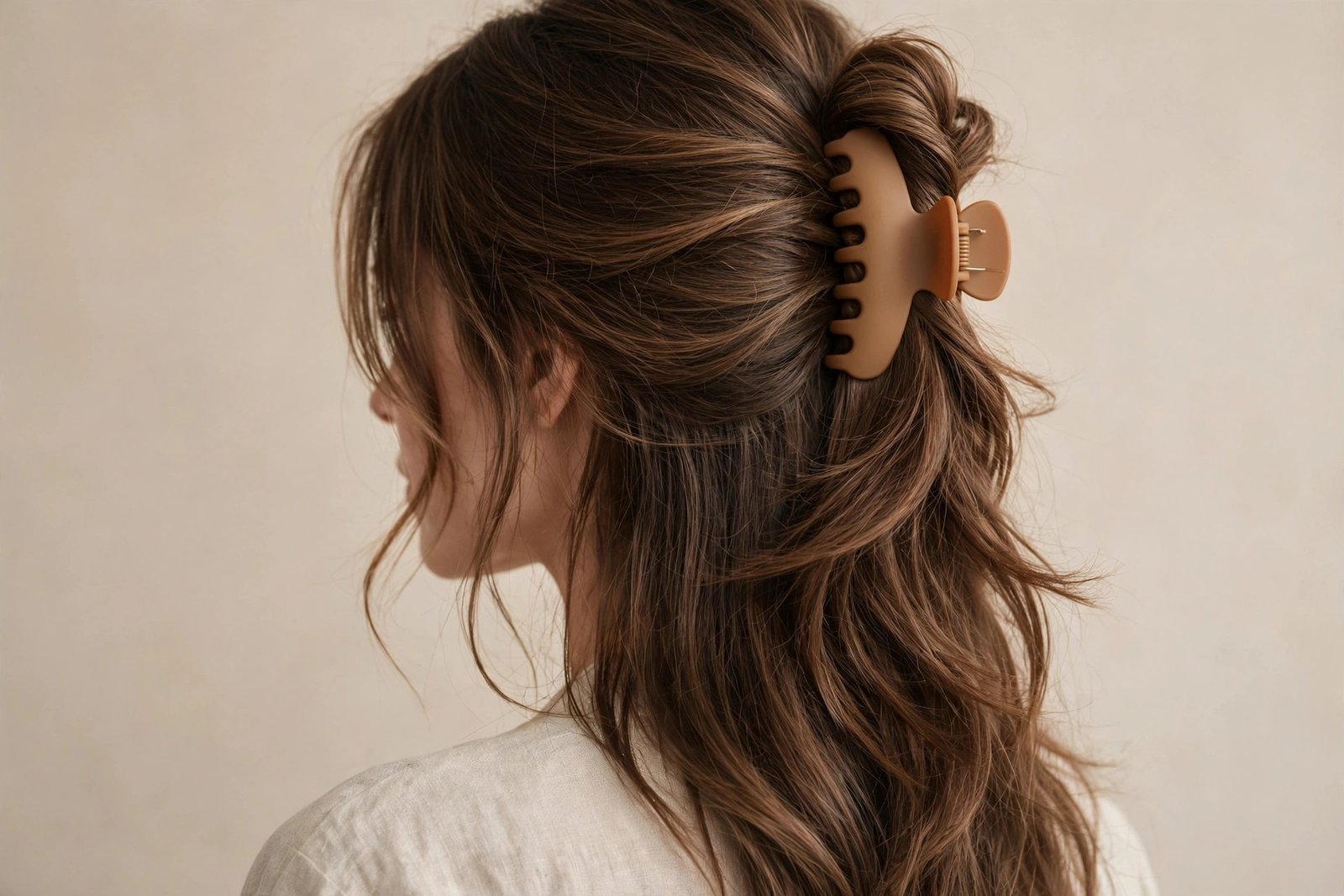
The face-framing soft twist is the romantic lead of claw clip hairstyles: everything loosely gathered, soft pieces left out around the face, nothing pulled tight. It is the style that photographs beautifully from every angle, which is why you see it at every wedding that is not yours and every date night that matters. The secret is restraint — clip less hair than you think, leave more out than feels safe, and trust the softness.
Who it suits: Medium to long hair with layers or face-framing pieces — the style is built around those front sections, so blunt one-length cuts get less out of it. Every face shape works because the framing pieces can be adjusted: more coverage softens a square jaw, tucked-back pieces open up a round face.
How to do it: Before you touch the clip, decide which front pieces stay out — pull them forward now, because fishing them out afterward disturbs the style. Gather the rest loosely at the back of the crown (not high, not low — middle). Twist once, gently, and clamp a large matte clip over it. Now arrange the face-framing pieces: a little forward, a little curled around your finger for shape. Pull one or two tiny pieces loose at the nape for softness.
Products and staying power: A large-barrel curling iron on just the face-framing pieces (before clipping) takes this from pretty to stunning — it is the only style in this guide where I actively recommend heat, and only on those front sections. Light hairspray holds the twist; the framing pieces should stay touchable.
Variations: A low side part with an asymmetric frame for vintage romance. Braid the face-framing pieces loosely before letting them hang. A decorative pearl or gold clip turns this into bridesmaid-ready hair.
Honest downside: Wind is the enemy — those soft framing pieces become chaos in a breeze, so this is an indoor style or a calm-day style. It also needs those layers to exist; if your hair is all one length, you can fake the frame by pulling pieces out, but they will be blunt rather than soft. Layers make this style; consider them next cut.
12. The Side-Swept Clip
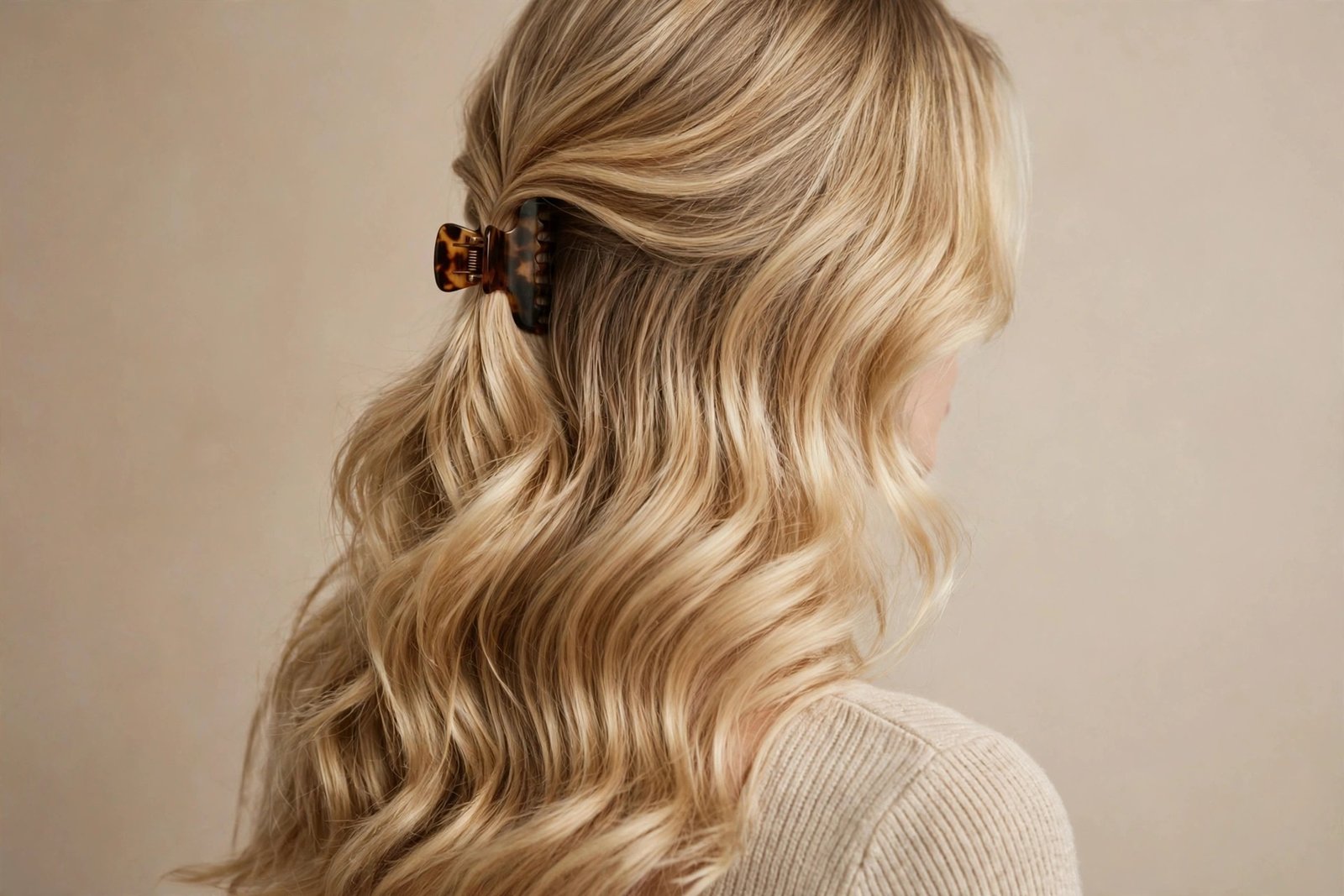
The side-swept clip is old-Hollywood glamour filtered through 2026 ease: a deep side part, everything swept to one side, and a medium clip securing it behind the ear while waves cascade over one shoulder. It is asymmetric, it is dramatic, and it is shockingly simple — the deep part does most of the visual work before the clip even enters the picture. Wear it when you want to look like you own the room.
Who it suits: Medium to long hair, wavy or curled (straight hair works but the cascade needs wave to have movement). The deep side part flatters round faces beautifully by creating diagonal lines; it adds drama to oval faces. If your hair is very fine, the swept side can look thin — texturizing spray is your friend.
How to do it: Create a deep side part — further over than your usual part, almost theatrical. Sweep all your hair to the fuller side. Gather it loosely behind the ear on the tucked side and clamp a medium claw clip there, catching the swept hair against the head. Let the bulk cascade over the opposite shoulder. Arrange the waves with your fingers so they fall in a deliberate curtain, not a tangle.
Products and staying power: Curl or wave the lengths first if your hair is straight — the cascade needs movement. Light-hold hairspray on the swept section. The clip placement behind the ear is naturally secure (the ear helps anchor it), so this lasts through an evening.
Variations: Braid the tucked side into a small accent braid before clipping for detail. Pin the cascade over the shoulder with the clip visible as jewelry-like hardware. Go full glam: smooth the swept top completely flat for contrast with the wavy cascade.
Honest downside: All the hair on one side means all the weight on one side — after several hours your neck may notice. It is an evening-out style, not an all-day one. And if your hair has a strong natural part on the opposite side, the deep sweep will fight you; work with damp hair and let the part set as it dries.
13. The Evening Twist (Bridal-Ready)
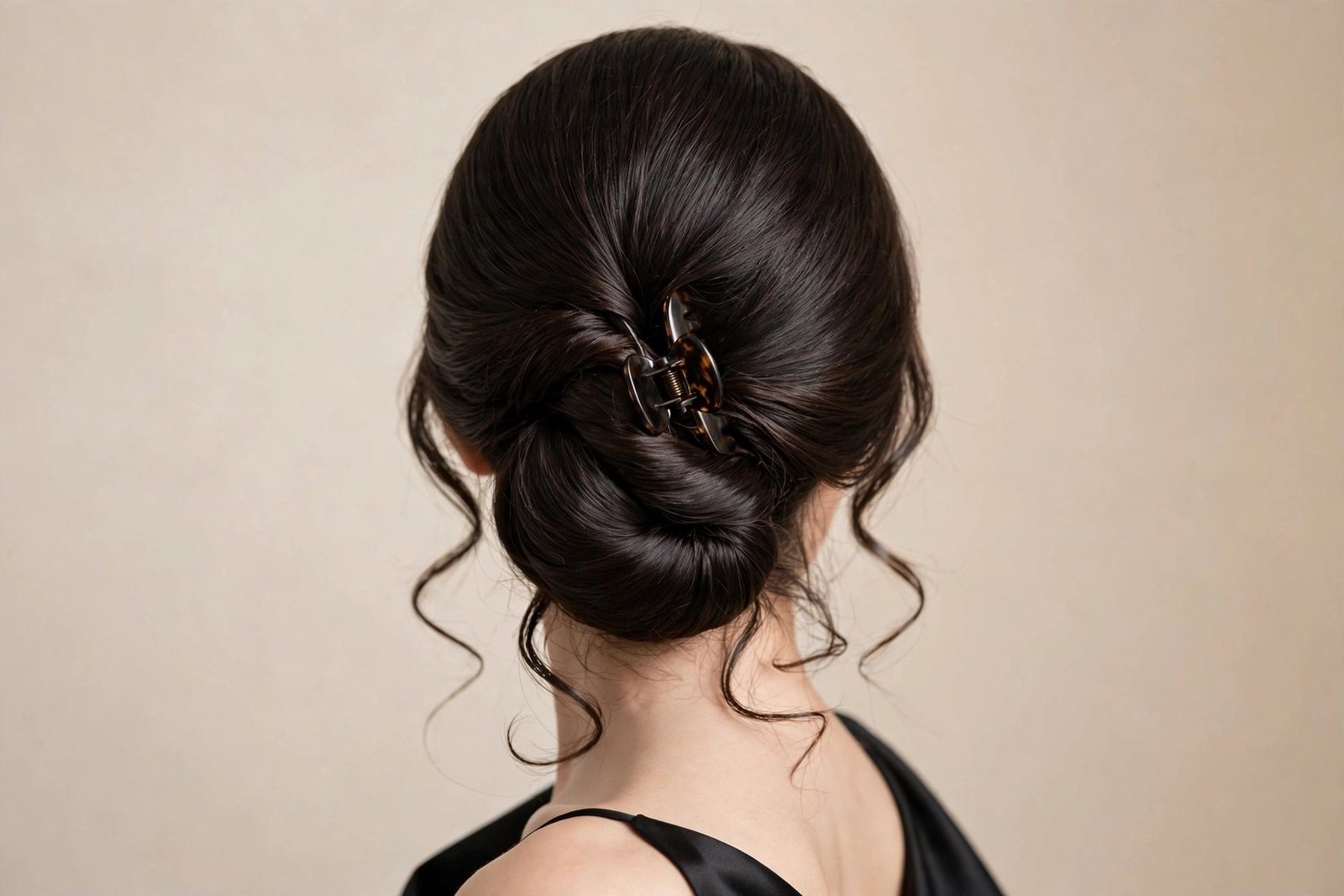
Yes, you can wear a claw clip to a wedding — your own, even. The evening twist is the formal end of the claw clip spectrum: a sculpted, smooth, deliberate updo where the clip is chosen as carefully as jewelry. I have seen this done for black-tie events and it looked every bit as polished as a pin-curled updo that took two hours. The trick is treating the clip as an accessory, not a shortcut — even though it is absolutely a shortcut, and that is the beauty of it.
Who it suits: Medium to long hair; the style needs enough length to sculpt. It suits every face shape — the sculpting is customizable. Brides, bridesmaids, gala guests, anyone who needs formal hair without the formal salon appointment.
How to do it: Prep is everything: smooth the hair completely with serum and a brush, or curl the lengths first for a textured formal look (curled-then-twisted gives gorgeous dimension). Create your part, then build a low twisted chignon or a French twist — the two most formal bases. The difference from the casual versions: everything is smoother, tighter, and more deliberate. Choose your clip like jewelry — tortoiseshell, gold-accented, or pearl-embellished — and place it precisely. Finish with strong-hold hairspray and a final smoothing pass.
Products and staying power: Smoothing serum, strong-hold hairspray, and optionally a few hidden bobby pins at the base for insurance on a long event night. This is the most locked-down style in the guide — built to survive dancing, hugging, and happy tears.
Variations: A curled-texture twist (curl first, then twist loosely) for romantic formality. Fresh flowers or a jeweled comb tucked beside the clip for weddings. A sleek low knot variation for ultra-modern minimalism.
Honest downside: Formal means effort — this is not a fifteen-second style, it is a twenty-minute style that happens to use a clip. Anyone expecting the casual ease of the messy bun will be disappointed by the prep. But compared to a salon updo appointment, it is still a massive time and money saving, and you can do it in your own bathroom.
14. The Workout-Proof Twist
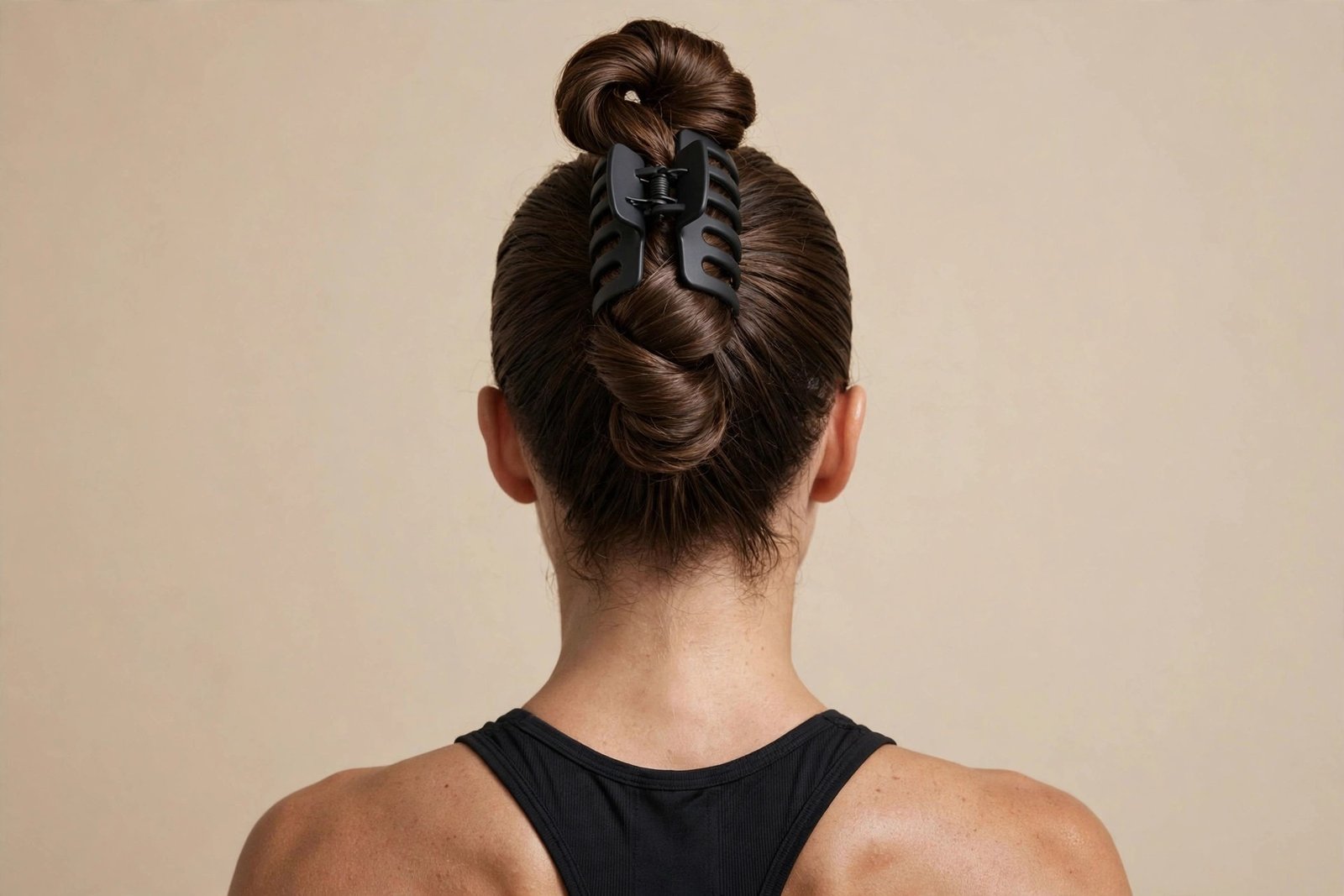
Every woman who exercises with long hair knows the eternal struggle: ponytails slip, buns bounce loose, and headbands migrate south by mile two. The workout-proof twist is engineered differently — a high, tight twist secured with a large strong-spring clip, designed to survive burpees, downward dog, and the general violence of a HIIT class. It is not the prettiest style in this guide. It is the most useful one, and I respect it enormously for that.
Who it suits: Medium to very long hair, all textures. Thick and heavy hair — which defeats most workout styles — actually works well here because the large clip distributes the hold. If your hair is short, a medium clip on a smaller twist does the same job.
How to do it: Gather all hair high on the crown — higher than feels natural, because it will settle. Twist the length tightly (this is the one style where tight is correct — no softness, no romance, just engineering). Coil into a compact twist and clamp a large clip with the strongest spring you own vertically over it, making sure the teeth bite into both the coil and the base hair. Shake your head hard. Jump once. If nothing moved, you are cleared for exercise.
Products and staying power: None needed — grip comes from the tight twist and the clip’s spring, not product. Sweat actually helps (gross but true: damp roots grip better). For extra insurance on very heavy hair, cross two large clips in an X over the twist.
Variations: A high braided base (braid first, then coil and clip) for maximum security on super-long hair. Two clips in an X formation for marathon sessions. A low version at the nape for yoga and pilates where you lie on your back.
Honest downside: Tight plus high plus long duration can mean a headache — if you are prone to tension headaches, go for the X-crossed two-clip version, which distributes pressure. And this style is purely functional; nobody is calling it glamorous. It is the sweatpants of claw clip hairstyles — perfect for its purpose, not for date night.
15. The Overnight Heatless Coil
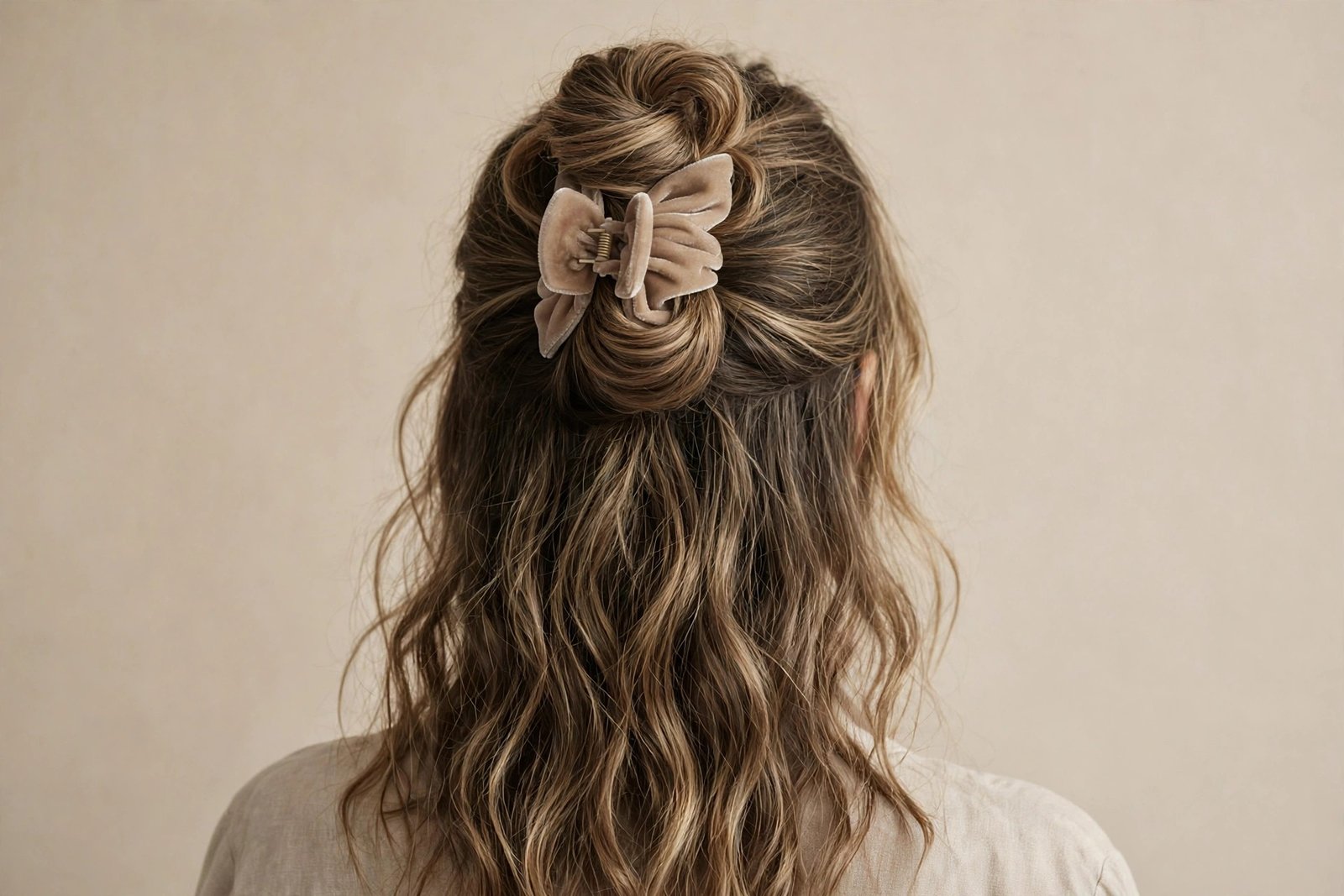
The overnight heatless coil is two styles in one: you twist your hair up in a claw clip before bed, sleep on it, and wake up to soft, bouncy waves — no heat, no effort, no morning styling panic. It is the ultimate lazy-girl luxury: your hairstyle works the night shift while you sleep. I started doing this on nights when I was too tired for my full routine, and now my heat tools are gathering dust next to my curling iron, which has started a support group with the other neglected appliances.
Who it suits: Medium to long hair, straight to wavy — the coil creates the wave, so straighter hair actually shows the most dramatic transformation. Very curly hair will not gain much (it already has texture), but the coil still works as a protective sleep style. Side-sleepers should position the coil high on the crown so they are not lying on the clip.
How to do it: On slightly damp hair (towel-dried after washing, or misted with water), apply a light curl cream or mousse. Gather everything high on the crown and twist the length loosely — looser than the workout twist; you want a soft coil, not a tight rope. Coil it into a bun shape and clamp a large clip over it — a soft-finish or velvet-style clip is most comfortable for sleep. In the morning, remove the clip, shake out the coil, and separate the waves with your fingers. Do not brush — brushing turns waves into frizz.
Products and staying power: Curl cream or light mousse on damp hair before coiling; the product sets the wave as it dries overnight. The morning waves typically last all day, and day-two hair gets even better texture. This pairs perfectly with an overnight heatless styling routine if you want to make it a habit.
Variations: Two coils (one on each side) for tighter, more defined waves. A single loose French-braid-then-coil for a wave-plus-texture combo. On dry hair with just a water mist, you get softer, looser waves — good for fine hair that over-curls easily.
Honest downside: Sleeping in a clip is not for everyone — light sleepers and stomach-sleepers may find it uncomfortable, and there is no shame in that. The wave pattern is also gloriously unpredictable: some mornings you get perfect mermaid waves, some mornings you get “interesting” results. It is a low-stakes gamble, but a gamble. On very thick hair, the center of the coil may still be damp in the morning — twist on drier hair or use two smaller coils instead of one big one.
The Claw Clip Routine: Styling, Care & Maintenance
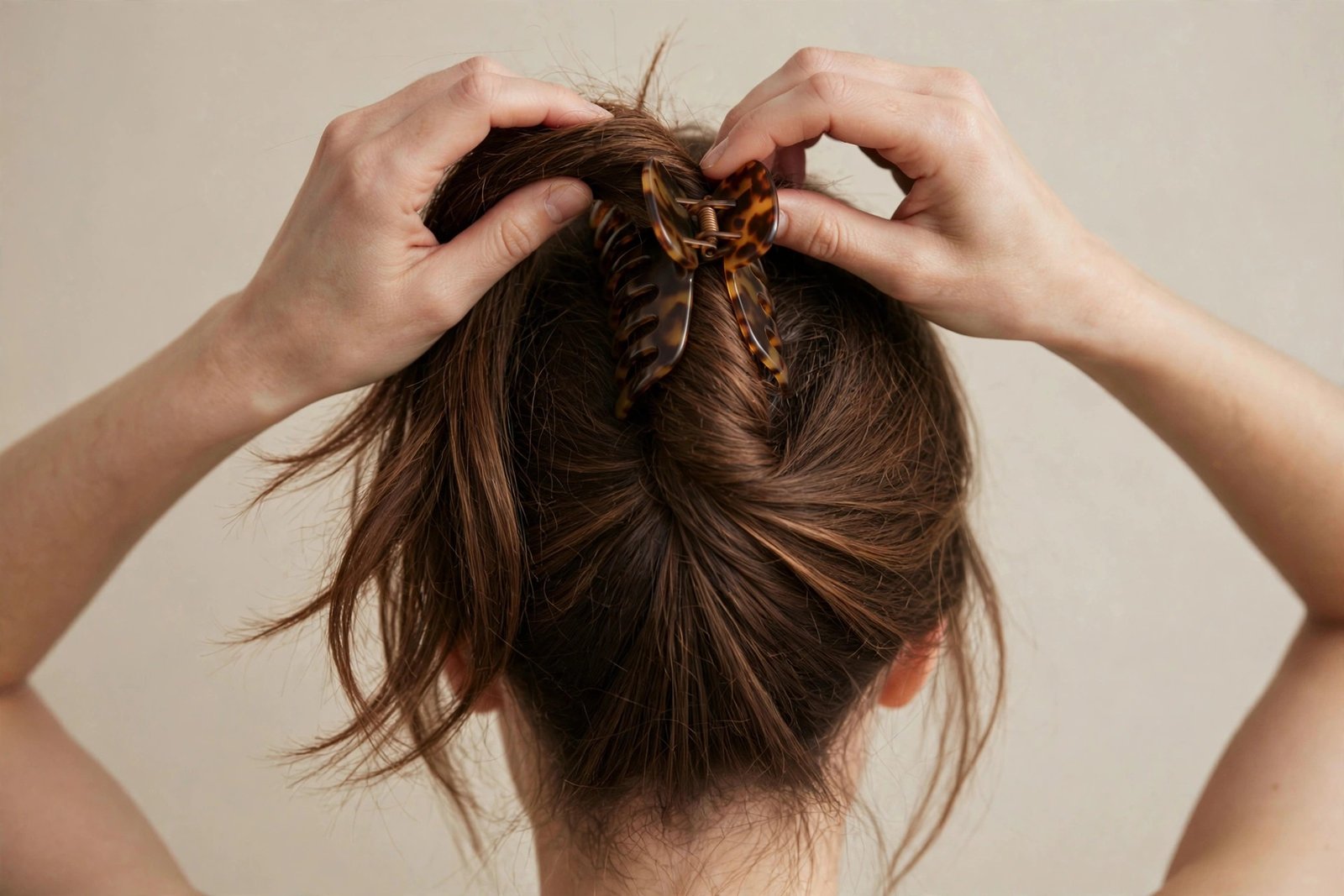
Knowing fifteen styles is useless if your clip slides out by 10 a.m. or your hair starts snapping at the twist point. This section is the unglamorous backbone of great claw clip hairstyles: the core technique done right, how to make it last all day, and how to keep your hair healthy while wearing clips daily. None of it is complicated. All of it matters.
The Core 30-Second Twist Technique
Every claw clip style in this guide is a variation of one move: gather, twist, clamp. Master the base move and the rest is decoration. Start with dry or slightly damp hair — never soaking wet, because wet hair is heavier, stretchier, and more breakage-prone, and the clip will slide as it dries and shrinks. Gather your hair where you want the style to sit: high for drama, mid for classic, low for polish.
Now twist. The most common mistake I see is twisting too loosely at the start and too tightly at the end, which creates a lumpy rope. Instead, twist evenly from base to ends with consistent tension — think of wringing out a towel, smooth and steady. One to two full twists is enough for most styles; more than three and you are building a rope that will fight the clip.
Clamping is where people go wrong most. Open the clip wide, position it over the twist so the teeth will catch both the twist and the hair underneath it at the scalp — the clip must anchor to your head hair, not just sit on top of the twist like a hat. Close it firmly. Then do the wiggle test: gently shake your head side to side. A little movement is fine; sliding is not. If it slides, the twist is too loose or the clip is too small — re-twist tighter or size up.
Finally, finish with intention. Pull gently at the crown for lift if you want it. Ease out face-framing pieces if the style calls for them. Smooth the surface with your palms. The difference between “I just threw it up” and “I styled it” is about fifteen seconds of finishing — and those fifteen seconds are what make people think you tried.
Making Your Claw Clip Last All Day
The mid-afternoon slide — when your perfect morning twist has migrated south and loosened into something sad — is the number one claw clip complaint, and it is almost always fixable. The causes are predictable: hair too clean and slippery, clip too small, twist too loose, or gravity plus a long day. Address the cause and the style holds.
Start with grip. Freshly washed, conditioned, serumed hair is beautiful and nearly unclippable — it is too slippery. Day-two hair holds dramatically better, which is why dry shampoo is a claw clip’s best friend: it adds texture and grip at the roots while refreshing the style. If you must clip freshly washed hair, a texturizing spray through the lengths gives the clip’s teeth something to bite. Silky-straight hair types should consider this mandatory, not optional — and if you are styling in under five minutes before work, the 5-minute styling guide has more speed tricks that pair well with clips.
Next, match the clip to the job. A medium clip holding all of your thick long hair will fail — not because the style is bad, but because the hardware is undersized. When in doubt, go one size up. Check the spring strength too: open and close the clip in the store (or when it arrives). A strong spring snaps shut decisively; a weak one closes with a sad little sigh. You want the snap.
Humidity deserves its own mention because it is the silent killer of claw clip styles. Moisture in the air relaxes twists and loosens grip, especially on fine or wavy hair. On humid days, twist tighter than usual, choose matte-finish clips (better grip than glossy), and finish with a humidity-resistant hairspray. If you live somewhere humid, these are not suggestions — they are survival tactics.
And build in one maintenance moment. Around midday, find a mirror, open the clip, give the twist one fresh turn, and re-clamp. Thirty seconds. It resets the hold for the entire afternoon, and nobody will ever know. Stylists do this; they just do it in bathrooms like the rest of us.
Protecting Your Hair: Breakage-Free Claw Clip Habits
Let us answer the big question head-on: claw clips are among the gentlest ways to put your hair up — gentler than tight elastics, gentler than heat styling, gentler than most alternatives. But “gentle” is not “harmless,” and daily wear with bad habits can cause breakage, especially at the twist point where the clip’s teeth grip. The good news: every risk has a simple fix.
The main risk is tension. A twist pulled drum-tight and clamped hard, worn for twelve hours daily, stresses the same strands in the same spot. Vary your styles — high twist Monday, low chignon Tuesday, half-up Wednesday — so no single section bears the load every day. And never sleep in a tight clip; the overnight coil (style 15) is the exception because it is deliberately loose, but a tight daytime twist should come down before bed.
The second risk is the clip itself. Cheap clips with rough seams, sharp tooth edges, or flimsy hinges can snag and snap hairs. Run your finger along the teeth of any new clip before it goes near your head — if it catches your skin, it will catch your hair. Smooth, well-finished clips from reputable brands are worth the few extra dollars; your hairline will show the difference over months of daily wear.
Wet hair deserves a firm rule: do not twist soaking-wet hair into a clip. Wet hair stretches up to 30% and is at its most fragile — clamping it tight invites breakage and creates that weird stretched-dent pattern. Towel-dry to damp at minimum; fully dry is safest. The one exception is the intentional overnight coil on slightly damp hair, which uses a loose twist specifically to avoid this problem.
Finally, give your hair recovery time. If you wear clips daily, let your hair down for the evening — a few hours of freedom lets the strands relax and lets you check for any rough spots or tangles at the twist point. A weekly deep-conditioning treatment keeps the lengths resilient. None of this is dramatic; it is just the quiet maintenance that keeps a daily habit healthy for years.
Buying Smart and Caring for Your Clips
You do not need eleven claw clips. (I do, apparently, but you do not.) What you need is a small, well-chosen rotation: one large everyday clip with a strong spring, one medium for half-up styles, a set of minis for detail work, and one “good” clip — tortoiseshell, gold-accented, or otherwise elevated — for occasions when the clip is part of the outfit. Four clips cover every style in this guide.
When buying, test before you commit. Open and close the clip ten times — the spring should feel strong on the tenth close, not tired. Flex the body gently; quality acetate has some give without creaking, while cheap plastic feels brittle. Check the hinge: metal pins outlast molded plastic hinges dramatically. And match the size to your actual hair, not your aspirational hair — buy for the hair you have today.
Care is simple but extends a clip’s life enormously. Wipe clips down occasionally — product buildup on the teeth reduces grip over time, and a quick wash with warm soapy water restores it. Let them dry completely before use. Store them closed (not sprung open) to preserve spring tension, and do not toss them loose into a bag where they get crushed — a small pouch keeps them intact. A good clip lasts years; I have one tortoiseshell workhorse entering its fourth year of daily service, and the spring still snaps like day one.
One last buying note for 2026: the matte finishes dominating this year are genuinely more functional than the glossy clips of previous seasons — better grip, less slipping, and they photograph without harsh reflections. If you are buying your first serious clip, go matte. Your hair and your selfies will both benefit. Beauty editors at Allure have noted the same shift toward matte, grippy designs in their styling coverage — function finally winning over shine.
Frequently Asked Questions
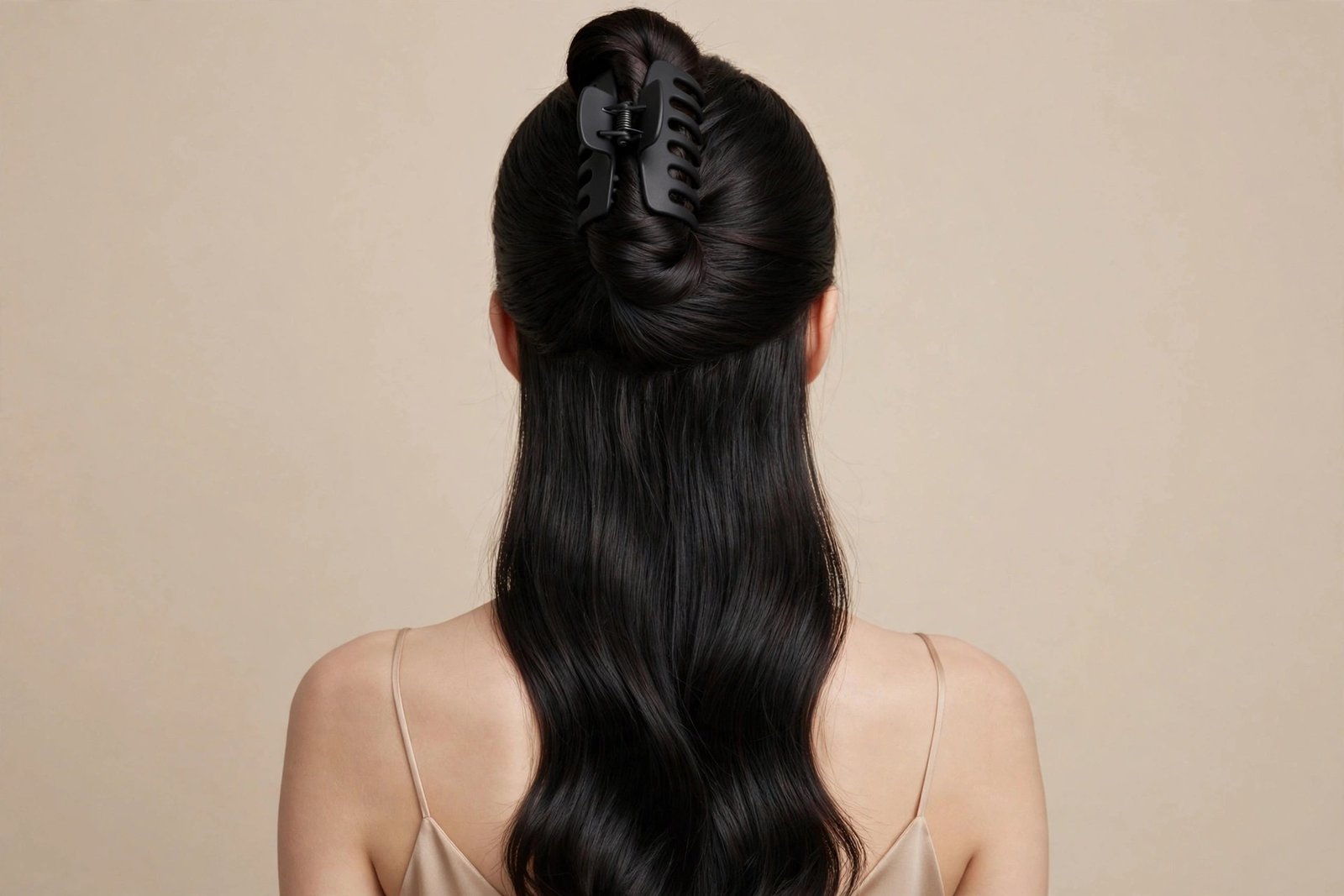
Everything people actually ask about claw clip hairstyles — the worries, the practicalities, and the things nobody tells you until you have learned them the hard way.
Will a claw clip damage my hair?
Claw clips are one of the least damaging ways to style your hair — significantly gentler than tight elastics, which create friction and dents, and obviously gentler than heat. That said, they are not magic. The risks are tension (wearing the same tight twist in the same spot every day), cheap clips with rough or sharp teeth that snag strands, and clamping soaking-wet hair, which is at its most fragile. All three are avoidable: vary your styles through the week, buy smooth well-finished clips, and never twist wet hair tightly. Do those three things and daily claw clip wear is about as harmless as hair styling gets.
What size claw clip should I buy for my hair?
Match the clip to your hair’s volume, not just its length. Fine or short hair: mini to medium clips (under 3.5 inches). Medium-length, medium-density hair: medium to large. Long, thick, or curly hair: large to jumbo (4.5 inches and up). The practical test: gather your hair as if styling it, and the clip should close around it with the teeth slightly overlapping. If it barely closes, size up — an overstuffed clip pops open at embarrassing moments. If your hair rattles loosely inside, size down for better grip. When between sizes, go bigger; you can always gather more hair, but you cannot make a small clip hold more than it holds.
How do I stop my claw clip from sliding out?
Slipping has four usual causes, in order of likelihood: hair too clean and slippery, clip too small, twist too loose, or a weak spring. Fix them in that order. Start with grip — day-two hair or dry shampoo at the roots, texturizing spray on silky lengths. Then check sizing — the clip should close with teeth overlapping, not straining. Twist with firm, even tension rather than loosely piling hair up. And test your clip’s spring: it should snap shut decisively, not close with a tired sigh. On humid days, twist tighter and use matte-finish clips, which grip better than glossy ones. One midday re-twist resets the hold for the whole afternoon.
Can claw clips work on short hair or bobs?
Absolutely — just not for every style in this guide. Bobs and lobs (chin-length to collarbone) are perfect for half-up styles, mini-clip accents, and the bob half-up look, which is specifically designed for shorter lengths. What short hair cannot do is the full twist-up styles like the French twist or high volume twist — there simply is not enough length to gather. Stick to medium and mini clips rather than large ones, which will overwhelm shorter hair. Pixie cuts are the one length where clips have little to work with, though a mini clip can still tame a growing-out fringe section.
Are claw clips good for curly or coily hair?
They are excellent — arguably better for curly hair than for straight hair, because the texture gives the clip natural grip. The keys are sizing up (dense curls need jumbo clips; regular large clips will not close) and handling the hair gently: gather loosely rather than forcing the clip through dry curls, which disrupts the curl pattern and causes frizz. Clip styled, product-set curls rather than wet ones, and choose smooth-tooth clips to minimize friction on delicate strands. The pineapple-up is the signature curly claw clip style, but half-up twists and low coils work beautifully too.
Can I really wear a claw clip to a formal event or wedding?
Yes — with the right clip and the right prep. The difference between a casual clip style and a formal one is not the technique, it is the execution: smoother finish, more deliberate shaping, and a clip chosen as jewelry (tortoiseshell, gold-accented, pearl-embellished) rather than a basic plastic workhorse. The evening twist is built exactly for this. I have seen claw clip updos at black-tie events that looked every bit as polished as salon work. One honest note: formal means prep time — smoothing, possibly curling first, precise placement. It is still far faster and cheaper than a salon updo, just not a fifteen-second job.
How do I clean and maintain my claw clips?
Product buildup on the teeth gradually reduces grip, so wash your everyday clips every few weeks with warm soapy water, rinse well, and dry completely before use. Check the teeth periodically for rough spots or cracks — a damaged clip snags hair and should be retired. Store clips closed to preserve spring tension, and keep them in a pouch rather than loose in a bag where they get crushed. Quality clips with metal-pin hinges and acetate bodies last for years with this minimal care; cheap thin-plastic clips tend to snap at the hinge within months regardless of care, which is why spending a little more upfront actually saves money.
Conclusion
Here is what I want you to take from all of this: the claw clip is not a trend you need to master — it is a tool you get to enjoy. There is no wrong way to start. Grab a clip that fits your hair, try the half-up crown twist tomorrow morning (twenty seconds, I promise), and see how it feels. Then work your way through the rest of the list at whatever pace suits you. Some of these styles will become your daily uniforms. Others you will save for weddings and bad-hair-day emergencies. All of them beat fighting with elastics and heat tools before coffee.
The real magic of claw clip hairstyles in 2026 is not any single look — it is what the clip gives back to you: time, hair health, and one less thing to think about in the morning. In a world of twelve-step routines and forty-five-minute styling sessions, a fifteen-second style that looks genuinely good is not lazy. It is smart. Now go rescue your hair from its elastic prison. It will thank you.