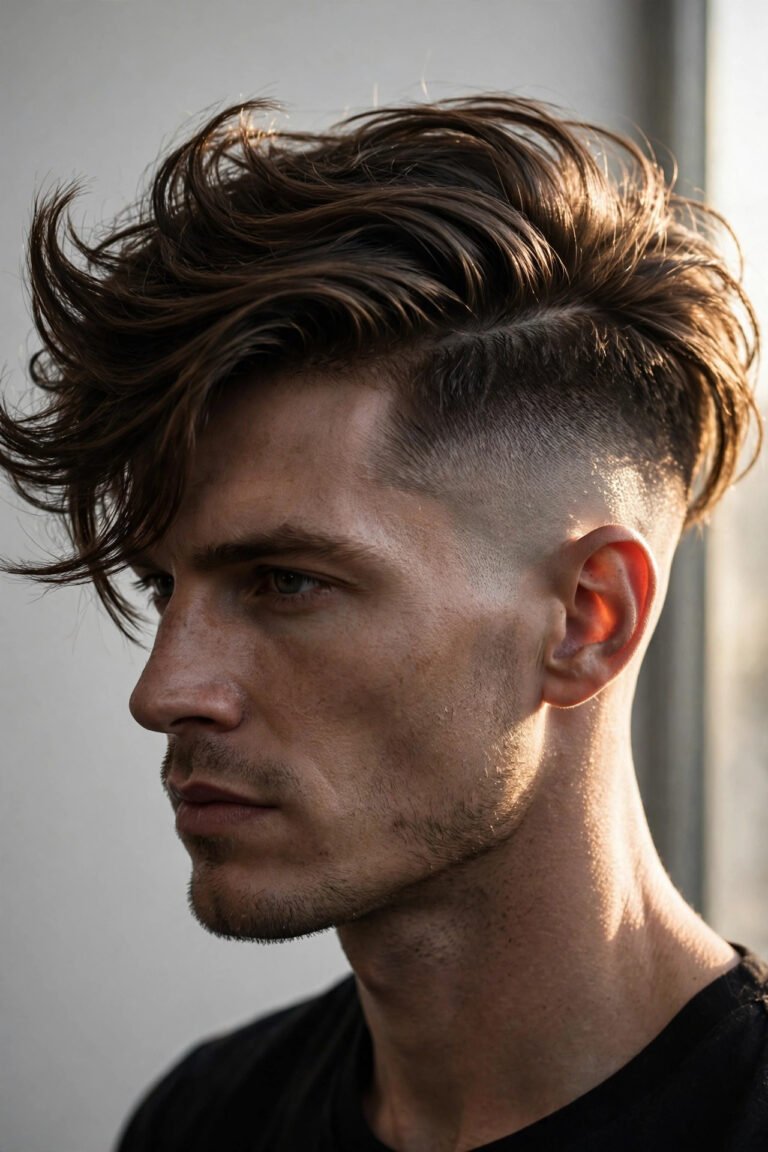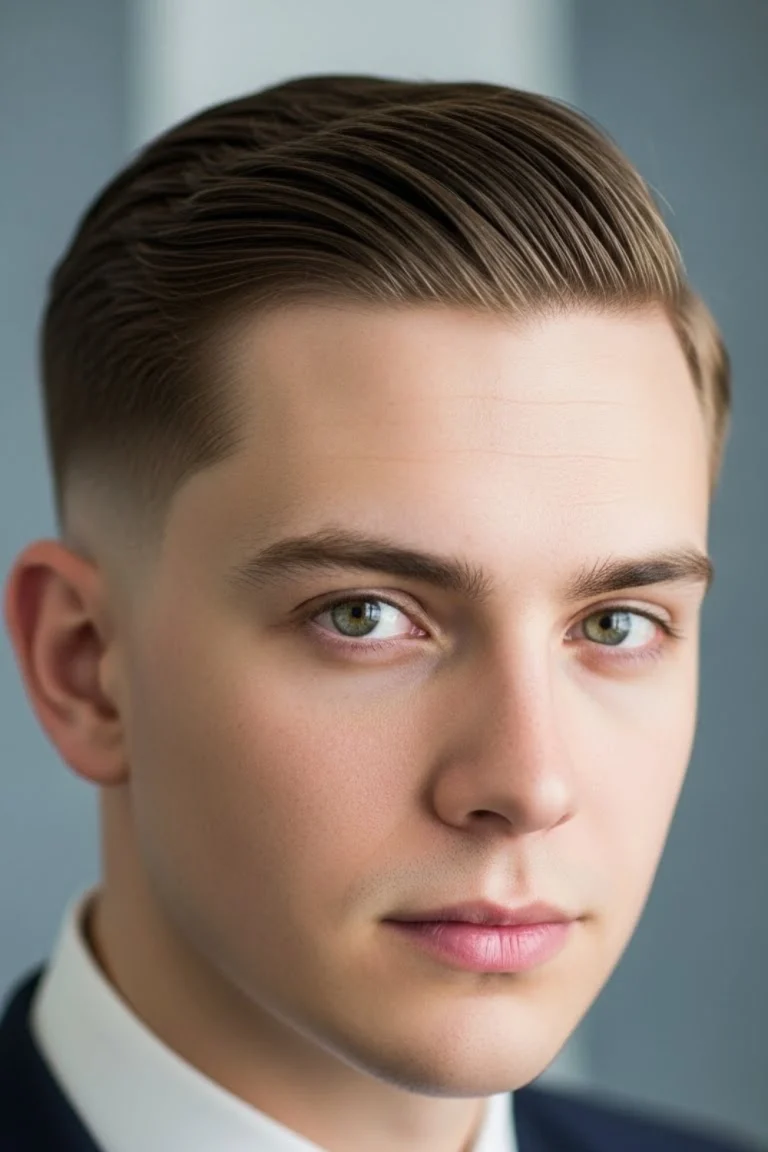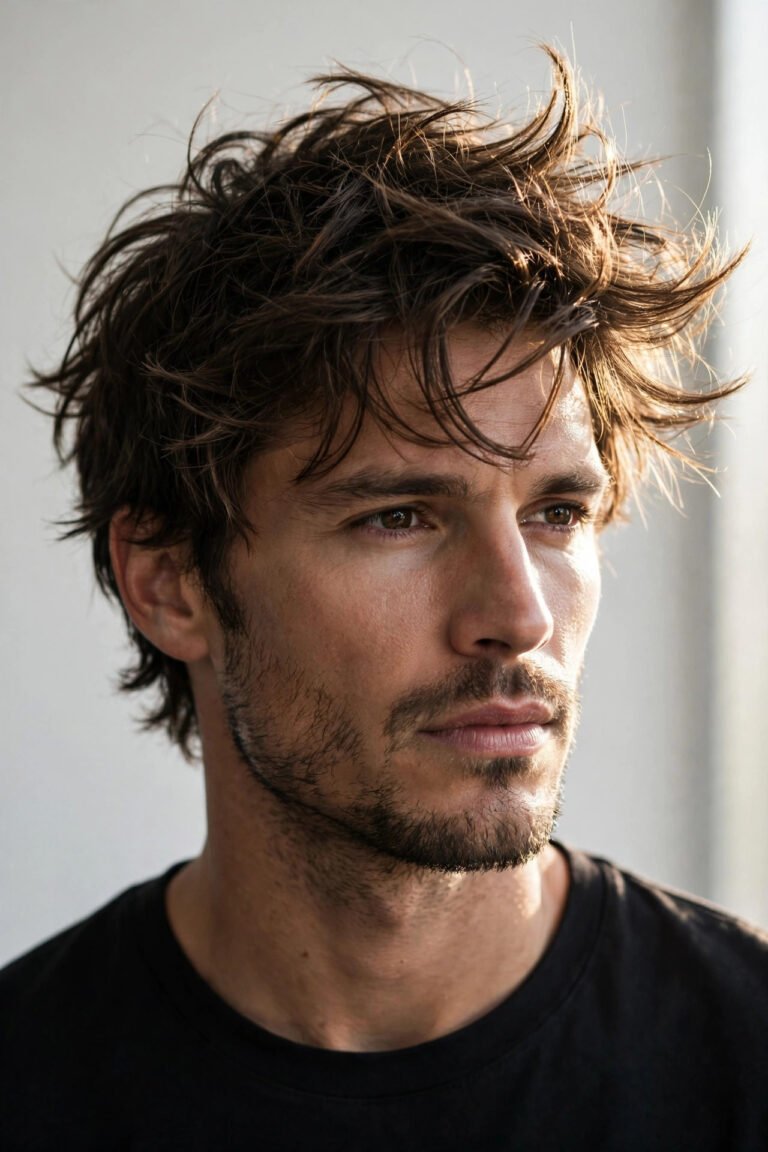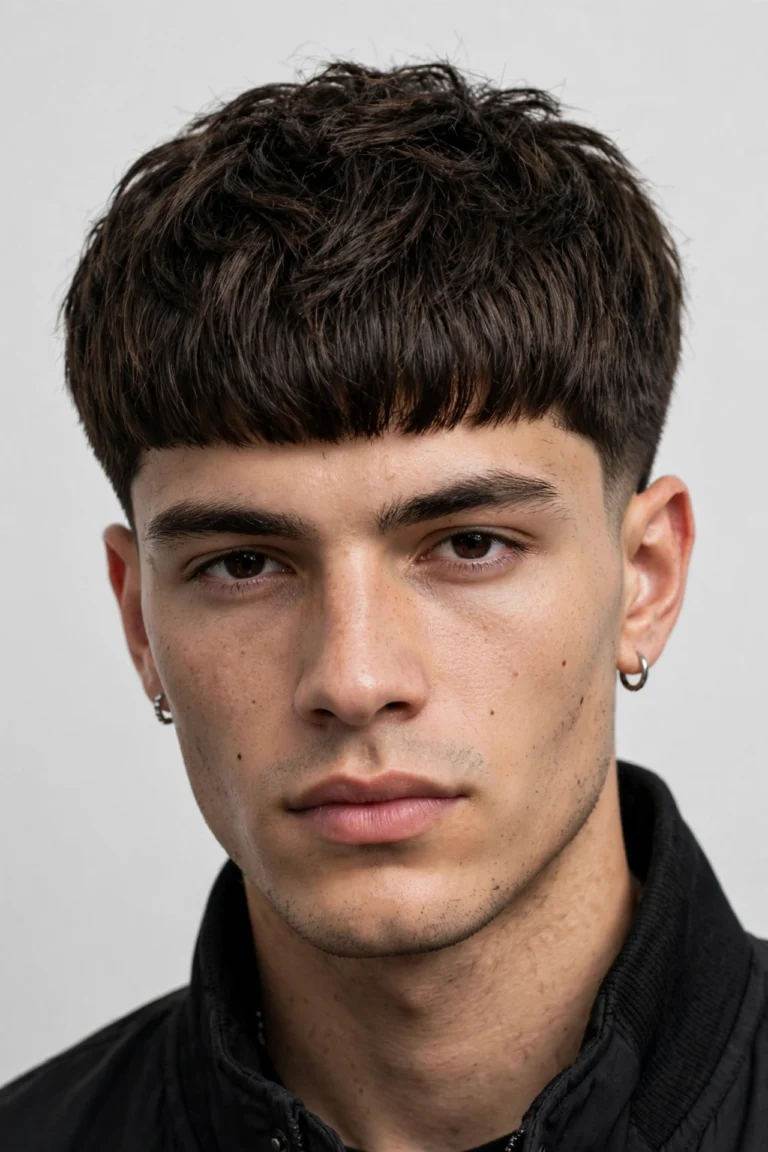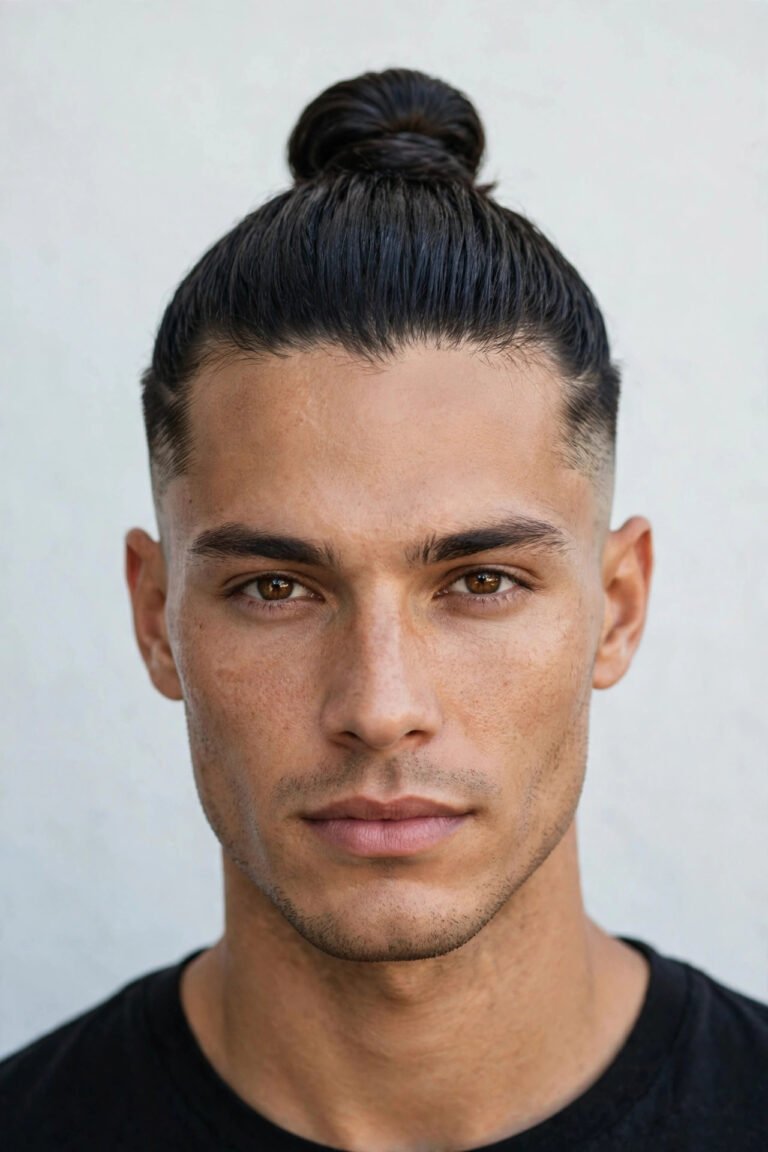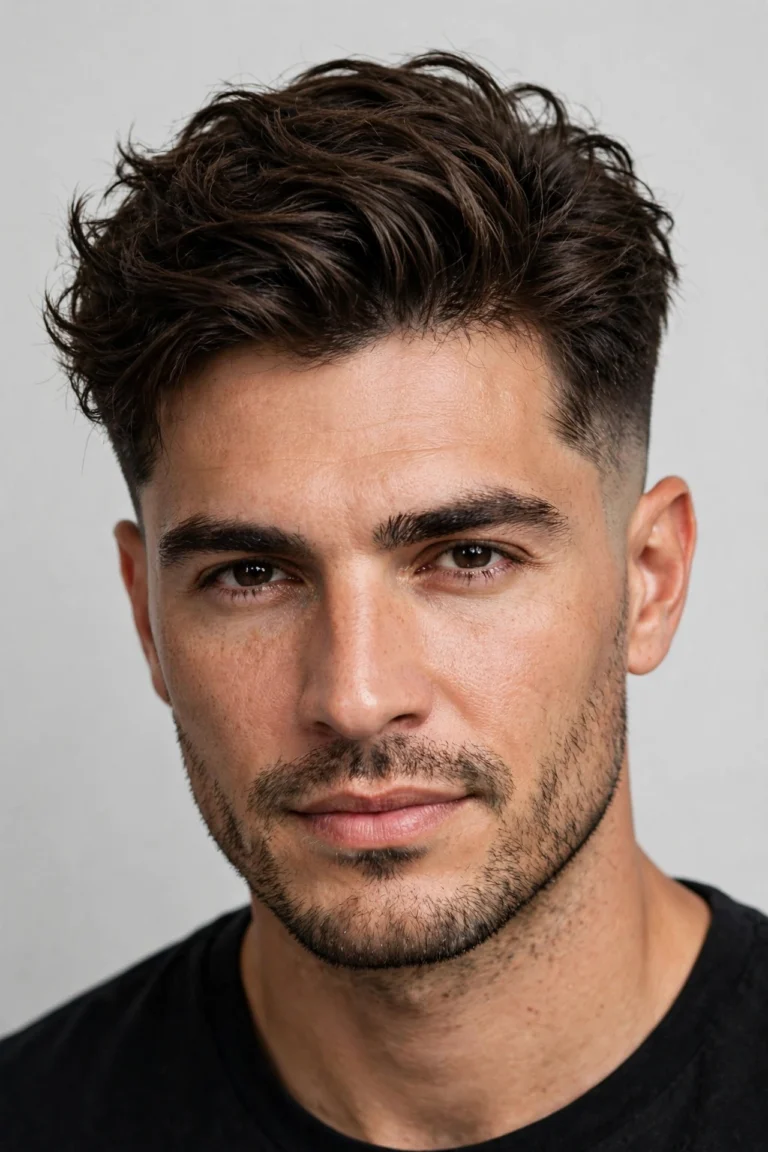
Wings Haircut Men 2026: 18 Feathered 70s Styles Back in Fashion
Wings Haircut Men 2026: 18 Feathered 70s Styles Back in Fashion
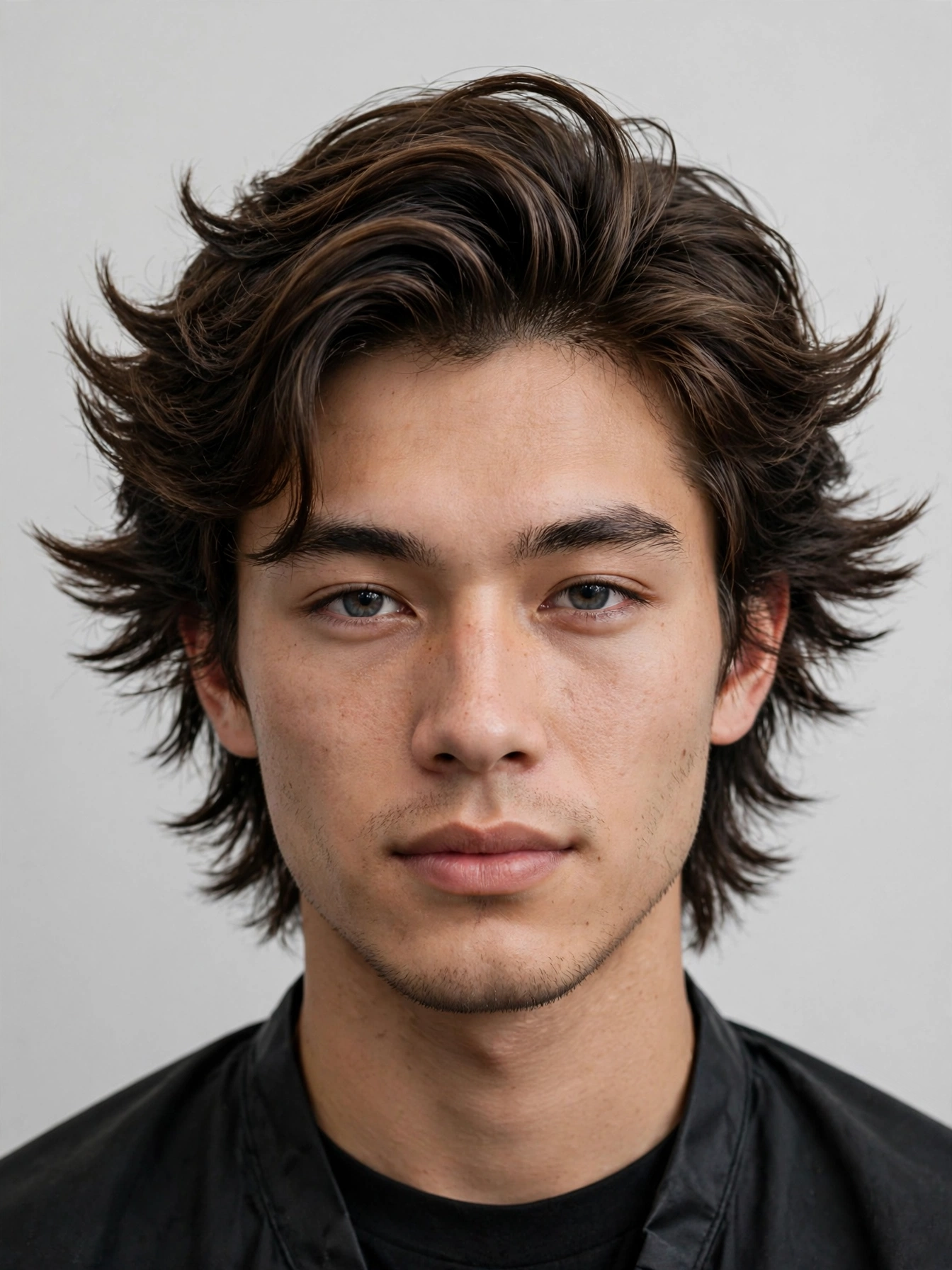
Remember that kid in high school whose hair did this thing where it flicked out at the sides, right over his ears, like it had somewhere better to be? That was the wings haircut. And before you roll your eyes and tell me it belongs in a 1978 yearbook, hear me out: the wings haircut for men is having a genuine moment in 2026, and the modern version looks nothing like the crunchy, over-gelled disaster you might remember.
I’ve watched this one come back slowly. First it was the indie musicians and the skaters, guys who never really cared about looking polished anyway. Then barbers started posting feathered cuts with soft, lived-in texture instead of the stiff retro version. Now I’m seeing it everywhere, from guys in creative offices to my own barber’s Instagram grid. The difference this time? Nobody’s trying to look like a Bee Gee. The 2026 wings haircut keeps the signature feathered flick at the ears but pairs it with modern texture, cleaner fades, and styling that actually looks effortless.
In this guide I’m breaking down everything: what the cut actually is, why it’s trending right now, 18 modern versions worth trying, exactly what to tell your barber (word for word), how to style it at home without a cosmetology degree, and whether it’ll work with your face shape and hair type. Let’s get into it.
What Is the Wings Haircut?
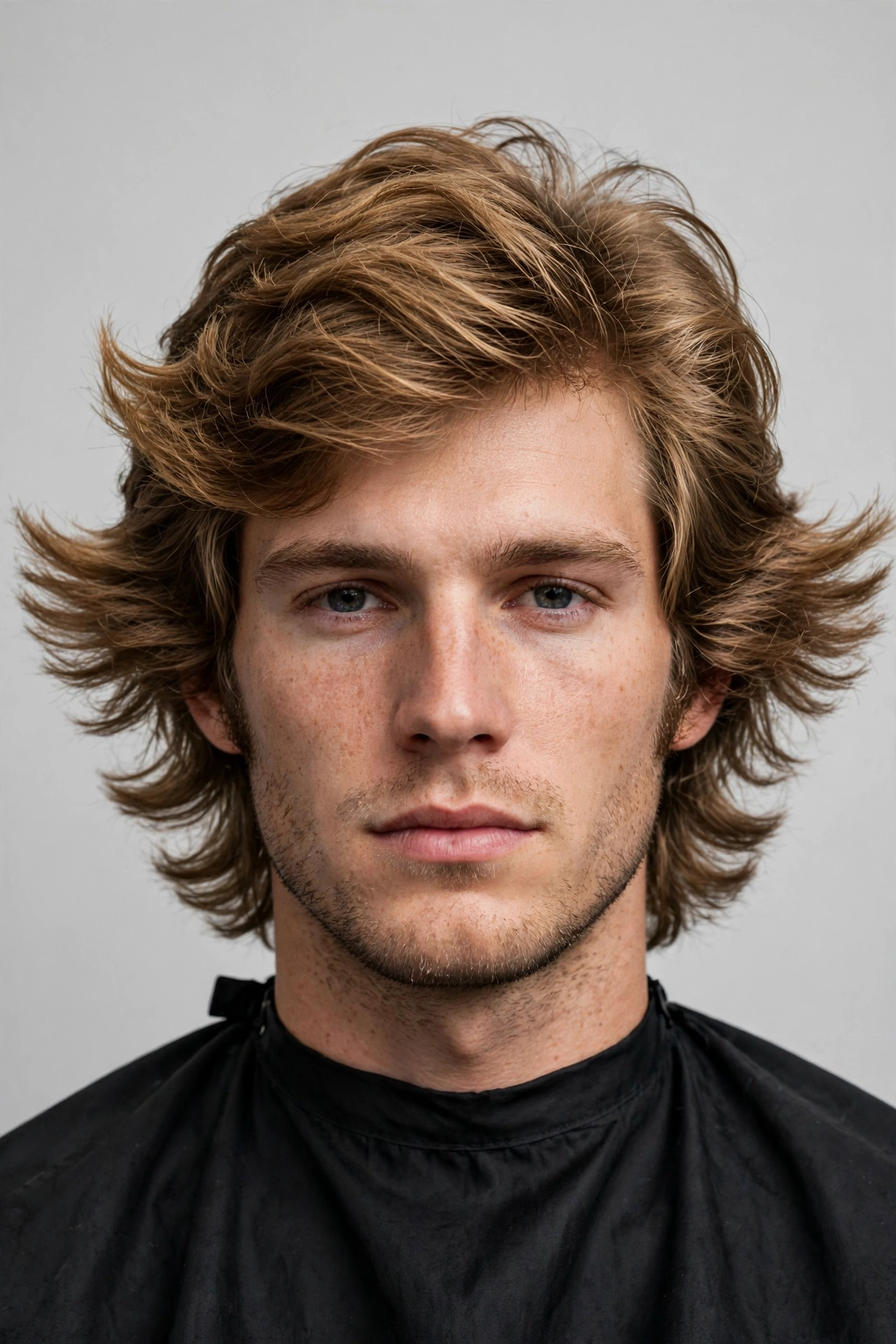
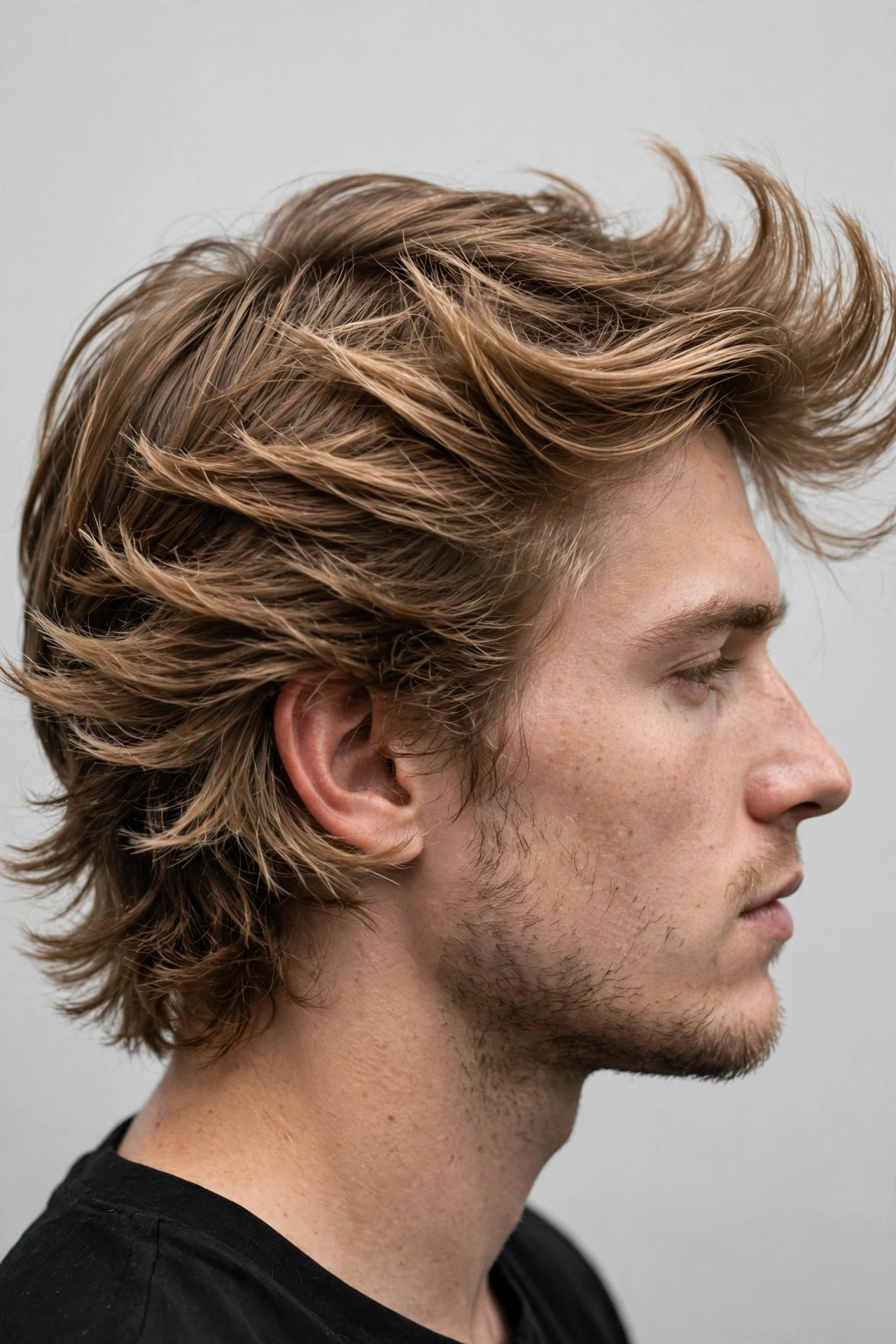
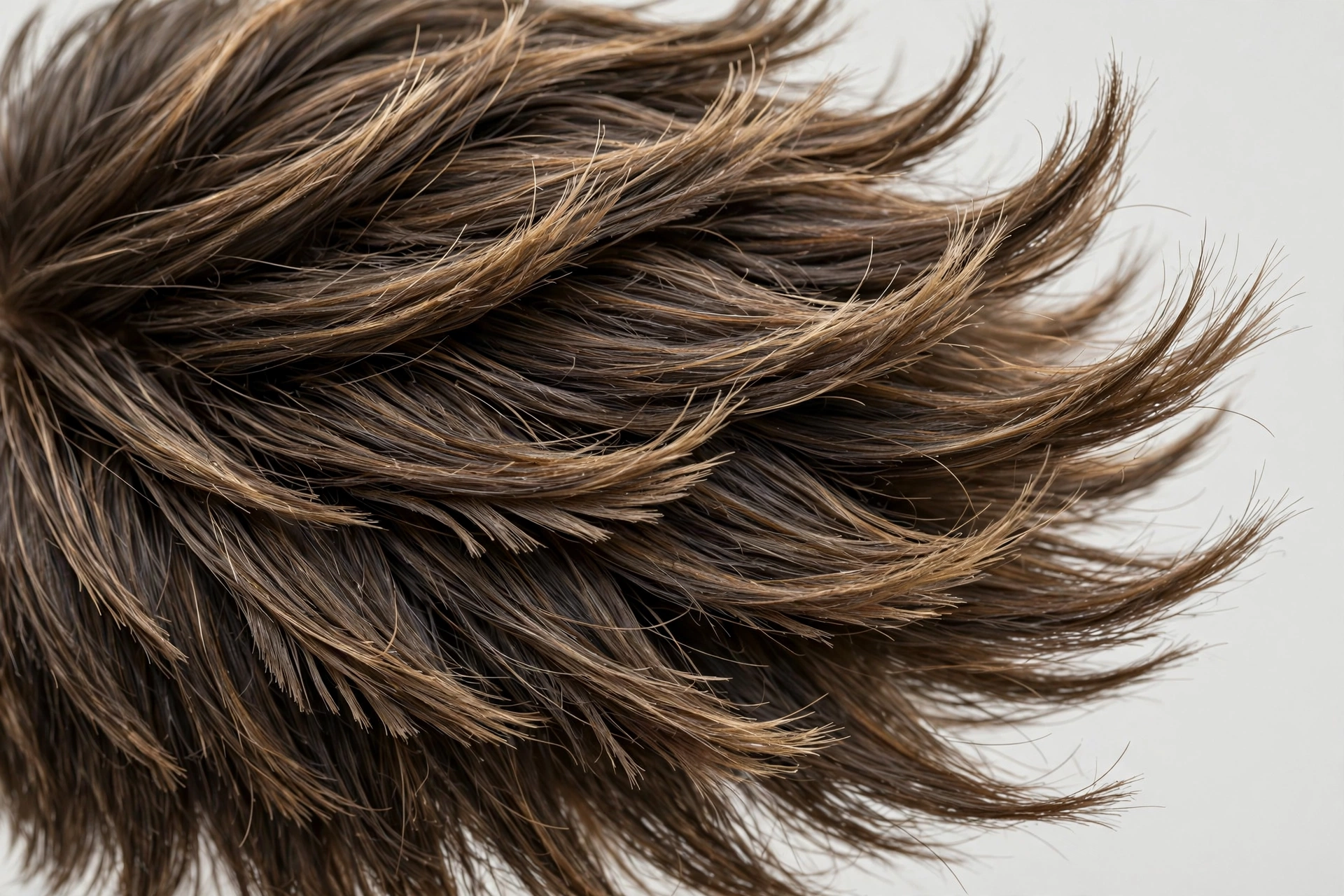
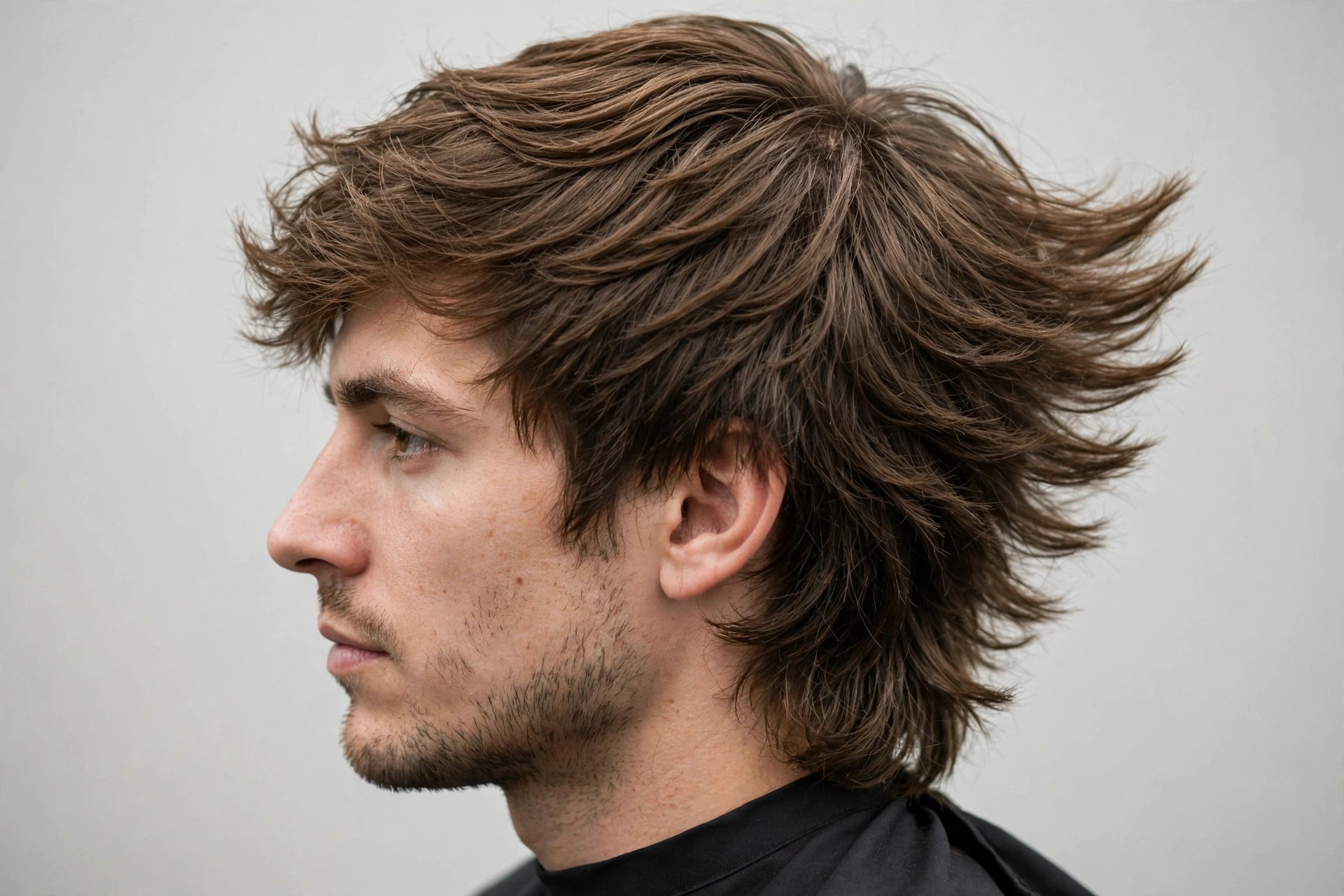
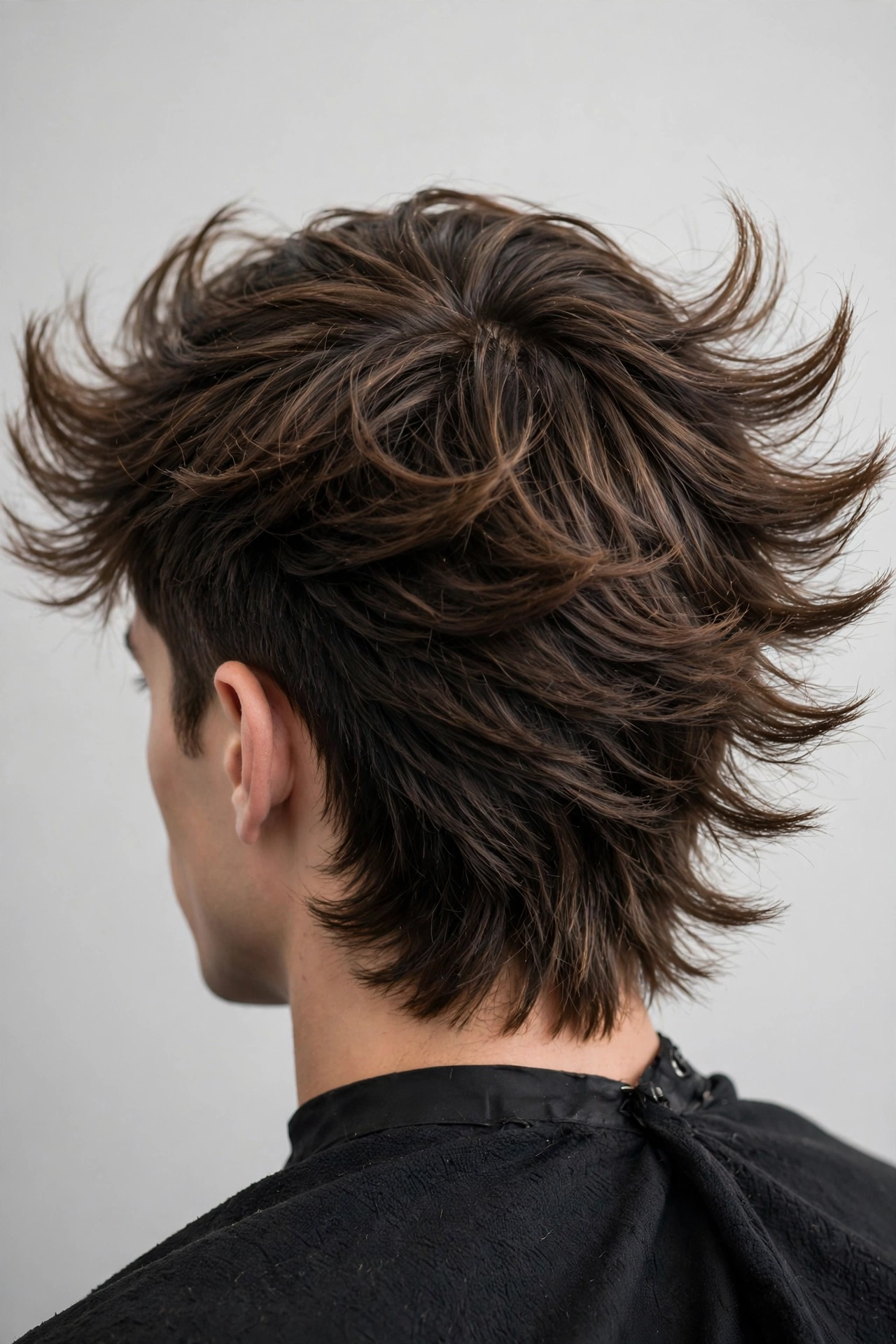
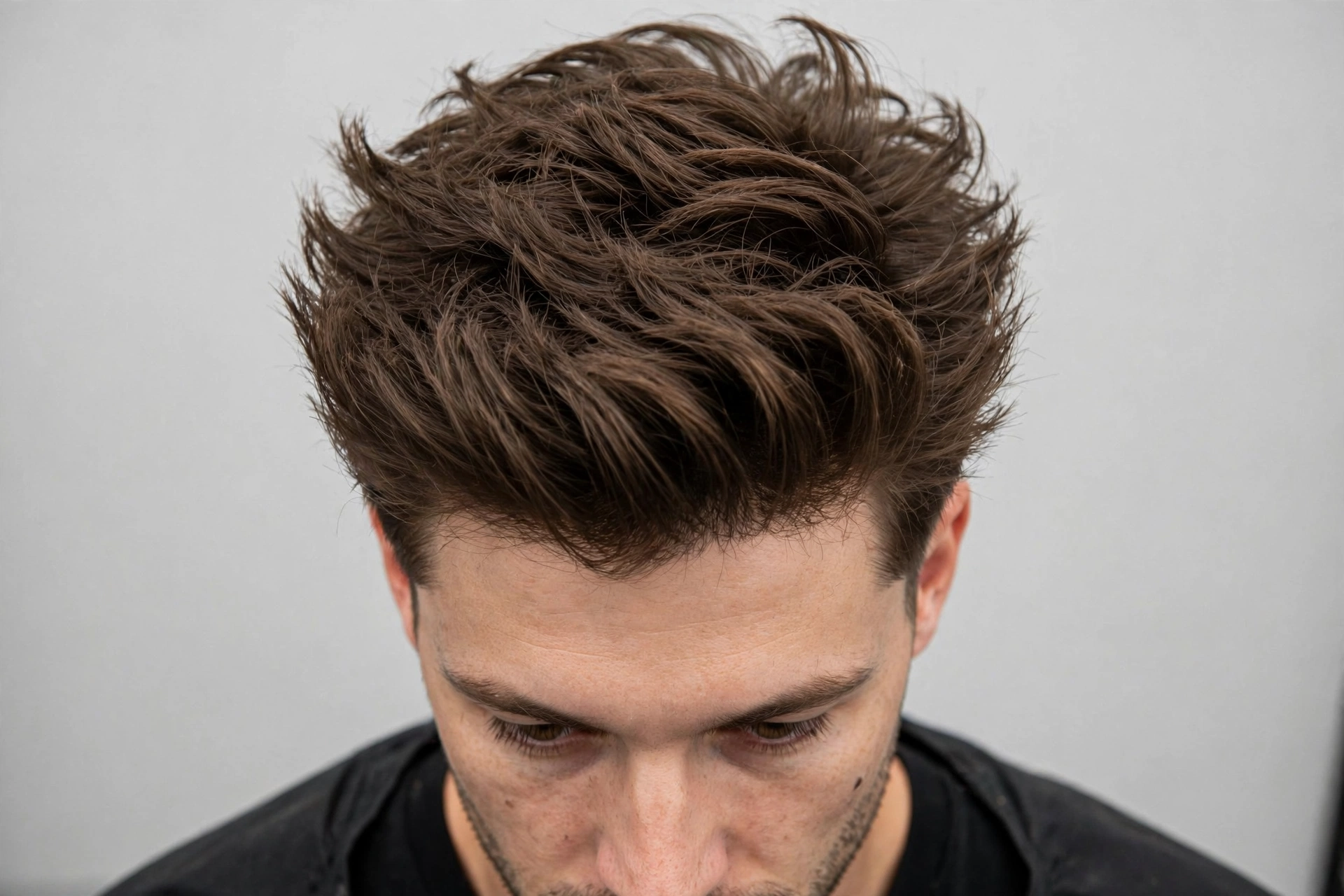
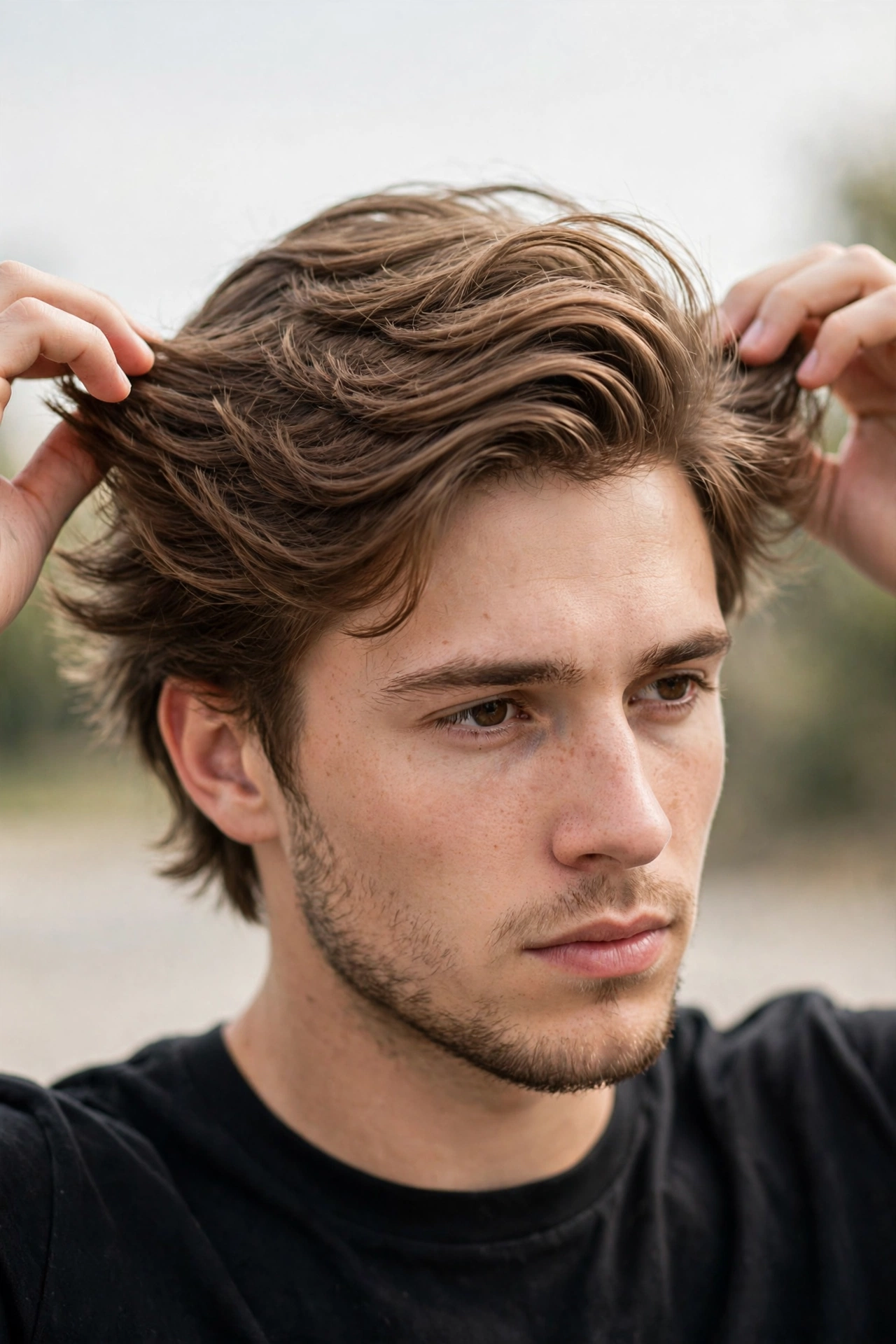
The wings haircut is a medium-length men’s cut defined by one thing: feathered layers at the sides that flick outward and back, right around the ears, like a pair of wings. That’s literally where the name comes from. The top is usually 3 to 5 inches long with layered ends, the sides grow just long enough to cover the ears and kick out, and the back falls anywhere from the nape to the collar. When it’s cut right, the whole thing has this airy, feathered quality. Each layer sits on top of the one below it and flips out at the ends instead of lying flat.
The cut was born in the 1970s, when feathered hair was the whole personality of the decade. Think of those album-cover guys with hair that looked like it was caught in a permanent breeze. The original version was often blow-dried to within an inch of its life and shellacked with enough product to survive a hurricane. My barber told me his dad wore one and went through a can of hairspray a week, which sounds about right for the era. It faded out in the late 80s when everything got either spikier or shorter, and for decades after that, “wings” was something your barber quietly fixed when you came in after growing your hair out too long.
Here’s what makes the 2026 version different from the retro one your uncle wore. Modern wings are cut with razors and point-cutting to create soft, broken texture instead of those uniform, helmet-like layers. The flick at the ears is intentional now, styled with a blow dryer and a little matte paste rather than a pound of gel. And barbers are mixing wings with contemporary elements: low fades, textured crops on top, undercuts underneath. So you get the soul of the 70s cut without looking like you’re headed to a costume party. If you’re into longer, flowing men’s styles in general, our guide to long hairstyles for men covers more of that territory.
Why the Wings Haircut for Men Is Trending in 2026
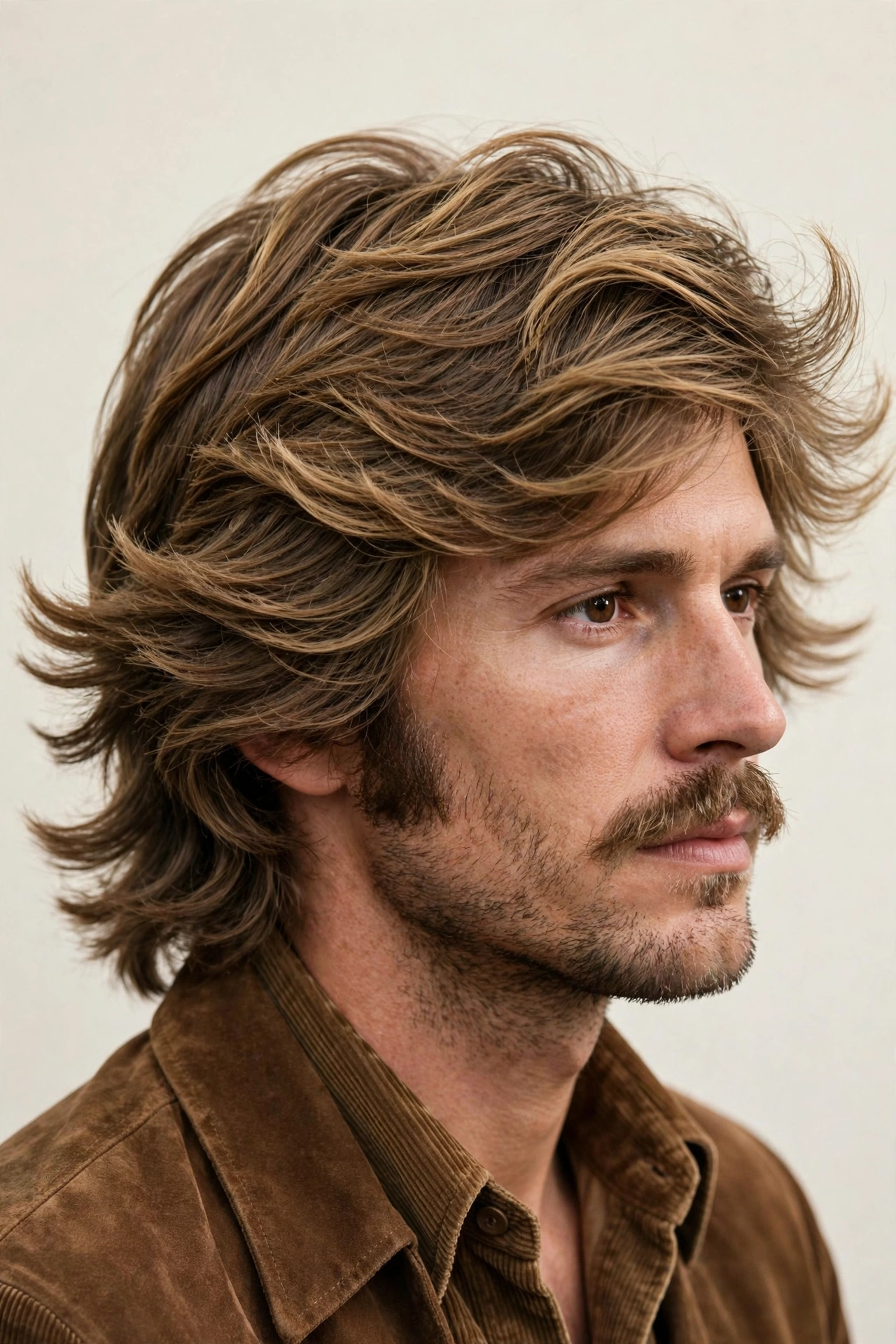
So why now? A few things collided at once. First, men’s hair has been getting longer across the board for a couple of years. The skin-fade-everything era is loosening its grip, and guys are letting the sides grow out. Well, guess what happens when the sides grow out past the ears and you add some layers? Wings. Half the guys wearing this cut right now arrived at it by accident during the grow-out phase and then decided they liked it. Barbers noticed, named it, and started refining it on purpose.
Second, the whole 70s revival in fashion finally reached hair in a serious way. Corduroy, flared trousers, vintage band tees, that whole aesthetic is everywhere, and hair follows clothes. The wings cut is the hairstyle equivalent of a well-worn leather jacket: it has history, it has attitude, and it looks better slightly undone. Esquire’s 2026 men’s haircut trend roundup points to this same shift toward softer, longer, more expressive cuts moving away from the ultra-tight fades of the last decade, which lines up exactly with what I’m seeing in chairs.
Third, and maybe most honestly, it’s a fun cut. Most men’s haircuts in recent years have been variations on short and neat. The wings haircut has movement, it has personality, and it photographs incredibly well, which matters more than anyone wants to admit. I’ve seen guys who wore the same crop for five years straight walk out of the shop with wings and a completely different energy. It’s not a small tweak. It’s a whole vibe change, and in 2026 that feels right. For more on how feathered texture became the decade’s signature, this look at the 70s feathered haircut comeback is a fun read.
18 Wings Haircut Styles to Try in 2026
Alright, the part you came for. There isn’t one single “wings” cut, there’s a whole family of them, and the right one depends on your hair texture, how much length you’re willing to grow, and how much effort you’ll actually put in each morning. Be honest with yourself about that last one. I’ve listed 18 versions below, from the faithful retro rebuild to modern hybrids, each with who it suits best. Scroll through, screenshot your favorites, and show your barber. That’s literally the most effective consultation tool ever invented.
1. The Classic Wings
This is the one that started it all: medium length all over, layered and feathered, with the sides flicking out right at the ears and the back brushing the collar. No fade, no undercut, no modern tricks. Just the pure 70s blueprint, but cut with today’s softer layering techniques so it doesn’t look like a wig. You need about 3 to 4 inches on the sides and 4 to 5 on top for the classic to sit right, which means most guys will need 3 to 4 months of growing from a short cut.
Who’s it for? Straight to wavy hair, medium thickness, and guys who don’t mind a little daily styling. Blow-dry the sides outward with a vent brush, flick the ends with your fingers, and finish with a light matte paste. It suits oval, oblong, and heart-shaped faces best, since the width at the ears balances a narrower jaw. Fair warning: this is the highest-commitment version on the list, because the second the layers lose their shape, it just looks like overgrown hair. Trims every 4 to 5 weeks keep it honest.
2. Side-Parted Wings
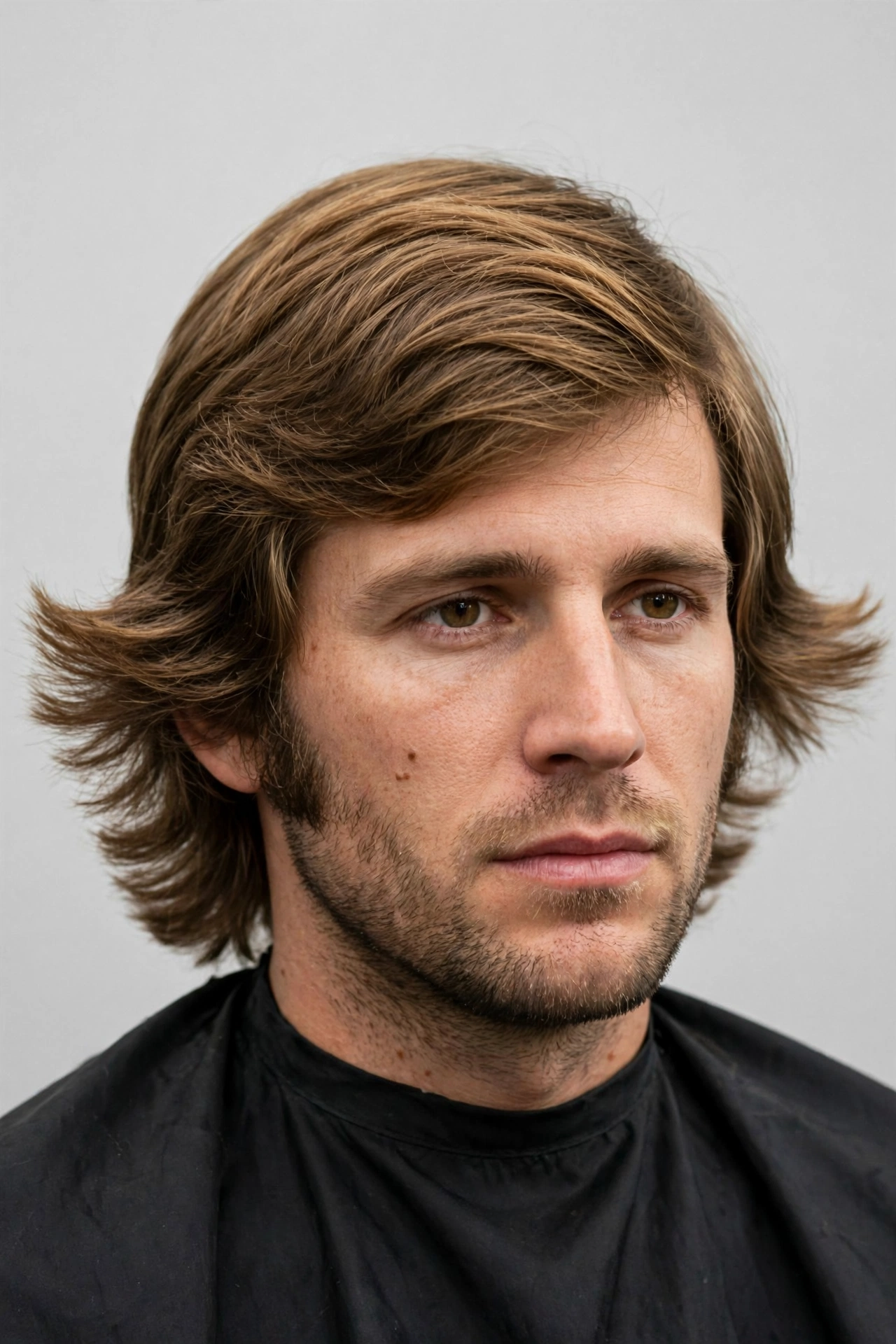
Take the classic wings and add a deep, deliberate side part, and suddenly the whole thing reads polished instead of rock-and-roll. The part gives the cut structure: hair sweeps across the forehead from the part, the longer side flows into those feathered wings at the ear, and everything looks intentional. This is the version I’d recommend if you work somewhere with a dress code but still want personality in your hair.
It works best with straight or slightly wavy hair that’ll hold a part without fighting you all day. Ask your barber to keep the part side a touch shorter so the sweep has somewhere to go, and keep 2 to 3 inches on the sides for the flick. Style it by blow-drying the top over to the side while the hair’s damp, then flick the sides out with a round brush. A pea-sized amount of cream pomade keeps it in place without that wet look. Guys with square faces do especially well here, since the diagonal sweep softens strong jawlines.
3. Textured Wings
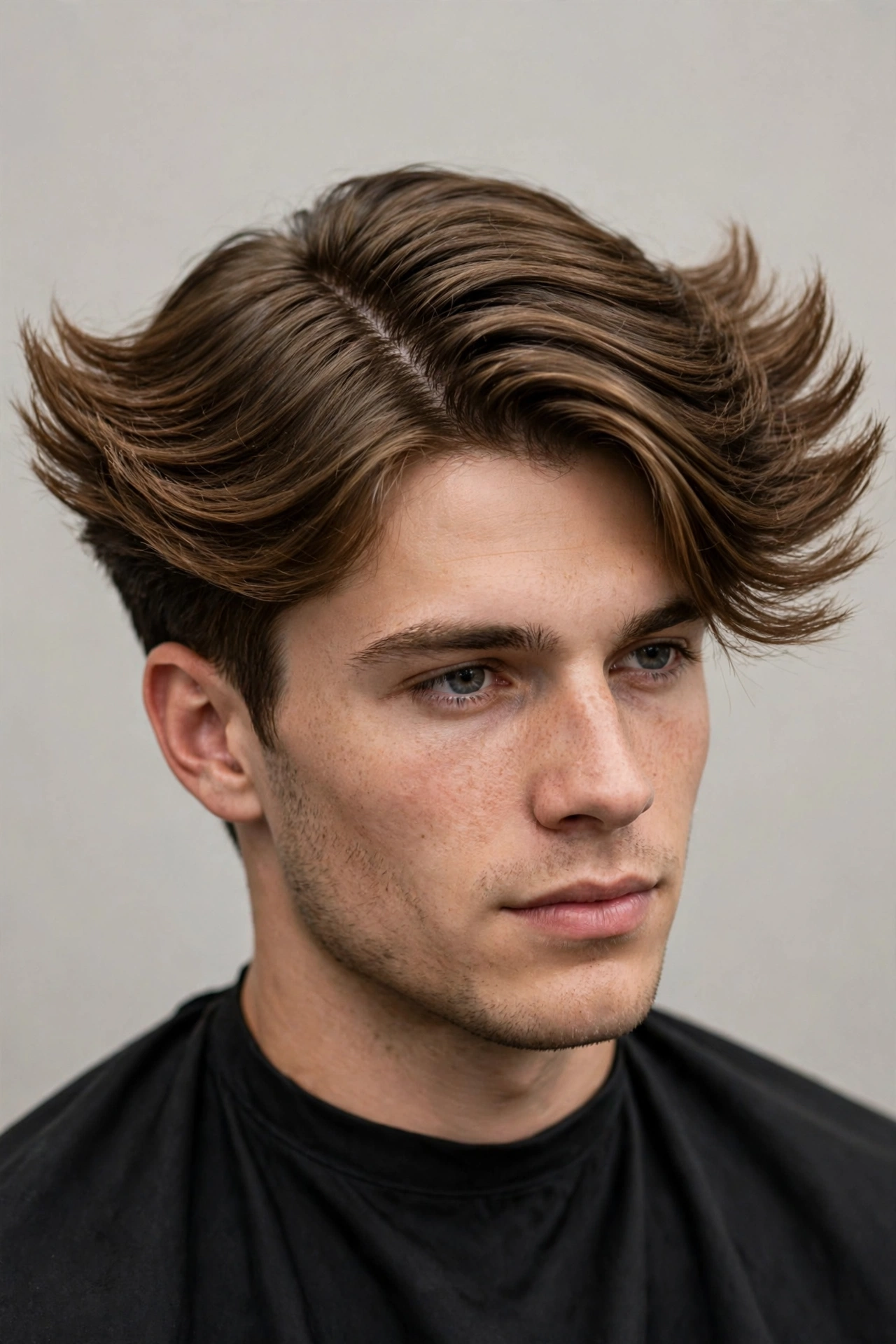
If the classic wings are a vinyl record, textured wings are the remaster. Same song, way better production. The silhouette is identical, feathered flick at the ears, layered top, but the ends are point-cut and razor-textured so every layer breaks apart instead of sitting in one solid sheet. The result looks effortlessly messy in the way that actually takes some skill to cut.
This is the most forgiving version for guys with thick or coarse hair, because the texturizing removes bulk that would otherwise make wings look puffy. It’s also the best pick if your mornings are chaotic: wash, rough-dry with your fingers pointing the dryer outward at the sides, pinch a little texture powder or matte clay through the ends, done. Five minutes, tops. My stylist friend calls this “the barber’s favorite” because it grows out gracefully too. You can push trims to 6 weeks without it falling apart, which your wallet will appreciate.
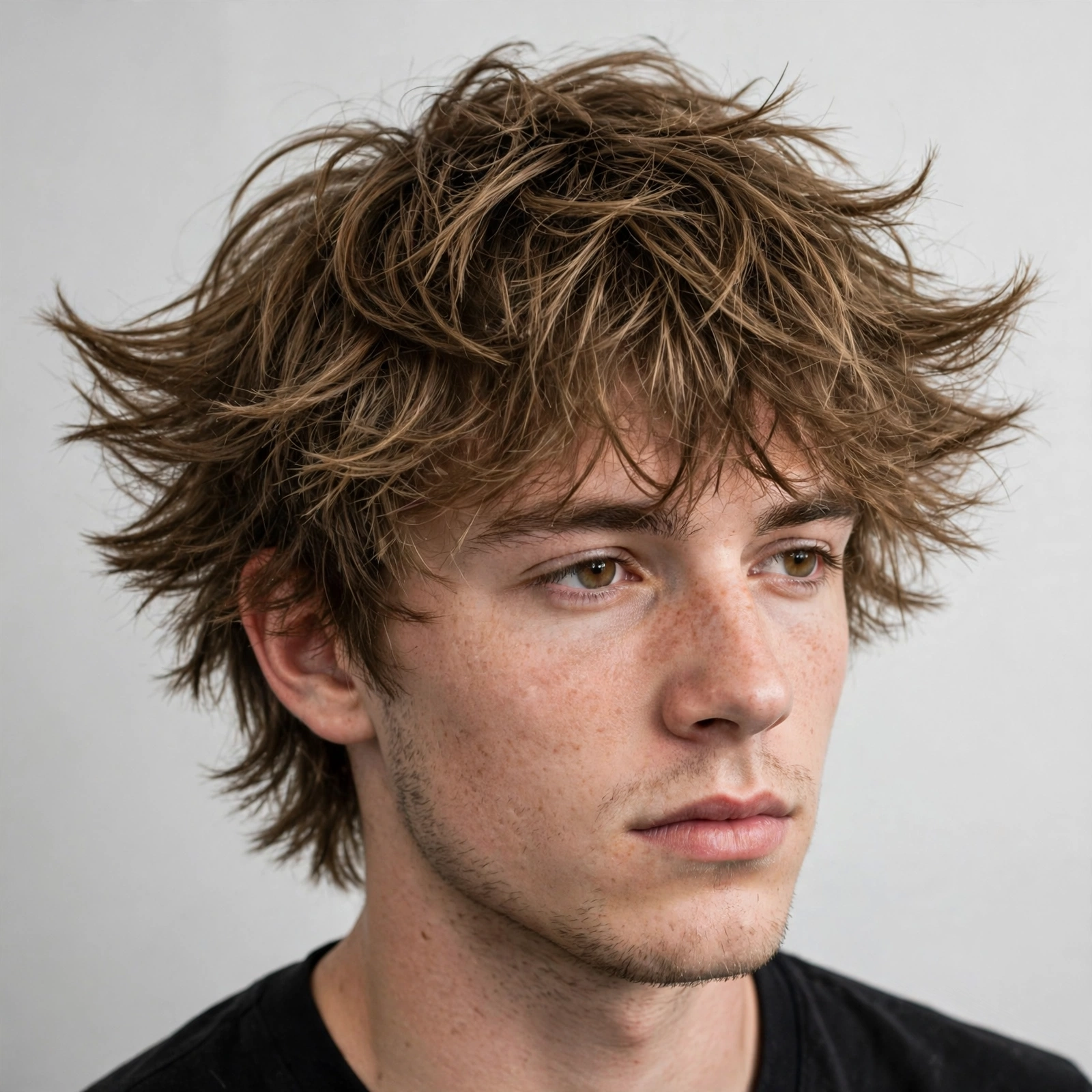
4. Wings with a Low Fade
Here’s the hybrid that converted a lot of skeptics: full wings on top and at the ears, but the hair below the flick tapers into a clean low fade. You get the feathered attitude up top with the crisp, fresh neckline that fade devotees can’t quit. The fade usually starts right around the ear, low enough that the wings still have room to do their thing above it.
This one’s a smart compromise if you’re nervous about going full 70s. The fade keeps it modern and office-safe, and it dramatically cuts down on the bulk around the ears that some guys find annoying. It suits thick hair beautifully and works for most face shapes, though I’d steer round faces toward keeping the top a bit longer for balance. Maintenance is the catch: that fade needs touching up every 2 to 3 weeks or the contrast goes muddy. Budget for more frequent barber visits, around $30 to $45 a pop depending on your city.
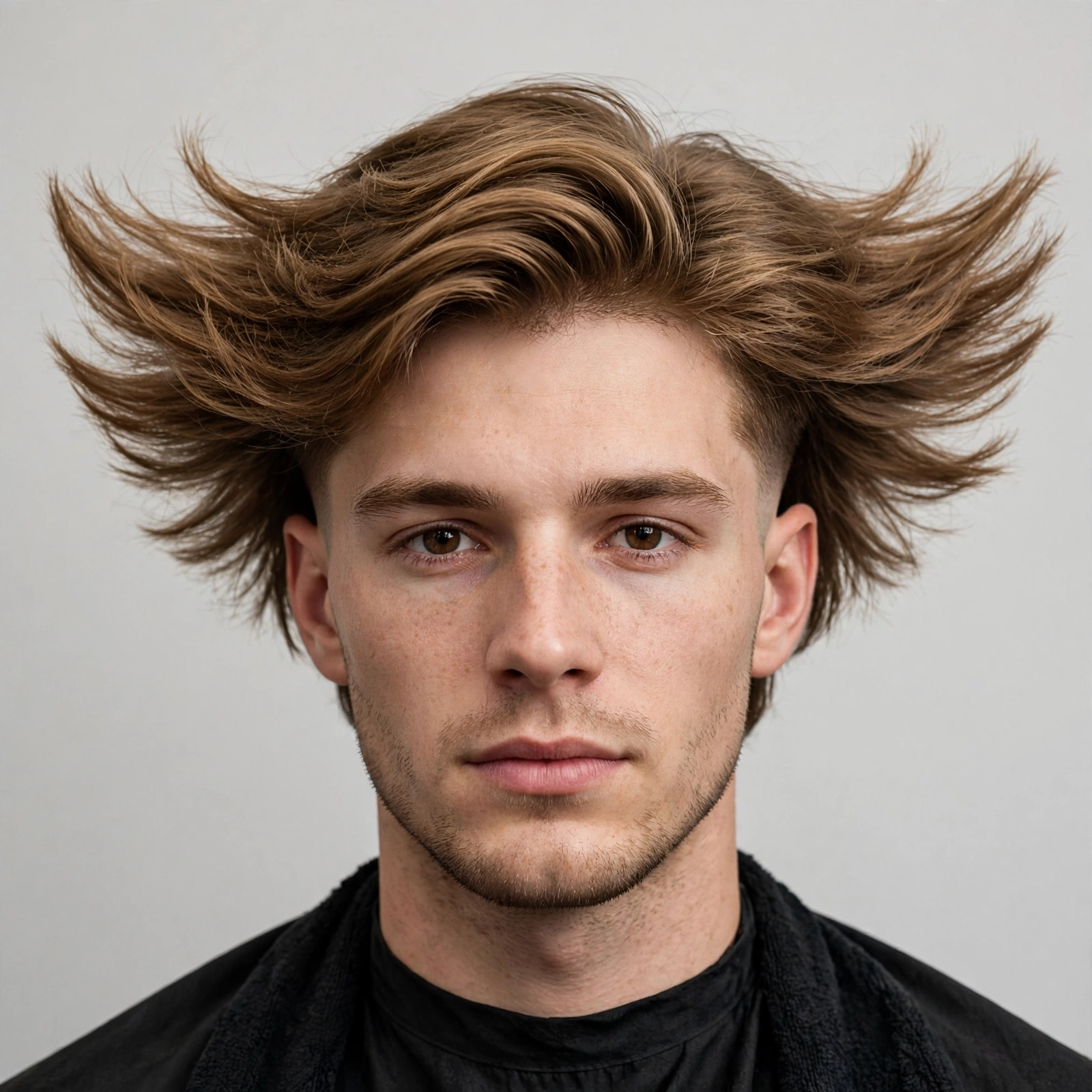
5. Long Wings
Long wings are exactly what they sound like: the classic shape stretched out to 6, 7, even 8 inches, with the feathered flick happening lower, around the jaw instead of the ears. At this length the wings stop being a subtle detail and become the whole architecture of the cut. It moves when you move. It looks incredible in photos. And yes, strangers will ask about it.
You need patience for this one, we’re talking 8 to 12 months of growing from short, and the awkward in-between phase is real. Layers are non-negotiable at this length; without them, long hair just hangs and the wings never form. Once you’re there, styling is mostly about enhancing what the cut already does: sea salt spray on damp hair, blow-dry with a diffuser or just scrunch-dry, and let the layers flip where they want. Pair it with our flow hairstyle guide for more long-hair inspiration, since the two cuts are close cousins. Best on wavy to straight hair; very curly hair at this length becomes a different animal entirely.
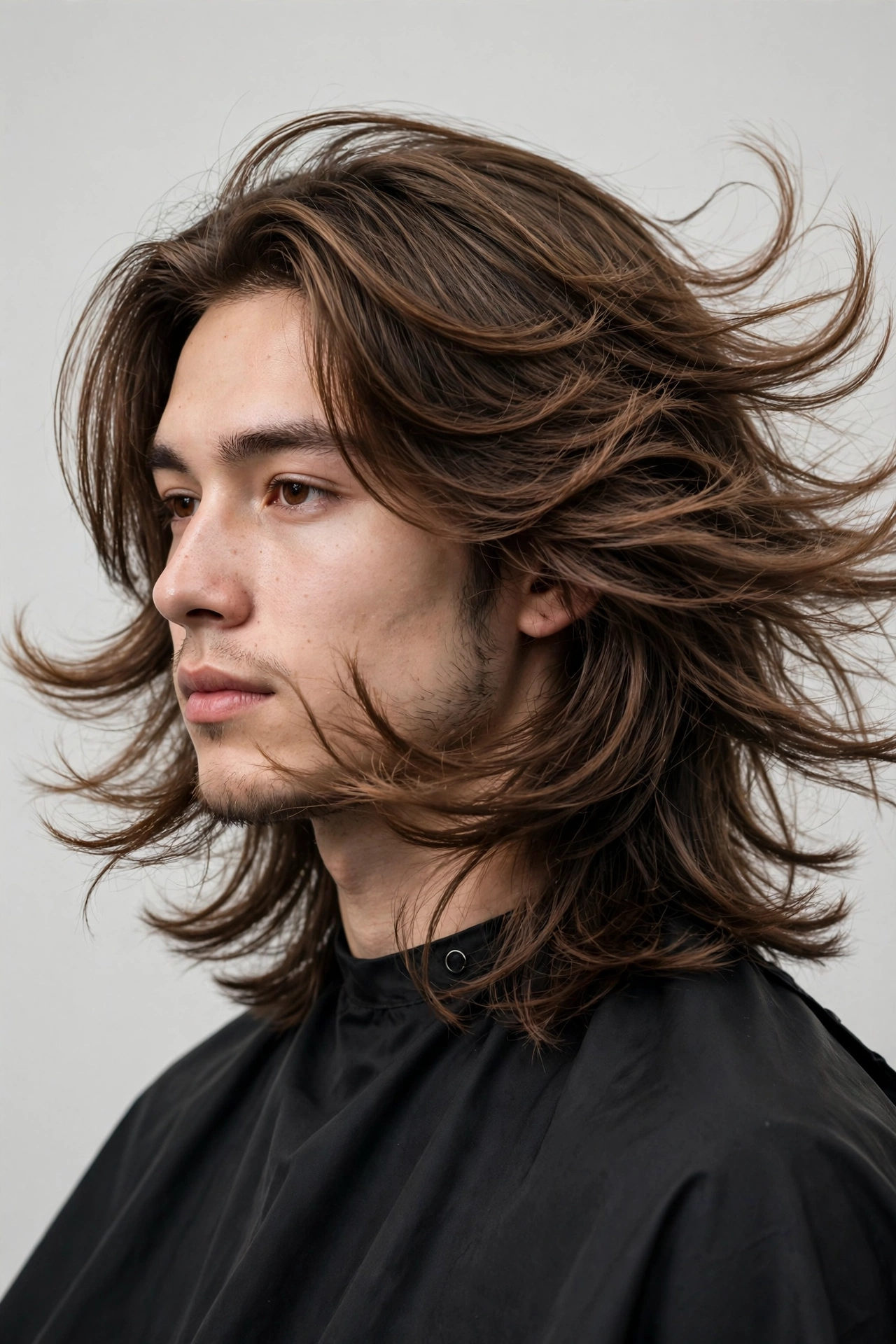
6. Curly Wings
Curly guys, your wings era has arrived. The feathered flick translates beautifully to curls because curls already want to kick out at the ends; the cut just organizes that instinct into a deliberate shape. Instead of fighting your texture into submission, the barber layers it so the curls at the ears spring outward like, well, wings. It’s one of those rare cuts that looks better the less you mess with it.
The key is finding a barber who cuts curls dry or at least understands curl shrinkage, because wet-cut layers will spring up shorter than expected and the whole shape can collapse. Keep the sides at 3 to 4 inches dry length so the curls have room to form their flick. Styling is minimal: leave-in conditioner, a little curl cream, and either air-dry or diffuse. Do not brush it dry unless you want a triangle. This version suits round and square faces nicely, since the volume at the sides balances fuller cheeks and strong jaws.
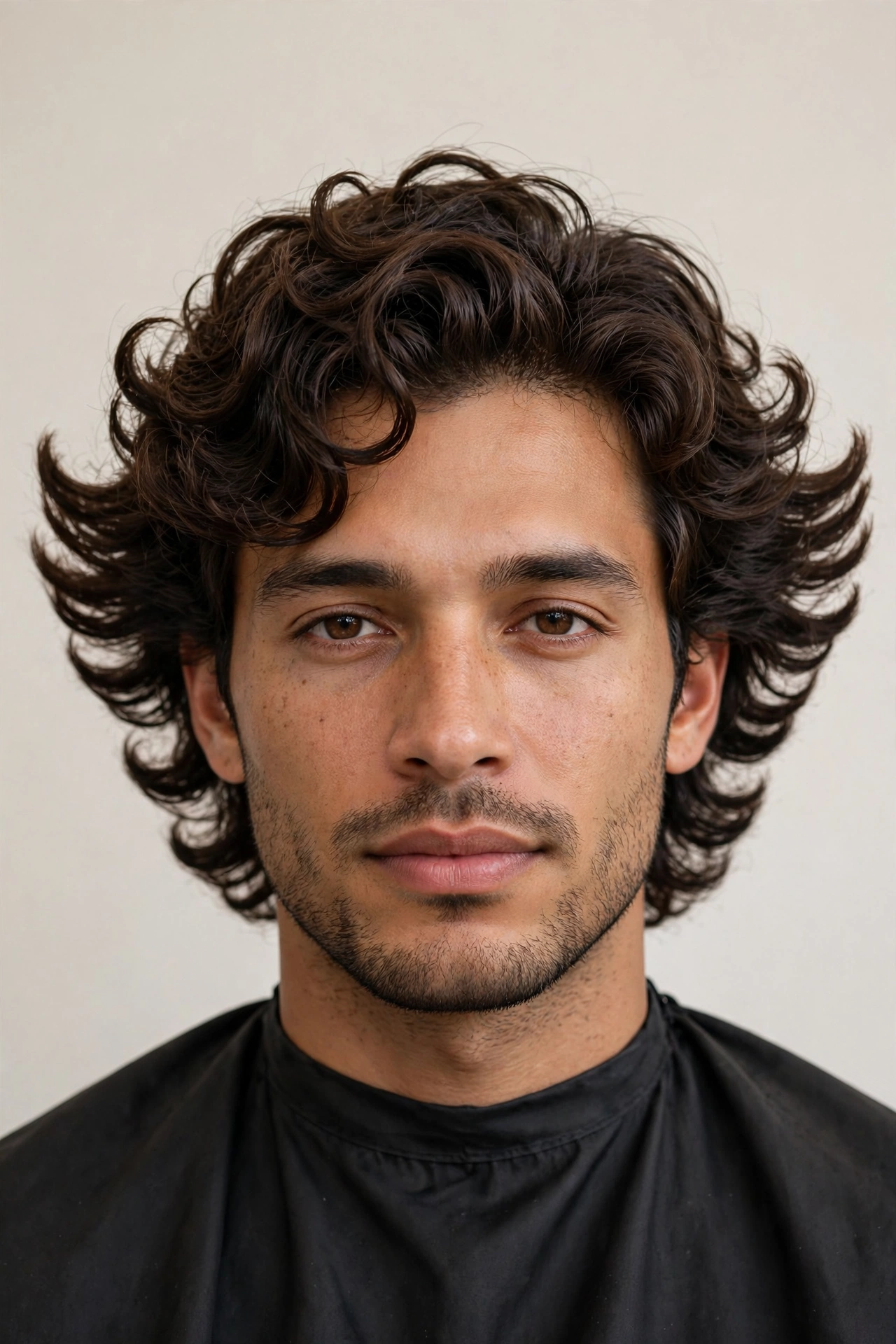
7. Wavy Wings
Wavy hair might be the single best texture for wings, and I don’t say that lightly. The natural S-bend of wavy hair creates the flick almost automatically, which means the cut needs less styling and less product than the straight-hair version. It’s the low-effort sweet spot of this entire list. If your hair has even a hint of wave, start here.
Ask for layers that follow your wave pattern rather than fighting it, with the sides left long enough to bend outward, usually 2.5 to 3.5 inches. On styling days, a little sea salt spray on damp hair and a quick rough-dry is genuinely all it takes; the waves do the architectural work. On lazy days, you can air-dry and still look like you tried. This version is also the most forgiving during grow-out, because waves disguise uneven lengths better than any other texture. Oval and oblong faces wear it best, but honestly, waves make almost everything work.
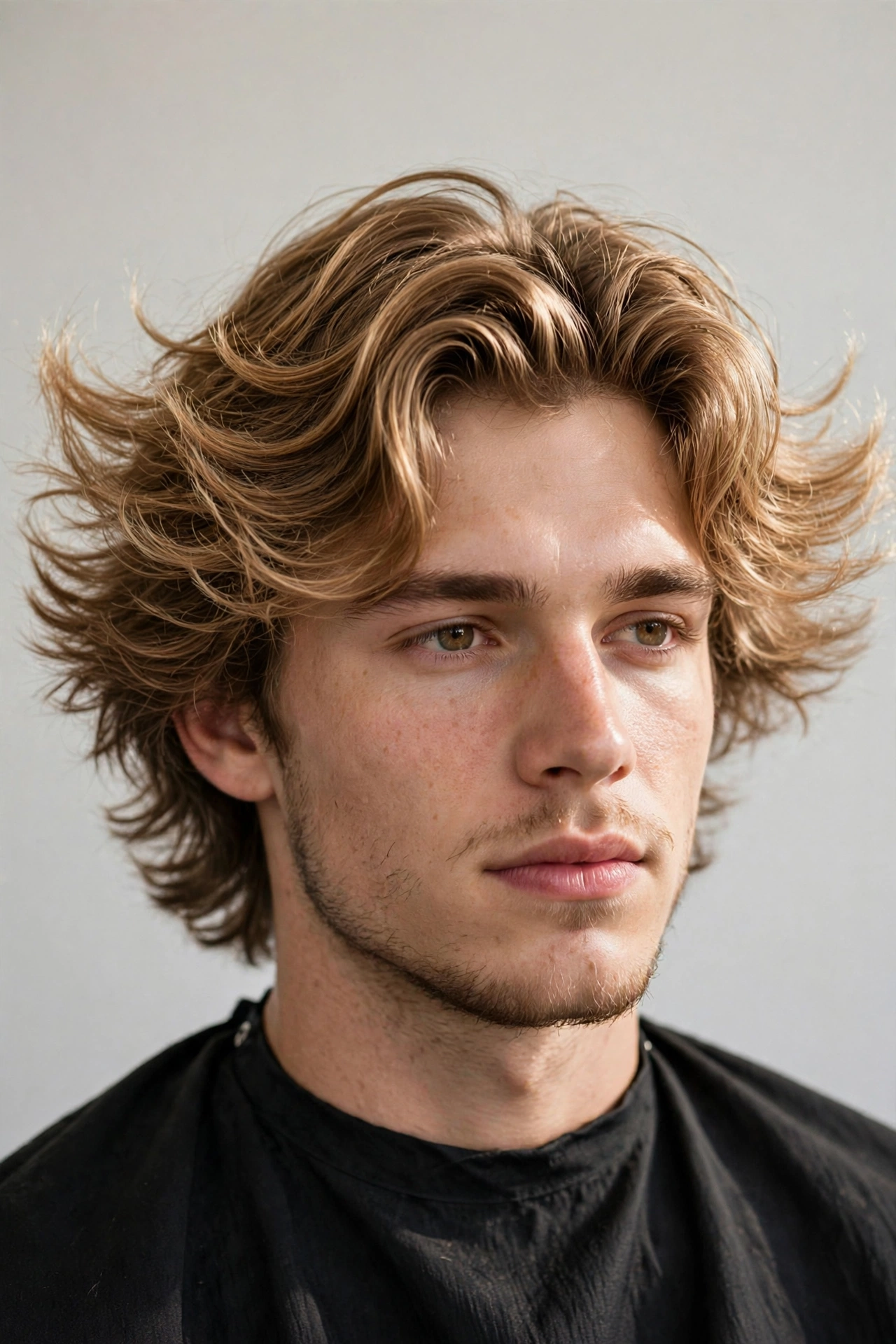
8. Middle-Part Wings
The middle part turns wings into something symmetrical and almost regal. Hair falls equally on both sides, each side feathering out at the ear like a mirror image. It’s a bold choice because a center part puts your whole face on display, no sweep to hide behind, but when it works, it really works. This is the version you see on runways and in fashion editorials.
You need reasonably symmetrical features and hair that’ll lie flat at the crown without cowlicks staging a revolt. Length-wise, 4 to 5 inches on top gives the part enough weight to stay put. Style it by blow-drying straight down on each side from the part, then flicking the ends outward with a round brush or straightener. A tiny bit of smoothing serum keeps flyaways down. Fair warning from my stylist: if you have a strong cowlick at the front hairline, the middle part will fight you every single morning, and no amount of product fully wins that war. Know thyself.
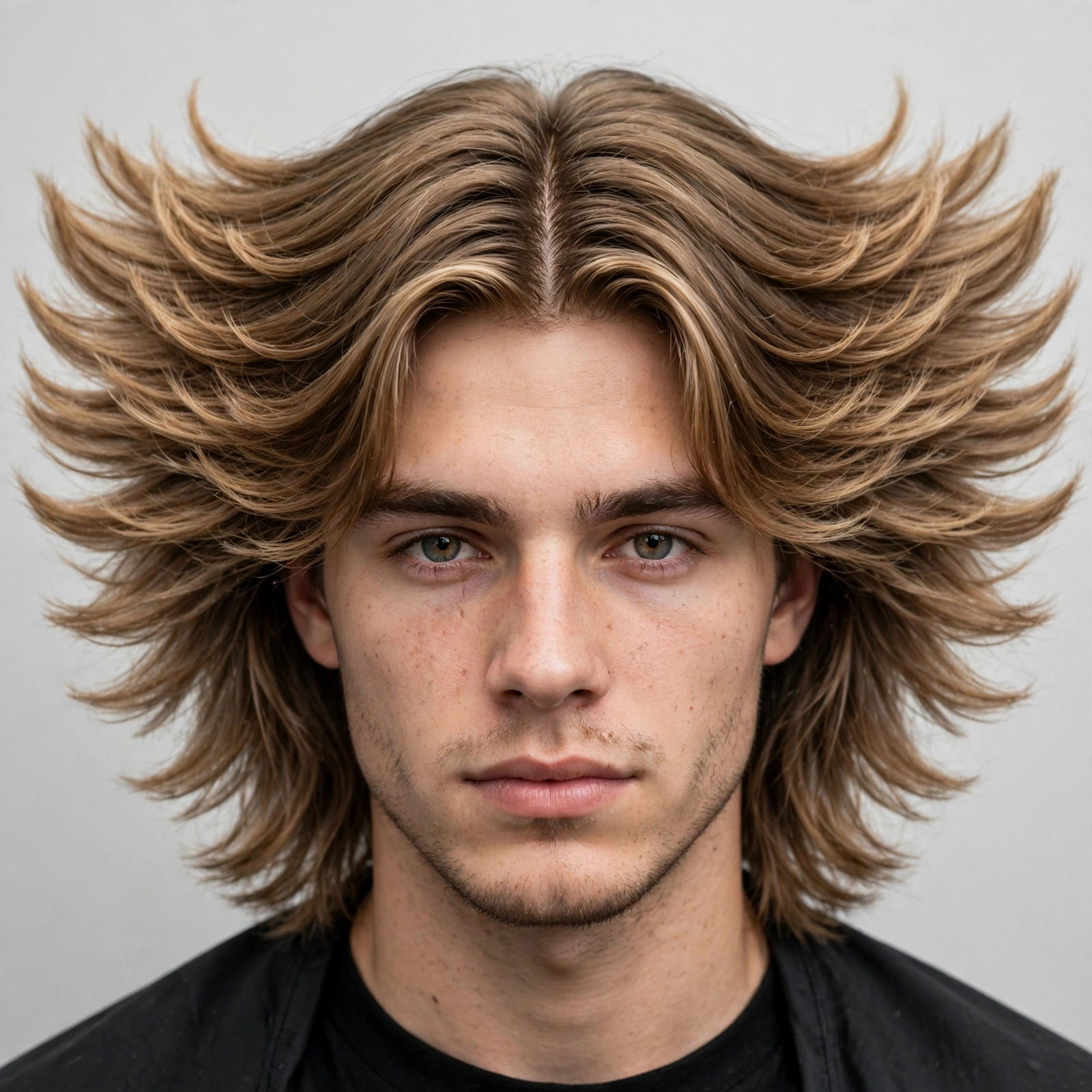
9. Short Wings
Not ready to grow everything out? Short wings keep the feathered flick but at a cropped, manageable length: about 2 inches on the sides, 3 on top. The wings become a suggestion rather than a statement, a little kick at the ears instead of a full feathered flow. Think of it as wings for guys who still want to look tidy from across the room.
This is the easiest entry point on the list and the most office-friendly. The cut works on straight, wavy, and even fine hair, since shorter lengths don’t need much volume to hold the shape. Styling takes three minutes: blow-dry the sides outward (or just towel-dry and go if your hair cooperates), work a small amount of matte paste through, flick the ends with your fingers. Trims every 3 to 4 weeks keep the proportions right. If you like short textured cuts generally, our textured fringe haircuts for men roundup covers similar low-effort territory.
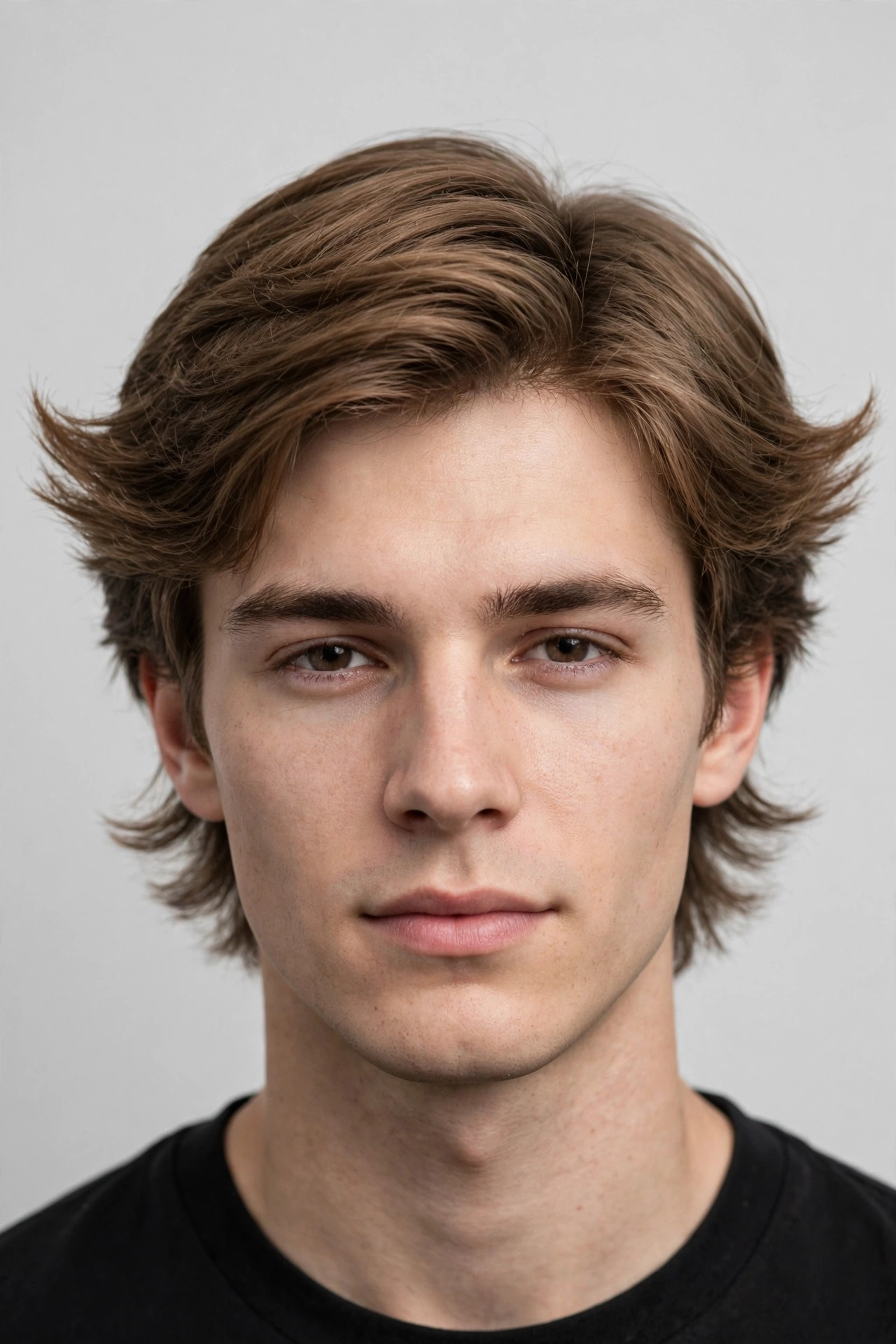
10. Wings with a Feathered Fringe
Add a feathered fringe to the wings, and the cut gains a whole front dimension. Instead of the forehead being an afterthought, you get soft, piecey bangs that blend into the side layers and complete the feathered story all the way around. It’s a great fix for guys with larger foreheads or longer faces who want more coverage up front.
The fringe should be cut with the same feathering technique as the sides, wispy and textured, never a blunt straight-across line, which would clash with the whole airy concept. Keep it around eyebrow length so you can see, obviously, but also so it doesn’t collapse into your eyes by noon. Style by blow-drying the fringe forward and slightly to the side, then flicking the ends. This version pairs well with oval and oblong faces, and it’s one of the few wings variations that genuinely suits thinner hair, since the fringe adds visual density at the front.
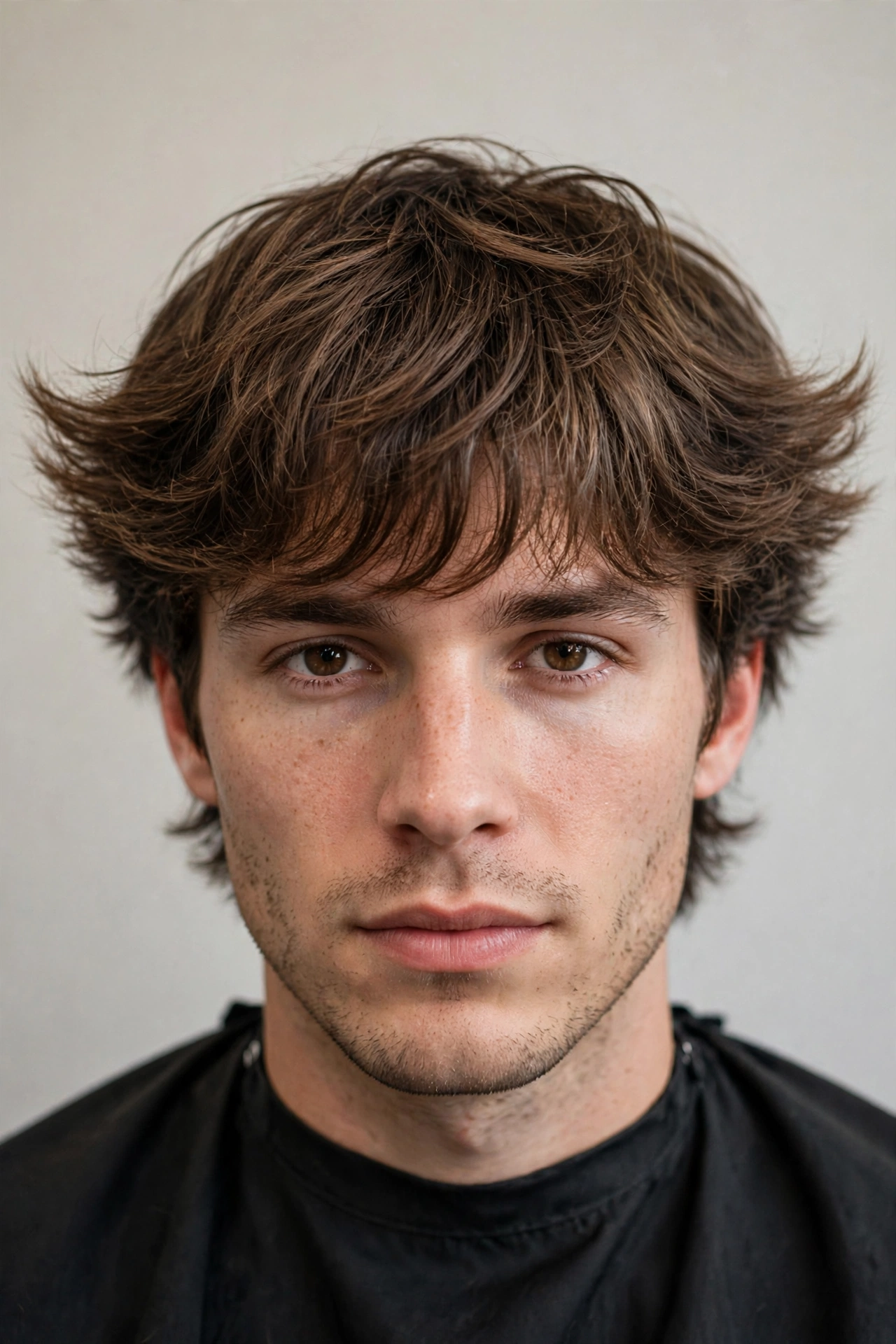
11. Slicked-Back Wings
Here’s the plot twist: wings can clean up. Slicked-back wings keep the feathered layers at the ears but sweep the top straight back with some polish, landing somewhere between 70s rockstar and modern gentleman. It’s the version you’d wear to a wedding, then mess up on the dance floor and still look great, which is honestly the dream scenario for any haircut.
You need 4 to 5 inches on top for the slick-back to have enough weight to stay put. Apply a classic pomade or a strong-hold cream to damp hair, comb straight back, and let the sides do their feathered thing naturally. The contrast between the controlled top and the flicked-out sides is what makes it interesting. This suits square and oval faces well, and it’s a strong pick for guys with thick, straight hair that holds a comb line. Keep a pocket comb handy; slicked styles always need one midday touch-up.
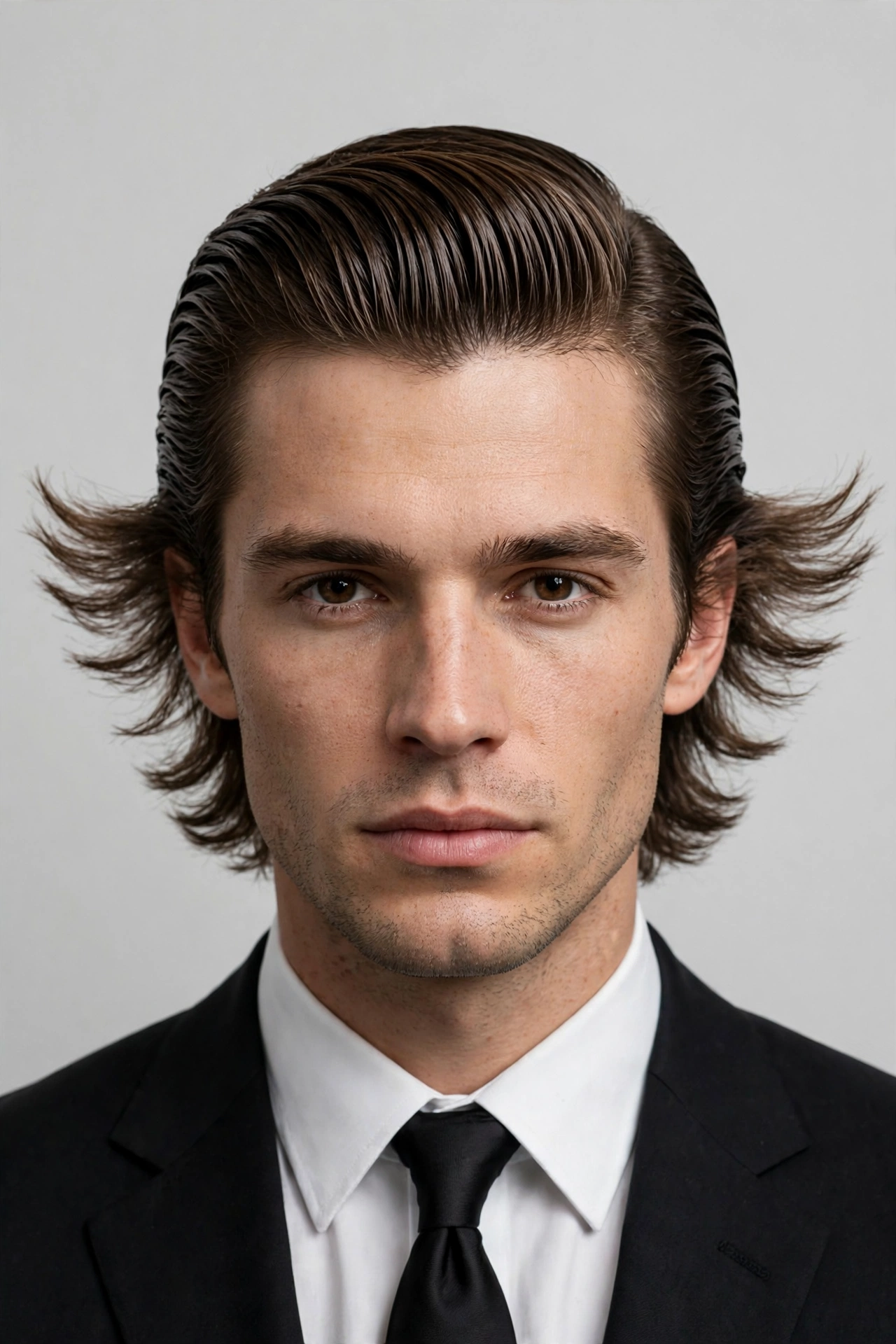
12. Wings with an Undercut
The undercut version is wings with the training wheels off. The sides and back below the wings are buzzed short and disconnected, creating a sharp contrast with the long, feathered top. It’s dramatic, it’s edgy, and it’s definitely not for the faint of heart or the conservative office. But if your style leans bold, this is the most head-turning take on the list.
The disconnect is the whole point, so ask your barber for a hard line between the short undercut and the long top rather than a blended transition. The top needs 4 to 6 inches to drape over the short sides and form the wings. Styling is straightforward: blow-dry the top outward and back, add texture paste for separation. The undercut needs upkeep every 2 to 3 weeks to stay crisp, so factor that into your budget. Best on straight to wavy hair; curls plus undercut plus wings is a lot of competing ideas in one haircut.
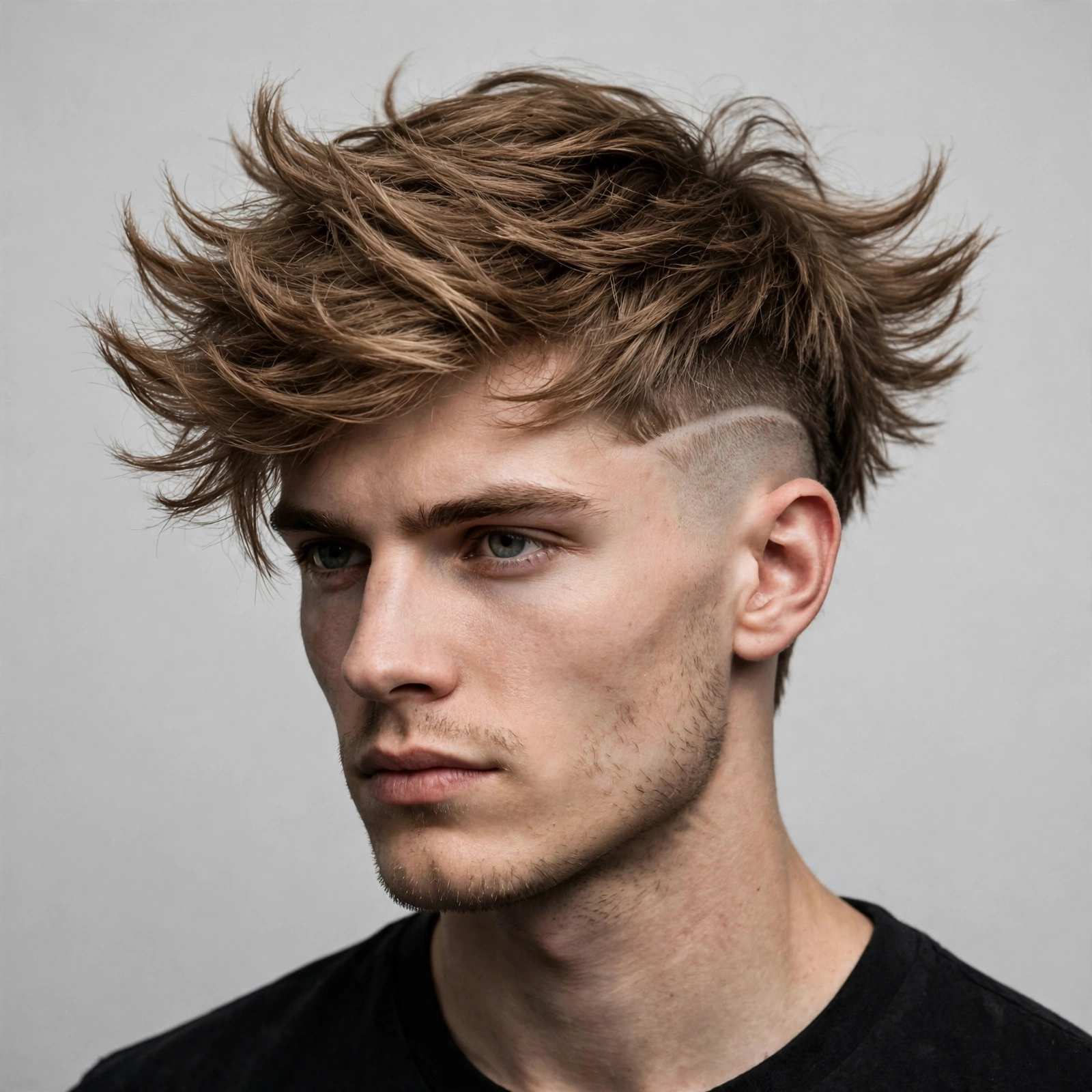
13. Shaggy Wings
Shaggy wings are what happens when the wings haircut and the shag have a baby: layers everywhere, tons of texture, ends flipping in every direction, and an overall beautiful messiness. The wings at the ears are still there, but they’re part of a bigger chaos of flicked-out layers all over the head. It’s the most rock-and-roll version here, full stop.
This cut lives or dies on texture, so it needs a barber who’s confident with a razor and isn’t afraid to take weight out. It suits medium to thick hair best; fine hair can look stringy when layered this aggressively. Styling is gloriously low-effort: sea salt spray, rough-dry upside down for volume, and let it land where it lands. The messier the better, genuinely. It grows out well too, morphing gradually into long wings over a few months. Oval, heart, and diamond faces wear the all-over volume best.
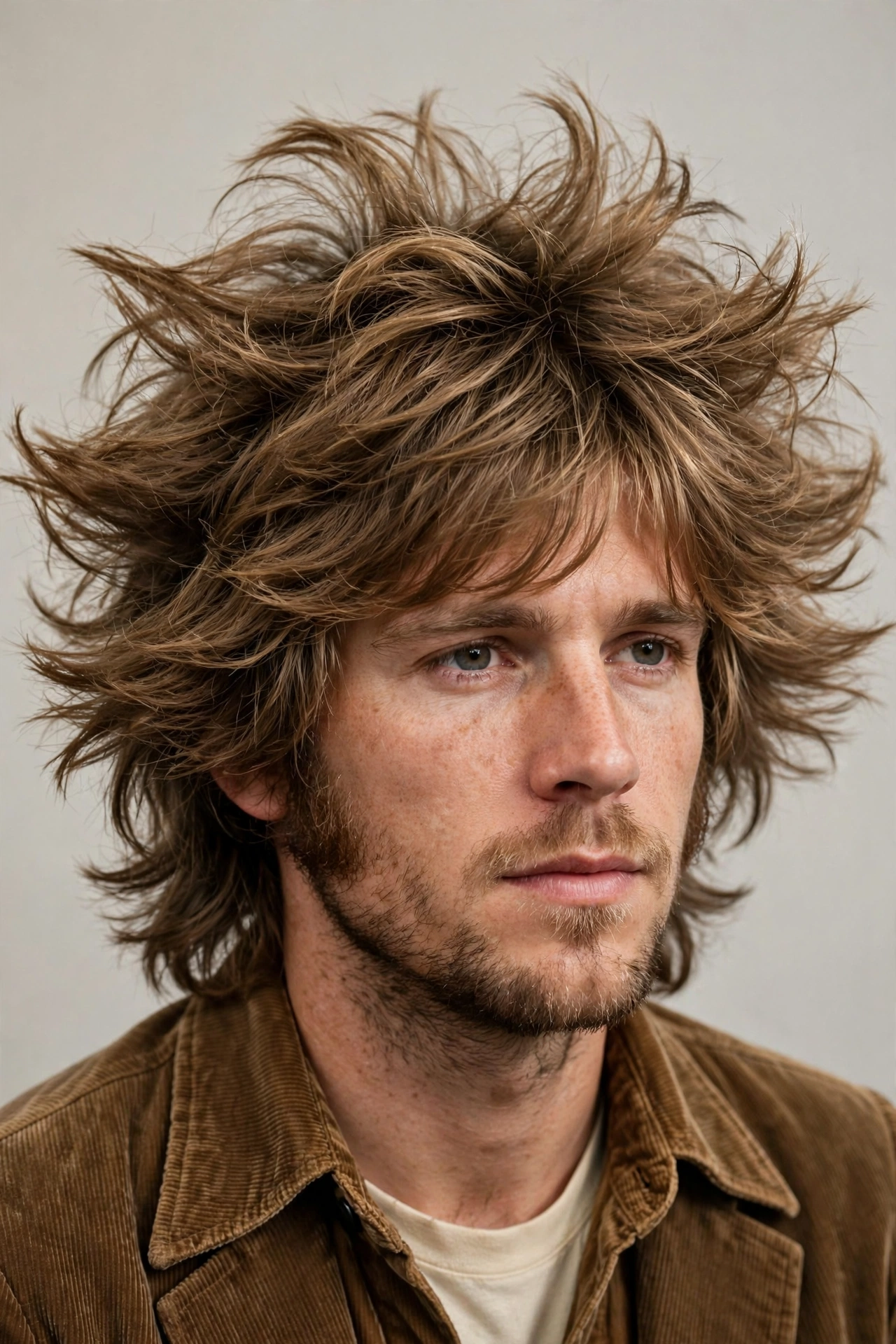
14. Wings with Curtain Fringe
Curtains plus wings is a natural marriage. The curtain fringe frames the face in the front, parting in the middle and sweeping to each side, and then flows directly into the feathered wings at the ears. It’s one continuous curtain of hair from forehead to collar, and it’s incredibly flattering because all that face-framing softens everything.
This version needs length: 4 to 6 inches on top and through the front, with the sides at 3 to 4 inches. The curtains should start around the cheekbones and blend into the wings without any harsh steps. Style by blow-drying the front sections away from the face with a round brush, creating that signature curtain bend, then flick the sides out. It suits nearly every face shape, which is rare, but it’s especially kind to angular faces that benefit from softening. If curtains are your thing, our two-block cut guide covers another face-framing favorite.
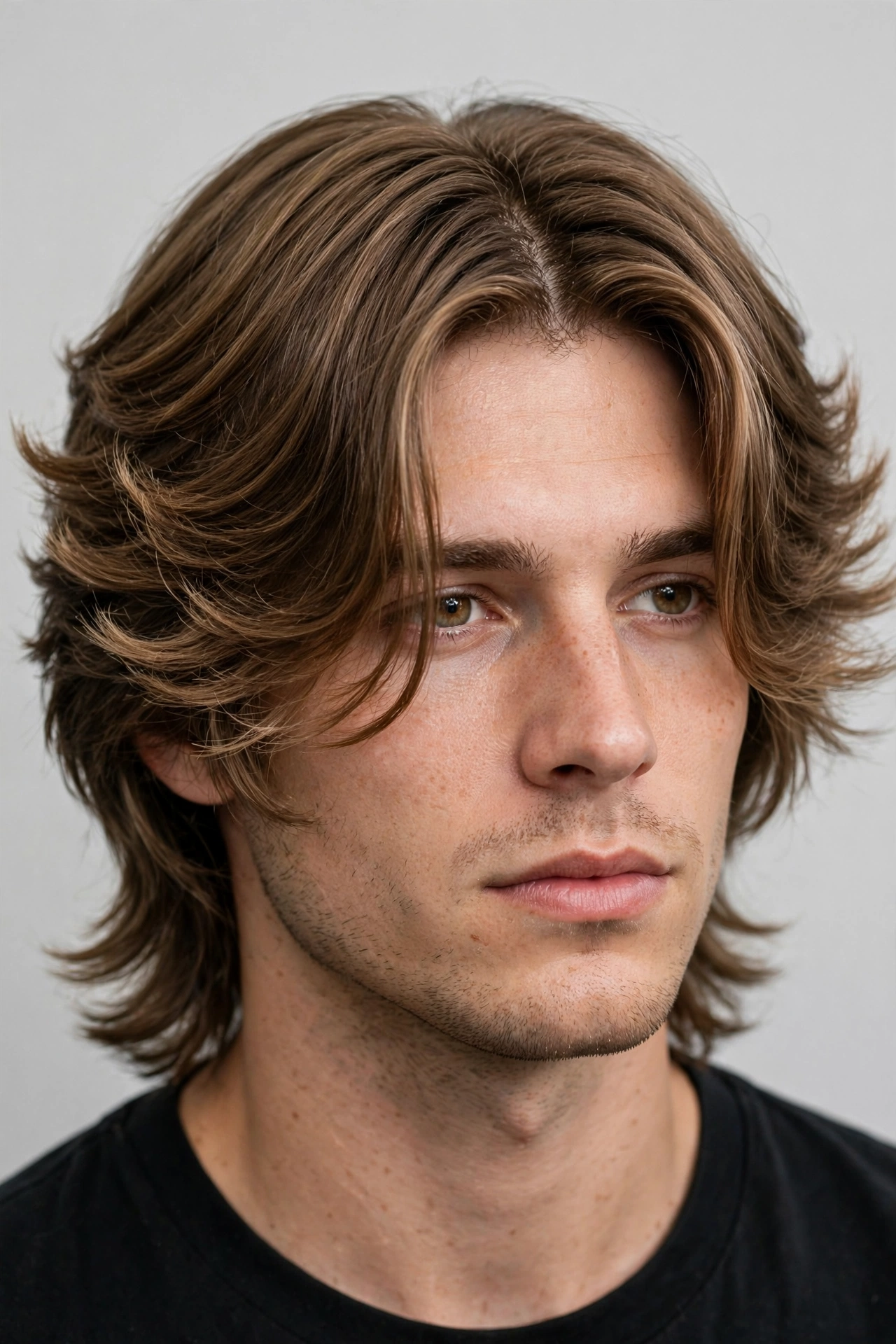
15. Heavily Layered Feathered Wings
This is wings for the texture obsessed: layers stacked on layers, each one feathered at the ends, creating maximum movement and separation. Where the classic has maybe two or three distinct layer levels, this version has five or six, and the result is hair that looks alive, constantly shifting and catching light differently. It’s a technical cut that shows off a skilled barber.
Thick hair is practically required here; the whole point is removing weight through layering, and fine hair doesn’t have weight to remove. Ask specifically for point-cutting and slide-cutting through the mid-lengths, not just at the ends, so the texture runs deep. Styling rewards effort: blow-dry with a vent brush, lifting each section, then define pieces with a tiny amount of fiber cream. It’s a 10-minute style, not a 2-minute one, so be real about your mornings. The payoff is a cut that looks different from every angle, which is pretty cool.
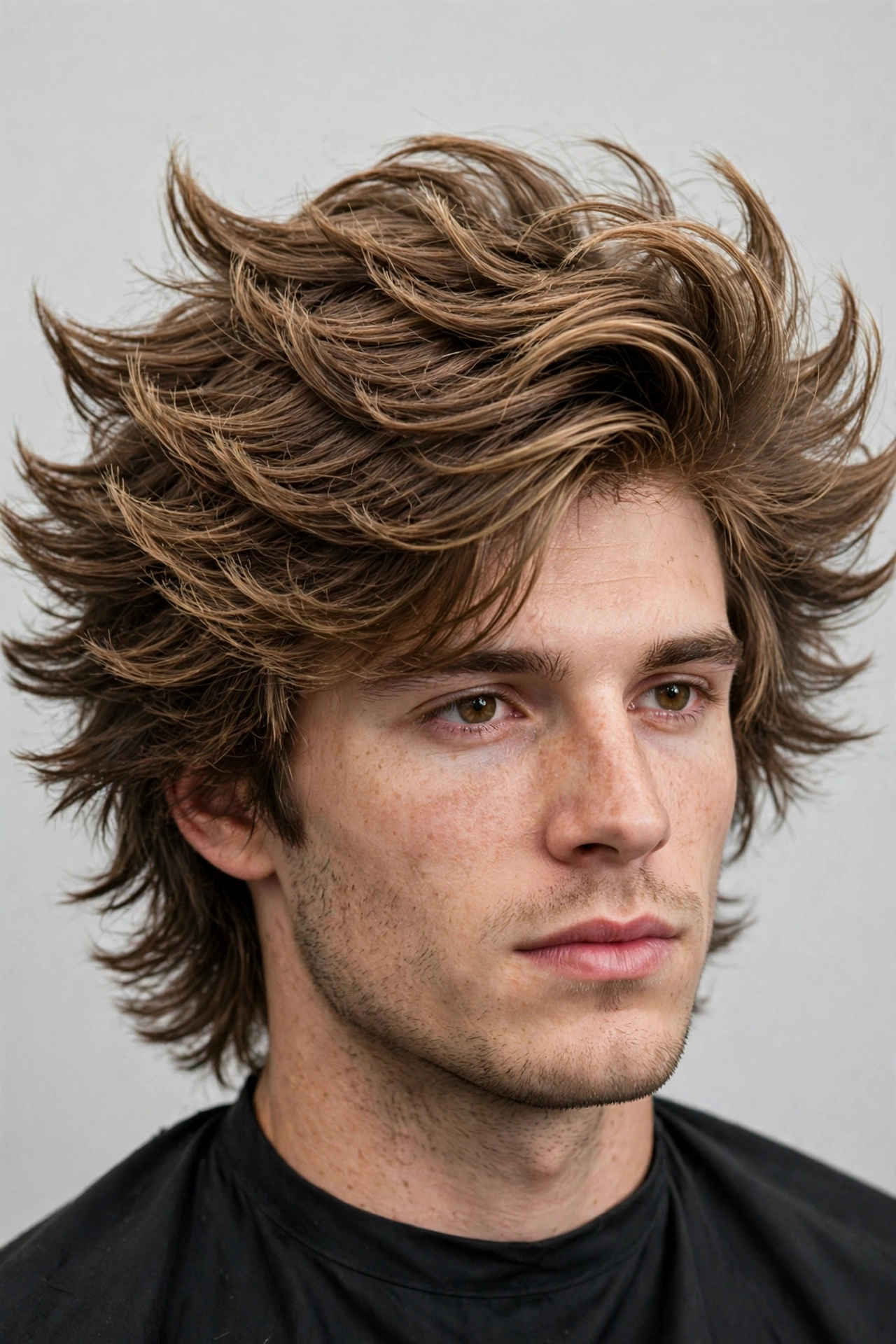
16. Wings with a Taper
The taper version splits the difference between the low fade and the classic: instead of fading to skin, the sides gradually shorten toward the neckline while keeping enough length up top for the wings to form. It’s cleaner than the classic but softer than the fade, which makes it the most versatile hybrid on this list. Honestly, if I had to recommend one version to a wings skeptic, it’d be this one.
The taper keeps the silhouette neat from every angle, which matters if you’re photographed a lot or just prefer a tidy neckline. It works on all hair types and most face shapes, and the grow-out is graceful since there’s no harsh fade line to maintain. Ask your barber for a natural taper, not a skin taper, and keep the top at 3 to 5 inches with feathered ends. Style like the classic: blow-dry outward, matte paste, done. Trims every 4 weeks keep the taper sharp without the constant upkeep a fade demands.
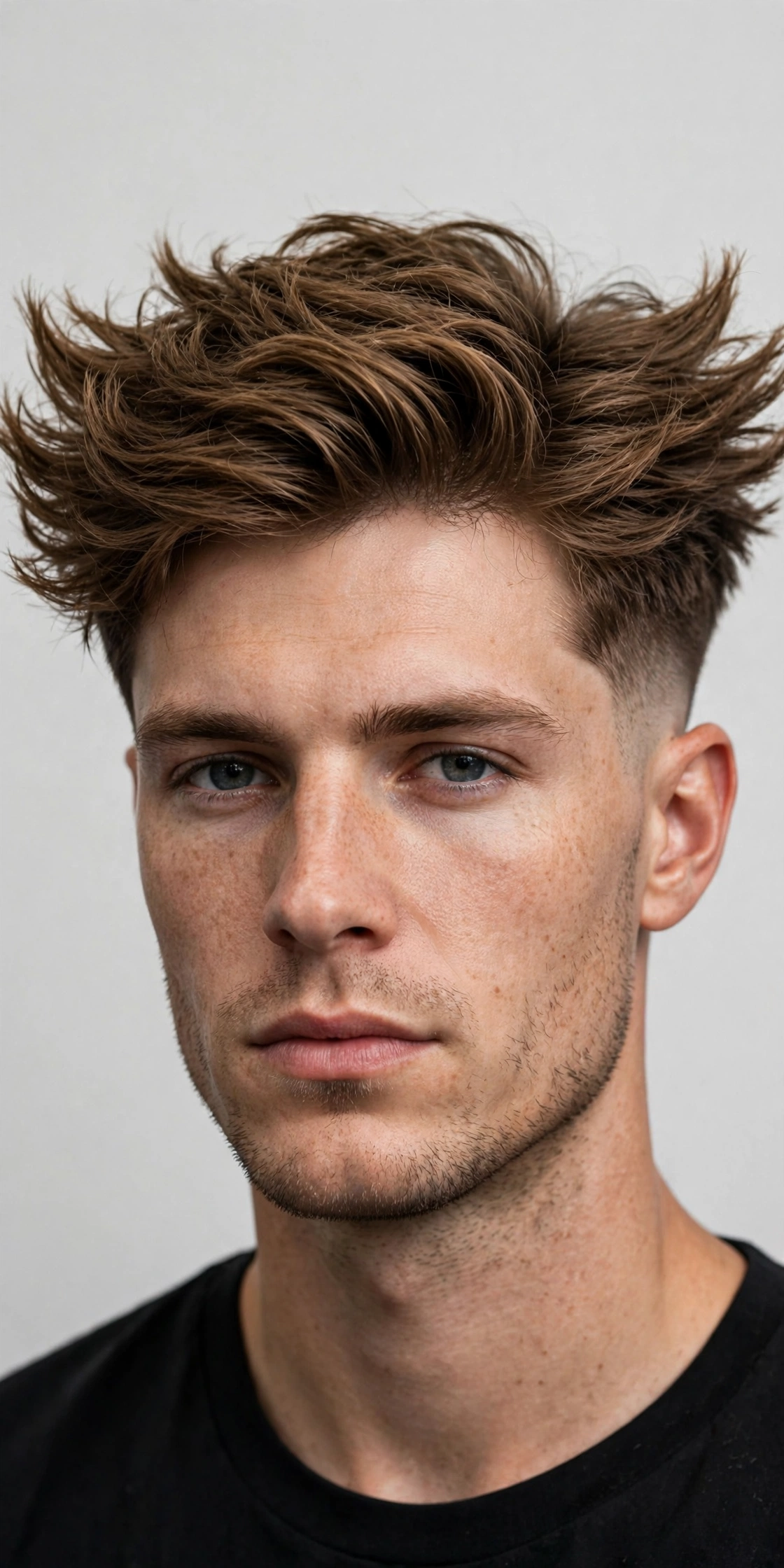
17. Blonde Wings
Color changes everything, and blonde wings are proof. The feathered layers that define this cut become ten times more visible when there’s dimension in the color, every flick and flip catches light differently. Whether it’s full platinum, sun-kissed highlights, or a lived-in balayage, blonde turns the wings’ texture into the main event.
A few realities: going blonde means bleach, bleach means damage, and damaged ends don’t feather, they frizz. So this version demands a real conditioning routine: purple shampoo once a week to kill brass, a deep mask every week or two, and heat protectant before every blow-dry. Budget-wise, expect $80 to $150 for the color service on top of your cut, plus touch-ups every 6 to 8 weeks. It suits guys with fair to medium skin tones best, though the right shade of blonde exists for everyone. Show your colorist reference photos, not just the barber, since the cut and color need to work as a team.
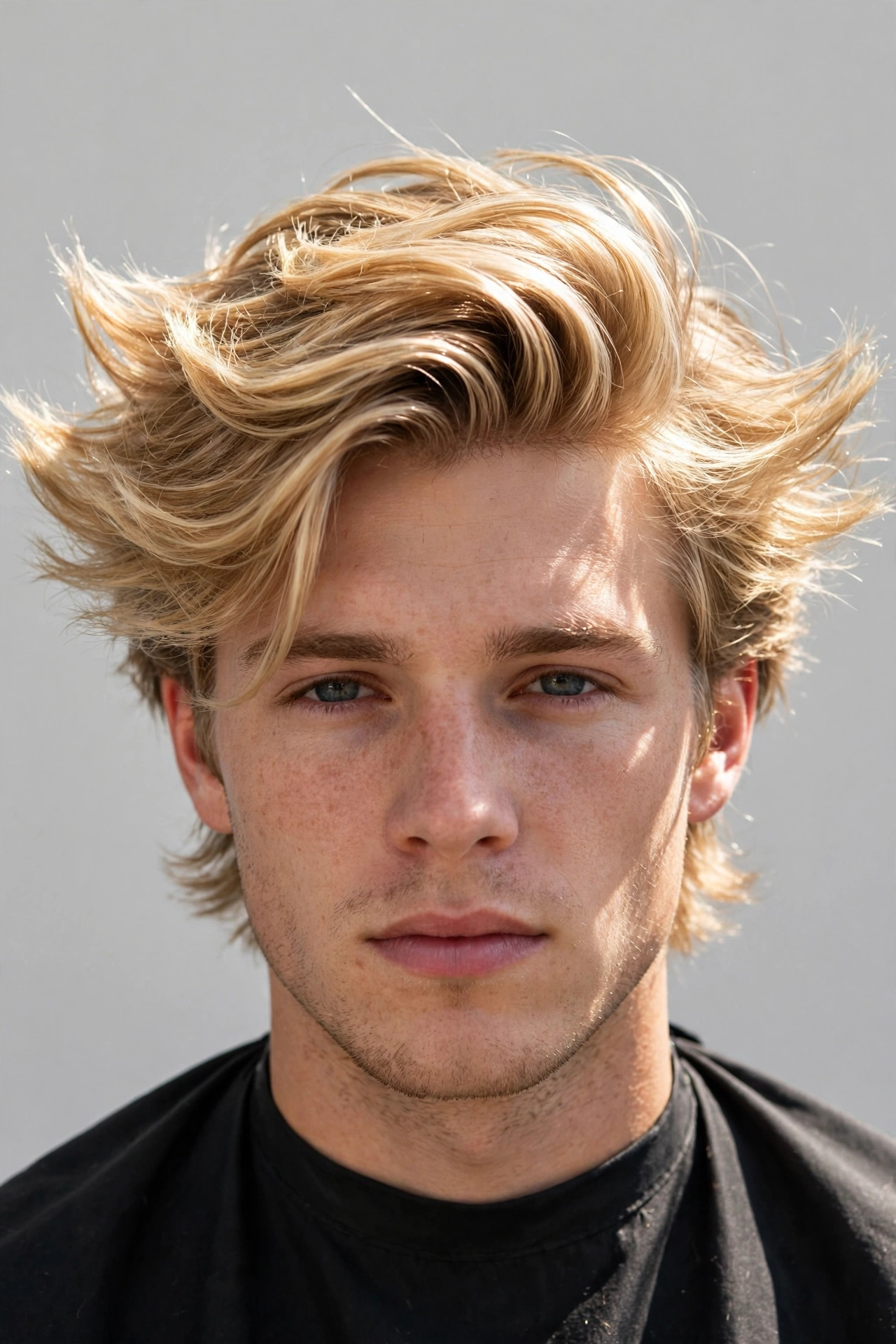
18. Wings with a Beard
The full package: feathered wings up top, a well-groomed beard below, and the two meeting at the sideburns in perfect harmony. This combination works because both elements share the same energy, natural, textured, a little rugged, and together they frame the entire face. It’s the most masculine take on wings and, in my opinion, one of the best-looking.
The trick is the transition. The wings should blend into the beard through the sideburns, not sit on top of a disconnected beard like a hat. Ask your barber to shape them as one unit: the sideburns connect the feathered sides to the beard’s cheek line, and everything gets edged cleanly. Keep the beard itself groomed, not wild; a shaped medium beard beats a shapeless long one here. Maintenance doubles, since you’re now trimming both hair and beard every few weeks, but the result is worth it. This pairing suits oval, oblong, and diamond faces especially well, as the beard adds width where those shapes need it.
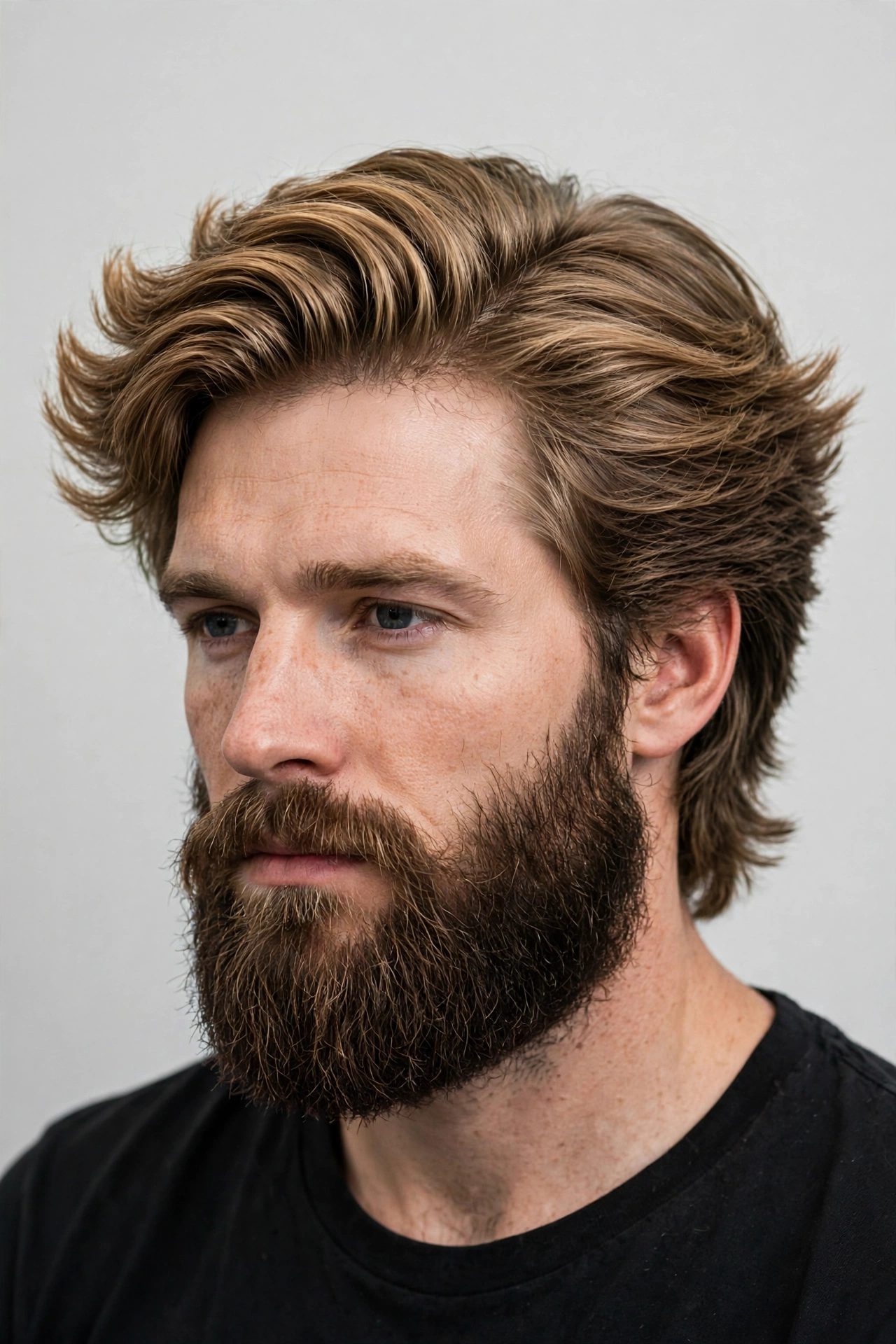
How to Ask Your Barber for the Wings Haircut
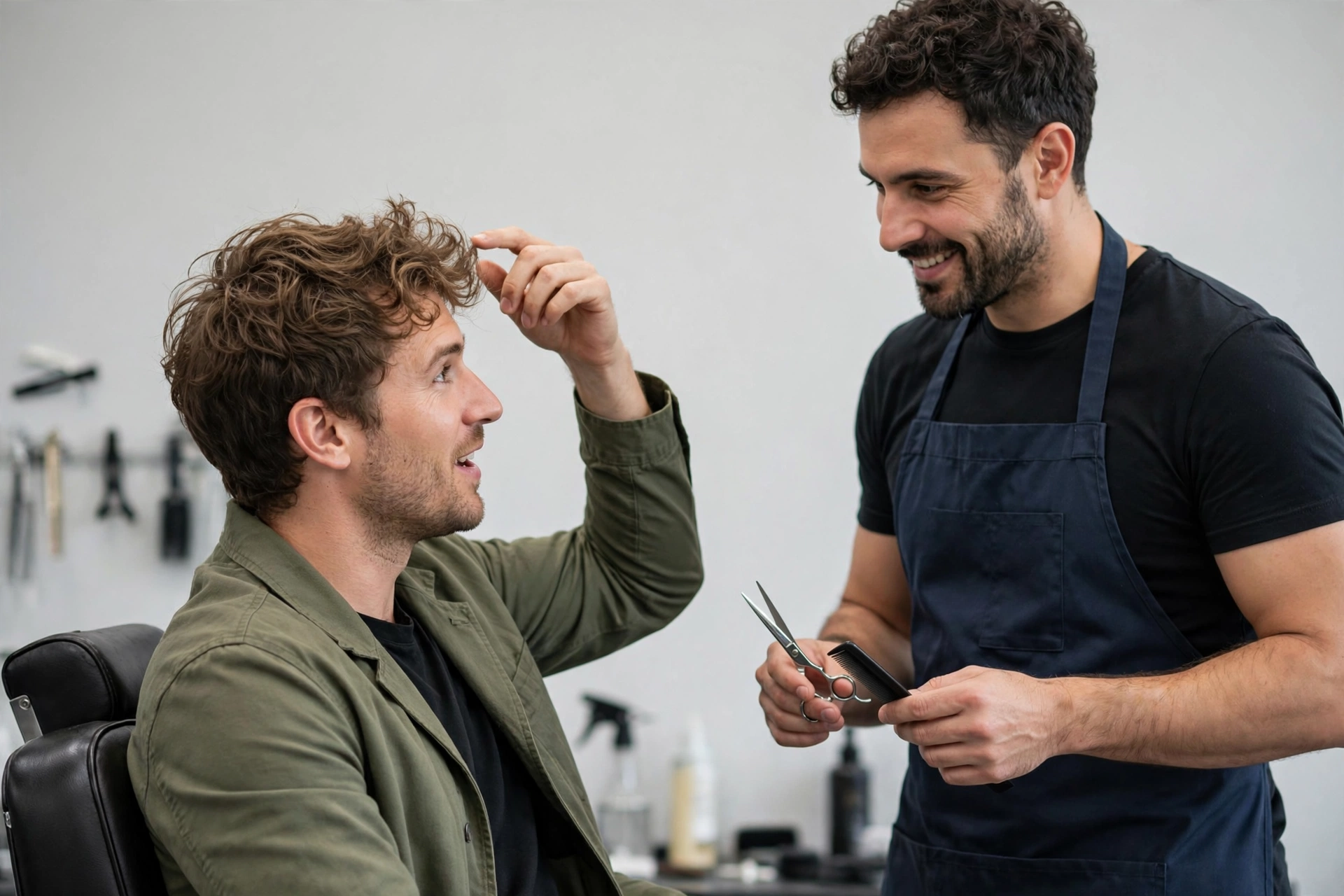
Walking in and saying “give me wings” is a gamble, because half the barbers under 30 have never cut the original and half the barbers over 40 remember it a little too well. Here’s the exact script that’s worked for guys I know. Say this: “I want a medium-length cut, about 4 inches on top and 3 inches on the sides, with feathered layers that flick out at the ears. Think 70s wings but modern and textured, not retro. Point-cut the ends, keep it soft, and I want to be able to style the sides outward with a blow dryer.”
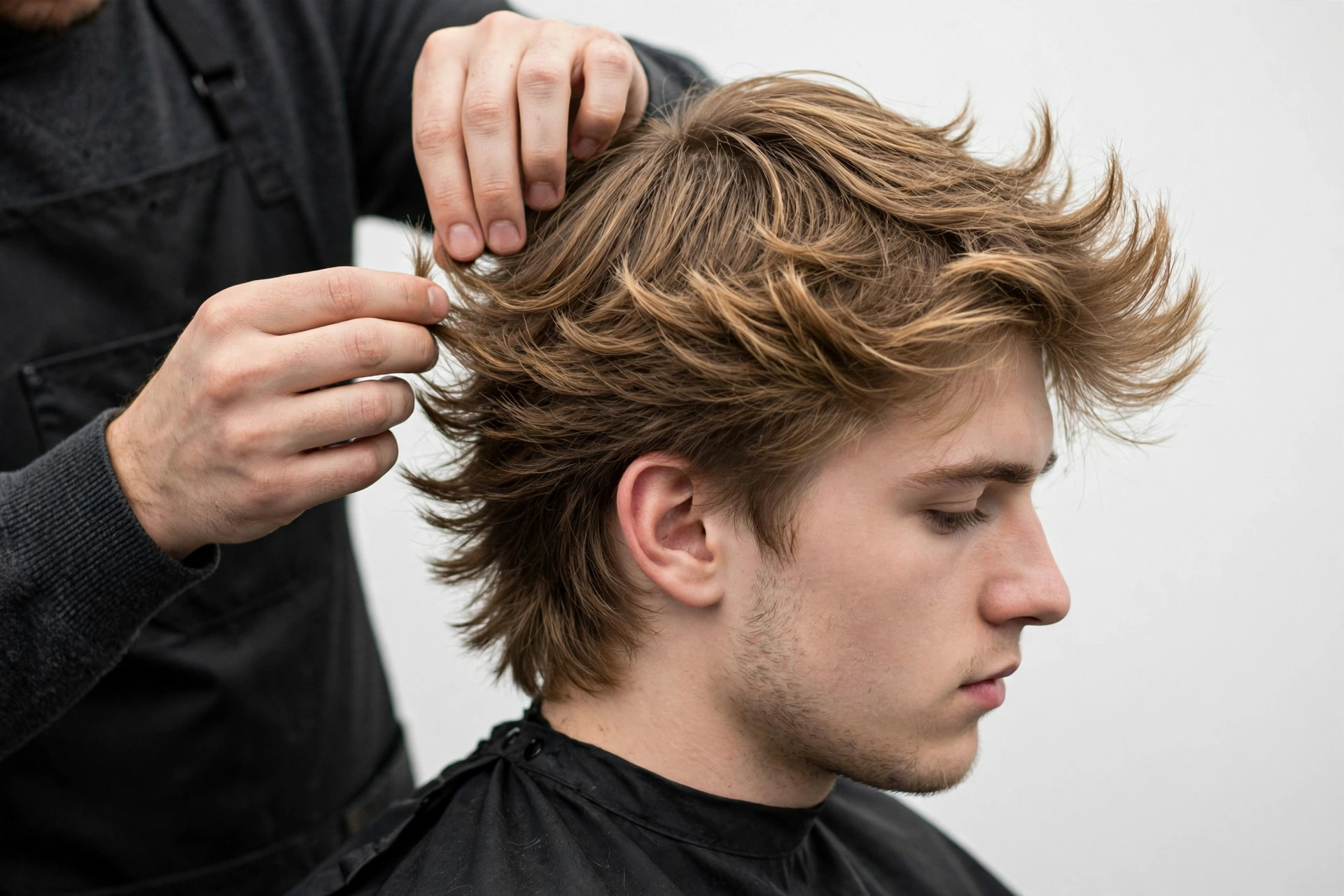
Then show photos. Seriously, this matters more than the words. Save three reference photos on your phone: one of the overall shape you want, one close-up of the ear area showing the flick, and one of a version you do NOT want, so the barber knows where your boundaries are. Tell them your styling reality too: “I’ll blow-dry it most days” gets you a different cut than “I need to air-dry and go.” A good barber adjusts the layering based on that answer. And ask them to show you the styling once, in the chair, before you leave. Watching for two minutes beats a week of YouTube tutorials.
How to Style the Wings Haircut at Home
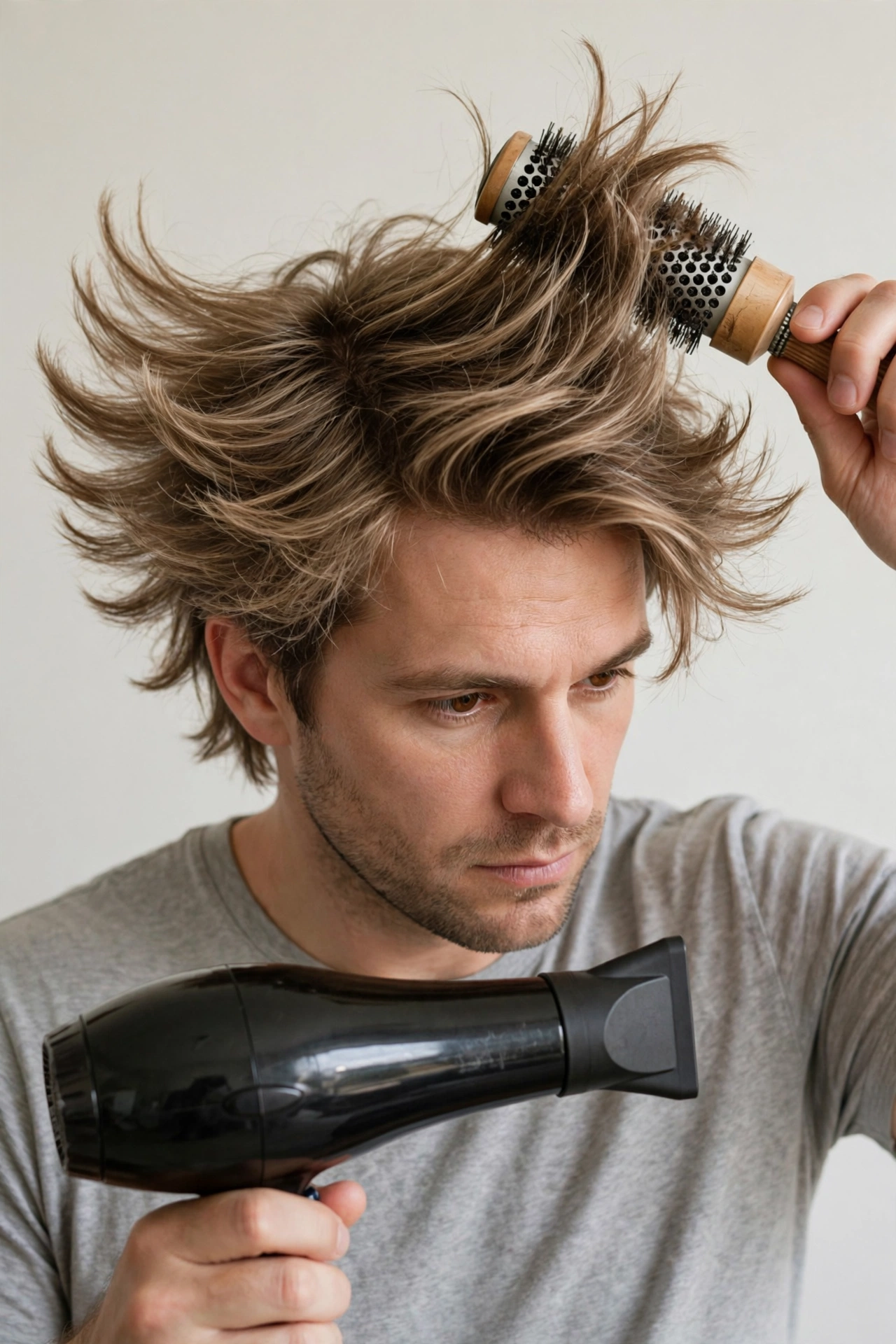
Here’s the honest truth about styling wings: the blow dryer is not optional. This cut is built around the flick, and the flick comes from heat and direction, not from product alone. The good news is the routine is simple once you’ve done it twice. Start with damp, towel-dried hair and a heat protectant spray, non-negotiable if you blow-dry daily. Rough-dry the top first, lifting at the roots for volume.
Then the important part: dry the sides outward. Take a vent brush or a small round brush, place it under the hair at each ear, and direct the dryer’s nozzle outward and slightly back as you pull through. You’re training the hair to kick out instead of lying flat. Two minutes per side is plenty. Once dry, warm a pea-sized amount of matte paste or fiber cream between your palms and pinch it through the ends, flicking outward with your fingers to define the wings. Finish with a light mist of flexible hairspray if your hair is stubborn. Total time: 8 to 10 minutes. On second-day hair, you can often skip the full routine and just re-flick the sides with damp fingers and a quick blast of heat.
Will the Wings Haircut Suit You? Face Shapes and Hair Types
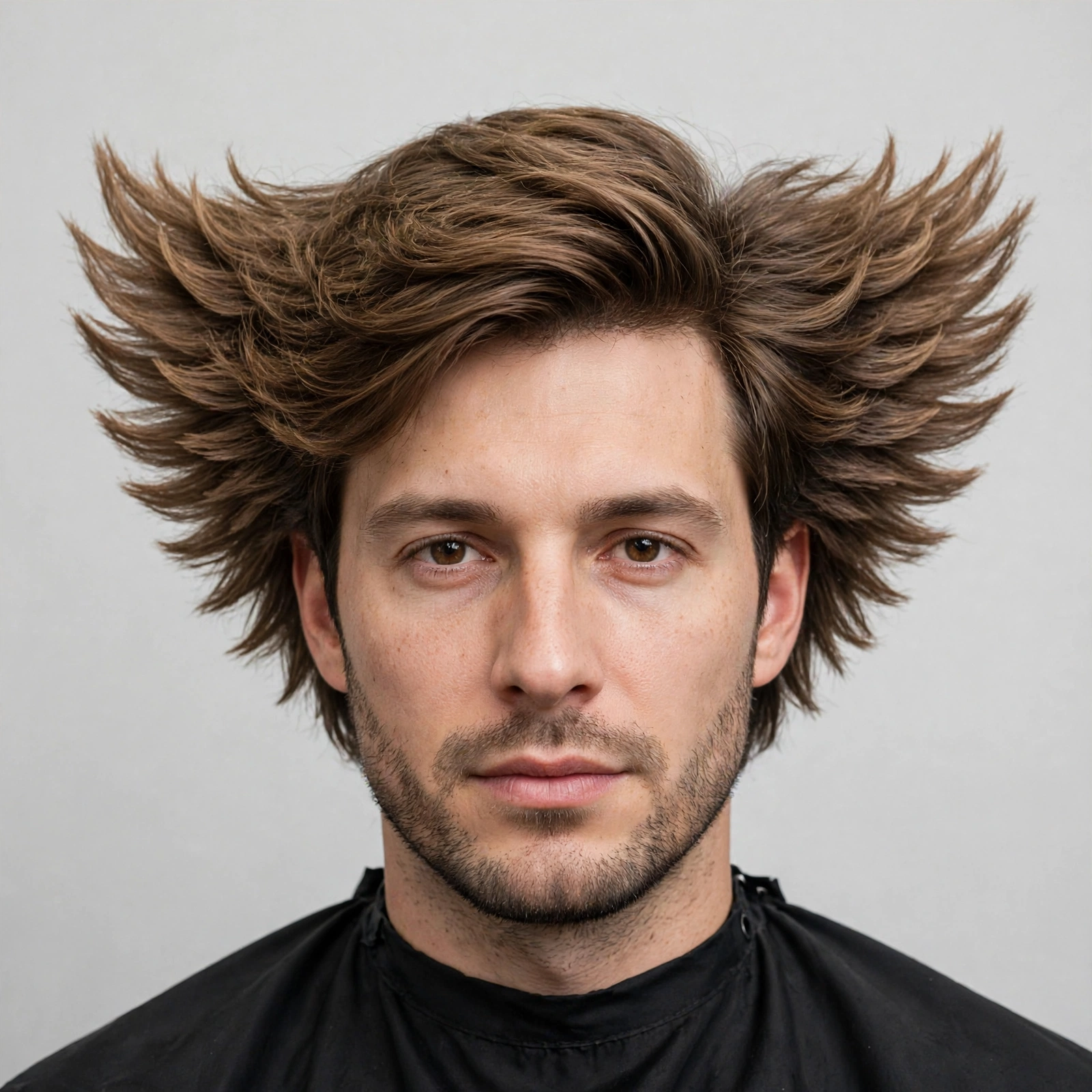
Let’s get specific, because “it suits everyone” is the kind of lie hair articles tell. Oval faces: you’re fine with any version on this list, lucky you. Round faces: wings can work beautifully since the volume at the sides is lower, around the ears rather than the crown, which avoids adding width where you don’t want it, but keep the top longer and avoid the short wings version. Square faces: the feathered softness is your friend, it takes the edge off a strong jaw, and the side-parted or curtain versions are especially flattering.
Oblong and rectangular faces: wings are genuinely great for you, because the horizontal volume at the ears visually widens the face and balances length. Heart-shaped faces: also excellent, the wings fill in nicely around a narrower jaw. Diamond faces: the texture at the sides balances wider cheekbones well. Now hair types. Straight hair shows off the feathering best but needs the most styling effort to hold the flick. Wavy hair is the dream texture here, low effort, natural flick. Curly hair works with the right layering but needs a curl-savvy barber. Fine hair can do wings at shorter lengths but may struggle with the longer versions; thick hair is ideal but needs texturizing so it doesn’t puff out. Very coily hair can absolutely rock wings, but find a barber experienced with your texture, since the layering approach is different.
Maintaining the Wings Haircut
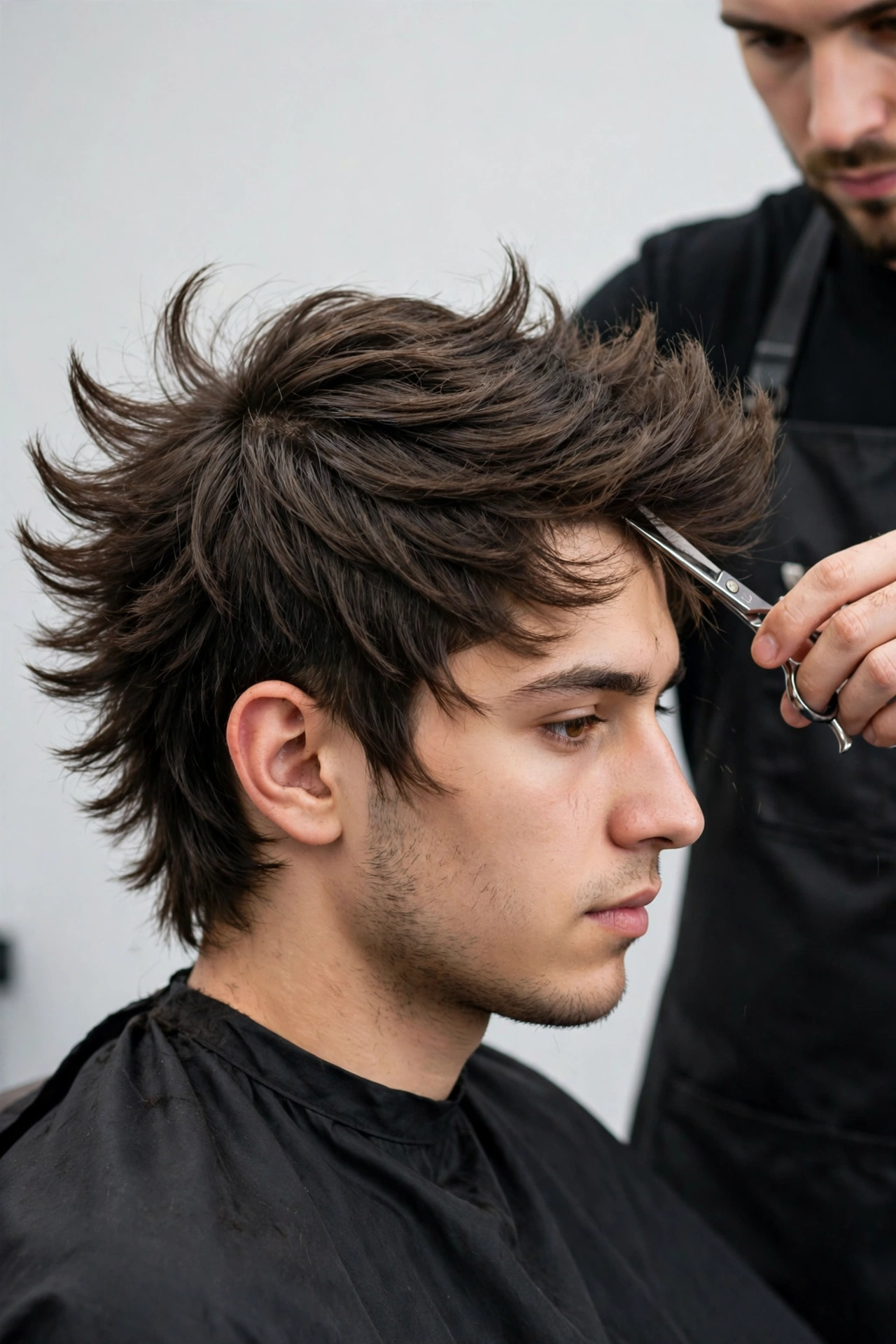
Wings are not a plant-it-and-forget-it cut. The feathered ends that make it special are also the first thing to lose their shape, usually around week 4 or 5. Plan on trims every 4 to 6 weeks, and be specific when you go in: “just clean up the ends and re-establish the layers, don’t take length.” Barbers hear “trim” and sometimes get scissor-happy, so spell it out. If you’re growing it longer, you still need those maintenance trims; skipping them doesn’t make hair grow faster, it just makes the wings look tired.
At home, the maintenance is mostly about end health. Feathered ends show damage faster than blunt cuts, so a weekly deep-conditioning mask is worth the five minutes, and heat protectant before every blow-dry is mandatory, not optional. Sleep on a satin or silk pillowcase if you’re fancy, or at least avoid going to bed with wet hair, which stretches and snaps feathered ends overnight. Between cuts, a tiny trim of any split ends you spot keeps the flick crisp. Budget-wise, expect $35 to $60 per barber visit every month or so, which is standard for any medium-length men’s cut that needs shaping.
FAQs About the Wings Haircut
Quick answers to the questions guys actually ask about this cut, from grow-out timelines to whether it’ll survive a motorcycle helmet.
How long does my hair need to be for a wings haircut?
You need at least 2.5 to 3 inches on the sides and 3 to 4 inches on top for the basic shape to work. If you’re starting from a buzz cut or short fade, that’s roughly 3 to 4 months of growing. The awkward phase around month two is real, and a good barber can shape the grow-out so you don’t look like you’re just neglecting your hair. Bring patience and a hat for bad days.
Is the wings haircut the same as a flow hairstyle?
Close cousins, not twins. Both are medium-length layered cuts, but the flow generally pushes everything back with a more uniform length, while wings are defined by the feathered flick at the ears and more aggressive layering through the sides. Think of wings as flow’s more textured, more 70s sibling. If you like the flow, you’ll probably like wings, and our flow hairstyle guide will feel familiar.
Can I get a wings haircut with thin or fine hair?
Yes, with caveats. Stick to the shorter versions, short wings or textured wings, where the layering creates the illusion of density. Avoid the long wings and the heavily layered versions, which can make fine hair look stringy. A volumizing mousse at the roots before blow-drying helps enormously, and matte texture powder at the crown adds grip. Be honest with your barber about your density so they layer accordingly.
How do I keep the wings from going flat during the day?
Three things: product with memory, not just hold; a midday refresh; and the right cut. Matte paste or fiber cream has better “memory” than gel, meaning the flick survives movement. Keep a travel-size texture spray in your bag for a 30-second revival, just lift the sides and spray underneath. And if your wings collapse by noon no matter what, tell your barber; the layers probably need to be shorter and more aggressive to hold the shape against your hair’s natural fall.
Will a wings haircut work if I wear a helmet or hat daily?
Honestly? It’s a tough pairing. Anything that compresses the sides will flatten the flick, and you’ll need to re-style after. If you ride a motorcycle or wear a hard hat, the textured or shorter wings versions survive compression better than the long polished ones, since messier texture is easier to revive. Keep a small brush and some texture spray at work. Cyclists and construction workers might be happier with a textured fringe that doesn’t depend on side volume.
Final Thoughts
The wings haircut coming back in 2026 makes perfect sense to me. Men’s style has been playing it safe for years, and this cut is the opposite of safe in the best way. It’s got history, it’s got movement, and the modern versions are genuinely wearable, not costume-y. Whether you go full classic or dip a toe in with the tapered version, you’re getting a haircut with actual personality.
My advice? Screenshot three favorites from the list above, book with a barber whose Instagram shows layered cuts (not just fades), and commit to the blow dryer for two weeks. If you hate it, hair grows. But I’ve got a feeling you’ll be surprised how many compliments a little feathered flick can generate. See you in the chair.
Conclusion
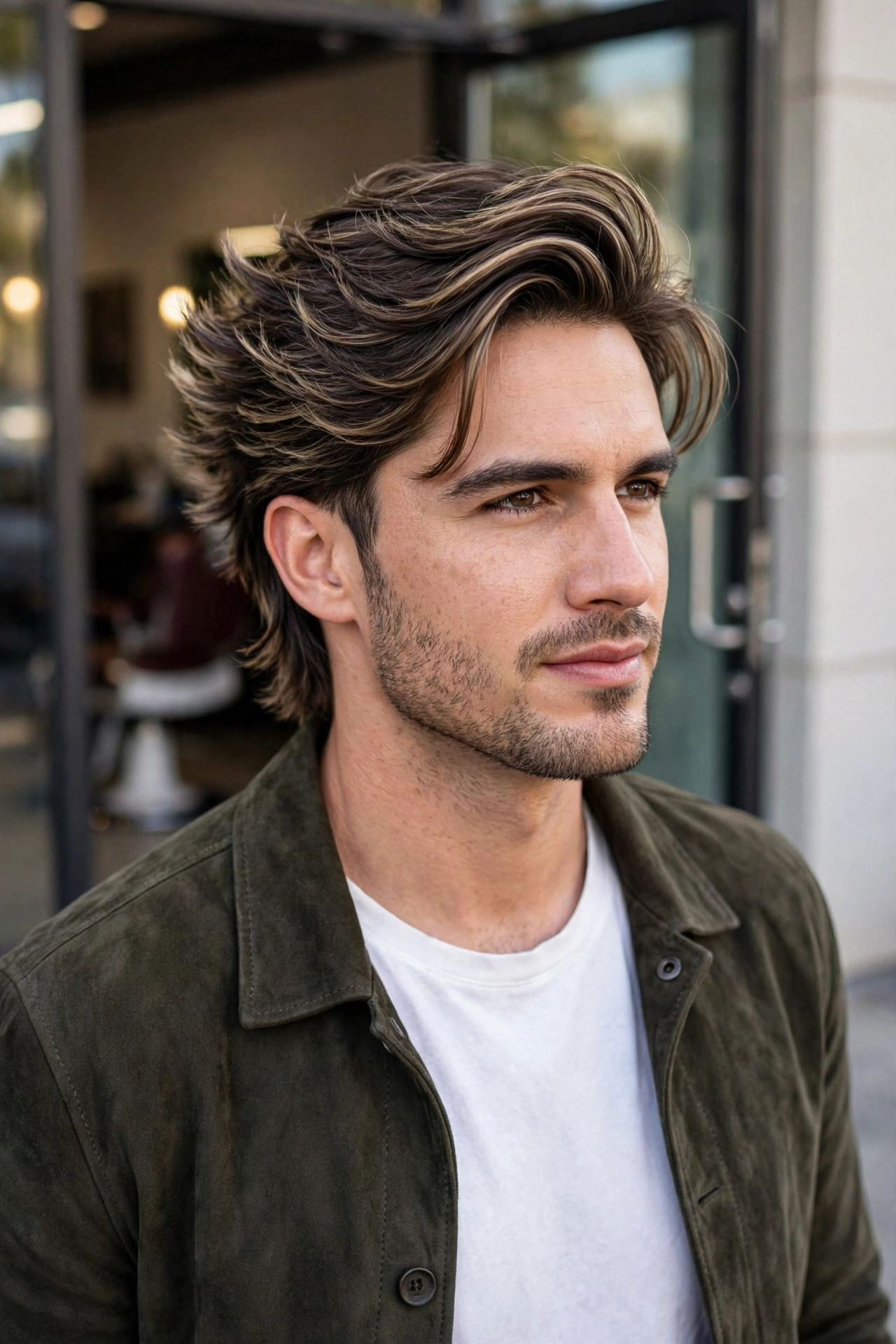
The wings haircut is flying back into 2026, bringing 70s feathered charm to the modern man. With length that flicks out at the sides like wings, it’s a nostalgic yet fresh choice for guys with straight to wavy hair. This cut suits oval and oblong faces especially well, adding width and personality where shorter cuts can’t.
To nail the wings look, blow-dry the sides outward with a vent brush and finish with a light-hold cream for touchable movement. Keep the length healthy with regular trims every five to six weeks. In a sea of fades, the 2026 wings haircut is for the man who’d rather stand out than blend in.