Top Knot Men 2026: The Modern Samurai Style
The top knot has outlasted every prediction of its death. Back when it first blew up, critics called it a fad with a two-year shelf life. That was a decade ago. In 2026, the top knot for men is not just surviving — it’s thriving, refined, and worn by a wider range of guys than ever: athletes, creatives, office workers who take the tie off at 6 PM, and plenty of men who simply got tired of short hair and never looked back.
What kept it alive is versatility. The top knot is really a family of styles, not a single haircut. The knot itself — hair gathered and tied at the crown or top of the head — stays constant, but everything around it changes the character completely. Shaved sides make it edgy. Long flowing sides make it bohemian. A braid makes it intricate. A sleek high knot reads samurai; a loose low one reads artist. One technique, fifteen personalities.
It’s also one of the most practical long hairstyles a man can wear. Long hair is beautiful but it’s work — it gets in your face, traps heat, and turns into a mess during workouts. The top knot solves all of that in thirty seconds with a single hair tie. That’s the real reason it stuck around: not fashion, but function. Guys who grow their hair out discover the knot within weeks, because the alternative is pushing hair out of your eyes all day.
This guide covers 15 top knot styles for men in 2026, from the classic original to the braided, faded, and undercut versions dominating right now. You’ll get the honest grow-out timeline (including the awkward phase nobody warns you about), step-by-step tying instructions, which styles suit your face shape and hair type, the products that actually help, and the mistakes that make a top knot look sloppy instead of sharp. If you’re growing your hair out or already have the length, there’s a knot here for you.
1. The Classic Top Knot: Get the Foundation Right
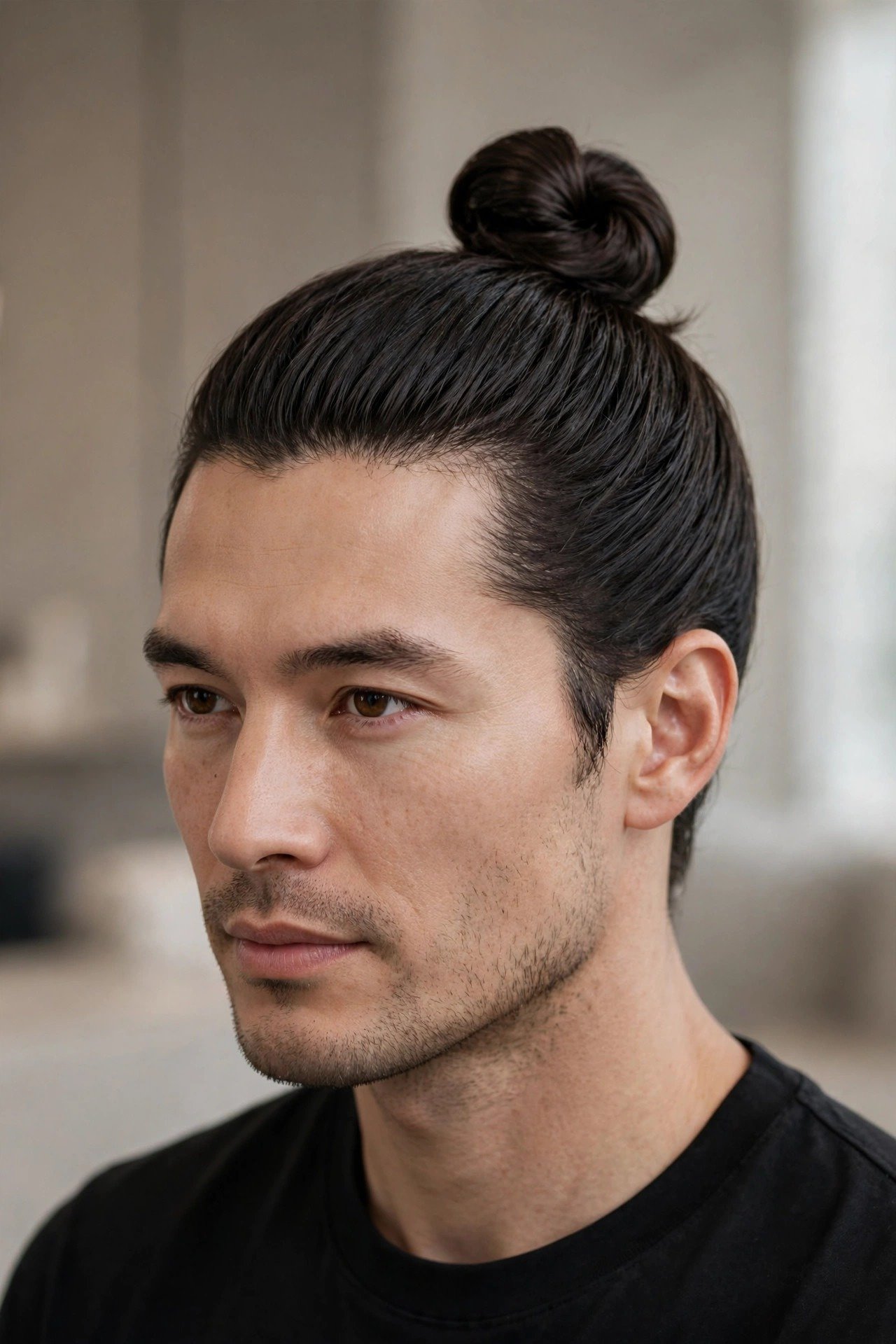
The classic top knot is the original: all of your hair — or the top section — pulled up and tied in a knot sitting at or just behind the crown of the head. No fades, no undercuts, no designs. Just long hair, gathered and secured. It’s the version that started everything, and in 2026 it remains the purest expression of the style. Everything else on this list is a variation of this foundation, so it’s worth understanding properly.
Length is the first question everyone asks. For a proper classic top knot, you need at least six inches of hair on top — that’s the minimum to gather into a tie without strands escaping everywhere. Eight to ten inches is the comfort zone, where the knot forms easily and looks substantial. The sides and back need matching length, since the classic pulls everything up together. If you’re starting from a short haircut, that’s roughly 12 to 18 months of growing. Yes, really. We’ll talk about surviving the grow-out in a later section.
Placement changes everything. The traditional spot is the crown — the highest point at the back-top of your head. A knot placed here looks balanced and works with the head’s natural shape. Push it too far forward and it reads comical; too far back and it becomes a man bun (a different style, worn at the back of the head rather than the top). The 2026 consensus: slightly behind the crown is the sweet spot — masculine, natural, and flattering from every angle.
Face shapes: the classic top knot suits oval and square faces best, because the pulled-back hair exposes the full face and strong features carry it. Round faces need the knot placed higher with some volume to add length. Oblong faces should keep the knot lower and looser to avoid stretching. Here’s the thing most guides skip — the top knot shows your entire hairline and forehead, so it’s honest about recession. If your hairline has moved significantly, the slicked-back nature of a tight knot will announce it. A looser, textured knot is more forgiving.
Tying it right matters more than guys expect. The classic mistake is pulling all the hair brutally tight — it looks severe, causes tension headaches, and over time can damage the hairline (traction alopecia is real, and barbers see it constantly). The better method: gather the hair with your fingers, not a brush, keeping some natural texture. Secure with a proper hair tie — not a rubber band, which shreds hair — wrapping twice for hold without a death grip. Leave the knot slightly imperfect. A top knot that looks too perfect looks like a costume; one with a little texture looks like you.
2. Top Knot With an Undercut
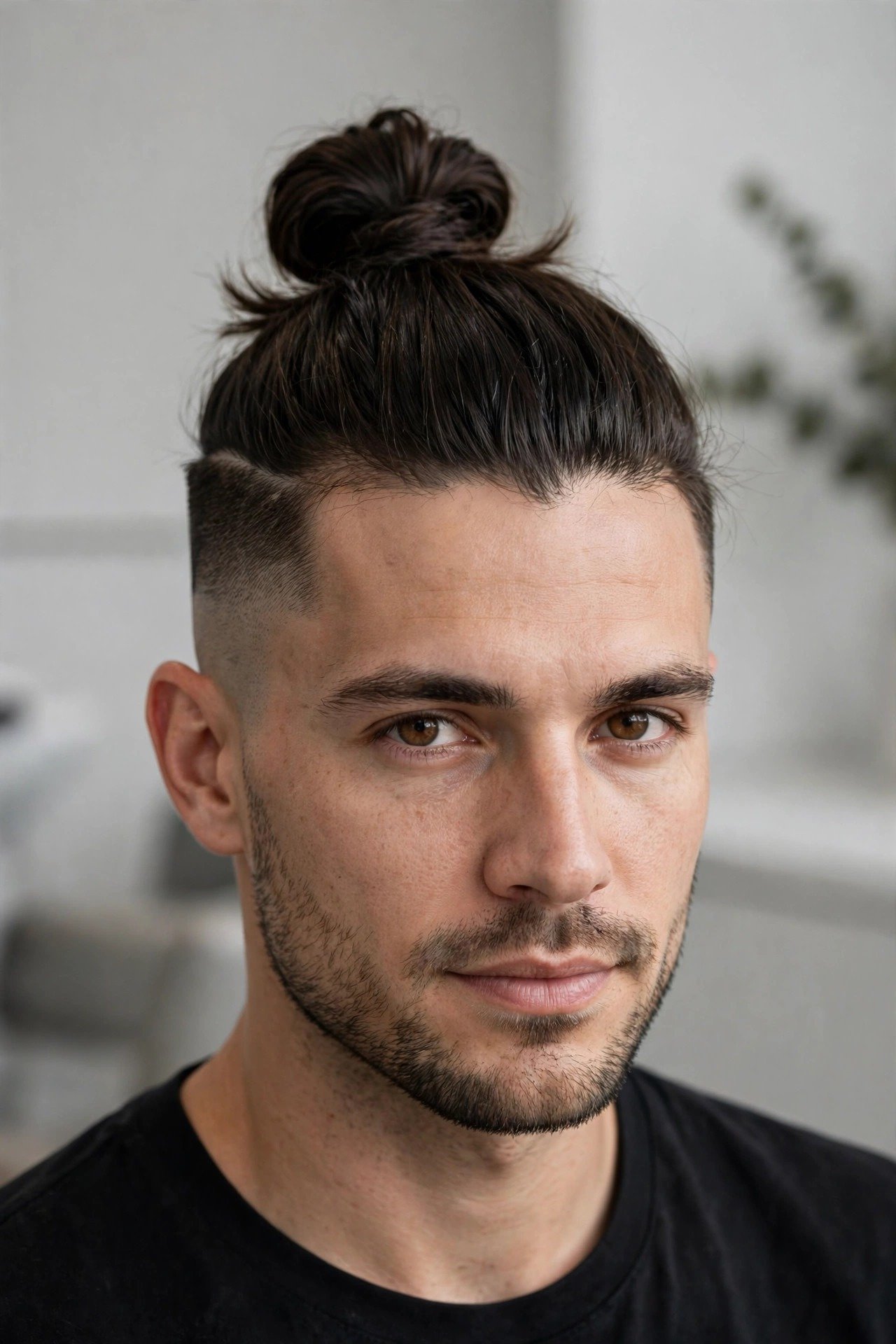
The undercut top knot is the edgiest mainstream version — long hair on top tied in a knot, with the sides and back clipped to one short, uniform length. The disconnect between the long top and the short sides is sharp and deliberate, and it’s the reason this became the defining men’s hairstyle of the last decade. In 2026 it’s still going strong, especially among guys in their twenties and thirties who want long hair without the full hippie commitment.
The undercut’s genius is that it solves long hair’s biggest annoyance: the sides. Growing out the sides of your head is the worst part of the grow-out — they puff out, they won’t lie flat, they make you look like you’re wearing a helmet. The undercut skips all of that. You only grow the top, which is faster (six to nine months from short instead of twelve to eighteen), and the clipped sides keep the silhouette clean while the top does its thing.
Ask your barber to keep the top long — everything from the temples up — and clip the sides and back to your preferred guard length. Most guys go with a #1 to #3. The line where the long top meets the short sides should be clean and intentional; some barbers cut it straight across, others follow the head’s natural curve. Either works. The key instruction: “keep all the length on top, I need it for a knot.” Say it clearly, because a barber who assumes you want a normal cut might take length you can’t afford to lose.
This style demands confidence in your head shape, because the undercut exposes the sides of your skull completely. Bumps, asymmetry, scars — everything shows. A fade (next section) is more forgiving. Face-wise, the undercut top knot favors square and oval faces; the strong horizontal line of the undercut complements angular features. Round faces can wear it if the knot has height, which elongates.
Styling is straightforward: gather the top, tie it up, done. The undercut means there’s no side hair to manage, so the morning routine is genuinely under a minute. Maintenance is the trade-off — the undercut needs re-clipping every two to three weeks to stay crisp, or the grow-out blurs the disconnect and the whole thing looks unintentional. Many undercut guys learn to touch up the sides themselves with clippers between barber visits. It’s a skill worth learning; it saves real money over a year.
3. Top Knot With a Fade or Taper
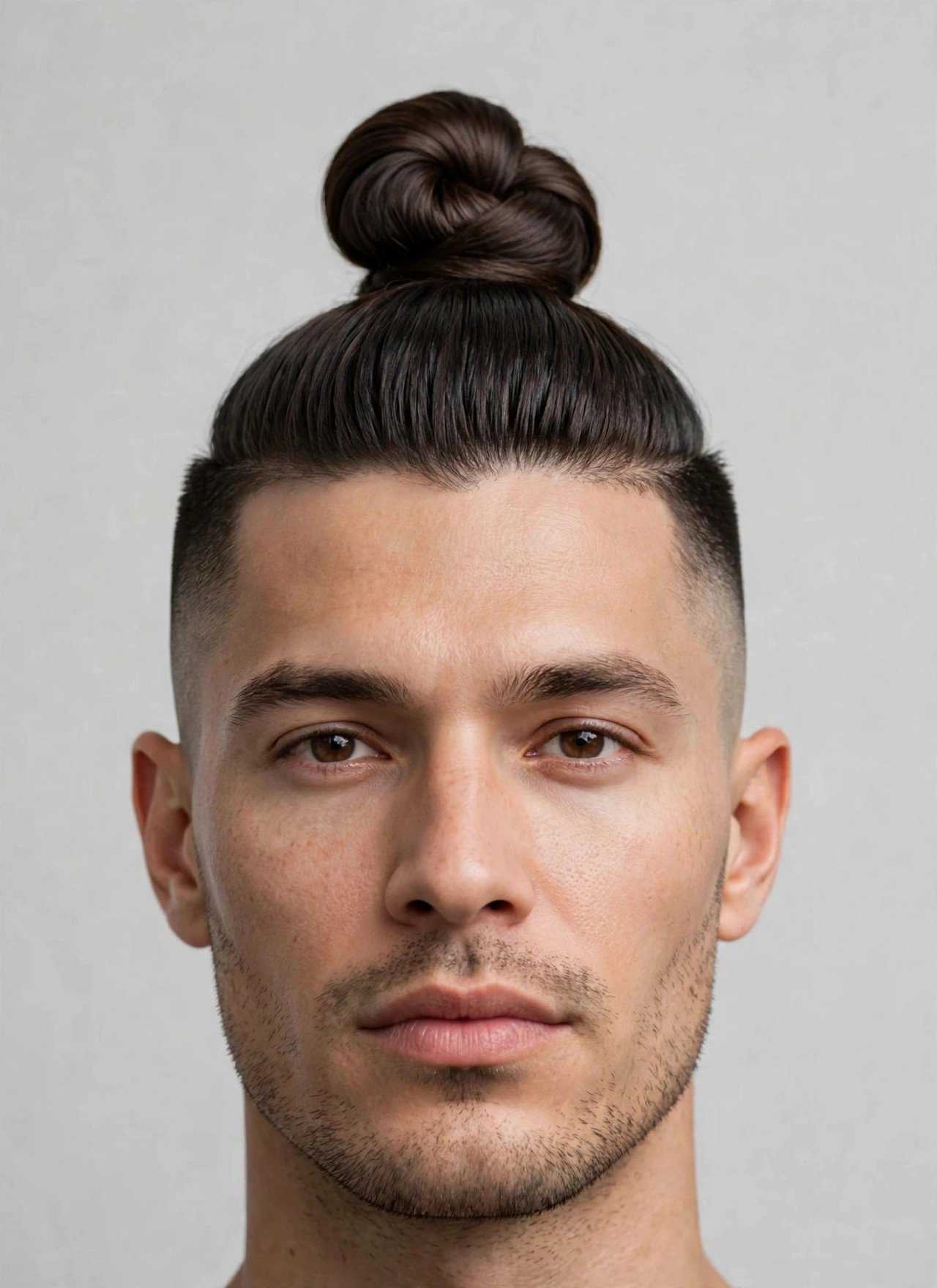
The faded top knot is the undercut’s more polished cousin. Same concept — long top tied up, short sides — but instead of a harsh disconnect, the sides graduate smoothly from skin (or near-skin) at the bottom to longer hair meeting the top. The gradient softens the whole look, making it more versatile: it reads just as well in a boardroom as it does at a concert. In 2026, the fade version has actually overtaken the undercut in barbershop requests, because it grows out better and suits more head shapes.
The fade’s gradient is forgiving in ways the undercut isn’t. Skull bumps and asymmetry get visually smoothed by the blend. The grow-out is graceful — a fading fade just looks like a taper for a while, whereas a growing undercut looks messy fast. You can stretch barber visits to three or four weeks instead of two. For guys getting their first top knot, the fade is the safer entry point, full stop.
You’ve got choices in fade height. A low fade keeps the blend near the ears and leaves more hair on the sides — subtle, professional, closest to the classic. A mid fade sits around the temples and gives the standard contrast most guys picture. A high fade pushes the short zone up toward the crown, leaving only the knot zone long — dramatic, modern, highest maintenance. In 2026 the mid fade is the default request; the high fade is for guys who want the knot to be the entire show.
The taper variation deserves its own mention because it’s the grown-up option. A taper (style 4 in our count, if you’re keeping score — the fade family earns two entries) keeps the sides longer overall with just the edges cleaned up — around the ears, the sideburns, the neckline. From the front, a tapered top knot can look almost like a classic; from the side, it’s neat and intentional. It’s the version for conservative workplaces, weddings, and guys who want the knot without announcing it from across the street.
Hair type notes: the fade works with straight, wavy, and curly tops alike. Curly guys get a particularly good deal — the fade controls the sides where curls go wild, while the top’s curls make a knot with incredible texture. The one caution is very fine hair: a high skin fade next to fine hair on top can make the top look sparse by contrast. A low fade or taper is kinder to fine hair.
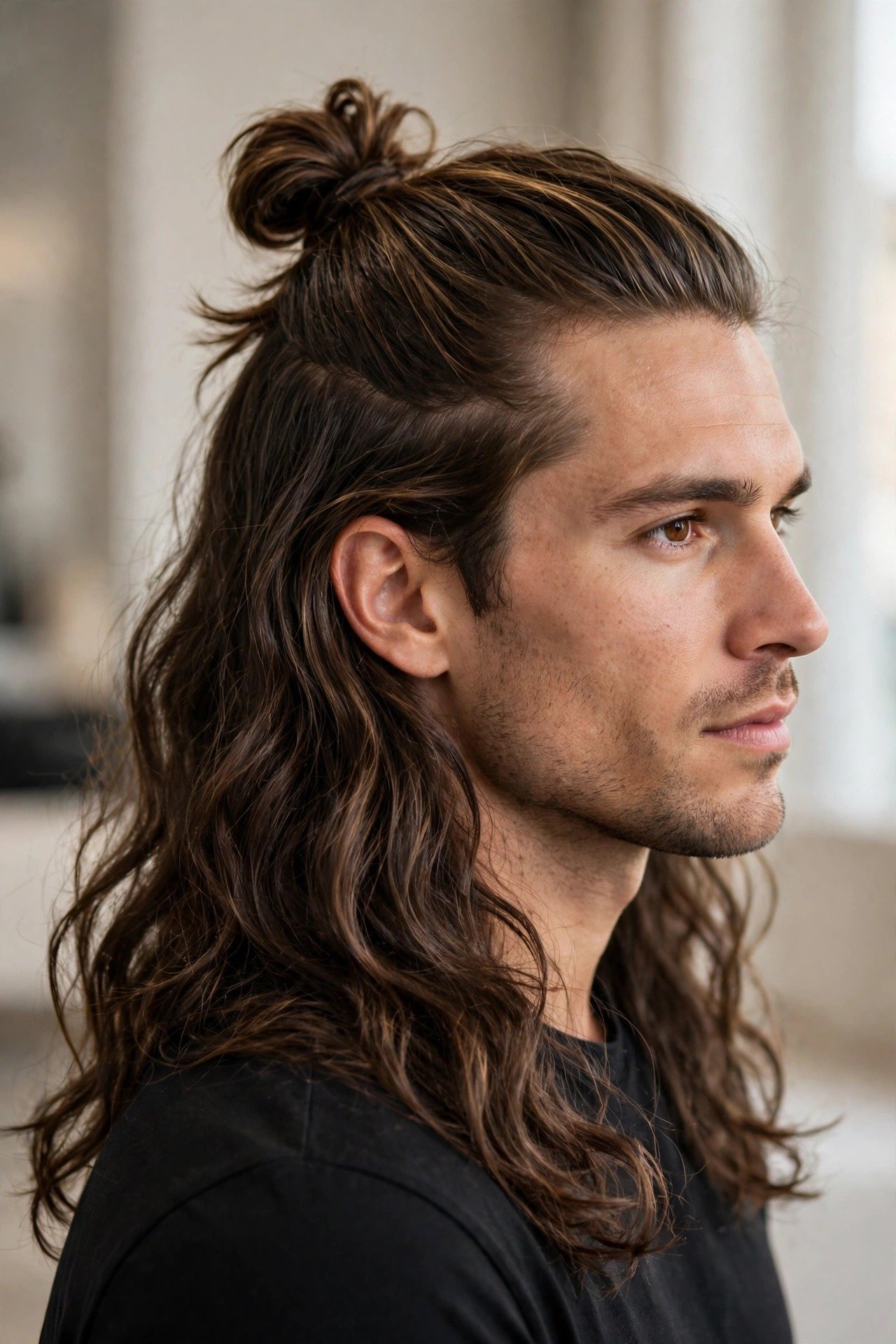
The half-up top knot splits the difference: the top section of hair gets pulled into a knot while the back and sides hang loose. It’s the best of both worlds — the practicality of a knot with the drama of flowing length. In 2026 this is arguably the most-worn top knot variation among guys with genuinely long hair (shoulder length and beyond), because once your hair gets that long, putting all of it up every day gets heavy and monotonous.
The sectioning is what makes or breaks it. The standard split takes everything above the ears — roughly the top third to top half of your hair — and ties that into the knot, leaving the rest down. Take too little and the knot looks like a tiny afterthought; take too much and you lose the point of the style. A good rule: part the section with your thumbs starting just above the ears and gathering upward. The line should sit roughly level around the head. It doesn’t need to be razor-straight — a slightly organic section line looks better than a severe one.
This is the most forgiving top knot for face shapes and hairlines. Because hair still frames the sides of the face, round faces get softening, wide foreheads get coverage, and receding hairlines get camouflage that a full pulled-back knot can’t offer. It’s also the easiest knot to wear with hats, helmets, and hoods — the loose back hair just falls naturally. For guys who feel the full top knot exposes too much face, the half-up is the answer.
Hair type matters here more than with the full knot. The loose portion is on full display, so its condition shows. Wavy and curly hair look spectacular half-up — the texture does the styling for you. Straight hair works too but benefits from some texture product to keep the loose hair from looking limp. The knot itself can be neat or messy; both read well against flowing hair. One practical tip: the loose hair will tangle at the nape during the day. A leave-in conditioner in the morning prevents the dreaded end-of-day rat’s nest.
The half-up top knot is also the style’s best ambassador for skeptics. Guys who think “a top knot isn’t me” often change their minds when they see the half-up, because it doesn’t demand the full commitment of scraping everything back. It works at more lengths too — you can wear a credible half-up with as little as five to six inches on top, months before a full classic knot is possible. If you’re growing your hair out, this is your bridge style.
5. Mini and Messy Top Knots
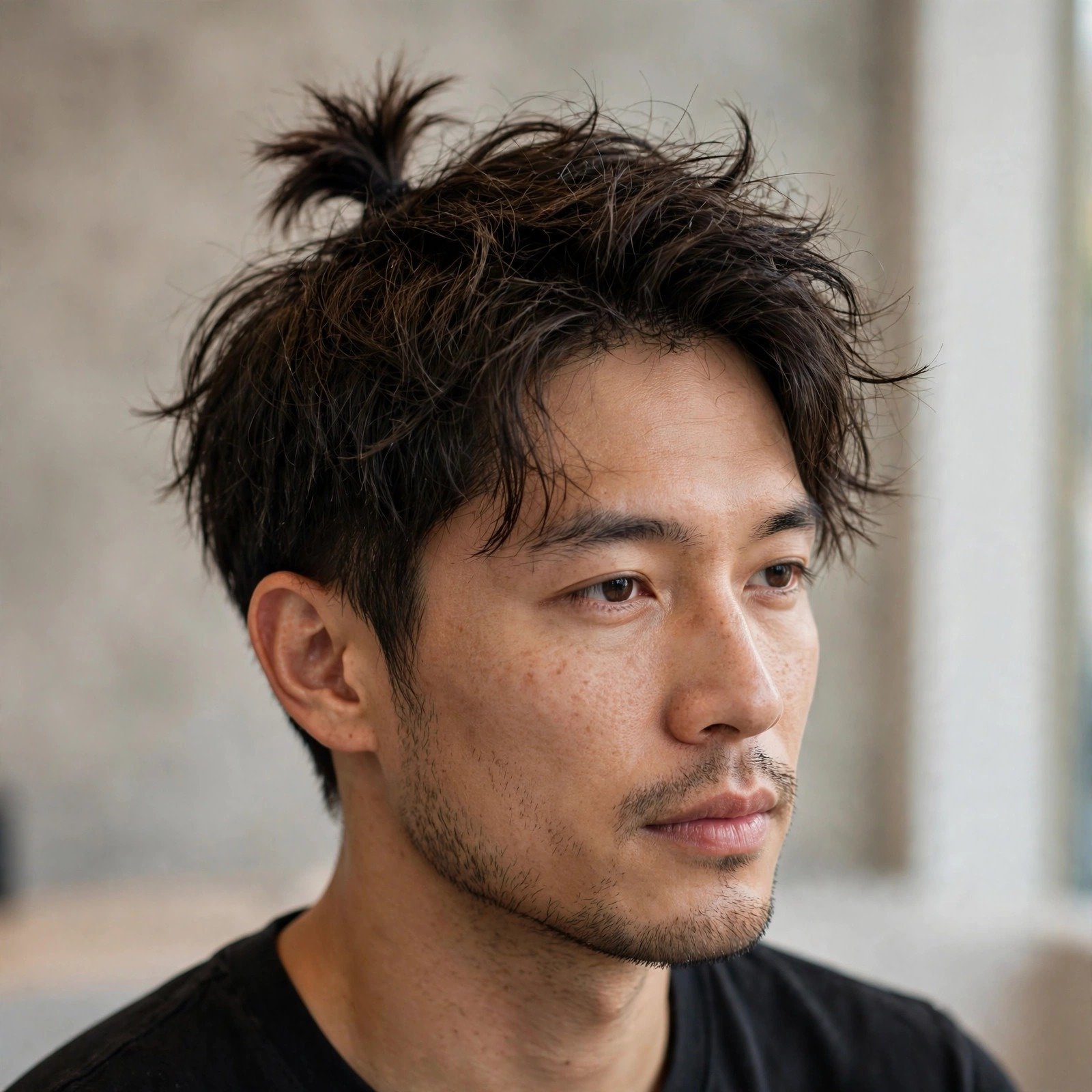
Not every top knot needs to be a statement. The mini top knot — sometimes called the baby knot — uses shorter hair (four to six inches) to make a small, subtle knot. It’s the entry-level top knot, the one you wear during the grow-out when your hair is finally long enough to tie but not long enough for anything dramatic. And honestly? A lot of guys never move past it, because the mini knot has a quiet, effortless charm the bigger versions can’t match.
The mini knot works because of proportion. A small knot on the crown with neat sides reads intentional and tidy — it’s the top knot for guys who wear button-downs and don’t want their hair to be a conversation topic. The key is keeping everything else clean: the sides should be trimmed, the hairline neat, the knot itself compact. A mini knot with shaggy sides looks like you gave up; a mini knot with clean sides looks like a choice.
The messy top knot is the opposite philosophy: deliberately undone, textured, a little wild. The hair gets gathered loosely, twisted rather than pulled smooth, and tied so that pieces escape naturally. In 2026 the messy knot dominates casual and creative spaces — it’s the weekend version, the festival version, the “I surf” version. What separates a good messy knot from bedhead is control in the right places: the hairline stays reasonably neat, the knot has shape even if it’s loose, and the escaping pieces look placed rather than accidental.
Technique for the messy version: start with dry hair that has some texture — second-day hair is actually ideal, or add a texture spray to clean hair. Gather loosely with fingers, twist the length once or twice, wrap it into a knot shape, and secure with a tie. Then — this is the important part — gently tug at the knot to loosen it and pull out a few face-framing pieces. The goal is a knot that looks like it happened naturally, even though you engineered every bit of it.
Face shapes: the mini knot suits everyone because it’s so understated — it’s barely a style statement, more a grooming solution. The messy knot favors oval, square, and oblong faces; round faces should keep some height in the mess to avoid widening. Both versions are kind to thinning hair, by the way — a small, textured knot draws far less attention to density than a big slicked one. If your hair is on the finer side, these are your versions.
6. Samurai and Slicked Top Knots
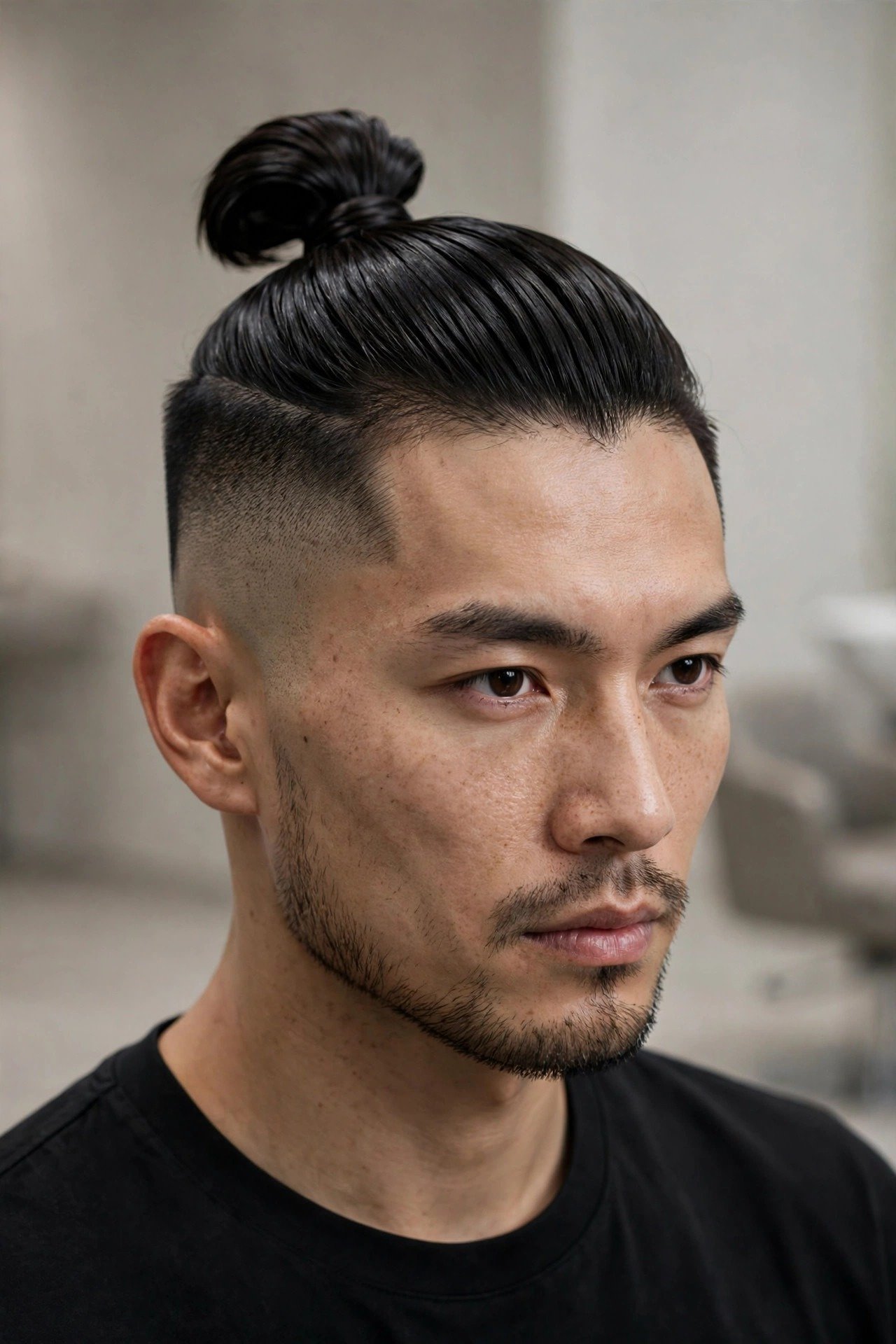
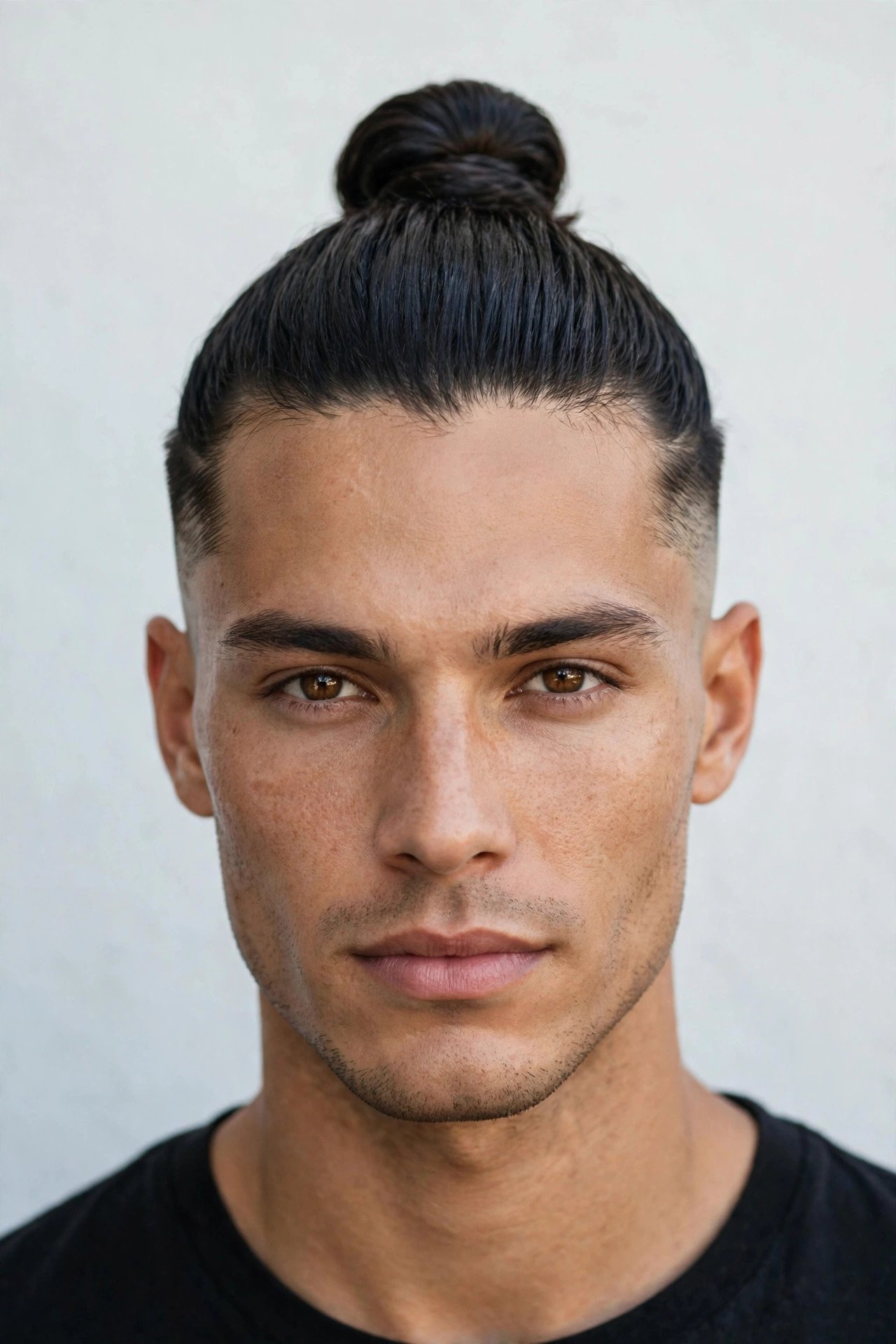
The samurai top knot — the chonmage-inspired, high, sleek version — is the most striking style on this list. The hair is pulled smooth and tight, the knot sits high on the crown or even toward the front-top of the head, and the sides are typically shaved or faded close. It’s dramatic, disciplined, and unmistakable. In 2026 it remains a niche choice, but the guys who wear it wear it with total conviction, and it photographs like nothing else.
Placement is everything with the samurai. The traditional position is high — noticeably higher than a standard top knot, toward the top of the skull. This is what gives it the warrior silhouette. But high placement is also what makes it demanding: it exposes the entire face, the full hairline, and the shape of the skull. Strong features, good density, and confidence are the prerequisites. This is not a style for hiding anything — it’s a style for showing everything.
The slicked top knot is the samurai’s more wearable sibling. Same smooth, polished finish, but the knot sits in the standard crown position and the sides can be anything from a taper to full length. The defining feature is the finish: the hair is combed smooth with product — a pomade or a smoothing cream — so the sweep back to the knot is sleek and controlled. It reads refined and intentional, like the hair equivalent of a tailored suit. Evening events, formal occasions, important meetings: this is the dressed-up top knot.
Getting the slick finish right takes technique. Start with damp hair and a smoothing product — a medium-hold pomade for shine, a cream for a more natural sheen. Comb the hair back with a fine-tooth comb, working from the hairline toward the knot position, keeping everything flat and smooth against the head. Gather, twist, and tie. Then — pro move — take a tiny amount of product on your fingertips and smooth down any flyaways around the hairline and the knot. A boar-bristle brush is the secret weapon for the final smoothing pass.
The honest warnings: both of these are tight styles, and tight plus daily wear equals traction stress on the hairline. Alternate with looser styles — don’t wear a slicked-tight knot every single day. They’re also the least forgiving of hairline recession; if your temples have moved, the smooth pull-back will frame it like a picture. And the samurai specifically is a commitment of identity — people will remember you as “the samurai hair guy.” Make sure that’s a title you want before you claim it.
7. The Braided Top Knot
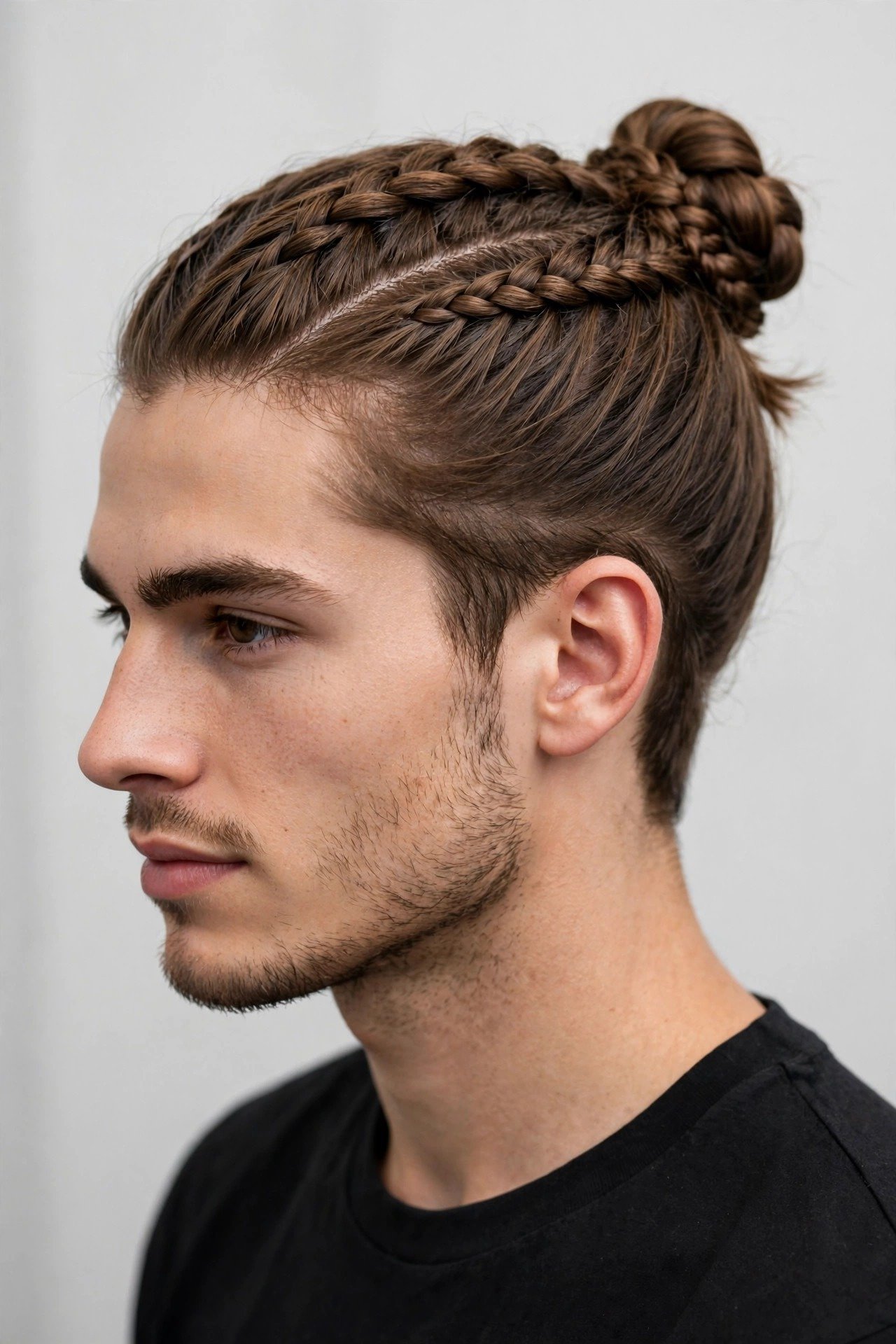
The braided top knot is where the style becomes craft. Instead of simply gathering the hair, you braid it — a single braid running back along the crown, or cornrows on the sides, or a French/Dutch braid — and then coil the braid’s end into the knot. The result has texture, pattern, and visual interest that a plain knot can’t touch. In 2026, braided knots are having a real moment, driven by athletes and fighters whose styles get screenshotted millions of times.
The most popular version is the single Dutch braid into a knot: the hair on top gets braided from the hairline backward (Dutch style, where the braid sits raised on top of the hair), and the remaining length twists into the knot. It needs eight-plus inches on top to work well. The braid adds grip and structure, which means the style actually holds better than a plain knot — the braid anchors everything. For guys with thick, heavy hair that slips out of normal ties, the braided version is functionally superior, not just better looking.
Cornrow sides with a top knot are the bolder variant: the sides get braided tight against the scalp in rows, and the long top goes into the knot. This is a barbershop-or-braider job, not a DIY project — clean cornrows take skill. The look is sharp and cultural, with deep roots in Black hair traditions, and it deserves respect for that heritage. On textured and coily hair, this combination is arguably the best-looking top knot variation that exists: the contrast between the sculpted braided sides and the full knot is stunning.
Learning to braid is the barrier, but it’s lower than guys think. A basic three-strand braid takes about twenty minutes of YouTube and practice to learn; a Dutch braid maybe an hour of fumbling before it clicks. Practice on someone else’s hair first if you can — braiding your own head blind is genuinely harder. Or book a braider every couple of weeks; many guys do, and it’s affordable compared to regular barber fades.
Maintenance note: braids shouldn’t stay in longer than two to three weeks without redoing, and the hair underneath still needs washing and conditioning. The knot portion can be redone daily while the braids stay. Also, braided styles pull — keep an eye on tension around the hairline, same traction warning as the slicked styles. Done right, though, the braided top knot is the most complimented version on this list. People notice craft.
8. Curly and Wavy Top Knots
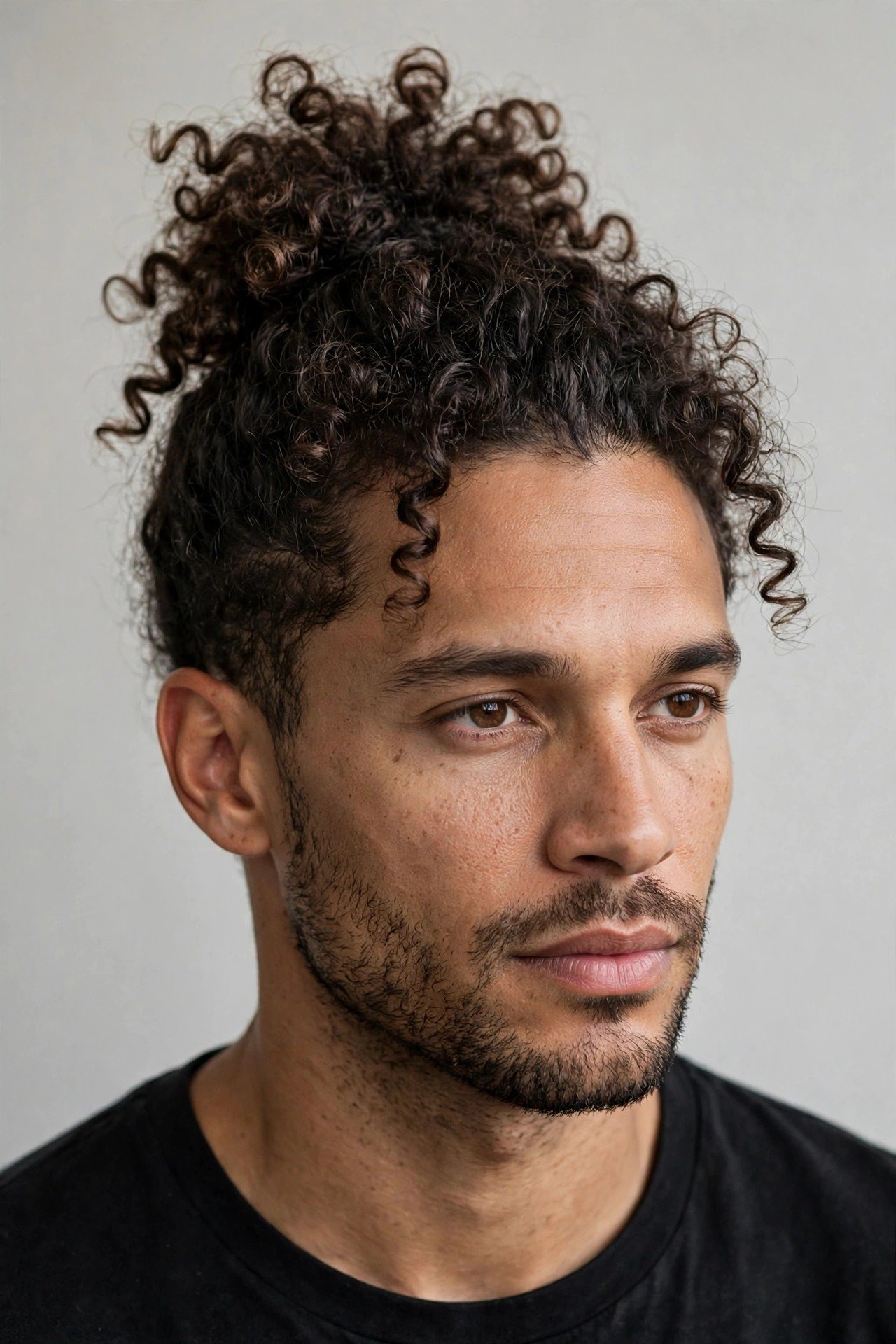
Curly and wavy guys, this is your section, because texture changes the top knot game completely. A curly top knot has volume, character, and presence that straight hair has to work hard to fake. The curls stack into a knot with natural fullness; the hair leading back to it has movement instead of lying flat. In 2026, the textured top knot — curly or wavy — is the version stylists point to when they talk about the style looking modern rather than dated.
The wavy top knot is the easy winner of the group. Natural wave gives you texture without the length demands of curls and without the flatness of straight hair. Six to eight inches is plenty. The waves create a knot with organic shape and a swept-back section with natural movement. A little sea-salt spray or texture cream enhances what you already have. This is the lowest-effort, highest-reward top knot for the average guy — if you have wave, you’re already halfway there.
Moisture is the whole maintenance story for textured knots. Curly and wavy hair tied up daily can dry out, especially at the ends trapped in the knot. A leave-in conditioner or a light hair oil on the lengths before tying makes a real difference over months. Wash frequency: textured hair generally does better with two to three washes a week rather than daily — overwashing strips the oils that keep curls defined. On non-wash days, a water spritz refreshes the texture before retying.
Face shapes: texture is flattering almost universally, because the volume and movement soften and balance. Round faces get lift and asymmetry; square faces get softening; oblong faces should keep the knot moderate in height. The one thing to watch is frizz halo — if the hair going back to the knot is frizzy, the whole style looks unkempt rather than textured. A smoothing cream on the canopy (the top layer) before gathering tames it without killing the curl pattern underneath.
9. Top Knot With a Beard, Designs and Face-Framing Layers
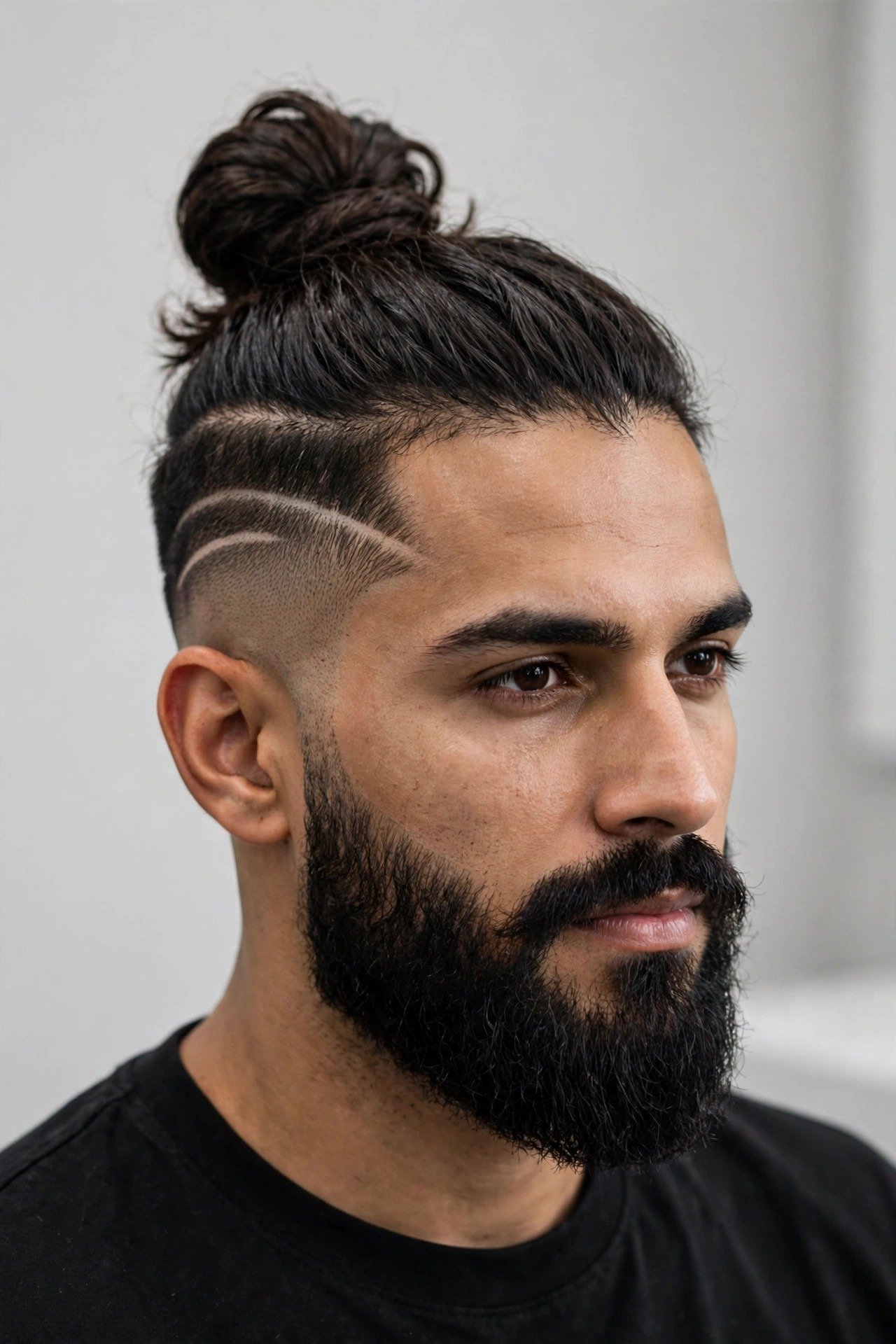
Three finishing variations that take the top knot from haircut to identity. Style 13: the top knot with a beard. Long hair plus facial hair is one of masculinity’s classic combinations, and the knot-and-beard pairing is its 2026 flagship. The balance rule: the bigger the knot and longer the hair, the more beard you can carry. A full top knot with flowing length pairs naturally with a full beard; a mini knot looks better with shorter, sculpted facial hair. Keep the beard’s cheek lines and neckline clean — precision in the beard makes the knot look intentional rather than wild.
Style 14: shaved designs. With faded or undercut sides, the short zone becomes a canvas — shaved lines, geometric patterns, a single sharp part line carved into the fade. In 2026, the most popular choice is restraint: one or two clean lines rather than elaborate artwork. A single hard line following the head’s curve looks sharp and grows out gracefully; complex designs look amazing for a week and blurry after two. Designs need refreshing every two weeks to stay crisp, so factor that into your barber budget. They’re also the least workplace-friendly option here — know your environment.
Style 15: face-framing layers. The newest trend on this list: wearing the top knot with shorter, face-framing pieces left loose around the temples and forehead. It’s borrowed from women’s styling, and on men it softens the scraped-back look beautifully. The pieces should be deliberate — cut to frame, not random escapees. This variation is remarkably flattering on round and square faces, and it’s the kindest option for guys self-conscious about their hairline or forehead. Ask your barber to cut framing layers before you start growing, so they’re in place when the knot goes up.
What unites these three is personalization. The top knot’s second decade is about making it yours rather than copying a template. The beard version leans rugged, the designs lean bold, the framing layers lean soft — same knot technique, three different messages. And they combine freely: a braided knot with a beard and one shaved line is a legitimate 2026 look. The style has matured enough that the rules are now guidelines. Wear the combination that feels like you.
10. Tying It Right: Steps, Products, Mistakes and Maintenance
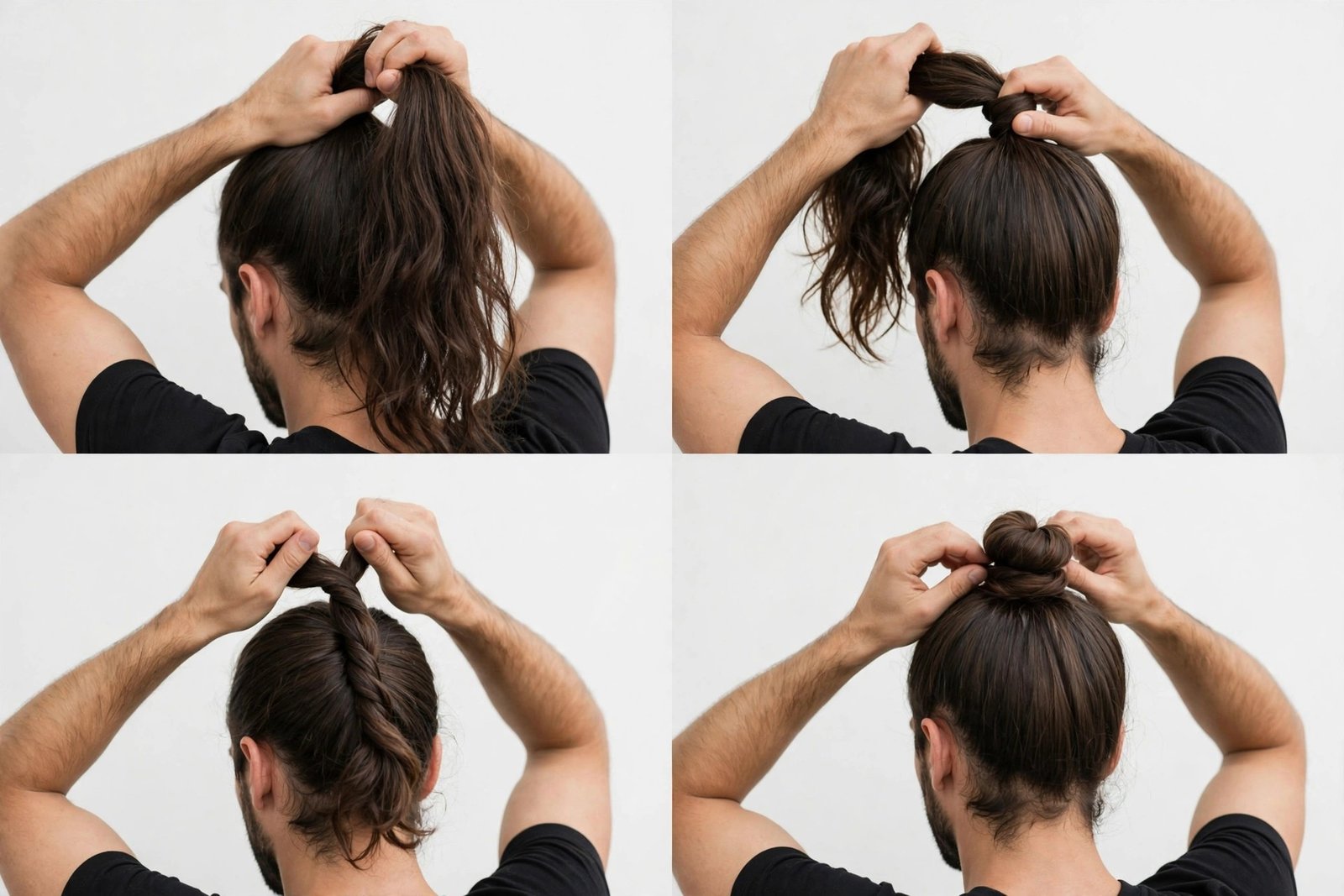
The practical chapter. The tie, step by step: Start with dry or slightly damp hair — wet hair tied tight stretches and snaps. Flip your head forward and gather the hair with your fingers at the crown, smoothing the top layer as you go. Hold the gathered hair in one fist. With the other hand, wrap a proper hair tie (fabric-covered elastic, spiral plastic coil, or a silk scrunchie — never a raw rubber band) around the base twice. For the knot shape: on the last wrap, pull the hair only halfway through the tie, forming a loop, then wrap the remaining ends around the base and tuck them under the tie. Adjust the loop’s fullness with your fingers. Thirty seconds with practice.
Products that actually help: A texture spray or sea-salt spray adds grip to clean, slippery hair — the number one reason knots fall apart is hair that’s too clean and smooth. A light pomade or styling cream smooths the hair going back without the crunch of gel. Leave-in conditioner protects the lengths, especially for curly and long hair. Dry shampoo at the roots on non-wash days absorbs oil and adds the grit that holds a knot. That’s the complete kit — you don’t need more. Skip heavy gels and waxes; they make the knot look wet and attract dust.
Mistakes to avoid: Tying too tight is mistake number one — it causes headaches, breaks hair, and over months can thin the hairline from traction. If you get a headache by afternoon, it’s too tight. Mistake two: the rubber band. It seems fine until you take it out and bring half your hair with it. Mistake three: tying wet hair regularly, which stretches the hair shaft and causes breakage at the tie point. Mistake four: never varying the position — wearing the knot in the exact same spot every day stresses the same follicles; shift it slightly day to day. Mistake five: neglecting the hair because “it’s just tied up.” Tied-up hair still needs conditioning, trims every eight to twelve weeks (split ends travel upward), and occasional deep conditioning.
Maintenance rhythm: Wash two to four times a week depending on hair type — daily washing strips long hair. Condition every wash; the lengths of long hair are old hair and need the help. Get the ends trimmed every two to three months even while growing — it prevents splits without losing meaningful length. If you have faded or undercut sides, those need the barber every two to four weeks while the top grows freely. Sleep with the knot loosened or in a loose braid; sleeping in a tight knot causes breakage and morning headaches. A silk or satin pillowcase reduces friction for long hair — it’s not vanity, it’s mechanics.
The grow-out survival guide (for everyone starting from short): Months 1–3, nothing to tie — wear it short and neat. Months 4–6, the awkward phase — too long to look sharp, too short to tie. Hats, headbands, and texture product are your friends; get the sides cleaned up regularly so the grow-out looks deliberate. Months 6–9, the mini knot becomes possible — this is the morale boost that keeps you going. Months 9–12, real styling options open up. Month 12+, the full classic. The awkward phase ends. Everyone who has long hair went through it, and everyone on the other side says it was worth it.
Top Knot Men FAQ
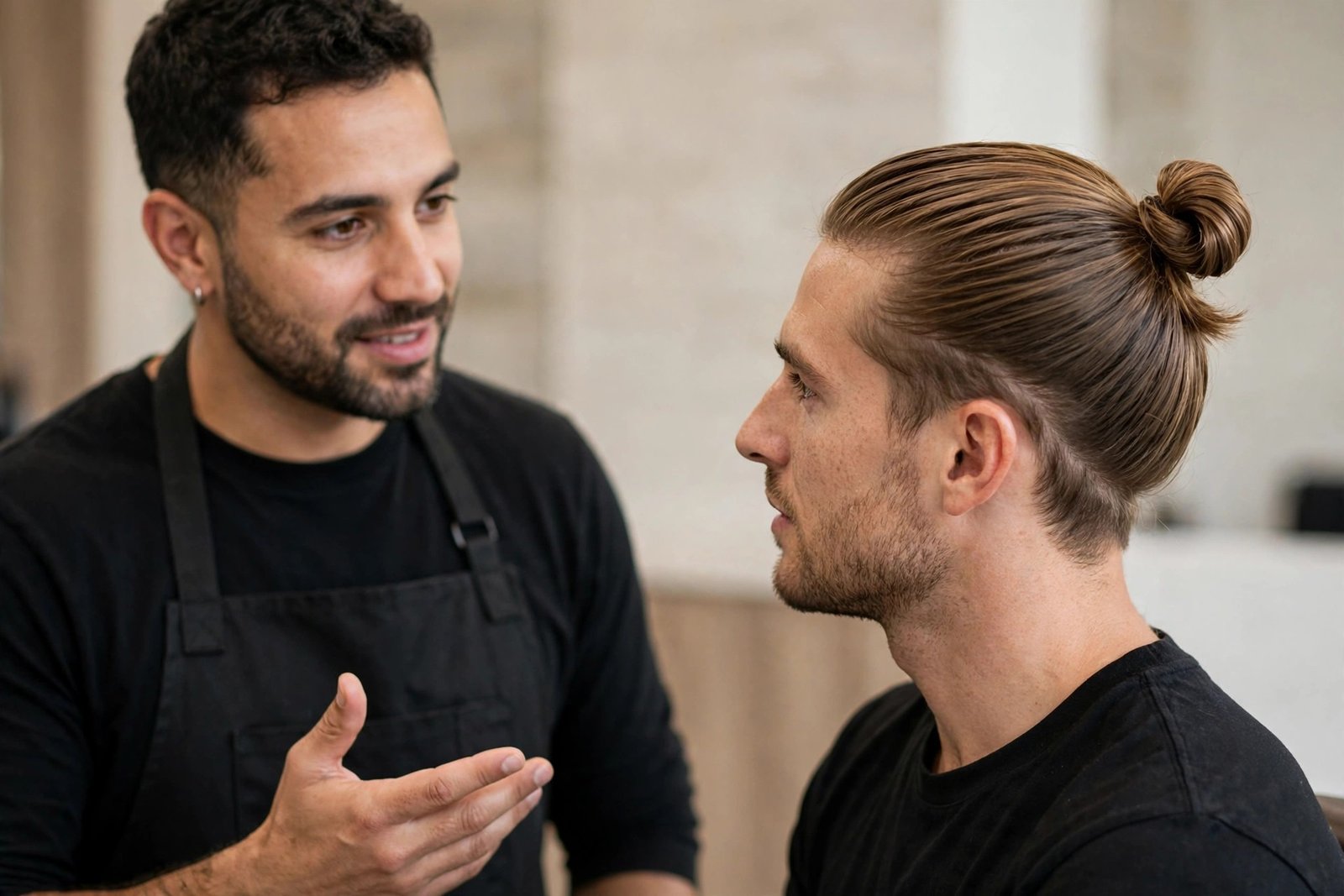
How long does my hair need to be for a top knot? Six inches on top is the realistic minimum for a proper knot; eight to ten inches is comfortable. A mini knot works from about four inches. The undercut version only needs the top long (six to nine months of growing from short), while the classic needs everything long (twelve to eighteen months). Curly hair needs more actual length than straight hair because curls contract when pulled.
Can I wear a top knot in a professional workplace? Increasingly, yes — with the right version. The tapered or low-fade top knot with neat execution reads professional in most modern workplaces in 2026. The samurai, shaved designs, and huge messy knots are harder sells in conservative industries. When in doubt, the rule is neatness: a tidy knot with clean edges bothers almost no one, while a sloppy one confirms every skeptic’s bias. Know your office, and observe what senior people get away with.
Will a top knot damage my hair or hairline? It can, but it doesn’t have to. The risk is traction alopecia — hair loss from constant pulling — which comes from tying too tight, always in the same spot, every single day. Prevent it: keep the tie firm but not painful, vary the knot’s position, take it down at night, and give your hair loose days. If you notice thinning at the temples or forehead that matches your tie line, loosen up immediately and see a dermatologist if it doesn’t recover.
What’s the difference between a top knot and a man bun? Placement. A top knot sits on the top/crown of the head; a man bun sits at the back. The top knot usually involves more styling of the hair leading up to it (swept, braided, or faded sides), while the man bun is typically just all the hair gathered back. The top knot reads more styled and deliberate; the man bun reads more casual. Both need similar length.
How do I keep my top knot from falling apart during the day? Four fixes: start with hair that has grip (second-day hair, or texture spray on clean hair); use a quality tie — spiral coils and fabric elastics hold far better than thin bands; wrap twice minimum, three times for thick hair; and for extra security, cross two bobby pins through the knot’s base in an X. If it still slips, your hair may be too silky — a light dusting of texturizing powder at the roots before tying works wonders.
Is the top knot still in style in 2026? Yes — it’s settled into classic status rather than trend status. The wild early-2010s peak is over, which is actually good: what’s left is the refined, versatile style worn by guys who genuinely like long hair, not trend-chasers. Barber data and style coverage in 2026 show steady demand, especially for the fade, braided, and textured versions. It’s not going anywhere.
Conclusion
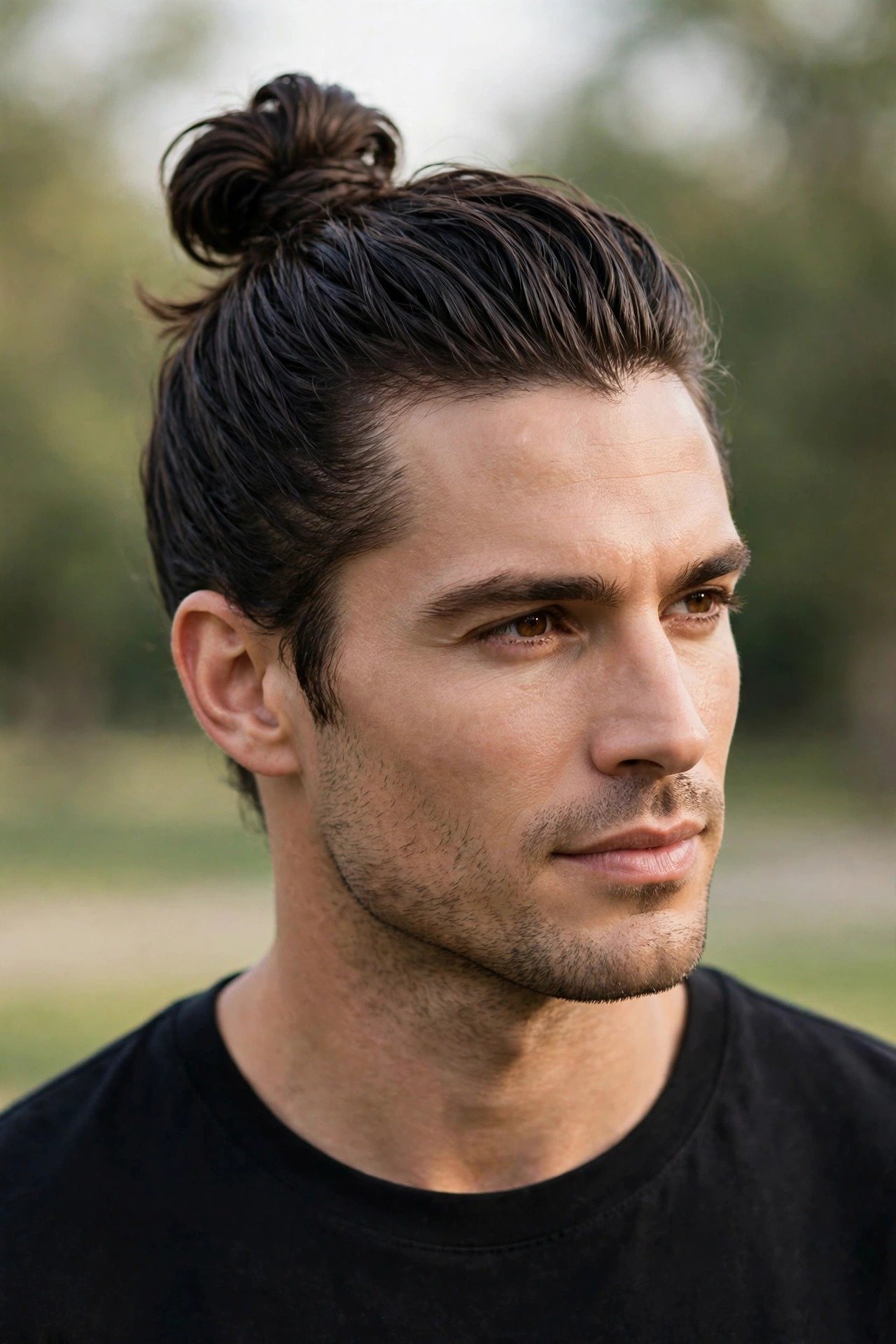
Fifteen styles, one piece of advice that matters more than all of them: the top knot rewards patience and punishes shortcuts. Grow the length properly instead of forcing a knot from hair that’s too short. Tie it firmly, not violently. Condition it like the long hair it is. Vary the position, respect the hairline, and trim the ends even while growing.
Pick your version honestly. If you’re in a conservative office, the taper or low fade keeps you employed and stylish. If you’re an athlete or creative, the braided or undercut versions turn heads for the right reasons. If you’re just starting the grow-out, the mini knot is your milestone — celebrate it. And if your hair has texture, stop fighting it; the curly and wavy knots are the best-looking versions on this list precisely because they work with what you have.
The top knot survived a decade of obituaries because it’s not really a trend — it’s a solution. Long hair needs managing, and the knot manages it in thirty seconds with one tie. Everything else — the fades, the braids, the designs — is just style on top of function. Grow it out, learn the tie, find your version, and wear it like you mean it. That’s all there is to it.