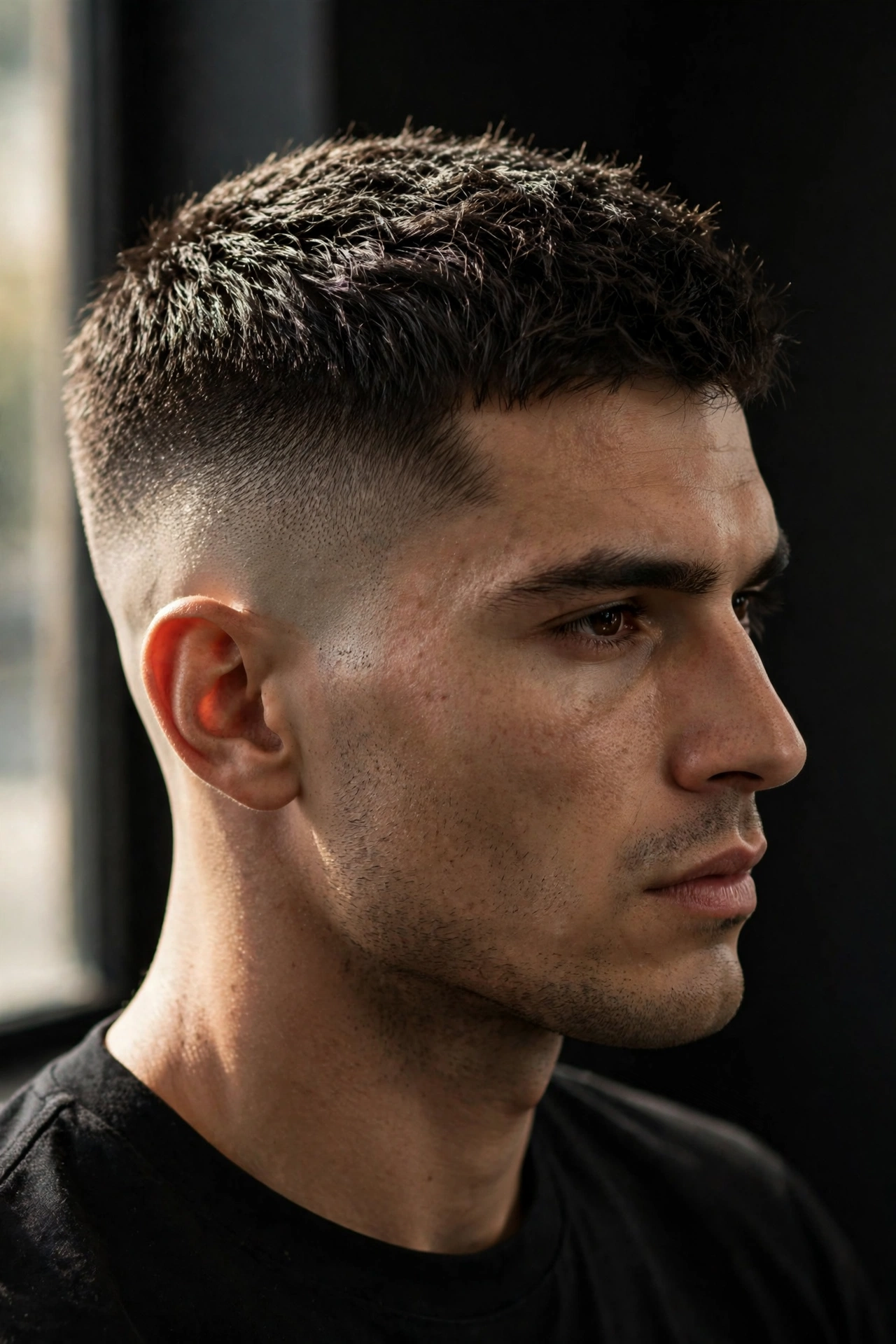
High and Tight Haircut for Men 2026: 15 Sharp Military-Inspired Ideas
High and Tight Haircut for Men 2026: 15 Sharp Military-Inspired Ideas
There is a reason the high and tight has survived every single hair trend cycle of the last forty years. While curtains, mullets, and middle parts have come and gone (and come back again), this military-born cut has never once left the building. Walk into any barbershop in 2026 — from a strip-mall shop in Texas to a premium studio in Dubai — and you will hear someone asking for it. The high and tight is not just surviving. It is thriving, evolving, and picking up new fans every single month.
But here is the thing most guys get wrong: the high and tight is not one haircut. Not anymore. The classic Marine Corps version — shaved sides, a small patch of short hair on top — is only the starting point. In 2026, barbers have stretched this cut into textured tops, curly versions, recon-style high fades, beard-paired variations, and modern blends that look as good in a boardroom as they do at the gym. It is the rare haircut that manages to be both timeless and current at the same time.
This guide breaks down everything: what the cut actually is, why it is everywhere again in 2026, fifteen distinct high and tight ideas you can take to your barber (with the exact guard numbers to ask for), how to maintain it at home, which face shapes it flatters most, and answers to the questions guys always ask before getting one. Here’s the full breakdown.
What Is the High and Tight Haircut?
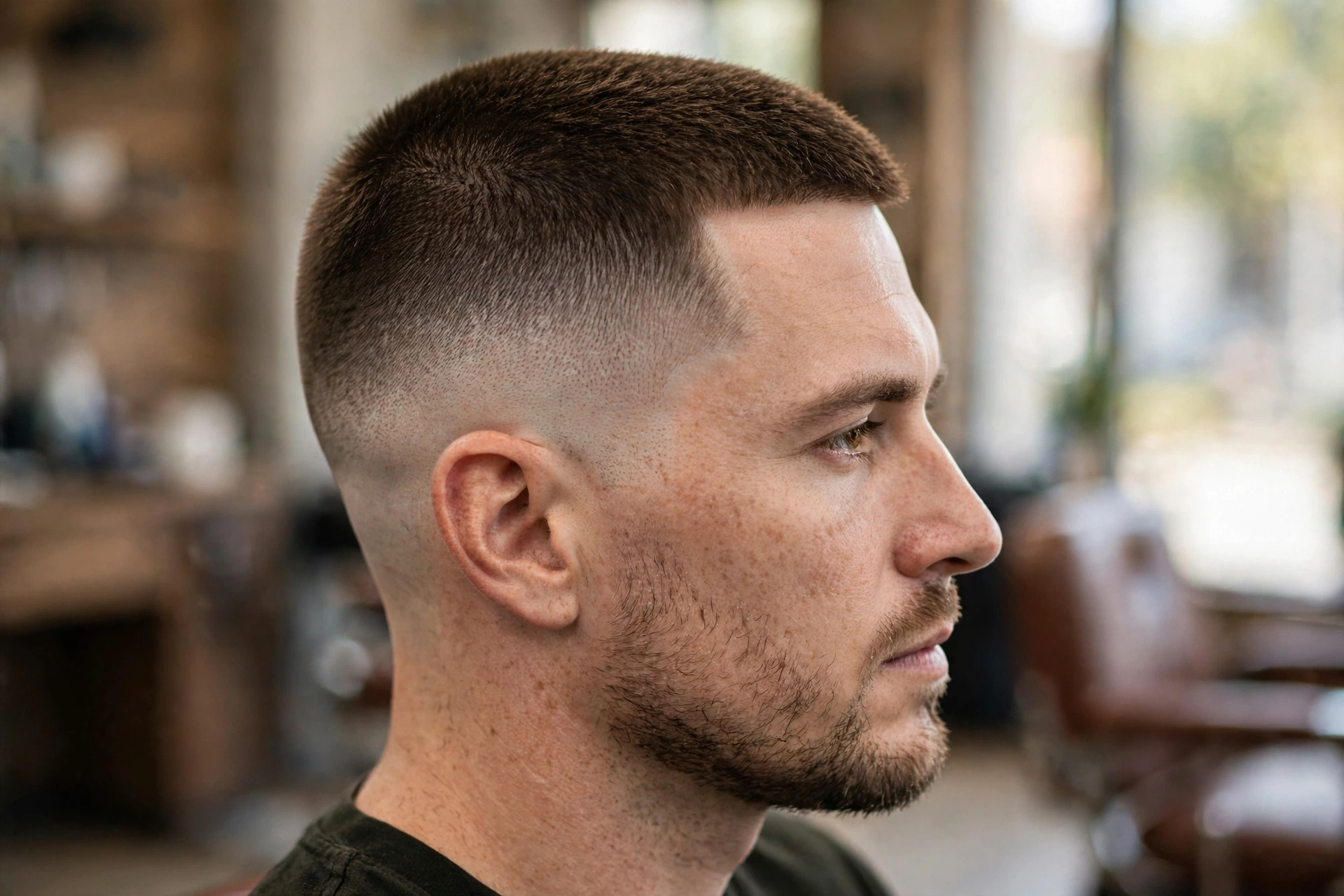
The high and tight is a short military haircut defined by two things: sides and back clipped very close to the skin, usually with a high fade that starts well above the temple, and a short section of hair left on top — typically between a quarter inch and one inch long. The contrast is the whole point. The sides nearly disappear; the top stands as a defined, structured island of hair. That sharp division between bare skin and short crop is what gives the cut its unmistakable look.
It comes from the U.S. military, where short hair has always been about discipline, hygiene, and uniformity — but also about something subtler. A high and tight reads as sharp, alert, and put-together. It is why drill instructors wore it, why it became standard issue in the Marine Corps, and why it crossed over into civilian life decades ago and never left. The recon version — an even more extreme take where the top is reduced to a narrow landing strip down the middle of the head — was worn by Marine reconnaissance units, and that variant has its own cult following today.
The key measurements you will hear barbers use: the sides are typically a #0 or #1 guard (skin to about 3mm), the fade starts high — roughly at the top corners of the head, above where a normal mid-fade would begin — and the top is usually cut with a #2 to #4 guard or scissor-trimmed to anywhere from half an inch to just over an inch. The exact numbers change the character of the cut completely, which is why “high and tight” covers such a wide range of looks in 2026.
One more thing worth knowing: people confuse the high and tight with the crew cut, the buzz cut, and the high fade, but they are different animals. A buzz cut is one length all over. A crew cut keeps noticeably more hair on top with tapered sides that blend gradually. A high fade is a technique, not a haircut — it just describes where the fade starts. The high and tight is its own thing: extreme contrast, minimal top, maximum sharpness.
Why the High and Tight Is Trending in 2026
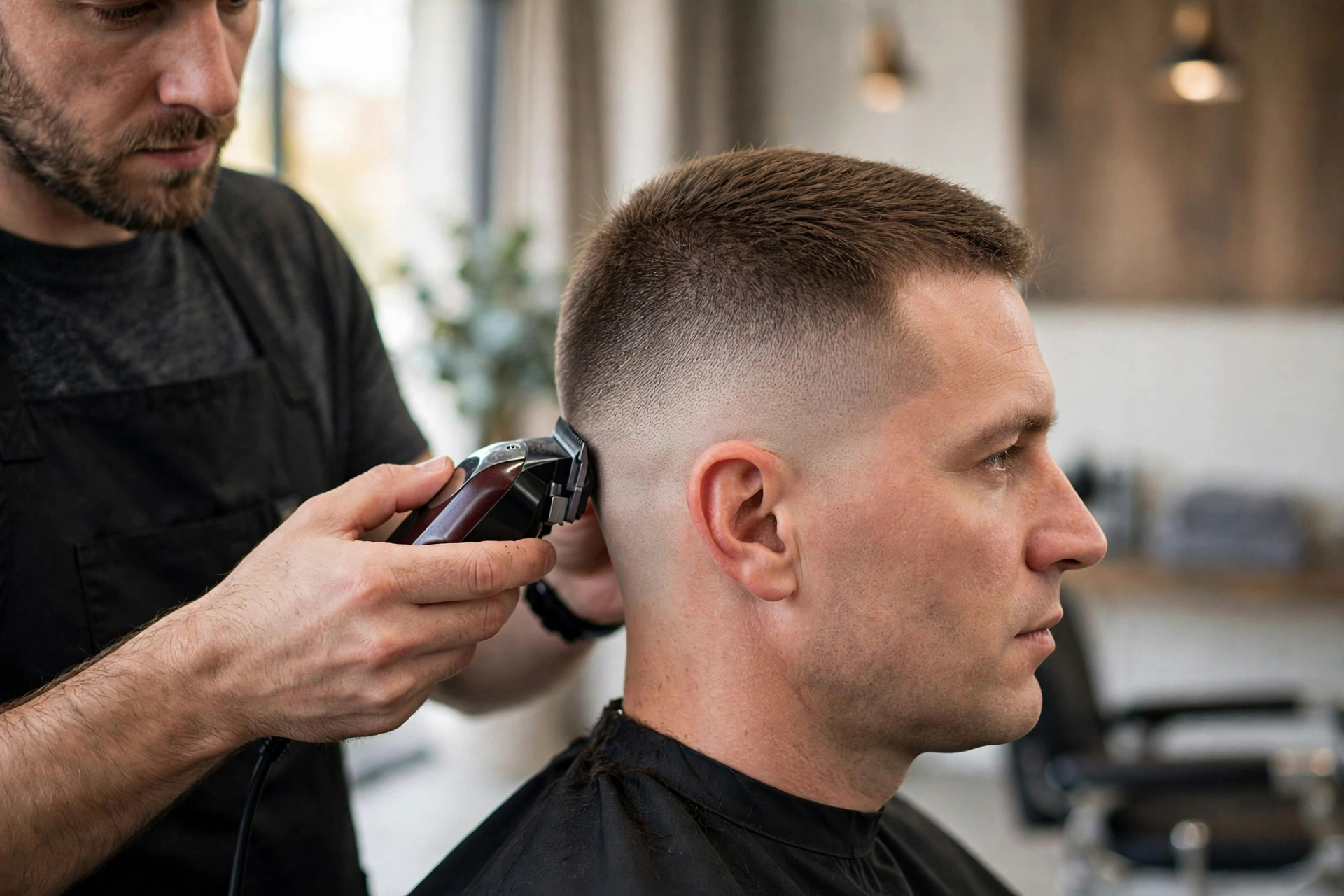
The numbers tell the story. The 2026 military haircut guides have put the high and tight right back at the top of the pile — a major 2026 guide to military haircuts for men and women ranks the High and Tight as its number one pick this year, and barbershop trend roundups like Dallas-based Mr. Winston’s “Top Men’s Haircuts 2026” list it among the defining cuts of the year. Skin-fade specialists have gone further, dedicating entire features to the modern high and tight and its 2026 fade variations. When barbers and style editors agree this loudly, it is not a fluke — it is a trend with real momentum.
So why now? A few things are colliding at once. First, the cultural mood has swung toward discipline and self-improvement — the “clean cut, clean life” aesthetic is all over social media, and no haircut embodies that better than a high and tight. Second, the cut photographs brilliantly. In an era where your haircut is judged on phone screens and video calls, a high-contrast fade with a crisp top line reads clearly even in a tiny profile picture. Third, practicality: guys are tired of 20-minute morning routines. The high and tight takes about ninety seconds to style. Wash, a dab of matte product, done.
There is also the athlete effect. Combat sports fighters, CrossFit athletes, and football players have kept the high and tight visible for years — it is the default cut of guys who train hard and do not want hair in the way. That visibility bleeds into the mainstream. And finally, barbers themselves love cutting it in 2026 because modern clipper work has turned the high and tight into a canvas: razor-sharp lineups, textured tops, skin fades with surgical precision. It is a classic cut that lets a skilled barber show off.
The result is a haircut that works for a 22-year-old university student, a 35-year-old new father who has no time for styling, and a 50-year-old executive who wants to look sharp without looking like he is trying too hard. Very few cuts span that range. The high and tight does it effortlessly — which is exactly why it keeps trending back every few years, stronger each time.
15 High and Tight Ideas for Men in 2026
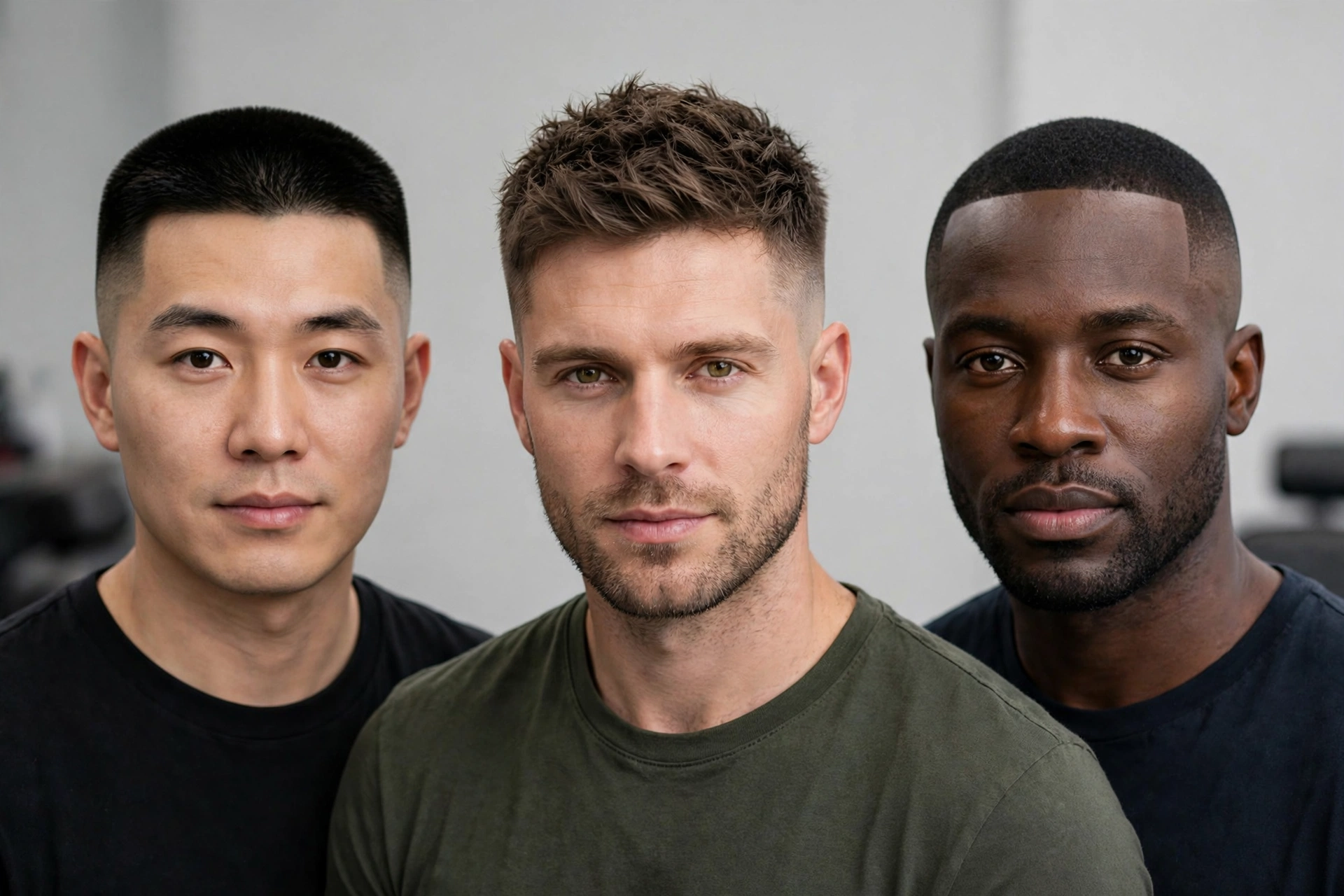
Fifteen versions of one haircut might sound like overkill — until you realize how different they look on real heads. The difference between a classic high and tight and a recon cut is the difference between a corporate lawyer and a cage fighter. Below are the fifteen variations that are actually getting requested in barbershops right now, each with the exact details to ask for. Save the photos, show your barber, and use the guard numbers as your starting point.
1. The Classic High and Tight
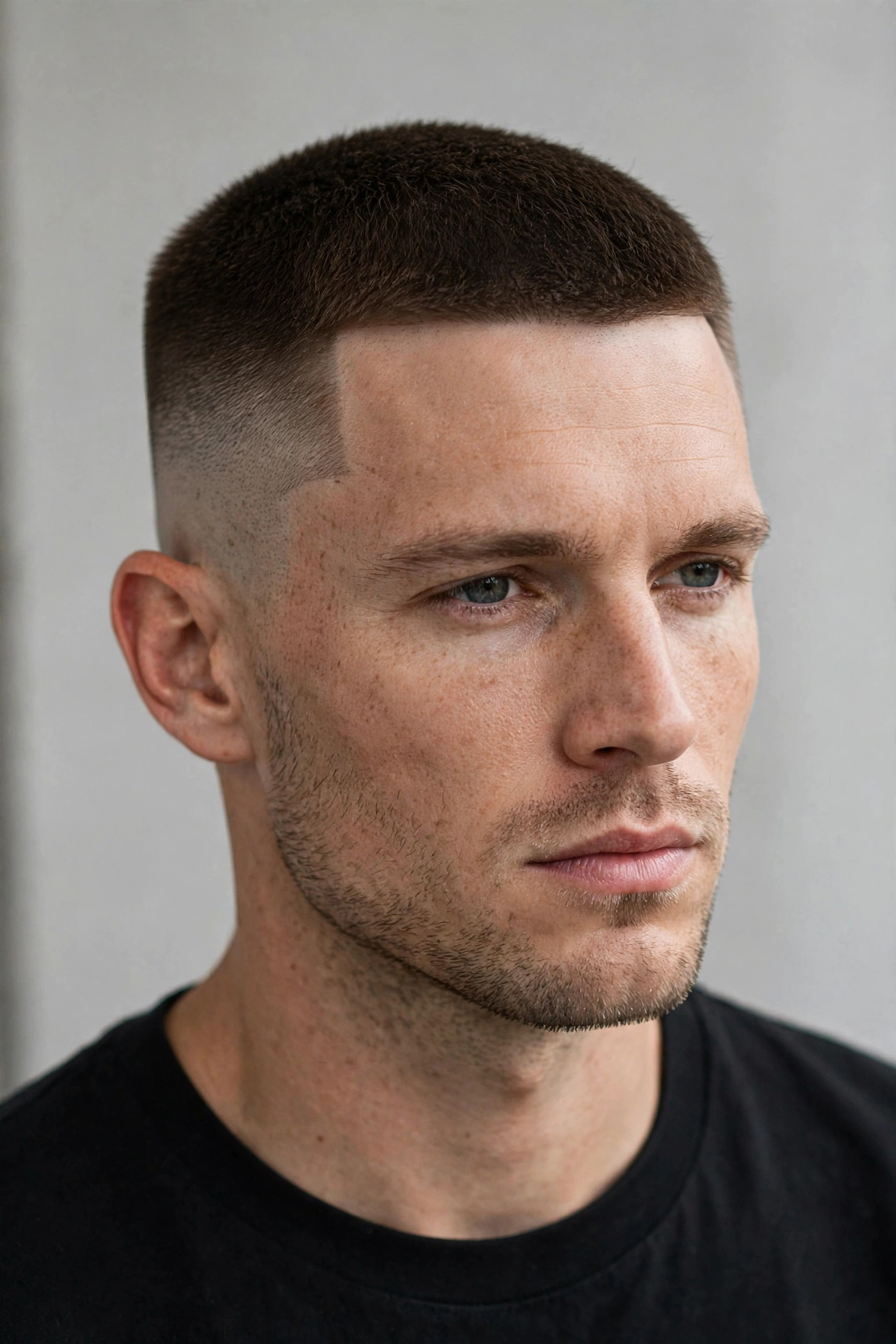
This is the original — the one that started it all. Sides faded from skin up to a #1, with the fade starting high above the temples, and the top clipped to a uniform #3 (about 10mm). No texture tricks, no styling games, no gimmicks. The top sits flat, the lines are clean, and the whole thing reads as crisp and military from every angle. If you have never worn a high and tight before, start here. It is the baseline every other version is measured against.
What to tell your barber: “High and tight — skin fade on the sides starting high, #3 on top, keep the top even and flat.” That is it. Ask for the fade to start roughly two finger-widths above the ear, and make sure the top corners are squared rather than rounded — that squared edge is what gives the classic its structured, disciplined look. Maintenance is dead simple: touch up the sides every two weeks and you will never look messy.
2. The High and Tight Recon

The recon is the high and tight turned all the way up. The sides go to full skin, the fade starts as high as physically possible, and the top is reduced to a narrow strip — sometimes only two to three inches wide — running front to back. Everything else is shaved. It is the most aggressive version on this list, born from actual Marine reconnaissance units, and it does not pretend to be subtle. On the right head, it looks absolutely lethal.
Be honest with yourself before asking for this one. The recon exposes everything — head shape, scars, hairline. It looks best on guys with a symmetrical head, a strong hairline, and the confidence to wear something this severe. Tell your barber: “Recon cut — skin on the sides as high as you can take it, leave a narrow strip on top, about two inches wide, clipped to a #2.” Grow the top slightly longer (a #3 or #4) if you want the strip to have a bit more presence rather than disappearing entirely.
3. Textured High and Tight
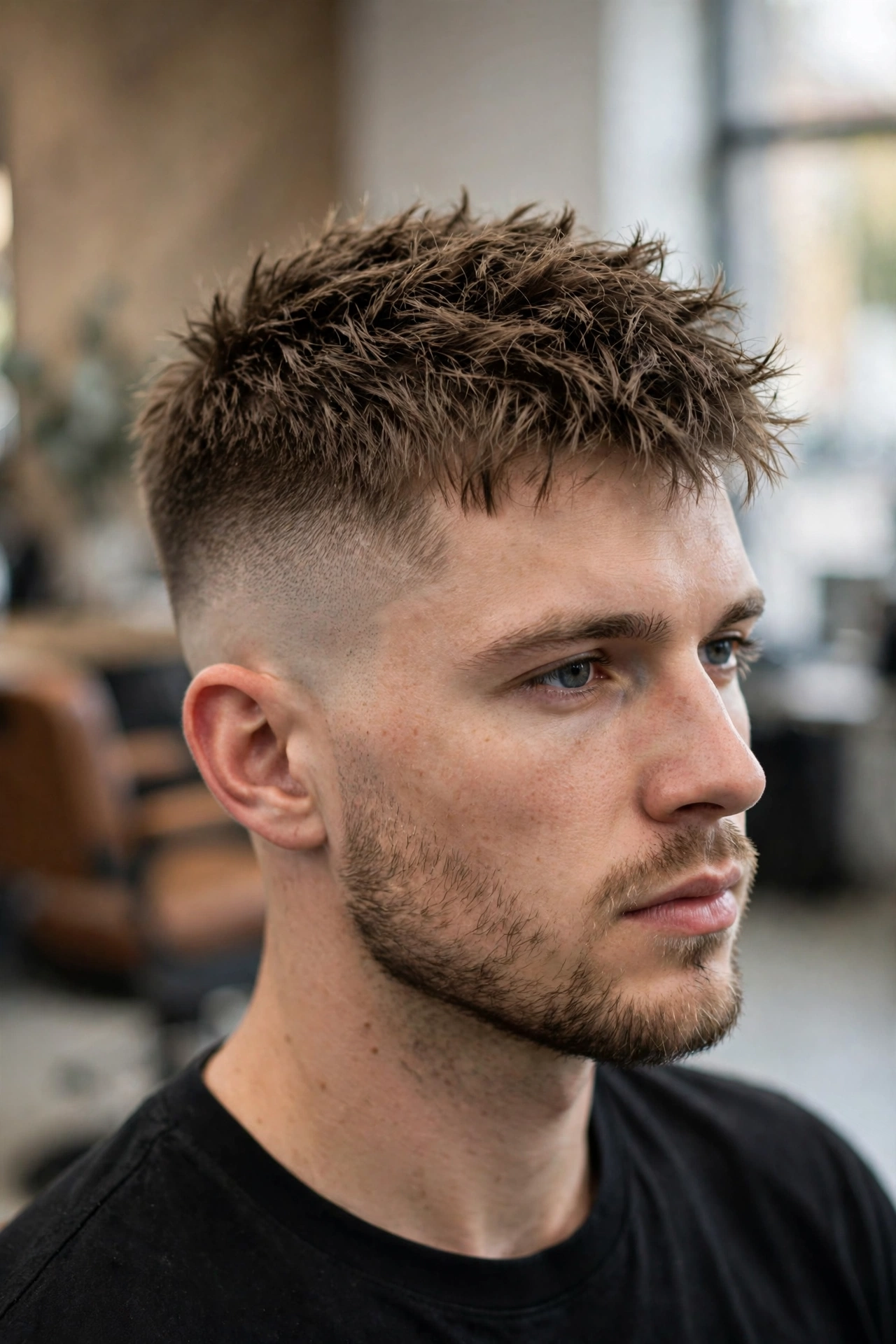
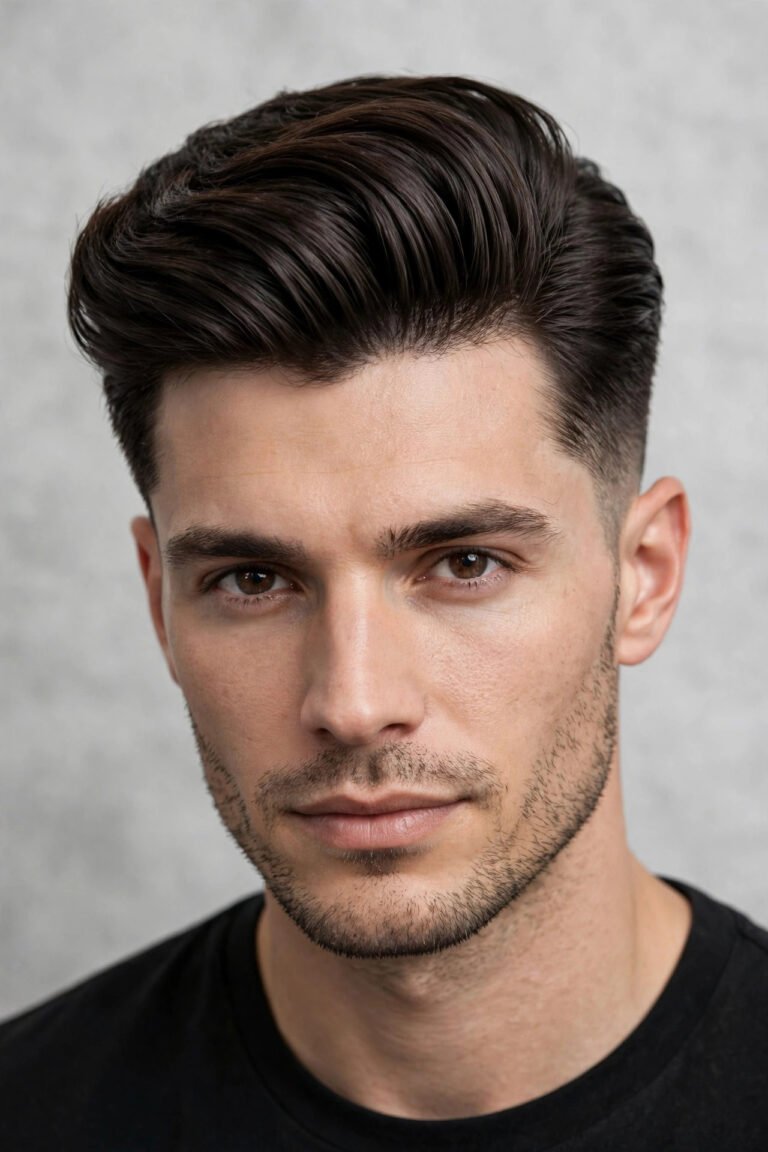
The 2026 update that made the high and tight go mainstream again. Everything about the silhouette is classic — high skin fade, tight sides — but the top is point-cut and texturized instead of clipped flat. That choppy texture catches light, adds movement, and makes the cut look deliberate rather than regulation. It is the version you see on guys who want the sharpness of a military cut without looking like they just left basic training.
Ask your barber for “a high and tight with a textured top — skin fade high on the sides, leave about an inch on top and point-cut it for texture.” Styling takes thirty seconds: a pea-sized amount of matte clay, worked through with your fingertips, pushing the hair slightly forward or in different directions for a broken-in look. Avoid shine products here — glossy pomade fights the whole point of the texture. This version also grows out more gracefully than the flat-top classic, buying you an extra week between cuts.
4. High and Tight with Beard
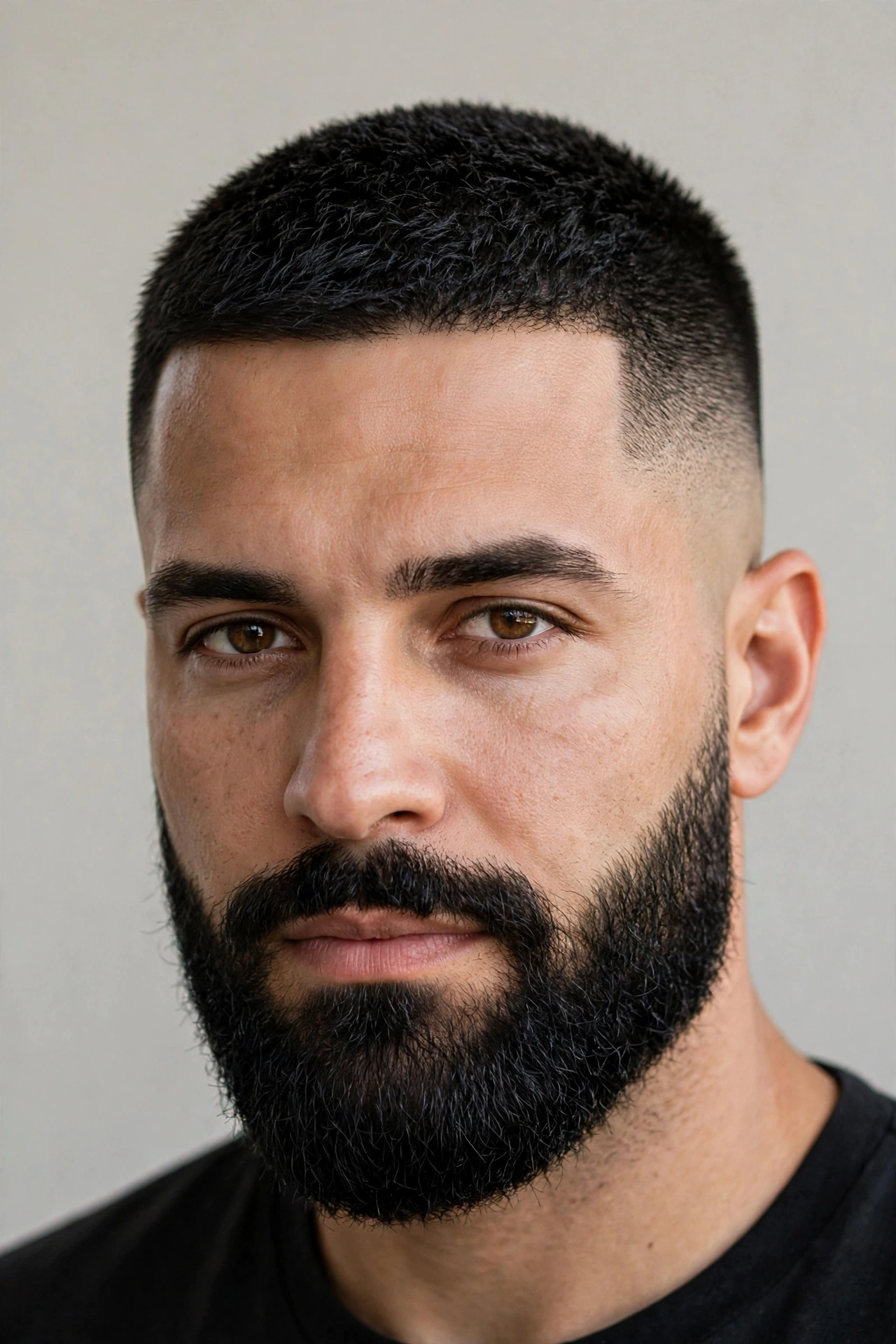
This might be the most popular combination in barbershops right now: the severe, minimal haircut on top paired with a full, well-shaped beard. The contrast does all the work — clean faded sides and short top against dense facial hair creates a balance that looks rugged and refined at the same time. The fade can even blend down into the beard, with the barber tapering the sideburn area so the haircut and beard connect as one continuous shape.
The critical detail is the transition. Tell your barber: “High and tight on top, skin fade, but blend the fade into my beard — don’t leave a hard gap at the sideburn.” The beard itself should be kept neat with defined cheek and neck lines; a wild, shapeless beard ruins the precision the haircut is selling. Keep the top on the shorter side (a #2 or #3) so the beard stays the dominant feature. This pairing is especially good for guys with rounder faces, because the beard adds length and structure where the short cut does not.
5. Curly Top High and Tight
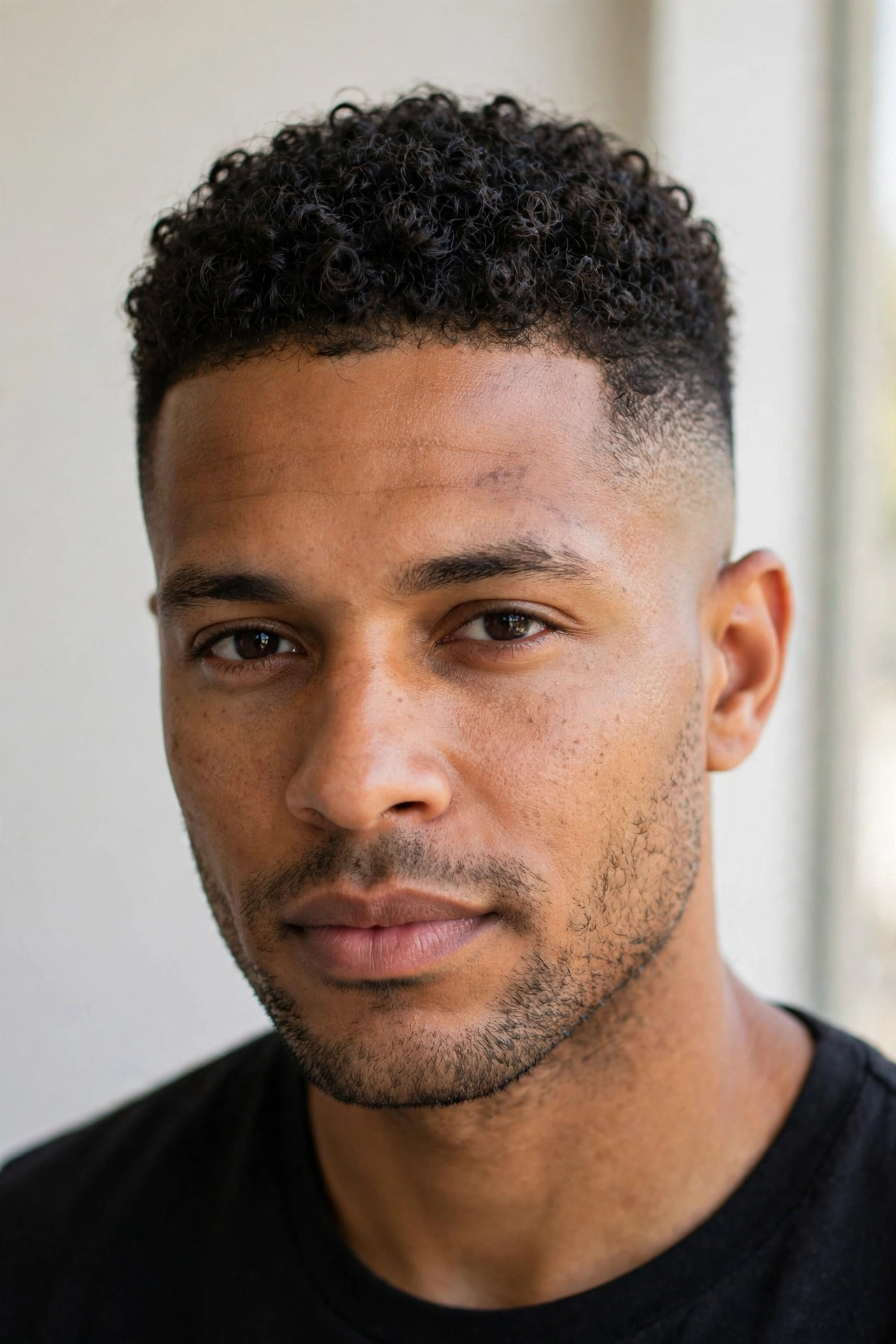
Curly hair and the high and tight are a better match than most guys expect. The faded sides remove all the bulk that makes curly hair hard to manage, while the top keeps enough length — usually three-quarters of an inch to an inch and a half — for the curls to actually form and show their pattern. The result is sharp on the sides, alive on top: structure plus personality in one cut.
Ask for “a high and tight with a curly top — skin fade high, leave about an inch to an inch and a half on top, and shape the curls with scissors, not clippers.” That last part matters — clippers crush curl definition, while scissor work preserves it. At home, keep it simple: a leave-in conditioner or light curl cream on damp hair, scrunch, and let it air dry. Do not brush it dry unless you want a halo of frizz. This version is a genuinely great option for guys with tight coils too, since the short top keeps everything neat without fighting the hair’s nature.
6. High and Tight with Skin Fade
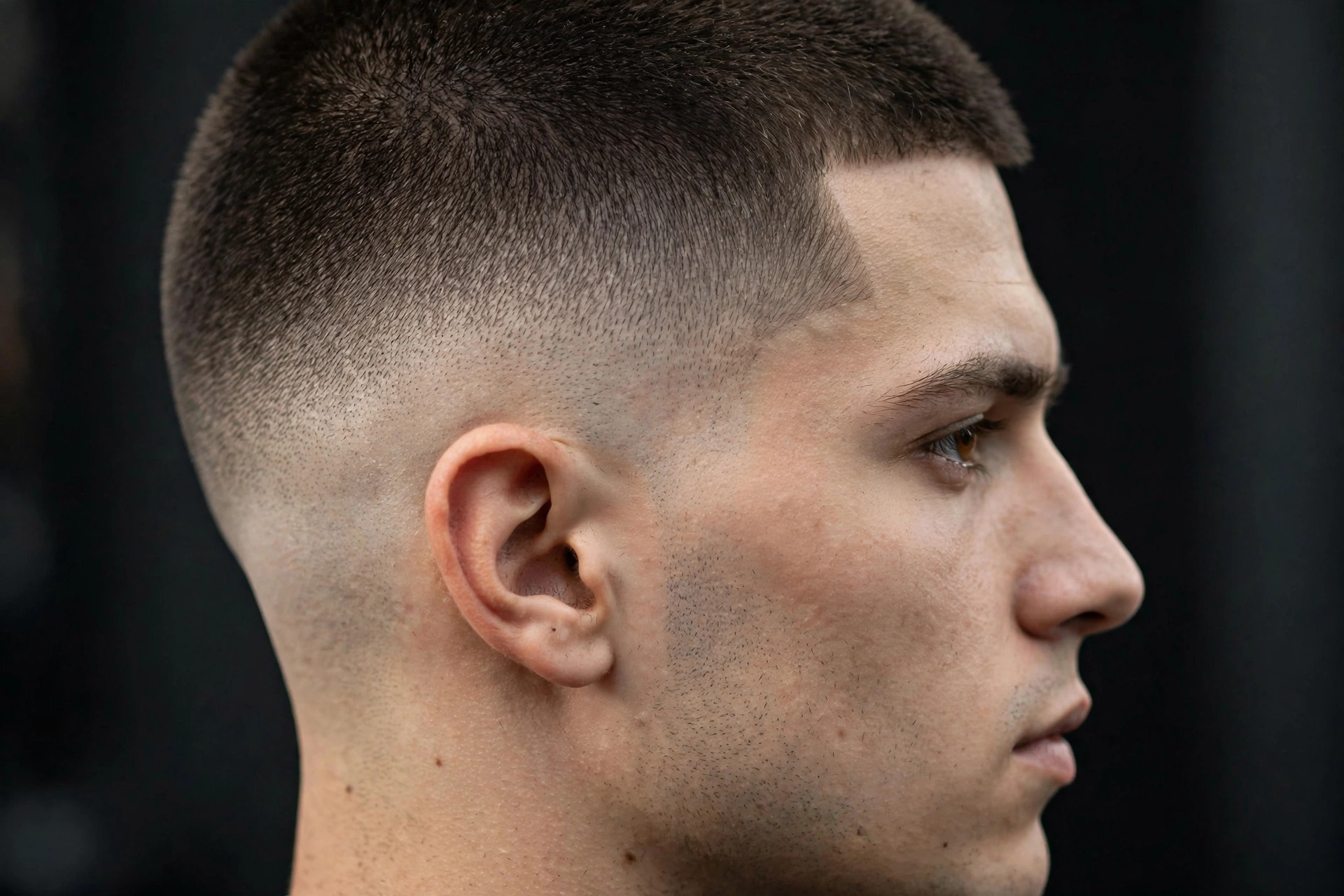
Technically every high and tight has a fade, but this version makes the skin fade the star. Instead of a quick blend, the barber builds a long, buttery gradient from bare skin at the bottom up through #0, #1, and #2 before the top begins. The fade itself becomes the visual centerpiece — smooth, seamless, almost airbrushed. It is the difference between a good cut and one that makes people stop and look twice.
This one lives or dies on barber skill, so choose your shop carefully and ask to see fade work in their portfolio first. Tell them: “High and tight, but I want a stretched skin fade — take the blend up gradually, no harsh lines.” Because the fade is the feature, keep the top simple and clean (a #3, flat and even) so nothing competes with the gradient. You will need touch-ups every 10 to 14 days to keep the blend looking melted; once the fade grows out past two weeks, the magic fades with it — literally.
7. Long Top High and Tight
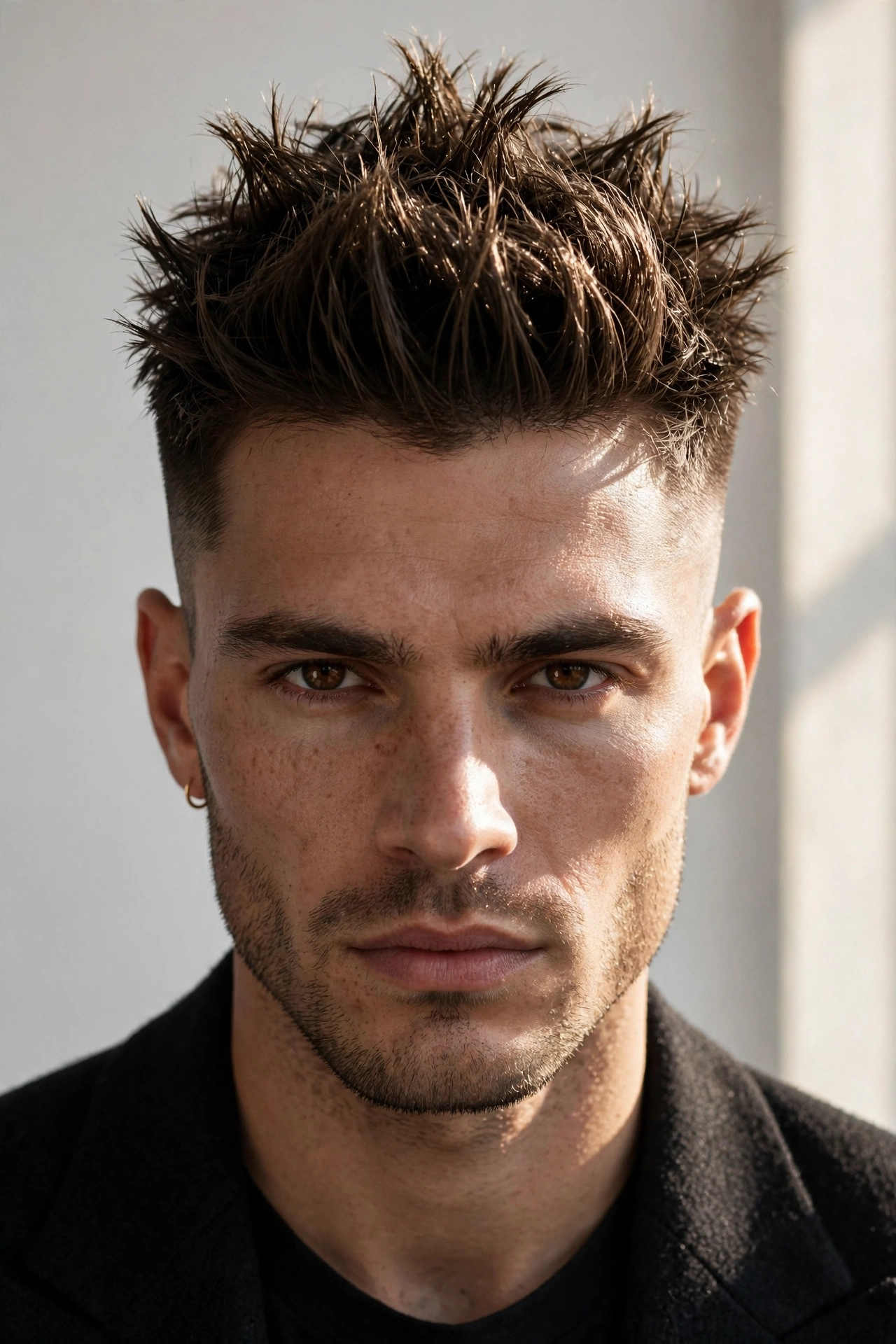
For guys who want the sharpness of a high and tight but are not ready to give up styling options, the long-top version keeps an inch and a half to two inches up top while the sides stay brutally short. That extra length opens up real possibilities: a slight quiff pushed up, a forward sweep, side-parted with a hard part line. The contrast between the long top and the skin-tight sides is dramatic — it is the boldest-looking version here that is still office-appropriate.
Tell your barber: “High and tight sides, skin fade high, but leave two inches on top with texture so I can style it.” You will need product daily — matte clay or paste for texture, something with a bit more hold if you want height. Blow-dry the top upward for five minutes in the morning and it will hold all day. Fair warning: the longer top means the grow-out contrast gets messy faster, so book your cuts every two to three weeks without fail. This is the highest-maintenance version on the list, but also the most versatile.
8. High and Tight with Hard Part
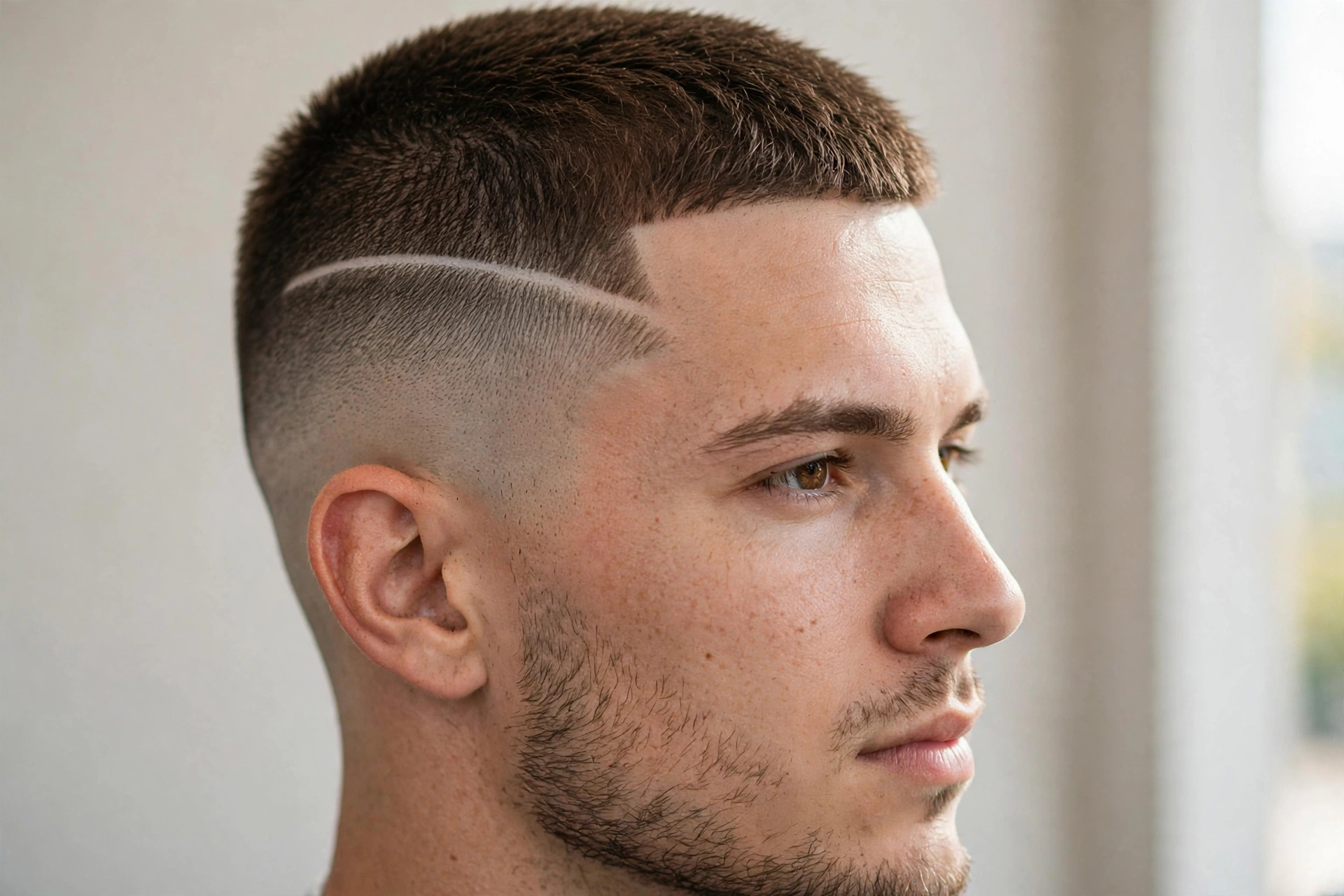
A hard part — a razor-shaved line separating the top from the sides — turns the high and tight into something with real attitude. The line is usually carved on one side where the top meets the fade, creating a graphic, architectural detail that draws the eye. It is a small addition that completely changes the cut’s personality, pushing it from military regulation toward streetwear sharp.
Ask for “a high and tight with a hard part on the left” (or right — match your natural part if you have one). The barber will shave the line with a straight razor or trimmer after the fade is done. Keep the top a touch longer than the classic — a #3 or #4 — so the part line has something to frame. Maintenance note: the hard part grows out in about a week to ten days, so either learn to re-carve it with a trimmer at home or accept more frequent barber visits. It is a commitment, but the visual payoff is enormous for the effort.
9. Wavy Top High and Tight

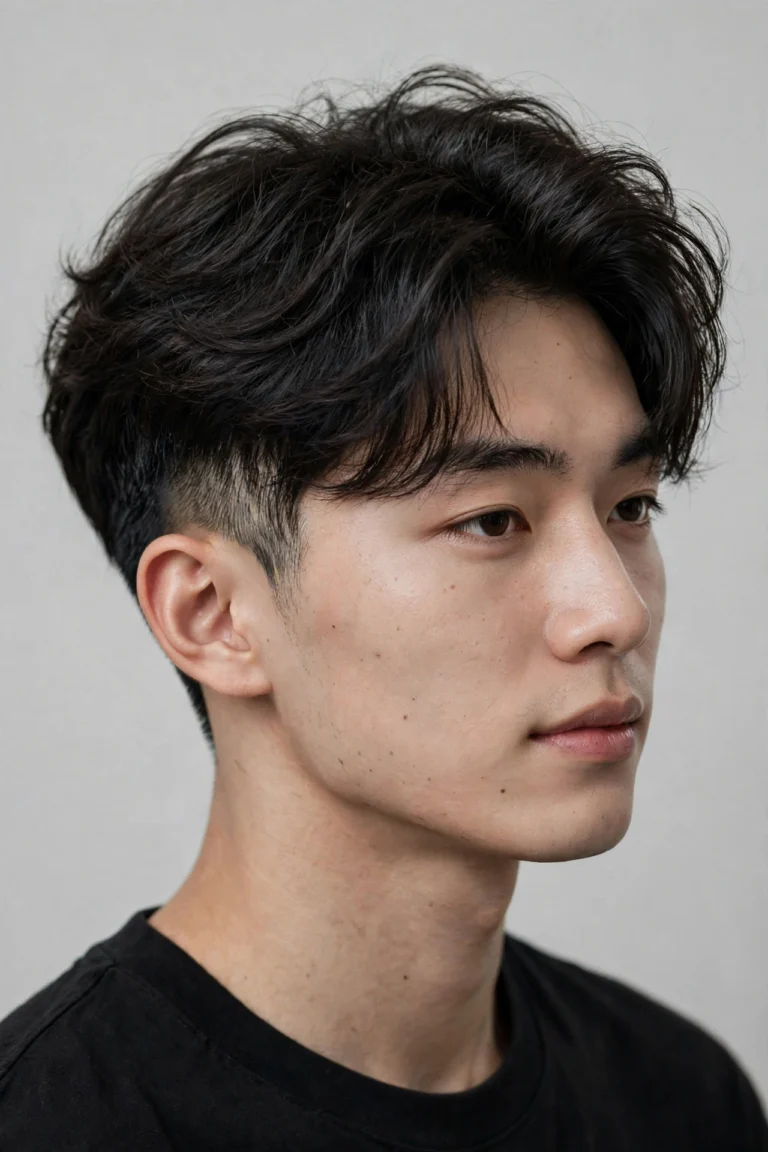
Wavy hair sits in the sweet spot for this cut — enough texture to look interesting, not so much curl that it needs special handling. The high and tight tames the sides completely while the top keeps about an inch of wave, which falls naturally into soft, broken shapes. It looks effortless in a way the flat-top classic never does, and it suits guys whose hair has natural movement they have been fighting with longer styles.
Tell your barber: “High and tight, skin fade on the sides, leave about an inch on top and layer it lightly so the wave sits naturally.” Work with the wave, not against it — have the barber cut it dry or slightly damp so they can see how the waves actually fall. A tiny amount of sea-salt spray or light matte paste scrunched in on damp hair is all the styling this needs. This version is forgiving as it grows out, too, since the waves disguise the transition between the top and the fading sides.
10. High and Tight with Lineup
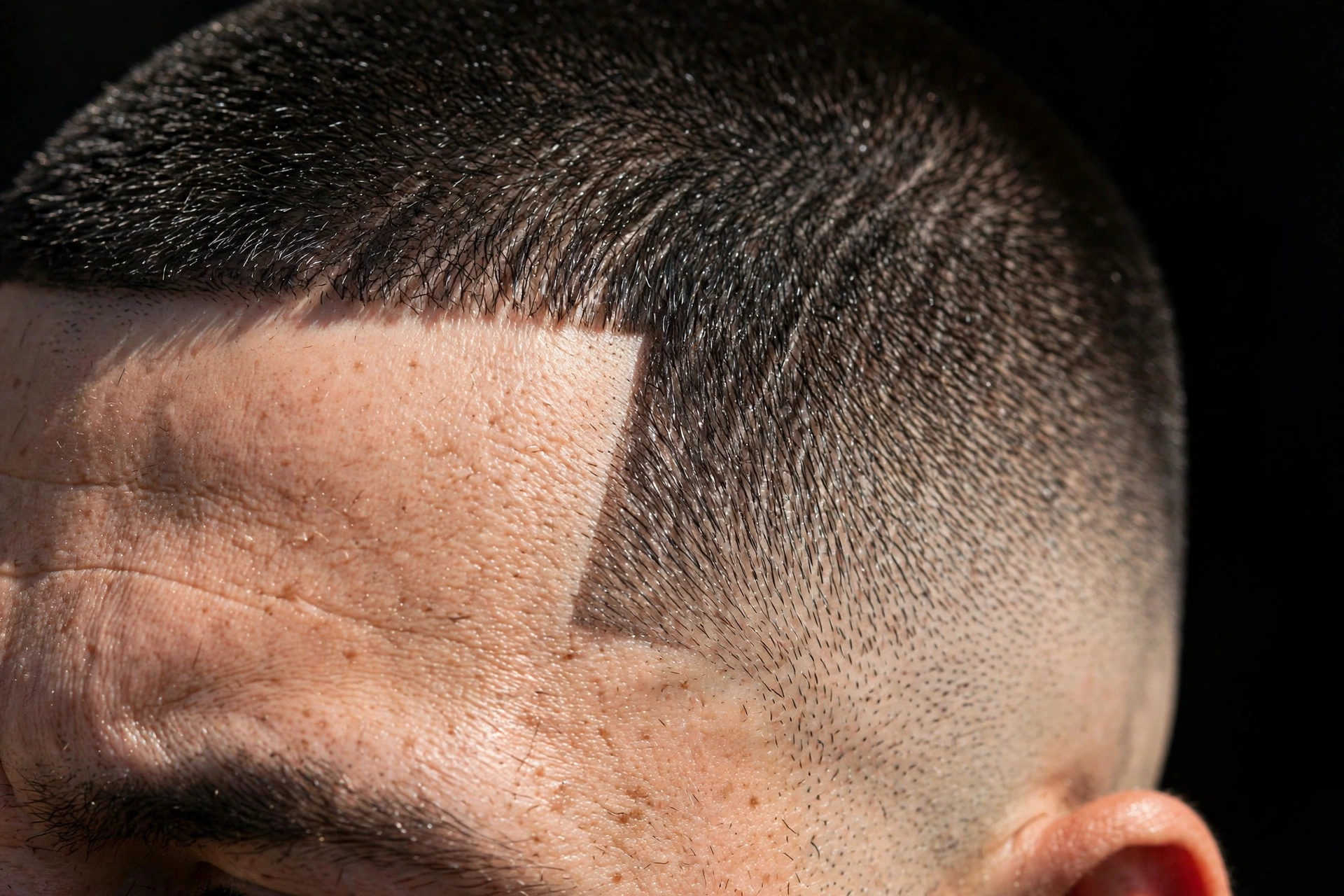
The lineup — that razor-crisp edging of the hairline, temples, and forehead — is what separates a fresh cut from a great one, and pairing it with a high and tight is a power move. The geometric precision of the lineup echoes the cut’s military DNA: every edge is intentional, every line is straight. On darker hair especially, a fresh lineup against a skin fade looks almost drawn on — impossibly clean.
Ask your barber specifically: “High and tight, and give me a sharp lineup — square the temples, clean up the hairline, straight razor finish.” Do not push the hairline back; a good barber enhances your natural hairline rather than reshaping it. The lineup is the first thing to blur as hair grows, so if you want to keep it razor-sharp, learn to touch up the edges yourself with a trimmer between visits — just the neckline and sideburns, and be conservative. One slip with a trimmer on your hairline is a week of regret.
11. Buzzed High and Tight
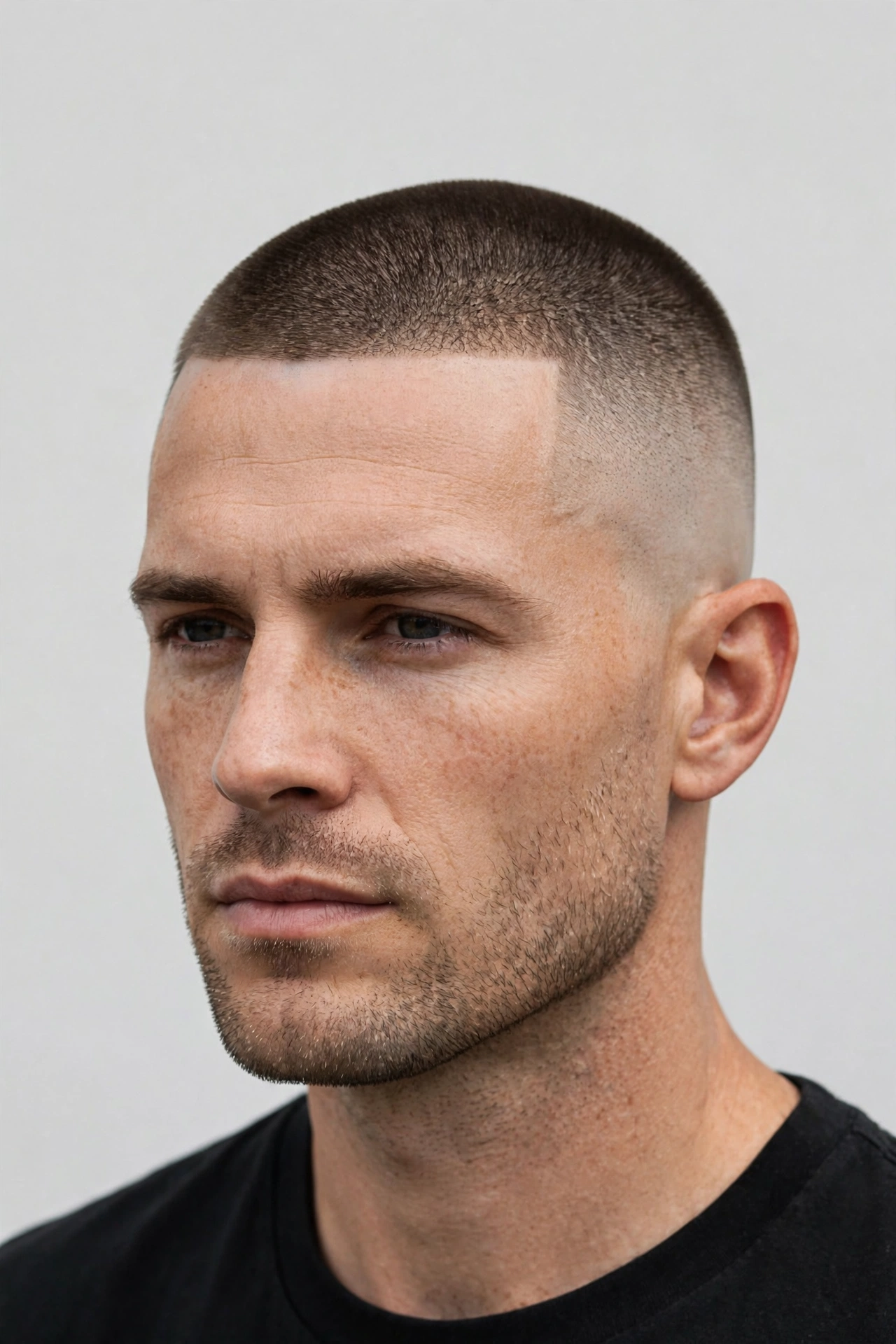
This is the minimalist’s high and tight — the top taken down to a #1 or #2, barely longer than the faded sides. It is one step above a full buzz cut but keeps the signature high-and-tight DNA: the fade still starts high, and there is still a visible (if subtle) distinction between the top and the sides. Guys who want maximum simplicity with a touch more shape than a straight buzz choose this.
Tell your barber: “High and tight, #1 on the sides faded high, #2 on top.” There is essentially zero styling — towel dry and walk out. It is the best version for thinning hair, too, because the ultra-short top removes the contrast between thinning areas and thicker hair that longer cuts expose. The tradeoff is frequency: at this length, two weeks of growth changes the whole silhouette, so plan on cuts every 10 to 14 days. Many guys buy their own clippers for this version and touch up at home.
12. High and Tight with Drop Fade
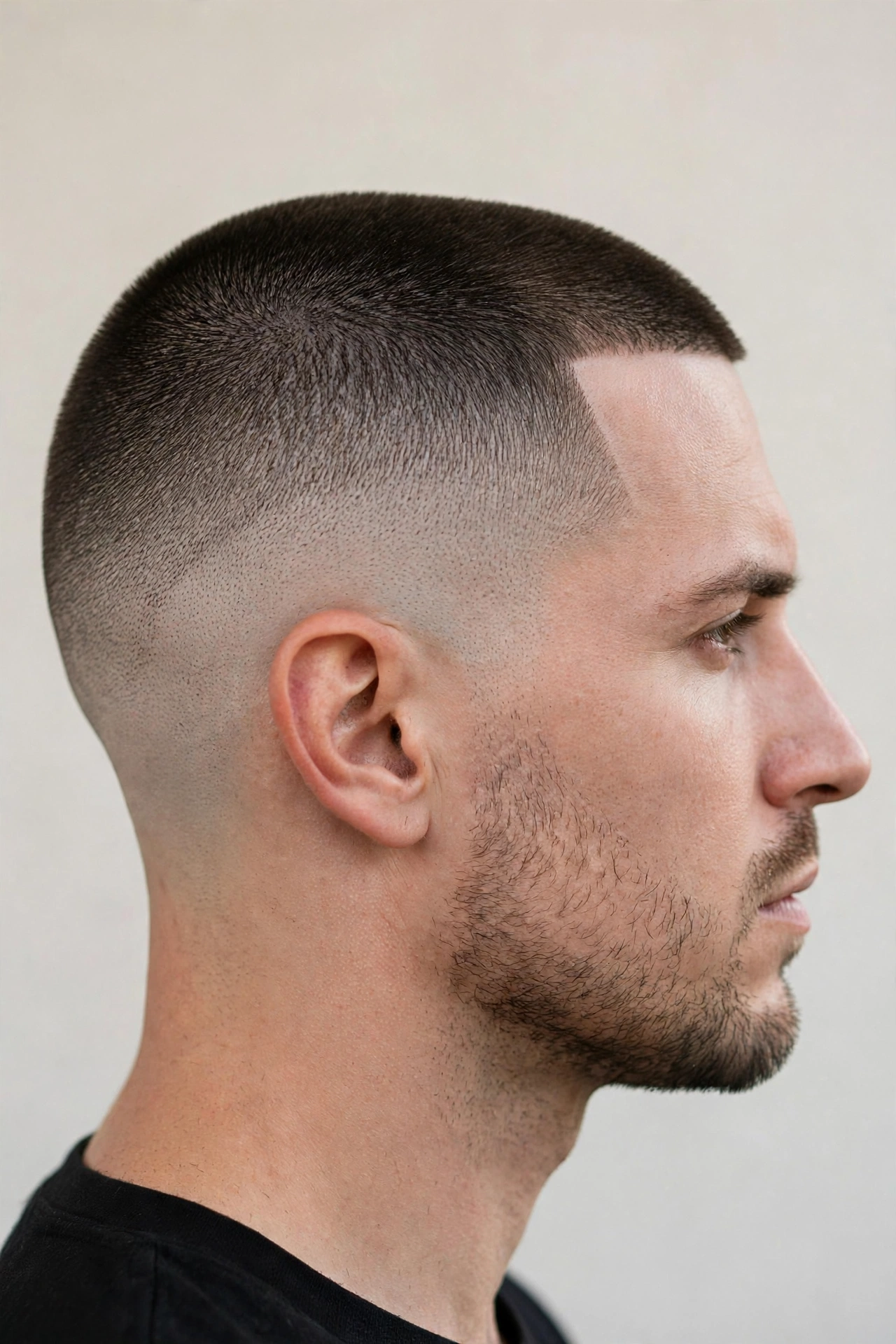
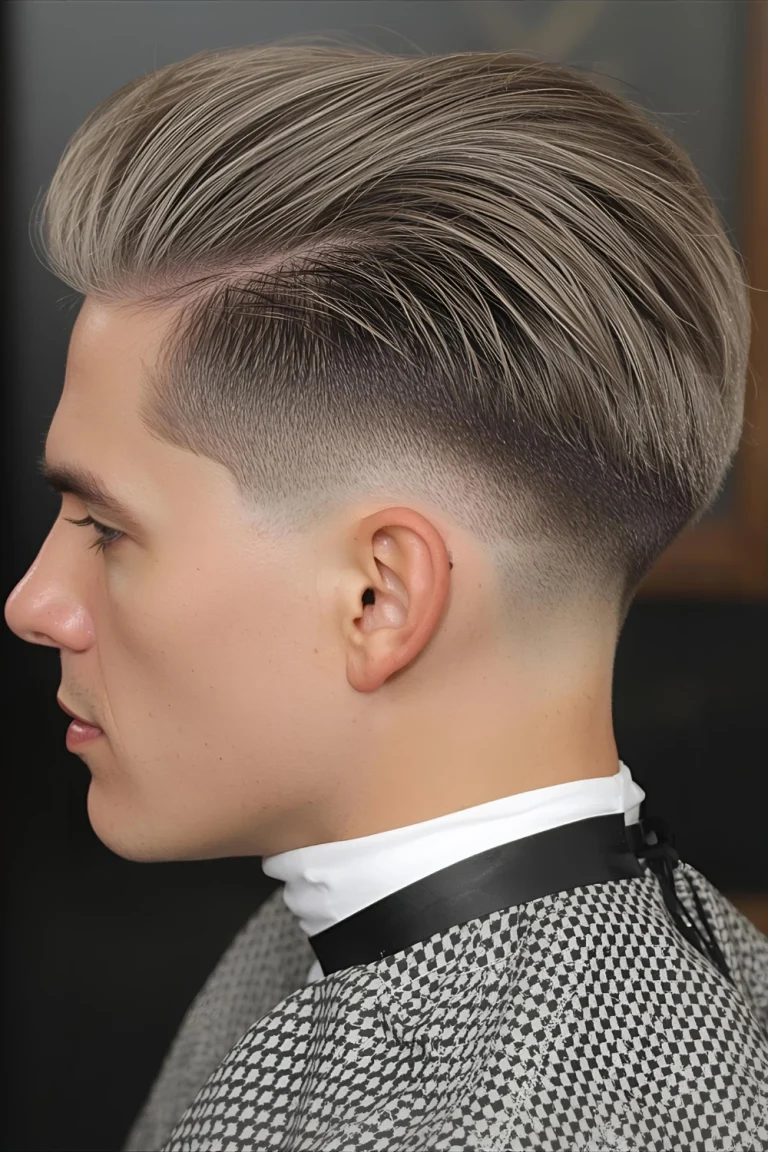
The drop fade variation keeps the “high” of the high and tight at the temples but lets the fade line drop down in an arc behind the ear as it travels toward the back of the head. This curved fade line follows the natural shape of the skull, which looks more organic and flattering on many head shapes than a straight-across high fade. It is a subtle technical change that makes the cut feel more custom and less regulation.
Ask for “a high and tight with a drop fade — keep it high at the temples, drop the fade line behind the ear.” This works particularly well for guys with a prominent occipital bone (the bump at the back of the head) or anyone whose straight high fade tends to look boxy from behind. The top can be any length you like — the drop fade pairs with everything from a #2 flat top to a textured inch. Because the fade shape is doing the visual work, keep the top simple and let the arc be the detail people notice.
13. High and Tight with Design
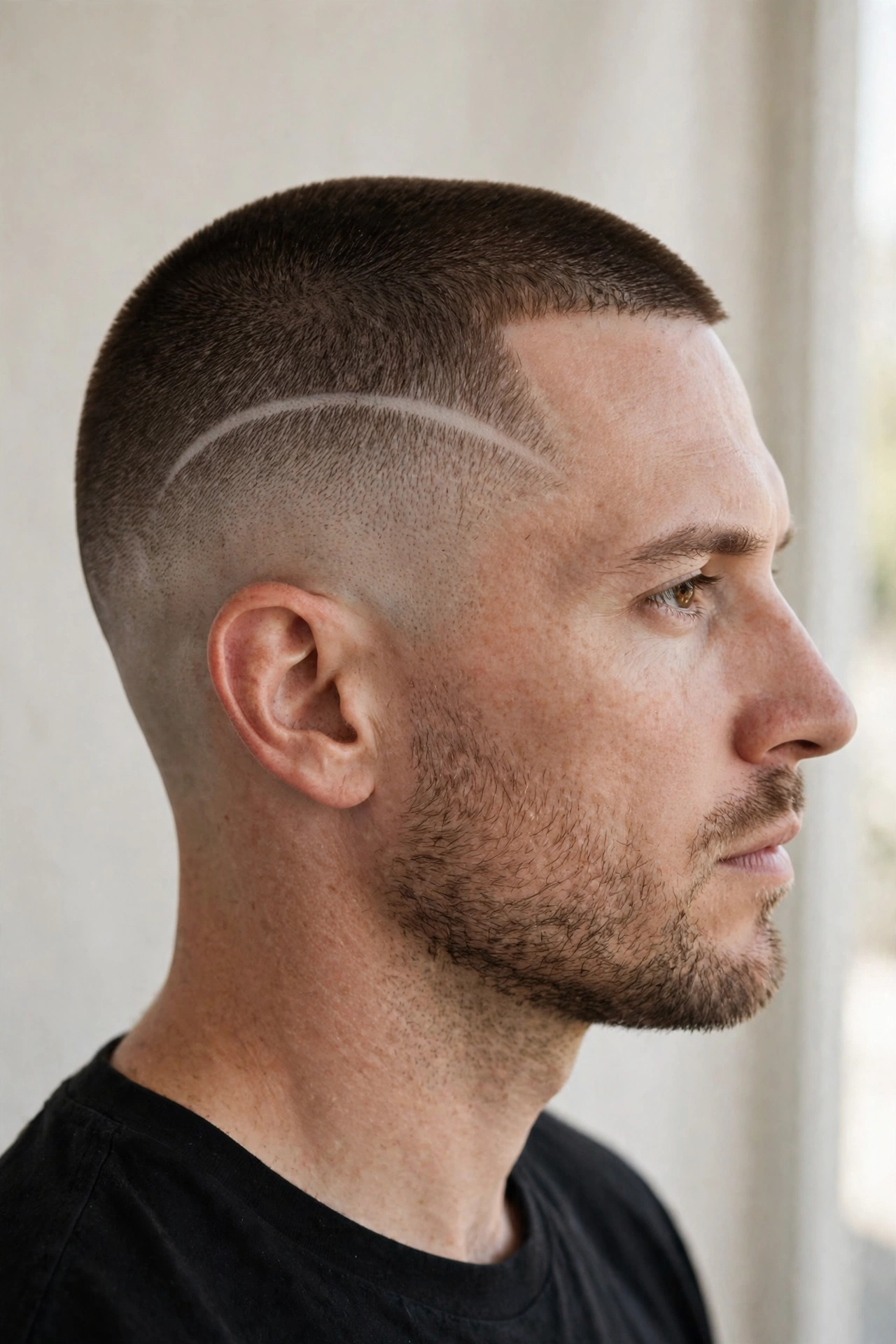
Hair designs — shaved lines, geometric patterns, or subtle etchings in the faded area — give the high and tight a creative edge without changing the cut itself. The designs live in the fade zone, usually as one or two clean lines arcing through the blend, or a small geometric shape behind the ear. Done tastefully, it reads as confident and artistic. Done excessively, it reads as a cry for attention — so restraint is the whole game here.
Tell your barber: “High and tight, skin fade, and carve a single design line through the fade on one side.” Start with something simple — a curved line following the fade’s arc is the classic choice. Keep the rest of the cut clean and classic so the design is an accent, not the main event. Designs grow out fast (about a week before they blur), so this is a special-occasion version rather than a daily driver — great before a trip, an event, or just when you want to feel like the sharpest guy in the room for a few days.
14. Mature High and Tight (for Thinning Hair)

Here is a secret older guys know: the high and tight is one of the best haircuts for thinning hair, period. Short sides eliminate the wispy, see-through look that longer cuts expose. A short, even top minimizes the contrast between thinning areas and the rest. And the overall sharpness of the cut projects confidence — which matters more than hair density at any age. Some of the best-looking high and tights in any barbershop are on men over fifty.
Ask for “a high and tight adapted for thinning hair — keep the top short but not scalp-bare, a #3 or #4, and keep the fade from going too high so there’s no harsh line exposing the thinning.” A slightly lower fade start and a touch more length on top create the illusion of density. Skip heavy styling products that clump hair together and expose scalp — a light matte fiber or nothing at all is better. And consider the beard pairing from idea #4: facial hair draws the eye and balances the look beautifully when the top is thinning.
15. The Modern Executive High and Tight

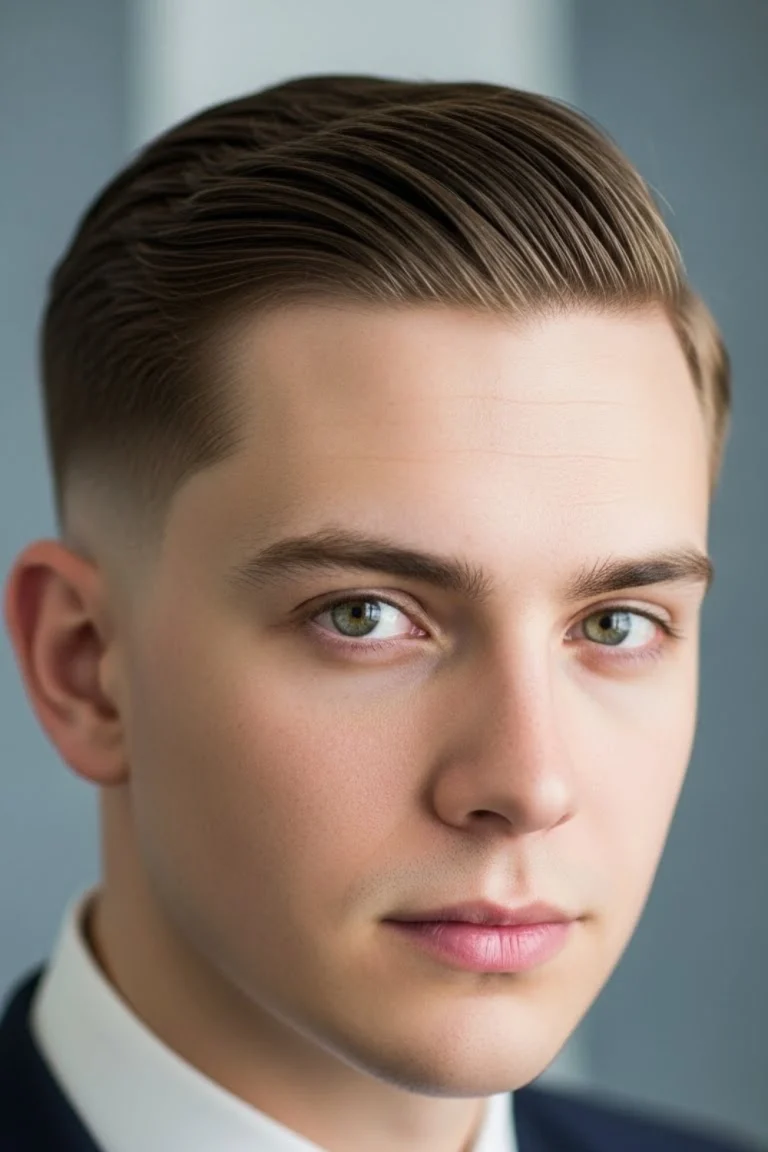
The boardroom version. Everything is softened just slightly — the fade starts a touch lower than the classic (still high, but not severe), the top is a #4 with light texture, and the edges are immaculate. It keeps the high and tight’s DNA of sharpness and discipline but dials back the aggression so it reads as “polished professional” rather than “fresh out of boot camp.” This is the version for guys who love the cut but work somewhere with a dress code.
Tell your barber: “A high and tight but softened for the office — high fade but not extreme, #4 on top with light texture, everything clean.” The key is in the finishing: a neat side sweep of the top with a touch of matte paste, crisp but not wet. Pair it with a clean shave or very neat stubble — the executive version does not do rugged. This is quietly becoming one of the most requested office haircuts of 2026, because it looks intentional and sharp in every meeting, on every video call, with about two minutes of morning effort.
How to Ask Your Barber for a High and Tight
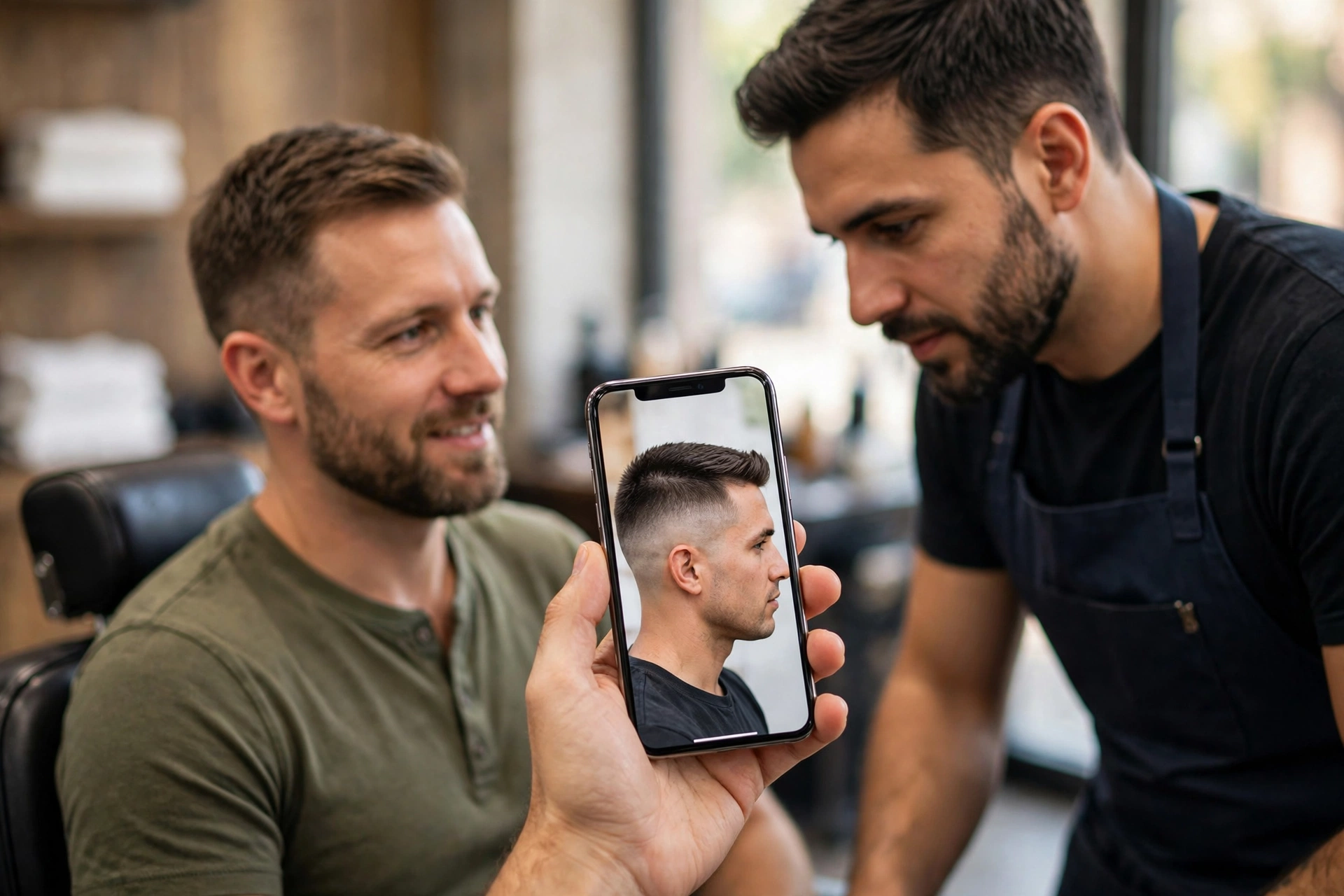
Walking in and saying “high and tight” is a start, but it is not enough — the term covers everything from a #1 buzz to a two-inch textured top, and your barber’s default version might not be yours. The fix is simple: bring a photo. Save two or three pictures of the exact version you want (the ideas above give you fifteen to choose from) and show them before the clippers come out. A thirty-second photo conversation prevents a three-week grow-out regret.
Then speak the language. Say “high and tight,” then specify three things: the fade height (“skin fade starting high, about two fingers above the ear”), the side length (“#0 or #1 on the sides”), and the top length (“#3 on top” or “an inch, textured with scissors”). Mention the details that matter to you — squared or rounded top corners, hard part or none, lineup sharpness, how the sideburns should blend. Barbers are not mind readers; the more specific you are, the closer the result.
Finally, ask questions instead of assuming. “How often should I come back to keep this looking fresh?” is always worth asking — the answer is usually every two to three weeks for a high and tight. And if something looks off mid-cut, speak up then, not after. A good barber would rather adjust at the halfway point than hear “it’s fine” through gritted teeth. You are paying for the cut; the consultation is part of what you are buying.
How to Maintain a High and Tight at Home
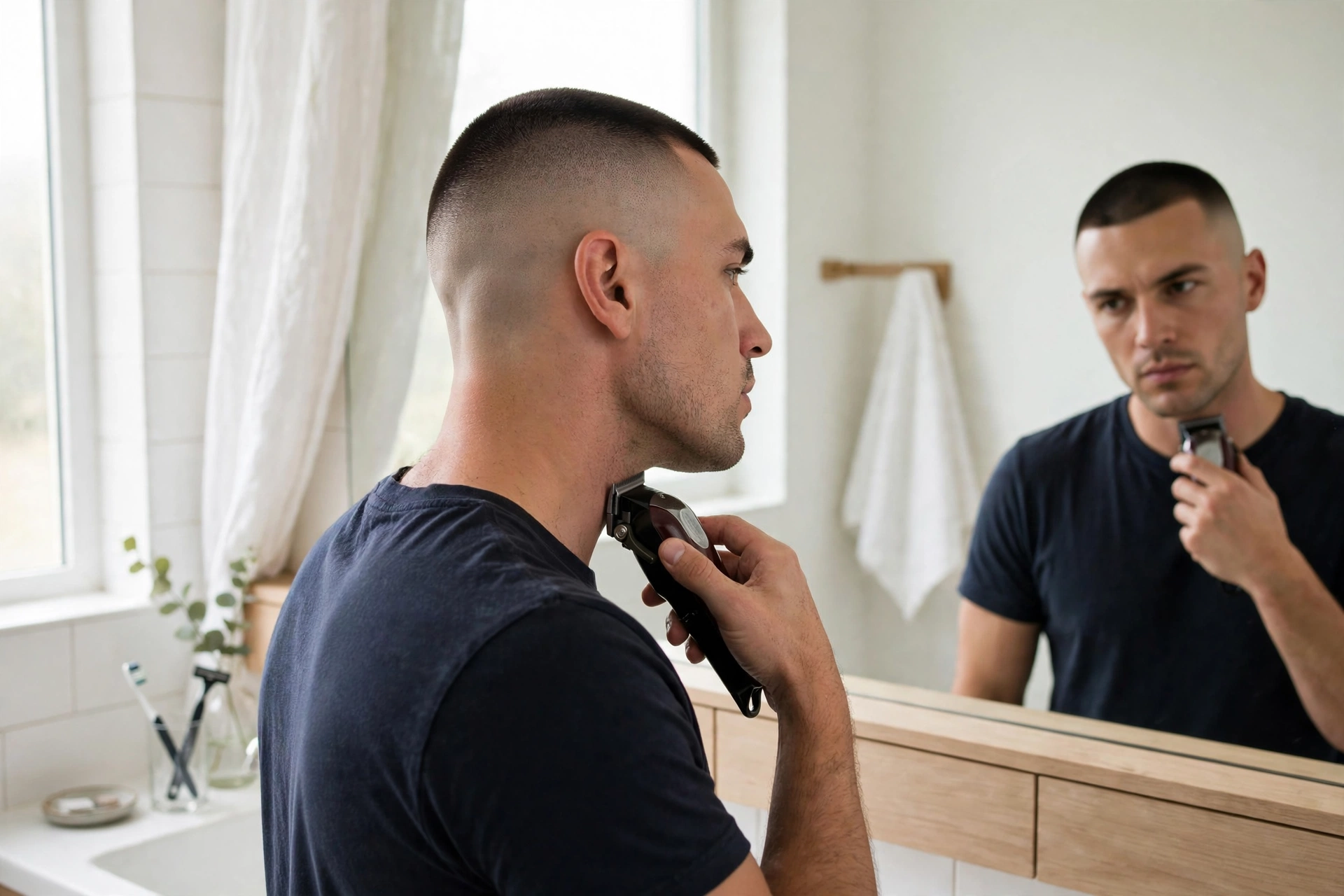
The high and tight is famously low-maintenance, but “low” is not “zero.” The daily routine is genuinely minimal: wash with a normal shampoo two to three times a week (daily washing strips the short hair and irritates the faded skin), towel dry, and if your version has any length on top, work a pea-sized amount of matte clay or paste through with your fingertips. That is the whole morning routine. Ninety seconds, tops.
The real maintenance is the edges. The fade and the neckline are what make a high and tight look sharp, and they blur within ten to fourteen days. A basic pair of clippers at home lets you clean up the neckline and the area around the ears between barber visits — just be conservative and stick to what you can see in the mirror. Do not attempt to re-fade the sides yourself unless you actually know what you are doing; a botched home fade is worse than a slightly grown-out professional one.
Product-wise, keep it simple: one matte styling product for the top (clay for texture, paste for smoother styles), and that is honestly enough. Skip the shiny pomades and gels — gloss fights the military aesthetic and makes short hair look greasy by midday. If your scalp gets dry or irritated from the close fading, a light, fragrance-free moisturizer on the faded areas after washing keeps the skin comfortable and the fade looking clean.
Best Face Shapes for the High and Tight
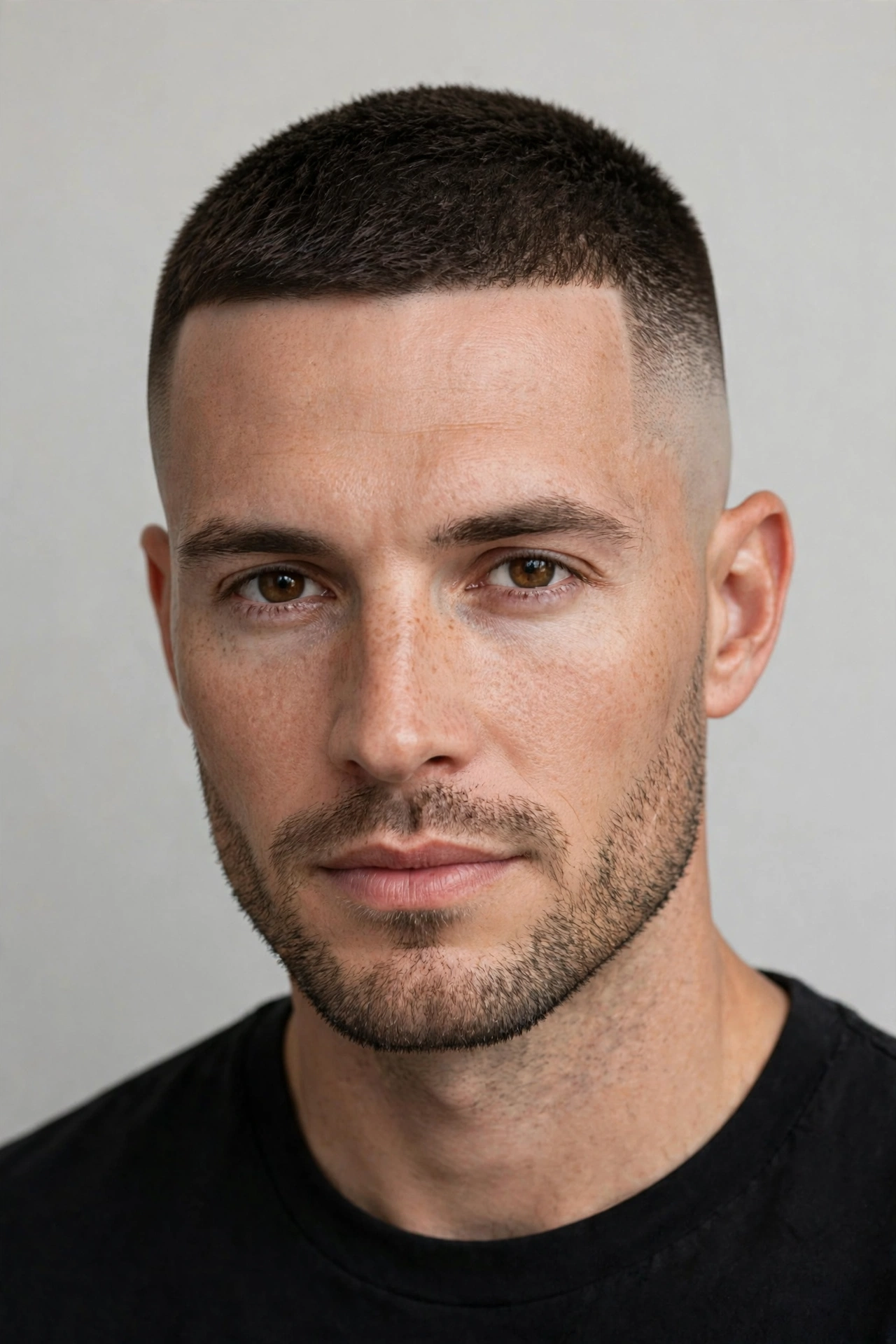
The good news: the high and tight is one of the most universally flattering short cuts for men. The better news: small adjustments make it work even better for your specific face. Oval faces — the most versatile shape — can wear any version on this list without modification. The cut’s natural structure complements balanced proportions perfectly, so if your face is oval, just pick the version you like best and go.
Square and rectangular faces are a natural match too. The high and tight’s strong lines echo a strong jaw, and the short sides keep the overall silhouette tight and masculine. Round faces benefit enormously — the height on top (even a little) and the tight sides create the illusion of length, slimming the face visually. This is one of the best cuts a round-faced guy can choose. For round faces specifically, favor versions with some top length (ideas #3, #7, or #9) rather than the buzzed versions.
Diamond and heart-shaped faces need one tweak: keep a bit more width and texture on top to balance a narrower chin or wider forehead. The textured and wavy versions work well here. Oblong faces should avoid adding too much height on top — the classic or buzzed versions, kept flat, prevent the face from looking longer. And if you are unsure about your face shape, the beard-paired version (#4) is the great equalizer: facial hair reshapes the lower face and makes almost any version work.
High and Tight Upkeep Guide
Here is the honest schedule: a high and tight looks its best for about two weeks, acceptable for three, and tired after four. The fade is the clock — once the blend grows out and the crisp lines soften, the cut loses the sharpness that defines it. Most guys who wear this cut well are in the barber’s chair every two to three weeks. It is a fifteen-minute appointment, not an hour-long session, so the time cost is small.
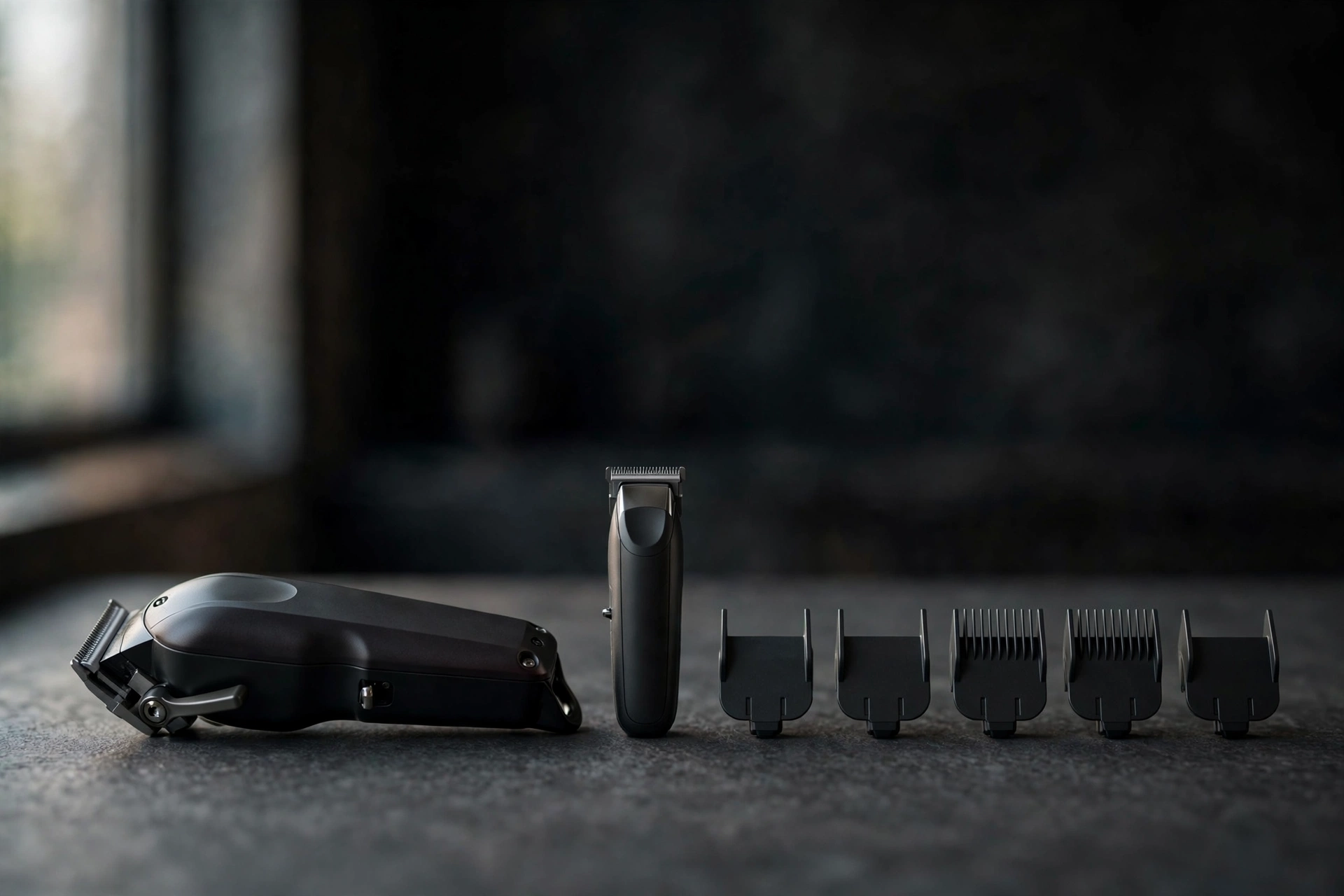
Budget-wise, that frequency adds up, which is why many high-and-tight wearers invest in home tools. A quality pair of clippers ($30–$60 for a solid home set) pays for itself in two skipped appointments. Use them for neckline cleanups and around-the-ear tidying between visits — not full fades. A trimmer with a T-blade is ideal for edge work. Keep the blades oiled and clean; dull blades pull hair and irritate the skin on close fades.
Seasonal notes: in summer, the high and tight is unbeatable — cool, sweat-friendly, and it shows off a tan. Go shorter on top during hot months. In winter, you might let the top grow slightly longer for a bit of insulation and switch to a moisturizing shampoo since indoor heating dries out the closely-faded scalp. And one universal rule: sunscreen on the faded sides and the back of the neck if you spend time outdoors. Freshly faded skin burns fast, and a sunburned fade line is a painful, peeling reminder to protect it.
Frequently Asked Questions

How long does a high and tight last before it needs a trim?
About two to three weeks for the sharp look. The fade starts to blur around day ten to fourteen, and by week four the cut has lost its definition. If you want it looking crisp constantly, book every two weeks. If you are more relaxed about it, three weeks is the practical maximum before it starts looking like a different haircut.
What is the difference between a high and tight and a crew cut?
The high and tight takes the sides much shorter and the fade much higher, with minimal hair on top — it is all about extreme contrast. A crew cut keeps noticeably more length on top (usually an inch or more, often styled forward or up) with a more gradual taper on the sides. Think of the crew cut as the high and tight’s softer, more conservative cousin.
Will a high and tight suit me if my hair is thinning?
Yes — it is actually one of the best choices for thinning hair. The very short sides remove the contrast between thin and thick areas, and a short even top looks fuller than longer hair that separates and exposes scalp. Go for the mature version (idea #14): keep the top a #3 or #4 rather than scalp-short, and avoid heavy products that clump hair together.
Can I get a high and tight with curly or coily hair?
Absolutely — the curly top version (idea #5) is made for it. The faded sides handle the bulk while the top keeps enough length for curl definition. The key is scissor work on top rather than clippers, and a light curl cream instead of heavy product. It is low-effort, high-impact, and one of the sharpest ways to wear natural texture.
How do I ask for a high and tight without sounding clueless?
Bring a photo and use three specifics: fade height (“skin fade, starting high”), side length (“#1 on the sides”), and top length (“#3 on top, flat” or “an inch, textured”). That covers everything your barber needs. Showing a picture of the exact version you want eliminates ninety percent of miscommunication — barbers prefer it.
Is the high and tight appropriate for a professional office job?
Yes, especially the softened versions. The classic and the modern executive version (idea #15) are clean, disciplined, and conservative enough for any office. Avoid the recon and the hair-design versions at work unless your workplace is creative — those read as aggressive or artistic rather than corporate. When in doubt, the executive version is the safe pick that still looks sharp.
Final Thoughts
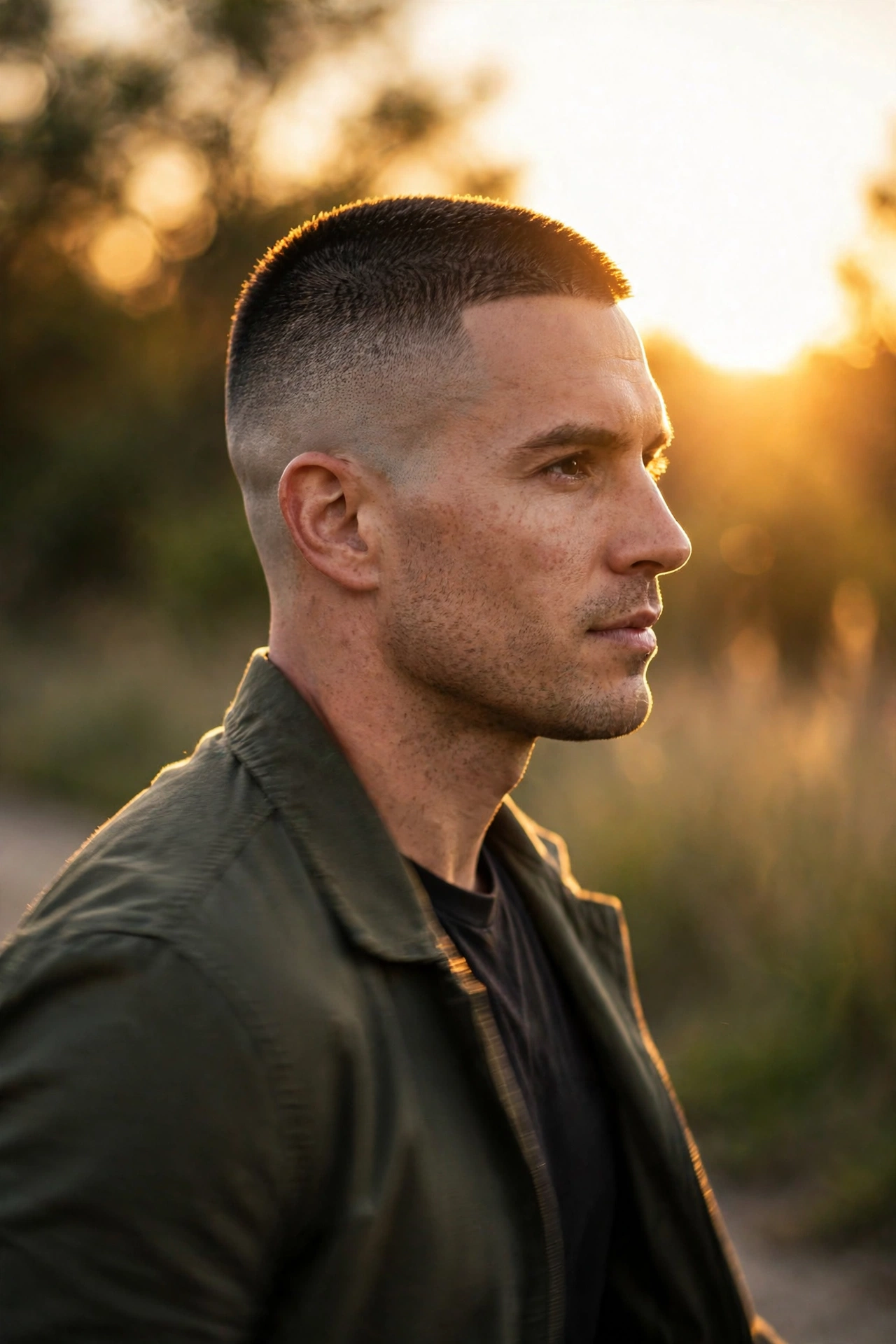
The high and tight endures because it asks so little and gives so much. Little time in the morning, little money on product, little fuss — and in return, you get a haircut that looks deliberate, disciplined, and sharp every single day. In 2026, with fifteen distinct versions to choose from, there is genuinely a high and tight for every guy: the purist’s classic, the athlete’s recon, the creative’s textured top, the professional’s executive cut.
Pick the version that fits your life, bring the photo to your barber, and commit to the two-week rhythm that keeps it looking its best. The first cut is the experiment; the second one — when your barber knows exactly what you want — is when it really clicks. Here is to sharp lines and zero bad hair days.
Conclusion
The high and tight is military precision at its finest — and in 2026, it’s sharper than ever. With faded sides climbing high and a short, clean top, it’s the ultimate low-maintenance power cut. It suits most face shapes, especially round faces that benefit from the added height.
Maintain the crisp fade with barber visits every two to three weeks; the top needs almost nothing. In 2026, the high and tight remains the definitive no-nonsense haircut for men who mean business.