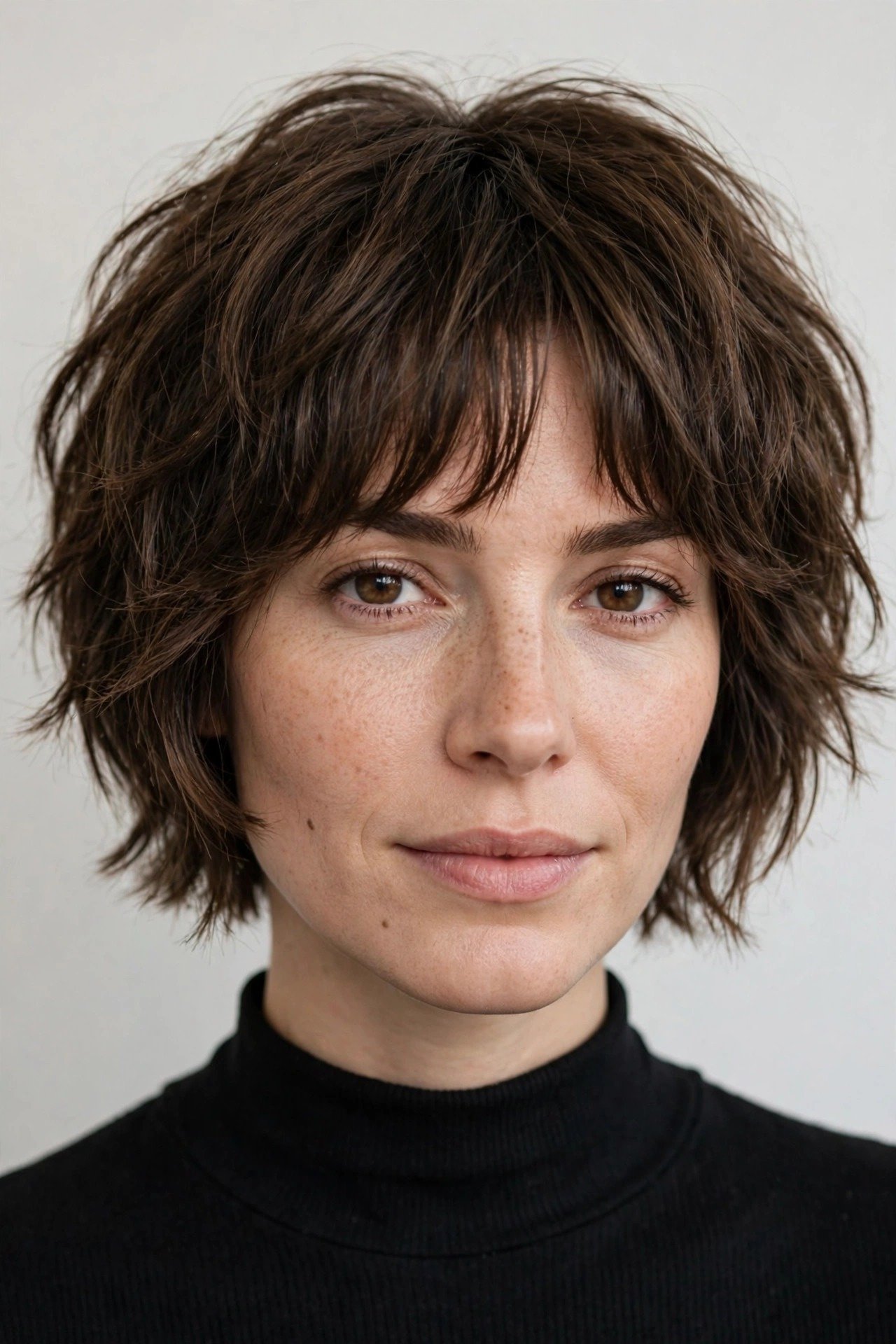
Cub Cut Women 2026: 18 Short Shaggy Bob Ideas
Cub Cut Women 2026: 18 Short Shaggy Bob Ideas
If the wolf cut was the loud older sibling who partied through 2023, the cub cut is the younger one who learned from all its mistakes. Shorter, softer, and infinitely more wearable, the cub cut has quietly become the haircut I recommend more than any other this year. It’s a shaggy bob with real texture — choppy layers, a lived-in fringe, and just enough edge to look intentional without trying too hard.
Here’s why the cub cut works when so many trendy cuts don’t: it was designed for real life. It grows out gracefully instead of turning into a shapeless blob at week six. It gives fine hair the illusion of twice the volume. And it takes about four minutes to style on a normal morning, which is the only metric that actually matters once the novelty of a new haircut wears off.
In this guide, I’m walking you through everything — what the cub cut actually is (and isn’t), 18 distinct ways to wear it, how to ask your stylist for it without ending up with something you didn’t want, and the honest upkeep math. I’ve cut this style on dozens of clients over the past two years, and I’m going to tell you the things most guides skip: which face shapes need a tweak, which hair types fight it, and the one styling mistake that ruins it.
Whether you want something soft and French or choppy and downtown-cool, there’s a cub cut in here with your name on it. Let’s get into it.
A quick note on how this guide is organized: the first sections cover what the cut is and why it works, then we get to the 18 styles grouped by vibe, then the practical stuff — face shapes, hair types, the at-home routine, and maintenance. If you’re already sold and just want ideas, skip to the styles. If you’re still deciding, read it straight through. Either way, you’ll leave knowing exactly what to ask for.
And if you’re wondering whether this is another trend that’ll look dated by next year — fair question. Here’s my honest take after watching cuts cycle for years: the cub cut isn’t really a trend. It’s a classic shape (the shaggy bob has existed for decades) wearing current styling. The fundamentals — chin-to-collarbone length, textured layers, a fringe — don’t expire. Specific versions will feel more or less current, but the cut itself has staying power. That’s why I’m comfortable recommending it.
What Exactly Is the Cub Cut?
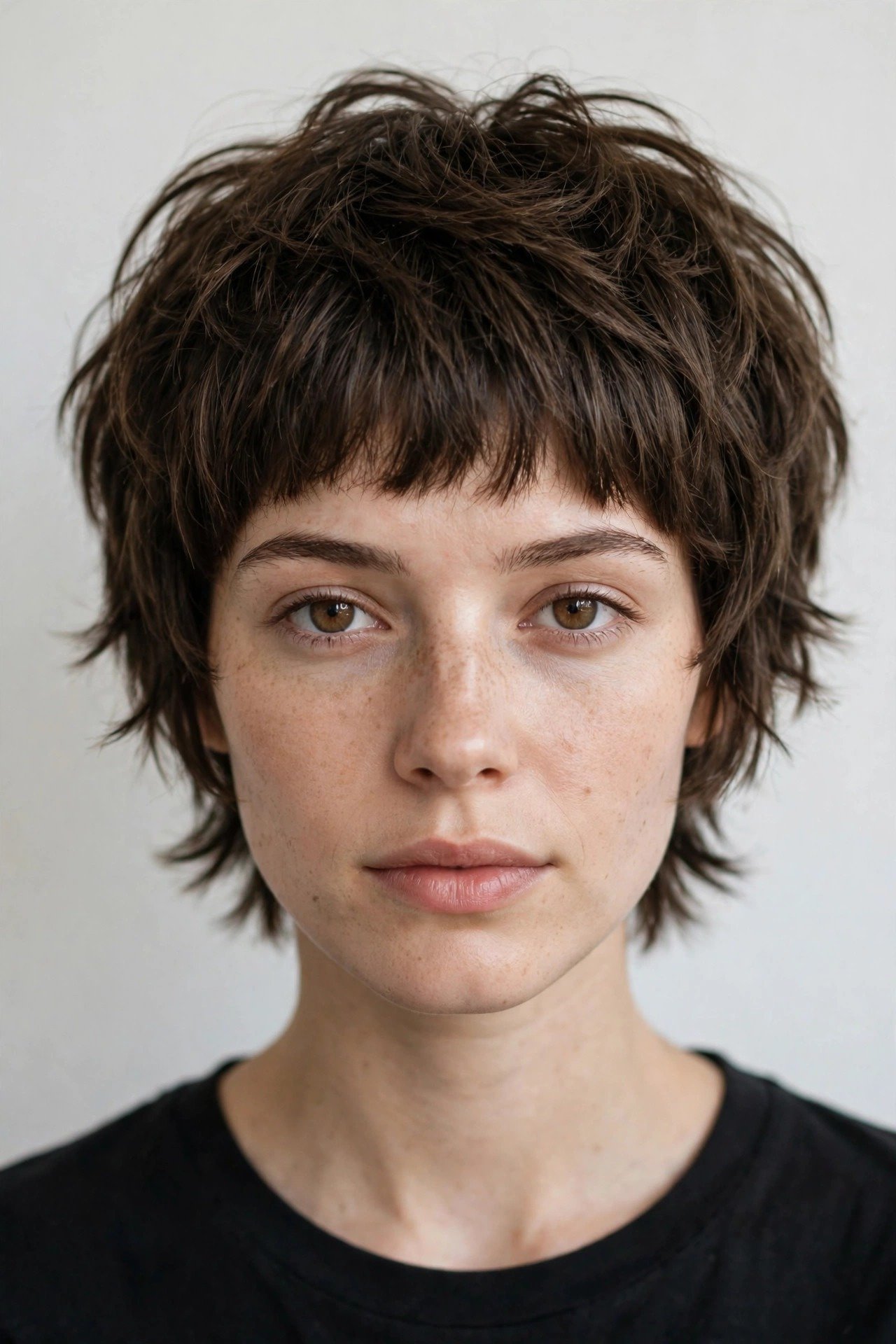
The cub cut is a short, shaggy bob — usually chin to collarbone length — built on choppy, disconnected layers with a soft fringe. Think of it as the midpoint between a classic bob and a shag. It takes the bob’s clean perimeter and roughs it up with the shag’s texture, and the result is a cut that looks expensive and effortless at the same time.
The name tells you the lineage. The wolf cut was long, wild, and heavy on the mullet energy. The cub cut is its smaller, tamer offspring: all the texture and movement, none of the commitment. Where the wolf cut could swallow your face in layers, the cub cut frames it. Where the wolf cut demanded constant styling to avoid looking feral, the cub cut looks good air-dried.
Technically, what makes it a cub cut comes down to three things. First, the length sits between the chin and the collarbone — short enough to feel like a real chop, long enough to tie back on day three. Second, the layers are cut with lots of texture: point-cutting, slide-cutting, sometimes a razor, so the ends look piece-y rather than blunt. Third, there’s almost always some kind of fringe — curtain bangs, a wispy full fringe, or at minimum face-framing layers that start at the cheekbone.
What it is not: it’s not a bob with a few layers thrown in, and it’s not a pixie. If your stylist gives you a blunt bob and calls it a cub cut, that’s not it. The texture is the whole point. Run your fingers through a real cub cut and the ends should separate into pieces. If it falls in one solid curtain, the layers aren’t doing their job.
The other thing people get wrong is assuming it’s only for straight hair. Some of the best cub cuts I’ve done have been on wavy and curly hair, where the layers actually enhance the natural pattern instead of fighting it. We’ll get into hair types properly later, but don’t self-reject if your hair has a mind of its own — that’s practically a job requirement for this cut.
Why the Cub Cut Is Everywhere in 2026
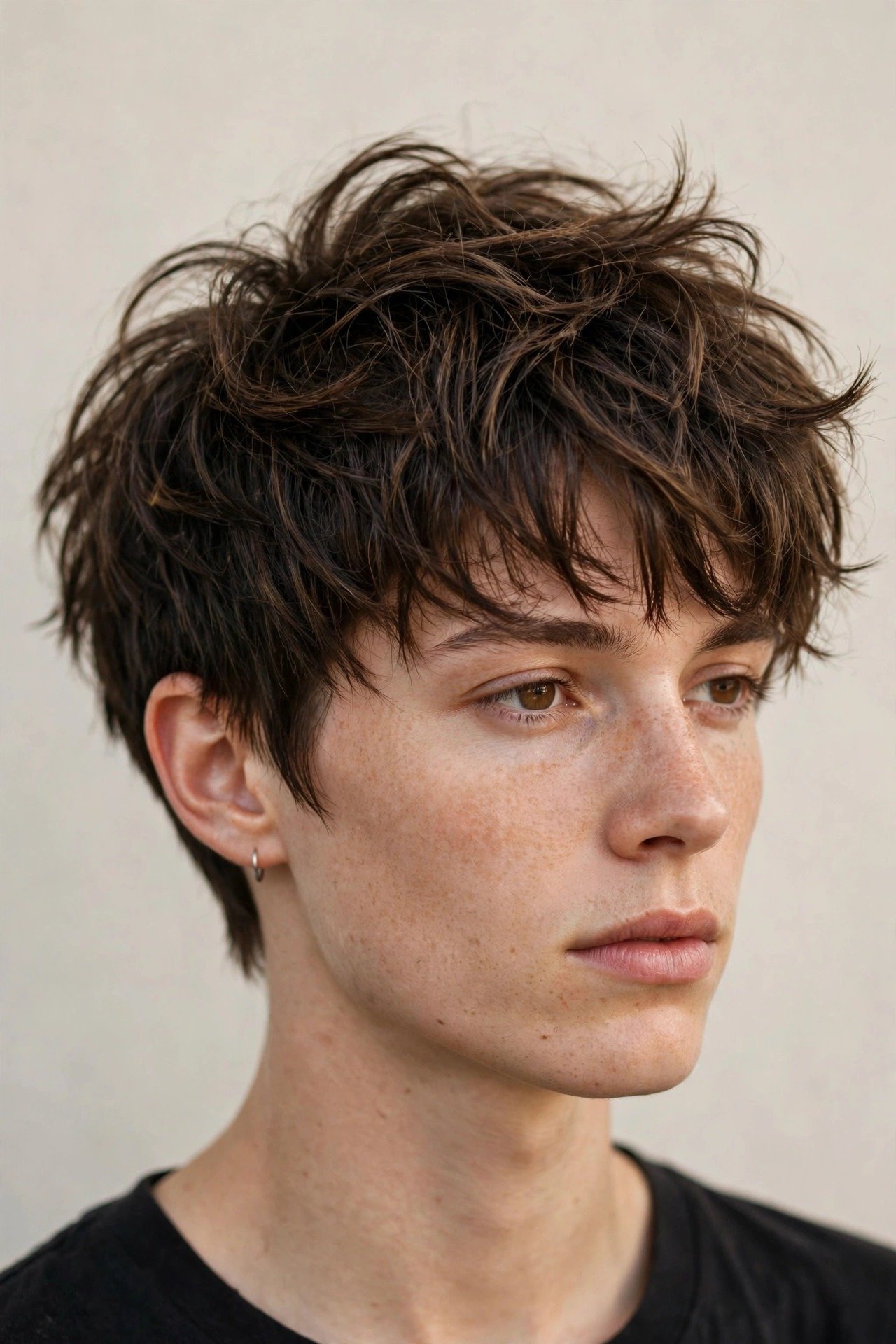
Trends usually arrive with a bang and leave the same way. The cub cut did the opposite — it crept in through salon back doors and stayed because clients kept rebooking it. By 2026, it’s become one of the most requested cuts in my chair, and the reasons are refreshingly practical.
First, the maintenance math finally caught up with people’s lives. The high-maintenance cuts of a few years ago — the glass bob that needed daily straightening, the curtain-bang lob that looked stringy by week five — asked too much. The cub cut asks for a trim every eight to ten weeks and about four minutes of styling. That’s it. In a year where everyone’s tired, low-effort hair wins.
Second, it photographs well without looking “done,” which matters more than anyone admits. The cub cut has that slightly undone texture that reads as cool in photos but doesn’t require a glam squad. It’s the haircut equivalent of the no-makeup makeup look — it took skill to create, but it doesn’t show the work.
Third, and this is the one stylists talk about among ourselves: the cub cut is forgiving. A bob shows every mistake. A shag hides them in texture. The cub cut’s piece-y ends and lived-in fringe mean that slightly uneven grow-out just looks like more texture. Clients come back at week ten instead of week six, and the cut still looks intentional. That’s a quiet superpower.
Finally, it hits the sweet spot of feeling like a real change without the terror of going very short. Chopping from long layers to a collarbone cub feels dramatic in the chair and completely wearable the next morning. For anyone standing at the edge of a big chop, this is the cut that talks you into jumping.
There’s also a quieter cultural shift behind it. The 2026 mood in hair is anti-precious — people want cuts that survive real life, not just the salon chair. The cub cut arrived at exactly the moment everyone got tired of babysitting their hair. It’s no accident that the most-pinned, most-saved haircut photos this year aren’t red-carpet sleek looks but lived-in texture. The cub cut is the haircut for people who have better things to do than their hair, which is almost everyone.
The Anatomy of a Great Cub Cut
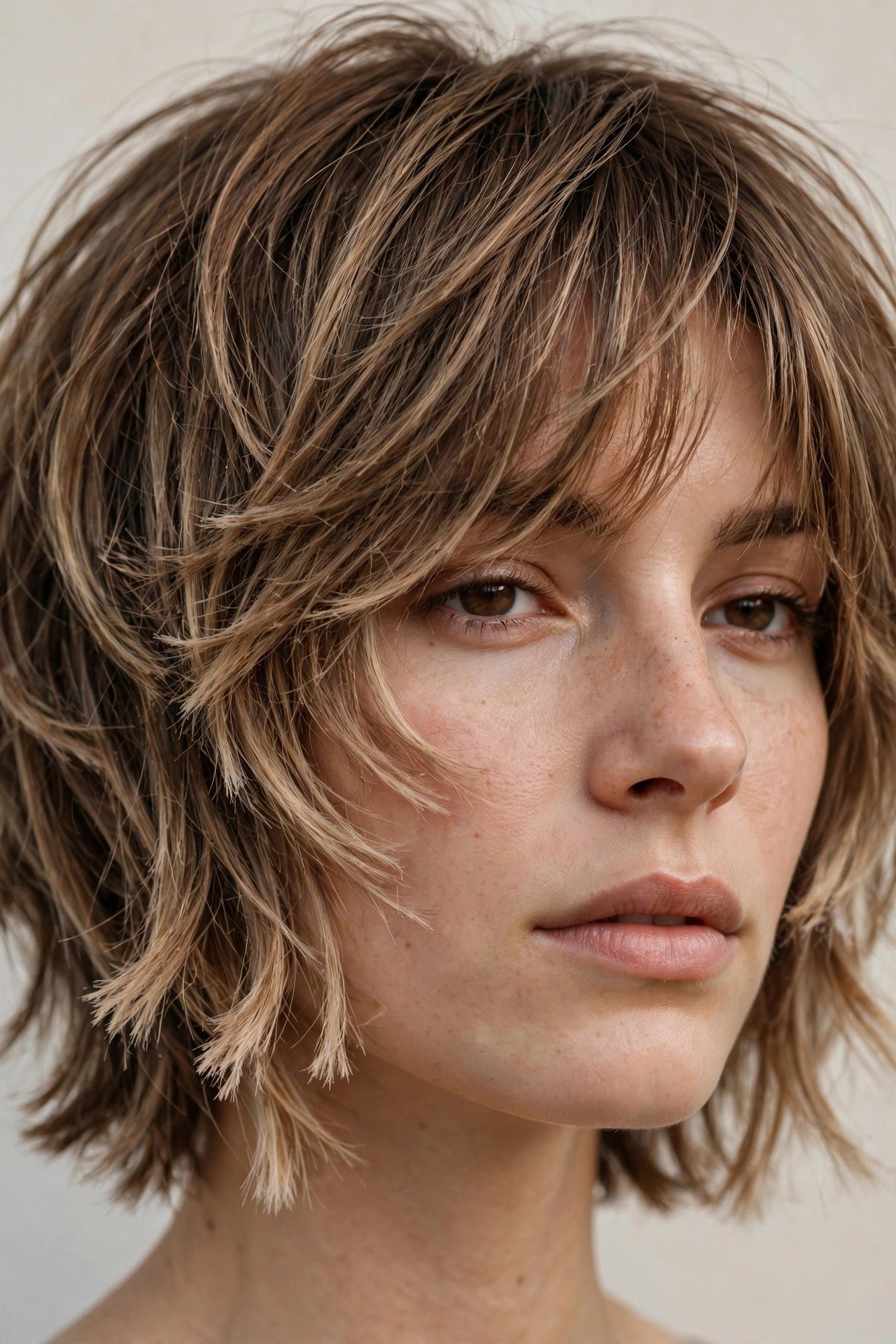
A cub cut that looks amazing and one that looks “off” are usually separated by about half an inch in three places. Here’s the anatomy, so you know what to look for in the chair and what to ask for.
Length first. The sweet spot is the chin-to-collarbone zone. Chin-length reads bold and French; collarbone reads softer and more versatile. Anything longer than the collarbone stops being a cub cut and becomes a shaggy lob — still cute, different animal. Anything shorter than the chin drifts into pixie-bob territory. When your stylist asks where you want it, have a number: “chin length in front, grazing the collarbone at the back” is a sentence that prevents 90% of miscommunication.
Layers second. This is where the magic lives. A good cub cut has short layers through the crown — I’m talking 2 to 4 inches of layering at the top — that get progressively longer toward the perimeter. The layers should be disconnected, meaning they don’t blend into one smooth waterfall. You want visible separation, pieces that move independently. Ask for point-cutting or slide-cutting on the ends; if your stylist only uses straight-across blunt cutting, the texture won’t happen.
Fringe third. Almost every great cub cut has one. Curtain bangs are the default pairing — they melt into the face-framing layers and grow out without drama. A wispy full fringe gives a softer, more Parisian feel. Micro-bangs make it edgy. What you don’t want is no fringe at all with blunt face-framing, which reads more “bob with layers” than cub cut. The fringe is what sells the whole thing.
The perimeter — the bottom edge — should be soft, never a hard line. Even in the more polished versions of the cut, the ends get textured so they don’t sit in a solid shelf. And here’s a detail most people miss: the back should be slightly shorter than the front, or at least layered enough to avoid the dreaded triangle shape where the bottom puffs out wider than the top. On thick hair, internal layering or thinning through the mid-lengths keeps the silhouette narrow where it counts.
Color plays a bigger role than you’d think. The cub cut’s texture shows best with some dimension — balayage, lived-in highlights, or even just your natural variation. One flat all-over color can make the layers disappear visually. You don’t need a full color service; even a few face-framing highlights make the pieces pop. If you’re growing out old color, the cub cut is actually the perfect reset cut because the layers disguise the grow-out line.
How to Ask Your Stylist for a Cub Cut (Without Regret)
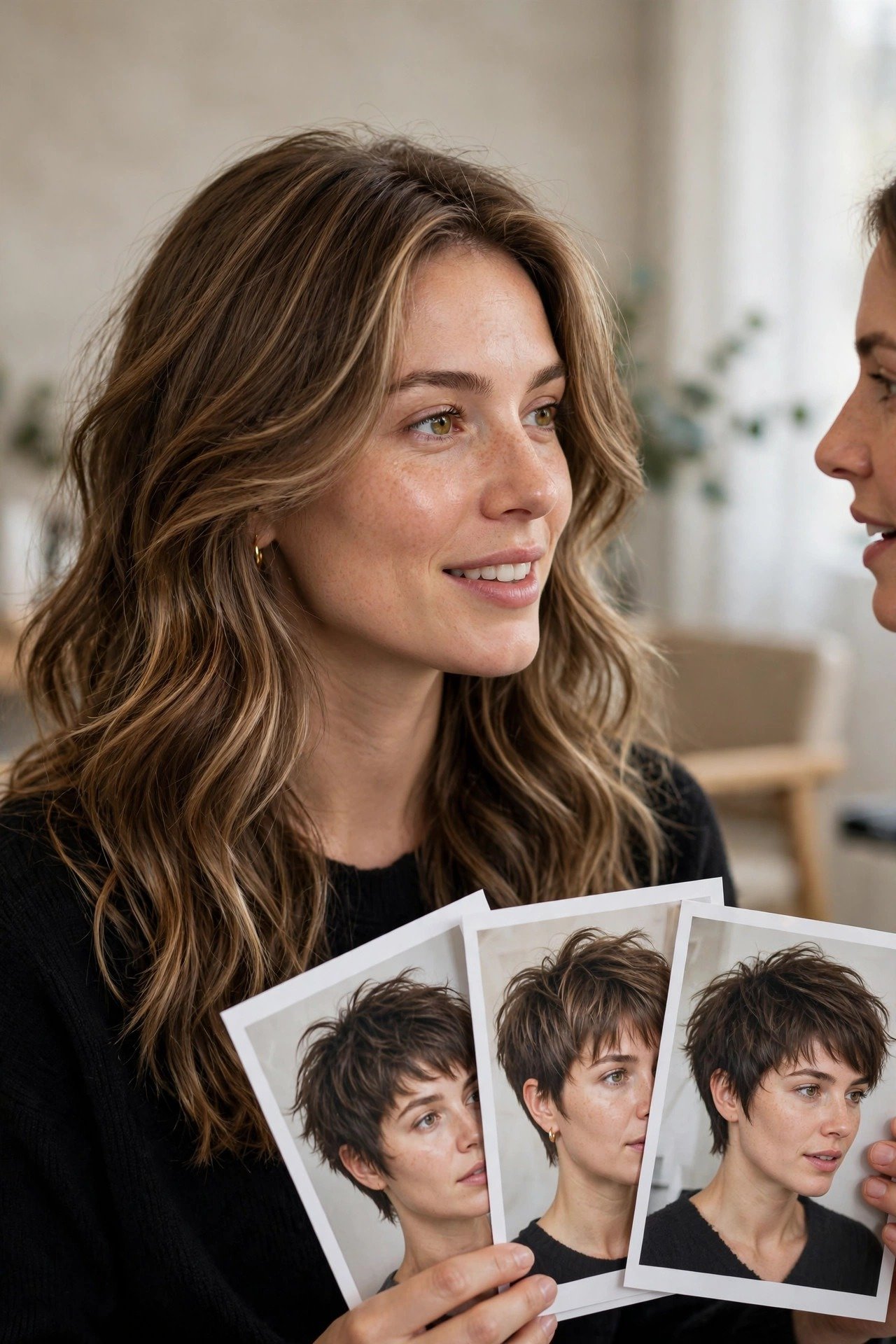
Here’s the sentence that works: “I want a shaggy bob — chin to collarbone length, lots of choppy texture through the ends, short layers on top, and curtain bangs that blend into face-framing layers.” Say that, show three photos, and you’re 95% of the way there.
Photos matter more than words for this cut. Bring at least three reference pictures, and make them realistic: same hair type as yours, similar length to what you want. A photo of a cub cut on thick wavy hair won’t help your stylist much if your hair is fine and straight. I always tell clients to save photos of cuts they love AND cuts they hate — the “hate” pile tells me where your boundaries are faster than anything.
Have the texture conversation explicitly. Say “I want piece-y, separated ends — point-cut the perimeter, don’t leave it blunt.” Some stylists default to clean lines because that’s their training. There’s nothing wrong with that, but a cub cut needs someone comfortable with a razor or point-cutting shears. If your stylist looks nervous when you say “choppy,” that’s useful information.
Talk about your real routine, not your aspirational one. If you air-dry and go, say so — your stylist will cut the layers to work with your natural texture instead of against it. If you heat-style daily, say that too, because the cut gets refined differently. The number one cause of haircut disappointment isn’t a bad stylist; it’s a consultation where the client described someone else’s life.
Ask about the grow-out before you commit. A good stylist will tell you honestly: “This will need a trim at eight weeks, and here’s what it’ll look like at twelve.” If they promise it’ll look perfect for six months, smile politely and manage your own expectations. The cub cut grows out better than most, but it’s not immortal.
One more thing: book the right amount of time. A proper cub cut with consultation and texture work takes 60 to 90 minutes. If you’re squeezed into a 30-minute slot, the layering gets rushed, and rushed layering is how you end up with a mullet instead of a cub. This is not the cut to get during your lunch break.
Styles 1–3: The Classics That Never Miss
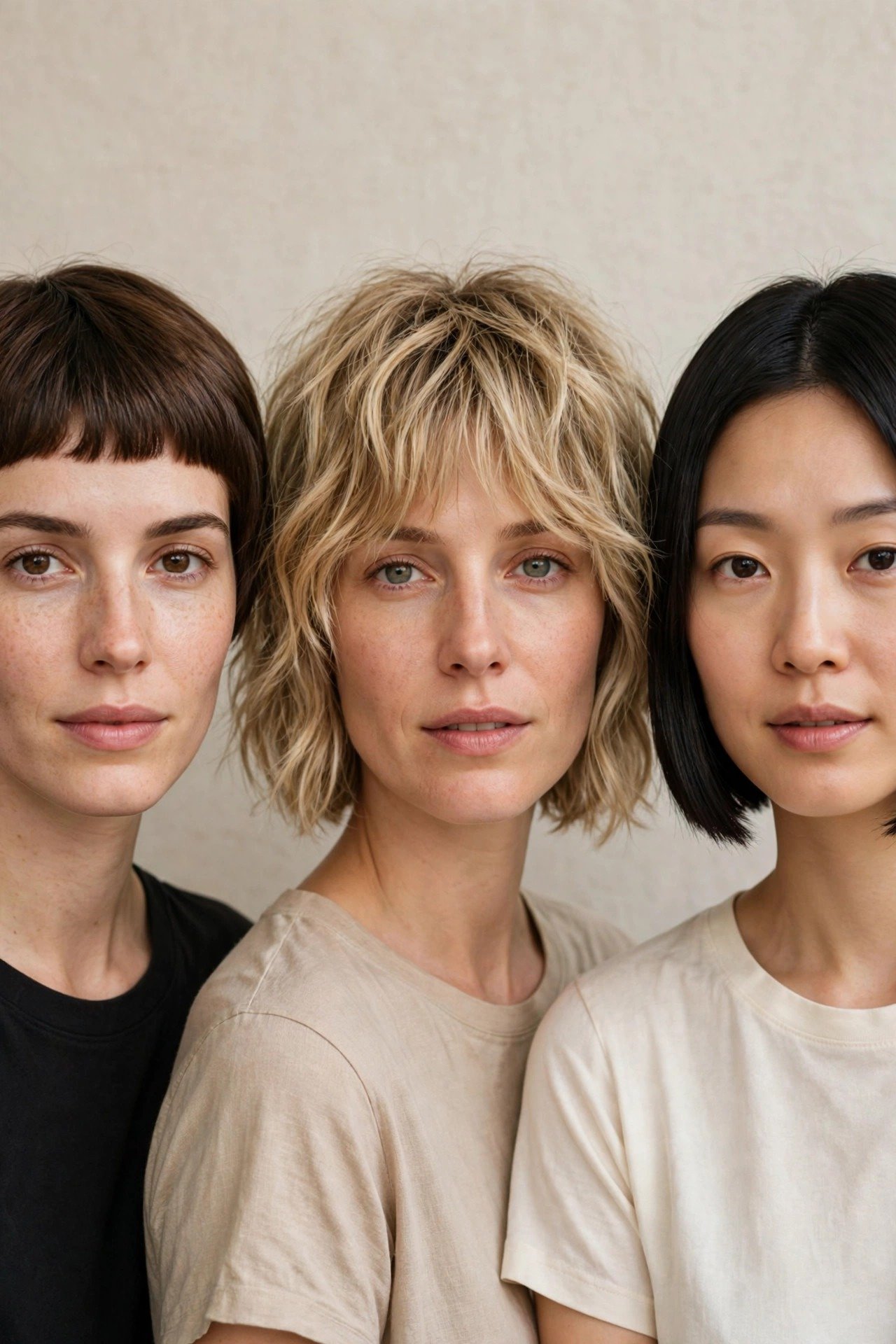
Style 1: The Classic French Cub. This is the one that started it all — chin-length, slightly curved under, with a soft full fringe and that undone Parisian texture. It works best on straight to wavy hair, and the styling is almost insultingly simple: air-dry with a little texture cream scrunched in, done. The French cub is the lowest-commitment version of the cut, which is why it’s still the most requested. Ask for the perimeter to just kiss the chin, layers kept long enough that it doesn’t puff, and a fringe that hits right at the brow.
Style 2: The Soft Shaggy Bob. Take the classic and add more layers — shorter crown pieces, more face-framing, curtain bangs instead of a full fringe. This version has more movement and suits wavy hair beautifully, because the layers let the wave pattern do its thing. It’s the cub cut for people who want to look like they just came back from a weekend somewhere fun. Styling: a diffuser on medium heat for three minutes, or nothing at all. This is also the best version for fine hair, since the short crown layers create lift that fine hair desperately needs.
Style 3: The Chin-Length Chop. The boldest of the classics — a true chin-length cut with choppy texture all over and piece-y ends that flick outward instead of tucking under. This one reads confident and a little downtown. It suits oval and heart faces especially well, since the short length opens up the jawline and neck. Fair warning: at this length there’s nowhere to hide, so the texture work has to be good. This is the version where your stylist’s layering skill matters most. Grow-out is faster here too — you’ll want a trim at six to eight weeks to keep the shape.
What these three share: they’re all genuinely low-maintenance, they all grow out well, and they all work in professional settings. If you’re cub-cut-curious but nervous, start here. You can always go choppier next time.
Styles 4–6: Texture-Forward Favorites
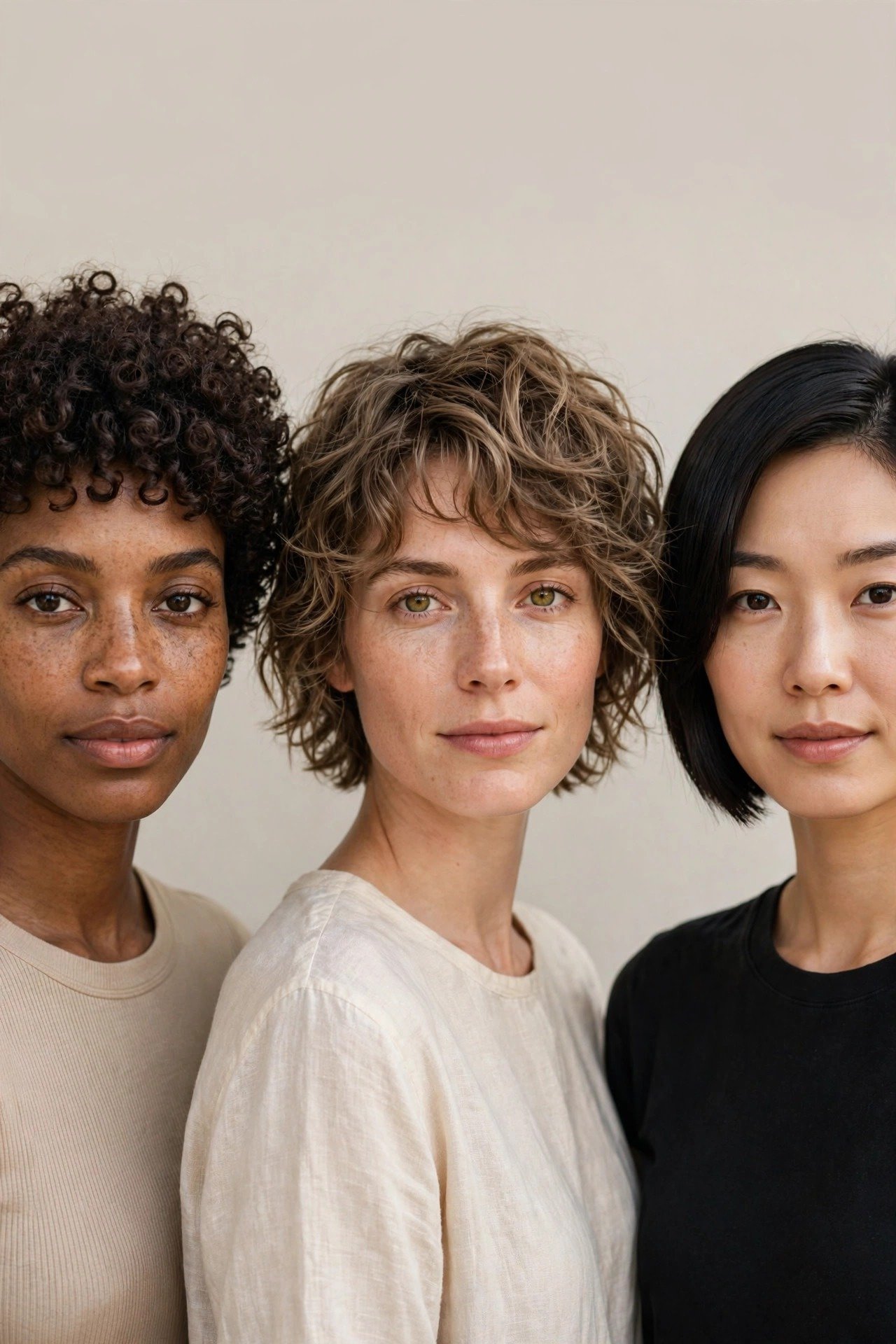
Style 4: The Curly Cub. If you have curls, stop scrolling — this might be your cut. The cub cut’s short crown layers remove the weight that drags curls flat, and the textured ends let each curl do its own thing instead of clumping into a triangle. The key adjustment: it must be cut dry or with your natural curl pattern visible, because wet-cut curls spring up unpredictably. Ask for layers that follow your curl pattern, a length that sits at the chin when dry (it’ll look longer wet — trust the process), and no thinning shears, ever. Curly cubs need trims every ten to twelve weeks, and the grow-out is genuinely gorgeous.
Style 5: The Wavy Undone Cub. This is the “I woke up like this” version, and on naturally wavy hair it practically styles itself. Collarbone length, long layers, curtain bangs — the waves create the texture, so the cut just needs to stay out of their way. The styling routine is a joke in the best way: scrunch in a little mousse or sea-salt spray on damp hair, air-dry, go. Second-day hair is actually better than first-day. If your waves are inconsistent, a large-barrel curling iron on just the mid-lengths (leave the ends out) for five minutes gives you uniform undone-ness.
Style 6: The Sleek-Edged Cub. For straight hair that wants edge without frizz. This version keeps the choppy layers but styles them smooth — flat iron just the mid-lengths, ends flipped out slightly, a tiny bit of shine serum. The contrast between the textured cut and the polished finish is what makes it interesting. It reads more editorial than beachy, and it works beautifully in offices where the undone versions might feel too casual. The catch: it needs heat styling to look like this, so it’s higher maintenance than its siblings. Know yourself.
The through-line here: pick the version that matches your natural texture instead of fighting it. The cub cut rewards honesty about your hair.
Styles 7–9: The Bangs Make the Cut
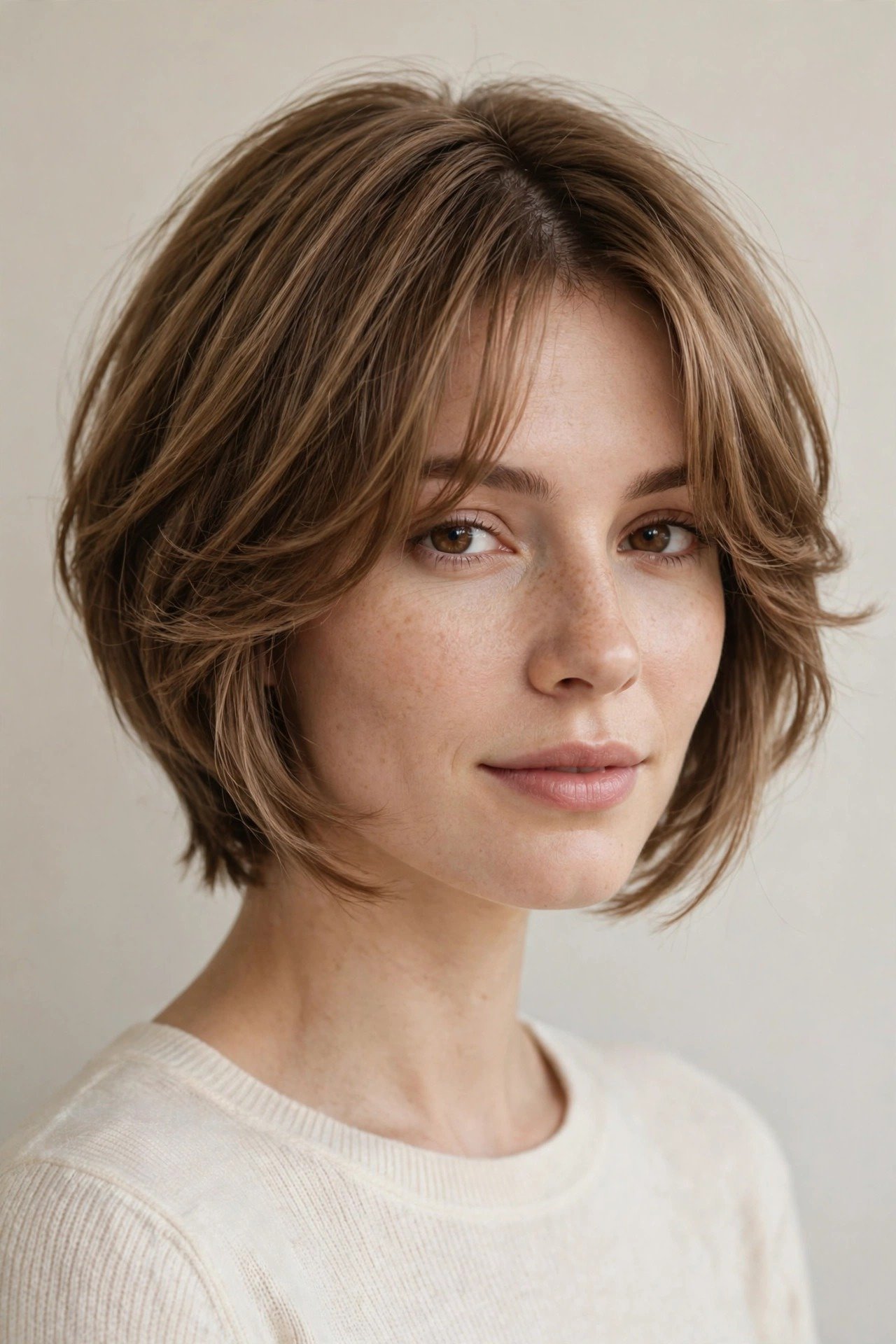
Style 7: Cub with Curtain Bangs. The default pairing for a reason. Curtain bangs part in the middle and sweep to each side, melting straight into the cub’s face-framing layers. There’s no harsh line where the bangs end and the cut begins — it’s one continuous flow. This is the most forgiving fringe option: it grows out into layers instead of an awkward stage, it works on every face shape with minor tweaks, and you can pin it back on days you can’t be bothered. If you’re getting a cub cut and don’t know which fringe to pick, pick this one.
Style 8: The Micro-Banged Cub. For the brave. A short, choppy micro-fringe — hitting mid-forehead — paired with a textured chin-length cub is pure attitude. It shortens the face visually, so it suits longer face shapes best, and it puts all the attention on your eyes. The styling is minimal (a quick blow-dry forward or just finger-styling), but the grow-out needs management: micro-bangs hit an awkward stage around week six, so plan trims every four to five weeks or commit to growing them into curtain bangs. This is not a low-maintenance choice, but it’s a high-impact one.
Style 9: The Side-Part Cub. Deep side part, sweeping fringe, collarbone length — this is the cub cut’s glamorous older cousin. The asymmetry adds instant volume at the crown (a gift for fine hair) and the long swept fringe softens strong jawlines beautifully. It’s also the most versatile for styling: wear it sleek for evening, tousled for day, tuck one side behind the ear when you want a change. The side part does need refreshing — parts migrate back to the middle as hair grows — but a minute with a comb on damp hair resets it.
A note on fringe commitment: bangs are the part of the cub cut people regret most when they choose wrong and love most when they choose right. When in doubt, go longer. You can always take more off; you can’t glue it back on.
Styles 10–12: For the Bold
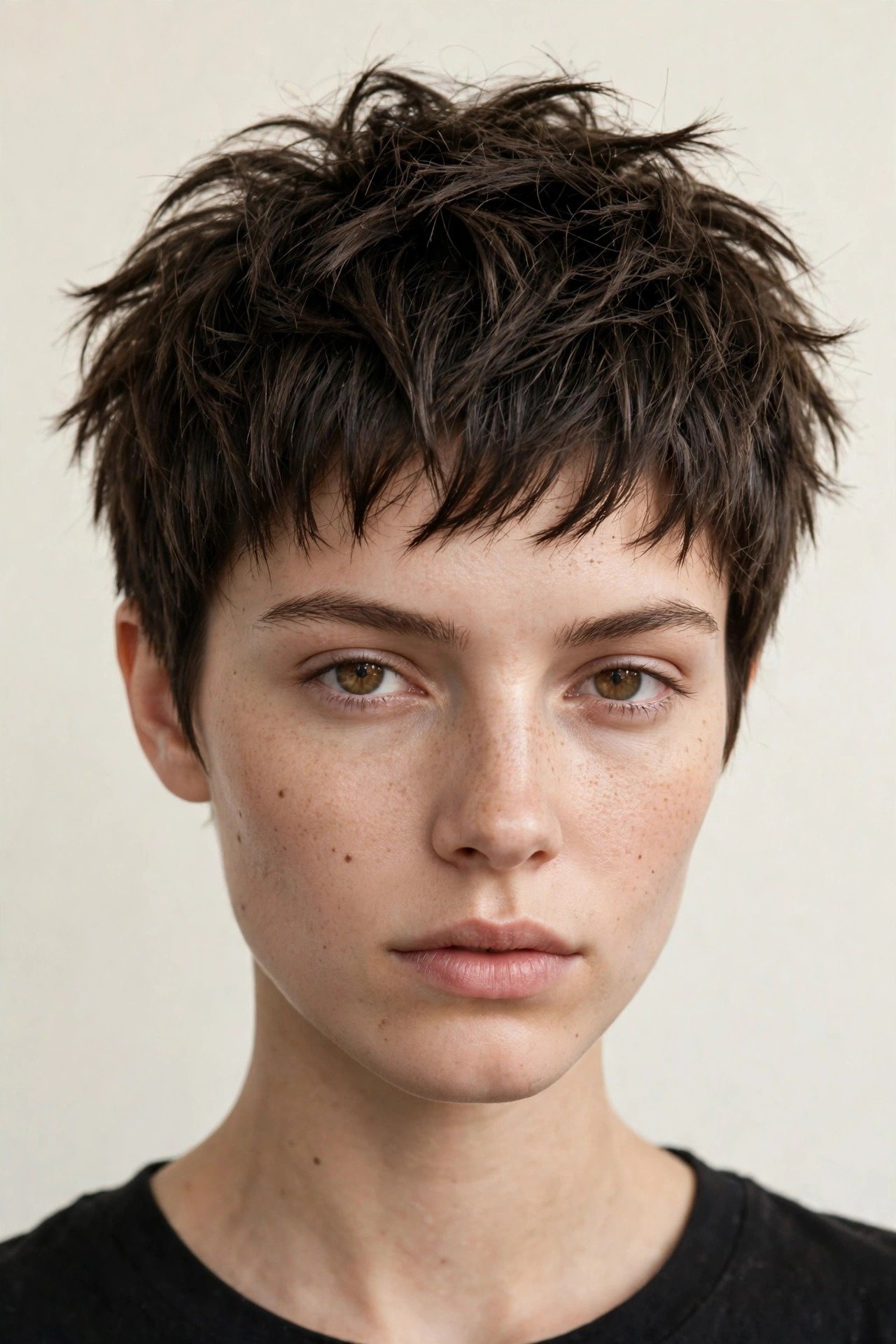
Style 10: The Textured Pixie-Cub. The shortest version — tapered at the nape, longer and choppy on top, with piece-y length around the ears. It’s where the cub cut meets the pixie, and it’s spectacular on the right person: great bone structure, confidence, and a willingness to be noticed. The grow-out is the price of admission — pixie lengths go through awkward phases, so you’re committing to trims every four to six weeks. But for those weeks between cuts, the styling is thirty seconds with some pomade. Nothing else looks like it.
Style 11: The Asymmetrical Cub. One side chin-length, the other grazing the shoulder — or a subtler version with just an inch of difference. Asymmetry adds instant edge to the cub’s softness, and it’s oddly flattering: the diagonal line draws the eye across the face instead of emphasizing width. It suits round faces particularly well. The catch is maintenance: asymmetry only looks intentional when it’s precise, so this needs trims every six weeks to keep the lines clean. Let it grow and it just looks lopsided.
Style 12: The Blunt-Edge Cub. A contradiction that works: choppy layers on top, but a clean, almost blunt perimeter. The blunt edge gives the cut weight and presence — it reads more deliberate, more fashion — while the textured crown keeps it from looking severe. This is the cub for thick hair, because the blunt perimeter controls the bulk that texture alone can’t. It’s also the best version for anyone transitioning from a classic bob who wants change without chaos. Style it smooth for maximum impact.
These three are statement versions. They’re not harder to live with than the classics, but they are more specific — pick the one that matches your actual personality, not the one you wish you had.
Styles 13–15: Grow-Out Friendly & Color-Play
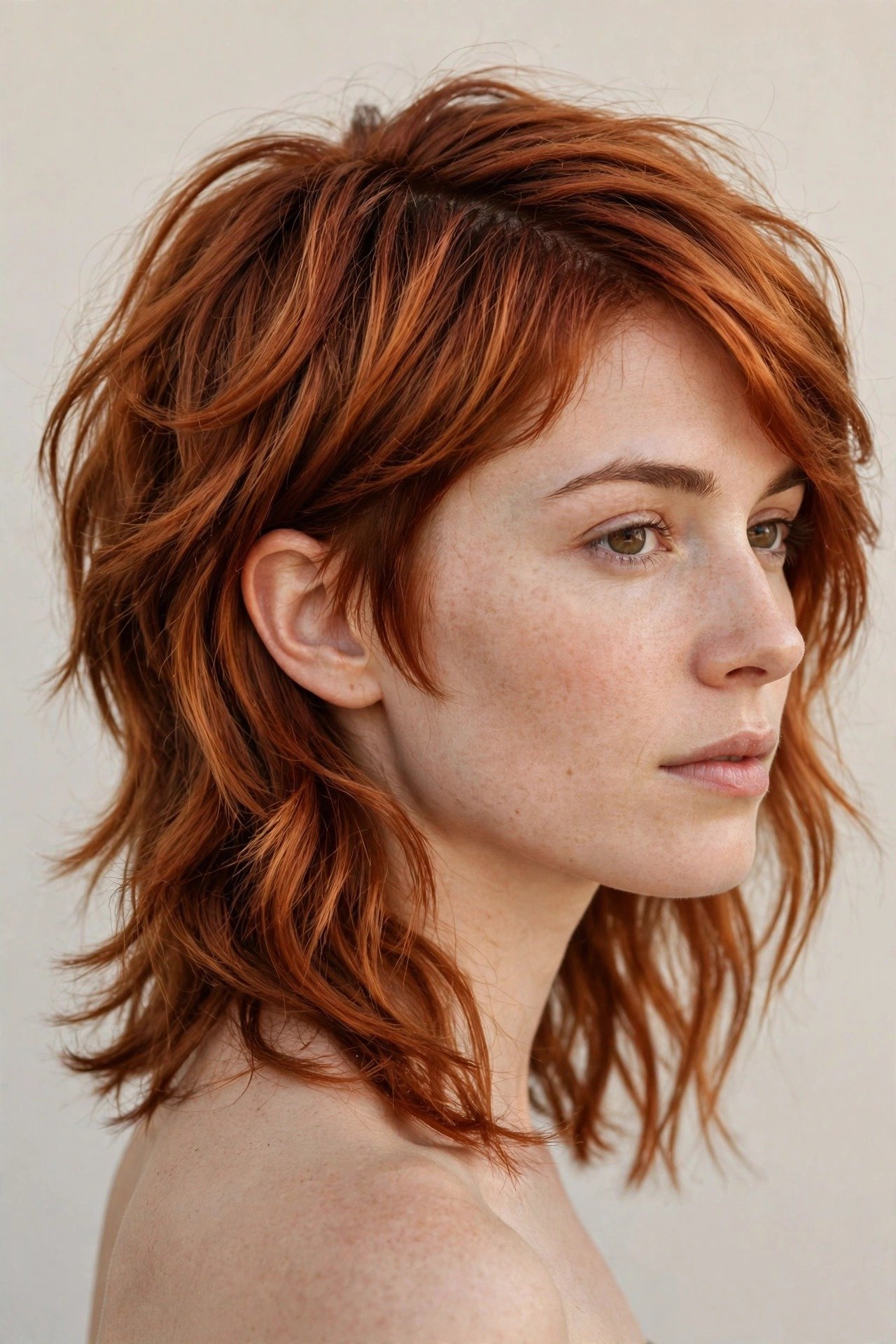
Style 13: The Grown-Out Cub. Here’s a secret: some of the best cub cuts are six months old. As the layers grow, the cut softens into a shaggy lob with beautiful natural texture — and if your stylist cut it right, the shape holds. The grown-out cub is proof of the cut’s forgiving nature. To get here intentionally, start with a chin-length cub and just… let it go, with trims every ten to twelve weeks to clean the ends. Around month four it becomes a different haircut entirely, and it’s gorgeous. This is the version for anyone who hates the salon.
Style 14: The Layered Lob-Cub. Start at the grown-out length on purpose: a collarbone-grazing cut with full cub texture from day one. All the layering, none of the shortness. This is the safest entry point into the cub family — it reads as “fresh layered haircut” to the casual observer while giving you all the movement and texture of the real thing. It ties back easily, it works for every dress code, and if you hate it, you’re only a trim away from long layers again. The training-wheels cub, and there’s no shame in it.
Style 15: The Color-Play Cub. The cub cut is a phenomenal canvas for color because the texture shows off dimension. Copper is the 2026 power move — a rich, warm copper on a choppy cub is genuinely striking. But the principle works for anything with variation: balayage, lived-in blonde, a deep brunette with face-framing highlights, even a bold fashion color on the fringe. One caution: bleached ends plus razor texture can equal breakage. If you’re going light, keep the texture work scissor-based and invest in a bond builder. Your ends will thank you.
The lesson of this trio: the cub cut isn’t one look, it’s a system. Length, texture, and color are dials you can turn independently.
Styles 16–18: Lifestyle Editions
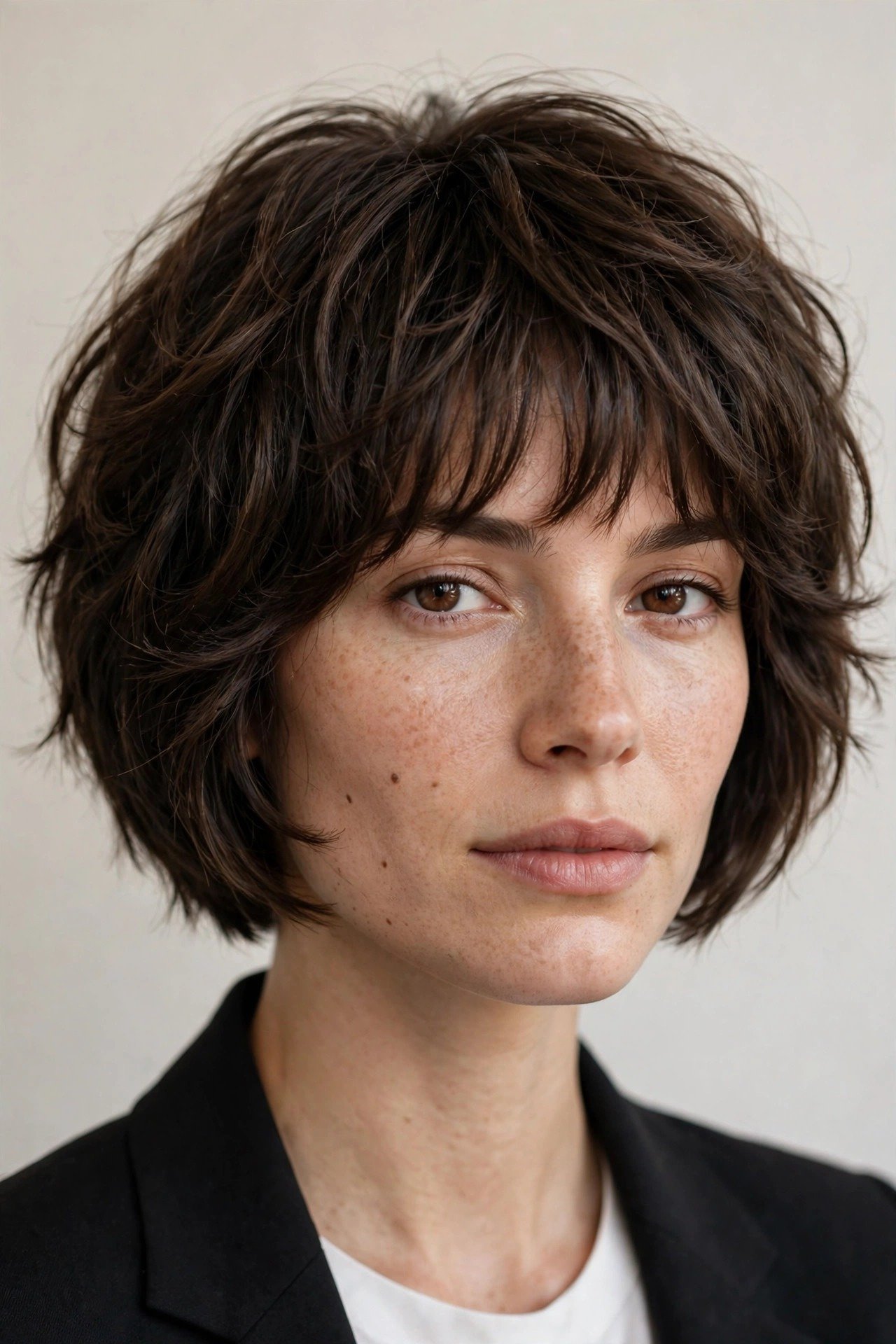
Style 16: The Office Cub. Proof that texture and professionalism aren’t enemies. The office cub keeps the layers but styles them polished: blow-dry smooth with a round brush, ends tucked under, fringe neat. Same haircut, different attitude. The beauty is the duality — wear it sleek Monday through Friday, tousle it up on Saturday. No other short cut switches codes this easily. If your workplace is conservative, keep the length at the collarbone and the fringe at curtain length; the texture reads as “styled” rather than “edgy” when it’s smooth.
Style 17: The Edgy Undercut Cub. A hidden undercut at the nape — shaved or closely clipped underneath, with the cub’s layers falling over it. Invisible when your hair’s down, a surprise when it’s up. The undercut removes bulk (a blessing for very thick hair) and adds edge without changing the cut’s public face. It needs maintenance — the undercut grows out in three to four weeks — but it’s a small area, and many people learn to touch it up at home with clippers. Not for the faint of heart, but the coolest secret in this list.
Style 18: The Vintage Shag Cub. Lean into the 70s: more uniform layering, a full sweeping fringe, ends flipped out with a round brush. This is the cub cut’s retro soul showing. It suits thick hair and strong personal style — it’s a lot of hair, visually. The styling takes more effort (round brush, blow-dryer, some commitment), but the result is pure rock-and-roll romance. Pair it with vintage-inspired color — a warm brunette or a golden blonde — and you’ve got a whole aesthetic.
And that’s eighteen. If none of these feel like you, the cut probably isn’t for you — but I’d be surprised. There’s a lot of range in here.
Cub Cut for Your Face Shape: The Honest Guide
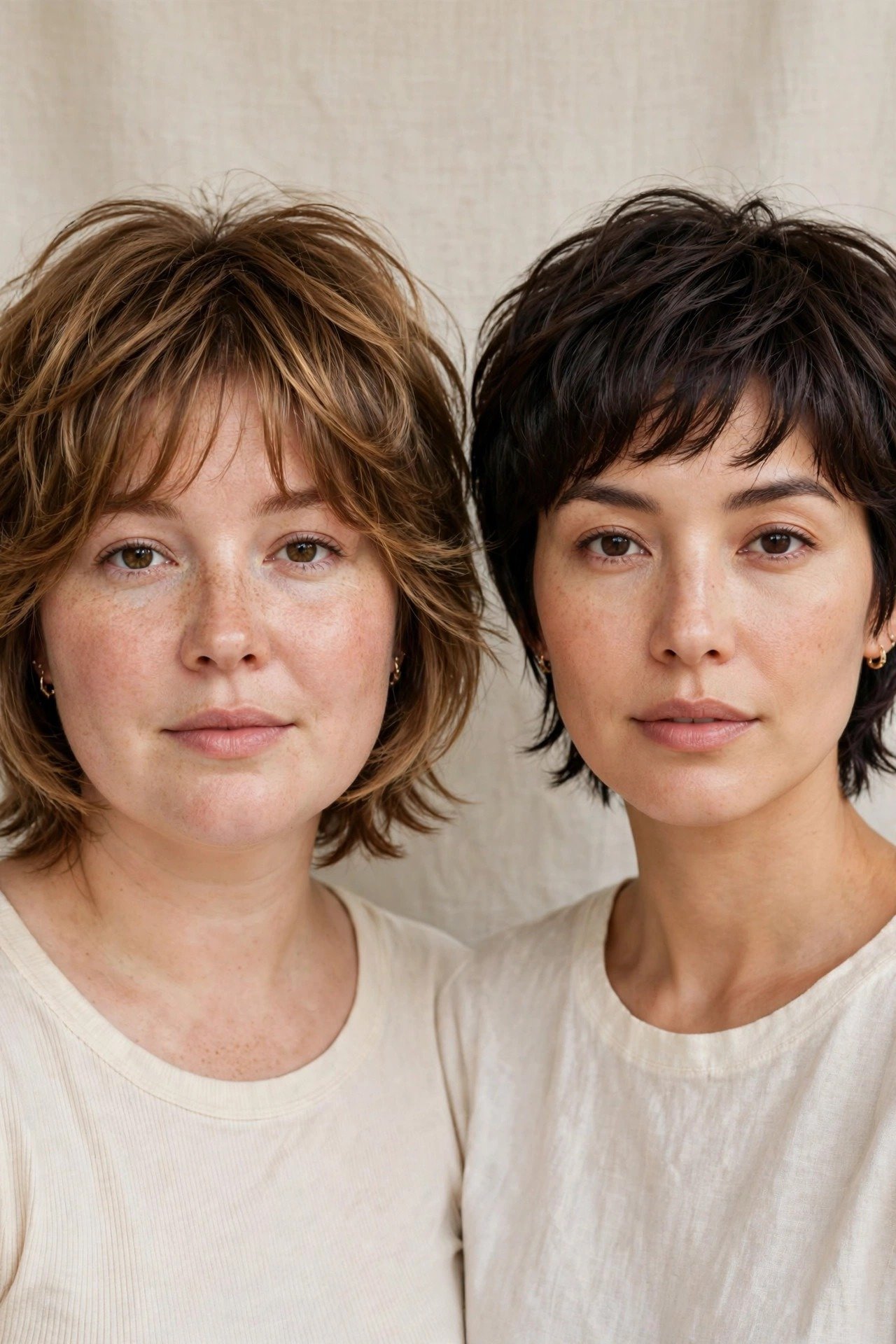
Here’s what nobody tells you: the cub cut works on every face shape, but not the same cub cut. The adjustments are small and they matter.
Round faces: you want length and vertical lines. Go collarbone-length rather than chin, keep the crown layers long enough to add height, and choose curtain bangs over a full fringe — the center part creates a lengthening line. Avoid chin-length with a full fringe, which can make a round face look rounder. The side-part version (Style 9) is your best friend.
Square faces: softness is the goal. Wispy texture around the jawline breaks up strong angles — this is exactly what the cub’s face-framing layers do naturally. Curtain bangs or a soft side-swept fringe work better than blunt micro-bangs. Keep some length past the jaw; chin-length can emphasize squareness. The grown-out or lob versions are ideal here.
Oval faces: you won the lottery — everything works. The only advice is to pick based on personality, not rules. Micro-bangs, chin chop, vintage shag — go wild. If anything, avoid hiding behind too much hair; oval faces look best with the features visible.
Heart faces: balance a wider forehead with fullness at the jaw. Curtain bangs are perfect (they minimize forehead width), and layers that start at the chin add width where the face narrows. Avoid too much volume at the crown, which emphasizes the forehead. The classic French cub is made for this face shape.
Long faces: you want width, not length. Chin-length versions with a full or curtain fringe shorten the face visually. Avoid collarbone-plus lengths with center parts, which elongate. The micro-banged cub (Style 8) was practically designed for long faces — the short fringe breaks up forehead length beautifully.
The universal rule: bring your face shape up in the consultation, but don’t let it become a cage. These are starting points. A good stylist adjusts in the chair, and confidence wears any version well.
Cub Cut for Your Hair Type: What to Expect
Fine hair: the cub cut might be the best thing that ever happened to you. Short crown layers create volume that fine hair can’t get any other way, and the textured ends make the most of what you have. Keep the layers conservative — too much texture on fine hair looks thin rather than piece-y. A pea-sized amount of volumizing mousse at the roots, blow-dried upside down, is the whole routine. Avoid heavy oils and creams; they’ll flatten everything.
Thick hair: you need the texture, but you need it controlled. Internal layering — layers cut inside the hair, not just on the surface — removes bulk without making the ends wispy. The blunt-edge version (Style 12) exists for you. Your stylist may use thinning shears sparingly; that’s fine in skilled hands, but never let anyone thin the ends themselves — that’s how you get frizz. Your cub will have the most dramatic transformation of any hair type, and it’ll need trims every eight weeks to keep the shape.
Wavy hair: congratulations, you have the ideal cub cut hair. The cut enhances your natural pattern with minimal effort. The main decision is fringe: curtain bangs blend seamlessly with waves, while a full fringe needs more styling on wavy texture. Air-dry with a little curl cream scrunched in and you’re done. This is the lowest-maintenance combination in the entire guide.
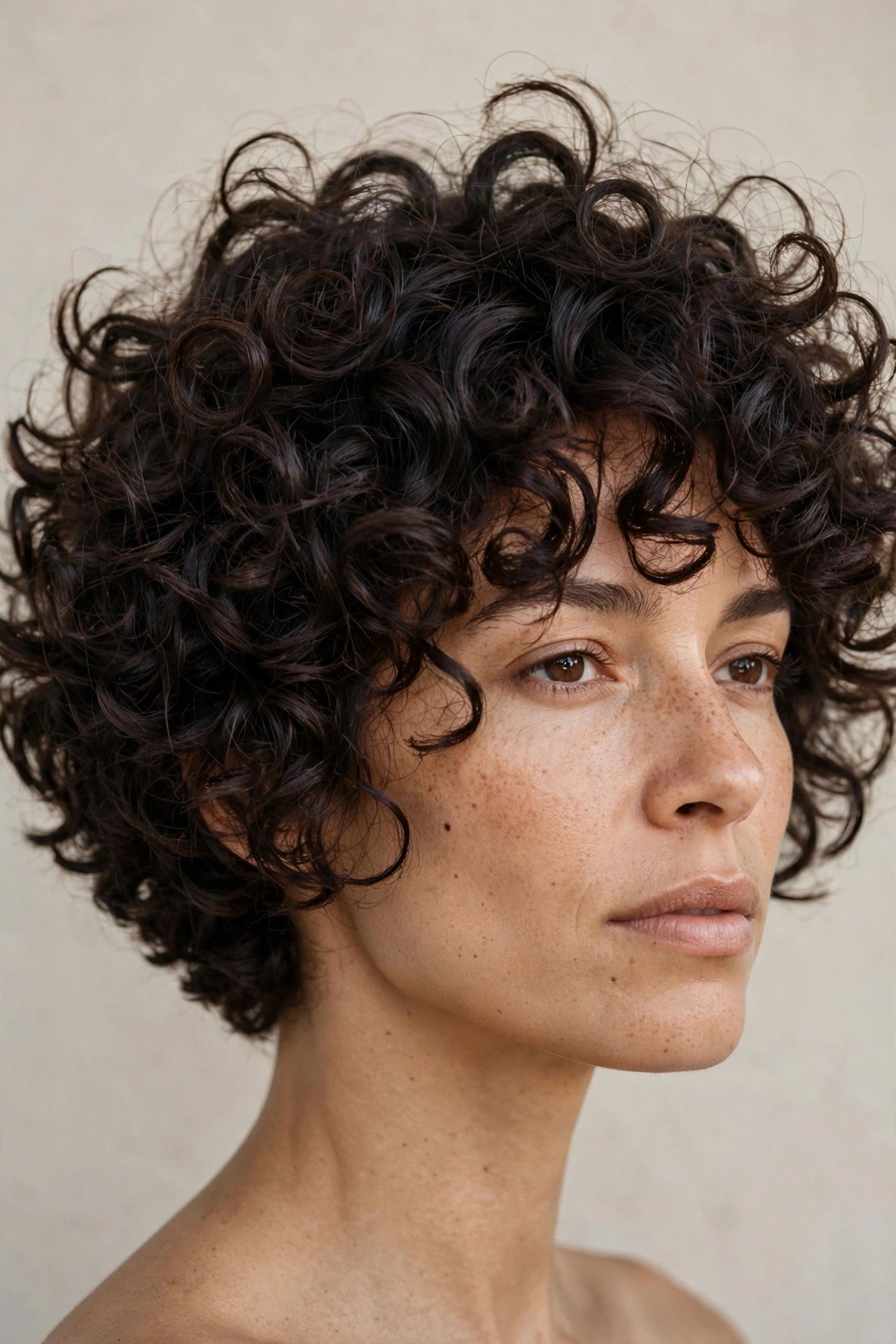
Curly hair: cut dry, layer generously, never thin. The curly cub (Style 4) removes the weight that causes triangle-head and lets curls spring up into shape. Your stylist should understand curl-by-curl cutting or at minimum cut your hair in its natural dry state. The result is a rounded, voluminous shape that’s genuinely wash-and-go. Diffuse or air-dry — either works.
Straight hair: you’ll rely on styling for texture, and that’s fine — the sleek-edged version (Style 6) was made for you. A flat iron with a slight bend, or overnight braids for waves, gives you the piece-y look. The upside: your cub always looks neat. The downside: it won’t air-dry into texture the way wavy hair does. Invest in a good texture spray — it’s the difference between “nice bob” and “cub cut.”
Coily hair: the cub cut translates beautifully as a shaped, layered cut with a softened perimeter. The principles are the same — short crown layers for shape, textured ends, face-framing — but the execution uses techniques for coily texture: cutting dry and stretched or in twists, keeping enough weight at the ends to avoid excessive shrinkage surprise. Find a stylist experienced with your texture; the shape is worth it.
Styling Your Cub Cut at Home: The 4-Minute Routine
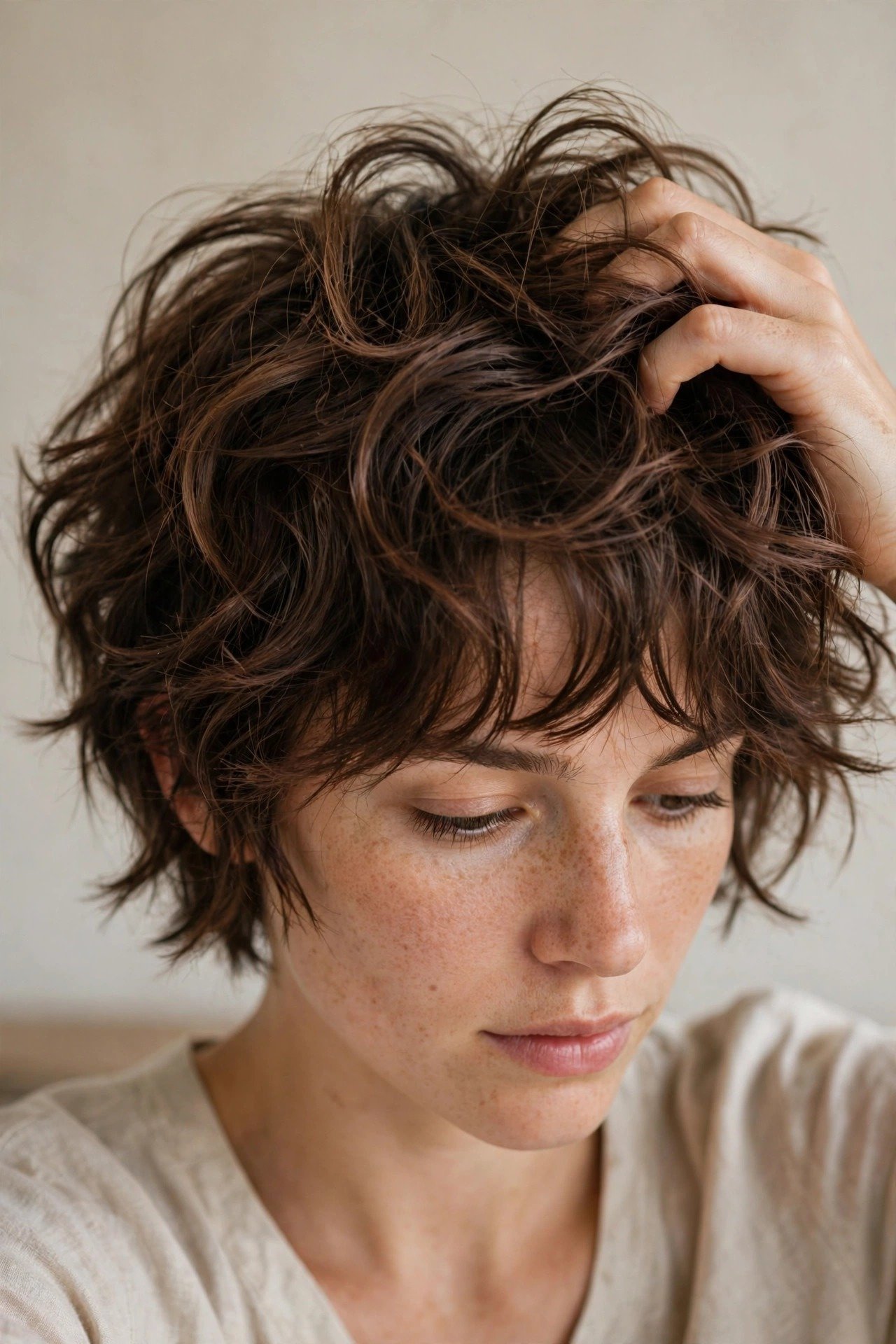
Here’s the routine I give every cub cut client. It takes four minutes, it works on every version of the cut, and it’s the reason people keep this haircut.
Start with damp — not wet — hair. Towel-dry until it’s not dripping, then work a dime-sized amount of product through the mid-lengths and ends. What product depends on your hair: mousse for fine hair (volume), curl cream for wavy/curly (definition), texture cream for thick/straight (piece-y separation). One product. Not three. The cub cut doesn’t need a cocktail.
Now the technique: flip your head upside down and scrunch. That’s it. Scrunching encourages the texture the cut was designed for — you’re just waking up what the layers already want to do. If you’re air-drying, scrunch every few minutes until it’s mostly dry, then leave it alone. Touching it after it’s dry creates frizz; the discipline is in the not-touching.
If you’re using heat, a diffuser on medium heat and low speed is your tool — three to five minutes, still scrunching. For straight hair that needs help, here’s the five-minute upgrade: take a large-barrel curling iron, wrap random mid-length sections away from your face, leave the ends out, release after five seconds. Six to eight sections total. Shake it out with your fingers. It looks undone because it mostly is.
The fringe gets thirty seconds of attention. Blow-dry curtain bangs with a round brush, rolling them away from your face — or just finger-style them into place while damp. A full fringe gets a quick pass with the dryer aimed down (never up — that’s how you get the 80s bump). Micro-bangs: fingers and go.
Second-day hair is where the cub cut earns its reputation. Sleep on it, wake up, shake it out, add a spritz of dry shampoo at the roots if needed, and go. The texture actually improves overnight. Third day: tie the front back, or embrace the lived-in look. By day four, wash it — even great texture has limits.
Products worth owning: one texture spray (for refresh), one product matched to your hair type (mousse/cream), dry shampoo. That’s the complete kit. Anything more is hobby shopping, which is fine, but not required.
A word on tools, since people always ask. You don’t need much: a blow-dryer with a diffuser attachment if you’re wavy or curly, a medium round brush if you like the fringe polished, and a large-barrel curling iron if your hair is straight and you want the undone wave. That’s the full arsenal. The cub cut was designed for fingers-first styling — tools are the backup singers, not the lead. If your routine needs more than these three tools, something’s off: either the cut needs a tweak or you’re overcomplicating it.
Maintenance: Trims, Color & the Grow-Out
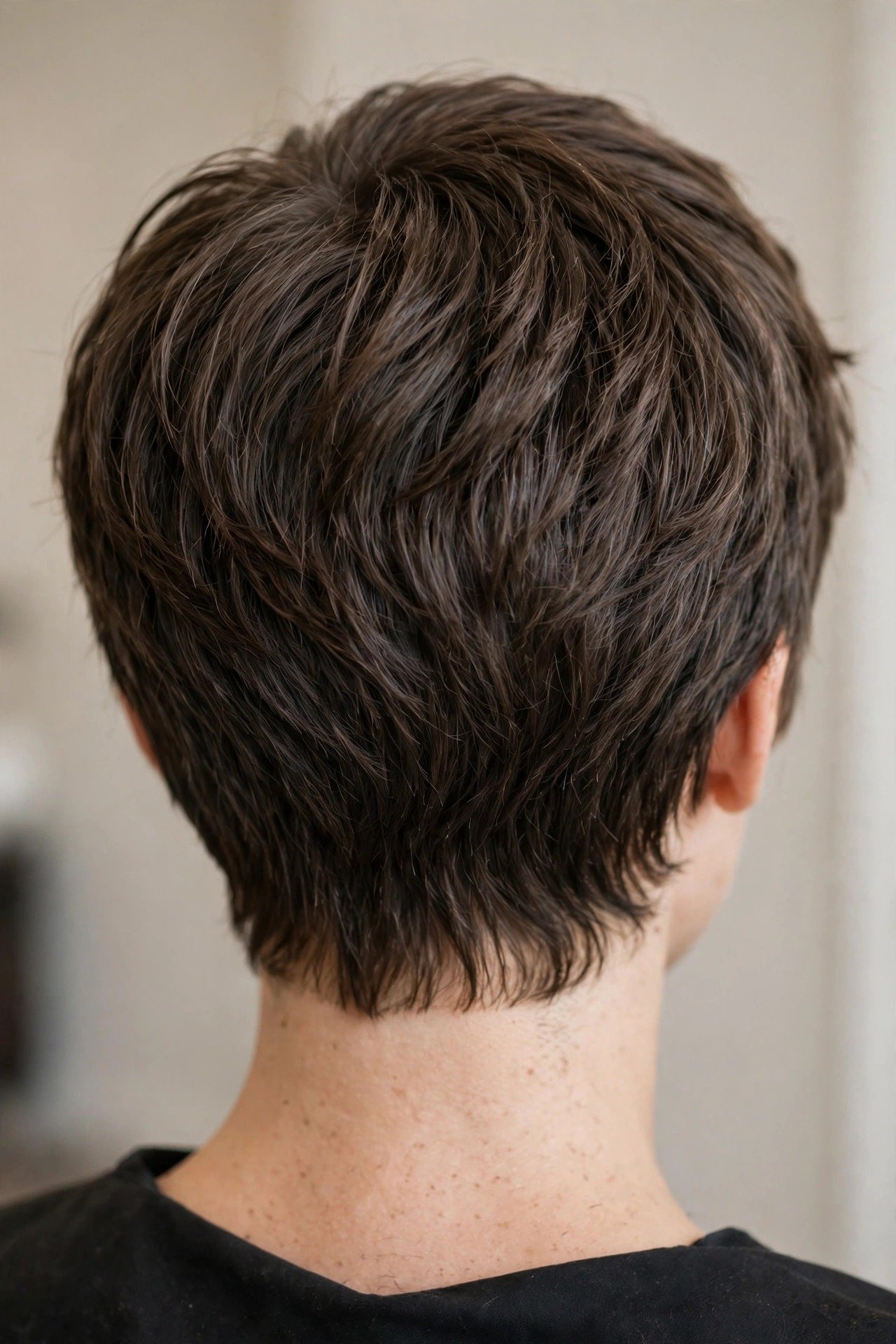
The honest maintenance schedule: trims every eight to ten weeks for most versions. Chin-length and asymmetrical versions need six to eight. Curly versions can stretch to ten or twelve. Micro-bangs need fringe trims every four to five weeks — many salons do these free or cheap between full appointments, so ask.
What happens if you skip trims? Honestly, less than you’d fear. The cub cut’s texture disguises grow-out better than almost any short cut. The layers get longer and softer, the fringe grows into face-framing, and around month four you have a shaggy lob (see Style 13). It’s not ruined; it’s evolved. The shape just gets less deliberate over time. When you stop getting compliments, book the trim.
Color maintenance is separate from cut maintenance, and the cub cut is kind to color grow-out — the texture breaks up harsh lines. If you have balayage or lived-in color, you can easily go twelve to sixteen weeks between color appointments. All-over color shows roots faster regardless of cut, so that’s about your color choice, not the cub.
Between appointments, the main job is end health. Textured ends are more vulnerable than blunt ones — there’s simply more exposed surface. A weekly mask or even just a good conditioner, minimal heat, and trims on schedule keep them from going wispy. If your ends start looking see-through, that’s not texture, that’s damage — book the trim early.
Budget-wise, the cub cut is mid-range: more than a one-length trim (the layering takes skill and time), less than anything involving bleach. And because you can stretch appointments, the annual cost often ends up lower than high-maintenance cuts that need six-week visits.
And here’s a thought for the long game: the cub cut is a gateway, not a destination. Most of my cub cut clients eventually try a neighboring version — the chin chop grows into the lob-cub, the French cub experiments with micro-bangs, the lob-cub takes the full chop. The cut teaches you what your hair can do, and that knowledge compounds. Two years from now you’ll have strong opinions about layer lengths, and honestly? That’s a great place to be.
Cub Cut vs. Bob vs. Shag: Which One Do You Actually Want?
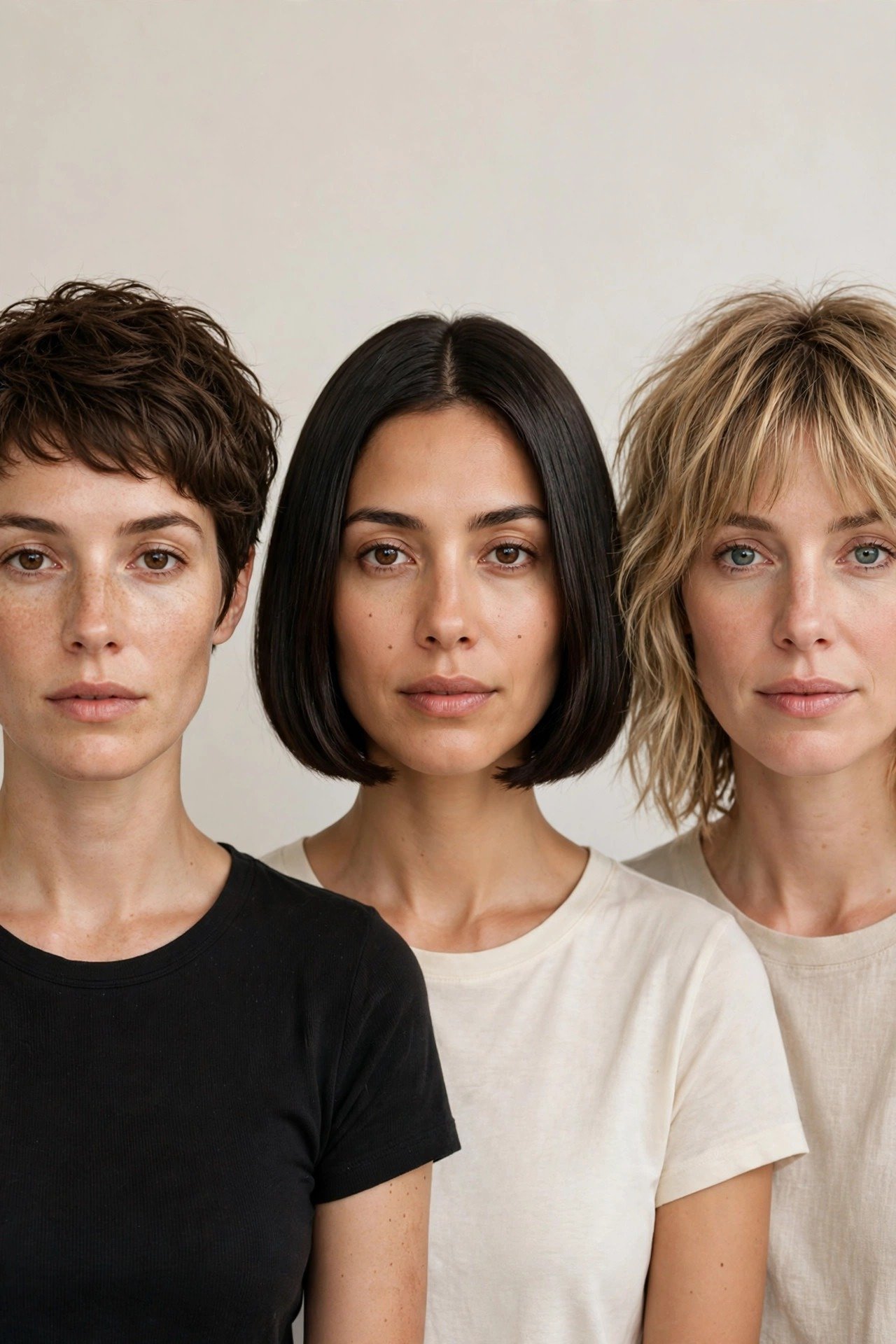
Half the consultations I do for cub cuts start with the client describing a different haircut. Let’s clear this up, because booking the wrong cut wastes everyone’s afternoon.
The classic bob is about the perimeter — a clean, deliberate bottom edge, minimal layering, precision. A bob says “I have my life together.” It needs regular trims to keep that edge sharp, and it shows grow-out quickly. If you love sleek lines and you heat-style regularly, the bob is your cut. But if you want texture and air-dry ease, the bob will fight you every morning.
The shag is about layers everywhere — heavy crown layering, lots of internal texture, usually longer overall. A shag says “I might be in a band.” It’s fantastic on thick hair and a lot of work on fine hair, where too many layers can look stringy. The shag also commits you to the aesthetic more fully; it’s harder to style sleek for a conservative office.
The cub cut sits exactly between them, and that’s the point. It borrows the bob’s short length and wearable shape, and the shag’s texture and movement. It’s the bob for people who hate styling, and the shag for people who can’t commit to the full rock-star thing. When clients tell me “I want a bob but cooler” or “I want a shag but I work in an office,” I show them the cub cut.
Here’s the practical test. Look at your last three favorite hair photos of yourself. If your hair looked best on days two and three — slightly lived-in, a bit tousled — you’re a cub cut person. If it looked best fresh from the salon, sleek and precise, you’re a bob person. If it looked best after a beach weekend, you’re a shag person. Your hair history already knows the answer.
There’s also the grow-out test. Bobs grow out into lobs (fine). Shags grow out into longer shags (also fine). Cub cuts grow out into shaggy lobs (also fine). Honestly, all three grow out gracefully — the difference is the daily styling contract. The cub cut asks the least of you. For most of my clients, that’s the deciding vote.
One more consideration: your stylist’s strengths. Some stylists are precision cutters — bobs are their love language. Others are texture specialists who think in layers. The cub cut needs the texture specialist. If your longtime stylist gives amazing bobs but has never razored a perimeter, either have the explicit texture conversation or find someone whose portfolio is full of shags and cubs. The cut is only as good as the hands holding the shears.
The First Two Weeks: What to Expect After the Chop
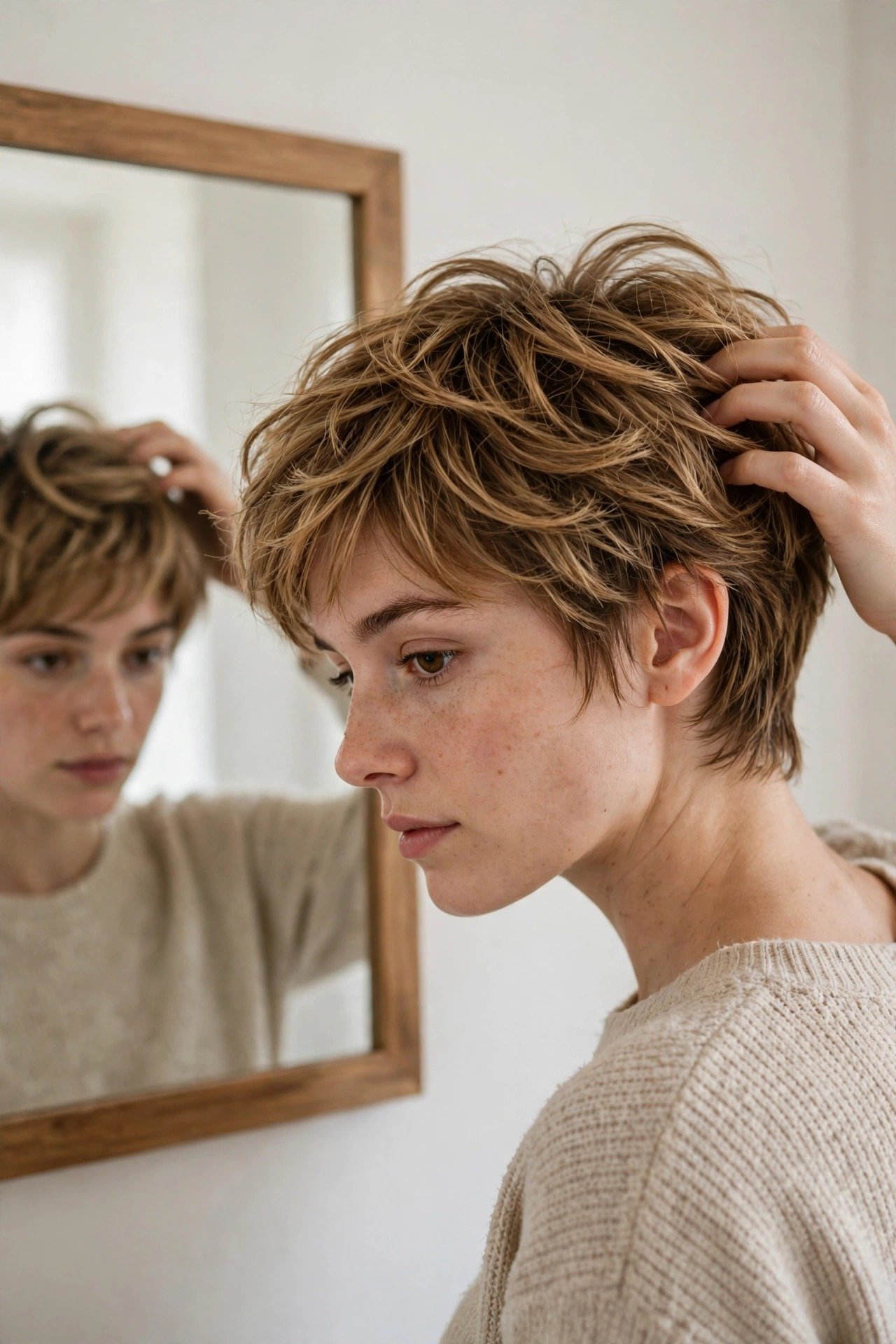
Nobody talks about the adjustment period, so I will. The first two weeks with a cub cut are a learning curve, and knowing what’s normal saves you from a panicked 2 a.m. “what have I done” spiral.
Days one to three: it looks perfect and you feel invincible. This is the salon styling talking — your stylist spent 20 minutes on it. Enjoy it, take photos, but don’t judge the cut by these days. Nobody’s real life looks like day one.
Days four to seven: the truth arrives. You wash it yourself for the first time and it doesn’t look like the salon version. This is normal. You’re learning where the layers want to fall, how much product is enough, which way your crown grows. Most clients need three to four washes to find their rhythm. Follow the four-minute routine from the styling section, resist the urge to over-style, and give it time. The cut is fine — your technique is just new.
Week two: the settling. The layers relax slightly, the fringe finds its natural part, and you start getting the texture without thinking about it. This is when most clients message me saying “okay, I get it now.” The cub cut actually improves as it settles — the initial precision softens into the lived-in look the cut was designed for.
The most common week-one mistake is over-washing. Freshly cut hair doesn’t need daily washing, and the cub cut’s texture gets better with a little natural oil. If you’re a daily washer, try stretching to every other day — dry shampoo at the roots on the off day. Your texture will thank you, and so will your ends.
The second most common mistake is comparing it to the reference photo every morning. Reference photos are professional shoots with professional styling. Your cub cut will look like a real-person version, which is better — it’s yours, it moves when you move, and it doesn’t need a wind machine. Give it the full two weeks before you decide how you feel. Almost everyone who panics on day five loves it by day fourteen.
If something genuinely looks wrong after two weeks — the fringe is too short, one side is visibly longer, the layers aren’t sitting right — go back. Any good stylist will adjust a fresh cut for free within two weeks. That’s not complaining; that’s part of the service. But distinguish between “this needs a tweak” and “I’m still learning to style it.” The first gets a salon visit. The second gets patience.
Cub Cut FAQ
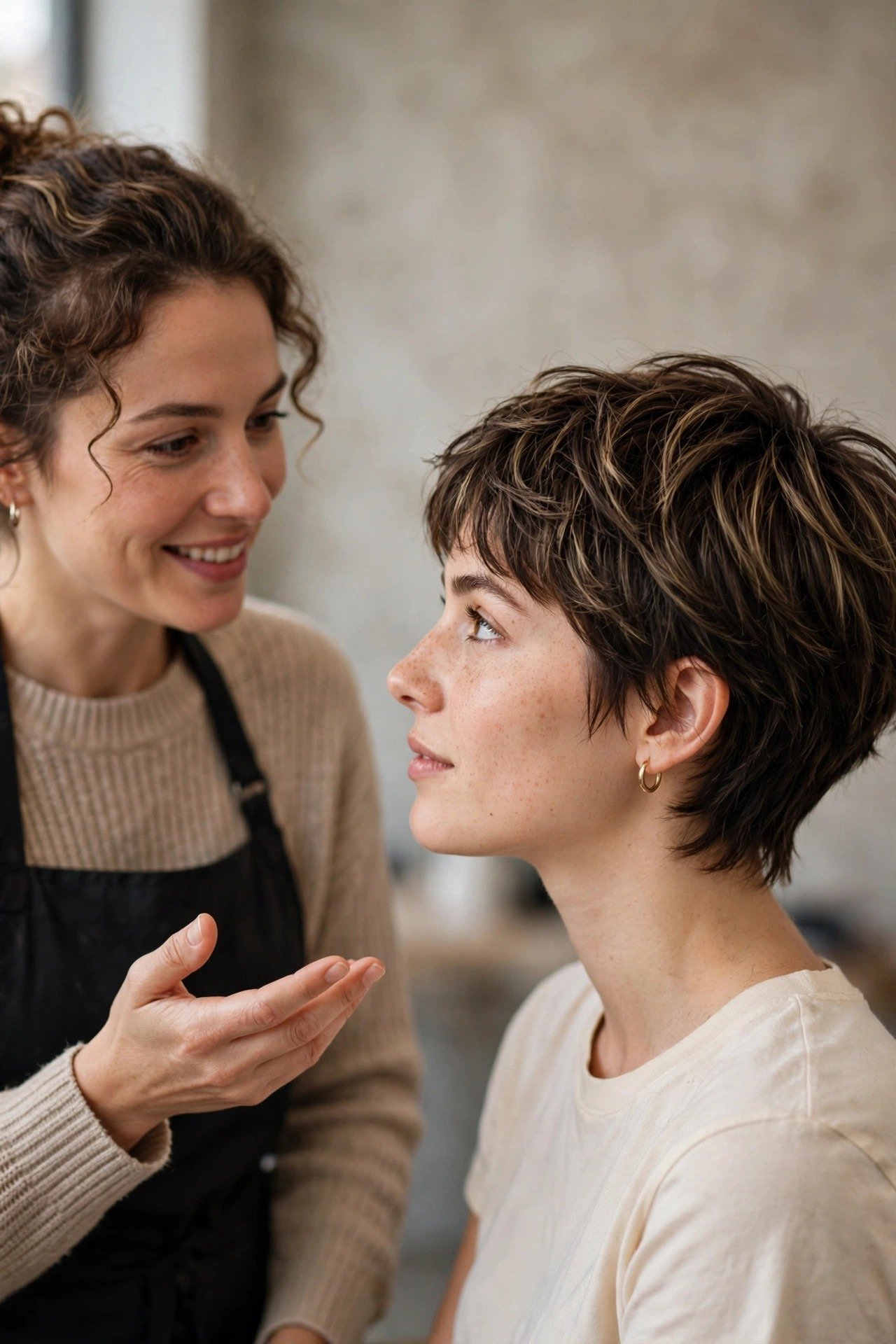
Is the cub cut the same as the wolf cut? No — that’s the most common confusion. The wolf cut is longer (usually shoulder-plus), wilder, with heavy mullet-like layering. The cub cut is its shorter, softer sibling: chin to collarbone, more wearable, less extreme. If the wolf cut felt like too much, the cub cut is probably your answer.
Will a cub cut work on thin, fine hair? It’s one of the best cuts for fine hair. The short crown layers create lift and the textured ends fake fullness. Keep the layering moderate — over-texturing fine hair backfires — and use volumizing products at the roots. Avoid heavy oils that flatten everything.
How long does it take to style each morning? Four minutes for the basic routine: product on damp hair, scrunch, air-dry or diffuse. The polished versions take ten to fifteen with heat styling. Second and third-day hair often needs nothing at all.
Can I get a cub cut if I’ve never had bangs? Yes, and curtain bangs are the training wheels — they grow out into layers with no awkward stage. Tell your stylist you’re bang-curious but nervous, and ask for the fringe on the longer side. You can always go shorter at your next appointment.
Does the cub cut suit older women? Absolutely — it’s one of the most age-flexible cuts out there. The texture is youthful without trying too hard, the face-framing softens features, and the low maintenance suits busy lives. I’ve cut it on clients from 19 to 70. The version matters more than the age: softer, collarbone-length versions tend to suit mature clients best.
What should I avoid asking for? Don’t ask for a cub cut and then request blunt ends, no layers, and no fringe — that’s a bob, and you’ll be disappointed when it doesn’t look like the photos. The texture and the fringe are load-bearing. Also avoid showing only celebrity photos with completely different hair types than yours.
Can I go from very long hair straight to a cub cut? You can, and it’s one of the most satisfying transformations in the salon — but donate or save the length intentionally rather than mourning it. The psychological jump from long to chin-length is real, so I’d suggest looking at the lob-cub version (Style 14) if you’re nervous. It gives you the texture with less shock. And please don’t cut it yourself first “to save time.” Fixing a DIY chop costs more than the original cut would have.
Will the cub cut work if I wear my hair up a lot? At chin length, you’ll get a tiny stubby ponytail — cute on some, frustrating on others. At collarbone length, you get a proper ponytail and easy topknots. If daily updos are non-negotiable (gym, work, kids), stay at collarbone length or longer. The cut still reads as a cub cut; you just keep the versatility.
Conclusion
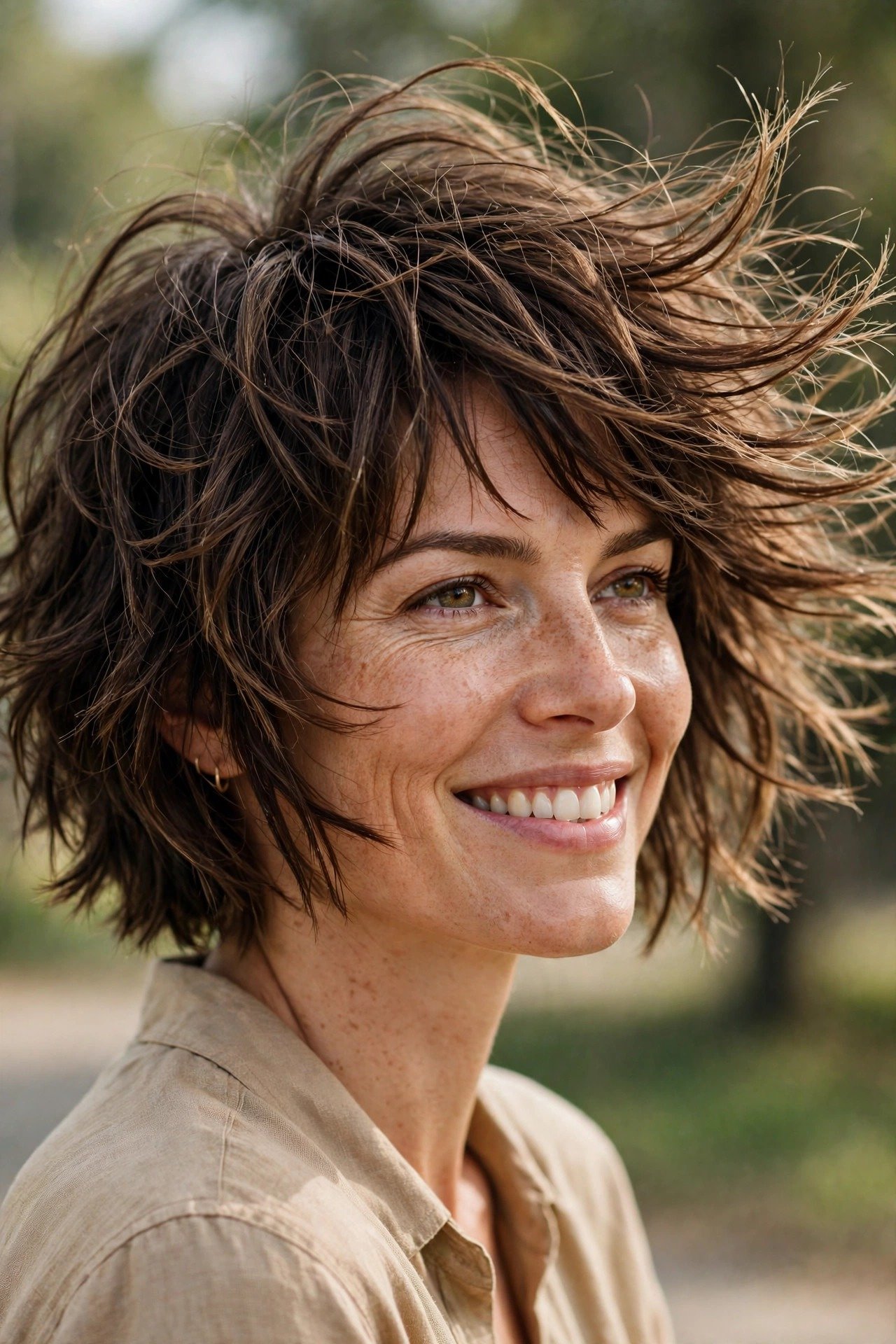
Here’s what I know after cutting this style hundreds of times: the cub cut has the highest satisfaction rate of any trend cut I’ve worked with. Not because it’s magic, but because it’s honest. It promises low maintenance and delivers. It promises versatility and delivers. It doesn’t ask you to become someone else — it just makes your hair look like the best version of itself.
The people who love it most are the ones who were tired: tired of long hair that took forever, tired of bobs that needed daily heat, tired of trends that looked great on Instagram and terrible on a Tuesday. The cub cut is a Tuesday haircut. It works on Tuesdays. That’s the whole review.
So save your three reference photos, book 60 to 90 minutes with a stylist who isn’t afraid of texture, and say the sentence: shaggy bob, chin to collarbone, choppy layers, curtain bangs. Then enjoy the rare experience of a haircut that gets better as the weeks go by. Welcome to the cub club.
One last thing: take a photo on day one and another on day fourteen. I promise the second one is better. That’s the cub cut’s party trick — it doesn’t peak in the salon chair, it peaks in your real life. And isn’t that what you actually wanted all along?