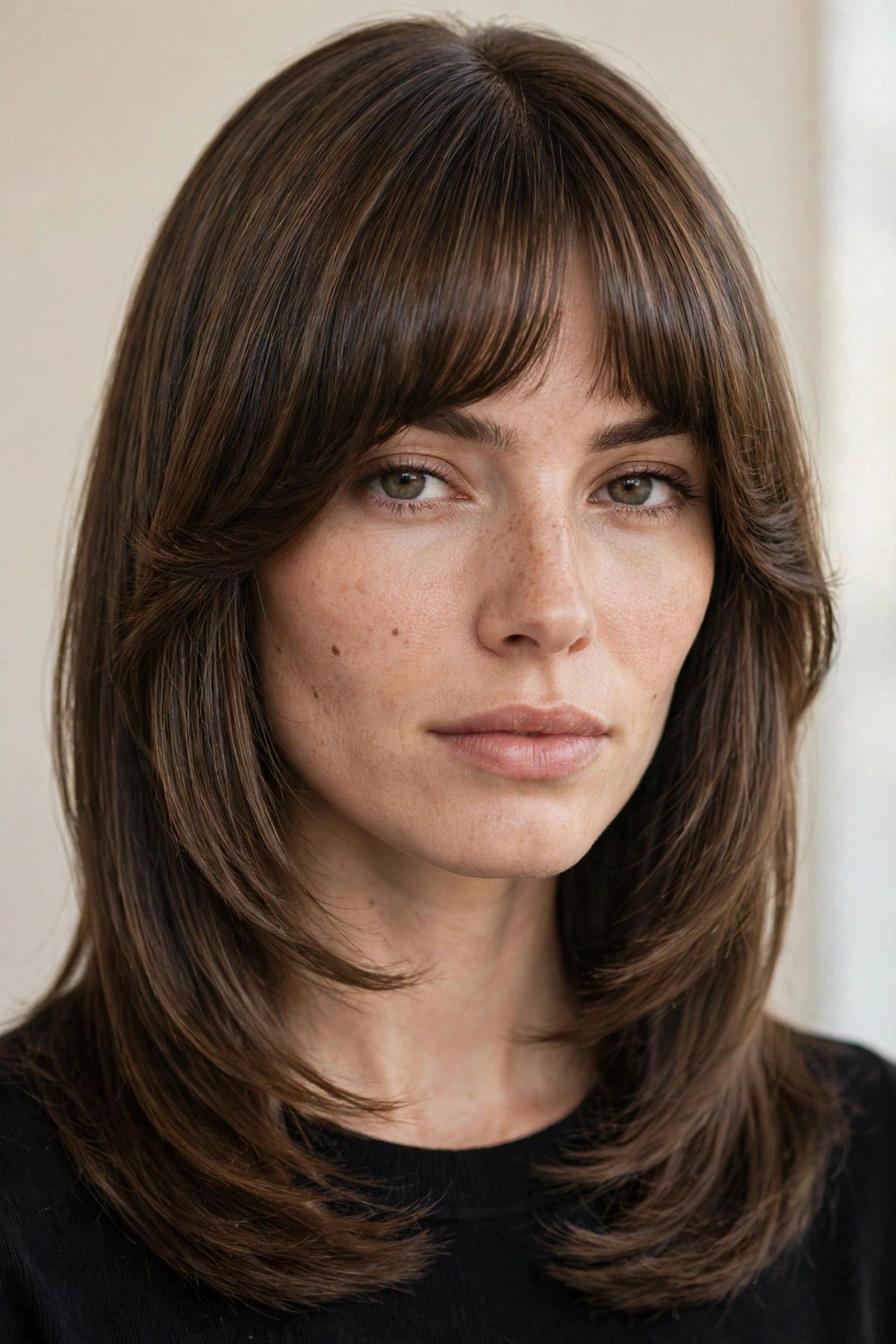
Bottleneck Bangs Women 2026: 15 Sculpted Fringe Ideas
Bottleneck Bangs Women 2026: 15 Sculpted Fringe Ideas
Of all the fringe trends to cycle through in the last five years, bottleneck bangs are the one stylists actually wear themselves. That tells you everything. We’re picky — we see what grows out badly, what clients complain about, what gets fixed at the next appointment. And we keep cutting bottleneck bangs, on ourselves and everyone else, because they’re the rare fringe that flatters almost every face and forgives almost every mistake.
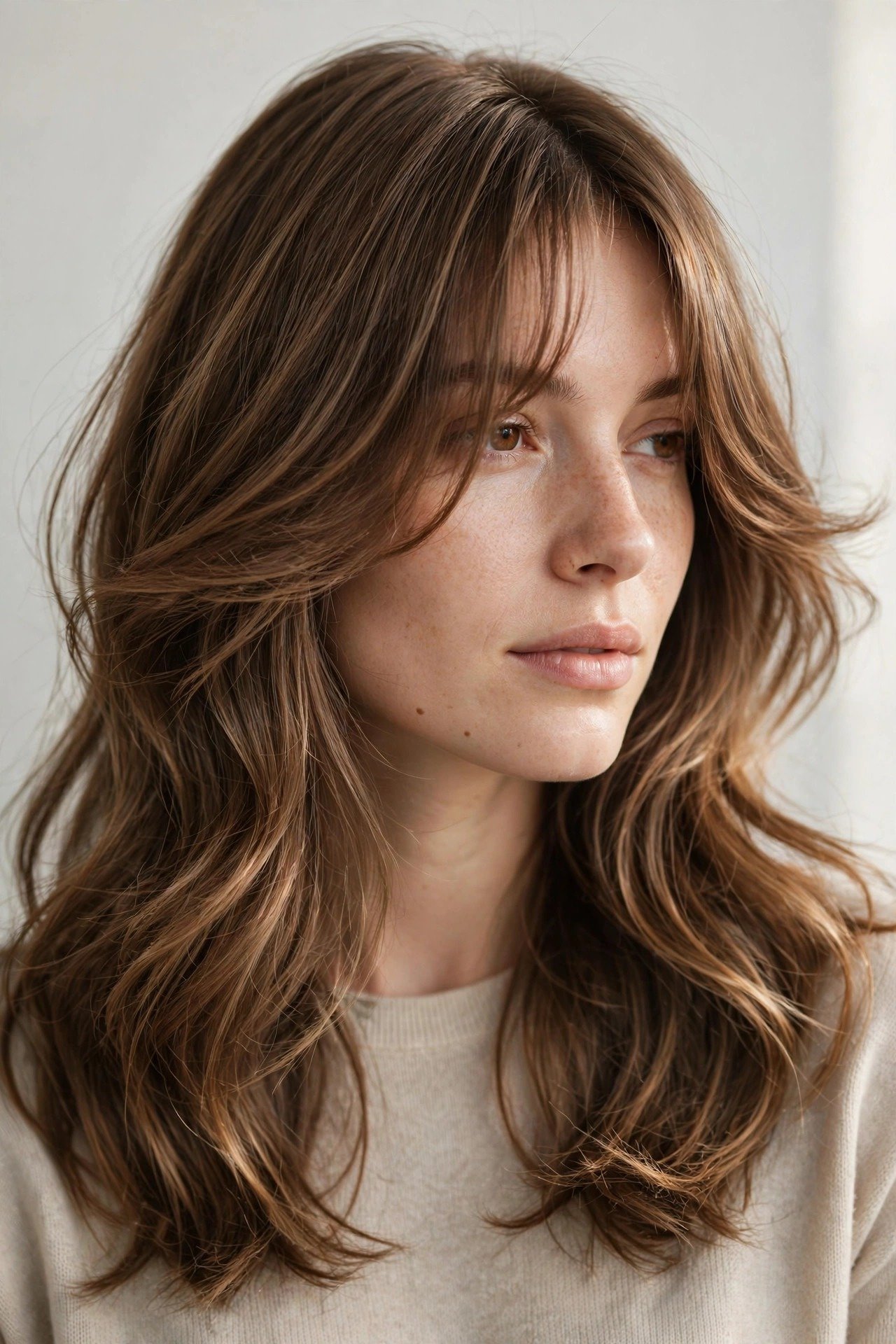
So what are they? Picture the neck of a bottle: narrow at the top, widening as it goes down. Bottleneck bangs do exactly that on your forehead — shorter and slimmer through the middle, longer and wider as they sweep out toward the cheekbones, melting into face-framing layers. It’s a sculpted shape, not a straight-across cut, and that shaping is what makes them so wearable.
They’re often called the grown-up curtain bang, and that’s fair. Curtain bangs part in the middle and hang; bottleneck bangs are cut with intention, with the shortest point hitting around the brow and the longest pieces reaching the cheekbone or jaw. The result frames the eyes, softens the cheekbones, and blends into the rest of your haircut instead of sitting on top of it like an accessory.
In this guide, I’m covering 15 distinct ways to wear bottleneck bangs in 2026 — from the barely-there wispy version to the bold sculpted statement — plus the stuff that determines whether you’ll love them: how to ask for them without ending up with regular curtain bangs, which face shapes need which tweak, the daily styling routine (it’s two minutes, I promise), and the grow-out plan that makes them the lowest-risk fringe you can get.
I’ve cut bottleneck bangs on every hair type and face shape over the past few years, and I’ll tell you what the glossy tutorials skip: the cowlick problem, the glasses complication, and why the first haircut matters more than any styling product. Let’s get into it.
One thing before we start: if you’ve been burned by bangs before — the too-short fringe of 2019, the curtain bangs that went stringy by week three — I get the hesitation. Bottleneck bangs were practically designed as the apology for those experiences. Keep reading and you’ll see why.
I’ll also say this upfront: this guide is long because the topic deserves it. Fringe decisions feel small and turn out to be big — you see your bangs every time you pass a mirror. I’d rather you read too much now than regret too much later. Skim what doesn’t apply, but don’t skip the face-shape and hair-type sections. That’s where the difference between “cute bangs” and “your bangs” lives.
What Are Bottleneck Bangs, Exactly?
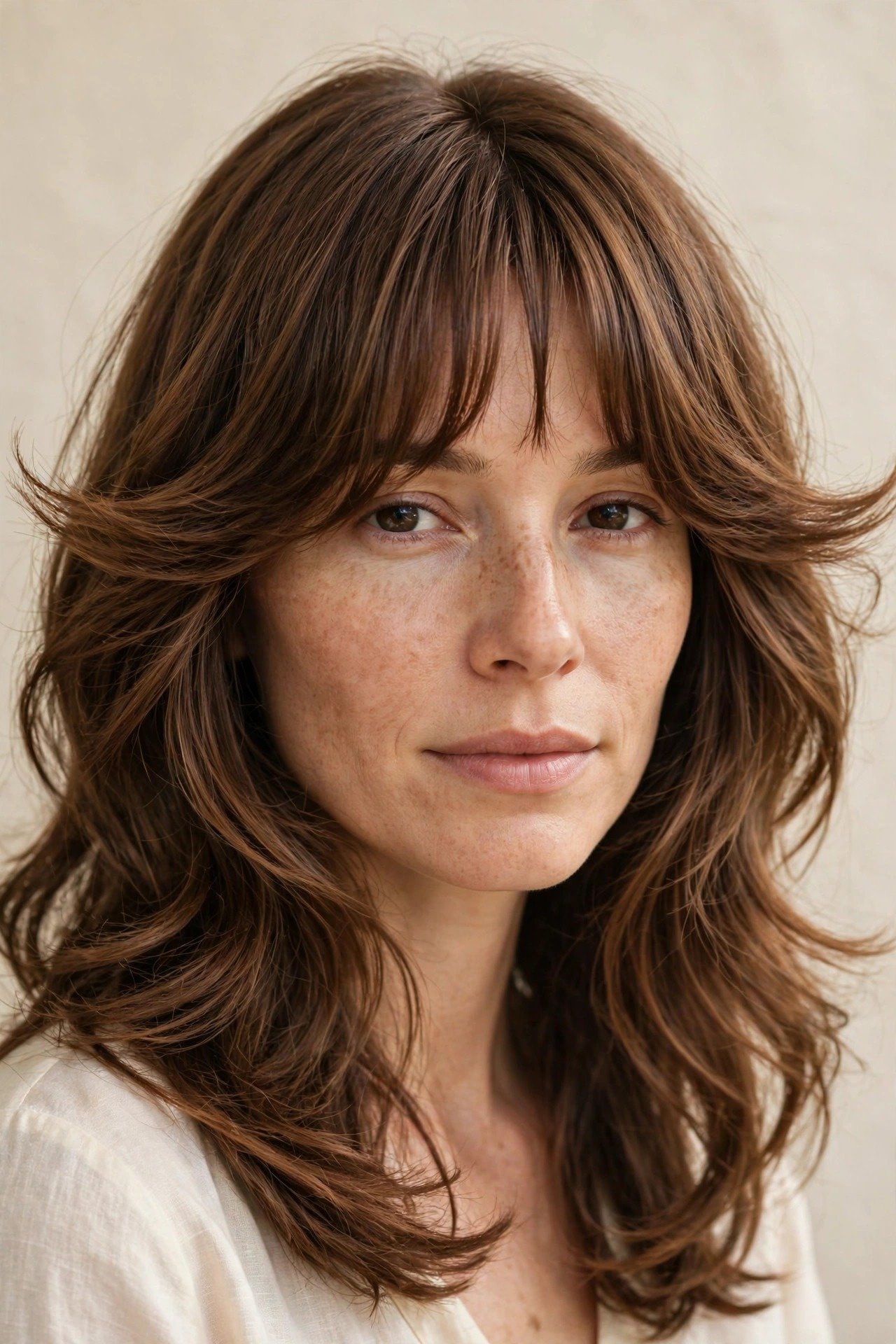
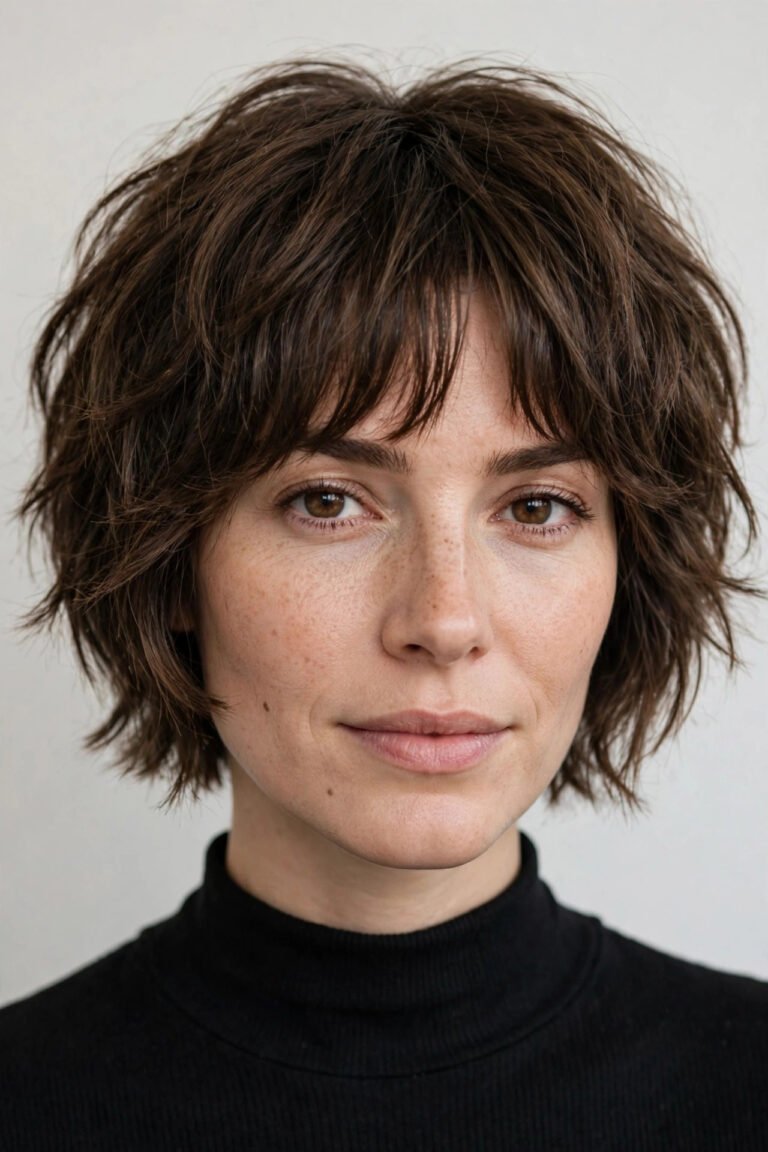
Let’s get technical for a minute, because the shape is the whole story. Bottleneck bangs are cut in an inverted-V or horseshoe section at the front of the head. The center is the shortest point — usually hitting between the brows and the bridge of the nose — and the sides graduate longer, reaching the cheekbones at minimum and the jawline at maximum. The outer edges blend into face-framing layers, so there’s no visible line where the bangs end and the haircut begins.
The “bottleneck” name describes the silhouette: slim through the middle like a bottle’s neck, flaring wider toward the bottom. When they’re cut right and styled, you can literally see the shape — narrower at the brow, opening up across the cheekbones. It’s architectural, but in a soft way. Nothing about it is harsh or geometric.
Length matters enormously here. Too short overall and they read as baby bangs with pretensions. Too long and they’re just curtain bangs with a fancy name. The sweet spot: the shortest center pieces should be long enough to sweep to either side — they should never be forced to sit straight down like a traditional full fringe. If your center pieces can’t be swept aside, they’re too short for the bottleneck shape.
Texture is the second load-bearing element. Bottleneck bangs should be textured at the ends — point-cut, never blunt. Blunt ends on a bottleneck shape look heavy and wig-like; textured ends look soft and piece-y, and they move. The whole point of the shape is movement: the bangs should flutter and separate, not sit in a solid panel.
Here’s what separates them from a regular fringe in practice: grow-out. A blunt fringe grows into an awkward shelf. Curtain bangs grow into long face-framing (fine). Bottleneck bangs grow into longer bottleneck bangs — the shape just gets softer and longer, and around month three you have curtain bangs. There’s no ugly phase. This is the single biggest reason I recommend them to fringe skeptics.
The styling default is a center or slightly off-center part, with the bangs swept to each side. But the shape also works pushed fully to one side, or worn more forward for a fuller look. That versatility — three different looks from one cut — is part of why they’ve stuck around while other fringe trends faded.
Bottleneck vs Curtain vs Birkin Bangs: Know the Difference

These three get confused constantly, and the confusion causes bad haircuts — clients ask for one and describe another. Here’s the definitive breakdown.
Curtain bangs are the simplest: a center part, two panels of hair framing the face, usually one length or with minimal graduation. They hang. They’re low-commitment and they suit most people, but they can look a bit shapeless — there’s no sculpting, just a part and two curtains. When curtain bangs grow out, they become face-framing layers, which is fine but unexciting.
Birkin bangs — named for Jane Birkin — are a full fringe worn long and piece-y, hitting at or just below the brow, often with a slightly grown-out, eyelash-skimming feel. They’re a straight-across fringe with texture, not a shaped one. Birkin bangs are gorgeous but they’re a real fringe: they sit on the forehead, they need regular trims, and the grow-out goes through the awkward eye-poking phase. Higher commitment, higher drama.
Bottleneck bangs are the shaped middle ground. Unlike curtain bangs, they have deliberate graduation — short center, long edges. Unlike Birkin bangs, they’re not a full forehead-covering fringe; the center is shorter and the shape opens up. Think of it this way: curtain bangs are two panels, Birkin bangs are one panel, bottleneck bangs are a sculpture.
Which should you get? If you want the lowest maintenance and you’re fine with simple, curtain bangs. If you want a real fringe moment and you’ll commit to trims, Birkin bangs. If you want the most flattering shape with the easiest grow-out, bottleneck bangs. Most of my clients who’ve tried all three land on bottleneck and stay there.
The practical difference in the chair: bottleneck bangs take more skill to cut. Curtain bangs are forgiving — it’s basically a part and a trim. Bottleneck bangs need the graduation mapped correctly, or the shape doesn’t read. This is a cut where your stylist’s fringe experience genuinely matters. Ask to see their fringe work before you commit.
One more distinction worth knowing: bottleneck bangs pair with more haircuts than the other two. They work with bobs, lobs, long layers, shags, even pixies. Curtain bangs can look lost on very short cuts; Birkin bangs can overwhelm fine hair. The bottleneck’s adaptable shape plays well with almost any length, which is part of its 2026 staying power.
Cost-wise, there’s barely any difference between the three at the salon — a fringe is a fringe, and most stylists charge the same whether it’s bottleneck, curtain, or Birkin. The real cost difference shows up in maintenance: Birkin bangs need the most frequent trims, curtain bangs the least, bottleneck in the middle. Factor the trim schedule into your decision, not just the cut price.
Why Bottleneck Bangs Flatter Almost Everyone

There’s actual geometry behind why these work so universally, and it’s worth understanding so you can advocate for the right version in the chair.
The short center draws attention to the eyes. That’s the first thing people notice about you anyway, and the bottleneck’s shortest point sits right at brow level, creating a frame that spotlights them. Longer fringes can hide the eyes; no fringe leaves them unframed. The bottleneck puts a soft spotlight exactly where you want it.
The graduating sides do the real face-shaping work. As the bangs widen toward the cheekbones, they create diagonal lines across the face — and diagonal lines are slimming on every face shape. On round faces, the diagonals break up width. On square faces, they soften the jaw. On long faces, the brow coverage shortens visually. On heart faces, the cheekbone pieces add width where the face narrows. One shape, four different corrections. That’s rare.
The blend into face-framing layers is the third mechanism. Hard lines — blunt fringes, harsh layers — emphasize whatever they sit next to. Soft, blended transitions flatter whatever they sit next to. Because bottleneck bangs melt into the haircut, they never create that “fringe vs. rest of hair” divide that can look choppy or dated.
There’s also a proportion trick: the bottleneck shape adds visual interest to the upper third of the face without adding bulk. For fine hair, this is gold — you get the impression of fullness around the face without needing actual density. For thick hair, the graduation removes weight exactly where thick fringes get heavy and triangular.
And here’s the 2026-specific reason they’ve exploded: the beauty mood right now is soft structure. The ultra-sharp trends had their moment, and people are gravitating toward shapes that look considered but not severe — the same reason the cub cut and the lived-in bob are thriving. Bottleneck bangs are the fringe version of that mood. They’re precise enough to look intentional in photos and soft enough to look effortless in person. In a year where everyone’s tired of high-maintenance beauty, a fringe that asks for two minutes a day feels like a gift.
The honest caveat: “almost everyone” isn’t “everyone.” Very strong cowlicks at the front hairline can fight the shape — the bangs want to sweep, the cowlick wants to stand. An experienced stylist can work around a mild cowlick by adjusting the part and keeping the center slightly longer. A severe one might mean choosing a different fringe. Bring it up in the consultation, not after the cut.
Glasses wearers, take note: bottleneck bangs and frames can be best friends or worst enemies. The bangs sit above most frames, drawing attention to the eyes behind the lenses — lovely. But if your frames sit high and the bangs sit low, they collide and everything looks crowded. Bring your glasses to the appointment. I mean it. Cut the bangs wearing them.
How to Ask Your Stylist for Bottleneck Bangs (The Exact Script)

Say this: “I want bottleneck bangs — shortest in the center around my brows, graduating longer toward my cheekbones, with the ends textured and blended into face-framing layers.” Then show photos. That sentence plus pictures gets you there.
The photos are critical because “bottleneck bangs” still gets confused with curtain bangs in some salons. Bring three photos of actual bottleneck bangs — the graduated shape should be visible — on hair similar to yours. And bring one photo of what you don’t want. The “don’t want” photo prevents the most common failure mode: a stylist hearing “bangs” and cutting a straight-across fringe.
Specify the shortest point. This is where miscommunication lives. “Around the brows” and “at the bridge of the nose” are two very different bangs. Point to your own face: “shortest here.” If you’re nervous, go longer — nose-bridge to start. You can always shorten at a follow-up, and most stylists will do a fringe adjustment within two weeks.
Ask for texture explicitly: “Point-cut the ends, please — I want them piece-y, not blunt.” Some stylists cut fringes blunt by default because it’s cleaner and faster. On a bottleneck shape, blunt ends kill the softness. If your stylist doesn’t point-cut fringes as a matter of course, that’s a yellow flag for this particular cut.
Discuss your part. Bottleneck bangs are designed for a center or off-center part, but if you’re a committed side-parter, the shape gets adjusted — the graduation becomes asymmetric. Tell your stylist where you actually part your hair, not where you wish you did. They’ll map the shape to your real part, and it’ll look ten times better.
Finally, ask about the blend. “How will these connect to my layers?” is the question that separates a good bottleneck cut from a fringe slapped onto a haircut. The outer edges of the bangs should flow into face-framing layers that continue the graduation. If your current haircut has no face-framing, your stylist may need to add some — that’s normal and it’s part of the service, not an upsell.
Time-wise, a fringe cut is usually 15 to 30 minutes as a standalone appointment, or added to a regular cut. Many salons offer fringe trims free or cheap between full appointments — ask about this, because bottleneck bangs need the center touched up every four to six weeks to keep the shape.
Styles 1–3: The Essential Bottlenecks
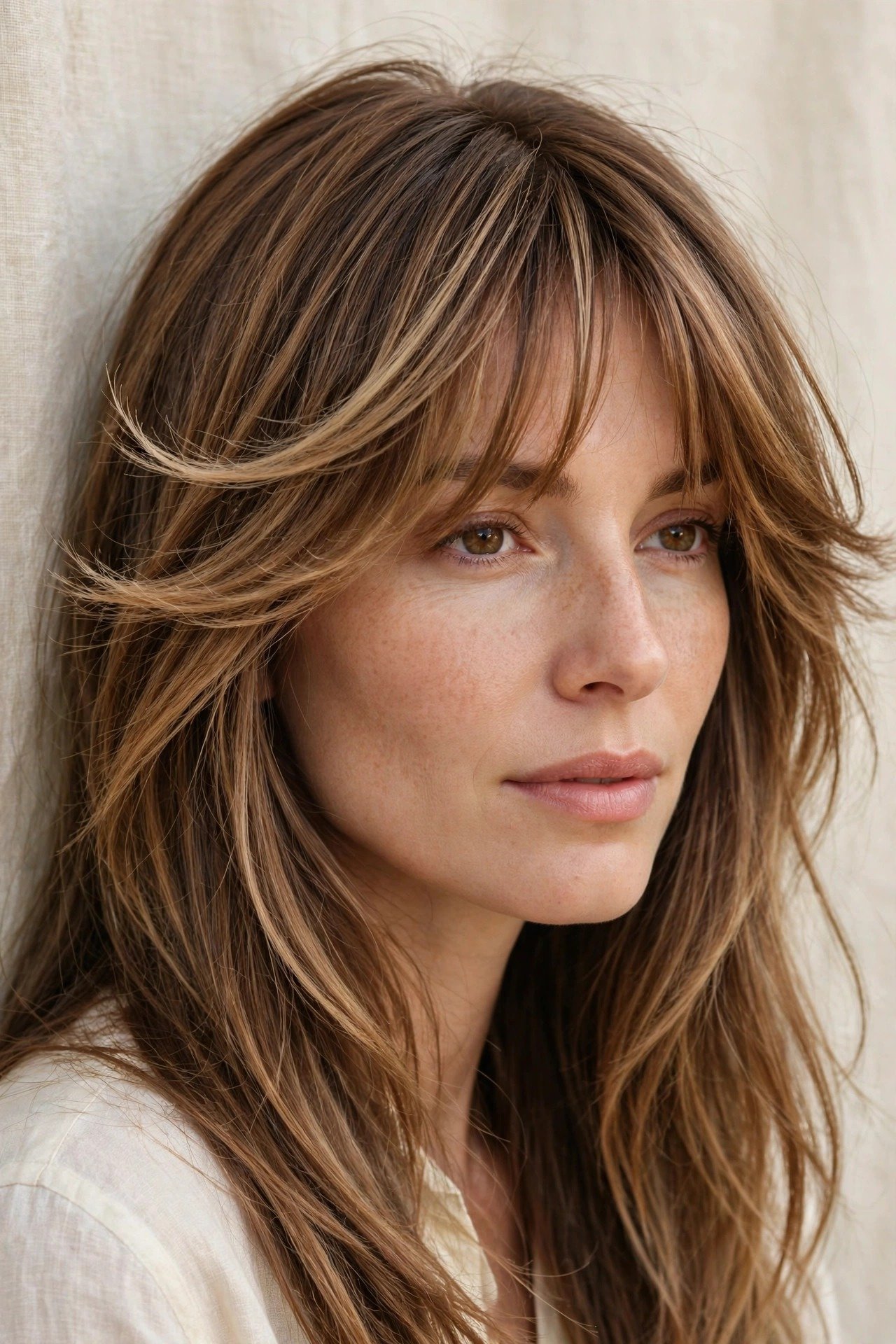
Style 1: The Classic Bottleneck. The platonic ideal — center hitting at the brows, graduating to cheekbone length, textured ends, blended into layers. This is the version in most of the reference photos, and it’s the one I cut most often. It works on straight, wavy, and loosely curly hair; it suits every face shape with the tweaks in the guide below; and it styles in two minutes with a round brush or just fingers. If you’re getting bottleneck bangs for the first time, get this one. It’s the baseline everything else riffs on.
Style 2: The Long Bottleneck. Same shape, shifted down — shortest point at the nose bridge, longest pieces reaching the jaw. This is the lowest-commitment version: it reads as face-framing layers with extra shaping rather than as “bangs,” which makes it perfect for fringe skeptics and conservative workplaces. The grow-out is essentially invisible — it just becomes long layers. Styling is wash-and-go; the length means the pieces fall into place on their own. The trade-off: less eye-framing drama. If you want the full bottleneck effect, go classic. If you want to test the waters, go long.
Style 3: The Wispy Bottleneck. Less hair, more air — a sheer, piece-y version where you can see forehead through the fringe. This is the romantic option: soft, feminine, barely-there. It suits fine hair beautifully because it doesn’t require density you don’t have, and it’s the most forgiving of styling errors since there’s no solid panel to go wrong. The wispy version also grows out the most gracefully of all — it just gets wispier. The catch: it doesn’t have the sculptural impact of the classic. It’s a whisper, not a statement. Choose based on your personality, not the photos.
These three are the foundation. Everything that follows is a variation on one of them — same architecture, different finishes.
Styles 4–6: Bottleneck Bangs Meet the Haircut
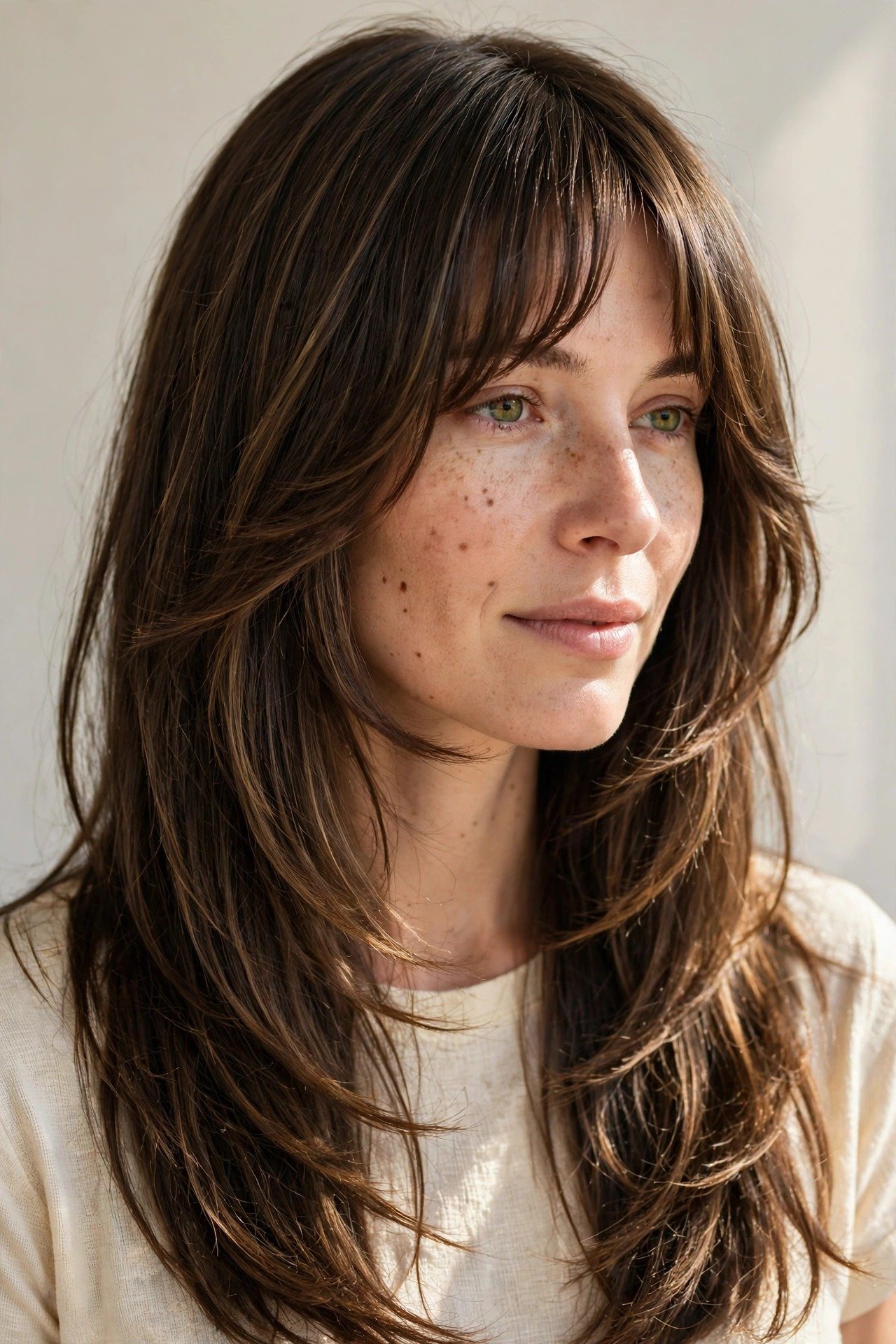
Style 4: Bottleneck with Long Layers. The most popular pairing, and for good reason. Long layers give the bottleneck’s graduating edges somewhere to go — the bangs flow into face-framing that continues down past the shoulders. It’s one continuous shape from brow to ends, which is incredibly flattering and incredibly easy to grow out. This is the version for anyone keeping their length. The layers should start at the cheekbone to meet the bangs’ longest pieces; disconnected layers that start at the chin create a gap that looks unintentional.
Style 5: The Bottleneck Bob. Chin-to-shoulder bob with bottleneck bangs, and it’s a whole mood — French, chic, deliberate. The bangs soften the bob’s geometry, and the bob gives the bangs a polished frame. This pairing needs the bob’s perimeter kept clean; too much texture on the bottom plus textured bangs reads messy rather than cool. Style it with the ends tucked under for polish or flipped out for attitude. The bob-and-bottleneck combo is also the best version for fine hair, since the bob’s weight creates fullness the bangs alone can’t.
Style 6: Bottleneck with Updos. Here’s what nobody tells you about bangs and updos: the right fringe makes every ponytail, bun, and braid look better. Bottleneck bangs are the right fringe. A high ponytail with bottleneck pieces framing the face is effortlessly pretty; a low bun with the bangs swept aside is evening-ready; braids with wispy bottleneck pieces pulled out look romantic instead of severe. The bangs soften the hairline, which is exactly what updos need. If you wear your hair up often, bottleneck bangs earn their keep daily.
The principle: the bangs don’t exist in isolation. The best bottleneck looks consider the whole haircut — length, layers, and how you actually wear it.
Styles 7–9: Bottleneck for Your Hair Type
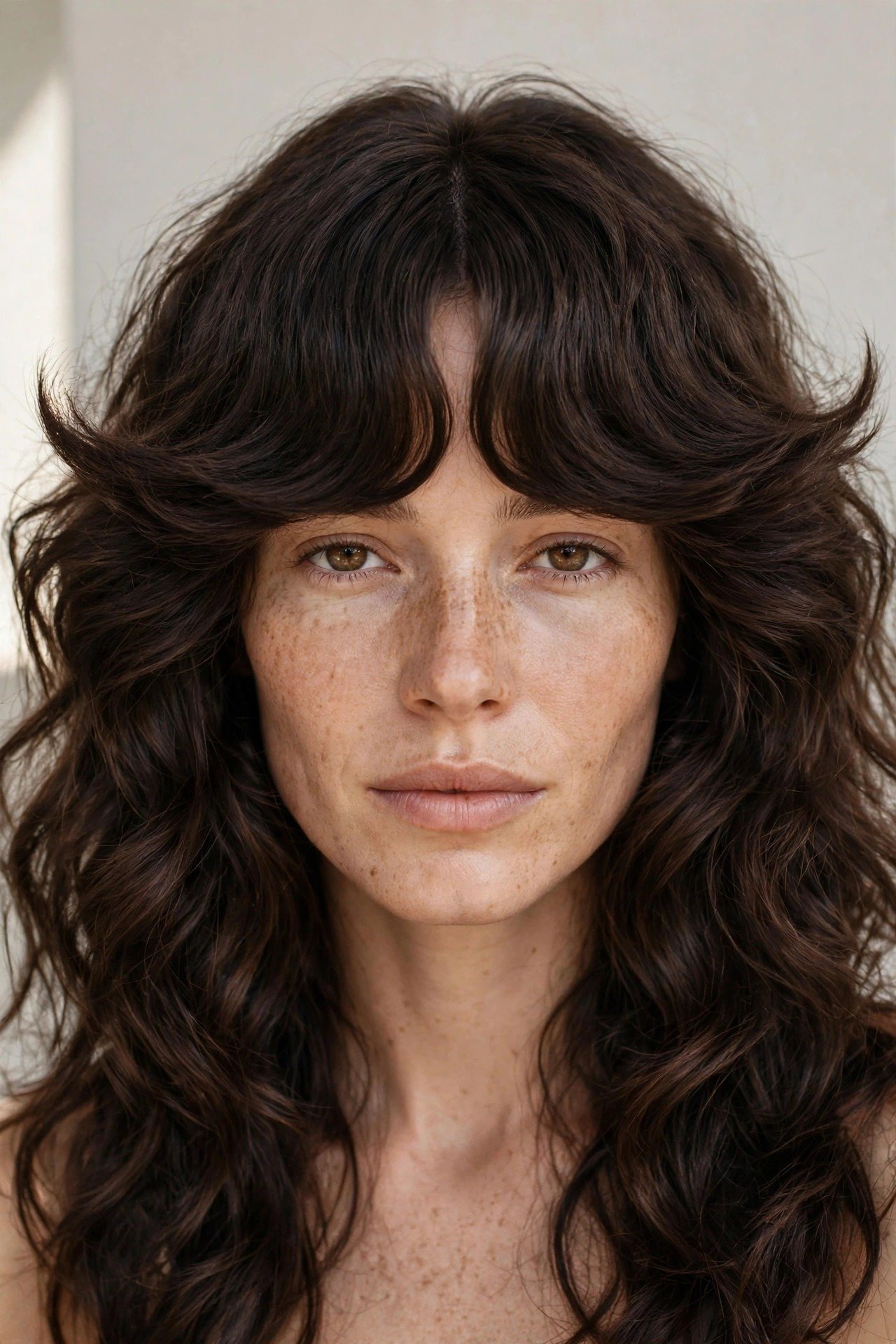
Style 7: The Curly Bottleneck. Yes, curly girls can have bottleneck bangs — and they’re stunning. The shape works with curl pattern instead of against it: the graduation follows the curls’ natural spring, and the textured ends are already built in. The non-negotiable: cut dry, curl by curl, by someone who understands curly fringes. Wet-cut curly bangs spring up unpredictably — the classic fringe disaster. Keep the center longer than you think (curls shrink), embrace the volume, and never let anyone thin them. The curly bottleneck grows out into beautiful curly face-framing. It’s wash-and-go in the truest sense.
Style 8: The Thick-Hair Bottleneck. Thick hair gives you the fullest, most dramatic bottleneck — but it needs weight management. Without internal texturing, thick bangs go triangular: wide at the bottom, flat at the top. Your stylist should remove bulk from inside the bang section while keeping the perimeter textured. The result is a lush, substantial fringe with movement. This version needs trims every four weeks to keep the shape — thick hair grows visibly and the graduation blurs fast. The payoff is a fringe with real presence that thinner hair types can’t replicate.
Style 9: The Fine-Hair Bottleneck. The wispy version (Style 3) is your starting point, but here’s the fine-hair-specific intelligence: take the bang section slightly wider than you think. A wider section borrows hair from the sides and gives the fringe more substance; a narrow section on fine hair looks sparse. Keep the texture light — over-texturing fine bangs makes them disappear. A little volumizing mousse at the roots, blow-dried forward, gives you all the fullness you need. And the honest truth: fine-hair bottleneck bangs look best slightly imperfect. Chase perfection and you’ll over-style them flat.
The takeaway: the shape adapts to the hair, not the other way around. Tell your stylist your texture concerns upfront and the cut gets customized.
Styles 10–12: Direction & Drama
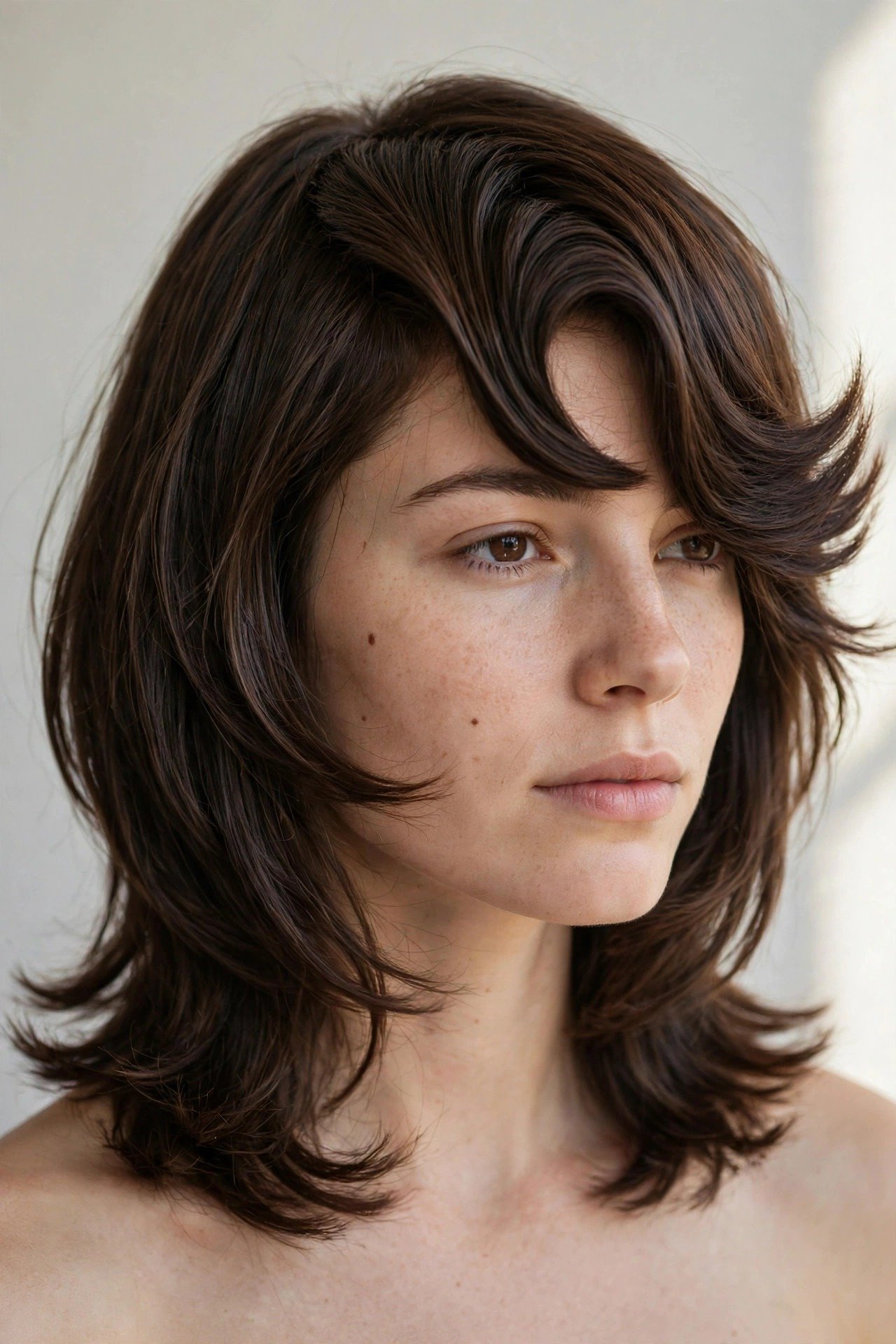
Style 10: The Side-Swept Bottleneck. Take the classic shape and wear it with a deep side part instead of center. The asymmetry is instantly glamorous — it adds volume at the crown, sweeps the fringe across the brow, and suits anyone who finds center parts severe. The cut gets adjusted for this: the graduation becomes slightly asymmetric to follow the sweep. It’s the evening-out version of bottleneck bangs, but honestly it works for daytime too. The side-swept style is also the answer for strong cowlicks — sweep with the cowlick’s growth pattern instead of fighting it.
Style 11: Bottleneck with a Lob. The lob (long bob) plus bottleneck bangs is 2026’s power pairing — polished enough for any office, textured enough to feel current. The lob’s clean perimeter anchors the bangs’ softness; the bangs keep the lob from looking severe. Shoulder-grazing length is the sweet spot. Style the lob smooth and the bangs piece-y for contrast, or tousle everything for a unified undone look. This combination photographs beautifully, which is why you see it everywhere right now. It’s the safe-but-not-boring choice.
Style 12: The Bold Sculpted Bottleneck. Maximum shape: a more dramatic graduation, slightly shorter center, more visible architecture. This is the editorial version — the one in fashion shoots. It demands confidence and a stylist with real fringe skills, because the drama only works when the shape is precise. On the right person it’s unforgettable: the sculpted fringe becomes the focal point of the whole look. The maintenance is real — trims every three to four weeks — and the grow-out is faster to look shaggy. Not for the low-maintenance crowd, but nothing else makes this kind of statement.
These three are about intent. Same underlying shape, three different attitudes — pick the one that matches how you want to feel.
Styles 13–15: Grow-Out, Color & Retro
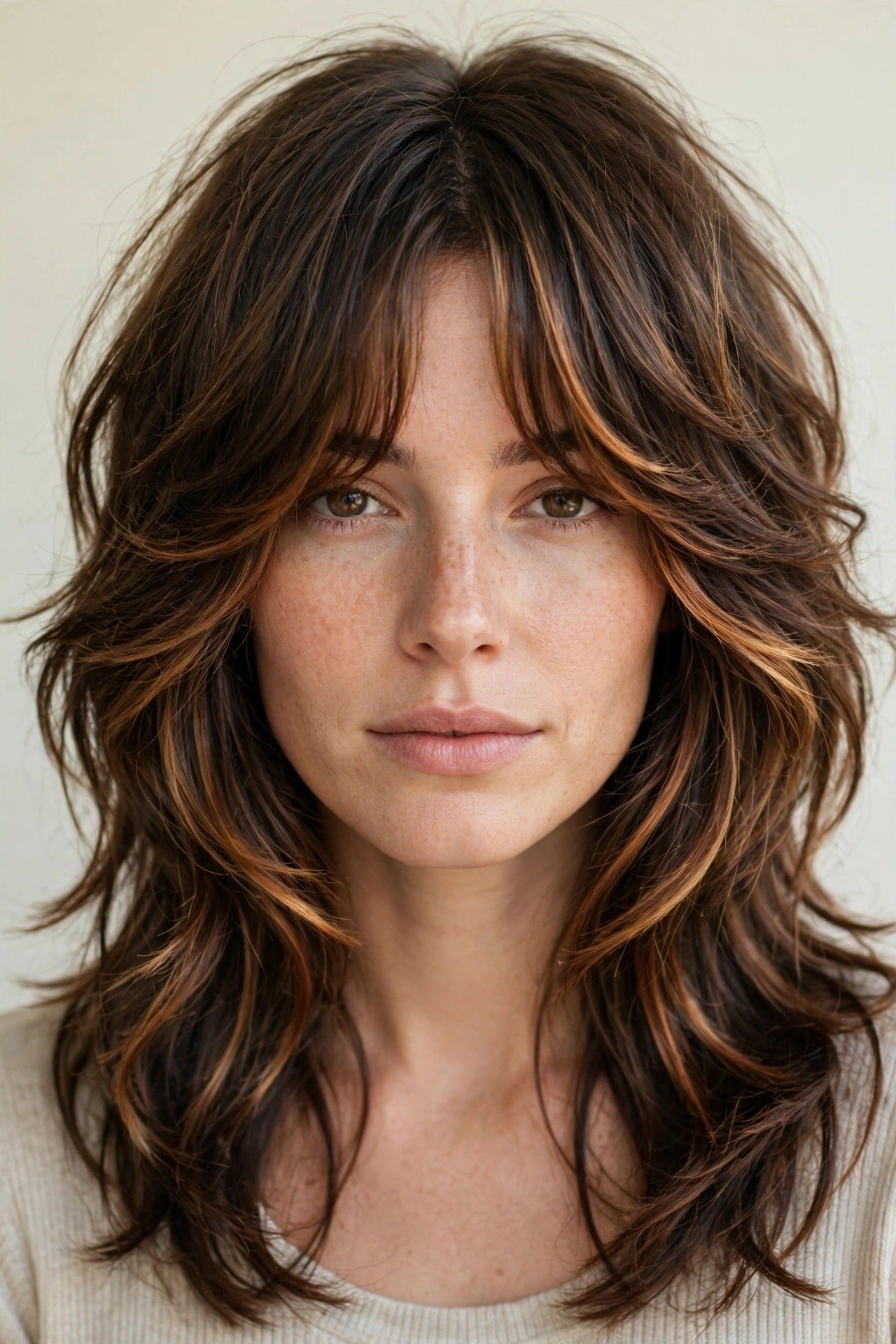
Style 13: The Grown-Out Bottleneck. This deserves its own entry because it’s the phase most fringes fail and bottleneck bangs ace. At two to three months, untrimmed bottleneck bangs become soft, long curtain bangs — the shape relaxes, the center reaches the nose, the edges hit the jaw. It looks intentional. Many of my clients discover they love this phase and just… stay here, getting trims every eight weeks instead of four. If you’re fringe-curious but trim-averse, plan for this: get the classic cut, then let it grow. You’re essentially getting two haircuts for the price of one.
Style 14: The Color-Accent Bottleneck. The fringe is the perfect place for color play because it’s the focal point. Face-framing highlights make the bottleneck’s graduation pop — the lighter pieces trace the shape. A bold choice: color just the bangs — copper, a rich brunette panel, even a fashion shade — while the rest stays natural. The bangs become an accessory you can change without committing the whole head. One caution: bleached bangs need more care — they’re fine hair that gets heat-styled often, so bond builders and heat protectant aren’t optional.
Style 15: The 70s Bottleneck. Lean into the retro soul: more volume, a stronger flip at the edges, the full Farrah-adjacent energy. This version gets blow-dried with a round brush, edges flicked outward, lots of bounce. It’s the most styling-intensive version — this doesn’t air-dry into itself — but the result is pure glamour. It suits thick hair and big personalities. Pair it with long layers and warm color for the complete aesthetic. Not an everyday look for most people, but an incredible sometime look.
And that’s fifteen. Between the essentials, the pairings, the texture versions, and these, there’s a bottleneck for every head.
The Bottleneck Bangs Mistakes I Fix Every Week
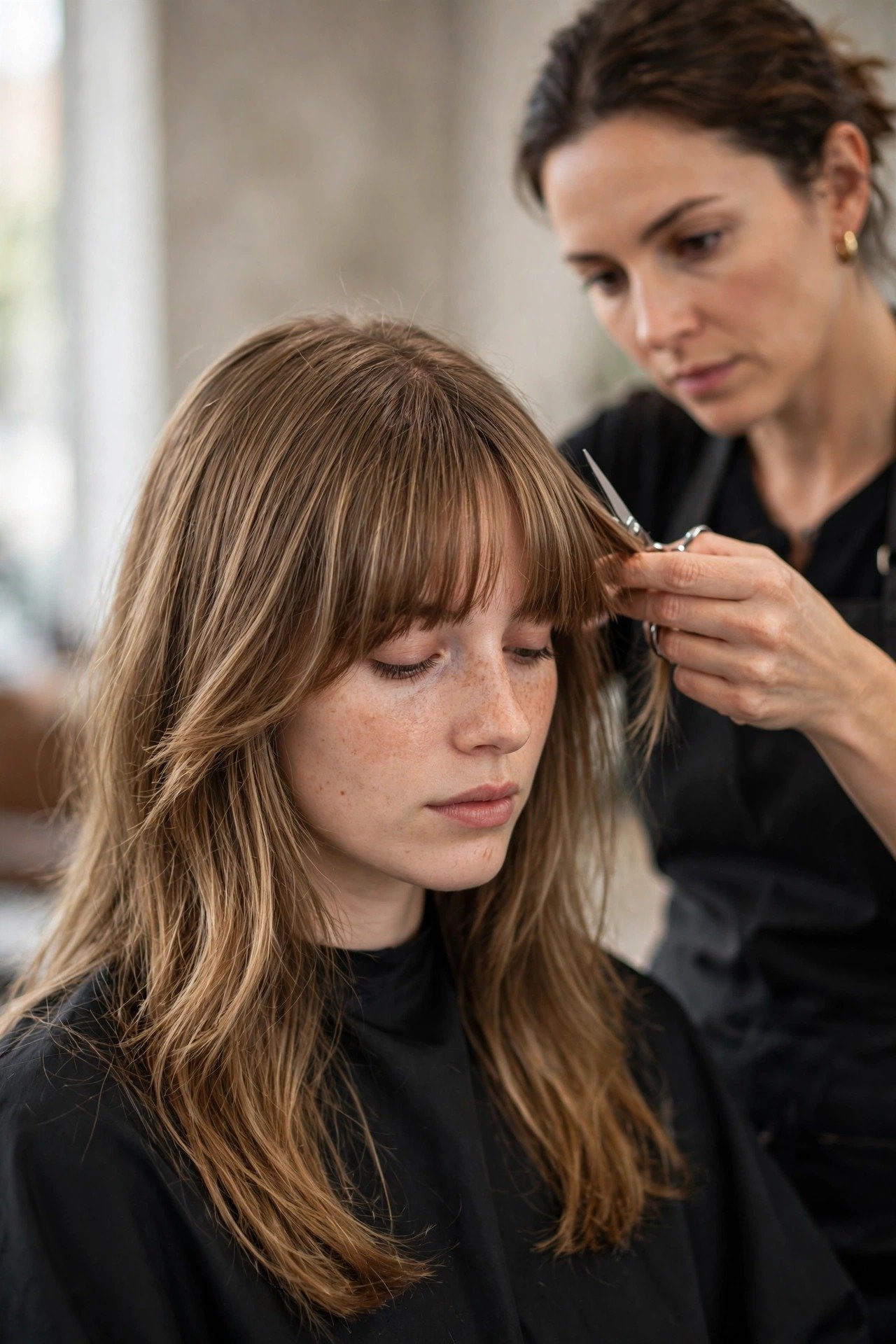
Fixing other people’s bangs is half my job. Here are the bottleneck-specific mistakes I see on repeat — and how to avoid each one.
Mistake one: the center cut too short. This is the big one. Someone asks for bottleneck bangs, the stylist cuts the center to brow level or above, and suddenly it’s not a bottleneck — it’s a baby bang with long sides, and the shape doesn’t read at all. The bottleneck needs the center long enough to sweep. If your stylist reaches for the shears and aims above your brows on the first cut, speak up. Longer is always safer; shortening takes thirty seconds at a follow-up.
Mistake two: no graduation. The stylist cuts what amounts to curtain bangs — one length across, parted in the middle — and calls them bottleneck. Without the short-to-long graduation, you don’t have the shape, you don’t have the eye-framing, and you don’t have the grow-out advantage. When you check the cut in the mirror, look for the shape: you should see the center sitting higher than the edges. If it’s all one length, the graduation didn’t happen.
Mistake three: blunt ends. A bottleneck with blunt-cut ends looks heavy and artificial — like a wig cap. The ends must be point-cut or slide-cut for that soft, piece-y finish. This is easy to check: the ends of your bangs should separate into pieces when you shake your head. If they move as one solid panel, ask for texturing. It takes two minutes and changes everything.
Mistake four: the section is too narrow. Some stylists take a tiny triangle at the front for the bangs, which gives you a wimpy fringe disconnected from the rest of the haircut. The bottleneck section should be generous — wider than you think — so the graduating edges have enough hair to blend into the face-framing layers. A narrow section also means the bangs look sparse, especially on fine hair. When in doubt, go wider.
Mistake five: ignoring the blend. The bangs are cut, the client is happy, but there’s a visible line where the bangs end and the layers begin — two separate haircuts sharing a head. The outer edges of the bottleneck must flow into face-framing layers. If your haircut has no face-framing, the stylist needs to cut some. This isn’t an optional extra; it’s part of the bottleneck.
Mistake six: styling them like a regular fringe. Blow-drying bottleneck bangs straight down like a full fringe fights the shape — you get the bump, the helmet, the wrongness. They need to be dried swept to the sides, following the graduation. If your morning routine was built for a different fringe, rebuild it around the sweep. Two minutes, round brush, done.
The good news: every one of these is fixable, usually in a single fifteen-minute appointment. If your bottleneck bangs don’t look like the photos, it’s almost certainly one of these six — not your face, not your hair, not the trend. Get the fix, not a new haircut.
Bottleneck Bangs Through the Seasons

Bangs behave differently in July than in January, and the bottleneck is no exception. Here’s the seasonal playbook.
Summer is the hard season for any fringe. Heat plus humidity plus forehead equals sweat, and sweat equals bangs sticking to skin and separating into stringy pieces. The bottleneck actually handles this better than most fringes because the textured ends and swept shape don’t show separation as badly — but you still need a strategy. Dry shampoo on the bangs before you leave the house (not after they get sweaty — before, as prevention). Blotting papers in your bag for midday forehead touch-ups. And on truly brutal days, the bottleneck pins back beautifully — sweep the pieces to the sides and pin; the graduation means no awkward lumps.
Summer styling shortcut: embrace the undone. Humidity fights polish, so don’t fight back. Finger-style the bangs, let them air-dry, accept the extra wave. The bottleneck’s soft shape looks intentional even when it’s messy — that’s the design working for you. Save the round-brush precision for air-conditioned days.
Fall is bottleneck prime time. The air cools, the humidity drops, and suddenly your bangs behave. This is when the classic version looks its absolute best — smooth, shaped, polished with minimal effort. It’s also the ideal season to get the cut if you’re new to fringes: you’ll learn the styling routine in forgiving weather, and by winter you’ll have it down.
Winter brings static and dryness. Bangs get flyaway, ends get crispy, and hats flatten everything. The fixes: a tiny bit of smoothing cream or oil on the ends only (never the roots — grease), a silk or satin-lined hat to reduce flattening and static, and trims on schedule because dry winter air makes split ends show faster on textured fringes. The bottleneck’s texture actually hides winter dullness well — piece-y ends catch light better than blunt ones.
Winter hat strategy deserves its own note since it comes up every year. Put your hat on, then when you take it off, flip your head upside down and shake — the bangs fall back into their swept shape. A quick finger-restyle and you’re done. The bottleneck recovers from hats better than any full fringe because there’s no solid panel to get creased. Another quiet advantage.
Spring is transition season — growing out the winter version, or refreshing for summer. It’s the natural moment for a fringe trim and shape check. If you let the bangs grow through winter, spring is when you decide: trim back to the classic shape, or let them keep growing into the curtain-bang phase for summer (when pinning them back is easiest). Either path works; the bottleneck supports both.
Year-round truth: the bottleneck is the most season-proof fringe I’ve cut. Its shape adapts — polished when the weather cooperates, undone when it doesn’t — and it never has a season where it just doesn’t work. That’s part of why it’s still here in 2026 while fussier fringes came and went.
Bottleneck Bangs for Your Face Shape
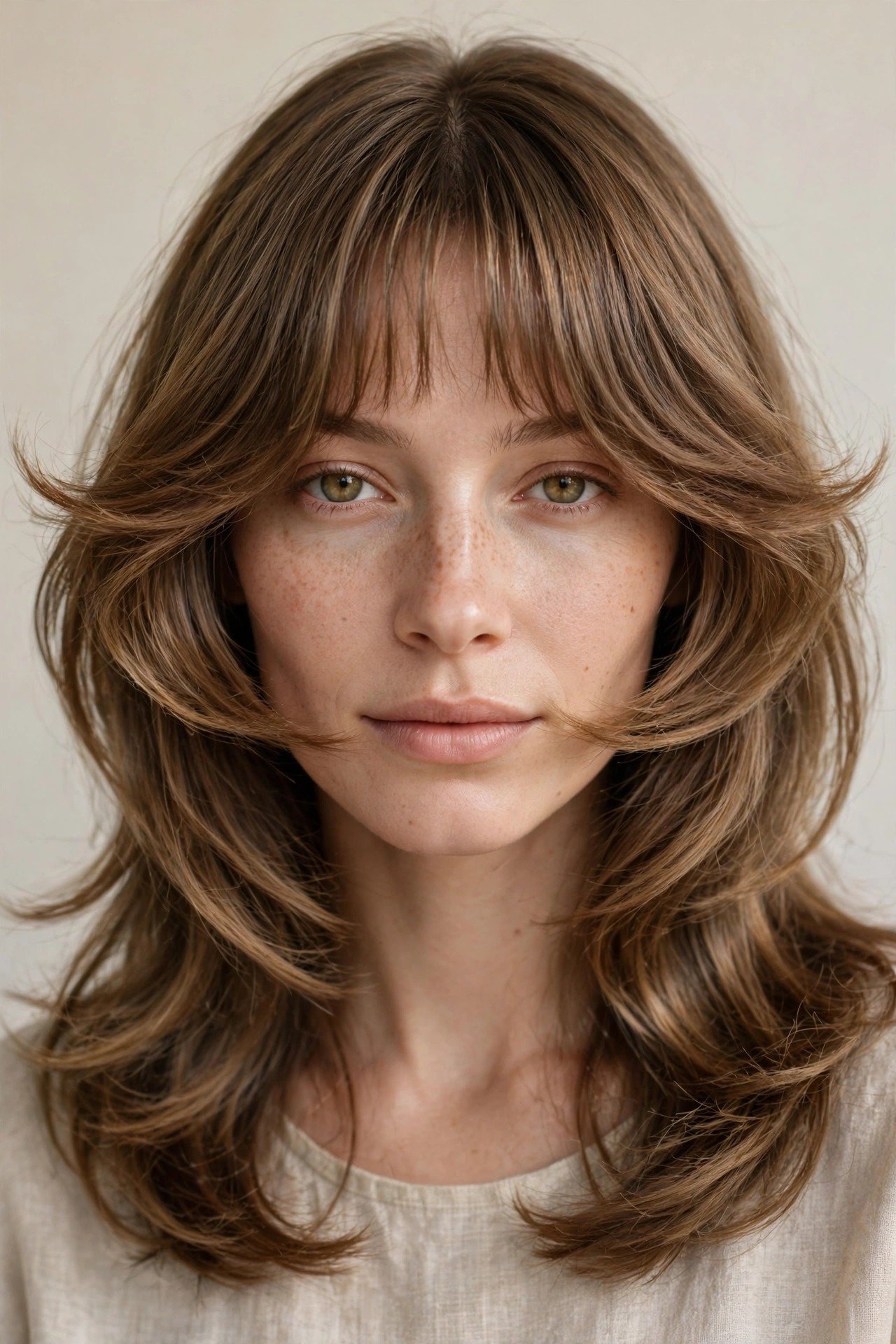
The bottleneck’s graduation can be tuned for every face shape. Here’s the tuning guide.
Round faces: emphasize the diagonal. Keep the center at brow level or slightly longer, and let the graduating edges run long — cheekbone to jaw. The longer diagonals create vertical lines that slim. Avoid a very short center, which can make a round face look rounder by adding horizontal emphasis at the brow. The side-swept version is particularly good here.
Square faces: soften, soften, soften. Wispy texture is your friend — avoid anything too precise or geometric. The graduating edges should be soft and piece-y around the jaw, breaking up the strong angles. Curtain-length edges (jaw-skimming) work better than cheekbone-length, which can emphasize width at the wrong point. The bold sculpted version is the one to skip; the wispy or classic versions are ideal.
Oval faces: everything works, so choose by vibe. The classic is perfect, the bold sculpted is fun, the wispy is romantic. The only real advice: don’t hide. Oval faces look best with features visible, so avoid letting the bangs get too heavy or too long — keep the eyes as the focal point.
Heart faces: the bottleneck was made for you. The shape naturally minimizes a wider forehead (the bangs cover it) and adds width at the cheekbones and jaw (the graduating edges), which is exactly the balancing act heart faces need. Go for the classic or slightly fuller version. Avoid very wispy — you want enough substance to do the balancing work.
Long faces: shorten visually. A slightly fuller center — brow-skimming rather than nose-bridge — reduces forehead length. Keep the edges at cheekbone rather than jaw to avoid adding more vertical lines. The classic bottleneck at a slightly shorter overall length is the prescription. Avoid the long version (Style 2), which elongates.
Universal tip: these adjustments are a starting conversation, not a rulebook. Bring your face shape up, but let your stylist’s eye make the final call in the chair.
Bottleneck Bangs for Your Hair Type

Straight hair: the bottleneck shape shows most clearly on straight hair — every graduation line is visible. The upside is precision; the downside is that mistakes show too, so the cut needs to be good. Styling is a two-minute round-brush job or even just a blow-dry forward with fingers. Straight hair holds the swept shape well. The main enemy is oil — straight bangs show grease faster than any other texture, so dry shampoo is your daily companion, not an occasional rescue.
Wavy hair: the sweet spot. Waves give the bottleneck natural movement that straight hair has to style in, and the shape enhances the wave pattern around the face. Air-drying works — scrunch the bangs lightly with a little curl cream and let them do their thing. The waves create the piece-y texture automatically. This is the lowest-effort combination in the guide, and it’s why wavy-haired clients have the highest bottleneck satisfaction I see.
Curly hair: covered in Style 7, but the daily reality deserves emphasis — curly bottleneck bangs are genuinely wash-and-go once cut right. The curls spring into the graduated shape on their own. Refresh with water and a little leave-in on non-wash days. The shape holds for weeks because curls don’t go limp. The only maintenance is the trim schedule: curly bangs can go six to eight weeks since the shape disguys grow-out in volume.
Coily hair: the bottleneck translates as a beautifully shaped, tapered fringe following the same principles — shorter center, longer graduated edges, textured ends. It must be cut dry and in its natural state (or stretched, by a stylist experienced with coily texture), because shrinkage changes everything. The result frames the face with gorgeous volume and shape. Find a stylist who specializes in your texture; the shape is absolutely worth it.
Thick hair: weight management is everything (see Style 8). The one addition: thick bottleneck bangs can handle — and often need — more aggressive texturing than the stylist’s default. If your bangs feel heavy or helmet-like after the cut, that’s not the shape failing, that’s bulk that needs removing. Go back and ask for internal weight removal. It takes ten minutes and transforms the fringe.
Fine hair: the wider-section trick from Style 9, plus this: fine bottleneck bangs look best with a slightly off-center part. A dead-center part on fine bangs can look sparse at the part line; shifting it half an inch to the side creates the illusion of fullness. Tiny adjustment, real difference.
The 2-Minute Daily Styling Routine
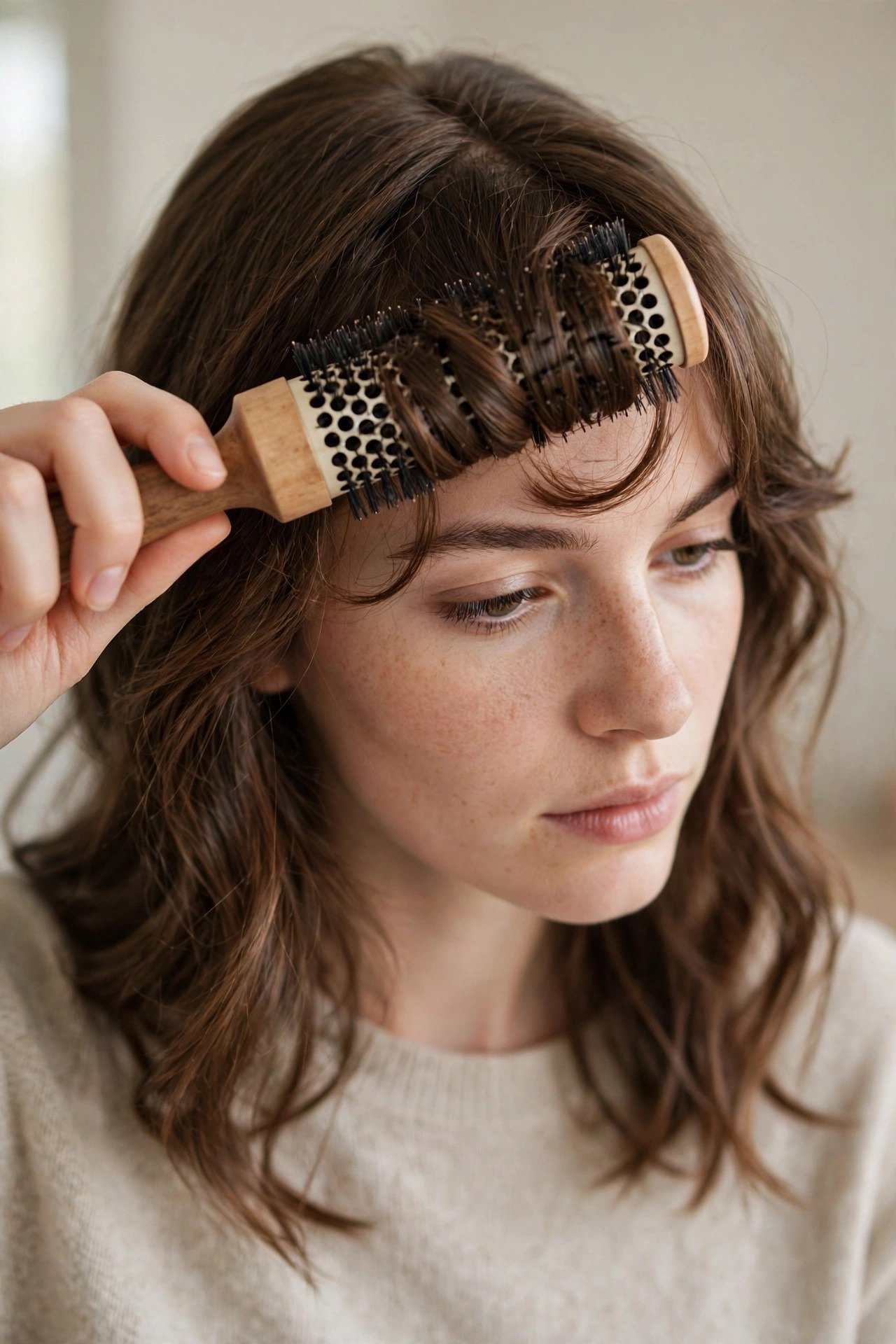
Here’s the routine. Two minutes, every morning, and your bottleneck bangs look like the reference photo.
Minute one: dampen the bangs. Not the whole head — just the fringe. A spray bottle works, or just wet your fingertips and run them through. Bottleneck bangs reset with water; yesterday’s shape releases and you’re starting fresh. This is the step people skip, and it’s why their bangs look progressively worse through the week. Thirty seconds of water undoes all of it.
Still in minute one: apply a tiny amount of product. Pea-sized — I’m serious. Lightweight mousse for volume, a dab of styling cream for control, nothing heavy. Work it through the damp bangs with your fingers. Heavy product on bangs is the number one styling error; it makes them stringy and dark-looking. Less is genuinely more here.
Minute two: blow-dry. Aim the dryer down at the bangs — never up from underneath, which creates the dreaded bump. Use your fingers or a small round brush, sweeping the bangs to each side as you dry. The motion is: center pieces get dried slightly forward then swept aside, edges get dried outward to emphasize the graduation. You’re not trying to make them straight; you’re setting the swept shape.
The round brush matters more than the dryer. A small round brush (one inch) gives you control over each section and creates the soft bend that makes bottleneck bangs look expensive. Fingers work for the wispy versions; the brush is for the classic and sculpted. It’s a ten-dollar tool that does half the work.
No-dryer option: for the wispy and long versions, you can finger-style damp bangs into place and let them air-dry. It won’t have the same polish, but it has an effortless quality many people prefer. Clip the center pieces loosely to each side with a duckbill clip while they dry if you want more sweep — remove the clips when dry.
Second-day refresh: dry shampoo at the roots of the bangs (hold the can six inches away, let it sit thirty seconds, massage in), then a quick finger-restyle. Bangs get oily faster than the rest of your hair because they sit on your forehead — this isn’t a flaw, it’s physics. A thirty-second dry shampoo reset keeps them fresh between washes.
What not to do: don’t straighten bottleneck bangs with a flat iron regularly. It flattens the texture the shape depends on and makes the graduation look harsh. If you must, one quick pass on low heat, ends only. And don’t over-touch them during the day — every touch transfers oil. Style them in the morning, then leave them alone.
The Grow-Out Plan & Trim Schedule
This is the section that sells bottleneck bangs to skeptics, because the grow-out math is the best of any fringe.
The trim schedule for the ideal shape: every four to six weeks, center pieces only. This is a fifteen-minute appointment, and many salons do fringe trims free for existing clients or for a nominal fee. Ask about this when you get the cut — knowing the maintenance cost upfront prevents surprise. Thick hair: every four weeks. Fine hair: every six. Curly: six to eight.
What happens between trims: the center grows from brow to nose-bridge length, the edges from cheekbone toward jaw. The shape softens but doesn’t break — the graduation is still there, just longer. Around week six to eight, you have the long bottleneck (Style 2). It looks deliberate. Nobody can tell you “need a trim.”
Months two to three: the bangs become curtain bangs. The center is long enough to tuck behind the ears, the edges are full face-framing. This is the phase where other fringes look awkward and bottleneck bangs look like you planned it. Many clients live here happily with trims every eight weeks.
Months four and beyond: the bangs have become face-framing layers, fully integrated into the haircut. If you started with long layers, there’s no line of demarcation at all — the fringe has dissolved into the cut. You’re back to no-bangs with great face-framing, which is itself a good look. The whole journey from fringe to no-fringe has no ugly phase. Name another bang that does that.
If you want out faster: grow the center while trimming the edges into layers, and the transition accelerates. If you want to stay: keep the four-to-six-week fringe trim rhythm and the shape holds indefinitely. The bottleneck is the rare fringe that supports both commitment and exit with equal grace.
One practical note: schedule your first fringe trim when you get the cut. Put it in the calendar for five weeks out. The clients who maintain bottleneck bangs beautifully aren’t more disciplined — they just booked the appointment before they needed it.
Bottleneck Bangs FAQ

How are bottleneck bangs different from curtain bangs? Curtain bangs are two simple panels with a center part and minimal shaping. Bottleneck bangs are sculpted — short in the center, graduating longer toward the cheekbones, with textured ends blended into layers. The bottleneck has deliberate architecture; curtain bangs are simpler and less shaped. The bottleneck also grows out more gracefully.
Do bottleneck bangs suit round faces? Yes — they’re one of the best fringes for round faces. The diagonal lines of the graduating edges create slimming verticals, and the longer edge length (cheekbone to jaw) avoids adding width. Keep the center at brow level or longer, and consider the side-swept version for maximum effect.
Can I get bottleneck bangs with curly hair? Absolutely, and they’re gorgeous — but they must be cut dry, curl by curl, by someone experienced with curly fringes. Keep the center longer than you think to account for shrinkage, and never let anyone thin them. The grow-out is beautiful.
How often do they need trimming? Every four to six weeks for the crisp shape — but it’s a quick fifteen-minute fringe trim, often free or cheap at your salon. The shape degrades gracefully, so stretching to eight weeks just gives you the longer version, not a mess.
Will they work if I wear glasses? Usually yes, but bring your glasses to the appointment. The bangs should sit above your frames — if they collide, everything looks crowded. Your stylist will adjust the shortest point to clear your frames. This is a five-second conversation that prevents a real problem.
What if I have a cowlick in front? Mild cowlicks can be worked around — your stylist adjusts the part and keeps the center slightly longer to accommodate the growth pattern. Severe cowlicks that stand straight up may fight the swept shape. Bring it up in the consultation; a good stylist will tell you honestly whether it’ll work.
Can I style them without heat? The wispy and long versions, yes — finger-style damp and air-dry. The classic version really benefits from two minutes with a blow-dryer and round brush to set the swept shape. It’s the difference between good and great, not between good and bad.
I’m growing out a bad fringe. Can bottleneck bangs fix it? Often, yes. A skilled stylist can reshape a grown-out blunt fringe into a bottleneck by graduating the center shorter and blending the edges — it’s one of the best rescue cuts for fringe regret. The existing length becomes the raw material. Book a fringe-focused appointment and bring photos of where you want to end up.
Do bottleneck bangs work on thin, fine hair? Yes — take the bang section wider than you think to borrow density from the sides, keep the texture light, and use a slightly off-center part for the illusion of fullness. The wispy version was made for fine hair. Avoid heavy products that flatten what little volume you have.
How much does a bottleneck bang trim cost? Most salons charge little or nothing for fringe trims between full appointments — many do them free for regular clients, others charge a nominal fee for the fifteen minutes. Ask when you book the cut. It’s the cheapest maintenance in hairdressing, which is part of why this fringe is so livable.
Conclusion
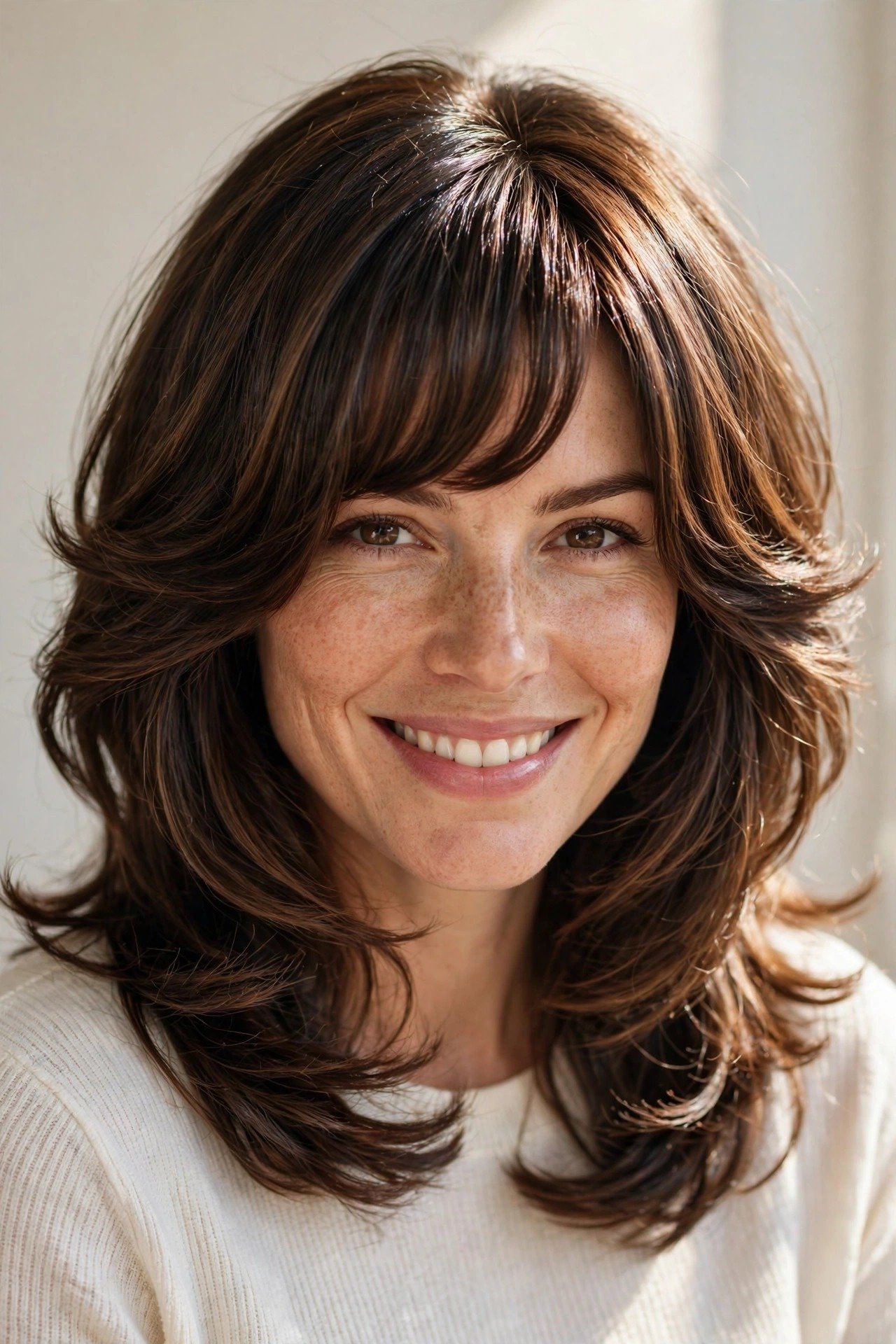
Here’s my honest summary after years of cutting these: bottleneck bangs are the fringe I’d recommend to my sister, my best friend, and my most nervous client. Not because they’re the most dramatic or the most fashionable, but because they’re the kindest. They flatter the most faces, demand the least maintenance, and forgive the most mistakes — in the cut, in the styling, and in the grow-out.
The beauty industry runs on making you feel like you need something new. I’m telling you that this isn’t new — it’s just right. The bottleneck shape has existed in various forms for decades because the geometry works. What’s new is that we’ve finally given it a name and a proper technique, and 2026 is the year it gets the recognition it deserves.
So book the fringe trim, bring your three photos and your glasses, and say the sentence: shortest at the brows, graduating to the cheekbones, textured ends, blended into layers. Two minutes of styling a day, a trim every five weeks, and a grow-out so graceful you’ll wonder why all bangs aren’t like this.
Welcome to the fringe that forgives. You’re going to love it here.
And if you’re still on the fence — that’s fine. Save this guide, sit with it, look at the styles again in a week. The bottleneck isn’t going anywhere. It’s been quietly perfecting itself for years, and it’ll be here when you’re ready. But when you are ready, you’ll know exactly what to ask for. That’s the whole point.
P.S. If you found this guide useful, the best next step is the consultation, not more research. You’ve got the script, the photos, and the knowledge. The only thing left is the chair.