Surfer Hair Men 2026: 16 Sun-Kissed Beach Styles
Surfer Hair Men 2026: 16 Sun-Kissed Beach Styles
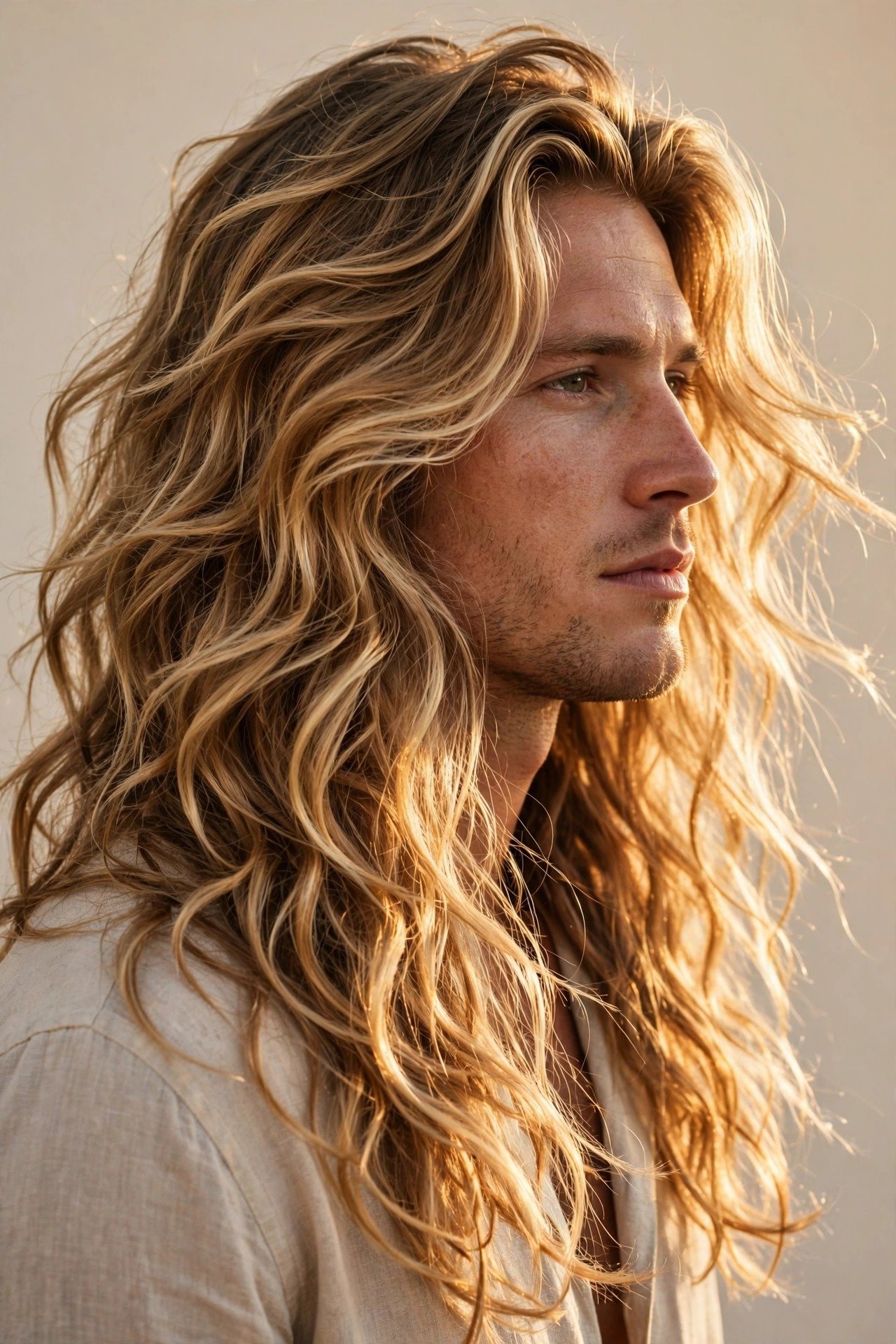
There’s a specific kind of hair that makes people assume you have an interesting life. It’s sun-lightened at the ends, textured like you’ve been in salt water, long enough to move in the wind, and just messy enough to look like you didn’t try — even though there’s a whole system behind it. That’s surfer hair, and in 2026 it’s having its biggest moment in years. Not just on actual surfers, either. Offices, campuses, and wedding parties are full of guys wearing the look.
Here’s the thing most guides get wrong: surfer hair men actually wear isn’t about surfing. It’s about a texture and an attitude — relaxed, sun-touched, a little wild around the edges. You don’t need to own a surfboard. You don’t even need to live near a beach. What you need is length, the right kind of texture, and the patience to grow through the awkward months. This guide covers all of it: what the look really is, how to grow it without giving up, sixteen distinct styles, and the styling routine that creates that beach texture without a single wave ridden.
The 2026 version of surfer hair is more refined than the shaggy mop of decades past. The lengths are intentional now — layered with purpose, shaped around the face, often with a proper cut underneath the messiness. Think less “I haven’t seen a barber in a year” and more “my barber and I have an understanding.” The color story matters too: sun-kissed dimension, whether it comes from actual sun, subtle highlights, or just the natural lightening that happens when hair grows long. It’s a whole aesthetic, not just long hair.
What follows is the complete playbook. We’ll start with an honest definition — including what surfer hair isn’t, because the misconceptions cause most of the bad attempts. Then we’ll talk hair types, because your natural texture determines your path more than any product will. After that, the growing-out survival guide, which is the part nobody wants to read but everybody needs. Then all sixteen styles, the at-home styling method, the products worth buying, and how to keep long hair healthy when the sun and salt want to destroy it.
A quick word on commitment before we get started: surfer hair is a long game. Growing from a short cut to proper surfer length takes eight to fourteen months depending on your starting point and growth rate. The awkward stage is real, the maintenance is real, and the daily styling — while simple — is non-negotiable if you want it to look good instead of just long. If that timeline makes you wince, there’s a shorter surfer crop in the style list with your name on it. But if you’re ready to commit, the payoff is a look with more personality than any fade will ever give you.
What Surfer Hair Actually Is (And What It Isn’t)
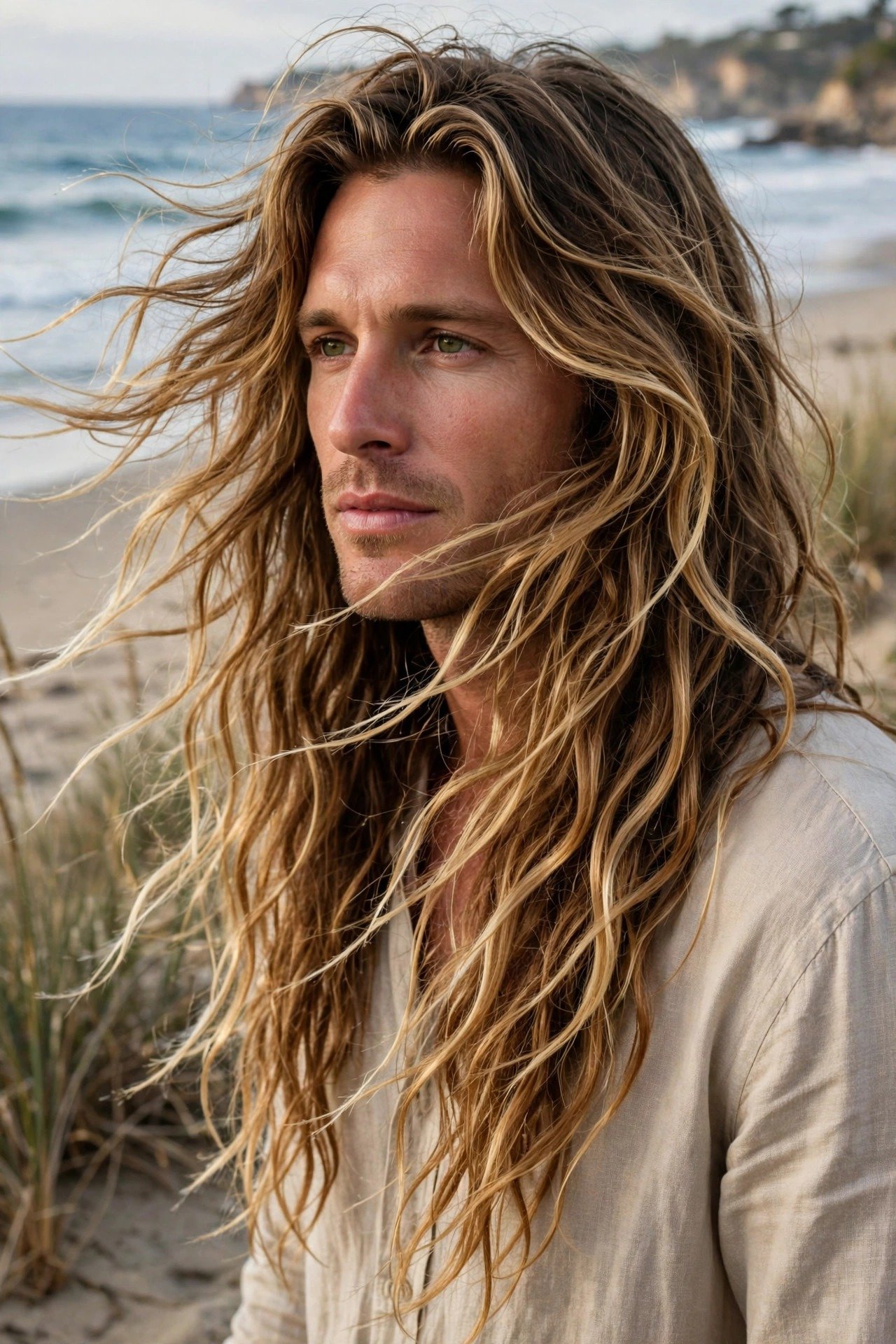
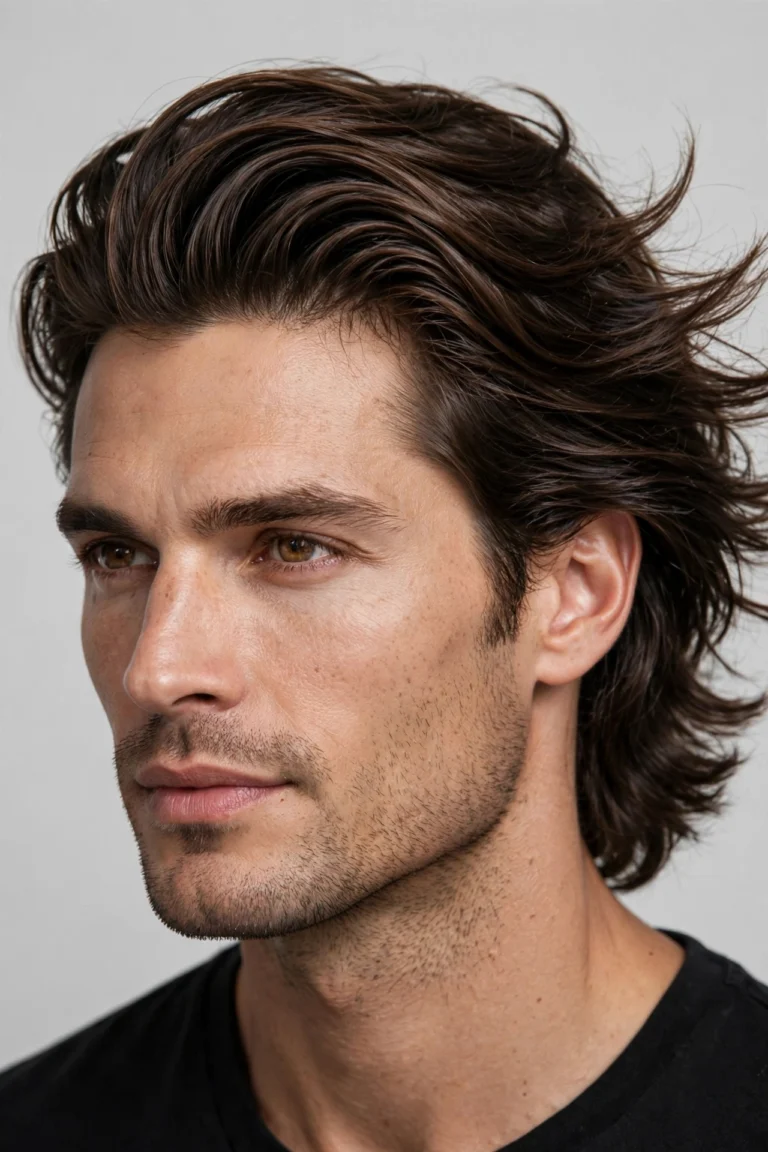
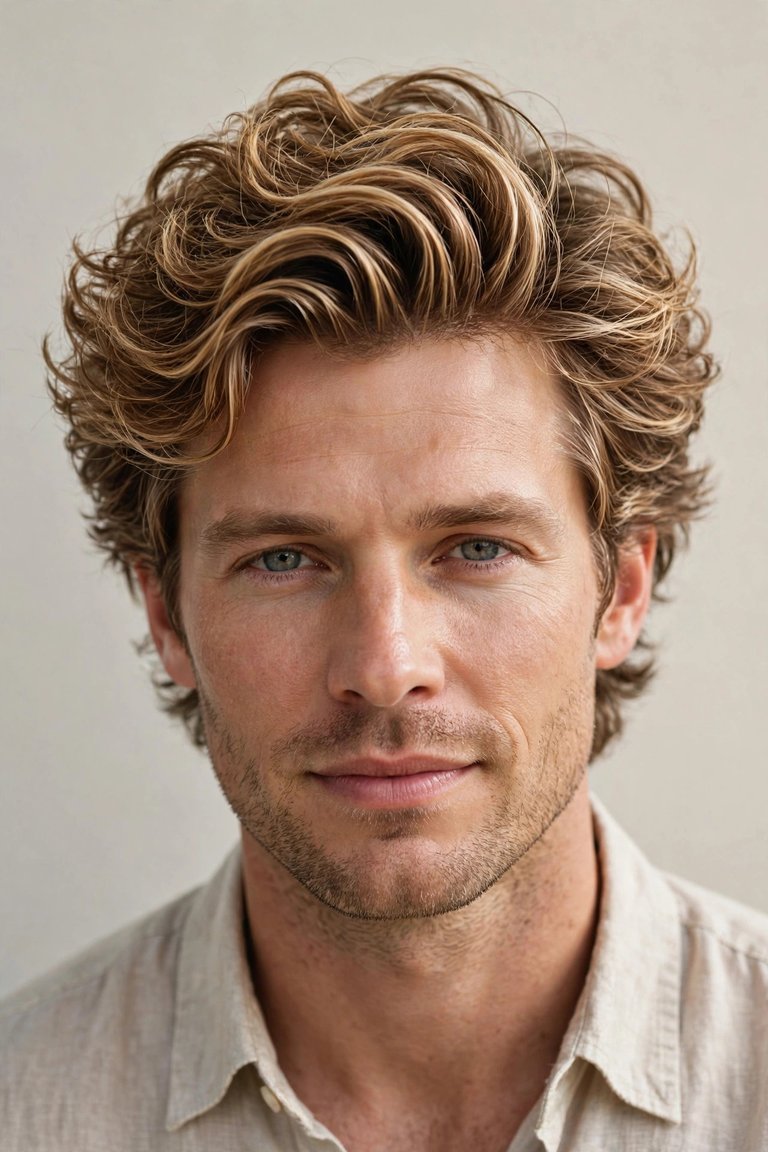
Surfer hair, at its core, is medium to long hair with natural-looking texture, sun-lightened dimension, and an effortless, undone finish. The length usually falls somewhere between the ears and the shoulders — long enough to move, short enough to still have shape. The texture is the defining feature: loose waves, piecey separation, that slightly rough “I’ve been outside” quality that no amount of careful styling can quite replicate. The color almost always has dimension — lighter ends, slightly darker roots — whether from the sun, the sea, or a colorist’s hand.
Now what it isn’t. It isn’t just “long hair.” A guy with long, flat, one-length hair doesn’t have surfer hair — he has long hair. The surfer look requires the texture and the movement; without them, it’s a different aesthetic entirely. It also isn’t the same as a shag, though they’re cousins — the shag is more deliberately cut with heavy layering, while surfer hair is looser and more natural. And it definitely isn’t a flow or a bro flow, which are neater, more groomed styles. Surfer hair lives in the space between groomed and wild, and that balance is the whole art of it.
The history is worth knowing because it explains the look’s DNA. Surfer hair emerged from actual surf culture in the 1960s and 70s — guys whose hair was bleached by the sun and textured by salt water, worn long because who had time for haircuts between sessions. It became a mainstream style icon in the 90s and 2000s, faded when short fades dominated the 2010s, and came back as part of the broader return to natural texture and longer lengths. The 2026 revival keeps the spirit but adds modern cutting technique underneath — the messiness is curated now.
Here’s what nobody tells you: the “effortless” part is a myth, at least at first. Real surfers get the texture from hours in salt water and sun — a lifestyle, not a routine. The rest of us have to manufacture it with product, technique, and the right cut. The good news is that once your hair reaches the right length and you learn the routine, the daily effort drops to about five minutes. The bad news is that getting there takes months of growing and a few strategic trims. Effortless is the destination, not the journey.
The other misconception is that surfer hair means never seeing a barber. The best surfer hair in 2026 is cut regularly — every eight to twelve weeks — to maintain the shape, remove damaged ends, and keep the layers working. The difference is in what the barber does: instead of cleaning everything up, they’re enhancing the natural texture, adding invisible layers, and shaping the perimeter so the messiness looks intentional. Find a barber or stylist who understands long men’s hair specifically. A fade specialist with no long-hair experience can do more harm than good.
Can Your Hair Type Pull Off the Look?
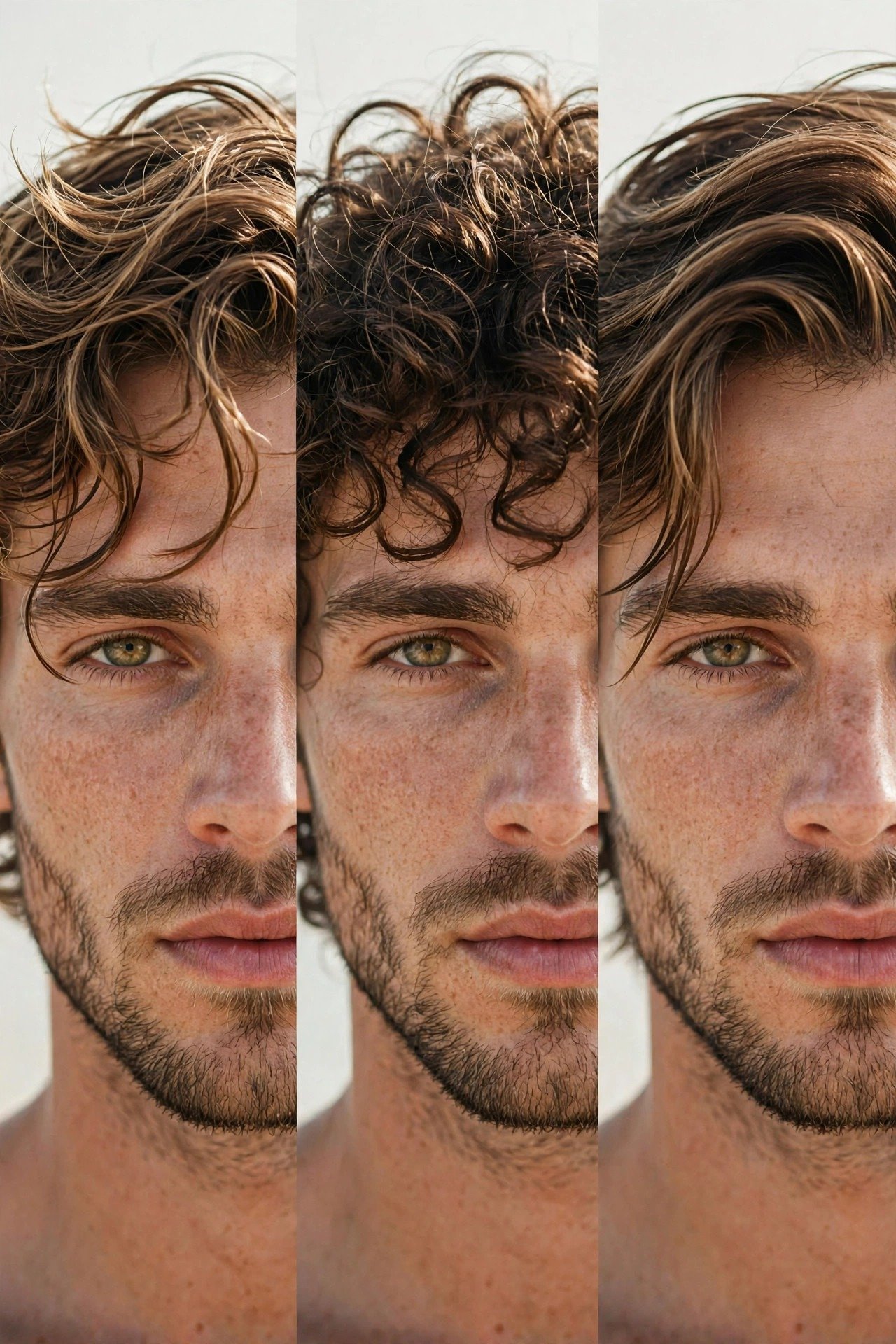
Let’s go hair type by hair type, honestly. Wavy hair is the jackpot for surfer hair — it’s the texture the entire aesthetic is based on. If your hair has a natural wave, you’re working with the grain, and the look will come easier to you than anyone else. The waves provide built-in texture, the length gives them room to form, and a little product is all you need to enhance what’s already there. If this is you, stop reading this section and skip to the growing guide. You’re blessed.
Straight hair can absolutely do surfer hair, but it takes more work. Without natural bend, you have to create the texture artificially — sea salt spray is mandatory, not optional, and you’ll need to scrunch and twist sections while drying to encourage wave. A perm is the nuclear option, and honestly, it’s not a bad one: a loose, beach-wave perm on medium-length straight hair gives you the texture foundation, and then the styling is easy. The 2026 perm technology is miles better than the tight curls of the past — ask for a “beach wave perm” or “loose wave perm” specifically.
Curly hair makes a fantastic surfer look with a different character — more volume, more defined texture, a wilder silhouette. The key is length: curly surfer hair needs to be longer than you’d think, because the curls spring up and the length disappears. Grow it to shoulder-length before judging the look. Keep the layers long and avoid thinning, which creates frizz on curly hair. A curl cream instead of salt spray, and you’re in business. The result is less “California beach” and more “tropical island,” and it’s stunning.
Coily hair can wear a surfer-inspired look too, though the aesthetic shifts. The texture is already there in abundance — what you need is length and shape. A stretched or elongated style with the ends left natural gives you that free, sun-touched feeling. Twist-outs and braid-outs on longer coily hair create exactly the kind of piecey, dimensional texture the surfer look is built on. The color dimension — lighter ends — works beautifully on coily hair, whether from the sun or from subtle highlights. Don’t let anyone tell you this look has a hair-type restriction. It doesn’t.
Fine or thinning hair is the one honest limitation. Surfer hair needs a certain amount of density to look good — the texture and layering that define the look will expose thinning rather than hide it. If your hair is mildly fine but full, you can make it work with volumizing products and smart layering. But if you’re dealing with real thinning, especially at the crown, growing it long usually makes it more obvious, not less. A good stylist will tell you straight. Better a great short cut than a disappointing long one.
Surviving the Awkward Stage: How to Grow It Out
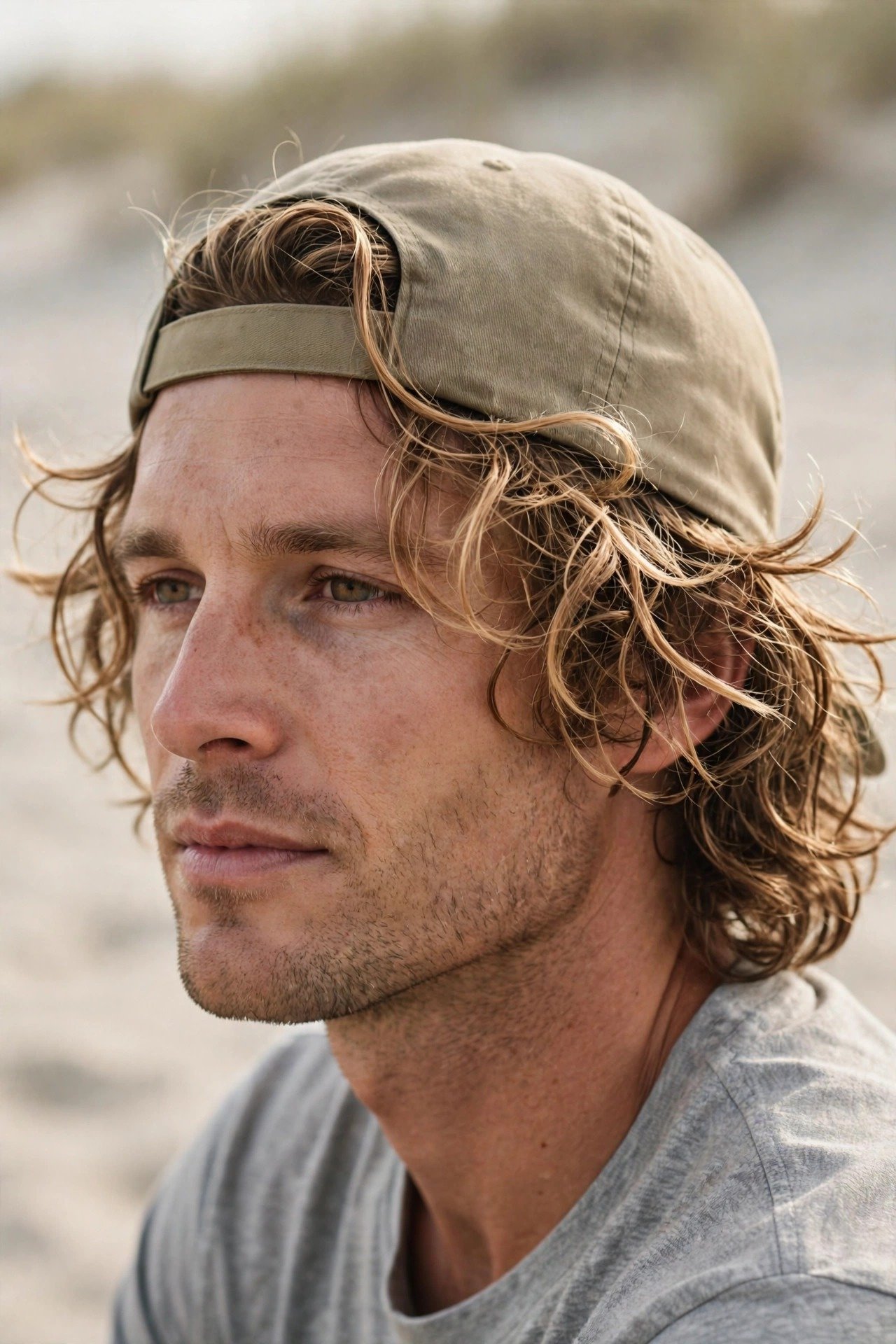
The awkward stage — that miserable stretch between short and long where your hair does nothing you want — is where most surfer hair dreams die. It typically hits around months three to six, when the top is long enough to flop but too short to tie back, and the sides are puffing out like a mushroom. Here’s the survival truth: it’s temporary, it’s universal, and there are strategies. The guys with great long hair aren’t luckier than you; they just didn’t quit in month four.
Strategy one: get strategic trims, not full cuts. Every eight to ten weeks during the grow-out, have your barber clean up the sides and back while leaving the top completely alone. This keeps the silhouette from going full mushroom while the top gains the length it needs. Tell your barber exactly what you’re doing: “I’m growing it into surfer hair — take the sides in but don’t touch the top.” A barber who understands the mission is worth their weight in gold during this phase.
Strategy two: accessories are not the enemy. Hats, caps, beanies, headbands — whatever gets you through the day without hating your reflection. There’s no shame in covering the awkward stage; even the guys in the reference photos wore hats for months. A simple black cap or a beanie in winter buys you another month of growth without the daily frustration. The goal is length, and anything that keeps you from reaching for the clippers is a valid tool.
Strategy three: learn the mini-routines that make medium-length hair presentable. A little sea salt spray and a scrunch takes ninety seconds and turns “growing out” into “textured on purpose.” Slicking it back with a dab of cream on the days it’s uncooperative is another lifesaver. And when it’s truly hopeless, the half-up — just the top section pulled back — works at almost any length past four inches. You don’t need it to look amazing every day during the grow-out. You need it to look intentional enough that you don’t give up.
The timeline, realistically: from a short cut, expect six to eight months to reach a proper medium surfer length (ears to collar), and ten to fourteen months for full shoulder-length surfer hair. Hair grows about half an inch per month, and there’s no honest way to speed that up — anyone selling you growth miracles is selling you hope in a bottle. What you can do is minimize breakage: don’t over-wash, don’t blast it with heat daily, get those split ends trimmed, and be gentle when it’s wet. Retained length is the only growth hack that actually works.
Surfer Hair Men Love: Styles 1–3
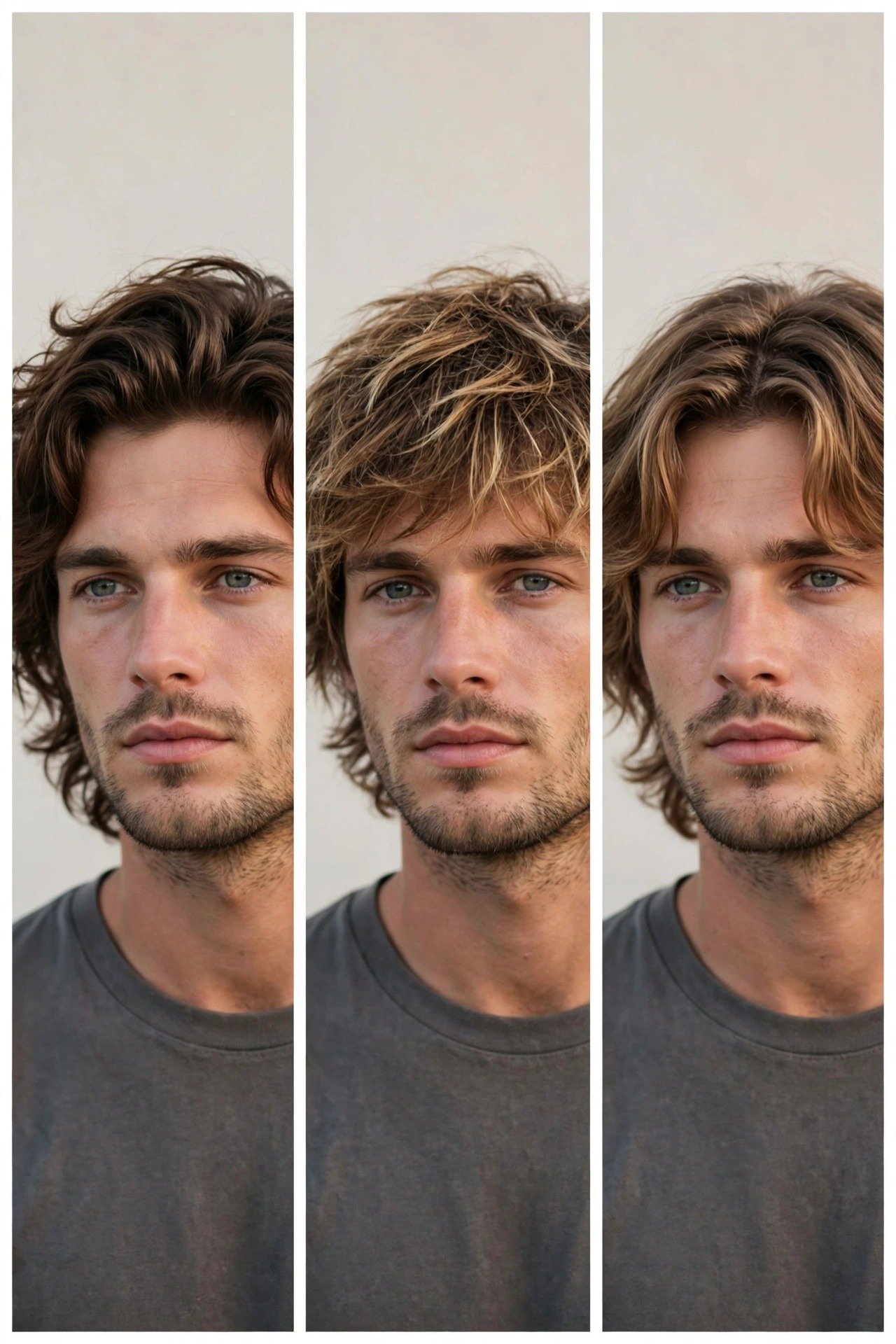
Style 1: The Classic Surfer Flow. This is the archetype — medium-length hair, roughly to the collar, with natural wave and movement, worn loose and pushed back. The layers are long and blended, the ends are textured, and the whole thing moves when you move. It’s the haircut that launched a thousand imitations, and it still works because the proportions are just right: long enough to be interesting, short enough to keep its shape. If you want the definitive surfer hair, start here.
The classic flow lives or dies on the cut underneath. Ask your stylist for long layers throughout — not short, choppy layers, but long, blended ones that remove weight without creating obvious steps. The perimeter should be textured, not blunt. Around the face, ask for pieces that start at the cheekbones and get longer toward the back; this frames the face and keeps the front from falling into your eyes. Grow it to at least four inches on top and three on the sides before judging the result. It needs that minimum length to flow instead of flip.
Style 2: The Sun-Kissed Surfer Shag. Take the classic flow and add deliberate shag cutting — shorter layers through the crown, more texture at the ends, and that piecey, lived-in separation that defines the shag family. Then add the color dimension: lighter pieces through the mid-lengths and ends that mimic what the sun does naturally. The result is the most “surfer” looking of all the styles here — it’s practically a costume for beach life, except it works just as well in the city.
The color is what makes this version special, so let’s talk about it honestly. Real sun-lightening takes months of exposure and works best on hair that’s already light brown or darker blonde. If your hair is dark, the sun won’t do much — you’ll need a colorist. Ask for “sun-kissed highlights” or “subtle balayage, just the ends” — you want dimension, not stripes. The goal is hair that looks like summer happened to it, not like you sat in a salon chair. A good colorist knows the difference. A bad one gives you frosted tips energy.
Style 3: The Beach Curtain. The curtain — hair parted in the middle and falling on both sides of the face — meets surfer texture in this hybrid. The length is medium, usually to the ears or just past, with the front sections long enough to frame the face in soft waves. It’s part 90s heartthrob, part beach bum, and entirely 2026. This style suits guys who want the surfer vibe but need something a little more structured for daily life.
The middle part is the make-or-break detail. It needs to look natural, not forced — find where your hair wants to split and work with it. If your hair stubbornly refuses a middle part, don’t fight it for months; this might not be your style, and that’s fine. Styling is simple: sea salt spray on damp hair, scrunch the waves, let it air-dry or diffuse. The curtain sections should fall naturally around the face. A tiny bit of cream on the ends keeps them from frizzing. This is one of the lowest-maintenance styles on the list, which is probably why it’s everywhere right now.
Surfer Hair for Men to Grow in 2026: Styles 4–6

Style 4: Long Surfer Layers. Shoulder-length or beyond, with long layers that create movement without sacrificing the weight that keeps it hanging properly. This is the full-commitment surfer look — the one that gets compliments from strangers. The layers are crucial at this length: without them, long hair goes flat and stringy; with them, it moves, waves, and catches light. Ask for layers that start no higher than the chin — anything shorter at shoulder length creates a mullet-adjacent situation nobody wants.
Long surfer hair has a care routine, and pretending otherwise leads to disappointment. You’ll be conditioning every wash, using a leave-in, and getting trims every ten to twelve weeks without fail. The ends take abuse from sun, wind, and friction, and damaged ends make the whole thing look scraggly. Sleep on a silk pillowcase or in a loose braid to prevent tangling. It’s more work than the shorter styles, but the payoff is the most striking silhouette in this entire guide. Long hair, done well, is unmatched.
Style 5: The Mid-Length Surfer Chop. Collar-length all around, with choppy, textured ends and a deliberately undone finish. Shorter than the long layers, longer than the classic flow — it sits in the sweet spot where the hair has real presence but doesn’t demand the full long-hair routine. The “chop” in the name refers to the cutting technique: the ends are cut with texture and separation rather than a clean line, which gives it that piecey, beachy character even when it’s freshly cut.
This is the practical surfer style. It air-dries well, it survives wind without turning into a nest, and it works in professional settings with minimal styling — a quick scrunch with salt spray and you’re presentable. It’s also the best choice for guys trying surfer hair for the first time, because the commitment is moderate: if you hate it, you’re only a few months from a shorter cut, not a year. Many guys land here and stay here permanently. There’s no shame in finding your length and keeping it.
Style 6: The Bro Flow, Beach Edition. The bro flow — that swept-back, voluminous medium cut — gets the surfer treatment with added texture and a looser finish. The hair is swept back off the face, but instead of the neat, groomed flow, it’s got salt-spray grit and piecey separation. Think of it as the bro flow after a week at the beach. It’s the most “put together” of the surfer styles while still reading as relaxed.
Styling the beach bro flow takes about five minutes: salt spray on damp hair, blow-dry back and up with your fingers for volume at the roots, then a small amount of matte paste to define the pieces. The key difference from a regular bro flow is the texture — you want separation and grit, not smooth uniformity. This style works beautifully for guys with thicker hair, because the density supports the swept-back volume. On very fine hair, it can fall flat by afternoon; a volumizing mousse as a pre-styler helps.
Surfer Hair Men With Natural Wave Wear: Styles 7–9

Style 7: The Surfer Shag with Fringe. Shorter through the crown with a real fringe — not a curtain, a proper fringe that sits across the forehead in textured pieces. The back and sides keep their surfer length and wave, but the front makes a statement. This is the most fashion-forward style on the list, the one that shows up in editorials and on runways. It’s bold, it’s youthful, and it completely changes the shape of the face.
The fringe is doing heavy lifting here: it shortens long faces, softens strong foreheads, and draws attention to the eyes. But it’s also the highest-maintenance part of the cut — fringes grow fast and lose their shape quickly, so you’ll need a trim every four to six weeks just for the front. Styling is simple: salt spray, scrunch, let the fringe fall naturally. Don’t overwork it; the charm is in the imperfection. If the fringe starts looking too neat, you’ve gone too far.
Style 8: Tapered Surfer Hair. Surfer length on top, but the sides are tapered neatly instead of growing wild. This hybrid gives you the best of both worlds: the texture and movement of surfer hair with the clean, sharp edges of a proper cut. It’s the surfer style for guys who can’t fully commit to the all-over shaggy look — whether for work, for face shape, or just for preference. The contrast between the neat sides and the wild top is genuinely striking.
The taper needs to be soft — a scissor taper, not a skin fade. You’re blending the sides into the top, not creating a disconnect. Ask your barber for a “natural taper, scissor over comb, keep it soft.” The top should be at least four inches to get proper surfer texture; anything shorter reads as a textured crop with long-ish sides rather than true surfer hair. Maintenance is a barber visit every three to four weeks for the taper, plus trims for the top every ten weeks. It’s more barber time than the pure surfer styles, but the result is worth it.
Style 9: Surfer Hair with Undercut Sides. Take the tapered version a step further: the sides are cut short in an undercut while the top keeps its full surfer length and texture. The disconnect is deliberate and dramatic — long, wavy hair on top falling over short, clean sides. It’s the most extreme hybrid here, and it’s not for the faint of heart, but on the right guy it’s incredible. The undercut also has a practical benefit: it removes bulk and weight from the sides, which keeps the top looking fuller by comparison.
Honest assessment: the undercut version is a commitment to a specific aesthetic. It reads edgy and fashion-forward, which is great if that’s your lane and limiting if it isn’t. Growing it out is also awkward, because the disconnected lengths grow at the same rate and the contrast softens into shapelessness. You’ll need regular undercut maintenance — every two to three weeks — to keep the contrast sharp. But if you love the look and you’re willing to maintain it, nothing else on this list has the same impact.
Surfer Hair Men Wear Up: Styles 10–12
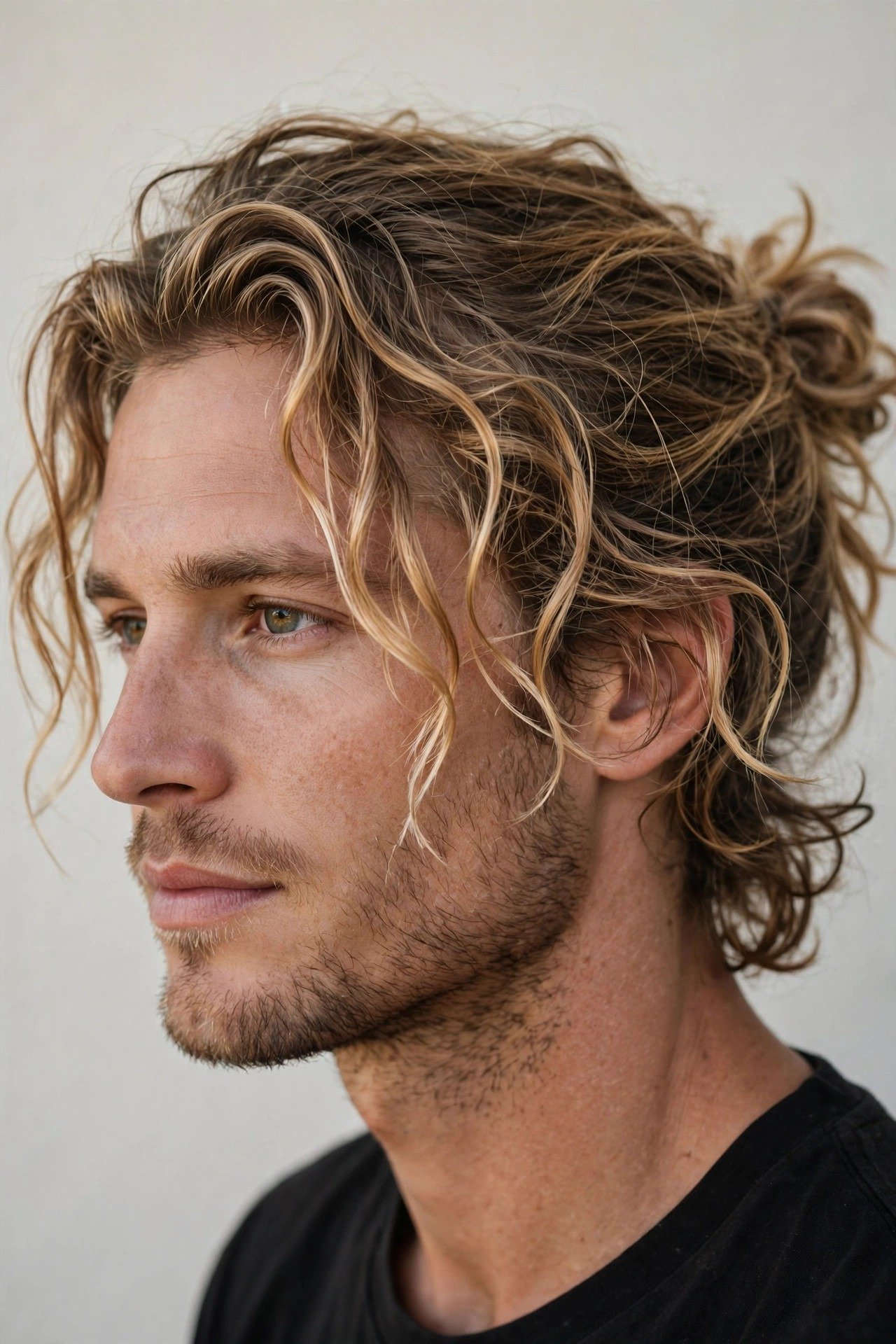
Style 10: The Messy Surfer Waves. This is surfer hair at its most undone — maximum texture, minimum structure, waves going in every direction like you just took off a wetsuit. The cut underneath is layered to encourage the chaos, with lots of point-cutting through the ends. It’s the style that looks like no effort, and here’s the secret: it actually takes the least effort of any style here, because the whole point is imperfection. You literally cannot mess it up.
The routine is almost insultingly simple: sea salt spray on damp hair, scrunch vigorously, air-dry. That’s it. Don’t brush it, don’t overthink it, don’t try to make the waves uniform. The charm is in the randomness. This style works best on hair that’s at least four inches long with natural wave — straight hair will need more product and more scrunching to get there, and even then the result is more “textured” than truly messy. But for wavy-haired guys, this is the easiest great haircut in existence.
Style 11: The Surfer Man Bun. When the hair gets long enough — and at some point it will — the bun becomes both a style and a survival tool. The surfer bun is worn loose and a little messy, sitting at the crown or the back of the head, with face-framing pieces left out. It’s not the tight, severe topknot; it’s relaxed, slightly undone, with texture visible in the bun itself. Done right, it’s effortlessly cool. Done wrong — too tight, too high, too neat — it looks like you’re trying too hard.
Placement matters more than most guys realize. The sweet spot is the crown — where the head starts curving down at the back — not the very top of the head. Too high looks like a samurai costume; too low looks like a librarian. Use a single elastic, loop the hair through twice, and leave the ends tucked loosely rather than pulled all the way through. Pull a few pieces out around the face. The whole thing should take thirty seconds. If you’re spending five minutes on a “messy” bun, you’re defeating the purpose.
Style 12: The Half-Up Surfer. The top section pulled back, the rest left loose — the half-up is the most versatile long-hair style in existence. It keeps the hair out of your face while showing off the length and texture. For surfer hair specifically, the half-up should be loose and textured, not slicked tight. Think “I threw it up without a mirror” rather than “I styled it carefully.” A single elastic or a small claw clip does the job.
This style earns its place for pure practicality. Windy day? Half-up. Working out? Half-up. Eating soup? Half-up. It’s the style that makes long hair livable, and it looks good doing it. The key is the looseness — pull it back gently, don’t yank it tight, and let the texture do the talking. On days when your surfer hair is having a mind of its own, the half-up turns chaos into intention in under a minute. Every long-haired guy should have this in his repertoire.
Surfer Hair Men Try Next: Styles 13–16
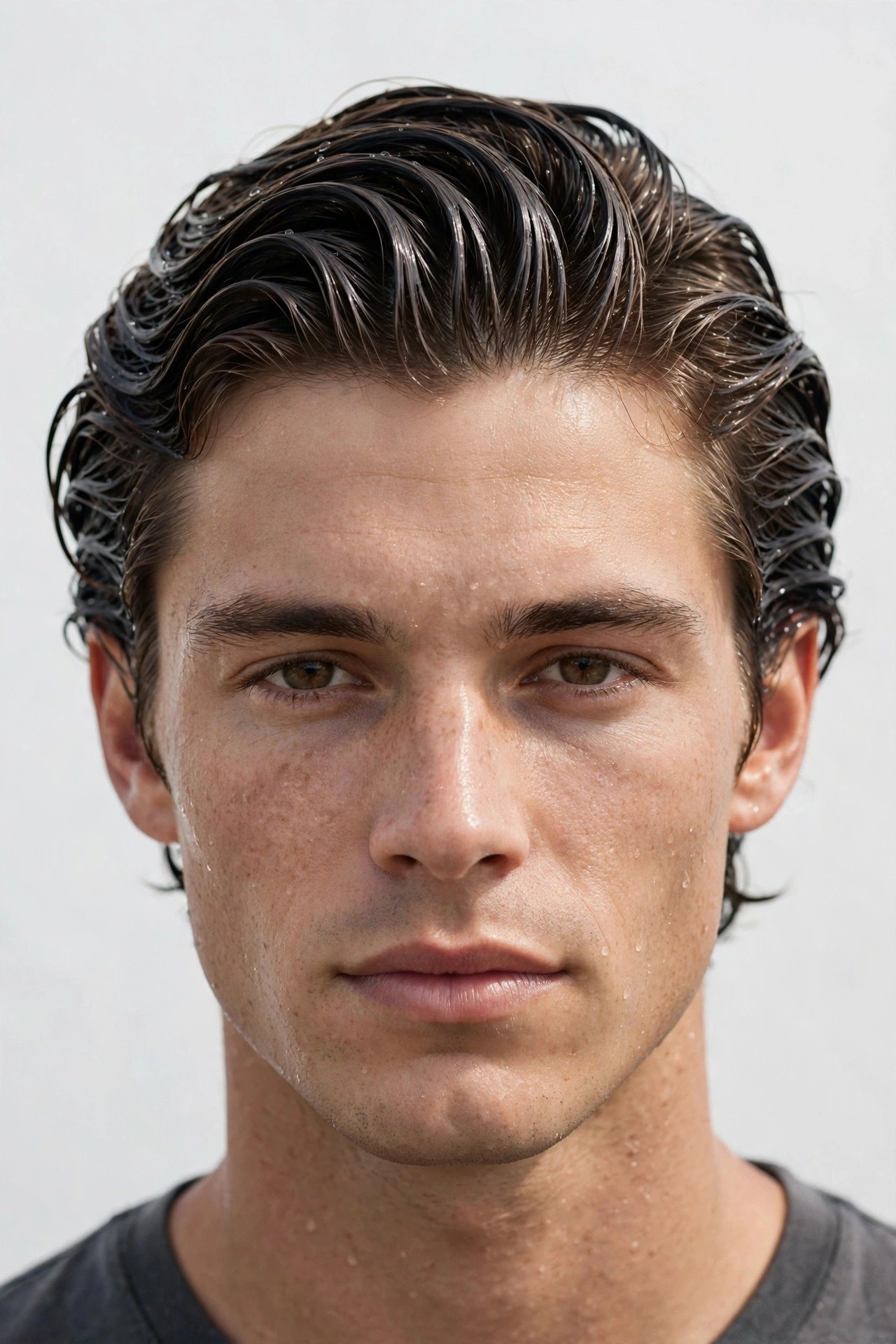
Style 13: The Wet-Look Surfer. Glossy, defined, freshly-out-of-the-ocean hair — achieved with product, not seawater. A wet-look cream or gel is worked through damp hair, the waves are scrunched into definition, and the result is shiny, separated, touchable texture that catches light beautifully. It’s the most dramatic finish on this list, and it’s perfect for evenings, events, and photos. The shine makes the color dimension pop in a way matte styles can’t match.
Product choice is everything here. You want a dedicated wet-look product — usually labeled as “wet look” or “gloss” cream — not regular gel, which goes crunchy. Apply to damp (not wet) hair, a generous amount worked through from mid-lengths to ends, then scrunch to encourage the wave pattern. Don’t touch it while it dries; let it set. The finish should look wet but feel soft. If it feels crispy, you used too much or the wrong product. This style lasts well through the day but doesn’t survive wind gracefully — it’s an indoor-evening look, mostly.
Style 14: The Salt-Spray Texture. This isn’t a cut, it’s a finish — but it’s so central to the surfer aesthetic that it deserves its own entry. The salt-spray look is matte, gritty, piecey texture with maximum separation and zero shine. It’s the driest, most “beachy” finish possible, and it’s what most people picture when they think of surfer hair. Any of the cuts in this guide can be finished this way; it’s a styling choice, not a haircut.
Here’s how to nail it: start with damp hair, spray sea salt spray generously — more than you think, roots to ends — then scrunch and twist random sections. Air-dry for the most natural result, or diffuse on low for more volume. The key is not brushing or combing at any point; every pass of a brush undoes the separation you’re building. For extra grit, a tiny amount of matte texture powder at the roots adds lift and dryness. The result should feel slightly rough to the touch — that’s the point. Soft, silky hair is the opposite of this look.
Style 15: The Short Surfer Crop. For guys who want the vibe without the length: a textured crop, two to three inches on top, with salt-spray texture and a forward, piecey finish. It’s surfer-adjacent rather than true surfer hair, but it captures the texture and attitude in a package that works for conservative workplaces and low-maintenance routines. Think of it as the gateway — many guys start here, love the texture, and then grow it out into the real thing.
The short crop is the most practical style on this list. It takes two minutes to style, it works in any professional setting, it survives hats and helmets, and it grows out gracefully. The cut needs texture — point-cut ends, not blunt — and the styling is just salt spray and a scrunch. It’s also the best option for guys with fine hair, because the short length keeps the texture from separating and showing scalp. Don’t dismiss it as a lesser choice; it’s a legitimate style that plenty of guys wear permanently.
Style 16: The Full Surfer Mane. Past the shoulders, full, glorious, unapologetic long hair with surfer texture throughout. This is the final form — the look that takes a year or more to achieve and turns heads everywhere. The mane needs long layers to move properly, regular trims to stay healthy, and a real care routine. It’s not for everyone, but for the guys who commit, it’s the most distinctive look in men’s hair. Nothing else says “I don’t follow rules” quite like a full mane worn well.
Let’s be straight about what the mane demands. You’ll be the guy with a hair routine — conditioning, leave-in, occasional masks, silk pillowcase, the works. You’ll get trims every ten weeks without fail. You’ll deal with tangles, wind, and people touching your hair without permission. And you’ll need confidence, because long hair on men still draws comments. But the payoff is a look with more character and presence than any short cut can deliver. The mane isn’t just a hairstyle; it’s a statement about who you are. Make sure it’s one you want to make.
How to Style Surfer Hair at Home
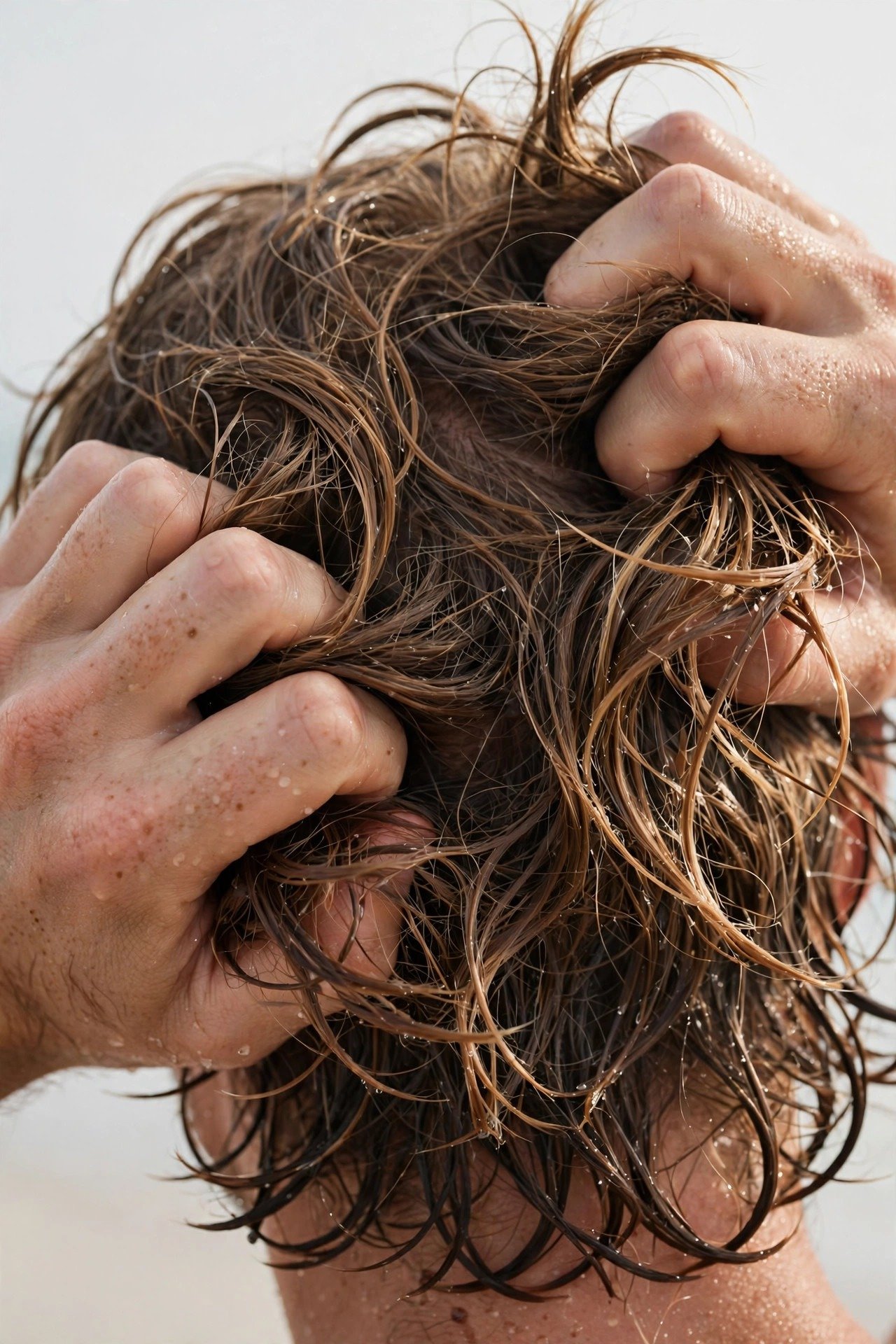
The at-home routine for surfer hair is refreshingly simple compared to most men’s styles. There are no precision parts, no high-heat techniques, no complicated product layering. The entire philosophy is: enhance what your hair wants to do naturally, then get out of its way. Here’s the standard routine that works for most of the styles in this guide.
Start with damp hair — freshly washed, or just dampened with a spray bottle on non-wash days. Work a leave-in conditioner through the mid-lengths and ends if your hair is dry or damaged; skip it if your hair is healthy and fine. Then the star of the show: sea salt spray, applied generously from roots to ends. Don’t be shy with it — most guys under-apply. Lift sections and spray underneath too, not just the top layer. The salt creates grit and separation as it dries, which is the entire foundation of the texture.
Now the scrunch. Flip your head upside down, gather sections of hair in your palms, and squeeze upward toward the scalp. You’re physically encouraging the wave pattern to form. Do this all over, then flip back up and arrange the front pieces with your fingers. That’s the whole technique. From here, you have two paths: air-dry for the most natural, relaxed result (takes thirty to sixty minutes depending on length), or diffuse on low heat for more volume and faster drying (ten to fifteen minutes). Never use a brush after this point — fingers only.
Once it’s dry, assess and adjust. If it’s too flat, flip upside down and shake it out, or add a tiny bit of texture powder at the roots. If it’s too frizzy, smooth a pea-sized amount of cream over the surface — just the surface, not through the hair. If the front pieces are doing something weird, dampen them slightly and re-scrunch. The whole routine, once learned, takes three to five minutes of active effort plus drying time. It’s the lowest-maintenance styling routine for any long men’s style, which is a big part of why the look endures.
On non-wash days — and you shouldn’t be washing daily — the refresh is even simpler. Dampen the hair lightly with a spray bottle, add a little more salt spray, scrunch, and go. Dry shampoo at the roots if it’s getting oily. The texture actually improves on day two for most guys, because the natural oils add grit that enhances the separation. Day three is usually the limit before a wash is needed. This is a style that rewards a little lived-in character; don’t chase day-one perfection every morning.
The Products That Give You Real Beach Texture
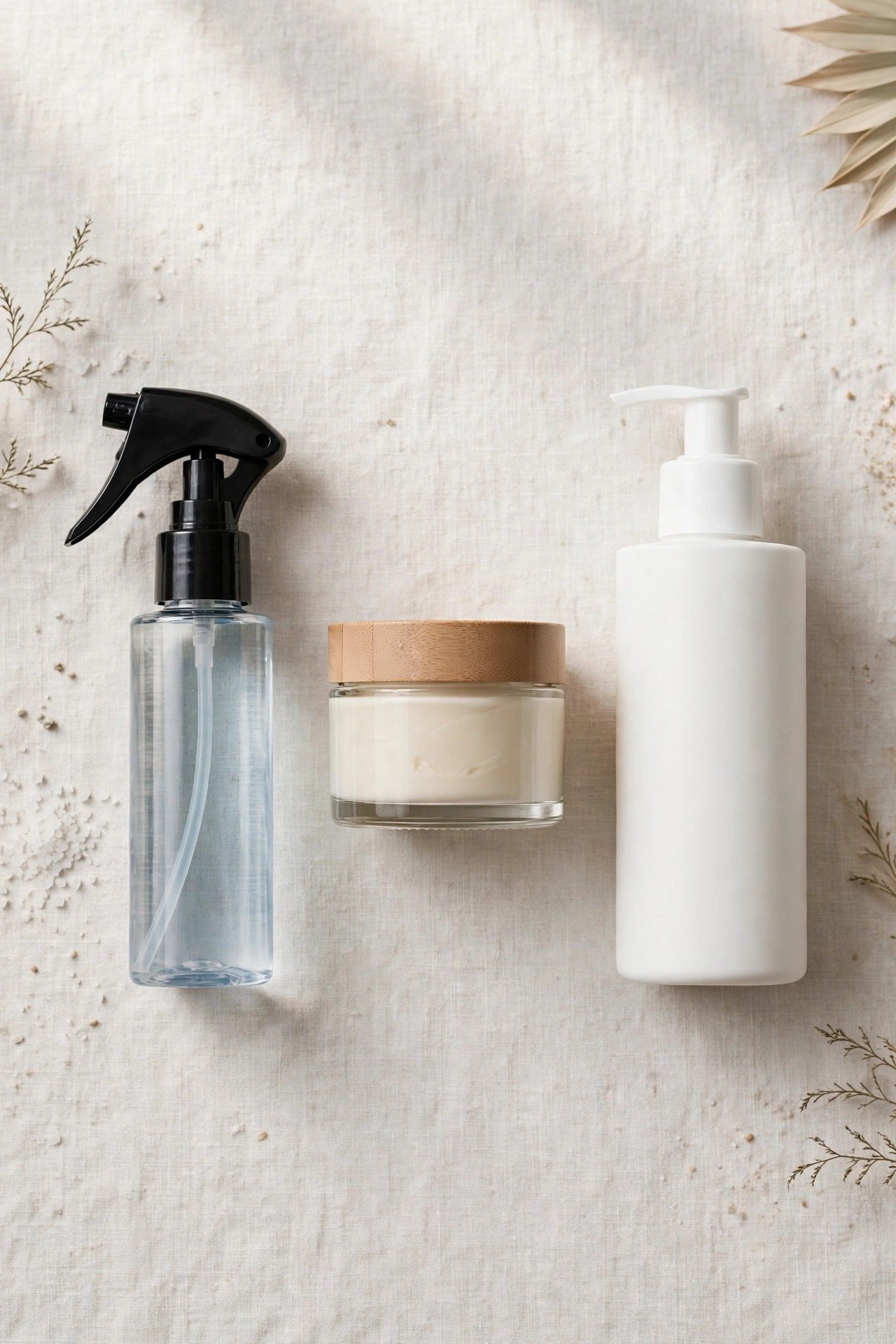
The surfer hair product kit is small, and that’s by design. You need four things: a gentle shampoo, a good conditioner, sea salt spray, and one finisher. Everything else is optional. Let’s go through them honestly, because the market is full of products claiming to give you beach hair that do nothing of the sort.
Sea salt spray is the non-negotiable core. It works by depositing salt on the hair shaft, which roughs up the cuticle slightly and creates the gritty, separated texture that defines the look. Not all salt sprays are equal: the good ones list sea salt or magnesium sulfate high in the ingredients and don’t leave your hair feeling like straw. The cheap ones are basically salt water in a fancy bottle — they work, but they dry the hair out. Expect to pay for a mid-range spray; it’s the one product worth spending on. Apply to damp hair, always — on dry hair it just sits on the surface and does nothing.
Your shampoo and conditioner matter more than you’d think for long hair. Use a sulfate-free shampoo — sulfates strip the natural oils that long hair desperately needs, since oil from the scalp takes longer to travel down long strands. Wash two to three times a week, not daily. Conditioner goes on the mid-lengths and ends every wash, never the roots (it weighs them down and makes the top go flat). Once a week, swap the regular conditioner for a deep conditioning mask if your hair is dry or damaged. This isn’t vanity; it’s structural maintenance.
The finisher depends on your desired look. For the classic matte beach texture, a matte paste or clay — pea-sized, worked through the ends — adds definition. For the wet look, a dedicated gloss cream. For extra volume, a texture powder at the roots. Pick one based on the finish you wear most; you don’t need all three. And here’s a product most guys skip but shouldn’t: a leave-in conditioner with UV protection. The sun that gives you those beautiful lightened ends is also damaging the hair shaft. UV protection is cheap insurance for long hair.
What to avoid: anything with heavy silicones (they build up and weigh long hair down), “beach wave” products that are just perfumed water with no actual salt, and the temptation to use women’s volumizing products not formulated for your hair type — actually, ignore that last one, plenty of them work fine. The real thing to avoid is over-producting. Surfer hair should feel like hair, not like product. If someone can tell what you’re wearing, you’ve used too much. When in doubt, use less.
Trims, Sun Damage, and Keeping It Healthy
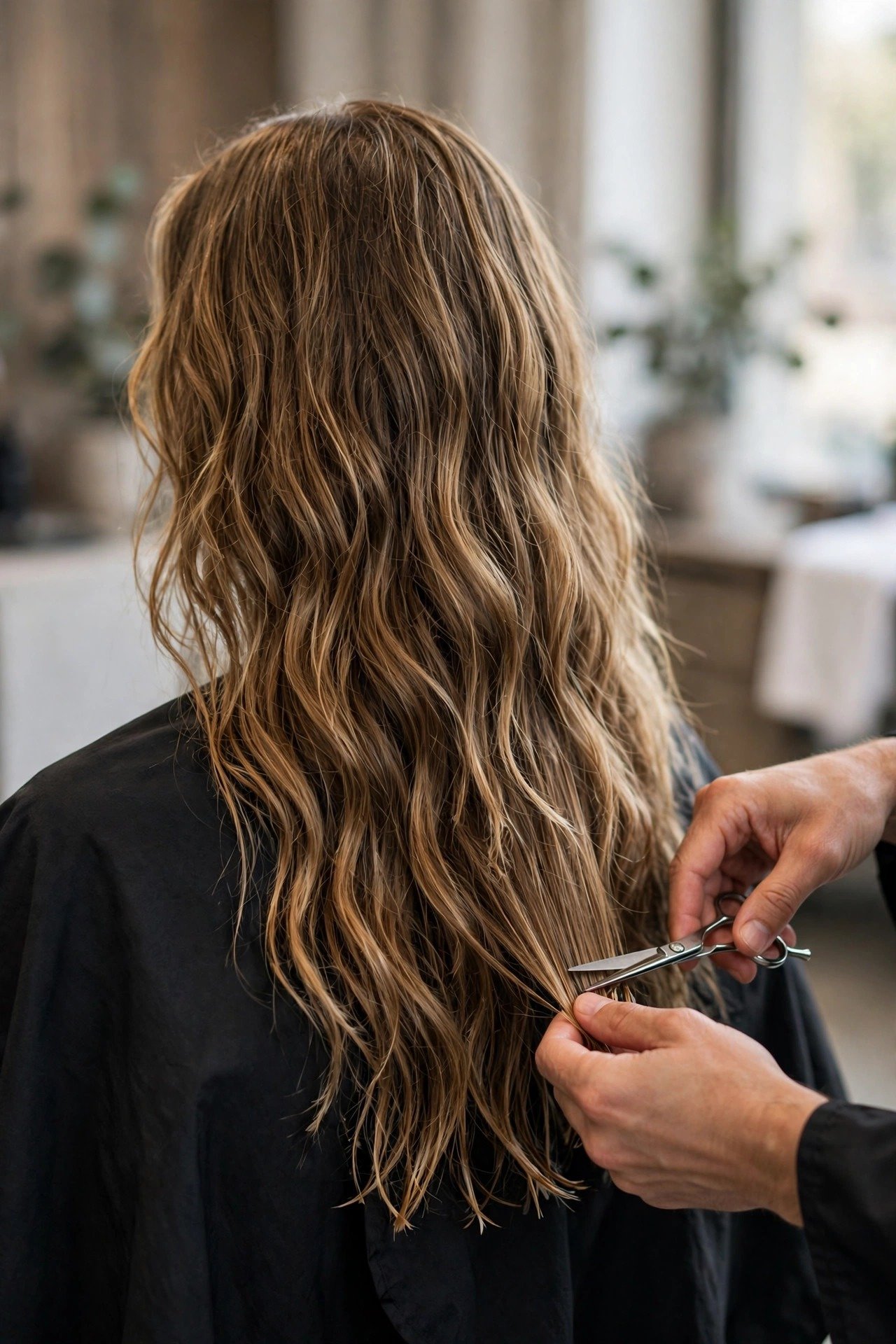
Long hair is old hair — the ends of shoulder-length hair are two to three years old, and they’ve been through a lot. Keeping surfer hair healthy is a maintenance discipline, not a one-time fix. The single most important habit is regular trims: every eight to twelve weeks, take off a quarter to half an inch. This isn’t about losing length; it’s about removing the damaged ends before the damage travels up the shaft. Skipping trims to “grow it faster” is counterproductive — split ends break off, which costs you more length than the trim would have.
Sun damage is the silent killer of surfer hair. The same UV that creates those gorgeous lightened ends is breaking down the hair’s protein structure, leaving it dry, brittle, and prone to breakage. If you spend real time outdoors, use a UV-protectant leave-in — it’s the single best investment for sun-exposed long hair. A hat during peak sun hours helps too, though it flattens the style. After heavy sun exposure, a deep conditioning treatment restores moisture. Think of it like skincare for your hair: prevention beats repair.
Salt water — real salt water, not the spray — is a mixed blessing. It creates incredible texture, but it’s dehydrating. If you actually surf or swim in the ocean, rinse your hair with fresh water as soon as you’re out. Don’t let salt water dry in your hair repeatedly; the cumulative drying effect is significant. A pre-swim application of conditioner or coconut oil creates a barrier that reduces salt absorption. Your hair will thank you, and the texture you get from the ocean will still be there — just without the straw-like aftermath.
The mechanical stuff matters too. Never brush wet hair with a regular brush — use a wide-tooth comb, working from the ends up, not from the roots down. Don’t towel-dry by rubbing; squeeze and scrunch with the towel instead. Sleep on silk or satin, or put the hair in a loose braid at night. Avoid tight elastics that crease and break the hair; use spiral or fabric-covered ties. These sound like small things, but over months and years, they’re the difference between hair that thrives at length and hair that constantly breaks.
Finally, know when to get help. If your ends are splitting faster than trims can manage, if the texture has gone from “beachy” to “damaged,” or if you’re losing density, see a professional — a stylist experienced with long men’s hair, not just any barber. They can assess whether you need a restorative cut, a protein treatment, or just a routine adjustment. There’s no shame in a reset cut; healthy shorter hair always looks better than damaged long hair. The goal is great hair, not just long hair.
Surfer Hair FAQ

How long does it take to grow proper surfer hair? From a short cut, six to eight months for a medium surfer length and ten to fourteen months for shoulder-length. Hair grows about half an inch per month, and there’s no legitimate way to accelerate that. What you can control is retention — minimizing breakage through gentle handling, regular trims, and not over-washing. The guys who reach surfer length fastest aren’t growing faster; they’re breaking less. Protect what grows and the length adds up month after month.
Can I get surfer hair with straight hair? Yes, but you’ll work harder for the texture. Sea salt spray is mandatory, scrunching while damp is essential, and air-drying beats blow-drying for encouraging wave. For a bigger transformation, a loose beach-wave perm gives straight hair the texture foundation it lacks — modern perms look natural, not 80s. Ask your stylist for large rods and a loose pattern, and the result just looks like natural wave. Without either product effort or a perm, straight hair at surfer length tends to look flat rather than beachy. There’s also a middle path: a few strategically placed layers and a texturizing cut can coax surprising movement out of straight hair, especially if it’s medium-density. Know what you’re signing up for, pick the approach that matches your patience level, and don’t expect your pin-straight hair to behave like natural waves without help.
How often should I wash surfer hair? Two to three times a week for most guys. Daily washing strips the natural oils that long hair needs, since scalp oil takes longer to travel down long strands. On non-wash days, a water rinse or just dampening with a spray bottle is enough for restyling. If your scalp gets oily fast, dry shampoo at the roots buys you an extra day. Over-washing is one of the most common mistakes — your hair will actually look better with a little restraint.
Will sea salt spray damage my hair? Used correctly, no — but “correctly” has conditions. Salt is dehydrating, so daily heavy use without conditioning will dry your hair out over time. The fix is simple: always apply to damp hair (never dry), always condition regularly, and use a deep conditioning mask weekly if you’re a daily salt spray user. Think of salt spray like sun exposure — great in moderation, damaging in excess without protection. Balance it with moisture and you’ll be fine.
How do I keep it from looking messy instead of stylish? The line between “surfer” and “unkempt” comes down to three things: the cut underneath (regular trims, intentional layers), the ends (healthy, not split and scraggly), and the roots (clean, not greasy). Messy texture on top of a good foundation reads as style. The same texture on neglected hair reads as neglect. Keep up with trims, wash when needed, and the messiness takes care of itself. Intentionality is invisible but unmistakable. There’s also a simple test: if a stranger would guess you have a good barber, you’re on the right side of the line. If they’d guess you haven’t seen one in a year, it’s time for a trim — even if the length stays exactly the same, a shape-up of the perimeter and a clean-up of the ends restores the intentional look instantly.
Is surfer hair professional enough for an office job? It depends on the office, honestly. The shorter styles on this list — the short crop, the tapered version, the beach bro flow — work in most professional settings. The full mane is a harder sell in conservative industries. The good news is that surfer hair is versatile: the same cut can look beachy-loose on weekends and neater with a little extra styling for work. A job interview might call for the half-up or a tidy blow-dry. Read the room, but don’t assume long hair disqualifies you — 2026 is more accepting than any previous era.
Conclusion

Sixteen styles, one growing guide, and a whole philosophy of texture later, here’s what it comes down to: surfer hair is the most personal haircut in men’s styling. A fade looks the same on everyone — that’s the point of a fade. Surfer hair looks different on every head, because it’s built on your natural texture, your growth pattern, and how you live your life. That’s not a bug; it’s the entire appeal. Nobody else will have your exact version.
The commitment is real — months of growing, regular trims, a daily five-minute routine, and actual hair care. But compare that to what you get: a look with more character than anything a clipper can produce, hair that moves and catches light, and a style that works from the beach to the bar without changing a thing. For the guys who commit, it’s not just a haircut. It’s an identity. And identities are worth investing in.
If you’re starting from short hair, pick your target style from this guide, find a stylist who understands long men’s hair, and settle in for the grow-out. Use the awkward-stage strategies. Don’t quit in month four. And when you finally reach the length where the texture clicks into place — when you catch your reflection and think “that’s it” — you’ll understand why guys don’t go back. The chair’s waiting. The wave’s waiting. Go get it.
One last piece of honest advice, and it’s the most important thing in this entire guide: don’t compare your month three to someone else’s year two. Social media is full of guys with perfect surfer hair who never show you the eight months of hats and frustration it took to get there. Your hair grows at its own pace, your texture behaves its own way, and your version of this look will be yours alone. Take the photos for reference, learn the techniques, buy the salt spray — but let your hair be itself. The best surfer hair isn’t the kind that copies someone else’s. It’s the kind that looks like it could only belong to you. Grow it, wear it, and enjoy every messy, sun-touched inch of it.