French Crop Men 2026: The Textured Fringe Haircut Guide
French Crop Men 2026: The Textured Fringe Haircut Guide
Walk into any good barbershop in 2026 and you’ll hear it three times before your coffee cools: “French crop, textured on top, skin fade on the sides.” The french crop has gone from a niche European haircut to the single most requested men’s style on the planet, and it’s not hard to see why. It’s short enough to be low-maintenance, textured enough to look intentional, and versatile enough to work on straight, wavy, and even curly hair. If you’ve been growing out a messy fringe and wondering what to do with it, the french crop is probably the answer your barber has been waiting to give you.
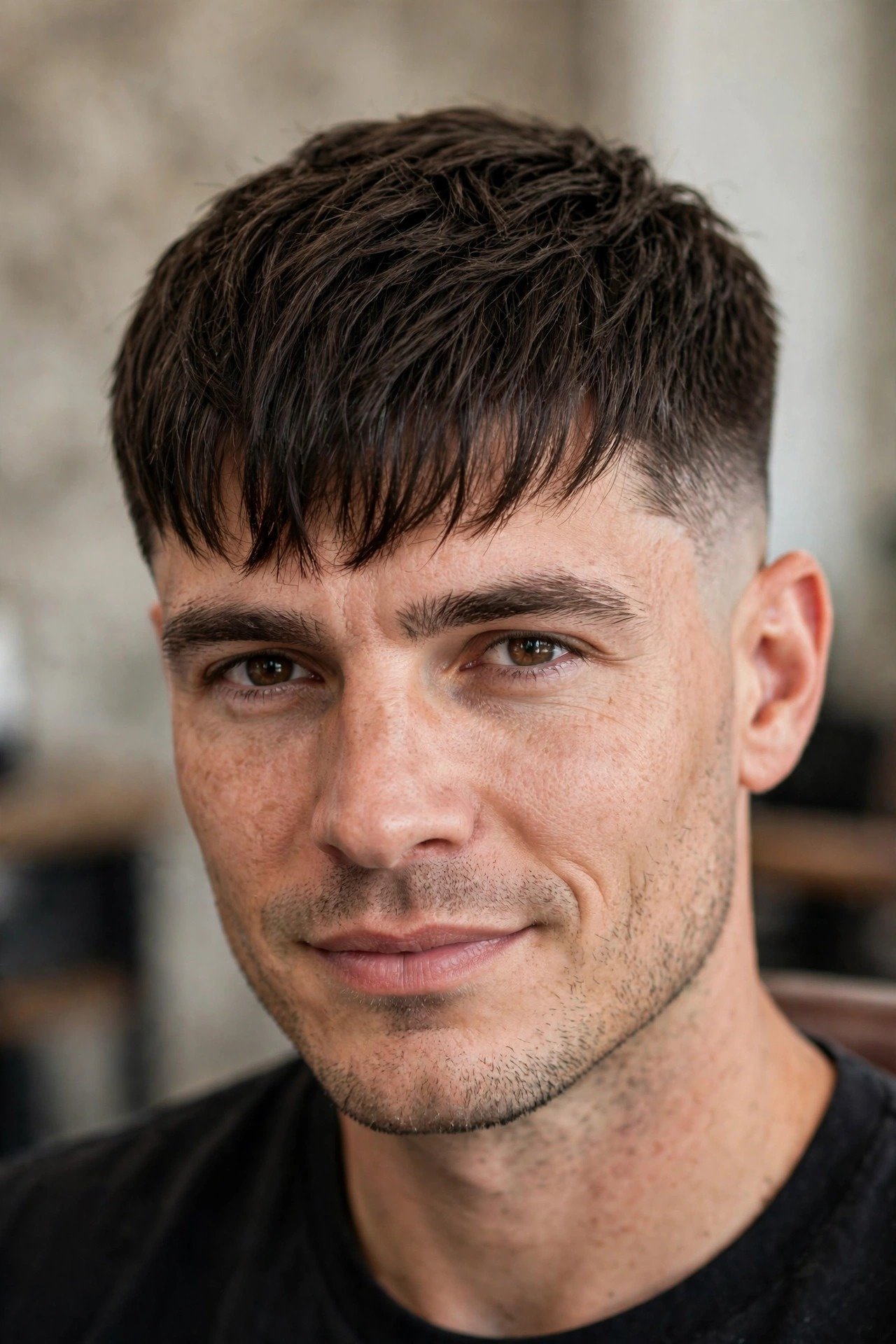
So what exactly is a french crop? At its core, it’s a short haircut with a textured fringe — the hair on top is left long enough to fall forward (usually 2 to 4 inches), cut with tons of texture so it has that piece-y, lived-in look, while the sides and back are faded short. Think of it as the sophisticated older brother of the Caesar cut: same forward-falling fringe DNA, but with modern texture, modern fades, and a lot more personality. The focus keyword for this guide is french crop because that’s what men actually type into Google when they want this cut — and by the end of this article, you’ll know exactly how to ask for it, style it, and maintain it.
This isn’t another generic “10 haircuts” listicle. This is a complete working guide: the history, the variations, exactly what to tell your barber (clipper guards, scissor techniques, the words that get you the right result), how to style it every morning in under five minutes, which products actually work, and the mistakes that turn a great french crop into a bowl cut. Let’s get into it.
Before we dive in, a quick note on who this guide is for. Whether you’re a teenager getting your first real haircut, a professional in your 30s looking to update your look, or a guy in your 40s who wants something modern but age-appropriate, the french crop works. It’s one of the rare cuts that genuinely suits a 16-year-old and a 45-year-old equally well — the difference is in the details (fade height, texture level, fringe length), not the fundamental concept. That’s part of why it’s dominated 2026: it’s not a niche trend for one demographic, it’s a universal solution.
A final note on expectations: no haircut, including the french crop, will magically transform your appearance overnight. What it will do is give you a clean, modern foundation that makes you look more put-together with less effort. The confidence boost comes from knowing your hair looks good without you having to think about it. That’s the real value proposition here — not a miracle, just a really solid, well-designed cut that works as hard as you do.
Ready? Let’s break down everything you need to know, section by section, so you walk into that barbershop like you own the place. Your best haircut is waiting. Let’s go.
1. What Is the French Crop? The Textured Fringe Explained
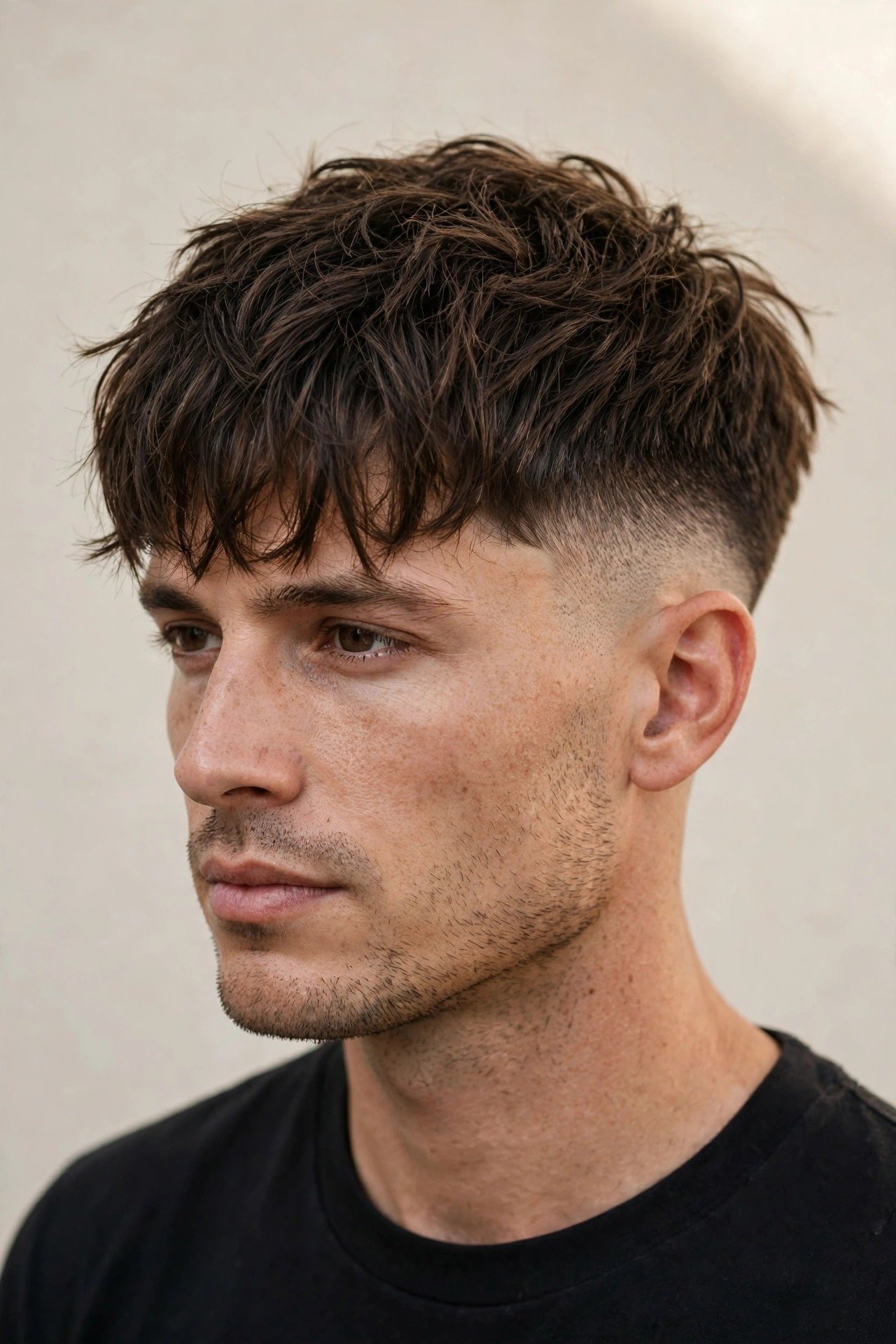
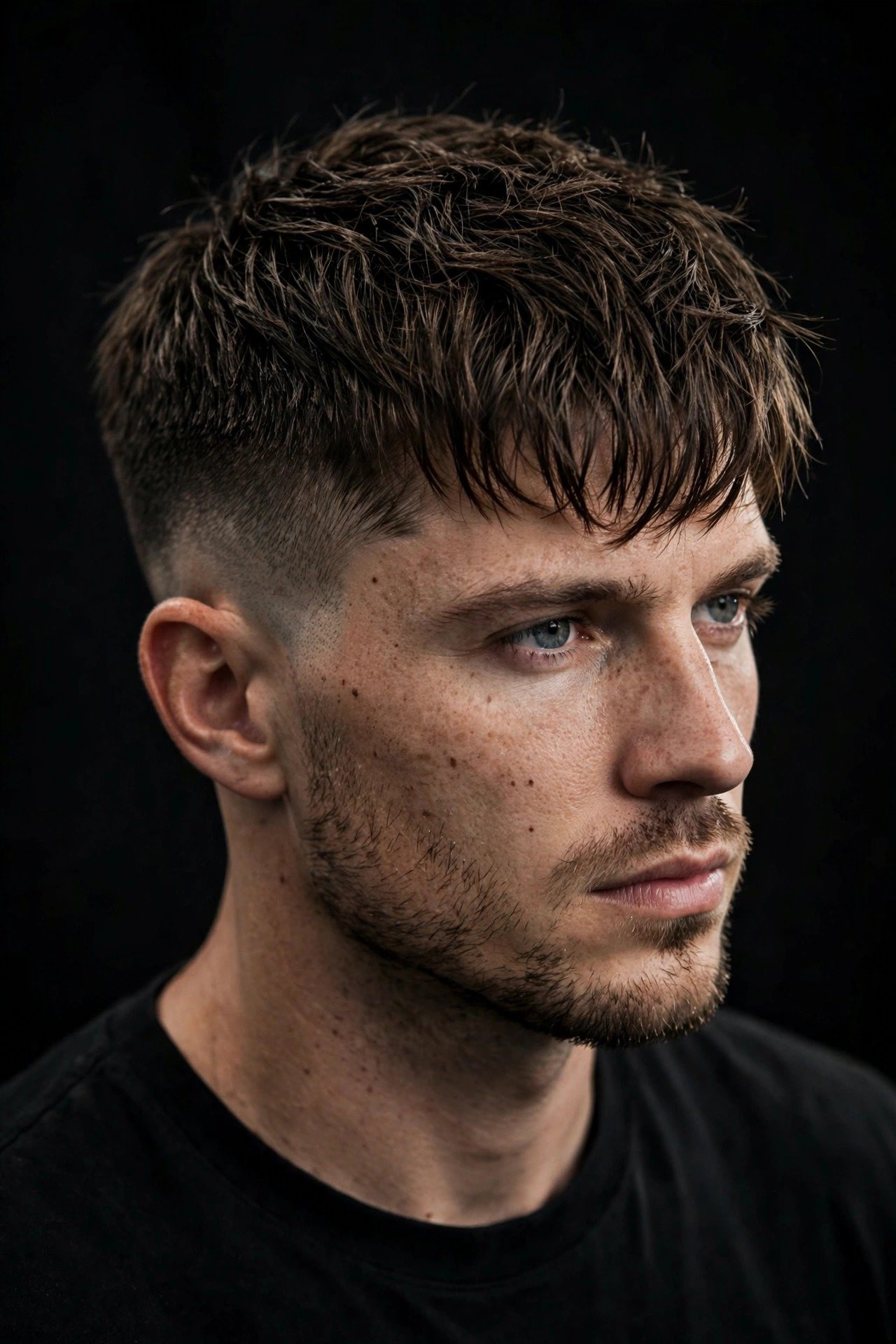
The french crop is defined by three elements: a forward-falling fringe, heavy texture on top, and short faded sides. The fringe is the star — instead of being pushed up or slicked back like most men’s cuts, the hair is directed forward toward the forehead, cut to sit somewhere between the hairline and the eyebrows. The length varies: a classic french crop keeps the fringe around 1.5 to 2 inches, while modern textured versions push it to 3 or even 4 inches for more movement and styling options.
The texture is what separates a 2026 french crop from the flat, helmet-like crops of the past. Your barber should be point-cutting (snipping into the ends vertically rather than cutting straight across), using thinning shears or a razor to remove bulk, and possibly using a technique called “twist cutting” where small sections are twisted and cut to create natural separation. The result should look like the hair naturally falls into piece-y chunks — not like it was cut with a ruler. If your french crop looks too neat and uniform, it wasn’t textured enough.
The sides and back are where the fade comes in. A true french crop traditionally had short, tapered sides — but the 2026 version almost always pairs with a fade. The most popular combination is a mid skin fade: the hair goes from skin (zero) at the bottom to about a #1 or #2 guard length where it meets the longer top. This creates a clean, sharp contrast that makes the textured top pop. Some guys prefer a taper fade (more gradual, less dramatic) for office-friendly looks, while others go for a high skin fade for maximum edge.
What the french crop is NOT: it’s not a Caesar cut (that’s shorter, blunter, with a straight-across fringe and minimal texture). It’s not an undercut (the top is much shorter and the disconnect is less extreme). It’s not a textured quiff (the hair goes forward, not up and back). Getting the terminology right matters because if you ask for the wrong cut, you’ll sit in the chair for 30 minutes and walk out with something you didn’t want.
2. Why the French Crop Is Everywhere in 2026
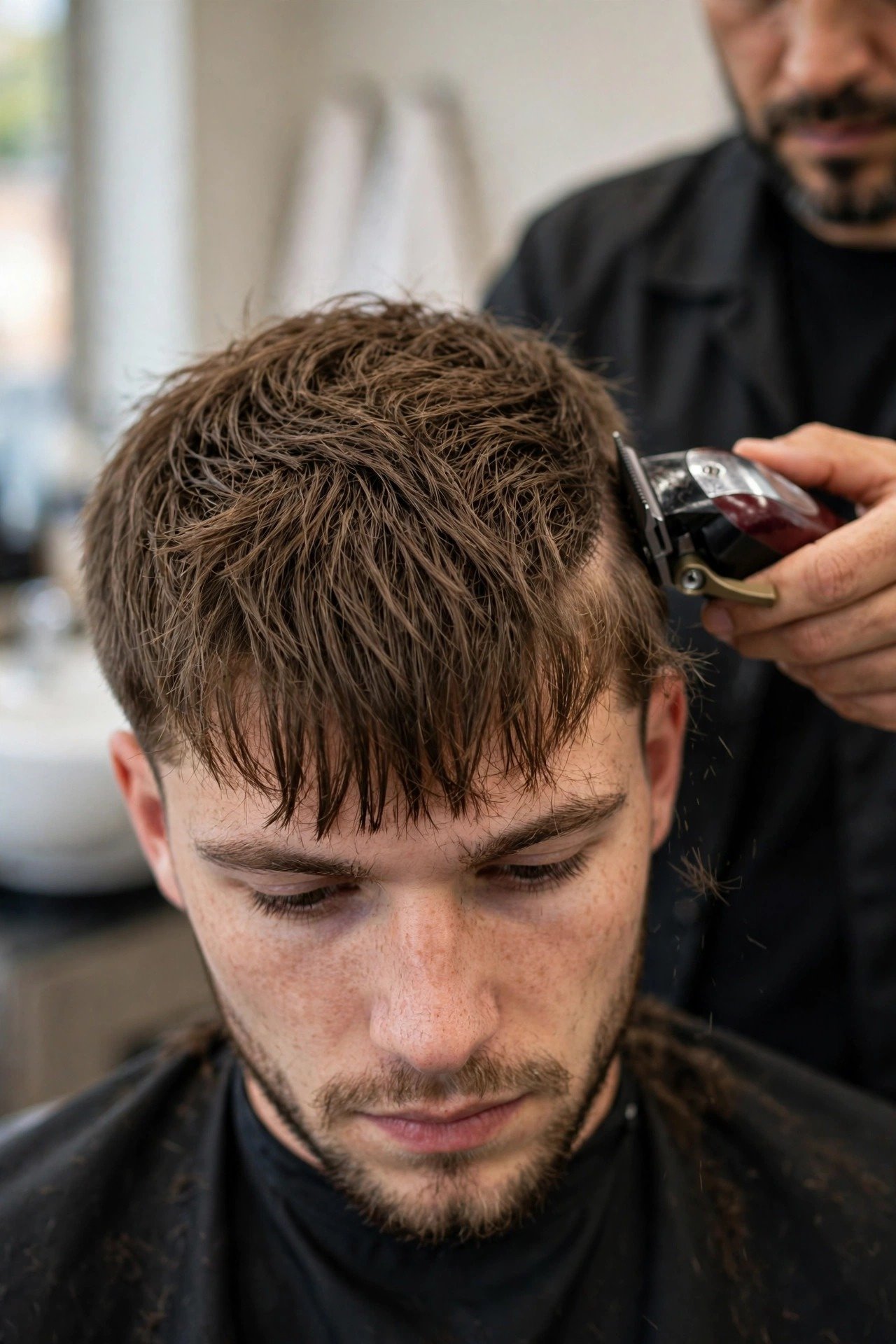
The french crop didn’t become the world’s most popular men’s haircut by accident. It’s the convergence of about five different trends, and understanding them explains why this cut has such staying power. First is the texture revolution. For most of the 2010s, men’s hair was about sleek, polished styles — the slicked-back undercut, the perfect side part, the immaculate pompadour. Around 2020, that started shifting hard toward texture: messy, natural, “I woke up like this” hair. The french crop is the ultimate textured cut because the entire top is designed to look piece-y and effortless.
Second is the low-maintenance movement. Men are busier than ever, and the idea of spending 20 minutes with a blow dryer every morning is dead. The french crop takes literally three to five minutes: a bit of product, push it forward, done. It also grows out gracefully — unlike a slicked-back style that looks terrible after two weeks, a french crop just gets a bit longer and messier, which still looks good. You can stretch it to 4-5 weeks between cuts without looking unkempt.
Third is the fringe comeback. For decades, showing your forehead was the default for men’s haircuts. The forward fringe — hair falling toward the face — was considered a “European” thing or a “fashion” thing. That’s changed completely. Fringes now read as modern and confident, not weird. The french crop normalized the fringe for mainstream guys, and once that mental barrier fell, there was no going back.
Fourth is versatility across hair types. Most trendy cuts only work for one hair type — the slick back needs straight hair, the afro needs coily hair, the man bun needs long hair. The french crop works on straight, wavy, and curly hair (with adjustments). That universality means barbers can recommend it to almost anyone who walks in, which accelerates how fast it spreads. When a cut works for 80% of clients, it becomes the default recommendation.
Finally, there’s the celebrity and athlete factor. From footballers to actors to TikTok creators, the french crop is everywhere in 2026. It’s the haircut of the “clean girl” aesthetic’s male counterpart — put-together but not try-hard. When you see it on three different people in your feed every day, it starts feeling like the obvious choice. And honestly? It is the obvious choice for most guys right now.
3. French Crop vs Caesar Cut: What’s the Real Difference?
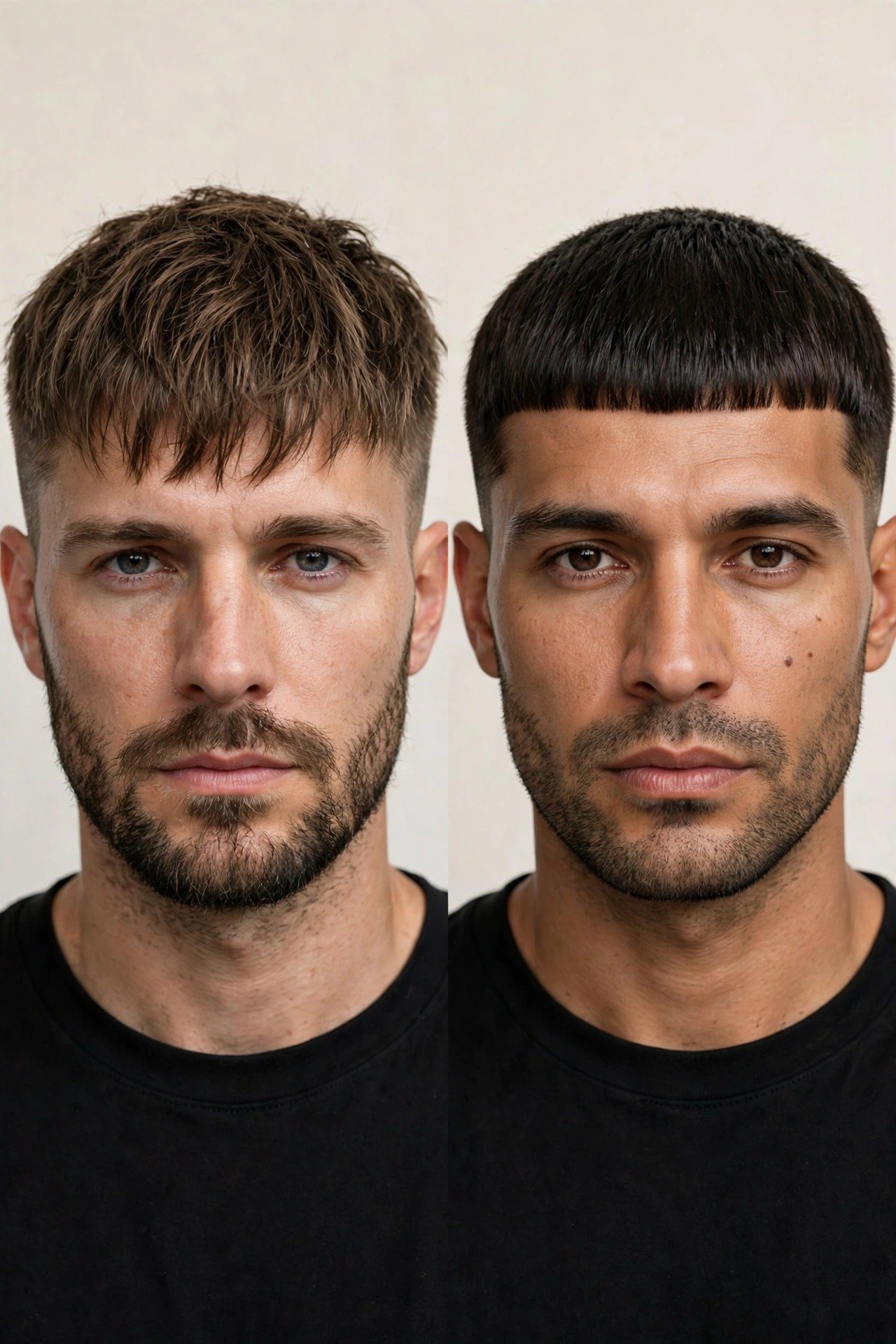
Ask for a “short crop with a fringe” at a mediocre barbershop and you might walk out with a Caesar cut instead of a french crop. They’re cousins, not twins, and knowing the difference saves you from a bad haircut. The Caesar cut — named after Julius Caesar, who allegedly wore his hair this way to hide a receding hairline — is the older, simpler version. It’s cut to one uniform short length all over (usually 1-2 inches on top), with a blunt, straight-across fringe and minimal texture. The sides are short but not necessarily faded. It’s neat, compact, and a bit severe.
The french crop takes that foundation and modernizes every element. The top is longer (2-4 inches vs 1-2), the fringe is textured and piece-y rather than blunt and straight, and the sides are faded (usually a skin fade) rather than just short. The overall effect is softer, more dimensional, and more contemporary. Where the Caesar says “military,” the french crop says “fashion-forward.” Where the Caesar is one length, the french crop has variation and movement.
The styling is different too. A Caesar is basically wash-and-go — there’s not enough length to style. A french crop has enough length on top to actually work with product: you can push it forward for the classic look, sweep it slightly to the side for variation, or add more texture for a messy finish. That styling versatility is a big part of why the french crop won and the Caesar faded (pun intended) into a niche choice.
So which should you get? If you want the absolute lowest-maintenance cut possible and don’t care about styling, the Caesar is fine. But for 95% of guys in 2026, the french crop is the better choice — it looks more modern, works on more hair types, photographs better, and gives you options. When in doubt, show your barber a photo. “French crop, textured” plus a reference photo is foolproof. Words alone leave too much room for interpretation.
4. Best Face Shapes for the French Crop
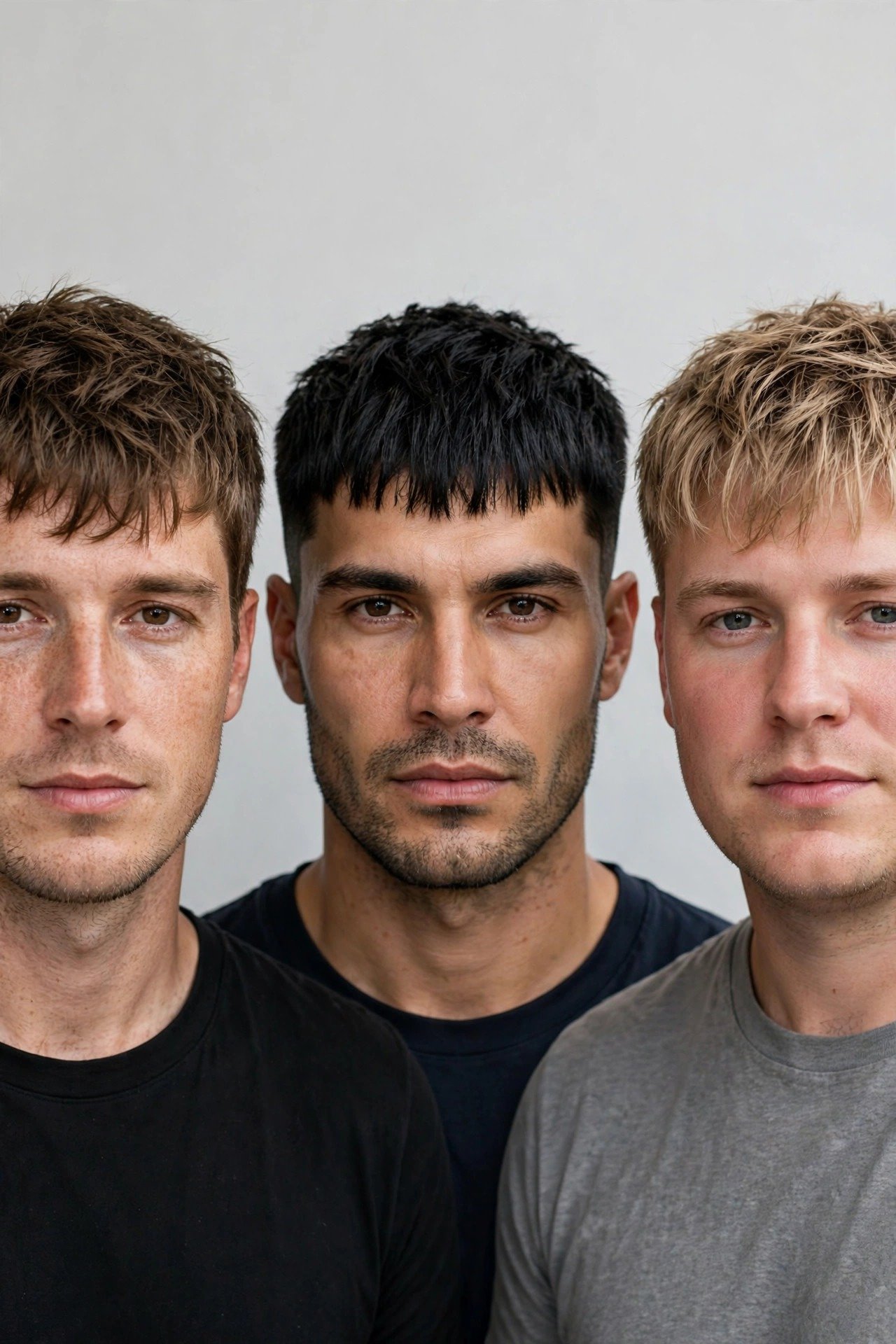
The french crop is one of the most face-shape-friendly cuts in the men’s game, but the details matter. Let’s break it down honestly. Oval faces — the ideal — can wear any version. The balanced proportions mean you don’t need to correct anything, so go for the classic textured crop with a mid fade and a fringe that hits mid-forehead. You’re working with a blank canvas.
Square faces with strong jawlines actually benefit from the french crop’s softness. The textured fringe breaks up the forehead’s width, and the faded sides keep things clean without adding more angularity. Avoid a super blunt, straight-across fringe — it emphasizes the squareness. Instead, ask for a slightly uneven, textured fringe with some pieces longer than others. A mid or low fade works better than a high fade here, since high fades add height that can make a square face look longer.
Round faces need the most careful approach. The danger is that a forward fringe + short sides can emphasize roundness. The fix: add height on top. Ask your barber to leave the top slightly longer (3-4 inches) and style it with some lift at the front — not a full quiff, but enough to elongate the face. A high fade also helps by creating vertical lines. Avoid a fringe that sits too low on the forehead; keep it at or above mid-forehead to show more face length.
Oblong/long faces are where the french crop truly shines. The forward fringe covers forehead, visually shortening the face — this is the single best thing a long-faced guy can do. Keep the top moderate length (2-3 inches, not too tall) and the fringe sitting lower on the forehead. Avoid high fades that add height; stick with low or mid fades. If your face is very long, the french crop might be the best haircut you can get, period.
Heart-shaped faces (wide forehead, narrow chin) work well with the french crop because the fringe narrows the forehead visually. Keep the sides tight with a good fade to avoid adding width at the temples. Diamond faces (narrow forehead and chin, wide cheekbones) should keep the fringe textured and slightly longer at the sides to soften the cheekbones. The bottom line: almost every face shape can wear a french crop, but tell your barber your concern and let them adjust the fringe length and fade height accordingly.
5. French Crop for Different Hair Types
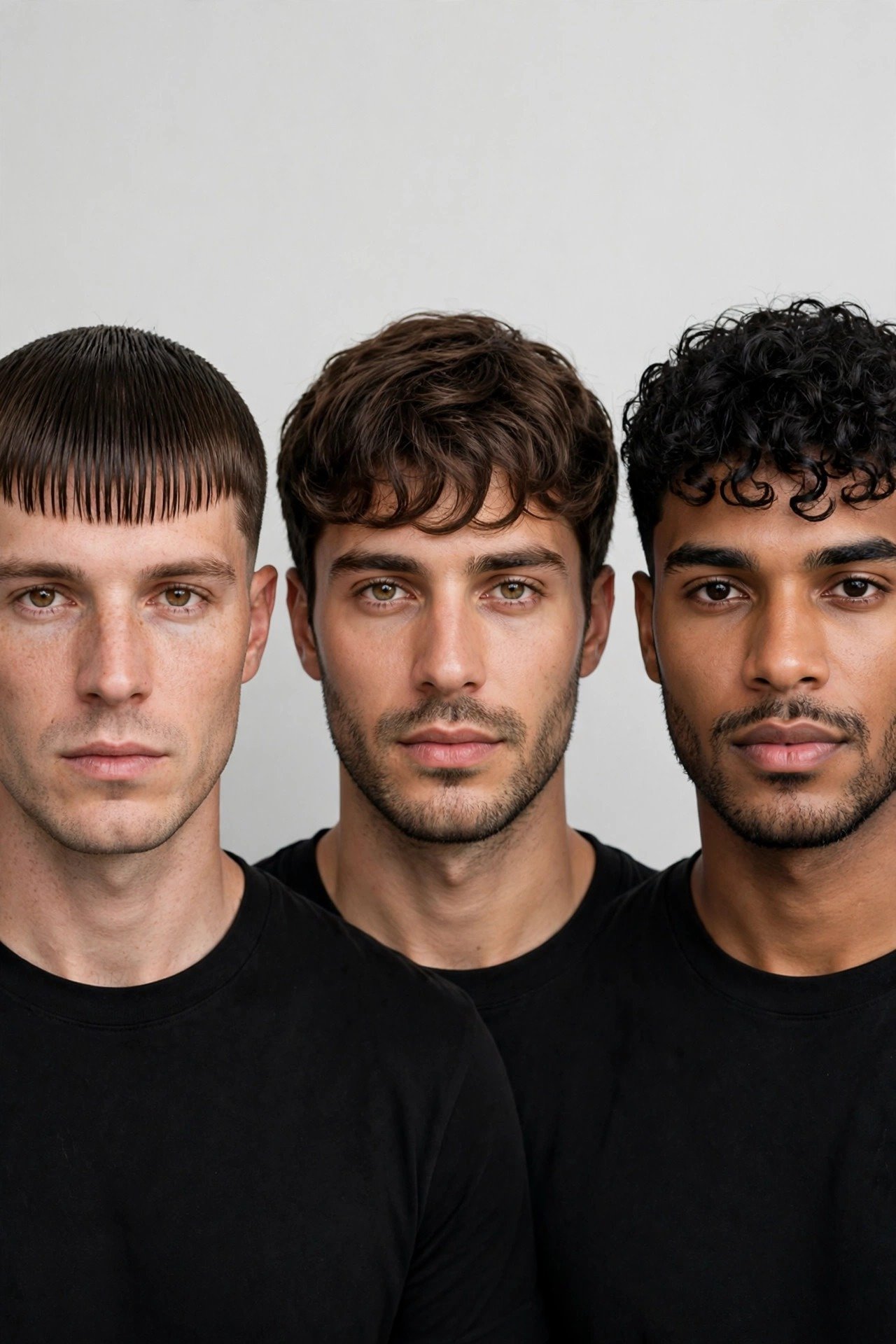
Straight hair is the easiest canvas for a french crop. It falls forward naturally, takes texture well, and shows off the piece-y definition. The main challenge is that very straight, fine hair can look flat — so your barber needs to be aggressive with texturizing (point cutting, thinning shears, maybe a razor). For styling, you’ll need a matte product with good hold (clay or paste) to create separation. Without product, straight-hair french crops can look a bit limp. The upside: it’s the fastest to style, usually under three minutes.
Wavy hair might be the ideal french crop hair. The natural wave creates built-in texture and movement — your barber barely has to do anything. The waves give that effortless, “just got out of bed but in a good way” look that straight hair needs product to achieve. Keep the top at 3-4 inches to let the waves do their thing. For styling, a light cream or sea salt spray enhances the natural wave without weighing it down. Don’t over-product wavy french crops; the whole point is letting the hair be itself.
Curly hair (3A-3C) can absolutely rock a french crop, but it needs a curl-savvy barber. The top should be left longer (3-5 inches) because curls spring up and appear shorter than they are. The barber should cut it dry or partially dry — cutting curly hair wet leads to surprises when it dries and shrinks. The fringe on curly hair becomes a curly fringe, which looks fantastic but needs curl-defining product (cream or light gel). Avoid heavy waxes that crush the curl pattern. The fade on the sides provides beautiful contrast with the curly top.
Thick/coarse hair needs serious weight removal. Without it, a french crop on thick hair looks like a helmet — all bulk, no texture. Your barber should spend extra time with thinning shears, removing weight from underneath while keeping length on top. This might take 10-15 extra minutes but it’s non-negotiable. For styling, strong-hold matte products work best. Thick hair holds a french crop beautifully once the bulk is managed.
Fine/thin hair requires the opposite approach: preserve every strand. Your barber should texture lightly — just enough to create separation, not so much that it looks wispy. Keep the top on the shorter side (2-2.5 inches) because longer fine hair goes stringy. A matte clay adds the illusion of thickness. And here’s an honest note: if you’re dealing with significant thinning or a receding hairline, the french crop’s forward fringe can actually help camouflage it — the hair falling forward covers the hairline. It’s one of the best cuts for early-stage hair loss.
6. The 10 Best French Crop Variations in 2026
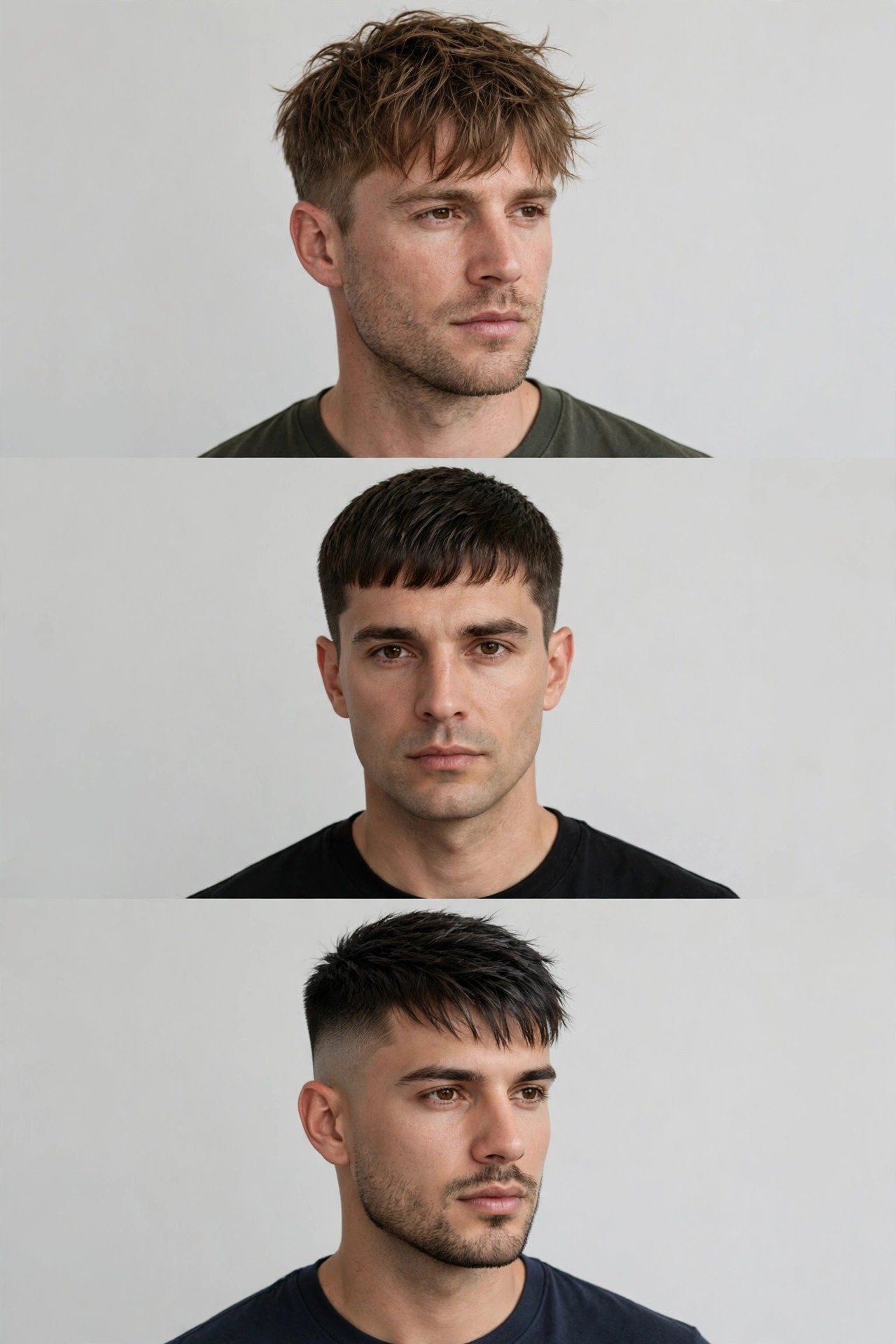
1. The Classic Textured French Crop: The standard — 2-3 inches on top, heavily textured, mid skin fade, fringe at mid-forehead. This is the default, the one in all the reference photos. If you don’t know what variation you want, get this.
2. The Messy French Crop: Longer on top (3-4 inches), extra texture, styled with a “I don’t care” finish. Uses matte clay and a lot of finger-styling. Popular with the under-25 crowd. The key is controlled messiness — it should look effortless, not like you forgot to brush your hair.
3. French Crop with Skin Fade: The fade goes all the way to skin, creating maximum contrast with the textured top. Edgy, sharp, high-maintenance (needs a lineup every 2 weeks to stay crisp). Best for guys who like bold looks.
4. French Crop with Taper Fade: A more gradual, office-friendly fade. The transition from short to long is smoother, less dramatic. This is the “I have a job interview” french crop. Still looks modern, just less aggressive.
5. The Long Fringe French Crop: Fringe pushed to 4+ inches, falling close to the eyebrows. More dramatic, more styling options (can be swept to the side). Needs more product and daily styling. Not for low-maintenance guys.
6. French Crop with Disconnected Sides: Instead of a blended fade, there’s a visible line where the long top meets the short sides. Very fashion-forward, very 2026. Harder to grow out — you’re committed to regular cuts.
7. The Curly French Crop: Specifically for curly hair — longer top to accommodate curl, textured to enhance the pattern, usually with a mid fade. The curls ARE the texture, so less scissor work needed.
8. French Crop with Lineup/Edge Up: The hairline is carved into sharp, geometric lines. Popular in urban barbershop culture. Makes the cut look incredibly crisp but needs touching up every 1-2 weeks.
9. The Subtle/Professional French Crop: Shorter all over (top at 1.5-2 inches), neat texture, low taper fade. The “I work in finance but still have style” version. Grows out well, minimal styling needed.
10. French Crop with Hard Part: A shaved line on one side adds structure and a classic barbershop feel. Works best with a slightly longer top that can be directed. It’s a small detail that makes a big visual impact.
7. How to Ask Your Barber for a French Crop (Exact Words)
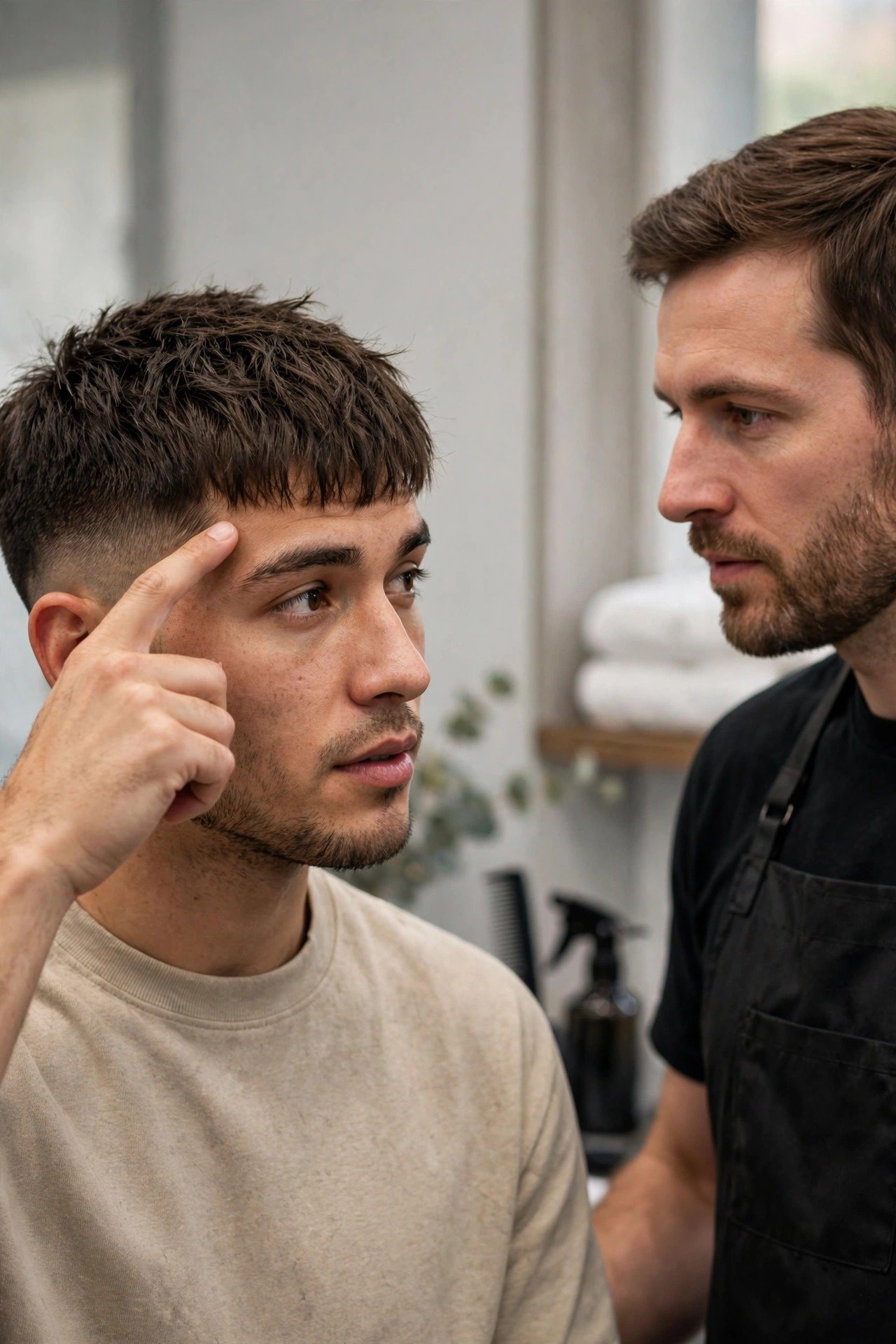
Here’s the script that gets you the right cut every time. Walk in and say: “I want a french crop — textured on top, about [2-3] inches, fringe falling forward to about mid-forehead. Heavily textured, lots of point cutting. On the sides, I want a [mid/high/low] [skin/taper] fade.” Then show a photo. The photo is not optional — it’s the single most important thing you can do. Barbers interpret words differently; a photo eliminates guesswork.
For the top, be specific about length. Hold your fingers apart to show the length you want, or say “about two finger widths” or “three inches.” For texture, say “I want a lot of texture — point cut it, thin it out, make it piece-y.” If your barber just cuts straight across with no texturizing, stop them and ask for texture. A french crop without texture is just a bad Caesar.
For the fade, know your terms. A skin fade (also called bald fade) goes to zero — bare skin at the bottom. A shadow fade goes very short but not to skin. A taper fade is more gradual and conservative. Low means the fade starts near the ears; mid starts at the temple; high starts near the top of the sides. For a classic french crop, “mid skin fade” is the standard. For office, “low taper fade.” For bold, “high skin fade.”
For the fringe, specify where you want it to sit: “fringe to mid-forehead” or “fringe just above the eyebrows” or “shorter fringe, well above the brows.” Also mention if you want it straight across, slightly uneven, or swept to one side. And here’s a pro tip: ask your barber to cut the fringe DRY at the end. Hair shrinks when it dries, and a fringe cut wet will end up shorter than expected. A good barber will do the bulk cut wet, then refine the fringe dry.
What to avoid saying: “Just make it look good” (too vague), “Like the picture but different” (confusing), “I want a crop” without specifying french (might get a Caesar). Also, don’t micromanage with guard numbers unless you know what you’re talking about — trust your barber’s judgment on the technical details once you’ve communicated the overall vision. The consultation should take 2-3 minutes. If your barber rushes you into the chair without asking questions, consider finding a new barber.
8. How to Style a French Crop at Home (5-Minute Routine)

The french crop’s biggest selling point is how fast it styles. Here’s the everyday routine that takes under five minutes. Step 1: Start with towel-dried, slightly damp hair. Not dripping wet, not bone dry — about 70% dry. If your hair is fully dry, mist it lightly with water. Product distributes more evenly on damp hair.
Step 2: Take a pea-sized amount of matte clay (for thick hair) or matte paste (for fine hair). Warm it between your palms until it’s invisible — this is crucial. If you can see product on your hands, you haven’t warmed it enough, and it’ll go on clumpy. Step 3: Work the product through the top, pushing everything forward toward your forehead. Use your fingers, not a comb — fingers create natural separation, combs make it too neat.
Step 4: Define the fringe. Pinch small sections of the fringe between your fingers and pull slightly forward. This creates the piece-y, textured look. Don’t overdo it — 5-6 pinches is enough. Step 5: Check the sides. If the fade is fresh, you’re done. If it’s growing out, you can use a tiny bit of product to smooth any flyaways, but don’t put heavy product on faded sides — it looks greasy.
For a messier, more textured look, skip the careful pinching and just roughly push everything forward with your palms, then use your fingertips to create random separation. For a neater look (office, events), use a comb to direct the fringe evenly forward, then lightly pinch just the very ends. The same cut gives you both options — it’s about how much effort you put into the styling.
What NOT to do: don’t use shiny/glossy products (they make the french crop look wet and dated — matte is the 2026 standard). Don’t use too much product (a pea-sized amount is enough; more makes it look greasy and weighs down the texture). Don’t blow-dry it flat against your head (you want volume and separation, not a helmet). And don’t brush it — brushes are the enemy of texture. Fingers only.
9. Best Products for the French Crop (What Actually Works)
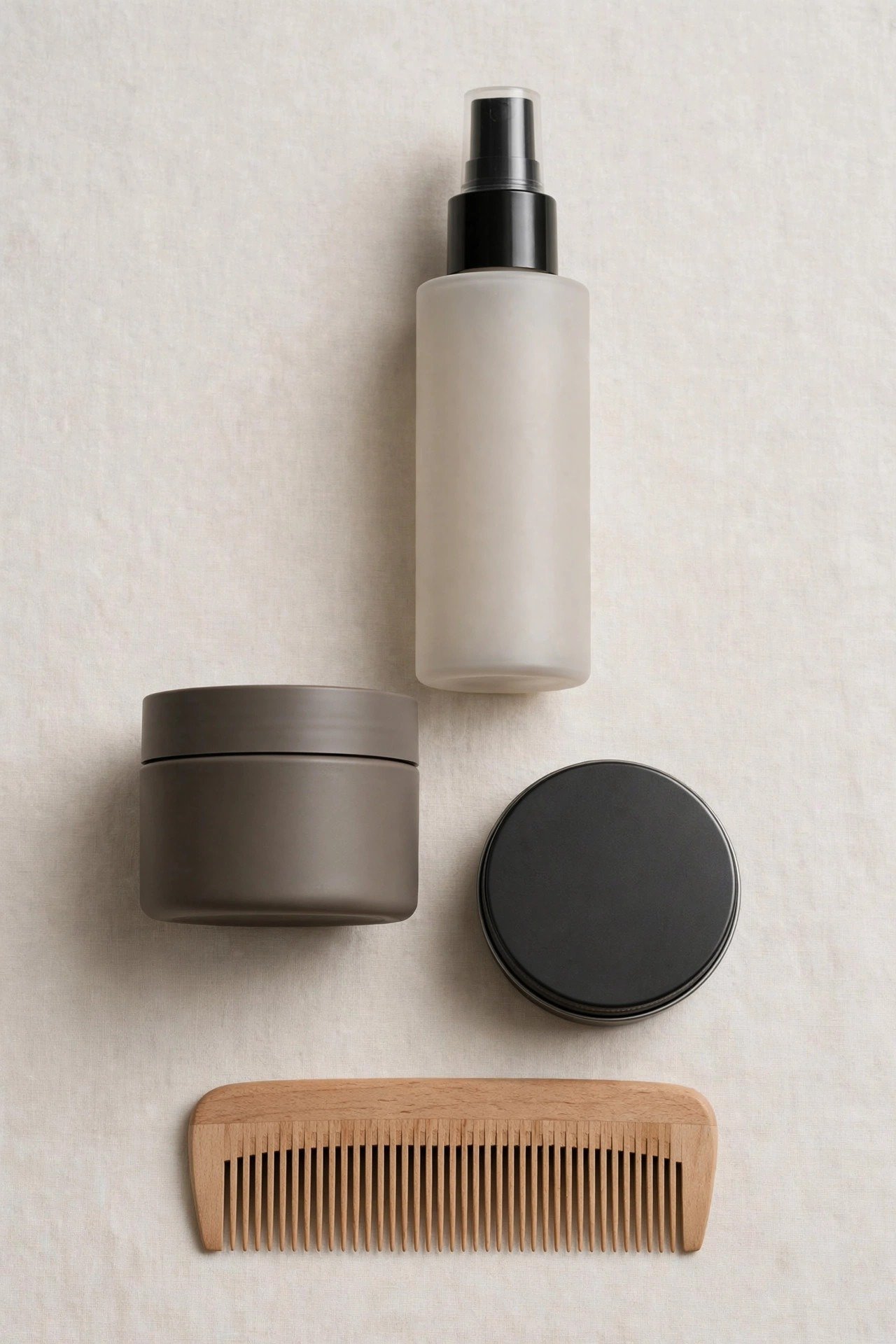
Product makes or breaks a french crop. The wrong product turns texture into grease; the right product makes it look effortlessly cool. Here’s what’s actually worth buying in 2026. Matte clay is the #1 french crop product. It provides strong hold with zero shine, and the clay formula adds gritty texture that enhances the piece-y look. Top picks: Hanz de Fuko Claymation (the gold standard, strong hold, matte finish, $24), Baxter of California Clay Pomade (slightly easier to wash out, $26), or Blind Barber 60 Proof Wax (great texture, $22). Use a pea-sized amount — clay is concentrated.
Matte paste is the alternative for fine or thin hair. It’s lighter than clay, so it won’t weigh down delicate strands. Good options: Uppercut Deluxe Matte Pomade ($18, Australian barbershop staple), Layrite Cement Clay ($20, strong hold, truly matte). Paste gives you more pliability — you can restyle during the day without it looking stiff.
Sea salt spray is the secret weapon for wavy-haired guys. Spray it on damp hair before styling to enhance natural wave and add beachy texture. Sun Bum Sea Mist ($16) or Verb Sea Spray ($20) work well. Don’t expect hold from sea salt spray alone — it’s a pre-styler. Apply it, rough-dry with your fingers, then add clay or paste on top.
Texture powder (also called volume powder) is the 2026 insider product. It’s a fine powder you shake onto dry hair at the roots — it instantly adds volume and matte texture with zero weight. Perfect for fine hair or for refreshing second-day hair. Big Sexy Hair Powder Play ($22) or Slick Gorilla Hair Powder ($15) are popular. A little goes a long way; too much makes hair feel gritty.
What to skip: high-shine pomades (wrong aesthetic for 2026), heavy gels (too stiff, kill the natural texture), oils and serums on the top (they’re for the ends of long hair, not short textured cuts). And invest in a good shampoo — product buildup kills texture. Use a clarifying shampoo once a week (Neutrogena Anti-Residue, $7) to strip buildup, then follow with your regular shampoo. Your french crop will look dramatically better with clean hair.
10. Maintenance: How Often to Trim a French Crop
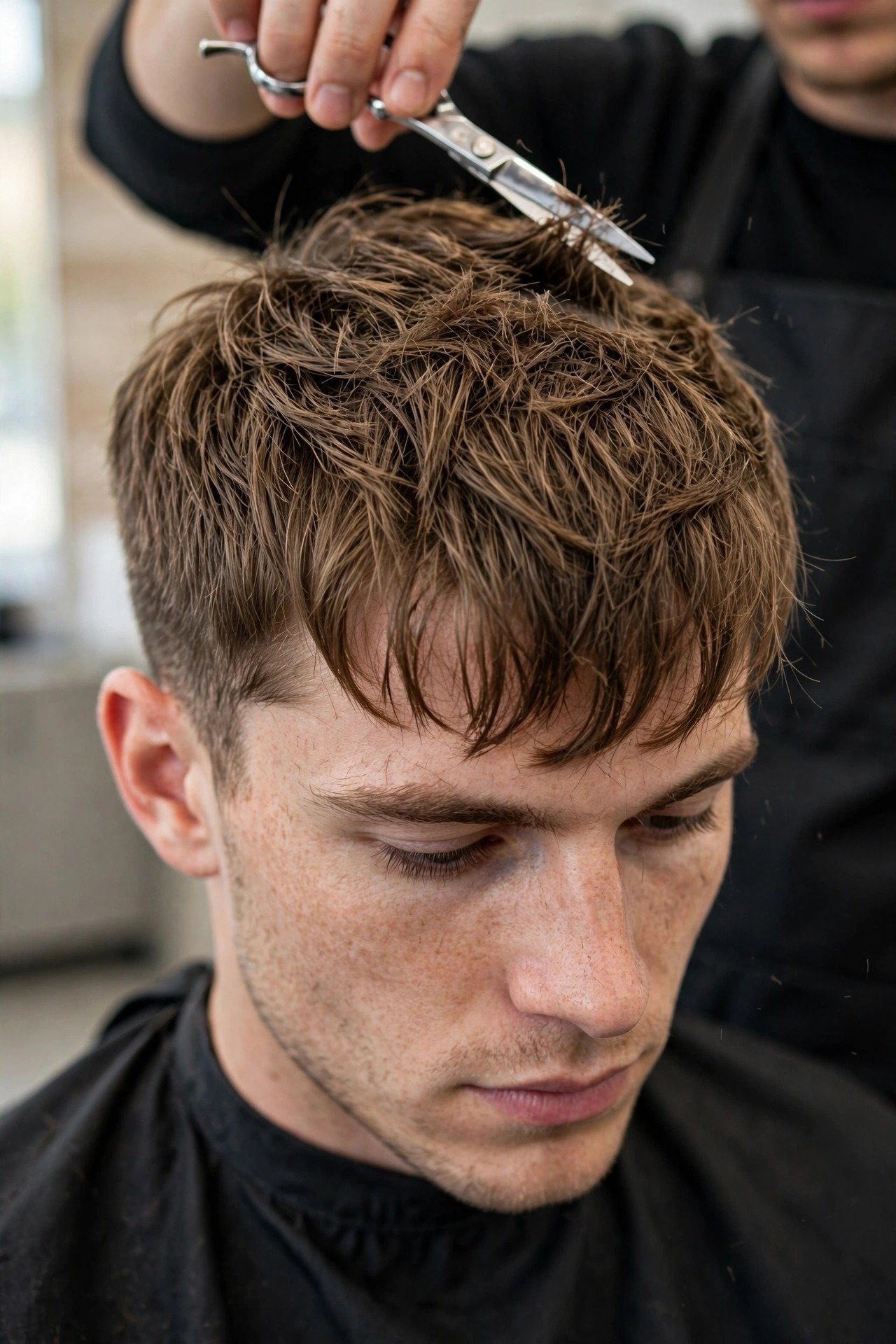
The french crop is forgiving, but it’s not a “get it once and forget it” cut. Here’s the realistic maintenance schedule. The fade: This is what goes first. A skin fade starts looking grown-out after 10-14 days — the sharp contrast softens, and the bottom gets fuzzy. If you want it crisp, you need a cleanup every 2 weeks. Many barbershops offer a “neckline and lineup” touch-up for $10-15 between full cuts. Worth it if the fade is important to you.
The top: The textured top grows out much more gracefully. At 3-4 weeks, it’s just a bit longer and messier — still looks good, arguably even better for the messy variation. At 5-6 weeks, the fringe starts getting in your eyes and the shape loses definition. That’s your signal. Most guys get a full french crop cut every 4-5 weeks. If you’re on a budget, you can stretch to 6 weeks, but beyond that it stops looking intentional.
Barbershop pricing in 2026: A french crop at a decent barbershop runs $30-50 in most US cities, $25-35 in smaller markets. High-end shops in NYC/LA charge $60-80+. The cut takes 25-35 minutes for an experienced barber. If you’re paying less than $25, question the quality — a good french crop requires real texturizing skill, not just clippers. Tip your barber 20% if they nailed it; good barbers remember good tippers.
Between cuts: You can extend the life of your french crop with a few tricks. Use dry shampoo on the fringe if it gets oily (it touches your forehead, so it greases faster than the rest). If the fringe gets too long, you can carefully trim just the very ends yourself — point-cut (vertical snips) a tiny amount, never cut straight across. And keep the neckline clean with a trimmer if you have one; a fuzzy neckline makes the whole cut look unkempt.
11. Common French Crop Mistakes (And How to Avoid Them)
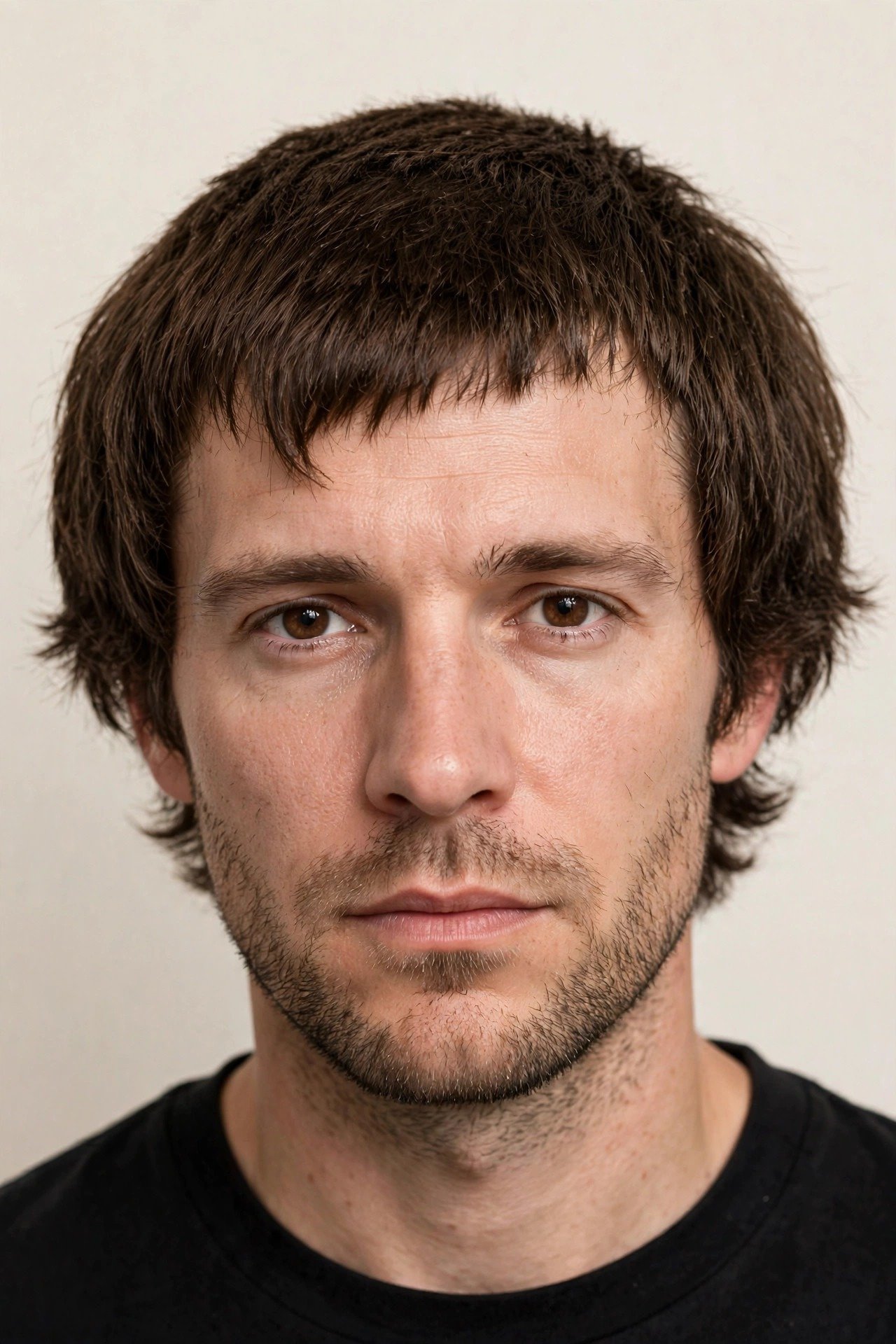
Mistake #1: Not enough texture. This is the #1 french crop killer. If your barber cuts the top with straight-across scissor work and no point cutting, thinning, or razoring, you’ll get a flat, bowl-like top instead of a textured crop. The fix: explicitly ask for “heavy texture” and watch what they do. If they’re not point-cutting (snipping vertically into the ends), speak up. A good french crop should look piece-y even without product.
Mistake #2: Fringe too short. A fringe cut above mid-forehead looks like a Caesar, not a french crop. It also exposes more forehead, which defeats the purpose for guys using it to balance face proportions. The fix: tell your barber exactly where you want the fringe to sit, and ask them to cut it dry at the end (wet hair appears longer, leading to over-cutting). When in doubt, leave it longer — you can always take more off.
Mistake #3: Wrong fade height. A high skin fade on a round face adds unwanted height. A low fade on someone who wants edge looks too conservative. The fix: match the fade to your face shape and style goals (see Section 4). When in doubt, mid fade is the safe default that works for most guys.
Mistake #4: Too much product. Loading up on clay or wax turns texture into a greasy mess. The fix: start with a pea-sized amount. You can always add more, but you can’t take it away without washing. Warm the product fully between your palms before applying. If your hair looks wet or shiny, you’ve used too much or the wrong product (switch to matte).
Mistake #5: Growing it out without a plan. The french crop hits an awkward stage around 8-10 weeks where the fringe is too long but the sides are still short. The fix: either commit to regular trims, or tell your barber you’re growing it out — they can shape it into a longer textured cut (messy fringe, longer top) rather than letting it grow wild. The transition to a longer style needs guidance, not neglect.
Mistake #6: Wrong barber. Not every barber does great french crops. It’s a texture-heavy cut that requires scissor skill, not just clipper work. The fix: look at your barber’s Instagram. If their feed is all skin fades and lineups with no textured tops, find someone else. Ask specifically: “Do you do a lot of french crops?” Their answer tells you everything.
12. French Crop Styling for Different Occasions
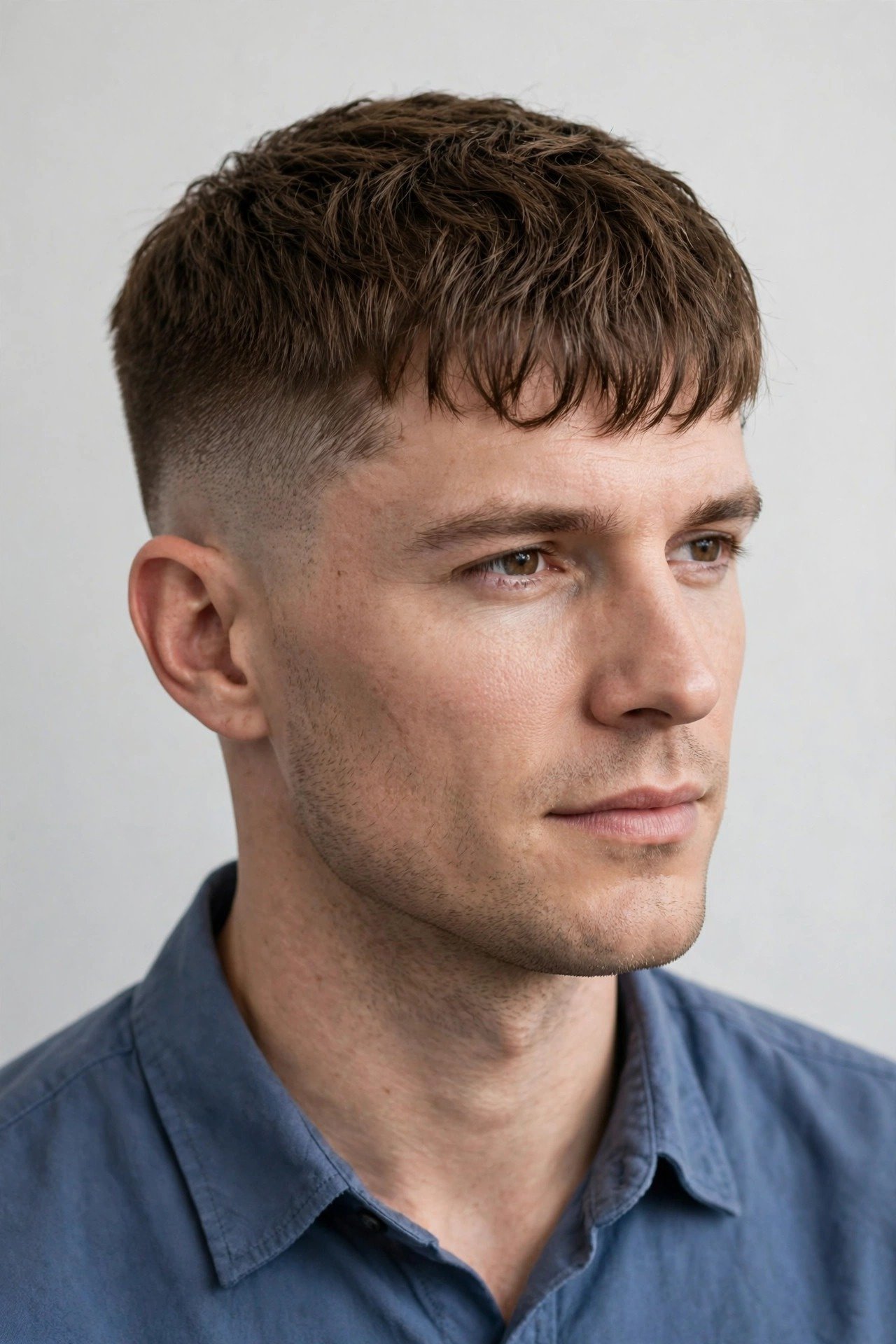
The same french crop can look completely different depending on how you style it. Here’s how to adapt it. Office/professional: Keep it neat. Use a comb to direct the fringe evenly forward, then lightly pinch just the ends for subtle texture. Use a matte paste (not clay — it’s less dramatic) and keep the overall look controlled. The fade should be a low taper, not a high skin fade. The goal is “stylish but serious.” Avoid the messy, bedhead version at work unless your office is very casual.
Casual/weekend: This is where the french crop shines. Go for the messy, textured look — rough up the top with your fingers, create random separation, don’t worry about perfection. A bit of texture powder at the roots adds effortless volume. The messier it looks (within reason), the cooler it reads. This is the “I just threw some product in” aesthetic that takes actually about three minutes.
Night out/date: Step it up slightly from casual. Define the texture more deliberately — pinch individual pieces, make sure the fringe has nice separation. You can add a tiny bit more product for hold (it needs to last). If you have a lineup, make sure it’s fresh — sharp edges photograph well and look intentional. A drop of matte clay on the fringe ends creates piece-y definition that catches light nicely.
Gym/sports: The french crop is actually great for active guys because it’s short enough to not get in the way. Before working out, you can push the fringe up slightly with a headband or just let it do its thing — sweat will make it look more textured, not worse. After, rinse or wash (sweat buildup kills the look), then restyle. Keep a travel-size clay in your gym bag for post-workout touch-ups.
Formal events (weddings, etc.): Go neater and more polished. Comb the fringe forward evenly, use a bit more product for control, and make sure the fade is fresh (get a cleanup 2-3 days before, not the day of — fresh fades can look too harsh in photos). If you want to elevate it, ask your barber for a subtle hard part or a clean lineup. The french crop at a formal event says “I have style but I’m not trying too hard” — which is exactly the right message.
13. French Crop Inspiration: Who Wears It Best in 2026
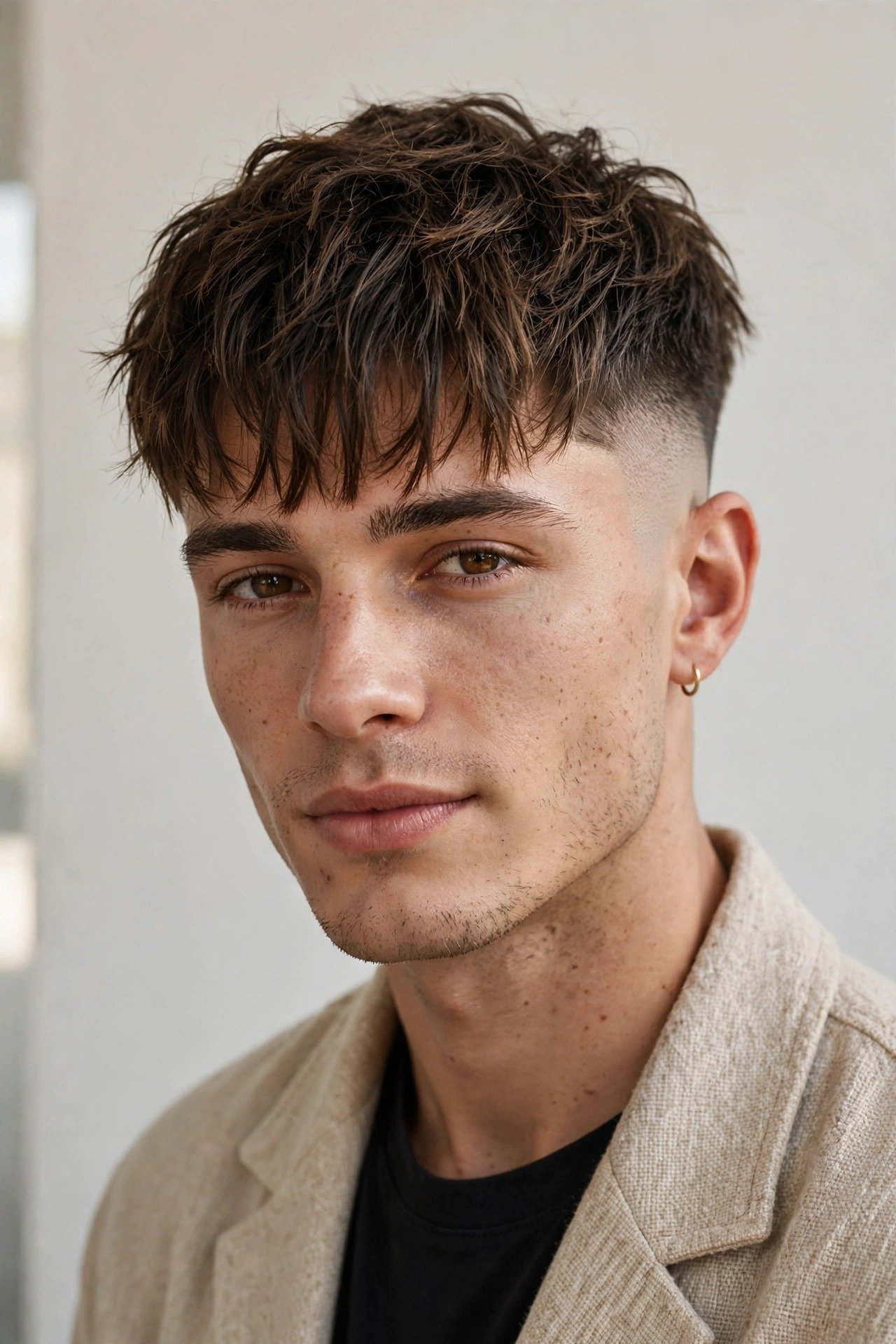
Sometimes the best way to understand a haircut is to see it on real heads. The french crop’s 2026 dominance is visible everywhere from Premier League pitches to Hollywood red carpets to your TikTok For You page. Footballers were early adopters — the cut’s sporty, low-maintenance nature makes it perfect for athletes who need to look sharp without fussing. You’ll see variations of the textured crop with skin fades on players across Europe’s top leagues, and it’s become almost a uniform in certain squads.
In entertainment, actors have embraced the french crop for its versatility on camera. It photographs well from every angle (no weird cowlicks or flat spots), works under harsh lighting, and reads as both approachable and stylish. The textured top catches light beautifully in photos, which is why it’s become a red-carpet staple for men who want to look polished without appearing over-styled. It’s the haircut equivalent of a well-fitted navy suit — appropriate everywhere, boring nowhere.
On social media, barbers have turned the french crop into content gold. The transformation videos — before (overgrown, shapeless) to after (crisp fade, textured top) — are endlessly satisfying to watch. Hashtags like #frenchcrop and #texturedfringe have billions of views collectively. The cut’s visual impact (sharp fade contrast + textured top) makes it perfect for the before/after format. If you’re looking for inspiration, search these hashtags and save the ones that match your hair type and face shape.
But here’s the honest take: don’t copy a celebrity’s exact cut. Their hair type, face shape, and (crucially) their barber are different from yours. Use celebrity photos as a starting point for the vibe you want — “I like how textured that is” or “I want my fringe about that length” — then let your barber adapt it to your head. The best french crop is the one designed for YOUR hair, not someone else’s. Bring 2-3 reference photos showing different angles, and have a real conversation about what’s achievable with your hair type.
Frequently Asked Questions About the French Crop
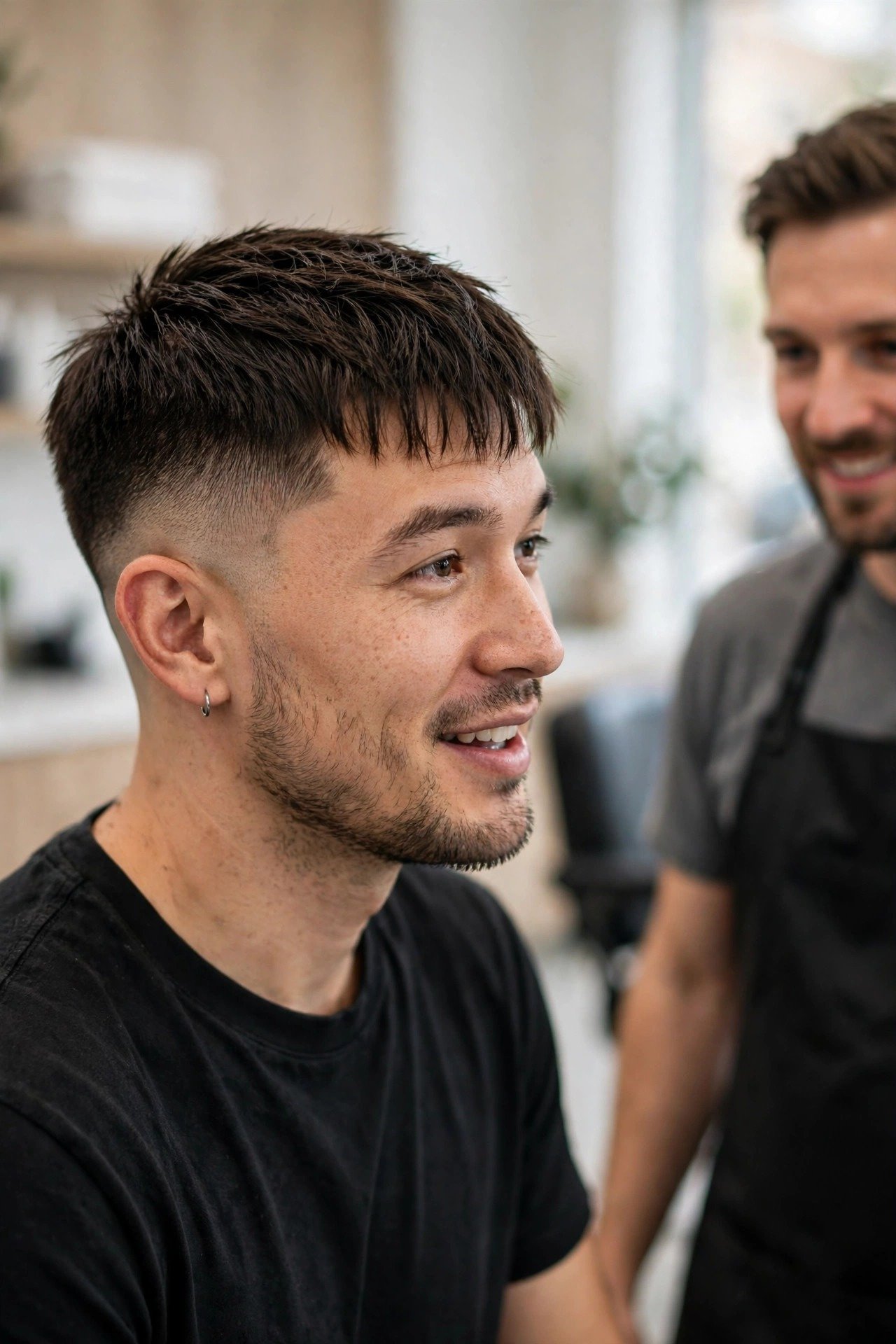
How long does hair need to be for a french crop?
You need at least 2 inches on top to get a proper french crop with texture and a forward fringe. If your hair is shorter than that, you’ll end up with something closer to a Caesar cut. The ideal starting length is 2.5 to 4 inches on top — this gives your barber enough to work with for texturizing and shaping the fringe. If you’re growing out from a buzz cut, expect to wait about 2-3 months before you have enough length. The sides can be any length since they’ll be faded down anyway. Don’t try to get a french crop with 1 inch on top; it won’t have the characteristic texture and fringe that define the cut.
Can I get a french crop if I have a receding hairline?
Yes, and it’s actually one of the best cuts for early-stage receding. The forward-falling fringe covers the hairline, camouflaging recession at the temples and forehead. The key is keeping the fringe long enough to provide coverage (at least to mid-forehead) and textured enough to not look like a comb-over. Be honest with your barber about the recession so they can cut accordingly — they’ll avoid taking the fringe too short and can texture it to maximize coverage. However, if the recession is advanced (significant temple recession or crown thinning), the french crop won’t hide it completely. In that case, a shorter crop or buzz might be more honest. The french crop works best for Norwood 1-3 recession, not beyond.
How is a french crop different from a textured fringe?
Honestly? They’re basically the same thing. “Textured fringe” is the generic description, “french crop” is the specific haircut name. All french crops have a textured fringe, but not all textured fringes are french crops — the french crop specifically pairs the textured fringe with short faded sides. If someone says “textured fringe,” they might mean a longer, messier version with less faded sides. If they say “french crop,” they mean the full package: textured forward fringe + fade. In 2026 barbershop language, they’re used almost interchangeably, but “french crop” is more precise.
Does the french crop work for Black men?
Absolutely, with the right barber. The french crop translates well to coily and kinky hair textures (4A-4C), but it needs a barber experienced with Black hair. The top is typically left a bit longer and may be shaped with a sponge or twist technique to enhance the natural curl pattern rather than cut with the point-cutting used on straight hair. The fade on the sides is where Black barbers excel — a crisp skin fade with a lineup pairs perfectly with the textured top. The fringe on coily hair becomes a textured, curly fringe which looks fantastic. Ask for a barber who specializes in Black hair; the cutting techniques are different enough that it matters.
Can I style a french crop without product?
You can, but it won’t look as good. The french crop’s defining characteristic is texture and piece-y separation, and that comes from product (or from naturally wavy/curly hair). Without product, straight hair will just fall flat and look like an unstyled bowl cut. That said, if you have naturally wavy or curly hair, you can get away with minimal product — maybe just a bit of curl cream or leave-in conditioner. For straight hair, product is non-negotiable. The good news: it takes 30 seconds and a pea-sized amount. It’s the lowest-effort styling of any textured cut, but “low effort” isn’t “no effort.”
How do I grow out a french crop?
Growing out a french crop requires a plan because the proportions get awkward. Around week 6-8, the fringe gets too long and the fade grows out, creating a mushroom-like shape. You have two options. Option A: transition to a longer textured cut. Tell your barber you’re growing it out — they’ll let the top grow while keeping the sides trimmed, gradually evolving it into a messy fringe or textured quiff. Option B: grow everything evenly for a longer style. This takes patience (3-4 months of awkward phase). Get trims every 6-8 weeks where the barber just cleans up the shape without taking length off the top. Use more product during grow-out to control the extra length. The key is communicating with your barber — don’t just stop getting haircuts and hope for the best.
What’s the difference between a french crop and an Edgar cut?
The Edgar cut (also called the Edgar haircut) is like the french crop’s bolder, more aggressive cousin. Both have a forward fringe and faded sides, but the Edgar takes everything to the extreme: the fringe is cut bluntly straight across (often with a razor-sharp lineup), the fade is usually a high skin fade, and the overall look is much more geometric and severe. The french crop is textured and natural; the Edgar is blunt and architectural. The Edgar became popular through memes and Latino barbershop culture, and it makes a strong statement. The french crop is more versatile and workplace-friendly. If you want edge, go Edgar. If you want something you can wear everywhere, go french crop. Some guys get a hybrid — textured french crop top with an Edgar-style sharp lineup — which gives you the best of both.
Should I get a french crop in summer?
The french crop is actually an excellent summer haircut. The faded sides keep you cool, and the short top doesn’t trap heat like longer styles. It’s also sweat-friendly — a bit of sweat just adds to the textured, lived-in look rather than ruining it. For very hot climates, consider a higher fade and a slightly shorter top to maximize airflow. The main summer consideration is sun protection for your scalp — the fade exposes skin that hasn’t seen sunlight, so apply sunscreen to the faded areas for the first week or two to avoid a painful burn. A hat works too, though it’ll flatten the top (just restyle when you take it off). Compared to longer styles that become a sweaty mess in heat, the french crop is one of the most practical summer cuts you can get.
How much should I tip my barber for a french crop?
Standard barbershop tipping in 2026 is 20% for good service, 25% for exceptional work. On a $40 cut, that’s $8-10. If your barber spent extra time on the texture work (which is the hard part of a french crop), tipping toward the higher end is appropriate. Good barbers remember good tippers — you’ll get better attention, more honest advice, and sometimes squeezed in when they’re booked solid. If you’re getting just a cleanup (neckline, lineup) for $15, tip $3-5. Cash tips are still king in most shops, though many now accept Venmo/CashApp. When in doubt, tip more rather than less — a great barber is worth their weight in gold, and the french crop specifically rewards finding someone skilled and sticking with them.
Conclusion: Why the French Crop Deserves Your Next Barbershop Visit
The french crop earned its place as the defining men’s haircut of 2026 because it solves the problems most guys actually have. It’s low-maintenance without looking lazy. It’s textured without being messy. It works on almost every hair type and face shape. It grows out gracefully. It looks good in photos and in person. And it takes five minutes to style. That’s not a trend — that’s just a well-designed haircut.
If you’re on the fence, here’s the simplest advice: book the appointment, bring a reference photo, and tell your barber “french crop, textured, mid fade.” The worst case? You get a solid, modern haircut that grows out fine. The best case? You find your signature cut for the next two years. The french crop isn’t going anywhere — it’s too practical, too versatile, and too good-looking to be a fad. It’s the new classic.
And remember: the difference between a good french crop and a bad one is texture. If your barber doesn’t point-cut, thin, or razor the top, find a new barber. The fade gets the attention, but the texture does the work. Get that right, and everything else falls into place — literally, forward onto your forehead, exactly where it should be.
One final thought for the guys still on the fence: the french crop is the lowest-risk trendy haircut you can get. Unlike a mullet or a mohawk, it won’t raise eyebrows at work. Unlike a buzz cut, it won’t shock your family. It’s modern without being weird, stylish without being try-hard. It’s the haircut that makes people think “he has his life together” without being able to pinpoint why. In 2026, that’s exactly what most men want from their hair — and the french crop delivers it better than anything else in the barbershop.
The bottom line is simple: if you want a haircut that looks good with minimal effort, works for your hair type, suits your face shape, and won’t look dated in photos five years from now, the french crop is it. Book the appointment. Bring the photo. Trust the texture. You won’t regret it.
And if you’re reading this at 2 AM, debating whether to book that barbershop appointment tomorrow — do it. The french crop is one of those rare cuts that looks better in person than in photos, gets more compliments than you’d expect, and makes your morning routine genuinely easier. Your future self, running fingers through perfectly textured fringe at 7 AM with zero stress, will thank you.
One more thing worth knowing: in 2026, barbers are seeing the french crop evolve in subtle ways. The fringe is getting slightly longer and more piece-y than the tight crops of a few years ago, and more guys are pairing it with a taper instead of a full skin fade for a softer grow-out. If your barber suggests either of these, say yes — they’re small tweaks that make the cut feel current rather than copied from a 2022 photo. Trends move, but the french crop moves with them.