Curtain Crop Women 2026: 18 Effortless Short Styles
Curtain Crop Women 2026: 18 Effortless Short Styles
There is a particular kind of confidence that comes with short hair, and I am not talking about the sharp, severe kind. I mean the kind where you roll out of bed, shake your head once, and walk out the door looking like you planned it that way. That is exactly the energy of the curtain crop for women in 2026, the short haircut that has been quietly taking over salons in London and New York this fall. It is a crop with a floppy middle part and two soft panels of fringe sweeping toward the cheekbones, long enough to rake your fingers through, short enough to change your whole silhouette.
If the words “curtain crop women” sound new to you, you are not behind. This cut only started showing up on salon request boards this season, and it is already one of the most pinned short haircuts of the year. In this guide I am breaking down everything: what the curtain crop actually is (and what it is not), why stylists cannot stop talking about it, 18 genuinely different ways to wear it, exactly what to tell your stylist word for word, how to style it at home in five minutes, which face shapes it loves most, and how to keep it sharp between appointments. Whether your hair is straight, wavy, curly, thick, or fine, there is a version here with your name on it.
What makes this cut worth your attention is the rare combination it offers: the low maintenance of a short crop with the softness and movement of longer hair around the face. You do not have to commit to a buzzed pixie or grow out a bob to get that cool-girl edge. The curtain crop lives in the sweet spot between the two, and by the end of this article you will know exactly which version to screenshot for your next salon visit.
What Is the Curtain Crop?
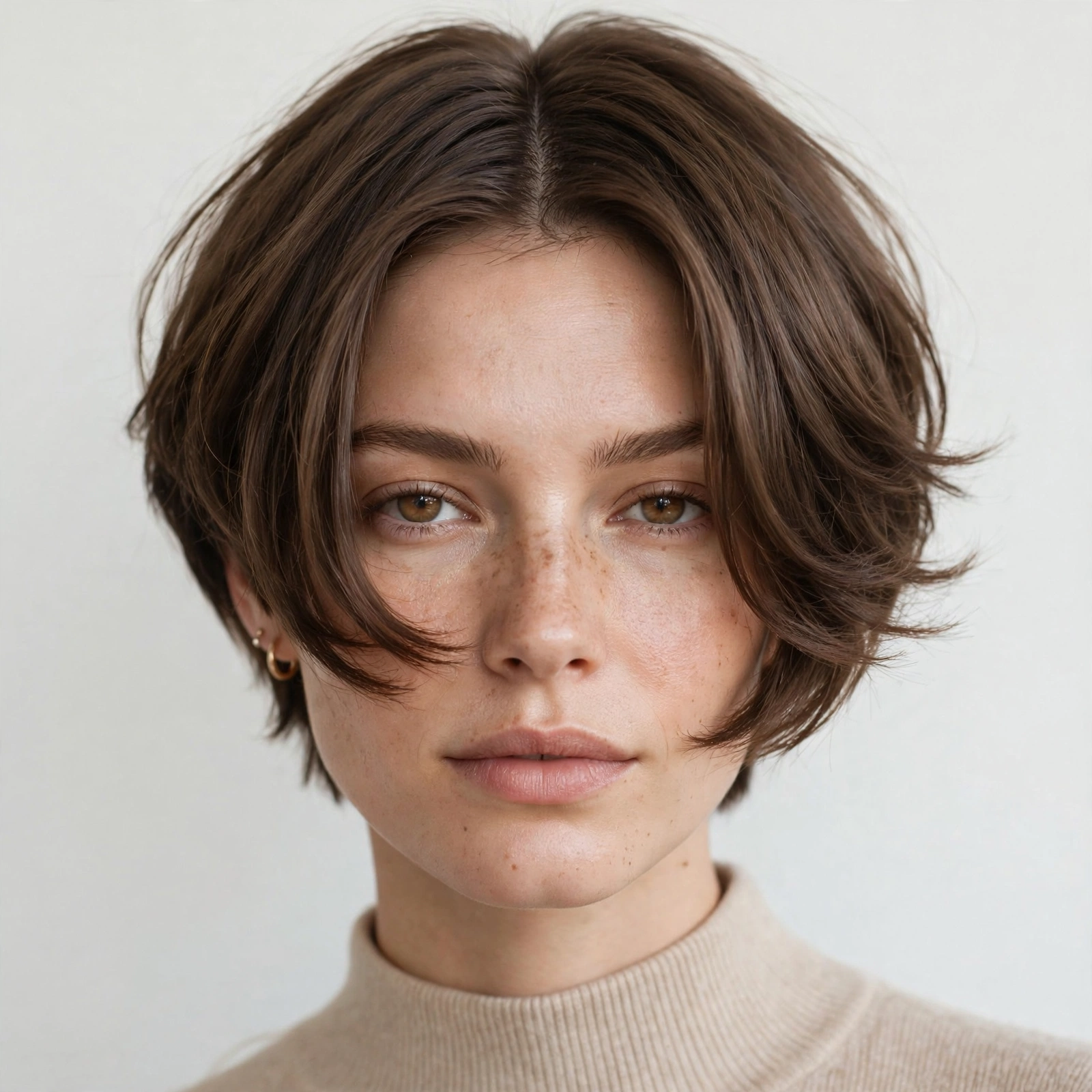
Picture this: a short crop that is longer on top than a traditional pixie, parted right down the center, so the front falls like a pair of soft curtains framing the face. That is the curtain crop. The back and sides sit close and neat, usually somewhere between a finger-length and two inches, while the top keeps enough length — three to five inches through the crown and front — to fall naturally into that signature middle part. Two soft panels of fringe sweep toward the cheekbones, and the whole thing reads as effortless rather than sculpted.
It helps to understand what the curtain crop is not. It is not curtain bangs on long hair — those are just a fringe style. It is not a pixie cut either, although the two are cousins. A classic pixie is cropped tight all over with a short, often side-swept fringe; the curtain crop keeps real length through the top and front, which is what gives it that floppy, grown-in feel. Think of it as the rebellious cousin of the soft pixie: a little longer, a little messier, parted in the middle instead of swept to the side.
The cut has a glamorous family tree. Fashion editors have traced its mood back to Jean Seberg’s gamine crop in the 1960 film Breathless, to Twiggy’s boyish cut that defined the Swinging Sixties, and to the tousled ’90s crops worn by actresses like Gina Gershon and Carrie-Anne Moss. The 2026 version borrows that spirit, lets it grow out a little, and adds the middle-part swagger of the ’90s heartthrob era. The result feels both vintage and completely current, which is a hard trick to pull off.
Why the Curtain Crop Is Trending in 2026
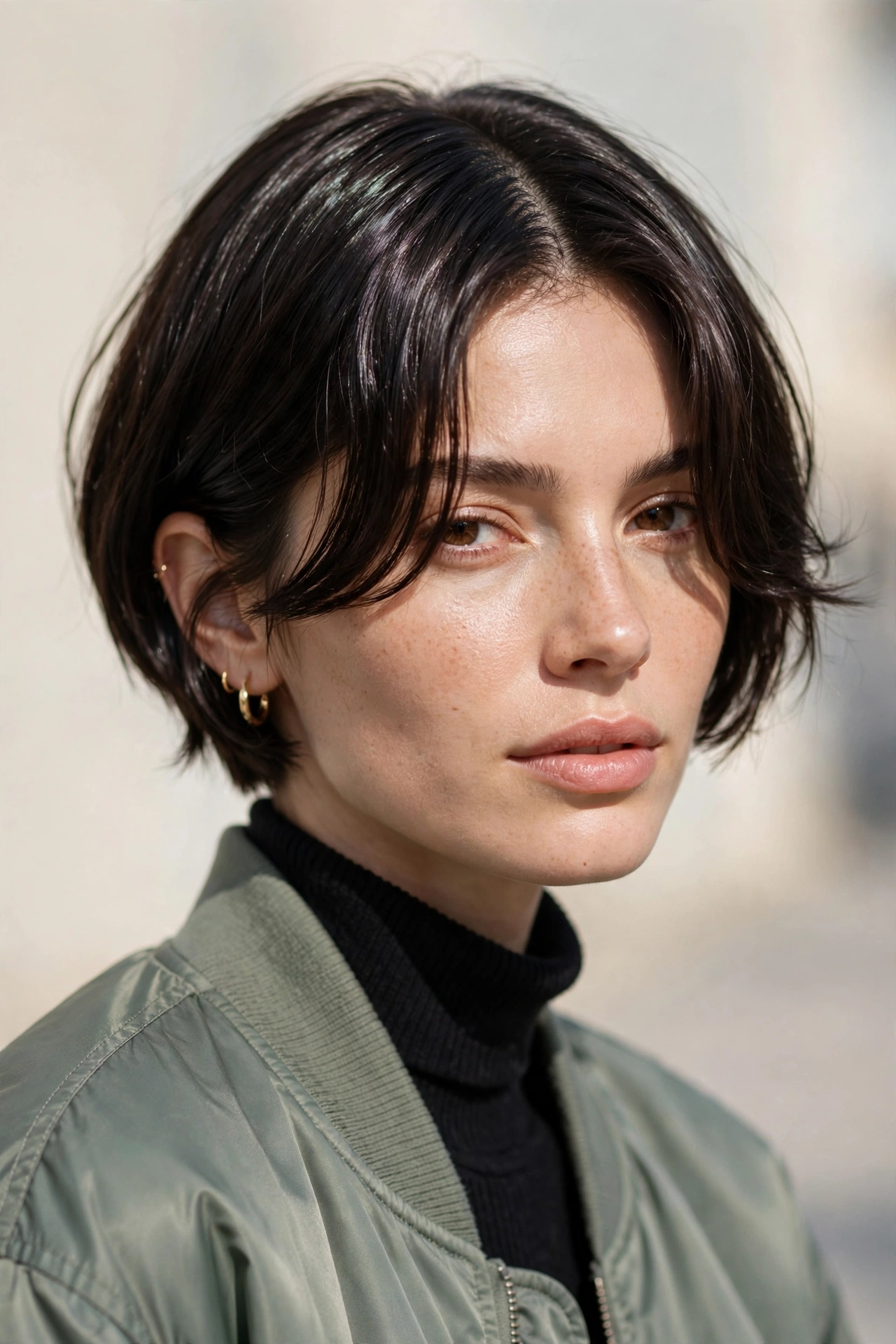
Trends usually have a practical reason behind them, and the curtain crop’s rise is no exception. Fall is the season when women refresh their hair after summer — the sun damage is real, the ends are tired, and the idea of a big chop starts looking very appealing. The curtain crop answers that urge without demanding the full commitment of a buzzed pixie. You get the drama of short hair and the safety net of length around your face. Grazia’s beauty editors flagged it as the haircut taking over fall 2026, noting how it moved from creative neighborhoods and queer bars into mainstream salons in London and New York.
The timing also lines up with a broader shift in what women want from short hair. The super-polished, helmet-smooth crops of a few years ago are fading; in their place is a hunger for texture, movement, and cuts that look good without an hour of styling. The curtain crop is practically built for that mood. Its whole personality is “studied carelessness” — the kind of hair that looks like you have somewhere more interesting to be than in front of a mirror. Red carpet moments have helped too: actresses like Gracie Abrams and Jessie Buckley have been wearing elongated, textured crops this awards season, and every one of those appearances sends a fresh wave of screenshot requests into salons.
There is an emotional side to the chop that stylists talk about all the time. Trading length for a crop often feels like a small declaration of confidence — a fresh start, timed perfectly for the season that always promises one. The curtain crop delivers that feeling with unusual kindness, because it flatters such a wide range of faces and ages. The cheekbone-sweeping panels soften strong jawlines, the crown length adds height for rounder faces, and the overall shape reads modern on women in their twenties and their fifties alike. When a haircut makes that many people feel good, the trend takes care of itself.
18 Curtain Crop Styles to Try in 2026
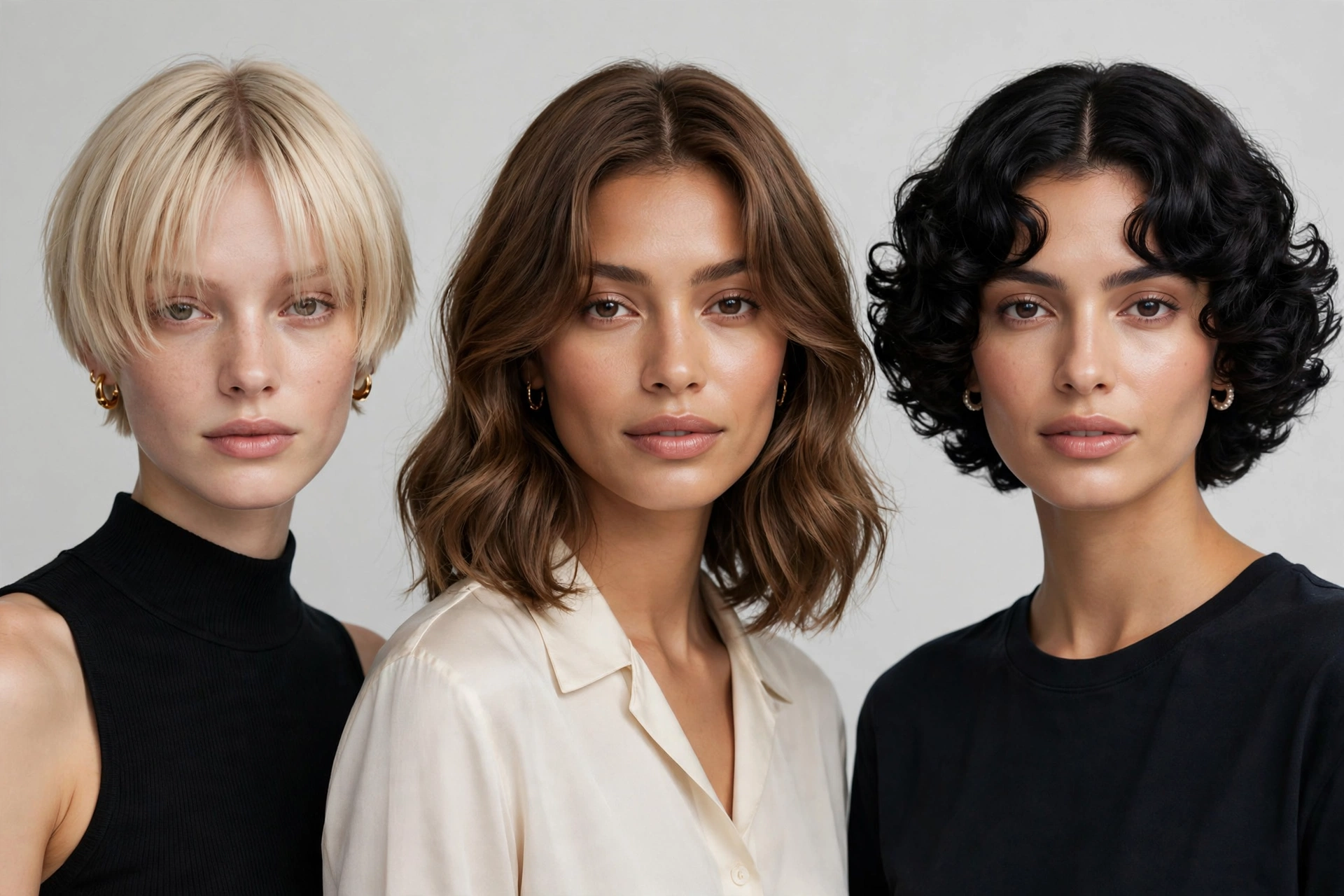
Here is the part you came for. The curtain crop is not one haircut — it is a family of haircuts, and the differences between them are bigger than they sound on paper. A textured crop reads edgy and cool; a soft grown-out version reads romantic; a curly one reads joyful and free. Below are eighteen distinct takes, each with its own personality and its own kind of woman. Read them like a menu. By the end, you will know exactly which screenshot to save.
1. The Classic Curtain Crop
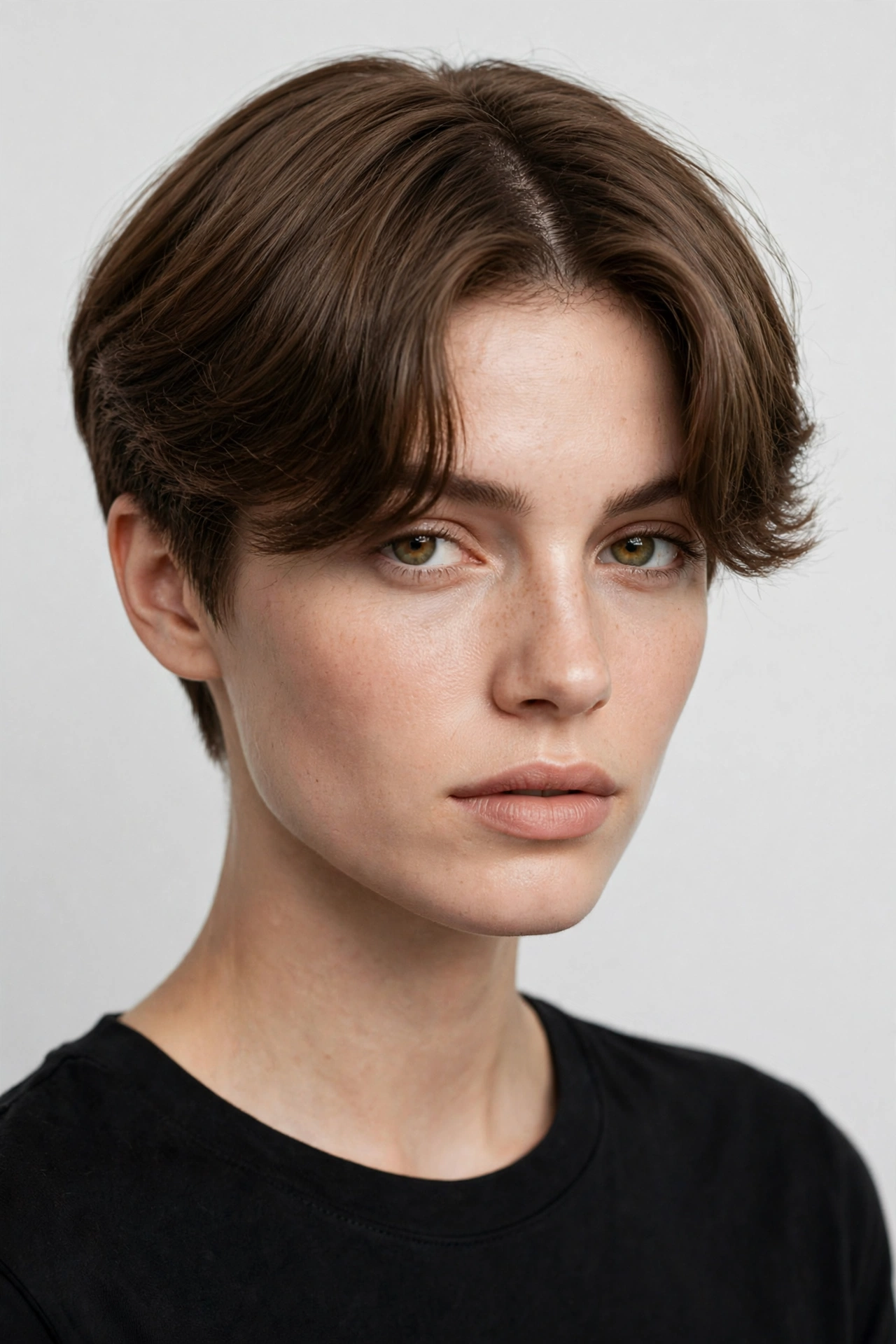
This is the blueprint everything else is built on, and it is still the version I recommend to first-timers. The classic curtain crop keeps the back and sides neat and close — about an inch to an inch and a half — while the top runs three to four inches, parted down the middle so the front panels sweep softly toward the cheekbones. Nothing is disconnected, nothing is extreme. It is balanced, wearable, and quietly cool.
What I love about the classic version is how little it asks of you in the morning. On straight to wavy hair, you can genuinely get away with a pea-sized amount of styling cream worked through damp hair, a quick finger-comb of the part, and air drying. The cut does the work. It suits oval and heart-shaped faces beautifully, grows out gracefully over six to eight weeks, and works in every setting from a creative studio to a conservative office. Tell your stylist you want a short crop with a center part, length through the top and front, soft panels at the cheekbones — and bring a photo, because “curtain crop” still means slightly different things to different stylists.
2. The Soft Grown-Out Curtain Crop
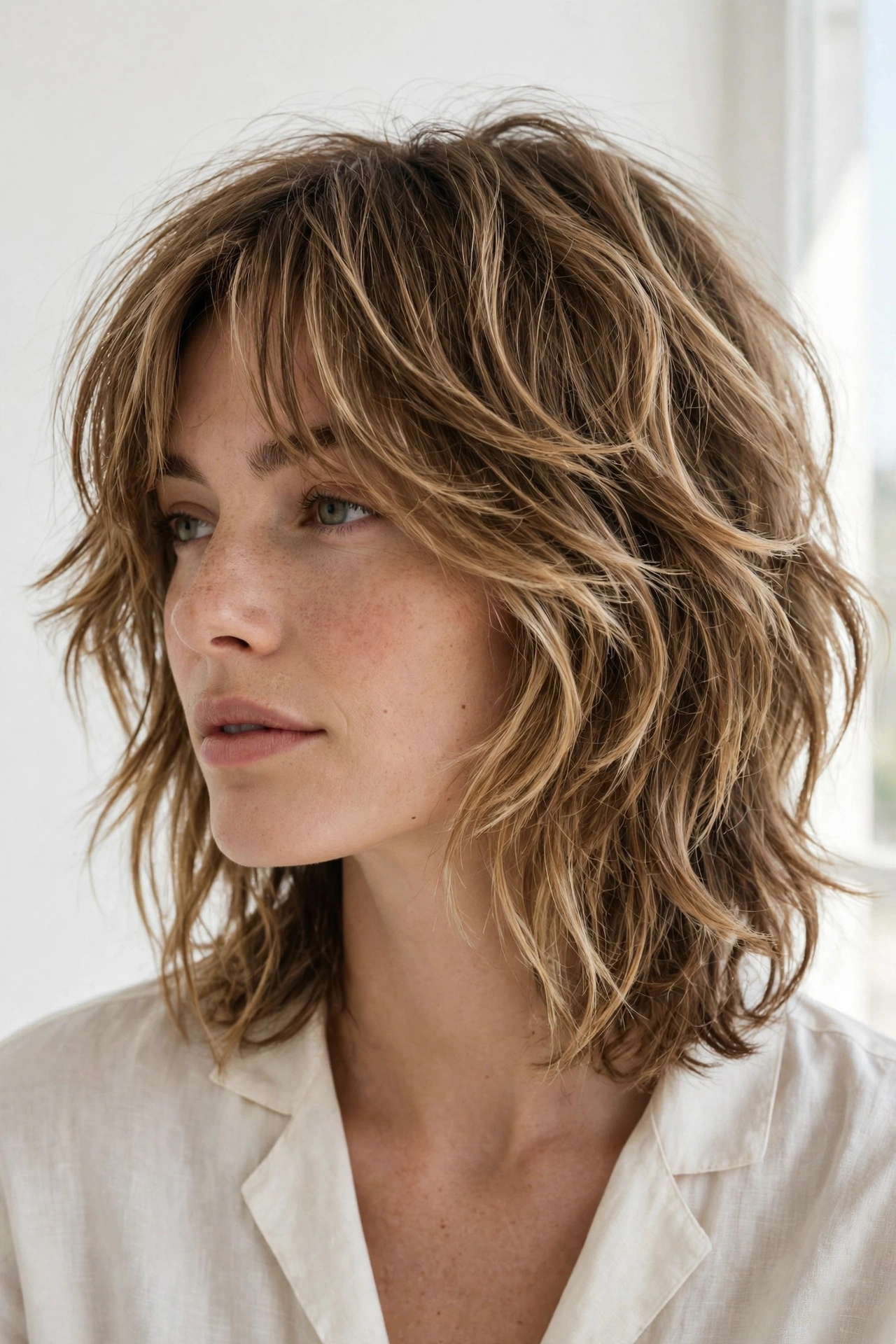
If the classic curtain crop is a fresh haircut, the grown-out version is that same haircut six weeks later — and somehow it looks even better. This version keeps four to six inches through the top and lets the front panels stretch toward the jawline, giving the whole thing a shaggy, lived-in softness. It is the curtain crop for women who are growing out a pixie or who simply prefer their short hair with a little more swing.
The grown-out curtain crop is secretly the easiest version to live with. Longer pieces are more forgiving of cowlicks and uneven texture, and you get more styling options: tuck one side behind the ear, pin the panels back, or let everything fall forward for that moody French-girl finish. A texturizing spray at the roots adds the lift that longer tops sometimes need, and a round brush on the front panels — dried away from the face — keeps the curtains sweeping in the right direction. This is also the smartest version if you are nervous about going short, because it leaves you the most options if you change your mind.
3. The Textured Choppy Curtain Crop
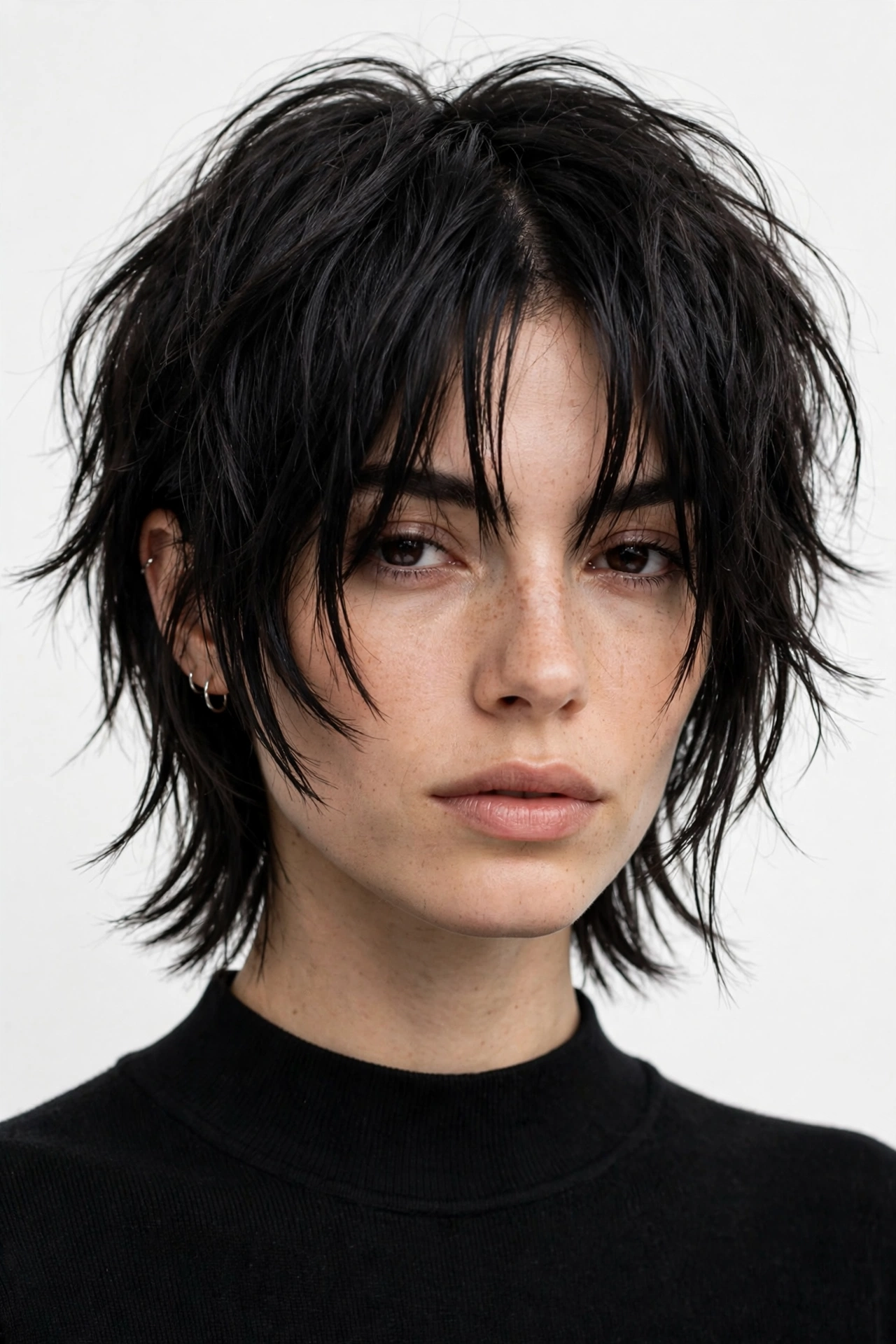
The textured choppy version is where the curtain crop gets its edge. Instead of smooth, even panels, the top and front are cut with point-cutting and razors to create piecey, separated layers that move independently. The middle part stays, but everything around it looks deliberately undone — think rock concert, not boardroom.
This is the version for thick hair that tends to sit like a helmet when it is cut blunt. Texture removes the bulk and lets the cut breathe, and the choppiness means second-day hair looks just as good as wash day — arguably better. Styling is minimal: a small amount of matte paste or texturizing powder on dry hair, scrunched through the ends, and you are done. One honest note: choppy texture needs a skilled hand, so this is not the cut to get from a stylist who has never done one. Ask to see their short-hair portfolio before you sit down. Done right, it is the coolest version on this list.
4. The Curly Curtain Crop
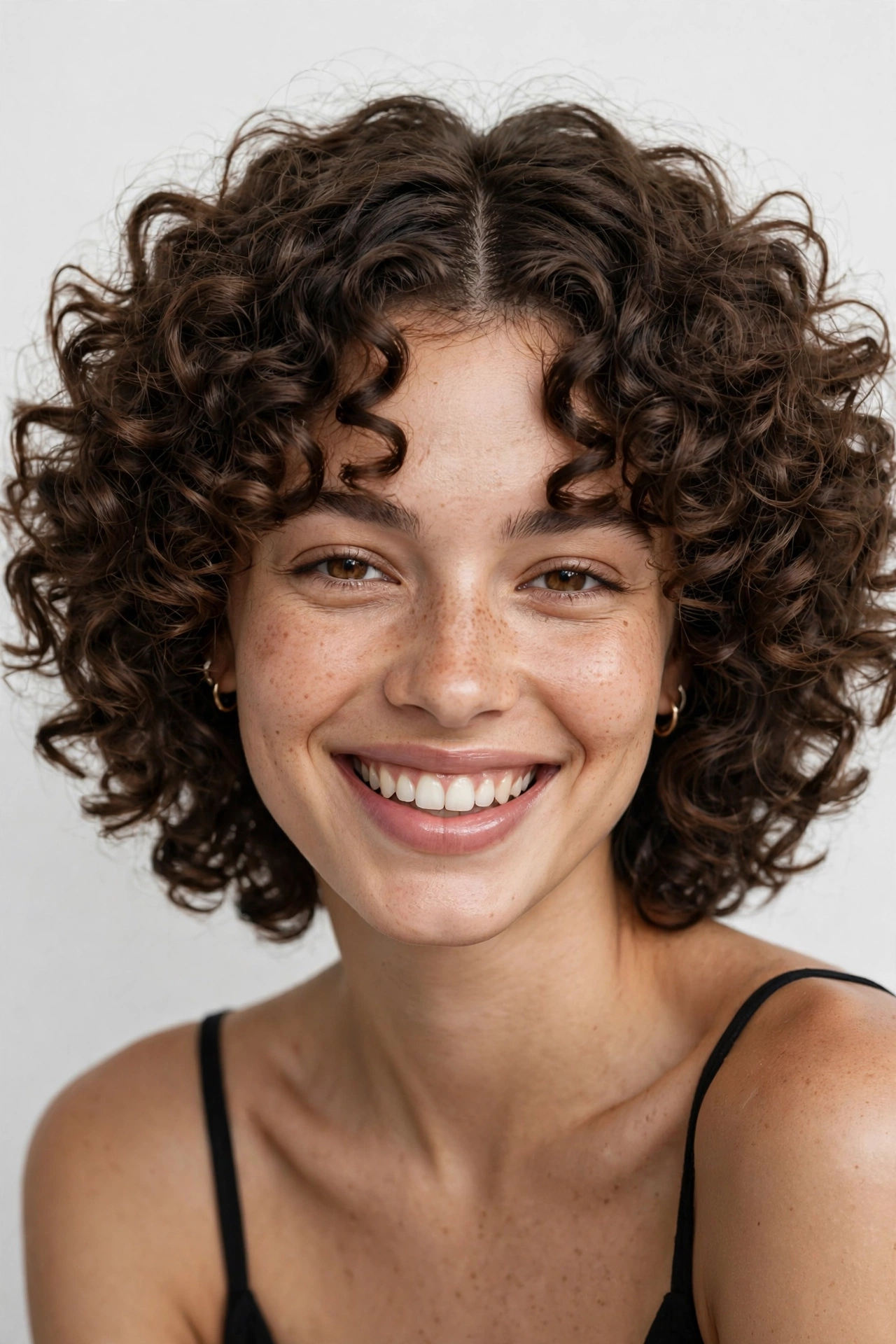
Curly-haired women, this one was made for you. The curly curtain crop lets your natural curls be the star: the top is left long enough for curls to form — usually three to five inches — and the middle part lets them fall into two soft, bouncy panels around the face. The sides are kept close to give the curls a clean frame. The result has a volume and personality that straight hair simply cannot copy.
A few specifics matter here. The cut should be done on dry or barely damp curls, because curls shrink as they dry and a wet cut always ends up shorter than planned — mention this if your stylist reaches for the spray bottle first. Ask for the front panels to be cut slightly longer than you think you want them; curls at the cheekbones can spring up surprisingly short. For styling, a curl cream or light leave-in on soaking-wet hair, scrunched upward, then either diffused or air-dried, is the whole routine. If you have been fighting your curls with long layers, the curly curtain crop might be the cut that finally lets them win. For more curly short-hair inspiration, our guide to low maintenance short curly hairstyles for women pairs beautifully with this look.
5. The Wavy Curtain Crop
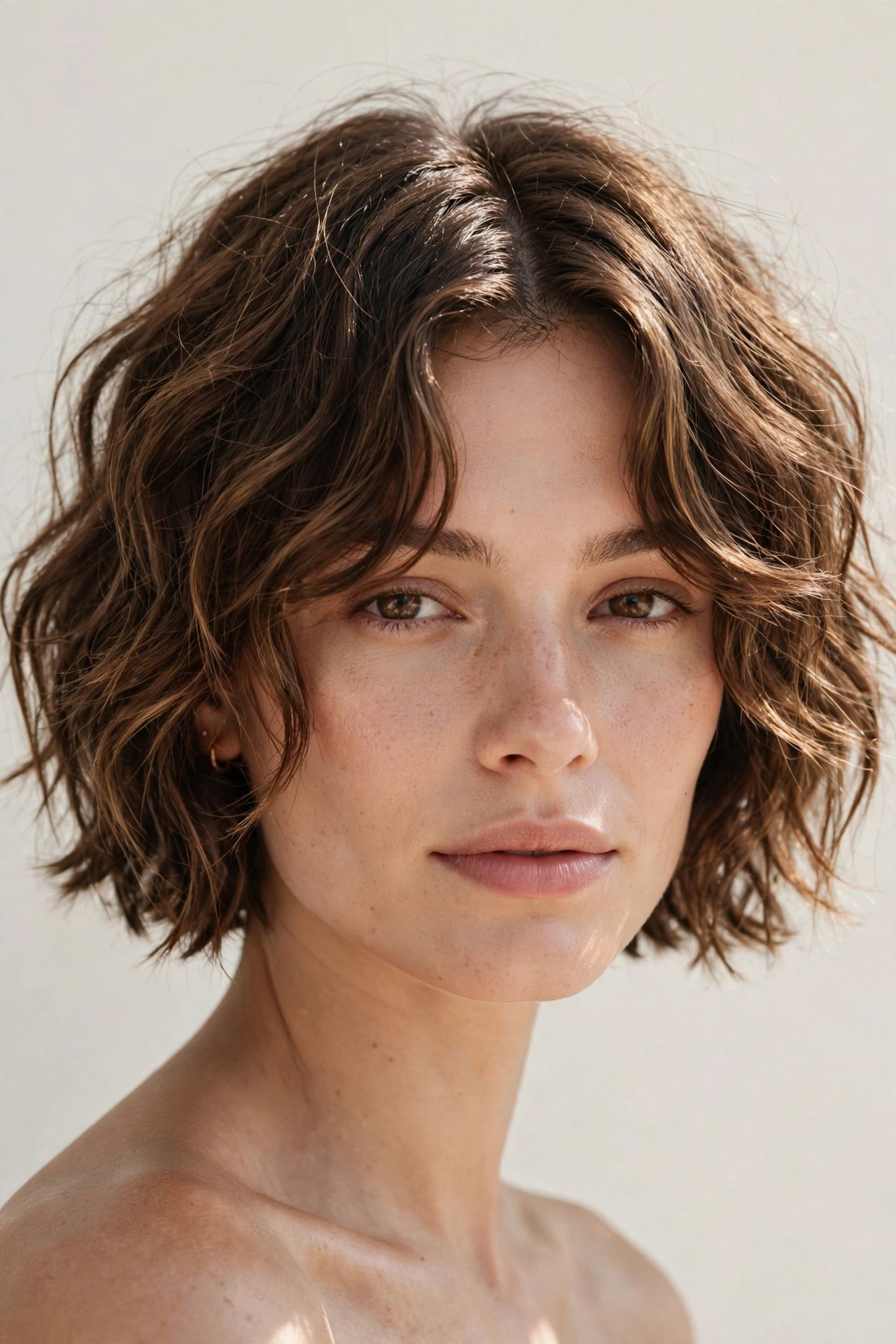
Wavy hair and the curtain crop are a natural match. Natural wave gives the front panels movement and body that straight hair has to fake with product, and the short length keeps waves defined instead of puffy. This version typically runs a touch longer on top than the classic — four inches or so — so the waves have room to do their thing.
The styling rule for wavy crops is simple: work with the wave, not against it. A light mousse or sea salt spray on damp hair, scrunched and left to air dry, gives you that beachy, tousled finish the cut is famous for. If your waves are inconsistent — flat at the crown, kinky at the ends — a diffuser on low heat evens things out without creating frizz. And here is a trick stylists swear by: sleep on a silk pillowcase. It preserves the wave pattern overnight, which means many wavy-crop wearers can go two or three days between washes with just a water spritz refresh. Less washing, better texture, happier hair.
6. The Curtain Crop with Undercut
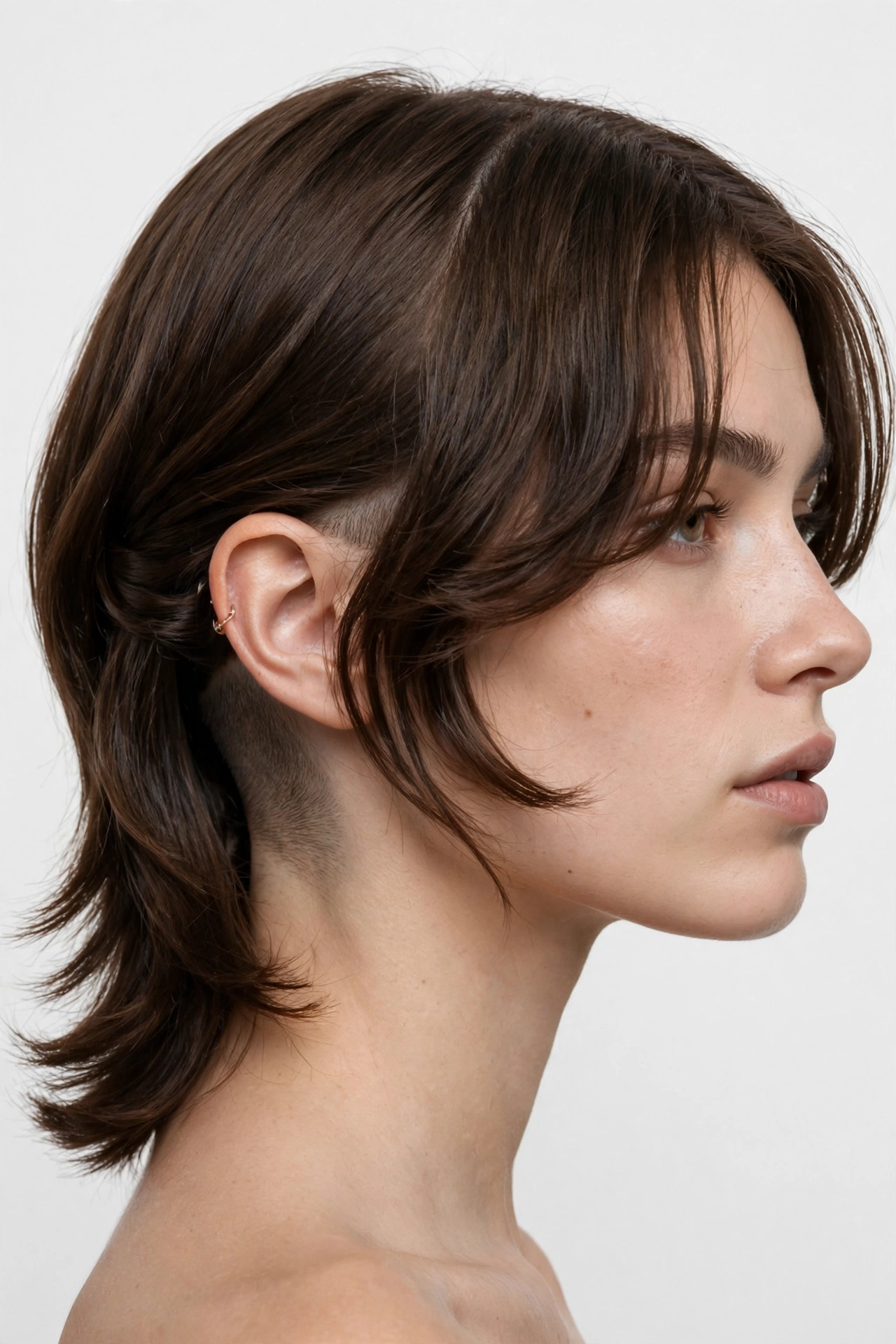
For the woman who wants her curtain crop with a secret. The undercut version keeps the classic top and front panels, but the nape and sometimes the sides underneath are buzzed short or shaved — hidden when the hair falls naturally, revealed when you tuck it behind your ears or pull it up. It is the mullet-adjacent move for women who are not ready for a full mullet.
Practically speaking, the undercut removes a huge amount of bulk, which makes it a gift for very thick hair — the top lies flatter and the whole cut feels lighter. It also buys you time between appointments, since the buzzed section can be maintained at home with clippers. Style-wise, it adds an edge that the classic version does not have; with the panels tucked back, the look goes from soft to sharp in seconds. One consideration: growing out an undercut is a months-long commitment, so be sure about it. But if you love the idea of a haircut with a hidden wild side, this is it.
7. The Asymmetrical Curtain Crop
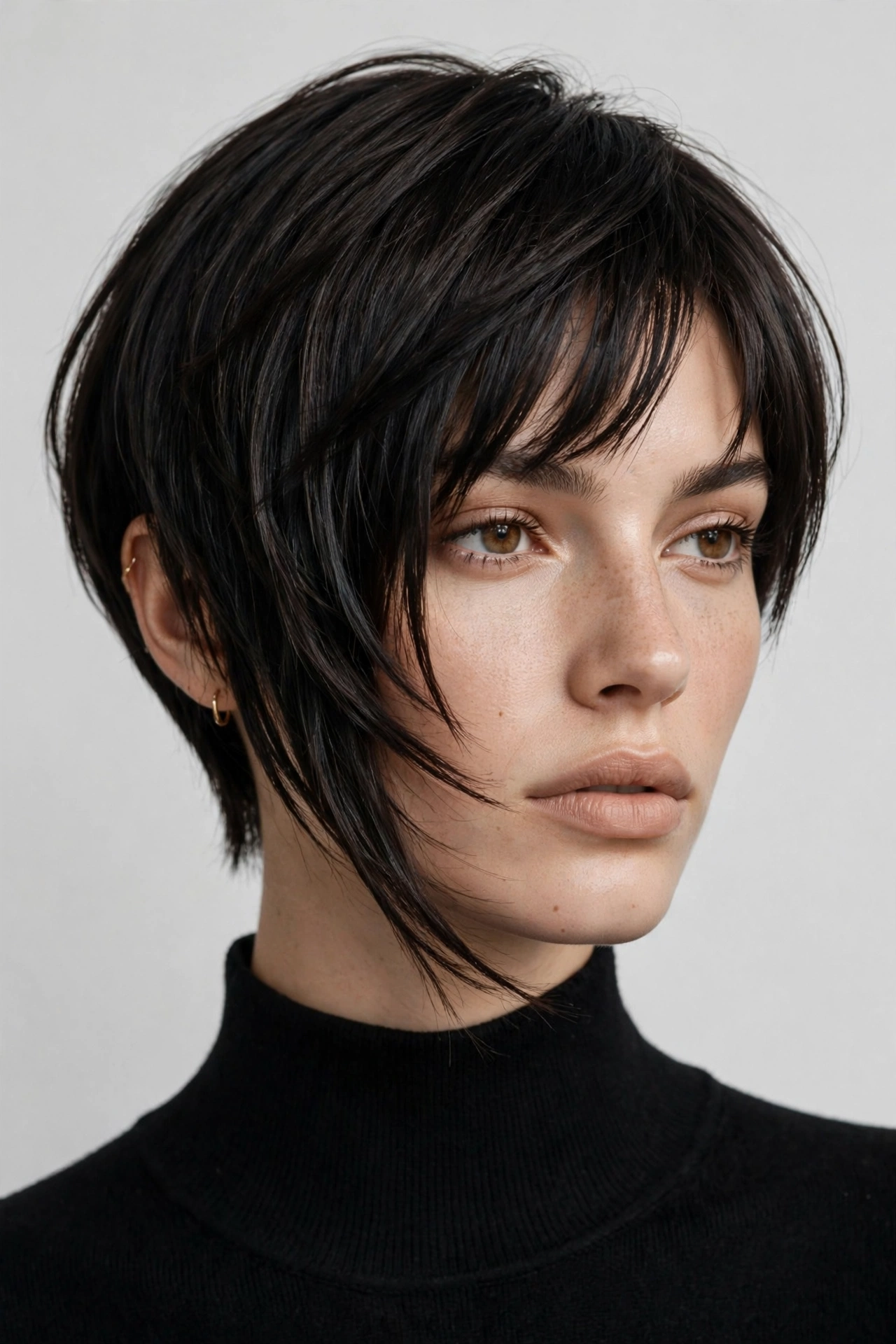
The asymmetrical version plays a quiet trick: the middle part stays, but one front panel is cut slightly longer than the other — usually by half an inch to an inch. It is subtle enough that most people cannot quite name what is different, but it gives the cut a fashion-forward, editorial quality that the perfectly even version does not have. This is the curtain crop you wear when you want compliments from people who notice details.
Asymmetry works hardest on faces that feel “too symmetrical” or a little plain — it adds visual interest without demanding a dramatic change. It also photographs beautifully, which is worth mentioning because this is the version that shows up most in influencer content. Styling is the same as the classic: the difference is all in the cut, not the routine. Ask your stylist for the classic curtain crop with one panel left longer, and discuss which side — most stylists will recommend keeping the longer panel on the side you naturally part toward, so it falls the way your hair wants to go.
8. The Curtain Crop with Tapered Nape
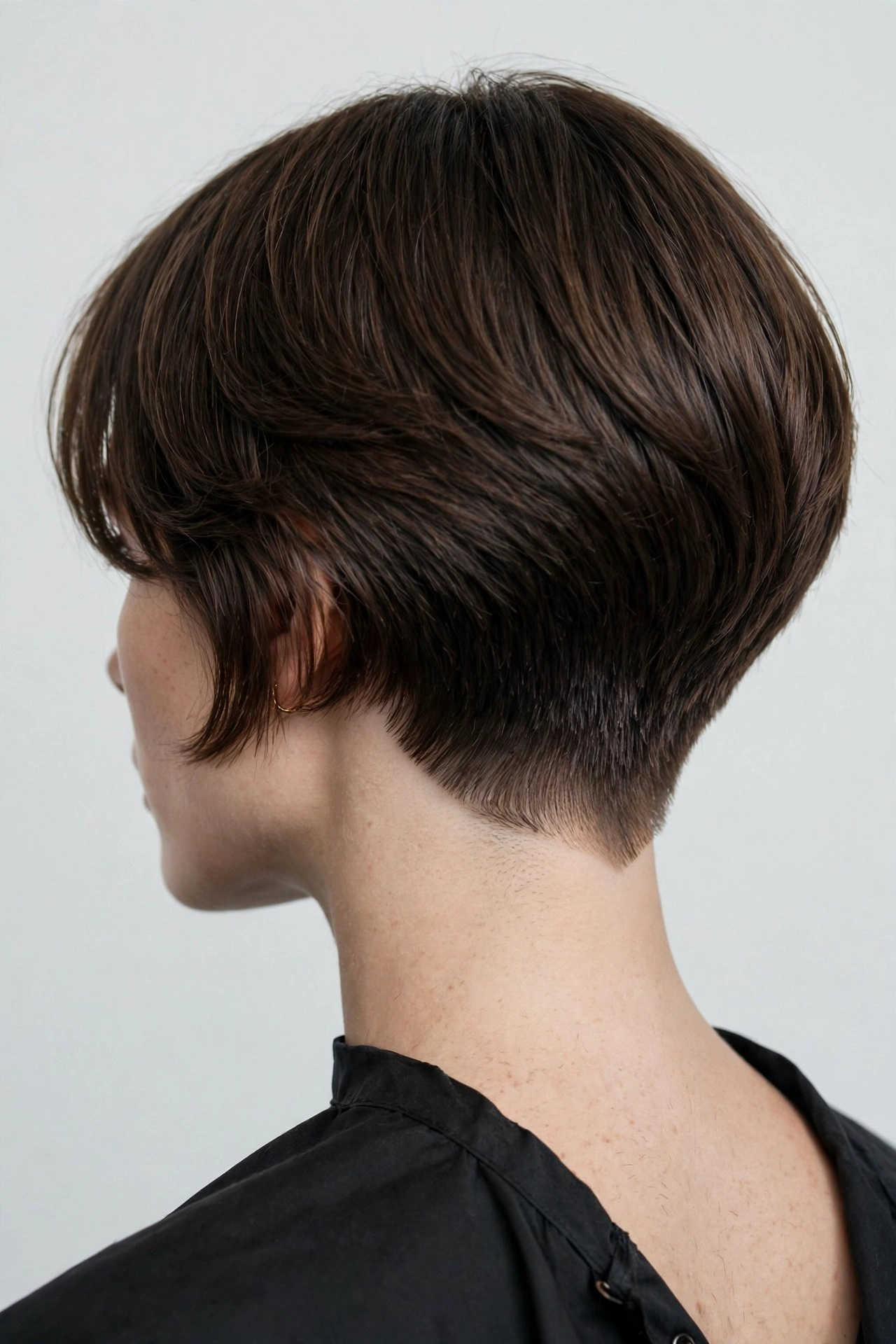
The tapered nape is the detail that separates a good curtain crop from a great one. Instead of a blunt line at the neckline, the hair at the nape is gradually shortened with clippers or scissors, creating a soft, clean fade into the neck. From the front, you see the classic floppy crop; from the back, you see precision.
This detail matters more than it sounds. A tapered nape keeps the cut looking intentional for an extra two weeks as it grows out, because there is no harsh line to go fuzzy. It also feels wonderful — no itchy blunt ends at the collar, no bulk catching on jacket collars in fall. Women with fine hair at the nape especially benefit, since tapering removes the wispy, uneven ends that make fine hair look thin at the edges. It is a small ask with an outsized payoff: when you book, just say “tapered nape, please” and watch your stylist nod approvingly.
9. The Pixie-Length Curtain Crop
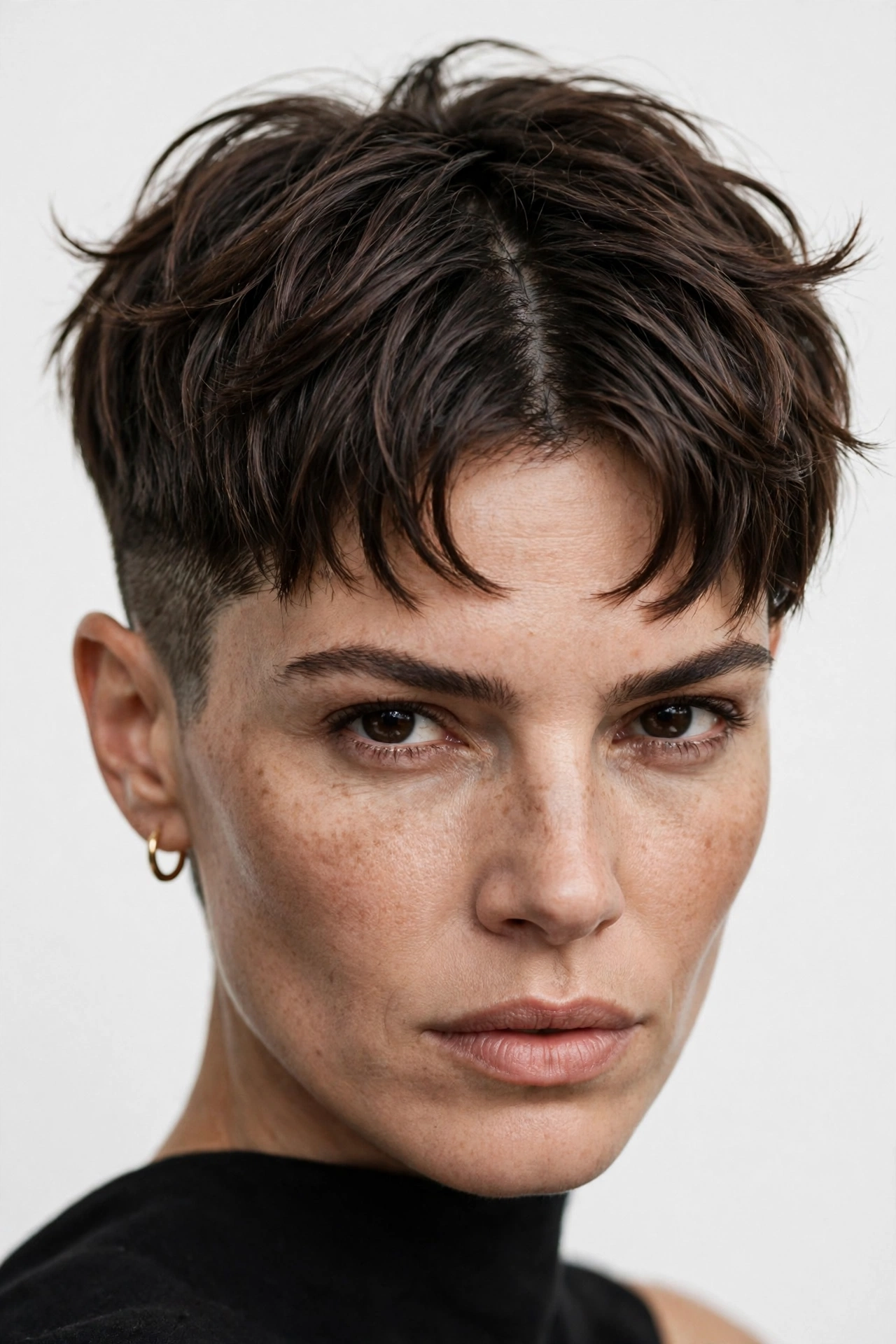
This is the curtain crop at its shortest and boldest: the back and sides taken close like a pixie, the top at two to three inches — just long enough to coax into that signature middle part. It is the version for the woman who has been circling a pixie for years and wants the drama without the severity. The panels are shorter here, grazing the cheekbones rather than sweeping past them, which puts the focus on the eyes and cheekbones.
Short length means honest hair: cowlicks, growth patterns, and texture all show, so the consultation matters. Tell your stylist about the way your hair behaves — the crown that sticks up, the part that will not move — and let them cut around it rather than against it. The payoff is a wash-and-go routine measured in seconds: dampen, add a dab of pomade or wax for definition, push the front into its part, done. This version also grows out into the classic curtain crop beautifully, so it is secretly a two-for-one haircut. If you are comparing it to a traditional pixie, our long pixie haircut ideas will help you see the family resemblance.
10. The Curtain Crop on Thick Hair
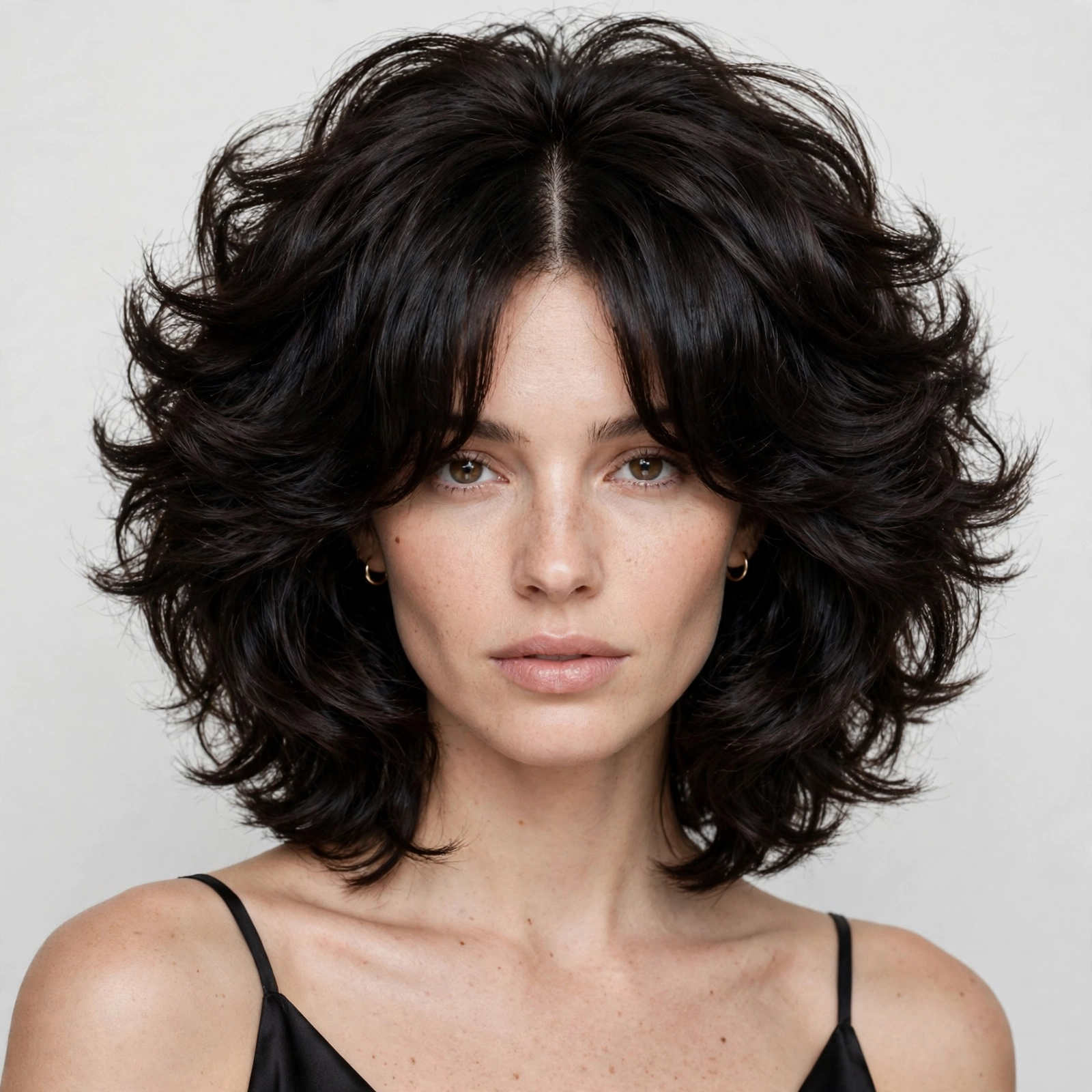
Thick hair is both the best and the trickiest canvas for a curtain crop. Best, because density gives the panels real presence and the crown genuine volume. Trickiest, because without strategic weight removal, a short crop on thick hair can balloon outward into a shape nobody asked for. The thick-hair curtain crop is all about what the stylist takes away: internal layers, texturizing shears, and sometimes a hidden undercut to remove bulk where it counts.
The consultation for thick hair should be longer than the cut feels like it needs. Talk about how your hair behaves when it is short — does it puff, does it triangle, does it refuse to lie flat at the crown? A good stylist will debulk the interior while keeping the perimeter strong, so the cut has structure without the mushroom effect. At home, a smoothing cream on damp hair plus a blow dryer with a nozzle attachment pointed downward keeps everything sleek; on lazy days, a strong texturizing spray lets the natural volume do the talking. Thick-haired women often find the curtain crop easier than long hair, because there is simply less hair to fight.
11. The Fine-Hair Curtain Crop
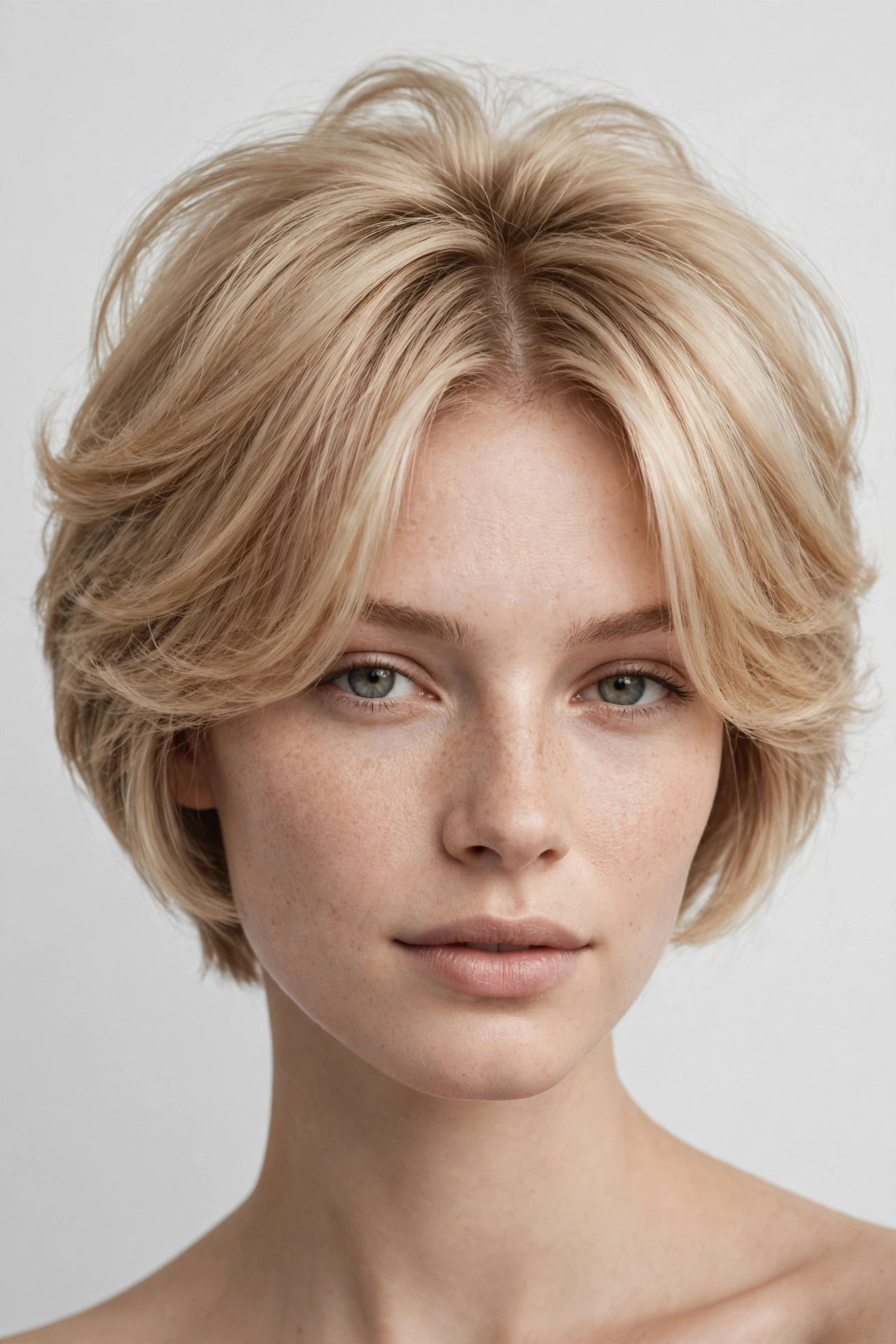
Here is a secret fine-haired women learn late: short hair almost always looks thicker than long hair. The fine-hair curtain crop uses that physics to your advantage. With less length pulling it down, fine hair gains body and lift it never had at shoulder length, and the textured cutting through the top creates the illusion of density. The panels around the face, kept at cheekbone length, frame rather than drag.
The rules for fine hair are specific. Keep the cut slightly blunter through the ends — too much razor texture on fine hair can make it look wispy instead of piecey. A root-lifting mousse or a light volumizing spray, applied to damp roots and blow-dried upside down for thirty seconds, makes a visible difference. Avoid heavy oils and butters that collapse fine strands; a dry texturizing spray is your better friend. And wash a little more often than your thick-haired friends — fine hair shows oil faster, and clean roots are the foundation of volume. Done right, this version gives fine hair a fullness that surprises everyone, including you.
12. The Curtain Crop with Highlights
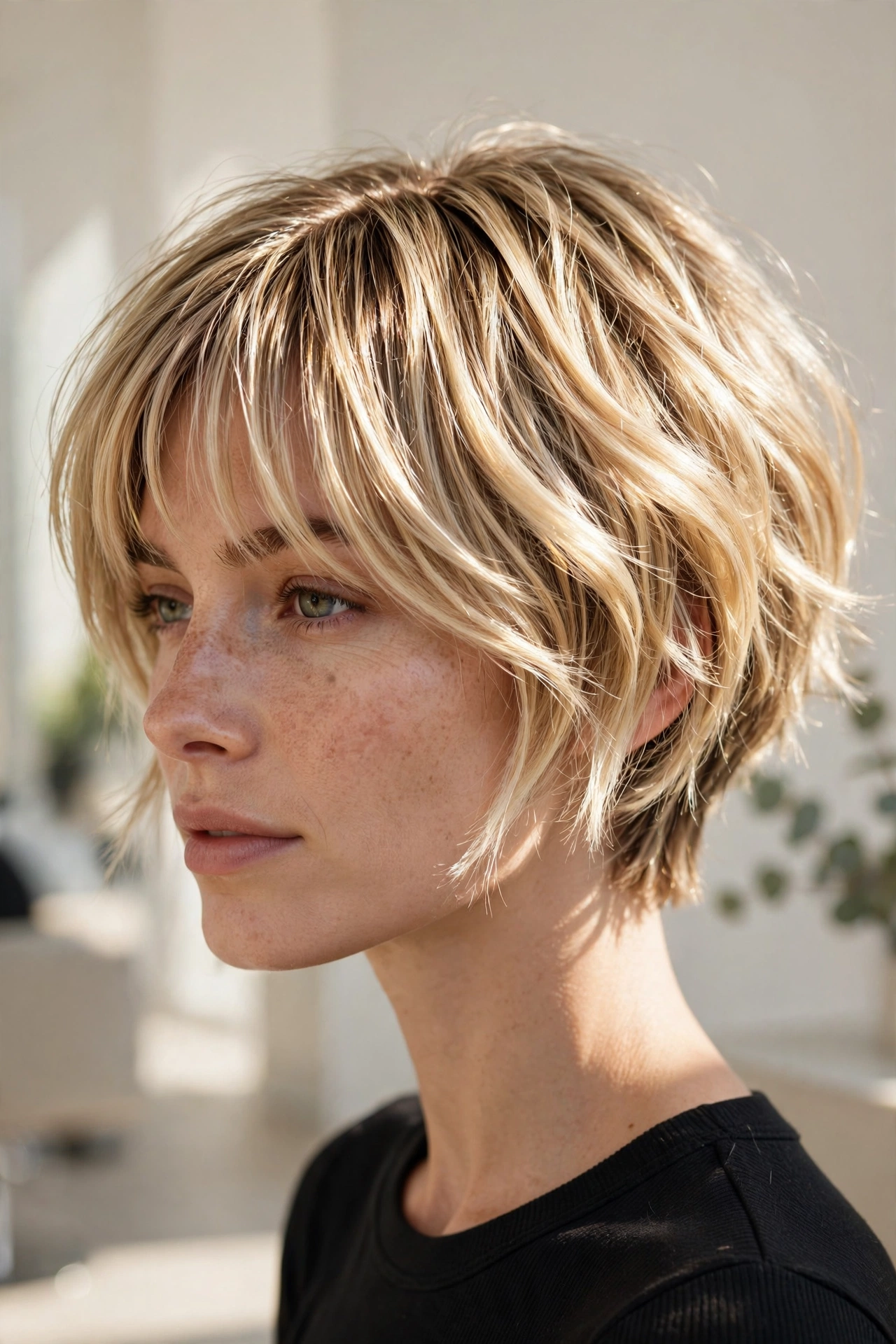
Color and cut are a team, and the curtain crop is a wonderful showcase for dimensional color. Because the cut has natural movement — panels falling in different directions, texture through the top — highlights catch the light in a way that flat, one-length hair never does. Face-framing highlights through the front panels are the classic move: they brighten the complexion and emphasize the curtain effect.
For 2026, the most requested pairing is a lived-in balayage or babylights with a root shadow, so the color grows out softly and does not demand salon visits every four weeks. Brunettes do well with caramel or honey ribbons through the panels; blondes can go brighter around the face with a technique stylists call a “money piece.” The practical note: short hair shows regrowth faster because there is less length to disguise it, so talk to your colorist about low-maintenance placement. A gloss or toner every six to eight weeks keeps the tone fresh between full color appointments. If you are exploring color ideas, our brown hair color ideas and honey blonde balayage ideas pair naturally with this cut.
13. The Copper Curtain Crop
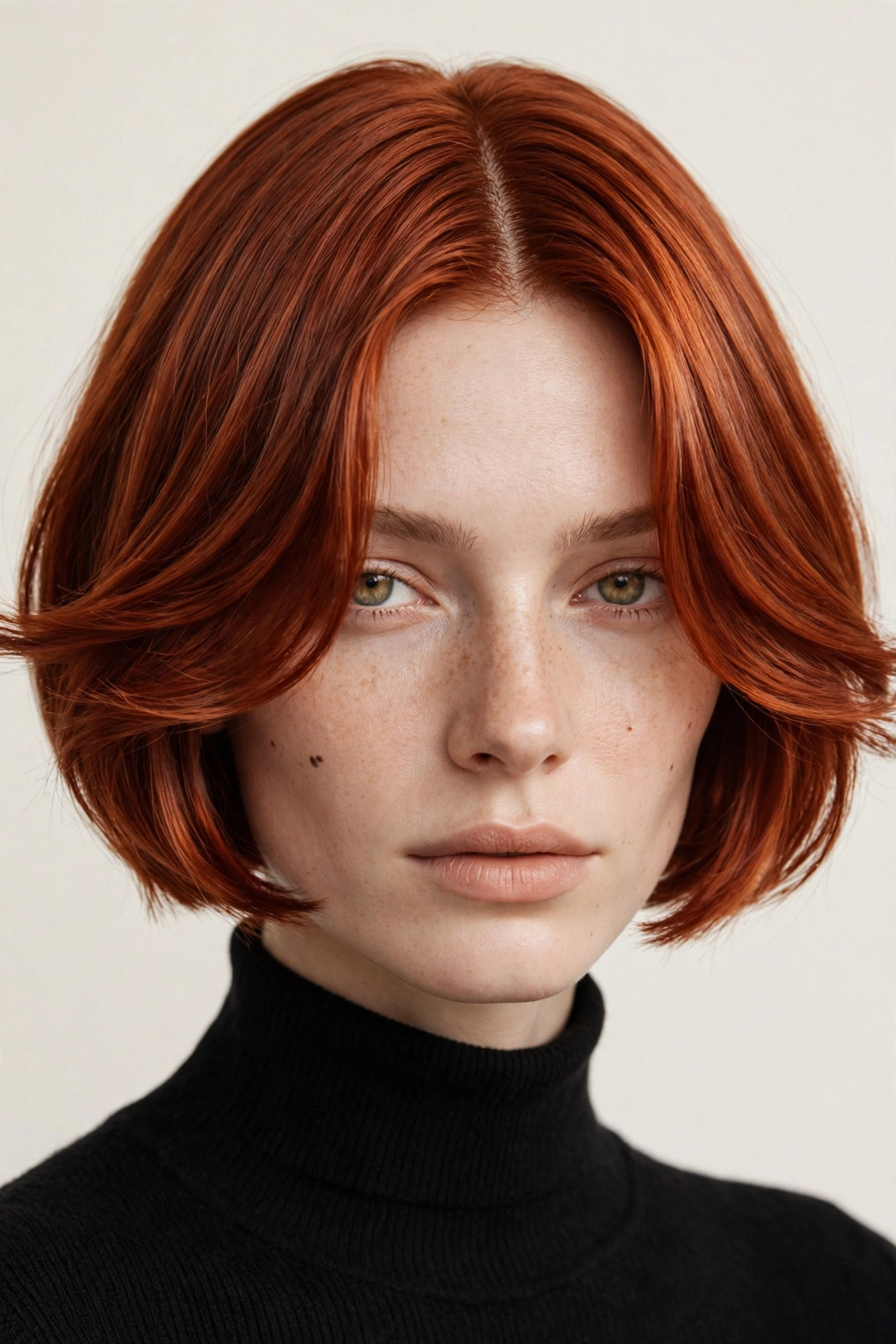
Some color and cut pairings are just meant for each other, and copper plus curtain crop is one of them. The warm, rich reds — from soft strawberry copper to deep auburn — give the textured panels a glow that reads expensive and seasonal, perfect for fall. Copper catches light differently on every layer, so the cut’s natural movement becomes its own highlight reel.
The honest talk about copper: it fades faster than any other color family. Red molecules are larger and wash out quicker, so commit to the maintenance before you commit to the shade. That means sulfate-free shampoo, lukewarm water, and a color-depositing conditioner or gloss every two to three weeks to keep the tone rich. On the plus side, copper flatters an enormous range of skin tones — fair skin glows against it, olive skin warms up, deep skin looks radiant. If you have been waiting for a sign to go red, a curtain crop is an excellent vehicle: the short length means you are never more than a few trims away from a fresh start if you change your mind. Our copper hair color ideas will give you the full shade range to show your colorist.
14. The Brunette Curtain Crop
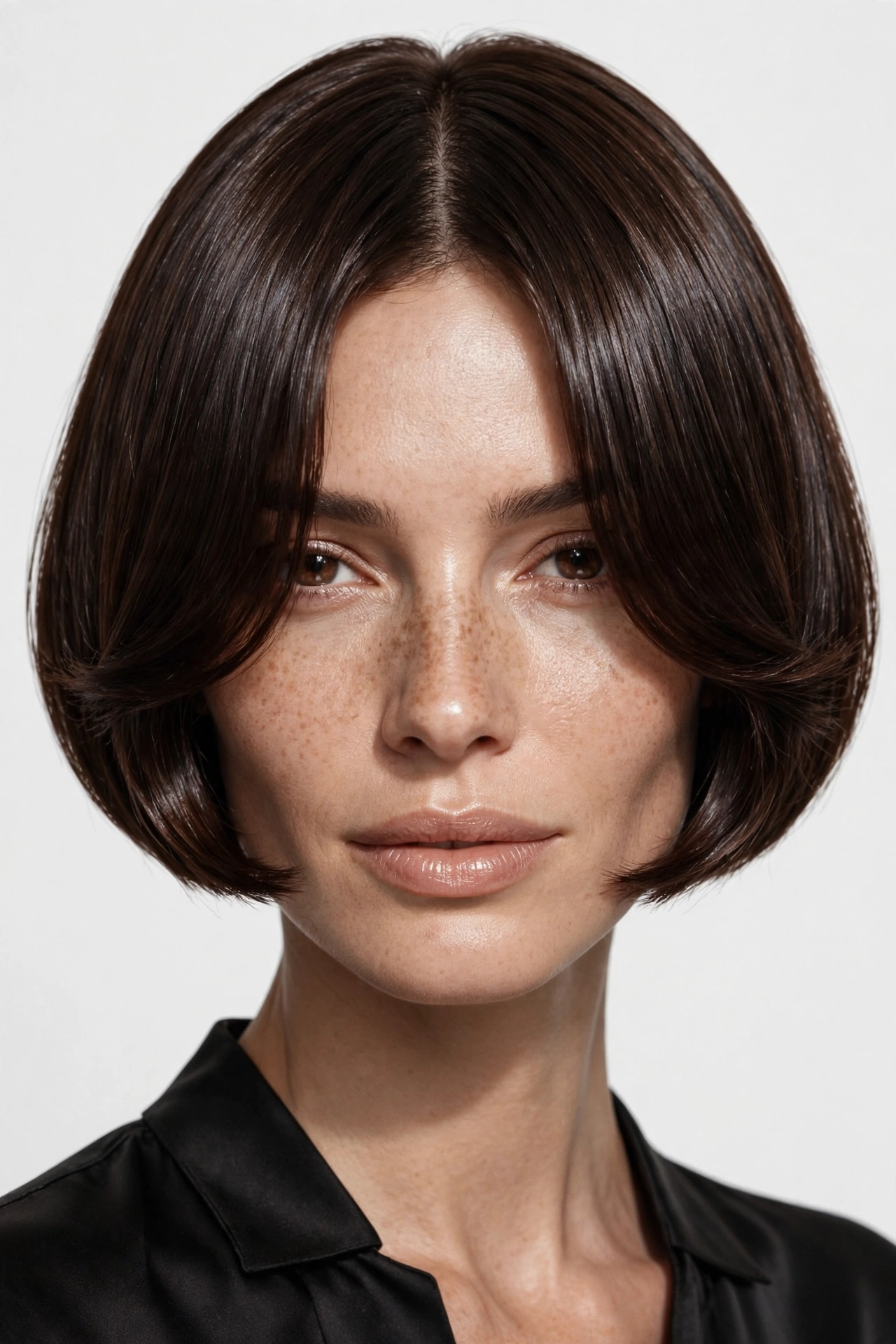
Never underestimate a rich, glossy brunette. The brunette curtain crop is the quiet luxury version of this trend: deep chocolate, espresso, or chestnut tones with a mirror shine that makes the cut look intentional and polished. Where copper shouts, brunette whispers — and the whisper is very 2026.
What makes brunette work so well here is contrast. The dark color emphasizes the cut’s shape — every panel, every layer line reads clearly — so the haircut itself becomes the statement instead of the color. A clear gloss treatment every couple of months keeps brunette from going flat or dull, and it is the lowest-maintenance color family you can choose: regrowth is subtle, fading is graceful, and you can stretch appointments further than blondes or reds can. For styling, shine is the whole game — a lightweight serum on the ends and a boar-bristle brush give that expensive, healthy finish. If your wardrobe leans neutral and your aesthetic leans classic, this is your version.
15. The Blonde Curtain Crop
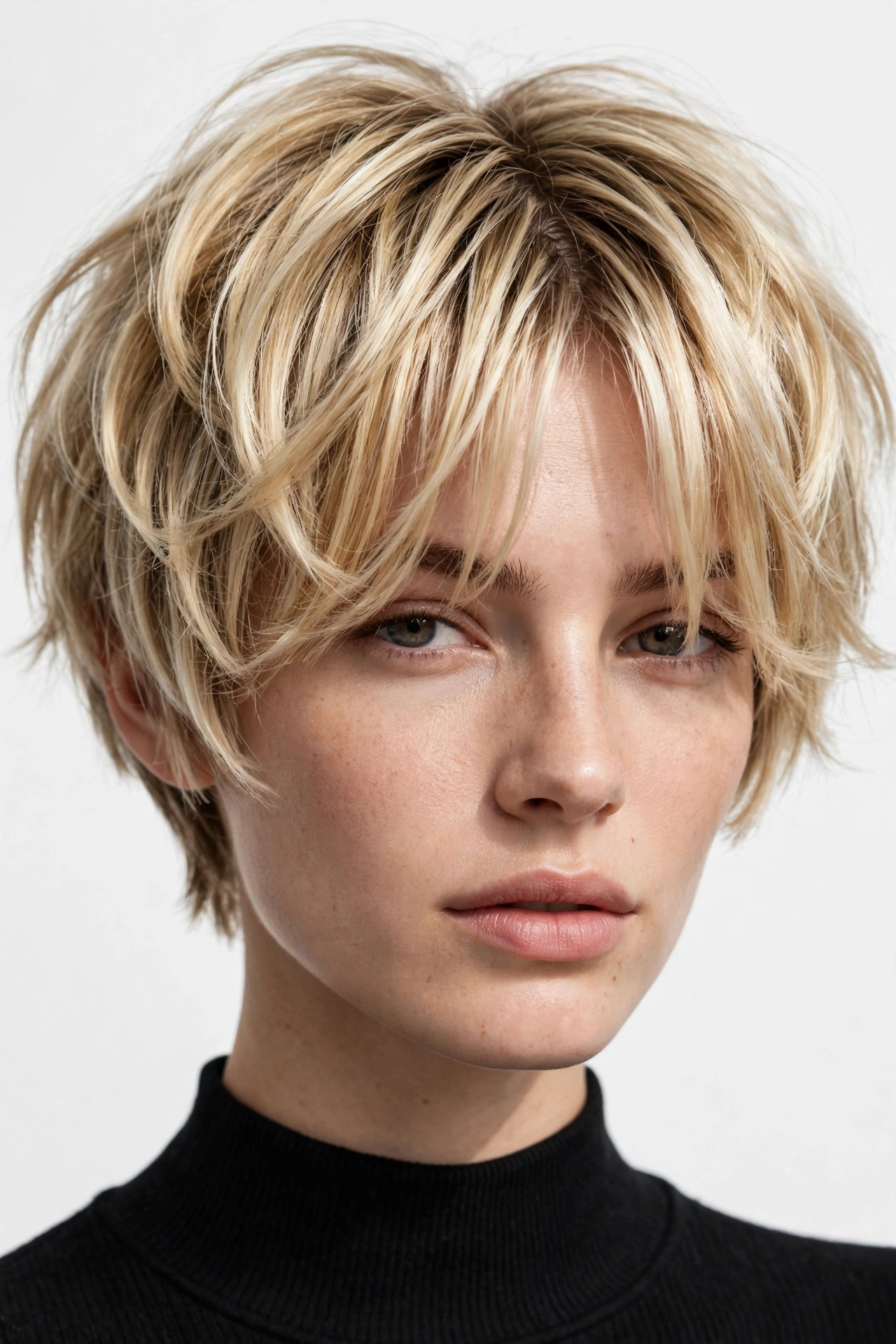
Blonde takes the curtain crop in the opposite direction: bright, dimensional, and full of light. Whether it is a lived-in bronde, a creamy Scandinavian blonde, or sun-kissed babylights, lighter tones make the texture and separation of the cut pop — every piecey layer becomes visible, and the whole head looks fuller.
The practical side of blonde on short hair is refreshingly simple. Because the hair is short, you use less product, processing times are shorter, and grow-out is less obvious than on long blonde hair — a root shadow or lived-in placement can easily stretch to ten or twelve weeks. The non-negotiables are a purple shampoo used sparingly (once a week is plenty; overuse dulls the tone) and a good bond-repair treatment, because lightened hair on a textured cut needs its integrity. Keep the panels around the face slightly brighter — that face-framing brightness is what makes blonde crops glow in photos. For shade inspiration, our blonde hair ideas for women translate beautifully to shorter lengths.
16. The Curtain Crop with Glasses
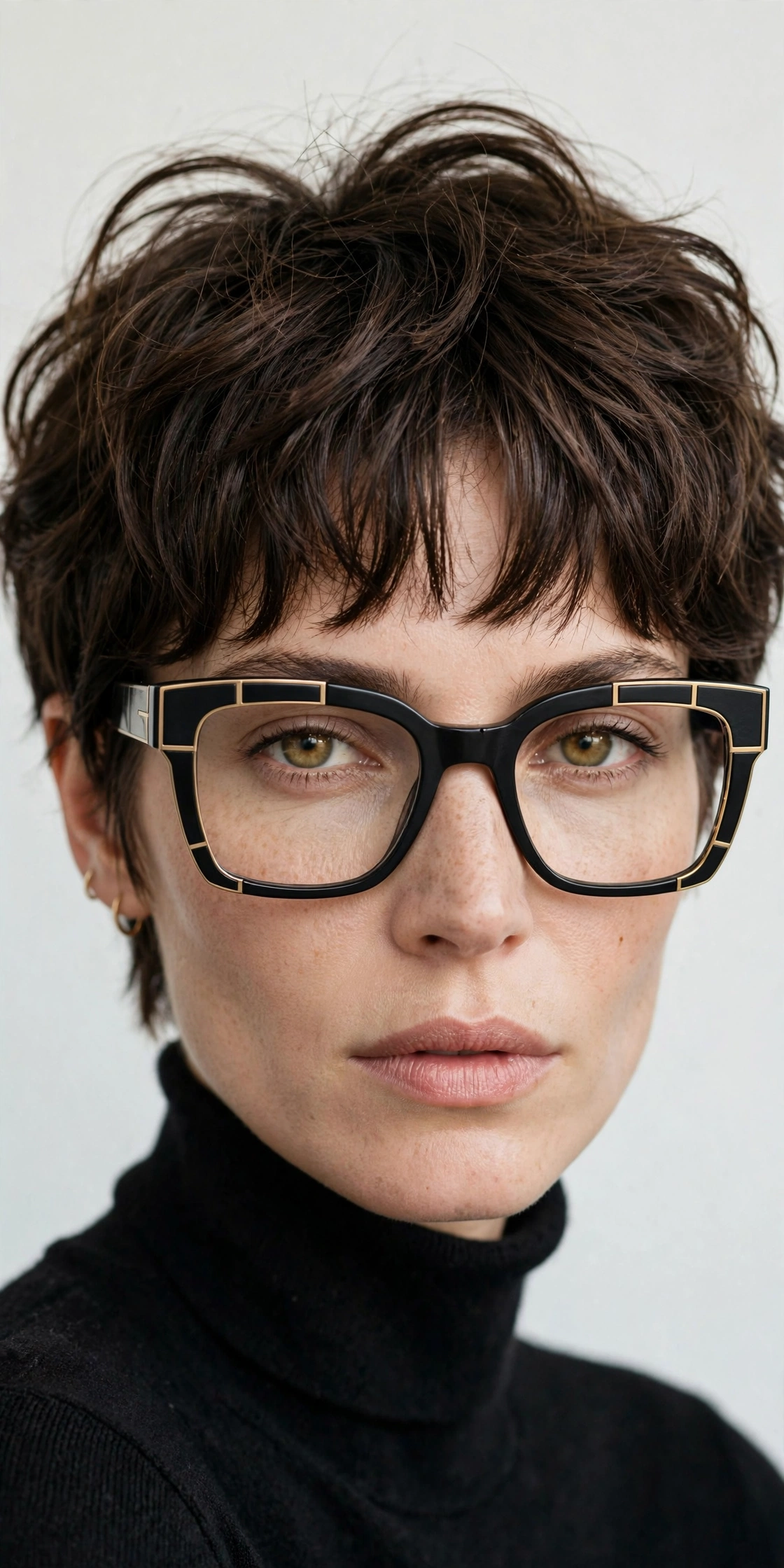
Glasses and short hair are a combination that deserves more appreciation. The curtain crop with glasses is a whole aesthetic: the cheekbone-sweeping panels frame the frames, the middle part keeps the forehead open, and the overall effect is chic, intellectual, and quietly confident. It is the haircut equivalent of a well-chosen blazer.
A couple of fitting notes make the difference. Bring your glasses to the appointment — this is non-negotiable. The panels need to be cut with the frames on, because the temples of your glasses sit exactly where the panels fall, and a panel that fights your frames will drive you mad by noon. Bold, thick frames pair beautifully with a slightly longer, softer crop that balances their visual weight; thin or rimless frames work with any version. Styling stays simple: the glasses do half the talking, so the hair can stay relaxed. Tuck one panel behind your ear on the side you favor, and you have got an asymmetrical detail for free.
17. The Wet-Look Curtain Crop
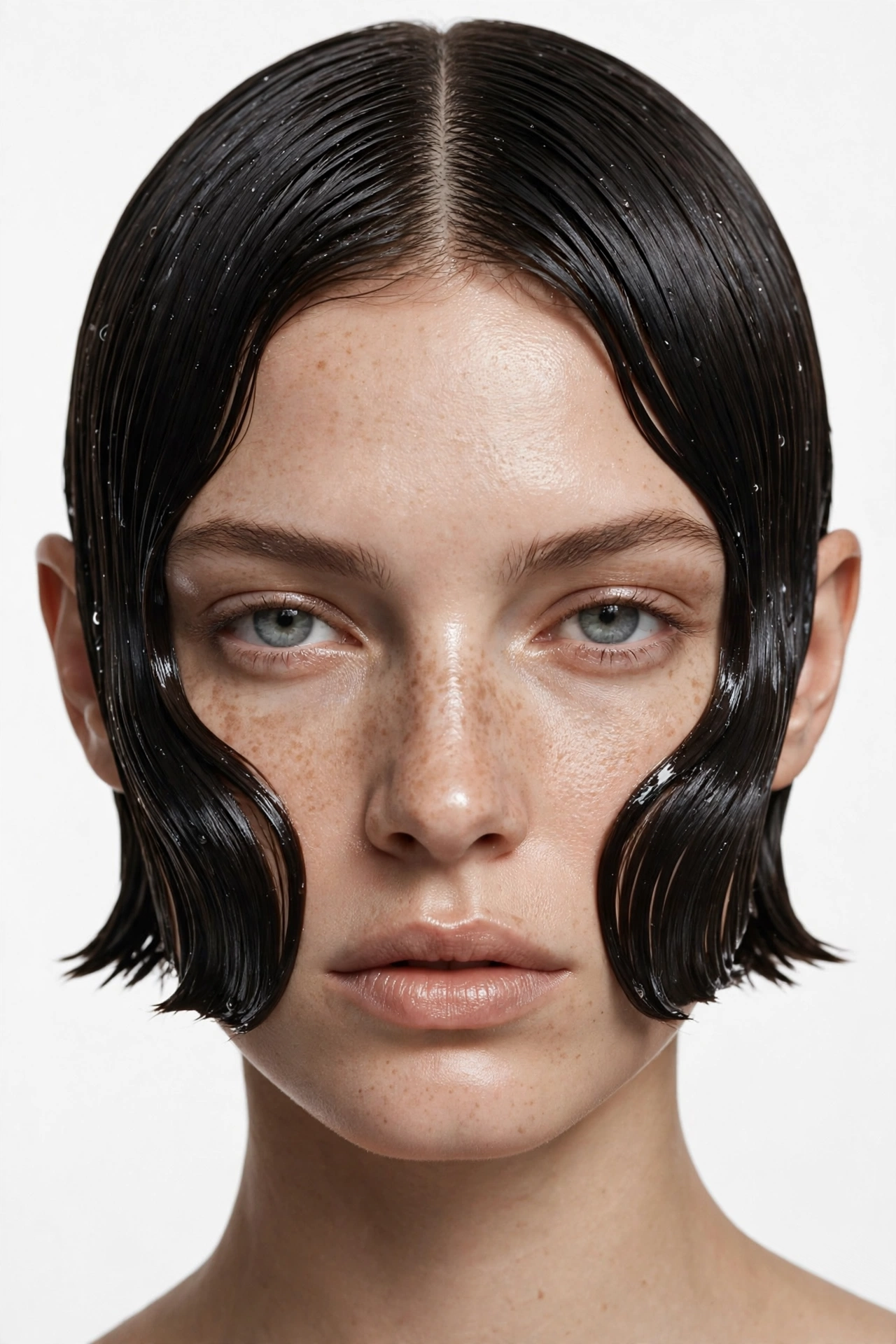
For evenings, events, and anyone who likes their hair with a little drama. The wet-look curtain crop takes the same cut and styles it sleek and glossy, with the panels pressed close to the face and a high-shine finish. It is the red-carpet version — polished, intentional, and strikingly different from the daytime tousled look, which means one haircut gives you two personalities.
The technique is straightforward but specific. Start with damp hair and work a generous amount of styling gel or wet-look cream from roots to mid-lengths — more product than you think, because the gloss is the point. Comb the panels flat against the head in their center-part direction, and let it air dry or diffuse on low without touching it. The look sets as it dries and holds for hours. Fair warning: this is a one-night style, not a daily driver — the product load means a proper wash afterward, and fine hair can look stringy if you overdo it. But for a dinner, a wedding, or a night out, it is the most transformative styling trick in this entire guide. Our wet look hairstyle guide has the full product breakdown if you want to go deeper.
18. The Low-Maintenance Curtain Crop
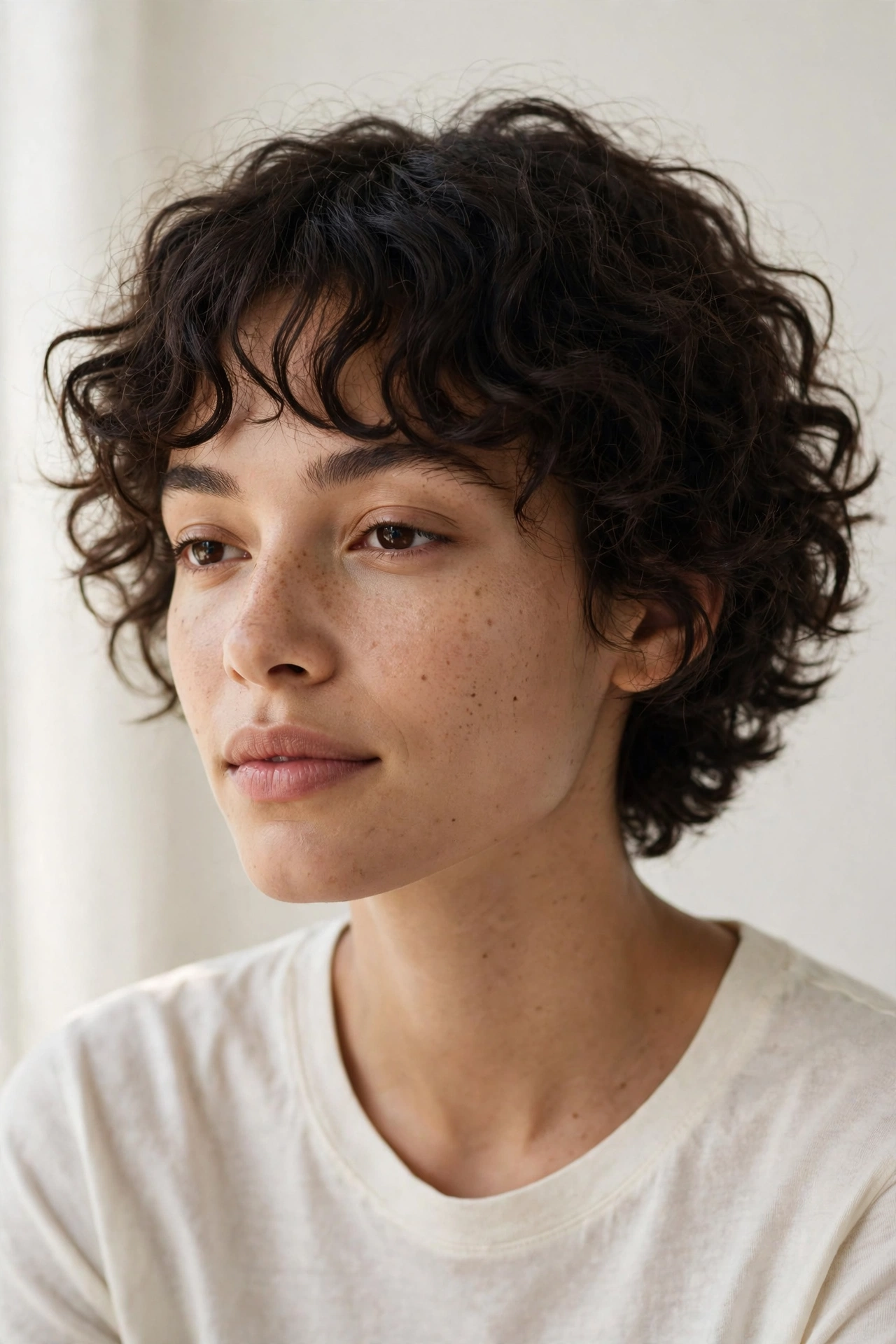
Last but not least: the version for the woman who loves the look but will not spend twenty minutes on her hair. The low-maintenance curtain crop is cut with your real life in mind — slightly longer through the top so it falls into place on its own, texture that works with air drying, and a shape that still looks deliberate on day three. This is the cut you get when you tell your stylist the truth about your mornings.
The low-maintenance version succeeds or fails in the consultation, so be honest. If you air dry, say so — the cut needs to be shaped for air drying, which is different from a blowout cut. If you wash twice a week, say that too. The right products make it nearly effortless: a leave-in conditioner or light styling cream on damp hair, scrunch, go. A silk pillowcase preserves the shape overnight, and a dry shampoo at the roots on day two or three keeps it fresh. Trims every eight to ten weeks are enough, since the longer top disguises growth. This is proof that the curtain crop is not just a pretty trend — for the right woman, it is the easiest haircut she has ever owned.
How to Ask Your Stylist for a Curtain Crop
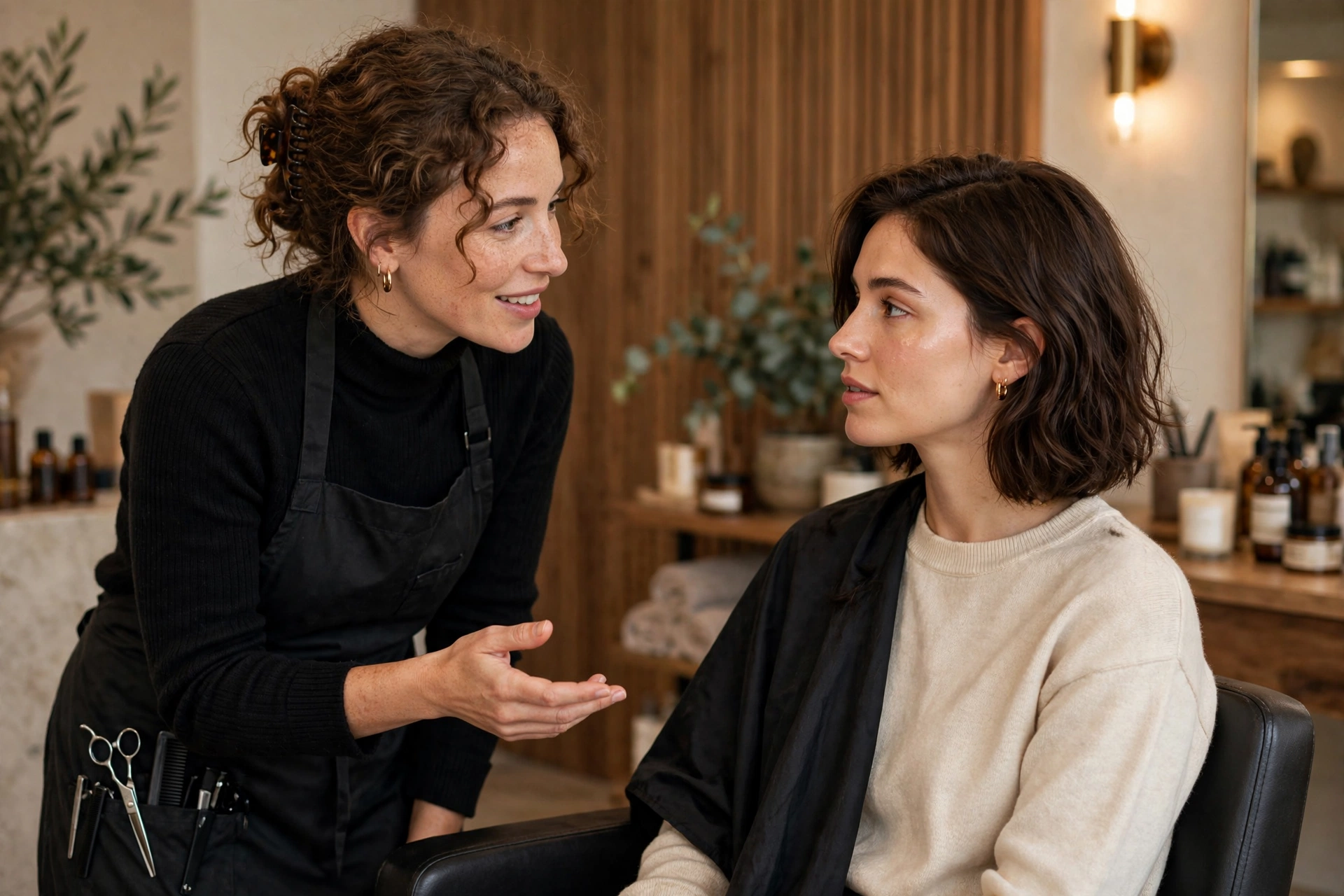
Walking in and saying “curtain crop” is a start, but as you have seen, eighteen different haircuts live inside those two words. The women who walk out happy are the ones who walk in specific. Here is your script. Start with the overall shape: “a short crop, neat at the back and sides, with length through the top.” Then the defining feature: “parted in the middle, with soft panels sweeping toward the cheekbones.” Then your version: textured, curly, grown-out, undercut — whichever number from the list above made your heart beat faster.
Bring photos — two or three, showing the cut from the front and the side. Stylists are visual people, and reference photos eliminate most miscommunication, especially with a trend this new. Then have the honest conversation: how you actually style your hair, how often you will come back for trims, whether you air dry or blow dry, what your hair does on humid days. A good stylist will adjust the cut to your reality. Mention your glasses if you wear them, your cowlicks if you have them, and your grow-out plans if this is a stepping stone to longer or shorter hair. That ten-minute conversation is the difference between a haircut you like and a haircut you love.
How to Style a Curtain Crop at Home
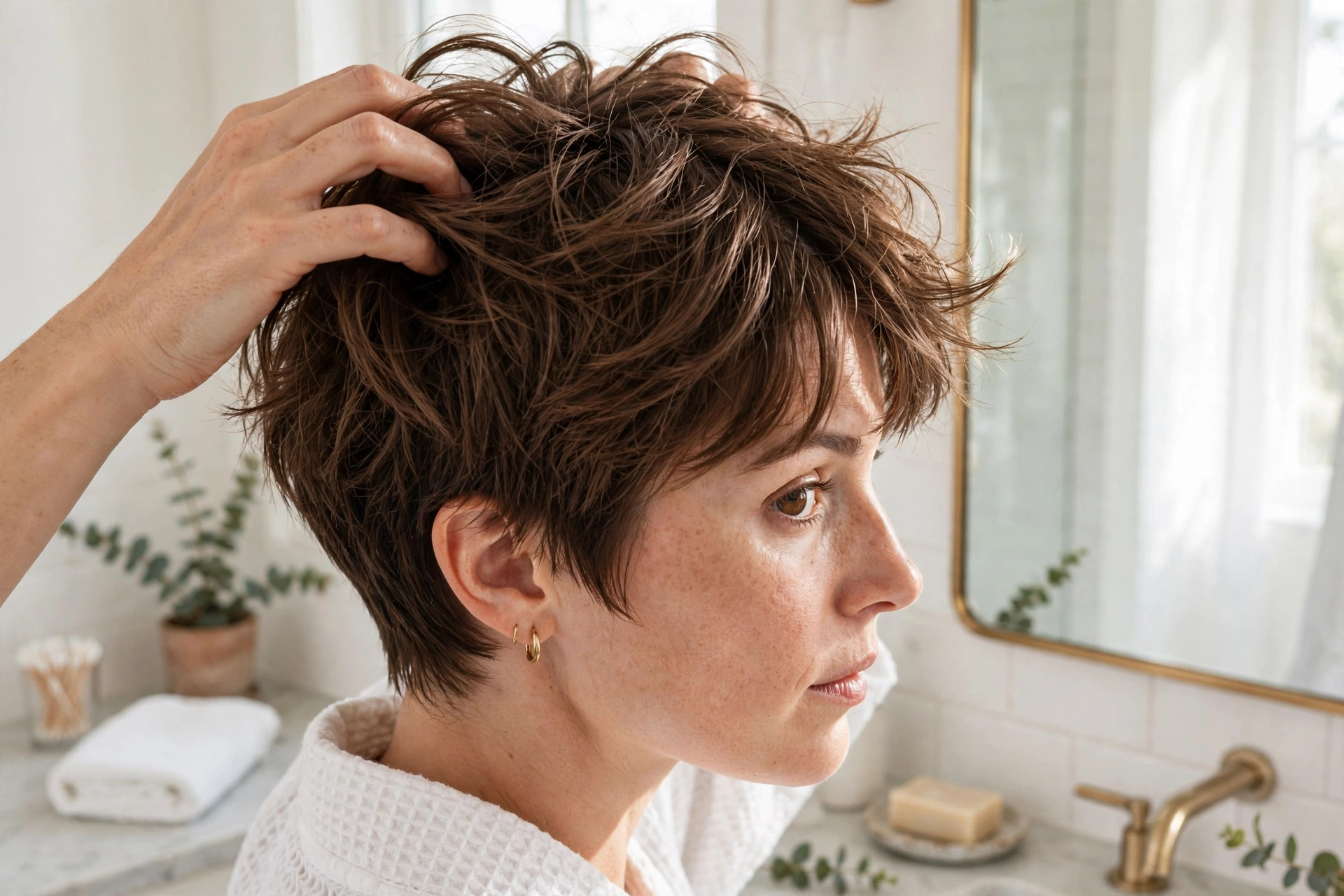
The everyday routine for a curtain crop takes about five minutes, and most of that is waiting for product to absorb. Start with damp hair — towel-dried, not dripping. Warm a pea-sized amount of styling cream or light mousse between your palms and work it through the top and panels, from roots to ends. Find your middle part with your fingers or a comb, then push the front panels gently away from your face so they sweep toward the cheekbones. That is the foundation. Everything else is optional.
For extra polish, a round brush and a blow dryer on the front panels — dried away from the face — gives that smooth, sweeping finish you see in salon photos. For texture, skip the dryer: scrunch a little texturizing spray or sea salt spray into dry hair and let it air dry. Curly versions need curl cream on soaking-wet hair and a diffuser or air dry; wavy versions love mousse and benign neglect. The universal rule: less product than you think. Short hair shows excess fast — it goes from piecey to greasy with one extra pump. Start small, add if needed. Within a week, your fingers will know the routine better than your brain does. Beauty editors covering the trend note the same secret: a little product and a lot of attitude, with about a week of mirror practice before the fringe falls exactly where you want it.
Best Face Shapes and Hair Types for the Curtain Crop
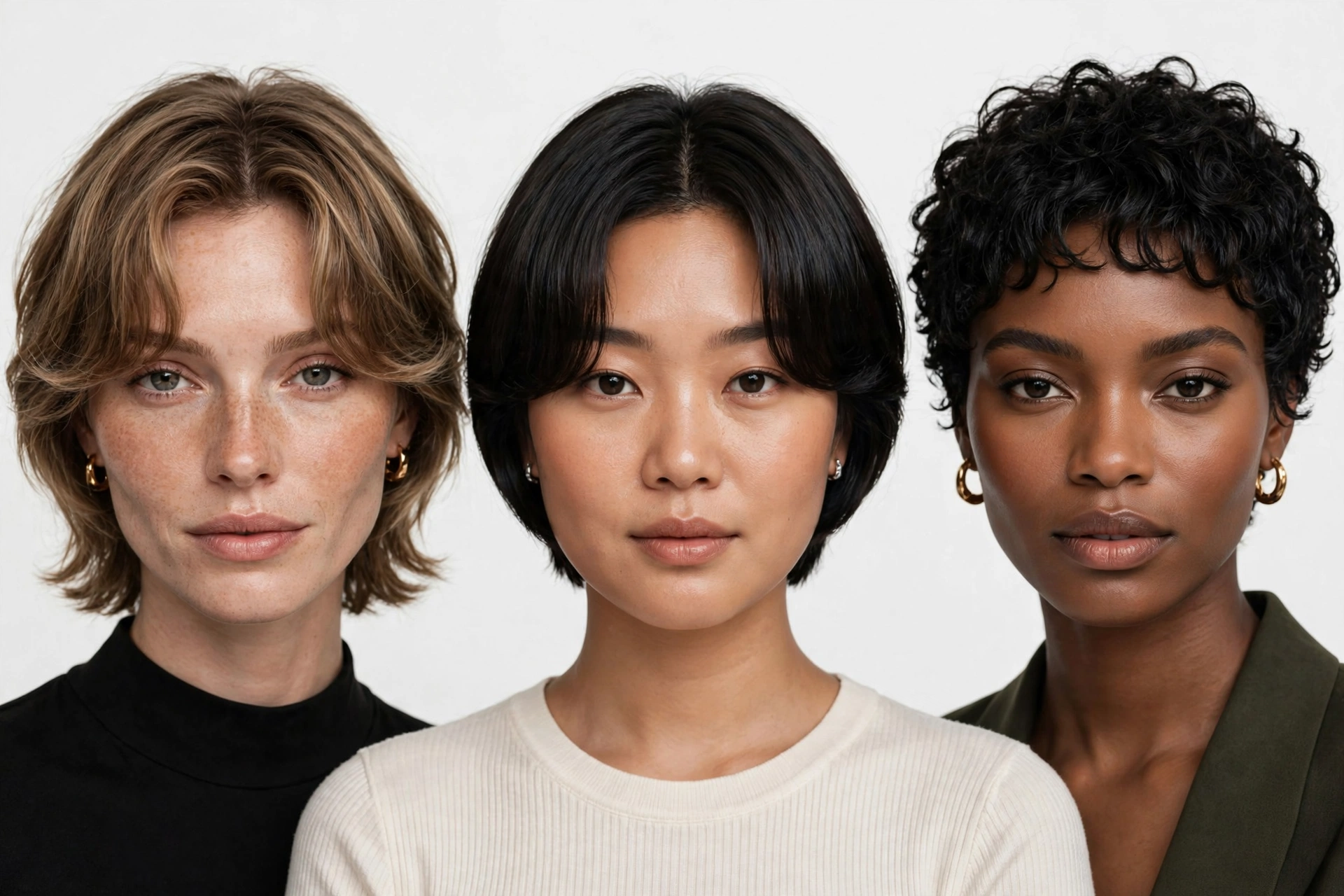
The curtain crop is unusually generous — it flatters more faces than most short cuts — but knowing your shape helps you pick the right version. Oval faces have the easiest time: balanced proportions mean any of the eighteen versions will sit well. Round faces benefit from length through the top, which adds height, and panels that sweep past the cheekbones rather than ending at them — avoid crops that are very short and wide, which can emphasize roundness.
Square faces and strong jawlines are beautifully softened by the curtain panels, which break up angular lines around the jaw. Heart-shaped faces — wider forehead, narrower chin — love this cut, because the panels add width where the face narrows. Long or oblong faces should keep some width at the sides and avoid taking the top too flat; a little volume at the crown balances the length. As for hair types: straight, wavy, and curly all work, as the list above proves. Very fine hair needs blunter ends for the illusion of density; very thick hair needs internal debulking. And if you are unsure, the classic version is the universal safe pick — it is the one stylists recommend when a client says “just make it good.” For a broader look at short styles by face shape, our short hairstyles for women 2026 guide covers the full landscape.
Curtain Crop Maintenance Guide
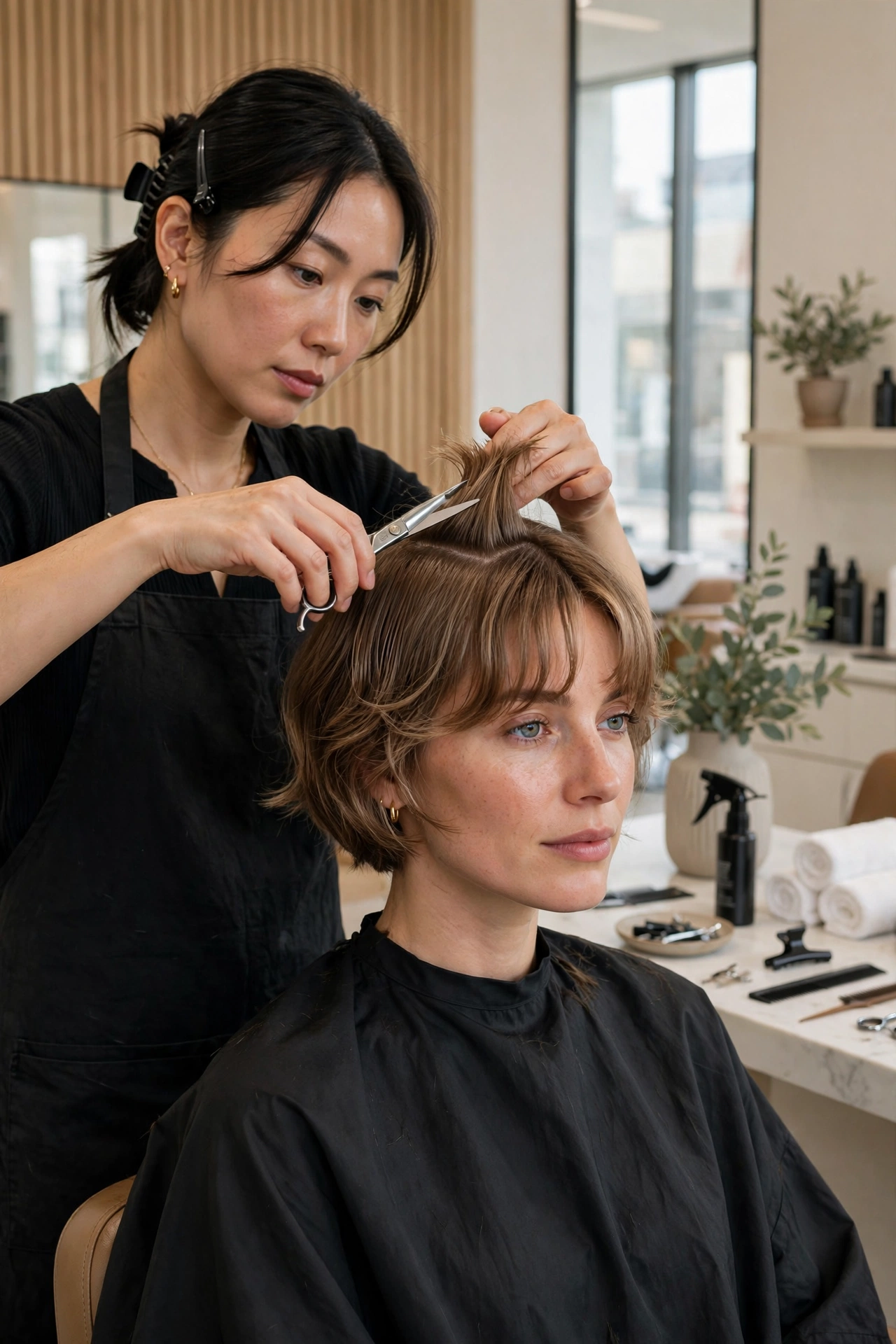
A curtain crop is a low-effort haircut, not a no-effort haircut, and the difference lives in your calendar. The shape is the first thing to go: once the nape gets fuzzy and the panels lose their sweep, the whole cut looks tired. For most versions, that means a trim every six to eight weeks. Shorter, more precise versions — the pixie-length crop, the tapered nape — need attention closer to every five or six weeks. The grown-out and low-maintenance versions are the most forgiving, stretching comfortably to ten weeks.
Between appointments, a few habits keep things sharp. Wash two to three times a week — daily washing strips the natural oils that give short hair its texture, and short hair shows oil faster than long hair, so find your balance. A light conditioner through the mid-lengths and ends keeps the panels soft rather than wiry. If the neckline gets fuzzy between cuts, a quick cleanup with trimmers buys you an extra week or two — just the obvious strays at the nape, nothing ambitious. And resist the urge to trim the panels yourself; the cheekbone-sweeping angle is deceptively hard to cut freehand, and a DIY trim is how good curtain crops go bad. Leave the scissors to the professional.
Frequently Asked Questions
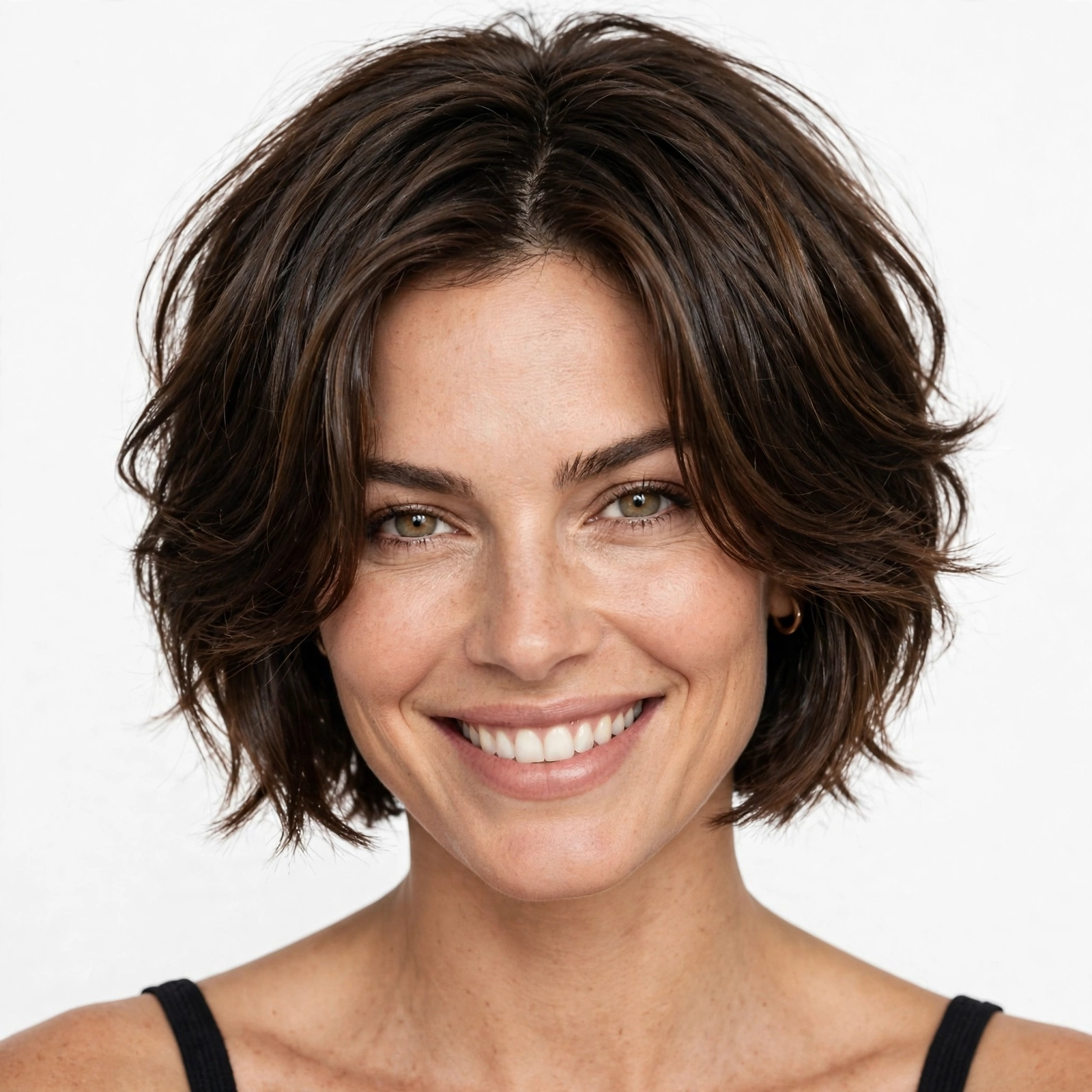
How long does it take to grow out a curtain crop?
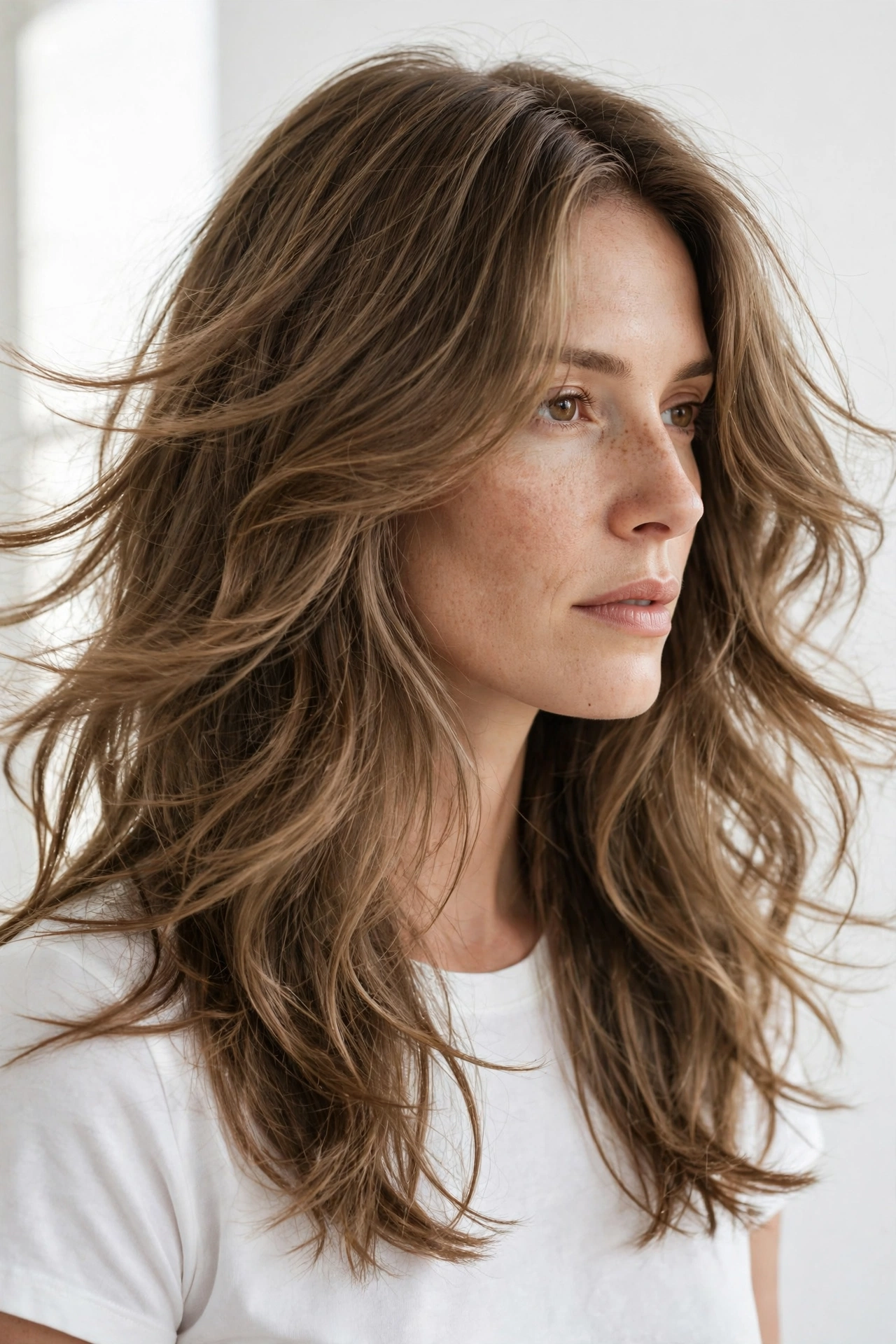
Growing out a curtain crop is one of the more graceful grow-outs in short hair, because the cut already has length through the top. Expect about four to six months to reach a bob-length shape, with trims every eight weeks to keep the back and sides tidy while the top catches up. The awkward stage — where the back wants to flip out — hits around month three; a good stylist can reshape it into a shaggy bob or a bixie during the transition so you never have a bad hair month. Patience and regular shaping trims are the whole strategy.
Can I get a curtain crop with curly hair?
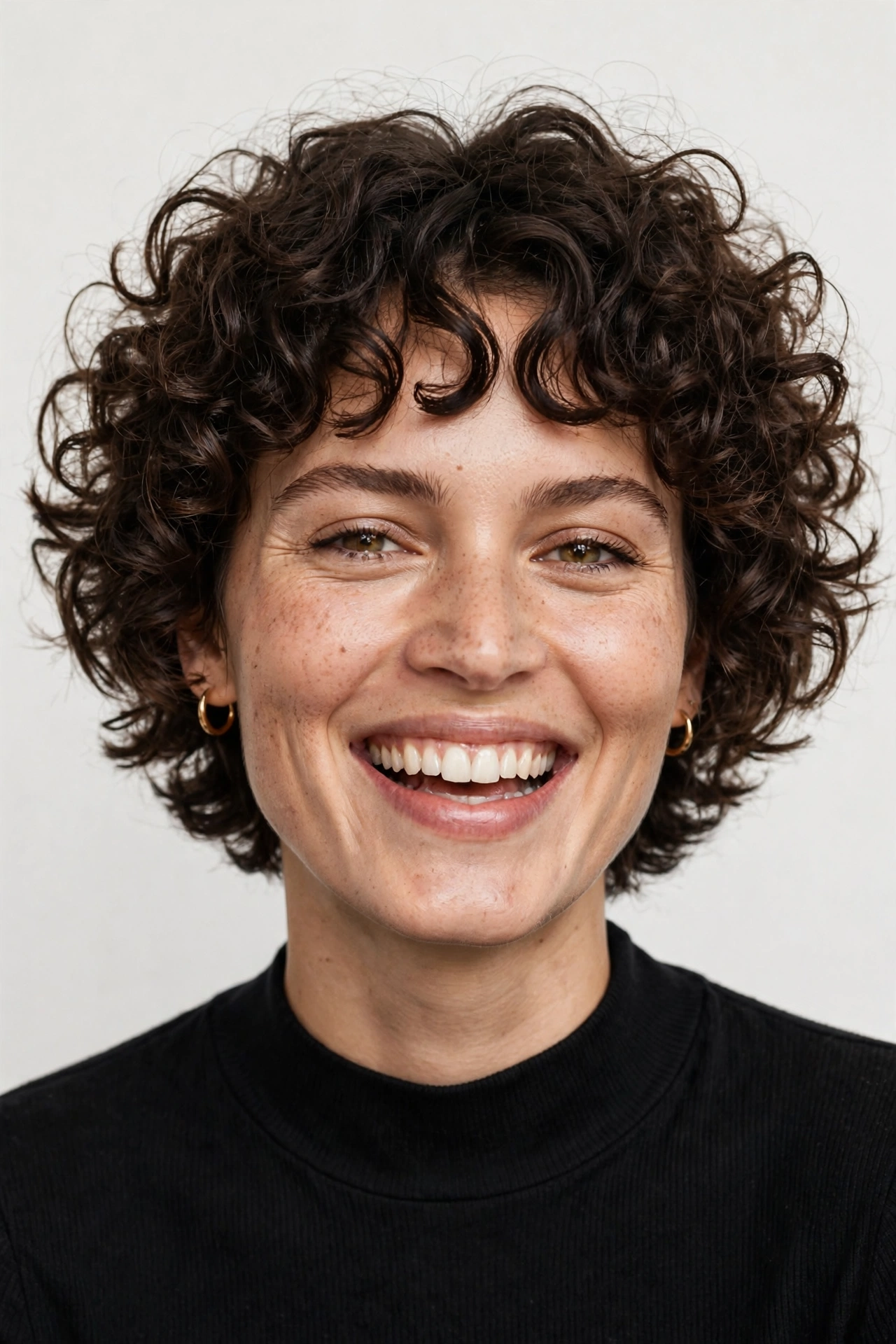
Absolutely — the curly curtain crop is one of the best versions on this list. The keys are cutting it dry (or barely damp) so the stylist sees the true curl pattern, and keeping the front panels slightly longer than you think, since curls spring up as they dry. Ask for a stylist experienced with curly cuts, and make sure they understand you want the middle-part panel shape, not just a generic short curly cut. With curl cream and a diffuser, the styling routine is genuinely simple.
What is the difference between a curtain crop and a pixie cut?
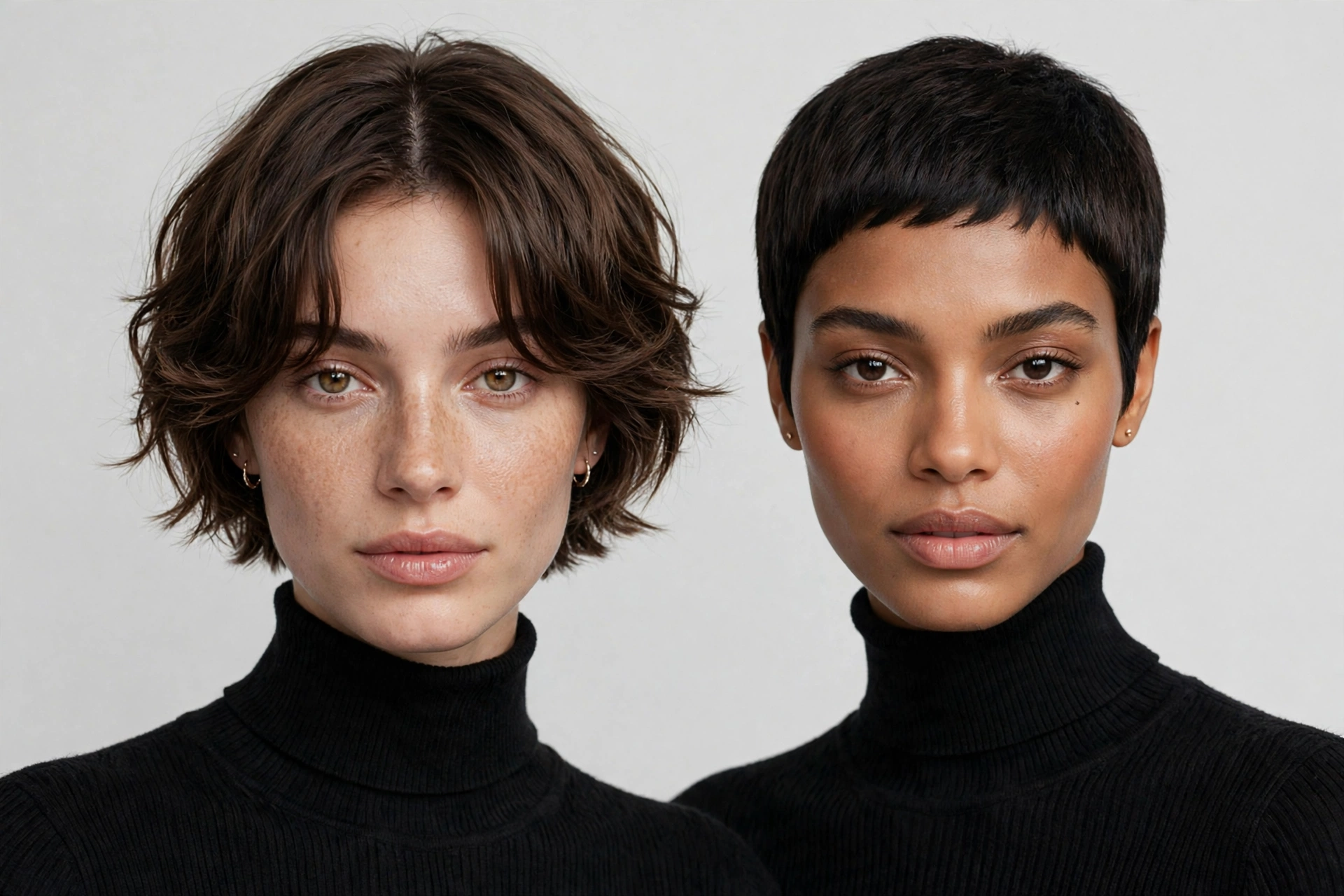
They are cousins, not twins. A classic pixie is cropped close all over with a short, usually side-swept fringe. The curtain crop keeps significantly more length through the top and front — three to five inches — and is defined by its center part and cheekbone-sweeping panels. The pixie reads sharp and sculpted; the curtain crop reads soft and grown-in. If you love pixies but find them too severe, the curtain crop is your answer; if you love the curtain crop’s vibe but want it shorter, the pixie-length version on this list splits the difference.
How often do I need trims for a curtain crop?
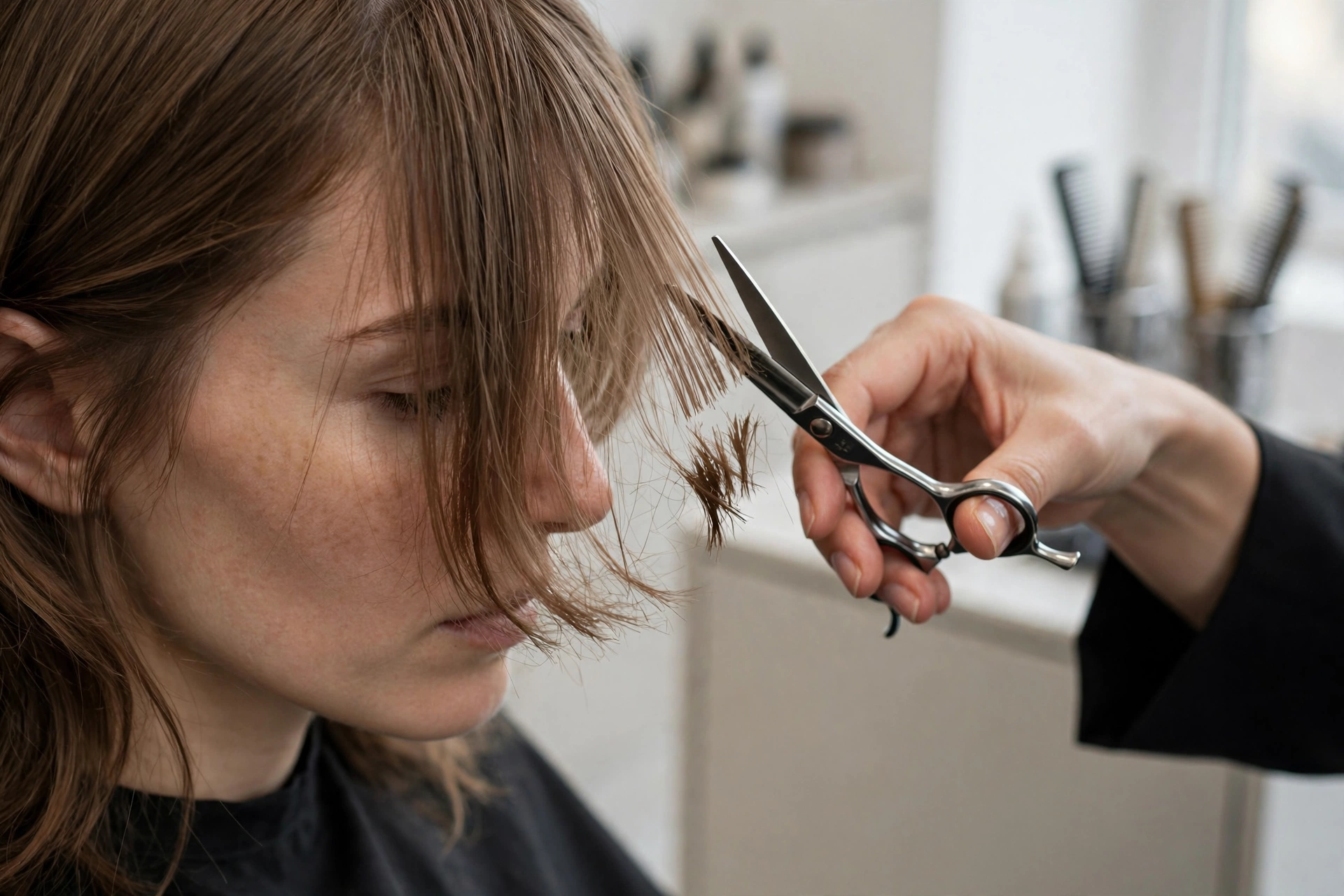
Every six to eight weeks for most versions. The nape and the panel shape are the first things to lose definition, and a quick tidy-up keeps the cut looking intentional. Shorter versions with tapered napes need trims closer to every five weeks; longer, grown-out versions can stretch to ten. Between appointments, keep up with the at-home habits — proper washing frequency, light product — and the cut will hold its shape well. Skipping trims entirely is how a curtain crop slowly becomes a shaggy bob, which is not a tragedy, but it is a different haircut.
Will a curtain crop suit women over 40?
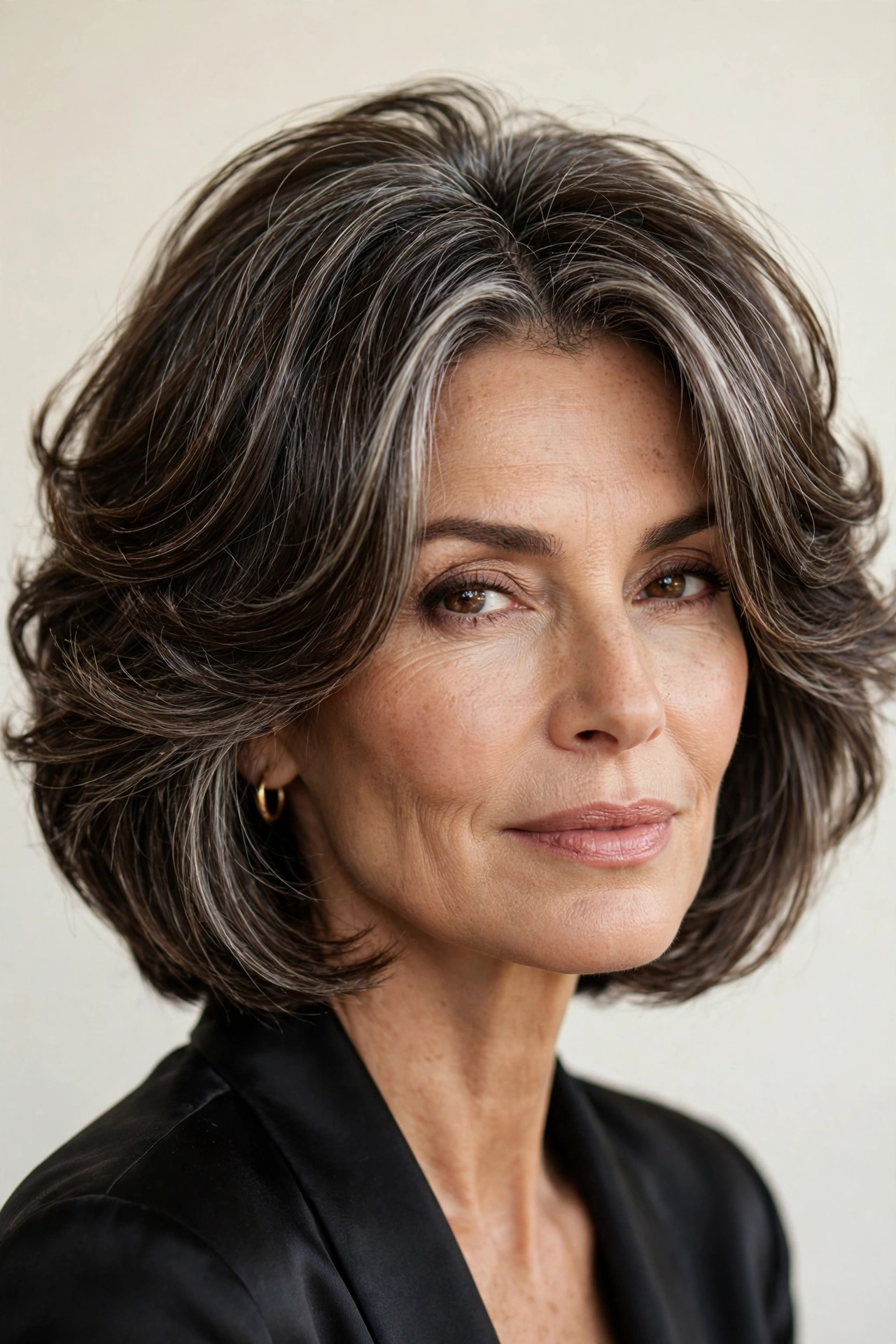
Yes — and stylists specifically call this out as a strength of the cut. The soft panels around the face are flattering at any age: they soften features, draw attention to the cheekbones and eyes, and read modern without trying too hard. The key adjustments for mature hair are keeping the texture soft rather than choppy (harsh texture can read severe), and making sure the color — whether natural grey, blended, or colored — has dimension, since flat color on short hair can look dull. Confidence does the rest. Some of the chicest curtain crops I have seen are on women in their fifties who wear them with total ease.
Final Thoughts
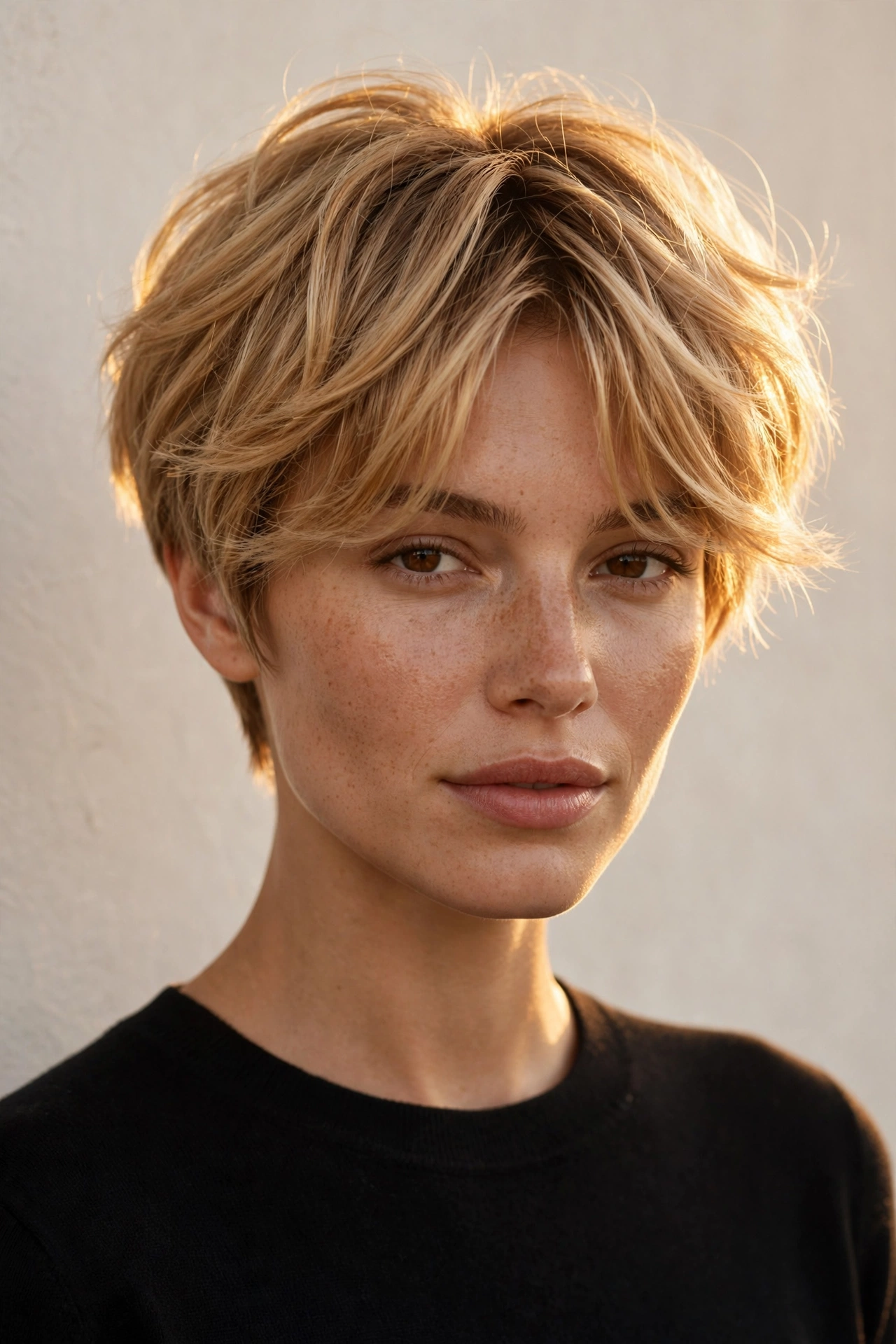
The curtain crop earned its fall 2026 moment the honest way: it is a genuinely good haircut, not just a photogenic one. It respects your time, works with your texture instead of against it, flatters an unusually wide range of faces, and grows out gracefully — the four things that separate a trend worth trying from a trend worth skipping. Eighteen versions, one core idea: short, soft, parted in the middle, sweeping toward the cheekbones.
My honest recommendation? If this is your first curtain crop, start with the classic version and tell your stylist you want it on the slightly longer side. You can always go shorter at the next appointment; you cannot glue hair back on. Bring two reference photos, have the honest conversation about your mornings, and give it one full grow-out cycle before you judge it. Most women who try the curtain crop do not go back to long hair for a long time. There is a reason salons in London and New York cannot stop cutting it.
Conclusion
The curtain crop is 2026’s answer for women who want short hair with softness — a cropped cut with curtain bangs that frame the face like drapes. It’s less severe than a pixie, more modern than a bob, and endlessly flattering on oval, round, and heart-shaped faces. Fine hair gets instant volume from the layered crown.
Blow-dry the curtain pieces away from the face with a round brush for that signature swoop, and use a texturizing spray for piecey definition. In 2026, the curtain crop proves short hair can be both bold and beautifully feminine.