Jawline Bob Women 2026: 16 Sharp Sculpted Bob Cuts
The Jawline Bob: 2026’s Sharpest Statement Cut
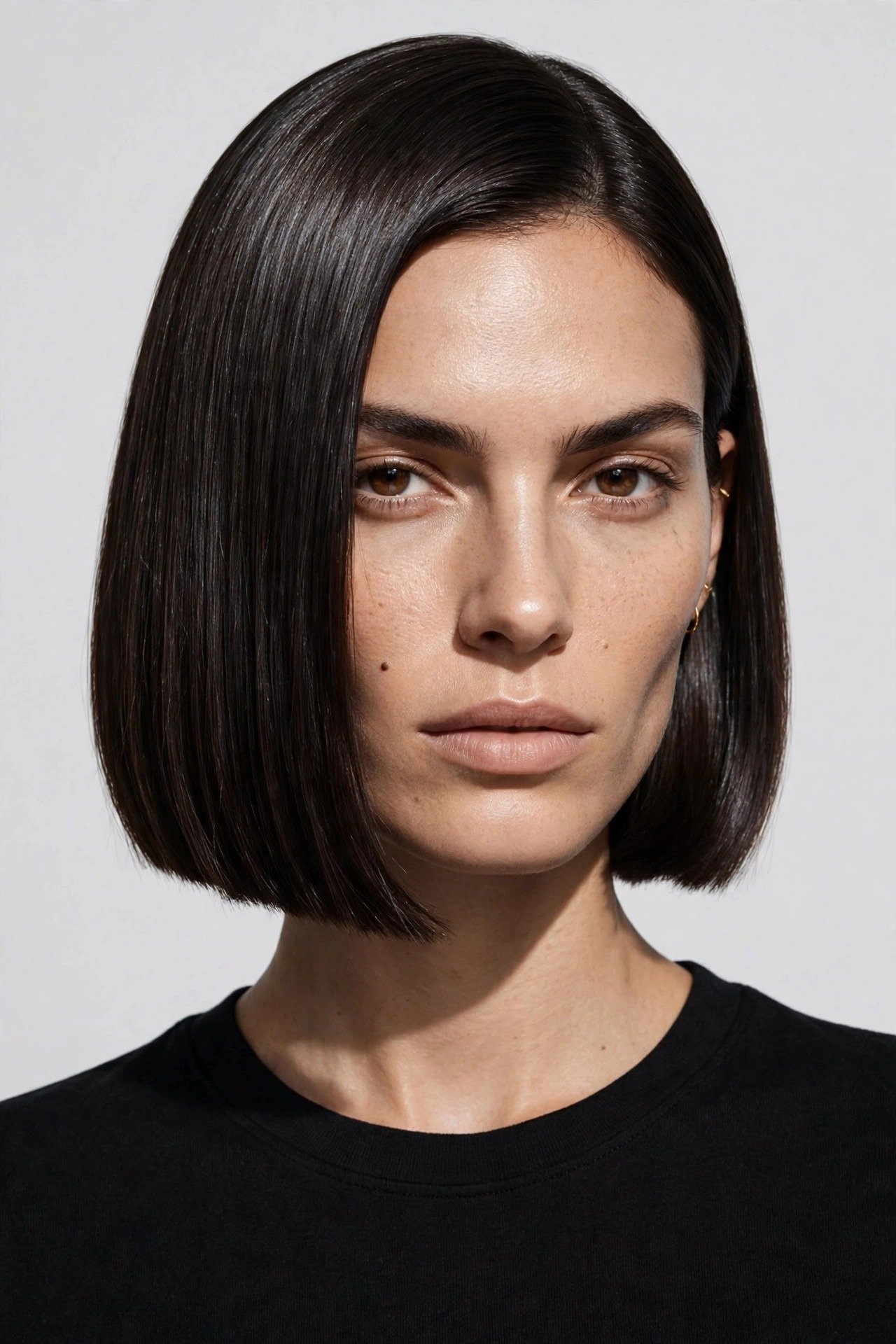
There is no haircut in 2026 with more architectural authority than the jawline bob. Where the lob plays it safe and the pixie demands commitment, the jawline bob — cut to end precisely at the jaw, tracing its line like a tailor’s chalk mark — delivers instant structure to the face. It sharpens soft jawlines, frames strong ones, and turns an ordinary head of hair into a deliberate style statement. This is not a haircut you get by accident; it is a haircut you choose.
The jawline bob is exactly what it sounds like: a bob whose perimeter ends at the jawline, typically between 8 and 10 inches in total length depending on head size. What makes it 2026’s defining short cut is the precision of the execution. Today’s jawline bobs are cut with the head held in natural fall position, the line checked from every angle, and the weight distribution engineered so the hair hugs the jaw rather than flipping away from it. The result reads as expensive from across the room — there is no hiding a bad line at this length, which is precisely why a good one looks so powerful.
This guide covers sixteen jawline bob variations for 2026, from glass-sleek architectural cuts to tousled French-girl texture, each broken down the way a precision cutter would explain it: who the cut suits (face shape, hair texture, lifestyle), exactly what to tell your stylist so you get the line you want, how to style it at home step by step, the products that make or break it, how often it needs maintenance, and the mistakes that turn a sharp bob into a sad one. Whether you are considering your first big chop or refining a bob you already wear, you will leave knowing exactly which jawline bob is yours.
A note on honesty before we begin: the jawline bob is a high-precision, higher-maintenance cut than its effortless reputation suggests. The line grows out in four to six weeks, and at this length every styling shortcut shows. But women who wear it will tell you the same thing — nothing else makes you feel this put-together with this little hair. If you are drawn to clean, graphic shapes, explore our blunt bob collection as a companion read; the cutting philosophy is closely related.
16 Sharp Sculpted Jawline Bob Cuts for 2026
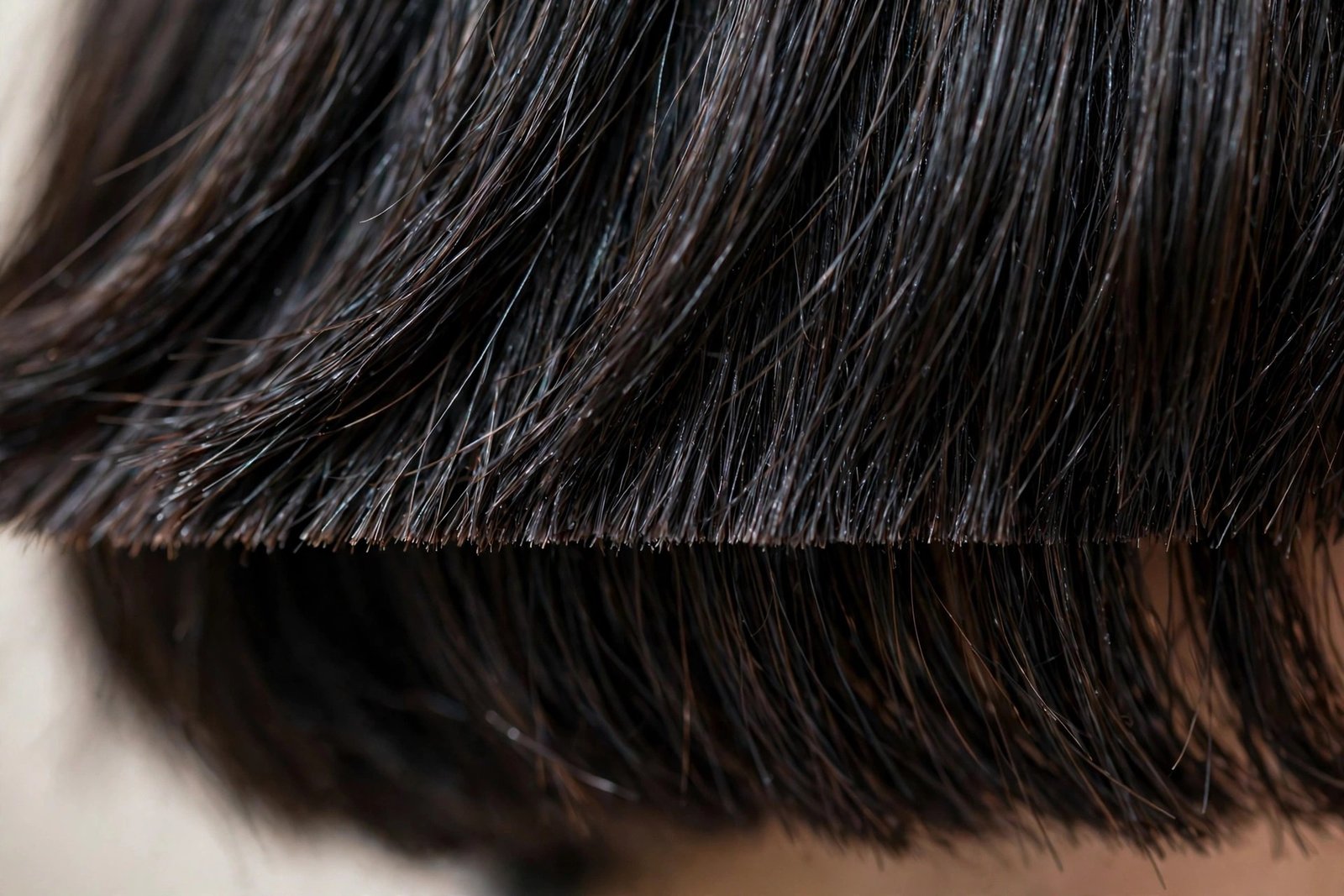
Sixteen cuts, one principle: the perimeter must end at the jawline and the line must be intentional. Read each style’s face-shape guidance carefully — at this length, an inch in the wrong direction changes everything. Book a stylist who specializes in precision cutting (ask to see their bob portfolio, not just their balayage), and never be shy about asking for the line to be checked dry — hair shrinks and moves, and the final check should happen in the state you will actually wear it.
1. The Sleek Glass Jawline Bob
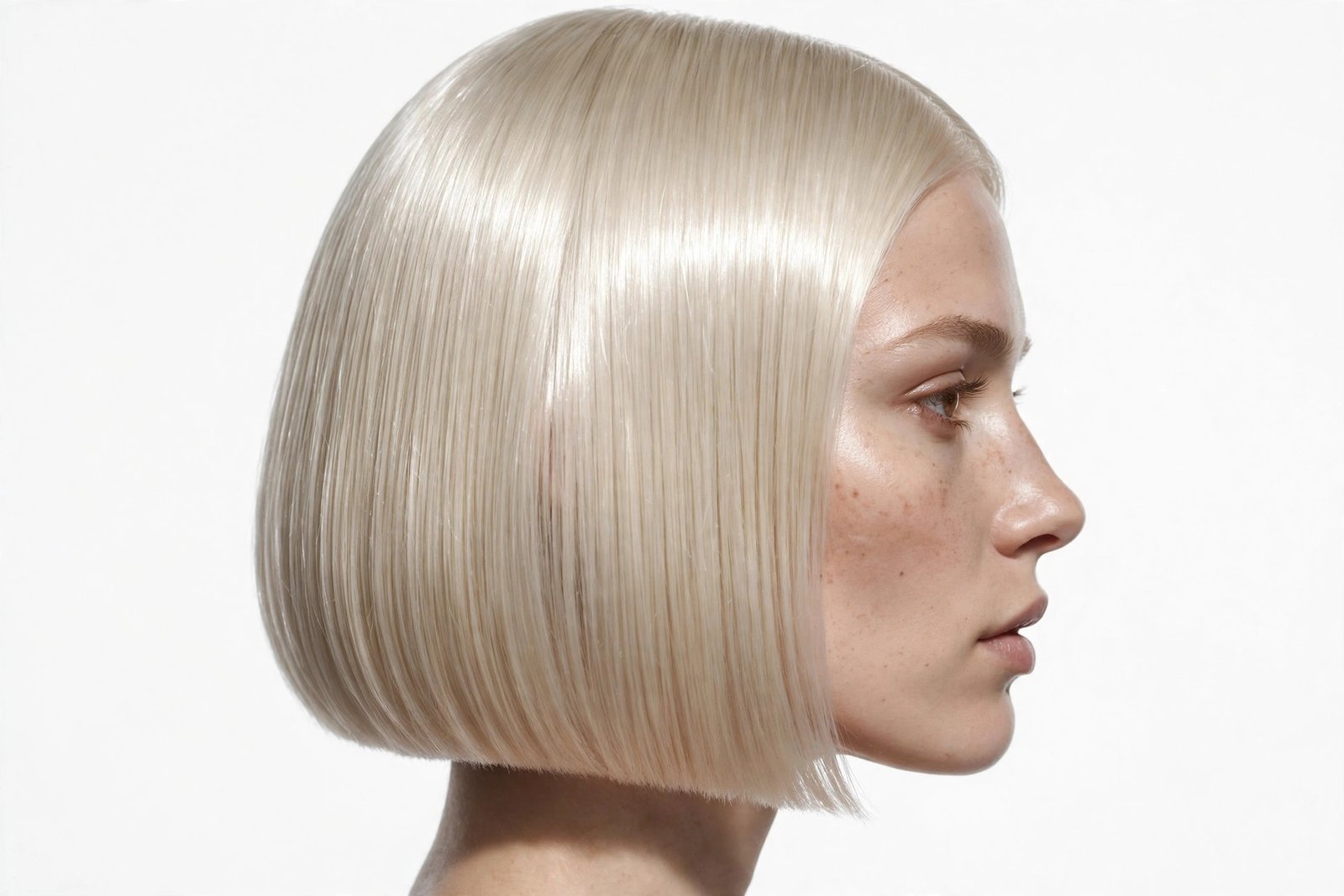
Who it suits: The glass jawline bob is the purest expression of the cut — pin-straight, mirror-shine, one-length, ending in a razor line at the jaw. It suits straight to slightly wavy hair (type 1A–2A); curly hair cannot achieve the glass finish without daily heat styling, which defeats the purpose. Oval, heart, and diamond faces wear it best — the severe line adds definition without adding width. It is the ultimate power cut for fine to medium hair, because the blunt perimeter creates the illusion of density.
What to ask your stylist: “A one-length jawline bob, cut dry or finished dry, with the perimeter ending exactly at the jawline — no layers, no texture, glass finish.” Ask for the cut to be checked with your head in natural position, looking straight ahead — cutting with the chin tucked or lifted shifts the line by up to half an inch. Specify whether you want a center or side part, because the line is cut to fall around the part. Ask for point-cutting only at the very ends if your hair is thick — never slide-cutting, which thins the perimeter and kills the blunt effect.
Step-by-step styling: 1) Apply heat protectant and a smoothing serum to damp hair. 2) Blow-dry with a paddle brush, directing hair downward — no flipping the brush under, which creates bevel. 3) Flat-iron in half-inch sections at 350–380°F (finer hair: lower; coarser: higher), one slow pass per section. 4) Apply a pea-sized amount of shine serum, focusing on the perimeter line. 5) Finish with a light mist of shine spray — never a matte product, which contradicts the entire aesthetic.
Products: Heat protectant (professional thermal protectors like those from Redken are worth the investment), smoothing serum, a quality flat iron with floating plates, shine spray. For daily touch-ups, a mini flat iron on the perimeter line takes 90 seconds and restores the sharpness.
Maintenance: Trims every 4–5 weeks — the line blurs fast at this length. This is non-negotiable for the glass version; a grown-out glass bob just looks like an unkempt bob. Budget for the trim cycle before you commit.
Common mistakes: Cutting layers “for movement” (destroys the one-length line); styling with volumizing products (the glass bob should lie flat and heavy, not lifted); and skipping heat protectant — daily flat-ironing without protection destroys the shine you are trying to create. The glass technique shares DNA with our glass hair guide, which goes deeper on the shine-building routine.
2. The Textured Jawline Bob

Who it suits: The textured jawline bob keeps the jaw-grazing length but softens the line with point-cut ends and internal texture — the wearable, forgiving sibling of the glass bob. It suits wavy hair (2B–2C) beautifully, because the natural wave does the texturing work, and it is the best jawline bob for thick hair, where a blunt line can look heavy and helmet-like. Round faces benefit: the broken-up ends avoid the “frame” effect that a blunt line can create on full cheeks.
What to ask your stylist: “A jawline bob with a textured perimeter — point-cut ends, light internal layering in the last two inches, lived-in finish.” Ask for the texture to be cut into dry hair so the stylist can see how your natural wave falls — wet-cutting texture is guesswork. Specify how lived-in you want it: “polished texture” (subtle) versus “undone texture” (visible choppiness). These are different cuts.
Step-by-step styling: 1) Apply a wave-enhancing mousse or sea-salt spray to damp hair. 2) Rough-dry with your fingers, scrunching — no brush, which kills texture. 3) Once dry, touch up random sections with a 1-inch iron, alternating directions, leaving the ends straight. 4) Break up the waves with a pea-sized amount of matte pomade. 5) Finish with texture spray at the roots for lift.
Products: Sea-salt or texture spray, 1-inch curling iron, matte pomade, dry texture spray. This is a matte-finish style — shine products work against it.
Maintenance: Trims every 6–8 weeks — the texture hides grow-out gracefully, which is this cut’s great practical advantage. Refresh the texture with point-cutting rather than re-cutting the line.
Common mistakes: Over-texturizing (too much internal cutting makes the ends wispy and the bob loses its jawline authority); styling it sleek (the cut is designed for texture — flat-ironing it daily fights the architecture); and using heavy oils, which collapse the piece-y definition.
3. The Jawline Bob with Curtain Bangs

Who it suits: The curtain-bang pairing softens the jawline bob’s severity without sacrificing its structure — ideal for women who love the cut’s edge but worry it will read too harsh. It suits high foreheads (the bangs’ classic camouflage) and long faces (the horizontal bang line shortens visually). The bangs must be cut to blend into the bob’s perimeter — chin-length or longer, curving into the sides.
What to ask your stylist: “A jawline bob with curtain bangs that blend into the perimeter — bangs cut to cheekbone length, curving down to meet the bob’s line.” Ask for the bangs to be cut dry and styled before the final check, because bang length changes dramatically between wet and dry. Specify the part: curtain bangs need a center or slightly off-center part to fall correctly.
Step-by-step styling: 1) Blow-dry the bangs first, with a round brush, curving them away from the face — bangs set the tone for the whole style. 2) Blow-dry the bob smooth with a paddle brush. 3) Flat-iron the perimeter lightly if needed, but leave the bangs with their round-brush bend — ironing bangs flat makes them lie lifeless. 4) Apply a light serum to the bob’s ends, keeping product off the bangs’ roots (they get oily fastest). 5) Set bangs with a whisper of flexible spray.
Products: Round brush (medium), paddle brush, light serum, flexible-hold spray, dry shampoo (bangs need it every 1–2 days even when the bob doesn’t).
Maintenance: Bob trims every 5–6 weeks; bang trims every 3–4 weeks (bangs grow out of their blend fast). Many salons offer complimentary bang trims between appointments — ask.
Common mistakes: Cutting bangs too short (they can’t blend into the bob and look like a separate haircut); styling bangs with the same heavy products as the bob (they go limp); and parting the bangs on the side — curtain bangs are engineered for a center part, and a side part breaks their symmetry.
4. The Blunt-Edge Jawline Bob
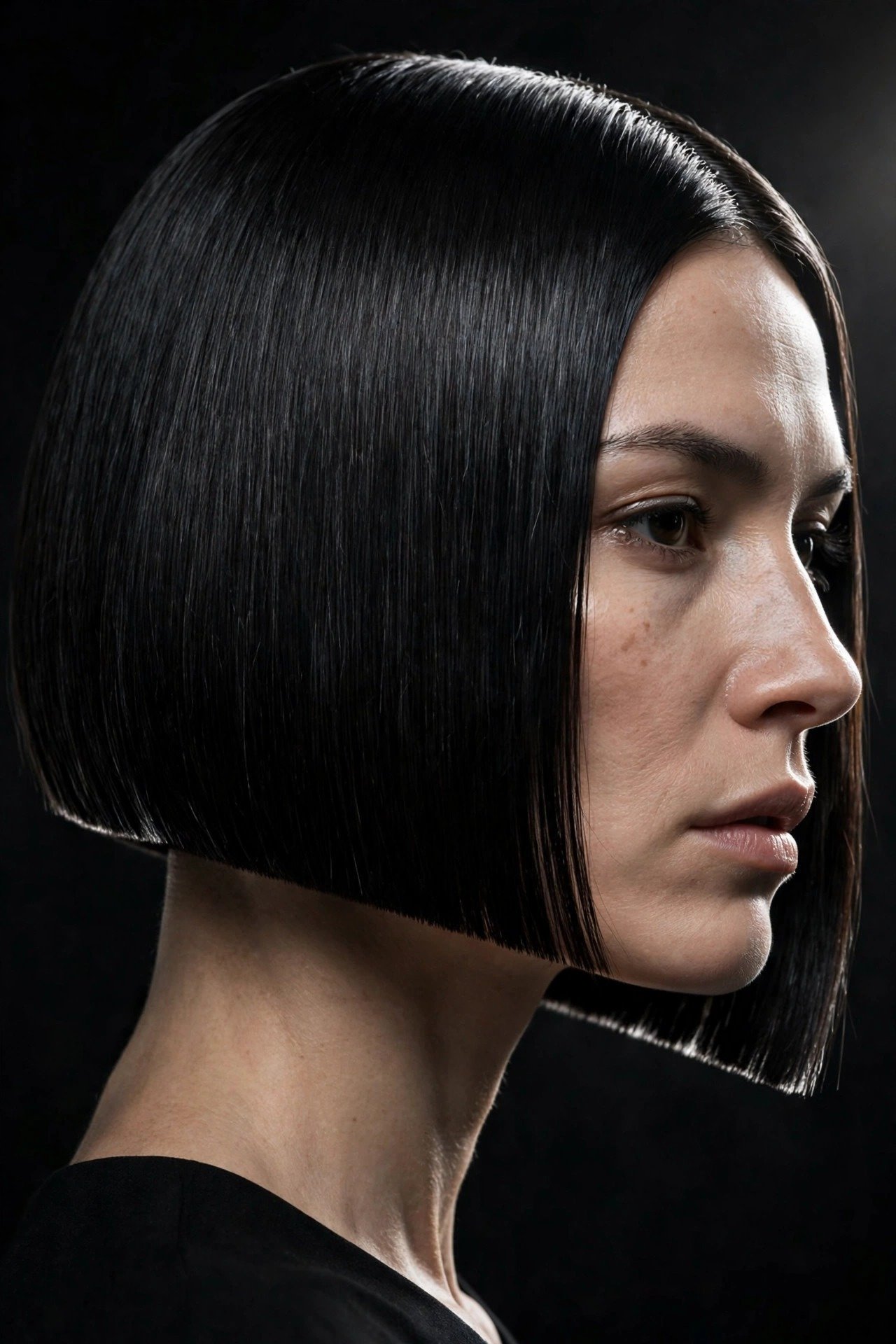
Who it suits: The blunt-edge jawline bob is the most graphic of the sixteen — a single, unbroken line with maximum weight at the perimeter. It suits thick, straight hair best, where the density supports the heavy line, and it is spectacular on oval faces, where the strong horizontal line balances face length. Fine hair can wear it, but the line must be cut absolutely precise — there is no texture to hide behind.
What to ask your stylist: “A blunt jawline bob — one length, zero layers, perimeter cut to sit exactly on the jawline, ends left heavy.” Ask for it to be cut with scissors, not a razor — razors remove weight from the perimeter, which is the opposite of what this cut needs. Ask the stylist to cut it slightly shorter than you think you want; blunt bobs always look longer than they measure because the heavy line draws the eye down.
Step-by-step styling: 1) This cut is about the line, so styling is minimal: blow-dry smooth with a paddle brush. 2) Flat-iron only if your hair has natural wave — one pass, medium heat. 3) The critical step: check the line in a mirror and trim any single hairs that break the perimeter with hair scissors (not paper scissors — they crush the cuticle). 4) Shine serum on the ends, light spray overall.
Products: Smoothing blowout cream, paddle brush, shine serum, hair scissors for at-home line maintenance. Keep it simple — this cut’s power is in its simplicity.
Maintenance: Trims every 4 weeks, without exception. A blunt line is binary: it is either sharp or it isn’t, and at jaw length it stops being sharp fast. This is the highest-maintenance bob in the guide — commit to the schedule or choose the textured version instead.
Common mistakes: Razor-cutting (thins the line); adding “just a few layers for softness” (destroys the blunt architecture); and growing it out without reshaping — a grown-out blunt bob needs to be re-cut into a textured bob or lob, not just left to grow.
5. The Jawline Bob with Deep Side Part
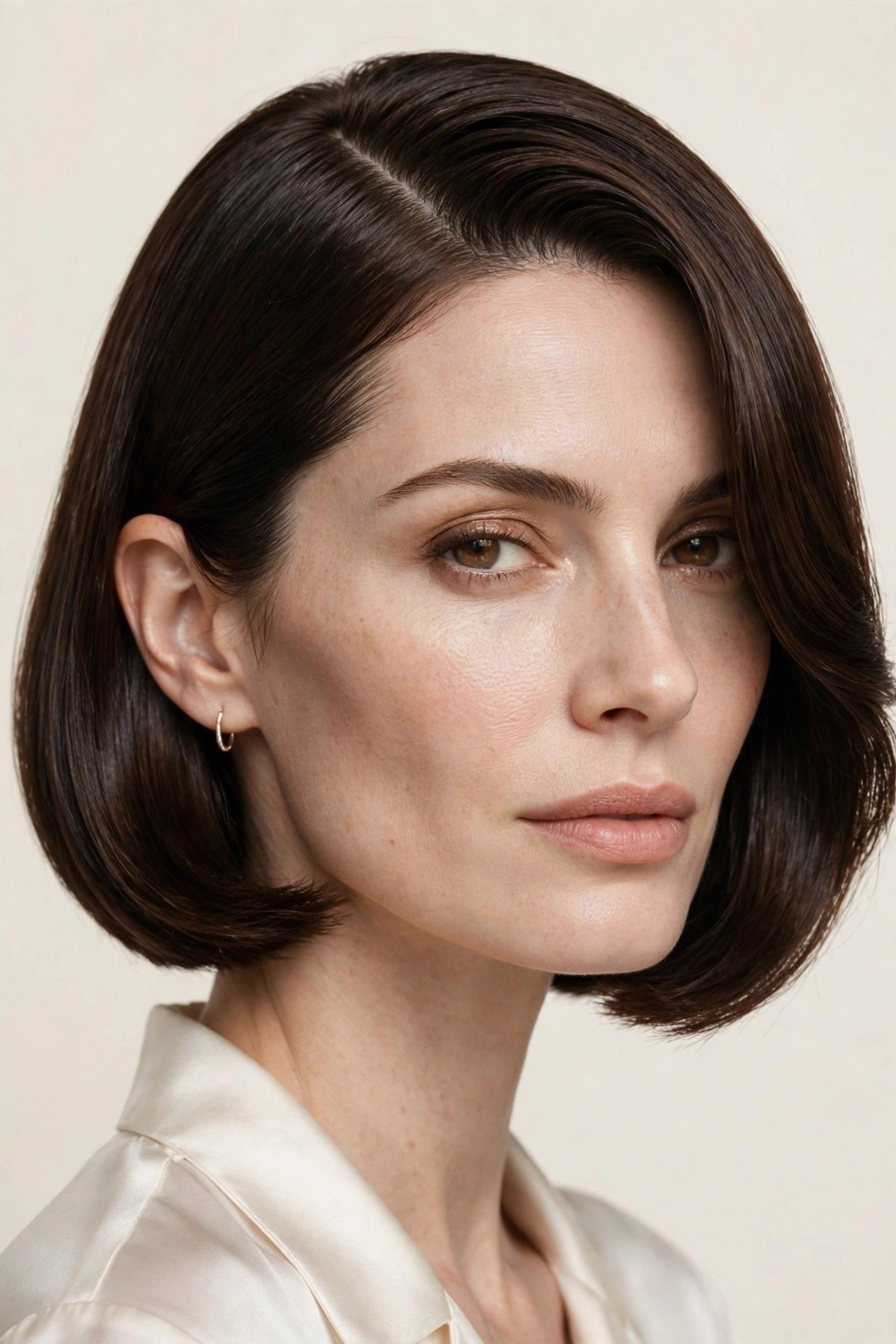
Who it suits: The deep side part transforms the jawline bob from graphic to glamorous — the asymmetrical sweep adds volume at the crown and a vintage Hollywood line. It suits round faces particularly well (the diagonal part breaks up facial width) and fine hair (the deep part creates instant root lift and the illusion of density). Anyone who finds a center-part bob too severe will prefer this version.
What to ask your stylist: “A jawline bob cut to work with a deep side part — slightly longer on the heavy side, with the weight balanced so it doesn’t flip.” The cut must account for the part: hair behaves differently when the part shifts, and a bob cut for a center part will not sit correctly in a deep side part. Ask the stylist to cut and check it in your actual part.
Step-by-step styling: 1) Create the deep part on damp hair with a tail comb — roughly above the arch of one eyebrow. 2) Apply root-lifting mousse at the part. 3) Blow-dry the heavy side over to the opposite direction first (this builds volume), then sweep it back into place. 4) Smooth the perimeter with a flat iron if needed. 5) Tuck the lighter side behind the ear and set with spray — the tuck is part of the style’s asymmetry.
Products: Root-lifting mousse, tail comb, flat iron, medium-hold spray. A small amount of pomade on the tucked side keeps it in place without stiffness.
Maintenance: Trims every 5–6 weeks. The deep part grows out more forgivingly than a center part, but the perimeter line still needs regular sharpening.
Common mistakes: Parting on wet hair and letting it dry wherever it wants (the part migrates); cutting the bob for a different part than you wear (the line will never sit right); and over-volumizing the heavy side until it looks 1980s — the volume should be lift, not height.
6. The Wavy French-Girl Jawline Bob
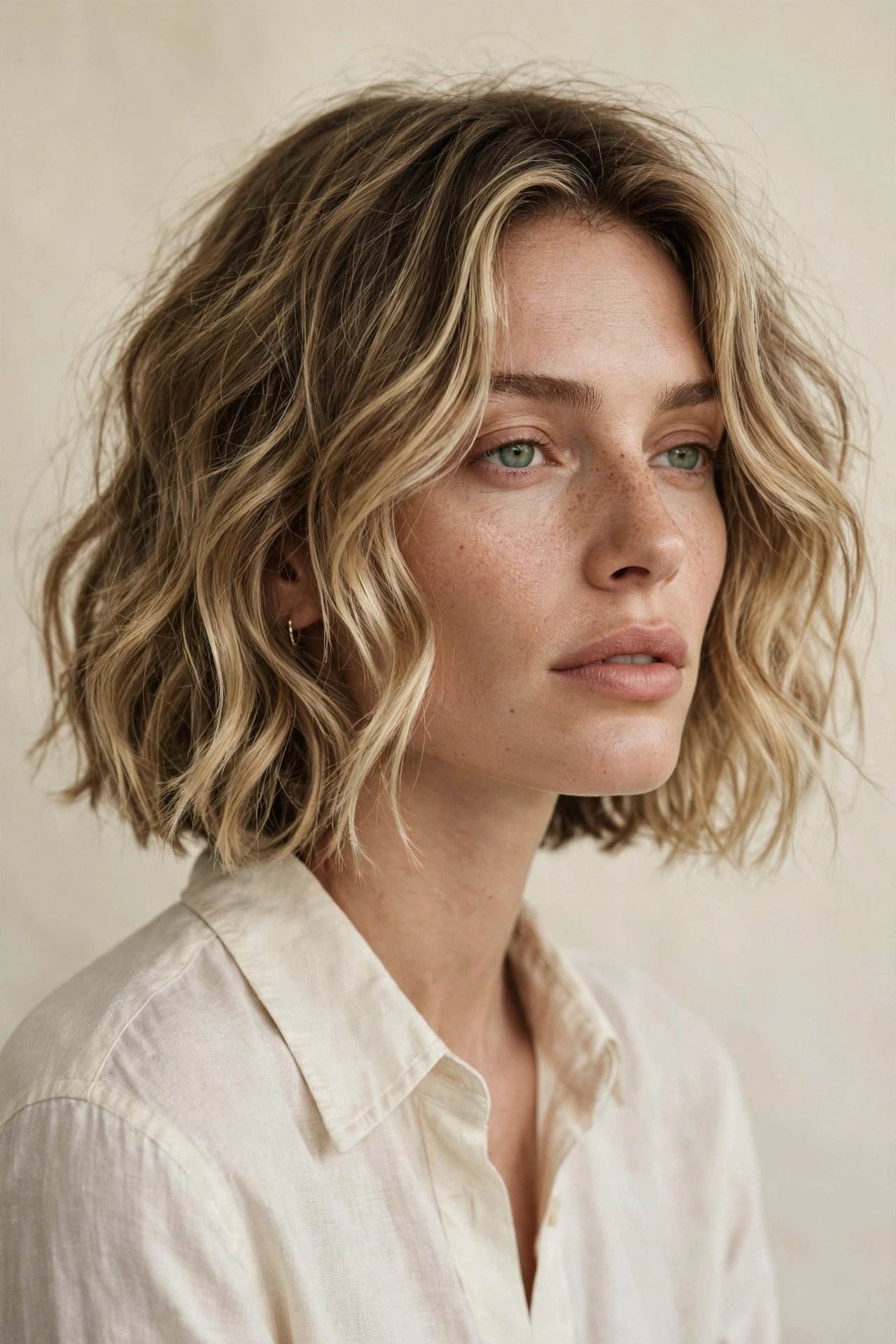
Who it suits: The French-girl jawline bob is the anti-precision bob — same jaw-grazing length, but worn with undone, air-dried waves and a “I woke up like this” finish. It suits naturally wavy hair (2A–2C) best, where the texture is authentic rather than manufactured. Oval and heart faces wear it effortlessly; the softness balances the cut’s inherent structure. This is the jawline bob for women who want the chic without the flat iron.
What to ask your stylist: “A jawline bob cut for air-drying — soft perimeter, light point-cutting, no harsh line.” Ask for the cut to be done on your natural texture (come with air-dried hair if that is how you will wear it). The French-girl bob must be cut for the texture you have, not the texture you wish you had — a stylist who insists on blow-drying it straight before cutting does not understand the assignment.
Step-by-step styling: 1) On damp hair, apply a wave cream or light mousse. 2) Scrunch and air-dry, or diffuse on low heat — never rough-dry with high heat, which creates frizz instead of waves. 3) Once dry, twist two or three random sections around your finger to encourage the wave pattern. 4) Break everything up with dry texture spray. 5) Done — the entire philosophy is restraint. If a section misbehaves, touch it with a 1.25-inch iron, but no more than three sections or it stops looking effortless.
Products: Wave-enhancing cream, dry texture spray, diffuser attachment. That is the whole kit — the French-girl bob punishes product overload.
Maintenance: Trims every 7–8 weeks — the undone texture is the most grow-out-friendly version. Refresh the shape with a light dusting of the ends rather than a full re-cut.
Common mistakes: Over-styling (every extra product moves it away from French-girl toward try-hard); cutting it blunt and hoping texture appears (the cut must have softness built in); and using a brush at any stage — brushes are banned from this style’s routine. For the full Parisian short-hair philosophy, our French bob guide is the natural companion read.
7. The Asymmetrical Jawline Bob
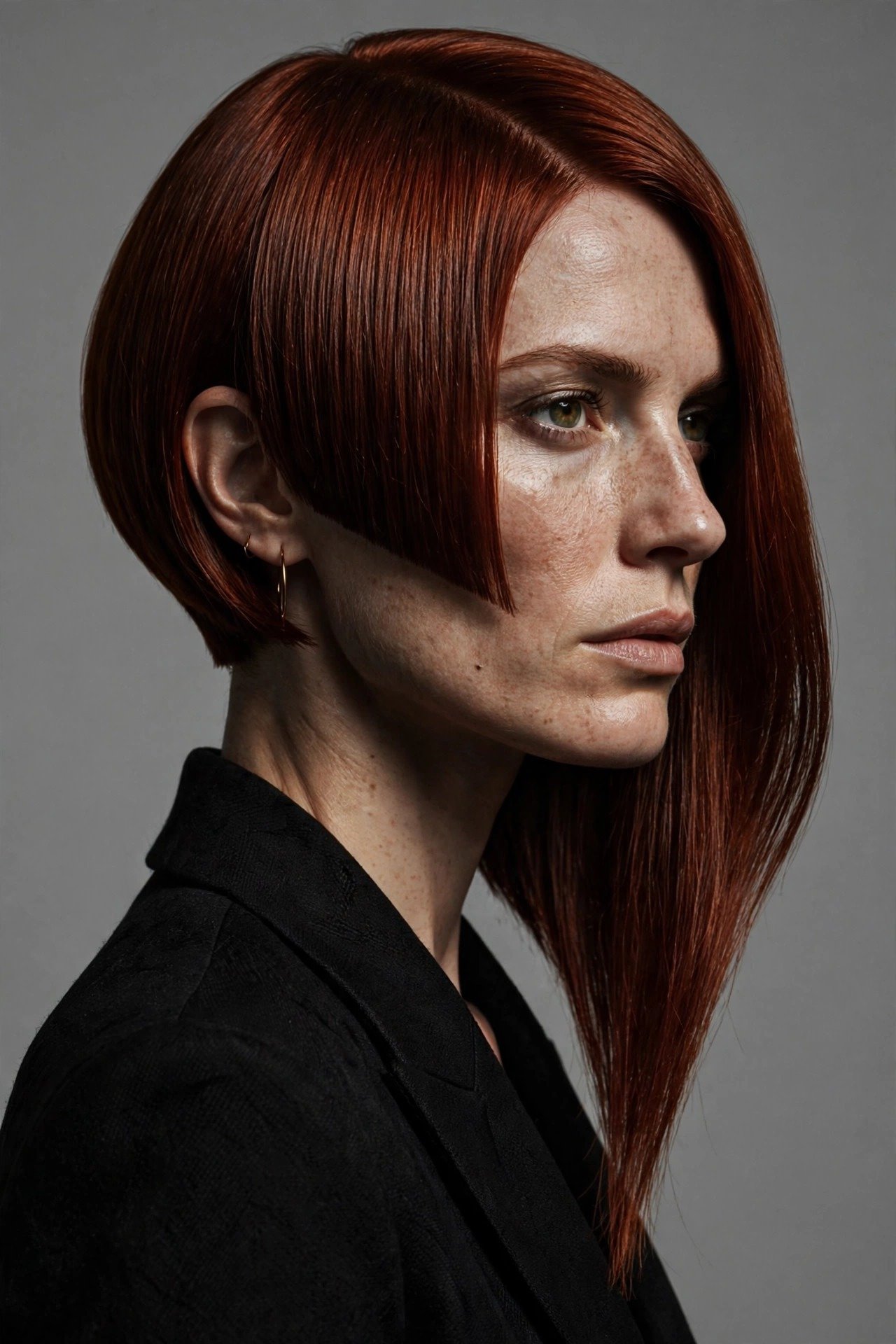
Who it suits: The asymmetrical jawline bob — one side grazing the jaw, the other extending an inch or two longer — is the boldest of the sixteen. It suits confident dressers and creative professionals; this is not a conservative-office cut (though it can be, styled sleek). Oval and square faces carry it best — the asymmetry adds visual interest that balances strong bone structure. It demands commitment: growing out asymmetry is awkward, so be sure.
What to ask your stylist: “An asymmetrical jawline bob — [left/right] side at the jawline, the other side [one/two] inches longer, with the graduation blended through the back.” Decide the difference before you sit down: one inch is editorial-subtle, two inches is statement. Ask for the back to graduate smoothly between the two lengths — a harsh step at the back looks like a mistake rather than a design.
Step-by-step styling: 1) Blow-dry smooth with a paddle brush, directing the longer side forward over the shoulder. 2) Flat-iron both sides sleek — asymmetry reads best with polish. 3) Apply shine serum, emphasizing the longer side’s ends. 4) The styling signature: wear the longer side tucked behind the ear on some days, loose on others — the cut gives you two looks.
Products: Smoothing serum, flat iron, shine spray. Minimal kit, maximum impact.
Maintenance: Trims every 4–5 weeks — asymmetry grows out visibly because the two sides grow at the same rate but started at different lengths, so the difference actually increases over time. Counterintuitive, but true: the longer side gets relatively longer.
Common mistakes: Too little difference between sides (under an inch reads as a cutting error, not a design choice); styling it wavy (texture hides the asymmetry, which is the entire point); and choosing asymmetry on a whim — live with the idea for two weeks before committing.
8. The Jawline Bob with Micro Bangs
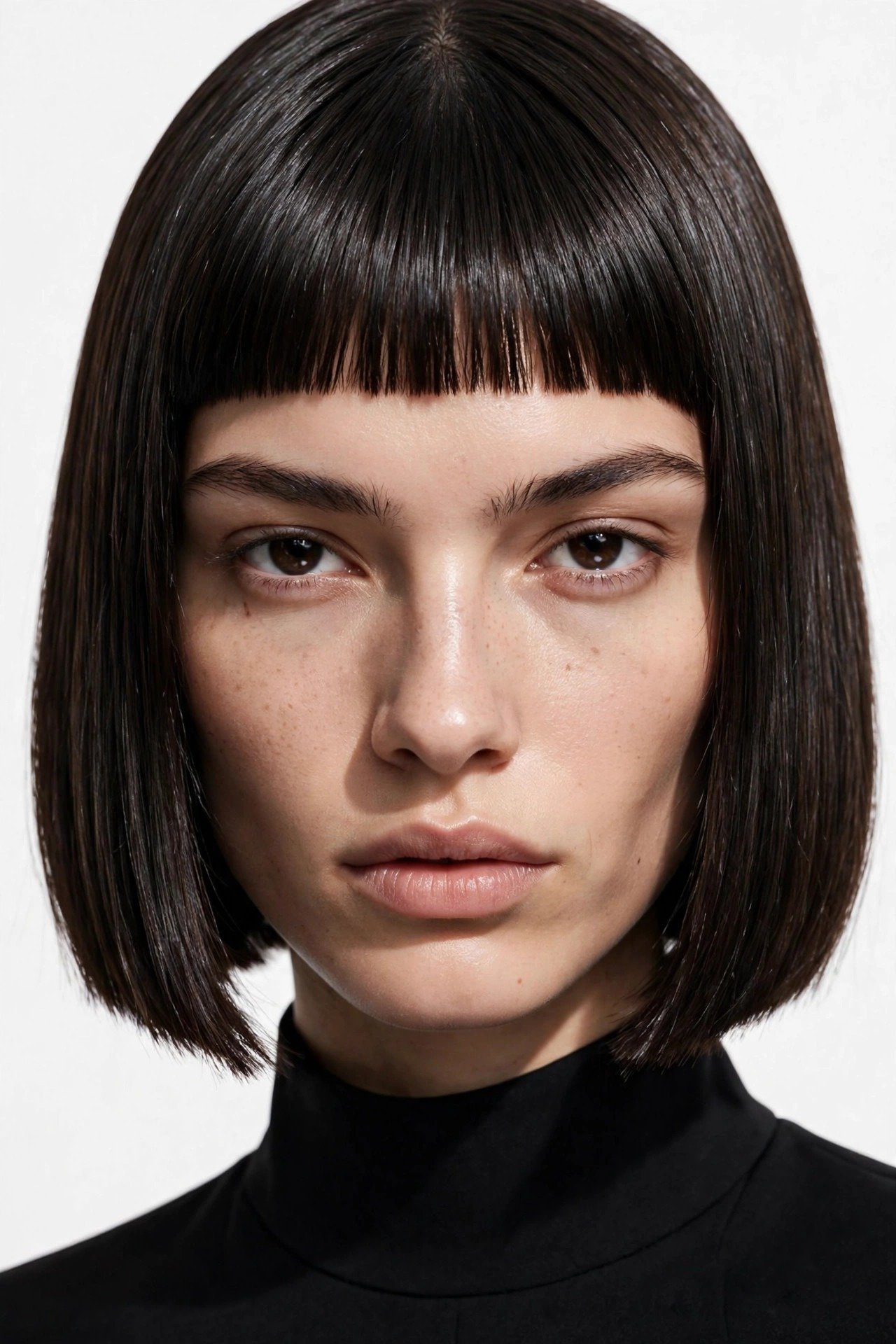
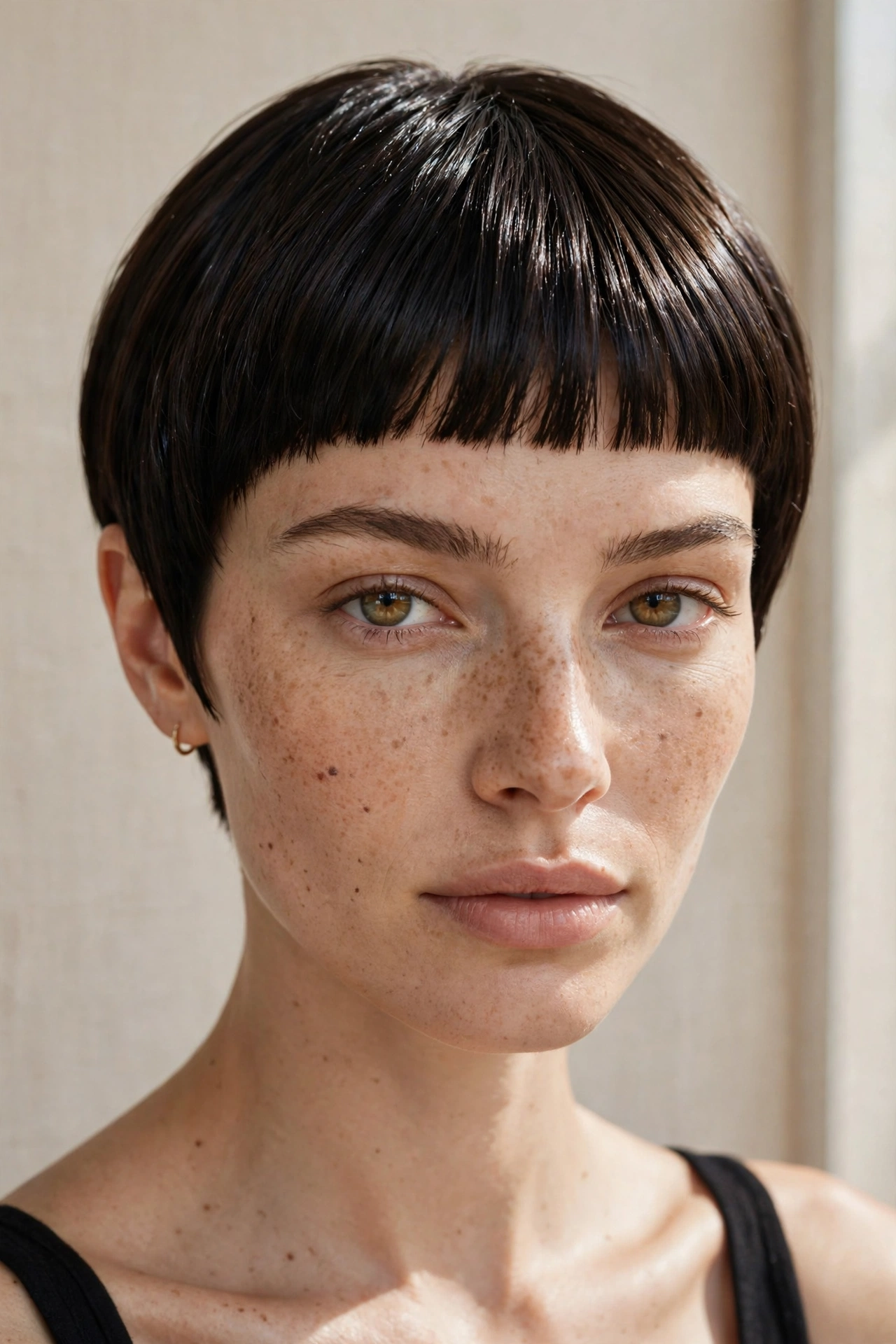
Who it suits: Micro bangs (baby bangs, cut well above the eyebrows) paired with a jawline bob is high-fashion territory — the combination of two strong horizontal lines is not for the faint of heart. It suits oval and long faces (the short fringe shortens the forehead visually… actually, it exposes it — this pairing works when you want to showcase bone structure, not hide it). Best on straight hair; wavy micro bangs require daily heat styling. This is the editorial choice — expect compliments and opinions in equal measure.
What to ask your stylist: “A jawline bob with micro bangs — fringe cut to mid-forehead, textured ends, bob perimeter at the jawline.” Ask for the bangs to be point-cut, not blunt — blunt micro bangs look severe, textured ones look intentional. Specify the bang length precisely: mid-forehead is classic micro; higher is avant-garde. There is no “a little off the top” with micro bangs — every millimeter matters.
Step-by-step styling: 1) Style the bangs first, always — they are the focal point. Blow-dry them straight down with a small round brush or paddle brush, no bend. 2) Flat-iron the bangs if needed — they must lie perfectly flat. 3) Style the bob sleek or textured (both work; sleek is more editorial, textured more wearable). 4) Keep all product off the bangs’ roots — they show oil faster than any other bang length.
Products: Small paddle brush, mini flat iron, dry shampoo (daily for the bangs), light spray. Micro bangs are the highest-maintenance fringe — accept this or choose curtain bangs instead.
Maintenance: Bang trims every 2–3 weeks — micro bangs grow out of their design in days, not weeks. Bob trims every 5 weeks. Ask your salon about complimentary bang trims; you will need them.
Common mistakes: Cutting micro bangs on wavy hair without a straightening plan (they spring up shorter than intended — always cut wavy bangs longer than the target); styling them with bend or flip (micro bangs must lie flat or they look like a mistake); and pairing them with a grown-out bob — the two strong lines must both be sharp or neither works.
9. The Curly Jawline Bob

Who it suits: Natural curls and coils (3A–4A) cut to jaw length create one of the most joyful shapes in hairstyling — a rounded, voluminous halo of curls framing the face. It suits all face shapes, because the volume can be distributed to balance any proportions: more volume at the crown lengthens, more at the sides widens. This is a dry-cut specialty — never let anyone cut your curly bob wet without accounting for shrinkage.
What to ask your stylist: “A curly jawline bob, cut dry curl by curl, with the length hitting the jawline when dry — accounting for shrinkage.” This sentence contains the two non-negotiables: dry cutting and shrinkage accounting. Curls spring up 1–3 inches from wet to dry; a stylist who cuts to the jawline wet will deliver a bob at the cheekbone dry. Ask for long layers through the interior to prevent the triangle effect (flat top, wide bottom).
Step-by-step styling: 1) On soaking-wet hair, apply leave-in conditioner, then curl cream, then gel — the LOC/LCO layering method. 2) Define curls with praying hands or finger-coiling. 3) Diffuse on low heat, or air-dry — never rough-dry. 4) Once 100% dry, fluff the roots with a pick for volume. 5) Scrunch out any gel cast with a silk scarf or oiled hands.
Products: Leave-in conditioner, curl-defining cream, strong-hold gel, diffuser, silk bonnet for nighttime. Curly bobs live or die by the product cocktail — find yours and don’t deviate.
Maintenance: Trims every 8–12 weeks — curly hair’s grow-out is the most forgiving. But shape trims matter: ask for interior layer maintenance to keep the silhouette rounded rather than triangular.
Common mistakes: Wet-cutting without shrinkage math (the number-one curly bob disaster); brushing dry curls (instant frizz halo — detangle only when wet with conditioner); and cutting the bob too short in back, which pushes all volume forward and creates a shelf. Pineapple the curls at night (a loose high ponytail) to preserve the shape.
10. The Inverted Jawline Bob
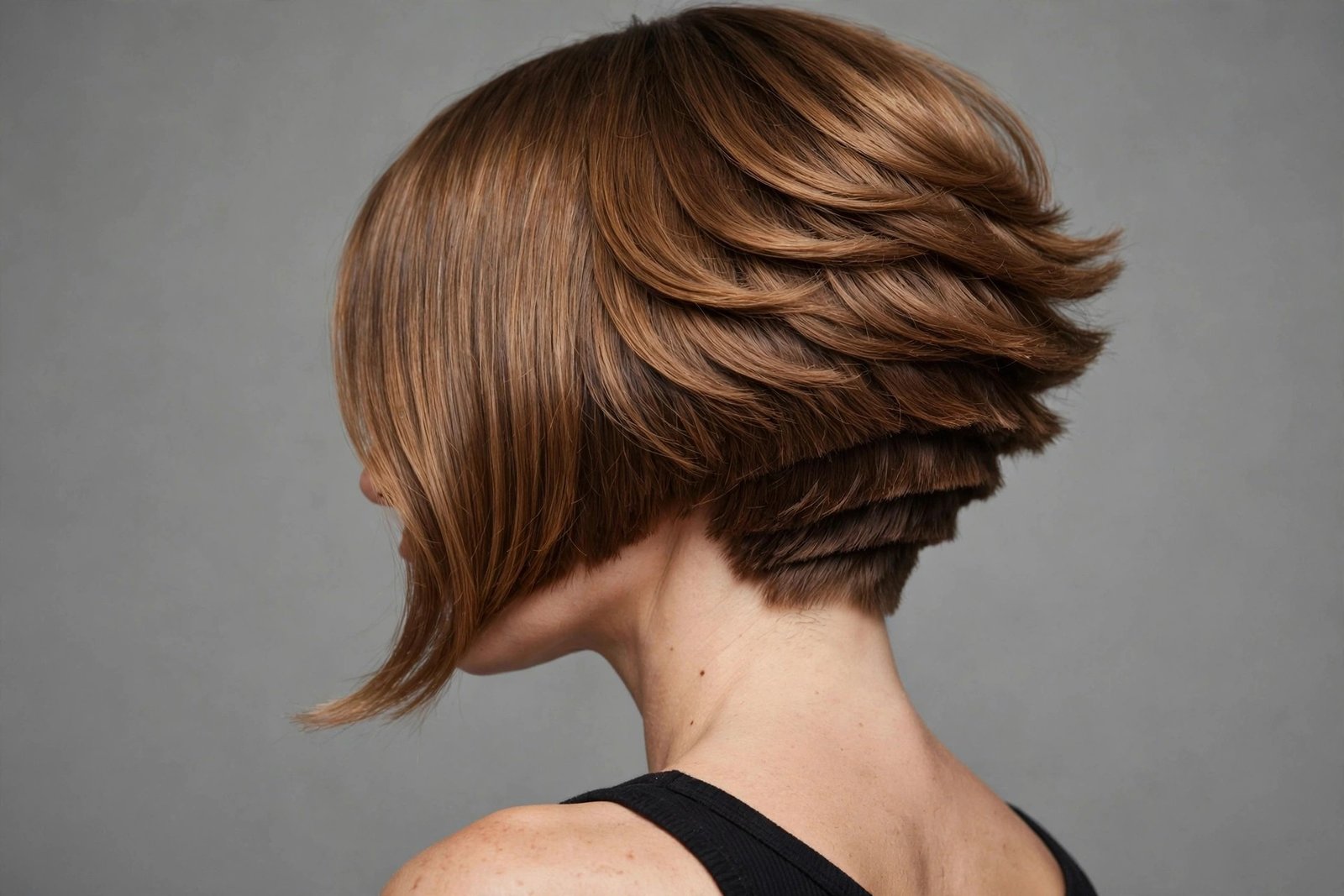
Who it suits: The inverted (graduated) jawline bob is stacked shorter at the nape and angles down to longer pieces at the jawline in front — the classic “short back, long front” architecture. It suits fine to medium hair beautifully, because the stacking builds volume at the crown where fine hair needs it most. Round faces benefit from the elongated front pieces, which draw the eye downward. It is the most “salon-familiar” of the sixteen — every experienced stylist knows this cut.
What to ask your stylist: “An inverted jawline bob — graduated stacking at the nape, front pieces ending at the jawline, with [subtle/dramatic] graduation.” The graduation angle is the key variable: subtle (half-inch difference front to back) reads modern; dramatic (two-plus inches) reads classic-2000s. In 2026, subtle is the move. Ask for the stack to be soft, not shelf-like — the nape should curve, not cliff.
Step-by-step styling: 1) Apply root-lifting mousse at the crown. 2) Blow-dry with a round brush, lifting at the roots for the stacked volume and smoothing the front pieces forward. 3) Flat-iron the front pieces sleek — they are the frame, and they must be polished. 4) Backcomb the crown lightly if you want extra lift, then smooth the surface. 5) Set with medium-hold spray.
Products: Root-lifting mousse, round brush, flat iron, medium-hold spray. A texturizing powder at the crown amplifies the stacked volume.
Maintenance: Trims every 5–6 weeks — the graduation grows out into a shelf if neglected, which is the fastest way to date the cut. The nape needs the most frequent attention.
Common mistakes: Too-dramatic graduation (reads dated — the 2026 inverted bob is a gentle slope, not a ski jump); under-styling the crown (without root lift, the stack collapses and the cut looks round instead of angled); and letting the nape grow into a mullet-ish tail — keep the back clean.
11. The Jawline Bob with Money Piece Highlights
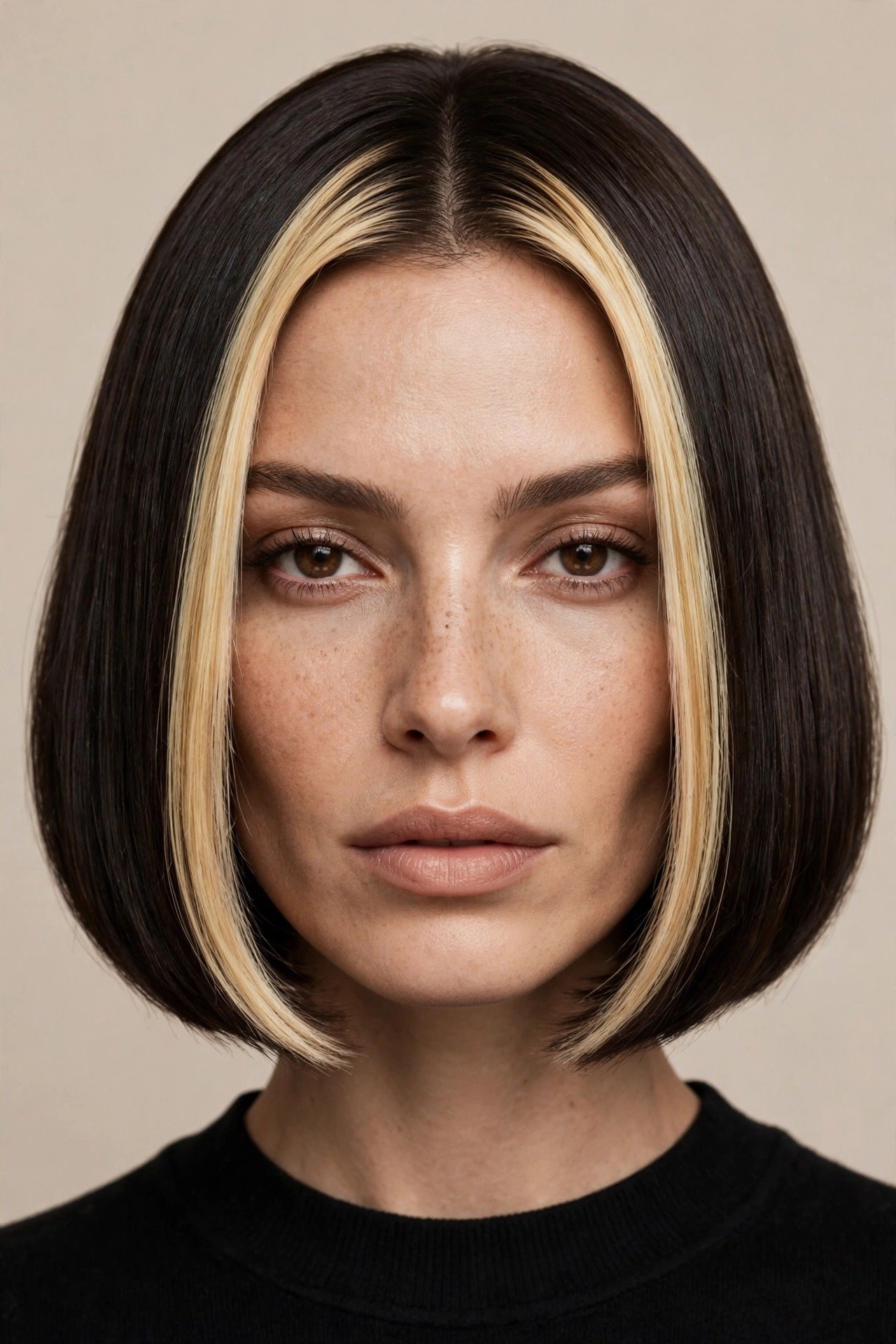
Who it suits: The money piece — two bright face-framing streaks — electrifies a jawline bob by drawing a spotlight around the face. It suits dark bases best (brunette, black, deep auburn), where the contrast is dramatic, and it flatters every face shape because the brightness is vertical, following the face’s length. If your bob feels flat or one-dimensional, a money piece is the fastest transformation short of a new cut.
What to ask your colorist: “A bold money piece on my jawline bob — brightness starting at the root around the face, about an inch wide on each side, blended into the perimeter.” Specify the tone: icy, honey, copper, or caramel — the money piece’s color sets the whole style’s mood. Ask for the brightness to be heaviest at the front hairline and diffused as it moves back; a hard stripe looks blocky. Crucially: get the money piece done after the cut is finalized, so the brightness follows the finished perimeter.
Step-by-step styling: 1) Style the bob as usual (sleek shows off the money piece best). 2) The money piece needs extra care: apply a purple or blue toning treatment weekly to keep it from going brassy. 3) When flat-ironing, run the iron over the money piece sections last, with a touch of shine serum — they should be the glossiest part of the style. 4) In photos, the money piece catches light — position it to frame, not hide, the face.
Products: Purple shampoo/toning mask (weekly), bond-building treatment (bleached pieces need it), heat protectant, shine serum. Bleached face-framing hair is the most visible damage on your head — treat it accordingly.
Maintenance: Toner refresh every 4–6 weeks; full money-piece re-lighten every 8–12 weeks depending on growth. The grow-out is actually graceful — the brightness diffuses into a softer face-frame — which makes this one of the lower-maintenance color commitments.
Common mistakes: Going too chunky (over an inch wide each side looks like stripes, not highlights); neglecting toner (a brassy money piece cheapens the whole cut); and bleaching the money piece on already-compromised hair — the face frame breaks first, and broken face-framing hair ruins the bob’s line. For more face-framing color ideas, see our money piece highlights guide.
12. The Wet-Look Jawline Bob

Who it suits: The wet-look jawline bob — hair styled with gel or gloss to look freshly wet, sculpted close to the head — is editorial and evening. It suits straight to wavy hair; curls can do it but the look becomes more “defined curls” than “wet.” Oval, heart, and diamond faces wear it best, because the slicked-back style exposes the entire face — there is nowhere to hide, which is the point. This is a statement for nights out, shoots, and events, not the office.
What to ask your stylist: This is a styling choice, not a cut — any jawline bob works. But ask your stylist to thin the very ends slightly if your bob is blunt; the wet look needs the hair to lie flat against the head, and a heavy blunt perimeter can kick outward. For the styling itself: “Wet-look finish — gel through the roots and lengths, combed sleek, glossy.”
Step-by-step styling: 1) On damp hair, apply a generous amount of strong-hold gel from roots to ends — more than feels reasonable (two to three tablespoons for bob length). 2) Comb through with a fine-tooth comb for the sculpted finish, directing hair back or to the side. 3) For extra gloss, layer a shine serum or hair oil over the gel. 4) Let it air-dry or diffuse on low — the “wet” look is actually dry gel, and it sets as it dries. 5) Do not touch it once set; touching creates frizz that breaks the illusion.
Products: Strong-hold gel (the wetter the look, the stronger the hold needed), shine serum or gloss, fine-tooth comb. This is the rare style where product quantity is the technique.
Maintenance: This is a single-evening style — wash it out the same night, because gel left in overnight dries the hair. Double-shampoo to remove the product load, then deep-condition.
Common mistakes: Using too little product (you get “damp,” not “wet-look” — commit fully); touching and restyling once set (breaks the gel cast into frizz); and wearing it in rain or high humidity without a backup plan — moisture reactivates the gel unpredictably. Our wet-look hairstyle guide covers the technique across all lengths.
13. The Jawline Bob with Face-Framing Layers

Who it suits: Face-framing layers soften the jawline bob’s perimeter by feathering the front sections around the cheeks — the best choice for women who want the cut’s chic but worry about harshness. It suits square and oblong faces beautifully (the curved layers break up angular lines) and medium to thick hair, where the layers remove bulk without sacrificing the perimeter’s integrity.
What to ask your stylist: “A jawline bob with face-framing layers — the front sections layered to curve around the cheekbones, perimeter still hitting the jawline.” Ask for the layers to be cut with the hair dry so the stylist can see exactly where they fall — wet-cut face-framers spring up unpredictably. Specify how short the shortest layer goes: cheekbone is classic, chin is softer.
Step-by-step styling: 1) Blow-dry with a round brush, curving the face-framing sections inward toward the cheeks — the curve is the style. 2) Smooth the back and perimeter with a paddle brush. 3) If the layers need definition, touch them with a 1.25-inch iron, bending inward. 4) Apply a light serum to the layer ends to keep them piece-y, not frizzy.
Products: Round brush, light serum, flexible spray. The layers need separation, not stiffness.
Maintenance: Trims every 5–6 weeks; the face-framing layers grow out fastest and need reshaping to keep their curve. Between cuts, the layers can be refreshed with a quick dry trim.
Common mistakes: Cutting the layers too short (they flip outward instead of curving in — the shortest layer should still reach the cheekbone); over-layering the whole head (this becomes a shag, not a bob with face-framers — keep the layering concentrated at the front); and flat-ironing the layers straight down, which erases the curve that defines the style.
14. The Chin-Grazing Shaggy Bob
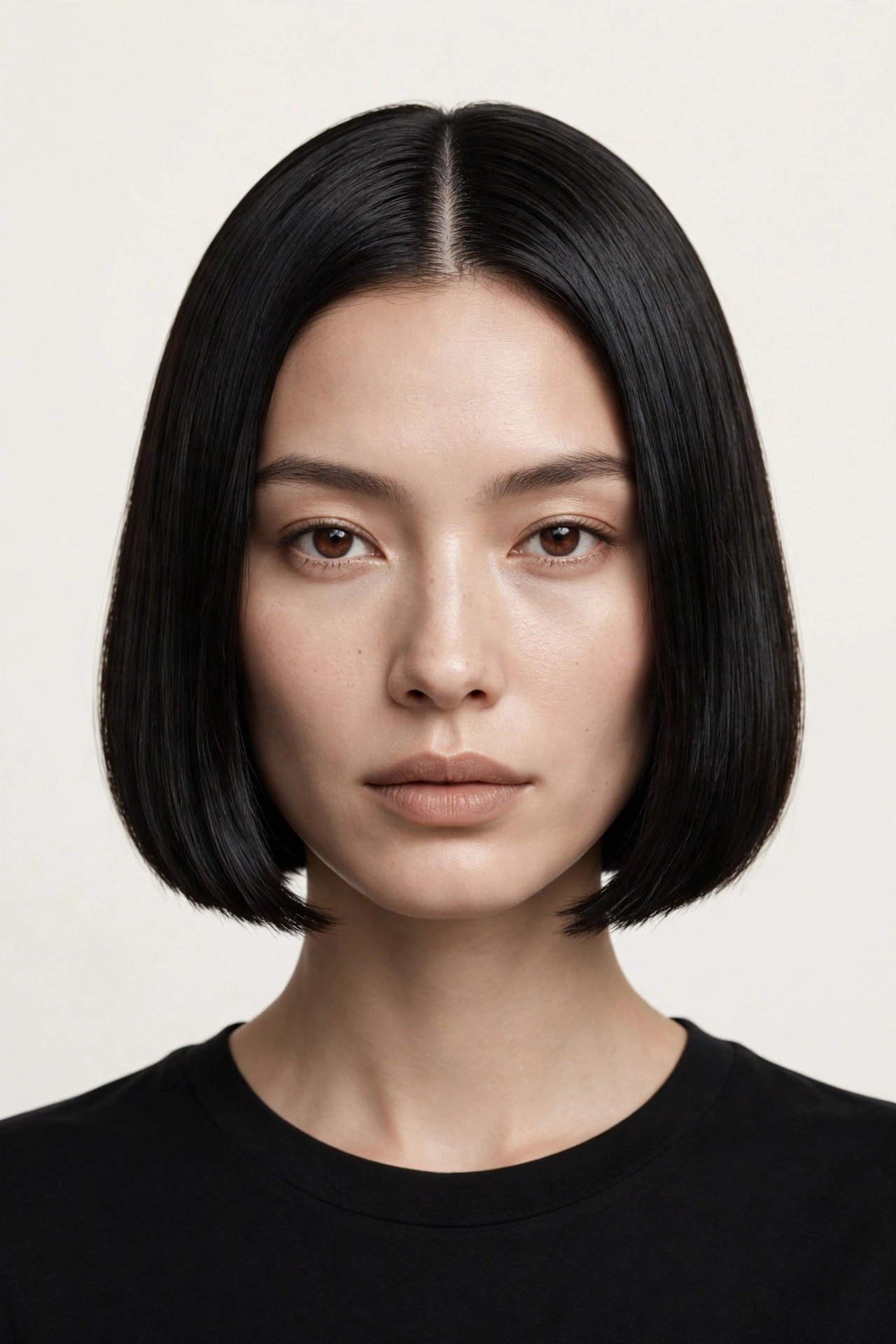
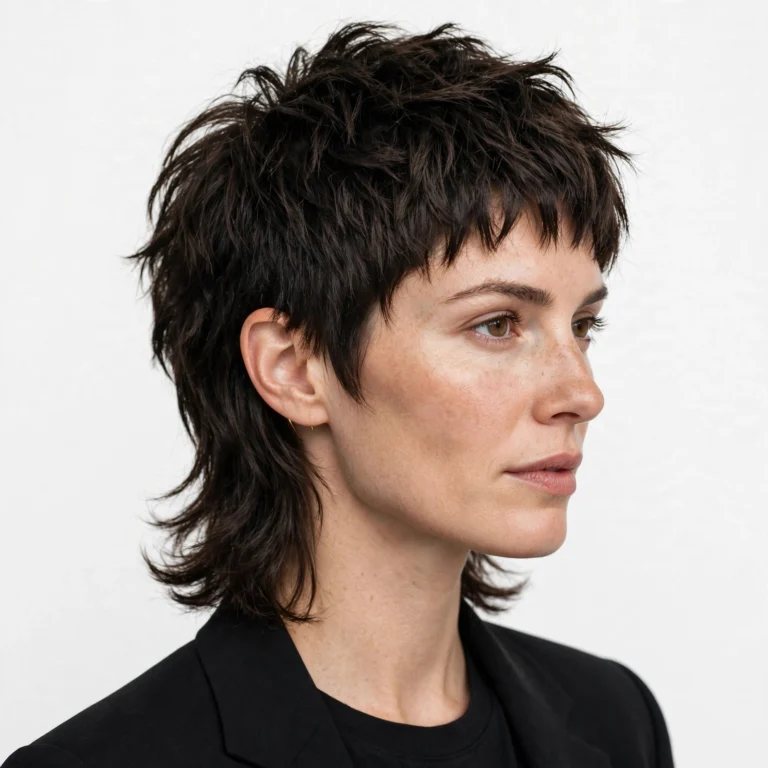
Who it suits: The shaggy jawline bob brings rock-and-roll texture to the precise cut — choppy layers, wispy ends, and deliberate dishevelment. It suits thick, wavy hair best, where the texture has something to work with, and it flatters round faces by breaking up the perimeter’s circular frame. This is the jawline bob for women whose style is more leather jacket than blazer.
What to ask your stylist: “A shaggy jawline bob — choppy layers throughout, wispy textured ends, perimeter still at the jawline but broken up.” Ask for razor or point-cut texture (not blunt), and specify the fringe situation: shaggy bobs pair naturally with curtain or wispy bangs. Ask how much weight they plan to remove — on very thick hair, aggressive thinning is what makes the shag move instead of sitting like a helmet.
Step-by-step styling: 1) Apply texture spray to damp hair. 2) Rough-dry upside down for maximum volume and dishevelment. 3) Once dry, piece out random sections with matte pomade — the messier, the better. 4) If the crown needs lift, backcomb lightly at the roots. 5) Finish with dry texture spray. The shaggy bob should look like you styled it in four minutes — because you did.
Products: Texture spray, matte pomade, dry shampoo (the shag’s best friend — second-day shaggy bobs look better than first-day ones).
Maintenance: Trims every 7–8 weeks — the shag is the most forgiving grow-out of all jawline bobs. Refresh the texture with point-cutting when the ends start looking blunt.
Common mistakes: Styling it sleek (fights the cut’s entire purpose); over-thinning on fine hair (the shag needs hair mass — on fine hair, keep the texture at the ends only); and using shine products, which make choppy layers look greasy rather than piece-y.
15. The Copper Jawline Bob
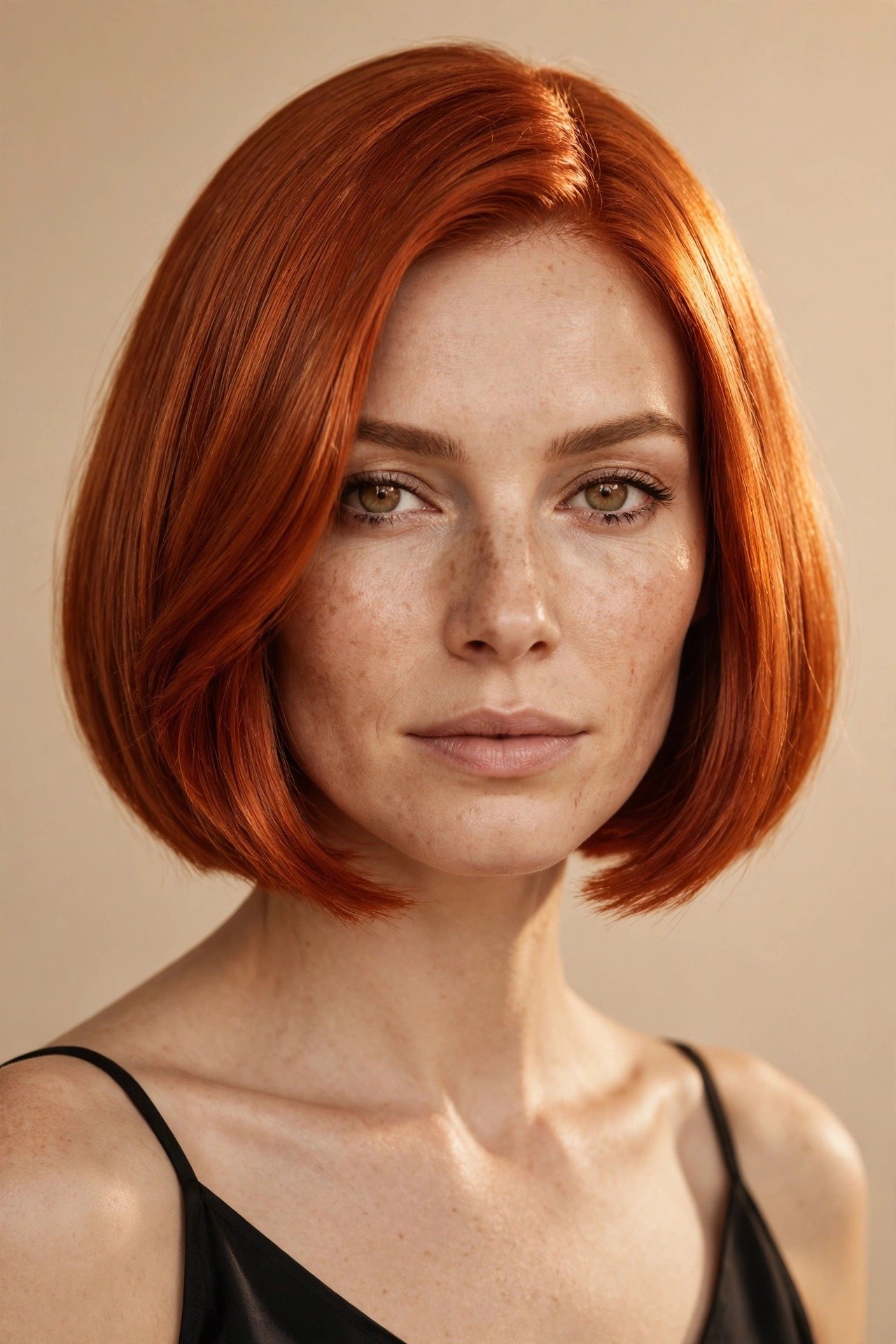
Who it suits: Copper — the rich, dimensional red-orange that dominated 2025 and refined itself for 2026 — electrifies the jawline bob’s architecture. It suits fair to medium skin with warm undertones best (the color echoes the skin’s warmth), and green or hazel eyes spectacularly. The cut can be any of the sixteen variations; copper is the color story. Fine hair benefits enormously — copper’s dimension creates the illusion of thickness.
What to ask your colorist: “A dimensional copper on my jawline bob — rich copper base with lighter copper ribbons through the perimeter, gloss finish.” Specify the copper depth: true copper (bright, orange-forward), auburn copper (deeper, red-forward), or cowboy copper (the brown-copper hybrid). Ask for a glossing treatment with the color — copper’s beauty is in its reflectivity, and gloss multiplies it. Get the color after the cut is finalized so the dimension follows the finished shape.
Step-by-step styling: 1) Style the bob sleek — copper’s dimension shows best on smooth hair. 2) Always use color-safe, sulfate-free products; copper molecules are large and wash out fast. 3) Apply a copper-depositing conditioner weekly to refresh the tone between appointments. 4) Finish with shine serum — copper without shine looks dull within two weeks.
Products: Sulfate-free color-safe shampoo, copper-depositing conditioner/mask, heat protectant, shine serum. Wash in cool water — hot water strips copper faster than any other red tone.
Maintenance: Gloss refresh every 4–6 weeks; full color every 6–8 weeks. Copper is the highest-maintenance red — it fades visibly within three weeks without depositing products. Budget for the upkeep before committing.
Common mistakes: Choosing copper on cool skin without adjusting the tone (it clashes — ask for a neutral copper instead); washing with hot water and harsh shampoo (the color vanishes); and skipping the gloss — unglossed copper looks flat, and flat copper is just orange hair. For the full copper color story, our copper hair color guide breaks down every shade.
16. The Scandi Jawline Bob

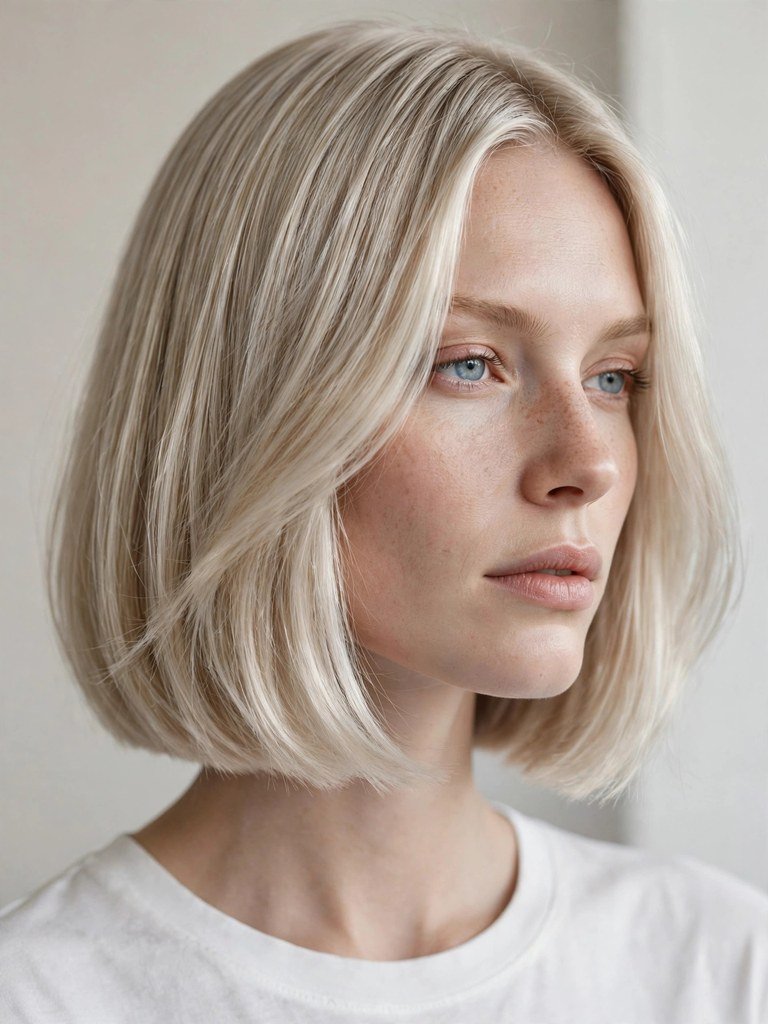
Who it suits: The Scandi bob — inspired by Scandinavian minimalism, worn in cool, muted blonde tones with an utterly natural, unstyled finish — is 2026’s quiet-luxury jawline bob. It suits straight to loosely wavy hair and cool skin tones (the icy blonde needs a cool canvas). Oval and heart faces wear it beautifully; the simplicity showcases bone structure. This is the jawline bob for women whose aesthetic is “effortless” as a discipline.
What to ask your stylist: “A jawline bob with a soft, natural finish — minimal styling, clean perimeter, Scandinavian simplicity.” For the color: “A cool, muted blonde — beige-ash, not platinum, not golden — with a root shadow for grow-out.” The Scandi bob’s color is as important as its cut: it must look expensive and understated, never brassy or over-processed. Ask for the cut to be checked with minimal product so the natural fall is visible.
Step-by-step styling: 1) Apply a light leave-in to damp hair. 2) Air-dry or rough-dry — the Scandi bob is not blow-dried to perfection. 3) Once dry, smooth only the frizziest sections with a flat iron; leave the rest natural. 4) A tiny amount of serum on the ends. The goal is hair that looks like it was never styled — which, paradoxically, requires knowing exactly which three sections to touch.
Products: Light leave-in conditioner, purple shampoo (weekly, to keep the cool tone), minimal serum. The Scandi routine is deliberately sparse.
Maintenance: Trims every 6–7 weeks; toner refresh every 6–8 weeks to keep the blonde cool. The root shadow makes color grow-out graceful — this is the lowest-maintenance blonde bob.
Common mistakes: Over-styling (every extra step moves away from Scandi); letting the blonde go warm (warmth destroys the aesthetic — purple shampoo is mandatory); and cutting it too precise — the Scandi bob needs a soft edge, not a razor line. Our Scandi bob guide covers the full philosophy.
Styling Your Jawline Bob: Sleek vs. Textured — The Complete Method
Every jawline bob lives on the spectrum between sleek and textured, and knowing both methods means one cut gives you two personalities. The sleek method (for styles 1, 4, 5, 7): start with a smoothing blowout using a paddle brush, directing all hair downward. Flat-iron in half-inch sections at the appropriate heat (350°F for fine, up to 400°F for coarse), one slow pass each. Finish with shine serum on the perimeter and a light shine spray. Total time: 12–15 minutes. The textured method (for styles 2, 6, 14): apply texture spray to damp hair, rough-dry with fingers, then wrap random 1-inch sections around a curling iron, alternating directions and leaving the last inch straight. Break up with matte pomade and finish with dry texture spray. Total time: 10–12 minutes.
The hybrid — sleek roots with textured ends — works for styles 3, 10, and 13: blow-dry the crown smooth for polish, then add wave only through the mid-lengths and ends. Whichever method you choose, the perimeter line is sacred: check it in a mirror after styling, and never let the ends flip outward unless the style specifically calls for it (the French-girl bob is the only one that tolerates a flip).
What to Ask Your Stylist: The Exact Script
A jawline bob is a precision cut, and precision requires precise communication. Use this script: “I’d like a jawline bob — the perimeter ending exactly at my jawline. I want it [one-length blunt / softly textured / with curtain bangs], worn [sleek / textured / air-dried]. My hair is [fine / medium / thick] and [straight / wavy / curly]. Please cut it to work with my [center / side] part, and check the line dry before I leave.”
Bring three reference photos: one front view showing the part and fullness, one side view showing the perimeter line, one back view showing the nape. Ask to see the back before you leave — non-negotiable at this length. Ask about the trim schedule for your specific variation and book the first maintenance trim before you leave the salon; jawline bobs have a way of growing out right when you’re busiest. Expect to pay for a precision cut ($75–$175 depending on market) — this is not a discount-chain haircut, because the line cannot be fixed cheaply if it’s wrong.
Jawline Bob Maintenance: The Trim Calendar
The jawline bob’s beauty is its line, and lines blur. Blunt and glass versions (styles 1, 4): trim every 4–5 weeks. Textured and shaggy versions (styles 2, 6, 14): every 6–8 weeks. Bang pairings (styles 3, 8): bob every 5–6 weeks, bangs every 2–4 weeks. Between trims, maintain the line at home: once a week, check the perimeter in a mirror and snip any individual hairs that break the line with proper hair scissors.
Daily care: sleep on a silk pillowcase to reduce friction (bobs show bedhead mercilessly). Refresh second-day bobs with dry shampoo at the roots and a quick flat-iron pass over the perimeter — 90 seconds restores the line. Deep-condition weekly; short hair shows damage faster because there’s less length to hide it. And resist the grow-out limbo: when you’re done with the bob, have it reshaped into a lob or textured crop — growing a jawline bob without guidance produces the dreaded triangle phase.
Jawline Bob FAQs

Will a jawline bob suit my face shape?
A jawline bob can suit every face shape — the variation matters more than the length: oval faces can wear any version, round faces should choose textured or side-parted versions that avoid a circular frame, square faces benefit from softened perimeters or face-framing layers, and long faces should add bangs or volume at the sides.
The universal rule: the bob’s line should contrast your face’s dominant feature, not echo it. Round face plus blunt circular line equals more roundness; round face plus textured, broken-up line equals balance. When in doubt, bring face-shape photos to your consultation and ask your stylist which variation they’d recommend — then ask why, so you understand the logic.
How often does a jawline bob really need trimming?
Every 4 to 8 weeks depending on the version — blunt and glass bobs every 4–5 weeks, textured and curly versions every 6–8 weeks, with bang trims every 2–4 weeks if you have them.
At jaw length, even half an inch of growth visibly changes the line — the bob stops ending at the jawline and starts ending below it, which is a different haircut. The trim is also what keeps the shape’s internal architecture (graduation, stacking, texture) working. Budget for the maintenance cycle before you get the cut; a jawline bob you can’t maintain becomes a jawline regret.
Can I wear a jawline bob if my hair is curly?
Absolutely — the curly jawline bob (style 9) is one of the most beautiful versions, but it must be cut dry, curl by curl, with shrinkage fully accounted for.
Curls spring up 1–3 inches from wet to dry, so a stylist who cuts to the jawline on wet hair will deliver a cheekbone-length bob dry. Find a curl-specialist stylist, ask for long interior layers to prevent triangle shape, and commit to the curly styling routine (leave-in, cream, gel, diffuse). The grow-out is the most forgiving of all bob types — curly bobs need trims only every 8–12 weeks.
Is a jawline bob high maintenance day to day?
It depends on the version: sleek glass bobs need 12–15 minutes of heat styling daily, while textured and French-girl bobs need 5 minutes or less — but all versions need trims more often than longer cuts.
The daily reality: bobs show bedhead, so silk pillowcases help; second-day refresh takes 90 seconds with dry shampoo and a perimeter touch-up. The real maintenance is the salon cycle, not the morning routine. Choose your version honestly based on how much daily styling you’ll actually do — a textured bob you style is infinitely better than a glass bob you don’t.
What’s the difference between a jawline bob and a French bob?
A jawline bob ends at the jawline with a defined perimeter line, while a French bob is shorter — ending at the cheekbone — with a blunter, often bang-paired, Parisian silhouette.
The French bob (typically chin-length or above) is a sub-category with its own proportions and usually includes bangs; the jawline bob is the slightly longer, more versatile parent category that can be worn with or without bangs, sleek or textured. If you love the French aesthetic but want more versatility, the jawline bob is the safer commitment — and our French bob guide covers the shorter classic in full detail.
Conclusion
The jawline bob is 2026’s definitive short cut because it does what great design always does: it imposes order, and order reads as confidence. Whether you choose the mirror-glass precision of style 1, the undone ease of the French-girl version, or the dimensional warmth of the copper bob, you are choosing a haircut that frames your face with intention every single day.
The three decisions that determine your result: the right variation for your face shape and texture (not just the one in the photo), a stylist who cuts precision bobs as a specialty (check the portfolio, ask for the dry check), and an honest commitment to the trim cycle your version requires. Get those three right, and the jawline bob repays you with the rarest thing in hairstyling — a cut that looks deliberate from every angle, every day, with less hair to manage than you’ve had in years.