Mustache Styles Men 2026: 36 Bold, Classic Looks
The mustache styles men are wearing most in 2026 are the classic chevron, the skinny mustache, the beardstache and the neat corporate trim, because each one suits a different face shape, growth pattern and daily routine. If you want a safe first choice, start with a trimmed chevron that sits just above the lip. If your growth is thin, a short cropped shape will look fuller than a wide style. This guide compares 36 options honestly, with face-shape fit, growth timelines, trimming detail and upkeep costs, so you can choose without guesswork or wasted months.
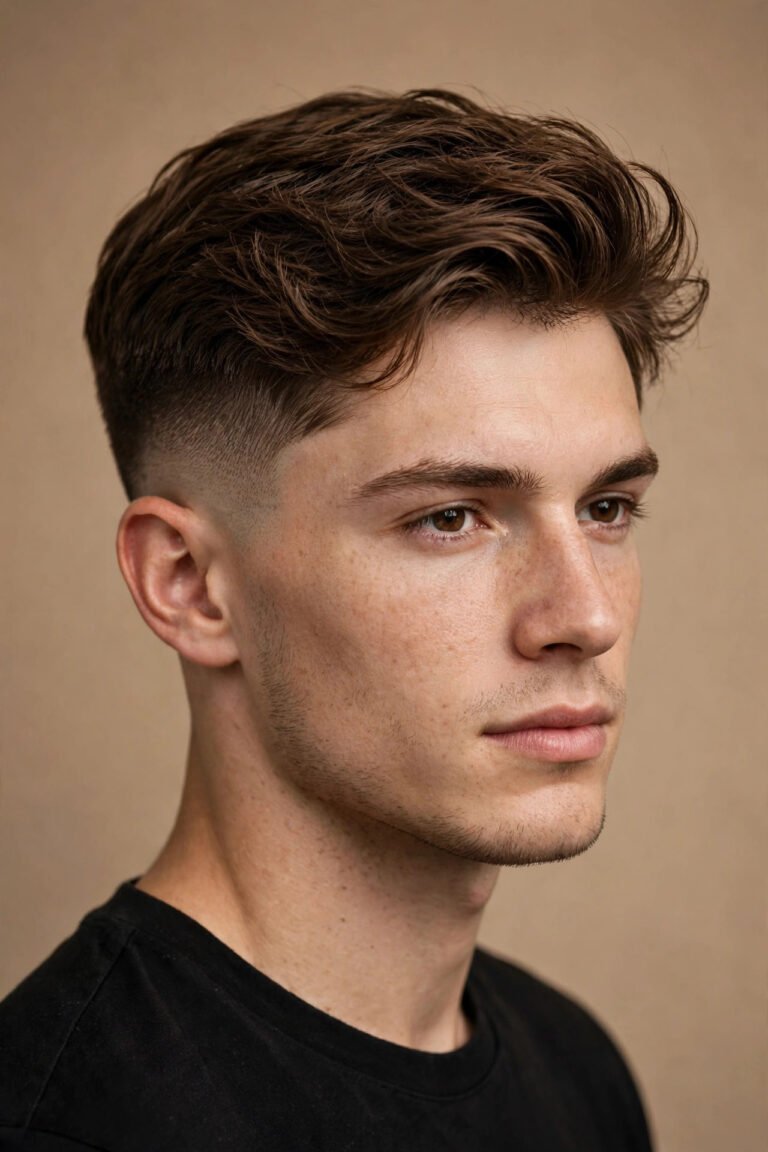
Choosing well matters because a mustache changes how the whole face reads, from jaw width to how tidy a haircut looks in photographs. A strong upper-lip shape can balance a soft chin, sharpen a round face or make a simple haircut feel intentional. Pairing the right mustache with a messy quiff hairstyle for men gives height on top and weight in the centre of the face. Below, every style explains who it suits, how long growth usually takes, what products genuinely help and which common mistakes make the result look untidy.
Key takeaways
- Start with a trimmed chevron if you want the lowest-risk shape for most face shapes.
- Thin growth looks fuller when the mustache stays short, dark and tightly edged.
- Most mustaches need four to six weeks of growth before the final shape becomes clear.
- Wax helps hold a handlebar, but it cannot fix uneven trimming or sparse corners.
- A barber tidy every two to three weeks keeps edges clean and prevents lip overhang.
What Are the Mustache Styles Men Are Wearing in 2026
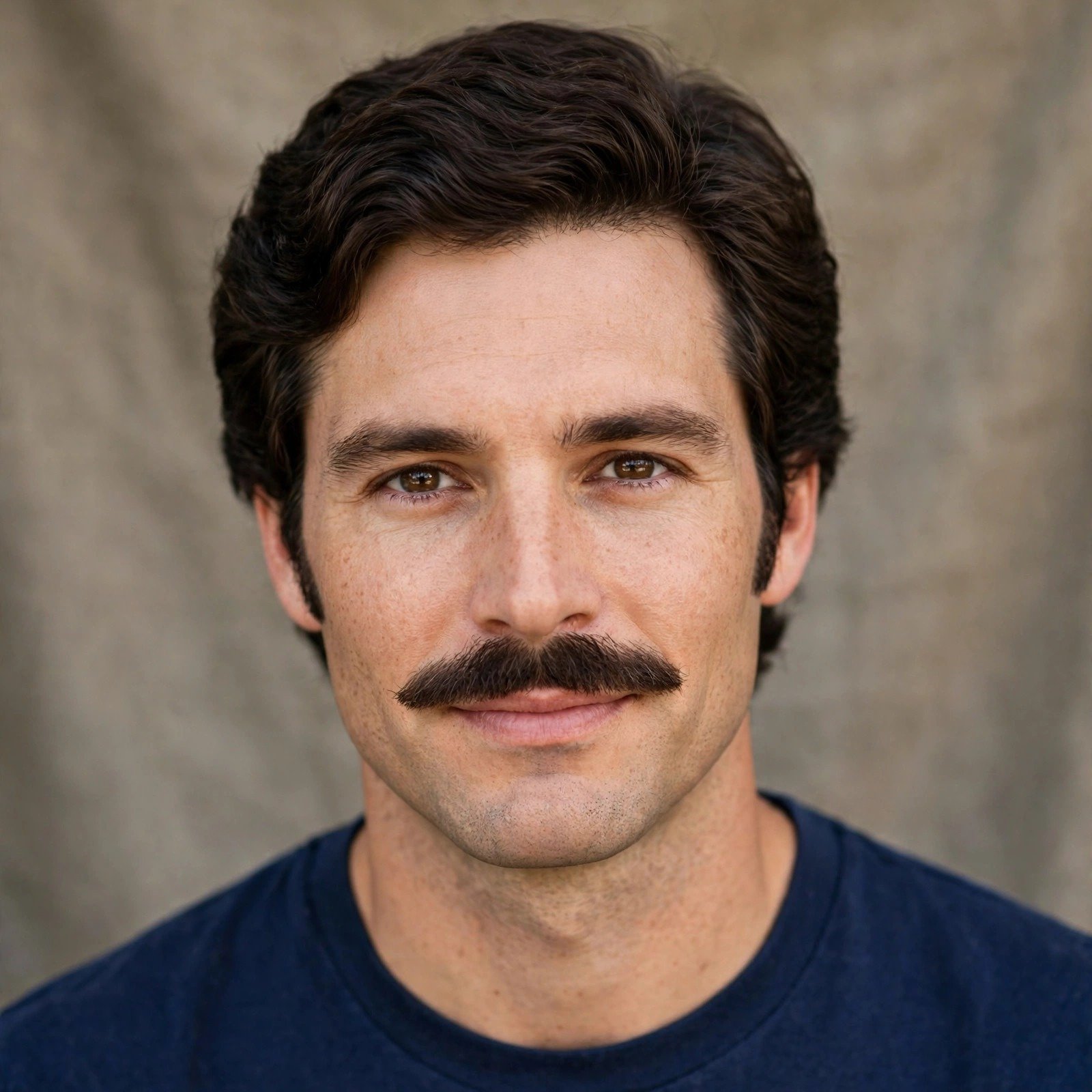
In 2026 the conversation has moved away from one dominant look and towards personal fit, which is good news for anyone whose growth is uneven. Barbers are shaping mustaches around lip width, nose width and hair density rather than copying a celebrity photograph exactly. The chevron remains the reliable centre, the skinny mustache brings a sharper fashion edge, and the beardstache offers an easy bridge for men growing facial hair for the first time. Grey, textured and natural finishes are also being worn with confidence instead of being dyed or hidden.
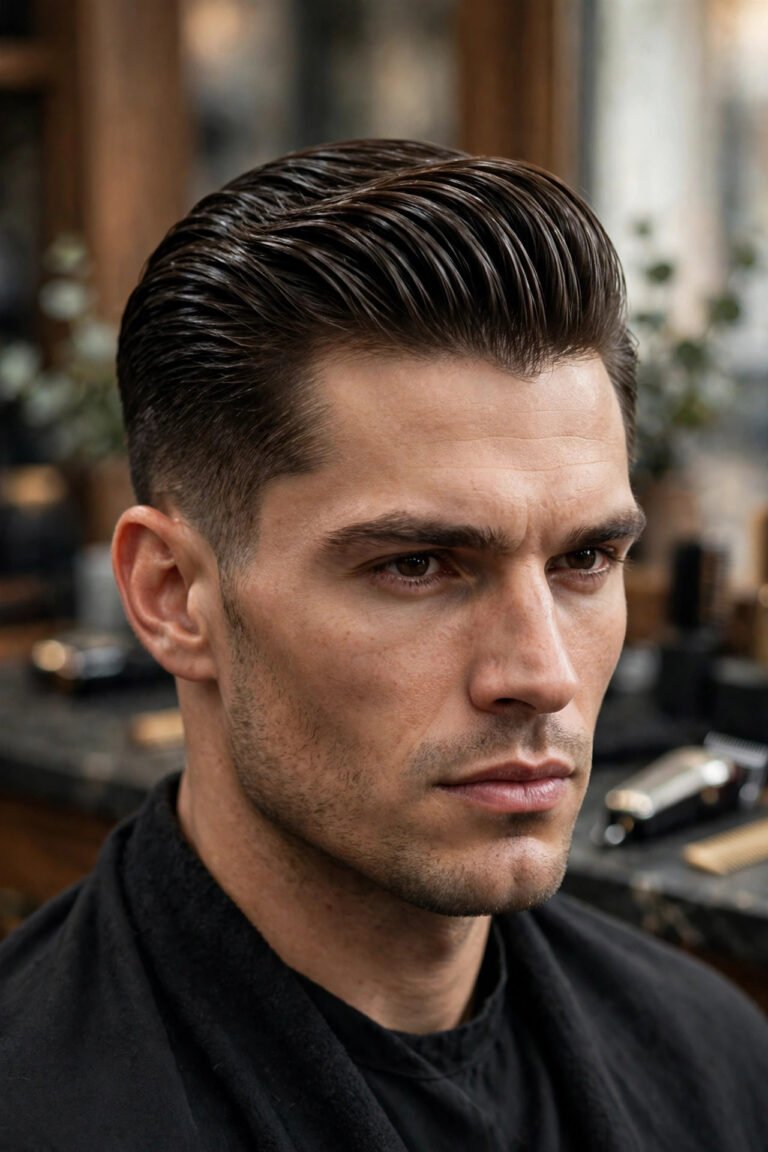
Haircut pairing now matters as much as the mustache itself, because the two shapes frame the face together. A textured crop fade for daily wear keeps the sides clean, which makes a fuller mustache look deliberate rather than heavy. Longer hair on top can carry a walrus or handlebar, while very short sides usually suit a pencil, lampshade or corporate trim. Thinking about the full silhouette, rather than the upper lip alone, prevents the common problem of a good mustache looking odd with the haircut around it.
Growth honesty is the other big shift this year, and it saves men a great deal of frustration. Patchy corners, a gap in the centre and slower growth on one side are normal, yet many men shave everything off after ten days because the early stage looks untidy. Most styles in this guide need at least four weeks before trimming decisions make sense. Photographing progress weekly in the same light gives a fairer view than daily mirror checks, and it helps a barber see where density is strongest when the first shaping appointment arrives.
Why Mustache Styles for Men Are Trending Again
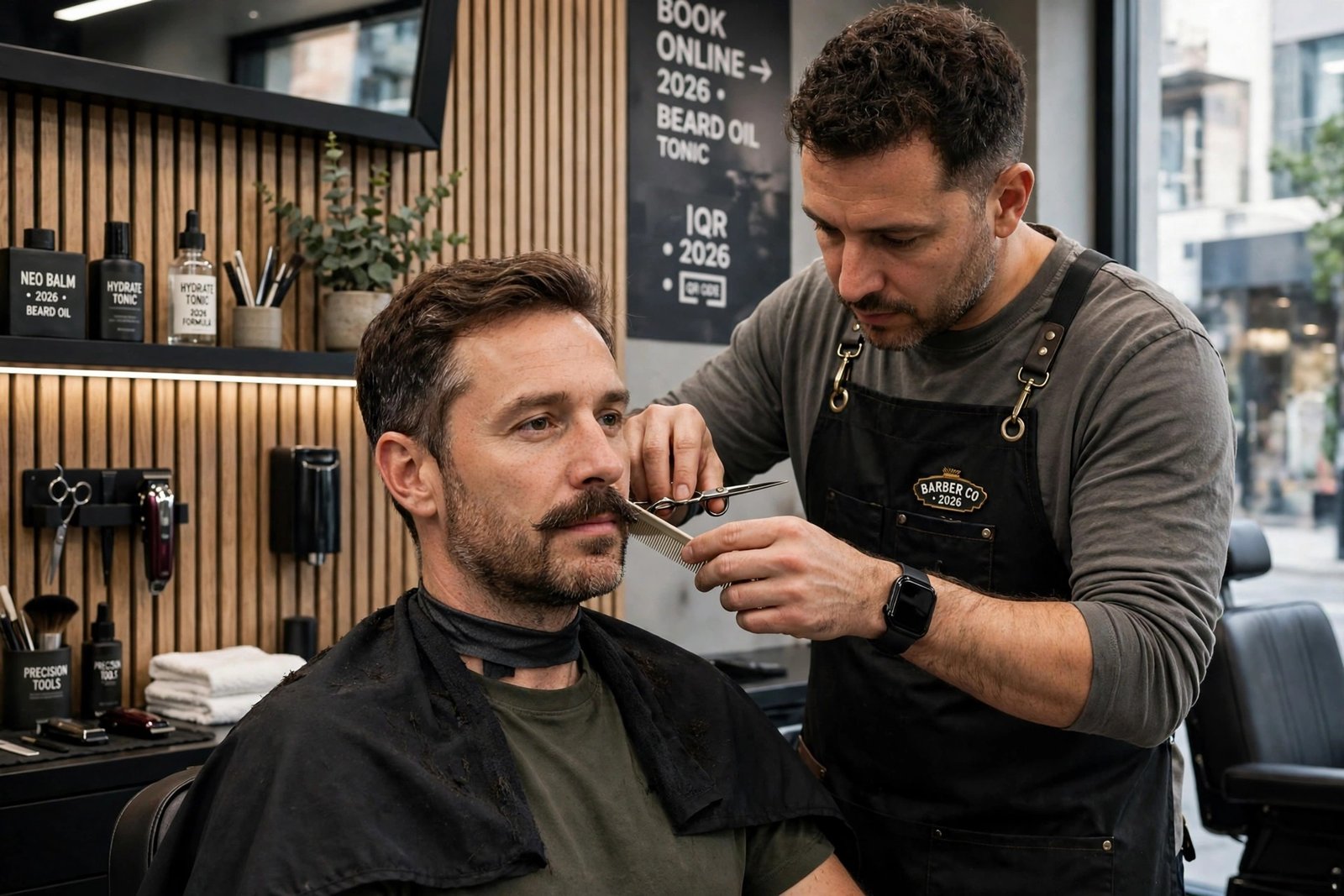
The revival is partly fashion, partly practicality, and partly a reaction against years of identical clean-shaven grooming. A mustache is quick to grow, easy to remove and far less commitment than a full beard, so it suits men testing facial hair without changing their whole routine. The recent skinny mustache revival, covered in detail by Men’s Journal on the skinny mustache trend, shows how a narrow shape can feel modern rather than dated when the edges stay crisp and the rest of the face is clean.
Social media has also normalised variety, which means older men, younger men and men with curly or straight growth can all find a reference that resembles their own hair. That visibility matters because a style that suits thick, straight growth may disappoint on fine, curly growth, and honest comparisons prevent that mismatch. Men are also asking better questions about maintenance now: how often to trim, whether wax is worth buying, and how much a barber tidy really costs over a year. Those practical answers decide whether a style survives beyond the first fortnight.
There is a confidence element too, and it should not be underestimated. A well-shaped mustache gives the face a focal point, which can make a simple haircut and plain clothing look more considered. For men whose scalp hair is thinning, facial hair can restore balance, and readers exploring that route may also find our guide to beard styles for men with thin hair useful for pairing choices. The trend lasts because the options are genuinely adaptable, not because one shape has been forced on everyone.
| Style | Best for | Maintenance |
|---|---|---|
| Classic Chevron | Most face shapes, medium growth | Medium, trim weekly |
| Skinny Mustache | Oval and long faces, fashion looks | High, edges need precision |
| Beardstache | First-time growers, patchy beards | Low to medium |
| Handlebar | Thick growth, statement style | High, daily wax |
| Short Cropped | Thin growth, tidy workplaces | Low, quick weekly tidy |
| Natural Full | Thick growth, relaxed routines | Low, comb and edge only |
1. Classic Chevron Mustache
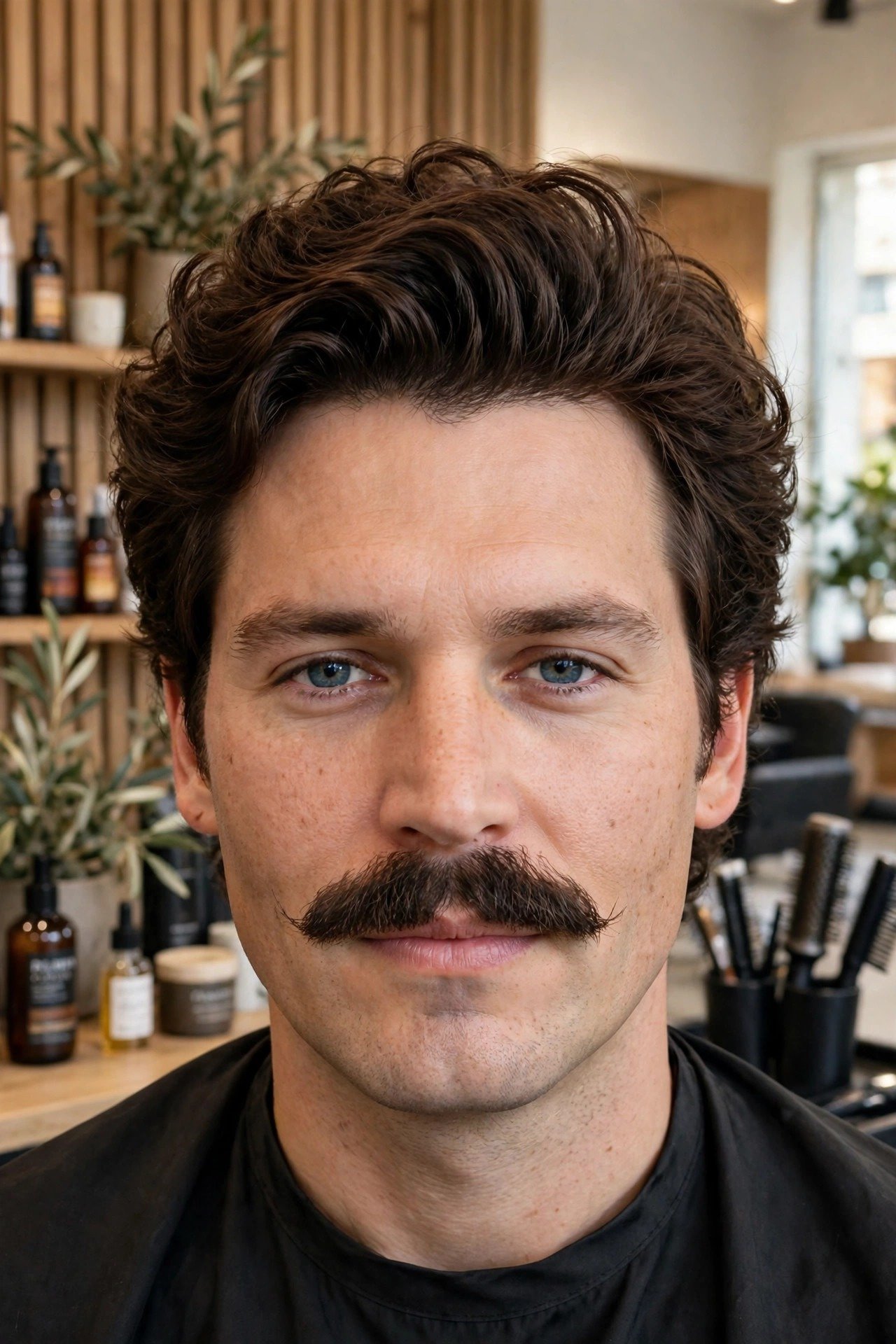
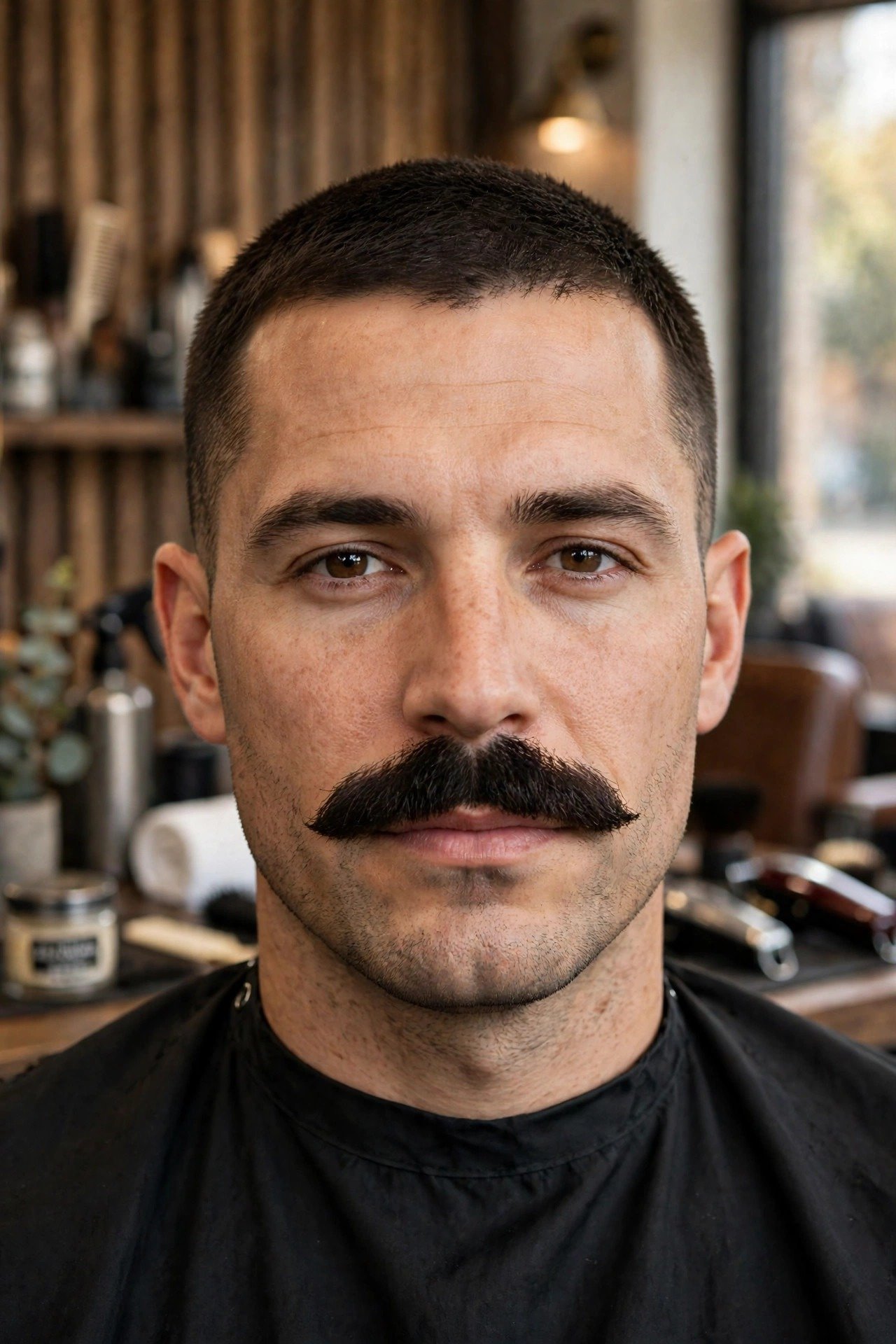
A classic chevron sits thickly above the upper lip, tapering slightly at the corners without curling or extending far beyond the mouth. Its strength is balance: the shape adds weight to the centre of the face without overwhelming the nose or chin. It suits oval, square and heart-shaped faces particularly well, and it remains forgiving when growth is medium rather than very dense. The chevron also photographs cleanly, which explains why it keeps returning across generations. Choose it when you want a recognisable mustache that looks intentional in both casual and formal settings.
Growing a chevron usually takes four to six weeks, and the early stage often looks heavier in the centre than at the corners. Resist shaping the top line too soon, because removing length early can leave the mustache looking thin and separated. Comb the hairs downwards daily, then trim only the hairs crossing the lip line once the shape has settled. A small trimmer with a guard keeps length even, while scissors handle stray hairs more precisely. Finish by cleaning the skin just above the mustache so the top edge reads as a deliberate line.
Maintenance is moderate rather than demanding, with a tidy every seven to ten days keeping the lip line clear. The commonest mistake is trimming the corners too short, which makes the mouth look narrower and the mustache look unfinished. Another error is chasing perfect symmetry daily, since natural growth rarely matches on both sides. A barber tidy every three weeks costs modestly and resets the shape before small unevenness becomes obvious. Pair the chevron with most haircuts, from short sides to longer textured tops, and it will rarely look out of place.
2. Handlebar Mustache
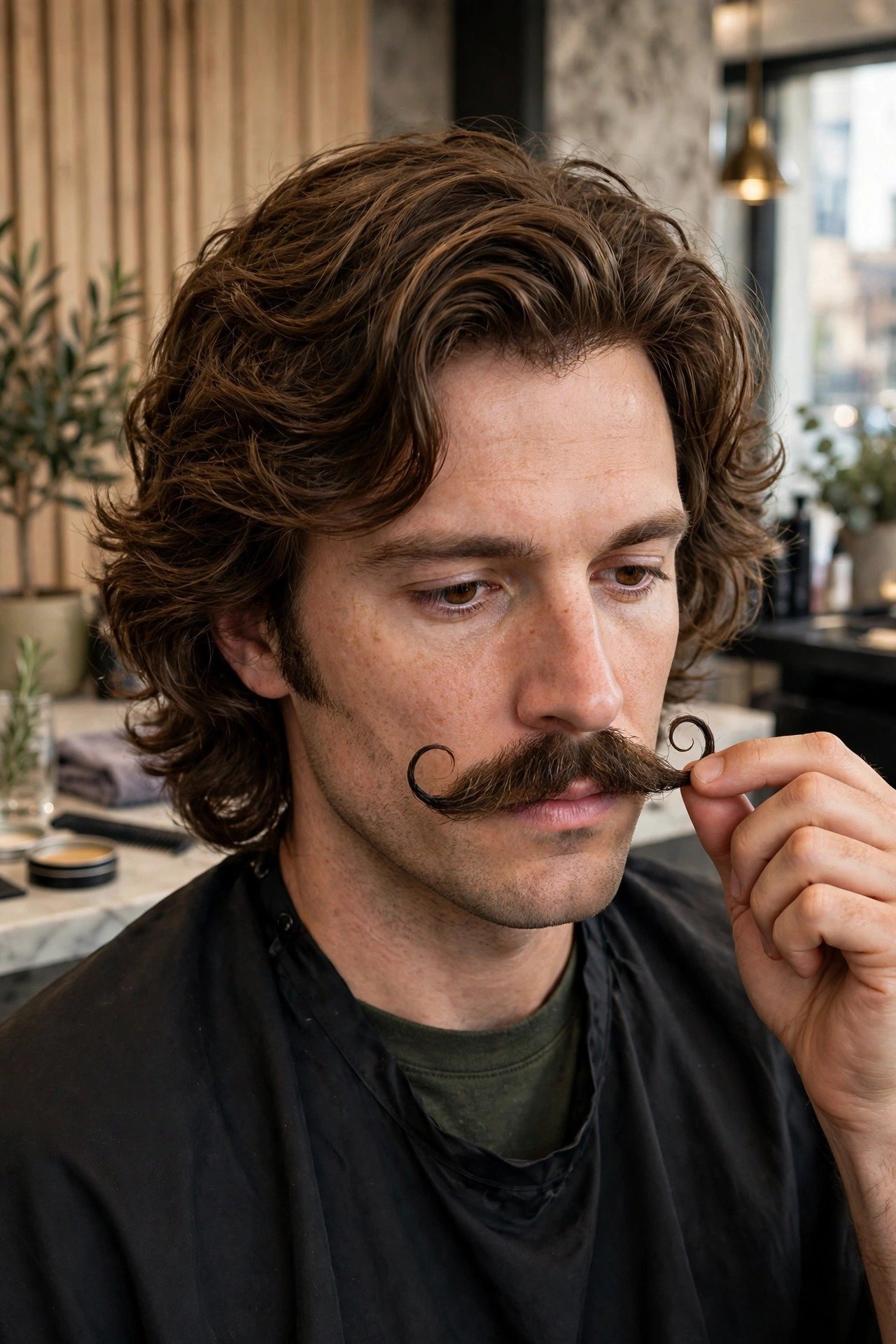
The handlebar is the showpiece of the mustache family, defined by longer ends that sweep outwards and curl upwards with intent. It suits men with thick, reasonably straight growth and enough patience to train the ends over several weeks. Round and square faces often benefit because the horizontal sweep adds width and character. This is not a low-effort style, and pretending otherwise leads to disappointment. When the growth supports it, though, few shapes create such a memorable silhouette. It works best when the rest of the grooming stays neat, so the curls read as style rather than disorder.
Growth for a handlebar takes longer than most styles, often eight to twelve weeks before the ends can hold a proper curl. Comb the hairs outwards from the centre every morning, training the direction while the hair is still damp. A pea-sized amount of mustache wax, warmed between the fingers, gives hold without stiffness; too much wax makes the ends look greasy and separated. Twist the tips gently rather than forcing them, because repeated pulling breaks hairs. Patience during the awkward middle stage matters more than any expensive product.
Daily styling takes three to five minutes, and skipping it leaves the ends drooping into a walrus shape by midday. Trimming should focus on the lip line only, preserving length at the corners where the curl forms. The frequent mistake is cutting one side shorter after a bad morning, then spending weeks regrowing the balance. Barber costs are slightly higher because shaping takes care, but a monthly visit keeps the sweep even. Avoid the handlebar if your workplace expects a very conservative appearance, or keep the curls modest for a softer effect.
3. Skinny Mustache
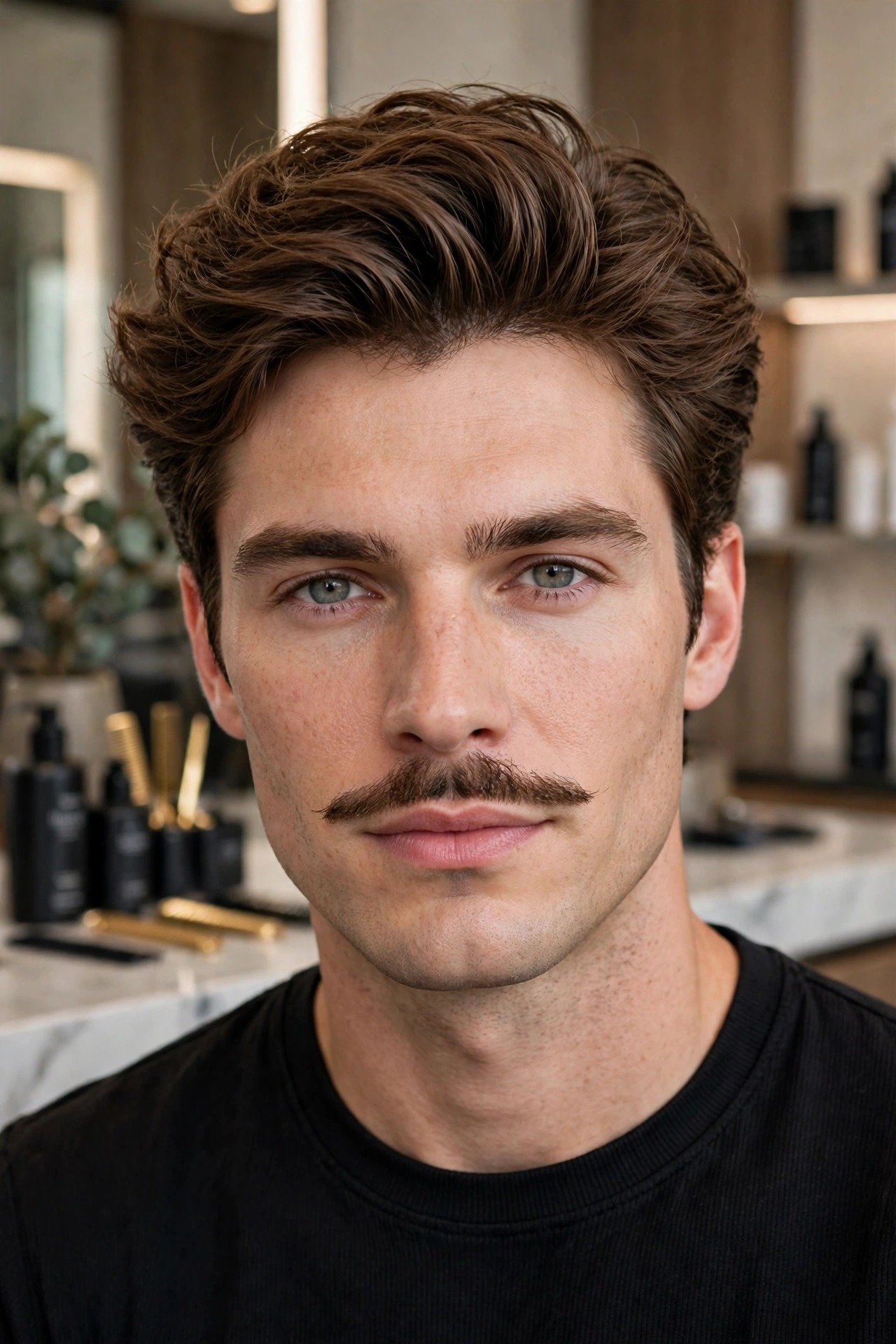
A skinny mustache is narrow, precise and deliberately minimal, sitting as a defined line above the lip rather than a thick block of hair. It suits oval and long faces especially well because the horizontal line breaks up facial length without adding bulk. Men with naturally dark growth get the strongest effect, since contrast makes the narrow shape visible. Fine or fair growth can still work, but the line must stay slightly thicker to register. The skinny look feels modern when paired with clean skin, tidy brows and a sharp haircut rather than heavy stubble everywhere.
Precision decides whether this style looks fashionable or accidental, so trimming needs a steady hand and good light. Grow for three to four weeks first, then define the top and bottom edges with a trimmer held flat against the skin. Work in short passes and step back frequently, because removing too much height cannot be undone until regrowth arrives. A clear shaving gel helps you see the line you are cutting. Keep the ends level with the mouth corners or just inside them, since wide skinny mustaches quickly lose their sharp character.
Upkeep is higher than the small size suggests, with edge tidying every three to four days to prevent soft, fuzzy borders. The usual mistake is making the line too thin, which reads as a shadow rather than a style, especially in photographs. Another is neglecting the skin around it, where stray hairs blur the intended minimalism. Costs stay low if you maintain it yourself, but a barber can set the first shape accurately. Choose the skinny mustache when you enjoy detail work and want a lighter, fashion-led alternative to fuller shapes.
4. Pencil Mustache
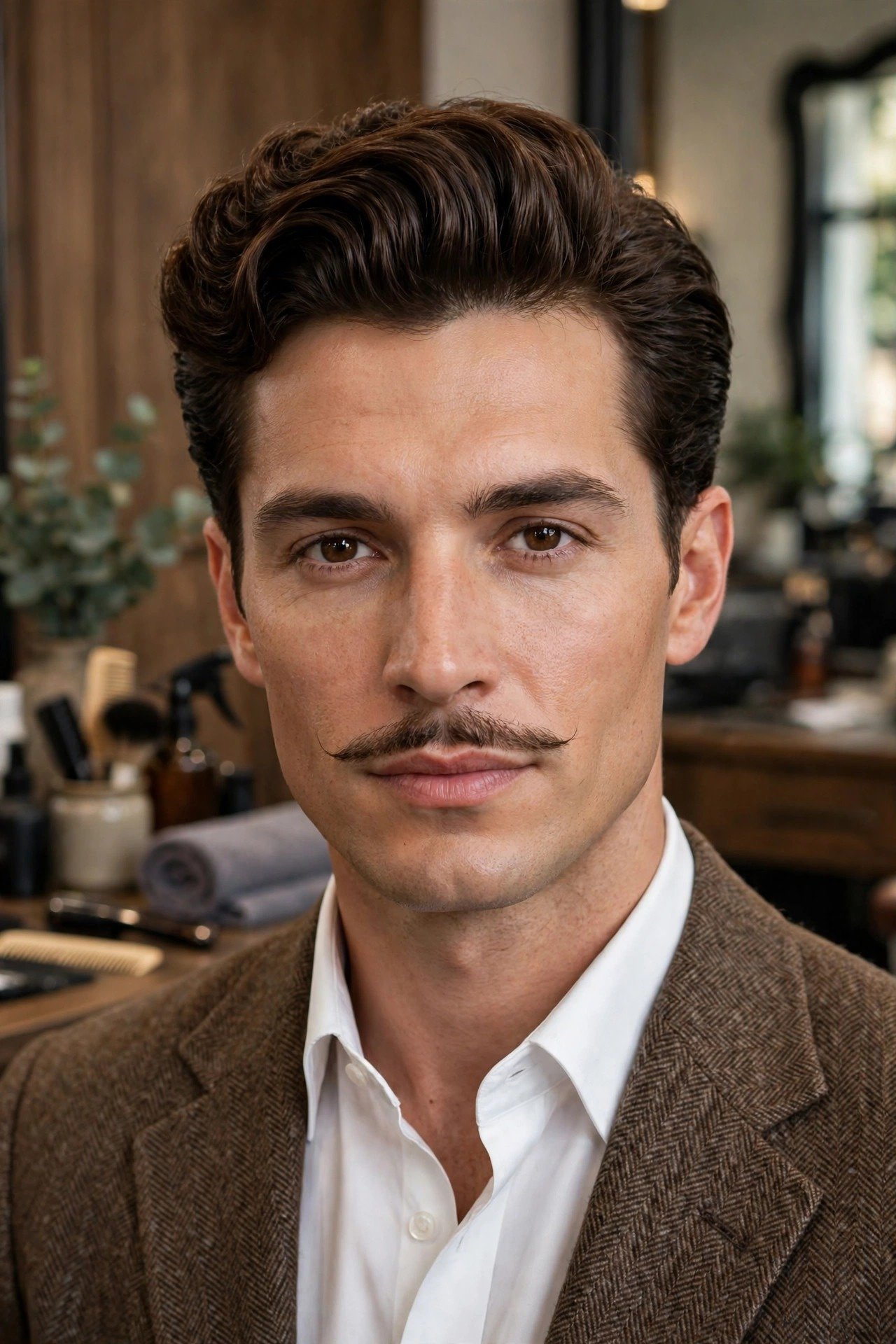
The pencil mustache is a thin, carefully drawn line that follows the upper lip with old Hollywood neatness. It suits men who like vintage styling and faces where a subtle accent works better than a heavy block of hair. Oval and heart-shaped faces carry it gracefully, while very round faces may find it too slight to balance the cheeks. Growth does not need to be thick, but it does need to be even along the lip. The pencil rewards confidence, because its charm comes from precision and restraint rather than volume or drama.
Start by growing four weeks of growth, then map the line with a trimmer before removing anything above or below it. The shape should mirror the lip curve, staying consistent in height from centre to corners. Short, controlled strokes prevent the line wobbling, and stretching the skin gently with the free hand improves accuracy. Keep the ends pointed slightly or squared, depending on how vintage you want the finish. A fresh razor around the edges, used carefully, gives the crisp border that separates a pencil mustache from simple regrowth.
Maintenance involves touching the borders twice a week, since even slight regrowth softens the drawn-on effect. The commonest error is uneven height, where one side sits noticeably thicker and draws the eye for the wrong reason. Another mistake is placing the line too high, leaving a pale gap between mustache and lip that looks disconnected. Product needs are minimal, which keeps costs low, although a first barber shaping is worth paying for. Pair it with slicked or neatly parted hair for a coherent vintage look rather than mixing it with heavy stubble.
5. Beardstache Style
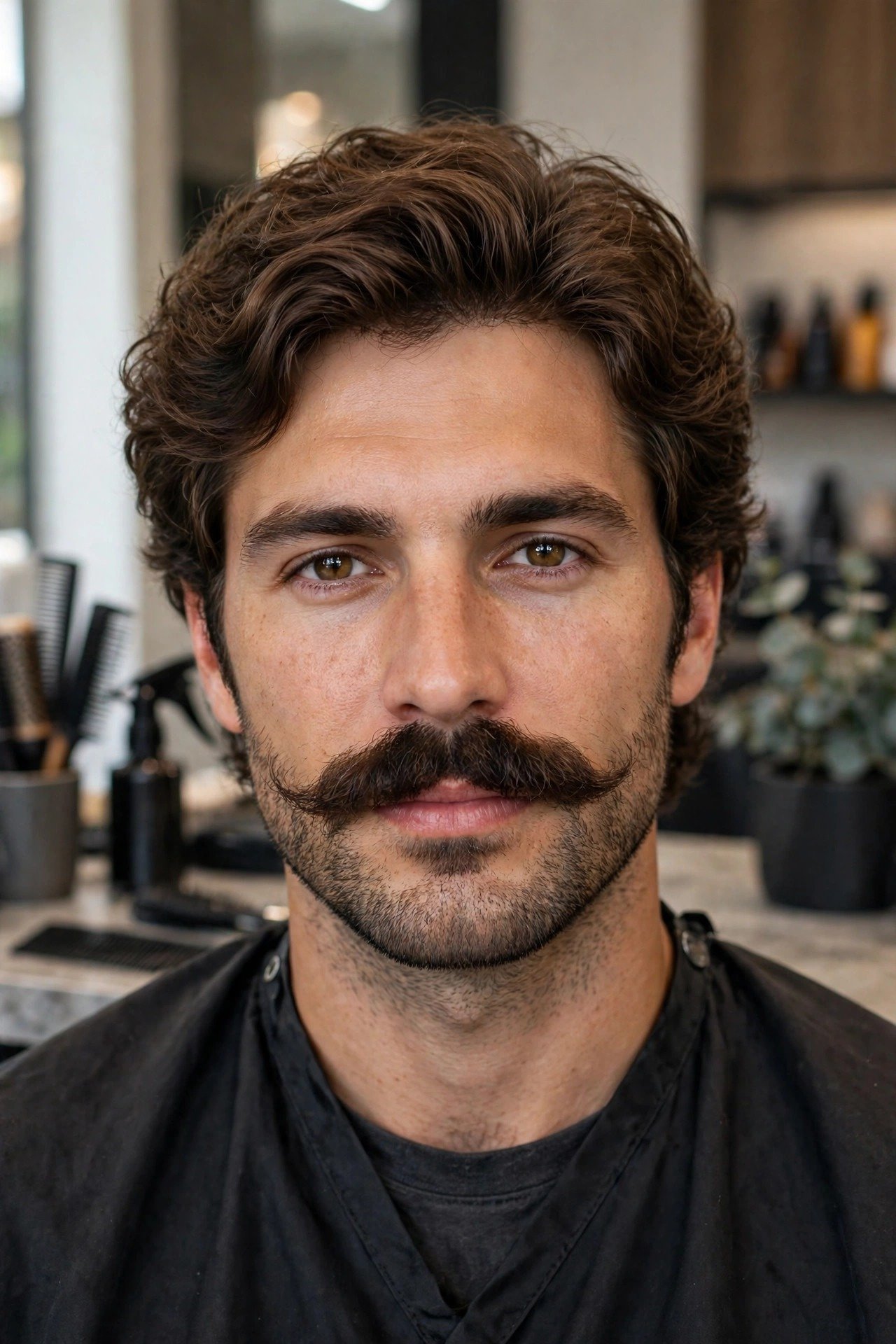
A beardstache combines a fuller, more prominent mustache with shorter beard growth, so the upper lip carries the visual weight. It suits first-time growers and men whose beard growth is patchy on the cheeks but stronger above the lip. The contrast looks deliberate when the mustache is noticeably longer and darker than the surrounding stubble. Square and oval faces handle the proportions well, and the style softens a sharp jaw without hiding it. This is often the most forgiving route into facial hair because imperfections in the beard matter less.
Grow everything for four to five weeks, then keep the mustache at a longer guard setting while reducing the beard to a shorter, even length. Comb the mustache downwards and trim only the lip line, preserving the fullness that defines the style. Keep the beard edges tidy on the cheeks and neck so the contrast looks planned rather than lazy. A light beard oil prevents the shorter growth feeling dry, but heavy balm on the mustache can make it look stringy. The balance between the two lengths is the whole design.
Upkeep is refreshingly simple: trim the beard weekly, tidy the mustache lip line as needed, and refresh the neckline before it creeps. The typical mistake is letting the beard grow to the same length as the mustache, which turns the beardstache into an ordinary short beard. Another is trimming the mustache corners too aggressively, losing the focal point. Barber costs stay modest because the shape is forgiving, though a professional first shape helps proportions. Choose this style when you want character with low daily effort and room for imperfect growth.
6. Walrus Mustache
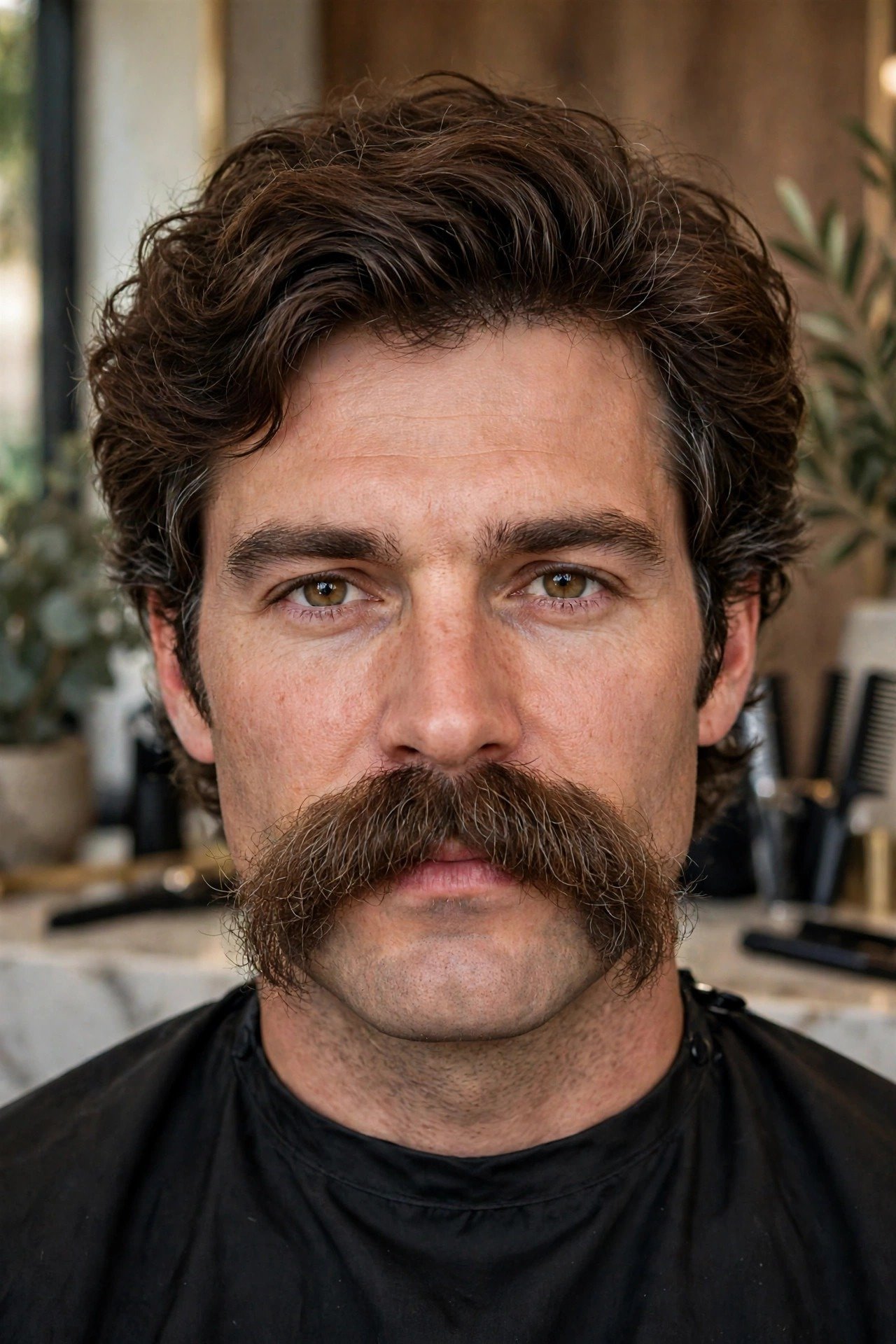
The walrus is a thick, bushy mustache that hangs over the upper lip with relaxed, unapologetic volume. It suits men with dense growth and larger facial features, where a smaller style might disappear. Square and round faces gain a strong focal point, although very small faces can feel crowded by the bulk. The walrus carries a rugged, outdoors character that pairs naturally with longer hair and casual clothing. It asks for confidence because the shape is noticeable from across a room. When growth is genuinely thick, few styles look as established or self-assured.
Growing a walrus takes six to ten weeks, and the hair should be combed downwards daily to encourage the hanging direction. Trimming focuses on comfort: remove only the hairs that enter the mouth or irritate the lip, using small scissors rather than a trimmer. Keep the top edge reasonably defined so the bulk looks groomed rather than neglected. A small amount of balm tames flyaway hairs without flattening the volume. Resist thinning the centre, because the dense curtain effect is exactly what gives the walrus its identity and presence.
Maintenance is low in frequency but important in detail, since neglected walrus growth quickly looks untidy around the mouth. Wash the mustache regularly, as food and drink collect in longer hair more easily than men expect. The common mistake is letting the ends grow unevenly until one side dominates the face. Another is pairing the walrus with an unkempt haircut, which turns rugged into scruffy. Barber visits every four to six weeks are usually enough, keeping costs reasonable. Choose it when your growth is strong and you prefer volume over precision.
7. Horseshoe Mustache
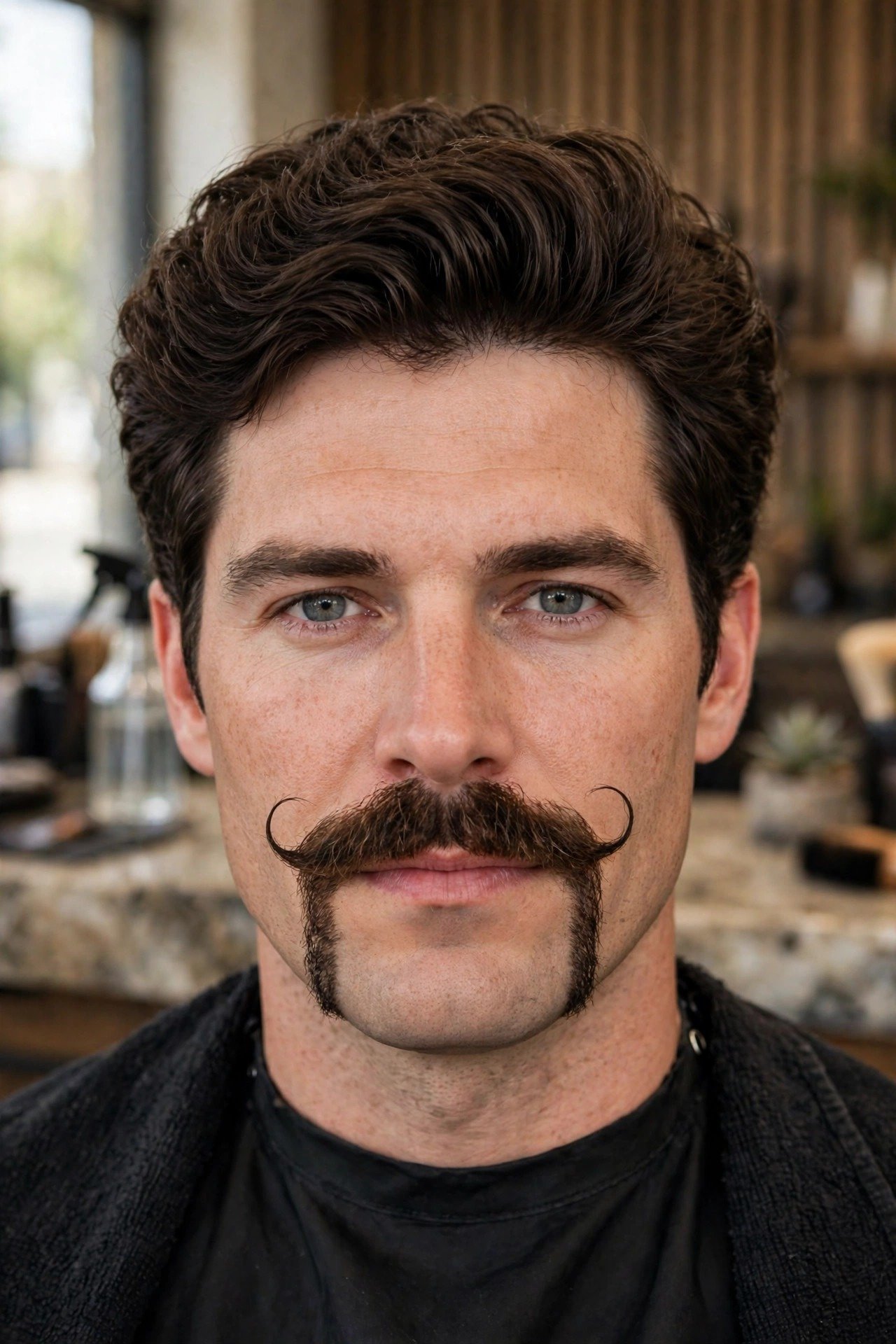
A horseshoe mustache extends down the sides of the mouth in two vertical bars, creating a bold frame around the chin. It suits square and rectangular faces, where the vertical lines echo a strong jaw and add structure. Men with good growth at the mouth corners get the cleanest result, while sparse corners make the bars look broken. The style carries a tough, western energy, so it pairs best with confident grooming elsewhere. Keep the chin itself clean-shaven to preserve the distinctive open shape. This is a statement choice, not a subtle one.
Growth needs five to seven weeks so the side bars reach below the mouth corners with enough density to look solid. Define the inner edges carefully, keeping the vertical lines straight and parallel rather than drifting outwards. Trim the top section like a chevron, then let the sides grow downwards while cleaning the chin daily. Symmetry matters enormously here, so compare both sides in a mirror at arm’s length before removing more hair. Small adjustments over several days beat one dramatic correction that leaves the bars uneven.
Upkeep centres on keeping the chin smooth and the vertical edges sharp, usually every three or four days. The frequent mistake is letting the bars grow too wide, which swallows the jawline and looks heavy. Another is allowing stubble across the chin, blurring the horseshoe outline into an unfinished beard. Costs are low for home maintenance, but a barber can set the geometry correctly at the start. Avoid this style in very formal workplaces unless the bars stay short and neat, and expect it to attract attention wherever you go.
8. English Mustache

The English mustache is parted in the centre and swept outwards towards the cheeks in long, elegant lines. It suits men with straight, cooperative growth and faces that benefit from horizontal emphasis, particularly oval and long shapes. The style feels refined rather than rugged, recalling an era when grooming signalled patience and care. It needs length, so men wanting instant results should choose something else. When trained properly, the English mustache looks calm and deliberate, pairing beautifully with tailored clothing and neat hair. Its elegance comes from direction and symmetry, not thickness alone.
Training begins early: from the second week, comb the hairs away from the centre parting towards each side, several times a day. Growth takes eight to twelve weeks before the sweep holds its line convincingly. A light wax or styling cream keeps the ends aligned without the dramatic curl of a handlebar. Trim only the lip line and any hairs breaking the outer silhouette, preserving the length that creates the sweep. Warm water and gentle combing in the morning reset the direction after sleep flattens one side.
Daily maintenance is brief but non-negotiable, because untrained English growth quickly falls into a heavy curtain. The typical mistake is cutting the ends to fix a drooping day, losing weeks of length for a temporary problem. Another is parting the centre unevenly, which makes the whole face look lopsided. Barber shaping every month keeps the lines level and the cost predictable. Choose the English mustache when you enjoy a ritual and want refinement; skip it if your mornings allow no grooming time at all, since neglect shows immediately.
9. Hungarian Mustache
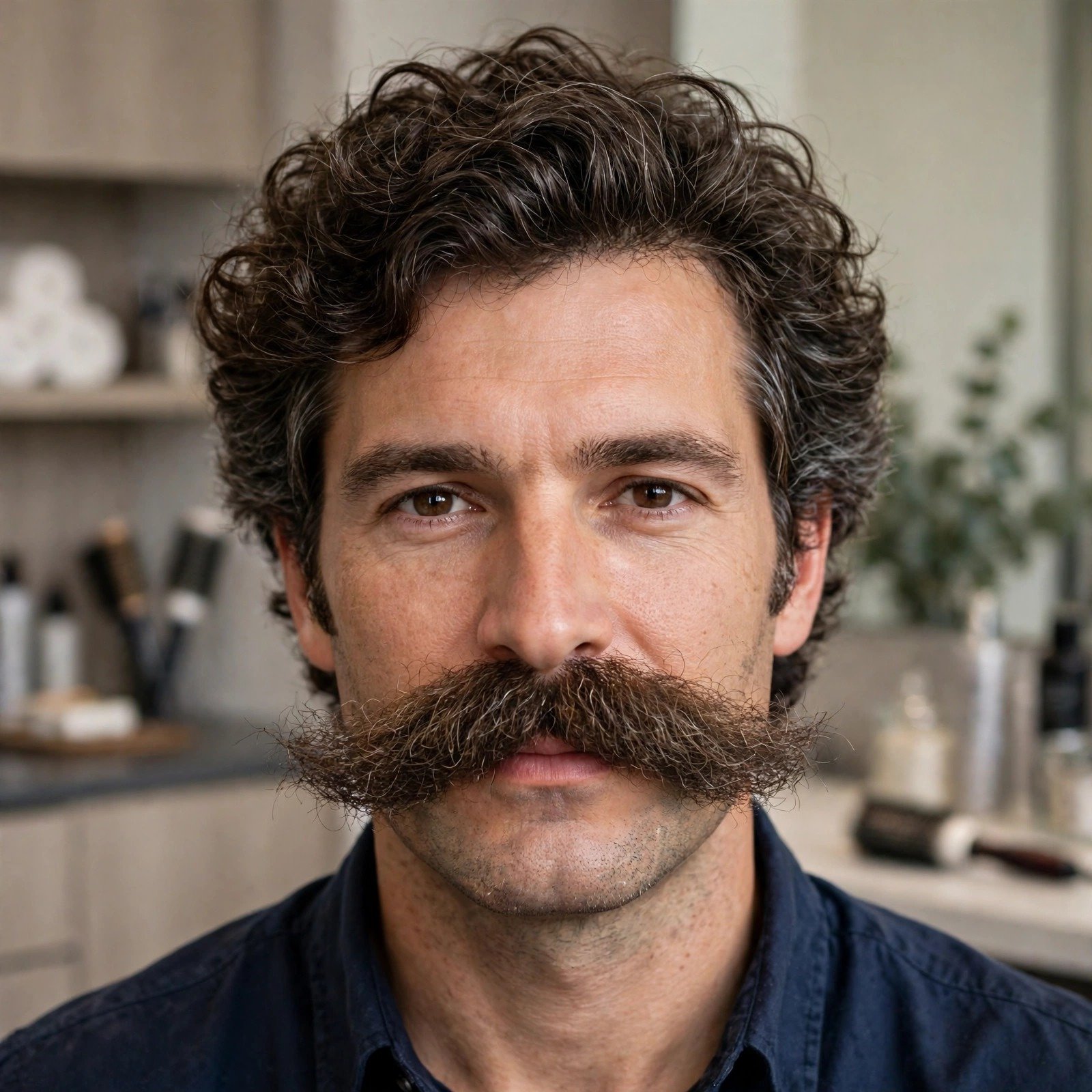
The Hungarian mustache is large, bushy and swept upwards at the ends, giving the face a grand, traditional presence. It suits men with very thick growth and strong features, particularly square and round faces that can carry the volume. The upward sweep adds energy, distinguishing it from the hanging walrus. This style asks for commitment, because thin growth simply cannot create the required fullness. When density supports it, the Hungarian looks distinguished and unmistakably deliberate. It pairs well with classic haircuts and structured clothing, where the scale of the mustache feels balanced rather than oversized.
Expect ten to fourteen weeks of growth, combing the hair outwards and slightly upwards as length builds. Wax is genuinely useful here, holding the upward flick at the ends, but apply it sparingly so the bushy texture remains visible. Trim the lip line for comfort and remove only hairs that break the outer shape. The centre should stay full, since thinning it undermines the grand effect. Regular washing keeps the dense hair fresh, and a wide-tooth comb prevents pulling. Patience through the shapeless middle weeks decides whether the final result succeeds.
Maintenance involves daily combing, wax on the ends and a barber shape every four weeks to keep both sides level. The common mistake is forcing an upward curl before enough length exists, which produces stiff, separated spikes. Another is letting the mustache grow so wide that it dominates the nose and cheeks. Costs include wax and regular barber visits, so budget honestly before starting. Choose the Hungarian when your growth is abundant and you want a traditional statement; men with fine growth will look far better in a chevron or cropped style.
10. Lampshade Mustache
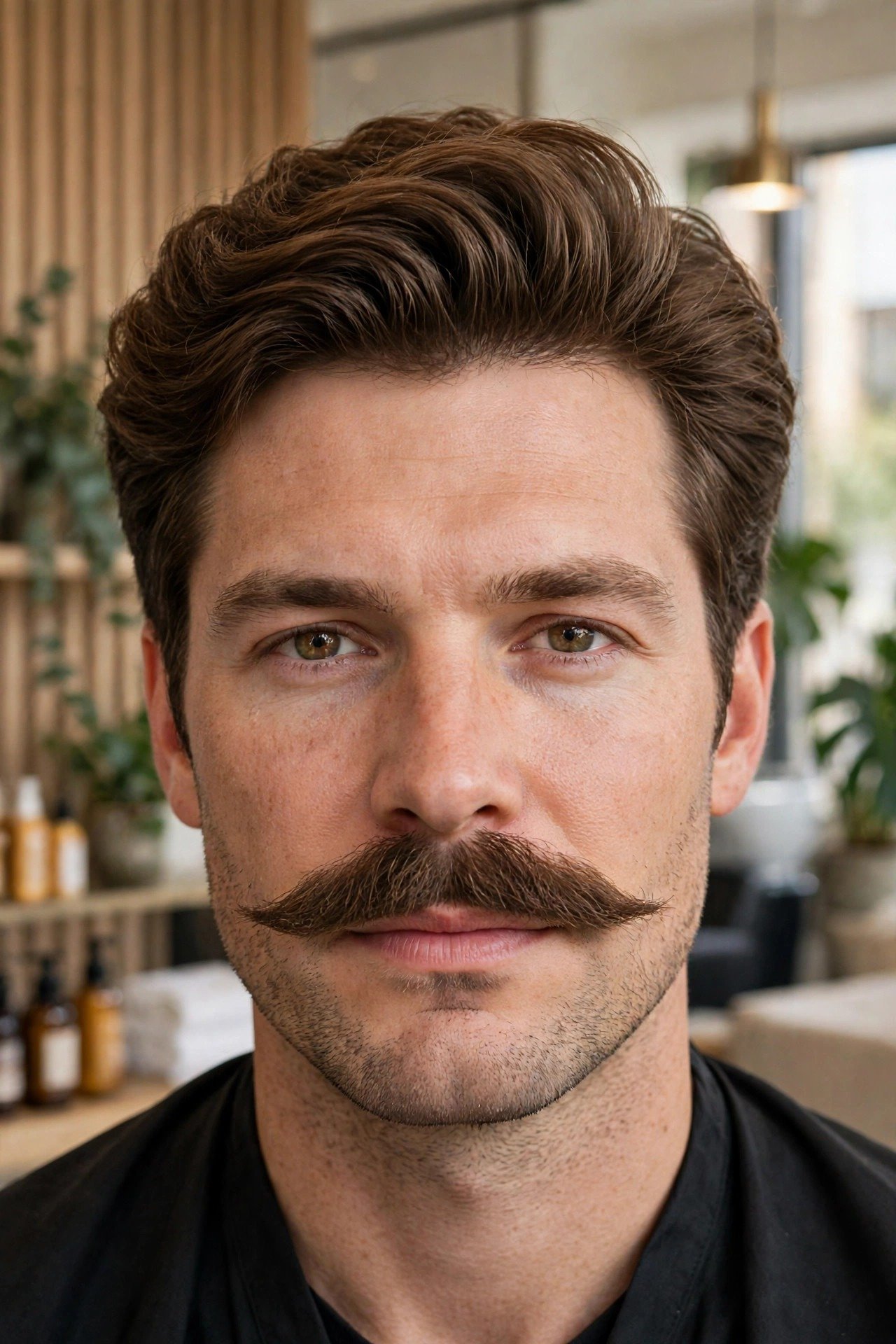
A lampshade mustache is fuller in the centre and tapers down at the sides, resembling the soft slope of a lampshade. It suits men who want more character than a plain chevron without the commitment of a handlebar. Oval and heart-shaped faces benefit from the gentle downward taper, which softens the mouth area. Medium growth is enough, provided the centre is reasonably dense. The lampshade feels friendly and approachable rather than severe, making it a good option for men whose work involves meeting people. Its charm lies in subtle shape rather than dramatic length.
Grow for five weeks, then shape the centre fuller while gradually reducing length towards the corners. Comb downwards first, trim the lip line, then angle the trimmer to create the sloping sides in small passes. Check the silhouette from the front and side, because the taper should look smooth rather than stepped. Avoid removing corner length too quickly; the lampshade effect depends on gradual change. A guard setting one step shorter at the edges than the centre usually achieves the slope without harsh lines or visible steps.
Upkeep is straightforward, with a weekly tidy preserving the taper and lip line. The usual mistake is cutting the sides too short, collapsing the shape into an ordinary trimmed mustache. Another is letting the centre grow over the lip, which hides the taper under bulk. Home maintenance keeps costs low, and most men learn the angles within two or three attempts. Pair the lampshade with relaxed haircuts and casual or smart clothing alike. Choose it when you want a distinctive but gentle shape that rarely looks too formal or too rugged.
11. Natural Full Mustache

The natural full mustache keeps generous length and texture with minimal shaping, letting the hair fall as it grows. It suits men with good density who prefer an unforced, relaxed appearance over sharp lines. Round and square faces gain a strong centre feature, while the softness of the finish keeps it approachable. Natural does not mean neglected: the lip line and top edge still need definition. This style works especially well with wavy or slightly curly growth, where texture becomes an asset. It signals ease, which is precisely why many men choose it.
Grow for six weeks, combing daily to settle the direction, then trim only the hairs crossing the lip and any that stick out oddly. Keep the top edge lightly defined so the shape reads as chosen. A drop of beard oil softens coarse hair and reduces the wiry look that natural growth can develop. Avoid heavy wax, which fights the relaxed texture. If one side grows faster, trim the longer side minimally and reassess after a week rather than chasing daily symmetry. The goal is tidy fullness, not sculpted perfection.
Maintenance is among the lowest of any full style: a lip tidy weekly and a general shape every few weeks. The common mistake is confusing natural with abandoned, letting the mustache cover the lip and collect food. Another is uneven ends that make the face look lopsided in photographs. Costs stay minimal, particularly for men comfortable with scissors at home. A barber visit every six weeks resets proportions cheaply. Choose the natural full mustache when your growth is healthy and you value an honest, low-effort finish over precision.
12. Trimmed Chevron Mustache

A trimmed chevron keeps the classic chevron shape but at a shorter, tighter length that sits cleanly above the lip. It suits workplaces where grooming standards matter and men who want a mustache without any sense of bulk. Most face shapes carry it well, and medium growth is plenty because the short length hides minor unevenness. The trimmed version reads modern and disciplined, pairing naturally with short haircuts and formal clothing. It is often the safest recommendation for a first mustache. Small adjustments in width let you fine-tune how prominent it appears.
Grow three to four weeks, then reduce the length evenly with a trimmer guard before defining the edges. Keep the bottom line just above the lip so no hairs touch the mouth. Trim the corners to end near the mouth corners, neither stopping short nor extending into the cheeks. Comb downwards before every trim, because hairs lying sideways hide true length. Finish by cleaning the skin above the mustache with a razor or detail trimmer, creating the crisp border that makes short length look intentional rather than merely unshaven.
Weekly trimming keeps the trimmed chevron at its best, and the routine takes only a few minutes once learned. The frequent mistake is trimming too short in one session, leaving a faint shadow that needs a week to recover. Another is neglecting the top edge, where stray hairs soften the disciplined effect. Costs are low, and many men maintain this style entirely at home after one barber shaping. Choose it when you want reliability: it suits interviews, photographs and daily work without demanding daily styling or products.
13. Grey Mustache for Distinguished Looks

A grey mustache, worn with confidence, gives the face distinction that dye rarely matches. Silver and white growth suits chevron, trimmed and natural shapes particularly well, because the lighter colour softens the overall effect. Men whose mustache has turned grey faster than their scalp hair often find the contrast flattering rather than ageing. The key is neatness: grey hair can look wiry, so a defined lip line and even length matter more, not less. Embraced properly, grey reads as experience and self-assurance. It also pairs elegantly with grey or silver haircuts.
Grey hair tends to be coarser and drier, so conditioning matters during growth and beyond. A small amount of beard oil or balm keeps the hairs flexible and reduces flyaway strands that catch the light oddly. Trim with sharp tools, because blunt blades bend coarse hair instead of cutting it cleanly. Keep the length slightly shorter than you might with dark growth, since grey volume can look untidy sooner. Yellowing from sun or smoke can be reduced with occasional use of a purple-toned wash made for grey hair, used sparingly.
Maintenance is simple: weekly trims, daily combing and moisturising the skin beneath, which can feel dry under coarse growth. The common mistake is dyeing only the mustache, creating a harsh mismatch with grey scalp hair. Another is letting grey ends grow unevenly, which photographs as scruffiness rather than distinction. Barber costs are standard, and a good barber will shape grey growth to suit your features. Choose a grey mustache proudly when the colour has arrived; fighting it usually costs more time and money than styling it well.
14. Mustache for Thin Growth
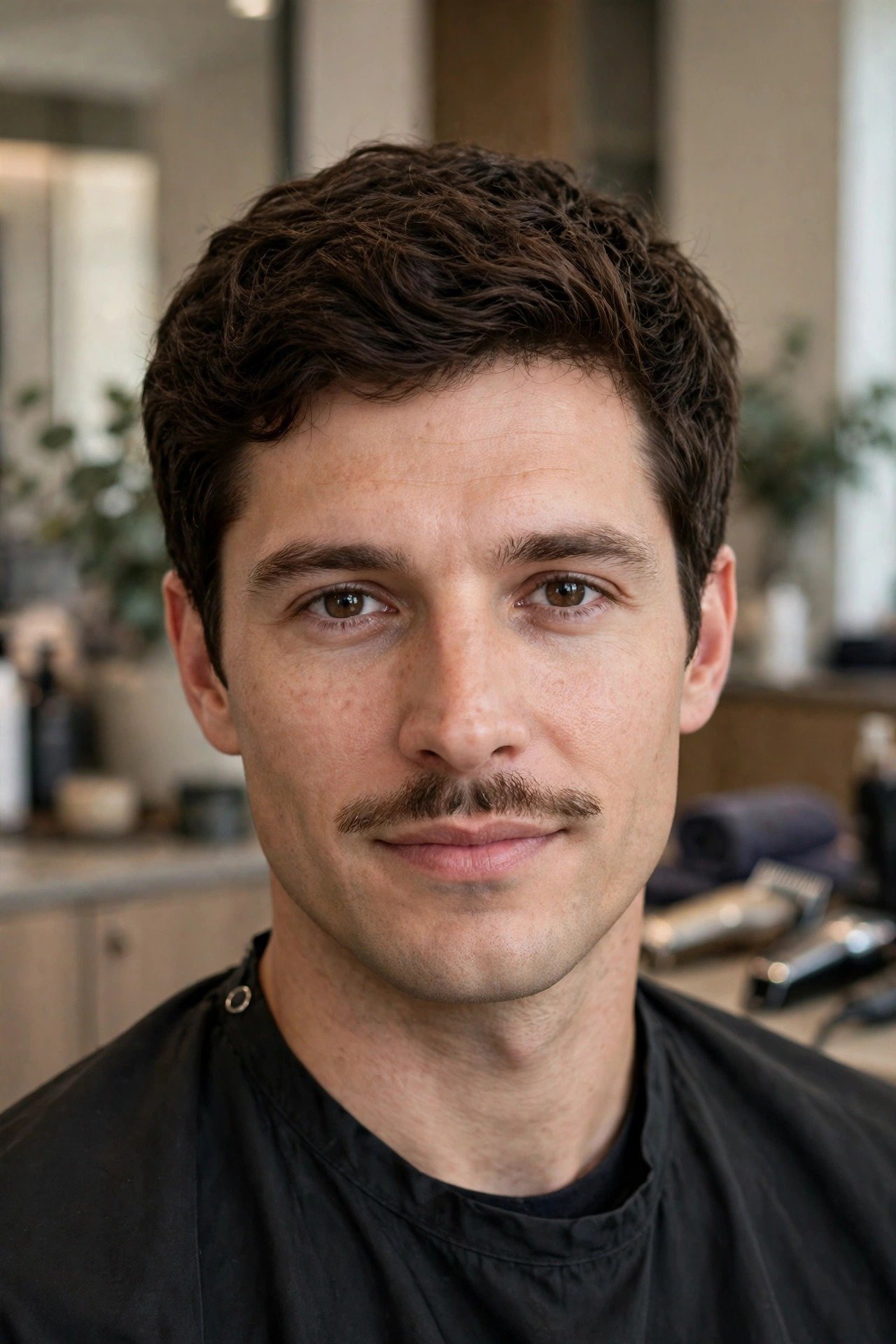
Thin growth needs strategy rather than hope, and the winning approach is usually shorter, darker-looking and tightly defined. A short cropped or trimmed chevron concentrates the available hair so it reads as a solid shape instead of scattered strands. Men with a centre gap or sparse corners should keep the width modest, ending before the weakest growth. Face shape matters less here than density placement: build the style where hair actually grows. Honest expectations help, because no product creates density that is not there. Styled well, thin growth looks neat and deliberate.
Grow for four weeks without trimming, so you can see exactly where density is strongest and where gaps remain. Then choose a width that stays within the strong zone, trimming the lip line precisely. Short length is your friend, because long thin hairs separate and reveal skin beneath. A trimmer guard keeps the surface even, and a detail pass sharpens the edges. Avoid wax, which clumps fine hair and exposes gaps. If the centre gap is wide, a slightly parted shape can look intentional rather than incomplete.
Upkeep is quick: a weekly trim and edge tidy keep the shape solid. The biggest mistake is growing a wide mustache into sparse corners, where see-through ends undermine the whole look. Another is letting thin hair grow long in the hope of fullness, which achieves the opposite. Costs stay low, and a barber can map your density honestly at a first appointment. Patience matters, since growth often thickens slightly with time and consistent care. Choose compact shapes, keep them crisp, and thin growth becomes a tidy feature rather than a problem.
15. Mustache for Round Faces
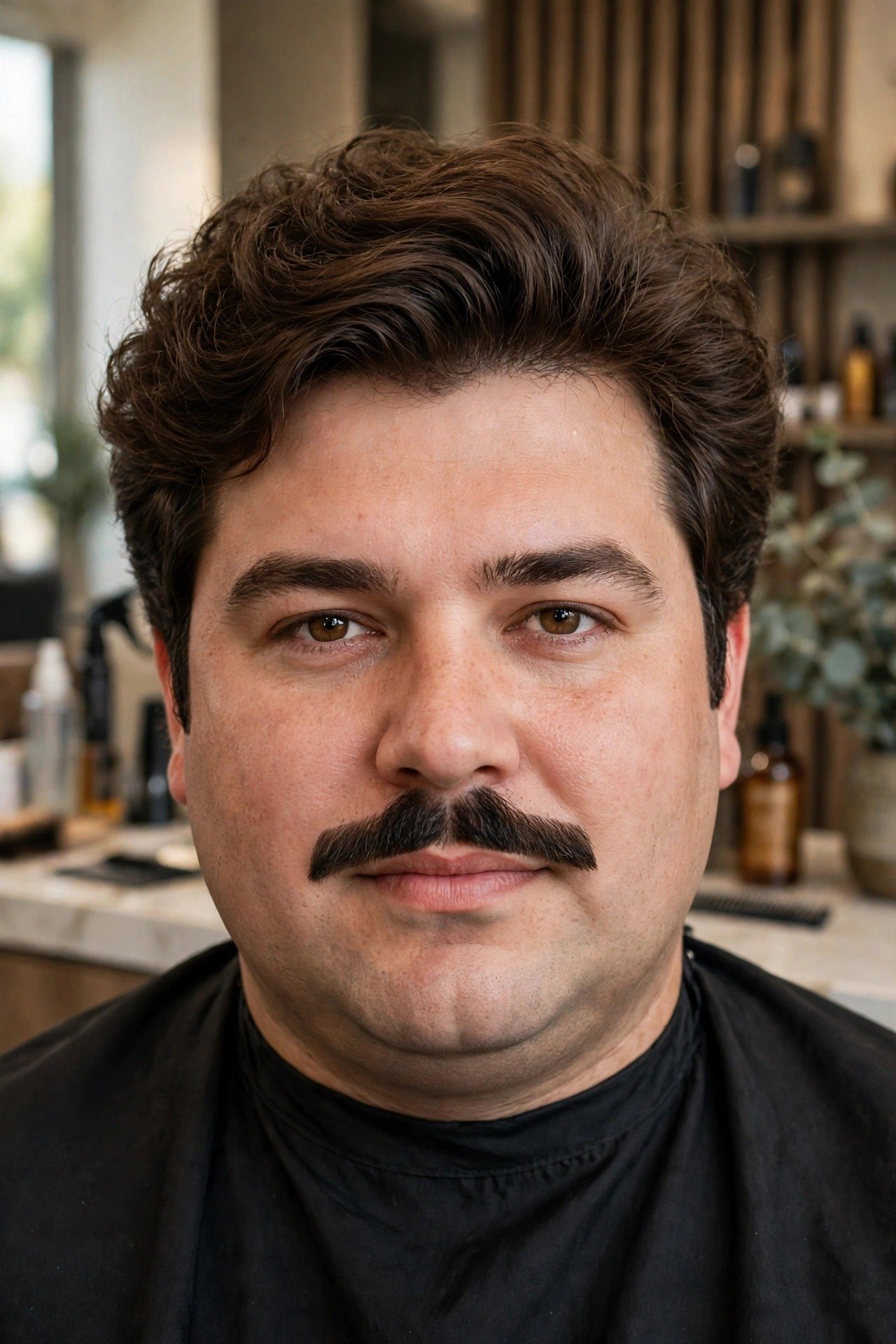
Round faces benefit from mustaches that add angles and horizontal structure, countering softness in the cheeks. A chevron with defined corners, a horseshoe with straight vertical bars or a neat lampshade taper all introduce lines that the face itself lacks. Avoid very soft, bushy shapes that echo the roundness and add width where it is not needed. Width should stay moderate, ending near the mouth corners, so the mustache structures the centre without widening the whole face. A slightly angular top edge helps more than extra length. The aim is definition, not bulk.
Grow four to five weeks, then shape with angles in mind: keep the top edge fairly straight and the corners crisp. Trim the lip line cleanly so the bottom edge contributes its own line. If choosing a horseshoe, keep the vertical bars straight and not too wide, since wide bars add the very width you are balancing. Comb daily and check the shape from the front, where roundness is most apparent. Pair the mustache with haircut height on top and shorter sides, which lengthens the overall silhouette further.
Maintenance follows the chosen shape, but corner definition deserves weekly attention because soft corners lose the angular effect. The common mistake is growing a wide, fluffy mustache that makes cheeks look fuller. Another is pairing the mustache with heavy stubble across the cheeks, adding width everywhere. Barber shaping is worthwhile initially, since angles are easier to set professionally. Costs remain standard for any of these styles. Choose structure over volume, keep edges deliberate, and a round face gains definition that also makes the jaw appear stronger in photographs.
16. Mustache for Square Faces

Square faces already have strong angles, so the mustache can afford softness and a touch of width. A natural full mustache, a walrus or a gently tapered chevron complements the jaw without competing with it. The width of a square face carries broader mustaches comfortably, so corners may extend slightly beyond the mouth. Softness matters: overly sharp, thin lines can look harsh against a strong jaw. Texture also helps, since a slightly relaxed finish balances the geometry of the face. Most square-faced men have the widest choice of any face shape.
Grow five weeks, then decide how much presence you want: keep length for a natural finish or trim to a chevron for neatness. Comb the hair downwards and shape the lip line, preserving a little fullness at the corners. If the jaw is very strong, a slightly wider mustache prevents the chin dominating the lower face. Avoid making the top edge ruler-straight, which can look severe; a gentle natural line suits better. Check proportions with your usual haircut, since short sides emphasise squareness further and may call for a softer mustache.
Upkeep is flexible, ranging from weekly trims for neat shapes to monthly tidies for natural ones. The typical mistake is choosing a very thin pencil mustache that looks lost on a broad face. Another is neglecting the corners until they spread into the cheeks unevenly. Costs depend on the style chosen, but square faces rarely need corrective barber work. This face shape is the most forgiving, so experimentation is low-risk. Choose softness and moderate width, and the mustache will harmonise with a strong jaw rather than fighting it for attention.
17. Mustache for Oval Faces
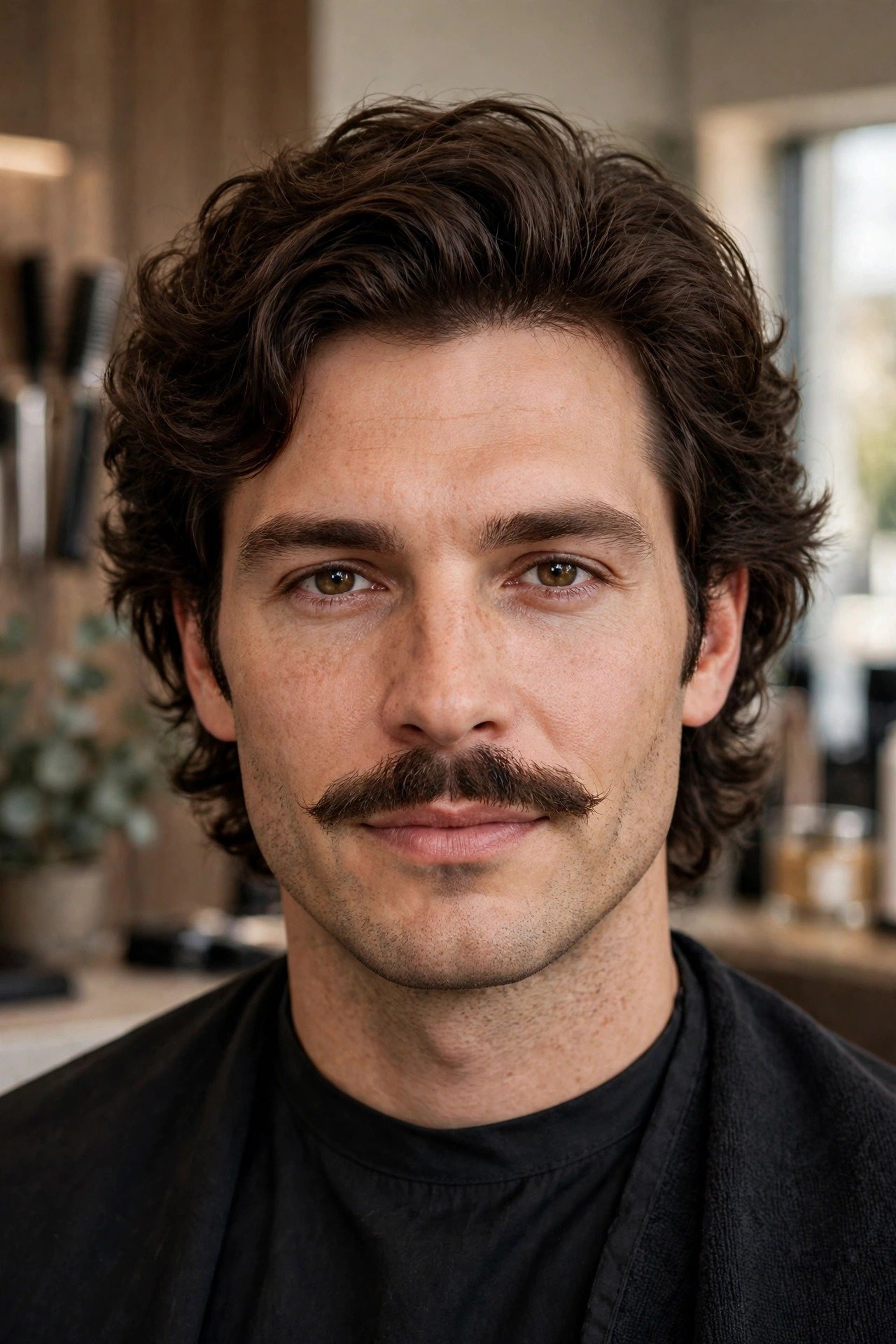
Oval faces are the easiest to style because proportions are already balanced, so almost every mustache shape works. The decision becomes about character rather than correction: a skinny mustache for fashion, a chevron for reliability, a handlebar for statement. Width and length can be chosen freely, although extremes should still respect lip width and growth density. Oval faces also carry vintage styles like the pencil and English particularly well. This freedom means growth pattern and lifestyle should drive the choice. Pick the style you will actually maintain, since consistency beats novelty.
Grow according to the chosen style, then use the oval face’s balance to experiment in small steps. Start with a trimmed chevron, live with it for a fortnight, then adjust width or length based on photographs rather than mirror impressions. Comb and trim on the schedule your style demands, keeping the lip line clear. Because the face needs no correction, focus on hair quality: even length, clean edges and healthy skin beneath. A barber can refine proportions, but home maintenance is usually straightforward once the shape is set.
Maintenance varies by style, yet oval faces forgive minor unevenness better than any other shape. The common mistake is constant restyling, never letting one shape settle long enough to judge it fairly. Another is copying a style suited to a different growth pattern, then blaming the face. Costs are whatever your chosen style requires, with no corrective premium. Use the freedom wisely: match the mustache to your haircut, wardrobe and routine. An oval face with a well-kept mustache of any classic shape will look balanced in nearly every setting.
18. Mustache for Long Faces

Long faces need horizontal emphasis, and a mustache provides exactly that when it is wider and fuller rather than thin. A broad chevron, a lampshade or a natural full mustache breaks up facial length by drawing the eye across the centre. Avoid narrow vertical elements, such as long horseshoe bars, which can exaggerate length. Keep the mustache reasonably thick so the horizontal line registers clearly. Haircut choice matters too: avoid excessive height on top, which stretches proportions further. The combined effect should widen the middle of the face and shorten its appearance.
Grow five weeks, then shape the mustache wider than standard, letting the corners reach or slightly pass the mouth corners. Keep the height of the mustache generous, trimming only the lip line for comfort. Comb the hairs slightly outwards to reinforce the horizontal direction. Check the result with your haircut in place, since top volume changes the balance significantly. If the face still reads long, adding short stubble along the jaw can help, but keep the mustache clearly the dominant feature so the horizontal effect remains.
Upkeep centres on preserving width and fullness, so resist trimming the corners back during weekly tidies. The frequent mistake is choosing a skinny or pencil mustache, whose thin line is too weak to interrupt facial length. Another is pairing a good mustache with a tall quiff, undoing the proportion work. Barber advice is valuable here because proportion is subtle; expect standard pricing. Choose width, keep the haircut moderate on top, and a long face gains balance that looks natural rather than obviously corrected in any mirror.
19. Mustache with Fade Haircut
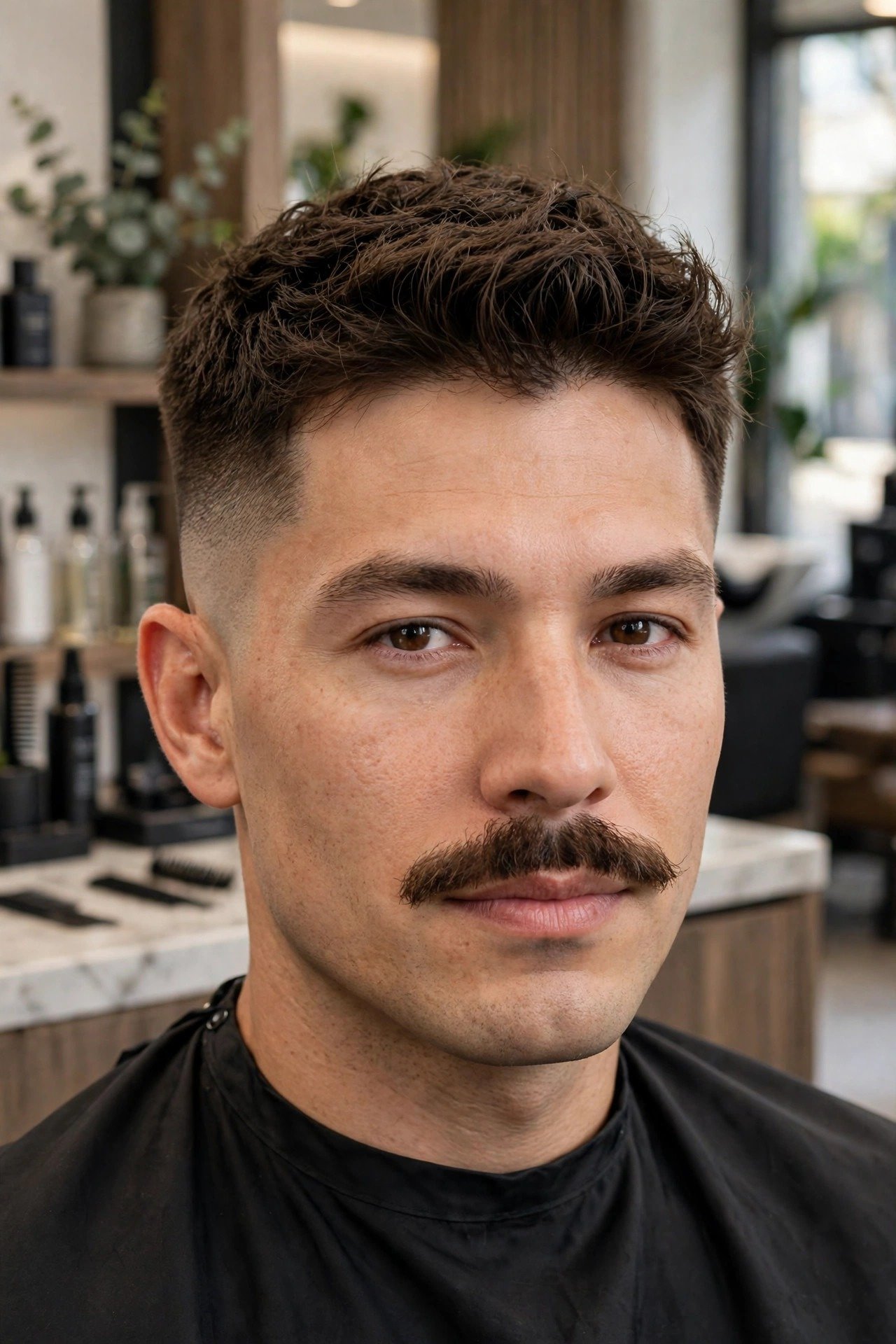
Pairing a mustache with a fade haircut creates a clean frame: short sides, defined edges and a strong centre feature. The combination suits most face shapes because the fade keeps the silhouette tidy while the mustache adds character. A trimmed chevron or corporate shape matches the precision of a fade best, although a fuller mustache can work when the fade is softer. The key is consistent sharpness; a crisp fade beside a scruffy mustache looks unfinished. This pairing is popular for good reason: it looks deliberate from every angle and suits work and social settings alike.
Coordinate the two shapes at the barber, asking for the mustache edges to match the cleanliness of the fade lines. At home, tidy the mustache lip line weekly and keep the skin around it clean-shaven so the contrast stays sharp. A crew cut for men with faded sides offers an even lower-maintenance version of the same idea. Trim the mustache corners to end cleanly, since stray hairs stand out against faded sides. Comb daily and keep length even, because the fade exposes any unevenness quickly.
Maintenance follows the fade cycle, typically a barber visit every two to three weeks, with mustache tidies at home between visits. The common mistake is letting the fade grow out while keeping the mustache sharp, or the reverse, so the two halves of the look drift apart. Another is choosing a very bushy mustache that overwhelms the clean sides. Costs are those of regular barber visits, which fade wearers already budget for. Choose this pairing when you value a polished, modern silhouette and can keep a regular barber rhythm.
20. Mustache with Stubble

A mustache worn with stubble keeps the upper lip prominent while the rest of the face carries light, even growth. The contrast should be clear: the mustache longer and fuller, the stubble short and uniform. This suits men who find daily shaving irritating and those whose beard growth is patchy in places. Round and square faces both handle it well, provided the stubble does not add unwanted width. The look feels relaxed yet intentional when edges are managed. It is one of the easiest styles to live with day to day.
Grow everything for three weeks, then set the stubble to a short guard length and leave the mustache noticeably longer. Trim the mustache lip line and keep its shape defined so it stands apart from the stubble. Clean the neckline and cheek edges lightly, because completely unmanaged stubble reads as neglect rather than style. Moisturise the skin, since short stubble can feel dry and itchy in the first fortnight. Re-trim the stubble every few days to hold the contrast; once lengths equalise, the design disappears.
Upkeep is brief but frequent: stubble trims twice a week and mustache tidies weekly. The typical mistake is letting the stubble grow into a short beard, swallowing the mustache’s prominence. Another is uneven stubble length, which looks patchy under bright light. Costs are minimal, with home clippers handling everything after the first shape. A barber can set the contrast levels initially for a modest fee. Choose this combination when you want character without daily shaving, and keep the length difference obvious so the mustache remains the feature.
21. Solo Mustache with Clean Shave

The solo mustache stands alone on an otherwise clean-shaven face, making it the boldest simple statement in grooming. It suits men with strong upper-lip growth and faces where a single focal point looks confident rather than lonely. Chevron and trimmed shapes work best solo, since their solid form carries the look without support. Skin quality matters more here because everything around the mustache is bare and visible. The solo mustache pairs well with neat haircuts and a tidy overall presentation. Done well, it looks classic and assured; done carelessly, it looks forgotten.
Grow the mustache for four to five weeks while shaving the rest of the face normally, keeping a clear border around the growing area. Once length is established, shape the top edge and lip line precisely, since clean skin exposes every wobble. Shave close around the mustache with a fresh blade and take care at the corners. Moisturise after shaving to prevent redness that distracts from the mustache. Trim weekly to hold the shape, and resist letting stray hairs blur the border between mustache and bare skin.
Maintenance combines daily or alternate-day shaving with weekly mustache trims, so the routine suits men already comfortable shaving. The common mistake is letting stubble creep around the mustache, turning a solo statement into an unfinished beard. Another is choosing too wide a shape, which dominates a bare face. Costs are low, mostly blades and a trimmer. A barber shaping every few weeks keeps proportions honest. Choose the solo mustache when your growth is strong and you enjoy a clean, classic presentation with one deliberate feature.
22. Corporate Neat Mustache

A corporate neat mustache is short, even and conservatively shaped for workplaces where presentation matters. It suits client-facing roles, formal dress codes and men who want facial hair without any hint of scruffiness. The trimmed chevron at a modest width is the standard form, sitting cleanly above the lip with defined edges. Most face shapes carry it comfortably. The corporate mustache should look like a decision, never like a shave that was skipped. When kept crisp, it adds maturity and character while remaining entirely professional in meetings and photographs.
Grow three to four weeks, then trim to an even short length with a guard, keeping the bottom line clear of the lip. Define the top edge and corners neatly, ending the mustache near the mouth corners. Shave the surrounding skin cleanly so the contrast signals intention. Check the result in office lighting if possible, since bright light reveals uneven length that home mirrors hide. Keep a small trimmer for midweek touch-ups before important days. Consistency is the whole strategy: the corporate look fails only when maintenance slips.
Weekly trims and clean surrounding skin keep the corporate mustache credible, taking only minutes. The frequent mistake is letting the lip line grow over during busy weeks, which quickly reads as untidy in professional settings. Another is uneven corners that draw attention in close conversation. Costs are minimal at home, with an occasional barber tidy before major events. This style also grows out gracefully if you later want a fuller shape. Choose it when your workplace values polish; it is the lowest-risk mustache for professional life in 2026.
23. Vintage Mustache
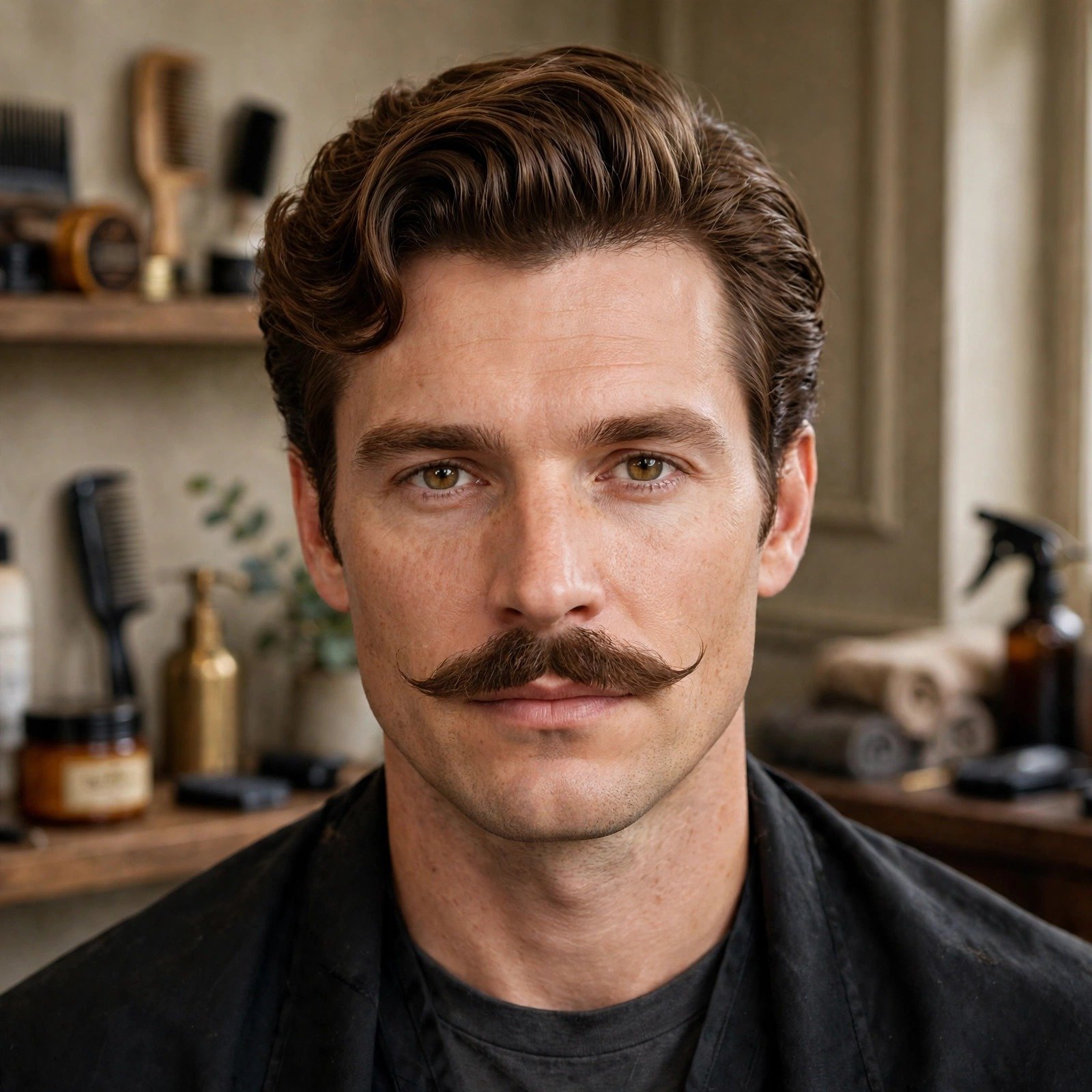
A vintage mustache draws on early twentieth-century grooming: pencil lines, English sweeps and neat chevrons styled with period care. It suits men who enjoy classic clothing and hairstyles, and faces that carry refinement well, particularly oval and heart shapes. The vintage effect depends on the whole presentation, so hair parting, clothing and posture all contribute. Growth requirements vary by the specific shape chosen, but precision is constant. This is grooming as a deliberate aesthetic rather than a trend chase. When the elements align, the result looks timeless instead of costume-like.
Choose your reference shape first, then grow to its requirements: four weeks for a pencil, longer for an English sweep. Study how the style sits with your haircut, adjusting parting and side length to support the period feel. Trim with extra care around edges, because vintage shapes rely on clean lines. A light pomade or cream in the hair and minimal product in the mustache usually suffice. Avoid mixing vintage precision with heavy modern stubble, which breaks the illusion. Photographs help judge whether the look reads classic or theatrical.
Maintenance mirrors the chosen shape, with edge precision demanding regular attention. The common mistake is overdoing the theme until grooming looks like fancy dress. Another is choosing a vintage shape that fights your growth pattern, then forcing it with excessive product. Costs are modest, mainly time and occasional barber shaping. A barber familiar with classic styles is worth finding. Choose a vintage mustache when you genuinely like the era’s aesthetic; worn with everyday confidence and neat clothing, it looks distinguished rather than dated or theatrical in ordinary daily settings.
24. Modern Textured Mustache
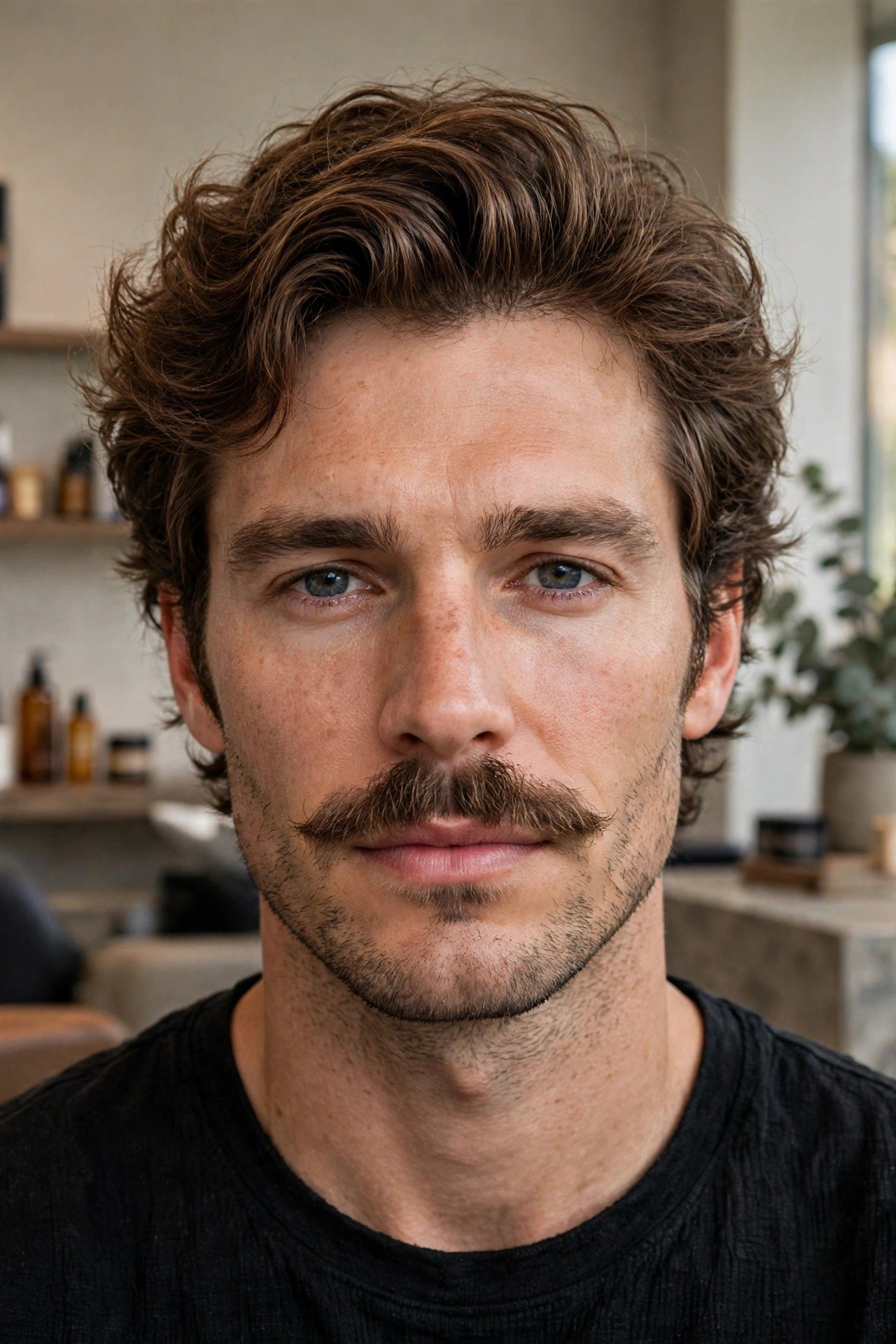
The modern textured mustache keeps visible natural texture with controlled length, sitting between the natural full style and the trimmed chevron. It suits men with wavy or slightly coarse growth, where texture adds character that a flat trim would remove. Most face shapes work, and the style pairs naturally with textured haircuts and casual clothing. Edges stay defined enough to look intentional, while the surface keeps movement. This is the mustache equivalent of a modern textured crop: relaxed, current and deliberately unpolished. It rewards good hair quality more than strict geometry.
Grow five weeks, then trim to a medium length, keeping the lip line clear and the top edge lightly defined. Comb the hair downwards, then use fingers to settle the texture rather than flattening it with heavy product. A tiny amount of matte balm controls flyaways without shine. Trim stray hairs individually with scissors instead of running a trimmer flat, which would erase the texture. Check the shape in daylight, where texture reads honestly. The aim is controlled movement: tidy outline, lively surface and a finish that still looks relaxed.
Upkeep involves a weekly lip tidy and scissor work on strays, with a fuller shape every few weeks. The typical mistake is over-trimming until the texture disappears and the style becomes an ordinary chevron. Another is letting length creep until texture turns into untidiness around the mouth. Costs stay low, and the style tolerates busy weeks better than precise shapes. Barbers can refresh the outline monthly. Choose the modern textured mustache when your growth has natural character and you want a current, relaxed finish that still looks cared for.
25. Short Cropped Mustache
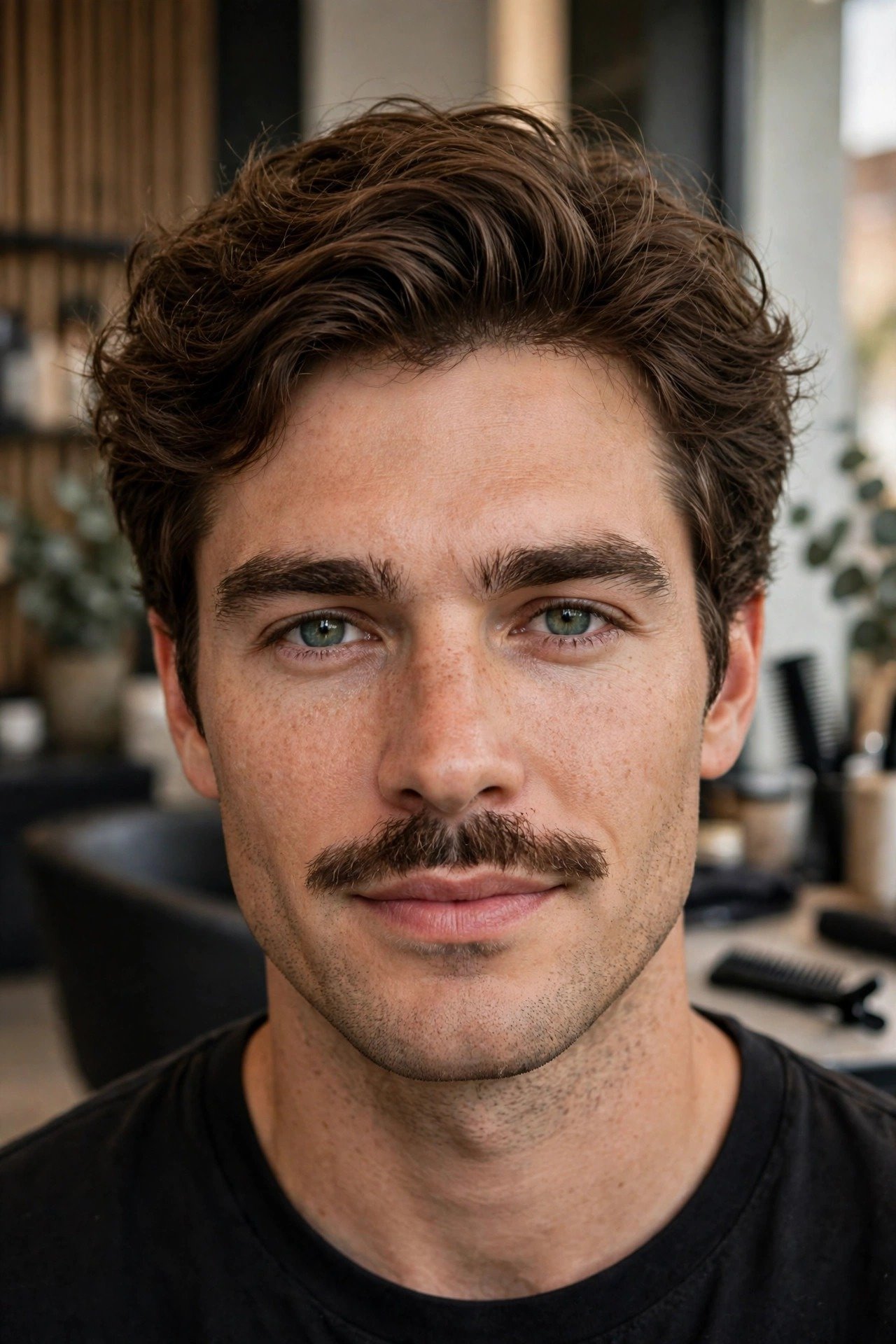
A short cropped mustache is trimmed close and even, giving a defined upper-lip feature with minimal bulk. It suits thin growth, busy routines and men who want the suggestion of a mustache without length or styling. The cropped length makes sparse areas look denser because hairs stand uniformly rather than separating. Most face shapes carry it, and it pairs with any haircut from buzz cuts to longer styles. This is often the most practical mustache of all. Its neatness comes from uniformity, so even trimming matters more than shape complexity.
Grow three weeks, then crop to a short guard length evenly across the whole mustache. Define the top edge and lip line with a detail trimmer, keeping corners level with the mouth. Comb against the growth direction before trimming to lift hairs for an even cut. Work slowly at the corners, where cropped length exposes unevenness quickly. Shave the surrounding skin cleanly so the cropped block reads as a deliberate shape. A weekly pass at the same guard setting maintains the effect with almost no learning curve.
Maintenance is the lightest of any style: one short trim weekly and edge tidies as needed. The common mistake is cropping unevenly, leaving one side visibly shorter under bright light. Another is letting the crop grow out unevenly until it looks like missed shaving. Costs are minimal, and home clippers handle everything. A barber can set the initial outline, after which upkeep is trivial. Choose the short cropped mustache when time is scarce, growth is thin or you simply prefer a tight, unfussy finish that never needs product.
26. Wide Chevron Mustache

A wide chevron extends beyond the mouth corners while keeping the chevron’s solid, tapered form. It suits broader faces, particularly square and round shapes, where extra width balances the cheeks and jaw. Men with strong corner growth get the best result, since the extensions need density to look solid. The wide chevron feels generous and confident without the drama of a handlebar. It also helps long faces by emphasising horizontal lines. Width must be earned by growth, though; extending into sparse corners weakens the shape. When density supports it, the effect is assured.
Grow five to six weeks so the corners develop enough length and density to carry the width. Shape the top edge and lip line as with a standard chevron, then let the ends extend while tapering them gently. Trim the ends at a slight angle so they finish cleanly rather than stopping abruptly. Compare both sides at arm’s length, since width differences show clearly. Comb outwards slightly to reinforce the horizontal sweep. If one corner grows weaker, keep that side marginally shorter and balance the silhouette over time.
Upkeep involves weekly trims that preserve width while keeping the lip line clear. The frequent mistake is trimming the corners back to standard chevron width during a routine tidy, losing the style’s identity. Another is letting the extensions grow ragged, which looks unkempt against the cheeks. Costs are standard, with barber shaping helpful for symmetry. This style suits men who want presence without curls or wax. Choose the wide chevron when your face and growth can carry breadth, and maintain the corners deliberately so the width always looks chosen.
27. Parted Pencil Mustache
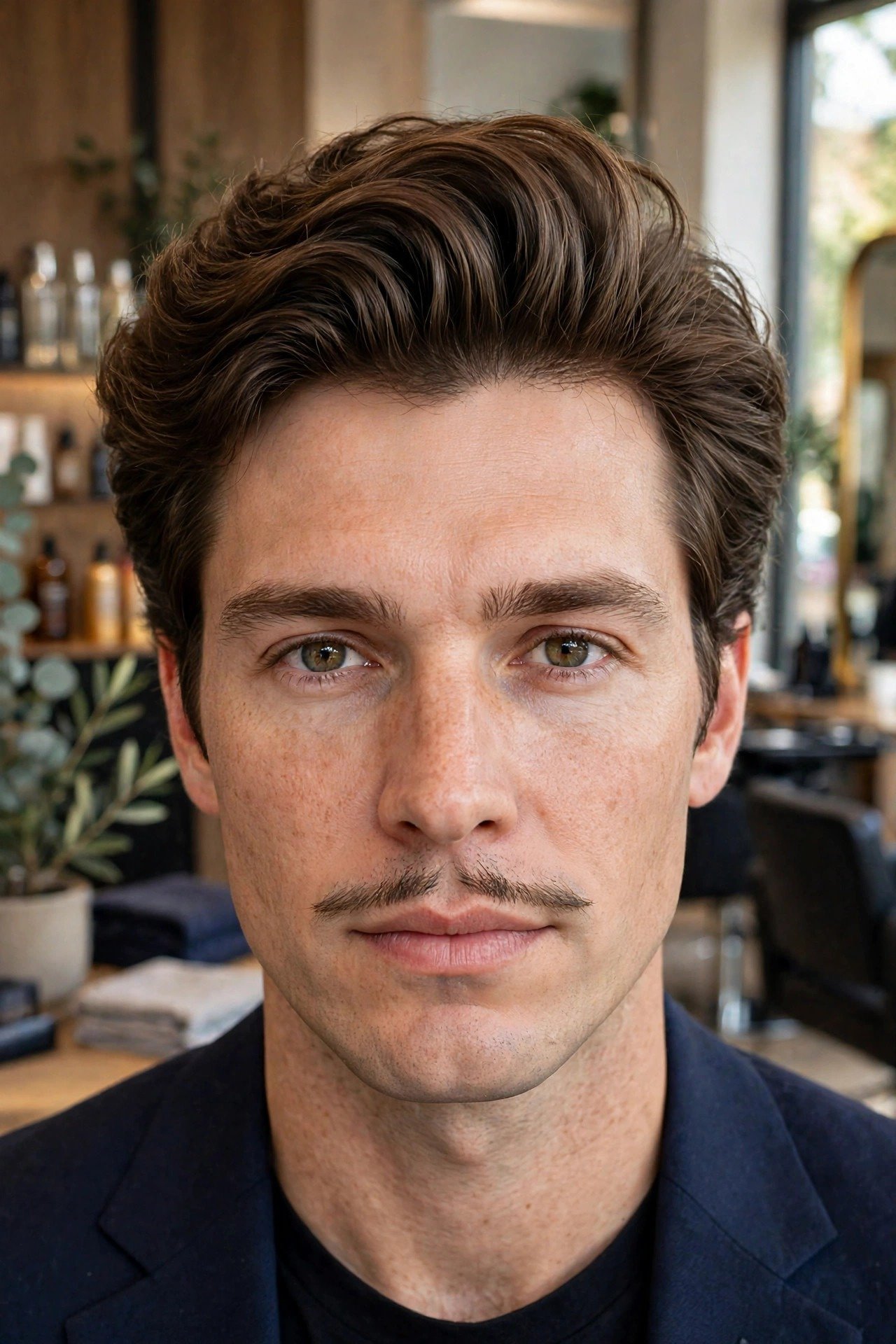
A parted pencil mustache splits the thin pencil line at the centre, creating two neat sections with a small gap above the lip’s centre. It suits men whose growth naturally parts or has a slight centre gap, turning a potential weakness into the design itself. Oval and heart-shaped faces carry the refinement well. The parted version feels slightly more relaxed than the continuous pencil while keeping vintage elegance. Precision still matters, because the gap must look placed rather than accidental. This style suits men who like detail and a lighter facial feature.
Grow four weeks, then define the pencil line before creating the centre parting. Trim a narrow gap at the centre, keeping both sections equal in height and length. Work with a detail trimmer and check symmetry constantly, since the parting draws the eye to the centre. Keep the outer ends neat, either pointed or softly squared. Shave cleanly around the line so the parting reads clearly. If your growth parts naturally, follow its direction rather than forcing the gap elsewhere. Small corrections over days beat one bold cut.
Maintenance requires twice-weekly edge care, because regrowth in the centre gap quickly blurs the parting. The common mistake is making the gap too wide, which splits the mustache into two disconnected pieces. Another is uneven section heights, obvious at conversational distance. Costs are low, though a first barber shaping helps establish symmetry. Pair the parted pencil with neat hair and avoid heavy stubble, which overwhelms its delicacy. Choose it when your growth suits a centre split and you enjoy precise, vintage-leaning grooming with a lighter touch.
28. Imperial Mustache
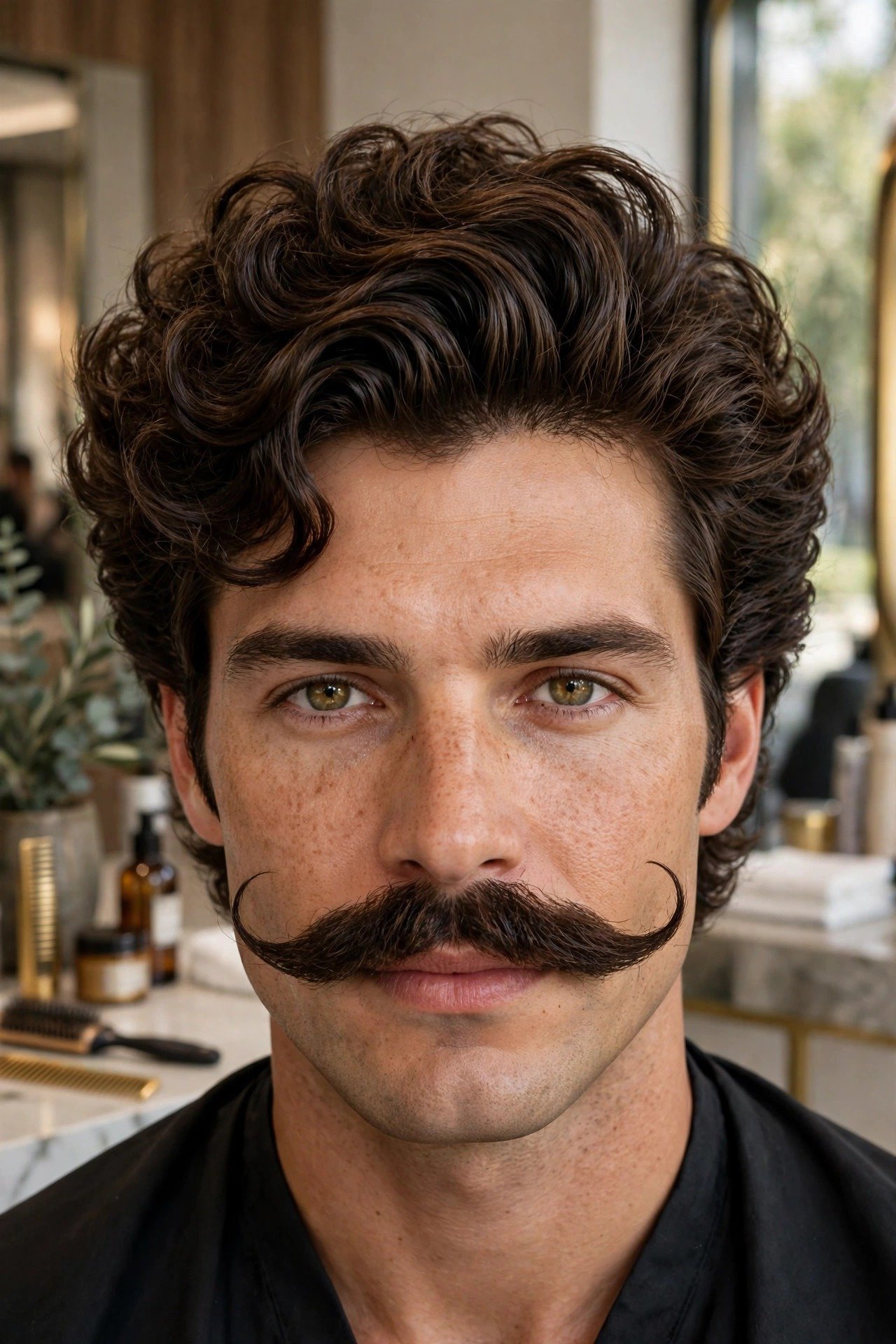
The imperial mustache sweeps upwards and outwards in a grand arc, associated with an era of formal, imposing grooming. It suits men with thick growth, strong features and the patience for a longer growing period. Square and oval faces carry the upward sweep well, since the shape adds height and ceremony. This is a statement style that pairs with classic haircuts and structured clothing. The imperial differs from the handlebar by its broader, more upward arc rather than tight curls. Worn confidently, it looks distinguished; worn hesitantly, it can look theatrical.
Growth takes ten to fourteen weeks, with daily combing upwards and outwards to train the arc. Wax supports the sweep, applied sparingly to the outer sections while keeping the centre full. Trim only the lip line and any hairs breaking the arc’s silhouette. Morning styling matters because sleep flattens the upward direction on one side. Warm the wax fully before applying, or it clumps and separates the hairs. Build the arc gradually over weeks instead of forcing height early, which produces stiff spikes rather than an elegant sweep.
Daily styling and monthly barber shaping keep the imperial credible, so budget time and money honestly. The common mistake is attempting the style with insufficient density, leaving thin ends that cannot hold the arc. Another is letting the arc grow uneven until one side dominates. Costs include wax and regular professional shaping. This style suits formal occasions and men who enjoy grooming ritual. Choose the imperial when your growth is abundant and you want grandeur; men with lighter growth will achieve more with a chevron or English shape.
29. Dali-Inspired Mustache
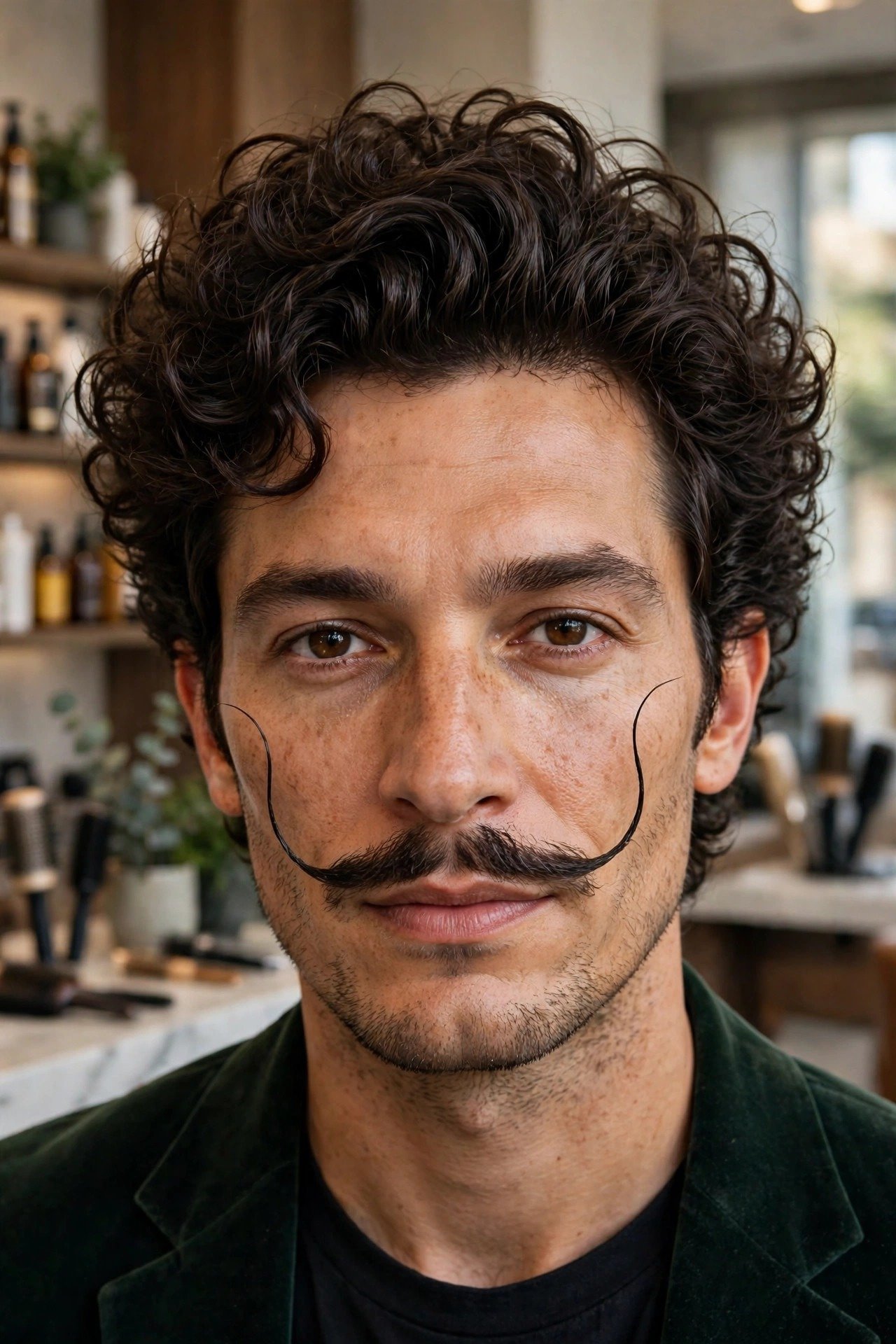
A Dali-inspired mustache, kept tasteful and wearable, uses fine, upturned points with a neat central section for an artistic effect. The modern version softens the extremes: points rise gently rather than dramatically, and the centre stays tidy. It suits creative men with straight, cooperative growth and oval or long faces that benefit from upward lines. This style is about flair, so the rest of the grooming should stay clean to keep the focus deliberate. Confidence is essential, because the points invite attention. Kept modest, the look reads artistic rather than costume-like.
Grow six to eight weeks, keeping the centre trimmed like a neat chevron while preserving length at the ends for the points. Train the ends upwards with combing and a small amount of firm wax, twisting gently to form points. Trim stray hairs that break the point silhouette, working slowly because fine points show every error. Keep the points symmetrical by checking in a mirror at arm’s length. A softer, shorter point suits everyday wear; reserve dramatic height for occasions. Product honesty matters: wax holds points, but only adequate length creates them.
Daily styling is required, since points collapse without wax and training. The frequent mistake is making points too long and thin, which looks fragile and draws the wrong kind of attention. Another is neglecting the centre until it looks scruffy beneath the styled ends. Costs include firm wax and careful barber shaping. This style suits creative workplaces better than conservative ones, so judge your environment honestly. Choose a tasteful Dali-inspired shape when you want artistry with control, and keep the points modest enough to wear comfortably all day.
30. Cowboy Mustache
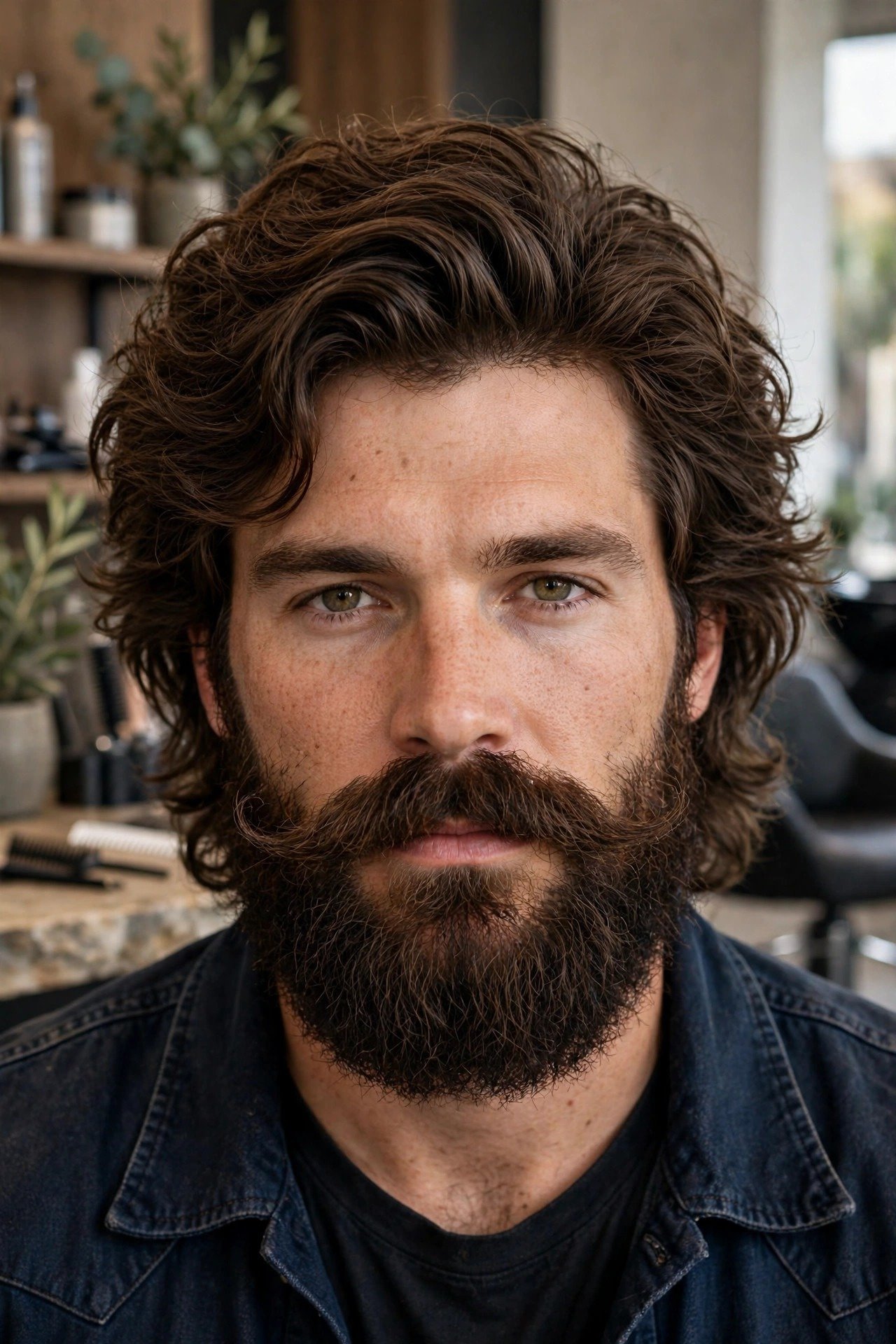
The cowboy mustache is full, wide and rugged, extending generously with a relaxed, weathered character. It suits men with thick growth and broader faces, particularly square and round shapes that carry width well. The style pairs naturally with casual clothing, longer hair and an outdoors aesthetic. Unlike the walrus, the cowboy keeps slightly more shape at the edges while retaining generous volume. It signals ease and toughness rather than precision. Men whose growth is dense and slightly wavy get the most authentic effect. Neatness still matters, even within the rugged brief.
Grow six to eight weeks, combing the hair downwards and slightly outwards to build the wide silhouette. Trim the lip line for comfort and keep the ends full rather than tapering them sharply. A light balm controls flyaways without reducing volume. Keep the top edge reasonably defined so the fullness looks groomed. Wash regularly, since longer mustaches collect dust and food more readily. If growth is uneven, trim the heavier side minimally and let the lighter side catch up over the following week rather than cutting both back.
Maintenance is relaxed: lip tidies weekly and a general shape monthly. The common mistake is letting the cowboy grow completely unmanaged until it covers the mouth and looks neglected. Another is pairing it with an unkempt haircut, which pushes rugged into scruffy. Costs are low, with home scissors handling most upkeep. A barber shape every six weeks keeps proportions balanced. Choose the cowboy mustache when your growth is strong and your style leans casual; it offers presence and character with very little daily effort or product.
31. Biker Mustache
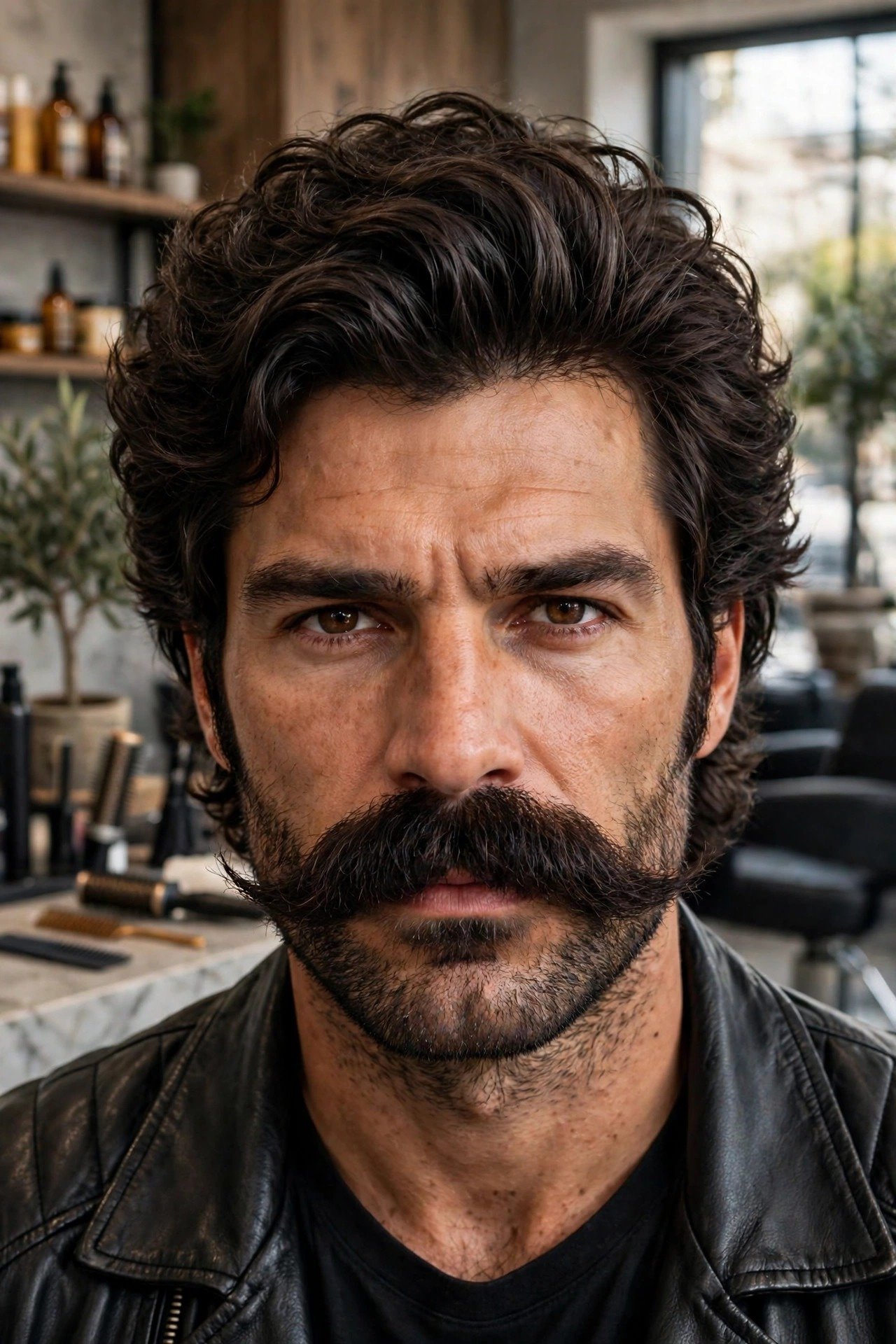
A biker mustache is bold and full, often paired with a beard or goatee area growth for a tough, road-ready silhouette. It suits men with dense growth and strong jaws, particularly square and rectangular faces. The mustache stays prominent, sometimes extending towards the chin in a horseshoe direction. This style belongs to a broader aesthetic, so clothing and haircut usually reinforce it. Neat edges keep the toughness looking deliberate rather than rough. Men with patchy corner growth should choose a fuller central shape instead. Confidence carries this style as much as density does.
Grow five to seven weeks, shaping the mustache prominently while deciding how much chin or beard growth accompanies it. Keep the lip line clear enough for comfort and define the outer edges so the boldness reads as design. If extending towards the chin, keep the vertical sections straight and symmetrical. Balm tames coarse hair and prevents the wiry look that undermines the style. Trim weekly to hold the silhouette, since bold shapes drift into bulk quickly. Check proportions against your jaw, aiming for balance rather than maximum size.
Upkeep involves weekly trims and edge definition, with barber shaping every few weeks for symmetry. The frequent mistake is letting the mustache and beard merge into undifferentiated bulk with no focal point. Another is neglecting skin care beneath dense growth, leading to dryness and irritation. Costs are moderate and mostly home-based. This style suits casual and creative environments better than formal ones, so consider context. Choose the biker mustache when your growth and personal style support boldness, and keep edges deliberate so toughness never slides into untidiness.
32. Old Money Mustache

An old money mustache is understated, immaculate and quietly confident, favouring a neat chevron or trimmed shape over any drama. It suits men who prefer classic tailoring, tidy haircuts and grooming that never shouts. Most face shapes carry it, because restraint flatters broadly. The effect comes from perfect maintenance: even length, clean edges and healthy skin. Nothing about the style is experimental, and that is precisely its appeal. It pairs with grey hair beautifully and with formal clothing naturally. Understatement, executed flawlessly, is the entire design principle here.
Grow four weeks, then trim to a neat chevron at a moderate width and length. Keep the lip line clear and the top edge clean, with corners ending tidily near the mouth. Shave surrounding skin closely and moisturise, since bare skin quality forms part of the polished effect. Comb daily and trim weekly, never letting the shape drift. A good barber relationship helps, because consistent shaping keeps proportions identical month after month. Avoid trends and products with shine; the old money finish is matte, calm and exact.
Maintenance is simple but must be consistent: weekly trims, clean skin and regular barber visits every three weeks. The common mistake is letting the mustache grow slightly shaggy, which instantly breaks the understated effect. Another is choosing too wide or long a shape, introducing drama the aesthetic avoids. Costs are those of regular barber care, which suits the philosophy of quiet investment. This style ages gracefully and suits professional and social settings alike. Choose the old money mustache when you value timeless neatness over novelty and will maintain it without lapses.
33. Young Professional Mustache

A young professional mustache balances freshness with workplace credibility, usually a trimmed chevron or short cropped shape kept immaculate. It suits men early in their careers who want character without risking a scruffy impression. Most face shapes work, and medium growth suffices because short length hides minor gaps. The style pairs well with modern haircuts and smart casual clothing. It should look like a deliberate style choice, refreshed weekly. Younger men with still-developing growth should keep the shape compact, building where density is strongest. Confidence grows when the mustache looks intentional every day.
Grow three to four weeks, then trim to a short, even length with defined edges. Keep the width within your strongest growth zone rather than copying a photograph of denser hair. Shave surrounding skin cleanly and tidy the lip line weekly. Check your appearance before interviews or presentations, touching up edges the evening before. A small trimmer in your wash bag handles travel maintenance. Photograph progress monthly, since young growth often thickens over time and may later support fuller shapes. Start compact and expand only when density allows.
Upkeep takes minutes weekly, which suits busy early careers. The frequent mistake is growing a wide, thin mustache that looks unfinished in professional settings. Another is neglecting edges during demanding weeks, when impressions matter most. Costs are minimal, with home maintenance covering everything after an initial shape. A barber tidy before major career moments is money well spent. Choose the young professional mustache when you want maturity and character at work; kept crisp, it strengthens presence without ever looking like an oversight or a missed morning shave.
34. Mustache for Older Men

Mustaches for older men should honour mature features with neatness, proportion and comfort. A trimmed chevron, natural full shape or grey mustache suits most older faces, adding distinction without fuss. Skin becomes more sensitive with age, so gentle trimming and moisturising matter more. Grey and white growth often looks distinguished when kept even and defined. Avoid very thin or extreme shapes, which can look harsh against mature features. The goal is dignity and ease: a mustache that suits the face you have now. Many older men find a mustache restores balance as scalp hair thins.
Grow four to five weeks, then shape to a comfortable length that clears the lip. Use sharp, clean tools and trim gently, since older skin marks more easily. Moisturise the skin beneath and around the mustache daily, and soften coarse grey hairs with a little balm. Keep the top edge defined so the shape looks deliberate. If eyesight makes detail work difficult, a barber every two to three weeks is a sensible investment rather than a luxury. Comfort should guide length: shorter usually feels better and looks neater.
Maintenance stays simple: weekly trims, daily combing and consistent skin care. The common mistake is letting the mustache grow long and uneven, which ages the appearance rather than dignifying it. Another is dyeing unevenly, creating harsh contrast with grey hair. Costs are modest, and regular barber visits double as enjoyable routine for many men. This stage of life suits classic shapes worn well. Choose a neat, comfortable mustache, keep it defined, and it will complement mature features with quiet confidence in every setting, from family photographs to formal occasions.
35. Mustache for Curly Growth
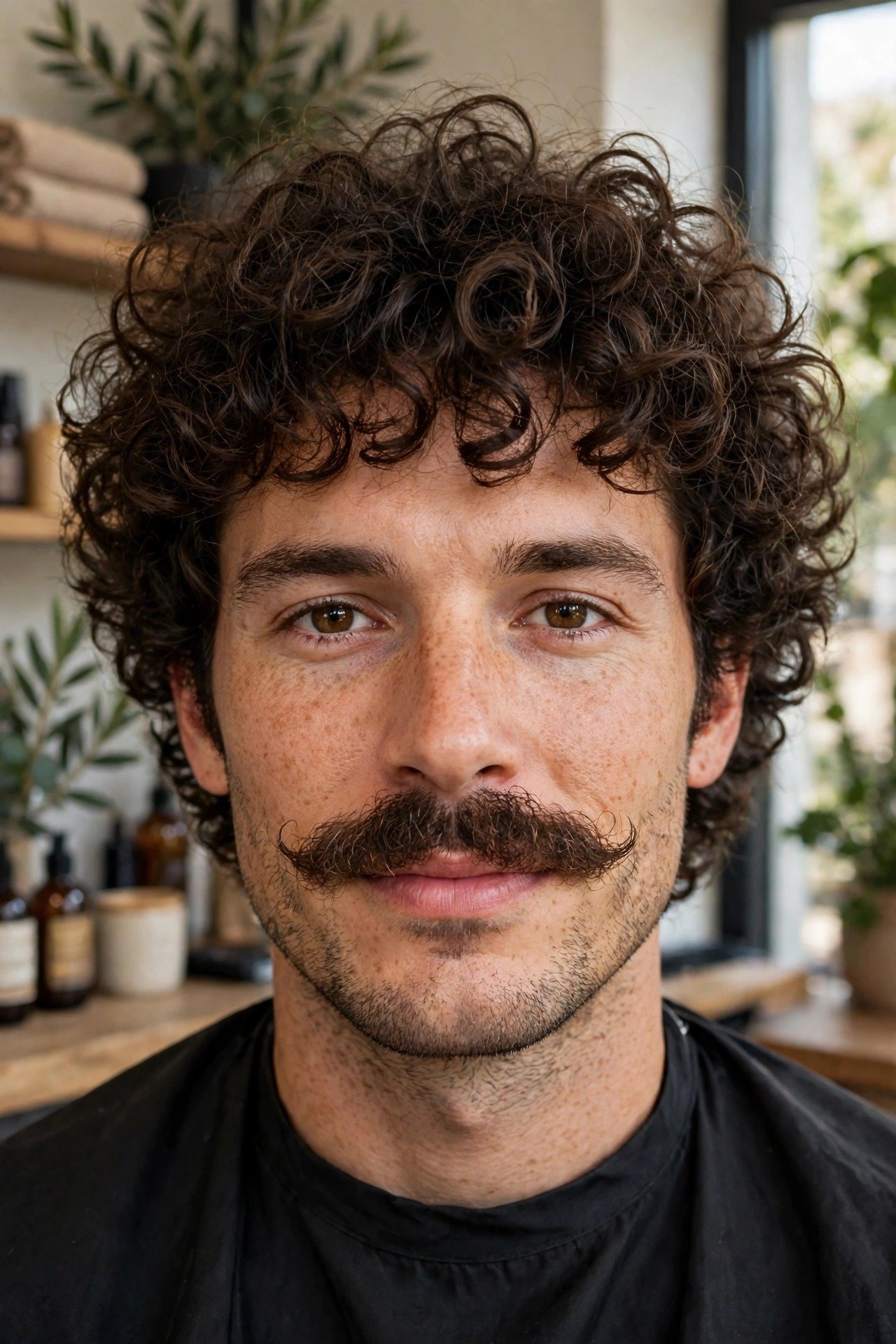
Curly growth needs shaping that works with the curl rather than fighting it, favouring natural, textured and fuller styles. A natural full mustache or modern textured shape lets curls create volume and character. Precise thin styles like the pencil usually disappoint on curly hair, because curls resist straight lines. Most face shapes suit curly fullness, provided length stays controlled around the lip. The texture itself becomes the feature, so edges need definition while the surface keeps movement. Embrace the curl pattern and the mustache looks intentional instead of unruly.
Grow five to six weeks, combing gently with a wide-tooth comb to avoid breaking curly hairs. Trim when the hair is dry and in its natural state, because wet curly hair stretches and misleads length judgements. Cut small amounts at a time, checking the silhouette frequently. A light leave-in conditioner or balm reduces frizz without flattening curls. Keep the lip line clear with scissors, following the curl direction. Avoid heavy wax, which separates curls into strings. Patience during growth matters, since curls appear shorter than straight hair of equal length.
Upkeep involves weekly lip tidies and gentle shaping, with moisture kept consistent to prevent frizz. The frequent mistake is trimming curly hair wet and too short, then watching it spring up unevenly. Another is forcing straight-line styles that curls cannot hold. Costs are low, mainly conditioner and occasional barber shaping by someone experienced with curly hair. A barber who understands curl behaviour is worth seeking. Choose fuller, textured shapes, trim dry and sparingly, and curly growth becomes an asset that gives your mustache distinctive character.
36. Mustache for Straight Growth

Straight growth is the most versatile mustache hair, holding precise lines, sweeps and curls at the ends with equal ease. Pencil, English, handlebar and chevron shapes all suit straight hair, so face shape and lifestyle can drive the choice. Straight hairs show uneven length clearly, which means trimming accuracy matters, but they also respond predictably to training. Most face shapes benefit, and styling products work exactly as expected. The main challenge is preventing straight hair from lying flat and looking thin. A little texture in trimming keeps the surface lively.
Grow according to your chosen style, combing daily in the direction the final shape requires. Straight hair trains quickly, so establish direction from the second week. Trim with the hair combed into position, checking length honestly rather than cutting while hairs lie sideways. A small amount of wax or cream holds sweeps and points reliably. Keep the lip line precise, since straight hairs crossing the lip are noticeable and irritating. If the mustache looks flat, trim at a slight angle to create texture instead of a single blunt plane.
Maintenance follows the chosen style, with straight growth forgiving most routines. The common mistake is assuming straight hair needs no training, then wondering why ends fall unevenly. Another is over-trimming flat, which makes the mustache look thin in photographs. Costs depend on style, from minimal for cropped shapes to regular wax and barber care for handlebars. Straight growth offers the widest choice, so experiment in stages. Choose the shape that fits your face and routine, train it early, and straight hair will hold the result with minimal fuss.
How to Grow, Trim and Style a Mustache at Home

Start by growing for at least four weeks before making shaping decisions, because early growth misleads almost everyone. Wash your face daily, comb the mustache in its intended direction and photograph progress weekly in consistent light. During this stage, trim only hairs that irritate the lip. Choose your target style based on density and face shape, not on a photograph of someone with different growth. If corners are sparse, plan a narrower shape; if the centre is strong, a chevron or cropped style will serve you well. Honest assessment now prevents months of forcing an unsuitable shape.
Shaping works best with the right tools used calmly: a trimmer with guards for even length, small scissors for individual strays and a detail trimmer or razor for edges. Trim downwards after combing, remove less than you think necessary, then step back and reassess. Guidance on technique from specialists such as Wahl’s expert trimming advice reinforces the same principle: small passes beat bold corrections. Keep the lip line clear, define the top edge and compare both sides at arm’s length. Finish by moisturising the surrounding skin so redness never distracts from the shape.
Maintenance decides whether the style survives, so build a simple rhythm: comb daily, tidy the lip line weekly and reshape every two to three weeks, at home or with a barber. Use wax only for styles that need hold, such as handlebars and points, and use balm or oil when hair feels coarse or dry. Common mistakes include trimming both sides aggressively after one uneven morning, neglecting the skin beneath and letting corners drift into the cheeks. A barber tidy costs modestly and resets proportions before errors compound. Consistency, not expensive products, keeps a mustache looking deliberate.
Frequently Asked Questions
How long does a mustache take to grow properly?
Most mustaches need four to six weeks before the true shape and density become clear, while handlebars and imperial styles may need ten to fourteen weeks for enough length. The first fortnight often looks untidy and uneven, which tempts many men to shave too early. Photograph progress weekly and avoid shaping decisions until week four. Growth speed varies with genetics, age and health, so compare against your own progress rather than another man’s timeline. Patience in the early stage produces a far better final result than repeated restarts.
Which mustache style suits a round face best?
Round faces suit mustaches that add angles and structure, such as a chevron with defined corners, a neat lampshade or straight-sided horseshoe bars kept moderate in width. Avoid soft, wide and bushy shapes that echo cheek roundness and add unwanted width. Keep the mustache ending near the mouth corners and the edges crisp, so the centre of the face gains definition. Pairing the mustache with height on top of the haircut and shorter sides lengthens the overall silhouette further. A barber can set the angles accurately at the first shaping.
Can men with thin mustache growth still wear a mustache?
Yes, provided the style stays compact and honest about where density exists. Short cropped and trimmed chevron shapes concentrate available hair so it reads as a solid feature rather than scattered strands. Keep the width within the strongest growth zone, avoid extending into sparse corners and keep length short, since long thin hairs separate and reveal skin. Precise edges help enormously. No product creates density, but good shaping makes thin growth look neat and deliberate. Many men find growth thickens slightly with time and consistent care.
How often should a mustache be trimmed?
Most styles need a lip-line tidy every week and a fuller reshape every two to three weeks. Precise styles such as the skinny mustache and pencil need edge attention every three or four days, because slight regrowth softens their lines. Fuller natural styles tolerate longer gaps, although the lip line still needs weekly care for comfort. Regular small trims beat occasional dramatic corrections, which often remove too much. A barber visit every three weeks keeps proportions accurate, while home tidies between visits maintain the shape cheaply.
Does mustache wax actually help?
Wax genuinely helps styles that need hold, such as handlebars, English sweeps and upturned points, by keeping trained hairs in position through the day. It cannot create density, fix uneven trimming or rescue a shape your growth cannot support. Use a pea-sized amount warmed between the fingers, and apply it after combing the hair into direction. Too much wax makes hair look greasy and separated. For chevrons and cropped styles, wax is usually unnecessary. Honest product use means matching the product to the style’s real needs.
What mistakes make a mustache look untidy?
The commonest mistakes are letting hairs grow over the lip, neglecting the top edge, trimming corners unevenly and chasing perfect symmetry daily. Another frequent error is choosing a style wider than the growth supports, leaving see-through ends. Skipping skin care also matters, because redness and dryness around the mustache distract from the shape. Trimming too much in one session causes weeks of regrowth imbalance. Small, regular tidies, honest width choices and clean surrounding skin prevent nearly all of these problems. A barber reset helps when drift accumulates.
Which mustache is best for a professional workplace?
A trimmed chevron, corporate neat shape or short cropped mustache suits professional settings best, because each looks deliberate and disciplined. Keep the length short, the lip line clear and the surrounding skin clean-shaven so the mustache reads as a decision rather than a skipped shave. Weekly trims maintain credibility, with a touch-up before important meetings or photographs. Avoid very bushy or dramatic styles in conservative environments. Most workplaces accept a neat mustache readily when maintenance is consistent. The style succeeds through tidiness more than through any particular shape.
How should a mustache be paired with a haircut?
Consider the full silhouette: short faded sides pair well with neat chevrons and corporate shapes, while longer textured tops can carry fuller mustaches. Avoid combining a tall quiff with a long face and a thin mustache, since proportions stretch further. A crew cut with a trimmed mustache is a reliable low-maintenance pairing. Discuss both shapes with your barber together rather than treating them separately. Consistent sharpness matters: a crisp haircut beside a scruffy mustache looks unfinished. Photographs from the front help judge balance honestly.
Are grey mustaches attractive or should they be dyed?
Grey mustaches look distinguished when kept neat, even and defined, and many men find the colour adds character that dye cannot match. Dyeing only the mustache often creates a harsh mismatch with grey scalp hair and demands constant upkeep as roots show. Grey hair is usually coarser, so conditioning, sharp trimming tools and a clear lip line matter more. Keeping grey growth slightly shorter prevents a wiry appearance. Embracing grey also costs less and looks more natural in photographs. Confidence and neatness decide the result far more than colour.
How much does mustache upkeep cost over a year?
Home maintenance costs very little: a trimmer, small scissors and occasional balm or wax cover most styles for a year. Barber shaping every three weeks adds a predictable cost that many men find worthwhile for symmetry and proportion. Styles needing daily wax, such as handlebars, add modest product expense. The expensive mistake is repeated corrective work after aggressive home trimming, which costs time more than money. Budget for an initial professional shape, maintain at home weekly and return to the barber when proportions drift. Total annual cost stays modest for most men.
Conclusion
The best mustache is the one that fits your face shape, growth pattern and daily routine, not the one that suits a photograph of someone else. Start with a trimmed chevron if you want reliability, choose compact shapes for thin growth, and reserve handlebars and imperial styles for genuinely thick hair and patient mornings. Give any new shape four to six weeks before judging it, trim in small passes and keep the lip line clear. Those habits matter more than products or trends, and they turn early untidiness into a deliberate, confident feature.
With 36 styles compared honestly, you can now match width, length and maintenance to your own features instead of guessing. Revisit the comparison table, choose the shape whose upkeep you will actually sustain and book a first barber shaping if precision worries you. Photograph the result weekly, adjust gradually and let the mustache settle into your overall look. A well-kept mustache adds maturity, balance and character to almost any face. Choose deliberately, maintain consistently and wear it with the confidence that good grooming quietly provides every single day.