
36 Low Taper Fade Ideas for Men in 2026
The Low Taper Fade Is the Quiet Upgrade Every Guy Needs in 2026
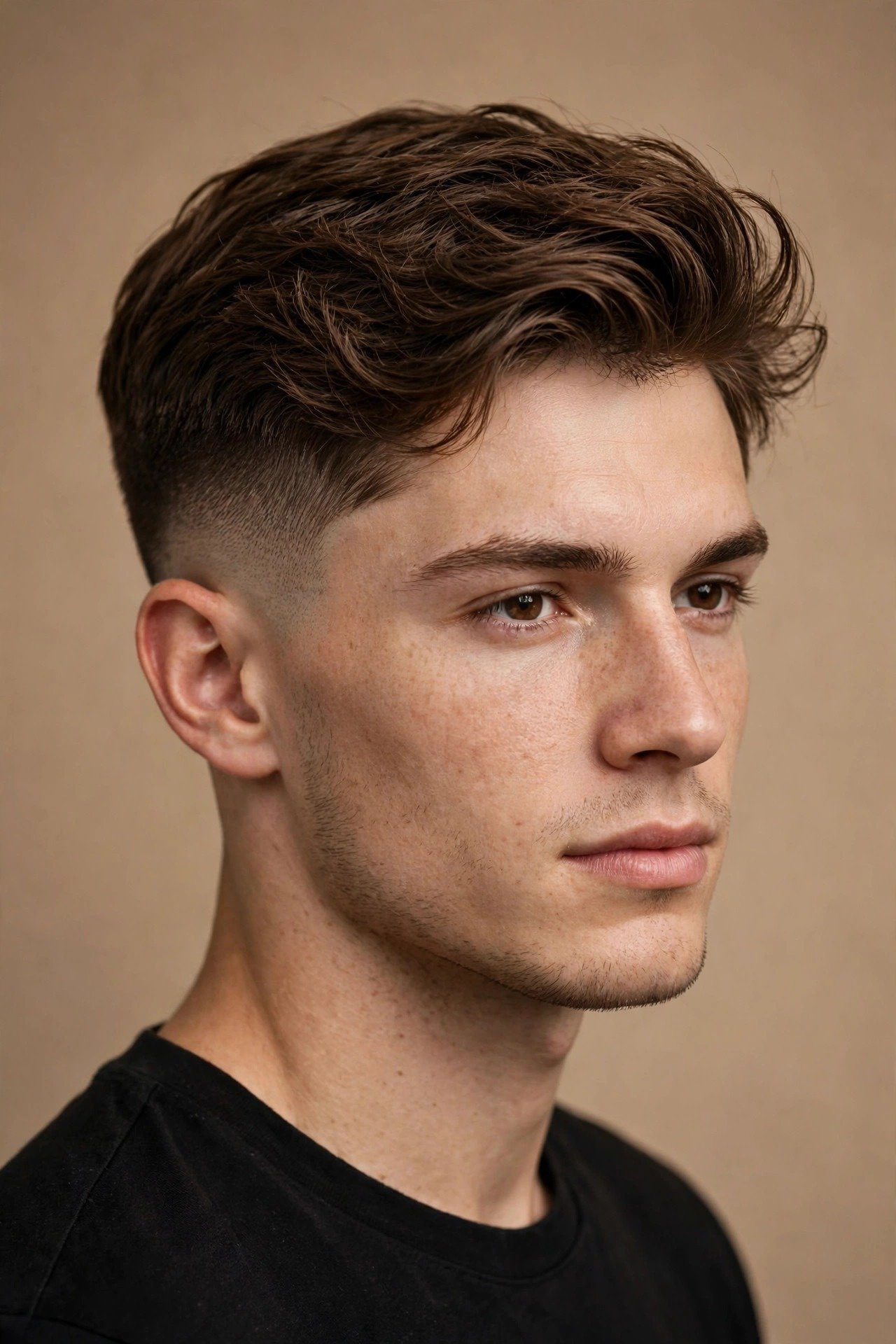
Here is a truth most barbers will not say out loud: the difference between a haircut that looks expensive and one that looks like you forgot about it for six weeks is almost never the top. It is the edges. Clean sideburns, a tidy neckline, a smooth blend around the ears, and suddenly the exact same top looks deliberate, groomed, and put together. That is the whole magic of the low taper fade men are asking for in 2026. It does not shout. It does not demand a new wardrobe or a daily heat routine. It just quietly makes everything else look better, and that is exactly why it has become the default finishing touch on nearly every popular men’s cut this year.
Before we get into the 36 ideas, let us be precise about what we are talking about, because barbershop language is famously slippery. A taper gradually shortens the hair as it moves down toward the sideburns and the nape, keeping some length at the shortest point. A fade goes further, blending down to skin or very short stubble. A low taper fade sits in the sweet spot between them: the shortening starts low, just above the ears, and the blend stays soft and gradual rather than climbing high up the sides of your head. The result looks clean without looking severe, sharp without looking like you live at the barbershop, and it grows out far more gracefully than a high skin fade ever will.
That forgiving grow-out is the real reason this cut is everywhere right now. A high fade looks perfect on day one and tired by day twelve, which means you are back in the chair every fortnight whether you like it or not. A low taper fade still looks respectable at week three and presentable at week four, because the blend is low and the top carries most of the style. It also flatters a much wider range of guys: it works with a textured crop, with curls, with a side part, with a quiff, and with a beard, and it suits offices, weddings, gyms, and weekends without needing to change a thing. If you have ever stood in front of the mirror thinking your haircut is nearly right but somehow not quite there, the low taper is very often the missing piece.
This guide gives you 36 versions of it, each with the exact words to use at the barber, who it genuinely suits, how to style it in real life, and the honest downside nobody puts in the Instagram caption. Bring a screenshot of your favourite to the chair, because a photo beats a thousand words of barbershop vocabulary every single time. And if you are still deciding between a taper and a full fade, the barber-led explainer on taper versus fade lays out the difference side by side on the same head, which is worth a read before you commit.
Table of Contents
- The Low Taper Fade Is the Quiet Upgrade Every Guy Needs in 2026
- What Exactly Is a Low Taper Fade?
- 36 Low Taper Fade Ideas for Men in 2026
- The Low Taper Fade Styling Routine That Takes Five Minutes
- Frequently Asked Questions
- Conclusion
What Exactly Is a Low Taper Fade?
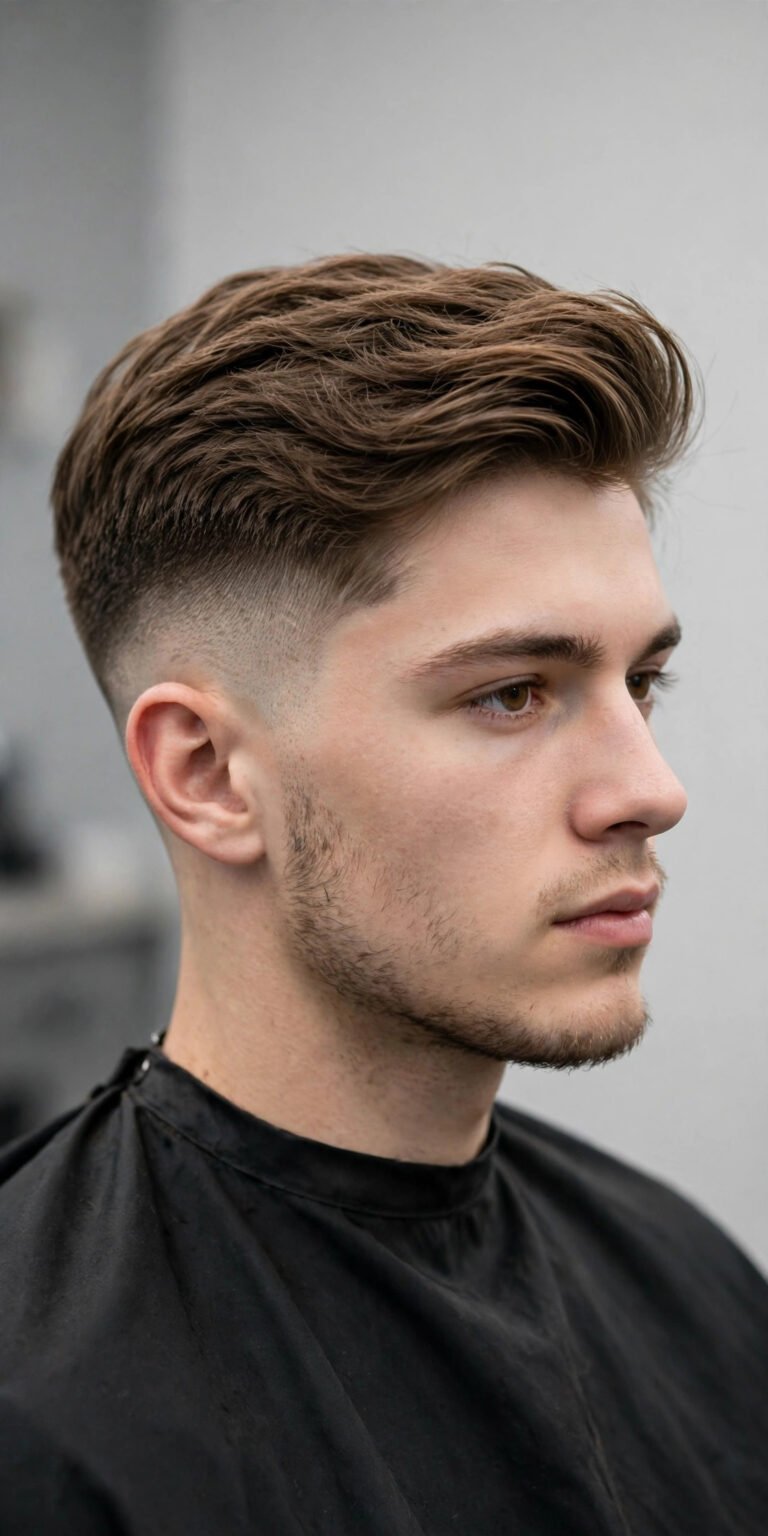
A low taper fade is a gradual shortening of the hair around the lower sides and the nape, starting just above the ears and blending smoothly upward into the longer hair on top. Unlike a high fade, which removes a large band of hair up the sides of the head, the low taper keeps most of the side length intact and only tidies the bottom edge. The shortest point usually sits at the sideburns and the neckline, where the hair may go down to a very short grade or a soft shadow, but it never climbs into a dramatic skin band around the temples. Think of it as a haircut with a clean frame rather than a haircut defined by its sides.
The technique matters more than the name, and this is where a lot of guys get a cut they did not ask for. A good low taper is blended with no visible lines, no shelf where one guard length suddenly jumps to another, and no harsh step above the ear. Your barber should work through the guards gradually, often with the lever open and closed to feather the transition, and finish with scissors over a comb to soften the blend into the top. If you can see a distinct line circling your head, the blend is not finished, and you are entirely within your rights to point at it and ask for it softened. A photo helps here too: show the exact height of the blend you want, because one barber’s low is another barber’s medium, and that single inch changes the whole look.
It also pairs with almost anything on top, which is why it appears in so many of the styles below. A low taper is a finishing detail, not a hairstyle in itself, so the top can be a crop, a fringe, curls, a quiff, a side part, or a buzz, and the taper simply frames it. That flexibility is a gift for guys who change their top style often, because the sides stay consistent while the top experiments. It is also kind to thinning hair, since keeping length on the sides avoids the scalp exposure that makes a high fade unforgiving, and it is kind to your wallet, since the longer gap between appointments adds up over a year.
Why 2026 Is the Low Taper Fade’s Year
Men’s hair in 2026 has moved away from extremes. The skin-tight high fades that dominated the last decade are giving way to softer, quieter cuts that look good for longer and survive real life: hats, wind, workouts, and the three weeks between appointments that most of us actually live with. Grooming coverage this year keeps describing short hair as quieter and more tailored, with softer tapers replacing sharp disconnections, and the low taper fade is the purest expression of that shift. It is the cut for guys who want to look sharp without looking like they are trying to impress anyone, and that understated confidence is very much the mood of the moment.
The other reason is pure practicality. A low taper works with the textured, natural-finish tops that are popular right now, from the textured fringe to the mop top, because it tidies the edges without fighting the texture on top. It photographs well from every angle, including the side profile that high fades can make look severe, and it suits video calls, where a clean neckline and tidy sideburns do more work than any amount of top volume. Add in the fact that it flatters nearly every face shape with only small adjustments to the top, and you have a cut that is popular for the most boring reason of all: it simply works, on more guys, for longer, with less fuss.
Who Suits a Low Taper Fade, Honestly?
Almost everyone, and I do not say that lightly, because most haircut guides claim universal suitability and then quietly fail half their readers. The low taper genuinely earns it, since the taper itself is only the frame and the top does the face-flattering work. Straight hair gets a clean, crisp frame that shows off the blend beautifully. Wavy and curly hair get bulk removed exactly where it causes puffiness around the ears, while the top keeps its natural movement. Thick hair gets weight taken out of the lower sides so the shape stays controlled. Fine hair keeps its side length, which avoids exposing the scalp, and the tidy edges make the top look fuller by contrast.
Face shape adjustments are small and worth knowing. Round faces benefit from some height or texture on top to lengthen the face, since the low sides do not add width. Square jaws look great with a low taper as it is, because the soft blend echoes a strong jawline without competing with it. Long faces should keep the top from getting too tall and let a fringe or side-swept top shorten the forehead visually. Oval faces can wear almost any top with a low taper and look right, which is unfair but true. The honest exceptions are few: if you want a dramatic, high-contrast statement cut, a low taper will feel too quiet for you, and if your barber blends it too high, you have accidentally bought a mid fade. Both problems are solved at the chair with a photo and one sentence: low, just above the ears, soft blend, no skin band.
36 Low Taper Fade Ideas for Men in 2026
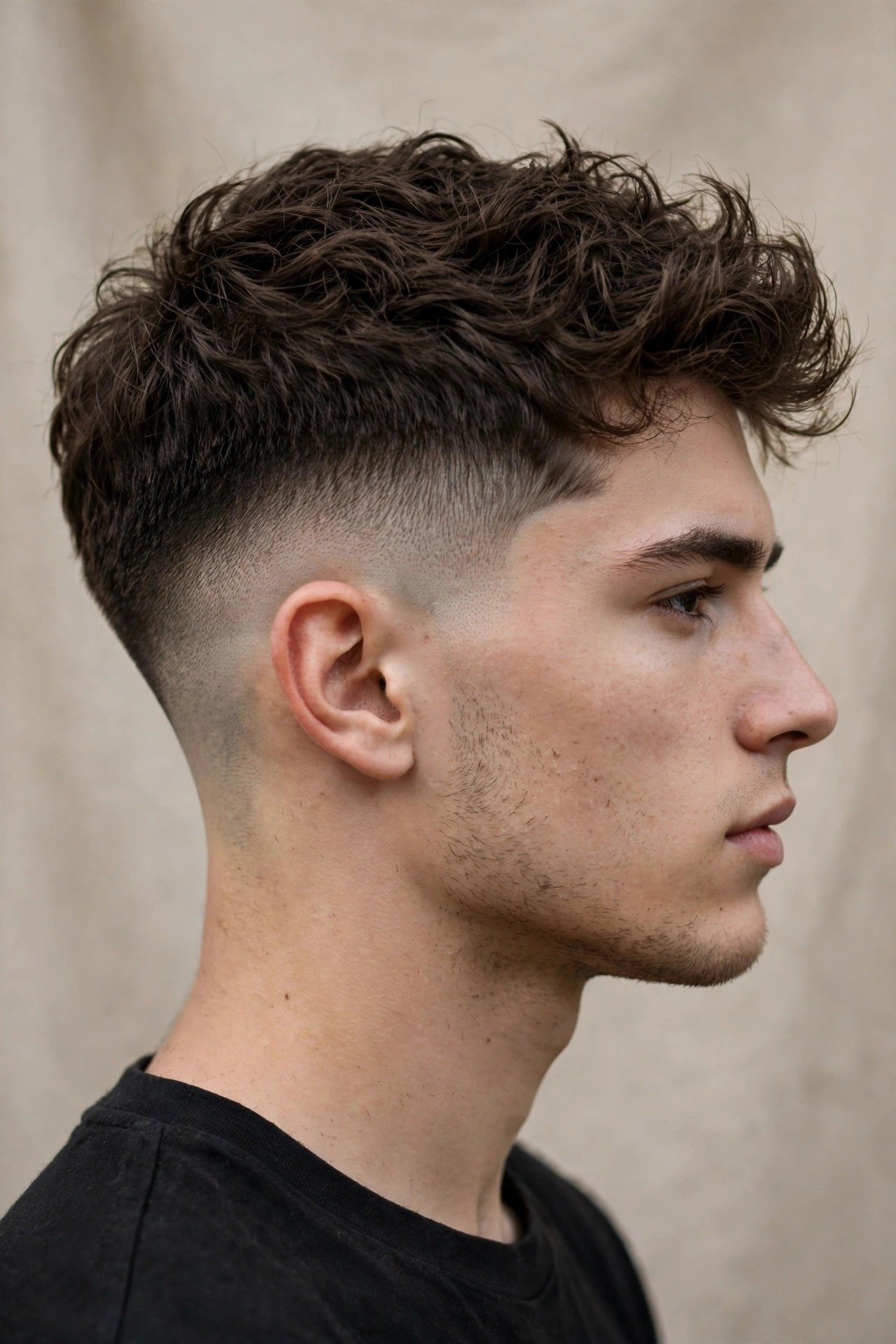
Here they are, all 36, from the classic version to the grown-out soft taper. Each one comes with the barber script, the styling reality, and the honest downside, so you can pick the one that matches your hair type and your patience level, screenshot it, and take it to the chair. That last step matters more than anything else in this guide.
1. The Classic Low Taper Fade
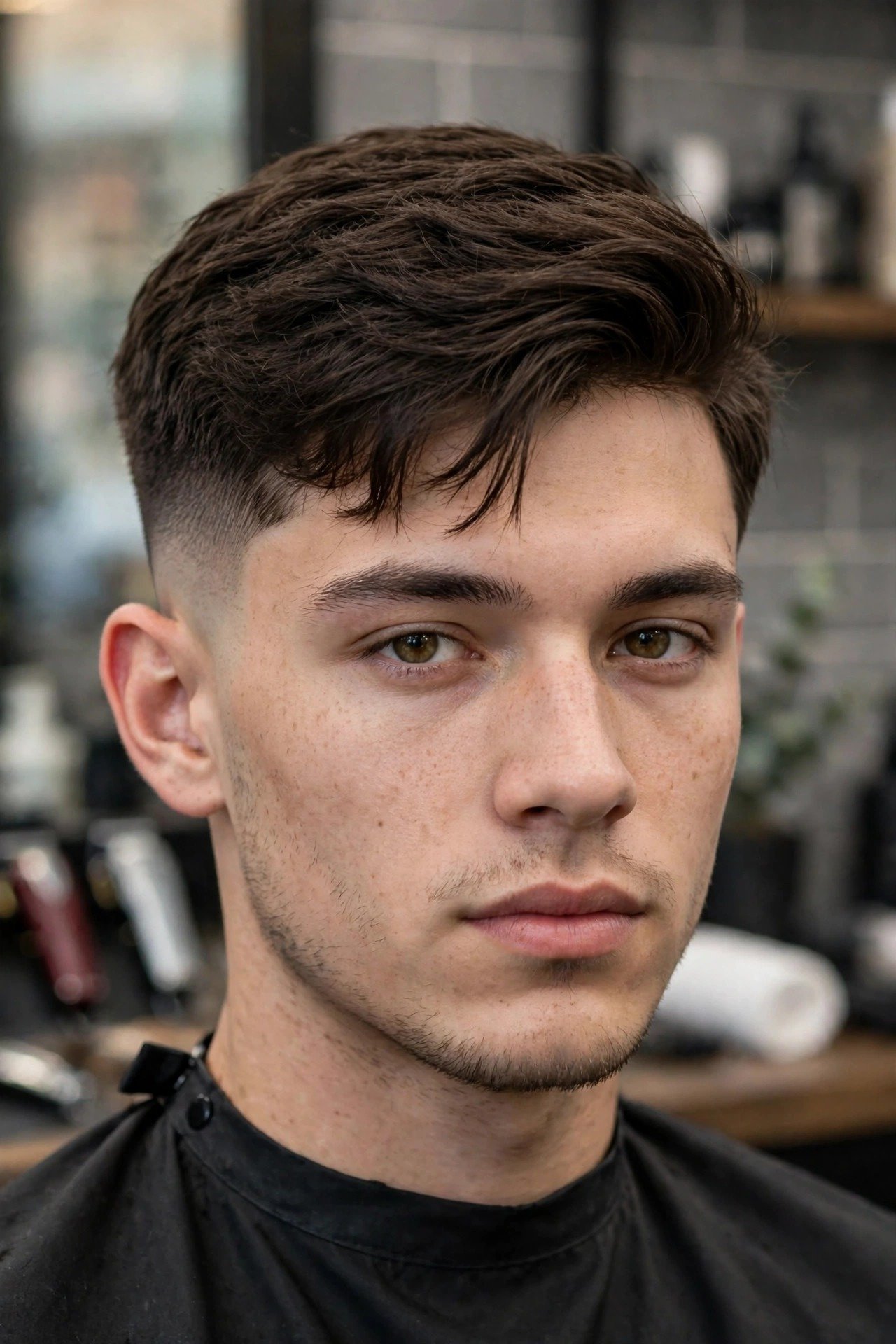
The classic low taper fade is the one everything else on this list is a variation of, and it is still the safest first taper you can get. The top is left at a natural, easy length, usually one to three inches, with a little texture through the ends, and the sides are tapered low around the ears and the nape with a soft, line-free blend. Nothing is extreme, nothing is trying to impress anyone, and that restraint is exactly why it works in an office, at a wedding, and on a weekend without a single adjustment. Ask your barber for a low taper at the sideburns and neckline, blended softly upward, with the top left long enough to style with your fingers.
Who suits it best? Honestly, nearly everyone, but it shines on straight to wavy hair with medium thickness, where the blend shows up cleanly and the top falls naturally. Thick hair needs the sides blended carefully or the taper can look bulky above the ears, and very fine hair benefits from a touch of matte paste so the top does not go flat by lunchtime. The honest downside is that it is not a statement cut: if you want heads to turn, this one will not do it, because its whole job is to look quietly right. It also needs a tidy-up every three to four weeks to keep the edges crisp, though it grows out far more forgivingly than any high fade. Start here if you are new to tapers, and branch out from a position of strength.
2. The Textured Crop Low Taper Fade
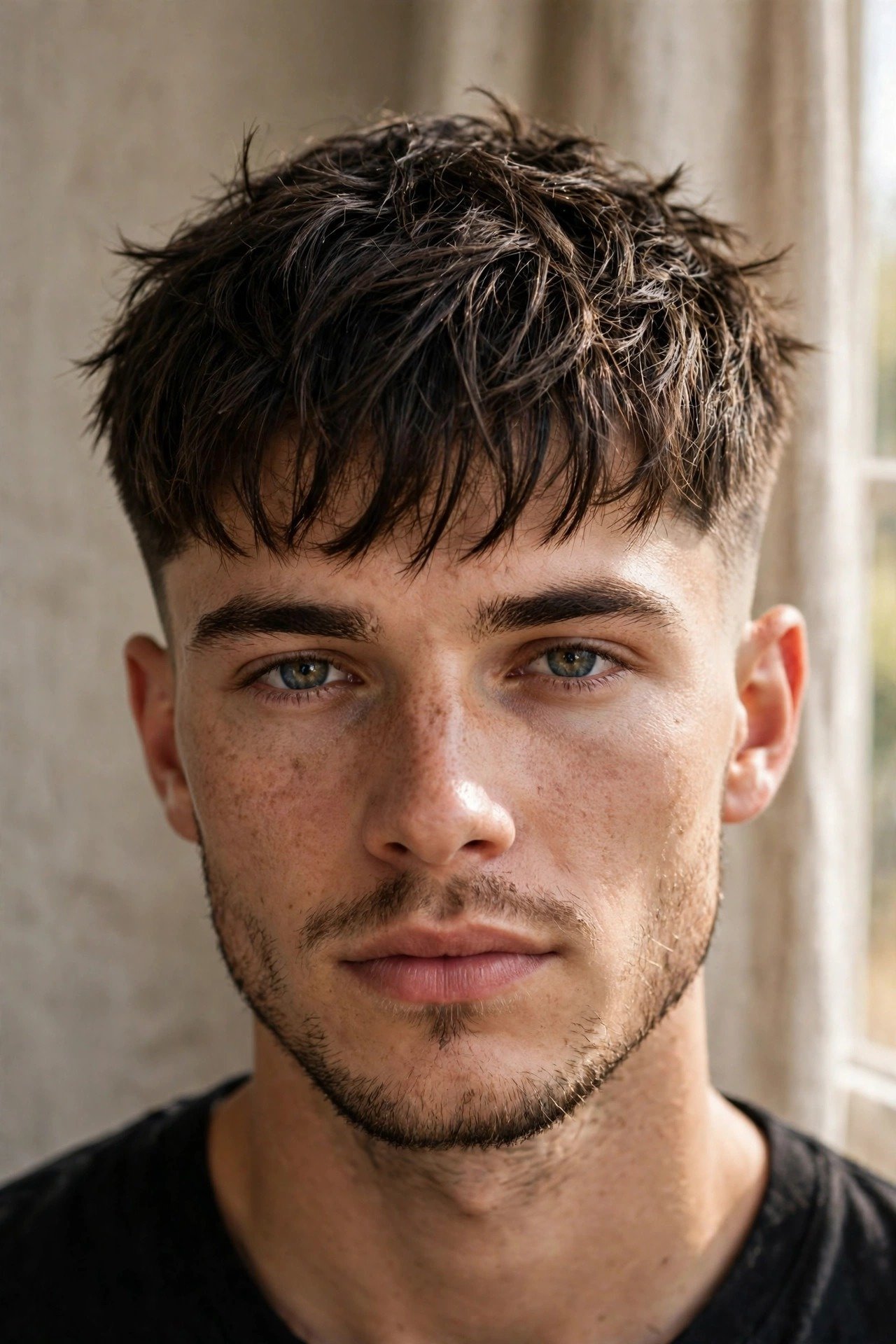
The textured crop with a low taper fade is the most popular pairing of 2026, and it is easy to see why: a short, choppy, forward-styled top gives you all the modern texture, while the low taper keeps the sides clean without stealing the show. The top is cut with point-cut ends so it separates into visible pieces, the fringe falls forward in a soft, uneven line, and the taper frames it all with a tidy edge. Ask your barber for a textured crop on top with a low taper fade at the sides, and be clear that you want the fringe forward, not swept back, because that forward fall is what makes the crop read as a crop.
Straight and slightly wavy hair take to this cut instantly, because the choppy layers show up crisply. Curly guys can wear it too, but the top should be cut to work with the curl pattern rather than against it, or the texture turns into bulk. Styling is a pea-sized amount of matte clay worked through damp hair, pushed forward and pinched into pieces, and you are done in under two minutes. The honest downside is fringe maintenance: the forward fringe grows into your eyes faster than a swept-back top, so a fringe trim every three weeks keeps it comfortable. It is also a young, casual look, so if your workplace is very formal, the side-part version further down this list may suit you better.
3. The Messy Fringe Low Taper Fade
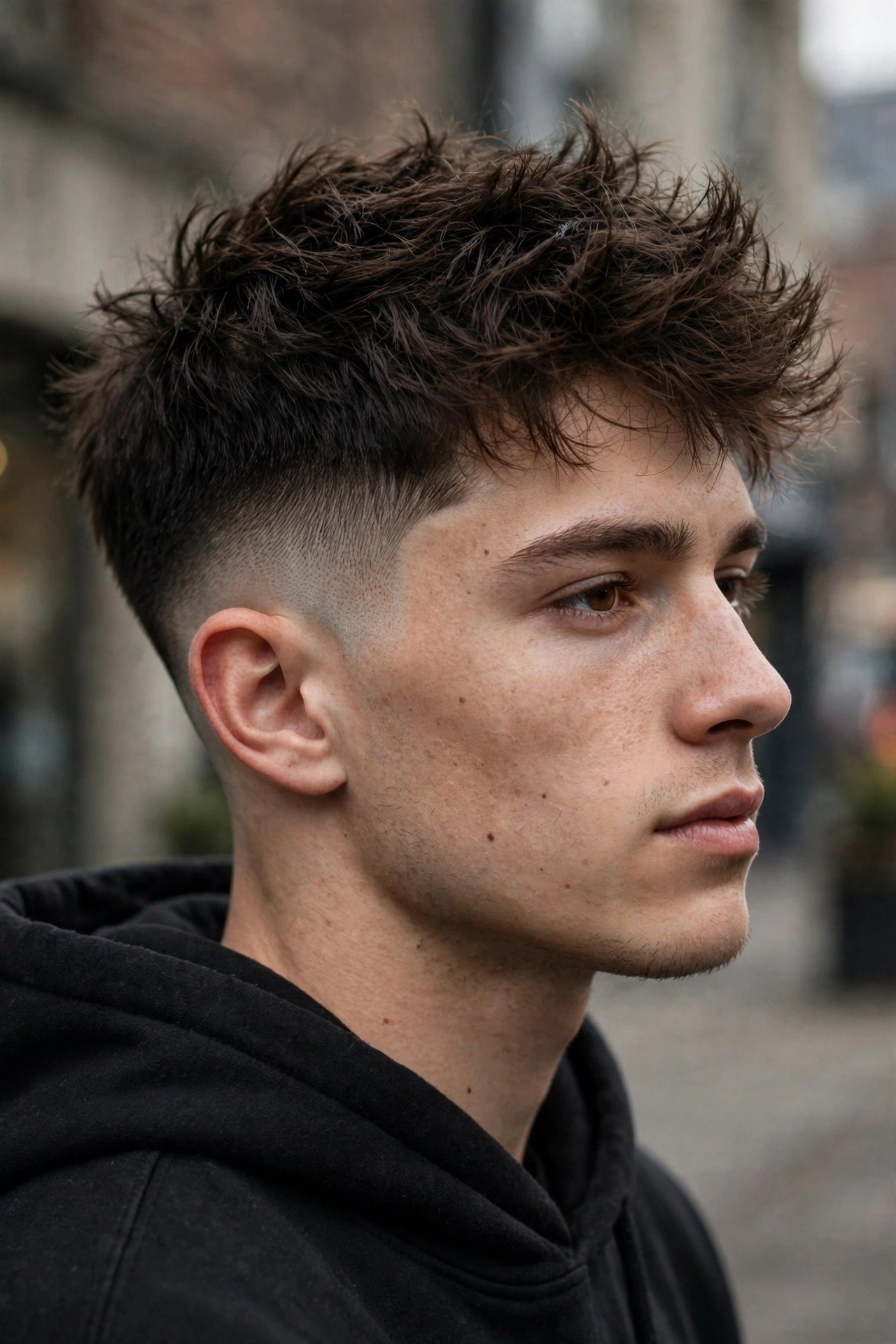
The messy fringe low taper fade is the textured crop’s unbothered cousin: same forward fringe, same low taper, but the top is left longer and deliberately tousled so it looks like you rolled out of bed looking good. The layers are uneven on purpose, the fringe falls wherever it falls, and the taper underneath keeps the whole thing from tipping over into actually unkempt. Ask your barber for a longer textured top with a messy forward fringe and a low taper fade, and tell them honestly that you will not style it most days, because that changes how they should layer it. A cut designed for air-drying behaves very differently from one designed for blow-drying.
This one suits wavy and thick hair best, since natural movement creates the mess for you, and it pairs beautifully with the longer fluffy hair look if you like volume on top. Straight hair can join in with sea salt spray and a rough scrunch, but it needs that product step or it just looks flat rather than artfully messy. The honest downside is the fine line between messy and neglected, and the difference is almost always a clean neckline and tidy taper. Keep those sharp and the top can be as wild as it likes. It is also not the cut for a job interview, so save it for everyday life and wear the office version to work. For everyone else, the messy fringe taper is freedom: no mirror time, no heat, no stress, and compliments anyway.
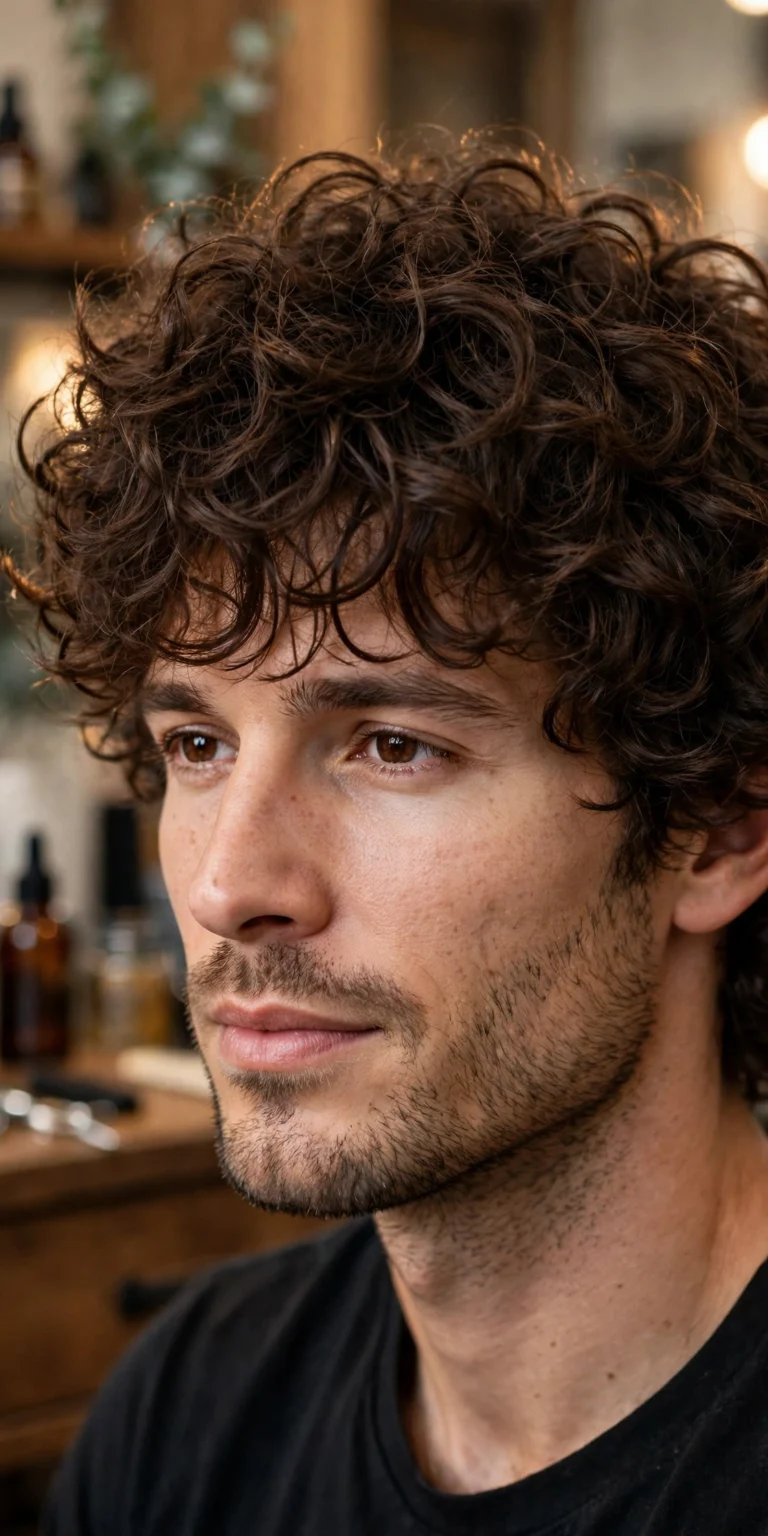
4. The Curly Top Low Taper Fade

Curly guys, this one might be the best use of a low taper fade that exists. The curly top low taper keeps the curls long and defined on top, layers them so they stack instead of ballooning outward, and uses the low taper to remove exactly the bulk that makes curly cuts go wide around the ears. The shape comes from cutting the curls where they naturally fall, which is why a curl-aware barber matters so much here. Ask for layers cut on dry or barely damp hair, weight removed from the inside rather than the ends chopped straight across, and a low taper that stays low, because a high fade on curly hair can leave the top looking disconnected from the sides.
Styling is curl cream on soaking wet hair, scrunch, and then hands off until it is fully dry, because touching curls while they dry invites frizz to the party. The payoff is huge: natural curls give the top a texture no product can fake, and the tidy taper makes the whole cut look intentional rather than accidental. The downside is shrinkage, which surprises a lot of first-timers, since hair that looks perfect wet can bounce up two inches shorter dry, so always judge length dry. Humidity is the other enemy, so a light curl cream with some hold beats a heavy gel that goes crunchy. Done right, the curly top low taper is the one strangers compliment in the street, and you will understand why within a week.
5. The Wavy Flow Low Taper Fade

The wavy flow low taper fade takes the relaxed, brushed-back movement of a flow cut and gives it a clean frame, so it looks like a surfer who also owns a suit. The top is left medium to long, the waves are layered so they move rather than clump, and the low taper tidies the sides and nape without cutting into the flow itself. Ask your barber for long layers on top with a low taper at the sides, and be specific that the taper should stay low and soft, because a taper that climbs too high will chop into the sides of the flow and break the whole shape. Styling is sea salt spray on damp hair, a rough scrunch or a brush-back with your fingers, and then letting it air-dry into its natural wave.
Natural wave is this cut’s engine, so wavy guys get it almost for free. Straight hair can approximate the flow with salt spray and a twist-dry, twisting damp sections away from the face as they dry so they hold a soft bend, but it takes a few extra minutes. The honest downside is length commitment: a proper flow needs time to grow, usually six to eight weeks from a shorter cut, and the awkward in-between stage tests everyone’s patience. It also gets in the way during workouts and windy days, so keep a hair tie handy. But for pure easygoing charm, a wavy flow with a tidy low taper is hard to beat. It looks like a holiday even on a Tuesday, and the taper stops it from looking like you simply stopped getting haircuts.
6. The Side Part Low Taper Fade
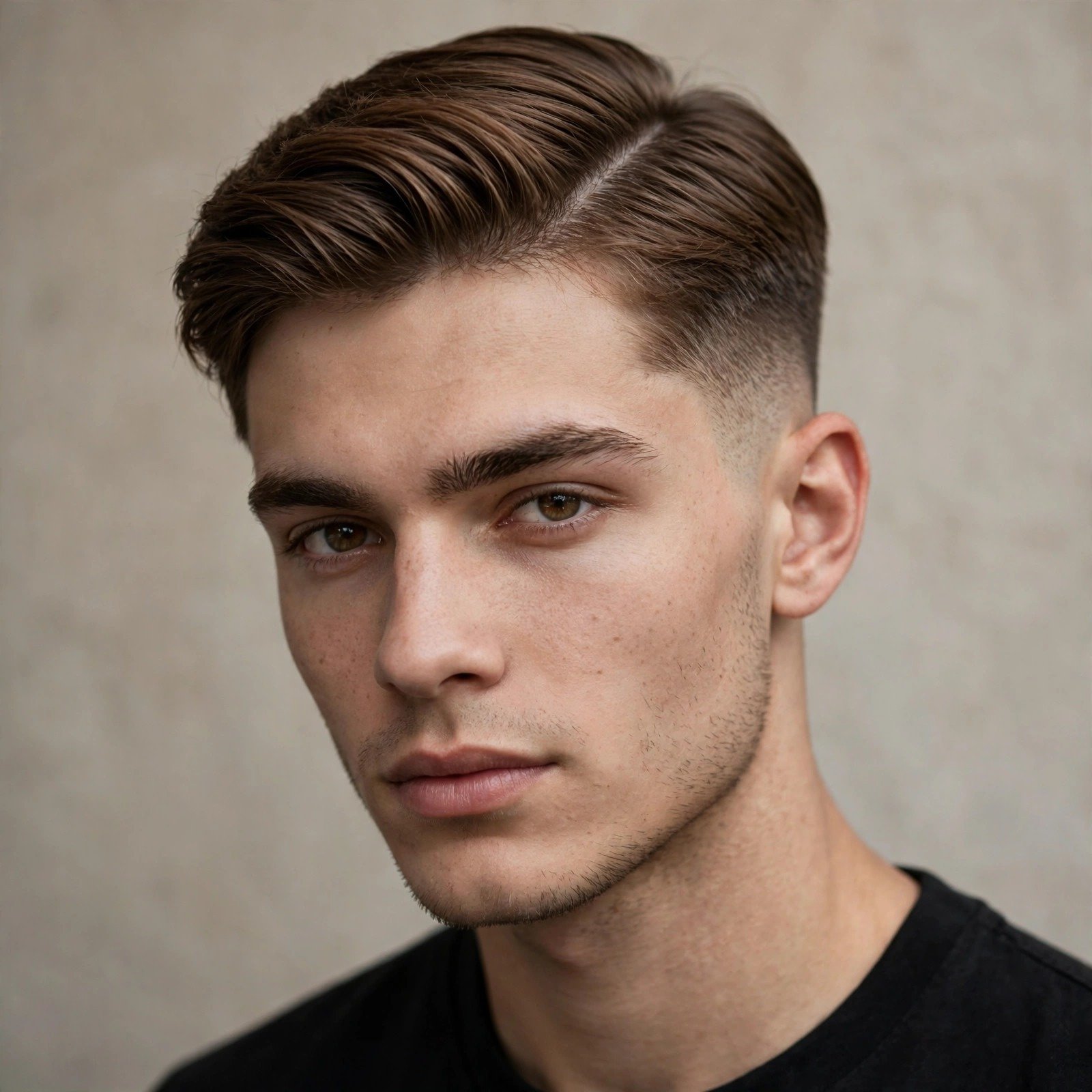
The side part low taper fade is the grown-up classic that never actually left, it just got a quieter, better frame. The top is combed to one side with a defined part, the length is neat but not stiff, and the low taper replaces the old-school short back and sides with a softer, more modern blend. Ask your barber for a side part with a low taper fade, and decide in advance whether you want a hard part shaved in or a natural part, because that one detail changes the cut from vintage to modern. A natural part is more forgiving as it grows out, while a hard part looks sharper for the first two weeks and then needs re-cutting.
This version suits straight and slightly wavy hair best, since the part shows cleanly, and it is the single best low taper pairing for formal workplaces, weddings, and anyone who wears a suit regularly. Styling is a comb-through while damp, a small amount of light-hold cream or pomade, and a part combed into place, which takes about three minutes once you know your natural part line. The honest downside is cowlicks: if you have a stubborn cowlick at the front hairline, it will fight the part every morning, and you may need a quick blow-dry to win that argument. It is also a neater, more deliberate look, so if you prefer messy texture, the crop or fringe versions will make you happier. For timeless, reliable sharpness, though, the side part low taper is unbeaten.
7. The Curtain Middle Part Low Taper Fade
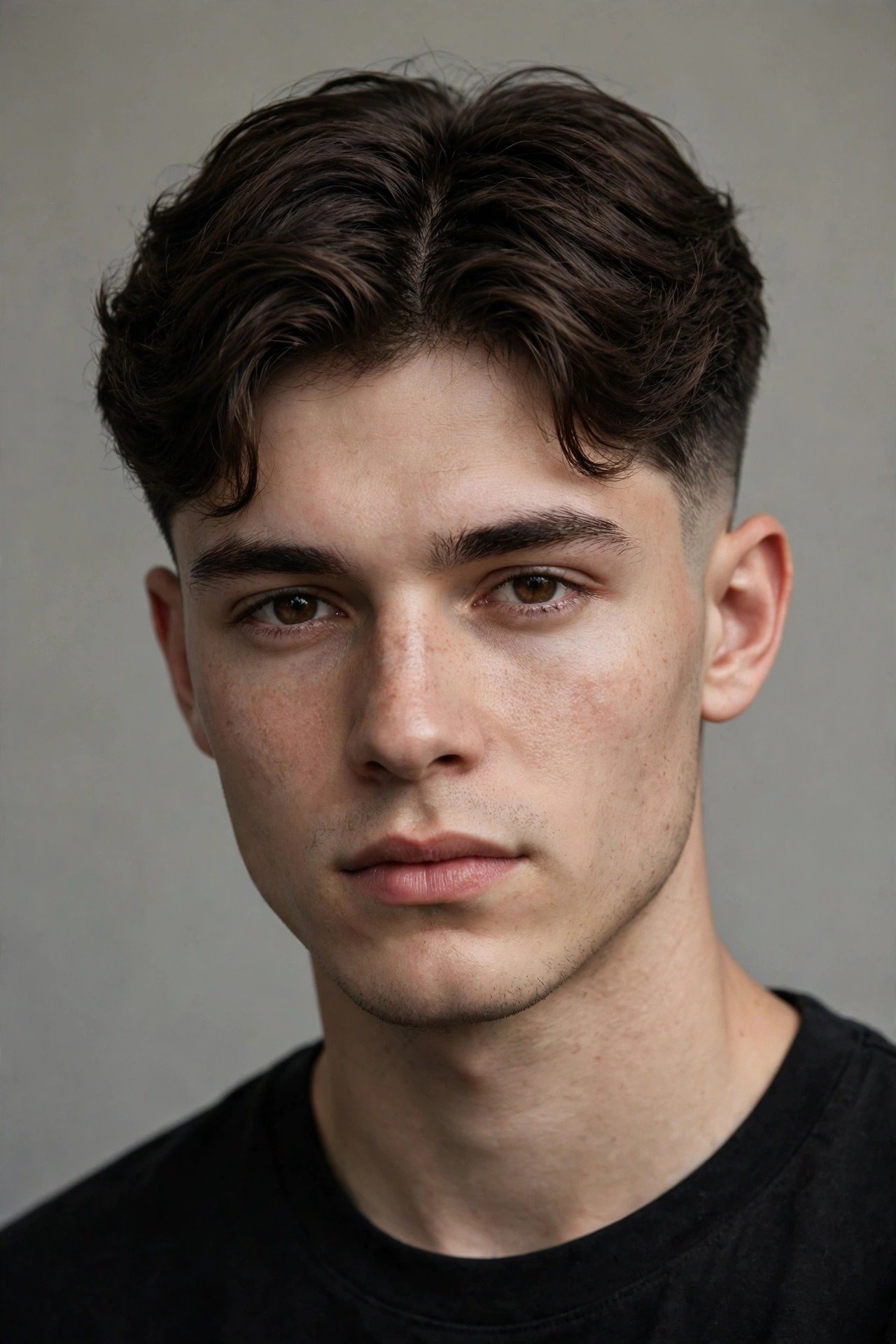
The curtain middle part with a low taper fade is the romantic of this list: a centre part, longer face-framing layers falling on both sides of the forehead, and a low taper that keeps the sides tidy while the curtains do their thing. It borrows its charm from 90s heartthrobs and modern drama leads in equal measure, and the taper stops it from looking like a costume by grounding it in a clean, current finish. Ask your barber for a centre part cut into the top, face-framing layers starting around cheekbone length, and a low taper fade that stays well below the curtain pieces, so the two elements do not compete with each other.
Natural wave helps the curtains curve, but straight hair can fake it with a twist-dry, twisting damp sections away from the face as they dry so they hold a soft bend. The honest downside is forehead exposure, because a middle part shows more forehead than a full fringe, so guys with very high hairlines sometimes feel exposed. A slightly off-centre part or longer curtain pieces fix that without losing the look. This version also needs more length than most on this list, so if you are starting from a crop, give it six to eight weeks of growth first. Symmetry maintenance is the other small chore: if one side grows faster or your part drifts during the day, the cut looks lopsided in photos, so a quick mirror check before you leave is worth it.
8. The Buzz Cut Low Taper Fade
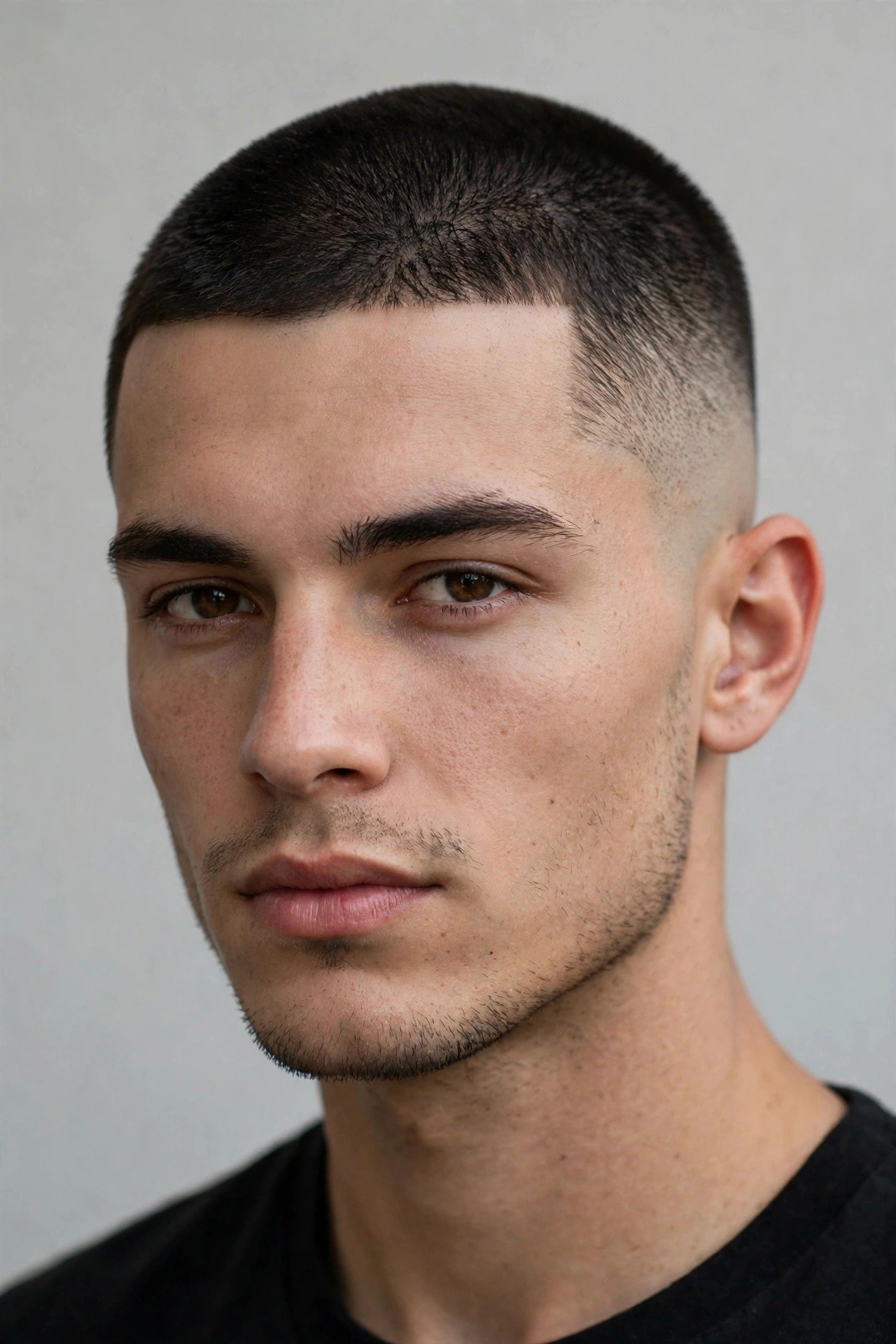
A buzz cut with a low taper fade sounds like a contradiction, since a buzz is already short all over, but the combination is actually one of the smartest low-effort cuts a guy can get. The top is buzzed to a short, even grade, and instead of a harsh line where the buzz meets the skin, the low taper blends the sides and nape down gradually, so the whole head looks sculpted rather than simply shaved. Ask your barber for a buzz on top, usually a number 2 or 3, with a low taper fade at the edges, and specify whether you want the taper to go to skin at the very bottom or stop at a short shadow, because that changes how sharp it reads.
This is the ultimate low-maintenance pairing: no styling, no product, a two-minute wash, and you are done. It suits guys with a good head shape and a strong jawline, since there is no hair left to hide behind, and it is brilliant in summer or for anyone who trains hard and sweats a lot. The honest downside is exactly that honesty: a buzz shows everything, including head shape, scars, and any unevenness, so it is not a cut that flatters by disguise. It also grows out visibly within two weeks, since even a millimetre of growth changes the silhouette, so the taper needs refreshing more often than a longer top would. But if you want the cleanest possible version of a buzz, the low taper is the detail that elevates it from a home clipper job to a proper barber cut.
9. The Crew Cut Low Taper Fade
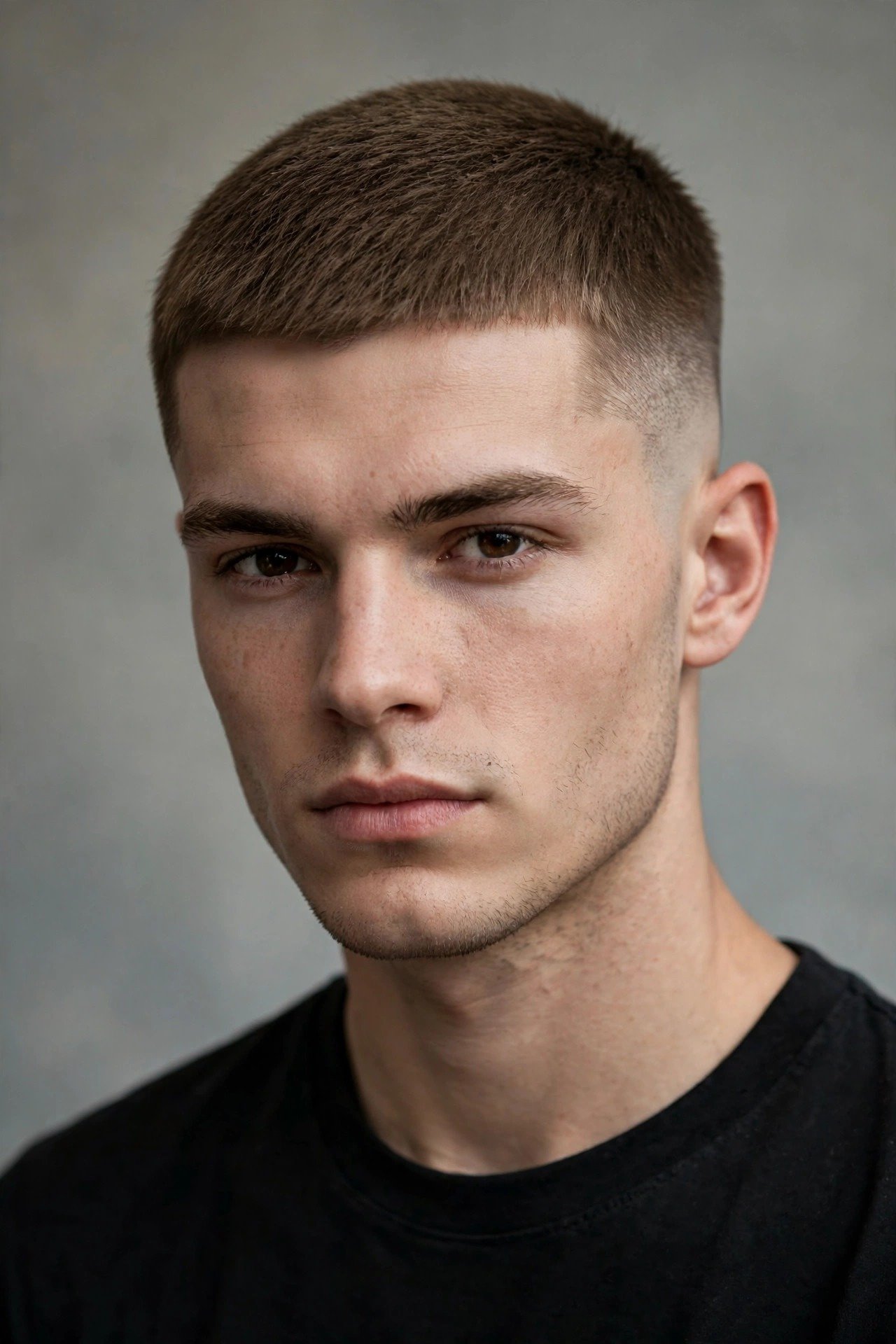
The crew cut with a low taper fade is the buzz cut’s slightly smarter older brother: short on top, a little longer at the front than at the crown, and tapered low at the sides so the whole thing looks military-neat without looking military at all. The front is kept just long enough to show a hint of texture or a tiny bit of lift, which stops it from looking like a flat cap of hair, and the taper gives it a clean, tailored edge. Ask your barber for a short crew cut on top with a low taper fade, and mention whether you want the front left a touch longer for styling, because that small difference decides whether you can push it up with paste or not.
This version suits almost every face shape and nearly every lifestyle, from students to soldiers to office workers, which is why it has survived every trend cycle for decades. Styling is optional: a dab of matte paste pushed forward or slightly up gives it texture, or you can leave it completely alone and it still looks finished. The honest downside is that it is not exciting, and guys who want a cut with personality may find it a bit plain after a few months. It also shows scalp more than longer tops do, so thinning hair at the crown is harder to disguise. But as a reliable, cheap, fast, always-appropriate cut, the crew cut low taper is the equivalent of a well-fitting white shirt: not flashy, never wrong.
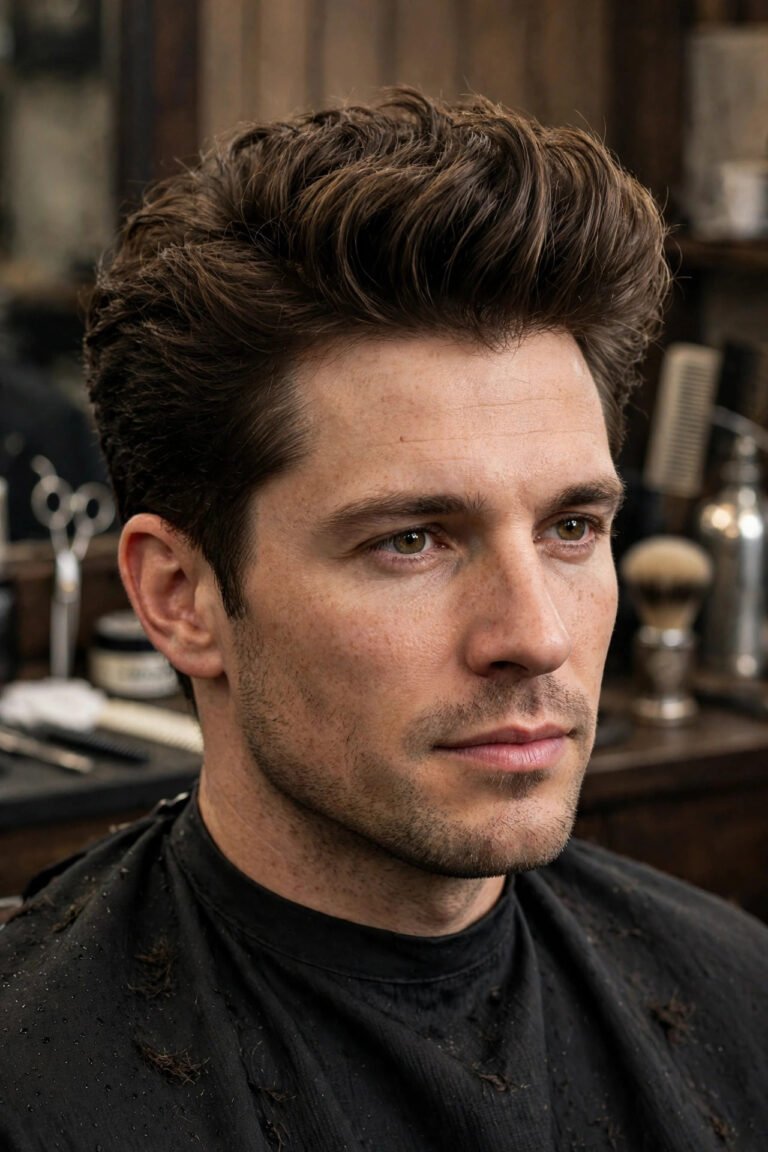
10. The Quiff Low Taper Fade
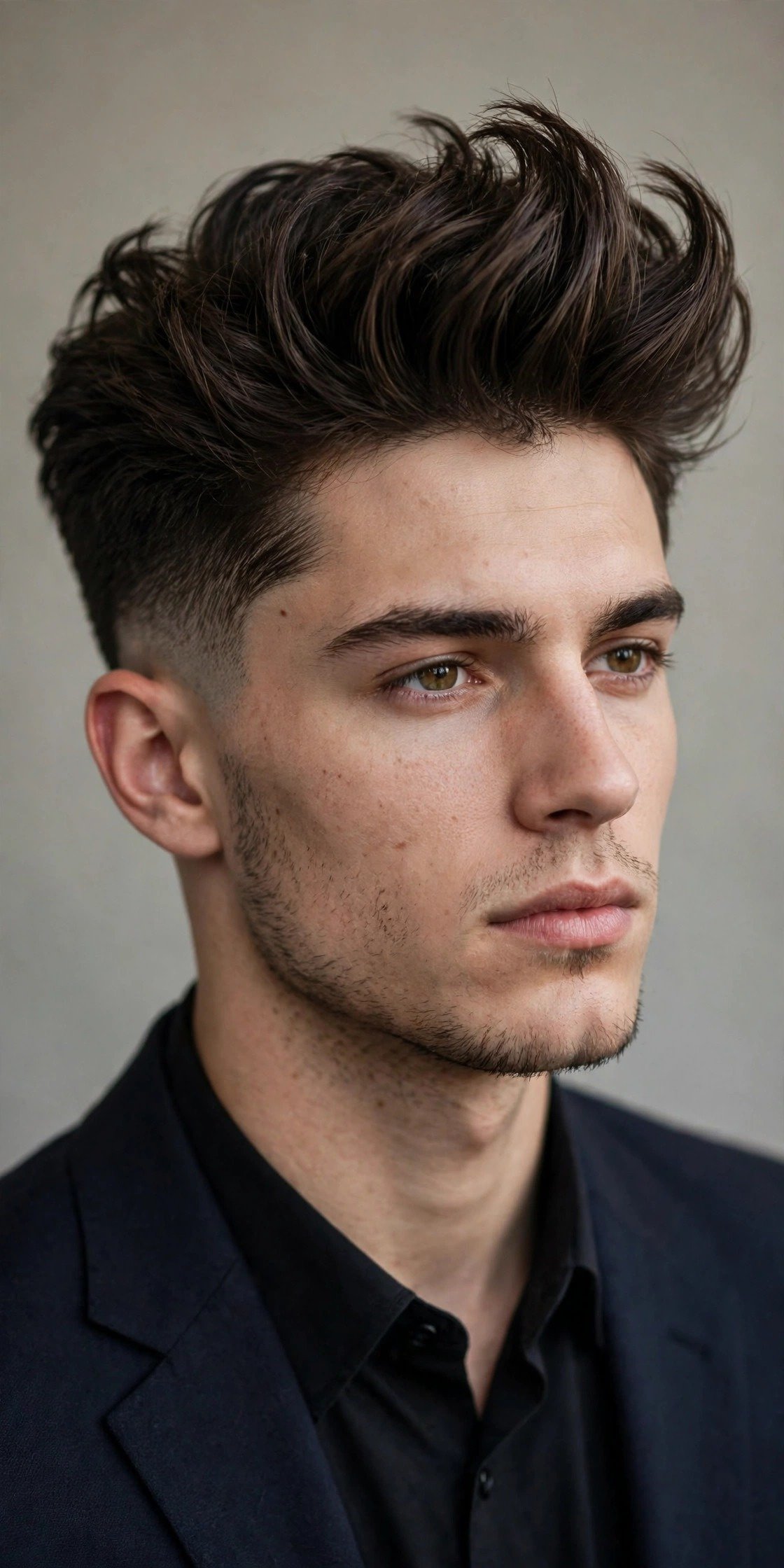
The quiff with a low taper fade is volume with manners: height and sweep at the front, a textured top that moves back, and a low taper that keeps the sides from competing with the main event. The front is left longer, usually three to four inches, so it can be pushed up and slightly back, while the back of the top is layered shorter to support the shape. Ask your barber for a quiff on top with a low taper fade, and be honest about how much morning time you are willing to spend, because a quiff is one of the few cuts on this list that genuinely rewards a blow-dry. If you will never touch a hairdryer, say so, and the barber can cut it shorter and more textured so it still works air-dried.
Straight and wavy hair hold a quiff best, since the front needs to stand up and stay there, and a round brush plus a blast of cool air will set it far better than product alone. Styling is a blow-dry upward and back, a small amount of volumising powder or matte paste at the roots, and a light-hold spray to lock it in, which takes about five minutes once you have the routine down. The honest downside is wind and hats, which are the quiff’s natural enemies, and the fact that it needs regular trims to keep the front length in proportion, since a grown-out quiff flops forward and loses its lift. Round faces benefit most from the height, while long faces should keep the quiff lower to avoid lengthening the face further. Done well, though, a quiff with a low taper looks confident in a way few other cuts manage.
11. The Pompadour Low Taper Fade
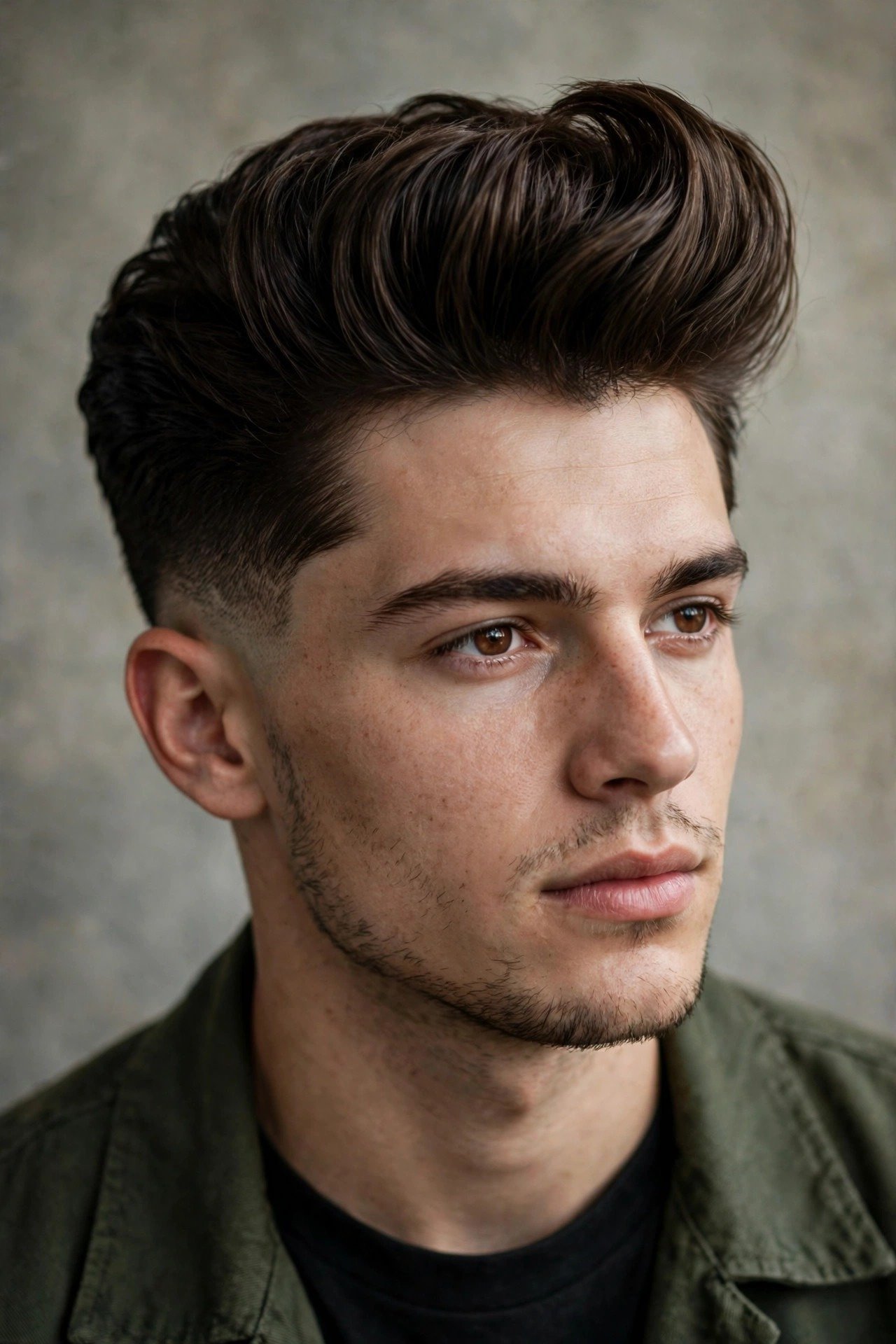
The pompadour with a low taper fade is the quiff turned up a notch: more height, more sweep, more drama, but with the same tidy low frame keeping it grounded in 2026 rather than 1956. The front is left long and swept up and back in a smooth, voluminous roll, the sides are kept controlled by the low taper, and the back is layered to support the height without bulk. Ask your barber for a pompadour on top with a low taper fade, and bring a photo of the exact height you want, because one man’s pompadour is another man’s quiff, and the difference is about an inch of front length and a lot of blow-drying.
Thick, straight hair is the dream canvas for a pompadour, since it holds height naturally, while fine hair will need volumising mousse and a root-lifting blow-dry to get the same effect. Styling is a round-brush blow-dry, a medium-hold pomade or cream smoothed over the top to control flyaways, and a light spray to hold the shape, which takes a solid five to ten minutes. The honest downside is commitment: a pompadour is a morning project, not a wash-and-go cut, and it wilts in humidity and rain faster than any other style here. It is also a bold look that draws attention, so shy guys may find it a bit much for everyday wear. But for weddings, dates, and nights out, a pompadour with a low taper is the closest thing to instant polish that hair can offer.
12. The Slick Back Low Taper Fade
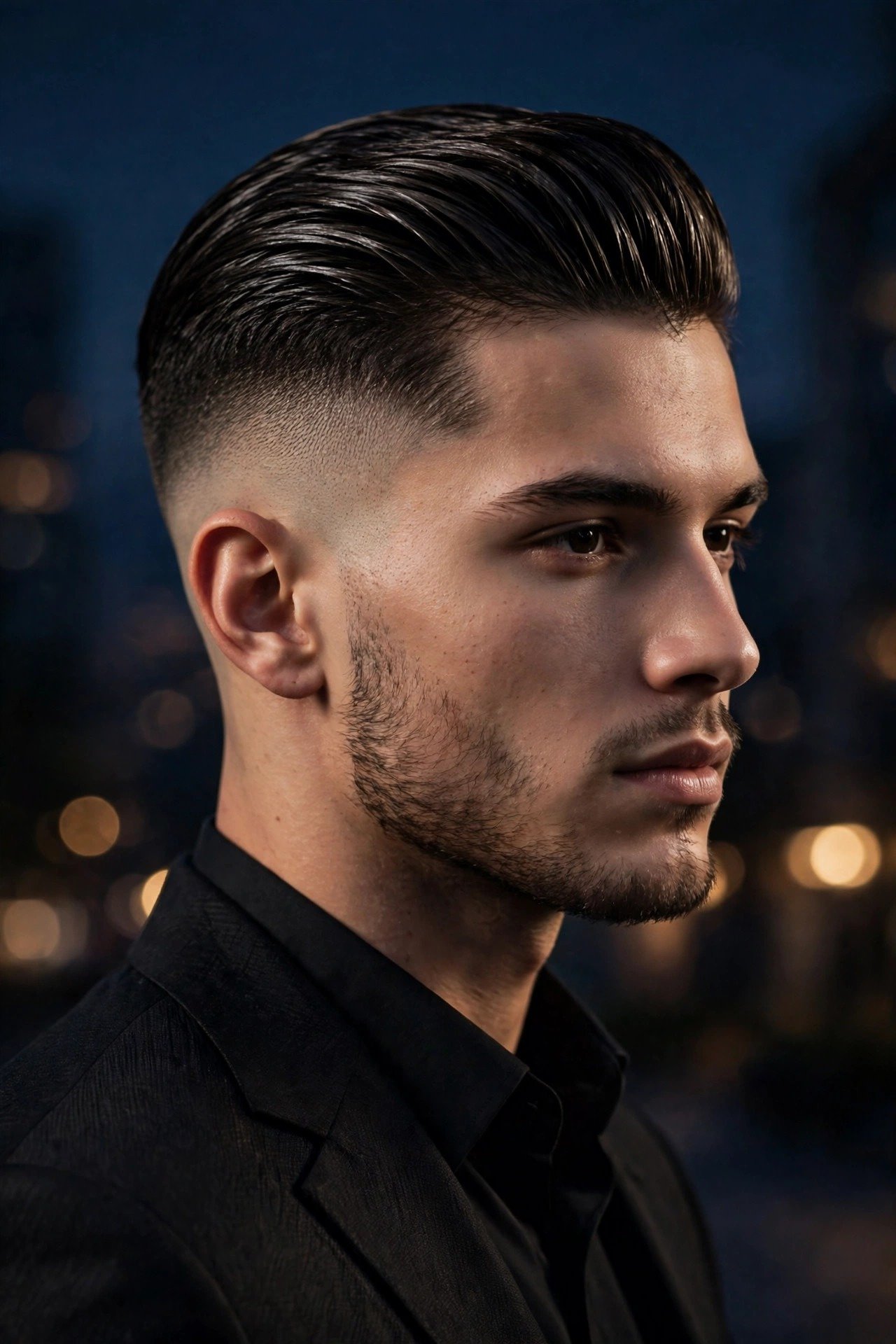
The slick back with a low taper fade is old-school polish with a modern edge: the top is combed straight back in a smooth, controlled sweep, and the low taper replaces the greasy, over-long sides of the classic slick back with a clean, tailored finish. The top needs real length, usually three to five inches, so it can lie back without springing forward, and the taper keeps the sides from puffing out and ruining the sleek silhouette. Ask your barber for a slick back on top with a low taper fade, and specify whether you want a matte or shiny finish, because the product choice changes the whole character of the cut.
Straight hair slicks back most easily, while wavy hair can work if it is long enough to be weighed down into place, though it may need a stronger-hold product. Styling is a comb-through while damp, pomade or cream worked evenly through the top, and a comb to smooth it back, finishing with a light spray if you want it locked in. The honest downside is that a slick back shows everything: thinning at the crown, a receding hairline, and any unevenness in the top length are all on display, since there is no fringe to hide behind. It also needs the top kept long, so grow-out stages can look awkward. But for guys with good density who want a sharp, classic, boardroom-ready look, the slick back low taper is timeless, and the taper stops it from looking like a period costume.
13. The Comb Over Low Taper Fade
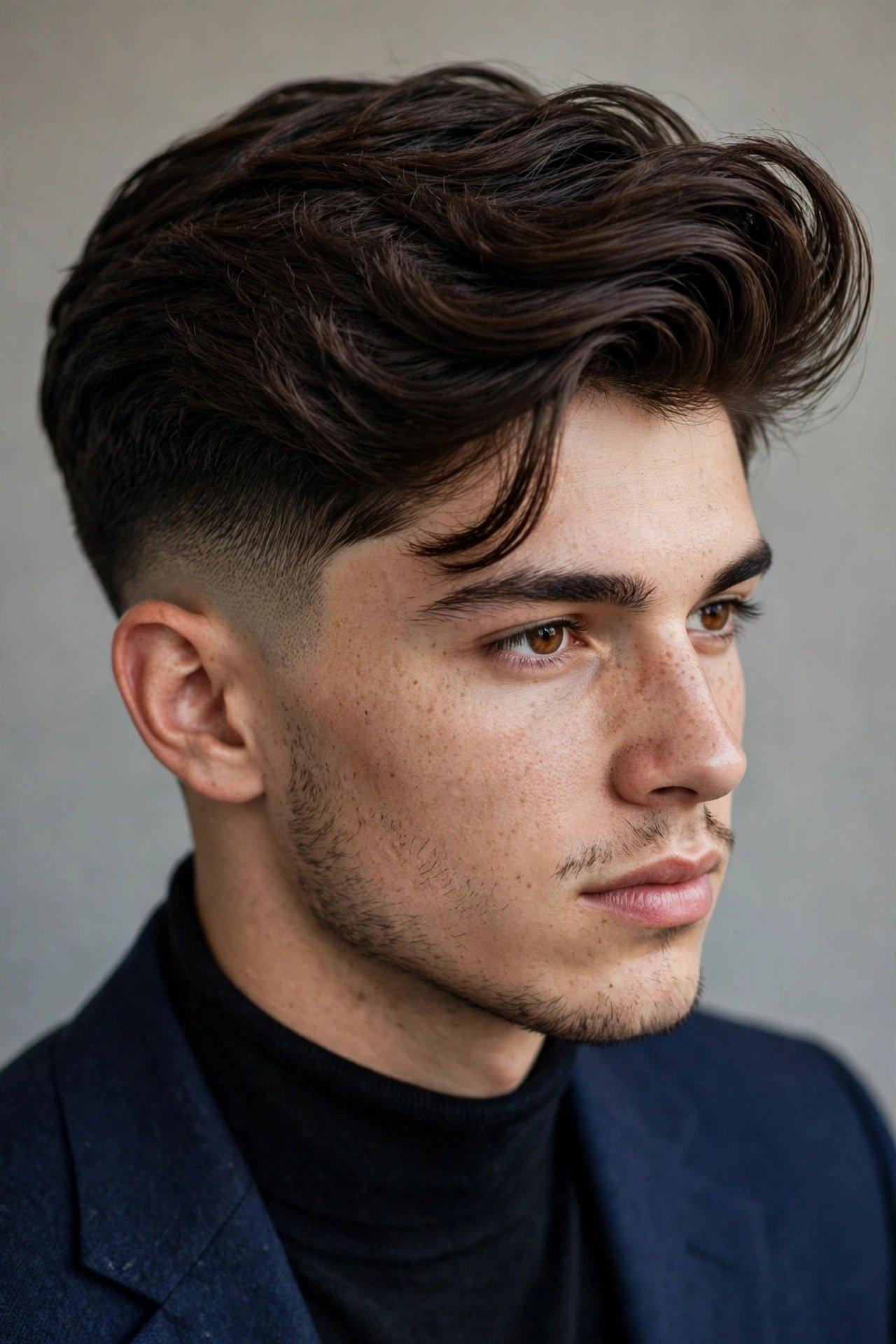
The comb over with a low taper fade is the side part’s softer, less formal sibling: the top is swept across rather than parted hard, the finish is natural rather than slick, and the low taper gives it a clean edge without any stiffness. The top is left medium length so it can fall across the head with a bit of movement, the part is soft or even just implied, and the taper keeps the lower sides tidy. Ask your barber for a comb over with a low taper fade, and say whether you want it neat or textured, because a textured comb over uses point-cut ends and matte product, while a neat one uses smoother layers and a light cream.
This version is a brilliant choice for guys with thinning hair or a receding hairline, because the swept-across top covers more scalp than a slick back or a short crop, and the low taper avoids exposing the sides. It also suits older guys beautifully, since it reads mature and groomed without looking like an attempt to hide anything. Styling is a comb or fingers through damp hair, a small amount of light-hold cream, and a sweep to your natural side, which takes two minutes. The honest downside is wind, which rearranges a comb over instantly, and the fact that it needs enough top length to sweep, so very short hair cannot fake it. Keep a comb in your pocket on windy days and the problem mostly disappears.
14. The Side Swept Low Taper Fade
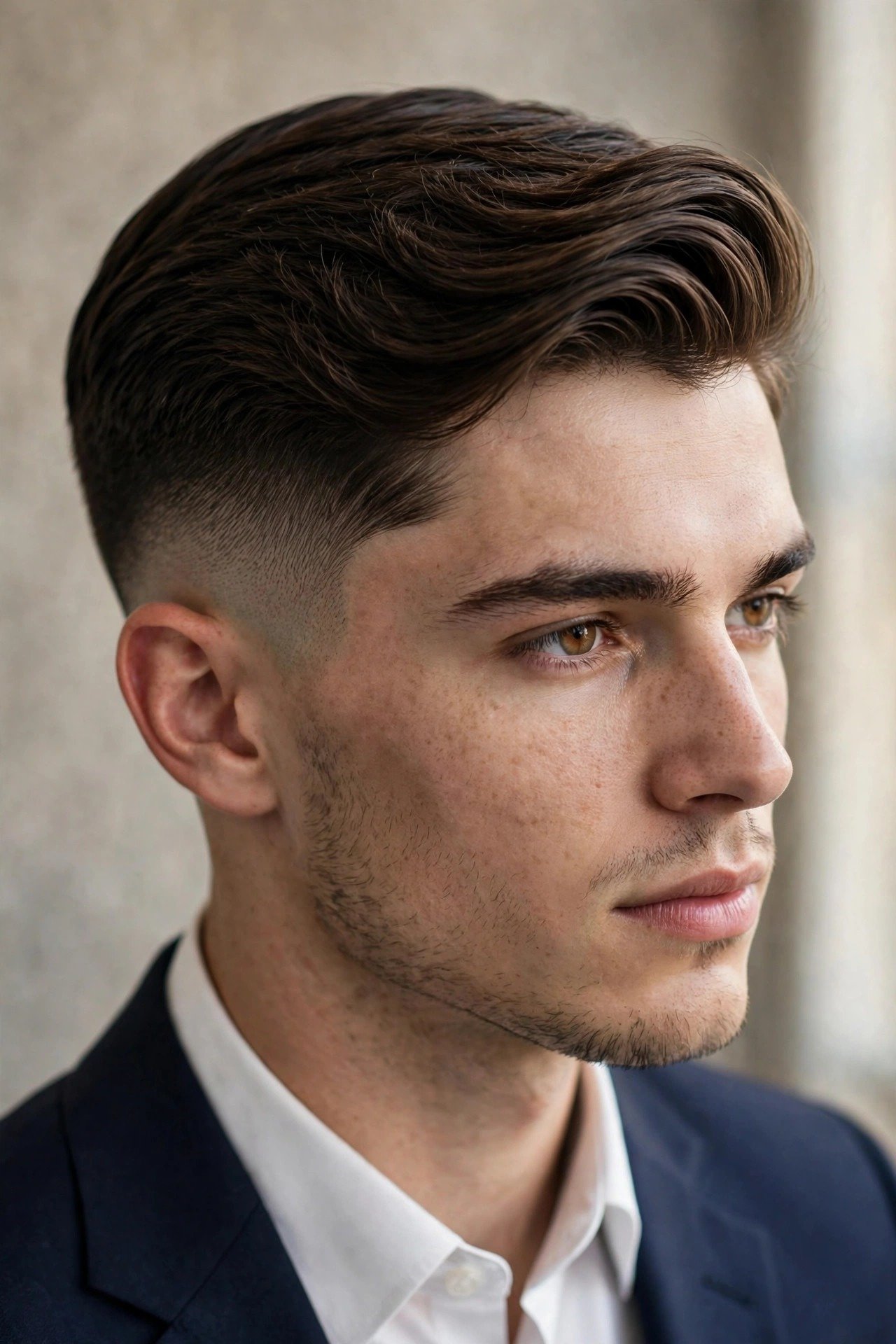
The side swept low taper fade is the diplomat of this list: it keeps texture and length on top but sweeps the fringe to one side, which instantly makes it look more grown-up and more office-friendly than a forward fringe. The top is layered with a little extra length on the sweeping side, the sides are tapered low and neat, and the fringe falls diagonally across the forehead instead of straight down. Ask your barber for an asymmetric fringe, longer on the side it sweeps toward, with a low taper fade, and layers that support that direction, because a fringe cut symmetrically will not sweep properly no matter how much product you use.
Round faces benefit most here, because the diagonal line breaks up the width and draws the eye across rather than around, and square faces look great with it too, since the sweep softens a strong forehead. Styling is one minute: while damp, comb or finger-push the fringe to your chosen side, add a dab of light cream, and let it set. The downside is cowlicks, which will fight the sweep every morning if you have a stubborn one at the hairline, and you will need a quick blow-dry to win that argument. A strong cowlick can also make the sweep flip back by lunchtime, so a light-hold paste helps. Apart from that, this is the safest low taper pairing for work, dates, and family events, and it transitions beautifully from a messy weekend version just by changing where the fringe sits.
15. The Spiky Textured Low Taper Fade
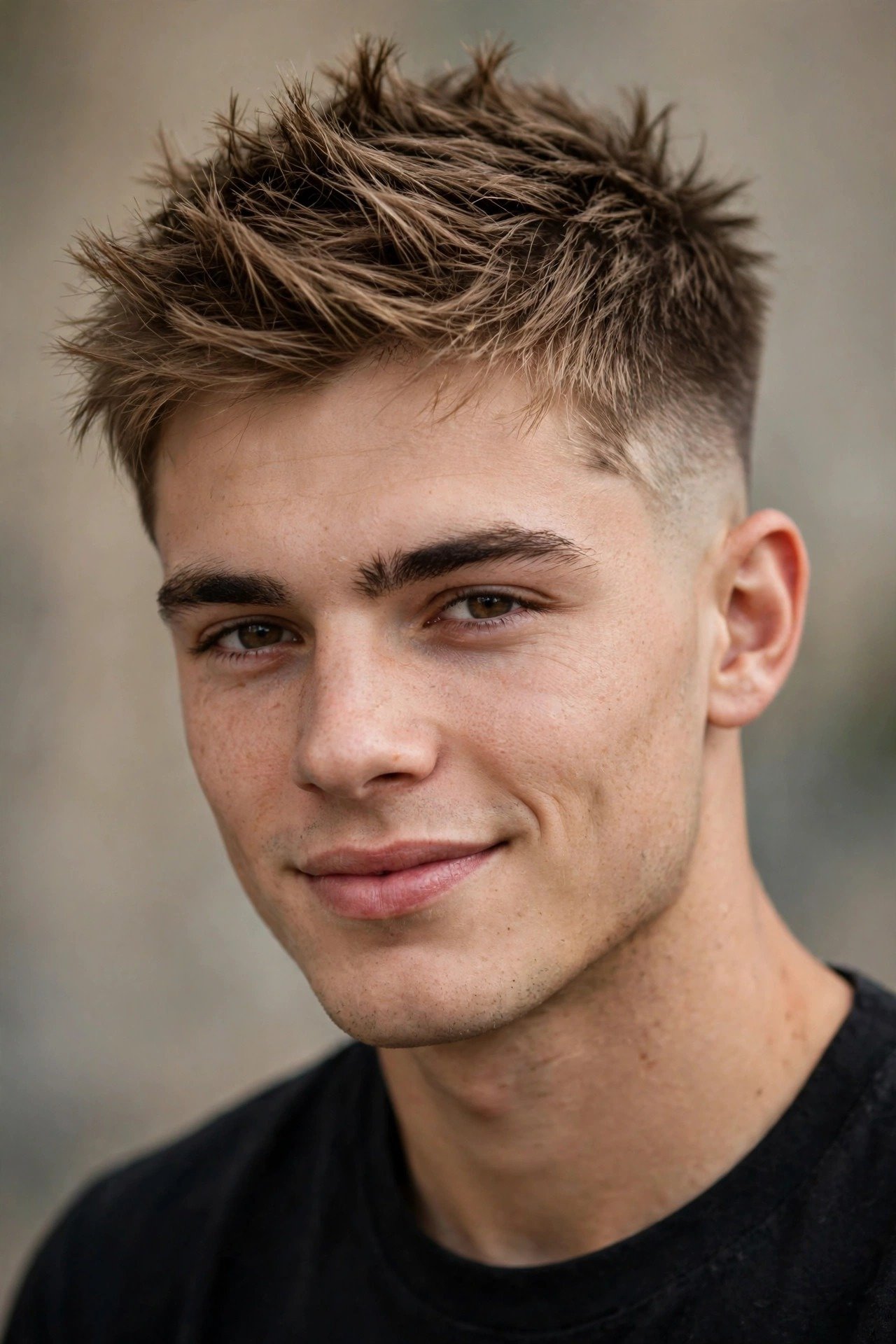
The spiky textured low taper fade is not the gelled-up spikes of the early 2000s, and that distinction matters. The 2026 version is softer: short, piecey texture on top, lifted and separated with matte product rather than frozen with gel, and a low taper that keeps the sides clean so the texture reads as modern rather than dated. The top is cut choppy, usually one to two inches, with point-cut ends that separate naturally, and the taper frames it with a tidy edge. Ask your barber for a short textured top with a low taper fade, and say you want soft, separated texture, not hard spikes, because the product and the cutting technique are completely different.
Straight hair spikes most easily, since it holds lifted pieces without fighting a curl pattern, while wavy hair can work if the top is kept short enough that the wave becomes texture rather than flop. Styling is matte clay or texture powder worked through dry or damp hair, pinched into pieces and pushed upward, which takes about two minutes. The honest downside is that spiky texture needs product every single day, unlike a crop that can air-dry into shape, so if you hate product, pick the messy fringe version instead. It also grows out fast, since the piecey ends lose their definition as they lengthen, so a trim every three to four weeks keeps it sharp. But if you want a cut with energy and attitude that still looks current, the soft spiky taper delivers it.
16. The French Crop Low Taper Fade
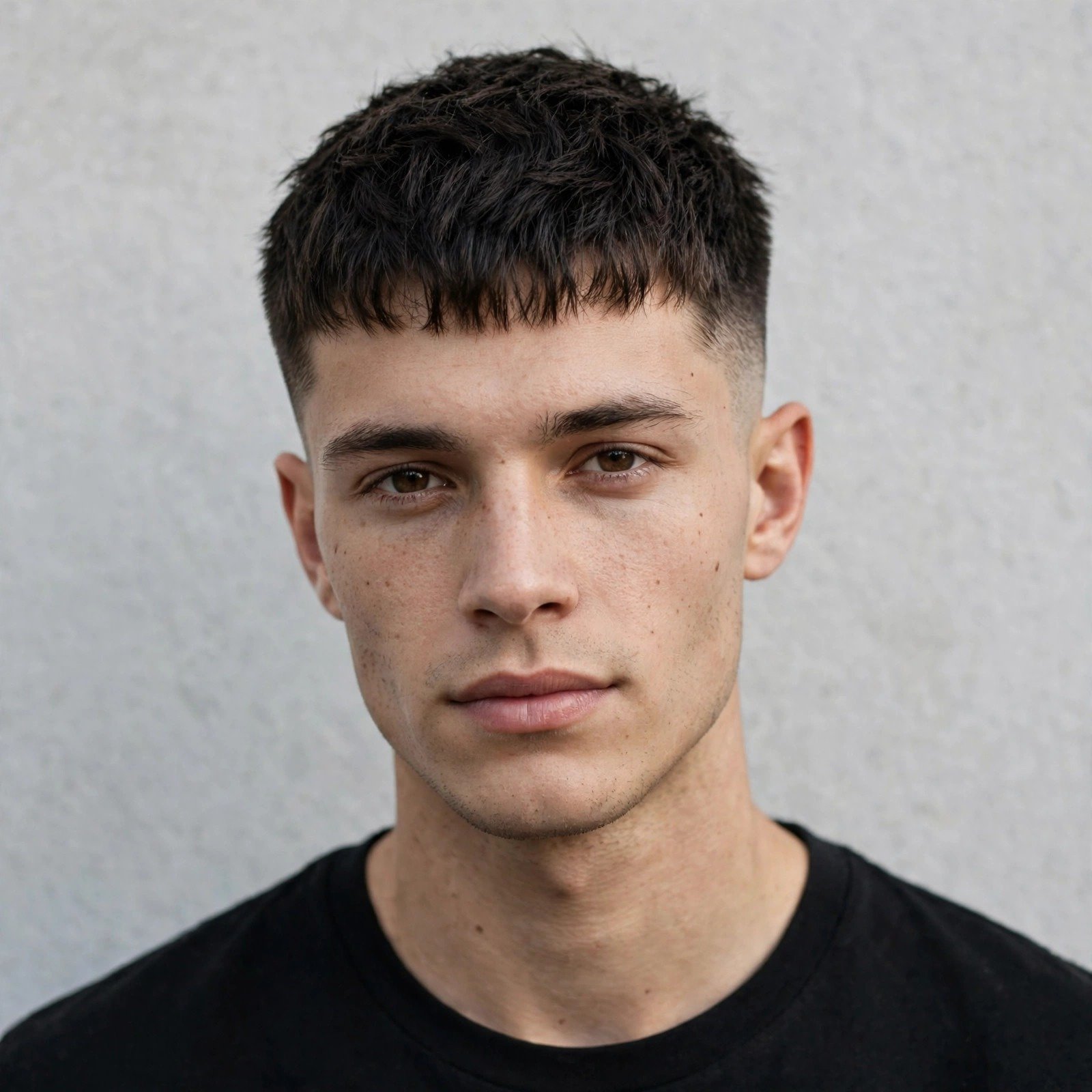
The French crop with a low taper fade is the textured crop’s neater, more architectural cousin: a short top, a blunt-ish fringe cut straight across the forehead, and a low taper that keeps the sides as tidy as the fringe line. The fringe is the defining feature here, sitting just above the eyebrows in a fairly straight line, softened only slightly at the ends so it does not look like a ruler was involved. Ask your barber for a French crop with a low taper fade, and be precise about the fringe length, because a centimetre changes the whole face: too long and it hides your eyebrows, too short and it looks like a school haircut.
Straight hair is the classic French crop canvas, since the blunt fringe shows cleanly, and it suits guys with strong brows and a defined hairline, since the fringe draws attention to that area. Styling is almost nothing: a dab of matte paste, a push forward, and the fringe sits where it was cut. The honest downside is that a blunt fringe is unforgiving of a receding hairline or an uneven hairline, since the straight line highlights exactly where the hair starts, and it needs regular trims to keep the line straight, as growth makes it ragged fast. It is also a bold, fashion-forward look that can feel a bit severe in very conservative workplaces. But if you want a cut that looks like it came from a Paris barbershop, the French crop low taper is the one.
17. The Caesar Low Taper Fade
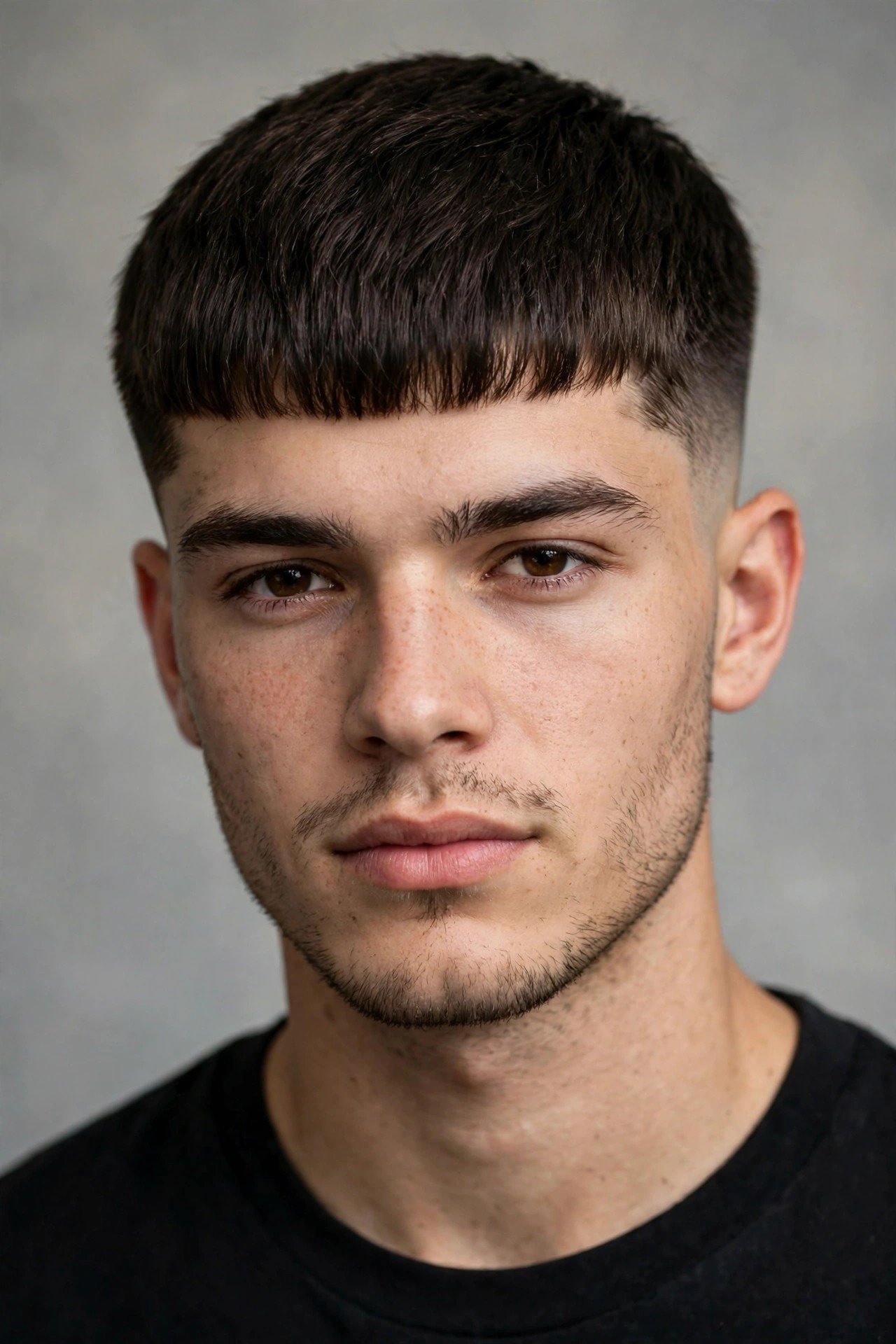
The Caesar with a low taper fade is the French crop’s ancient ancestor, updated for 2026: a short, even top, a short fringe brushed forward, and a low taper that gives the classic shape a clean modern edge. The top is kept uniformly short, usually under an inch, with the fringe cut to sit just on the forehead, and the taper tidies the sides without creating a harsh contrast. Ask your barber for a Caesar cut with a low taper fade, and clarify that you want the traditional short, even top rather than a textured crop, because the two get confused constantly and the cutting technique is different.
This version suits guys who want the shortest possible cut that still has a shape, and it is excellent for thinning hair, since the short, even top disguises patchiness far better than a longer style that separates and shows scalp. Styling is essentially zero: wash, towel-dry, and the cut is already in place. The honest downside is that it is a very short, very simple cut, so it offers little to hide behind, and guys with a head shape they are self-conscious about may prefer a longer top. It also needs frequent trims to keep the even length, since a Caesar that grows out unevenly just looks like a grown-out buzz. But as a timeless, no-fuss, always-appropriate cut, the Caesar low taper is hard to argue with, and it has survived two thousand years for a reason.
18. The Ivy League Low Taper Fade
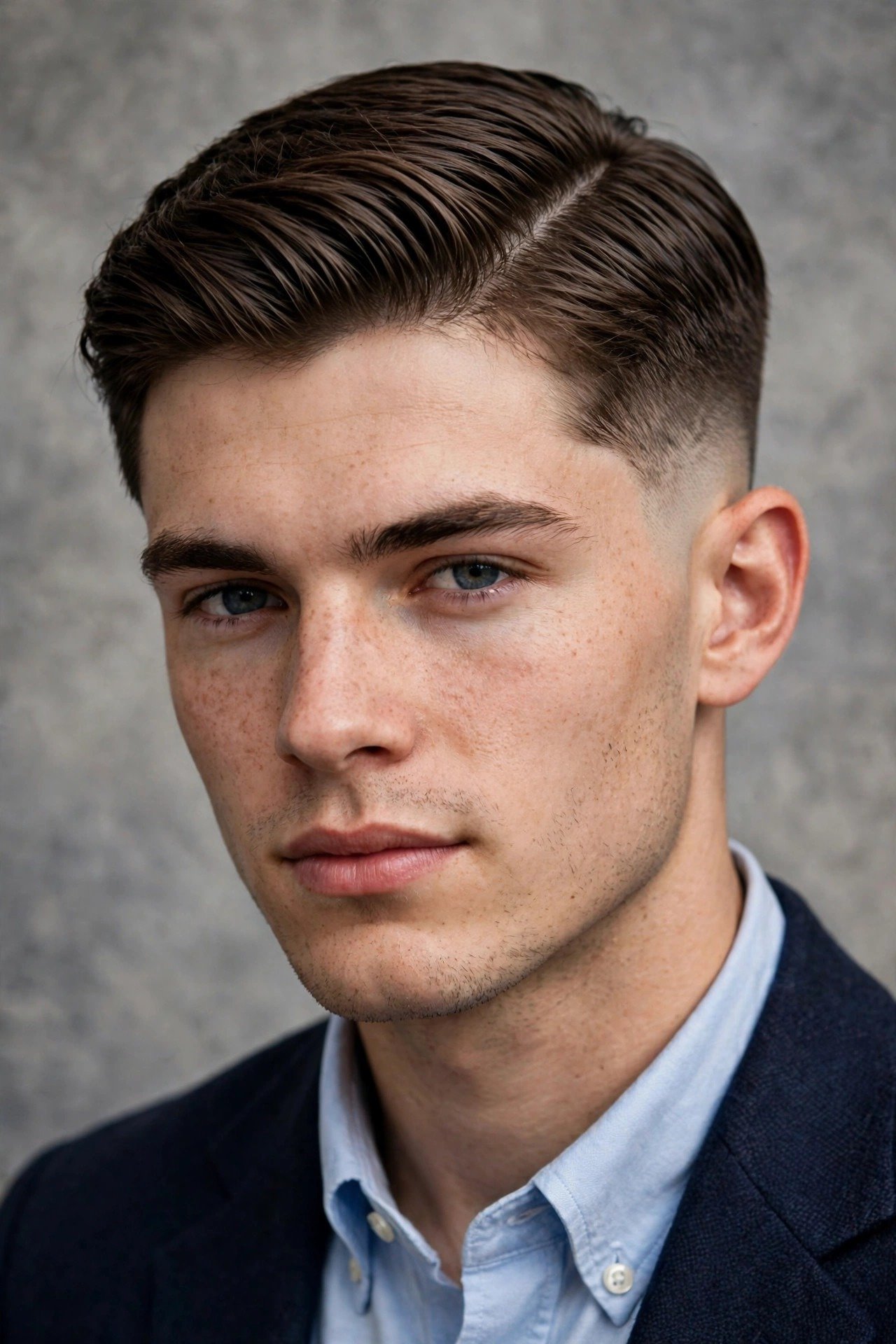
The Ivy League with a low taper fade is the preppy classic done right: a side-parted top, long enough to part and sweep, short enough to stay neat, and a low taper that replaces the old tapered back and sides with a softer modern blend. The top is usually one to two inches, parted to one side, with enough length at the front to sweep, and the taper keeps the whole thing looking tailored rather than stuffy. Ask your barber for an Ivy League cut with a low taper fade, and mention your natural part, because the cut should be built around where your hair actually wants to part, not forced into a part it will fight every morning.
This version suits straight to slightly wavy hair, professional settings, and guys who like their hair to look done without spending more than three minutes on it. Styling is a side part combed into place while damp, a small amount of light-hold cream, and a sweep to the side, which holds all day on most hair types. The honest downside is that it is a deliberately neat, classic look, so if you prefer messy texture or bold statements, it will feel a bit restrained. It also shows thinning more than a textured cut does, since the smooth side part exposes the scalp along the part line. But for weddings, interviews, and any occasion where you want to look like you have your life together, the Ivy League low taper is the safest bet on this list.
19. The Afro Low Taper Fade
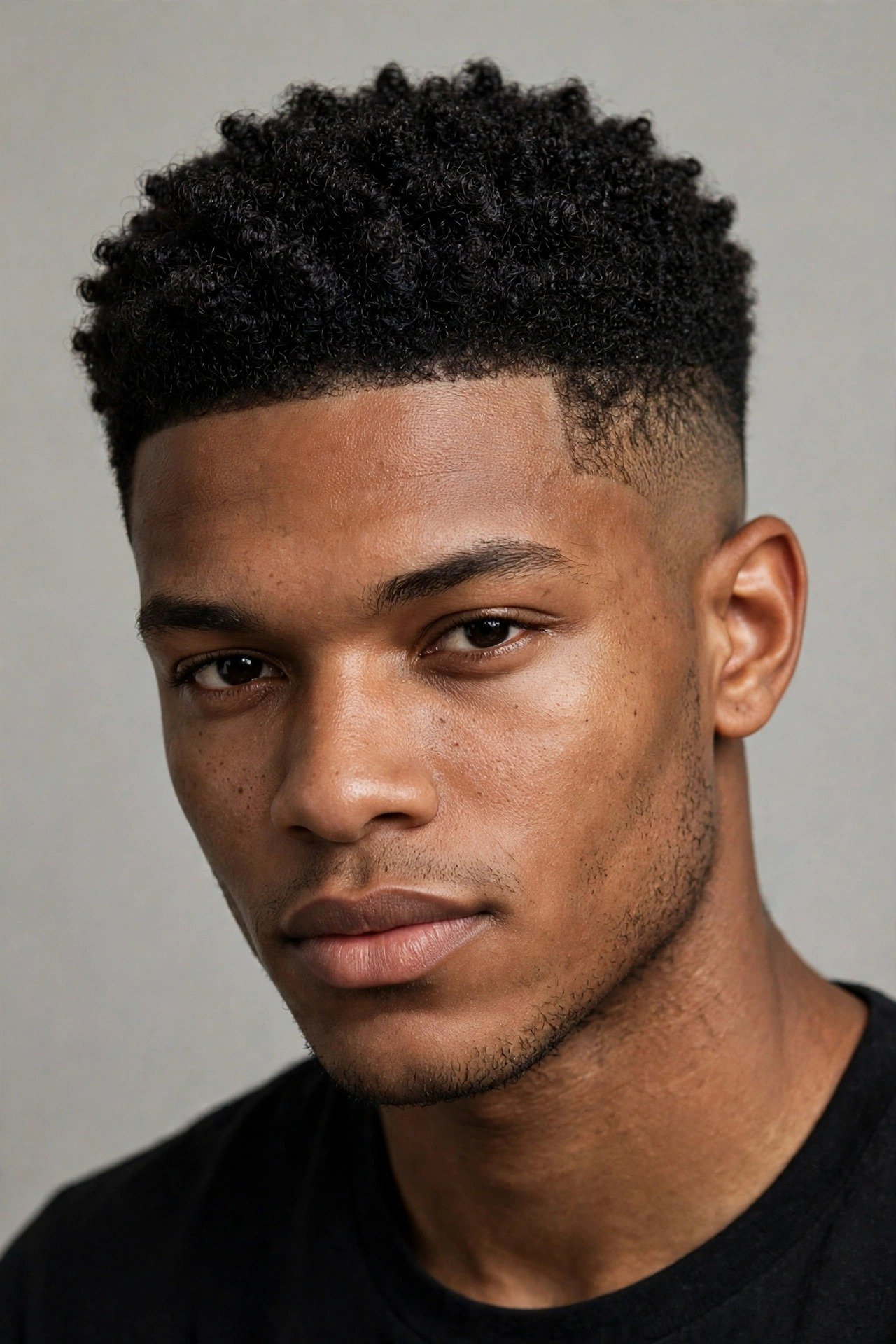
The afro with a low taper fade is shape and neatness in perfect balance: a full, rounded afro on top, picked out to its natural volume, with a low taper that tidies the edges around the ears and the nape without cutting into the afro itself. The taper gives the afro a clean outline, which is the difference between a deliberate, sculpted shape and a shape that just grew that way. Ask your barber for an afro shape with a low taper fade, and be clear that the taper should stay low and only clean up the perimeter, because a taper that climbs too high will eat into the afro’s silhouette and flatten the sides.
Coily and tightly curled hair is the natural canvas here, and the cut works best when the barber shapes it dry, since afro hair shrinks significantly when wet and a wet cut can end up far shorter than intended once it dries. Styling is a pick or wide-tooth comb to shape the afro, a leave-in conditioner or afro cream to keep it soft and moisturised, and a satin pillowcase or durag at night to protect the shape. The honest downside is maintenance of the shape: an afro needs regular picking and moisturising to stay rounded rather than matted, and humidity can change its volume dramatically during the day. But paired with a crisp low taper, the afro looks sculpted, confident, and completely timeless, and the taper means the edges stay sharp between full shapes.
20. The 360 Waves Low Taper Fade
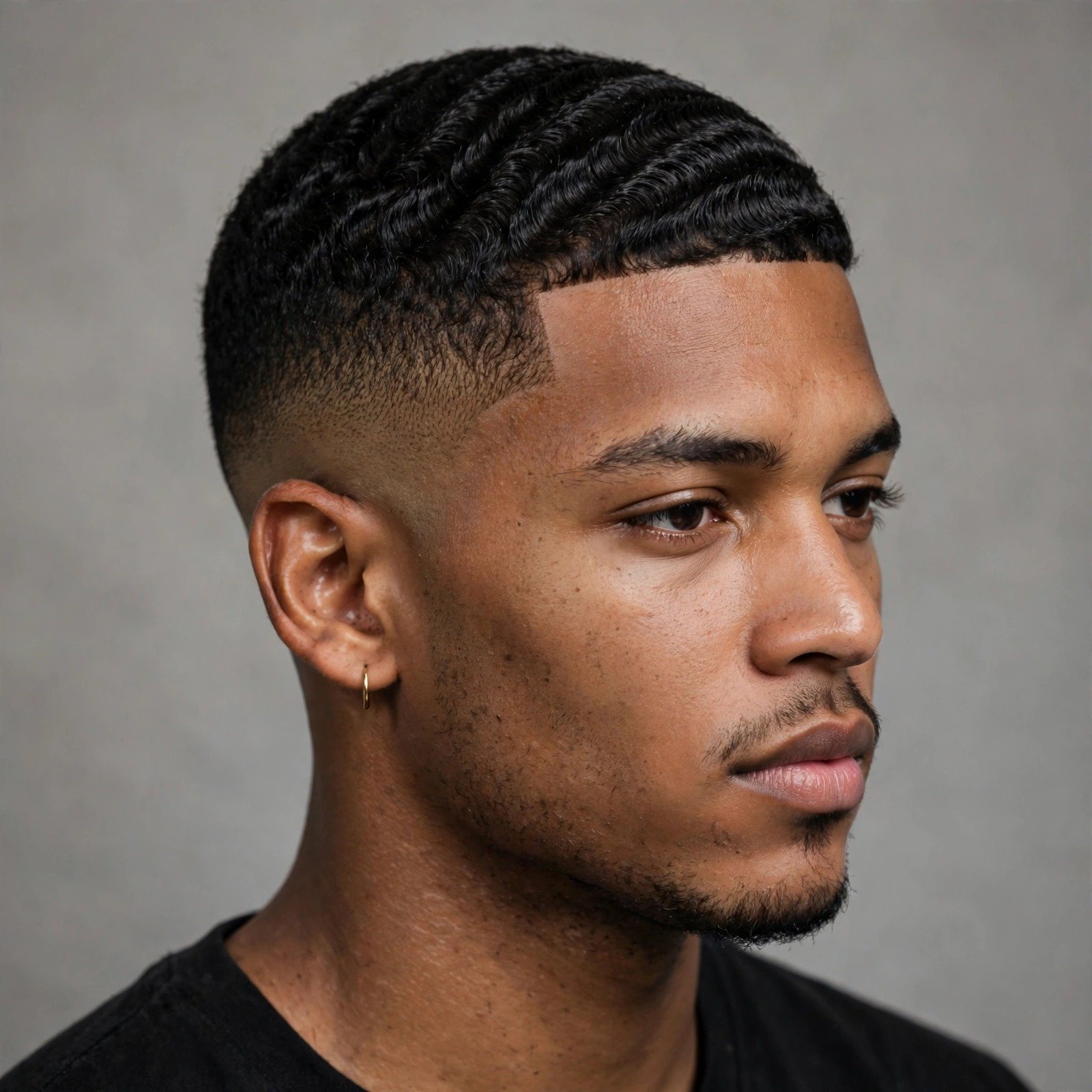
The 360 waves cut with a low taper fade is a specialist pairing that rewards patience like no other cut on this list. The top is kept short and brushed in a circular pattern until rippling waves form all around the head, and the low taper tidies the perimeter so the waves read cleanly right to the edges. Ask your barber for a short cut suitable for waves with a low taper fade, and understand that the barber only starts the process: the waves themselves are built by you, through weeks of consistent brushing, moisturising, and durag-wearing. If you are not prepared for that routine, pick a different style, because waves without the routine are just a short haircut.
Coarse, wavy to coily hair forms waves most readily, and the routine is brushing in the wave pattern daily, keeping the hair moisturised with a light pomade or wave cream, and wearing a durag to lay the hair down, especially overnight. The payoff is a rippling, sculpted pattern that looks incredible under light and pairs beautifully with a crisp taper edge. The honest downside is the time investment: real 360 waves take weeks to months to develop properly, and they need daily brushing to maintain, so this is the highest-maintenance style on this list despite looking effortless. The taper also needs refreshing every two to three weeks to keep the edges sharp. But if you love the process as much as the result, the waves low taper is a masterpiece of patience.
21. The Sleek Straight Low Taper Fade

The sleek straight low taper fade is for guys whose hair is naturally straight and who want to show it off rather than fight it into texture. The top is left smooth and polished, either combed neatly to one side or worn forward in a clean, even shape, and the low taper gives it a crisp frame that stops the whole thing from looking flat or unfinished. Ask your barber for a sleek, smooth top with a low taper fade, and say whether you want it neat or with a little movement, because a sleek cut uses smoother layers while a textured cut uses point-cut ends, and the two behave very differently on straight hair.
Straight hair is obviously the match here, and the result looks sharp enough for a wedding and relaxed enough for a weekend, especially with a drop of smoothing cream to kill flyaways. Styling is a quick blow-dry or comb-through while damp, plus a smoothing cream, which takes about three minutes. The honest downside is frizz and humidity, which are the sleek cut’s enemies, since straight hair that frizzes loses its whole selling point. A small amount of anti-frizz cream solves most of that, and a silk pillowcase helps more than you would expect. It also shows growth lines faster than a textured cut, since a neat shape goes ragged as it grows, so plan a trim every four weeks. Done right, the sleek straight taper is quiet luxury in hair form.
22. The Thick Hair Low Taper Fade
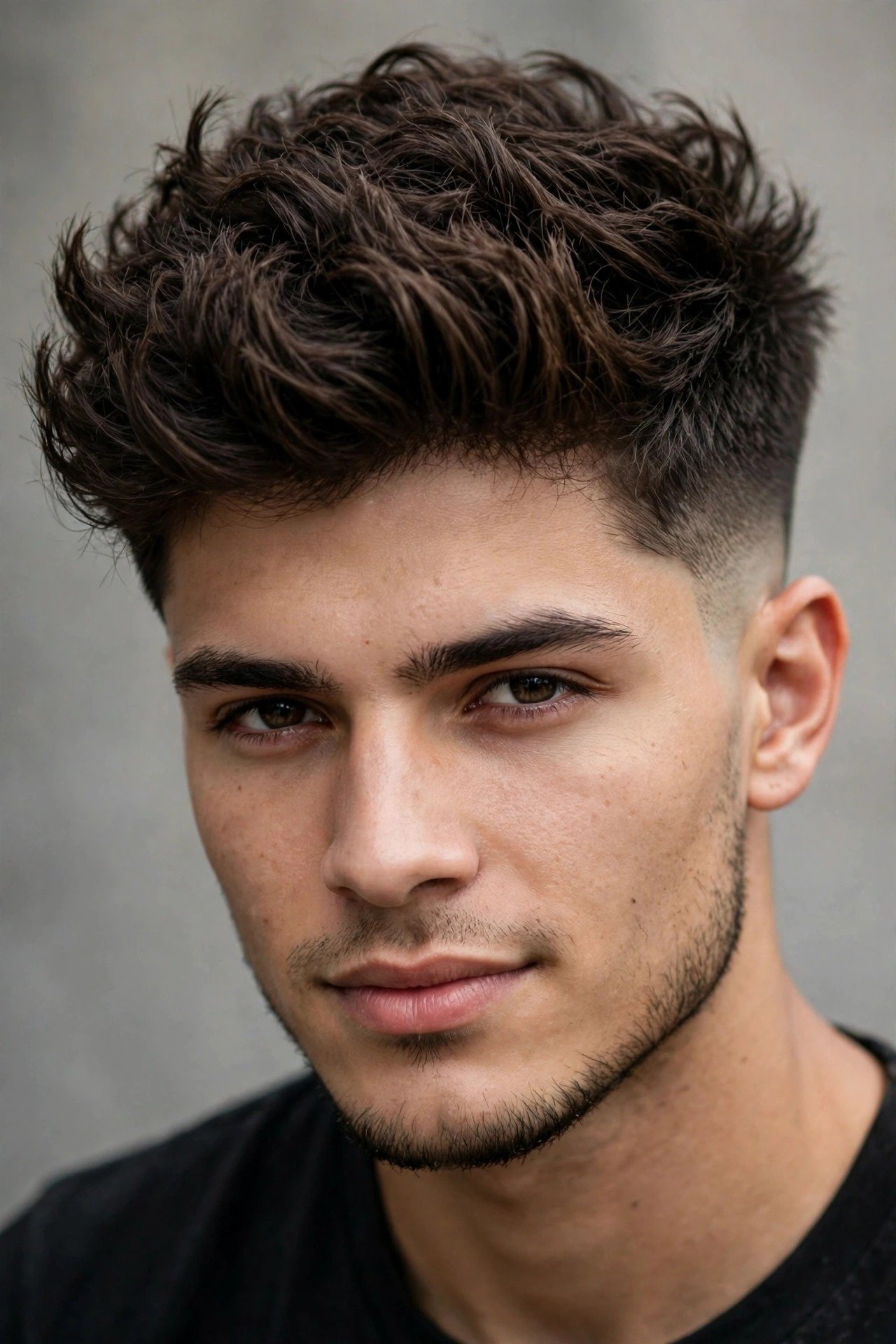
Thick hair and low taper fades were made for each other, but only if the barber respects the bulk. The thick hair low taper uses deep internal layering and careful weight removal in the lower sides to let thick hair fall into shape instead of expanding sideways into a triangle, while the top stays full and generous. Ask your barber specifically for internal layering and weight removal in the taper area, not just a shorter cut, because chopping thick hair shorter without removing weight just makes a smaller triangle. Tell them your hair is thick before they start, and judge their answer about how they handle bulk before they pick up the clippers.
Styling is easy once the cut is right: cream on damp hair, a rough dry or air-dry, and the density does the rest, holding its shape all day without product, which is a gift most hair types would envy. The downside is the appointment itself, which takes longer and needs more patience, because a good thick-hair taper cannot be rushed, and a barber who rushes it will leave weight in the wrong places that you will notice within a week. It also means more hair in the shower drain and a heavier feeling on hot days, so some thick-haired guys pair the taper with a slightly shorter top for summer. Get it right and the thick hair low taper is the most impressive version on this list, full stop.
23. The Fine Hair Low Taper Fade
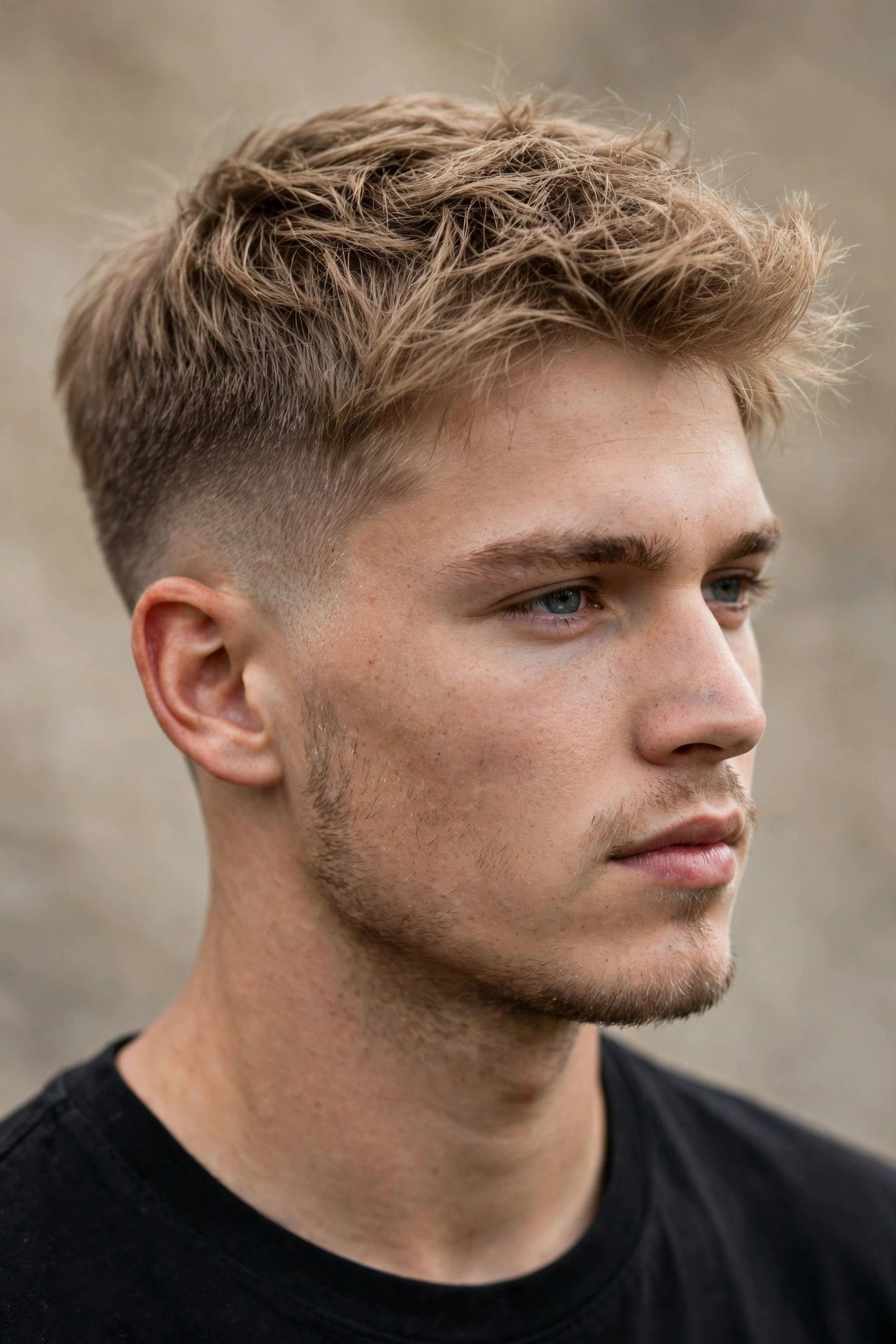
Fine hair guys often assume a taper fade is not for them, and that assumption is wrong, it just needs a different approach. The fine hair low taper keeps the taper soft and low, never going to skin, so it does not expose the scalp, and the top is cut with shorter, closer layers that build up density instead of separating into wisps. Ask for a low taper that stops at a short shadow rather than skin, a textured top with stacked layers, and sides kept neat so the top looks fuller by contrast. The low taper is actually kinder to fine hair than a high fade, precisely because it keeps side length where a high fade would strip it away.
Styling is where fine hair wins or loses: sea salt spray on damp hair for grip, a quick rough blow-dry with your head upside down for root lift, and dry shampoo on day two to revive the volume. Skip heavy creams and oils, which flatten fine hair instantly, and lean on texture powder at the roots if you need extra lift. The honest downside is that fine hair tapers need product and a little morning effort, unlike thick hair versions that just behave, and a long top on fine hair goes limp fast, so keep the top short to medium. The upside is real, though: a well-cut fine hair taper looks thicker than your hair actually is, because the stacked layers and tidy edges create the illusion of density. Do not write off the taper because your hair is fine. Just cut it smarter.
24. The Receding Hairline Low Taper Fade
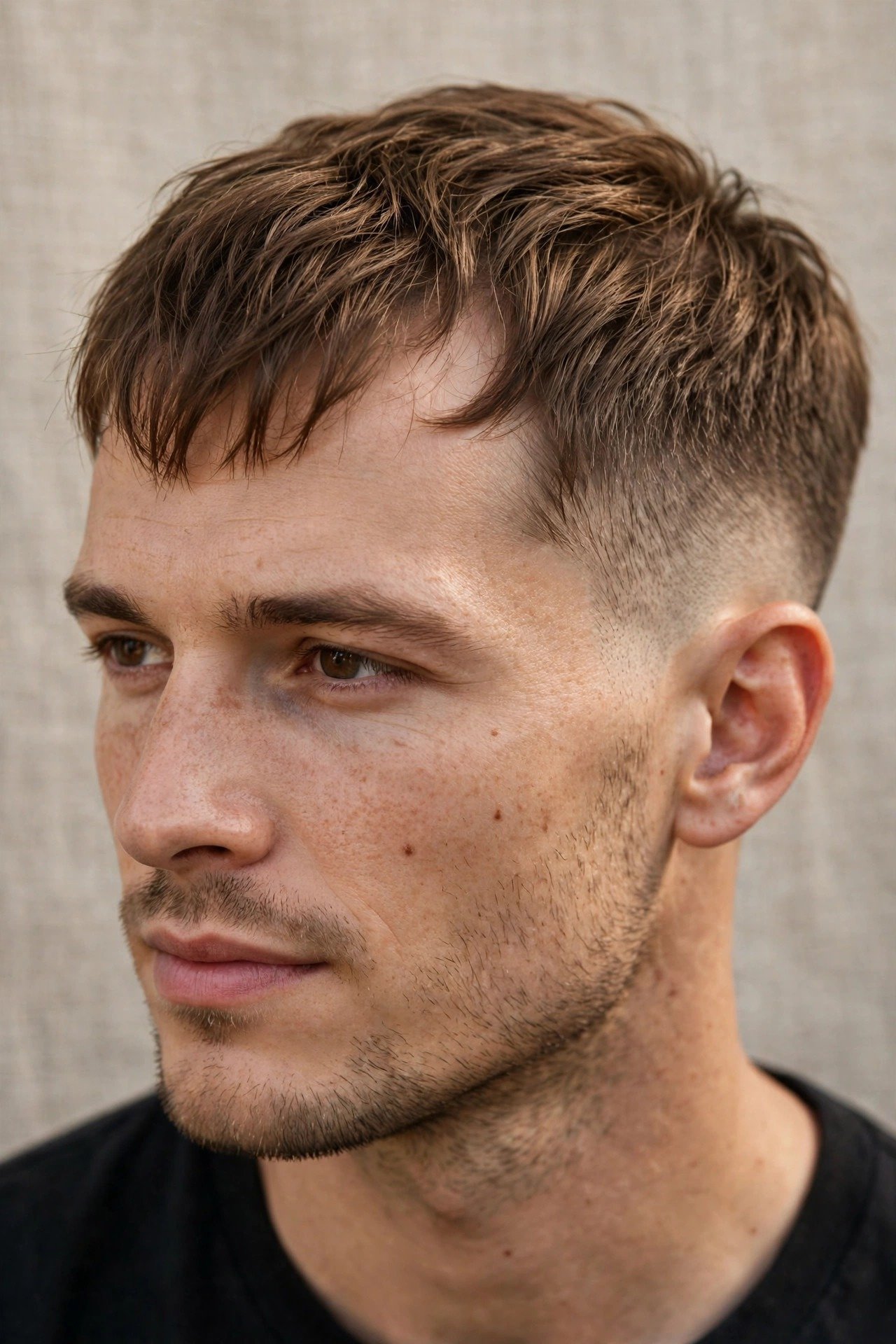
A receding hairline and a low taper fade are a genuinely good match, and it is worth saying so plainly, because a lot of guys with receding hairlines get pushed toward either a full buzz or a desperate comb-over, when the middle ground is usually better. The trick is a forward or textured top that softens the hairline, paired with a low taper that keeps the sides tidy without drawing attention upward. Ask your barber for a textured top worn forward with a low taper fade, and avoid a slicked-back top or a high fade, both of which expose the hairline and the scalp far more than a low taper does.
Styling is matte product through the top, pushed forward and slightly to one side, which creates texture that disguises the hairline without looking like you are hiding anything. A short, textured fringe is your friend here, as is keeping the top from getting too long, since long hair on a receding hairline separates and shows more scalp. The honest downside is that no haircut regrows hair, and a taper is a styling solution, not a treatment, so if hair loss is progressing quickly, talk to a professional about medical options alongside the cut. But as a daily, confidence-boosting frame, the low taper is one of the kindest cuts for a receding hairline, because it keeps the focus on the texture on top and the clean edges, not on the hairline itself.
25. The Beard Blend Low Taper Fade
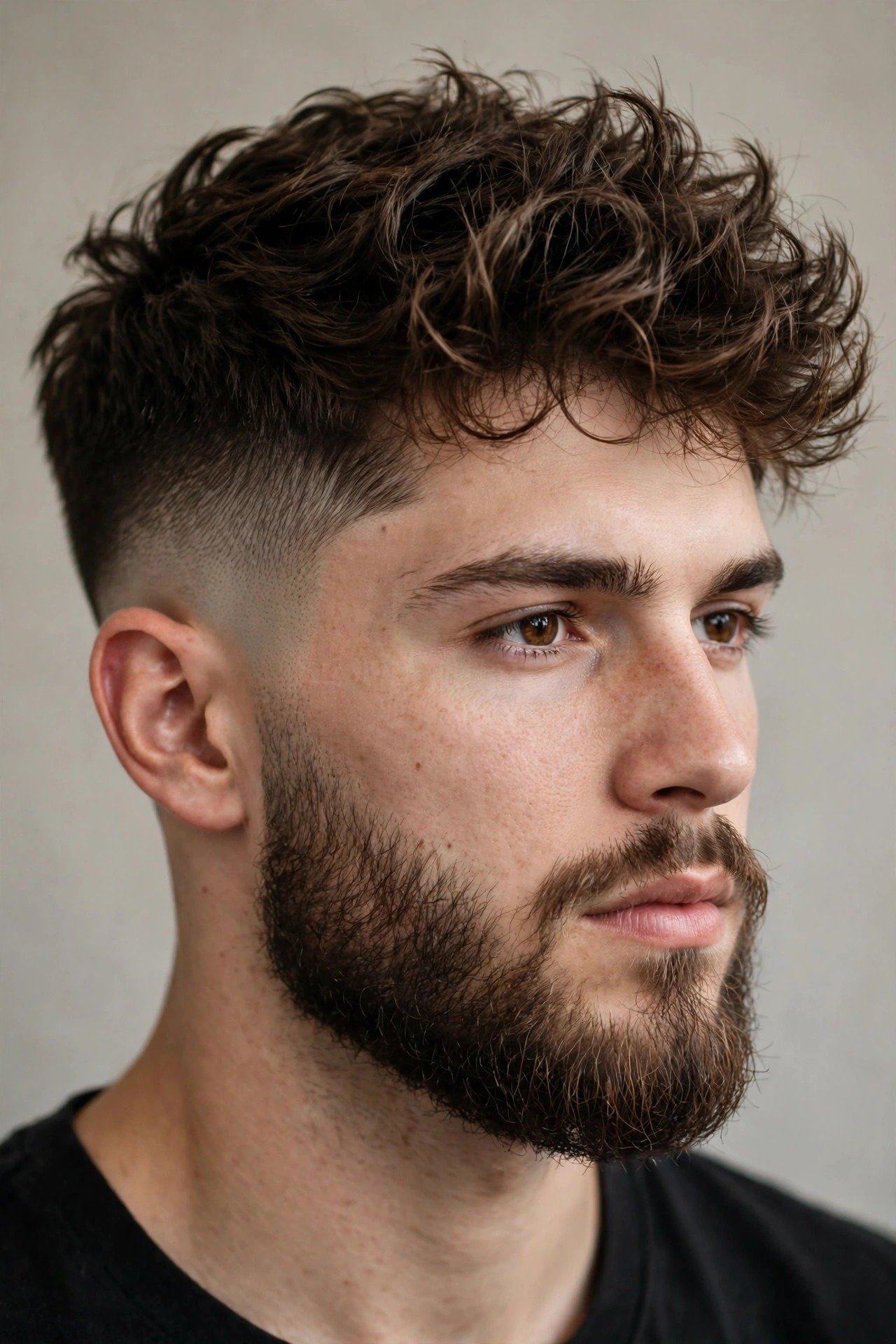
The beard blend low taper fade is the version for guys who wear a beard and are tired of the awkward gap where the haircut ends and the beard begins. Instead of a hard line at the sideburn, the taper is blended gradually down into the beard, so the hair, the sideburn, and the beard read as one continuous, groomed shape. Ask your barber for a low taper fade blended into the beard, and be clear about your beard length, because the blend needs to match it: a short beard needs a tighter blend, while a longer beard can handle a softer, more gradual transition. Bring a photo of the full head-and-beard shape you want, not just the haircut.
Styling the blend is mostly about beard care: beard oil or balm to keep the beard soft, a comb to keep it shaped, and a trim that keeps the cheek line clean so the blend stays visible. The haircut itself needs the same low taper maintenance as any other version, every three to four weeks, and the beard blend needs touching up at the same appointment, since the two grow out together. The honest downside is that a beard blend is only as good as its maintenance: let the beard grow wild for two weeks and the blend disappears into a shapeless mass, so this version commits you to regular grooming. But if you already maintain a beard, the blend is a small extra step that makes the whole head look intentionally designed rather than accidentally assembled.
26. The Sharp Line Up Low Taper Fade
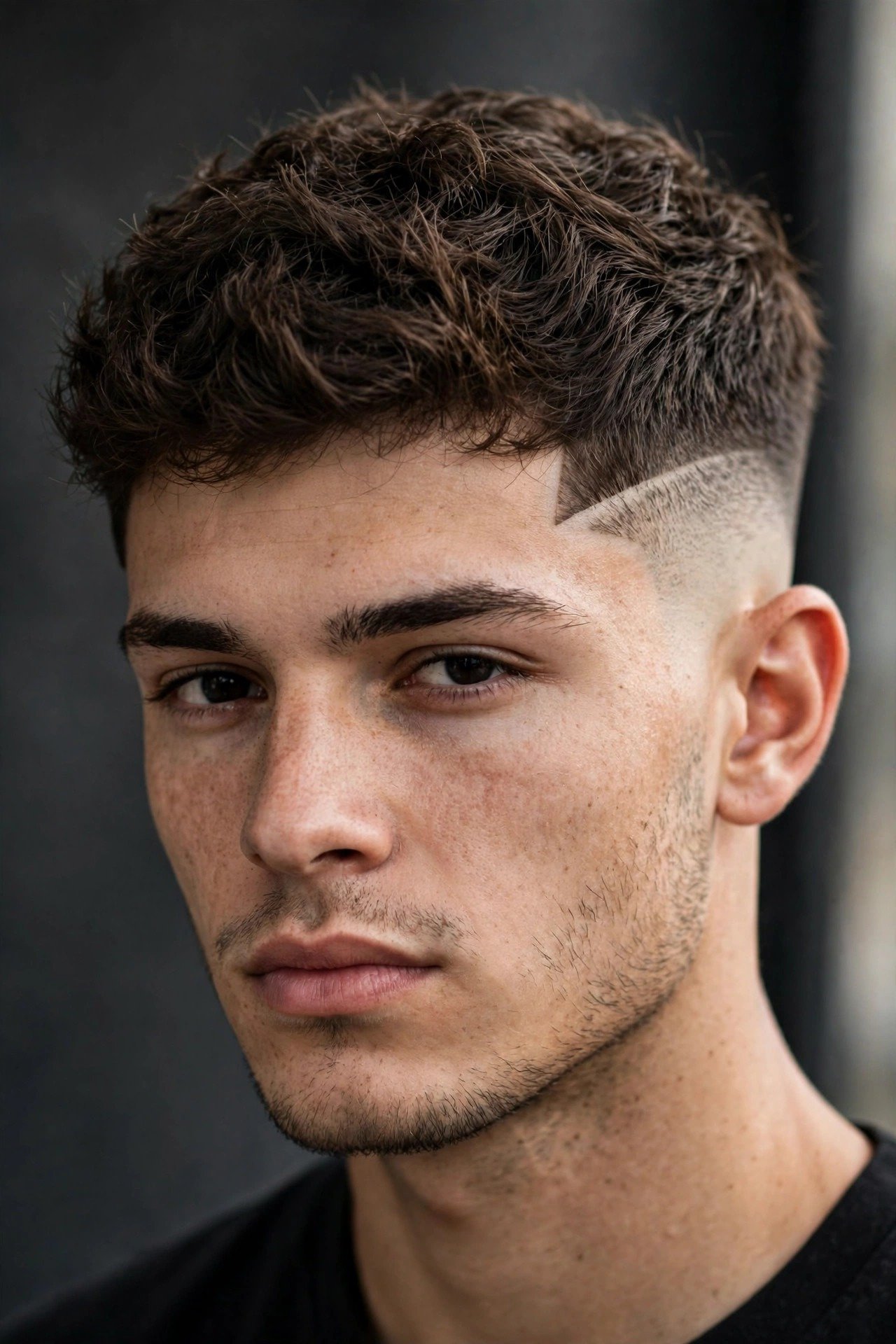
The sharp line up low taper fade pairs the soft, low blend at the sides with a crisp, defined edge along the forehead and temples, and that contrast is exactly what makes it pop. The taper itself stays gentle and low, but the hairline is lined up with trimmers into a clean, geometric edge, which frames the face sharply and makes the whole cut look freshly done. Ask your barber for a low taper fade with a line up, and be very clear about how sharp you want the corners: a squared-off line up looks bold and modern, while a slightly rounded line up looks softer and more natural, and pushing the hairline back to make it sharper is a mistake you cannot undo until it grows back.
This version suits guys with a naturally straight hairline and dark, coarse hair, where the line up shows crisply, and it is brilliant for photos and nights out, since the sharp edge catches the eye immediately. Styling the top is your choice: a crop, a short quiff, or waves all work with a line up, and the taper keeps the sides tidy underneath. The honest downside is maintenance: a line up grows out visibly within a week, as stubble softens the edge, so it needs a touch-up every one to two weeks to stay sharp, which is the most frequent maintenance on this list. It also does not suit a receding or uneven hairline, since lining up an uneven line only highlights the unevenness. But if your hairline is straight and you love a crisp finish, the line up taper is the sharpest tool in the box.
27. The Etched Design Low Taper Fade
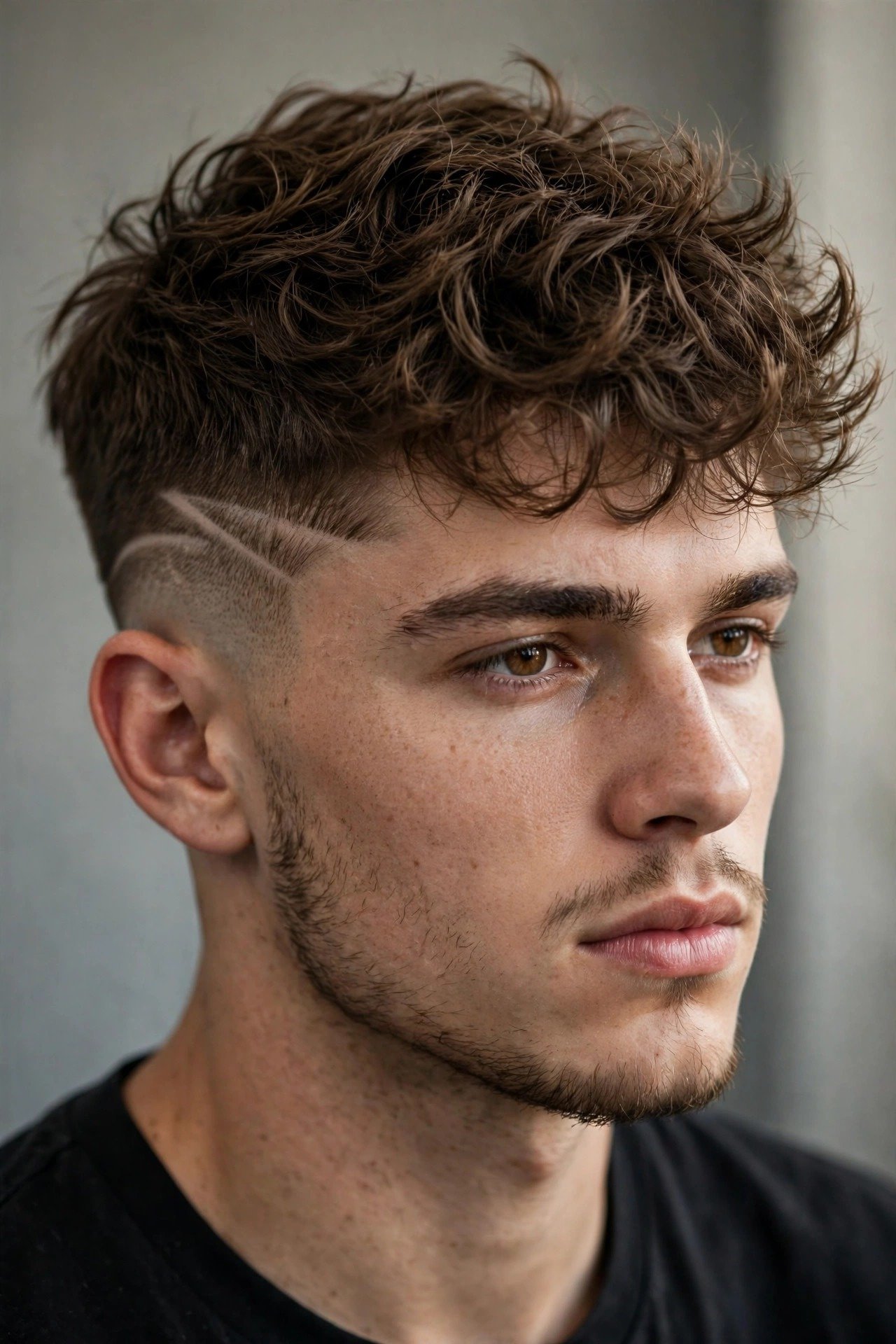
The etched design low taper fade adds one small, deliberate detail to the low blend: a shaved line, a curved part, or a simple geometric design etched into the taper area, usually just above or behind the ear. Because the taper itself is low and subtle, the design becomes a quiet accent rather than a loud statement, which is why it works for guys who want a bit of personality without a full pattern shaved into a high fade. Ask your barber for a low taper fade with a single etched line, and agree on the design before any clippers touch your head, because freehand designs are hard to fix once they are in.
A single line or a small curve is the smartest choice for a first design, since it is easy to grow out and easy to redo, while complex patterns need a barber who specialises in designs and will look messy if attempted by a generalist. Styling the top is unaffected, so pair the design with whatever top you already like, from a crop to a quiff. The honest downside is lifespan: an etched design grows out in one to two weeks, as the hair around it lengthens and blurs the line, so it is a short-lived detail that needs regular re-etching if you want to keep it. It is also not appropriate for very formal workplaces, though a single subtle line is easy to hide under slightly longer hair. Think of it as a temporary tattoo for your haircut: fun, personal, and gone before you get bored of it.
28. The Low Drop Taper Fade
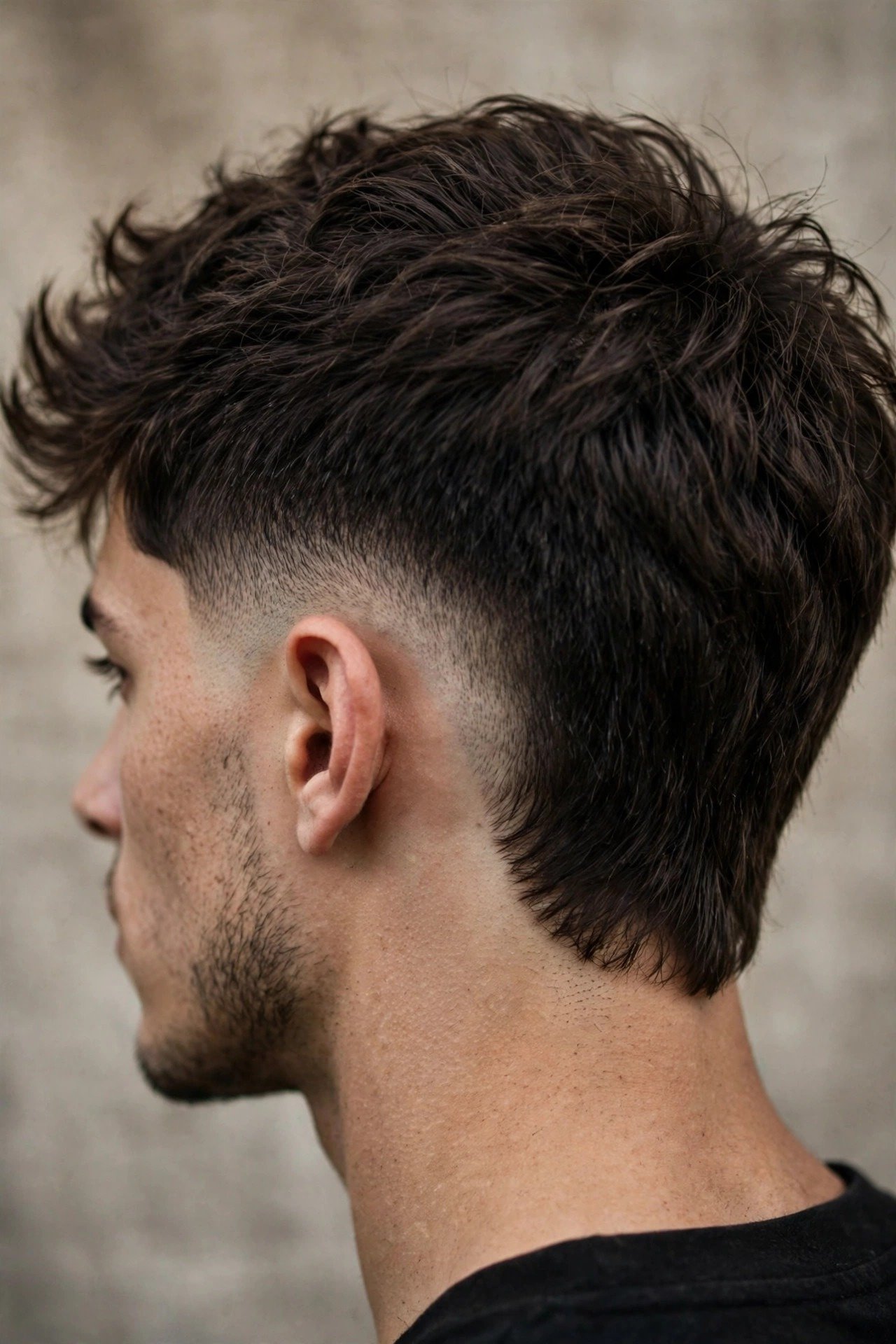
The low drop taper fade is a clever variation where the taper line drops down behind the ear, following the natural curve of the head, instead of staying level all the way around. The drop creates a more rounded, sculpted silhouette from the side profile, which flatters guys whose head shape looks flat from the side with a level taper. Ask your barber for a low taper that drops behind the ear, and show a side-profile photo if you can, because the drop is a shape detail that is hard to describe in words and easy to get wrong without a picture. The top can be anything you like, since the drop is purely a sides-and-back detail.
This version suits guys who care about their side profile, which is more of us than admit it, since the drop makes the head look more balanced and less boxy from the side. It works with straight, wavy, and curly hair alike, because the drop is about the taper line, not the top texture. Styling is unchanged from a regular low taper, which is part of the appeal: the same five-minute routine, a better silhouette. The honest downside is that the drop needs a barber who understands head shape, since a drop placed too low can look like a mistake rather than a design, and it grows out a little faster than a level taper, as the dropped curve blurs first. But if your side profile has ever bothered you in photos, the low drop taper is the quiet fix you have been looking for.
29. The Long Top Low Taper Fade

The long top low taper fade is contrast done properly: real length on top, three to six inches or more, with a tidy low taper underneath that stops the whole thing from looking like you simply stopped getting haircuts. The length can be worn swept back, to one side, or forward in a longer fringe, and the taper is what makes it look like a haircut rather than a grow-out. Ask your barber for a long top with a low taper fade, and be specific about how you will wear the length, because a top worn swept back needs different layering from a top worn forward, and a barber who layers for the wrong direction will leave you fighting your hair every morning.
This version suits wavy and thick hair best, since length plus movement is the whole point, and it pairs beautifully with the broccoli cut length if you like a fuller, rounder top, though the taper keeps it far neater than a perm-based cut. Styling is a blow-dry or air-dry depending on the finish you want, a light cream to control the ends, and a willingness to push hair out of your face occasionally. The honest downside is real and worth saying out loud: long hair gets in the way, it falls in your eyes when you run, it gets caught in hoodies, and it needs more shampoo, more conditioner, and more patience than any short version here. Split ends show faster too, so a trim every six weeks is not optional. But if you want hair with actual presence, the long top low taper delivers it.
30. The Short Fringe Low Taper Fade
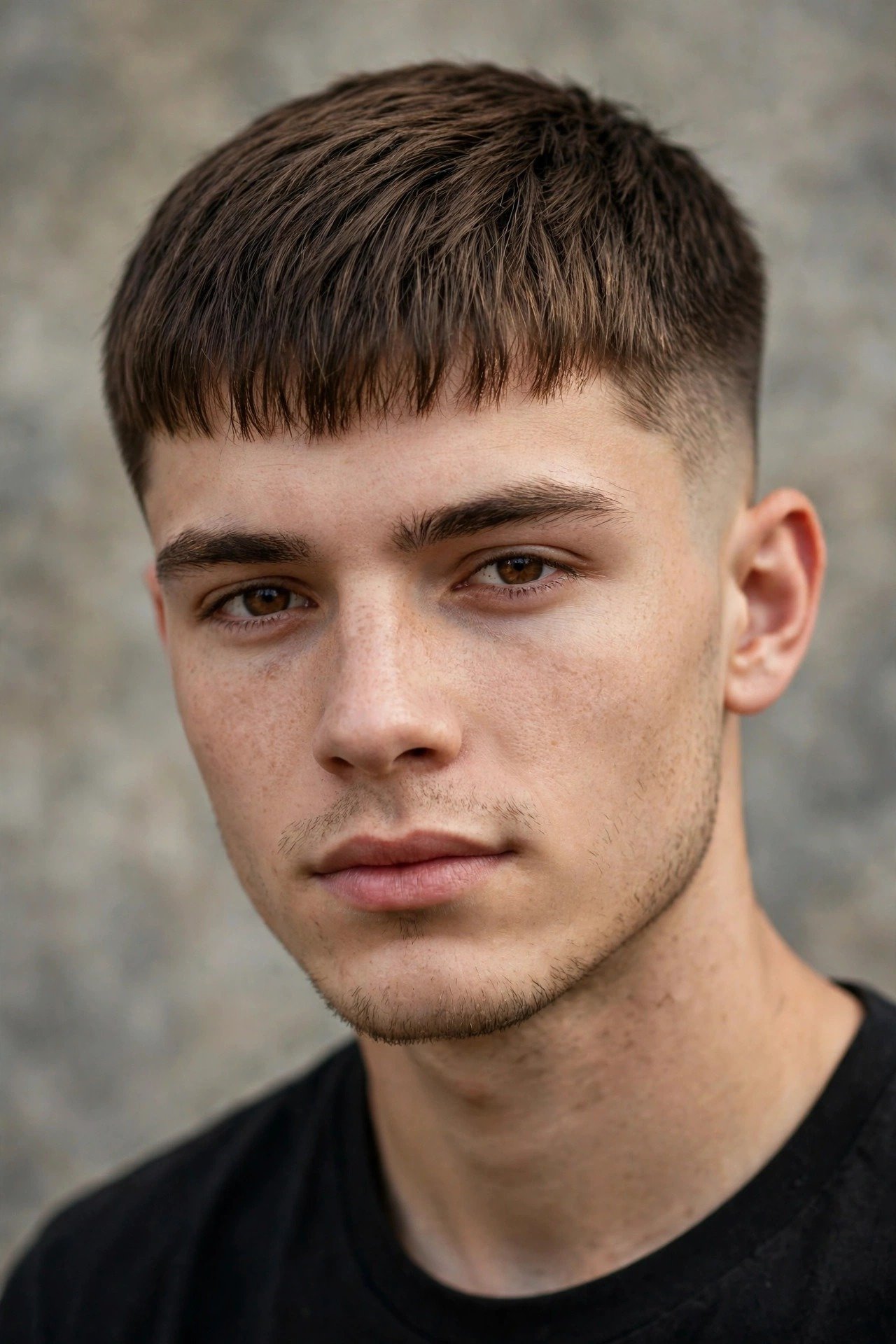
The short fringe low taper fade, sometimes called a micro fringe taper, keeps the fringe deliberately short, sitting well above the eyebrows, with a low taper framing it from below. The result is bold, modern, and surprisingly flattering, because the short fringe opens up the whole face and shows off the eyes and brows, while the taper keeps the edges clean. Ask your barber for a short fringe with a low taper fade, and be precise about the fringe length, because a centimetre is the difference between fashion-forward and accidentally-short, and once it is cut, you are waiting weeks for it to grow back.
This version suits oval and square faces especially well, since the open forehead balances strong features, and it is excellent for hot weather and active lifestyles, since no hair falls in your eyes. Styling is minimal: a dab of matte paste, a push forward, and the fringe sits where it was cut. The honest downside is commitment: a short fringe cannot be styled any other way, so if you get bored of it, you are growing it out for a month before you can sweep it to the side. It also highlights the forehead, so guys with very high hairlines may feel exposed. But as a confident, low-effort, high-impact pairing, the short fringe low taper is one of the most underrated cuts on this list, and it photographs strikingly well.
31. The Office-Ready Low Taper Fade
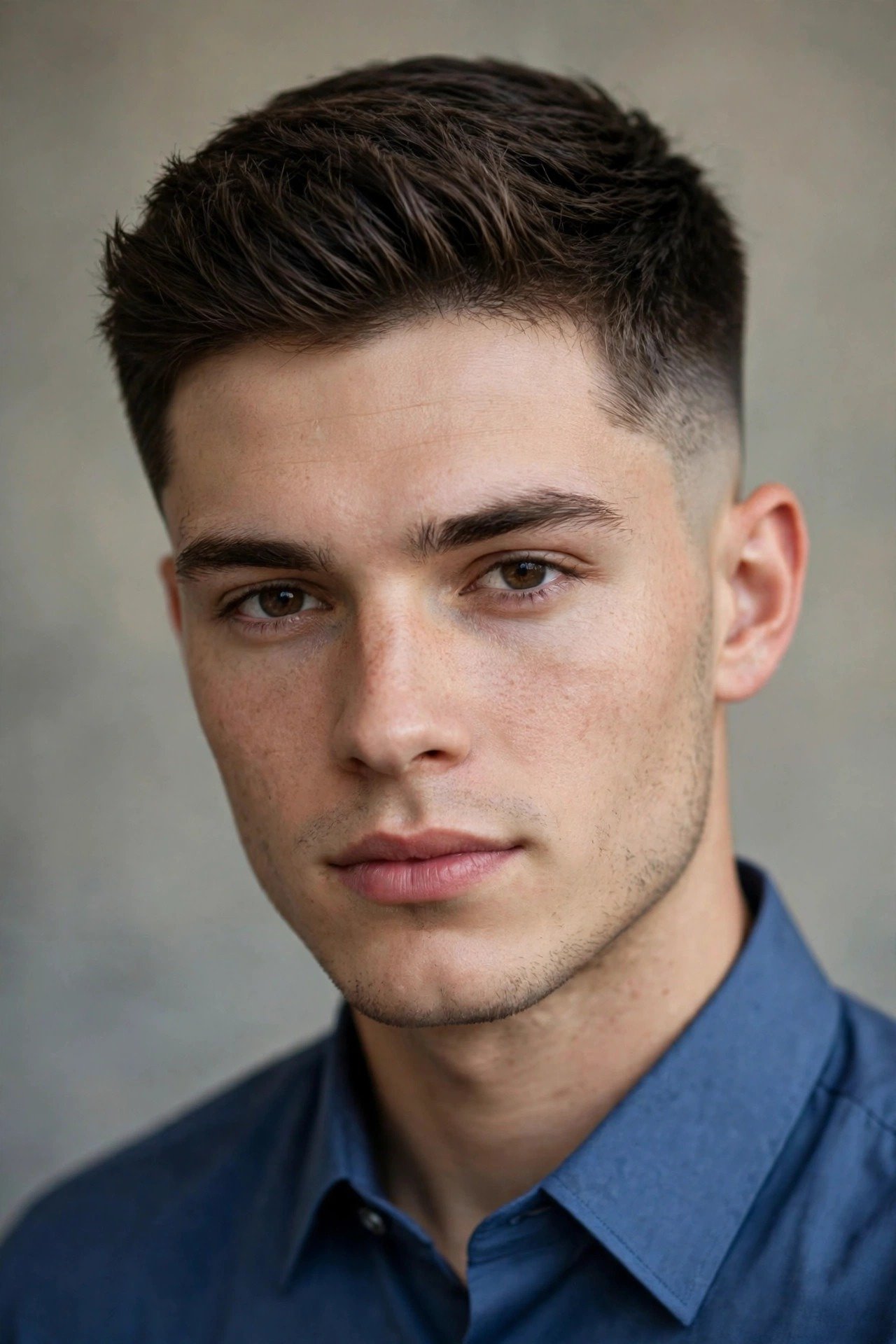
Yes, you can wear a taper fade to a proper office, and the office-ready version is how. The top is kept at medium length, the fringe is swept to one side instead of falling over the eyes, the sides are tapered low and neat, and the whole cut looks deliberate rather than rebellious. It is a low taper that shakes hands nicely. Ask for a side-swept top with a low taper fade, tidy tapered sides, and layers that keep the top controlled, and tell your barber your workplace dress code, because a barber who knows you work in a suit will cut it differently from one who thinks you work in a skate shop.
This version suits straight and wavy hair best, since the neat finish shows clearly, and it is the single best low taper pairing for job interviews, client meetings, and any setting where first impressions matter. Styling is a comb-through while damp, a dab of light cream, and a quick check that the fringe sits to the side, which takes two minutes and holds through meetings and long commutes. The downside is that it is the least fun taper on this list, by design, since it trades some shaggy charm for professionalism, and on weekends you might find yourself pushing the fringe forward just to feel like yourself again. That is actually a feature: one cut, swept to the side for work, forward for weekends. If your job has a dress code but your heart has a taper, the office-ready version is the peace treaty between them.
32. The Round Face Low Taper Fade
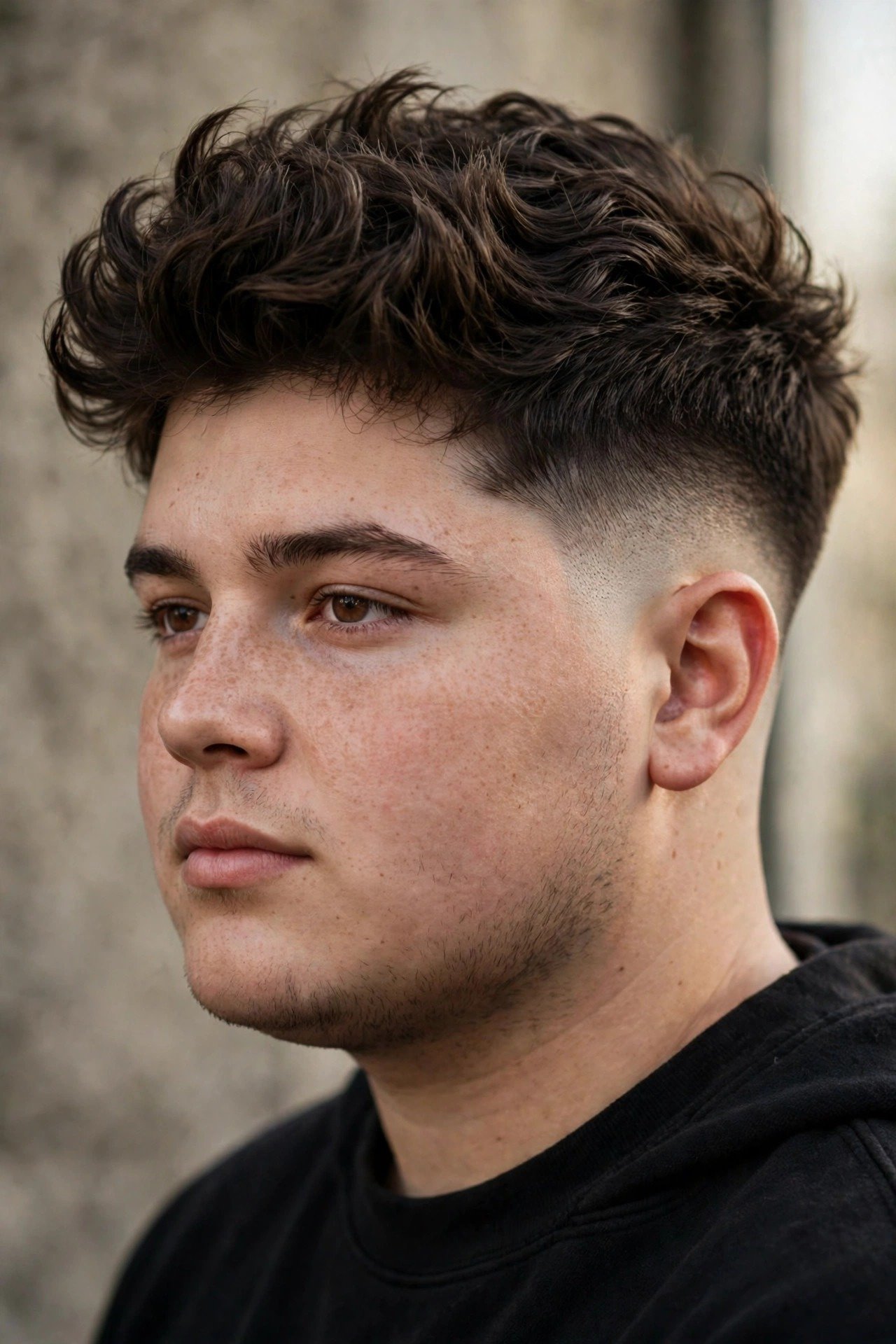
Round faces and low taper fades get along beautifully, as long as the top does the lengthening work, since the low sides themselves neither add width nor take it away. The winning formula is height or texture on top, a fringe swept to one side or worn slightly off-centre, and a low taper that stays neat without adding bulk around the cheeks. Ask your barber for a low taper fade with height on top and a side-swept or textured top, and specifically ask them to keep the sides shaped rather than bulky, because bulk around the cheeks is what makes a round face look rounder.
Quiffs, textured crops with height, and side-swept tops all work well here, since they draw the eye upward instead of outward, while a heavy straight-across fringe or a flat top should be avoided, as both emphasise width. Styling is volumising powder or matte paste at the roots for lift, a quick blow-dry upward if you want extra height, and a side sweep for the fringe. The honest downside is that round-face styling needs that extra minute of root lift, unlike a flat crop that needs nothing, so if you truly will not style your hair, pick a shorter textured top and accept a little less lengthening. But with one minute of lift, the round face low taper is flattering in a way that feels effortless, and it photographs well from the front, which is where most of us are actually seen.
33. The Square Jaw Low Taper Fade
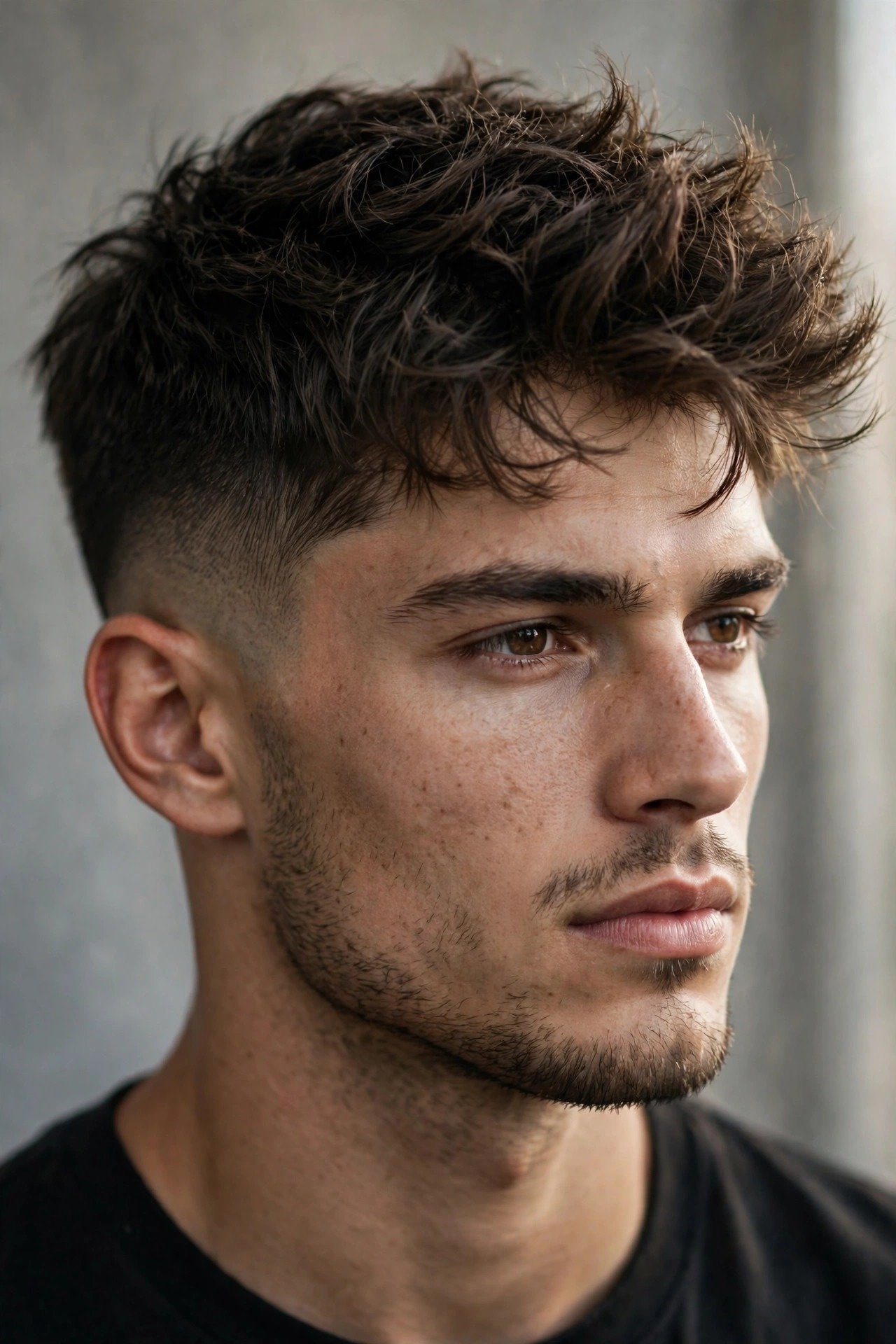
A square jaw is one of the easiest face shapes to cut for, because the low taper’s soft blend echoes a strong jawline without competing with it, and almost any top works on top of that foundation. The best pairings are soft-textured tops, side parts, and quiffs with a little movement, since they balance the angular jaw with some softness up top, while a very harsh, geometric top can make the whole head look severe. Ask your barber for a low taper fade with a soft-textured or side-swept top, and mention that you want the taper to stay soft, because a taper blended too sharply can add an extra hard line that fights the jawline instead of complementing it.
Styling is straightforward: matte paste or cream through the top, a natural fall or a gentle sweep, and the jaw does the rest of the work. The honest downside is almost none, which is why square-jawed guys are spoiled for choice, but one thing to avoid is a very high, skin-tight fade, which can make the jaw look even more angular and the head look top-heavy. The low taper avoids that trap entirely by keeping the sides soft. If you have a square jaw, consider yourself lucky: pick any top on this list that you like the look of, pair it with a low taper, and it will almost certainly suit you. Start with the textured crop or the side part and go from there.
34. The Long Face Low Taper Fade
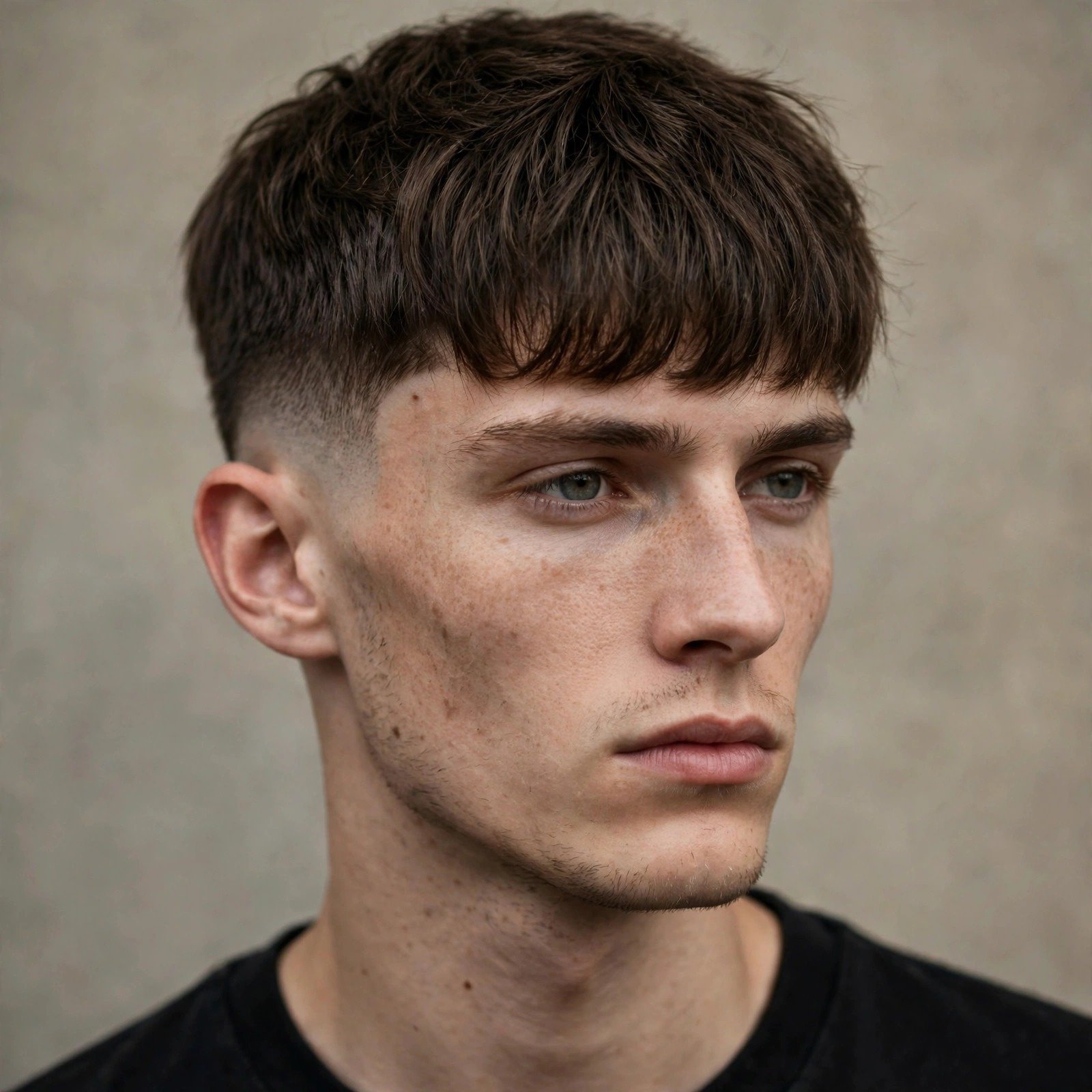
Long faces need a low taper pairing that shortens the face visually, and the formula is simple: keep the top from getting too tall, and let a fringe or a side-swept top cover part of the forehead. A forward fringe, a textured crop with a fringe, or a side-swept top all work beautifully, because they break up the length of the face, while a tall quiff or a high pompadour should be avoided, since extra height on top only lengthens a long face further. Ask your barber for a low taper fade with a fringe or side-swept top, and say explicitly that you want to avoid extra height, because a barber who defaults to adding volume will work against you here.
Styling is a forward or side-swept fringe with matte product, a flat-ish crown, and no root-lifting blow-dry, which is actually less work than most face-shape routines. The honest downside is that you are giving up the tall, voluminous tops that look great on other face shapes, so if your heart is set on a big quiff, a long face is not the shape that will flatter it most. But the trade is worth it: a fringe with a low taper makes a long face look balanced and proportional, and it is a genuinely low-effort routine. The taper itself is neutral here, which is its strength: it tidies the edges without adding height or width, leaving the top to do the face-flattering work exactly where it is needed.
35. The Highlighted Low Taper Fade

Highlights are the cheat code for a low taper fade, because they make every layer and every bit of texture on top visible in a way a single colour cannot. A few subtle lighter pieces through the top, especially around the fringe and the crown, create dimension that makes the cut look twice as textured, while the low taper underneath keeps the whole thing grounded and neat. Ask for soft, blended highlights rather than chunky stripes, focused on the top layers where the light hits naturally, and tell your colourist you want subtle dimension, not a full blonde transformation, because over-highlighting is easy and hard to undo.
Styling is unchanged from your usual taper routine: cream or matte paste, a scrunch or a sweep, and the highlights do the extra work while you do nothing extra, which is the best kind of upgrade. The downside is cost and upkeep, because highlights need refreshing every eight to twelve weeks and the lightened pieces need conditioning to stay soft, since dry, highlighted ends ruin the softness that makes a taper look premium. A weekly mask is part of the deal, as is a purple shampoo once a week if you go cool-toned, to keep brassiness away. Done subtly, the highlighted low taper looks like your hair just happens to catch the light beautifully, which is exactly the illusion you want, and it photographs better than any unhighlighted version on this list.
36. The Grown-Out Soft Low Taper Fade
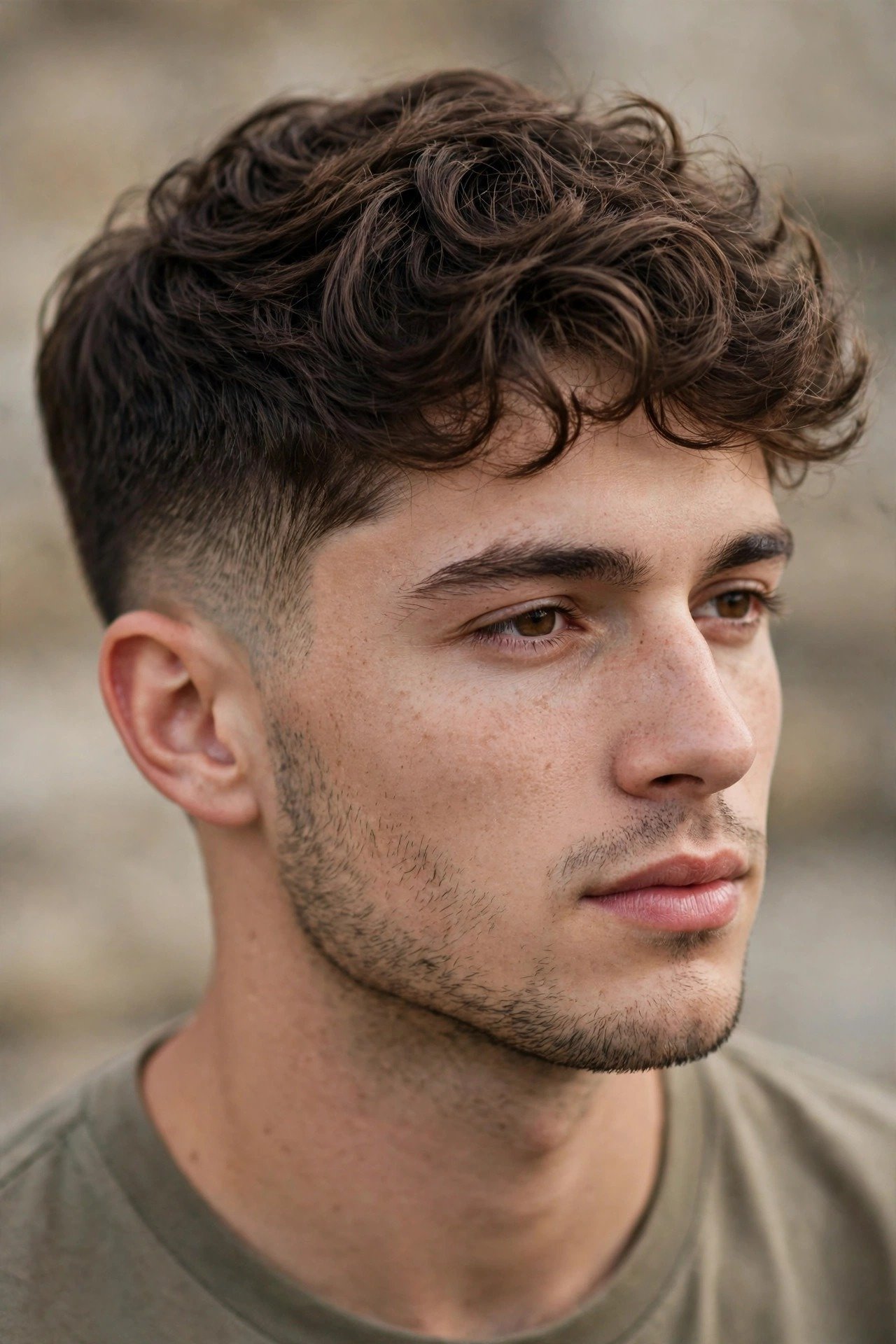
We finish with the version most guys actually live in for half the time between appointments: the grown-out soft low taper fade. This is what your low taper becomes when you skip two appointments and discover you actually like it better, with longer, relaxed layers on top, a softer blend at the sides, and a fringe that has grown past its original length. It is not a separate cut so much as a stage of the taper journey, and it deserves a place on this list because the low taper grows out more gracefully than any other fade, which is the whole point of choosing it in the first place.
The trick to keeping a grown-out taper looking good is maintenance of the details: trim the very ends, keep the neckline clean, and thin the bulk around the ears so the length does not turn into a shapeless mass. A fringe trim alone can rescue a grown-out taper and buy you another month, and a quick taper tidy at the barber restores the edges without a full cut. The downside is the tipping point, which arrives suddenly: one week it looks effortlessly cool, the next it looks like you forgot haircuts exist, and the difference is usually the fringe poking your eyes and the sides covering your ears completely. But if you are growing your hair out toward a longer style, the grown-out low taper is the most stylish waiting room you will ever sit in. Enjoy it, trim the edges, and let it grow with confidence, because a good taper should give you options, not trap you.
The Low Taper Fade Styling Routine That Takes Five Minutes
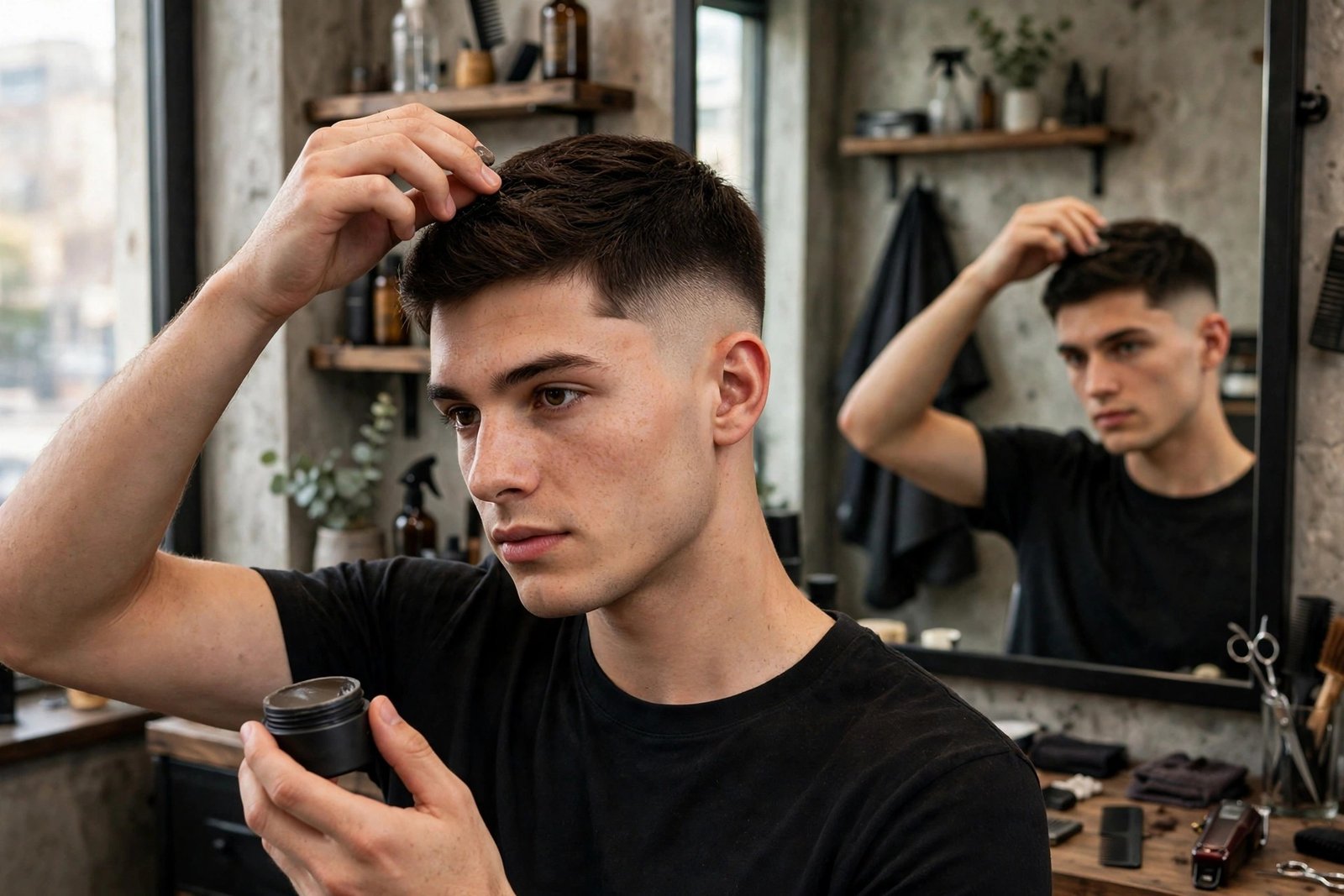
Here is the good news that every other haircut guide buries under ten steps: a low taper routine is genuinely short. The cut does the heavy lifting, so your job is just to help the top along, keep the edges tidy, and then get out of its way. The routine below works for almost every version in this guide, with small tweaks for your hair type noted where they matter.
Wash Day: Less Is More
Wash your low taper two to three times a week, not every day, because daily washing strips the natural oils that give the top its soft texture and movement. On non-wash days, dry shampoo at the roots refreshes the top without a full wash. Use a gentle shampoo and a light conditioner, focusing conditioner on the mid-lengths and ends rather than the roots, which keeps the top from going flat. Rinse with cool water if you can stand it, since cool water closes the hair cuticle and adds shine. Towel-dry by scrunching gently with a microfibre towel or an old T-shirt, never by rubbing hard, which causes frizz and breakage. Conditioning matters more than guys expect, because the top of a taper cut is usually longer than a crop, and longer hair dries out faster at the ends, so a weekly deep-conditioning mask keeps the ends soft and stops them from looking straw-like.
The taper itself needs no washing routine of its own, but it does need you to notice when it is growing out. Run your fingers around your ears and the nape once a week: when the blend starts feeling fuzzy instead of smooth, or the sideburns start looking untidy, it is time to book a tidy-up. Do not try to maintain the taper yourself with home clippers unless you genuinely know what you are doing, because a home taper is how a low blend becomes a patchy mess in about thirty seconds. A barber tidy-up every three to four weeks is cheaper than fixing a home mistake, and it keeps the edges crisp while the top grows happily on its own schedule.
The Five-Minute Morning Routine
Start with damp hair, either freshly washed or misted with water from a spray bottle. Work a pea-sized amount of light styling cream or a spritz of sea salt spray through the top, focusing on the mid-lengths and ends rather than the roots. Push, sweep, or scrunch the top into the position you want, depending on your version, and then stop touching it. If you want extra volume, tip your head upside down and rough-dry on a low heat for one minute, then flip back up and let the rest air-dry. That is the entire routine for most low taper versions, and it genuinely takes five minutes, including the time you spend deciding whether the fringe looks right. For a neater finish, like the side part or Ivy League versions, add a tiny amount of matte paste and comb the part into place.
Second-day hair is where low tapers really shine, because a day of natural oils gives the top grip and texture it does not have when freshly washed. A spritz of water revives the shape, dry shampoo at the roots lifts the crown, and a quick scrunch brings the layers back to life. Do not rewash just because the top looks a little flat in the morning, since a full wash resets all the texture you built up yesterday. The biggest morning mistake is over-styling: adding product on top of product until the hair goes stiff and greasy. One product, one application, hands off. If it still looks wrong, the problem is usually the cut growing out, not your styling, and a taper tidy will fix it faster than any product will. For a clear side-by-side explanation of taper and fade terminology before your next appointment, this taper versus fade guide is worth bookmarking.
Products That Actually Help (And Ones That Do Not)
The low taper product shelf is short, and that is a blessing. Sea salt spray is the hero for most guys, adding grip and texture without weight. Light styling cream is the second essential, smoothing frizz and defining layers without stiffness. Matte paste or clay is the third, best for piecey and textured tops that need separation. Dry shampoo is the fourth, reviving second-day hair and adding root lift. That is the whole kit, and you probably only need two of the four on any given day. Buy small sizes first and test them, because a product that works for your friend’s thick wavy hair might flatten your fine straight hair completely.
What to skip: heavy pomades and shiny gels in large amounts, which turn a soft, natural top into a stiff helmet and kill the texture that makes a low taper look modern. Hairspray in large amounts does the same, freezing the top into place and defeating the point of a cut built on natural movement. Cheap shampoos with harsh sulfates strip the hair and make the ends brittle, so spend a little more on a gentle formula. And be wary of any product that promises to hold all day with a rock-hard finish, because a low taper top is supposed to move. If your hair cannot move, it is not a low taper anymore, it is a sculpture, and sculptures do not suit anyone at breakfast.
Trims, Grow-Out, and Keeping the Shape
A low taper lives or dies by its trim schedule, and the honest schedule is a taper tidy every three to four weeks, with a full cut every four to six weeks depending on your top length. The taper is the canary in the coal mine: when the edges around the ears and the nape start looking fuzzy, the whole cut looks overgrown, even if the top is fine. Many barbers offer a quick taper tidy between full cuts, so ask about it, because it is the single best way to stretch a cut without it looking neglected. Between appointments, keep the neckline clean, since a scruffy neckline makes even a fresh taper look unfinished.
Growing a low taper out is far kinder than growing out a high fade, because the blend is low and the top carries the style, so the awkward stage is shorter and less obvious. If you are growing the top longer, keep getting the taper tidied while the top grows, and you will always look groomed even mid-grow-out. When the shape finally arrives, it feels like a reward for patience. And if you ever decide the taper is not for you, it grows out into a longer, natural shape with minimal awkwardness, which is more than most trendy cuts can say. A good cut should give you options, not trap you, and the low taper is generous that way.
Frequently Asked Questions

Quick answers to the questions every guy asks before getting a low taper fade, from barber scripts to trim schedules.
What is a low taper fade?
A low taper fade is a gradual shortening of the hair around the lower sides and the nape, starting just above the ears and blending smoothly upward into the longer hair on top. Unlike a high fade, which removes a large band of hair up the sides of the head, the low taper keeps most of the side length intact and only tidies the bottom edge, so the result looks clean without looking severe. The shortest point usually sits at the sideburns and the neckline, where the hair may go down to a very short grade or a soft shadow, but it never climbs into a dramatic skin band around the temples.
How is a low taper fade different from a mid or high fade?
The difference is purely where the shortening starts and how much hair it removes. A low taper starts just above the ears and stays low, a mid fade starts around the temples, and a high fade starts above the temples and removes a much larger band of hair up the sides. That means a low taper looks softer, grows out more gracefully, and suits more face shapes and workplaces, while a mid or high fade looks bolder and more dramatic but needs touching up every one to two weeks to stay sharp. If you want a clean frame without a statement, choose low; if you want contrast to be the whole point of the cut, choose mid or high.
How do I ask my barber for a low taper fade?
Show your barber a photo, then say you want a low taper fade that starts just above the ears, blends softly upward with no visible lines, and stays low rather than climbing toward the temples. Describe the top separately, for example a textured crop, a side part, or curls left long on top, because the taper is only the frame and the top is a separate decision. Tell them whether you want the shortest point to go to skin or stop at a short shadow, and whether you want the neckline tapered or squared off. A photo removes all guesswork, and naming the height, the finish, and the top in one sentence gives your barber everything they need.
How often should I get a low taper fade touched up?
Most low taper fades need a tidy-up every three to four weeks to keep the edges crisp, with a full cut every four to six weeks depending on your top length. The taper grows out more forgivingly than a high fade, so it still looks respectable at week three and presentable at week four, but by week five the blend around the ears and the nape starts looking fuzzy. If you have a line up as well, that needs touching up every one to two weeks, since the sharp edge softens fast. Book your next appointment before you leave the chair, because the guys who stay sharp are almost always the guys who book ahead.
Does a low taper fade suit curly hair?
Yes, and it might be the best pairing on this list. A low taper removes exactly the bulk that makes curly cuts go wide around the ears, while keeping the curls long and defined on top, so the shape stays controlled without losing any curl character. The key is a barber who understands curls, cutting the top on dry or barely damp hair and removing weight from the inside rather than chopping the ends straight across, because curly hair shrinks significantly when it dries. Style it with curl cream on soaking wet hair, scrunch, and then leave it completely alone until dry, and the taper will keep the edges tidy while the curls do the talking.
Can I style a low taper fade without heat?
Absolutely, and air-drying is actually the natural habitat for most low taper versions. After washing, towel-dry gently, work a pea-sized amount of light styling cream or sea salt spray through damp hair, push or scrunch the top into position, and let it dry on its own. Avoid brushing it once dry, which flattens the texture, and use dry shampoo at the roots on second-day hair to revive the lift. Heat can help on special occasions, especially for quiffs and pompadours that need volume, but it is never a daily requirement for crops, fringes, curls, and textured tops, which is one of the main reasons the low taper is so popular.
Will a low taper fade work for a round face?
Yes, with one adjustment: keep some height or texture on top and avoid a heavy fringe that cuts straight across the widest part of your face. A side-swept or slightly off-centre fringe opens up the face and makes it look longer, while height on top adds balance, and the low taper itself neither adds width nor takes it away, so it stays neutral while the top does the flattering work. Ask your barber to keep the sides shaped rather than bulky, so width does not build up around the cheeks. With that one change, a low taper fade flatters a round face as well as it flatters any other shape.
Conclusion
The low taper fade earned its 2026 popularity the honest way: it looks great, it feels easy, and it treats your natural hair with respect instead of fighting it with extreme fades and daily heat. From the classic original to the grown-out soft taper, there is a version here for your hair type, your face shape, and your patience level, and the barber scripts in this guide mean you can walk into the chair knowing exactly what to ask for. Screenshot your favourite, book the cut, and give it two weeks to settle, because every taper looks better once the blend relaxes into your natural pattern.
My honest pick if you are starting out: the classic low taper fade for most guys, the side part version for work, and the textured crop version if you want the most current look. Keep the taper tidied every three to four weeks, keep the product light, and let the cut do what it was designed to do. Your mornings get shorter, your edges stay sharp, and you finally understand why everyone from your barber to your group chat keeps recommending the same quiet upgrade. Go get the low taper fade, and enjoy every clean, effortless week of it.
3 Comments