
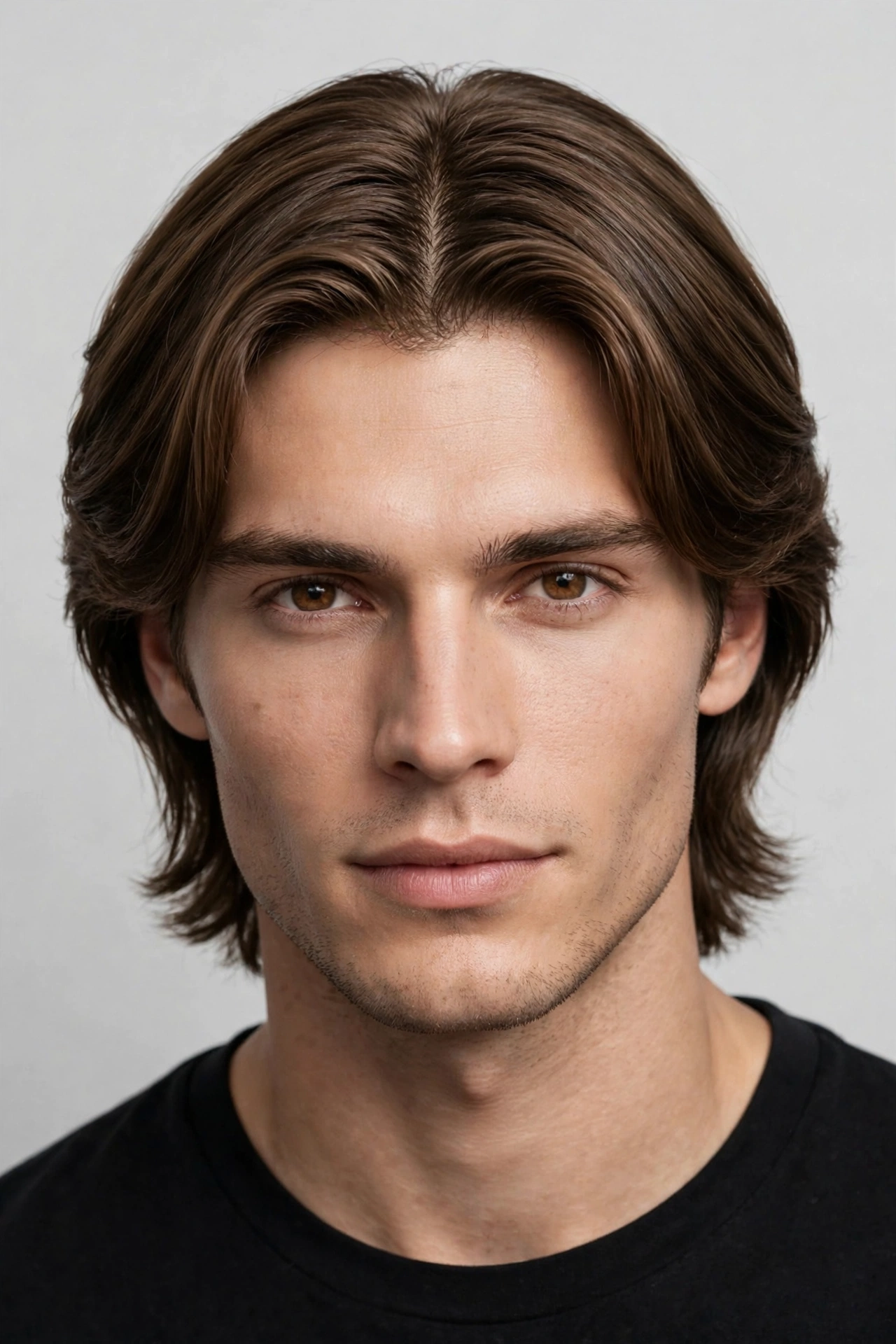
Middle Part Hairstyle for Men 2026: 15 Sharp Center-Part Ideas
What Is the Middle Part Hairstyle?
The middle part hairstyle for men is exactly what it sounds like — hair parted down the center, with the lengths falling naturally on either side of the face. But don’t let the simplicity fool you. The modern middle part is a carefully crafted look that requires the right cut, the right length, and the right styling to pull off. It’s not just “part your hair in the middle and hope for the best.”
The 2026 middle part typically features hair that’s 3 to 5 inches on top, with enough length in the front to create those signature face-framing pieces. The sides can vary — some versions keep them medium length for a fuller look, while others taper them slightly for contrast. The back is usually left at a medium length, long enough to support the overall shape but not so long that it competes with the front.
What makes the middle part work is symmetry and balance. The center part creates a natural frame around the face, drawing attention to the eyes and cheekbones. When the lengths are right, the hair falls in a way that looks intentional rather than accidental. A good barber will cut the front sections at slightly different lengths to create movement and prevent the hair from looking like a flat curtain.
This hairstyle has deep roots in 90s pop culture — think Leonardo DiCaprio in Titanic or the Backstreet Boys — but the 2026 version is more refined. Today’s middle part has more texture, more movement, and works with a wider range of hair types. It’s less about replicating a specific 90s look and more about adapting the center part to modern sensibilities.
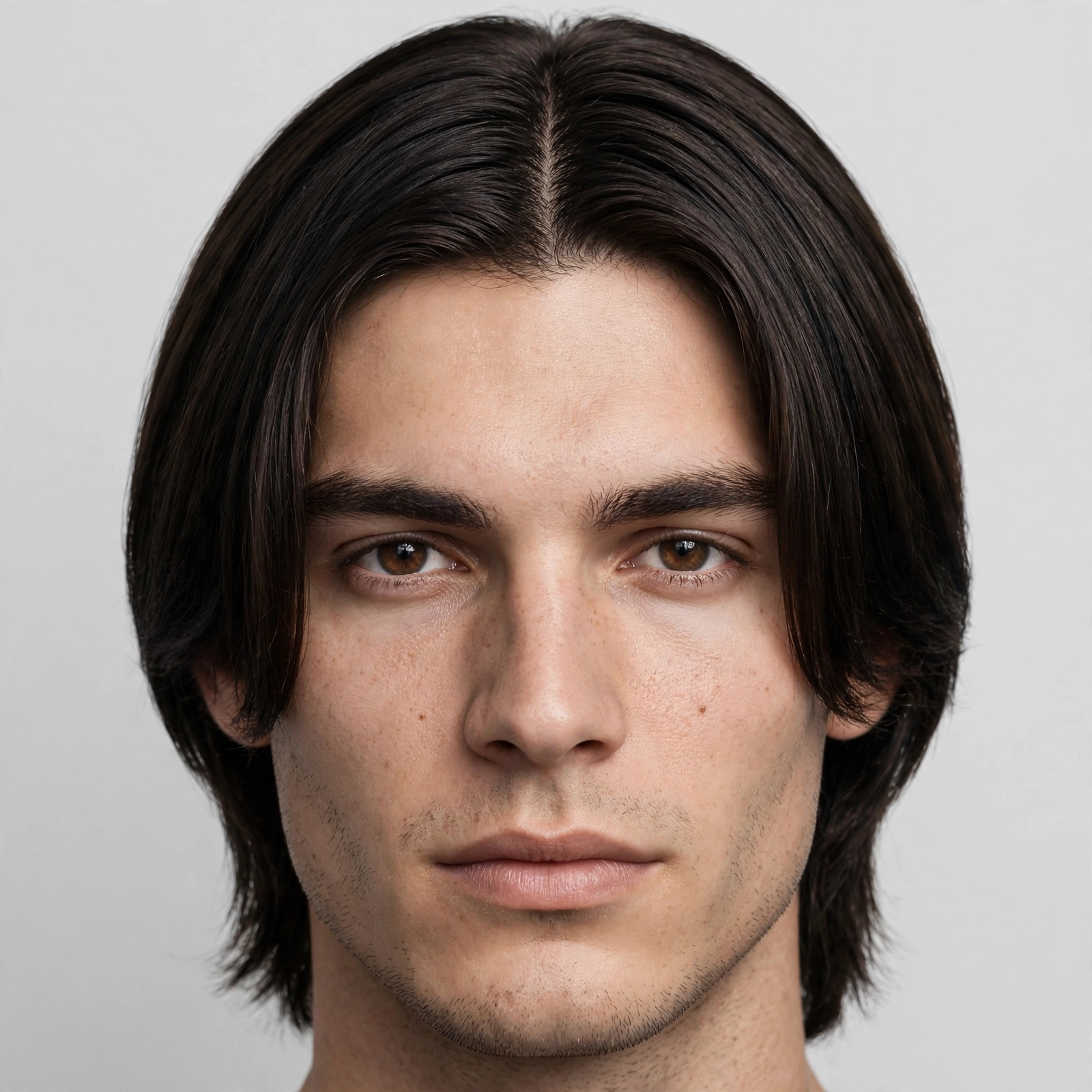
Why the Middle Part Is Dominating Pinterest in 2026
If you search for men’s hairstyles on Pinterest right now, the middle part is everywhere. It’s consistently one of the most saved and shared looks, sitting alongside the flow and textured fringe as the defining styles of the year. The data backs it up — Pinterest’s trend reports show center-parted men’s styles getting massive engagement, with saves up significantly year over year.
The middle part’s popularity comes down to its photogenic quality. In an era where everyone’s posting selfies and style photos, the middle part photographs incredibly well. The symmetry is pleasing to the eye, the face-framing pieces add dimension, and the overall look reads as both stylish and approachable. It’s the kind of hairstyle that looks good in a mirror selfie, which matters more than ever.
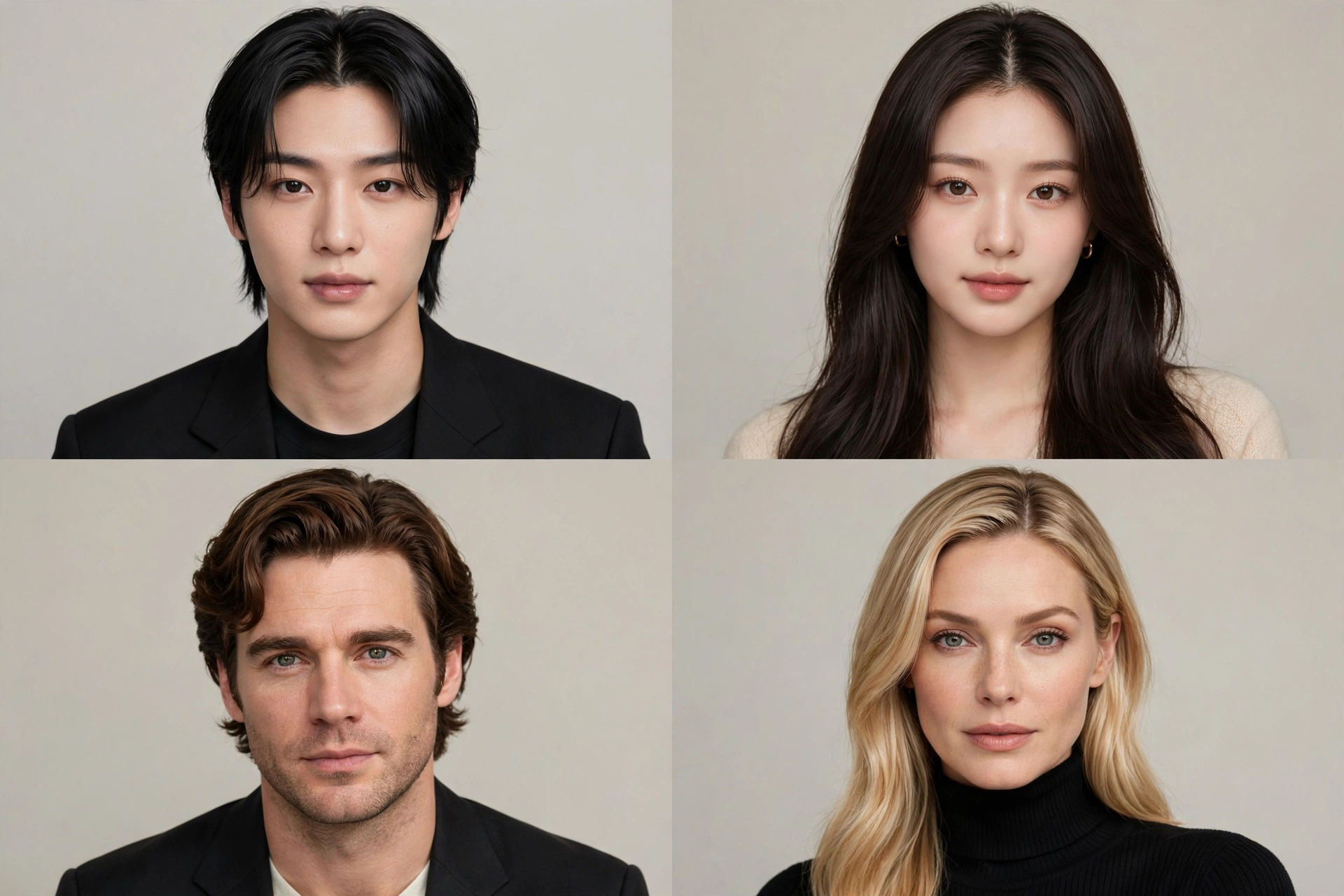
There’s also the K-pop and J-drama influence. Asian pop culture has embraced the middle part for years, and as K-pop’s global influence continues to grow, so does the hairstyle’s popularity. Idols like Jungkook and various K-drama actors have made the middle part aspirational for millions of young men worldwide. Pinterest’s algorithm picks up on this cross-cultural trend and amplifies it.
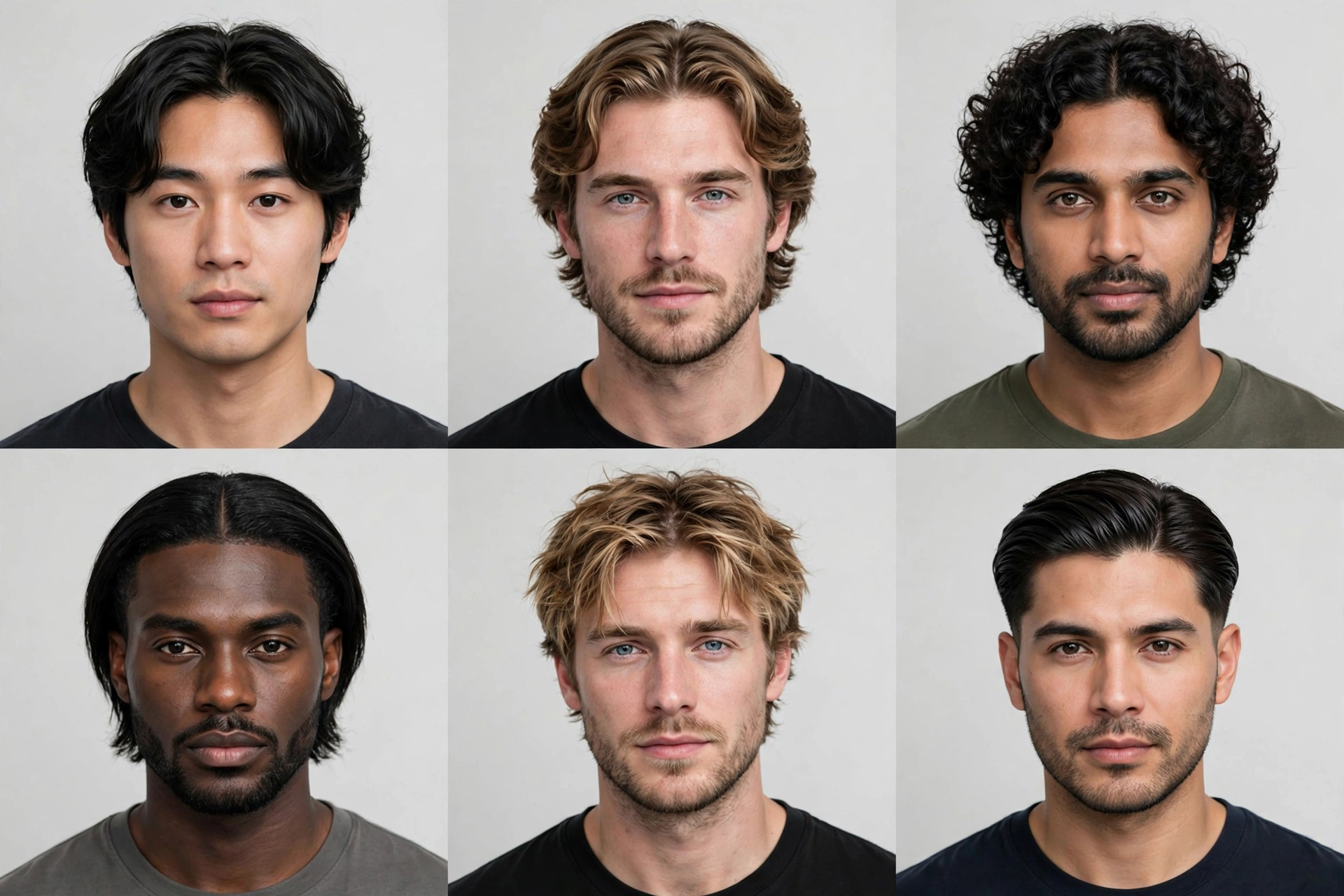
The middle part also benefits from being versatile. It works for straight, wavy, and even curly hair (with adjustments). It suits a range of face shapes. It can be dressed up or down. And unlike some trendy cuts that require frequent maintenance, the middle part grows out gracefully — the part just gets more defined as the hair gets longer. That low-maintenance appeal is huge for guys who don’t want to visit the barber every two weeks.
Finally, the middle part represents a shift away from the skin fade era. For years, the dominant men’s trend was short sides with volume on top. The middle part flips that script — it’s about length, movement, and a softer silhouette. Men are embracing longer hair in a way they haven’t in decades, and the middle part is the perfect gateway style for that transition.
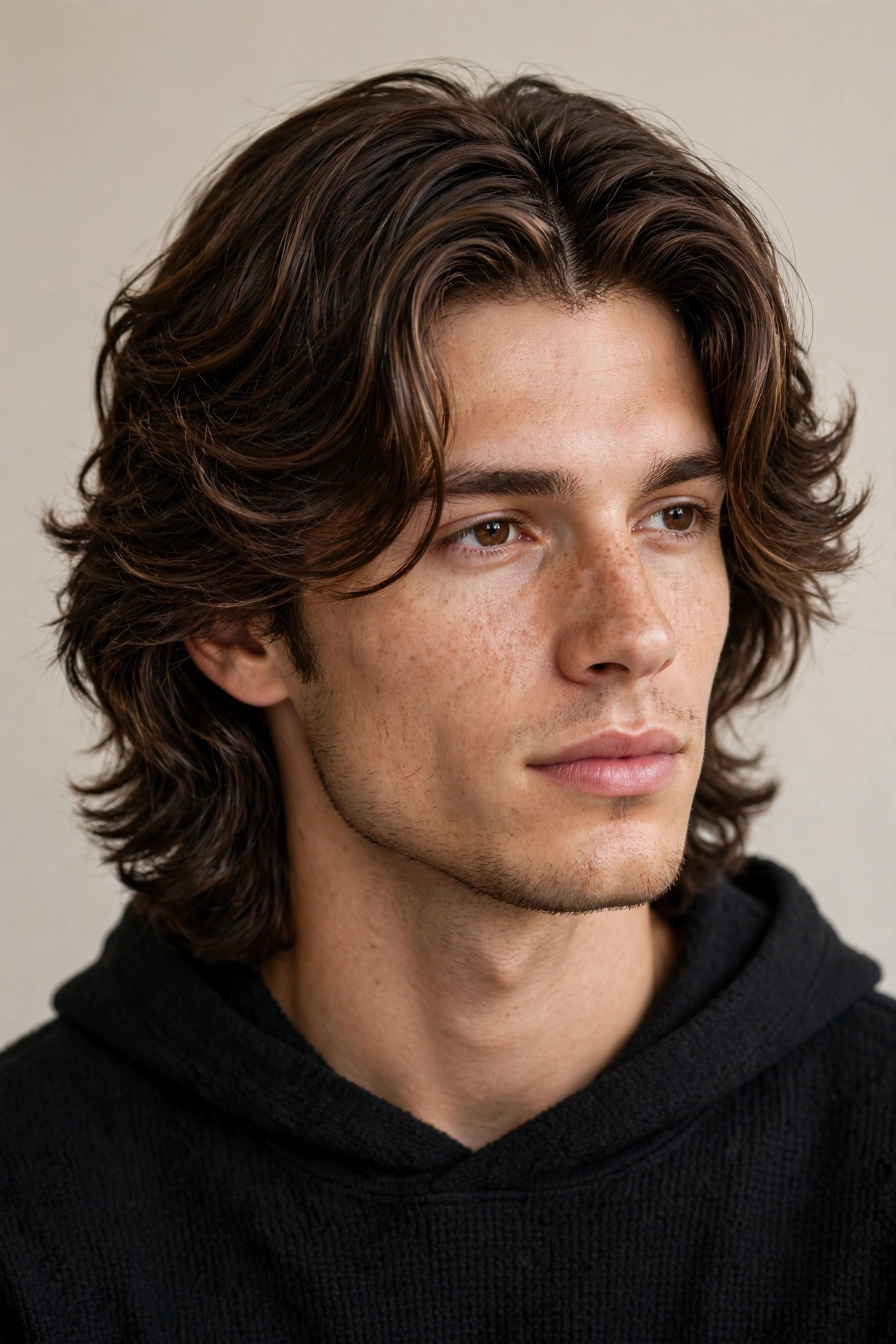
15 Middle Part Hairstyle Ideas for Men in 2026
The middle part isn’t one-size-fits-all. There are dozens of ways to wear it, depending on your hair type, face shape, and personal style. Here are 15 of the best middle part variations for men in 2026.
1. The Classic Middle Part
The classic middle part is the foundation — clean center part, medium length all over, hair falling naturally on both sides. Ask your barber for 4 inches on top with the front pieces slightly longer to frame the face. The sides should be scissor-cut to 2-3 inches, blended seamlessly. This is the most versatile version and works for straight to wavy hair. Style by parting damp hair down the center with a comb, then blow-dry each side away from the part for volume. Finish with a light hold cream. Timeless, clean, and universally flattering.
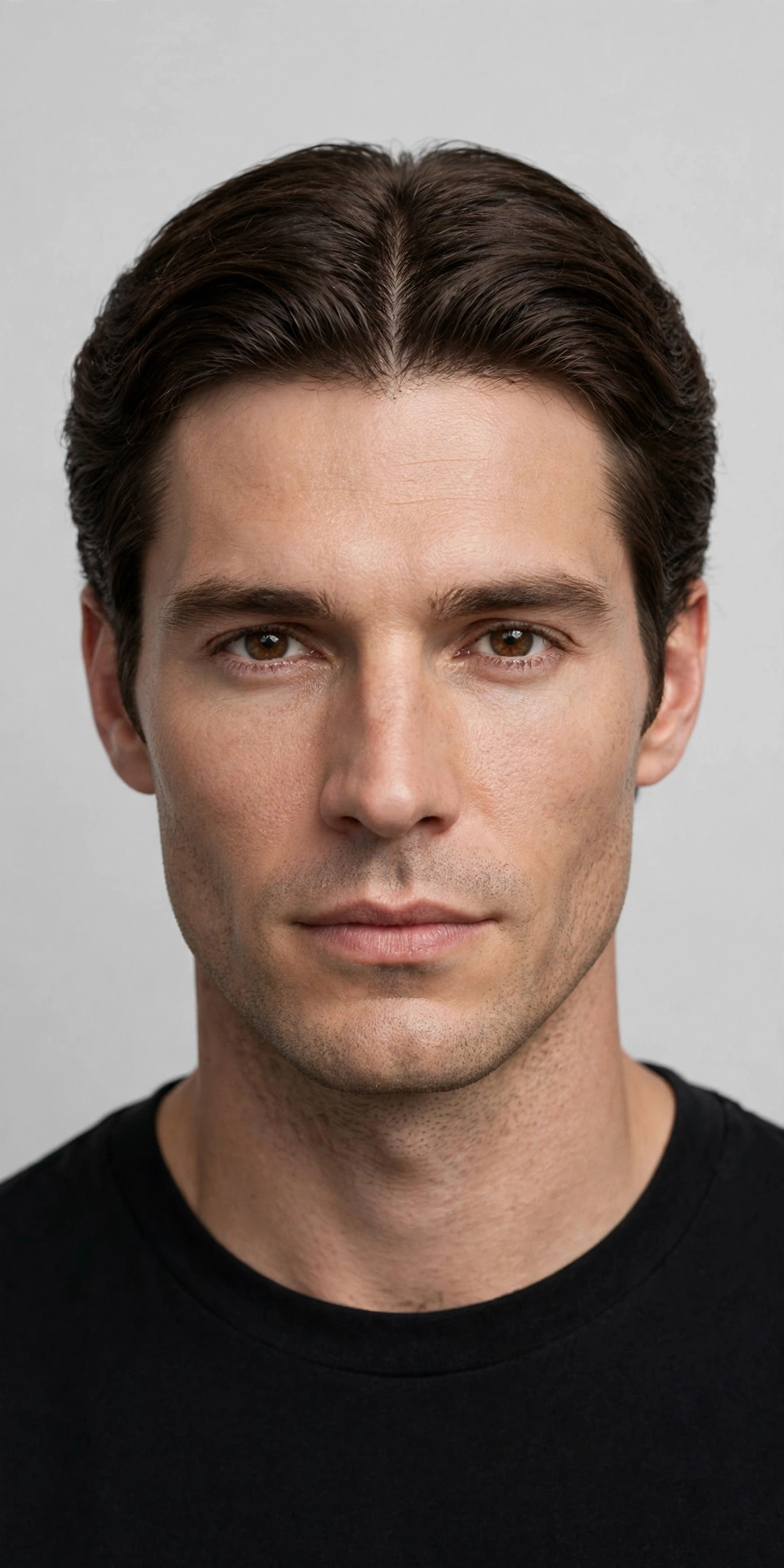
2. The Textured Middle Part
Add edge to the classic with heavy texturizing. Your barber should point-cut and razor the ends to create piece-y separation. This works best on thick hair that can handle texture without looking thin. The result is a middle part with attitude — less boy-band, more rock star. Style with texturizing powder on dry hair, pulling pieces apart with your fingers.
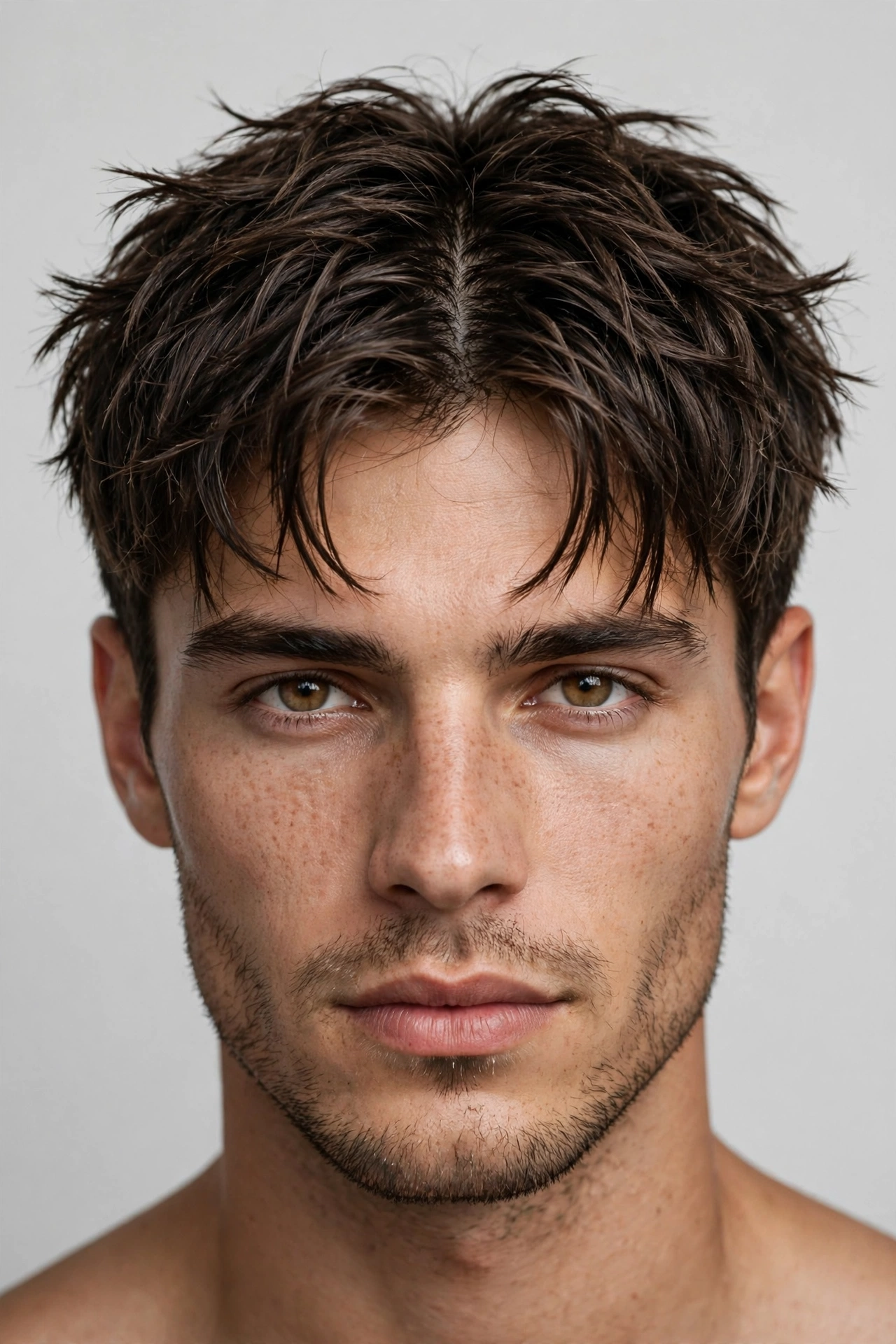
3. The Wavy Middle Part
Wavy hair and the middle part are a perfect match. The natural waves add volume and movement that straight hair can’t replicate. Ask for longer layers (5 inches on top) to let the waves form properly. Enhance with curl cream on damp hair, then air dry or diffuse. The waves will create natural dimension around the part.

4. The Curly Middle Part
Curly guys can rock the middle part too. The key is controlling the volume so the curls frame the face rather than overwhelming it. Ask for a shaped cut with the curls left longer in front (4-5 inches) and slightly tapered on the sides. Use curl-defining products and avoid brushing when dry. The curly middle part is bold and distinctive.
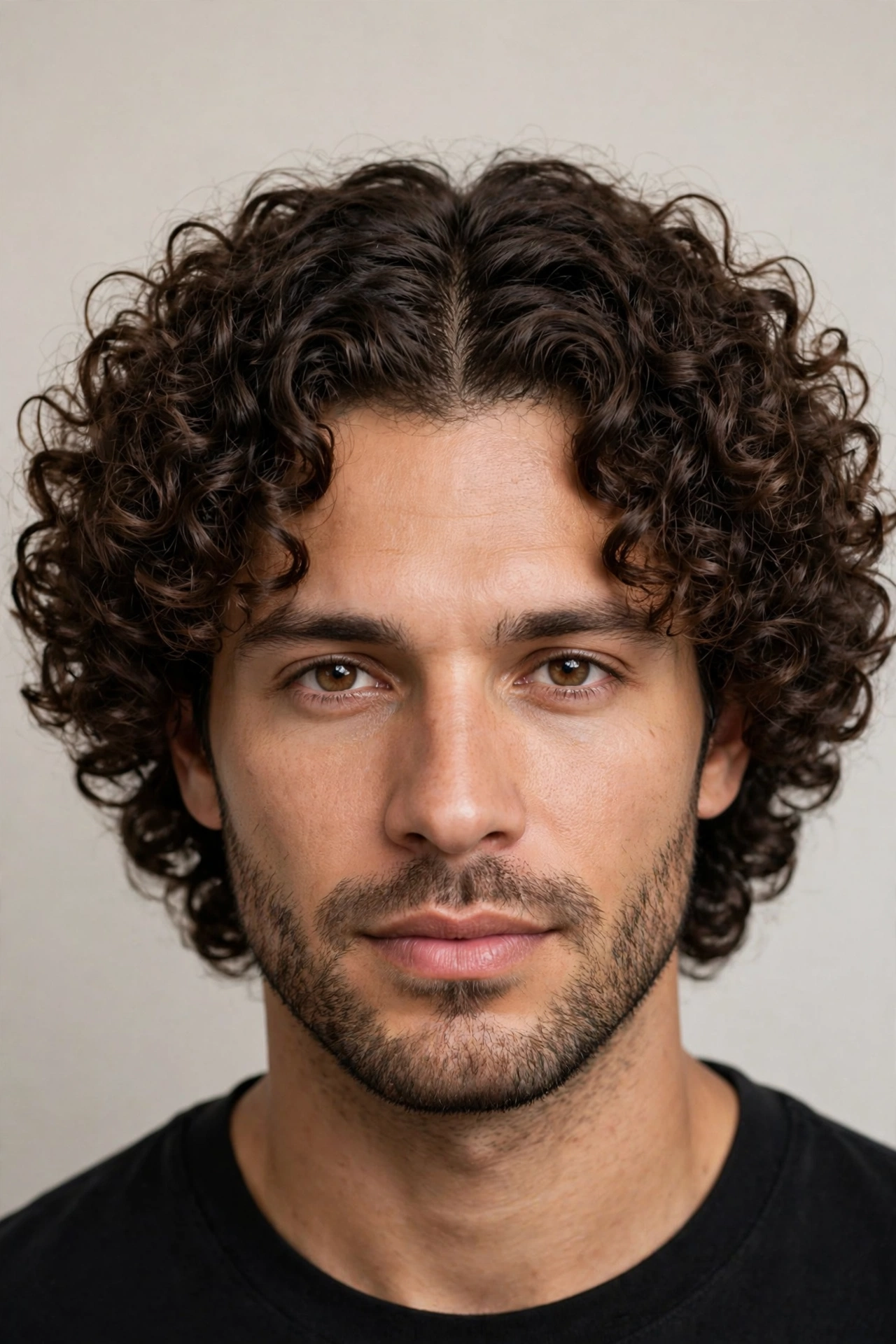
5. The Long Middle Part
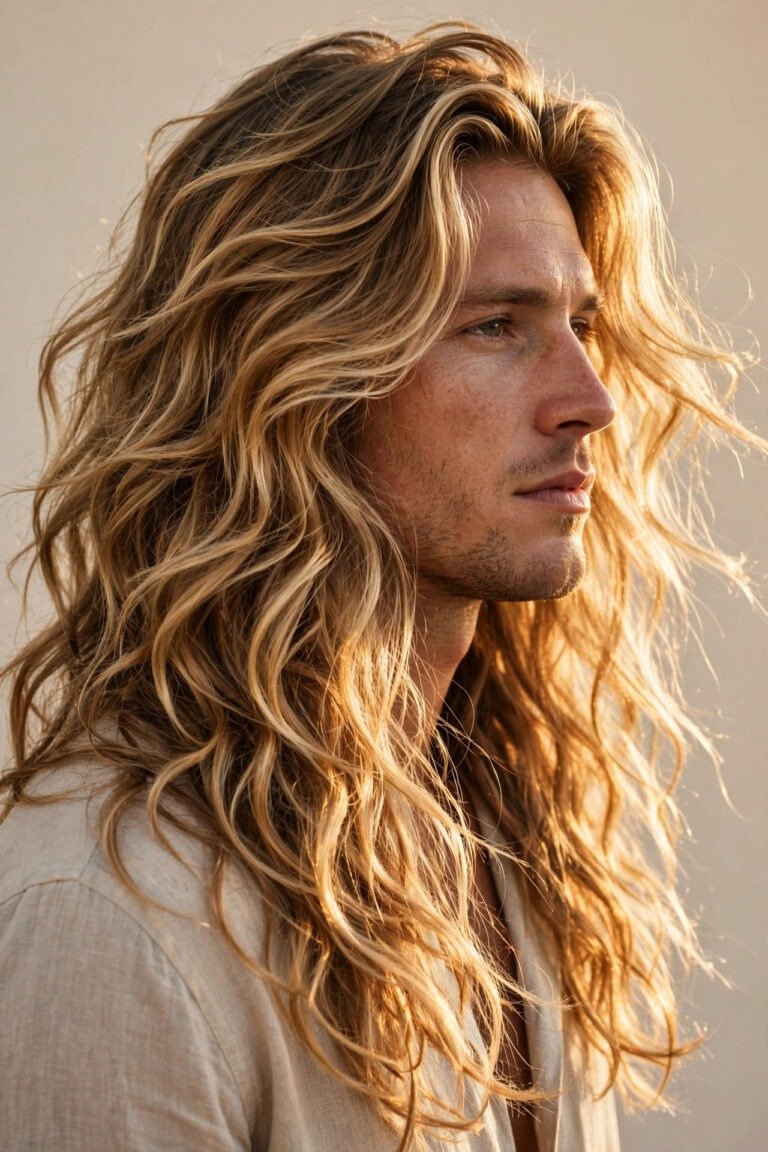
Take the middle part to shoulder length for maximum impact. This requires 12+ months of growth and regular trims to maintain shape. The long middle part has a romantic, artistic vibe — think 90s heartthrob updated for today. Keep the layers long and face-framing. This is a commitment but the payoff is dramatic.

6. The Short Middle Part
You don’t need long hair for a middle part. The short version works with 2-3 inches on top, parted down the center. It’s a subtle nod to the trend without the grow-out commitment. Ask your barber to keep the front pieces long enough to part (at least 2.5 inches) while keeping everything else neat. Great for guys testing the waters.
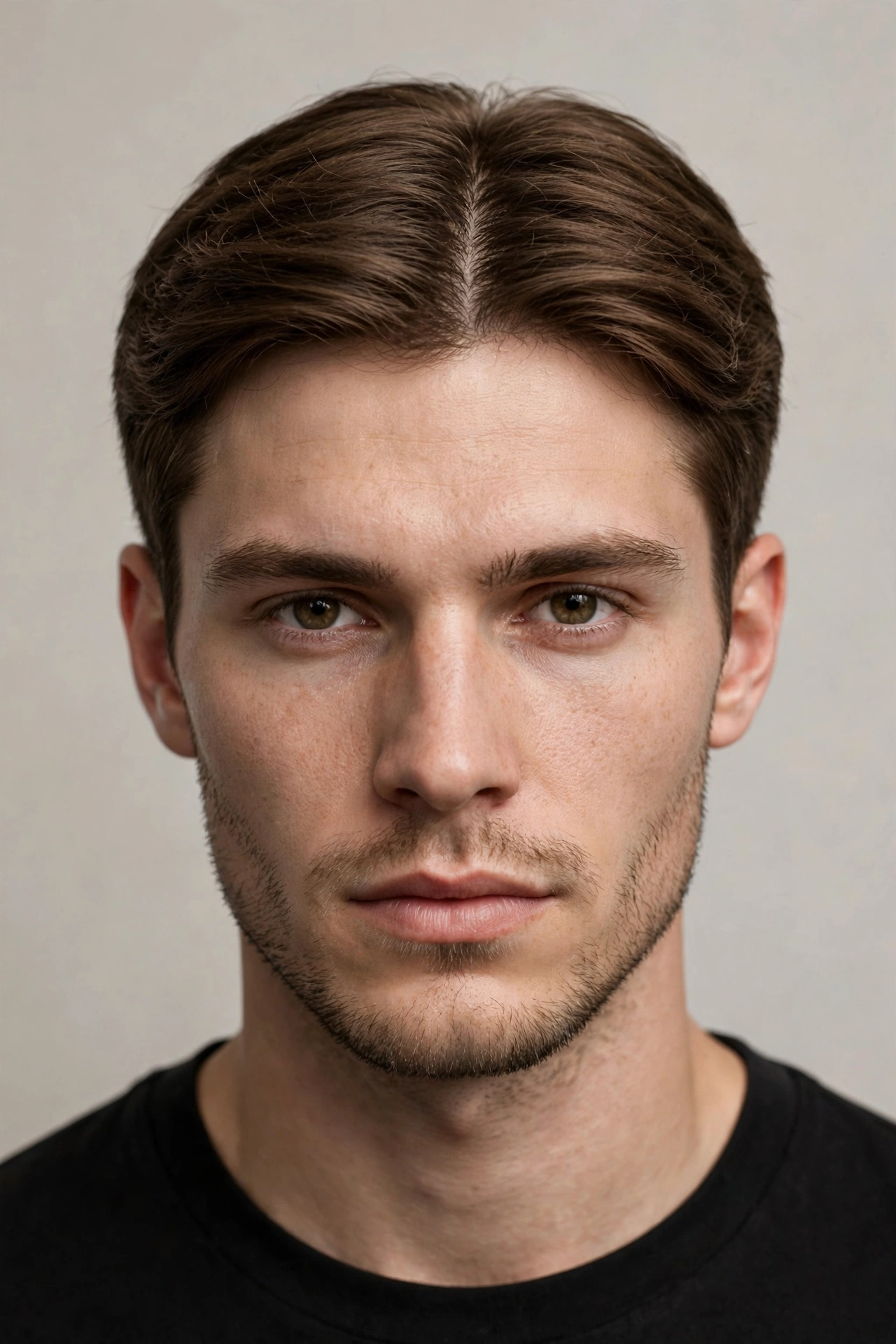
7. The Middle Part with Fade
Combine the middle part on top with faded sides for contrast. The top stays 3-4 inches with a center part, while the sides are faded from a #2 to skin. This is the middle part for guys who aren’t ready to give up their fade. It bridges the gap between the skin-fade era and the longer-hair movement. Modern and sharp.
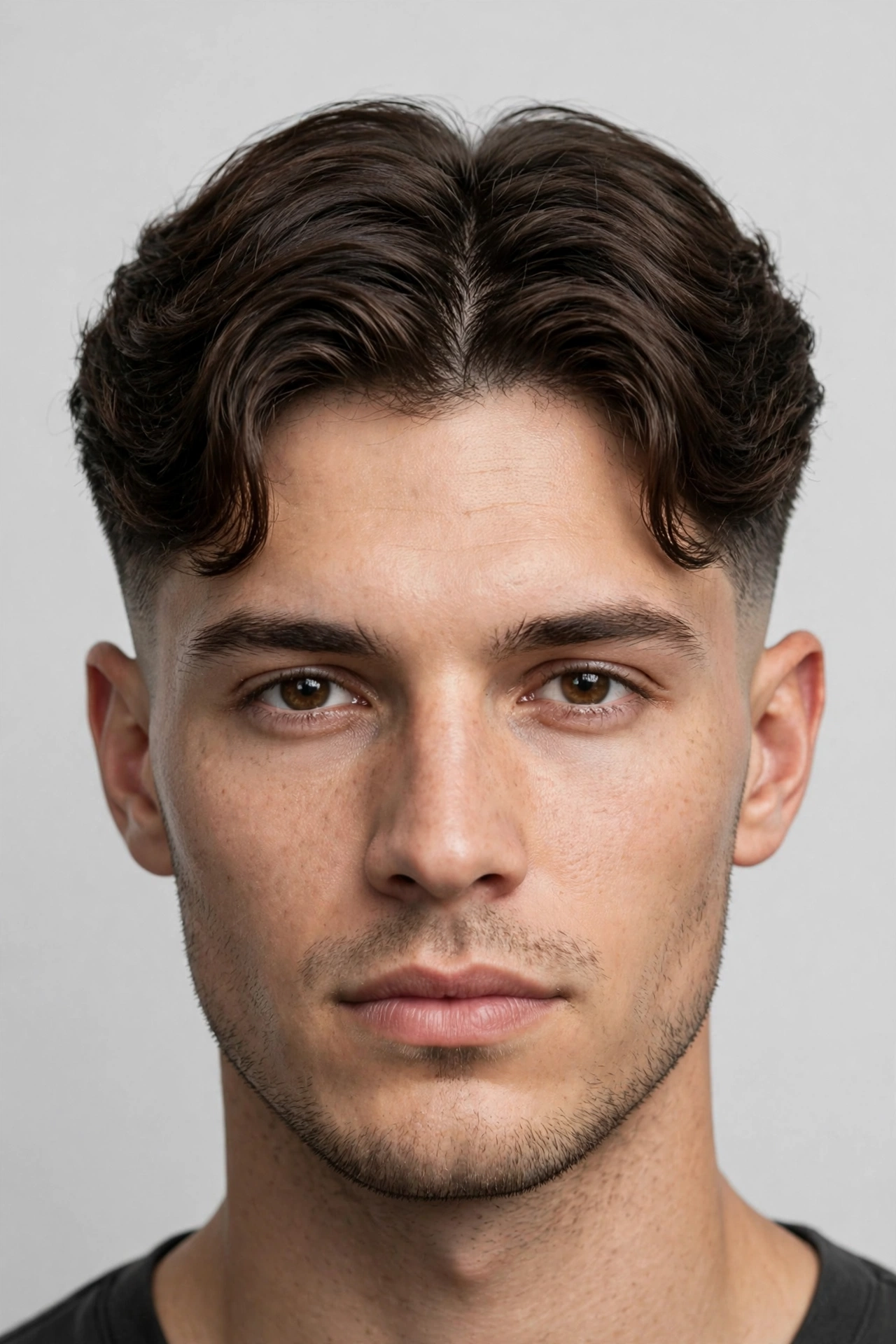
8. The Messy Middle Part
Embrace imperfection with a deliberately undone middle part. The part is there but it’s not precise — more of a general center division with hair falling where it wants. Razor-cut layers create the messy texture. Style by towel-drying and adding texturizing spray, then shaking. Effortless cool.

9. The Slicked Middle Part
For formal occasions, slick the middle part back and down for a polished finish. Use pomade on damp hair, comb the center part precisely, and smooth the sides down. This is the middle part at its most refined — perfect for weddings, interviews, or any event where you need to look sharp. Classic elegance.
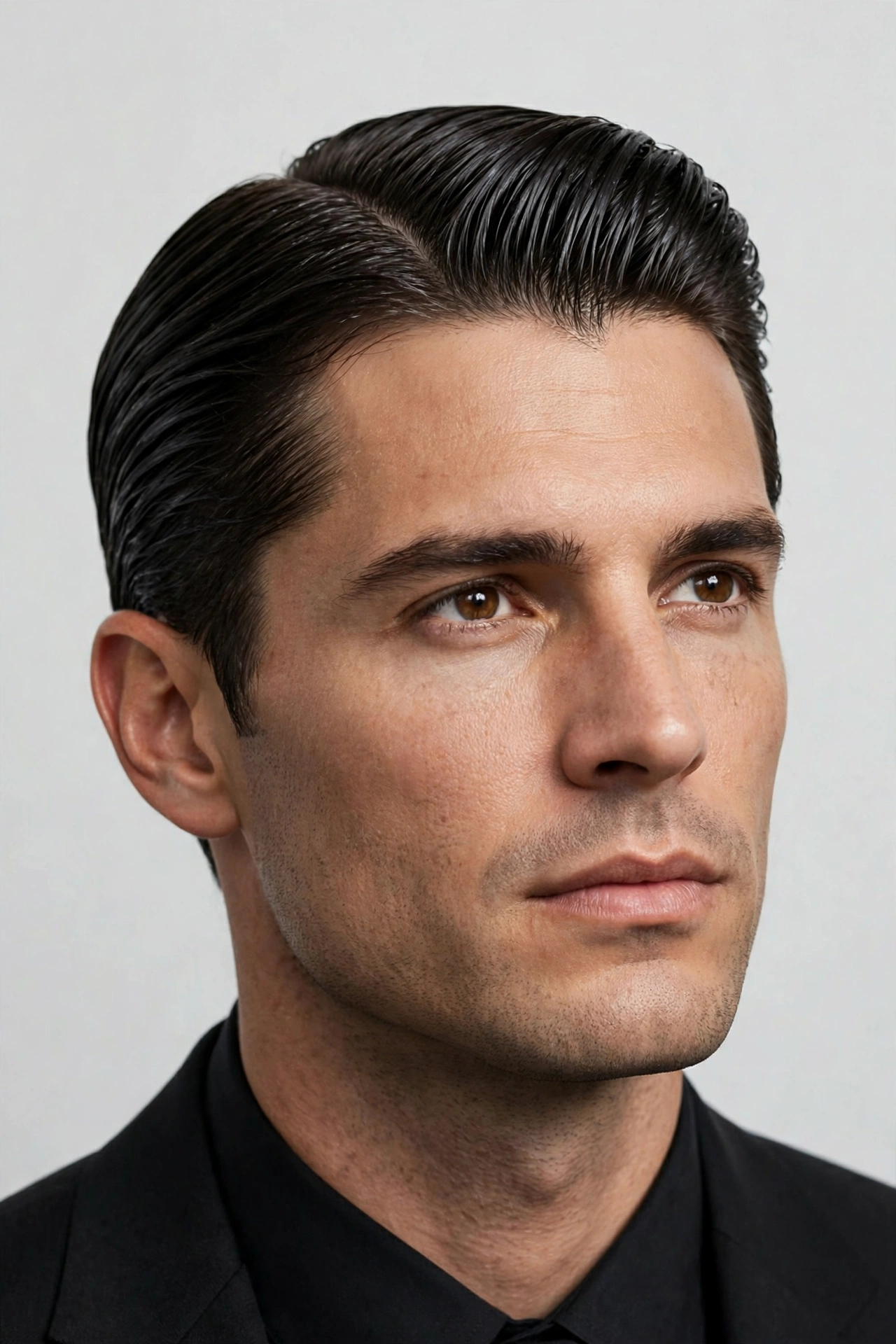
10. The Middle Part with Curtain Bangs
Let the front sections grow longer (5-6 inches) to create curtain bangs that frame the face. The center part divides them perfectly. This is the most face-framing version of the middle part and works beautifully for guys with strong features. The curtains soften the look while the part keeps it structured.
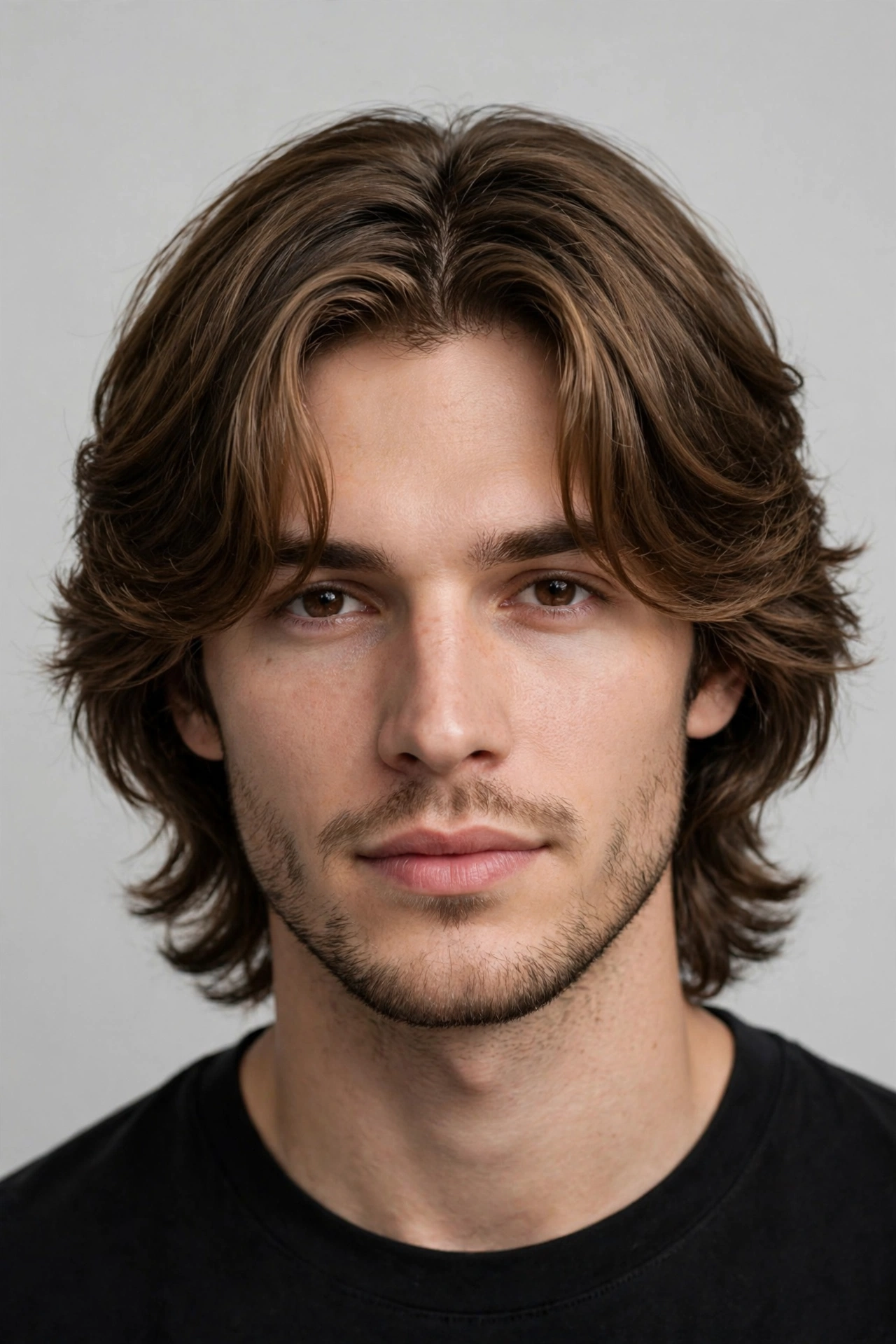
11. The Asian-Inspired Middle Part
Drawing from K-pop styling, this version features a precise center part with sleek, straight hair falling on both sides. The cut is often a two-block (shorter sides, longer top) with the top worn in a middle part. Use straightening products and a flat iron if needed for that glass-hair finish. Sharp, modern, and incredibly popular.
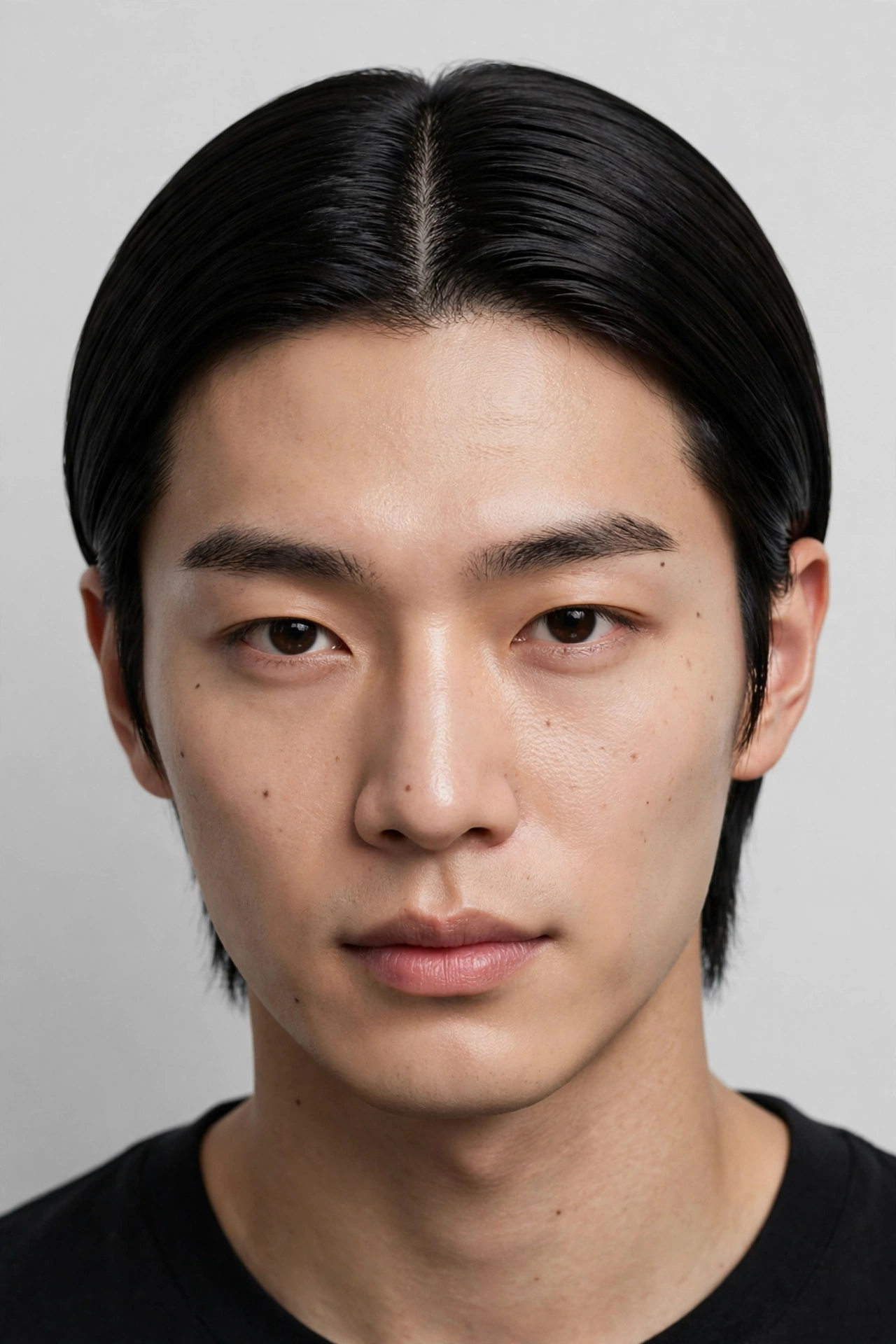
12. The Middle Part with Layers
Add long layers throughout to create movement and prevent the hair from looking flat. The layers should be subtle — 1-2 inches difference between the shortest and longest pieces. This works especially well for thick hair that needs weight removal. The layers help the hair fall naturally around the part.
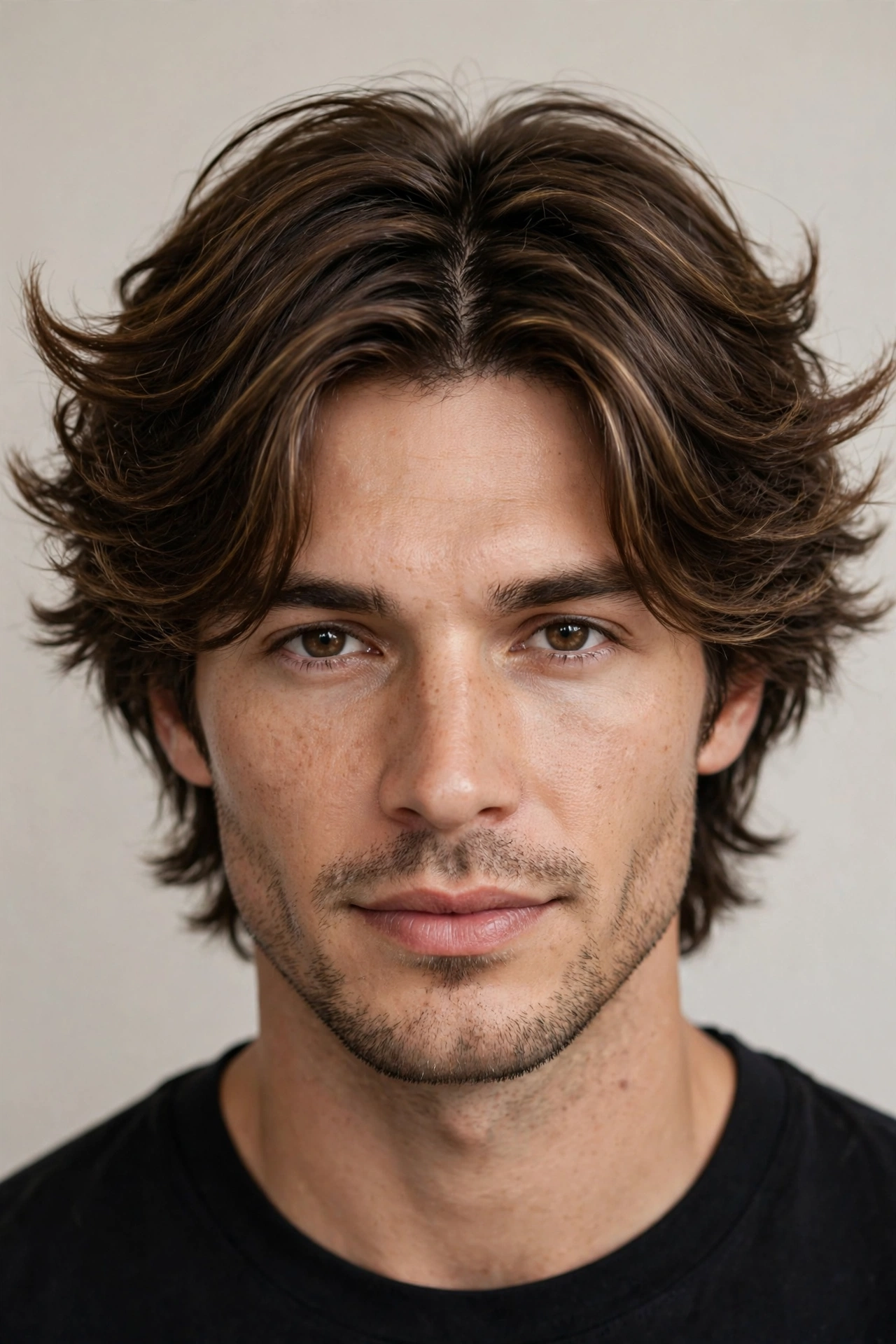
13. The Wet Look Middle Part
Apply wet-look gel or high-shine pomade for a glossy, editorial finish. The center part is precise, and the hair has a deliberate sheen. This is a fashion-forward version that works for photoshoots, nights out, or anyone who wants to make a statement. Not for everyday, but striking when done right.
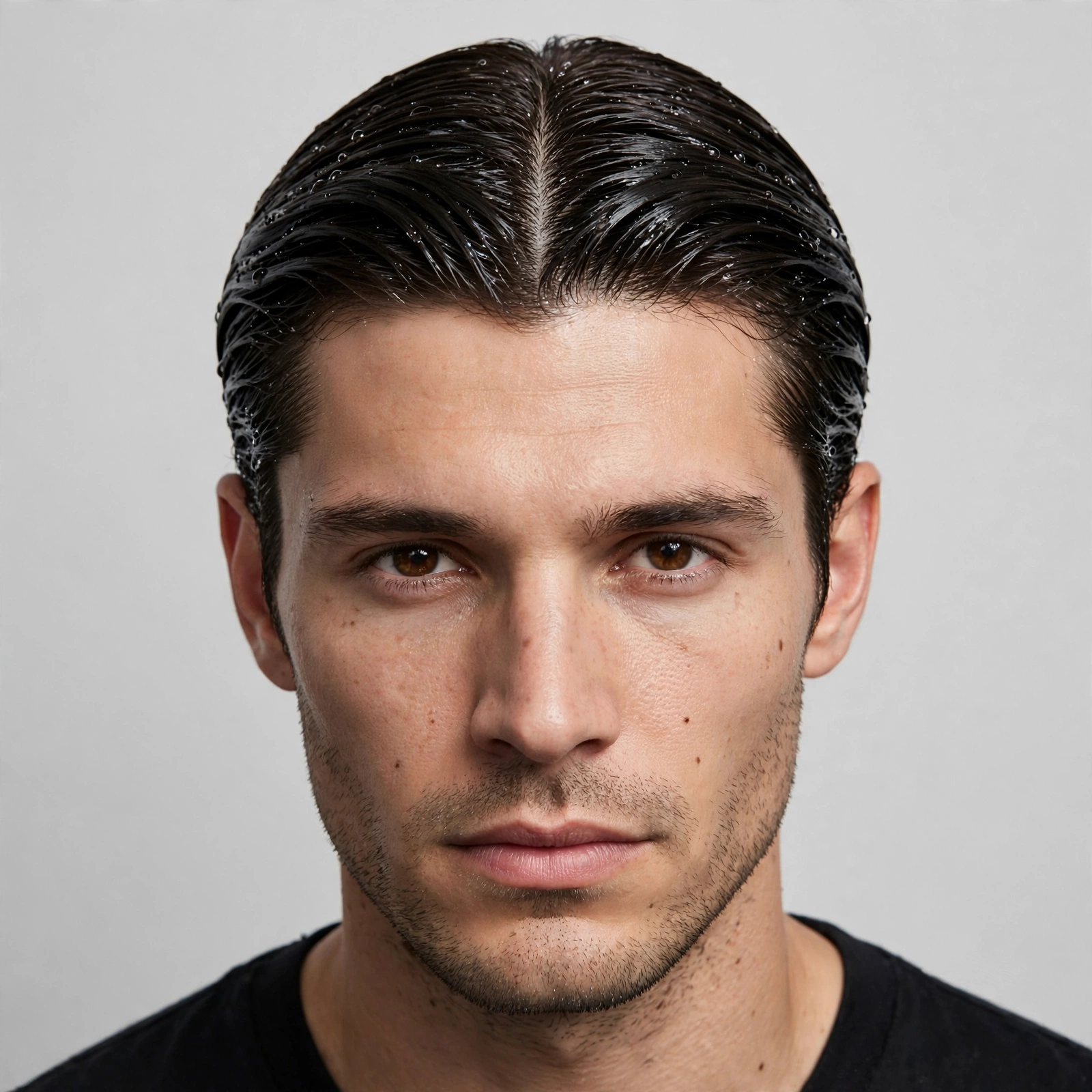
14. The Middle Part with Beard
Pair the middle part with a well-groomed beard for a rugged contrast. The softness of the center-parted hair balances the masculinity of the beard. Keep the beard shaped and neat — the hair is the star, the beard is the supporting actor. This combination is incredibly popular and photographs well.
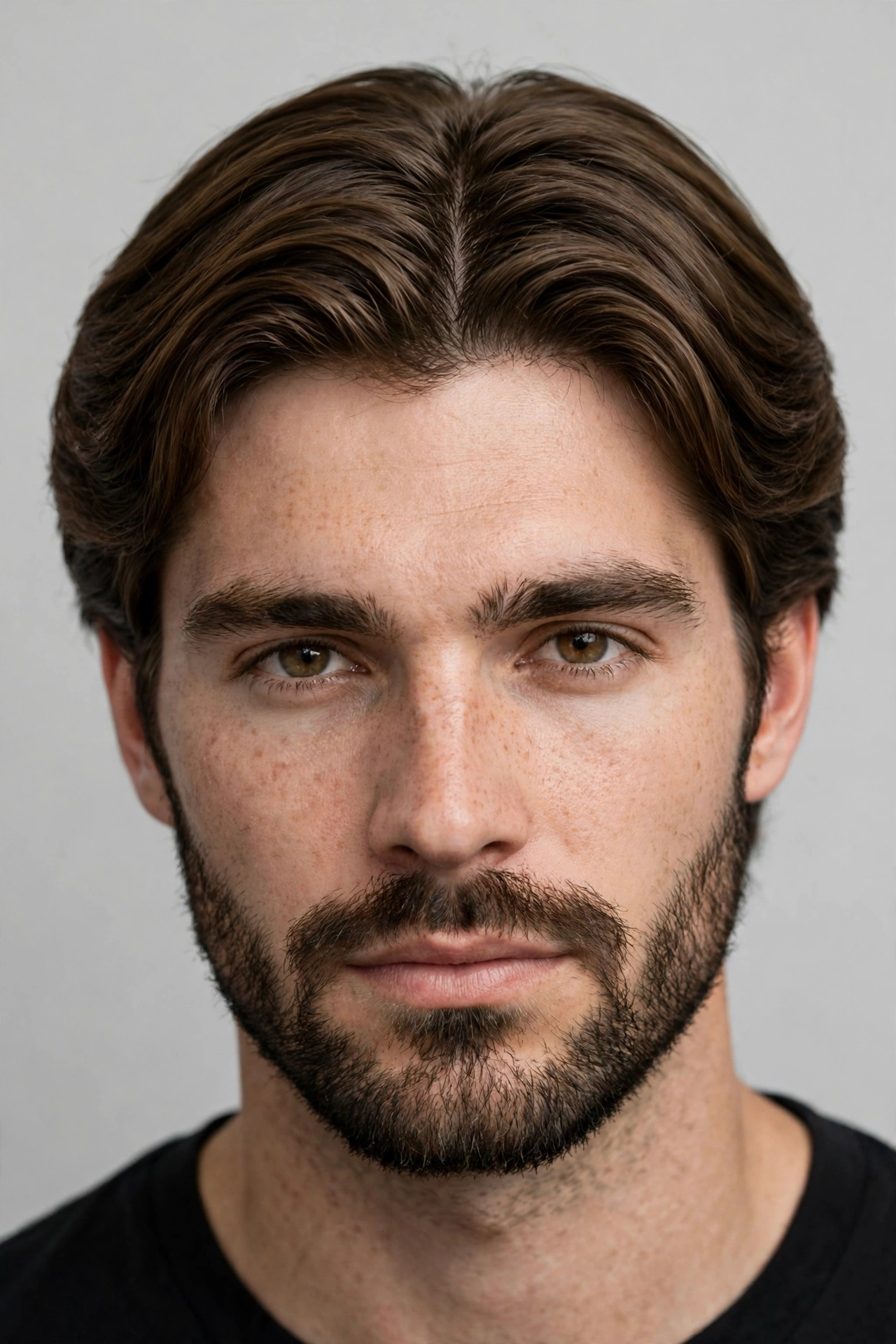
15. The Grown-Out Middle Part
Let the middle part grow past the ears and collar for a 90s-inspired longer look. This is for guys who’ve been growing for 8+ months and want to embrace the length. The part becomes more defined as hair gets longer. Keep up with trims to prevent split ends. The grown-out middle part has a relaxed, artistic vibe.
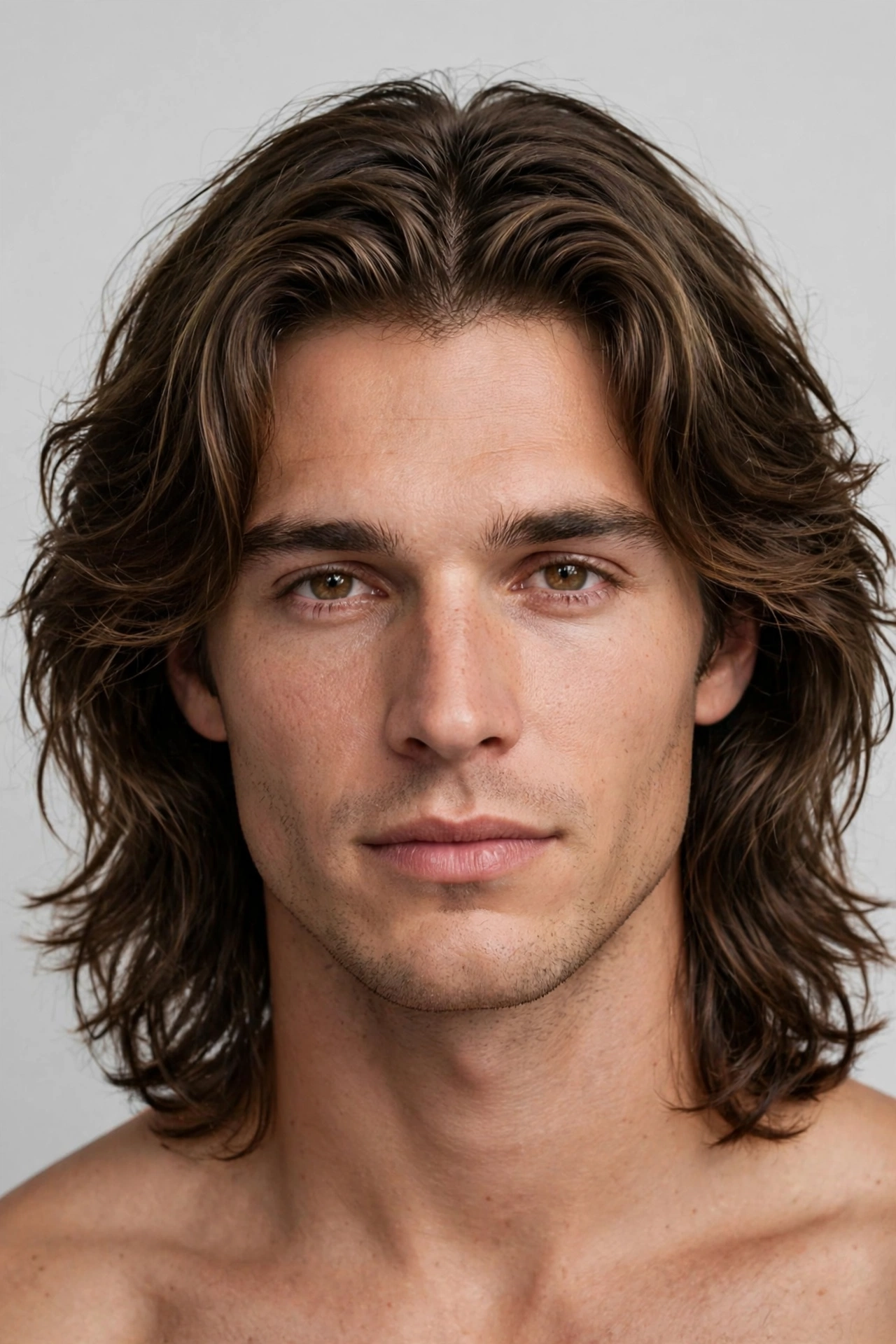
How to Get the Perfect Center Part
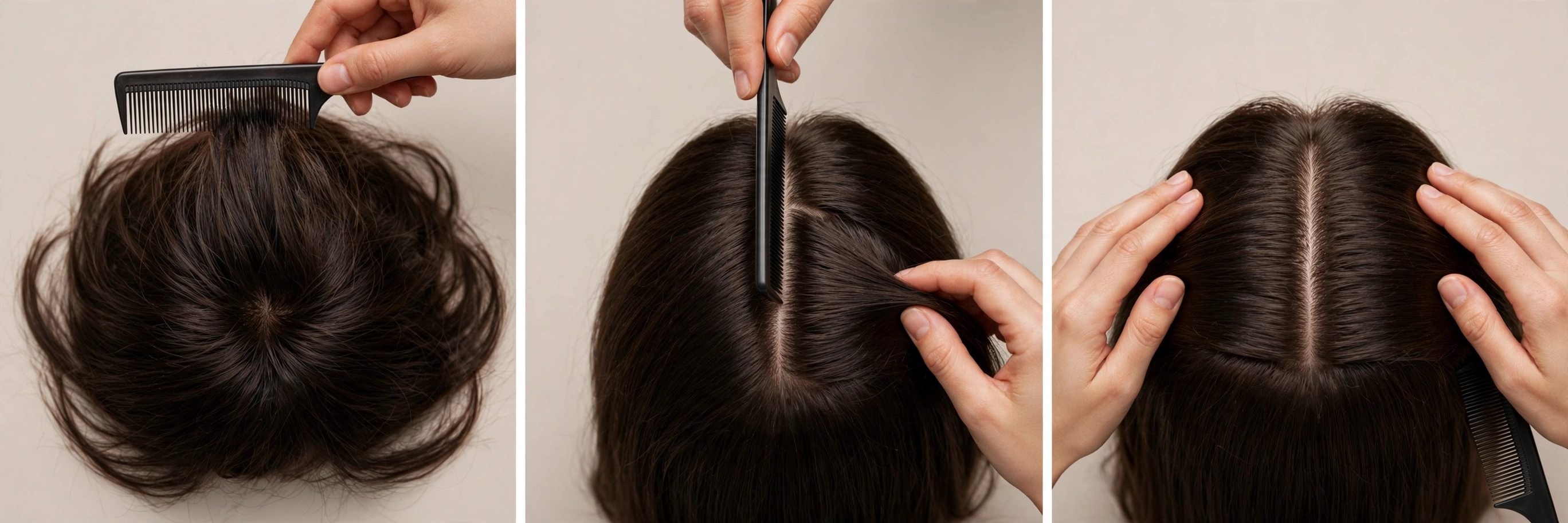
Getting the center part right is more technique than luck. Start with damp hair — it’s easier to part when wet. Use the bridge of your nose as a guide: the part should align with the center of your nose for true symmetry. Place a comb at your hairline in the center and draw it straight back. Don’t overthink it; a slightly imperfect part often looks more natural than a razor-precise one.
If your hair has a natural part that’s off-center, you’ll need to train it. After washing, part your hair in the center while it’s wet, then blow-dry it in that direction. The heat helps reset the growth pattern. You may need to do this consistently for 2-3 weeks before the hair “learns” the new part. A little product at the part line helps hold it in place during the training period.
For stubborn hair that won’t stay parted, try parting it slightly damp and then using a blow dryer with a nozzle to direct each side away from the center. Finish with a light-hold product. Avoid heavy waxes at the part itself — they can make it look greasy. The goal is a part that looks natural, not forced.
Styling Products for the Middle Part
The right products make all the difference for the middle part. You don’t need a dozen products — just a few key ones used correctly.
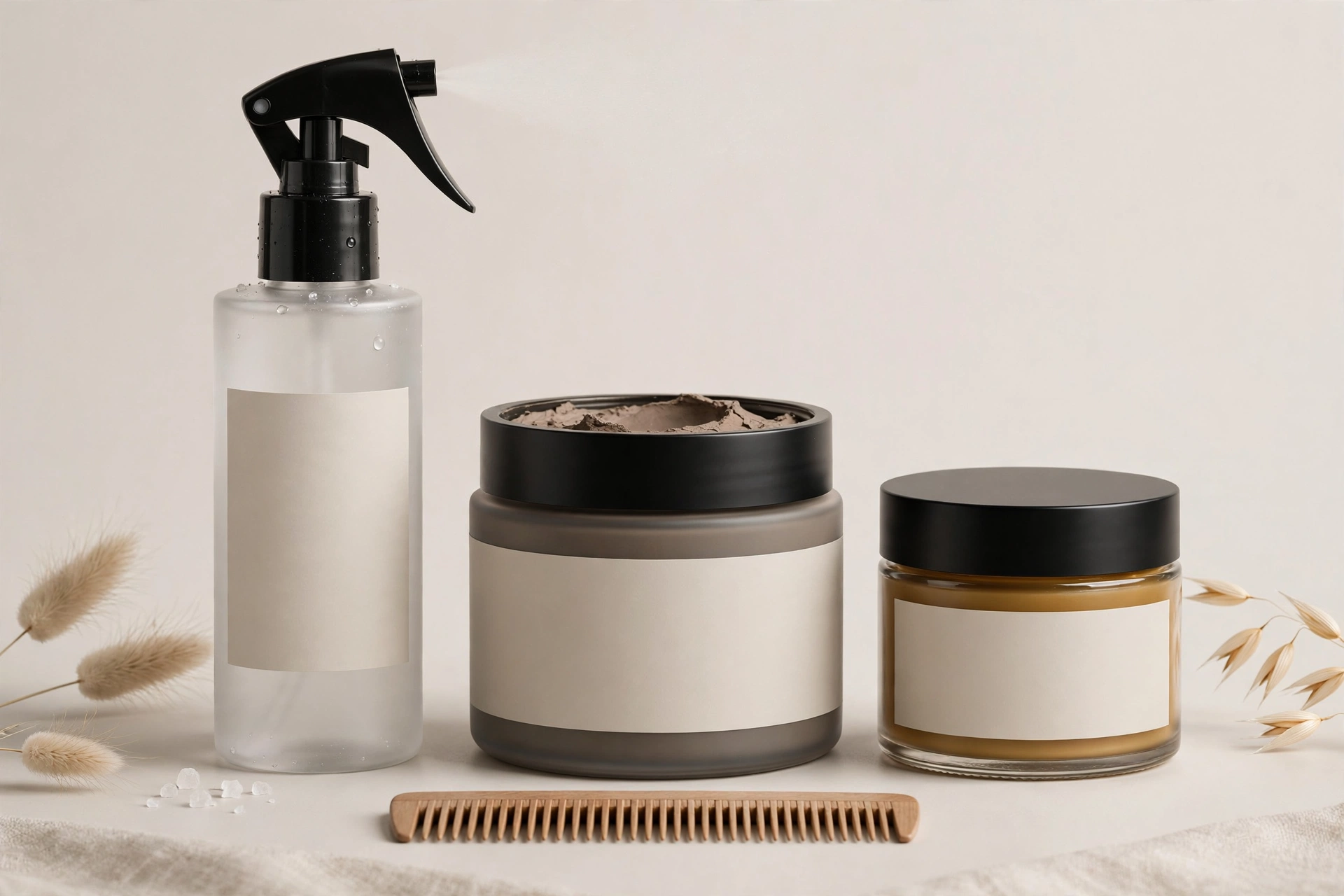
For pre-styling, a sea salt spray adds texture and grip to damp hair. This is especially useful for straight hair that tends to fall flat. Spray evenly, then blow-dry. For wavy or curly hair, a curl cream or leave-in conditioner works better as a pre-styler.
For hold, choose based on your desired finish. Matte clay gives a natural, touchable hold — perfect for casual middle parts. Pomade offers more shine and control for polished looks. Cream is the most versatile, providing light hold with natural movement. Avoid heavy gels unless you’re going for the wet look specifically.
For finishing, a texturizing spray or powder adds separation and volume to dry hair. This is key for the textured middle part variations. A light hairspray can lock everything in place for all-day wear, but use it sparingly to avoid stiffness.
Best Face Shapes for the Middle Part
The middle part’s symmetry makes it versatile, but certain face shapes benefit more than others. Here’s how to optimize for your face.
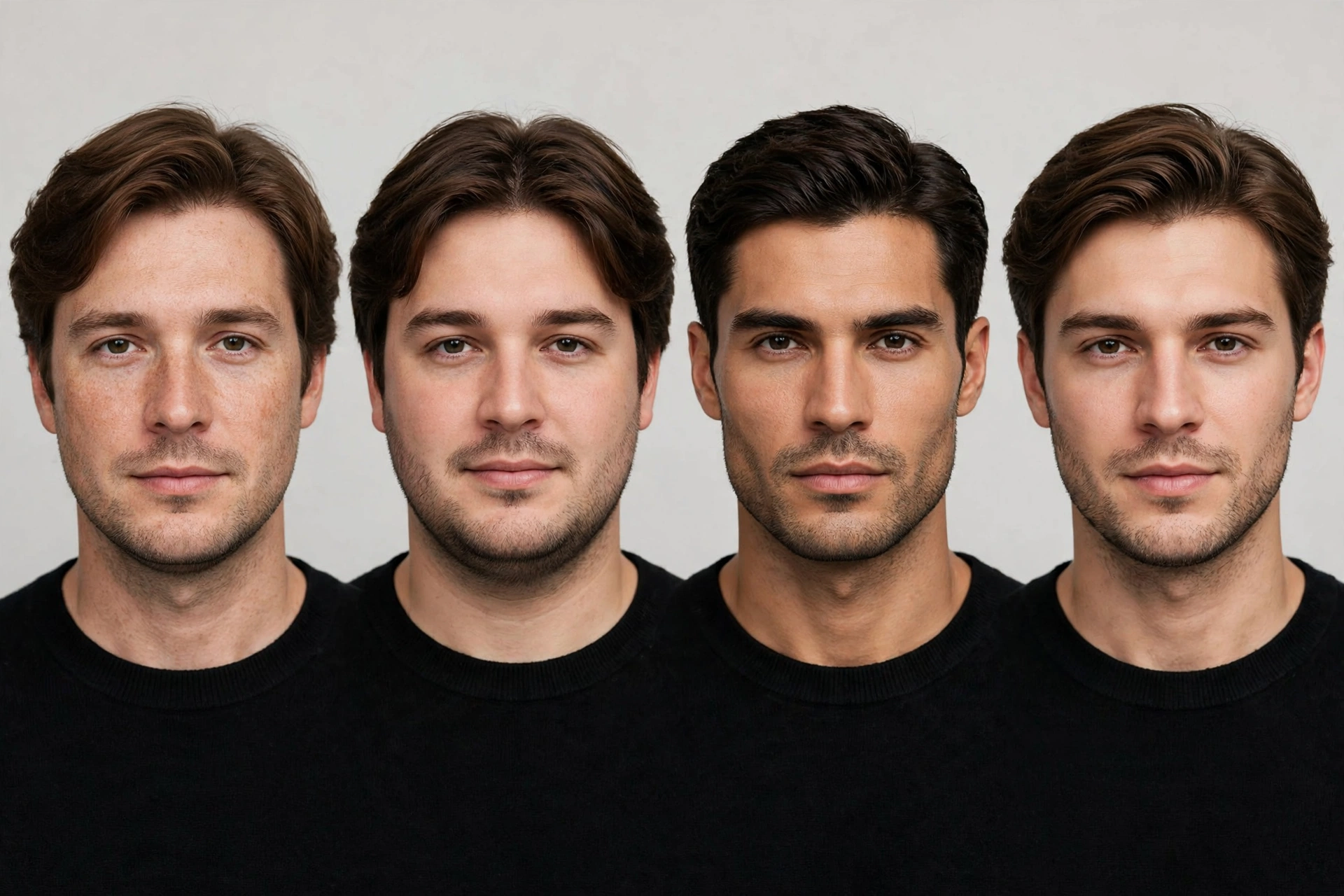
Oval faces are ideal — the symmetry of the middle part complements the balanced proportions. Any variation works. Try the classic or textured middle part.
Square faces are softened by the middle part. The center part breaks up the angular jawline, especially with curtain bangs or longer front pieces. Avoid very short middle parts that emphasize squareness.
Round faces need the elongating effect of a middle part. The vertical line down the center makes the face appear longer. Keep the sides from adding too much width — a tapered or faded side works well. The long middle part is particularly flattering.
Heart-shaped faces (wide forehead, narrow chin) are balanced by the middle part’s face-framing effect. The hair falling on both sides adds width at the jawline, balancing the forehead. Curtain bangs work beautifully here.
Diamond faces (narrow forehead and chin, wide cheekbones) benefit from the middle part’s ability to add width at the forehead and jaw. Longer front pieces help. Avoid styles that emphasize the cheekbones.
Maintaining Your Middle Part
The middle part is relatively low-maintenance, but it still needs regular care to look its best.
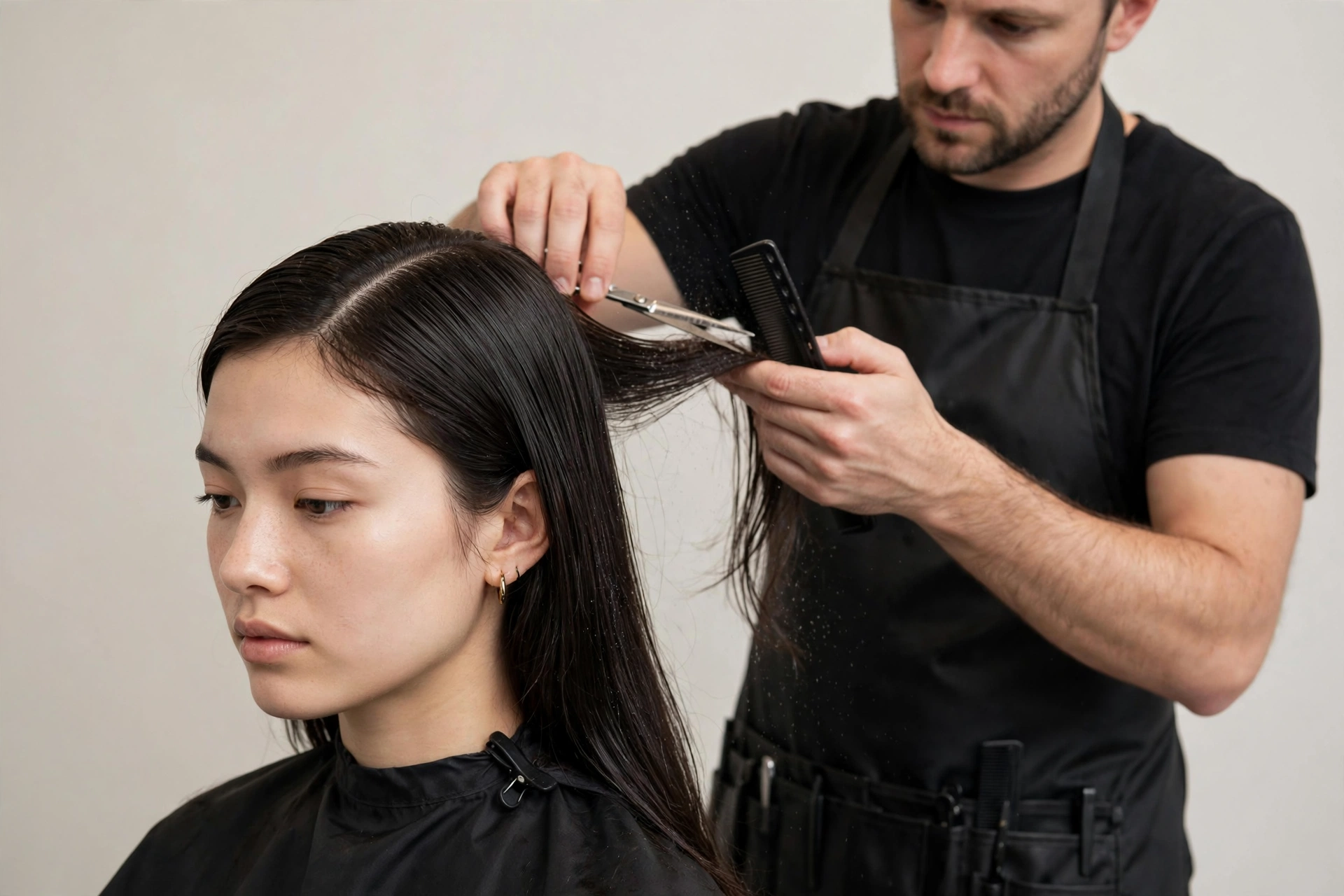
Trim every 6-8 weeks to maintain the shape and remove split ends. Tell your barber you’re maintaining a middle part so they preserve the front length and part structure. Even a small trim makes a big difference in how the part falls.
Wash 2-3 times per week with sulfate-free shampoo. The front pieces that frame your face can get oily faster from touching your skin — use dry shampoo on non-wash days if needed. Always condition to keep the lengths healthy.
Train your part daily. Even after the initial training period, part your hair while it’s damp every day to reinforce the center part. It becomes second nature quickly.
Protect from damage. The front face-framing pieces are the most visible part of this hairstyle, so keep them healthy. Avoid excessive heat, use heat protectant when blow-drying, and get regular trims to prevent split ends from ruining the frame.
Frequently Asked Questions
Can I get a middle part with straight hair?
Yes! Straight hair actually shows off the precision of a middle part beautifully. You may need texturizing products to add volume and prevent flatness, but straight hair takes a center part very well.
How long does my hair need to be?
Minimum 3 inches on top for a basic middle part, 4-5 inches for the classic face-framing effect. The front pieces need enough length to fall naturally on both sides.
Will a middle part suit my face shape?
Most likely yes. The middle part is one of the most versatile styles. Oval, square, round, heart, and diamond faces can all wear it with the right variation. Consult your barber for personalized advice.
How do I keep the part in place all day?
Part damp hair, blow-dry in the part direction, and use a light-hold product. Avoid touching your hair throughout the day. A little hairspray helps for all-day hold.
Is the middle part professional?
The neater variations (classic, slicked) work well in professional settings. The messier or longer versions are better for casual environments. Choose based on your workplace.
Can I switch from a side part to a middle part?
Yes, but it takes 2-3 weeks of consistent training. Part wet hair down the center daily and blow-dry in that direction. Be patient — hair has memory and needs time to adjust.
Final Thoughts
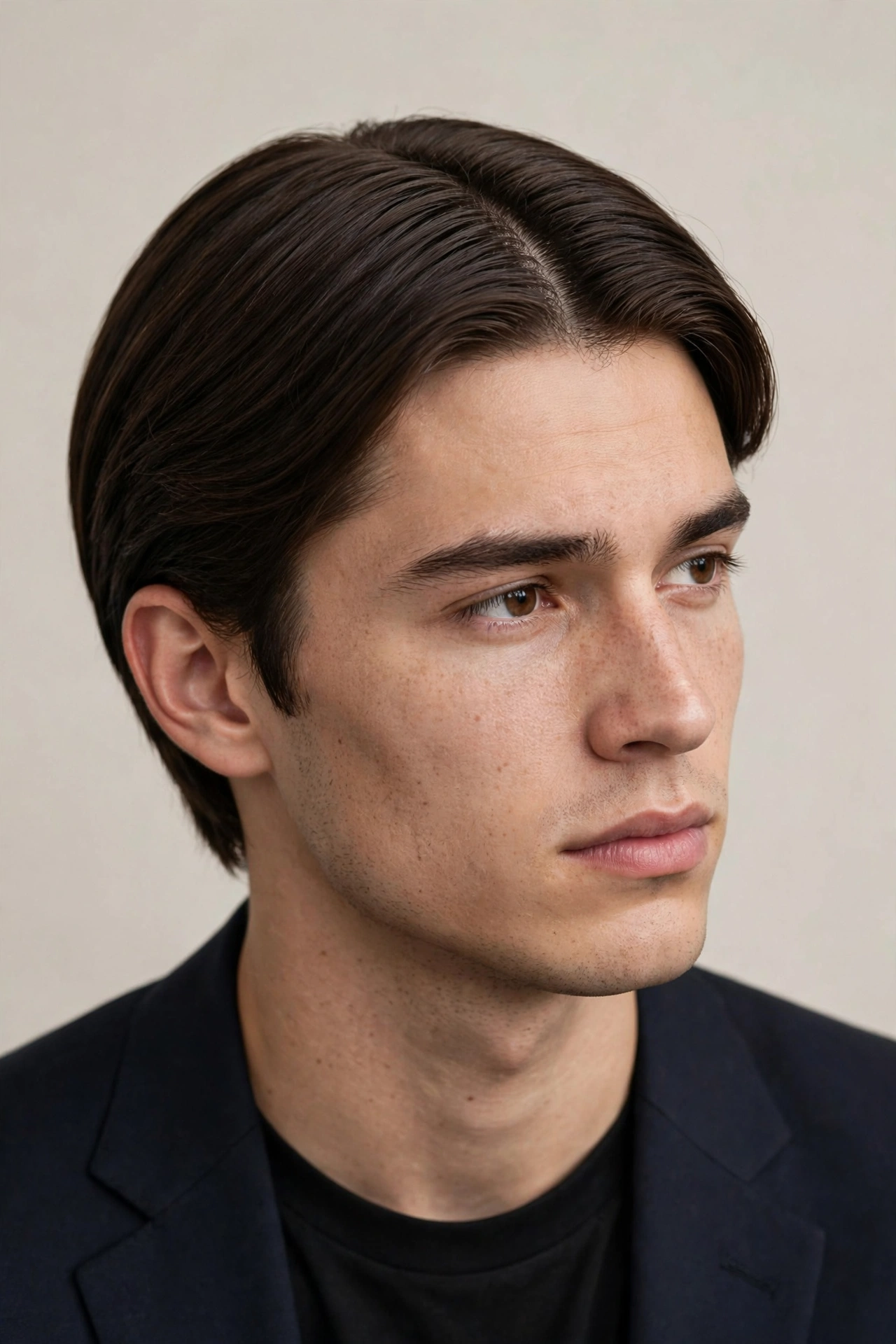
The middle part hairstyle for men has earned its place as one of 2026’s defining looks. It’s versatile, photogenic, and relatively low-maintenance — a rare combination. Whether you’re drawn to the classic symmetry, the textured edge, or the K-pop precision, there’s a middle part variation that fits your style.
The key to a great middle part is the cut. Find a barber who understands center parts and face-framing layers. Be patient during the grow-out if you’re starting short. Invest in the right products. And train that part daily until it becomes second nature.
Pinterest doesn’t lie — millions of saves mean this trend has staying power. If you’ve been considering the middle part, now is the time. Your most photogenic hairstyle is waiting.
Middle Part Haircut: What to Tell Your Barber
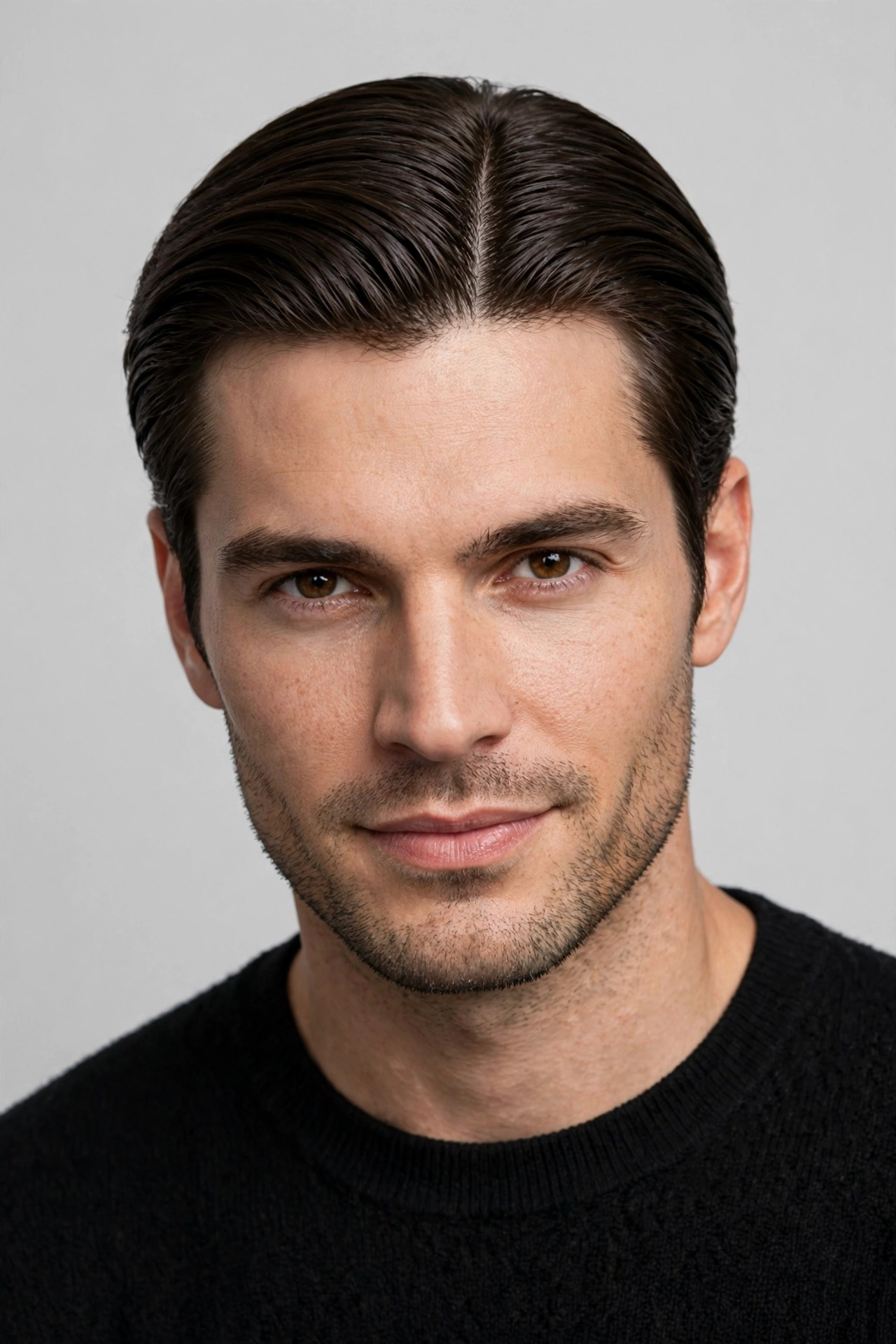
Walking into the barbershop and saying “give me a middle part” isn’t enough. This cut requires specific technical details to work properly. Here’s exactly what to communicate to ensure you leave with the middle part you want, not a disappointing approximation.
Start with length specifications. The most critical measurement is the top length — for a classic middle part, you need 4 to 5 inches on top. Be specific: “I want 4 inches on top, with the front pieces at 4.5 inches for face-framing.” The front is slightly longer than the crown to create those signature pieces that fall on either side of the face. If you want a shorter version, 3 inches is the absolute minimum — any shorter and the hair won’t part properly.
Discuss the sides in detail. Do you want them scissor-cut and blended (classic), tapered (modern), or faded (edgy)? Each creates a different vibe. For the timeless middle part, ask for “scissor-cut sides, 2 to 3 inches, blended into the top with no harsh lines.” If you prefer contrast, specify the fade guard numbers. The key is intentionality — the sides should look deliberate, not like an afterthought.
Talk about texture. The middle part lives or dies on texture. Ask for “point cutting throughout to create texture and movement” or “razor-cut ends for piece-y separation.” If you have thick hair, request “thinning to remove bulk while keeping length.” If your hair is fine, ask for “blunt ends to create the appearance of fullness.” Your barber needs to know your hair type and adjust the texturizing accordingly.
Address the part itself. Some barbers will cut the hair with your natural part in mind, which can sabotage a middle part if your natural part is off-center. Explicitly say: “I’m switching to a center part, so please cut it without relying on my current part.” Ask them to cut the front sections symmetrically so they fall evenly on both sides.
Bring photos — and not just one. Bring 3 to 4 photos showing the middle part from the front, side, and back. Include at least one photo of someone with a similar hair type to yours. This gives your barber a complete picture. Photos eliminate the ambiguity of verbal descriptions.
Finally, ask for styling instruction. A good barber will show you how to part and style the cut at home. If they just cut and say “you’re done,” they may not understand the middle part well enough. The styling is integral to the cut — make sure you leave knowing how to recreate it.
Common Middle Part Mistakes to Avoid
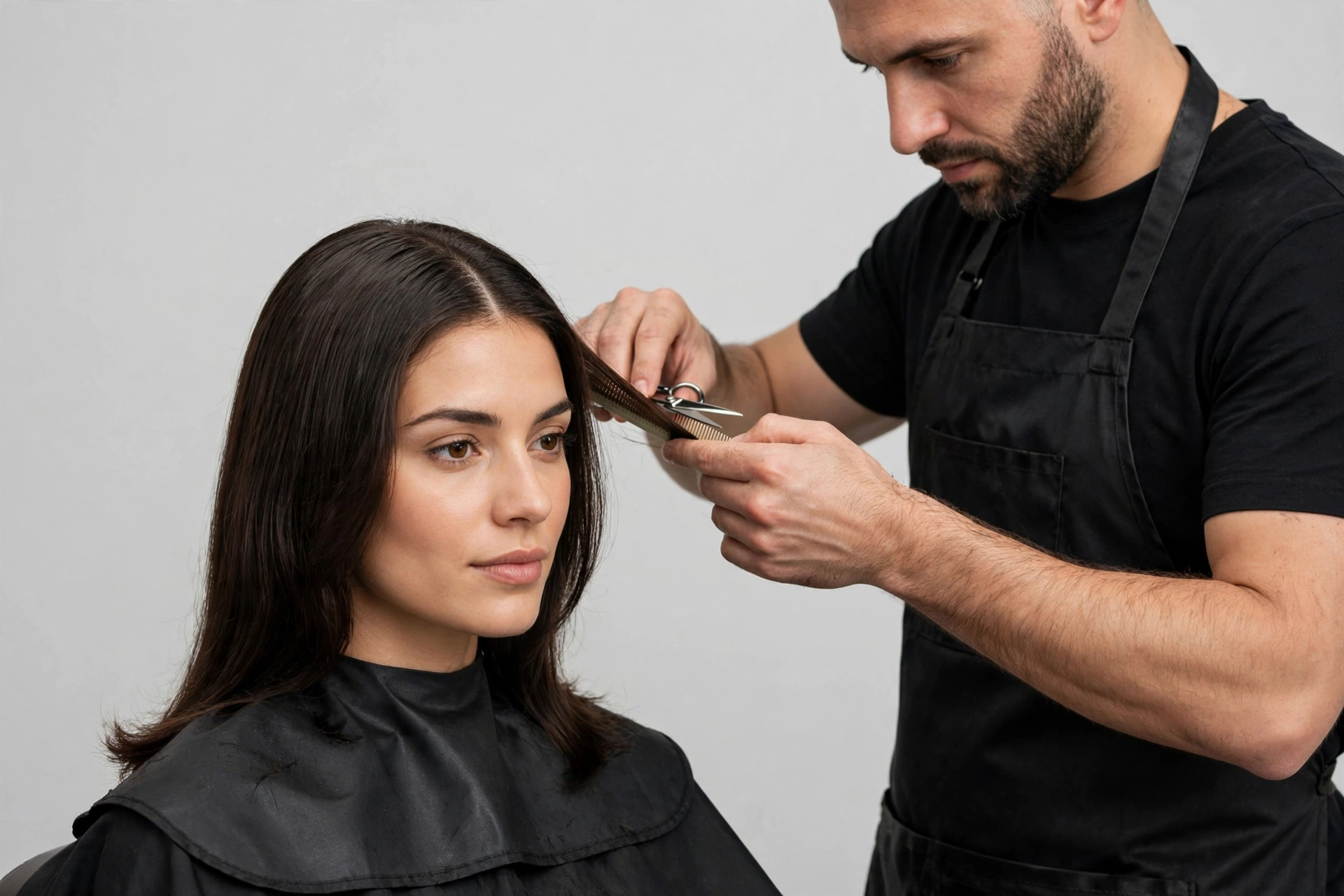
The middle part seems simple, which is why so many guys get it wrong. Here are the most common mistakes and how to avoid them.
Mistake 1: Too short on top. The number one error is not growing enough length before attempting the middle part. If your top is under 3 inches, the hair won’t have enough weight to fall properly on both sides — it’ll stick up or fall flat. Solution: Be patient. Grow to at least 4 inches before committing to the middle part. Use the grow-out period to find a barber and plan the cut.
Mistake 2: Ignoring the back and sides. Some guys focus entirely on the top and neglect the rest. But a middle part with overgrown, shapeless sides looks unfinished. The sides and back need regular maintenance to support the top. Solution: Get the sides trimmed every 4-6 weeks even while growing the top. The overall shape matters.
Mistake 3: Using too much product. The middle part should look natural, not shellacked. Heavy gels and waxes make it look greasy and dated. Solution: Start with half the product you think you need. You can always add more. Opt for matte, lightweight products that enhance texture rather than suppress it.
Mistake 4: Forcing a part that doesn’t suit your hair. Some hair textures naturally resist center parts due to growth patterns or cowlicks. Fighting your hair’s nature leads to frustration. Solution: Work with a barber to assess if your hair can hold a center part. If you have a strong cowlick at the crown, you may need a slightly off-center part or a different style altogether. Be honest about your hair’s limitations.
Mistake 5: Neglecting the front pieces. The face-framing front sections are the most visible part of the middle part. If they’re damaged, split, or unhealthy, the whole style suffers. Solution: Get regular dustings (micro-trims) on the front pieces. Use heat protectant. Don’t over-style with hot tools. These pieces need extra TLC.
Mistake 6: Giving up during the awkward phase. The transition from side part to middle part (or from short to middle part length) has an awkward stage where nothing looks right. Many guys quit here. Solution: Push through. The awkward phase typically lasts 2-4 weeks. Use hats, extra product, or different styling to survive it. The result is worth it.
Celebrity Middle Part Inspiration
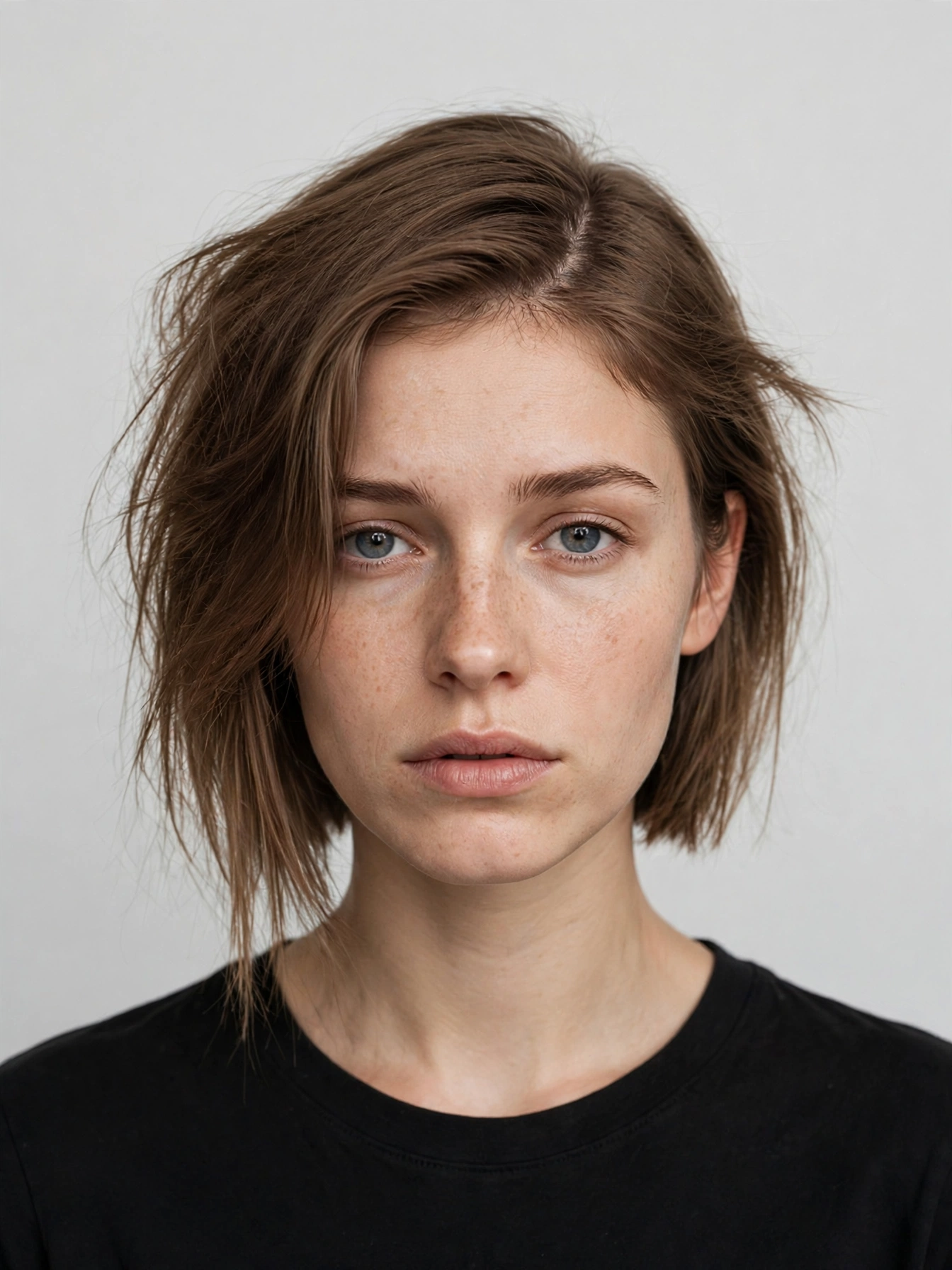
Need inspiration? These celebrities have made the middle part iconic in 2026. Study their variations to find your ideal version.
The K-pop idol middle part: Precise, sleek, and perfectly symmetrical. Think Jungkook or Cha Eun-woo. This version features straight, healthy hair with a razor-sharp center part. The lengths are even on both sides, creating a polished, almost editorial look. To get it: ask for a precise cut with minimal texture, use straightening products, and part with a comb for accuracy. This is the most “done” version of the middle part.
The Timothée Chalamet middle part: Effortless, wavy, and artistic. Chalamet’s version embraces natural texture with a slightly imperfect part. The waves add volume and movement. It’s the “I don’t try too hard” middle part that actually requires some effort. To get it: enhance your natural waves, don’t over-style, and let the part be slightly organic rather than precise.
The 90s heartthrob middle part: Leonardo DiCaprio in Titanic remains the reference. Longer lengths, curtain-like front pieces, romantic vibe. This version is longer (5-6 inches on top) with soft layers. It’s nostalgic but still current when done with modern texture. To get it: grow it out, ask for long layers, and embrace the romance.
The athlete middle part: Think footballers and basketball players who wear the middle part with shorter, more practical lengths. This is the 3-inch version — enough for the part but short enough for active lifestyles. It’s neat, controlled, and low-maintenance. To get it: keep it shorter, use light product, and prioritize neatness over volume.
Study these references, but don’t copy exactly. Adapt the celebrity inspiration to your face shape, hair type, and lifestyle. The best middle part is the one that looks like you — just a more polished version.
Middle Part for Different Hair Textures: Detailed Guide
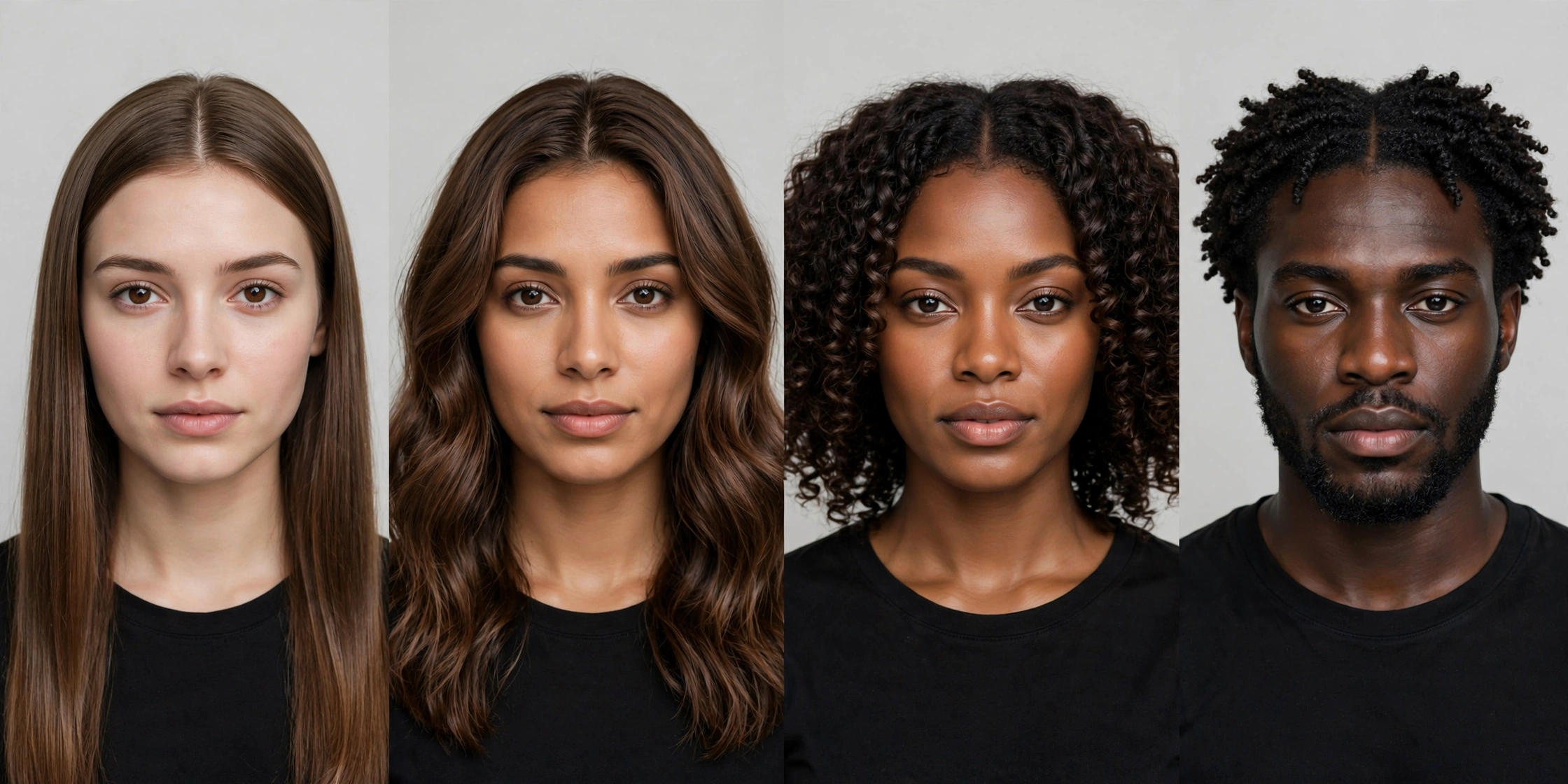
Your hair texture significantly impacts how the middle part looks and how you should cut and style it. Here’s a comprehensive breakdown by texture type.
Straight hair (Type 1): Straight hair shows the middle part’s precision beautifully but can look flat without proper technique. The key is creating volume at the roots. Ask your barber for layers that encourage lift. When styling, always blow-dry with volume in mind — flip your head upside down for extra lift, or use a round brush at the crown. Sea salt spray is your best friend for adding the grip and texture that straight hair lacks naturally. Avoid heavy conditioners that weigh hair down. The straight middle part is sleek and modern when done right, but it requires more styling effort than wavy versions.
Wavy hair (Type 2): This is the ideal texture for the middle part. Your natural waves provide the volume and movement that make the style look effortless. The key is enhancing, not fighting, your waves. Ask for long layers that work with your wave pattern. Use curl cream or sea salt spray on damp hair, then either air dry or diffuse. Don’t brush wavy hair when dry — it creates frizz. The wavy middle part is the most forgiving and natural-looking version.
Curly hair (Type 3): Curly middle parts are bold and beautiful but require expert cutting. The volume of curls can overwhelm the center part if not shaped properly. Find a barber experienced with curly hair — this is non-negotiable. The cut should create a defined shape that controls volume while showcasing curls. Use curl-defining products and the “praying hands” method to apply them without disrupting the curl pattern. The curly middle part is a statement — embrace the volume.
Coily hair (Type 4): The middle part works on coily hair with the right approach. The key is stretching the hair enough to show the part while maintaining health. Consider a stretched style (blow-out or banding method) before cutting to ensure the part is visible. The result is striking — the texture contrast between the defined part and voluminous coils is visually stunning. Work with a barber experienced in Black men’s hair.
Conclusion
The middle part is 2026’s defining men’s look — symmetrical, sleek, and effortlessly cool. From curtain-like flow to sharp center-parted crops, it frames the face with balance and suits oval, oblong, and diamond face shapes best. It’s the haircut of leading men, on screen and off.
Keep the part crisp by training damp hair with a comb, and use a light cream for natural movement and shine. Regular trims keep the ends healthy. In 2026, the middle part proves symmetry is the ultimate style statement.
One Comment