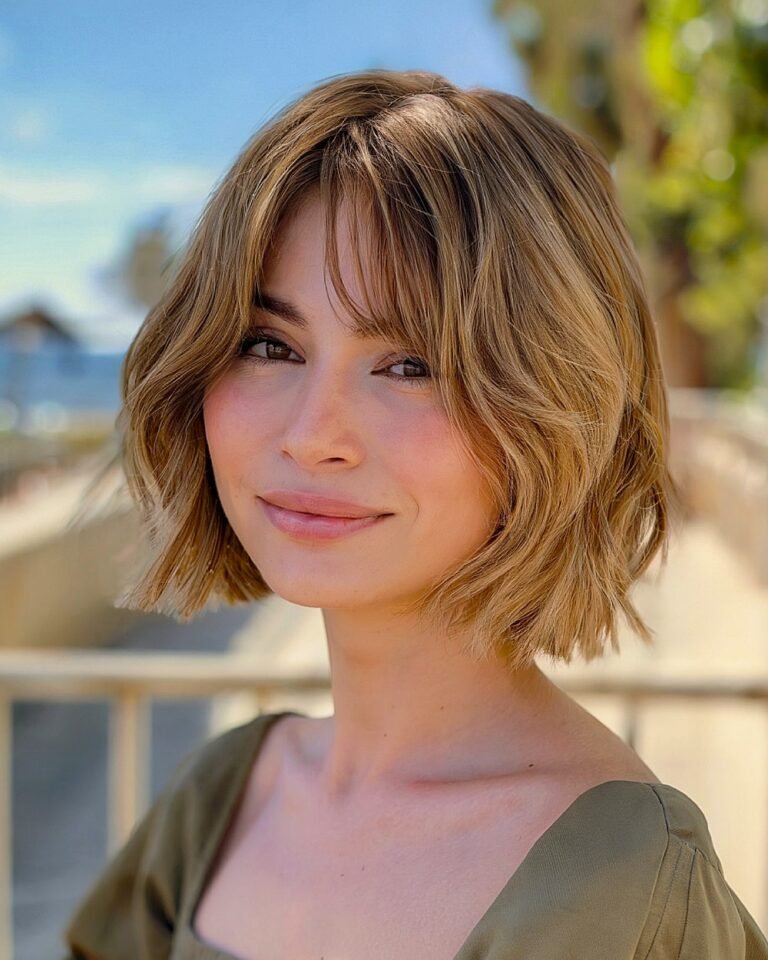
Octopus Haircut Women 2026: 20 Bold Layered Styles
Octopus Haircut Women 2026: 20 Bold Layered Styles
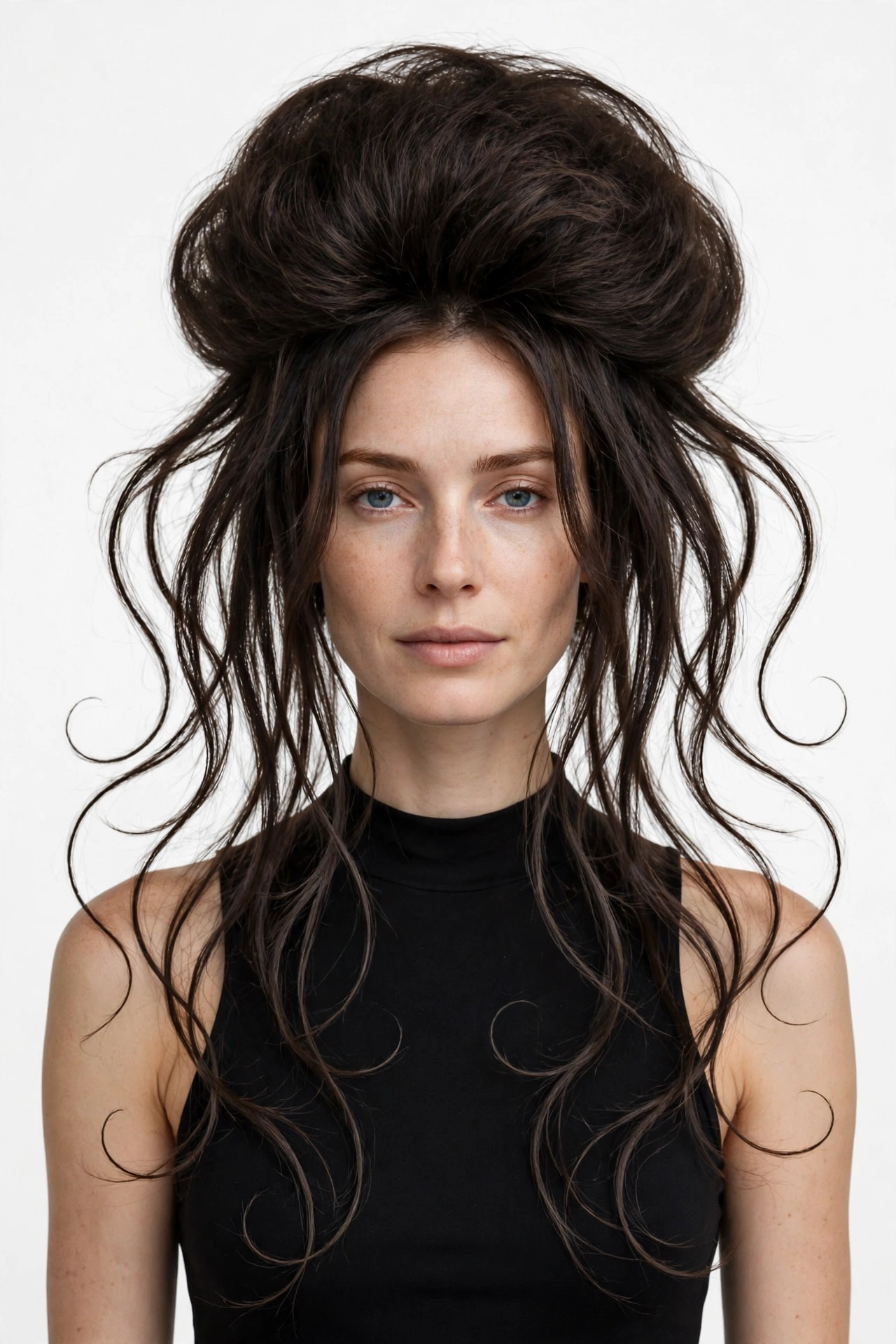
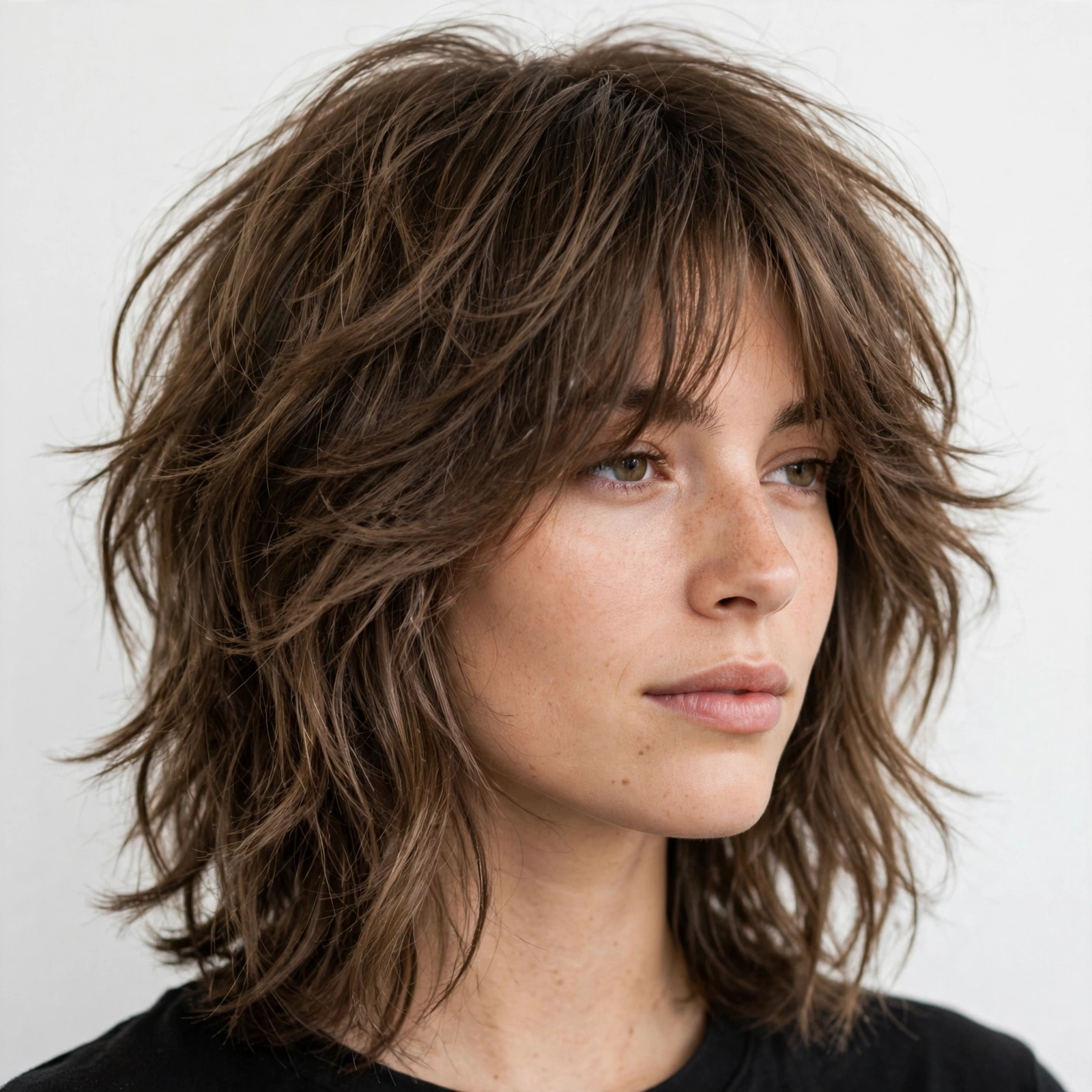
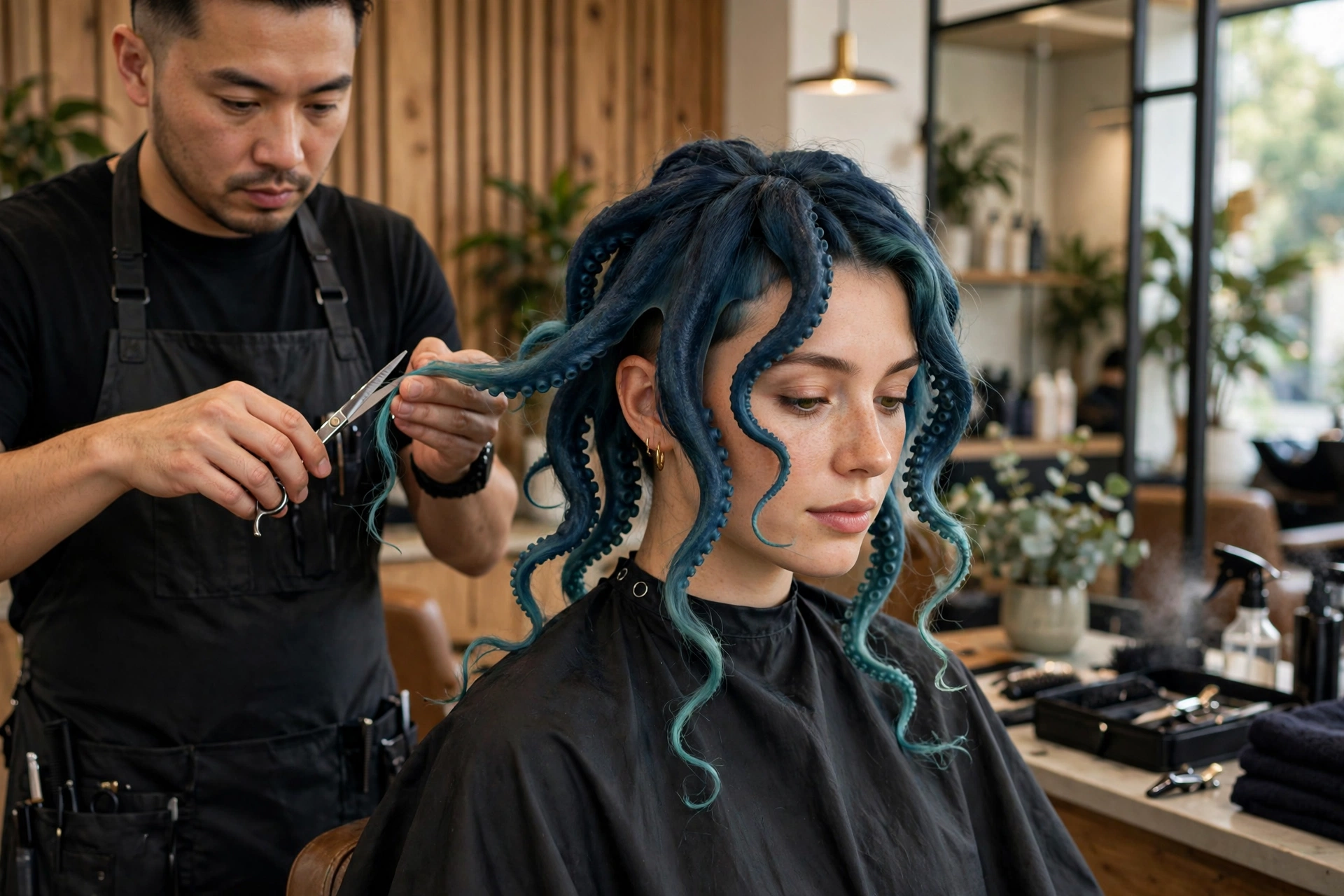
So you’ve seen the octopus haircut all over your feed and you’re wondering what the fuss is about. Fair enough — the name alone sounds like something out of a marine documentary. But here’s the thing: once you understand what this cut actually does, you get why half of Pinterest is obsessed with it. The octopus haircut gives you big, round, bouncy volume up top and then drops into long, thin, wispy layers at the ends. It looks like an octopus, sure, but on a woman walking down the street it just looks… expensive. Dramatic. Alive.
I’ve watched this cut move from a niche Japanese salon trend to a full-blown global moment, and I’ve seen it on every hair type you can imagine. Done right, it’s the most flattering version of layered hair we’ve had in years — it slims the face, adds movement where flat hair usually dies, and photographs like a dream. Done wrong, well, let’s just say the difference between “octopus” and “awkward grow-out” is about two inches and a stylist who actually understands the crown-to-tentacle ratio. Stick with me and I’ll walk you through all of it: what it is, who it suits, the 20 best ways to wear it in 2026, exactly what to tell your stylist, and how to keep it looking salon-fresh at home.
What Is the Octopus Haircut?
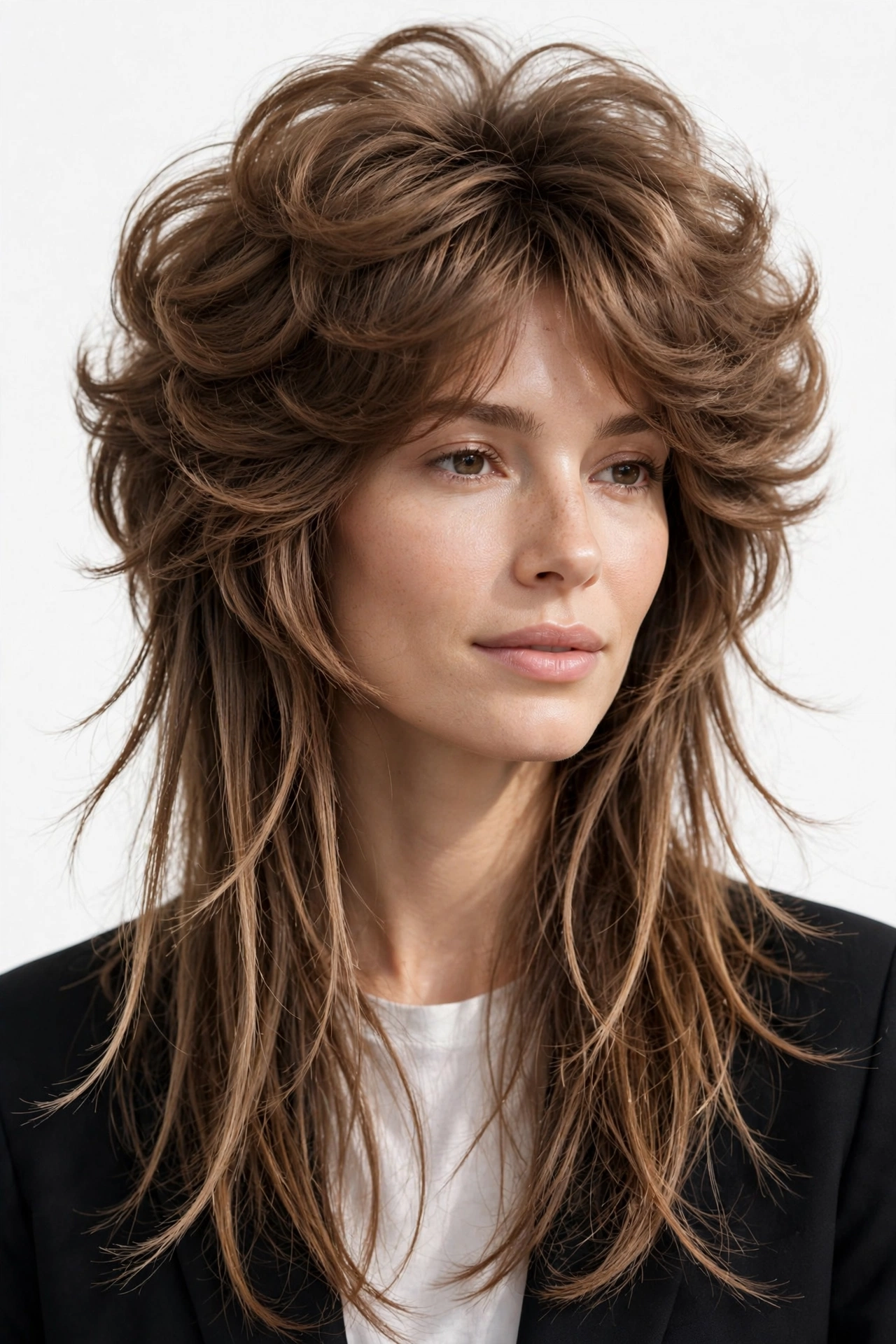
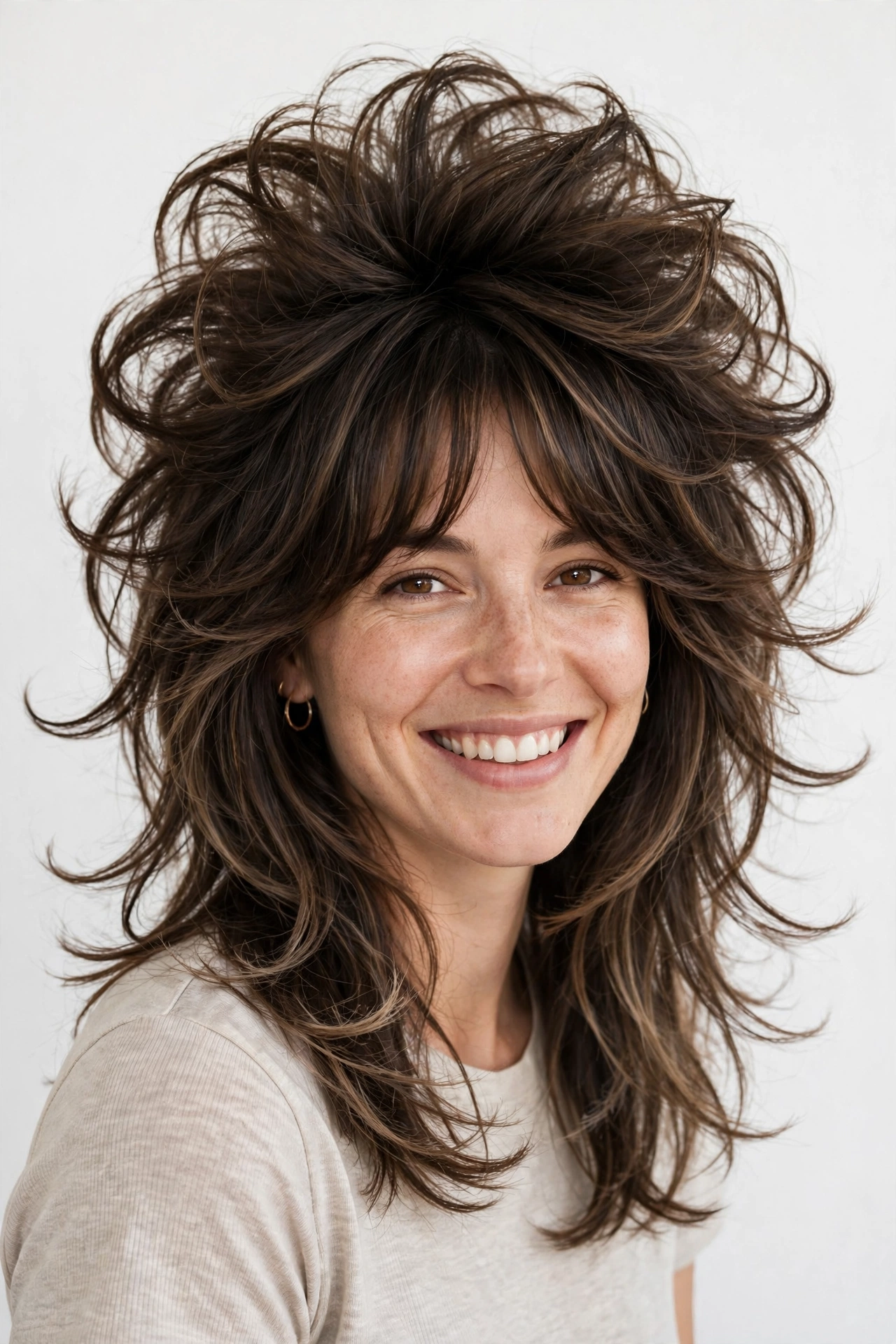
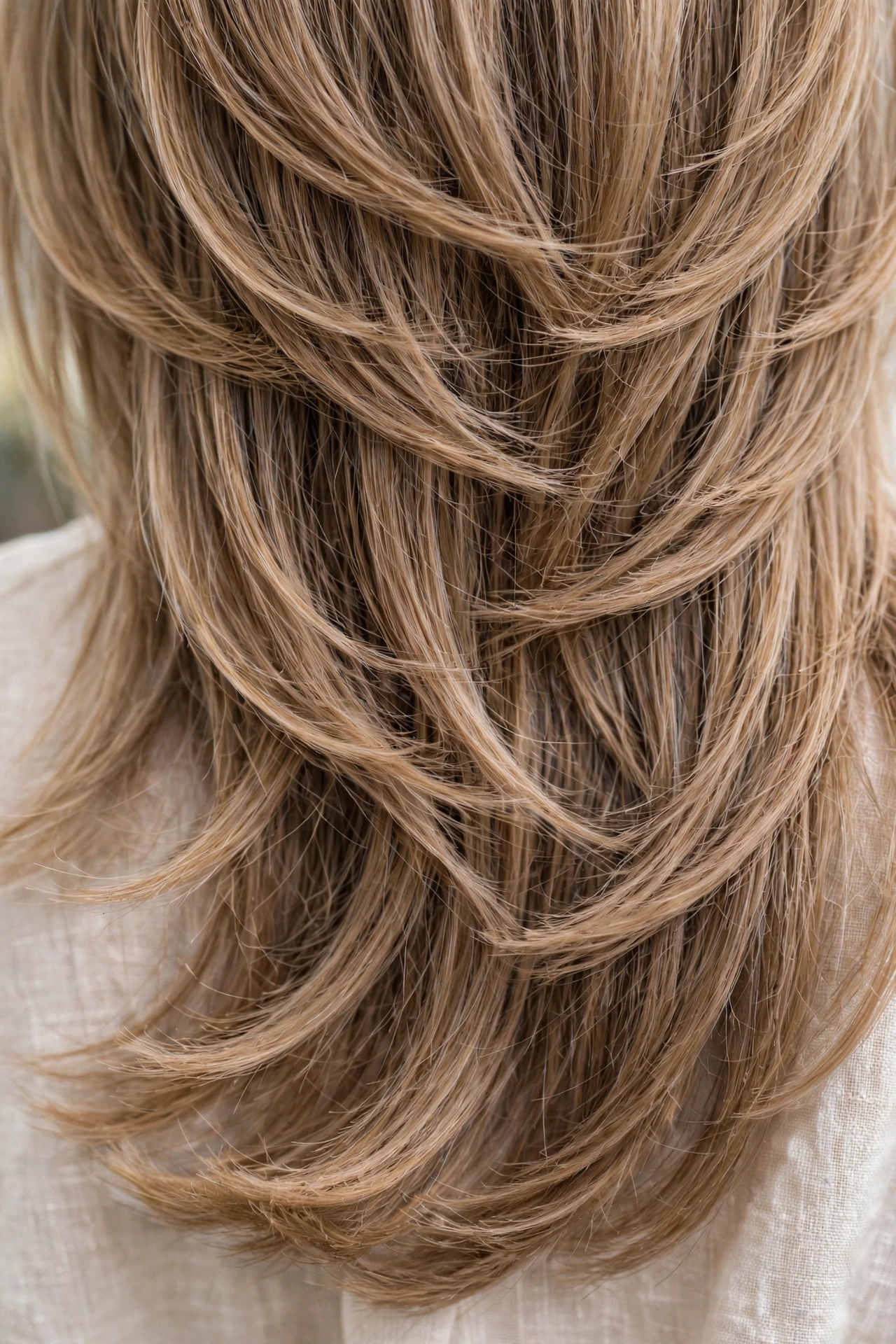
Let’s strip it back to basics. The octopus haircut is a heavily layered cut built on one simple idea: short, rounded, voluminous layers through the crown and top, contrasted against long, thin, piece-y layers through the lengths and ends. The top half of your hair behaves like a bob — full, curved, hugging the head — while the bottom half falls into separated, wispy strands that move independently. That contrast is the whole point. It’s what gives the cut its name and its personality.
It helps to know where it came from. The octopus cut grew out of Japan’s layered-hair culture and the early-2020s shag revival, then got picked up by K-beauty stylists who pushed the crown volume even rounder and the ends even thinner. By 2024 it had crossed into Western salons, and in 2025 it went fully mainstream on TikTok and Pinterest. The 2026 version is more refined than the early ones — less choppy-mullet energy, more intentional shaping. Think of it as the shag’s sleeker, more deliberate cousin. If you want the wilder relative, check out our guide to trendy wolf cut hairstyles for women, which shares some DNA but leans messier and more rock-and-roll.
People constantly mix the octopus up with three other cuts, so let me draw the lines clearly. The wolf cut has shaggy, uniform-ish layers all over with a more tousled, undone finish — the octopus has a much more deliberate two-zone structure (round top, thin bottom). The shag is the 70s original: face-framing layers and curtain bangs with fairly even length. And the jellyfish? That’s the extreme cousin — a blunt bob on top with long straight strands hanging below, almost no blending. The octopus sits in the sweet spot: blended enough to look intentional, contrasted enough to look interesting. If the jellyfish intrigues you, we broke it down in our jellyfish haircut guide for women. For more pro takes on the shape, PureWow’s guide to the octopus haircut trend breaks down how the cut keeps volume on top while staying softer than a mullet or wolf cut.
Why the Octopus Haircut Is Trending in 2026
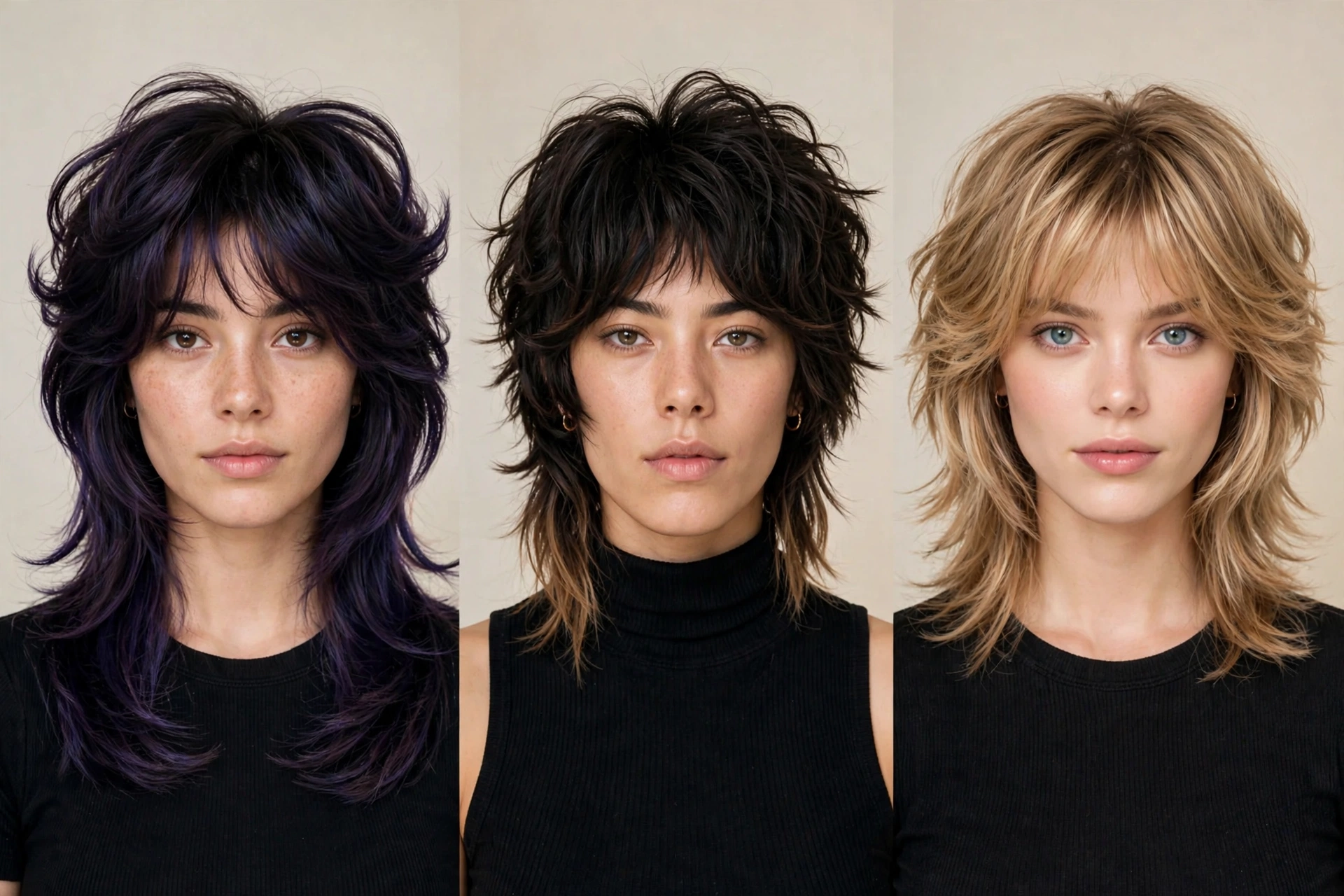
Trends don’t explode without a reason, and this one has several. First, we’re in the middle of a massive texture moment. After years of flat-ironed, glass hair dominating, women want movement again — hair that swings, bounces, and looks different from every angle. The octopus haircut delivers that in spades because the two-zone structure basically guarantees your hair never sits flat. Even on second-day hair, the crown keeps its shape while the ends do their wispy thing.
Second, it’s secretly one of the most face-flattering cuts out there. That rounded crown adds width at the cheekbones and temples, which balances longer face shapes beautifully, while the thin ends draw the eye downward and elongate round faces. My stylist told me she’s been recommending it to clients who want the slimming effect of long layers but are bored of the same old V-cut — and honestly, I’ve seen this cut rescue more “my hair has no shape” complaints than any other single style this year. It also photographs incredibly well, which in 2026 is basically a prerequisite for any trend surviving past spring.
Third, it’s versatile in a way the early viral versions weren’t. The 2026 octopus isn’t one cut — it’s a family. There’s a subtle office-friendly version, a dramatic editorial version, curly versions, colored versions, versions with bangs and without. You can dial the tentacle-to-crown ratio up or down depending on your life, your job, and how much morning effort you’re willing to give. That’s why you’re seeing it on everyone from K-pop idols to women in their forties who just wanted something with more life than a one-length cut. It stopped being a “statement cut” and became a genuinely wearable one.
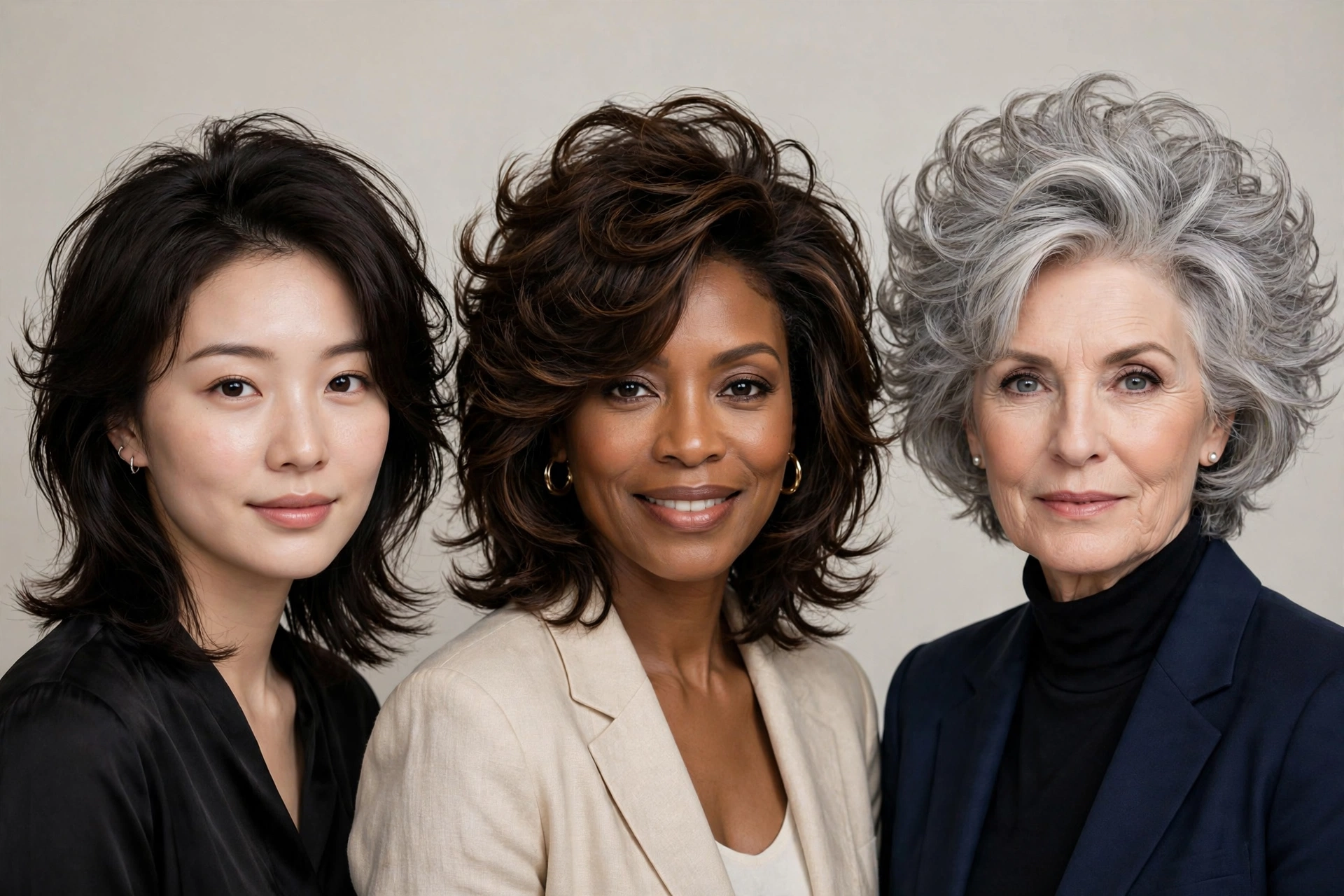
20 Octopus Haircut Styles to Try in 2026
Right — the part you came for. Below are the 20 best octopus haircut variations for 2026, from barely-there to full drama. Read through, save the ones that make your heart skip, and bring those photos to your appointment. Your stylist will thank you.
1. Subtle Octopus Layers
Not ready to go full tentacle? Start here. The subtle octopus keeps the crown volume gentle — just enough rounding to lift the top — and the bottom layers only slightly thinner than the rest. From across the room it reads as a really good layered cut; up close you see the octopus DNA in how the ends separate into soft, feathery pieces. This is the version I recommend to first-timers and to anyone with a conservative workplace, because it grows out beautifully and nobody will accuse you of having a “weird” haircut.
Ask your stylist to keep the shortest crown layer no higher than chin length and to point-cut the ends rather than razor them — you want softness, not stringiness. Styling is easy: a little volumizing mousse at the roots, blow-dry with a round brush, and you’re done. Trim every 8 to 10 weeks to keep the shape. Honestly, if you’re on the fence about the whole trend, this is your gateway. You get 70 percent of the movement with zero commitment anxiety.
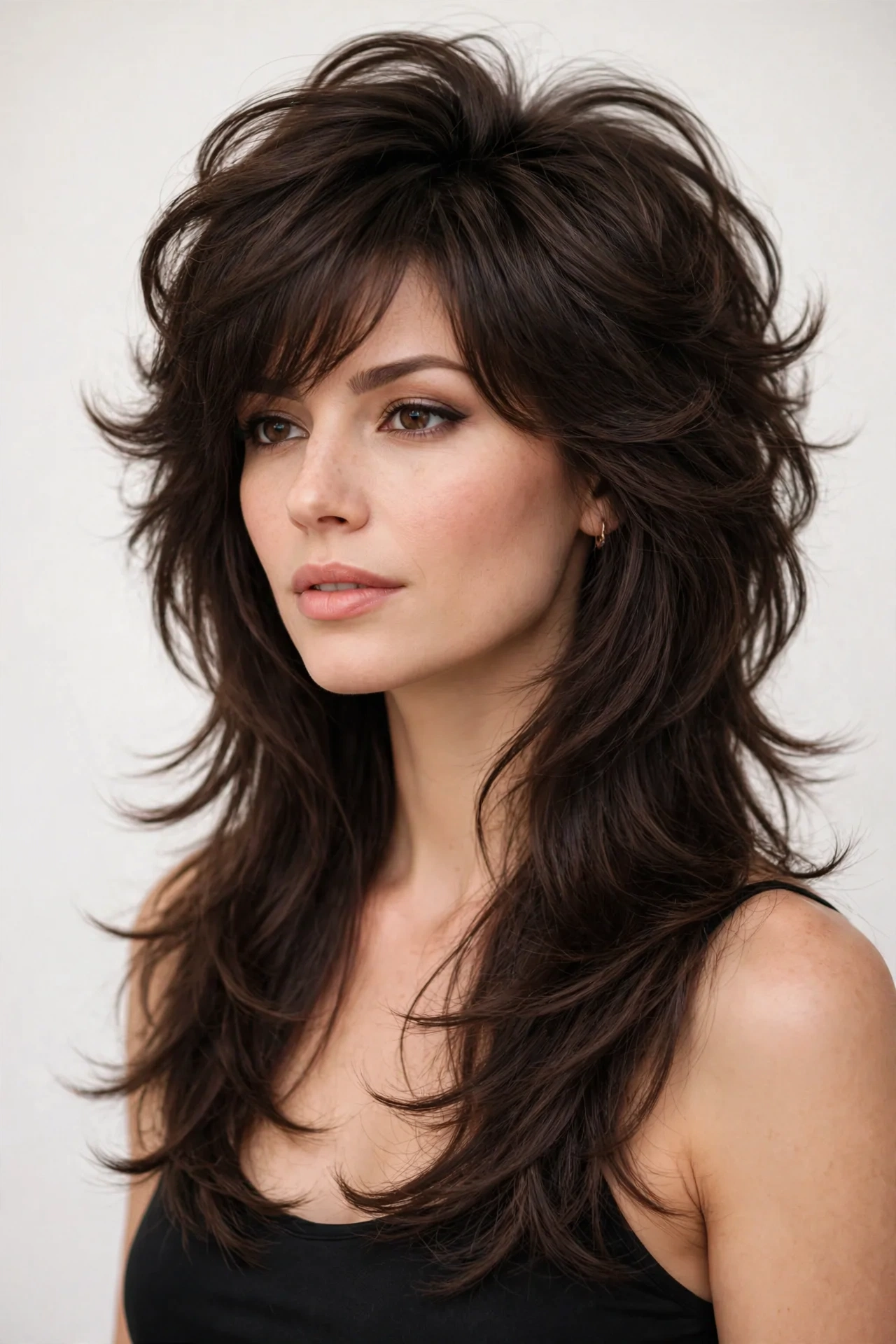
2. Dramatic Octopus Cut
This is the full-send version — a big, round, almost helmet-like crown of volume crashing into long, razor-thin tentacle ends. The contrast is the entire point here, so don’t ask for this if you want subtlety. The shortest top layers sit around the cheekbones or even higher, stacked to create that unmistakable rounded silhouette, while the bottom six to eight inches are carved thin so each strand moves on its own. It’s editorial, it’s bold, and it turns heads in the grocery store.
Here’s my honest take: the dramatic octopus looks incredible on thick hair and can look sparse on fine hair, so be realistic about your density. You’ll need a texturizing spray and probably a 1-inch curling wand to define the ends — air-drying alone won’t give you this. Maintenance runs every 6 to 8 weeks because the shape collapses fast once the crown grows out. But if you want the cut everyone screenshots? This is it. Pair it with a middle part for maximum symmetry or a deep side part for extra attitude.
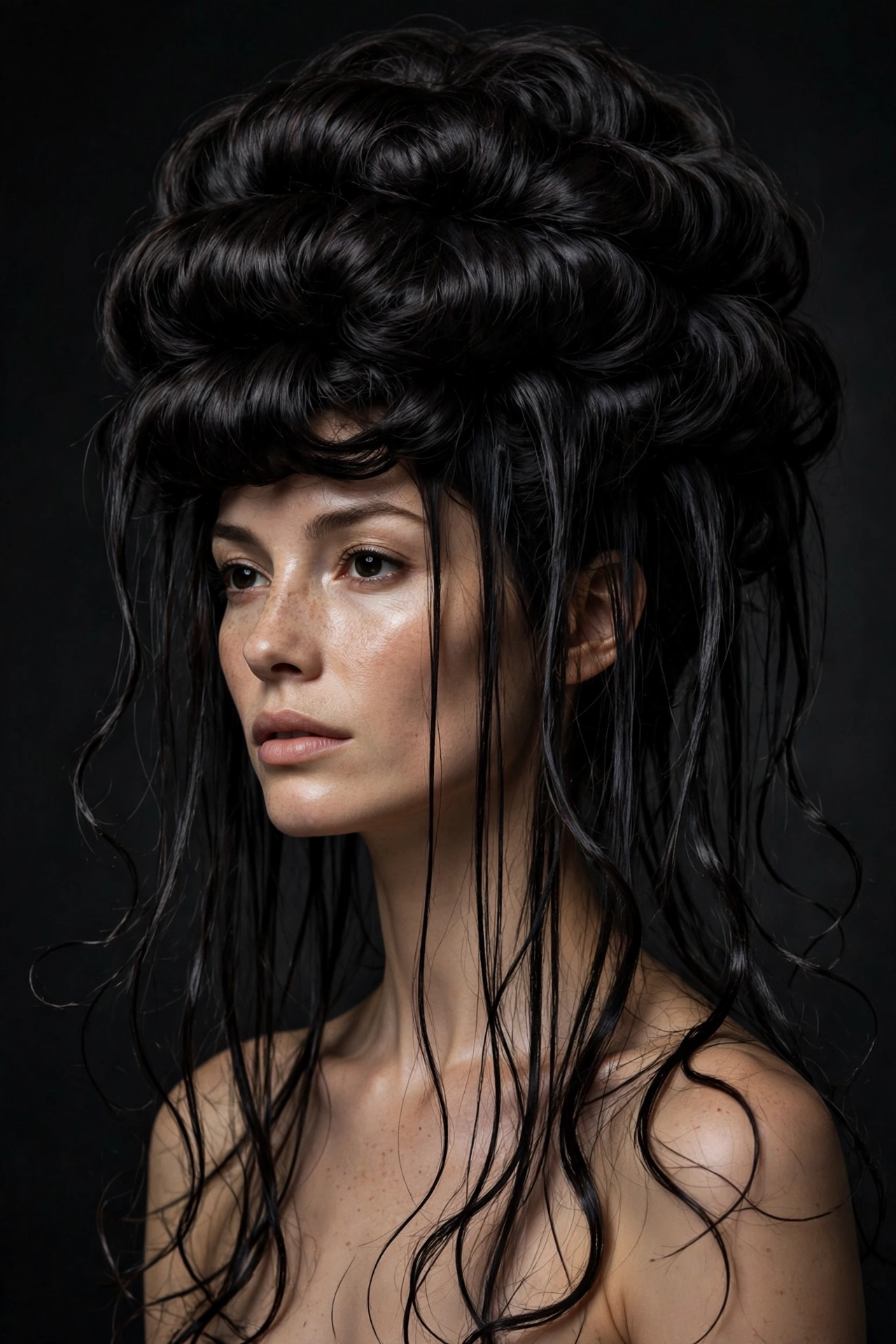
3. Octopus with Curtain Bangs
Curtain bangs and the octopus cut were basically made for each other. The bangs blend straight into the shortest crown layers, creating one continuous frame around your face, and then the whole thing melts into the tentacle ends. It’s the most flattering version of this cut for round and square faces because the curtain opening elongates everything while the crown adds height on top. If you’ve ever wanted bangs but feared the commitment of a blunt fringe, this is your answer.
Have your stylist cut the curtain bangs to hit right at the cheekbones so they connect with the top layers — disconnected bangs look like an afterthought here. Blow-dry the bangs forward with a round brush, then split them with your fingers once they’re 80 percent dry. A pea-sized amount of smoothing cream keeps them from frizzing into the crown. You’ll want bang trims every 3 to 4 weeks (most salons do them free between full cuts), with full reshapes every 8 weeks. This combo photographs so well it’s basically a cheat code.
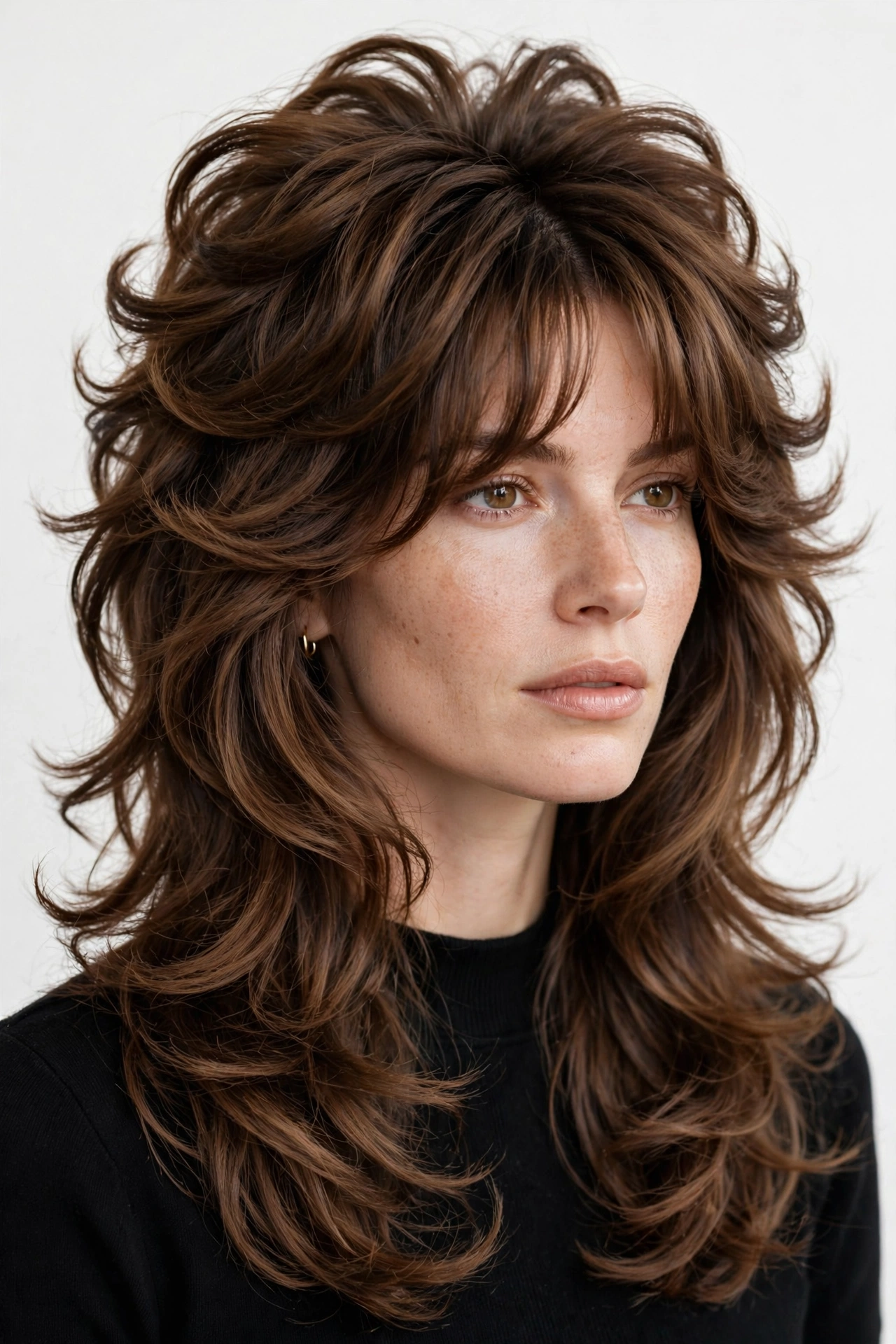
4. Curly Octopus
Now we’re talking. Curly hair and the octopus structure are a match made in heaven because curls naturally create that crown volume, and the thinned ends let individual curls spiral freely instead of mashing into one triangle. If you’ve fought the dreaded pyramid shape your whole life — wide at the bottom, flat on top — this cut was designed to fix exactly that. The short crown layers spring up and give you height, while the longer bottom layers keep their definition.
A few curly-specific notes: get this cut dry, by a curl specialist, because wet cutting on curls is how you end up with a crown that’s two inches shorter than you asked for. Ask for the ends to be carved with the curl pattern in mind, not against it. At home, scrunch a curl cream into soaking-wet hair, then diffuse upside down for maximum crown lift — that’s the whole routine. Refresh on day two or three with a water-and-leave-in spray mix. Trims every 10 to 12 weeks, dry, no exceptions. Your curls will have never looked this intentional.
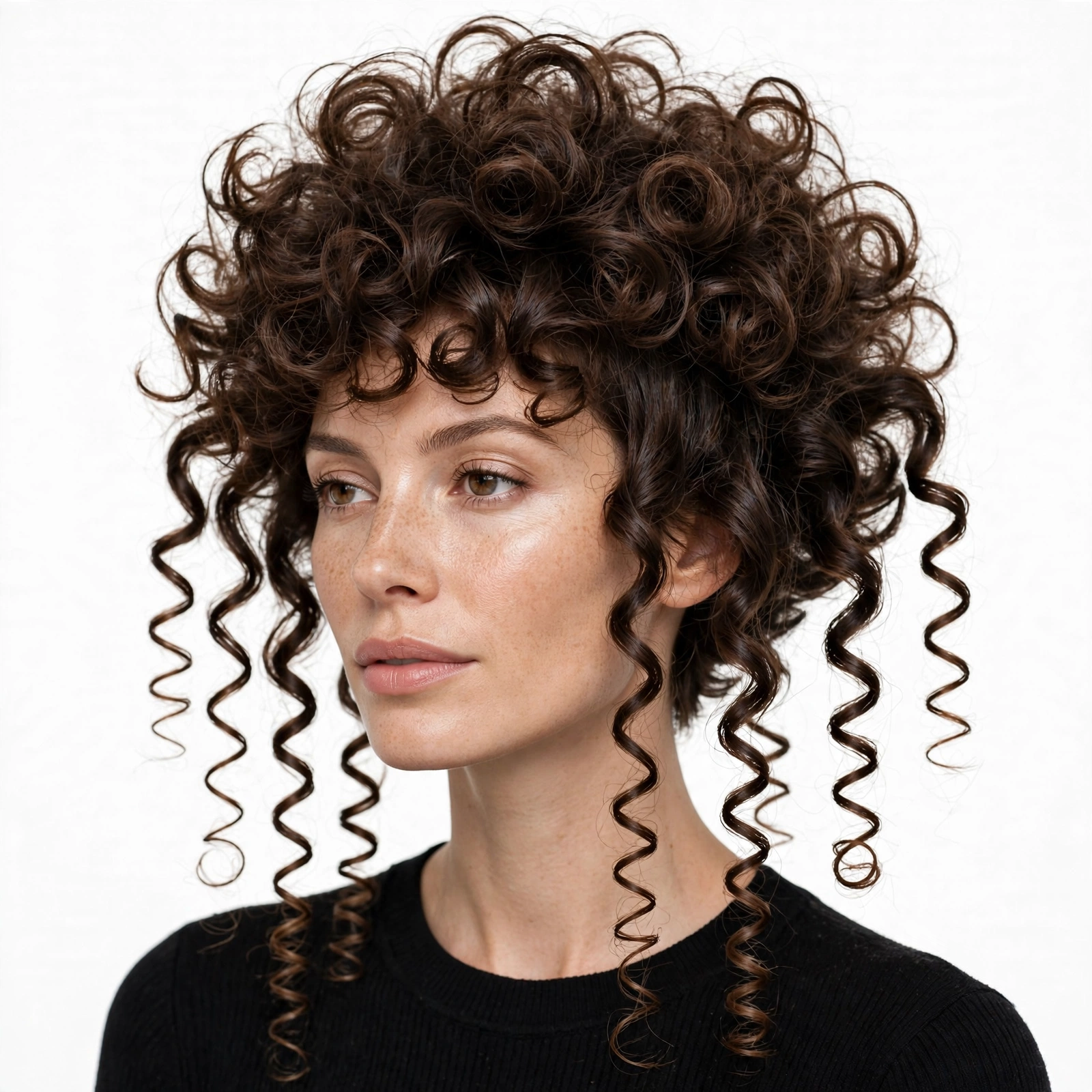
5. Wavy Octopus Layers
Wavy hair might be the ideal texture for the octopus cut, full stop. Waves give you the crown fullness without teasing, and the thin ends let each wave break apart into that beachy, piece-y finish everyone wants. This is the version that looks like you just walked off a yacht — effortless, expensive, slightly undone. If your hair has even a hint of natural wave, lean into it here instead of fighting it straight.
Styling couldn’t be simpler: work a golf-ball of mousse through damp hair, scrunch upward, and either diffuse or air-dry. The key product is a sea salt or texture spray on the ends once dry — that’s what separates the tentacles and stops them clumping into one sheet. Sleep on a silk pillowcase to keep the waves intact overnight. Because wavy hair hides grow-out well, you can stretch trims to 10 weeks. And here’s a secret: this cut looks better on day two than day one, so stop washing it daily.
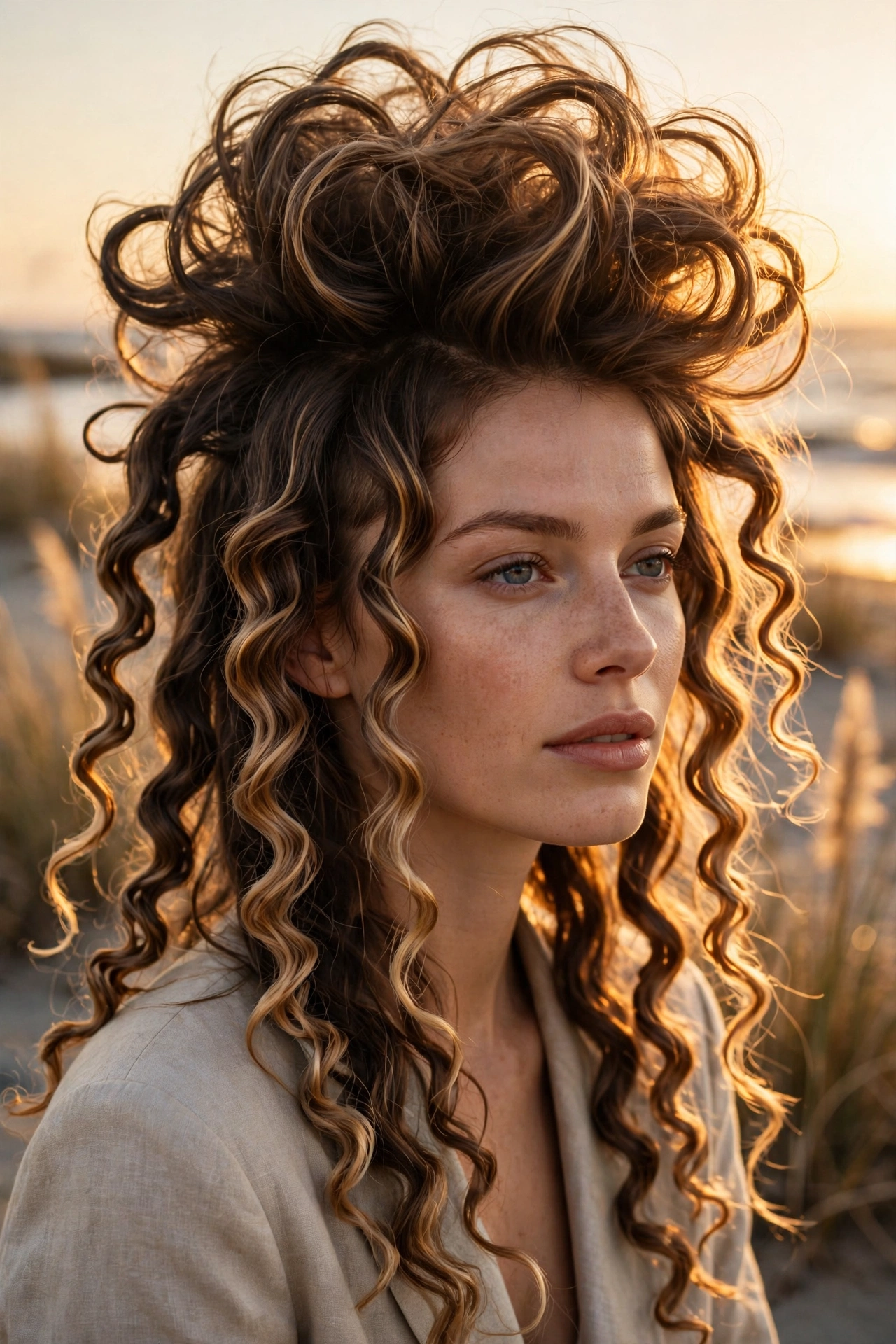
6. Octopus with Blunt Fringe
Want edge? Pair the octopus’s wispy chaos with a sharp, straight-across blunt fringe and watch the contrast do all the talking. The geometric line of the fringe against the feathery layers is pure editorial tension — very 2026, very cool-girl. It works best with a middle-length octopus where the crown sits high and round, because the fringe becomes the anchor that grounds the whole silhouette. Fair warning: this is a look, not a low-maintenance choice.
Your fringe needs to be cut dry and checked at eye level — blunt fringes shrink as they dry, and nobody wants a surprise micro-fringe. You’ll be trimming it every 2 to 3 weeks (learn to do it yourself between appointments or budget for quick salon visits), and you’ll need a mini flat iron for daily touch-ups because blunt fringes show every kink. Keep the rest of the cut piece-y with texturizing spray so the fringe stays the star. On fine hair this combo can look incredible since the fringe adds visual weight up front.
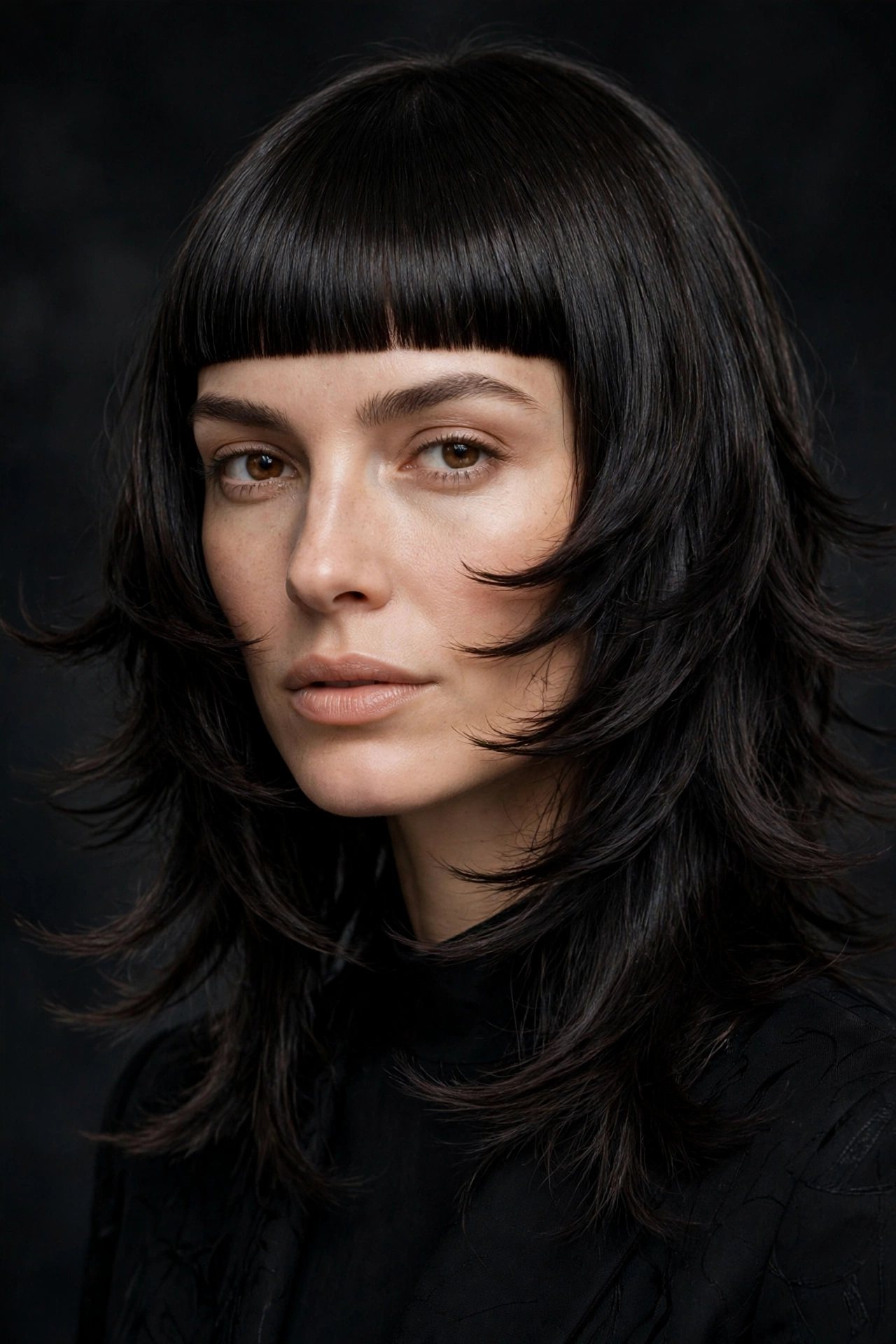
7. Pastel Pink Octopus
Color changes everything, and pastel pink on an octopus cut is pure magic. The thin tentacle ends take pastel dye beautifully — they lighten evenly and the color fades in a gorgeous gradient — while the voluminous crown shows off the depth and dimension. It’s playful without being childish, and in 2026 pastels have fully grown up: think dusty rose and muted blush, not bubblegum. If you’ve ever wanted fantasy color, the octopus cut is one of the best canvases for it.
Be real with yourself about upkeep before you commit. Pastels need a bleach base (usually level 9 or 10), which means healthy hair going in and a purple shampoo routine coming out. You’ll refresh the tone every 4 to 6 weeks at the salon or with a color-depositing conditioner at home — I like the mask-style ones you leave on for ten minutes weekly. Wash in cool water, always, and cut back to two washes a week. The cut itself needs reshaping every 8 weeks. It’s work, but the payoff is a head of hair people literally stop you to compliment.
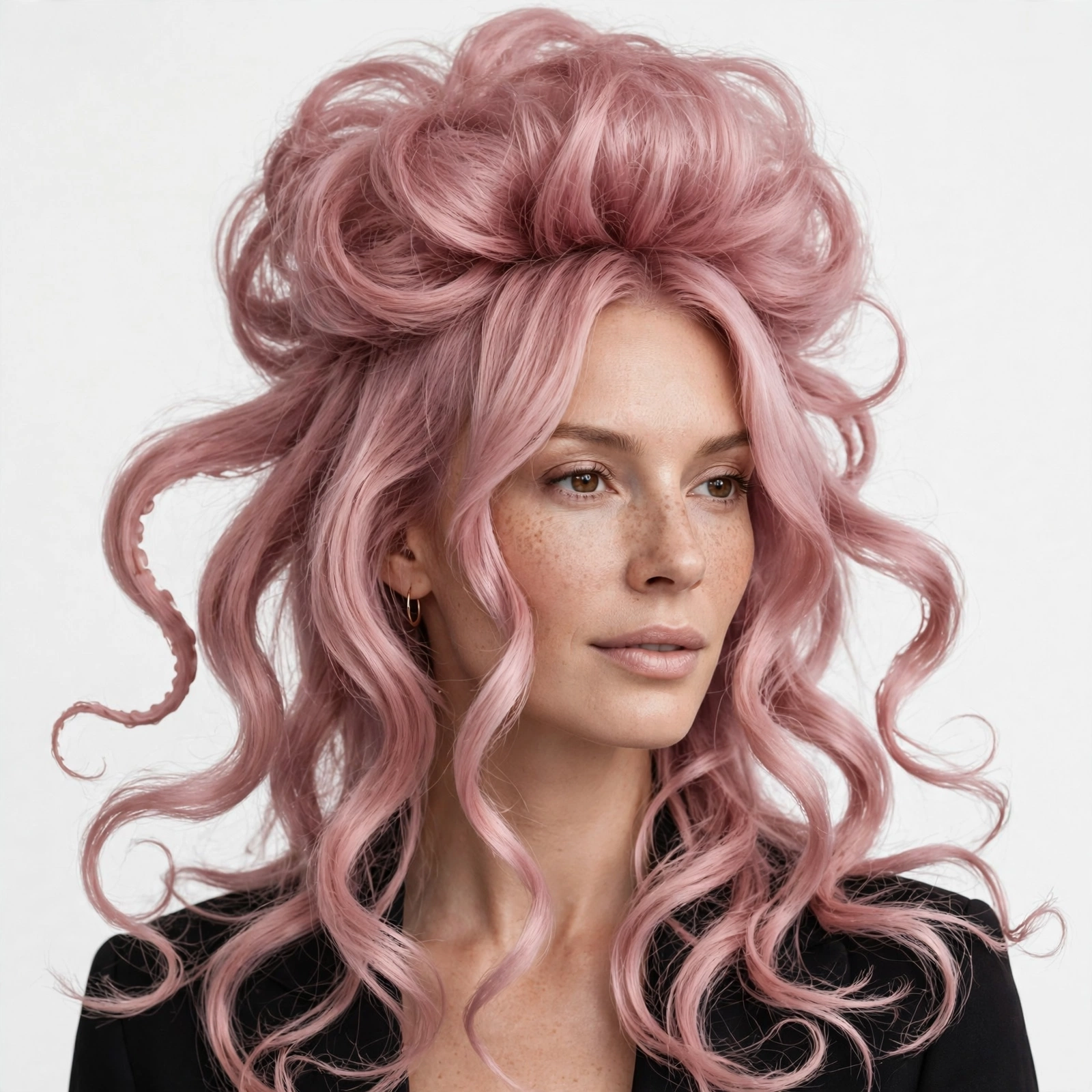
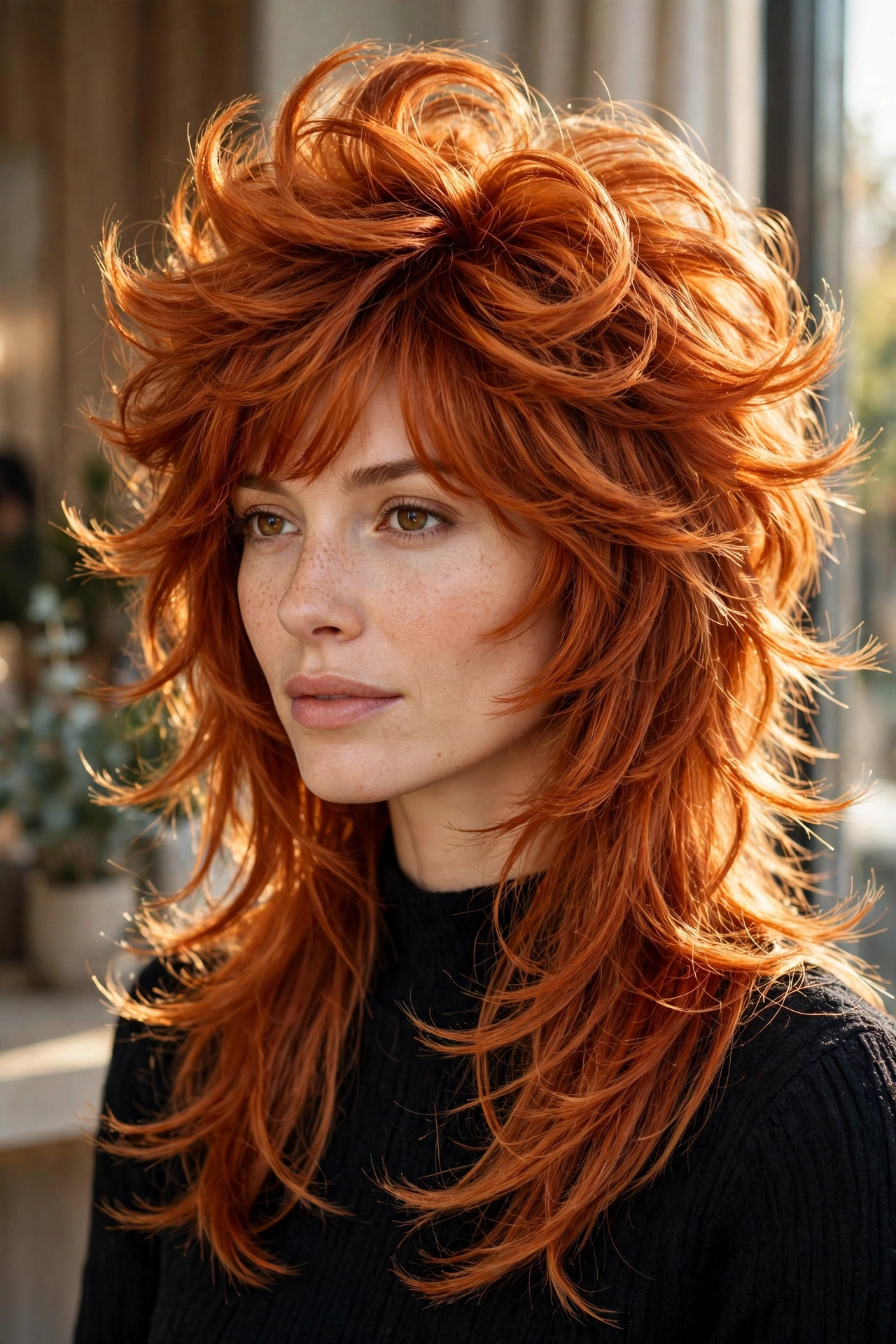
8. Copper Octopus Cut
Copper is the color of the moment and it was practically invented for layered cuts like this. Those warm, fiery tones catch light differently on every layer — the crown glows rich and deep while the thin ends turn almost translucent in sunlight. It’s the kind of color-cut combo that makes people assume you have a glam squad. Whether you go full molten copper or a softer copper balayage, the octopus structure shows it off better than a one-length cut ever could.
Copper fades faster than almost any color, so go in with a plan: color-depositing conditioner in copper once a week, sulfate-free shampoo, and cool water. Your colorist should formulate with a bit of extra depth at the roots so the fade looks intentional. As for the cut, copper looks best with slightly softer tentacles — ask for point-cut ends rather than razor-thin, since overly thin ends can make faded copper look straw-like. Gloss treatments every 6 weeks keep the shine. Budget-wise, expect color appointments every 6 to 8 weeks alongside your cut reshapes.
9. Octopus with Money Piece Highlights
The money piece — those two bright face-framing streaks — is still going strong in 2026, and it loves the octopus cut. The highlights sit right in the shortest crown layers, so they frame your face from the front and then trail into the tentacle ends like ribbons of light. It’s the fastest way to make the cut’s structure visible: the contrast between the bright pieces and the darker base literally draws the eye along the layer lines. Great if you want dimension without coloring your whole head.
Ask your colorist for a bold but blended money piece — chunky 90s streaks are back, but you want a soft grow-out, so have them feather the top. Keep the brightness with purple shampoo once a week if you’re blonde, or a color-safe gloss if you’re brunette with caramel pieces. The cut maintenance stays standard at 8 weeks, but you’ll want the money piece refreshed every 10 to 12 weeks as it grows out. Style the front pieces with a slight bend using a flat iron — one flick outward at the ends and you’re done.
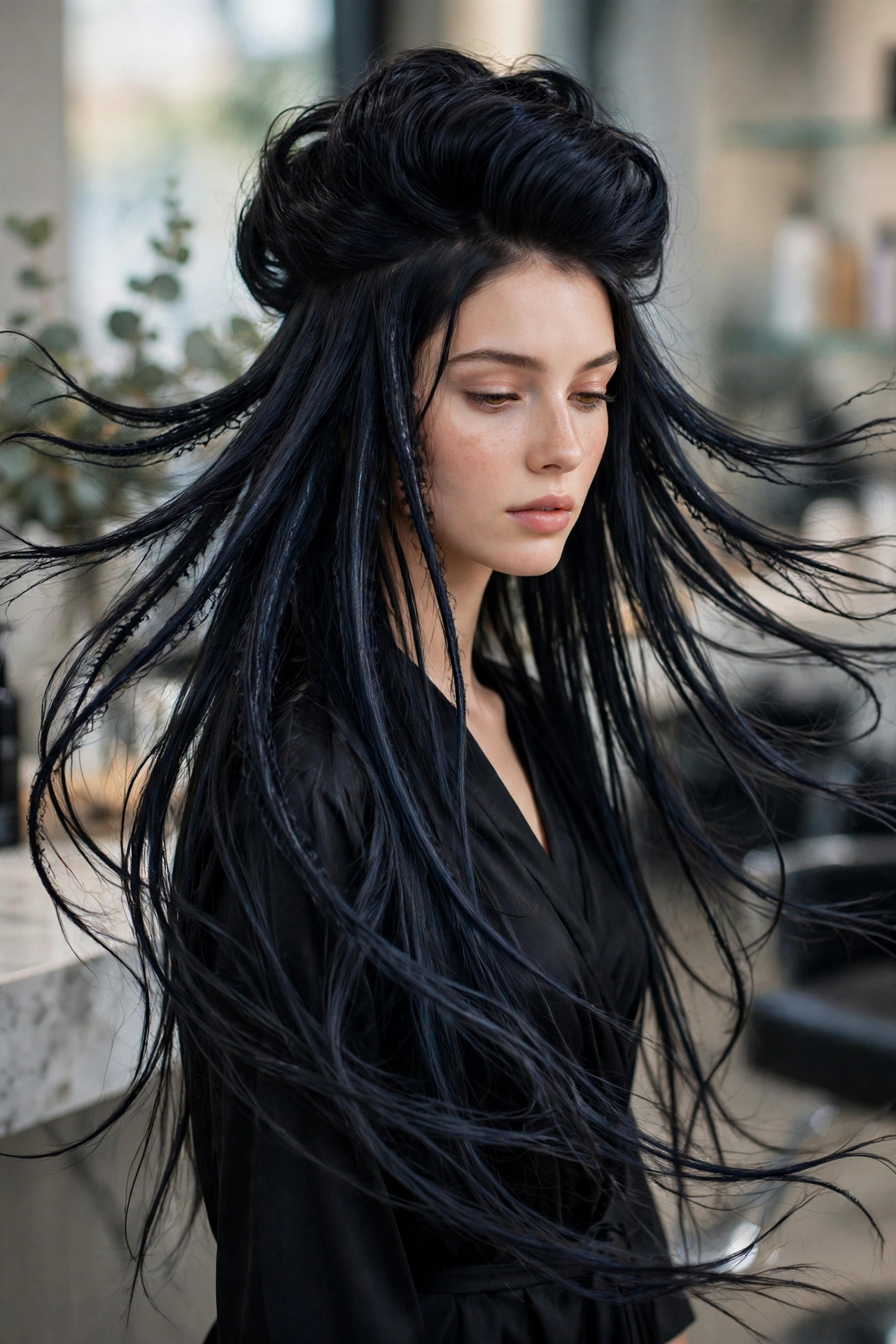
10. Long Octopus (Waist-Length Tentacles)
Who says the octopus is only for medium hair? The long version keeps the rounded crown but lets the tentacle layers fall to the waist — and it’s breathtaking. You get all the face-framing and volume benefits up top with mermaid-length ends that move like water. This is the version for women who refuse to cut their length but are dying of boredom with one-length long hair. It removes bulk without removing inches, which is exactly what long hair usually needs.
The catch: long tentacle ends tangle. There’s no way around it — thin ends at waist length will knot, so a good detangling routine is non-negotiable. Sleep in a loose braid, use a leave-in conditioner on the bottom third, and never brush dry from roots to ends (start at the bottom, work up). You’ll need trims every 8 weeks to stop the ends going wispy-to-straggly, and honestly, consider it every 6 if you heat-style often. But when those long layers catch the wind? Worth every knot.
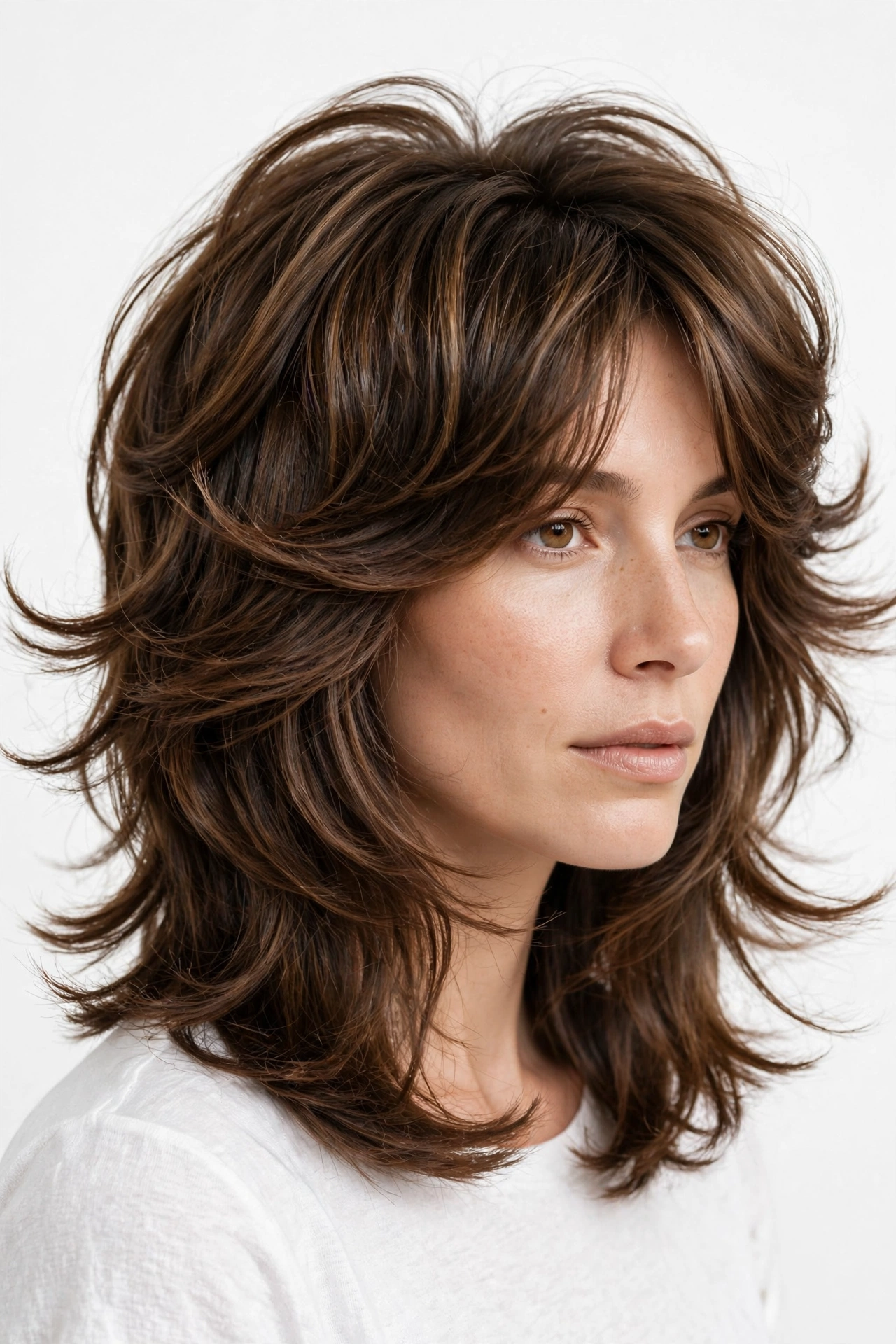
11. Midi Octopus (Collarbone Length)
The midi octopus — collarbone-grazing, bouncy, endlessly wearable — might be the smartest version of this cut. It’s short enough that the tentacle ends stay healthy and defined, long enough to pull back into a stubby ponytail on lazy days. The crown-to-end ratio at this length is naturally dramatic, so you get maximum octopus effect with minimum styling effort. I’ve seen this length convert more skeptics than any other.
Styling is a five-minute job: mousse at the roots, rough-dry upside down for volume, then a quick pass with a 1.25-inch iron on just the ends, flicking outward. That outward flick is the whole trick — it makes the tentacles kick instead of collapse. This length grows out gracefully too, morphing into a shaggy lob over a couple of months, which means trims every 8 to 10 weeks are plenty. If you want a lower-maintenance cousin of the midi, our flippy lob guide covers a similar length with a different attitude.
12. Octopus with Micro Bangs
Micro bangs — that short, choppy fringe sitting well above the brows — plus an octopus cut is not for the faint of heart, but it’s unforgettable. The tiny fringe emphasizes the eyes and cheekbones while the big crown and thin ends create this amazing top-heavy-to-wispy silhouette. It’s very editorial, very French-new-wave, and it makes bone structure the star. If you have strong brows, this combo will make them famous.
Let’s be honest about the commitment: micro bangs need trimming every 2 weeks, period. They grow out awkwardly and there’s no hiding them, so either learn the twist-and-snip method or make friends with your stylist’s walk-in bang-trim policy. The fringe should be cut with texture — choppy and piece-y, never a solid line — so it connects with the octopus’s feathery vibe. Style it with a tiny bit of pomade, piece by piece. And grow-out? You’ll be growing those bangs for months, so only do this if you’re sure.
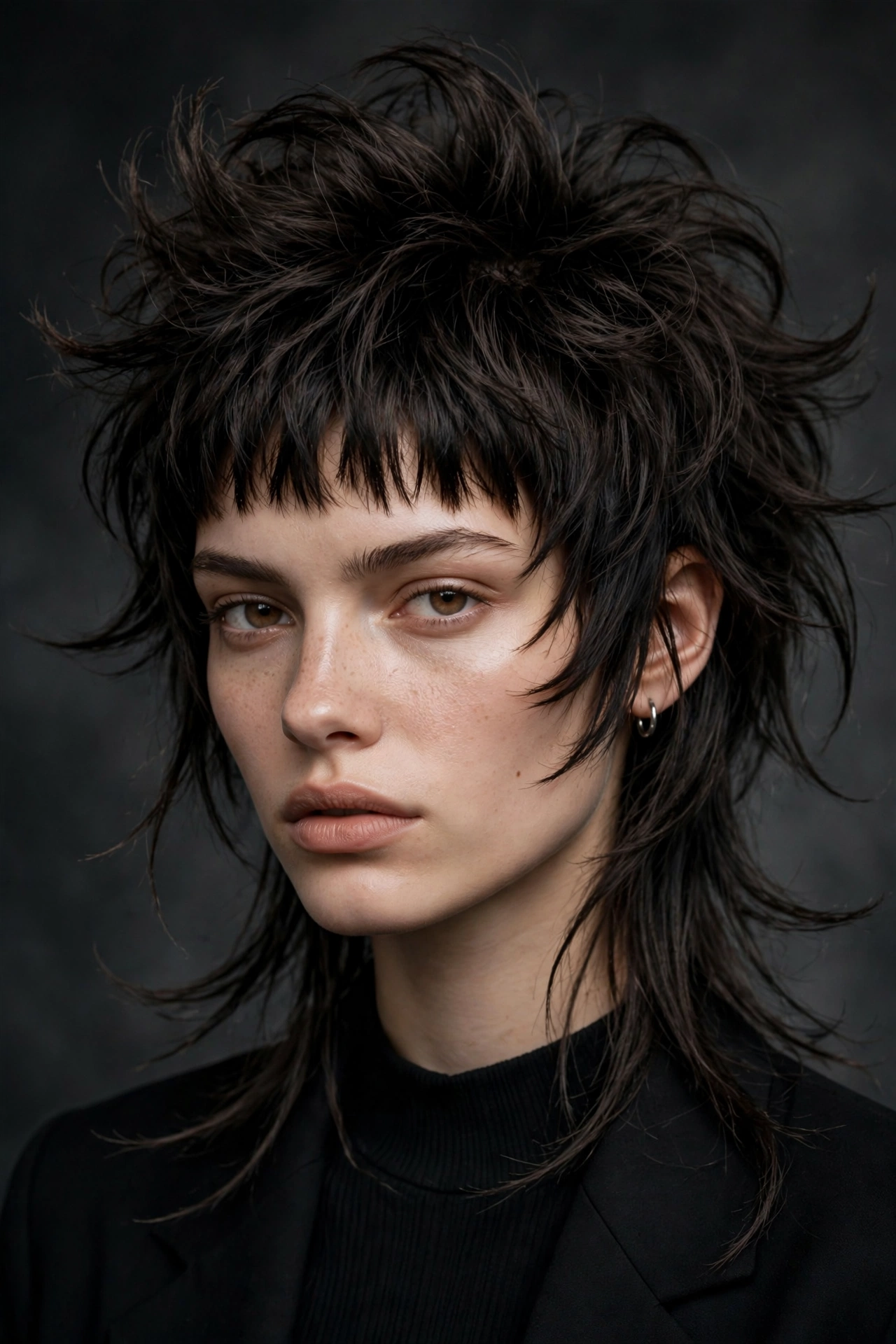
13. Balayage Octopus
Balayage was made for layered cuts, and the octopus might be its ultimate showcase. Hand-painted lightness concentrated through the crown and melting into brighter tentacle ends gives you dimension that a solid color just can’t. The technique naturally emphasizes the cut’s structure — light on top where the volume is, lighter still on the ends where they separate. It’s sun-kissed, expensive-looking, and grows out softer than any other color technique.
The beauty of balayage here is the maintenance: touch-ups every 12 to 16 weeks, with just a gloss refresh in between. Ask your colorist to paint the brightness through the mid-lengths and ends rather than at the roots — you want that lived-in melt, not a harsh line. Purple shampoo every other week keeps brass away if you’re blonde. The cut itself needs its usual 8-week reshape. Total salon time per year is genuinely lower than highlights, which is why this combo is the quiet luxury pick of the octopus family.
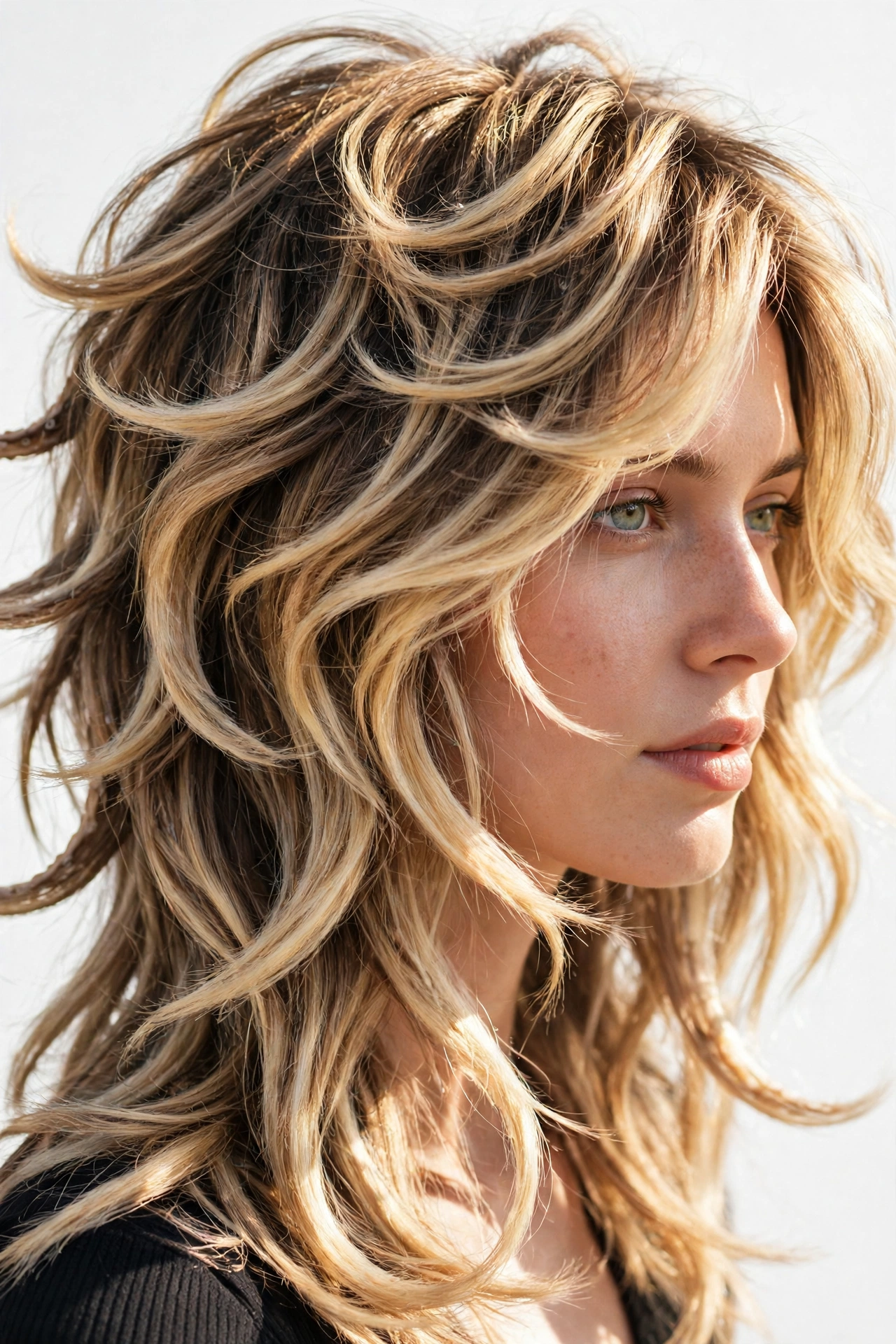
14. Octopus with Face-Framing Shag Layers
This hybrid takes the octopus silhouette and loads extra shag-style face-framing layers around the front — shorter, choppier pieces that hug the cheeks and jaw. The result is the most face-slimming version of the cut, period. Those front layers create shadows and angles that sculpt the face, while the back keeps the classic round-crown-to-tentacle structure. If your main goal is a cut that makes your face look its best in photos, start here.
The front layers should start around the cheekbones and graduate down, piece-y and textured — have your stylist razor-cut just these pieces for extra separation. Style them with a round brush, rolling under, to get that curved shag flick. They’ll need more frequent trims than the rest (every 6 weeks) because face-framers lose their shape fastest. A little dry texture spray at the roots of these pieces keeps them from going flat by afternoon. This is also the best version for showing off earrings, just saying.
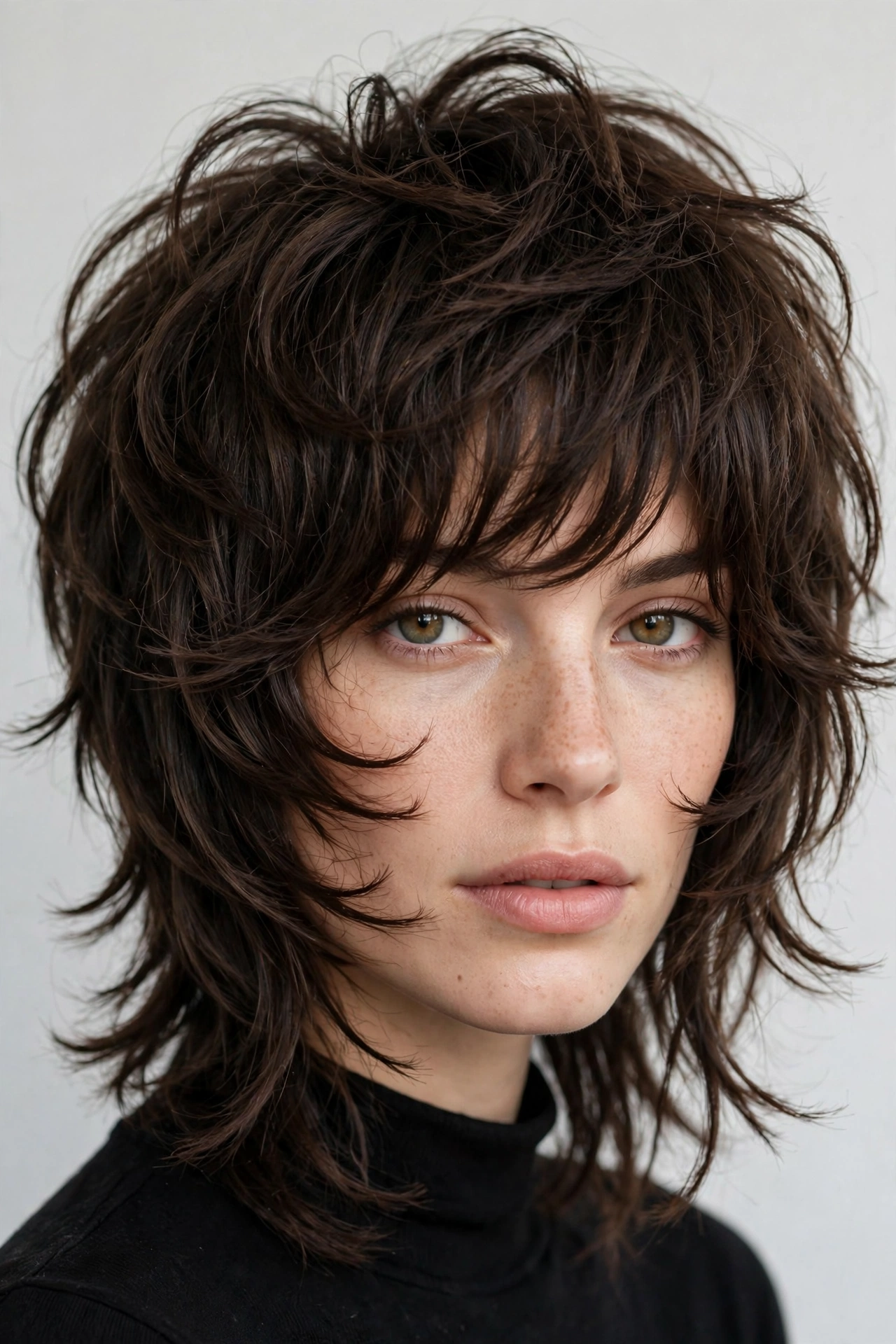
15. Wet-Look Octopus
The wet-look octopus is a styling variation rather than a different cut, but it deserves its own spot because the effect is so striking. Slick the crown smooth and defined with gel, let the tentacle ends stay piece-y and separated, and you get this high-fashion, just-surfaced-from-the-ocean vibe. It’s very red carpet, very editorial — the kind of style that makes a simple dress look intentional. Save it for evenings, events, and photoshoots.
Here’s how: on damp hair, rake a strong-hold gel through the crown and top layers, combing smooth, then scrunch a lighter gel or mousse through the ends to keep them separated rather than crunchy. Let it air-dry or diffuse on low — don’t touch it while it dries or you’ll break the cast and get frizz. The look lasts one night (sleeping on it is not recommended), and you’ll shampoo twice to get the product out. It’s not an everyday style, but as an occasional flex? Unbeatable.
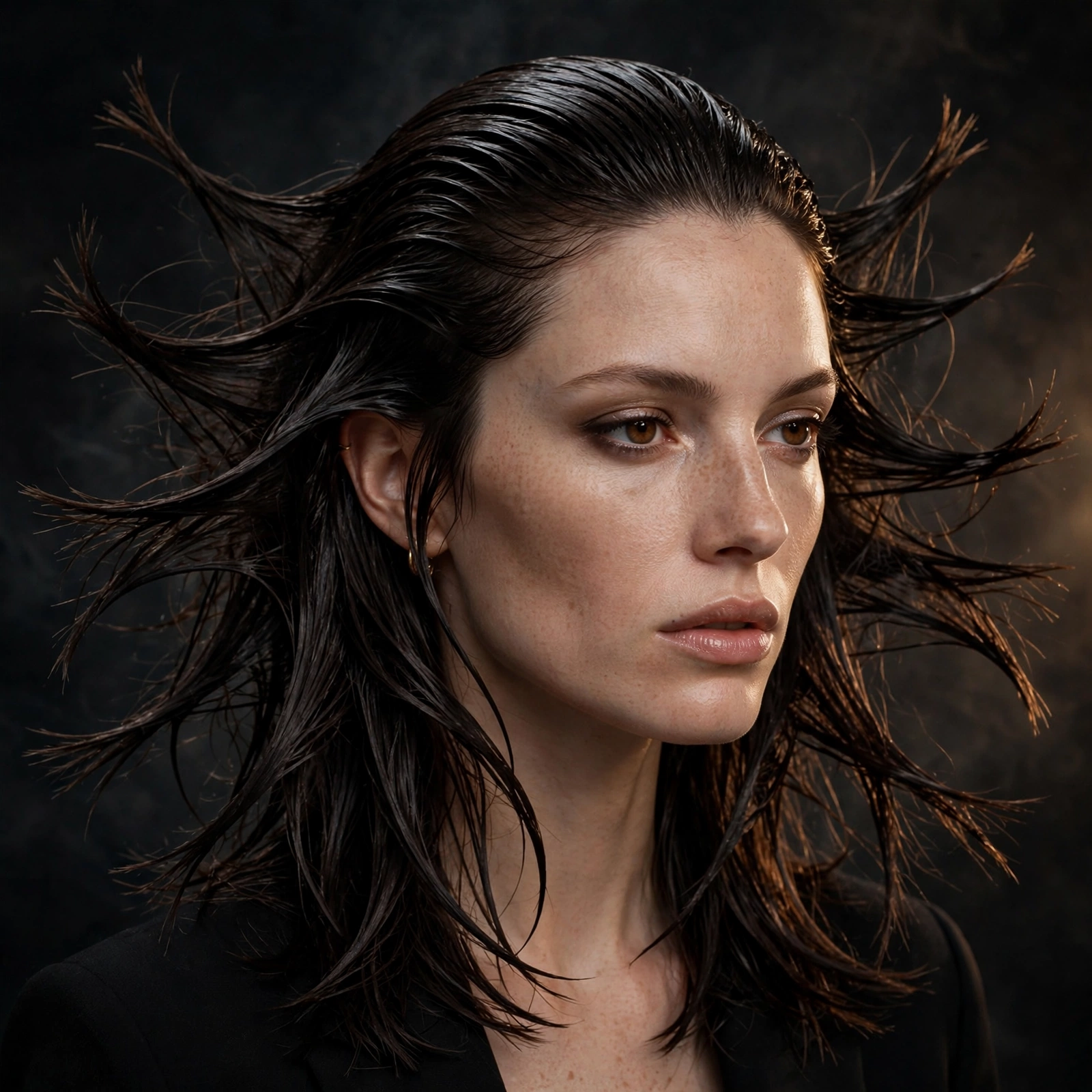
16. Octopus on Fine Straight Hair
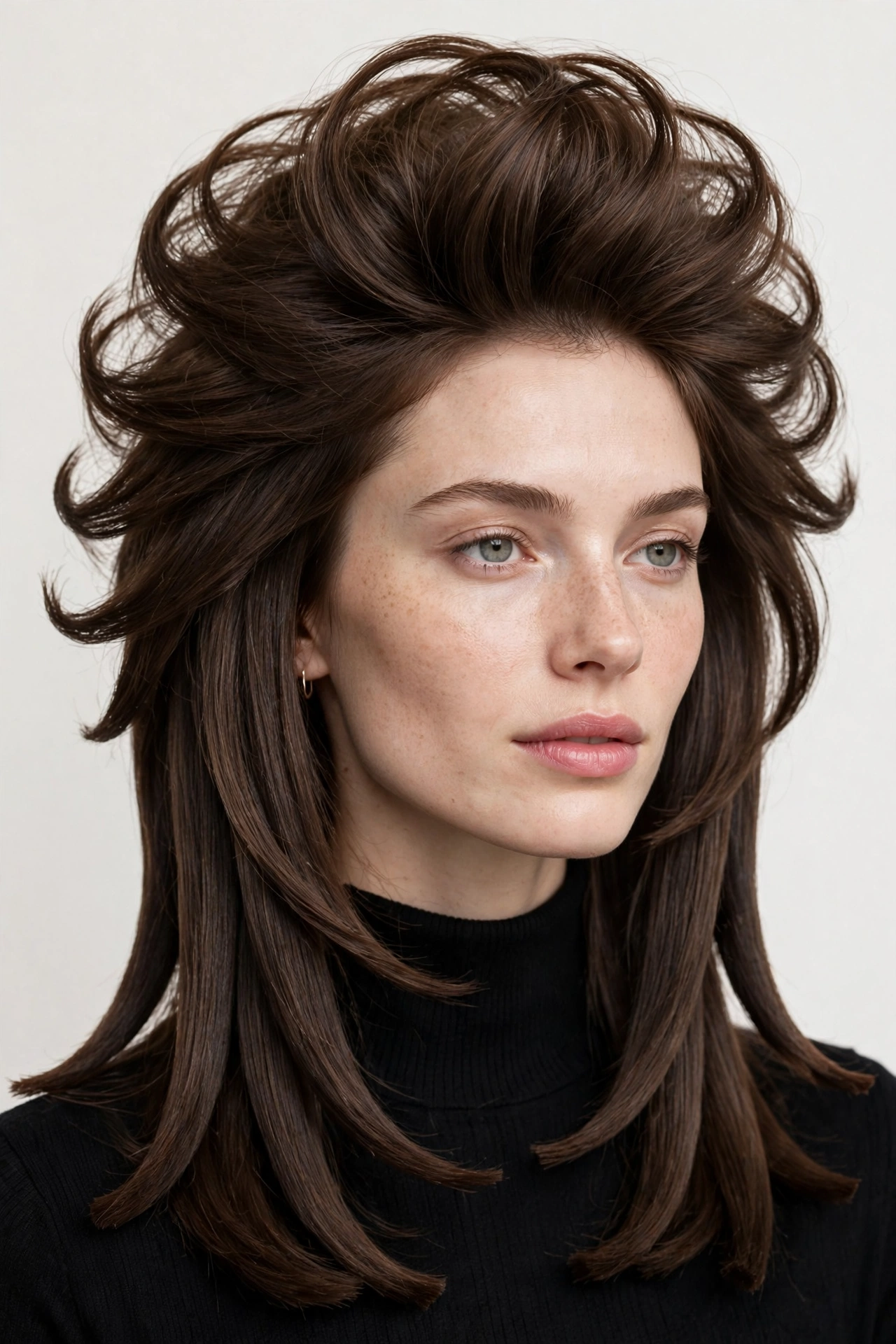
Can fine, straight hair pull off the octopus? Yes — but with rules. The danger is that thin ends on already-fine hair can read as stringy rather than wispy, so the cut needs adjusting: keep the tentacle layers slightly blunter and less thinned, and concentrate the drama in the crown where volume products can do their work. Done this way, the octopus actually makes fine hair look thicker, because the stacked crown creates an illusion of density the ends never could.
Your product lineup matters more here than on any other hair type. Volumizing mousse at the roots (applied to damp hair, always), a root-lifting spray before blow-drying upside down, and dry texturizing spray through the ends for grip. A 1-inch iron adding bend to just the bottom layers creates the tentacle separation that straight fine hair won’t give you naturally. Wash frequency matters too — fine hair shows oil fast, so dry shampoo at the crown on day two is your friend. Trims every 6 to 8 weeks keep the ends from going see-through.
17. Octopus with Chunky Y2K Highlights
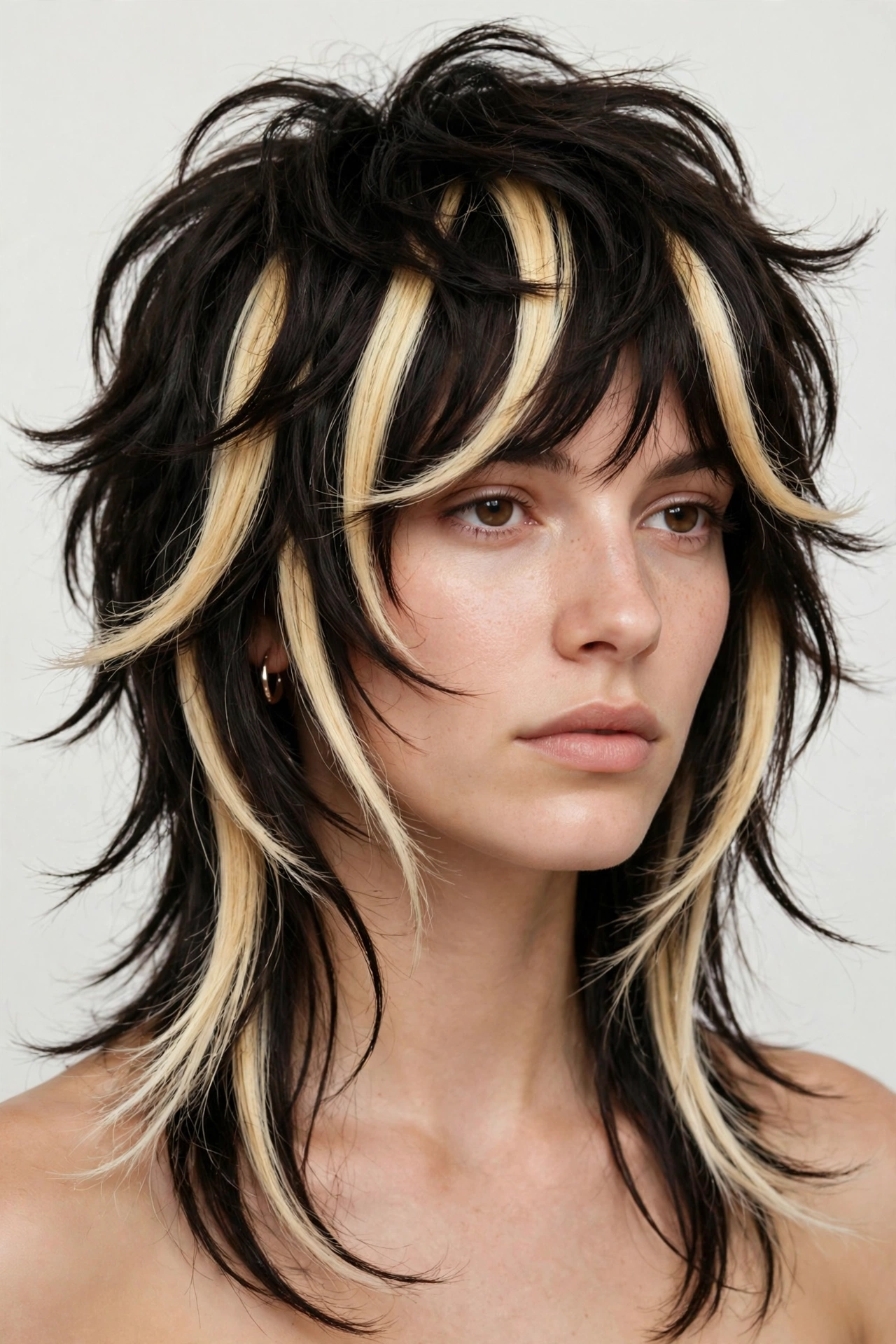
The Y2K revival isn’t done with us yet, and chunky highlights on an octopus cut are its latest gift. Thick, contrasting streaks — think early-2000s placement but with 2026 blending at the roots — woven through the crown and trailing into the tentacle ends. It’s nostalgic, it’s fun, and the bold stripes actually emphasize the layer structure beautifully. This is the party version of the octopus, no apologies.
Modernize it by keeping the roots shadowed — have your colorist melt the chunky pieces into your base for the first inch so there’s no harsh regrowth line. The contrast can be as bold as platinum on black or as soft as caramel on brown; both work. Maintenance is refreshingly simple: gloss every 8 weeks to keep the tones clean, full highlight refresh every 12 to 16. Style with extra texture spray because piece-y ends show off striped color best. If subtle isn’t in your vocabulary, this one’s calling your name.
18. Octopus with Wispy Side-Swept Bangs
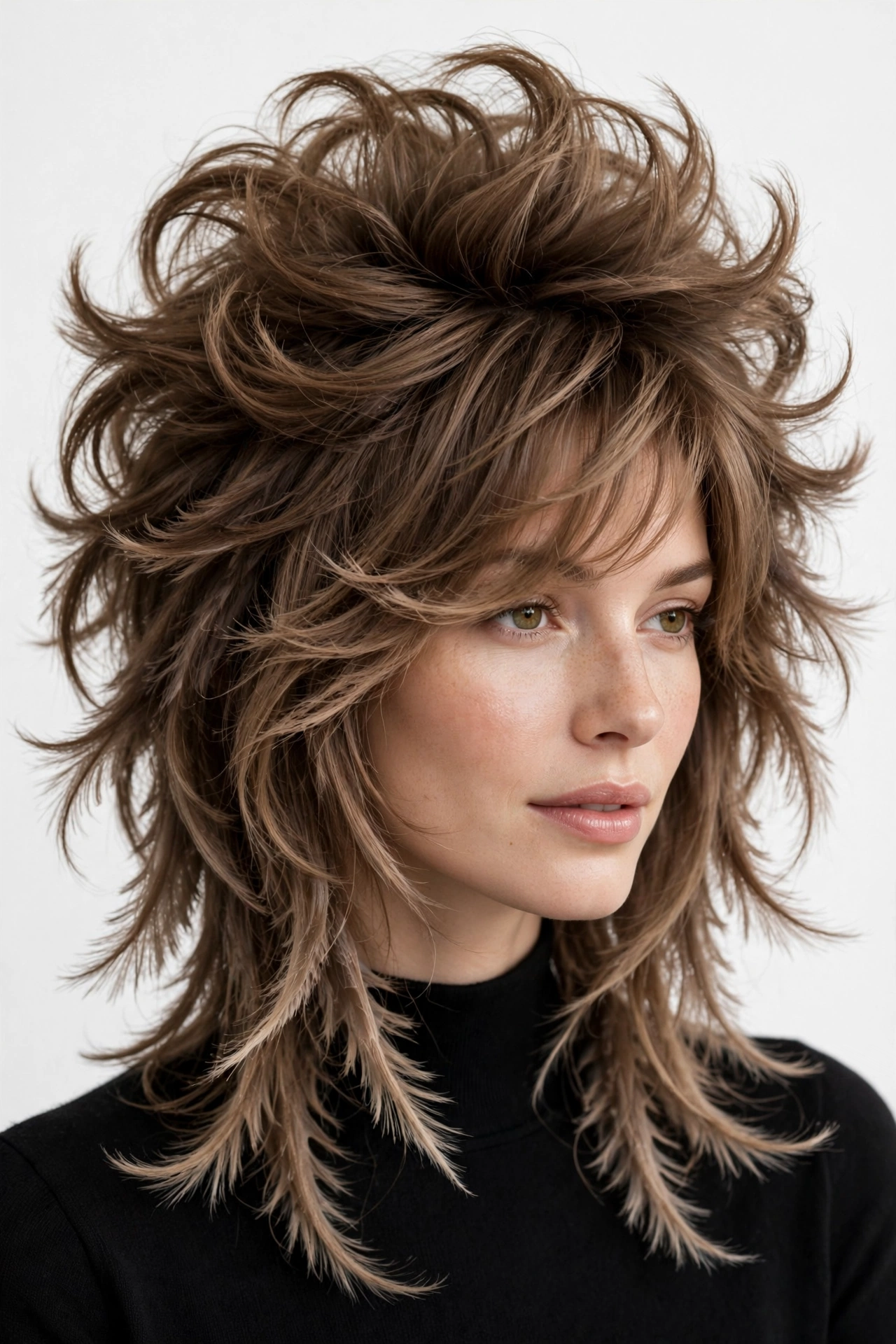
Side-swept bangs are having a quiet comeback, and they’re lovely with the octopus cut. Unlike curtain bangs, which open in the middle, these sweep across the forehead in soft, wispy pieces that blend into the crown layers on one side. It’s romantic, a little retro, and incredibly flattering on high foreheads and heart-shaped faces. If curtain bangs feel too trendy and blunt fringes too harsh, this is your middle ground.
Have them cut long — grazing the brows at their longest — and textured so they move. The styling trick is to blow-dry them to the opposite side first (for root lift), then sweep them into place; that gives you volume instead of a flat plastered fringe. They grow out more gracefully than any other bang style, blending into the face-framing layers over 6 to 8 weeks. A light-hold hairspray keeps them in place without stiffness. Honestly, this might be the most underrated version on the list.
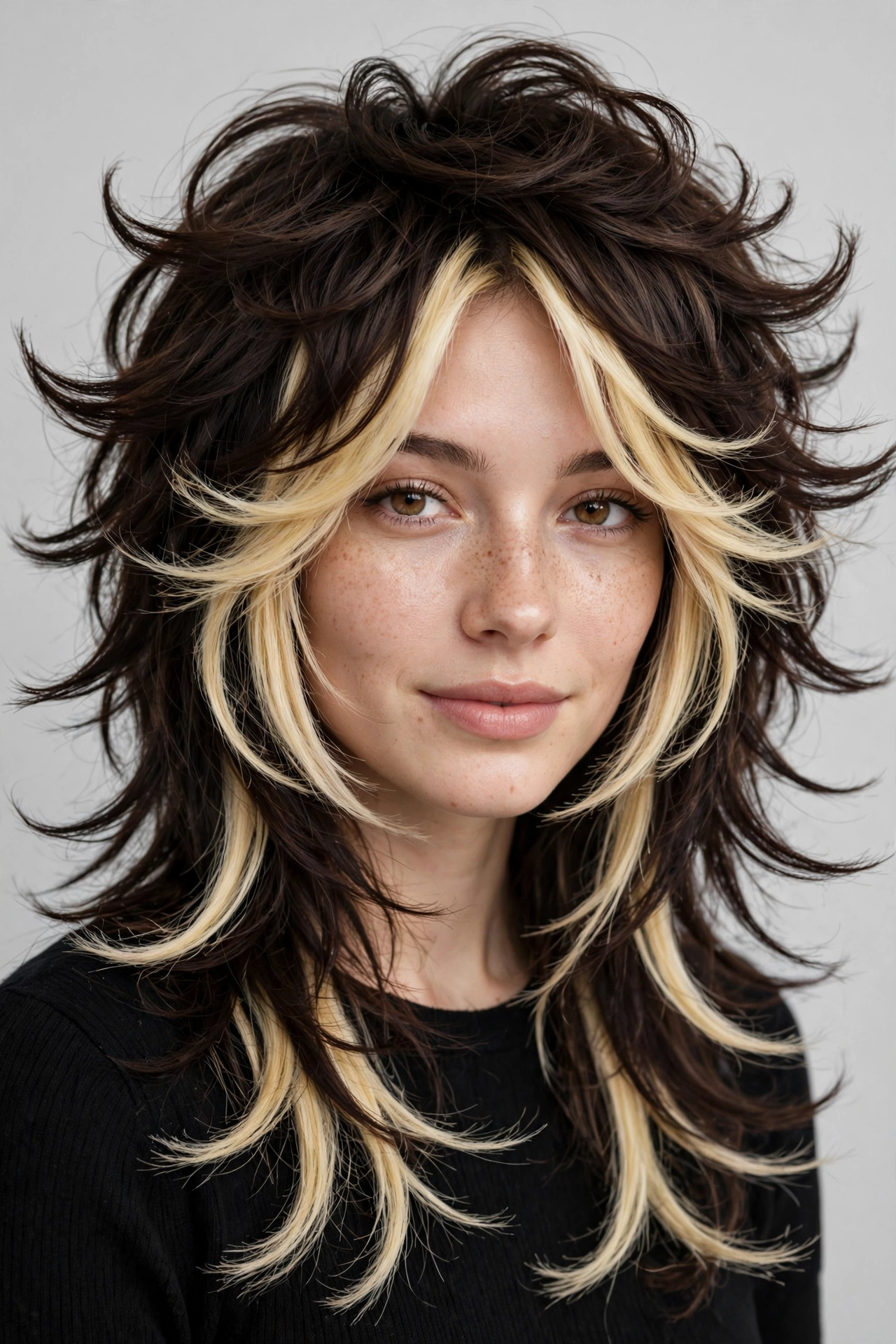
19. Two-Tone Octopus (Dark Crown, Light Ends)
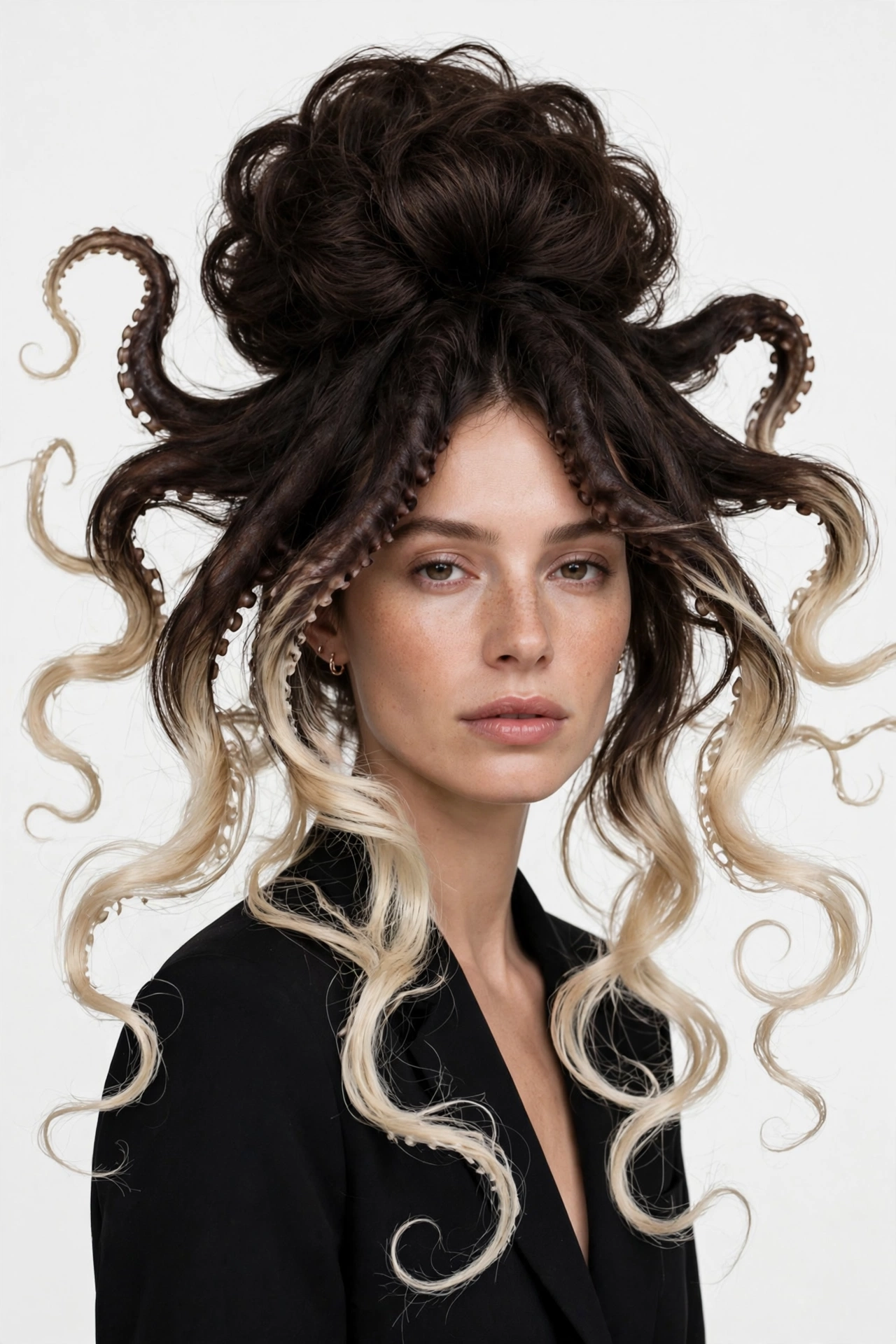
Here’s a color idea built specifically for this cut’s structure: keep the crown your natural dark shade and bleach or lighten just the tentacle ends. The two-tone effect maps perfectly onto the two-zone haircut — dark volume on top, light wispy ends below — and the result is genuinely striking. It’s like the cut and the color were designed together, because in a way, they were. This is the most Instagrammable version on the list.
The practical win: your roots stay natural, so grow-out is painless — you’re only maintaining the lightened ends with toning. Use purple shampoo or a toning mask every week to keep the light ends from going brassy, and deep-condition those ends religiously because bleach plus thin layering is a dryness double-whammy. Olaplex-style bond treatments every couple of weeks aren’t optional here, they’re survival. Refresh the lightener every 10 to 12 weeks. When the ends catch the light against the dark crown? Unreal.
20. Grown-Out Octopus (Lived-In Version)
Last but not least: the version you get when you love your octopus but life happened and you skipped two appointments. And you know what? It looks great. The grown-out octopus softens into a shaggy, lived-in layered cut — the crown relaxes, the tentacles gain a bit of weight, and the whole thing reads as effortlessly cool rather than freshly-salon. Some women actually prefer this phase and just maintain it there.
If this is your goal, tell your stylist upfront: ask for a version designed to grow out, with slightly less aggressive thinning at the ends and crown layers that won’t collapse into a shelf as they grow. Maintenance stretches to 12 weeks, and styling gets easier — the extra weight means the cut behaves with just mousse and air-drying. A dusting trim (just the very ends, no reshaping) at week 6 keeps it from tipping into scraggly. Proof that the octopus isn’t a high-maintenance diva — it can be the chill friend too.
How to Ask Your Stylist for the Octopus Haircut
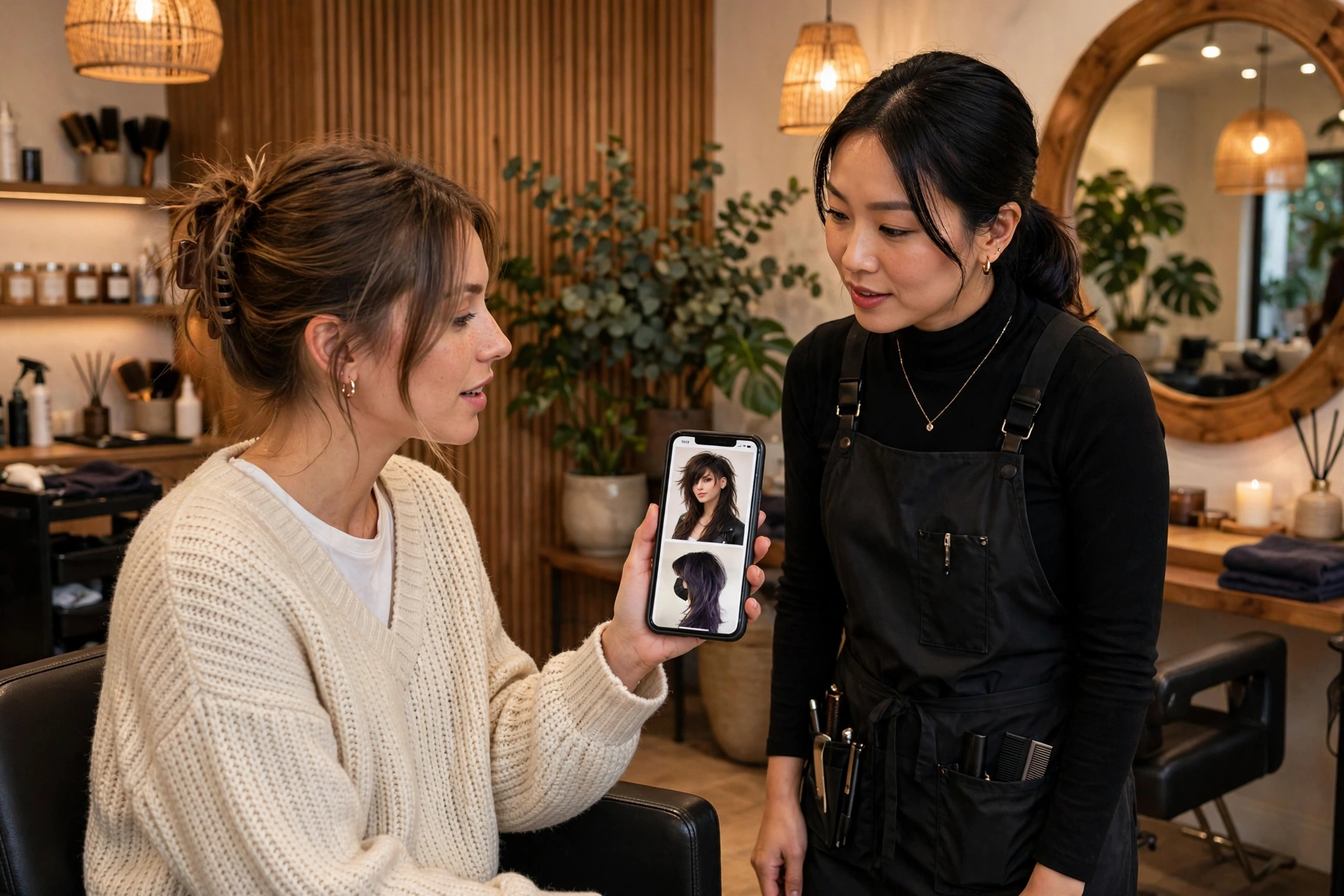
Walking in and saying “give me the octopus cut” is a gamble, because every stylist pictures something slightly different. Here’s the script that actually works. Start with: “I want a heavily layered cut with short, rounded volume through the crown and long, thin, wispy layers through the ends — a strong contrast between the top and the bottom.” Then show your photos — three is the magic number: one of the overall shape you want, one showing the crown volume, one showing the ends. Photos beat words every single time; my stylist told me she’d rather see ten pictures than hear ten adjectives.
Then get specific about the ratio, because that’s where octopus cuts succeed or fail. Tell them where you want the shortest crown layer to sit (cheekbone? chin? collarbone?) and how thin you want the ends (wispy and separated, or just lightly textured?). Mention your styling reality too — “I air-dry most days” versus “I’ll round-brush every morning” should change how they cut it. And ask the question most people forget: “How will this grow out, and when should I come back?” A good stylist will map your maintenance schedule on the spot. Bring all of this, and you’ll walk out with the cut from your screenshots instead of a surprise.
How to Style the Octopus Haircut at Home
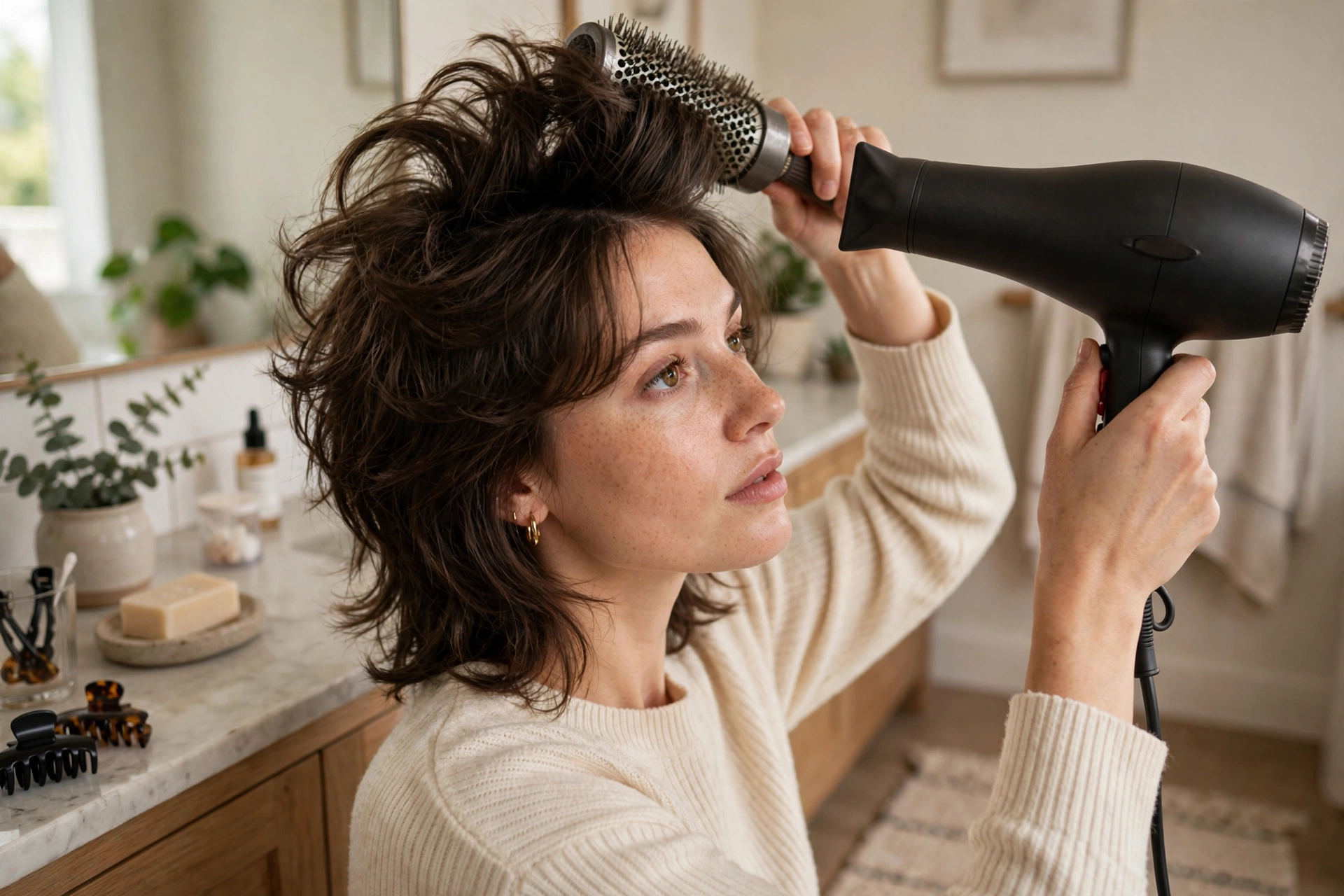
The octopus cut rewards a two-product, ten-minute routine — anything more is overkill. Start with damp hair and work a golf-ball-sized amount of volumizing mousse through the roots and crown only; that’s where you need lift. Flip your head upside down and rough-dry until you’re about 80 percent dry — this is what builds the crown volume without any teasing. Flip back up, then smooth the top layer with a round brush just enough to look polished, not flat.
Now the ends: this is where the tentacles happen. Take a 1 to 1.25-inch curling iron or wand and add a loose bend to the bottom layers only, alternating directions and leaving the very tips straight for that piece-y finish. Once cool, rake a pea-sized amount of texturizing paste or spray through the ends, separating them with your fingers — this is the step that turns “layered hair” into “octopus hair.” Finish with a light mist of flexible-hold hairspray. On non-wash days, revive the crown with dry shampoo at the roots and re-scrunch the ends with a dab of paste. Total morning time: under ten minutes once you’ve done it twice.
Will the Octopus Haircut Suit You? Face Shapes and Hair Types
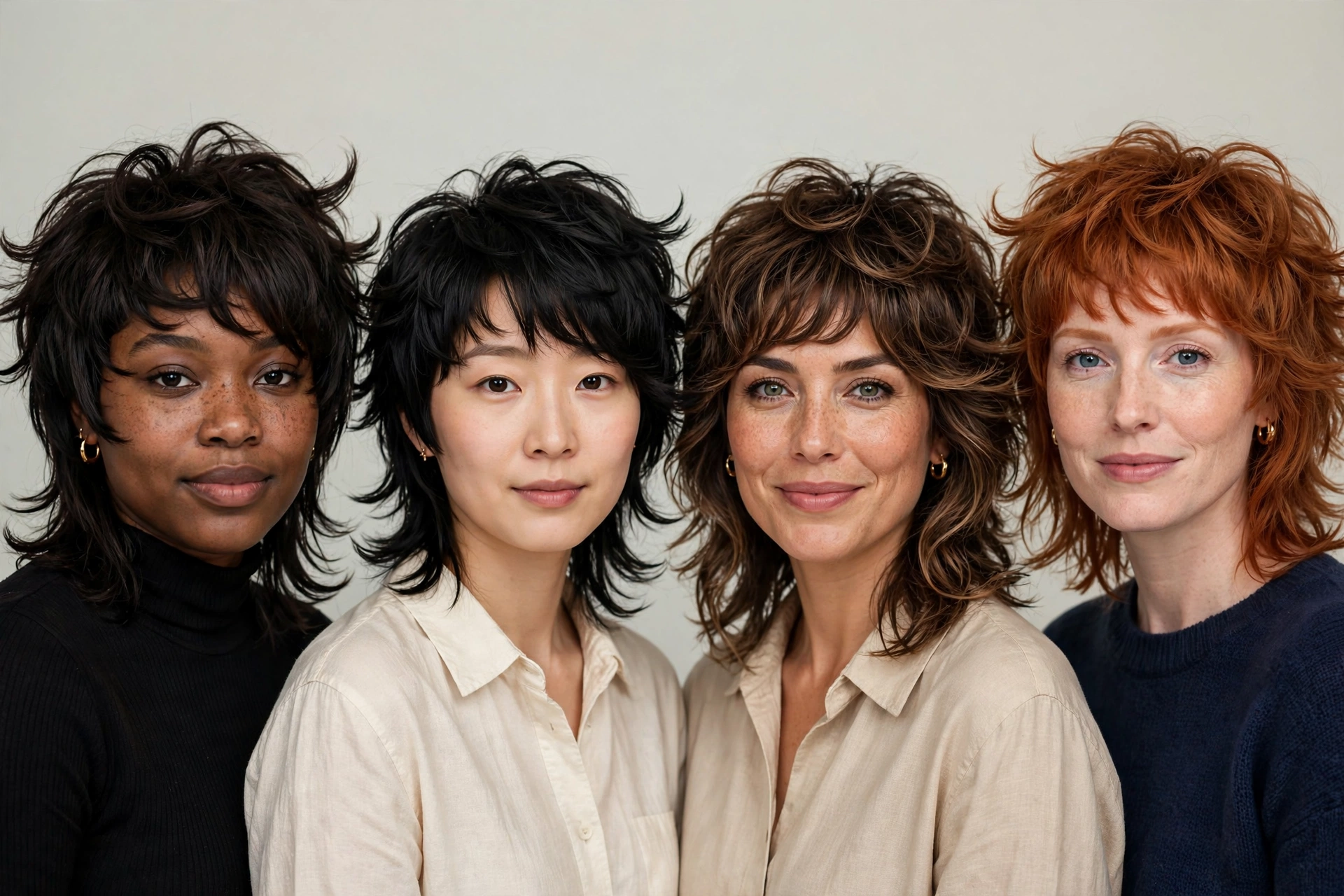
Let’s be honest about fit, because no cut suits everyone. Face-shape-wise, the octopus is most flattering on oval, long, heart, and round faces. Oval faces can wear any version. Long faces benefit from the crown width, which adds horizontal balance — pair it with bangs for even better proportions. Round faces love how the thin ends elongate and the crown adds height. Heart-shaped faces do beautifully with curtain bangs plus the octopus, since the width at the cheekbones balances a narrower chin. Square faces should go for softer, wispier versions with face-framing pieces to soften the jaw rather than the most dramatic architectural takes.
Hair-type-wise, medium to thick hair is the sweet spot — density makes the crown-to-tentacle contrast look lush instead of sparse. Wavy and curly textures are genuinely ideal; the cut was practically designed for natural movement. Straight hair works too but needs the styling routine above to create the separation. Fine hair can wear it with the adjustments from idea #16 (blunter ends, volume products, realistic expectations). Length-wise, you need at least collarbone-length hair to get the two-zone effect — anything shorter collapses into a shag. And if your hair is very damaged or over-bleached at the ends, fix the health first; thin ends plus breakage equals a bad time. For a softer layered alternative with similar face-framing benefits, the hush cut is worth a look.
Maintaining the Octopus Haircut
Here’s the maintenance truth: the octopus is a medium-upkeep cut, not a get-it-and-forget-it one. The crown shape is everything, and it starts collapsing around week 6 to 8 as the short layers grow — so plan reshaping trims every 6 to 8 weeks for dramatic versions, 8 to 10 for subtle ones. Bangs, if you have them, need their own 2-to-4-week trim schedule. Between appointments, the ends are your early-warning system: when the tentacles start looking straggly instead of wispy, you’re overdue.
At home, protect your investment. Sleep on silk or satin to reduce friction on those thin ends. Deep-condition weekly — thinned ends dry out faster than blunt ones, so they drink up masks. Get a bond-building treatment every 4 to 6 weeks if you’re colored, and always heat-protect before the iron. Budget-wise, expect standard women’s cut prices in your area (typically $60–$150 depending on city and salon tier) every couple of months, plus bang trims that many salons throw in free. It’s not the cheapest cut to maintain, but it’s far from the most demanding — and the daily styling is genuinely quick once the shape is right.
FAQs About the Octopus Haircut
Still have questions? These are the ones I hear most — from DMs, from friends, from women hovering over the booking button. Quick, honest answers below.
Is the octopus haircut good for thin hair?
It can be, with the right adjustments. The key is keeping the ends slightly blunter rather than razor-thin and leaning hard into crown volume with mousse and blow-drying. On very fine hair, ask for a subtle version rather than the dramatic one — you’ll get the shape and movement without the ends looking sparse. Avoid over-thinning at all costs; tell your stylist “texture, don’t thin.” With realistic expectations and the right products, fine-haired women wear this cut beautifully.
How long does the octopus haircut take at the salon?
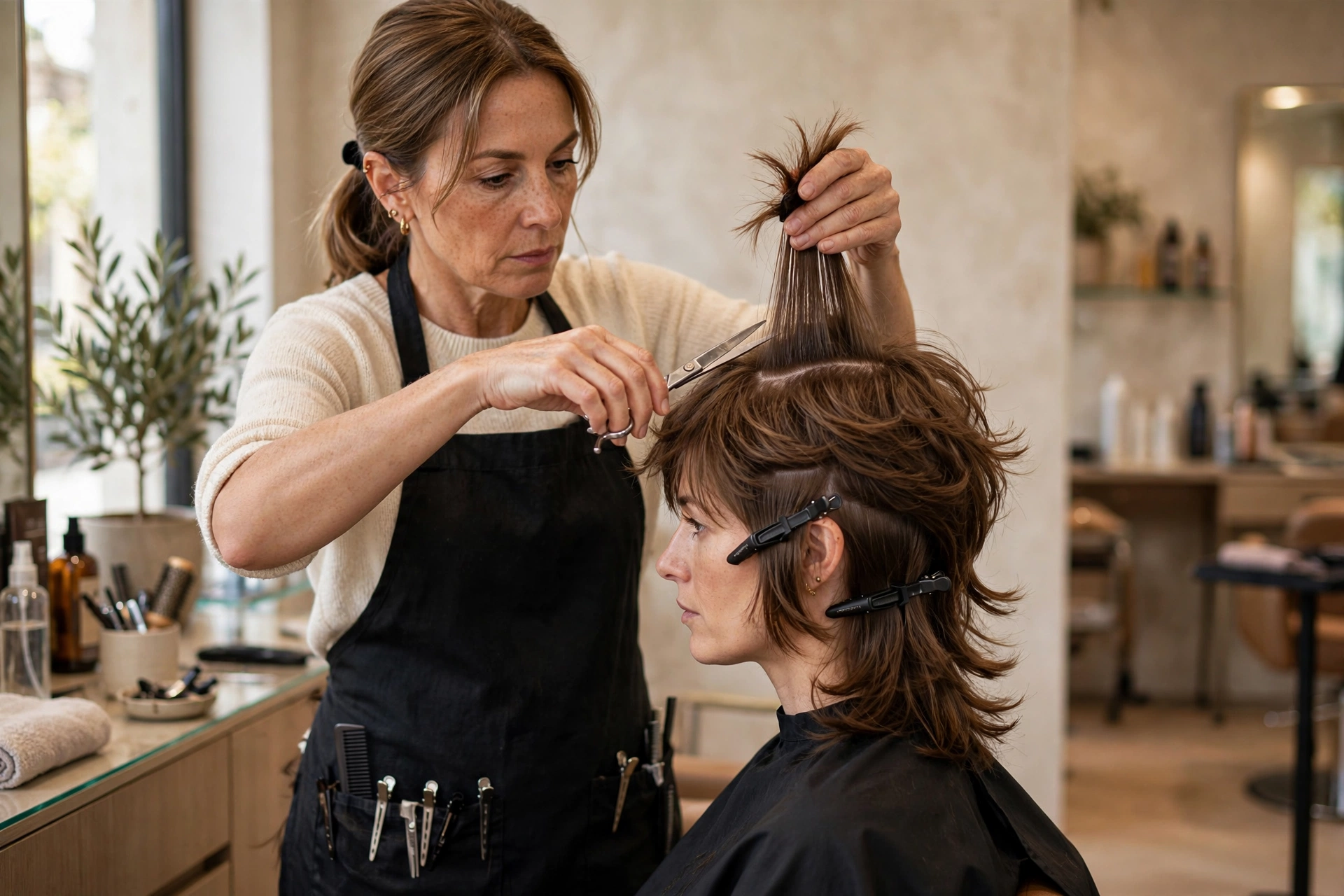
Plan for 60 to 90 minutes for the cut alone — the layered structure takes longer than a one-length trim because your stylist is essentially building two haircuts in one. Add 30 to 60 minutes if you’re getting bangs refined or a color service alongside. First-timers should book a consultation plus cut (some salons combine them) so there’s time to align on the crown-to-tentacle ratio before scissors come out. Don’t rush this appointment; precision is the whole game.
Will the octopus haircut work on short hair?
Not really — and I’d rather tell you straight. The cut needs enough length for the two zones to exist: a rounded crown plus distinct long ends. Below collarbone length, it collapses into something closer to a shag or a wolf cut (both great, just different). If you’re growing out a bob and dreaming of octopus, give it 4 to 6 months of growth first. In the meantime, a shaggy lob gives you similar energy at shorter lengths.
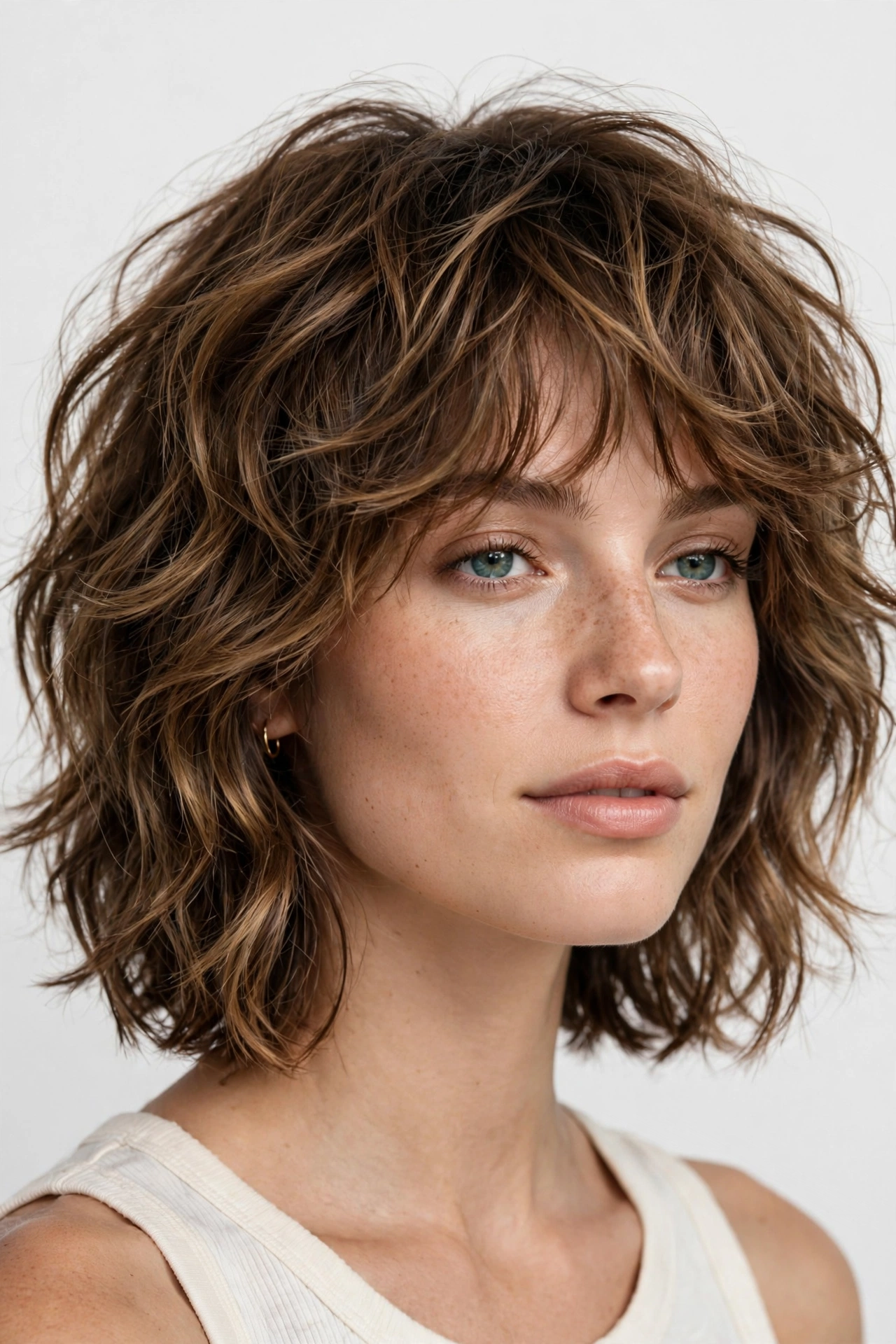
Is the octopus haircut hard to style every morning?
Honestly? No — it’s one of the easier statement cuts to live with. The ten-minute routine (mousse, upside-down dry, iron the ends, texture spray) becomes muscle memory fast, and wavy or curly hair often needs even less. The cut does most of the work structurally; you’re just enhancing what’s already there. The maintenance that actually matters is the 6-to-8-week trim schedule — skip those and the shape goes, no matter how well you style.
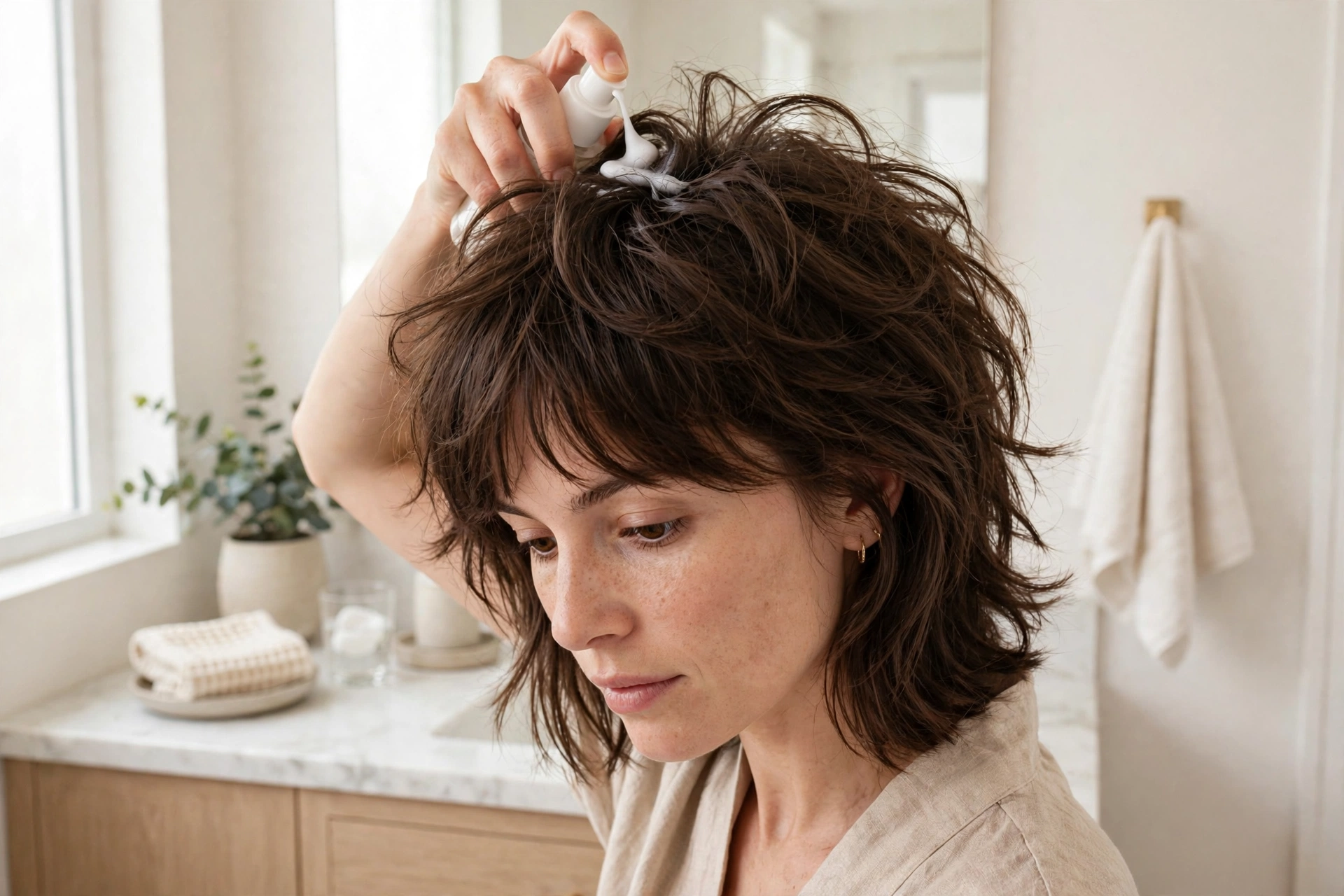
What’s the difference between the octopus haircut and the wolf cut?
The wolf cut layers hair more evenly all over for a shaggy, tousled, rock-inspired finish — think wild and undone. The octopus has a deliberate two-zone structure: a short, round, voluminous crown contrasted against long, thin, separated ends. The wolf is messy everywhere; the octopus is sculpted on top and wispy below. They share DNA (both grew from the shag revival), but the octopus is more architectural and more polished. If you want the wilder sibling, our wolf cut guide has you covered.
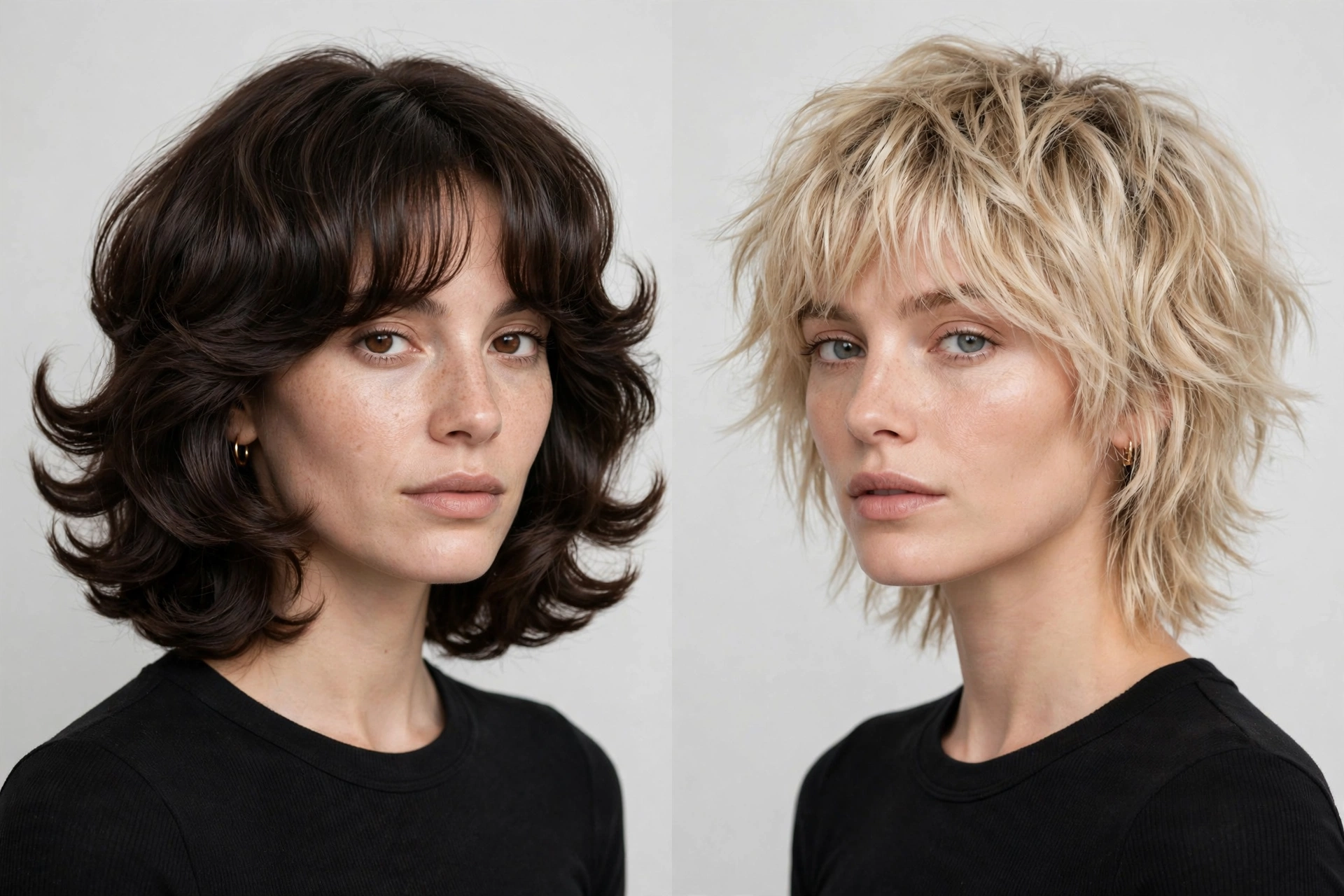
Final Thoughts
So — is the octopus haircut worth the hype in 2026? In my opinion, yes, with one condition: get it cut by someone who understands the structure. This isn’t a cut you can phone in. The crown-to-tentacle ratio, the blending, the weight removal — it all takes a stylist with real layering skill. But when it’s right, it’s one of the most flattering, photogenic, personality-packed cuts you can wear. It moves, it frames, it turns heads, and it grows out better than its reputation suggests.
My advice? Save your three favorite styles from this list, book the consultation, and have the honest conversation about your hair type and your mornings. The octopus cut meets you where you are — subtle or dramatic, curly or straight, natural or pastel. That’s why it’s still trending, and that’s why it’ll probably outlast the trend cycle entirely. Go get those tentacles.

Conclusion
The octopus haircut is not for the faint of heart — and that’s exactly why it’s one of 2026’s most talked-about styles. With heavy layers concentrated at the crown and long, wispy tentacle-like pieces falling below, it creates dramatic shape and movement that photographs incredibly well. It works best on medium to thick hair with natural texture, where the layers can really come alive.
To style it, enhance the piecey ends with a light texturizing spray and let the top layers air-dry for that signature tousled volume. Regular trims keep the silhouette sharp without losing length. If you want a haircut that turns heads and sparks conversation in 2026, the octopus cut is your boldest, most fashion-forward option.