Comb Over Men 2026: 14 Sharp Styles From Classic to Modern
The comb over haircut is having one of the biggest comebacks in men’s grooming right now, and honestly, it’s about time. For years this style carried an unfair reputation — people heard “comb over” and pictured something dated, something their grandfather wore to the office in 1974. But walk into any good barbershop in 2026 and you’ll see the truth: the modern comb over haircut is sharp, deliberate, and worn by everyone from college students to CEOs. It survived because it works. Few haircuts balance professionalism and personality the way a well-cut comb over does.
What changed? Barbers stopped cutting the comb over like a cover-up and started cutting it like a feature. Today’s versions use skin fades, hard parts, texture, and undercuts to give the style structure and edge. The top stays longer and gets swept to one side — that’s the part that never changed — but everything around it has been rebuilt for 2026. The result is a haircut that looks intentional from across the room, not apologetic.
Another reason the comb over haircut refuses to die: it’s genuinely practical. It works on straight, wavy, thick, and thinning hair. It suits oval, square, round, and oblong faces with small adjustments. It takes five minutes to style in the morning and holds up through a full workday. And unlike trendier cuts that need constant reshaping, a comb over grows out gracefully — you can stretch your barber visits to five or six weeks without looking messy.
In this guide, we’re breaking down 14 comb over styles for men in 2026, from the boardroom-classic original to the textured, faded, undercut versions dominating barbershop request lists right now. You’ll get real styling steps, which face shapes and hair types each version suits, the products that actually matter, and the mistakes that turn a great comb over haircut into a bad one. Whether you’re getting your first comb over or upgrading a style you’ve worn for years, there’s a version here with your name on it.
1. The Classic Comb Over: Timeless for a Reason
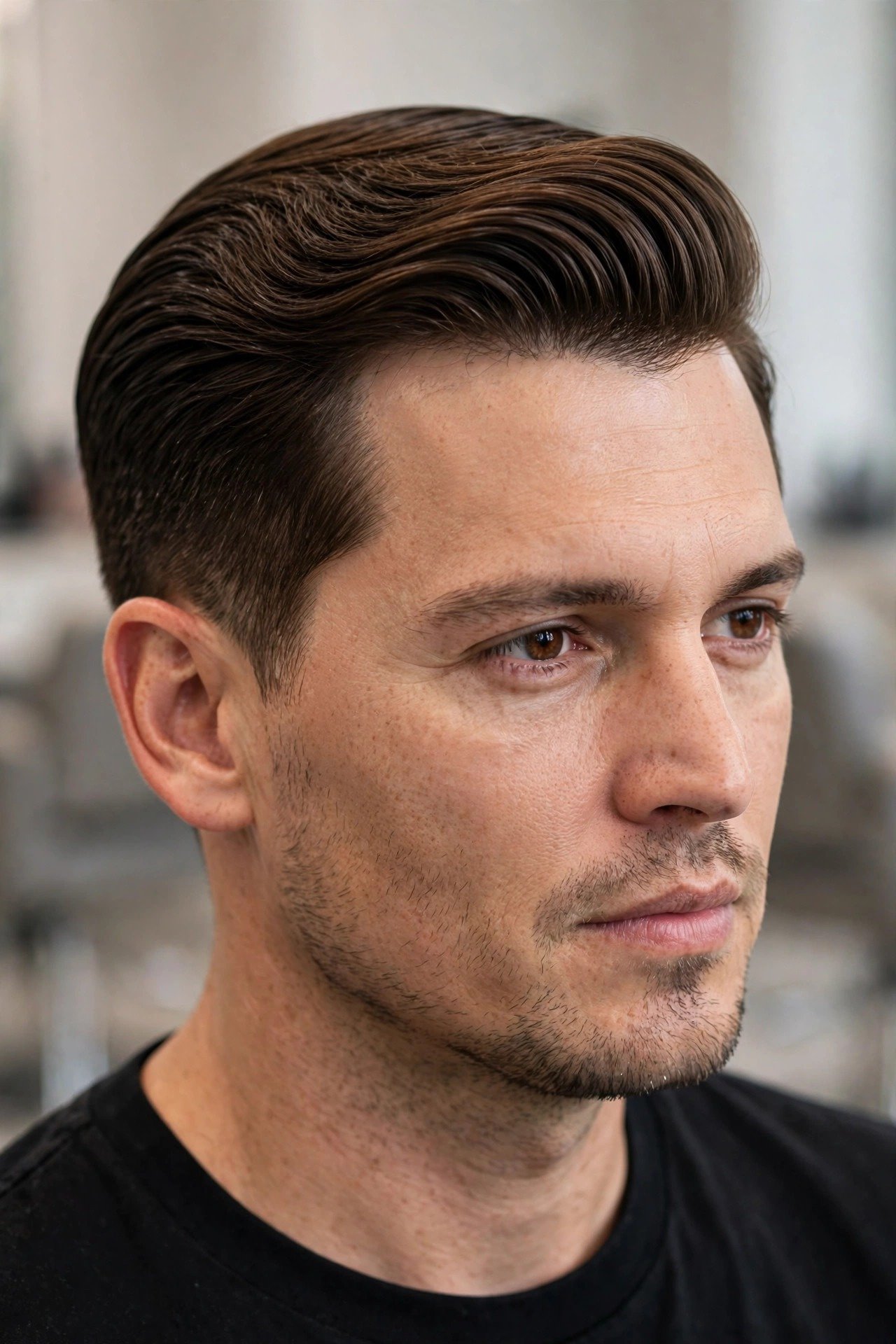
Let’s start where it all began. The classic comb over haircut is the one your dad probably wore — medium length on top, swept cleanly to one side, sides kept neat and tapered but not skin-tight. No fade, no hard part, no drama. Just clean, controlled hair that says you have your life together. And in 2026, that quiet confidence is exactly why it’s back.
The classic version works best on straight to slightly wavy hair with medium density. You need enough length on top to sweep — typically two to four inches — so the hair has weight and lies in the direction you comb it. The sides get scissored short with a natural taper down to the neckline, which keeps the silhouette soft rather than harsh. Ask your barber for a “classic taper, longer on top, natural part” and any experienced barber will know exactly what you mean.
Face shape matters here. The classic comb over haircut flatters oval and square faces most naturally because the side sweep adds a touch of asymmetry that softens strong jawlines without hiding them. If your face is round, ask the barber to keep a little extra volume on top — height on the crown visually lengthens the face. For oblong faces, keep the top flatter and the sides slightly fuller to avoid stretching the face further.
Styling the classic is refreshingly simple. Towel-dry your hair after a shower, work a dime-sized amount of medium-hold pomade or cream through the top, find your natural part (it’s usually where your hair wants to split on its own — don’t fight it), and comb the bulk of the hair to one side. Finish by combing the smaller side down and back. The whole routine takes about four minutes, and a decent pomade will hold it through an eight-hour workday.
Where guys go wrong with the classic is trying to make it do too much. This isn’t the cut for hiding significant hair loss — if your crown is going, the classic comb over will just draw attention to the fight. It’s also not the cut for very curly hair unless you’re committed to serious product and heat. But for the average guy with average hair? The classic comb over haircut is the lowest-effort, highest-reward haircut in men’s grooming. It pairs with everything from a tailored suit to a weekend henley, and it ages well — this is a cut you can wear at 25 and at 55.
2. Textured Modern Comb Over
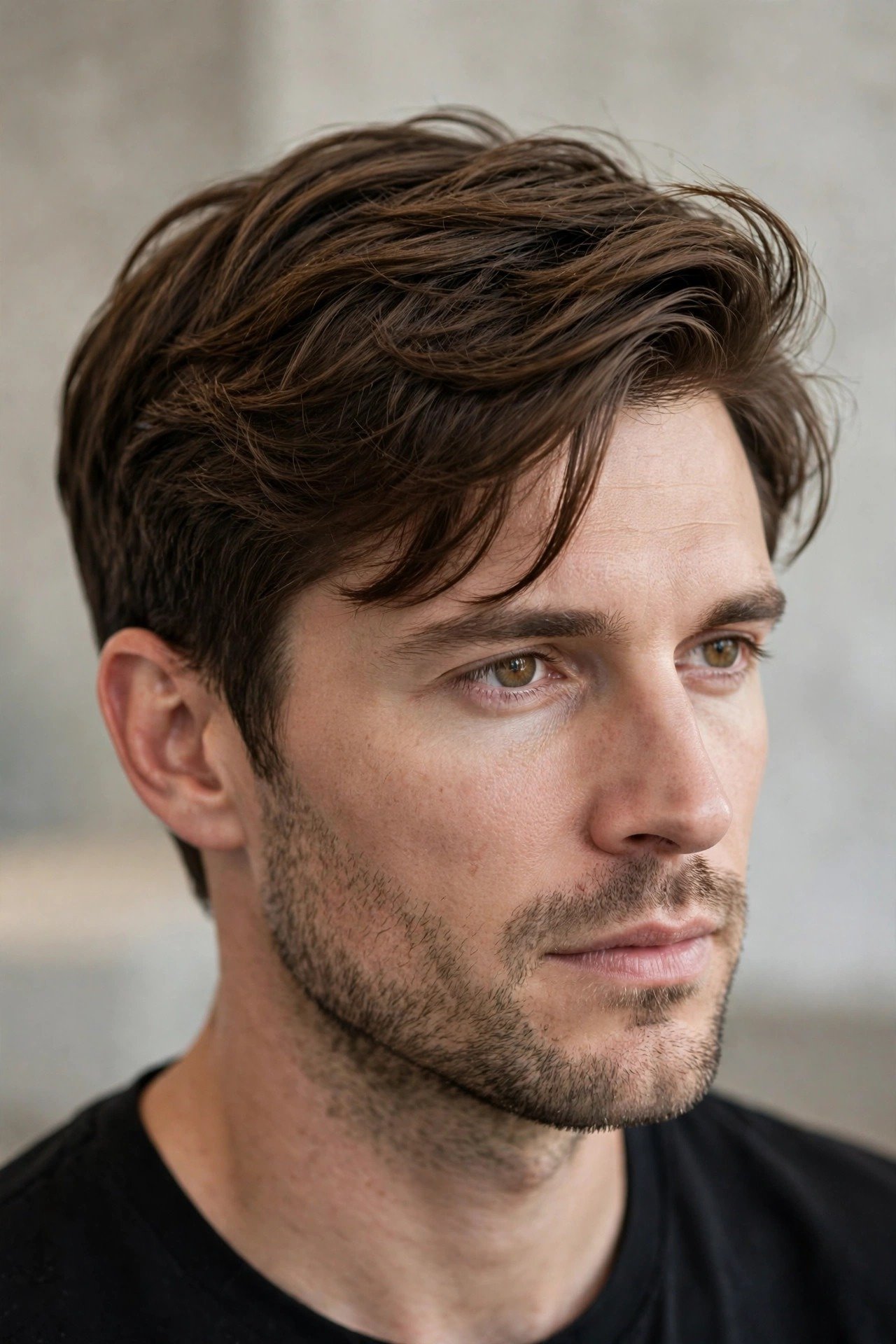
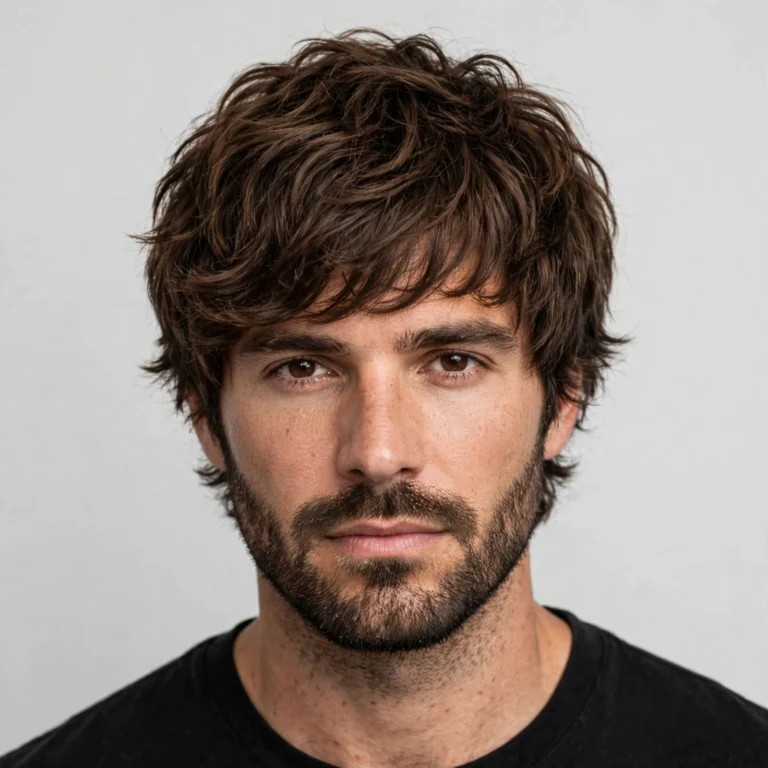
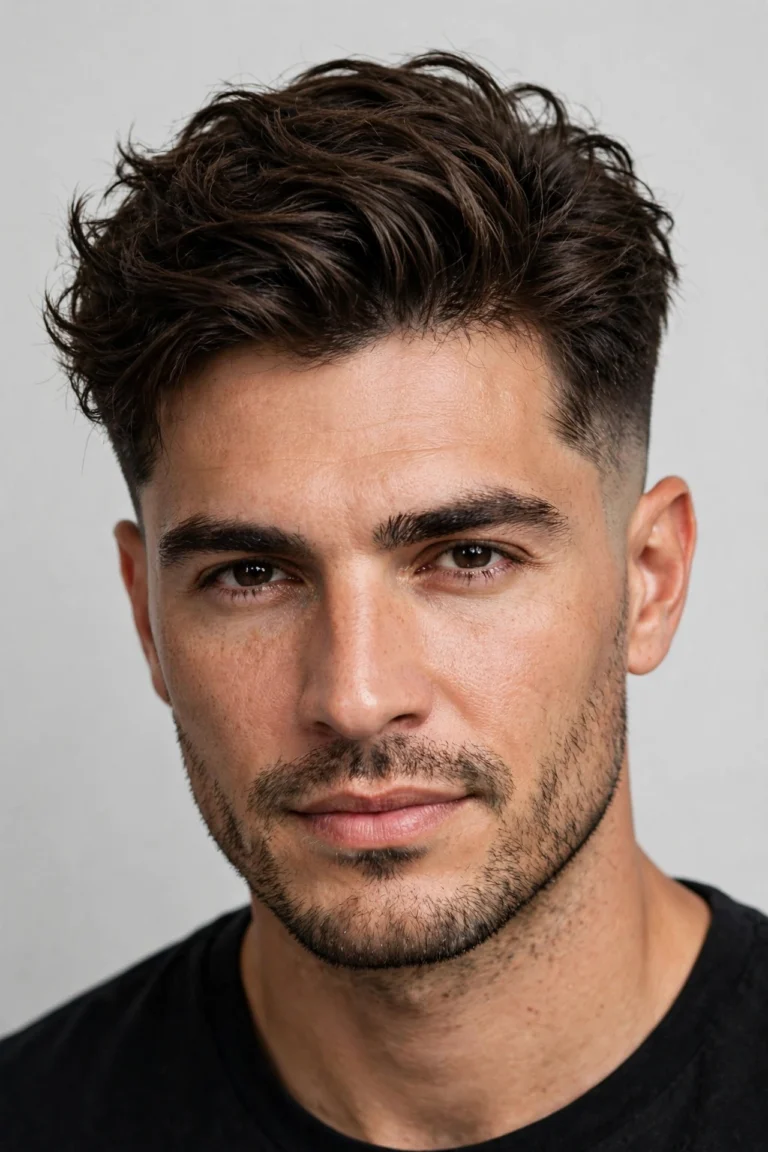
If the classic comb over is a tailored suit, the textured modern comb over is the same suit with the top button undone. It’s the version most guys under 35 are actually asking for in 2026, and it’s easy to see why. Instead of combing the top flat and perfect, the modern comb over haircut keeps the top longer — three to five inches — and cuts it with choppy, point-cut layers so it has movement and separation. The hair still sweeps to one side, but it looks lived-in rather than lacquered.
This style is a gift for wavy hair. Where the classic fights natural wave, the textured comb over works with it — the layers let waves stack and separate instead of puffing into a helmet. Guys with straight hair can wear it too, but they’ll need a texture product (matte clay or sea-salt spray) to fake the piecey separation that wavy hair gives for free. Thick hair is ideal; fine hair can work if the barber keeps the layers light and you use a volumizing mousse at the roots.
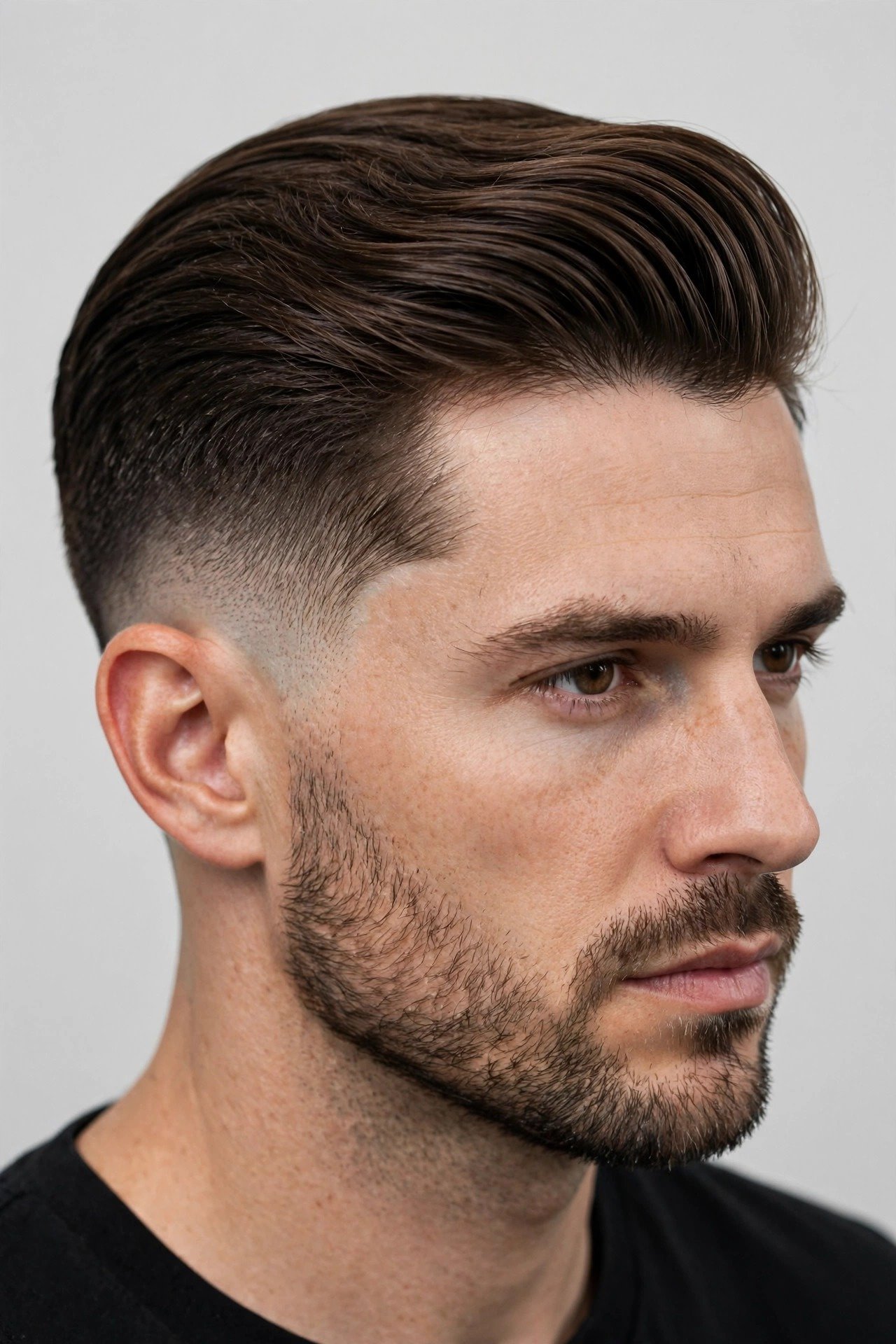
The low fade comb over is the office-friendly way to wear a fade. The fade stays low — just above the ear, blending into longer hair up top — so from the front it reads almost like a classic taper, but the back and sides have that clean, sharp gradient that makes the whole cut look fresh for weeks. In 2026, this is the most-requested comb over haircut in corporate barbershops, because it threads the needle between trendy and employable.
What makes the low fade work so well with a comb over is proportion. The top keeps its two to four inches of sweepable length, and the fade only eats into the bottom inch or so of the sides. That means the transition zone — where the swept top meets the sides — stays full, which is exactly where a comb over needs density. High fades can starve that zone and make the top look disconnected; the low fade keeps everything connected and natural.
This version suits nearly every face shape because it’s the least extreme fade option. Oval, square, round — all fine. The key adjustment is the same as the classic: more volume on top for round faces, flatter for oblong. Hair type is flexible too. Straight hair gets a crisp, clean look; wavy hair gets nice movement. The one hair type to watch is very curly or coily hair on top — a low fade with a curly comb over can work beautifully, but you need a barber experienced with your hair texture, because the fade line has to be cut to complement the curl pattern, not fight it.
Maintenance is the low fade’s secret weapon. Because the fade sits low, regrowth is subtle — you can genuinely go five to six weeks between cuts and still look sharp, whereas a high skin fade starts looking blurry after two. Styling is classic-comb-over simple: pomade or cream, comb to the side, done. The fade does the visual heavy lifting, so the top doesn’t need to be perfect.
Ask your barber for a “low skin fade, or low taper fade if your workplace is conservative, with length left on top for a side sweep.” One caution: make sure the barber doesn’t take the fade too high at the temples. The temple area frames the sweep, and if it’s faded too aggressively the comb over loses its anchor and can look like it’s floating. A good barber knows this; a rushed one might not. Speak up.
5. Mid and High Fade Comb Over
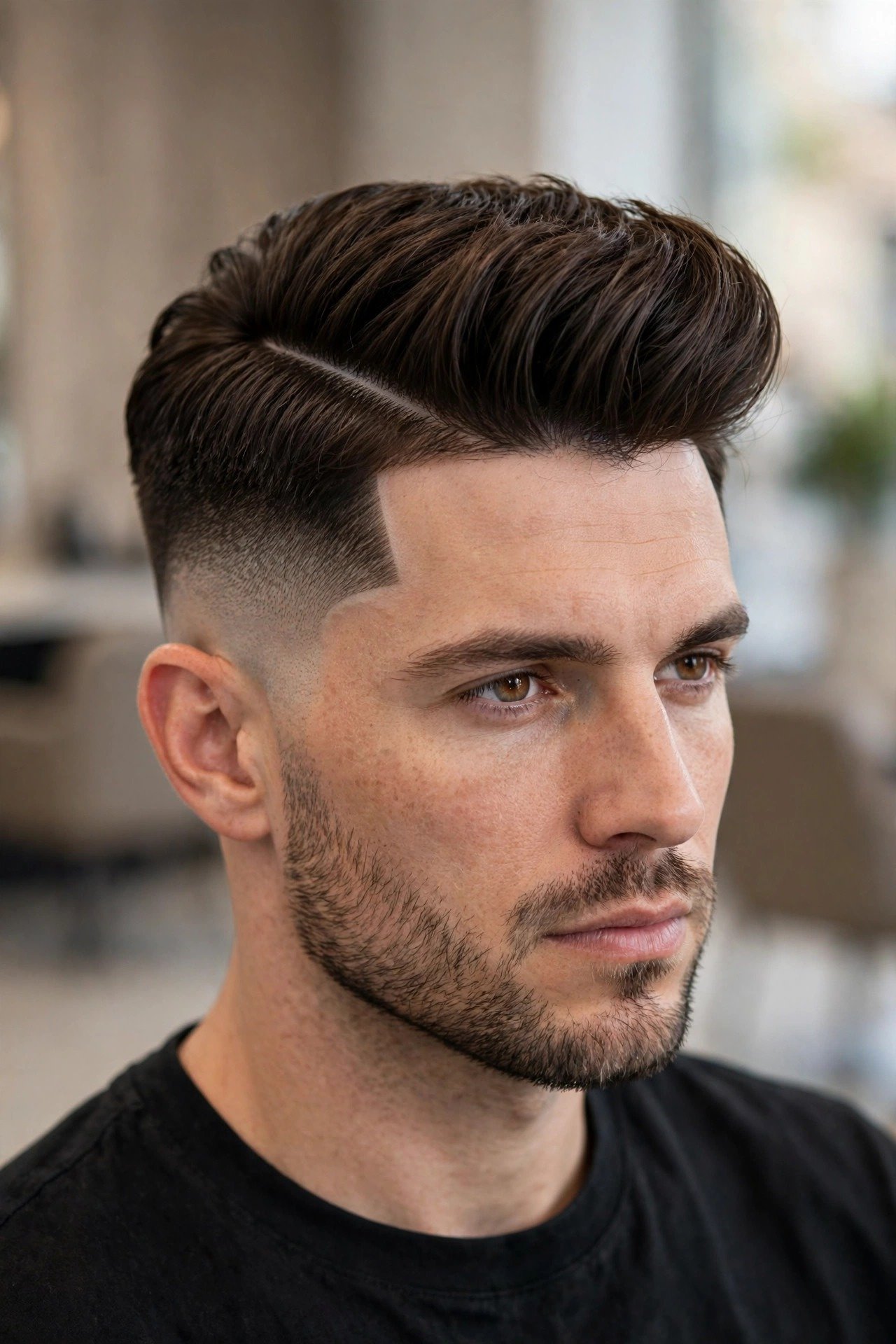
If the low fade is the diplomat, the mid and high fade comb over is the statement. The fade climbs higher up the head — mid-fade sits around the temple, high fade pushes toward the crown — creating serious contrast between the tight sides and the longer swept top. This is the comb over haircut you’ll see on athletes, musicians, and guys who want their haircut noticed. In 2026 it remains one of the most popular barbershop requests overall, not just in the comb over family.
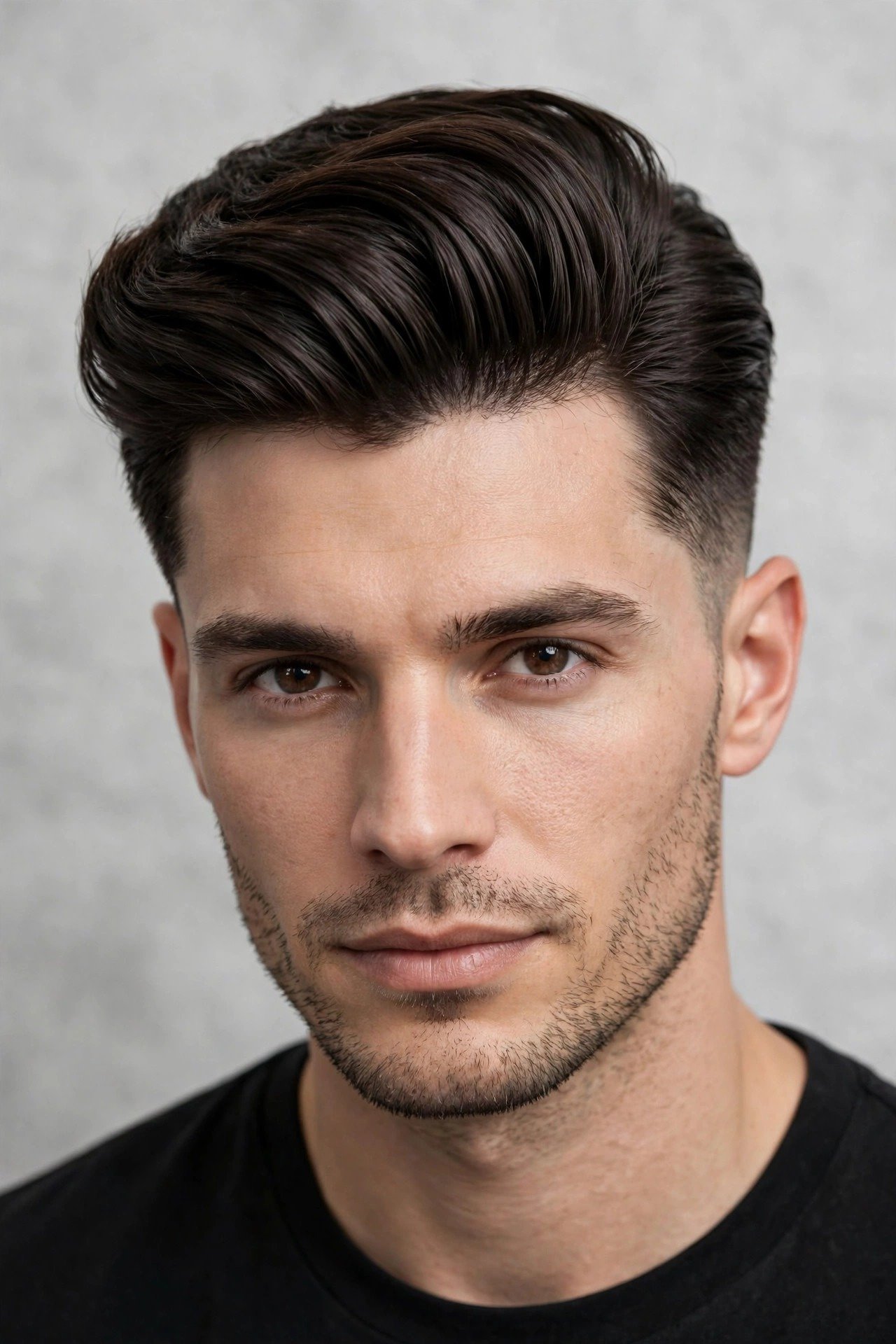
The higher the fade, the more the top has to carry. You need real length up there — three to five inches minimum — because the top is doing all the visual work. The sweep becomes the entire haircut, so it needs presence: volume, texture, a clean part line. This is where a hard part (a shaved line marking the part) earns its place. A hard part on a high-fade comb over gives the style a razor-sharp boundary that looks incredible when it’s fresh.
Face shape guidance gets more specific here. High-contrast fades emphasize the shape of your skull, so they reward strong bone structure — square and oval faces look fantastic. Round faces can work if you keep serious height on top to elongate. Oblong faces should generally avoid high fades with tall tops, since the combination stretches the face in both directions. When in doubt, start with a mid fade; you can always go higher next visit.
The trade-off for the drama is maintenance. A skin fade — low, mid, or high — starts losing its crispness after about two weeks. By week three, the contrast that makes this cut pop has softened into a blur. Guys who wear the high fade comb over seriously are in the barber’s chair every two to three weeks for a cleanup, or at minimum getting the fade touched up between full cuts. Budget and schedule accordingly.
Styling leans on stronger products than the classic. The exposed sides mean the top is fully on display, so a firm-hold pomade or a strong clay keeps the sweep locked. Blow-drying is recommended — even two minutes of heat in the sweep direction makes the difference between a top that sits and a top that flies. And here’s a 2026 tip from working barbers: ask for the fade to be blended slightly into the top’s edge rather than cut with a harsh disconnect, unless you specifically want the disconnected look. A soft blend grows out better and looks more expensive.
6. Comb Over With an Undercut
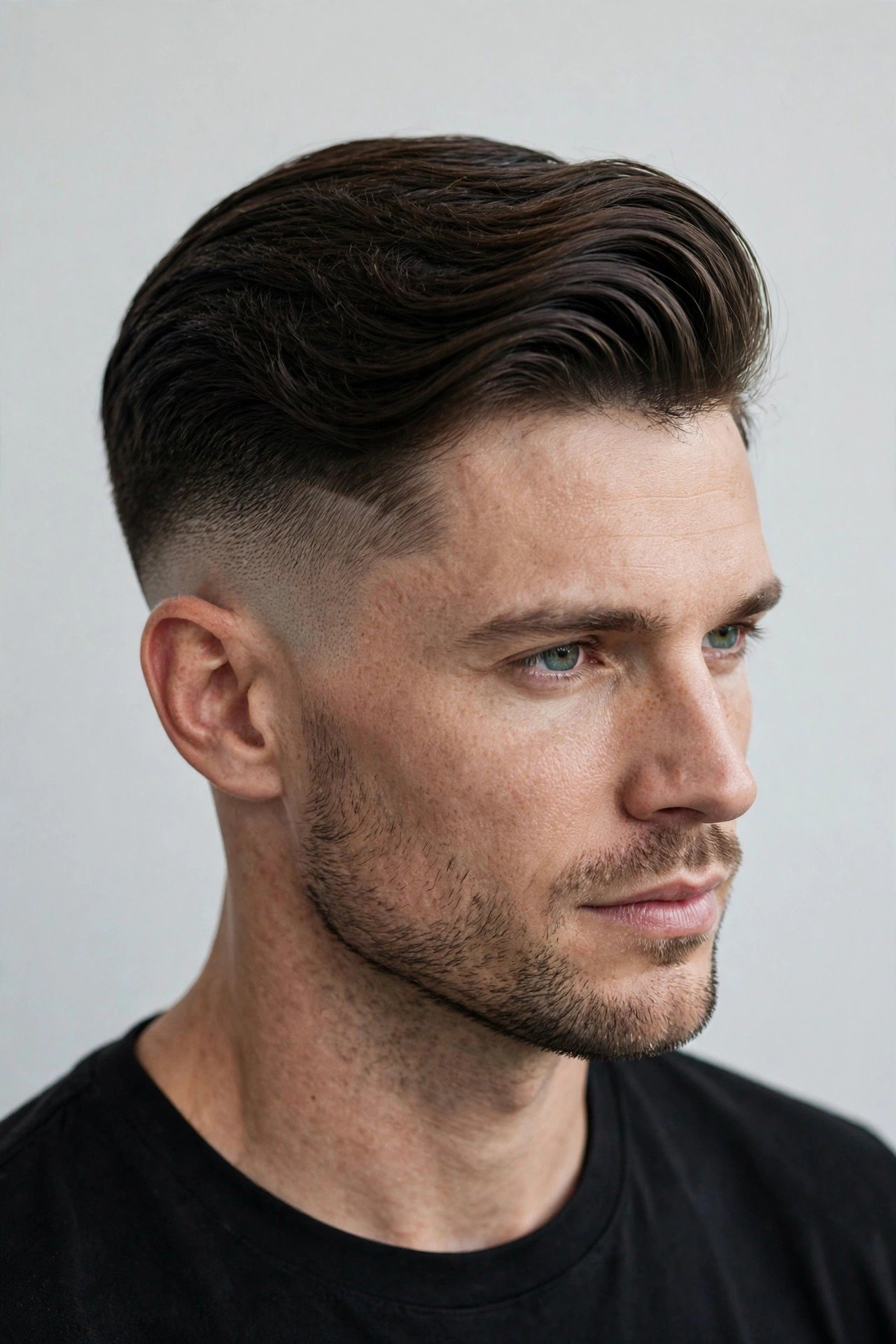
The undercut comb over is the boldest member of the family. Instead of fading or tapering the sides, the barber cuts them to one uniform short length — usually a #1 to #3 guard — creating a sharp disconnect where the long top meets the short sides. There’s no blend, no gradient; just a clean cliff. The swept top then drapes over that contrast, and the effect is striking. This is the comb over haircut for guys who find fades too mainstream.
The disconnect is the whole point, so commitment matters. Growing out an undercut is awkward — you get a phase where the sides are too long to look intentional and too short to blend. If you’re the type who changes haircuts every few months, the undercut will punish you on the way out. But if you know what you like and stick with it, the undercut comb over is one of the sharpest looks a man can wear in 2026.
Hair type plays a bigger role here than with fades. The top needs enough weight and length to sweep convincingly over the disconnect — four to six inches is the real range, longer than most comb over versions. Straight and wavy hair drape best; very curly hair can work but the top will sit higher and rounder, which changes the silhouette into something closer to a curly undercut than a true comb over. Density matters too: fine or thinning hair struggles here because the disconnect exposes exactly how much hair you have on top. This is a thick-hair haircut.
Face shapes: the undercut’s harsh side line emphasizes angularity, so square and oval faces wear it best. Round faces need height on top to balance the wide, blocky sides. There’s also a head-shape factor most guides skip — the undercut exposes the shape of your skull at the sides, so if you have bumps or asymmetry back there, a fade (which softens with its gradient) is more forgiving than an undercut (which shows everything).
Styling an undercut comb over is about control. The long top wants to fall wherever gravity takes it, so you need product with real hold — a firm pomade for a sleek version, a strong matte clay for a textured one. Blow-dry in the sweep direction for a smooth drape, or rough-dry for texture. A hard part amplifies the look; a natural part softens it. Either works — pick based on how aggressive you want to read. Maintenance runs every three to four weeks: the sides need re-clipping to keep the disconnect crisp, though the top can grow freely for months.
7. Comb Over for a Receding Hairline
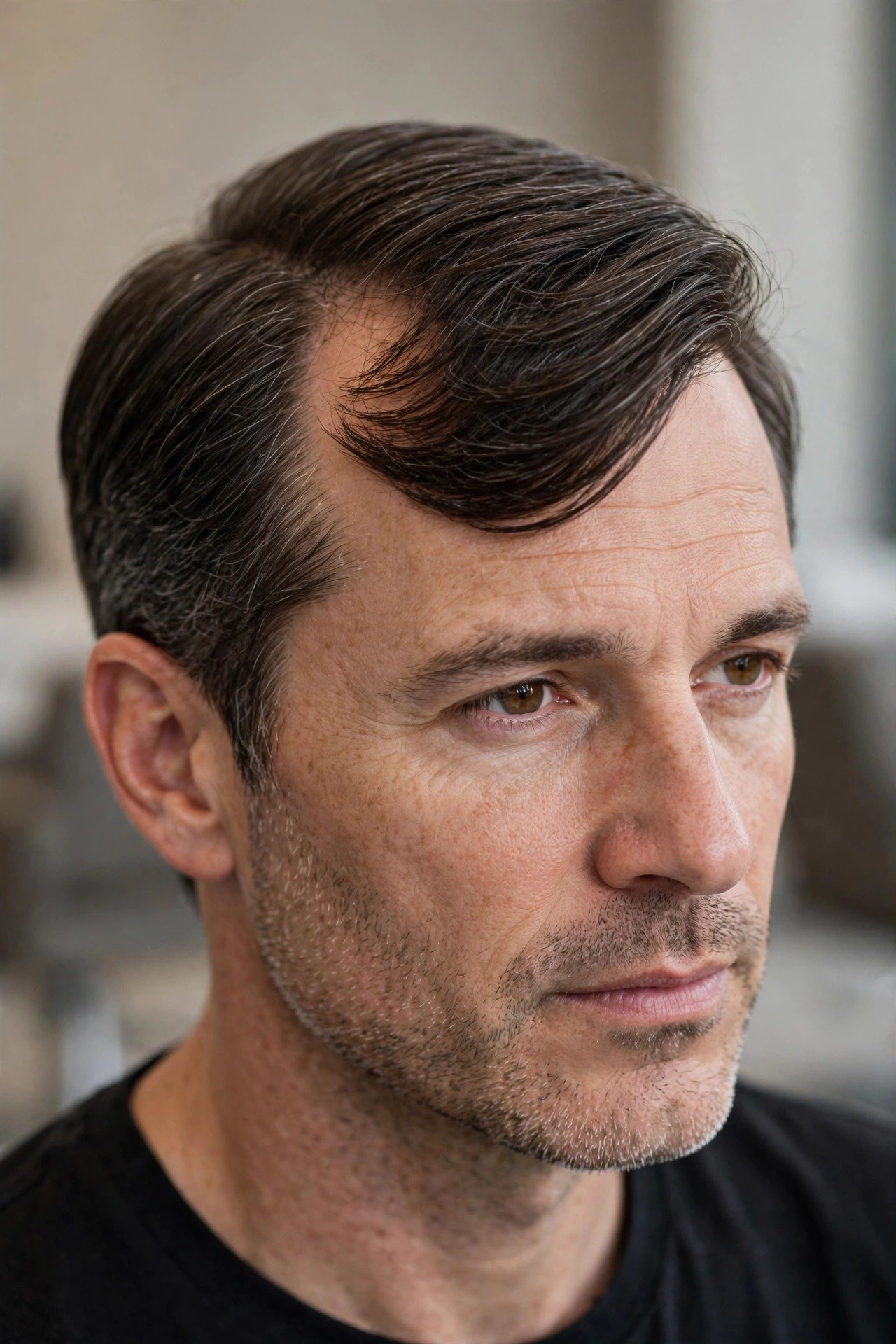
Let’s address the elephant in the barbershop. The comb over has a complicated history with receding hairlines — the “desperate cover-up” stereotype exists for a reason, because for decades guys used long, thin sweeps to hide hair loss that everyone could see anyway. But here’s the 2026 truth: a well-cut comb over haircut is genuinely one of the best styles for a receding hairline, as long as you follow one rule — work with the recession, don’t fight it.
The modern approach starts with honesty about the hairline. If your temples have moved back, don’t try to drag hair forward from the crown to cover them — that’s the old mistake. Instead, the barber cuts the top with the recession in mind: keeping the front textured and slightly forward-swept at the corners, with the main sweep going to the side from a part that’s placed where your hair naturally parts now, not where it parted at 20. The result looks like a hairstyle, not a concealment strategy.
Length is the critical variable. The instinct is to grow the top longer for more coverage, but longer thin hair actually reveals more scalp — it separates and goes stringy. The sweet spot for a receding hairline comb over is two to three inches on top: short enough to stay dense-looking, long enough to sweep. The sides should be tight — a mid or high fade, or a short taper — because strong sides draw the eye to the cut’s structure rather than the hairline.
Texture is your best friend here. Choppy layers, a matte product, and a slightly forward-and-side sweep create the illusion of density that a flat, shiny comb-over destroys. Ask your barber for point-cutting through the top and a textured fringe area. At home, use a matte clay or a thickening cream — never a high-shine pomade, which makes thin hair look thinner by clumping it. A blow-dry with the hair pushed forward then swept gives lift at the roots that lasts all day.
And here’s the honest part most style guides won’t say: there’s a line, and you should know where it is. If the crown is thinning significantly along with the temples, no comb over haircut will save it — you’ll look better with a short crop or a buzz. The comb over for a receding hairline works when the top still has decent density and it’s mainly the hairline that’s moved. A good barber will tell you straight if you’ve crossed the line. Find a barber who’ll tell you straight.
Length-wise, thick hair does best with three to five inches on top. Shorter than that and the thickness has nowhere to go but out — you get width instead of sweep. Longer gives the weight that helps thick hair drape. The sides should be properly short: a fade or a tight taper removes the bulk at the sides where thick hair loves to mushroom. The contrast between controlled sides and a substantial swept top is what makes this version look intentional.
Product choice matters more for thick hair than any other type. Heavy, waxy pomades can make thick hair look greasy and weighed down. Better options: a medium-hold cream for a natural finish, or a matte paste for texture. Apply to towel-dried hair, not soaking wet — too much water plus thick hair equals endless drying time and product dilution. And blow-drying isn’t optional for thick hair; it’s the difference between hair that sweeps and hair that sits. Two to three minutes with a dryer, pushing in the sweep direction, then product to finish.
The reward for getting it right is the most luxurious-looking comb over haircut on this list. Thick hair gives the sweep a richness that fine hair can’t fake — it photographs beautifully and holds its shape through wind, humidity, and long days. Get the layers refreshed every four to five weeks, because thick hair’s regrowth is what turns a sharp cut shaggy fastest.
9. Comb Over for Thin and Fine Hair
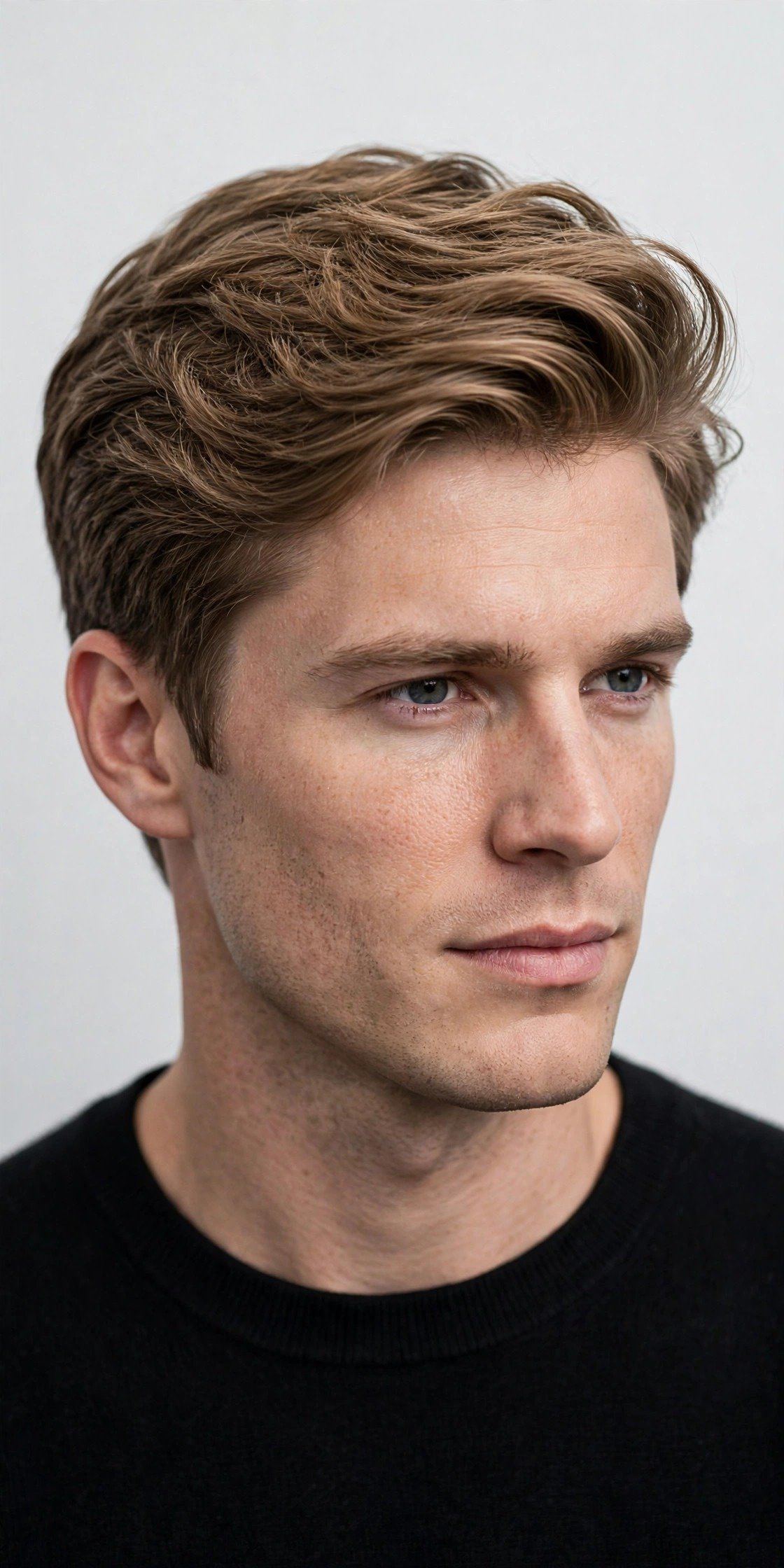
Thin and fine hair needs the opposite strategy from thick hair — instead of removing bulk, everything is about creating the illusion of it. The good news: a smart comb over haircut is one of the best styles for fine hair, because the side sweep stacks hair over itself, and stacked hair looks denser than hair lying flat. The bad news: every mistake shows. Flat product, wrong length, bad part placement — fine hair forgives nothing.
Start with length: two to three inches on top, no more. Longer fine hair separates into stringy strands that reveal scalp; shorter stacked hair looks fuller. The cut should be blunt rather than heavily layered — too many layers in fine hair remove the little density you have. A few soft layers for movement are fine, but the barber’s mantra for fine hair is “keep the weight.” The perimeter — the outer edge of the top — should be cut solid so it reads as a dense line.
The sides are where fine-hair comb overs win or lose. Tight sides — a clean taper or a low fade — make the top look fuller by contrast. It’s an optical trick, but it works every time: when the sides are neat and the top has any volume at all, the brain reads “full head of hair.” Let the sides grow and the whole head reads thin. Keep them tight.
Products are make-or-break. Rule one: matte, always matte. Shine makes fine hair look thinner — light reflects off the scalp between strands. Rule two: lightweight. Heavy pomades crush fine hair flat. The winning combo is a volumizing mousse or a thickening spray on damp hair at the roots, a quick blow-dry lifting upward, then a tiny amount of matte clay just through the mid-lengths and ends for definition. Never apply product directly to the roots — it kills the lift you just built.
Part placement deserves attention too. A part too close to the thinning area exposes it; shifting the part slightly toward the fuller side lets denser hair sweep over sparser areas naturally. This isn’t a cover-up — it’s just smart geometry. And one more honest note: if you’re dealing with real thinning (not just naturally fine hair), read section 7’s advice about knowing the line. A fine-hair comb over is a great style; a comb over fighting advanced loss is a losing battle. The cut works with what you have.
10. Wavy, Curly, Long and Beard-Paired Comb Overs
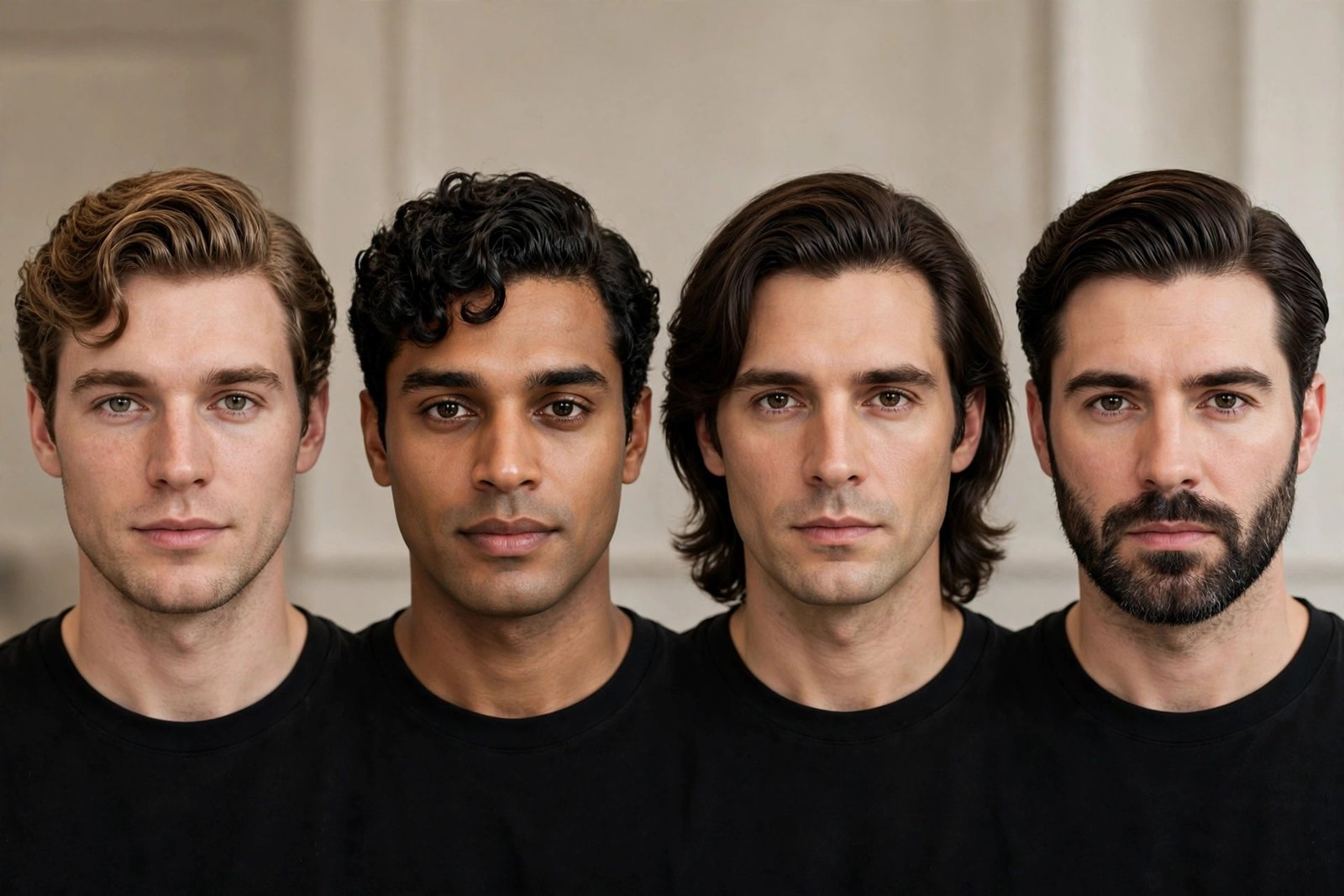
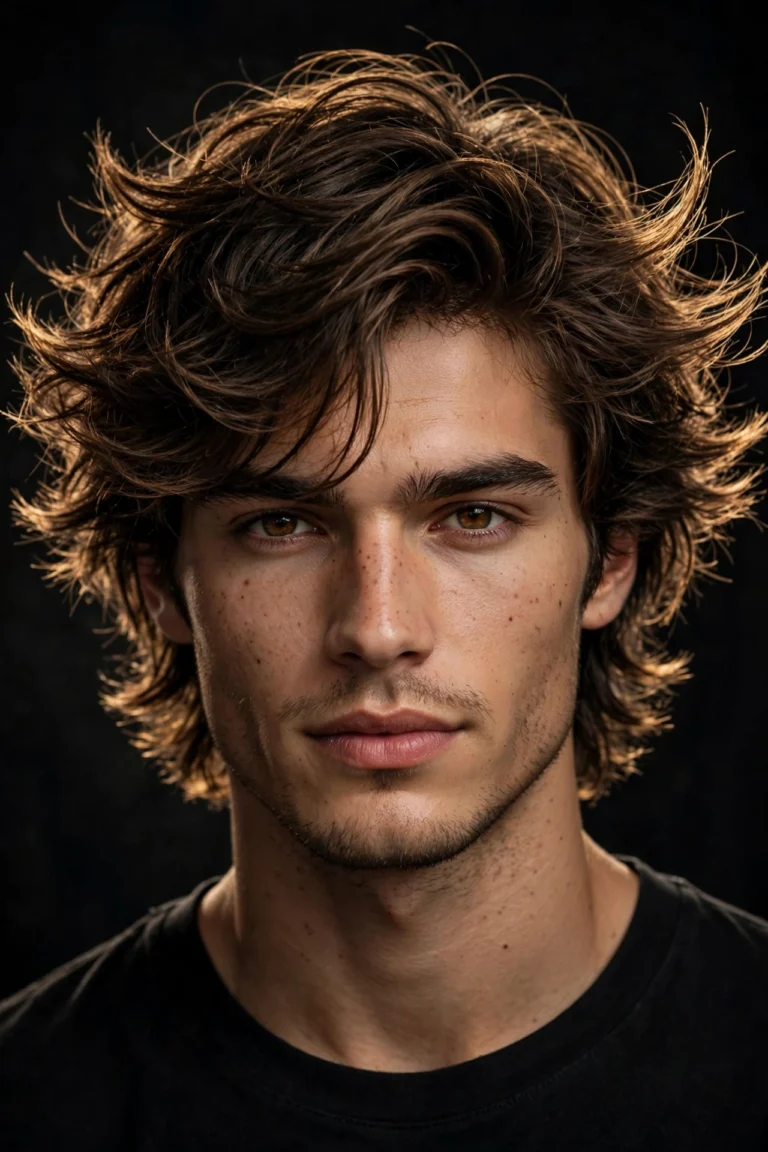
Four more styles round out the list, each for a specific kind of guy. Style 11: the wavy comb over. If your hair has natural wave, you might already be wearing a comb over without knowing it. The 2026 version leans into the wave: three to five inches on top, long layers, a low taper on the sides, and a matte cream worked through damp hair. Let the waves do the talking — comb the hair to the side while damp, then leave it alone. The result is the most effortless comb over haircut on this list, and it suits oval and square faces beautifully.
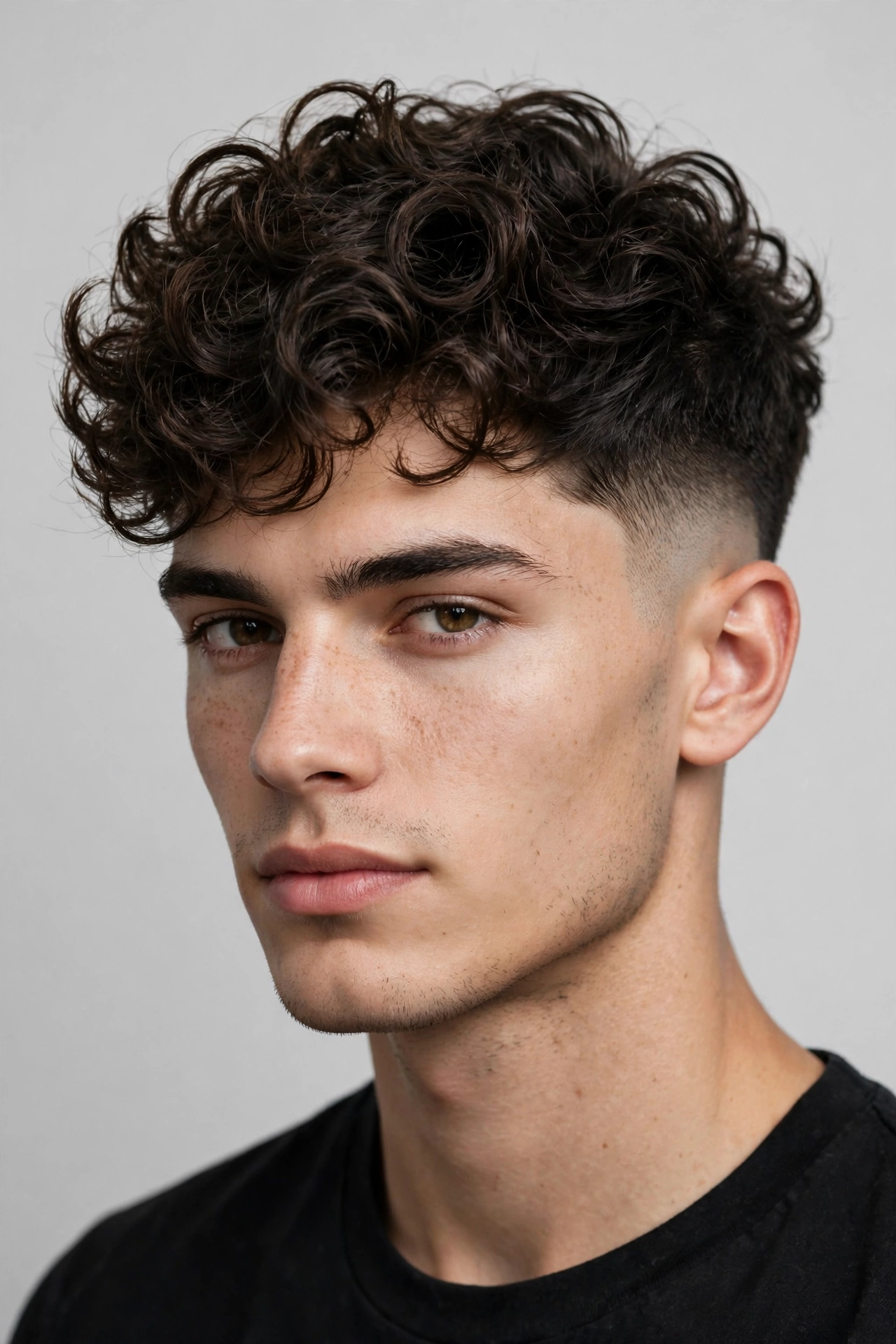
Style 12: the curly comb over. Curly hair needs length to sweep — four to six inches — and a barber who understands curl patterns. The sides go short (a mid fade works great) so the curls on top have a clean frame to drape over. Use a curl cream, not a pomade, and define the sweep while the hair is damp. The key insight: you’re not straightening anything. The sweep follows the curl’s natural direction, just guided to one side. Round faces benefit most here, since the height and asymmetry counteract roundness. Avoid heavy waxes that separate curls into stringy clumps.
Style 13: the long comb over. This is the flow-adjacent version — six-plus inches on top, swept dramatically to one side, often with an undercut or a long taper underneath. It’s the most fashion-forward comb over haircut of 2026 and the least office-friendly, which is exactly the point for the guys who wear it. You need patience (a year of growing), thick hair, and a willingness to deal with wind. Style with a light cream and let it move. It pairs naturally with streetwear and creative workplaces.
Style 14: the comb over with a beard. The beard is the comb over’s best accessory. A full, well-shaped beard balances the clean lines of a swept top and stops the haircut from reading too “corporate.” The rule is proportion: a longer, textured comb over pairs with a fuller beard; a tight classic comb over pairs with a shorter, sculpted beard. Keep the cheek lines clean and the neckline defined — an unkempt beard drags a sharp comb over down with it. In 2026, the textured comb over plus a medium boxed beard is one of the most requested combinations in barbershops, and it’s easy to see why: it’s masculine, balanced, and works on almost every face shape.
Comb Over Haircut FAQ
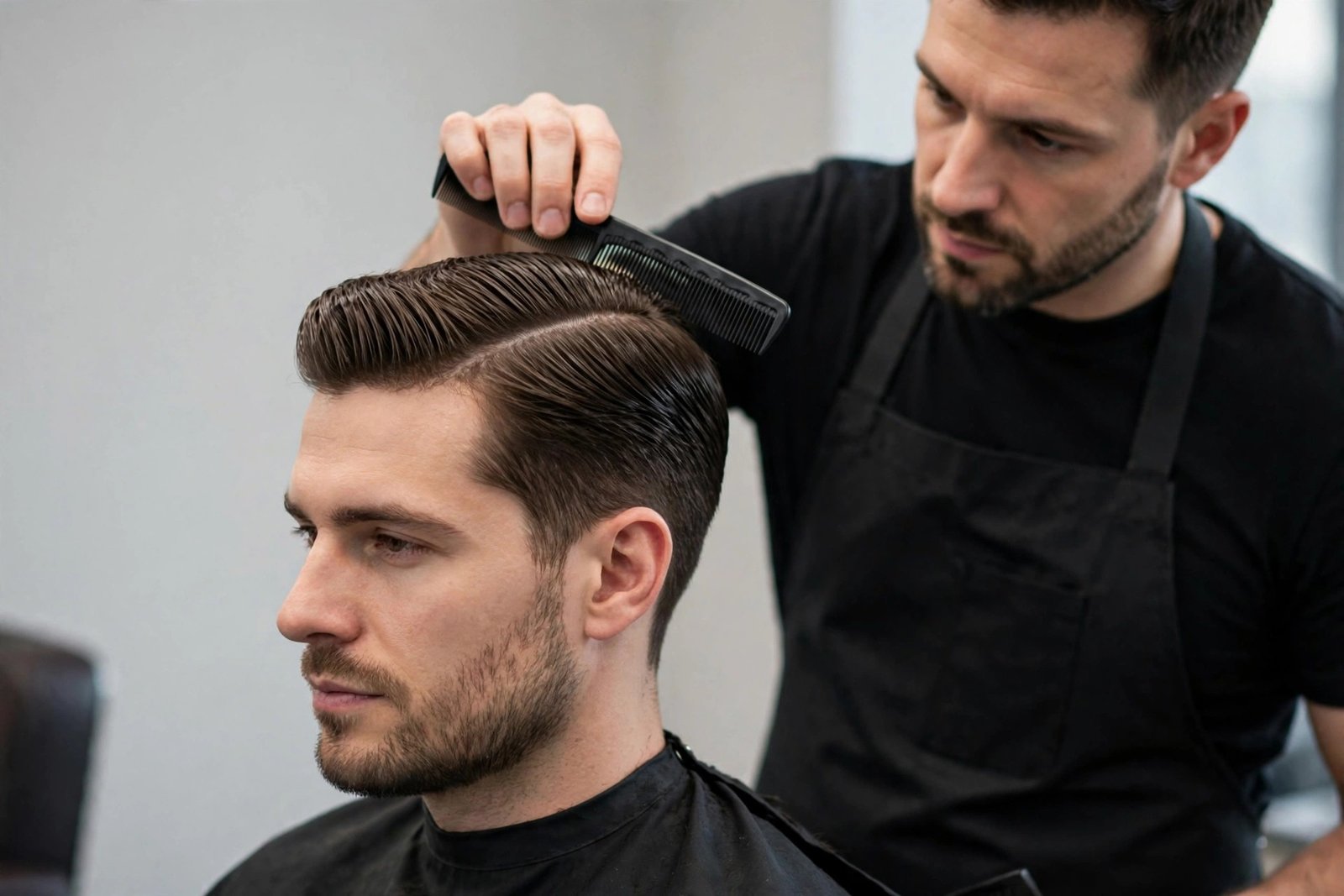
How long does my hair need to be for a comb over haircut? Two inches is the absolute minimum, and even that’s pushing it — the hair needs enough length to lie in the sweep direction instead of sticking up. Three to four inches on top is the sweet spot for most versions: enough to sweep, short enough to control. Textured, messy, and undercut versions want four to six inches. If you’re growing into it, tell your barber the plan — they can shape the sides while the top catches up.
What face shape suits a comb over best? Oval and square faces are the natural winners, but the comb over haircut is genuinely adaptable. Round faces need volume on top and tighter sides to add length. Oblong faces need the opposite — keep the top flatter and the sides a touch fuller. Diamond faces do well with textured versions that add width at the forehead. The only face shape that needs real caution is very long and narrow, where a tall comb over exaggerates length. A good barber adjusts the cut to your face in about thirty seconds of looking at you — this is literally their job.
Can I get a comb over if my hair is thinning? Yes, with conditions. If the thinning is mild and mainly at the temples, a textured comb over with a matte product is one of the most flattering options available — see section 7 for the full breakdown. If the crown is going too, or the top is thin all over, the comb over stops being a style and starts being a disguise, and everyone can tell. The honest test: if you need more than a normal amount of product and careful arranging to make it look full in a mirror, it’s time for a shorter cut.
How often do I need a haircut to maintain a comb over? It depends on the version. Faded and undercut comb overs need attention every two to four weeks — the sides grow out and kill the contrast. Classic tapers and textured versions can stretch to five or six weeks because they grow out gracefully. The top itself can go longer between cuts; it’s the sides and the neckline that age a comb over. Many guys get a full cut every five weeks with a quick sides-only cleanup in between.
What products should I use for a comb over haircut? Match the product to the finish you want. Classic and sleek: medium-hold pomade (water-based for easy washing). Textured and modern: matte clay or paste. Maximum volume: volumizing mousse plus a blow-dryer, finished with paste. Fine or thinning hair: thickening spray and matte clay — never high-shine pomade. One universal rule: start with less than you think you need. You can always add product; you can’t take it away without rewashing.
Is the comb over haircut still in style in 2026? Very much so — it’s one of the few men’s haircuts that never truly left, and the 2026 versions (textured tops, skin fades, hard parts, undercuts) are as current as anything in the barbershop. Search data and barber request lists both show the comb over haircut holding strong, especially the fade and textured variations. It’s not a trend that’s about to die; it’s a classic that keeps getting updated.
Conclusion
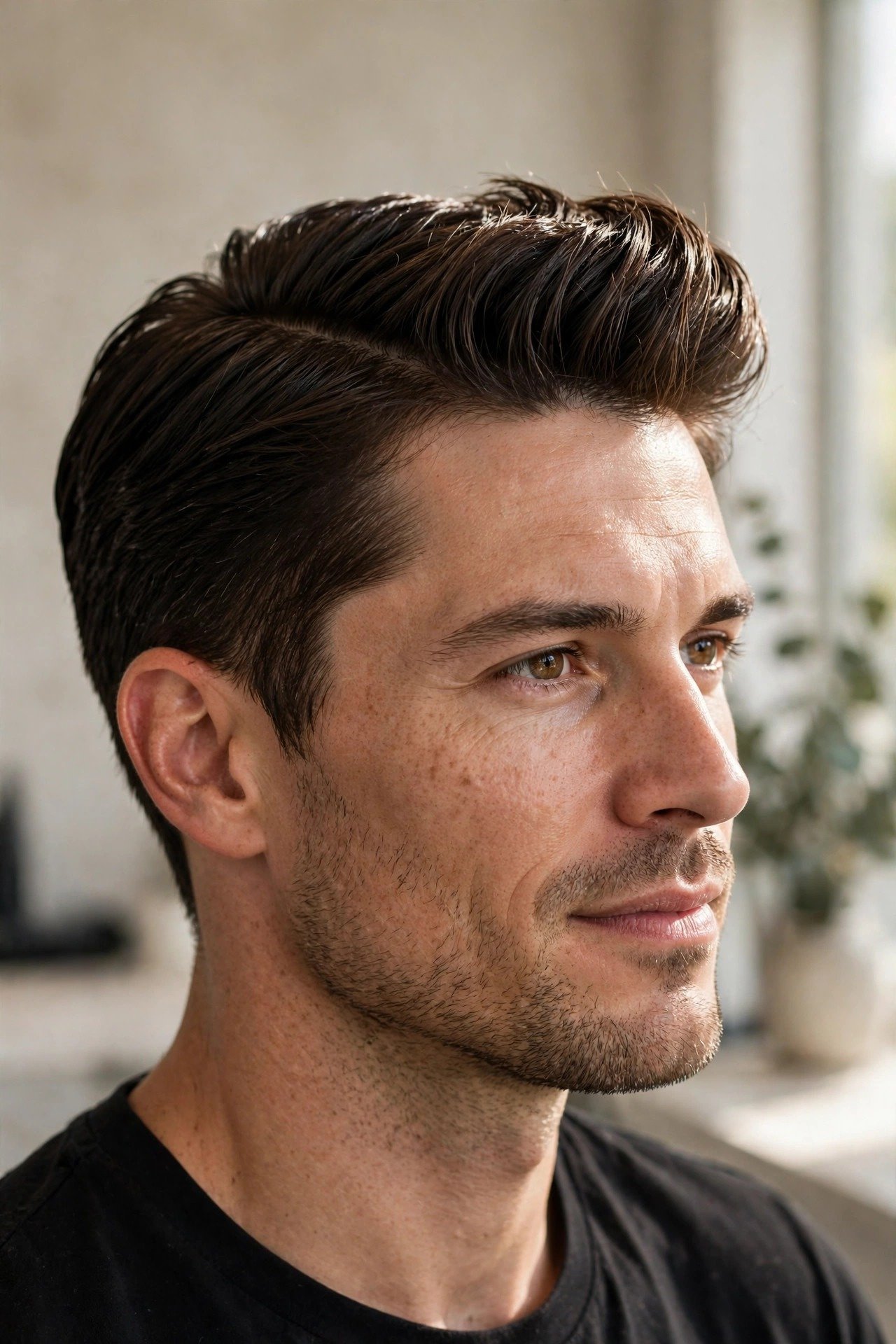
Fourteen styles, one truth: the best comb over haircut is the one you’ll actually maintain. Be honest with yourself before you sit in the chair. If you won’t touch a blow-dryer, don’t ask for the messy volume version — get the classic or the low fade and enjoy your four-minute mornings. If you hate frequent barber visits, skip the high skin fade and go textured. If your hair is thinning, get the honest assessment, not the cover-up.
Bring a reference photo to your barber — ideally two or three showing the exact version you want from different angles. Say the words from this guide: “textured top,” “low skin fade,” “hard part,” “disconnected undercut.” Barbers speak this language fluently, and precise words get you a precise cut. And give any new comb over two weeks before you judge it; the cut settles, you learn the styling, and what felt strange on day one feels like you by day fourteen.
The comb over haircut earned its comeback. It’s professional without being boring, stylish without being high-maintenance, and adaptable to just about every head of hair. In 2026, there’s genuinely a version for everyone — find yours, keep the sides fresh, and enjoy the easiest sharp haircut in men’s grooming.