
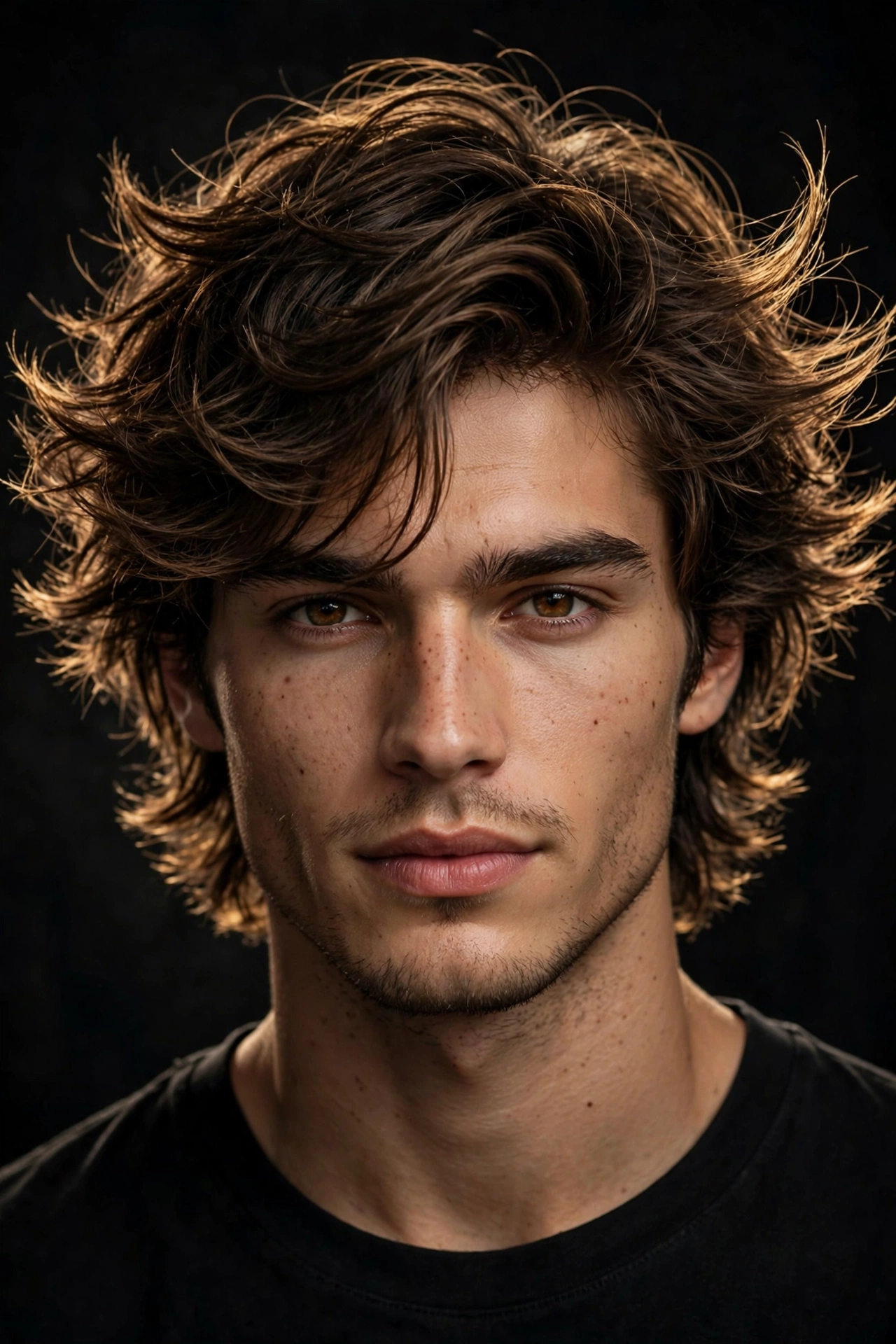
Modern Shag Haircuts for Men 2026: 20 Layered Styles
Modern Shag Haircuts for Men 2026: 20 Layered Styles
There is a particular kind of guy you keep noticing lately. His hair is not short and it is not long. It is not neat and it is not messy. It falls around his face in soft, uneven layers, it moves when he walks, and it looks like he spent either four minutes or forty minutes on it, and you genuinely cannot tell which. That haircut is the modern shag for men, and in 2026 it has quietly become the most interesting thing happening in men’s hair. Esquire’s grooming team even named the grown-out shag a top contender for cut of the year, which tells you this is not some passing internet joke. It is the real thing.
In this guide I am going to give you the full picture of the modern shag men are asking for in 2026. You will get twenty genuinely different layered shag styles, from the curly shag that finally makes peace with natural texture to the polished office shag you can wear to a client meeting without a second thought. Along the way I will show you exactly what to tell your barber so you walk out with the cut you imagined, how to style it at home in a few minutes, which face shapes and hair types it flatters, and how to keep it looking intentional between appointments.
Why should you care about one more haircut trend? Because the modern shag solves a problem most men’s cuts do not. Fades demand a barber every two to three weeks and look tired fast. Long hair asks for real commitment. The shag sits in the sweet spot between the two: it grows out gracefully, it works with your natural texture instead of fighting it, and it asks for almost nothing in the morning. If your hair has any wave or body at all, this might be the cut it was waiting for.
What Is the Modern Shag for Men?
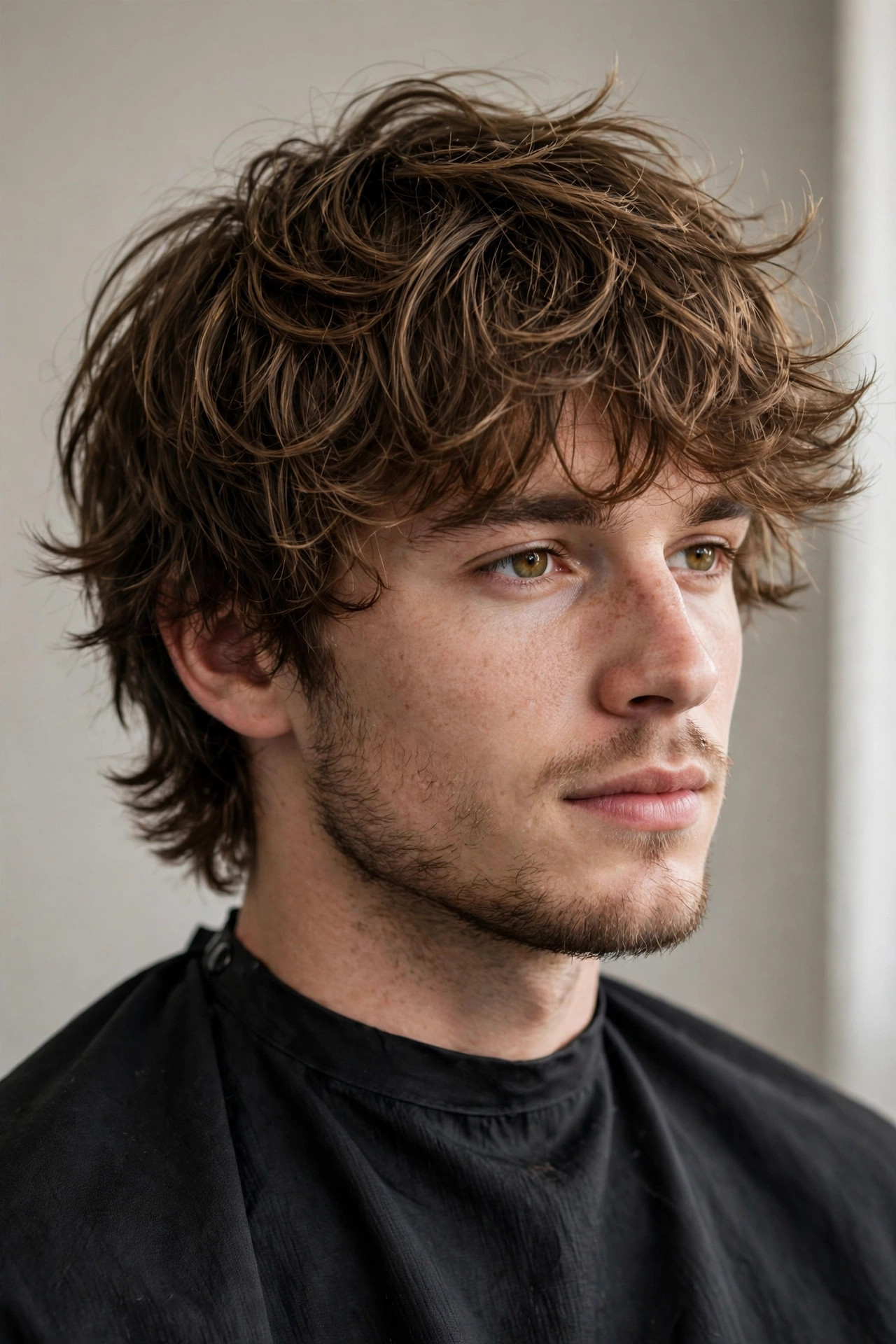
Strip it to the essentials and the modern shag is a layered haircut built on one idea: the hair is cut in choppy, uneven layers from the crown down through the ends, with shorter pieces around the face and longer pieces falling behind. The top usually carries the most volume, the sides blend into the overall shape instead of being faded tight, and the fringe area, whether it is a curtain fringe, a forward fringe, or just longer face-framing layers, is the part that gives the cut its personality. Length typically lands anywhere from the ears to the shoulders, though shorter versions exist.
The shag is not new. It was born in the 1970s on rock musicians, all razor-cut layers and feathered ends, and it has been resurfacing every decade or so ever since. What makes the 2026 version modern is restraint. The old shag could look like a costume: heavy feathering, obvious razor marks, a mullet lurking at the back. The modern shag keeps the movement and the layers but softens the edges. Barbers now blend the layers so the cut reads as effortless rather than retro, and the back is kept in proportion instead of drifting into mullet territory. It looks like great hair, not like a period piece.
It is worth drawing the line between the shag and its close cousin, the wolf cut, because they get confused constantly. Both are layered and textured. The difference is in the silhouette: a wolf cut goes dramatic, with a very short, voluminous top and a much longer, thinner back, like a shag crossed with a mullet. The modern shag is more even and more wearable. The layers graduate smoothly, the length is more balanced front to back, and the overall effect is softer. If the wolf cut is the loud version, the shag is the one that works in every room you walk into.
Why Modern Shag Men Styles Are Trending in 2026
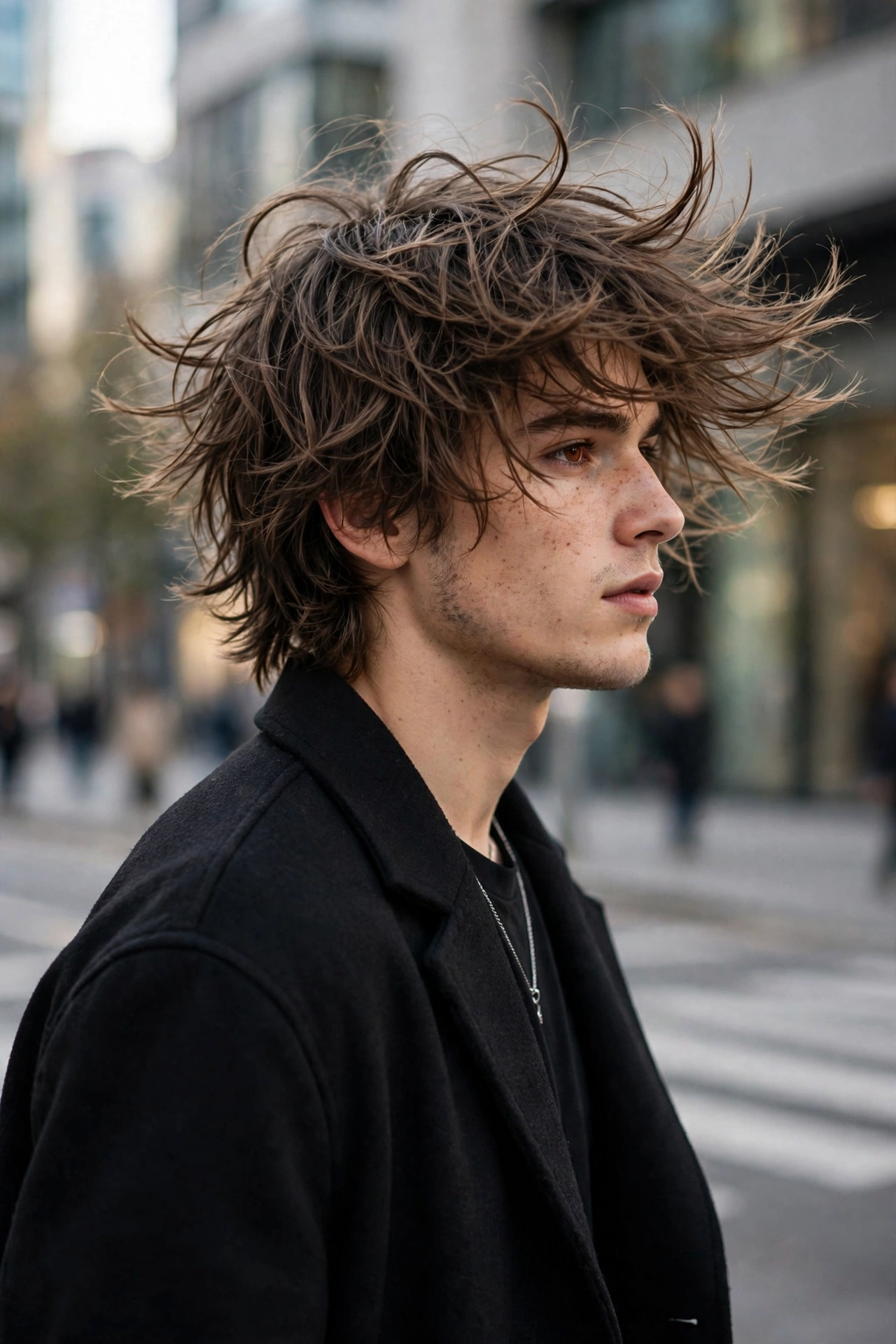
The shag’s 2026 moment did not come out of nowhere. It is the answer to a very specific fatigue. For most of the last decade, men’s hair meant one thing: short on the sides, styled on top, refreshed every three weeks. That formula produced a lot of good haircuts, but it also produced a lot of guys who were tired of the maintenance treadmill and tired of looking like everyone else in the waiting room. The modern shag is the rebellion against that sameness. It lets your hair be hair again, longer, looser, with visible texture and movement.
The timing lines up with the broader direction of men’s fashion too. Looser tailoring is back, vintage sportswear never left, and the grooming world has been moving toward what stylists call the “lived-in” look: hair that looks great on day three, not just day one. Esquire’s 2026 trend roundup, put together with working barbers rather than just editors, flagged the grown-out shag as a top contender for cut of the year, worn by the likes of Joe Keery and Vinnie Hacker. When the barbers themselves are excited about a cut, pay attention, because they are the ones who have to execute it eight times a day.
There is also a practical engine behind the trend. More guys are growing their hair out, and the awkward in-between phase is where most grow-outs die. The modern shag is essentially a haircut designed to make growing hair out look intentional. The layers give medium-length hair shape instead of letting it collapse into a shapeless mass, which is the number one reason guys give up and buzz it all off. Add in that it flatters wavy and curly texture, which fades often fight, and you have a cut whose popularity is built on solving real problems rather than just looking good in photos.
20 Modern Shag Styles for Men in 2026
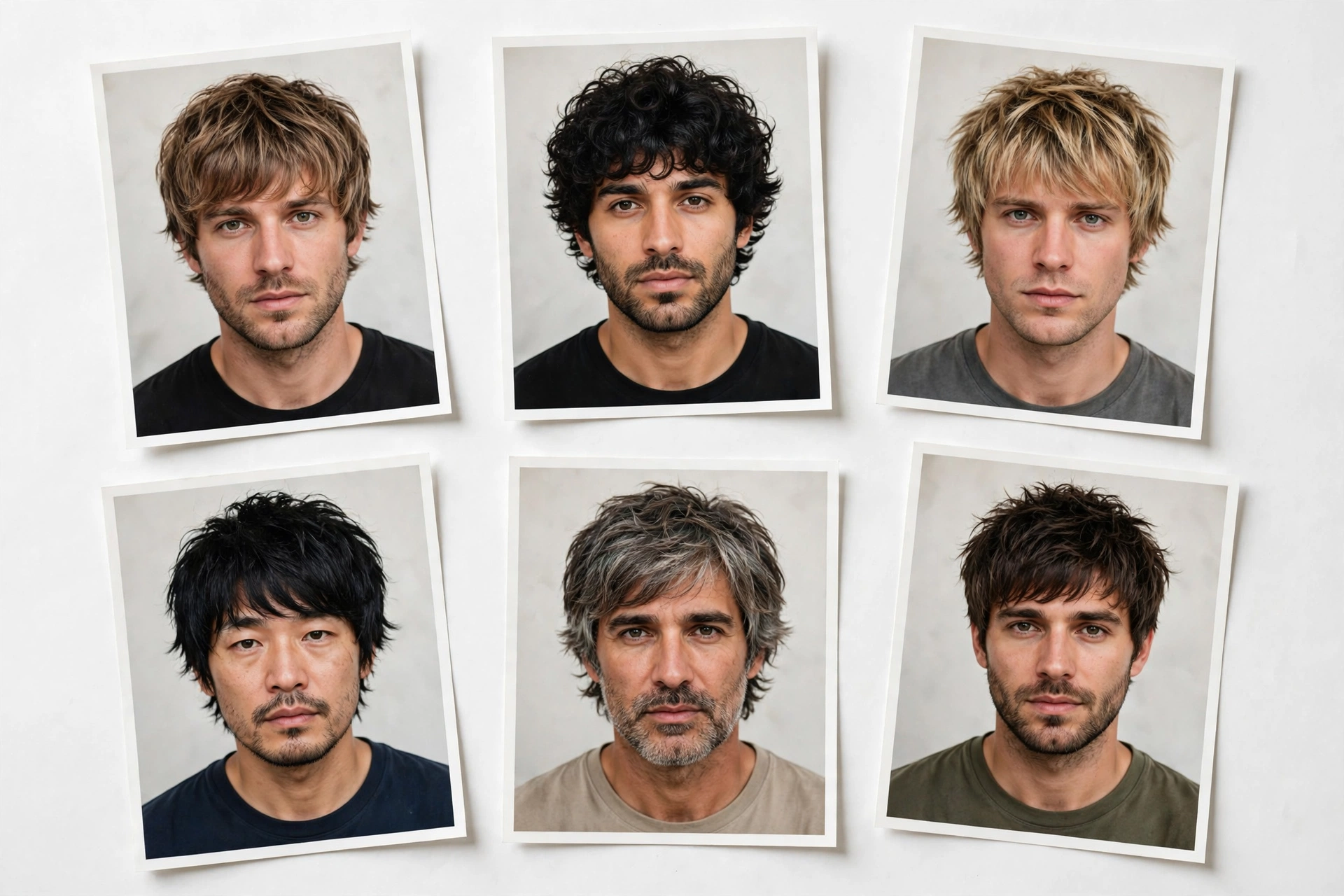
Here is the menu. Twenty versions of the modern shag men are wearing in 2026, each distinct enough to matter. Some are about length, some about texture, some about attitude. Read them the way you would read a barbershop lookbook: slowly, honestly, and with your own hair’s reality in mind. By the end you will know which one to show your barber, and just as importantly, which ones to skip.
1. The Classic Grown-Out Shag
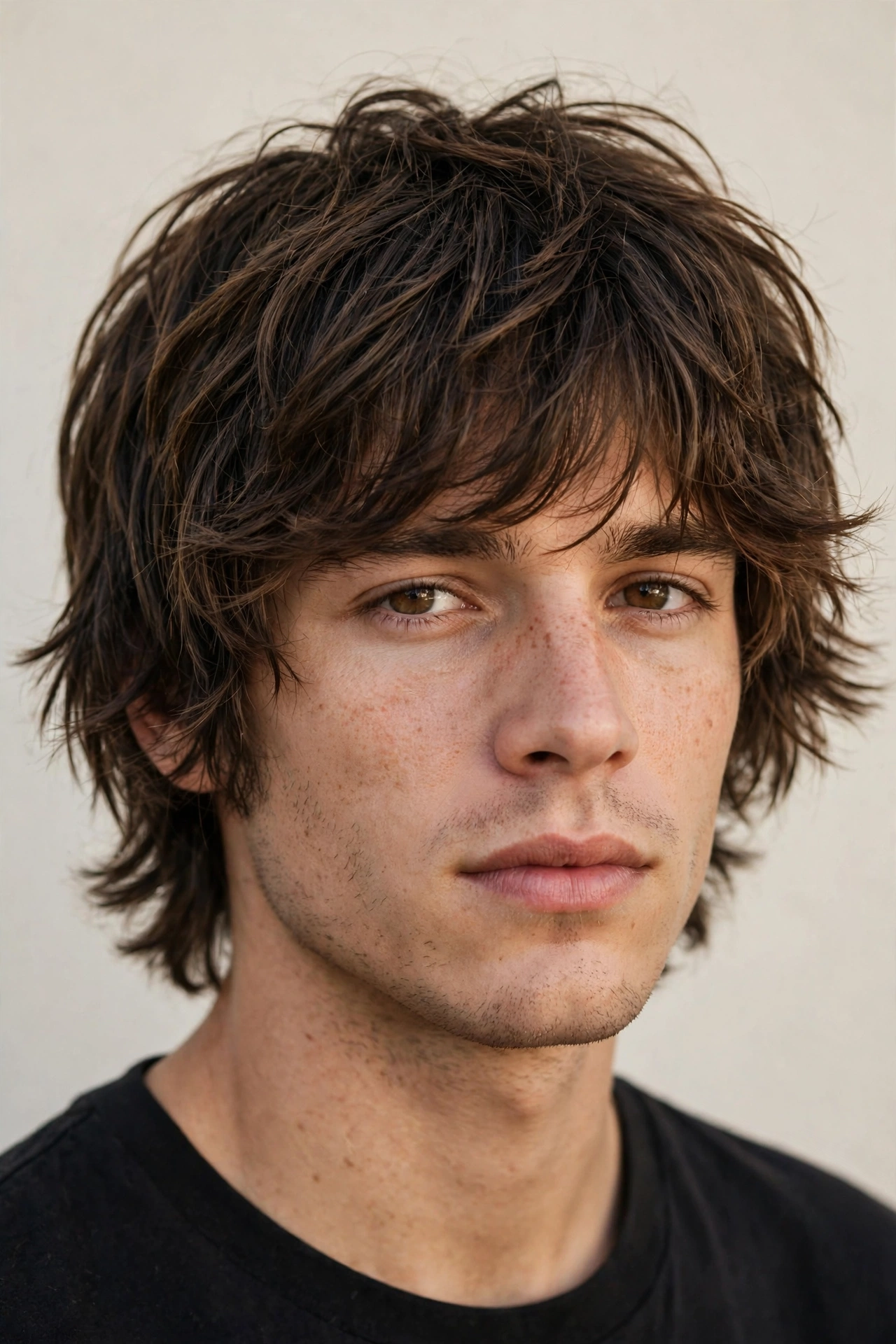
This is the version that started the whole 2026 conversation. The classic grown-out shag keeps medium length all over, roughly ear to jaw level, with soft, choppy layers cut throughout and a lived-in texture around the face. Nothing is severe. The ends are textured, the fringe area falls naturally, and the whole thing looks like it grew that way on purpose. Stylist Joe Mills, quoted in Esquire’s 2026 trend coverage, describes exactly this cut: soft, long layers with natural movement and a lived-in texture around the face. It suits round, square, and oval faces, which covers most of the population.
What I like about this version is how forgiving it is. Bad hair days barely register because the cut is supposed to look a little undone. Styling is minimal: a salt spray on damp hair, then air dry or diffuse, and you are done. If your hair has any natural wave, this version will reward it. If your hair is pin straight, you will need a bit more product to create the movement, but it still works. Ask your barber for medium length throughout, choppy interior layers, and a textured fringe left long, cut with scissors only. No fade. This is the default, and for most guys it is the right answer.
2. The Curly Shag
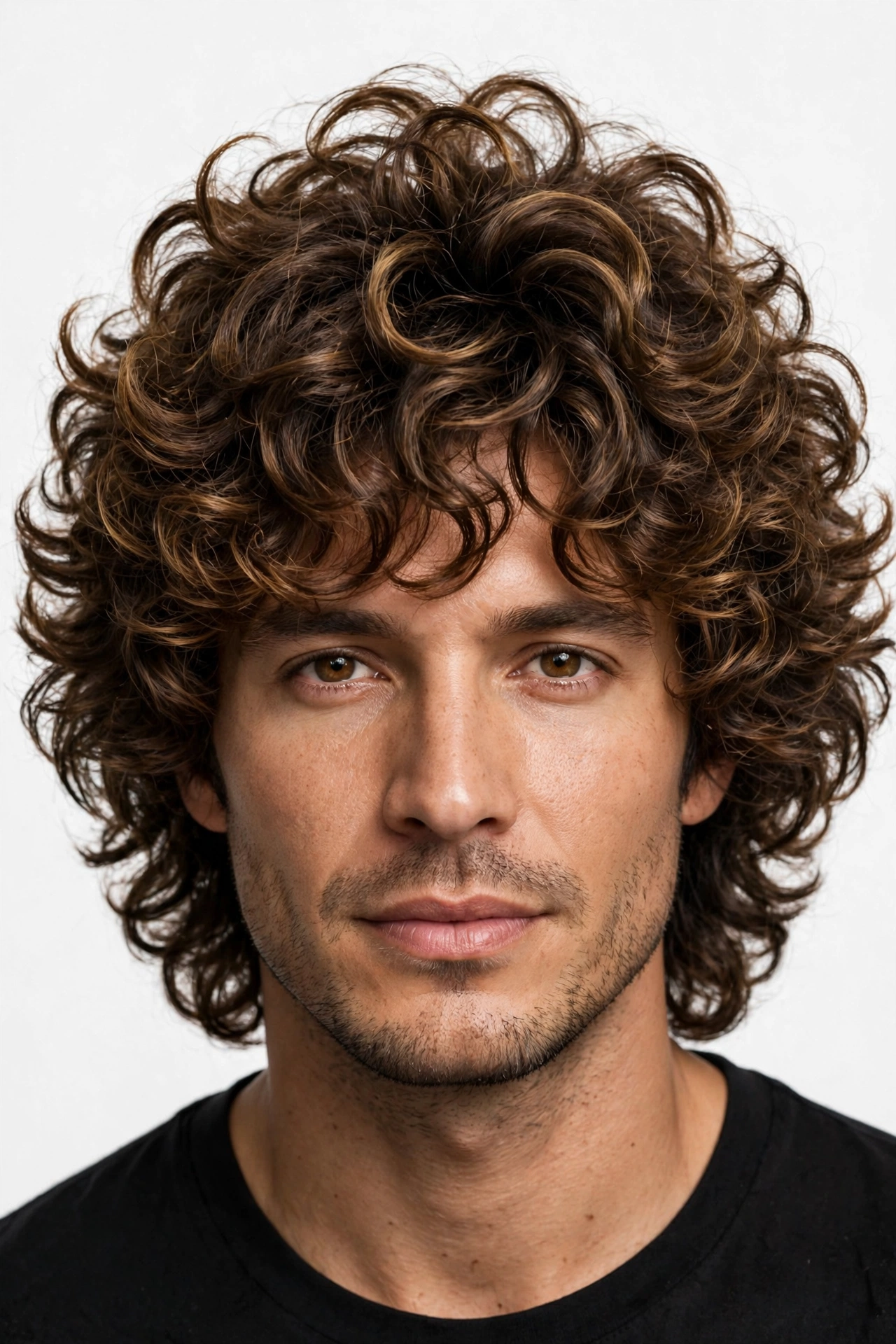
If you have curls, the modern shag might be the best haircut you have never tried. Curls and layers were made for each other: the layers give each curl room to form instead of being crushed under the weight of the hair above it, which is why curly hair cut all one length so often turns into a triangle. The curly shag keeps the top and crown full, graduates the length down through the sides and back, and lets the curls do what curls want to do. The result has shape, bounce, and none of that pyramid effect.
The cutting technique matters more here than with straight hair. A good barber will cut curly hair dry or barely damp, because curls shrink as they dry and a wet cut always lands shorter than planned. Ask specifically for that. For styling, a curl cream on damp hair, scrunched upward, is the whole routine; a diffuser helps on humid days. If your curls are currently fighting you in a short cut, growing into a curly shag is one of the smartest moves you can make. For more curl-specific ideas, our guide to curly hair styles for men goes deeper on working with natural texture.
3. The Wavy Shag
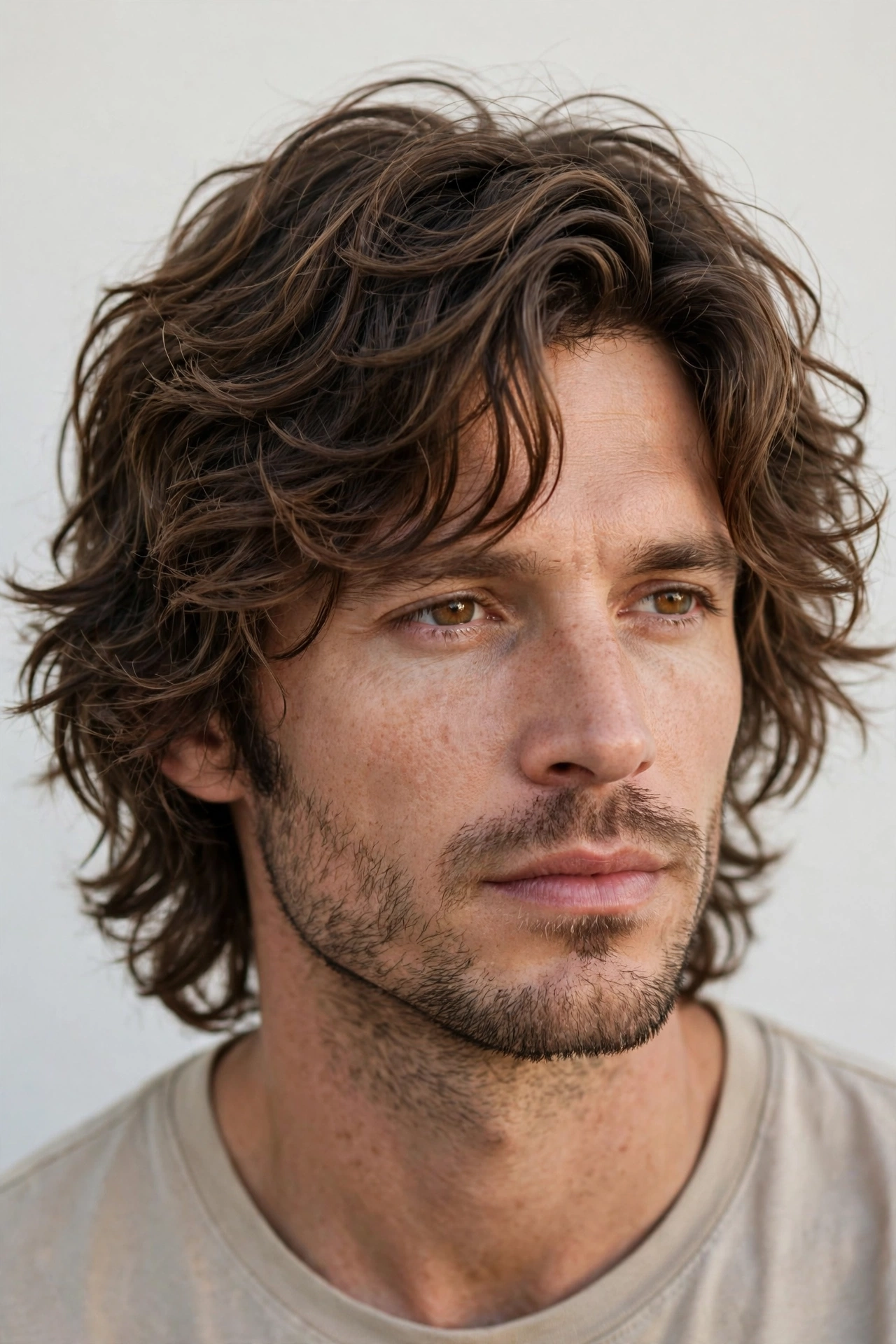
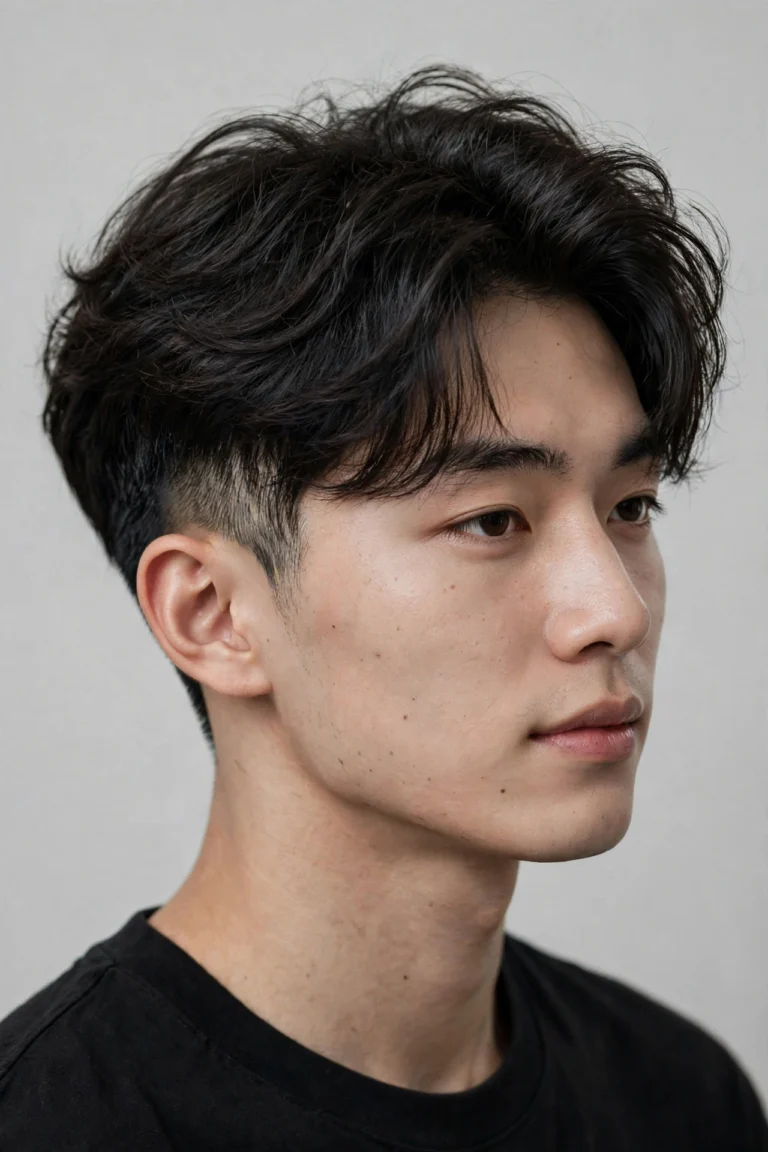
The wavy shag is the version that looks most like the reference photos, because natural wave is the texture this cut was designed around. The waves give the layers automatic movement, the layers give the waves room to breathe, and the combination photographs like it has a personal lighting crew. Length usually sits around the ears to the jaw, with the front pieces falling softly around the face. It is the romantic version of the shag, the one that reads effortless in the way that actually takes a little knowledge.
Here is what nobody tells you: the wavy shag lives or dies on how you dry it. Air drying is fine, but rough-drying with a blow dryer, scrunching as you go, gives the waves more definition and stops the top from going flat. A sea salt spray on damp hair adds the gritty texture that keeps waves from looking soft and shapeless. Do not brush it dry. Ever. A wide-tooth comb on damp hair or just your fingers is all the detangling this cut needs. Get the drying right and the wavy shag is a two-minute morning.
4. The Short Shag
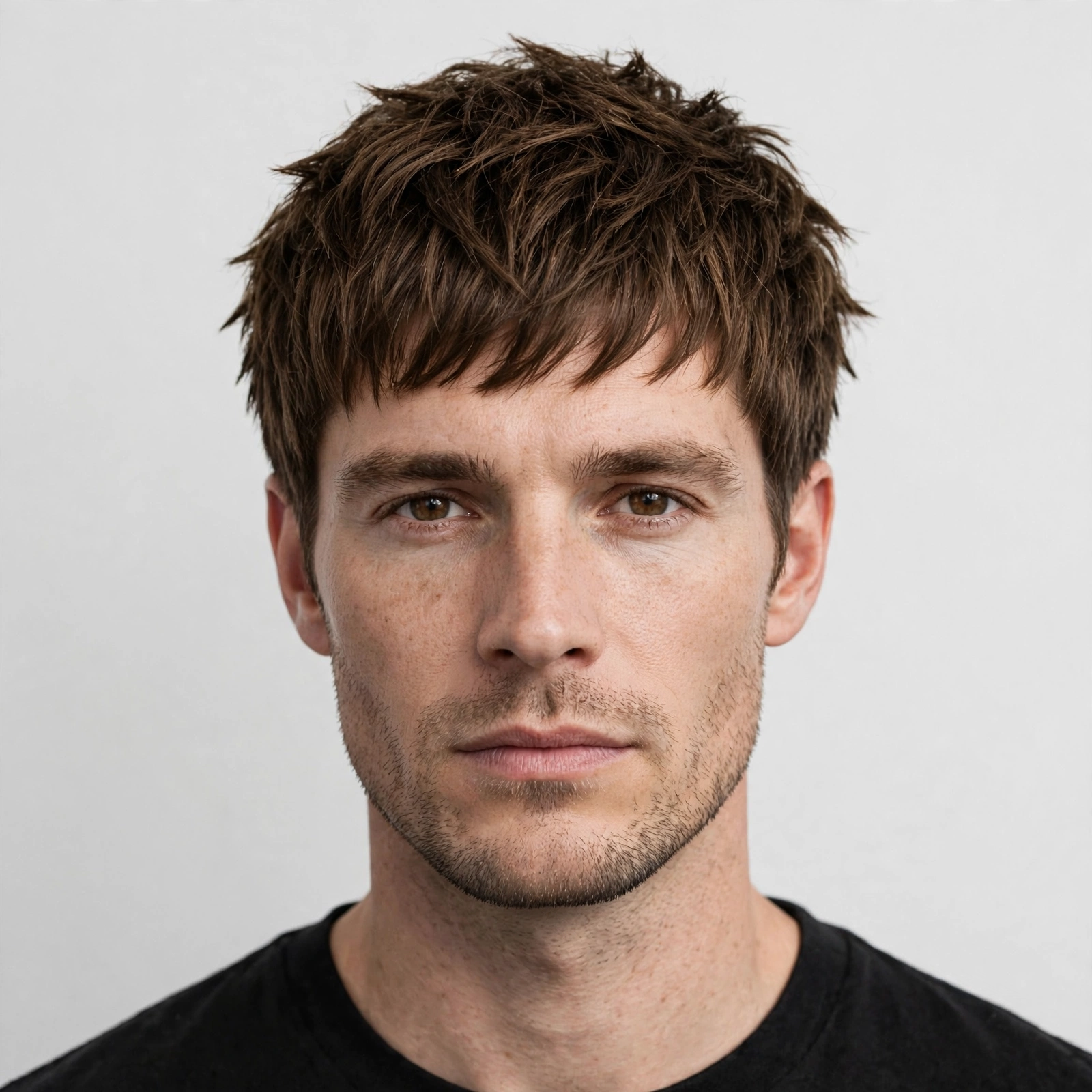
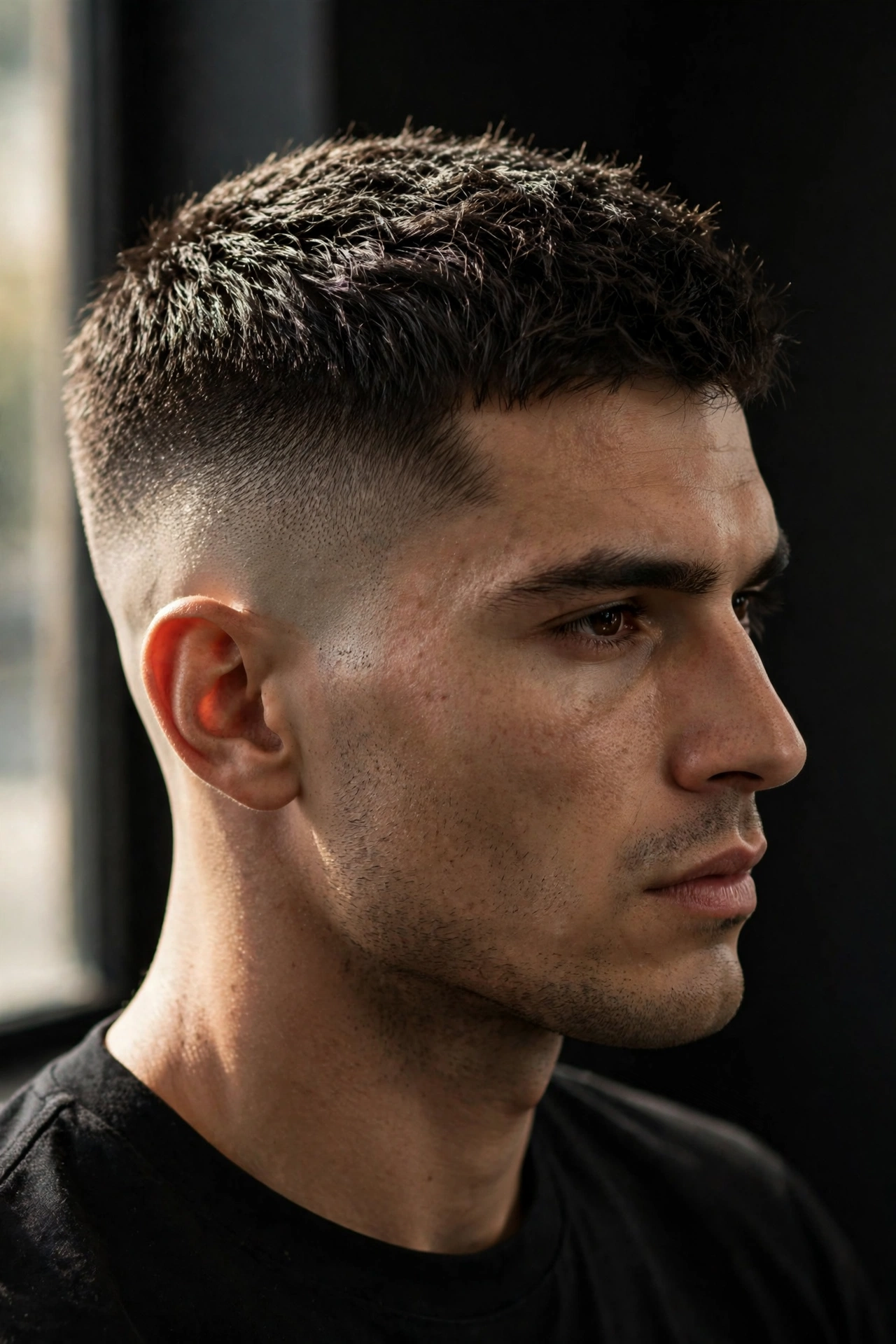
Not everyone is ready for medium length, and the short shag exists for exactly that guy. It keeps the shag’s DNA, choppy layers, textured ends, movement, but packs it into a shorter silhouette where the hair sits above the ears and the neckline stays clean. Think of it as the gateway shag: all of the texture and personality, none of the commitment to growing your hair out for six months.
The short shag is also the most practical version on this list for guys with fine or thin hair. Shorter layers mean less weight pulling the hair flat, so the texture actually holds. It is the easiest shag to style too: a dab of matte paste on dry hair, worked through with your fingers, and the layers separate on their own. Maintenance is straightforward, with trims every four to six weeks to keep the shape. If you like the idea of the shag but your lifestyle or your workplace says keep it short, start here. You can always grow into a longer version later.
5. The Long Shag
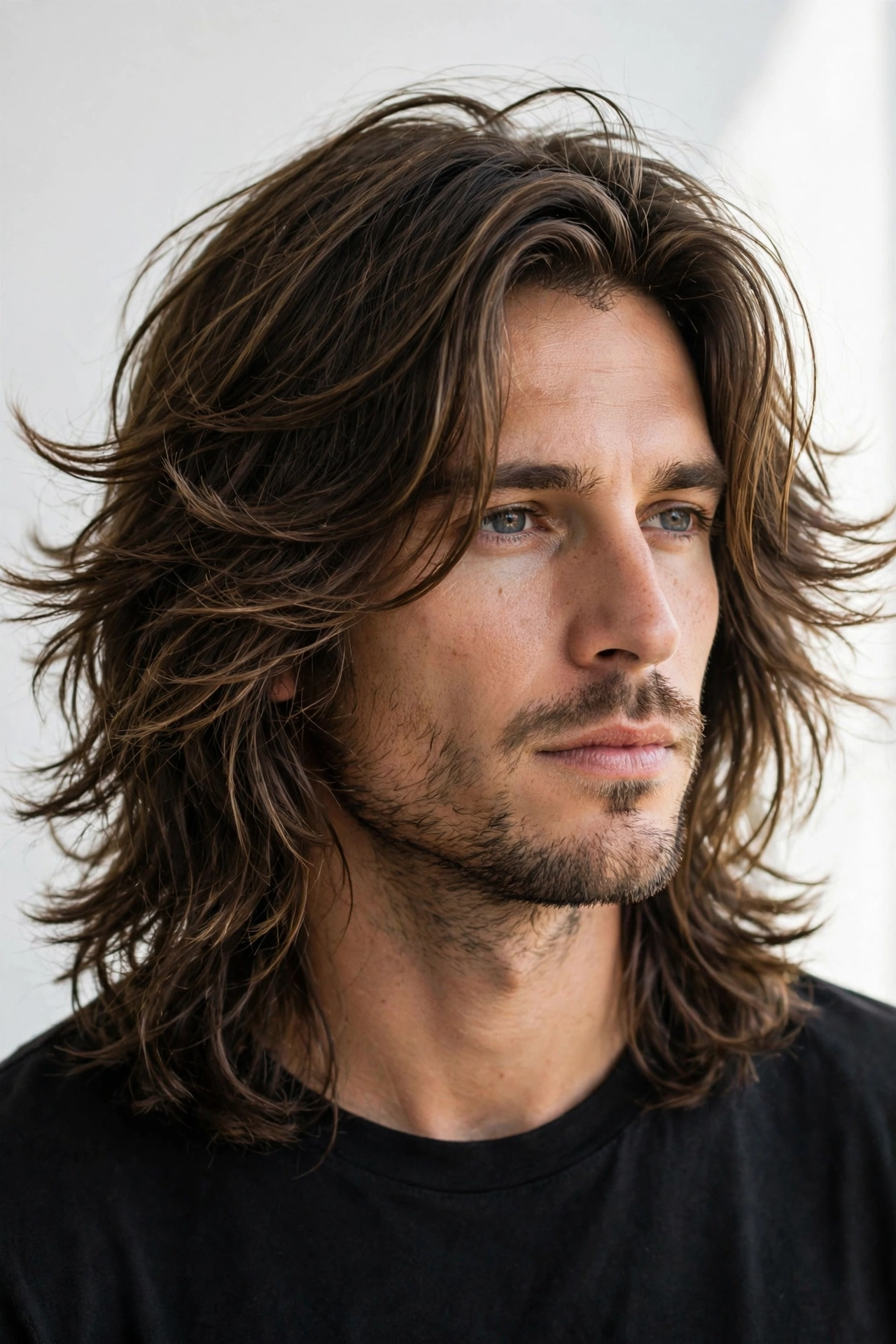
The long shag is for the guy who has already done the hard part: growing his hair past the awkward phase. At shoulder length or just above, the layers become the whole architecture of the cut, keeping long hair from collapsing into a curtain. The front layers frame the face, the interior layers create movement through the lengths, and the ends are textured so they do not look blunt or heavy. This is long hair that looks designed rather than just grown.
Long hair at this length has one mortal enemy, and it is not what you think. It is not wind or hats or gym sessions. It is neglected ends. Split ends are visible at shoulder length in a way they are not at shorter lengths, and they undermine the entire cut. Trim the ends every six to eight weeks without fail. For daily care, a leave-in conditioner keeps the layers moving freely, and a light oil on the ends stops them looking dry. Tie it back when you need to, wear it loose when you do not. The long shag is a commitment, but it is the kind of commitment that gets compliments from strangers.
6. The Shag with Curtain Fringe
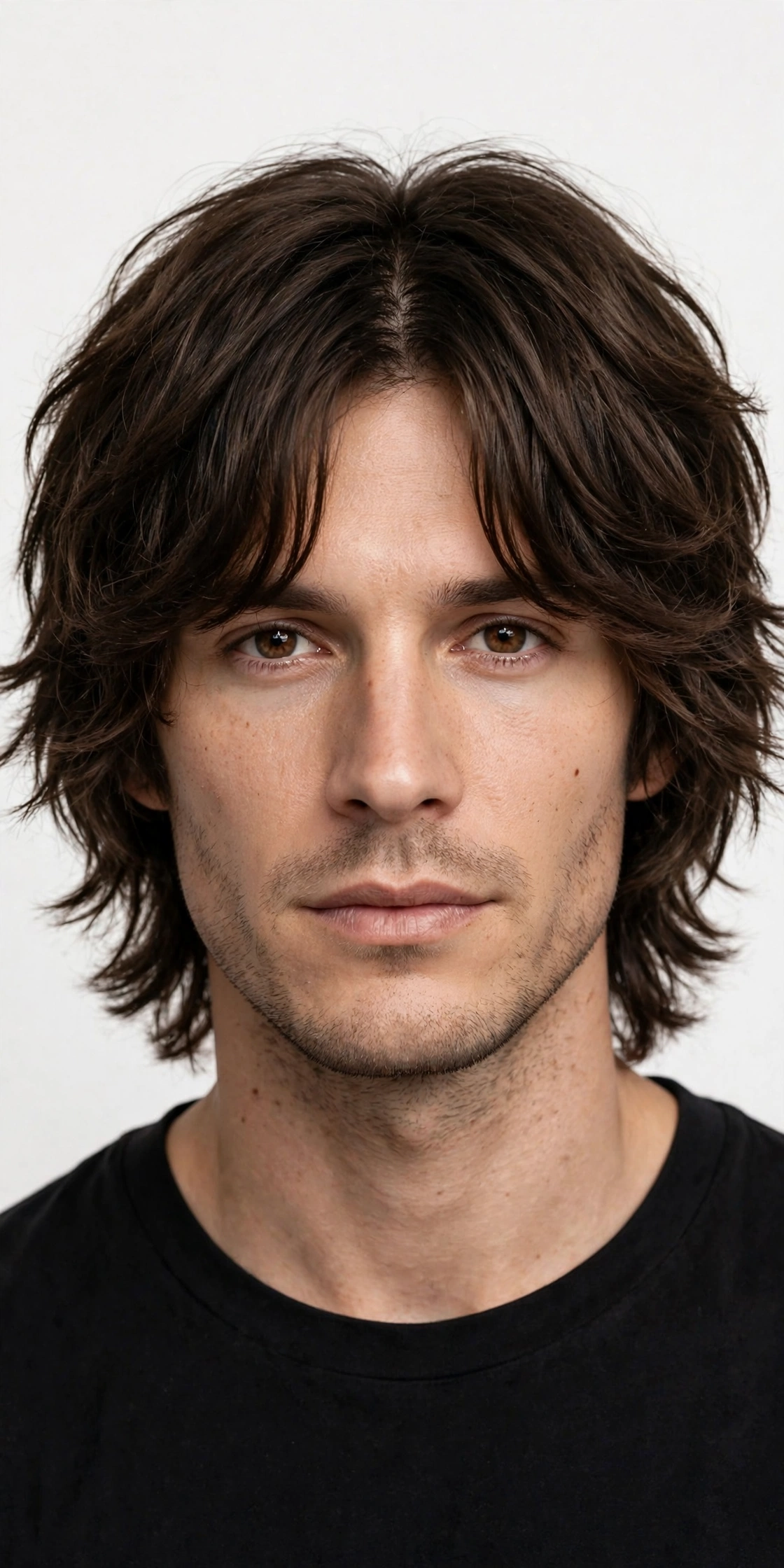
The curtain fringe is the shag’s natural partner. The fringe is parted in the middle and falls in soft, face-framing panels on either side, blending straight into the shag’s layers so there is no visible line where the fringe ends and the rest of the hair begins. It is the detail that makes the cut look expensive. On guys with strong cheekbones or a strong jaw, the curtain panels draw the eye exactly where you want it.
This version asks a little more of you in the morning than the average shag, but we are still talking about three minutes. The curtain pieces need direction, which means a blow dryer and a round brush or just your fingers, pushing the pieces away from the face as they dry. A light cream keeps them sitting smoothly without looking stiff. One honest warning: curtain fringes and cowlicks are enemies. If you have a strong cowlick at the front hairline, talk to your barber about whether your hair will cooperate before committing. On cooperative hair, though, this is one of the sharpest versions on the list.
7. The Textured Shag with Tapered Sides
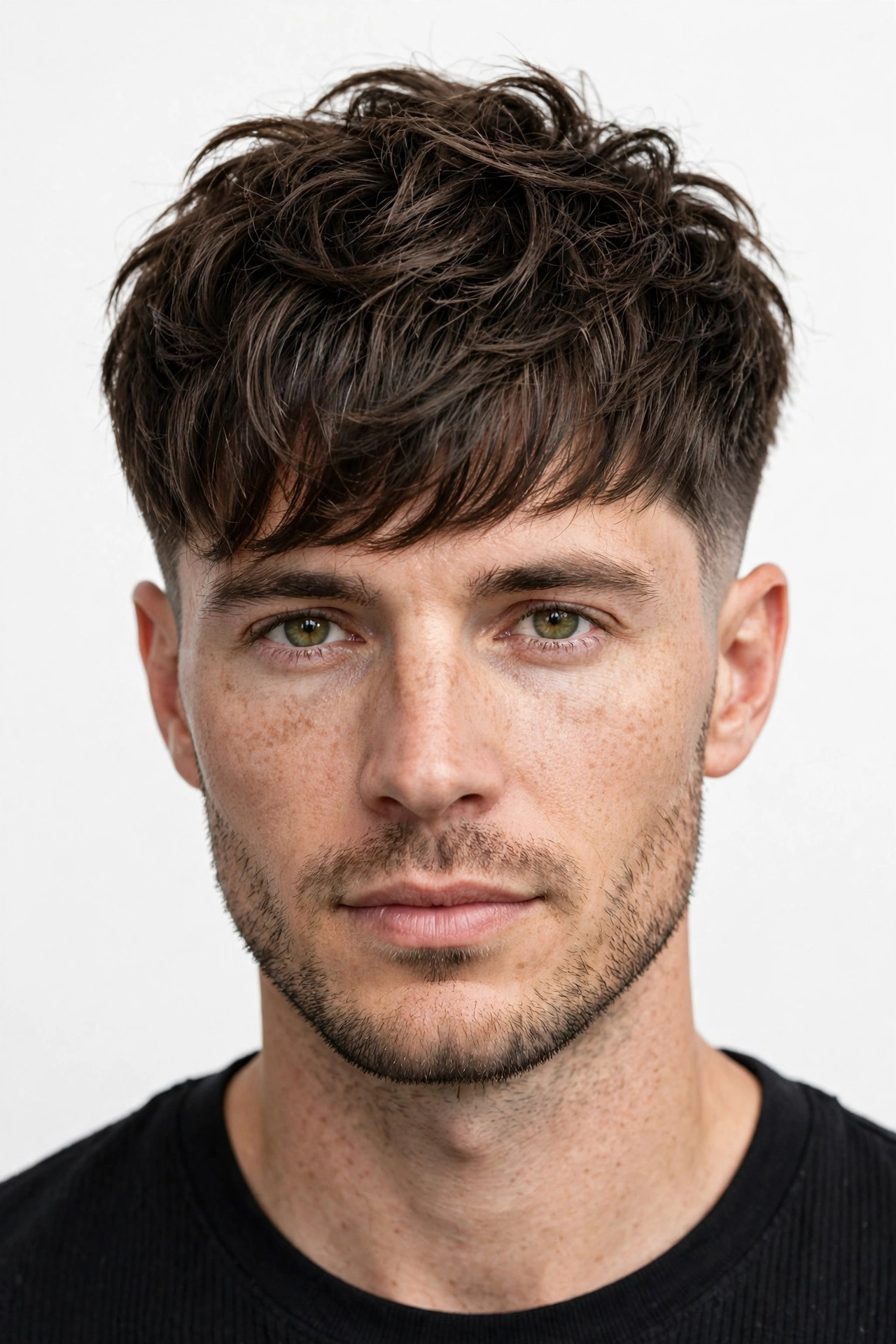
Here is the compromise cut for guys who love the shag’s top but are nervous about the sides. The textured shag with tapered sides keeps all the layered movement up top, then gradually shortens the sides and back with a soft taper instead of leaving them long. There is no harsh fade line, just a clean, natural graduation that keeps the silhouette tidy. It reads modern and deliberate, and it is the version most likely to survive a conservative workplace.
The taper changes the maintenance math in your favor. Because the sides are kept shorter, the cut holds its shape longer between appointments, and the contrast between the neat sides and the textured top actually makes the layers look more intentional. Styling follows the standard shag playbook up top: salt spray, fingers, done. The sides need almost nothing. Ask your barber for a shag on top with a scissor taper on the sides and a natural neckline. If you are shag-curious but fade-loyal, this is your bridge.
8. The 70s Rockstar Shag
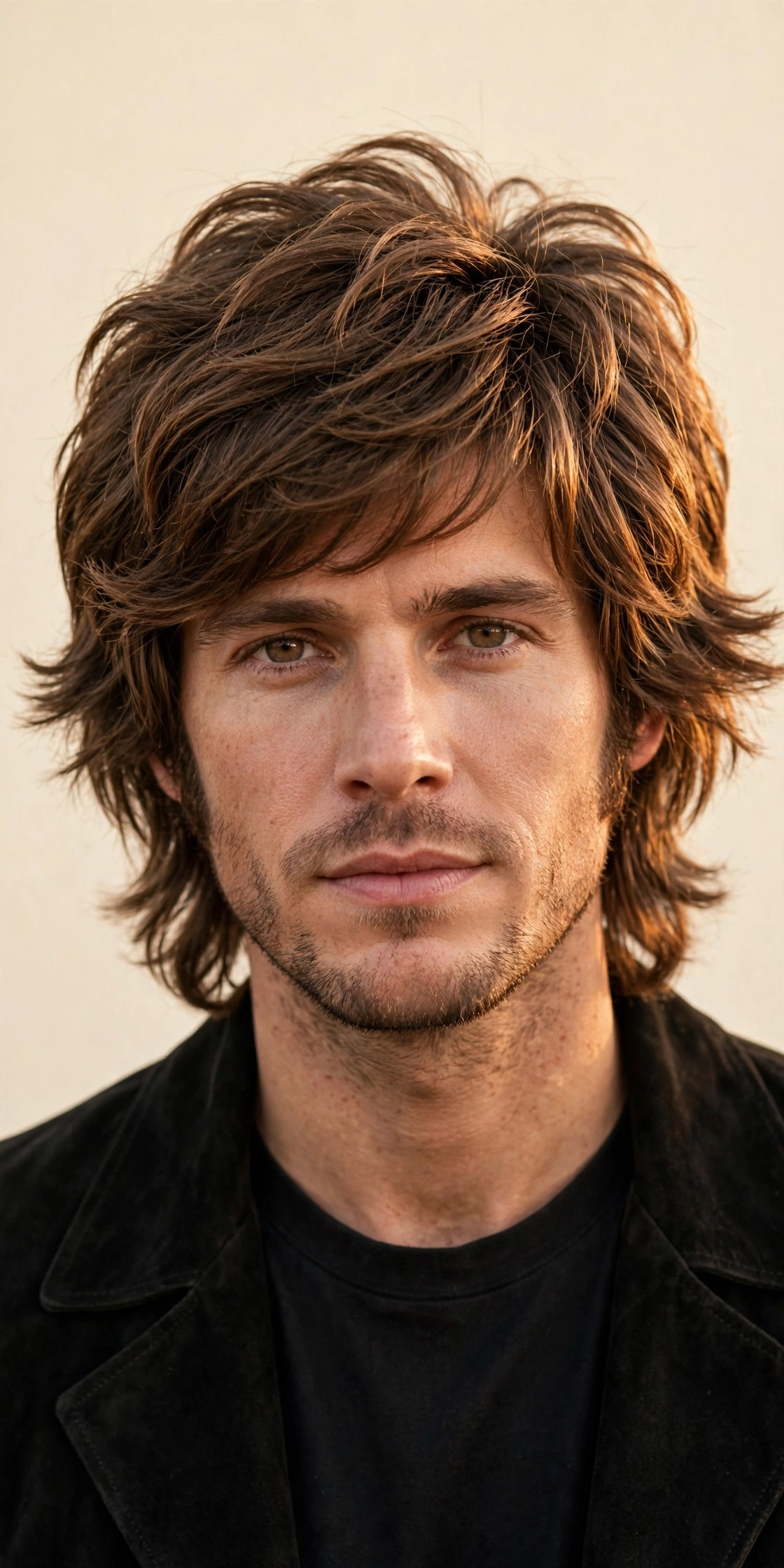
Every shag list needs the throwback, and this one wears its influences proudly. The 70s rockstar shag leans into the cut’s origins: heavier feathering, more obvious layering, longer pieces around the ears and nape, and that unmistakable swagger. Think of the reference photos taped to barbershop mirrors for fifty years. The difference between this and a costume is in the execution: a modern barber will soften the razor work and keep the proportions current, so it reads as an homage rather than a tribute act.
This version is not for everyone and it knows it. It works best on guys with some natural wave or body, because the feathered layers need texture to look right; on pin-straight fine hair it can fall flat and look dated. It also pairs best with confidence in the rest of your look, because the hair is making a statement and everything else should either match the energy or deliberately contrast it. But if you have ever looked at those old photos and thought that should come back, 2026 is your year. The culture has finally caught up.
9. The Shaggy Forward Fringe
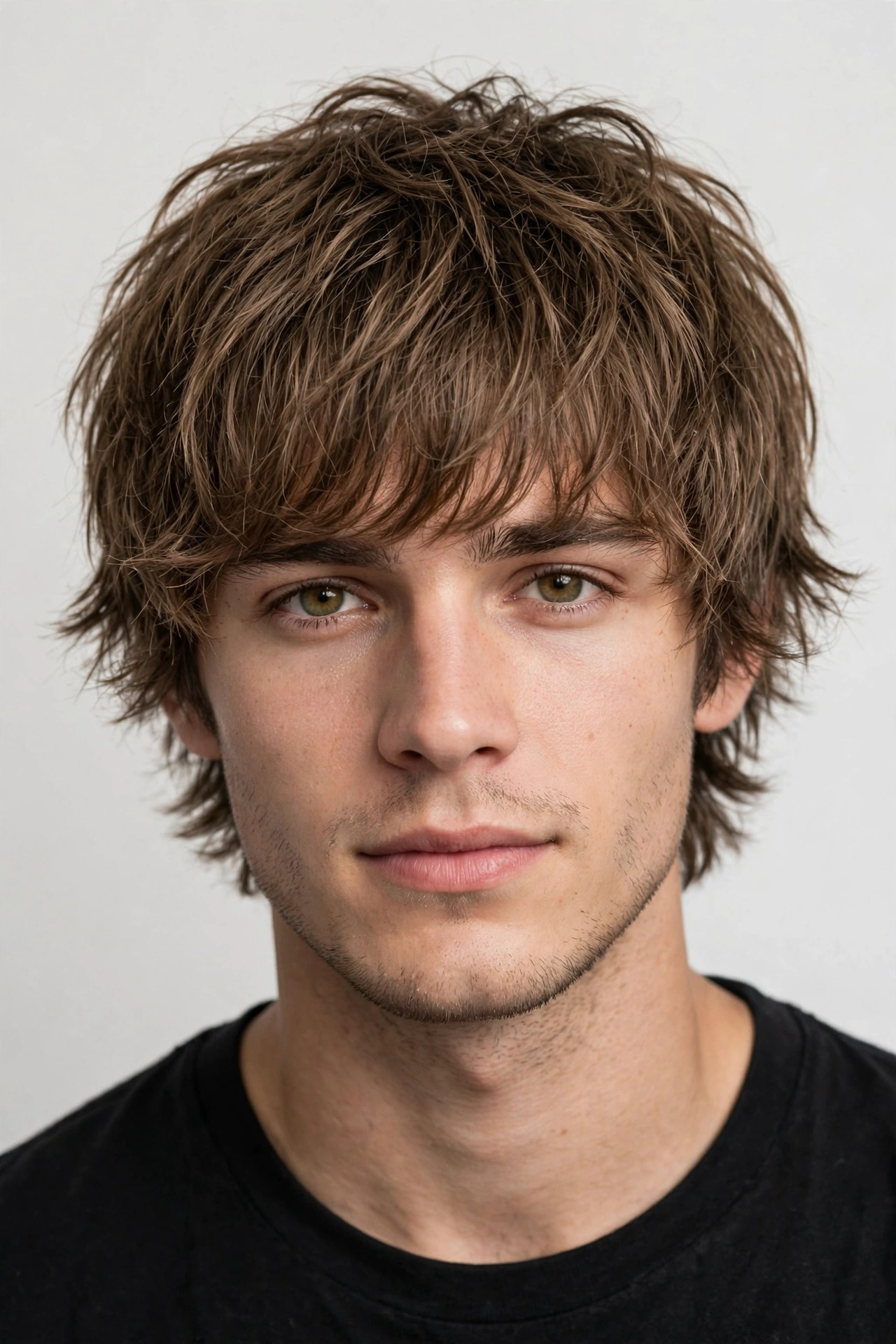
Instead of parting the front, this version pushes everything forward. The fringe falls over the forehead in textured, piecey strands, blending into the shag’s layers on the sides. It is a bolder, more youthful take on the shag, and it has a practical superpower: it is fantastic for guys with high foreheads or receding hairlines, because the forward fall covers the front beautifully while looking completely natural. Nobody will ever read it as a cover-up.
Styling a forward fringe on a shag is simple but directional. Everything gets pushed forward while drying, either with your fingers or a blow dryer pointed down toward your forehead. A matte paste or clay gives the pieces separation so they do not clump into a solid sheet. Keep the fringe just above the eyebrows; once it starts hitting your eyes, it crosses from stylish into annoying. For more fringe-forward ideas, our guide to fringe haircuts for men covers the full family of forward styles.
10. The Middle-Part Shag
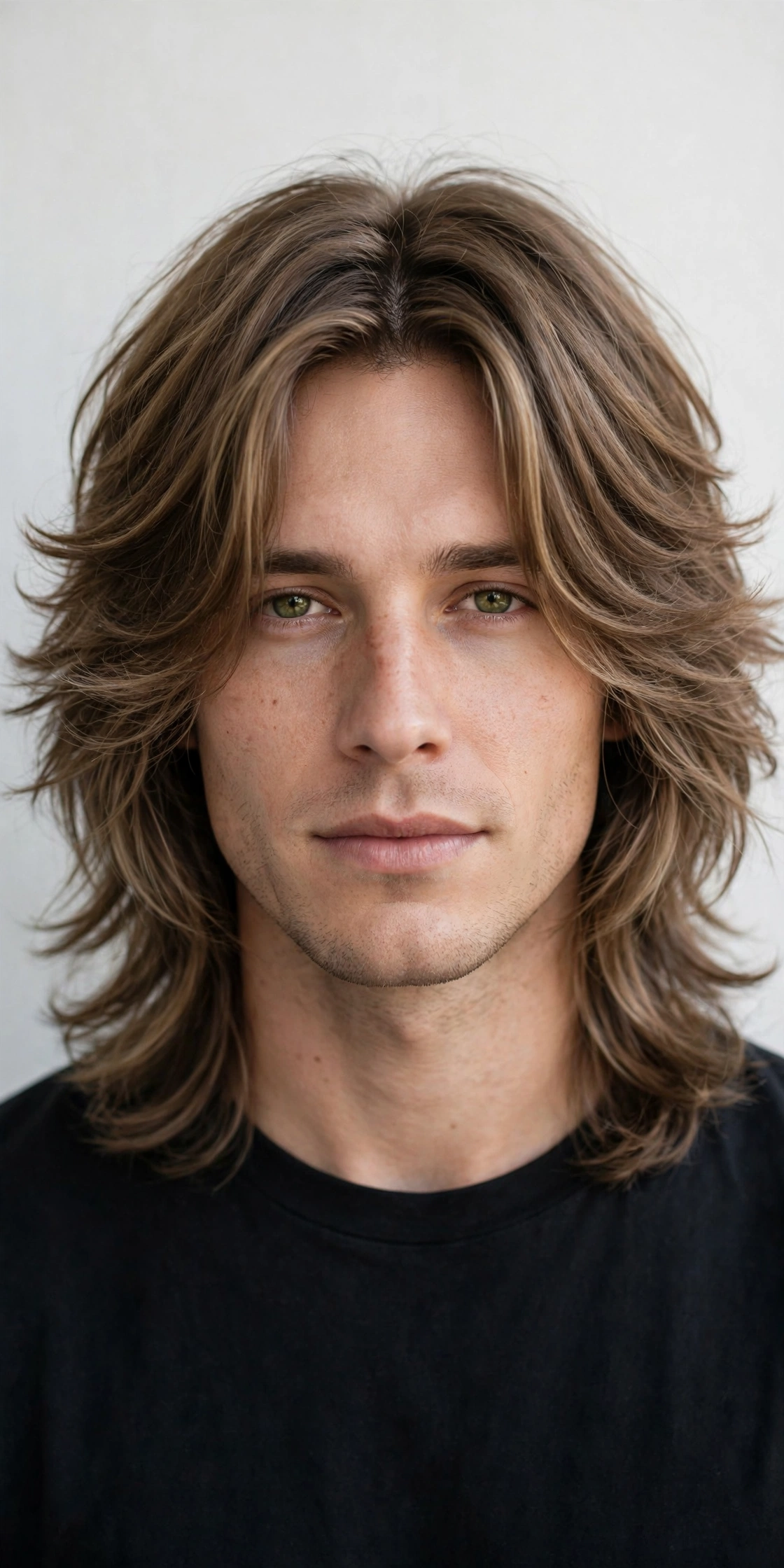
The middle part and the shag go together like they were designed for each other, because in a sense they were. Parting the hair down the center lets the shag’s layers fall symmetrically on both sides of the face, creating a balanced, flowing shape that shows off the layering from every angle. It is the most photogenic version on this list and the one you see most in editorial shoots. It also happens to be very forgiving of asymmetry in your features, since the balanced fall evens everything out visually.
The middle part demands a certain honesty about your hairline. If your hairline is strong and even, this version will look incredible. If you have significant recession at the temples, a hard center part can draw attention to it, and you might prefer the curtain fringe or a softer off-center part instead. Assuming the hairline cooperates, maintenance is easy: the part forms naturally as the hair dries if the cut is balanced, and a little salt spray keeps the layers defined. Find your natural part by combing the hair straight back when wet and seeing where it wants to split.
11. The Side-Part Shag
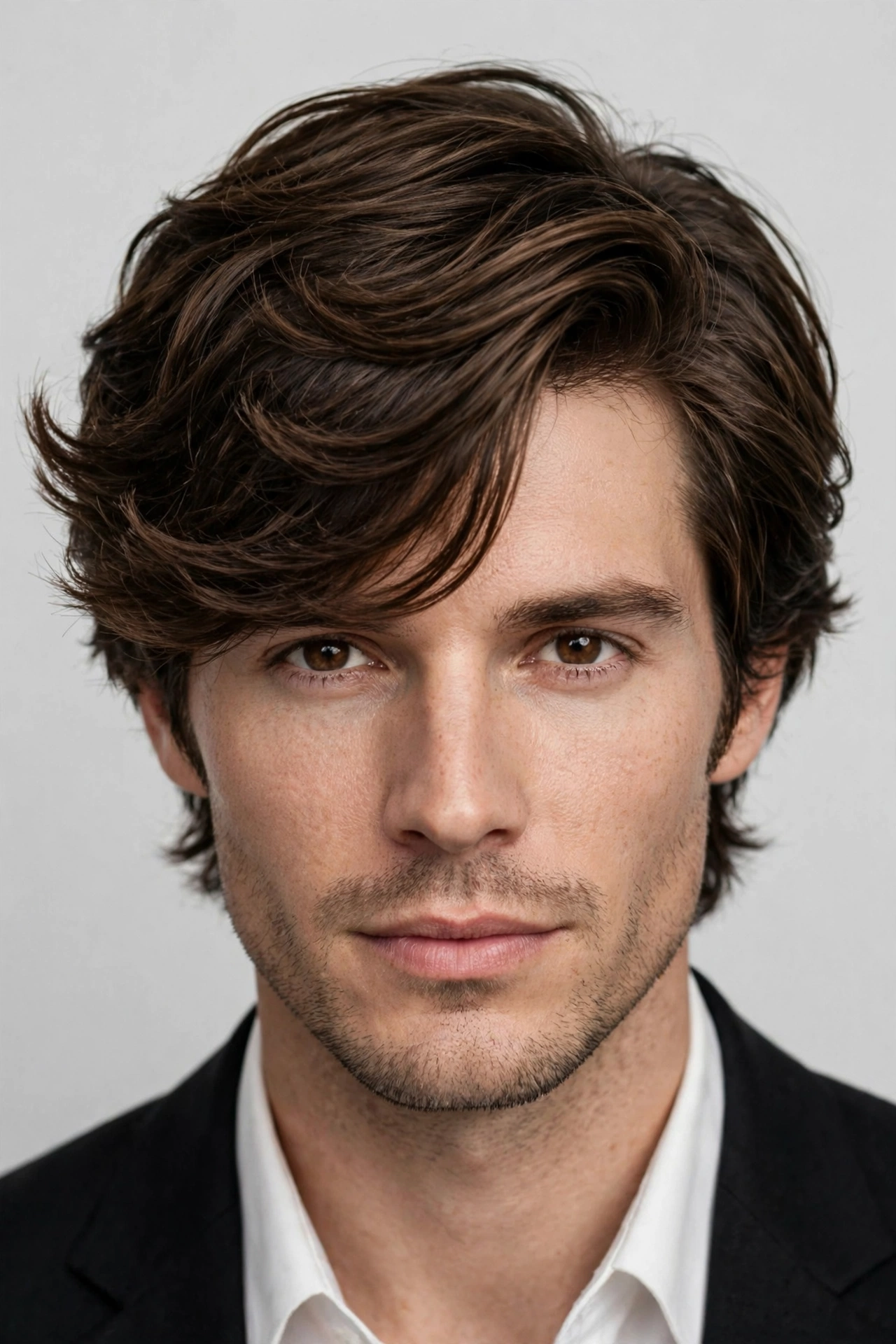
The side-part shag is the grown-up of the family. Same layered texture, but the front is swept to one side instead of parted down the middle or pushed forward. The effect is softer and more classic than the other versions, with a touch of old-school polish that makes it the easiest shag to wear in professional settings. It keeps the movement and the cool factor while reading as intentional and put-together.
This is also the version that transitions best from other cuts. If you currently wear a side part with shorter hair, growing into this version feels natural rather than dramatic. The styling is familiar territory: part the hair while damp, blow dry the front into place with a little volume at the roots, finish with a light cream. The layers do the rest. If you want to see the shorter end of the side-part spectrum first, our side part haircuts for men guide is a good companion read.
12. The Shaggy Wolf-Cut Hybrid
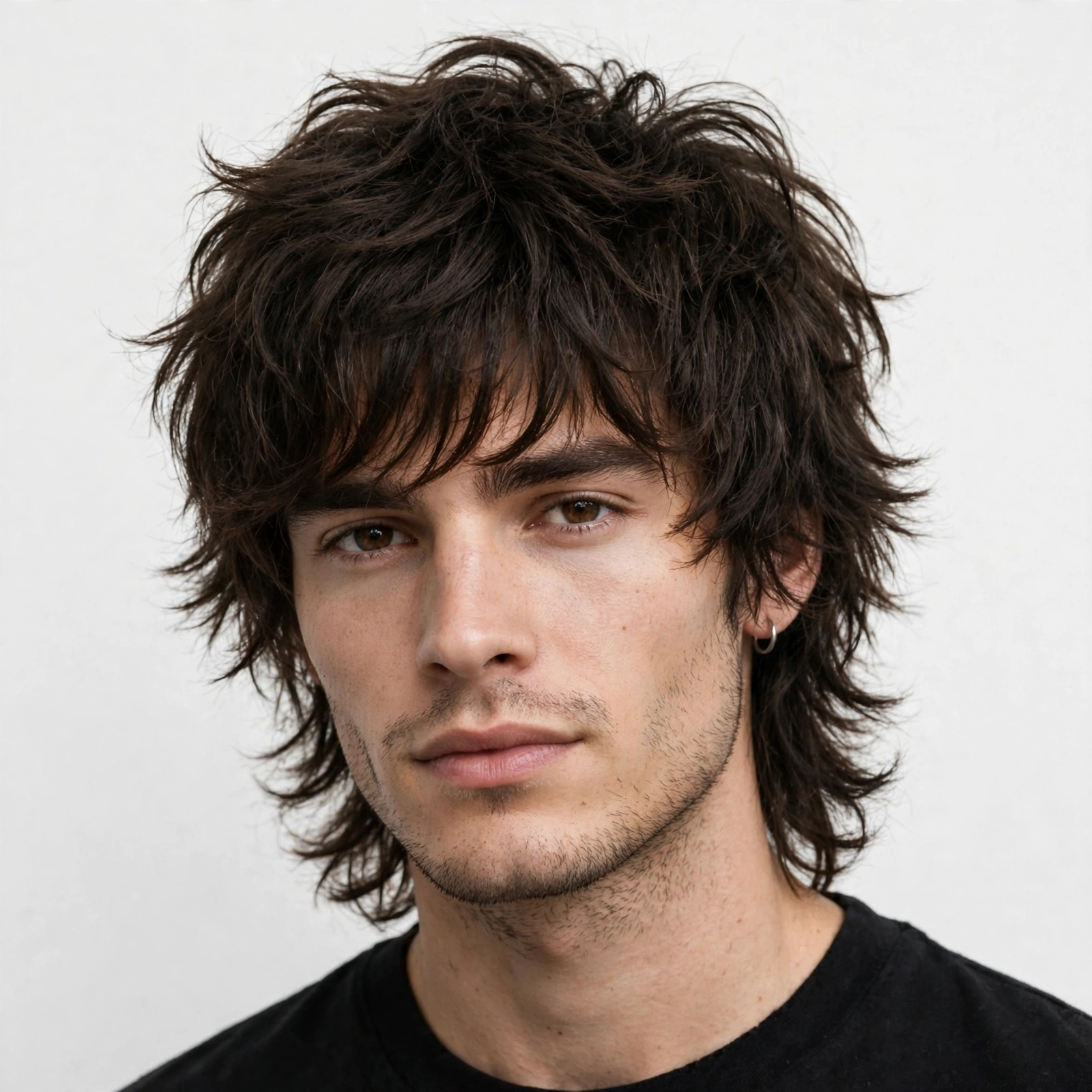
Let us address the elephant in the room. The wolf cut and the shag are related, and the hybrid between them is one of the most requested cuts in barbershops right now. It takes the shag’s wearable, even layering and adds a touch of the wolf cut’s drama: a fuller, more voluminous crown and slightly longer, thinner pieces through the back. Not a full mullet situation, just a hint of that wild silhouette. It is the shag for guys who want a little more edge.
The key word is restraint. The difference between a great hybrid and a cut that looks confused is about an inch of length at the back and the discipline to keep the top blended rather than disconnected. Show your barber reference photos and use the word “subtle” more than once. This version suits thicker hair best, because the volume play needs density to work with. Style it the standard way, salt spray and fingers, and let the shape do the talking. If you want the full wolf experience instead, that is a different article, and a different commitment.
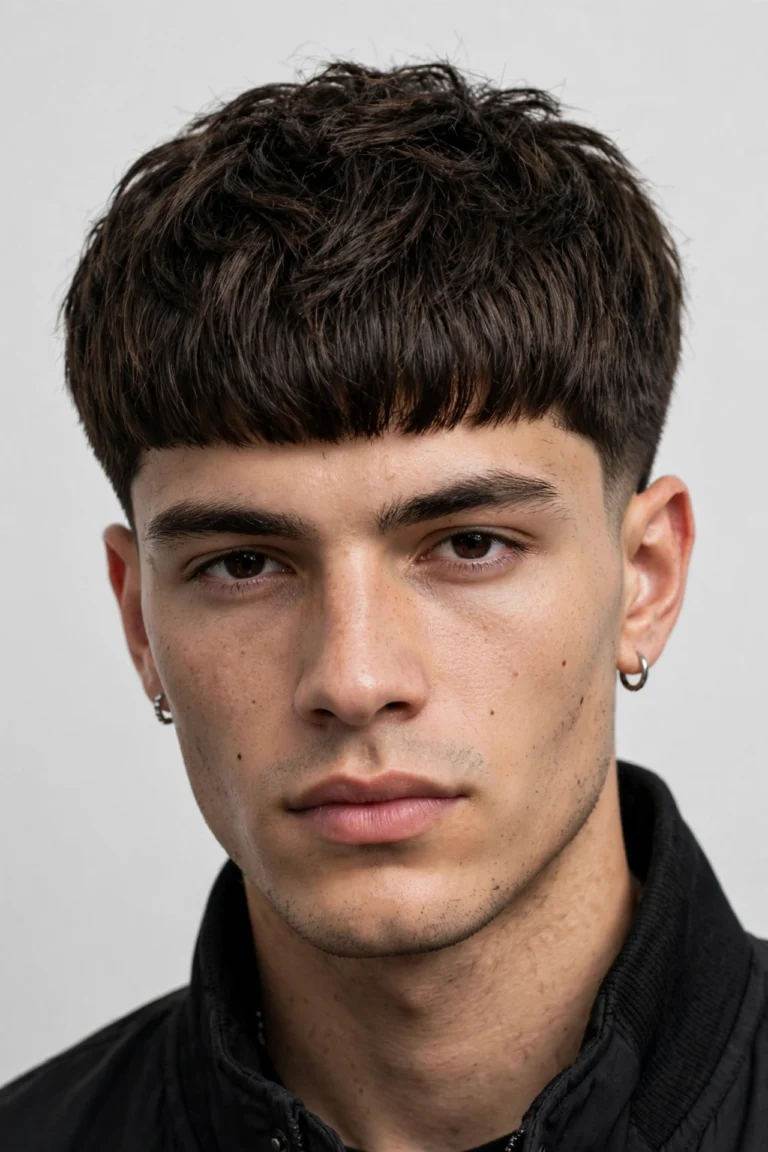
13. The Messy Mop Shag
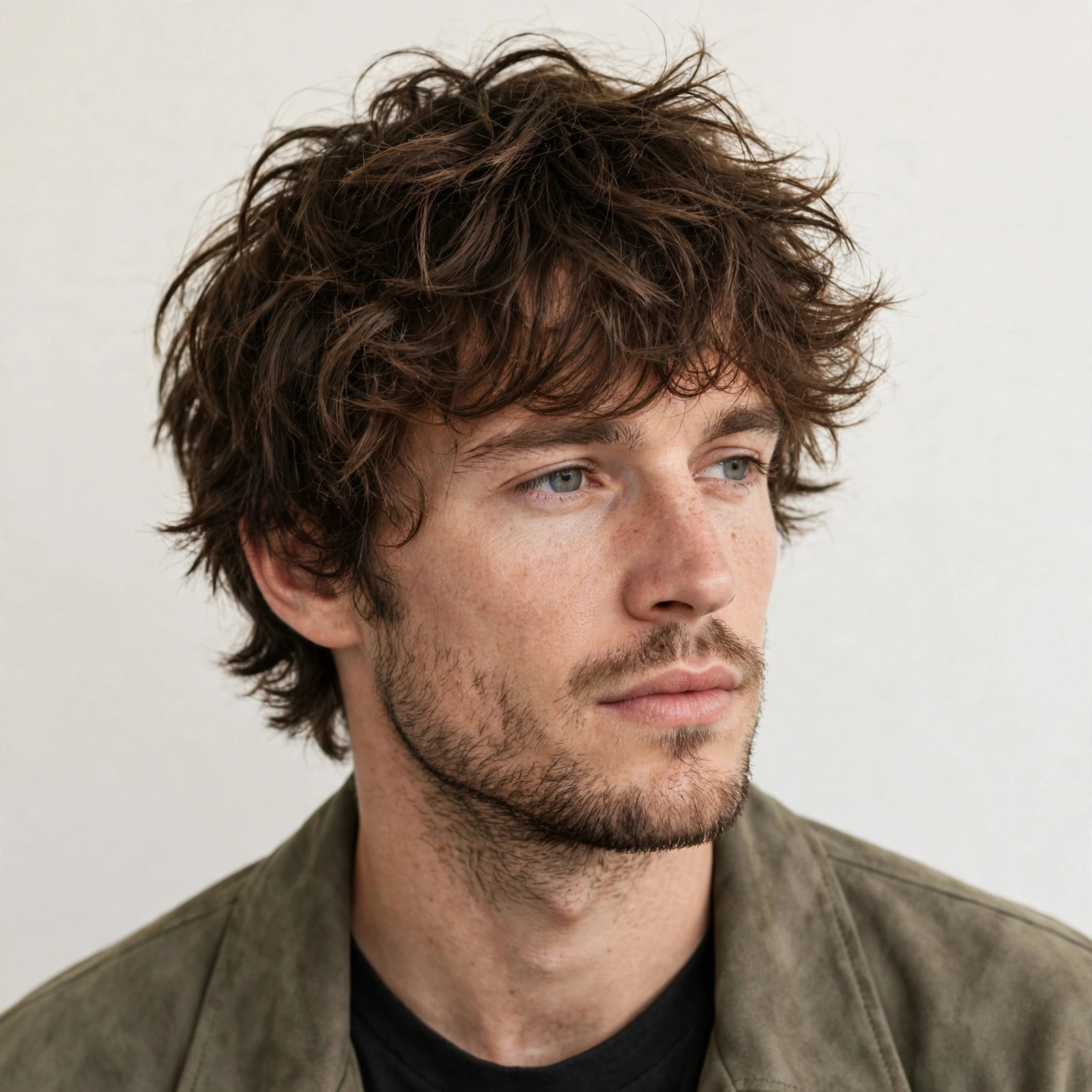
The messy mop shag is the shag at its most unbothered. The layers are cut with extra texture, the styling is deliberately rough, and the finish looks like you ran your hands through your hair and walked out the door. Which, to be fair, is more or less the routine. This is the version for guys whose personal style is already relaxed, the jeans and boots crowd, the creative types, anyone whose grooming philosophy is “look good without looking like you tried.”
Do not mistake easy styling for an easy cut, though. A good messy shag is precision work. The barber has to build in the texture so that your bedhead looks like the reference photo and not like actual bedhead. That means point cutting, slide cutting, and a real understanding of how your hair falls. Once the cut is right, the routine is genuinely minimal: a texturizing powder or dry texture spray at the roots for lift, then hands, not combs. If your mornings are measured in seconds, this version respects that.
14. The Shag with Beard
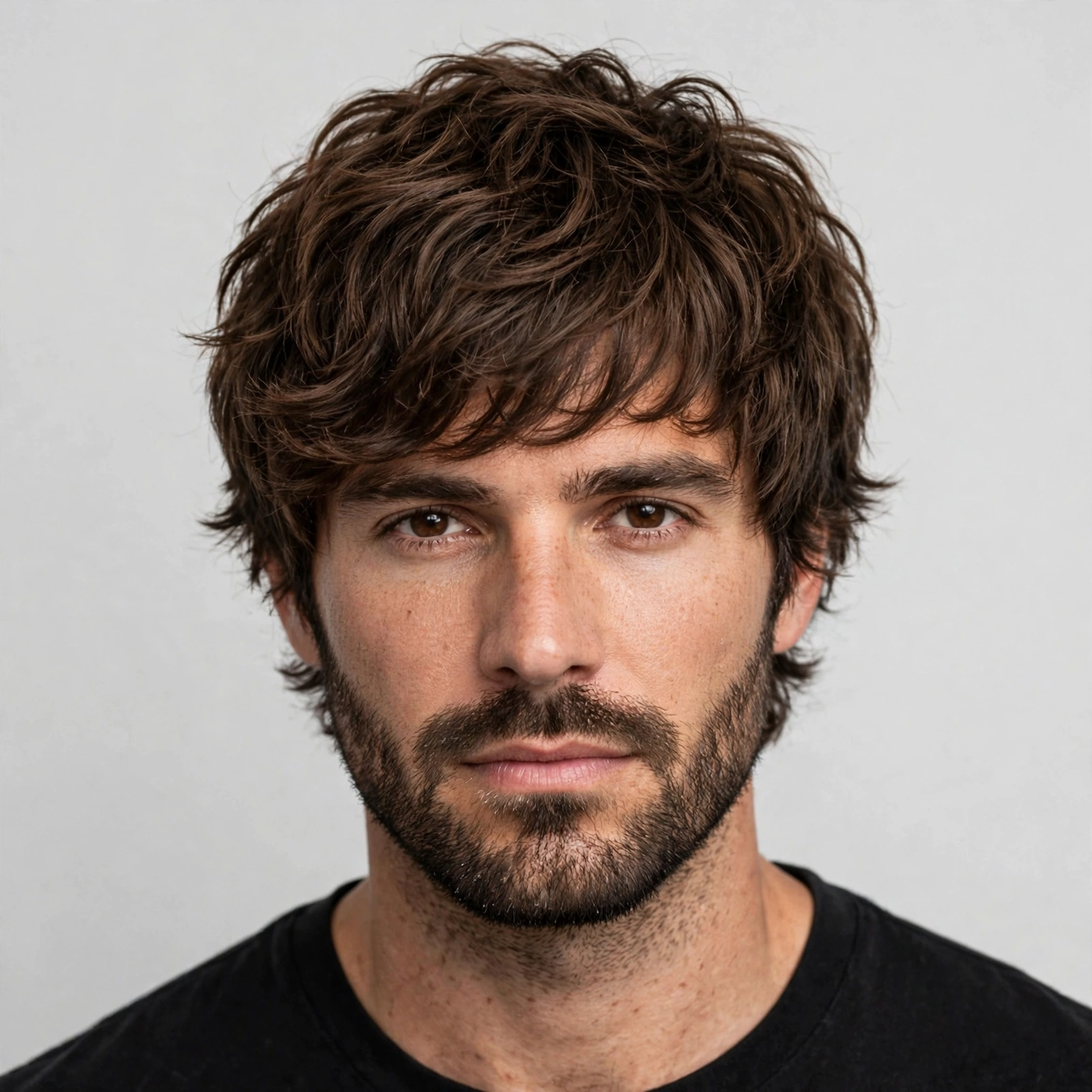
A shag and a beard are a natural pairing, and the combination is greater than the sum of its parts. The soft, flowing layers on top balance the structured weight of facial hair, and the overall effect is masculine without being severe. It is the look of a guy who has figured out his personal style. The shag keeps the top interesting while the beard anchors the jawline, and together they create a complete silhouette.
Proportion is everything here. A medium-length shag pairs best with a short to medium beard; if the beard gets very long while the hair stays medium, the balance tips and the look gets bottom-heavy. Keep the beard shaped at the cheeks and neckline, and make sure the sideburns blend into the beard rather than creating a visible gap. A little beard oil keeps the facial hair looking intentional next to the shag’s deliberate messiness. Get the balance right and this is one of the most complimented combinations a guy can wear.
15. The Fine-Hair Shag
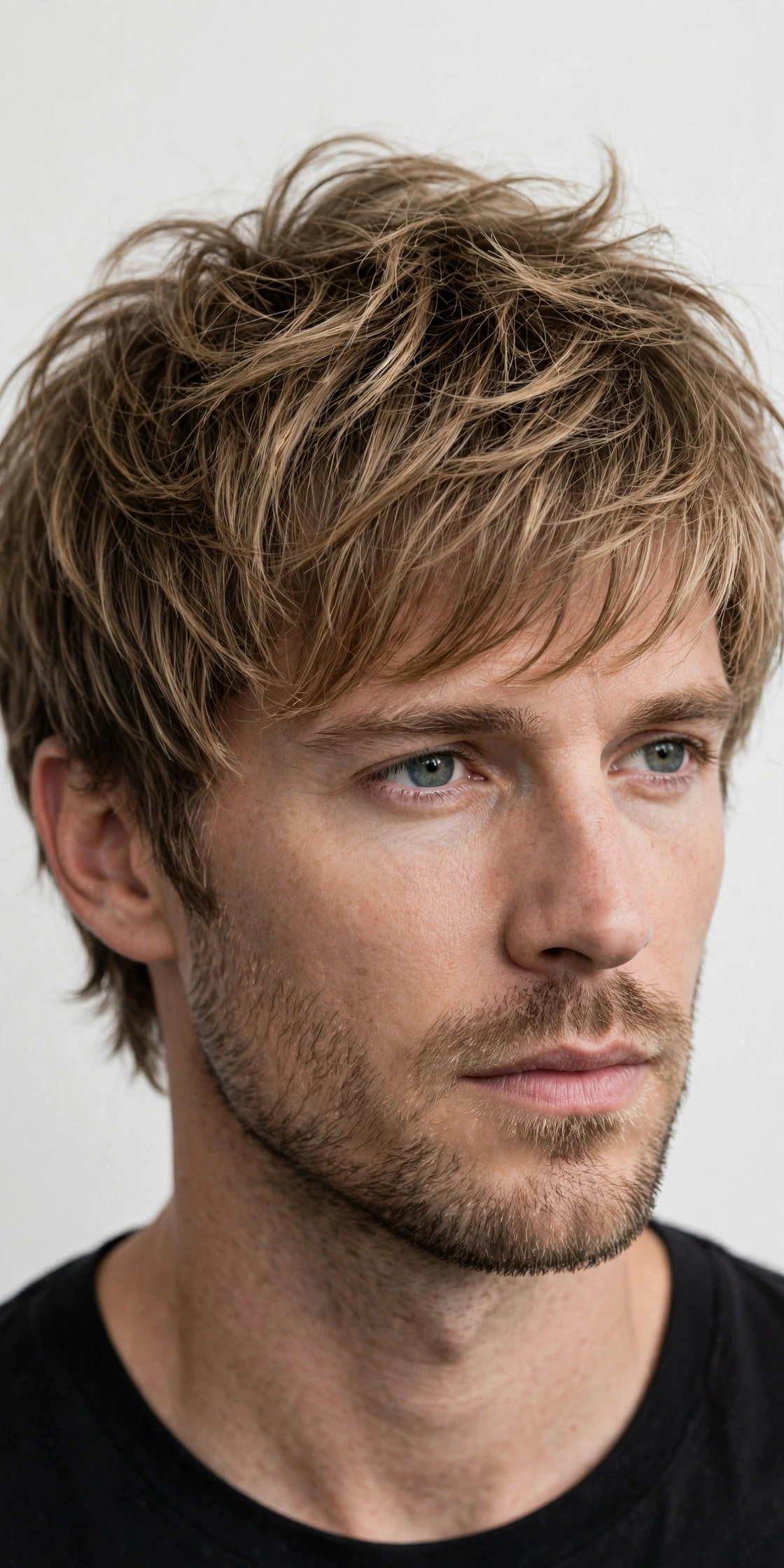
Fine hair and the shag have a secret alliance. Most guys with fine hair assume they need short, blunt cuts to fake density, but the right shag can do more for fine hair than a buzz ever will. The trick is in the layering strategy: shorter, more numerous layers remove weight so the hair does not collapse flat, and the textured ends create the illusion of fullness. The cut is engineered to make fine hair behave like it has more body than it does.
The rules for fine hair are specific. Keep the overall length moderate, because long fine hair goes stringy no matter how you layer it. Ask your barber to keep the layers close together rather than long and disconnected. And product choice matters enormously: lightweight volumizing mousse or a texturizing powder at the roots, never heavy waxes or oils that will glue everything to your scalp. Blow drying upside down for thirty seconds gives fine-hair shags a lift that lasts all day. Done right, people will assume your hair is thicker than it is.
16. The Thick-Hair Shag
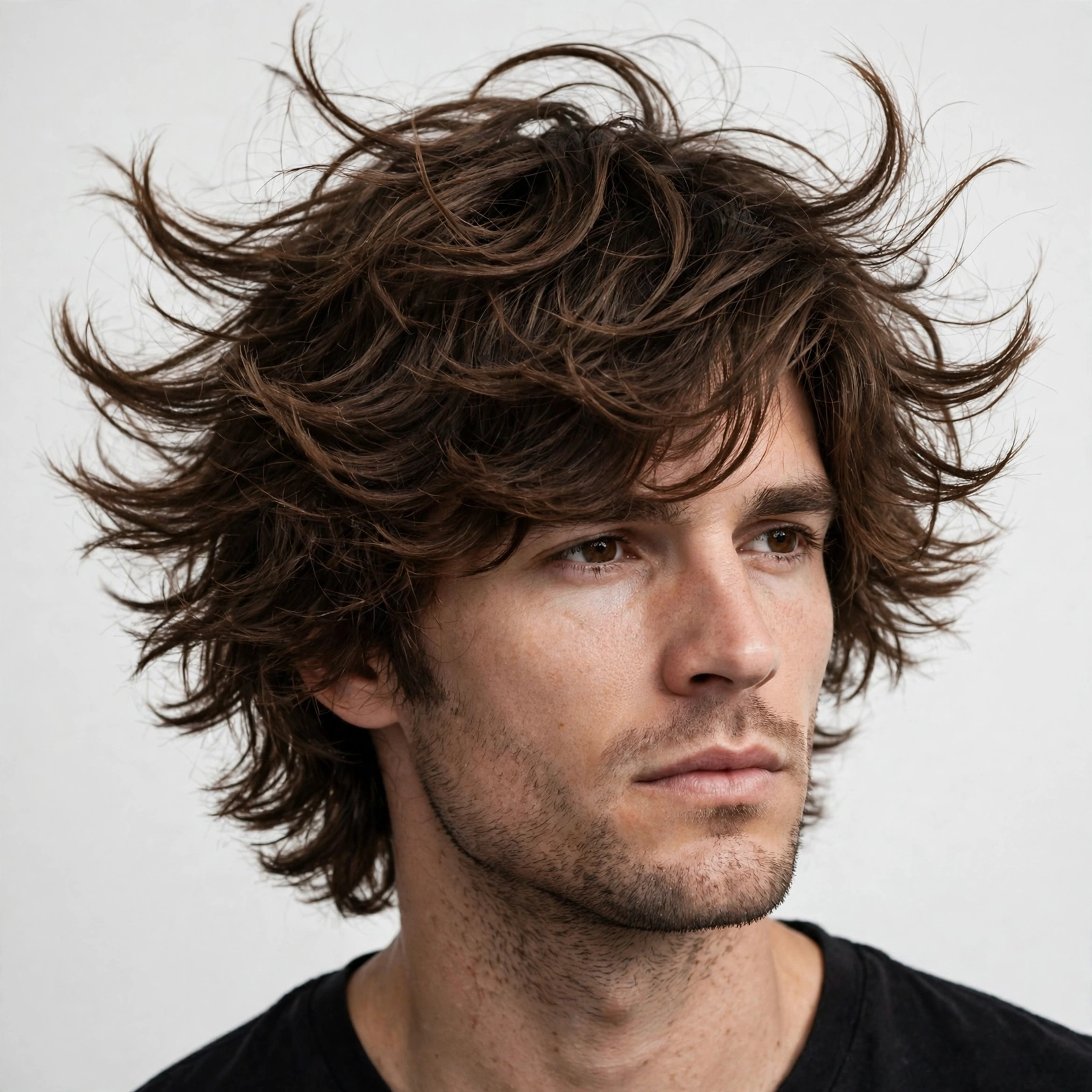
Thick hair is both a gift and a management problem, and the shag is one of the best solutions ever designed for it. Where a blunt cut turns thick hair into a helmet, the shag’s layers remove bulk from the interior while keeping the length, so the hair moves instead of sitting in one solid mass. It is the difference between hair that fights you and hair that cooperates. If your thick hair has ever felt unmanageable, the problem was probably the cut, not the hair.
The key technique here is interior thinning and texturizing. Tell your barber explicitly that you want bulk removed, not just length. Thinning shears or a razor through the mid-lengths takes out the weight that makes thick hair puff up, while the outer layers keep the shape looking full and healthy. You will likely want a bit more length than the average shag, because length gives thick hair’s weight somewhere to go. For styling, a light cream to control the ends is usually enough; heavy products just add to the mass you are trying to manage.
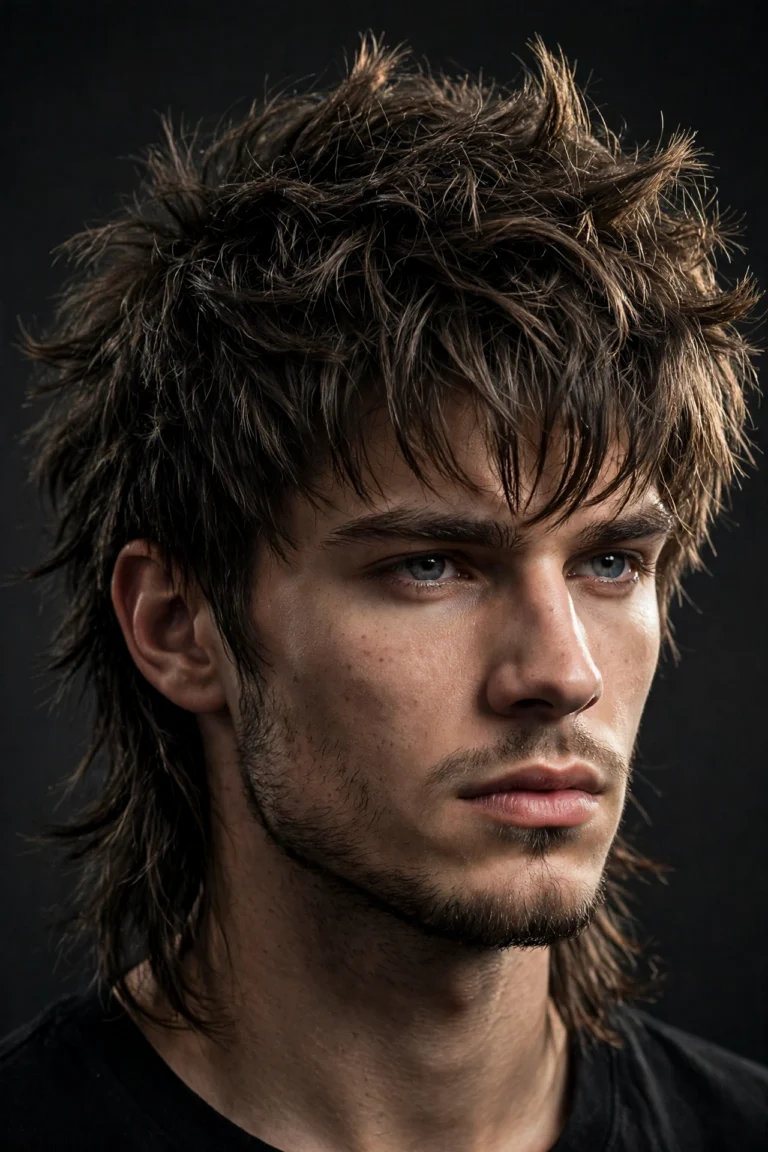
17. The Shaggy Mullet Blend
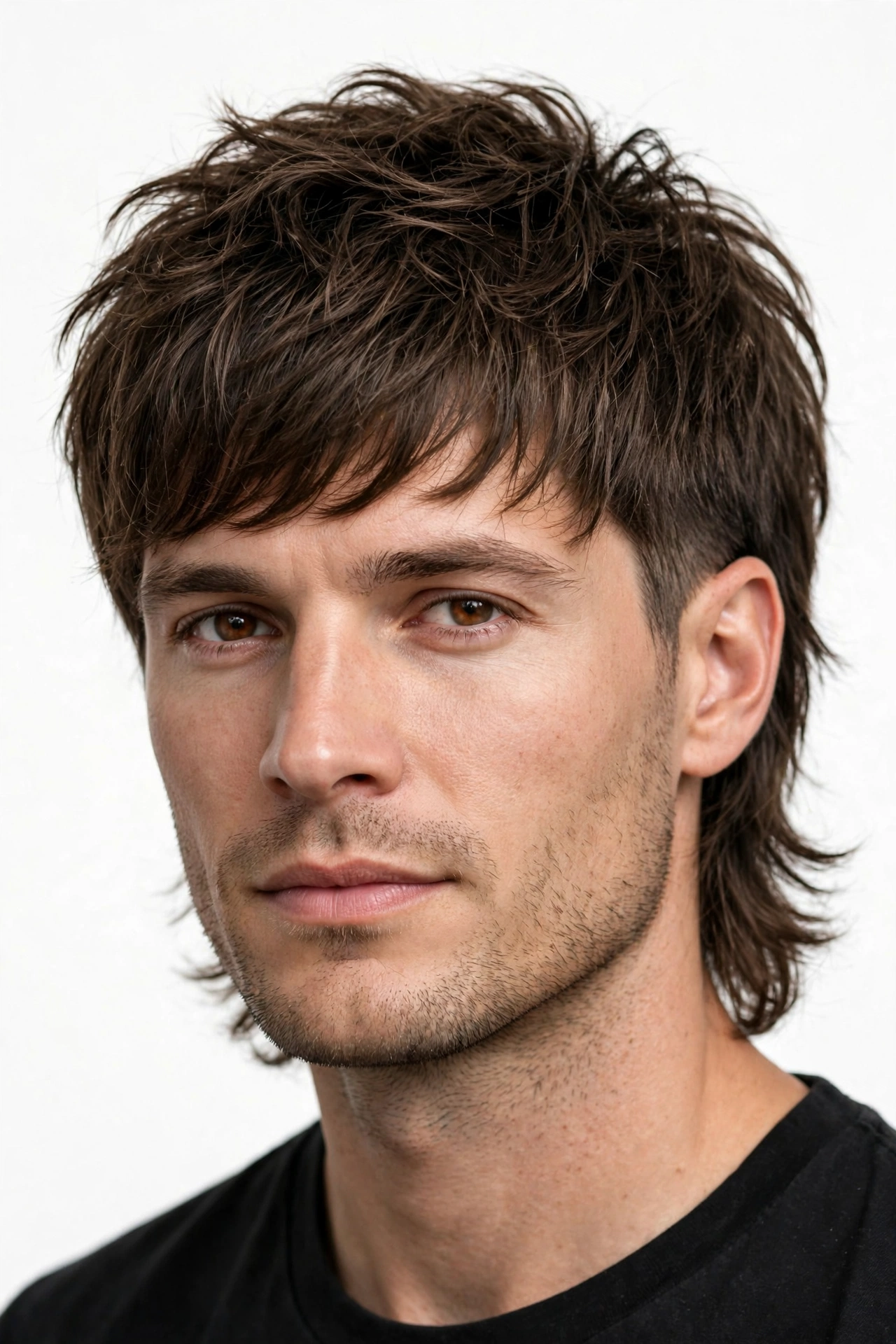
The mullet is back in polite society, and the shaggy mullet blend is its most wearable form. It takes the shag’s layered top and lets the back run a little longer than a pure shag would, borrowing the mullet’s silhouette without its old stigma. The modern version keeps the sides neat and the transition smooth, so it reads as a deliberate style choice rather than a dare. Our readers have been all over the mullet’s return, and this blend is where the shag family meets it.
This version is for guys who want the shag but with more personality at the back. It works best with some natural wave or texture, because the longer back pieces need movement to look intentional. Keep the front and top unmistakably shaggy, with real layers and a fringe area, so the cut never reads as just a mullet. If the mullet side of things interests you, our modern mullet transformations piece shows how far the style has come. Maintenance is easy: the back can grow freely while you trim the top layers every couple of months.
18. The Silver Shag

Grey hair and a shag are a combination more guys should try. The shag’s layers show off silver and grey tones beautifully, because the varying lengths catch light differently and give the color natural dimension. A silver shag has a distinguished, confident energy that a plain short grey cut cannot match. It says you are not hiding your age, you are styling it.
Grey hair has its own texture reality: it tends to be coarser and drier than pigmented hair, which actually suits the shag’s piecey aesthetic. The one thing it needs is moisture. A hydrating shampoo, a good conditioner, and occasionally a purple shampoo to keep the silver bright rather than yellow will keep the color looking intentional. The layers do the rest. This is proof that the modern shag is not a young man’s cut. It is a texture cut, and texture does not retire.
19. The Surfer Shag
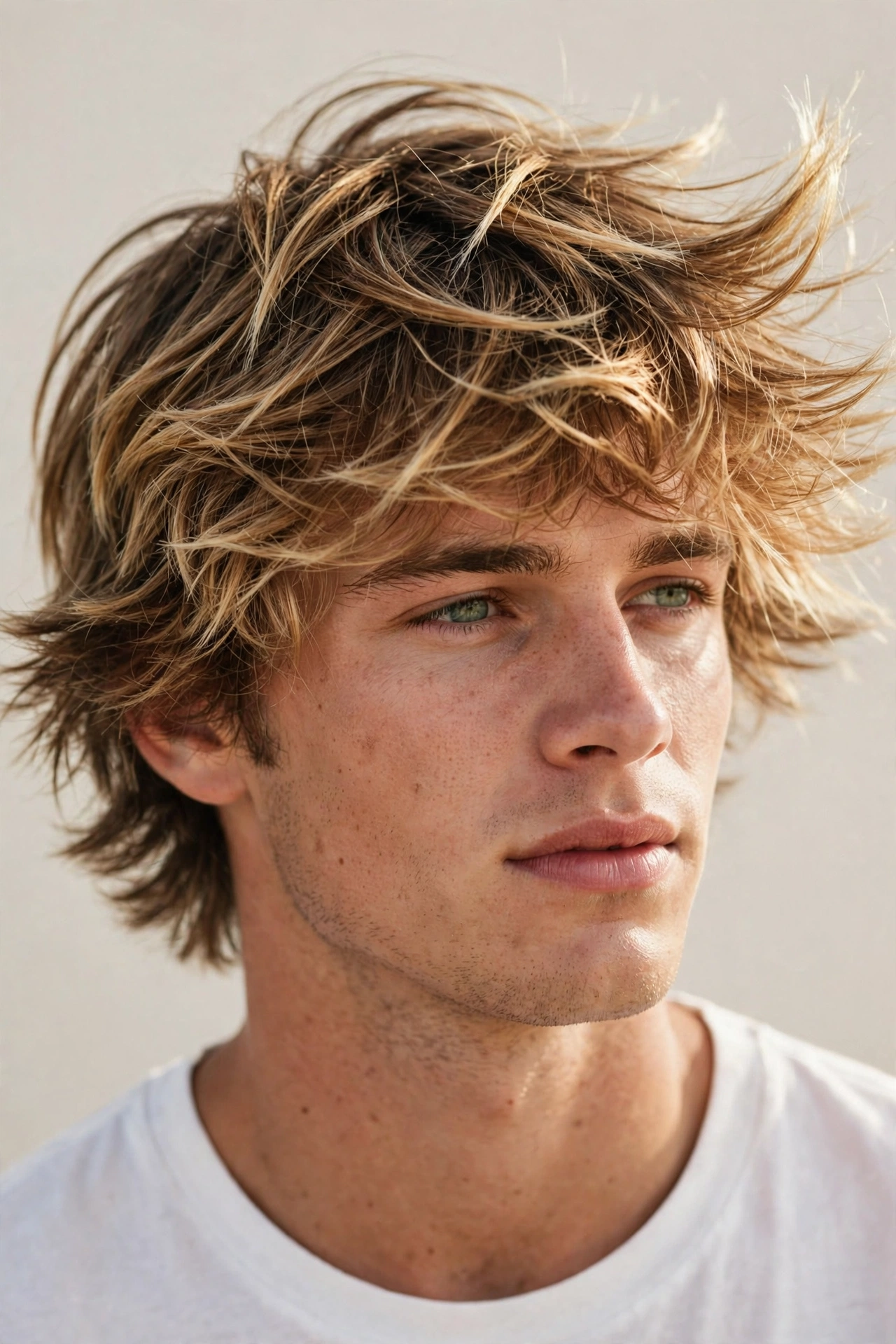
The surfer shag is the shag at its most sun-bleached and carefree. It is longer, looser, and more tousled than the other versions, with layers that look shaped by wind and salt water even if the closest you get to the ocean is a screensaver. The color story matters here too: sun-lightened ends, natural highlights, that lived-in blonde-brown mix that no salon quite replicates. It is a lifestyle cut, and it is honest about it.
You do not need to surf to wear it, but you do need to embrace the maintenance philosophy, which is to say almost none. Salt spray is the signature product for obvious reasons. Sun protection for your hair is the part everyone skips: UV breaks down hair protein and fades color, so a leave-in with UV filters is worth it if you are actually outdoors. Let it air dry. Let it do what it wants. The surfer shag’s whole point is that it looks better the less you control it.
20. The Polished Office Shag

Last but not least, the version that answers the question everyone asks: can I wear a shag to work? Yes, if it is this one. The polished office shag keeps the layered architecture but tidies the execution. The layers are blended more smoothly, the ends are less piecey, the fringe area is controlled, and the overall silhouette is neat enough for a boardroom while still having the shag’s movement and personality. It is the shag in a blazer.
The styling is where the polish comes from. A blow dryer and a brush give the layers smooth direction, a light cream keeps everything in place without stiffness, and the part, side or middle, is defined rather than left to chance. It takes five minutes instead of two, and that is the trade. But it proves the important point: the modern shag is not one look. It is a cutting philosophy, and it scales from the beach to the office without losing its identity. For guys who need their hair to work as hard as they do, this is the one.
How to Ask Your Barber for a Modern Shag
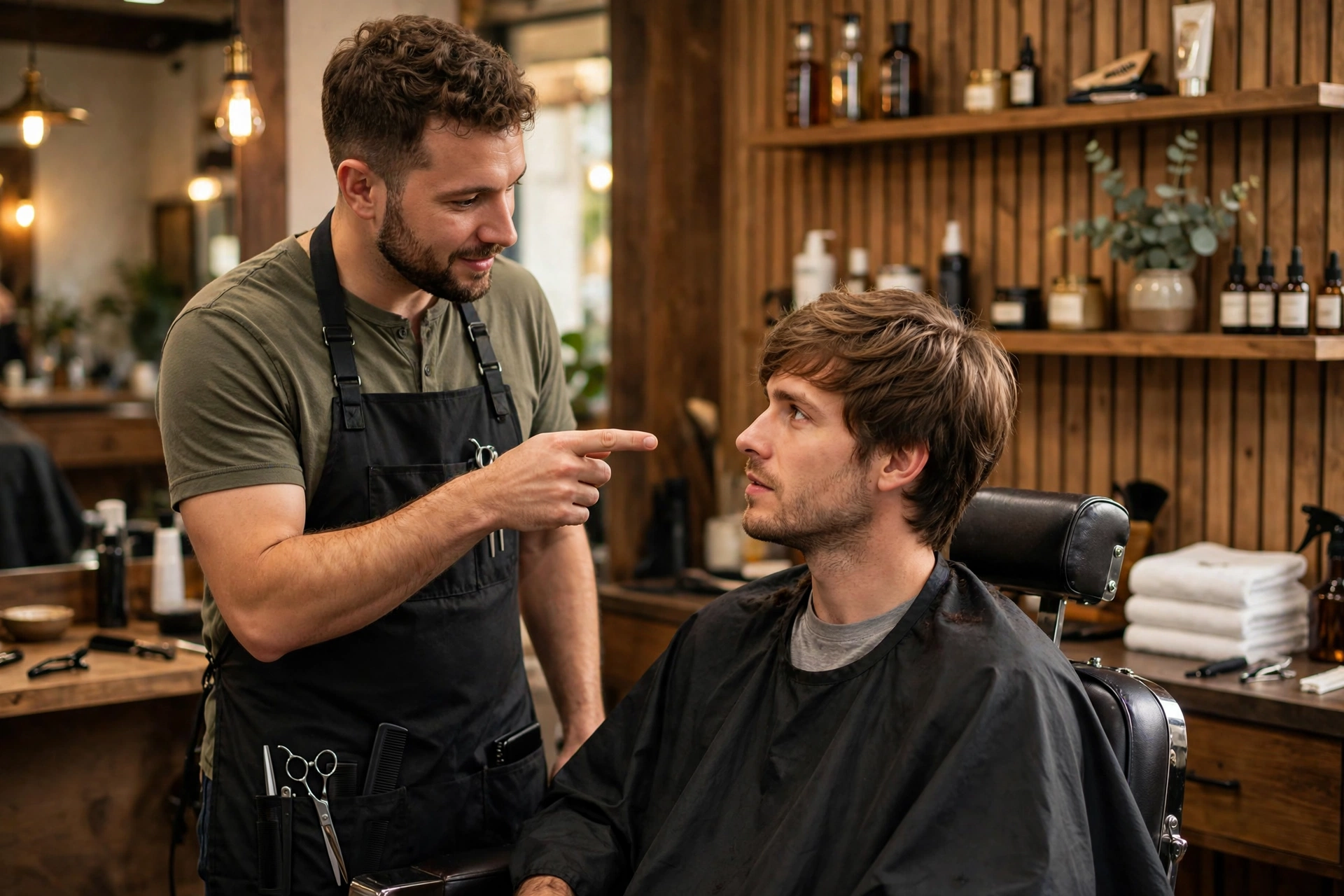
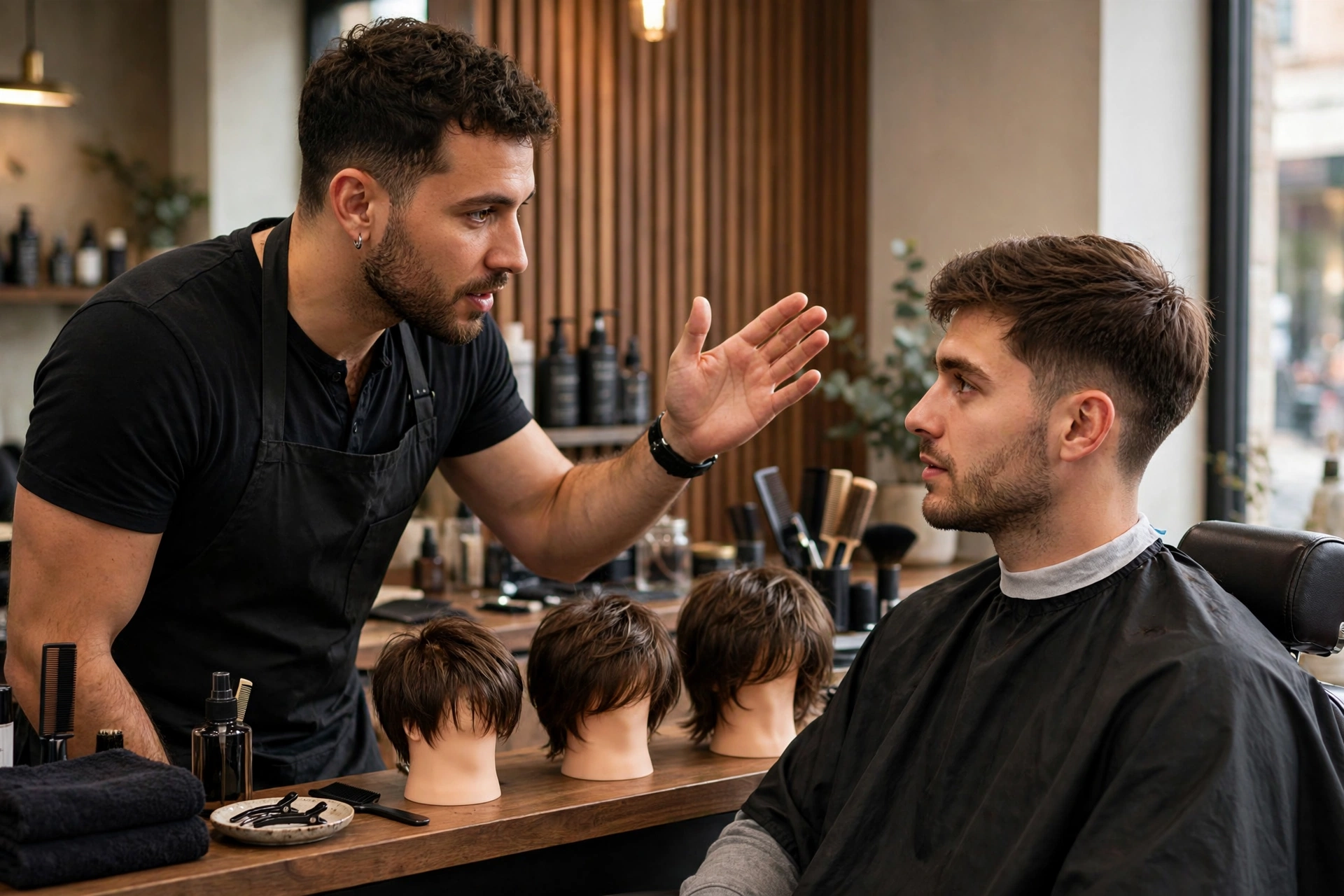
The modern shag lives or dies in the consultation, because “shag” means twenty different things and your barber’s default might not be yours. Walk in with specifics. Start with length: give a reference point like “I want it hitting my ears” or “jaw length on the sides.” Then describe the layers: “choppy interior layers, textured ends, shorter pieces around the face.” Then the fringe area: curtain, forward, middle part, or side swept. Each of those is a different cut, so name yours.
Bring photos. Two or three, showing the cut from the front and the side, ideally on someone with hair texture similar to yours. A photo of a wavy shag will not help if your hair is pin straight, and your barber needs to see the version that matches your reality. Then have the honest conversation: how much styling will you actually do, how often will you come back, do you wear hats or helmets. A good barber will adjust the layering to your maintenance reality. And ask whether your hair texture suits the version you want. The best barbers will tell you no when no is the right answer, and you want that barber.
How to Style a Modern Shag at Home

The baseline shag routine takes about three minutes and works for most versions on this list. Start with damp hair, not dripping. Work a sea salt spray through from roots to ends, then either air dry or rough-dry with a blow dryer, scrunching the hair upward with your fingers as you go. Once dry, a tiny amount of matte paste or texturizing powder at the roots adds separation and hold. That is the whole thing. The cut is designed to look good with minimal intervention, so resist the urge to overwork it.
A few version-specific upgrades. Curly and wavy shags do better with curl cream instead of salt spray, applied to soaking wet hair and scrunched. Fine-hair shags want volumizing mousse at the roots and an upside-down blow dry. The polished office version wants a brush and a dryer for smooth direction plus a light cream to finish. The universal rules: never brush a textured shag dry, never use heavy products that collapse the layers, and learn which way your hair naturally wants to fall, then work with it instead of against it. Within two weeks the routine becomes automatic. If your mornings are chaos, the messy versions on this list forgive almost everything.
Best Face Shapes and Hair Types for the Modern Shag
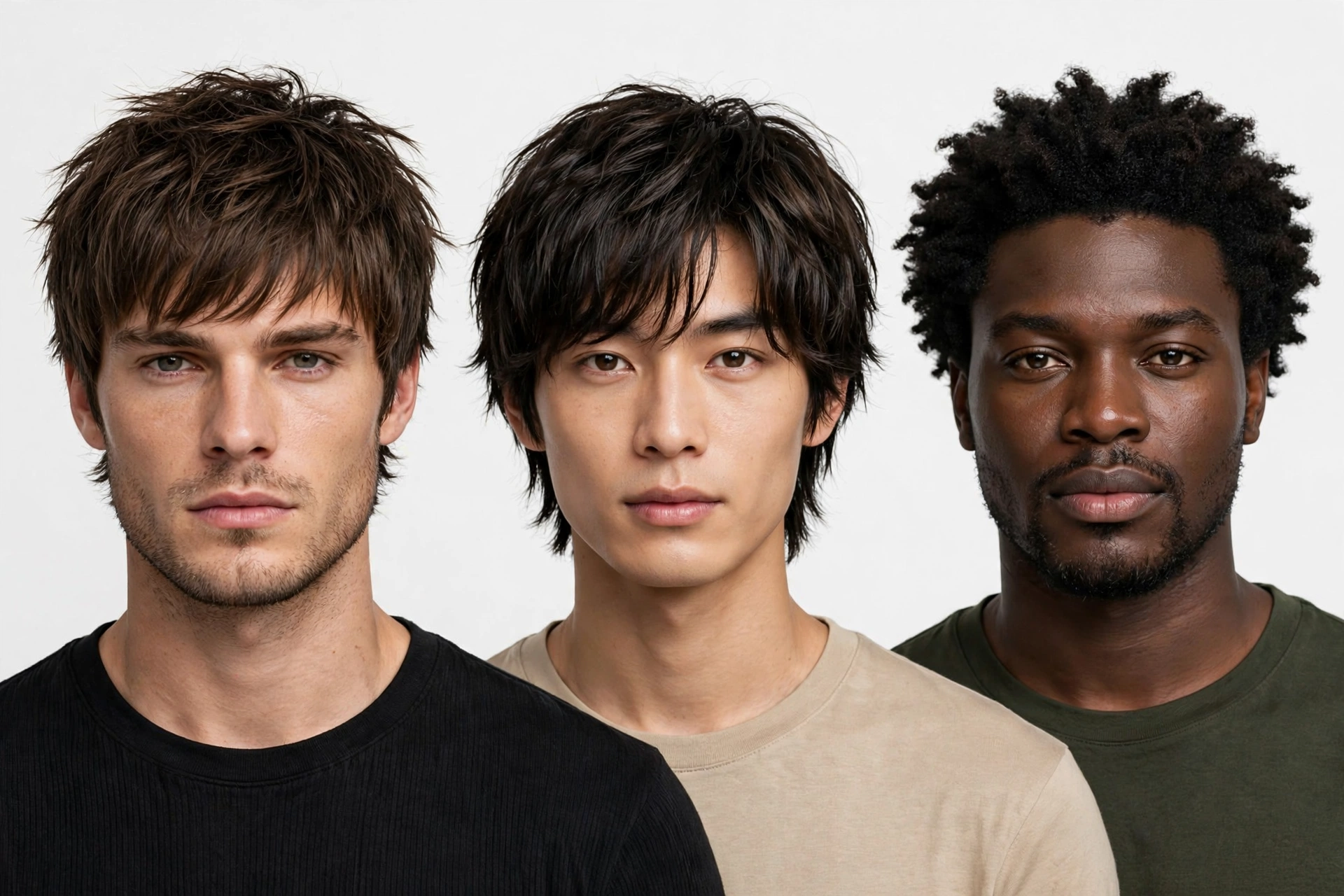
The modern shag is one of the most adaptable cuts in men’s hair, but the right version depends on your face and your texture. Oval faces can wear any of the twenty versions; the proportions are already balanced, so pick based on lifestyle. Round faces do best with shags that add height at the crown and keep some length around the jaw, like the grown-out shag or the long shag, which visually elongate the face. Avoid very short, wide versions that emphasize roundness.
Square faces and strong jawlines pair beautifully with the shag’s softness; the layers take the edge off angular features in a flattering way, and the curtain fringe version is particularly good here. Oblong faces should keep some width on the sides and avoid too much height on top, which exaggerates length. For hair types: wavy and curly hair are the shag’s natural habitat. Straight hair works but needs more product and texture cutting to create movement. Thick hair needs interior thinning; fine hair needs shorter, closer layers. Very tight coils can wear a shag, but find a barber experienced with your curl pattern, because the layering math is different. When in doubt, the classic grown-out shag is the universal safe pick.
Modern Shag Maintenance Guide
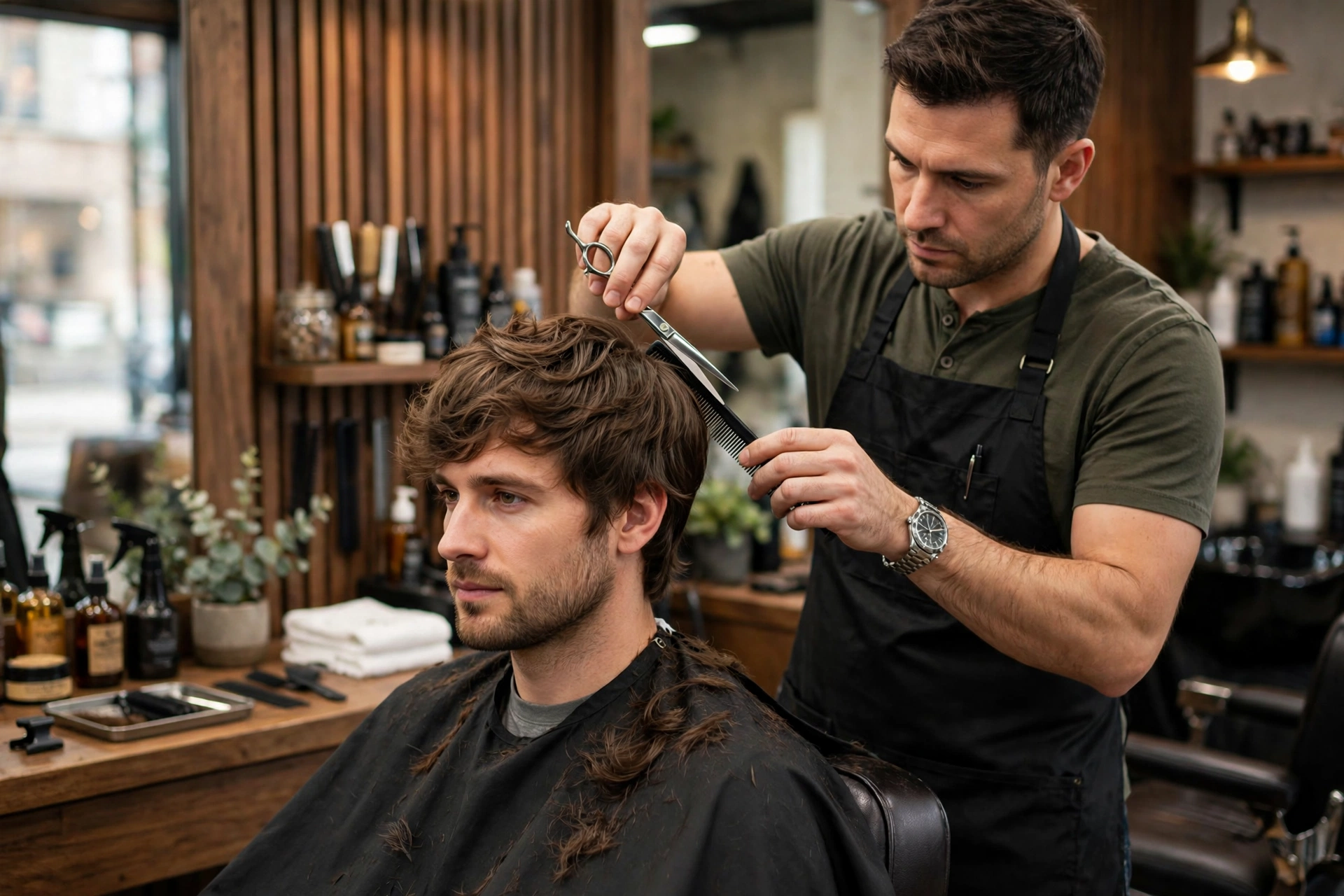
Here is the modern shag’s best-kept secret: it is one of the lowest-maintenance cuts you can get, precisely because it is designed to look good grown out. The layers lose their precision gradually rather than collapsing all at once, so the cut stays presentable for six to eight weeks, sometimes longer. Compare that to a fade, which starts looking tired at week three, and you see why guys are switching. Budget for a trim every six to eight weeks to reshape the layers and clean up the ends.
Between appointments, the habits are simple. Wash two to three times a week; overwashing strips the natural oils that give the layers their separation and makes the cut look flat and flyaway. Use conditioner on the mid-lengths and ends, especially if your shag runs longer. A weekly deep-conditioning mask keeps longer versions healthy. If the fringe area starts falling in your eyes between cuts, that is your signal to book, not to cut it yourself; fringe trims look easy and go wrong fast. And embrace the grow-out. The shag at week seven often looks better than the shag at week one, which is the whole point of the cut.
Frequently Asked Questions
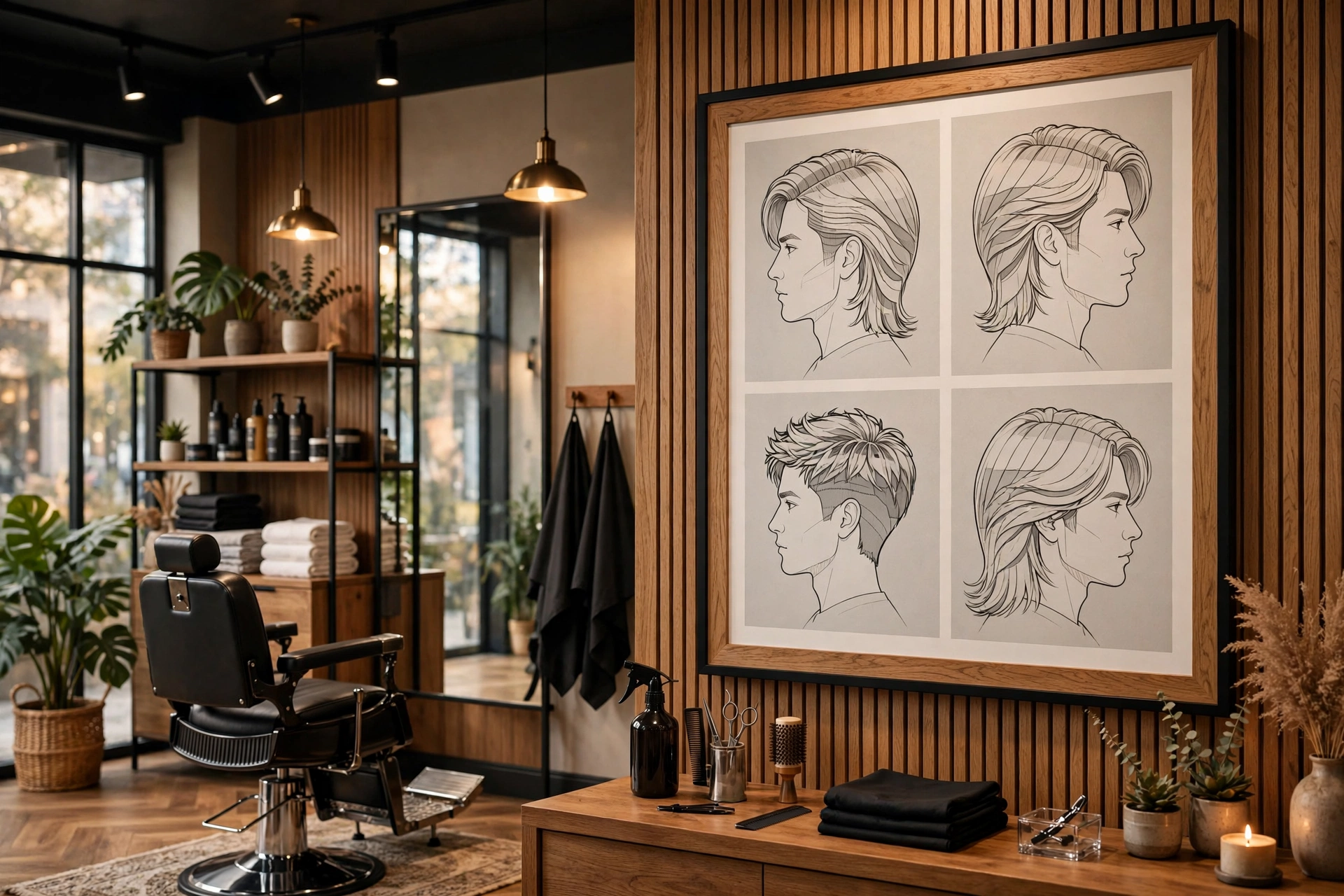
How long does it take to grow a modern shag?
It depends where you are starting. From a short cut, expect four to six months to reach a proper medium-length shag, and the in-between months are the test. The trick is getting interim trims every six to eight weeks where the barber shapes the growing hair into a shaggy silhouette instead of just letting it grow wild. Those shaping cuts are what separate a successful grow-out from giving up at month three. From medium length already, one good cut gets you there immediately. Patience plus shaping trims is the formula.
Is the modern shag the same as a wolf cut?
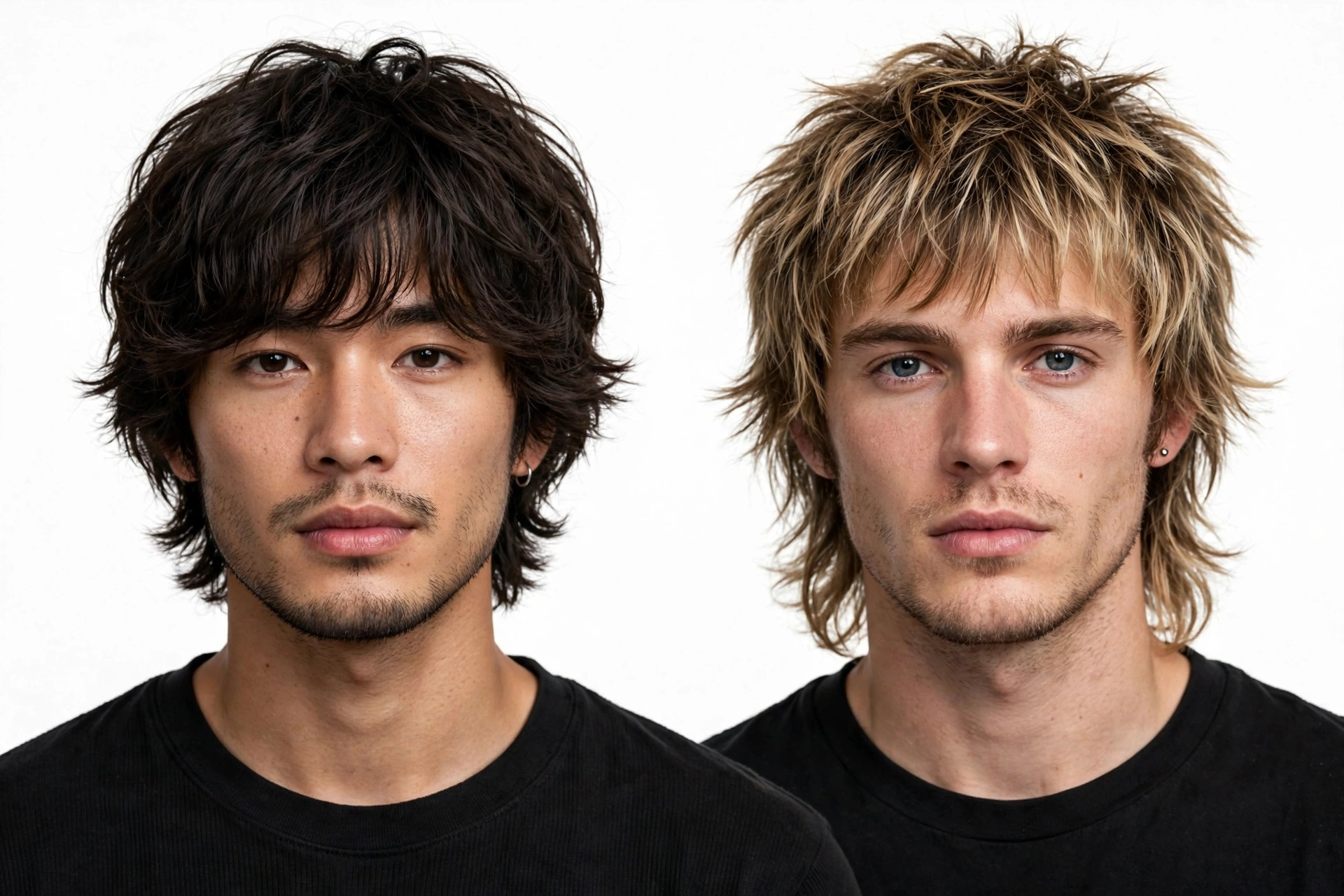
No, though they are cousins and the confusion is understandable. The wolf cut is more extreme: a very short, voluminous top with a much longer, thinner back, essentially a shag crossed with a mullet. The modern shag is more balanced and wearable, with layers that graduate smoothly and length that stays more even front to back. Think of the wolf cut as the statement version and the shag as the everyday version. If you want edge, go wolf. If you want a cut that works everywhere, go shag.
Can I get a modern shag with fine or thin hair?
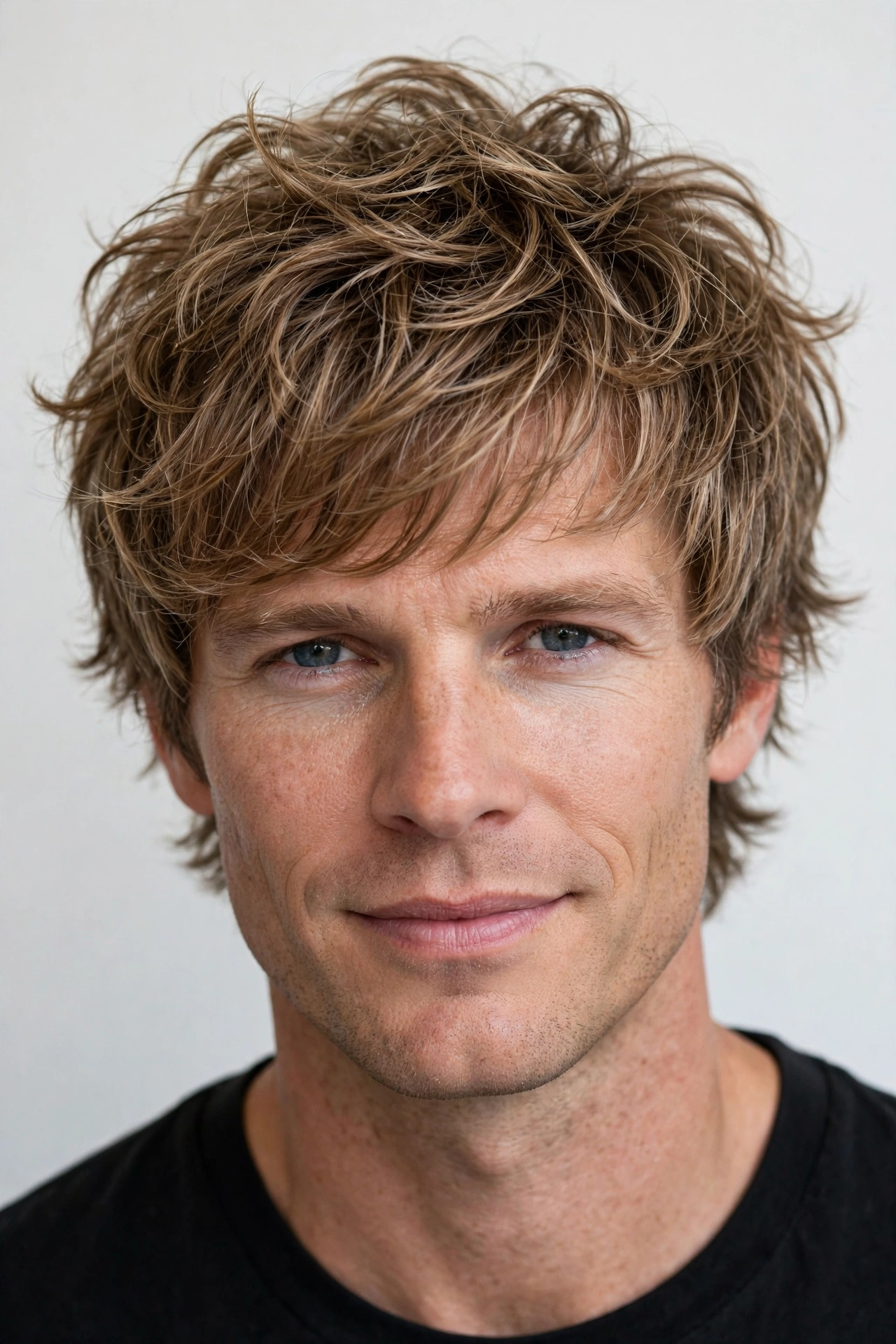
Yes, with the right approach. The fine-hair shag uses shorter, closer layers to remove weight and create the illusion of fullness, and it keeps the overall length moderate so the hair does not go stringy. What you must avoid is long, disconnected layers on fine hair, which just emphasize thinness. Product choice matters as much as the cut: lightweight volumizers at the roots, never heavy waxes. And be realistic with your barber about density; a good one will tell you which version of the shag your hair can actually support.
How often should I trim a modern shag?
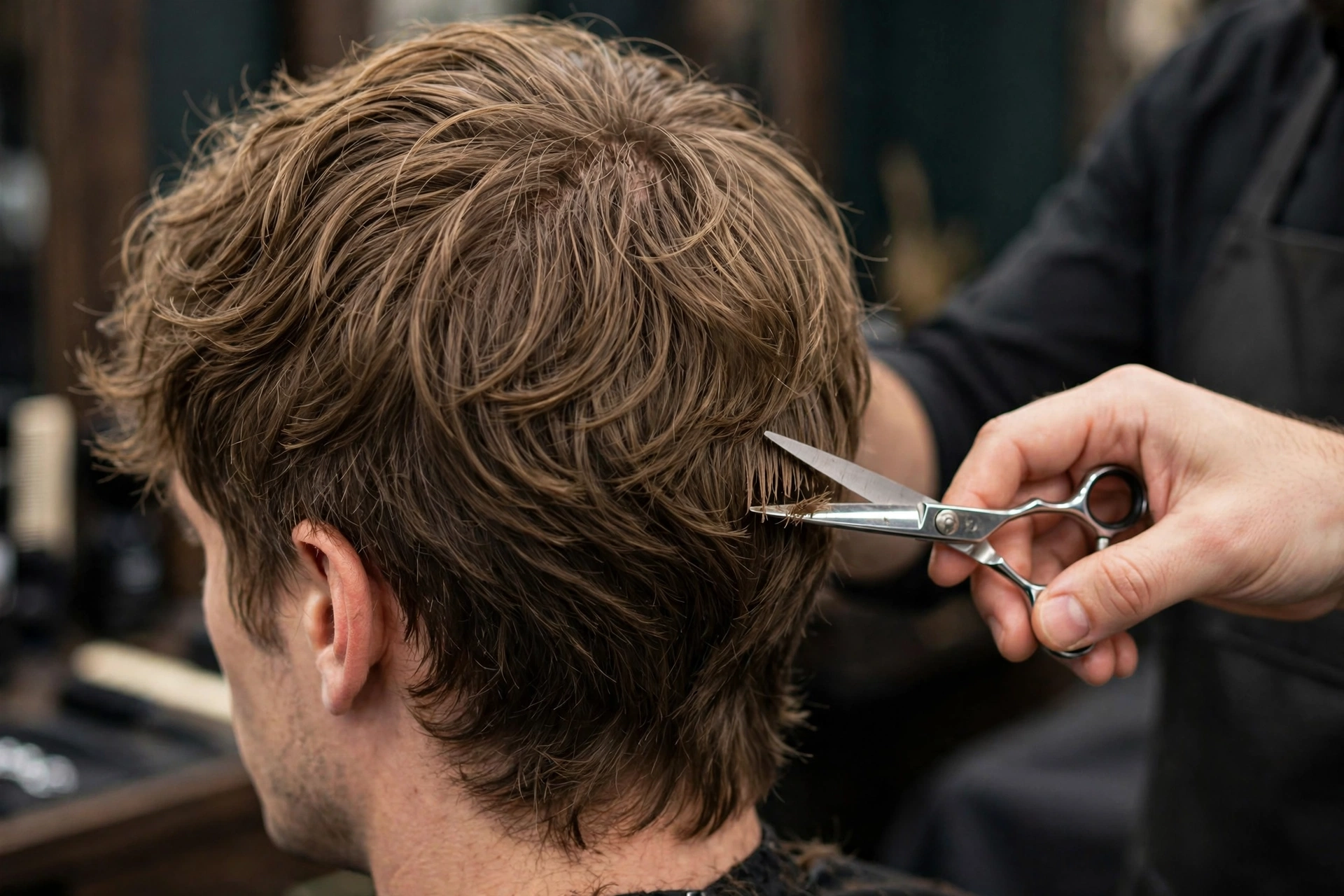
Every six to eight weeks for most versions, which is generous by men’s haircut standards. The layered structure grows out gracefully, so you are reshaping rather than rescuing. Shorter shag versions might want attention at five to six weeks to keep the silhouette tight. Longer versions can sometimes stretch to ten weeks if the ends stay healthy. The signal to book is when the layers start looking shapeless rather than piecey, or when the fringe area starts interfering with your eyes. Do not stretch it past the point where you stop liking your reflection.
Will a modern shag work in a professional office?

It depends on the version and the office. The polished office shag, the side-part shag, and the textured shag with tapered sides all work in professional settings; they read as intentional, stylish haircuts rather than statements. The messier, longer, and more dramatic versions are better saved for creative fields or your own time. A good rule: if you can style it neat in five minutes with a dryer and it looks deliberate, it works. When in doubt, show your barber a photo of the version you want and ask directly whether it will fly at your workplace. Barbers give this advice daily.
Final Thoughts
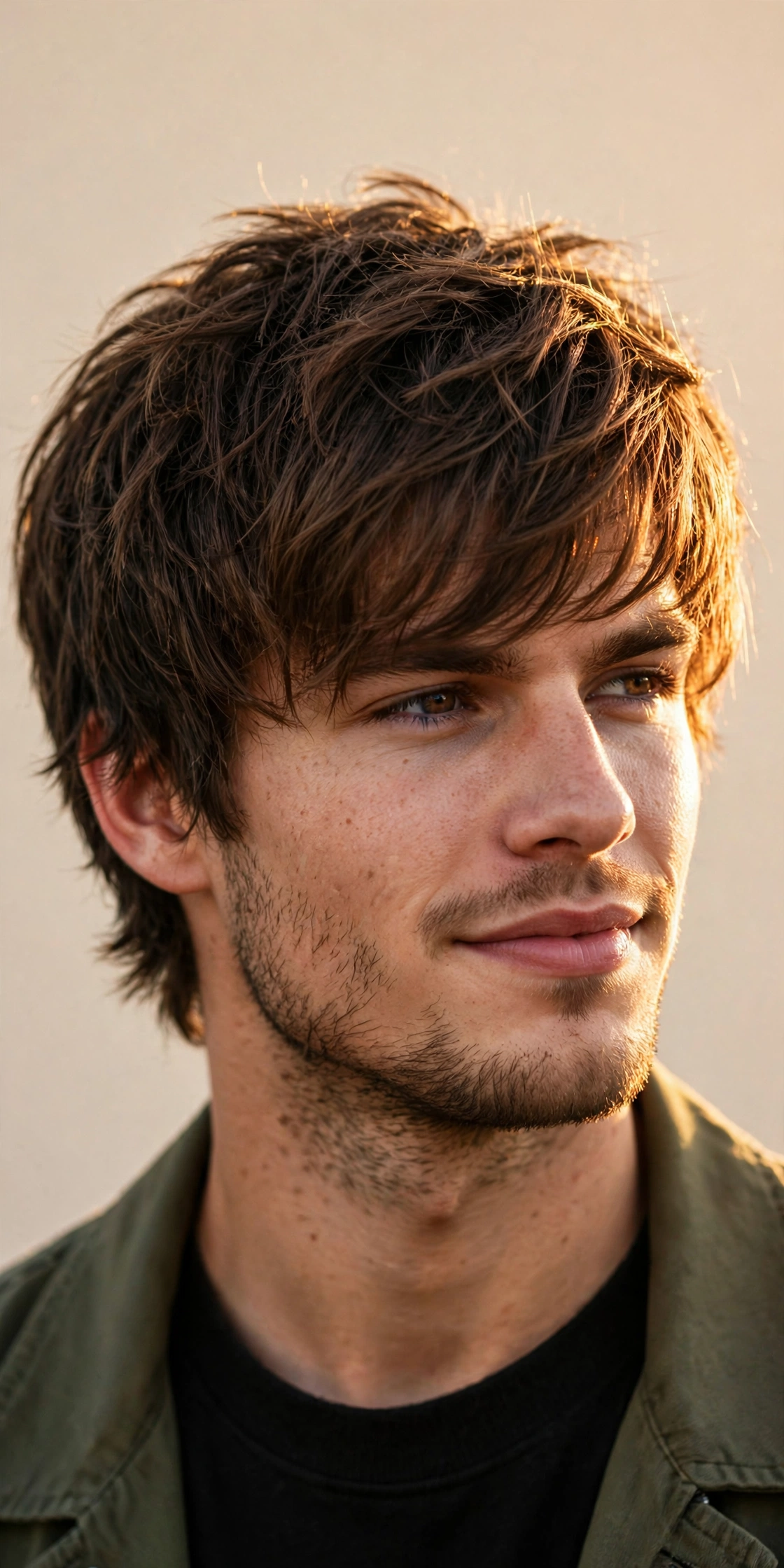
The modern shag men are choosing in 2026 earned its moment the honest way: not through hype, but by solving problems. It gives growing hair a shape, it gives natural texture a purpose, it asks for minutes in the morning and weeks between barber visits, and it looks like you, only better. Twenty versions, one philosophy: layers with intention, texture with restraint, and hair that moves.
If you are trying it for the first time, my recommendation is the classic grown-out shag, which Esquire’s barber sources flagged as a top contender for cut of the year for good reason. It is the most forgiving, the most versatile, and the easiest to grow out of if you change your mind. Bring two reference photos, have the honest consultation, and give the cut one full grow-out cycle before you judge it. For a broader look at where men’s shaggy styles are heading, hairstylesfeed’s shaggy styles gallery is worth a browse. The shag has been around for fifty years. It is not going anywhere. The only question is which version is yours.
Conclusion
The modern shag gives men in 2026 what every great haircut should: texture, movement, and zero fuss. With its choppy layers and lived-in finish, it works magic on wavy and curly hair, adding volume where you want it and removing bulk where you don’t. It’s the rare cut that looks better slightly messy.
Let your natural texture lead — scrunch in a salt spray or light cream and go. Trims every six to eight weeks keep the layers intentional rather than overgrown. In 2026, the men’s modern shag is the ultimate cool-without-trying haircut.
One Comment