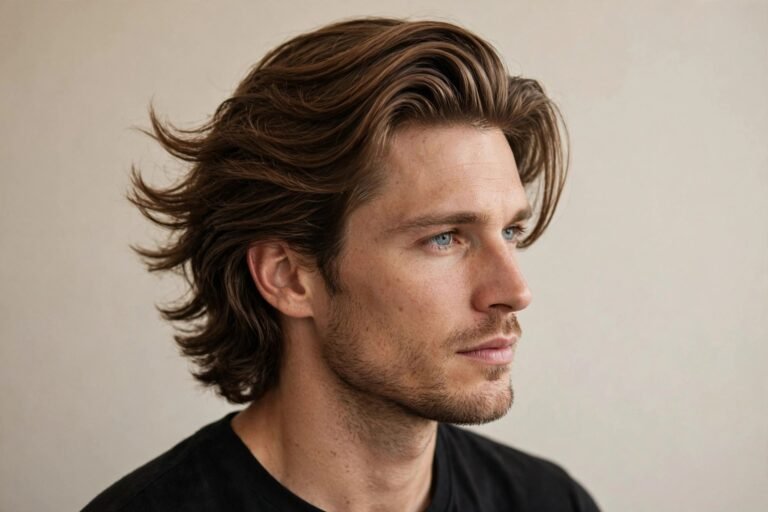
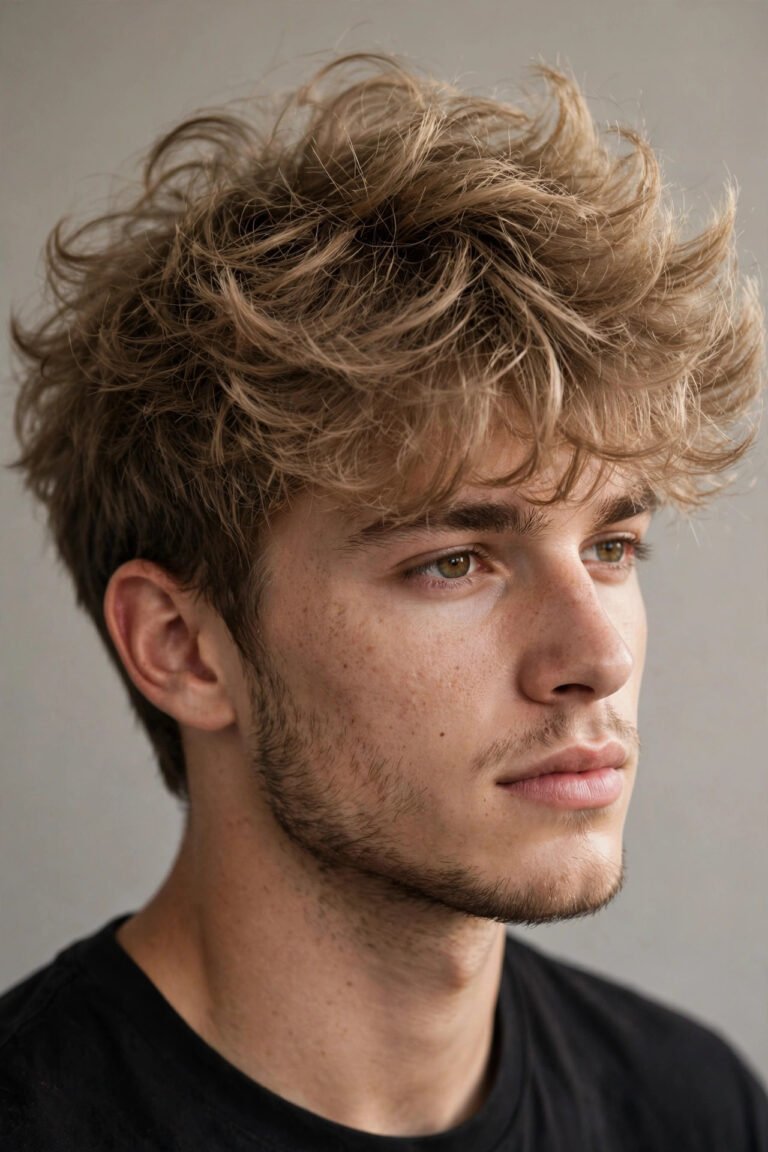
Wavy Hair Men 2026: 16 Effortless Natural Wave Styles
Wavy Hair Men 2026: The Effortless Natural Wave Guide
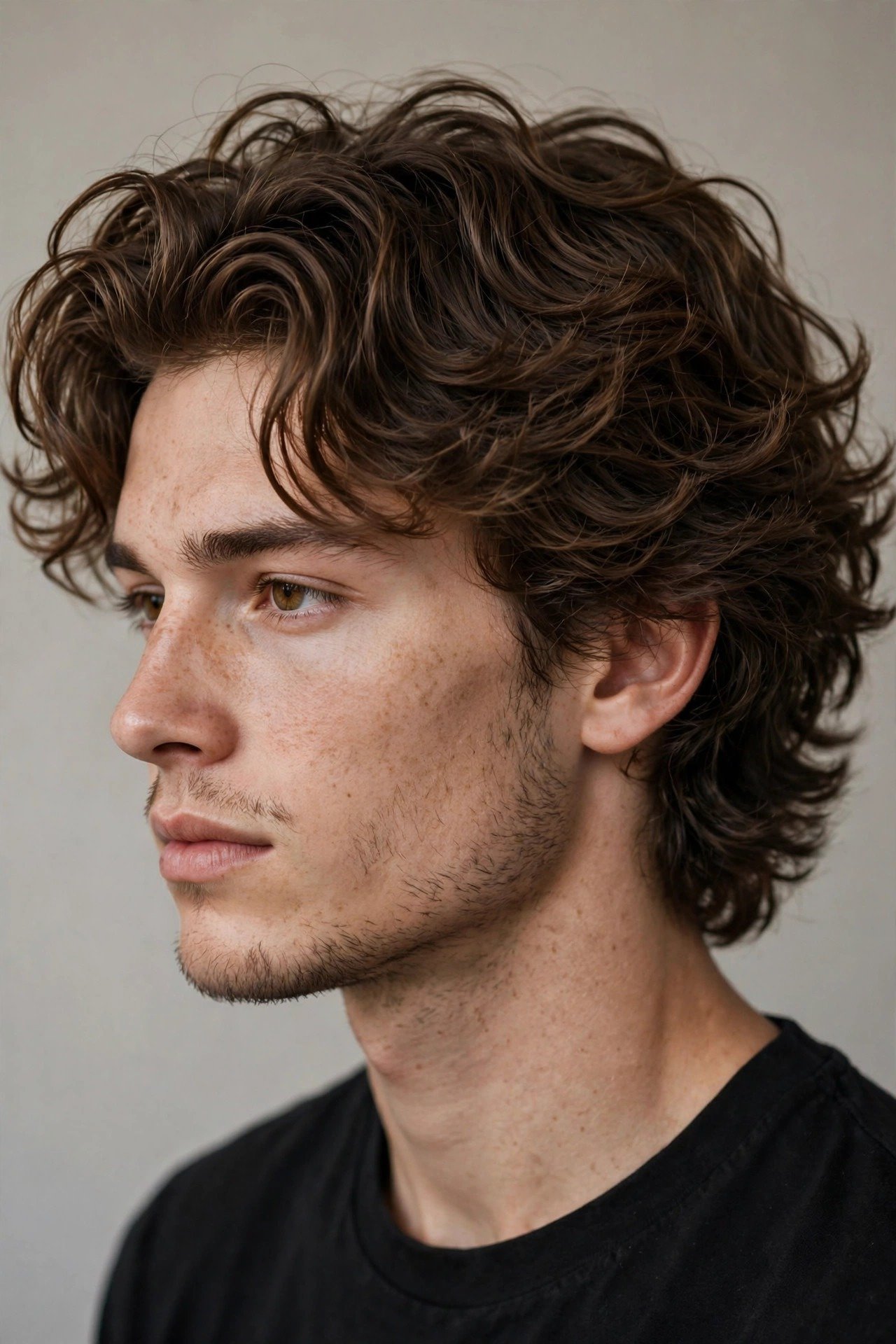
Wavy hair men have spent years fighting their texture — blow-drying it straight, buzzing it off, or hiding it under product. In 2026, the smartest move is the opposite: wavy hair is one of the most wanted textures in men’s barbering, because natural wave gives you volume, movement, and character that straight hair can only fake with product. This guide shows you how to work with your waves instead of against them — 16 wavy hair styles for men, the exact barber script for wavy texture, a frizz-free routine, and the products that define waves without crunch.
Inside: what wavy hair needs (it’s different from straight AND curly), which cuts flatter your wave pattern, step-by-step styling for all 16 looks, frizz control that actually works, and answers to the questions wavy-haired men ask barbers every day.
Wavy hair occupies a strange middle ground in men’s grooming advice: most guides are written for straight hair or curly hair, and wavy guys get told to pick a side. Don’t. Your texture is the most versatile of the three — it takes volume like curly hair and polish like straight hair, often in the same cut. The mistakes wavy men make are almost always the same three: cutting it too short for the wave to form, brushing it dry into frizz, or using straight-hair products that either do nothing or crush the pattern. Fix those three and the waves start working for you instead of against you — usually within a single haircut cycle.
Table of Contents
- Wavy Hair Men 2026: The Effortless Natural Wave Guide
- 16 Wavy Hair Styles for Men in 2026
- Styling Routine, Frizz Control & Maintenance
- Frequently Asked Questions
- Conclusion
What Wavy Hair Actually Needs
Wavy hair (type 2A–2C) lives between straight and curly, and it has its own rulebook. The wave pattern forms an “S” shape that creates natural volume at the bend points — but those same bends are where the cuticle lifts, which is why wavy hair frizzes the moment humidity rises. The golden rule: wavy hair wants moisture and definition, not control. Heavy products crush the wave; no product leaves it frizzy. The sweet spot is lightweight hold — creams, sea salt sprays, and light mousses — applied to damp hair and left alone while it dries.
Cut-wise, waves need length to show their pattern. Below 2 inches, most wavy hair just looks messy-straight; the wave needs 3+ inches to form its S-shape visibly. Layers are your best friend — they remove the weight that pulls waves flat and let each wave spring independently. Blunt, one-length cuts on wavy hair create a triangle: flat on top, wide at the bottom. If your current cut does that, you don’t have bad hair — you have the wrong haircut.
Who Do Wavy Styles Suit — and How to Read Your Wave?
Know your pattern: 2A is a loose, barely-there wave that straightens easily; 2B has defined S-waves that frizz in humidity; 2C is coarse, borderline-curly waves with real volume. Most men are a mix — 2B on top, 2A at the nape, for example. Cut for the dominant pattern, style for the mix.
Face shapes: wavy texture flatters everyone, but the cut around it matters. Round faces need height on top and tight sides (waves add width, so control the sides). Oblong faces benefit from the side volume waves naturally create. Square faces are softened beautifully by wave movement around the jawline.
Who should reconsider: if your “waves” are really just bent-out-of-shape straight hair that won’t hold a pattern past noon, you’ll fight this guide daily — the flow hairstyle family or a textured crop will serve you better. True wavy hair holds its S-pattern through the day with light product; if yours doesn’t, it’s straight hair with ambition.
What to Tell Your Barber: The Wavy Hair Script
“I want to work with my natural wave. Keep 3 to 5 inches on top with long layers — cut it dry or damp, not soaking wet, so you can see the real wave pattern. Remove weight through the interior so the waves can spring up, and texturize the ends. Taper the sides to support the top, not a hard disconnect. And please — no thinning shears near the ends, they create frizz on wavy hair.”
Two things to insist on: the barber should see your wave pattern before cutting (arrive with unstyled, air-dried hair if you can), and the ends should be point-cut, not razor-thinned — razors shred the wavy cuticle and guarantee frizz. A wavy cut takes 30–45 minutes; anyone rushing it in 15 will give you a straight-hair cut that fights your texture for six weeks.
16 Wavy Hair Styles for Men in 2026
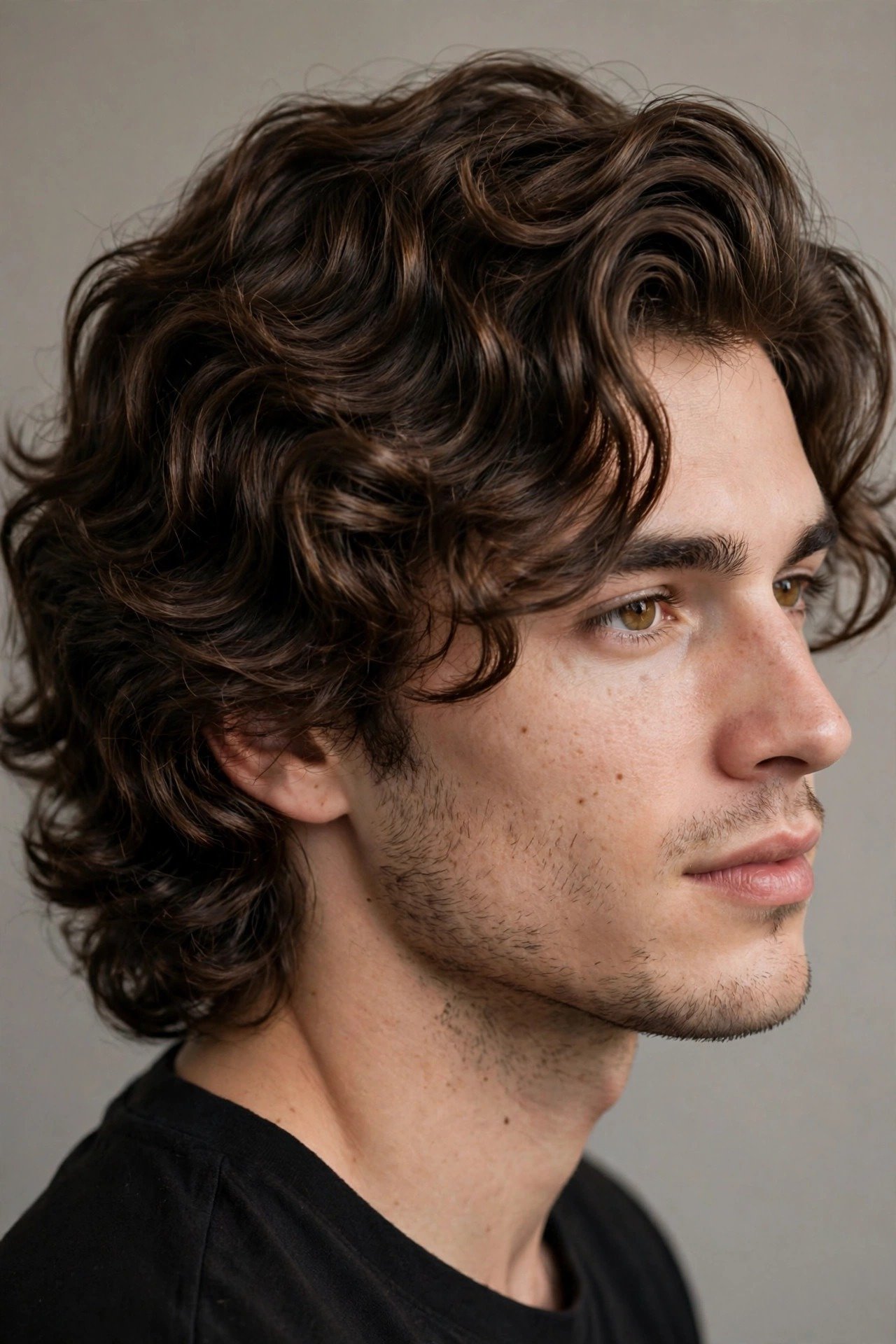
All 16 styles below are built for real wave patterns (2A–2C). Each includes who it suits, the barber script, styling steps, products, maintenance, and the mistake that ruins it.
1. Natural Wavy Flow
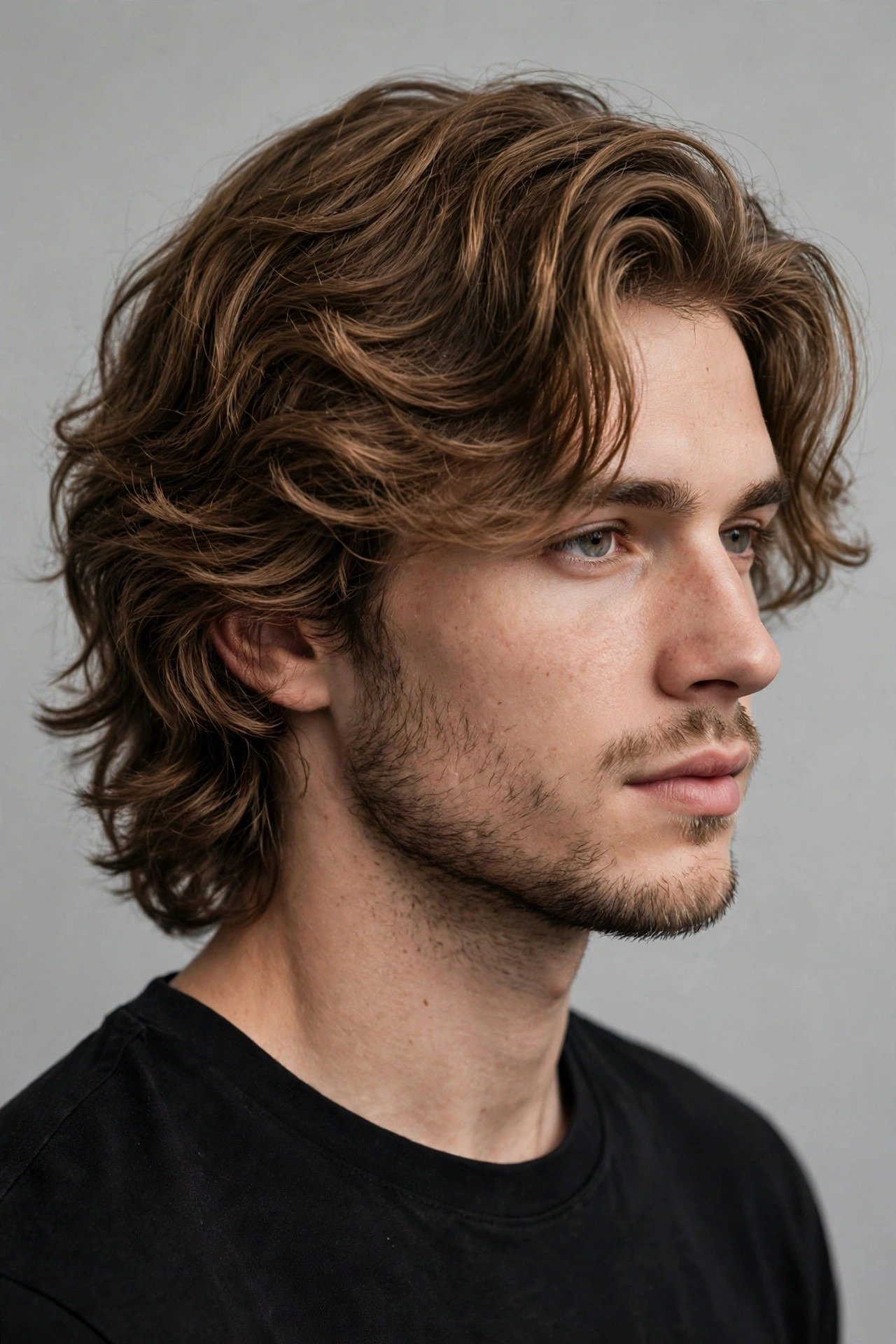
The purest expression of wavy hair: grown to 5–7 inches, layered, and left to do what it does. This is the style that makes straight-haired guys jealous — movement and volume with almost no styling.
Who it suits: 2B–2C waves with medium to thick density; oval, oblong, and square faces. Needs genuine wave — 2A hair will look lank at this length without help.
Barber script: “Grow-out flow: 6 inches on top, long layers from the cheekbones down, interior weight removal, natural perimeter. Cut it dry so you can see the wave.”
Styling (6 minutes): Leave-in conditioner on damp hair, scrunch with a microfiber towel, air-dry. On humid days, add a pea of curl cream to the mid-lengths. That’s it — the length does the work.
Products: leave-in conditioner, curl cream (humid days). Maintenance: dust ends every 10–12 weeks; this is the lowest-maintenance style here.
Mistake to avoid: brushing it dry — the #1 wavy hair sin. It breaks the S-pattern into frizz. Wide-tooth comb on wet conditioned hair only.
Pro tips & variations: The flow rewards patience: months 4–8 are the golden window when the length is enough to wave but not so long it tangles constantly. Sleep with it loosely braided or in a low bun to prevent morning knots — a silk pillowcase cuts tangling dramatically. Variation: wear it with a deep side part for a more polished silhouette, or center-parted for the classic flow look. If the ends start looking thin, that’s your signal for a dusting trim; wavy ends thin out faster than straight ends because the bends are fragile points.
2. Wavy Textured Crop
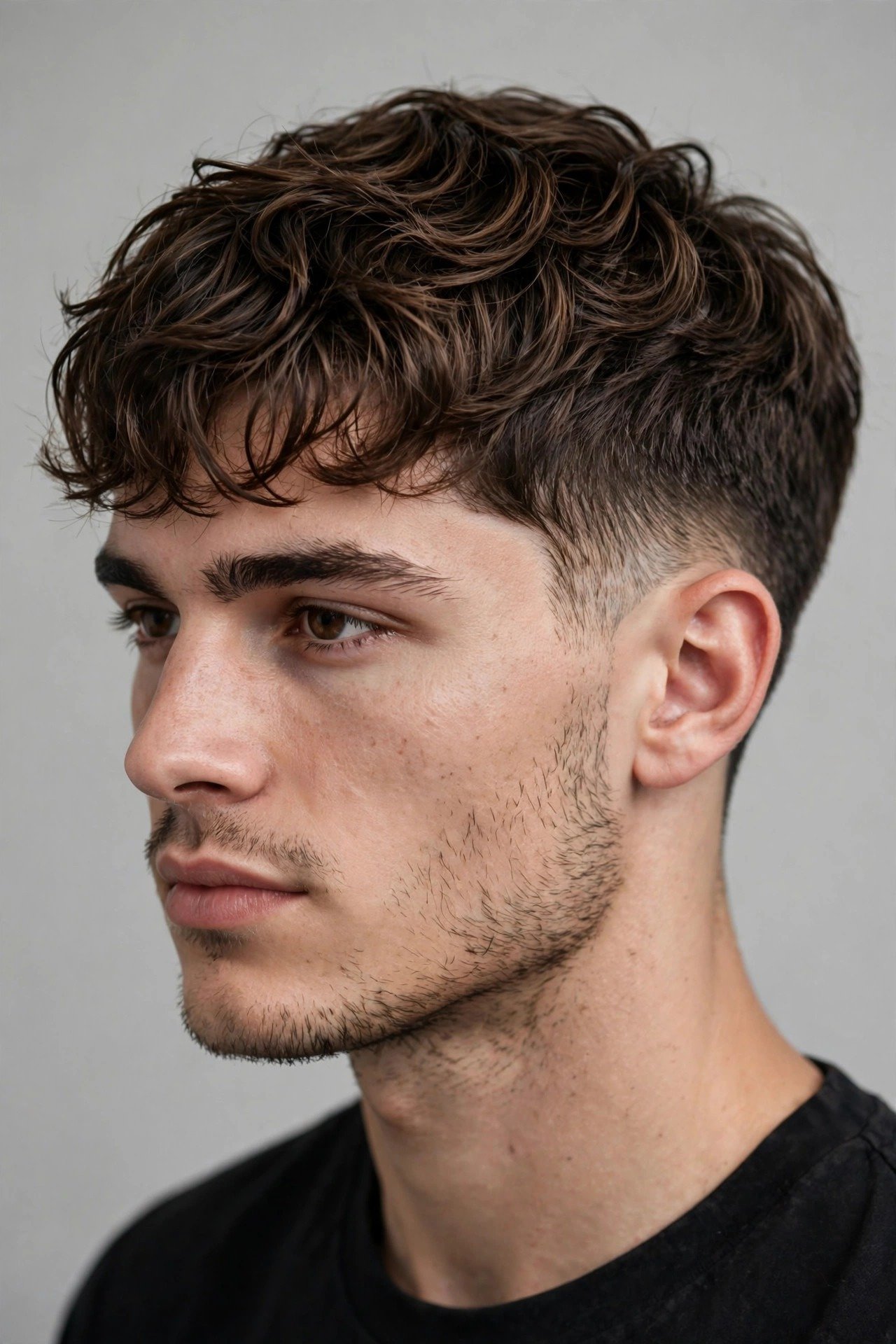
Short, sharp, and wavy: 2–3 inches of textured wave on top with a forward fringe and clean tapered sides. The professional’s wavy cut — all the texture, none of the length commitment.
Who it suits: Every wave type (even 2A works here); every face shape; guys who want wash-and-go. Excellent for thick wavy hair that gets unmanageable long.
Barber script: “Textured crop, 2.5 inches on top, point-cut to follow the wave, textured fringe, mid taper on the sides. Keep the top long enough for the wave to show.”
Styling (4 minutes): Sea salt spray on damp hair, scrunch, air-dry or diffuse 2 minutes. The shortest routine in this guide.
Products: sea salt spray, matte paste (pea-sized for definition). Maintenance: trim every 3–4 weeks — short wavy cuts lose shape fast.
Mistake to avoid: cutting the top under 2 inches — the wave disappears and you’re left with a generic short cut.
Pro tips & variations: This is the cut to choose when you want waves without the commitment — but respect the 2-inch minimum, because below that most waves read as mere texture. Variation: grow the fringe slightly longer than the crown for a forward-falling finish, or keep it uniform for an all-over tousled look. Pro tip: this cut air-dries better than any other here, making it the best travel haircut — no dryer, no diffuser, just salt spray and patience.
3. Wavy Bro Flow
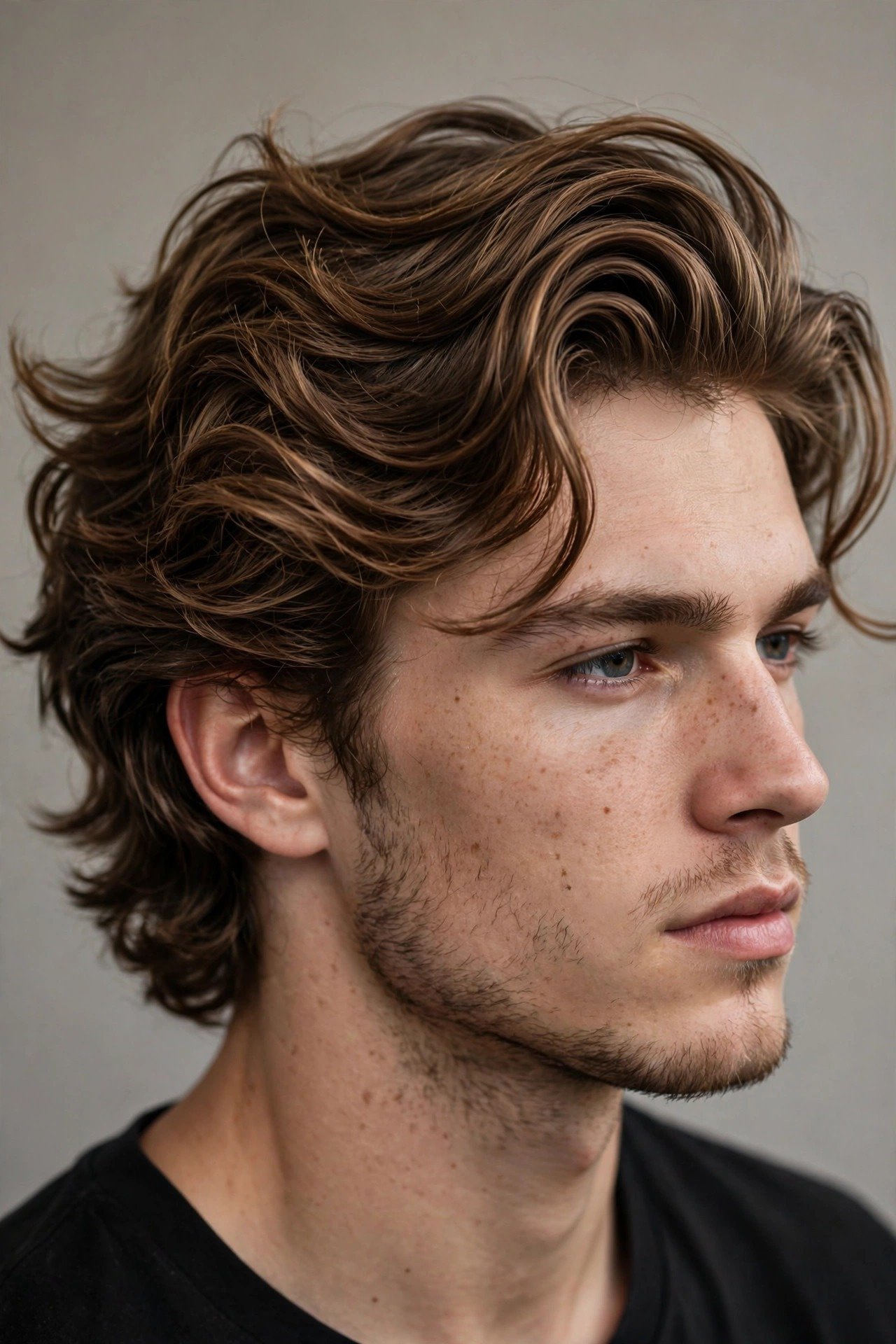
The beloved mid-length flow, optimized for waves: 4–6 inches swept back with the wave pattern creating natural lift and movement. It looks expensive because the texture does what product can’t.
Who it suits: 2A–2C waves; oval and square faces especially. The swept-back direction flatters high foreheads.
Barber script: “Bro flow: 5 inches on top, layers to remove bulk, scissor-tapered sides that blend — I wear it swept back. Texturize so the waves separate.”
Styling (7 minutes): Mousse at the roots of damp hair, blow-dry back with fingers (not flat — keep the lift), then let the waves settle. A touch of cream tames the hairline frizz.
Products: mousse, light cream. Maintenance: trim every 6–8 weeks. The full bro flow guide covers the longer version.
Mistake to avoid: slicking it with strong product — a bro flow pressed flat is just a failed slick-back. Keep the air in it.
Pro tips & variations: The bro flow’s enemy is the awkward in-between stage at months 2–3 when it’s too long to be short and too short to flow — push through with light product and a hat, not scissors. Variation: tuck the sides behind the ears for a cleaner profile, or leave them loose for maximum movement. If your waves are 2A (loose), a light mousse is mandatory — without it, the flow falls flat by afternoon. 2C waves can often skip product entirely on good hair days.
4. Wavy Taper Fade
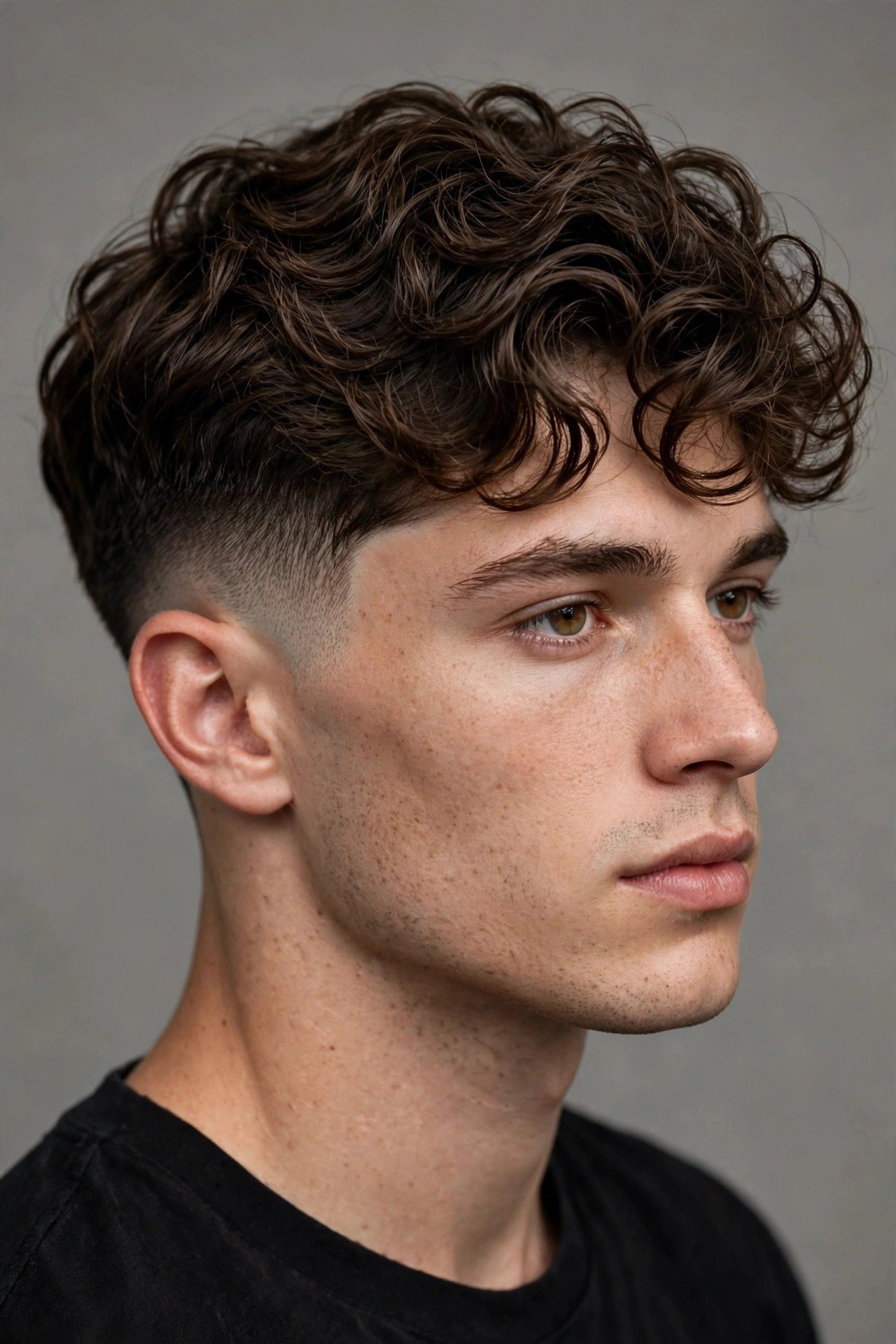
Structure meets texture: defined waves up top (3–4 inches) against a crisp low taper. The fade gives the waves a frame, making the texture look intentional rather than accidental — the most “put together” wavy style.
Who it suits: All wave types; round faces benefit hugely (tight sides + wavy height = slimming). Great for workplaces that want neat sides.
Barber script: “Low taper fade, soft not skin, with 3.5 inches of wavy length on top. Layer the top for the wave, blend the taper up with no line.”
Styling (6 minutes): Curl cream on damp waves (defines without crunch), diffuse or air-dry. Refresh the taper’s crispness — it’s the contrast that sells this cut.
Products: curl cream, light mousse. Maintenance: taper cleanup every 2–3 weeks; top trim every 5–6 weeks.
Mistake to avoid: a skin-tight high fade — it disconnects from the soft waves and looks like two haircuts stacked.
Pro tips & variations: The taper is the maintenance item: book a standalone taper cleanup every 2–3 weeks, because the crisp sides are what make the waves look intentional. Variation: a mid taper gives a bolder contrast; a low taper reads more conservative — choose based on your workplace. Pro tip: ask the barber to keep the taper ‘soft, not skin’ — a skin-tight taper against soft waves creates a harsh disconnect that fights the whole aesthetic.
5. Wavy Fringe
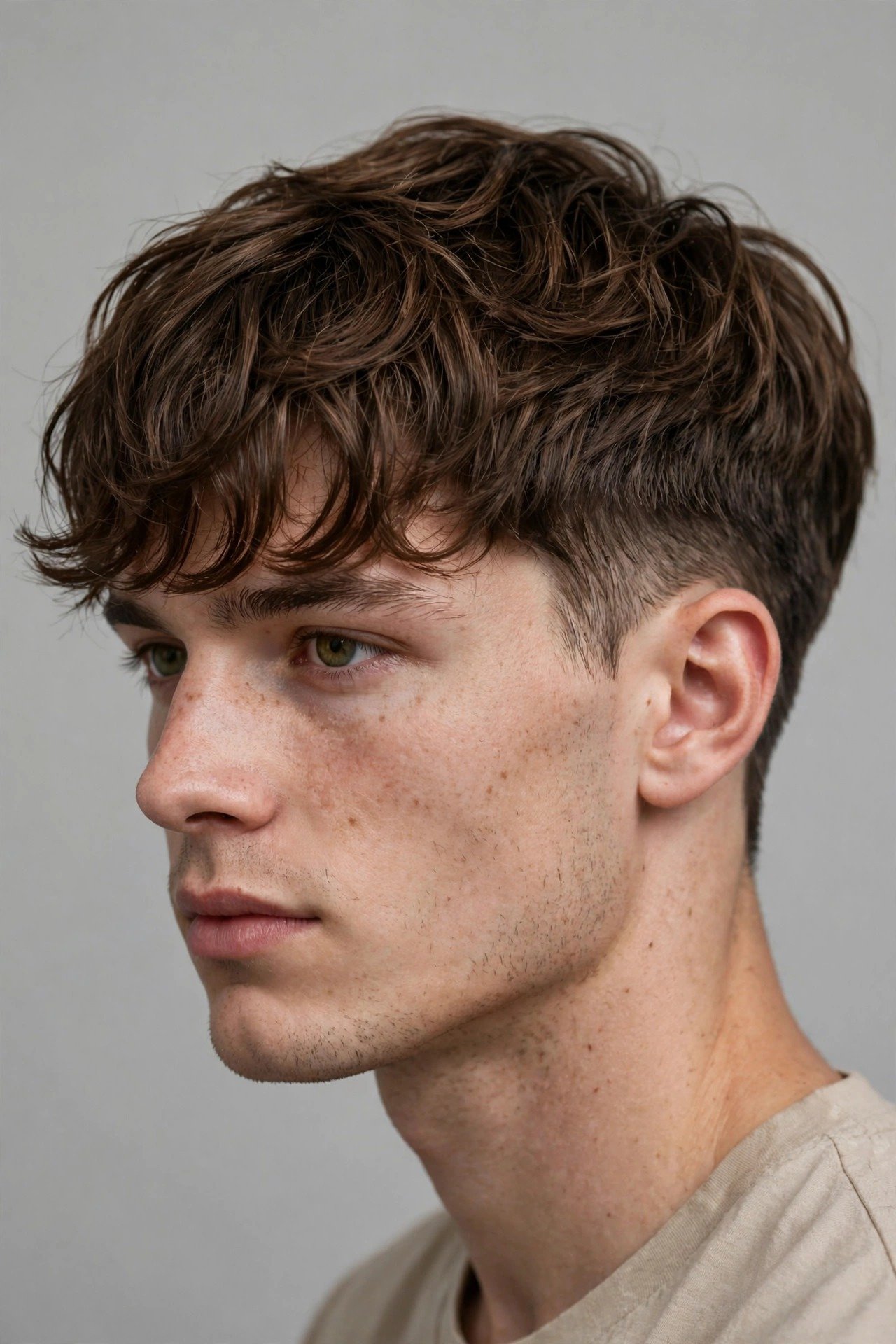
Forward-falling wavy fringe with textured separation — youthful, current, and incredibly forgiving. The waves keep the fringe from looking heavy or curtain-like; it falls in soft, separated pieces.
Who it suits: High foreheads (the fringe is camouflage); oval and oblong faces; 2B–2C waves that fall forward naturally.
Barber script: “Wavy fringe: 3–4 inches on top falling forward, point-cut fringe to sit on the forehead with texture, tapered sides. Cut the fringe dry to see where the waves land.”
Styling (5 minutes): Sea salt spray, rough-dry forward with fingers, pinch pieces for separation. Let it fall where the waves want.
Products: sea salt spray, texture powder. Maintenance: fringe trim every 4 weeks or it migrates into your eyes.
Mistake to avoid: cutting the fringe blunt and straight — on wavy hair it bounces up unevenly. Texture is mandatory.
Pro tips & variations: Cut the fringe dry whenever possible — wavy fringe cut wet bounces up unpredictably as it dries, and barbers who cut it wet almost always take too much. Variation: a longer, eye-skimming fringe reads fashion-forward; a shorter one above the brows reads cleaner. If your fringe splits into curtains on its own, don’t fight it — that’s your hair telling you it wants to be style 14. Work with the split, not against it.
6. Wavy Middle Part
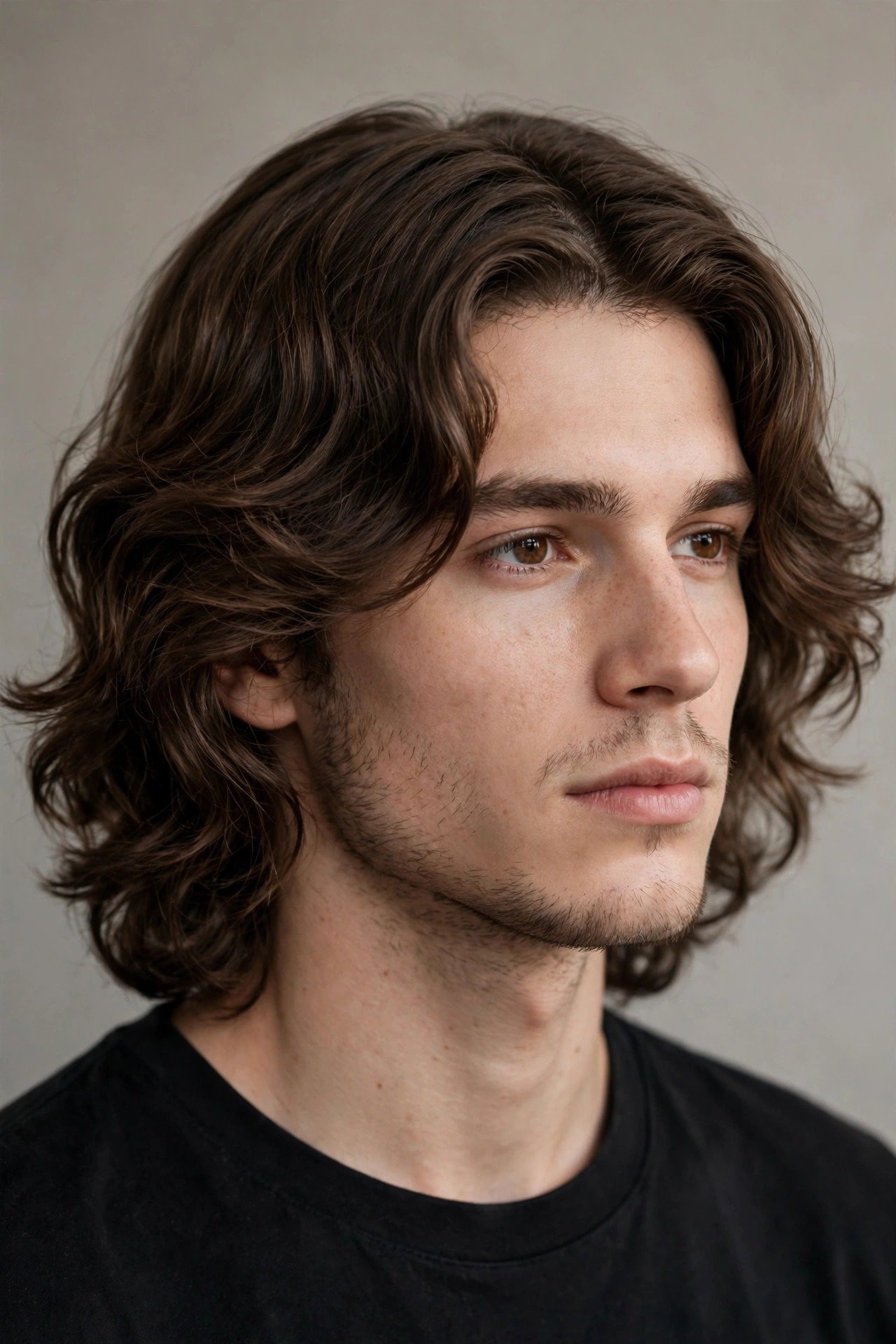
Center-parted waves with natural fall — the low-effort style that looks deliberate. The wave pattern keeps the middle part from looking severe; it softens into curtains with real movement.
Who it suits: Symmetrical faces; 2A–2C waves at 4–6 inches. Train the part for two weeks and it falls naturally.
Barber script: “Middle-part layers: 5 inches in front, face-framing from the cheekbones, soft center part, texturized ends. Cut with the part in place.”
Styling (6 minutes): Part damp hair in the center, apply curl cream, and let air-dry. Tuck behind ears once dry for the clean finish.
Products: curl cream, light mousse. Maintenance: trim every 6–8 weeks.
Mistake to avoid: forcing a center part on a strong natural side-part growth pattern — work with your crown’s direction or fight it forever.
Pro tips & variations: Part training is non-negotiable for the first two weeks: part it wet every single day, even on days you don’t style it, until the hair memorizes the line. Variation: a slightly off-center part (an inch off) looks more natural and modern than a razor-center part. If your crown has a strong natural whorl pulling to one side, place the part to cooperate with it rather than against it — fighting a whorl is a battle you lose daily.
7. Wavy Quiff
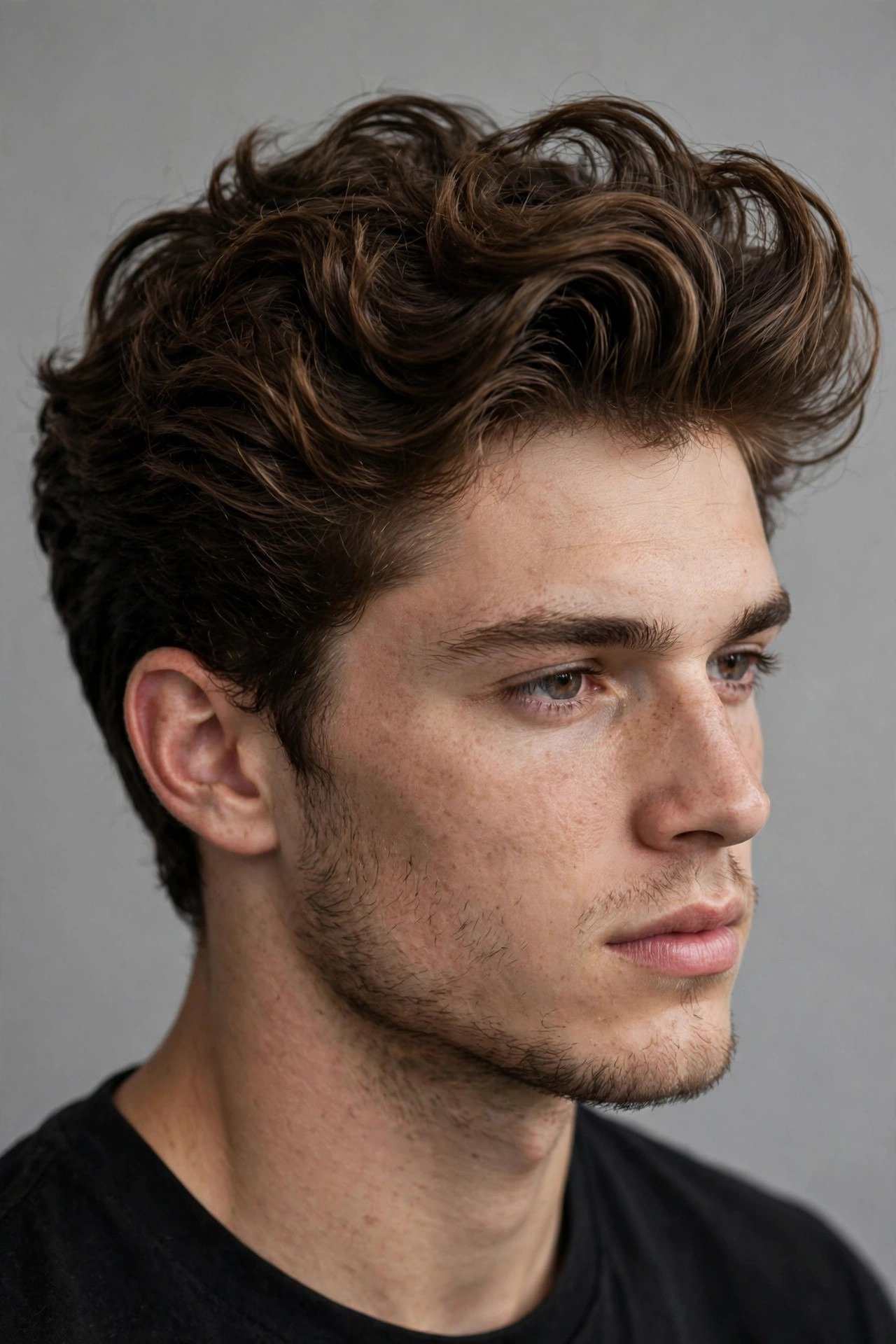
The quiff that styles itself halfway: natural wave gives you the lift and separation that straight hair needs product to fake. Height with built-in texture.
Who it suits: Round faces (vertical lift slims); 2B–2C waves; guys who want presence without stiffness.
Barber script: “Wavy quiff: 4 inches in front, shorter through the crown, interior weight out so the wave lifts, tapered sides. Let the wave create the texture.”
Styling (8 minutes): Mousse at roots of damp hair, blow-dry up and back with fingers. The wave forms the piece-y front naturally — enhance, don’t fight.
Products: mousse, matte paste (ends only). Maintenance: trim every 4–5 weeks.
Mistake to avoid: over-drying straight — if you blast the wave out with a brush, you’ve just made a straight quiff with extra steps.
Pro tips & variations: Build the lift in two passes: first blow-dry the roots forward (against the final direction), then sweep everything back — the double-direction technique doubles root lift. Variation: a forward-leaning quiff looks more casual and modern; the classic back-swept version looks dressier. In summer humidity, finish with a humidity-resistant cream instead of paste — the quiff is the first style to surrender to moisture, so protect it accordingly.
8. Wavy Shag
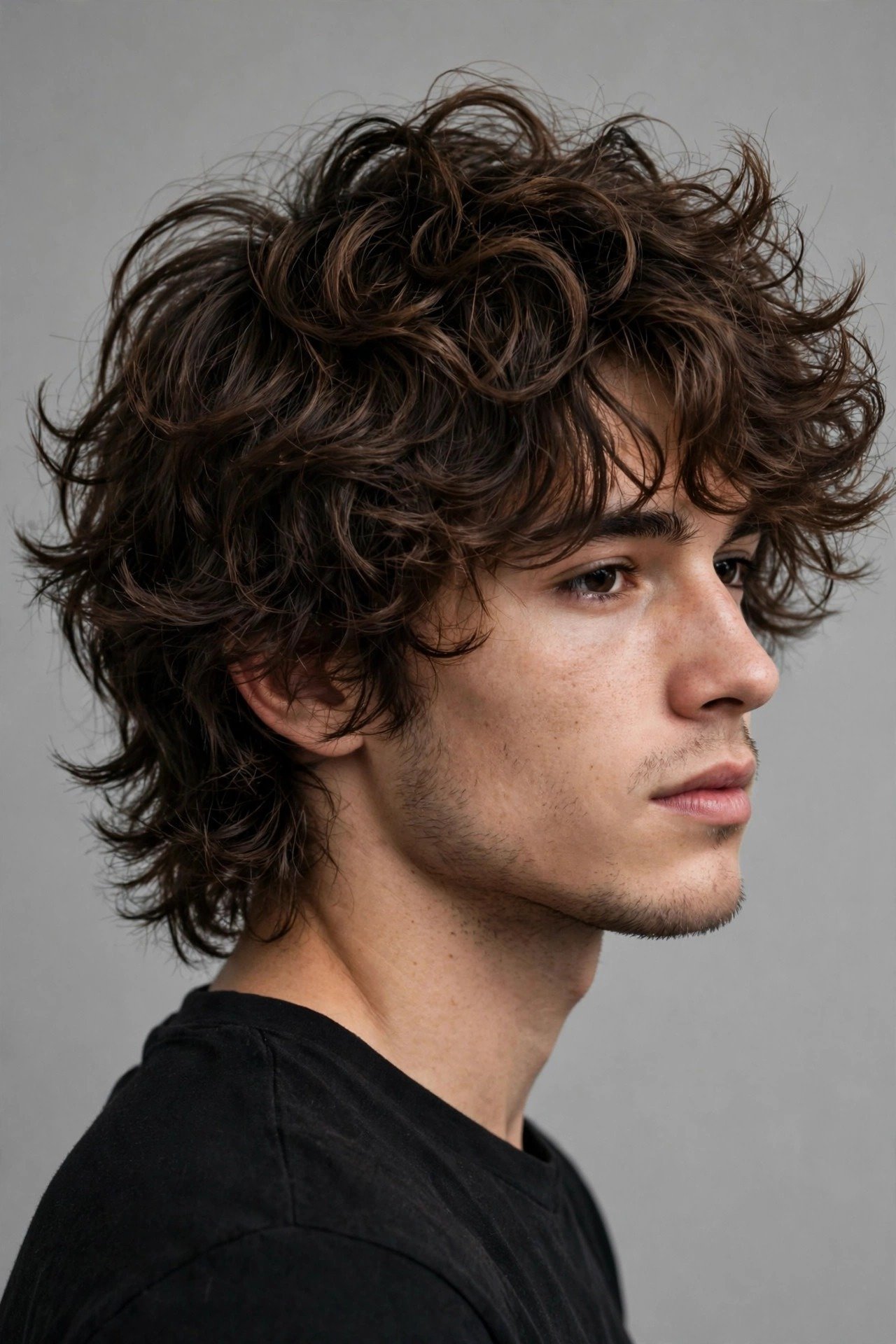
Choppy layers + natural wave = the rock-and-roll shag. The layers unlock the wave’s full volume; the result is big, touchable, and unapologetic.
Who it suits: Thick 2B–2C hair; oval and heart faces. The volume needs density behind it — fine hair goes stringy here.
Barber script: “Wavy shag: 5–6 inches, heavy layering through the crown, wispy textured ends, curtain fringe. Keep it wearable, not costumey.”
Styling (7 minutes): Sea salt spray, scrunch, diffuse. Let the layers explode — neatness is the enemy.
Products: sea salt spray, texture powder. Maintenance: reshape every 6 weeks.
Mistake to avoid: one-length ends — without the layering, thick wavy hair becomes a triangle, not a shag.
Pro tips & variations: The shag’s layers need to be genuinely choppy — if your barber blends them too smoothly, you get long layers, not a shag, and the rock-and-roll volume never materializes. Variation: add a curtain fringe to frame the face, or keep the front long and one-length for a wilder silhouette. This cut eats product — sea salt spray is used generously here, not sparingly — but keep oils and serums away, because they collapse the airy separation that defines the style.
9. Loose Wavy Slick-Back
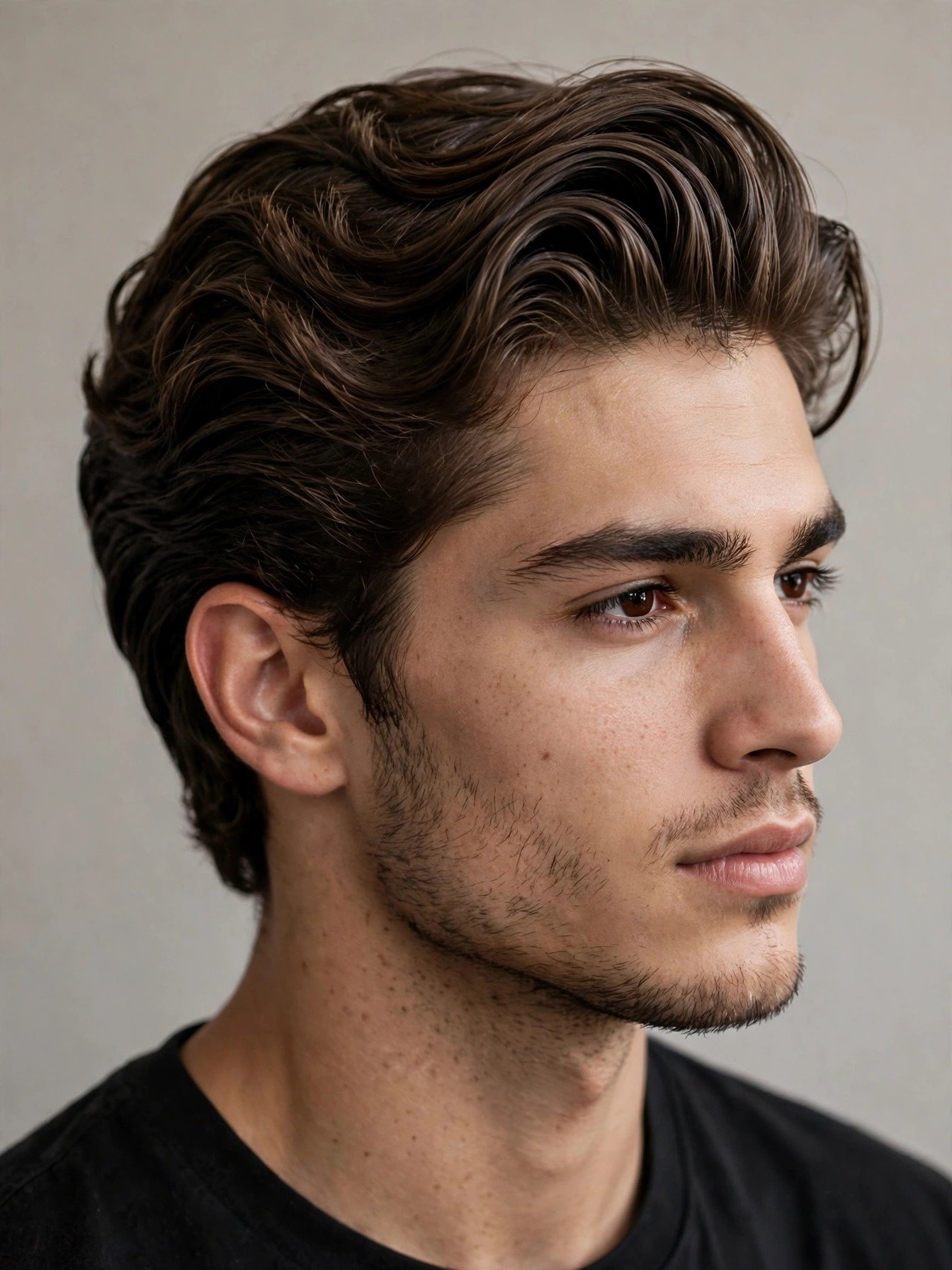
The grown-up wavy style: swept back with soft volume instead of plastered flat. It reads polished but the wave keeps it alive — boardroom-safe with personality.
Who it suits: Professional settings; 2A–2B waves at 4–5 inches; square and oval faces.
Barber script: “Swept-back wavy cut: 4–5 inches on top with layers, scissor-cut sides blended back. I want volume in the sweep, not a flat slick.”
Styling (8 minutes): Cream on damp hair, blow-dry back with fingers lifting at the roots. Finish with a light-hold cream — never wet-look gel.
Products: styling cream, light mousse. Maintenance: trim every 5–6 weeks.
Mistake to avoid: high-shine wet-look products — they kill the wave texture and age the style by a decade.
Pro tips & variations: The difference between this and a failed slick-back is volume at the roots — if it’s flat, it’s not a loose slick-back, it’s just greasy hair pushed back. Blow-dry with lift first, then sweep. Variation: a side-swept version (diagonal back) looks more dynamic; straight back looks more formal. Product rule: creams yes, gels no — anything with a wet look kills the wave texture that makes this style work and ages it by a decade.
10. Wavy Side Part
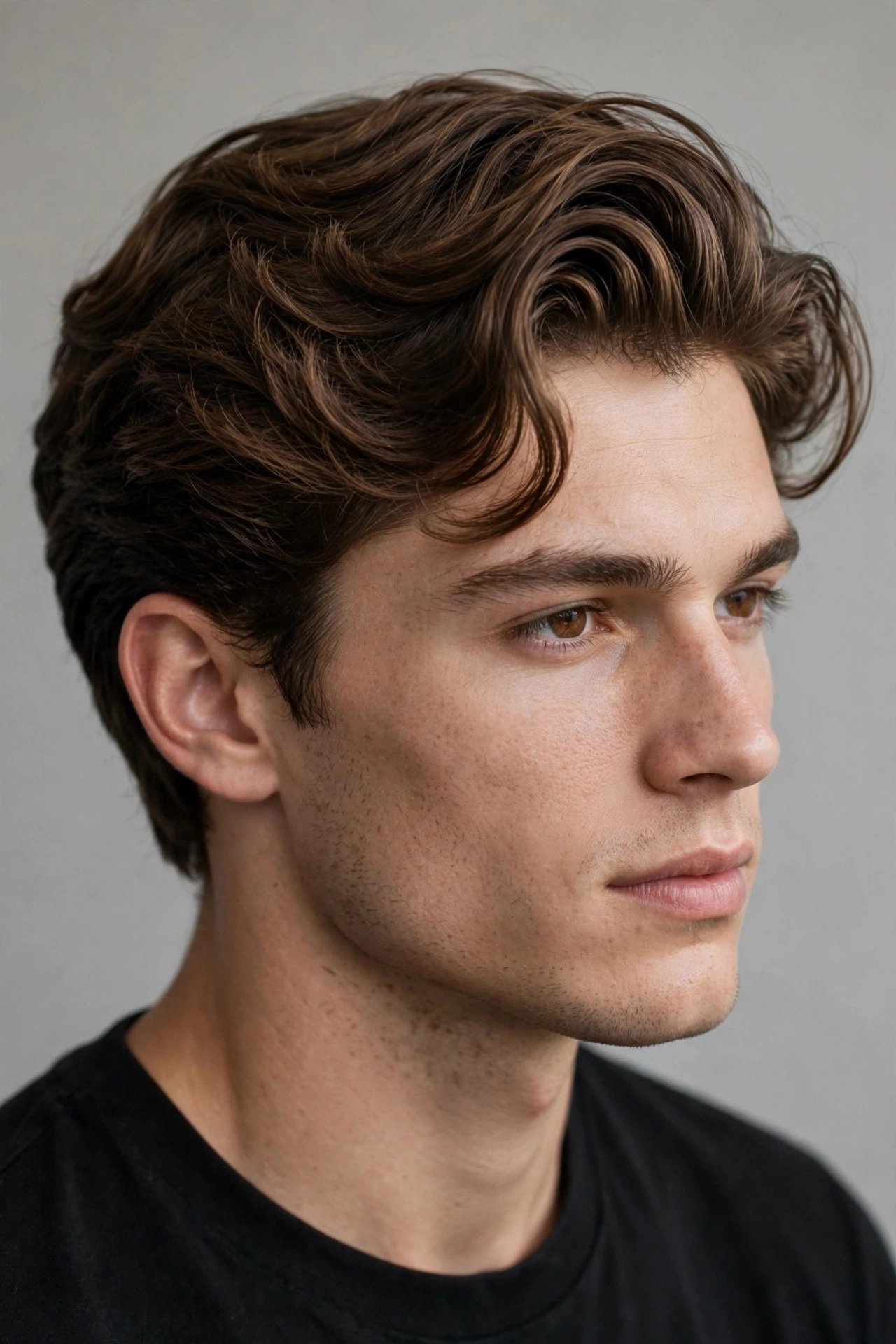
The timeless side part, upgraded by nature: waves give the classic cut movement and volume that the original never had. Appropriate everywhere, boring nowhere.
Who it suits: The universal choice — every face shape, every wave type, every dress code. The safest first wavy style.
Barber script: “Side part, 3–4 inches on top with texture and soft layers, tapered sides, no hard part cut in. Let the wave do the work.”
Styling (6 minutes): Finger-part damp hair, blow-dry up and over for volume, let it fall. Pea of matte paste to settle the part.
Products: mousse, matte paste. Maintenance: trim every 4 weeks.
Mistake to avoid: combing it flat and wet — the wave needs air and lift, not a plastered finish.
Pro tips & variations: This is the universal donor of wavy cuts — it works when nothing else feels right, and it transitions gracefully into almost any longer style. Variation: wear the part soft and finger-made for a modern feel, or comb-defined for classic polish — same cut, two eras. If your waves are 2C (strong), keep the top closer to 4 inches so the wave pattern has room to form; at 3 inches strong waves can look restless and unfinished.
11. Wavy Undercut
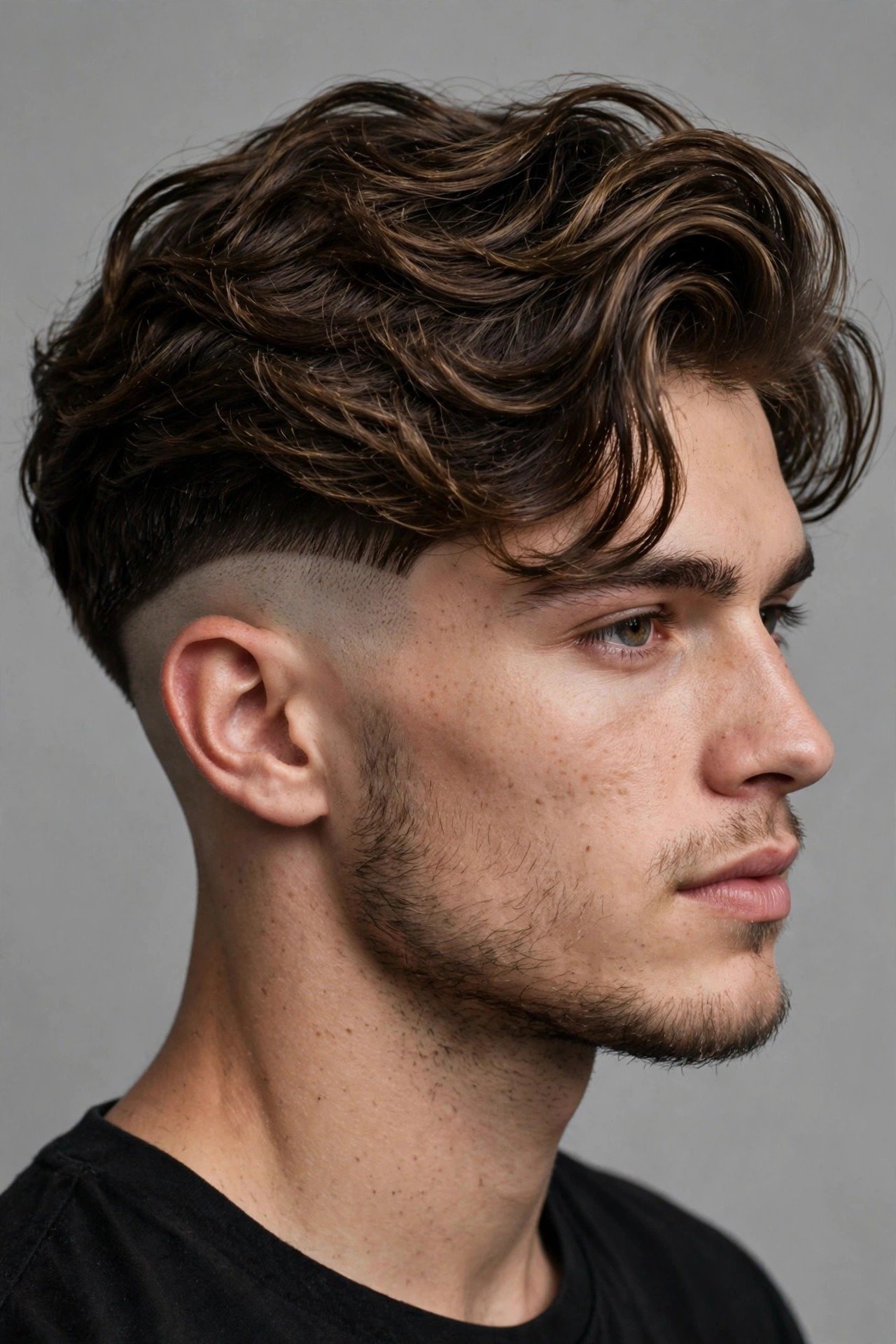
Maximum contrast: long wavy top (5–6 inches) against a disconnected undercut. The waves get the entire stage — dramatic, bold, and unmistakable.
Who it suits: Thick 2B–2C waves; confident dressers; oval and oblong faces. High-maintenance grow-out — commit or skip.
Barber script: “Disconnected undercut: #2–#3 on the sides, 5–6 inches of layered wave on top, texturized ends. Keep the disconnect clean.”
Styling (9 minutes): Curl cream on damp waves, define with fingers, air-dry or diffuse. Wear it swept back or to the side.
Products: curl cream, sea salt spray. Maintenance: undercut re-cut every 3 weeks; the disconnect shows growth fast.
Mistake to avoid: letting the undercut grow past a month — the contrast collapses and it reads as an overgrown mess.
Pro tips & variations: The undercut grows out brutally — there’s no graceful phase, so commit to the 3-week re-cut cycle or choose the taper fade (style 4) instead. Variation: wear the top swept back for drama, or to the side for wearability. Styling tip: define the waves with curl cream while damp, then don’t touch them — the contrast between the precise sides and the free waves is the entire point, and fussy styling ruins it.
12. Wavy Long Layers
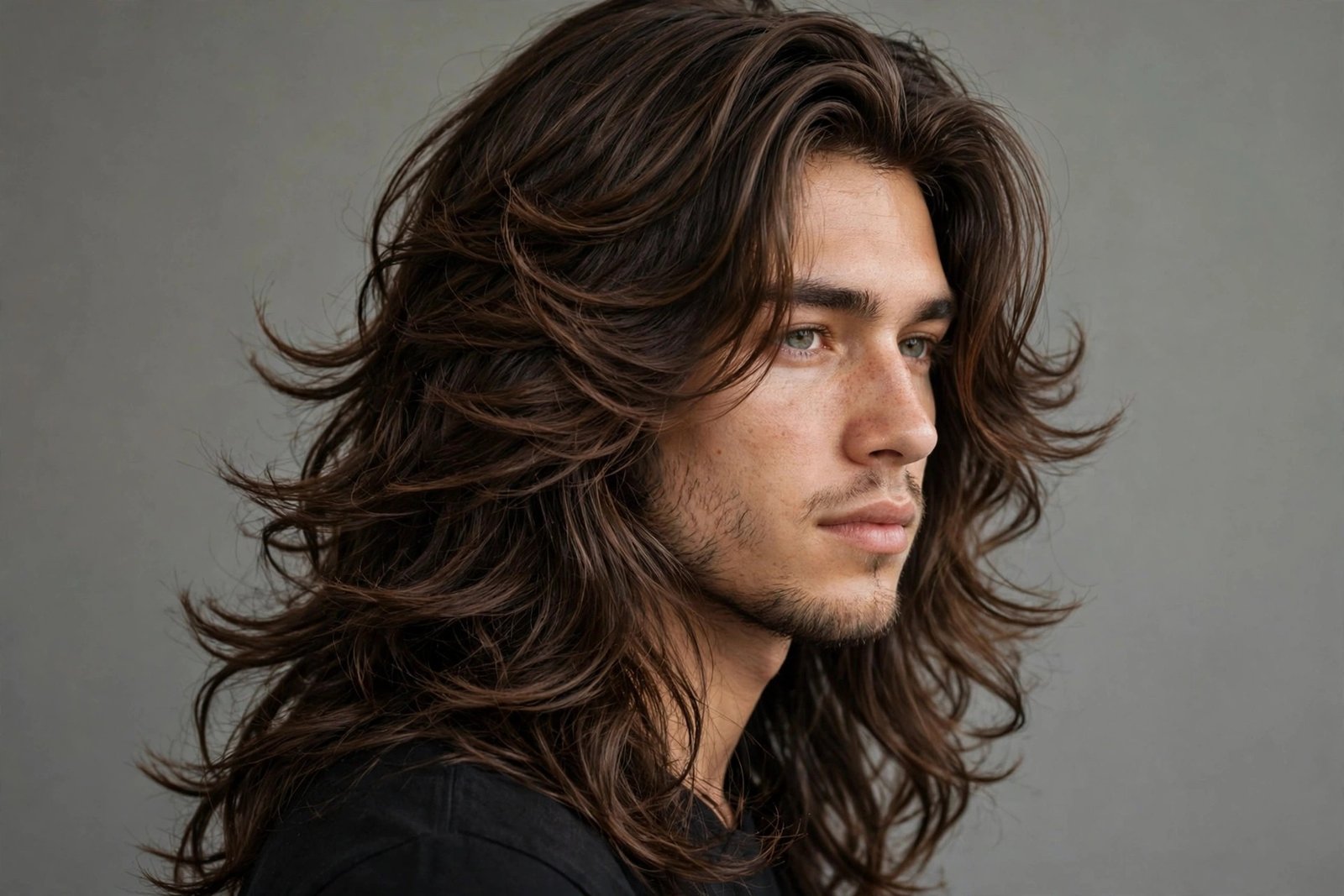
For the committed: 7+ inches of layered waves with real flow. The layers prevent the bottom-heavy triangle; the length shows the wave at its most dramatic.
Who it suits: 2B–2C waves with thick density; guys willing to maintain long hair. Oval and oblong faces wear it best.
Barber script: “Long layers: 7–8 inches, layers from the chin down, interior thinning for movement, healthy ends. Maintain the length, build the shape.”
Styling (8 minutes): Leave-in + curl cream on damp hair, scrunch, air-dry. Pineapple or loose bun at night preserves the waves.
Products: leave-in conditioner, curl cream. Maintenance: trim every 10–12 weeks; deep condition weekly.
Mistake to avoid: skipping the layers — one-length long wavy hair goes wide at the bottom and flat at the crown.
Pro tips & variations: Long wavy hair tangles — accept it and manage it: a wide-tooth comb on conditioned hair in the shower, never dry, and a leave-in conditioner as daily armor. Variation: wear it down for the full effect, or in a loose low bun for practical days — the waves make even a simple bun look good. Sleep in a loose braid or pineapple; morning detangling of unprotected long waves is a 15-minute tax you don’t need to pay.
13. Wavy Messy Top
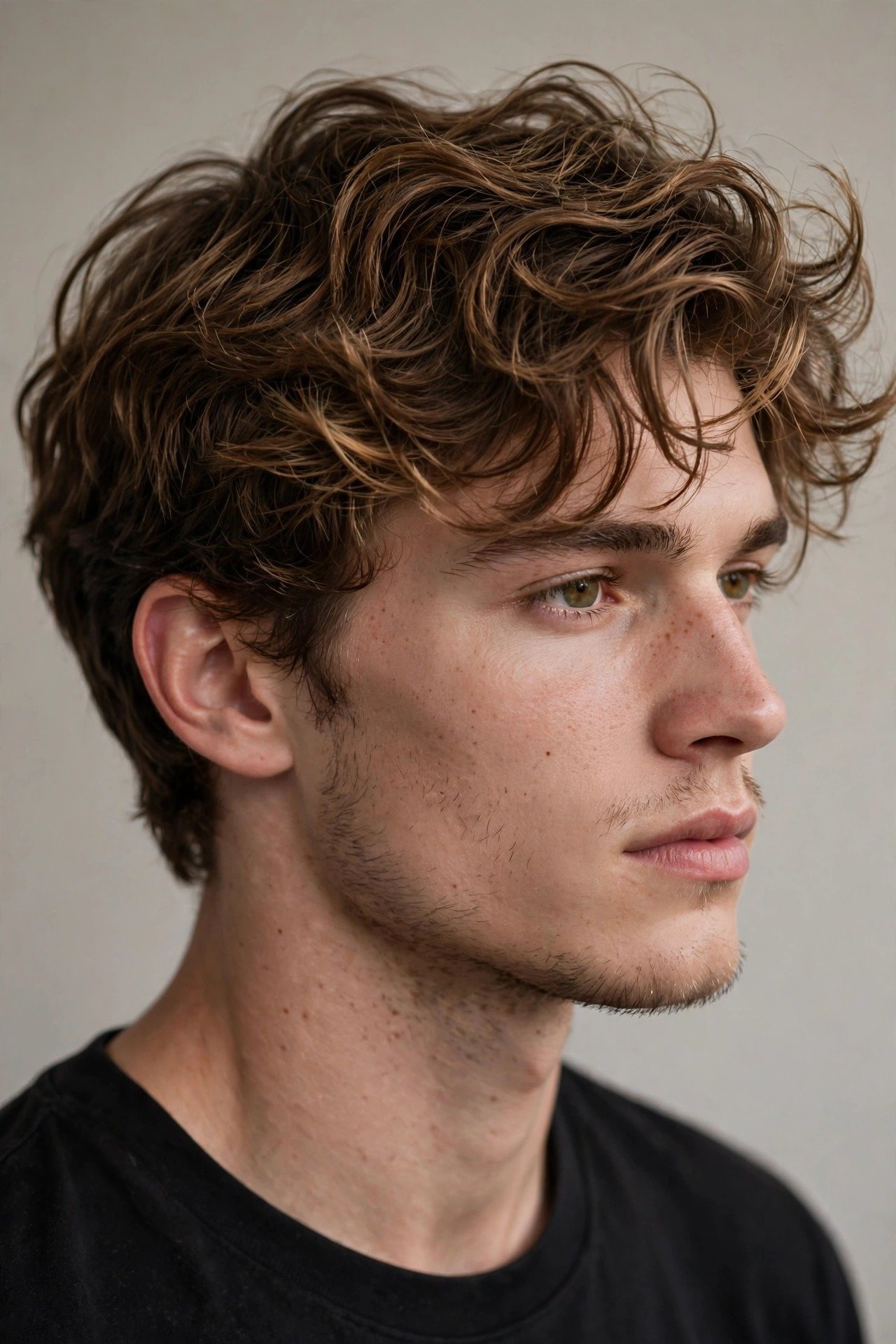
Deliberately undone: 3–4 inches of wavy texture pushed in every direction. The wave pattern makes “messy” look intentional rather than unkempt — the easiest grow-out on this list.
Who it suits: Low-maintenance guys; 2A–2C waves; oval and square faces. Second-day hair is the ideal starting point.
Barber script: “Messy textured top: 3.5 inches, heavily point-cut, no fixed direction — cut it to look good pushed anywhere. Tapered sides.”
Styling (5 minutes): Texture powder at roots, push in alternating directions, twist a few pieces. Stop early — overworking kills it.
Products: texture powder, sea salt spray. Maintenance: trim every 5 weeks; hides grow-out well.
Mistake to avoid: too much product — messy needs dryness and friction, not grease.
Pro tips & variations: Second-day hair is the ideal canvas — freshly washed waves are often too soft to hold the messy separation, so lean on texture powder on wash days. Variation: push everything forward for a fringe-heavy mess, or push the crown up for more height. The golden rule: stop styling one step before it looks ‘done’ — the difference between intentional messy and actually messy is about 30 seconds of restraint.
14. Wavy Curtain Bangs
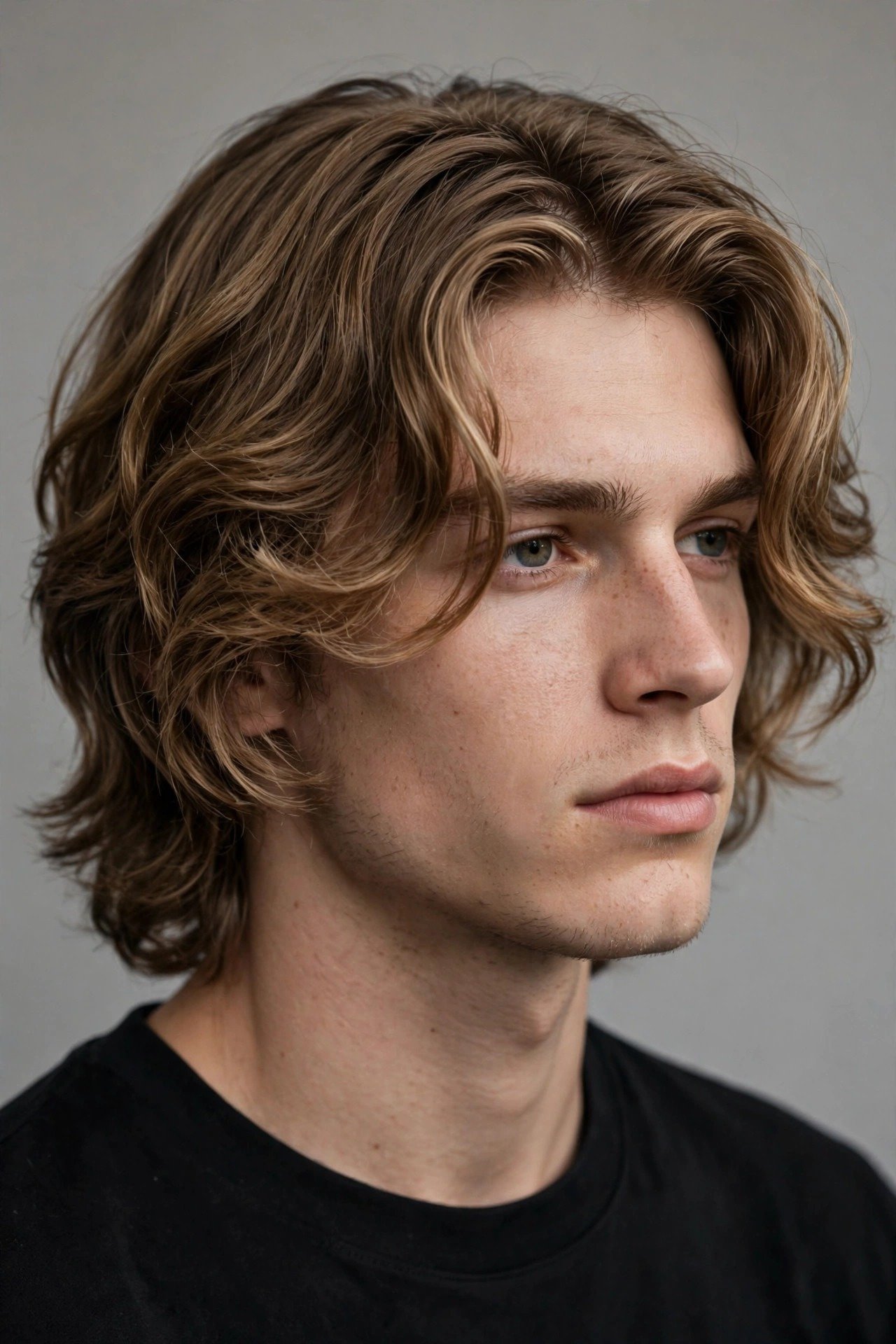
Face-framing wavy curtains with a soft center part — the wave gives the curtains bend and separation that straight hair can’t replicate. Youthful but grown.
Who it suits: Under-35s; oval, oblong, diamond faces; 2A–2C waves at 4–6 inches in front.
Barber script: “Wavy curtains: 5 inches in front, face-framing layers from cheekbones, soft center part, texturized ends. Let the wave shape the curtains.”
Styling (7 minutes): Center-part damp hair, curl cream on the front sections, blow-dry forward then sweep outward. Tuck behind ears when dry.
Products: curl cream, light mousse. Maintenance: trim face-framing layers every 6–8 weeks.
Mistake to avoid: flat-ironing the curtains — the wave IS the style; straightening it defeats the purpose.
Pro tips & variations: Curtain training mirrors the middle part (style 6): part wet daily for two weeks until it holds. Variation: tuck one side behind the ear for an asymmetric, editorial finish. If the curtains keep falling into your eyes, the face-framing layers are too long — a 10-minute trim of just those pieces fixes it without touching the rest. Never flat-iron wavy curtains: the wave IS the style, and straightening it removes the entire reason you chose this cut.
15. Soft Wavy Faux Hawk
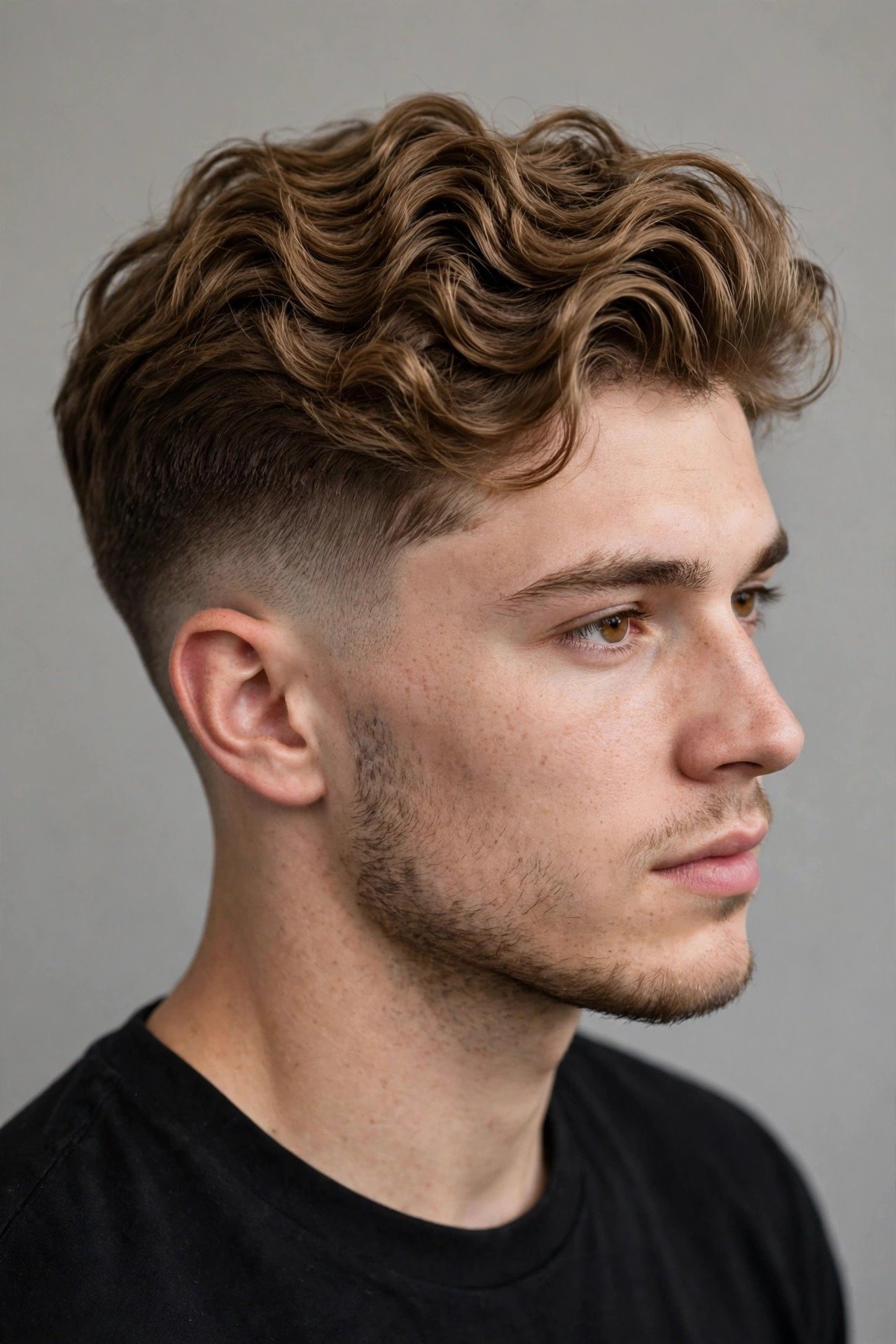
The faux hawk without the aggression: a soft strip of wavy texture (3–4 inches) with faded sides. The waves make it wearable daily — edgy but not costumey.
Who it suits: 2B–2C waves; oval and diamond faces; guys who want edge with an exit strategy (it grows into a textured crop).
Barber script: “Soft fohawk: 3.5 inches through the center, textured to show the wave, mid fade on the sides blending up. Keep it soft — no stiff styling.”
Styling (6 minutes): Sea salt spray, rough-dry the center strip upward with fingers. Let the waves fall naturally — no spiking.
Products: sea salt spray, matte paste. Maintenance: fade touch-up every 3 weeks.
Mistake to avoid: stiff spiking gel — the 2010 fohawk is dead; soft wave texture is the 2026 version.
Pro tips & variations: Keep it soft — the 2026 fohawk is defined by texture, not spikes, and the waves do the texturing for free. Variation: a longer strip (4 inches) reads more fashion-forward; a shorter one (3 inches) is more wearable daily. Grow-out bonus: unlike most edgy cuts, this one transitions gracefully into a textured crop (style 2) — just stop fading the sides so aggressively and let the strip widen.
16. Wavy Ivy League
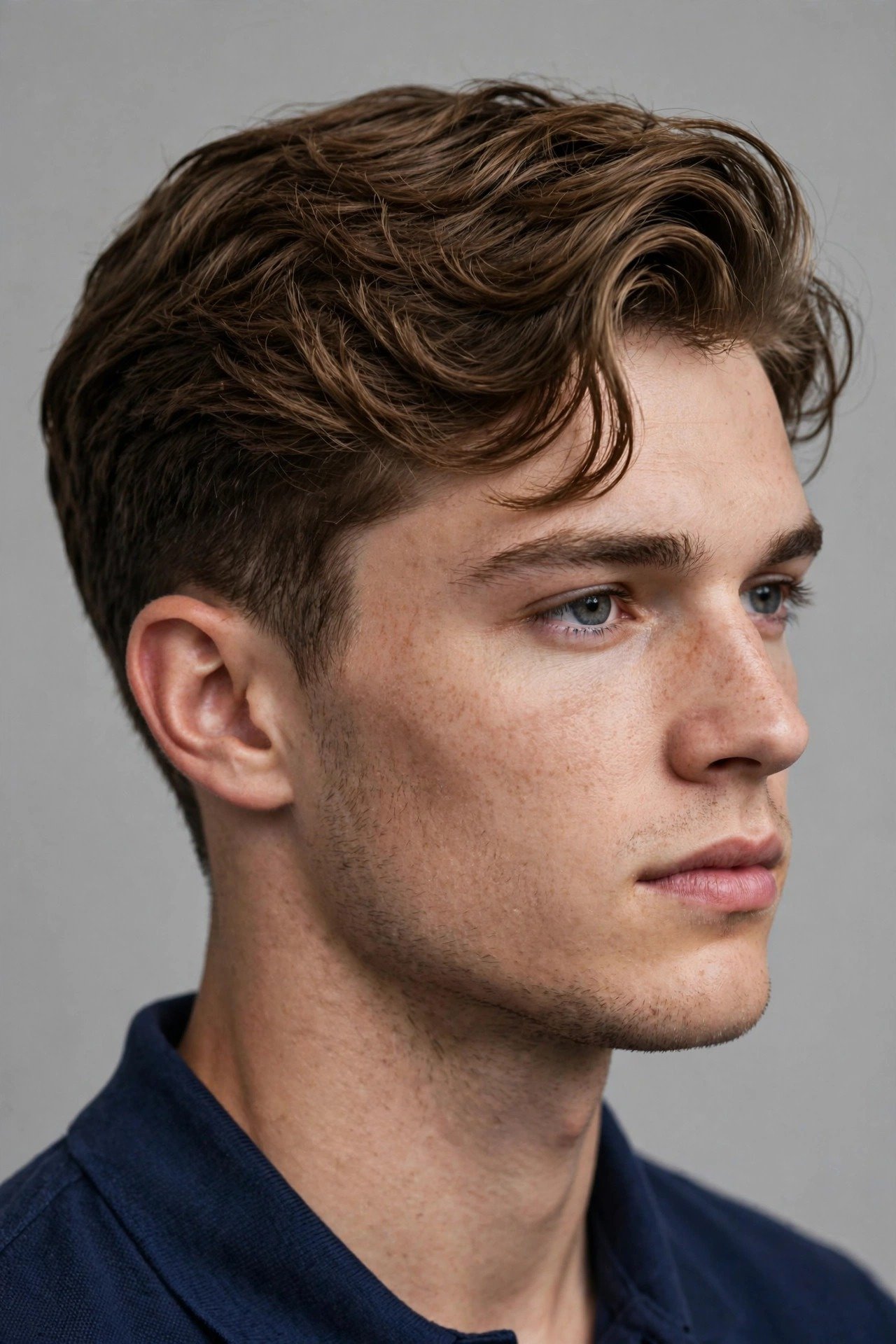
The preppy classic, wave-enhanced: short enough for any office, textured enough to never look boring. The wave adds the volume the traditional Ivy League lacks.
Who it suits: Professional environments; all wave types; every face shape. The most conservative style here.
Barber script: “Ivy League with texture: 2–2.5 inches on top, side-swept, tapered sides. Keep enough length for my wave to show.”
Styling (5 minutes): Light cream on damp hair, side-sweep with fingers, air-dry. Neat but not stiff.
Products: light styling cream. Maintenance: trim every 3–4 weeks — precision cuts show growth.
Mistake to avoid: cutting it as short as a crew cut — the wave needs that 2+ inches to exist.
Pro tips & variations: This is the most conservative wavy style, which makes it the best choice for interviews, weddings, and workplaces with unspoken rules — but the wave keeps it from ever looking boring. Variation: a cleaner side sweep for formal settings, a looser finger-styled version for weekends. Precision cuts show growth fastest, so don’t stretch past 4 weeks — the moment the taper edges blur, the whole cut loses its sharpness.
Styling Routine, Frizz Control & Maintenance

The 8-Minute Wavy Routine
- Wash smart. Sulfate-free shampoo 2–3x per week; condition every wash, focusing mid-lengths to ends. Squish conditioner in — “squish to condish” pushes moisture into the wave.
- Don’t towel-dry rough. Scrunch with a microfiber towel or cotton T-shirt. Regular towels rough up the cuticle = frizz.
- Product on damp hair. Curl cream or sea salt spray, scrunched in from ends upward. Damp hair absorbs product; dry hair just gets coated.
- Scrunch, don’t comb. Encourage the S-pattern by scrunching sections upward. Wide-tooth comb only on wet, conditioned hair.
- Diffuse or air-dry. Diffuser on low heat, hovering — or just air-dry. Never rough-blow with a brush.
- Hands off while drying. Touching drying waves breaks the cast and creates frizz. Let it set, then scrunch out any crunch.
- Pineapple at night. Loose high ponytail on a satin pillowcase preserves waves overnight.
Frizz Control That Actually Works
Frizz is a lifted cuticle, and wavy hair’s bends lift it naturally. What works: moisture first (leave-in conditioner seals the cuticle), humidity barriers (a pea of curl cream or light gel on humid days), and never brushing dry. What doesn’t: anti-frizz serums loaded with silicones (they flatten your wave), over-washing (strips natural oils), and hot water (opens the cuticle — finish with cool rinse). For the science of why hair frizzes, hair structure basics explain the cuticle mechanics; for styling tools that protect texture, guides at ghdhair.com cover diffuser technique well.
Products: The Wavy Arsenal
Essentials: sulfate-free shampoo, moisturizing conditioner, leave-in conditioner, curl cream (definition without crunch), sea salt spray (grit and wave enhancement), microfiber towel, diffuser attachment. Optional: light mousse (root lift), texture powder (second-day refresh), satin pillowcase.
Avoid: heavy waxes and pomades (crush waves), strong-hold gels (crunch), 2-in-1 products (coat without moisturizing), regular terry towels (frizz factories).
The Wavy Product Guide: What Each Product Actually Does
Walk into any store and the wall of products is paralyzing — here’s what each one does for waves, in plain terms. Sea salt spray: adds grit and separation; best for wash-day styling when hair is too soft. Spray on damp hair, scrunch, done. Curl cream: defines the S-pattern without crunch; the daily driver for 2B–2C waves. Apply to damp hair in sections. Mousse: root lift and all-over body; best applied at the roots before blow-drying or diffusing. Light gel: humidity armor — a pea-sized amount over cream on damp days locks out frizz; scrunch out the cast when dry. Texture powder: second-day magic — absorbs oil and rebuilds volume at the roots in seconds. Leave-in conditioner: the foundation everything sits on; seals the cuticle and prevents the dryness that causes frizz. What you don’t need: heavy waxes, oil-based pomades, and strong-hold gels — they either crush the wave or freeze it into crunch. Start with leave-in + one styler (cream for definition, salt spray for texture), and add others only when you know what problem you’re solving.
Maintenance Schedule
Short wavy cuts (crops, Ivy League): trim every 3–4 weeks. Medium styles (taper fades, quiffs, messy tops): every 4–6 weeks. Long styles (flows, long layers): every 8–12 weeks, focused on end health. Deep-condition weekly if your waves are 2C or color-treated. And get the cut when your hair is in its natural state — a barber who only sees your waves blown straight is cutting blind.
For the beach-textured cousin of these styles, see surfer hair for men; for tighter curl patterns, curly taper fade combinations pick up where waves leave off.
Troubleshooting Wavy Hair Problems
Frizz halo: almost always mechanical — rough towel drying, brushing dry, or touching it while it dries. Switch to a microfiber towel, scrunch instead of rubbing, and keep your hands off until it’s fully dry. Waves won’t define: you’re likely styling dry hair — product must go on damp hair, because damp hair absorbs and dry hair just gets coated. Flat roots, wavy ends: classic heavy-product syndrome — move product away from the roots (mousse only at roots, creams only mid-lengths down) and diffuse upside down. Triangle shape: you need layers, not product — book a cut with long layers and interior weight removal. One side waves, other doesn’t: sleeping position — pineapple or silk pillowcase evens it out. Diagnose first, buy products second; most wavy problems are technique, not inventory.
Seasonal Adjustments: Humidity, Winter & Swimming
Humidity: wavy hair’s nemesis — the bends in the wave lift the cuticle and drink moisture from the air. On humid days, add a pea of curl cream or light gel as a humidity barrier over your usual products, and accept slightly bigger hair — fighting humidity with more heat just creates more frizz. Winter: indoor heating dries waves out — deep-condition weekly and switch to a heavier leave-in, because dry winter waves go straight to frizz. Swimming: wet your hair with clean water and apply leave-in conditioner before getting in — saturated hair absorbs less chlorine and salt. Rinse immediately after, shampoo gently, and deep-condition that evening. Wind: a light-hold cream keeps waves from tangling into a bird’s nest on blustery days. Your wave pattern doesn’t change with the seasons, but your product lineup should.
Wavy Hair at the Gym, in Hats & on Travel Days
Gym: sweat is salt water — it dries waves out and the friction of a workout flattens them. Tie longer waves in a loose low bun or wear a sweat-wicking headband; after training, rinse with water (shampoo only if you trained hard) and re-scrunch with a little leave-in. Never leave sweat to dry in your waves all day — the salt crystallizes and turns texture into straw. Hats: a tight cap flattens the crown, but you can recover — wear the hat slightly loose and further back, then revive with texture powder and 30 seconds of upside-down finger fluffing when it comes off. For beanie season, a silk or satin-lined beanie reduces the friction that causes frizz. Travel: the wavy textured crop (style 2) is the best travel cut because it air-dries well — pack sea salt spray and a microfiber towel and skip the dryer entirely. For longer styles, a loose braid keeps waves intact through flights and road trips. The through-line: waves are resilient if you protect them from friction and dryness, and they bounce back fast with the right refresh.
Frequently Asked Questions
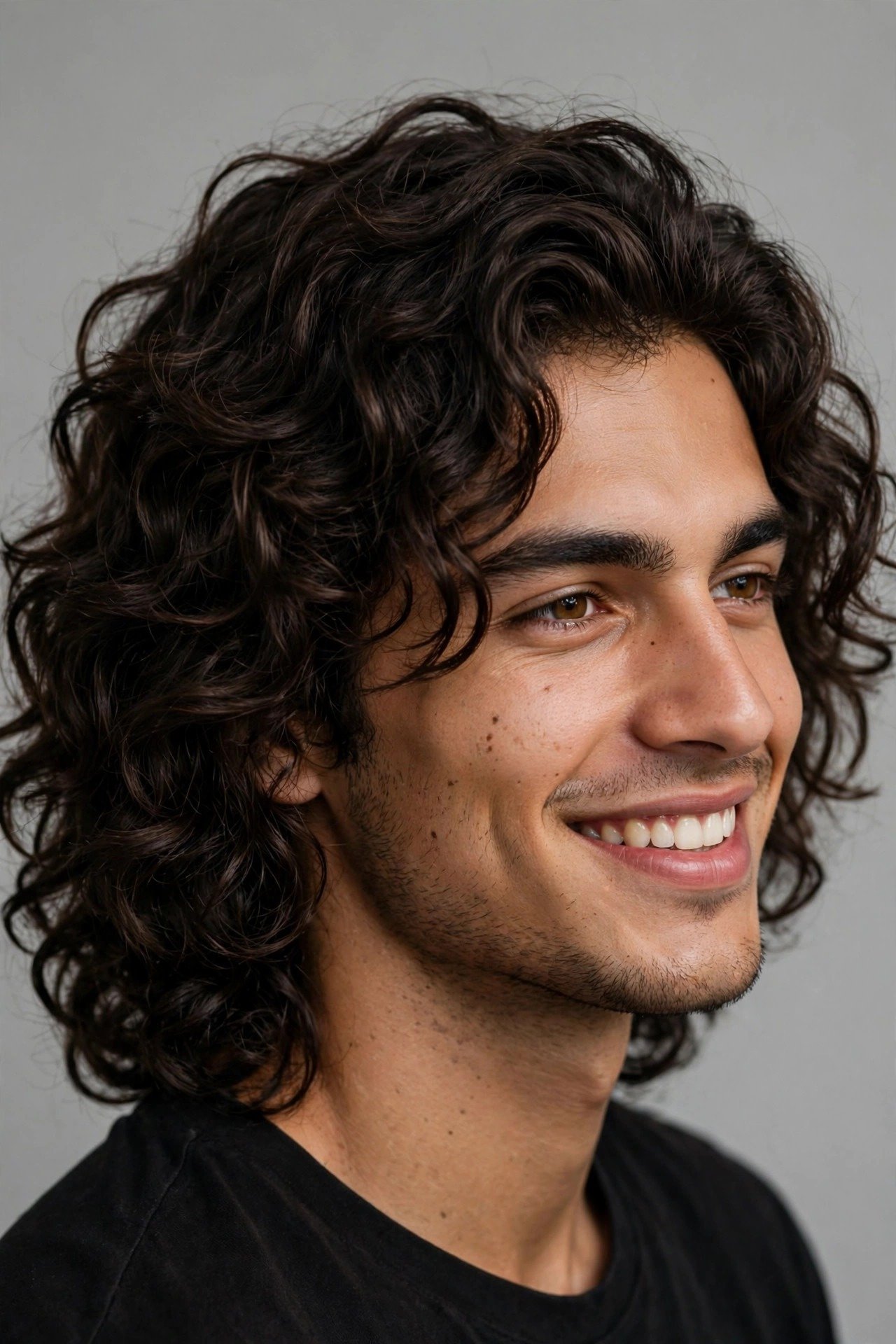
How do I make my wavy hair more defined?
Apply curl cream to damp (not wet, not dry) hair and scrunch upward, then don’t touch it until fully dry. Definition comes from product timing and hands-off drying — most undefined waves are just waves that got touched, brushed, or towel-dried into frizz. If your waves still won’t define, the cut is likely the culprit: one-length cuts pull waves flat, while long layers let each wave spring independently. And check your towel — switching from terry cloth to microfiber alone visibly improves definition for most wavy guys within a week.
Should wavy hair be layered?
Yes — layers are the single most transformative cut for wavy hair. They remove the weight that pulls waves flat and let each wave spring independently. One-length cuts on wavy hair create a flat-top, wide-bottom triangle; layers fix it instantly. Ask for long layers (not short choppy ones, unless you want the shag) starting around the cheekbones, with interior weight removal. The difference is visible the moment you leave the chair — it’s the highest-impact change a wavy-haired man can make, more than any product.
How do I stop my wavy hair from frizzing?
Moisturize (leave-in conditioner every wash), stop brushing it dry, switch to a microfiber towel, and add a humidity barrier like curl cream on damp days. Frizz is mostly mechanical damage from rough handling — change the handling and most frizz disappears. The remaining frizz is usually a moisture problem: wavy hair’s bends lift the cuticle, so it needs more conditioning than straight hair. A weekly deep-conditioning mask and a cool-water final rinse (which seals the cuticle) handle the rest. If you’ve done all of this and still frizz, your ends are likely damaged — a dusting trim removes the worst offenders.
Can I straighten my wavy hair sometimes?
Yes, with heat protectant and moderate heat — occasional straightening won’t destroy your pattern. But daily high-heat straightening loosens the wave permanently over months, because repeated heat breaks the hydrogen bonds that form your S-pattern. If you straighten often, deep-condition weekly to offset the damage, and give your hair straightening-free weeks to recover. Many wavy guys find they straighten less over time anyway — once the waves are cut and styled properly, the natural texture usually looks better than the straightened version.
What is the best haircut for wavy hair men?
The wavy textured crop (short) or wavy bro flow (medium) suit the most men — both are cut with layers that let the wave pattern show. The universal rule matters more than the style: 3+ inches on top, layered, point-cut ends, and a barber who cuts your wave pattern, not against it. Arrive at the appointment with your hair in its natural air-dried state so the barber can see the real pattern — a barber who only sees your waves blown straight is cutting blind, and the cut will fight your texture for six weeks.
Conclusion
Wavy hair is not a problem to solve — it’s an advantage most men would pay for. The entire game is working with the S-pattern instead of against it — giving the wave the length, layers, and moisture it needs, then getting out of its way: layers that let waves spring, moisture that seals the cuticle, light products that define without crushing, and the discipline to keep your hands and brushes off it while it dries.
Pick the style that matches your wave type and your patience for maintenance — a textured crop if you want wash-and-go, a bro flow or long layers if you want the full effect. Bring the barber script, commit to the routine for three weeks, and watch the texture you used to fight become the best thing about your hair. And remember the three rules that govern everything above: length lets the wave form (3+ inches minimum), layers let it spring (never one-length), and hands-off drying preserves what the cut created. Get those right and the products become enhancements, not crutches. Your waves were never the problem. The haircut was — and now you know exactly what to ask for.