
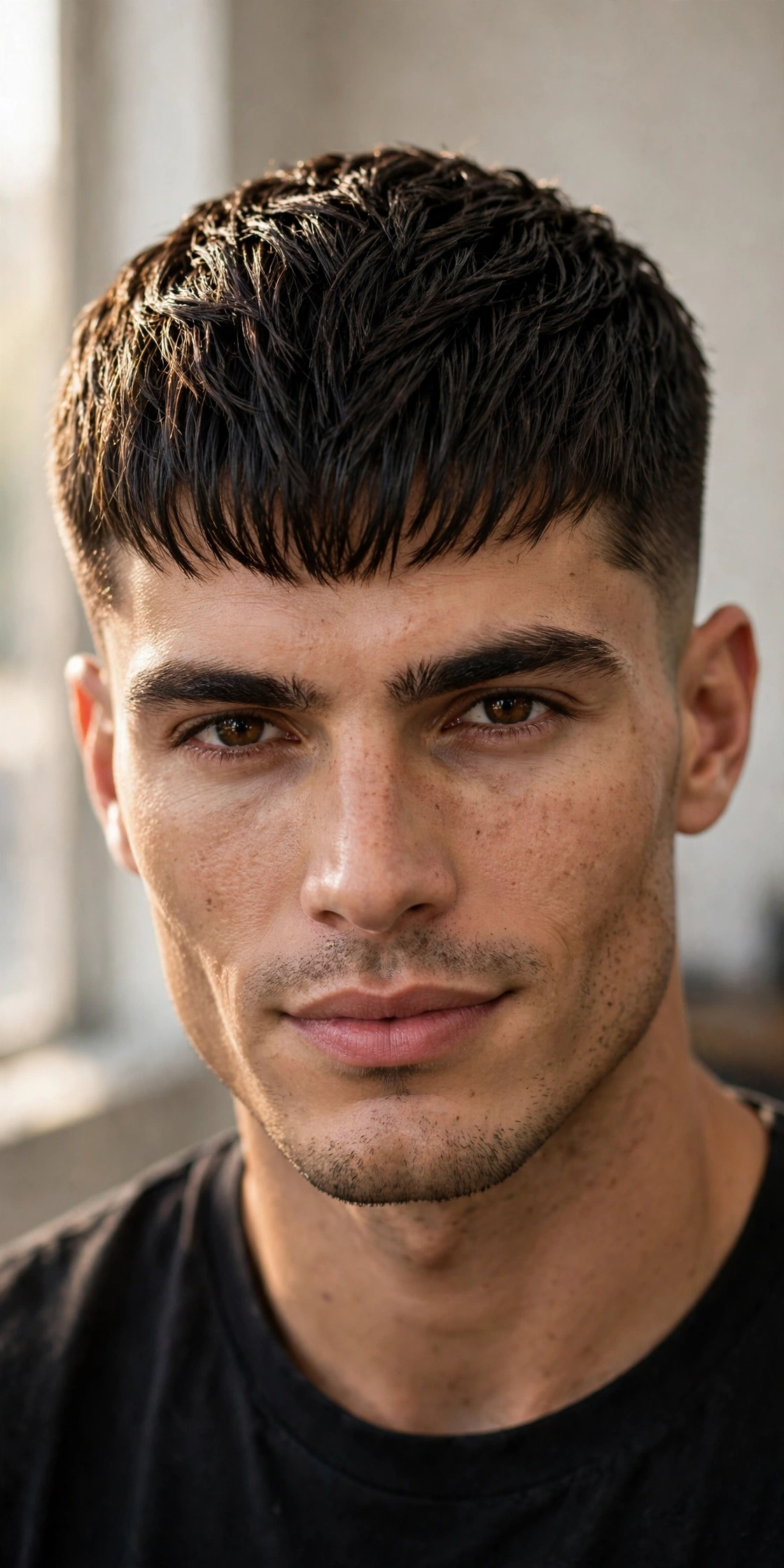
Caesar Cut for Men 2026: 15 Sharp Caesar Haircut Ideas
Caesar Cut for Men 2026: 15 Sharp Caesar Haircut Ideas
If you walked into a barbershop five years ago and asked for a caesar cut, half the room would have given you that look — you know the one, the “aren’t those done?” look. Well, things change. Walk into that same barbershop in 2026 and the caesar is everywhere: on footballers, on your barber’s Instagram grid, and probably on at least one guy sitting in the waiting chairs next to you. This short, no-nonsense haircut has quietly clawed its way back from the ’90s and early 2000s, and this time around it looks nothing like the flat, helmet-ish version your dad wore.
In this guide, I’m going to walk you through everything worth knowing about the caesar cut for men in 2026. You’ll get 15 genuinely different caesar haircut ideas — not the same photo recycled fifteen times — covering everything from the clean classic to textured, faded, curly, and bearded versions. You’ll also learn exactly what to tell your barber (word for word), how to style the thing at home in under three minutes, which face shapes it flatters most, and how to keep it looking sharp between appointments.
The 2026 version of this cut is worth your attention because it hits a rare sweet spot: it takes almost zero effort in the morning, it works for nearly every hair type, and it photographs ridiculously well — which matters more than any of us want to admit. First caesar or fifteenth, there’s a version on this list with your name on it.
What Is the Caesar Cut?

The caesar cut is about as straightforward as men’s haircuts get, and that’s the whole point of it. Hair is cut short all over — typically between half an inch and two inches on top — and the defining feature is the fringe: instead of being swept up or to the side, the hair on the forehead is combed forward and cut in a straight or slightly textured horizontal line. The sides and back are usually tapered or faded short, creating a clean, uniform silhouette from every angle.
Yes, the name really does come from Julius Caesar. The story goes that the Roman emperor combed his hair forward to hide a receding hairline, and the busts carved of him show that same forward-falling fringe. Fast-forward two thousand years and the style got its modern fame in the ’90s and early 2000s, when it became a staple for everyone from hip-hop artists to suburban dads. It fell out of fashion during the long-on-top era — the quiffs, the pompadours, the endless fades with volume — but short textured hair is back, and the caesar rode that wave straight into 2026.
What separates the 2026 caesar from the dated version is texture and softness. The old caesar was often cut blunt, sitting on the head like a single solid cap of hair. The modern one is cut with point-cutting, razors, or texturizing shears, so the fringe has movement and separation instead of a hard wall of hair. Barbers also play with the neckline and temples now — tapered, faded, even slightly grown out — which gives a cut that was once considered basic a surprising amount of range.
Why the Caesar Cut Is Trending in 2026

Trends don’t come back for no reason, and the caesar’s comeback has a few very practical engines behind it. First, the broader men’s hair trend in 2026 has shifted decisively toward shorter, textured tops. After years of long, high-maintenance styles dominating the feed, guys are tired of spending twenty minutes with a blow dryer every morning. The caesar asks for about ninety seconds and a dab of product — that alone makes it a lifeline for busy mornings.
Second, the ’90s revival is in full swing across men’s fashion, and hair follows clothes the way a shadow follows a person. Baggy jeans are back, vintage sportswear is back, and the short fringe that defined that era is back with them. Publications tracking 2026 men’s haircut trends have been calling the caesar’s return for months — hairaide.com listed it among the 15 best men’s haircuts of 2026, accio.com flagged a “modern edition” of the caesar in its 2026 trend roundup, and hairstylesfeed.com put together a whole gallery of classic caesar ideas updated for modern men. When that many trend watchers agree, it’s not a fluke.
Third, the cut suits the moment because it’s honest. The 2026 grooming mood leans away from over-styled, product-heavy looks and toward hair that looks like hair — lived-in, natural, low-effort. The textured caesar is practically the poster child for that mood. Add in the fact that it works beautifully with beards (which aren’t going anywhere), flatters guys dealing with thinning at the front, and looks good on camera from every angle, and you’ve got a haircut that earned its comeback instead of just inheriting it.
15 Caesar Cut Ideas for Men in 2026

Here is where it gets fun. The caesar is not one haircut — it’s a family of haircuts, and the differences between them matter more than you’d think. A faded caesar reads edgy and modern; a classic caesar reads clean and timeless; a curly caesar reads relaxed and natural. Below are fifteen distinct versions, each with its own personality. Read through them like a menu, and by the end you’ll know exactly which one to show your barber.
1. The Classic Caesar
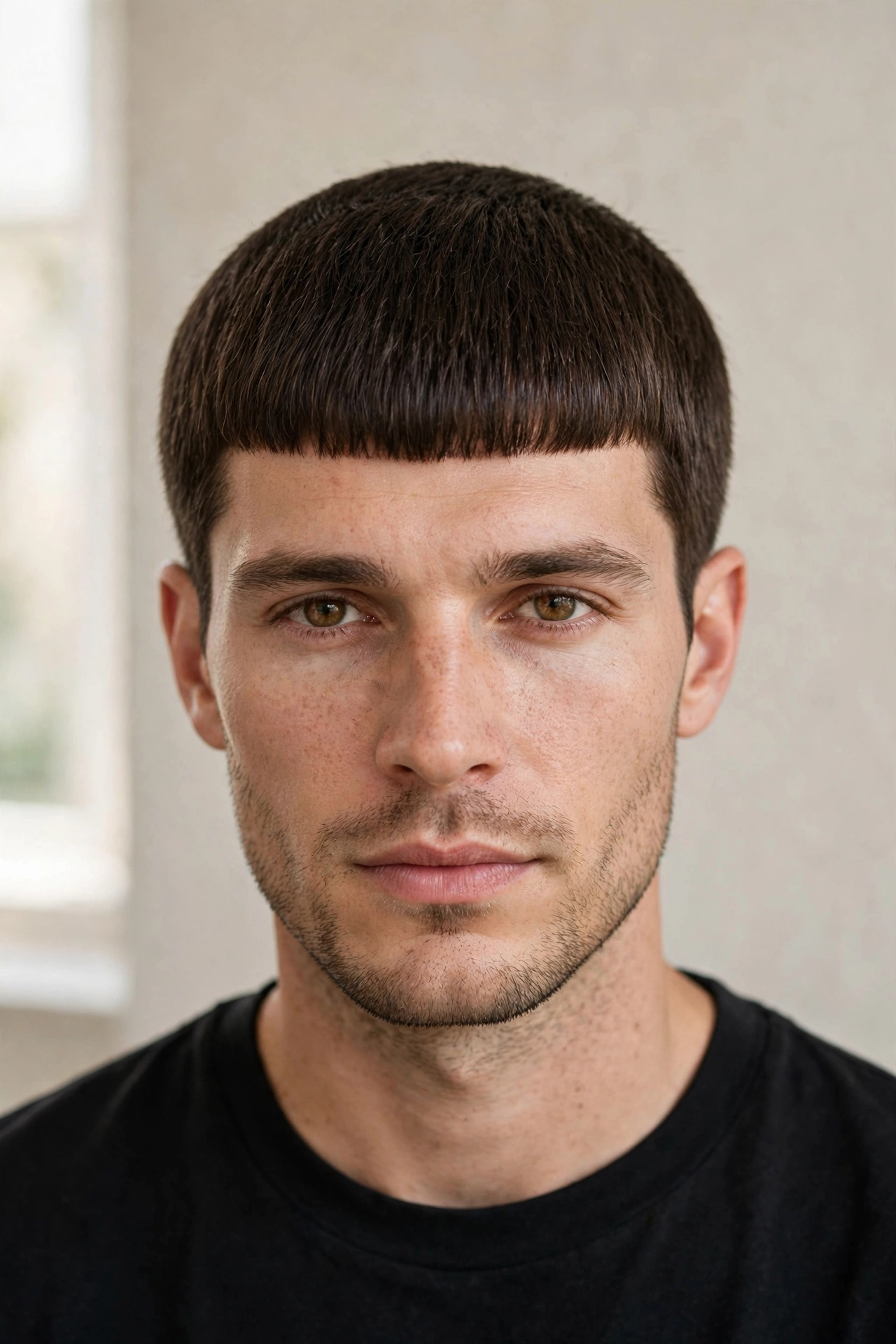
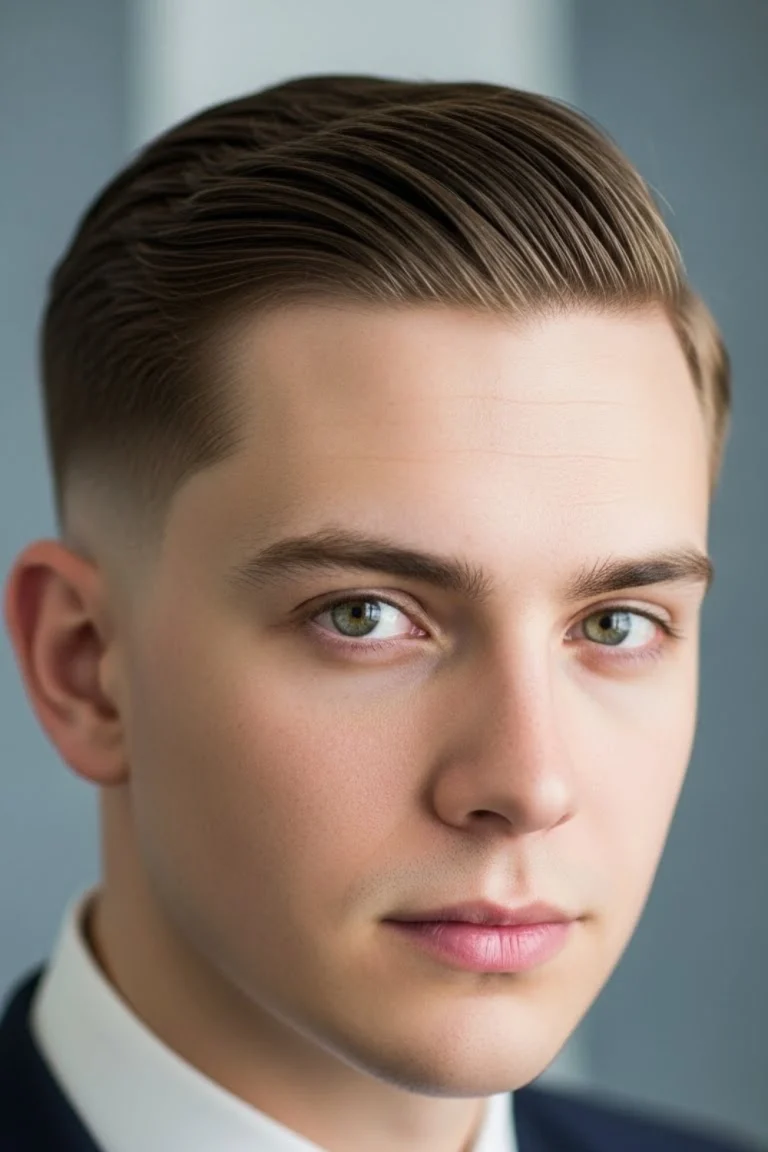
This is the original blueprint, and it still works. The classic caesar keeps the hair an even length all around — roughly an inch to an inch and a half on top — with a straight, clean fringe sitting just above the eyebrows and the sides scissored short to match. No fade, no texture tricks, no drama. It’s the version George Clooney made famous back in the day, and it has the same effect now: it makes you look put-together without looking like you tried.
The classic caesar is the safest entry point if you’ve never worn a caesar before. It grows out gracefully, it needs almost no product (a little water or a pea-sized amount of light cream is plenty), and it works in every setting from the office to a wedding. Tell your barber you want it even all over with a straight fringe, and ask him to keep the edges soft rather than razor-sharp — that small detail keeps it from looking like a bowl cut. If your hair is straight to slightly wavy and you want something you never have to think about, start here.
2. The Textured Caesar

If the classic caesar is a clean shirt, the textured caesar is the same shirt with the sleeves rolled up. The length is similar, but the top is cut with point-cutting or texturizing shears to create separation and movement, so the fringe looks piecey and lived-in instead of solid. This is the version most barbers reach for in 2026 when someone just says “give me a caesar,” and honestly it’s the version most guys should be getting.
Texture does two favors for you. First, it makes the cut look modern instantly — that slightly undone finish is exactly what current trends reward. Second, it hides a multitude of sins: cowlicks, uneven growth patterns, even early thinning at the hairline all disappear into the movement. Styling takes about a minute: work a small amount of matte clay or texture paste through dry hair, push everything forward, and pinch a few pieces at the fringe. Done. Ask your barber for “a caesar with a lot of texture on top, choppy fringe” and you’ll walk out with the 2026 default.
3. The Caesar Fade
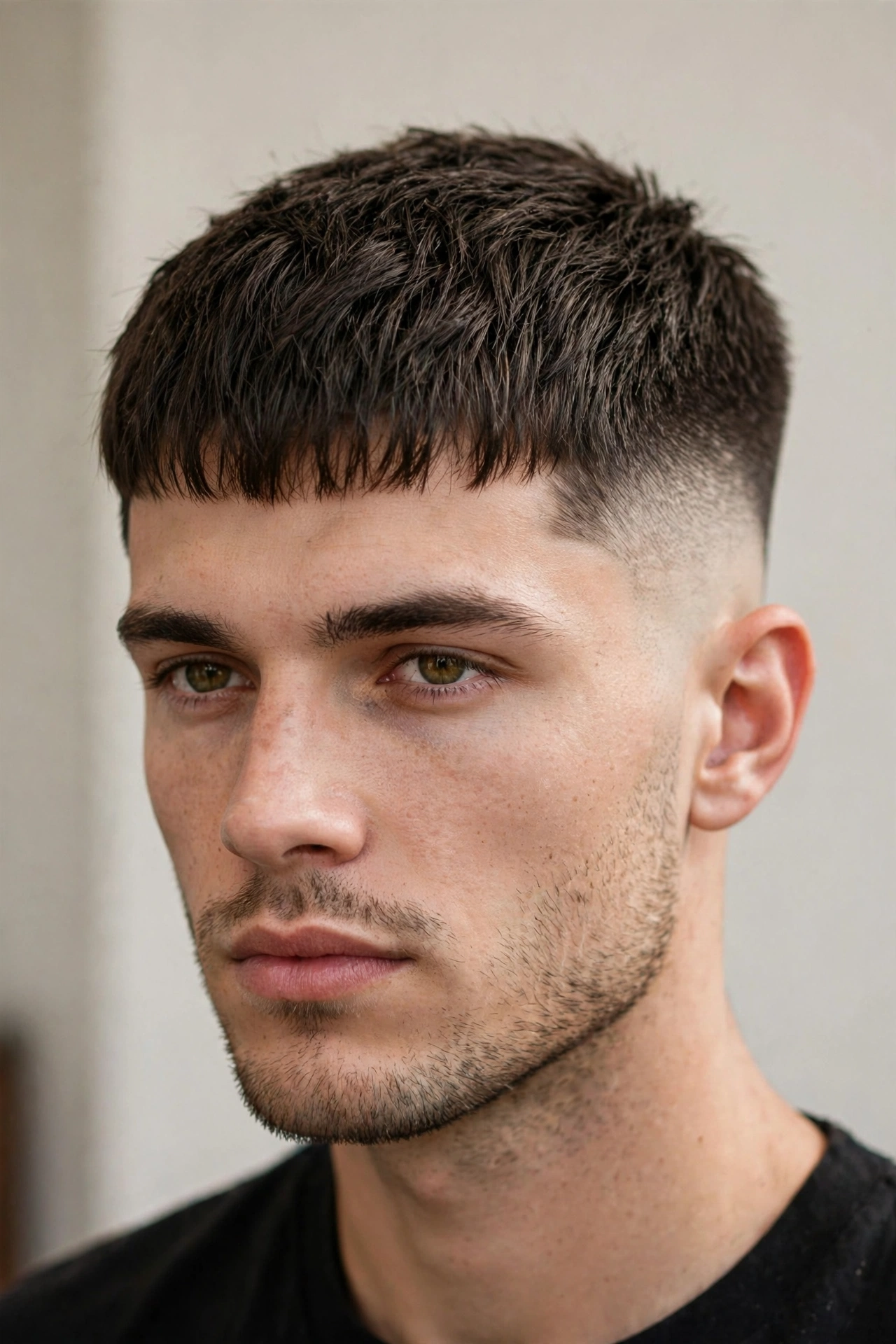
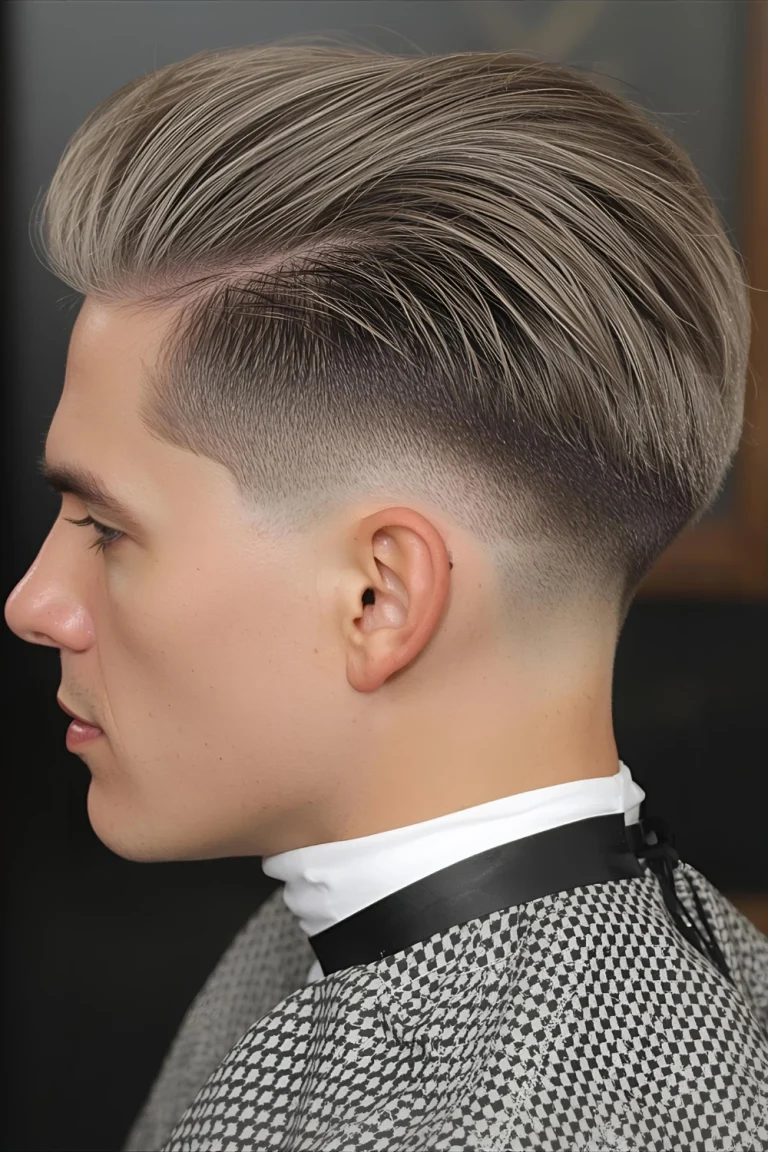
The caesar fade is what happens when the old-school cut meets the modern barbershop’s favorite tool. The top stays true to caesar form — short, forward, fringed — while the sides and back drop into a clean fade, usually a mid or low fade. The contrast between the textured top and the tight sides gives the whole thing a sharper, more deliberate edge than the even-all-over classic.
This is the crowd-pleaser of the list and probably the most requested version in shops right now. It photographs well, it looks intentional even when you roll out of bed, and the fade keeps the silhouette crisp for the first two weeks after a cut. One practical note: fades grow out faster visually than scissored sides, so budget for a touch-up every two to three weeks if you want it staying sharp. Tell your barber “caesar on top, mid fade on the sides, keep the fringe textured” — and decide with him whether you want the fade to start high, mid, or low based on your head shape. Mid is the crowd-safe choice; low is subtler for conservative workplaces.
4. The Curly Caesar

Curly-haired guys, this one is yours. The curly caesar lets your natural curls do the talking: the top is left long enough for the curls to form — usually two to three inches — and they’re directed forward so the fringe becomes a soft curtain of texture over the forehead. The sides are kept short to give the curls a frame. The result looks effortless in a way that straight-hair guys genuinely cannot copy.
The key to this version is length management. Too short and the curls can’t form, leaving you with frizz; too long and the weight pulls the fringe down over your eyes. Most curly caesars land best with the top cut while dry or barely damp, because curls shrink as they dry and a wet cut always ends up shorter than planned — tell your barber that if he doesn’t already know it. For styling, a curl cream or light leave-in conditioner on damp hair, scrunched forward, is the whole routine. No diffusers, no drama. If you’ve been fighting your curls with long styles, the curly caesar might be the cut that finally makes peace with them.
5. The Caesar with Beard
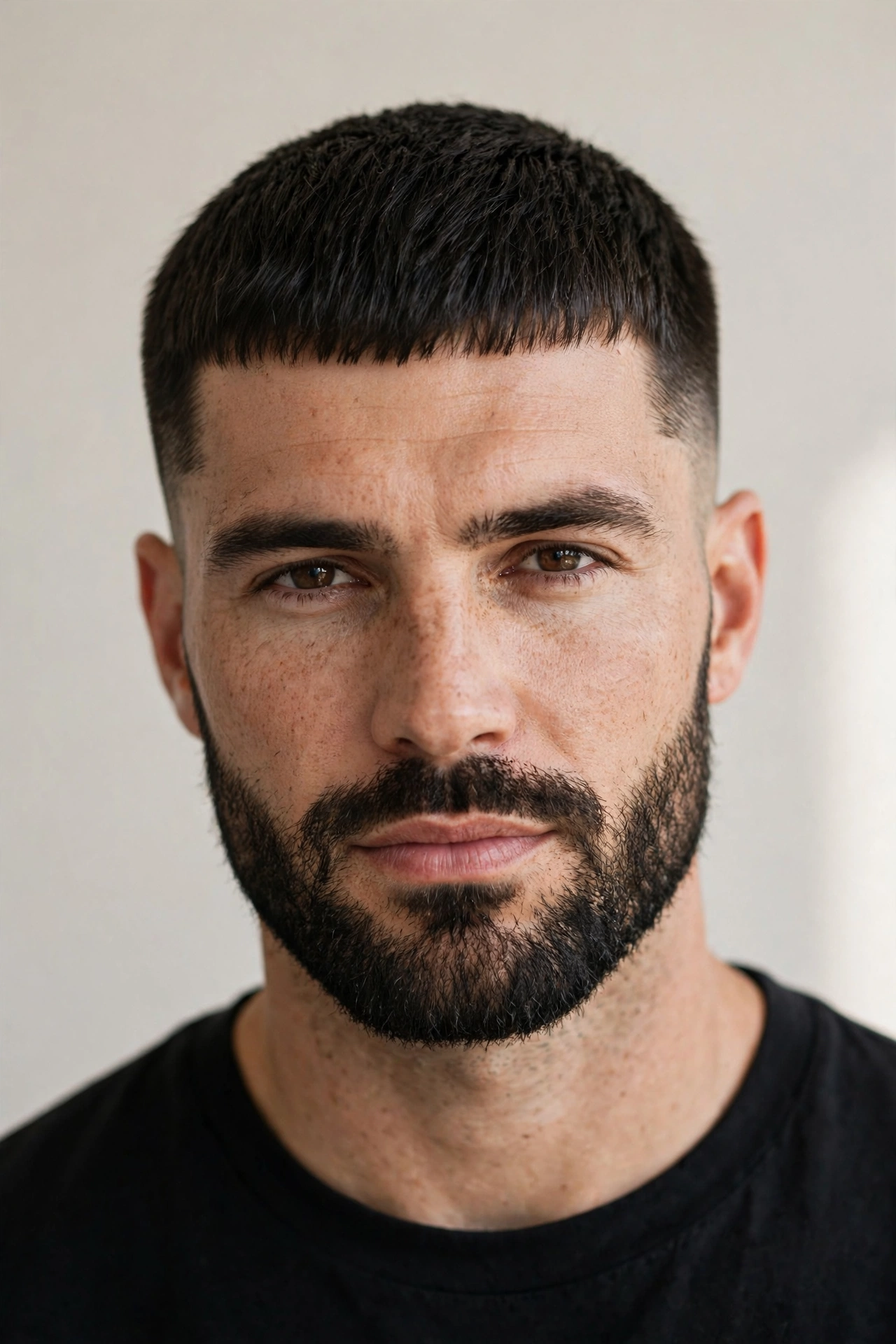
Pairing a caesar with a beard is one of those combinations that just works — the short, controlled hair on top balances the fuller, wilder energy of facial hair, and the straight fringe line echoes the clean lines of a shaped beard. It’s a masculine, grounded look that reads confident without trying too hard, which is probably why you see it on so many guys in their late twenties and thirties.
The trick is proportion. A short caesar with a long, full beard can look bottom-heavy, so most barbers recommend keeping the beard at a short-to-medium length — think a few weeks of growth, shaped at the cheeks and neckline — when the top is very short. If you run a bigger beard, consider a slightly longer, more textured caesar on top to balance the visual weight. And get the transition right: the sideburns should blend into the beard rather than creating a visible disconnect, which is a detail worth mentioning to your barber specifically. A little beard oil and a boar-bristle brush keep the whole package looking intentional instead of accidental.
6. The Long Fringe Caesar
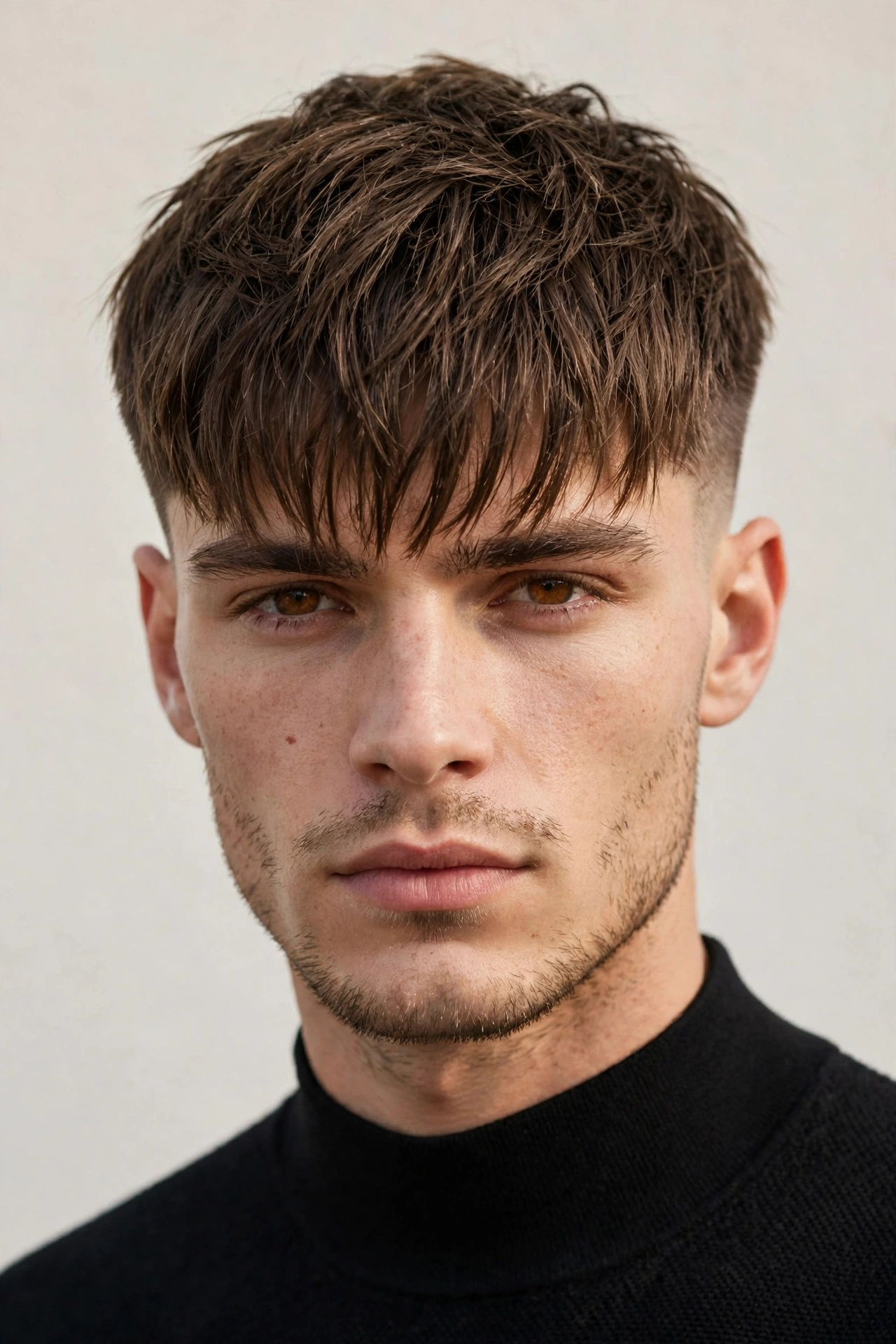
Not every caesar has to sit high on the forehead. The long fringe version lets the front grow to eyebrow length or just past it, creating a heavier, more fashion-forward curtain of hair. It keeps the short sides of a traditional caesar but borrows the mood of longer fringe styles — think ’90s heartthrob energy updated with modern texture. This is the caesar for guys who want the cut’s easy maintenance but aren’t ready to go fully short on top.
Styling a longer fringe takes slightly more attention than the standard version, but we’re still talking two minutes. A blow dryer pointed downward for thirty seconds gives the fringe direction and keeps it from falling into your eyes all day; a touch of sea salt spray adds the gritty texture that stops it looking flat. This version suits guys with straight to wavy hair best — very curly hair at this length starts behaving more like a curly fringe style than a caesar. And fair warning: you’ll need trims every three to four weeks to keep the fringe from crossing the line from stylish to “can’t see.”
7. The Skin Fade Caesar
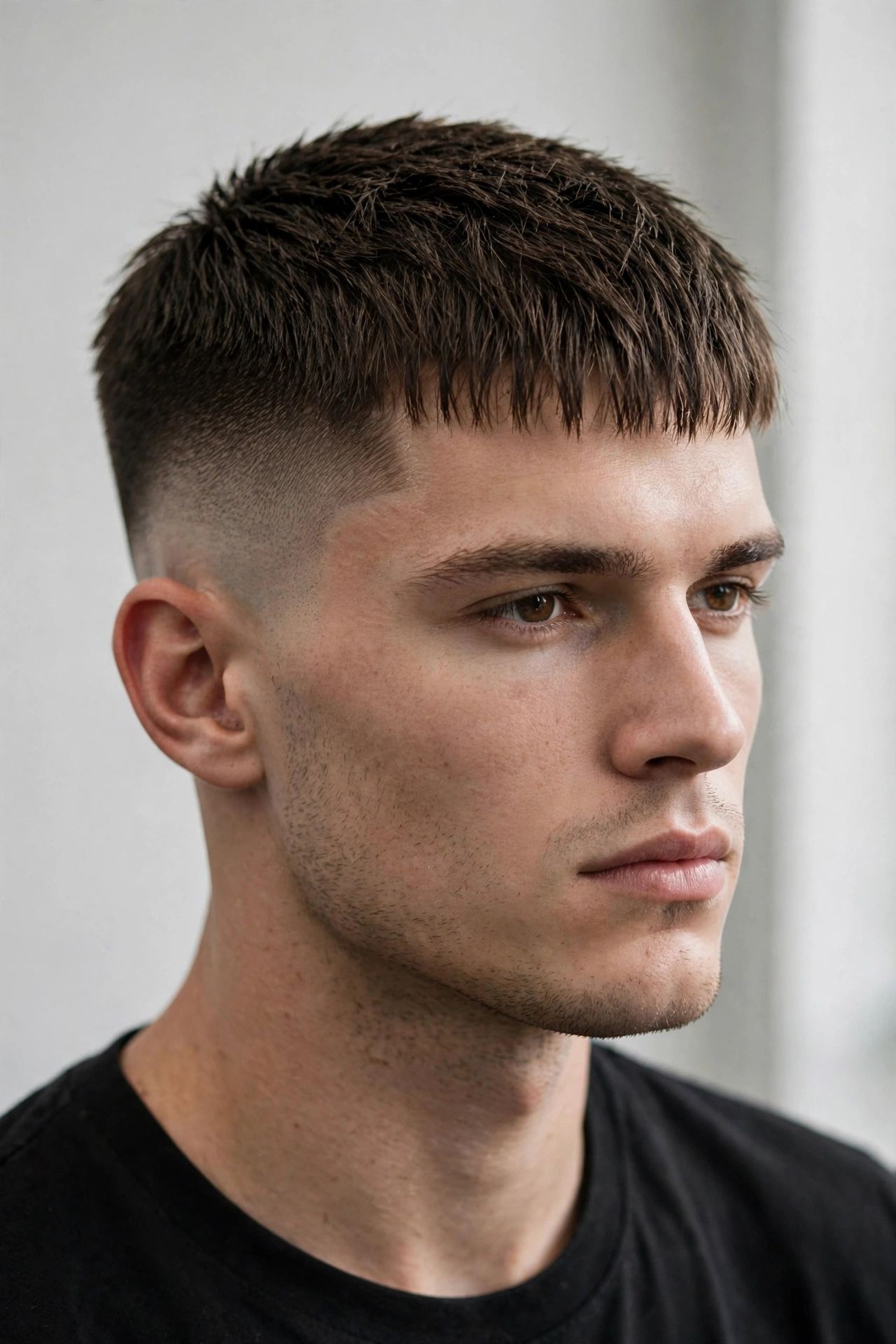
Take the caesar fade and turn the dial all the way up. The skin fade caesar drops the sides down to bare skin, creating maximum contrast between the short top and the sides. It’s bold, it’s clean, and it’s unmistakably 2026 — this is the version you see in barbershop transformation videos because the before-and-after difference is so dramatic.
This cut demands confidence and commitment in roughly equal measure. The skin fade looks incredible fresh but shows regrowth faster than any other version here — by week two the fade line starts softening, and by week three you’ll be itching for the chair again. It’s also less forgiving of head shape irregularities, since there’s nowhere to hide; that’s not a dealbreaker, just something to discuss honestly with your barber. On the plus side, it’s the lowest-maintenance caesar day to day: the top is short enough to style with your fingers and water alone. Ask for “caesar top, skin fade on the sides” and specify whether you want the fade high, mid, or low — high skin fade is the statement; low skin fade is the subtle flex.
8. The Messy Caesar

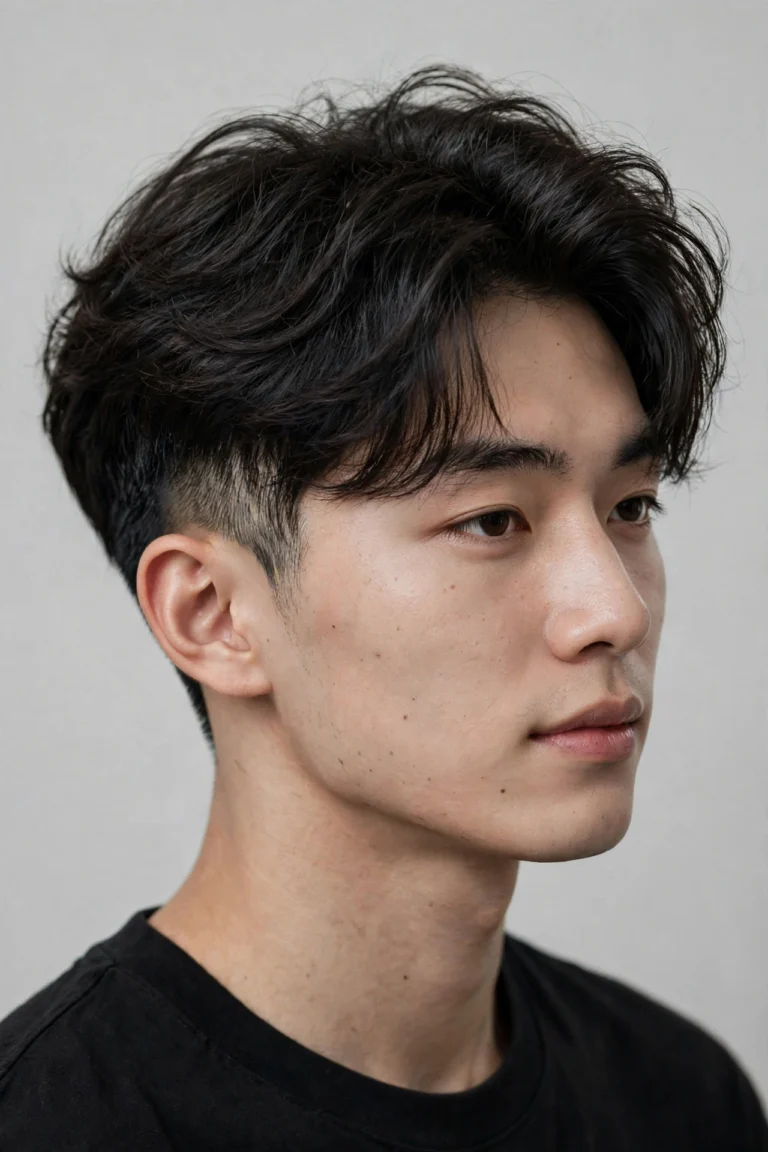
The messy caesar is the textured caesar’s cooler younger brother. Where the textured version is controlled chaos, this one leans into the chaos: the top is cut with heavy texture and left slightly longer, then styled with a deliberate just-rolled-out-of-bed finish. The fringe is uneven on purpose, pieces going in slightly different directions, and the whole thing looks like you have better things to do than your hair — which is exactly the point.
Here’s the secret nobody tells you: messy haircuts require the most precise cutting. A good messy caesar is engineered — the barber creates the texture with intention so that your “I woke up like this” actually looks good instead of just looking slept-in. Styling is genuinely easy though: matte paste or clay on dry hair, push it all forward, then mess it up with your fingertips and leave it alone. The less you fuss, the better it looks. This version is ideal for guys with thick hair that has natural volume, and it’s very forgiving if you skip a styling day — it looks almost the same either way.
9. The Caesar with Taper
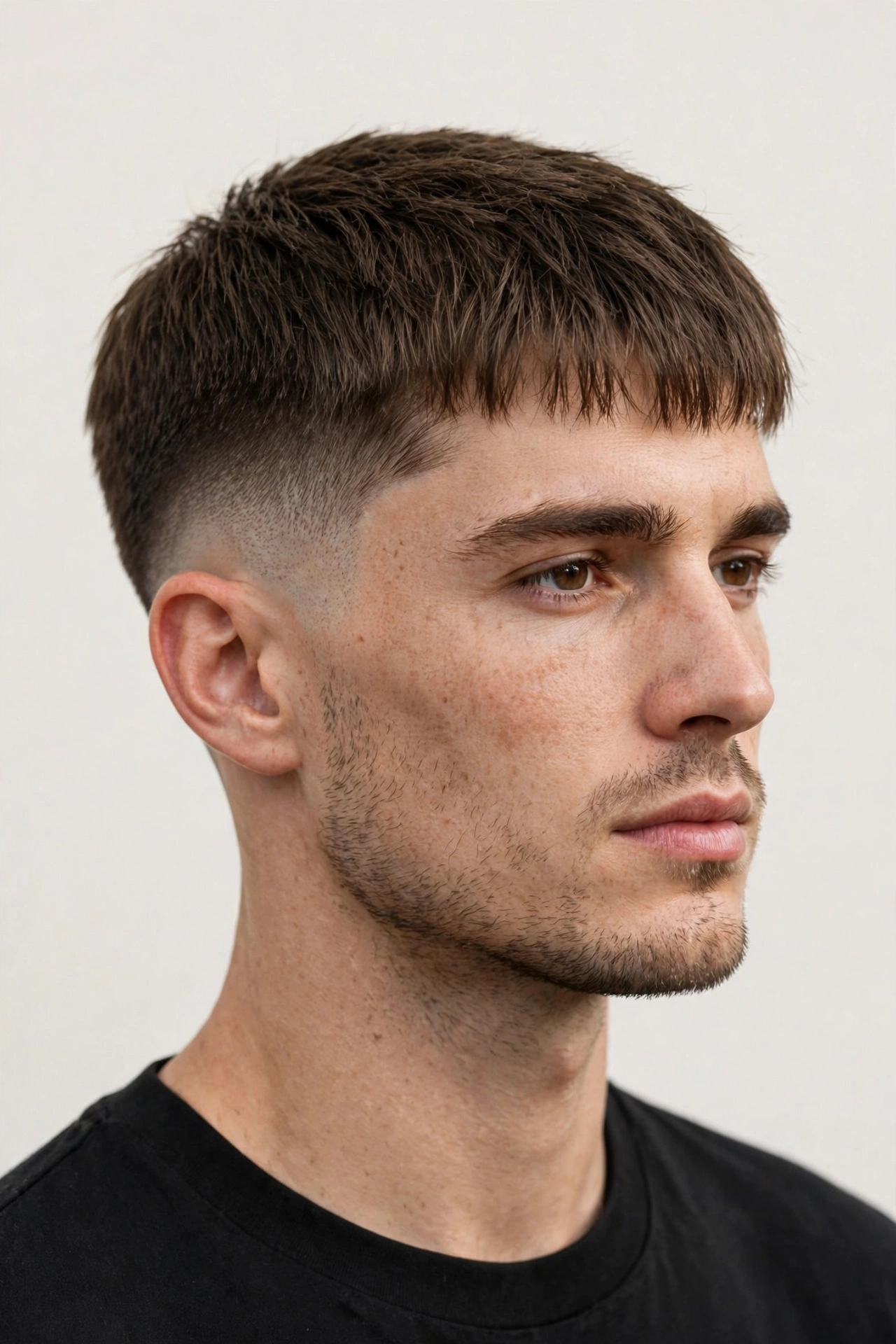
If fades feel too aggressive for your office or your taste, the tapered caesar is your answer. Instead of the dramatic drop of a fade, the sides are gradually shortened with scissors or clippers, keeping a natural, soft transition from the top down to the neckline. It reads classic and understated — the kind of haircut that looks right in a boardroom and at a barbecue.
The taper is also the most grow-out-friendly option on this list. Because there’s no harsh fade line, the cut stays presentable for four to six weeks instead of two to three, which means fewer barber visits and less money spent over the year. Ask your barber for a “caesar with a scissor taper on the sides, natural neckline” — and specifically say you want the edges kept natural rather than squared off, since hard lines grow out faster and look dated sooner. This is the caesar for guys who want to look sharp with the least possible maintenance, full stop.
10. The Wavy Caesar

Wavy hair and the caesar were made for each other. The natural wave pattern gives the fringe movement and body that straight hair has to fake with product, and the short length keeps the waves controlled instead of puffy. The wavy caesar typically runs a little longer on top than the classic — around two inches — so the waves have room to do their thing, with the sides kept neat and short.
Styling couldn’t be simpler, but there’s one rule: don’t fight the wave direction. Work a small amount of light cream or sea salt spray through damp hair, push everything forward following your hair’s natural fall, and let it air dry. The moment you start blow-drying against the grain or loading up heavy product, you lose the easy charm that makes this version special. If your waves are inconsistent — flat in some spots, kinky in others — a good texturizing cut evens out the behavior across the top. Mention to your barber that you want the cut to work with your air-dried texture, and he’ll cut accordingly.
11. The Short Caesar (Military-Inspired)
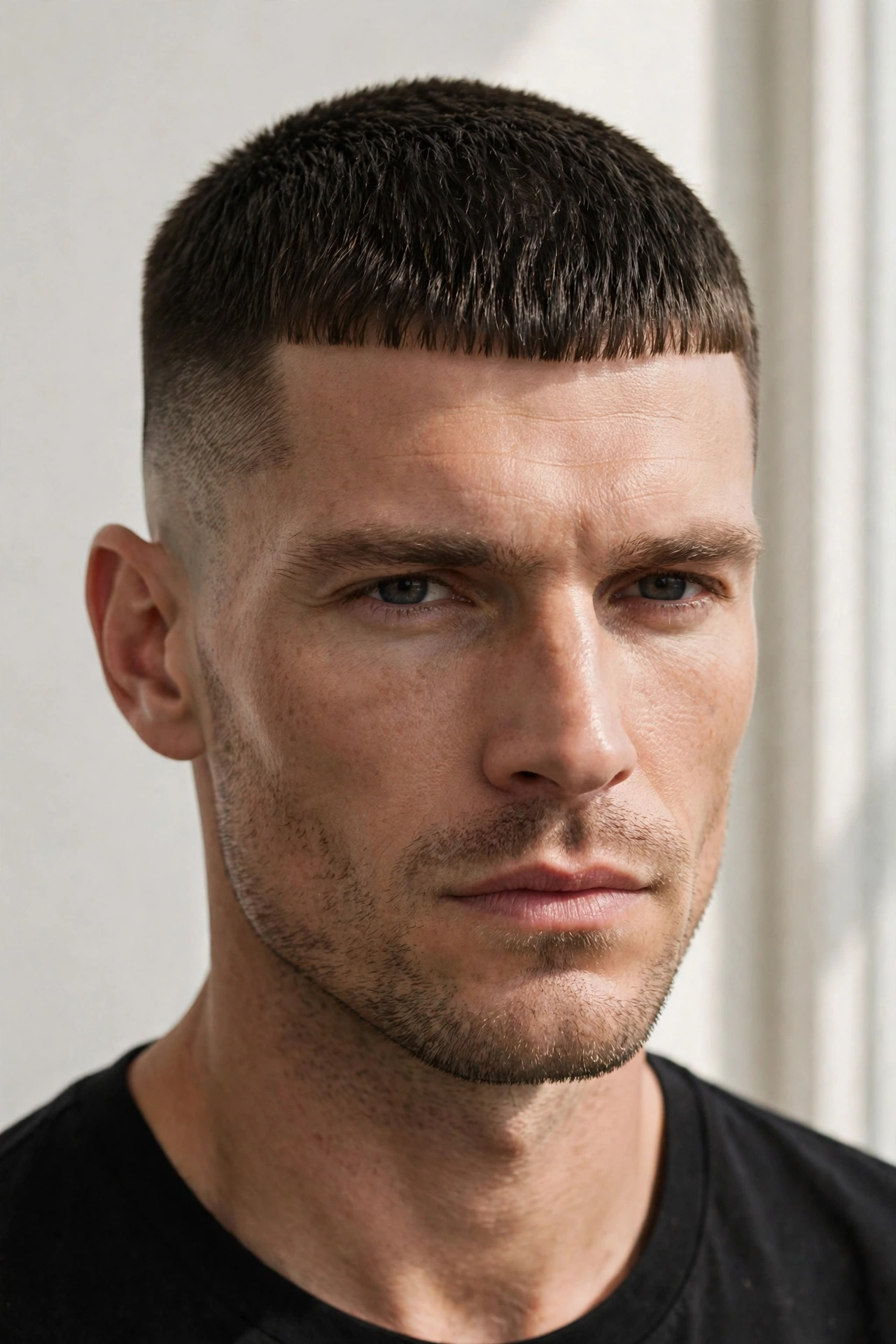
This is the caesar stripped to its essentials: the top taken down to half an inch or less, the fringe a crisp short line across the forehead, the sides tight. It has a military sharpness to it — disciplined, masculine, zero ambiguity. If you like your grooming routine measured in seconds and your haircuts measured in weeks of good behavior, this is your cut.
The short caesar is brutally honest about head shape and hairline, so it’s worth a real conversation with your barber before committing — he’ll tell you straight whether your hairline and crown will cooperate at this length. On the right guy it’s unbeatable: it survives heat, humidity, hats, helmets, and workouts without a second thought, and it makes strong jawlines look even stronger. Product is optional — most guys just towel-dry and go. Keep the fringe line fresh with trims every two to three weeks; at this length, even a week’s growth changes the look noticeably.
12. The Caesar with Line-Up
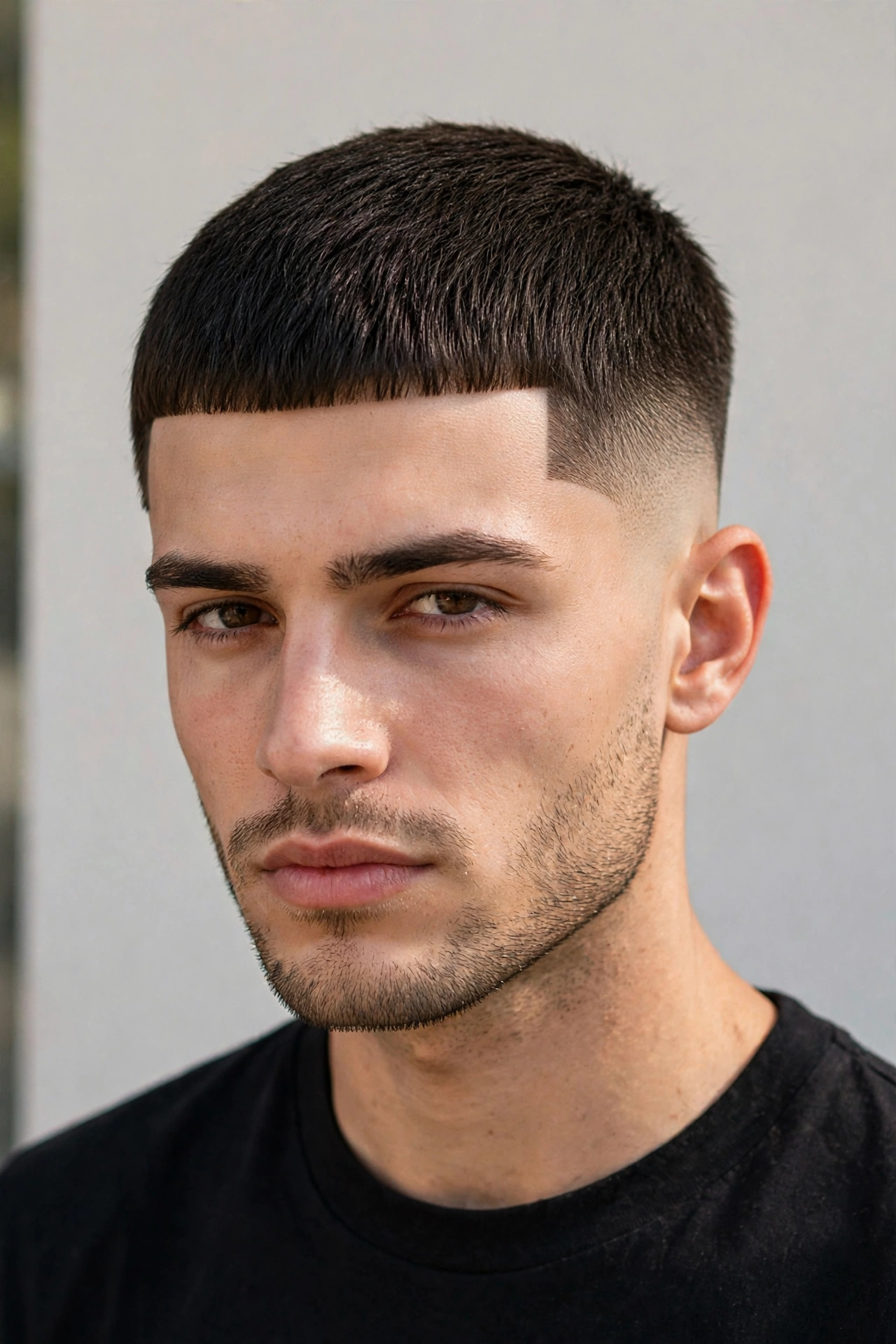
The line-up — that razor-crisp shaping of the hairline, temples, and forehead corners — takes the caesar from clean to surgical. The top follows standard caesar rules, but every edge is defined with a trimmer or razor into sharp geometric lines. The contrast between the soft textured top and the hard precise edges is what makes this version pop, especially in photos.
A word of honesty: line-ups are high-maintenance. The crispness lasts about a week before regrowth softens the lines, so this is a cut for guys who don’t mind weekly edge-ups (many barbers offer quick, cheap line-up touch-ups between full cuts — ask yours). It’s also worth noting that repeated razor line-ups can irritate sensitive skin, so moisturize the hairline area and tell your barber if you get razor bumps. But if you want the sharpest-looking caesar in the room and you’re willing to maintain it, nothing else on this list comes close.
13. The Disconnected Caesar
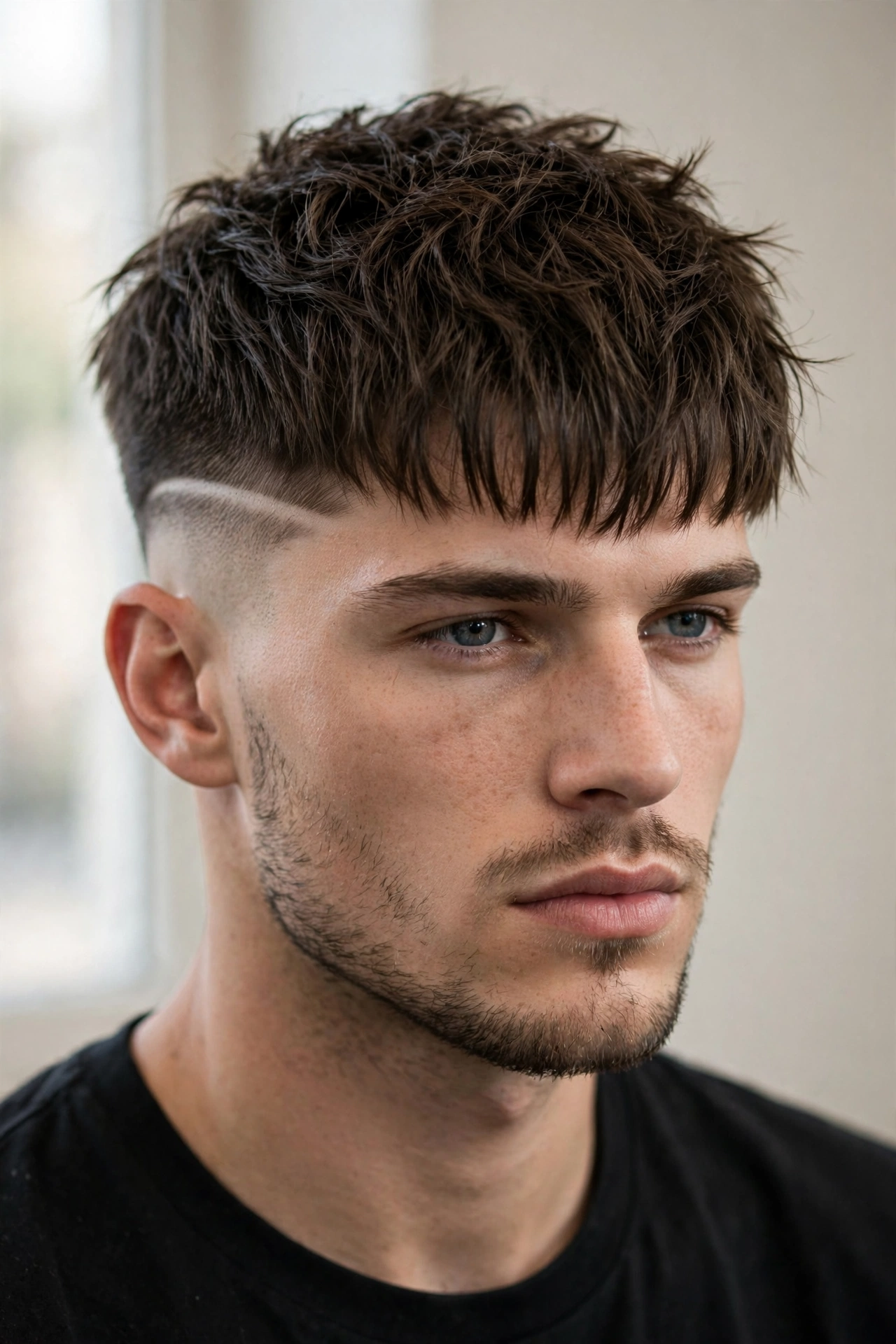
The disconnected caesar breaks the traditional rule that the top must blend into the sides. Instead, there’s a visible disconnect — the top stays at caesar length while the sides drop short with little or no blending between them. It’s edgier, more fashion-forward, and it gives the cut an architectural quality that the blended versions don’t have.
This version works best with some length on top — at least an inch and a half — because the disconnect needs enough hair up top to read as intentional rather than accidental. It’s a strong choice for guys with thick hair, since the weight of the top emphasizes the contrast, and it pairs well with faded or even shaved sides. Styling follows the usual caesar playbook: forward, textured, matte product. One caution: the disconnect grows out awkwardly if you skip appointments, so this one commits you to a three-week barber rhythm. Tell your barber “disconnected caesar, no blend on the sides” and he’ll know exactly what you mean.
14. The Caesar for Thinning Hair

Here’s a little-known truth: the caesar might be the best haircut ever designed for thinning hair. Remember the origin story — Julius Caesar himself supposedly wore it to camouflage a receding hairline. The forward-combed fringe covers thinning at the temples and a receding front beautifully, while the short overall length removes the contrast between thin areas and longer hair that makes thinning so obvious. Shorter hair on thinning hair always looks thicker than longer hair does. Always.
The rules for this version are specific, so pay attention. Keep the top short — an inch or less — because length only emphasizes sparseness. Ask for texture rather than a blunt cut, since piecey ends disguise thin spots better than a solid line. Skip heavy, wet-look products that clump hair together and expose scalp; use a matte fiber or thickening powder instead, which adds the illusion of density. And keep the sides neat and short so the eye reads the whole head as one intentional short cut. This isn’t about hiding — it’s about a haircut that works with what you have instead of against it. Plenty of guys find the caesar buys them years of confidence before they ever need to think about other options.
15. The Modern French Crop Caesar (Hybrid)
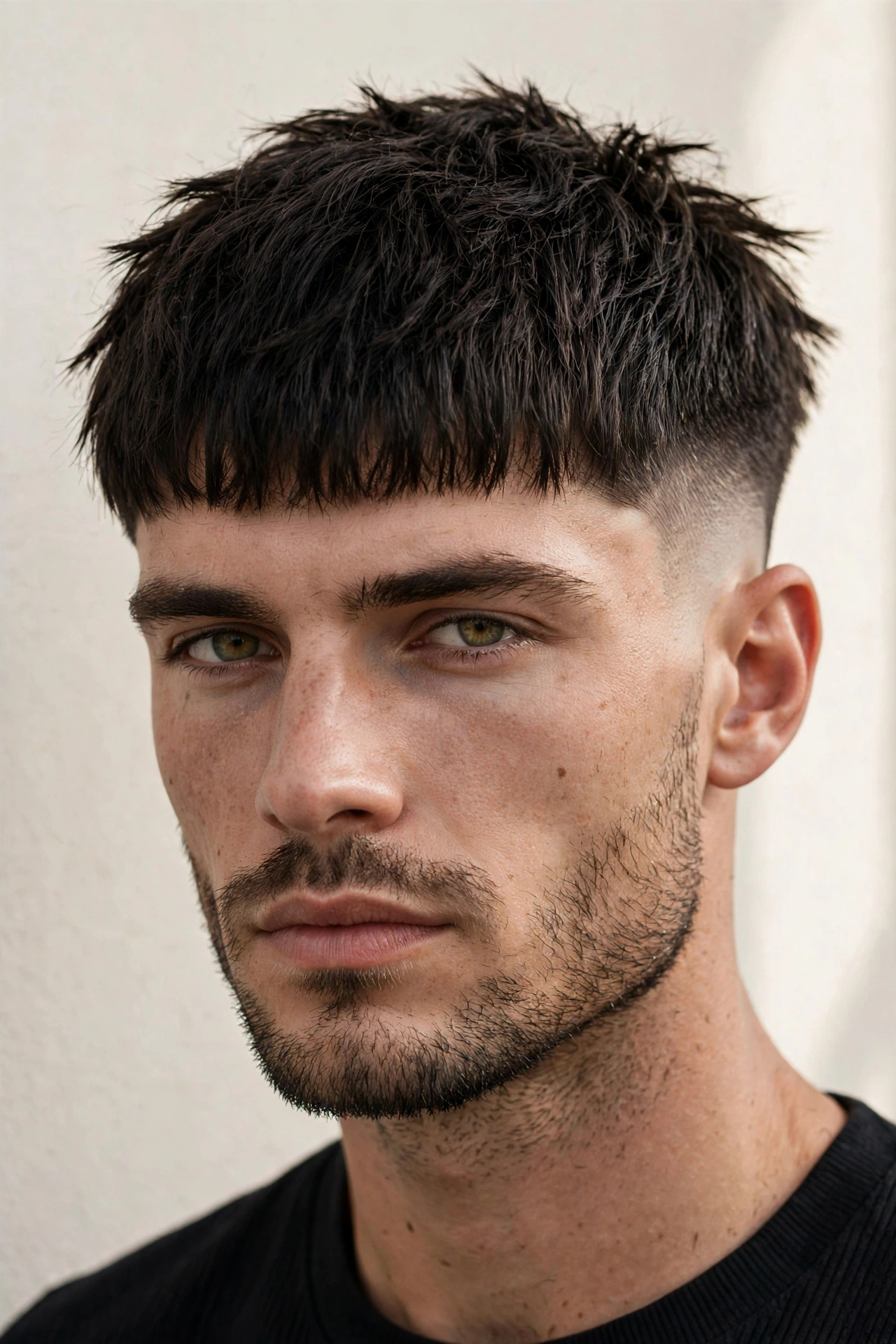
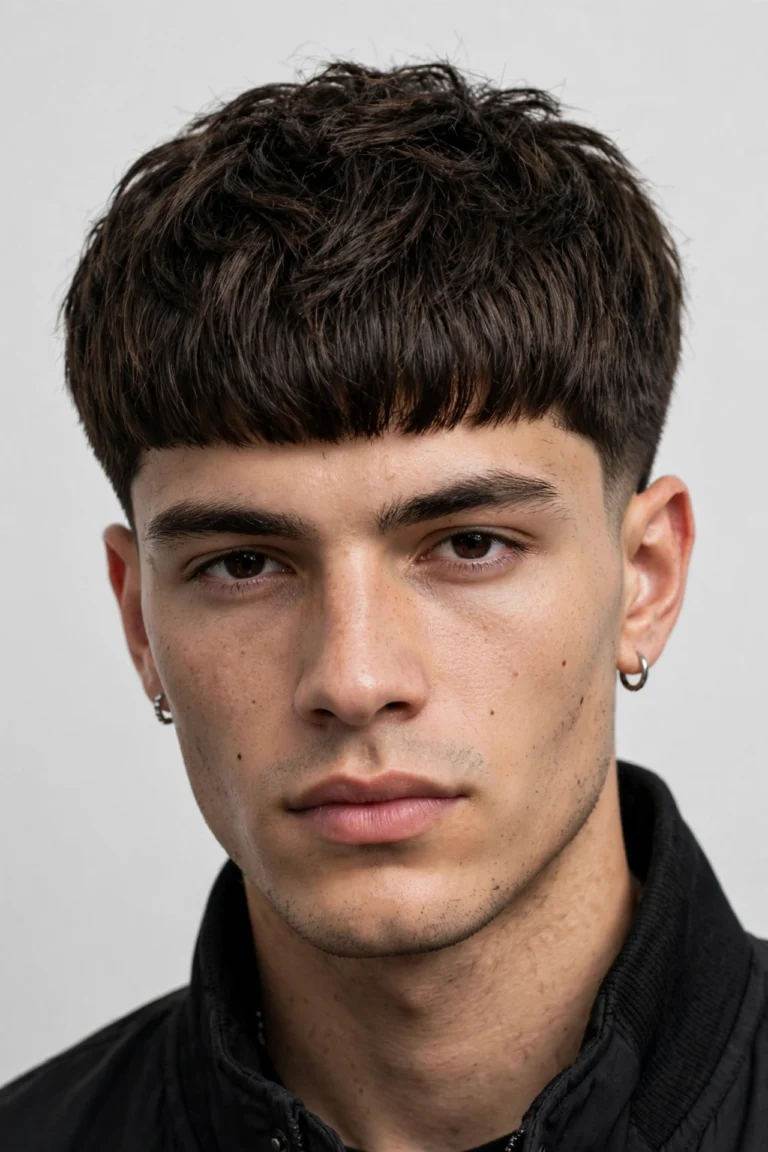
The line between the caesar and the french crop has gotten blurry in 2026, and this hybrid lives right on it. It takes the caesar’s short, forward DNA and crosses it with the french crop’s blunter, heavier fringe and more deliberate disconnection from the sides. The result is the most fashion-forward cut on this list — the one you’ll see on style influencers and in barbershop lookbooks labeled simply “2026.”
What distinguishes the hybrid is attitude in the fringe: it’s cut blunter and heavier than a classic caesar, often with a slightly jagged, lived-in edge rather than a clean line, and it’s usually paired with a mid-to-high fade or a hard disconnect on the sides. It demands a bit more styling awareness — you’ll want to learn how your fringe falls and which product weight keeps it sitting right — but the payoff is a cut that looks current in a way the plain classic doesn’t. Ask your barber for “a caesar-french crop hybrid, heavy blunt fringe, faded sides” and bring a reference photo. For this one, the photo matters more than the words.
How to Ask Your Barber for a Caesar Cut

Walking in and saying “give me a caesar” is a start, but it’s not enough — as you’ve seen, there are fifteen different haircuts hiding inside that one word. The guys who walk out happy are the ones who walk in specific. Here’s your script. Start with the top: give a length in inches or a clipper guard number. “About an inch and a half on top, forward fringe” is infinitely more useful than “short on top.” For reference, a classic caesar is usually a #4 to #6 guard on top (half inch to three-quarters), while textured and longer versions go scissor-cut at one to two inches.
Next, describe the sides: even all over, tapered, faded (and how high), or skin faded. Then the fringe: straight across, textured and choppy, or longer. Then bring a photo — two, actually: one of the cut you want, one showing the angle you like best (front and side). Barbers are visual people; a photo eliminates ninety percent of miscommunication. Finally, mention your real life: how often you’ll come back for trims, how much styling you’ll actually do, whether you wear hats or helmets. A good barber will adjust the cut to your maintenance reality, and that conversation is the difference between a haircut you love for three days and one you love for three weeks.
How to Style a Caesar Cut at Home

Here’s the good news: styling a caesar is one of the easiest routines in men’s grooming. The baseline version takes under two minutes. Start with towel-dried or dry hair — damp, not dripping. Take a pea-sized amount of matte clay, paste, or fiber (matte is the key word; shiny products fight the modern caesar aesthetic) and warm it between your palms until it disappears. Work it through the top from roots to ends, then push everything forward toward your forehead. Use your fingertips to create a little separation in the fringe — pinch and twist a few small sections. That’s it. You’re done.
A few upgrades for specific situations. If your hair is fine or flat, apply product to completely dry hair instead of damp — damp styling collapses fine hair. If it’s thick and unruly, a thirty-second blast with a blow dryer pointed down and forward before product will save you a lot of wrestling. For curly or wavy versions, swap the clay for a curl cream or light leave-in and style damp, scrunching forward. And the universal rule: less product than you think. You can always add more; scraping excess out of short hair is miserable. Start with half what feels right and build up. Within a week it’ll be muscle memory.
Best Face Shapes for the Caesar Cut

The caesar is unusually democratic — it works on more face shapes than most short cuts — but it’s not one-size-fits-all, and knowing your shape helps you pick the right version. Oval faces hit the jackpot: the proportions are already balanced, so any of the fifteen versions will sit well. Round faces benefit most from caesar fades and skin fades, because the short sides slim the cheeks while the textured top adds height — avoid the even-all-over classic, which can emphasize roundness.
Square faces and strong jawlines are a natural match for the caesar; the straight fringe line echoes angular features in a flattering way, and the short-sides versions (fade, taper, line-up) keep the geometry crisp. Oblong or long faces should be a little careful: a very short caesar with tight sides can elongate the face further, so go for a slightly longer, textured top and keep some width on the sides. Heart-shaped faces do well with textured and messy versions that add volume around the forehead. And if you’re unsure of your shape, the textured caesar with a mid fade is the universal safe pick — it’s the version barbers recommend when a client says “just make me look good.”
Caesar Cut Maintenance Guide
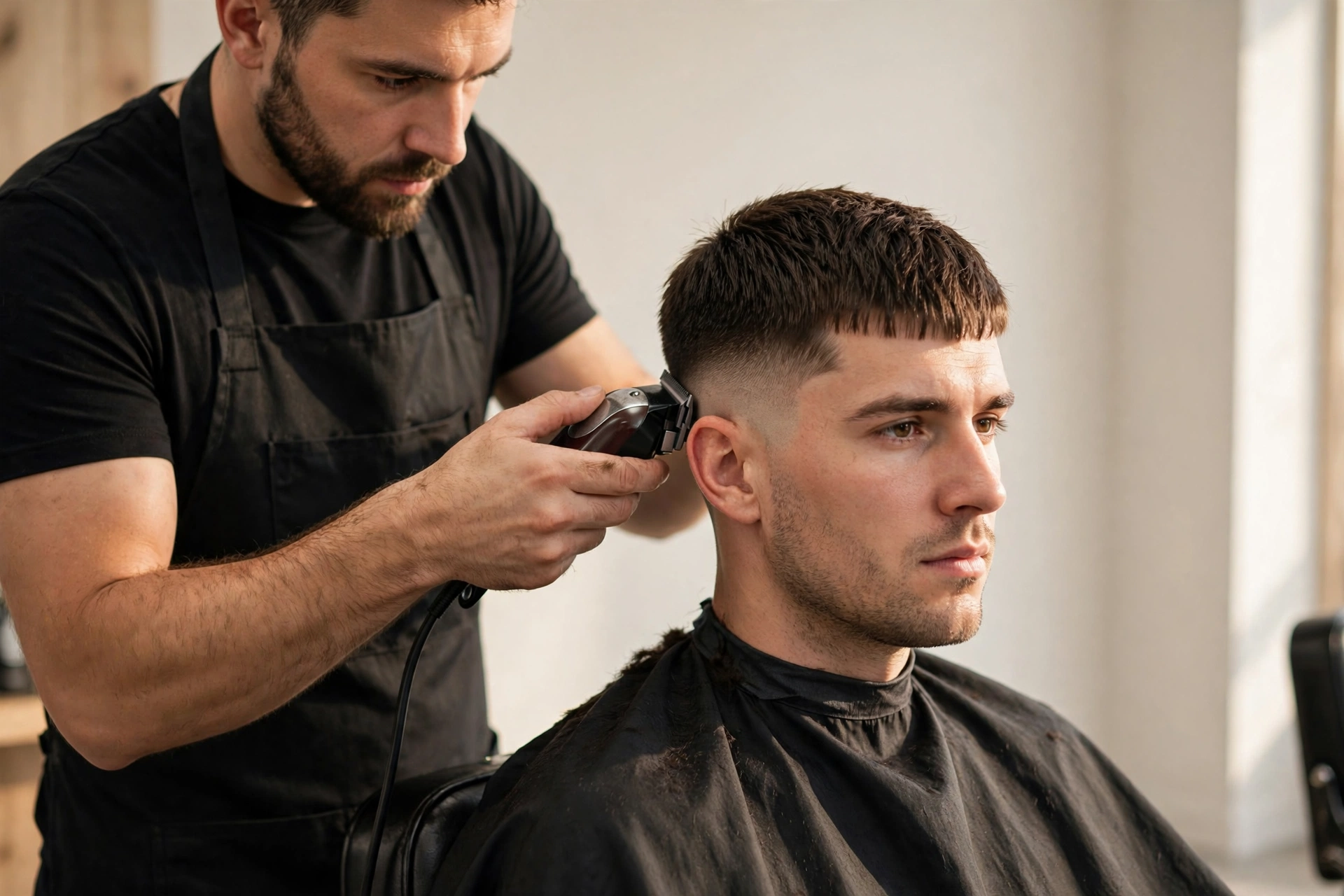
A caesar is a low-effort haircut, not a no-effort haircut — there’s a difference, and it lives in your calendar. The fringe is the part that shows growth first: once it starts touching your eyebrows or losing its line, the whole cut looks tired. For most versions, that means a trim every three to four weeks. Faded and skin-faded versions need attention sooner, every two to three weeks, because the fade is the first thing to blur. The even-all-over classic and the tapered version are the most forgiving, stretching comfortably to five or six weeks.
Between appointments, a few habits keep things sharp. Wash with a normal shampoo two to three times a week — daily washing strips the natural oils that give short hair its texture, and overwashing is the number one reason guys complain their caesar looks flat. A light conditioner on the top keeps the fringe soft rather than wiry. If the edges around your ears and neckline get fuzzy between cuts, a cheap pair of trimmers and a steady hand can buy you an extra week — just clean up the obvious strays, don’t try to re-cut the fade yourself. And resist the urge to let it “grow out a bit to see” unless you’re actually growing it out; the caesar’s charm is in its crispness, and it rewards regular maintenance more than most cuts.
Frequently Asked Questions
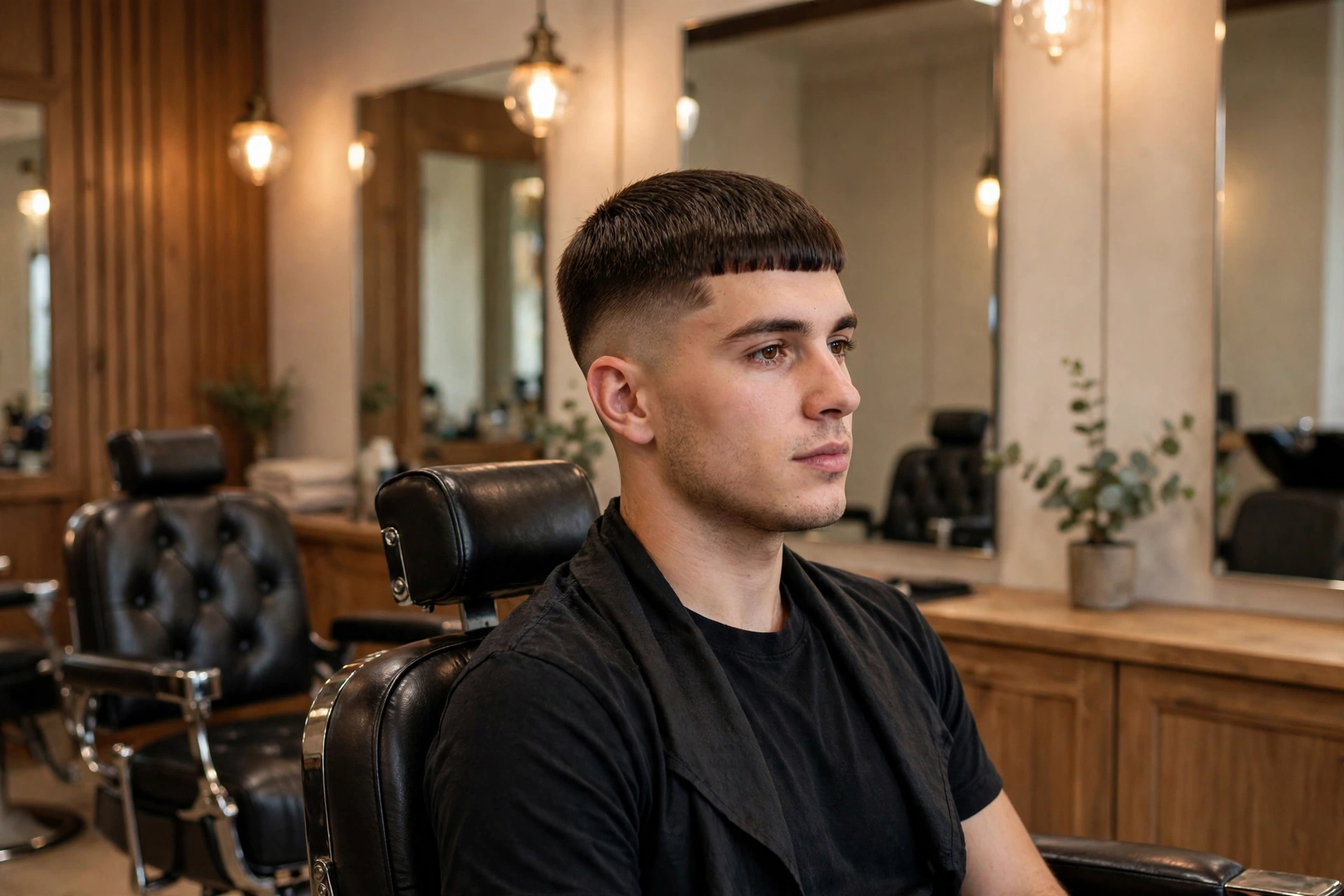
How long does a caesar cut take at the barbershop?
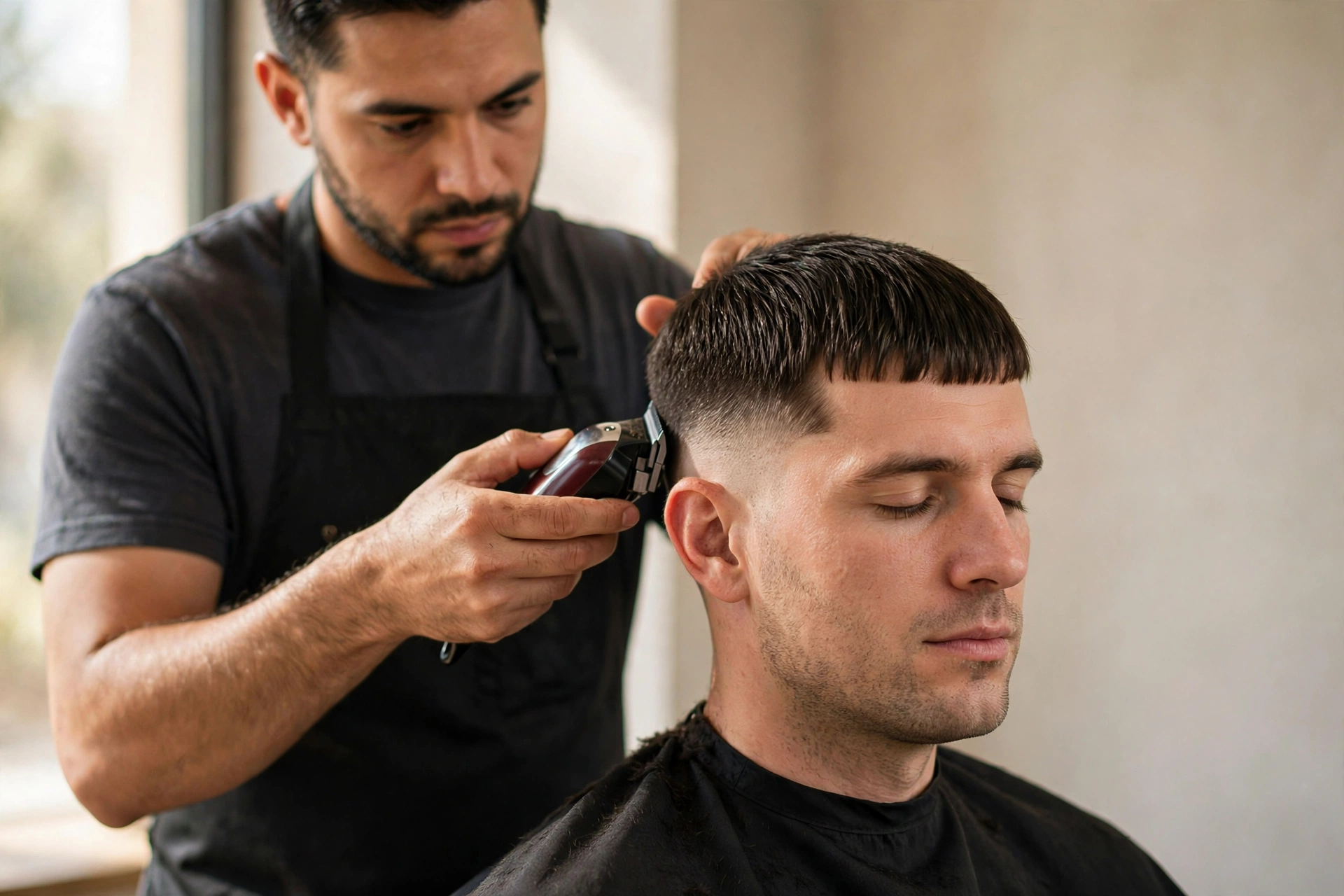
A standard caesar takes twenty to thirty minutes in the chair — it’s one of the quicker cuts because there’s no elaborate blending or long scissor work involved. Faded versions with detailed clipper work can push to thirty-five or forty minutes, and a first-time cut where you’re consulting on the version usually runs a few minutes longer. It’s a good “lunch break” haircut: in and out without eating your afternoon.
Does the caesar cut work for a receding hairline?
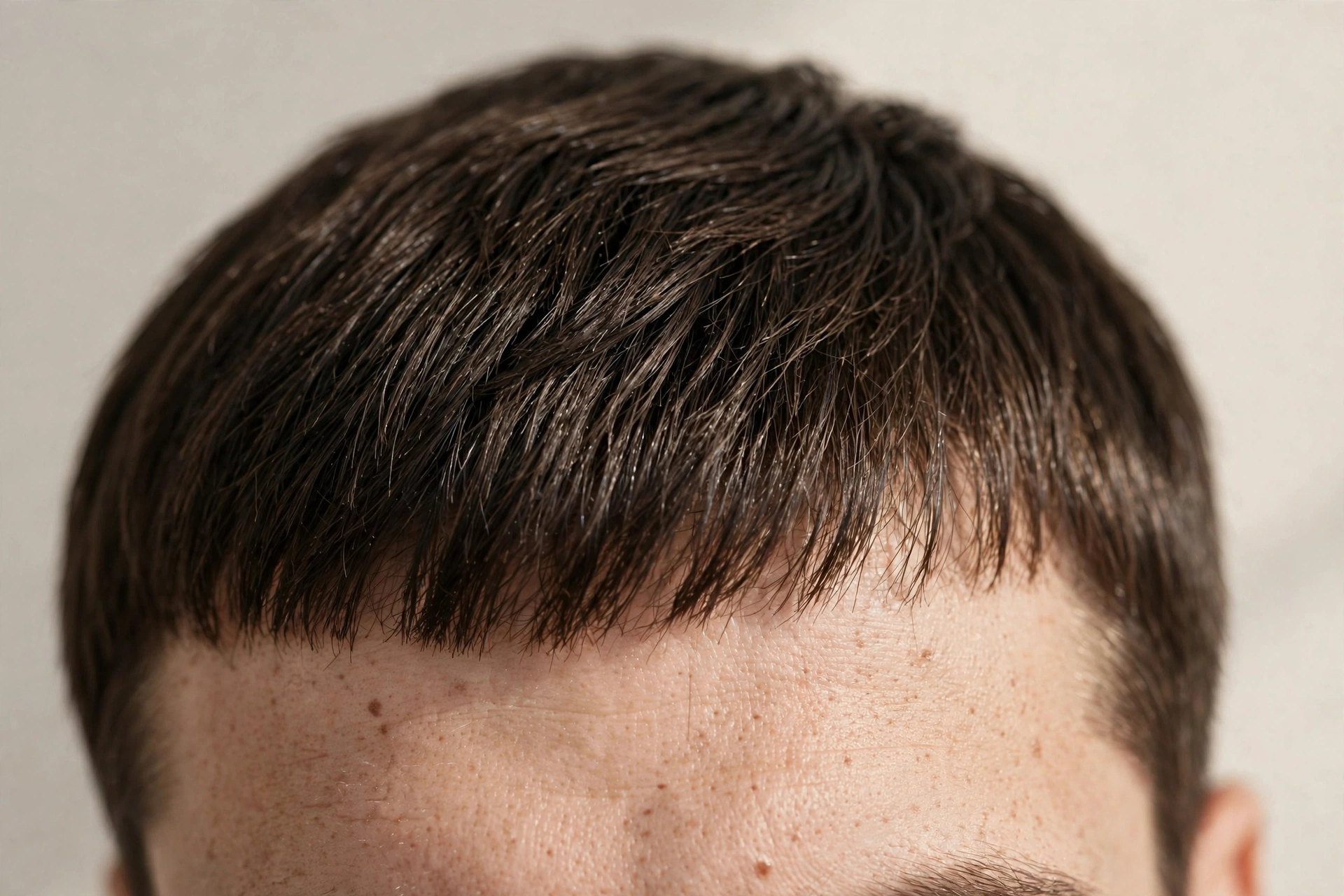
Yes — it’s genuinely one of the best options. The forward fringe covers a receding front and thinning temples, and the short overall length minimizes the contrast that makes hair loss obvious. Keep the top short (an inch or less), ask for texture instead of a blunt line, and use matte products. Be honest with your barber about what you’re working with; a good one will adjust the fringe placement to give you maximum coverage without it looking like a cover-up.
Can I get a caesar cut with thick, coarse hair?
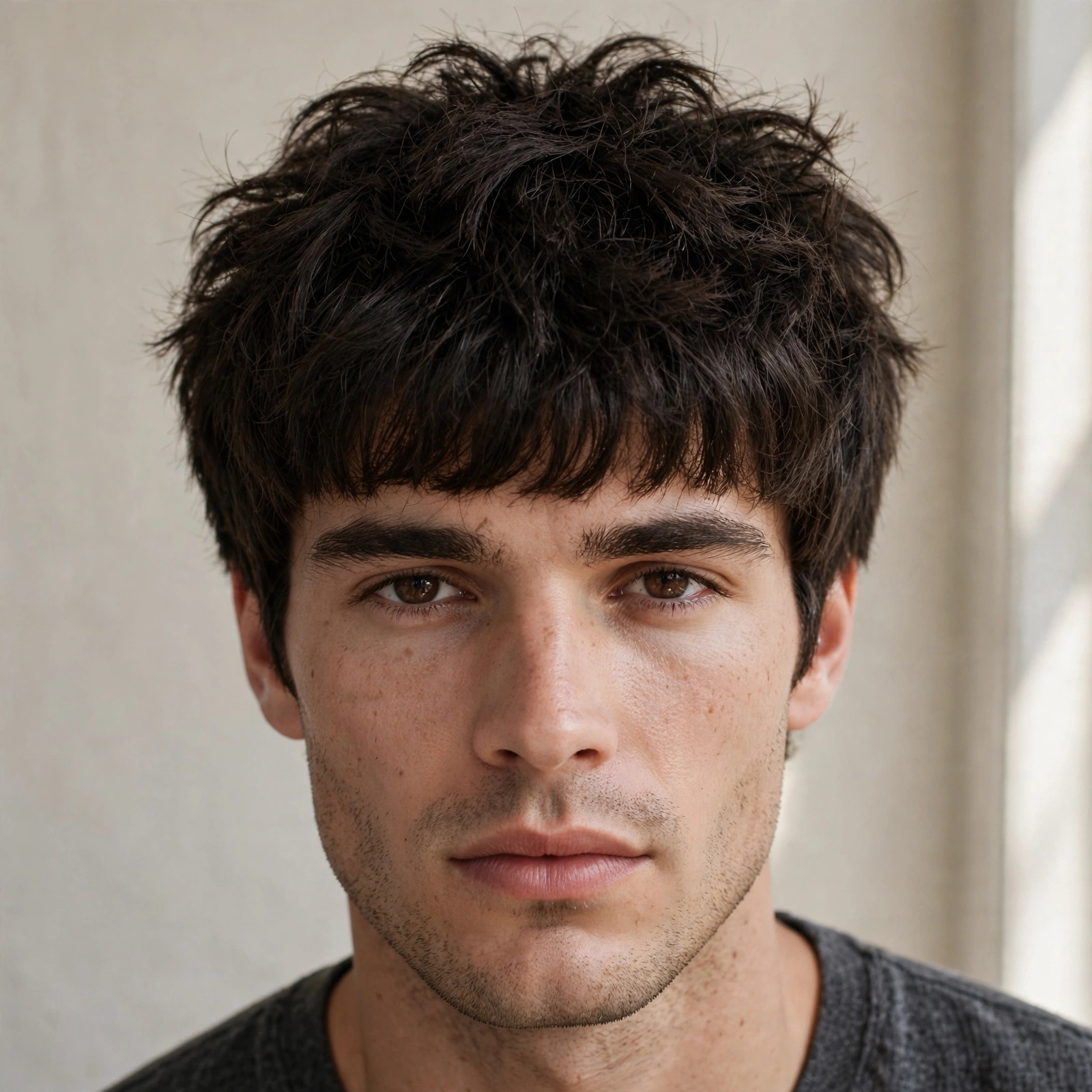
Absolutely, and thick hair actually takes a caesar beautifully — the density gives the fringe real presence. The key is thinning and texturizing: ask your barber to remove bulk with texturizing shears so the top doesn’t sit like a solid block. You may also want slightly more length on top (an inch and a half to two inches) so the weight keeps things lying forward instead of puffing up. A strong matte clay will be your best friend for keeping coarse hair in line.
How often should I wash a caesar cut?

Two to three times a week is the sweet spot for most guys. Short hair shows oil faster than long hair, so you’ll feel the need to wash — but overwashing strips the oils that give the cut its natural texture and makes the fringe look dry and flyaway. On non-wash days, a quick rinse with water or a dry shampoo at the roots keeps things fresh. If you work out daily, rinse with water after training and save the shampoo for every other day.
What’s the difference between a caesar cut and a french crop?
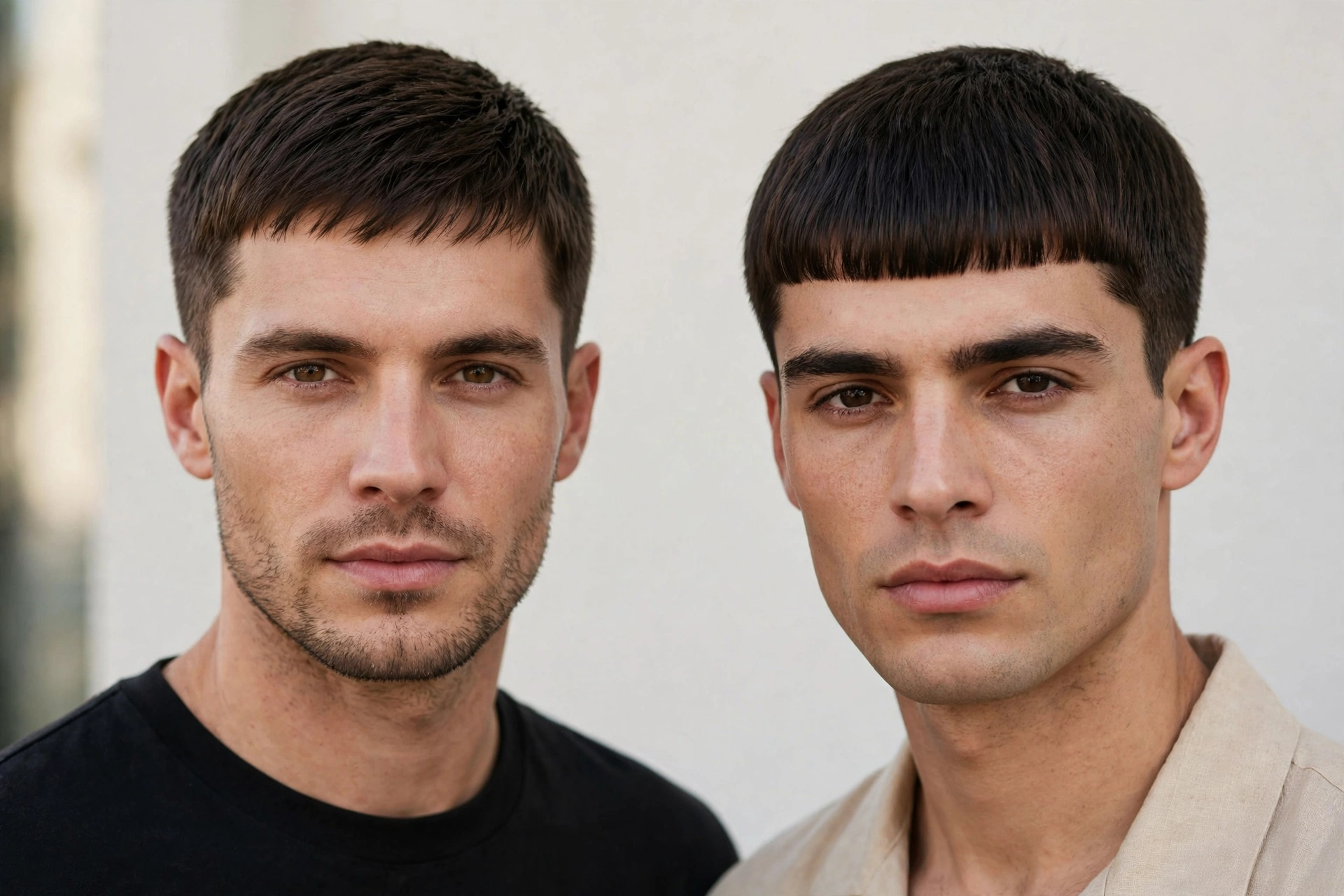
They’re cousins, and the line blurs more every year. Traditionally, the caesar has a shorter, more uniform length all over with a neatly combed-forward fringe, while the french crop runs longer on top with a blunter, heavier fringe and more contrast against faded sides. In 2026, most “caesars” you see are really hybrids — textured tops, heavier fringes, faded sides. Don’t get hung up on the label; bring a photo of what you want and let the barber sort the terminology.
Will a caesar cut suit me if I wear glasses?

Yes — the caesar is one of the more glasses-friendly short cuts. The fringe sits above the frames rather than competing with them, and the clean sides keep the overall look balanced. If you wear bold, thick frames, consider a slightly longer textured caesar on top to balance the visual weight of the glasses. With thin or rimless frames, any version works. Just mention your glasses at the appointment so the barber can check the fringe length with them on.
Final Thoughts
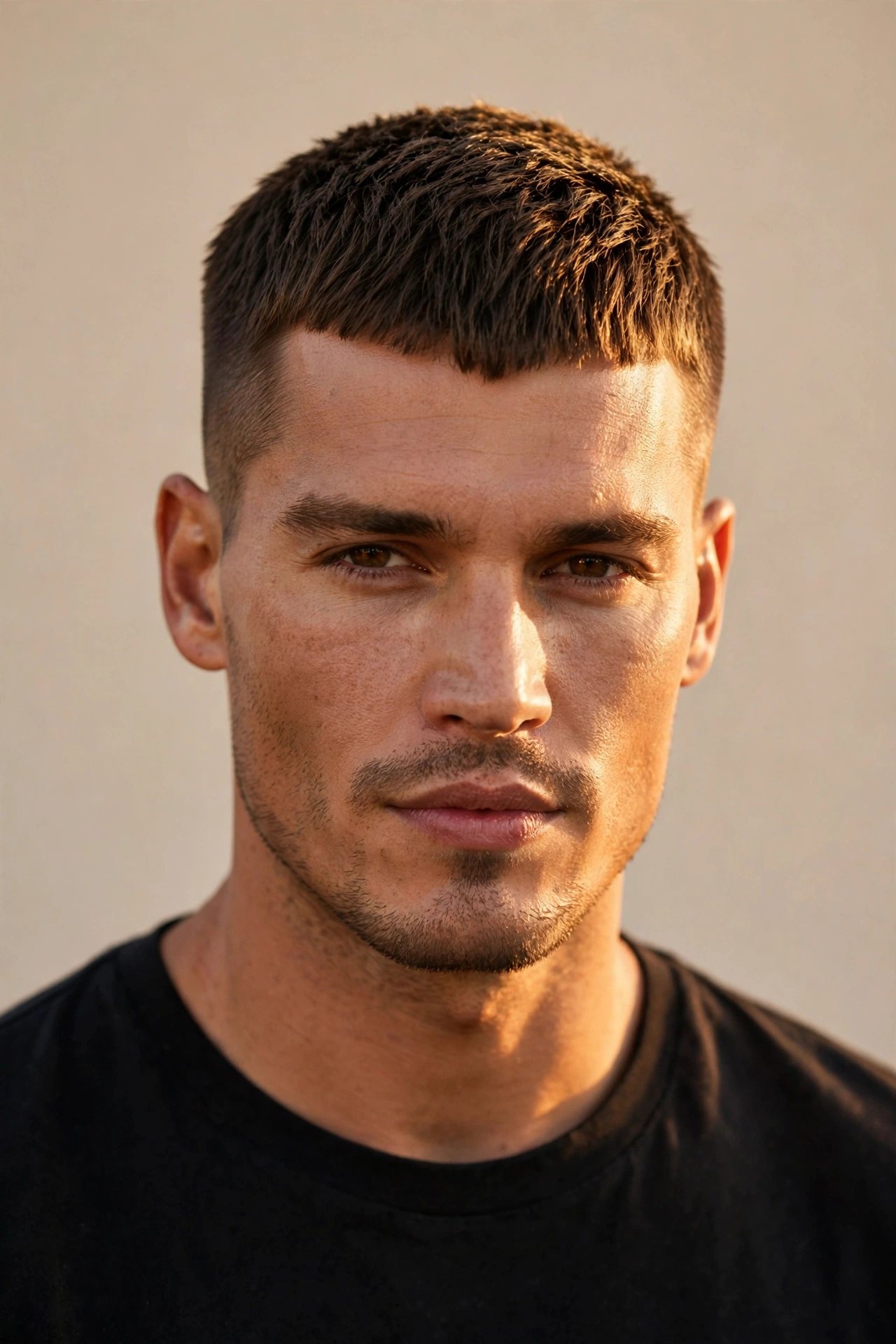
The caesar cut’s return in 2026 isn’t nostalgia — it’s recognition. This is a haircut that respects your time, works with your hair instead of against it, and looks sharp in every setting that matters. Fifteen versions, one core idea: short, forward, clean. Pick your lane — classic, textured, faded, full hybrid — and you get a cut that asks for minutes and pays you back in weeks of looking put-together.
My honest recommendation? If this is your first caesar, start with the textured caesar and a mid fade — it’s the most forgiving, most modern, and most complimented version on this list. Bring two reference photos to your barber, use the script from the barber section above, and give it one full grow-out cycle before you judge it. Most guys who try the caesar don’t go back. There’s a reason it’s survived since ancient Rome.
Conclusion
The Caesar cut brings ancient Roman swagger to 2026 with its short, forward-styled fringe and clean edges. It’s a fantastic choice for men with thinning hair or strong foreheads, as the forward texture creates fullness and structure. Low maintenance and masculine, it works from the gym to the office.
Keep the fringe textured with a small amount of matte product and the edges sharp with regular line-ups. In 2026, the Caesar cut is history’s coolest haircut, revived for the modern man.
One Comment