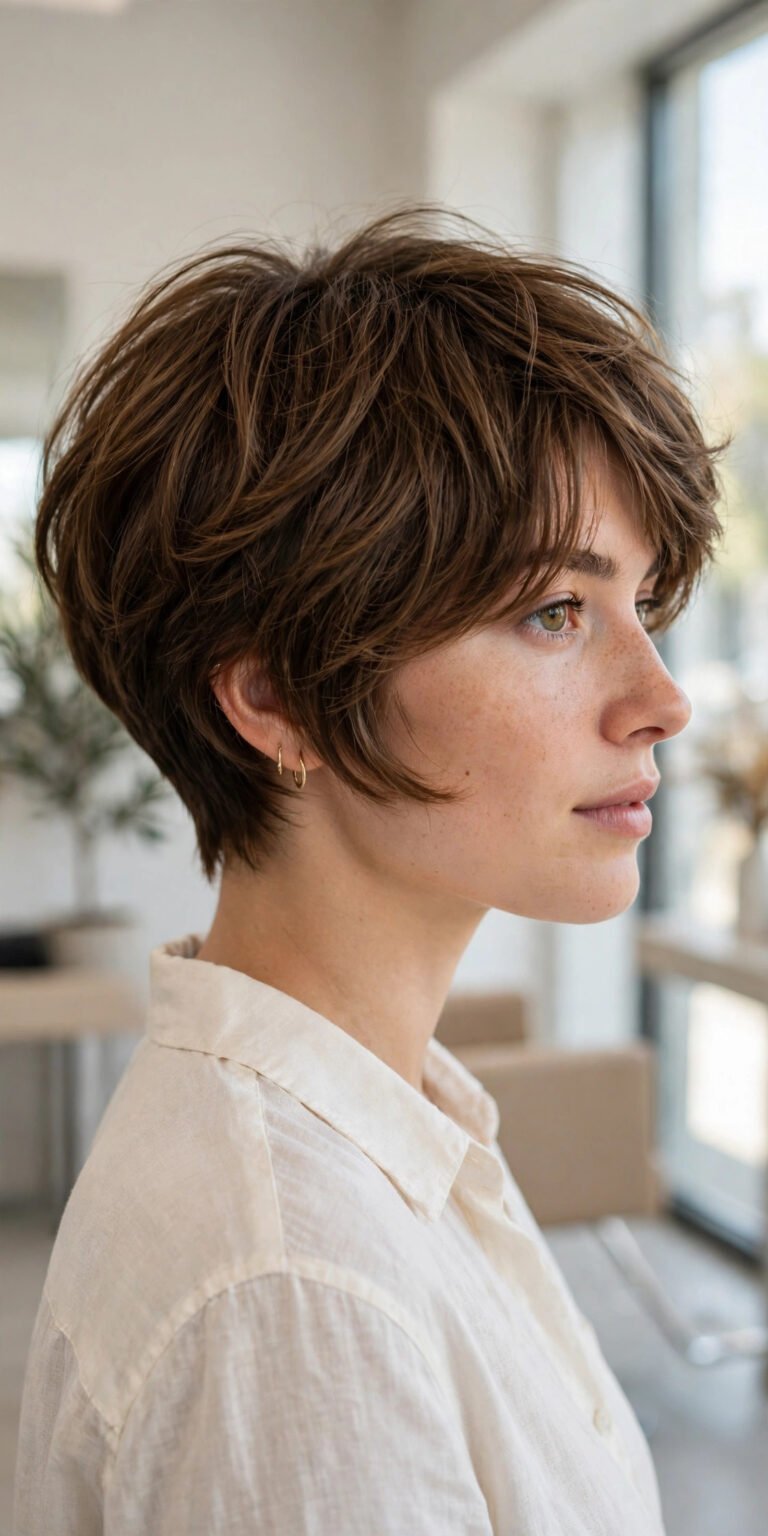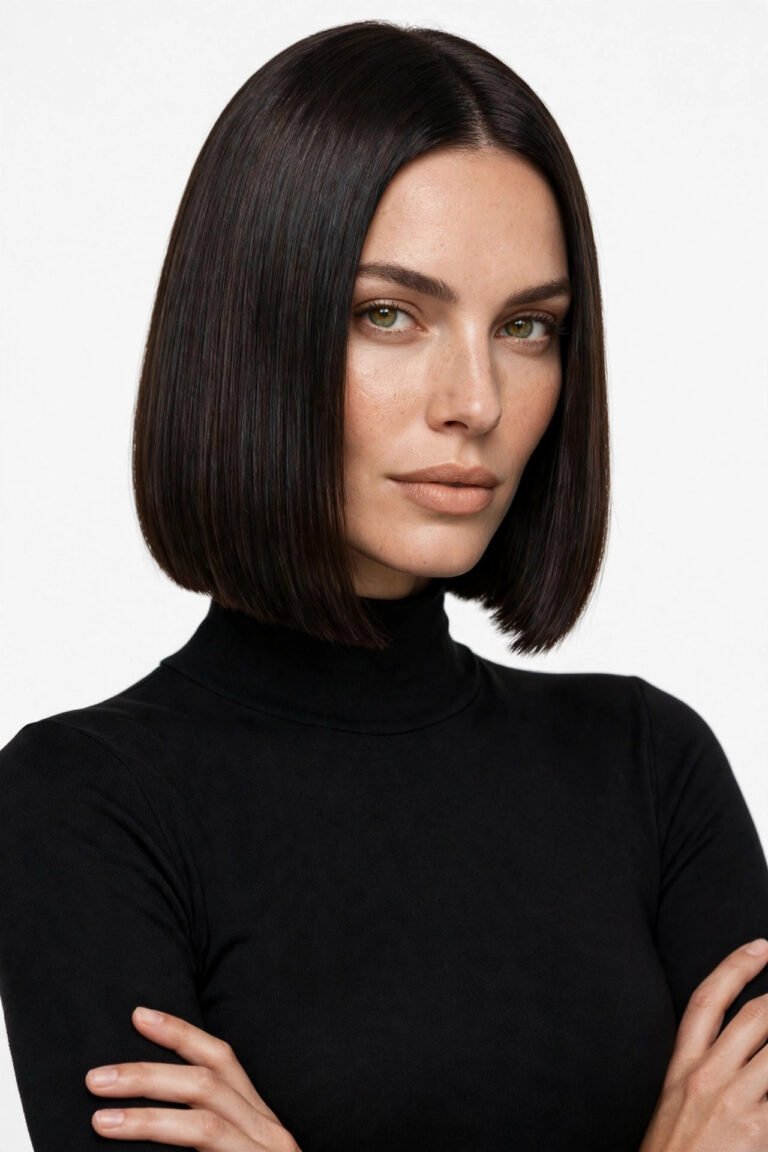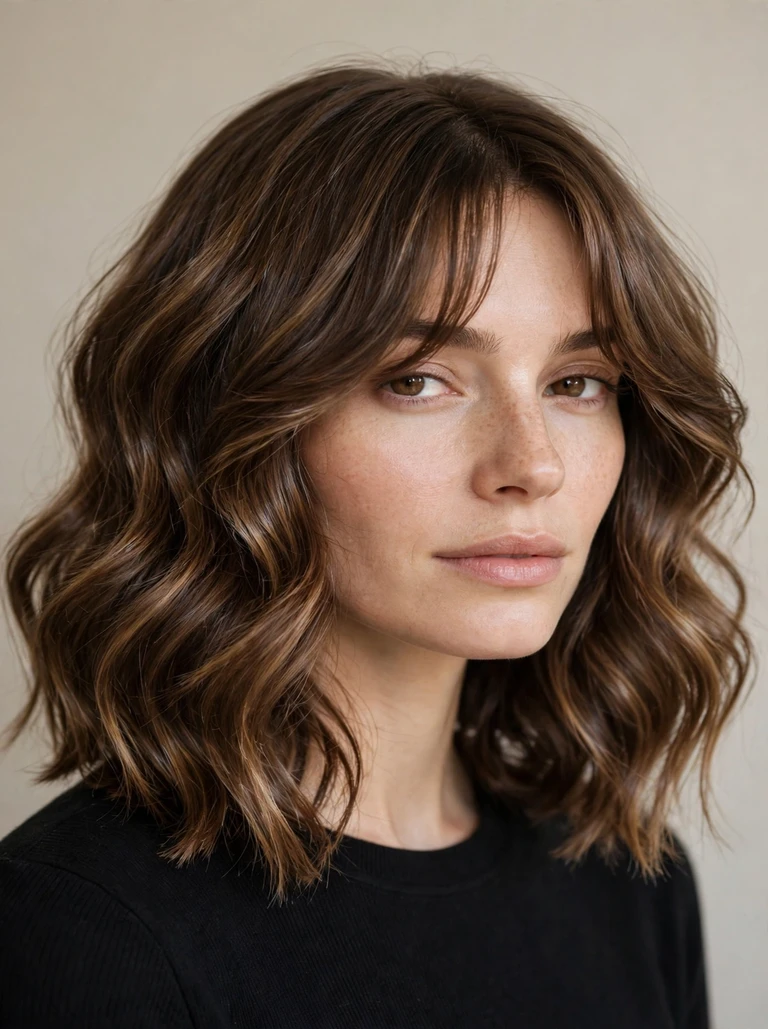

Stacked Bob Women 2026: 32 Voluminous, Face-Framing Styles
The stacked bob is the haircut every woman seems to be asking for in 2026, and once you see it, the reason is obvious. It is the bob with built-in volume: shorter, graduated layers stacked through the back that lift the crown, round out the silhouette, and give the hair a full, bouncy shape that holds all day. The stacked bob sits at the jawline or just below it, with longer front pieces framing the face and a neatly tapered nape underneath, so the cut looks polished from the front and sculpted from the back. In this guide you will find 32 stacked bob styles for 2026, each with a stylist-ready script, honest advice on who it suits, and the styling and maintenance truth nobody tells you at the salon chair.
Whether your hair is straight, wavy, curly, fine, or thick, there is a stacked bob in this list built for you. We cover every texture and every fringe — graduated, angled, curly, wavy, sleek, textured, and choppy; curtain bangs, wispy bangs, side-swept fringe, and micro bangs — alongside the colours and finishes that make each version feel personal. Every style below follows the same proven structure: who it suits, exactly what to ask your stylist, and how to style it in under five minutes at home. Let us find your version.
What Is a Stacked Bob
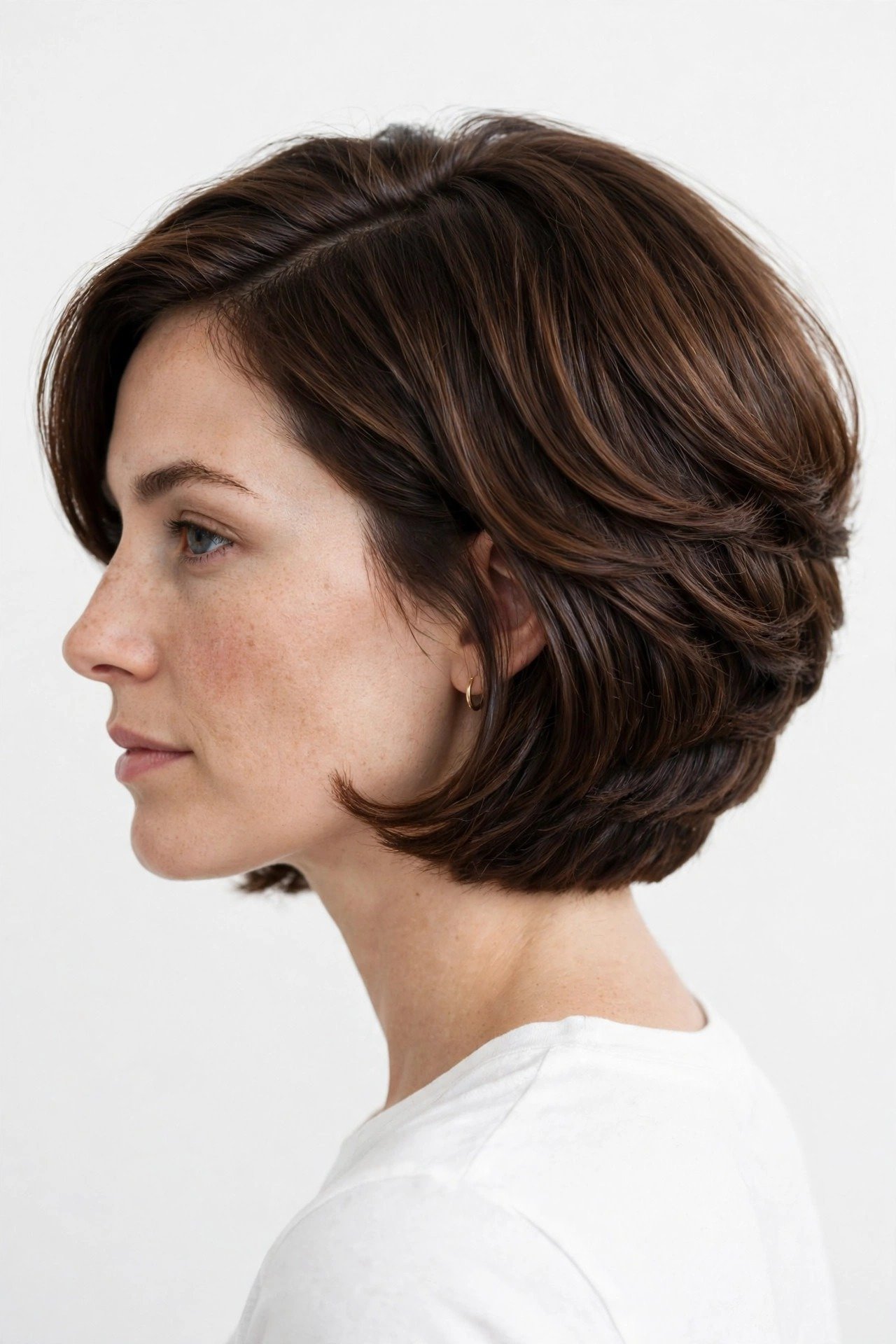
A stacked bob is a women’s haircut built on graduated layers: the hair at the back is cut shorter and stacked in layers that build on top of each other, while the front pieces are left longer to frame the face. The stacking creates volume at the crown and a rounded, full silhouette, while the nape underneath is tapered short and neat so the shape holds its form. Unlike a one-length bob, which hangs in a single sheet, a stacked bob has architecture — the back is shorter, the crown is higher, and the front falls longer, which is what gives the cut its signature swing and bounce. The result is a bob that looks expensive from every angle and feels effortless to wear.
The mechanics are simple once you see them. Your stylist cuts the back shorter than the front, building graduated layers through the nape and crown so each layer sits on top of the one below it, which is where the “stacked” name comes from. The crown layers are kept long enough to lift and curve, while the back is tapered so the neck looks long and elegant. The front pieces are left at chin length or just below, so they frame the jawline and soften the face. The finish is the secret: the ends are bevelled slightly inward, so the bob tucks toward the neck on its own and holds its shape between washes. Every boundary is a blend, never a hard step, which is why the style photographs so well from every angle.
What makes the stacked bob so versatile is that it is not one cut but a system. Change the graduation and you change the style: a steep stack gives dramatic volume, a gentle stack gives a soft rounded shape, and an angled stack gives a bold diagonal line from back to front. Change the texture and you change the mood: add soft waves and it turns romantic, keep it sleek and it turns polished, add choppy ends and it turns modern. Change the fringe and you change the face it flatters: curtain bangs soften a strong jawline, a side sweep adds drama, a micro bang makes the whole look feel editorial. When one cut serves that many needs, it stops being a trend and becomes the default.
Why the Stacked Bob Is Dominating 2026
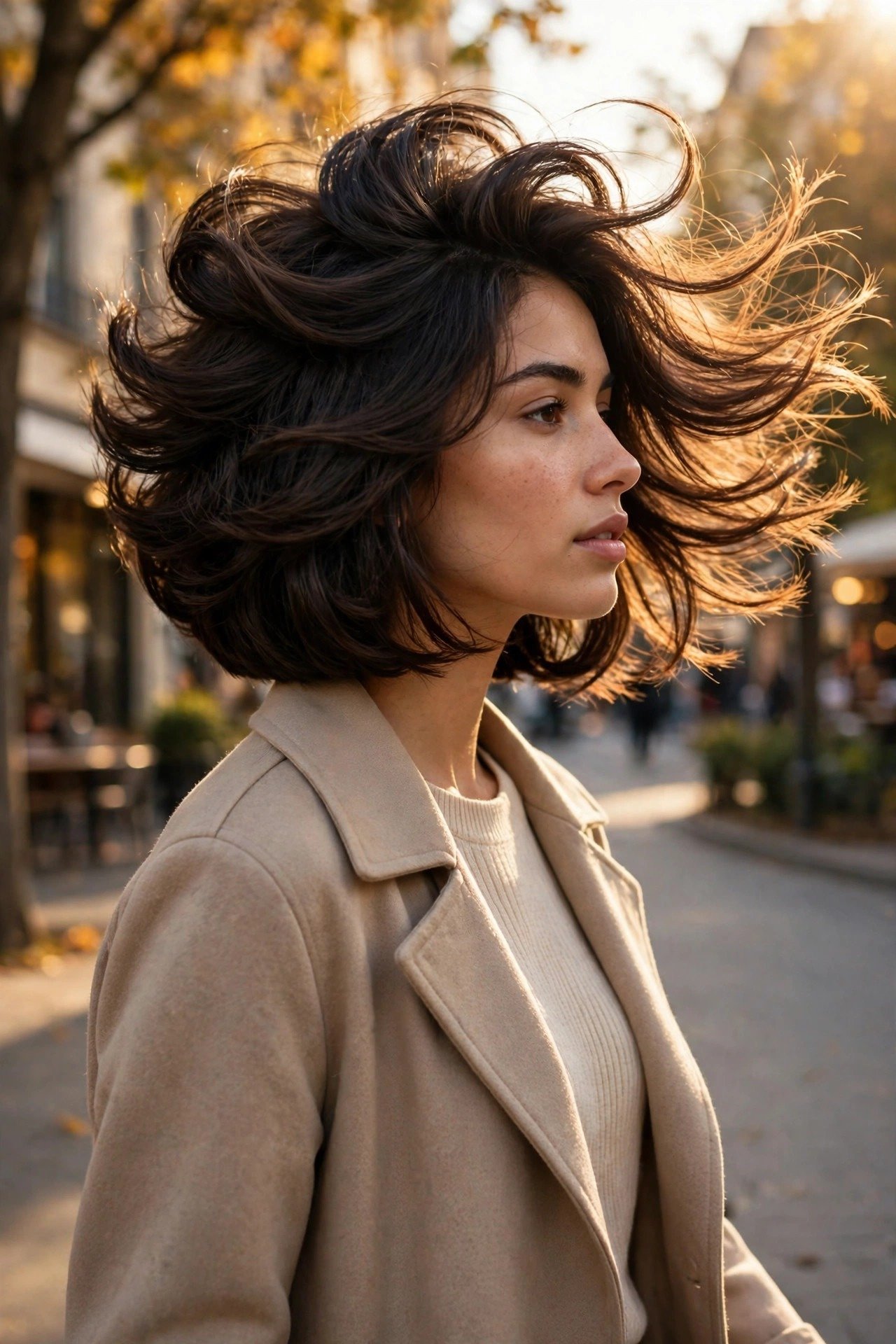
The stacked bob’s dominance in 2026 is easy to track in the trend reports. According to the Pinterest 2026 Beauty Trend Report via Elle, searches for “stacked angled bob” are up 1,110%, which is one of the biggest jumps of any haircut search this year. Women are not just looking at the stacked bob — they are actively hunting for it, saving it, and bringing the pictures to their stylists. The reason is visible in every salon chair: women want a bob that looks polished without feeling stiff, and the stacked bob delivers volume, shape, and movement in a single cut.
Harper’s Bazaar notes the soft Italian bob and the stacked bob as defining 2026 volume cuts, and the year’s defining direction is texture, movement, and cuts that look good with minimal effort. The stacked bob delivers all three at once. The rounded, graduated shape means the cut holds its form as it air-dries, so you can leave the house with damp hair and still look deliberate. The chin length keeps you cool through the summer months, while the stacked layers still tuck behind the ear or clip back on the days you want them out of the way. It is a style that looks just as right at the office as it does on holiday, because the shape does the work that a blow-dry used to do.
The third reason is pure practicality. A stacked bob is one of the most forgiving short cuts a stylist can give you. It flatters round, square, oval, and heart-shaped faces because the length at the jawline and the volume at the crown can be adjusted to balance proportions, while the tapered nape keeps the neck looking long and elegant. It handles fine hair beautifully, because the stacking creates the illusion of fullness where a one-length bob would lie flat. It handles thick hair too, because the graduated layers remove the bulk that makes thick bobs mushroom. And it grows out better than almost any other short cut, since the shape naturally lengthens toward a lob. When one cut serves that many needs, it stops being a trend and becomes the standard.
1. The Classic Stacked Bob
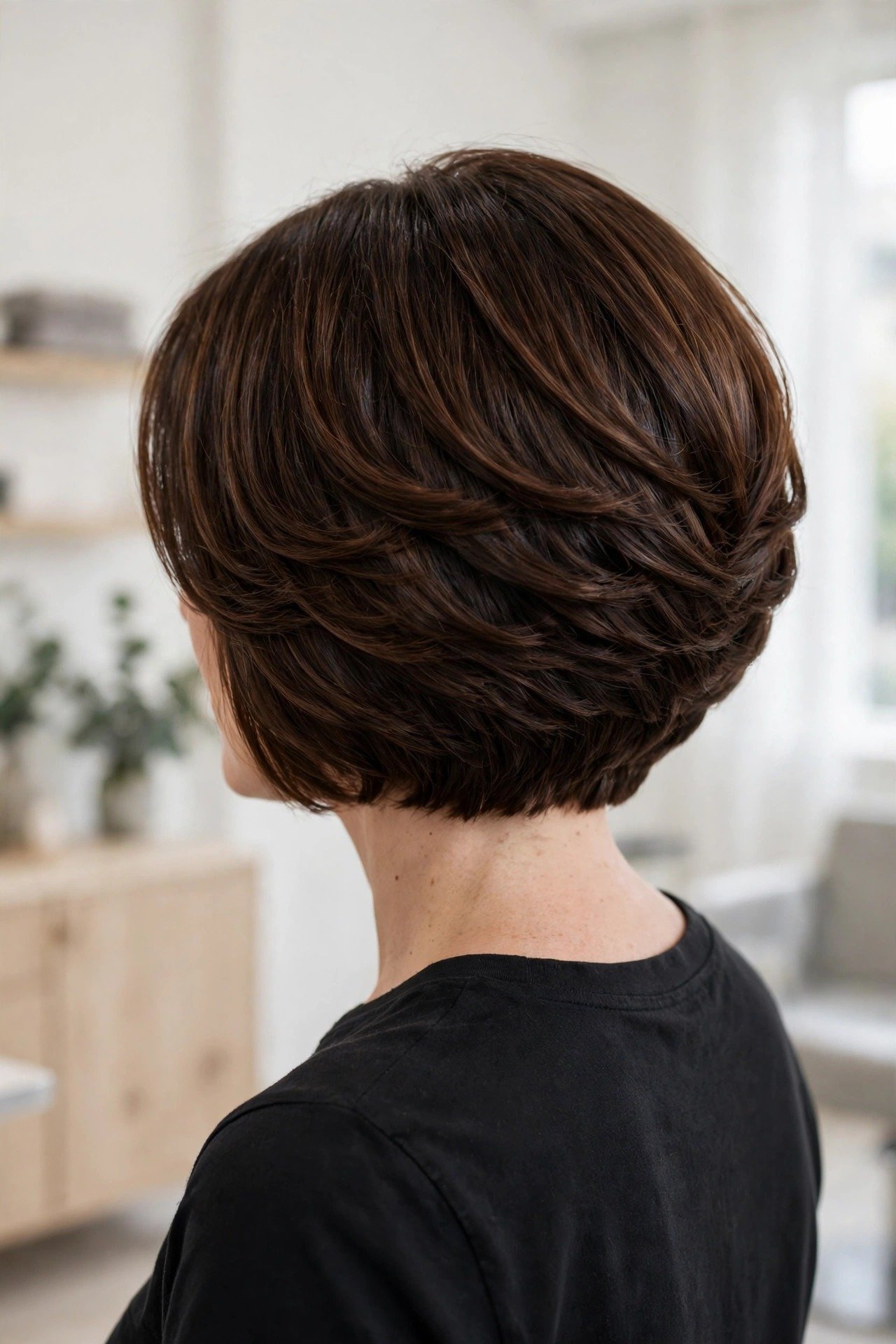
The classic stacked bob is the purest form of the cut and the safest first choice. The back is graduated and stacked so the crown lifts, the front pieces fall to the chin with a gentle inward curve, and the whole shape is balanced and understated. There is no dramatic angle and no extreme texture — just a clean, well-cut bob that looks good from every angle and works in every setting. This is the version your stylist recommends when you say you want a stacked bob but you are not ready for anything severe. It suits every face shape and every hair type, and it is the most forgiving of the 32 styles here if you are trying a stacked bob for the first time.
Stylist script: ask for a stacked bob with graduated layers through the back, stacked so the crown lifts, with the front pieces kept at chin length and curving gently inward. Request the nape kept neat with a tapered finish so the back sits cleanly, and ask for the ends to be point-cut so they fall softly instead of forming a hard line. Tell your stylist you want the volume kept at the crown rather than at the sides, and the length kept around the face — the front should reach your chin when pulled forward.
Styling routine: towel-dry until damp, work a pea-sized amount of lightweight styling cream through from roots to ends, then blow-dry with a round brush, turning the brush under at the ends for the signature inward curve. Lift the crown sections up and away from the head as you dry them, so the stacked layers keep their height. Tuck one side behind the ear for a polished finish, or leave both sides loose for a softer look. Maintenance: trim every six to eight weeks to keep the stack fresh and the shape balanced. The classic stacked bob grows out gracefully toward a lob, so an extra week between appointments will not ruin it.
2. The Stacked Angled Bob

The stacked angled bob is the boldest geometric version on this list, and the one driving the 1,110% surge in searches. The back is stacked short and high, while the front pieces fall dramatically longer, creating a sharp diagonal line from the nape to the chin that the eye follows across the whole cut. The angle gives the style instant edge and movement, and it is the version that photographs best, because the diagonal creates a natural focal point. It suits thick, straight hair best, where the line stays crisp, and it flatters round and square faces beautifully, because the diagonal breaks up the face’s symmetry and adds the illusion of length.
Stylist script: ask for a stacked angled bob with the back stacked short and graduated, and the front pieces left at chin length or just below, cut with a clean diagonal line from back to front. Request the longer side kept smooth with the signature inward curve, and the shorter back tapered neatly so the stack shows. Tell your stylist how much difference you want between the back and the front — a subtle inch reads modern, while two or more inches reads dramatic. Be explicit, because the angle is the whole point of this version.
Styling routine: blow-dry the front pieces smooth with a round brush so the diagonal line reads clearly, and lift the crown sections up as you dry them so the stacked back keeps its height. A flat iron on the front pieces keeps the line crisp, and a drop of shine serum finishes the look. Maintenance: trim every five to six weeks; the angle grows out unevenly, so this is one of the versions that needs the most regular upkeep. The payoff is a cut that turns heads every single day.
3. The Graduated Stacked Bob
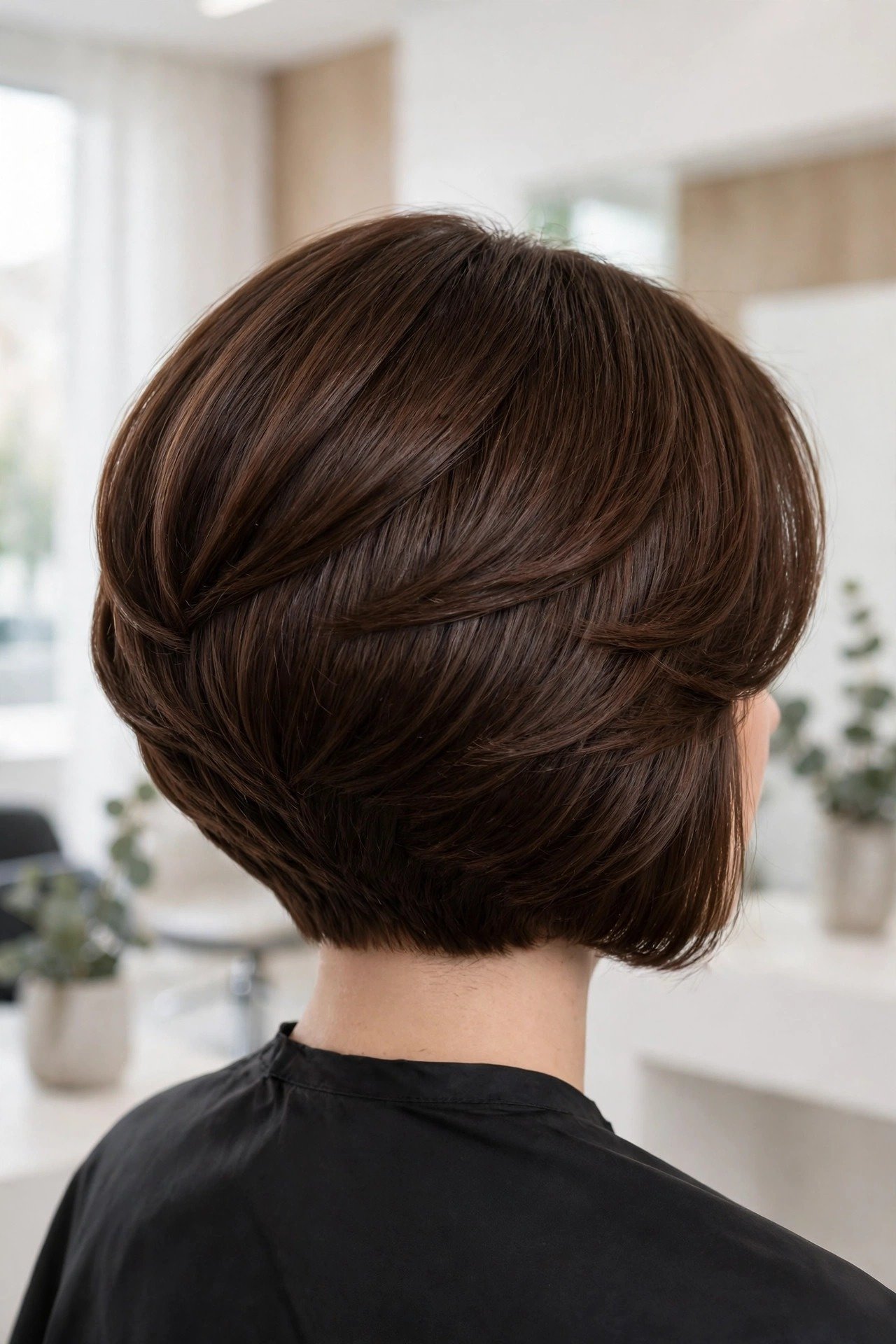
The graduated stacked bob is the technical heart of the whole family: the layers are cut at a precise angle so each one sits slightly shorter than the one above it, building a smooth, rounded shape with real volume at the back. There is no harsh step anywhere — the graduation is a seamless slope from the short nape to the longer crown — which is what makes this version look so polished and expensive. It suits straight to wavy hair best and flatters oval and heart-shaped faces, because the smooth graduation frames the face without any visual noise. This is the stacked bob for women who like their hair to look designed, not grown.
Stylist script: ask for a graduated stacked bob with the back cut at a steep graduation angle, so the nape is short and the crown layers stack smoothly on top of each other. Request the ends at chin length with a gentle inward curve, and ask for the graduation to be blended — the words “smooth graduation” and “no steps” are the ones that signal this version. Tell your stylist you want the volume concentrated at the back of the crown, and the front pieces kept clean and simple so the graduation can speak.
Styling routine: apply volumizing mousse to damp roots, then blow-dry with a round brush, lifting each crown section up and away from the head so the stacked layers keep their height. A quick blast of cool air sets the volume, and a light mist of flexible hairspray holds it without stiffness. Maintenance: trim every six weeks to keep the graduation fresh; as the layers grow out, the stack softens first, so do not stretch this one too far between appointments.
4. The Stacked Bob with Volume

The stacked bob with volume is the fullest, bounciest version on this list. The layers are stacked steeply through the crown so the hair lifts at the roots and falls in soft, rounded layers, giving the cut a voluminous silhouette that looks expensive from every angle. It suits fine to medium hair best, because the stacking creates the illusion of density where a one-length bob would lie flat, and it flatters long and oval faces by adding width where they need it. If your hair has ever been called flat or limp, this is the version that changes the conversation entirely.
Stylist script: ask for a stacked bob with steep stacked layers through the crown, cut to build maximum volume at the roots — the words “stacked” and “graduated” are the ones that signal this version. Request the ends kept at chin length with the inward curve, the sides layered to fall in a rounded shape, and the nape tapered short. Ask your stylist to remove weight from the inside of the cut so the layers lift instead of sitting heavy, and to keep the ends soft with point-cutting so the volume looks natural.
Styling routine: apply volumizing mousse to damp roots, then blow-dry with a round brush, lifting each section up and away from the head. A quick blast of cool air sets the volume, and a light mist of flexible hairspray holds it without stiffness. On day two, a quick spray of dry shampoo at the roots revives the lift without a full wash. Maintenance: trim every six weeks to keep the stacked layers fresh; as the layers grow out, the volume drops first, so keep the appointments regular.
5. The Short Stacked Bob
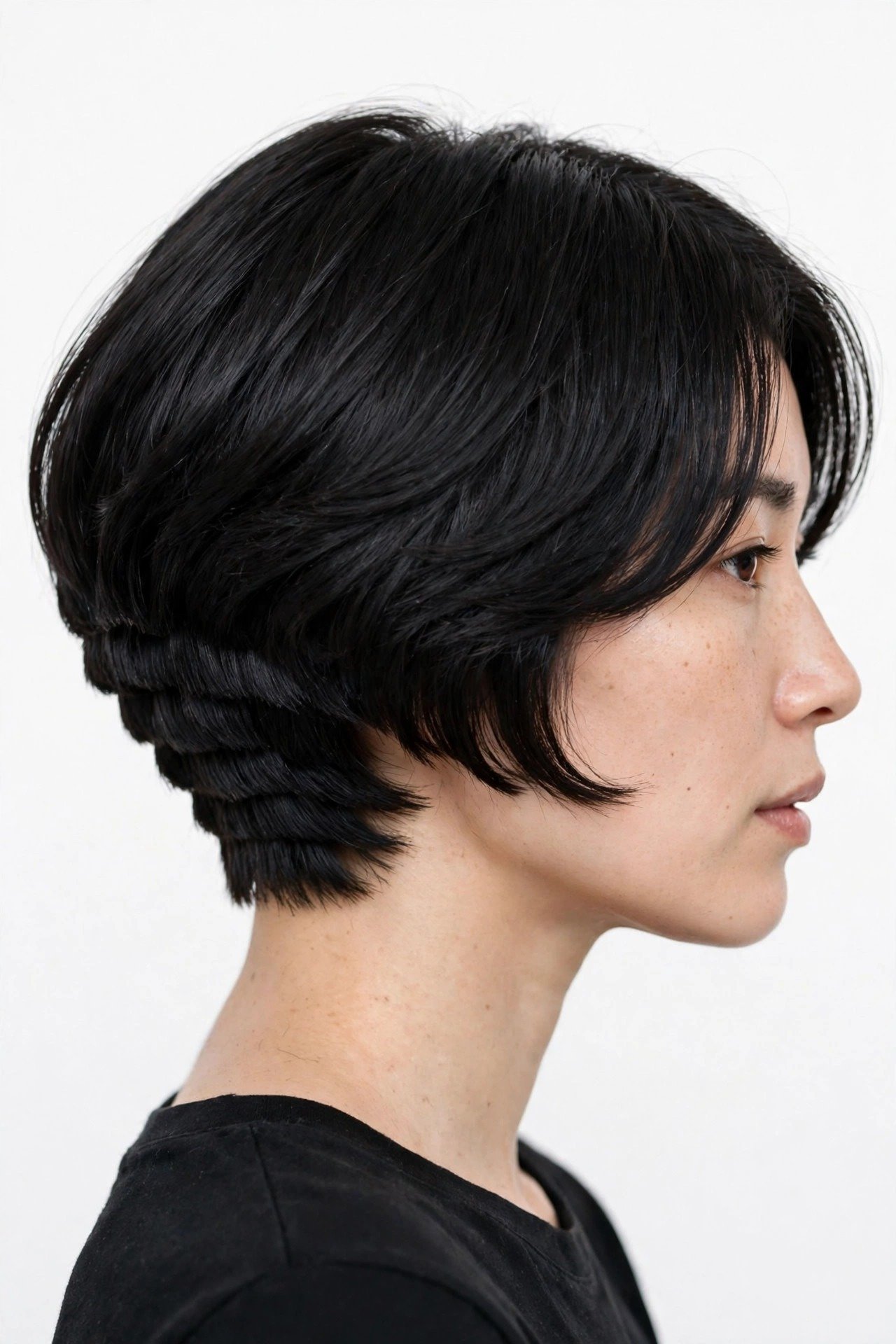
The short stacked bob is the most compact, most sculpted version on this list: the back is stacked tight and short, the nape is tapered close, and the front pieces sit at the jawline rather than the chin. The shorter length makes the stack even more visible, because there is less hair to hide it — the graduation reads clearly from every angle, and the silhouette is neat, graphic, and deliberate. It suits petite women and women with small, delicate features best, and it flatters oval and heart-shaped faces. This is the version for women who want the shortest possible bob without crossing into pixie territory.
Stylist script: ask for a short stacked bob with the back stacked tight and the nape tapered close, and the front pieces kept at jawline length. Request the crown layered for lift, the ends point-cut so they fall softly, and the back kept neat with a clean taper. Tell your stylist you want it short but still a bob — the front should reach your jaw when pulled forward, not your ear. The words “short stack” and “tight taper” are the ones that signal this version.
Styling routine: the short stacked bob needs almost nothing — a pea-sized amount of styling cream, a quick finger-dry, and the shape does the rest. If you want extra polish, a round brush through the front pieces gives the inward curve, and a drop of serum on the ends keeps them smooth. Maintenance: trim every five to six weeks; short stacks show growth fastest, so keep the appointments regular. This is the stacked bob for women who like their edges neat and their mornings short.
6. The Long Stacked Bob

The long stacked bob is the most versatile version on this list, because the longer front pieces give you styling options the shorter versions do not. The back stays stacked and graduated in true stacked-bob fashion, while the front pieces fall past the chin toward the collarbone, framing the cheekbones and the jawline. You can tuck the front pieces behind your ears, clip them back, curl them for an evening, or let them fall loose — the cut adapts to your day. It suits nearly every face shape, and it is the best option for women who want to try a stacked bob but are nervous about going short at the front. Our long layered bob guide shows the same face-framing logic at a longer length if you want to compare.
Stylist script: ask for a long stacked bob with the back stacked and graduated, and the front pieces left long — past the chin, toward the collarbone. Request the front layers cut with a slide-cutting technique so they fall in soft, blended pieces rather than blunt steps, and ask for the shortest face-framing layer to start at the cheekbone. Tell your stylist you want the length at the front to feel like a safety net — that is the whole point of this version.
Styling routine: blow-dry the front pieces forward with a round brush, then flick the ends inward or outward depending on your mood. A curling iron on the front layers adds evening glamour in minutes, and a clip or pin takes them out of the way on busy days. The stacked back needs only a quick lift with the dryer to keep its height. Maintenance: trim every six to eight weeks; the longer front pieces grow out gracefully, so this is one of the most forgiving versions between appointments.
7. The Stacked Bob with Curtain Bangs

The stacked bob with curtain bangs is the softest version on this list, and one of the most flattering. The fringe parts in the middle and sweeps to each side like a curtain, framing the cheekbones and softening the whole face. It works beautifully with the stacked bob’s chin-length front pieces, because the curtain bangs blend seamlessly into the face-framing layers — there is no hard line where the fringe ends and the rest of the cut begins. It suits nearly every face shape, and it is especially good for women with a high forehead or strong features they want to soften. Our curtain bangs guide covers the full range of fringe lengths if you want to explore further.
Stylist script: ask for a stacked bob with curtain bangs parted in the centre, with the shortest point of the fringe at the brow and the sides blending into the face-framing layers at cheekbone length. Request the bangs cut dry so your stylist can see exactly where they fall, and ask for them to be feathered at the ends rather than cut blunt. The rest of the bob stays classic: stacked back, chin-length ends with an inward curve, rounded shape, soft layers throughout.
Styling routine: blow-dry the bangs forward with a round brush, then sweep each side outward and away from the face for the curtain effect. A quick pass with a flat iron on the ends adds polish, and a tiny amount of texture spray keeps them from falling flat. The stacked back needs only a quick lift with the dryer. Maintenance: the bangs need a trim every three to four weeks to stay above the eyes, while the rest of the cut can go six to eight weeks. This is the stacked bob for women who want softness first.
8. The Stacked Bob with Wispy Bangs
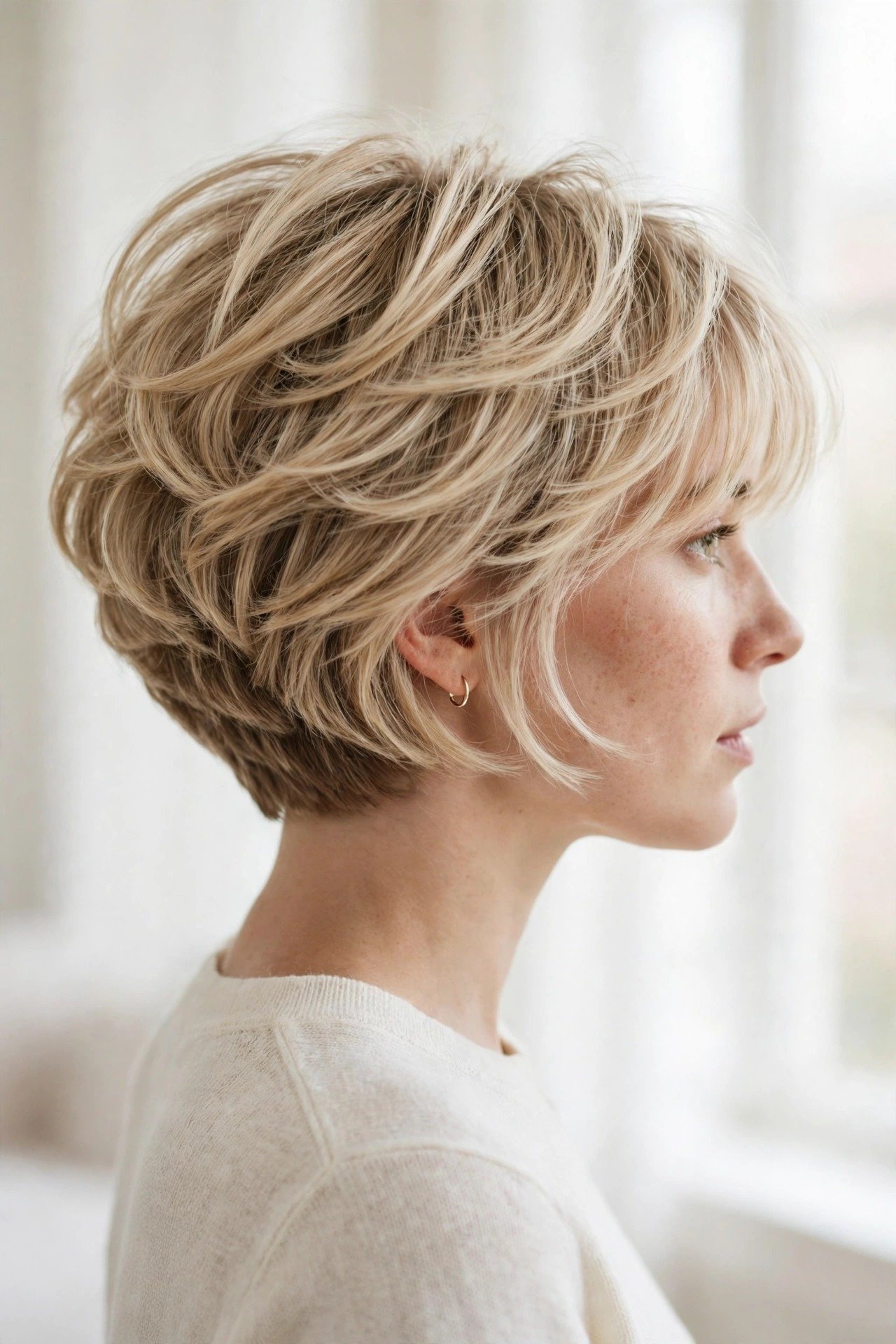
The stacked bob with wispy bangs is the lightest, airiest version of the fringe family. The bangs are cut thin and feathery so the forehead shows through in places, which keeps the whole look soft and youthful rather than heavy. It pairs beautifully with the stacked bob’s volume, because the wispy fringe echoes the gentle texture throughout the cut without adding weight at the front. It suits fine hair especially well, since a heavy fringe would overwhelm a fine texture, and it flatters long and oval faces by shortening the forehead visually without closing the face in.
Stylist script: ask for a stacked bob with wispy bangs — a thin, feathered fringe cut with point-cutting so the ends are soft and separated, not a solid line. Request the fringe to sit just at or slightly above the eyebrows, and ask your stylist to keep it light: the words “see-through” and “feathery” are the ones that signal this version. The rest of the cut stays stacked and rounded, with chin-length ends and a gentle inward curve.
Styling routine: the wispy fringe needs almost nothing — a quick blow-dry forward with your fingers, or a single pass with a flat iron if it kinks. A tiny amount of dry shampoo at the roots keeps it from separating into strands on humid days. The rest of the bob styles as usual with a little texture spray and a lift at the crown. Maintenance: trim the bangs every three to four weeks; the feathery ends grow out into your face faster than a blunt fringe would.
9. The Stacked Bob with Side-Swept Bangs
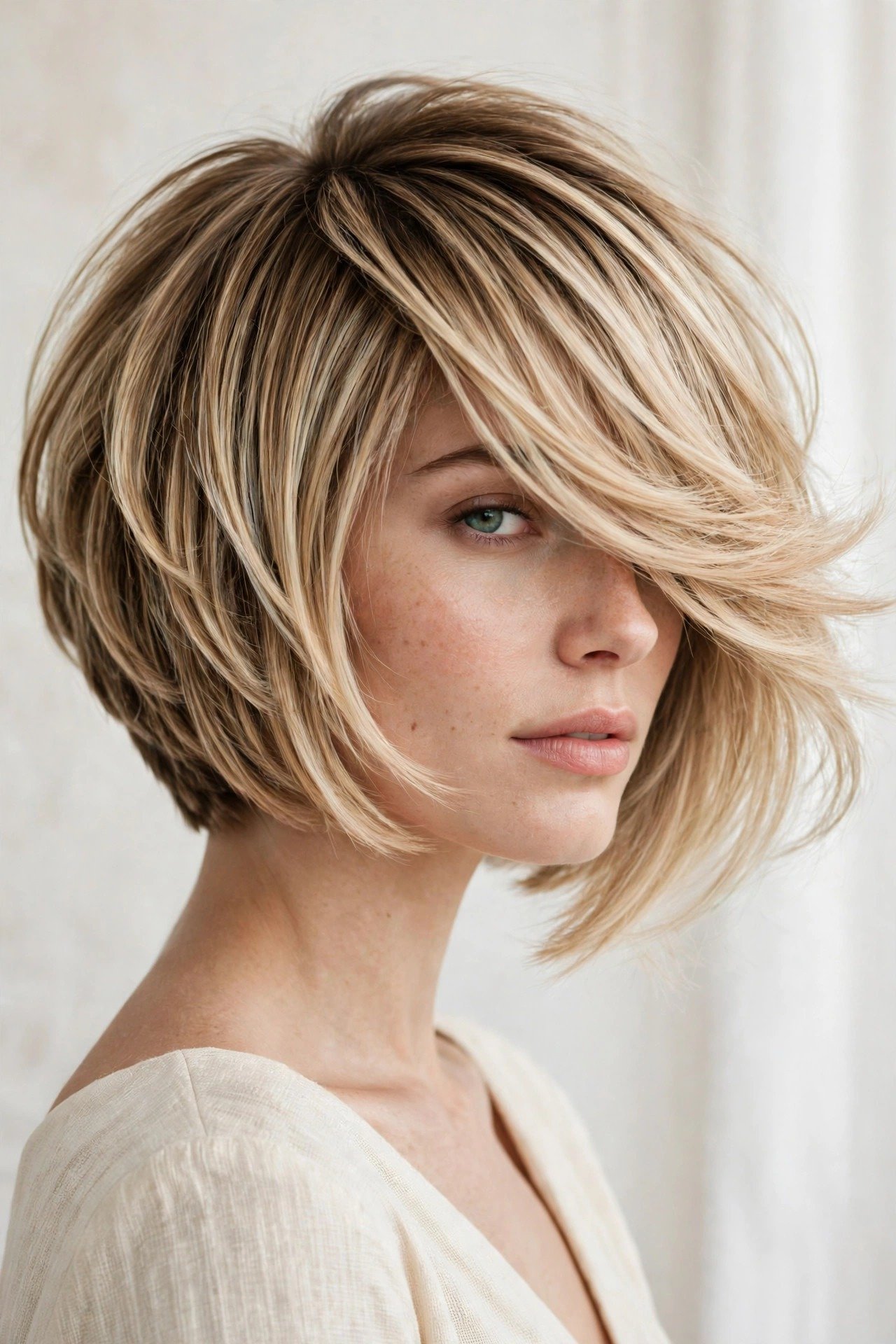
The stacked bob with side-swept bangs is the most glamorous version on this list: a long fringe swept dramatically to one side, falling across the forehead and blending into the longer front pieces. The sweep adds instant drama and movement, and it is the version that photographs best, because the diagonal line across the face creates a natural focal point. It suits thick hair best, where the sweep has real weight behind it, and it flatters round and square faces beautifully, because the diagonal line breaks up the symmetry of the face and adds the illusion of length.
Stylist script: ask for a stacked bob with a deep side part and a long side-swept fringe that reaches the cheekbone or chin on the long side. Request the fringe cut with long layers so it falls in one smooth sweep rather than a blunt block, and ask for the shorter side to be kept neat and tucked behind the ear. The back stays stacked and graduated, and the crown gets extra layers for lift so the sweep has height to fall from.
Styling routine: blow-dry the fringe across the forehead with a round brush, directing the airflow to the side you want it to fall. A small amount of medium-hold cream keeps the sweep in place without stiffness, and a light mist of hairspray locks it for the evening. Maintenance: trim every six weeks; the sweep grows out gracefully, and you can flip the part to the other side for a fresh look between appointments.
10. The Stacked Bob with Micro Bangs
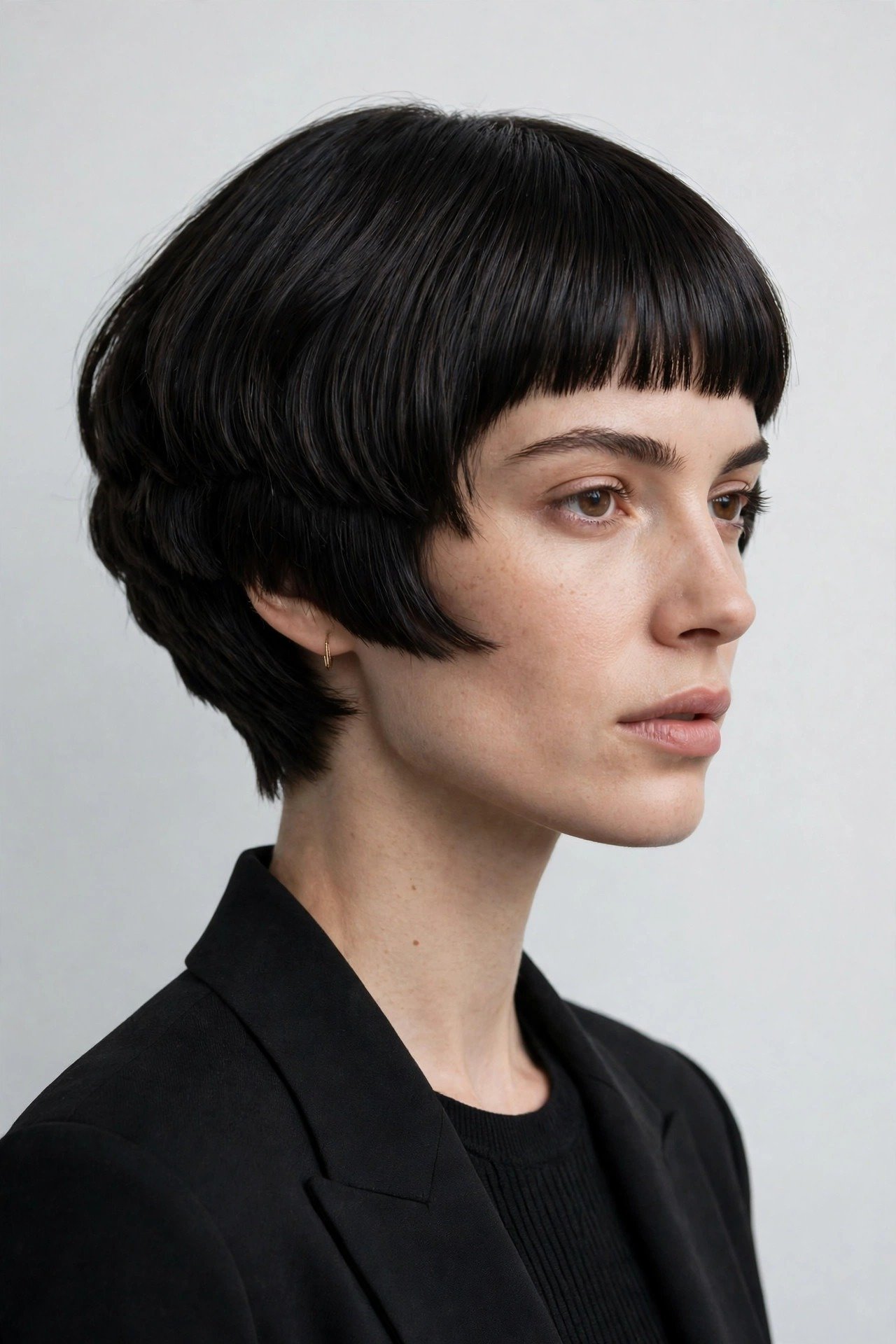
The stacked bob with micro bangs is the boldest, most editorial version on this list. The fringe is cut short — well above the eyebrows — which opens the whole face and gives the cut a graphic, fashion-forward edge. It is the version you choose when you want your haircut to be noticed, and it works because the tiny fringe makes the eyes the focal point of the entire look. It suits oval and heart-shaped faces best, and it flatters women with strong brows, since the micro bang frames them like a picture frame. This is not a shy haircut, and that is exactly the point.
Stylist script: ask for a stacked bob with micro bangs cut about an inch above the eyebrows, with a straight, clean edge — this fringe must be cut precisely, so ask your stylist to cut it dry and check the length twice. Request the rest of the bob kept soft and rounded, with a stacked back and chin-length ends curving gently inward, so the sharp fringe has a soft frame around it. Tell your stylist you want the fringe blunt, not feathered, because the graphic line is the whole effect.
Styling routine: the micro fringe needs almost no styling — it sits where it is cut. A quick pass with a flat iron keeps the edge crisp, and a drop of serum on the ends prevents flyaways. The rest of the bob styles with a little texture spray and a lift at the crown. Maintenance: the fringe needs a trim every two to three weeks to stay above the brows, so book a fringe trim between full appointments. This is the stacked bob for women who like their edges razor-straight.
11. The Wavy Stacked Bob
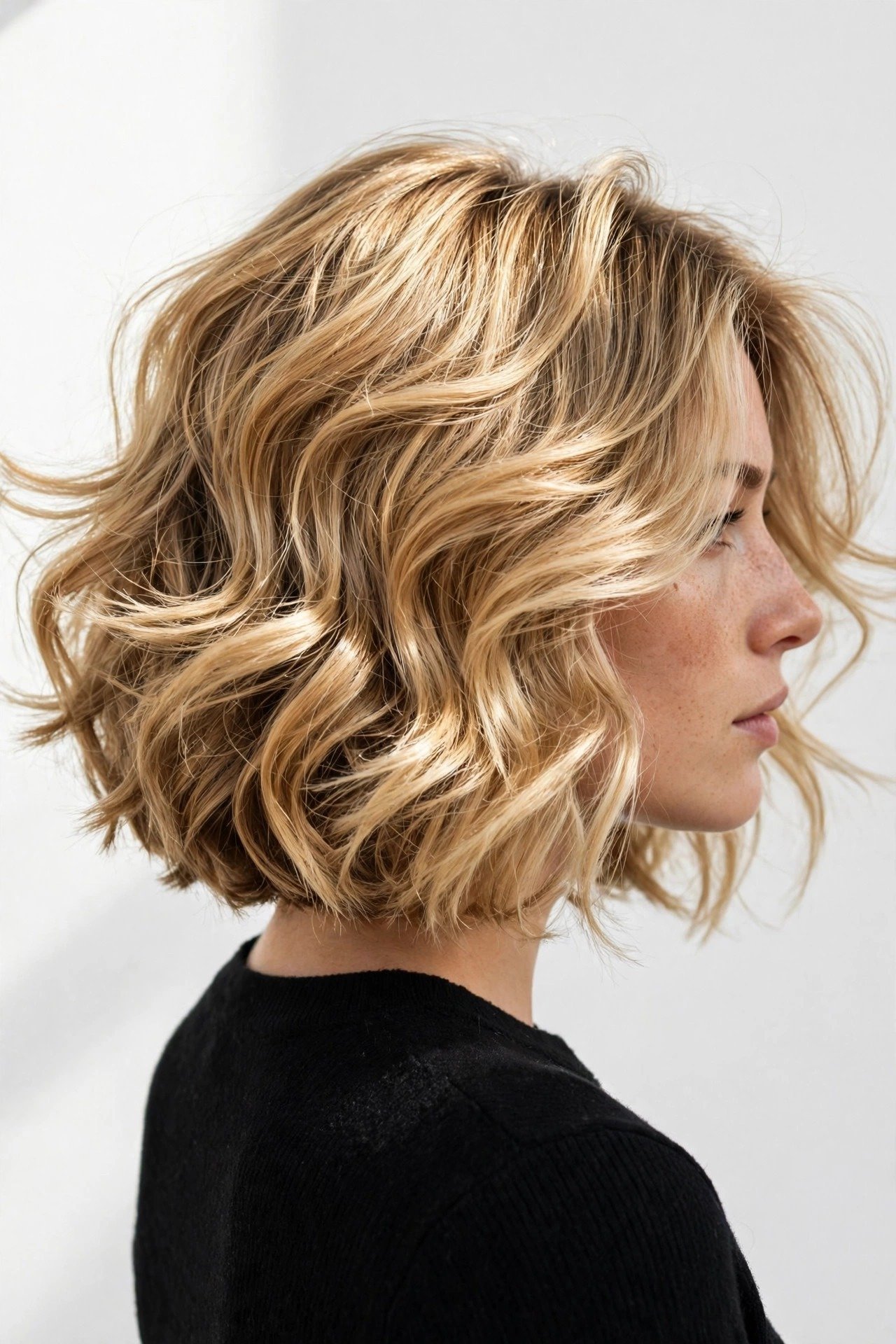
The wavy stacked bob is the most romantic version on this list, and it is also one of the easiest to live with. The natural wave pattern gives the cut movement with almost no product, and the stacked layers let the waves form properly instead of being weighed down by length. The front pieces fall in soft waves around the face, the back stays light and rounded, and the whole look reads as effortless in the way only a good haircut can fake. It suits medium-density hair best and flatters every face shape, and it is the best option for women whose hair has a natural bend they have spent years trying to straighten away.
Stylist script: ask for a stacked bob cut on your natural wave pattern — tell your stylist to cut it dry or barely damp so the waves are visible while they work. Request long, soft layers through the crown that follow your wave, with the front pieces left at chin length so the waves can frame the face. The back should be stacked and graduated, not blunt, so the shape stays rounded. Ask for the ends to be point-cut rather than cut straight across, which keeps the waves from forming a heavy shelf.
Styling routine: scrunch a little curl cream or sea-salt spray into damp hair and let it air-dry — the waves do the work. If you want more definition, twist a few front pieces around your finger while they dry. Avoid brushing the hair once it is dry, which breaks the waves into frizz. Maintenance: every six to eight weeks; wavy hair hides growth better than straight hair, so this is one of the most forgiving versions to maintain.
12. The Curly Stacked Bob
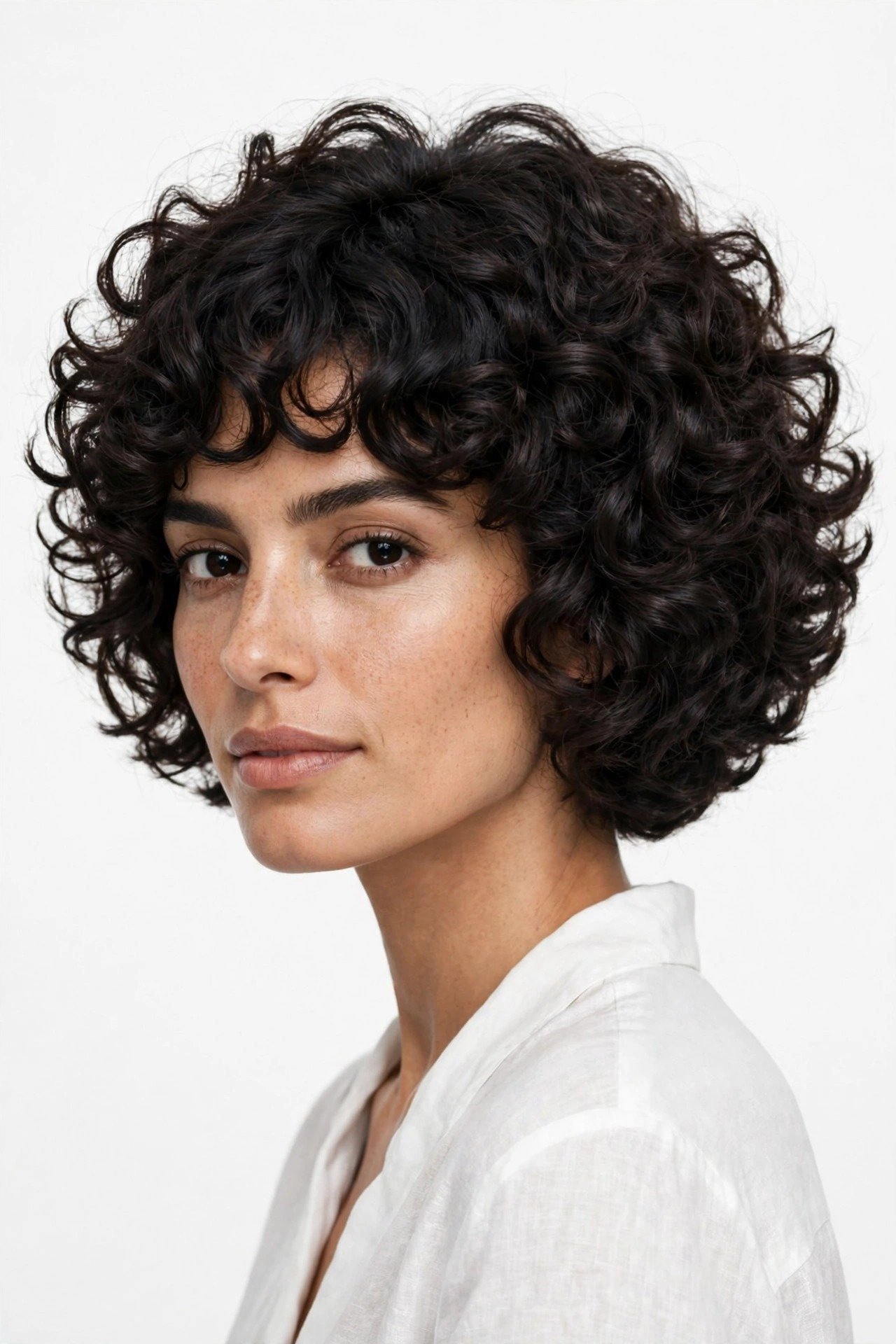
Curly hair and the stacked bob are a better match than most people assume. Keeping curls at chin length while stacking the back removes the triangle-shaped bulk that makes curly cuts look heavy, and the layers let each curl form properly instead of being crushed under its own weight. The key is length at the front: the curls need enough room to spring up, so the front pieces are kept long enough to reach the chin when stretched. The result is a short cut with real volume and personality, and it suits coily and curly textures beautifully.
Stylist script: ask for a stacked bob cut curl by curl, with the hair dry so your stylist can see the true curl pattern — cutting curly hair wet is the classic mistake that leaves it too short once it dries. Request the front curls left long enough to reach the chin, the crown layered for volume, and the back stacked and rounded rather than square. Tell your stylist you want the shape rounded rather than triangular, and ask them never to thin the curls with a razor, which creates frizz.
Styling routine: apply curl cream or leave-in conditioner to damp curls and let them air-dry, or diffuse on low heat — never brush curly hair dry. Scrunch gently once the curls are fully dry to break the cast and add softness. Maintenance: trim every eight to ten weeks, with the shape touched up at six weeks if it grows quickly. This is the stacked bob for women who let their natural texture do the talking.
13. The Sleek Straight Stacked Bob

The sleek straight stacked bob is the most polished version on this list: smooth, glossy, and architectural, with every strand in place. The stacked layers are cut cleanly so the hair falls in one smooth sheet, the ends curve gently inward, and the whole silhouette looks expensive. It suits straight hair best, where the sleek finish holds without fighting, and it flatters oval and square faces. This is the version for the office, for formal occasions, and for women who like their hair to look like it was done by a professional — because it was.
Stylist script: ask for a sleek stacked bob with clean, precise layers and a smooth finish, with the ends at chin length and curving gently inward. Request the ends cut with a slight bevel so they tuck toward the neck naturally, and ask for a soft side part. Tell your stylist you want a polished finish, which signals them to keep the layering subtle rather than choppy. A smoothing treatment or keratin blow-dry can help if your hair has a natural wave that fights the sleek look.
Styling routine: apply a heat protectant and a smoothing serum to damp hair, then blow-dry section by section with a paddle brush, pointing the airflow downward. Finish with a flat iron on the front pieces if they need extra polish, and a drop of shine serum on the ends. Maintenance: trim every five to six weeks to keep the ends sharp and the shape precise. This is the stacked bob for women who enjoy the morning routine and the mirror that comes with it.
14. The Textured Stacked Bob
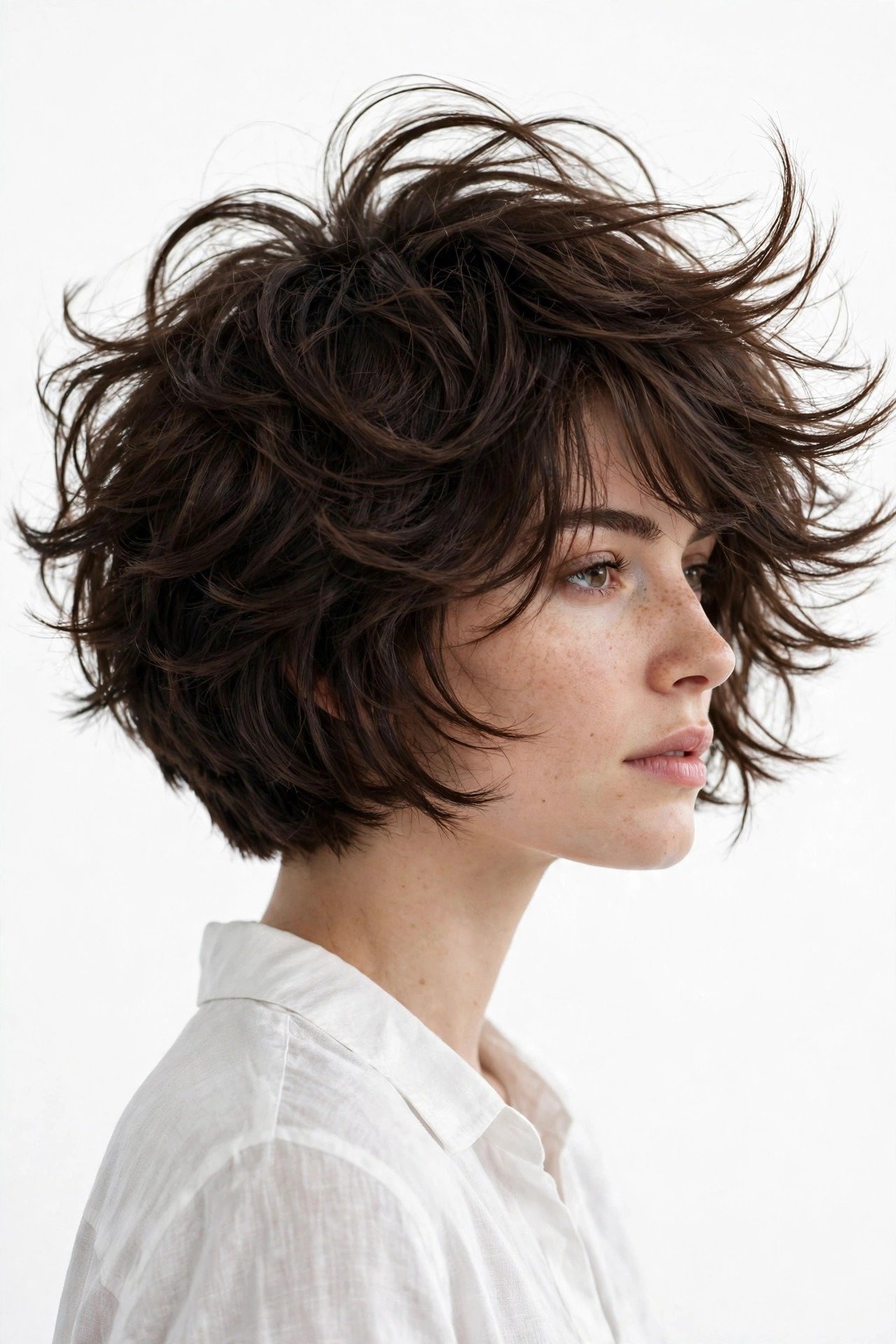
The textured stacked bob is the 2026 default for women who want polish without stiffness. The layers are cut with point-cutting so the ends separate into visible pieces, and the whole cut moves when you move instead of sitting as one solid shape. It suits straight to wavy hair best and flatters oval and square faces, because the soft texture softens strong jawlines while the rounded shape keeps the silhouette neat. This is the stacked bob for women who like their hair to look styled but never overdone, and it is the easiest version to wear with almost no effort.
Stylist script: ask for a stacked bob with soft texture through the crown and sides, cut with point-cutting so the ends separate into pieces. Request the ends kept at chin length with the signature inward curve, and the back stacked and graduated so the shape stays rounded. Tell your stylist you want it to look lived-in rather than polished — the words “soft texture” and “piecey” are the ones that signal this version. Ask them to remove weight from the inside of the cut so the layers sit down instead of puffing outward.
Styling routine: apply a small amount of texture spray or matte paste to dry hair, working it in with your fingers rather than a brush. Twist small sections at the ends for extra separation, and scrunch the crown lightly for lift. Five minutes, no dryer required — the texture does the work. Maintenance: trim every six weeks to keep the textured ends fresh; the textured shape tolerates an extra week of growth better than a sleek cut does.
15. The Choppy Stacked Bob
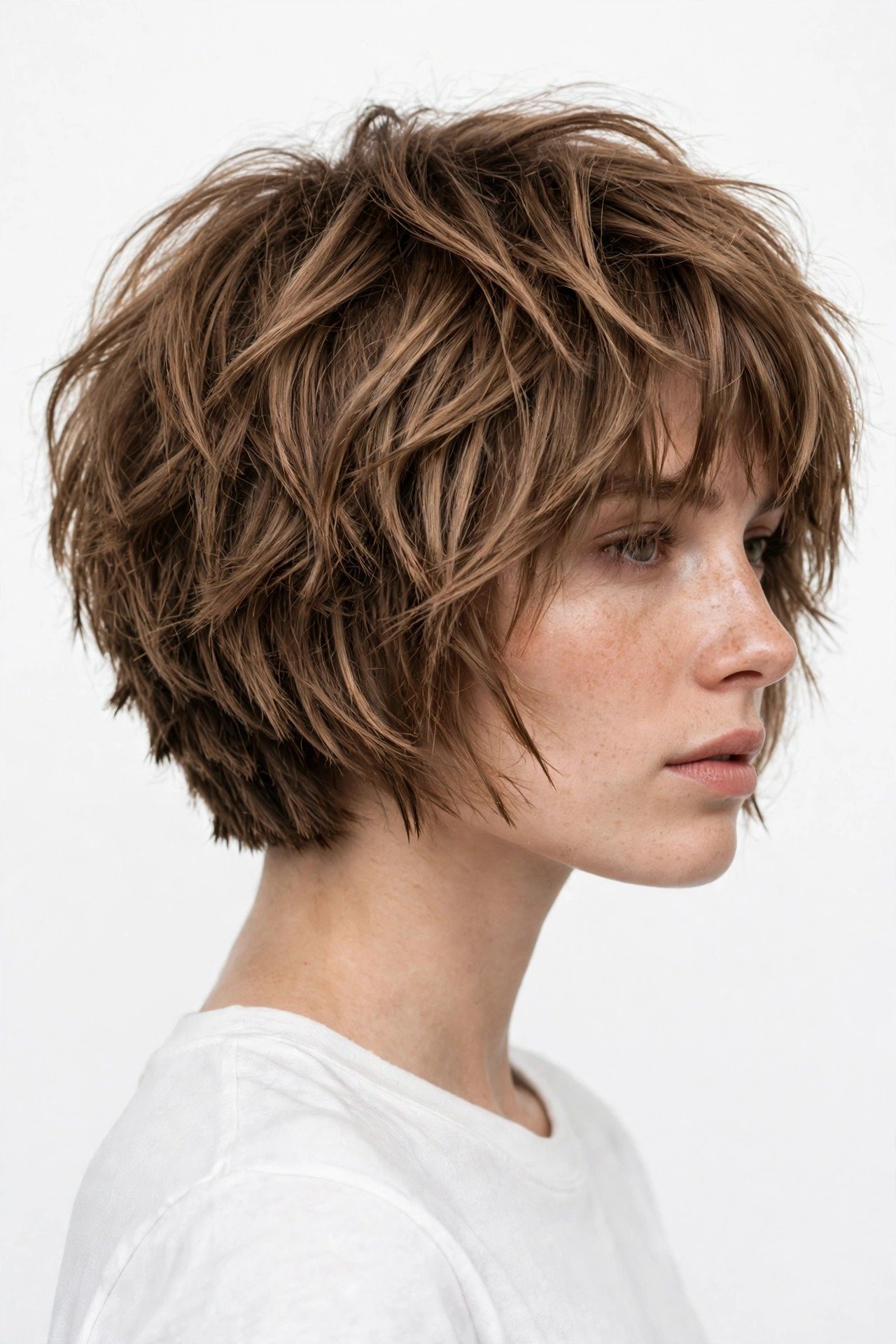
The choppy stacked bob is the edgiest version of the textured family: the ends are cut with deliberate, uneven chops so the bottom edge reads as broken and modern rather than smooth. The stack at the back gives it structure, while the choppy ends give it attitude, and the contrast between the controlled shape and the wild edge is the entire trick. It suits straight and wavy hair best and flatters oval and square faces, because the choppy texture breaks up strong lines. This is the stacked bob for women who want their haircut to feel current, not classic.
Stylist script: ask for a choppy stacked bob — tell your stylist you want the ends cut with visible chops, not blended smooth. Request the back stacked and graduated, the ends at chin length, and the crown layered for lift. Ask for the chops to be cut with point-cutting at different lengths, so the edge looks deliberately uneven rather than accidentally ragged. The words “choppy” and “piecey” are the ones that signal this version.
Styling routine: work a small amount of matte paste through dry hair with your fingertips, separating the choppy ends so they stay distinct. A quick scrunch at the crown adds lift, and a light mist of texture spray holds the pieces apart. Maintenance: trim every six weeks to keep the choppy ends sharp; as they grow out, the chops soften into texture, which is a lovely second act.
16. The Asymmetrical Stacked Bob
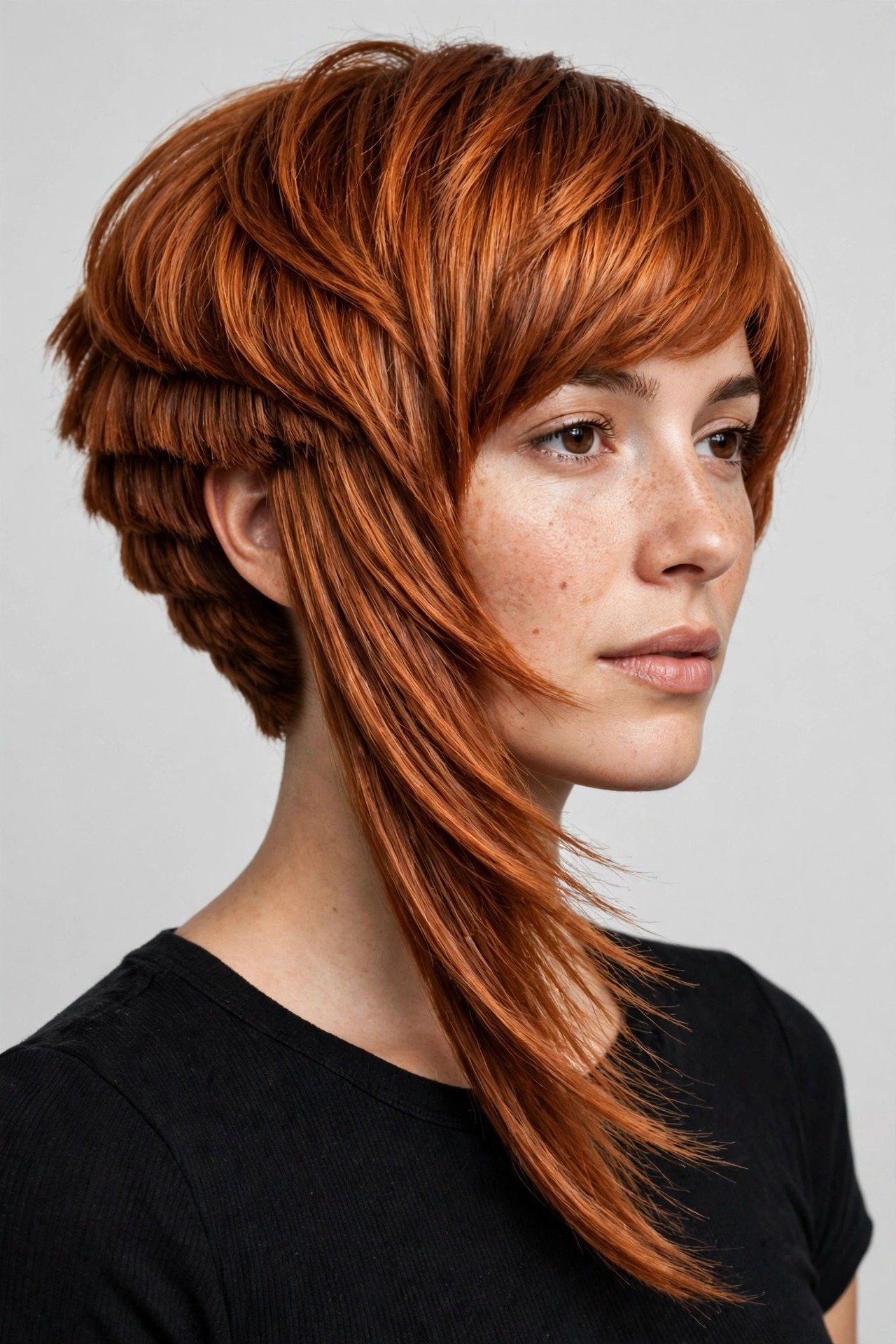
The asymmetrical stacked bob is the boldest geometric version on this list: one side longer than the other, with a dramatic diagonal line running across the cut, built on a stacked back that gives the short side its lift. The asymmetry gives the style instant edge and movement, and it is the version that turns heads, because the eye keeps following the diagonal from the long side to the short side. It suits thick, straight hair best, where the line stays crisp, and it flatters round and square faces beautifully, because the diagonal breaks up the face’s symmetry. This is the stacked bob for women who want their haircut to be a statement.
Stylist script: ask for an asymmetrical stacked bob with one side at chin length and the other side an inch or two shorter, cut with a clean diagonal line, on a stacked and graduated back. Request the longer side kept smooth with the signature inward curve, and the shorter side tucked neatly behind the ear, with the nape tapered short. Tell your stylist how much difference you want between the sides — a subtle inch reads modern, while two or more inches reads dramatic. Be explicit, because the difference is the whole point.
Styling routine: blow-dry the longer side smooth with a round brush so the diagonal line reads clearly, and tuck the shorter side behind the ear. A flat iron on the longer side keeps the line crisp, and a drop of shine serum finishes the look. Maintenance: trim every five to six weeks; the asymmetry grows out unevenly, so this is one of the versions that needs the most regular upkeep.
17. The Stacked Bob with Blunt Ends
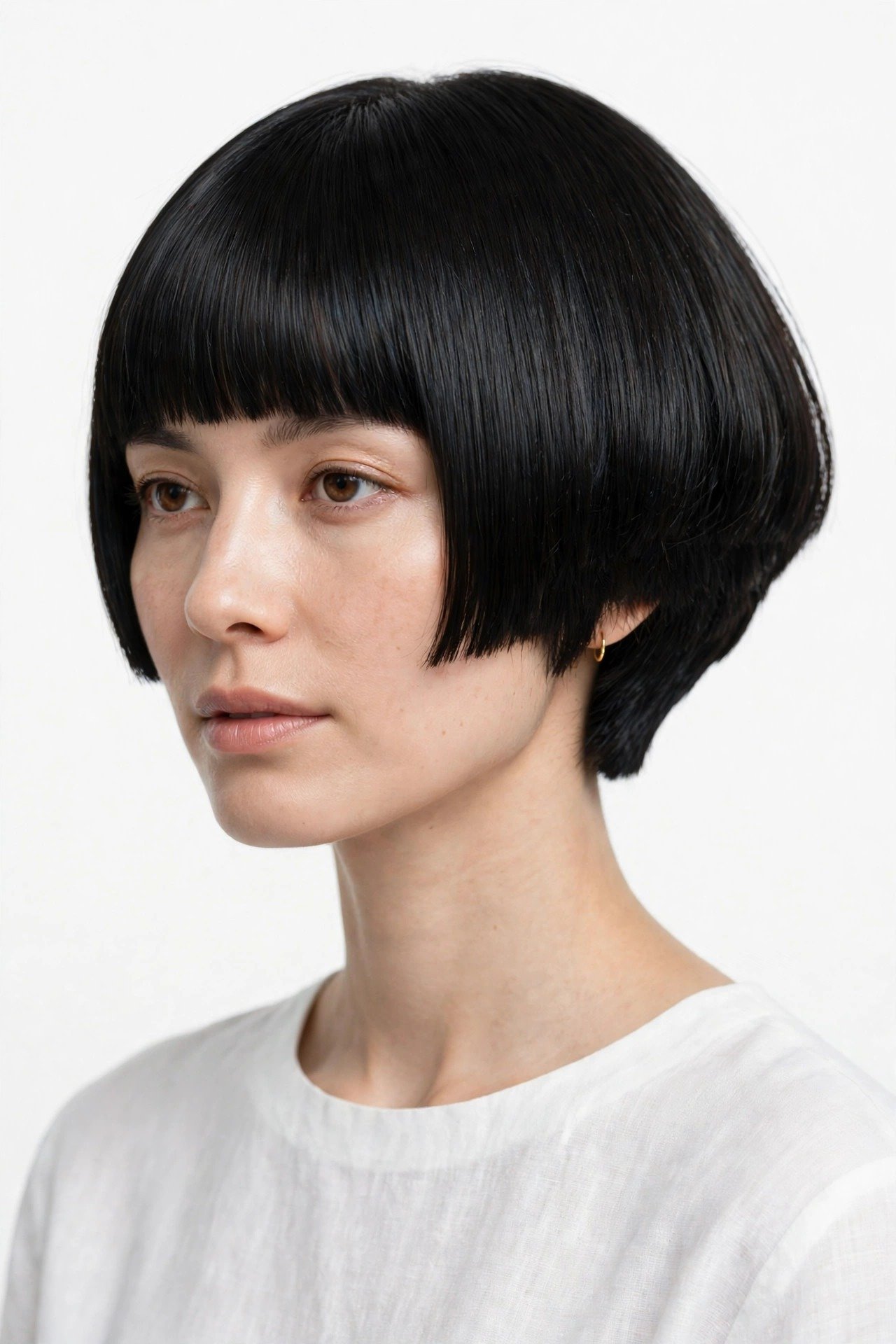
The stacked bob with blunt ends is the sharpest, most graphic version of the classic shape. The ends are cut straight across with no texturizing, so the bottom edge of the cut reads as one clean, deliberate line, while the stacked back and rounded crown keep it softer than a blunt bob. The contrast between the blunt ends and the voluminous crown is what makes this version so striking: it looks tailored, expensive, and intentional. It suits straight hair best, where the blunt line stays crisp, and it flatters oval and square faces. This is the version for women who like their hair to look designed, not grown.
Stylist script: ask for a stacked bob with blunt ends — the ends cut straight across with scissors, no point-cutting, no razor, no thinning. Request the ends at chin length with a clean bottom edge, the crown stacked for volume, and the back tapered short. Tell your stylist you want the blunt line to be the feature, which means the rest of the cut should stay relatively simple so the edge can speak.
Styling routine: blow-dry the hair smooth with a paddle brush, then run a flat iron over the ends to keep the blunt line crisp, turning the iron slightly under for the stacked bob’s curve. A drop of shine serum on the ends emphasises the graphic edge. Maintenance: trim every five to six weeks; blunt ends show growth and split ends faster than textured ends, so do not stretch this one. This is the stacked bob for women who like straight lines and sharp edges.
18. The Stacked Bob with Feathered Layers

The stacked bob with feathered layers is the softest, most romantic version of the layered family. The layers are cut so the ends flick outward like feathers, giving the cut an airy, floating quality that looks beautiful in motion, while the stacked back keeps the volume where it belongs. The feathering runs through the whole cut — the crown, the sides, and the fringe — so the hair never sits flat and never looks heavy. It suits fine to medium hair best, where the feathering creates movement without removing too much weight, and it flatters long and oval faces by adding width at the sides.
Stylist script: ask for a feathered stacked bob with layers cut to flick outward, using a razor or slide-cutting technique so the ends are soft and wispy. Request the ends at chin length, the sides layered to flick at cheekbone level, and the back stacked and graduated. Tell your stylist you want the feathering throughout, not just at the ends, and ask them to keep the crown light so the layers can lift and separate.
Styling routine: blow-dry with a round brush, flicking each section outward as you dry it — the flick is the whole point, so take the extra minute. A light mousse at the roots adds lift, and a flexible hairspray holds the feathering without stiffness. Maintenance: trim every six weeks to keep the feathered ends fresh; as they grow out, the flick softens into a wave, which is a lovely second act.
19. The Stacked Bob for Fine Hair
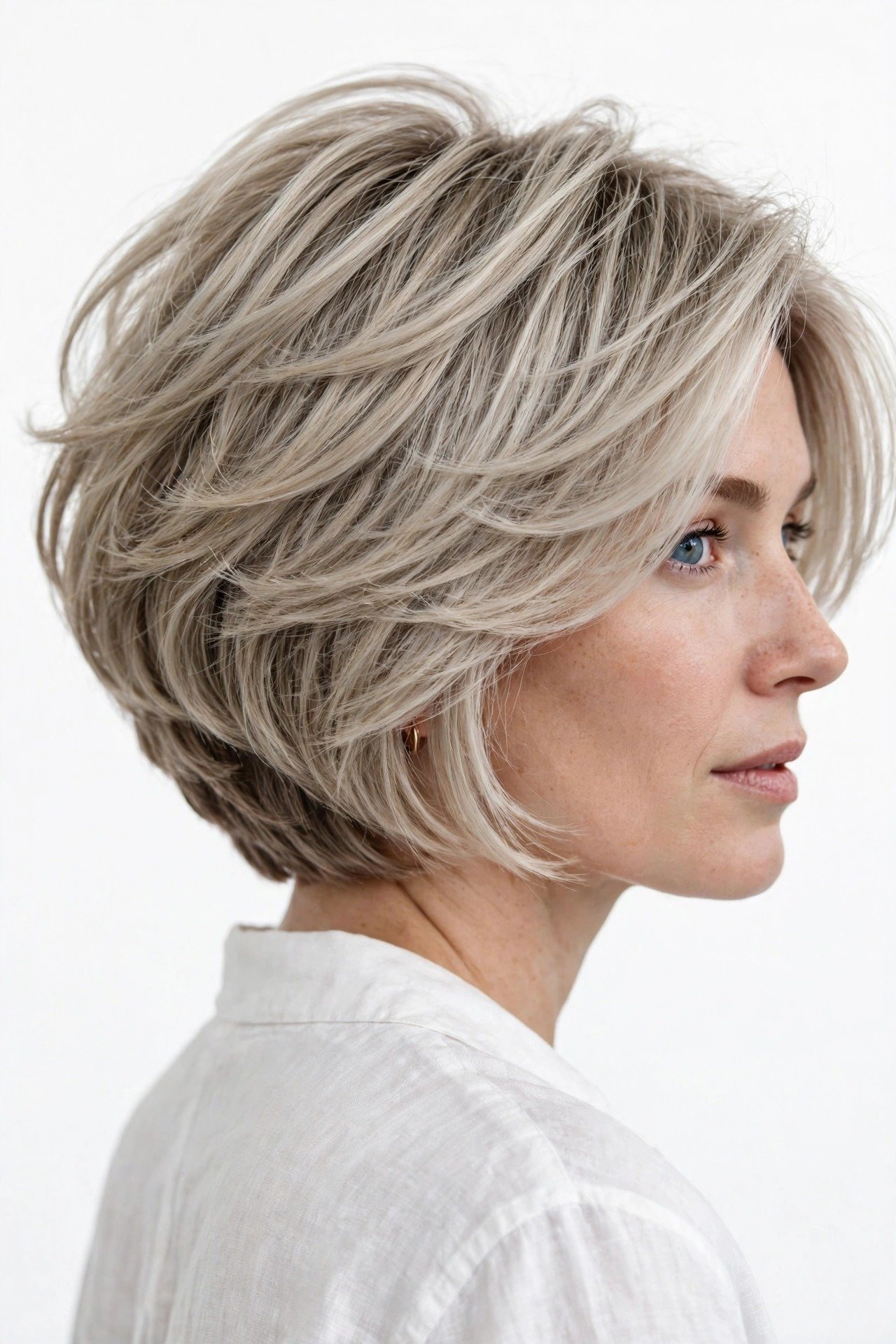
Fine hair gets the biggest transformation from a stacked bob of any hair type. The problem with fine hair is that solid, one-length cuts lie flat and expose the scalp; the solution is stacking — when the back is cut in graduated layers, each layer lifts the one above it, and the eye reads that light-and-shadow play as density. The stacked bob adds the second half of the illusion: the rounded shape and the volume at the crown give fine hair a silhouette it could never achieve on its own. A good stacked bob can make fine hair look twice as thick as it is.
Stylist script: ask for a stacked bob cut specifically for fine hair — “light, airy texture, do not thin it out” — because over-thinning fine hair is the classic mistake that makes it look thinner. Request the layers kept soft and the ends at chin length, with the back stacked so all the visual weight lives on top. Tell your stylist you want volume at the crown above all else, and ask them to keep the ends slightly blunt, which makes fine hair look denser.
Styling routine: sea-salt spray is your best friend — mist it on damp hair before styling to add grip and body, then finish with a small amount of volumizing mousse at the roots. Avoid heavy creams and oils, which weigh fine hair down and undo the illusion. Maintenance: every six weeks; fine hair shows growth quickly, so keep the appointments regular. This is the version that turns a hair insecurity into a non-issue.
20. The Stacked Bob for Thick Hair
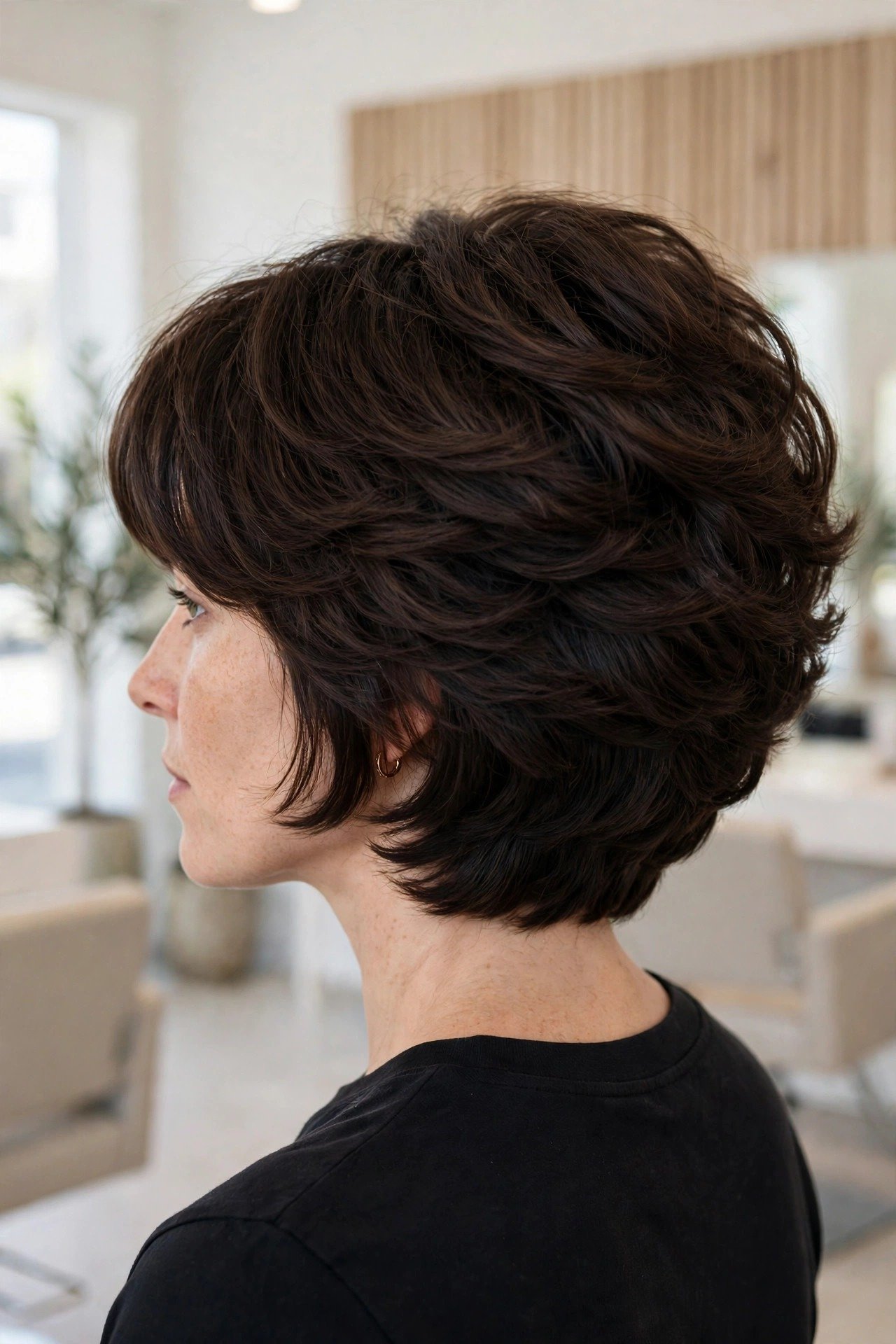
Thick hair is both the stacked bob’s best friend and its biggest challenge — there is plenty of material for volume and texture, but without internal weight removal the top mushrooms instead of moving, and a thick nape can look heavy. The thick-hair version solves both problems: the stylist removes weight from inside the cut while keeping the length, so the layers sit down and separate, and the back is stacked and tapered so the silhouette stays light. The result is the most impressive stacked bob of any hair type — the density that fights you in every other cut becomes the whole point here.
Stylist script: ask for a stacked bob with heavy internal texture and weight removal through the crown — the critical instruction is “take the weight out,” so say it explicitly, because a stylist who cuts a thick top like a fine top will leave you with a helmet. Request the ends at chin length, the sides layered, and the back stacked and tapered. Ask for the layers to be cut with thinning shears or a razor through the interior, never at the ends, so the shape stays intact while the bulk disappears.
Styling routine: a light leave-in conditioner under your styling cream keeps the texture controlled without looking product-heavy. Blow-dry with a round brush for smoothness, or let it air-dry with a little curl cream for a softer finish. Maintenance: every five to six weeks, since thick hair shows growth fastest. Done right, thick hair produces the most impressive stacked bob of any hair type.
21. The Stacked Bob with Highlights
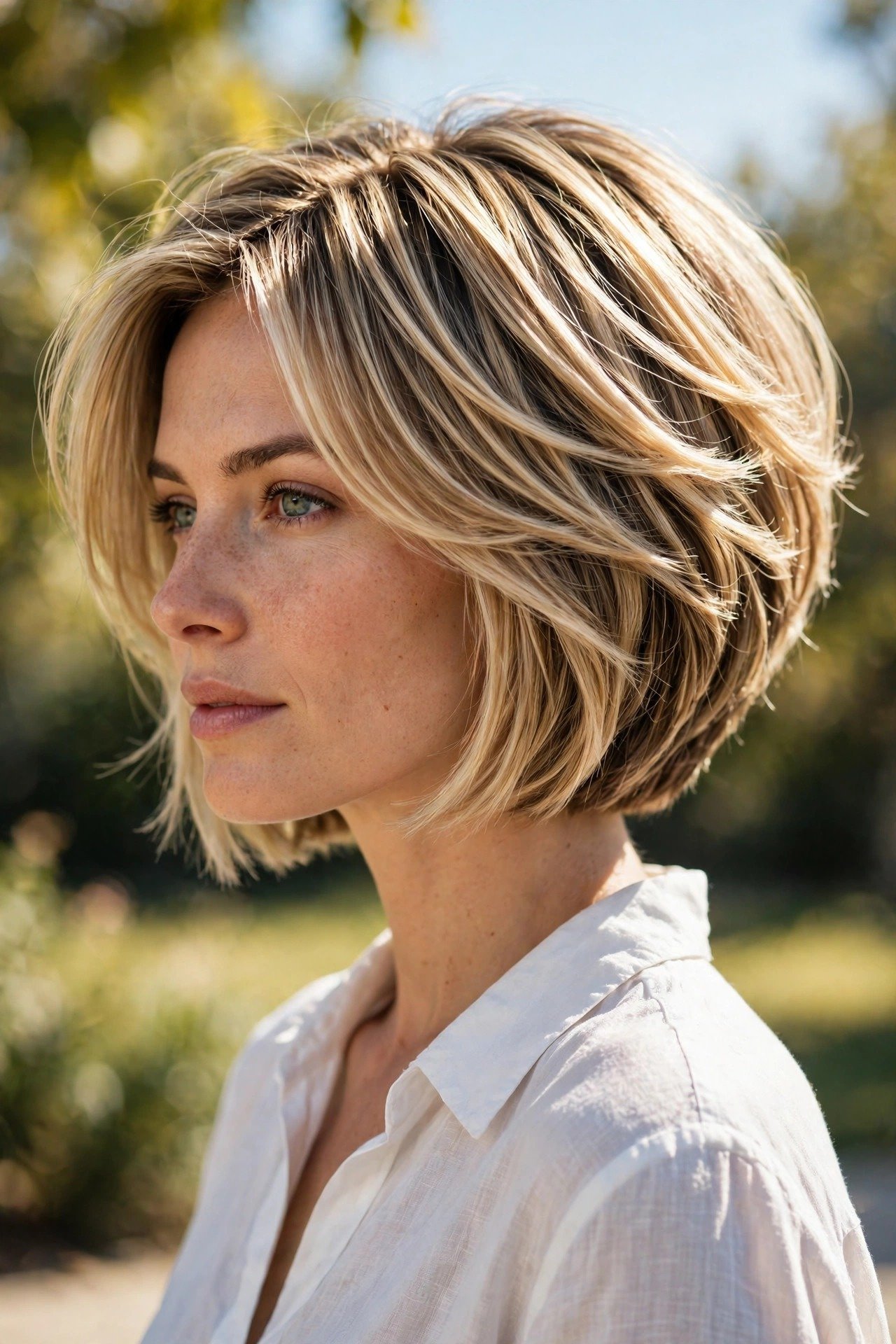
Highlights are the stacked bob’s best friend, because the layers give the colour somewhere to live. A few well-placed highlights through the crown and the front pieces catch the light every time the layers move, and the dimension makes the cut look fuller and more expensive than a single flat colour ever could. The trick is placement: highlights belong where the light hits — the crown, the front pieces, and the ends — not buried underneath where nobody sees them. This version suits every base colour, and it is the easiest way to refresh a stacked bob you already love.
Stylist script: ask for a stacked bob with dimensional highlights — fine, hand-painted or foiled highlights concentrated through the crown, the face-framing pieces, and the ends. Request the base colour kept close to your natural shade so the grow-out is soft, and tell your stylist you want the highlights to follow the layers, not fight them. The cut itself stays classic: stacked back, chin-length ends with an inward curve, rounded shape, soft texture throughout.
Styling routine: highlights look best with a little movement, so style the bob with texture spray and a finger-dry, or a loose wave through the front pieces with a curling iron. Use a colour-safe shampoo and a weekly purple or toning mask if your highlights are blonde, to keep them from going brassy. Maintenance: the cut every six weeks, the highlights every eight to ten weeks. This is the stacked bob for women who want their colour to work as hard as their cut.
22. The Stacked Bob with Balayage
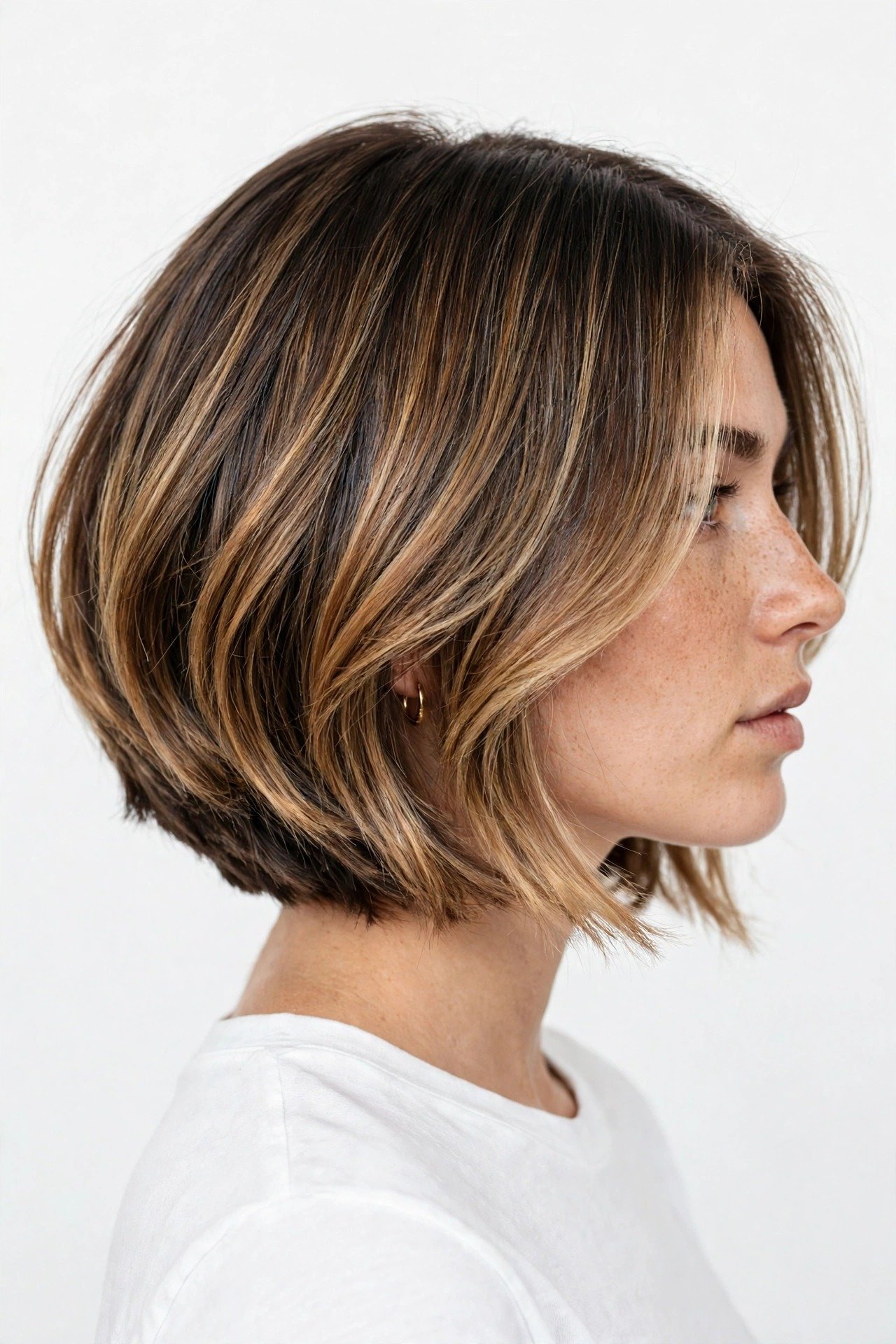
Balayage and the stacked bob were made for each other. The hand-painted colour melts from darker roots into lighter ends with no harsh line, and the bob’s rounded shape shows off that gradient from every angle — the shorter stacked back reveals the darker root colour, while the longer front pieces carry the lighter ends around the face. The grow-out is famously soft, because there is no foil line to betray where the colour started. It suits every hair type, and it is the best colour option for women who want dimension without the maintenance of regular root touch-ups.
Stylist script: ask for a stacked bob with balayage — hand-painted colour starting a few inches from the roots and melting into lighter ends, with the lightest pieces framing the face. Request the colour placed to follow the cut’s layers, so the dimension moves with the hair. Tell your stylist you want a soft grow-out, which means keeping the root colour close to your natural shade. The cut itself stays classic: stacked back, chin-length ends, rounded shape, soft layers.
Styling routine: balayage looks best with texture, so style the bob with a little wave or tousle — a curling iron through the front pieces shows off the colour gradient beautifully. Use a colour-safe shampoo and a gloss treatment every six weeks to keep the ends looking healthy. Maintenance: the cut every six weeks, the balayage refreshed every ten to twelve weeks. This is the stacked bob for women who want low-maintenance colour with high-impact results.
23. The Stacked Bob with Face-Framing Layers
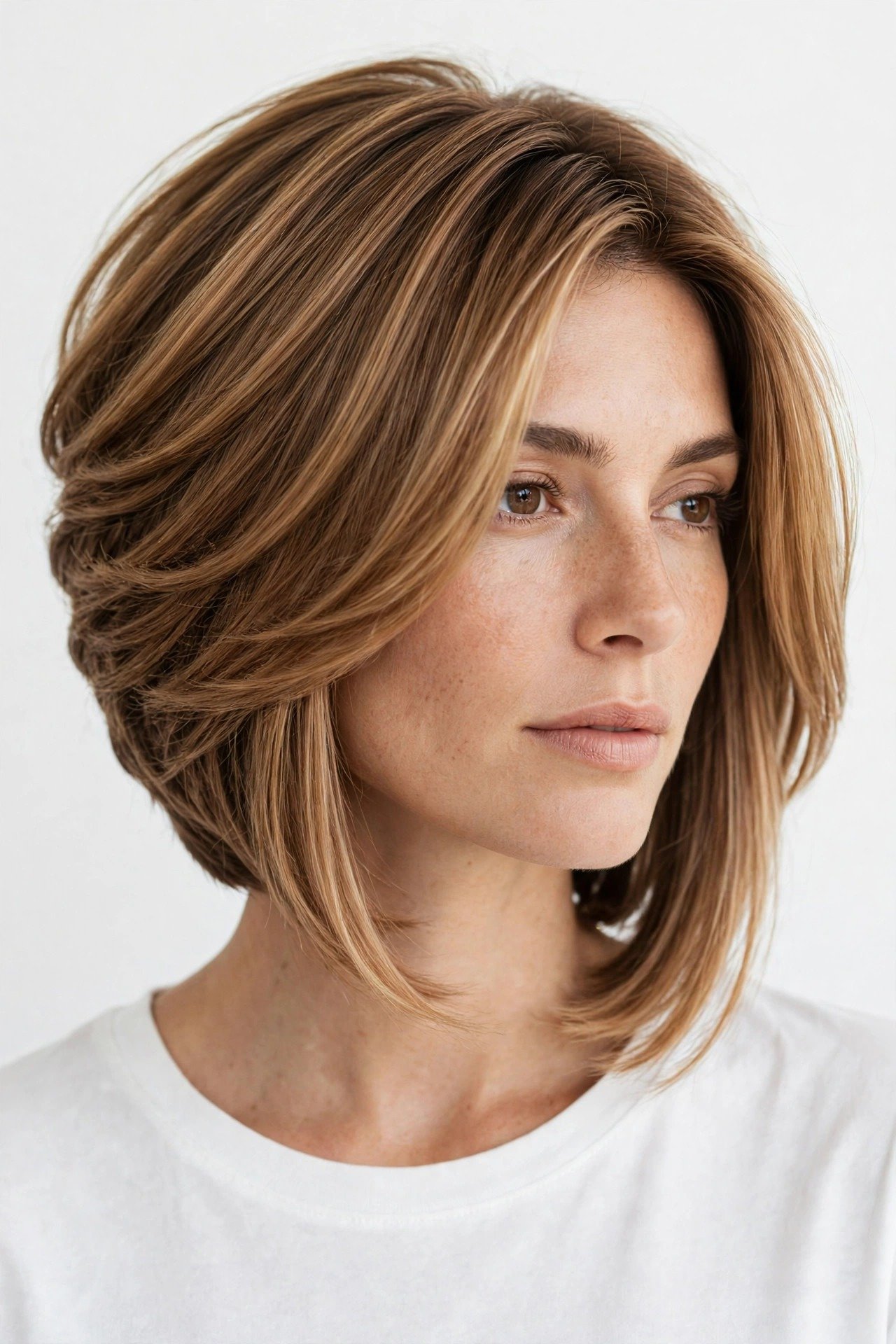
The stacked bob with face-framing layers is the most versatile version on this list, because the longer front pieces give you styling options the shorter versions do not. The front layers fall past the chin and frame the cheekbones, while the back stays stacked and graduated in true stacked-bob fashion. You can tuck the front pieces behind your ears, clip them back, curl them for an evening, or let them fall loose — the cut adapts to your day. It suits nearly every face shape, and it is the best option for women who want to try a stacked bob but are nervous about going short at the front. Our Italian bob guide shows a softer, rounded bob with the same face-framing logic if you want to compare.
Stylist script: ask for a stacked bob with long face-framing layers, with the front pieces left at chin length or slightly longer, and the back stacked and graduated. Request the front layers cut with a slide-cutting technique so they fall in soft, blended pieces rather than blunt steps, and ask for the shortest face-framing layer to start at the cheekbone. Tell your stylist you want the length at the front to feel like a safety net — that is the whole point of this version.
Styling routine: blow-dry the front pieces forward with a round brush, then flick the ends inward or outward depending on your mood. A curling iron on the front layers adds evening glamour in minutes, and a clip or pin takes them out of the way on busy days. Maintenance: trim every six to eight weeks; the longer front pieces grow out gracefully, so this is one of the most forgiving versions between appointments.
24. The Stacked Bob with an Undercut
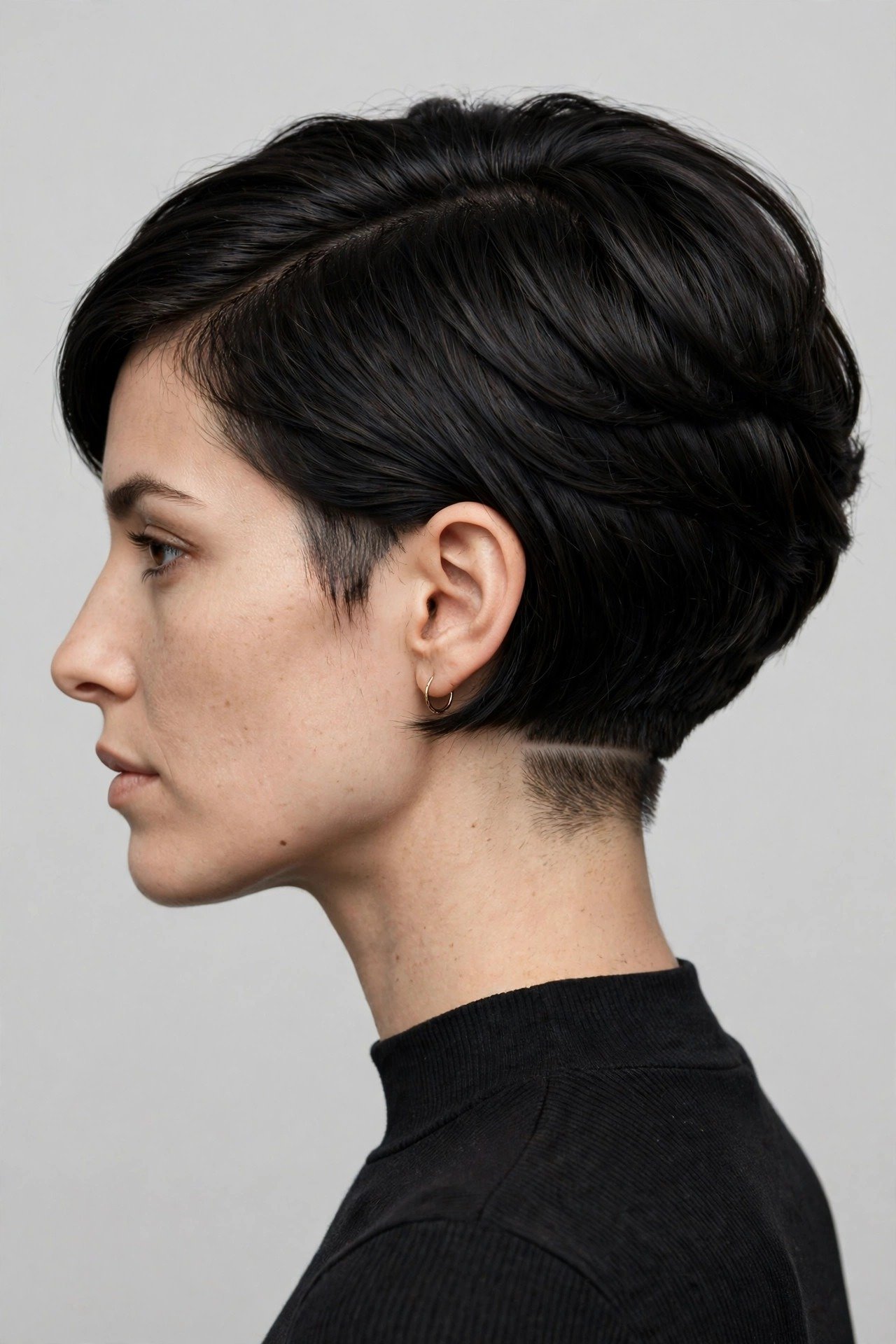
The stacked bob with an undercut is the edgiest version on this list: the nape underneath is clipped short, almost to the skin, while the stacked layers on top fall over it and hide it completely — until you lift the hair or tuck it behind your ear and the shaved detail appears. The undercut removes bulk where thick hair needs it most, so the top layers sit flatter and cleaner, and it keeps the neck cool in summer. It suits thick hair best and flatters women who want a hidden detail that only shows when they choose to show it.
Stylist script: ask for a stacked bob with a hidden undercut — the nape clipped short underneath, with the stacked layers left long enough to cover it completely when the hair is down. Request the undercut kept neat and close, and ask your stylist to show you where it sits so you know how to reveal it. Tell your stylist you want the undercut as a bulk-removal tool, not a visible design, unless you want a pattern shaved in — that is a separate conversation.
Styling routine: when the hair is down, style as usual — the undercut is invisible. To show it off, tuck one side behind the ear or sweep the hair up into a small clip. The clipped nape needs no product at all. Maintenance: the undercut needs a touch-up every three to four weeks to stay close, while the rest of the cut can go six to eight weeks. This is the stacked bob for women who like a secret edge.
25. The Tousled Stacked Bob
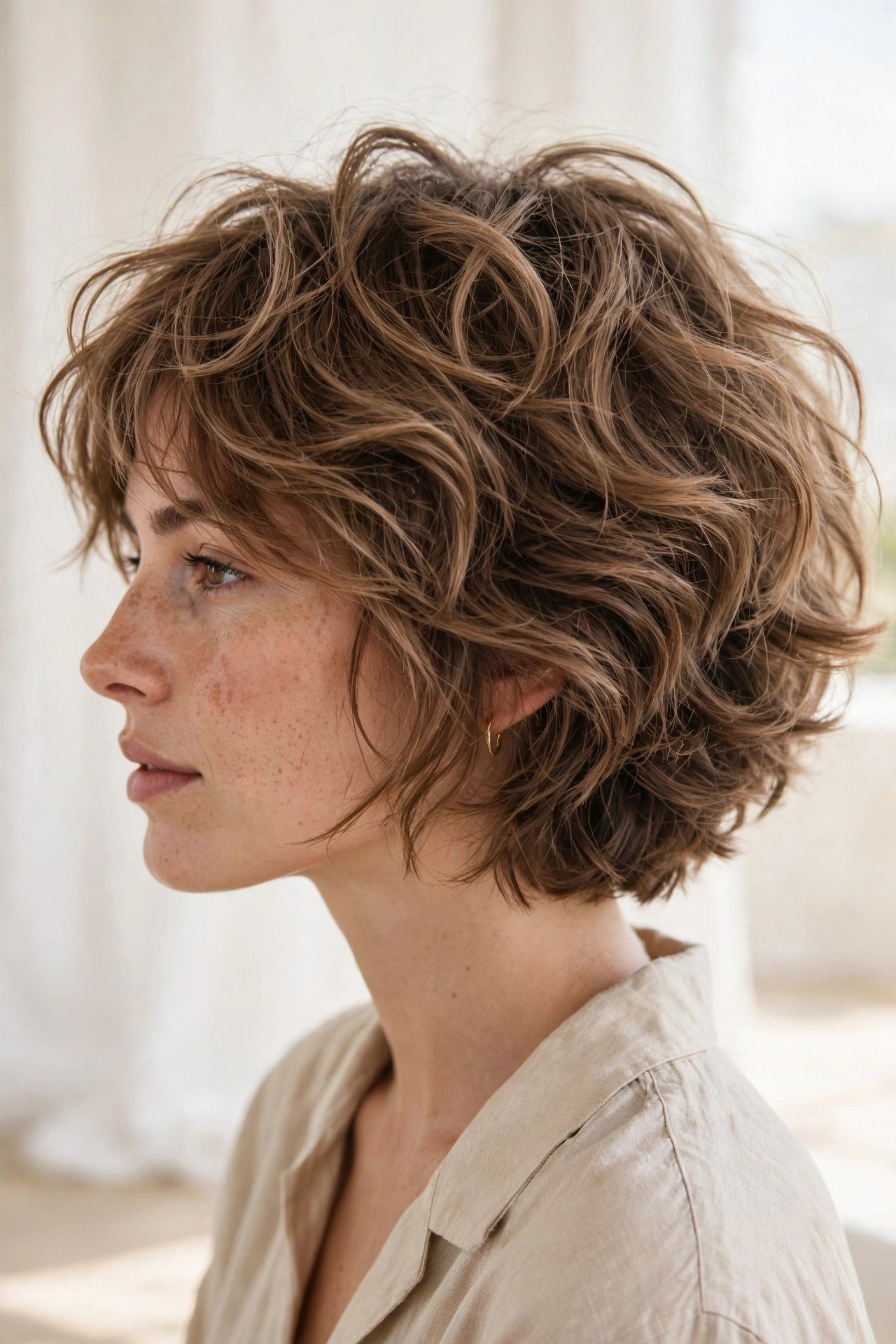
The tousled stacked bob is the cut’s most honest version: it looks like you did nothing, because you almost did. The layers are cut so the hair falls in soft, random waves, and the styling is deliberately minimal — a scrunch, a shake, and you are done. The chin-length ends stay neat with their gentle inward curve, which is what keeps “tousled” from reading as “neglected.” The contrast between the controlled stacked shape and the wild texture is the entire trick, and it is the version most women end up keeping once they try it, because it asks so little of the morning.
Stylist script: ask for a tousled stacked bob — tell your stylist you want to wear it messy, which is a complete instruction that signals them to cut more internal texture and keep the shape clean. Request the top left with heavy point-cutting, the ends at chin length, and the back stacked and graduated. Ask for the layers to be cut so the hair falls in different directions naturally, rather than in one uniform direction.
Styling routine: sea-salt spray on damp hair, scrunched and left to air-dry, or a tiny amount of matte paste scrunched through dry hair. Shake the roots with your fingers for lift and walk away. Maintenance: every six to eight weeks; the tousled shape tolerates growth better than any polished version, since messiness only improves with length.
26. The Stacked Bob for Round Faces

The stacked bob for round faces is cut with one goal: to add the illusion of length. The crown is stacked high for height, the front pieces are kept longer than usual — reaching the chin or just below it — and the sides are kept close so the face is not widened. The vertical lines of the longer front pieces draw the eye up and down rather than side to side, and the height at the crown stretches the face visually. It suits women with round faces who have been told short hair is not for them, and it proves that advice wrong.
Stylist script: ask for a stacked bob with height at the crown and longer front pieces, telling your stylist explicitly that you want to lengthen a round face. Request the crown stacked for lift, the front pieces kept at chin length or slightly longer, and the sides kept close and neat rather than wide. Ask for a side part rather than a centre part, which adds an extra diagonal line that lengthens the face further.
Styling routine: blow-dry the crown up and back with a round brush for height, and let the front pieces fall straight down past the chin. Avoid curling the front pieces outward, which widens the face — if you curl them, curl them inward. Maintenance: trim every six weeks to keep the height and the length in balance.
27. The Stacked Bob for Oval Faces

The stacked bob for oval faces is the easiest brief a stylist will ever receive, because an oval face can wear almost any version. The balanced proportions of an oval face mean the bob needs no correction — no extra height, no extra length, no diagonal tricks — just a well-cut, balanced shape. This version keeps the classic proportions: stacked back, chin-length ends with an inward curve, lightly graduated crown, soft layers, and a side part, letting the face’s natural balance do the work. It is the version to choose when you want the stacked bob in its purest, most effortless form.
Stylist script: ask for a classic stacked bob with balanced proportions — stacked back, chin-length ends, lightly graduated crown, soft layers, and a side part. Tell your stylist your face is oval and you want the cut to stay balanced, which signals them not to add corrective height or length. Then pick your favourite detail from the other versions on this list — a curtain bang, a choppy texture, a soft curl — and add it, because an oval face can carry any of them.
Styling routine: the classic routine — a little styling cream, a round-brush blow-dry, and a tuck behind one ear. Because the cut is balanced, it styles itself in minutes and holds its shape all day. Maintenance: trim every six to eight weeks. This is the stacked bob for women whose face shape never gets in the way of a good haircut.
28. The Stacked Bob with Copper Colour

The stacked bob with copper colour is the warmest, most striking version on this list. Copper — a rich, warm red with golden undertones — makes the bob’s layers glow, because the colour catches the light differently on every stacked layer. It suits warm skin tones best, and it flatters women with green or hazel eyes especially, since the copper brings out the green. This is the version for women who want their hair colour to be the first thing people notice, and their cut to be the second.
Stylist script: ask for a stacked bob with copper colour — a rich, warm copper applied all over, or as a gloss over your natural base if you want a softer effect. Request the colour placed evenly so the layers show it off, and tell your stylist your skin tone so they can tune the copper warmer or cooler. The cut itself stays classic: stacked back, chin-length ends with an inward curve, rounded shape, soft texture throughout.
Styling routine: copper fades faster than most colours, so use a colour-safe shampoo and wash in cool water. A weekly colour-depositing mask keeps the copper rich between appointments. Style the bob with texture spray and a finger-dry — the colour does the talking. Maintenance: the cut every six weeks, the copper refreshed every six to eight weeks.
29. The Platinum Blonde Stacked Bob
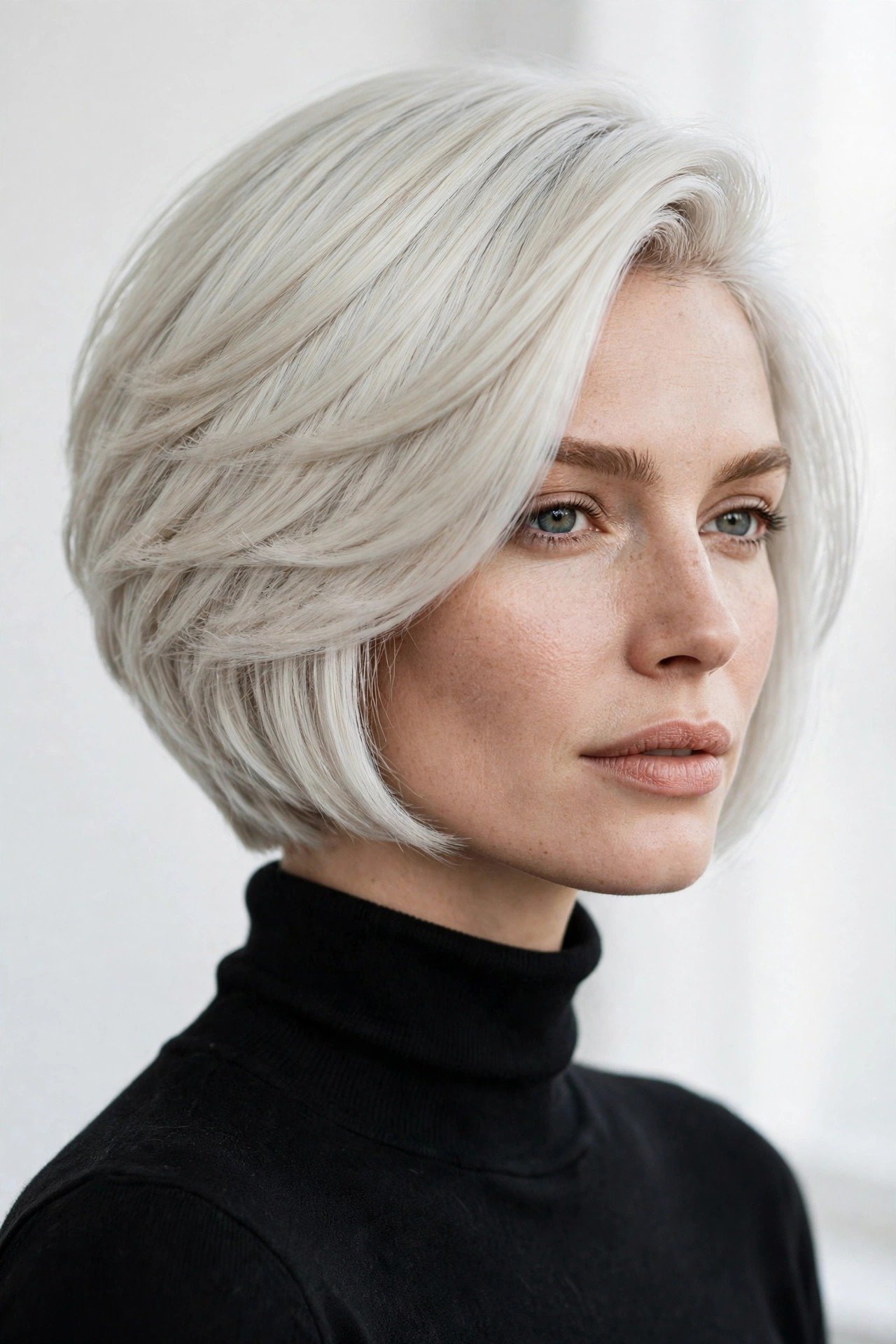
The platinum blonde stacked bob is the boldest colour version on this list: icy, almost-white blonde on a short, sculpted cut. The platinum makes the bob’s shape read even more clearly, because the light colour shows every layer and every line of the stack. It suits cool skin tones best, and it flatters women who are ready for a high-maintenance colour — because platinum is a commitment, not a one-off. This is the version for women who want to look like they walked out of a fashion editorial.
Stylist script: ask for a stacked bob with platinum blonde colour — a full lightening service followed by a cool toner, applied by a colourist who specialises in blonding. Request the cut first and the colour second, so the layers are shaped before the colour is placed. Tell your colourist you want an icy, cool platinum rather than a warm blonde, and ask about the upkeep schedule before you commit — honesty about maintenance is part of the service.
Styling routine: platinum hair needs moisture — a weekly deep-conditioning mask and a leave-in treatment are non-negotiable. Use purple shampoo once a week to keep the tone icy rather than brassy, and style the bob with a little texture spray for a modern finish. Maintenance: the cut every six weeks, the roots touched up every four to five weeks. High effort, high impact.
30. The Stacked Bob with a Side Part
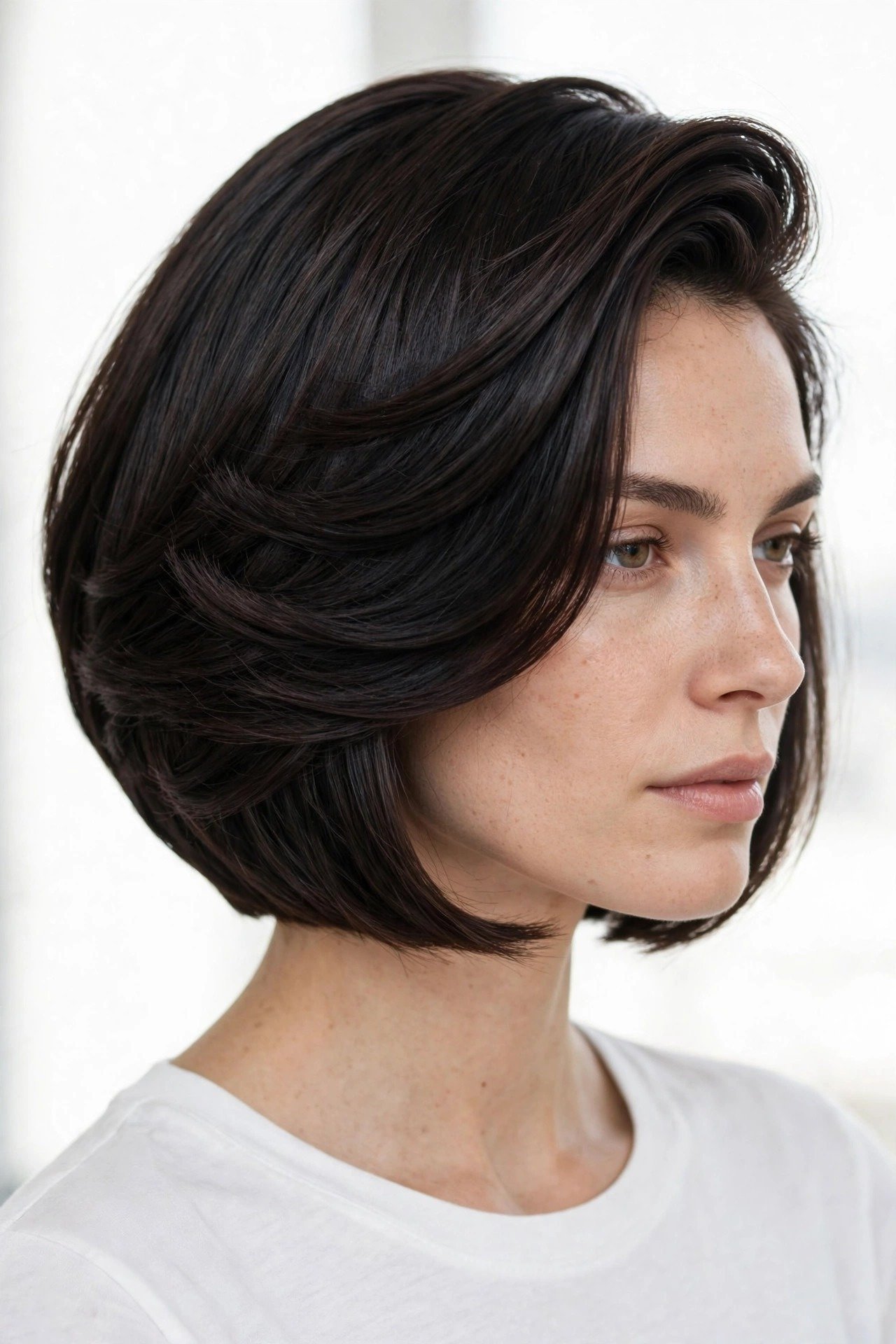
The stacked bob with a side part is the timeless, elegant version: the hair parted deeply to one side and swept smoothly across, with the longer side falling over the forehead and the shorter side tucked neatly behind the ear. It is the most classic way to wear a stacked bob, and it works in the most settings — office, wedding, dinner, everyday — without ever looking out of place. The side part adds instant polish, and it flatters nearly every face shape, because the diagonal sweep creates the illusion of length and softens the jawline.
Stylist script: ask for a stacked bob with a deep side part, located by following your natural growth pattern — your stylist should find the part first, then cut around it. Request the longer side kept at chin length with soft layers, the shorter side kept neat and close, and the back stacked and graduated. Tell your stylist you want the part to feel natural rather than forced, and ask for the crown stacked so the sweep has lift behind it.
Styling routine: blow-dry the hair over from the part with a round brush, directing the longer side across the forehead. A medium-hold cream keeps the sweep in place without stiffness, and a light mist of hairspray locks it for the evening. Maintenance: trim every six weeks; the side part hides growth well, so this is one of the most forgiving versions between appointments.
31. The Stacked Bob with a Centre Part
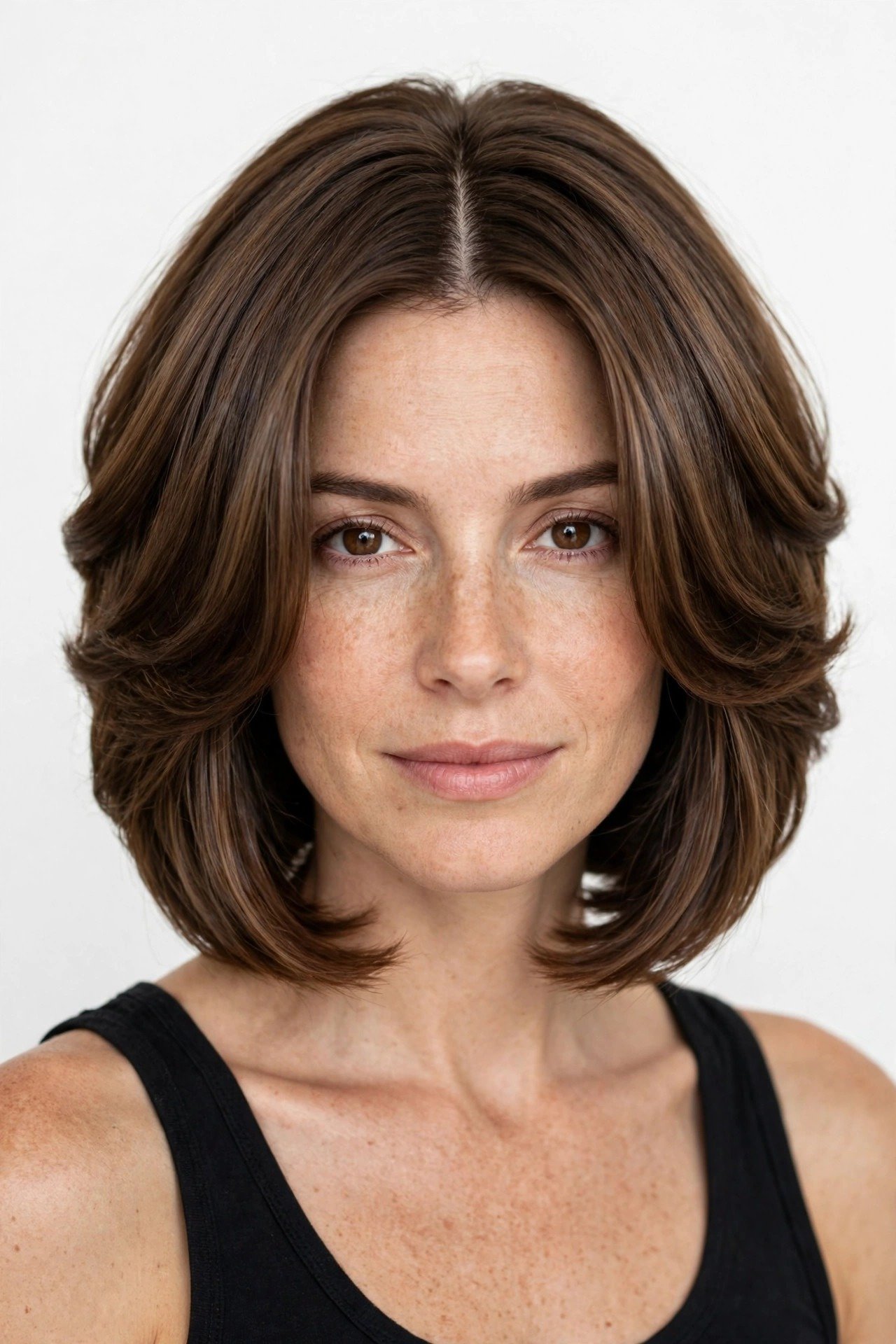
The stacked bob with a centre part is the most balanced, symmetrical version on this list: the hair parted exactly in the middle, with face-framing layers falling evenly on both sides. The symmetry gives the cut a calm, polished feel, and it is the version that shows off the stacked bob’s shape best, because nothing is hidden behind a sweep. It suits oval and heart-shaped faces best, where the symmetry echoes the face’s natural balance, and it flatters women with strong cheekbones, since the centre part frames them perfectly on both sides.
Stylist script: ask for a stacked bob with a centre part and symmetrical face-framing layers, with the shortest layer starting at the cheekbone and the front pieces reaching the chin on both sides. Request the layers cut evenly so the two sides mirror each other, and the back stacked and graduated. Tell your stylist you want the part to sit exactly in the middle, and ask them to check the symmetry from the front before finishing.
Styling routine: blow-dry the front pieces forward with a round brush, then flick the ends slightly inward for a soft, open frame. A flat iron on the front layers adds polish, and a drop of serum on the ends keeps them smooth. Maintenance: trim every six weeks; the symmetry means uneven growth shows faster, so keep the appointments regular.
32. The Effortless Air-Dried Stacked Bob
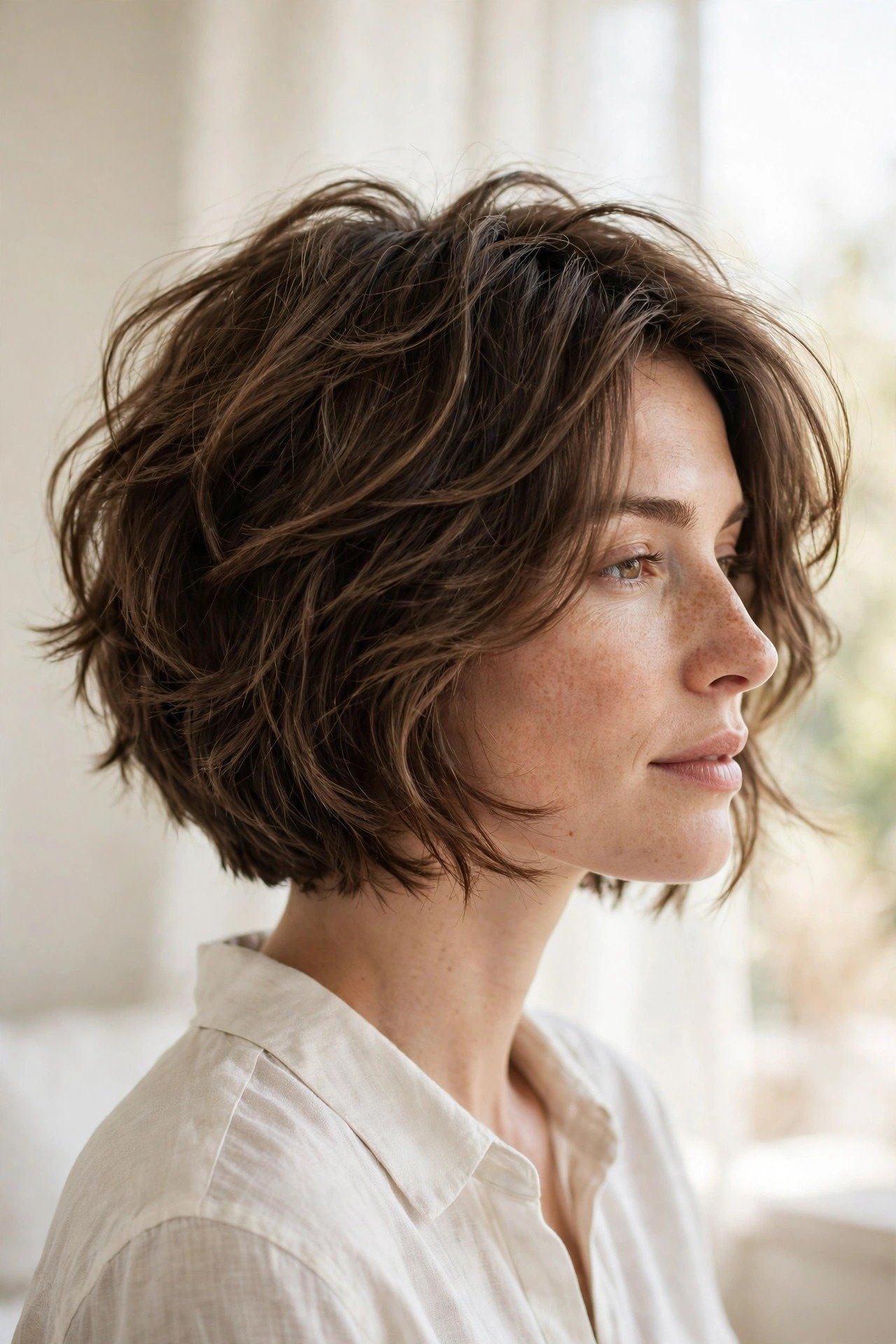
The effortless air-dried stacked bob is the cut’s most honest version: it looks like you did nothing, because you almost did. The shape is cut so precisely that it falls into place as it dries — the stacked back, the inward curve at the ends, and the soft layers all work with your hair’s natural fall instead of fighting it. There is no blow-dry, no round brush, no flat iron: you wash it, scrunch it once, and walk out the door. It suits wavy and straight hair best, and it is the version most women end up keeping once they try it, because it asks so little of the morning. Our bixie cut guide shows the same low-effort logic on a shorter hybrid cut if you want an even shorter option.
Stylist script: ask for an air-dried stacked bob — tell your stylist you plan to wear it without a blow-dry, which is a complete instruction that signals them to cut the shape to fall naturally. Request the ends at chin length with a strong inward bevel, so the curve forms on its own as the hair dries, and the layers kept soft and internal so the shape holds without styling. Ask for the cut to be finished dry, so your stylist can see exactly how it falls without heat.
Styling routine: wash, towel-dry gently, work a pea-sized amount of leave-in cream through the ends, scrunch once, and let it air-dry. That is the entire routine. On day two, a quick mist of water and a scrunch revives the shape without a full wash. Maintenance: every six to eight weeks; the air-dried shape tolerates growth better than any heat-styled version, since the cut itself does the work.
How to Style and Maintain a Stacked Bob at Home
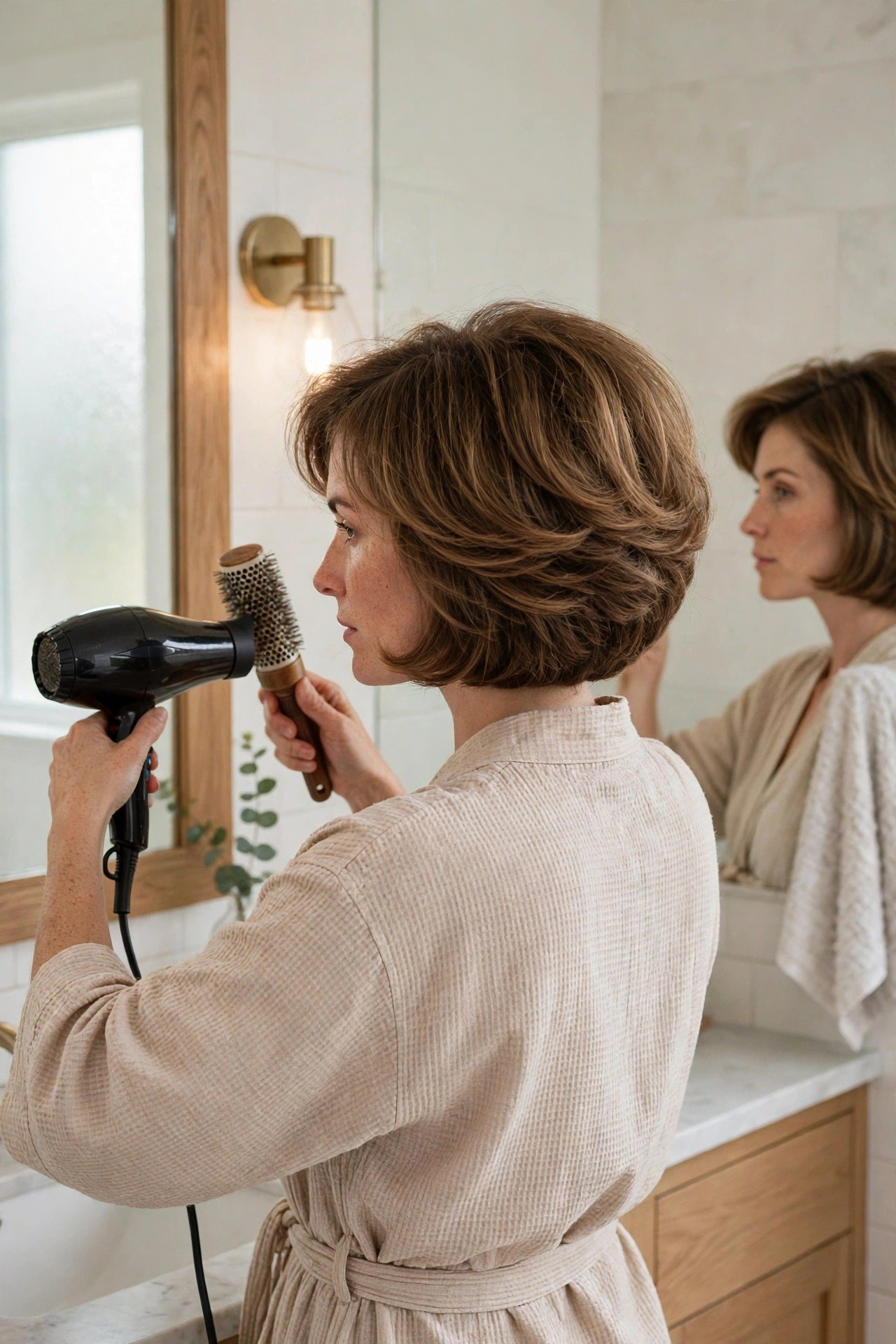
The morning routine for a stacked bob has two halves, and both take under five minutes. For the cut itself, towel-dry until damp, warm a pea-sized amount of lightweight styling cream or mousse between your palms, and work it through the hair in the direction of your style — over from the part, back for a sleek finish, forward for a textured crop. Separate a few pieces with your fingertips so the texture reads. If you want volume, hit the crown with a blow-dryer on medium heat for thirty seconds, pointing the airflow upward, so the stacked layers lift; if you want the relaxed look, skip the dryer entirely and let the cut do the work. The signature move is the inward curve: wrap the ends around a round brush and turn under as you dry, which sets the bob’s gentle tuck toward the neck.
For the finish, the products matter less than the technique. A texture spray or sea-salt spray adds grip and movement to the layers; a smoothing serum adds shine to the front pieces; a light-hold hairspray locks the shape without stiffness. The single most common mistake is over-product: a stacked bob weighed down with cream looks flat and greasy, while a lightly styled one looks healthy and full of movement, so start with less than you think you need. If your bob has a fringe, style the fringe first while the hair is dampest, because it dries fastest and sets first. And keep a dry shampoo in the bathroom — on day two, a quick spray at the roots revives the volume without a full wash.
At the salon, the consultation is where the stacked bob is won or lost, so walk in with specifics. Name the stack first — steep, gentle, or angled — then the texture, then the fringe, then the length at the front, in that order. Bring a reference photo from the thirty-two styles above; “like number two but with a shorter fringe” is worth a thousand words of description. Mention your hair’s behaviour — “it sticks up at the crown,” “my waves disappear by noon,” “it gets puffy when it grows” — because a good stylist adjusts the graduation and the weight removal to compensate. And book your next appointment before you leave: most stacked bobs need a trim every six to eight weeks, with the fringe touched up at three to four. A stacked bob is a stylist-relationship haircut, not a twice-a-year one.
Frequently Asked Questions
What is a stacked bob?
A stacked bob is a women’s haircut built on graduated layers: the hair at the back is cut shorter and stacked in layers that build on top of each other, while the front pieces are left longer to frame the face. The stacking creates volume at the crown and a rounded, full silhouette, while the nape underneath is tapered short and neat so the shape holds its form. Unlike a one-length bob, which hangs in a single sheet, a stacked bob has architecture — the back is shorter, the crown is higher, and the front falls longer.
How is a stacked bob different from a classic bob?
A classic bob is usually cut in one length all the way around, often ending in a blunt or softly layered edge with a squarer silhouette. A stacked bob is graduated rather than one-length, with the back cut shorter and stacked in layers so the crown lifts and the shape rounds out, while the front pieces stay longer. The stacked version looks fuller, swings more when you move, and carries built-in volume, while the classic bob reads sharper and more architectural.
Who does a stacked bob suit?
Almost everyone, which is why it is dominating 2026. Round faces benefit from height at the crown and longer front pieces, which add the illusion of length. Square faces are softened by textured layers and curtain bangs. Long faces are balanced by width at the sides and a fringe. Oval faces can wear every version. The cut also works on straight, wavy, curly, fine, and thick hair — the graduation is adjusted to each texture, which is why the consultation matters so much.
How long does a stacked bob take to grow out?
A stacked bob grows out more gracefully than almost any other short cut, because the shape is rounded and the layers are graduated. In about three months it reaches a short lob, and in about six months a collarbone-length lob. The awkward in-between stage that plagues shorter grow-outs is much shorter with a stacked bob, because the shape lengthens evenly. Keep the ends trimmed during the grow-out and the shape stays tidy at every stage.
How often do I need a stacked bob trimmed?
Most stacked bobs need a trim every six to eight weeks to keep the stack fresh and the shape balanced. Sleek and blunt versions need it every five to six weeks, because their clean lines show growth fastest. Textured, tousled, and choppy versions can stretch to eight weeks. Fringes need a trim every three to four weeks to stay above the eyes, and many salons offer a quick fringe trim between full appointments.
Can I style a stacked bob at home?
Yes, and that is one of its biggest selling points. Most stacked bobs need under five minutes: a little styling cream or texture spray, a finger-dry or a quick round-brush blow-dry, and you are done. The stacked shape holds its form as it air-dries, so you can leave the house with damp hair and still look deliberate. The only versions that need more effort are the sleek straight stacked bob, which needs a blow-dry, and the wet-look finish, which is a special-occasion style.
Does a stacked bob work with curly hair?
Yes, and it works beautifully. The key is cutting the curls dry, curl by curl, so the stylist can see the true pattern — cutting curly hair wet is the classic mistake that leaves it too short once it dries. The front curls are kept long enough to reach the chin, the crown is layered for volume, and the back is stacked and rounded rather than square. The result is a short cut with real volume and personality, and it needs less daily styling than a curly bob.
What products do I need for a stacked bob?
Four products cover every version: a lightweight styling cream or mousse for the cut, a texture spray or sea-salt spray for movement, a smoothing serum for shine on the front pieces, and a light-hold hairspray for special occasions. Fine hair benefits from a volumizing mousse at the roots; curly hair needs curl cream; coloured bobs need a colour-safe shampoo. Start with one styling cream and one texture spray, then expand once you know which finish you wear daily.
Is the stacked bob still in style for 2026?
More than ever. Searches for stacked angled bob are up 1,110% according to the Pinterest 2026 Beauty Trend Report via Elle, and Harper’s Bazaar names the stacked bob among the defining 2026 volume cuts. The 2026 versions — graduated layers, angled fronts, curtain bangs, soft curls, copper and platinum colour — keep it firmly current. Unlike novelty cuts that age in months, the stacked bob has classic bones: a well-cut graduated bob with built-in volume is simply flattering.
Can I wear a stacked bob if I have fine hair?
Yes — fine hair gets one of the biggest transformations from a stacked bob. The graduated layers create separation, and each separated piece casts a tiny shadow on the one behind it, so the eye reads that light-and-shadow play as density. The stacked shape and the volume at the crown give fine hair a silhouette it could never achieve on its own. The key instruction is to tell your stylist not to thin the hair out, because over-thinning fine hair makes it look thinner. Done right, a stacked bob can make fine hair look twice as thick as it is.
Conclusion
The stacked bob is the rare hair idea that improves everything it touches: the hair looks fuller, the face looks more considered, and the morning looks shorter, all from a single well-cut shape. The 32 styles above cover every texture, every fringe, and every face shape, so the only real decision left is which version matches your hair, your face, and the amount of time you want to spend in front of the mirror. Pick two or three favourites, screenshot them, and bring them to your stylist — a picture plus the vocabulary in this guide turns a vague request into a precise one.
Start with the classic if you are unsure: the classic stacked bob is the safest entry point, and you can go steeper, curlier, or bolder next time once you know how the shape feels on your head. Whatever you choose, keep the maintenance honest — a stacked bob is a relationship with your stylist, and the layers are a daily habit, not a weekend project. Get both right, and the stacked bob will do what the best haircuts always do: make you look like the most deliberate version of yourself, every single day of 2026.