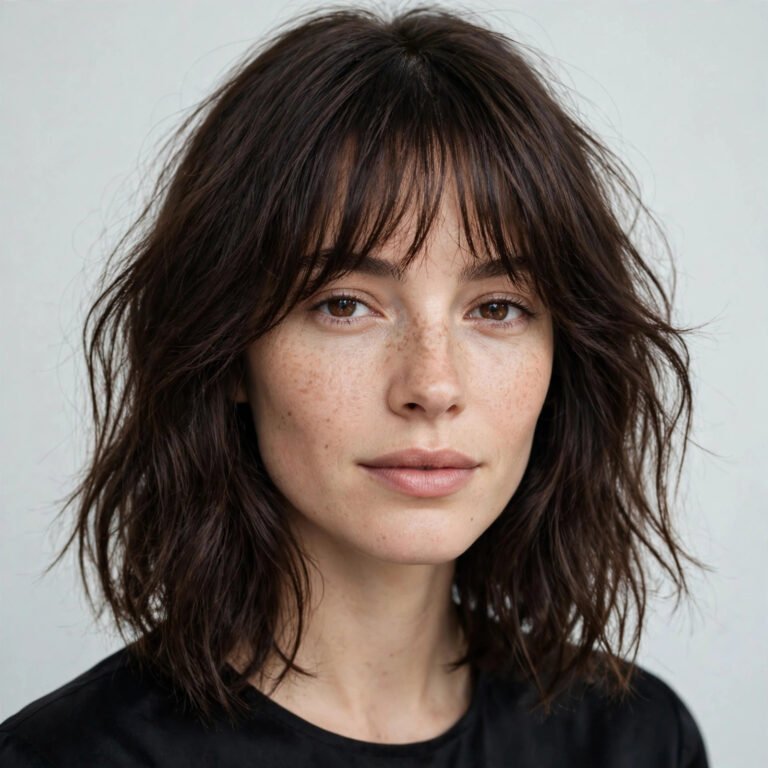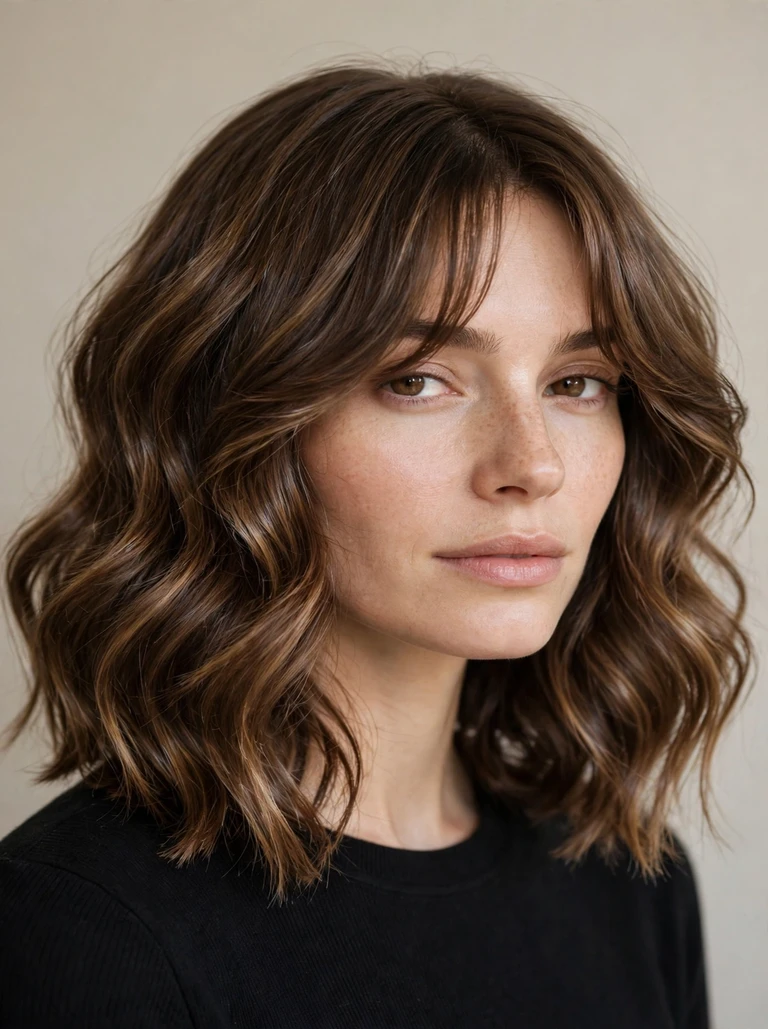
Curtain Bangs Women 2026: 32 Stunning Styles, Face Shapes & Styling Guide
Curtain Bangs Women Are Obsessed With in 2026
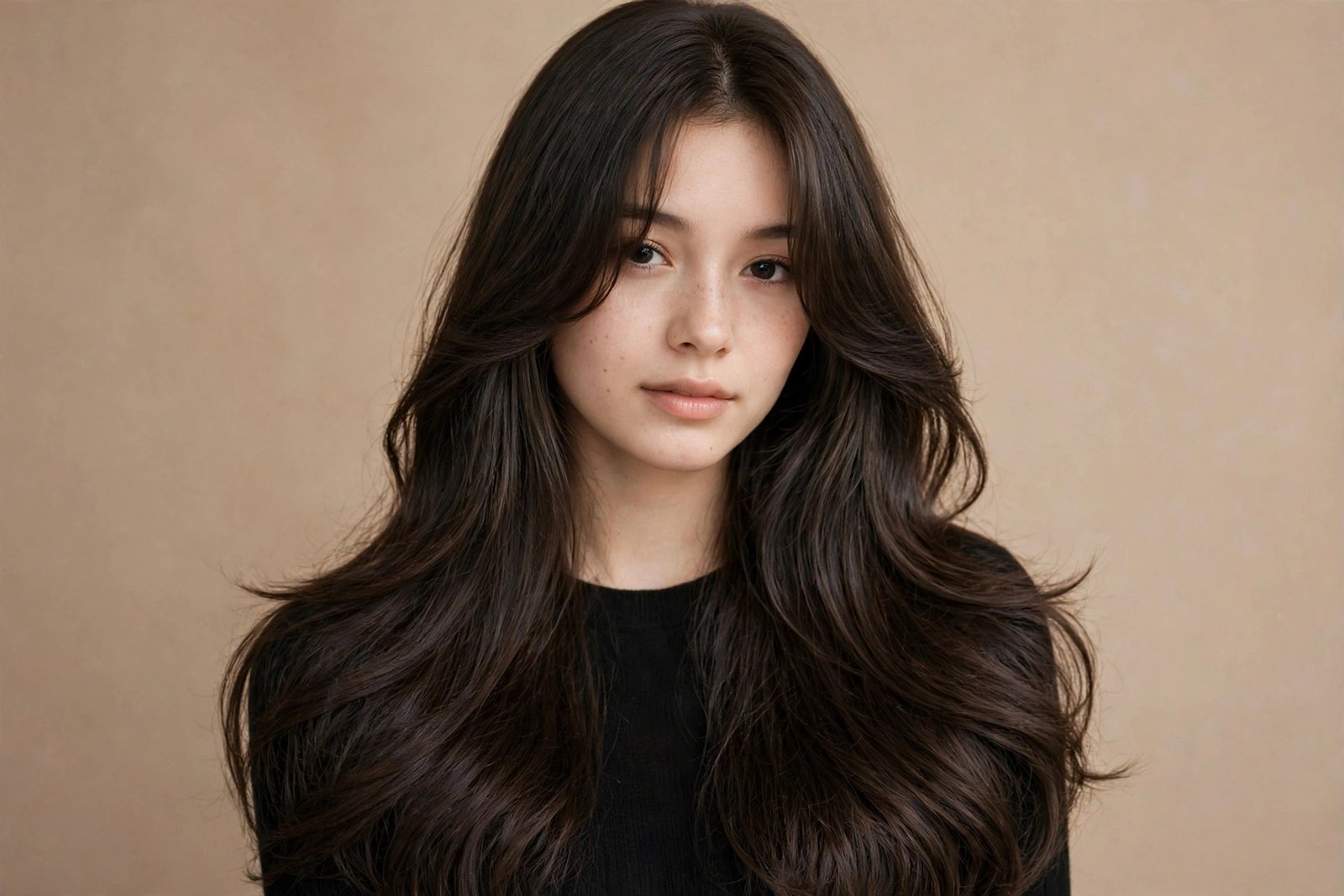
There is a reason curtain bangs women everywhere keep photographing so well in 2026: this is the one fringe that flatters nearly everyone, grows out gracefully, and photographs like a dream from every angle. The curtain bang — that face-framing, center-parted fringe that falls open like parted curtains — has officially outlived its trend cycle and become a modern classic. It started as a seventies revival, survived the wolf-cut era, and now sits firmly among the most-requested salon services in the world.
I’ll be honest with you: most fringes are a commitment that punishes you. Blunt bangs grow into your eyes within three weeks. Baby bangs demand constant trims and zero cowlicks. Curtain bangs? They’re the forgiving ones. They can be worn parted in the middle, swept to the side, tucked behind the ears, or pinned back — and every version looks intentional. Stylists love them because they blend into layers so naturally that a growing-out curtain bang just becomes face-framing layers. No awkward phase. That’s the magic.
In this guide I’m walking you through 32 stunning curtain bang styles for 2026, matched to face shapes, hair textures, and lifestyles. You’ll get real styling routines that take under ten minutes, honest downsides nobody mentions, maintenance schedules, and answers to the questions women actually ask in the salon chair. If you’ve ever wondered whether curtain bangs would suit you, read the face-shape section first — then pick your style and book the appointment.
Table of Contents
- Curtain Bangs Women Are Obsessed With in 2026
- Which Face Shapes Suit Curtain Bangs Best
- 32 Stunning Curtain Bang Styles for 2026
- The 10-Minute Curtain Bang Styling Routine
- Frequently Asked Questions
- Conclusion
What Are Curtain Bangs, Really?
Strip away the Pinterest vocabulary and a curtain bang is beautifully simple: a fringe cut shorter in the center and longer toward the sides, designed to be worn parted in the middle so each half frames one side of the face. Think of how stage curtains pull back from the center — the shape opens up your face instead of covering it. That’s why they suit so many people: unlike a blunt fringe that sits across the forehead like a wall, curtain bangs create a soft, face-opening frame.
The cut itself is all about the angle. Your stylist sections a triangle of hair at the front of the head, then cuts it so the shortest point sits somewhere between the eyebrows and the nose bridge, with the sides tapering down past the cheekbones and blending into the front layers. Slide cutting and point cutting are the usual techniques — they remove weight without creating harsh lines. The result should move when you move. If your curtain bangs sit like a rigid helmet, they’ve been cut too bluntly. Softness is the entire point.
Length is where the versatility lives. Short curtain bangs that start at the brow feel playful and seventies. Longer ones that skim the cheekbones read sophisticated and grown-up. Extra-long curtain fringe that reaches the jawline is practically just face-framing layers with a center part — which is exactly why this style is so forgiving. You can start long, live with it for a month, and go shorter at your next appointment once you’re sure.
One more thing worth knowing: curtain bangs are a texture chameleon. They look sleek and polished on straight hair, romantic and bouncy on waves, and absolutely stunning on curls — coily and curly curtain bangs are one of the most gorgeous versions of this cut, and stylists who know curly hair can shape them to spring up exactly where they should. Whatever your hair does naturally, there’s a curtain bang that works with it rather than against it.
Why Curtain Bangs Are Still Everywhere in 2026
Trends that survive this long stop being trends and start being standards. Curtain bangs blew up around 2020 as part of the seventies revival, then got a second wind with the wolf cut and shag revival, then a third wind when soft, face-framing hair replaced the ultra-sleek glass-hair era. By 2026 they’re simply part of the hairstyling furniture — like layers themselves, they’re a technique that never really leaves.
Pinterest deserves real credit here. The platform’s search data has shown curtain bangs as a top hair search for years running, and the reason is visual: the style photographs with built-in dimension. A center part creates symmetry, the face-framing pieces catch light at the cheekbones, and the whole thing moves in video. It’s tailor-made for the kind of content that gets saved and shared. If you’re reading this because a pin convinced you, you’re in excellent company.
There’s also a practical reason they keep winning: low-maintenance luxury is the defining hair mood of 2026. Women want hair that looks expensive without a 45-minute morning routine, and curtain bangs deliver exactly that. They air-dry well on most textures, they hide a multitude of growing-out sins, and they make even a simple ponytail look styled. In an era where everyone is tired, that’s not a small thing.
Barbers and stylists will quietly tell you another reason: curtain bangs are profitable to maintain. Clients come back every 6 to 8 weeks for a quick fringe trim between full appointments, which keeps them in the chair and keeps the cut looking sharp. Everyone wins — the salon gets steady bookings, and you never walk around with bangs in your eyes.
Which Face Shapes Suit Curtain Bangs Best
Here’s the honest answer: almost all of them — but the length and fullness of the bang should change with your face shape, and this is where most DIY bang cuts go wrong. The principles are simple once you see them.
Oval faces can wear nearly any version, from short brow-skimming curtain bangs to long draped fringe. If your face is oval, your only real job is matching the bang to your hair texture and personal style. Lucky you. Round faces benefit most from longer curtain bangs that start below the cheekbones — the vertical lines of the longer fringe visually lengthen the face, and keeping the center part clean avoids adding width at the cheeks. Avoid short, full curtain bangs on very round faces; they can emphasize roundness instead of balancing it.
Square faces love curtain bangs because the soft, curved fringe counteracts a strong jawline. The wispy, feathery ends draw the eye upward toward the cheekbones and eyes, and longer pieces that curve inward at the jaw soften the whole silhouette. Heart-shaped faces — wider forehead, narrower chin — are arguably the best candidates of all: curtain bangs fill in the forehead width beautifully while the tapered sides keep attention off a pointed chin. If you have a heart-shaped face and you’ve been on the fence, this is your sign.
Oblong and long faces should go for fuller, slightly shorter curtain bangs that create horizontal interest across the forehead — this visually shortens the face. Avoid very long, thin curtain fringe on long faces; it adds length you don’t need. Diamond faces (narrow forehead and chin, wide cheekbones) suit curtain bangs that start at cheekbone level, skimming past the widest point rather than emphasizing it.
And the cowlick question everyone asks: yes, you can have curtain bangs with a cowlick — but be honest with your stylist about it. A strong front cowlick may need the bang cut slightly longer or styled with a specific blow-dry direction. It’s a solvable problem, not a dealbreaker. The stylists who say cowlicks disqualify you from bangs are the ones who don’t want to do the consultation work.
32 Stunning Curtain Bang Styles for 2026
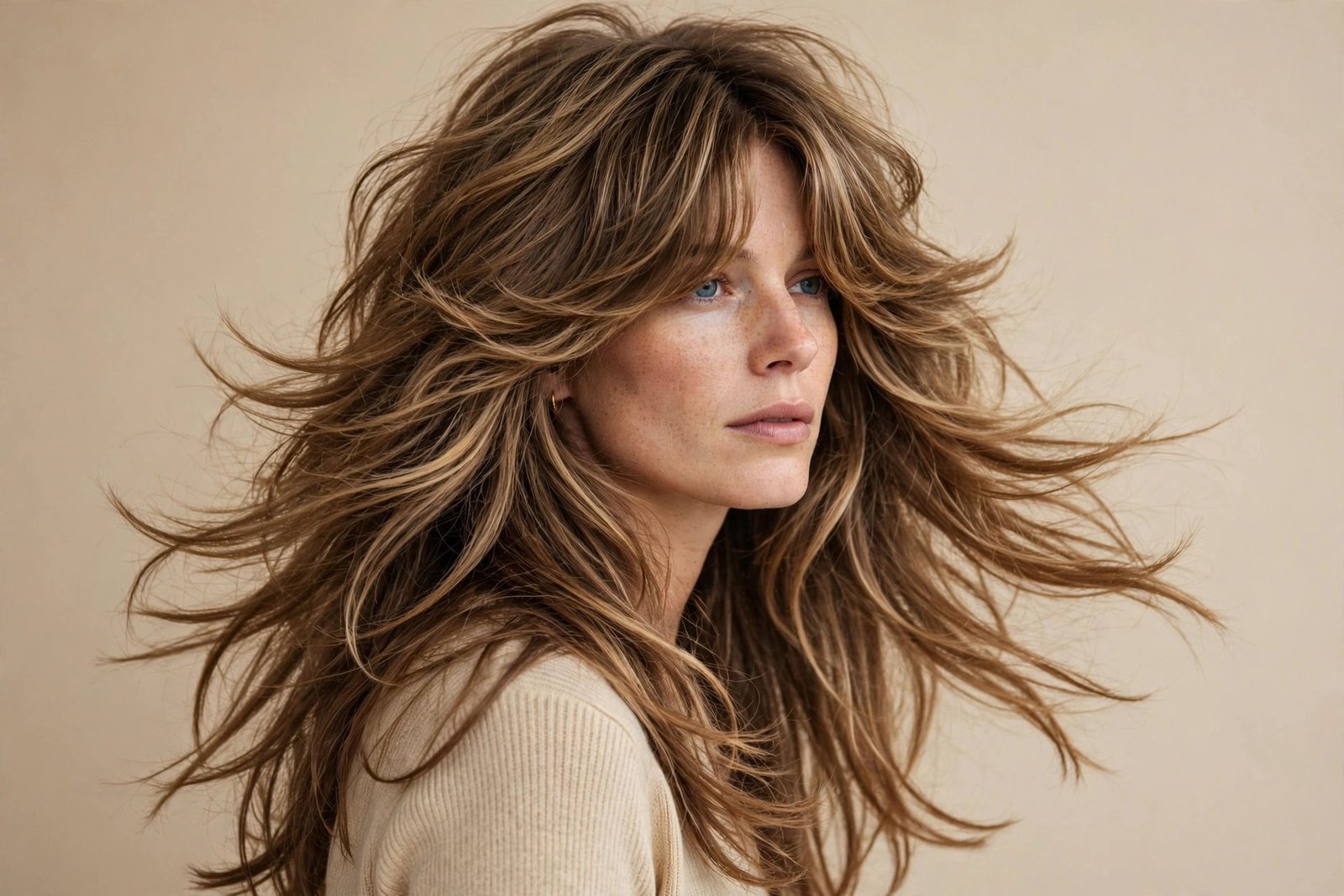
Thirty-two ways to wear the most forgiving fringe in the game. Every style below includes who it suits, what to tell your stylist, and the honest maintenance reality — because a haircut you can’t maintain is a haircut you regret. Save your favorites and show them at your appointment; stylists genuinely prefer reference photos over verbal descriptions.
1. Classic Center-Part Curtain Bangs
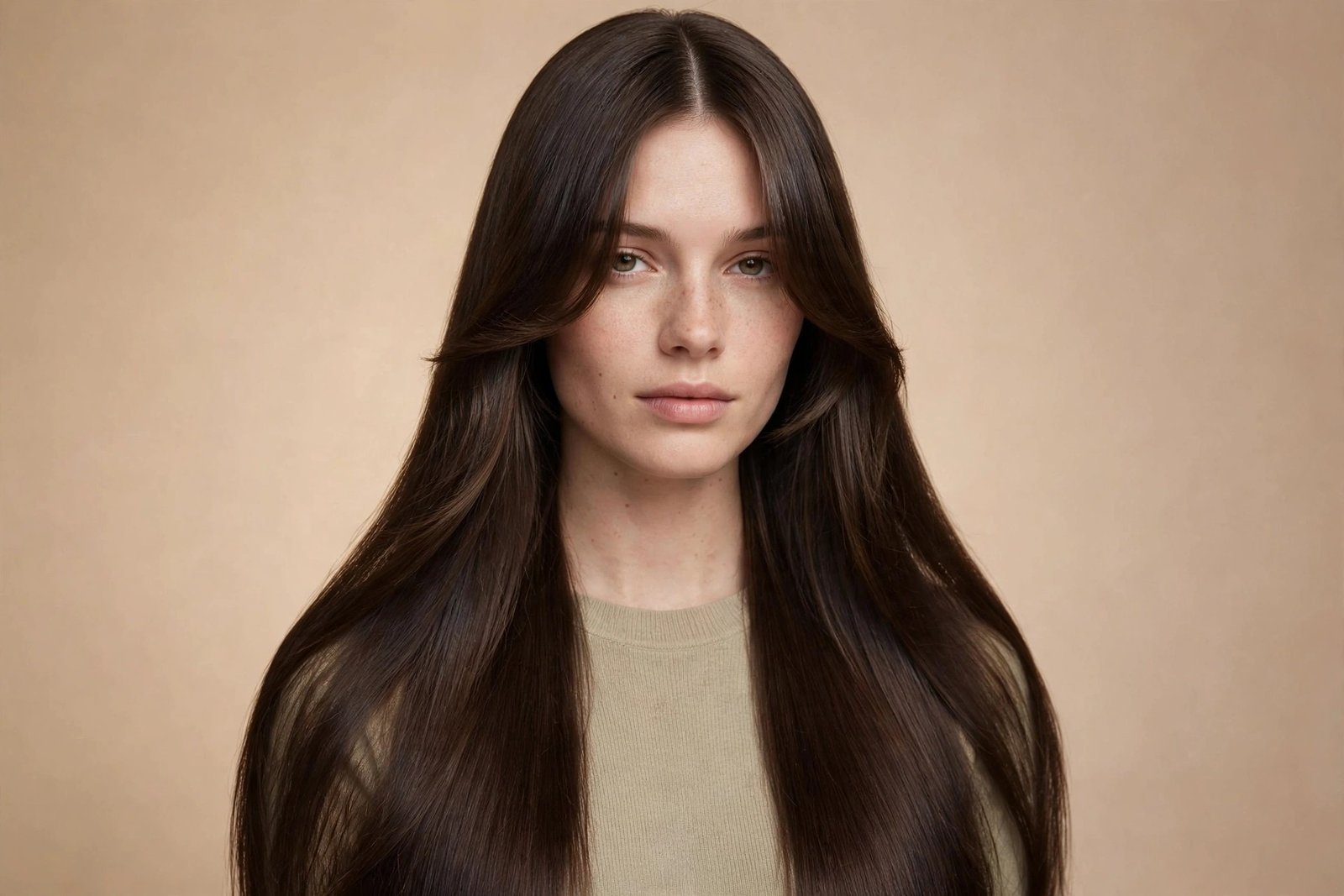
This is the blueprint — the version every other curtain bang is riffing on. The fringe is parted dead center, cut so the shortest pieces hit right around the cheekbones, and tapered outward to melt into the front layers. It suits oval, heart, and square faces beautifully, and it’s the safest first curtain bang because it reads polished without trying hard.
What to tell your stylist: ask for a center-parted curtain fringe with the shortest point at cheekbone length, point-cut for softness, blended into your existing layers. Bring a photo — “curtain bangs” means different things to different stylists, and the photo removes all ambiguity. If your hair is very fine, ask them to keep the bang section slightly narrower so it doesn’t look sparse; if it’s thick, ask for weight removal through the ends.
Styling is a two-minute job: blow-dry the bangs forward and down with a round brush, then split them in the middle while they’re still warm and let them fall. A tiny bend at the ends — achieved by rolling the brush under just the tips — gives that signature outward flick. Maintenance is a trim every 6 to 8 weeks, and the grow-out is painless because long curtain bangs just become layers.
The honest downside: if your hair is pin-straight and heavy, the center part can look severe without that end flick, so don’t skip the styling step. And if you have a strong cowlick at the hairline, the dead-center part will fight you on day one — your stylist can work around it, but mention it before they pick up the scissors. Variations include wearing it with a deep side part for a moodier feel, or tucking one side behind the ear for asymmetry.
2. Long Face-Framing Curtain Fringe
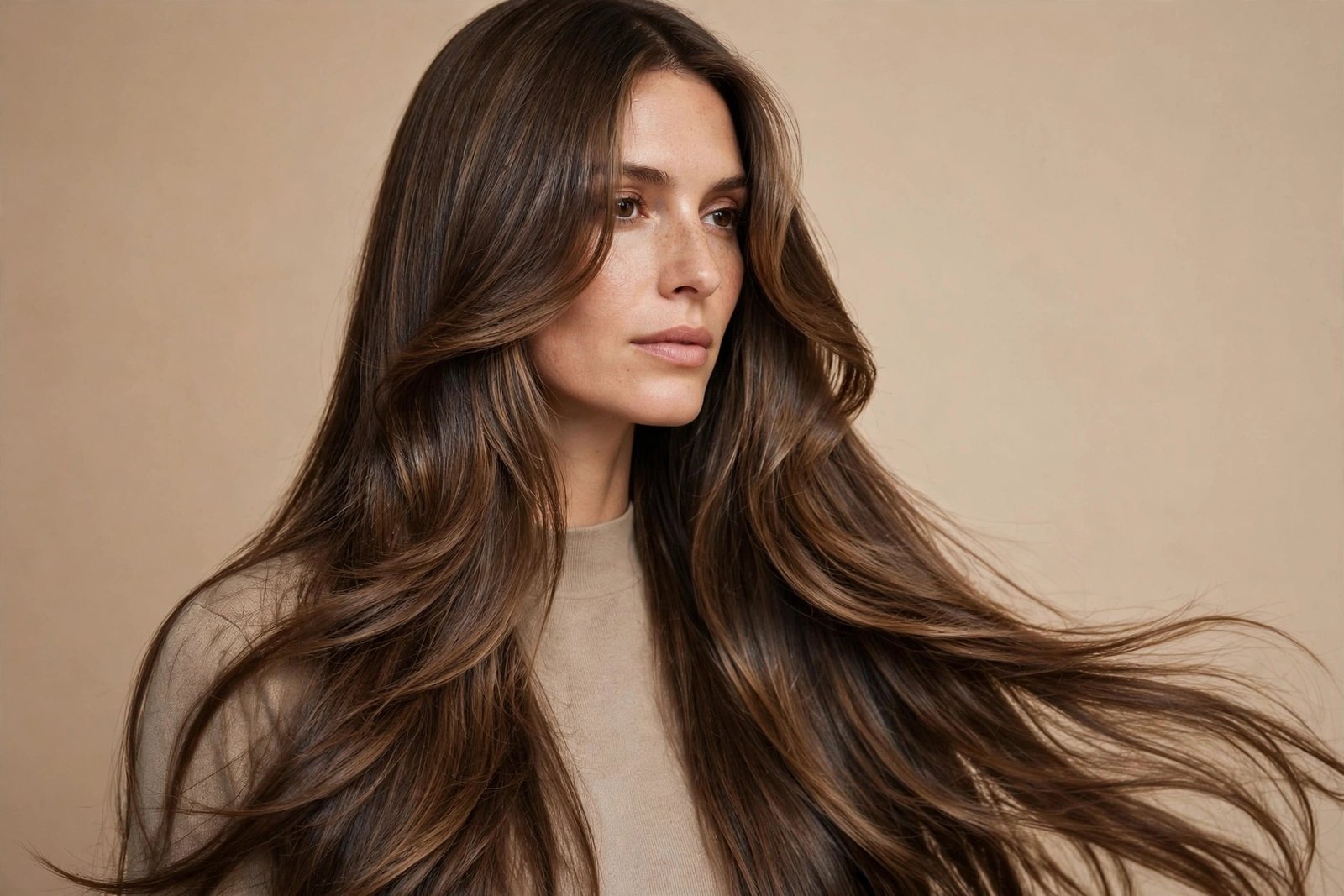
For the commitment-phobic, this is the gateway drug. The “bangs” here are really just long face-framing pieces that start at the nose or lips and drape down toward the jawline, parted in the middle. It gives you all the face-framing magic of curtain bangs with essentially zero maintenance — it’s the fringe for women who’ve been burned by bangs before.
This length is a gift for round and square faces because the long vertical lines slim and elongate. It also works beautifully on long hair, where shorter bangs can look disconnected from the overall length. Tell your stylist you want curtain-style face framing starting at lip length, longest pieces reaching the jaw or chin, cut to blend into your layers. On wavy and curly hair, ask them to cut it dry or stretched — wet cutting on texture is how curtain fringe ends up three inches shorter than planned.
Styling couldn’t be simpler: it air-dries well on most textures, and on straight hair a quick pass with a round brush adds the bend. You can also just… do nothing. That’s the point. Pin it back on busy days, tuck it behind your ears, wear it down — every option looks deliberate.
Downsides are minimal, which is why this is the most-requested version in salons right now. The one thing to watch: if the pieces are cut too long, they stop reading as bangs and just become layers, and you lose the curtain effect. There’s a sweet spot between “face-framing layer” and “long bang” — show your stylist where you want the shortest piece to sit on YOUR face, not on a model’s. Variations: pair it with lived-in waves for a beachy feel, or keep it sleek for a polished office look.
3. Curtain Bangs with Soft Layers
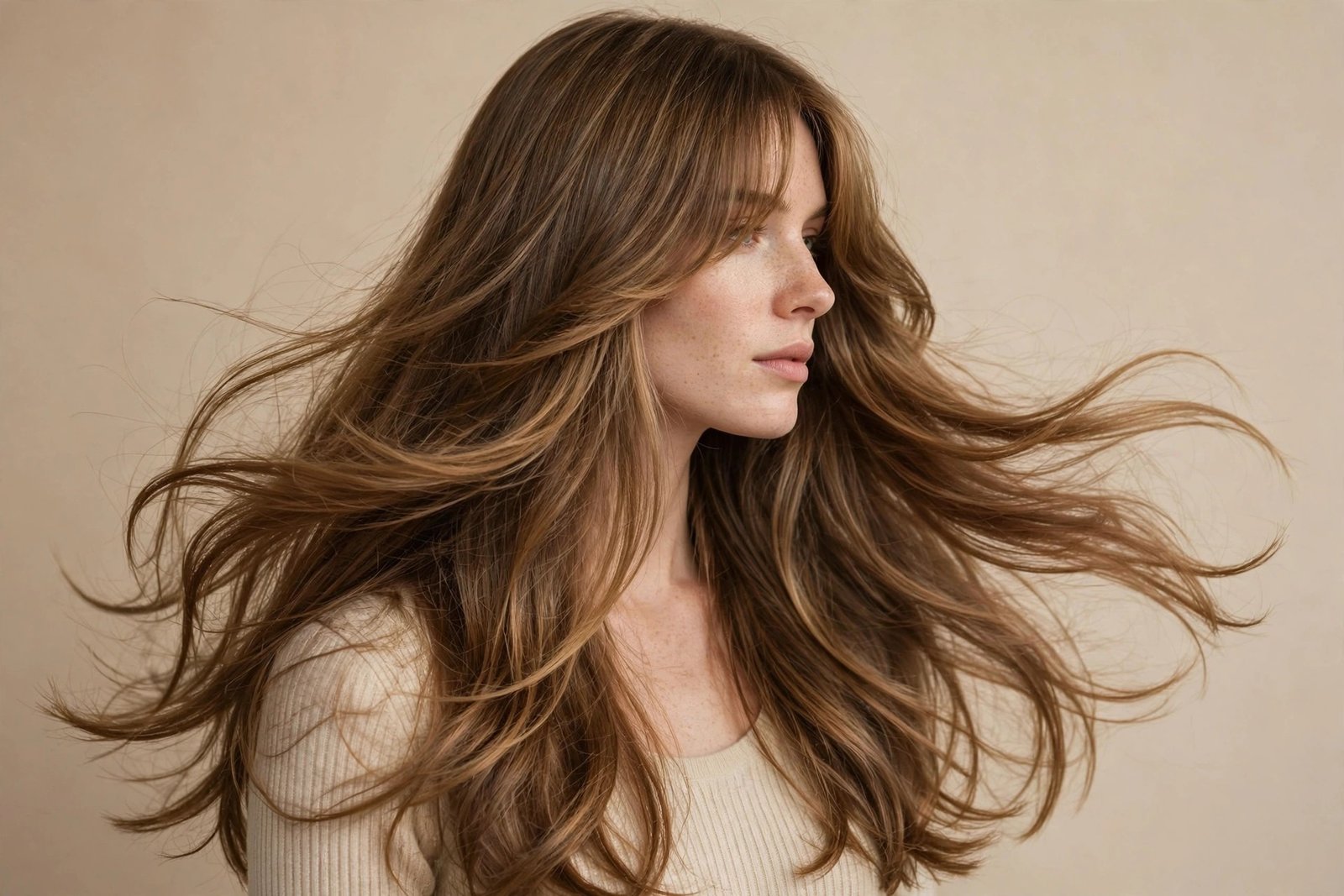
Curtain bangs and layers are a package deal — the bang is only as good as its blend. This style takes a classic curtain fringe and melts it into soft, cascading layers through the lengths, so there’s no visible line where the bangs end and the haircut begins. The result is movement everywhere: hair that swings, bounces, and photographs with dimension from every angle.
This is the best choice for medium to thick hair, because layers remove the bulk that can make curtain bangs look heavy and blocky. It suits nearly every face shape — your stylist just adjusts where the layers start. Round faces: layers starting below the chin. Long faces: layers starting higher, around the cheekbones, to add width. Tell your stylist you want the curtain bang cut first, then the layers carved to flow out of it, with no harsh disconnect.
For styling, layers love a round brush blowout or large velcro rollers — both create that bouncy, expensive-looking movement. A light texturizing spray through the mid-lengths keeps the layers piecey instead of helmet-like. Maintenance is straightforward: layers need reshaping every 8 to 10 weeks, and the bang trim can happen in between.
The honest truth: layers are a haircut that grows, and grown-out layers can look straggly if you skip trims. If you’re low-maintenance to the point of never booking follow-ups, keep the layering subtle rather than dramatic. Also — and barbers won’t always tell you this — very fine hair can look thinner with too many layers, because you’re removing density. On fine hair, ask for long, minimal layering and let the curtain bang do the talking. If you love this family of cuts, our guide to shaggy bobs with curtain bangs explores the shorter end of the spectrum.
4. Curtain Bangs on Long Straight Hair
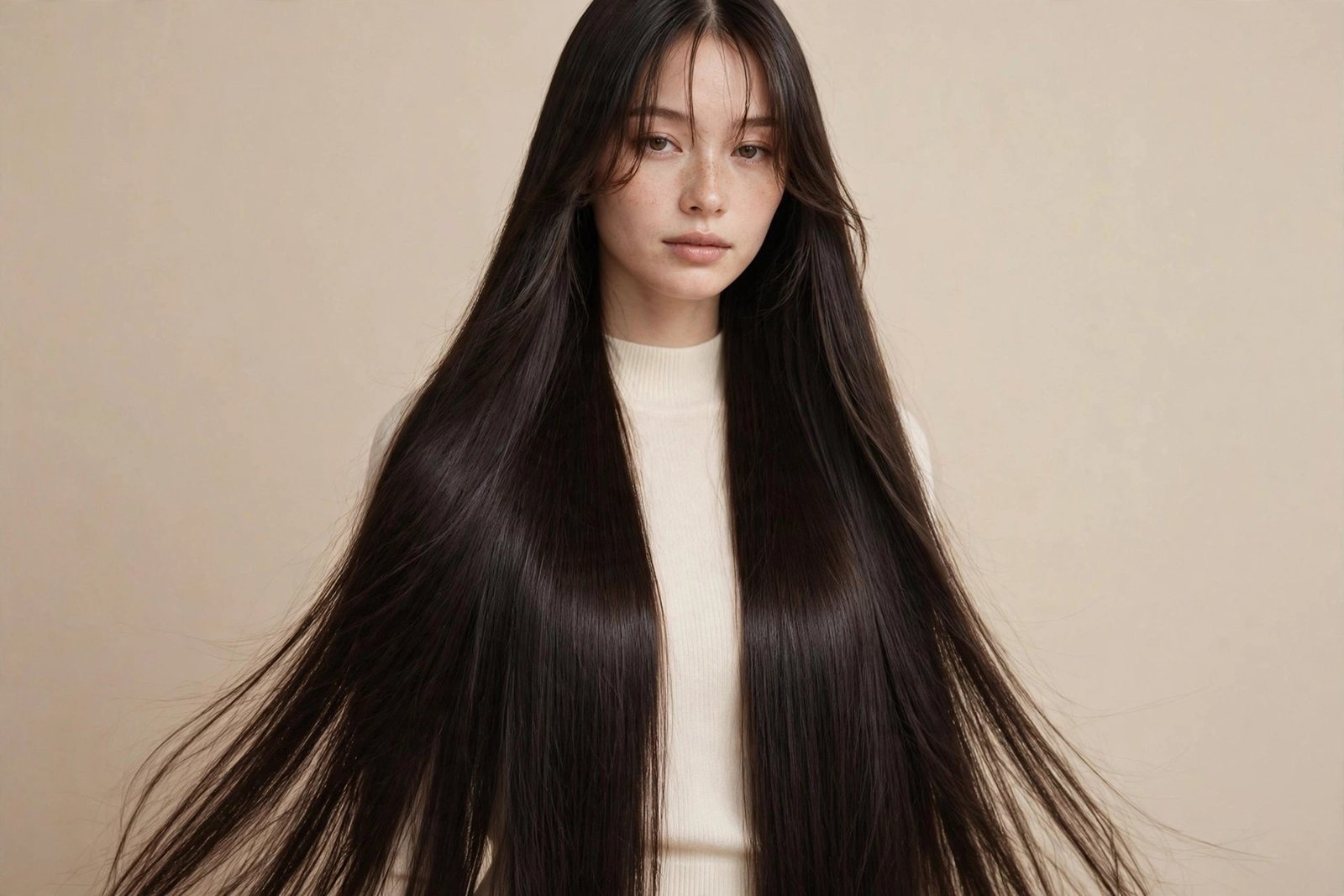
There’s something striking about a soft, curved fringe against pin-straight lengths — it’s the contrast that makes this style work. The curtain bangs add shape and movement to hair that might otherwise hang like a sheet, framing the face while the lengths stay sleek and glossy. It’s minimal, modern, and quietly expensive-looking.
This suits straight to slightly wavy hair best; on very curly hair you’d be fighting your texture daily, which defeats the purpose. Face-shape-wise it’s versatile, though long faces should keep the bang on the shorter side to avoid adding length. Ask your stylist for curtain bangs cut to skim the cheekbones, with the rest of the hair kept long and the ends lightly texturized so they don’t look blunt against the soft fringe.
Styling is where straight hair wins: the bangs need only a quick blow-dry with a round brush or a pass of a straightener bent slightly outward at the ends. A shine serum through the lengths makes the whole thing look liquid. This is genuinely a five-minute style once you have the technique down.
The downside nobody mentions: on very straight, heavy hair, curtain bangs can separate and look stringy by midday, especially in humidity. A light-hold texturizing spray at the roots of the bang section prevents the dreaded split. Also, if your hair is stick-straight, the bangs need that end flick to read as “curtain” — without it they can look like a grown-out middle part. Commit to the two-minute styling or choose a longer, lower-maintenance version instead.
5. Wavy Curtain Bangs
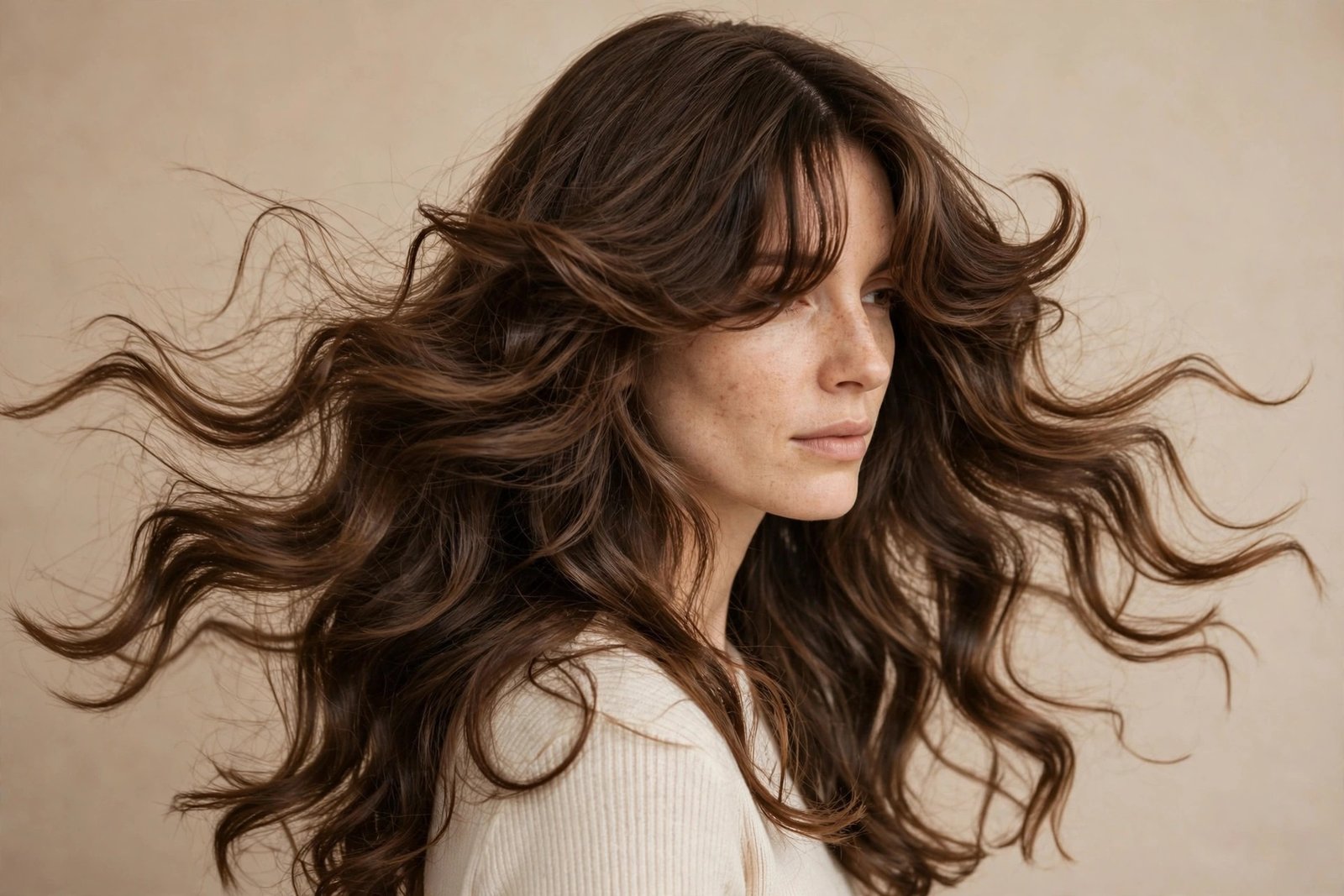
If your hair has natural wave, curtain bangs might be the easiest decision you’ll ever make. Wavy texture gives the fringe built-in body and movement — the bangs curve away from the face on their own, no round brush required. This is the version that looks best with the least effort, and it’s why so many wavy-haired women become curtain-bang lifers after one try.
It suits oval, heart, and long faces especially well, since the wave adds flattering width. Tell your stylist you want the bangs cut to work with your natural wave pattern — and here’s the critical part — cut them slightly longer than you think, because wavy hair springs up as it dries. A good stylist will account for shrinkage; a rushed one won’t, so say the words “please account for shrinkage” out loud.
Styling is delightfully lazy: scrunch in a curl cream or light mousse, part in the middle, and let it air-dry. On days you want more polish, twist each side of the bang away from the face while damp and let it set — you’ll get perfect curtain curves. Refresh second-day bangs with a spritz of water and a scrunch.
The downside: wavy bangs are weather-reactive. Humidity can turn soft waves into frizz, and the bang section shows it first since it’s right on your face. An anti-humidity cream on the bangs specifically (not the whole head) solves most of it. Also, wavy curtain bangs look different every single day — if you need your hair to look identical daily, this isn’t your style. Embrace the beautiful inconsistency or choose straighter styling.
6. Curtain Bangs with a Bouncy Blowout
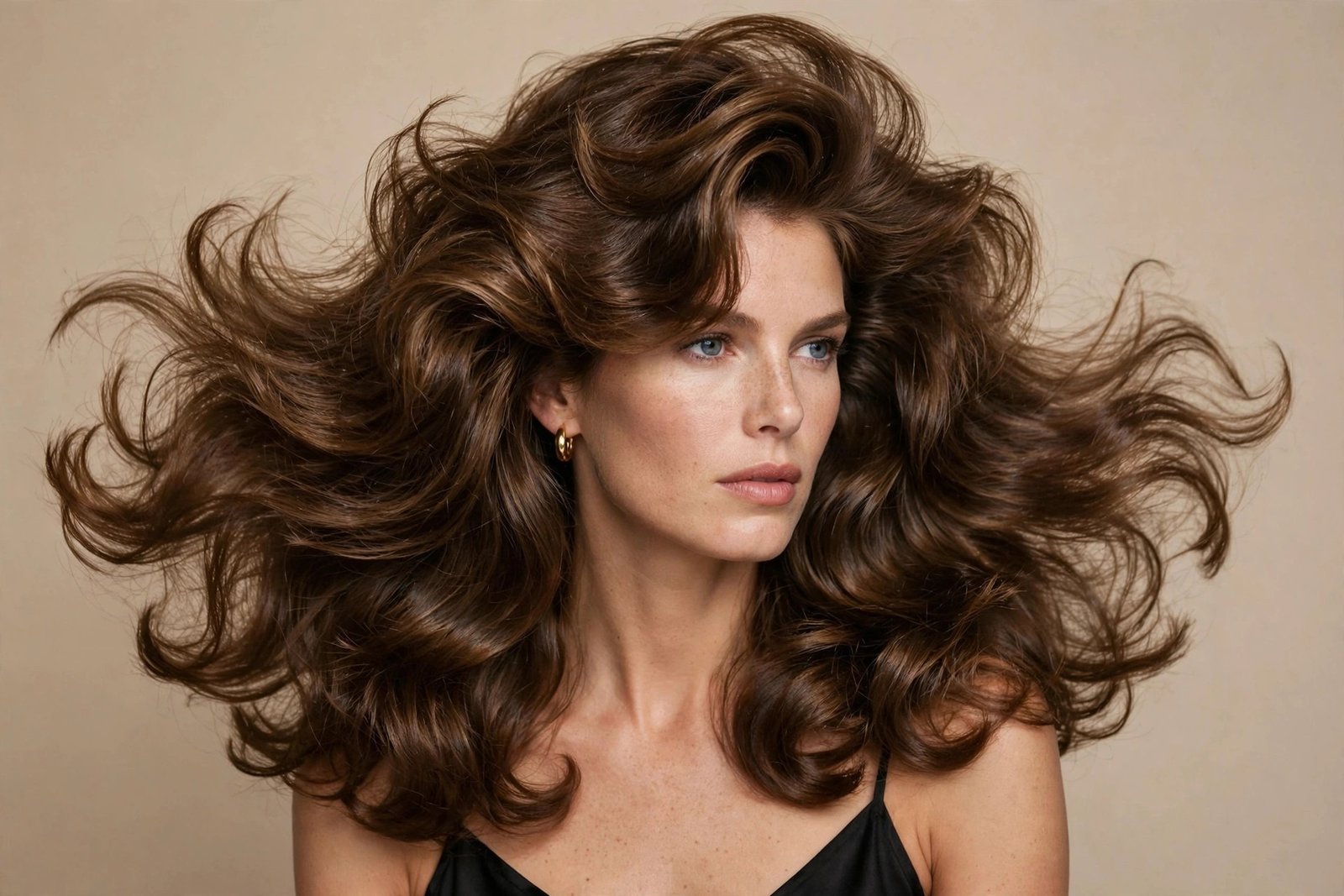
This is the supermodel version — big, bouncy, expensive-looking hair with curtain bangs that flick outward like they have somewhere important to be. It’s the nineties blowout reborn for 2026, and curtain bangs are its perfect partner because the outward flick of the fringe mirrors the movement through the lengths. If you want maximum glamour from this cut, this is it.
It suits medium to thick hair best — fine hair can achieve it but needs more product support. Round and square faces benefit from the height at the crown, which elongates. Tell your stylist you want a layered cut designed for blowout styling, with curtain bangs cut to flick outward, and ask them to show you the blow-dry technique before you leave the chair. Watching once beats a hundred YouTube tutorials.
The routine: rough-dry to 80 percent, then round-brush section by section, rolling the brush outward at the ends. Velcro rollers at the crown while you do your makeup add serious volume. A flexible-hold hairspray keeps it bouncy rather than stiff. For a deeper dive into blowout technique, see our bouncy blowout guide.
Honest reality check: this is the highest-maintenance style on this list. A proper blowout takes 20 to 30 minutes, and it falls flat in humidity or rain. It’s a special-occasion or twice-a-week style for most women, not a daily driver. If you love the look but not the labor, get the cut and wear it air-dried on weekdays — the layers still look good — saving the full blowout for when it counts.
7. Soft Shaggy Curtain Bangs
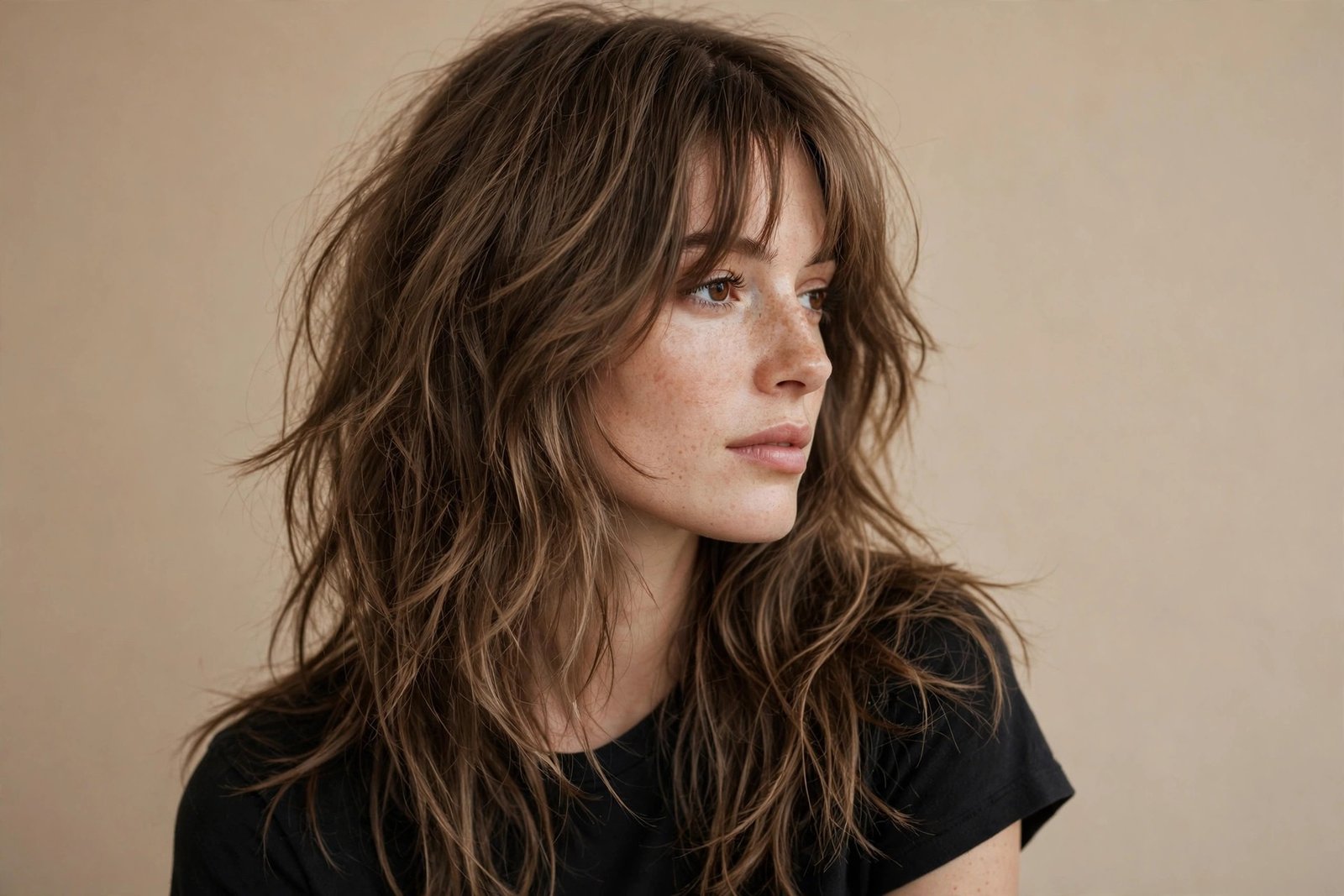
The shag and the curtain bang were made for each other — both are seventies-born, texture-loving, anti-perfection styles. Shaggy curtain bangs are piecey and separated rather than smooth, with lots of texture through the fringe and choppy layers everywhere. It’s cool-girl hair: effortless, a little undone, and allergic to looking “done.”
This suits thick and wavy hair beautifully, since the texture does the work. It’s also fantastic for anyone who hates styling, because the whole point is imperfection. Tell your stylist you want a shaggy, textured curtain bang with piecey ends — lots of point cutting, maybe some razor work — and layers that are deliberately choppy. This is not the cut for someone who wants sleek; say so upfront if sleek is your thing.
Styling is minimal: a texturizing spray or sea-salt spray scrunched in, air-dry or diffuse, done. The shaggier the cut, the less you should do to it. Trims every 8 to 10 weeks keep the shape; the bang trim can stretch longer because shaggy bangs look fine grown out — arguably better.
The downside: this cut has a strong personality. In conservative offices or formal settings, shaggy curtain bangs can read too casual — though honestly, 2026 workplaces are more relaxed than ever. The other consideration is grow-out: shags grow into mullet-adjacent territory if neglected, so don’t skip trims entirely. And if your hair is very fine, heavy shag layering can make it look thin — ask for a softer, less aggressive version.
8. Curtain Bangs with a Lob
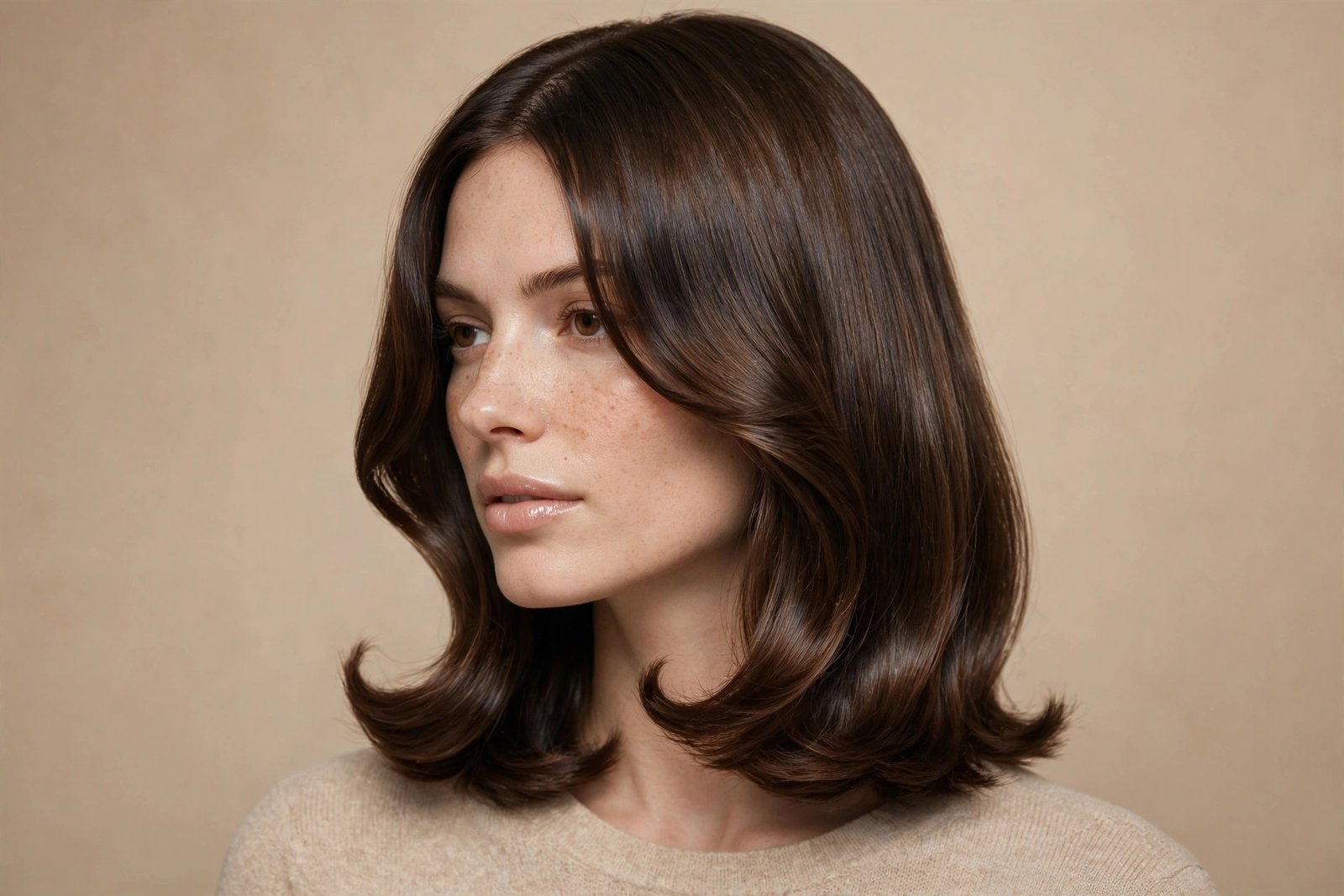
The lob (long bob) plus curtain bangs is one of those combinations that just works — the collarbone-grazing length keeps things modern and manageable, while the curtain fringe adds softness around the face that a blunt lob can lack. It’s polished enough for the office, easy enough for real life, and it suits an enormous range of women.
This pairing flatters oval, round, heart, and square faces — the lob length is inherently balancing, and the curtain bang customizes it to your features. Tell your stylist you want a lob hitting at or just below the collarbone, with curtain bangs blended into face-framing layers. Slightly textured ends keep it from looking too severe; a dead-blunt lob with curtain bangs can look disconnected.
Styling options are endless: smooth blowout with the ends tucked under, loose waves, air-dried natural texture, or a sleek straight finish. The bangs take two minutes with a round brush. This is genuinely one of the most versatile haircuts in existence — updos, ponytails, and half-up styles all work at this length.
Maintenance reality: lobs grow out faster than you’d think — that perfect collarbone length becomes shoulder length in about two months, and the shape changes with it. Plan trims every 6 to 8 weeks to keep the length intentional. The bangs need their own trim schedule. It’s not high-maintenance, but it’s not “cut it and forget it” either. Budget for regular appointments and you’ll love this cut for years.
9. Bottleneck Curtain Bangs
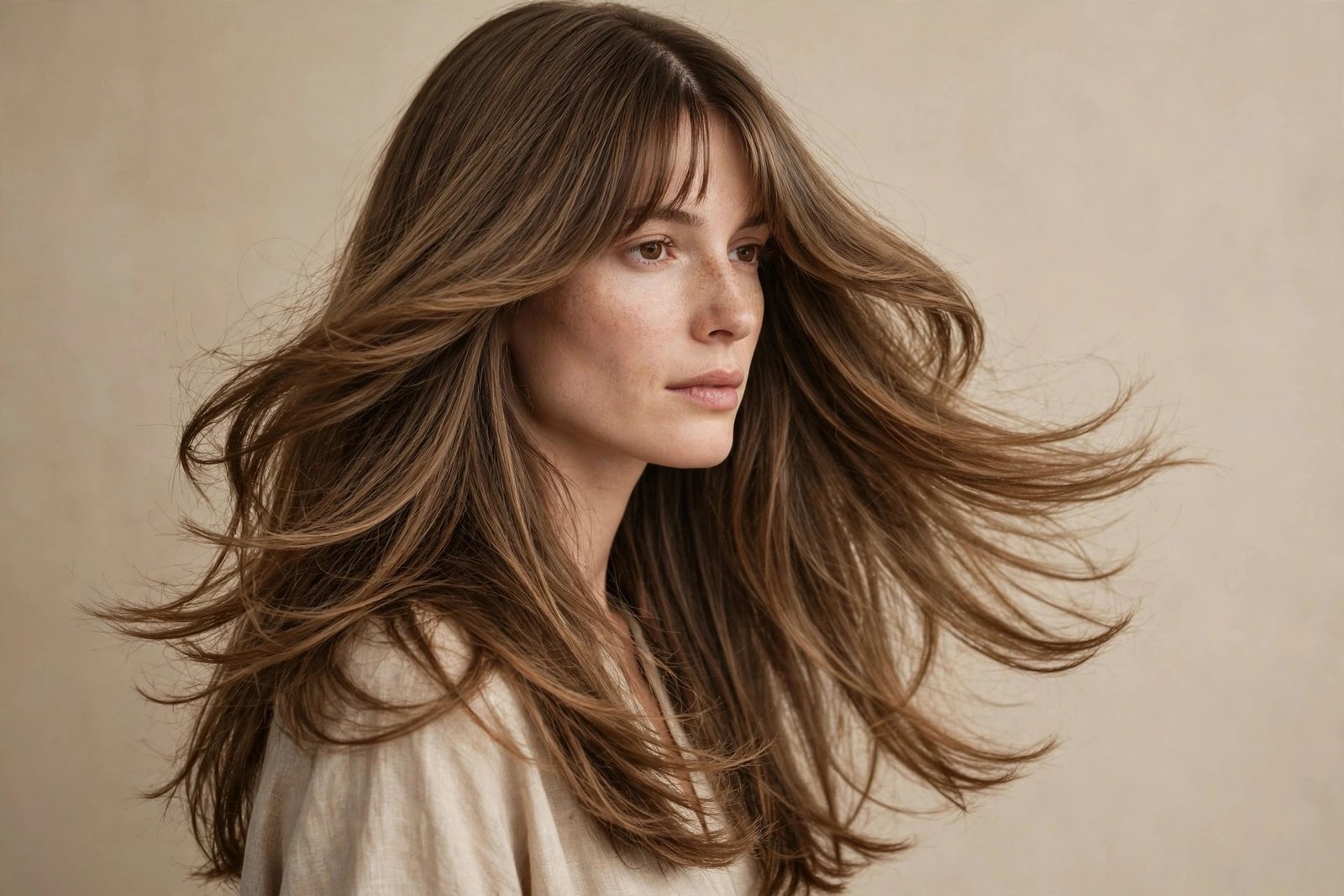
The bottleneck bang is curtain bangs’ chic French cousin. It starts narrow and short at the center of the forehead — like the neck of a bottle — then widens and lengthens outward toward the temples, framing the cheekbones. It’s part curtain bang, part seventies Bardot fringe, and it has a certain Parisian nonchalance that the classic version doesn’t.
This suits oval, heart, and long faces particularly well; the narrow center creates the illusion of a shorter forehead, which long faces love. Tell your stylist you want bottleneck bangs: shorter and narrower in the center (around brow to eye level), widening toward the sides, with the outer pieces long enough to tuck or blend. Our dedicated bottleneck bangs guide goes deeper if this style catches your eye.
Styling takes a little more intention than classic curtain bangs: blow-dry the center pieces forward and the sides outward to emphasize the bottle shape. A round brush is your friend here. The payoff is a fringe with real character — it looks styled even when the rest of your hair is simple.
The catch: bottleneck bangs are less forgiving during grow-out than classic curtain bangs, because the distinctive narrow-wide shape blurs as it grows. You’ll want trims every 5 to 6 weeks to keep the silhouette. They’re also not ideal for very strong cowlicks at the center hairline, since the narrow center section sits exactly where cowlicks live. Discuss it honestly with your stylist.
10. Curtain Bangs with Face-Framing Highlights
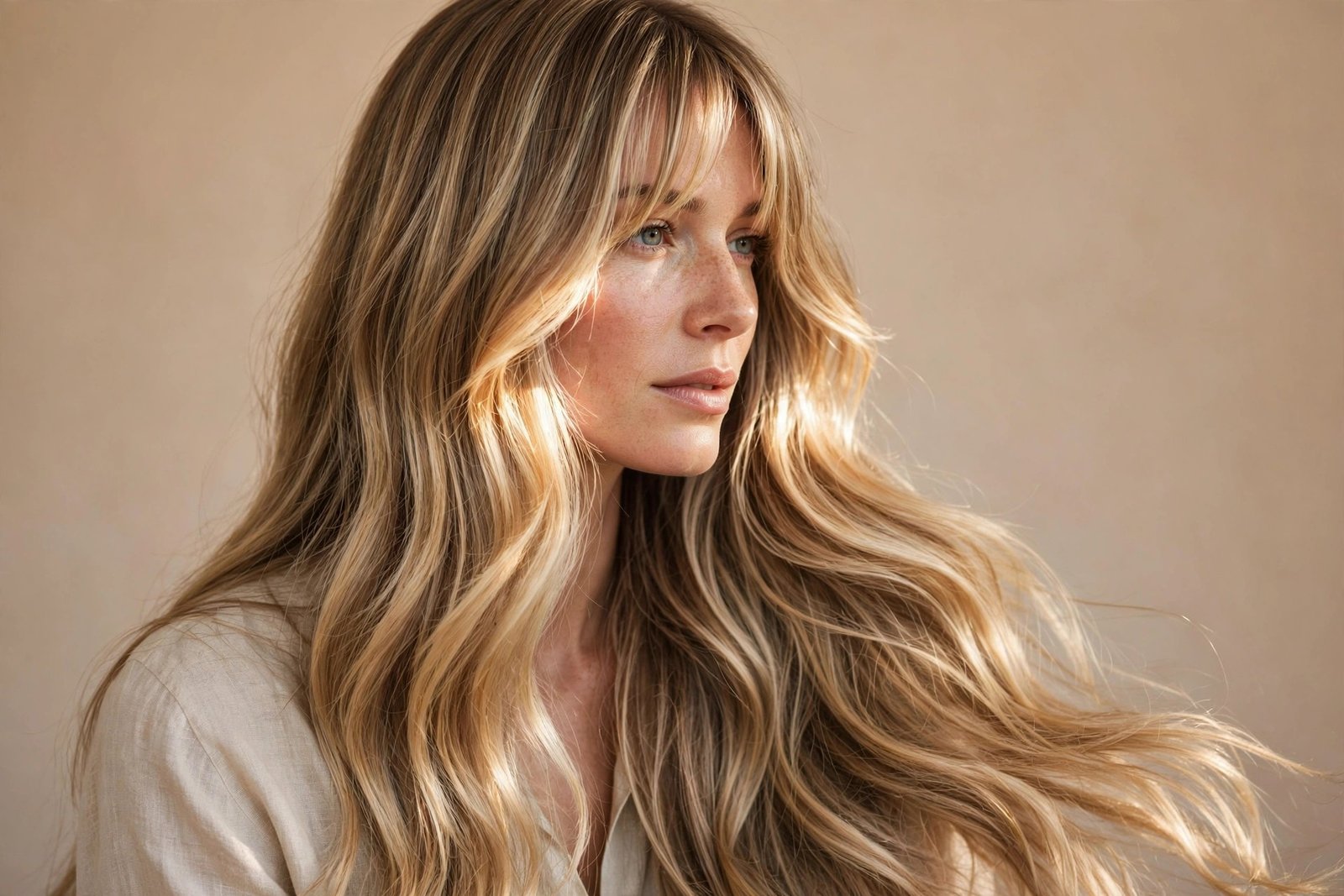
Color and cut are a team, and nowhere is that truer than with curtain bangs. Face-framing highlights — sometimes called the money piece — painted onto the curtain bang section create dimension exactly where the light hits your face. The bangs become the brightest part of your hair, drawing every eye to your cheekbones and eyes.
This works on every face shape and nearly every base color; the highlight tone just needs to suit your skin. Warm skin glows with caramel and honey pieces; cool skin loves ash and champagne. Tell your colorist you want face-framing brightness concentrated through the curtain bang and front layers, blended — not striped — into the base. Foilayage or balayage techniques give the softest result.
Styling is the same as classic curtain bangs, but the highlights add a styling shortcut: even air-dried, the dimension makes the fringe look intentional. Maintenance means glossing or toning every 6 to 8 weeks to keep the pieces bright rather than brassy, plus your regular bang trims.
Honest downside: highlighted bangs show damage faster because the pieces are fine and right at the front. Bleach plus daily heat styling is a recipe for breakage, so if you go bright, go gentle — lower heat, heat protectant always, and bond-building treatments. Also, growing out a money piece creates a visible line; commit to maintenance or ask for a softer, more diffused placement that grows gracefully.
11. Curly Curtain Bangs
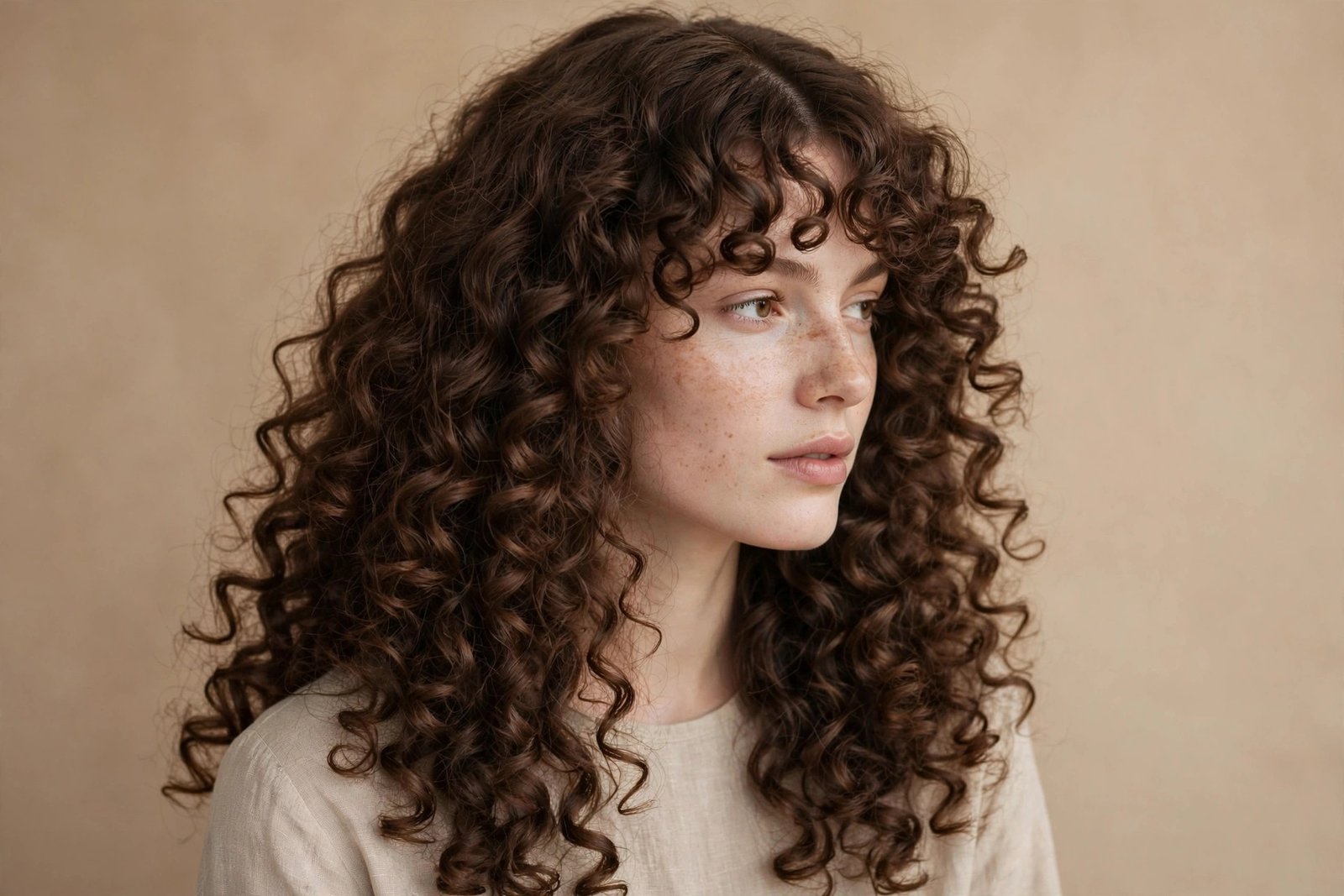
Can I be honest? Curly curtain bangs might be the most beautiful version of this entire trend, and curly-haired women were told for decades that bangs weren’t for them. That was nonsense. A curl-by-curl shaped curtain fringe, parted softly in the middle, gives curls a face-framing focal point that’s romantic, voluminous, and completely unique to your curl pattern.
This suits all face shapes — your stylist shapes the curls to your features — but it DEMANDS a curl specialist. Tell them you want a curly curtain fringe cut dry, curl by curl, with the center pieces shorter and the sides tapering longer. Never let anyone cut your curly bangs wet and straight unless you enjoy surprises. Shrinkage is real: curly bangs can spring up 30 to 50 percent shorter than they look wet.
Styling is wash-and-go friendly: apply curl cream and gel to soaking wet hair, part in the middle, arrange the front curls where you want them, and diffuse or air-dry. Don’t touch them while they dry — that’s the whole secret. Pineapple your hair at night to preserve the shape.
The real talk: curly bangs have big personality and they change with humidity, so identical-hair-every-day isn’t happening. They also need more frequent trims — every 6 to 8 weeks — because curls grow into each other and lose definition. But for the woman who embraces her texture, there’s nothing more stunning. Find a stylist who specializes in your curl type and trust the process.
12. Curtain Bangs with a High Ponytail
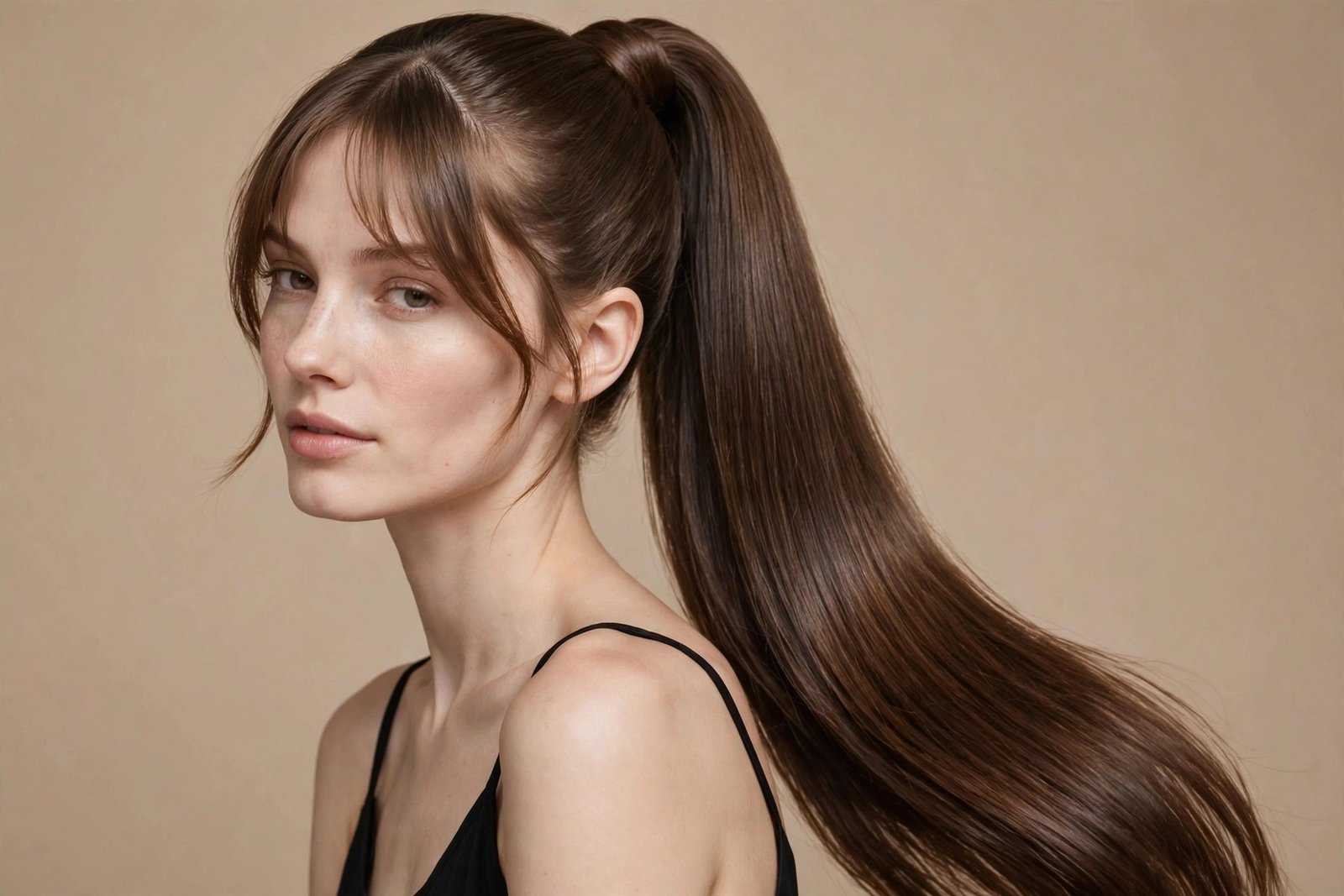
Here’s the thing about high ponytails: without bangs, they can look severe — all scraped back, nothing softening the face. Add curtain bangs and the whole thing transforms. The fringe frames your face while the pony gives you lift and drama. It’s the difference between “gym hair” and a look.
This suits oval, heart, and long faces beautifully — the ponytail’s height elongates, and the bangs keep it balanced. Round faces should keep the pony high and the bangs long to avoid adding width. The cut itself is just your favorite curtain bang; the magic is in the pairing. Tell your stylist nothing special — just get the bangs, then wear them with everything.
For the ponytail: smooth the crown with a boar-bristle brush, secure high, and leave the curtain bangs out front. Style the bangs with a quick round-brush flick. Wrap a small section of hair around the elastic for a polished finish. The bangs do all the face-framing work, so the pony can be as sleek or as messy as you like.
Downside? Barely any — this is a styling choice, not a separate cut. The only caution: if your bangs are very short, a super-sleek pony can make them look disconnected. Keep the bangs at cheekbone length or longer for the most harmonious pairing. And on fine hair, tease the crown slightly before securing the pony so the top doesn’t look flat against the bangs.
13. Wispy Thin Curtain Bangs
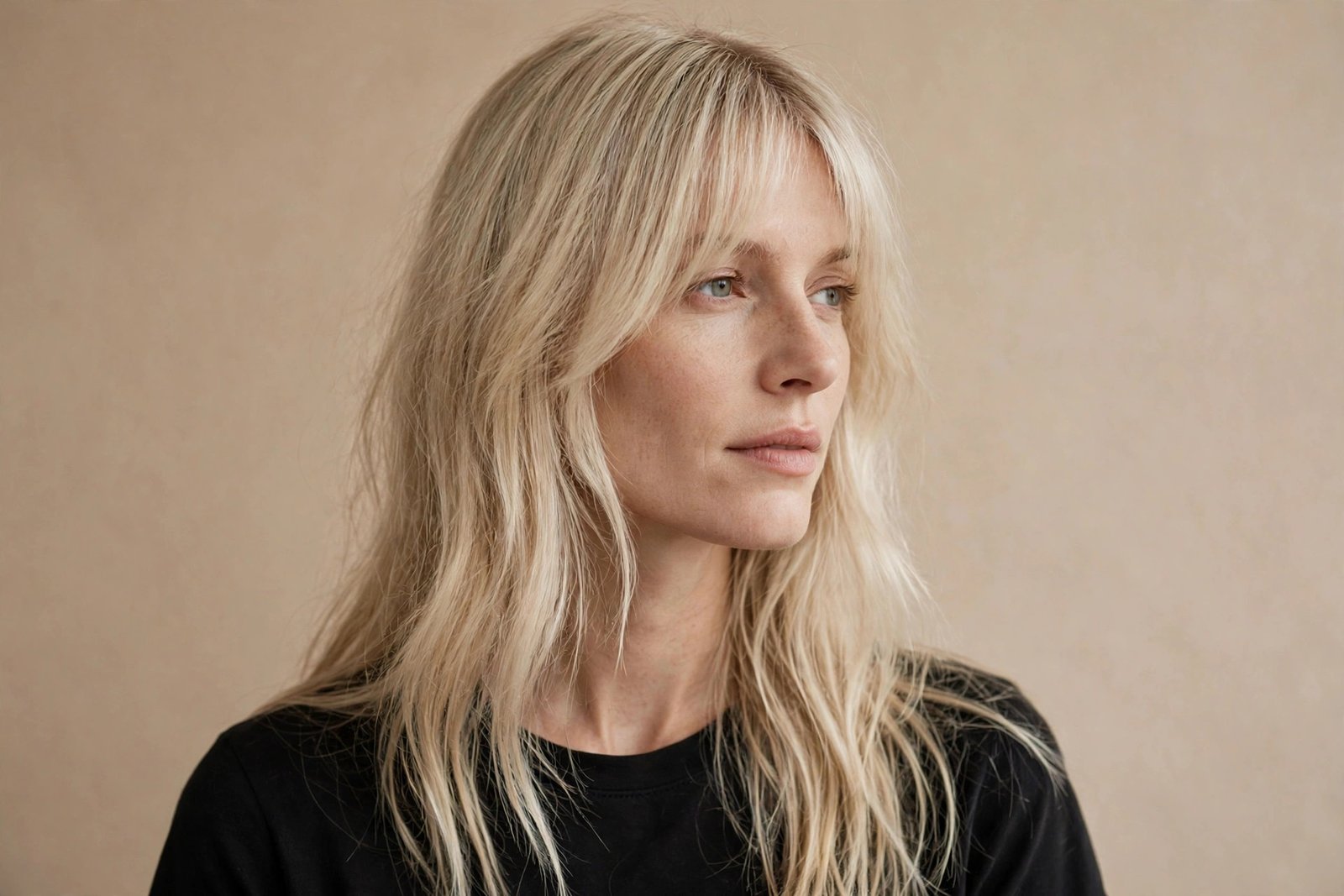
Not everyone wants a statement fringe — some women want the softness of bangs without the weight. Wispy curtain bangs use a smaller, thinner section of hair, cut with lots of texture so the fringe is sheer and see-through in places. It’s bangs for minimalists: there, but barely, like a whisper across the forehead.
This is the best curtain bang for fine hair, because it doesn’t demand density you don’t have. It also suits long and oval faces, adding softness without shortening. Tell your stylist you want a sheer, wispy curtain fringe — a narrow section, heavily point-cut, worn parted in the middle. The key phrase is “I want to see skin through it.” If your stylist cuts it too thick, you lose the whole effect.
Styling is nearly nothing: they air-dry beautifully, and a quick tousle with dry texture spray adds piece separation. They grow out invisibly — the ultimate low-commitment fringe. Our wispy bangs collection has more sheer-fringe inspiration.
The trade-off is impact: wispy bangs don’t transform your look the way a full curtain bang does. If you’re hoping for drama, you’ll be underwhelmed. They can also look sparse rather than wispy on very fine hair if the section is cut too wide — narrower is better. And in wind, wispy bangs go everywhere; a tiny bit of flexible-hold spray keeps them behaving without making them stiff.
14. Curtain Bangs with Balayage
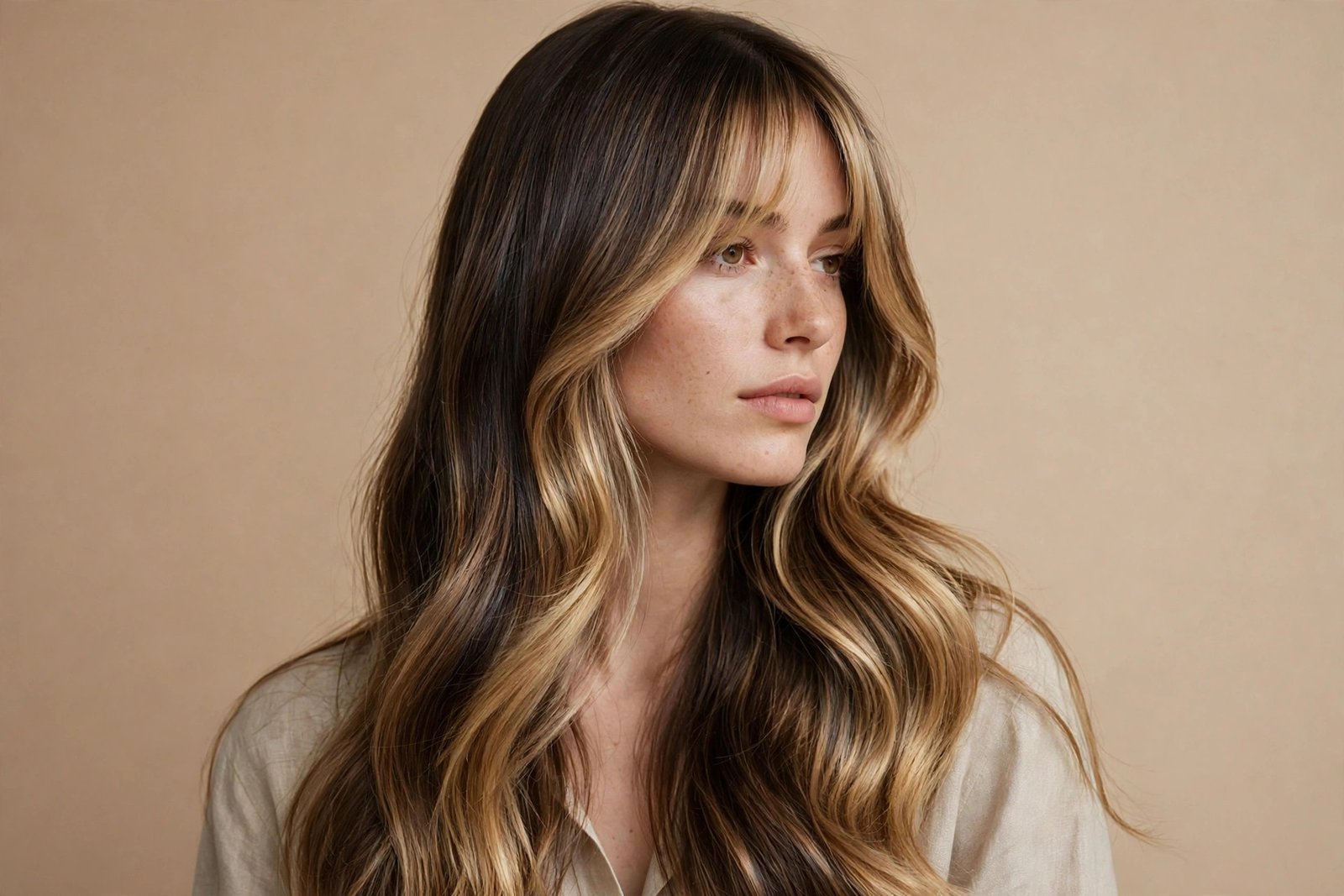
Balayage and curtain bangs are a match made in salon heaven. The hand-painted dimension of balayage looks most dramatic exactly where curtain bangs sit — at the front, framing the face — so the color and the cut amplify each other. The bangs catch light, the color creates depth, and the whole front of your hair looks expensive.
Every face shape works; the colorist just places the brightness to flatter your features — brighter pieces at the cheekbones for round faces, softer diffusion for square faces. Tell your colorist you want balayage with extra brightness through the curtain bang and front layers, keeping the placement soft and lived-in rather than stripey. The grow-out should be seamless — that’s the entire point of balayage.
Styling-wise, balayage loves texture: waves and bends show off the dimension far better than pin-straight hair. A curl cream or wave spray through the bangs and front pieces makes the color pop. Maintenance is refreshingly low — balayage grows out gracefully, needing a touch-up only every 3 to 4 months, with glossing in between.
The honest cost conversation: balayage is one of the pricier color services, and doing it well on the bang section requires a skilled colorist — bad balayage on bangs is very visible. Budget accordingly and don’t bargain-hunt this service. Also, lightened bangs need the same gentle heat care as highlighted bangs: protectant always, moderate heat, regular trims to keep the lightened ends healthy.
15. Curtain Bangs on Medium-Length Hair
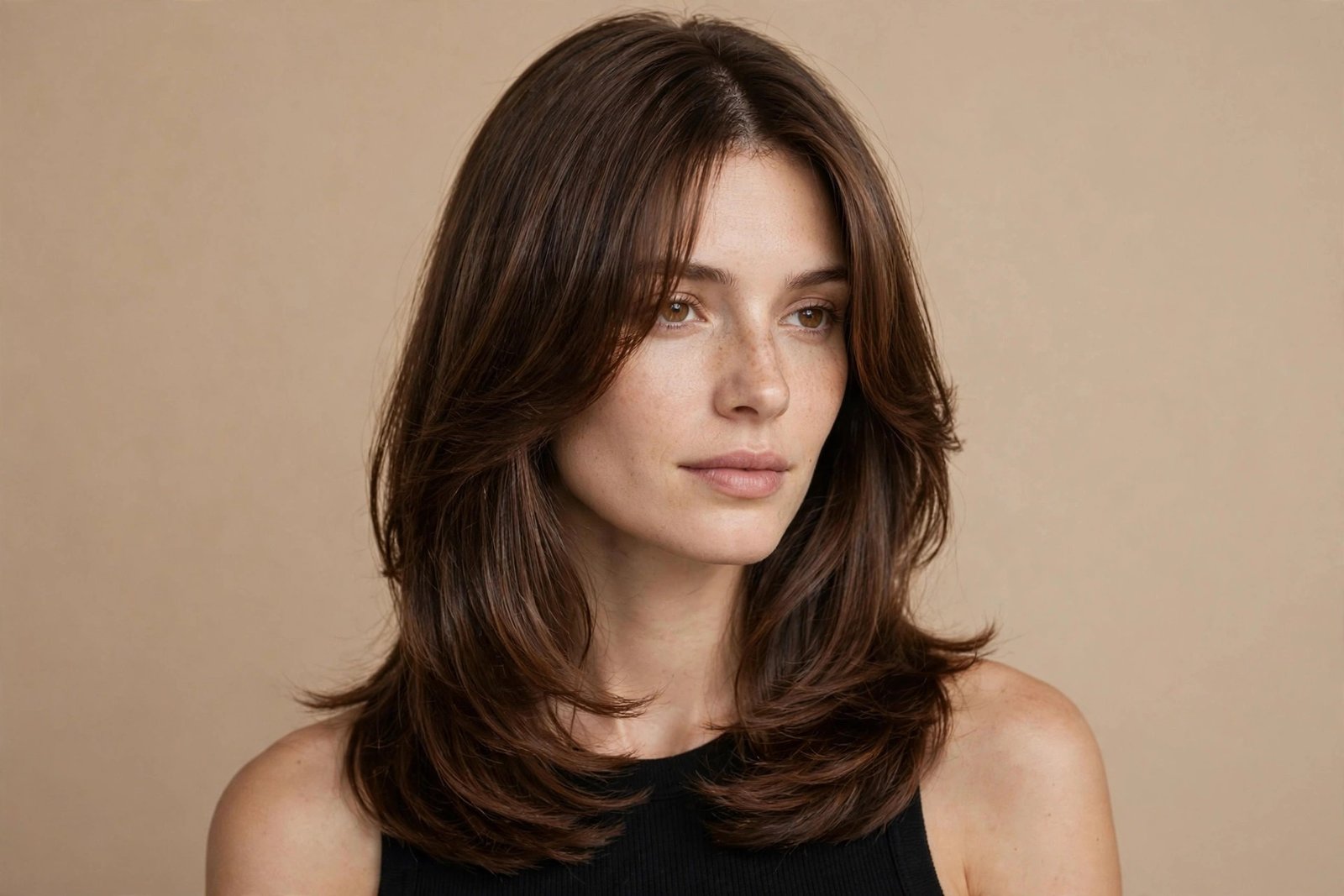
Medium-length hair — that shoulder-grazing sweet spot — might be the ideal canvas for curtain bangs. There’s enough length for the fringe to blend into, but the hair is light enough that the bangs don’t get lost. It’s the Goldilocks length: not so long the bangs look disconnected, not so short they dominate.
This length suits everyone, honestly. It’s the most requested hair length in salons for a reason — manageable, versatile, flattering. Tell your stylist you want curtain bangs that blend into shoulder-length layers, with the shortest bang pieces at cheekbone level. Ask for the perimeter to stay fairly clean so the cut reads intentional rather than grown-out.
Styling is quick: the bangs take two minutes, and the lengths can be blow-dried smooth, waved, or air-dried. Medium hair holds styles well without the weight of long hair dragging them out. It’s also the perfect length for half-up styles, low ponytails, and claw clips — all of which look fantastic with curtain bangs framing the face.
Maintenance is the standard story: bang trims every 6 to 8 weeks, full reshaping every 8 to 10. The one thing to watch is the awkward grow-out window if you ever decide to grow the whole cut out — medium hair growing to long hair passes through a shapeless phase. But that’s a future problem, and curtain bangs make even the grow-out look deliberate.
16. Choppy Curtain Bangs
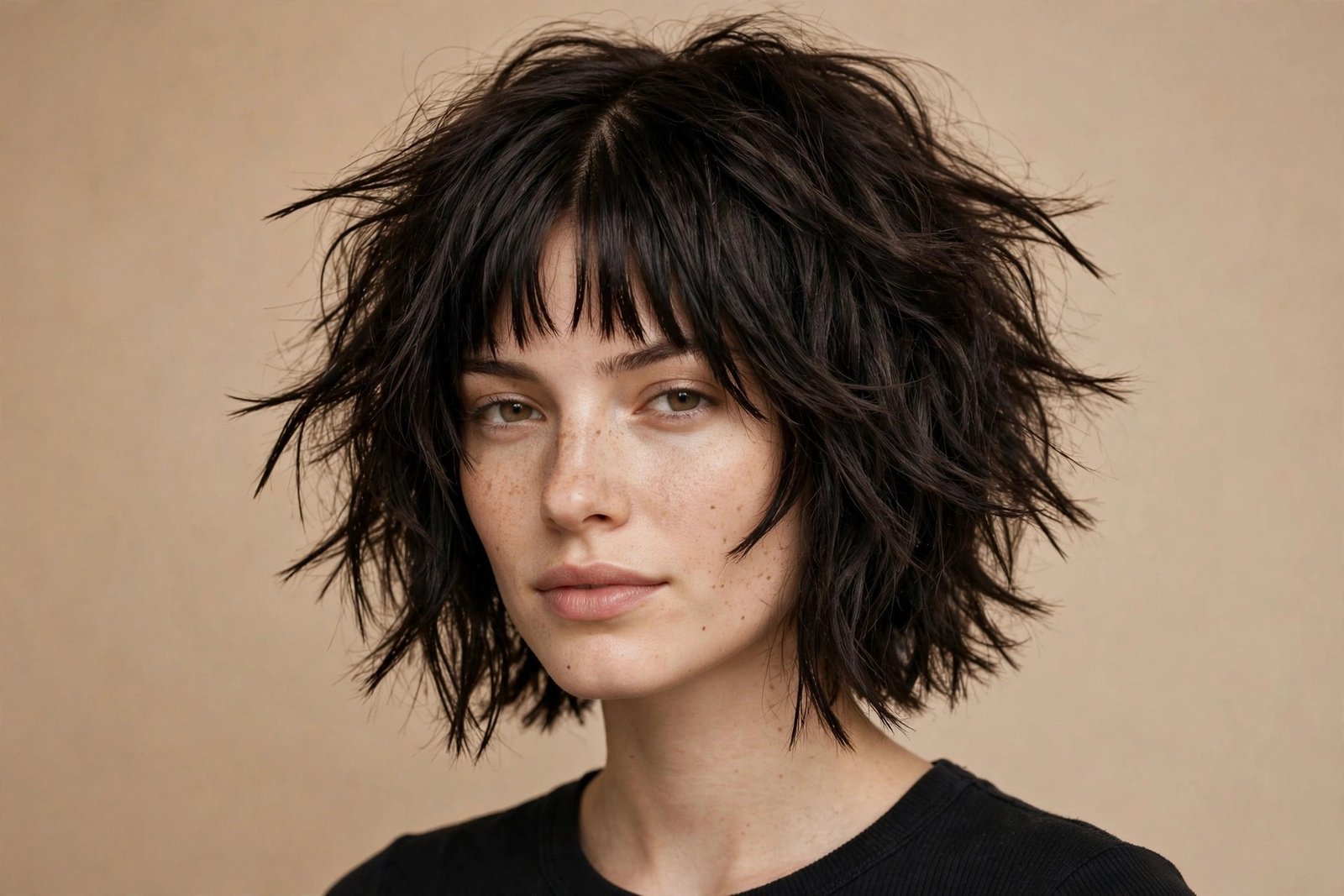
Where wispy bangs whisper, choppy bangs make a statement. Choppy curtain bangs are cut with deliberate, visible texture — chunky pieces, defined separation, ends that look almost jagged in the best way. It’s edgier, cooler, and has real attitude. If classic curtain bangs feel too pretty for you, this is your version.
This suits thick hair best — the choppiness needs density to read as texture rather than sparseness. It flatters oval, heart, and square faces; the piecey ends break up strong lines beautifully. Tell your stylist you want a choppy, textured curtain fringe with visible piece separation — deep point cutting, maybe some slicing. Show a photo, because “choppy” is subjective and you want to calibrate.
Styling actually benefits from a little product: a pea-sized amount of texturizing paste worked through the ends defines the pieces. Air-drying enhances the undone feel; blow-drying smooth defeats the purpose. This is a wash-and-go-friendly fringe with edge.
The downside: choppy bangs are a look, and looks have opinions attached. In very conservative environments it may read too fashion-forward — know your room. They also need regular texturizing trims to keep the chop intentional rather than just grown-out and messy; there’s a fine line, and it’s about 4 weeks wide. Grow-out is manageable since choppy texture disguises length changes well.
17. Curtain Bangs with a Wolf Cut
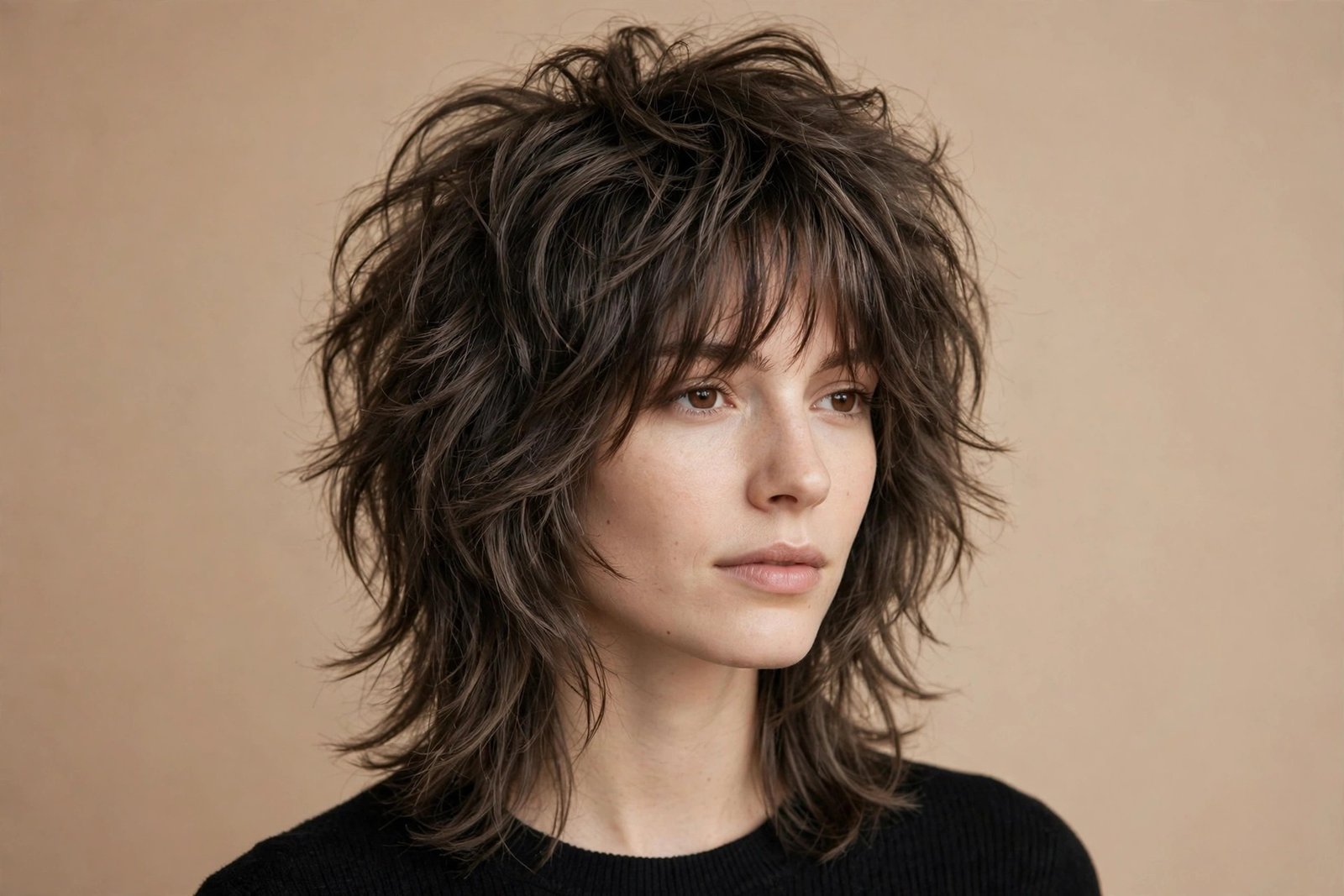
The wolf cut — that glorious mullet-shag hybrid — practically requires curtain bangs. The style’s whole identity is wild, textured layers with volume at the crown, and a curtain fringe ties it together at the front. Without bangs, a wolf cut can look like just messy layers; with them, it’s a statement.
This suits thick, wavy, and curly hair best — the wolf needs texture to earn its name. It flatters oval, heart, and long faces; round faces should ask for extra length through the front to avoid widening. Tell your stylist you want a wolf cut with curtain bangs integrated into the top layers, lots of texture, and a disconnected feel between the short crown and long lengths. This is a specialist cut — find someone who’s done wolves before.
Styling is gloriously low-effort: texturizing spray, scrunch, air-dry or diffuse. The messier it looks, the better it looks. That’s the entire philosophy. Trims every 8 to 10 weeks keep the shape from collapsing into just-long-hair.
Honest assessment: the wolf cut is a commitment to a vibe. It’s fantastic if your personal style leans edgy, creative, or alternative; it’s a harder sell in conservative professional settings. It also has the most dramatic grow-out of any cut here — neglected wolves become mullets, full stop. If you’re not ready for the personality or the maintenance, the shaggy curtain bang (style 7) gives you 70 percent of the feel with half the commitment.
18. Retro 70s Curtain Bangs
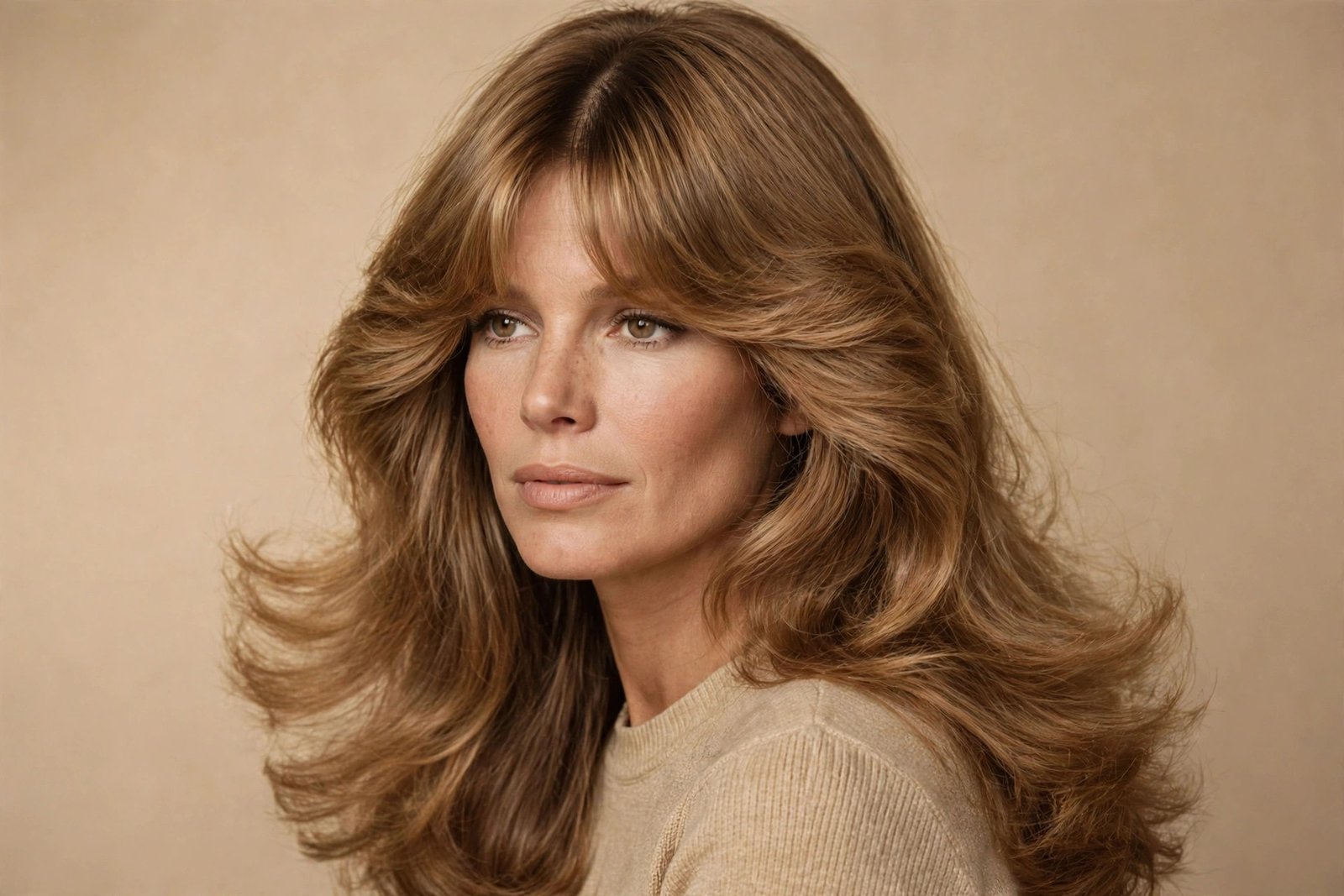
Go straight to the source: the seventies curtain bang, all feathered layers and Farrah Fawcett flicks. This version is longer and more dramatic than the modern classic — the bangs sweep back from the face rather than framing it forward, blending into long, feathered layers. It’s disco-era glamour, and it’s having a serious moment in 2026.
It suits long and oval faces beautifully, and medium-to-thick hair carries the feathering best. Tell your stylist you want a seventies-inspired curtain bang — longer, swept-back, with feathered layering through the lengths. The key technique is the flick: everything curves away from the face. Bring reference photos from the era; “seventies” is evocative but vague.
Styling is a round-brush blowout with everything directed back and outward, or large hot rollers for authentic volume. This is not a wash-and-go style — it needs heat and intention to get the signature sweep. The payoff is hair with genuine vintage glamour that turns heads.
The reality: this is a high-effort, high-reward style. Without the blowout, seventies layering can look dated rather than retro-cool — the styling IS the style. It also demands length; you need enough hair for the feathers to read. If you love the aesthetic but not the labor, try the bouncy blowout version (style 6) as a modern middle ground.
19. Curtain Bangs with a Messy Bun
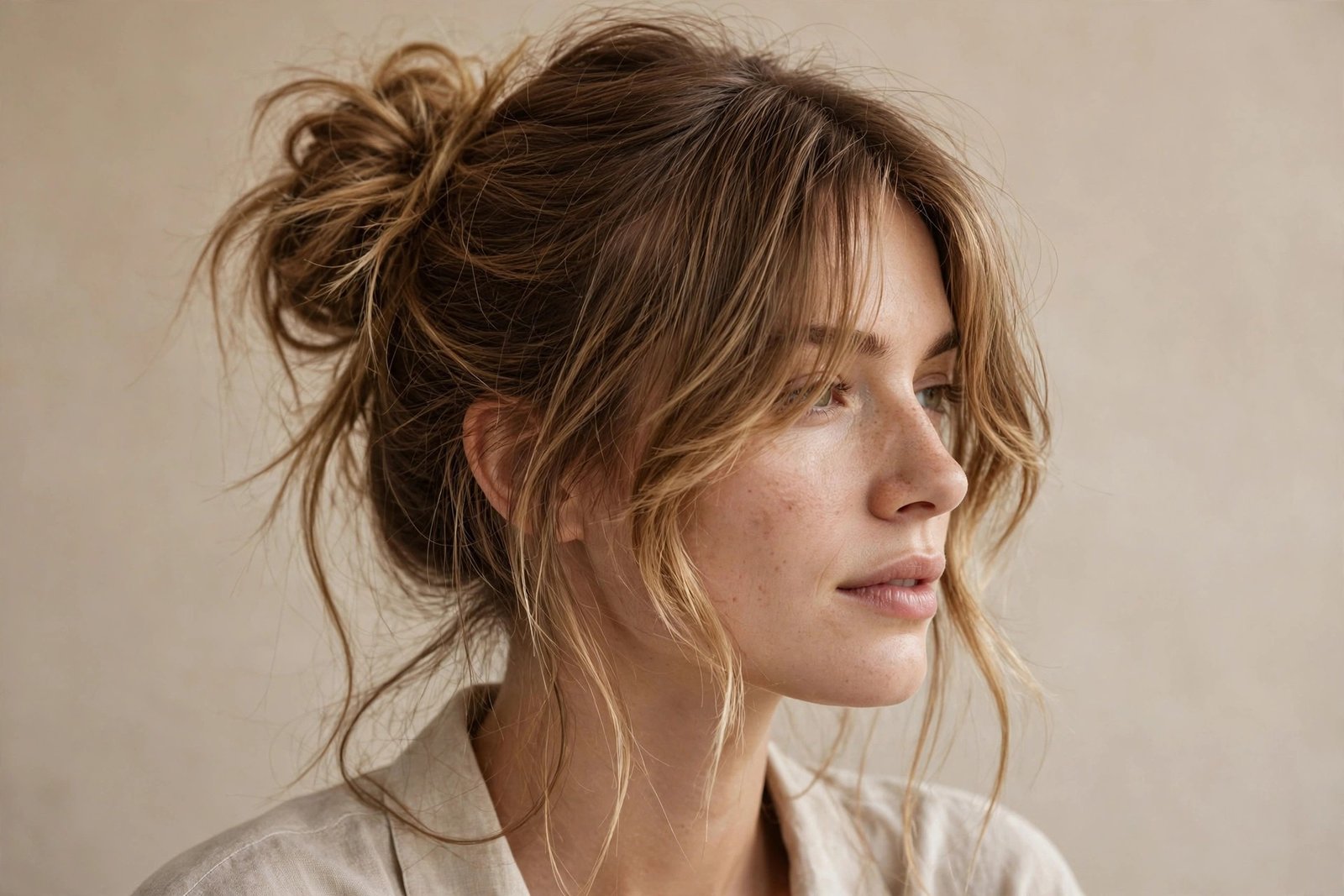
The messy bun is every woman’s survival hairstyle — and curtain bangs are what elevate it from “I gave up” to “effortlessly chic.” The bangs frame your face while the bun handles the rest, so you look pulled-together with about ninety seconds of effort. This pairing is the reason so many women get curtain bangs in the first place.
Every face shape works; the bun height adjusts to flatter — higher for round faces, lower and looser for long faces. The cut is just your preferred curtain bang; no special instructions needed. The styling is the point: gather hair into a loose bun, pull out the curtain bangs (and a few face-framing strands), and let the fringe do the talking.
For the bangs themselves, a quick tousle with texture spray is all they need — the undone aesthetic is the goal. This is the ultimate second- and third-day hair strategy: when the rest of your hair is past its prime, the bangs still look fresh and intentional.
There’s barely a downside, honestly. The only note: if your bangs are freshly trimmed and short, they can look a bit perky against a messy bun — give them a week to settle, or style them with a slight bend. And if you’re wearing this daily, vary your bun position to avoid breakage at the same spot. Otherwise, this is pure win.
20. Side-Swept Curtain Bangs
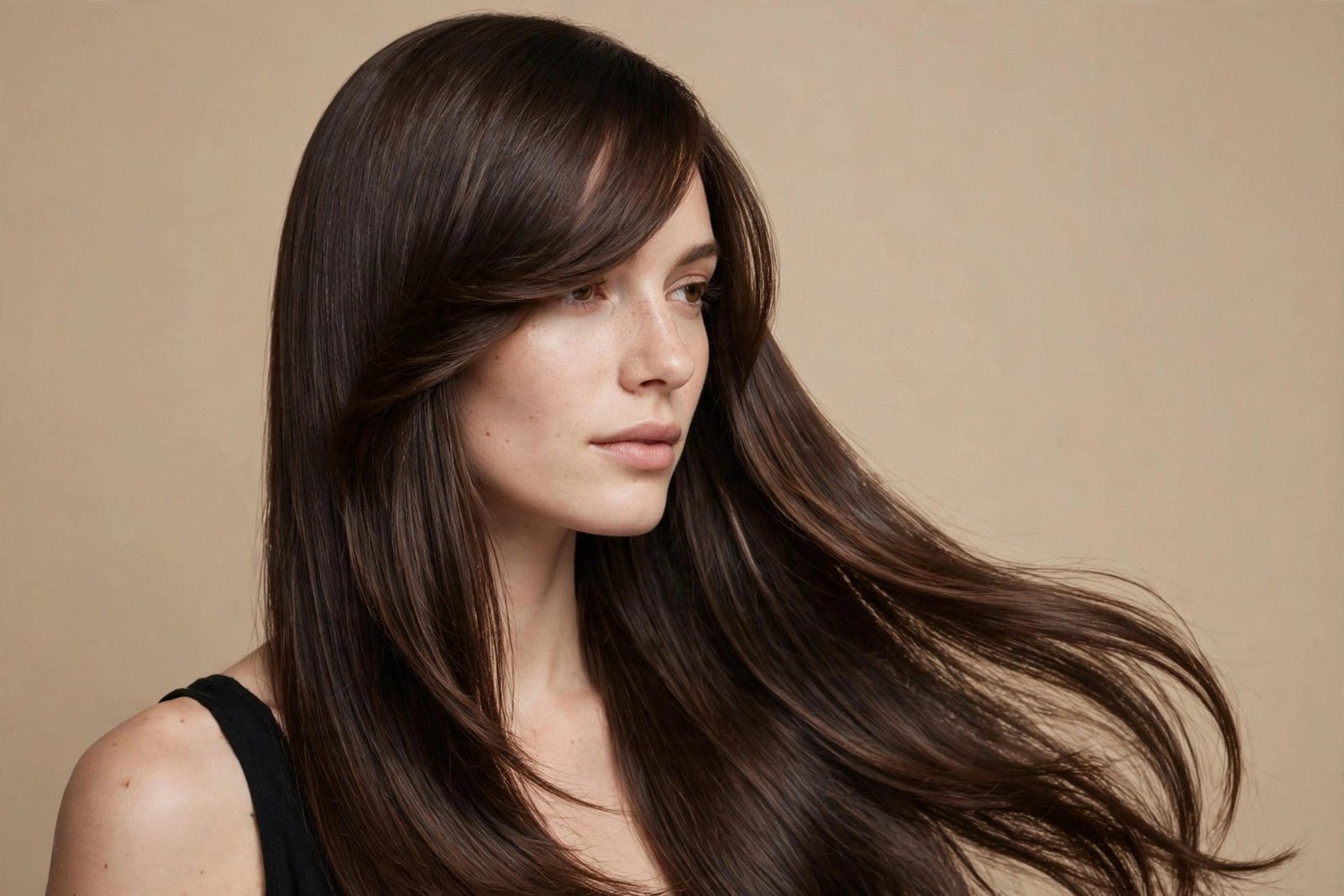
Plot twist: curtain bangs don’t have to be parted in the middle. Worn swept to one side, the same cut becomes softer, more romantic, and slightly mysterious. The diagonal line across the forehead is incredibly flattering — it’s why side-swept styles never truly disappear.
This is excellent for square and round faces, where the diagonal breaks up width, and for anyone whose cowlick refuses a center part — sweeping to the side works WITH the cowlick instead of against it. Tell your stylist you want curtain bangs long enough to sweep — cheekbone to jaw length gives the most versatility — and practice the sweep direction in the chair.
Styling: blow-dry the bangs in the sweep direction with a round brush, directing the roots slightly across. A light-hold spray keeps the sweep in place without stiffness. The beauty is reversibility — wear it center-parted Monday, side-swept Tuesday. Same haircut, two personalities.
Downside: side-swept bangs need a bit more daily direction than center-parted ones; they can fall back to the middle or go flat by afternoon. Training them takes about two weeks of consistent styling in the same direction. Also, if the bangs are cut too short, there’s not enough length to sweep — so if you want this option, keep them on the longer side from the start.
21. Curtain Bangs for Thick Hair
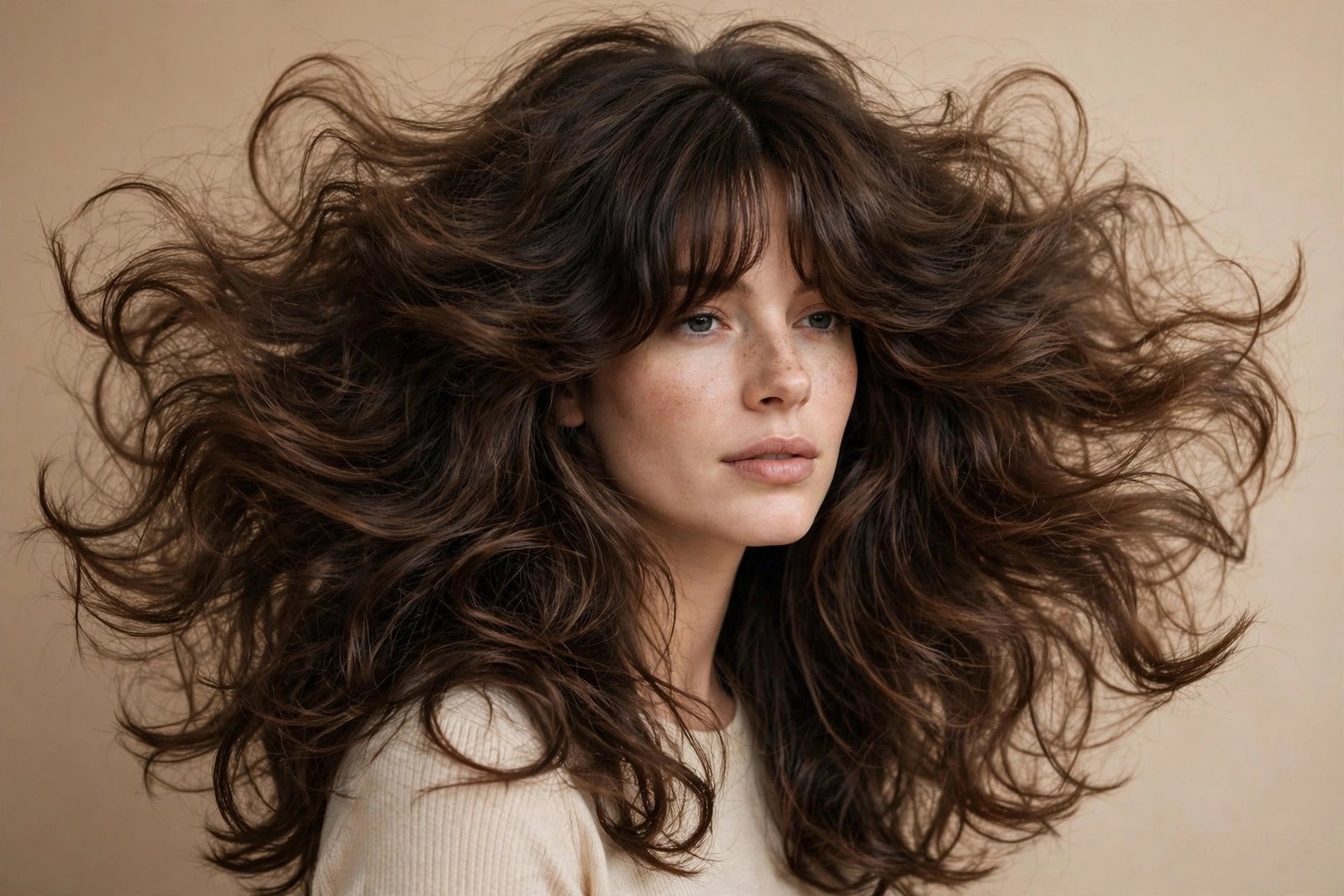
Thick hair and curtain bangs are a natural match — you’ve got the density to make the fringe look lush rather than stringy. But thick hair needs a specific approach: without weight removal, curtain bangs on thick hair can look like a heavy curtain (pun intended) instead of a soft frame. The cut has to breathe.
Tell your stylist to remove weight through the bang section — slide cutting, thinning shears used judiciously, or deep point cutting — while keeping the perimeter long enough to frame. The bangs should move when you shake your head; if they move as one solid unit, there’s too much weight. This suits all face shapes, with the length adjusted as usual.
Styling thick curtain bangs is actually easier than styling thick hair overall: the bang section is small enough to blow-dry quickly, and your natural volume does the rest. A round brush gives polish; air-drying gives body. Either way, the density works for you here.
The maintenance note: thick bangs grow fast and get heavy fast, so the 6-to-8-week trim schedule is non-negotiable — push it to 10 weeks and you’ll feel the weight. Also, in humidity, thick bangs can expand; an anti-frizz serum on the bang section specifically keeps them sleek. Done right, this is one of the most gorgeous versions of curtain bangs — all that density, perfectly shaped.
22. Curtain Bangs for Fine Hair
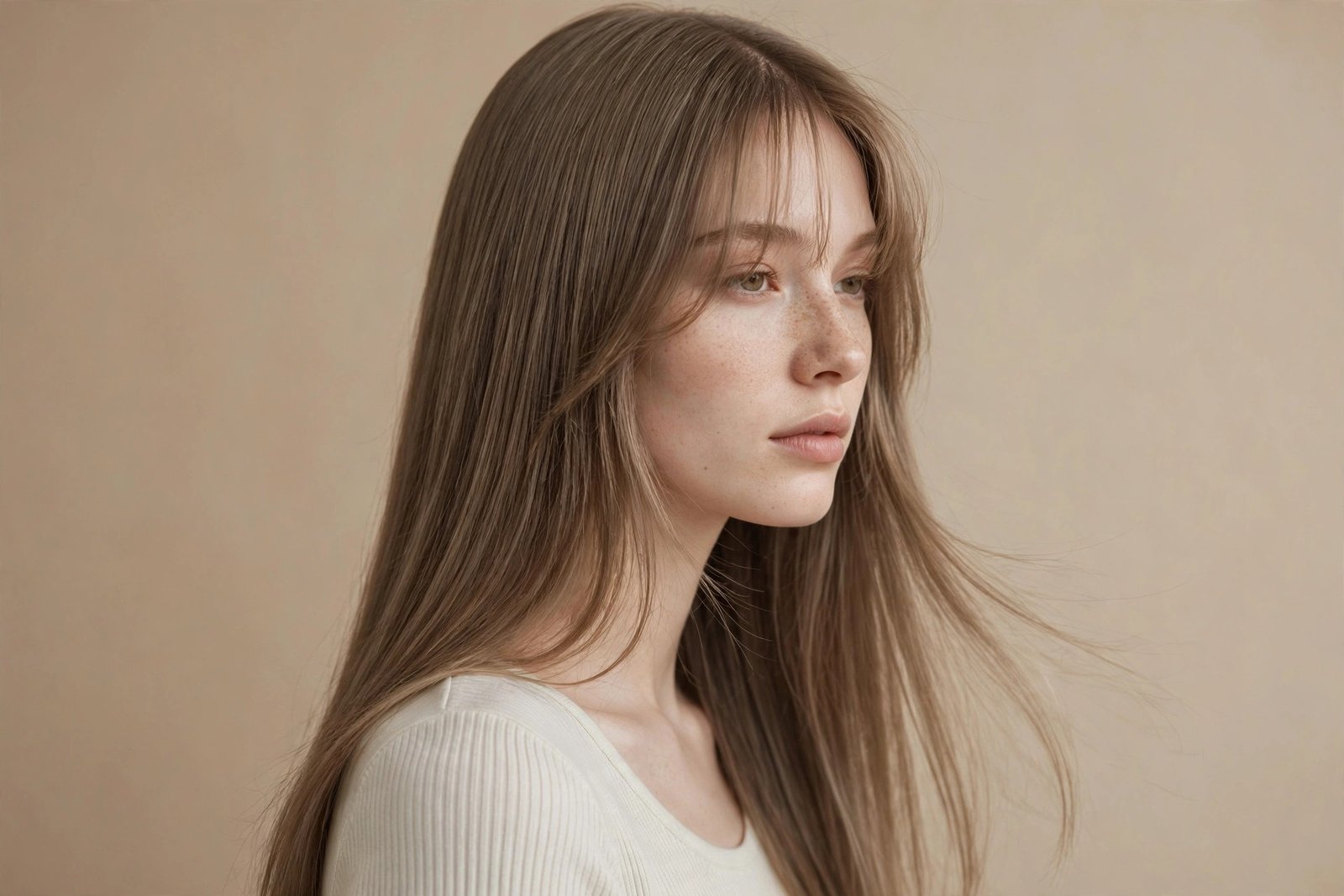
Fine-haired women are often told bangs will make their hair look thinner. With curtain bangs, the opposite can be true — if they’re cut right. The trick is keeping the bang section narrow and the cut soft, so the fringe adds interest around the face without stealing density from everywhere else.
Tell your stylist your hair is fine and you want a narrow, lightweight curtain fringe — a smaller triangle section than they’d take on thick hair, cut with soft texture. Blunt-cutting fine bangs is a mistake; it creates a harsh line that emphasizes thinness. Soft, feathered ends are everything. This suits oval, heart, and long faces especially well.
Styling fine curtain bangs is quick — they dry in minutes — but they need root lift to avoid lying flat against the forehead. Blow-dry the roots upward with a small round brush, or use a root-lifting spray. Dry shampoo at the bang roots on day two adds grip and volume; fine bangs show oil faster than the rest of your hair.
Honest limitations: fine curtain bangs won’t give you the lush, full fringe of the Pinterest photos — those models usually have thick hair. Manage expectations and you’ll love the soft, delicate result. Avoid over-layering the rest of your hair, since removing too much density makes everything look thinner. Keep the lengths fairly solid and let the bangs provide the movement.
23. Curtain Bangs with Money Piece Highlights
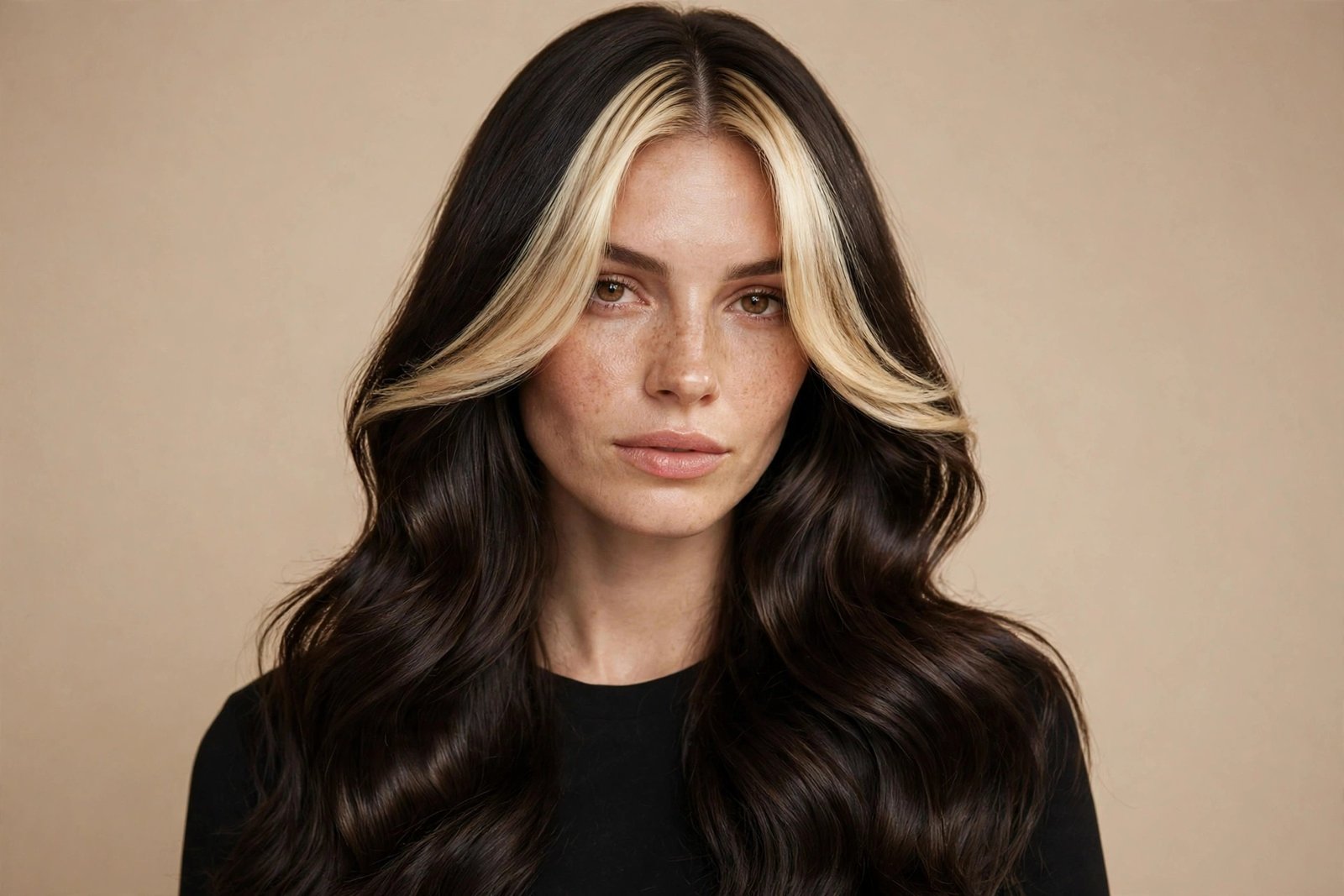
The money piece — those brighter front sections — was practically invented for curtain bangs. When the brightest part of your color sits exactly on the face-framing fringe, you get maximum impact from minimum bleach. It’s the highest-ROI color placement in the salon.
This suits every face shape and works on every base color from near-black to blonde; the contrast level is adjustable. Tell your colorist you want a money piece concentrated through the curtain bang, bright but blended — no harsh lines where the light pieces meet the base. On dark hair, caramel and toffee pieces glow; on blonde hair, platinum or champagne pieces pop.
Styling shows off the color best with the bangs worn forward and curved — the light pieces frame the face like a halo. Even simple styling looks expensive when the color placement is this strategic. Maintenance means toning every 6 to 8 weeks to keep the pieces fresh, not brassy.
The caution: money pieces are bleach, and bleach on the fine front hair needs care — heat protectant, moderate heat, regular trims. Growing out a strong money piece leaves a visible demarcation, so either commit to maintenance or ask for a softer, more diffused version. Done well, though, this is the fastest way to make curtain bangs look intentional and expensive.
24. Curtain Bangs with a Bob
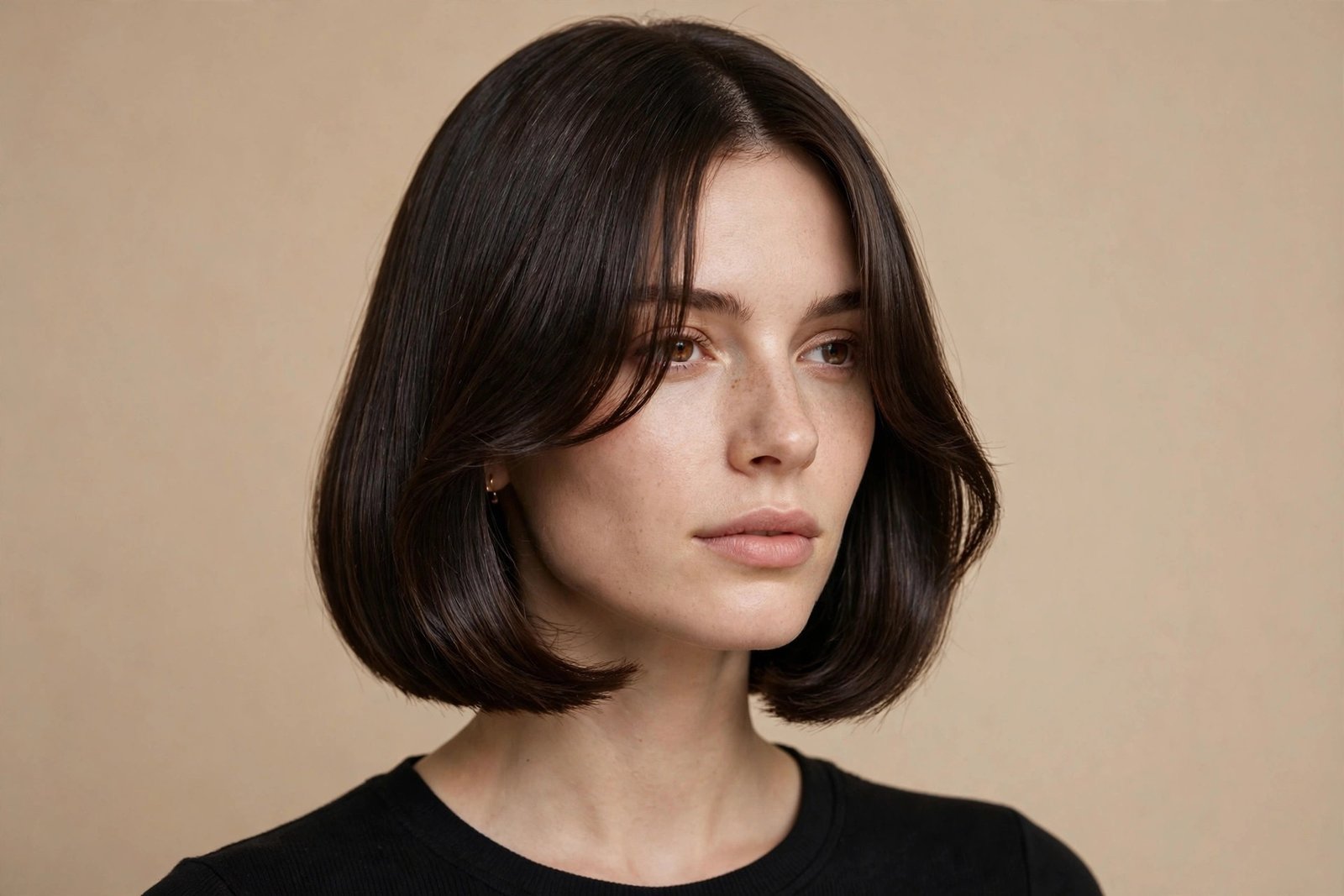
A bob with curtain bangs is pure chic — the structured shape of the bob gets softened by the curved fringe, and the combination reads both classic and current. It’s the haircut equivalent of a perfectly tailored blazer: sharp, but with something soft about it.
This suits oval, heart, and square faces beautifully; round faces should opt for a longer bob (lob territory) with longer curtain bangs to keep things elongating. Tell your stylist you want a bob — specify the length, chin or jaw — with curtain bangs that blend into the front of the bob rather than sitting as a separate fringe. The blend is what makes it modern.
Styling a bob with curtain bangs is straightforward: blow-dry smooth with the ends curved under, style the bangs with their usual flick. The whole thing takes 15 minutes and looks like you tried much harder. Tuck one side behind the ear for an asymmetric, editorial feel.
Maintenance is the bob reality: precision cuts grow out visibly, so trims every 6 weeks keep the shape sharp. The bangs need trims on the same schedule. It’s more salon commitment than long hair, but the payoff is a haircut that always looks deliberate. If you love bobs, the sharper blunt styles explore the other end of the family.
25. Feathered Curtain Bangs
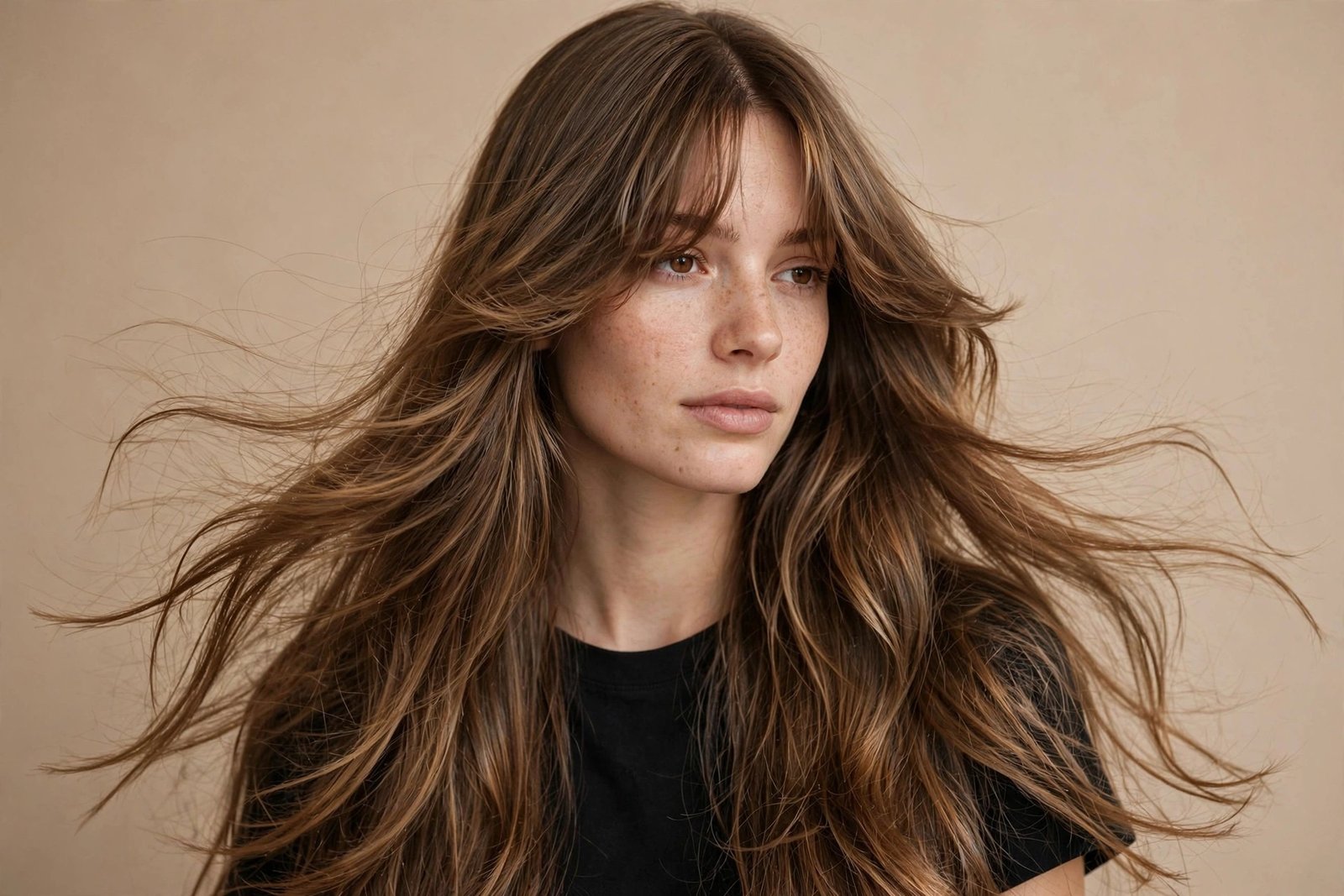
Feathering is a cutting technique — fine, angled texturizing through the ends — and on curtain bangs it creates the softest possible edge. Feathered curtain bangs have ends so finely textured they look like they dissolve into the air. It’s the most delicate version of this fringe, and it photographs like a dream.
This suits fine to medium hair best; on very thick hair, feathering alone may not remove enough weight. It flatters oval, long, and heart faces — the softness is universally kind. Tell your stylist you want curtain bangs with feathered, finely texturized ends — lots of point cutting at an angle, no blunt lines anywhere. The fringe should feel weightless.
Styling is minimal: the feathering does the visual work, so even air-dried bangs look intentional. A light blow-dry with a round brush adds polish for special occasions. This is a genuinely low-effort fringe that still looks like a choice.
The trade-off: feathered ends are delicate ends. They can look thin if over-texturized, and they show damage faster than blunt ends — regular trims keep them fresh rather than wispy-sad. There’s a difference between feathered and just thin, and it’s about two weeks of grow-out. Keep the trim schedule and you’ll stay on the right side of it.
26. Curtain Bangs with Braids
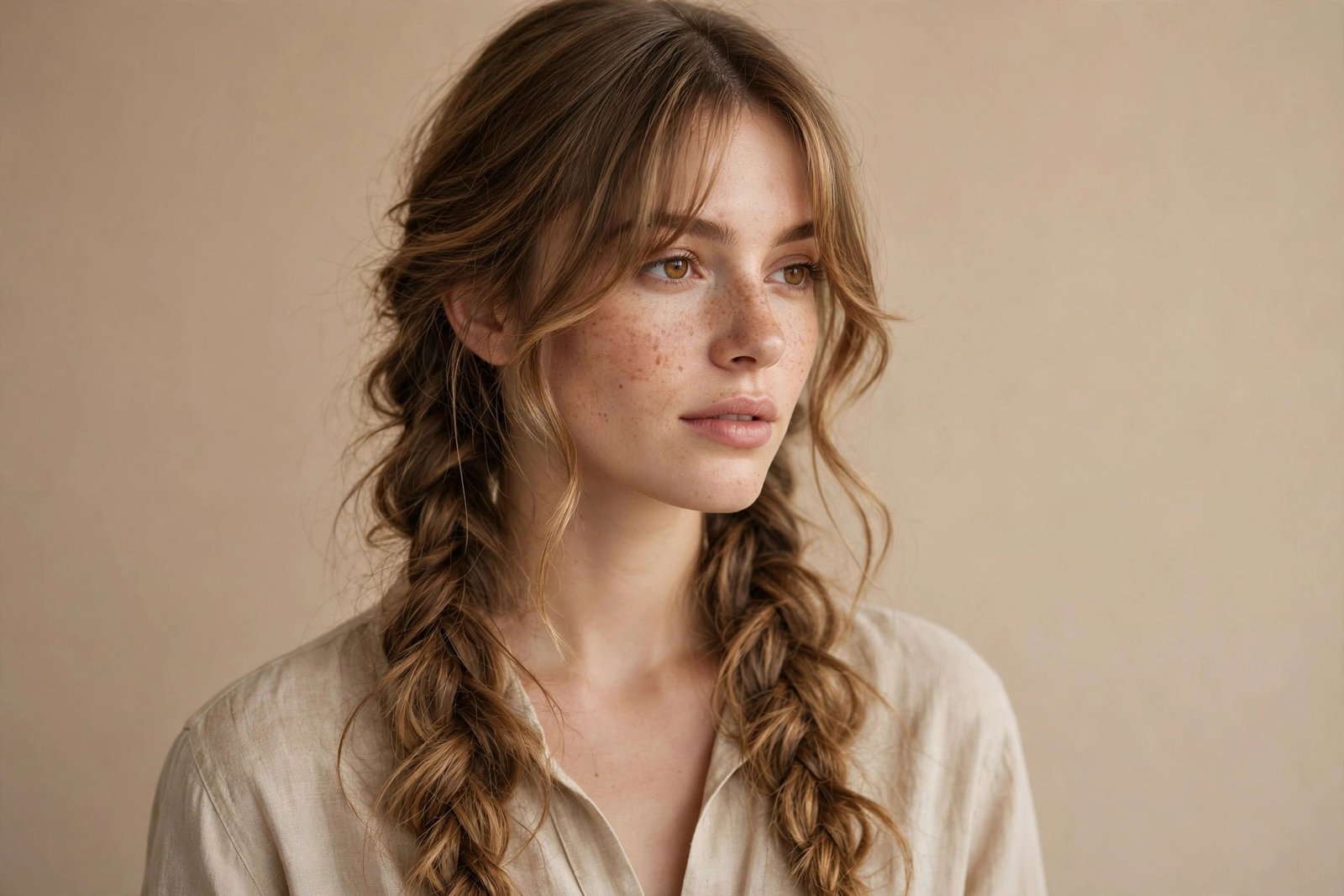
Braids plus curtain bangs is a combination that looks like it took an hour and takes ten minutes. The braids handle the bulk of your hair while the bangs frame your face — it’s romantic, practical, and it keeps you cool. Festival hair, gym hair, hot-day hair: the bangs make every braid look deliberate.
Every face shape works; braid placement adjusts to flatter — higher braids for round faces, looser for long faces. The cut is just your favorite curtain bang. For styling, braid damp or dry hair loosely (tight braids with bangs can look severe), pull out the curtain bangs and a few face-framing pieces, and pancake the braids gently for fullness.
This is also a brilliant protective-style companion: if you’re wearing braids for a week, the curtain bangs are the part that stays fresh and styled. Refresh just the bangs each morning and the whole look holds.
Downside: basically none, beyond the obvious — you need enough length to braid. If your bangs are on the shorter side, very tight braids can pull them awkwardly; keep braids loose at the front. And if you’re new to braiding, practice the loose, pancaked technique — skinny tight braids with soft bangs look mismatched.
27. Curtain Bangs on a Curly Bob
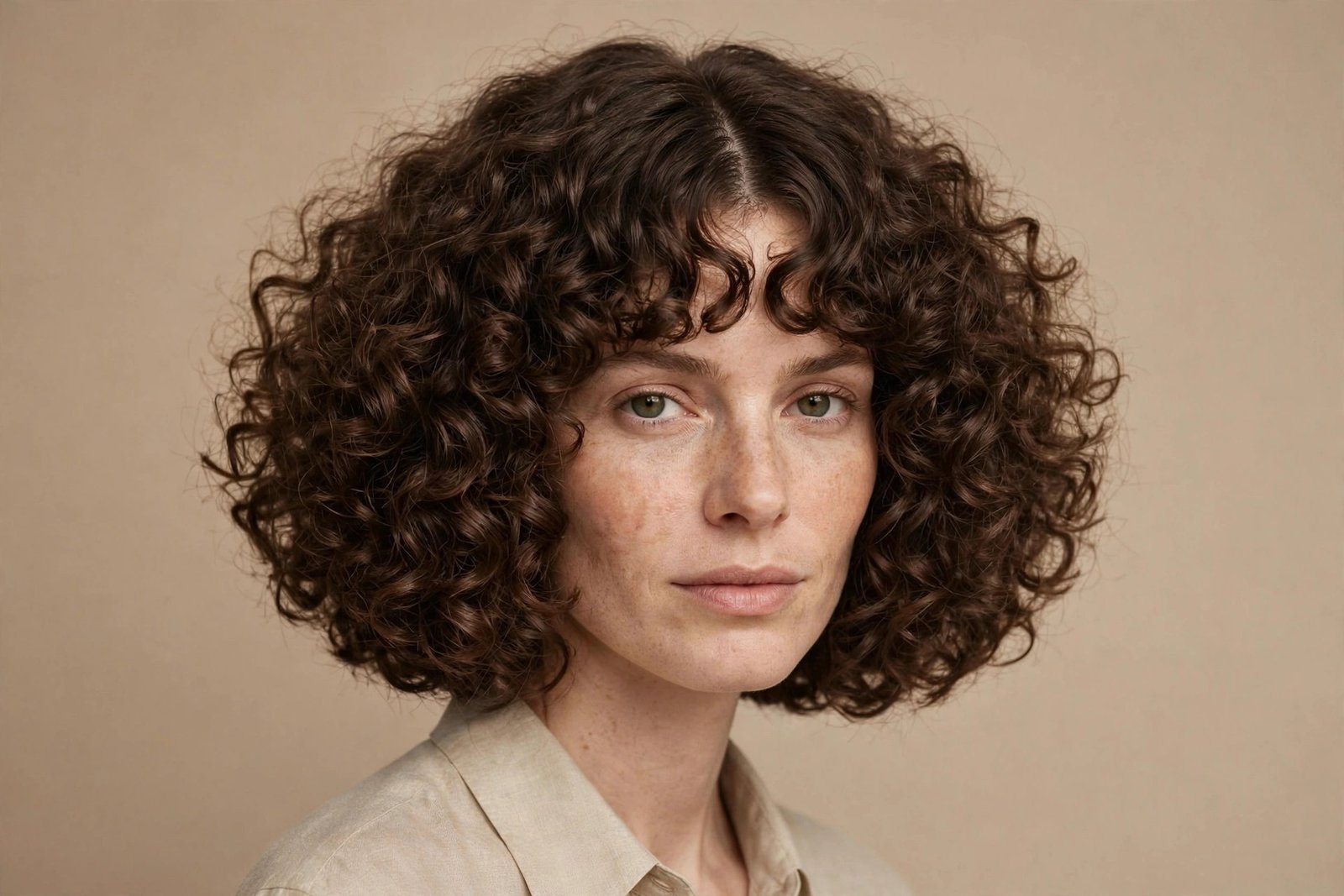
A curly bob with a curly curtain fringe is joy in haircut form — bouncy, voluminous, full of personality. The rounded shape of the bob frames the face while the curtain bangs add a focal point at the front. It’s retro and modern at once, and on the right curls it’s absolutely show-stopping.
This needs a curl specialist, full stop. Tell them you want a rounded curly bob with a curtain fringe cut dry, curl by curl — the bob length and the bang length have to be calibrated to YOUR shrinkage, not a chart. This suits oval, heart, and long faces especially well; round faces should ask for extra length to keep things elongating.
Styling is the curly routine you know: products on soaking wet hair, part in the middle, arrange the front curls, diffuse or air-dry, don’t touch. The bob shape means less hair to manage than long curls — many women find this the easiest curly cut to live with.
The honest part: curly bobs grow out into curly lobs, then curly shoulder-length hair — the shape changes fast, so trims every 8 weeks keep the silhouette. And humidity affects the whole shape, bangs included. But if you love your curls and want them with maximum personality, this cut delivers.
28. Sleek Straight Curtain Bangs
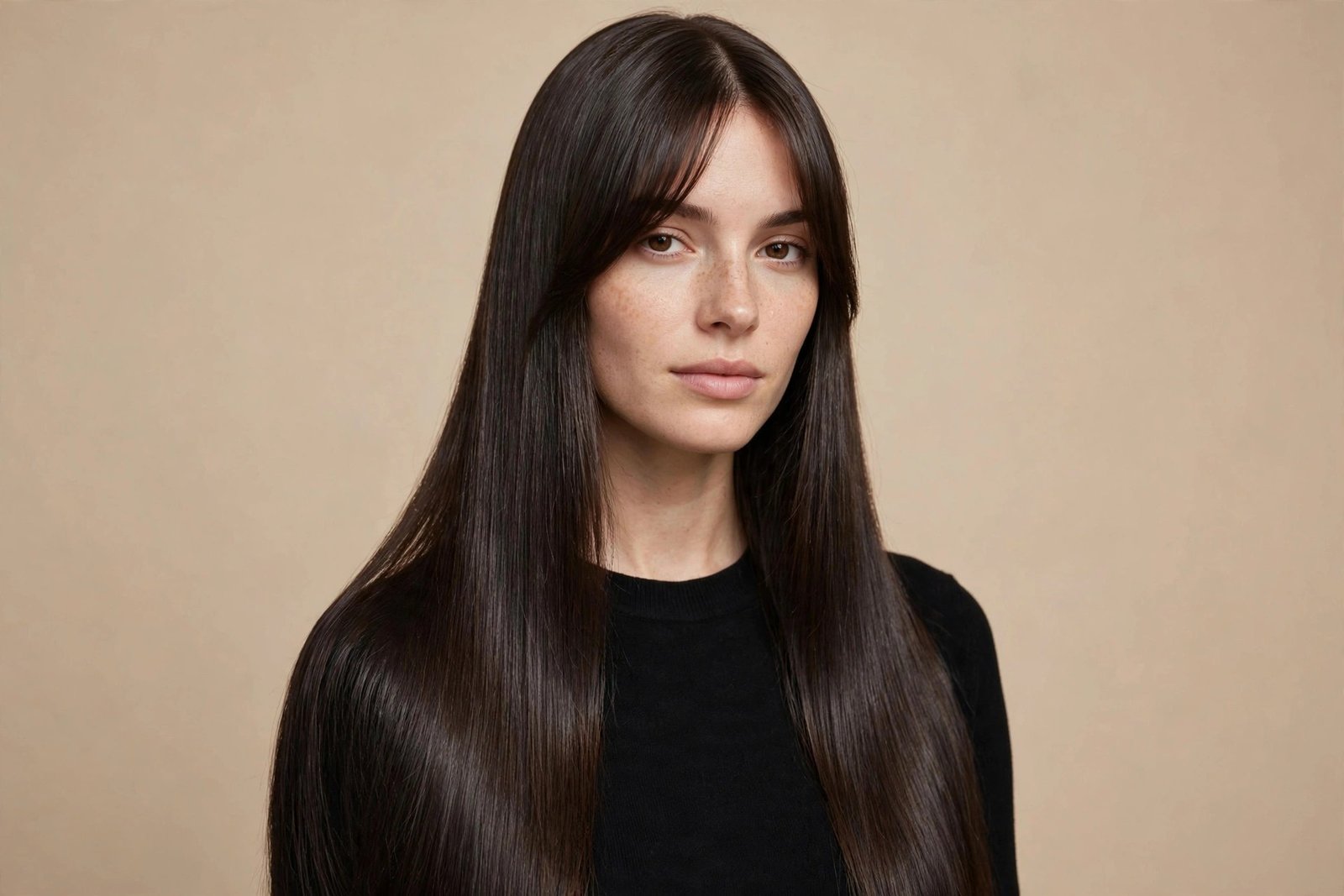
For the minimalist: curtain bangs worn pin-straight and glossy, every hair in place. There’s something powerful about the contrast — the soft curved shape of the curtain bang rendered in razor-sharp sleekness. It’s editorial, precise, and quietly dramatic.
This suits straight hair naturally; wavy and curly hair can achieve it but need heat every time. It flatters oval and heart faces most — the sleekness emphasizes bone structure beautifully. Tell your stylist you want curtain bangs with clean, precise ends (less texture than usual), designed to be worn straight. The cut needs to be accurate because sleek hair shows every flaw.
Styling: heat protectant, flat iron in small sections, finish with a shine serum or gloss spray. The whole thing takes 10 minutes on the bang section. Silk pillowcases help maintain the sleekness overnight.
Reality check: sleek styles show everything — oil, regrowth, frizz, damage. Fine hair needs washing more often; the bang section may need daily refreshing. And humidity is the enemy of sleek — have a backup plan (a sleek low bun with the bangs still sleek works). This is a high-polish style for women who enjoy the ritual. If that’s you, it’s perfection.
29. Curtain Bangs for Round Faces
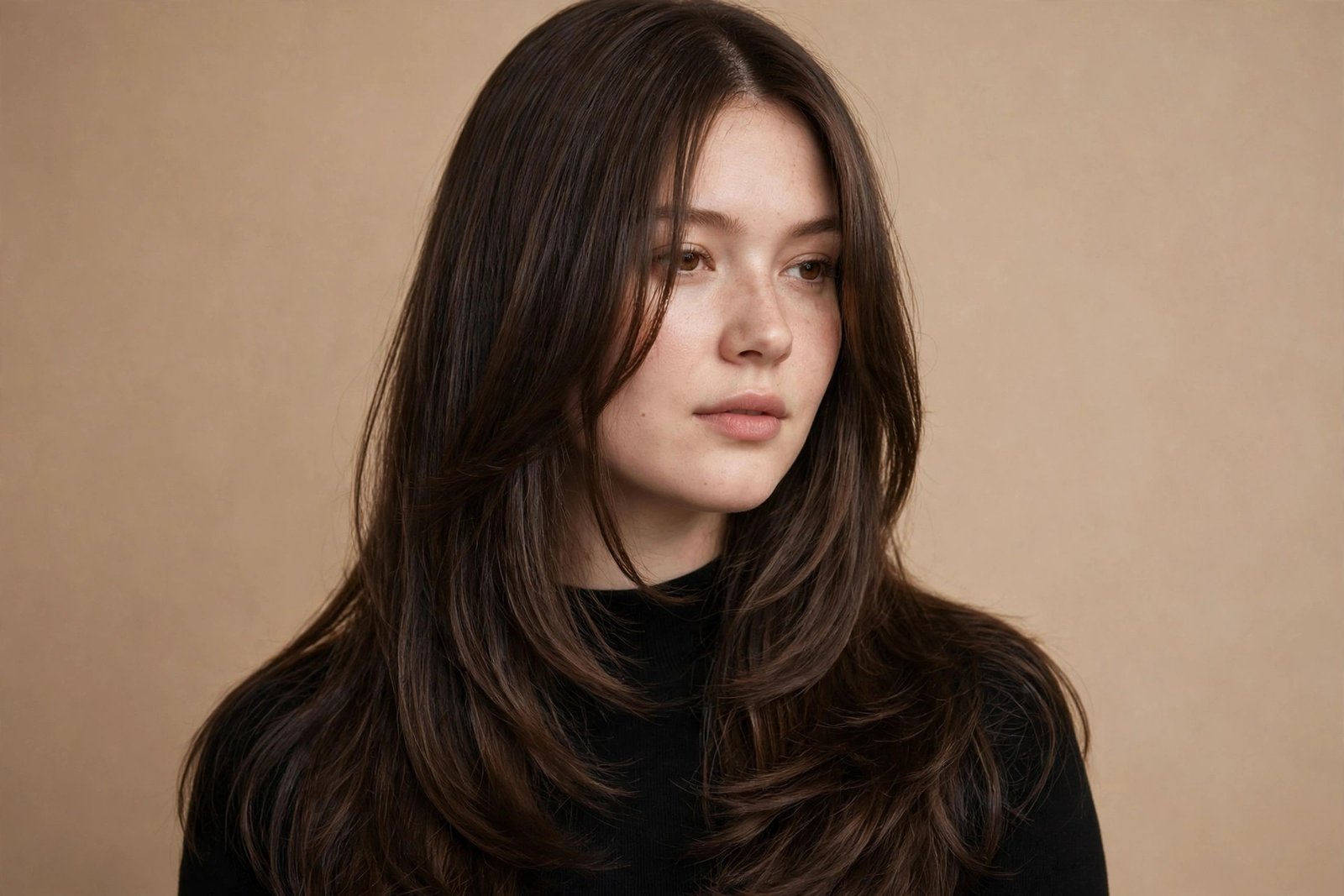
Round-faced women ask about curtain bangs more than anyone — and the answer is a confident yes, with the right length. The formula: longer curtain bangs (cheekbone to jaw length), a clean center part, and vertical lines that elongate rather than horizontal volume that widens. Done right, curtain bangs are genuinely slimming.
Tell your stylist your face shape and that you want elongating curtain bangs — longest pieces reaching the jawline, minimal width at the cheeks, and length through the front layers. Avoid short, full curtain bangs that end at the cheekbones; they create a horizontal line at the widest part of the face. Longer is leaner here.
Styling should emphasize verticality: blow-dry the bangs downward and slightly forward rather than flicked wide, and keep the crown smooth rather than poufed. A middle part worn sleek is your most elongating option. Tucking one side behind the ear creates asymmetry that also slims.
The mistake to avoid: combining short curtain bangs with lots of width — wide flicks plus short length is the one version that can emphasize roundness. Keep the flick subtle and the length long, and curtain bangs will be your best friend. This isn’t about hiding your face; it’s about working with its geometry.
30. Curtain Bangs with an Updo
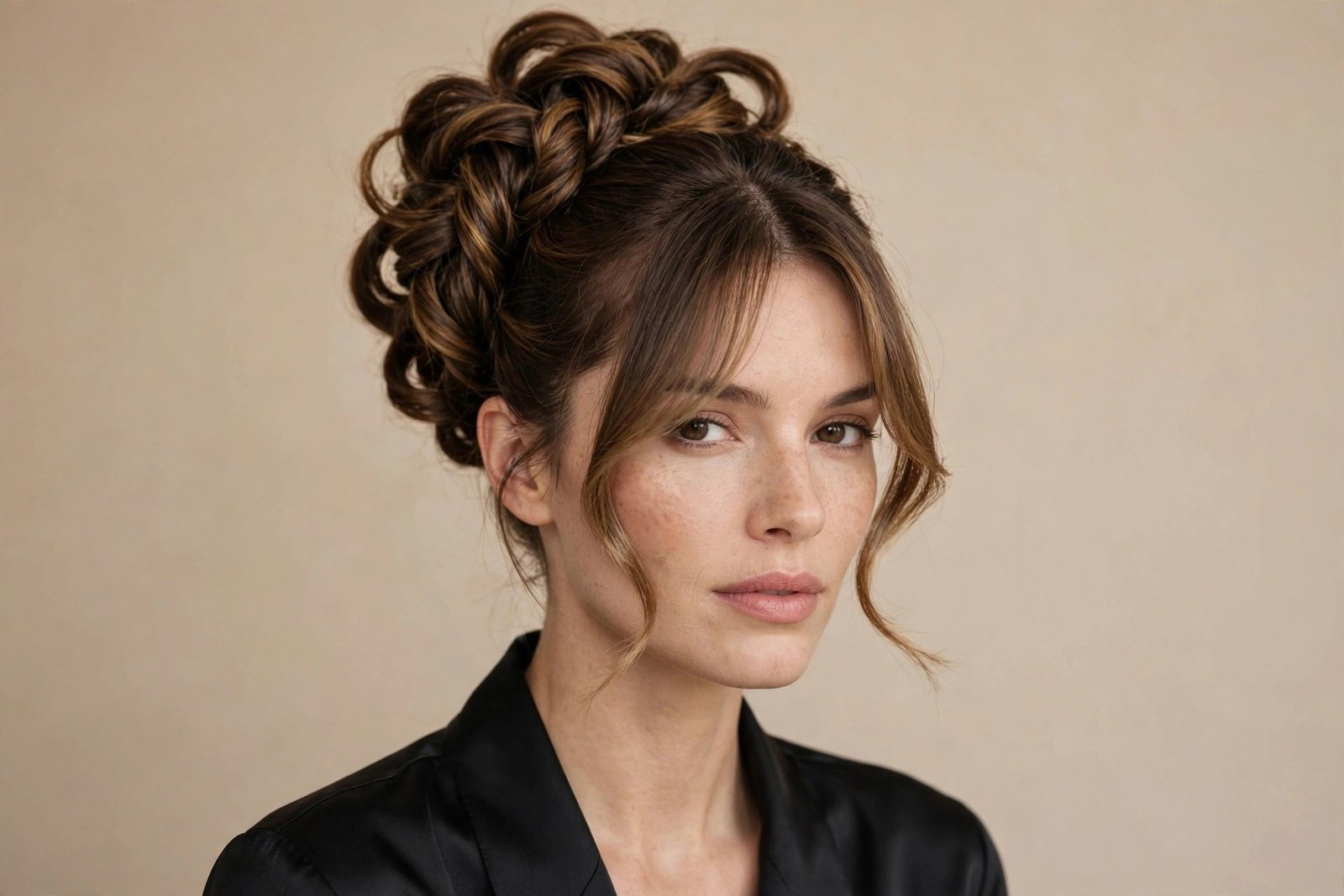
Updos and curtain bangs were made for each other — the updo gives you elegance and the bangs keep it from looking severe. Whether it’s a wedding, a gala, or just a fancy dinner, leaving your curtain bangs out while the rest goes up creates that soft, romantic frame that makes formal hair look expensive rather than stiff.
The cut needs no special instructions — just get curtain bangs at a length that works both down and up (cheekbone to jaw is ideal). For the updo itself: twist, pin, or braid the lengths back loosely, leaving the bangs and a few face-framing pieces free. Slightly loosen the front for softness — formal doesn’t have to mean scraped.
Style the bangs with a little extra polish for events: a smooth blow-dry with curved ends, or soft waves for romance. A touch of shine spray on the bangs photographs beautifully. This is also where the money-piece version (style 23) earns its keep — highlighted bangs against an updo are stunning in photos.
Practical notes: updos pull, so make sure your bangs are long enough not to get yanked into the style — communicate with your stylist if you wear updos often. And bring bobby pins that match your hair color for the loose pieces. Otherwise, this is one of the most foolproof formal looks in existence.
31. Grown-Out Curtain Bangs
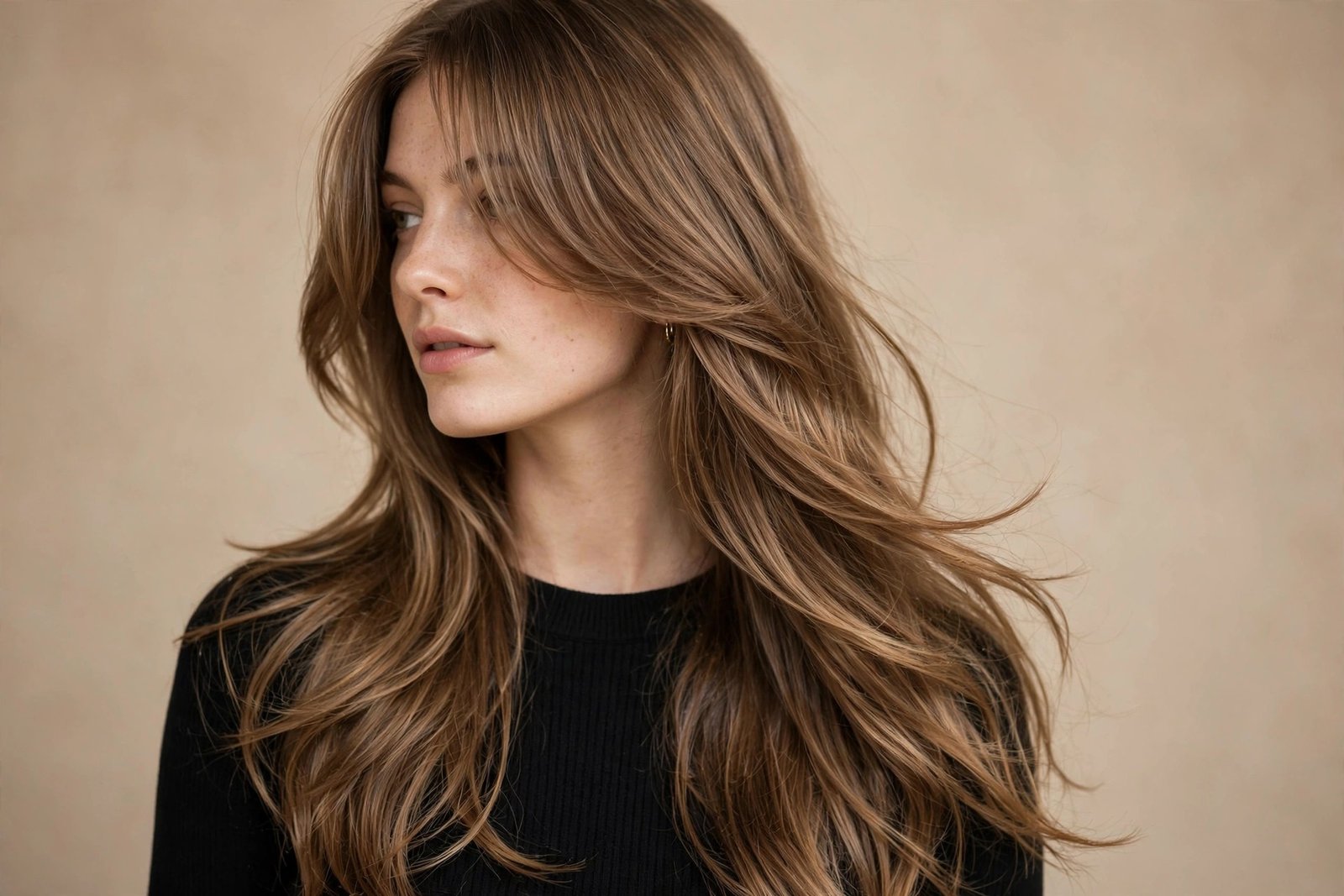
Here’s the secret the salon won’t advertise: grown-out curtain bangs are a legitimate style, not a failure state. When curtain bangs grow past the cheekbones toward the jaw and beyond, they become long face-framing layers — and long face-framing layers are gorgeous. The grow-out IS the style.
This is the phase between trims, or the deliberate choice to grow your fringe out entirely. Either way, it needs a little management: ask your stylist to reshape the grown-out pieces into proper face-framing layers at your next appointment — a 10-minute adjustment, not a full cut. The pieces should cascade, not hang.
Styling grown-out bangs is easy: they’re long enough to tuck, pin, braid into the front, or wear as curtain layers. A round-brush blowout keeps them curving beautifully. This length also works wonderfully in updos and ponytails — the long pieces frame the face while everything else goes back.
The only real downside is the in-between week or two when the bangs are too long to sit right but too short to tuck — headbands, clips, and a bit of texture spray get you through. Honestly, the graceful grow-out is curtain bangs’ superpower over every other fringe. Blunt bangs grow into your eyes; curtain bangs grow into layers. Choose accordingly.
32. Curtain Bangs with a Half-Up Hairstyle
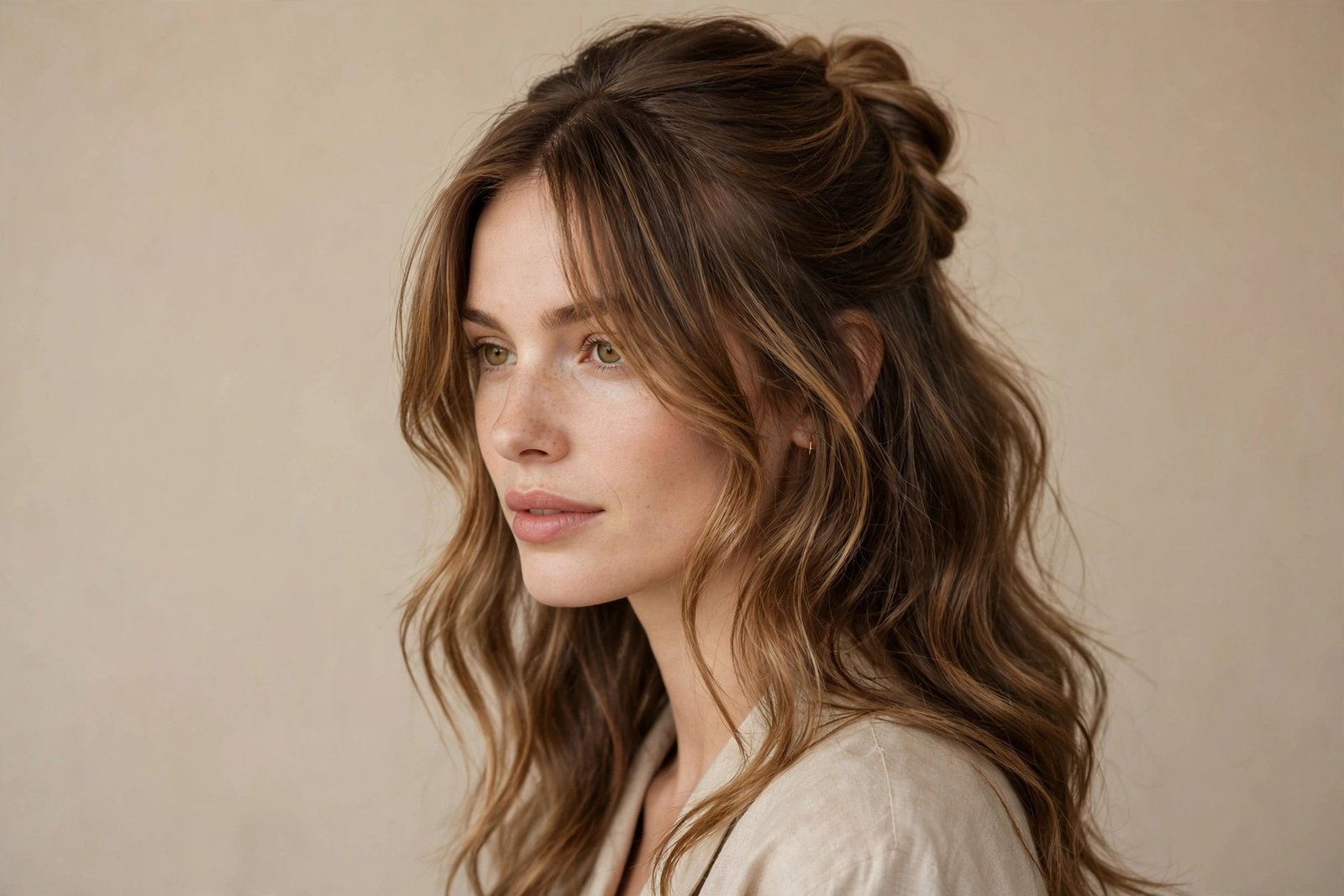
The half-up style is the best of both worlds — hair off your face but length on display — and curtain bangs make it perfect. The bangs frame your face while the top section is pulled back, creating a look that’s polished, feminine, and works for literally every occasion from brunch to weddings.
No special cut needed — your everyday curtain bangs do the job. For styling: gather the top half of your hair (from temple to temple) and secure it back — with an elastic, a claw clip, or twisted and pinned. Leave the curtain bangs completely free in front. Pull out a few extra face-framing strands for softness.
This is a fantastic second-day style: the top section hides roots and oil while the freshly-styled bangs keep everything looking intentional. Add waves to the loose lengths for romance, or keep it sleek for polish. A bow or decorative clip at the back elevates it instantly for events.
Considerations are minimal: if your bangs are very short, make sure the half-up section starts behind them so they stay free. And on fine hair, tease the crown slightly before securing for volume. Otherwise, this is pure, effortless win — the style that makes curtain bangs feel like the best decision you ever made.
The 10-Minute Curtain Bang Styling Routine
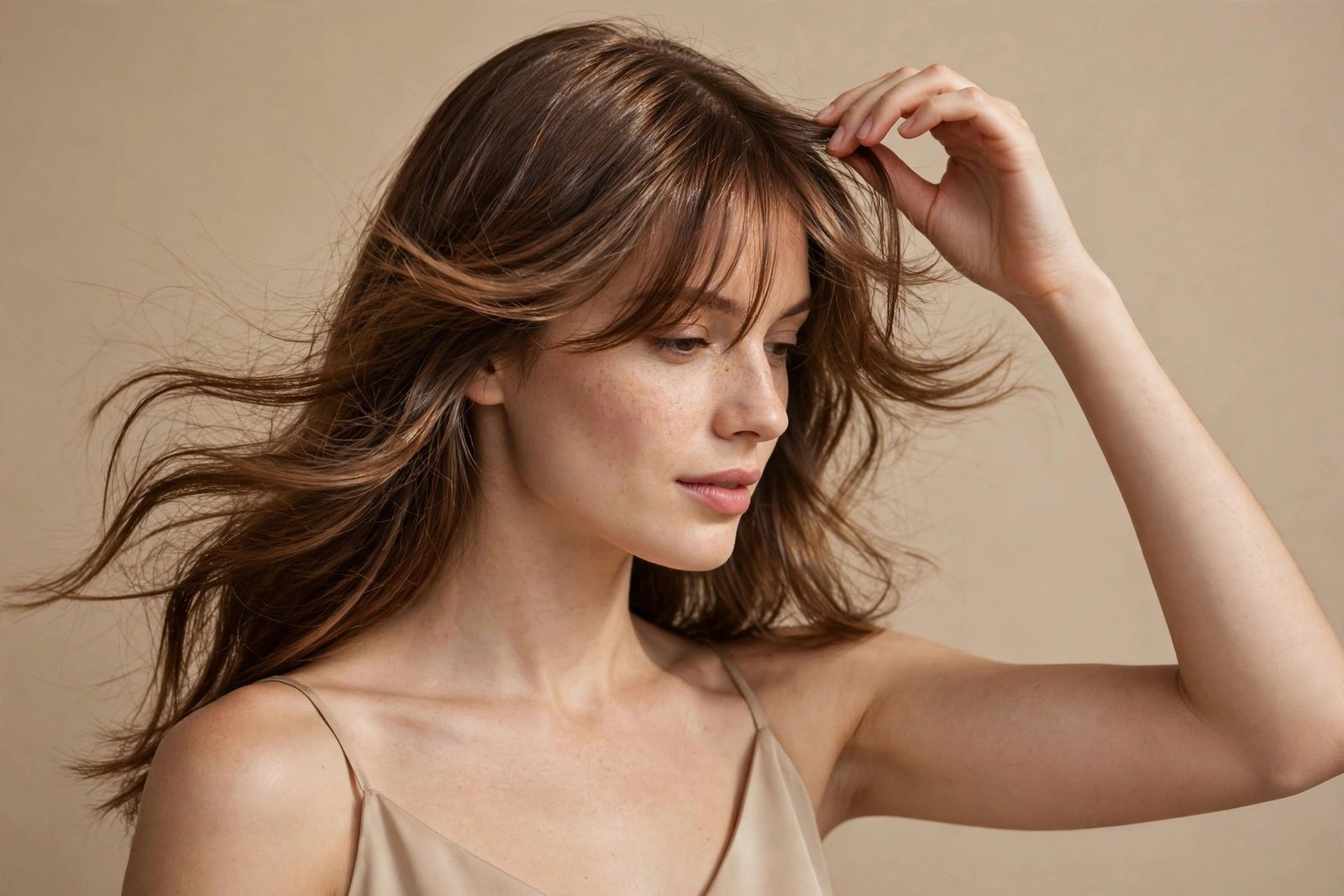
Curtain bangs have a reputation for being low-maintenance, and it’s deserved — but “low-maintenance” doesn’t mean “no-maintenance.” The difference between curtain bangs that look expensive and curtain bangs that look like a mistake is about ten minutes and the right technique. Here’s the complete routine, broken into the pieces that actually matter.
Morning Styling: The Two-Minute Bang Refresh
Your bangs are the first thing to lose their shape overnight — they get slept on, after all. The morning refresh is simple: dampen just the bang section (a spray bottle or wet hands), then blow-dry them forward and down with a round brush, splitting them in the middle while warm. The whole thing takes two minutes and it’s the single highest-ROI step in this entire guide.
No time for the dryer? Twist each side of the damp bangs away from your face, clip them loosely, and let them set while you do your makeup — ten minutes later, unclip for perfect curtain curves. Heatless and effective. On truly rushed mornings, dry shampoo at the roots plus a quick finger-comb gets you presentable; the bangs won’t have their signature bend, but they’ll be clean and separated rather than flat and stringy.
Product-wise, less is more on the bang section. A pea-sized amount of lightweight styling cream or a spritz of texturizing spray is plenty — heavy products drag fine fringe down and make it look greasy by noon. If your bangs separate during the day (the dreaded middle split), it’s usually oil, not technique: blot the roots with blotting paper or a puff of dry shampoo and they’ll fall back into place.
Wash-Day Technique: Setting Yourself Up Right
How you dry your bangs on wash day determines how they behave for the next three days. The golden rule: dry the bangs FIRST, before the rest of your hair. They’re short, they set fast, and if you leave them damp while you dry the lengths, they’ll dry in whatever weird position they landed in — usually flat against your forehead or flipped the wrong way.
The technique: with the bangs damp, blow-dry them side to side — first swept left, then swept right — before styling them in their final parted position. This neutralizes cowlicks and creates root lift in both directions, so the bangs have volume instead of lying flat. Then do the final style: forward and down with a round brush, split in the middle, ends flicked slightly outward. Finish with a shot of cool air to set the shape.
For wavy and curly bangs, the approach flips: apply your curl products to soaking-wet bangs, arrange them in the middle part, and don’t touch them until fully dry — diffusing speeds it up. The less you manipulate curly bangs while drying, the better they behave. And whatever your texture, sleep on a silk or satin pillowcase; cotton creates friction that roughs up the bang section overnight.
The Trim Schedule: Keeping the Shape Sharp
Curtain bangs need trims every 6 to 8 weeks — more often than the rest of your hair, less often than blunt bangs. The signs it’s time: the bangs are poking your eyes, the center part won’t sit right anymore, or the ends look thin and straggly. Don’t wait until they’re a problem; a bang trim is a 10-minute salon visit, and many stylists offer it cheap or free between full appointments.
Between appointments, resist the urge to trim them yourself unless you genuinely know what you’re doing. DIY bang trims are the number one source of bang disasters — wet hair, wrong angle, one snip too many. If you must do a cleanup, trim dry, take off less than you think (you can always cut more), and cut vertically into the ends rather than straight across. Better yet, book the professional trim; it’s fast and it’s their job.
Coordinate your bang trims with your full haircut schedule: most women do a bang trim halfway between full appointments. So if you get a full cut every 12 weeks, the bang trim lands at week 6. Put it in your calendar as a recurring event and you’ll never have a bad bang day from overgrowth again.
Product Arsenal: What You Actually Need
You don’t need a shelf of products for curtain bangs — you need four things. A heat protectant (non-negotiable if you use heat; the fine front hair damages fastest). A lightweight styling cream or blowout cream for the blow-dry. A dry shampoo or dry texture spray for root refresh between washes. And a flexible-hold hairspray for humid days or special occasions. That’s the complete kit.
What to skip: heavy oils on the bang section (they’ll look greasy within hours — keep oils to the mid-lengths and ends), strong-hold gels (they make bangs crunchy and helmet-like), and too much product in general. The bang section is small; product quantities should be too. When in doubt, use half what you think you need.
For product recommendations and technique deep-dives from professional stylists, the hair sections at Byrdie and Allure are consistently reliable — both employ working stylists as contributors rather than just aggregating trends. Cross-reference anything that sounds too good to be true; hair advice on social media is a minefield of sponsored nonsense.
Frequently Asked Questions
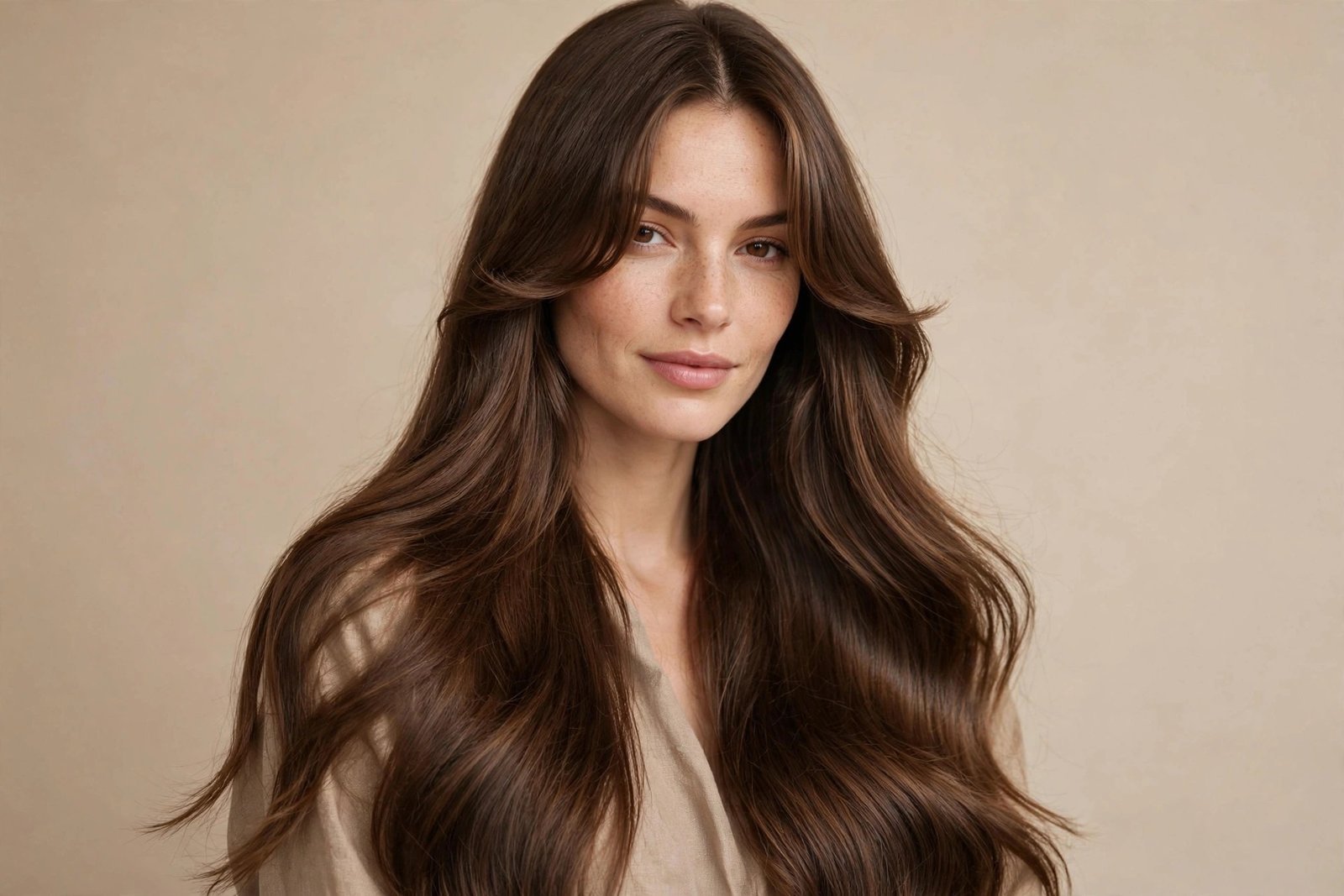
The questions women actually ask about curtain bangs — answered honestly, no salon-speak.
Do curtain bangs suit everyone?
Nearly everyone, with the length adjusted to the face shape. Oval faces can wear any length. Round faces do best with longer curtain bangs that start below the cheekbones, since the vertical lines slim the face. Square faces love the softening effect of curved fringe. Heart-shaped faces are ideal candidates because the bangs balance a wider forehead. Long faces should choose fuller, slightly shorter bangs to avoid adding length. The only real disqualifier is a very strong front cowlick combined with a demand for a perfect center part — but even that can usually be managed by sweeping the bangs slightly to one side.
How do I ask my stylist for curtain bangs?
Bring reference photos — this matters more than any words, because every stylist pictures something slightly different when they hear curtain bangs. Then specify three things: where you want the shortest piece to sit on your face (brow, cheekbone, or lip length), how full you want the fringe (sheer and wispy versus lush), and whether you want them blended into layers. Mention your cowlicks, your natural texture, and how much daily styling you’ll actually do. A good stylist will calibrate the cut to all of it. If they seem unsure what curtain bangs are, that’s your sign to find a different stylist.
How often do curtain bangs need trimming?
Every 6 to 8 weeks for most women, which is more often than the rest of your hair but far less often than blunt bangs need. The signs it’s time are bangs poking your eyes, the center part refusing to sit properly, or thin straggly ends. Many salons offer quick bang trims at low cost or free between full appointments, since it takes about 10 minutes. Schedule the bang trim halfway between your full haircuts and you’ll never deal with overgrown fringe. Avoid DIY trims unless you’re experienced — bang disasters almost always start at home with wet hair and kitchen scissors.
Can I have curtain bangs with curly hair?
Absolutely — curly curtain bangs are stunning — but see a curl specialist and insist on a dry, curl-by-curl cut. Curly hair shrinks dramatically as it dries, so bangs cut wet will end up far shorter than intended. Your stylist should shape each curl individually, with the center pieces shorter and the sides tapering longer. Styling is wash-and-go friendly: products on soaking wet hair, arrange the front curls in a middle part, and don’t touch them until dry. Expect more frequent trims, around every 6 to 8 weeks, because curls grow into each other and lose definition. Humidity will change how they look day to day — that’s texture, not failure.
Do curtain bangs work with glasses?
Yes, and they can look fantastic together — the key is length. Keep the shortest pieces of the bangs at or below the top of your frames so the fringe doesn’t compete with the glasses or get tangled in them. Longer curtain bangs that frame around the frames create a beautiful layered effect. If you wear glasses daily, mention it at your appointment and ideally wear them to the consultation so your stylist can see the proportions. Avoid very short, full curtain bangs with large frames — too much happening in one small area. The curtain bang’s face-opening shape actually complements glasses better than most fringes do.
How long does it take to grow out curtain bangs?
This is curtain bangs’ superpower: they grow out gracefully, unlike blunt bangs which grow into your eyes. Expect the grow-out to take 3 to 6 months depending on your starting length and hair growth rate. During that time the bangs simply become face-framing layers — a legitimate style in its own right, not an awkward phase. Your stylist can reshape the growing pieces into proper layers at regular appointments to keep them looking intentional. Headbands, clips, and pinning one side back get you through any in-between weeks. If you’re growing them out completely, you may never need to look unkempt at any point — which is more than any other fringe can claim.
Are curtain bangs high maintenance?
They’re medium-low maintenance — genuinely one of the easiest fringes to live with. Daily styling takes about two minutes: dampen the bang section, blow-dry forward with a round brush, split in the middle. Many textures can skip even that and just finger-style. Trims every 6 to 8 weeks keep the shape. Compared to blunt bangs (trims every 3 to 4 weeks, daily styling mandatory) or baby bangs (constant upkeep), curtain bangs are a breeze. The highest-maintenance versions are the sleek straight and bouncy blowout styles, which need heat every time. The lowest-maintenance are the long, wavy, and grown-out versions, which practically style themselves.
Conclusion
Curtain bangs earned their permanent place in the hairstyle canon the honest way: by working for real women with real hair and real mornings. They’re the rare trend that’s actually forgiving — flattering across face shapes, adaptable to every texture from pin-straight to coily, easy to style, and graceful to grow out. Whether you go for the classic center-parted version, the edgy choppy take, or the barely-there wispy fringe, you’re choosing a cut with one of the highest satisfaction rates in the salon.
My advice? Start with a photo, be honest with your stylist about your texture and your mornings, and don’t overthink it. If you’ve been circling this decision for months, consider this your permission slip. Book the appointment, bring your three favorite styles from this guide, and enjoy the rare haircut that looks good on day one and keeps looking good for months. Your face-framing era starts now.