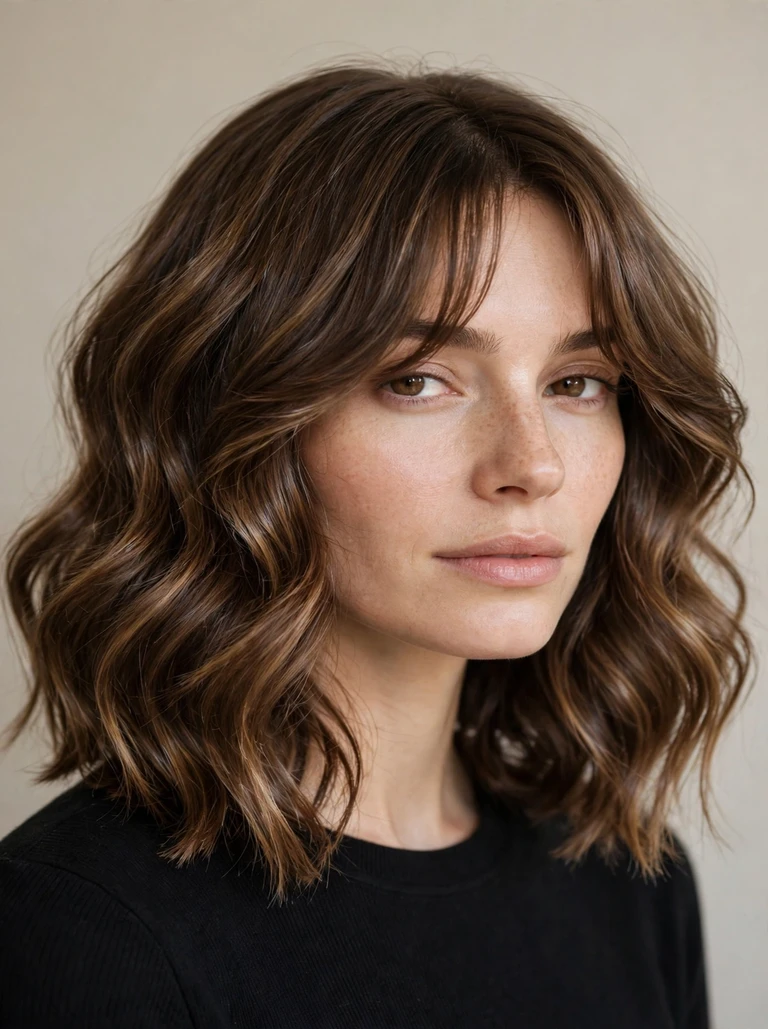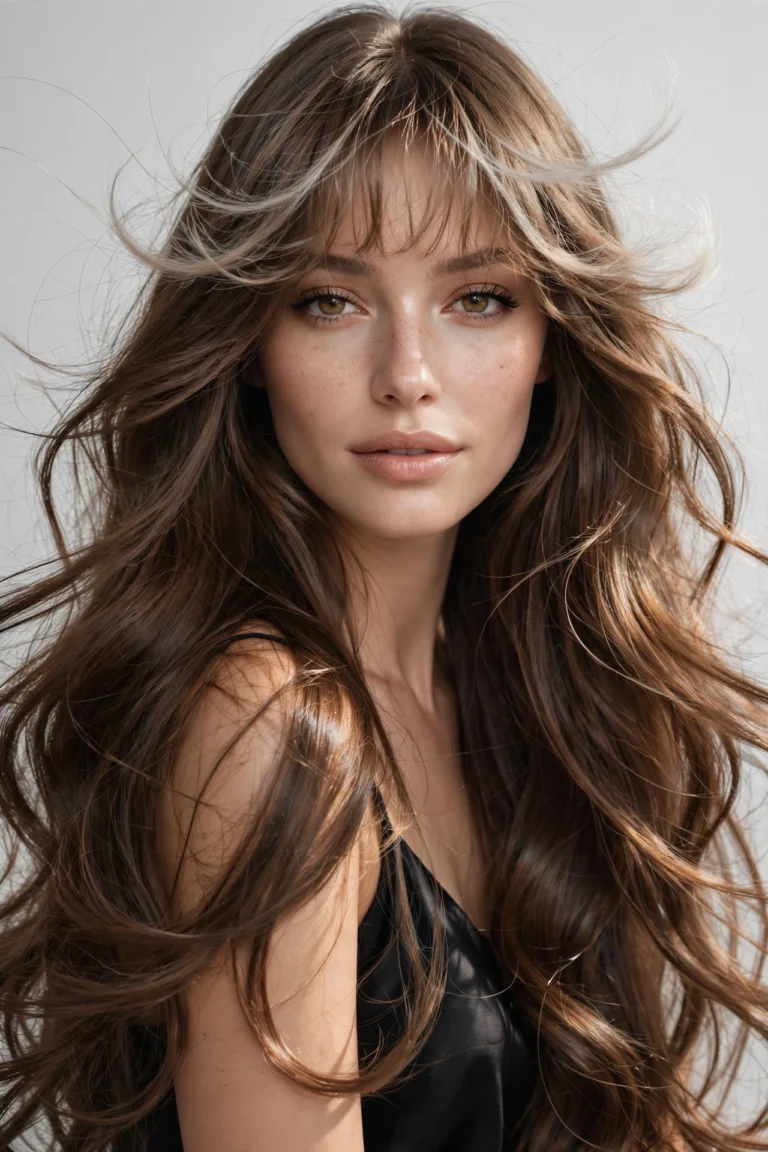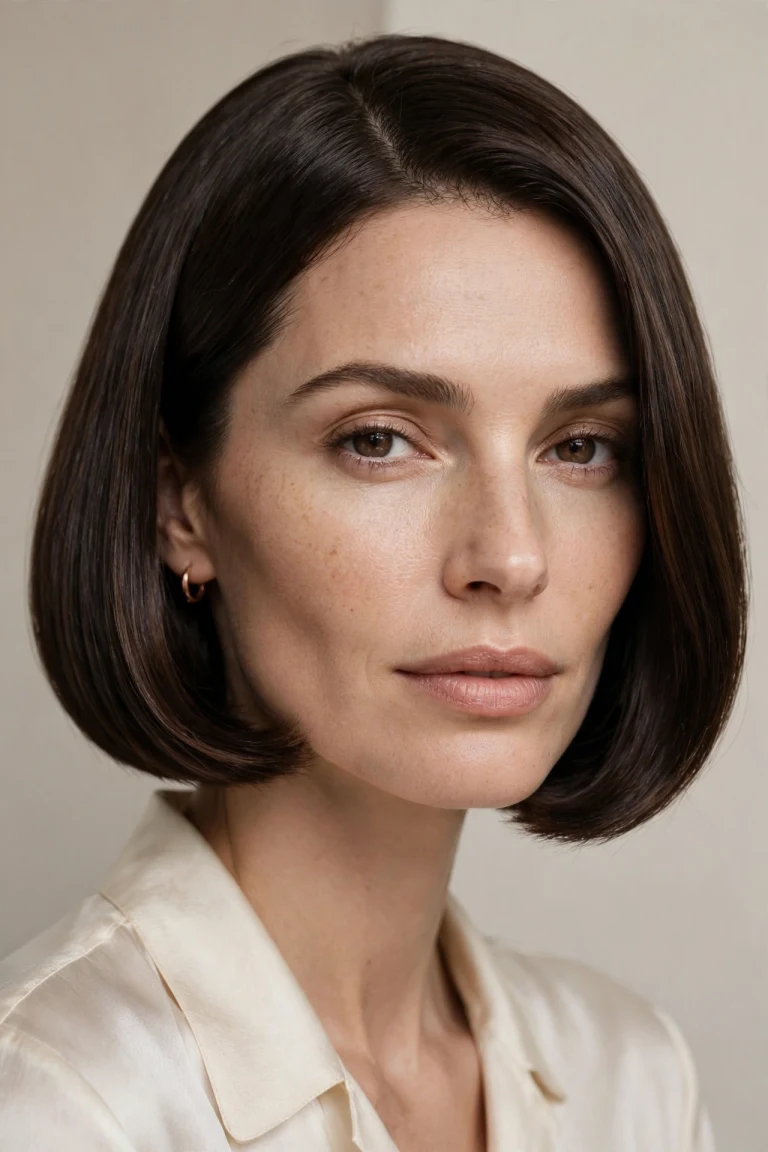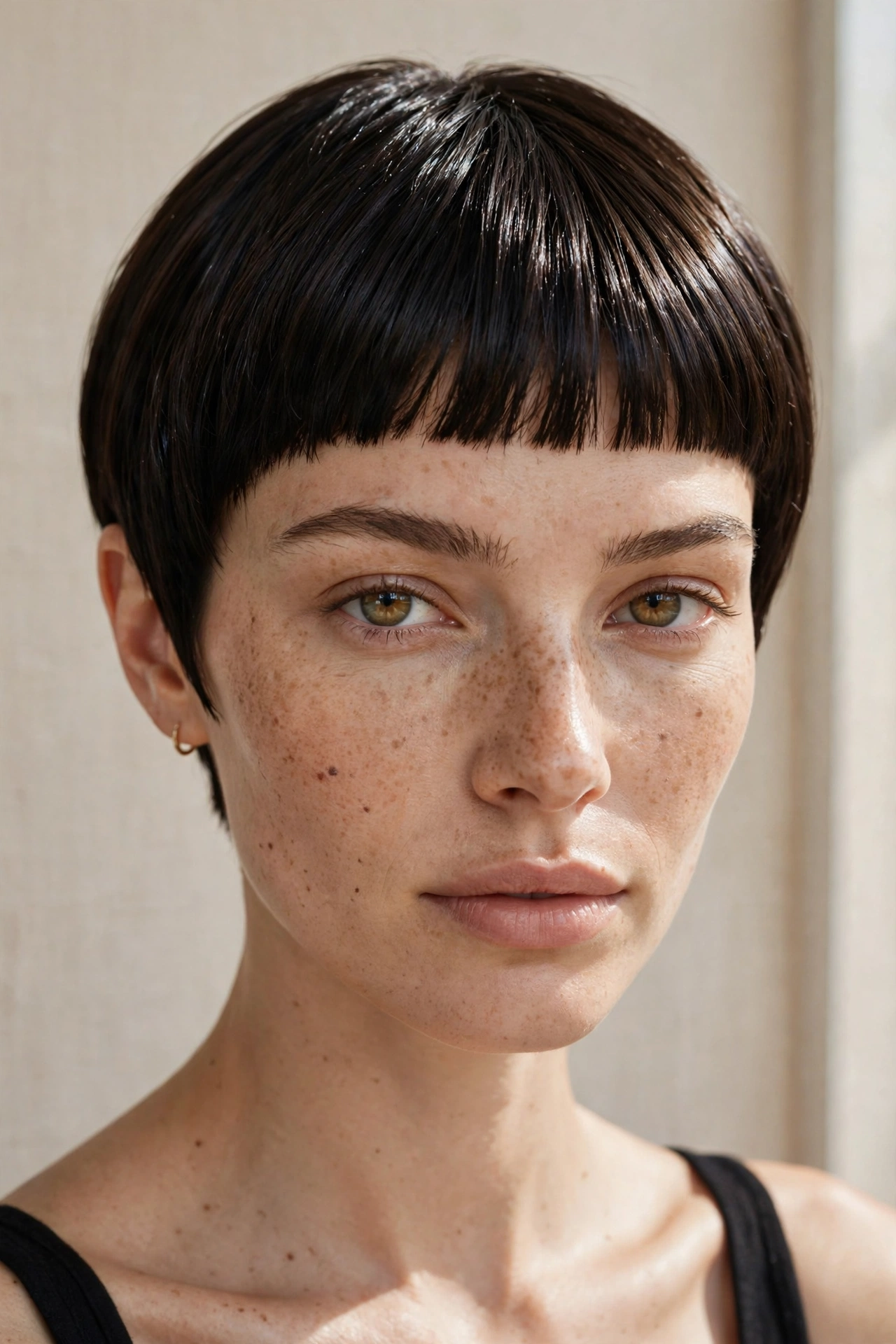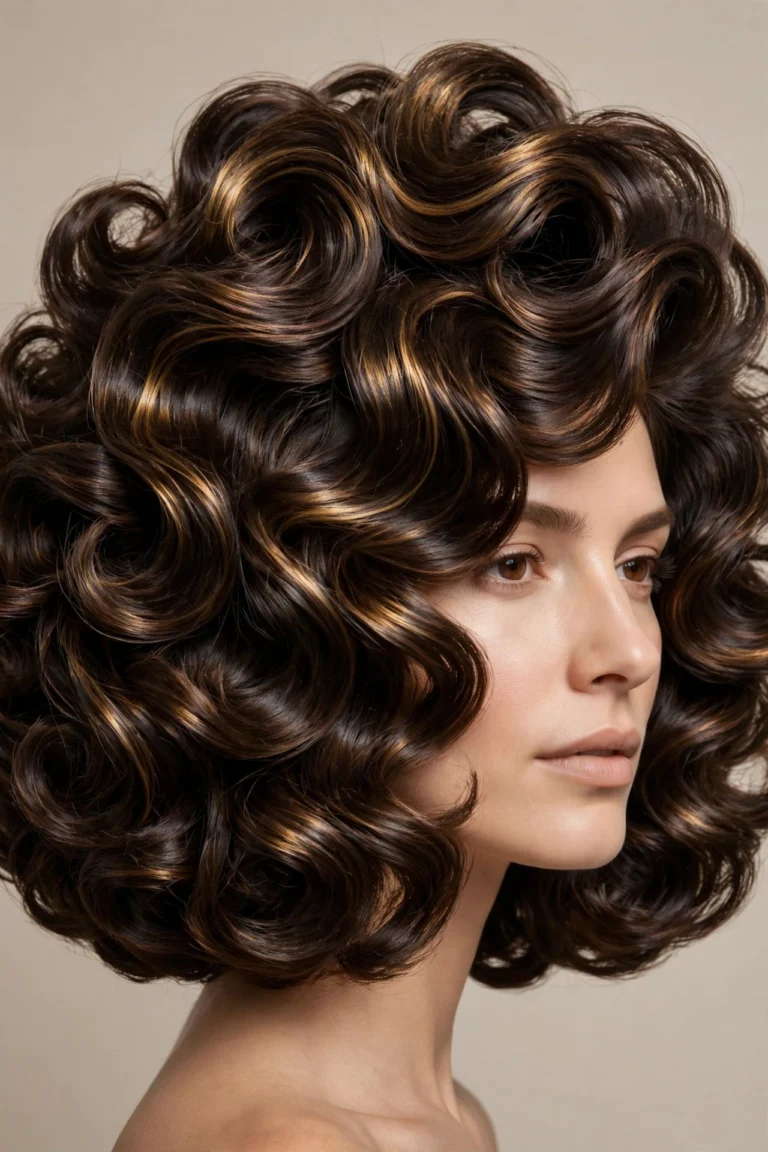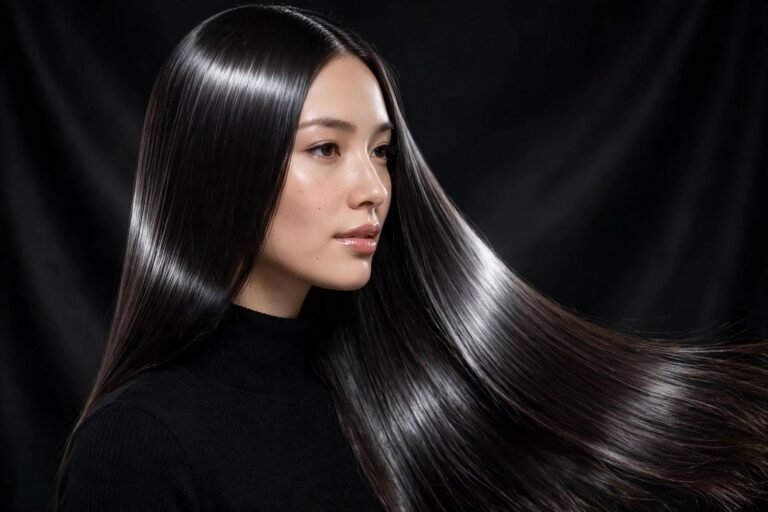
Long Layered Bob Women 2026: 33 Flattering Styles, Styling Tips & Real Talk
The Long Layered Bob 2026: The Cut Everyone’s Asking For
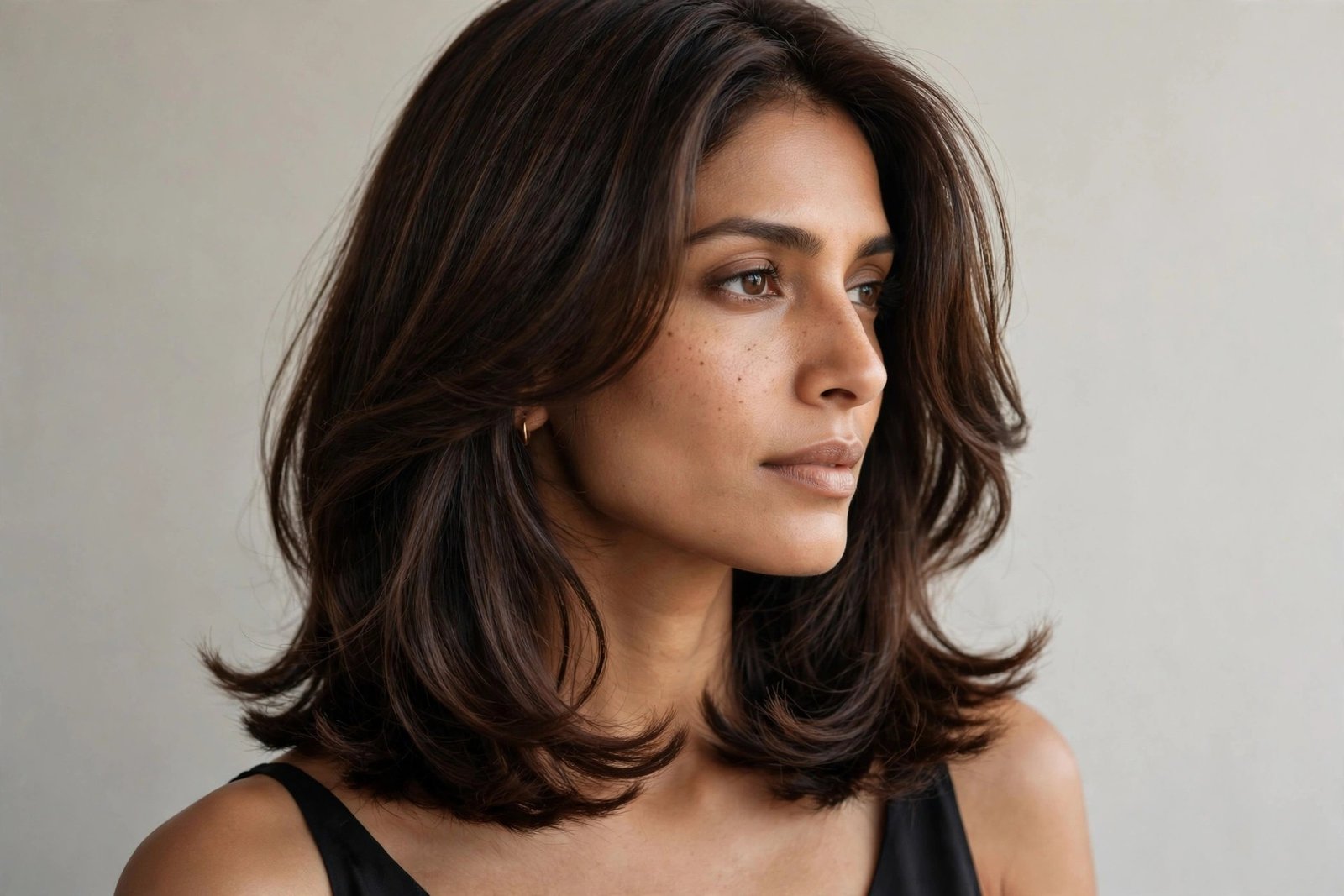
Long layered bob searches are up 622% on Pinterest’s 2026 Beauty Trend Report, and honestly, I’m not surprised — this is the haircut that finally ended the war between women who want short hair and women who can’t commit to it. It gives you the polish and swing of a bob with the styling freedom of longer hair. You can wear it sleek, flip the ends, add waves, pin half of it up, and it still reads as a deliberate, expensive-looking cut on day one and day forty.
Inside this guide: what actually separates a long layered bob from a lob and a classic bob (most people get this wrong), why 2026 crowned it the defining silhouette, 33 genuinely different styles across every texture and face shape, the exact salon script that gets you the modern version instead of a dated one, a realistic styling routine, and the honest maintenance talk nobody else gives you — grow-out, trim schedules, and the fine-hair and thick-hair truth.
I’ve watched bob trends cycle for years, and most of them are flashes: the chin bob that looked incredible for three weeks, the blunt lob that every influencer got and half of them regretted. The long layered bob is different because it’s not a shape, it’s a system — length plus interior layering that adapts to your texture instead of fighting it. That’s why it keeps showing up on runways, red carpets, and your Pinterest feed at the same time. When a cut works on a 22-year-old with a shaggy wolfcut-adjacent version and a 55-year-old with a polished old-money version, it’s not a trend anymore. It’s the new default.
Table of Contents
- The Long Layered Bob 2026: The Cut Everyone’s Asking For
- Who Suits It: Face Shapes, Textures & Honest Caveats
- 33 Long Layered Bob Styles for 2026
- Styling Routine, Products & Maintenance
- Frequently Asked Questions
- Conclusion
Long Layered Bob vs. Lob vs. Classic Bob: What’s the Real Difference?
Let’s settle this, because stylists hear these terms used interchangeably and they are not the same haircut. A classic bob ends at or above the jawline — chin-grazing, sharp, unmistakable. It demands precision: the line is the whole design, and four weeks of growth can wreck it. If you love the look but hate the salon frequency, the classic bob will exhaust you. Our blunt bob guide covers it in full for the purists.
A lob (long bob) sits anywhere from just below the jaw to the collarbone, but the classic lob is one length with a blunt perimeter — no layers, or layers so long they’re decorative. It’s the safe choice: easy to grow out, easy to style straight, but it can fall flat on fine hair and turn bulky on thick hair because there’s no interior engineering.
The long layered bob takes the lob’s length and adds the engineering: visible, deliberate layering through the interior and ends, usually starting around the cheekbones or chin, with face-framing in front and textured or flipped ends. That’s the functional difference — layers remove weight, so the cut moves. On fine hair, long invisible layers create the illusion of density; on thick hair, interior layers remove the bulk that makes one-length lobs puff into triangles. It’s the difference between a haircut that sits and a haircut that swings.
Why does this matter in 2026? Because hair is trending toward movement. Glass hair and blunt perimeters had their era; the current mood — flipped ends, waterfall layers, rich-girl blowouts — is all about hair that looks alive. The long layered bob is simply the cut best built for that mood. If you’re choosing between the three, ask yourself one question: do you want your hair to move? If yes, this is your cut.
Why 2026 Belongs to the Long Layered Bob
Pinterest’s 2026 Beauty Trend Report clocked “long layered bob haircuts” searches up 622%, and search data like that doesn’t lie — it reflects millions of women saving the same silhouette. But numbers only tell you it’s popular. The interesting part is why, and the why is a perfect collision of three things happening at once.
First, color got richer. 2026 is the year of expensive brunette, copper penny, cherry cola and mocha — saturated, dimensional shades that need hair with movement to show off their depth. Flat, one-length hair swallows expensive color; layered hair lets light hit the highs and lows as it moves. Stylists are quietly steering clients toward layers specifically to sell the color trends, and it works. A hair shaft reflects light best when the cuticle lies in varied planes, which is exactly what staggered layers create — that’s the physics behind why layered cuts photograph so well.
Second, the anti-commitment era. Women want a cut that feels like a change without the panic of going short. The long layered bob reads as short hair from the front — swing, bounce, attitude — while keeping enough length at the back to pull into a low pony or claw clip. It’s the haircut equivalent of having your cake. And the grow-out is famously painless: layers growing into longer layers look intentional, not neglected.
Third, styling got easier. The 2026 blowout — flipped ends, curtain movement, soft volume — is built for this exact length. Collarbone hair is the sweet spot for a round brush or blow-dry brush: short enough to style in 15 minutes, long enough for the layers to show. Anything shorter needs daily precision; anything longer doubles the styling time. The long layered bob sits in the golden middle, and that’s no accident.
I’ll be honest with you: trends fade, but this one has structural reasons to stay. Cuts that solve multiple problems at once — length anxiety, styling time, texture versatility — don’t disappear in a season. If you’re getting it now, you’re not late. You’re getting it at exactly the moment the cut is most understood.
Who Suits It: Face Shapes, Textures & Honest Caveats
Here’s the good news: the long layered bob is one of the most forgiving cuts in existence. The layers are adjustable — their starting point, length and direction can be tuned to balance almost any face. Round faces get longer face-framing that starts below the chin, plus a center or deep side part to create vertical lines. Square faces get soft, feathered layers around the jawline that blur strong angles instead of echoing them. Oval faces can wear nearly every version here — curtain bangs or a middle part add personality without risk. Heart faces should keep volume through the ends rather than the crown, balancing a narrower chin with fuller movement at the bottom. Long faces need width: flipped ends, layers that kick outward, and nothing that drags past the collarbone in a straight line.
Texture-wise, this cut is a rare universalist. Fine hair gets long, invisible layers and a slightly blunter perimeter to fake fullness — ask for interior layering that creates movement without visible steps, and never let anyone take thinning shears to your ends. Medium hair is the effortless zone: wash, rough-dry, go. Thick and coarse hair needs aggressive interior layering to remove bulk; done right, thick hair holds the flipped ends and volume this cut is famous for better than any other texture. Wavy hair might be the luckiest — air-dry with a little mousse and the layers style themselves. Curly hair works beautifully too, but it must be cut dry or on dry-stretched hair so the stylist sees the true curl pattern; wet-cut curls spring up and shock everyone.
The honest caveats, because I’d rather you know now. If you never style your hair — no dryer, no brush, nothing — straight fine hair in a long layered bob can look flat and unfinished; the cut assumes at least a rough-dry. If your hair is extremely damaged or over-processed, layers expose breakage faster than one length does — repair first, layer later. And if you’re growing out a pixie, this cut isn’t your next stop yet; you need collarbone-ish length before the layers have room to work. Everyone else? You’re in the clear.
33 Long Layered Bob Styles for 2026
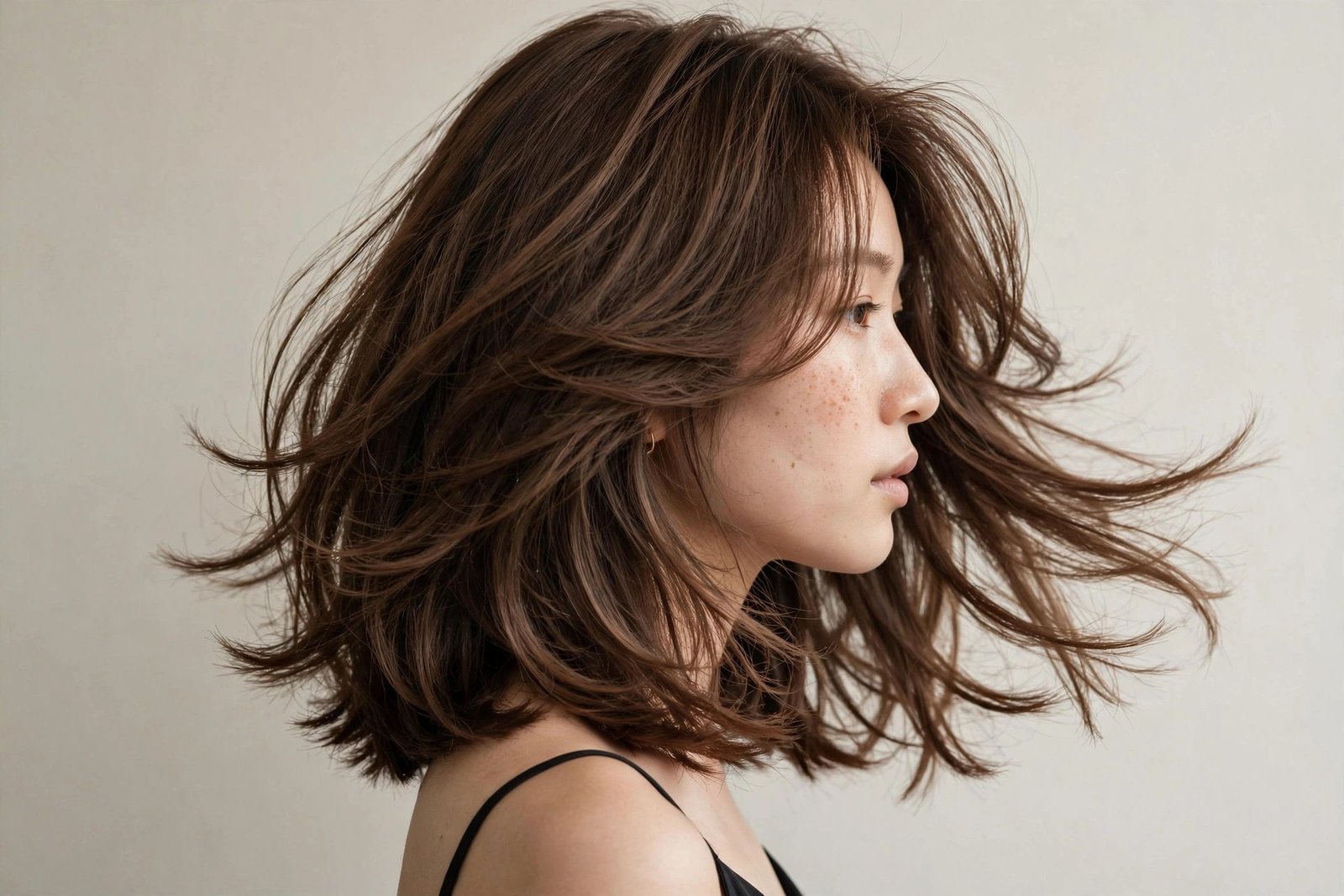
All 33 styles below are built on the same foundation — collarbone-ish length with real layering — but each one is a genuinely different haircut with its own mood, texture strategy and styling routine. Find the one that matches your hair, your face, and the amount of effort you’re actually willing to spend.
1. The Flipped-End Long Layered Bob
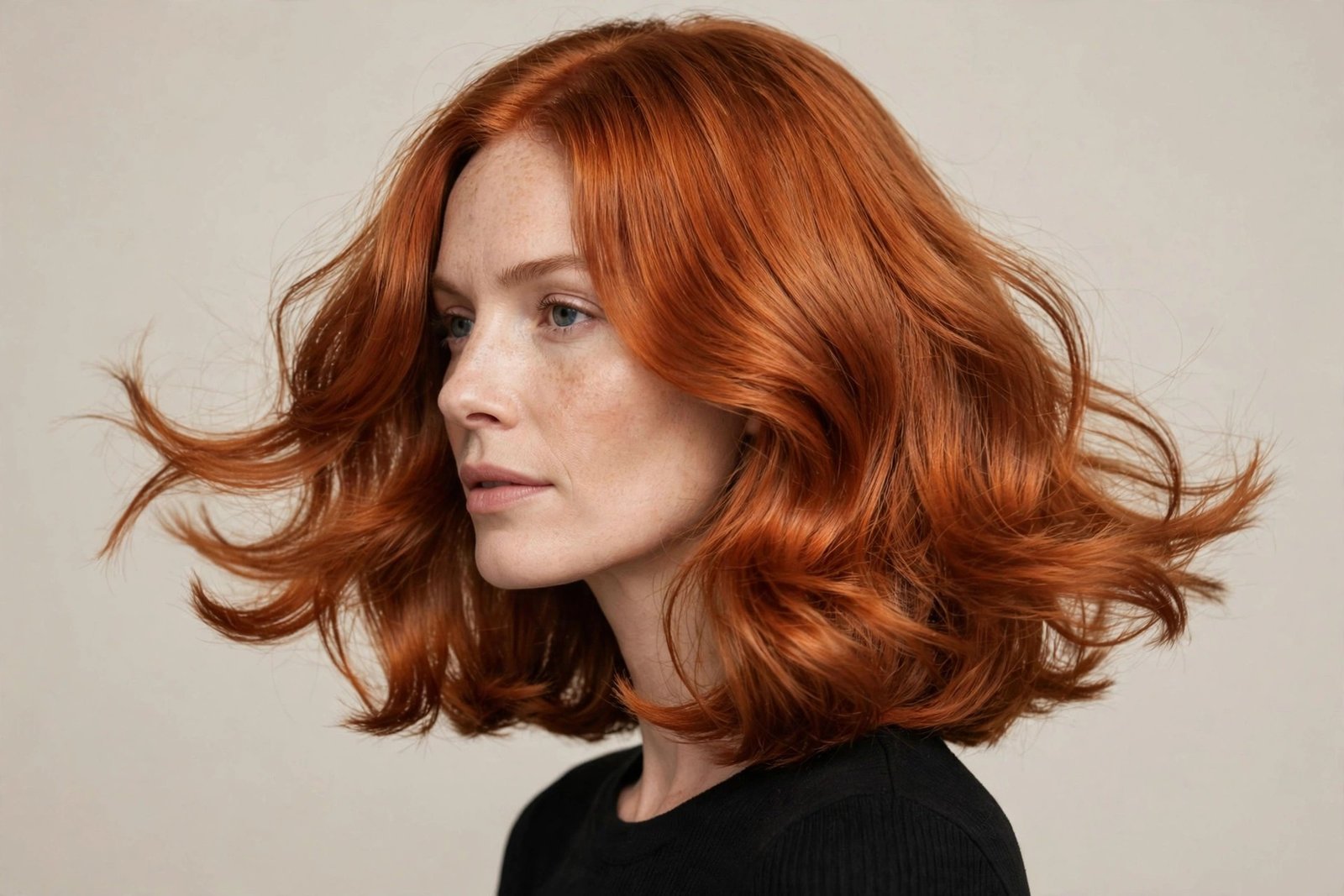
The signature move of 2026: ends that flick outward instead of curling under. It’s a small detail with a huge payoff — flipped ends read playful, modern and expensive, while tucked-under ends can read dated. This is the version all over Pinterest, and the one most women mean when they say “long layered bob.”
Who it suits: nearly everyone; especially flattering on round and square faces because the outward flick creates width at the jaw in a way that slims. Works on straight to wavy hair; very curly hair will fight the flip.
Salon script: “Collarbone length, long layers through the interior starting at the chin, and I want the ends to flip out — point-cut the ends so they have that piece-y flick, not a blunt line.”
Styling (10 minutes): rough-dry until 90% dry, then a round brush on the last 3 inches, rolling outward. A blow-dry brush does this in one pass. Finish with a light shine spray — flipped ends look best glossy.
Maintenance: trim every 8 weeks; the flip disappears first when ends get heavy. Mistake to avoid: using a flat iron on the ends — you’ll press the flip flat and wonder where the magic went.
Pro tips & variations: On humid days, the flip drops first — a pea of smoothing cream on the ends buys you hours. Variation: flip only the face-framing pieces and leave the back straighter for a subtler take. Women over 50: this is your version — the outward movement lifts the face beautifully.
2. Waterfall Layers Long Bob
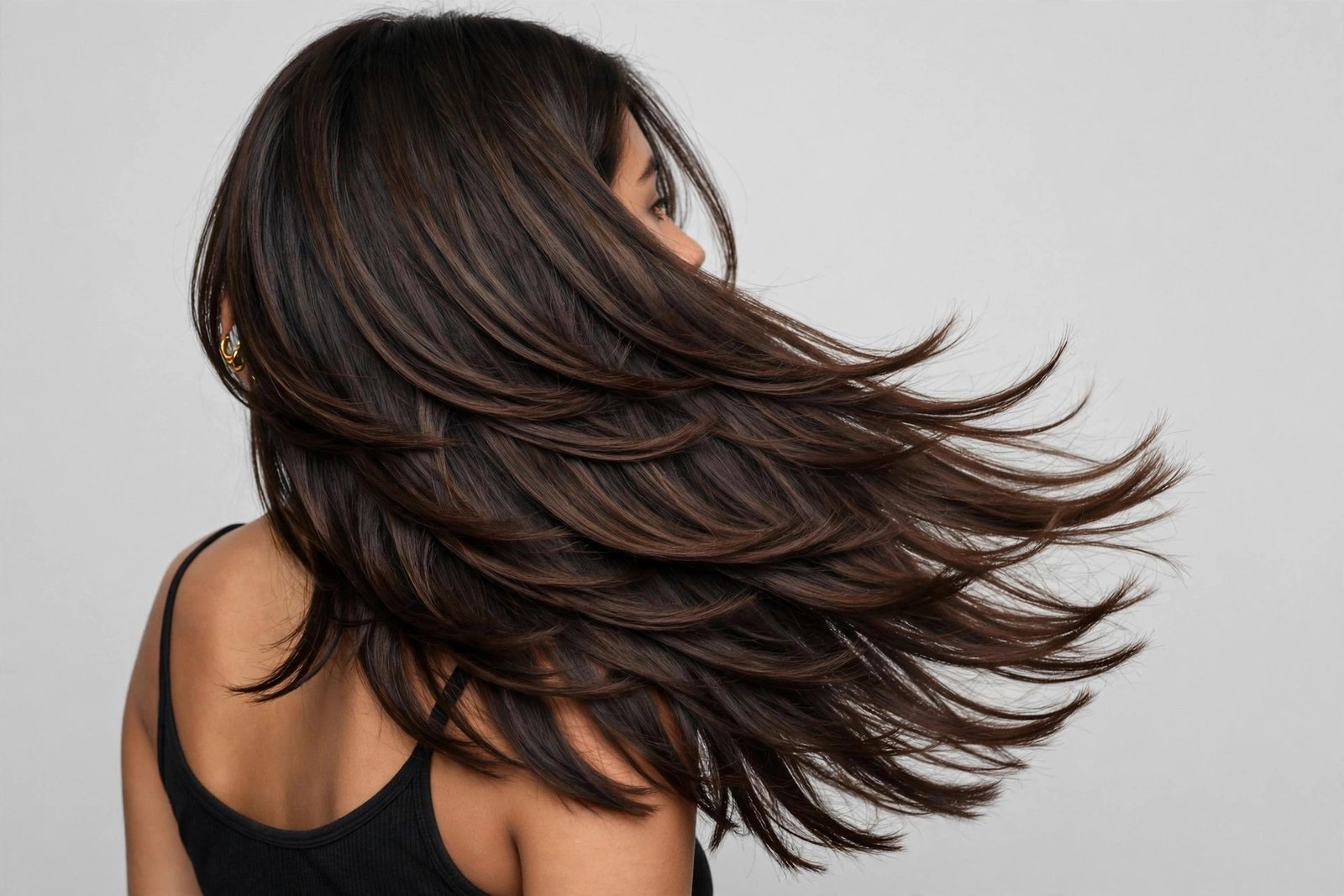
Waterfall layers cascade — each layer melts into the next with no visible steps, like water over rock. The effect is hair that looks impossibly fluid, moving in one continuous sheet. It’s the most romantic version of the long layered bob, and the one that photographs best in motion.
Who it suits: medium to thick hair with some wave or body; straight hair needs styling help to show the cascade. Gorgeous on long and oval faces; round faces should keep the shortest layer below the chin.
Salon script: “I want waterfall layering — seamless, cascading layers with no harsh steps, longest length at the collarbone, shortest layer no higher than the chin. Slide-cut the interior so it flows.”
Styling (12 minutes): blow-dry with a large round brush, directing everything down and slightly back. The goal is seamlessness — no piece-y texture here. A drop of serum on the mid-lengths enhances the liquid look.
Maintenance: 8–10 week trims; the cascade blurs gracefully so grow-out is forgiving. Mistake to avoid: over-texturizing — choppy ends destroy the waterfall effect. This is a smooth-layer cut.
Pro tips & variations: This style loves rich color — the cascading layers show off dimensional brunette or balayage like nothing else. Sleep in a loose low braid to preserve the smoothness. Variation: add a center part for maximum waterfall symmetry.
3. The Textured French-Bob Hybrid
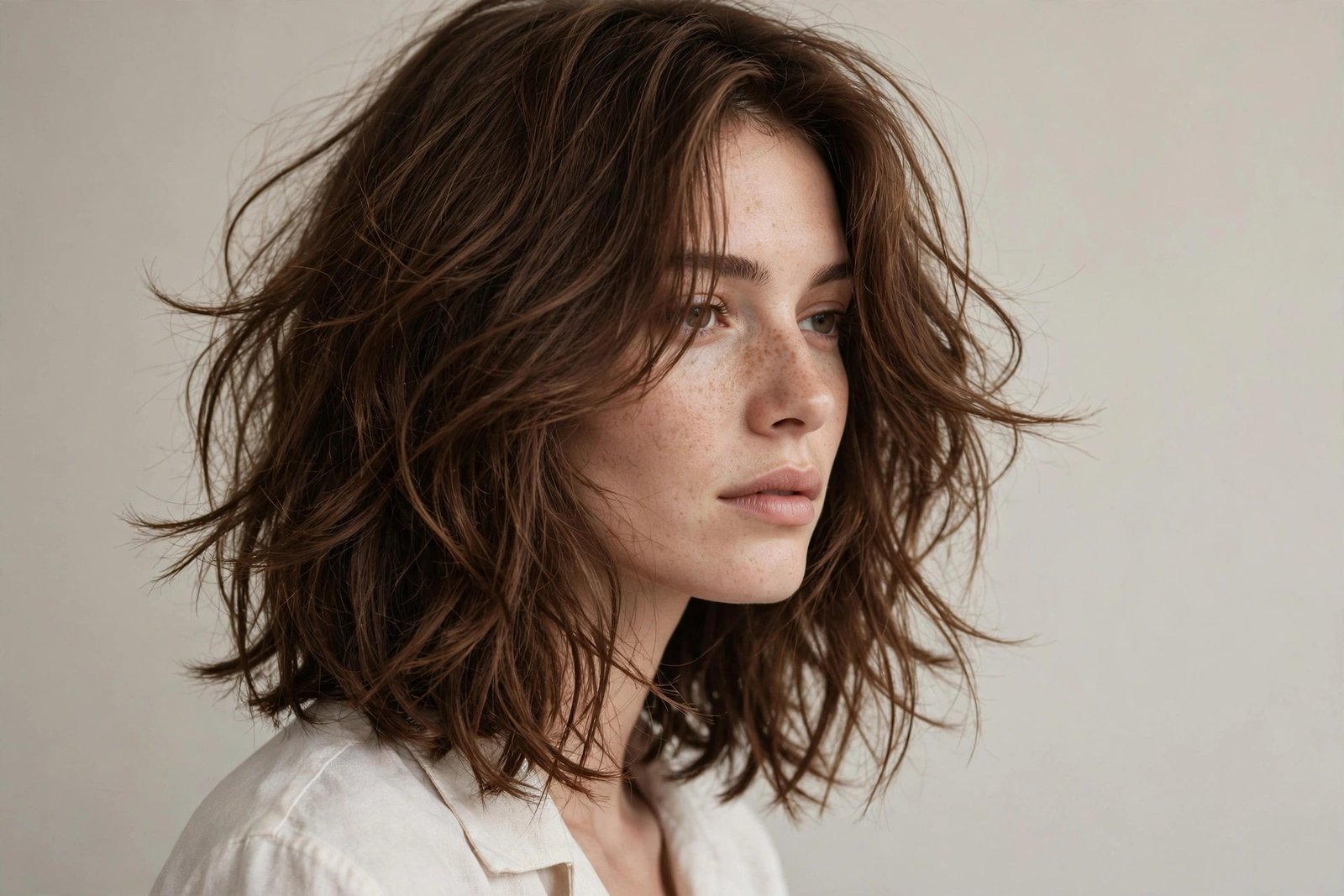
Take the insouciant texture of a French bob — that just-rolled-out-of-bed perfection — and stretch it to collarbone length. The hybrid keeps the French bob’s airy, piece-y ends and effortless fringe-adjacent face-framing, but the added length makes it wearable for women who find the classic French bob too severe. Our French bob guide covers the short original if you ever want to go all in.
Who it suits: fine to medium hair — the texture creates fullness out of thin air. Best on oval, heart and long faces; the tousled finish softens everything.
Salon script: “A grown-out French bob: collarbone length, dry-cut with lots of interior texture, piece-y ends, and soft face-framing that could almost be bangs. I want it to look undone, not unfinished.”
Styling (8 minutes): texture spray on damp hair, scrunch, air-dry or diffuse. This cut is designed to look better slightly messy — perfectionism ruins it.
Maintenance: 10-week trims; the undone texture hides growth brilliantly. Mistake to avoid: over-styling it sleek — you’ll erase the entire point of the cut.
Pro tips & variations: Second-day hair is this cut’s best friend — a little natural oil gives the texture grip. Variation: add wispy micro-fringe for the full Parisian effect, or keep it fringe-free for a cleaner line.
4. Curtain Bangs + Long Layers
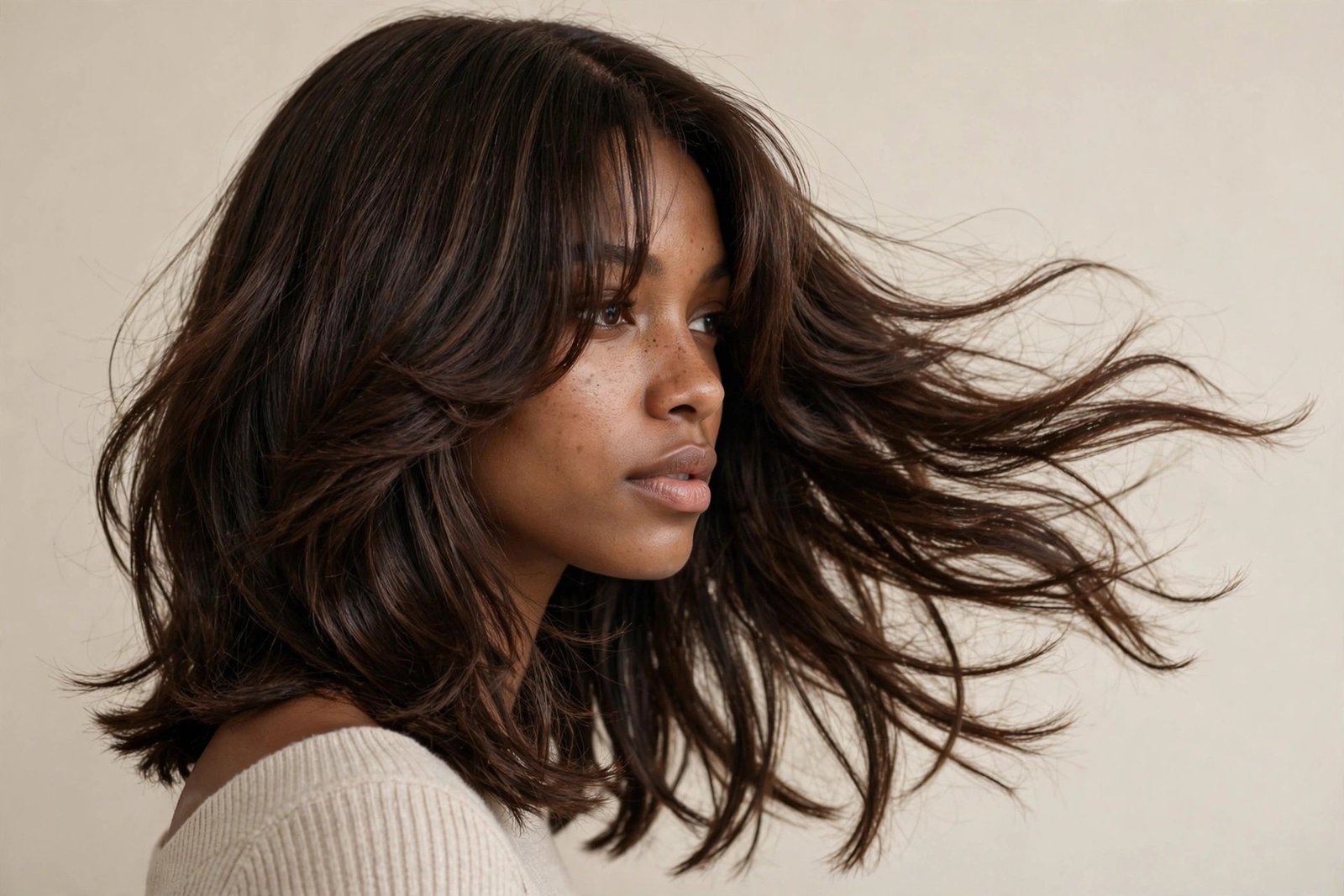
Curtain bangs and long layers were made for each other — the bangs melt into the face-framing layers so there’s no line where fringe ends and layers begin. It’s the most face-flattering combination in this entire guide, and the most forgiving if you’re bang-curious but bang-phobic. See our deep dive on curtain bangs with long layered hair for the full pairing logic.
Who it suits: everyone, genuinely — but it’s a miracle worker on high foreheads, long faces, and anyone who wants cheekbone emphasis. Fine hair should keep the bangs light to avoid a stringy look.
Salon script: “Long layered bob to the collarbone, plus curtain bangs that start at the cheekbones and blend into the face-framing layers. Cut the bangs dry so they fall naturally.”
Styling (12 minutes): blow-dry the bangs first (they set fastest) with a round brush, sweeping each side outward. Then style the lengths as usual — the bangs lead, the layers follow.
Maintenance: bang trims every 4–5 weeks (quick, cheap, often free); full cut every 8–10. Mistake to avoid: cutting the bangs too short or too thick — curtain bangs should be wispy and long, never a heavy block.
Pro tips & variations: Train new curtain bangs by blow-drying them in the direction you want for the first week — hair has memory and you’re teaching it. Variation: bottleneck bangs (see #20) for a bolder take on the same idea.
5. Copper Penny Long Layered Bob
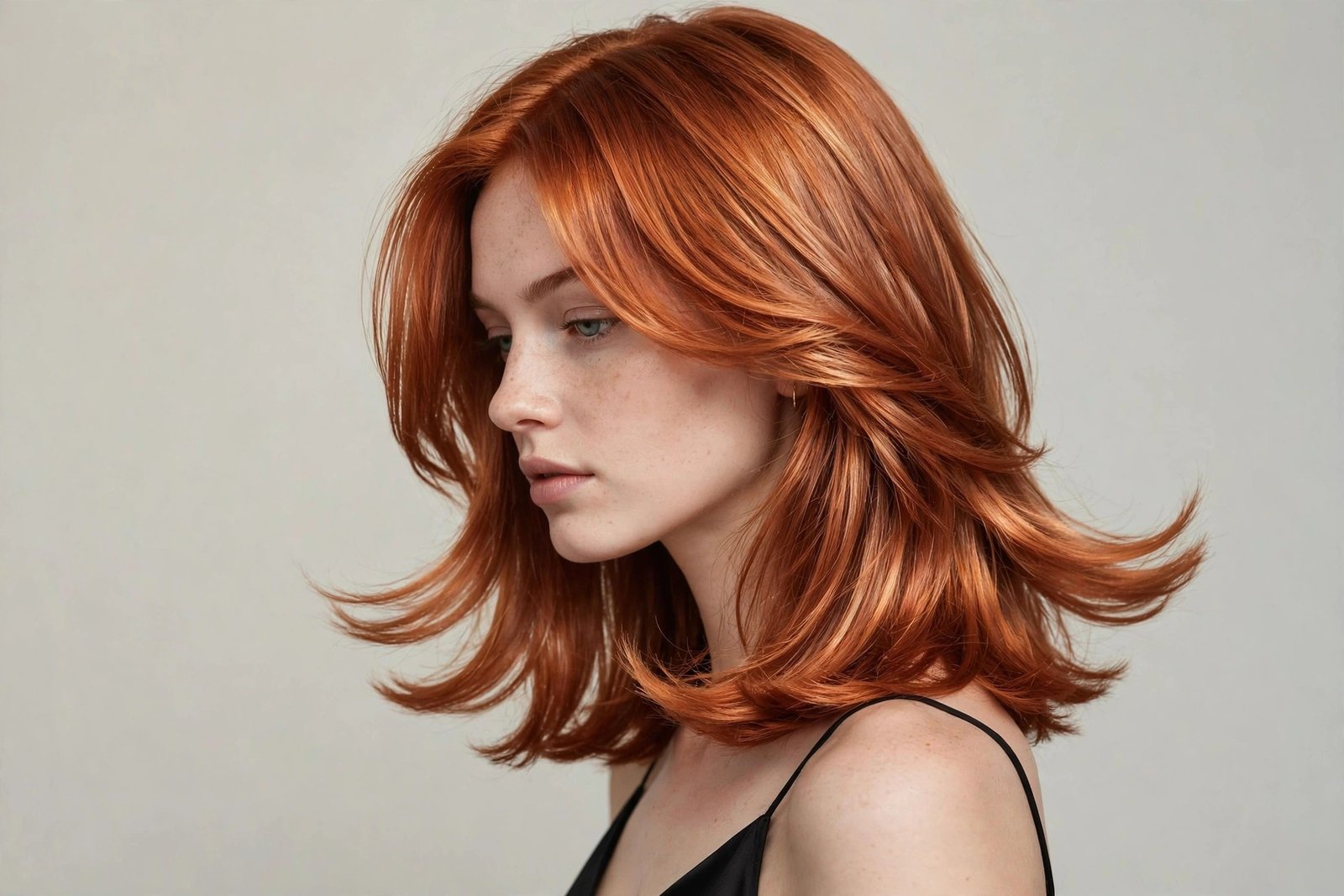
Copper is the color story of 2026, and layered bobs are its best canvas. Penny copper — bright, metallic, unapologetic — needs movement to show its fire, and every layer catches the light differently. One-length copper can look flat and wig-like; layered copper looks alive. Allure has been tracking copper’s rise for three straight seasons, and the layered bob is where the trend landed hardest.
Who it suits: fair to medium skin with warm or neutral undertones glows in copper; very cool skin tones should ask for a more muted, auburn-leaning copper. All textures — curls in copper are spectacular.
Salon script: “Long layered bob, collarbone length — and I want a penny copper all over, or a copper gloss over my natural base. Keep the layers soft so the color reads dimensional.”
Styling: same as any layered bob, but color care is the real routine: sulfate-free shampoo, wash in cool water, copper-depositing mask every 2–3 weeks. Copper fades faster than any shade — that’s the tax on the trend.
Maintenance: color refresh every 4–6 weeks; cut every 8–10. Mistake to avoid: hot water washes — you’ll watch your copper swirl down the drain. Cool water only.
Pro tips & variations: Can’t commit? A copper gloss (demi-permanent) gives you 6–8 weeks of fire with zero grow-out line. Variation: copper balayage over brunette for the commitment-phobic — all the glow at the ends, natural roots.
6. Cherry-Cola Long Layered Bob
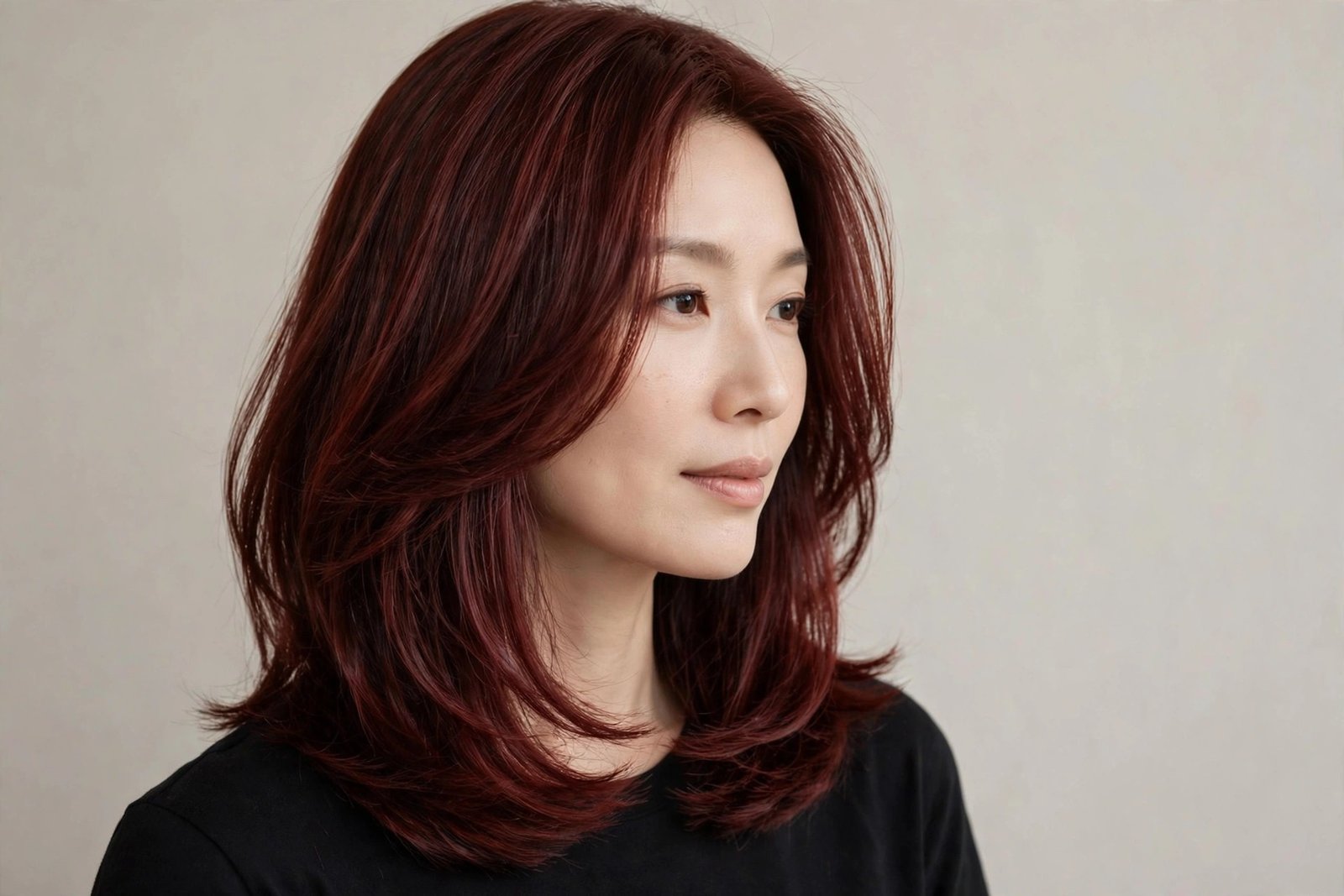
Cherry cola — deep brunette shot through with black-cherry red — is 2026’s moody answer to copper. It’s darker, richer, more mysterious, and it turns the layered bob into something almost editorial. In sunlight the red ignites; indoors it reads as the glossiest brunette you’ve ever seen. Layers are essential here: the red dimension hides in one-length hair and explodes in layered hair.
Who it suits: medium to deep skin tones are stunning in cherry; fair skin works if the red leans more cola than cherry. Best on medium to thick hair that can carry the depth.
Salon script: “Long layered bob to the collarbone — and a cherry-cola color: deep brunette base with red-violet reflects. I want it rich, not bright — more cola than fire engine.”
Styling: shine is everything with this shade. Blow-dry smooth with a round brush, finish with shine spray. Red tones look dull fast without gloss — a clear gloss treatment every 6 weeks keeps it expensive.
Maintenance: color every 5–7 weeks (red fades); cut every 8–10. Mistake to avoid: box dye in “dark red” — it goes flat and muddy. This shade needs a colorist’s layering of tones.
Pro tips & variations: Cherry cola is the lowest-commitment fashion color — it fades into a pretty brunette, not an awkward in-between. Variation: cherry money-piece (see #21) over natural brunette for a taste without the full dye.
7. Mocha Expensive-Brunette Layered Bob
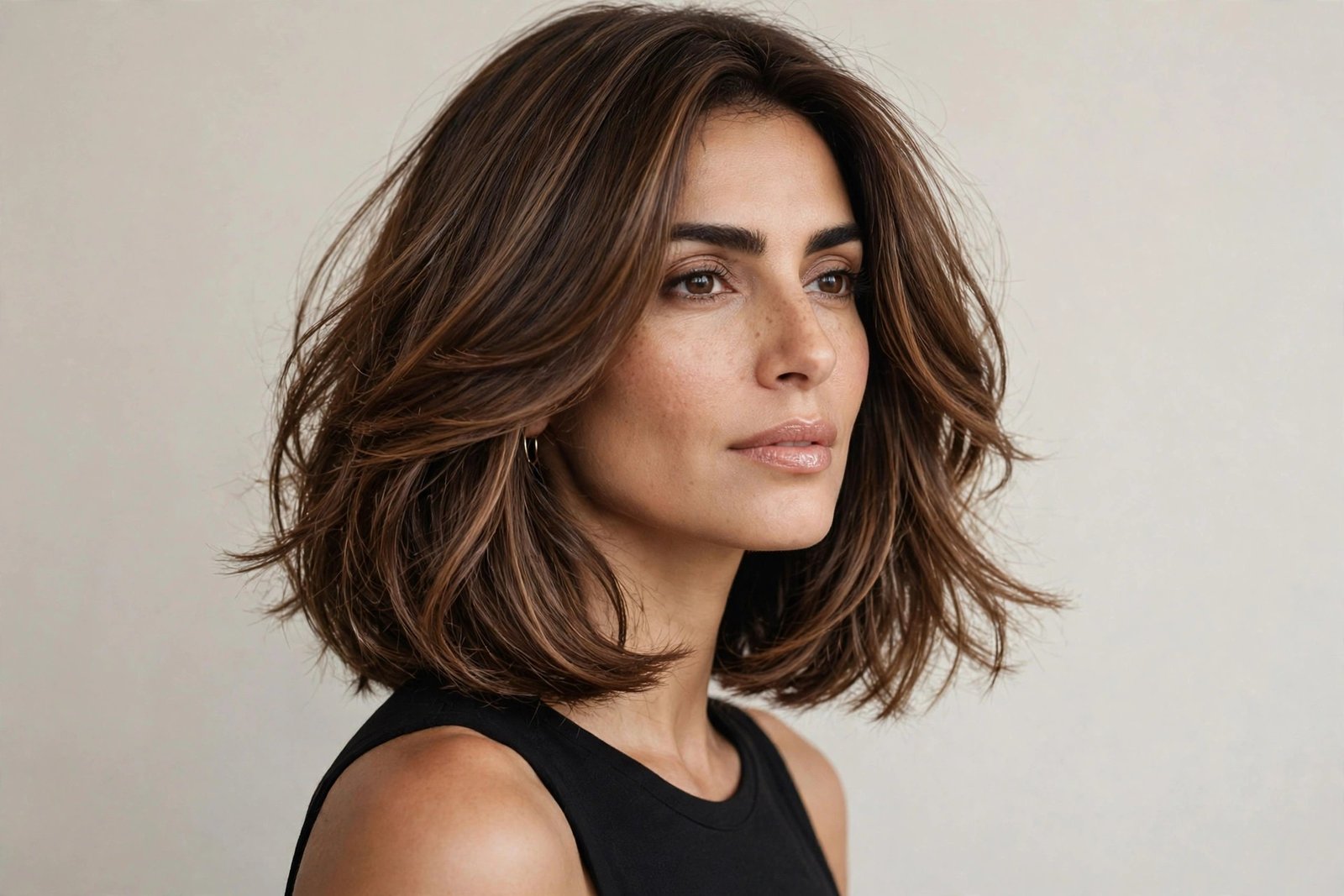
“Expensive brunette” — multi-tonal, glossy, dimensional brown — is the quiet-luxury answer to 2026’s color trends, and the long layered bob is its natural partner. Mocha sits between chocolate and espresso with ribbons of lighter brown that the layers expose as the hair moves. It doesn’t scream; it whispers money. This is the version for women who want to look polished without looking like they tried.
Who it suits: nearly every skin tone — that’s the point of expensive brunette; the colorist tunes the ribbons to you. Especially gorgeous on medium and olive skin. All textures.
Salon script: “Long layered bob, collarbone — and expensive-brunette color: my natural base deepened with mocha lowlights and a few lighter ribbons through the layers. Glossy, dimensional, natural-looking.”
Styling (10 minutes): blow-dry smooth or with flipped ends; this color looks best polished. A glossing treatment at home every month keeps the “expensive” in expensive brunette.
Maintenance: gloss refresh every 6–8 weeks; cut every 8–10. The grow-out is graceful — lowlights fade softly. Mistake to avoid: going too dark all over — one flat shade kills the dimension. The ribbons are non-negotiable.
Pro tips & variations: Bring photos of the exact brown you want — “expensive brunette” means ten different things. Variation: add a subtle balayage melt (see #29) for sun-kissed dimension on top of the mocha base.
8. The Glass-Hair Long Layered Bob
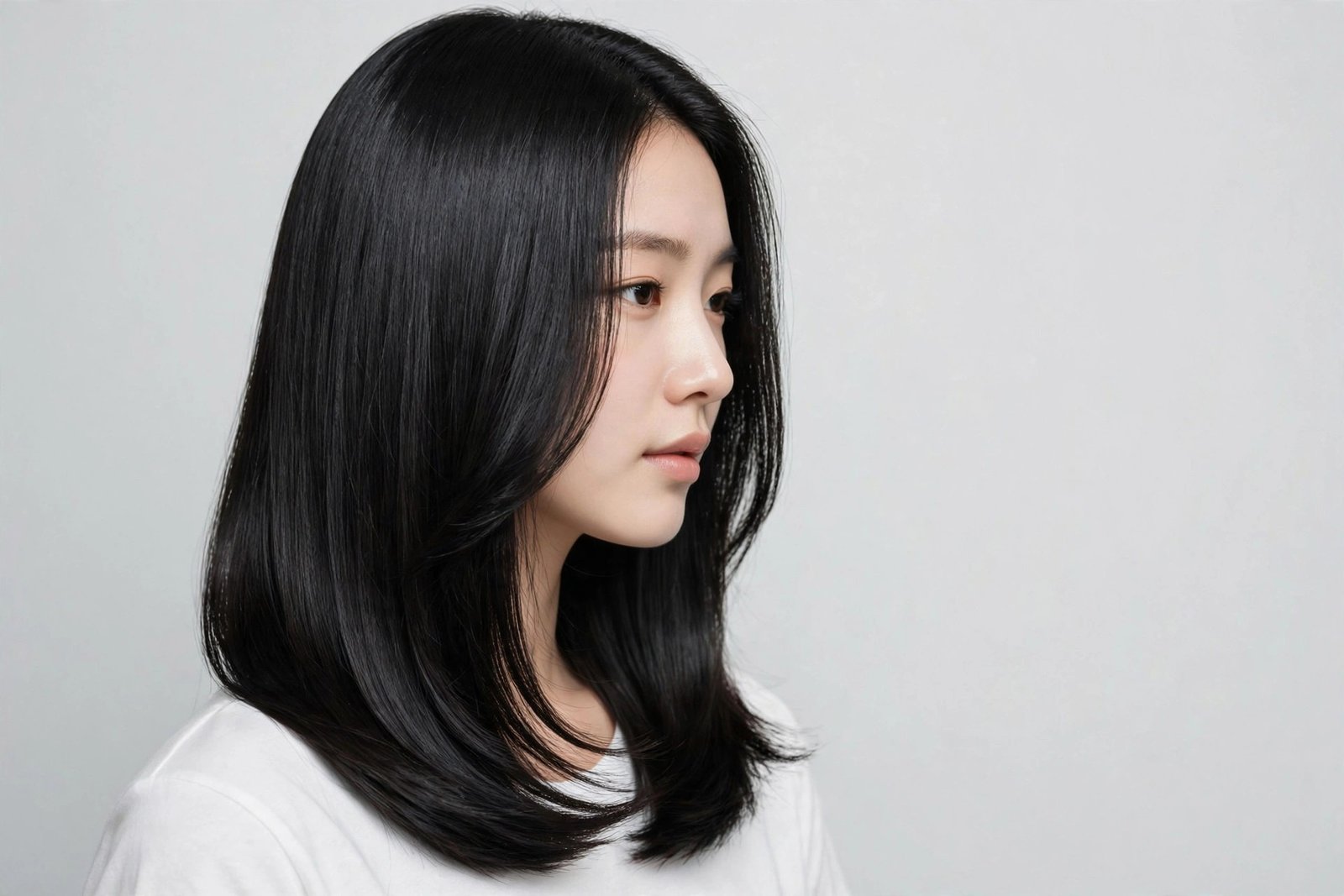
Glass hair — hair so smooth and reflective it looks like polished obsidian — meets the layered bob, and the result is the sleekest version on this list. The trick: the layers are long and seamless, so the surface stays unbroken and light slides across it in one sheet. It’s minimalism as a flex. Jet black or deep espresso shows it best, but glass blonde exists and it’s stunning.
Who it suits: straight to slightly wavy hair; curls can’t do glass without a fight. Best on oval and long faces — the sleekness elongates. Fine hair looks twice as thick in glass finish.
Salon script: “Long layered bob, collarbone — but I want glass-hair finish: long seamless layers, no texture, ends cut blunt-clean. And a keratin or smoothing treatment if my hair needs it.”
Styling (15 minutes): blow-dry straight with a paddle brush and tension, then flat-iron in small sections. The non-negotiable: shine serum on the lengths and a final pass of shine spray. Glass hair is 20% cut, 80% finish.
Maintenance: trims every 6–8 weeks — glass shows every split end. Mistake to avoid: skipping heat protectant. Glass hair on fried hair is impossible; the shine comes from a healthy cuticle.
Pro tips & variations: A clear gloss in-salon every 6 weeks is the cheat code — it seals the cuticle and doubles the reflectivity. Variation: middle part for maximum severity and shine, or a deep side part for drama.
9. The Rich-Girl Blowout Layered Bob
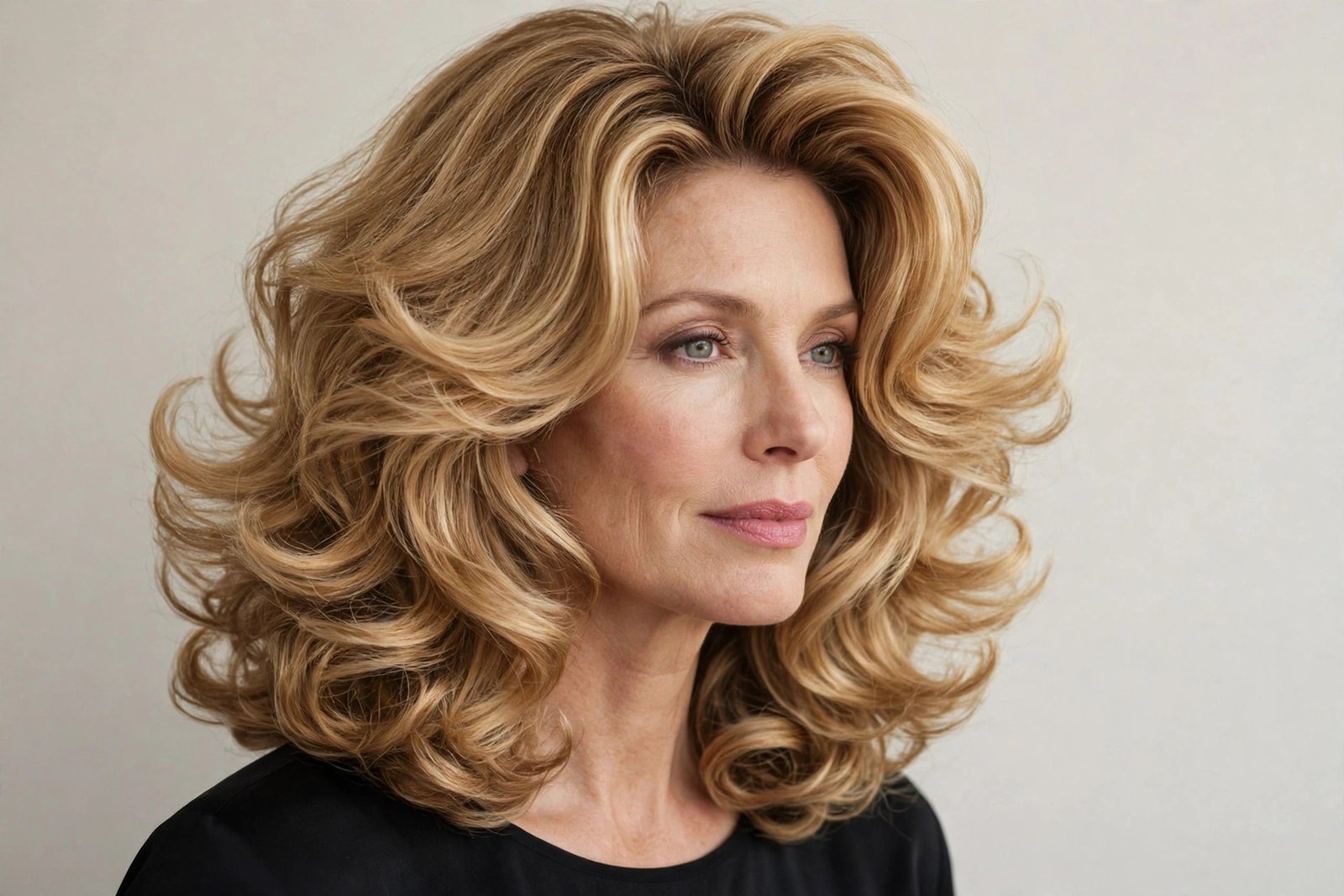
Big, bouncy, expensive-looking volume — the blowout that says you have a standing weekly appointment (even if you don’t). On a long layered bob, the blowout gets its bounce from the layers themselves: each tier springs independently, creating that stacked, cushiony volume. This is the most requested salon styling of 2026, and this cut is built to hold it.
Who it suits: medium to thick hair holds the bounce longest; fine hair can do it with the right products but expect a shorter lifespan. Flattering on every face shape — volume is universally kind.
Salon script: “Long layered bob with bouncy layers — I want it cut to hold a blowout: layered throughout, face-framing that curves, ends that can flip or tuck. Cut it for volume.”
Styling (20 minutes): volumizing mousse on damp roots, blow-dry with a large round brush, rolling each section up and away. Set with velcro rollers for 10 minutes while you do makeup — that’s the secret. Cool shot to lock, then shake out.
Maintenance: cut every 8 weeks; the blowout covers growth sins. Mistake to avoid: heavy oils or serums before styling — they collapse volume. Keep oils to the very ends, post-style.
Pro tips & variations: Day-two revival: flip your head upside down, blast roots with the dryer for 60 seconds, shake. Good as new. Variation: sleep in a high loose bun to preserve the bounce overnight.
10. Lived-In Blonde Long Layered Bob
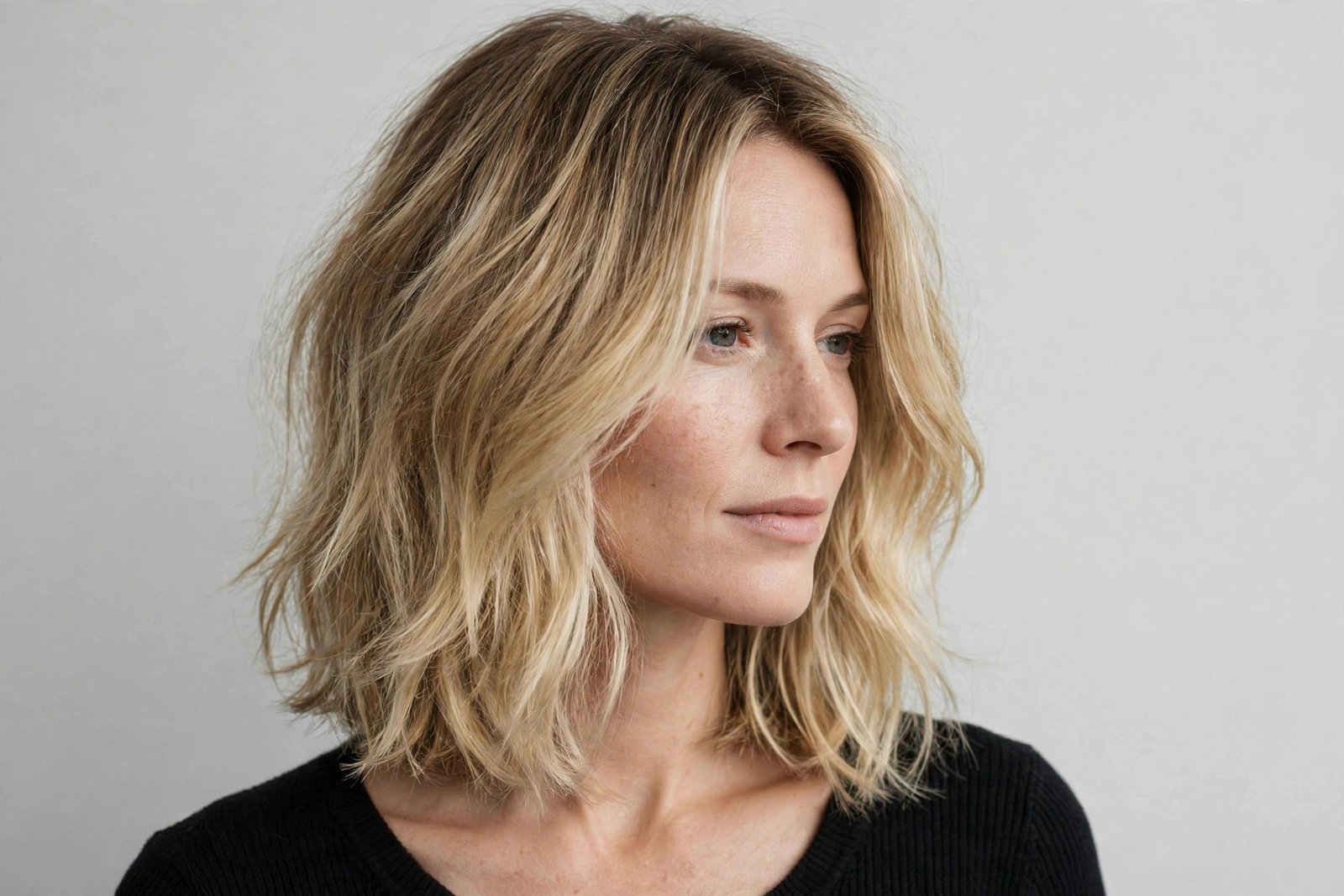
The blonde that doesn’t look like a full-time job: darker roots melting into dimensional blonde through the lengths, with layers that show off every tone. Lived-in blonde on a layered bob is 2026’s answer to high-maintenance platinum — you get the brightness without the 4-week root panic. The layers do the heavy lifting, breaking up the color so regrowth looks intentional.
Who it suits: fair to medium skin; the root shadow should stay close to your natural color so grow-out is seamless. All textures, but wavy hair shows the dimension best.
Salon script: “Long layered bob, collarbone — with lived-in blonde: balayage or teasylights, rooted and blended, brightness concentrated through the mid-lengths and ends. Soft, not stripey.”
Styling: purple shampoo once a week to fight brass; otherwise style as usual. Air-drying actually suits this look — the undone finish matches the undone color.
Maintenance: color every 10–12 weeks (that’s the point); cut every 8–10. Mistake to avoid: overusing purple shampoo — it dulls the dimension into flat ash. Once a week, max.
Pro tips & variations: Ask your colorist to keep some depth at the nape — all-over brightness flattens the cut’s silhouette. Variation: add a money piece (see #21) for face-brightening without full commitment.
11. The Soft A-Line Long Bob
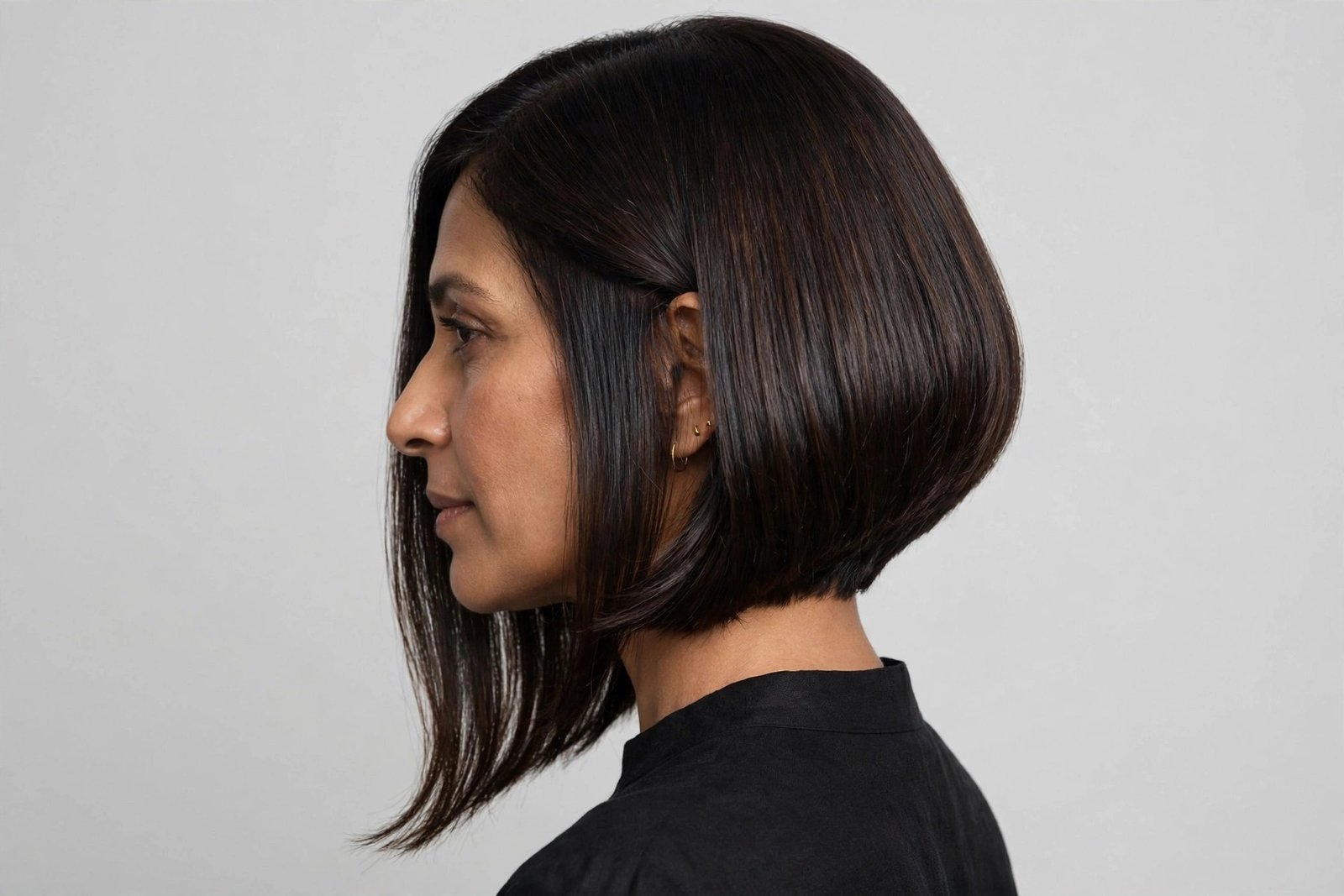
The A-line — shorter at the back, longer at the front — gets a 2026 softening: instead of the severe graduated angle of the 2010s, the modern version is a gentle slope with soft layers throughout. You get the face-framing drama of longer front pieces with none of the harshness. It’s the thinking woman’s statement bob — structure without aggression. If you love the classic lob but want more shape, this is the upgrade.
Who it suits: round and square faces adore it — the longer front pieces slim and elongate. Straight to wavy hair shows the angle best; curls blur it.
Salon script: “A soft A-line long bob: nape just below the jaw, front pieces to the collarbone, gentle graduation — not severe — with soft layers so it moves. No stacked back.”
Styling (10 minutes): blow-dry smooth, directing the front pieces forward and slightly under. The angle does the talking; keep the finish clean.
Maintenance: every 7–8 weeks — the angle grows out visibly. Mistake to avoid: letting a stylist talk you into a stacked, graduated back — that’s the dated version this cut specifically replaced.
Pro tips & variations: Tuck one side behind the ear to show off the angle asymmetry. Variation: pair with a deep side part to amplify the A-line drama.
12. The 90s Supermodel Layered Bob
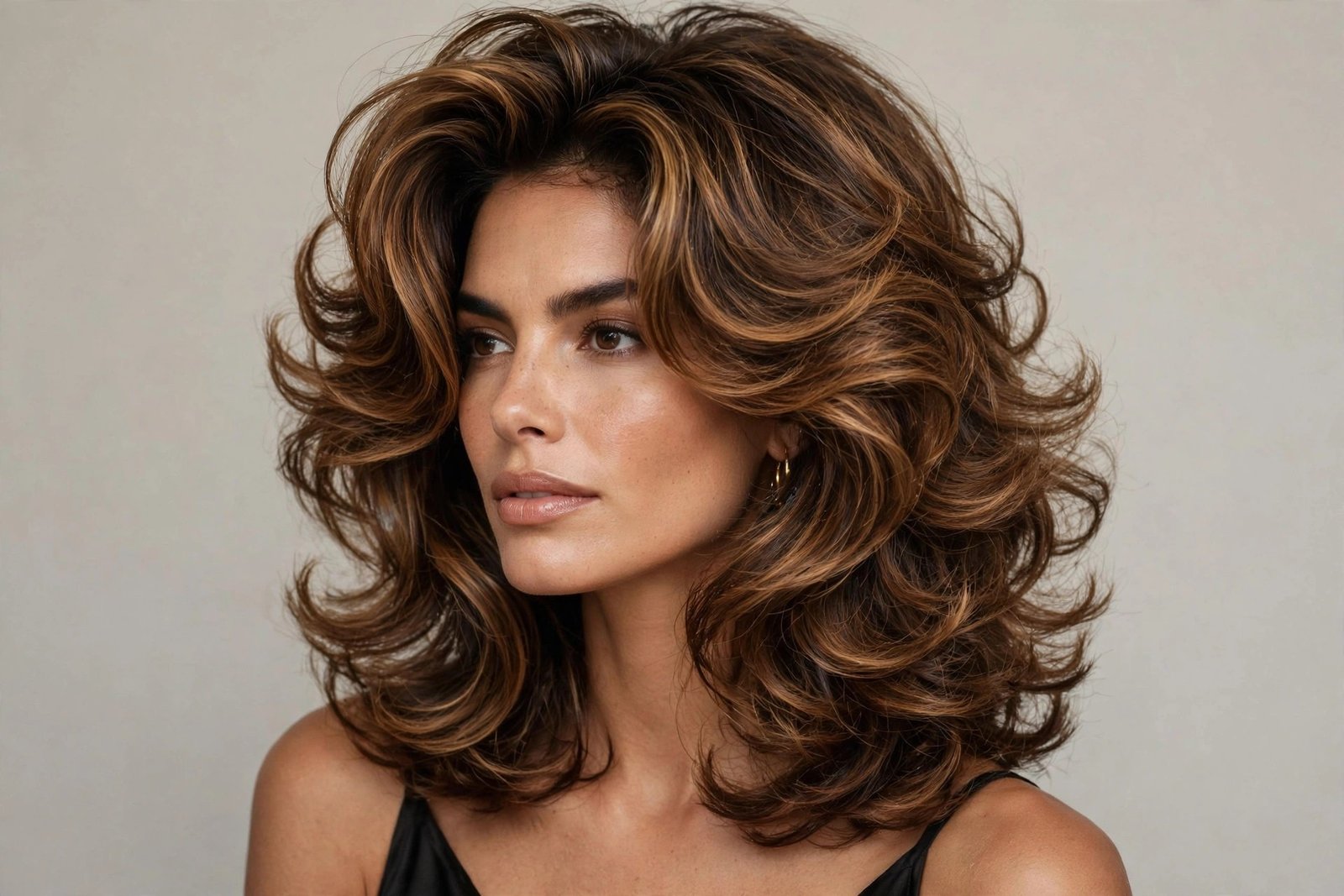
Channel the era when hair had a personality and a half: big, bouncy, face-framing layers with that unmistakable 90s volume. The supermodel bob is the long layered bob’s most glamorous ancestor, and 2026 brought it back with softer edges. Think volume at the crown, layers that curve into the face, and ends with body — hair that enters the room half a second before you do.
Who it suits: medium to thick hair; fine hair needs serious product support. Long, oval and heart faces love the face-framing; round faces should keep the volume up top, not at the cheeks.
Salon script: “90s supermodel layers on a long bob: collarbone length, big face-framing layers starting at the cheekbones, volume through the crown, bouncy ends. Think Cindy, not Karen.”
Styling (20 minutes): this is a roller set or big round-brush blowout — there’s no shortcut to 90s volume. Mousse at roots, large round brush, sections rolled up and away, cool shot, brush out with a paddle brush for that soft bounce.
Maintenance: 8-week trims; the style hides growth. Mistake to avoid: flat-ironing it — you’ll murder the entire aesthetic in one pass.
Pro tips & variations: Velcro rollers while you do your makeup, every time. It’s the 90s way and it still works. Variation: a center part for the authentic supermodel symmetry.
13. Feathered 70s Layered Bob
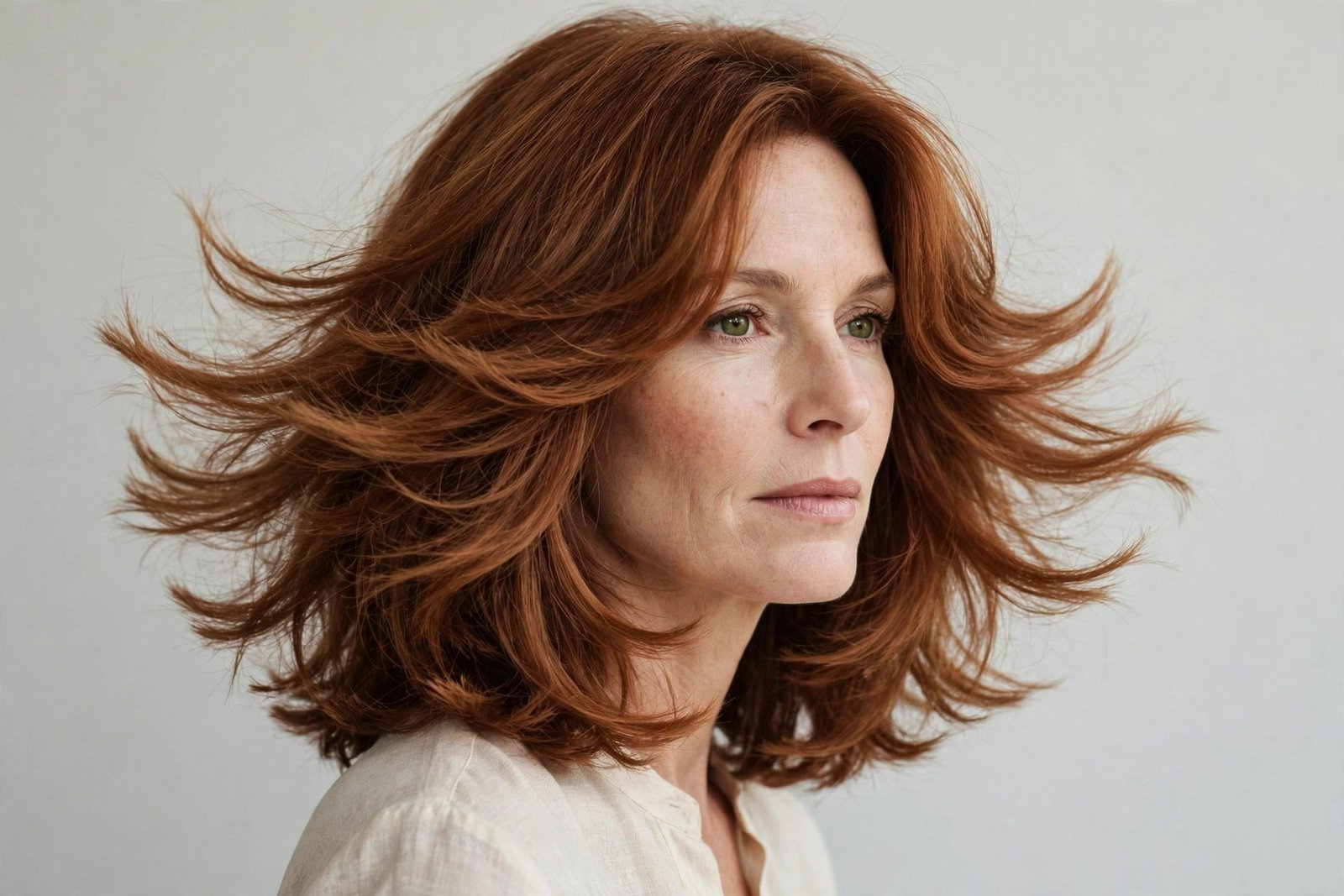
Farrah feathers, reimagined for 2026: soft, flicked layers that wing away from the face in feathery tiers. The modern version is less costume-y than the original — the feathering is subtler, the finish more polished — but the DNA is unmistakable. It’s the most movement-heavy cut on this list; the hair never sits still, and that’s the point.
Who it suits: medium to thick hair with natural body; the feathering needs hair to feather. Oval, square and heart faces — the wings soften strong lines beautifully.
Salon script: “Feathered layers, 70s-inspired but modern: collarbone length, layers that flick away from the face, feathered ends — soft, not choppy. I want movement in every tier.”
Styling (15 minutes): blow-dry with a medium round brush, flicking each layer outward and away from the face. A light texturizing spray on the ends emphasizes the feathering.
Maintenance: 7–8 week trims; feathered ends split faster. Mistake to avoid: too much layering too high — you’ll get a mullet-adjacent situation. Keep the shortest feather at the cheekbones, no higher.
Pro tips & variations: This cut loves a center part — the symmetry makes the feathers mirror each other. Variation: curtain bangs blend seamlessly into the feathering (see #4).
14. The Razored Edgy Layered Bob
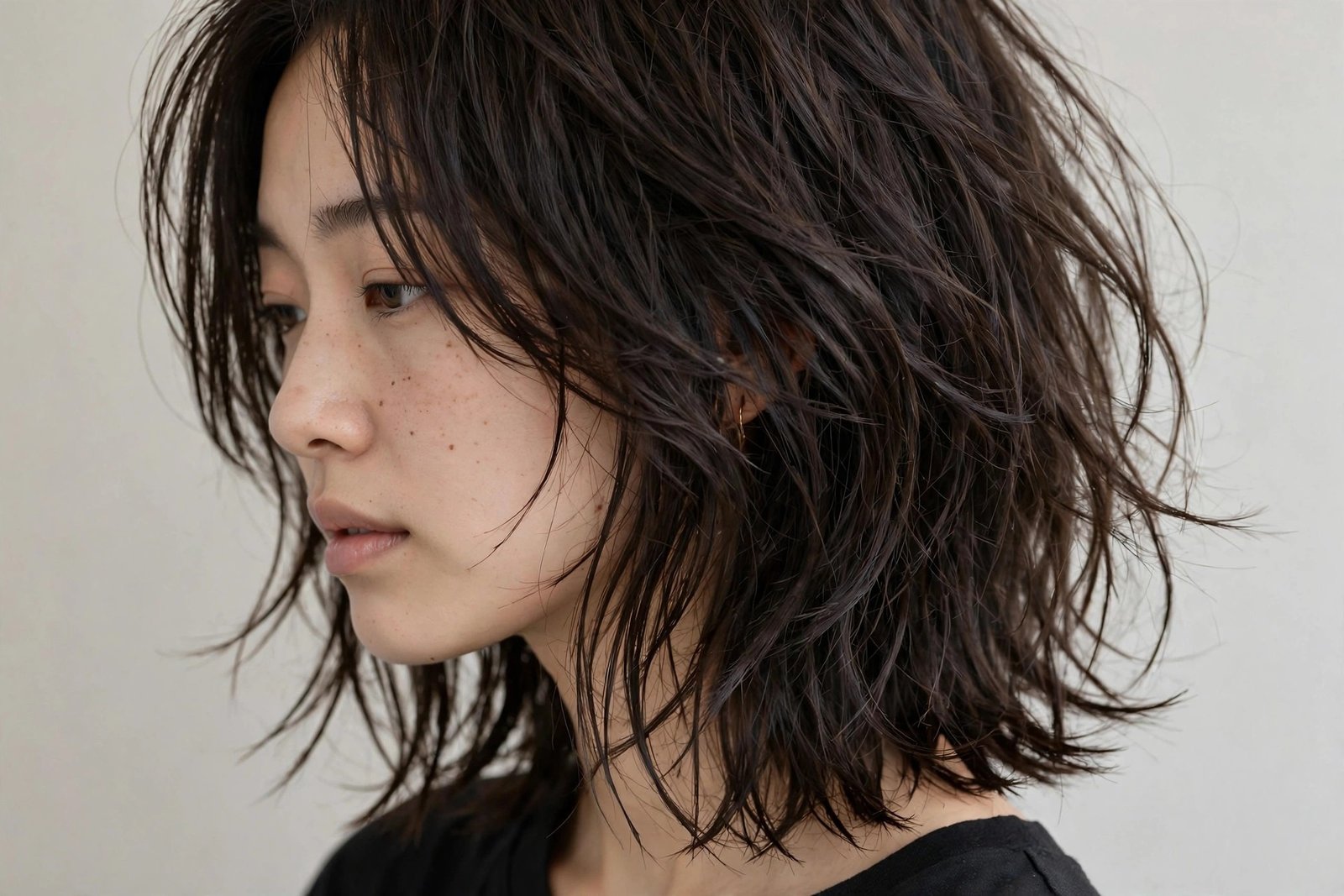
For the woman who finds every other bob on this list too polite: the razor-cut version. A razor creates soft, diffused ends that scissors can’t replicate — piece-y, separated, with a lived-in edge that reads cool rather than corporate. It’s the long layered bob with its sleeves rolled up. Fair warning: razors and fine or frizz-prone hair are enemies, so this one is texture-specific.
Who it suits: medium to thick straight or wavy hair — the razor needs density to chew on. Strong personalities, sharp wardrobes, anyone bored of “pretty” hair.
Salon script: “Razor-cut long layered bob: collarbone length, razor through the ends and interior for separated, piece-y texture. I want edge, not polish — no blunt lines anywhere.”
Styling (8 minutes): texture cream or wax on dry hair, piece out the ends with your fingers. This cut is styled, not blow-dried — embrace the separation.
Maintenance: 6–8 week trims; razored ends fray faster than scissor-cut ends. Mistake to avoid: getting this cut on fine, frizz-prone hair — the razor will shred it into puff. Scissors only for that texture.
Pro tips & variations: A razor cut grows out with character — the texture just gets more lived-in. Variation: add an undercut nape for maximum edge (hidden when hair is down, revealed when it’s up).
15. The Mob-Wife Voluminous Layered Bob
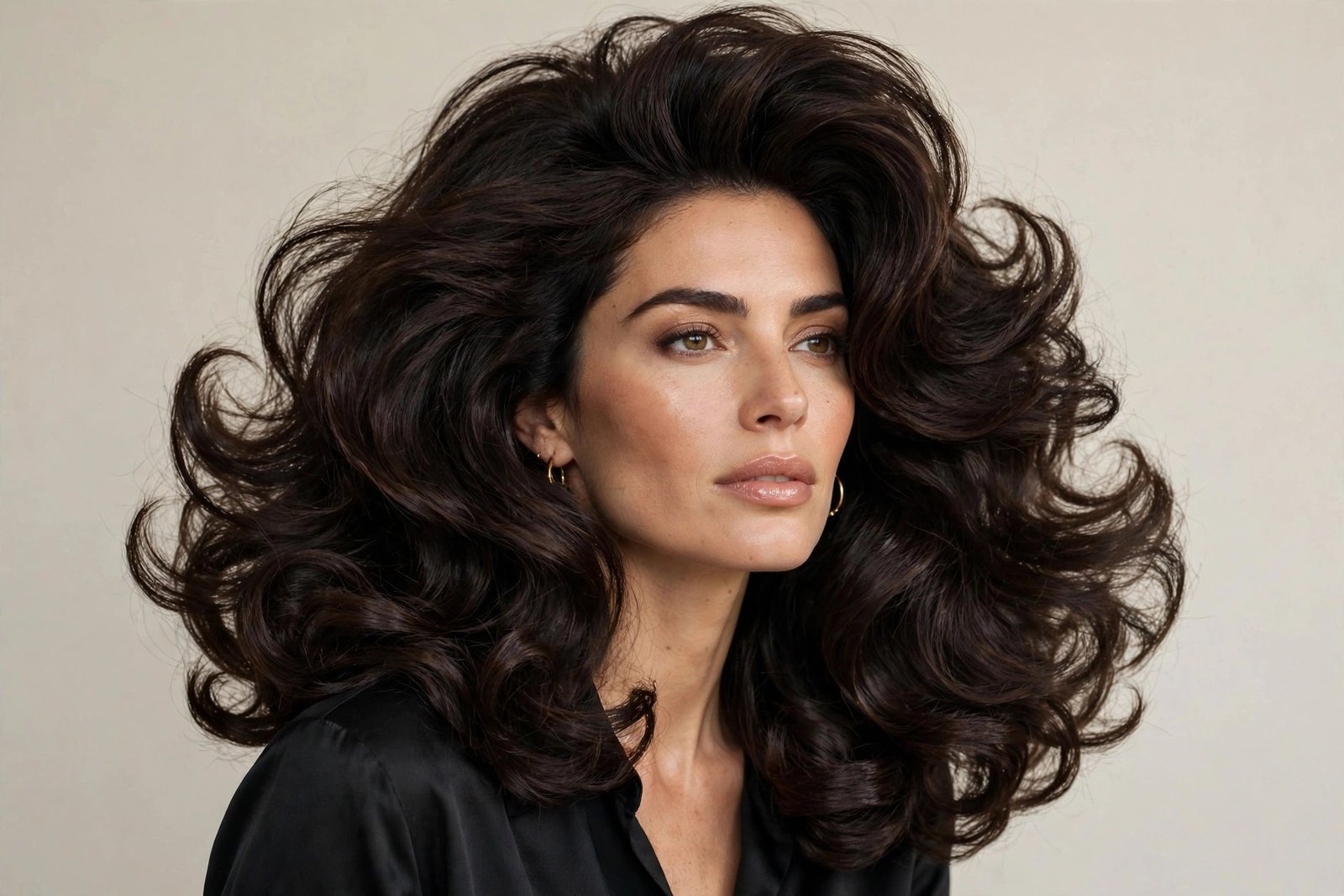
Big hair is back and it brought gold hoops with it: the mob-wife aesthetic — unapologetic volume, glossy dark hair, old-Hollywood-meets-90s glamour — translated into a long layered bob. This is maximalist hair: teased roots, bouncy layers, shine for days. It’s not subtle and it’s not trying to be. The layers are what keep it from collapsing into one heavy curtain — each tier holds its own volume.
Who it suits: thick hair is the ideal candidate; fine hair can fake it with extensions or serious teasing but it’s work. Oval, heart and long faces carry the drama best.
Salon script: “Long layered bob cut for maximum volume: collarbone length, stacked layering through the crown, bouncy face-framing. I want big, glossy, dramatic hair.”
Styling (25 minutes): the full production — mousse, blow-dry upside down for root lift, large round brush or hot rollers, tease the crown lightly, shine spray. This is event hair; own the ritual.
Maintenance: 8-week trims; volume hides growth. Mistake to avoid: flat, heavy conditioners — they’ll drag the volume down. Lightweight formulas only.
Pro tips & variations: A dark, glossy color (espresso, black-cherry) amplifies the aesthetic tenfold. Variation: the “clean mob wife” — same volume, middle part, slightly sleeker finish for daytime.
16. Wispy Curtain-Fringe Layered Bob
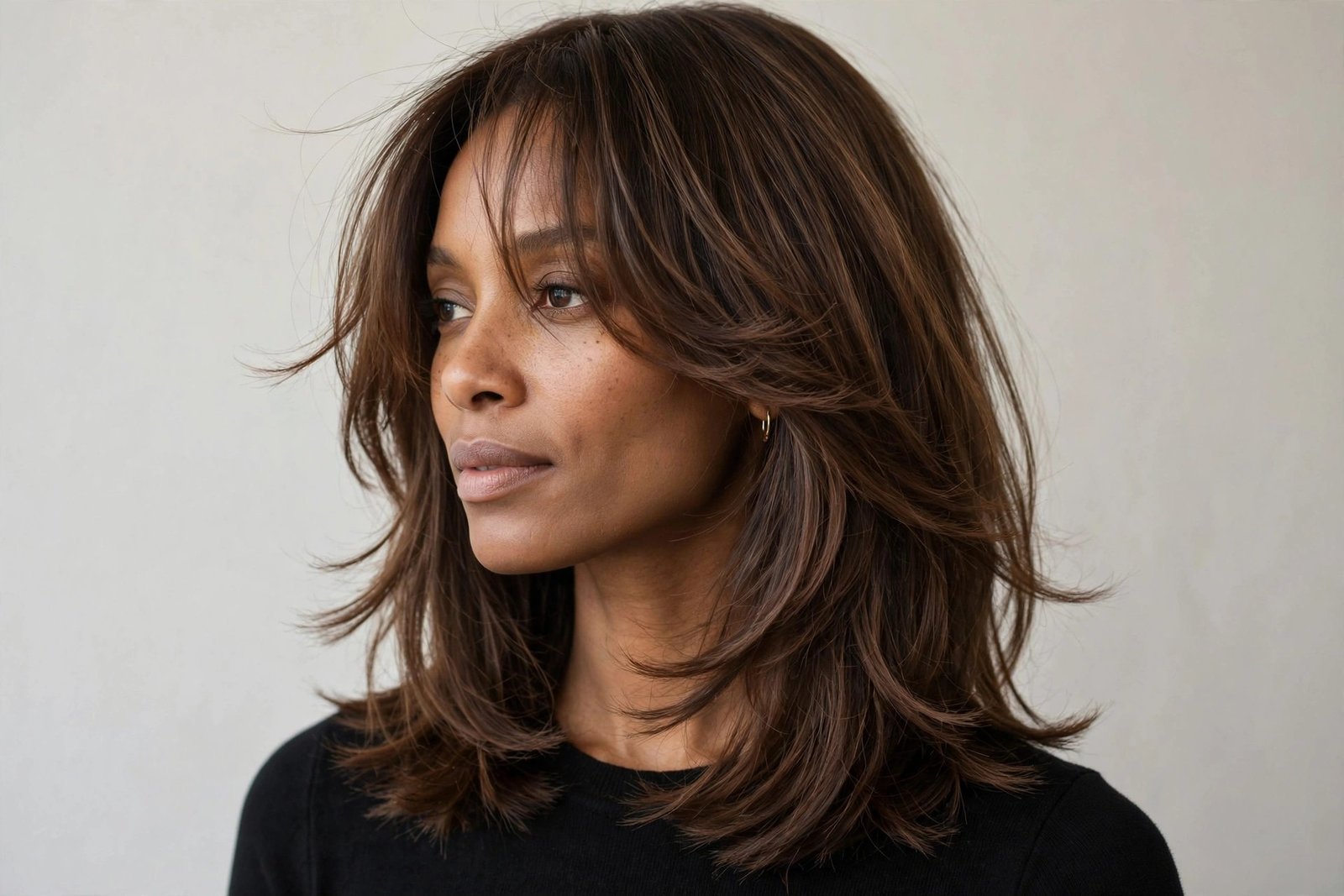
Curtain bangs’ softer little sister: a wispy, barely-there fringe that feathers into the face-framing layers. Where curtain bangs make a statement, the wispy curtain fringe just suggests one — it’s fringe for women who’ve been burned by bangs before. The wispiness means it grows out invisibly and styles itself with a quick blow-dry.
Who it suits: fine to medium hair — wispy fringe on thick hair can look sparse by comparison, so thick-haired women should keep it slightly fuller. High foreheads, long faces, anyone wanting softness around the eyes.
Salon script: “Long layered bob with a wispy curtain fringe — very soft, piece-y, longer at the sides, blending into the face-framing. I want to barely know it’s there.”
Styling (5 minutes): blow-dry the fringe with a small round brush, sweeping outward. Done. It air-dries fine on wavy hair.
Maintenance: fringe dusting every 5–6 weeks; full cut every 8–10. Mistake to avoid: cutting it wet — wispy fringe springs up and you’ll have micro-bangs by noon. Dry-cut only.
Pro tips & variations: On greasy-hair days, dry shampoo the fringe first — it’s the oiliest real estate on your head. Variation: grow it into full curtain bangs (#4) with zero awkward phase.
17. Middle-Part Sleek Long Layered Bob
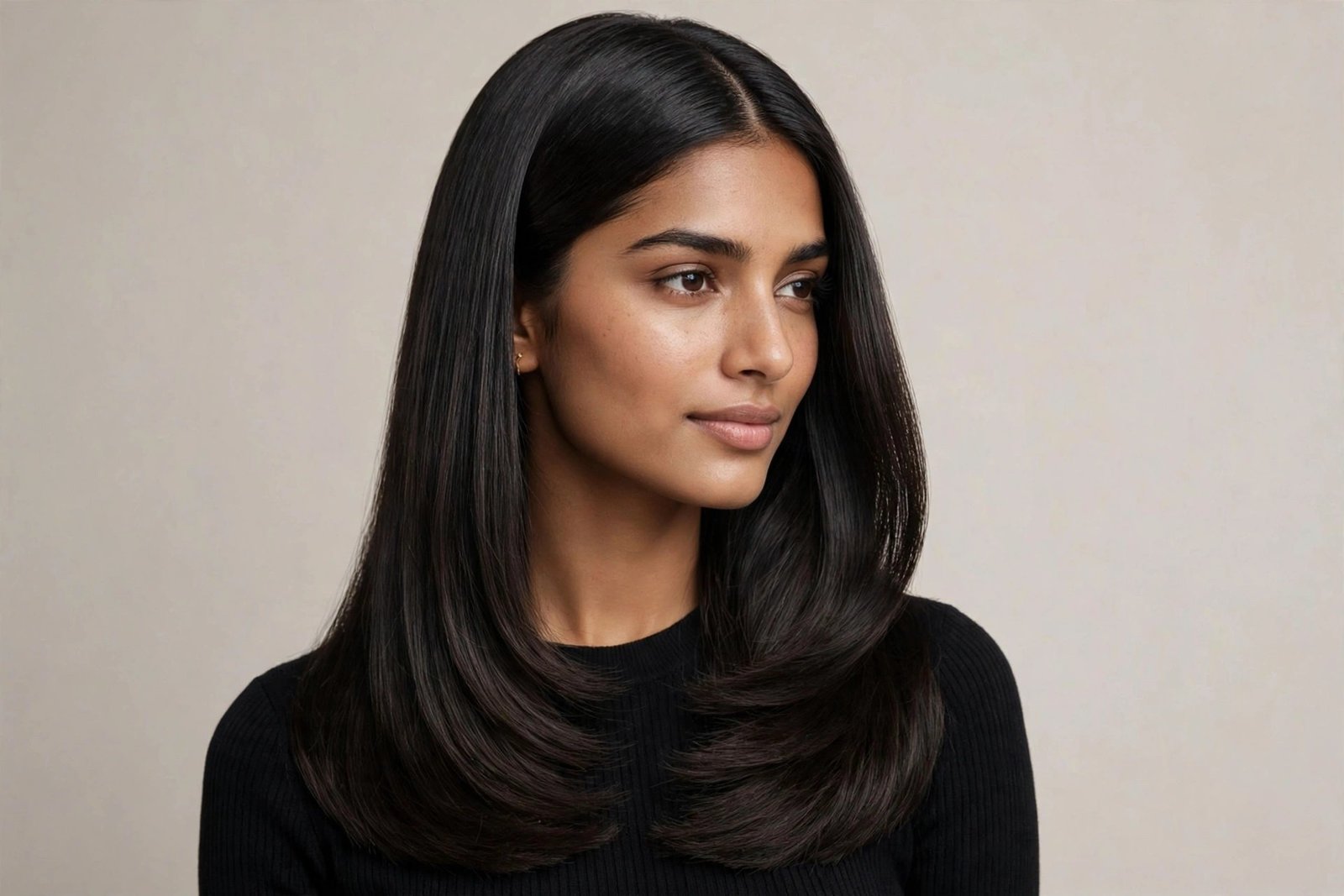
The minimalist power move: a dead-center part, sleek lengths, layers so seamless they’re felt rather than seen. It’s the cut that looks like money and confidence had a baby. The middle part demands symmetry — and delivers it — framing the face like architecture. When the styling is right, nothing looks more expensive.
Who it suits: oval and heart faces are the natural home of the middle part; round faces should proceed with caution (center parts can widen). Straight hair or willing-to-straighten hair only.
Salon script: “Long layered bob, middle part, collarbone length — seamless long layers, sleek finish. Cut it dry or straight so the part and symmetry are exact.”
Styling (15 minutes): blow-dry straight with tension, flat-iron if needed, center the part with a tail comb (precision matters). Shine serum, no frizz allowed — this look has zero tolerance for flyaways.
Maintenance: 6–8 week trims; sleekness exposes everything. Mistake to avoid: an off-center part — on this cut, a crooked part is visible from across the room. Check it in natural light.
Pro tips & variations: Train a stubborn part by blow-drying it into place while damp for a week. Variation: tuck both sides behind the ears for the full minimalist editorial look.
18. Deep Side-Part Long Layered Bob
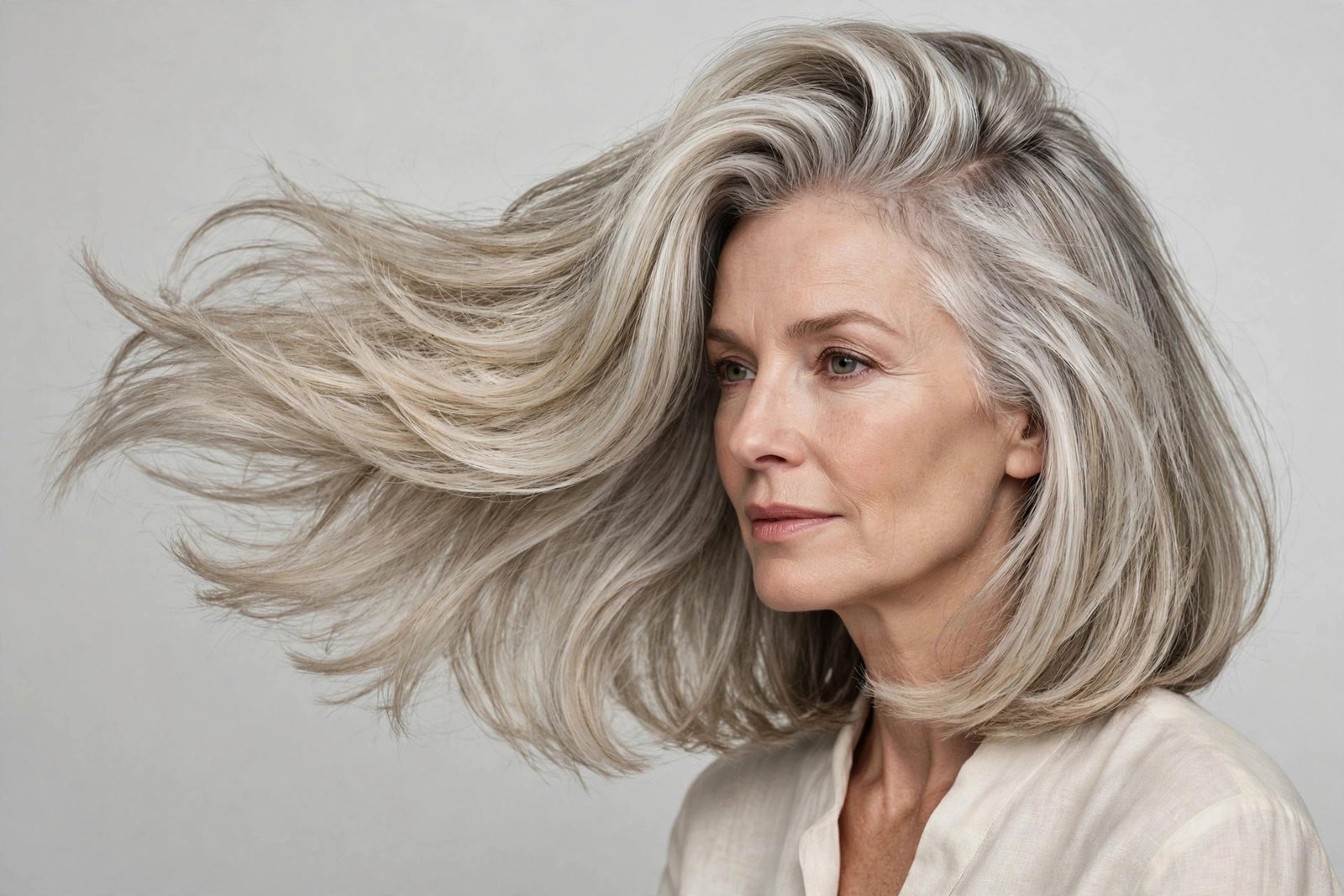
The middle part’s glamorous rival: a deep side part that throws volume across the crown and drama across the forehead. It’s instantly more voluminous than a center part (physics — you’re piling hair from the far side over), more interesting in photos, and more forgiving on round and square faces. The 2026 version keeps the sweep soft, not shellacked.
Who it suits: round, square and heart faces — the diagonal line slims and balances. Fine hair gets an instant volume cheat. Anyone whose center part feels too severe.
Salon script: “Long layered bob with a deep side part — collarbone length, layers that support volume at the crown, face-framing that sweeps. Cut it with the part where I’ll actually wear it.”
Styling (12 minutes): blow-dry with volume at the roots on the heavy side, sweep across with a round brush. A little root-lift spray on the part line keeps it from falling flat by afternoon.
Maintenance: 8-week trims. Mistake to avoid: parting it wet and hoping — deep side parts need to be blow-dried into place or they migrate back to center by lunch.
Pro tips & variations: Switch your part’s depth for day vs. night — deeper for drama, shallower for the office. Variation: add flipped ends on the long side for extra movement.
19. The Long Italian Bob
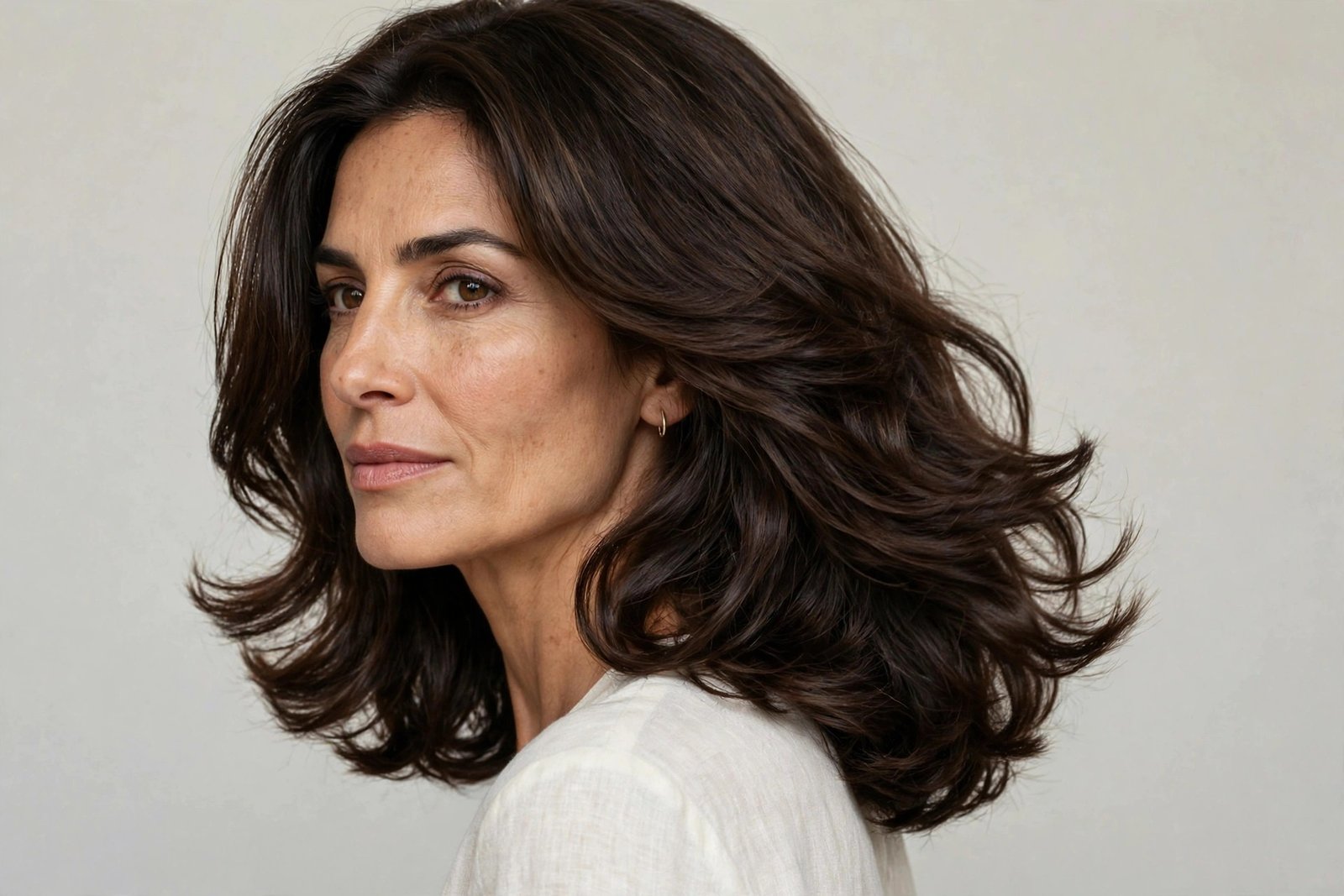
The Italian bob — chunky, bouncy, unapologetically voluminous — stretched to collarbone length. The signature is the weight: unlike the feathery French versions, the Italian keeps density through the ends, giving that thick, swinging, expensive curtain of hair. The 2026 long version adds soft interior layers so the weight moves instead of sitting. It’s la dolce vita in haircut form.
Who it suits: medium to thick hair — this cut celebrates density; fine hair will struggle to fill it out. Oval, long and heart faces; the volume balances length beautifully.
Salon script: “A long Italian bob: collarbone length, one-length feel with soft interior layers for movement, chunky full ends — I want weight and swing, not wispy texture.”
Styling (15 minutes): blow-dry with a large round brush for bounce and polish. The ends should look thick and healthy — a tiny trim-behind schedule keeps them that way.
Maintenance: 7–8 week trims; chunky ends show damage fast. Mistake to avoid: over-layering it — too many layers and you lose the Italian density that makes this cut what it is.
Pro tips & variations: This cut in a rich, dark color is the full fantasy — espresso or black-cherry. Variation: wear it with a slight bend at the ends (not a flip, a curve) for the authentic Italian finish.
20. Bottleneck Bangs Layered Bob
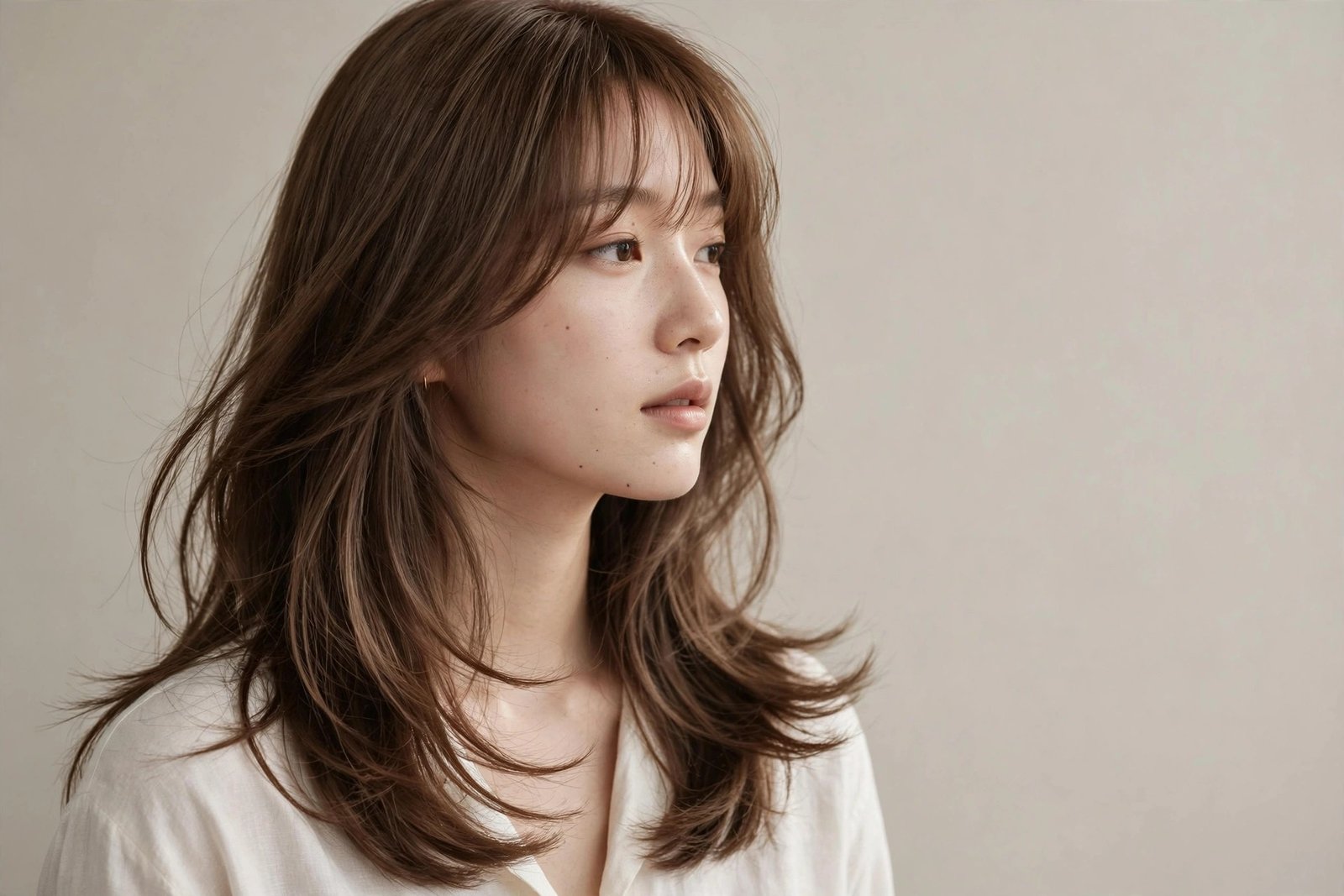
Bottleneck bangs — narrow at the top, widening toward the cheekbones like the neck of a bottle — are the cool-girl fringe of 2026, and they slot into a long layered bob like they were designed for it. The shape mirrors the face-framing layers, creating one continuous frame from forehead to collarbone. It’s more distinctive than curtain bangs, less commitment than blunt fringe.
Who it suits: oval, long and heart faces; the shape adds width at the cheeks which balances narrow foreheads and strong jawlines alike. Medium to thick hair carries the shape best.
Salon script: “Long layered bob, collarbone — plus bottleneck bangs: slim through the middle of the forehead, widening at the cheekbones, blending into the face-framing layers.”
Styling (10 minutes): blow-dry the bangs forward and slightly under with a round brush, then push the sides outward. The bottle shape needs a little direction or it collapses into curtain bangs.
Maintenance: bang trims every 4–6 weeks; full cut every 8–10. Mistake to avoid: cutting them too wide too fast — start narrow; you can always widen, you can’t un-cut.
Pro tips & variations: Bottleneck bangs grow out into perfect curtain bangs — the grow-out is the feature, not the bug. Variation: pair with flipped ends for a full 70s revival.
21. Money-Piece Face-Framing Layered Bob
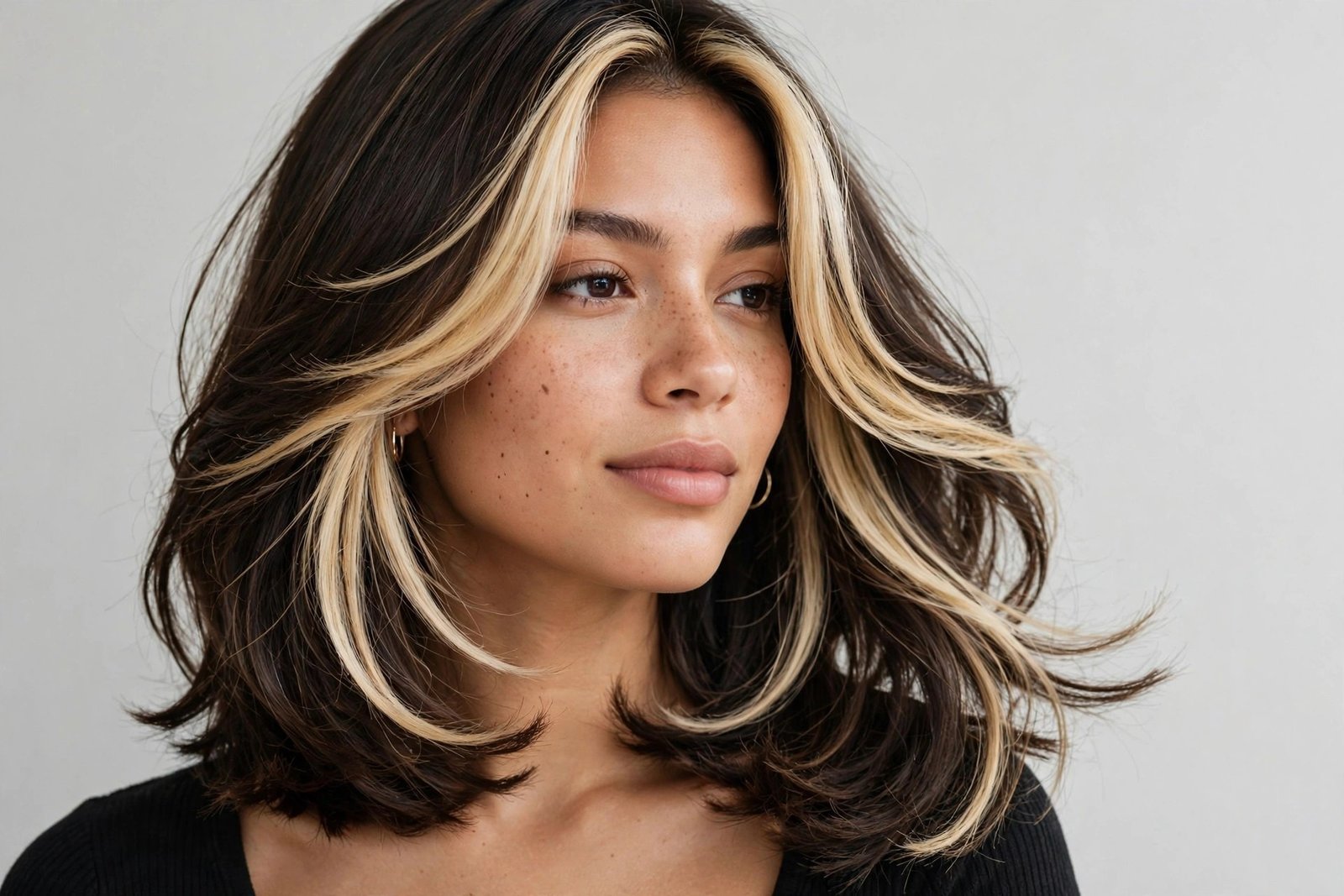
The money piece — those brightened front sections framing the face — is the highest-impact, lowest-commitment color move in existence, and on a long layered bob it’s pure strategy. The face-framing layers are already the cut’s focal point; lightening them draws every eye to your face and makes the whole cut look more expensive. Two foils, infinite payoff.
Who it suits: everyone — the colorist tunes the brightness to your skin tone. Especially transformative on dark hair, where the contrast is dramatic, and on anyone wanting brightness without all-over blonde.
Salon script: “Long layered bob, collarbone — and a money piece: brighten the two front face-framing sections, blended into the layers. Bold or soft — I’ll trust you on the tone.”
Styling: style as usual, but keep the front pieces polished — they’re the feature now. A little extra shine serum on the money piece makes it pop.
Maintenance: tone refresh every 6–8 weeks; cut every 8–10. Regrowth is soft since it’s face-framing, not roots. Mistake to avoid: going too chunky and stripey — the 2026 money piece is blended, not 2005.
Pro tips & variations: Copper or cherry money pieces over brunette are 2026’s insider move — all the trend color, none of the upkeep. Variation: extend the brightness through the first layer back for a halo effect.
22. Beach-Wave Textured Layered Bob
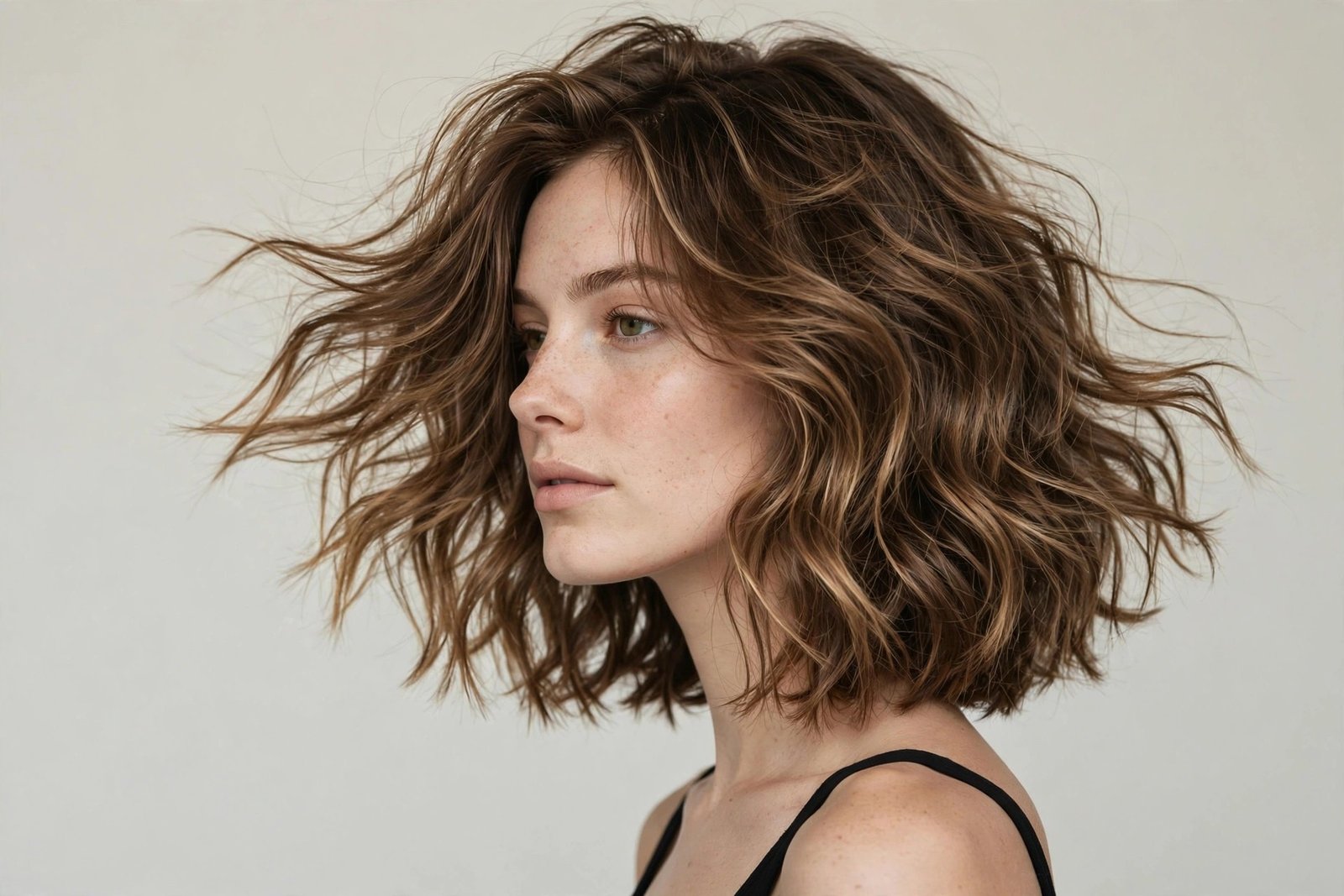
Sun, salt, and not a care: the beach-wave bob is texture you can see from across the street. On a long layered bob, the layers give the waves somewhere to live — each tier catches the wave differently, creating that dimensional, windswept finish. It’s the most casual version here, and paradoxically one of the most flattering, because imperfect texture is kind to every face.
Who it suits: naturally wavy hair is the jackpot — this is basically your air-dry. Straight hair can fake it with heat but it’s daily work. All face shapes; the messiness is universally forgiving.
Salon script: “Long layered bob for beach waves: collarbone length, lots of interior texture, piece-y ends — cut it to enhance wave, not fight it.”
Styling (10 minutes): sea salt spray on damp hair, scrunch, air-dry or diffuse. For straight hair: curl 1-inch sections with a wand, alternating directions, then shake out and salt-spray. The messier, the better.
Maintenance: 10-week trims; texture hides everything. Mistake to avoid: brushing it out — you’ll get frizz, not waves. Fingers only.
Pro tips & variations: Sleep in two loose braids for next-day waves with zero morning effort. Variation: a balayage or sun-kissed color (see #29) sells the beach story completely.
23. Invisible Layers for Fine Hair
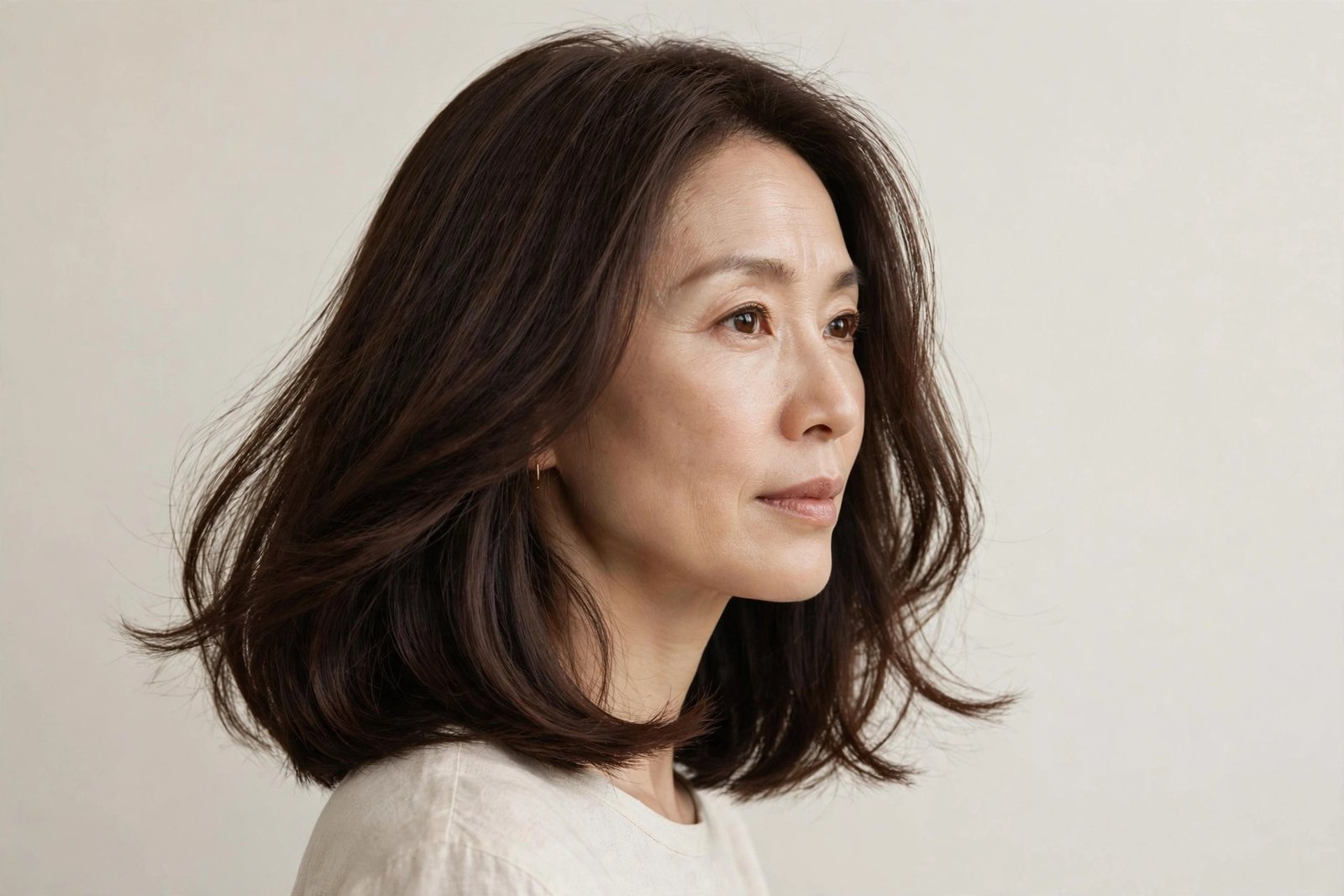
The fine-hair woman’s secret weapon: layers you can’t see. Invisible layering removes weight from the interior without creating visible steps, so the perimeter stays full and blunt-looking while the inside moves. The result reads as thick, one-length hair with mysterious body — the exact illusion fine hair needs. This is the version I recommend most to fine-haired women who’ve been told layers will make their hair look thinner. Done wrong, yes. Done like this, the opposite.
Who it suits: fine to medium-fine hair, straight to wavy. The whole point is preserving the appearance of density.
Salon script: “Long bob, collarbone — with INVISIBLE layers: interior weight removal only, no visible steps, keep the perimeter full and blunt. I want movement without losing density. No thinning shears.”
Styling (10 minutes): volumizing mousse at the roots, blow-dry with a round brush for lift. The layers activate with heat — air-drying can leave this version looking one-length, so commit to the dryer.
Maintenance: 8-week trims; fine hair shows split ends fast and they travel. Mistake to avoid: letting anyone razor or thin the ends — on fine hair that’s density suicide. Scissors, point-cutting, done.
Pro tips & variations: A root-shadow color (slightly darker at the roots) fakes density at the scalp. Variation: add a glass-hair finish (#8) — sleekness makes fine hair look twice as thick.
24. Chunky Layers for Thick Hair
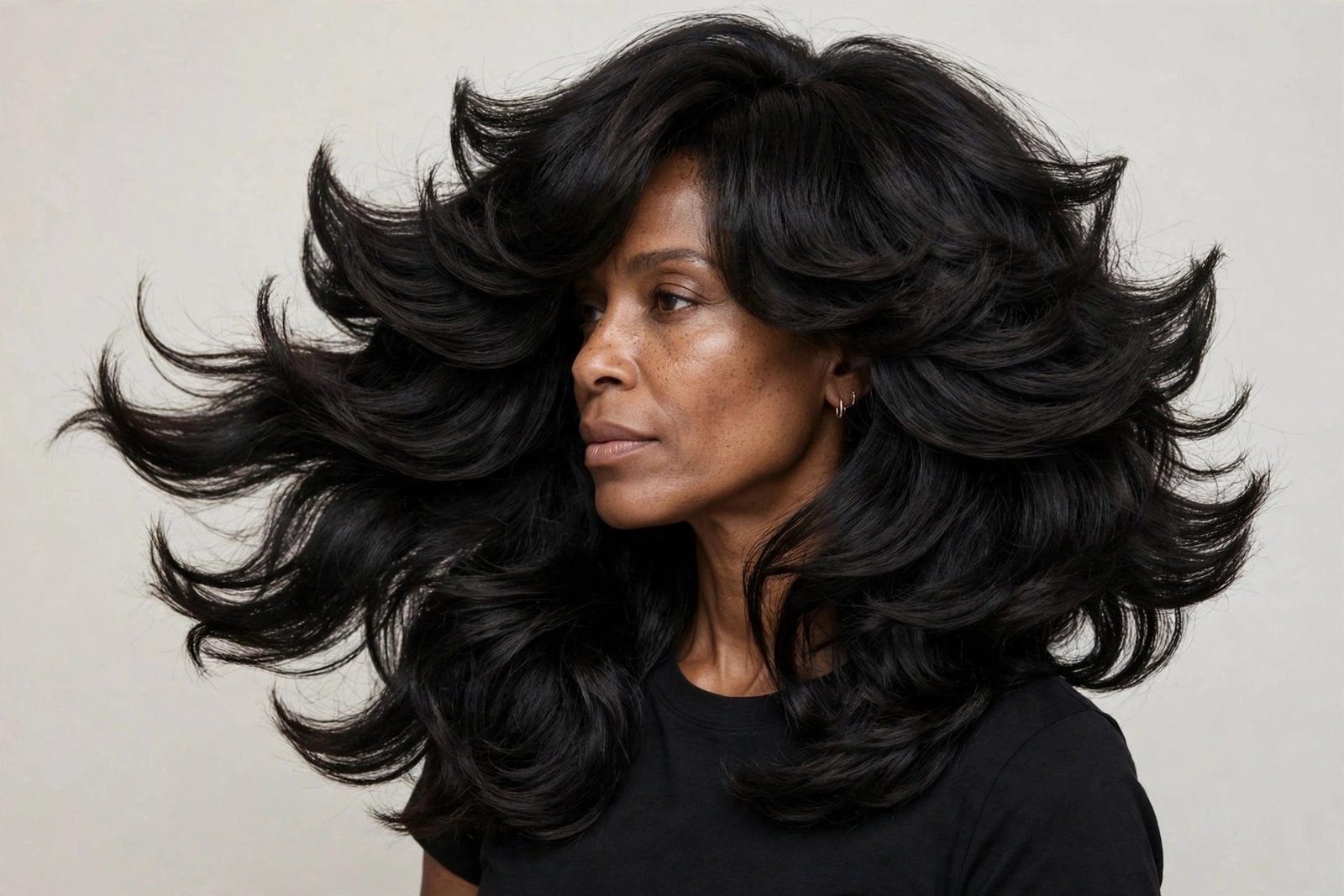
Thick hair doesn’t need help looking full — it needs architecture. Chunky, defined layers carve shape into density, removing the bulk that turns one-length cuts into triangles while keeping the glorious weight that makes thick hair, well, glorious. This is the version where the layers are visible and proud: bold tiers, strong movement, hair with presence.
Who it suits: thick, dense, coarse hair — the more hair, the better this works. All face shapes; the layers can be placed to balance any of them.
Salon script: “Long layered bob for thick hair: collarbone length, chunky interior layers to remove bulk, defined tiers — I want shape and movement, not a triangle. Texturize the ends.”
Styling (15 minutes): blow-dry in sections — thick hair can’t be rushed. A smoothing cream before drying tames the interior; the layers will still move. Air-drying works for wavy thick hair but takes hours.
Maintenance: 8–10 week trims; thick hair hides growth well. Mistake to avoid: under-layering out of fear — too few layers on thick hair just recreates the triangle. Trust the architecture.
Pro tips & variations: Thick hair holds flipped ends (#1) longer than any other texture — the weight sets the flip. Variation: an undercut nape removes hidden bulk while keeping the silhouette full.
25. Heatless-Curl Long Layered Bob
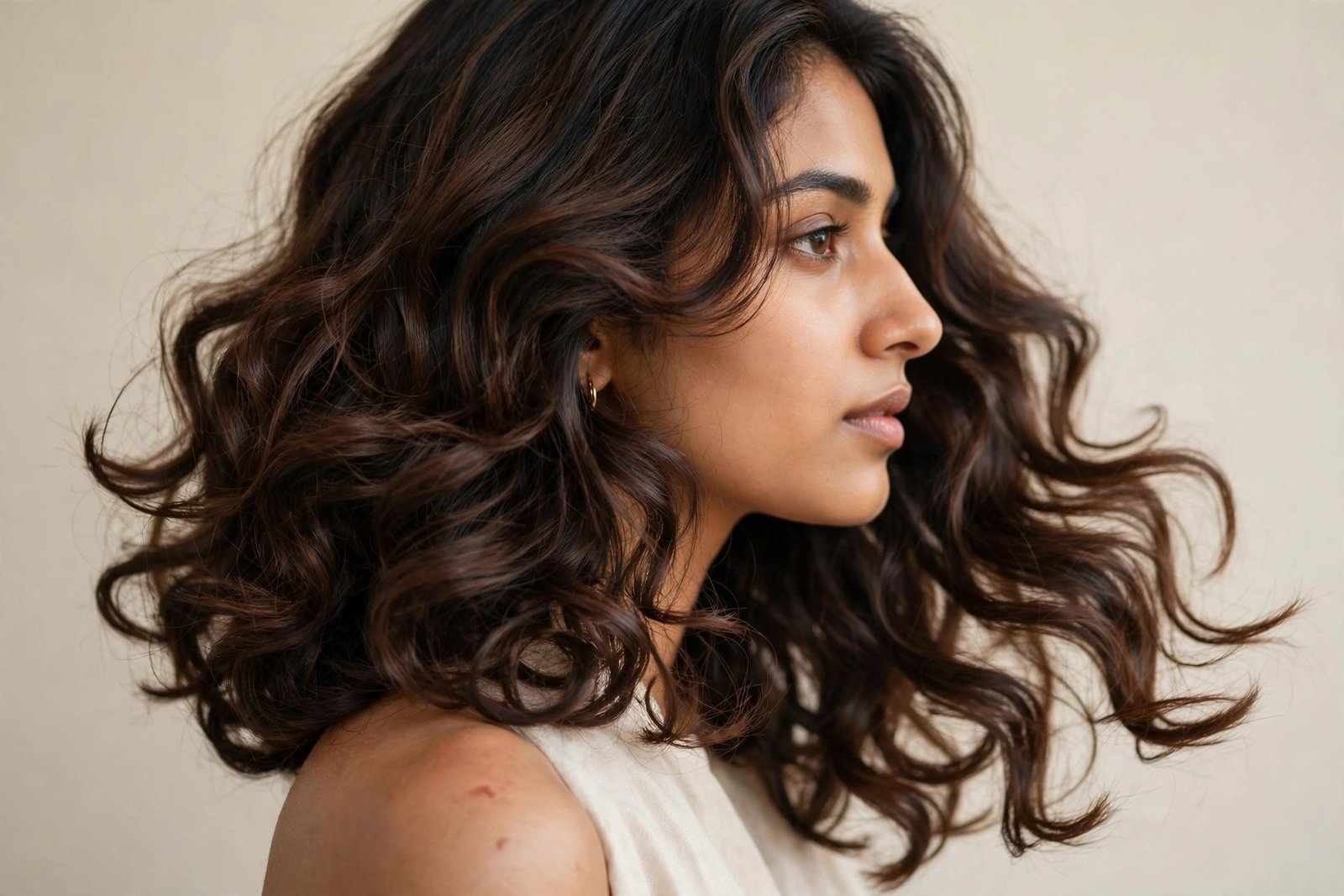
The overnight-rod, sock-curl, heatless-wave phenomenon — applied to the perfect length for it. Collarbone hair is the heatless sweet spot: long enough to wrap, short enough that the curls don’t stretch out under their own weight. The layers mean the curls form at different levels, creating natural-looking dimension instead of uniform ringlets. Your hair gets curls; your ends get a break from the iron.
Who it suits: straight to wavy hair that holds a set; very resistant hair may need a light mousse to convince it. Anyone trying to cut heat out of their routine.
Salon script: “Long layered bob, collarbone — I’m doing heatless curls, so I need layers that curl at different levels and ends that aren’t too blunt to wrap.”
Styling (5 minutes at night): dampen slightly, apply light mousse, wrap around a heatless curler rod or socks, sleep, unwrap, shake. Morning effort: nearly zero. The cut does the shaping; the rod does the curl.
Maintenance: 8–10 week trims. Mistake to avoid: wrapping soaking-wet hair — it won’t dry overnight and you’ll get frizz, not curls. Damp, not wet.
Pro tips & variations: Silk or satin rods beat foam for smoothness — less friction, shinier curls. Variation: wrap only the bottom half for bend-not-curl, the most wearable everyday version.
26. The Tucked-Behind-Ear Polished Bob
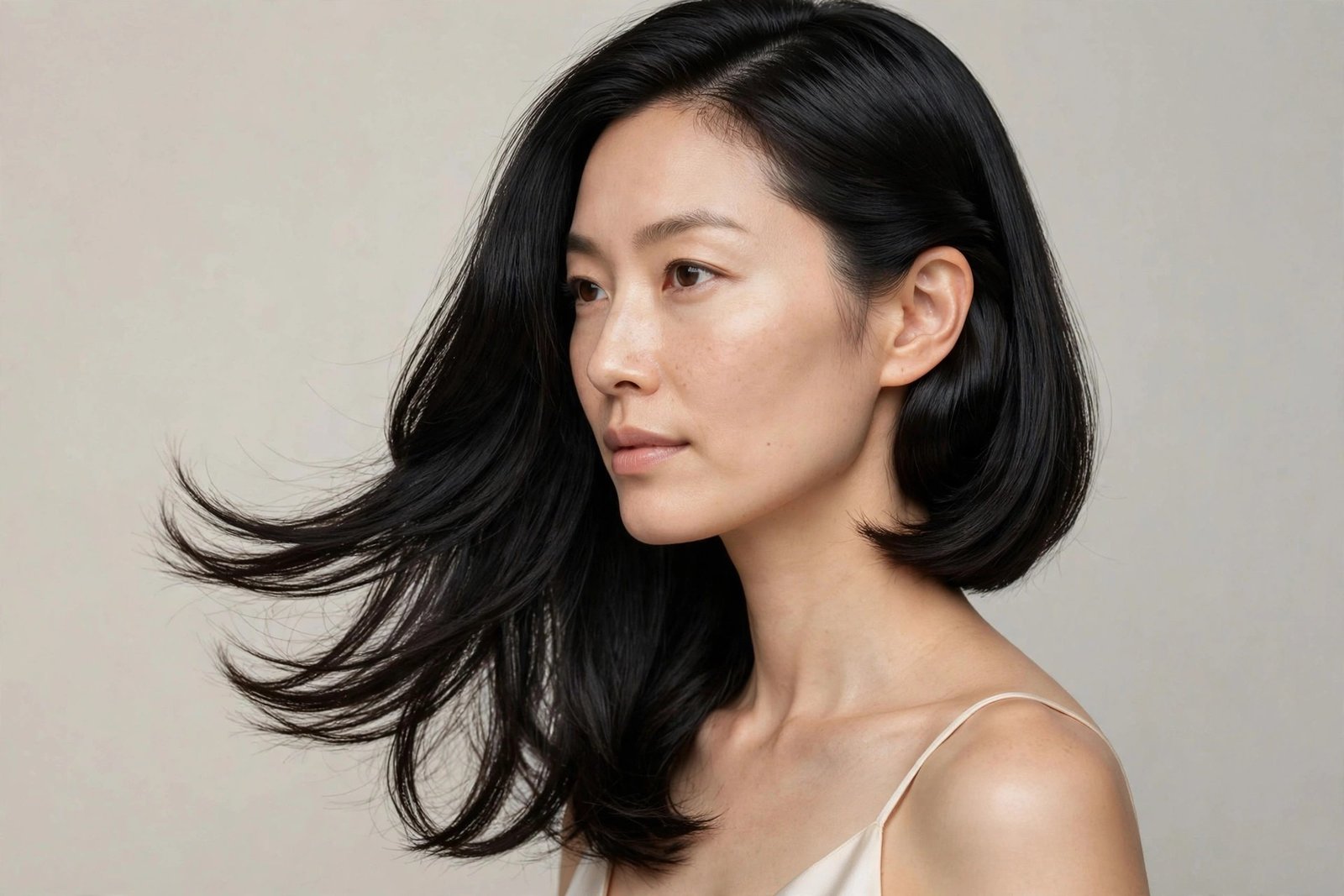
Sometimes the style is a gesture: one side (or both) tucked behind the ear, revealing the earring, the jawline, the confidence. The long layered bob tucks beautifully because the face-framing layers are exactly the right length to sit behind the ear without springing out. It’s the boardroom-to-dinner move — polished, intentional, quietly striking. The 2026 version keeps the tucked side sleek and lets the other side move freely.
Who it suits: everyone — but it’s a gift for women with great earrings or strong jawlines they want to show off. Straight to wavy hair tucks cleanest.
Salon script: “Long layered bob, collarbone — with face-framing layers cut to tuck behind the ear cleanly. I want the option of the tucked look without pieces springing loose.”
Styling (8 minutes): blow-dry smooth, tuck, and pin with a hidden bobby pin behind the ear if needed. A touch of pomade on the tucked section keeps it in place without stiffness.
Maintenance: 8-week trims; the tuck reveals grown-out layers faster. Mistake to avoid: tucking with product-heavy hair — it looks greasy, not polished. Clean roots only.
Pro tips & variations: Asymmetric tuck — one side tucked, one side loose — is the most editorial version. Variation: tuck both sides and add a bold lip; the minimalism makes everything else pop.
27. Micro-Tapered Ends Layered Bob
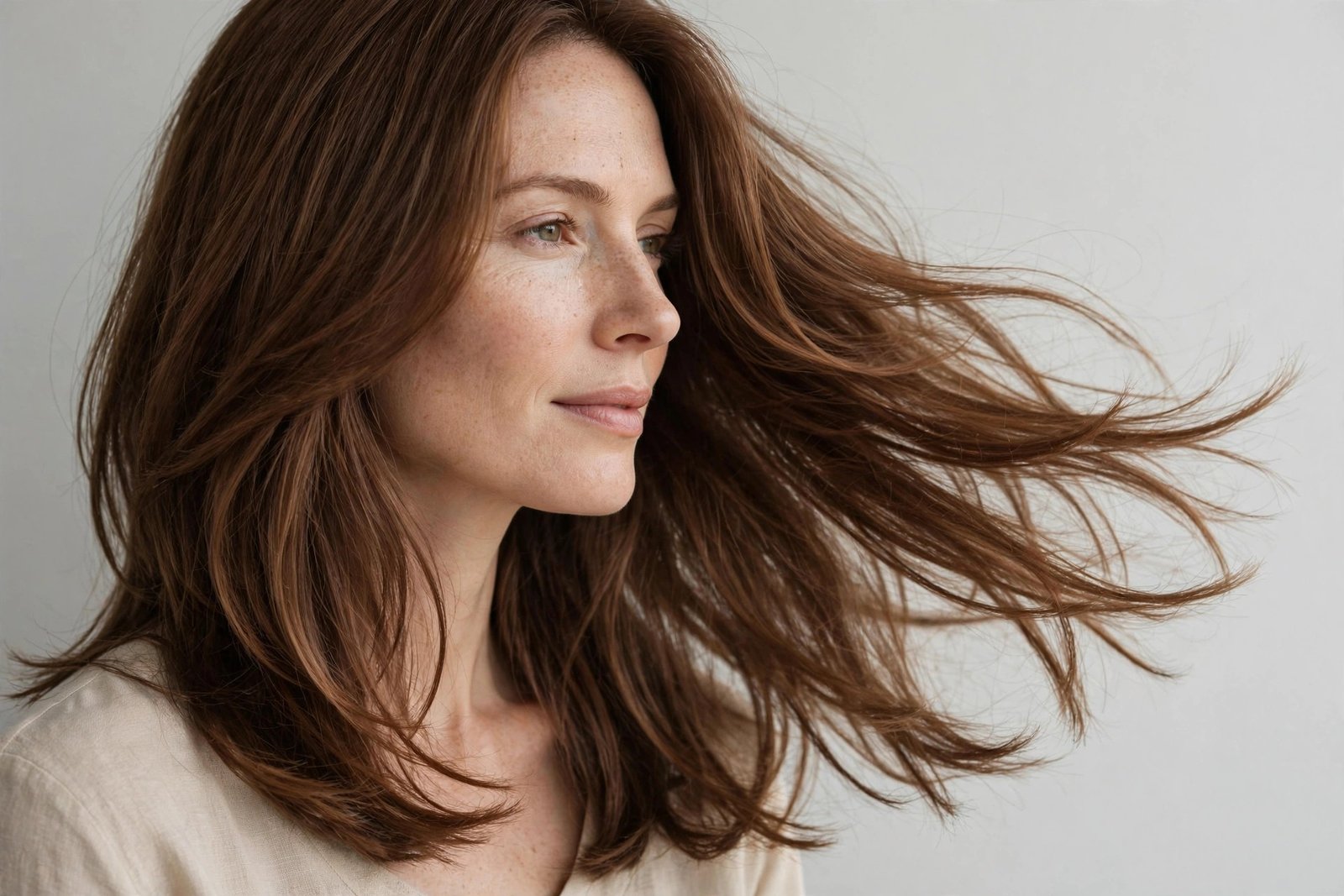
The detail-obsessed version: ends that taper — each strand ending at a slightly different point — creating a soft, diffused perimeter instead of a hard line. Micro-tapering is invisible to the untrained eye but it changes everything: the cut looks softer, grows out better, and moves more freely. It’s the difference between a haircut and a haircut with intention.
Who it suits: straight to wavy hair shows the taper best; it’s also kind to fine hair since there’s no blunt line to expose thinness. Anyone who finds blunt perimeters too severe.
Salon script: “Long layered bob, collarbone — and micro-taper the ends: point-cut or slide-cut so the perimeter is soft and diffused, no hard line. I want the ends to look feathered, not chopped.”
Styling (10 minutes): blow-dry with a round brush, letting the tapered ends do their soft thing. This finish looks best with minimal product — the taper is the texture.
Maintenance: 8–10 week trims; tapered ends disguise growth. Mistake to avoid: flat-ironing the ends straight and hard — you’ll compress the taper into a blunt look. Keep the iron moving.
Pro tips & variations: Micro-tapering is the grow-out cheat: soft ends blend into longer hair seamlessly. Variation: combine with flipped ends (#1) — tapered ends flip more naturally than blunt ones.
28. The Old-Money Low-Volume Layered Bob
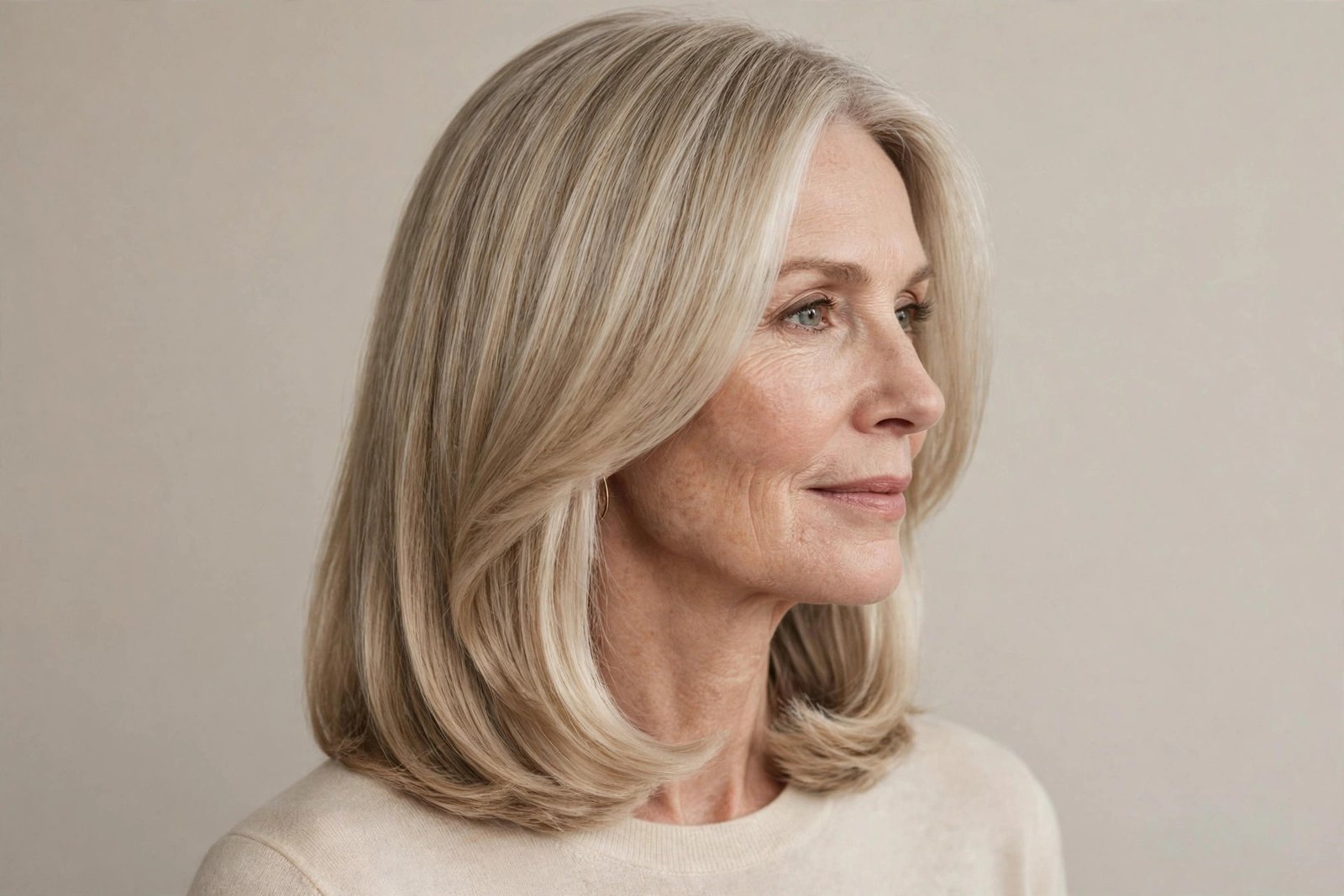
Not all 2026 hair is big: the old-money aesthetic — quiet, groomed, expensive without effort — translates into a long layered bob with controlled volume, smooth surfaces and impeccable ends. The layers are long and subtle; the finish is polished but never stiff. It says trust fund, tennis club, and a standing appointment with someone whose name you don’t share. Understated is the whole point.
Who it suits: fine to medium hair achieves the controlled finish easiest; it’s also the most age-versatile version here — stunning at 30, stunning at 60. Oval and long faces especially.
Salon script: “Long layered bob, collarbone — old-money finish: long subtle layers, smooth blowout, controlled volume, immaculate ends. Polished, not poufy.”
Styling (15 minutes): blow-dry smooth with a paddle brush, ends curved gently under (the one version where under beats out). Anti-frizz serum, everything in place. Precision over personality.
Maintenance: 6–8 week trims — immaculate ends are the entire look. Mistake to avoid: texture spray, salt spray, anything “undone” — this aesthetic has a strict no-mess policy.
Pro tips & variations: A middle part and tucked sides is the full old-money uniform. Variation: the same cut in a rich, natural brunette reads even more expensive than blonde.
29. Balayage-Melt Long Layered Bob
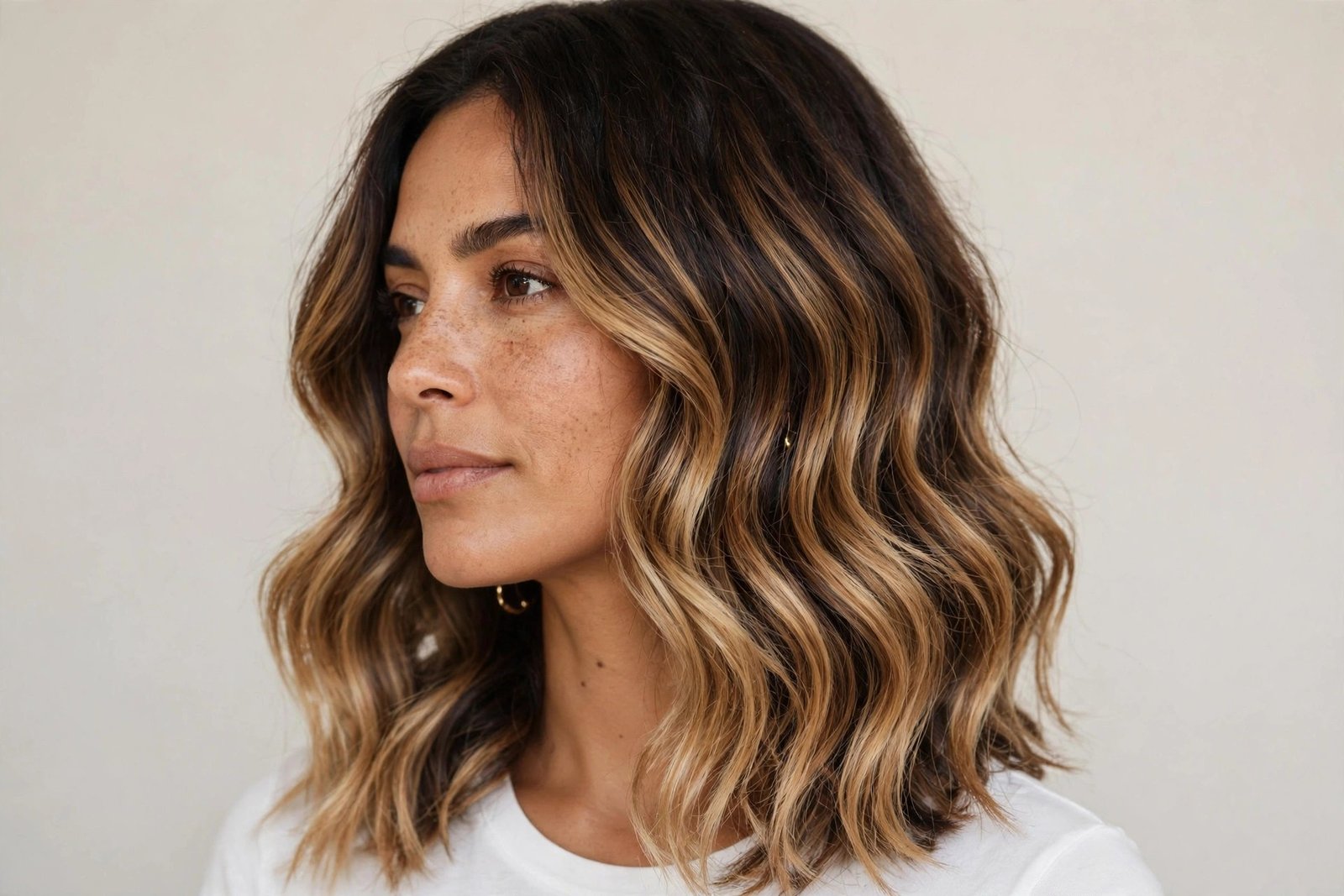
Balayage and layered bobs are a match the industry figured out years ago, and the 2026 melt — color that dissolves from root to tip with zero line — is its most refined form. The layers expose the gradient at every level: darker depth at the crown, brightness through the ends, and the face-framing pieces carrying the lightest ribbons. It’s dimension you can see move.
Who it suits: medium to dark natural bases get the most dramatic melt; the contrast is the point. All textures — curls in a balayage melt are genuinely show-stopping.
Salon script: “Long layered bob, collarbone — with a balayage melt: my natural root melting into lighter ends, no harsh line, brightness concentrated on the face-framing and the ends. Soft and expensive.”
Styling: waves show off a melt better than straight styling — the bends reveal the gradient. Even loose, heatless waves do the job.
Maintenance: color every 12–16 weeks (the grow-out is the feature); cut every 8–10. Mistake to avoid: going too light too fast in one session — a melt built over two appointments looks better and keeps your hair intact.
Pro tips & variations: Ask for the money piece to be the brightest section — it ties the whole melt to your face. Variation: a reverse melt (lighter roots to darker ends) for the contrarians.
30. The Shaggy Wolfcut-Adjacent Layered Bob
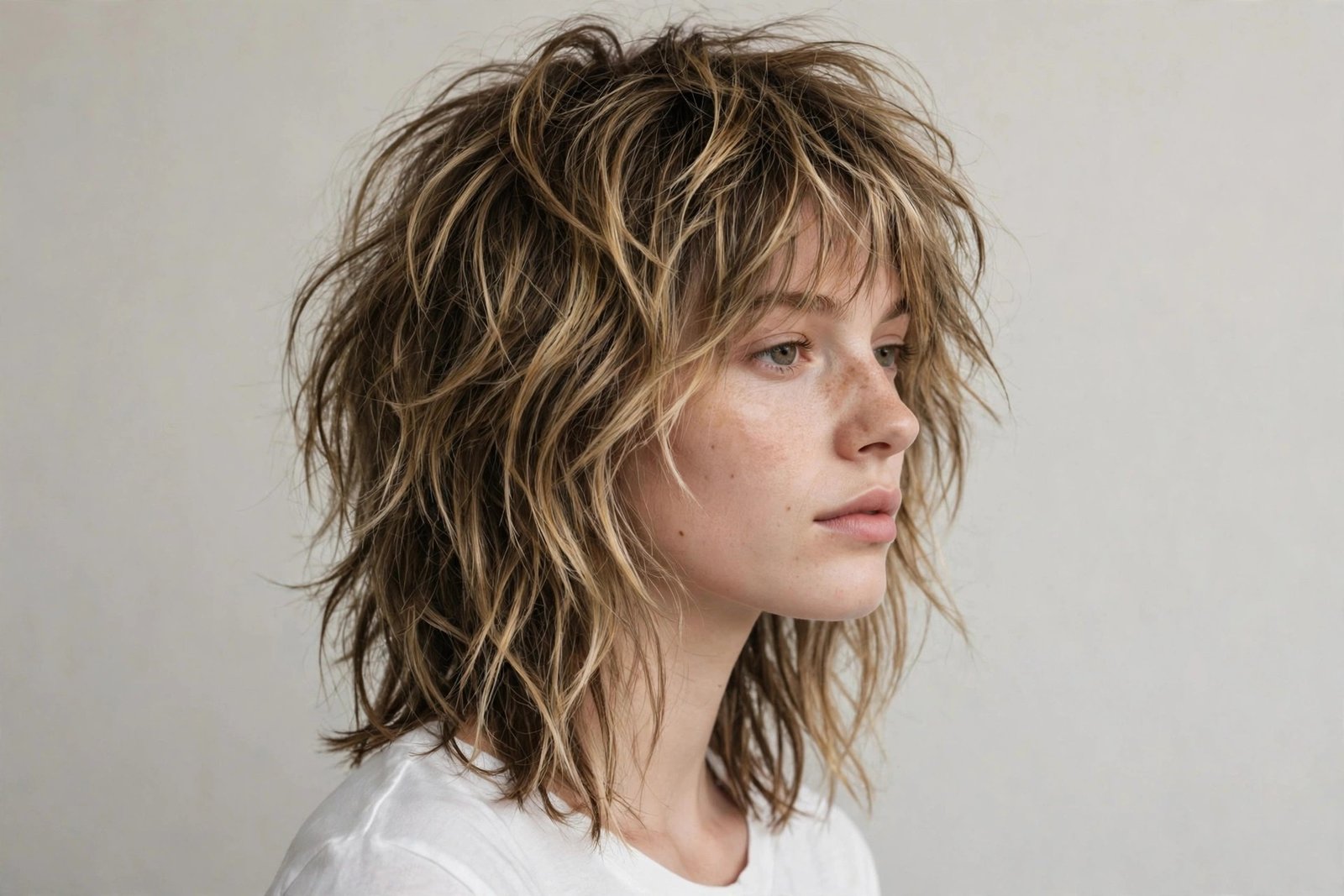
The wolfcut grew up and got a job — but kept the attitude. This version takes the shag’s choppy, rock-and-roll layering and contains it in a collarbone bob: shorter crown layers, piece-y ends, maximum texture, minimum effort. It’s the coolest version on this list and the least corporate. If the other 32 styles are dinner parties, this one is the afterparty.
Who it suits: wavy to curly hair is the dream texture — the shag was built for it. Straight hair needs daily texturizing to keep the piece-y look alive. Oval, heart and long faces; strong personal style required.
Salon script: “Shaggy long bob, wolfcut energy: collarbone length, short textured layers through the crown, choppy piece-y ends, lots of separation. I want cool, not clean.”
Styling (8 minutes): texture spray or mousse on damp hair, scrunch, diffuse or air-dry. Finger-style only — a brush is the enemy of the shag.
Maintenance: 10–12 week trims; shaggy texture eats growth for breakfast. Mistake to avoid: over-conditioning the roots — the crown needs grip and grit, not slip. Condition mid-lengths to ends only.
Pro tips & variations: This cut gets better with a little dirt — day-two and day-three hair is peak shag. Variation: curtain bangs make it softer; micro-bangs make it a statement.
31. Wispy Bangs Long Layered Bob
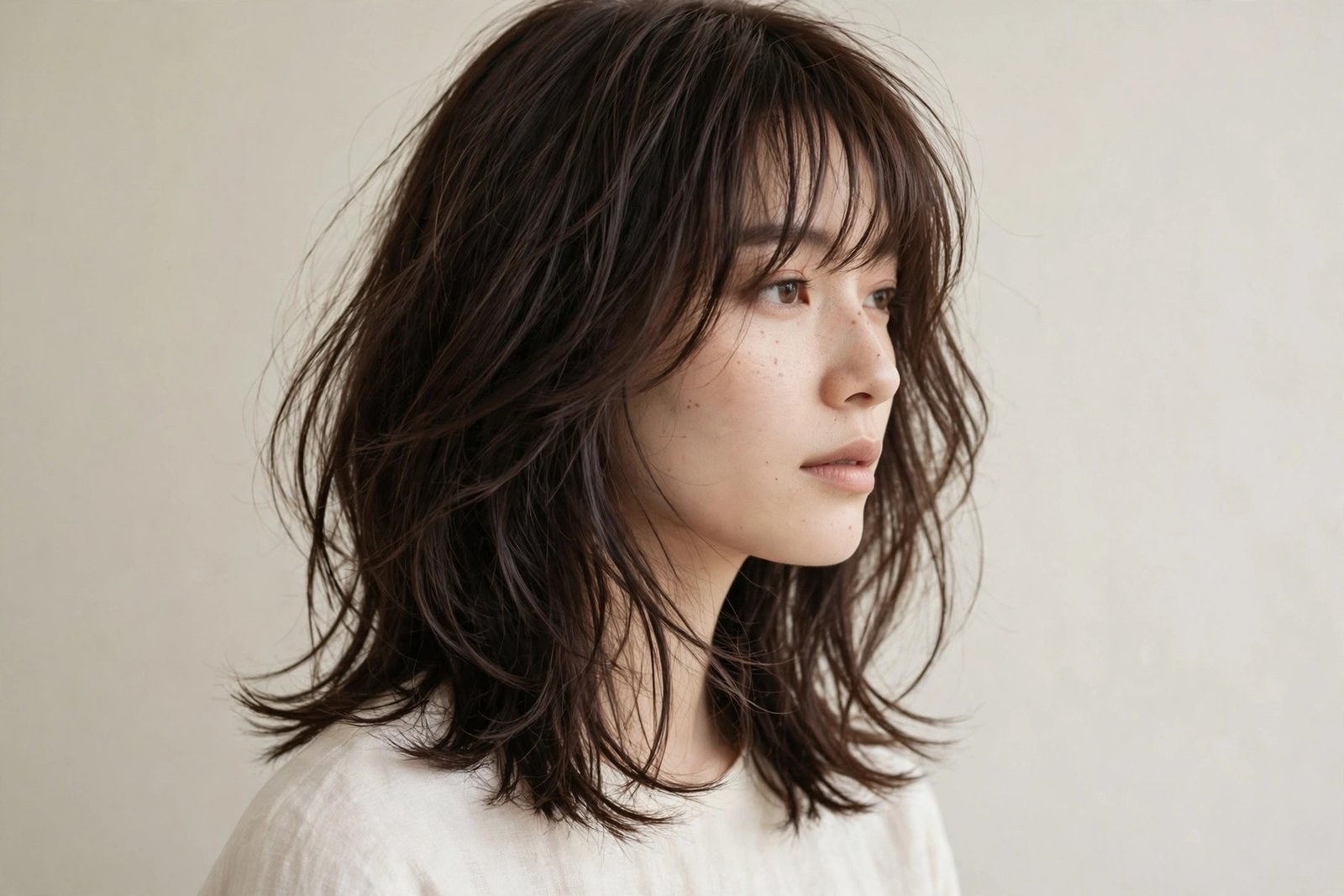
Full fringe, featherweight execution: wispy bangs that skim the forehead in soft, separated pieces, paired with a long layered bob that echoes the lightness. Unlike heavy blunt bangs, the wispy version doesn’t demand daily precision — it forgives cowlicks, grows out gracefully, and flatters more faces. It’s the fringe for the fringe-curious.
Who it suits: fine to medium hair — wispy bangs need hair that can be piece-y without looking sparse. Long foreheads, oval and heart faces. Cowlick owners: proceed with a skilled stylist only.
Salon script: “Long layered bob, collarbone — with wispy bangs: soft, piece-y, hitting just at or below the brow, textured so they separate naturally. Light, not heavy.”
Styling (7 minutes): blow-dry the bangs down and forward with a small round brush or just your fingers and the dryer nozzle. They should look effortless — because they are.
Maintenance: bang trims every 4–5 weeks; full cut every 8–10. Mistake to avoid: cutting them too thick at the first appointment — start wispy; density can be added, not removed.
Pro tips & variations: Dry shampoo on the bangs between washes — fringe shows oil first. Variation: let them grow into curtain bangs (#4) with zero awkward stage.
32. The Scandi Slick Layered Bob
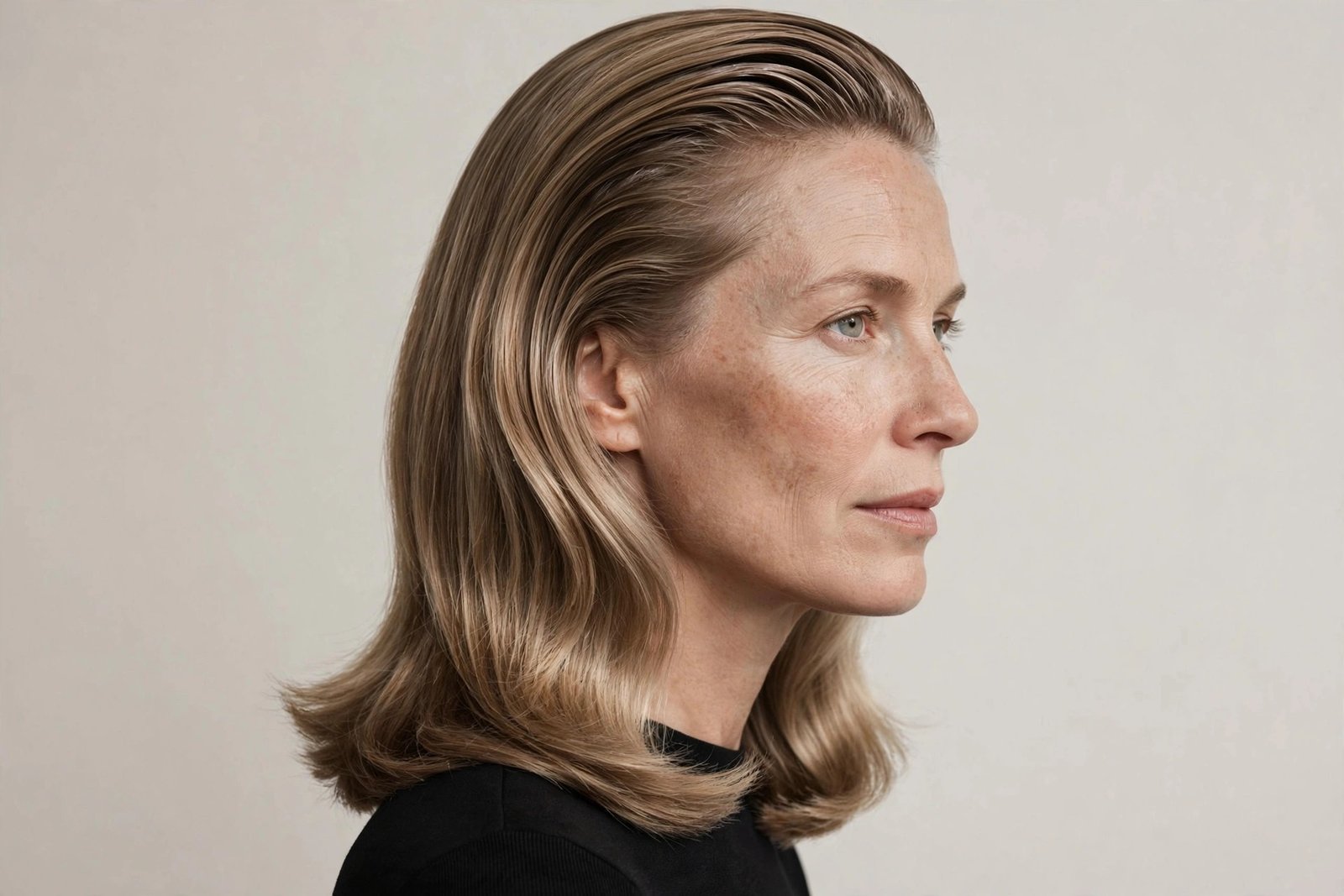
Straight from Copenhagen street style: the slicked, almost-wet finish on a long layered bob. It’s sleek but not severe — the layers keep it from looking helmet-like, and the glossy, tucked finish reads impossibly chic. The 2026 version isn’t actually wet (that was 2023); it’s polished with serum and gel at the roots, flowing into soft ends. Minimalist, architectural, cool.
Who it suits: straight to wavy hair; the slick needs cooperation. Oval and long faces; the sleekness elongates. Anyone whose aesthetic is already minimal — this hair matches the wardrobe.
Salon script: “Long layered bob, collarbone — cut for a sleek finish: long layers, clean lines, ends that can be polished smooth. I’m wearing it slicked.”
Styling (12 minutes): gel or styling cream at the roots on damp hair, comb back or to a deep side part, blow-dry smooth following the direction. Serum through the lengths for the glossy finish. The roots do the slicking; the ends stay soft.
Maintenance: 7–8 week trims; sleek shows everything. Mistake to avoid: too much product — slick should look expensive, not greasy. Build in thin layers.
Pro tips & variations: The deep side-part slick is the evening version; center-part slick is the daytime uniform. Variation: slick the front, leave the back textured — the high-low contrast is very 2026.
33. The Curly Natural-Texture Layered Bob
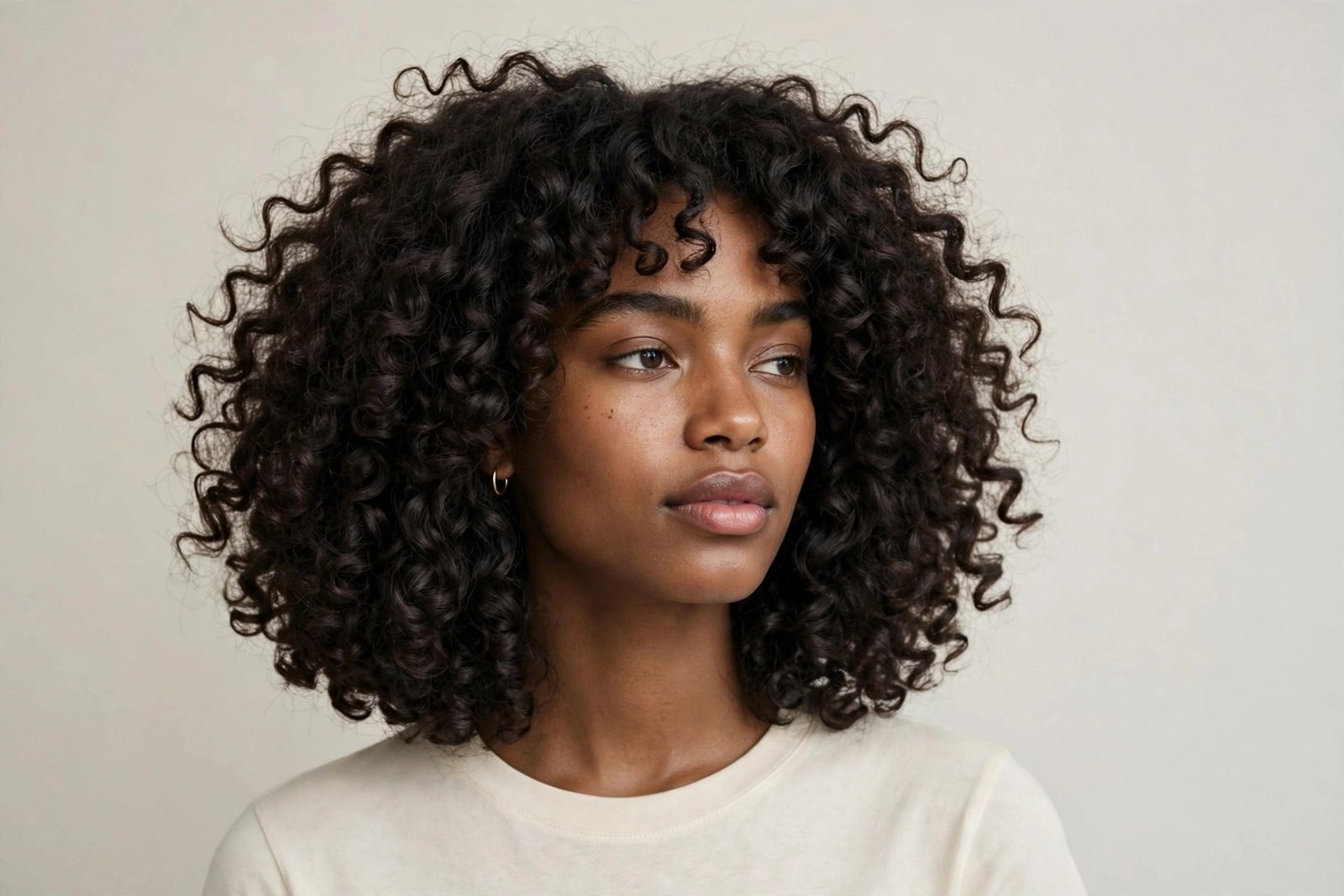
The grand finale, and maybe the best argument for this entire cut: a long layered bob on natural curls. Layers let each curl spring to its own level instead of stacking into the dreaded pyramid — the result is a rounded, voluminous, defined shape with the curls cascading at the collarbone. Cut dry, shaped curl by curl, this is the version that makes curly women stop straightening. I’ll say it plainly: if you have curls and you’ve never tried layers at this length, you’re missing your best hair.
Who it suits: curly and coily textures (3A–4C) — the curlier, the more transformative the layers. Every face shape; the volume can be shaped to balance any of them.
Salon script: “Dry-cut curly long bob: collarbone length when dry, curl-by-curl layering, rounded shape, no pyramid. Cut it dry so you can see my real pattern — and leave the layers LONGER than you think.”
Styling (15 minutes): curl cream on soaking-wet hair, scrunch, diffuse or air-dry. Pineapple at night to preserve the shape. This is the lowest-daily-effort version on the list once the cut is right.
Maintenance: 10–12 week trims; curls hide growth beautifully. Mistake to avoid: a wet cut by a non-curly specialist — the spring-up factor will shock you. Dry cut, curly specialist, non-negotiable.
Pro tips & variations: Clarify monthly — product buildup weighs curls down and kills the layer definition. Variation: a curly shag hybrid (shorter crown layers) for maximum volume up top.
Styling Routine, Products & Maintenance
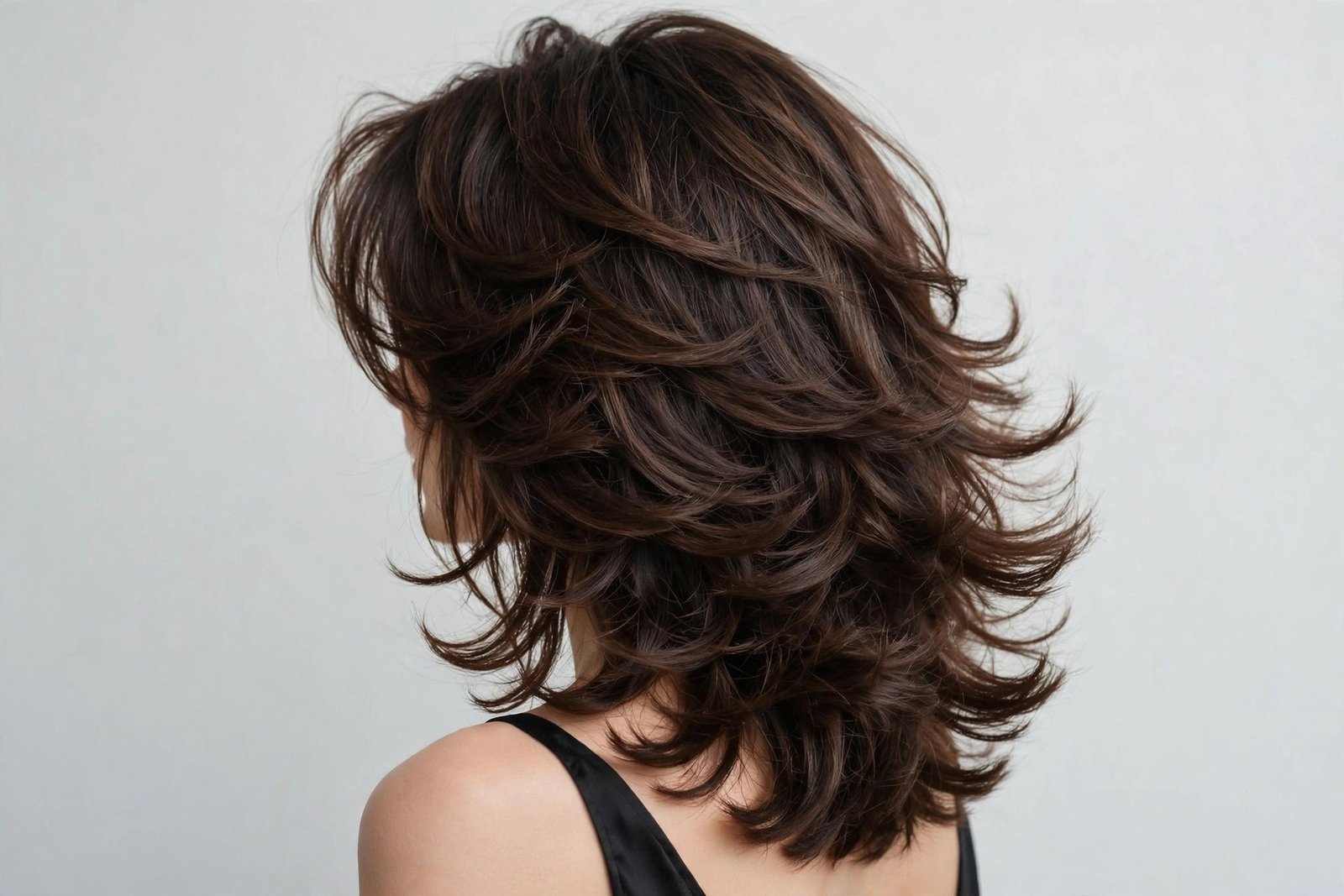
You’ve picked your version — now let’s talk about living with it. The long layered bob rewards a little daily attention and punishes neglect, but “attention” here means 10–20 minutes, not an hour. Below: the blowout routine that makes every version sing, the heatless options, the only products that actually matter, and the trim schedule that keeps the cut sharp.
The 15-Minute Blowout Routine
This is the foundational skill for long-layered-bob ownership. Start with towel-dried, damp hair — not dripping, not half-dry; timing matters because you want to set the shape while the hydrogen bonds are still pliable. Work a golf-ball of volumizing mousse through the roots and a pea of smoothing cream through the mid-lengths and ends. Rough-dry upside down until you’re about 80% dry — this builds the root lift that makes layers bounce instead of lie flat.
Now section: clip the top half up and work the bottom half first with a medium-large round brush. The technique that defines 2026 styling is the outward roll on the last three inches — wrap the ends around the brush and roll away from the face, holding the dryer nozzle down the hair shaft. Each layer gets the same treatment, working upward. Finish the face-framing pieces last, rolling them away from the face for that open, airy frame.
The final 10%: cool shot all over to set everything, then shake it out with your fingers — never a brush at this stage, or you’ll collapse the layer separation you just built. A mist of light-hold hairspray or texture spray, and you’re done. Total time once practiced: 15 minutes. The first week will take 25; by week three your hands know the route. Barbers won’t tell you this, but the difference between a $40 blowout and a great at-home one is almost entirely the cool shot and the upside-down rough-dry. Master those two and the rest is details.
Air-Dry and Heatless Styling
Not every day is a blowout day, and the long layered bob is kinder to air-drying than most cuts — the layers give air-dried hair shape instead of letting it fall in one limp sheet. The method: on damp hair, apply a leave-in conditioner and a light mousse or curl cream depending on your texture. Scrunch wavy hair upward to encourage the wave; smooth straight hair down with your palms to discourage frizz. Then — and this is the hard part — leave it alone. Touching drying hair creates frizz; every stylist says it and every client ignores it.
For heatless waves, the overnight rod method is unbeatable at this length: slightly damp hair, a satin heatless curler, sleep, unwrap. The collarbone length wraps perfectly and the layers create natural variation in the curl pattern. Braid-outs work too — two loose French braids overnight give soft, even waves by morning. The honest trade-off: heatless styling gives you texture but not polish. If your version is a sleek one (glass hair, old-money, middle-part sleek), heatless won’t cut it — those need the dryer. But for the textured, wavy, shaggy versions, heatless is genuinely all you need most days.
The Only Products That Actually Matter
The hair industry wants you to own fourteen products. You need five. A volumizing mousse for root lift — the single highest-impact product for layered cuts, because layers without root lift fall flat. A smoothing cream or serum for the mid-lengths and ends — this is what makes layers look expensive instead of frizzy. A heat protectant, non-negotiable if you blow-dry or iron — layered ends are the oldest, most fragile part of your hair and heat without protection is how they turn to straw. A texture or sea-salt spray for the undone versions — it gives the layers grip and separation. And a light-hold hairspray or shine spray to finish.
What you don’t need: heavy oils (they collapse layered volume — keep oils to the very tips if you must), thick waxes (they chunk layers together into stringiness), and dry shampoo used as a styling product (it’s for oil absorption between washes, not texture — it builds up and dulls). One more honest note: product matters less than technique. A $8 mousse applied correctly beats a $40 cream applied wrong. Spend your money on the heat protectant and the trim schedule; economize on everything else.
Trim Schedule: Keeping the Shape Sharp
Here’s the maintenance truth in one paragraph: every 8 weeks for most versions, 6 weeks for the sleek ones, 10–12 for the textured and curly ones. The sleek versions (glass hair, middle-part sleek, old-money) show grown-out layers first — straight styling exposes unevenness that waves hide. The textured versions (shaggy, beach wave, French hybrid, curly) are the most forgiving — their whole aesthetic is controlled chaos, and growth just adds to it.
Between appointments, the dusting trim is your best friend: every 4–6 weeks, have just the very ends cleaned up — a quarter inch, no shape change. It takes ten minutes, costs little, and it’s what keeps layered ends from thinning into wisps. Watch for the signals: when your flipped ends stop flipping, when the layers start catching on each other instead of sliding past, when the perimeter looks see-through — that’s not a styling problem, that’s a trim problem. And if you’re growing it out, stretch to 10–12 weeks but don’t skip entirely; untrimmed layers grow into thin, straggly ends that ruin the grow-out you’re trying to achieve.
Grow-Out Strategy: Making It Last
The long layered bob has the easiest grow-out of any bob family cut, and you should plan for it from day one. Months 1–3: the shape holds with dusting trims; enjoy it. Months 4–6: it becomes a layered lob — still a deliberate style, still getting compliments. This is the phase where most women panic and chop it back, but resist: you’re one phase away from long layers. Months 6–10: you’re in long layered hair territory, and the original bob is a memory.
The strategy that makes grow-out painless: keep the face-framing pieces trimmed even as you grow the back. Long front pieces with an overgrown back look intentional; an overgrown everything looks neglected. Get the perimeter dusted every 10–12 weeks to prevent thinning ends, and deep-condition weekly — the ends you’re growing out are the oldest hair on your head and they need support. If you colored it (copper, cherry, balayage), plan the color grow-out too: lived-in colors and melts grow gracefully, all-over fashion colors need a transition plan. Talk to your colorist at month three, not month six.
Frequently Asked Questions

The questions stylists hear about the long layered bob every single day — answered straight, no sales pitch.
What exactly is a long layered bob — and how is it different from a lob or a classic bob?
A long layered bob sits between the jawline and the collarbone — longer than a classic bob, which ends at or above the jaw — and it carries visible layering through the interior and ends, which is what separates it from a lob. A lob (long bob) is usually one length with a blunt perimeter; the long layered bob is its textured, movement-rich sibling. The layers are the whole point: they remove weight so the hair moves, create face-framing that flatters more face shapes, and let the ends flip, flick or curve instead of sitting in one heavy line. In 2026, ‘long layered bob’ is the search term exploding on Pinterest — up 622% — because it delivers the polish of a bob with the versatility of longer hair.
Will a long layered bob suit my face shape?
Yes — this is one of the most forgiving cuts in existence, because the layers can be placed to balance almost any face. Round faces: ask for longer face-framing pieces that start below the chin and a center or deep side part to add length. Square faces: soft, feathered layers around the jawline blur strong angles. Oval faces: almost every version works; curtain bangs add interest. Heart faces: keep volume through the ends rather than the crown to balance a narrower chin. Long faces: add width with flipped ends and avoid too much length past the collarbone. The only real caution: very long, narrow faces can look longer if every layer falls straight — so ask your stylist for layers that kick outward.
Is the long layered bob high maintenance? How often do I need trims?
Honestly? Medium. It’s less fussy than a chin-length bob that loses its shape in four weeks, but more demanding than one-length long hair. Layers grow out softly, so you can stretch trims to 8–10 weeks if you keep the ends healthy — 6 weeks if you wear it sleek, since grown-out layers show unevenness in straight styles first. Daily styling is 10–15 minutes with a round brush or blow-dry brush; air-drying works for wavy textures but the cut really shines with a little heat styling. The honest truth: this cut rewards the woman who enjoys styling her hair and punishes the wash-and-go-only routine — wavy and curly textures get the easiest ride.
Does the long layered bob work on fine hair? What about very thick hair?
Both — but the layering strategy flips. Fine hair needs LONG, minimal layers: too many short layers remove what little density you have and leave the ends wispy. Ask for ‘invisible layers’ — interior layering that creates movement without visible steps — and a slightly blunter perimeter to fake fullness. Thick hair needs the opposite: aggressive interior layering and texturized ends to remove bulk, or the cut turns into a triangle. Coarse, dense hair is actually the ideal candidate — it holds the flipped ends and volume this cut is famous for. One warning for thick hair: skip the razor if your hair is coarse and frizzy-prone, since razored ends can puff up.
Can I get a long layered bob if my hair is curly or wavy?
Absolutely — curls and waves might be the best texture for it. The layers let each curl spring independently instead of stacking into a pyramid, and the length gives curls room to form their pattern. The critical detail: it must be cut dry or on dry-stretched hair so your stylist can see the real curl pattern — cutting curls wet is how you end up shocked by the spring-up. Ask for longer layers than you’d think (curls eat length), and keep the perimeter slightly fuller. Styling is wash-and-go friendly: curl cream, scrunch, diffuse or air-dry. Wavy hair gets the easiest version of all — air-dry with a little mousse and the layers do the styling for you.
How does a long layered bob grow out? Is the grow-out awkward?
This is one of the best-growing-out cuts you can get. Because the silhouette is already layered, the grow-out reads as intentional long layers rather than a ruined bob — there’s no harsh line to fight. Months 1–3: the shape holds with dusting trims. Months 4–6: it becomes a layered lob, still very much a style. By month 8+: you’re in long-layered-hair territory. The awkward phase that plagues chin bobs barely exists here, which is exactly why stylists call it the ‘commitment-light’ bob. Keep up trims every 10–12 weeks during grow-out to stop the ends thinning out, and you may never have a bad-haircut day in the whole journey.
What exactly should I ask my stylist for so I get the 2026 version, not a dated cut?
Say this: ‘I want a long layered bob — collarbone length, soft interior layers that start around the cheekbones, face-framing in the front, and textured, piece-y ends — not a blunt perimeter.’ Bring 2–3 reference photos (Pinterest’s 2026 trend pins are perfect) because ‘bob’ means something different to every stylist. Key 2026 details to name: flipped or flicked ends rather than tucked-under, lived-in texture over perfect smoothness, and curtain bangs or face-framing if you want fringe. Red flags: if your stylist reaches for thinning shears on fine hair, or suggests a stacked back — that’s the 2010s version. The 2026 long layered bob is soft, touchable and moves when you do.
Conclusion
The long layered bob earned its 2026 crown the honest way: not through a viral moment, but by solving real problems. It gives short-hair energy without the commitment, movement without the styling marathon, and a grow-out so graceful it barely counts as growing out. Whether you land on flipped ends, a French-bob hybrid, copper fire, or the quiet confidence of old-money polish, the foundation is the same — length plus intelligent layering, cut for your texture and your life.
My parting advice: bring the photos, say the words (“collarbone, soft interior layers, textured ends — not blunt”), and find a stylist who lights up when you say “layers.” The cut is only as good as the hands behind it. Get that right, and you’ll understand why millions of women searched for this exact haircut this year — and why most of them never looked back.