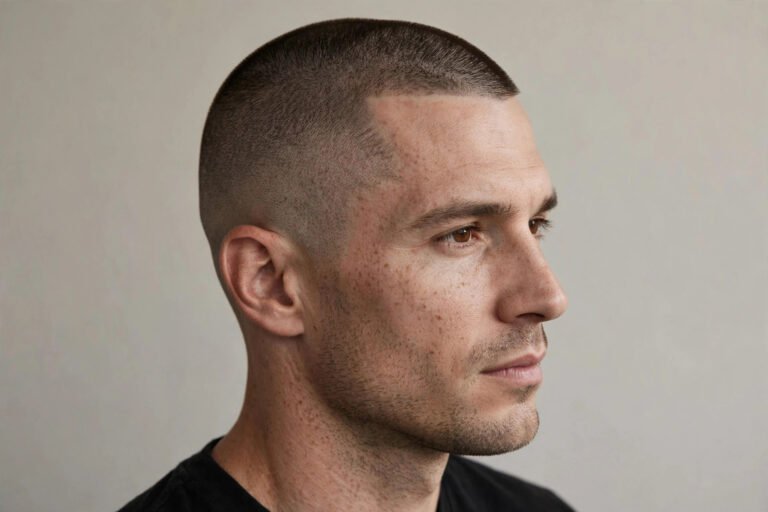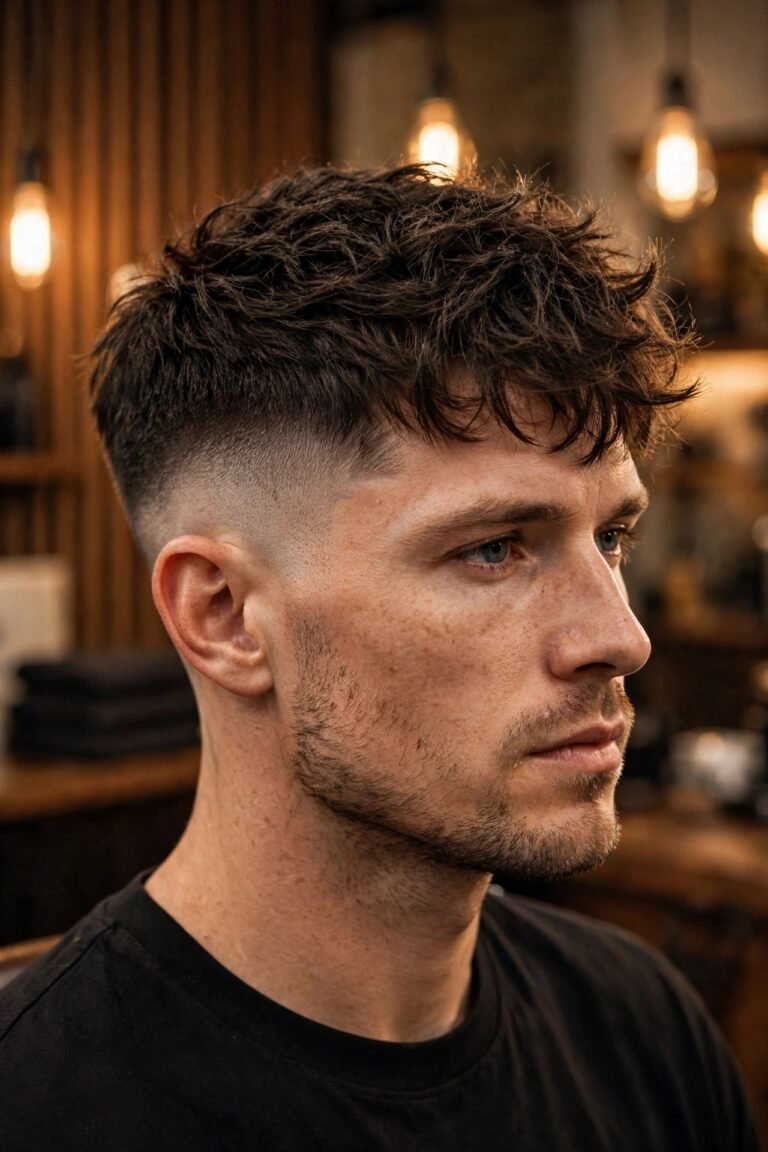
Disconnected Undercut Men 2026: 28 Sharp Styles & Complete Styling Guide
The Disconnected Undercut in 2026: Why the Boldest Cut in the Barbershop Still Wins
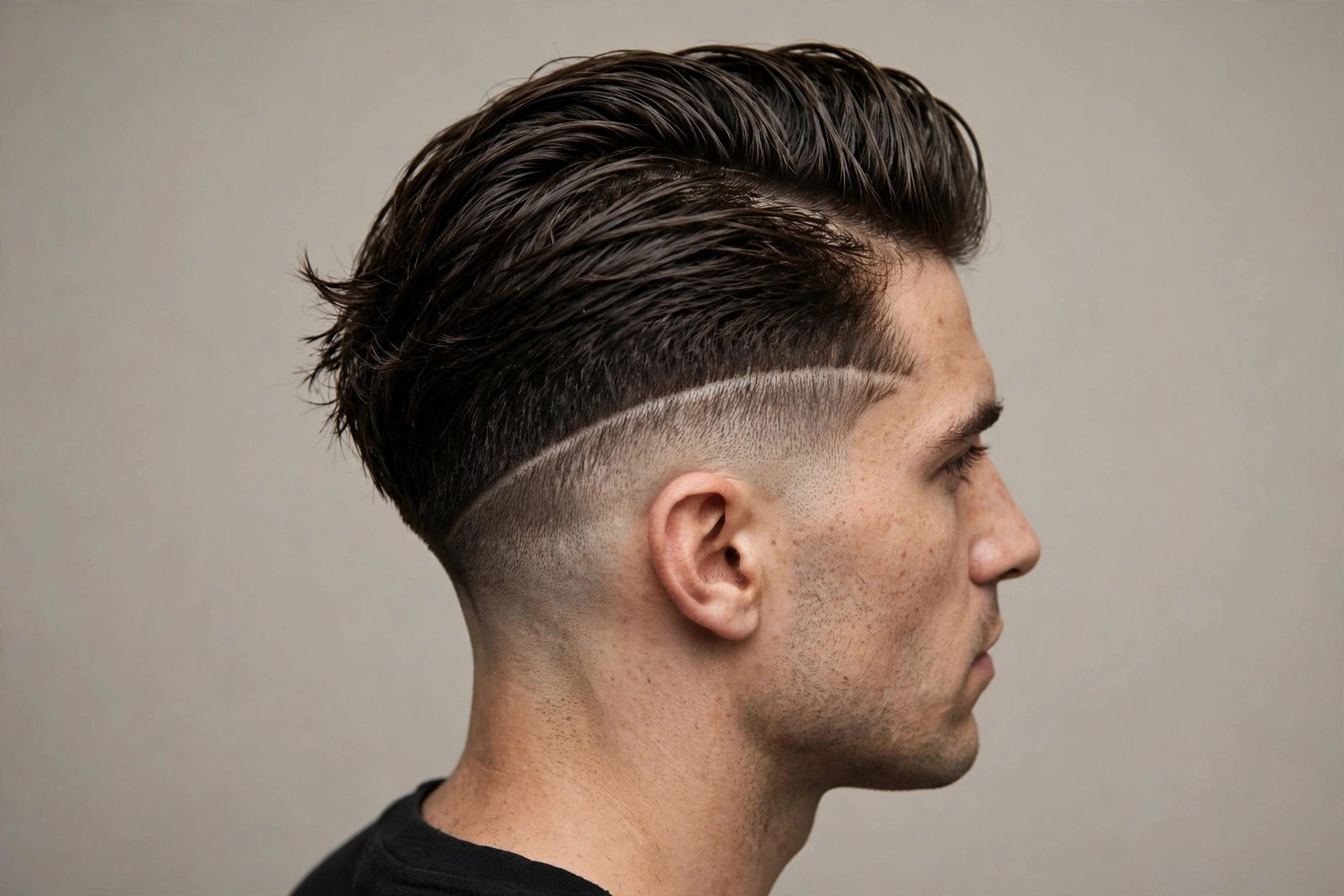
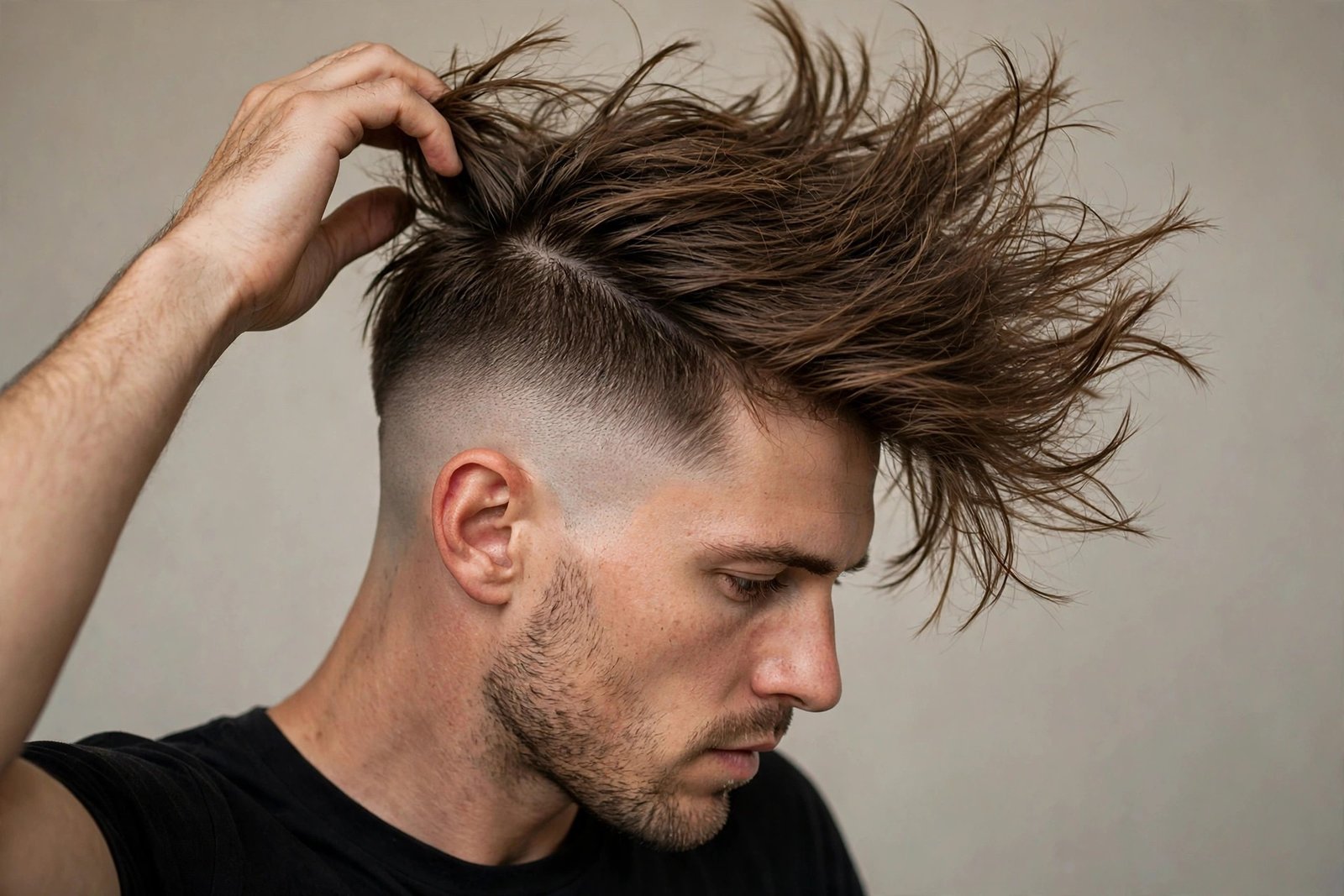
Walk into any serious barbershop in 2026 and look around. You’ll see fades, crops, curtains — the usual rotation. But the cut that still makes heads turn is the one with the hard line: the disconnected undercut men have been asking for, decade after decade, because nothing else frames a face with this much confidence. There’s a reason this haircut refuses to die. Fades blend in. The disconnect stands apart — literally. One clean horizontal line where the long top ends and the tight sides begin, and suddenly a regular haircut becomes a statement.
I’ve watched this cut cycle through trends for years, and here’s what I can tell you honestly: the disconnected undercut is not the easiest haircut you’ll ever wear. It demands styling most mornings, it needs the sides cleaned up every couple of weeks, and if you pick the wrong variation for your hair type, it will fight you daily. But when it’s right — when the top length matches your texture, the line sits at the right height, and you’ve got ten minutes and a blow dryer — there is no sharper cut in men’s hair. None. That’s why it keeps coming back, and why the 2026 versions are the best we’ve seen: softer textures, smarter lengths, and barbers who finally understand that the disconnect should suit the man, not just the trend.
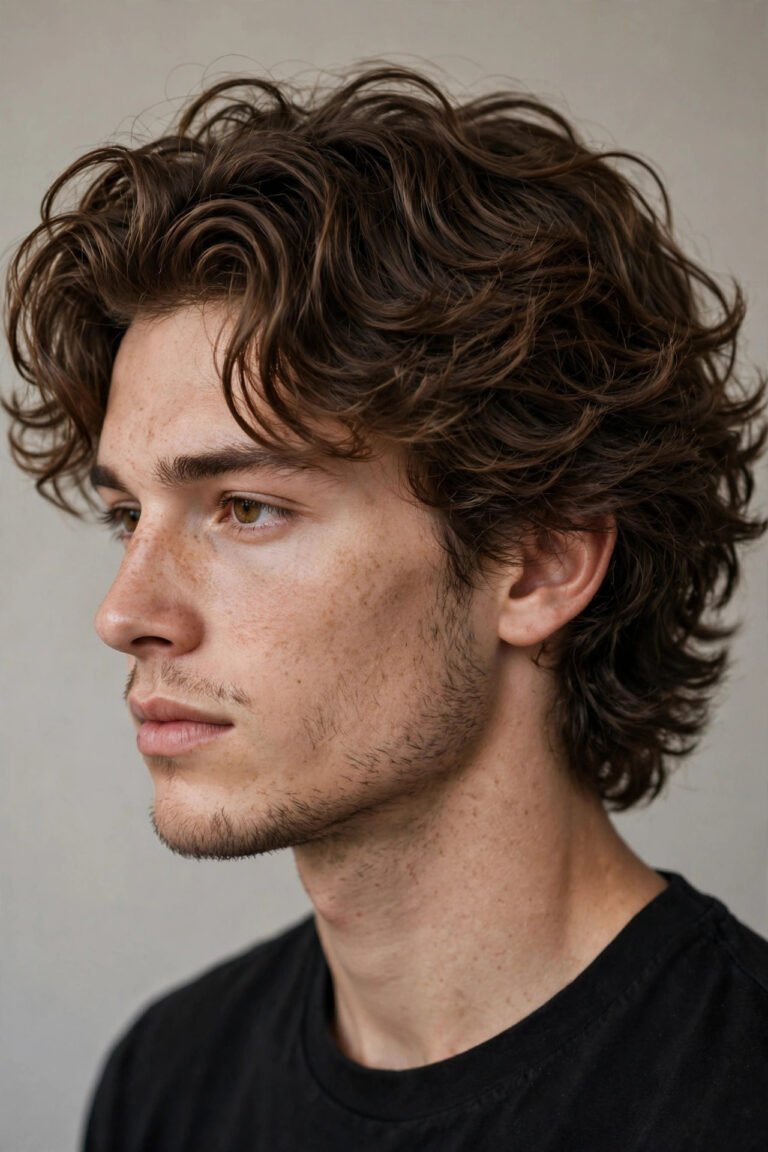
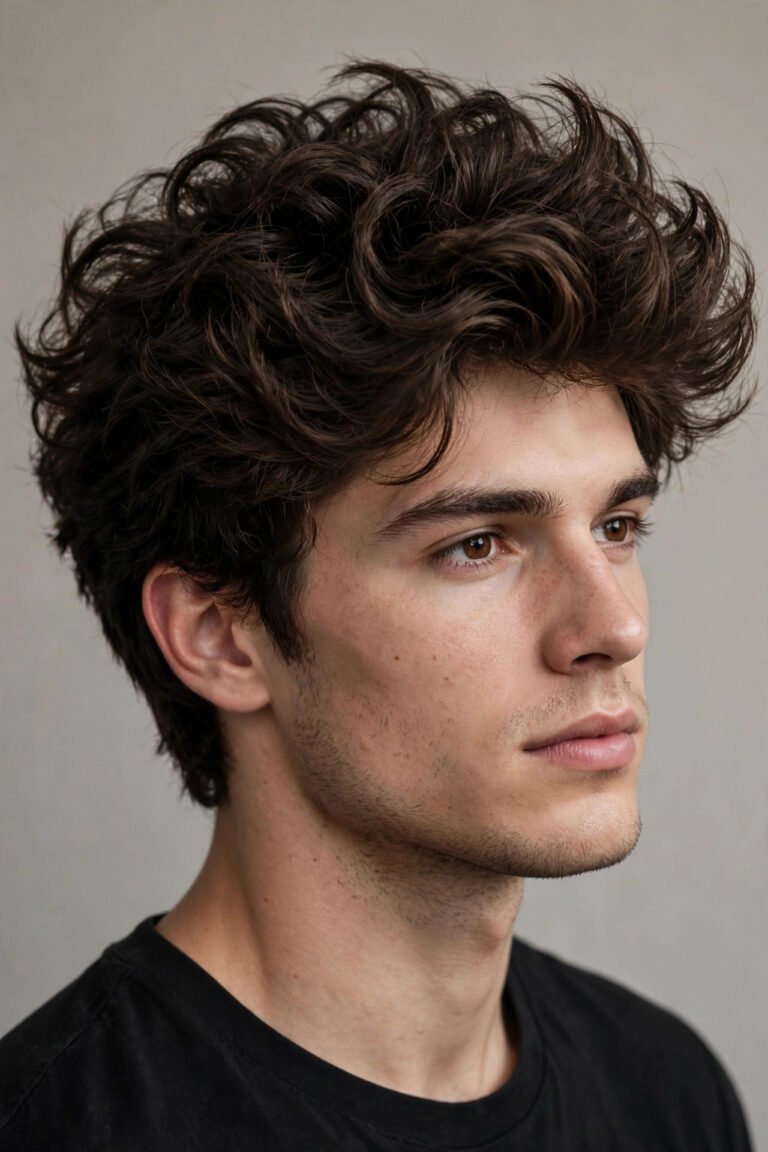
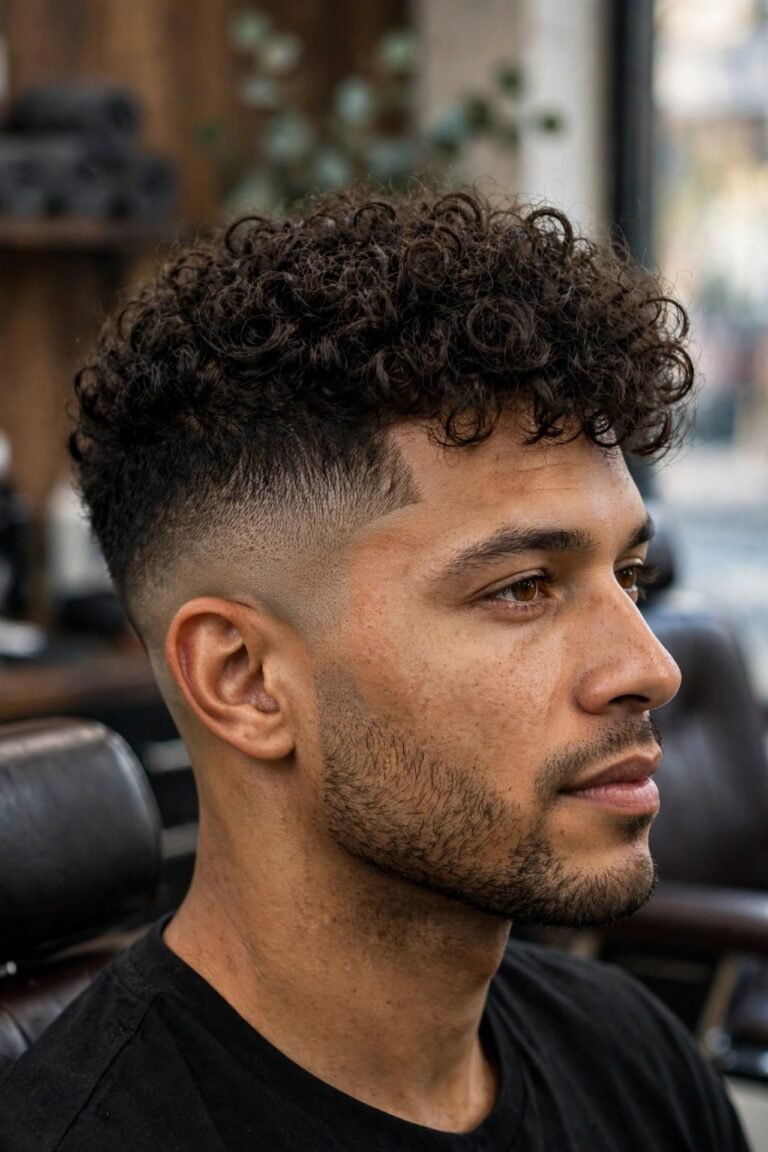
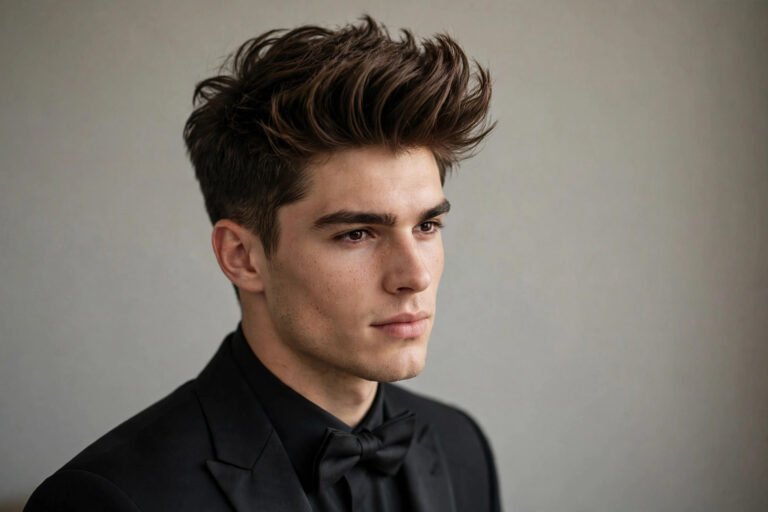
This guide covers 28 disconnected undercut styles for 2026 — slicked classics, textured modern takes, curly and wavy versions, office-safe options, and a few bold ones for guys who want the full drama. Every style comes with honest advice: who it suits, what to tell your barber, how to style it each morning, and the downsides nobody else will mention. Plus a complete maintenance routine at the end, because the cut is only half the battle. Keeping it sharp is the other half.
One thing before we start. If you take nothing else from this article, take this: bring photos to your barber. Every single section below tells you what to ask for, but words fail where hair is concerned. A picture of the exact line, length, and finish you want will do more for your result than a hundred adjectives. Save the ones you like. Your barber will thank you.
Table of Contents
- The Disconnected Undercut in 2026
- What “Disconnected” Actually Means
- 28 Disconnected Undercut Styles for 2026
- Your Styling and Maintenance Routine
- Frequently Asked Questions
- Conclusion
What “Disconnected” Actually Means (And How to Ask Your Barber for It)
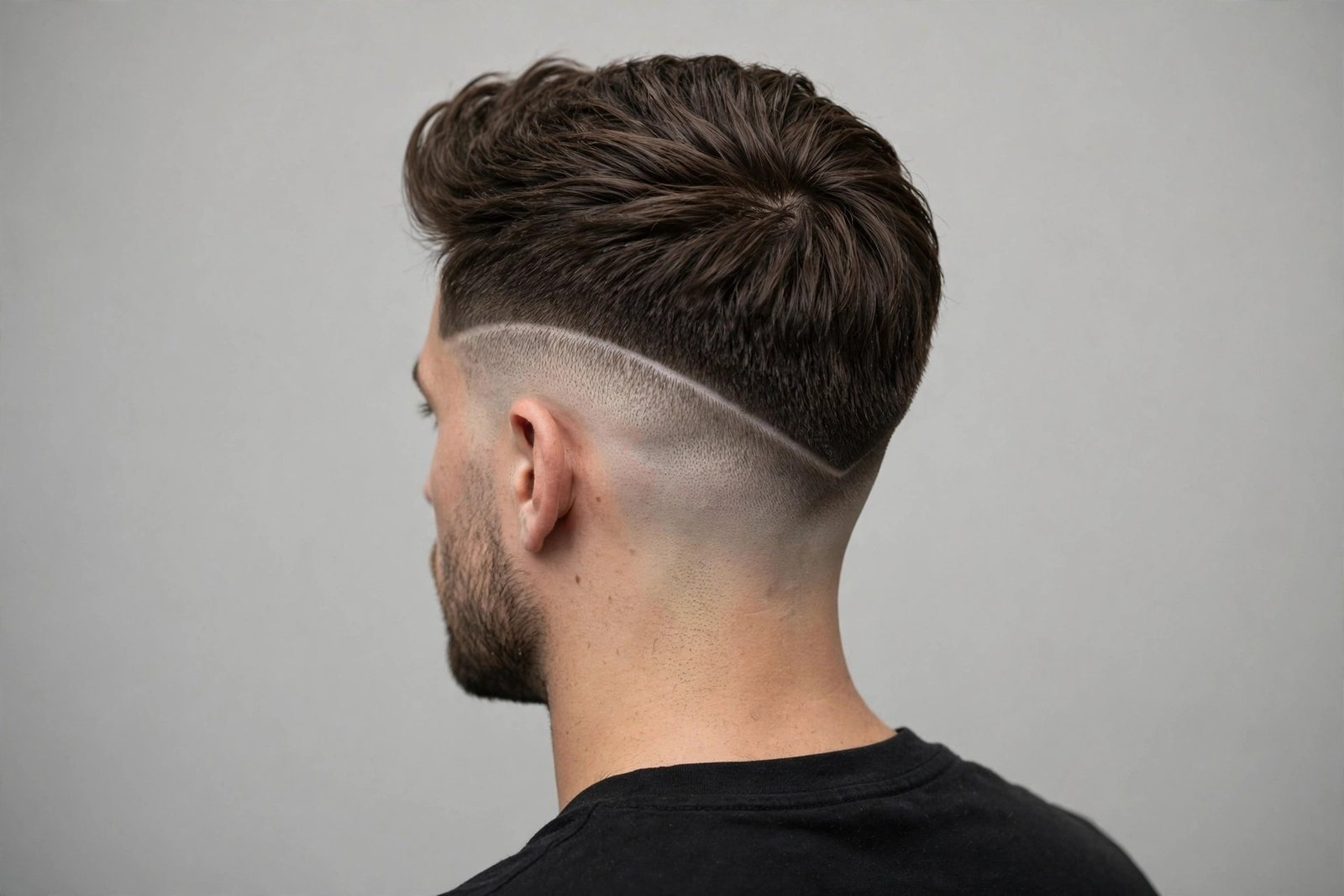
Here’s the definition that matters: in a disconnected undercut, the top is cut completely separately from the sides, with no graduation, no blending, no taper stitching the two together. Your barber cuts the top to its length, then takes the clippers up the sides and stops dead at a line — and that line is visible. You can see exactly where one length ends and the other begins. That’s the disconnect, and it’s the opposite of a fade, where every length melts into the next.
Why does it look so striking? Because the human eye loves contrast. A fade is smooth and polite; the disconnect is a hard edge, and hard edges photograph well, frame the face strongly, and read as intentional. It says you meant this. There’s no “my hair just grew out” ambiguity with a disconnect — it’s architecture, not accident.
Barbers won’t always tell you this, but the disconnect is technically a shortcut for them and a commitment for you. It’s faster to cut than a perfectly blended skin fade (no hours of blending with three guards), but it puts all the pressure on your daily styling, because the top has to look deliberate every single day. A fade forgives a lazy morning. A disconnect does not.
When you sit in the chair, use these exact words: “I want a hard disconnect — no blending where the top meets the sides.” Then specify three things: top length (3 to 6 inches covers most versions), side treatment (skin fade, low fade, or a single clipper length like a #1 or #2 all over), and line placement (low near the ear, medium at the temple, or high near the crown). Then show the photo. If your barber reaches for blending shears at the line, stop him — that’s the whole cut disappearing.
Why 2026 Is the Best Year Ever for This Cut
The disconnected undercut has had many lives. It was the sharp 1920s gentleman’s cut, the 1940s military officer’s slick-back, the 2010s hipster uniform, the Peaky Blinders phenomenon. Each era left its mark, and 2026 has inherited all of them. What makes this year different is that barbers have stopped treating the disconnect as one haircut and started treating it as a system — a framework you customize with your texture, your face shape, and your actual life.
The big shift this year is texture over slickness. For a decade, the disconnected undercut meant high-shine pomade and a helmet-smooth top. The 2026 versions lean matte: sea-salt texture, piecey separation, curls left to do their thing. It looks more expensive, ironically, because it looks less “done.” The line stays crisp — that’s non-negotiable — but the top has relaxed. GQ‘s grooming coverage has been tracking this softening for a while, and the barbershop floor confirms it: guys want the edge of the disconnect without looking like they’re heading to a costume party.
Length is the other story. Tops are longer than the 2010s versions — four to six inches is the new normal — which opens up the wavy, curly, and flowing variations below. A longer top also grows out more gracefully, which matters because let’s be real: nobody keeps a perfect 3-week barber schedule forever. The 2026 cut is built with your real life in mind, not an Instagram photoshoot.
And the sides have diversified. Skin fades, shadow fades, single-guard buzzes, even grown-out textured sides — they all work under the line now. The rule is simple: the sides should contrast the top. As long as that contrast is there, the disconnect reads. That’s why this list has 28 versions instead of one. There’s genuinely a disconnected undercut for every head in 2026.
Who It Flatters — and Who Should Walk Past It
Let’s be straight: the disconnected undercut is generous to some face shapes and honest with others. It loves oval faces (everything loves oval faces), does beautiful work on round faces by adding height and slimming the cheeks, and gives square jaws a strong frame that plays up the angles. Long faces need care — too much height on top stretches things further — so volume should go sideways and textured rather than straight up.
Hair type matters more than face shape, in my experience. Thick, straight, wavy, and curly hair all take to this cut naturally; the top has body to stand on its own. Very fine, limp hair is the hardest case — it can work, but only with the shorter, volume-built versions (see style 26), a blow dryer every morning, and realistic expectations. If your hair is fine and you hate styling, a disconnect will frustrate you. No shame in that; it’s a cut that asks for effort.
Hairline honesty time. A receding hairline is not a dealbreaker — the fringe-forward and hairline-friendly versions below were designed for exactly that — but an advanced receding hairline plus a high disconnect line is a combination I’d talk you out of. The hard line draws the eye upward, straight to the hairline. Keep the line lower and the top forward, and you’re fine. And if you’re dealing with significant thinning on top, the disconnect’s whole trick (contrast between lush top and bare sides) works against you. There are better cuts for that chapter — a textured crop or a clean buzz will serve you better, and any honest barber will say the same.
Lifestyle check: this cut suits guys who don’t mind 10 minutes with a dryer and product in the morning. If your mornings are a splash of water and out the door, pick the shortest versions or pick a different cut. The disconnect rewards the effort — that’s the deal it makes with you.
28 Disconnected Undercut Styles for Men in 2026
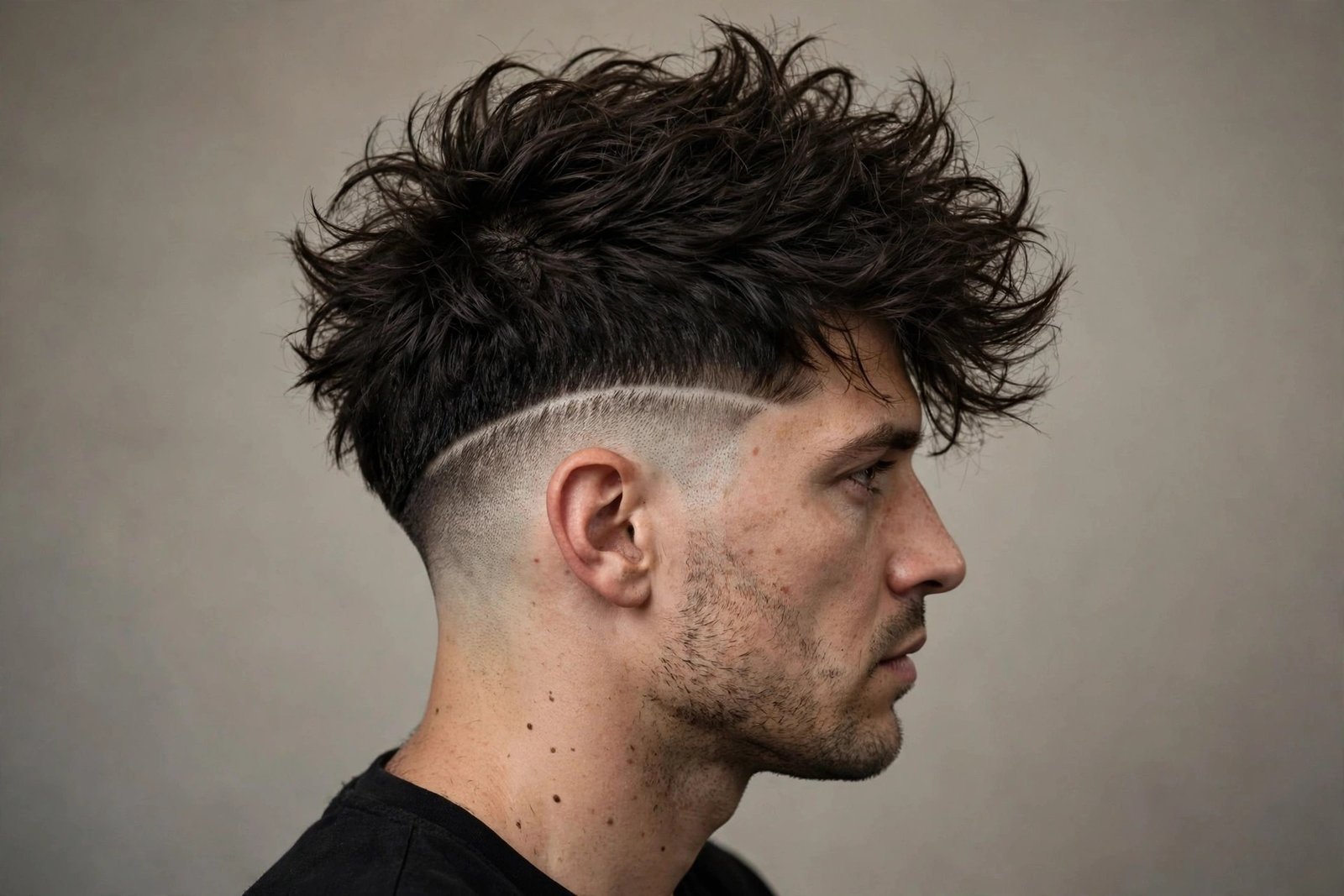
Twenty-eight ways to wear the line. Some are timeless, some are pure 2026, and a few are for the brave. Read the “who it suits” and “honest downside” in each — that’s the part that actually decides your haircut.
1. The Classic Slicked Disconnected Undercut
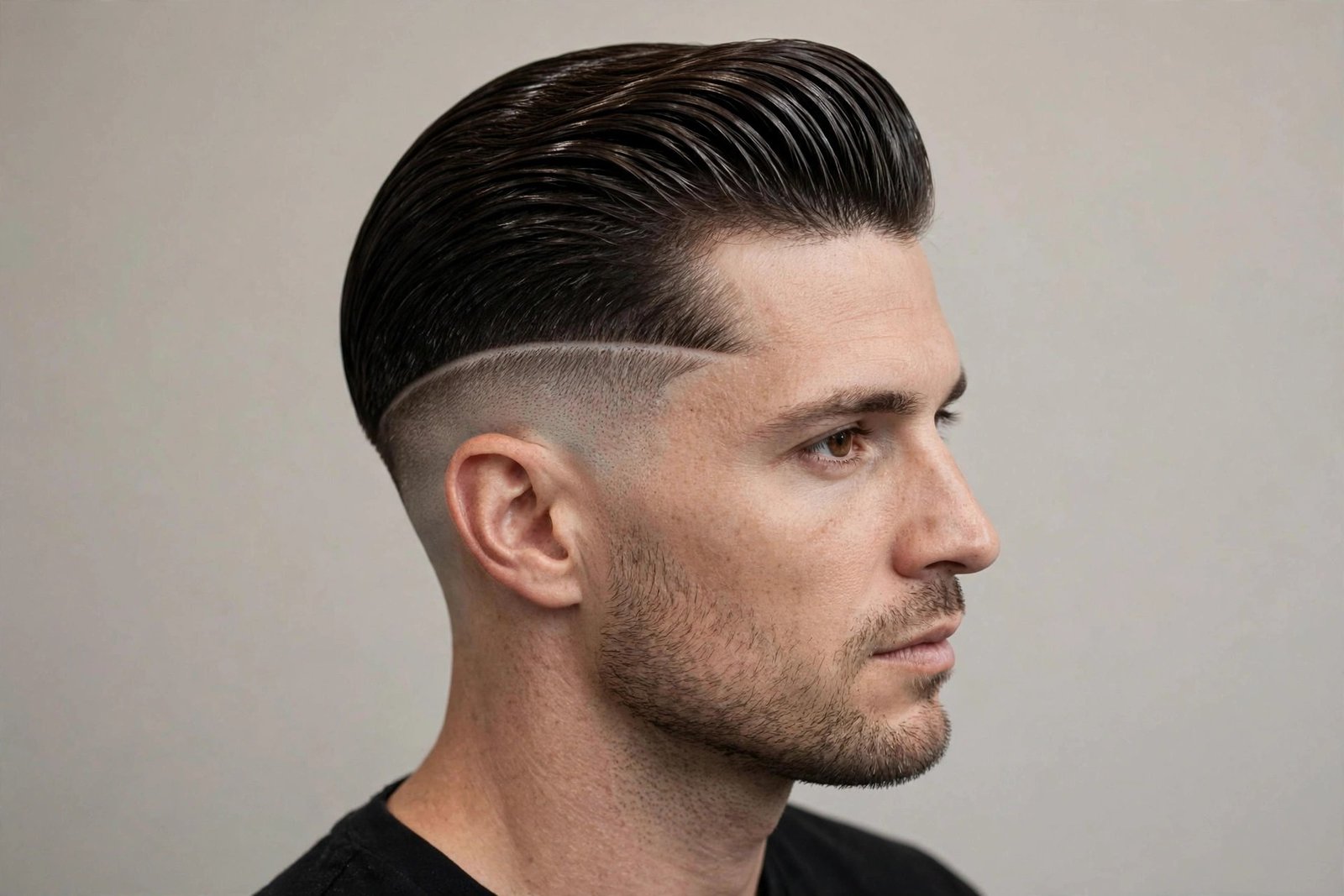
This is the one that started it all — the Peaky Blinders silhouette, the 1940s officer, the cut that made the disconnect famous. The top runs 4 to 6 inches, slicked straight back or slightly to the side with pomade, sitting above a hard line and tight faded sides. It’s the most formal version of the cut, and in a suit it looks like money.
Who it suits: straight to slightly wavy hair, oval and square faces, and any guy who wants maximum polish. It flatters strong jawlines because the slicked top pulls the eye up and back, lengthening the face. Thick hair holds the slick best; fine hair can do it but needs a blow dryer to build the base first.
The barber script: “Four to five inches on top, scissor-cut with some weight at the front. Hard disconnect at the temples — no blending. Skin fade on the sides, and keep the line crisp.” Show a photo of the exact finish you want, because “slicked” means helmet-gloss to one barber and soft sweep to another.
Morning styling: towel-dried damp hair, a coin of pomade warmed between palms, comb straight back from the hairline. Blow dry back on medium heat for hold that survives the day, then a final pass with the comb. Total: about 8 minutes once you’ve practiced. Re-comb at lunch if your hair is heavy — gravity is the enemy of the slick.
Honest downside: this is the highest-maintenance version here. Humidity turns it into a science experiment, the pomade transfers to everything (pillowcases, car headrests, your girlfriend’s shoulder), and on a windy day you’ll be recombing hourly. It also reads “done” in a way the textured versions don’t — great for weddings and boardrooms, slightly much for a beach weekend.
2. The Textured Messy Disconnected Undercut
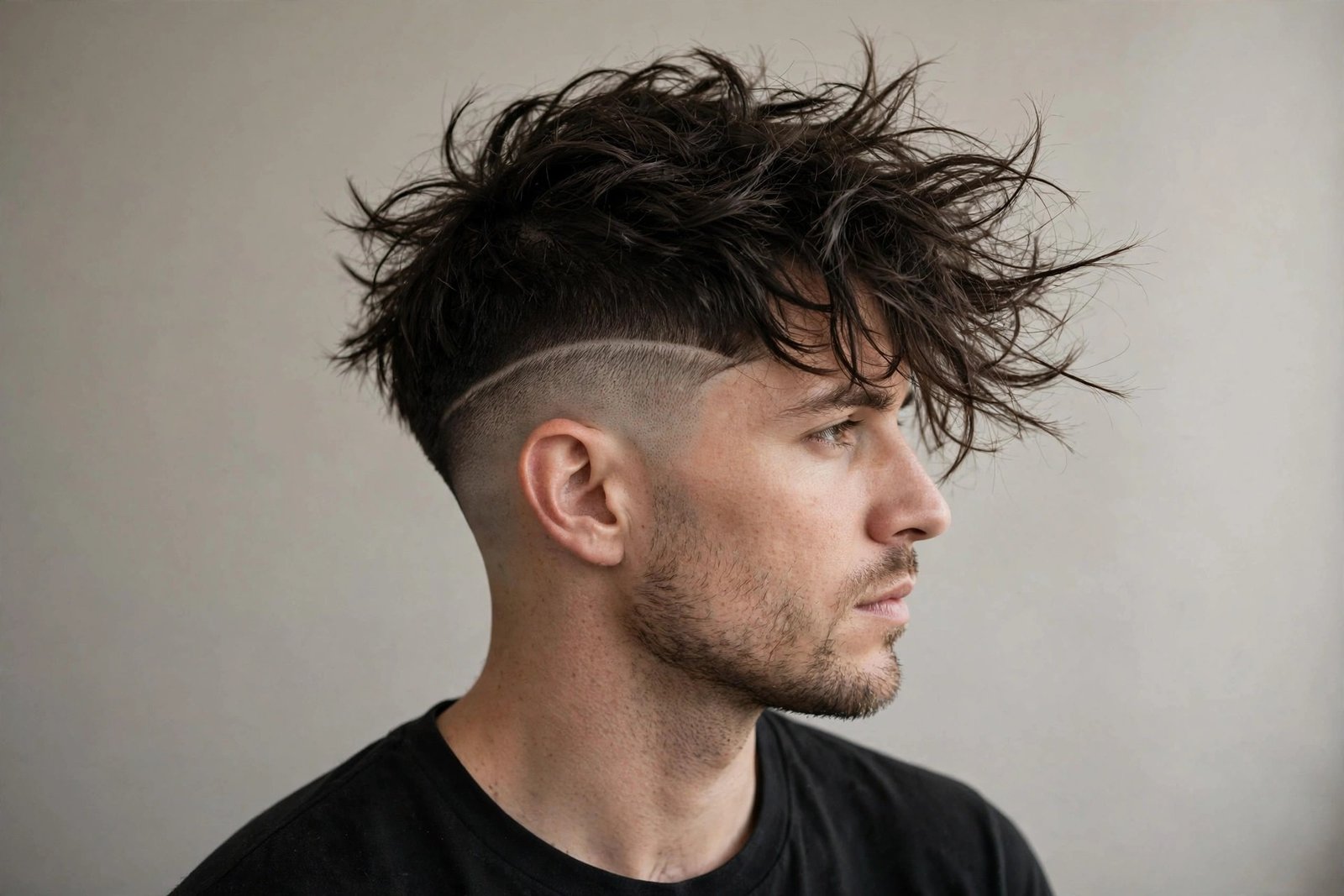
If the classic slicked version is a tailored suit, this is the same suit with the tie loosened. The top stays long — 3 to 5 inches — but instead of combing it into submission, you work matte clay through it and let it fall where it wants. Piecey, separated, a little wild. The disconnect line stays sharp underneath, which is what keeps the mess looking deliberate instead of accidental. This is the defining disconnected undercut of 2026, and for good reason: it has the edge of the cut with half the fussiness.
Who it suits: wavy and straight hair with natural movement, and honestly most face shapes. It’s the most forgiving version — the texture hides cowlicks, uneven growth, and minor cutting imperfections. Guys with thick hair love it because it removes the bulk-and-shine problem of the slicked version.
The barber script: “Textured top, point-cut for separation, about four inches. Hard disconnect line, faded sides. I want it cut so it falls messy — take weight out but keep the length.” Ask for point cutting or slide cutting through the top; blunt ends will sit flat and defeat the purpose. If you’ve been growing out a slicked version, this is your transition cut — same lengths, different finish.
Morning styling: the easiest routine on this list. Blow dry with your fingers (no brush, no comb) for 3 minutes to build rough volume, then a fingertip of matte clay, worked through from mid-length to ends, twisting small sections. Done in 5 minutes. It actually looks better slightly imperfect, so stop fiddling — overworking it kills the effect. A textured messy hair approach on top of the disconnect is the whole trick.
Honest downside: “messy” has a ceiling. There’s a fine line between artful texture and looking like you slept in a hedge, and the difference is usually one extra handful of product. It also needs the disconnect line kept sharp — when the line grows out, messy top plus blurry line reads as simply unkempt. Keep the sides on a 2-week schedule.
3. The Curly Top Disconnect
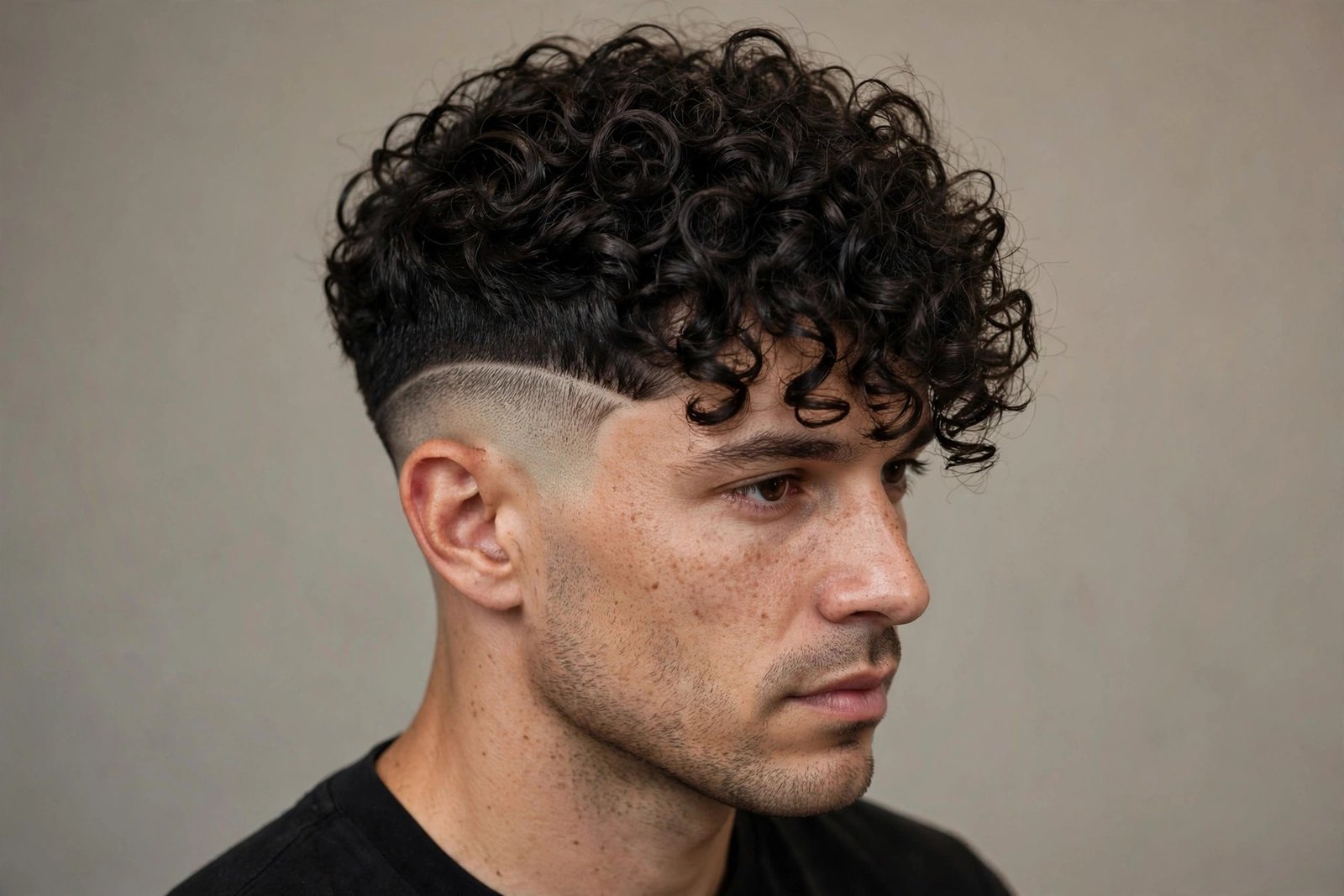
Curly guys, this might be your best haircut. Curls give you what straight-haired guys have to manufacture: volume, texture, and movement, all free of charge. The disconnect line frames the curls like a picture frame, giving them structure and stopping the whole thing from reading as “big hair.” The top needs 4 to 6 inches minimum so the curls can actually form — cutting curls too short above a disconnect just looks like a fuzzy cap sitting on a line.
Who it suits: 2B to 3C curl patterns especially, oval and oblong faces (the width of the curls balances length), and anyone whose curls have been fighting every blended cut they’ve ever had. The disconnect is a gift to curly hair because there’s no awkward grow-out zone where curl meets fade — it’s one length, then the line, then short.
The barber script: “Keep the curls long on top — at least four inches, cut dry or stretched so you can see the true length. Hard disconnect line. Tapered or faded sides.” Critical: make sure your barber cuts curly hair dry or understands shrinkage. A barber who cuts your curls wet to “four inches” will hand you two inches of dry curl and a very short day. Find someone who works with texture regularly.
Morning styling: curls want moisture, not heat. Leave-in conditioner on damp hair, curl cream scrunched through, and either air dry or diffuse on low. A tiny bit of matte clay on the very ends can define pieces, but keep product off the roots or you’ll get buildup fast. Total: 5 minutes, mostly waiting for it to dry. Refresh on day two with a water spray instead of rewashing.
Honest downside: the line grows out faster than you think because curly tops hide growth well — you’ll look fine from the front while the disconnect quietly disappears. Check the line in a hand mirror weekly. And if your curl pattern is inconsistent (tight at the crown, loose at the front), the disconnect will spotlight that. An honest consultation beats a hopeful haircut.
4. The Wavy Disconnect
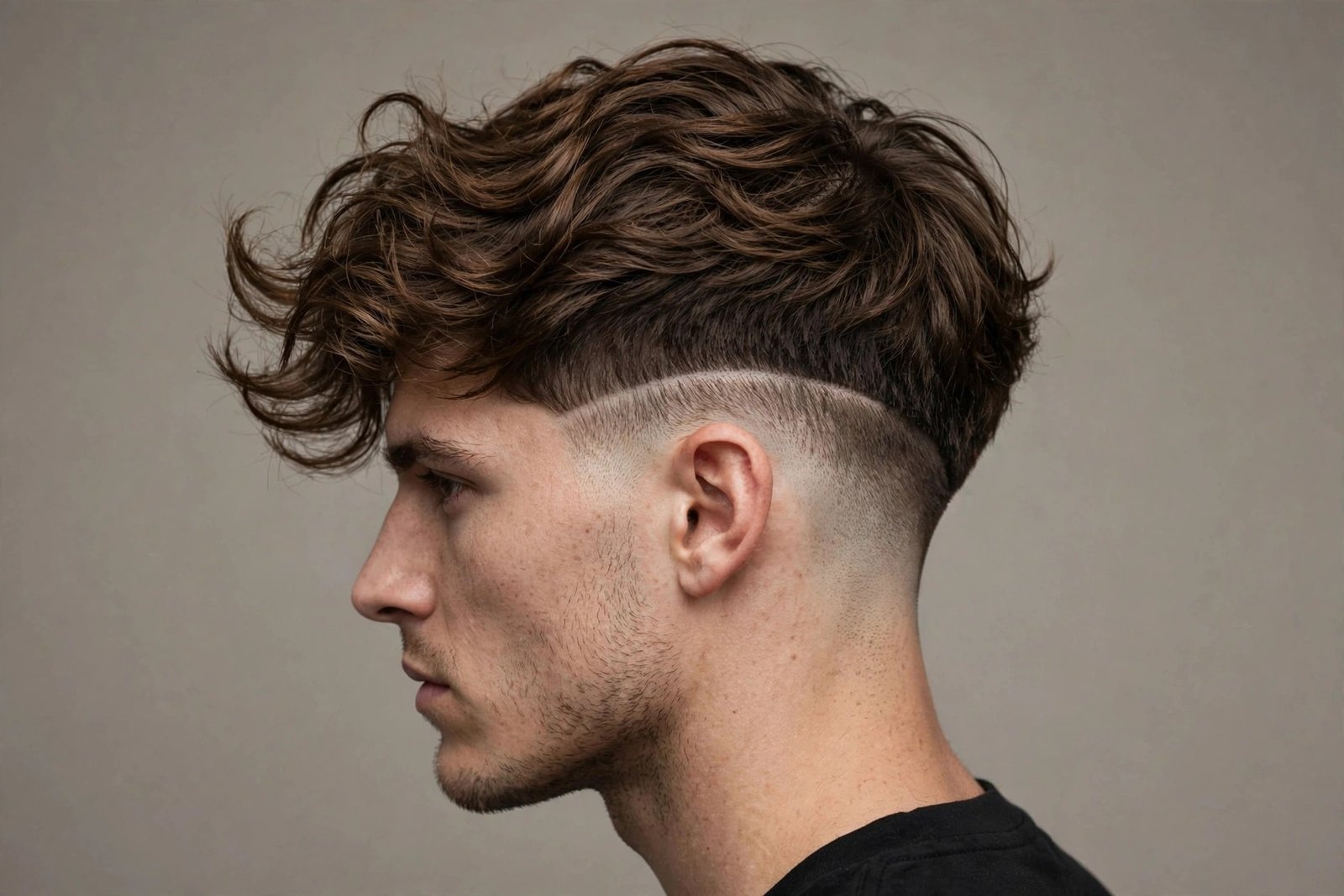
Wavy hair sits in the sweet spot for this cut — enough movement to look interesting with minimal effort, enough control to style in minutes. The waves flow over the disconnect line like water over a ledge, and the contrast between the soft top and the hard line is genuinely beautiful. This is the version that gets the most compliments from strangers, in my experience, because it looks expensive without looking labored.
Who it suits: natural 2A to 2C waves, medium to thick density, and faces that want softness with edge — round faces benefit from the height, square faces from the movement. If your waves are inconsistent, a sea-salt spray evens them out. Straight-haired guys can fake it with a salt spray and a diffuser, but it won’t have the same effortless quality.
The barber script: “Long layers on top, about five inches, cut to enhance the wave — no blunt lines. Hard disconnect at the temples, low to mid fade on the sides.” Ask your barber to cut with your natural part and growth direction, not against it. Waves have opinions; a good cut works with them. The disconnect line should sit where your waves naturally lift away from the head — usually right at the temple.
Morning styling: sea-salt spray on damp hair, scrunch, and either air dry or diffuse. That’s genuinely it on good days — 3 minutes. For more polish, blow dry with a vent brush in the direction of the wave, then a pea of cream to smooth the ends. The waves do the styling; you’re just encouraging them. A solid wavy-hair routine layered under the disconnect keeps it healthy.
Honest downside: humidity is a coin flip — some days it enhances the waves, some days it turns them into frizz. An anti-frizz cream is non-negotiable if you live somewhere humid. And wavy tops grow out awkwardly: the waves get heavy and start collapsing over the line, which blurs the whole effect. Trim the top every 6 weeks to keep the wave pattern sitting above the disconnect.
5. The Pompadour Disconnect
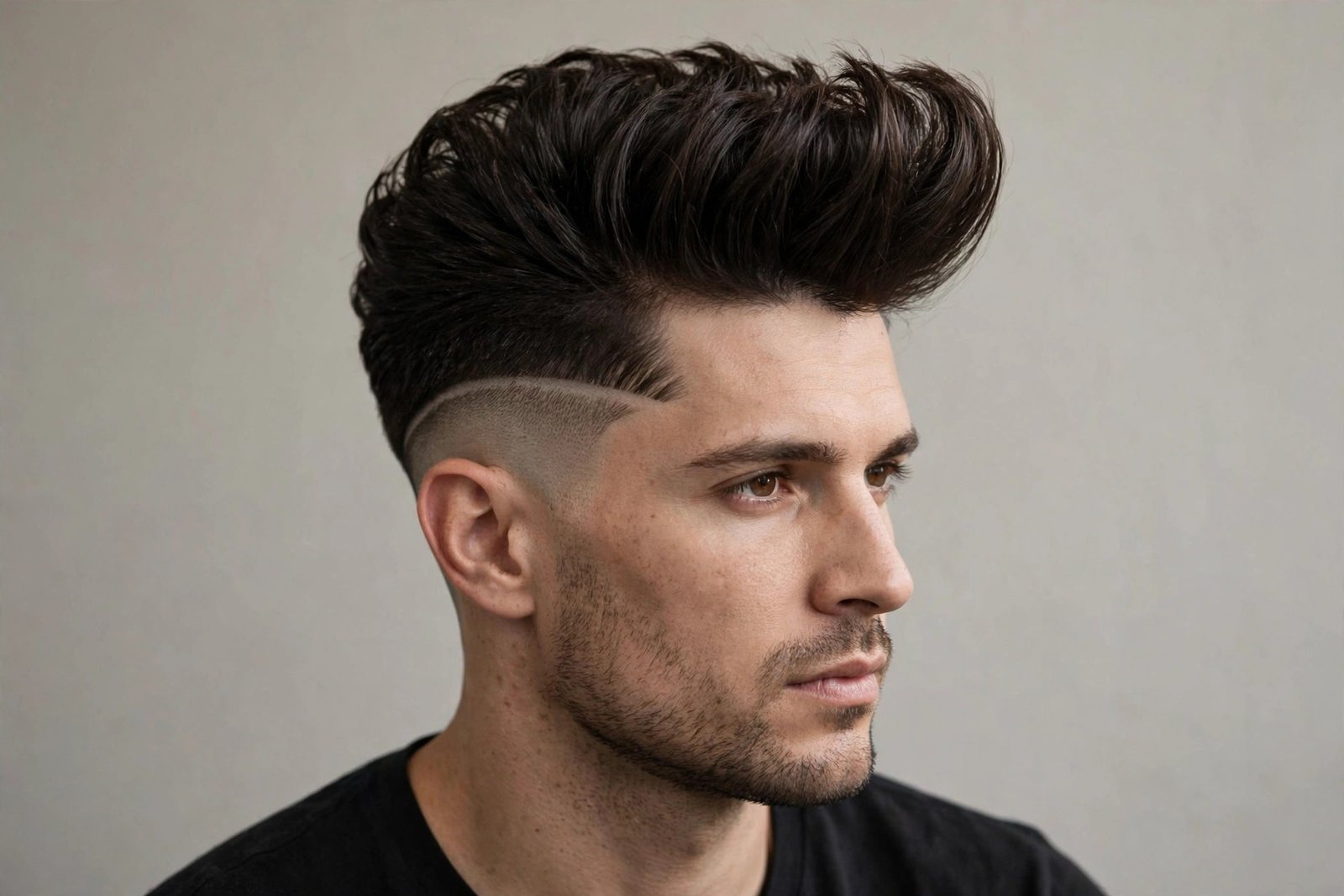
The pompadour and the disconnect were made for each other. The pomp needs height at the front; the disconnect provides the dramatic frame that makes that height look intentional instead of accidental. In 2026 the pomp has loosened up — less Elvis helmet, more textured lift — but the architecture is the same: volume swept up and back from the forehead, tight sides, hard line. It’s the boldest daytime-appropriate version on this list.
Who it suits: round and square faces (the height lengthens and slims), thick straight or wavy hair that can hold volume, and guys who enjoy the styling ritual. Fine hair can manage a smaller pomp with the right products, but the full tall version needs density. It’s also fantastic for shorter guys — the vertical lift adds perceived height.
The barber script: “Pompadour top — longer at the front, five to six inches, graduating shorter toward the crown. Hard disconnect line, skin fade sides.” The graduation matters: the front needs the most length, and it should step down toward the back so the pomp has somewhere to sit. Ask your barber to show you the profile — the silhouette from the side is the whole haircut.
Morning styling: this is a 10-minute commitment, no shortcuts. Blow dry the front up and back with a round brush or vent brush — the heat does 70% of the work. Then matte clay or a medium-hold pomade, worked from roots to ends, pushing everything up and back. Finish with a cool shot from the dryer to lock it. On day two, a water mist and a quick re-blow-dry revives it without rewashing.
Honest downside: it’s the most weather-vulnerable style here. Wind, rain, and humidity all attack height first. You’ll also use more product than any other version, which means more buildup and more washing. And be honest with yourself about the morning time — if 10 minutes sounds like a lot, the quiff (style 6) gives you 80% of the effect in half the time.
6. The Modern Quiff Disconnect
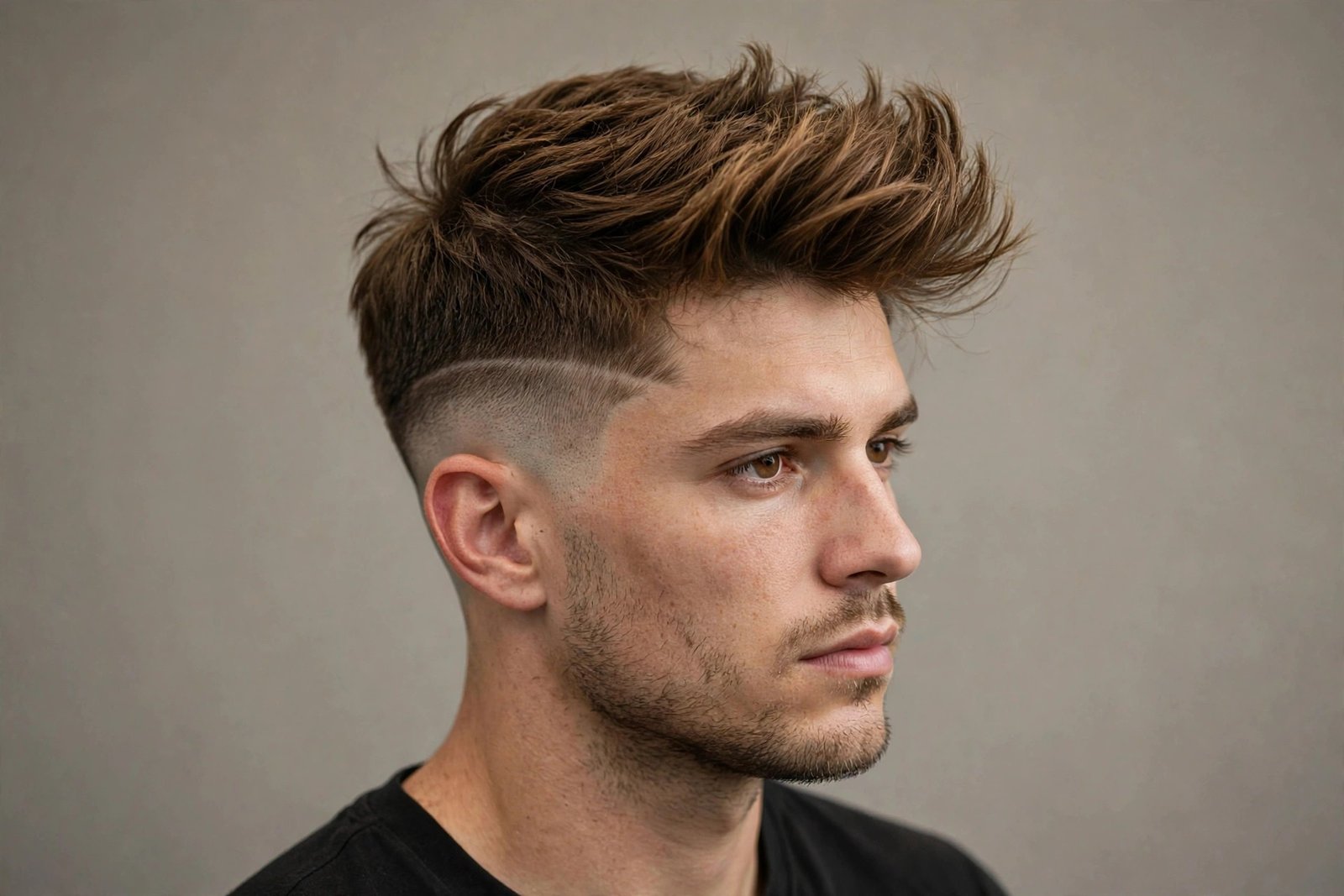
The quiff is the pompadour’s younger, easier brother: all the forward lift, half the ceremony. The front kicks up and slightly forward instead of sweeping fully back, which makes it more wearable day-to-day and more forgiving of imperfect styling. Over a disconnect line it looks sharp without trying too hard — the 2026 sweet spot for guys who want polish without the pomade-commercial vibe.
Who it suits: nearly everyone, honestly. The quiff flatters round faces (height), square faces (softens the forehead), and works with straight, wavy, and even loosely curly hair. It’s the safest “first disconnect” for guys trying the cut — if you hate it, the top is long enough to restyle another way while it grows.
The barber script: “Textured quiff — about four inches at the front, shorter through the back. Hard disconnect, mid fade.” Ask for texture through the front specifically; a blunt heavy fringe won’t lift. The barber should point-cut the front section so it breaks up naturally when you push it up. If you have a cowlick at the front hairline, mention it — the cut needs to account for it or the quiff will split weirdly.
Morning styling: blow dry the front up and forward with your fingers for 2 minutes — no brush needed. Then a small amount of matte clay, pushed up from underneath the front section. The motion is “lift,” not “comb.” Five minutes total, and it survives the day better than the slicked versions because texture hides collapse. This is the version I’d hand to a guy who says he wants to look sharp but hates fussing.
Honest downside: the quiff has a length window. Too short and it won’t lift; too long and it flops forward into a fringe (which is fine — that’s style 9 — but it’s not a quiff). You’ll be trimming the front every 4 to 5 weeks to stay in the window. And on very humid days, the lift surrenders by afternoon; carry a travel-size clay if your climate is brutal.
7. The Hard Part Disconnect
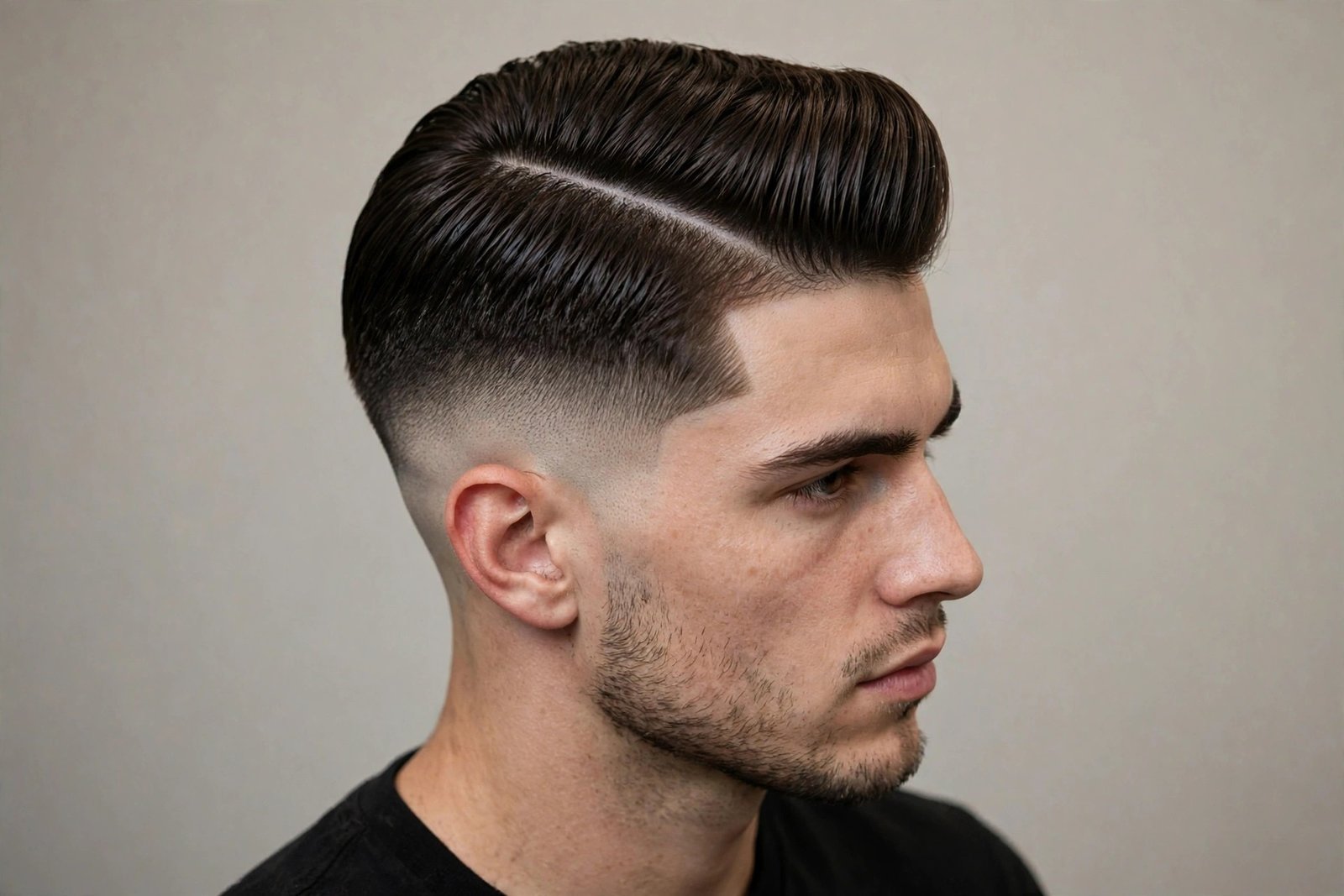
Two hard lines are better than one. The hard part adds a shaved parting line — cut with a razor or trimmer right down to the skin — that runs from the front hairline back, separating the top into a defined side. Combined with the disconnect at the sides, the geometry is razor-precise. It’s the most architectural version of the cut, and it looks incredible when it’s fresh. Barbers love doing these because it’s pure craftsmanship on display.
Who it suits: straight and wavy hair that combs cleanly, oval and oblong faces, and guys who like their grooming exact. It’s a strong choice for professional settings — the part reads as classic and deliberate. It works less well on very curly hair, where the shaved line can look lost among the texture, and on cowlick-heavy hairlines that fight a fixed part.
The barber script: “Hard part on [left/right] side, shaved in with a razor. Top combed over from the part, four to five inches. Hard disconnect at the sides, skin fade.” Specify which side — most guys part on the side opposite their natural growth to get lift, but your barber should check your growth pattern first. The part line should be crisp but not too wide; a trench looks costume-y.
Morning styling: comb the top over from the part line while damp, using pomade for shine or clay for a modern matte take. Blow dry along the part direction to train the hair — the first two weeks are training, after that the hair learns the direction. Six minutes. The part line itself needs no daily work; it’s shaved in. A comb-over technique from the hard part keeps it clean all day.
Honest downside: the shaved part grows out visibly within a week — it goes from crisp line to fuzzy suggestion fast. You’re either touching it up weekly at home with a trimmer (risky) or seeing your barber every 2 weeks (expensive). It’s also the least forgiving of bad barbering: a wobbly part line can’t be hidden. Vet your barber’s line work before committing.
8. The Side-Swept Disconnect
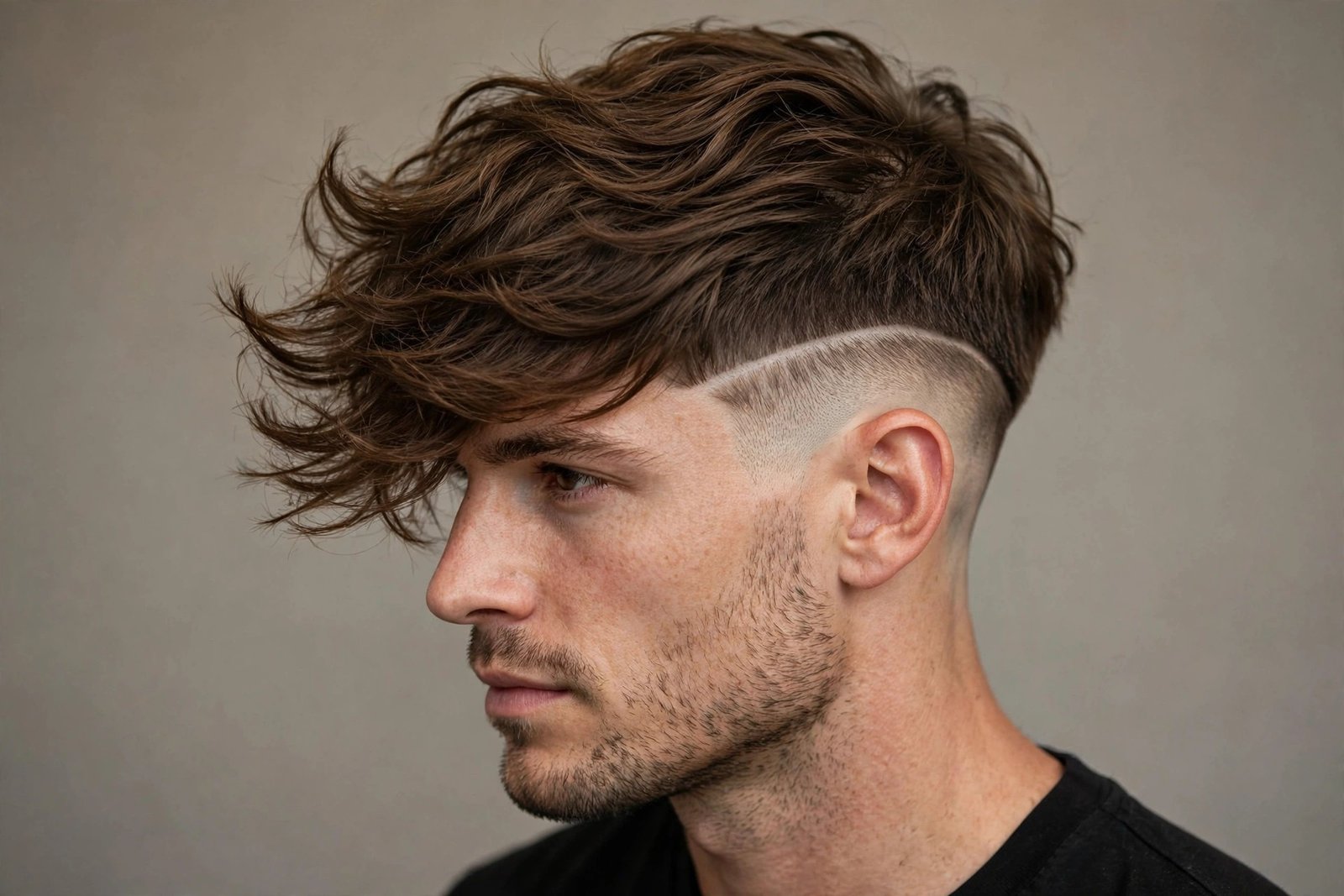
The side-sweep is the romantic of the disconnect family. Instead of pushing everything back, the long top flows diagonally across the forehead, softening the hard line beneath it with movement. It’s less severe than the slicked versions, more interesting than a plain side part, and it photographs beautifully because the diagonal creates lines the camera loves. In 2026 it’s having a real moment as guys move away from everything-pushed-back uniformity.
Who it suits: wavy and straight hair with some length (5+ inches on top works best), oval and heart-shaped faces, and anyone whose forehead they’d rather de-emphasize — the sweep covers it elegantly. It also suits guys growing out a shorter cut, since the sweep disguises uneven lengths during the awkward phases.
The barber script: “Long top swept to the side — five to six inches, layered for movement. Hard disconnect line, faded sides.” The layers matter: without them, the sweep sits like a flat sheet. Ask for long layers that let the hair fall in a diagonal curtain. The disconnect line should sit at medium height so the sweep has room to travel across the head.
Morning styling: blow dry the top in the direction of the sweep with a vent brush — 4 minutes. Then a light cream or sea-salt spray for hold that still moves. The goal is flow, not fixation; if it doesn’t move when you shake your head, you’ve used too much product. Tuck the leading edge loosely behind one ear on casual days for a different feel. See the side-swept undercut guide for more on nailing the direction.
Honest downside: wind is the nemesis — one gust and the sweep becomes a tangle across your face. It’s also a one-direction haircut; if your hair wants to fall the other way, you’ll fight it every morning. And the sweep needs length, which means a longer grow-out if you’re starting short. Patience required.
9. The Forward Fringe Disconnect
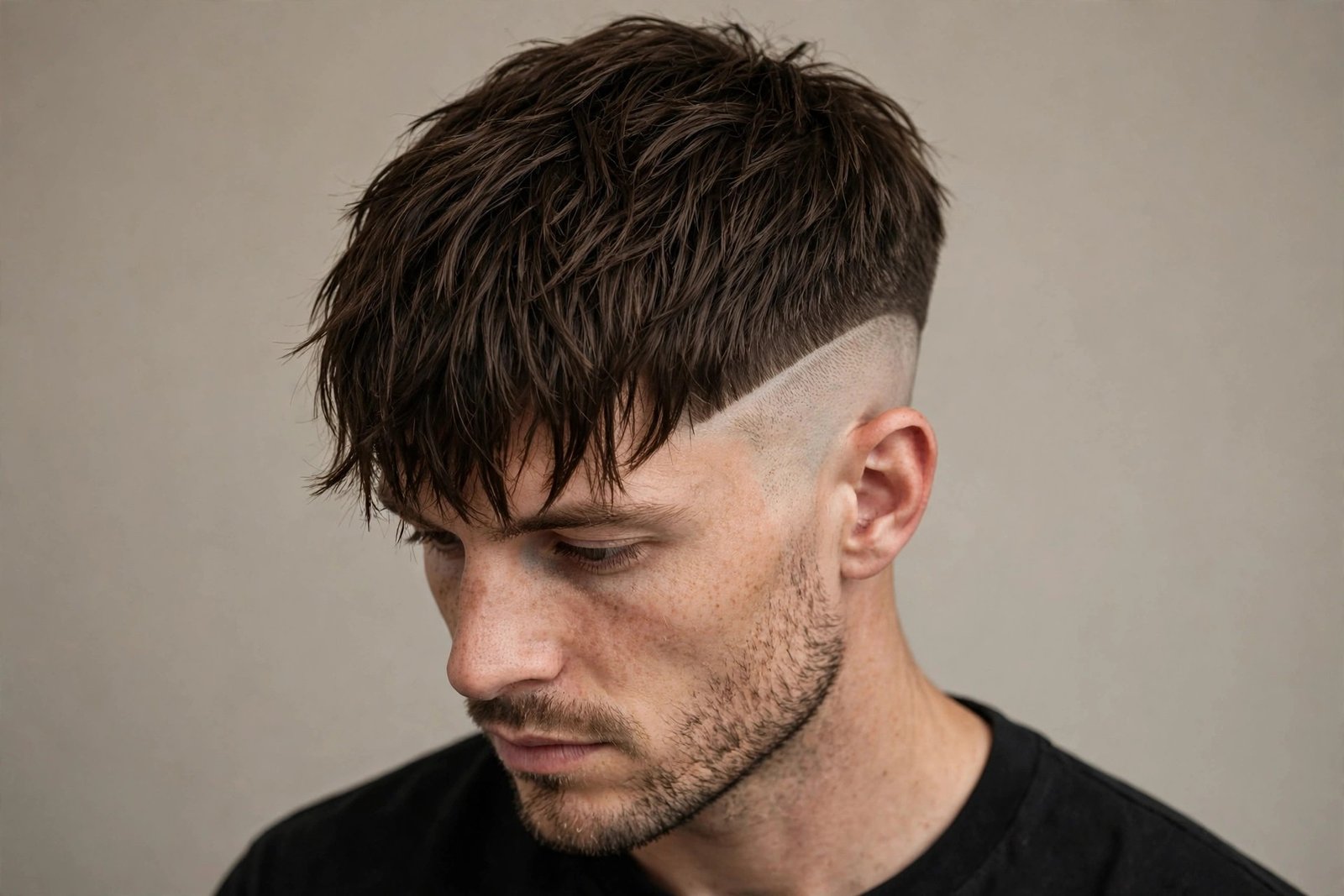
Everything forward. The fringe disconnect takes the top and drops it over the forehead in a textured curtain, with the hard line sitting underneath like a secret. It’s the most fashion-forward version here — big on runways and in K-pop-influenced styling — and it completely changes the geometry of the face, shortening long faces and softening sharp features. If the slicked versions are about showing the forehead, this one is about framing it.
Who it suits: oblong and long faces (the fringe shortens visually), straight to wavy hair that falls forward naturally, and younger guys or anyone in creative fields. It’s also the best disconnect for a receding hairline — the forward fall covers the temples honestly, without the comb-over energy. Guys with very curly hair should skip it; curls won’t sit in a fringe without a fight.
The barber script: “Textured fringe, falling forward — three to four inches at the front. Hard disconnect line, faded or tapered sides.” The fringe should be point-cut aggressively for separation; blunt fringe over a disconnect looks like a bowl cut with ambition. Ask your barber to cut it dry at the end, checking how it actually falls on your forehead, because wet fringe lies.
Morning styling: the fastest routine here — 3 minutes. Blow dry forward with fingers, then matte clay pinched through the ends for piecey separation. The fringe should break into pieces, not sit as a sheet. If pieces stick together, you’ve used too much product; a dry texture spray fixes it. On day two, it often looks better — fringe loves a little natural oil.
Honest downside: forehead acne is real with this one — hair sitting on skin all day traps oil and sweat. Wash the fringe area or use blotting papers if you’re prone. It also needs the most frequent front trims (every 3 to 4 weeks) because fringe growth shows immediately. And in serious wind, you’ll be pushing it out of your eyes all day.
10. The Slicked-Back Modern Disconnect
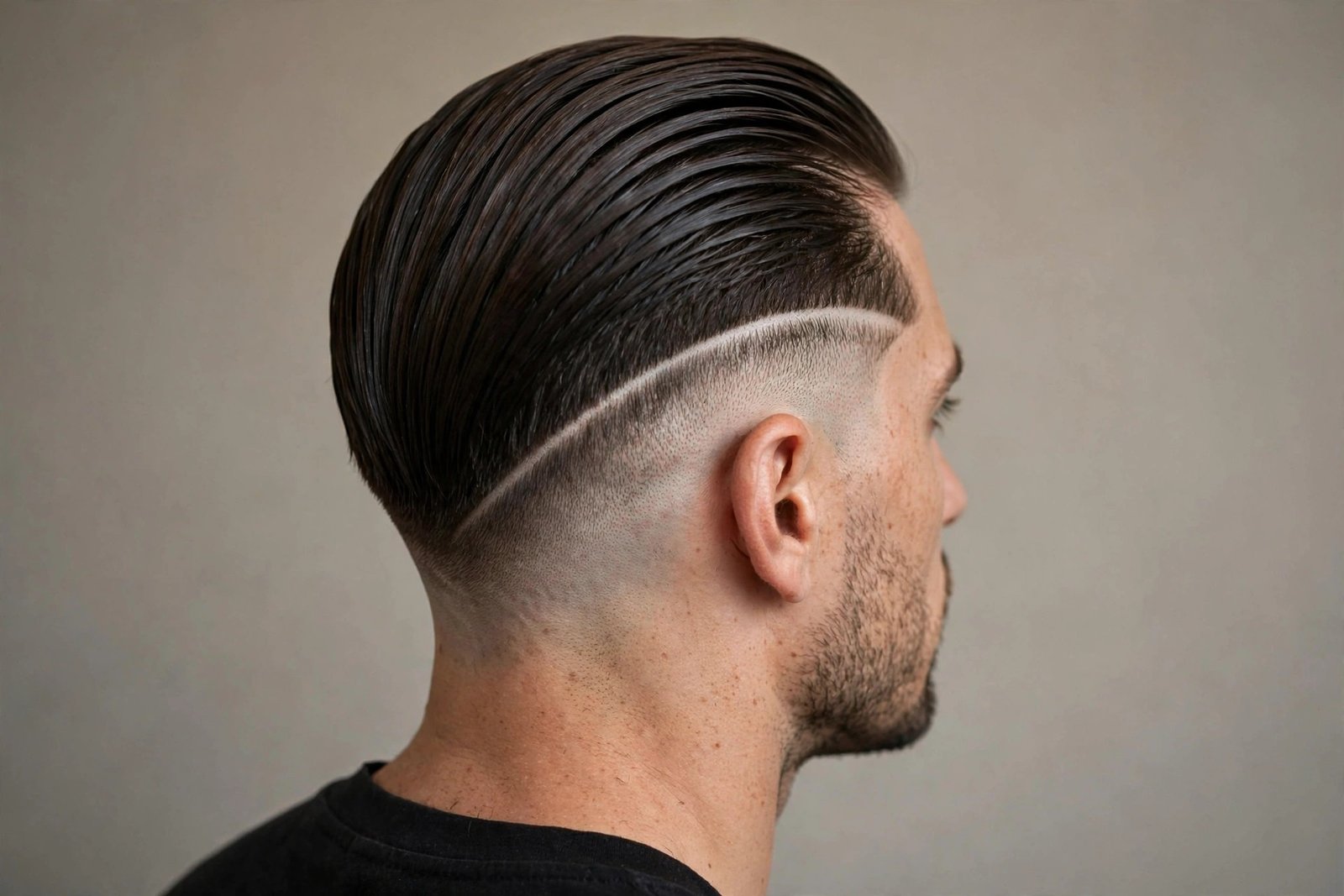
This is the 2026 update to the classic slick: same dramatic sweep back, but with modern texture and a lower-shine finish. The top runs long — 5 to 7 inches — slicked back with a matte clay or natural-finish pomade instead of the high-gloss grease of the old days. The result keeps the power of the slicked silhouette but looks current, not costume. Think less 1940s officer, more contemporary leading man.
Who it suits: thick straight or wavy hair with the density to hold the sweep, oval and square faces, and guys who want presence. The longer top gives it a luxurious feel that the shorter classic version doesn’t have. It’s excellent for evening and events — this is a haircut that walks into a room before you do.
The barber script: “Long top, six inches, slicked back. Hard disconnect, low skin fade — keep the sides tight so the length contrast is dramatic.” The sides should be genuinely short here; the whole effect depends on the contrast between the long flowing top and the bare sides. Ask for the top to be layered slightly at the ends so it doesn’t sit like a solid slab.
Morning styling: blow dry back with a vent brush for volume at the roots — 5 minutes. Work matte clay or low-shine pomade through from front to back, combing with fingers for texture. The modern version should have visible strand separation, not a fused sheet. If your hair is very straight and slippery, a pre-styler (salt spray) before the dryer gives the product something to grip. The slick-back undercut approach with matte product is the 2026 standard.
Honest downside: long tops plus disconnect equals the most dramatic grow-out on this list — when the sides grow, the contrast collapses and it just looks long and messy. Strict 2-week side maintenance. The length also means more product, more washing, and on hot days a sweaty neck. It’s a high-reward, high-effort cut.
11. The Skin Fade Disconnect
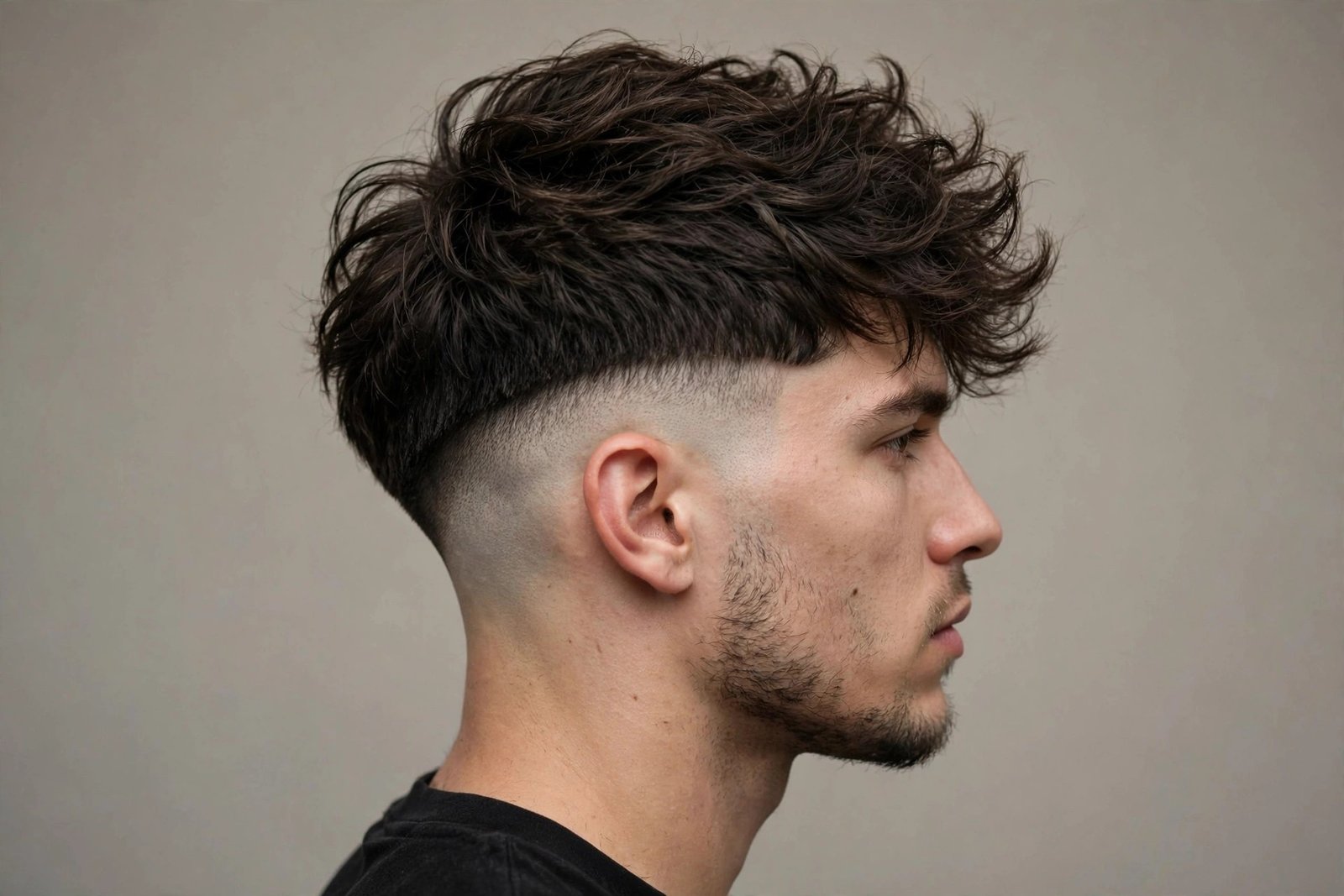
Maximum contrast. The sides go all the way down to skin — zero guard, bare — while the top stays long above the hard line. The disconnect is absolute: hair, line, skin. It’s the boldest, cleanest version of the cut, and the skin fade keeps it looking fresh for the first week in a way no other side treatment manages. This is the version you see on athletes and in barbershop portfolio photos, because the contrast is unbeatable.
Who it suits: guys who like sharp grooming and don’t mind frequent barber visits, all face shapes (the bare sides slim every face), and darker hair especially — the contrast between dark top and skin reads strongest. It pairs beautifully with a beard, since the fade can blend into the beard line for one continuous sharp frame.
The barber script: “Skin fade on the sides — zero at the bottom. Hard disconnect line where the top starts, no blending into it. Top [length] inches.” Be specific about where the skin starts and where the disconnect line sits; some barbers will fade up into the line and soften it, which defeats the purpose. The line must stay hard. Ask for the neckline to be cleaned with a razor for the full crisp finish.
Morning styling: the top styles however you like — slicked, textured, quiffed — the sides need nothing daily. That’s the trade: zero daily work on the sides, but they grow out visibly in days. A foil shaver at home extends the crispness 3 to 4 days between barber visits if you’re comfortable with it. Otherwise, book the sides every 10 to 14 days.
Honest downside: the maintenance schedule is relentless. Skin shows stubble within days, and the contrast that makes it stunning also makes regrowth obvious. It’s the most expensive version to maintain if you’re paying per visit. Pale guys should also know: fresh skin fades can show razor irritation, so communicate with your barber about your skin sensitivity.
12. The Subtle Low Disconnect
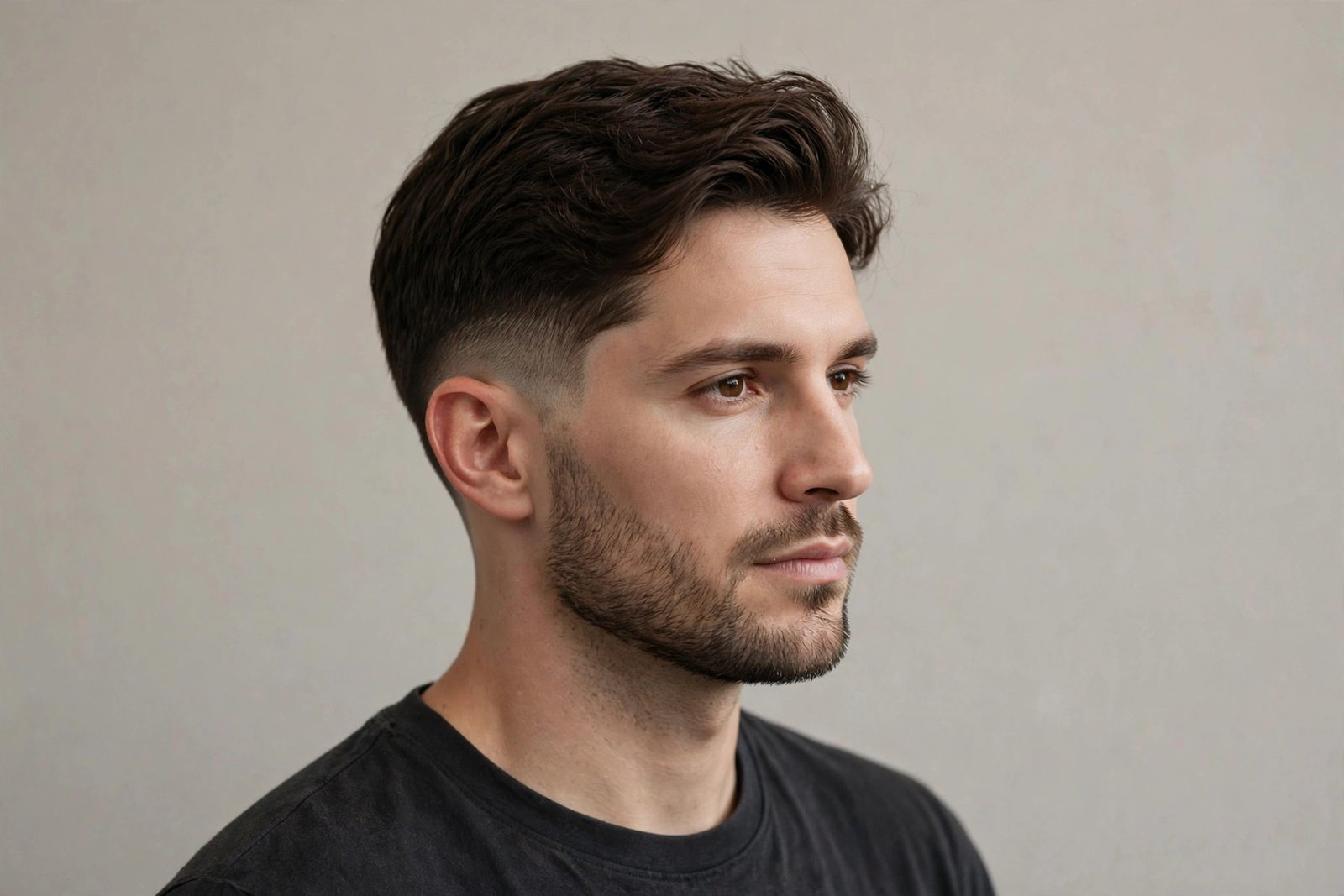
Not every disconnect has to shout. The low version sits the line down near the ear, keeps the sides at a modest length (a #2 or #3 guard, or a soft taper), and lets the top do the talking. From most angles it reads as a normal sharp haircut; only the profile reveals the hard line. It’s the disconnect for guys who want the architecture without the attitude — office-safe, family-dinner-safe, first-date-safe.
Who it suits: conservative workplaces, older guys trying the cut for the first time, and anyone who likes the idea of the disconnect but flinches at the drama. It works with all hair types because the top can be styled any way — the subtlety is in the line placement, not the styling. Great first step before committing to a higher, bolder line.
The barber script: “Low disconnect — keep the line down near the ear. Sides at a #2, no skin. Top four inches, styled [your preference].” The key instruction is line height: say “low” explicitly and point to where you want it. Some barbers default to medium height, which changes the whole character. The sides should have some length to them — this version is about refinement, not contrast.
Morning styling: style the top however you like; the cut supports everything from side parts to light texture. Because the line is low and the sides have length, grow-out is graceful — you can stretch barber visits to 3 to 4 weeks without it looking neglected. Five minutes with any product you’re comfortable with.
Honest downside: subtlety has a cost — some days it just reads as a regular haircut, and you’ll wonder why you bothered with the disconnect at all. If you want the cut to be noticed, this isn’t the version. It also grows out into a normal cut faster than the bold versions, so the “disconnect” phase of its life is shorter.
13. The Dramatic High Disconnect
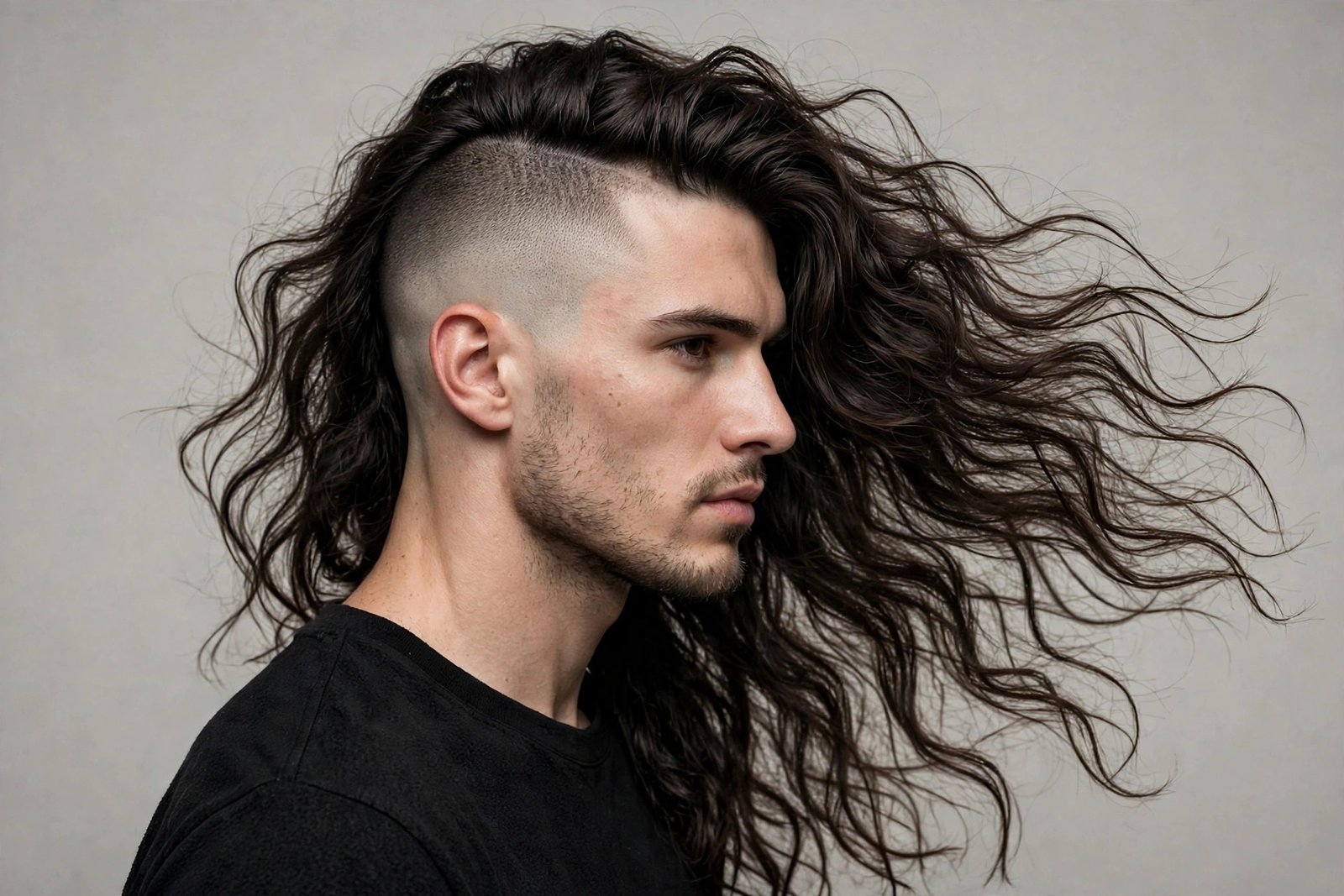
The opposite of subtle. The line rides high — up near the crown — with the sides buzzed short below it, leaving a dramatic cap of long hair floating above bare sides. It’s part haircut, part statement piece. This is the version that gets photographed, the one that divides rooms, the one your barber gets excited about. In 2026 it’s worn with longer, looser tops than the severe versions of the 2010s, which keeps it fashion-forward rather than dated.
Who it suits: confident guys in creative industries, strong bone structure (the high line spotlights everything — cheekbones, jaw, brow), and thick hair that can carry the visual weight of the long top. It demands commitment: this is not a cut you can hide or downplay.
The barber script: “High disconnect — line up near the crown. Sides buzzed to a #1 or skin. Top long, five to six inches, worn loose.” The line placement is everything; too low and it’s just a regular disconnect, too high and the top looks like a toupee. Have your barber mark it and check in the mirror before cutting. The top needs real length to balance the high line — short tops with high lines look disproportionate.
Morning styling: the long top usually wears loose and flowing — blow dry with volume, minimal product, let it move. Or slick it for evening drama. The sides need nothing. Ten minutes max, mostly dryer work. The cut does the talking; your job is just to keep the top healthy and the line sharp.
Honest downside: this is the least versatile cut on the list. You cannot dress it down, you cannot hide it under a hat gracefully (the bulk fights hats), and conservative settings will notice. Grow-out is awkward — the high line migrating down as the sides grow looks unintentional fast. And you’ll get opinions from everyone. Make sure you want them.
14. The Coily Curl Disconnect
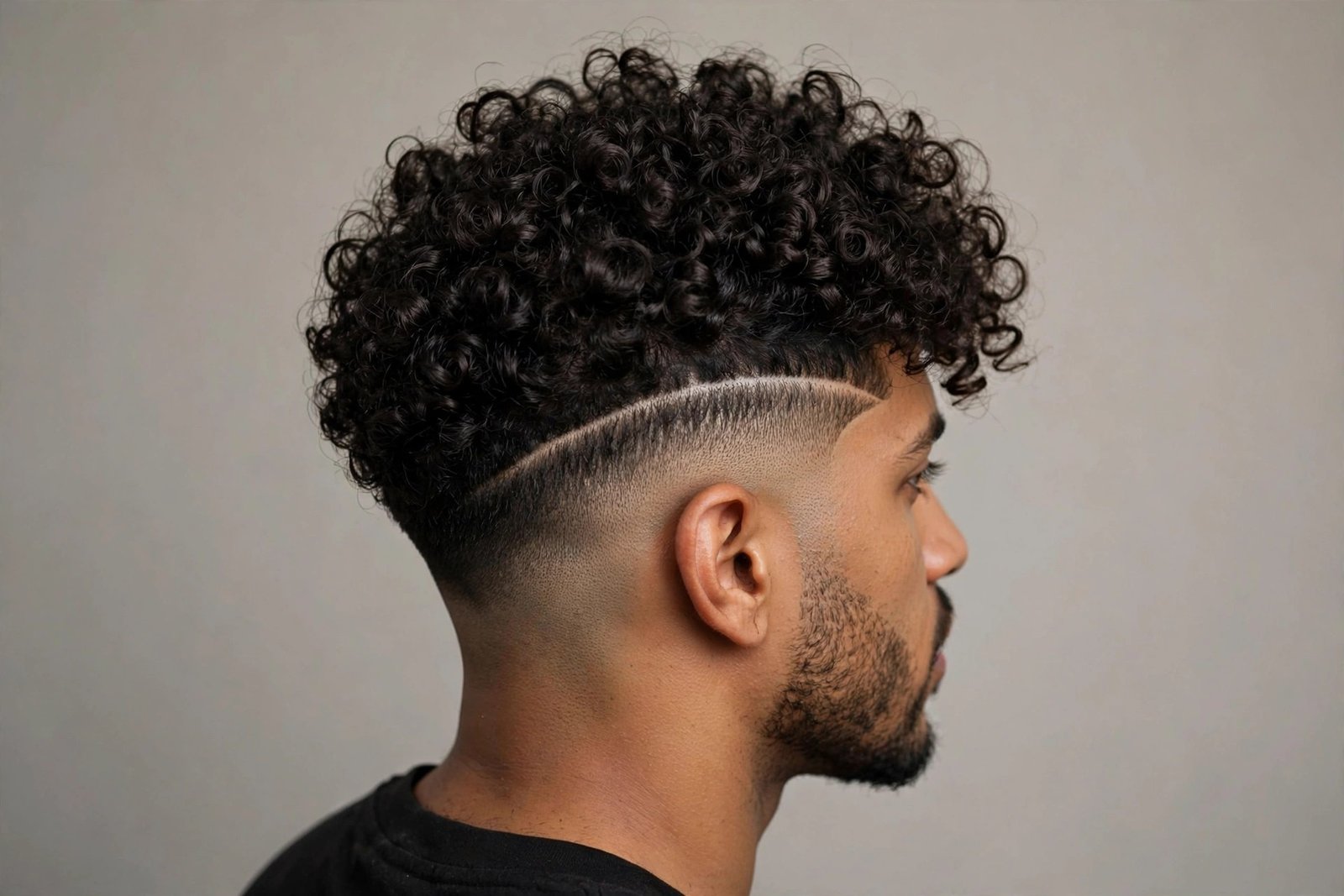
For 4A to 4C textures, the disconnect is a revelation. Tight coils have natural height and presence; the hard line gives them a tailored frame that elevates the whole look from great hair to deliberate style. The top needs serious length — coils shrink dramatically, so what’s 6 inches stretched might be 3 inches of visible curl. Plan for shrinkage or you’ll end up with a shorter top than you wanted. The sides taper or fade cleanly below the line.
Who it suits: coily and kinky textures, guys who’ve been wearing their coils in rounded shapes and want edge. The disconnect adds structure that flatters round faces especially — the vertical line of the cut draws the eye up. It’s also protective-friendly: the short sides need little manipulation while the top gets the care.
The barber script: “Coils long on top — cut it stretched so we get the true length, I want [X] inches of visible curl. Hard disconnect line, tapered sides.” Find a barber experienced with coily hair — this is non-negotiable. The line needs to be cut with the hair’s natural fall in mind, and the top should be shaped, not just left long. Ask about their experience with your texture specifically.
Morning styling: moisture is the foundation — leave-in, then a curl-defining cream or butter, applied in sections. Pick or finger-shape for volume. A light oil on the ends seals it. The disconnect line needs no product. Refresh with a water-and-leave-in mist on non-wash days. This routine is about hair health first, style second — healthy coils style themselves.
Honest downside: shrinkage means the top needs more length (and more grow-out time) than any other version here. The line can also be tricky to keep crisp on coily textures — find a barber who’ll line you up properly every 2 weeks. And be prepared for the top to need real maintenance: coils this long need regular deep conditioning or they go dry and the whole effect suffers.
15. The Afro Crown Disconnect
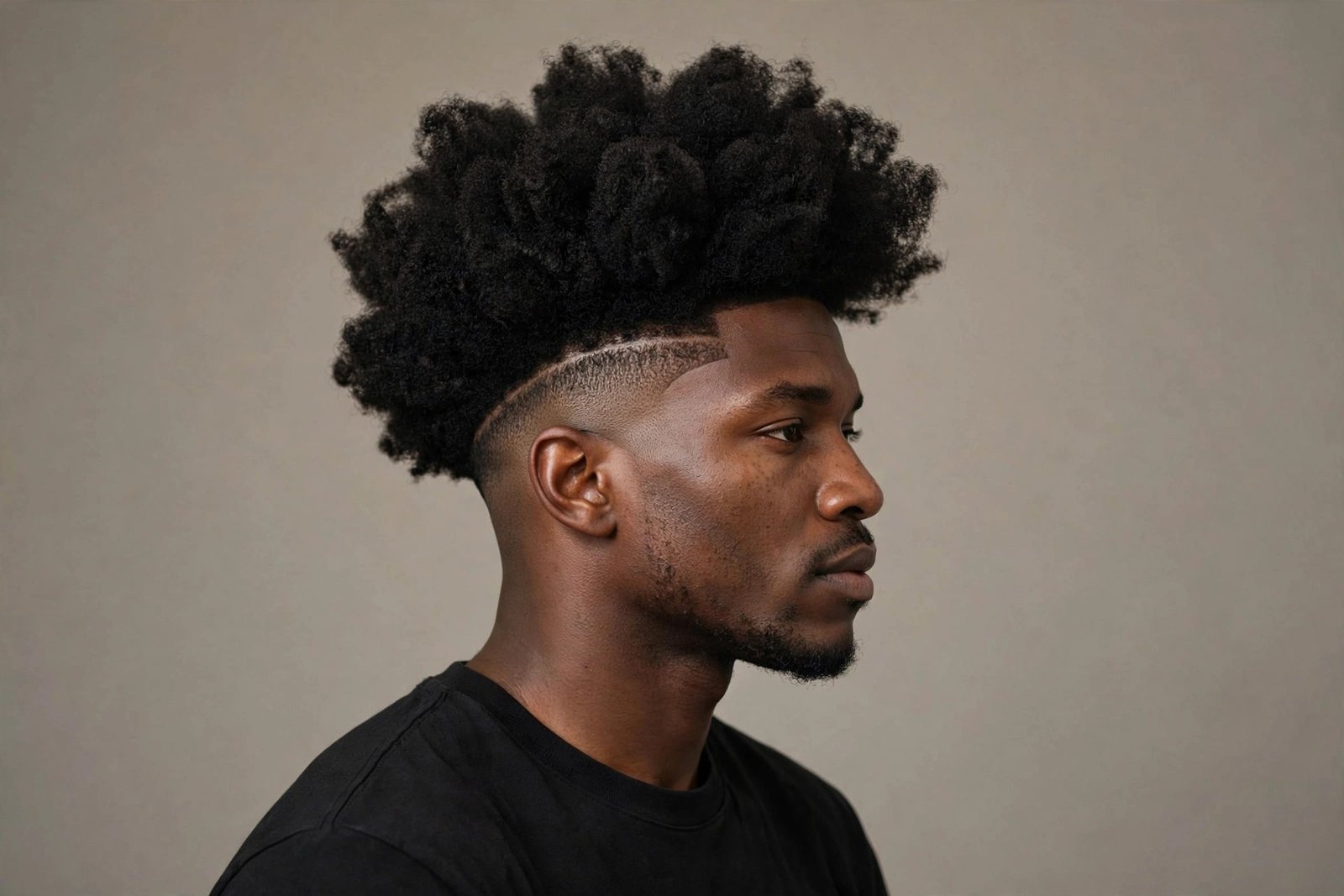
The afro meets the hard line, and the result is magnificent. The crown keeps its full rounded shape — picked out, glorious, unapologetic — while the sides drop away at a crisp disconnect. It’s the meeting of two powerful silhouettes: the soft globe of the afro and the hard geometry of the line. In 2026 this is one of the most striking cuts in the barbershop, worn with pride and precision in equal measure.
Who it suits: guys already wearing their hair in an afro or growing one out, oval and heart-shaped faces (the width balances beautifully), and anyone whose texture gives them natural height. The disconnect adds a tailored edge that makes the afro read intentional in every setting — it’s the difference between great hair and a great haircut.
The barber script: “Keep the afro full on top — shape it round, don’t take the height. Hard disconnect line, faded sides below it.” The shaping is the skill here: the afro needs to be even and symmetrical, because the disconnect line will spotlight any lopsidedness. A barber experienced with afro textures is essential. Discuss the line height — medium usually balances the crown best.
Morning styling: pick it out to your desired volume — the pick is the styling tool. A little leave-in or light oil keeps it soft; heavy products flatten the shape you’re building. Shape with the pick, not your hands, for evenness. The line needs a lineup every 2 weeks to stay crisp against the fullness above it.
Honest downside: the contrast means both parts need to be perfect — a fuzzy line under a perfect afro (or vice versa) ruins the effect. It’s two maintenance schedules in one cut. The afro also needs real length to work, so there’s a grow-out investment. And hats are basically off the table — the crown doesn’t compress gracefully.
16. The Long Flowing Disconnect
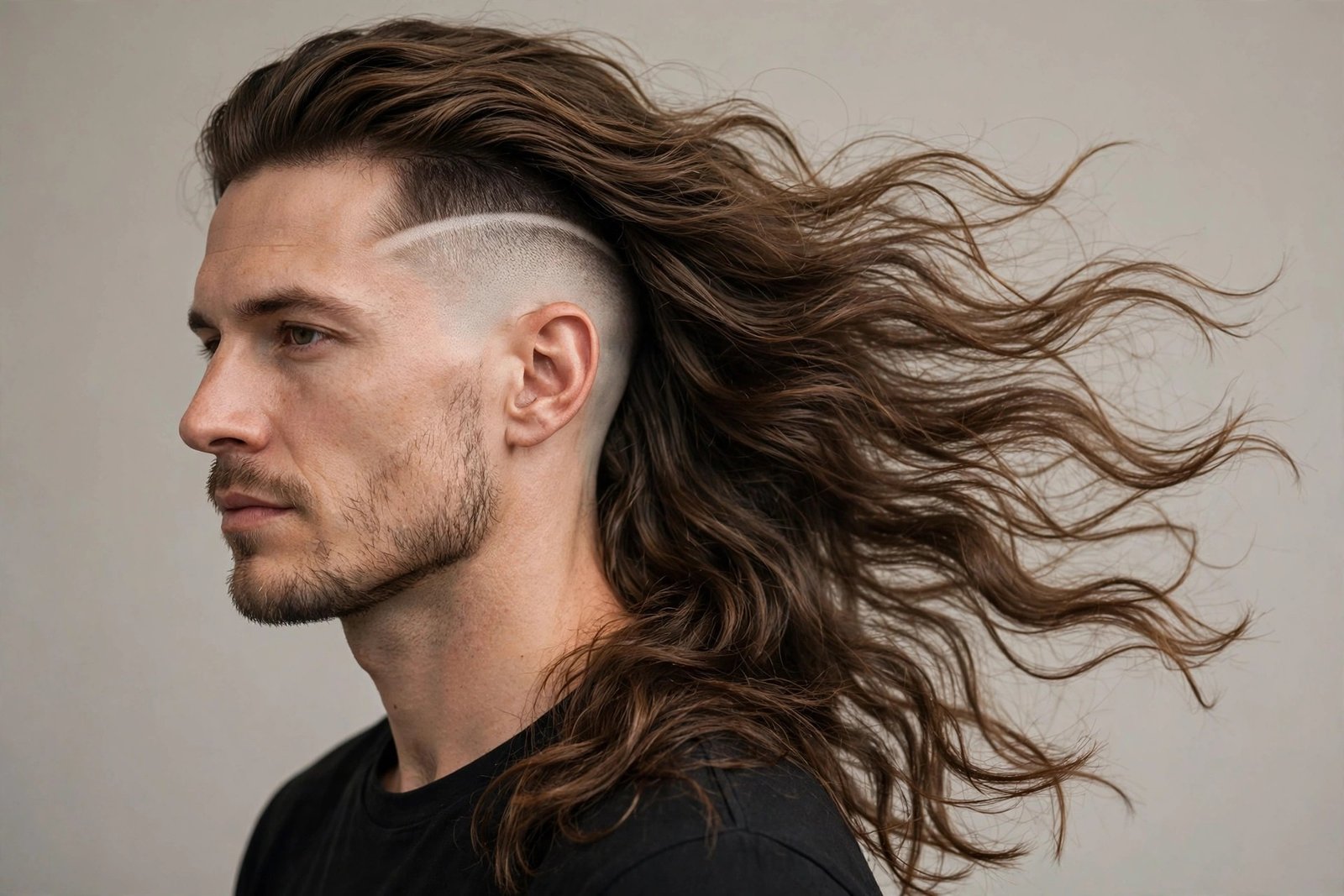
For the guys growing it out. The top flows long — past the ears, sometimes to the shoulders — worn loose and moving, while the sides stay tight at the disconnect. It’s the rock-star version of the cut, all movement and drama, and in 2026 longer men’s hair is firmly back in fashion. The disconnect keeps the length from reading as “just growing it out” — the hard line says this is a decision, not a phase.
Who it suits: wavy and straight hair that flows well, guys committed to length, oval and oblong faces (the flow adds width). It needs hair that behaves at length — if your hair frizzes or tangles badly when long, this will be a daily battle. Thick hair flows best; fine hair can look stringy at this length over a disconnect.
The barber script: “Keep all the length on top — just clean the ends. Hard disconnect line, tight faded sides.” The top needs almost nothing cut — just healthy ends. The real work is the line: it must stay crisp against the flowing top, which means regular side maintenance even though the top is untouched. Some guys add subtle layers at the very ends for movement.
Morning styling: surprisingly low-effort once the length is there. Blow dry with volume at the roots (flat roots kill it), then let it fall — a little sea-salt spray for texture, maybe a light oil on the ends. Five minutes. The length does the work. Tie it back on gym days or windy days; the disconnect still shows at the sides. Condition regularly — long hair over short sides shows damage contrast fast.
Honest downside: the grow-out to get here takes a year or more, and the in-between months test your patience. Long hair needs real care — conditioning, trims, sun protection — or it looks ragged against the precision of the line. And the weight of long hair can pull the top flat, hiding the disconnect; root volume is a daily requirement, not an option.
17. The Short Crop Disconnect
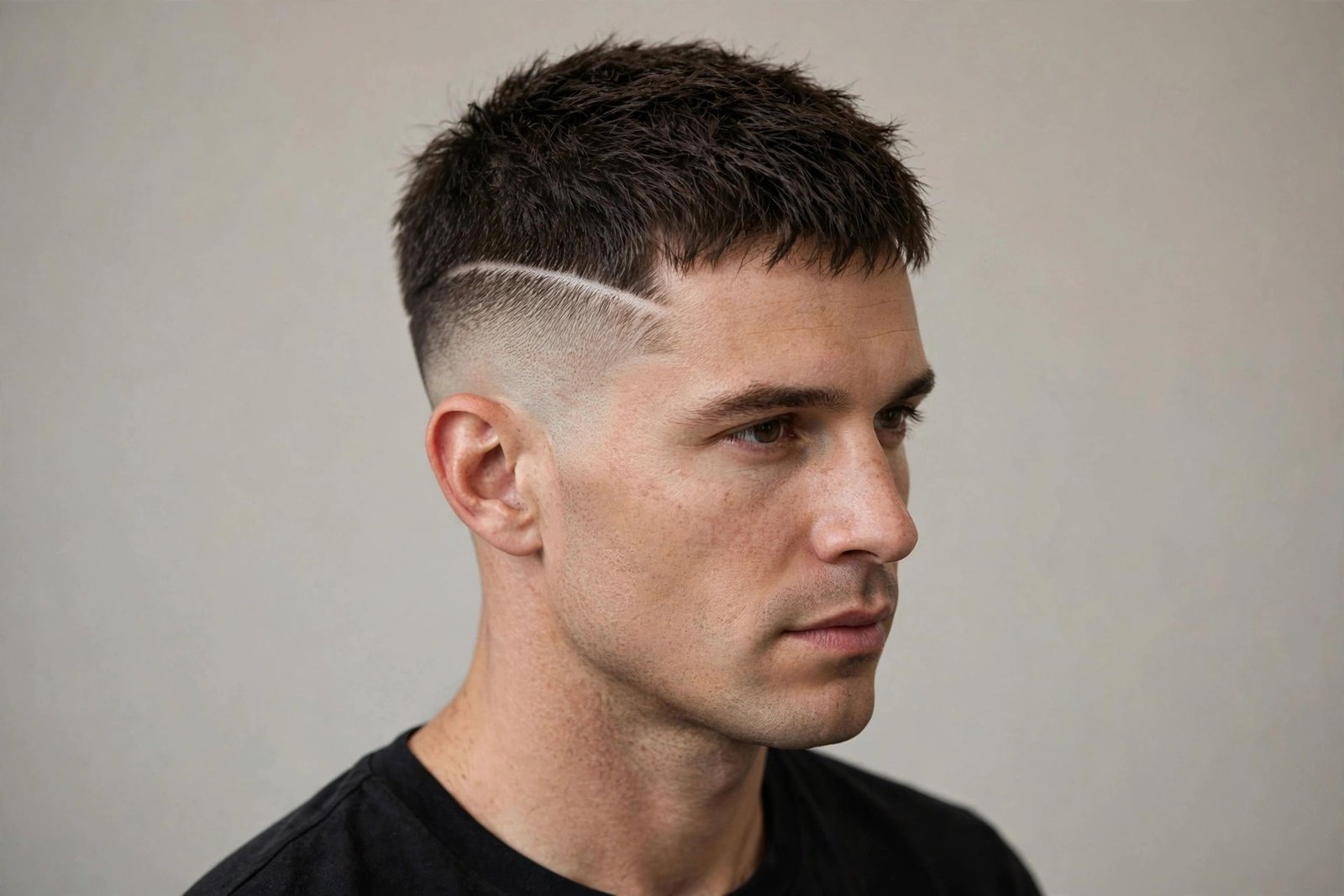
The disconnect for guys who don’t want to think about their hair. The top stays short — 1.5 to 2.5 inches, textured crop — with the hard line and tight sides below. All the architecture of the cut, none of the styling burden. It’s the lowest-maintenance version here by a mile, and it looks razor-sharp precisely because the short top can’t hide a sloppy line. There’s nowhere for mistakes to go, which is the point.
Who it suits: busy guys, athletes, anyone who wants the disconnect’s edge with a 2-minute routine. It flatters strong features — the short top puts your bone structure on display — and works with straight, wavy, and curly hair alike. Great for hot climates where long tops become a liability.
The barber script: “Short textured crop on top — two inches, lots of texture. Hard disconnect, faded sides.” Ask for heavy texture through the top; at this length, blunt ends look like a bowl cut. The disconnect line should be crisp and the sides tight — the contrast is subtler at short lengths, so precision matters more, not less.
Morning styling: damp hair, fingertip of matte clay, push it forward and mess it up. Two minutes, genuinely. Some guys do nothing at all — towel dry and go — and it still looks intentional because the line does the work. This is the version for the “splash of water and out the door” crowd, the only disconnect that truly qualifies.
Honest downside: short tops grow out of the disconnect fast — the line blurs within 2 weeks as the top gains length, so you’re on a tight trim schedule. It also offers the least versatility: you can’t restyle a 2-inch top into anything else. And if you have scalp issues or scars, the short lengths put them on display.
18. The Brushed-Up Disconnect
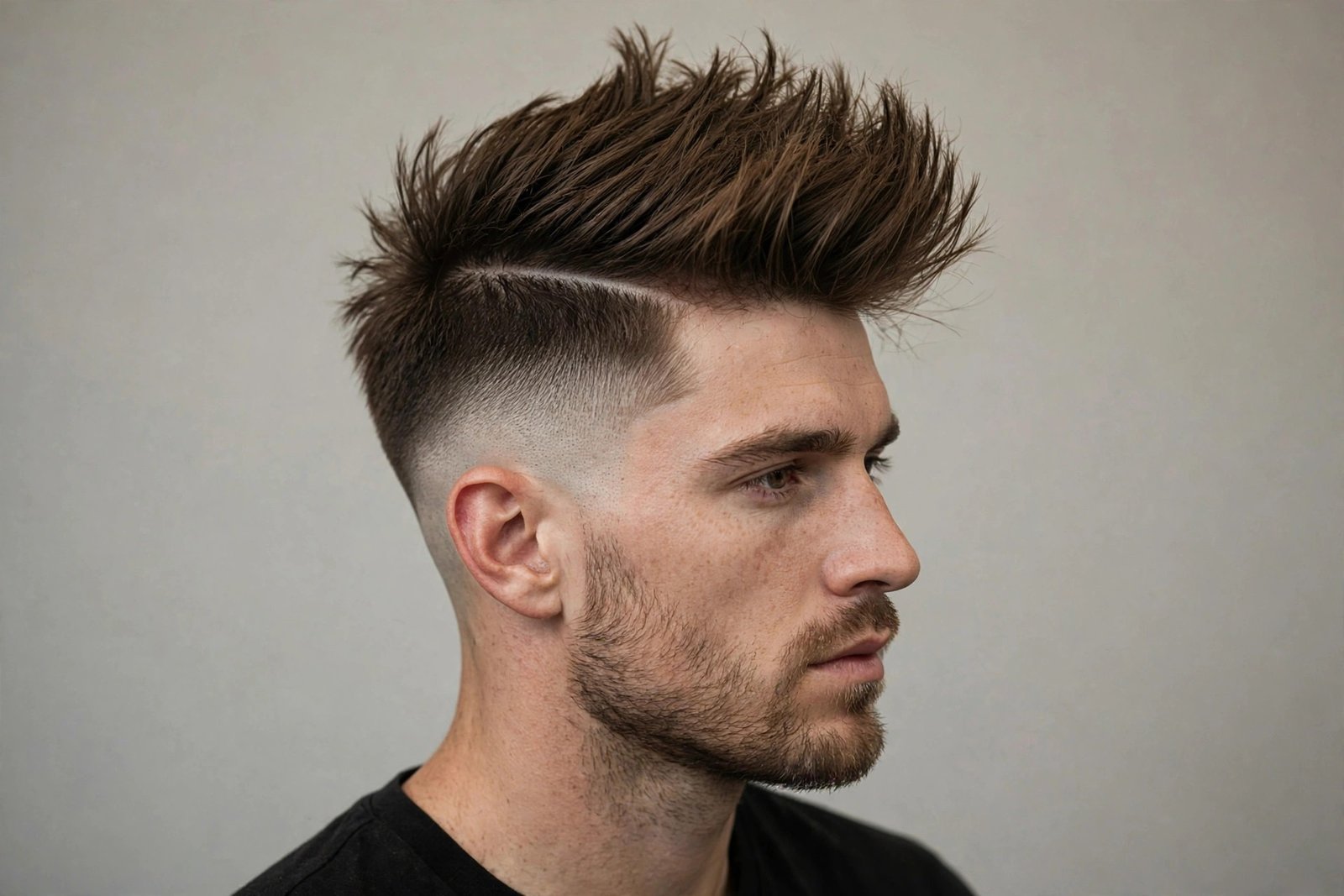
Everything up. The top is driven straight upward — height, lift, vertical energy — over the hard line. It’s the most dynamic silhouette here, all upward motion, and it gives the illusion of extra height (both in the hair and, flatteringly, in the wearer). The 2026 version keeps texture in the lift rather than the fused spike of the 2000s — think lifted and separated, not gelled into a wall.
Who it suits: round faces (the vertical line lengthens), shorter guys (perceived height), and thick hair that holds lift. Fine hair struggles without serious product and heat. It’s a confident, high-energy look — it suits guys whose personality matches. If you’re reserved, the subtler versions will feel more like you.
The barber script: “Top brushed straight up — four to five inches, textured for separation. Hard disconnect, mid to high fade.” The top needs length with texture; blunt ends won’t separate when lifted. Ask your barber to check the lift in the mirror — the silhouette from the front should be tall but not absurd. The disconnect line placement affects the balance: medium height usually works best.
Morning styling: blow dry straight up — this is a dryer-first style, no exceptions. Direct the heat upward from the roots while lifting with fingers. Then matte clay or a strong paste, worked upward through the hair. The product goes on after the dryer has done the lifting; product-first gives you sticky flatness. Seven minutes. A cool shot locks it.
Honest downside: gravity always wins eventually — by evening, the lift settles, especially on heavy hair. Wind turns it into chaos fast. It uses the most dryer heat of any version here, so heat protectant isn’t optional. And sleeping on it means starting over every morning; there’s no day-two for the brushed-up.
19. The Faux Hawk Disconnect
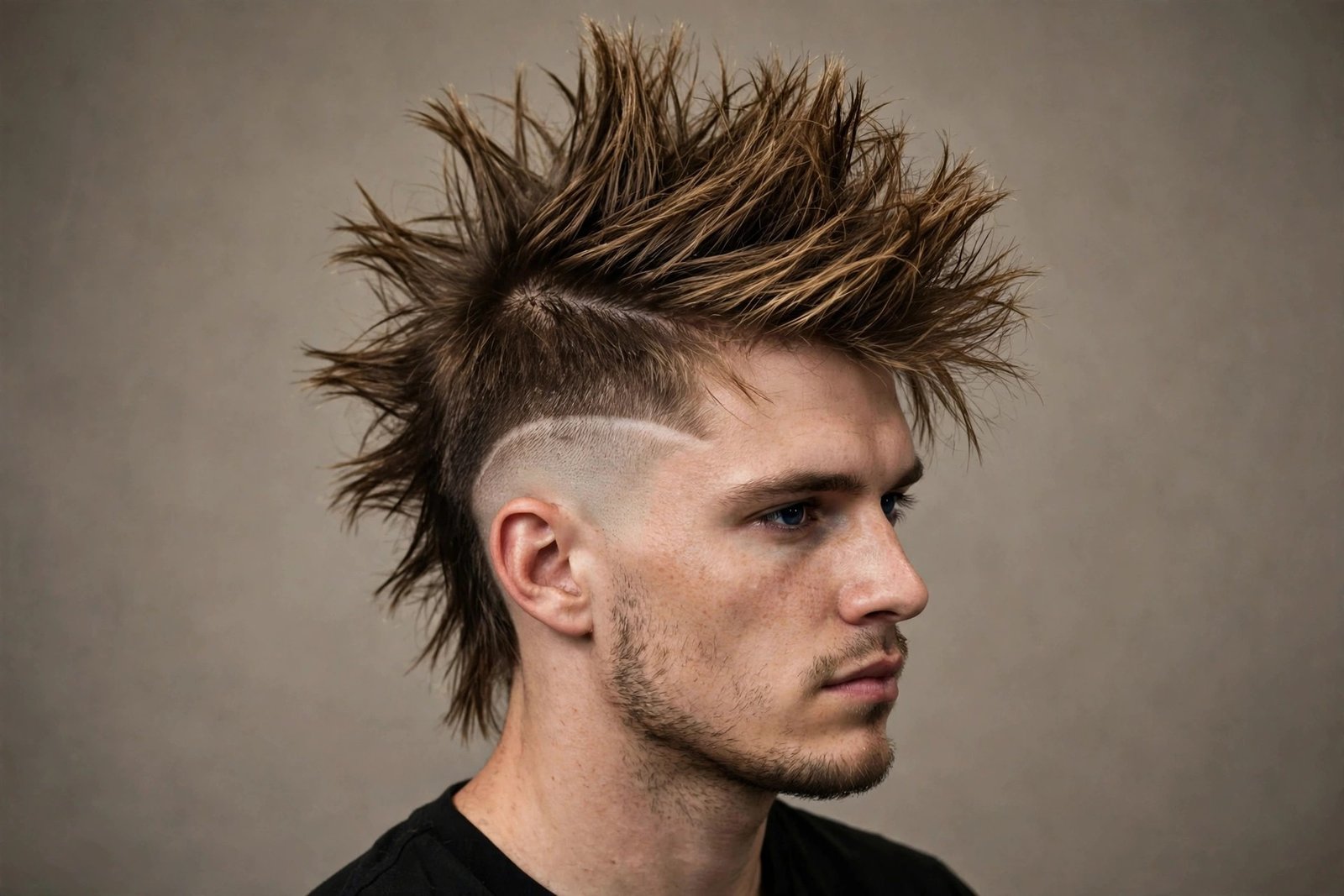
The mohawk’s wearable cousin, sharpened by the disconnect. The center strip runs long and spiky down the middle while the sides drop away at the hard line — the disconnect actually enhances the faux hawk, because the abrupt sides make the center strip pop harder than a faded version would. It’s edgy without the full commitment of a shaved mohawk, and in 2026 it’s worn textured rather than spiked into oblivion.
Who it suits: guys who want edge, oval and oblong faces (the center height flatters), and thick straight or wavy hair that holds texture. It’s a nightlife and weekend cut more than a boardroom one — know your audience. Younger guys wear it best, but confidence matters more than age.
The barber script: “Faux hawk — long textured strip down the center, three to four inches. Hard disconnect on the sides, faded short.” The strip width matters: too narrow reads mohawk, too wide reads messy top. About two to three inches wide is the sweet spot. The top should be point-cut for spiky separation. Check the mohawk variations if you’re tempted to go further.
Morning styling: blow dry the strip upward and slightly forward with fingers, then strong matte clay pinched through in small sections to build the spiky texture. The sides need nothing. Six minutes. For evening, a little more product and sharper pieces; for day, keep it softer and more worn-in.
Honest downside: it’s the least professional version here — some workplaces won’t love it. The strip needs daily styling; unstyled, it just looks like a weird long patch. Grow-out is awkward — the strip and sides grow at the same rate, so the contrast fades fast. And it’s a young look; be honest about whether it still feels like you.
20. The Sharp Side Part Disconnect
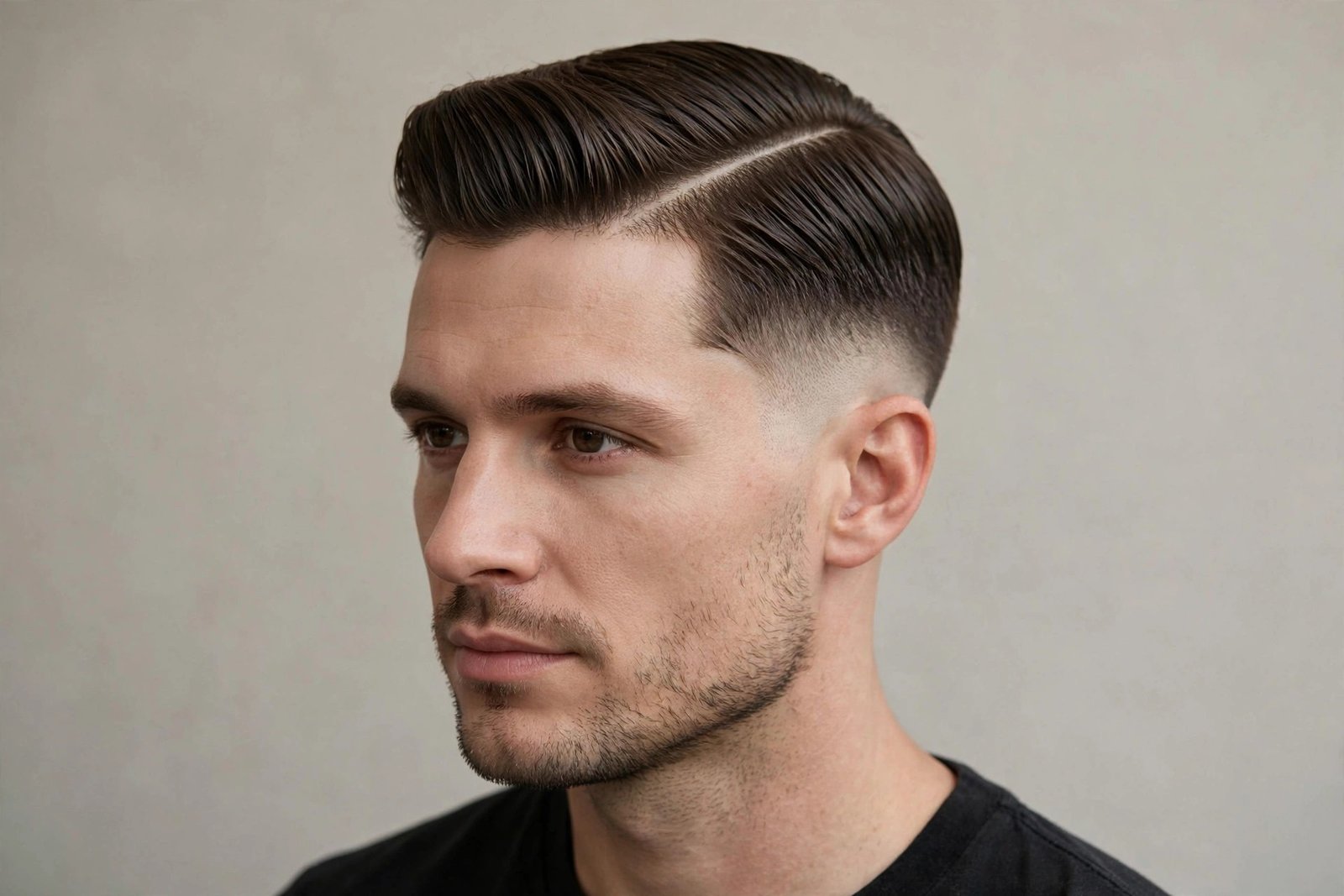
The gentleman’s disconnect. A clean side part organizes the top into a neat sweep, the hard line frames it below, and the whole thing reads polished and deliberate. It’s the disconnect at its most classic — no texture games, no spikes, just precision. In 2026 it’s the go-to for guys who want the cut’s edge without any of its rebellion: the architecture, minus the attitude.
Who it suits: professional settings, formal events, oval and square faces, and straight to wavy hair that parts cleanly. It’s excellent for guys with thinning at the crown — the side sweep covers strategically while the sharp lines keep it looking intentional. One of the most age-versatile versions here; it works at 25 and 55.
The barber script: “Classic side part — four inches on top, parted on [side]. Hard disconnect, tapered sides, neat.” The taper (rather than skin fade) keeps it refined. Ask your barber to cut the part into the style — the hair should naturally fall to the part, not be forced there daily. A natural part line makes mornings dramatically easier.
Morning styling: comb from the part while damp — pomade for classic shine, cream for a softer modern take. Blow dry along the part for lasting hold. Five minutes, and it stays put all day better than the textured versions because the part gives the hair a direction to follow. Re-comb once after lunch if needed.
Honest downside: it’s the most “safe” version, which means it gets the fewest compliments — nobody’s turning heads for a side part. The part needs training for the first couple of weeks if it’s new. And on very straight, slippery hair, the part can migrate during the day; a touch of product at the part line anchors it.
21. The Etched Line Disconnect
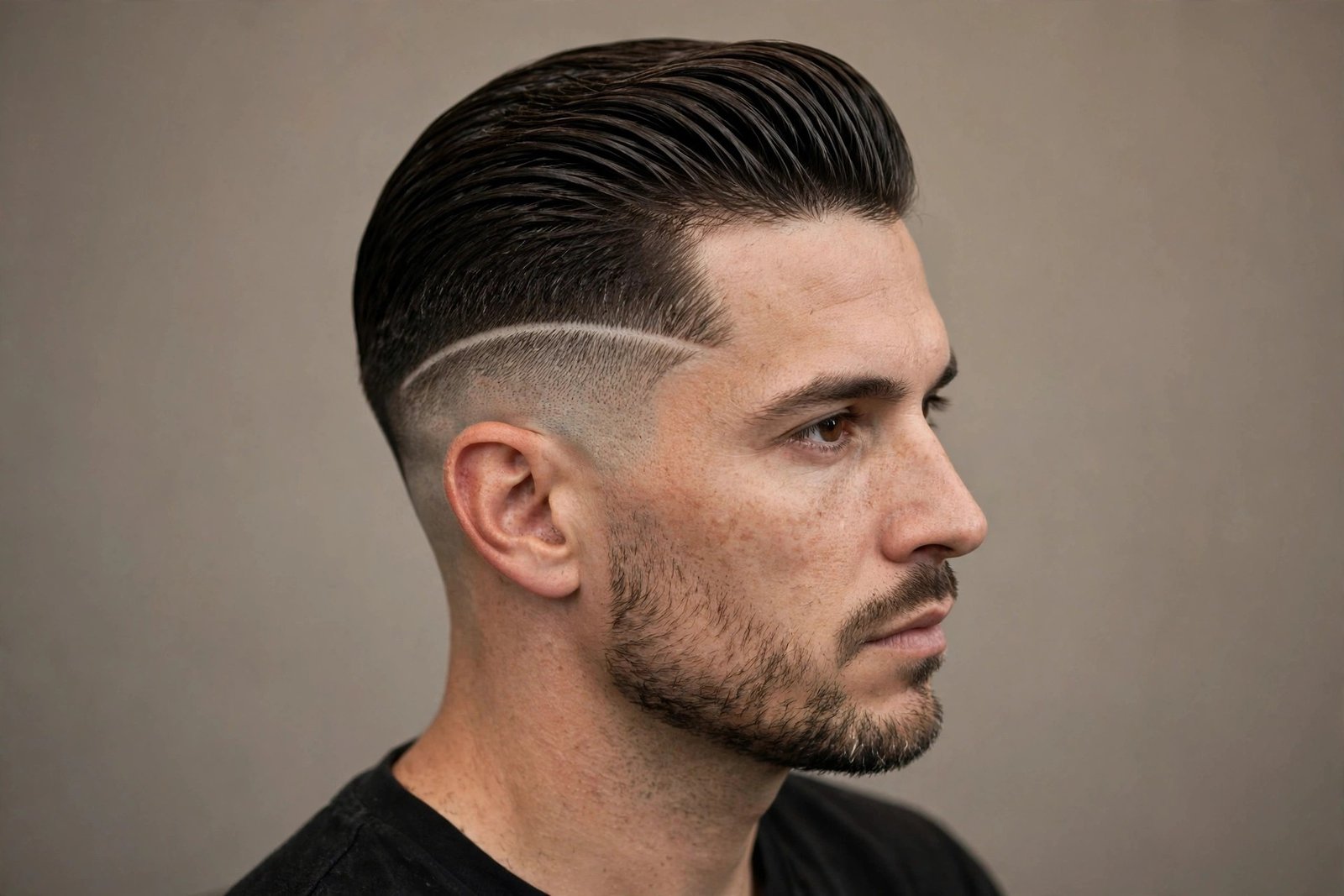
For the artists. The etched version adds a shaved design — a single line, a double line, a geometric detail — carved into the faded side below the disconnect. It’s barbering as art, and when it’s done well it’s genuinely stunning: the hard disconnect provides the canvas, the etching provides the signature. In 2026 the trend is restraint — one crisp line rather than full tribal murals — which keeps it wearable.
Who it suits: creative fields, nightlife, guys who treat their hair as self-expression. It demands a barber with real design skills — this is portfolio work, not a routine cut. Best on darker hair where the shaved line shows maximum contrast against the fade.
The barber script: “Disconnected undercut with [design] etched into the fade on [side].” Bring a photo of the exact design — describing geometry in words is hopeless. Discuss placement: the design should sit in the fade zone below the disconnect line, not crossing it. And ask how it’ll grow out, because etched designs have a short shelf life.
Morning styling: style the top as usual; the design needs no daily work. The design itself lasts 1 to 2 weeks before stubble blurs it — this is strictly a fresh-cut flex. Some guys get the design refreshed weekly between full cuts. Keep the skin moisturized; fresh etchings can irritate.
Honest downside: the shortest-lived style here — two weeks max before it fades into fuzz. It’s the most expensive per-wear of any version. Professional settings generally won’t approve. And a bad etching can’t be fixed except by growing it out — vet your barber’s design portfolio hard before committing.
22. The Platinum Disconnect
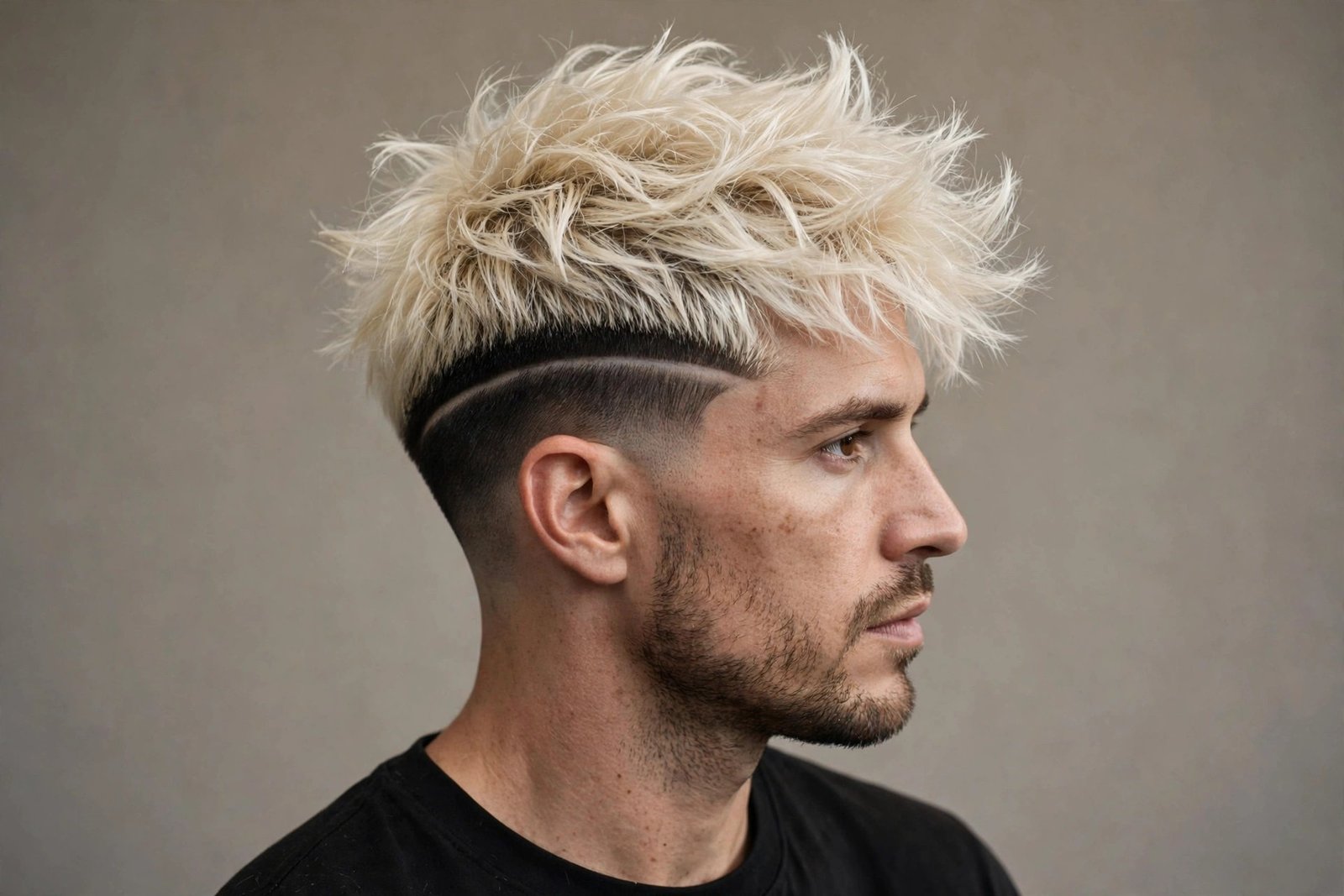
Bleach changes everything. The platinum top — nearly white, icy, unmistakable — over dark faded sides creates the most dramatic color contrast in men’s hair, and the disconnect line becomes a color boundary as well as a length boundary. It’s bold, it’s high-maintenance, and when it’s done right it’s unforgettable. The 2026 take keeps the top textured and a little lived-in rather than the flat platinum of years past.
Who it suits: guys ready for attention and upkeep, all face shapes (the color is the story, not the geometry), and hair strong enough to survive bleaching. Fine or damaged hair should think twice — bleach is harsh, and there’s no hiding damage on platinum. It works best on hair that’s never been colored before.
The barber script: two appointments, honestly — one for the cut, one for the color, ideally with a colorist. “Disconnected undercut, then platinum on top only — the sides stay natural.” The top needs to be at full length before bleaching; bleaching then cutting wastes money and damages unnecessarily. Ask about bond-builders (like Olaplex) during the bleach — they genuinely reduce damage.
Morning styling: style as usual for your chosen top, but add purple shampoo once a week to kill brassiness and a deep conditioner weekly — bleached hair is thirsty hair. Matte clay works well on platinum; the texture shows beautifully in light hair. Budget 8 minutes plus the ongoing color maintenance.
Honest downside: the upkeep is brutal — roots show in 3 to 4 weeks, toner fades, and the bleach-damage cycle is real. It’s the most expensive version here by far (color + cuts). Bleached hair breaks more easily, so the long top needs babying. And growing it out means months of visible roots. Commit fully or don’t start.
23. The Two-Tone Disconnect
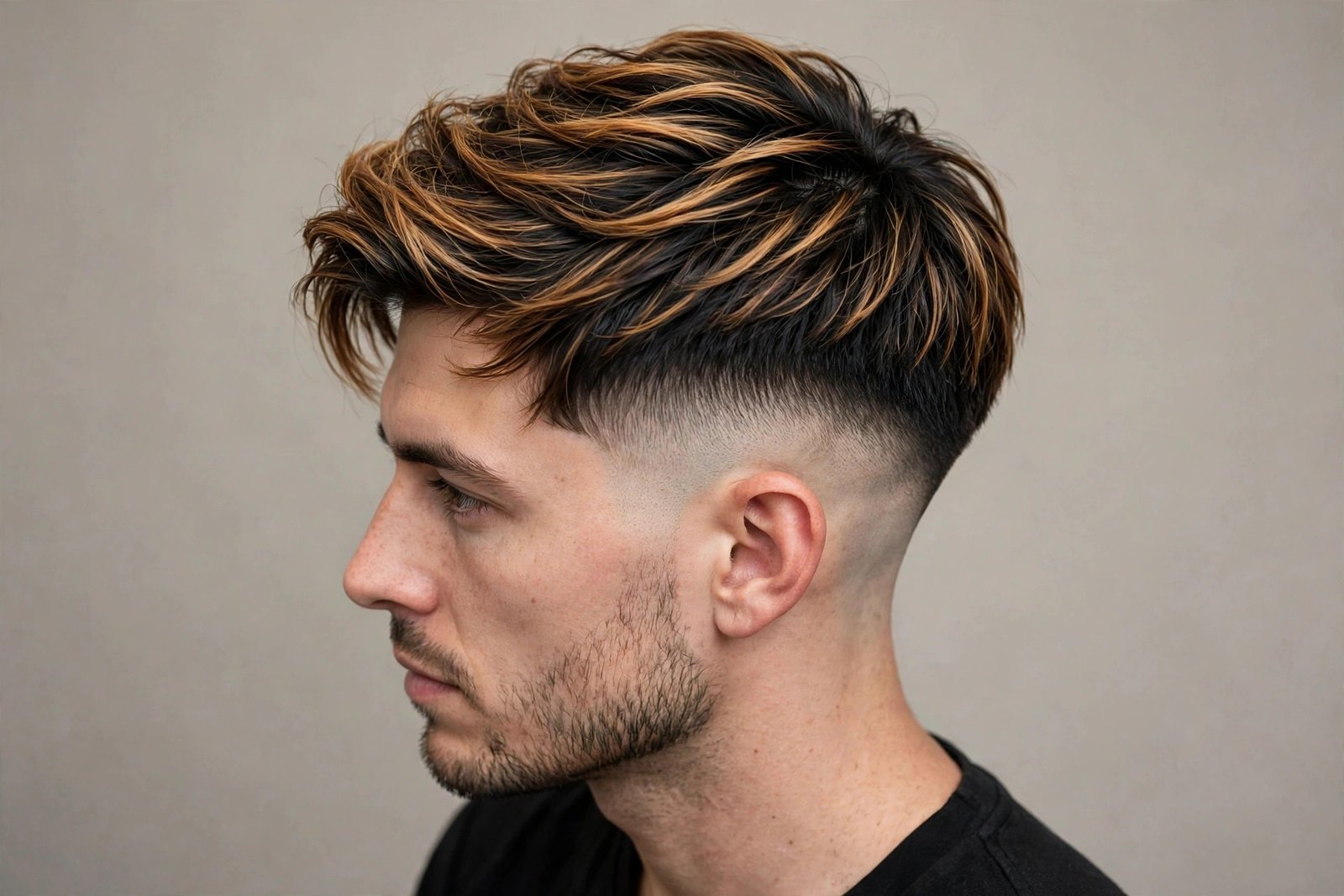
Subtler than platinum, richer than natural. The two-tone adds dimension to the top — caramel highlights on dark brown, honey on black, ash on blonde — while the sides stay natural and tight. The disconnect line separates the color zones too, which makes the dimension pop harder. It’s the color version for guys who want interest without the full bleach commitment, and in 2026 dimensional color on men is firmly mainstream.
Who it suits: guys whose natural color is a little flat, all hair types, and anyone who wants the color conversation without the platinum maintenance. It flatters every face shape because the dimension adds visual richness that draws the eye. Great for thick hair where the highlights create depth and movement.
The barber script: cut first, color second. “Disconnected undercut, then subtle highlights through the top only — natural-looking dimension, nothing streaky.” Ask for balayage-style hand-painted highlights rather than foils for the most natural grow-out. Show photos of the exact tone — “caramel” means ten different things to ten colorists.
Morning styling: normal styling for your top choice, plus color-safe shampoo and a weekly mask. Highlights show texture beautifully, so matte products are your friend — they let the dimension read. Five minutes plus the color maintenance every 8 to 12 weeks (much kinder than platinum’s schedule).
Honest downside: still salon color, still costs money and time. Highlights on very dark hair need lifting, which means some damage — less than platinum, but real. The grow-out is graceful (that’s the point of hand-painted color), but eventually you’ll want a refresh. And cheap color work shows — this is not the place to bargain-hunt.
24. The Beard-Paired Disconnect
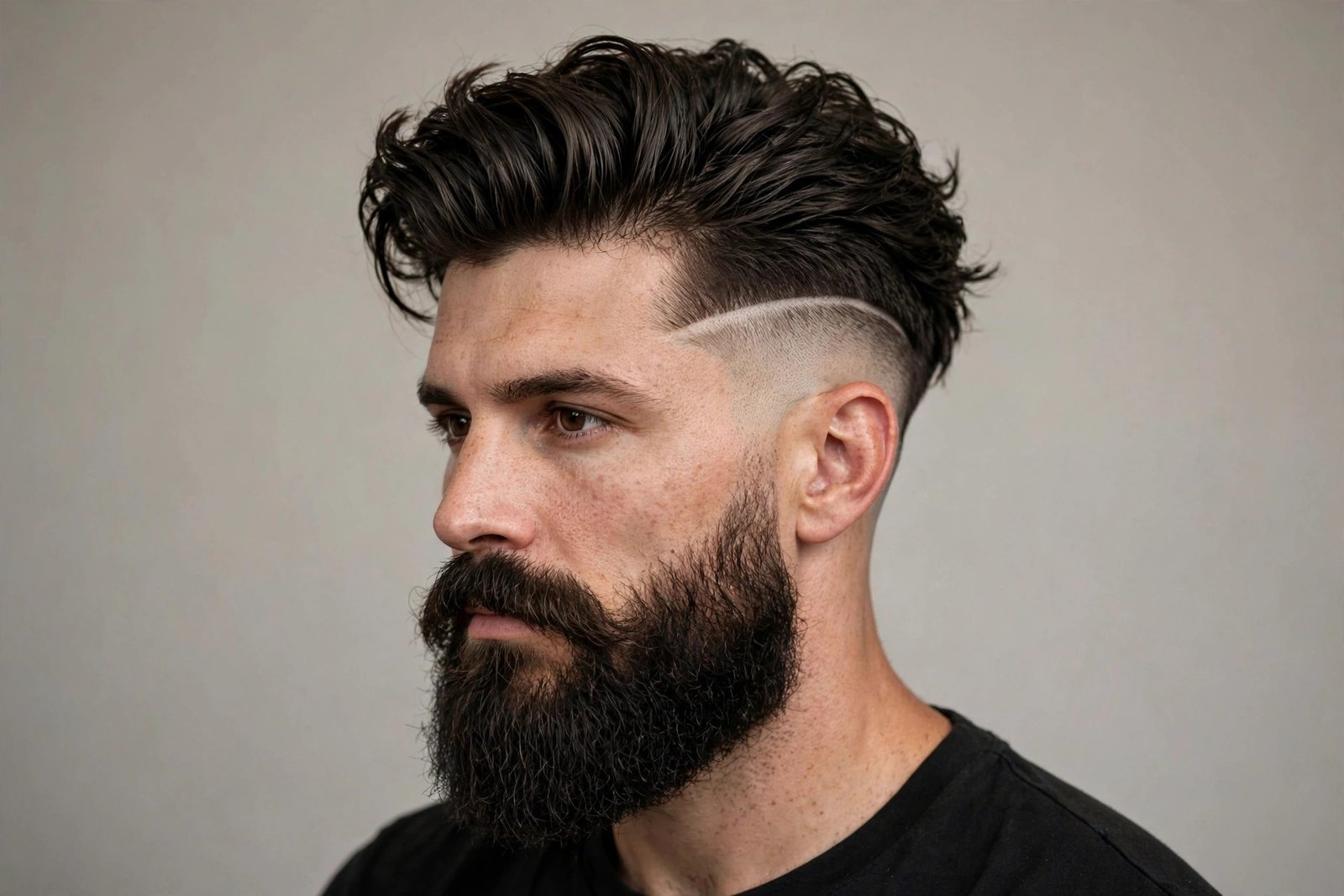
The full frame. A disconnected undercut on top, a full shaped beard below, and the fade connecting them into one continuous sharp composition. The beard and the cut talk to each other — the tight sides flow into the beard’s cheek line, the disconnect mirrors the beard’s jaw line, and the whole head becomes one designed unit. It’s the most masculine version here, and when both are maintained, it’s unbeatable.
Who it suits: guys who can grow a real beard (patchy beards needn’t apply — the contrast will spotlight the patches), square and oval faces, and anyone whose style leans rugged-refined. The beard adds visual weight to the lower face, which balances the height of the top beautifully.
The barber script: “Disconnected undercut on top, and shape the beard to connect with the fade — clean cheek line, defined neckline.” The connection point is the skill: the fade should melt into the beard’s upper edge seamlessly. Many barbers do the cut and beard as one service — book both together. Discuss beard length: the beard should be full enough to balance the top, usually at least an inch.
Morning styling: style the top as usual, then beard oil and a quick brush-through for the beard — 3 extra minutes. Keep the cheek and neck lines crisp with a trimmer between barber visits; fuzzy edges ruin the whole composition. The top and beard are a package deal — neglecting one makes the other look accidental.
Honest downside: it’s two maintenance schedules — the disconnect line every 2 weeks, the beard lines weekly. If you can’t grow dense facial hair, this will disappoint; be honest about your growth before committing. Beards also trap heat and need washing — the full routine is a lifestyle, not just a haircut.
25. The Thick Straight Disconnect
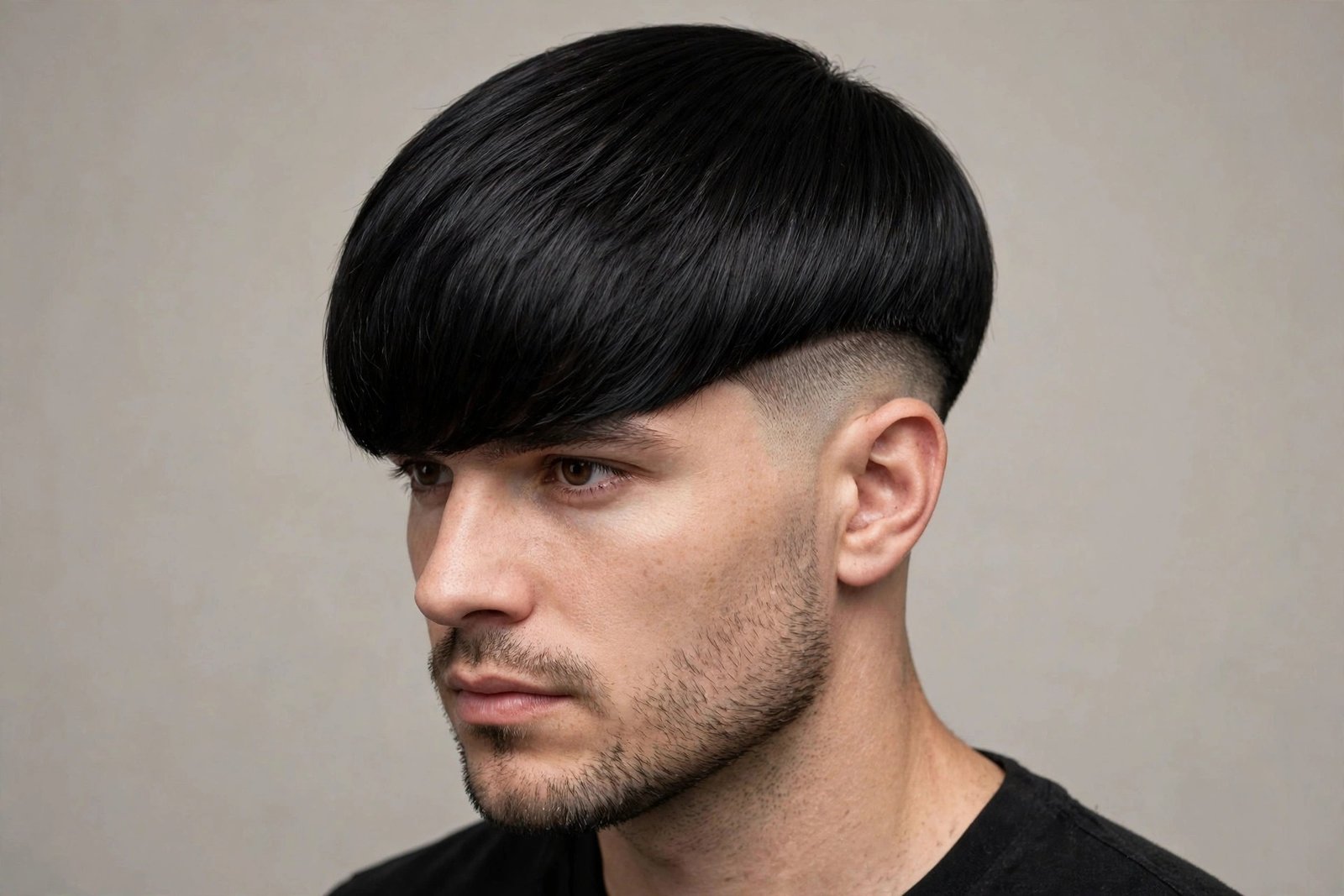
For the guys blessed (and cursed) with thick, heavy, straight hair. This version doesn’t fight the density — it uses it. The top stays long and weighty, falling with natural heft over the disconnect, and the sheer mass of the hair becomes the style. Thinning shears do the quiet work underneath, removing bulk without sacrificing the visual fullness. It’s the disconnect at its most luxurious: hair with presence.
Who it suits: genuinely thick straight hair — if your ponytail (hypothetically) would be a rope, this is you. Oval and square faces handle the weight well. It’s ideal for guys whose thick hair has overwhelmed every blended cut — the disconnect gives all that mass a clean frame instead of a fuzzy outline.
The barber script: “Keep the weight on top — five to six inches. Thin underneath for manageability, but keep the surface full. Hard disconnect, tight sides.” The thinning is crucial and must be done invisibly — surface layers stay long, bulk comes out from beneath. A barber who thins visibly (choppy surface) will ruin it. Ask specifically about their texturizing technique.
Morning styling: thick hair needs heat to behave — blow dry with direction, 6 minutes, then a medium-hold product to control the weight. The mass does the styling; you’re just directing it. Don’t over-product; thick hair plus heavy product equals helmet. A light cream is often enough once the dryer has set the direction.
Honest downside: thick hair is heavy — literally. The top can pull flat by afternoon, dragging the disconnect with it. Root lift from the dryer is mandatory, not optional. Trims need to be precise; thick hair shows cutting mistakes as ledges. And washing takes forever — budget accordingly.
26. The Fine Hair Volume Disconnect
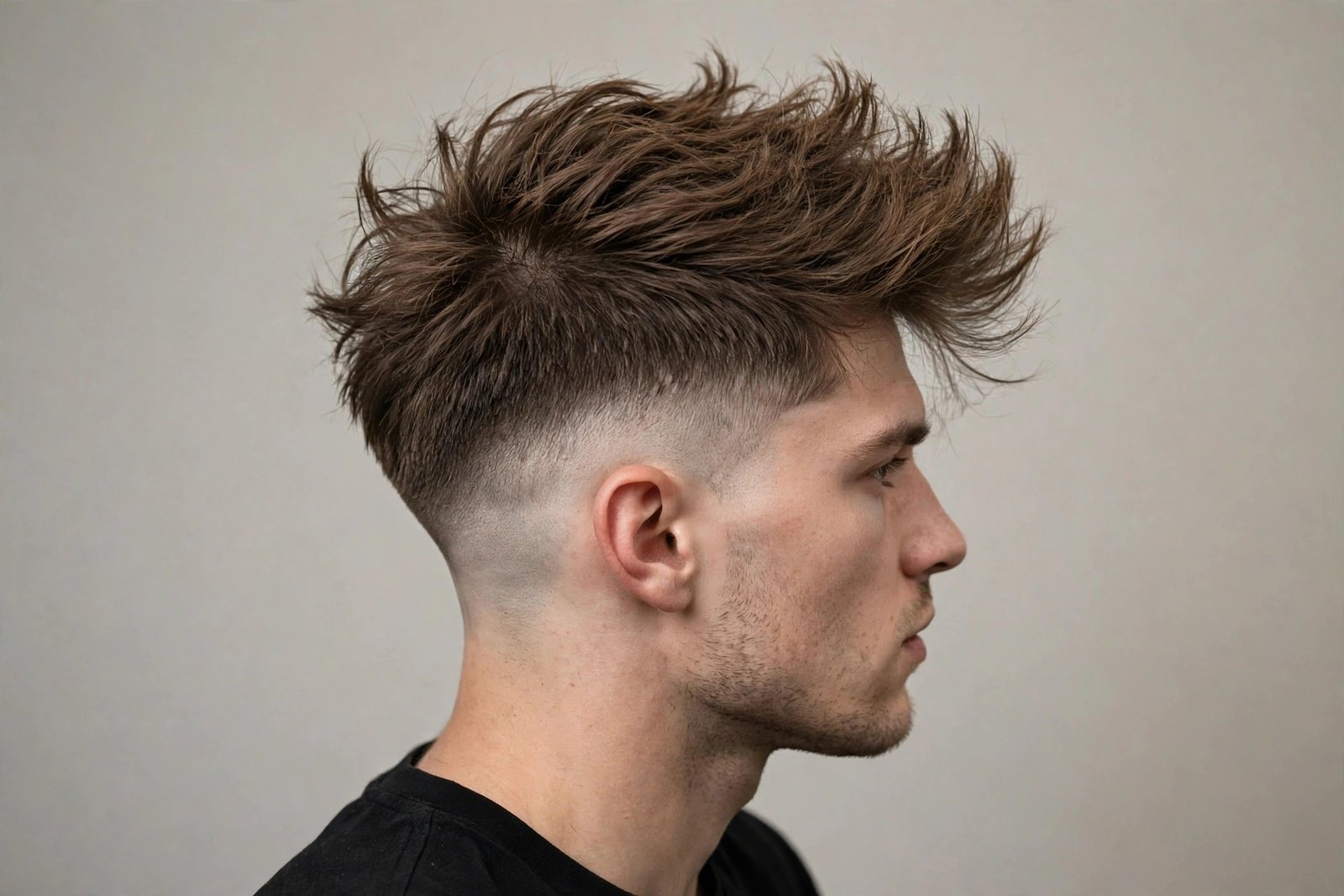
The skeptics’ version. Fine hair and disconnects seem incompatible — how do you build a dramatic top from hair with no body? The answer is engineering: shorter top (3 inches max, so it can’t collapse under its own weight), aggressive texture for the illusion of density, a blow dryer as a daily non-negotiable, and volumizing products that build without weighing down. Done right, it looks full. Done wrong, it looks thin — so the technique matters enormously.
Who it suits: fine-haired guys who want the cut anyway and accept the daily work. It flatters all face shapes because the volume is controlled and moderate. Be realistic: this version creates the impression of fullness, it doesn’t create actual density. If your hair is both fine and thinning significantly, the shorter crop versions serve you better.
The barber script: “Short textured top — three inches maximum, lots of point-cutting for texture. Hard disconnect, faded sides.” Shorter is better here; every extra inch is weight that kills volume. The texture must be thorough — fine hair needs maximum separation to fake density. Ask your barber to be honest about whether your density can carry it.
Morning styling: the dryer is everything — 5 minutes minimum, drying upward and forward for root lift, with a volumizing mousse applied to damp roots before heat. Then a light matte clay or texture powder (not heavy wax — it’ll collapse the lift). The routine is non-negotiable; skipping the dryer means a flat top and a visible scalp. Heat protectant always.
Honest downside: the highest effort-to-hair ratio on this list — maximum daily work for a moderate result. Humidity and sweat collapse fine-hair volume fast. You’ll use volumizing products constantly, which means buildup and frequent washing. And some days it just won’t cooperate; have a hat or a backup style for those days.
27. The Hairline-Friendly Disconnect
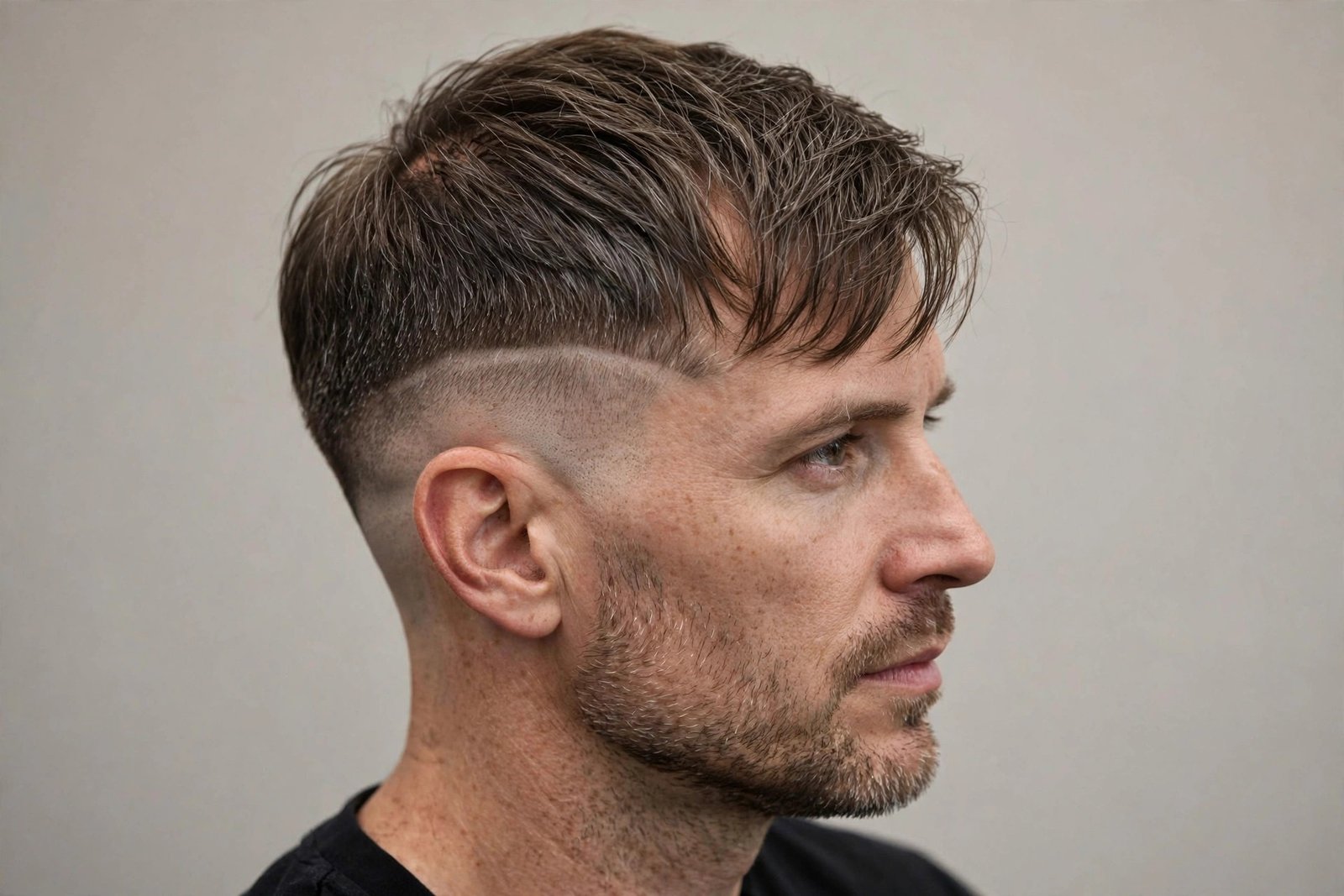
For the receding hairline, handled with honesty. This version keeps the disconnect line low (so the eye isn’t drawn upward), brings the top forward in soft texture (covering the temples without comb-over desperation), and keeps everything matte and natural. It’s not hiding the hairline — it’s framing it well. There’s a dignified difference, and this cut understands it.
Who it suits: guys with early to moderate recession (Norwood 2-3 territory), all face shapes, and anyone who wants to keep style without denial. It works with straight, wavy, and loosely curly hair. If recession is advanced, shorter is kinder — but for the early stages, this is the best-looking option in men’s hair.
The barber script: “Low disconnect line — keep it down. Top forward and textured, four inches, covering the temples naturally. Faded sides.” Emphasize natural: the top should fall where it falls, not be pasted across the forehead. A good barber will cut the front to work with your recession pattern, not against it. Bring photos of the coverage level you want.
Morning styling: blow dry forward with fingers, matte clay through the front for soft piecey coverage. The goal is texture that happens to cover, not coverage that’s obviously engineered. Five minutes. Avoid wet-look products — shine spotlights the scalp. Matte is your friend, always.
Honest downside: it manages recession, it doesn’t reverse it — as the hairline moves, the cut needs adjusting. The forward top needs the line kept low; if your barber creeps it higher, the effect breaks. And be wary of growing the front too long to compensate — overlong fronts read as comb-over. Keep it honest, keep it textured.
28. The Executive Disconnect
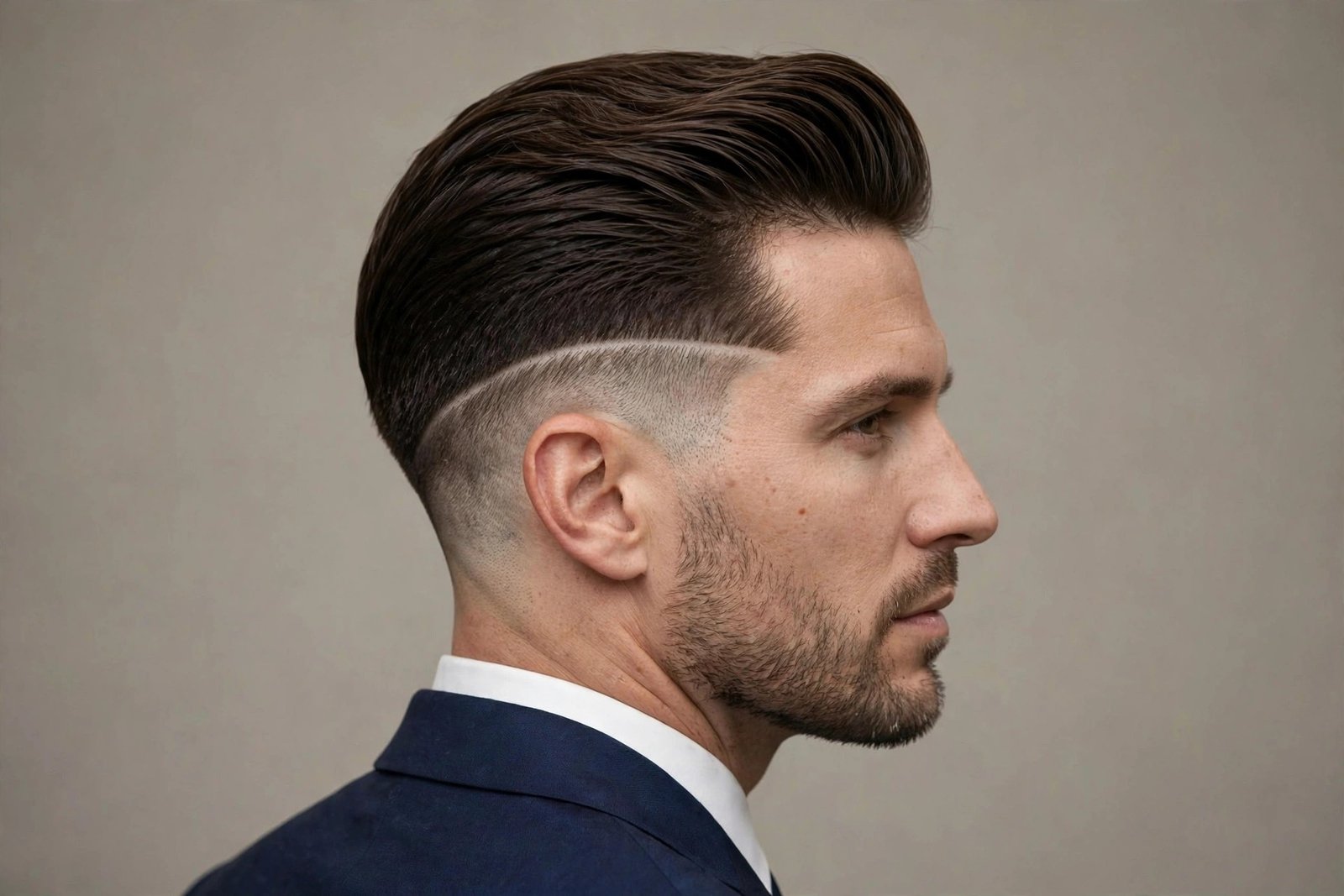
The boardroom disconnect. Everything about this version is refined: the line sits low and subtle, the sides are tapered rather than skinned, the top is polished with a natural finish — and yet the disconnect is there, giving the cut a quiet edge that a standard business cut lacks. It’s for the guy who wants to look sharp in the C-suite and interesting at dinner. The 2026 professional doesn’t choose between polish and personality; this cut is the proof.
Who it suits: professional environments, client-facing roles, guys over 35 who want modern without trendy. It flatters every face shape because the styling is adaptable — side part, soft sweep, light texture, all work. If your office is conservative but your taste isn’t, this is your cut.
The barber script: “Subtle low disconnect — refined, not dramatic. Tapered sides, polished top, four inches, natural finish.” The word is “refined” — say it twice. The difference between this and style 12 (subtle low) is the styling: the executive is always polished, never messy. Ask for a clean taper on the sides rather than any fade; the taper reads more traditional.
Morning styling: six minutes of polish. Blow dry neatly in your chosen direction, then a natural-finish cream or light pomade — sheen, not shine. Comb it clean. The executive should look finished, not effortful. Keep a comb at the office; a midday touch-up takes thirty seconds and maintains the impression.
Honest downside: it’s the most restrained version, which means it makes the smallest statement — if you secretly want edge, you’ll feel underdressed by your own haircut. The polish needs daily upkeep; “executive” doesn’t survive a lazy morning. And in creative industries it can read as playing it safe. Know your room.
Your Styling and Maintenance Routine: Keeping the Disconnect Sharp
Here’s the truth about the disconnected undercut: the haircut is 40% of it. The other 60% is what you do every morning and every few weeks after. A disconnect with a blurry line and an unstyled top isn’t a style — it’s just long hair over short hair. The guys who look incredible in this cut aren’t blessed with better hair than you. They have a routine. This is that routine.
The routine has two halves: the daily styling (10 minutes, non-negotiable) and the maintenance schedule (barber visits timed to the cut’s needs, not your convenience). Nail both and the cut looks expensive indefinitely. Skip either and it degrades fast — the disconnect is honest that way. It shows exactly how much effort you’re putting in.
One more honest note before the details: your first two weeks with a disconnect are the hardest. You’re learning the styling, the products are new, the line is fresh and unfamiliar in the mirror. By week three it’s muscle memory. Every guy who’s worn this cut will tell you the same thing — push through the learning curve. It gets easy, and then it gets enjoyable. There’s something deeply satisfying about a cut that rewards your effort visibly, every single morning.
The 10-Minute Morning Routine, Step by Step
Start with damp hair — not soaking, not dry. After showering, towel it until it’s damp but not dripping; if you’re styling dry hair from yesterday, mist it with a spray bottle until evenly damp. Product on dry hair sits on the surface and looks greasy. Product on damp hair distributes through the strands and actually holds. This one detail separates good styling from bad more than any product choice.
Apply your pre-styler first. A volumizing mousse or sea-salt spray at the roots, worked through with fingers — this is the foundation layer that gives the top its body. Most guys skip this and wonder why their top collapses by noon. The pre-styler is the difference between hair that holds and hair that hopes. Use less than you think; a golf-ball of mousse or four sprays of salt spray is plenty.
Now the blow dryer — the most important tool in the disconnected undercut arsenal, more important than any product. Dry the top in the direction you want it to sit: up for quiffs and pomps, back for slicks, forward for fringes, to the side for sweeps. Lift at the roots with your fingers as you dry; the heat sets the lift, and set lift lasts all day while product-only lift surrenders by lunch. Medium heat, and keep the dryer moving — parked heat damages. Three to five minutes here.
Product goes on now, into dry hair. Warm a fingertip-to-coin-sized amount between your palms until it’s invisible, then work it through from mid-length to ends — not roots, unless you’re building a quiff and need root grip. The motion depends on your style: push up for lift, sweep back for slicks, pinch and twist for texture. Less is more; you can always add a touch more, but over-producted hair can’t be rescued without rewashing.
Finish with a cool shot from the dryer — 30 seconds of cool air locks everything in place. It’s the step everyone skips and the step that adds hours to your hold. If your hair is heavy or the day is humid, a light mist of hairspray from arm’s length seals the deal. Then stop touching it. Every touch transfers oil and breaks the hold. Style it, set it, leave it alone.
Your Product Arsenal: What to Buy and What to Skip
You need three products, not thirteen. First: a strong-hold matte clay — the workhorse for textured, messy, quiff, and fringe versions. Matte finish keeps the 2026 look current; shine dates it. Look for clays with kaolin or bentonite; they absorb oil and build texture simultaneously. A pea-to-fingertip amount is the standard dose.
Second: a pomade for the slicked, side-part, and polished versions. Water-based pomades wash out easily and are the sane choice for daily use; oil-based gives stronger hold and classic shine but needs dedicated washing. For the modern slicked versions, a “natural shine” or “satin” pomade splits the difference — polish without the grease-slick look. Byrdie‘s grooming editors consistently recommend starting with water-based if you’re new to pomade, and that’s solid advice.
Third: a sea-salt spray as your pre-styler. It adds grit and volume to damp hair before the dryer, giving fine or slippery hair something to hold onto. It’s the secret weapon for wavy versions and the foundation for textured tops. Use it on damp hair only — on dry hair it’s just salt sitting on your head.
What to skip: heavy gels (they kill the texture that makes modern disconnects work and flake by afternoon), “2-in-1” anything (your hair and your styling need different things), and cheap no-name clays that are just wax with marketing. Also skip the temptation to layer four products — product stacking causes buildup that dulls the hair and irritates the scalp. Three products, used well, beat a shelf of confusion.
Washing matters too. Daily washing strips the natural oils that give the top its body; most guys do best washing 3 to 4 times a week, with water-only rinses between. Use a quality shampoo — sulfate-free if your hair is dry or color-treated — and condition the top (the sides are too short to need it). Clarify once a month with a clarifying shampoo to reset product buildup. Your styling will work noticeably better on properly washed hair.
The Maintenance Schedule: When to See Your Barber
The disconnect line is the heartbeat of this cut, and it needs attention every 2 to 3 weeks. That’s the sides and the line: cleaned up, re-sharpened, the contrast restored. This doesn’t always mean a full haircut — many barbershops offer a “cleanup” or “line-up” service for the sides between full cuts, at a fraction of the price. Ask yours. It’s the economical way to keep the cut alive.
The top needs a proper cut every 6 to 8 weeks, depending on your version. Textured and messy tops can stretch to 8; precise versions like the hard part or the slicked classic want 6. The top trim isn’t about length — it’s about refreshing the texture and removing split ends that make the top look tired. Tell your barber to maintain the shape, not redesign it; the fastest way to ruin a good disconnect is a barber who “improves” it every visit.
Between visits, you can extend the crispness at home — carefully. A trimmer for the neckline and around the ears buys you 4 to 5 days. But do not touch the disconnect line yourself. I repeat: do not touch the line. One slip and the hard edge becomes a wobbly suggestion, and fixing a botched line means cutting everything shorter. The line is barber territory. Your territory ends at the neckline.
Budget honestly: a disconnect costs more in maintenance than a blended cut, because the line demands frequency. If you’re on a tight budget, the subtle low version (style 12) and the short crop (style 17) stretch furthest between visits. The skin fade and etched versions cost the most to maintain. Pick the version your wallet can sustain — a well-maintained subtle disconnect beats a neglected dramatic one every time.
Mistakes That Ruin a Good Disconnect
Mistake one: letting the line grow out. The single most common failure. The disconnect looks intentional for about 2 weeks, acceptable for 3, and then it’s just an overgrown undercut with a memory of a line. If you can’t commit to the schedule, choose a blended cut instead — there’s no shame in it, but there is shame in a blurry line you’re pretending is sharp.
Mistake two: wrong product for the version. Shiny pomade on a textured messy top kills the texture. Matte clay on a classic slick kills the polish. Match the product to the style’s intent: matte for texture, pomade for polish, salt spray for waves. When in doubt, ask your barber what they used in the chair — then buy that.
Mistake three: styling dry hair. Product on dry hair sits, looks greasy, and holds nothing. Dampen first, always. This one habit change fixes more bad styling days than any product upgrade.
Mistake four: the wrong line height for your head. Too high on a long face stretches it further; too low on a round face wastes the slimming effect. The line should sit where it balances your proportions — discuss it with your barber using your face, not a celebrity photo. Your head is the one wearing it.
Mistake five: growing the top without a plan. Disconnect tops need shaping as they grow, or the weight distribution goes wrong — heavy ends, flat roots, the line buried under collapsing hair. If you’re growing it out, see your barber every 8 weeks for shape maintenance even if you’re “not cutting it.” Growing out is still haircutting; it’s just haircutting with a longer horizon.
Frequently Asked Questions
The questions every guy asks before getting the line — answered straight, no sales pitch.
What is a disconnected undercut?
A disconnected undercut is a men’s haircut where the long top is cut with zero blending into the short sides, creating a sharp visible line — the disconnect — between the two lengths. Unlike a fade, where lengths melt into each other gradually, the disconnect is abrupt and deliberate. The sides and back are usually clipped short or faded, while the top stays long enough to slick back, sweep, or texture. That hard line is the signature of the style and the reason it photographs so well.
How do I ask my barber for a disconnected undercut?
Ask your barber for a hard disconnect line where the top meets the sides, with no blending or taper at the transition point. Specify the top length (usually 3 to 6 inches), how the sides should be cut (skin fade, low fade, or one uniform clipper guard), and where you want the disconnect line to sit (low, medium, or high). Bring reference photos — this is the single most important step, because every barber pictures a slightly different version of this cut. Say the word ‘disconnected’ out loud so there is no confusion with a regular blended undercut.
Does the disconnected undercut work with curly hair?
Yes — curly hair might be the best hair type for this cut. Curls give the top natural volume and texture, which means less daily styling work, and the sharp disconnect line gives curls a structured frame that stops them from looking wild. The key is growing the top long enough (at least 4 inches) so the curls can form properly, and keeping the disconnect line crisp with regular touch-ups. Curly clients also need a moisturizing product rather than a drying clay, so the curls stay defined instead of frizzing out.
How often do I need a trim to keep the disconnect sharp?
The sides and the disconnect line need a touch-up every 2 to 3 weeks to stay sharp. The line is the whole point of the haircut, and even half an inch of growth blurs it into something that reads as an overgrown undercut rather than a deliberate disconnect. The top can go 6 to 8 weeks between cuts, or longer if you are growing it out. Many guys book a quick side-cleanup between full haircuts to keep the line crisp without paying for a full cut each time.
Can I wear a disconnected undercut to a professional office?
You can, if you pick the right variation. The slicked-back, side-part, and executive versions of the disconnected undercut read as polished and intentional, especially with a matte or low-shine product instead of high-gloss pomade. Keep the disconnect line low and the sides neat, and the cut looks sharp in a suit. The high disconnect with a skin fade is the version that raises eyebrows in conservative offices, so save that one for creative industries or the weekend.
What products do I need to style a disconnected undercut?
Three products cover almost every version: a strong-hold matte clay for textured and messy tops, a pomade for slicked and side-part styles, and a lightweight sea-salt spray for volume and pre-styling on damp hair. Add a blow dryer — it does more for this cut than any product, because heat locks the top into place and builds the volume the style depends on. Finish with a light hairspray if your hair is heavy or the weather is humid. Avoid heavy gels; they kill the texture that makes the 2026 versions look modern.
Will a disconnected undercut suit a round face?
A disconnected undercut is one of the best cuts for a round face, because the height on top and the tight sides visually lengthen the face. The trick is keeping volume on top — pompadour, quiff, and brushed-up versions all work — and avoiding styles that push the hair flat or wide. Skip the very high disconnect line if your face is both round and wide, since it can emphasize width at the cheekbones. A medium disconnect line with textured height on top is the sweet spot.
What is the difference between a faded undercut and a disconnected undercut?
The difference is the transition. A faded undercut blends the long top into the short sides gradually through a fade, so the eye travels smoothly from one length to the other. A disconnected undercut has no blending at all — the top ends and the short sides begin at a hard, visible line. That abrupt line is bolder and more graphic, and it is the entire identity of the cut. If you can see a clear horizontal line where the lengths change, it is disconnected; if the lengths melt together, it is a fade.
Conclusion
The disconnected undercut has survived every trend cycle for a century because it’s built on something permanent: contrast. Long against short, soft against hard, the top flowing while the line holds firm underneath. Fades come and go in their infinite variations, but the hard line keeps returning — in the 1920s, the 1940s, the 2010s, and now in 2026, better than ever. The 2026 versions fixed what needed fixing: softer textures, smarter lengths, honest options for every hair type and every workplace.
Pick the version that fits your actual life, not the one that looks best in a photo. The textured messy disconnect if you want edge without ceremony. The executive if the boardroom is your arena. The curly or coily versions if your texture has been waiting for a cut that respects it. Bring the photo, say the word “disconnected” out loud, and commit to the maintenance — the line every two to three weeks, the top every six to eight, ten minutes every morning.
Do that, and the cut pays you back daily. There’s a specific confidence that comes from a sharp disconnect — the knowledge that your hair looks deliberate, architectural, meant. In a world of blended, safe, forgettable haircuts, the line is a small act of intention. Wear it well.