French Bob Haircut 2026: 12+ Chic Parisian Chin-Length Bob Ideas with Bangs
French Bob Haircut 2026: 12+ Chic Parisian Chin-Length Bob Ideas with Bangs
There is a reason the French bob never really leaves. Every few years it comes roaring back, and in 2026 it is having one of its biggest moments yet. Search interest in the French bob has surged as women everywhere trade high-maintenance lengths for something sharper, lighter, and unmistakably chic. The French bob haircut is the ultimate Parisian statement: chin-length hair, a clean jawline-grazing line, and bangs that frame the face like they were painted on.
What makes the French bob so special is its beautiful contradiction. It looks effortless, but every millimeter is deliberate. It is short without being severe, classic without being boring, and edgy without trying too hard. Whether you wear it sleek and blunt or tousled with that undone French-girl texture, the French bob flatters nearly every face shape and works on straight, wavy, and curly hair alike.
In this complete guide, we are breaking down everything you need to know about the French bob in 2026: what it actually is, why it is trending again, 12 gorgeous variations to show your stylist, how to style it at home in under ten minutes, and exactly what to ask for in the salon chair so you walk out with the real thing — not just “a bob.”
What Is the French Bob?
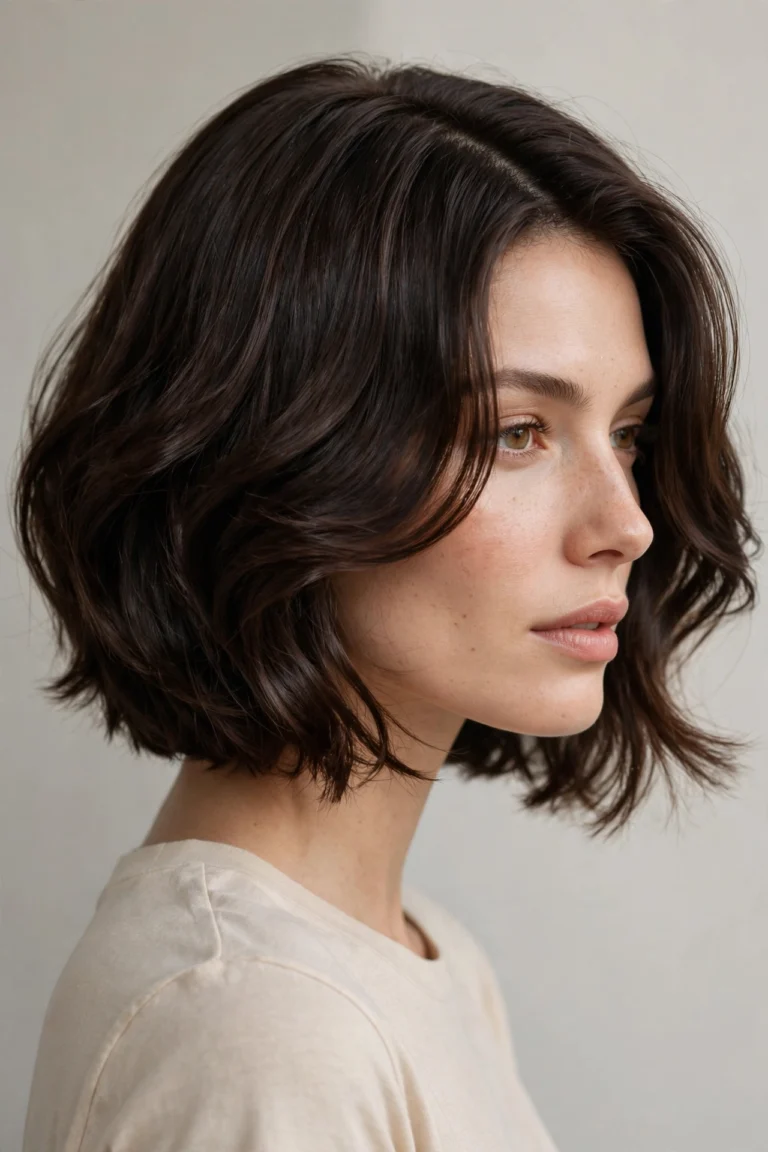
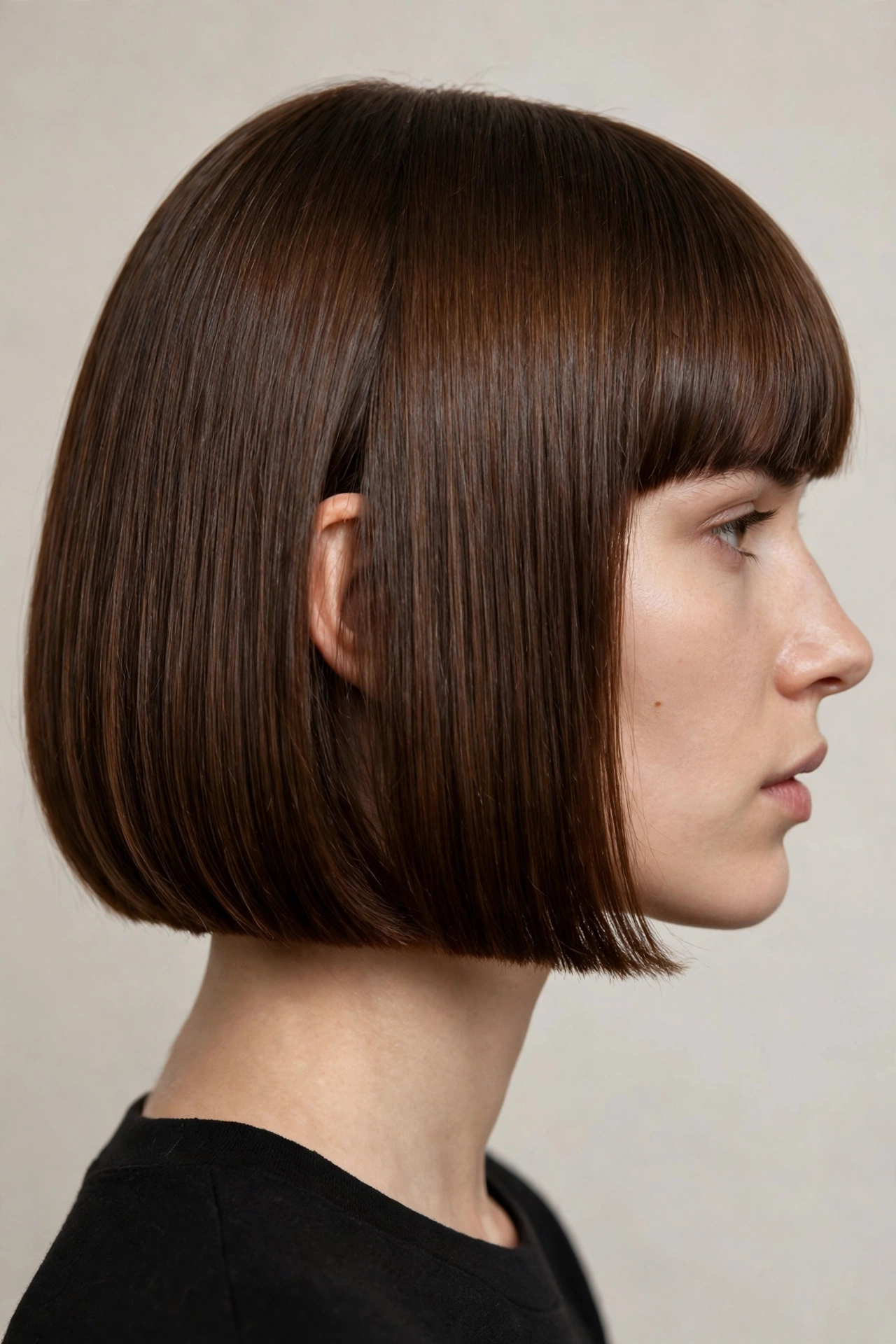
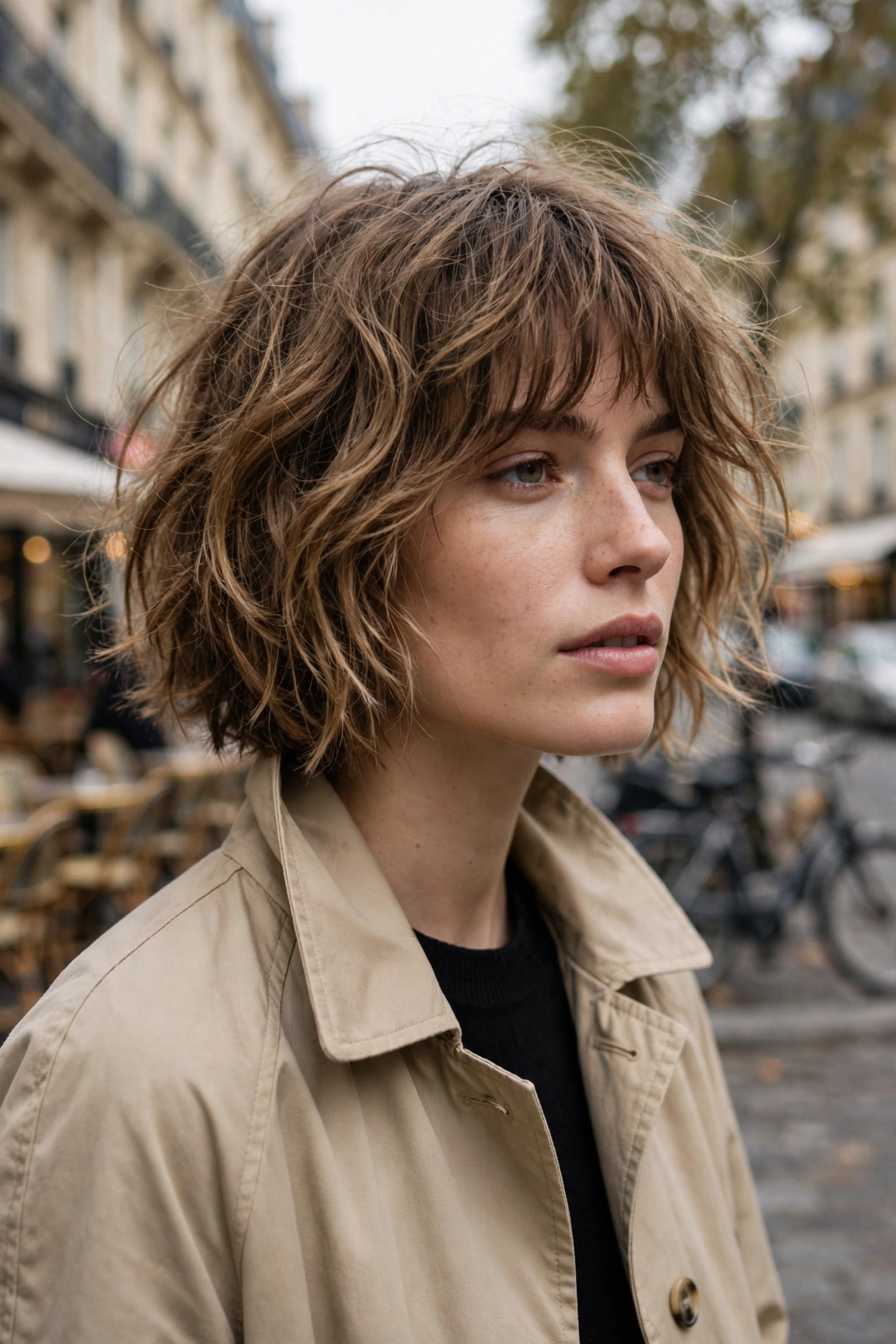
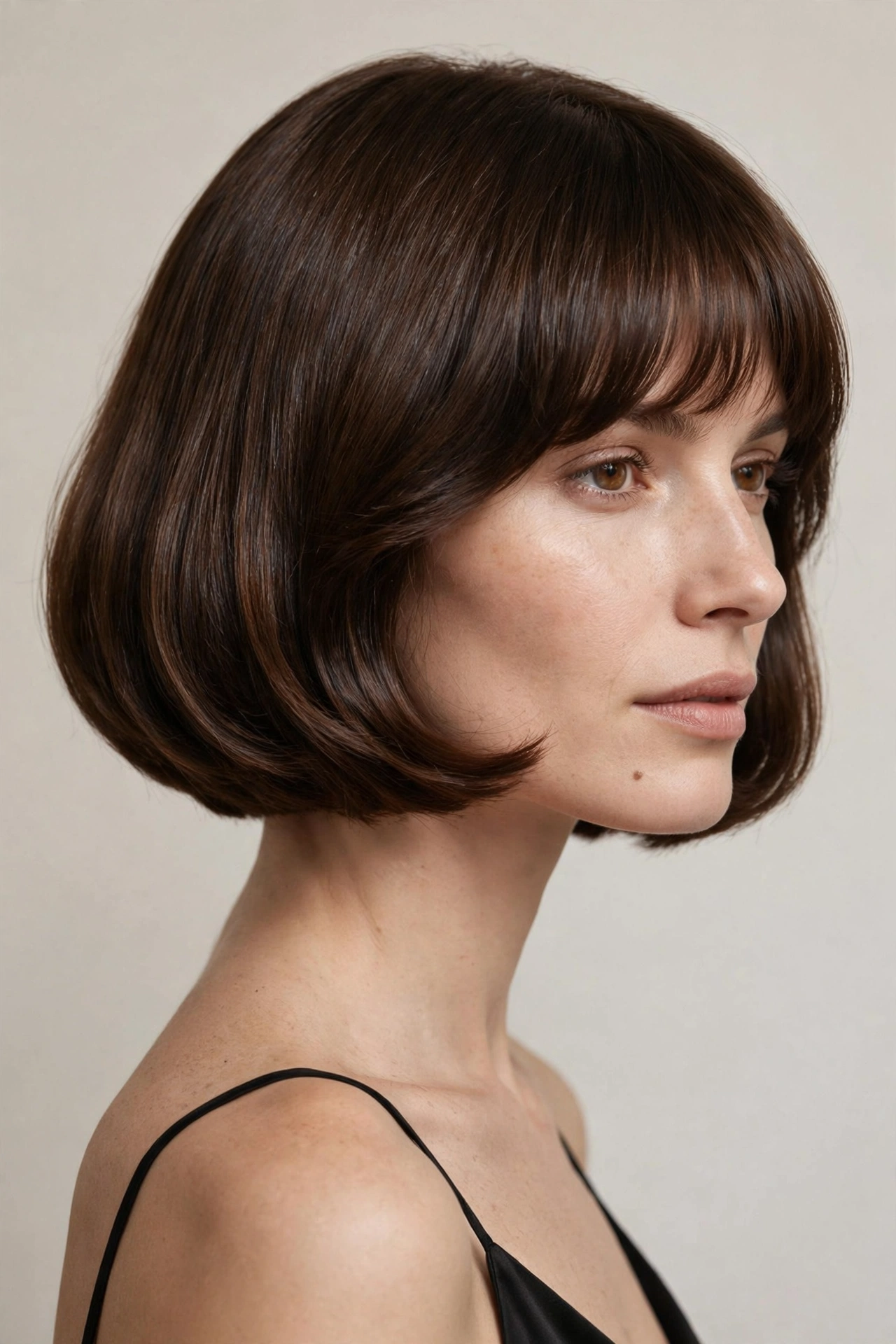
The French bob is a short, chin-length bob haircut defined by three signature elements: a length that sits right at or just below the jawline, a soft inward curve that hugs the face, and bangs — usually straight-across, brow-grazing fringe. Unlike longer bob variations that fall to the shoulders, the true French bob is unapologetically short. It ends where your jaw ends, which is precisely why it is so flattering: it draws the eye to your cheekbones, your jawline, and your eyes.
The cut has its roots in 1920s Paris, when rebellious young women chopped their long hair into daring short bobs as a symbol of freedom. It was later immortalized by French style icons — think of the gamine charm of actresses in French New Wave cinema, with their blunt fringes and kohl-lined eyes. The French bob became shorthand for a certain kind of confidence: feminine, intelligent, and completely unbothered.
Technically, what separates a French bob from a regular bob is the combination of the jawline length and the fringe. A classic bob can be any length from chin to shoulder and may or may not have bangs. The French bob always has bangs (or at least a strong fringe element), and it always sits at the chin. The ends are typically cut blunt or with very soft texture, and the overall silhouette is slightly rounded — full at the jaw, tapering gently toward the crown. There is usually minimal layering; the beauty of the French bob is in its clean, graphic shape rather than in choppy layers.
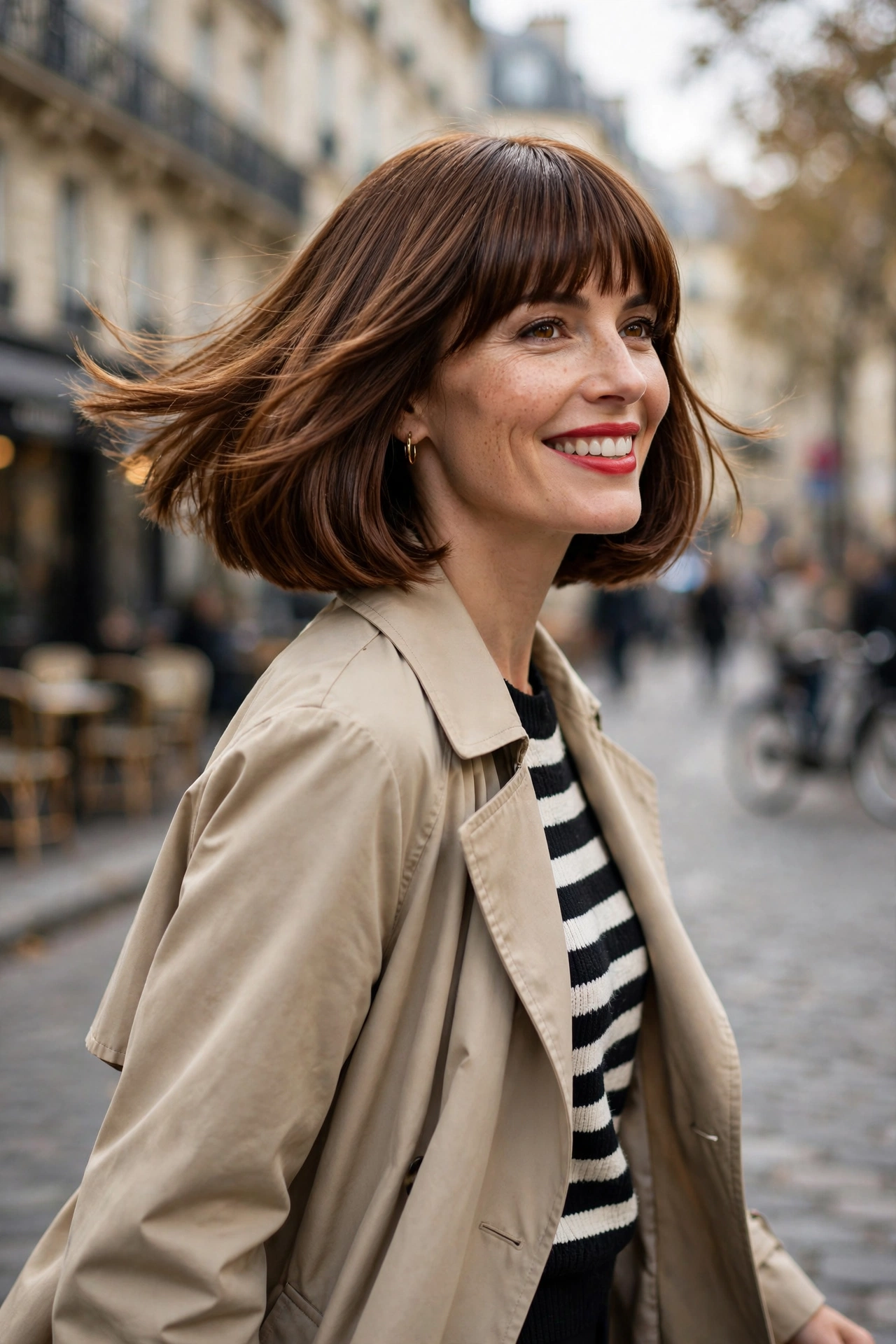
One more defining trait: the French bob is meant to look a little undone. In Paris, nobody’s French bob looks freshly flat-ironed and perfect. It looks lived-in — slightly tousled, a little piece-y, like you just ran your fingers through it and walked out the door. That effortlessness is the whole point, and it is what makes the cut so wearable in real life.
Why the French Bob Is Going Viral in 2026
Few haircuts capture the mood of 2026 quite like the French bob. After years of ultra-long extensions and high-maintenance color, there is a collective craving for simplicity — for hair that looks expensive without requiring a second mortgage in salon visits. The French bob delivers exactly that. It is a one-length cut with bangs: no complicated layers to grow out, no daily heat styling marathon, just a strong shape that does most of the work for you.
Celebrities and models have fueled the fire. All over red carpets and fashion weeks, the chin-length bob with a blunt fringe keeps appearing — on actresses, on influencers, on the cool girl in every street-style roundup. Social feeds are full of French bob transformations, and the comments are always the same: “this is the sign to chop it.” When a haircut photographs this well from every angle, virality follows naturally.
But there is something deeper driving the French bob’s 2026 moment. It aligns perfectly with the broader return to timeless, quiet-luxury style. The French bob is the hair equivalent of a perfectly tailored blazer or a classic trench coat — it never looks dated, it goes with everything, and it makes everything else you wear look more intentional. In an era of micro-trends that burn out in weeks, the French bob feels like an anchor: a genuinely classic choice that still manages to feel fresh and current.
It is also remarkably democratic. The French bob works on fine hair (the blunt ends create the illusion of thickness), on thick hair (the short length removes weight and bulk), on straight hair (sleek and graphic), on wavy hair (that coveted French-girl texture), and even on curly hair (a rounded, voluminous shape). It suits oval, round, square, and heart-shaped faces with small adjustments to the fringe and length. Very few haircuts can claim that kind of universal appeal, and that is a huge part of why the French bob keeps winning.
1. The Classic French Bob with Full Bangs
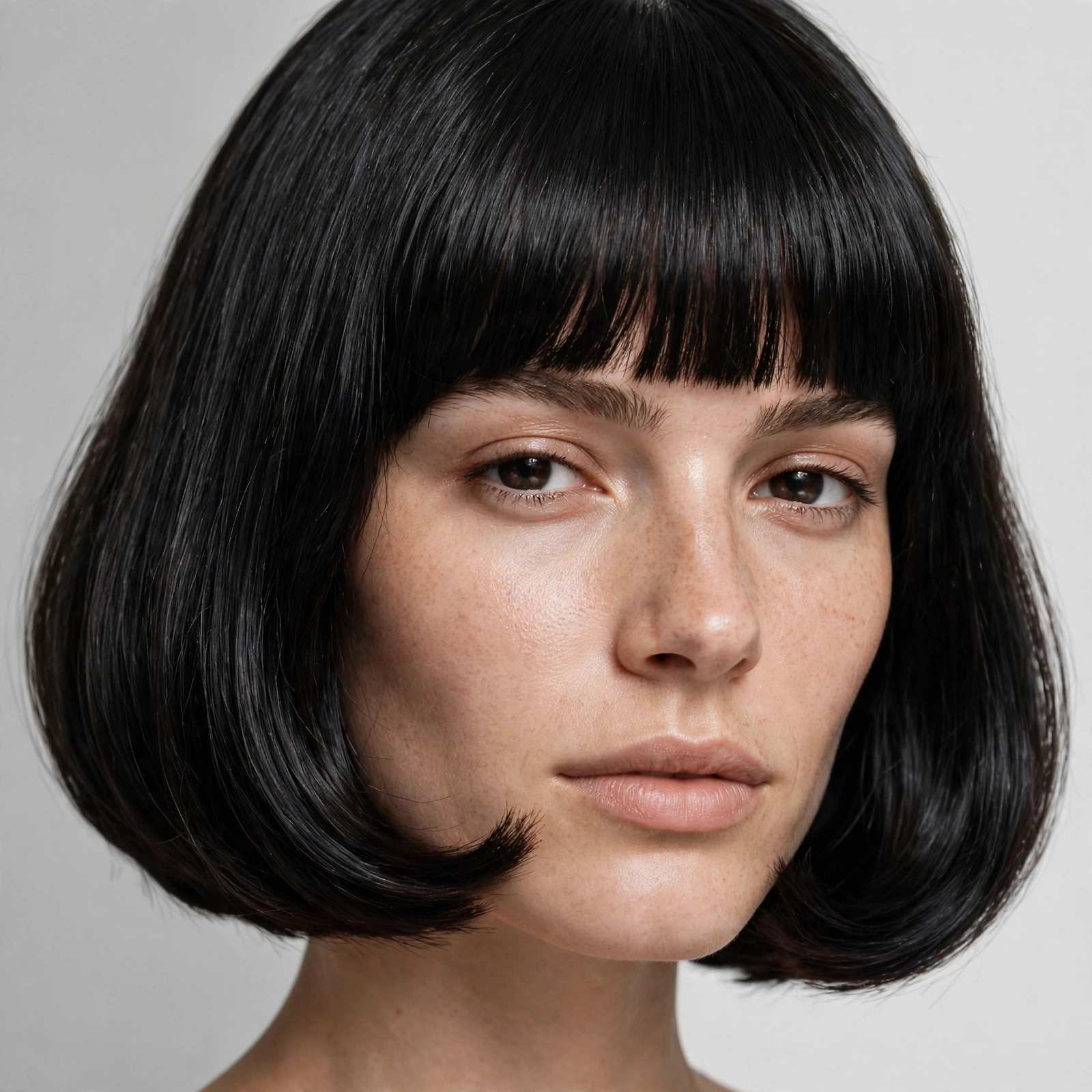
If you are getting a French bob for the first time, start with the classic. This is the definitive version: chin-length hair cut in a clean, slightly rounded line, paired with full straight-across bangs that graze the eyebrows. The ends curve softly inward, hugging the jawline, and the overall effect is pure Parisian polish.
The classic French bob is all about precision. The perimeter should be razor-clean — this is not the haircut for heavy texture or shattered ends. Ask your stylist for a blunt baseline that sits right at the jawline (not above the chin, not at the shoulders — right at the jaw). The bangs should be cut straight across, thick enough to make a statement but soft enough at the edges to blend into the sides.
Styling the classic version is beautifully simple. Blow-dry with a round brush, turning the ends under slightly to get that signature inward curve, then smooth the bangs with a quick pass of the brush. A pea-sized amount of smoothing cream on the ends keeps everything glossy. The whole routine takes less than ten minutes, and the result looks like you spent an hour.
This variation suits oval and heart-shaped faces especially well, since the full bangs balance a longer forehead and the chin-length cut emphasizes the jawline. If your hair is naturally straight or has a slight wave, you will find this the easiest version to maintain. It is the French bob in its purest form — timeless, chic, and quietly dramatic.
2. French Bob with Curtain Bangs
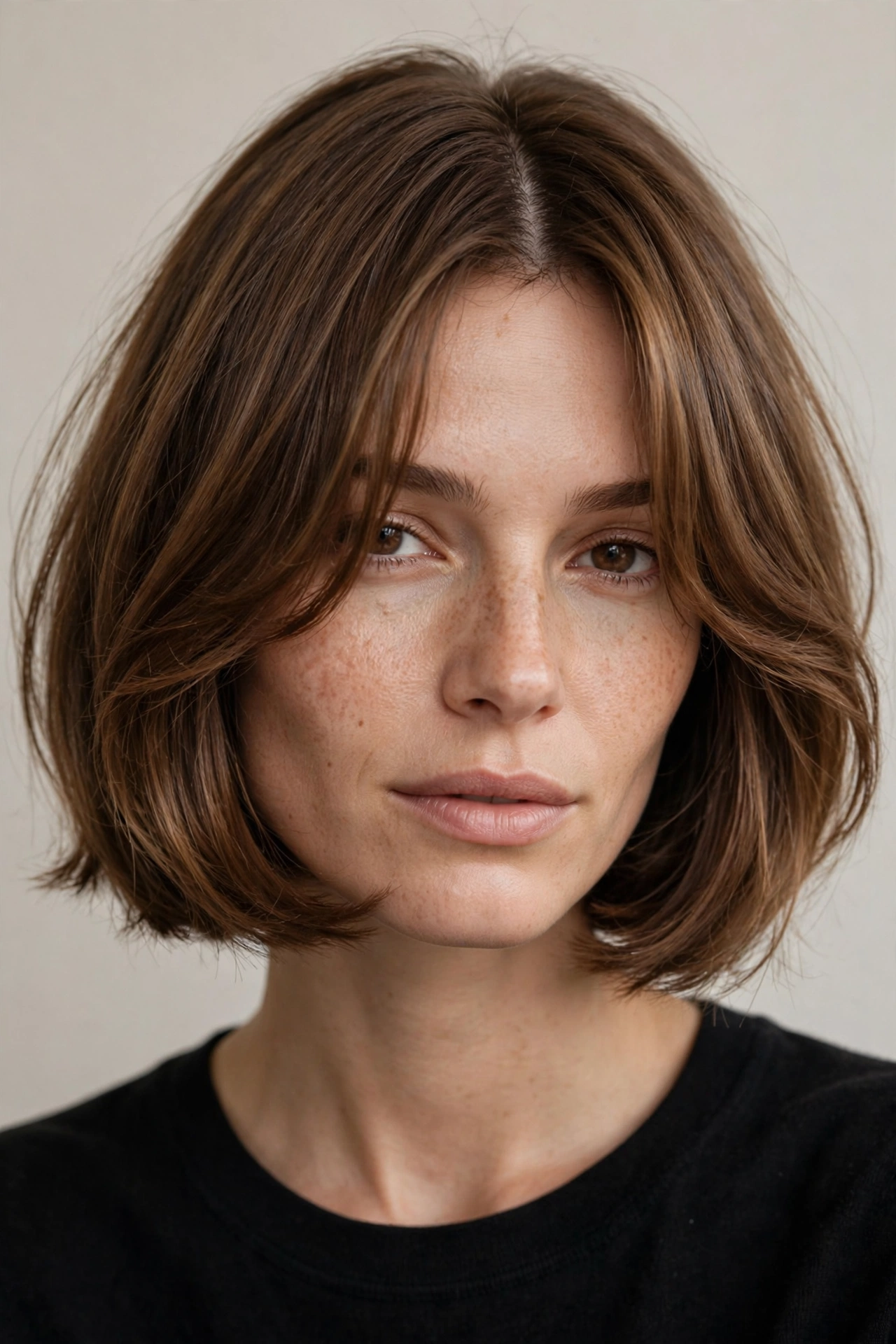
For a softer, more modern take on the French bob, swap the blunt fringe for curtain bangs. This 2026-favorite combination keeps the signature chin-length shape but replaces the straight-across bangs with a center-parted curtain fringe that sweeps open across the forehead and blends into the face-framing sides.
Curtain bangs change the whole personality of the French bob. Where the classic version is graphic and bold, the curtain-bang version is romantic and relaxed. The parted fringe opens up the face, which makes it a wonderful choice for round or square face shapes — the diagonal lines of the curtain bangs create the illusion of length and soften strong jawlines. It also grows out more gracefully than a blunt fringe, so it is lower-maintenance between trims.
To style it, blow-dry the bangs with a round brush, rolling them away from the face on each side to create that signature curtain sweep. A little texturizing spray through the lengths gives the bob that lived-in Parisian feel. The beauty of this version is its versatility: you can also push the curtain bangs to the side for an asymmetric look, or pin them back on days when you want the bob to take center stage.
If you love the French bob but find a full blunt fringe too severe — or if you are growing out bangs and want a chic in-between — the curtain-bang French bob is your answer. It is the same iconic shape with a softer, more forgiving frame.
3. The Wavy French Bob
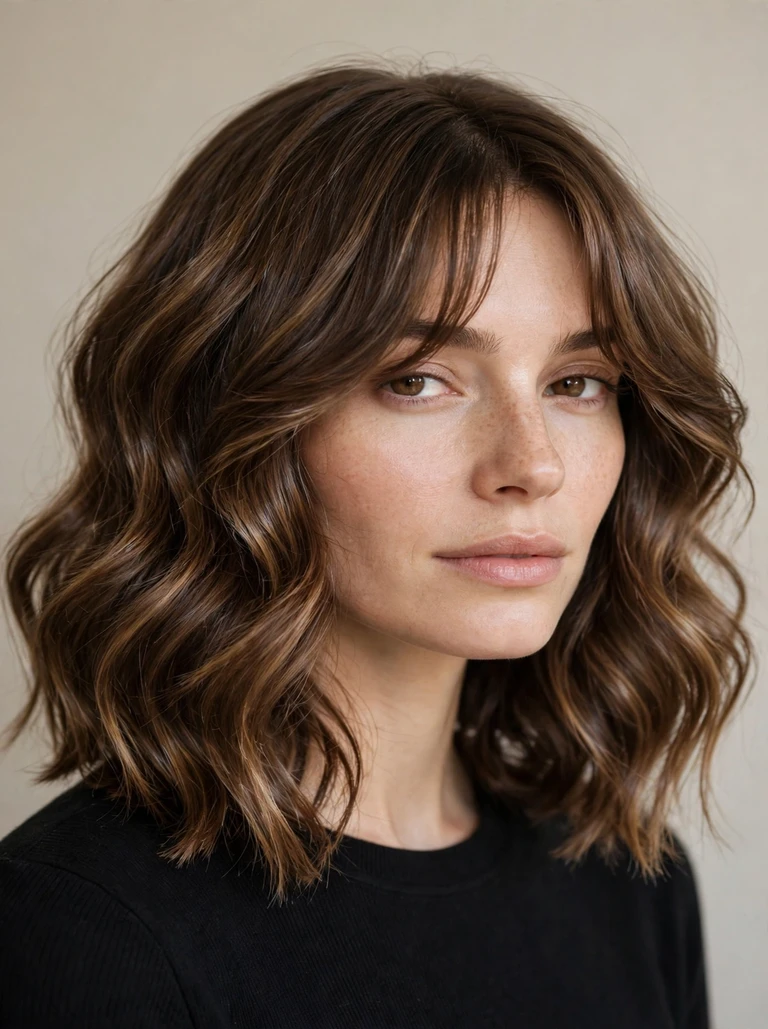
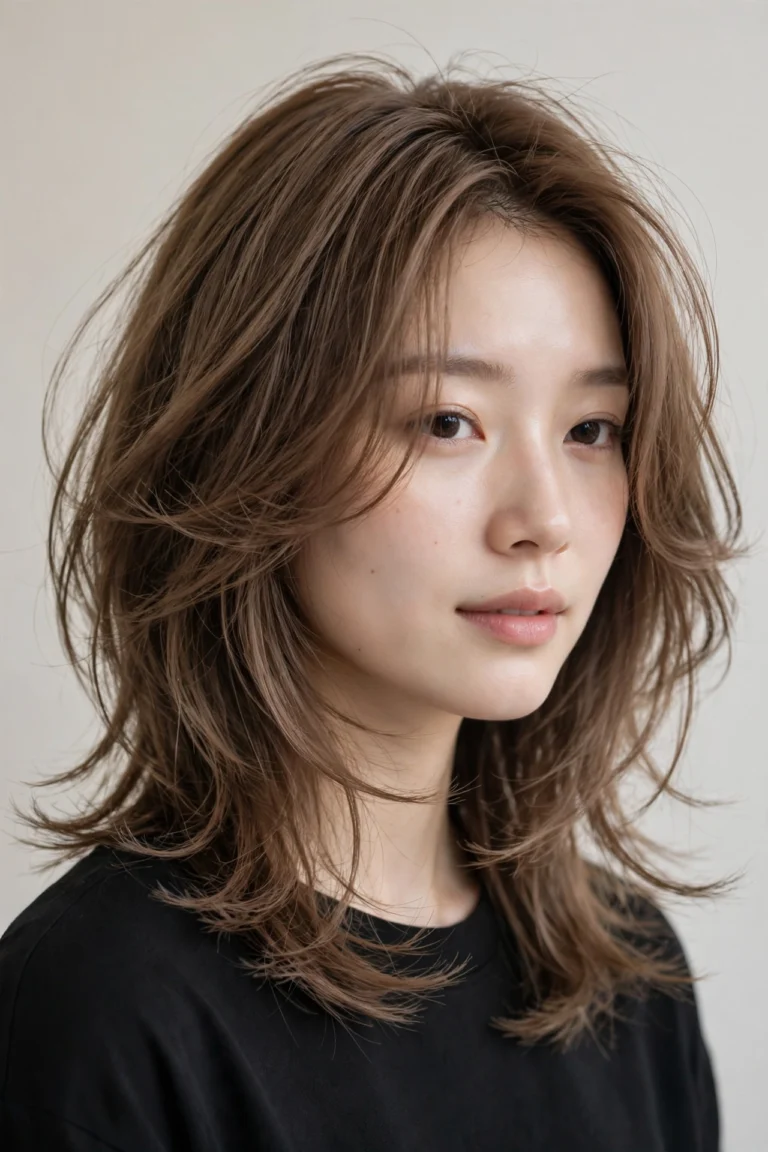
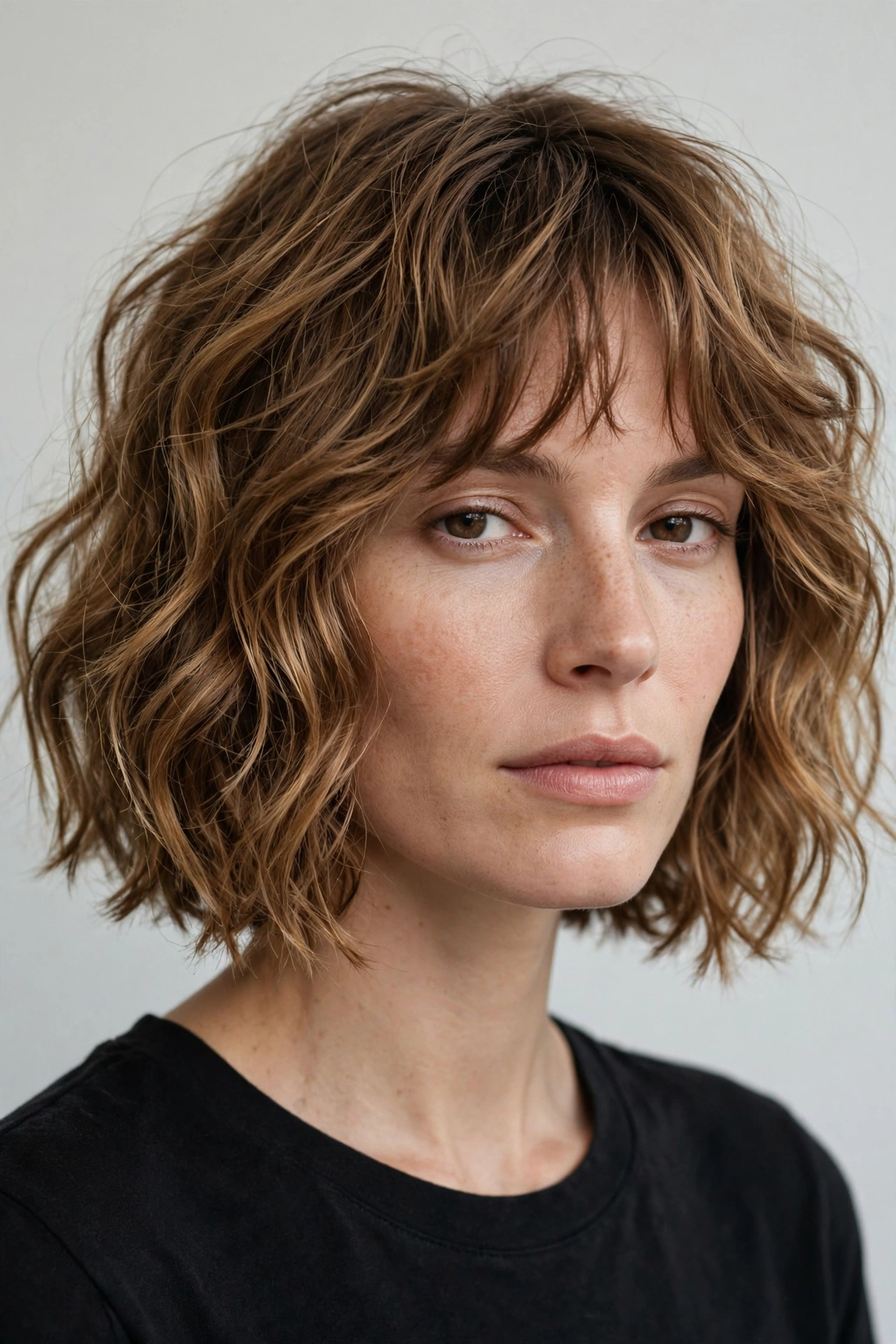
The wavy French bob is the embodiment of French-girl hair: chin-length, slightly tousled, with bangs that look like you never tried too hard (even if you did, just a little). This is arguably the most-worn version of the French bob in real life, because it embraces natural texture instead of fighting it.
The key to the wavy French bob is the cut itself. Ask for the classic chin-length baseline with soft, subtle texture through the ends — not choppy layers, just enough internal softness that the hair moves. The bangs should be cut with a slightly wispy, feathered edge rather than a hard blunt line, so they blend naturally into the waves. When your hair air-dries or is roughly blow-dried, it falls into that perfect undone wave pattern.
Styling could not be easier, which is the whole appeal. On damp hair, scrunch in a little wave-enhancing cream or sea-salt spray, then either air-dry or diffuse. Once dry, shake it out with your fingers — never a brush, which would kill the texture. If a few pieces need help, wrap random sections around a curling wand, alternating directions, and leave the ends out for that modern, effortless finish.
This version is made for naturally wavy or wavy-straight hair, and it is incredibly forgiving as it grows out. If your lifestyle is more “wash and go” than “salon blowout,” the wavy French bob will be your best friend in 2026.
4. Blunt-Cut French Bob
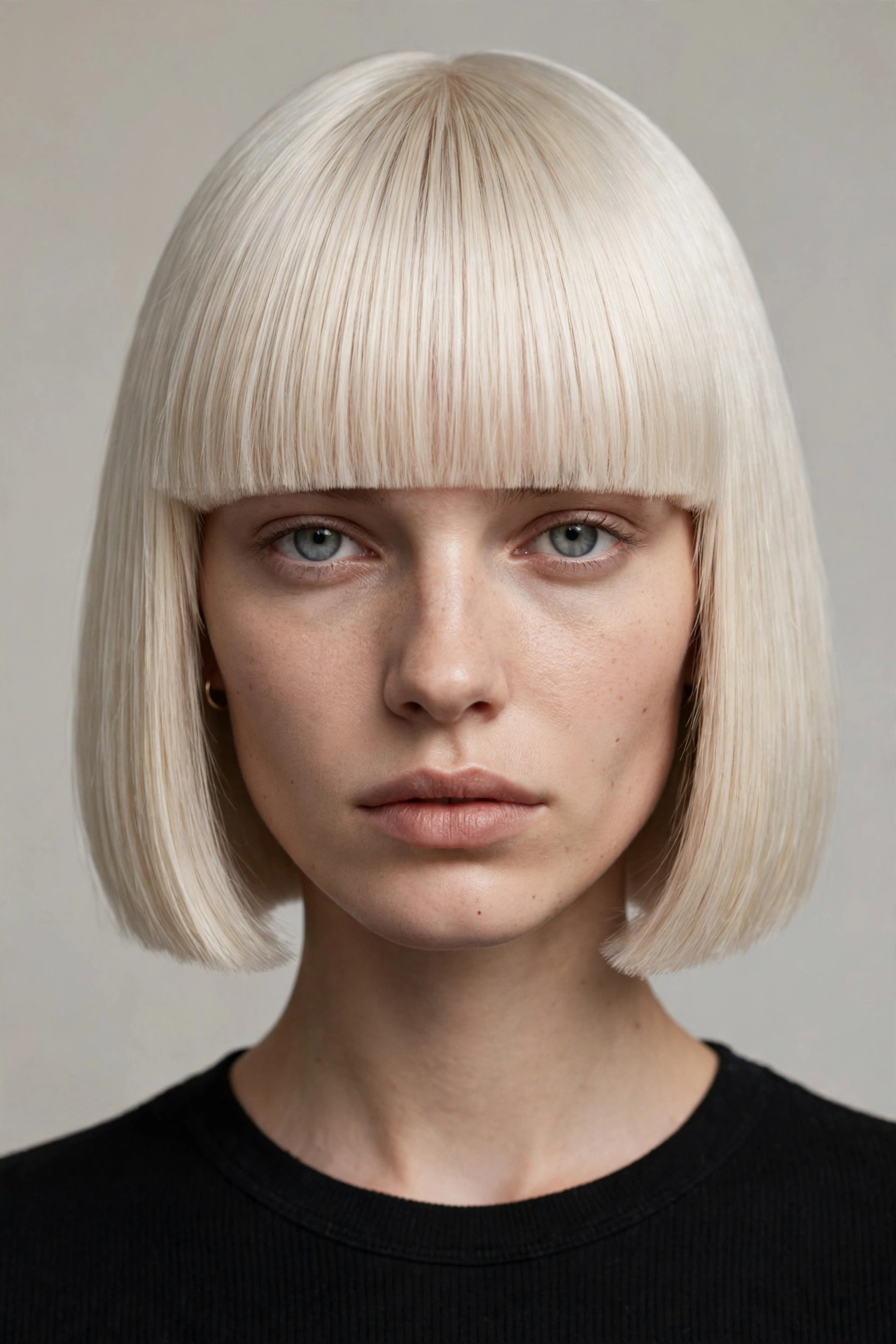
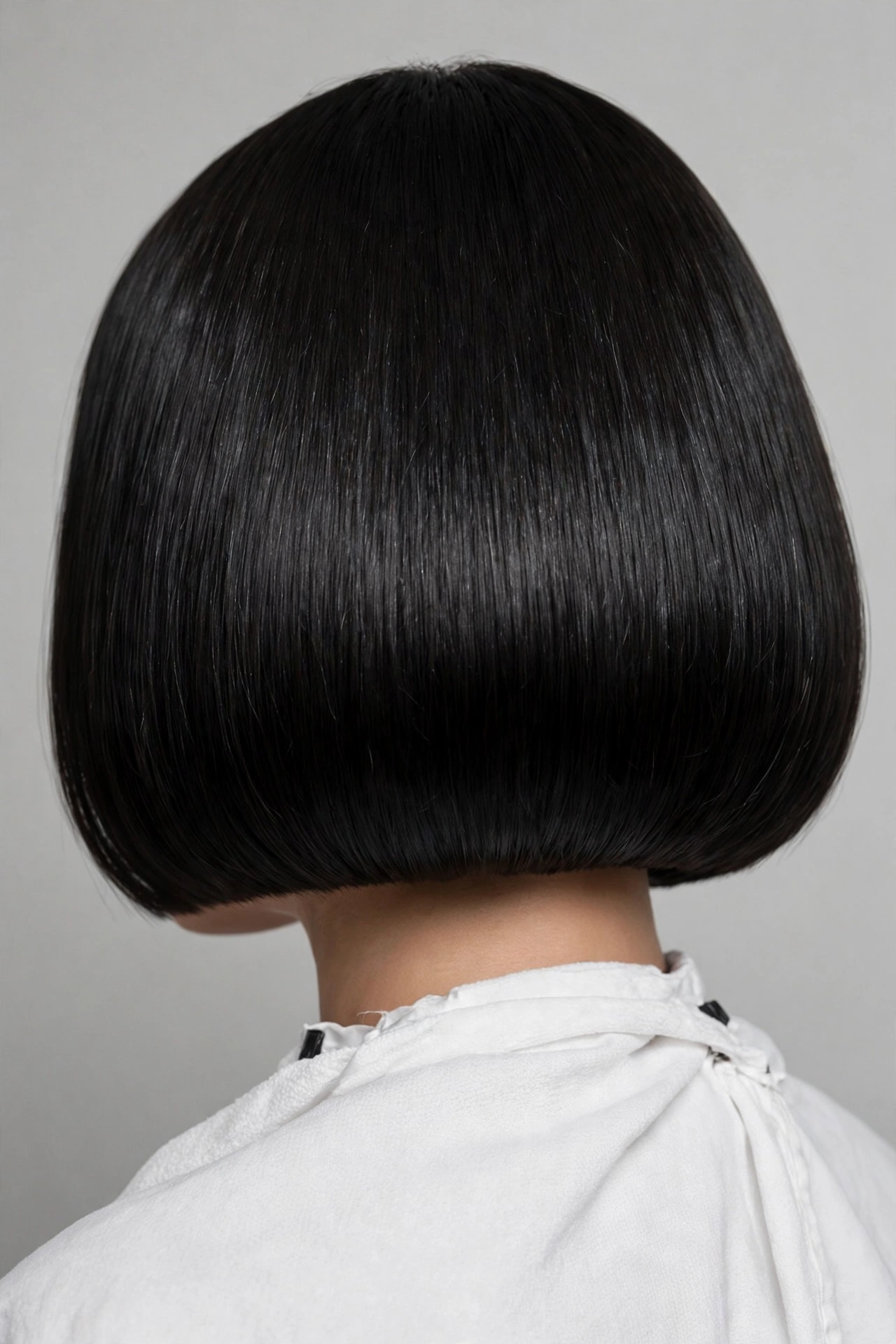
On the opposite end of the spectrum from the tousled wavy version sits the blunt-cut French bob: sharp, sleek, and unapologetically precise. Every end is cut to the exact same length, creating a striking geometric line at the jaw that looks incredible with straight, glossy hair.
The blunt French bob is a power haircut. There is something deeply confident about a perfectly straight line at the chin — it reads as intentional, editorial, and modern. This is the version you see on fashion runways and in high-end campaigns, and in 2026 it has moved firmly into the mainstream as women embrace stronger, more architectural shapes.
Precision is everything here, so choose your stylist carefully. The baseline must be perfectly even, the bangs cut with a clean straight edge, and the ends polished to a mirror shine. At home, maintenance is about smoothness: blow-dry straight with a paddle brush, finish with a flat iron if needed, and seal with a shine serum. The blunter the cut, the more it shows damage — so regular trims every six weeks and a good deep-conditioning routine are non-negotiable.
The blunt French bob is most striking on straight, thick hair, where the clean line has maximum impact. On oval and square faces it looks particularly strong, emphasizing bone structure. If you want a French bob that turns heads rather than whispering, go blunt.
5. Textured Choppy French Bob
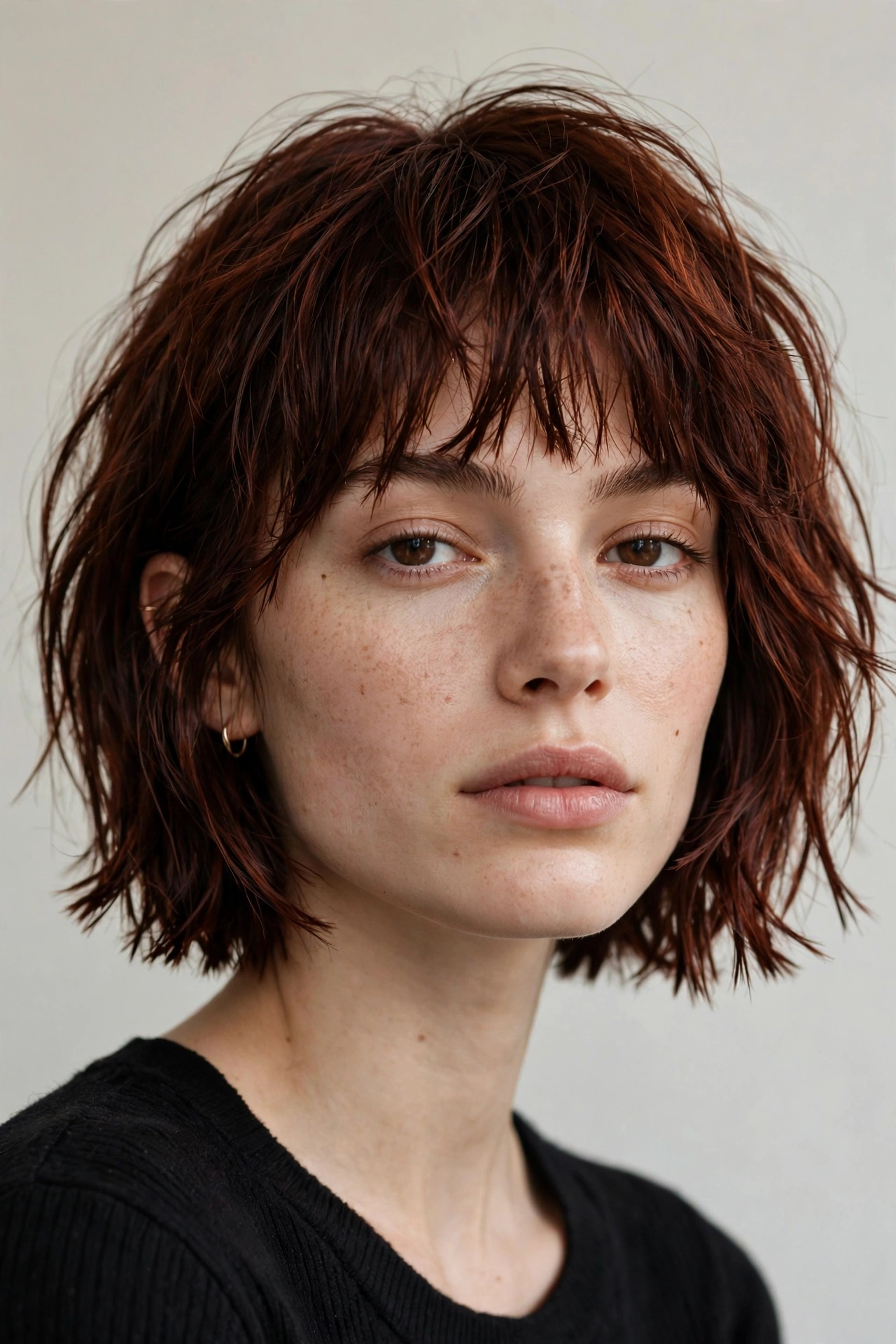
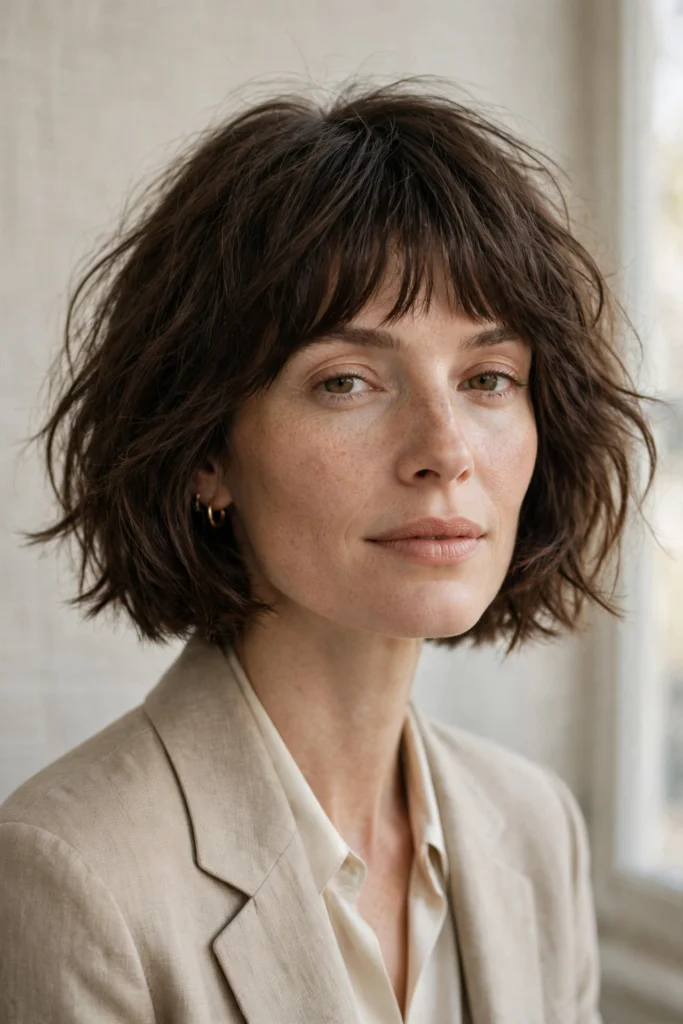
If the blunt French bob feels too severe and the wavy version too soft, the textured choppy French bob lands right in the sweet spot. This 2026 update on the classic keeps the chin-length silhouette and the fringe, but breaks up the ends with piece-y texture that gives the whole cut movement and edge.
The choppy French bob is cut with point-cutting or slide-cutting through the ends, creating separation and lightness without visible layers. The result is a bob that looks thicker at the roots and airier at the ends — a combination that works beautifully on medium to thick hair, where a blunt cut can sometimes look heavy. The bangs get the same treatment: textured, piece-y, and slightly imperfect, blending seamlessly into the sides.
What makes this version so appealing is how low-effort it looks while still looking styled. The texture does the work for you — a quick rough-dry with your fingers and a dab of texturizing paste on the ends is genuinely all it takes. The piece-y finish catches the light in a way that makes the hair look fuller and more dimensional, which is why this is one of the most-requested French bob variations in salons right now.
This is the French bob for women who want edge without harshness. It keeps the Parisian DNA — the length, the bangs, the attitude — but trades polish for personality. If your style is more leather jacket than silk blouse, this is your French bob.
6. French Bob with Micro Bangs
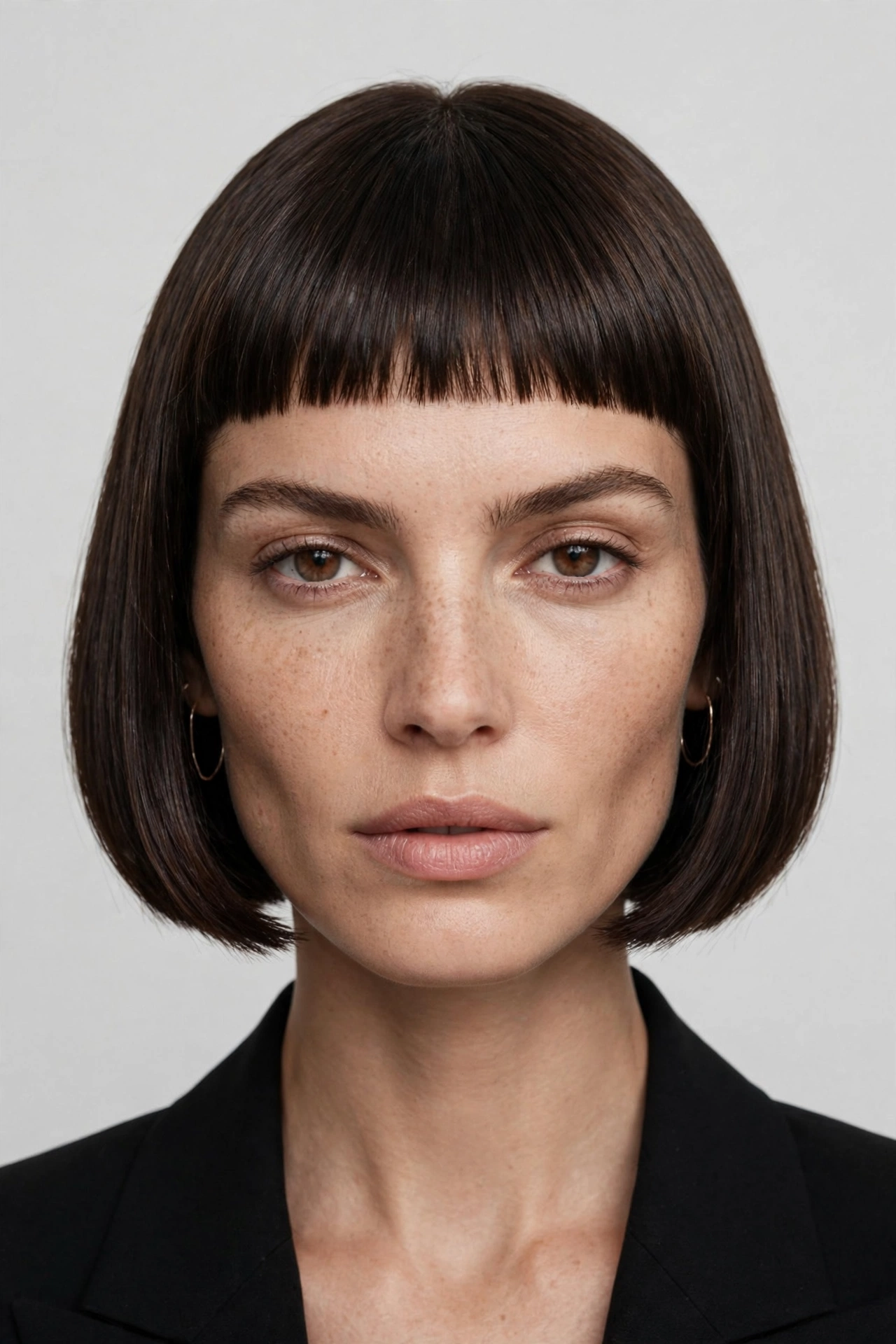
For the boldest take on the French bob, pair the chin-length cut with micro bangs — a short, brow-skimming (or above) fringe that sits well above the eyebrows. This is the most fashion-forward version of the French bob, and in 2026 it is having a major moment among style risk-takers.
Micro bangs completely transform the French bob’s proportions. By exposing more of the forehead, they elongate the face and draw intense focus to the eyes — which is why they pair so well with a strong brow or a bold eyeliner. The contrast between the ultra-short fringe and the jaw-grazing length creates a striking, editorial silhouette that looks incredible in photographs.
A word of honesty: micro bangs are a commitment. They need trimming every two to three weeks to hold their shape, and they show cowlicks mercilessly — so if your hairline grows in swirls, discuss it with your stylist first. They also suit oval, heart, and long face shapes best; on very round faces, the short fringe can emphasize width. But if the shape works for you, there is nothing cooler.
Style the rest of the bob as you would the classic — sleek and curved under, or tousled for contrast. The micro-bang French bob is not for everyone, but for the right person, it is unforgettable. It is the haircut equivalent of wearing red lipstick on a Tuesday: a deliberate, joyful statement.

7. The Curly French Bob
Who says the French bob is only for straight hair? The curly French bob is one of 2026’s most joyful trends — a chin-length rounded shape cut to let natural curls spring into a voluminous, face-framing silhouette, complete with curly bangs.
Cutting a curly French bob requires a curl specialist, and it is worth seeking one out. Curly hair must be cut dry, curl by curl, because wet curls stretch and shrink unpredictably. The goal is a rounded shape that sits at the jawline when dry — which means the stylist has to account for shrinkage, cutting longer than the final result. The bangs are cut as curls too, sitting softly on the forehead rather than in a hard line.
The result is magnificent: a halo of defined curls that frames the face, moves beautifully, and has that unmistakable French insouciance. Styling is about definition and moisture — apply curl cream and gel to soaking-wet hair, scrunch, and diffuse or air-dry. A pick at the roots adds volume without disturbing the curl pattern. Refresh curls on day two and three with a light water-and-conditioner mist.
The curly French bob proves that this iconic cut is not reserved for one hair type. On curls, it becomes softer, rounder, and somehow even more Parisian — less graphic, more romantic, and completely gorgeous. If you have curls and have been told bobs do not work for you, 2026 is the year to prove them wrong.
8. French Bob for Fine Hair (and Thick Hair)
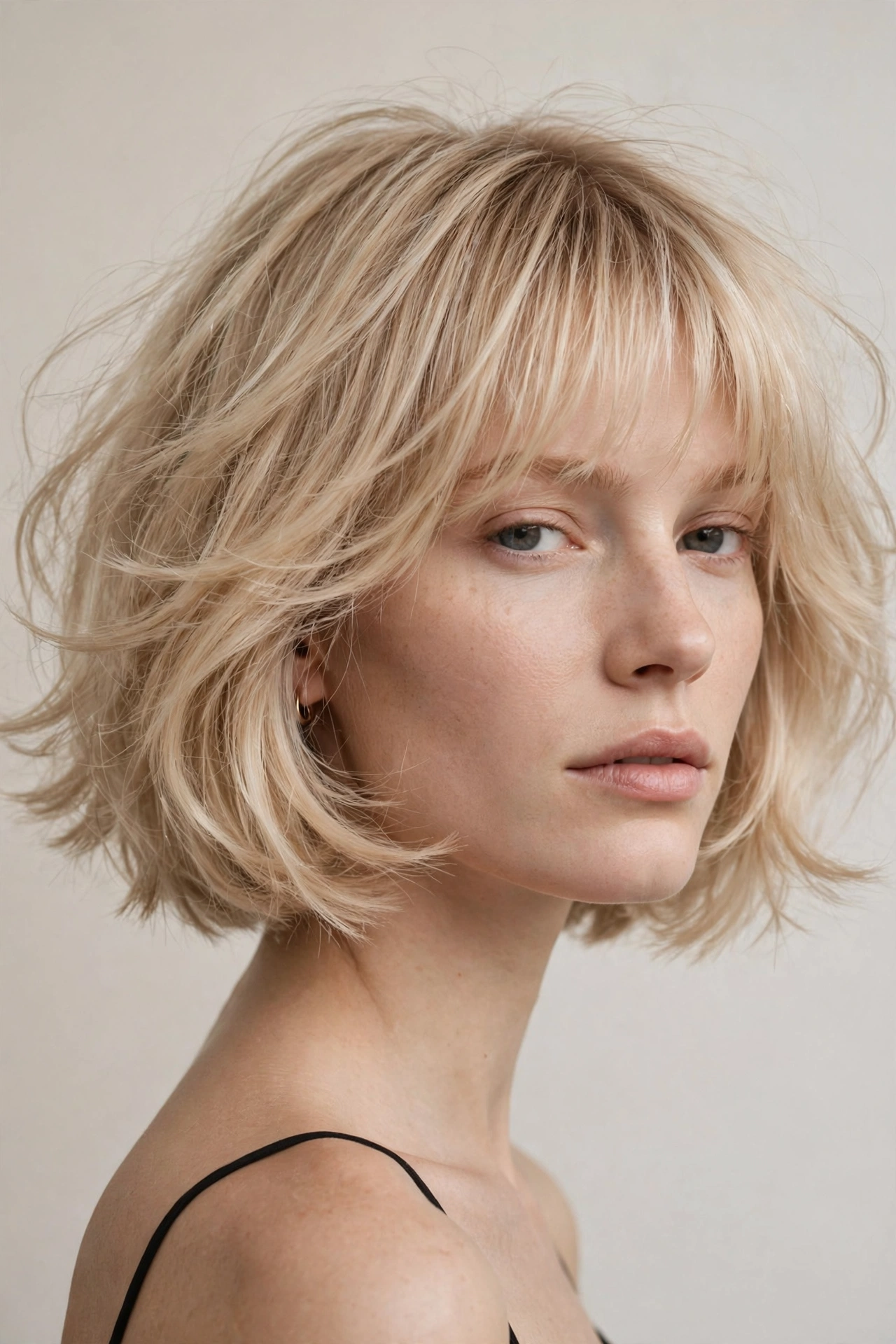
One of the French bob’s greatest strengths is how well it adapts to different hair densities — but fine and thick hair need slightly different approaches to get the best result.
For fine hair, the French bob is genuinely one of the most flattering cuts you can choose. The blunt chin-length baseline creates the illusion of thickness — when all the ends land in the same place, hair looks denser than it is. Ask for minimal layering (layers thin out fine hair further) and a clean, sharp perimeter. Soft, airy texture just at the very ends keeps it from looking harsh while preserving the fullness. A side-swept or curtain-style fringe often works better than a heavy blunt bang on fine hair, since it does not eat up precious density. For styling, a volumizing mousse at the roots and a round-brush blow-dry will give you that full, bouncy French bob that looks twice as thick as it is.
For thick hair, the challenge is the opposite: removing bulk so the bob does not turn into a triangle. Your stylist should use internal thinning or invisible layering — texture carved into the interior of the haircut, not visible on the surface — to take out weight while keeping the clean outer line. The classic blunt perimeter still works beautifully on thick hair; it just needs that hidden debulking underneath. Thick hair holds the French bob’s shape wonderfully and gives you that lush, expensive-looking fullness. A smoothing blow-dry with a round brush, turning the ends under, will show off the cut’s architecture at its best.
Either way, the French bob meets your hair where it is. Fine hair gets fullness, thick hair gets shape — and both get Parisian chic.
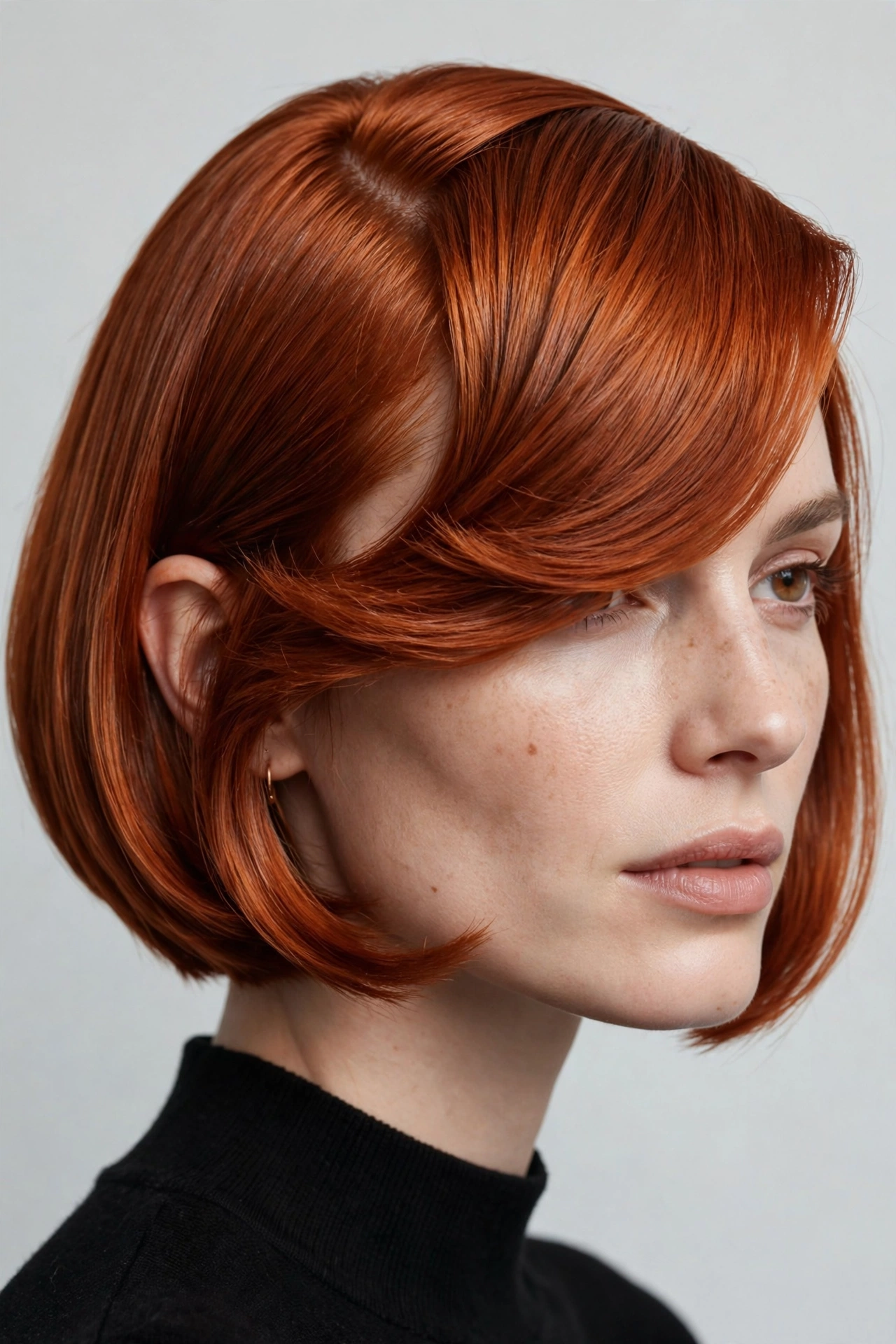
9. Side-Part French Bob
A deep side part is the simplest way to reinvent the French bob without changing the cut at all — and in 2026, the side part is officially back. Sweeping the chin-length bob into a dramatic side part creates instant asymmetry, volume at the crown, and a sultry, old-Hollywood-meets-Paris energy.
The side-part French bob works with any fringe situation. If you have full bangs, sweep them across the forehead diagonally for a Bardot-inspired look. If you have curtain bangs or grown-out fringe, the side part feels completely natural. Even with no bangs at all — just a side-swept front — the chin-length shape reads unmistakably as a French bob variation.
What the side part does best is add lift. Flipping your part to the side is the oldest volume trick in the book, and on a chin-length bob the effect is dramatic: instant body at the roots, a flattering diagonal line across the face, and an effortlessly glamorous finish. It is also the perfect styling switch-up when your usual center-part bob starts feeling stale — same haircut, completely different mood.
To style, create the deep part on damp hair (about two inches off-center), then blow-dry the front section up and over with a round brush for maximum lift. Tuck one side behind the ear to show off an earring and emphasize the asymmetry. It takes thirty seconds and looks like a red-carpet decision.
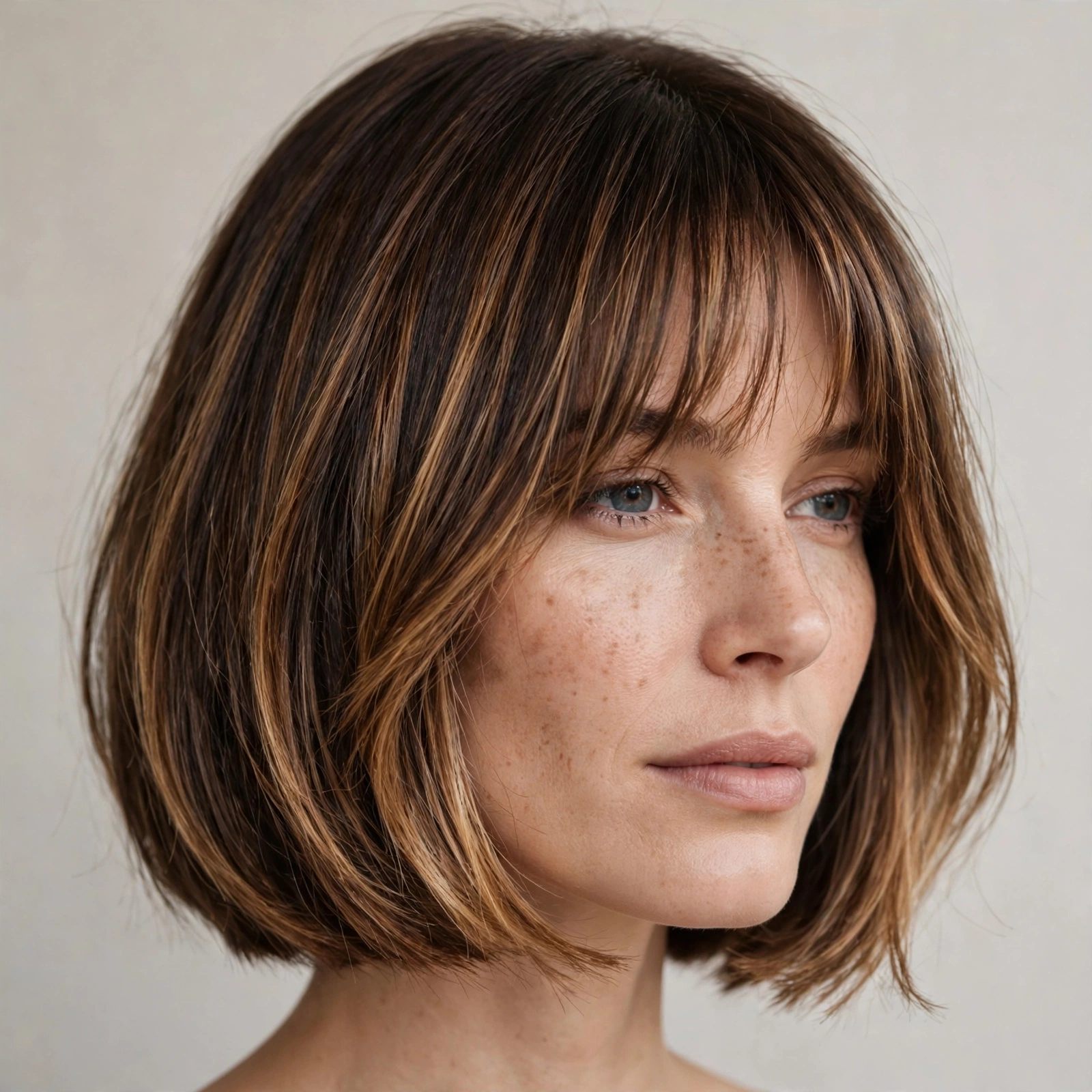
10. Best Hair Colors for the French Bob
The French bob is famously a brunette’s haircut — the classic image is glossy dark hair with a blunt fringe — but in 2026 it looks stunning in every color. Here is how to choose:
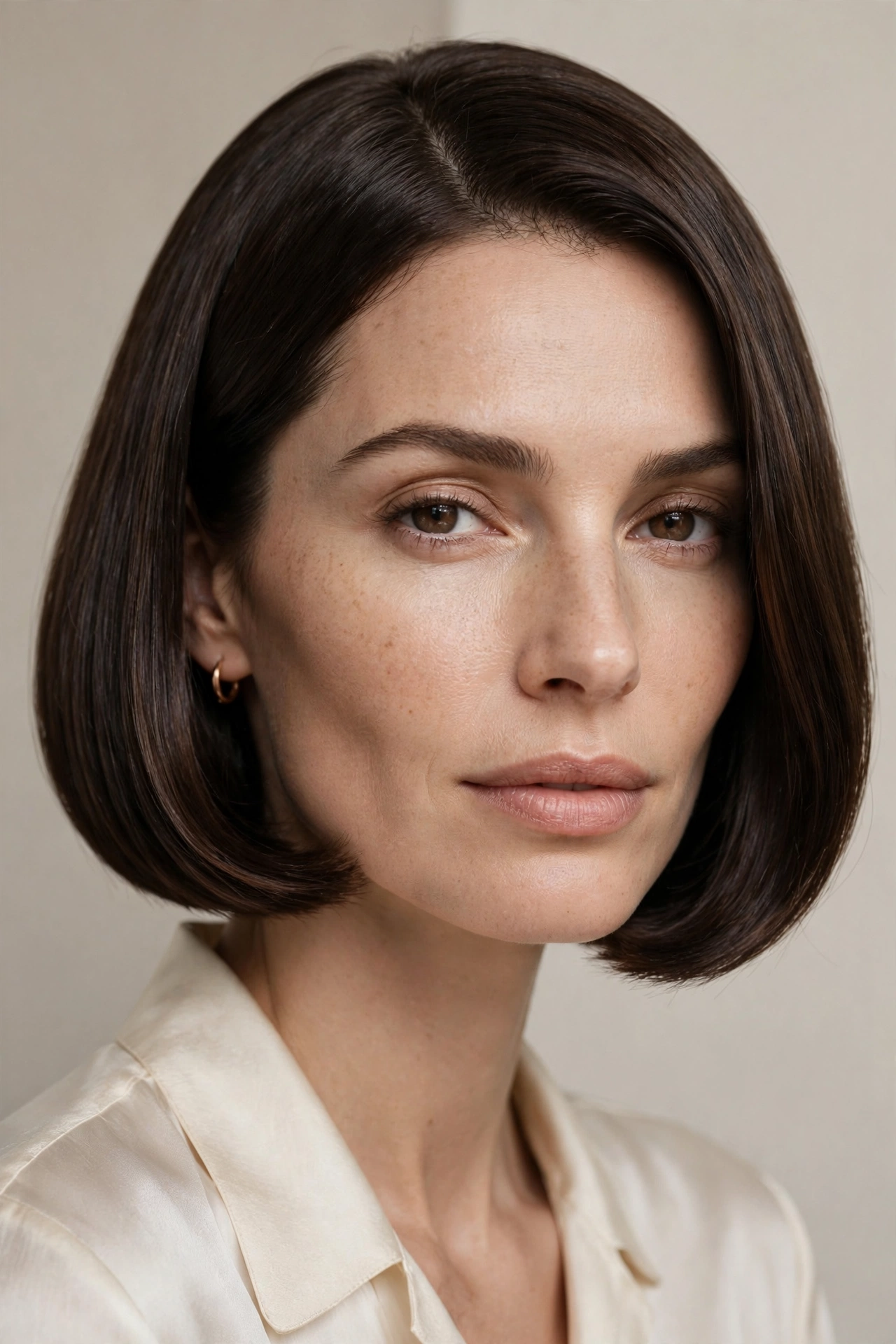
Classic brunette remains the gold standard. Deep espresso, rich chocolate, or soft chestnut gives the French bob its signature shine and makes the clean lines look razor-sharp. Dark hair shows off the cut’s architecture better than any other color, which is why the most iconic French bob photos are all brunette. If you want the timeless Parisian look, this is it.
Lived-in blonde is the modern cool-girl alternative. Think soft butter blonde, creamy beige, or a rooty balayage that grows out seamlessly. Blonde softens the French bob’s graphic edges and gives it a sun-kissed, effortless feel. The key is dimension — flat, one-process blonde can wash out against the strong shape, but a balayage with darker roots and lighter ends adds movement and depth.
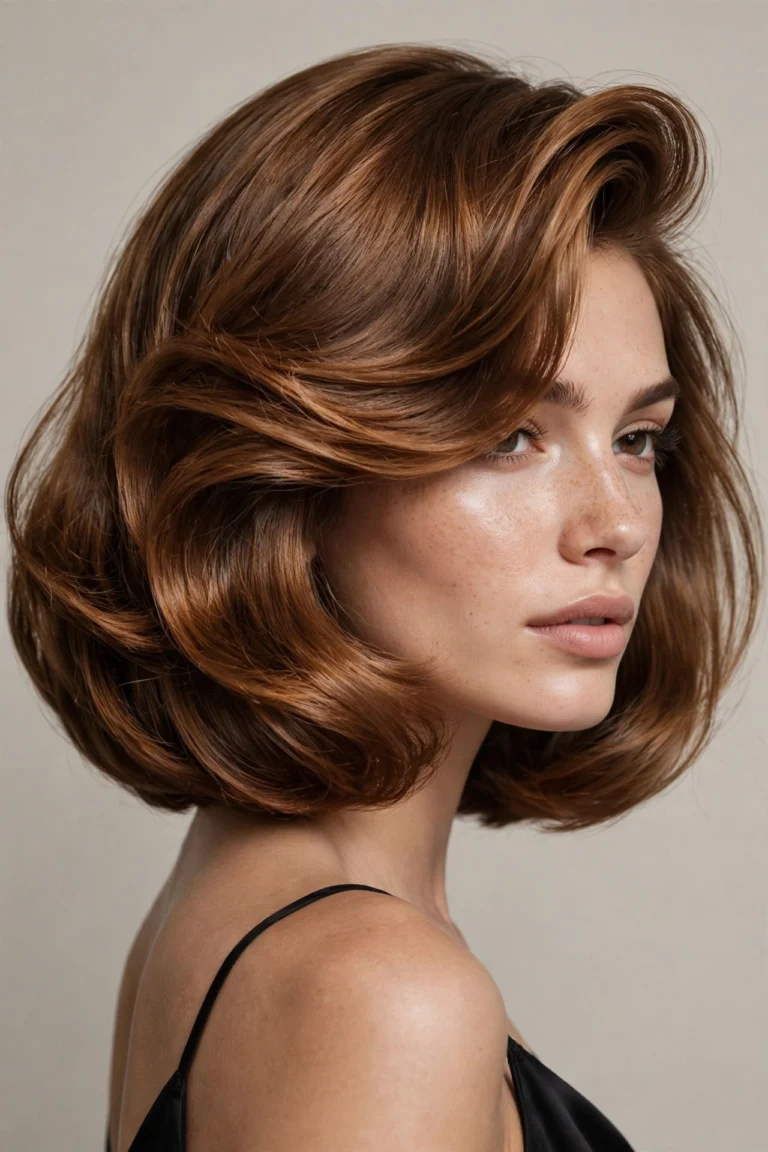
Copper and auburn are 2026’s statement choice. A rich copper French bob with bangs is pure fire — warm, vibrant, and incredibly eye-catching. The short length keeps bold color wearable (less hair = less commitment), and the shine of a fresh copper gloss on a blunt bob is unbeatable.
Dimensional balayage on any base color adds the movement that makes the French bob look expensive. Soft face-framing highlights around the bangs and through the ends catch the light as the hair moves, emphasizing the cut’s shape. Keep the dimension subtle and blended — the French bob is about chic restraint, not high-contrast stripes.
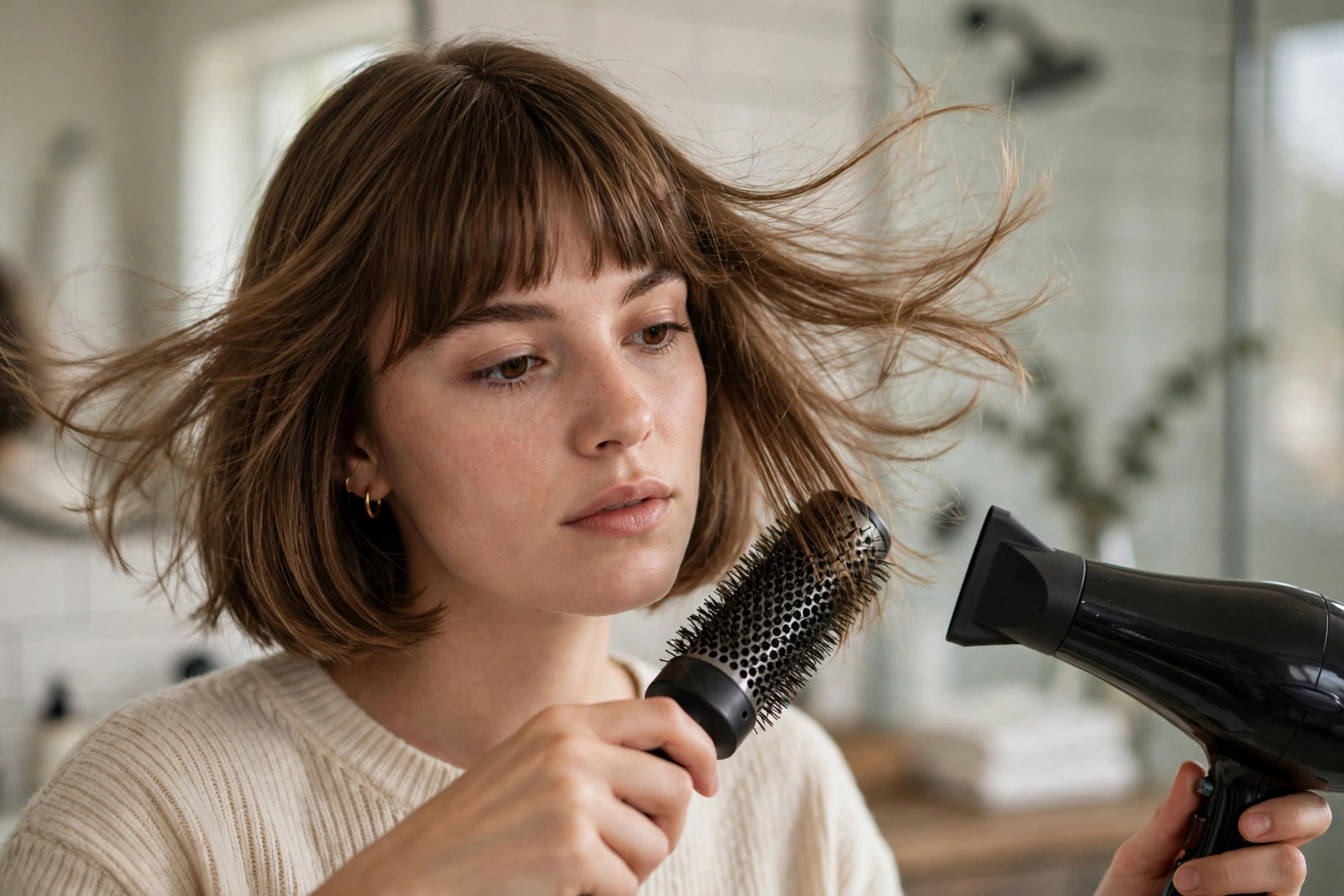
How to Style a French Bob at Home
The French bob’s reputation for effortlessness is well-earned — but “effortless” still means a few minutes of know-how. Here is the simple routine that keeps a French bob looking Parisian rather than poufy.
The everyday blow-dry (under 10 minutes): Start with damp, towel-dried hair and apply a heat protectant plus a small amount of smoothing cream or light mousse. Blow-dry the bangs first — this is the golden rule, because bangs set quickly and a cowlick left to air-dry will win every time. Direct the bangs down and slightly forward with a small round brush or just your fingers. Then work through the rest with a medium round brush, turning the ends under as you go to create that signature inward curve. Finish with a cool shot to set the shape, and smooth a pea-sized drop of serum over the ends for shine.
The air-dried French-girl method: If your hair has natural wave, you can skip the heat entirely. On damp hair, scrunch in wave spray or light curl cream, twist a few face-framing pieces for definition, and let it air-dry. Once fully dry, shake it out and pinch a little texturizing paste into the ends. The result is that coveted undone texture — imperfect in exactly the right way.
Quick fixes: Flat roots? Flip your part or add a little dry shampoo at the crown. Bangs misbehaving? Dampen just the fringe, blow-dry it straight down with tension, and it will fall back into place. Ends flipping out instead of under? A flat iron bent inward at the very ends for two seconds per section fixes it instantly. The French bob is forgiving — small touch-ups go a long way.
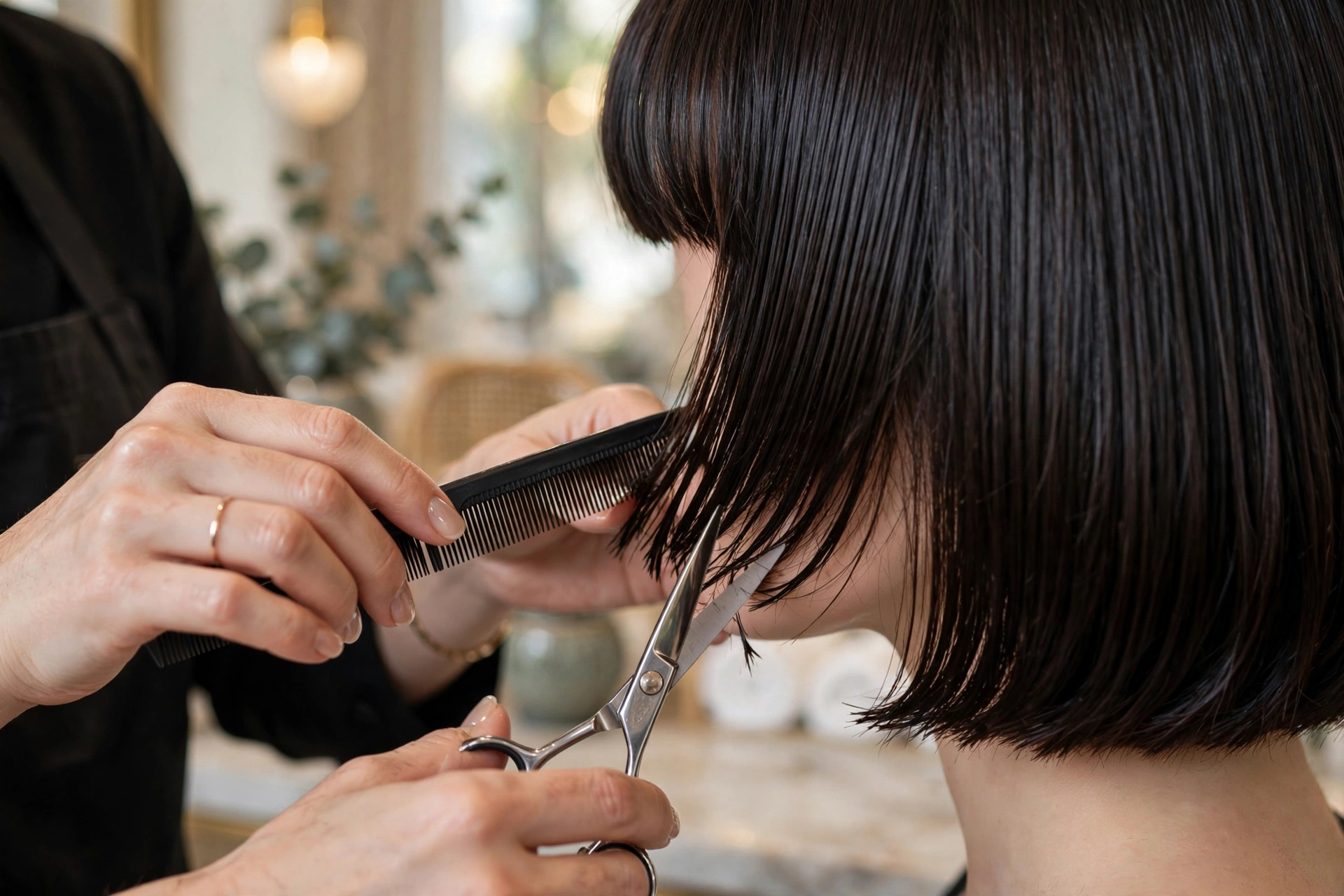
What to Ask Your Stylist for a French Bob
Walking into the salon with the right language — and the right reference photos — is the difference between getting a true French bob and getting “just a bob.” Here is exactly what to say.
Bring photos. This is non-negotiable. Save five to ten photos of French bobs you love, ideally on hair similar to yours in texture and density. Photos eliminate the guesswork: “chin-length like this, bangs like this.” Your stylist will thank you, and you will get a result that actually matches your vision.
Use the magic words: “I want a French bob — chin-length, sitting right at the jawline, with bangs.” Then specify your fringe: full straight-across bangs, curtain bangs, wispy bangs, or micro bangs. Specify your finish: blunt and sleek, or soft and textured. And mention the silhouette: slightly rounded, ends curving under, minimal layering.
Discuss your hair’s reality. Tell your stylist about your cowlicks, your natural texture, how much time you actually spend styling, and how often you will come in for trims. A good stylist will adjust the cut — softer bangs for a strong cowlick, hidden debulking for thick hair, a slightly longer line if you are nervous about going short.
Plan the maintenance. A French bob needs trimming every six to eight weeks to hold its shape — the bangs every three to four. Ask your stylist to show you the at-home styling routine before you leave the chair. The best haircut in the world only works if you know how to wear it on a random Tuesday morning.
French Bob vs French Crop: What’s the Difference?
This is one of the most common points of confusion, so let us settle it clearly: the French bob and the French crop are completely different haircuts for completely different people.
The French bob is a women’s haircut: chin-length hair with bangs, soft and rounded, sitting at the jawline. It is feminine, Parisian, and all about the silhouette — the clean jaw-grazing line and the fringe framing the eyes. Length is measured in inches past the chin, and styling is about curve, shine, and movement.
The French crop is a men’s haircut: short cropped hair on top with a blunt fringe, usually paired with faded or tapered sides. It is masculine, sharp, and all about texture on top — the fringe is short and choppy, the sides are tight, and the overall look is edgy rather than soft. Length is measured in millimeters on the sides.
They share only two things: the word “French” and the presence of a fringe. Everything else — the length, the shape, the styling, who wears it — is different. If you are a woman looking for the iconic Parisian chin-length bob with bangs, you want the French bob. If you see “French crop” on a barbershop menu, that is the men’s cut. Now you will never mix them up again.
French Bob FAQs
Does the French bob suit round faces? Yes — with the right fringe. A curtain bang or side-swept fringe creates diagonal lines that flatter round faces, while keeping the length right at the jaw (not above) avoids emphasizing width. Ask your stylist to keep the sides slightly longer and the fringe piece-y rather than heavy.
How often does a French bob need trimming? Every six to eight weeks for the overall shape, and every three to four weeks for the bangs if you wear a blunt fringe. The French bob is a precision cut — it looks its best when the line is fresh. Growing it out? Let the bangs grow into curtain bangs and the length slide toward a lob; the grow-out is famously graceful.
Can I get a French bob with thin hair? Absolutely — it is one of the best cuts for fine hair. The blunt ends create fullness, and the short length means your hair’s natural volume is not dragged down. Keep layering minimal and ask for a sharp perimeter.
Will the French bob work on curly hair? Yes, and it is stunning. See a curl specialist who cuts dry, curl by curl, and accounts for shrinkage. The result is a rounded, voluminous shape with curly bangs — softer and more romantic than the straight version.
Is the French bob high-maintenance? It is medium-maintenance: the styling is easy (ten minutes or less), but the shape needs regular trims. Compared to long hair with color upkeep, most women find it liberating — less daily effort, more frequent but quicker salon visits.
What face shapes suit the French bob? Nearly all of them. Oval faces can wear any version; round faces do best with curtain or side-swept bangs; square faces are softened by wispy texture; heart-shaped faces are balanced by full bangs. The fringe is the adjustable element — get that right and the cut works.
Final Thoughts
The French bob has survived a century of trends for one simple reason: it works. It is the rare haircut that is simultaneously timeless and of-the-moment, low-effort and high-impact, classic and cool. In 2026, as the world rediscovers the power of simplicity, the French bob feels less like a trend and more like a truth — the haircut equivalent of knowing exactly who you are.
Whether you choose the razor-sharp classic, the tousled wavy version, the bold micro-bang statement, or the soft curtain-bang update, you are choosing a cut with a point of view. So save your reference photos, book the appointment, and get ready for the best haircut of your life. Paris has known the secret for a hundred years. Now it is your turn.
Ready for the chop? Explore more bob inspiration in our Japanese Bob Cuts for a Bold Look in 2026 and Lob Haircut for Women 2026 guides.
Conclusion
The French bob remains the gold standard of chic in 2026, and these 12+ Parisian-inspired variations prove why. From chin-length cuts with wispy bangs to blunt versions with micro-fringe, this timeless haircut flatters petite faces, fine hair, and anyone craving effortless European elegance. It is proof that short hair can be both bold and endlessly feminine.
When visiting your stylist, bring reference photos and discuss bang length that suits your forehead and face shape. A texturizing spray and a quick tousle are all you need for that coveted just-left-Paris finish. In 2026, the French bob is not just a haircut — it is an attitude.