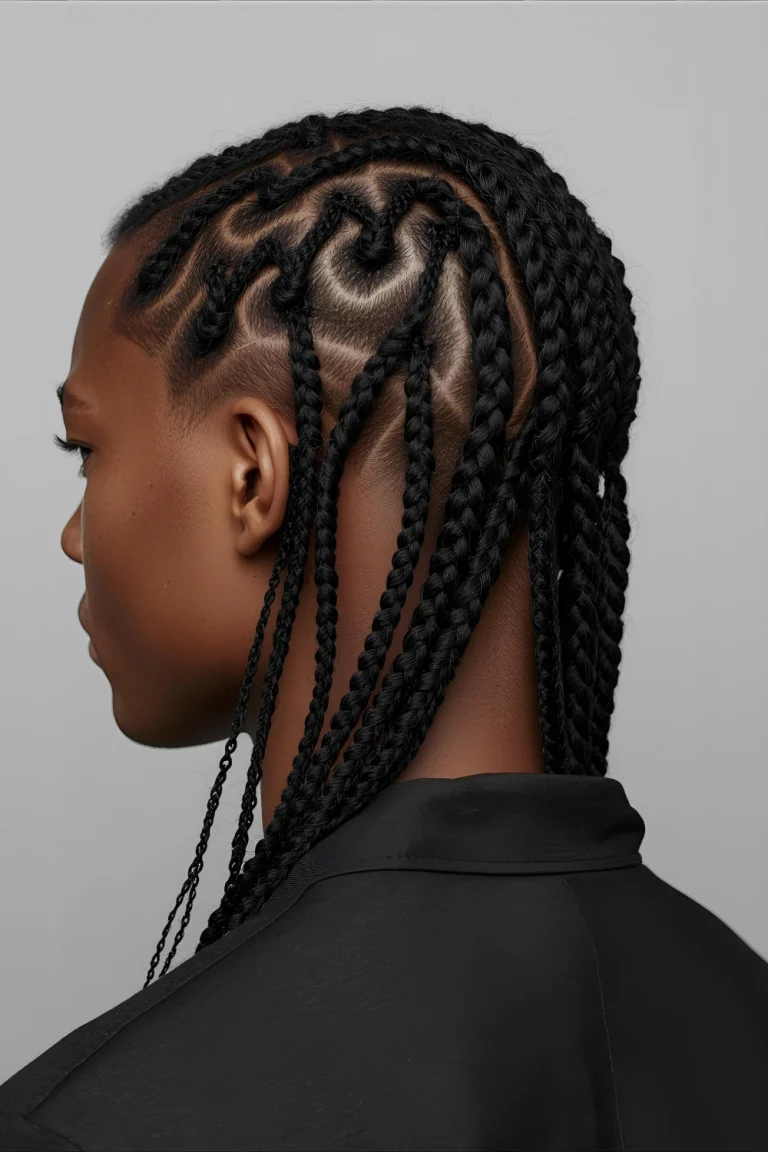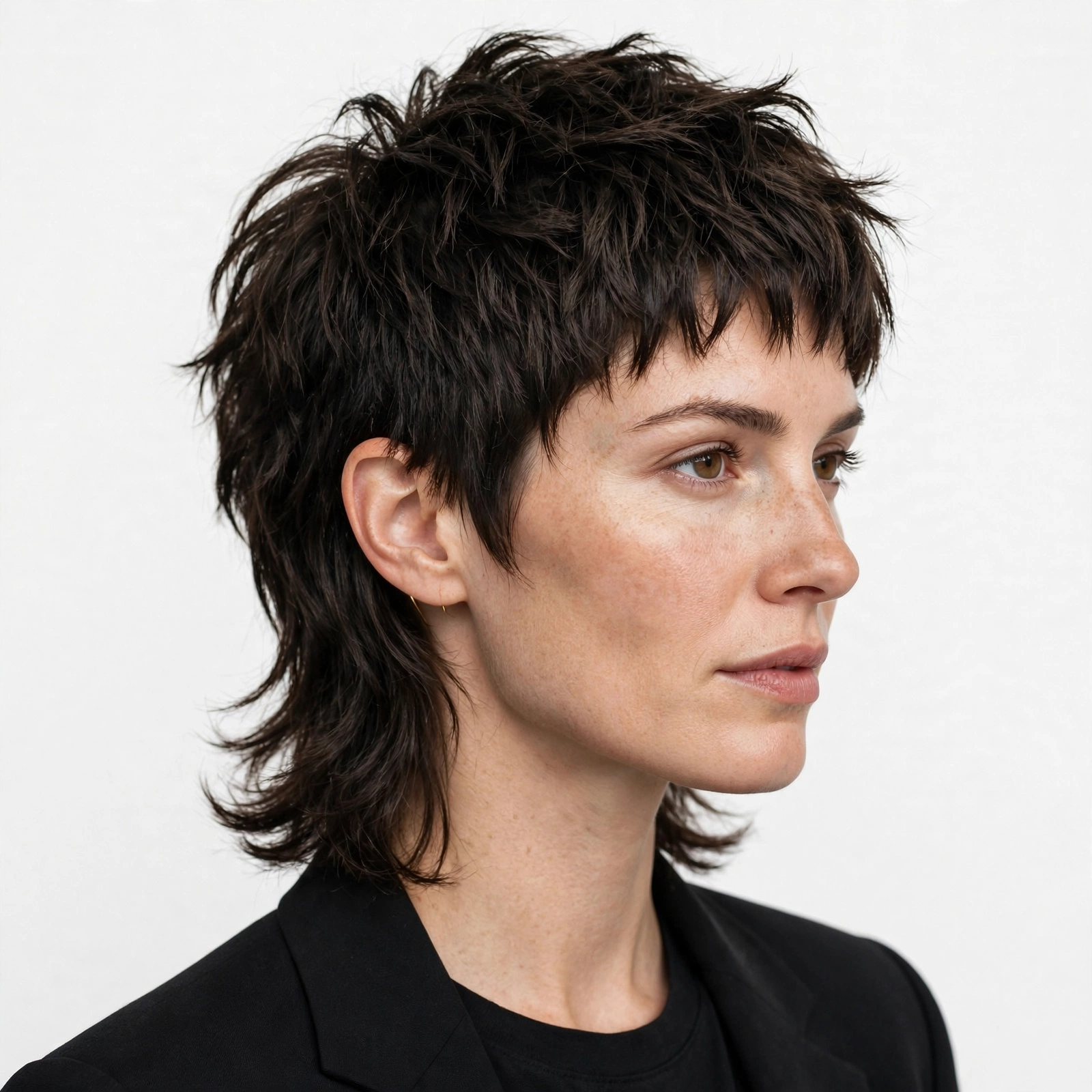
Mixie Cut Women 2026: 18 Pixie-Mullet Styles for Bold Short Hair
Mixie Cut Women 2026: 18 Pixie-Mullet Styles for Bold Short Hair
There is short hair, and then there is the mixie cut. Pixie through the front and sides — cropped, textured, all cheekbones and attitude — melting into a soft, longer mullet at the nape. It’s the bravest short cut of 2026, and honestly? It’s also one of the most interesting. The mixie cut refuses to be one thing. It’s feminine and androgynous, polished and punk, retro and completely now, all in the same head of hair.
I won’t sugarcoat it: this is not a safe cut. People will have opinions. But here’s what I’ve learned watching women get the mixie over the past year — the ones who love it really love it. It photographs like a fashion editorial, it grows out into a dozen other great cuts, and on the right face it’s more flattering than a classic pixie because that nape length softens everything. If you’ve been circling short hair for months, saving screenshots and chickening out at the salon door, this guide is your push. I’ll cover what the mixie actually is, how it differs from the pixie, bixie, and mullet, the 18 best ways to wear it, exactly what to tell your stylist, and how to keep it sharp.
What Is the Mixie Cut?
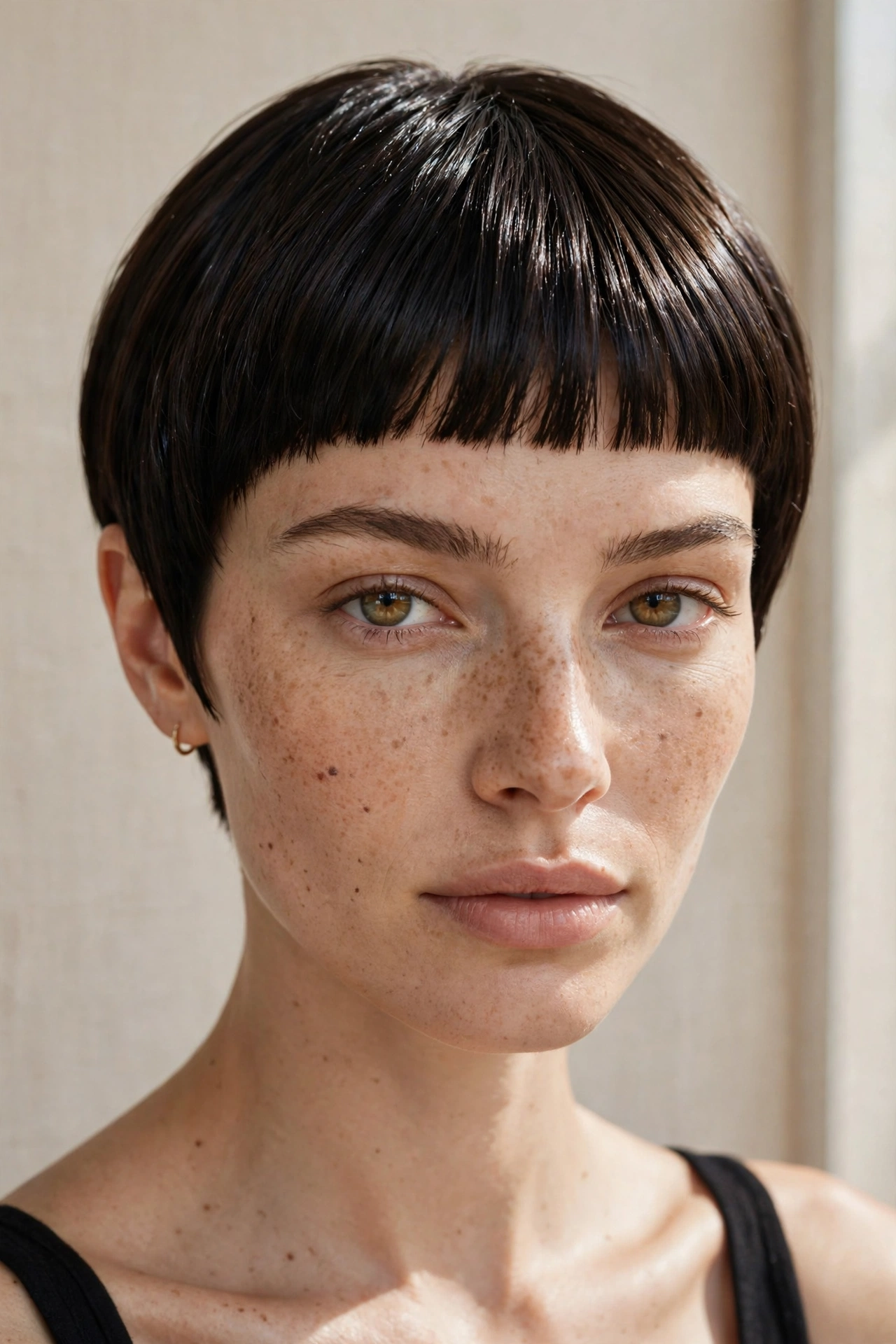
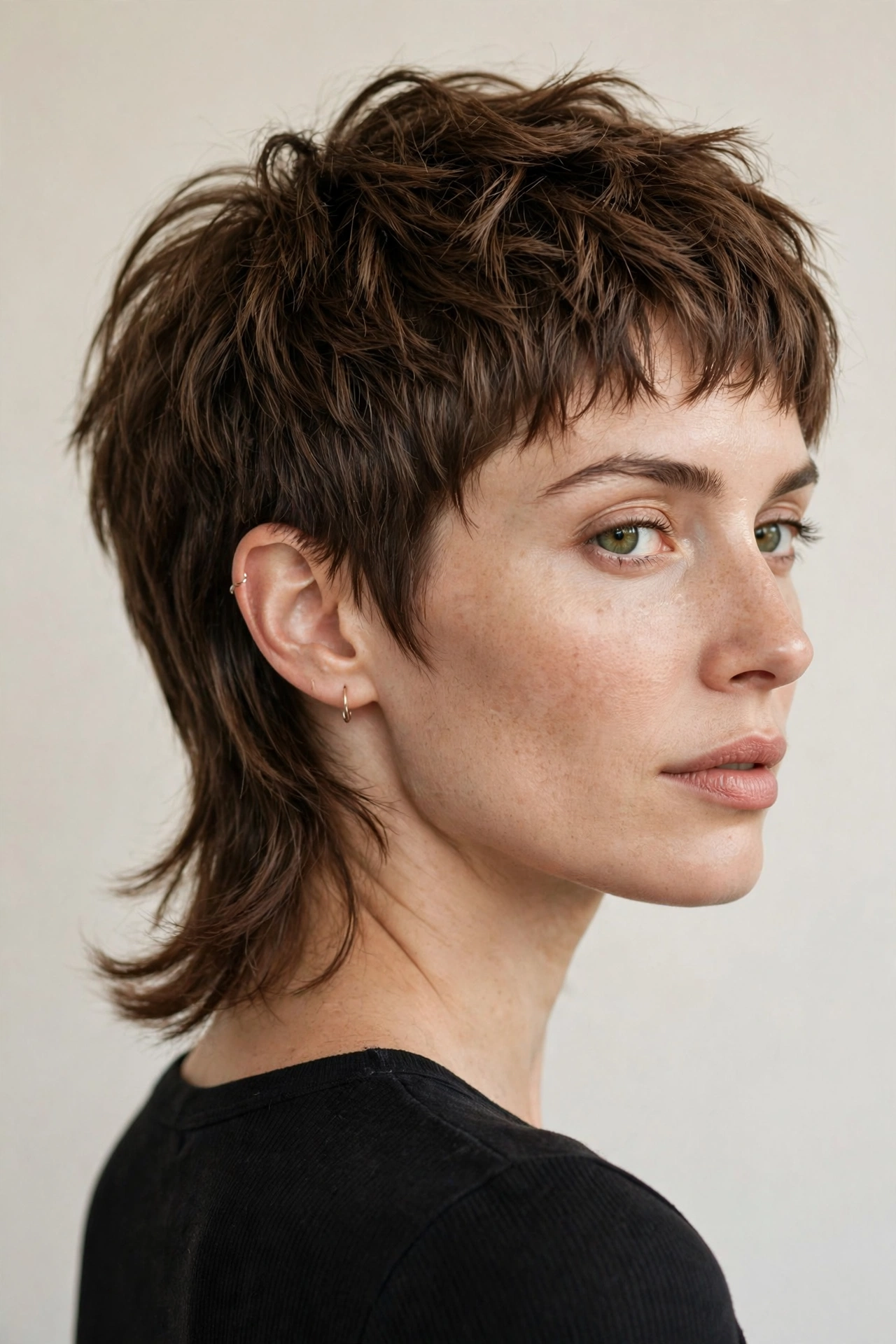
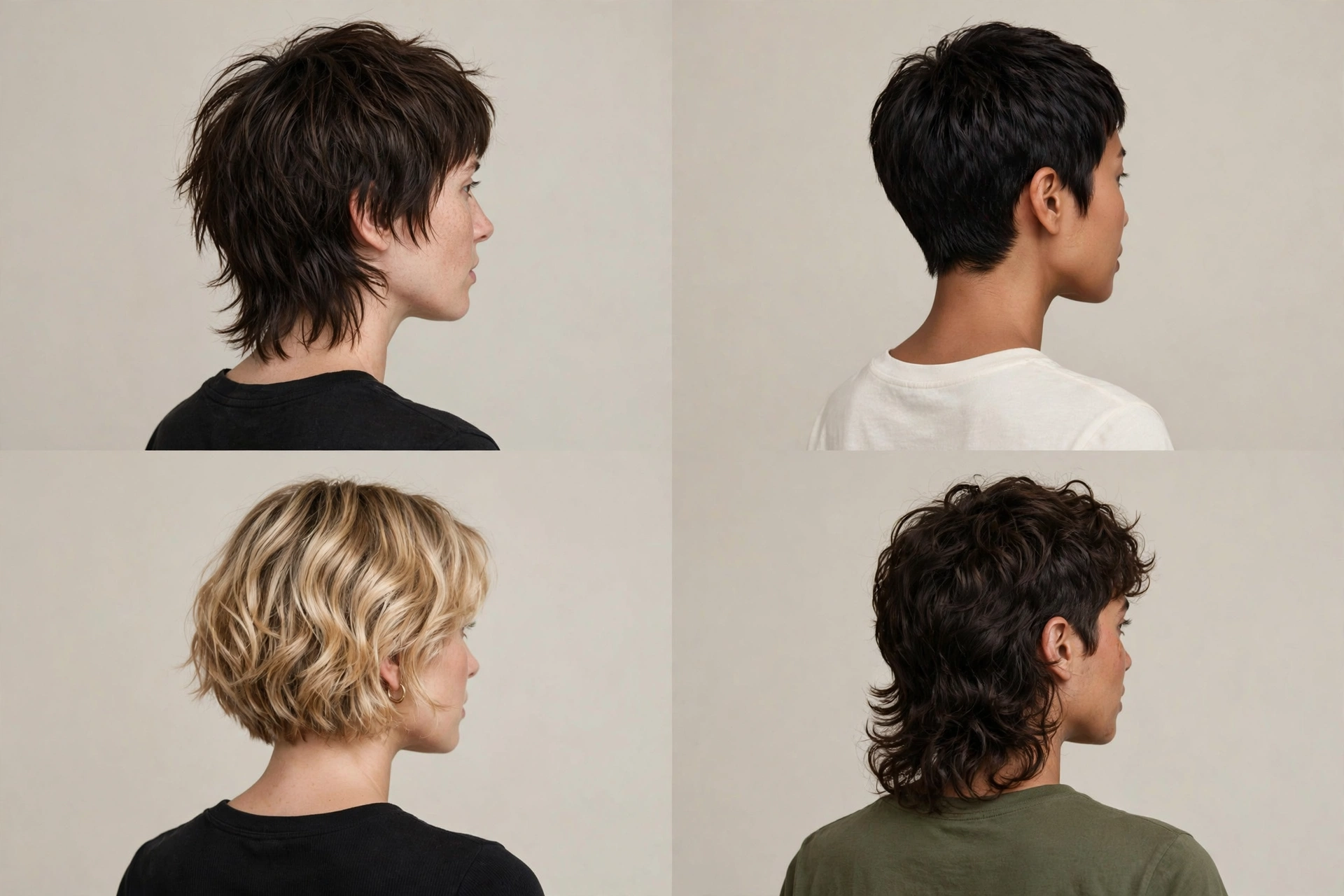
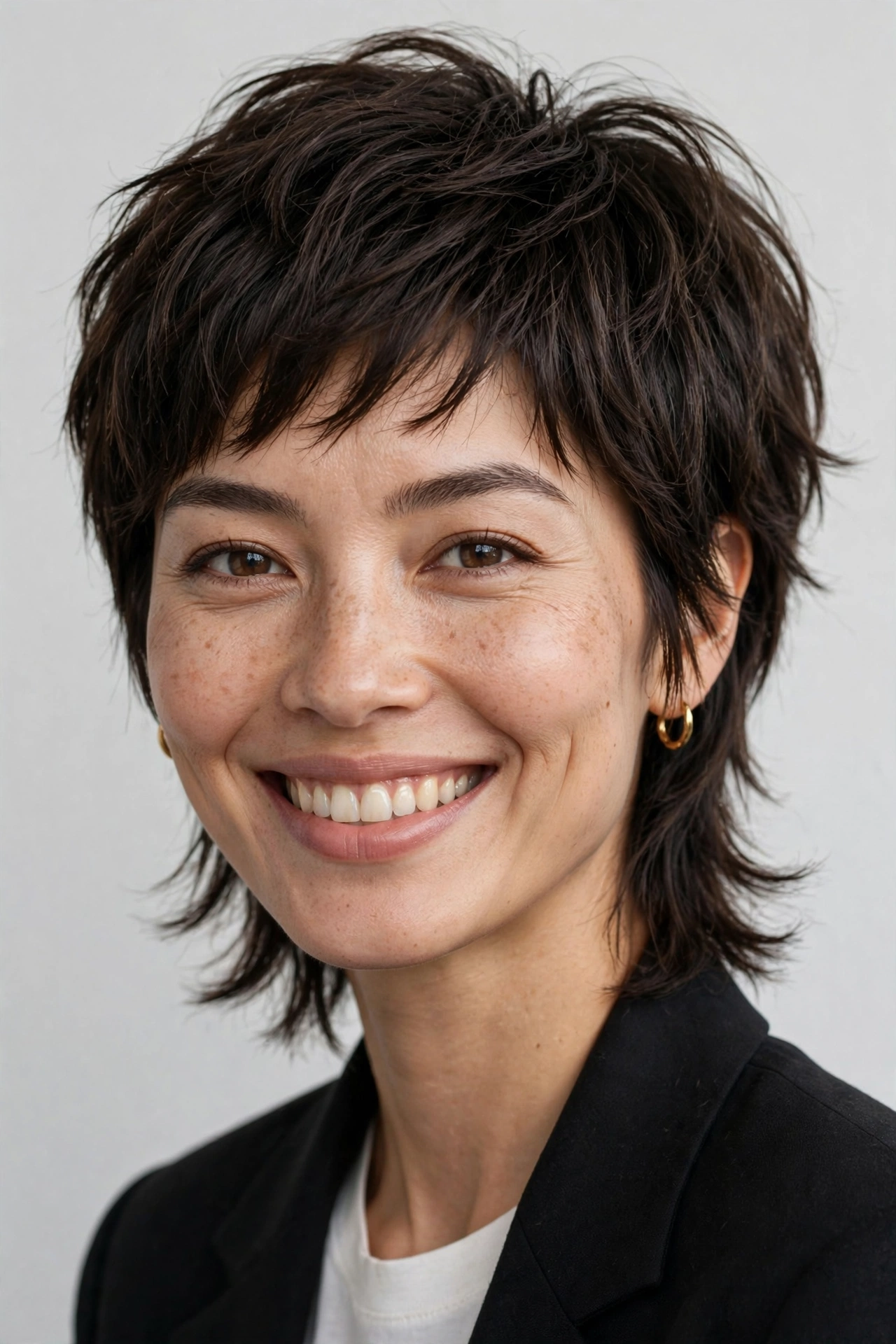
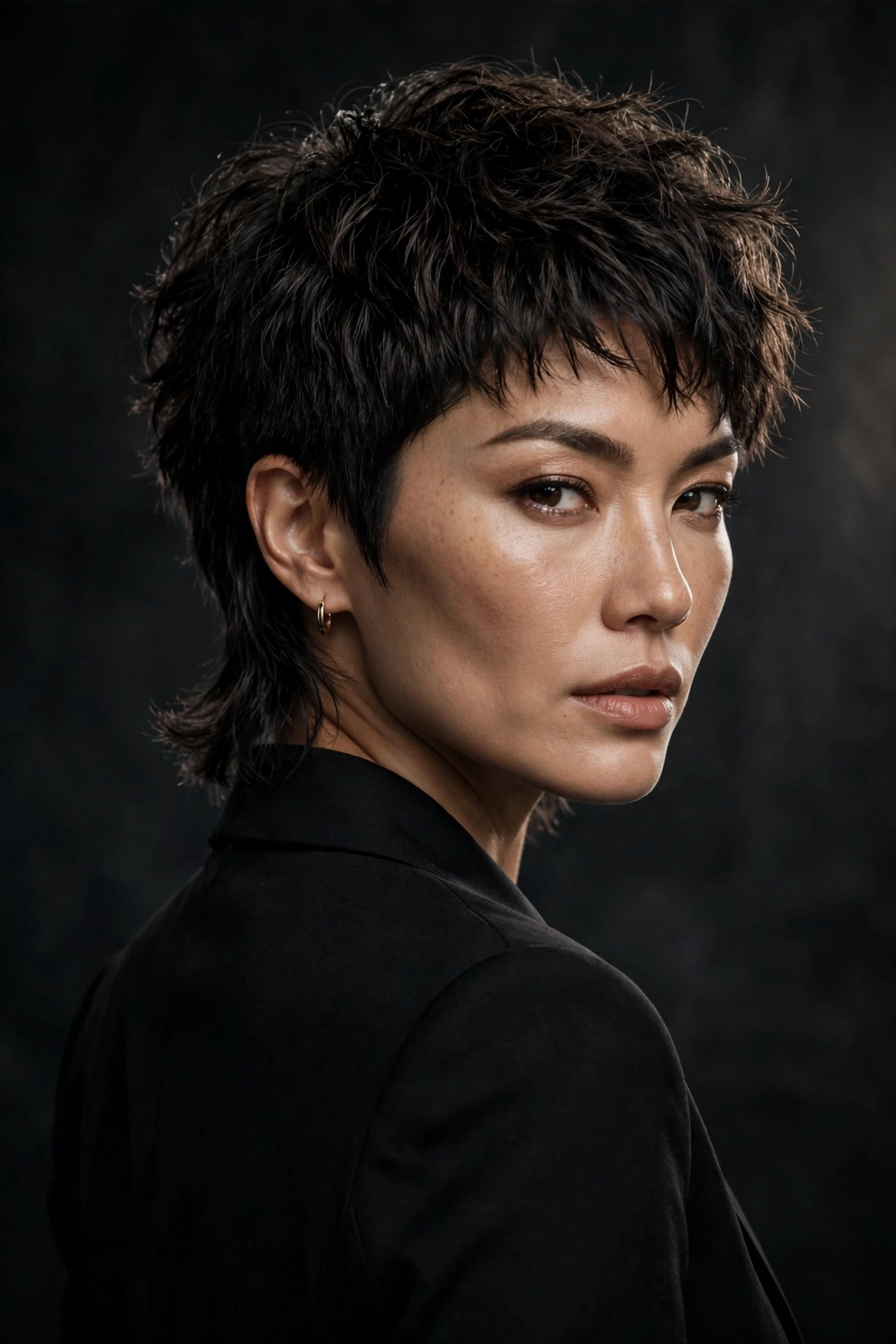
The mixie cut is exactly what the name promises: a mix of a pixie and a mullet. Through the front, top, and sides, it’s cut like a pixie — short, close around the ears, textured on top, with fringe options from micro to side-swept. But instead of tapering neatly at the back like a traditional pixie, the nape is left longer, falling into soft mullet-like points at the back of the neck. The result is a cut with two personalities: sharp and cropped from the front, longer and more rebellious from behind.
It helps to place it in the family tree. The pixie is the classic — short all over, tapered at the nape, timeless. The bixie is the bob-pixie hybrid: longer than a pixie, with bob-like weight at the sides (we covered it in our bixie cut guide for women). The mullet is the full business-in-front-party-in-back statement with dramatic length contrast. The mixie sits between the pixie and the mullet: shorter and more wearable than a true mullet, edgier and more interesting than a standard pixie. Who What Wear asked hair experts to define the mixie haircut and landed on the same formula — a cross between the mullet and the pixie, short at the front and longer and choppier at the back. The nape length is the key — it’s soft and piece-y, not the harsh disconnected tail of an 80s mullet.
The 2026 mixie is softer than the early versions that trended a few years back. Stylists have refined the grow-out zones, the nape is more blended, and the top has more wearable texture instead of spiky harshness. It’s moved from fashion-week experiment to real women’s haircut — I see it on creative professionals, on moms who wanted their edge back, on twenty-somethings who were bored of the bob. It takes confidence, yes, but less than you think. Most of that confidence comes from getting the proportions right for your face, which we’ll get into below.
Why the Mixie Cut Is Trending in 2026
Short hair is having its biggest moment in a decade, and the mixie is riding the front of that wave. After years of long, uniform hair dominating feeds, there’s a collective hunger for cuts with architecture — hair that has a shape, a point of view. The mixie delivers that instantly. It’s also the perfect answer to pixie fatigue: so many women grew out pixies during the long-hair years, got bored, and wanted something short that didn’t feel like a repeat. The mixie is familiar enough to feel safe (it’s mostly a pixie!) with just enough rebellion (that nape!) to feel new.
There’s a practical reason too: the mixie is secretly the best grow-out cut in existence. If you’re growing out a pixie — that awkward in-between stage everyone dreads — the mixie is the bridge. Instead of fighting the mullet phase, you lean into it deliberately, shaping the nape while the top catches up. My stylist told me she now suggests the mixie to every pixie-grow-out client, and I’ve seen this cut rescue more awkward grow-outs than any product or styling trick ever could. It turns the worst phase of short hair into a deliberate style choice. That’s powerful.
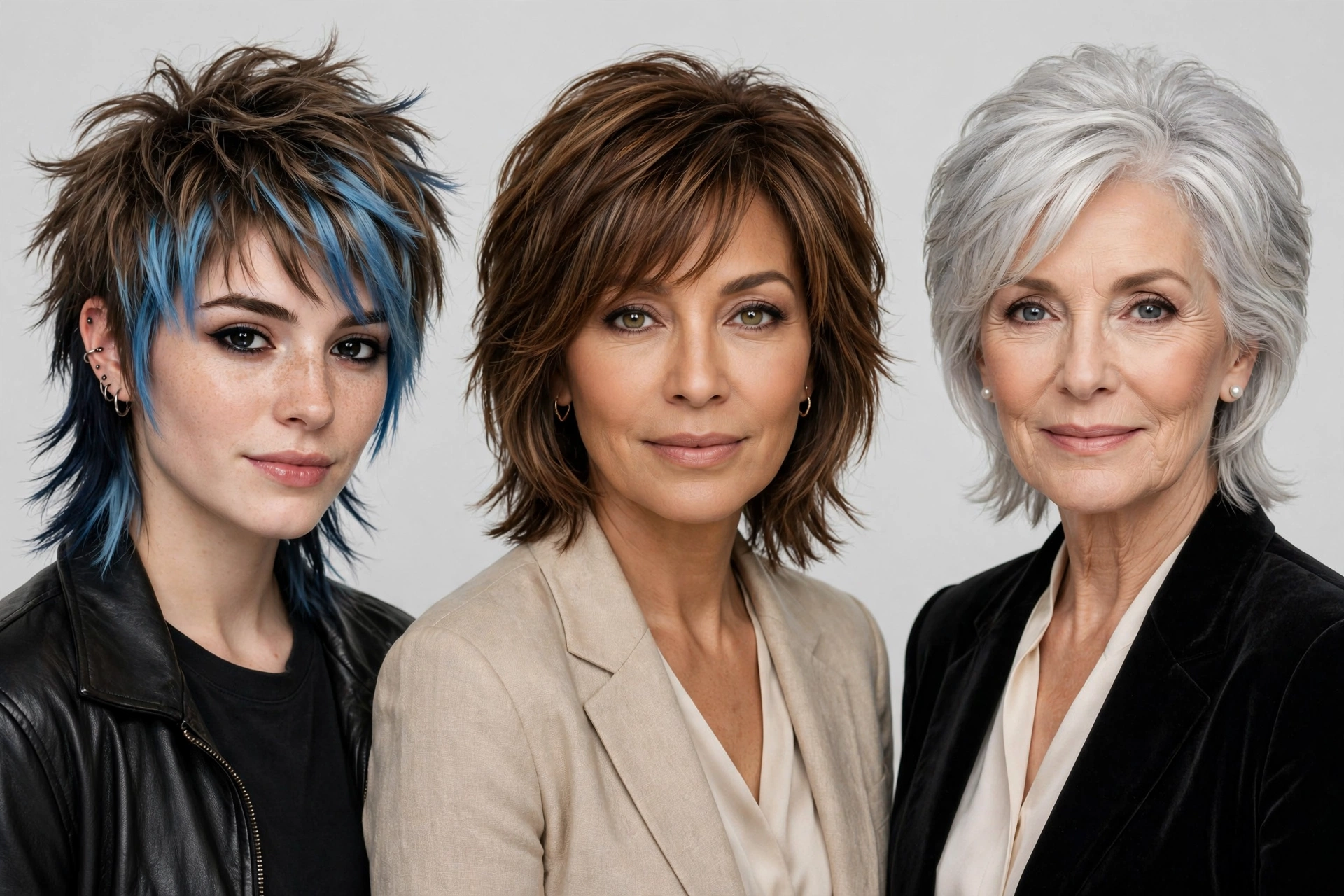
And then there’s the look itself. The mixie is unbelievably photogenic — the contrast between the cropped front and the longer back creates lines and shadows that cameras love. It’s androgynous in a way that feels current rather than costume-y, and it works across ages in a way that surprises people. I’ve seen it on women in their twenties and their fifties, and the fifties version might be my favorite: silver mixie with texture is pure sophistication. In 2026, the bravest cut also became one of the most versatile. That’s why it’s everywhere.
18 Mixie Cut Styles to Try in 2026
Here they are — the 18 best mixie cut variations for 2026, from soft and wearable to full-throttle edgy. Find the one that feels like you, save the photo, and bring it to your stylist. That’s always step one.
1. Classic Mixie
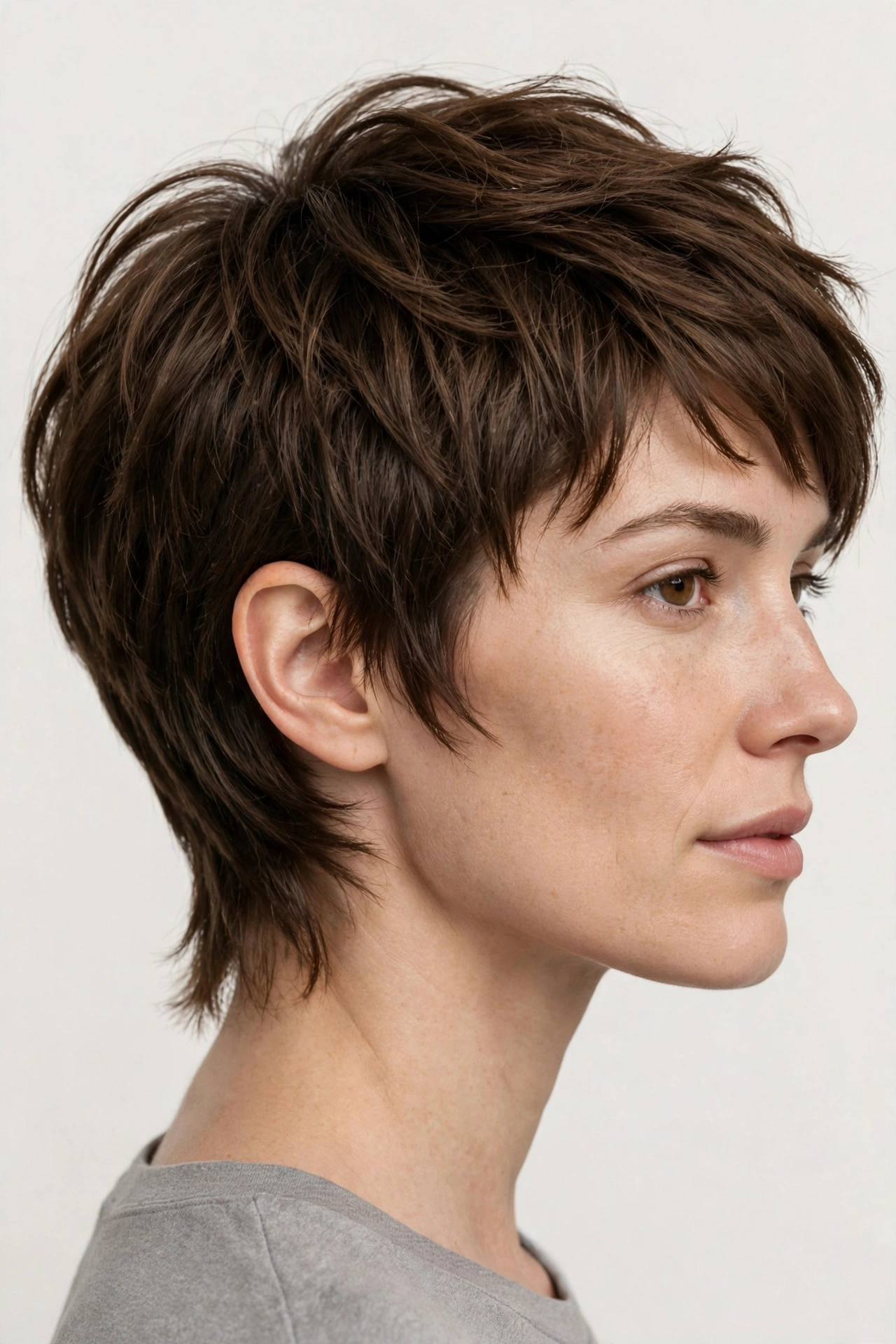
The original formula, done right: a textured pixie through the front and crown — piece-y on top, tucked close around the ears — with a soft, tapered nape falling an inch or two below the hairline. Nothing extreme, everything balanced. This is the version that converted the skeptics, because from the front it reads as a really good pixie, and the back just adds a little intrigue. If you want to try the mixie without announcing it to the world, start here.
Ask your stylist for texture through the top (point-cutting, not blunt), closeness around the ears without a harsh fade, and a nape that’s longer but still soft — no harsh lines. Styling is minimal: a pea-sized amount of matte paste, worked through dry hair with your fingers, piece by piece. That’s genuinely the whole routine on most days. Trims every 4 to 6 weeks keep the shape; let the nape go and it starts reading mullet, which is fine if that’s where you’re headed, but the classic mixie lives in the balance.
2. Choppy Mixie
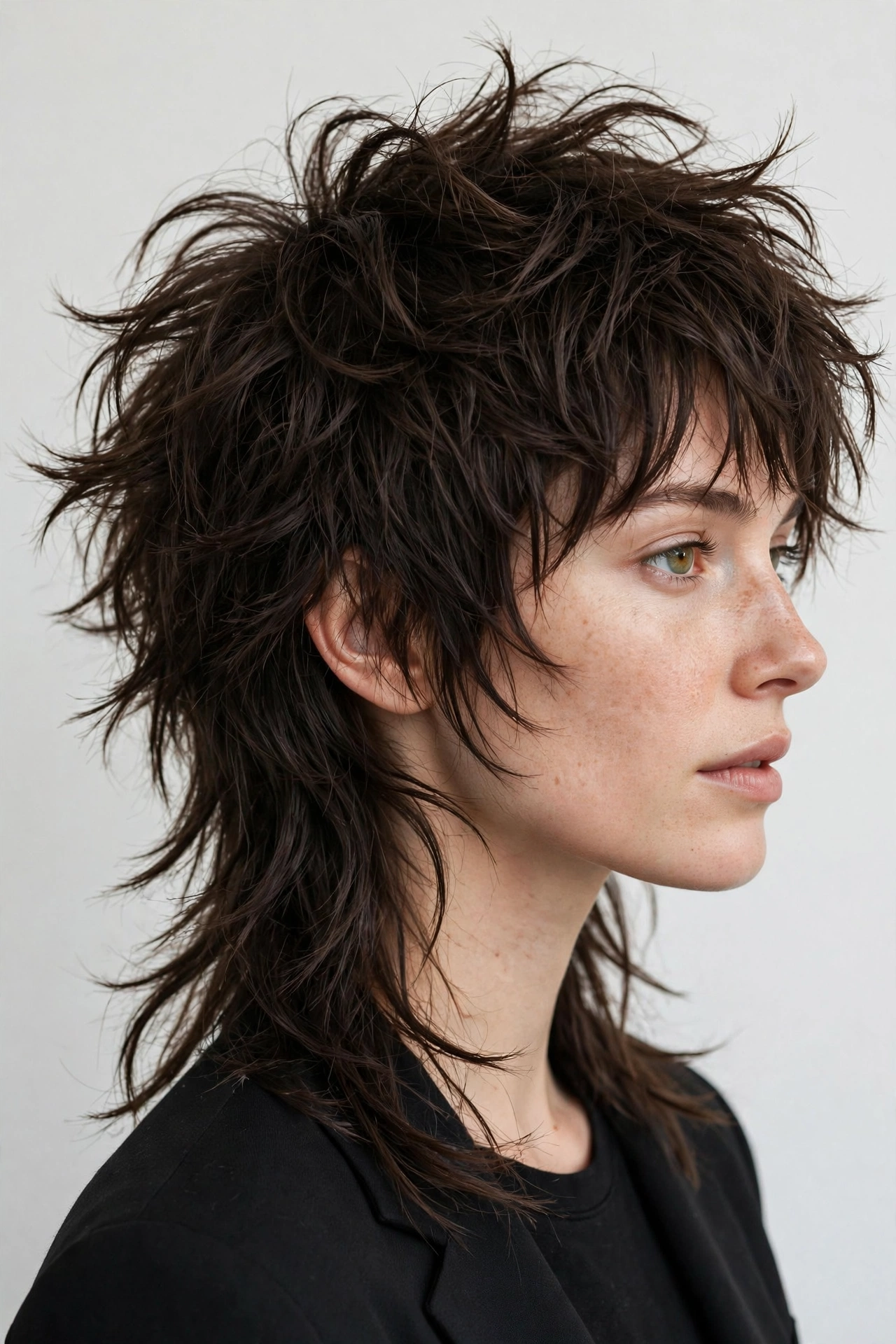
Turn the texture dial all the way up and you get the choppy mixie — aggressive point-cutting, lots of separation, ends that kick in every direction. This is the undone, rock-and-roll version: less polished pixie, more do-it-yourself energy. It suits thick hair beautifully because all that choppiness removes bulk while creating movement, and it gives fine hair the illusion of density through sheer texture.
The styling secret is sea salt spray on damp hair, scrunched and left to air-dry — the chop does the rest. On dry hair, a tiny bit of texturizing powder at the roots adds grit and lift. This version is forgiving as it grows: choppy texture hides grow-out better than clean lines, so you can stretch trims to 6 weeks. Fair warning: choppy cuts show every cowlick, so mention yours to your stylist upfront and let them cut with the growth pattern, not against it. Done right, this is the coolest low-effort cut on the list.
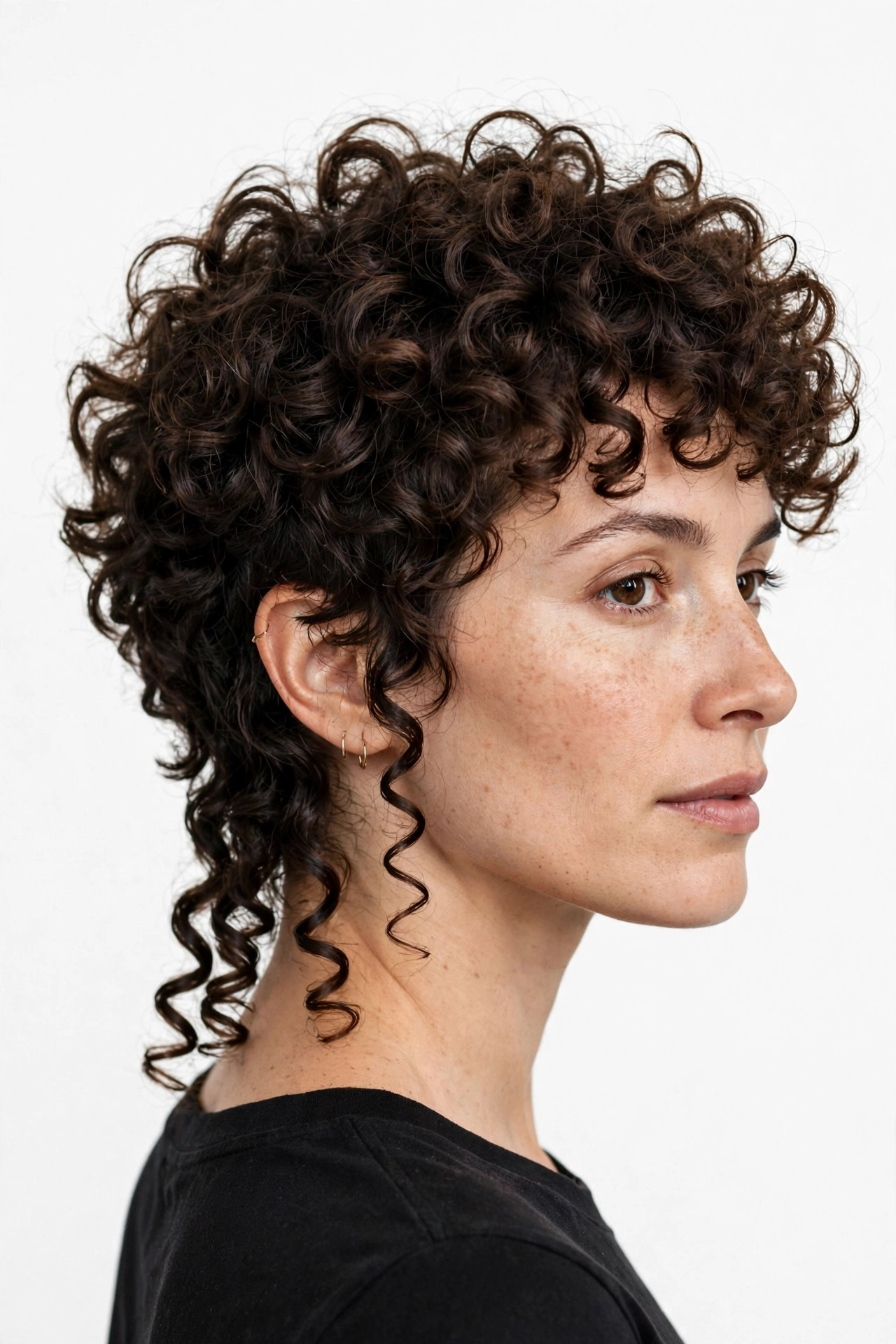
3. Curly Mixie
Curly hair plus mixie structure is one of those combinations that makes you wonder why everyone isn’t doing it. The cropped pixie top lets curls spring up into gorgeous volume, while the longer nape gives the back curls room to spiral and elongate. It solves the classic curly-pixie problem (too round, too helmet-like) by adding length exactly where roundness needs balancing. If you have curls and short-hair dreams, this might be your cut.
Get it cut dry by someone who understands curls — wet cutting on a mixie is asking for a nape that’s three inches shorter than planned once it springs up. Ask for the top shaped to encourage lift and the nape carved to follow your curl pattern. At home: curl cream on soaking-wet hair, scrunch, diffuse upside down. That’s it. The nape curls may need a little extra cream since ends are oldest. Trims every 8 to 10 weeks, dry cuts only. Your curls get structure, you get freedom — everybody wins.
4. Undercut Mixie
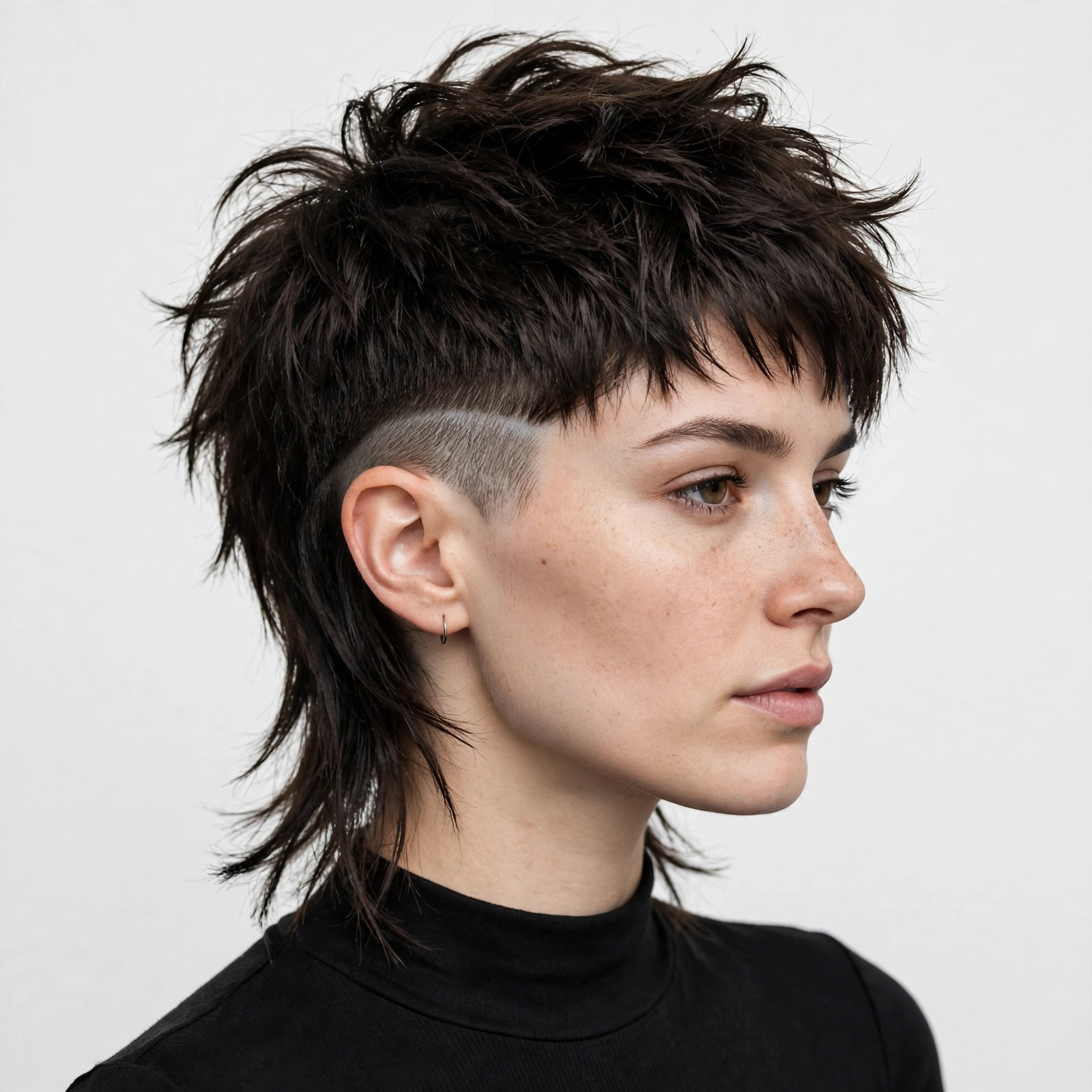
For the bold: shave or closely clipper one or both sides (or the nape underneath), keep the textured pixie top, and let the longer nape fall over the undercut. The hidden shave keeps you cool, removes bulk, and adds a secret edge that’s only visible when the wind blows or you tuck your hair back. It’s the mullet’s punk DNA showing through, refined for 2026. This is not a first-short-cut choice — it’s for women who know they like edge.
Maintenance is the real consideration: undercuts need re-shaving every 2 to 3 weeks or they grow into fuzz, so either learn the clippers or budget for quick barber visits. The top still needs its 4-to-6-week shaping. Grow-out is the other reality — undercuts take months to blend back, so commit. But the day-to-day styling is actually easy: the shaved sections need nothing, so you’re only styling the top with paste or powder. If you’ve been eyeing undercuts for years, the mixie is the most wearable way in.
5. Mixie with Micro Bangs
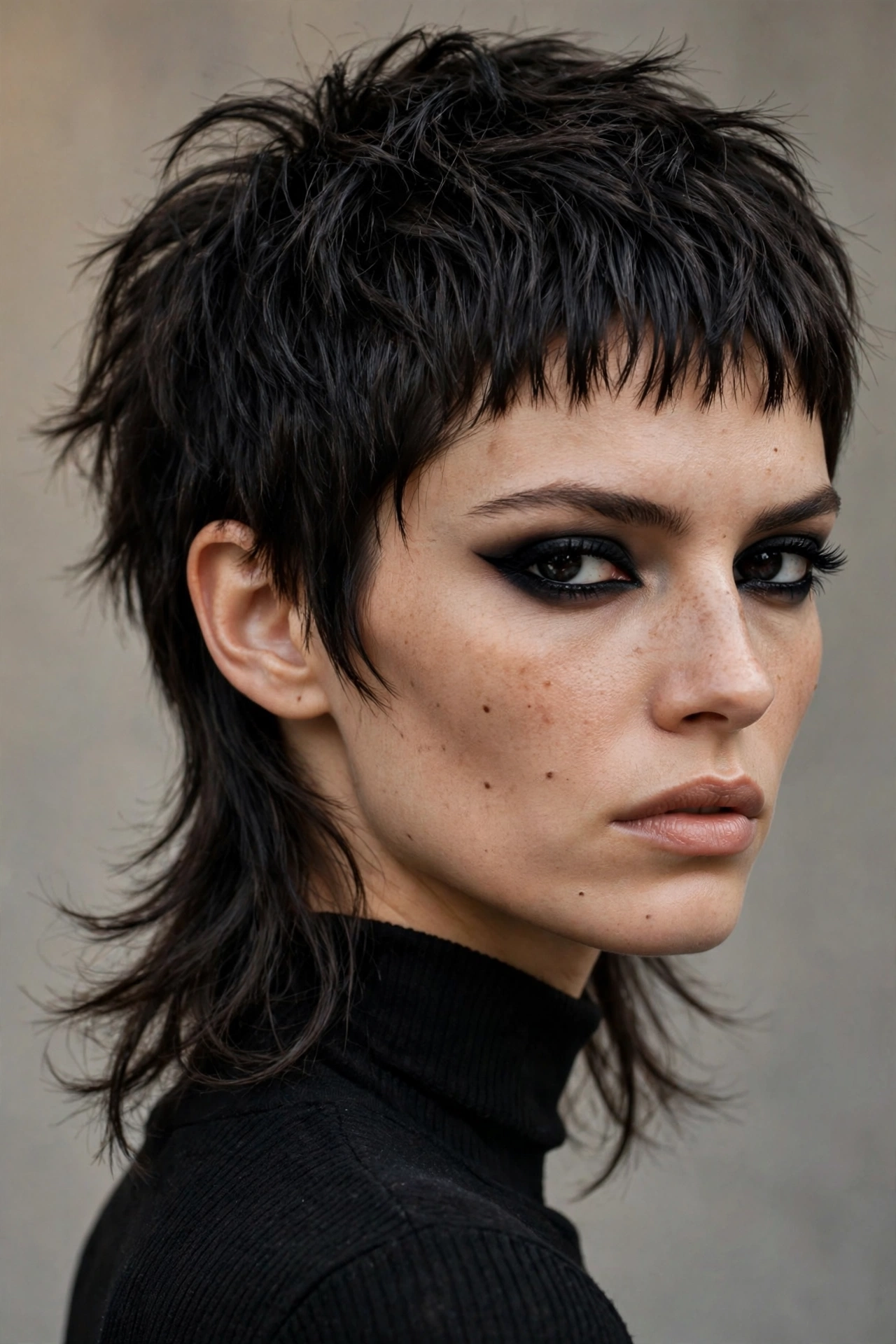
Micro bangs — short, choppy, well above the brow — on a mixie is high fashion distilled. The tiny fringe puts all the focus on your eyes and cheekbones, the textured top adds height, and the nape keeps it from feeling severe. It’s very editorial, very confident, and it makes bone structure do all the talking. Women with strong brows and defined cheekbones were made for this combination.
Let’s talk upkeep honestly: micro bangs need trimming every 2 to 3 weeks, no exceptions — they grow out awkwardly and there’s no hiding a too-long micro fringe. Learn the twist-and-snip technique or keep your stylist on speed dial. Cut them textured and piece-y, never a solid straight line, so they match the mixie’s energy. Style with the tiniest amount of pomade, piece by piece. And know the grow-out math: you’re looking at 3 to 4 months to grow them into a side-swept fringe. Only choose this if you’re sure — but if you’re sure, nothing beats it.
6. Androgynous Mixie
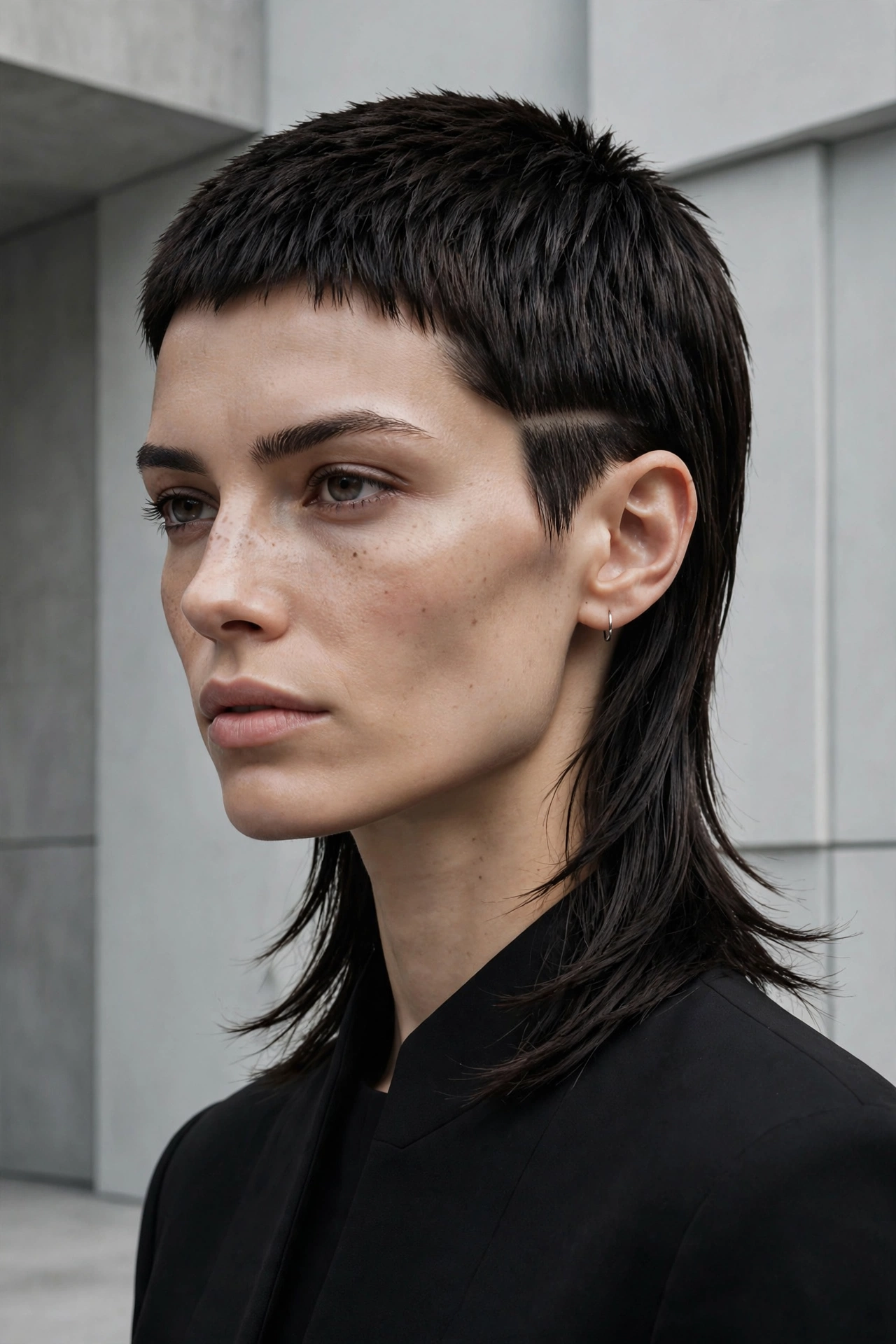
The androgynous mixie leans into the cut’s masculine-feminine tension: sharper lines, a squarer fringe, closer sides, minimal softness. It’s the version that blurs every line and looks incredible doing it — think high-fashion androgyny rather than trying to look like someone else. This style is about precision: clean edges, deliberate shape, confidence as the accessory. It suits strong jawlines and anyone who’s over gendered hair rules.
Precision cuts need precision maintenance — every 4 weeks, sharp, no stretching it. The styling is deliberately minimal: a little matte clay for definition, combed or finger-styled into place, done. This version shows every flaw in the cut, so choose your stylist carefully; you want someone with real short-hair expertise, ideally with barbering skills for those clean perimeters. It’s the highest-commitment mixie on the list, but also the most striking. When the lines are right, it’s art.
7. Soft Feminine Mixie
Not every mixie has to snarl. The soft feminine version keeps the pixie-mullet architecture but rounds every edge: wispy fringe, feathered sides, a nape that flicks softly instead of kicking. It reads romantic and delicate from every angle — proof that short hair and femininity were never opposites. This is the mixie for women who want the shape and ease of the cut without the punk associations.
Ask for feathering and point-cutting throughout — no blunt lines anywhere — and a fringe that blends into the sides rather than sitting separate. Styling leans soft too: a light mousse on damp hair, blow-dried with fingers for gentle volume, finished with a flexible cream instead of matte paste. It grows out gracefully into a soft shaggy crop, so 6-week trims are plenty. Pair it with delicate jewelry and watch how the softness frames your face. For more soft short inspiration, our long pixie ideas for women live in the same gentle universe.
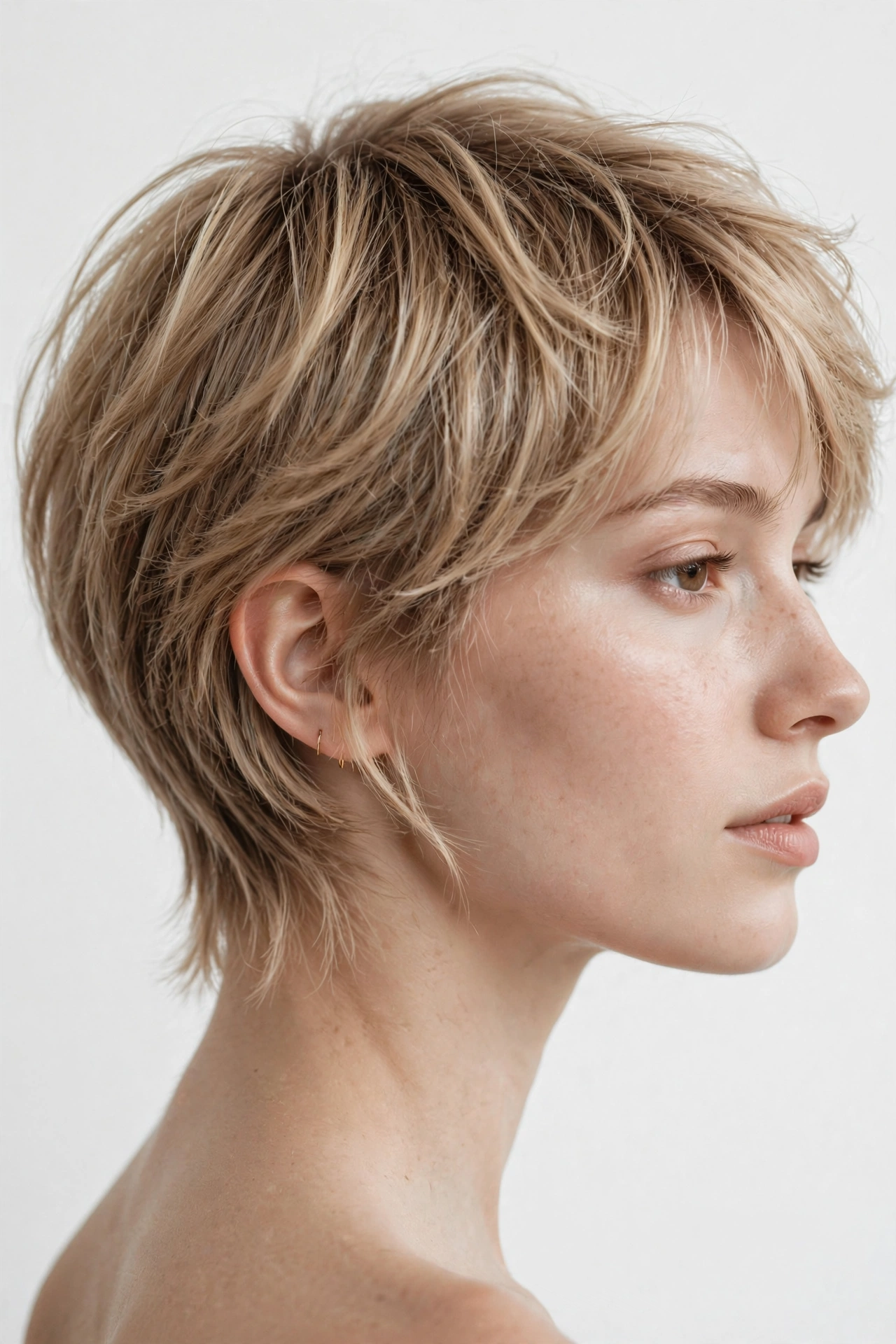
8. Textured Mixie with Long Nape
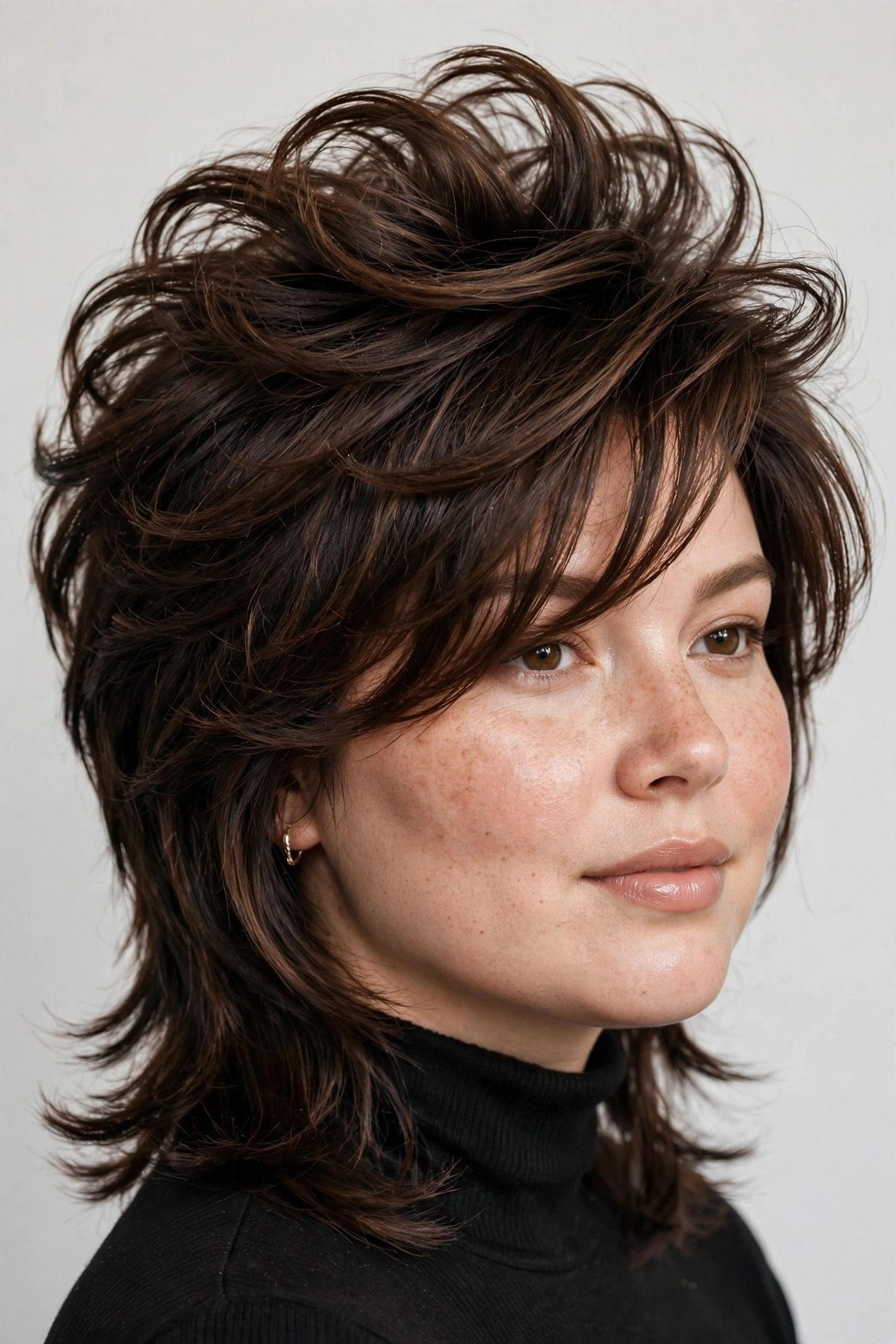
This version pushes the mullet half of the equation: keep the pixie top textured and cropped, but let the nape grow long — three, four inches below the hairline, piece-y and deliberate. It’s the most mullet-forward mixie, the one that makes people do a double-take from behind. In 2026 this is a legitimate fashion choice, not an accident — the long nape is shaped and thinned so it moves like a curtain rather than hanging like a tail.
The nape needs shaping every 6 weeks even though you’re growing it — unshaped length just looks neglected. Thin it with point-cutting so it stays wispy, and style it with a light oil on the ends to keep the pieces separated and healthy-looking. The top stays on the normal 4-to-6-week schedule. This is the mixie for maximalists: if the classic mixie’s nape whispers, this one talks. It pairs beautifully with bold color, which brings us to the next idea.
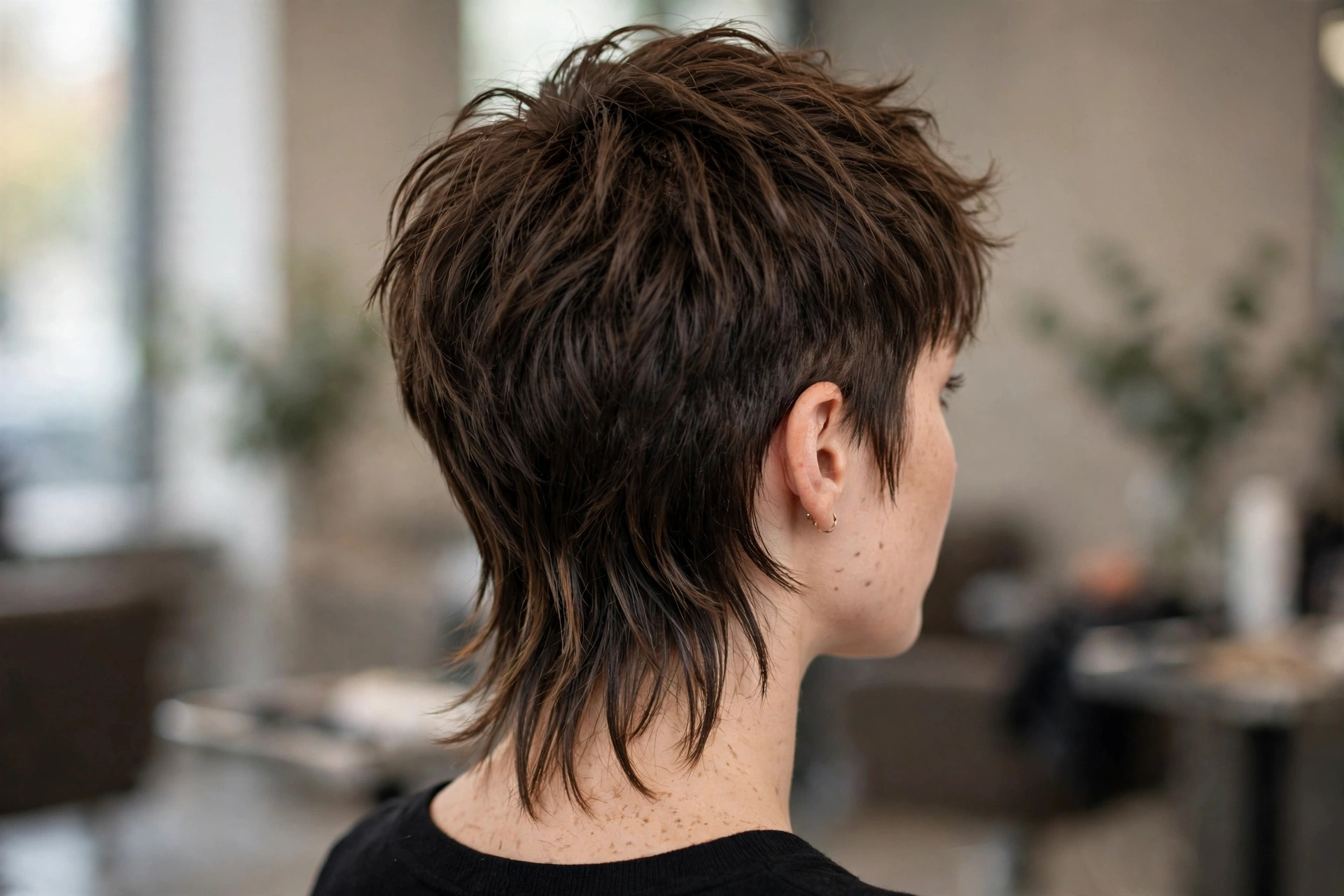
9. Bleached Platinum Mixie
Platinum on a mixie is iconic — there’s a reason this combo has launched a thousand fashion editorials. The pale color emphasizes every line and layer of the cut, turning the architecture into the star. Short hair takes bleach better than long hair (less damage history, faster processing), so the mixie is genuinely one of the best cuts for going platinum. It’s striking, it’s high-maintenance, and it’s unforgettable.
The maintenance is real: root touch-ups every 4 to 6 weeks (regrowth shows fast on short pale hair), purple shampoo twice a week, and deep conditioning weekly because bleach plus short textured ends can go crispy fast. Bond-building treatments at the salon every few appointments aren’t optional. Budget accordingly — platinum is the most expensive color to maintain, short hair or not. But the payoff is a head of hair that looks like art. Keep the cut’s texture strong; platinum shows every layer, so your 4-week trims matter even more.
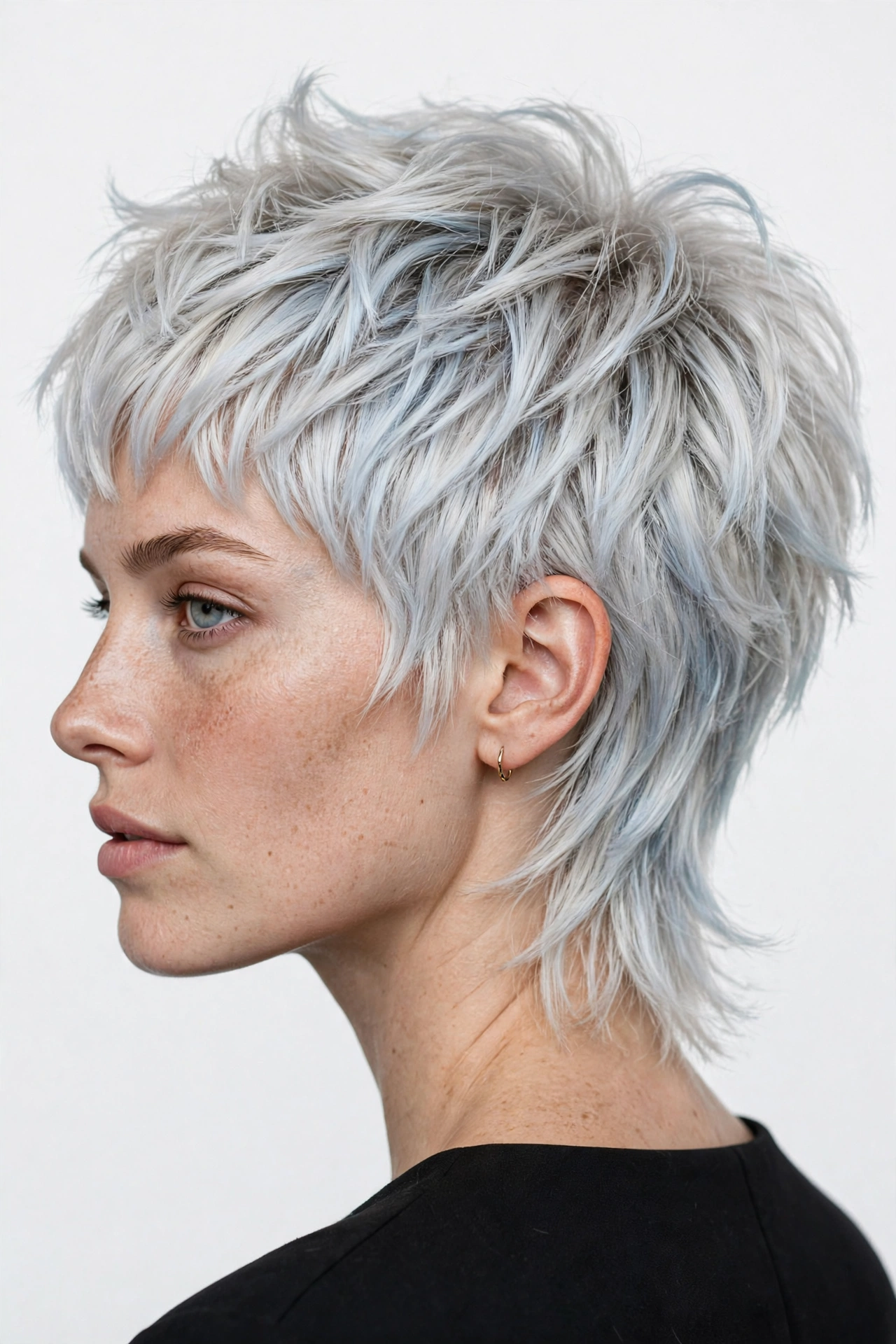
10. Copper Mixie
Copper might be the perfect mixie color. Those warm, dimensional tones catch light on every textured piece — the top glows, the nape flickers, the fringe practically smolders. It’s vibrant without being neon, bold without being unnatural, and it flatters an enormous range of skin tones (fair skin goes bright copper, deeper skin goes rich auburn-copper). On a mixie, copper turns a great cut into a whole personality.
Copper fades — that’s the deal. Refresh with a color-depositing conditioner weekly, wash in cool water with sulfate-free shampoo, and expect salon color every 6 to 8 weeks. Have your colorist add depth at the roots so the fade looks dimensional rather than washed out. The cut maintenance stays at 4 to 6 weeks. One tip: copper plus the mixie’s texture means people will assume you spend an hour styling; in reality it’s still a five-minute paste-and-go. Let them think what they want.
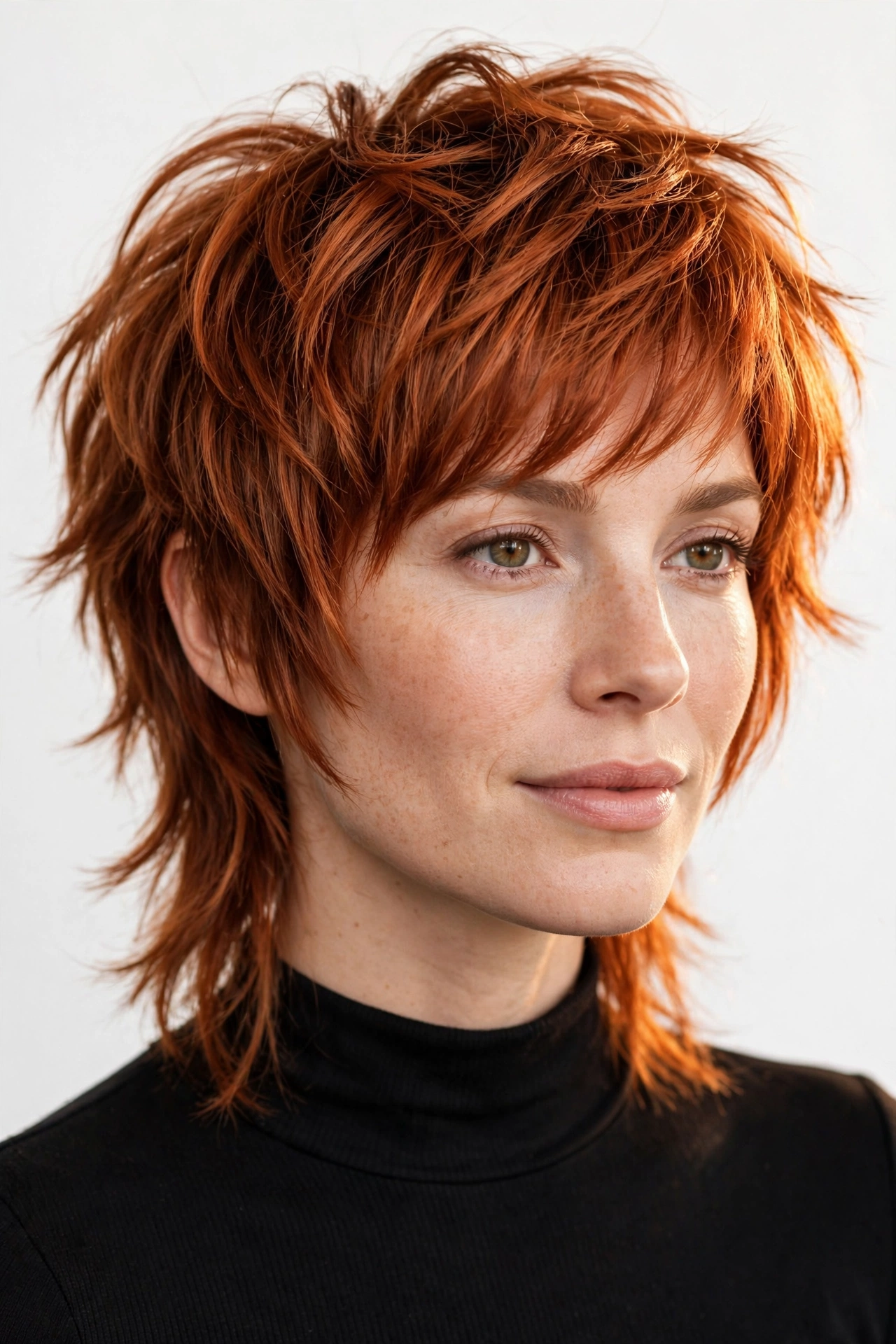
11. Mixie with Side-Swept Fringe
The side-swept fringe is the mixie’s most versatile partner — soft, flattering, and easy to live with. It sweeps across the forehead from a deep side part, blending into the longer side and framing the eyes, while the back keeps its mullet attitude. This is the office-friendly mixie, the date-night mixie, the version your mother might actually compliment. If the micro bang feels too brave, start here.
Cut it long — cheekbone-grazing at minimum — and textured so it moves. The blow-dry trick: dry it to the opposite side first for root lift, then sweep it into place. It grows out more gracefully than any other fringe, melting into face-framing layers over 6 to 8 weeks. A side part also lets you play with asymmetry, tucking one side behind the ear for a sleek look. For more side-part inspiration generally, our side-part hairstyles guide covers the technique across lengths.
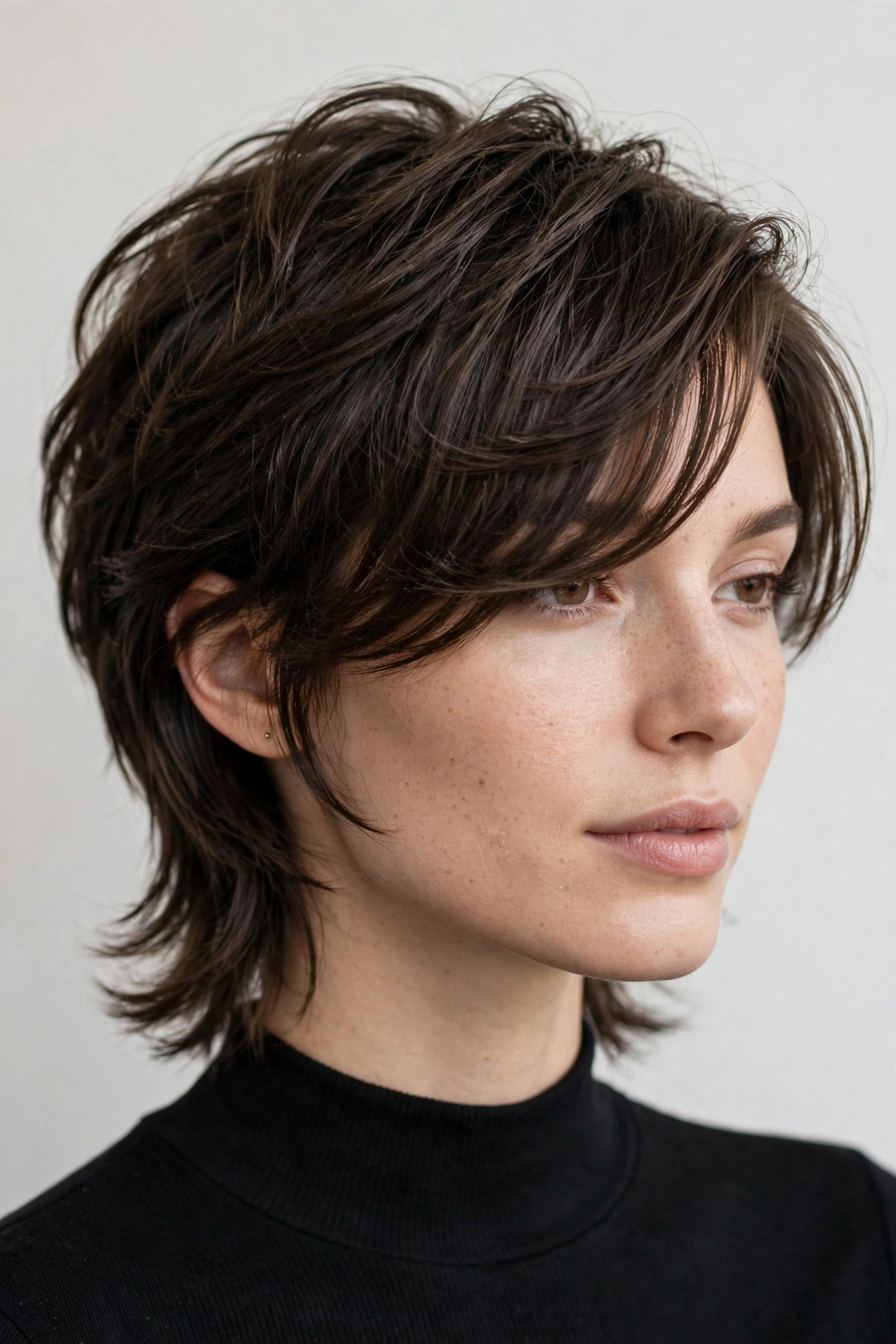
12. Asymmetrical Mixie
One side cropped close, the other left longer and sweeping — the asymmetrical mixie is architecture you can wear. The imbalance creates a diagonal line across the head that draws the eye and sculpts the face, and the longer nape on the extended side gives you the mullet payoff. It’s bold without being loud, and it’s genuinely flattering: asymmetry breaks up roundness and adds angles where faces need them.
This cut lives or dies on precision, so find a stylist who does editorial short hair — bring photos showing exactly how dramatic you want the asymmetry (subtle one-inch difference versus a full dramatic sweep are very different cuts). Maintenance every 4 weeks to keep the lines intentional; asymmetry grown out just looks lopsided. Style the longer side with a flat iron for sleekness or a wand for bend, depending on your mood. It’s the thinking woman’s statement cut.
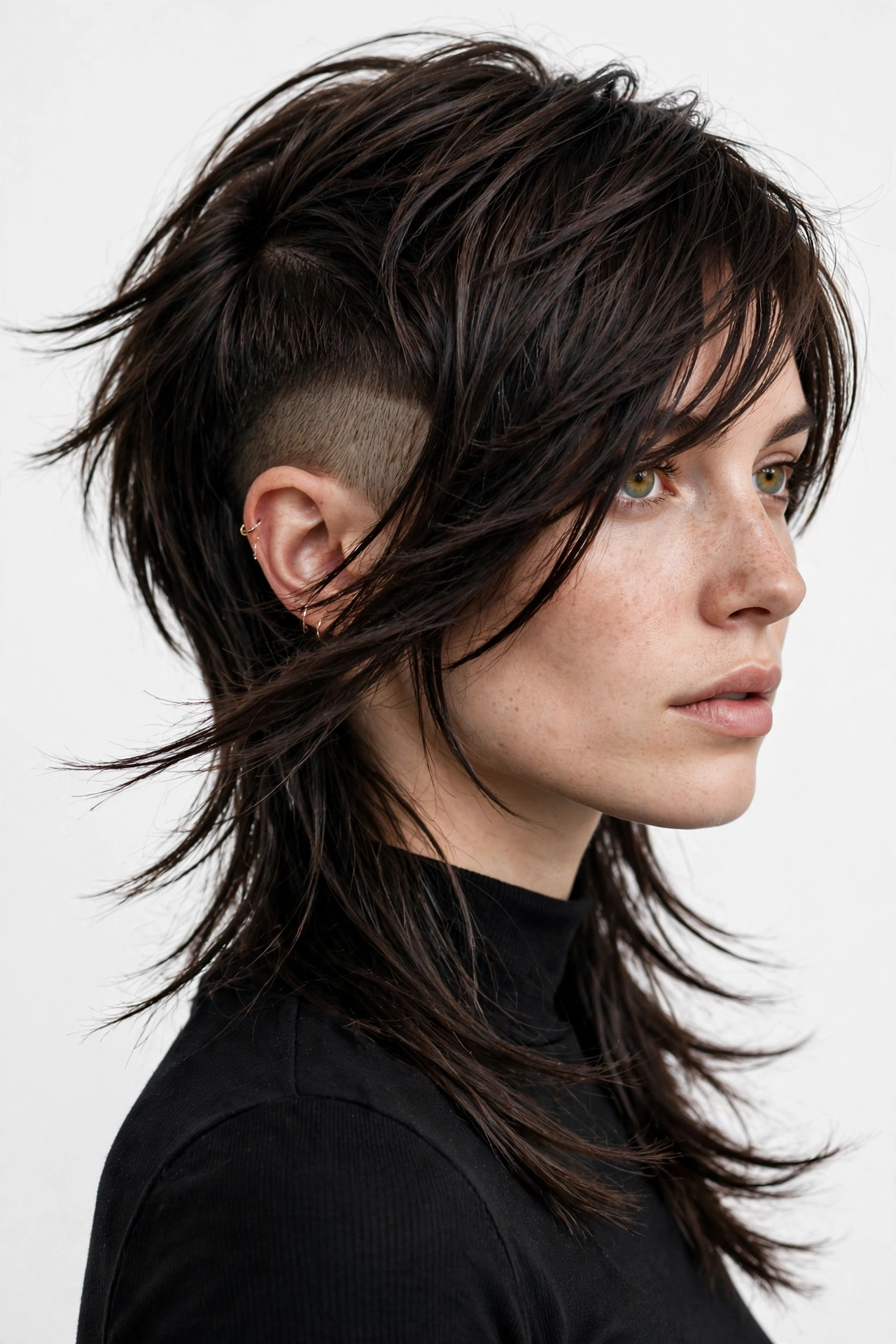
13. Pixie-Grow-Out Mixie (The Bridge Cut)
This deserves its own entry because it’s the most useful mixie of all: the deliberate bridge between a pixie and longer hair. Instead of enduring the awkward mullet phase of grow-out, you shape it — keep the top trimmed and textured while intentionally growing the nape and sides into mixie proportions. What was once the worst stage of short hair becomes a style people compliment. I’ve watched this strategy save so many grow-outs.
The method: trim the top and crown every 6 weeks to control the shape, but leave the nape and sides to grow, shaping only the very ends. After 3 to 4 months you have a genuine mixie; after 6 to 8 you can transition toward a bixie or shaggy bob. Tell your stylist the plan upfront — mention you’re growing out a pixie and want to go through a mixie phase — so they cut with the future in mind. It’s the only grow-out strategy that looks intentional the entire time. Honestly, some women love the bridge so much they stay.
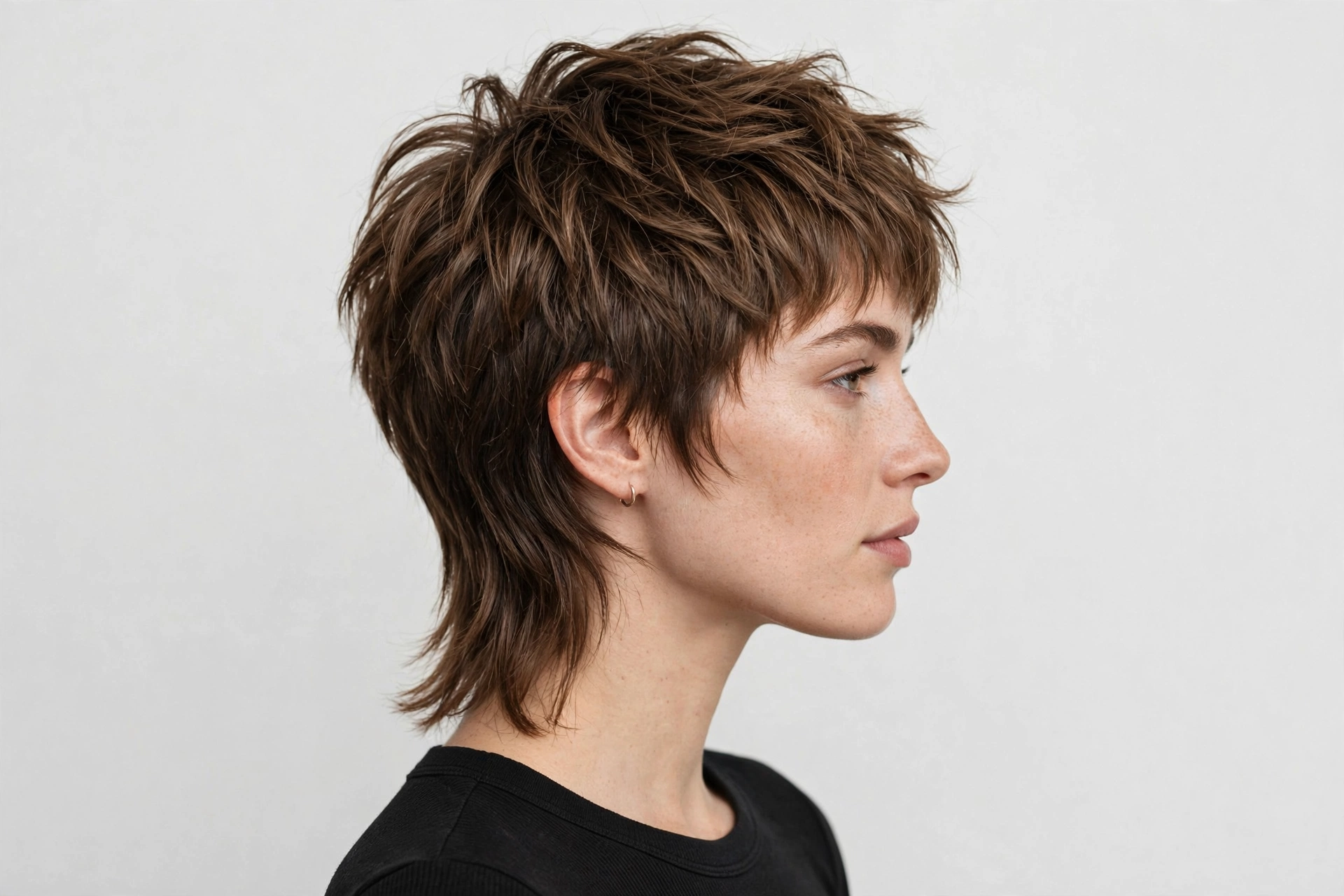
14. Mixie with Shaved Side
A close cousin of the undercut mixie, but more visible and more committed: one entire side shaved or buzzed short, the top swept over from the opposite part, nape left long. It’s dramatic, it’s punk, it’s not for job interviews at banks. But if your life allows edge, this is edge in its purest wearable form — the contrast between the bare side and the textured lengths is pure visual drama.
Like all shaved sections, it needs clipper maintenance every 2 to 3 weeks. The top needs its 4-to-6-week shaping, and here’s a tip: keep the top longer than you think, because it has to sweep across and balance the shaved side. Styling is simple — matte paste, sweep, go — but the grow-out is a months-long project, so be certain. This is the mixie for women who’ve done bold before and found it wasn’t bold enough. Respect.
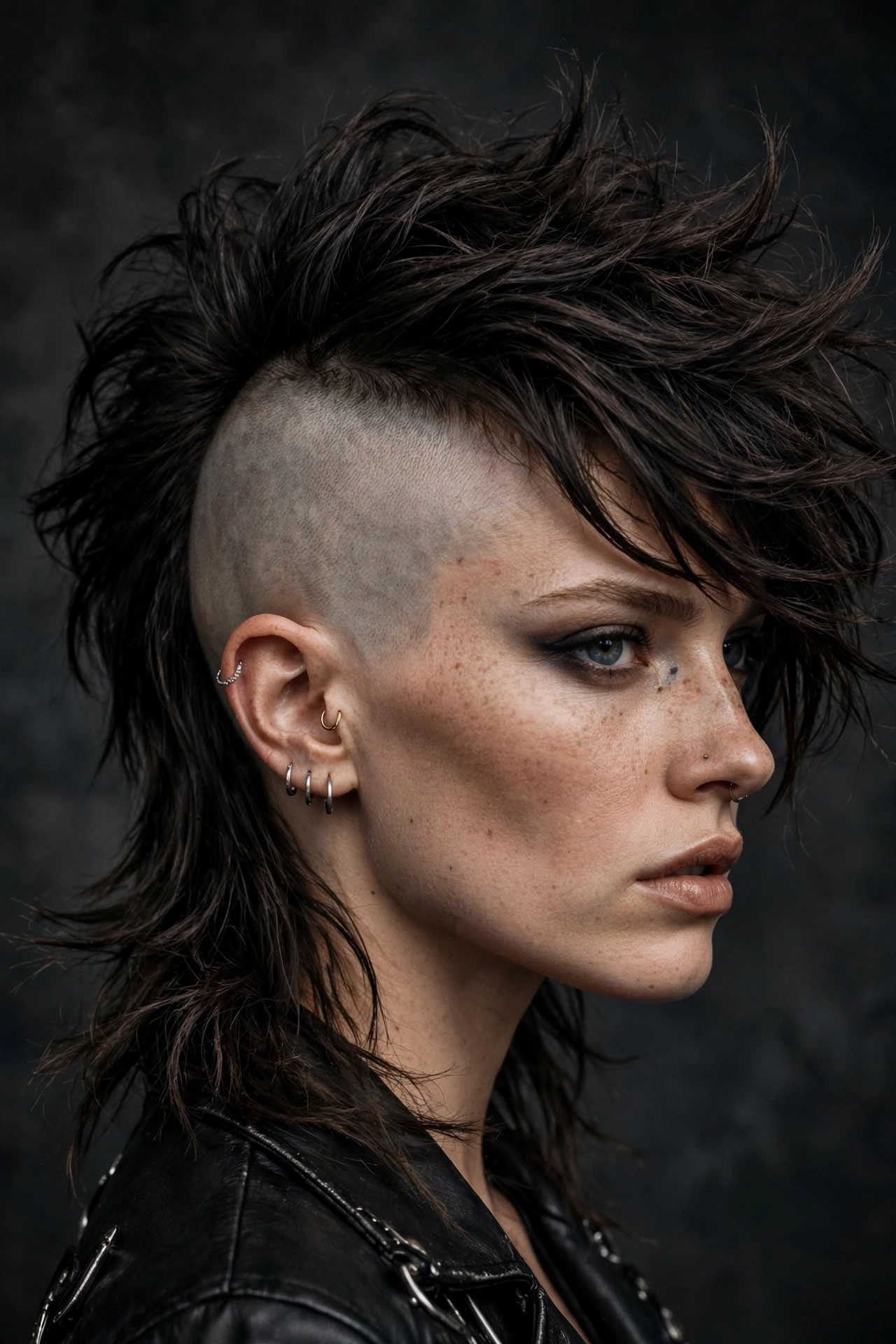
15. Wavy Mixie
Wavy texture might be the mixie’s natural soulmate. The cropped top gets effortless volume from the wave, the sides hug softly instead of lying flat, and the nape waves fall into perfect piece-y flicks. It’s the most low-maintenance mixie because the texture does the styling for you — this cut genuinely looks better slightly undone. If your hair has natural wave, you’re already halfway styled every morning.
Routine: sea salt spray or light mousse on damp hair, scrunch, air-dry or diffuse. That’s it — no iron, no round brush, no fuss. The wave pattern keeps the cut looking intentional even at week 5 of grow-out, so you can push trims to 6 weeks. Ask your stylist to cut with your wave pattern (dry cutting helps here) so the texture falls where it wants to. This is the mixie I’d recommend to the wash-and-go crowd. It might also be the prettiest — those wavy nape flicks are something else.
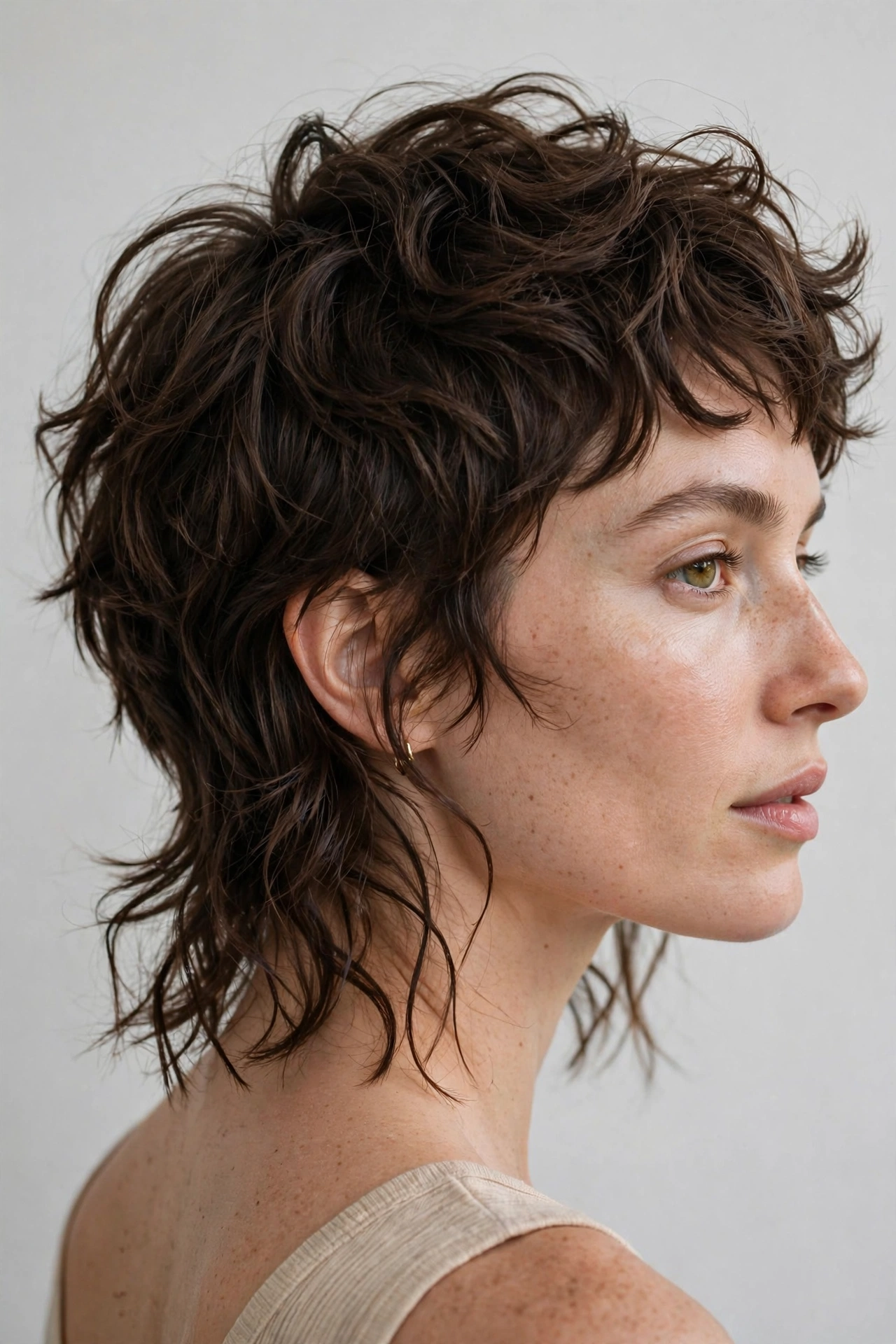
16. Mixie with Baby Bangs and Tapered Nape
Baby bangs — even shorter and softer than micro bangs, just a whisper across the forehead — paired with a neatly tapered nape is the mixie’s gamine moment. Think Audrey Hepburn meets 2026: delicate, elfin, incredibly chic. The tapered nape keeps the back clean and elegant while the baby bangs add that fashion edge. It’s the most refined mixie on this list, and it suits petite features beautifully.
The bangs need trimming every 2 to 3 weeks (they’re unforgiving when overgrown), and the tapered nape needs cleaning up every 3 to 4 weeks or it loses that crisp finish. Style minimally — a touch of cream, finger-combed — because this version is about clean lines, not texture. It shows the face completely, so it’s best on oval, heart, and petite features; very round faces may prefer a longer fringe. When it’s sharp, though, it’s the chicest short cut in the room.
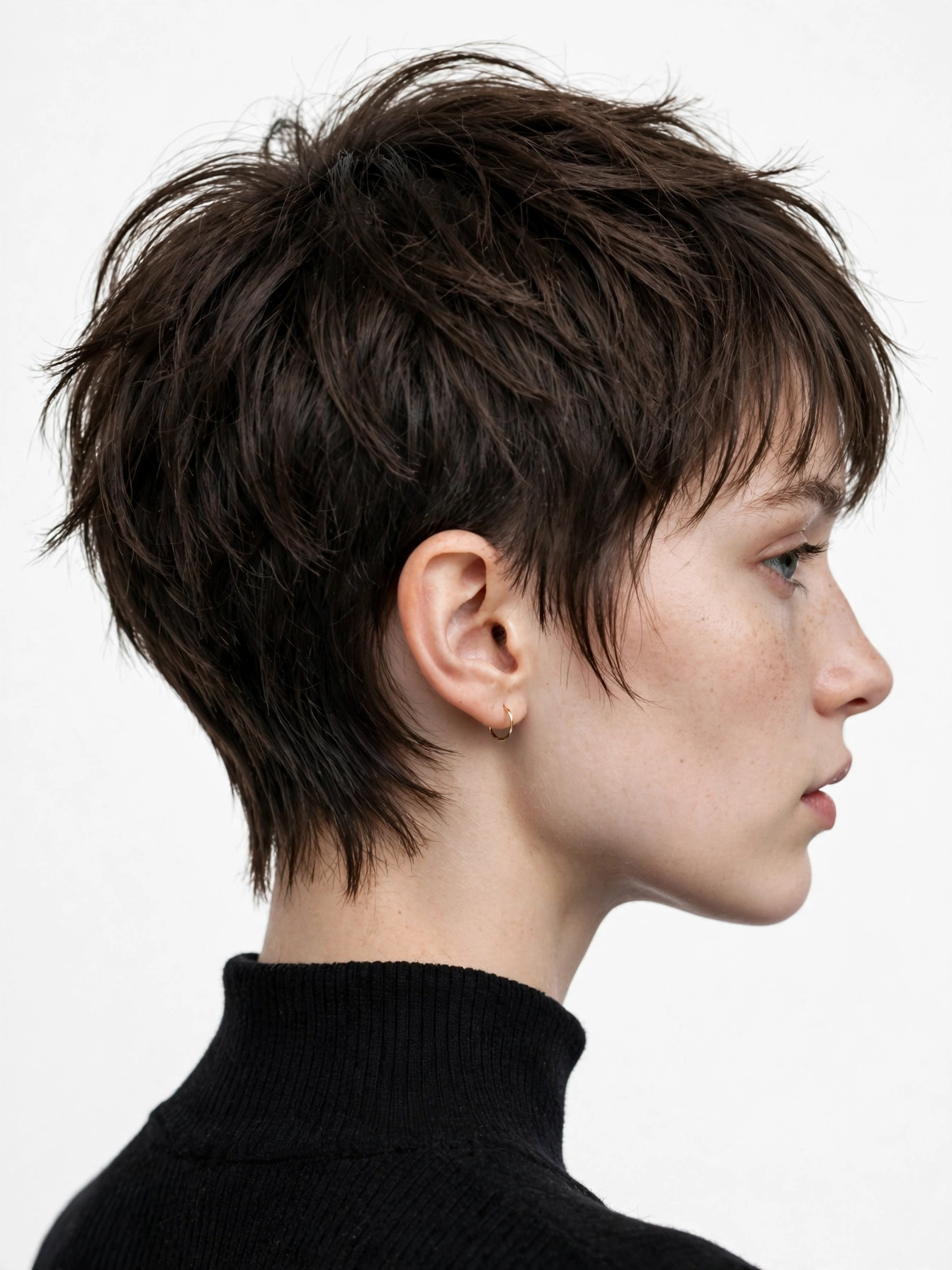
17. Jet-Black Edgy Mixie
Jet black on a mixie is pure attitude — the dark color sharpens every line, deepens every shadow, and gives the cut a graphic, almost illustrated quality. It’s the color equivalent of eyeliner: defining, dramatic, timeless. Black makes the texture pop in a way softer colors can’t, and on the mixie’s architecture it creates incredible depth between the cropped top and the longer nape.
Black dye maintenance: the color itself is low-fuss (roots blend better than with blonde), but shine is everything — black hair shows dullness instantly, so gloss treatments every 6 to 8 weeks and a shine serum in your routine. If you’re going from lighter to black, know it’s a commitment to reverse. Keep the cut’s texture crisp with 4-week trims because black shows grow-out lines clearly. Pair with bold brows and you’re basically unstoppable. This is the mixie at its most powerful.
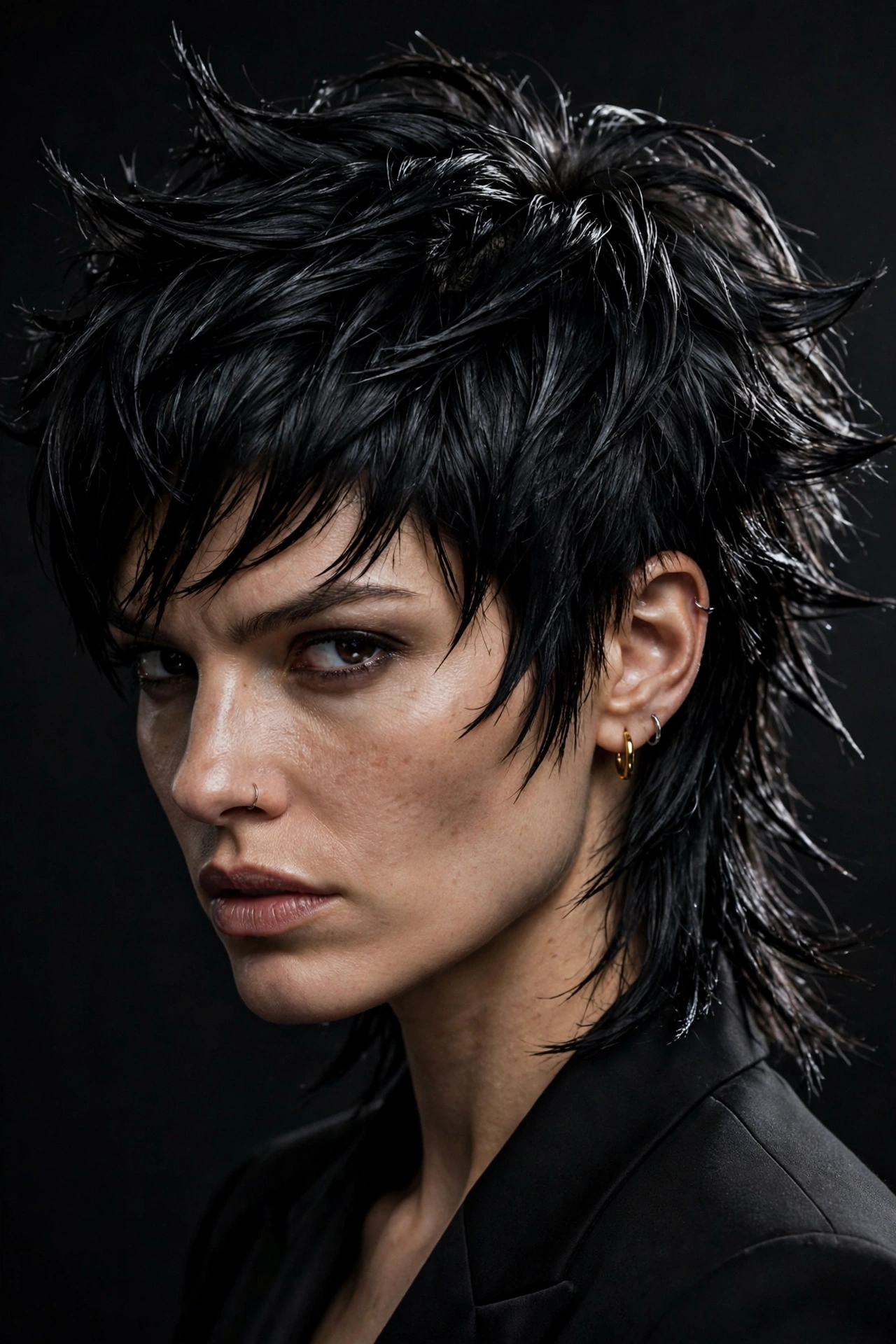
18. Long Mixie / Mixie-Mullet Hybrid
The final frontier: take the mixie proportions and stretch everything — longer textured top, fuller sides, a nape that reaches well past the collar. This is where the mixie melts into full mullet territory, and in 2026 that’s a feature, not a bug. It’s the most dramatic, most fashion-forward version: a genuine statement cut with runway energy. Not for the cautious, perfect for the committed.
Longer means more maintenance paradoxically — the shape needs checking every 5 to 6 weeks or the proportions drift. The nape needs regular thinning so it stays piece-y rather than heavy, and you’ll use more product (a proper amount of paste, not a pea). Styling options expand though: you can actually wave the lengths, slick the top, play with the silhouette. If the spiky short versions feel too severe, our short spiky haircuts guide sits at the other end of the texture spectrum. But if you want maximum mixie? This is it. Go big.
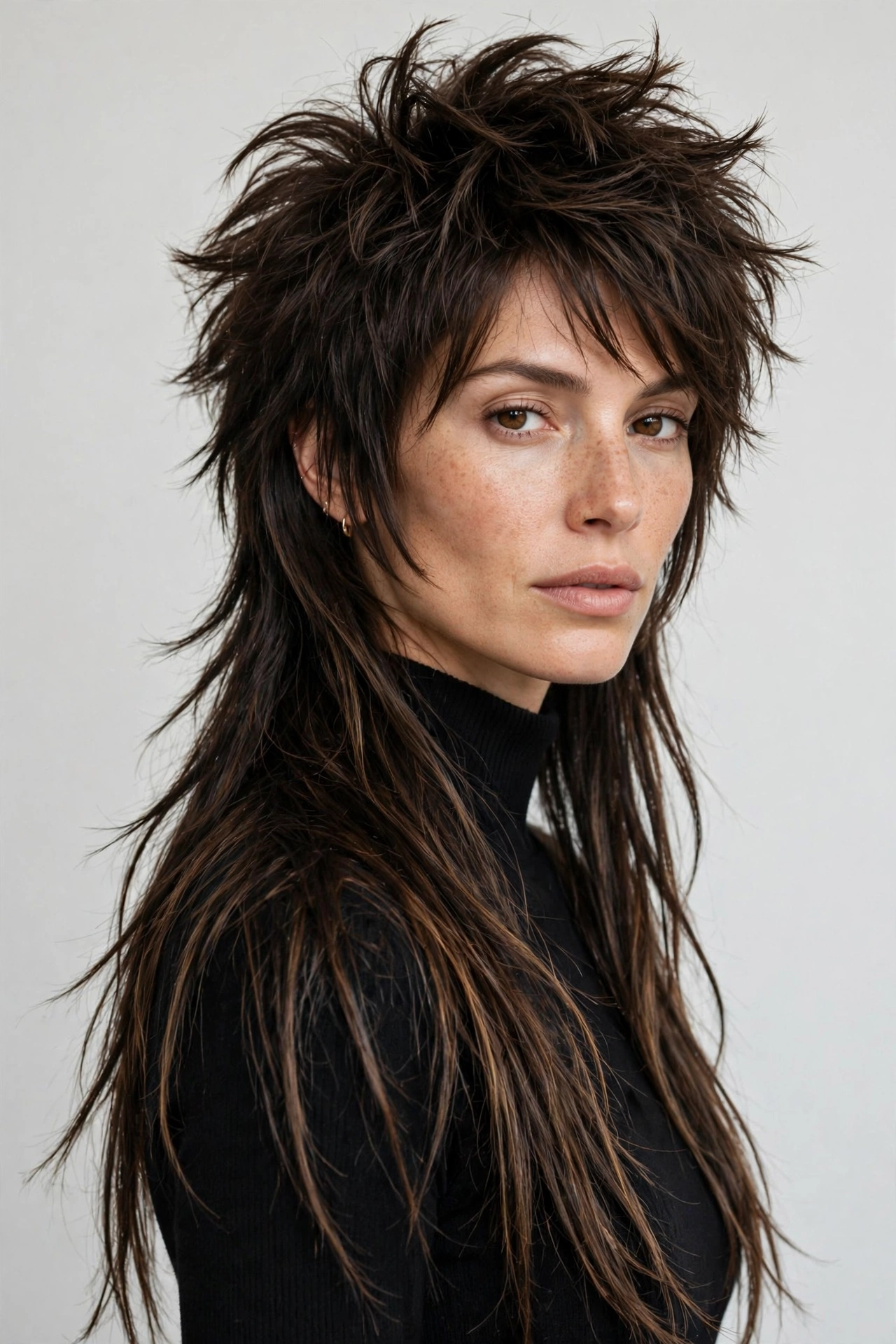
How to Ask Your Stylist for the Mixie Cut
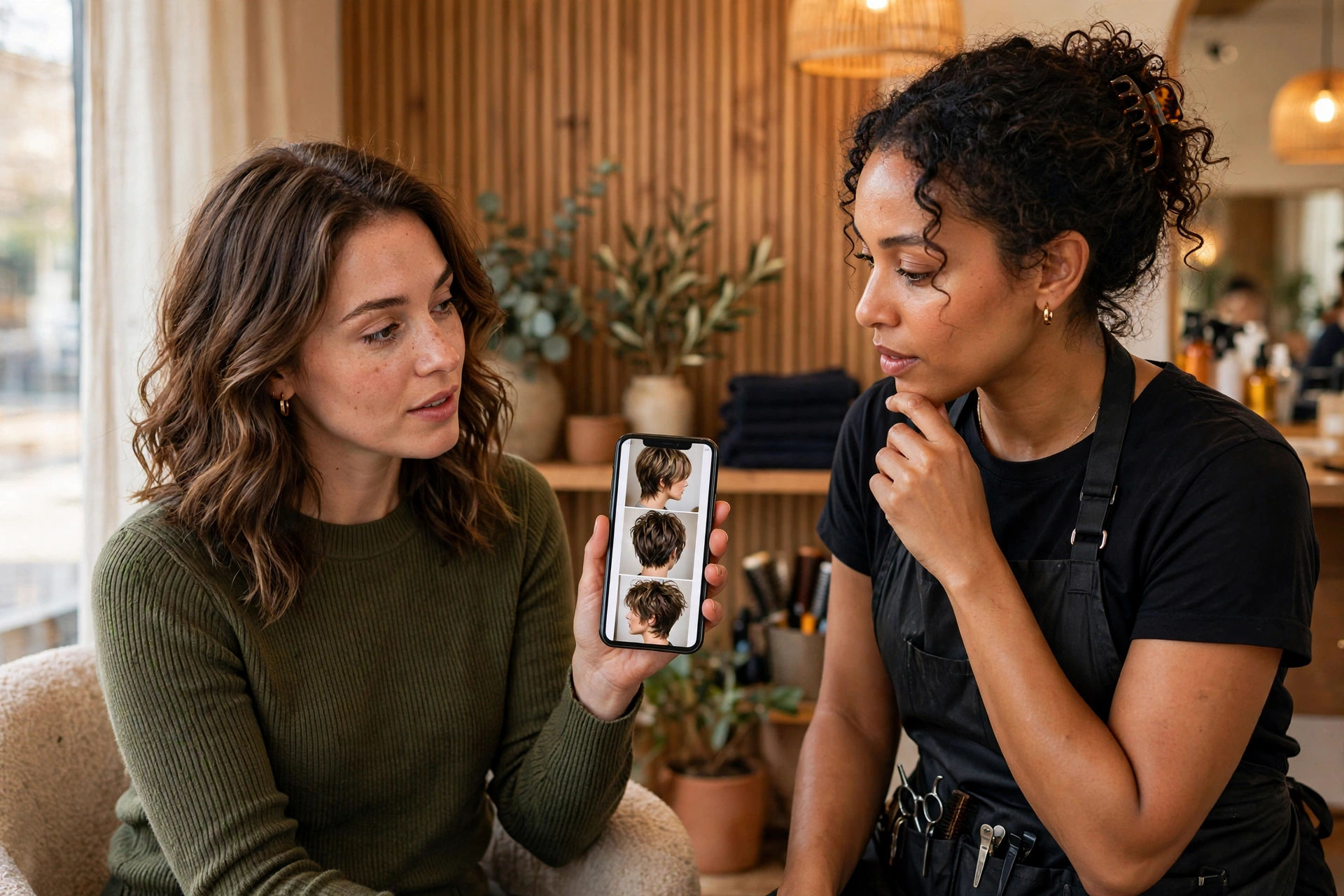
A request for just a mixie means different things to different stylists, so go in prepared. Open with the architecture: describe a pixie through the front, top, and sides — textured, close around the ears — with a longer, soft mullet-like nape at the back. Then show three photos: the overall cut you want, a front view showing the fringe area, and a back/side view showing exactly how long you want the nape. The nape photo is the most important one — it’s where mixies go wrong, either too long (full mullet surprise) or too short (just a pixie).
Then calibrate the details: how close do you want the sides (tucked? clippered? shaved?), what fringe style (micro, side-swept, baby bangs?), and how dramatic the pixie-to-nape contrast should be. Be honest about your mornings — whether you have five minutes and one product or will style it properly should shape the cut differently. And ask the two questions that matter: how often do you need trims to keep this shape (usually 4 to 6 weeks), and what will the grow-out look like? A stylist who’s done mixies before will answer both without hesitation. If they look confused by the word mixie, show more photos and use the words pixie with a longer nape — same thing, clearer picture.
How to Style the Mixie Cut at Home
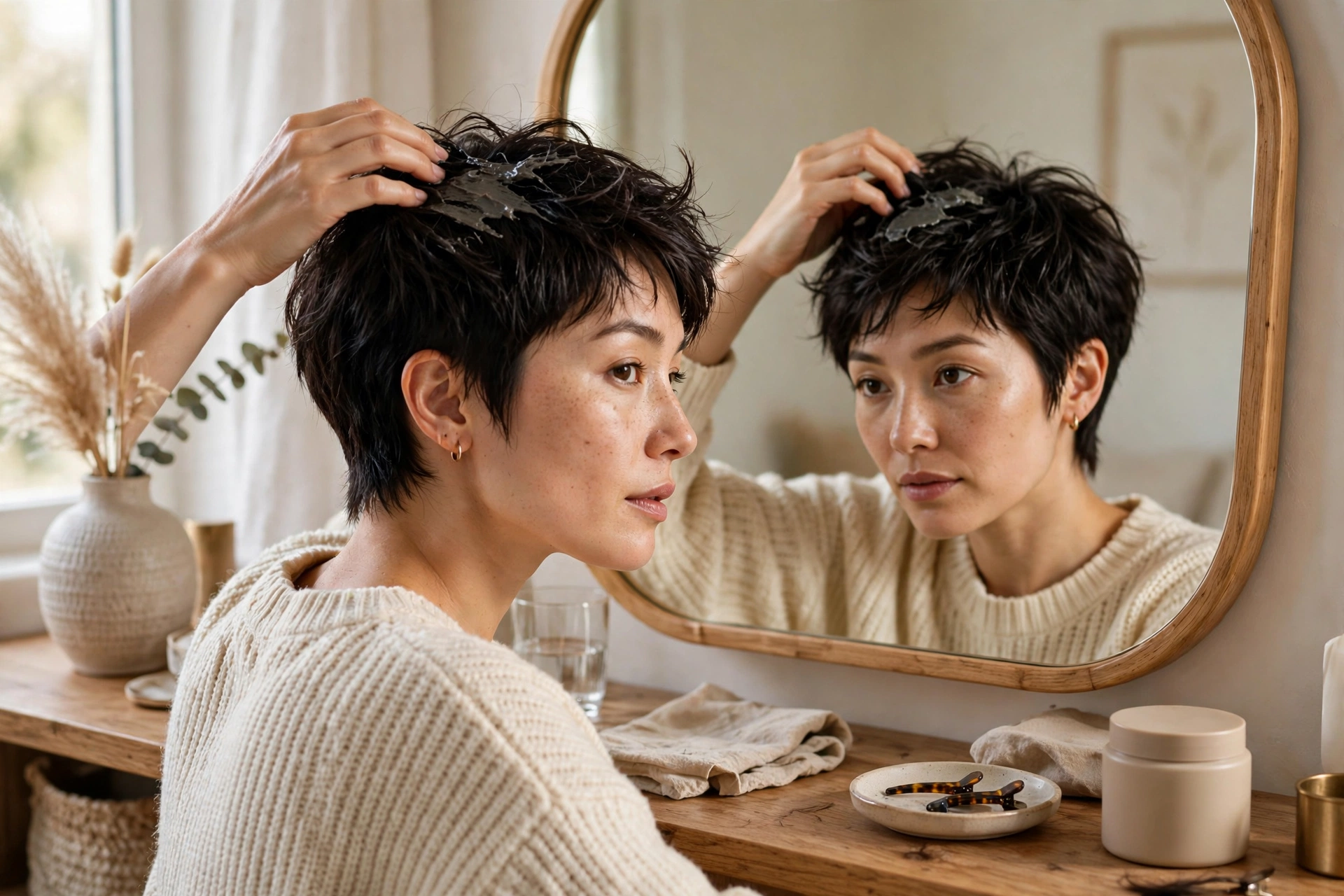
Good news: the mixie is a five-minute cut on most days. The core routine is dead simple — on dry hair, warm a pea-sized amount of matte paste or clay between your palms and work it through the top and sides, piece by piece, lifting at the roots and defining the ends. That’s the whole foundation. The texture of the cut does the visual work; the product just makes it deliberate instead of bedhead.
For variations: want more volume? A sprinkle of texturizing powder at the crown before the paste. Sleeker look? A flat iron on the fringe and top, then a light pomade. Wavy or curly mixie? Sea salt spray or curl cream on damp hair, scrunch, air-dry — no heat needed. The nape usually needs nothing, though a tiny bit of oil on the ends keeps longer napes healthy-looking. Second-day hair often looks better than first-day (the product residue adds grit), so don’t over-wash — 2 to 3 times a week is plenty for most. Dry shampoo at the crown on day two or three revives everything. Once you’ve done it twice, it’s muscle memory.
Will the Mixie Cut Suit You? Face Shapes and Hair Types
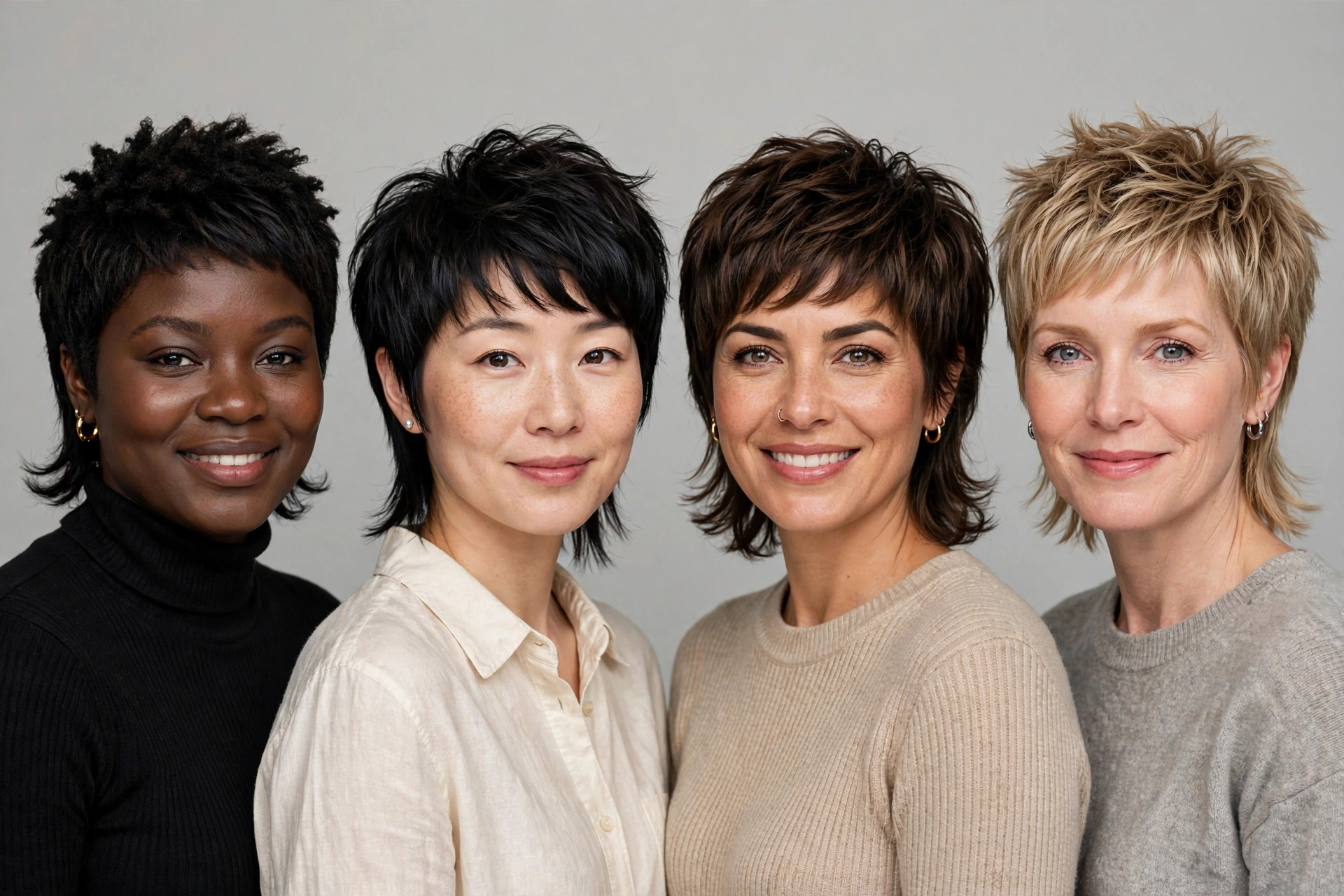
Let’s be straight about fit. The mixie is most flattering on oval, heart, and square faces. Oval faces can wear any version — lucky you. Heart-shaped faces love the mixie because the textured top and nape add width at the jaw, balancing a wider forehead. Square faces benefit from textured, piece-y versions that soften the jaw (avoid the sharpest androgynous takes unless that’s the point). Round faces need care: the wrong mixie (too round on top, too short in back) emphasizes roundness, but the right one — height on top, longer nape, side-swept fringe — actually elongates beautifully. Long faces should add fringe and avoid excessive crown height.
Hair-type-wise, the mixie is remarkably democratic. Thick hair gets welcome bulk removal and gorgeous texture. Fine hair gains the illusion of density through choppy layers (though very fine hair should avoid the longest nape versions, which can look sparse). Wavy and curly hair are genuinely ideal — the cut was made for natural movement. Straight hair works with the styling routine above. What matters more than texture is commitment: this cut needs trims every 4 to 6 weeks, and growing it out is a project. If you’re not ready for the salon relationship, a longer pixie is the lower-commitment cousin. But if you want the cut? The mixie rewards the bold.
Maintaining the Mixie Cut
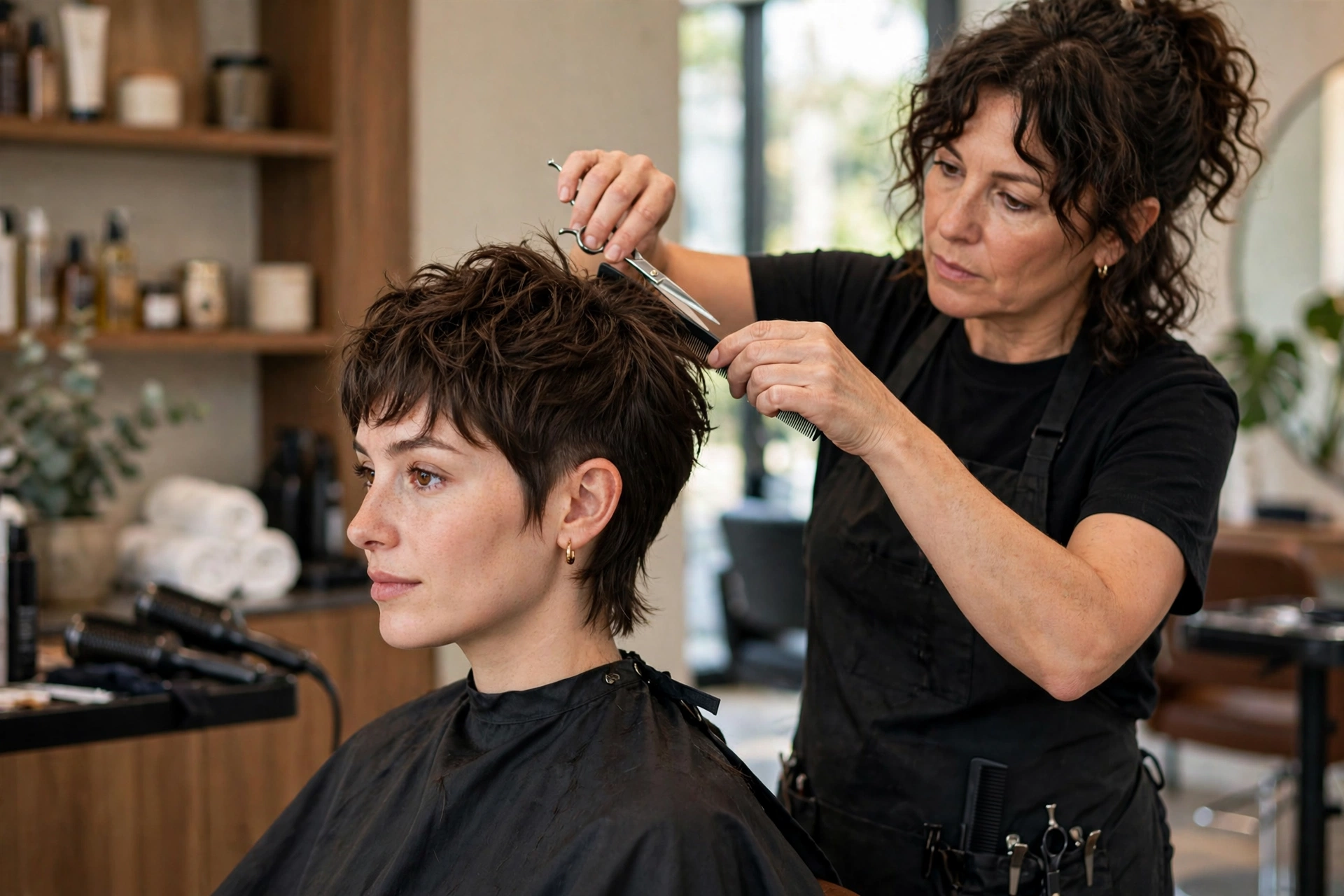
Here’s the honest maintenance picture: the mixie is a high-frequency, low-effort cut. High-frequency because the shape lives in precise proportions — once the top grows half an inch or the nape an inch, the architecture blurs. Plan trims every 4 to 6 weeks (4 for sharp versions, 6 for soft ones), and budget accordingly: at $60–$150 per cut depending on your city, that’s a real annual line item. Undercuts or shaved sections need clipper cleanups every 2 to 3 weeks between full cuts.
The low-effort part is daily life: five-minute styling, minimal product (one paste lasts months), and hair that air-dries into shape. Growing it out? That’s the mixie’s secret superpower — it transitions gracefully into a bixie, then a shaggy bob, then a lob, with each stage looking intentional if your stylist plans the trims. Tell them your long-term goal and they’ll shape each cut as a stepping stone. Between appointments, protect the nape ends with occasional oil, sleep on silk to reduce friction, and don’t skip the trims — a mixie past its trim date doesn’t look lived-in, it looks lost. Keep the schedule and it’s the easiest bold cut you’ll ever wear.
FAQs About the Mixie Cut
The questions I get asked most about the mixie — answered straight, no salon-speak.
What’s the difference between a mixie and a bixie?
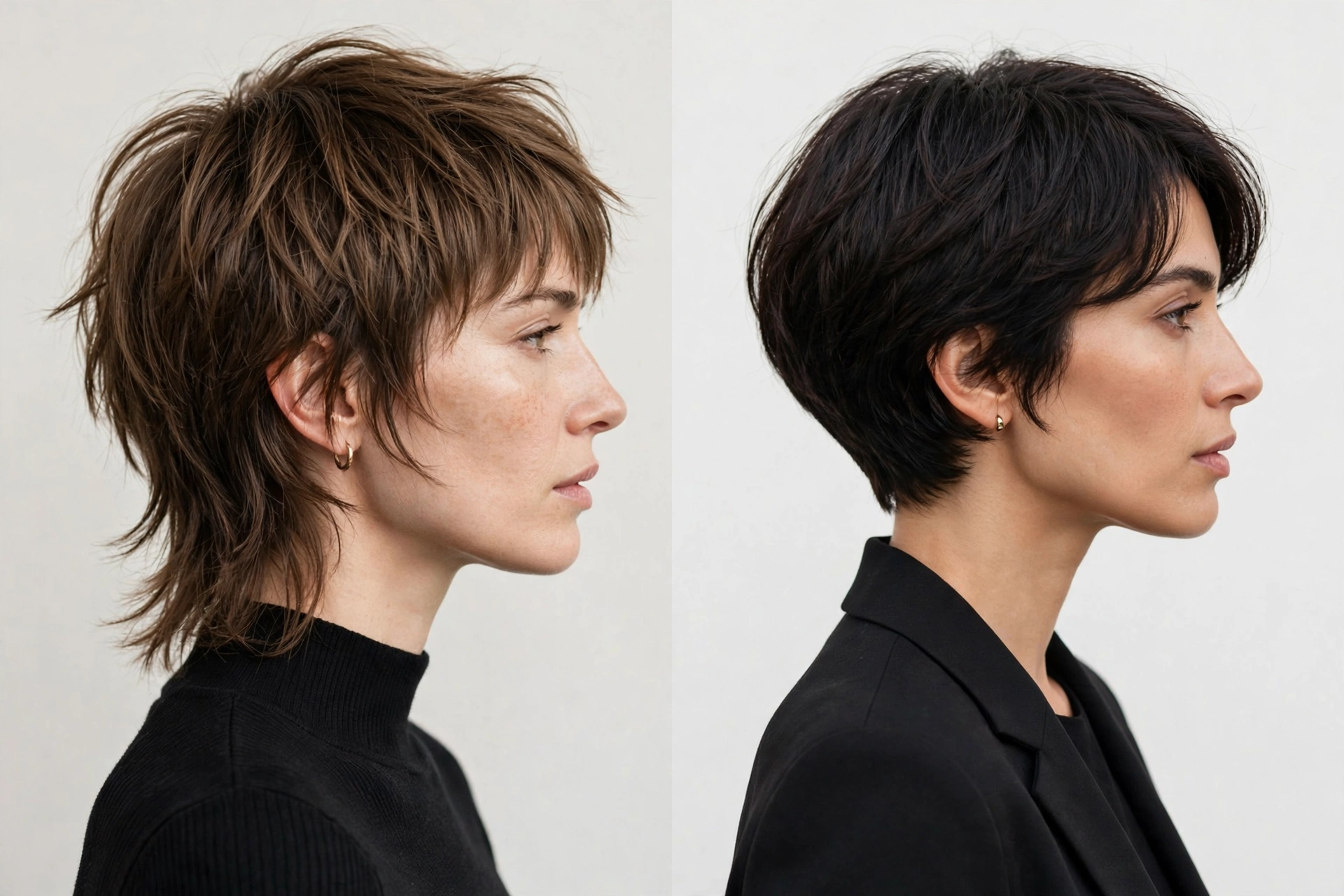
The bixie is a bob-pixie hybrid: longer than a pixie all over, with bob-like weight and length through the sides and back — think a short bob with pixie texture. The mixie is a pixie-mullet hybrid: cropped like a pixie through the front and sides, but with a distinctly longer nape at the back. The bixie is softer and more conservative; the mixie is edgier with that unmistakable back length. If you want short-but-safe, bixie. If you want short-with-attitude, mixie.
Is the mixie cut hard to grow out?
Actually, it’s one of the easiest short cuts to grow out — that’s its secret weapon. The longer nape means you’re already partway to a bixie or shaggy bob; you just keep trimming the top into shape while the back grows. Most women transition mixie → bixie → shaggy bob → lob over 6 to 12 months, with every stage looking deliberate. The only tricky grow-out is if you have an undercut or shaved section — those take months to blend and need strategic trims. For the standard mixie, growing out is genuinely painless.
Can I get a mixie with thin or fine hair?
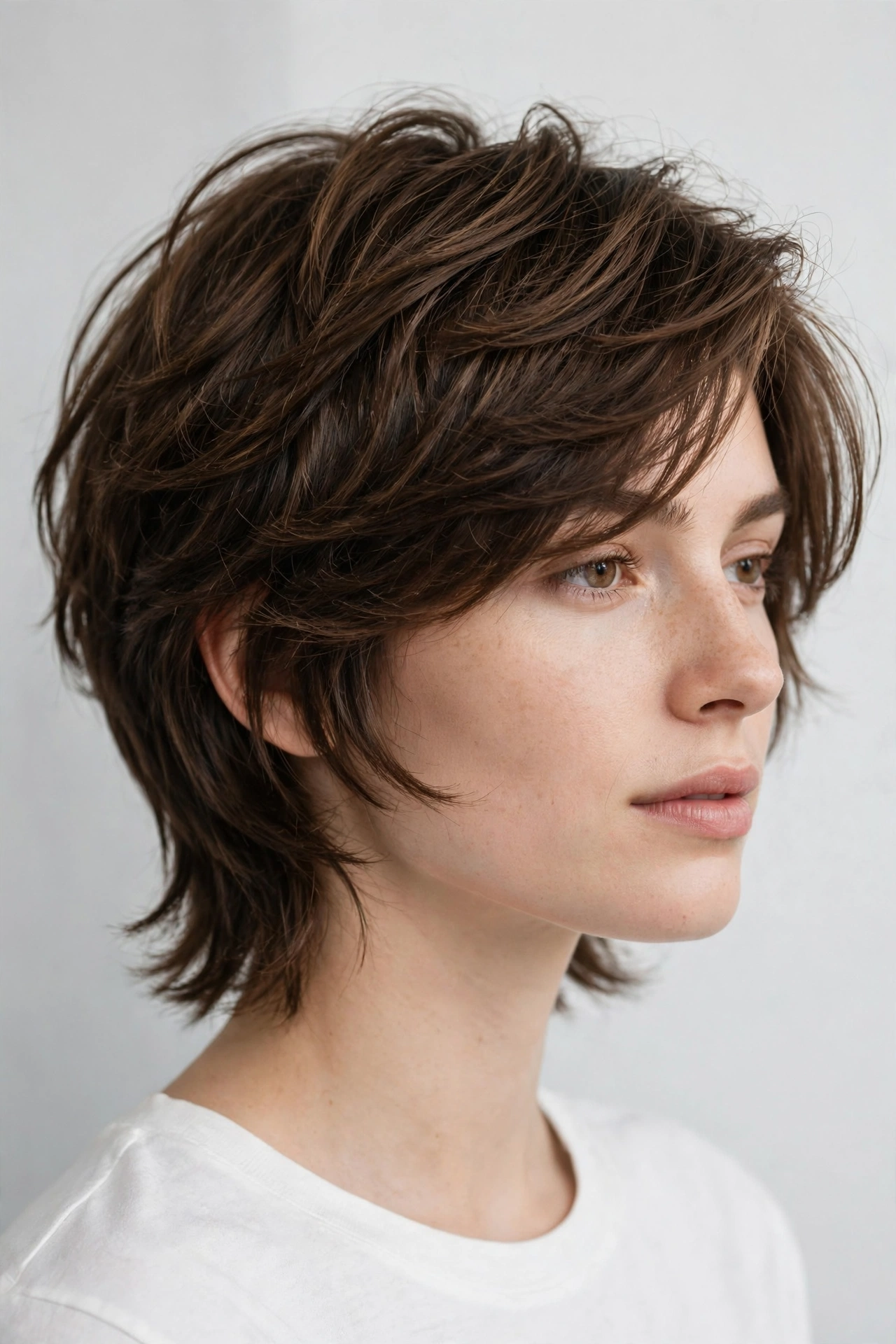
Yes — with smart cutting. Choppy, point-cut texture creates the illusion of density, so fine hair often looks thicker in a mixie than in a one-length cut. Keep the nape on the shorter side (long wispy napes can look sparse on fine hair), ask for texture rather than thinning, and use texturizing powder at the crown for lift. Avoid razor-thinning, which removes the little density you have. Styled with paste for piece-y definition, a fine-hair mixie looks full of attitude and surprisingly full, period.
How often do I need to trim a mixie cut?
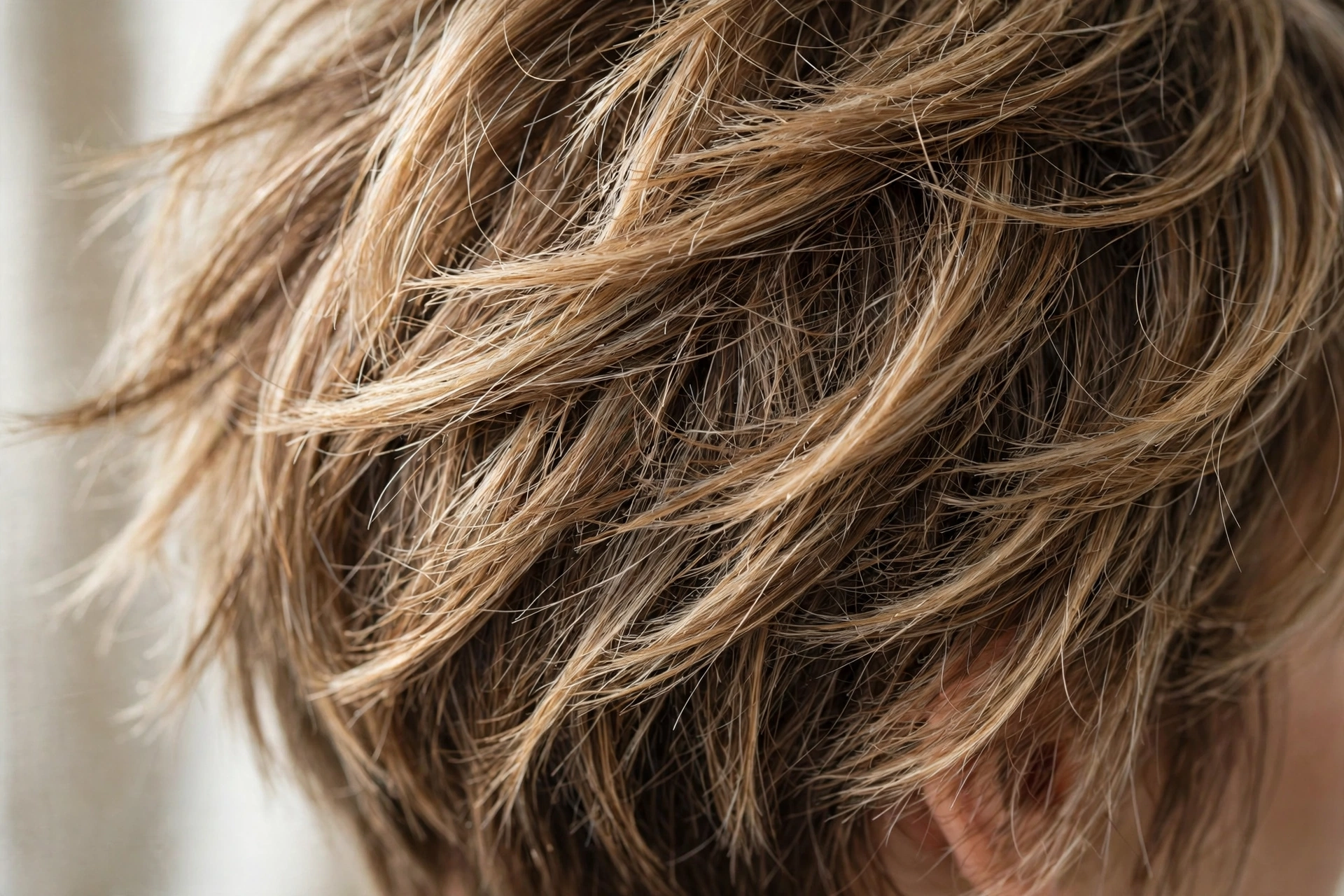
Every 4 to 6 weeks for the standard mixie — 4 if your version is sharp, precise, or has an undercut; 6 if it’s soft and textured. The shape depends on the proportion between the cropped top and the nape, and that proportion drifts fast as hair grows. Skipping trims turns a mixie into an accidental mullet (which, to be fair, some people end up preferring — but it should be a choice). Budget for the frequency before you commit; the cut is only as good as its last trim.
Will a mixie suit a round face?
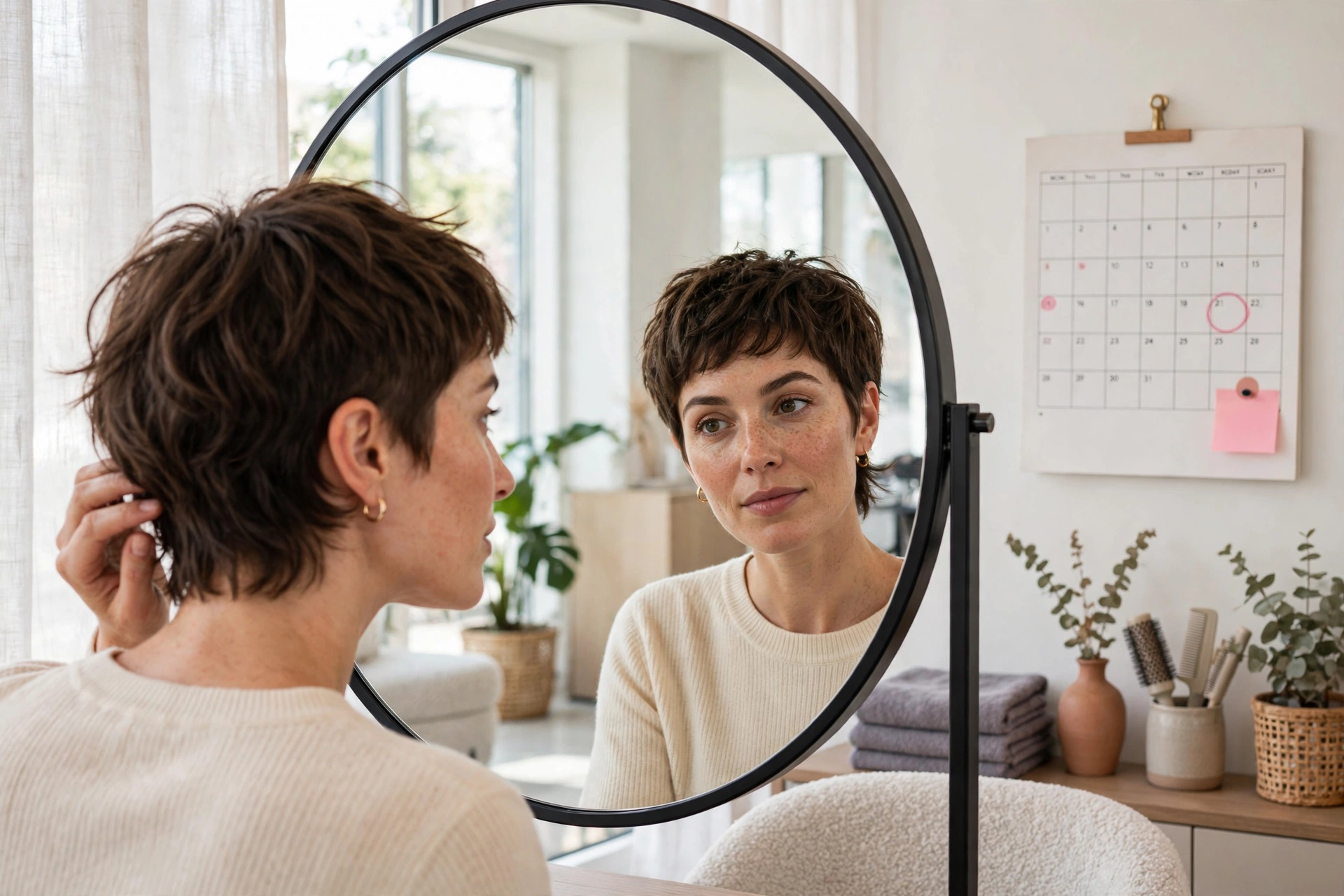
It can, with the right version. The keys: height and texture on top (adds vertical length), a side-swept or long fringe (breaks up roundness), and a defined nape (draws the eye down). Avoid the roundest, shortest mixies with no fringe — those mirror the face shape instead of balancing it. An asymmetrical mixie or one with micro bangs and strong texture works particularly well. Bring face-shape photos to your consultation and be upfront about having a round face and wanting the most flattering version. A good stylist will know exactly what to do.
Final Thoughts
The mixie cut isn’t for everyone — and that’s exactly why it matters. In a sea of safe, same-length hair, the mixie is a decision. It’s the cut for the woman who’s done waiting: done waiting to go short, done apologizing for edgy taste, done with hair that doesn’t say anything. And here’s what the fear misses — it’s also practical. Five-minute styling, graceful grow-out, a version for nearly every face and texture.
If you’ve read this far, you’re already interested enough to book the consultation. So do it. Save your three favorite styles from this list, find a stylist with real short-hair experience, and have the honest conversation about your hair, your mornings, and your nerve. The worst case? Hair grows. The best case? You find the cut that finally feels like you. In 2026, bold is beautiful — and the mixie is the boldest short cut worth wearing.
Conclusion
The mixie cut is 2026’s boldest short-hair statement, blending the cropped edge of a pixie with the rebellious length of a mullet. It’s made for women who refuse to be boxed in — edgy at the crown, longer and piecey through the nape, endlessly customizable. It flatters oval and heart-shaped faces and adds instant attitude to any hair type.
Styling is simple: scrunch texturizing paste through damp hair for a perfectly undone finish. Ask for soft, shattered layers so it grows out gracefully. Craving a haircut with real personality in 2026? The mixie delivers edge, movement, and confidence in one fearless chop.