Hime Cut Women 2026: 16 Japanese Princess Styles
Hime Cut Women 2026: 16 Japanese Princess Styles
The hime cut walked out of a Japanese history book and straight into 2026’s most-wanted haircut lists, and honestly? It deserves every bit of the attention. This is the cut with the razor-sharp sidelocks framing the cheeks, the straight-across fringe, and that unmistakable silhouette that looks like it was drawn with a ruler. If you’ve been scrolling through style feeds and stopping at those dramatic, geometric cuts, you’ve been looking at the hime cut — and this guide covers everything about it.
I have cut this style on women with stick-straight hair, wavy hair, thick hair, fine hair, and everything in between, and here is what I will tell you the way I tell my clients: the hime cut is not a low-effort haircut. It asks for commitment. The sidelocks need trimming every three to four weeks to keep that blunt edge, the bangs need daily attention, and the overall shape only works when the hair is smooth. But when it is right — when those cheek-length panels sit exactly where they should — there is no haircut on earth that looks like it.
This guide is the full breakdown. You will learn what the hime cut actually is (and what it is not), where it came from, why it exploded in 2026, and which of the 16 styles in this article fits your face shape, hair type, and lifestyle. I will tell you exactly what to ask your stylist, how to style it at home without spending an hour, what color choices make it pop, and the mistakes I see women make with this cut every single week.
Fair warning before we start: if you want a wash-and-go haircut, this is not it. If you want a haircut that makes people turn around in the street, keep reading.
One more thing before we get into it: this guide is written for real life, not for a photoshoot. Every style below comes with the honest maintenance cost, the face shapes it actually suits (not the ones it photographs well on), and the hair types that can pull it off without a daily battle. I would rather talk you out of the wrong version than watch you grow out a cut you resent. The hime cut is too good to be worn badly — so let us make sure you wear it well.
By the end of this article, you will know whether the hime cut is your next haircut or a beautiful look you admire from a distance — and either answer is completely fine.
What Is the Hime Cut? The Anatomy of the Look
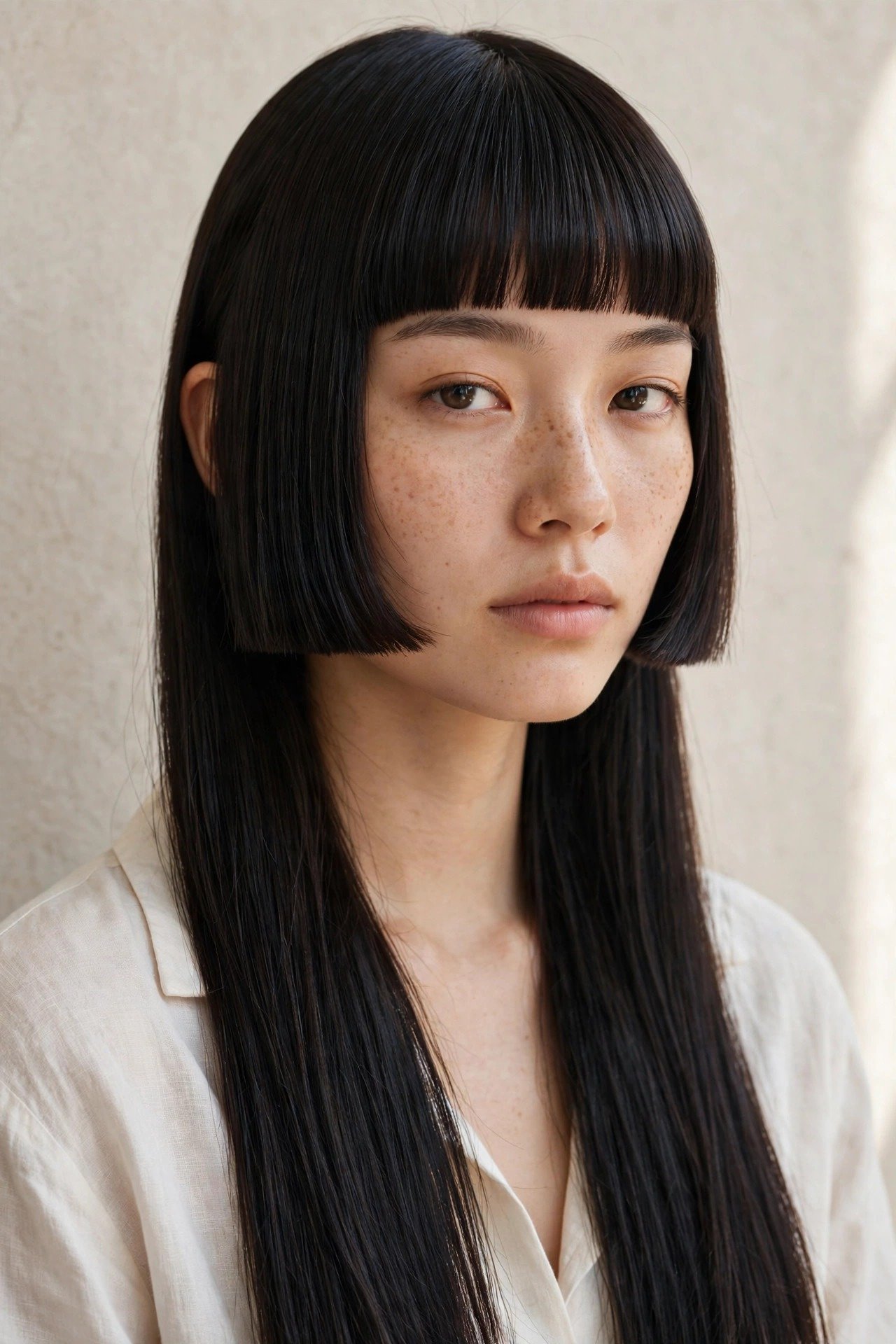
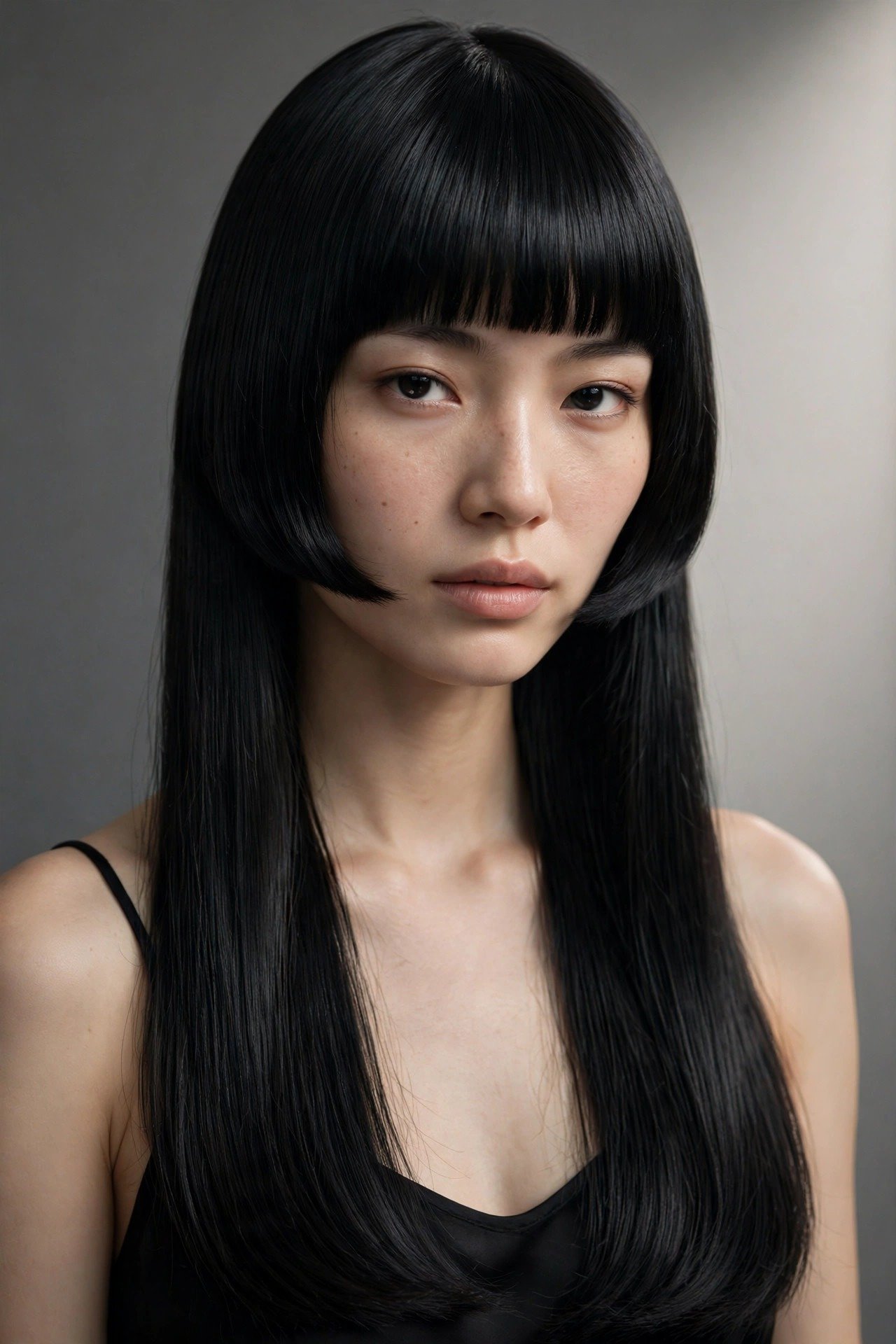
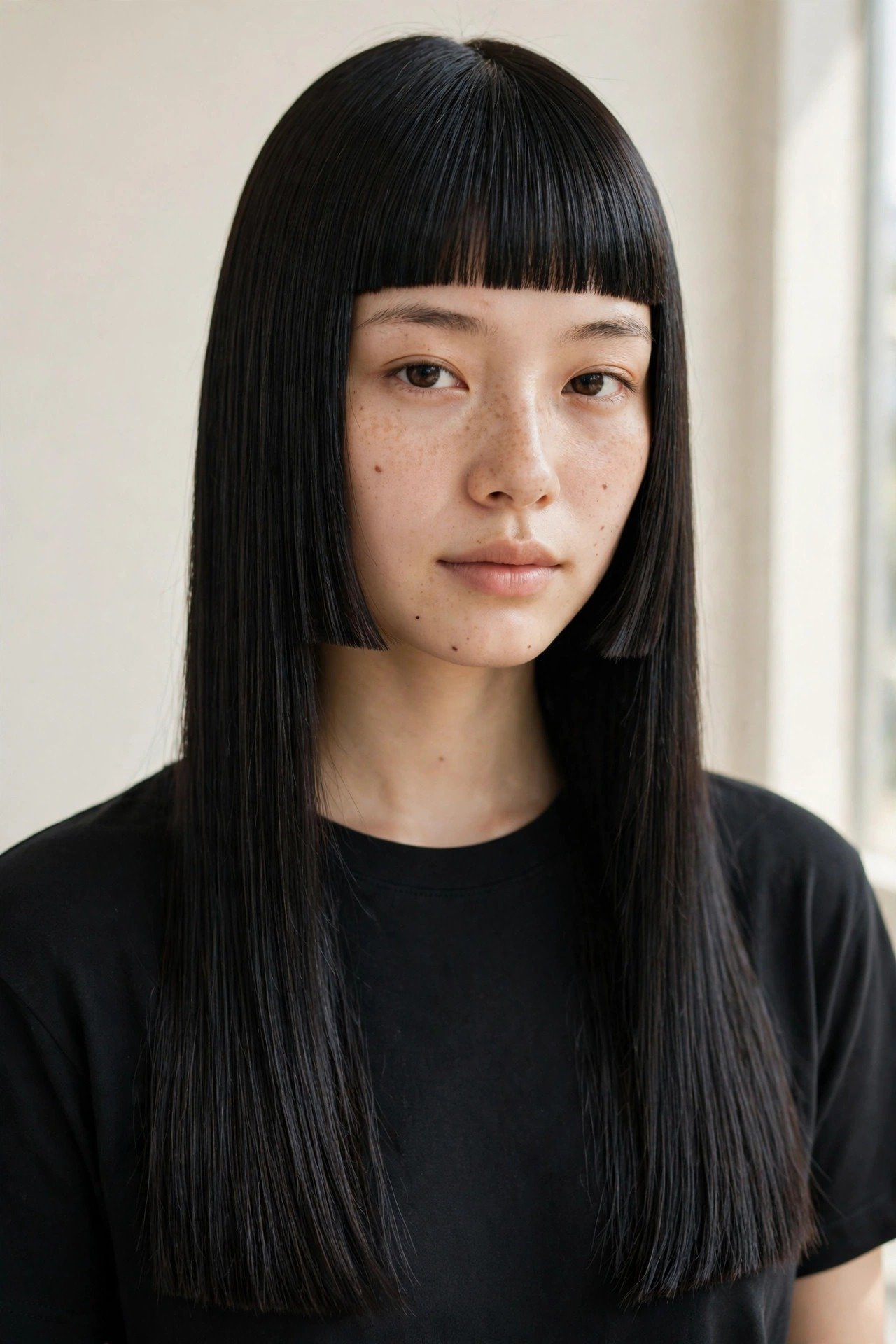
A hime cut — pronounced “hee-meh,” from the Japanese word for “princess” — is built from three distinct parts. First, the sidelocks: two thick panels of hair cut blunt at cheek or jaw length, one on each side of the face, completely separated from the rest of the hair. Second, the fringe: usually straight-across bangs, though variations exist. Third, the length: the remaining hair falls long and straight behind the sidelocks, typically past the shoulders. Those three elements together create the silhouette.
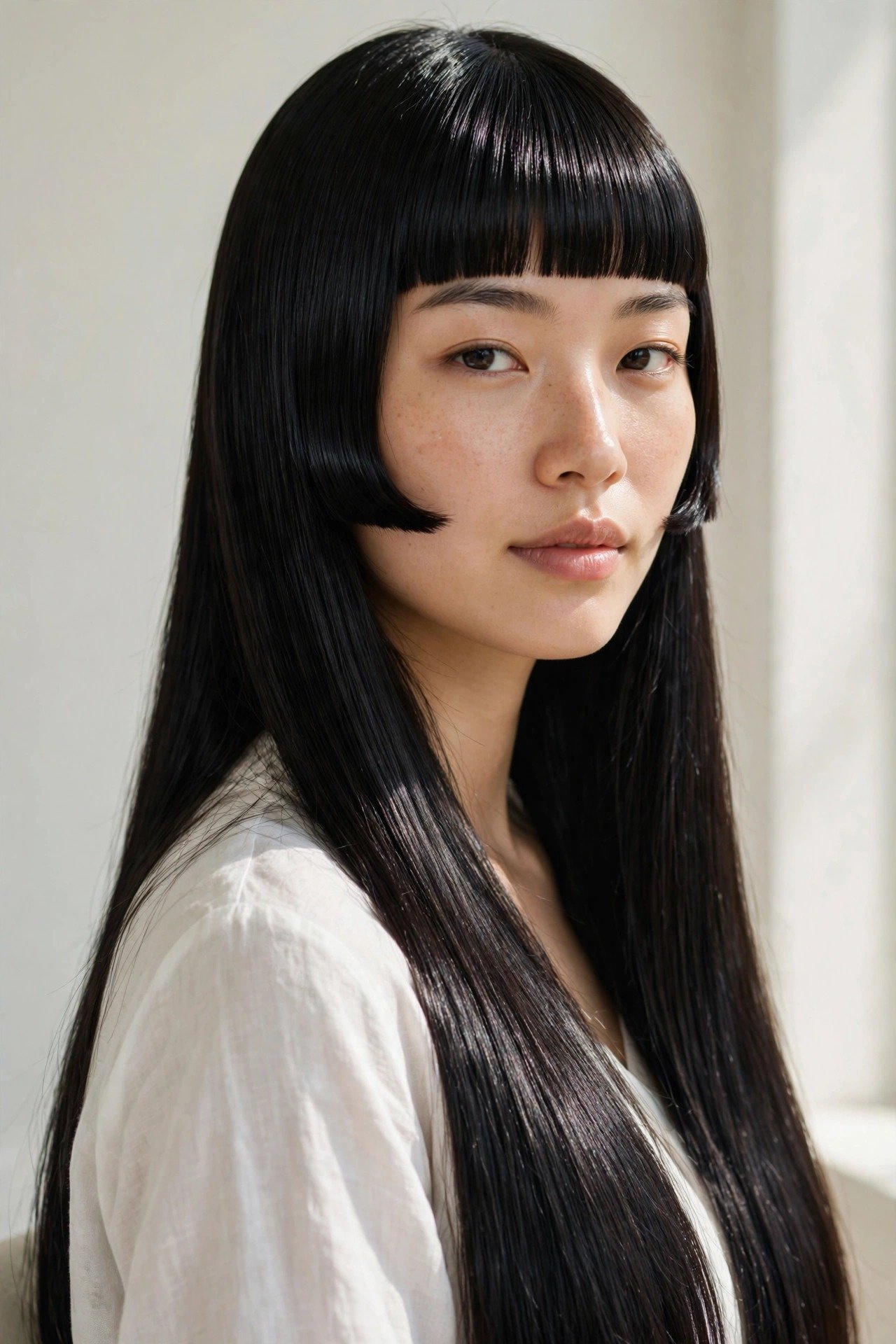
Style 1: The Classic Imperial Hime Cut. This is the original — sidelocks cut blunt at the cheekbone, straight-across fringe sitting just above the brows, and the back length falling straight to the mid-back or longer. Everything is pin-straight, every edge is sharp, and the contrast between the short sidelocks and the long back is dramatic. It is the most historically accurate version of the cut, and it is also the most demanding: any wave or frizz breaks the geometry, so you are looking at a flat iron every morning if your hair is not naturally straight.
Here is what nobody tells you about the sidelocks: they are not just “face-framing layers.” They are a separate, deliberate panel with a hard bottom edge. Your stylist needs to cut them as an isolated section, not blend them into the rest. When done right, the sidelock edge should be so blunt you could practically set a ruler against it. When done wrong — blended, feathered, or texturized — the whole cut collapses into an ordinary layered haircut with weird short bits around the face.
The length behind matters more than most people think. The classic hime cut needs the back length to be long enough to create contrast with the sidelocks — at least past the shoulders, ideally mid-back or longer. If the back is too short, the sidelocks stop reading as a separate feature and the cut loses its drama. This is one reason the hime cut photographs best on long hair: the long back is the canvas that makes the short panels pop.
Color plays a role too, though the purists will insist the hime cut belongs in jet black. Historically, yes — the cut comes from Heian-period Japanese noblewomen, and the look was raven-black hair. In 2026, women wear it in every color from platinum to copper, and the geometry reads in any shade. That said, dark hair shows the sharp edges most clearly, so if you want maximum drama, darker is better.
One more thing about proportions that separates a good hime cut from a great one: the sidelock width. The panels should be substantial — roughly two to three inches wide each — not thin wisps. Thin sidelocks look like an accident; thick panels look like a decision. When your stylist sections the sidelocks, they should take a generous slice from temple to just behind the ear. If the panels are too narrow, they disappear into the rest of the hair and the cut loses its whole reason for existing.
The History of the Hime Cut: From Heian Princesses to 2026
The hime cut is over a thousand years old, which makes it one of the oldest named haircuts still being worn. In Japan’s Heian period (794–1185), aristocratic women wore their hair extremely long — sometimes reaching the floor — as a mark of status. The distinctive feature was the sidelocks: sections of hair beside the face were cut shorter than the rest, at about cheek or chin length. This was not a fashion choice in the modern sense; it was a marker of nobility, worn by women of the imperial court.
Style 2: The Modern Blunt Hime Cut. Today’s version keeps the thousand-year-old bones but sharpens everything. The sidelocks are cut with zero texture — completely blunt, no layering, no softening. The fringe is cut straight across with the same bluntness. The back is cut in one clean line. This is the version dominating 2026 feeds: maximum precision, maximum edge, and the least forgiving of any imperfection. It suits women who already have straight hair and a steady hand with a flat iron.
The cut traveled through Japanese pop culture before it hit the mainstream. Anime and manga characters have worn hime-style cuts for decades — it became visual shorthand for elegant, mysterious, sometimes dangerous female characters. In the 2010s, it moved into alternative fashion scenes: visual kei, gothic lolita, and street fashion in Harajuku. By the early 2020s, Western celebrities and influencers started wearing it, and the cut crossed fully into global fashion.
Why is it peaking right now, in 2026? A few things converged. Blunt geometry is back in a big way after years of soft, lived-in texture dominating salons. Anime aesthetics went fully mainstream. And — this is the practical part — the hime cut photographs incredibly well. In an era where your haircut has to perform on camera, a cut with this much visual structure is catnip. It reads instantly in a thumbnail, which is half the battle for any trend.
One thing I respect about this cut: it has never been diluted into meaninglessness the way some trends get. You cannot fake a hime cut or approximate it. Either the sidelocks are there with their blunt edge, or they are not. That binary quality — it either is or it isn’t — is rare in hair trends, and it is part of why the cut has survived a thousand years.
There is a detail from the Heian period worth knowing because it explains the cut’s DNA: the sidelocks were called “binsogi” and their length actually signaled a woman’s age and status — younger noblewomen wore them shorter, and the length changed at coming-of-age ceremonies. So the hime cut was never just decoration; it was communication. That is why the cut still feels meaningful today in a way most trends do not. You are not just wearing a shape — you are wearing a thousand-year-old statement about identity, and people respond to that weight even if they cannot name it.
Why the Hime Cut Is Trending in 2026
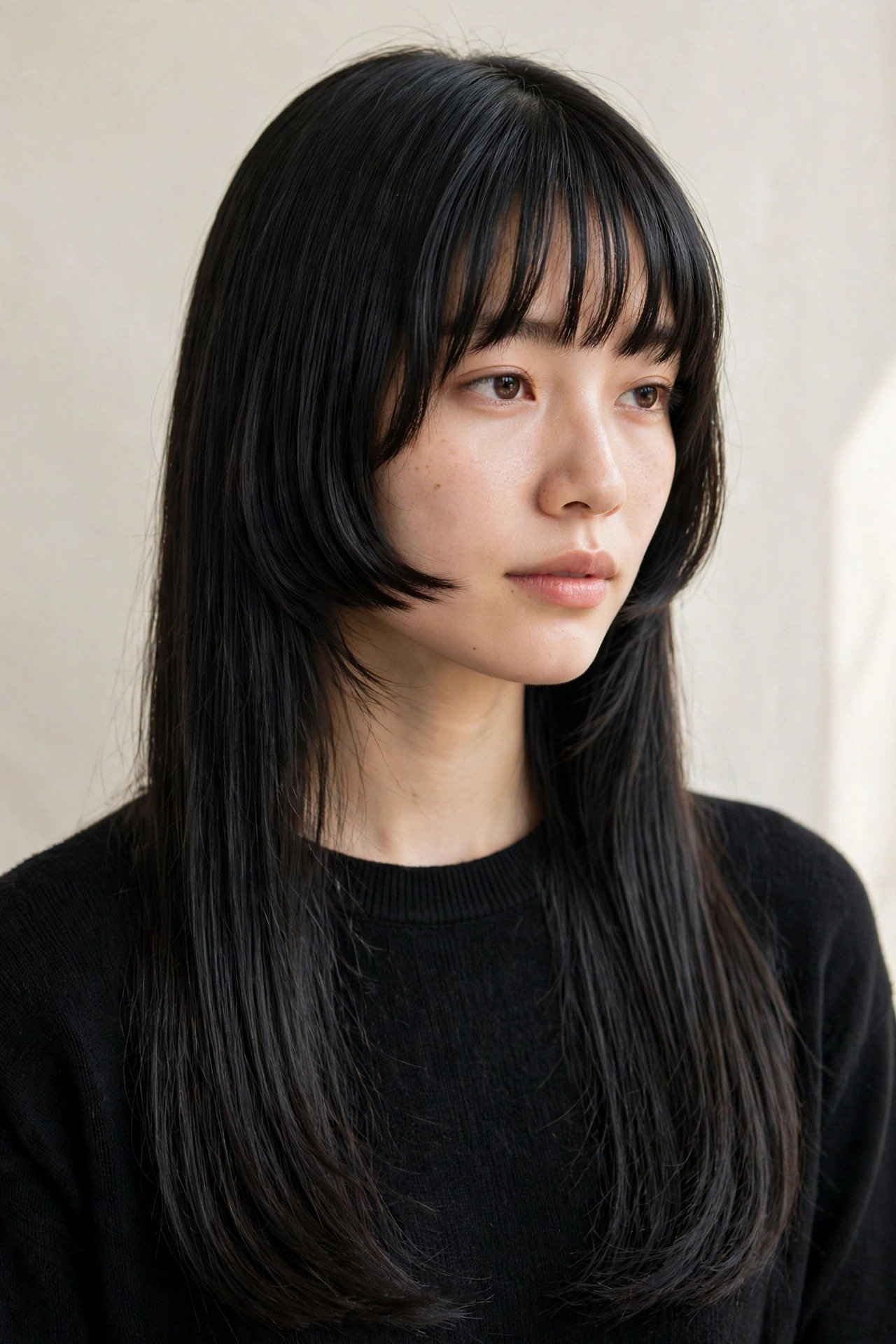
Every few years, hair swings hard toward structure, and 2026 is one of those years. After the long reign of soft shags, curtain bangs, and “effortless” texture, the pendulum has swung to precision: blunt bobs, glass hair, sharp fringes. The hime cut is the most extreme expression of that swing, and that is exactly why it is trending — it is the cut that goes furthest.
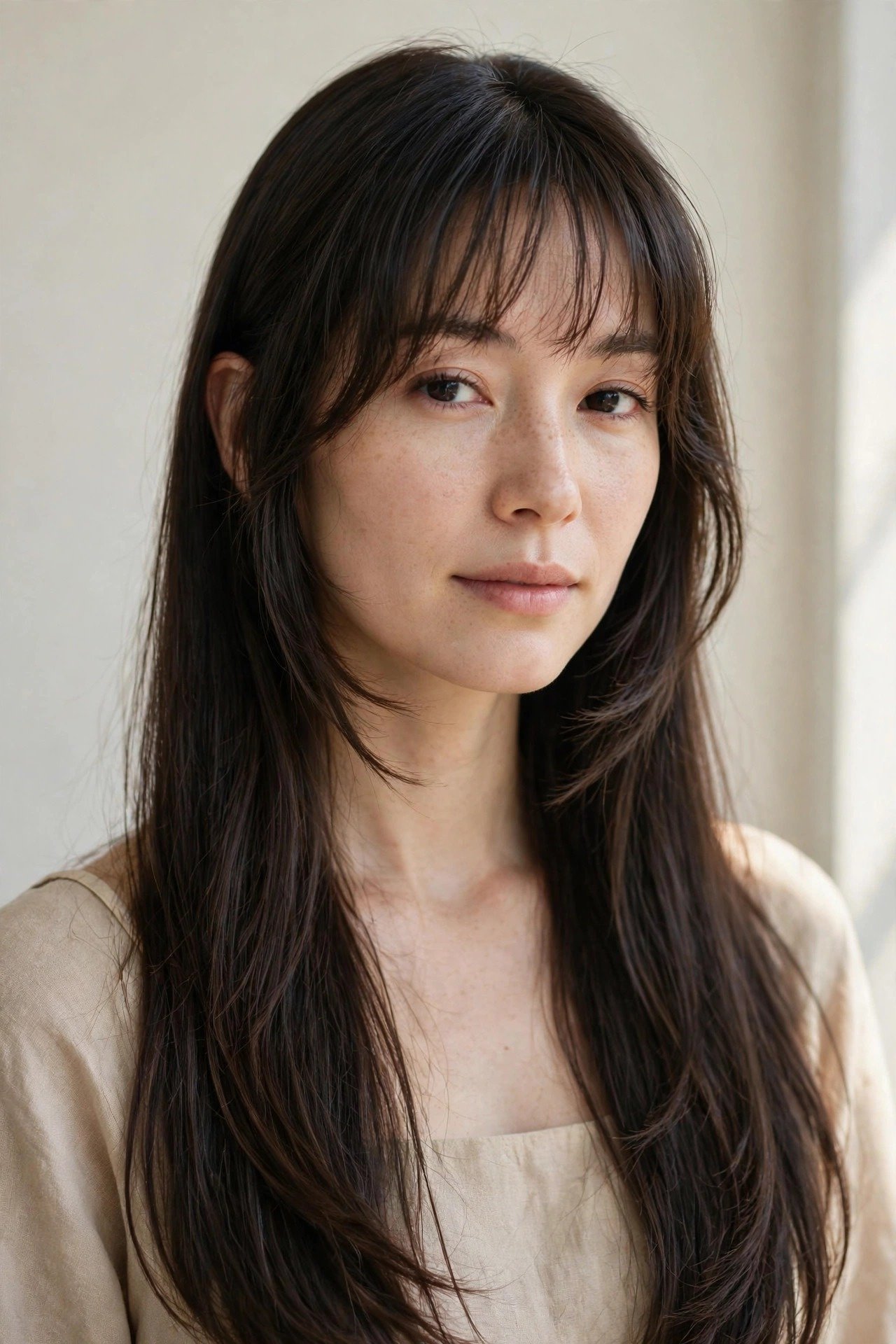
Style 3: Hime Cut with Curtain Bangs. This is the 2026 compromise for women who love the hime silhouette but cannot commit to a full straight-across fringe. Instead of blunt bangs, the front is cut as curtain bangs that part in the middle and sweep to the sides, blending into the sidelocks. It softens the forehead area while keeping the signature cheek panels. It is genuinely more wearable for daily life, and it grows out more gracefully than a blunt fringe.
The numbers back the trend up. Search interest in hime cut tutorials has climbed steadily, and the cut has become a staple request in salons that serve younger clients. I have had clients in their twenties bring in reference photos every week for months. It is not a flash trend that will vanish in a season — the cut has a thousand years of history and it keeps resurfacing because the shape itself is timeless.
Social media changed which version of the hime cut is popular. The algorithm rewards extremes, so the most-shared versions are the sharpest: jet black, pin-straight, sidelocks cut at an aggressive cheekbone length. But the versions women actually wear day to day are softer — slightly longer sidelocks, a little texture, bangs with some movement. There is a gap between the viral hime cut and the wearable hime cut, and this article covers both.
My honest take as a stylist: trends come and go, but the hime cut is one of the few “trend” haircuts I recommend without hesitation to the right person. If you have straight or straightenable hair, a face shape that suits strong lines, and the willingness to maintain it, this cut will look incredible on you in 2026 and it will still look incredible in 2030. It is not really a trend at all. It is a classic wearing a trend’s clothes.
Here is my prediction, for what it is worth: the hime cut will outlast the current trend cycle by years, because it keeps getting rediscovered by new generations who think they invented it. I watched it happen with the emo wave in the 2000s, the pastel-goth wave in the 2010s, and now the 2026 precision wave. Each generation finds the same thousand-year-old shape and claims it. A haircut that gets independently rediscovered every decade is not a trend — it is a permanent part of the vocabulary, like the bob or the pixie. Getting it now just means you are early in this particular cycle.
Hime Cut vs. Other Japanese Cuts: Know the Difference
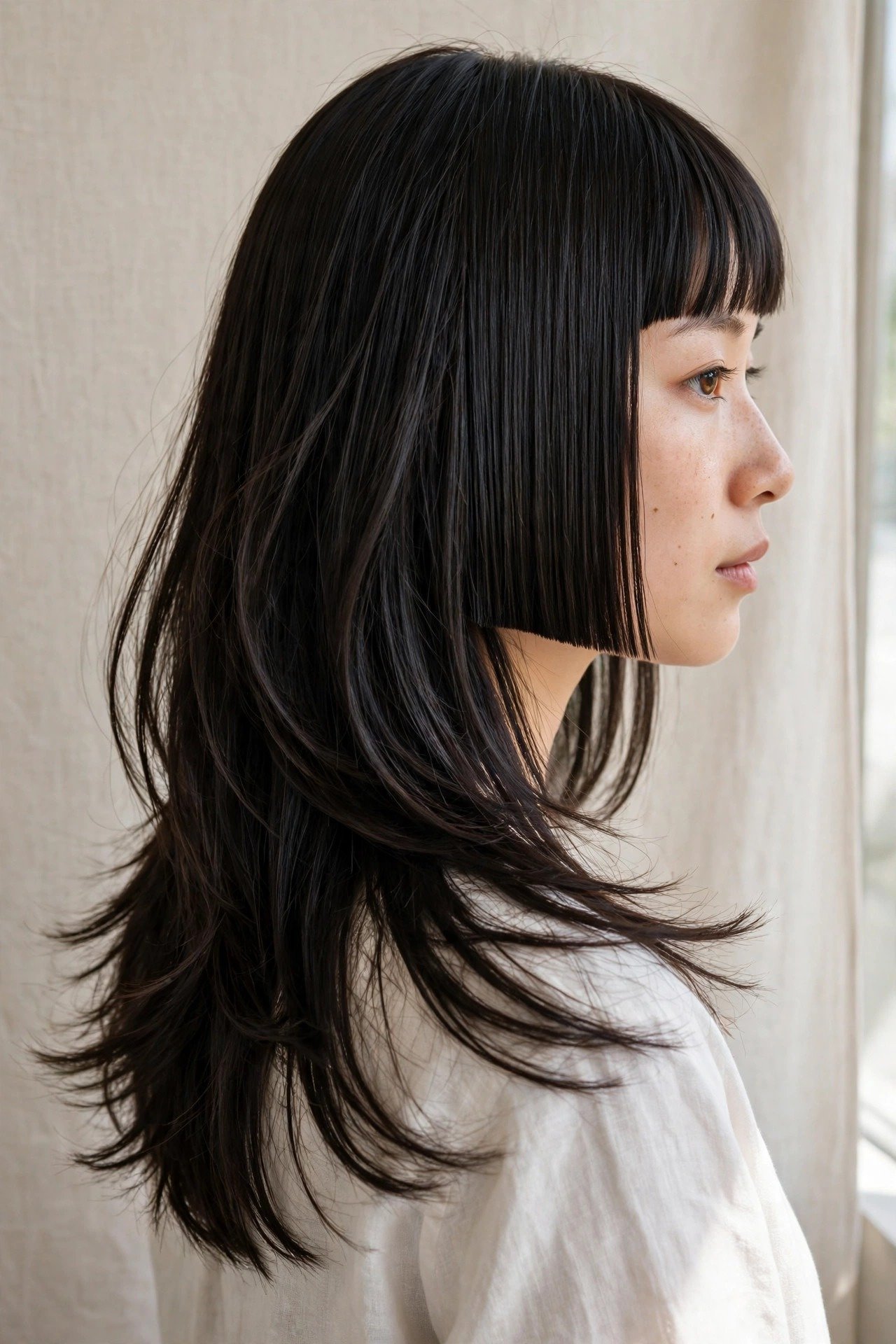
People mix the hime cut up with several other Japanese-origin cuts, so let me draw the lines clearly. The hime cut is defined by its blunt, isolated sidelocks. The wolf cut — also Japanese-origin — is all about shaggy, blended layers and volume at the crown. They are opposites: the hime cut is precise and separated, the wolf cut is messy and connected. If your stylist starts texturizing and blending your sidelocks, you are getting a wolf cut with bangs, not a hime cut.
Style 4: The Layered Hime Cut. This version keeps the signature sidelocks but adds long layers through the back length instead of the classic one-length back. The layers start below the shoulders and give the back some movement while the sidelocks stay blunt and separate. It is a good middle ground if you find the classic version too severe — the layered back feels more modern and a little less costume-like, while the front still delivers the unmistakable hime geometry.
Then there is the jellyfish cut, which confuses everyone. The jellyfish is essentially a hime cut pushed to an extreme: a short bob-like top section sitting over very long bottom layers, with a visible disconnect all the way around the head. The hime cut’s disconnect is limited to the two sidelock panels at the front; the jellyfish disconnects the entire perimeter. Think of it this way — the hime cut frames the face with panels, the jellyfish stacks two haircuts on top of each other.
The hime cut also gets confused with a regular bob with face-framing, which is just wrong. Face-framing pieces are blended into the haircut; hime sidelocks are deliberately not blended. That hard separation is the entire point. When you sit in the chair, use the word “blunt” and the word “separate” — if your stylist reaches for texturizing shears on the sidelocks, stop them.
Understanding these differences matters because each cut needs different maintenance and suits different people. The hime cut is the most precise and the most demanding of the group. If you are drawn to Japanese cuts but want something softer, the wolf cut is your answer. If you want the drama, stay here.
A practical test you can do right now, before booking anything: part your hair the way the hime cut would sit, then hold two thick sections of hair forward at cheek length on each side — use clips to hold them — and look in the mirror. That rough simulation tells you more than any article can about whether the geometry suits your face. Do it in daylight, take a photo, and look at the photo rather than the mirror — photos show you what other people see. If the panels look intentional and striking, book the appointment. If they look like random chunks, consider the softer adaptations.
Best Face Shapes for the Hime Cut
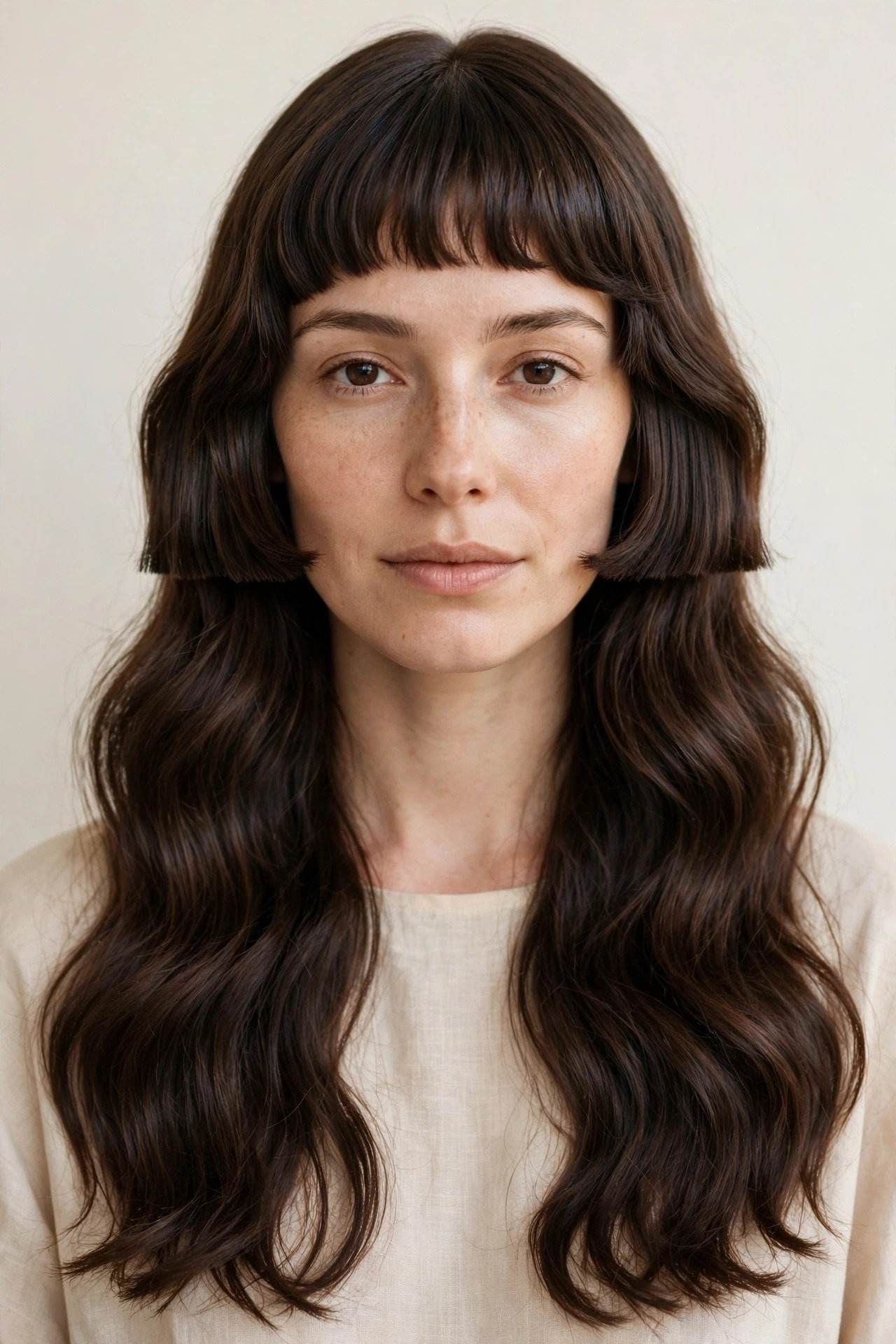
Let me be straight with you: the hime cut does not flatter every face equally, and a good stylist will tell you that before picking up the scissors. The cut’s strong horizontal lines — the blunt fringe, the blunt sidelock edges — add width wherever they sit. That is fantastic for some faces and a real problem for others.
Style 5: The Wavy Hime Cut. Before the face-shape breakdown, note this style: the sidelocks and fringe keep their blunt cuts, but the lengths are worn with soft waves instead of pin-straight. It relaxes the geometry just enough to flatter rounder faces, because the wave breaks up the horizontal emphasis. Oval and heart-shaped faces wear the classic straight version best; round faces should seriously consider this wavy adaptation.
Oval faces: you won the lottery with this cut. The hime cut’s strong lines balance an oval face beautifully, and the sidelocks draw attention to the cheekbones. Any sidelock length from cheek to jaw works. This is the face shape I never hesitate to recommend the classic version to.
Heart-shaped faces: the hime cut is genuinely excellent here. The blunt fringe covers a wider forehead, and the sidelocks add width at the cheek and jaw, balancing a narrower chin. Cut the sidelocks at jaw length rather than cheek length to add fullness where a heart face needs it most. This combination is one of my favorite uses of the cut.
Round faces: this is where I urge caution. Blunt horizontal lines at cheek level can emphasize roundness — the sidelocks sit exactly where a round face is already widest. It can still work, but with adjustments: longer sidelocks (jaw length or below), a side-swept or curtain fringe instead of blunt bangs, and some wave or texture through the lengths. The wavy version above exists largely for this reason. Square faces: the cut’s sharpness can fight with an already-angular jaw. Soften it — slightly longer sidelocks, wispy bangs instead of blunt, and avoid the most severe cheekbone-length panels.
What about oblong or rectangular faces — the long ones? The hime cut is genuinely flattering here, and this is the face shape I get most excited about for this cut. The horizontal lines of the fringe and sidelocks visually shorten a long face, which is exactly what oblong faces usually want. Cheek-length sidelocks are ideal; they add width right where a long face needs it. If you have a long face and straight hair, the hime cut might be the most flattering haircut you have never tried.
Hime Cut for Different Hair Types
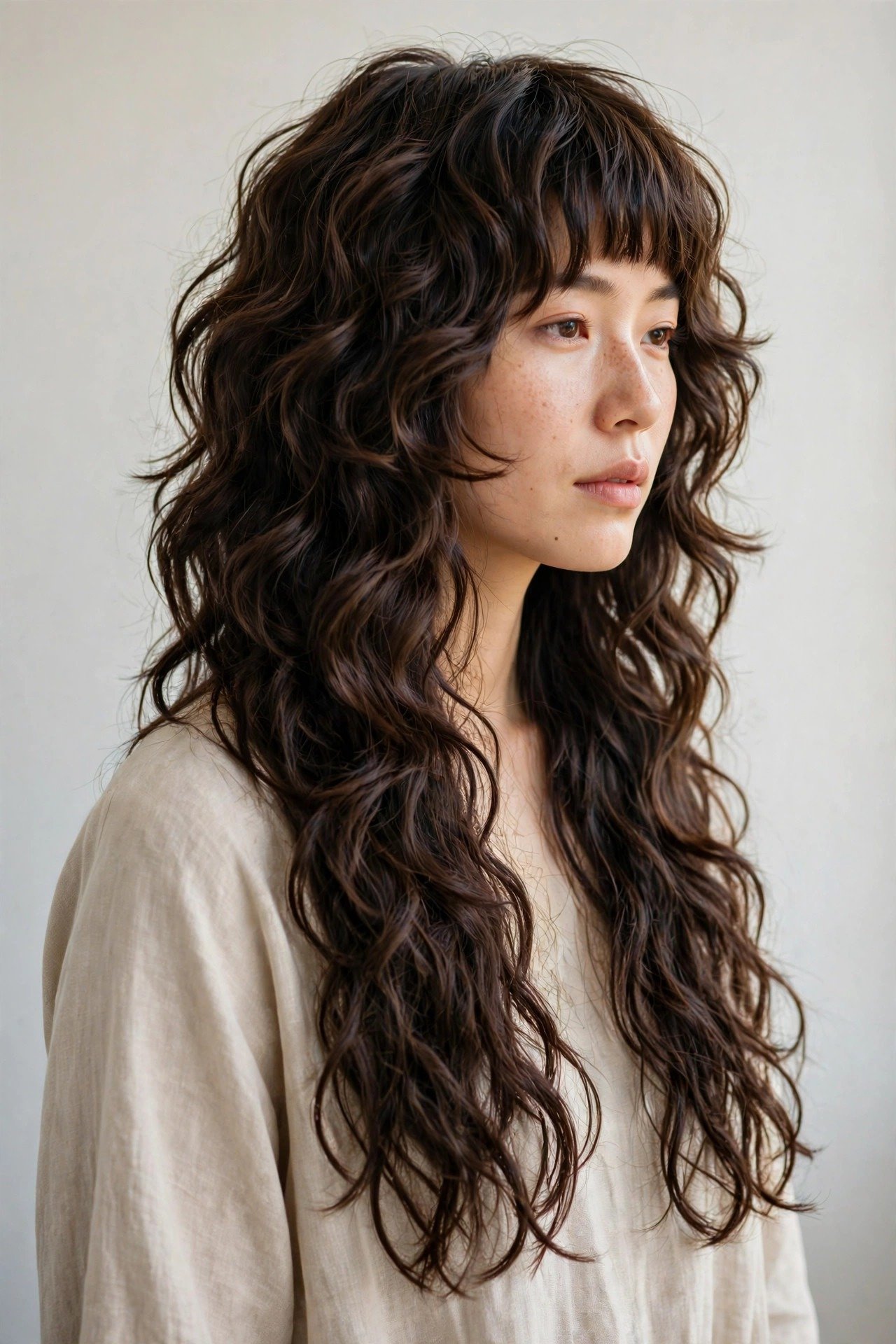
Hair type decides how much daily work your hime cut demands, so let us be realistic. Naturally straight hair — fine or thick — is the dream canvas. The cut falls into place with minimal styling, the blunt edges stay crisp, and maintenance is mostly about trims. If your hair is pin-straight, the hime cut is genuinely one of the easier statement cuts to live with.
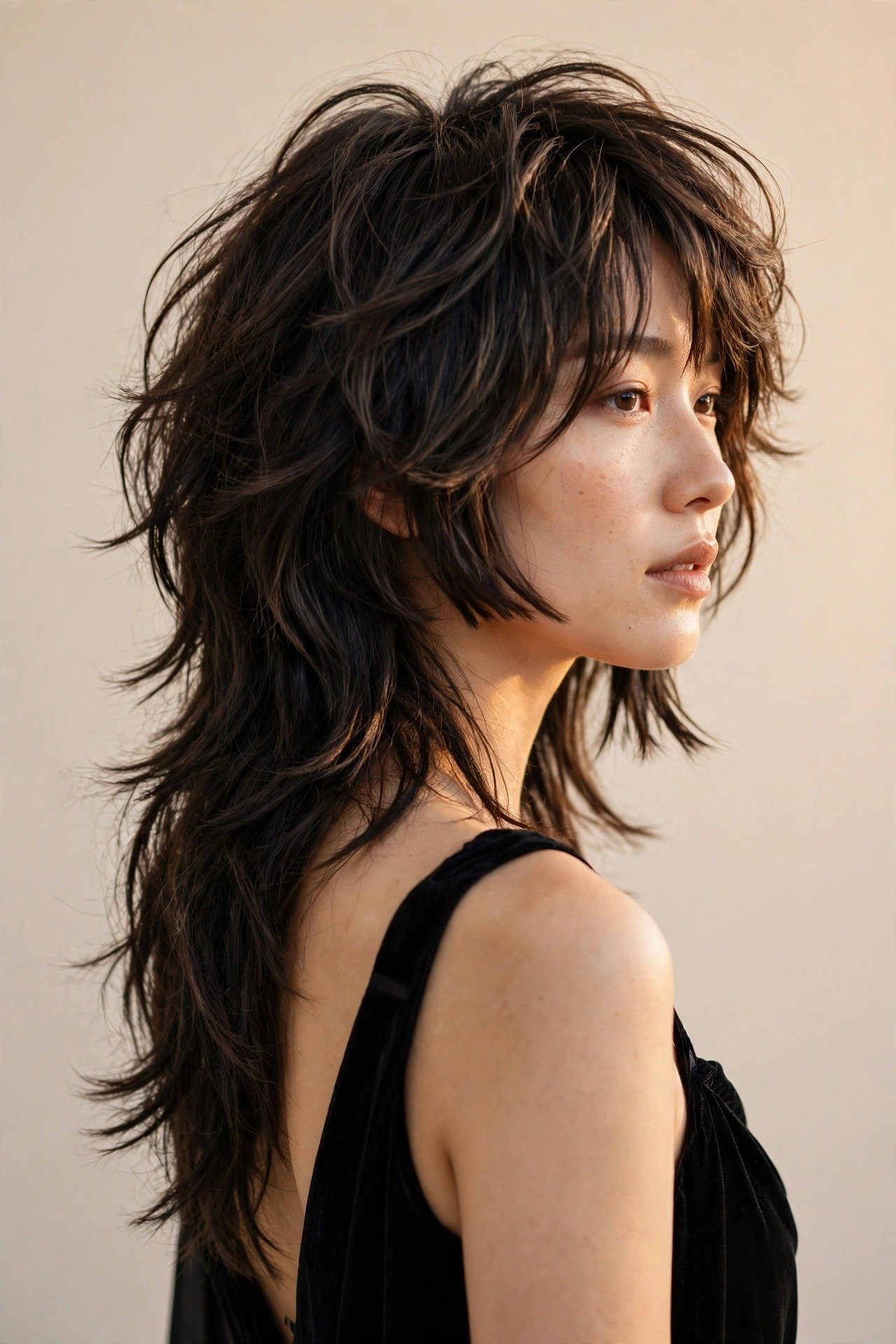
Style 6: The Shaggy Hime Cut. For thick or wavy hair, this adaptation keeps the sidelock concept but allows soft layering through the back and slightly textured ends on the panels. It is not the razor-sharp classic — it is the hime cut translated for hair that refuses to lie flat. You still get the cheek panels and the fringe, but the overall effect is edgier and more rock-and-roll than imperial princess.
Style 7: The Curly Hime Cut. Yes, it exists, and when it works it is stunning. The sidelocks are cut to work with the curl pattern — usually a little longer to account for shrinkage — and the fringe becomes curly bangs. The geometry reads differently: instead of sharp lines, you get sculptural curl panels framing the face. It needs a stylist who truly understands curly cutting (dry cutting is non-negotiable here), and the sidelocks need shaping every few weeks as the curls grow.
Fine hair can wear the hime cut beautifully because the blunt edges create the illusion of thickness. The sidelocks look substantial when cut blunt, and the straight fringe makes fine hair look denser at the front. The trade-off is that fine hair shows every imperfection in the cut, so your stylist’s precision matters enormously — and the trim schedule is strict, because fine hair loses a blunt edge fast.
Thick, coarse, or very wavy hair is the hardest canvas for the classic hime cut. The volume fights the sleek geometry, and you will be straightening daily. A keratin treatment or Japanese straightening can make it manageable — many of my clients with wavy hair get a keratin treatment specifically to maintain a hime cut — but go in knowing the upkeep is real. The shaggy adaptation above is the honest recommendation for most wavy-haired women.
Density matters as much as texture, and nobody talks about it. Low-density hair — the kind where you can see scalp at the part — struggles with the hime cut because the sidelock panels look thin and the blunt edges expose the sparseness. If your ponytail circumference is under two inches, be honest about whether the panels will look substantial. Extensions or a volumizing approach can help, but the classic hime cut is fundamentally a dense-hair haircut. Medium to high density is where it shines.
Asking Your Stylist for a Hime Cut: Exactly What to Say
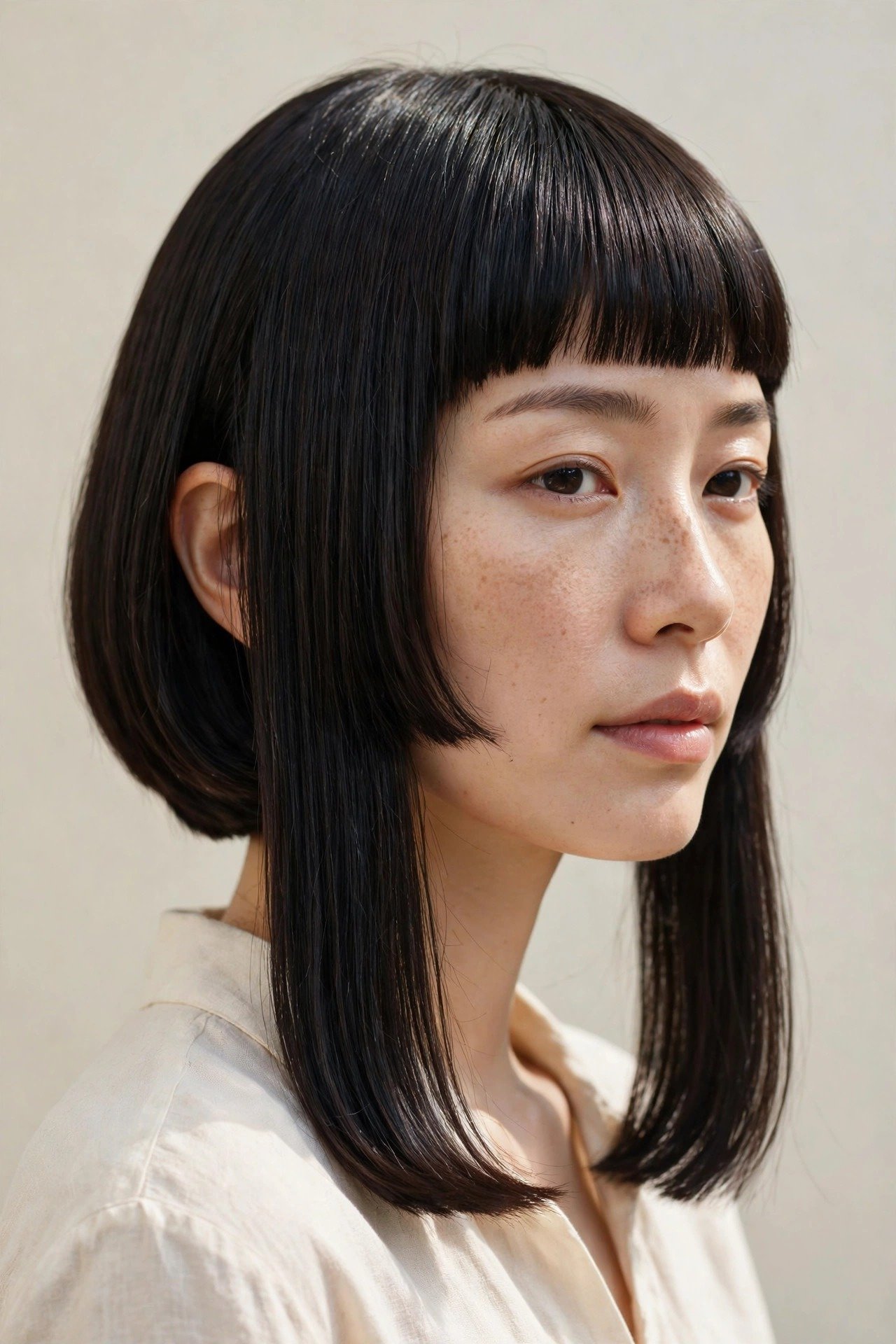
Bringing reference photos is mandatory for this cut — non-negotiable. The hime cut has specific geometry that words alone cannot convey, and “like a princess cut” means nothing without a picture. Bring three to five photos showing the exact sidelock length, fringe style, and back length you want. Photos from the same angle (front-facing) are most useful.
Style 8: The Short Bob Hime Cut. Mention this if you do not want very long hair: the back is cut to a bob — chin to shoulder length — while the sidelocks sit at cheek length and the fringe stays blunt. The contrast between panels and back is smaller, so the effect is subtler, but the hime DNA is unmistakable. It is also significantly easier to maintain than the long version, and it grows out with less awkwardness.
Here is the script I wish every client would use: “I want a hime cut with the sidelocks cut blunt at [cheek/jaw] length, completely separate from the rest — no blending, no texturizing on the panels. Straight-across fringe at [brow] length. Back length [one length / layered] to [mid-back].” The words “blunt,” “separate,” and “no blending” are doing the heavy lifting. Say them clearly.
Ask your stylist if they have cut a hime cut before, and ask to see photos. This is not the cut to be someone’s first attempt — the sidelock placement and the fringe geometry take experience. If your stylist looks uncertain, or suggests “softening” the sidelocks, find someone else. A stylist who wants to blend the panels does not understand the cut, and you will leave with expensive face-framing layers.
Expect the appointment to take 60 to 90 minutes for the cut alone, longer if you are adding color. The precision work — getting both sidelocks perfectly even, cutting a straight fringe — cannot be rushed. Budget for trims every three to four weeks at roughly half the cost of a full cut; the sidelocks and fringe grow out of shape fast, and this cut has no “grown out nicely” phase.
Price transparency, because nobody tells you this upfront: a hime cut from a stylist experienced with the style typically costs 20 to 40 percent more than a standard cut, because of the precision work and the time. The three-week fringe and sidelock trims are usually priced as a “bang trim” service — cheaper than a full cut, but they add up to the equivalent of several full cuts per year. Ask about trim pricing before you commit to the cut, not after. A good salon will quote you the maintenance honestly; a salon that dodges the question is telling you something.
Styling Your Hime Cut at Home: The Daily Routine
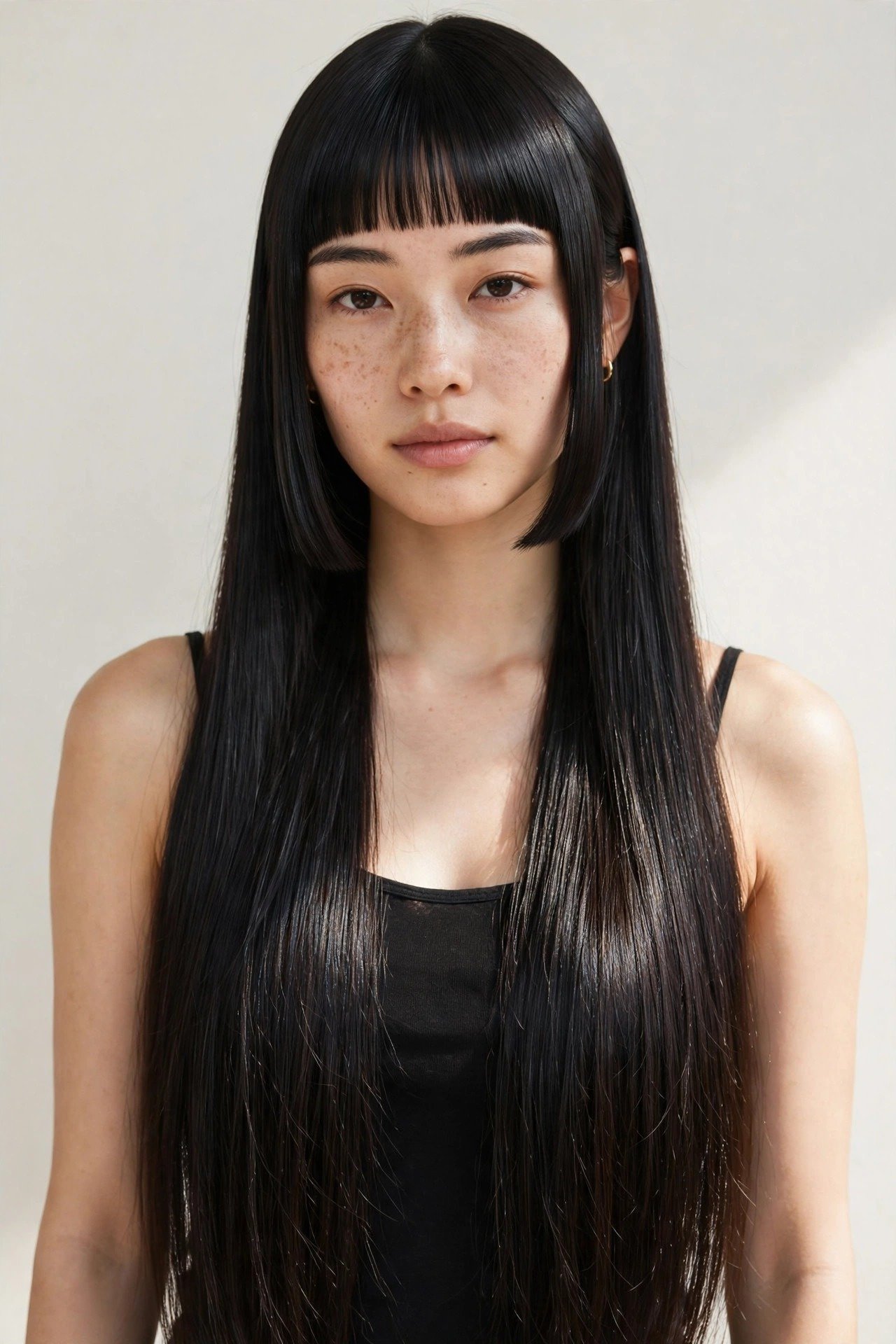
Let me give you the real morning routine, not the fantasy version. Wash or wet the fringe and sidelocks — these are the parts that show. Blow-dry the bangs first, using a small round brush or a paddle brush, directing them straight down with slight tension. The sidelocks get blow-dried smooth next, tucked behind nothing, falling exactly where they were cut to fall. The back length can be blow-dried straight or left to air-dry if your hair behaves.
Style 9: The Long Hime Cut with Face-Framing Sidelocks. This is the red-carpet version: back length to the waist, sidelocks at cheekbone length, everything glass-straight with a shine serum. It is the most dramatic wearable version of the cut and the one that gets photographed most. The styling secret is a flat iron passed over the sidelocks and fringe in single, slow passes — one pass too many and you get that flat, lifeless look, so learn the feel of your iron.
Your toolkit is small but specific: a good flat iron with adjustable heat (fine hair around 300°F, thick hair up to 400°F — never higher, you are not cooking dinner), a heat protectant you actually use every time, a lightweight shine serum for the sidelocks, and a small round brush for the fringe. A mini flat iron is worth its weight in gold for touching up the sidelocks during the day; the full-size one stays home.
The fringe is the diva of this haircut. It will separate, flip, or cowlick by midday — that is just what fringes do. Carry the mini iron or a few bobby pins. Some of my clients train their fringe by blow-drying it in alternating directions for the first week; it genuinely helps stubborn growth patterns settle. And sleep with the fringe pushed flat under a silk scarf if you want to wake up with it behaving — cotton pillowcases create morning chaos on blunt bangs.
Time budget honestly: 15 to 20 minutes on wash days, 5 to 10 minutes on refresh days if your hair holds straight well. If you have wavy hair and no keratin treatment, double it. This is the price of geometry. Women who tell you their hime cut takes two minutes either have naturally perfect hair or are lying to you.
Second-day hair is the hime cut’s secret superpower that nobody mentions. Freshly washed hair can be too soft and flyaway for the panels to sit right — day-two hair has a little more grip and weight, and the sidelocks fall exactly where they should. Many of my hime-cut clients actually prefer their hair on the second day. A little dry shampoo at the roots (not on the panels) and a quick iron pass over the sidelocks is all it takes. If you are a daily washer, try stretching to every other day — your cut will thank you.
Hime Cut Color Ideas: Making the Geometry Pop
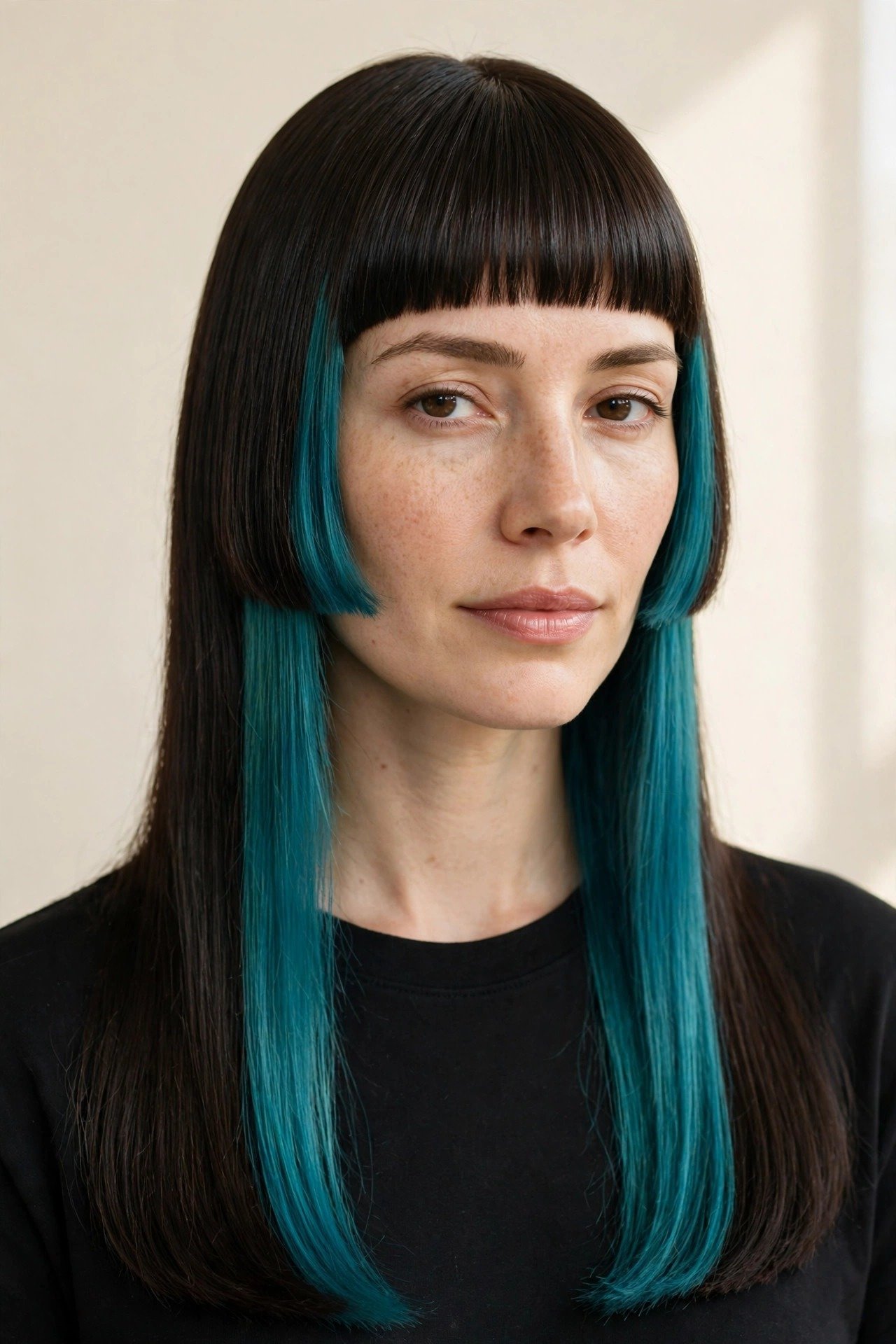
Color and the hime cut are a match made in heaven because the cut’s separate panels are practically begging for color contrast. The sidelocks are an isolated section — which means they can be an isolated color without looking random. This is one of the few haircuts where two-tone color looks intentional rather than accidental.
Style 10: The Two-Tone Hime Cut. The sidelocks are dyed a contrasting shade — platinum panels against black hair, or vivid red panels against dark brown — while the rest stays natural. The effect is striking because the color follows the cut’s existing architecture. Maintenance is straightforward: the panels are small, so root touch-ups are quick, and many women do them at home with a bowl and brush. This is the single most popular color adaptation of the hime cut in 2026.
Style 11: Hime Cut with Micro Bangs. Pairing the hime sidelocks with micro bangs — a fringe cut well above the brows, sometimes just an inch or two long — creates the most editorial, fashion-forward version of the cut. It exposes the forehead fully, which makes the sidelocks look even more dramatic by contrast. It suits oval and heart faces best, and it needs the confidence to match — micro bangs are a statement that does not whisper.
For the purists: jet black remains the definitive hime cut color, and I will not argue with a thousand years of history. Black shows every edge at maximum contrast, photographs beautifully, and needs no maintenance beyond shine. If you want the cut to look its sharpest with the least effort, black is the answer — whether it is your natural color or a single-process dye.
Other colors that work brilliantly: deep espresso and dark chocolate (softer than black, same edge definition), platinum blonde (the geometry looks almost architectural in white-blonde), and rich copper (warmth against the sharp lines is gorgeous). Pastels can work on the sidelocks as accent panels. What does not work as well: busy balayage through the whole head — it fights the cut’s clean lines. Keep the back simple and let the panels do the talking.
Timing your color and cut appointments saves money and damage. If you are doing both, color first, then cut — the stylist cuts the sidelocks from already-colored hair, which means the panels are a perfect, even shade with no regrowth line at the blunt edge. If you cut first and color later, the colorist has to carefully avoid overlapping onto the fresh blunt edge, which is fiddly and risks unevenness. One appointment, color then cut, is the pro sequence. Your hair goes through one round of processing instead of two separate sessions.
Hime Cut Maintenance: Keeping the Edges Sharp
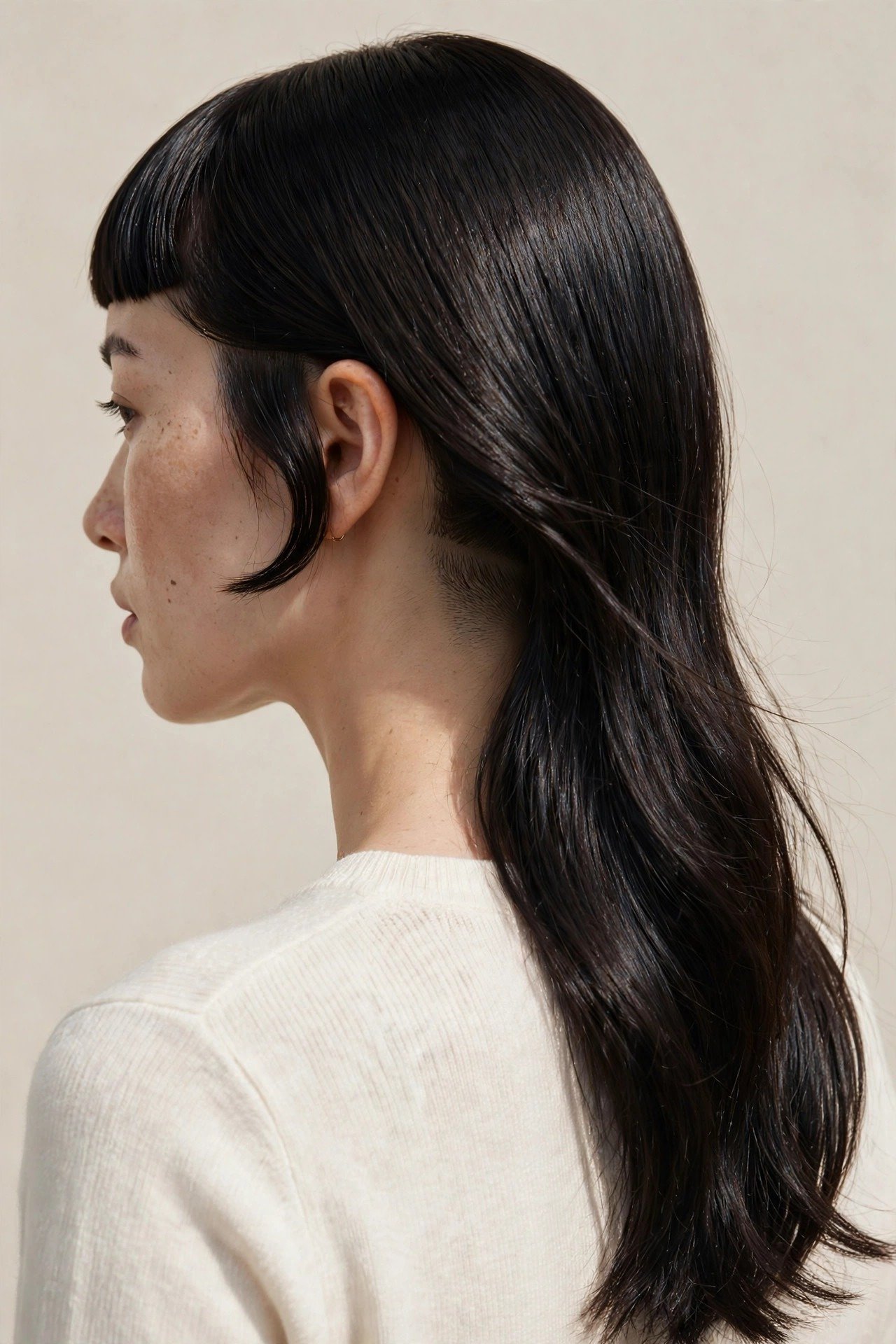
The hime cut has the strictest trim schedule of any haircut I write about. The sidelocks and fringe grow roughly half an inch per month, and on a cut this precise, half an inch is the difference between sharp and sloppy. Book sidelock and fringe trims every three to four weeks. The back length can go six to eight weeks. Put the trim appointments in your calendar at the same time as the original cut — future you will thank present you.
Style 12: The Hime Cut with Undercut. This edgy adaptation shaves or closely clips the nape underneath the long back length. It removes bulk (a blessing for very thick hair), makes the remaining hair lie flatter and sleeker, and adds a hidden surprise when the hair is put up. The undercut needs its own maintenance — a clipper clean-up every two to three weeks — so this version trades one kind of upkeep for another. Worth it if your hair is too thick for the classic to sit right.
Between trims, the enemy is split ends on the blunt edges. A blunt edge with splits looks frayed and sad — the opposite of the cut’s intent. Use a weekly hair mask, keep heat protectant religious, and do not skip trims thinking you are “growing it out” unless you actually are (more on that later). A tiny dusting of the sidelock ends every three weeks keeps them looking freshly cut.
Product-wise, less is more with this cut. Heavy products weigh down the sidelocks and make them separate or flip. A pea-sized amount of serum on the panels, a light heat protectant before ironing, and a flexible-hold spray if the fringe needs convincing — that is the whole routine. Clarifying shampoo once every week or two prevents buildup from flattening the geometry, especially on fine hair.
Budget reality: between the cut, the three-week trims, and color if you have it, a hime cut costs more per year than most haircuts. A trim every three weeks at even a modest salon adds up. Go in with eyes open — this is a high-maintenance cut, and pretending otherwise is how women end up resenting it by month three.
Humidity is the hime cut’s natural enemy, so let us talk about it directly. If you live somewhere humid, the sleek geometry will fight you from May to September — the sidelocks puff, the fringe frizzes, and the back swells. An anti-humidity serum and a strong (not crunchy) anti-frizz spray are mandatory, and a keratin treatment before summer is the single best investment a humid-climate hime cut can get. Some of my clients in humid cities switch to the wavy adaptation for summer and go back to pin-straight in winter. That is not failure — that is strategy.
Hime Cut for Special Occasions: Updos and Styling
Here is the pleasant surprise: the hime cut is fantastic for special occasions, because the sidelocks do half the styling work for you. Leave the panels down around the face, sweep the back into a sleek low bun or a high ponytail, and you have an elegant look in ten minutes. The sidelocks frame the face in photos in a way that loose updos on other cuts cannot match.
Style 13: Hime Cut with Wolf-Cut Layers. For occasions when you want volume and movement, this hybrid keeps the hime sidelocks and fringe but cuts the back with wolf-style shaggy layers. Worn straight it reads as a hime cut; scrunched with texture product it reads as a shag. It is the most versatile version in this article — two personalities in one haircut — and it styles up beautifully for evenings with a little wave through the layered back.
Style 14: The Side-Part Hime Cut. Shifting the fringe into a deep side part transforms the cut’s character completely — suddenly it is softer, more romantic, almost vintage. The sidelocks stay blunt, but the asymmetric front changes the whole geometry. It is an excellent occasion variation because it takes thirty seconds: part wet hair deeply to one side, blow-dry smooth, and the cut looks entirely different in photos.
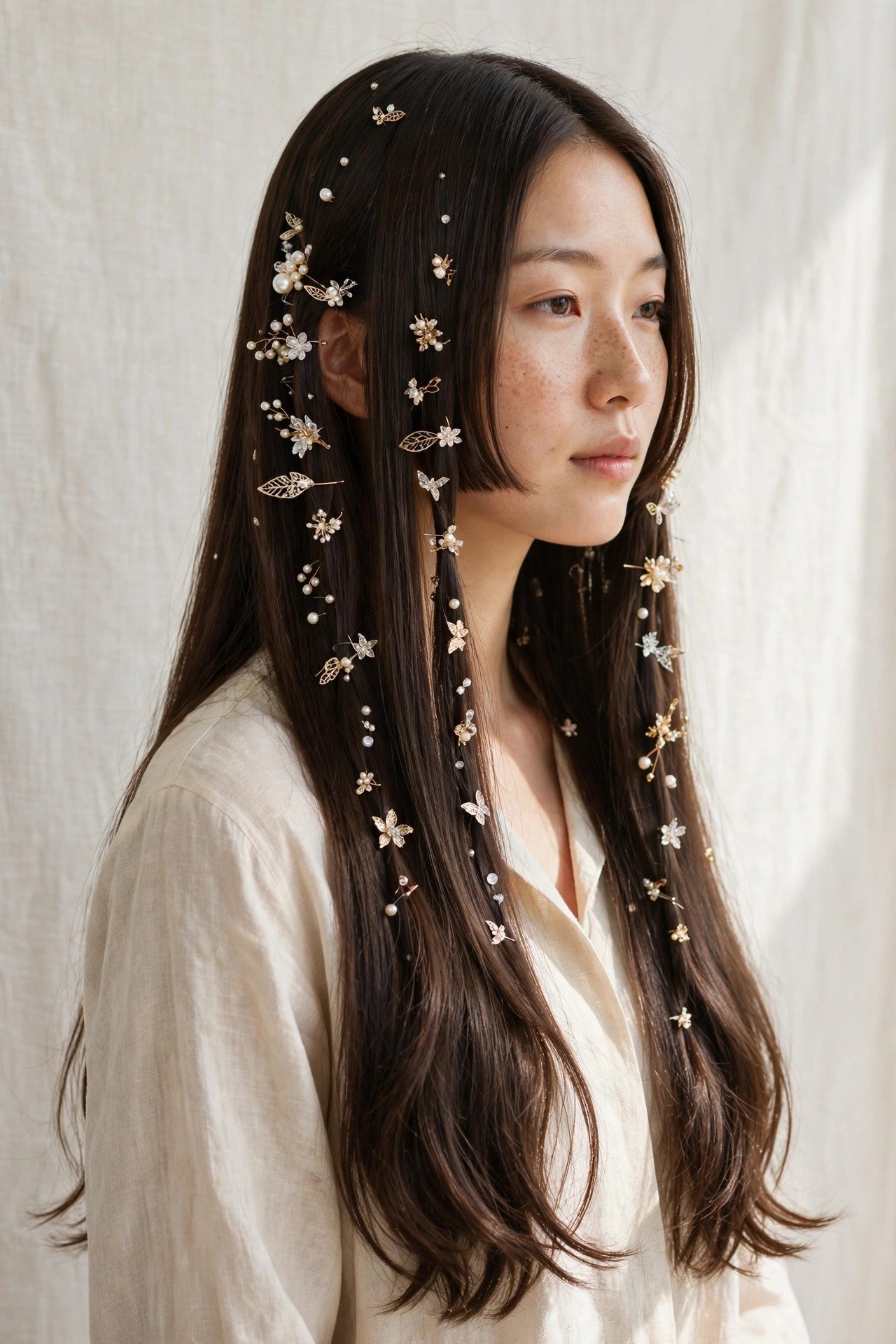
Accessories love this cut. Decorative hairpins clipped just above the sidelocks, a thin headband sitting behind the fringe, small braids worked into the back length — the cut’s structure gives accessories something to play against. Traditional Japanese kanzashi hairpins are the obvious historical pairing, and they look genuinely stunning with the sidelocks framing them.
For weddings — yours or someone else’s — the hime cut photographs like a dream. The sidelocks ensure your face is framed in every photo, the fringe keeps the forehead polished, and the long back gives photographers beautiful movement shots. Just do a trial run of your occasion style a week before, because the fringe and sidelocks need to be freshly trimmed to behave.
One occasion-specific tip from years of doing event hair: for outdoor events, pin the sidelocks. Wind is the enemy of precision — one gust and your sharp panels are across your face in every photo. Two discreet bobby pins, matched to your hair color, placed horizontally just above the ear, hold the panels in place invisibly. You keep the hime silhouette from the front, and the back stays clean. Indoor event? Let them fly free. Always style for the venue, not just the mirror.
Hime Cut Mistakes to Avoid
The number one mistake I see: letting a stylist “soften” the sidelocks. I mentioned it earlier and I will say it again because it happens constantly. A client asks for a hime cut, the stylist gets nervous about the severity, and quietly texturizes or blends the panels “to make it more wearable.” The client leaves with face-framing layers, realizes it at home, and comes to me to fix it. If your stylist will not commit to blunt, walk out before the scissors come out.
Style 15: Hime Cut with Wispy Bangs. This is the legitimate way to soften the cut — not by texturizing the sidelocks, but by choosing a wispy, feathered fringe instead of a blunt one. The sidelocks stay razor-sharp, the back stays clean, and only the fringe gets softness. It is the right compromise for women who find the full blunt version too severe, and unlike blended sidelocks, it does not destroy the cut’s identity.
Mistake number two: cutting the sidelocks too short for your face. Cheekbone-length panels on a round face, or panels that end exactly at the widest point of the jaw on a square face, will emphasize what you wanted to minimize. The sidelocks should end where your face is narrowest, not widest. When in doubt, go a half-inch longer — you can always take more off, and sidelocks grow back slowly enough that a too-short cut haunts you for two months.
Mistake number three: neglecting the fringe between trims. A blunt fringe grows into the eyes in about three weeks, and women start pinning it back or pushing it aside — which defeats the entire front of the haircut. Either commit to the three-week fringe trim or choose a fringe style that grows out gracefully, like curtain bangs. There is no shame in the lower-maintenance option; there is only the shame of a grown-out fringe you hide every day.
Mistake number four: wrong expectations about daily styling. If you have wavy hair and you are not willing to straighten, get a keratin treatment, or embrace the wavy/curly adaptations in this article, the classic hime cut will make you miserable. The cut demands sleekness. Fighting your hair texture every morning for a look that lasts until humidity hits is a recipe for regret. Be honest with yourself before you commit.
Mistake number five, and it is a quiet one: cutting the hime cut right before a major life event without a trial period. A wedding, a job interview, graduation photos — do not debut this cut at any of them. The hime cut takes two to three weeks of living with it before you learn how your hair behaves in it: which side the fringe prefers, how the panels sit after sleep, what humidity does to them. Get the cut at least a month before anything important, so the event version is the settled version, not the experiment.
Growing Out a Hime Cut: The Exit Strategy
Every dramatic haircut needs an exit strategy, and the hime cut’s grow-out is actually manageable if you plan it. The fringe grows into curtain bangs naturally — just stop trimming it straight across and start parting it in the middle. Within two months you have face-framing curtain bangs, which is a perfectly good haircut on its own.
Style 16: The Princess Hime Cut with Accessories. During grow-out, accessories become your best friend. Decorative clips, headbands, and pins can hold growing sidelocks in place while adding intentional style. This “style” is really a phase — the accessorized grow-out — but it deserves its place because it is how most hime cuts actually end: not with a dramatic chop, but with a graceful, decorated transition.
The sidelocks take longer — growing cheek-length panels to blend with shoulder-length hair takes four to six months. During that time, ask your stylist to lightly soften just the very bottom edge of the panels (not the whole panel) at each trim, so they start merging with the surrounding hair. Tuck them behind the ears, pin them back, or braid them into the front — all of these look deliberate rather than awkward.
The nuclear option, if you hate the grow-out: cut the back to match the sidelocks and wear a bob for a while. A cheek-length sidelock plus a chin-length bob is a coherent haircut, and from there you grow everything together. It is drastic, but it is honest — and sometimes honest is what you need.
Whatever you do, do not shave the sidelocks or cut them into layers out of frustration. The grow-out is temporary; a bad impulsive cut is a longer problem. Patience, accessories, and a stylist who understands transitions will get you through it.
There is also the “grow everything, change nothing” path that works better than people expect. If you simply stop trimming the fringe and sidelocks but keep the back healthy with regular dustings, the whole cut gradually relaxes into long layers with face-framing — which is a perfectly fashionable haircut in its own right. It takes six to eight months, but it requires zero awkward phases and zero drastic chops. The hime cut, left alone, becomes a layered cut. That is a much gentler landing than most dramatic haircuts offer.
Hime Cut FAQ

Is the hime cut high maintenance? Yes, honestly. The sidelocks and fringe need trimming every three to four weeks, and the sleek finish needs daily styling unless your hair is naturally straight. It is one of the higher-maintenance haircuts you can choose. Budget both the time and the salon cost before committing, and ask about bang-trim pricing upfront so the upkeep never surprises you.
Can I get a hime cut with curly hair? You can — the curly hime cut is a real and beautiful adaptation — but it needs a curl-specialist stylist who cuts dry, and the sidelocks must be cut longer to account for shrinkage. The classic pin-straight version is not realistic for curly hair without daily straightening or a smoothing treatment.
How long does my hair need to be for a hime cut? The back should be at least past the shoulders, ideally mid-back or longer, so the short sidelocks have contrast to play against. The sidelocks themselves only need to reach the cheek or jaw. If your hair is currently short, grow the back first — the cut does not work without the length contrast.
Will a hime cut suit a round face? It can, with adjustments: longer sidelocks (jaw length rather than cheek), a curtain or side-swept fringe instead of blunt bangs, and some wave through the lengths to break up the horizontal lines. The unmodified classic is toughest on round faces, so be open to the adapted versions.
What is the difference between a hime cut and a jellyfish cut? The hime cut disconnects only the two front sidelock panels; the rest of the haircut is continuous. The jellyfish disconnects the entire head — a short top layer all the way around over long bottom layers. The hime cut is the more wearable, more classic of the two.
How do I style a hime cut for work? The cut is naturally polished, which is half the battle. Keep the fringe and sidelocks sleek with a quick flat-iron pass in the morning, wear the back straight or in a low bun, and you look professional. The two-tone and micro-bang versions read more alternative — choose the classic or curtain-bang version for conservative workplaces.
Conclusion
After sixteen styles, a thousand years of history, and every honest caveat I can give you, here is my bottom line on the hime cut in 2026: it is one of the great haircuts. Not one of the great trends — one of the great haircuts, full stop. It has survived since the Heian period because the shape is genuinely beautiful, and it will outlive whatever trend cycle brought you to this article.
Get it if you have straight or straightenable hair, you like strong geometric lines, and you are willing to see your stylist every three to four weeks. Get it if you want a haircut with actual architecture — something designed, not just grown. Get it if you are ready for strangers to ask about your hair, because they will.
Skip it — for now — if you want wash-and-go, if your hair is very curly and you will not straighten it, or if the maintenance schedule makes you tired just reading about it. There is no failure in admiring this cut from a distance. The wrong haircut at the wrong time is worse than no change at all.
And if you do get it: commit fully. Blunt means blunt. The hime cut rewards conviction and punishes hesitation. Walk into that salon with your reference photos, say the words “blunt” and “separate,” and walk out looking like a thousand years of princesses. Maintain those edges, keep that fringe in line, and wear it like you were born for it. You will not regret it.