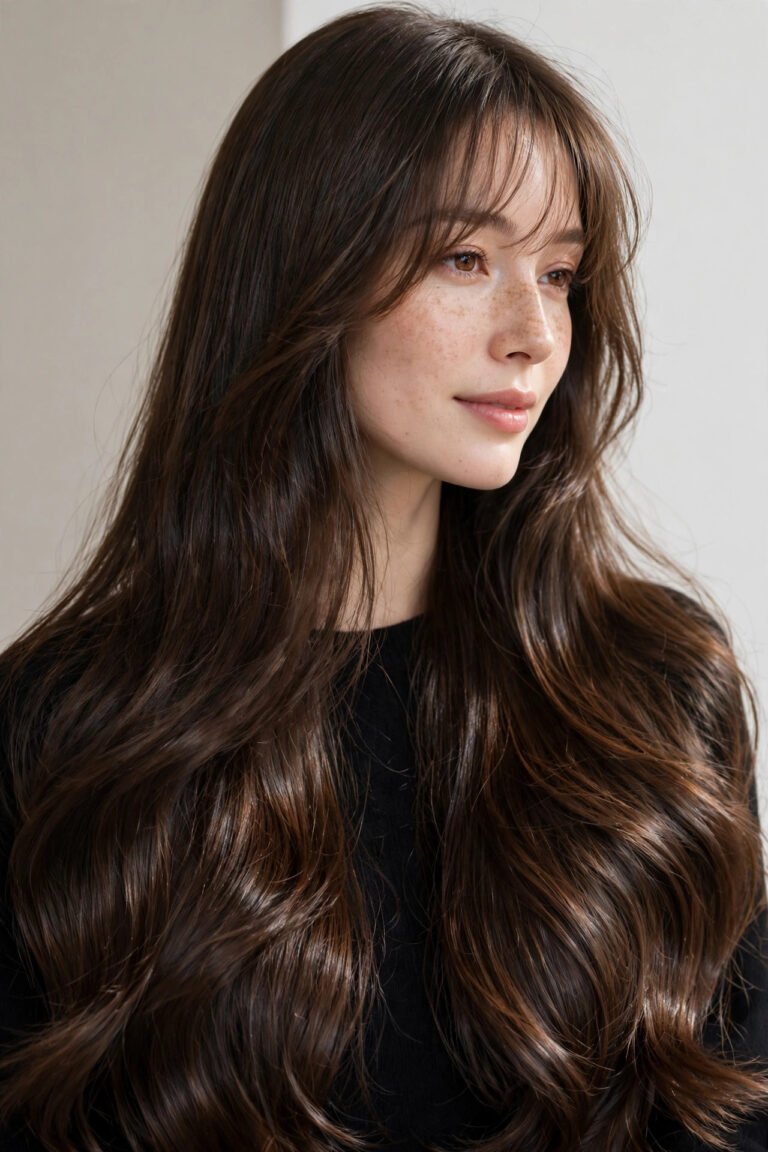
Mocha Balayage Hair Women 2026: 18 Rich Dimensional Shades
Every fall has a color that owns the season. In 2026, it’s mocha balayage hair — that warm, coffee-toned brunette that looks like your most put-together friend just left the salon and won’t stop checking her hair in the rearview mirror. Scroll Pinterest for ten minutes and you’ll see it everywhere: dark espresso roots melting into milk-chocolate and caramel ribbons, glossy enough to catch the light in every single photo. It’s not loud. It’s not trying to be. And that’s exactly why it works.
I’ve spent enough years around colorists to know when a trend has real staying power and when it’s just a filter everyone will forget by December. Mocha balayage hair has staying power. It’s built on the most flattering thing a colorist can do to brunette hair — dimension — and it asks almost nothing of you in return. No monthly root appointments. No bleach-blonde maintenance schedule. Just soft, hand-painted lightness that grows out like it was always meant to be there.
The name tells you nearly everything. Mocha: the color palette of a good coffee — espresso, milk chocolate, a ribbon of caramel on top. Balayage: the French hand-painting technique where color is swept onto the hair freehand instead of saturated through foils. Put them together and you get a brunette that moves. In a world of flat, one-tone box dye, that movement is the whole point.
Here’s what this guide covers: what mocha balayage actually is (and isn’t), how it compares to the other brunette colors you might be choosing between, exactly what to say to your colorist so you walk out with the photo you saved instead of a surprise, eighteen specific shades grouped from quiet-luxury starters to bold finishes, what it costs in 2026, who it flatters most, and the maintenance routine that keeps the dimension rich instead of muddy. Whether you’re a natural brunette or coming from years of blonde, there’s a mocha here with your name on it.
One honest note before we start: mocha balayage hair looks effortless, but it is still professional color. The softness, the melt, the way light hits the ribbons — that comes from a skilled hand, not a box. I’ll be straight with you about where you can save money and where you shouldn’t try.
What Is Mocha Balayage, Really?
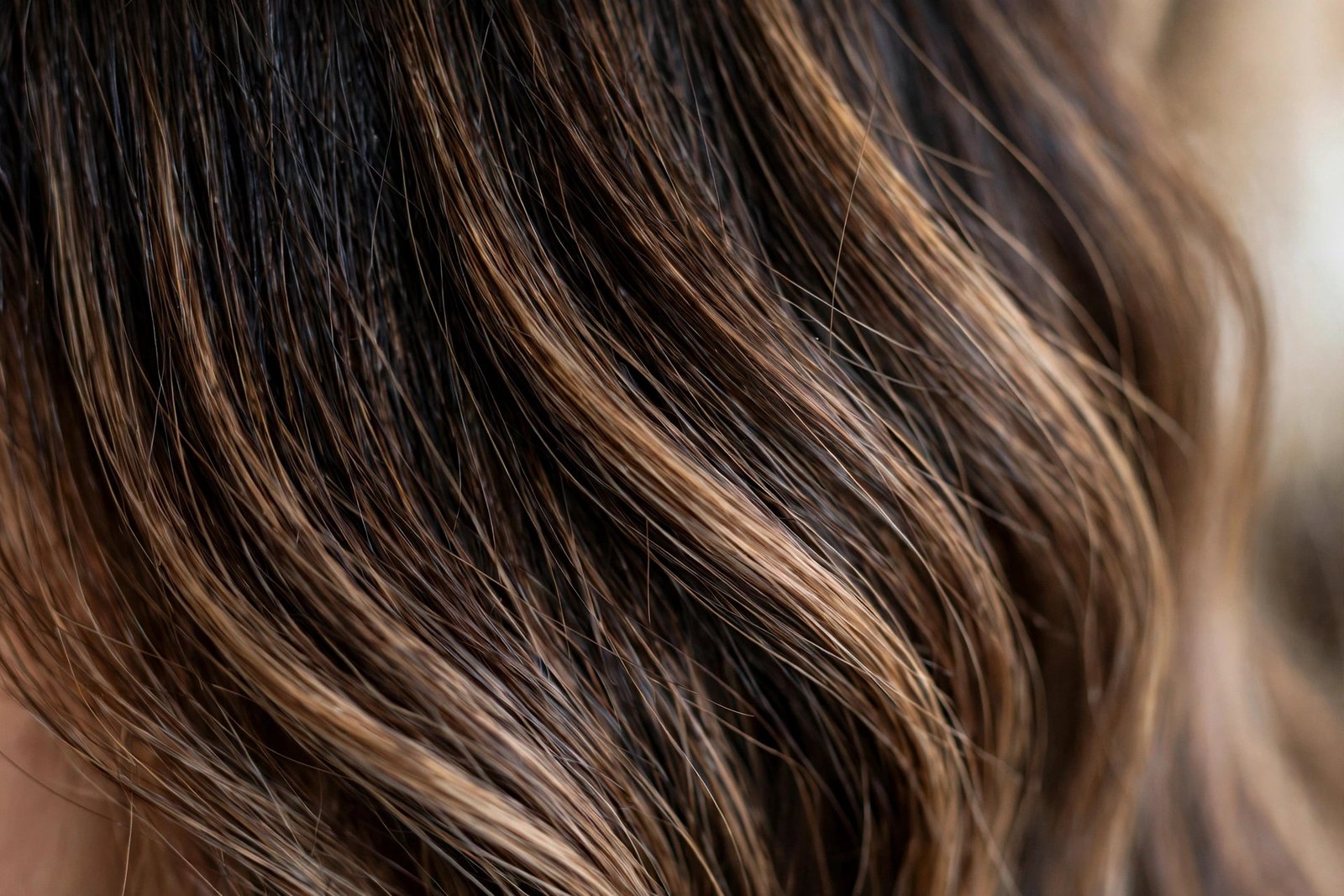
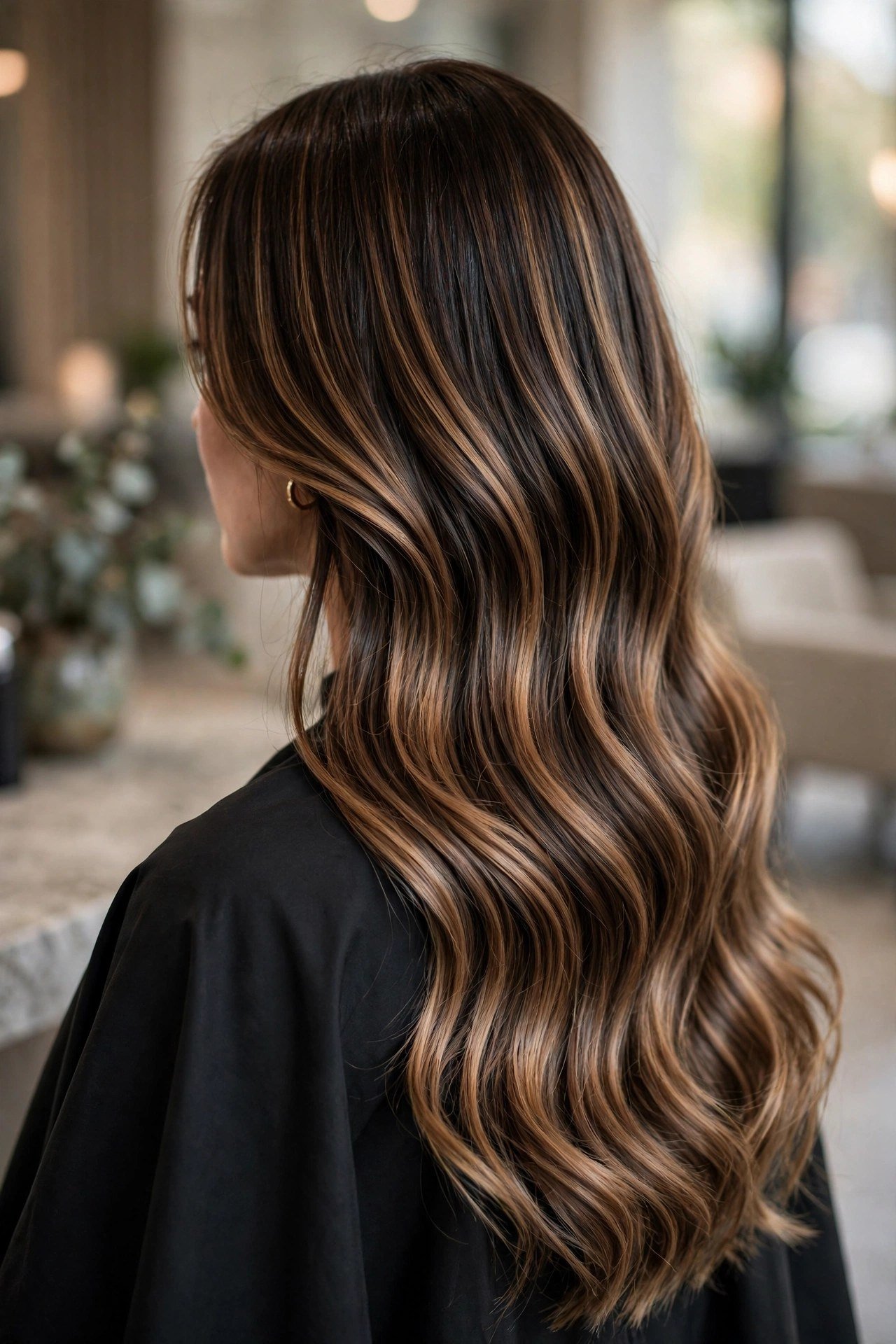
Strip away the trend language and mocha balayage is two things combined: a color family and a technique. The color family is mocha — warm browns drawn from coffee. Think espresso at the root, milk chocolate through the middle, and lighter caramel-mocha pieces ribboned through the ends. Not golden, not ashy, not red. It’s the neutral-warm middle ground that flatters the widest range of skin tones, which is a big part of why it became one of Pinterest’s biggest beauty searches of 2026.
The technique is balayage, and it matters as much as the color. Your colorist hand-paints lightener onto the surface of selected sections, feathering it upward so there’s no hard line where the lightness starts. Then comes the part that makes or breaks the result: the root shadow or root melt. That’s a demi-permanent color, matched close to your natural shade, melted down over the top few inches to blur the boundary between your regrowth and the painted pieces. This is why mocha balayage grows out softly instead of leaving you with a stripe. The grow-out isn’t a flaw in the design — it’s the design.
What it is not: it isn’t ombré. Ombré is a horizontal gradient — dark on top, light on the bottom, fairly uniform. Mocha balayage is vertical and varied — ribbons of lightness woven through depth, brighter around the face, deeper underneath. It isn’t full foils, either. Foil highlights give brighter, more uniform lift with a visible regrowth line and a six-to-eight-week touch-up cycle. And it isn’t a single-process all-over color, which is one flat tone from roots to ends and shows every millimeter of regrowth. Mocha balayage lives in the best in-between: lighter than your base, but never disconnected from it.
The reason it photographs as “expensive hair” is simple. Dimension mimics how the sun naturally lightens hair — pieces around the face go lighter, ends go lighter, depth stays underneath. Your eye reads that as healthy, natural, and costly, even though the actual maintenance is lower than almost any other lightened look. On straight hair the ribbons show crisply, like brushstrokes. On wavy hair the dimension peaks — every bend in the wave catches a different tone. On curly hair the painted pieces catch light on each individual curl. Same color, three different personalities, all of them good.
Mocha Balayage vs Other Brunette Colors
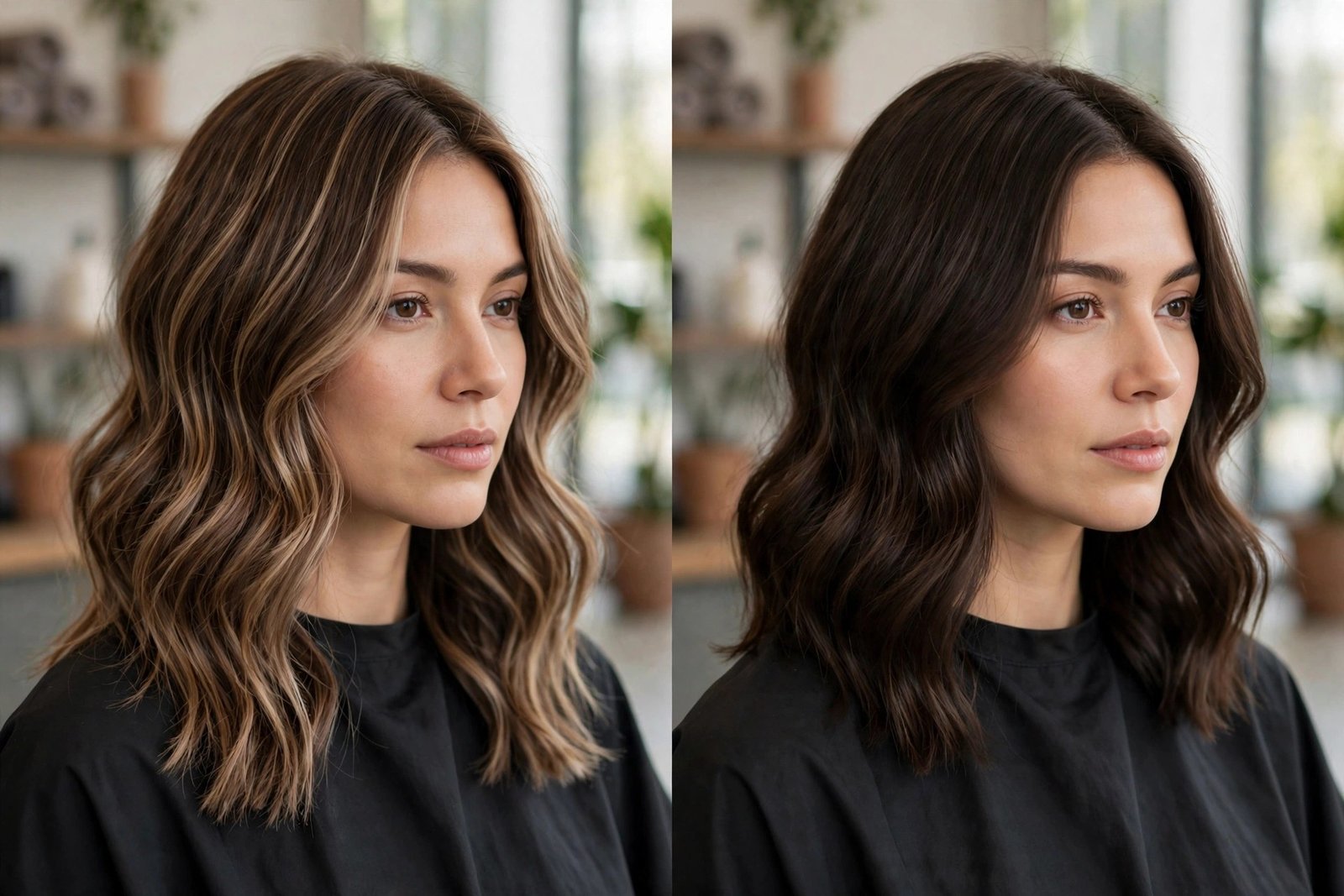
Choosing a brunette in 2026 is genuinely confusing because everything has a coffee name now. Let’s clear it up. Against a solid single-process brunette — one flat color from roots to ends — mocha balayage wins on dimension and grow-out, full stop. Single-process color is beautiful and it’s the cheapest option, but it’s one tone everywhere, and regrowth shows as a hard line within weeks. Mocha balayage costs more upfront and then quietly disappears into your hair for months. If you hate the look of roots, that’s the trade that matters.
Against ombré, the difference is the shape of the lightness. Ombré is a gradient: dark melts to light in a fairly even horizontal band, with the ends carrying most of the brightness. It had its era, and on some hair it still looks great, but it reads more “done” and less natural than balayage. Mocha balayage distributes lightness in vertical ribbons at varying heights, which looks like hair that lightened naturally over a summer — if your summers involved a very talented colorist.
Against foilyage and full foil highlights, it’s a brightness-versus-softness decision. Foils lift more evenly and brighter — if you want to be noticeably lighter, foils get you there faster. The price is the regrowth line and the maintenance calendar: every six to eight weeks, back in the chair. Mocha balayage painted freehand gives a softer, more diffused result with a grow-out so gentle that plenty of women stretch it to four or five months with just a gloss refresh in between. Lower lift, lower upkeep. Know which one you actually want before you sit down.
Against caramel balayage — its closest cousin — mocha keeps more depth. Caramel balayage leans golden and often goes lighter overall, which is gorgeous on warm skin tones but can wash out with time and sun. Mocha holds onto its rich brunette base; the contrast between the dark root and the ribbons is the feature, not a phase. And against chocolate brown or espresso all-over color, there’s no contest on dimension: those are stunning, rich, one-dimensional colors. Mocha balayage is chocolate brown with the lights turned up in exactly the right places.
So here’s the decision shortcut. Pick mocha balayage if you want visible dimension with the lowest maintenance of any lightened brunette. Pick a solid brunette if you want the lowest cost and zero grow-out strategy. Pick foils if maximum brightness matters more to you than a soft grow-out. And if you’re currently solid dark brown and nervous about change? Mocha balayage is the gentlest possible first step into lightened hair — which is why colorists recommend it to commitment-phobes more than any other service on the menu.
How to Ask Your Colorist for Mocha Balayage
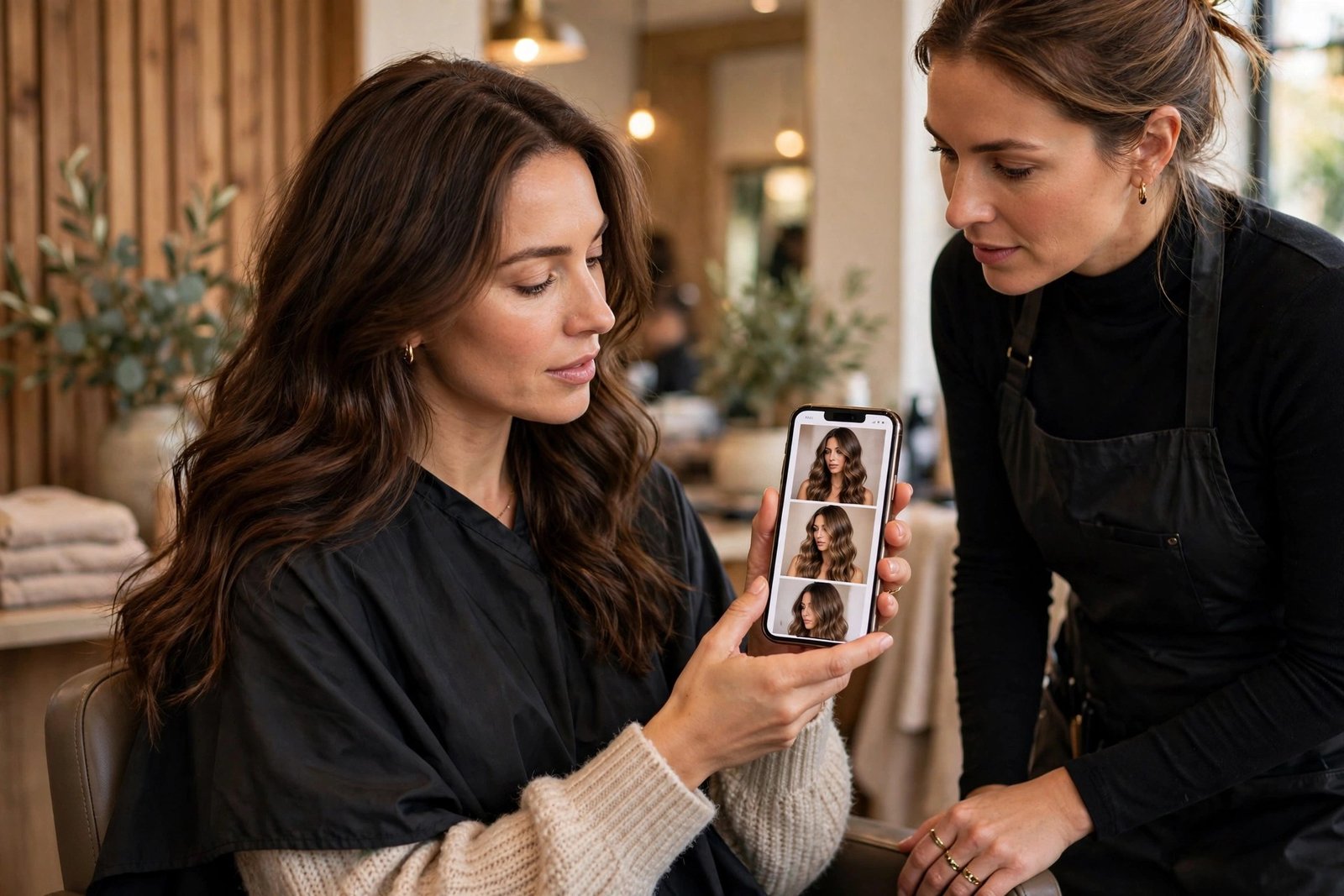
The consultation matters more than the formula. A great colorist can mix the perfect mocha toner, but only if you’ve communicated the right target. Bring three to five reference photos saved on your phone — and make this easy on both of you by choosing photos of hair with a similar starting color to yours, in natural lighting, not ring-light selfies. One photo is a wish; five photos with the same vibe is a brief.
Then use the words that actually mean something in a salon. Say “mocha balayage.” Say “root melt” or “root shadow” — and mean it, because that melted root is what gives you the soft grow-out. Say “dimensional ribbons through the mid-lengths and ends.” Say “I want to stay brunette.” Here’s a script that works: “I want to stay brunette but add dimension — a dark espresso root, hand-painted mocha and caramel ribbons through the mid-lengths and ends, melted at the root so it grows out soft. I don’t want chunky highlights or a harsh line anywhere.” Memorize it or read it off your phone. No colorist has ever been annoyed by a client who knows what she wants.
Just as important are the words that prevent disasters. “No chunky highlights” rules out the striped 2000s look. “Keep my natural depth at the root” stops an overeager lift from turning you blonder than you asked. “Blend, don’t stripe” is the whole philosophy in three words. And if your hair is black, box-dyed, or previously colored dark — say so out loud, in the consultation, before anything is mixed. Box dye changes the chemistry of everything. A colorist who knows will do a strand test and plan accordingly; a colorist who doesn’t know will discover it mid-process, and that’s a much worse conversation.
Ask your own questions, too. How many sessions will it take to reach my reference photo? Dark, virgin hair often gets there in one long appointment; previously colored or very dark hair may need two. Is the gloss or toner included in the quote, or priced separately? When should I come back — and can we book the gloss refresh now, six to eight weeks out, before I leave? One red flag to watch for: a colorist who hears “balayage” and reaches for a full head of foils without explaining why. Foilyage is a legitimate technique and sometimes it’s the right call for resistant hair — but it should be a discussed choice, not a quiet substitution.
Finally, manage your own expectations like an adult. The photo you saved might be on hair that started three levels lighter than yours, or on extensions, or under professional lighting. A good colorist will tell you what’s achievable in one session and what needs a second visit. Trust that honesty more than any promise of a one-appointment miracle. The goal isn’t to match a photo pixel for pixel — it’s to walk out with a mocha that looks like it was always supposed to be on your head.
Shades 1–3: The Quiet-Luxury Starters
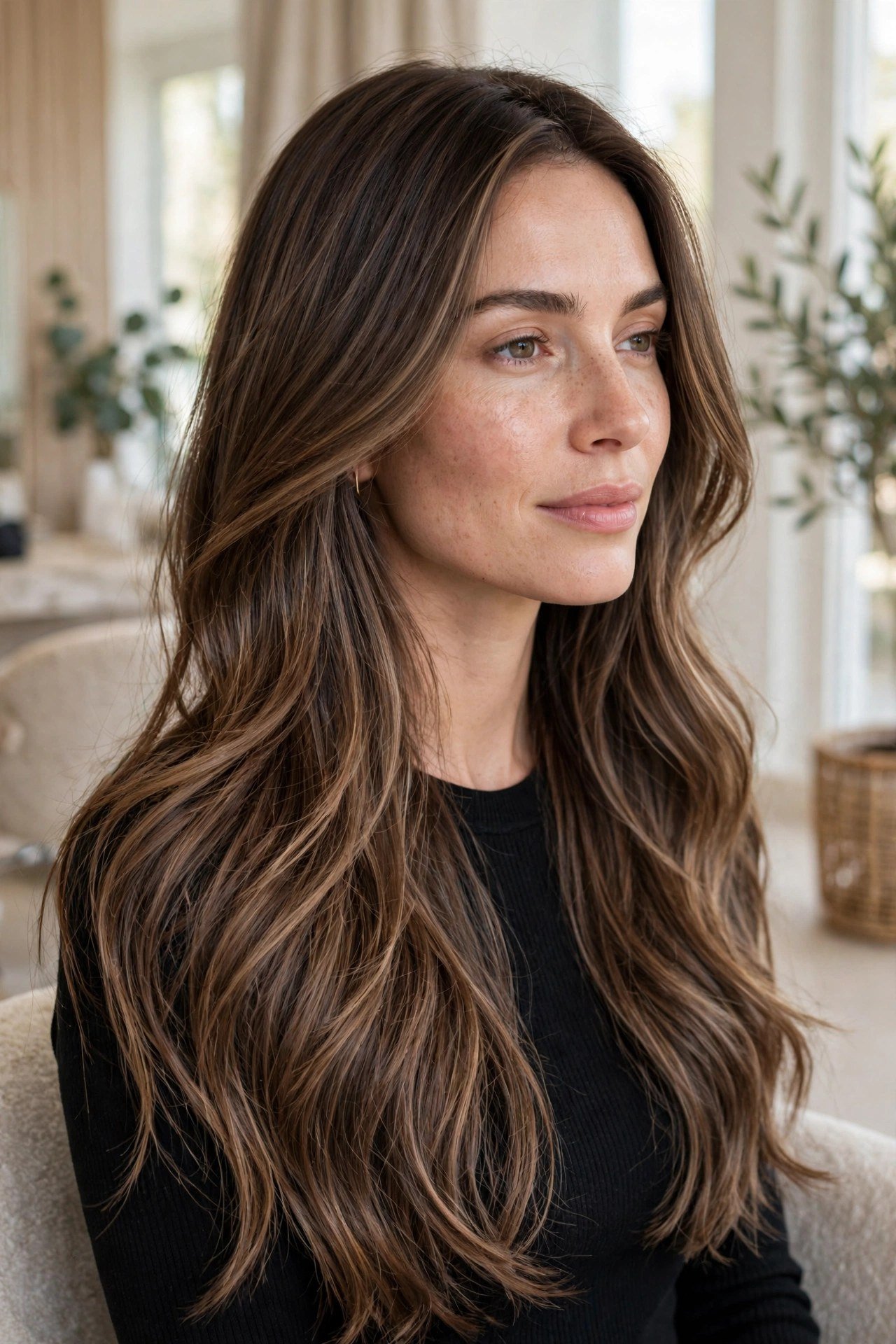
If you’ve never lightened your hair before — or if your personal style runs more “expensive minimalist” than “statement color” — start here. These three mochas are the ones people assume you’re born with. The dimension is real, but it’s whispered, not announced. They’re also the most forgiving shades on the list: they grow out beautifully, they suit nearly every skin tone, and they photograph well in every lighting because there’s nothing harsh for a camera flash to catch.
1. Classic Mocha Melt
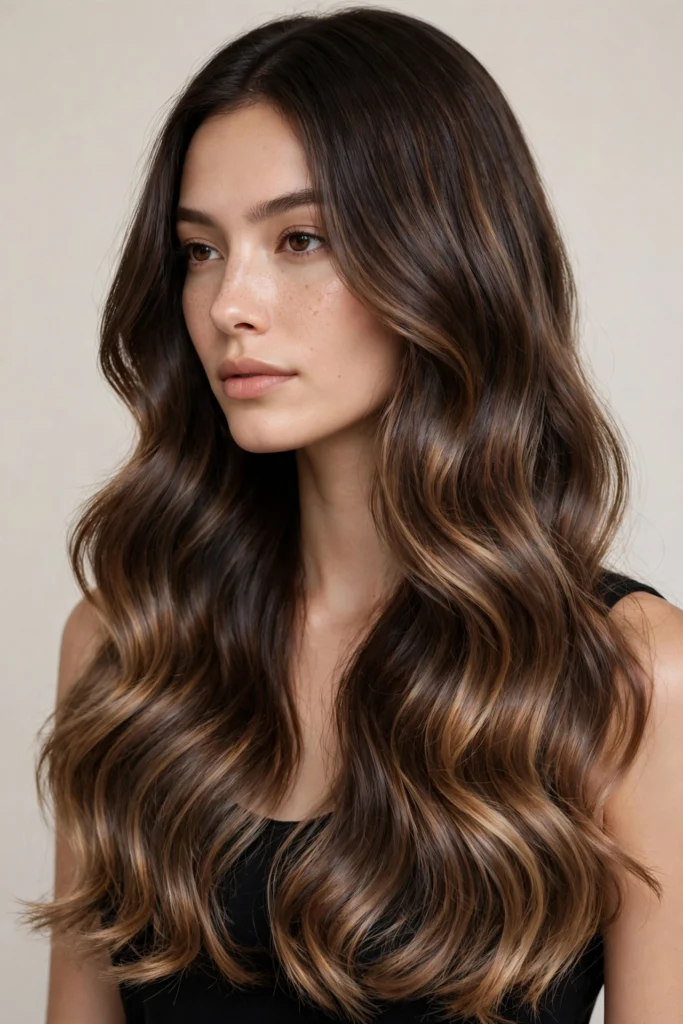
The blueprint everything else is built on. Dark espresso at the root melts seamlessly into milk-chocolate mid-lengths, with the lightest pieces — a soft caramel-mocha — sitting through the ends. No money piece, no drama, just a perfectly executed gradient of coffee tones that looks like your hair lightened itself over a very good year. This is the shade colorists point to when a client says “I want it to look natural, but better.”
Who it’s for: first-time balayage clients, dark natural bases, anyone whose workplace side-eyes obvious color. It needs the least maintenance on this entire list — most women go four to six months between full appointments with a single gloss refresh in the middle. Ask for a deep root melt and fine, diffused ribbons rather than bold pieces. The whole trick of the Classic Mocha Melt is restraint; a heavy hand ruins it.
2. Soft Ribbon Mocha
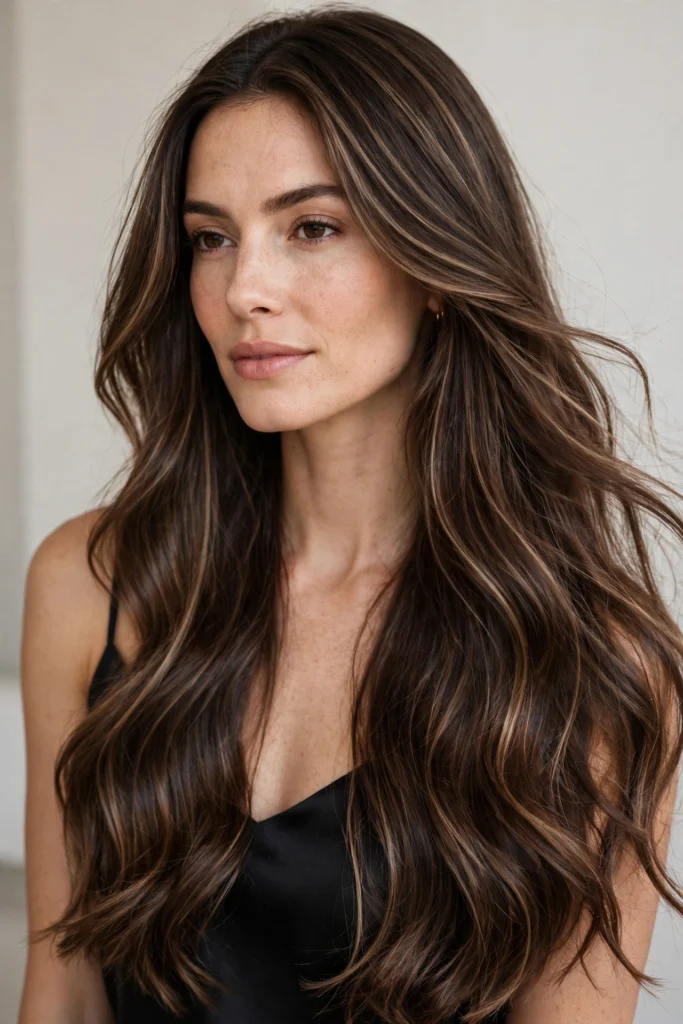
Take the Classic Mocha Melt and weave in fine, delicate ribbons of lighter mocha — think the width of a shoelace, not a highlighter streak. These thin pieces catch the light when your hair moves, which gives the color a shimmering quality in motion that flat color can never fake. It’s the difference between a color that looks good in a still photo and one that looks good when you’re actually living your life.
This is the office-friendly rebel of the group: from across the room it reads as rich brunette, but up close — or in sunlight — the ribbons reveal themselves. It works beautifully on medium-density hair where chunkier pieces would look sparse. Maintenance is the same gentle cycle as the Classic Melt: gloss every couple of months, full refresh when the ends start looking tired. If you’re the kind of person who notices details, this is your shade.
3. Mocha Money Piece
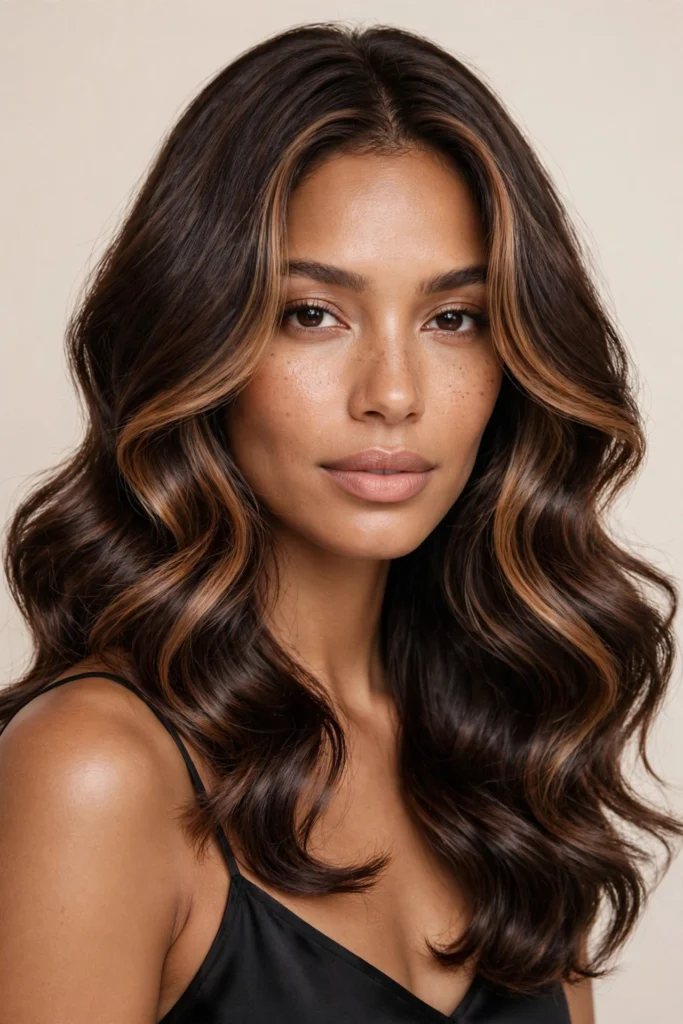
The money piece — those brighter face-framing sections — is the fastest way to make mocha balayage feel intentional. Everything else stays deep and rich while the pieces around your face lift one to two levels lighter, opening up your features the way good lighting does. It’s the highest-impact, lowest-commitment move in balayage: the brightness is exactly where your eyes go, and nowhere you have to maintain aggressively.
Fair warning: the money piece is also where balayage goes wrong most often, because it’s tempting to go too light or too wide. Ask for it soft and blended — “a whisper of brightness, not a headband.” On warm skin tones, keep the money piece in the caramel-mocha family; on cool skin tones, a neutral mocha keeps it from pulling orange. Done right, it’s the detail people compliment without being able to name.
Shades 4–6: Honeyed and Warm
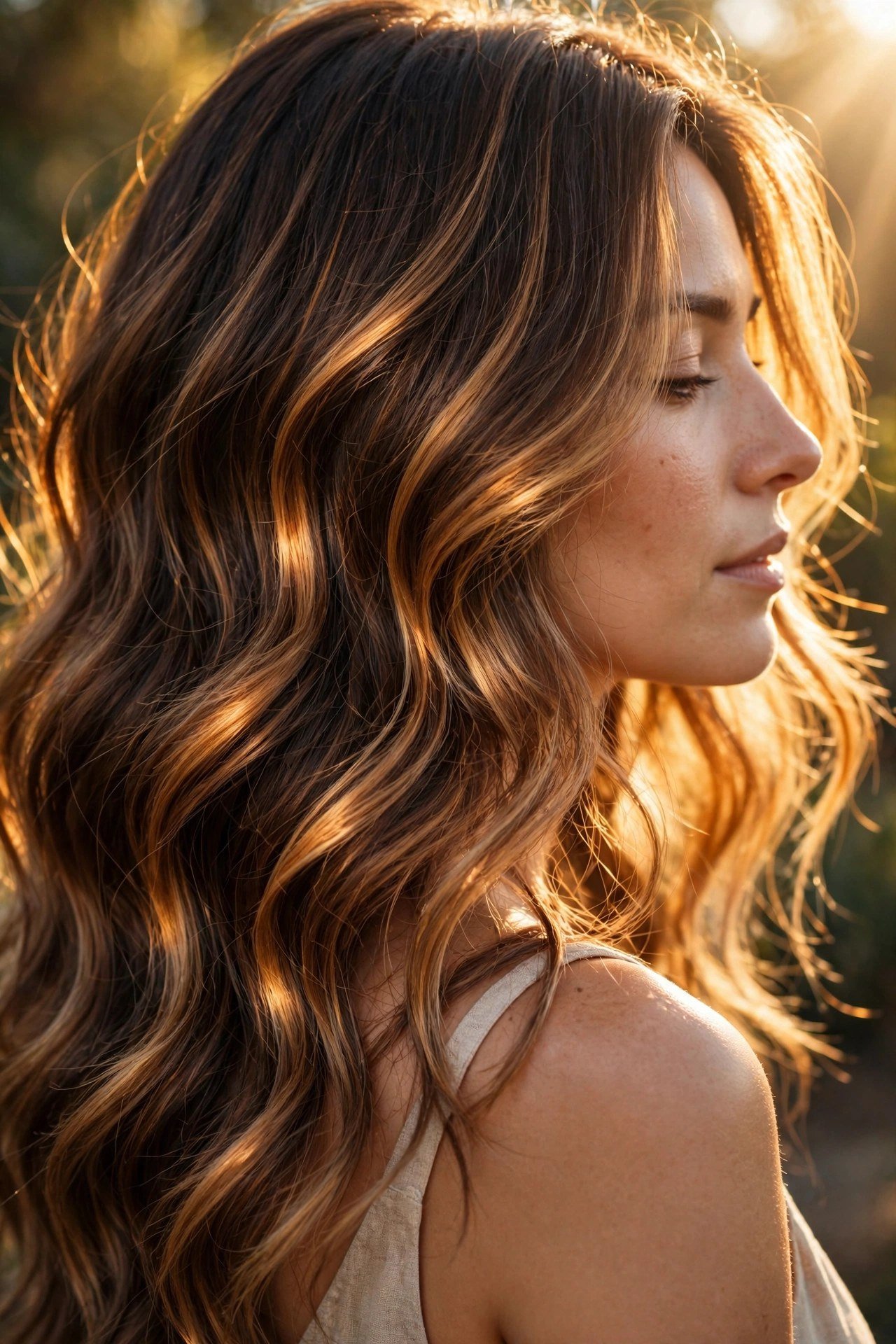
Some complexions come alive with warmth, and these three shades are unapologetic about it. Honeyed mochas lean into golden and caramel tones while keeping the brunette base rich — no washed-out blonde, no brassiness, just that lit-from-within warmth that makes skin look rested. If people are always telling you that you look tired when your hair is too dark or too cool, this is the section to show your colorist.
4. Honey Mocha Glow
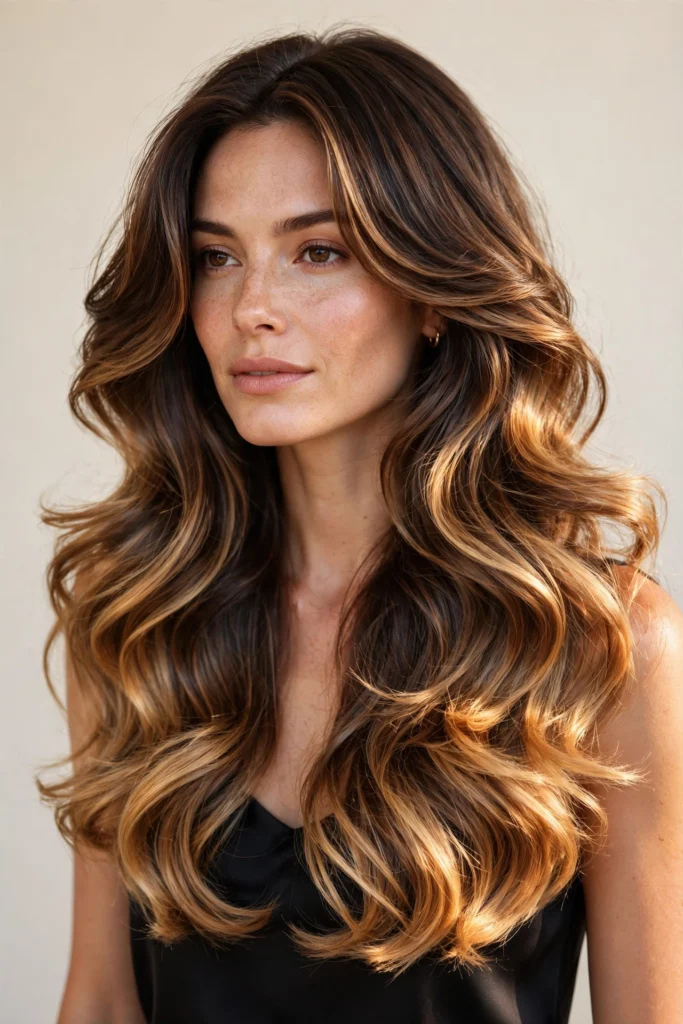
Espresso roots, milk-chocolate mids, and ends kissed with genuine honey tones — not yellow, not brassy, but that warm golden-brown you see in good honey. The glow in the name is literal: warm tones reflect more light, so this shade looks luminous even in flat indoor lighting. It’s the mocha equivalent of a candlelit room — everything looks better in it, including you.
Best on warm and neutral skin tones, where it harmonizes instead of fighting your undertones. On very cool skin it can pull slightly orange as it fades, so cool-toned women should ask for the honey pieces to stay in the neutral-caramel zone rather than true gold. Pair it with long layers and a bouncy blowout and it’s the single most complimented combination in this entire guide — blowouts and warm balayage were made for each other.
5. Caramel-Swirled Mocha
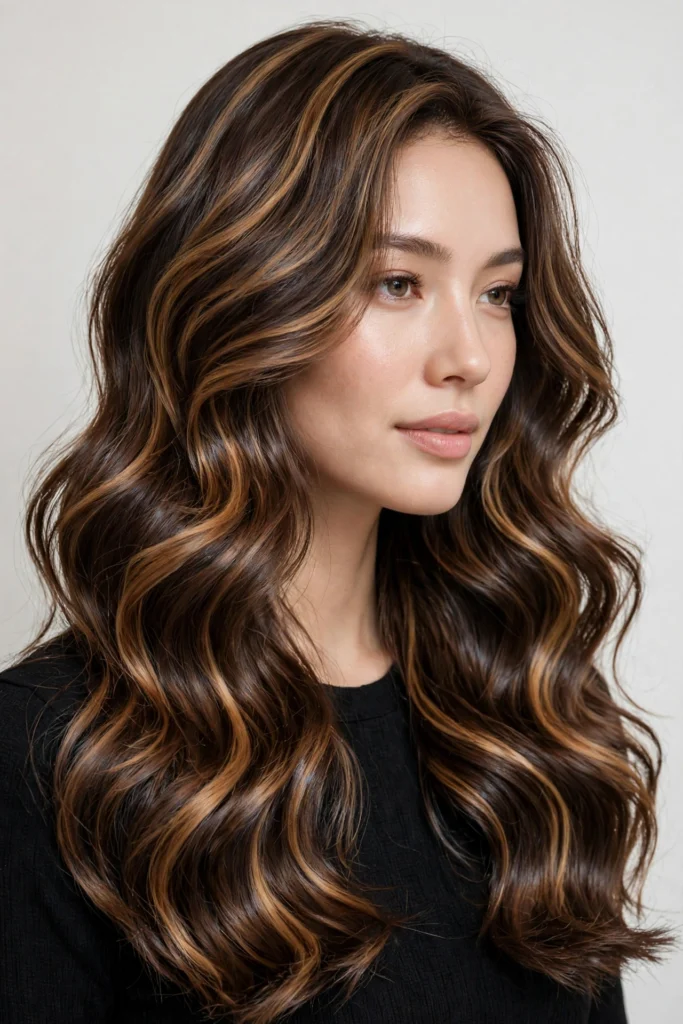
This is the shade that broke Pinterest in early 2026. A deep mocha base swirled with ribbons of true caramel — lighter and more golden than the other shades here, but anchored by enough dark depth that it never reads blonde. The contrast is the point: dark coffee against poured caramel, marbled through the hair like the top of a fancy latte. It’s rich, it’s unmistakable, and it photographs like a dream.
Because the contrast is higher, the grow-out is slightly more visible than the quiet-luxury shades — not harsh, just noticeable. Plan on a gloss refresh at six weeks rather than eight to keep the caramel from fading flat. This shade loves wavy and curly textures, where each bend shows a different swirl of the marble. On pin-straight hair, ask for the ribbons to be placed slightly finer so the contrast reads as intentional rather than stripey.
6. Golden Hour Mocha
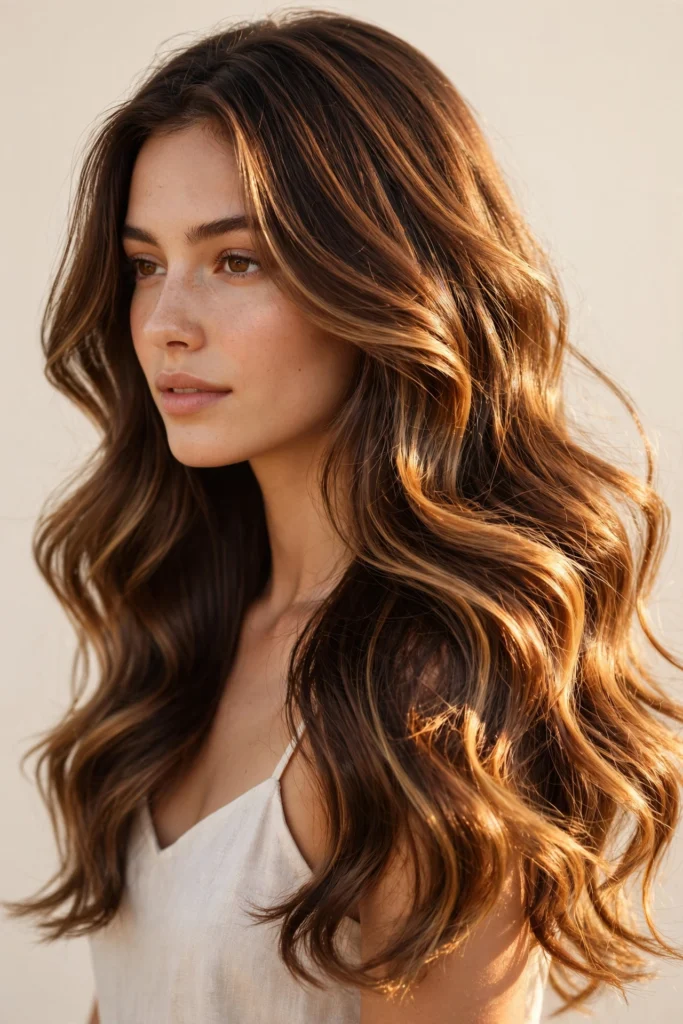
Named for the light, built for the light. Golden Hour Mocha takes a warm brunette base and paints it with golden-mocha ribbons concentrated through the mid-lengths and ends, so the hair genuinely looks sunlit even at 9 a.m. in an office. It’s warmer than Honey Mocha Glow and more evenly distributed than Caramel-Swirled — the warmth is everywhere, not just in ribbons.
This is the shade for women who’ve been told “warm tones aren’t for you” and suspected the advice was wrong. On olive and warm-deep skin tones, it’s transformative — the gold in the hair pulls the gold in the skin forward. The one maintenance note: warm tones fade warm, meaning this shade can drift brassy if you skip your gloss appointments. A blue or green-based toner at your refresh keeps it golden instead of orange. Small appointment, big difference.
Shades 7–9: Copper-Kissed Mocha
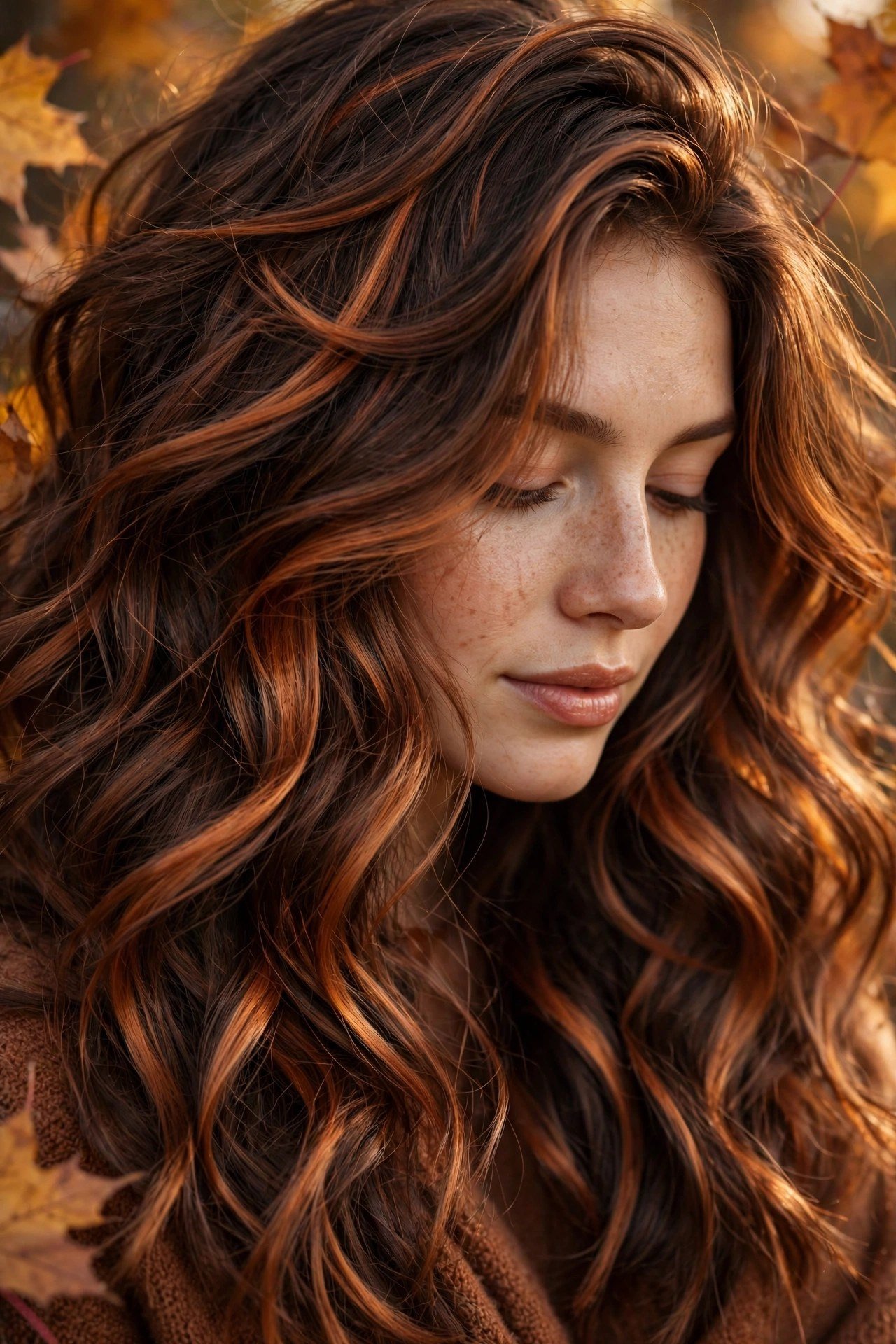
Copper is having a genuine moment in 2026, and mocha is the perfect vehicle for it — the brown base keeps copper wearable instead of costume-y. These three shades thread copper, cinnamon, and auburn tones through mocha depth. They’re for the woman who wants warmth with an edge, who finds plain caramel a little too safe. Copper-kissed mocha turns heads in a way the quieter shades don’t, and it does it while staying firmly brunette.
7. Copper Mocha
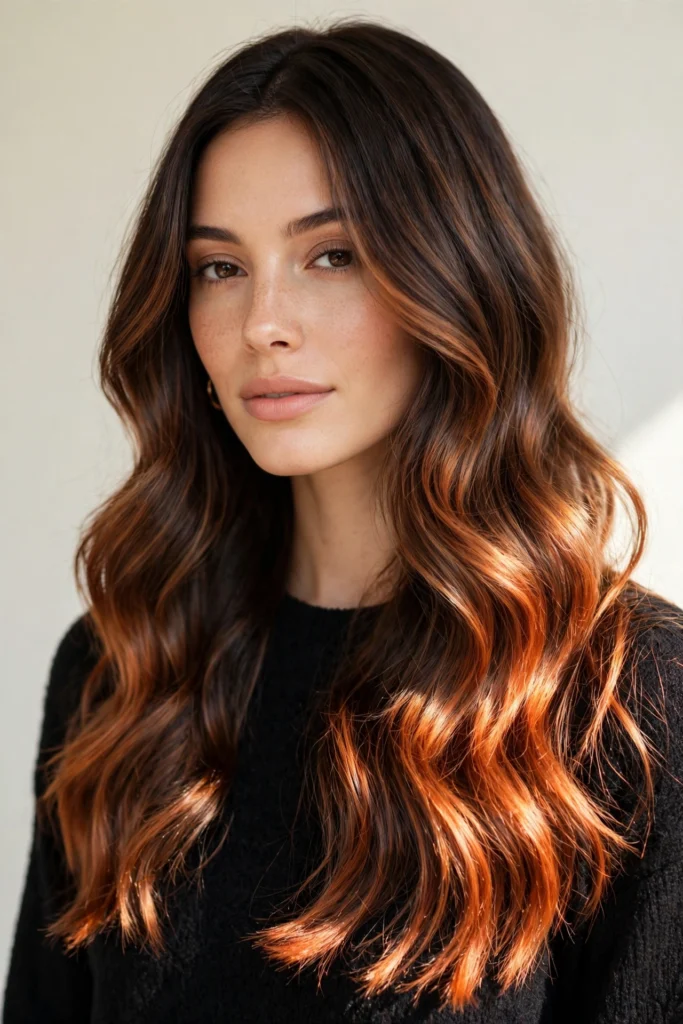
A true hybrid: the depth and dimension of mocha balayage with the unmistakable glow of copper woven through the mid-lengths. Not a copper all-over color — the roots stay deep espresso, and the copper appears as ribbons that intensify toward the ends. In sunlight it’s fiery; indoors it’s a rich, warm brunette with a secret. That duality is why women who choose it tend to become evangelists.
Honest talk: copper fades faster than any other tone on this list. Copper molecules are larger and slip out of the hair shaft more readily, so expect the vibrancy to soften within three to four weeks. The fix is simple but non-negotiable — a copper-boosting gloss or a color-depositing conditioner in a copper shade at home, plus your regular salon gloss. If you’re not willing to do that small upkeep, admire this shade from afar and pick something lower-maintenance. Copper rewards the devoted and punishes the casual.
8. Spiced Chai Mocha
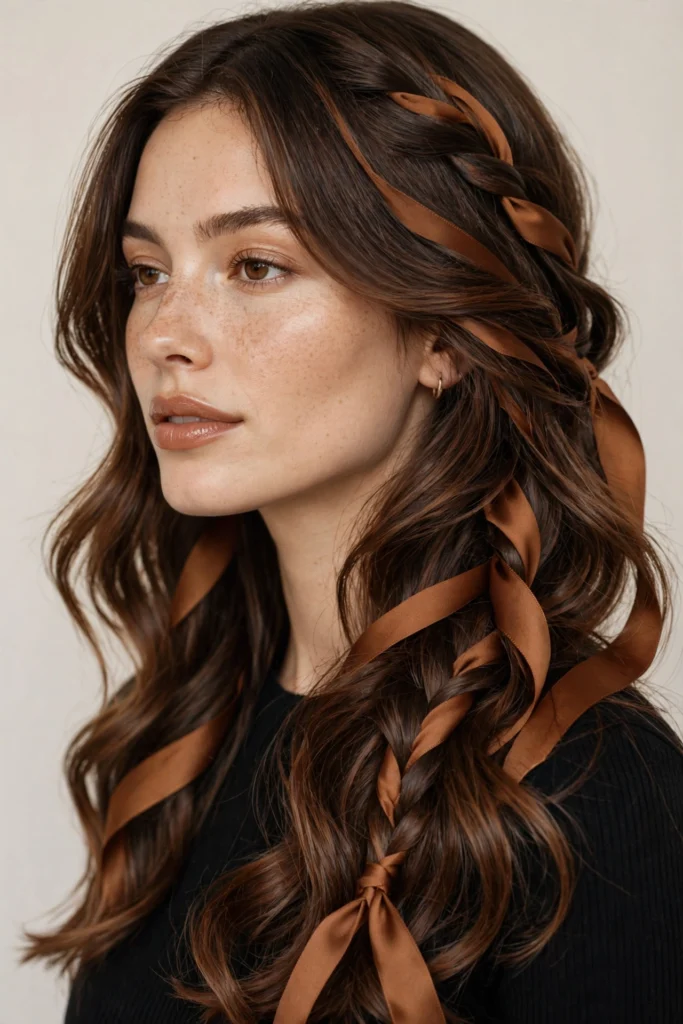
Cinnamon, nutmeg, a whisper of clove — Spiced Chai Mocha is copper’s softer, more complex sibling. The warmth here is spiced rather than fiery: cinnamon-brown ribbons over a deep mocha base, with none of the bright-orange energy of true copper. It’s the shade that makes people say “your hair looks amazing” without being able to articulate why, because the tones are layered rather than loud.
This is arguably the most flattering shade in the copper family for the widest range of skin tones. The spice tones harmonize with warm and neutral undertones, and because the overall value stays medium-brown rather than bright, cool skin tones can wear it too — just ask for the cinnamon kept muted rather than vivid. It fades more gracefully than true copper, settling into a warm mocha rather than washing out. If copper scares you but warmth calls to you, start here.
9. Auburn-Tipped Mocha
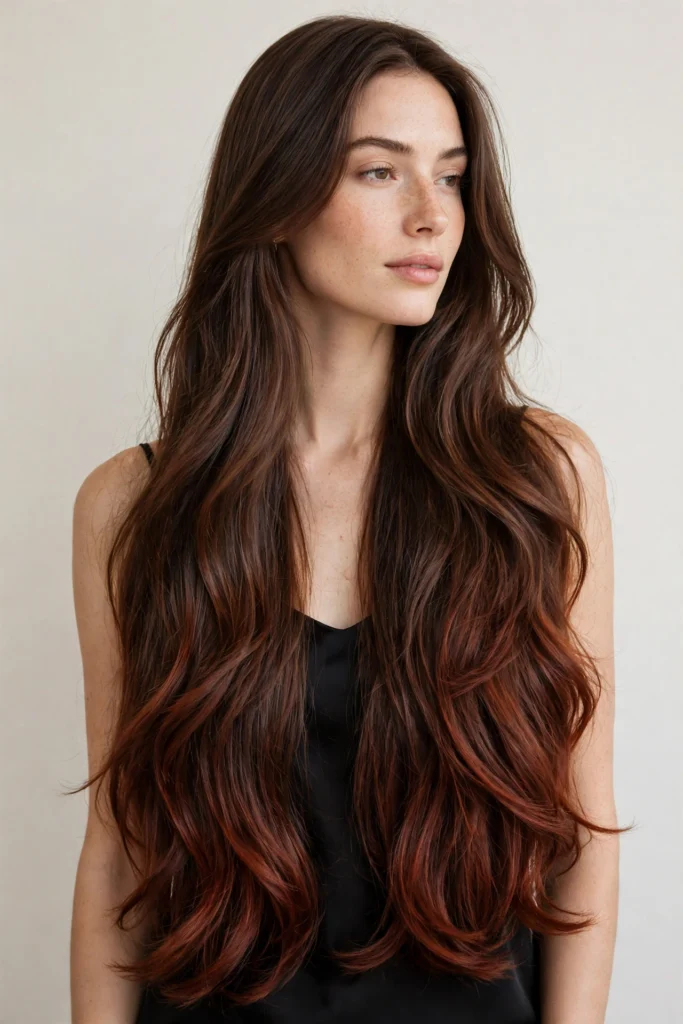
Deep mocha from roots through the mid-lengths, with the last few inches melting into rich auburn — not ombré-harsh, but a soft, hand-painted deepening of red-brown at the ends. The effect is like the color is smoldering from the bottom up. It’s dramatic without being loud, because the brightest, warmest color lives where hair naturally gets the most light and attention: the ends.
This shade is a gift for long hair. On a lob it can look slightly abrupt — there isn’t enough length for the melt to breathe — but past the shoulders, the espresso-to-auburn transition has room to unfold properly. It pairs beautifully with long layers, which give the auburn ends movement and prevent the bottom of the hair from looking like a solid block of color. Maintenance-wise, treat the auburn ends like copper: a color-depositing conditioner in auburn every couple of weeks keeps the smolder alive between salon visits.
Shades 10–12: Deep Espresso Drama
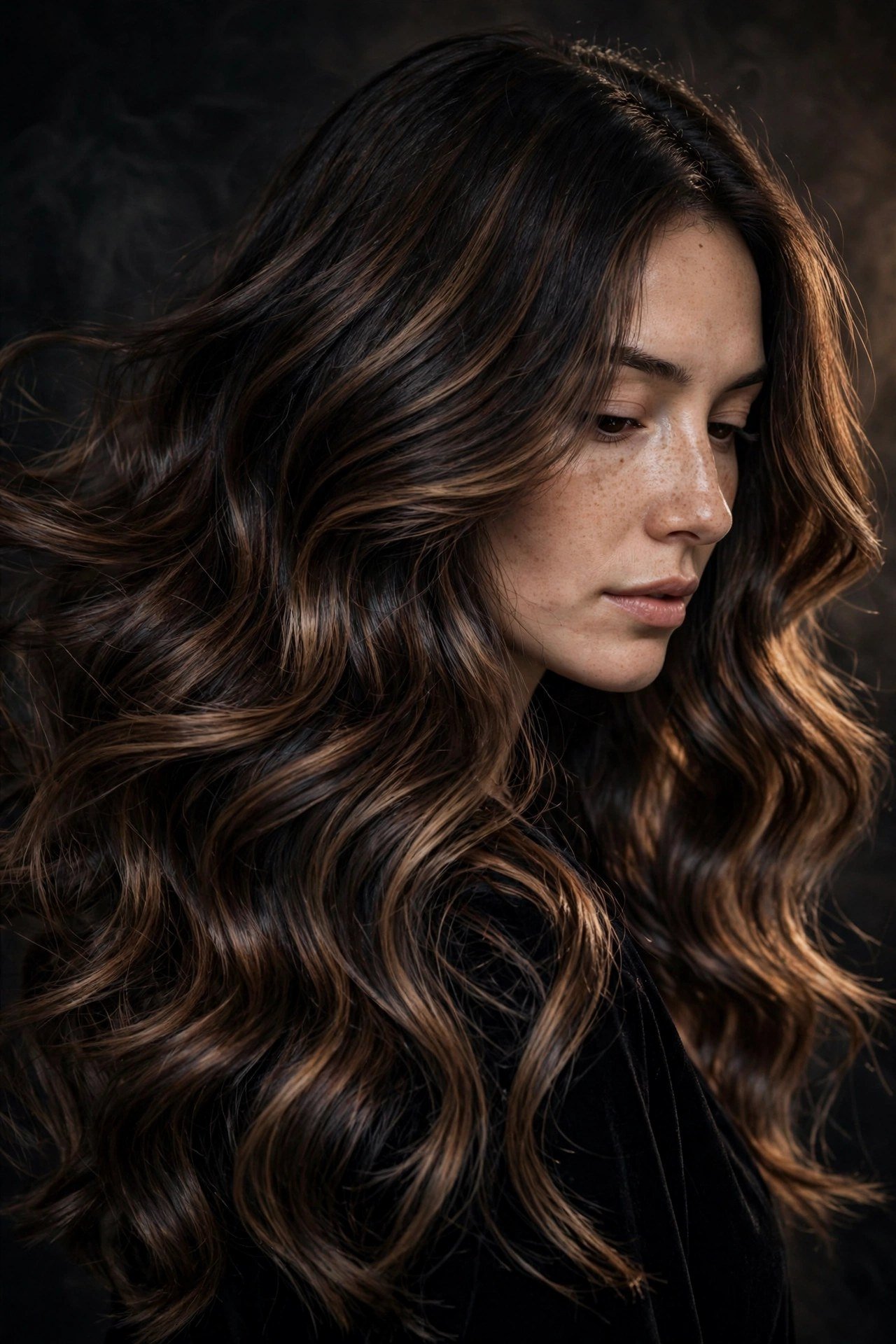
Not everyone wants lightness. Some of us want depth — hair so rich and dark it looks like poured espresso, with just enough dimension to keep it from going flat. These three shades keep the overall impression dark while using mocha ribbons to create movement within the darkness. They’re the answer for women who’ve tried going lighter and felt washed out, or who simply know that dark hair is their power.
10. Dark Roast Mocha
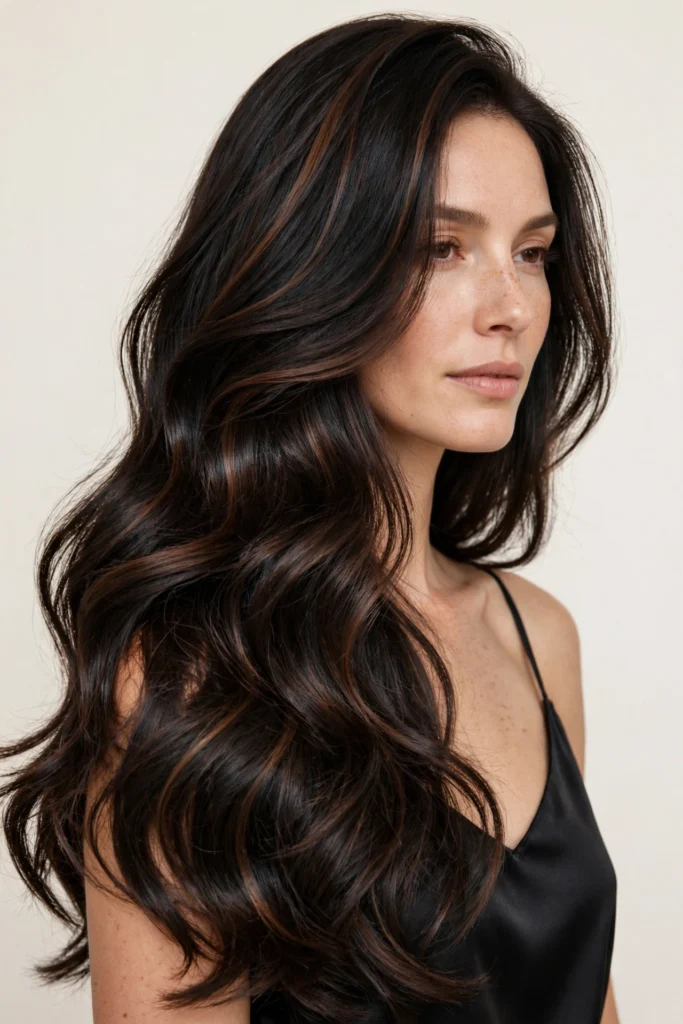
Near-black espresso at the root with ribbons of dark milk-chocolate painted through — the darkest shade on this list that still qualifies as balayage rather than solid color. The ribbons are only one to two levels lighter than the base, so the dimension is felt more than seen: the hair looks thicker, glossier, more alive, without any obvious “highlights.” It’s dimension for people who hate the word highlights.
This is the lowest-maintenance shade here by a wide margin. The contrast is so subtle that grow-out is essentially invisible — you could go six months and nobody would know you hadn’t been to the salon. It’s also the safest choice for very dark natural hair, because the lift required is minimal and the hair stays healthy. If your mantra is “I want to look polished with zero effort,” Dark Roast Mocha is the end of your search.
11. Midnight Mocha
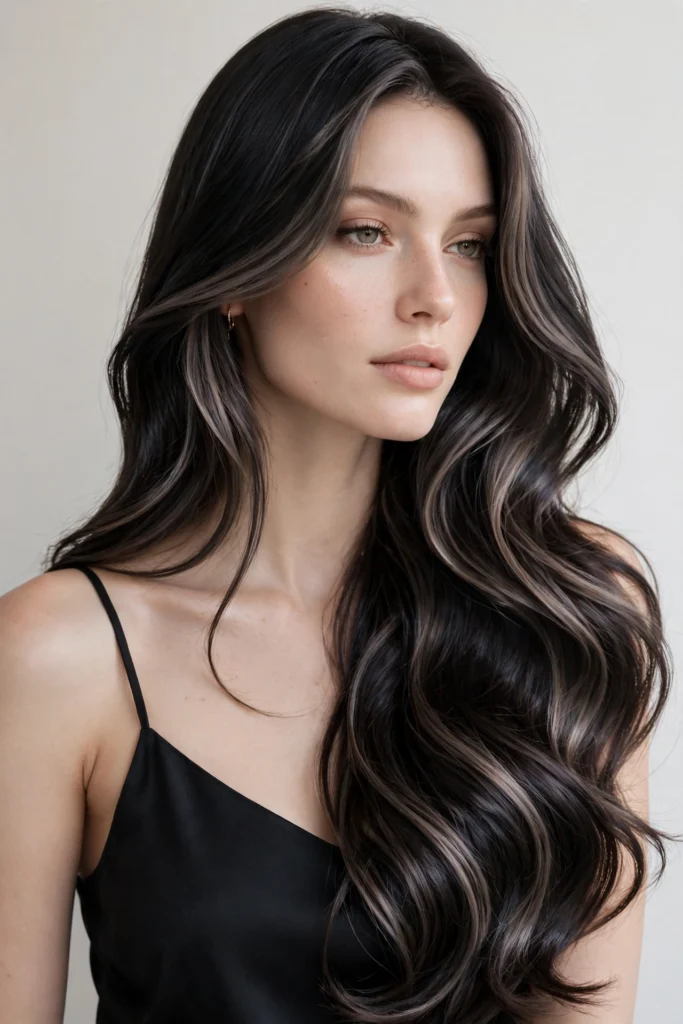
Where Dark Roast is warm and cozy, Midnight Mocha runs cool. A deep espresso-black base with ribbons of cool, smoky mocha — think the brown equivalent of moonlight rather than candlelight. It’s striking on cool and neutral skin tones, and it’s one of the few dark shades that doesn’t drain fair skin, because the cool ribbons create contrast against the skin instead of blending into it.
The technical note that matters: cool dark tones are harder to maintain than they look. Every hair color fades warm — it’s just chemistry — so a cool mocha will drift toward neutral-warm within weeks without intervention. Your gloss appointments need a cool or ash-based toner, and at home, a blue shampoo used sparingly (once a week, not every wash) keeps brassiness from creeping in. Skip the maintenance and you’ll end up with a perfectly nice warm mocha — which is fine, but it isn’t the shade you paid for.
12. Espresso Martini Mocha
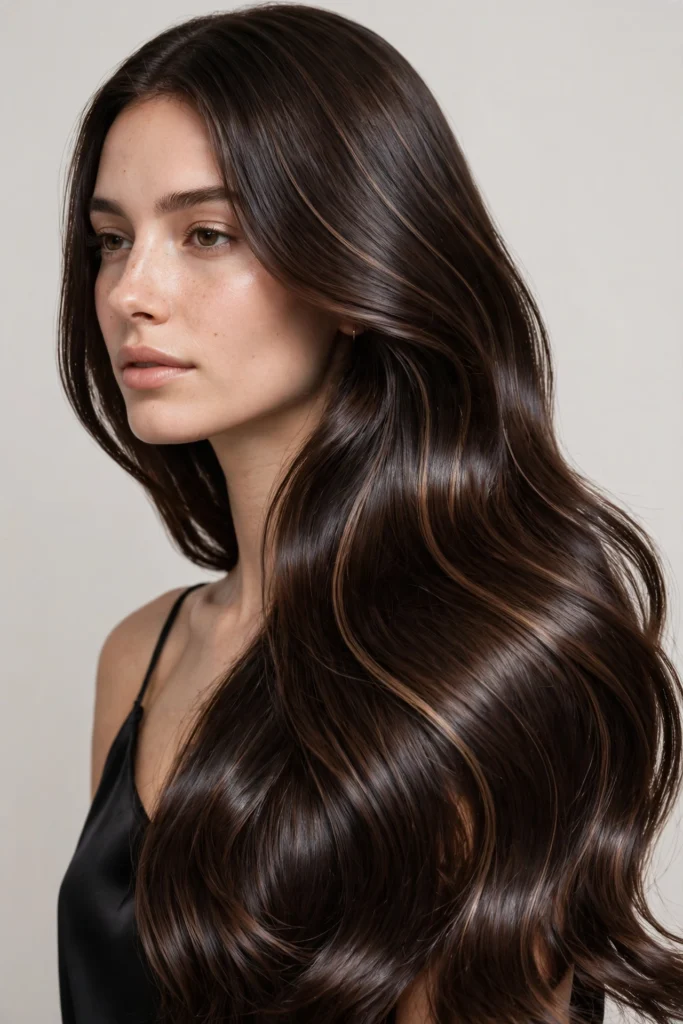
The name is a joke, but the shade is serious: the richest, glossiest dark mocha achievable, with dimension so finely woven it reads as pure shine. Espresso base, micro-fine ribbons of slightly lighter mocha, and a clear or mocha gloss over everything for a mirror finish. This is the shade in the salon portfolio that makes clients point and say “that one — whatever that is.”
The secret of Espresso Martini Mocha isn’t the color, it’s the finish. The gloss is doing half the work. That means your at-home routine matters enormously: sulfate-free everything, a weekly deep-conditioning mask, heat protectant every single time, and cool-water rinses. Dark hair shows damage more ruthlessly than light hair — every fried end catches the light wrong. But kept healthy, this shade has a liquid, expensive quality that no lighter color can touch. It’s proof that drama doesn’t require lightness.
Shades 13–15: Cool and Smoky
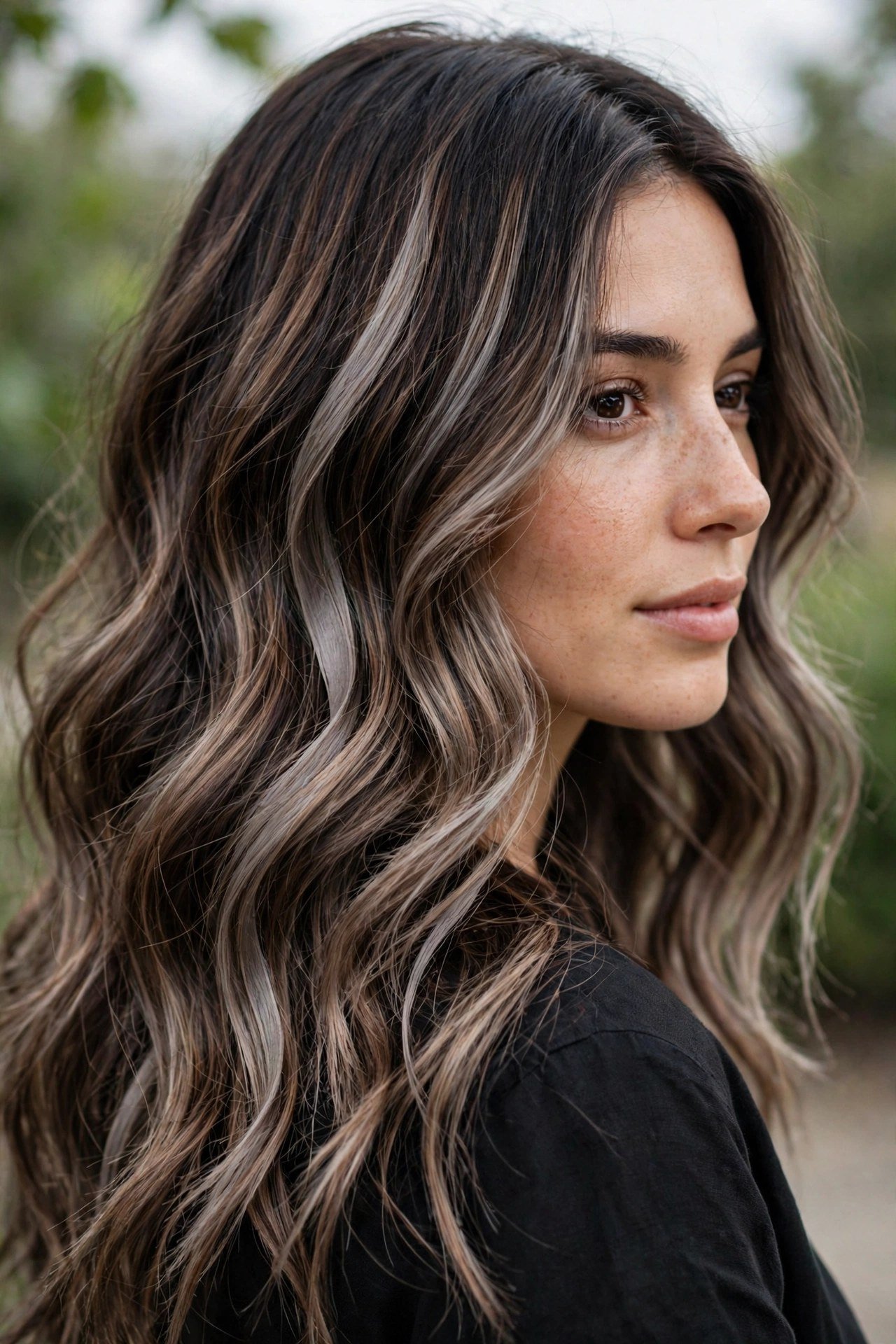
Mocha doesn’t have to be warm. For cool and neutral skin tones — or for anyone whose hair pulls brassy no matter what — the smoky side of mocha is a revelation. These shades trade golden warmth for ash, taupe, and mushroom tones while keeping the dimensional balayage structure. They’re modern, a little editorial, and they solve the number one complaint brunettes have about warm color: the orange fade.
13. Ash Mocha
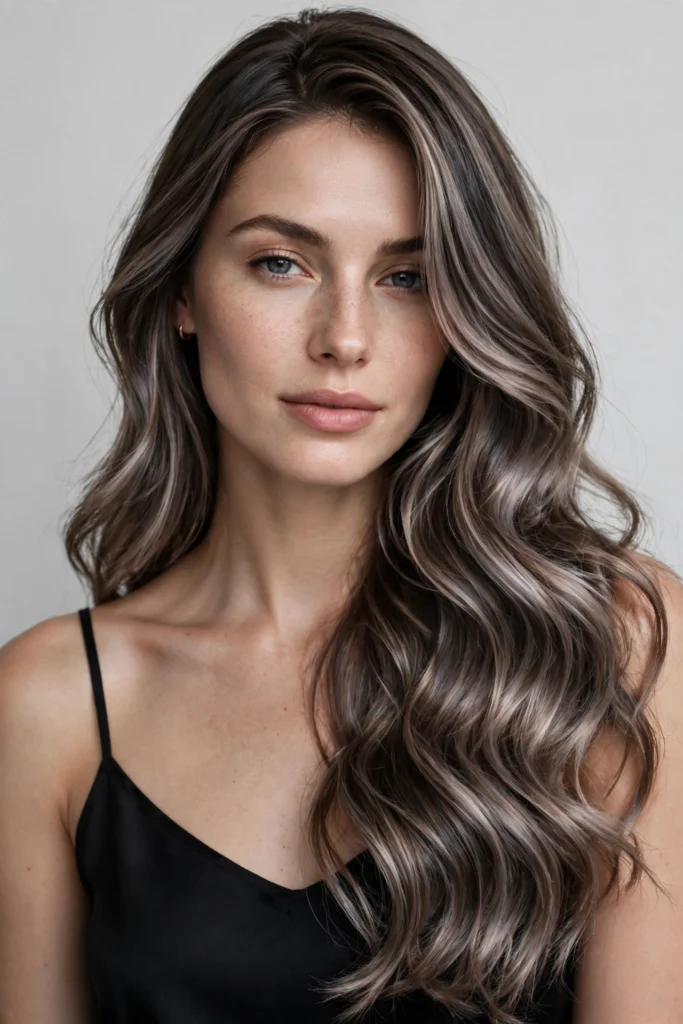
Cool-toned mocha ribbons — smoky, muted, with the warmth deliberately neutralized — painted over a deep neutral-brown base. The result is a brunette with an almost silvery dimension in certain lights, like woodsmoke over dark wood. It’s the shade for women who’ve always felt that warm browns make their skin look sallow, and it’s quietly one of the most requested corrections colorists do: “take the warmth out, but keep the dimension.”
The maintenance reality: ash tones fade fastest toward warmth, so this shade demands the most disciplined gloss schedule on the list — every six weeks, with an ash-based toner, no skipping. At home, blue shampoo once a week is genuinely useful here (unlike on warm mochas, where it dulls the gold you paid for). If you’re diligent, Ash Mocha stays smoky and expensive for months. If you’re not, it becomes a perfectly ordinary warm balayage within two months — still pretty, but not what you chose.
14. Smoky Taupe Mocha
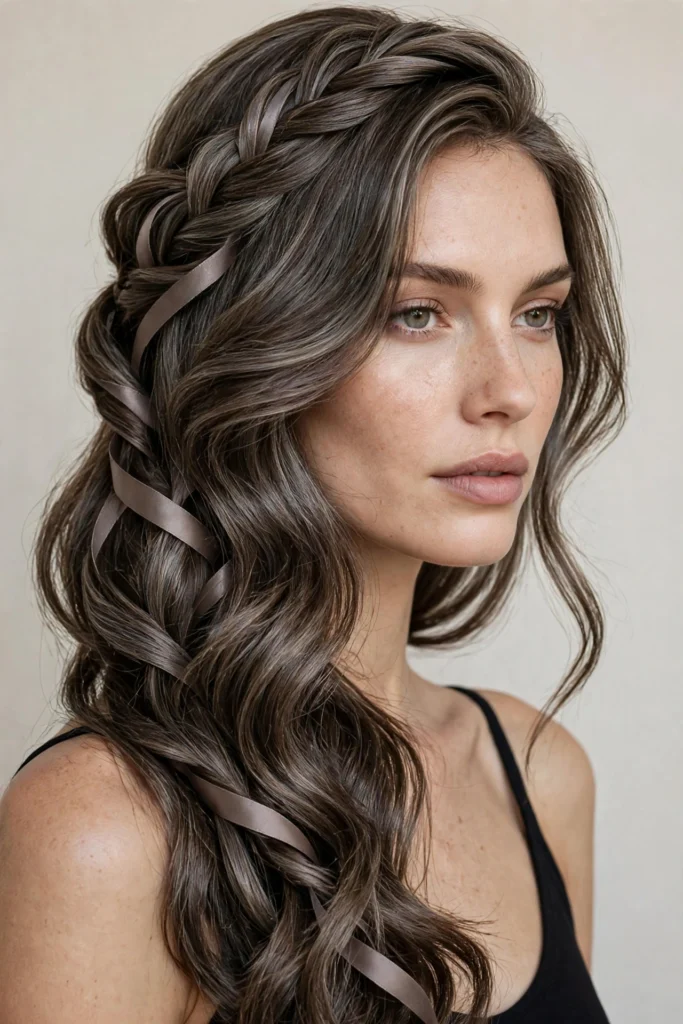
Taupe — that elusive grayish-brown — woven as fine ribbons through a deep mocha base. It’s subtler than Ash Mocha and more unusual: most people can’t name the color they’re seeing, which is exactly the appeal. In some lights it reads cool brown; in others, there’s a silvery-mushroom quality that feels very 2026. It’s the shade for the woman who wants her hair to be a conversation, not a statement.
This is a colorist’s color — it requires a skilled hand with toner formulation, because taupe lives in a narrow band between “beautifully smoky” and “accidentally gray.” Bring reference photos and be specific: “smoky taupe ribbons, not gray, not silver — I want to stay clearly brunette.” On fine hair, the fine ribbons add perceived thickness; on thick hair, they break up heaviness. It’s one of the most versatile placements on this list, working across textures precisely because the contrast is tonal rather than stark.
15. Iced Mocha
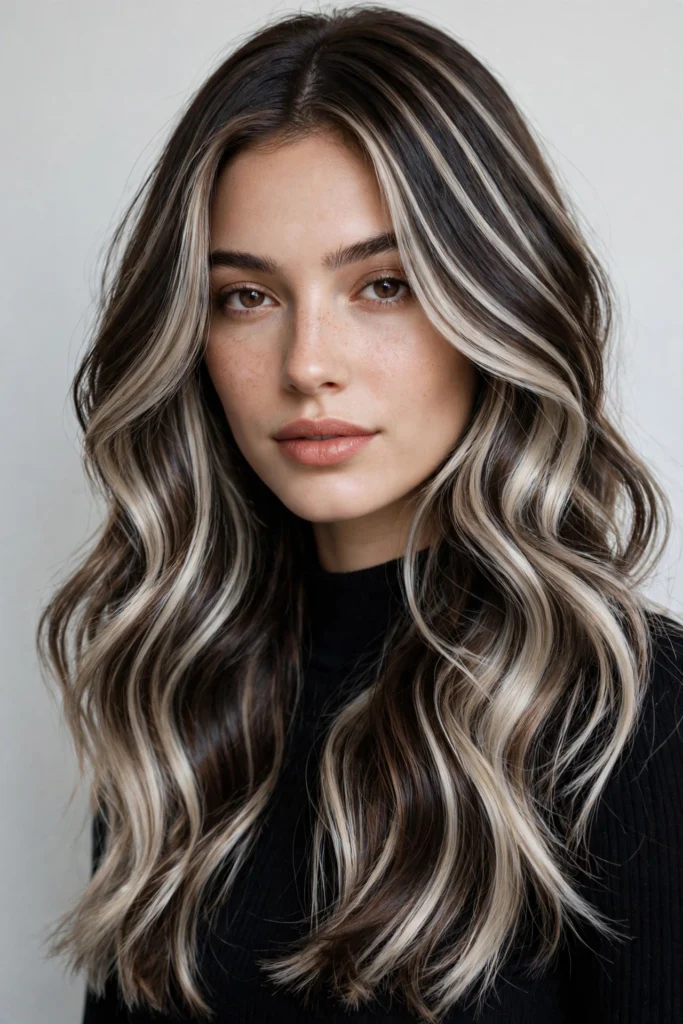
The boldest of the cool family. Iced Mocha pushes the ribbons lighter — into cool beige-blonde territory — while the roots and underneath stay deep mocha. The contrast is high, the tone is frosty, and the overall effect is striking: dark depth with ribbons of iced coffee running through it. It’s the cool-toned answer to Caramel-Swirled Mocha, and it has the same head-turning contrast, minus the warmth.
Two honest notes. First, the lift required for those iced ribbons is significant on dark hair — this may take two sessions, and your colorist should be upfront about that. Second, iced tones need the most vigilant at-home care: purple shampoo (yes, actually useful here, unlike on warm mochas), heat protectant always, and no skipping gloss appointments. This is a high-maintenance shade wearing a low-maintenance technique’s clothing. Choose it with open eyes and you’ll love it; choose it casually and you’ll fight brassiness for months.
Shades 16–18: The Bold Finishes
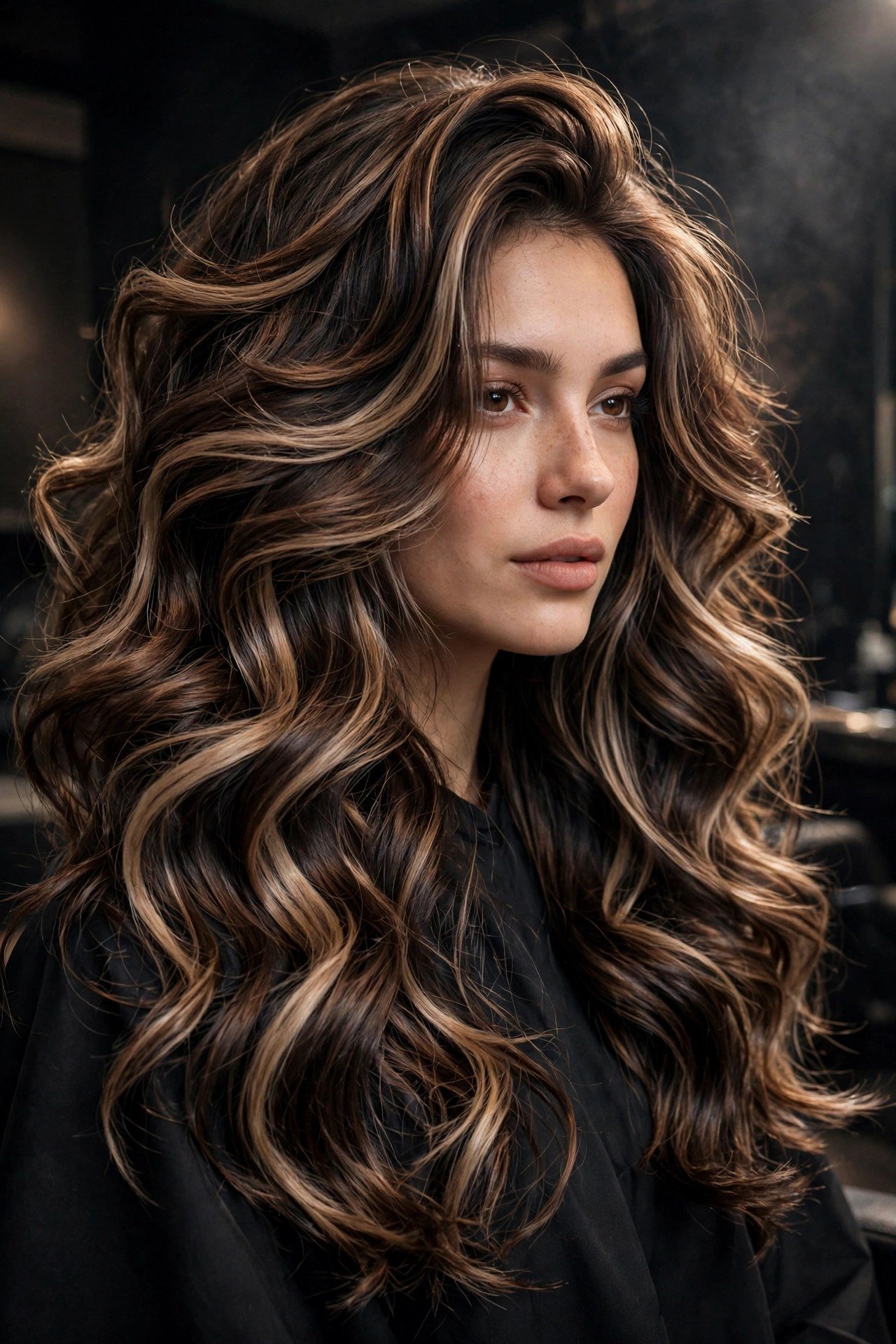
We end with the three shades for women who don’t do subtle. Higher contrast, braver placement, more presence. These are the mochas that get photographed, the ones strangers ask about. They still grow out softly — that’s the balayage promise, and it holds — but while they’re fresh, they make no apologies.
16. High-Contrast Ribbon Mocha
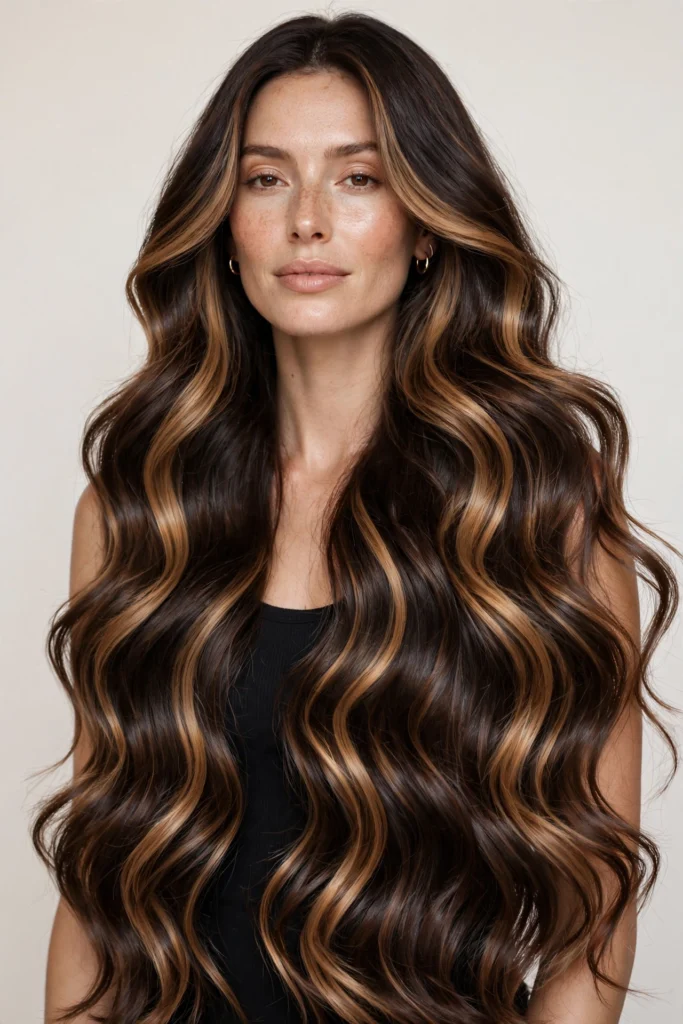
Deep espresso base, ribbons lifted three to four levels into bright mocha-caramel — the maximum contrast balayage can offer while staying in the mocha family. The ribbons are placed boldly: thicker sections, more of them, concentrated where they’ll be seen. It’s dimensional hair turned all the way up, and on long, wavy hair it’s genuinely show-stopping.
The trade-off for drama is visibility of grow-out. This is the one shade on the list where regrowth will eventually read as regrowth rather than melting invisibly — not harshly, but noticeably, around the three-to-four-month mark. Budget for a full refresh twice a year rather than once, with gloss appointments between. Also: this shade demands healthy hair. High contrast on damaged ends looks fried, not dimensional. If your ends are compromised, do the trim first, the color second. Your colorist will thank you, and so will your photos.
17. Bronde Mocha Balayage
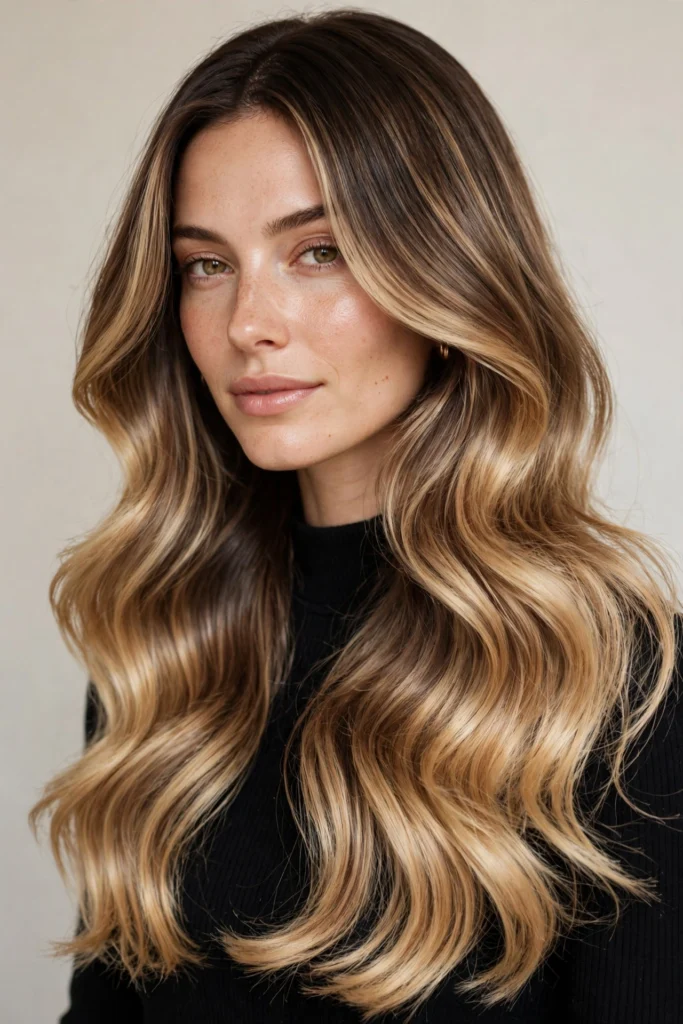
Bronde — the brown-blonde hybrid — meets mocha: a deep mocha root with ribbons that travel further toward blonde than any other shade here, landing in a warm, honeyed bronde through the ends. It’s the bridge shade for blondes going darker without the shock, and for brunettes who want to flirt with real lightness while keeping their depth. In 2026, bronde is the most requested “in-between” color in salons, and the mocha version is its richest expression.
This shade is particularly smart for former blondes. Instead of a single-process dark color that fades unevenly and leaves you with banding (the classic blonde-to-brunette regret), Bronde Mocha Balayage keeps lightness at the ends where your blonde history lives, and deepens the root and mids. The grow-out is graceful, the fade is even, and if you ever want to go blonde again, the lightness is already there waiting. It’s the rare color that’s both a destination and an exit strategy.
18. Lived-In Rooted Mocha
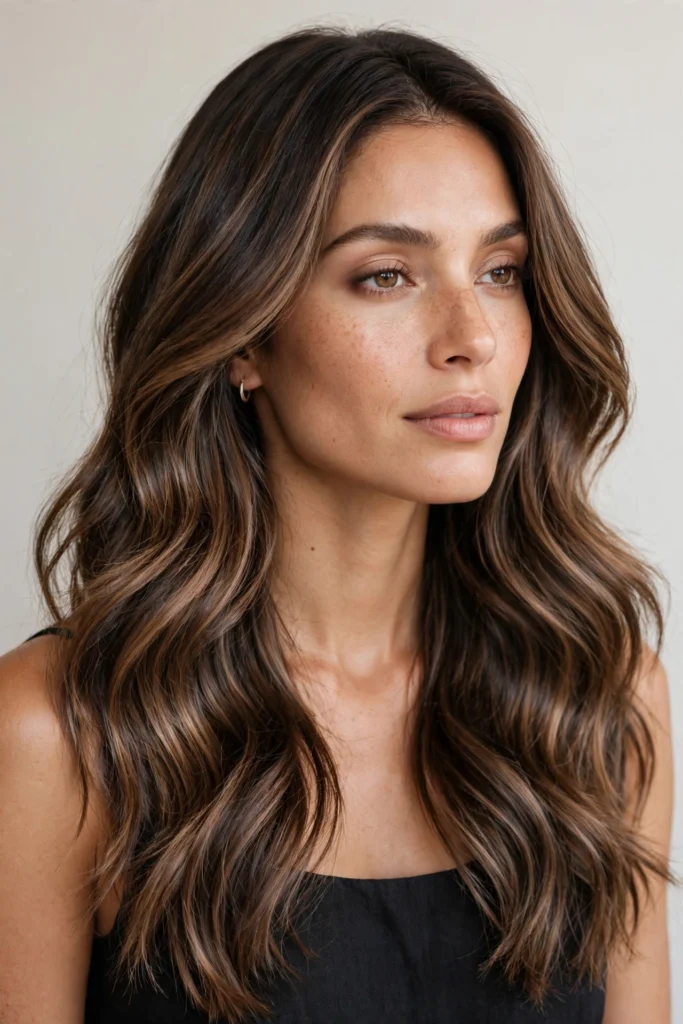
The intentional grow-out, elevated to a shade. Lived-In Rooted Mocha takes the root melt further than any other version here — your natural color (or a close match) extends several inches down before the mocha ribbons begin, creating a color that looks three months grown-out on day one. It sounds counterintuitive. It looks incredible. It’s the “I woke up like this” of hair color, and it’s the choice of women who want beautiful hair with the absolute minimum salon calendar.
This is the shade to ask for if your honest answer to “how often do you want to come in?” is “as rarely as possible.” Full appointments stretch to six, eight, even ten months; you maintain with a gloss every couple of months and that’s genuinely it. The deep root also means this works on nearly every natural base color — the colorist matches the melt to you rather than fighting you toward a standard. Low effort, high polish, zero pretense. There’s a reason the women who choose it never go back.
Maintenance: Keeping Your Mocha Balayage Hair Rich
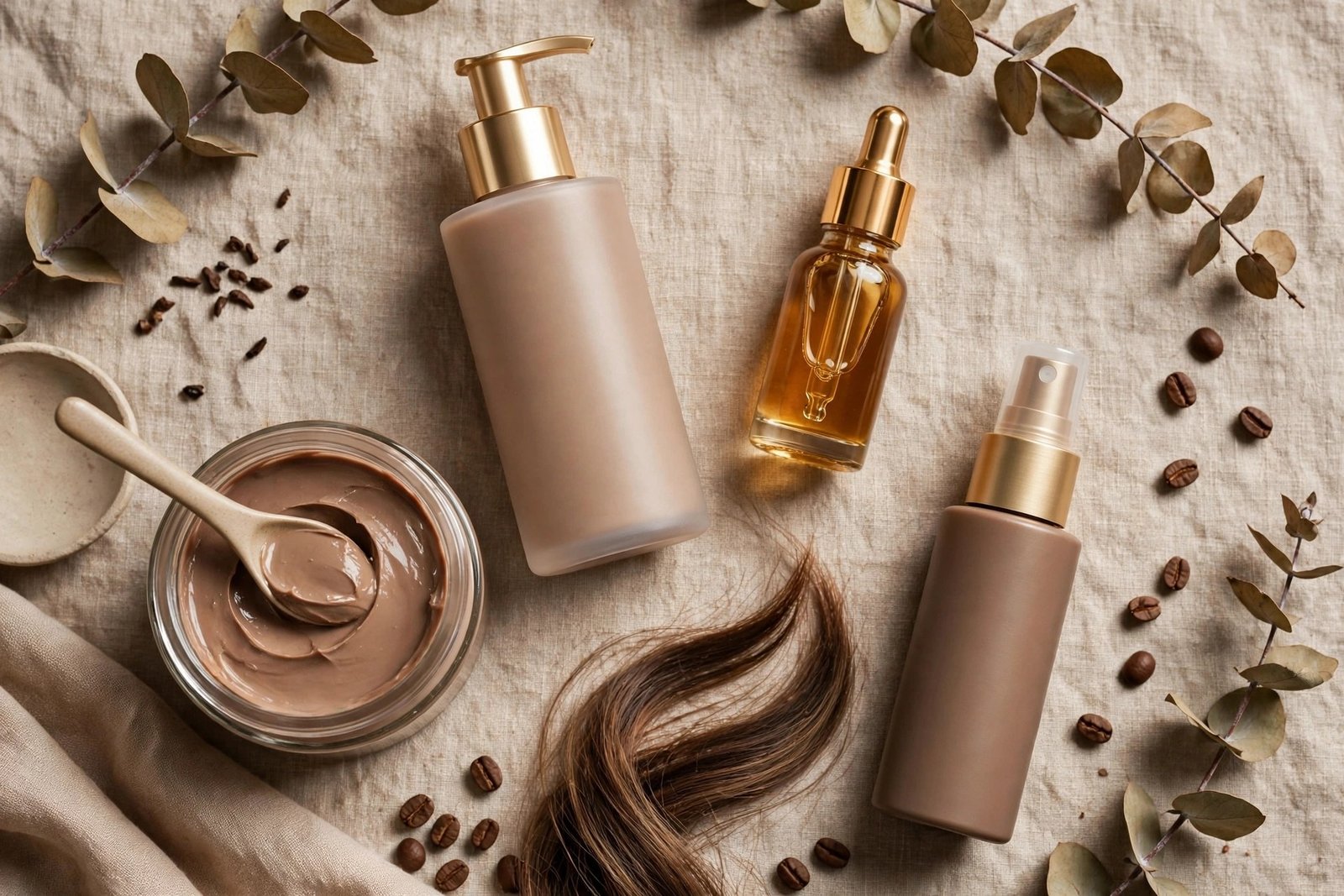
Here’s the good news first: mocha balayage is one of the lowest-maintenance lightened looks in existence. The grow-out is designed to be soft, so you’re never racing a regrowth line. But “low maintenance” is not “no maintenance.” The dimension you paid for lives in the toner — and toner fades. Ignore it and your rich mocha slowly flattens into a single dull brown. Follow a simple routine and it stays expensive-looking for months.
The single most important appointment is the gloss refresh, every six to eight weeks. A gloss (also called a toner refresh) takes thirty to forty-five minutes, costs a fraction of a full balayage, and does three things: it re-deposits the mocha tones that have faded, it seals the cuticle so the hair reflects light again, and it lets your colorist neutralize any brassiness before it becomes a problem. Book your first gloss before you leave the salon after your balayage appointment. Women who pre-book maintain; women who “call later” fade. It’s that simple.
At home, the rules are straightforward. Wash two to three times a week, not daily — every wash strips a little toner. Use sulfate-free shampoo and conditioner, always; sulfates are toner killers. Rinse with cool or lukewarm water, because hot water opens the cuticle and lets color escape faster. Use heat protectant every single time you use hot tools — no exceptions, not even “just a quick pass with the straightener.” And deep-condition weekly. Balayage involves lightener, lightener involves some degree of dryness, and dry hair doesn’t hold tone or reflect light. A weekly mask is the cheapest insurance your color has.
A word about purple shampoo, because it’s the most misused product in brunette haircare. Purple shampoo neutralizes yellow and brassy tones — which is exactly what you want on Iced Mocha or Ash Mocha, and exactly what you don’t want on Honey Mocha Glow or Caramel-Swirled Mocha, where the warmth is the point. Using purple shampoo on a warm mocha dulls the gold you paid for. If your shade is warm, skip it entirely. If your shade is cool or smoky, use it once a week at most — it’s strong stuff, and overuse turns hair dull and muddy. When in doubt, ask your colorist which camp your shade falls in before you buy anything.
Two more things that quietly destroy balayage: sun and pools. UV light fades toner and turns warm browns brassy — a UV-protectant hair spray or simply wearing a hat during long sun exposure makes a measurable difference. Chlorine is worse: it strips toner aggressively and can turn lightened pieces greenish. Wet your hair with clean water and apply conditioner before swimming (hair absorbs less chlorinated water when it’s already saturated), and rinse immediately after. Finally, get your ends trimmed every ten to twelve weeks. Balayage looks best on healthy ends; fried ends scatter light instead of reflecting it, and no toner can fix that.
What Mocha Balayage Costs in 2026
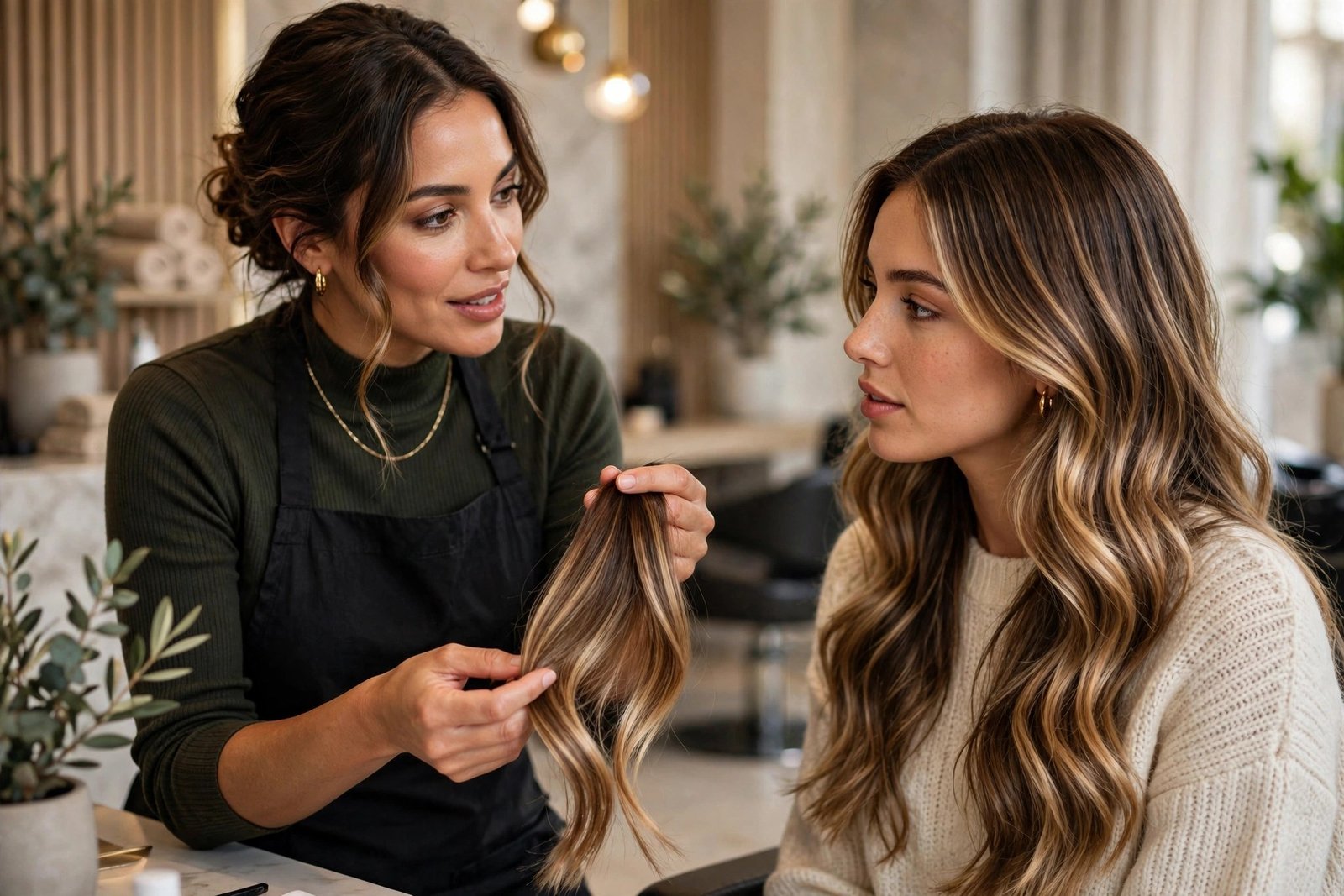
Let’s talk money honestly, because salon pricing is deliberately opaque and you deserve real numbers. In 2026, a full mocha balayage at a reputable salon typically runs between $250 and $450 in most US cities — higher in New York, Los Angeles, and other major metros, where $500-plus is normal for a senior colorist. A partial balayage (face-framing pieces and the top layer, less dimension underneath) runs $150 to $280. The gloss refresh every six to eight weeks is $60 to $120. Prices outside the US vary widely, but the ratios hold: the full service costs roughly three to four times the gloss maintenance.
What you’re paying for is time and skill, not product. A full balayage takes two and a half to four hours in the chair — the painting is slow, deliberate work, and the toning and glossing at the end is where the mocha magic actually happens. Be suspicious of prices dramatically below these ranges. A $99 “balayage” is almost always a few foils and a toner, and fixing a bad balayage costs more than doing it right the first time. This is the one place in the entire process where bargain-hunting backfires.
Consultations, on the other hand, should be free — and you should use them. A fifteen-minute consultation lets the colorist see your hair’s actual condition and history, give you an honest quote, and tell you whether your reference photo needs one session or two. Dark or previously colored hair that needs significant lift may require two appointments spaced weeks apart, which doubles the cost conversation. Better to hear that in a free consultation than mid-appointment with lightener already in your hair. And when you find a colorist whose work you love: tip well, rebook before you leave, and send your friends. Good colorists remember loyal clients, and loyal clients get the appointment slots everyone else wants.
Who Mocha Balayage Suits: Skin Tones, Lengths, Textures
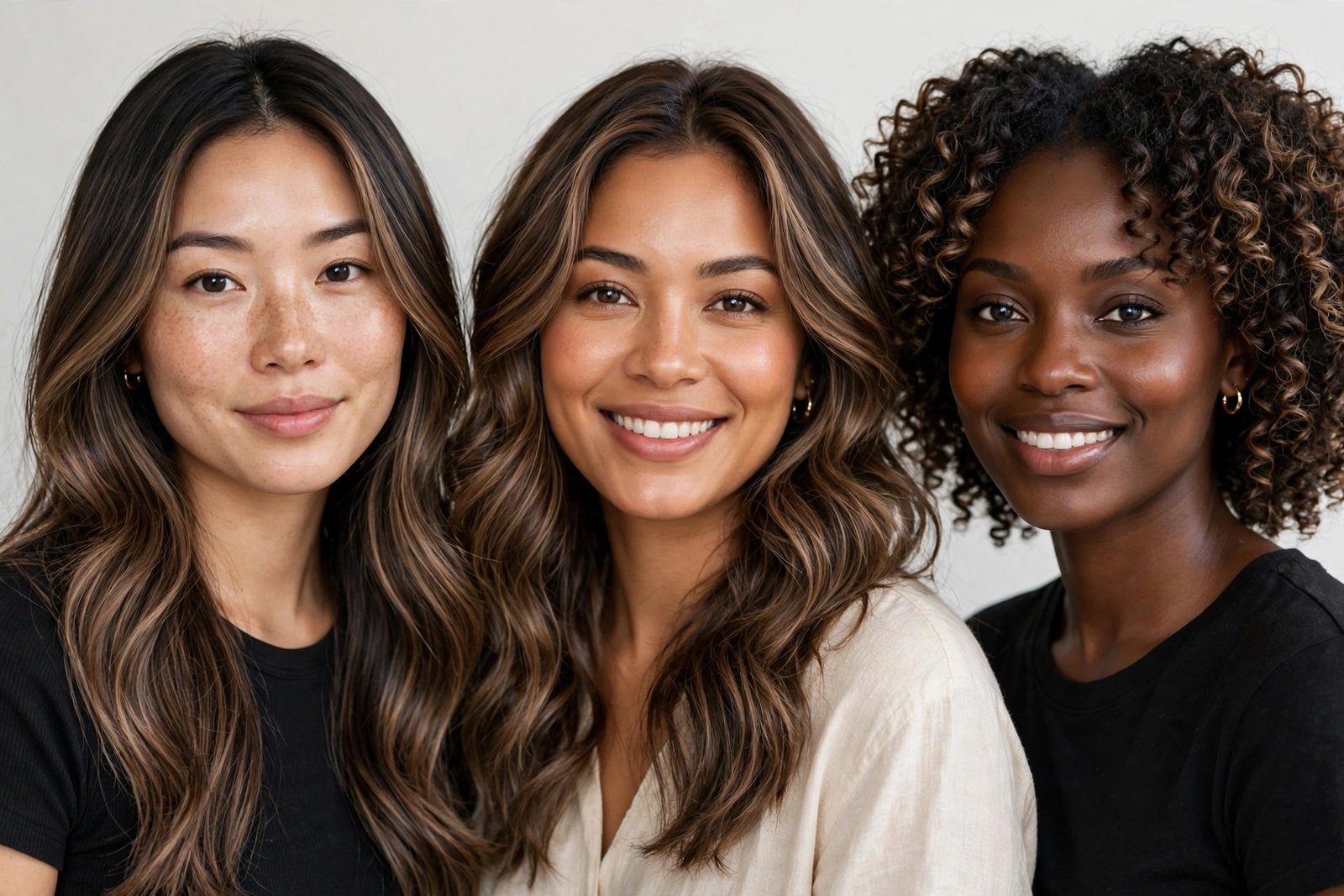
The reason mocha balayage became a phenomenon instead of a fad is its range. The mocha family is wide enough that there’s a version for nearly everyone — but “nearly” is doing some work, so let’s be specific. For skin tones, the rule is harmony: warm undertones (golden, olive, deep warm skin) come alive with the honeyed and copper-kissed mochas — Honey Mocha Glow, Spiced Chai, Caramel-Swirled. Cool undertones (pink, rosy, fair cool skin) look striking with the smoky family — Ash Mocha, Smoky Taupe, Iced Mocha. Neutral undertones can wear the entire list. If you’re unsure of your undertone, look at the veins on your wrist: greenish suggests warm, bluish suggests cool. Or simpler: the Classic Mocha Melt flatters virtually everyone, which is why it’s the default recommendation.
For hair lengths, long layers are mocha balayage’s best friend — the layers give the ribbons room to move and catch light, and the classic pairing with a bouncy blowout exists for a reason. But shorter hair is absolutely not excluded. On a lob or bob, the placement just gets adjusted: ribbons sit slightly higher and slightly finer, and the money piece does more of the work. Our guide to the blunt bob shows how much dimension a shorter cut can carry. Below shoulder length, anything works. Above the chin, talk placement carefully with your colorist — there’s less canvas, so every ribbon counts more.
For textures, here’s the honest breakdown. Straight hair shows balayage ribbons most crisply — the color reads like brushstrokes, precise and clean. Wavy hair is where dimension peaks: every bend in the wave catches a different tone, so wavy mocha balayage looks the most dimensional of all. Curly and coily hair shows painted pieces as light catching individual curls — beautiful, but the placement needs a curl-experienced colorist, because curls spring up and shift where the color lands. Whatever your texture, the hair must be healthy enough to lift; severely damaged hair won’t hold tone evenly, and an honest colorist will tell you to do a conditioning and trim plan first.
For base colors: mocha balayage is at its best on medium to dark brunette bases — that’s its home turf, requiring the least lift and giving the most natural result. Natural black hair can absolutely wear it, but expect the lift to take longer (possibly two sessions) and the ribbons to land in the deeper mocha range rather than light caramel. Previously blonde hair going darker is a different service — more of a reverse balayage — but Bronde Mocha Balayage (shade 17) is built exactly for that transition. And box-dyed hair? It can be done, but only with a strand test and an honest conversation first. The dye history determines everything about the lift, and any colorist worth booking will insist on checking before promising.
FAQ
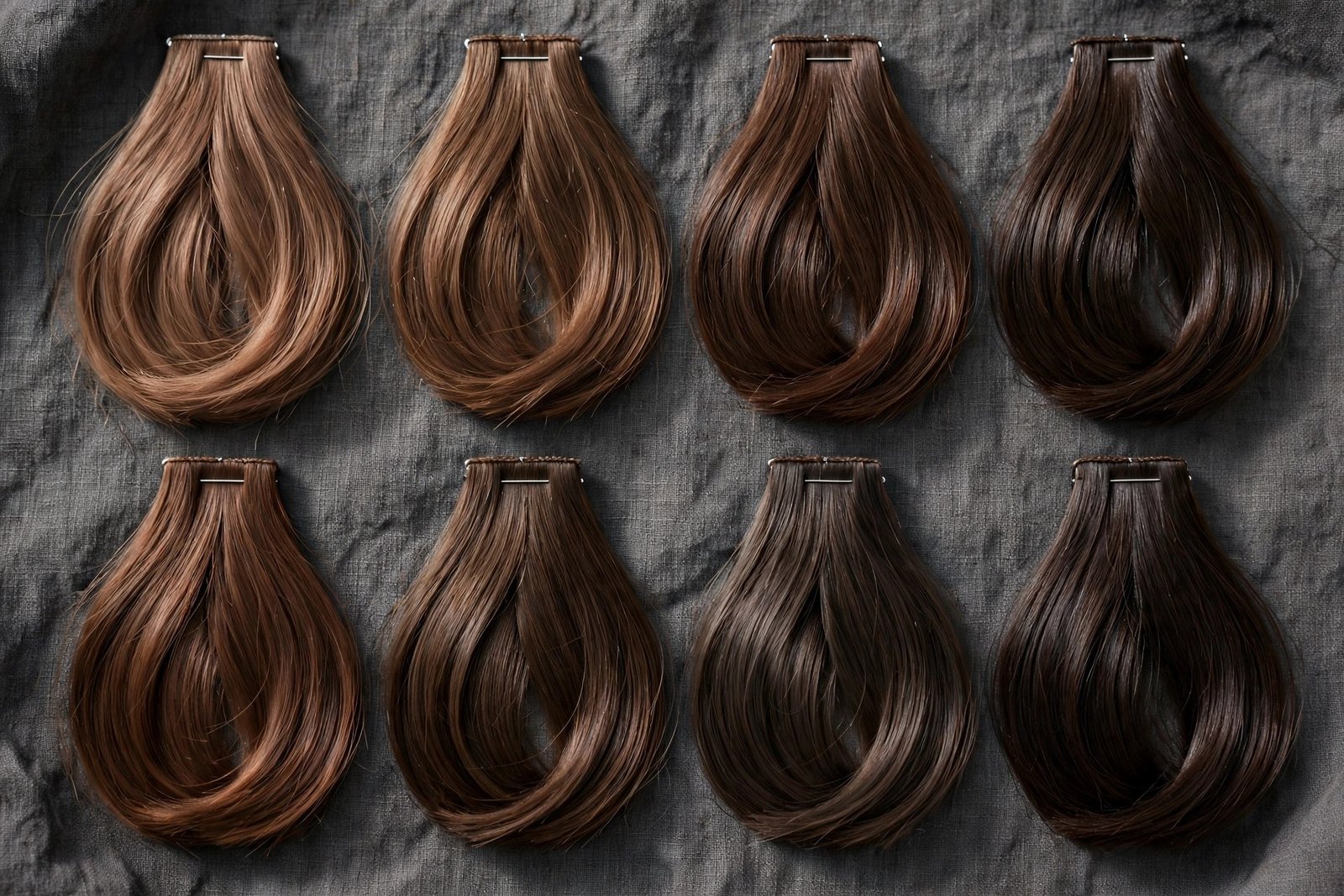
The questions colorists hear about mocha balayage on repeat — answered the way they’d answer them in the chair.
How long does mocha balayage last?
The structure lasts four to six months easily — that’s the beauty of the melted root, which grows out without a line. The tone is the part that fades: expect the richness to soften over six to eight weeks, which is exactly why the gloss refresh exists. Women who keep up with gloss appointments every six to eight weeks can stretch a full balayage to twice a year. Women who skip the gloss usually find themselves back in the chair at three months wondering where the dimension went. The balayage didn’t fail; the toner just did what toner does.
Will mocha balayage damage my hair?
Any service involving lightener causes some degree of change to the hair — that’s chemistry, not opinion. But mocha balayage is among the gentlest lightening services because the lift is moderate (you’re going a few levels lighter, not to platinum) and the lightener doesn’t sit on the scalp. A skilled colorist using modern lightener and bond-building additives keeps damage minimal. The real risk isn’t the service, it’s the aftercare: skipping heat protectant, over-washing with sulfates, and ignoring trims will damage balayaged hair faster than the balayage itself did. Healthy hair in, healthy habits after — that’s the formula.
Can I get mocha balayage on black or previously dyed hair?
Yes, with honest expectations. Natural black hair lifts through warm stages (red, orange) before reaching mocha tones, so getting to a caramel-mocha ribbon may take one long session or two spaced appointments — and the result will sit in the deeper mocha range, which is gorgeous in its own right. Previously dyed hair, especially box dye, is less predictable: old color can lift unevenly or resist in patches. This is why the strand test exists. A colorist who insists on one before quoting you a result isn’t being difficult; she’s being professional. The test takes twenty minutes and prevents months of regret.
Is mocha balayage high maintenance?
No — and that’s the core of its appeal. Compared to full highlights (touch-ups every six to eight weeks), platinum blonde (constant toning and root work), or vivid fashion colors (fading within weeks), mocha balayage is genuinely low-maintenance. Your calendar looks like this: one long appointment, then a 45-minute gloss every six to eight weeks, then a full refresh once or twice a year. At home: sulfate-free products, heat protectant, weekly mask. That’s it. If you can commit to that, the color takes care of the rest.
What’s the difference between mocha balayage and regular balayage?
Balayage is the technique; mocha is the color. “Regular” balayage just means hand-painted highlights in whatever tone you choose — blonde balayage, caramel balayage, bronde balayage are all balayage. Mocha balayage specifies the palette: coffee-inspired warm-to-neutral browns, with depth at the root and dimensional ribbons through the lengths. So when you ask for mocha balayage, you’re asking for the technique plus a specific color story. It’s the difference between ordering “a cocktail” and ordering “an espresso martini” — one is a method, the other is the drink.
Conclusion
Trends come and go, but some colors earn their place. Mocha balayage hair earned it by being the rare trend that’s both beautiful and practical — dimension without the maintenance calendar, richness without the flatness, warmth without the brassiness (if you pick the right shade for your undertones and keep up with your gloss). It’s the color equivalent of a perfectly cut blazer: it just works, on almost everyone, in almost every setting.
If you’re ready, here’s your move: save five reference photos from the eighteen shades above — not one, five, all with the same feeling. Book a consultation, not just an appointment. Bring the photos, use the script from the colorist section, be honest about your hair history, and book that first gloss refresh before you leave the salon. Six weeks from now, when your mocha is still rich and dimensional while everyone else’s color has faded flat, you’ll understand why this became the defining brunette of 2026.
The best hair color is the one that makes you feel like yourself on your best day, every day. For a remarkable number of women in 2026, that color is mocha. Go find yours.