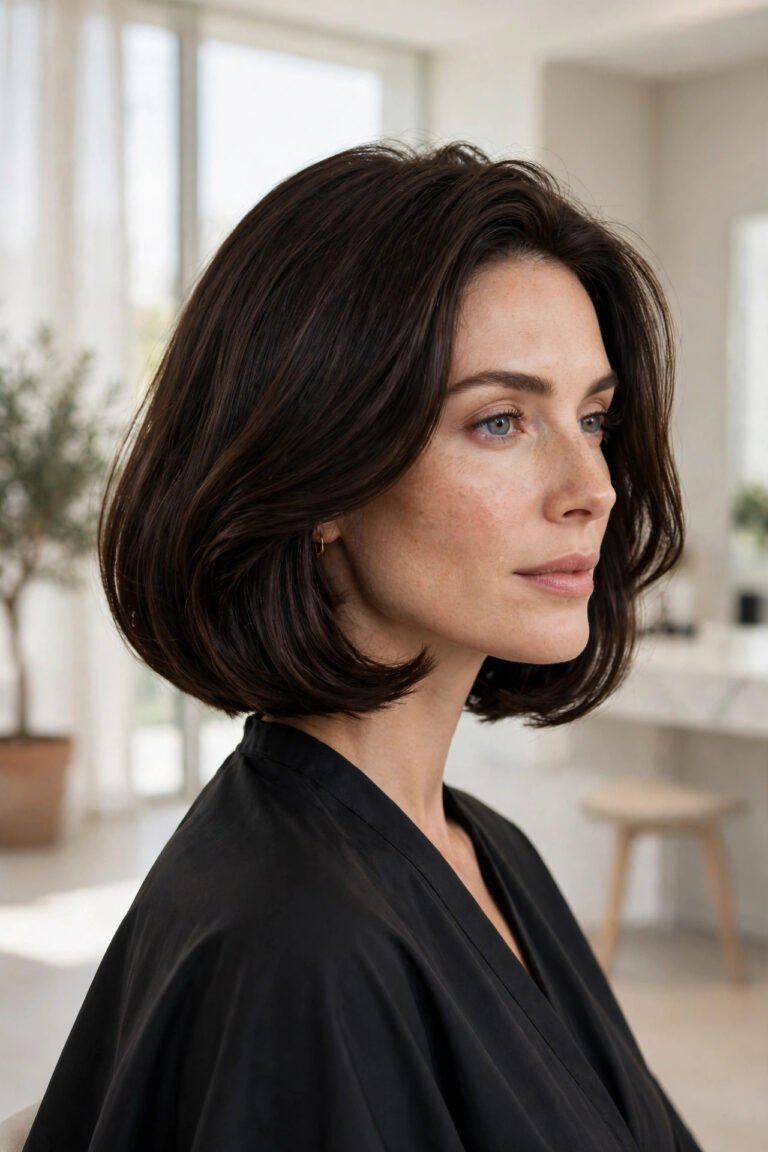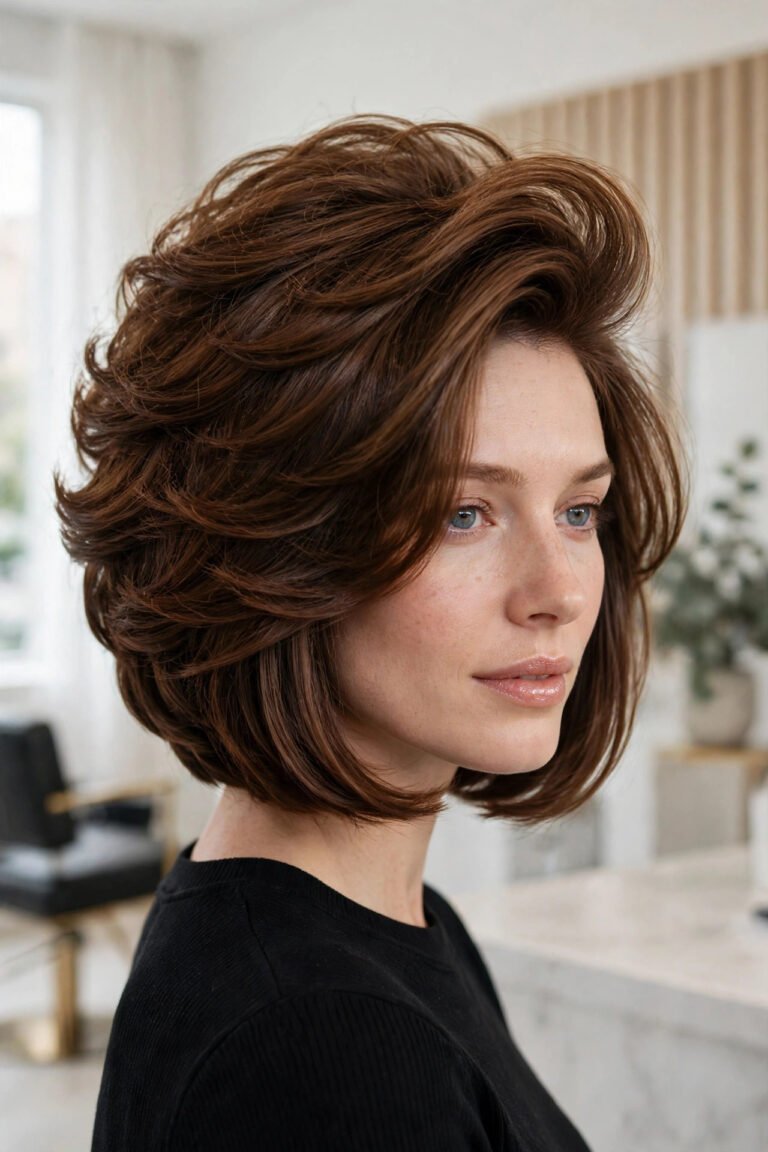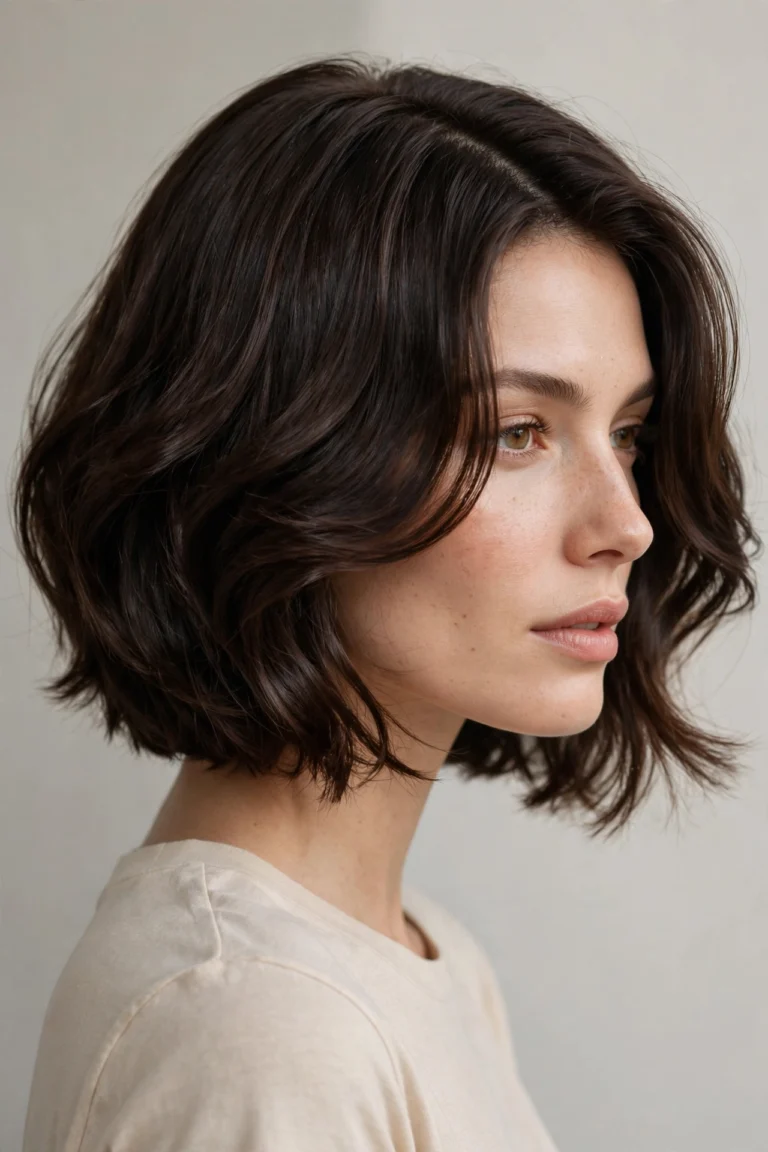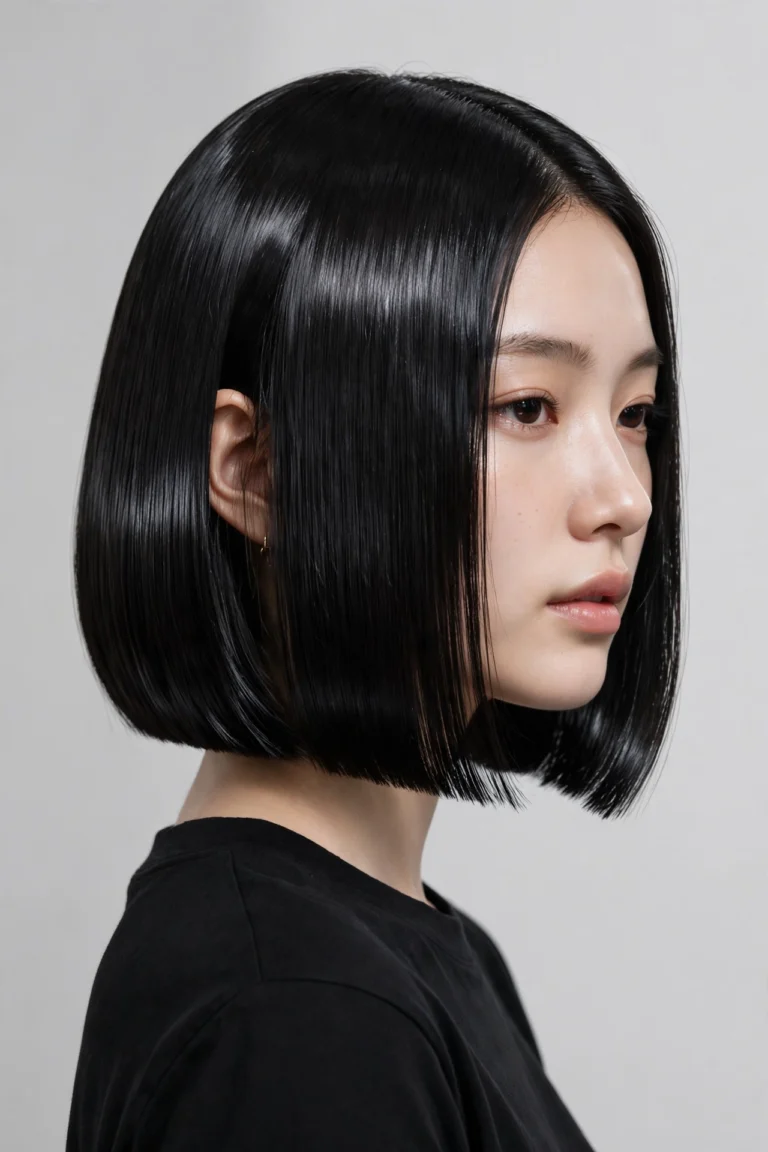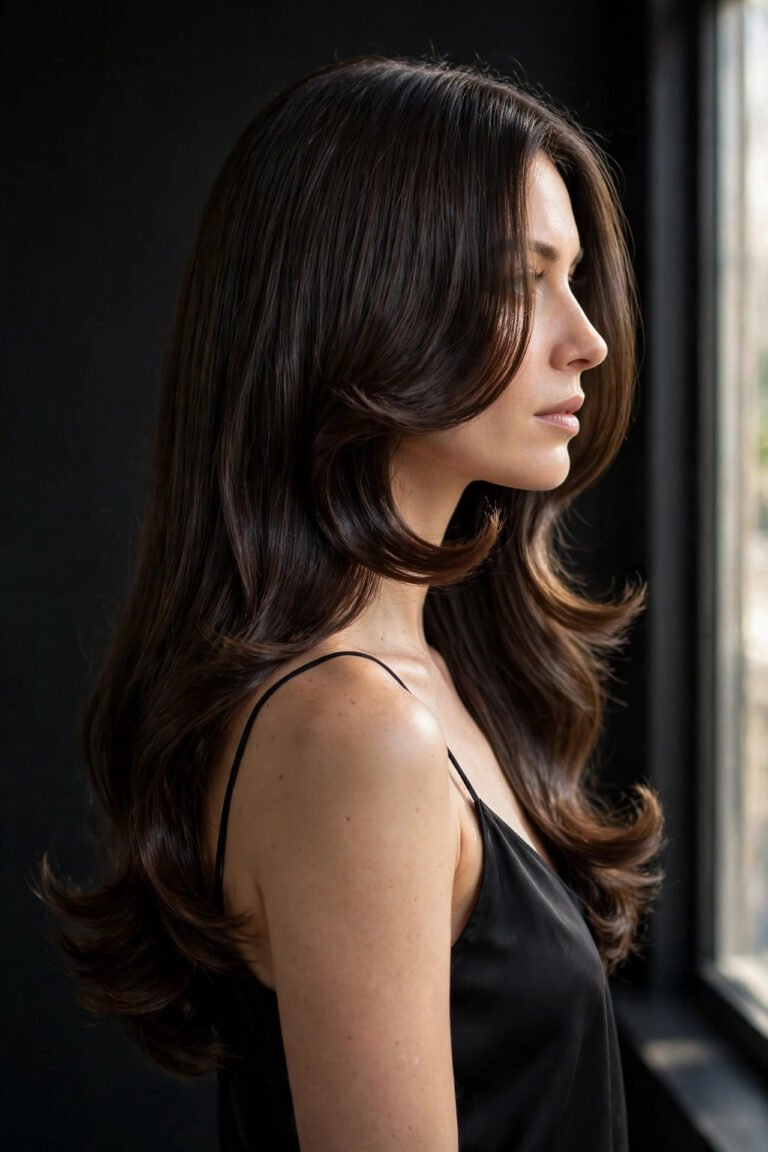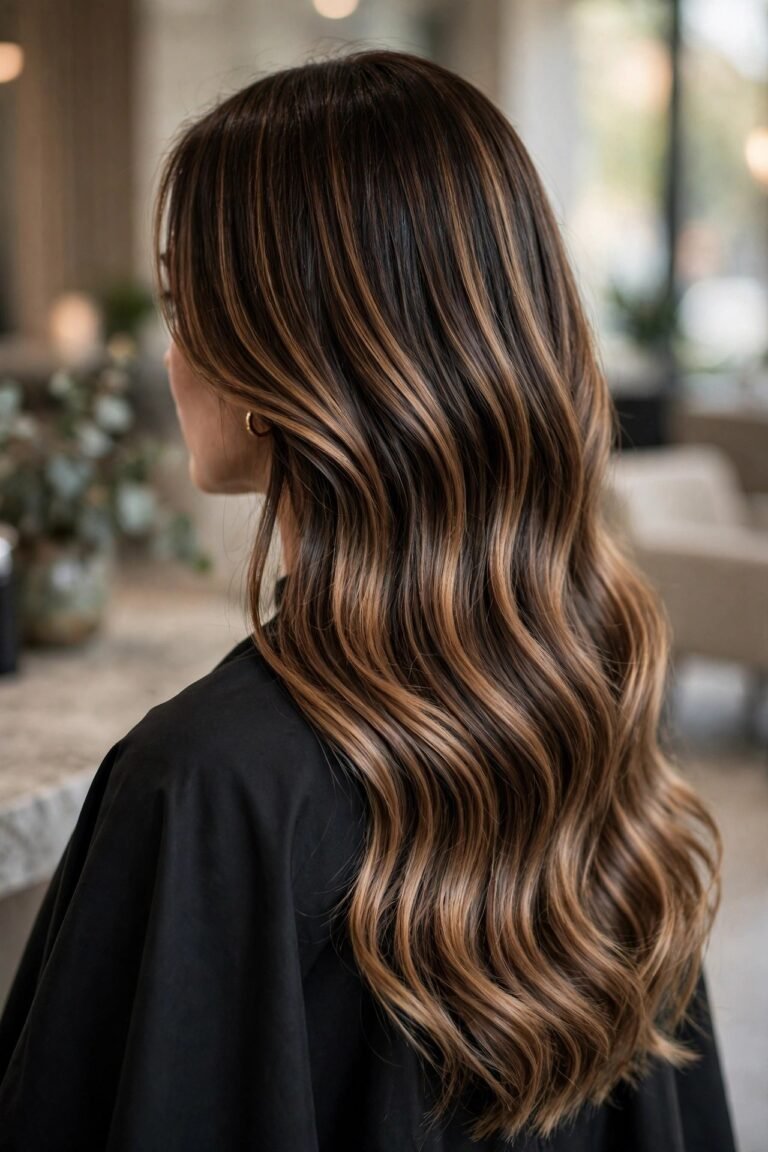
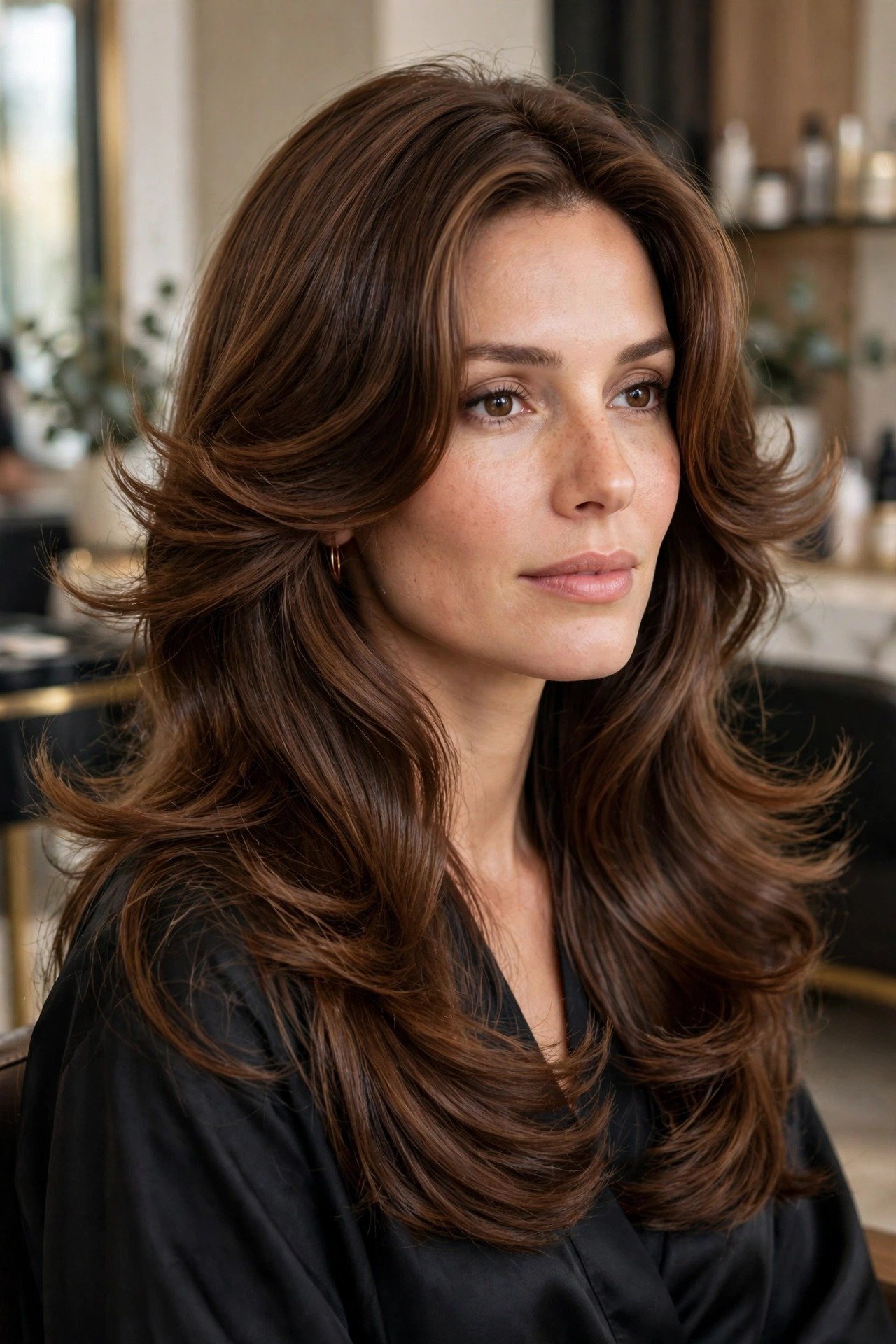
Feathered Layers Women 2026: 32 Soft, 70s-Inspired Styles
There is something unmistakably joyful about feathered layers women are asking for again in 2026, and it is easy to see why this soft, airy cut has returned to the front of every salon conversation. Feathered layers take the hard edges out of a haircut and replace them with light, flicked ends that sweep away from the face, move when you move, and catch the light in a way that makes even simple hair look styled. The look borrows its spirit from the seventies, when Farrah Fawcett made feathered hair the most copied style in the world, yet the modern version is softer, more wearable, and far easier to live with. Whether your hair is long, medium, or shoulder length, feathered layers add shape without sacrificing length, volume without stiffness, and polish without hours of effort in front of the mirror.
This guide brings together 32 feathered styles for 2026, from the classic Farrah flick to feathered bobs, shags, and blowouts, with honest advice on who each cut suits, what to ask your stylist, and how to style it at home. If you love long, flowing hair, you will also enjoy our guide to long layers for women, and if face-framing shape is your priority, our face-framing layers guide shows how shorter pieces around the face can soften every feature. Feathered layers sit beautifully between those two ideas: they keep the length you love, add the face-framing softness you want, and finish with the flicked, feathered ends that make the whole cut feel alive.
What Are Feathered Layers
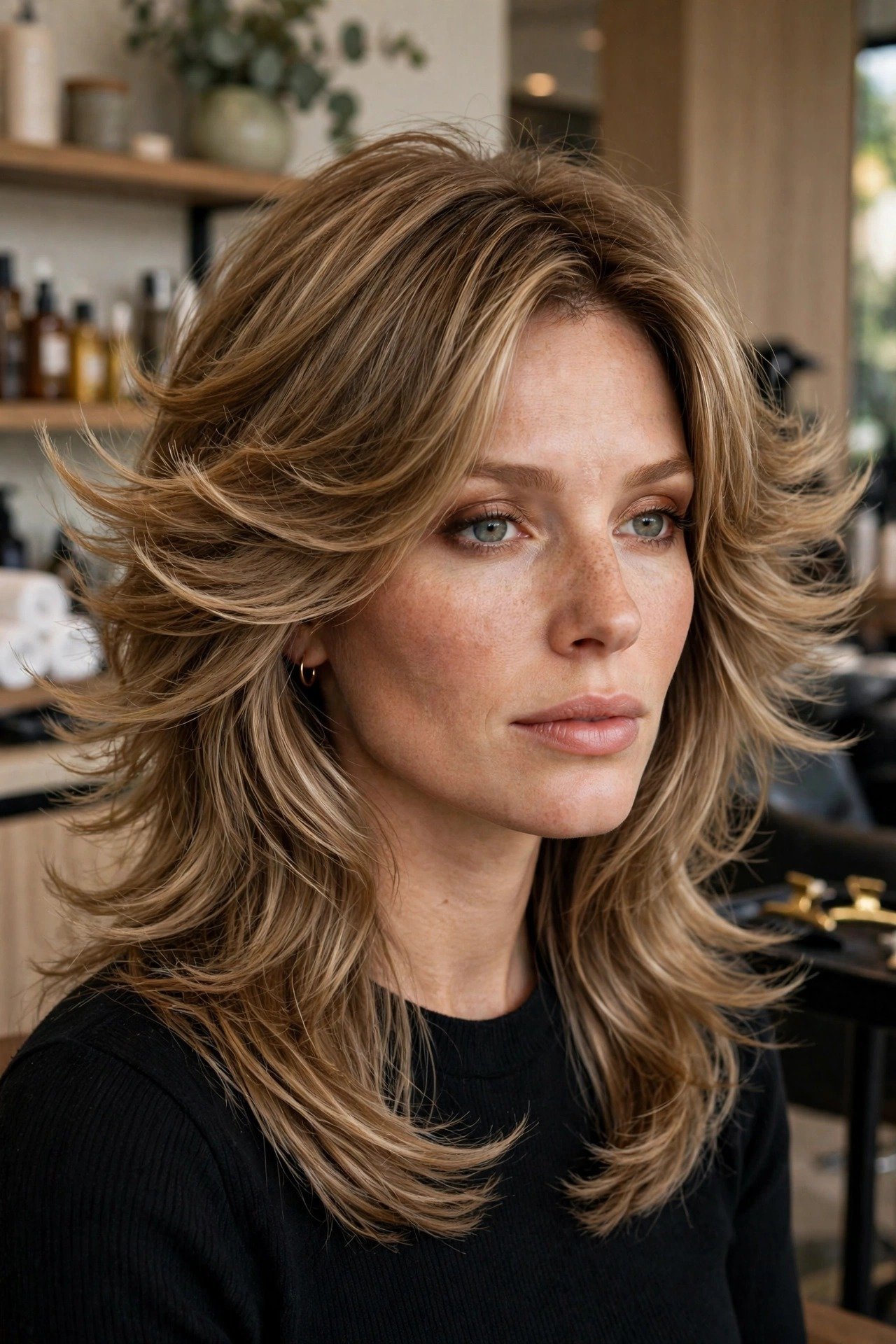
Feathered layers are a cutting technique in which the ends of the hair are thinned and angled so they flick outward or sweep softly away from the face, creating a light, feathery edge instead of a blunt line. Unlike a traditional layered cut, where the layers are stacked to build volume through the body of the hair, feathering focuses on the ends, using a razor or thinning shears to taper each section so it moves freely. The result is hair that looks airy and weightless, with ends that curve, flip, and flutter rather than sitting flat. It is a technique, not a single haircut, which is why it works on bobs, lobs, shags, and long hair alike.
The classic feathered look begins with layers cut around the face, usually starting at the cheekbone or jawline, and continuing down through the lengths. Each layer is then feathered at the ends, so the hair falls in soft, overlapping ribbons rather than heavy sheets. When styled with a round brush and a blow dryer, the ends flick outward in that unmistakable seventies shape, while the top stays smooth and polished. Worn with less styling, the same cut falls into a softer, more natural shape, which is why so many women love it: it looks deliberate when you style it and still looks good when you do not.
What makes feathered layers different from an ordinary layered cut is the finish. Regular layers change the shape and weight of the hair; feathering changes how the ends behave. A feathered end is tapered, textured, and light, so it bends easily and holds a flick without heavy product. This is also why the cut suits so many hair types: fine hair gains movement and the illusion of fullness, thick hair loses bulk and gains shape, and wavy or curly hair gains definition without losing its natural texture. Ask your stylist for feathered ends specifically, not just layers, and show a photo of the flick you want.
Why Feathered Layers Are Dominating 2026
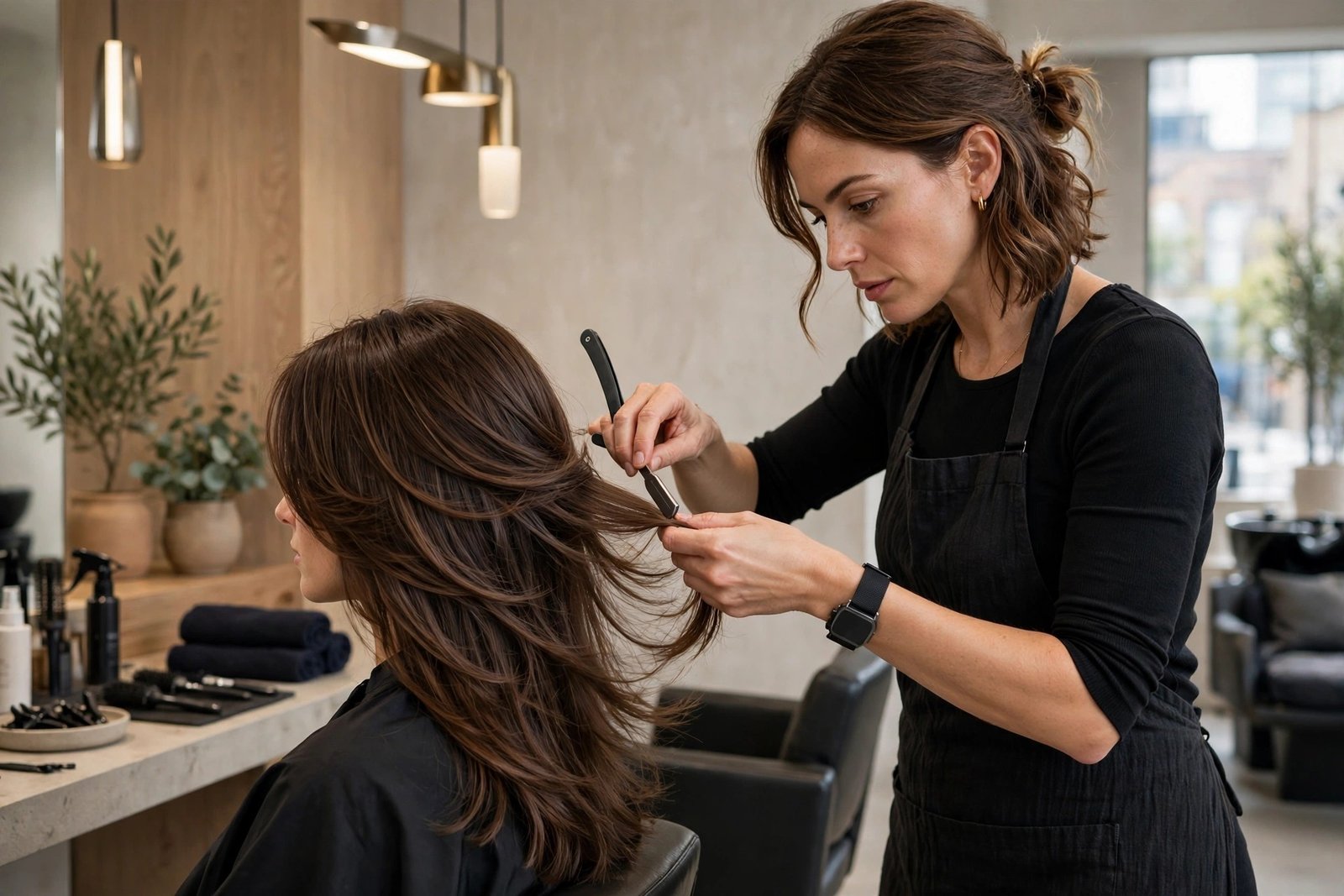
Feathered layers are dominating 2026 because they answer exactly what women want from their hair right now: softness, movement, and a style that looks expensive without demanding a daily blowout. After years of blunt cuts and heavy, structured styles, the seventies revival has brought back lightness, and feathered layers are its most wearable expression. Lovelyish calls feathered hair fully back in modern salons today, with light, airy layers sweeping away from the face, and The Right Hairstyles lists feathered layers among the revived layering trends of 2026. It is nostalgia, but it is also practical: the cut grows out gracefully and flatters almost every face shape.
Another reason for the comeback is versatility. Feathered layers work with the other big trends of the year instead of competing with them: they pair beautifully with curtain bangs, bottleneck bangs, and the retro 70s feathered shag that Tressly names among its modern hair trends for women in 2026. They suit the office, a wedding, or a weekend, and they adapt to straight, wavy, and curly textures with only small changes in technique. Princess Diana’s feathered haircut is also making a major comeback in 2026, according to Glam, giving the look a polished, timeless reference that appeals to women of every age, not just those chasing a retro trend.
Social media has sealed the revival. Feathered blowouts, flipped ends, and soft shags fill every feed, and the style photographs beautifully because the layers create natural movement and shine in every frame. Salons report that clients arrive with saved photos of feathered cuts more than almost any other style, and the cut’s low-maintenance nature keeps them coming back. It is a rare trend that is both fashionable and forgiving: it softens strong features, adds volume where hair is flat, removes weight where hair is heavy, and still looks intentional on the days you simply wash and go.
1. The Classic Farrah Feathered Layers
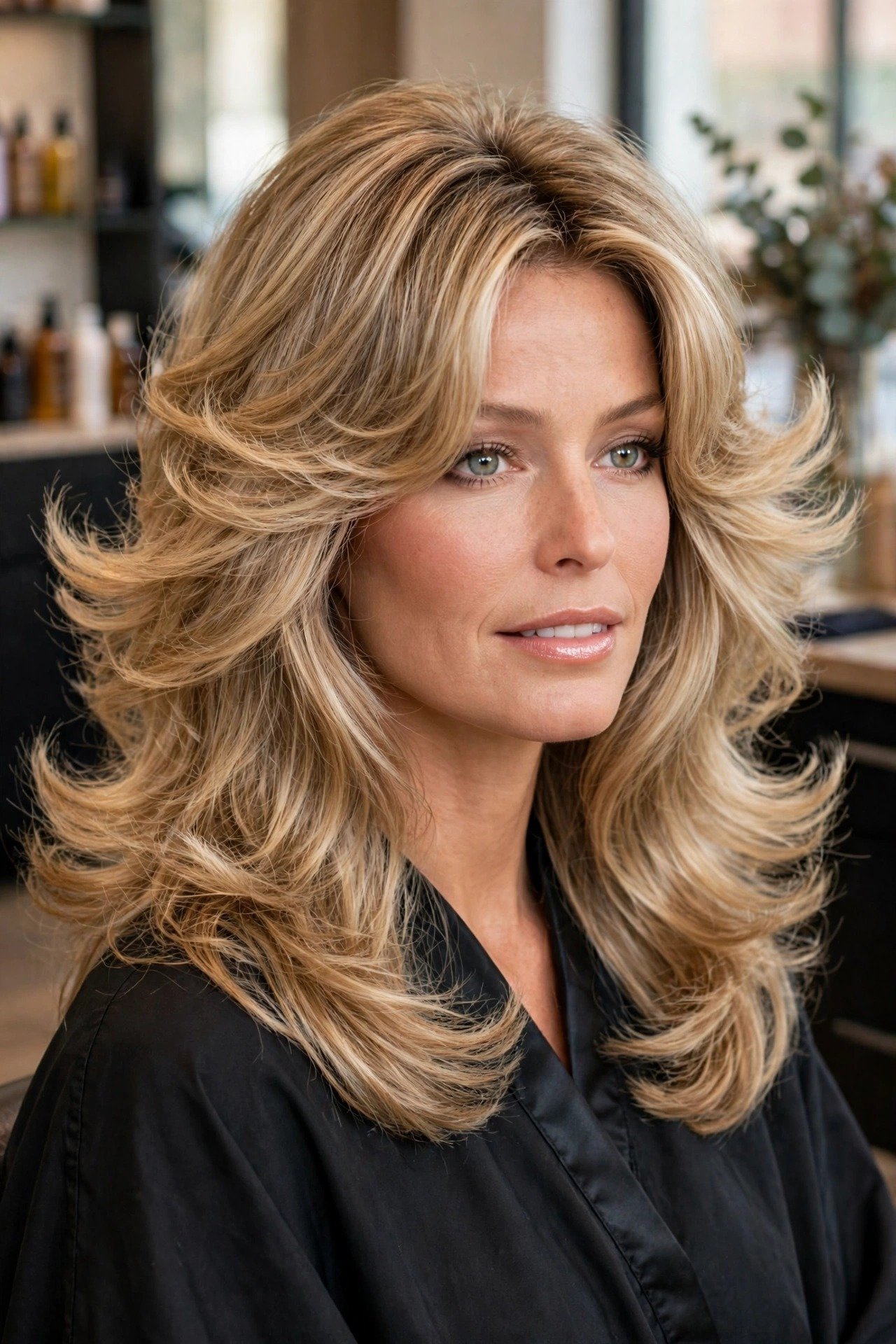
The classic Farrah feathered cut is the one that started it all: long layers beginning at the cheekbones, flicked outward with a round brush, and finished with big, bouncy volume through the ends. It suits oval, heart-shaped, and long faces best, because the outward flick widens the face at just the right place and balances a longer jawline. Ask your stylist for long layers from the cheekbone down, feathered ends throughout, and a centre or slightly off-centre part. Bring a photo of Farrah Fawcett so the flick direction is clear, and ask for the layers to stay long enough that the hair still feels full.
As Lovelyish notes, feathered hair is fully back in modern salons, and styling this look at home is all about the blowout. Work on damp hair with a volumising mousse, then blow dry in sections with a large round brush, rolling the ends outward and holding each section for a few seconds so the flick sets. A light hairspray keeps the shape without stiffness, and a large-barrel curling iron can reinforce the flick on the top layers if needed. The cut needs a trim every six to eight weeks to keep the feathered ends crisp, and a shine spray on the lengths keeps the seventies gloss alive.
Maintenance is straightforward if you protect the ends. Use a heat protectant every time you blow dry or curl, and sleep on a silk pillowcase to reduce friction on the flicked ends. The style works best on medium to thick hair, but fine hair can wear it too with a lighter layering and a root-lifting spray. Avoid heavy oils near the roots, which flatten the volume, and instead apply a pea-sized amount of serum only to the very ends. With the right cut, this timeless style looks glamorous at a party and polished at work. A silk scarf at night also keeps the flicked ends smooth and prevents the volume from flattening while you sleep.
2. Long Feathered Layers with Flipped Ends
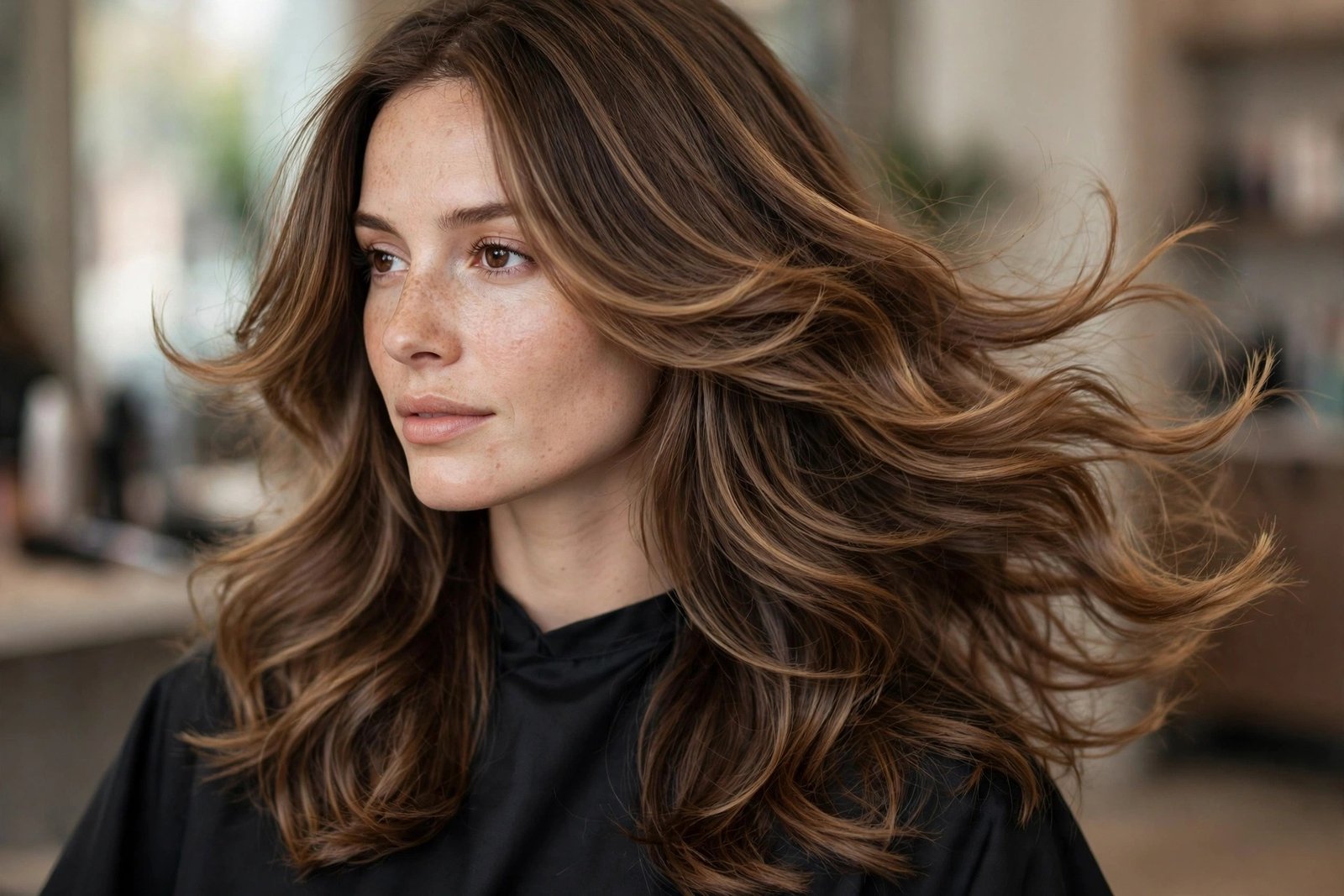
Long feathered layers with flipped ends are the modern, softer cousin of the Farrah cut, keeping the length past the shoulders while the ends flick gently outward. This style suits almost every face shape because the length elongates the face while the flipped ends add width exactly where it flatters most. It is ideal for women who want movement without losing their long hair, and it works beautifully on straight and slightly wavy textures. Ask your stylist for layers starting at the collarbone, feathered through the last few inches, with the shortest face-framing pieces at the cheekbones.
To style, blow dry with a round brush, turning the brush outward at the ends, or use a flat iron to flick the ends away from the face in small sections. A texturising spray adds grip and separation so the flips stay visible all day, and a cool shot from the dryer locks the shape in place. This is a wash-and-go friendly cut too: air drying with a little mousse gives a softer, beachier version of the same flip. Regular trims every eight weeks keep the feathered ends from splitting and losing their bounce.
This cut is wonderfully low maintenance for long hair. Because the feathering removes weight from the ends, the hair dries faster and tangles less than a blunt long cut. Use a wide-tooth comb on wet hair, a leave-in conditioner on the mid-lengths, and a lightweight oil on the tips. If your hair is very thick, ask for internal thinning so the flips do not turn bulky, and if it is fine, keep the layers long and few so the ends stay full. The result is long hair that moves, shines, and never looks heavy. A boar-bristle brush used gently on dry hair spreads natural oils down the lengths and keeps the flipped ends glossy.
3. Medium Feathered Layers with Soft Movement
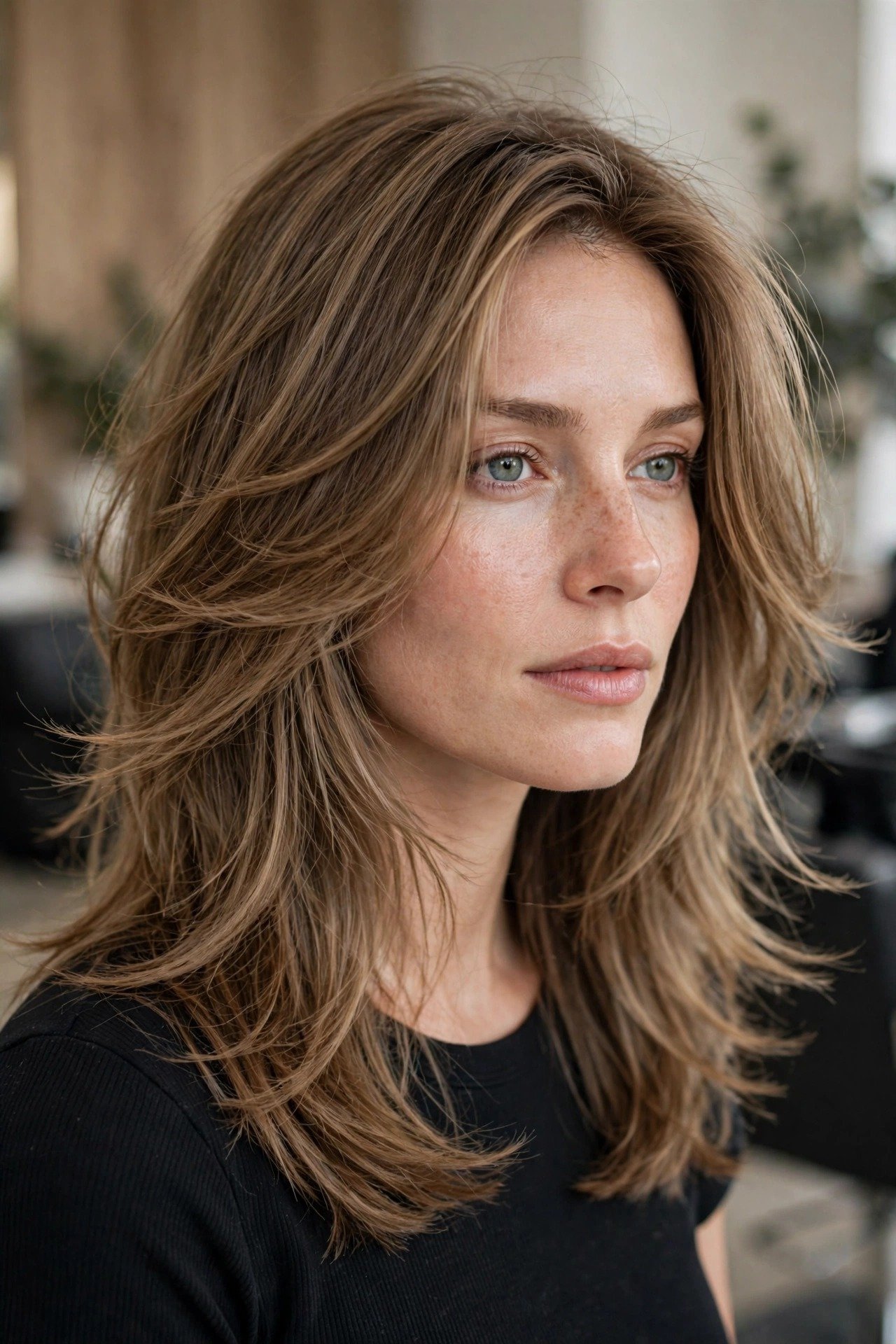
Medium feathered layers are the sweet spot for women who want the feathered look without committing to very long hair. Falling between the shoulders and the collarbone, this cut keeps enough length to tie back while the feathered ends give it constant soft movement. It suits round, square, and oval faces, because the layers break up the width of the face and the feathered ends stop the cut from looking boxy. Ask your stylist for a collarbone-length base with layers starting at the jawline, feathered ends, and a part that suits your face shape.
Styling takes minutes. Blow dry with a medium round brush, flicking the ends outward on the top layer and under on the bottom layer for a balanced finish, or simply rough dry with a diffuser for a relaxed, airy texture. A sea-salt spray or light mousse gives the layers separation without stiffness. This length is also perfect for a quick curl with a large-barrel iron, which reinforces the feathered flick and adds polish for evenings. The cut holds its shape well between appointments and grows out gracefully.
Maintenance is easy and forgiving. Trim every six to eight weeks to keep the feathered shape, and use a moisturising shampoo and conditioner to keep the ends soft. Medium hair is less prone to split ends than very long hair, but a weekly hair mask keeps the feathered tips healthy. This style is ideal for busy women, new mothers, and anyone who wants a fashionable cut that still fits into a five-minute morning routine. It also pairs beautifully with highlights, which catch the light on every feathered layer. A leave-in conditioner applied to damp ends before styling protects the feathered tips and keeps them soft between trims.
4. Feathered Layers with Curtain Bangs
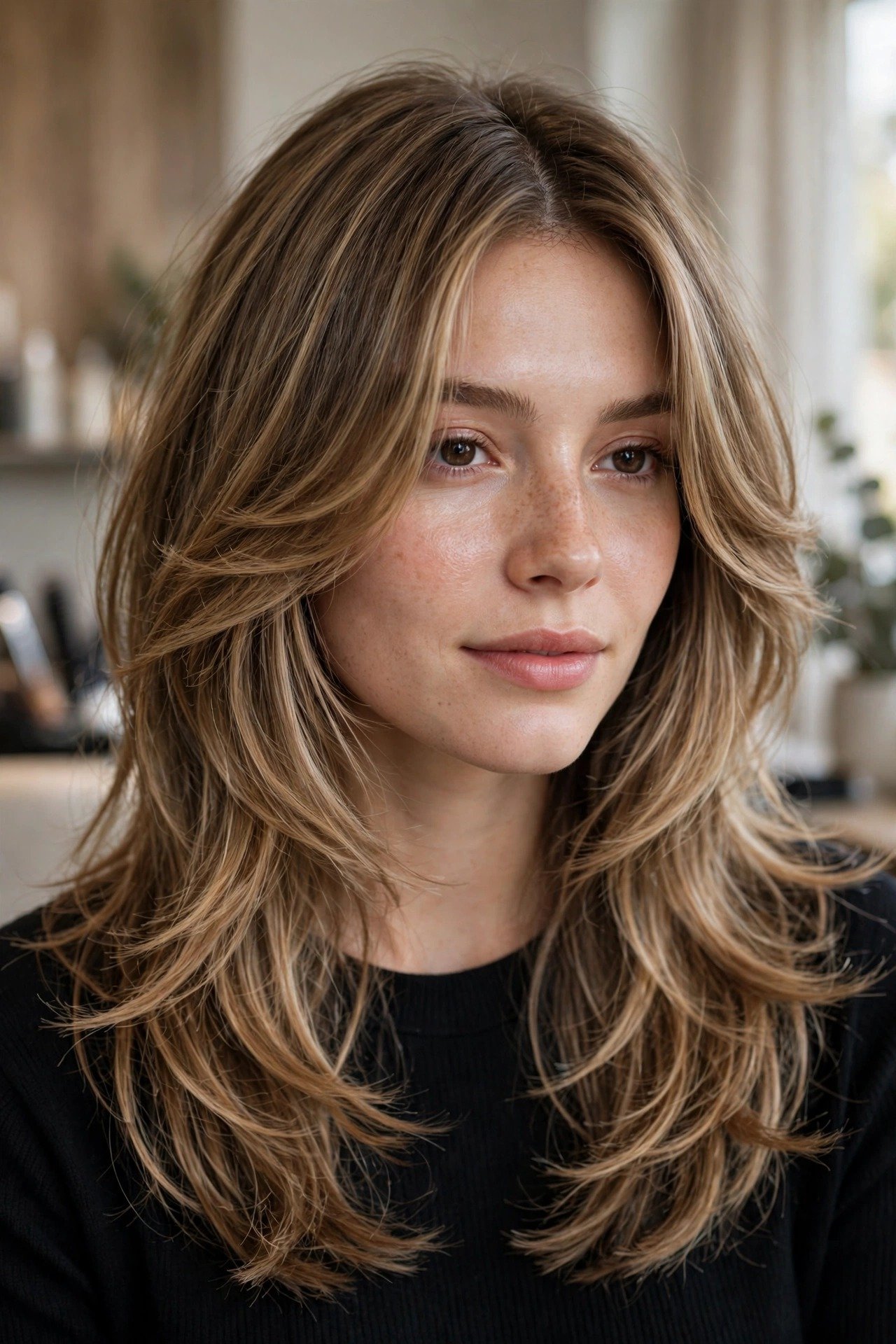
Feathered layers with curtain bangs are one of the most requested combinations of 2026, and for good reason: the bangs blend seamlessly into the feathered layers, framing the face in a soft, open curtain. This style suits oval, round, and heart-shaped faces especially well, because the centre part and the sweeping bangs lengthen the face while softening the forehead. Ask your stylist for curtain bangs that start at the cheekbones and feathered layers that continue the same sweeping line down the sides. For more inspiration on bangs, see our guide to curtain bangs for women.
Styling curtain bangs takes a little practice but becomes second nature quickly. Blow dry the bangs forward with a small round brush, then sweep each side outward and away from the face so they fall into their curtain shape. A tiny amount of texturising spray keeps them from sticking to the forehead, and the rest of the hair can be blow dried with the same outward flick. On lazy days, the bangs can be pinned back or tucked behind the ears, and the feathered layers still carry the style beautifully.
The main maintenance note is bang trims: curtain bangs need a quick trim every three to four weeks to keep them at the right length, though many salons offer free bang trims between appointments. Keep the bangs clean with a little dry shampoo on day two, and avoid heavy styling creams that weigh them down. This combination works on straight, wavy, and lightly curly hair, and it is a wonderful choice if you want a noticeable change without cutting your overall length. The result is soft, romantic, and endlessly flattering. Trimming the curtain bangs at home between salon visits is risky, so book a quick fringe tidy instead of cutting them yourself.
5. Feathered Layers with Bottleneck Bangs
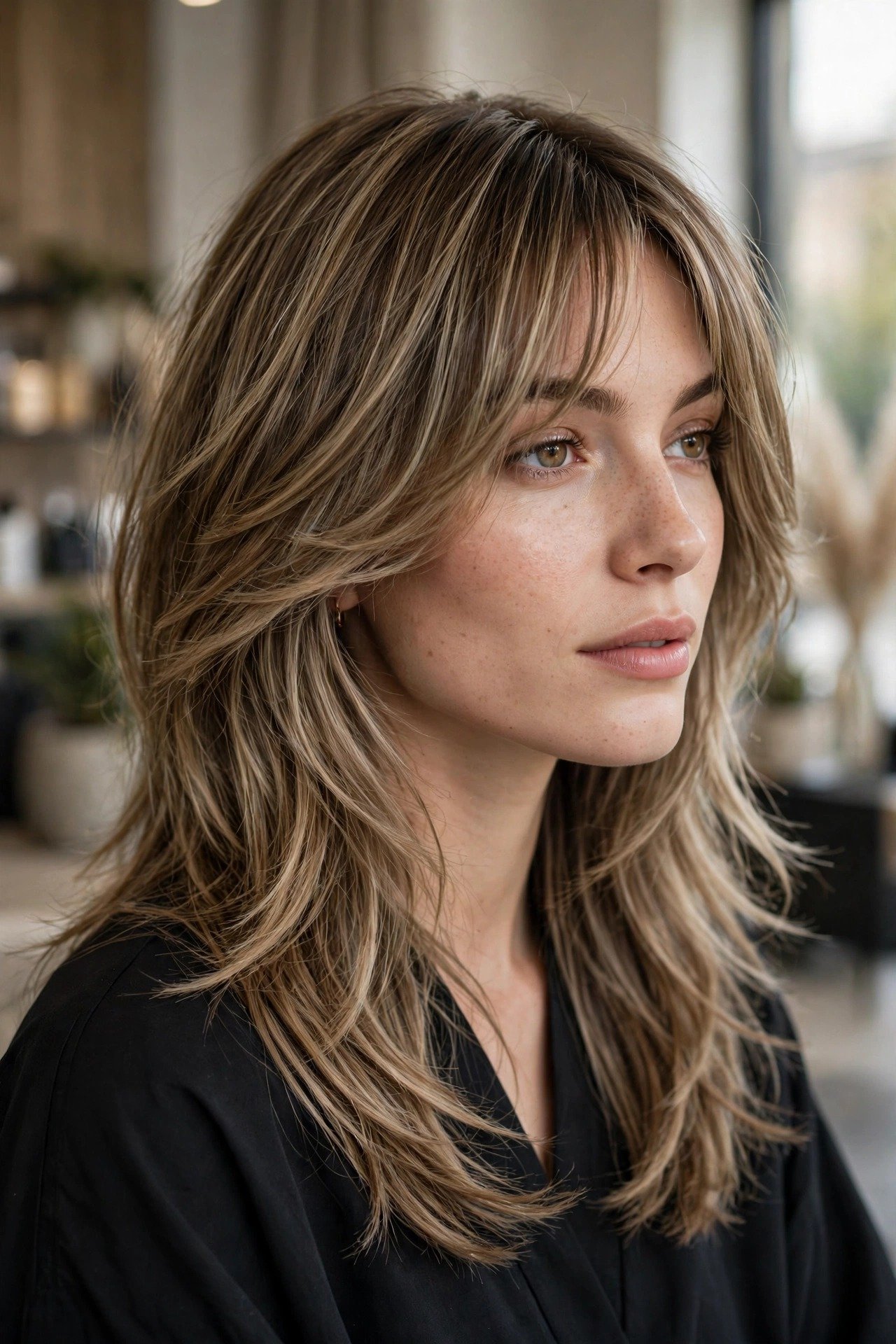
Bottleneck bangs paired with feathered layers are the retro seventies look that Tressly highlights among its modern hair trends for women in 2026, and they feel both vintage and completely current. The bangs are narrow at the centre and widen toward the cheekbones, like the neck of a bottle, blending perfectly into feathered layers that sweep away from the face. This style suits oval, long, and heart-shaped faces, and it is especially flattering if you have a high forehead. Ask your stylist for bottleneck bangs that hit the cheekbones at their longest point, with feathered layers continuing the line.
To style, blow dry the bangs with a round brush, rolling them slightly under and outward so they open in the middle and curve around the cheeks. The feathered layers should be dried in the same outward direction so the whole cut flows as one shape. A light-hold hairspray keeps the bangs in place without making them stiff, and a flat iron can smooth any stubborn pieces. This look also works beautifully with a soft blowout, where the volume at the crown balances the feathered ends.
Bottleneck bangs need regular trims, about every four weeks, to keep their distinctive shape, but they grow out more gracefully than blunt bangs because they blend into the layers. Use a small amount of dry shampoo to keep them fresh between washes, and avoid touching them too often during the day. The combination is ideal for women who love seventies style but want something softer and more modern than a full fringe. With feathered layers, the whole cut feels airy, textured, and full of movement. A small amount of styling cream smoothed over the bangs on humid days prevents frizz without weighing the fringe down.
6. Feathered Layers with Wispy Bangs
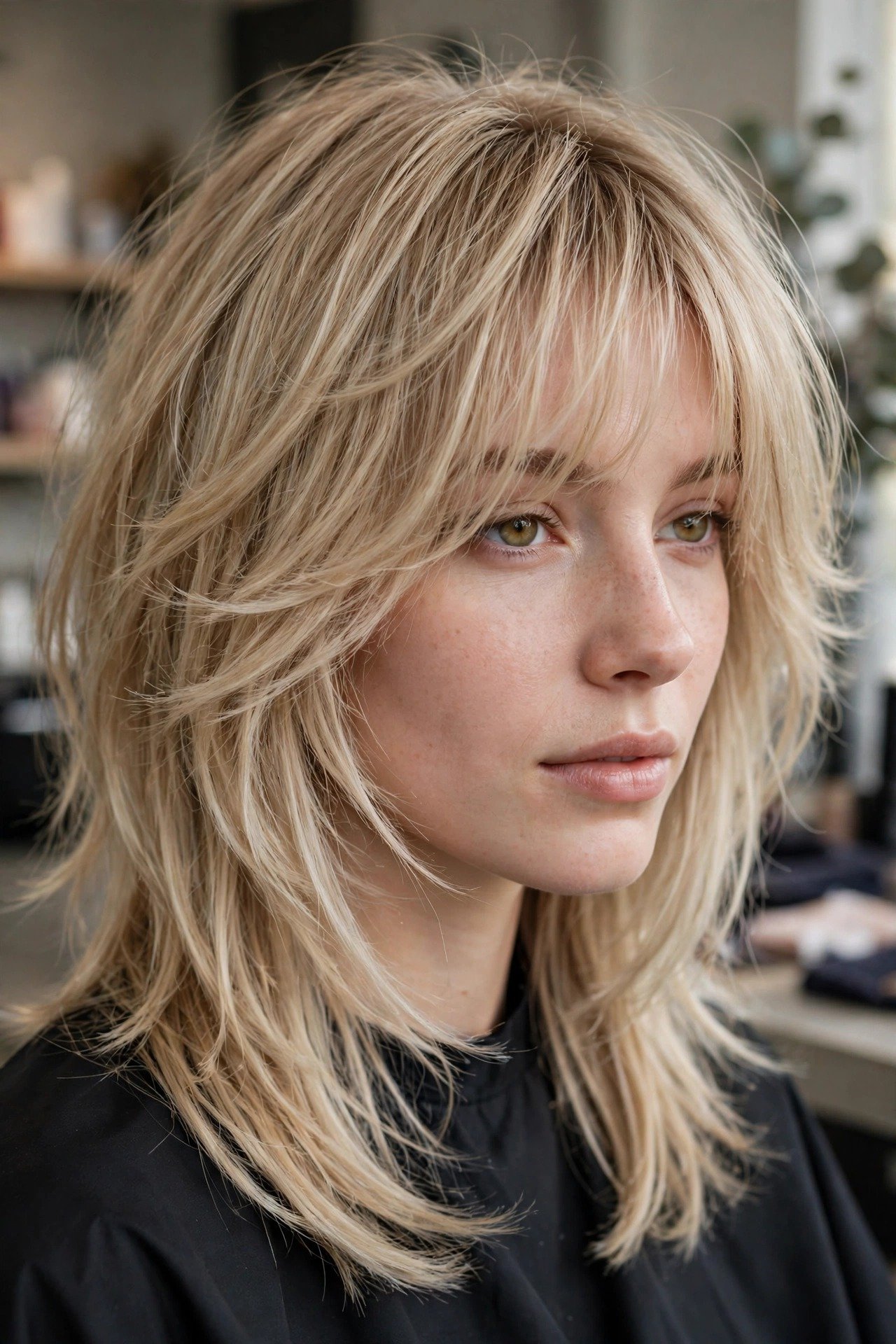
Feathered layers with wispy bangs are the gentlest way to add a fringe to a feathered cut, and they suit women who want softness without the commitment of heavy bangs. The wispy fringe is light, airy, and slightly see-through, sitting softly on the forehead and blending into the feathered layers at the sides. This style flatters round and square faces by breaking up the forehead, and it softens strong features beautifully. Ask your stylist for a wispy fringe cut with a razor or point-cutting technique, so the ends stay feathery rather than blunt.
Styling wispy bangs is simple: blow dry them forward with your fingers or a small round brush, then let them fall naturally, using a tiny amount of texturising spray for separation. The feathered layers underneath can be blow dried with an outward flick, and the whole look takes less than ten minutes. Because the bangs are light, they work well even on fine hair, and they can be swept to the side on days when you want them out of the way. A flat iron on low heat can tidy any pieces that curl the wrong way.
Maintenance is light, with bang trims every four to five weeks, and the wispy style grows out softly without an awkward stage. Keep the fringe clean by washing it separately if needed, and avoid heavy serums near the forehead. This is a wonderful choice for first-time bang wearers, for women with fine hair, and for anyone who wants a youthful, romantic touch to their feathered layers. The airy fringe and the feathered ends work together to create a cut that feels light, fresh, and effortlessly pretty. Blotting the fringe with blotting paper on oily days keeps wispy bangs fresh without a full wash.
7. The Retro 70s Feathered Shag
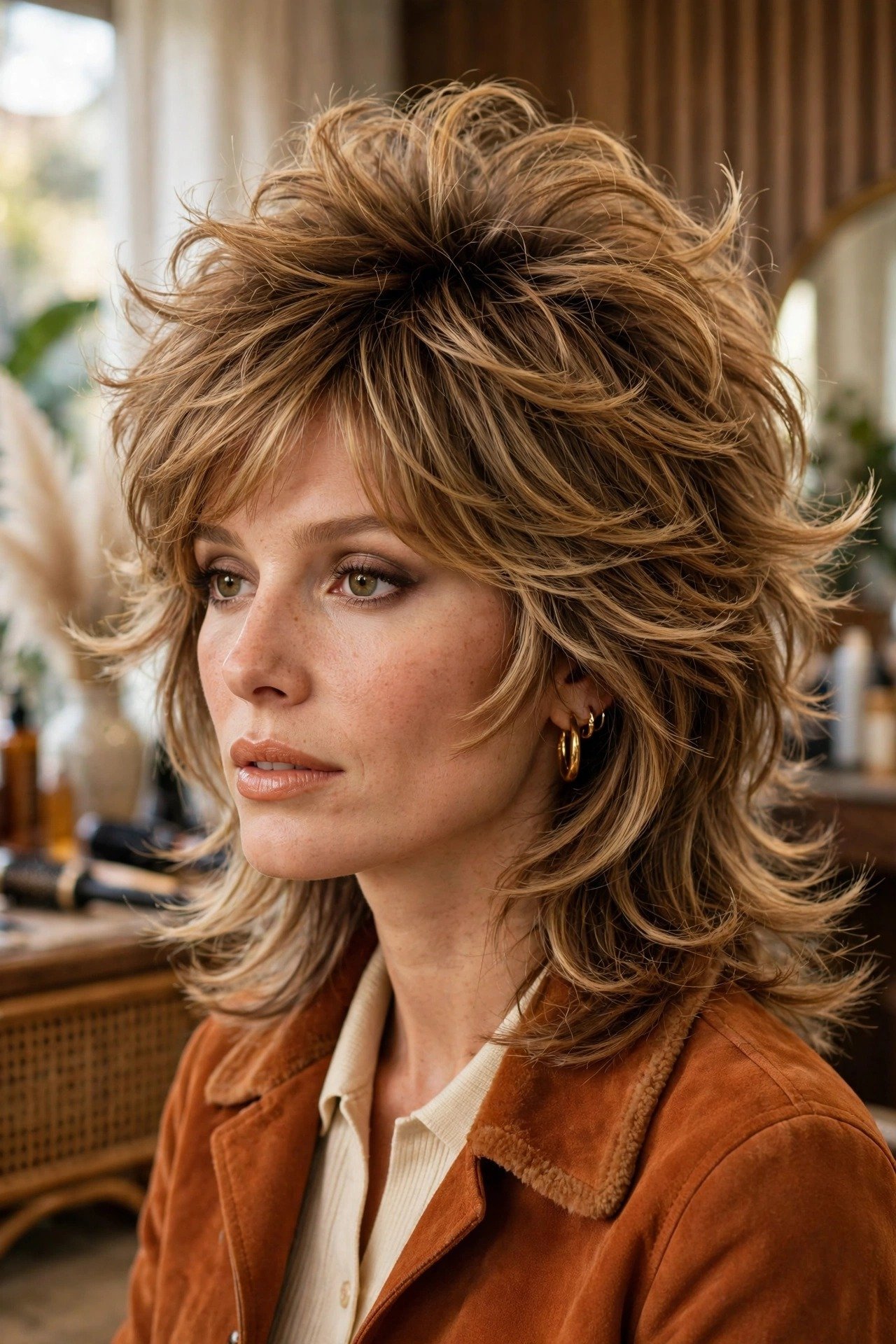
The retro seventies feathered shag takes the feathered idea to its fullest expression, with choppy layers, volume at the crown, and flicked ends throughout. It is bold, textured, and full of personality, and it suits women who love a statement cut with plenty of movement. Oval, heart-shaped, and long faces wear it best, because the volume at the sides balances the length of the face. Ask your stylist for a shag base with heavy feathering through the ends, shorter layers at the crown, and a fringe or curtain bangs to complete the seventies shape.
Styling a feathered shag is about embracing texture. Work a texturising mousse or salt spray through damp hair, then blow dry with a diffuser or rough dry with your fingers, scrunching the layers to encourage their natural flick. A round brush can add volume at the crown, while a flat iron flicked outward sharpens the ends for a more polished finish. The shag looks best slightly undone, so do not over-smooth it: the charm is in the lived-in, effortless texture. A light wax or pomade on the ends adds definition.
This cut needs a trim every six weeks to keep the shag layers and feathered ends in shape, but it is forgiving as it grows out because the texture disguises uneven lengths. It works on straight, wavy, and curly hair, though wavy hair shows off the shag best. Use a moisturising mask weekly to keep the heavily layered ends healthy, and avoid heavy conditioners that flatten the crown volume. If you love vintage style and want a cut with real attitude, the feathered shag is the most fun version of the 2026 feathered revival. A texturising spray refreshed on day two revives the shaggy layers without needing a full restyle.
8. The Feathered Bob
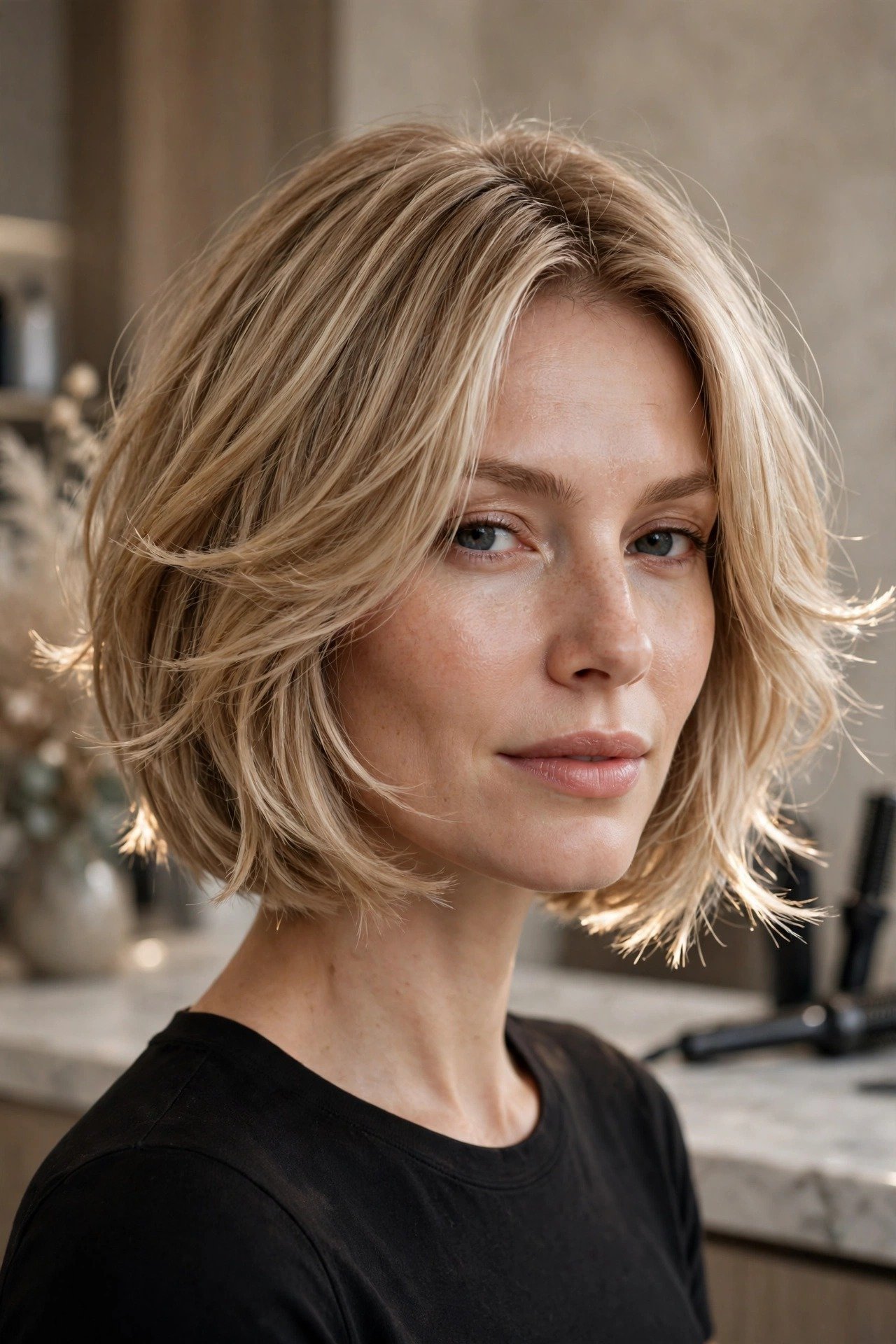
The feathered bob proves that feathering is not only for long hair: on a chin-length bob, feathered ends soften the classic shape and add movement that a blunt bob cannot match. The layers are cut to flick outward or curl softly under, giving the bob a light, airy finish that feels modern and fresh. This style suits oval, round, and square faces, because the feathered ends break up the strong line of the bob and soften the jawline. Ask your stylist for a bob that hits the chin or jawline, with feathered ends and subtle layers through the back.
Styling a feathered bob is quick and satisfying. Blow dry with a small or medium round brush, flicking the ends outward for a seventies feel or under for a sleeker finish, and add a little texturising spray for separation. A flat iron can sharpen the flick on the front pieces, while a curling iron adds a soft bend through the lengths. The bob air dries beautifully too, especially on wavy hair, where the feathered ends fall into a natural, tousled shape. A shine spray gives the final polish.
Maintenance is simple but regular: bobs need a trim every four to six weeks to hold their shape, and the feathered ends need to stay light and healthy. Use a lightweight conditioner so the bob keeps its bounce, and a heat protectant whenever you use hot tools. This cut is ideal for women who want a short style that still feels feminine and soft, for professionals who need a polished look, and for anyone ready to trade long hair for a chic, feathered bob. It is short, stylish, and full of life. Tucking one side behind the ear shows off the feathered shape and gives the bob an effortless asymmetrical finish.
9. The Feathered Lob
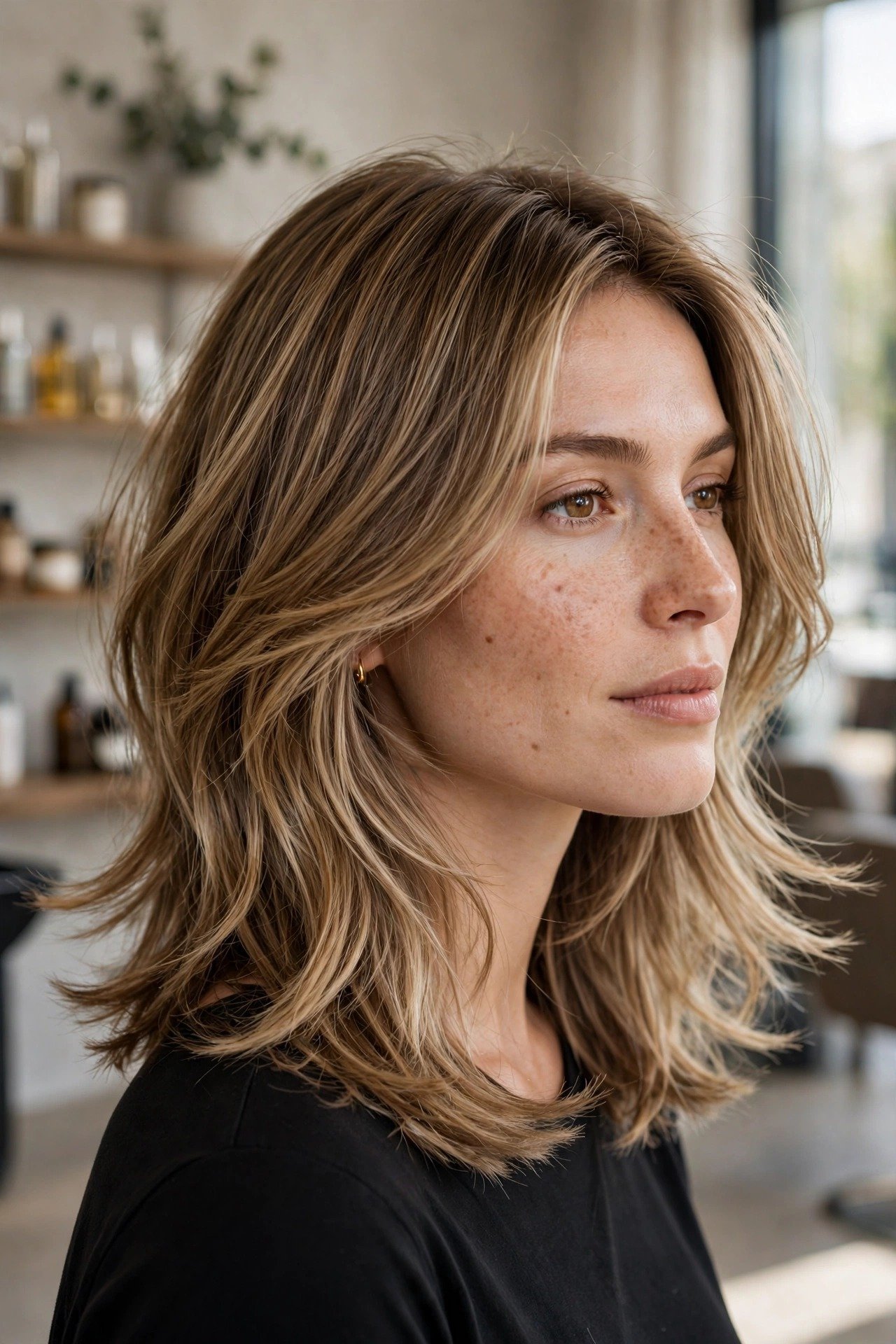
The feathered lob, or long bob, is the perfect middle ground: long enough to feel feminine and versatile, short enough to feel light and modern. Falling at or just past the collarbone, it carries feathered layers that flick softly outward, giving the cut movement without sacrificing the clean line of a bob. If you love dramatic layered shapes, compare it with our butterfly haircut for women. It suits almost every face shape, and it is especially flattering on round and square faces, where the length elongates and the feathered ends soften the jaw. Ask your stylist for a lob with layers starting at the chin and feathered ends throughout.
Styling the feathered lob is effortless. Blow dry with a medium round brush, turning the ends outward for a bouncy finish, or use a flat iron to create soft bends through the lengths. The lob also works beautifully air dried with a little mousse, giving a relaxed, tousled texture that looks like you spent no time at all. For evenings, a large-barrel curling iron adds glamorous waves that show off the feathered layers. A light hairspray keeps everything in place without stiffness.
The lob is one of the easiest feathered cuts to maintain, needing a trim every six to eight weeks. It grows out gracefully into a medium layered cut, so there is no awkward stage. Use a hydrating shampoo and conditioner, a weekly mask on the ends, and a heat protectant for styling. This is a wonderful choice if you are growing out a bob, cutting down long hair, or simply want a fresh, fashionable length for 2026. The feathered lob is chic, practical, and endlessly wearable. A centre part one day and a side part the next give the lob two completely different looks from the same cut.
10. Feathered Layers for Fine Hair
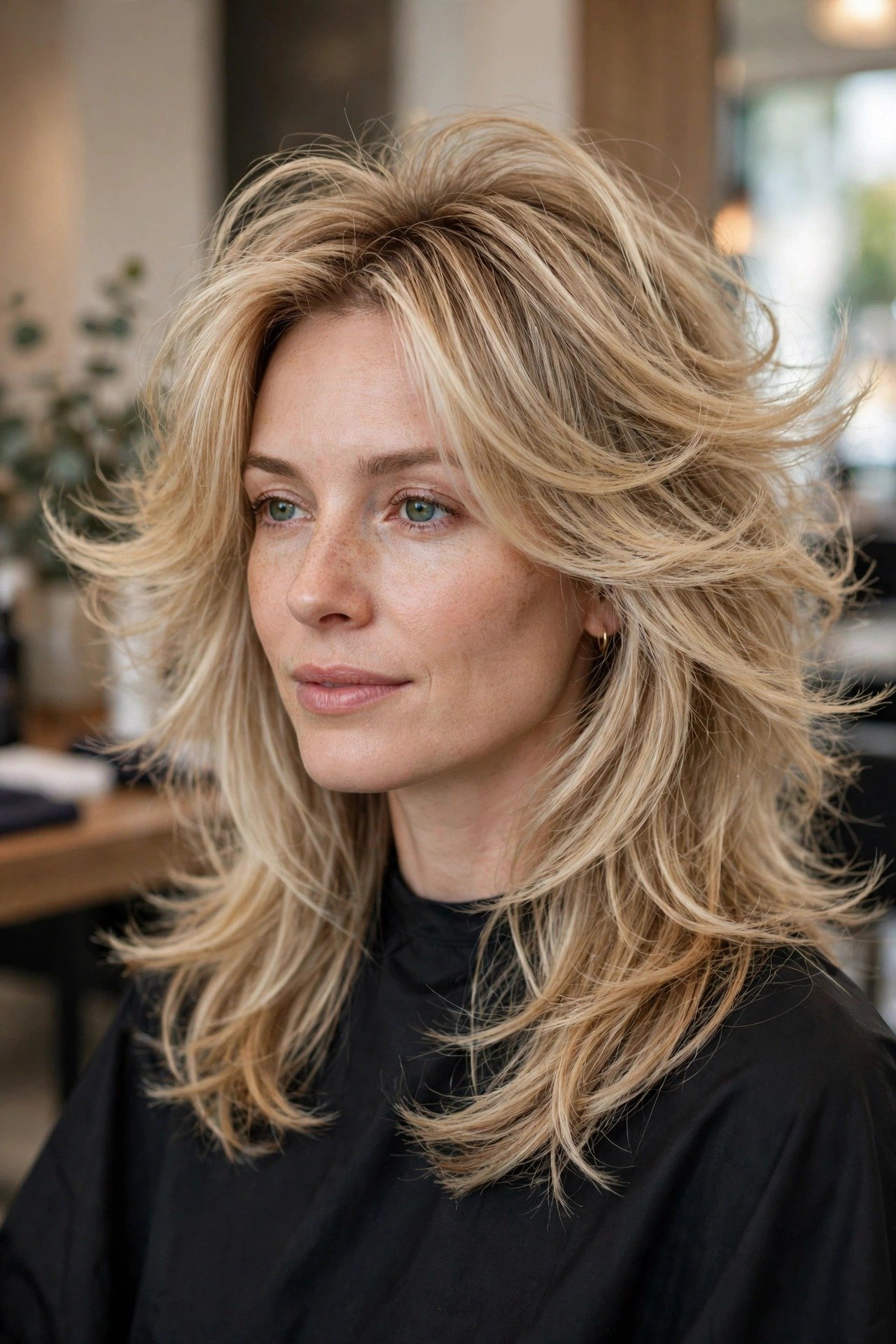
Feathered layers are a gift for fine hair, because they create movement and the illusion of fullness without removing the weight that fine hair cannot afford to lose. The key is restraint: fewer, longer layers with feathered ends, rather than many short layers that thin the hair further. This approach adds bounce and texture while keeping the ends looking full. It suits every face shape, and it is especially good for women whose fine hair falls flat. Ask your stylist for long, soft layers with feathered ends only, and for the shortest layer to stay below the chin.
Styling fine feathered hair starts at the roots. Use a volumising mousse on damp hair, blow dry upside down for lift, then use a medium round brush to flick the ends outward. A root-lifting spray at the crown adds lasting volume, and a texturising spray through the lengths gives grip without weight. Avoid heavy oils and creams, which flatten fine hair, and use dry shampoo on day two to refresh the roots. The feathered ends hold a flick easily because fine hair bends readily.
Maintenance is gentle: trim every six to eight weeks, use a lightweight shampoo and conditioner, and avoid over-washing, which strips fine hair of its natural oils. A clarifying shampoo once a month removes product build-up that weighs the hair down. With the right cut, fine hair looks thicker, bouncier, and far more styled than it ever did as a blunt cut. Feathered layers give fine hair the movement it has always wanted, without the risk of looking thin. A volumising powder dusted at the roots on day two lifts fine feathered hair instantly without any heat.
11. Feathered Layers for Thick Hair
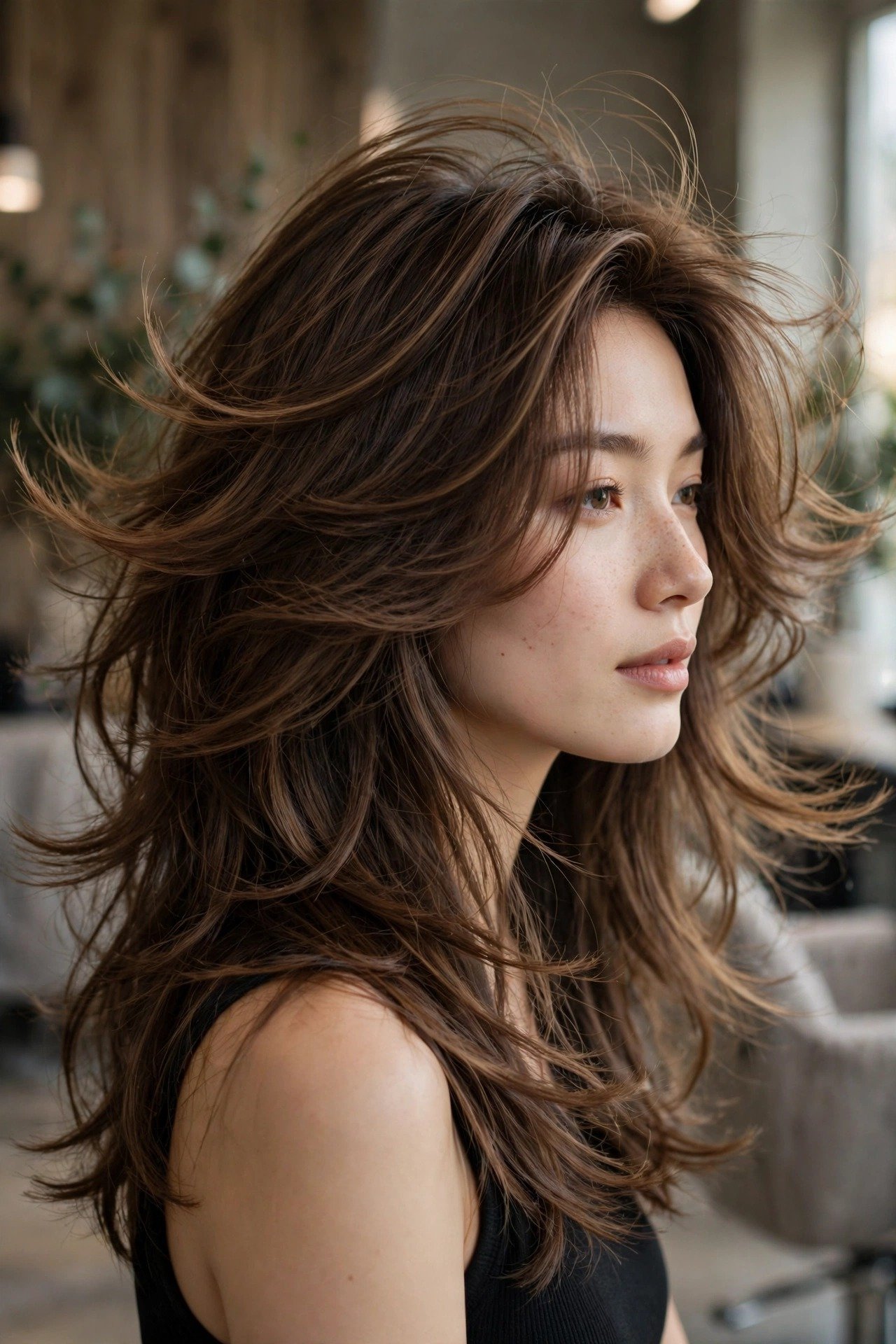
Thick hair loves feathered layers because feathering removes bulk and weight while adding shape and movement. Without feathering, thick hair can look heavy, triangular, and hard to manage; with it, the same hair falls in light, flowing layers that move freely. This style suits oval, round, and square faces, because the reduced bulk slims the silhouette of the hair. Ask your stylist for feathered layers throughout, with internal thinning or slide-cutting to remove weight from the interior, and longer face-framing pieces to keep the shape balanced.
Styling thick feathered hair is easier than styling thick blunt hair, because the layers dry faster and hold a shape better. Blow dry in sections with a large round brush, flicking the ends outward, or use a flat iron to smooth and flick the ends in one pass. A smoothing cream on damp hair tames frizz, and a light serum on the ends adds shine. The feathered cut also holds curls beautifully, so a curling iron creates long-lasting waves that show off every layer.
Thick hair needs regular trims every six to eight weeks to keep the feathered shape from growing bulky, and a deep conditioning mask weekly keeps the ends healthy. Use a wide-tooth comb to detangle, and avoid piling on heavy products that add weight back. With feathered layers, thick hair becomes lighter, bouncier, and far easier to style, while still looking full and luxurious. It is the cut that finally makes thick hair feel manageable. Sectioning thick hair into four parts before blow drying makes the whole routine faster and the flicks far more even.
12. Feathered Layers for Curly Hair
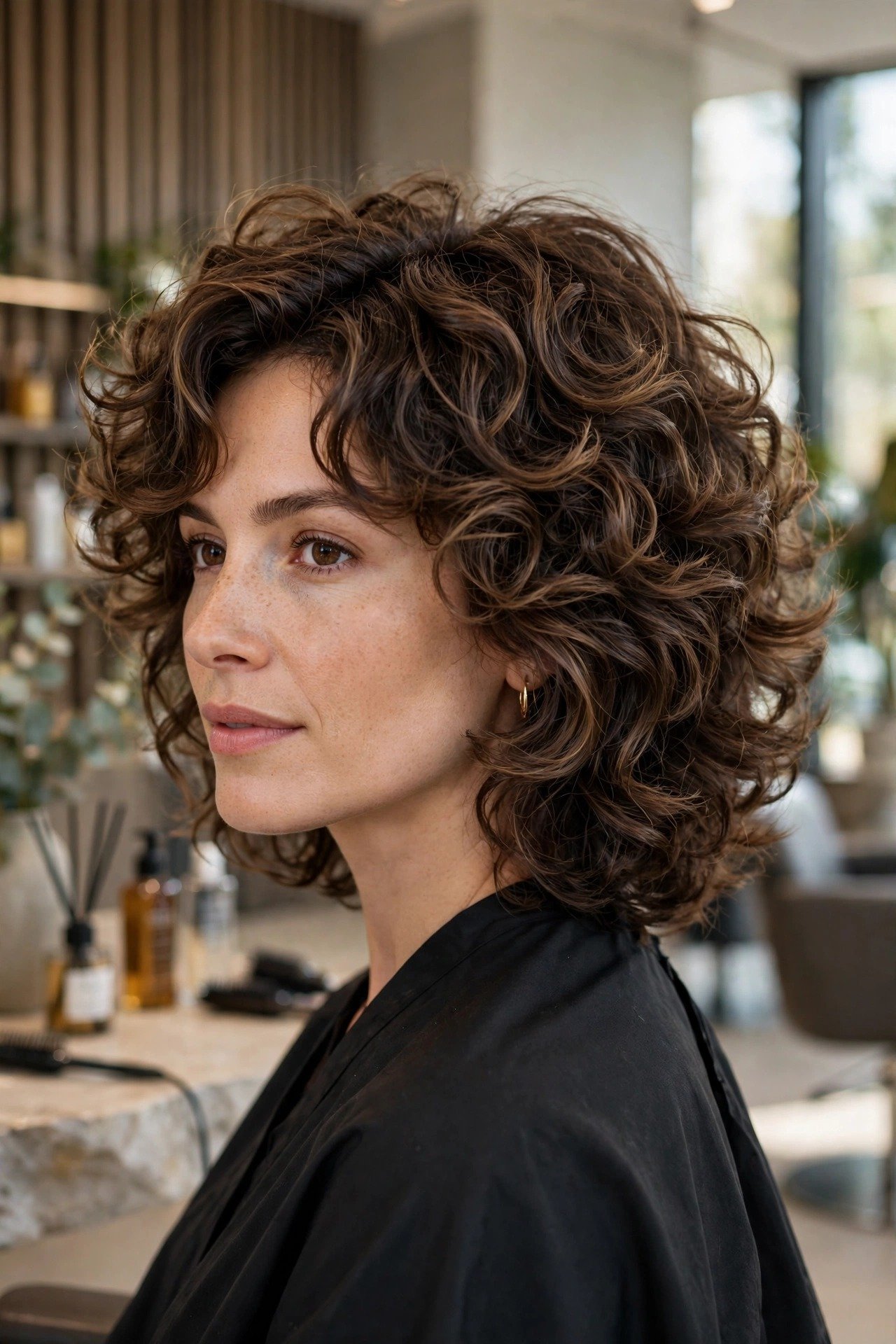
Feathered layers can transform curly hair by giving the curls shape, definition, and room to spring up without the dreaded triangle effect. The feathering lightens the ends of each curl, so the curls fall in defined, bouncy ribbons instead of a heavy, wide mass. This style suits round, oval, and square faces, and it works on loose waves through to tighter curls. Ask your stylist for a dry cut, where the curls are cut in their natural state, with feathered ends and layers that follow your curl pattern rather than fighting it.
Styling curly feathered hair starts with the right products. Apply a curl cream or leave-in conditioner to soaking wet hair, scrunch gently, and diffuse on low heat until mostly dry. Avoid brushing dry curls, which breaks the feathered shape; instead, use your fingers to separate and fluff. A light gel can define the ends, and a silk scarf or pineapple ponytail at night protects the curls. The feathered ends make the curls look lighter and more defined with very little effort.
Maintenance means moisture: curly hair needs a hydrating shampoo, a rich conditioner, and a weekly deep mask to keep the feathered ends from drying out. Trim every eight to ten weeks, and always trim on dry, styled hair so the length is accurate. With feathered layers, curly hair gains shape, bounce, and a beautiful silhouette that celebrates the natural texture instead of weighing it down. It is a cut that lets curls be curls, only better. Refreshing curls with a water and leave-in spray mix reactivates the feathered shape without washing the hair again.
13. Feathered Layers for Wavy Hair
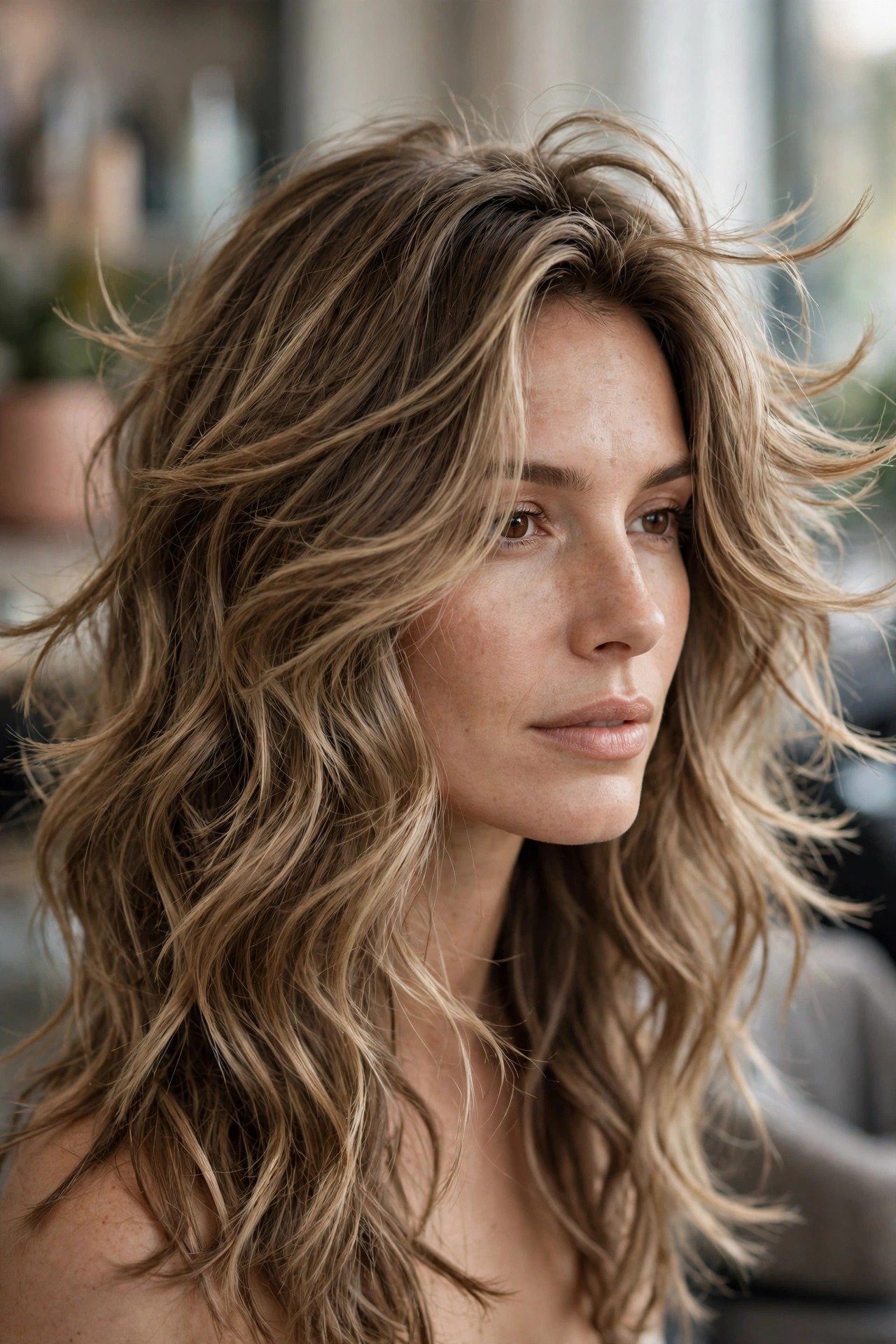
Wavy hair and feathered layers are a natural match, because the feathering enhances the wave pattern instead of flattening it. The layers encourage the waves to form in soft, separated ribbons, and the feathered ends keep the waves light and bouncy rather than heavy. This style suits every face shape, and it is especially beautiful on oval and heart-shaped faces. Ask your stylist for layers that follow your natural wave, with feathered ends and face-framing pieces that show off the texture around the face.
Styling wavy feathered hair is delightfully simple. Apply a mousse or sea-salt spray to damp hair, scrunch, and either air dry or diffuse for natural waves. For a more polished look, blow dry with a round brush and flick the ends outward, or use a large-barrel curling iron to reinforce the waves. The feathered layers hold a wave longer than blunt hair, because the lighter ends bend more easily. A texturising spray adds separation and keeps the waves from merging into one mass.
Wavy hair needs moisture without weight, so choose a lightweight conditioner and a weekly mask, and avoid heavy oils that pull the waves down. Trim every eight weeks to keep the feathered ends fresh, and use a wide-tooth comb on wet hair only. This cut is perfect for women who want to embrace their natural texture: it looks effortless, feels light, and shows off every wave. Feathered layers turn ordinary waves into a styled, flowing look with almost no effort. Braiding damp wavy hair loosely overnight creates soft, even waves that show off the feathered layers by morning.
14. The Feathered Blowout
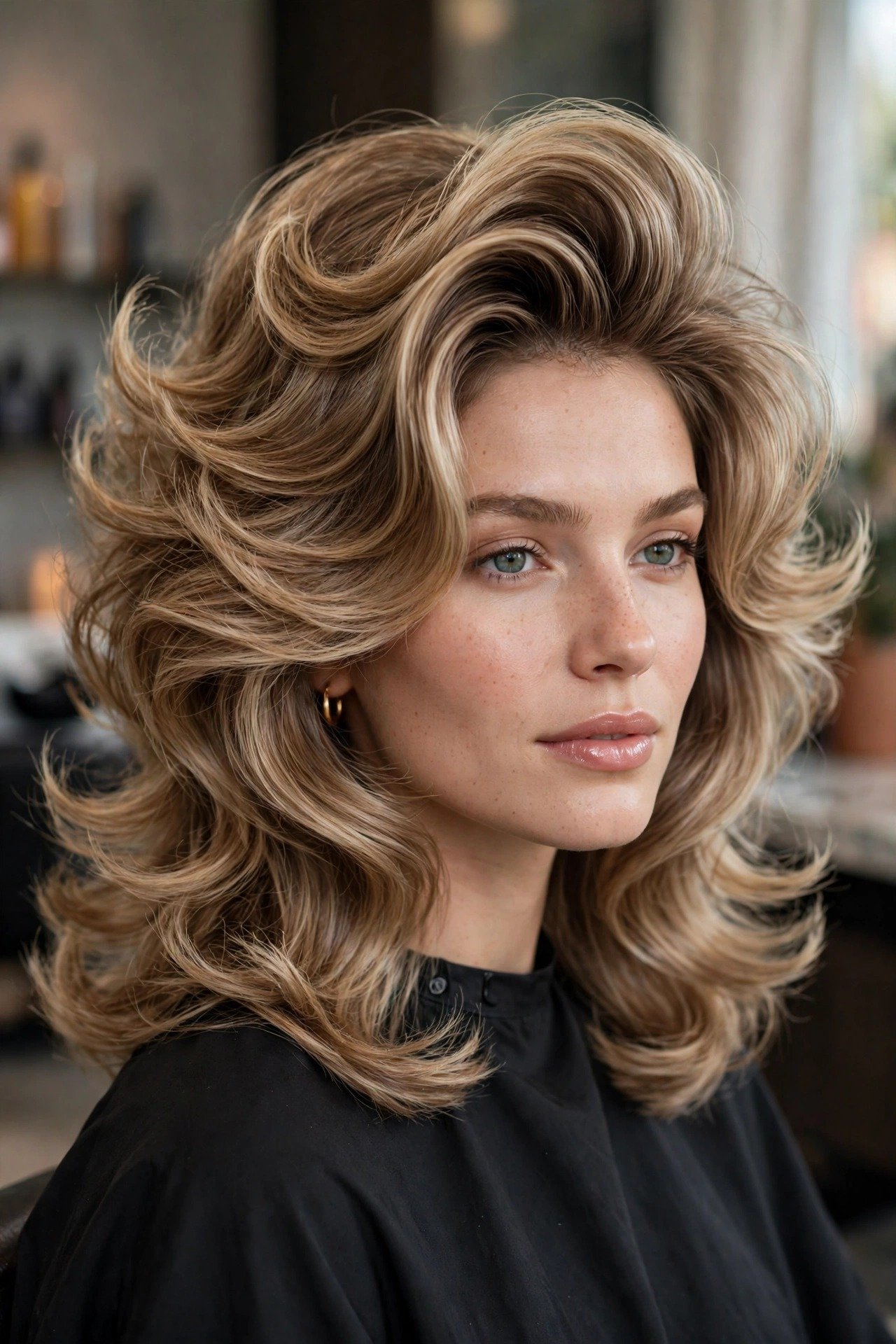
The feathered blowout is less a cut than a styling moment: it takes any feathered layered cut and turns it into a big, bouncy, salon-finished look with smooth roots and flicked ends. It is the style you see on red carpets and in every 2026 hair trend roundup, because it makes feathered layers look their most glamorous. It suits every face shape and every occasion, from weddings to work presentations. Ask your stylist for a feathered cut with enough length to blow out, and for layers that flick outward easily with a round brush.
To create the blowout at home, start with a volumising mousse on damp hair and a heat protectant throughout. Blow dry in sections with a large round brush, lifting at the roots and rolling the ends outward, holding each section until cool so the flick sets. Velcro rollers on the top layers add extra volume while you finish your makeup. A light hairspray and a shine spray finish the look. The whole process takes twenty to thirty minutes, and the result lasts two to three days with dry shampoo.
A blowout-friendly cut needs healthy ends, so trim every six to eight weeks and use a weekly mask. Sleep with your hair loosely pinned on top of your head to preserve the volume, and refresh the flicks with a round brush and dryer in the morning. The feathered blowout is the ultimate special-occasion version of feathered layers, and it is also a wonderful weekly treat. Once you learn the technique, you can give yourself salon hair at home. Velcro rollers left in while you do your makeup add extra bounce to the crown and set the flicks beautifully.
15. Feathered Layers with Sun-Kissed Highlights
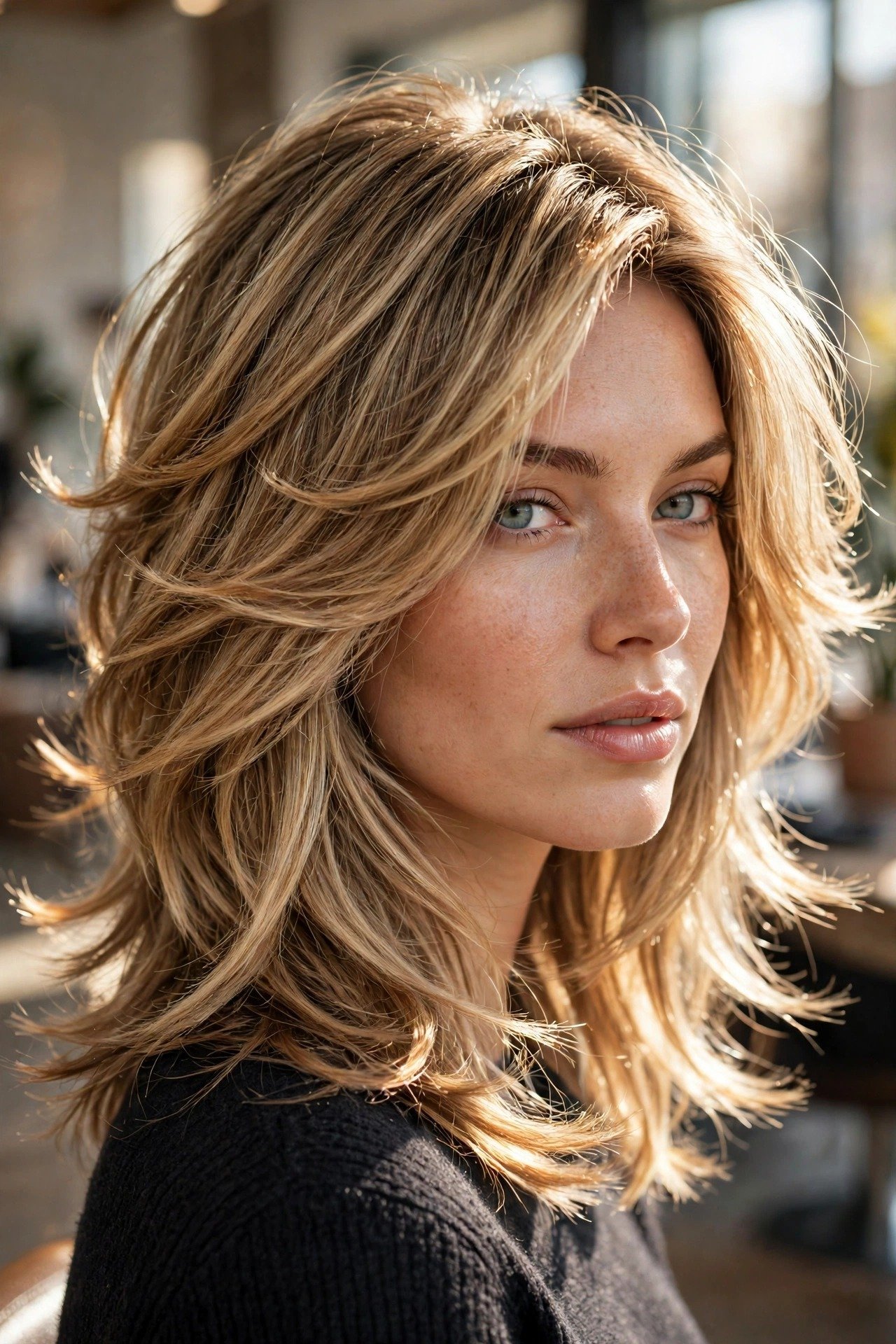
Sun-kissed highlights and feathered layers are made for each other, because the highlights sit on the very ends and layers that feathering creates, catching the light with every movement. The effect is soft, natural, and dimensional, like hair lightened by a summer in the sun. This style suits warm and neutral skin tones best, and it flatters every face shape. Ask your colourist for fine, hand-painted highlights concentrated on the feathered ends and face-framing pieces, with a shade only one or two levels lighter than your base for a natural result.
Styling highlighted feathered hair is the same as styling any feathered cut, but the highlights reward a little extra polish: a blowout with flicked ends shows off the dimension beautifully, and a shine spray makes the lighter pieces glow. Use a colour-safe shampoo and conditioner, and a purple or toning treatment occasionally if the highlights turn brassy. A heat protectant is essential, because highlighted ends are more fragile and need protection from hot tools. Blow drying the highlighted layers with a round brush makes each lighter piece catch the light as the hair moves.
Maintenance includes a gloss or toner every six to eight weeks to keep the highlights fresh, and regular trims to keep the feathered ends healthy. A weekly mask keeps highlighted hair soft, and avoiding excessive heat keeps the colour from fading. This combination is ideal if you want a change that feels fresh and summery without a dramatic colour overhaul. The highlights make the feathering visible from across the room, and the whole cut glows. A gloss treatment between colour appointments keeps sun-kissed highlights shiny and prevents the ends from looking dull.
16. Feathered Layers with a Money Piece
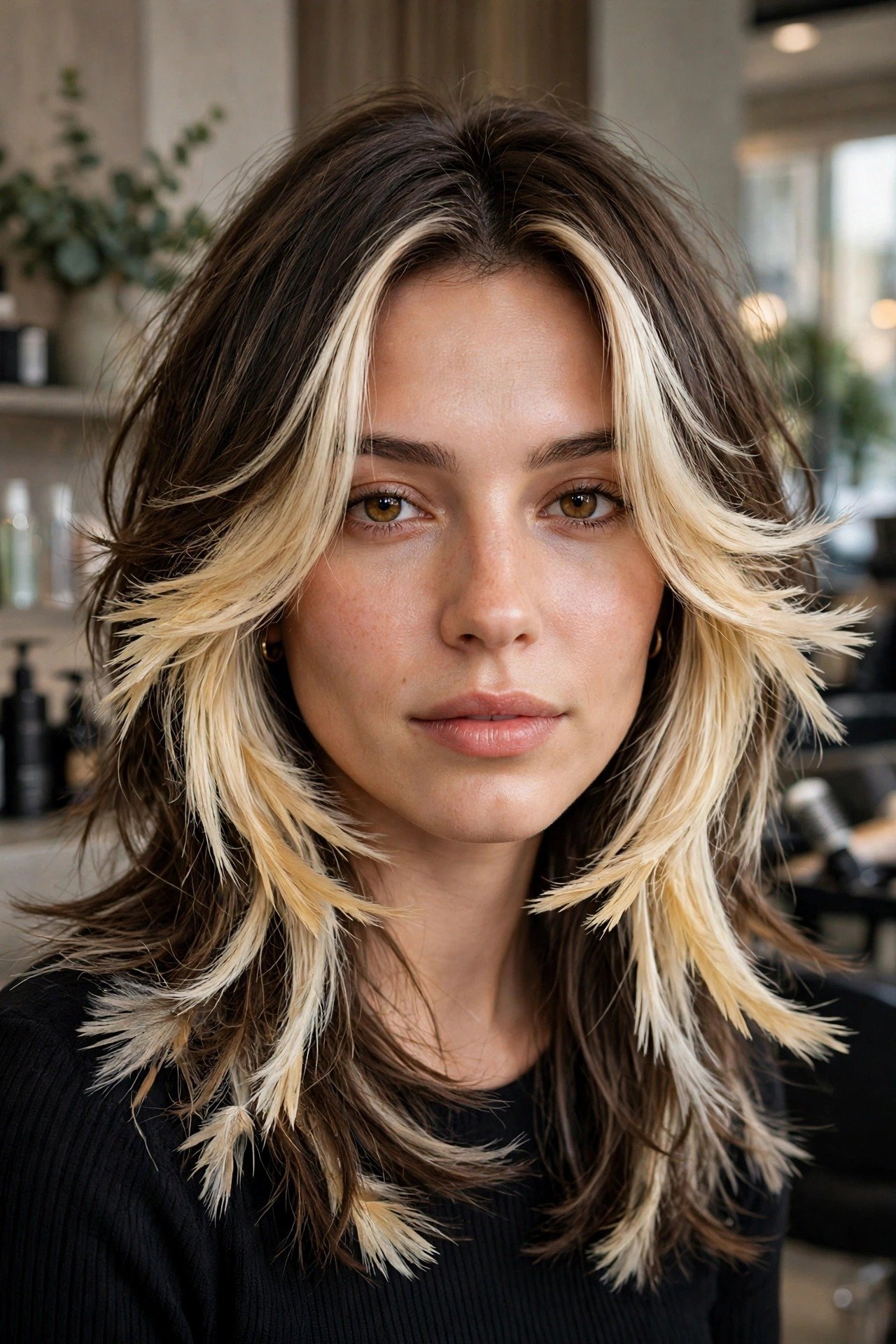
A money piece is a bold, face-framing highlight on the front sections of the hair, and paired with feathered layers it creates a striking, modern frame for the face. The bright pieces sit exactly where the feathered layers begin, drawing attention to the eyes and cheekbones. This style suits oval, round, and heart-shaped faces, and it works on every base colour, from dark brown to blonde. Ask your colourist for a money piece two to three levels lighter than your base, blended softly into the feathered layers so there is no harsh line.
Styling a money piece is simple: blow dry the front sections forward and outward with a round brush so the bright pieces flick away from the face and catch the light. The rest of the feathered layers can be styled in the same outward direction for a cohesive look. A shine spray on the front pieces makes the money piece glow, and a flat iron can smooth any frizz around the face. The contrast between the bright front and the deeper lengths makes the whole cut look dimensional.
The money piece needs a toner refresh every four to six weeks to stay bright, and the front pieces need a little extra care because they are the most processed part of the hair. Use a colour-safe shampoo, a heat protectant, and a weekly mask on the ends. This is a wonderful choice if you want a bold, fashionable detail without colouring all of your hair. The money piece and feathered layers together create a face-framing effect that is impossible to miss. Washing the front money-piece sections with cool water helps the bright colour stay vivid for longer.
17. Feathered Layers with Face-Framing Pieces
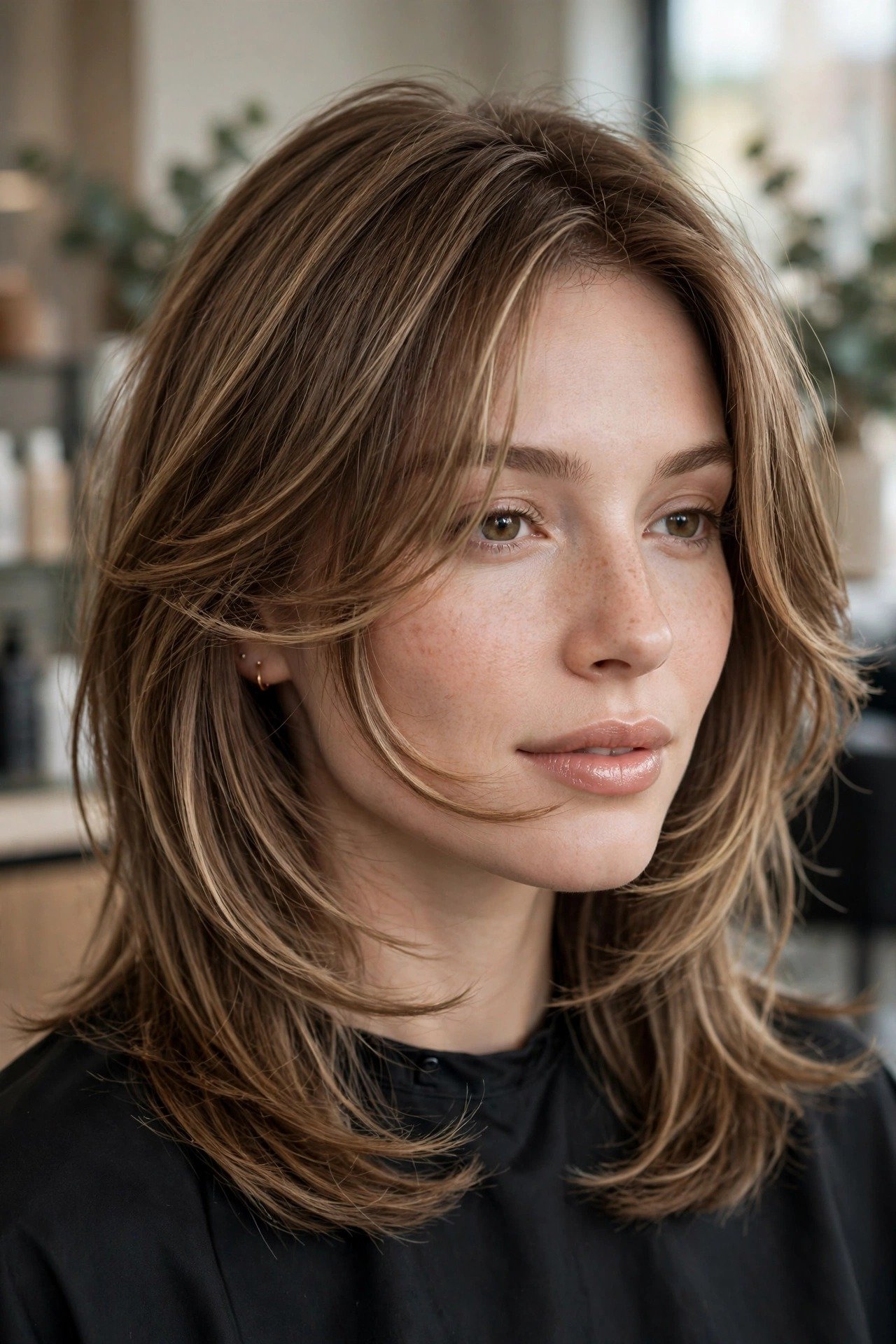
Face-framing pieces are the heart of a feathered cut, and this style puts them front and centre: short, feathered layers around the face that sweep away from the cheeks and jawline, softening every feature. It suits every face shape, because the stylist can place the shortest piece exactly where your face needs softening, whether that is the cheekbone, the jaw, or the chin. Ask for face-framing layers starting at the cheekbones, feathered through the ends, with the rest of the layers kept longer so the face pieces stand out. Our face-framing layers guide explains the placement in more detail.
Styling face-framing feathered hair is all about direction: blow dry the front pieces away from the face with a round brush, so they sweep outward and open up the face. A flat iron can flick the very ends outward for extra definition, and a texturising spray keeps the pieces separated. The back layers can be styled the same way or left softer, depending on the look you want. This style also looks beautiful tied back, because the face-framing pieces fall free and soften the whole silhouette.
Maintenance is easy, with trims every six to eight weeks to keep the face pieces at the right length. The front pieces are the most visible part of the cut, so keep them healthy with a heat protectant and a light serum on the ends. This is the perfect choice if you want a feathered cut that is all about the face: it highlights your eyes, softens your jaw, and makes every hairstyle, up or down, look more polished. It is subtle, flattering, and endlessly versatile. Clipping the face-framing pieces back with a small claw clip creates an elegant half-up style in seconds.
18. Feathered Layers for Round Faces
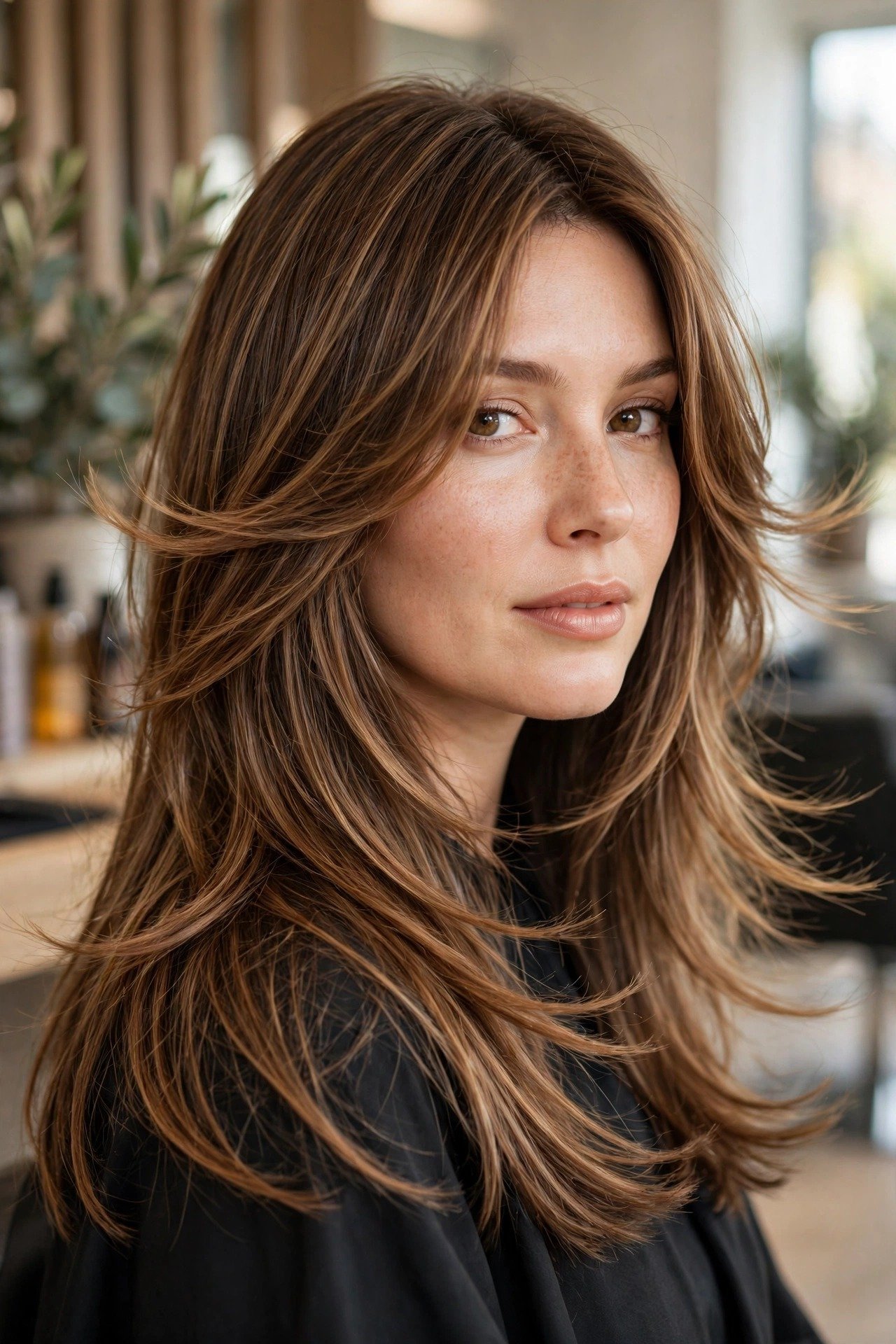
Feathered layers are one of the best cuts for round faces, because they add length, height, and angles that balance the natural fullness of the face. The key is keeping the layers long, starting below the chin, and adding volume at the crown so the face looks longer. The feathered ends flick outward, creating diagonal lines that break up the roundness. Ask your stylist for long layers, a centre or deep side part, and feathered ends, and avoid short layers at the cheekbones that add width where you do not want it.
Styling for a round face should emphasise height and length. Blow dry with a round brush, lifting at the roots and flicking the ends outward, and keep the front pieces sweeping away from the face rather than curling inward. A little volume at the crown makes a real difference, so use a root-lifting spray and consider velcro rollers on the top. Long, feathered layers worn straight with flicked ends are especially slimming, because the vertical lines elongate the face. Keeping the front layers long and sweeping them outward creates vertical lines that slim a round face.
Maintenance follows the usual feathered routine: trims every six to eight weeks, a heat protectant, and a lightweight serum on the ends. Avoid heavy, blunt cuts and very short bobs, which emphasise roundness, and instead let the feathered layers do the slimming work. With the right placement, feathered layers make a round face look longer, more defined, and beautifully balanced. It is a cut that works with your face shape, not against it. Keeping the part slightly off-centre adds asymmetry that makes a round face look even longer and more defined.
19. Feathered Layers for Oval Faces
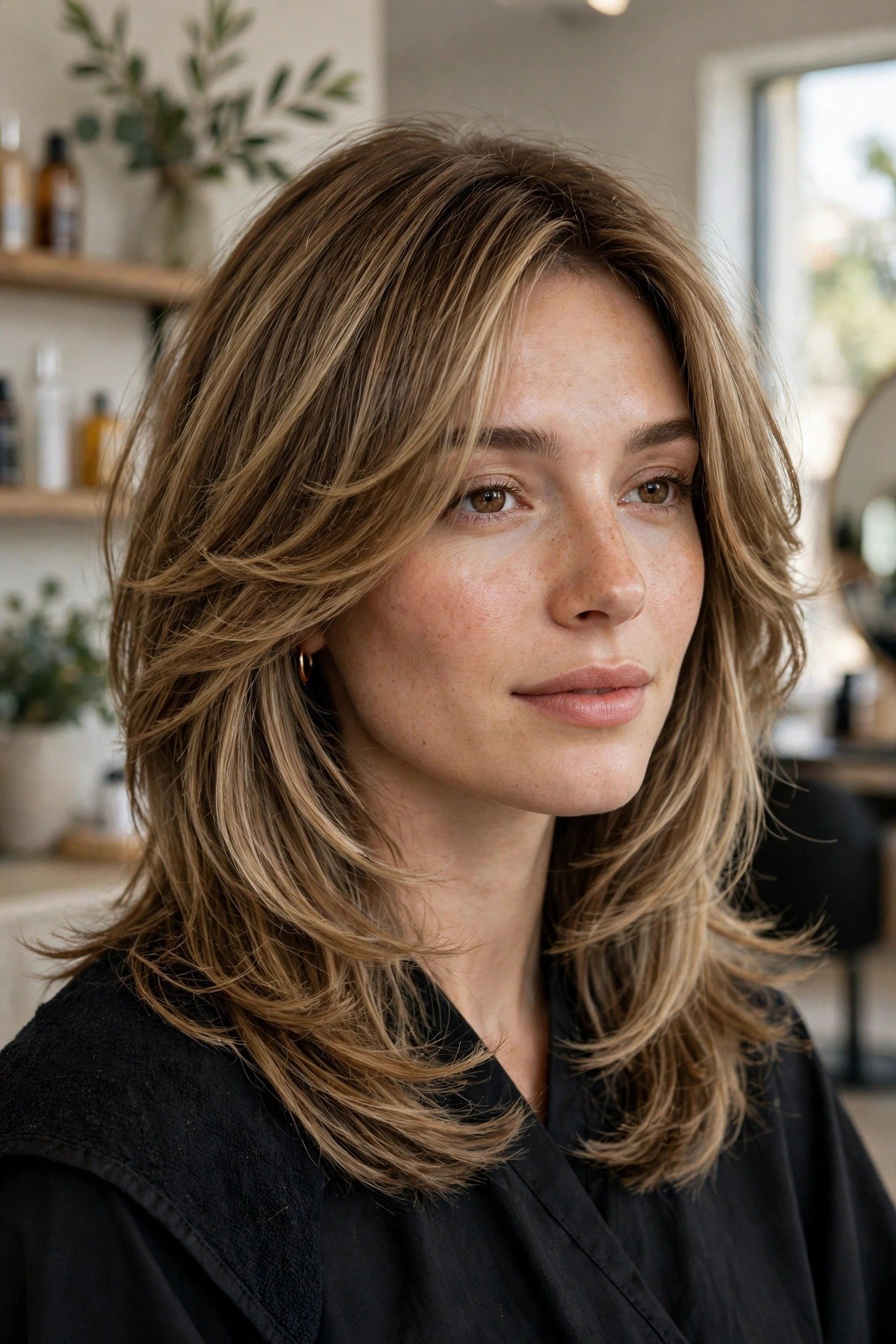
Oval faces are the most versatile face shape, and feathered layers show that off beautifully: almost every length, part, and flick direction works, so you can choose the version you love most. The balanced proportions of an oval face mean the feathered layers can sit anywhere, from cheekbone-grazing pieces to long, flowing ends. Ask your stylist for the feathered style that matches your personality, whether that is a classic Farrah flick, a feathered shag, or a soft lob, and trust that the cut will flatter your features.
Styling is a matter of preference: a centre part with outward flicks gives a classic seventies look, while a side part adds asymmetry and drama. A round brush blowout creates volume and polish, and air drying with mousse gives a relaxed, natural texture. Because oval faces suit every option, you can experiment with bangs, highlights, and different lengths without worrying about balance. The feathered layers will frame your face softly whatever you choose. A quick pass with a flat iron on the front layers sharpens the feathered flick for evenings out.
Maintenance is straightforward: trims every six to eight weeks, a good shampoo and conditioner, and a heat protectant for styling. Oval-faced women have the luxury of focusing on hair type and lifestyle rather than face shape, so choose the feathered cut that fits your routine. Whether you want low maintenance or high glamour, feathered layers on an oval face deliver a beautiful, balanced result every time. Experimenting with different parts and accessories is easy on an oval face, since every variation stays balanced.
20. Feathered Layers for Square Faces
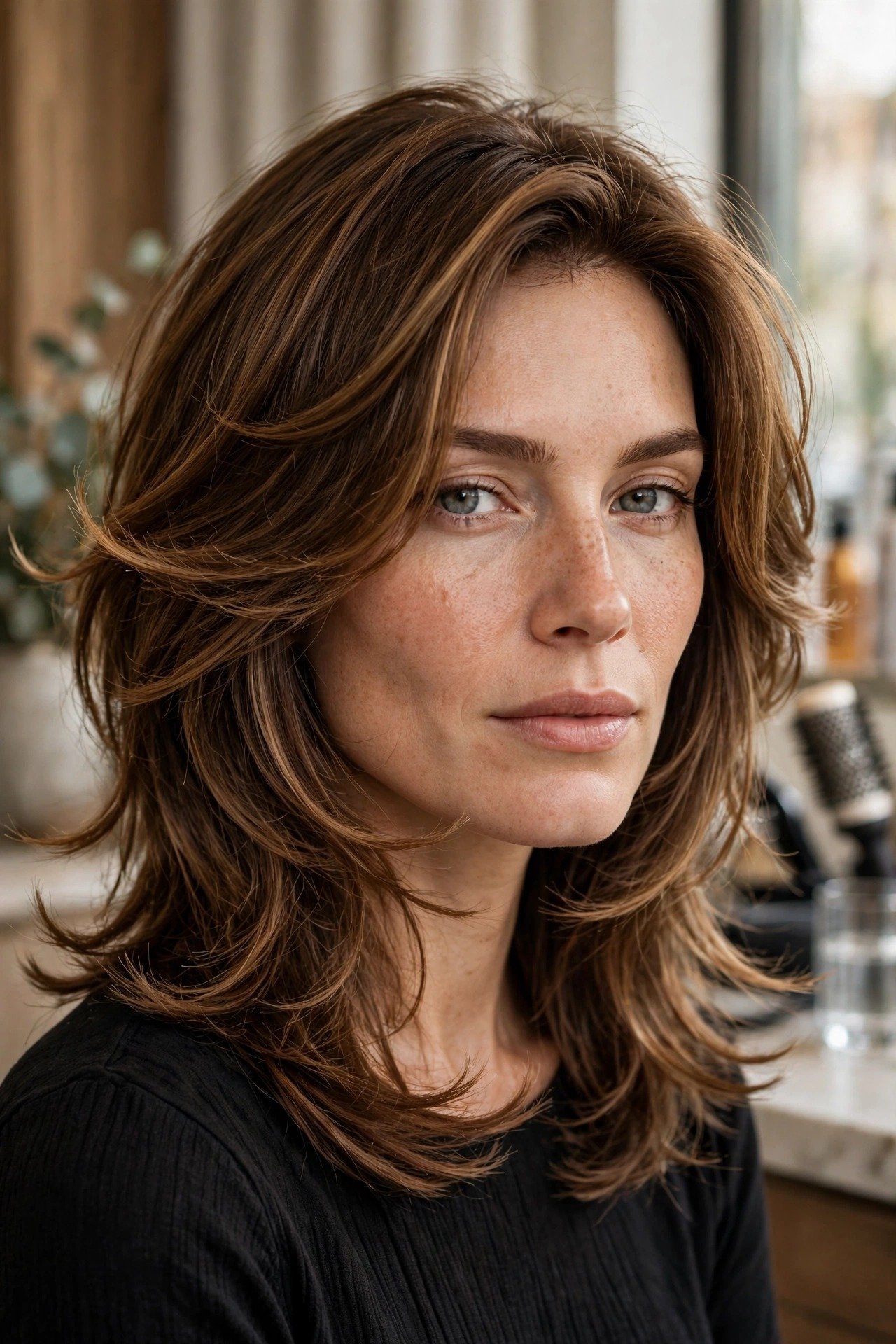
Square faces have a strong, defined jawline, and feathered layers are ideal for softening it without hiding it. The curved, flicked ends break up the straight lines of the jaw, while layers around the face add softness and movement. The key is keeping the layers soft and curved, not blunt or straight, and starting the face-framing pieces at the cheekbones or below. Ask your stylist for feathered layers with a soft, rounded shape, and avoid blunt ends at the jawline, which emphasise the squareness.
Styling should emphasise curves: blow dry the ends outward or under in soft, rounded flicks, and add gentle waves through the lengths to break up the angles. A side part also helps, because it creates asymmetry that softens the jaw. A round brush is your best friend, and a large-barrel curling iron can add soft bends that make the whole cut feel romantic. Avoid pin-straight styling, which highlights the strong jawline. A deep side part on a square face adds instant asymmetry and softens the jawline even further.
Maintenance is the usual feathered routine, with trims every six to eight weeks and a focus on keeping the ends soft and healthy. A shine spray and a light serum keep the feathered ends looking polished. With the right cut, a square face looks softer, more feminine, and beautifully balanced, while still keeping the strong, confident bone structure that makes it striking. Feathered layers do not hide a square jaw; they frame it beautifully. Soft waves through the mid-lengths are the quickest way to add curves that balance a strong jawline.
21. Feathered Layers for Heart-Shaped Faces
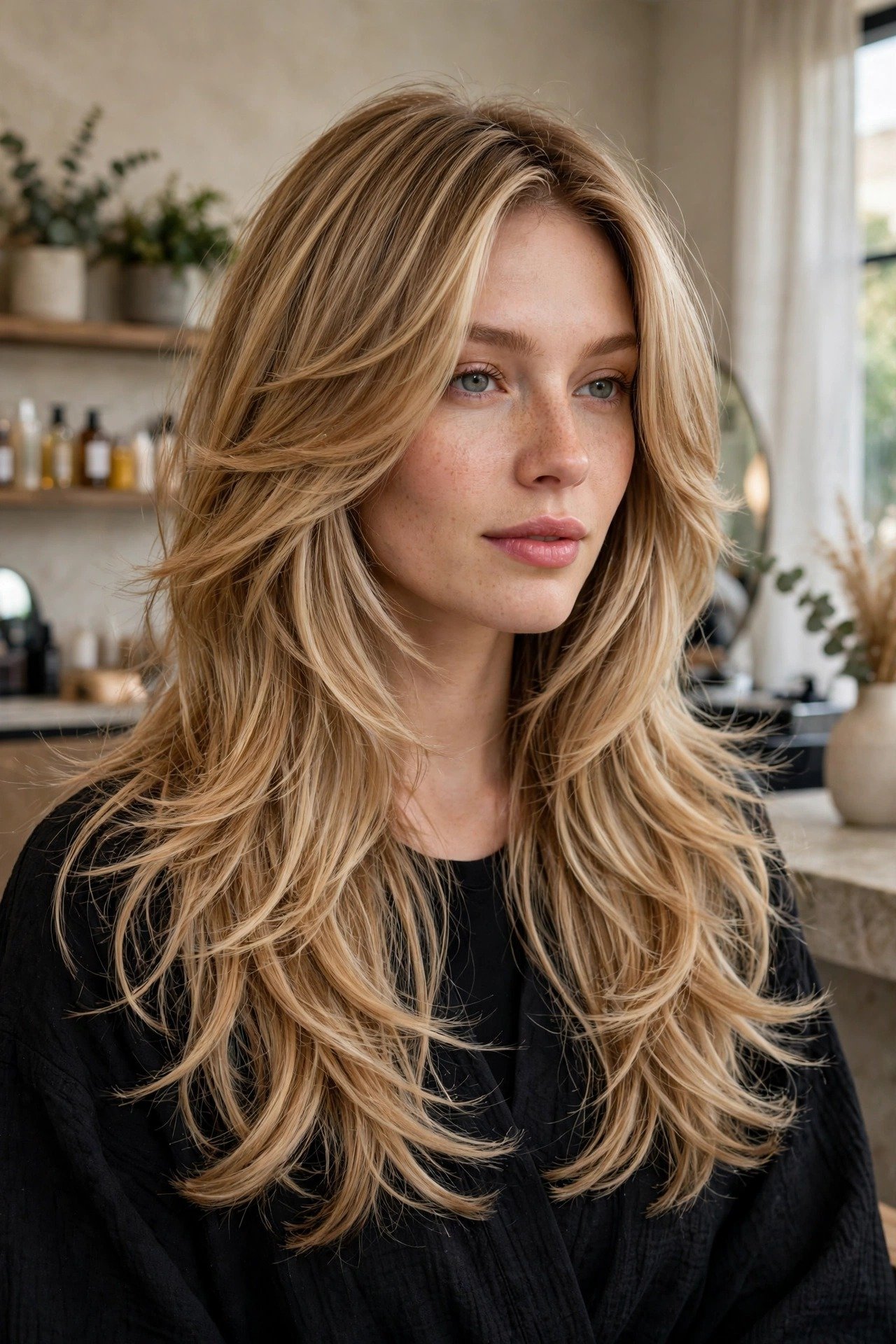
Heart-shaped faces are wider at the forehead and narrower at the chin, and feathered layers balance that shape by adding fullness and width through the lower lengths. Layers that start at the jawline and flick outward fill in the narrower lower face, creating a beautiful, balanced silhouette. Ask your stylist for feathered layers that build volume from the jaw down, with soft face-framing pieces and a side part or curtain bangs to soften the forehead. Avoid too much volume at the crown, which emphasises the wider top.
Styling should focus on the lower half of the hair: blow dry the bottom layers outward with a round brush to create width at the jaw and chin, and keep the top smooth and controlled. A curling iron through the lower lengths adds fullness where it is needed most. Curtain bangs or a side-swept fringe also help by covering part of the forehead and drawing attention to the eyes and cheekbones. The result is a balanced, harmonious shape. Adding gentle volume at the ends with a curling iron fills out the lower face exactly where it needs balance.
Maintenance is simple, with trims every six to eight weeks and a focus on keeping the lower layers full and healthy. Use a volumising mousse on the lower lengths and a light serum on the ends. Feathered layers are one of the most flattering cuts for heart-shaped faces, because they add exactly the fullness the face shape needs, exactly where it needs it. The cut feels balanced, soft, and naturally beautiful. A low, loose ponytail with face-framing pieces left out flatters a heart-shaped face beautifully.
22. Short Feathered Layers
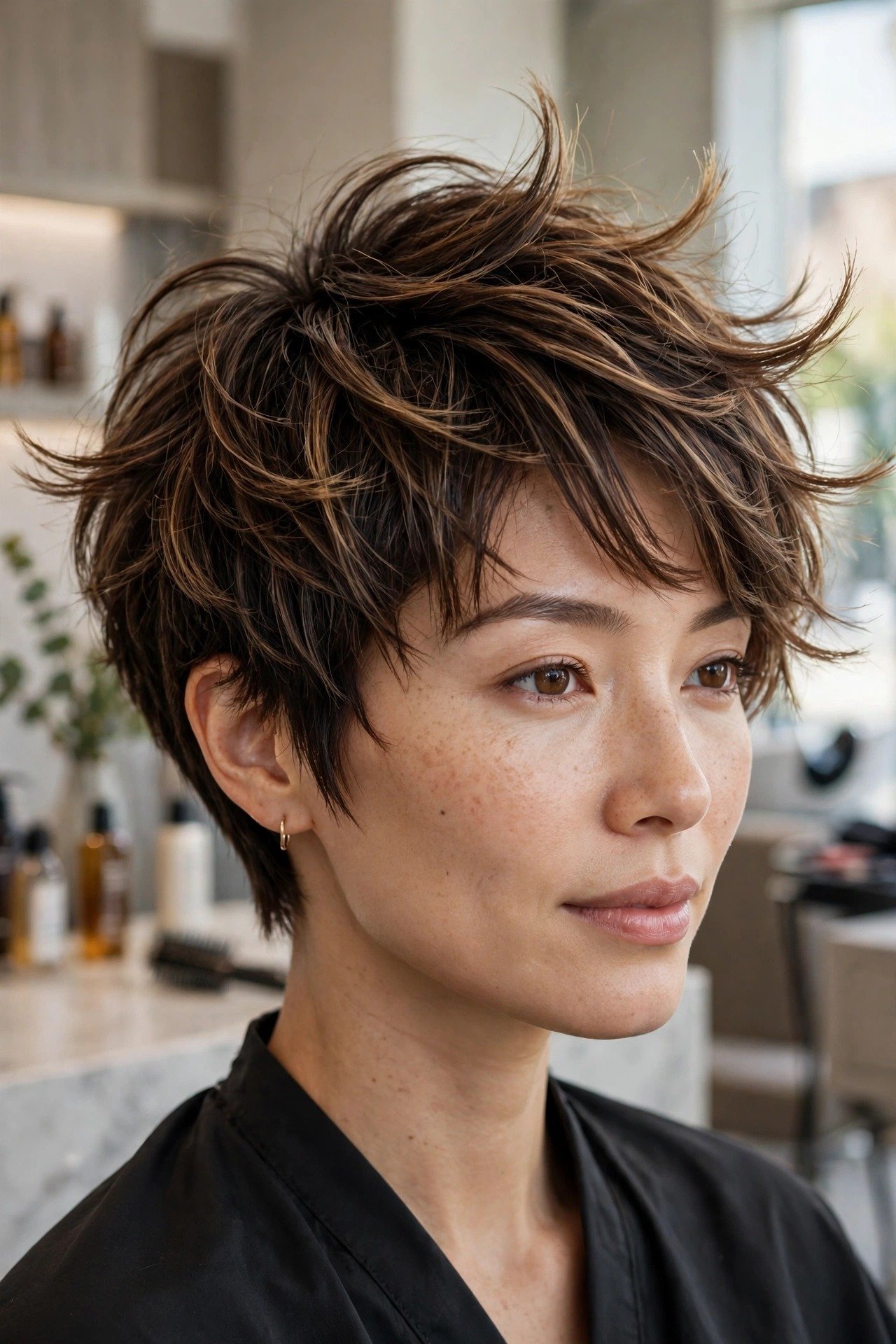
Short feathered layers bring the seventies spirit to a cropped cut, with textured, flicked ends and plenty of movement in a short, easy length. Falling above the shoulders, this style is bold, fresh, and wonderfully low maintenance. It suits oval, heart-shaped, and square faces, and it is especially good for women with fine hair, because the short length and feathered texture create the illusion of fullness. Ask your stylist for a short cut with feathered ends throughout and textured layers at the crown for lift.
Styling short feathered hair takes minutes: work a texturising paste or mousse through damp hair, blow dry with your fingers or a small round brush, and flick the ends outward. A flat iron can sharpen the flick on the front pieces, and a little wax adds definition and separation. The short length means the style holds well all day, and it can be refreshed with a quick spritz of water and a scrunch. It is a wash-and-go cut that still looks styled.
Short hair needs more frequent trims, every four to five weeks, to hold its shape, but the daily routine is minimal. Use a lightweight shampoo and conditioner, and a heat protectant if you use hot tools. This is a wonderful choice if you want a big change, if you are tired of long hair, or if you want a cut that feels modern, confident, and full of personality. Short feathered layers prove that feathering works at every length. A tiny amount of pomade warmed between the palms gives short feathered layers piecey definition without stiffness.
23. Feathered Layers with Side-Swept Bangs
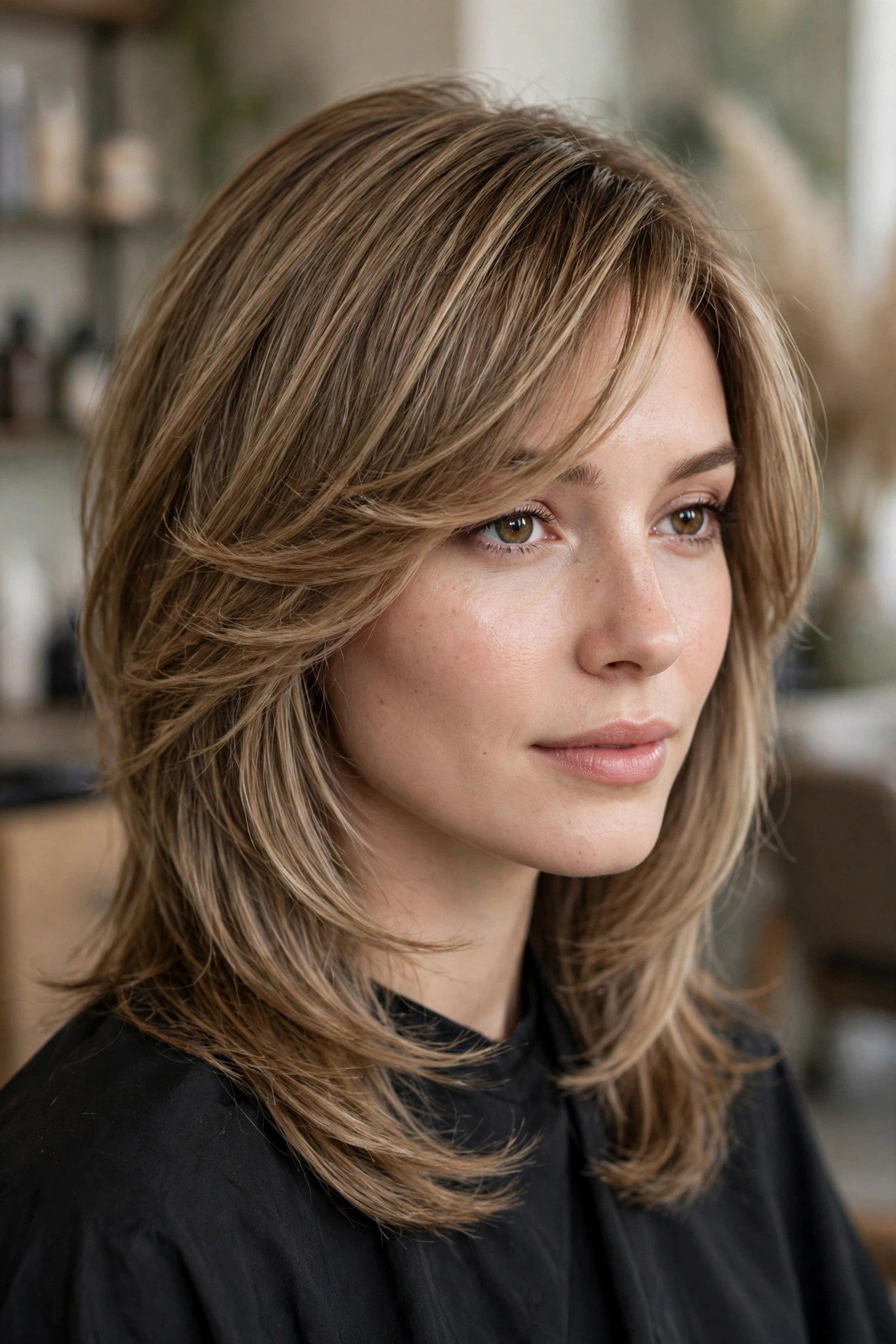
Side-swept bangs paired with feathered layers create a soft, elegant diagonal line across the forehead that flatters almost every face shape. The bangs sweep to one side and blend seamlessly into the feathered layers, creating a continuous, flowing shape. This style suits round, square, and heart-shaped faces especially well, because the diagonal line breaks up symmetry and softens strong features. Ask your stylist for side-swept bangs that hit the cheekbone at their longest point, with feathered layers continuing the sweep.
Styling side-swept bangs is easy: blow dry them to the side with a round brush, sweeping them across the forehead and away from the face. The feathered layers should be dried in the same direction so the whole cut flows together. A light-hold hairspray keeps the sweep in place, and a flat iron can smooth any pieces that fall the wrong way. This look also works beautifully with a deep side part, which adds drama and volume at the roots.
Side-swept bangs need a trim every four weeks to keep their length, but they grow out gracefully into the feathered layers, so there is no awkward stage. Use a little dry shampoo to keep them fresh, and avoid heavy products that weigh them down. This combination is timeless, elegant, and endlessly flattering, and it is a wonderful choice if you want bangs without the commitment of a full fringe. The sweep and the feathering work together perfectly. Switching the sweep to the other side occasionally gives the roots a lift and changes the whole look.
24. Feathered Layers with a Centre Part
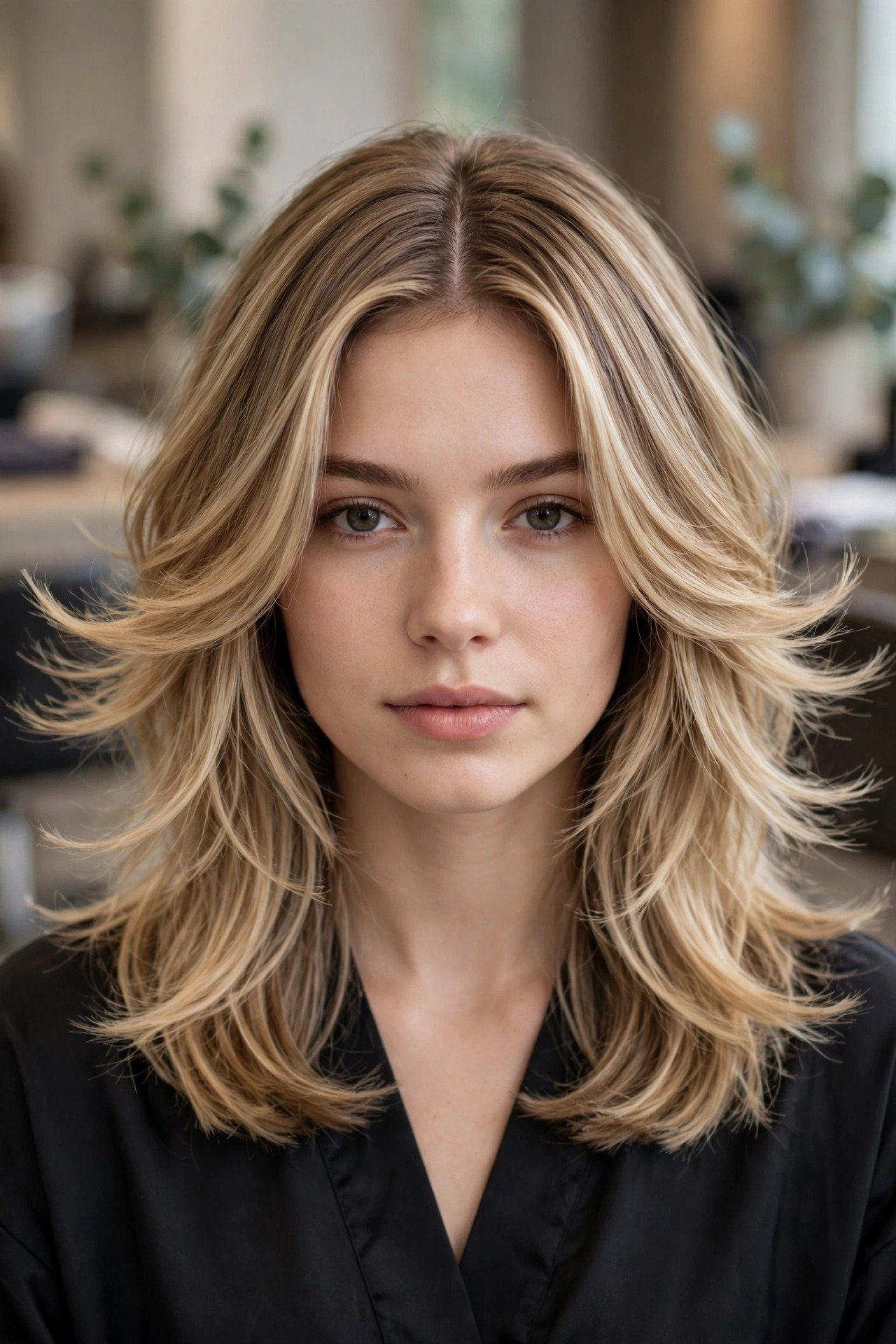
A centre part with feathered layers is the most classic seventies look of all: symmetrical, balanced, and instantly recognisable. The hair falls evenly on both sides, with the feathered layers flicking outward in a mirror image that frames the face beautifully. This style suits oval and heart-shaped faces best, and it works beautifully on long and medium hair. Ask your stylist for a centre part with face-framing layers starting at the cheekbones and feathered ends throughout, keeping both sides even for that perfect symmetry.
Styling a centre-part feathered cut is about balance: blow dry each side with a round brush, flicking the ends outward, and keep the part clean and straight. A flat iron can smooth the top and sharpen the flicks, while a volumising spray at the crown adds lift. The symmetry of the centre part makes the feathered layers the star of the show, so take time to get the flicks even on both sides. A shine spray gives the final, polished finish. Matching the flick on both sides takes patience, so check the symmetry in a second mirror before finishing.
Maintenance is simple, with trims every six to eight weeks and a focus on keeping the ends healthy and even. A centre part shows uneven growth more than a side part, so regular trims matter. Use a heat protectant and a light serum on the ends. This is the purest expression of the feathered look, and it is a wonderful choice if you love seventies style and want a cut that is both timeless and striking. The symmetry is its beauty. A middle part with both sides tucked behind the ears creates a sleek, polished version of the centre-part style.
25. Feathered Layers with a Deep Side Part
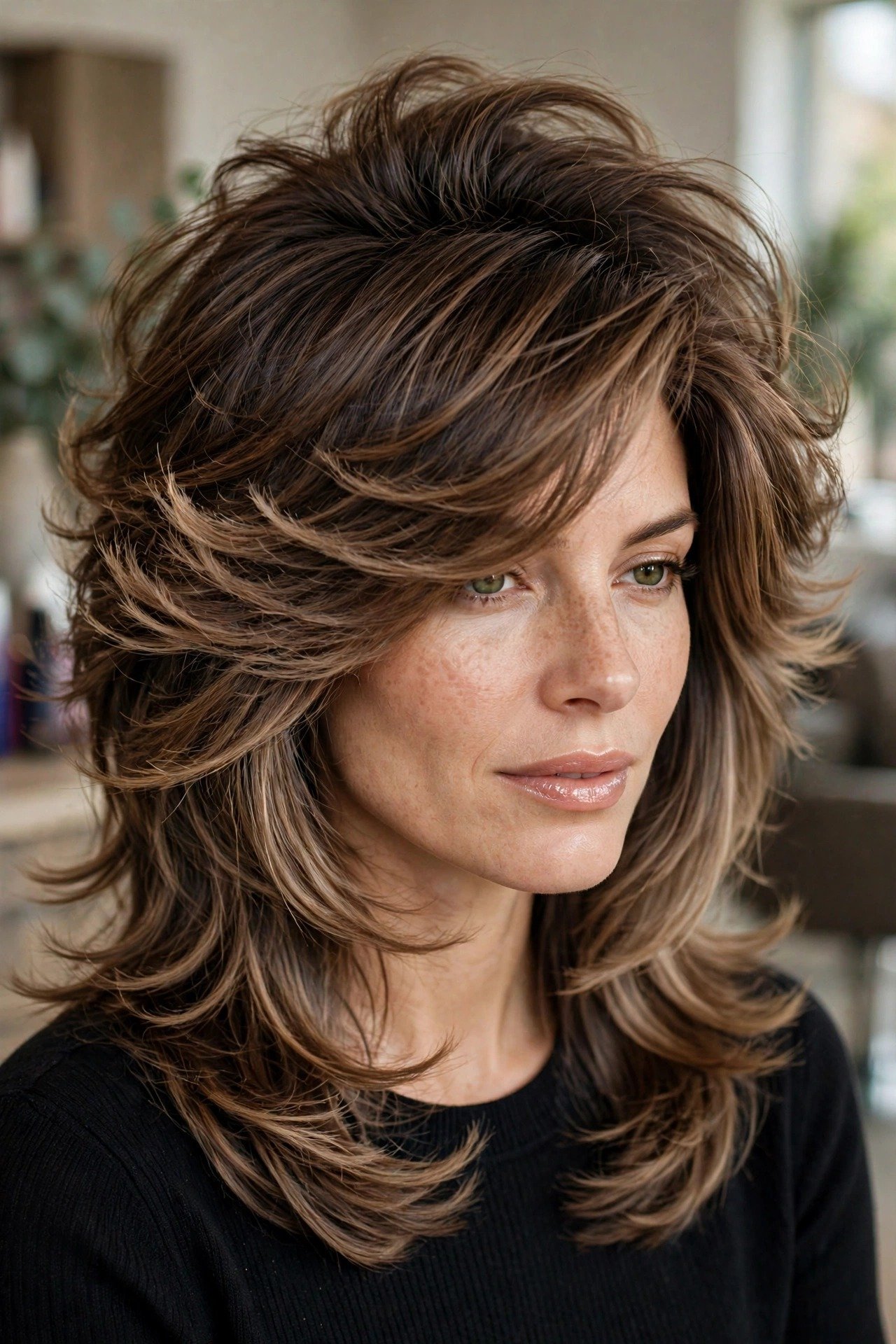
A deep side part transforms feathered layers into a dramatic, glamorous style with volume on one side and a sweeping fringe on the other. The asymmetry adds instant sophistication, and the feathered layers fall in a beautiful cascade from the heavy side. This style suits oval, round, and heart-shaped faces, and it is especially flattering for formal occasions. Ask your stylist for a deep side part with long, feathered layers and a sweeping front section that blends into the layers on the heavy side.
Styling a deep side part starts with the part itself: create it while the hair is damp, using a comb to draw a clean line far to one side. Blow dry the heavy side with a round brush for volume, flicking the ends outward, and sweep the front section across the forehead. A root-lifting spray on the heavy side adds lasting height, and a light hairspray keeps the shape. The deep side part also works beautifully with curls, which add even more drama to the feathered layers.
Maintenance is easy, with trims every six to eight weeks and a focus on keeping the part clean and the ends healthy. The deep side part is versatile: it can be worn sleek and polished for work, or tousled and voluminous for evenings. It is a wonderful choice if you want a feathered cut with extra drama, or if you are looking for a red-carpet version of the everyday feathered look. The asymmetry makes the feathering look even more dynamic. Pinning the lighter side back with a decorative clip turns the deep side part into an evening look instantly.
26. Feathered Layers for Straight Hair
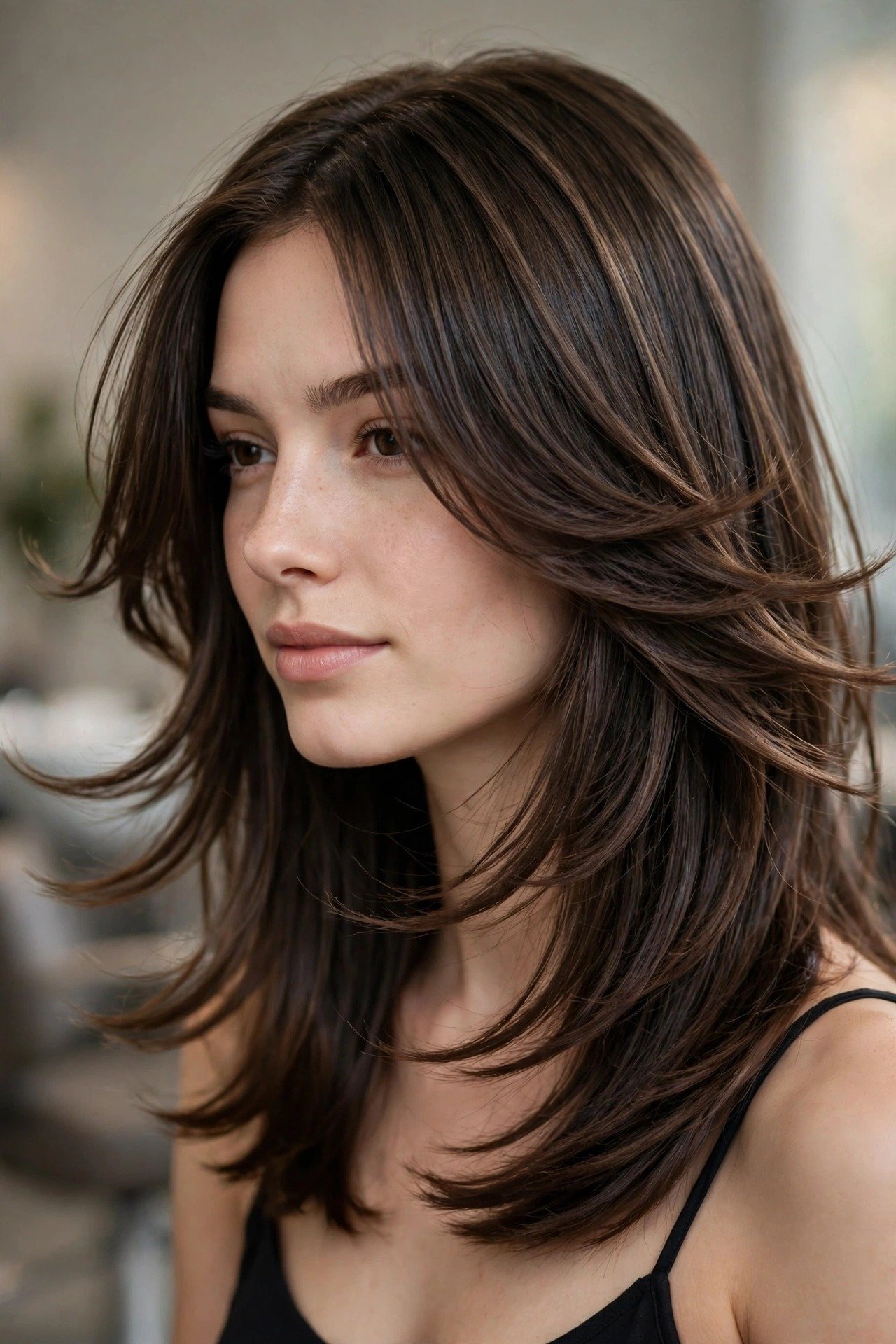
Straight hair benefits enormously from feathered layers, because the feathering adds the shape and movement that straight hair often lacks. Without layers, straight hair can look flat and heavy; with feathered ends, it gains swing, texture, and a beautiful flick that moves as you walk. This style suits every face shape, and it is especially good for women with naturally straight, fine, or medium hair. Ask your stylist for feathered layers that start at the jawline and continue through the ends, with the shortest pieces framing the face.
Styling straight feathered hair is quick: blow dry with a round brush, flicking the ends outward, or use a flat iron to create the flick in small sections. A shine spray is essential on straight hair, because it shows off the smooth, glossy finish and the feathered texture. A texturising spray can add grip and separation, and a light serum on the ends prevents flyaways. Straight feathered hair also looks beautiful air dried, with a natural, soft flick at the ends. A cool shot from the dryer after blow drying locks the flicked ends and adds a glossy finish to straight hair.
Maintenance is simple, with trims every six to eight weeks to keep the feathered ends crisp. Use a smoothing shampoo and conditioner, and a heat protectant whenever you use hot tools. Straight hair shows split ends easily, so regular trims matter. With feathered layers, straight hair finally has the movement and shape it deserves, without losing its sleek, polished character. It is straight hair, only better. A paddle brush used on dry hair keeps straight feathered layers smooth while preserving the outward flick.
27. Feathered Layers with Balayage
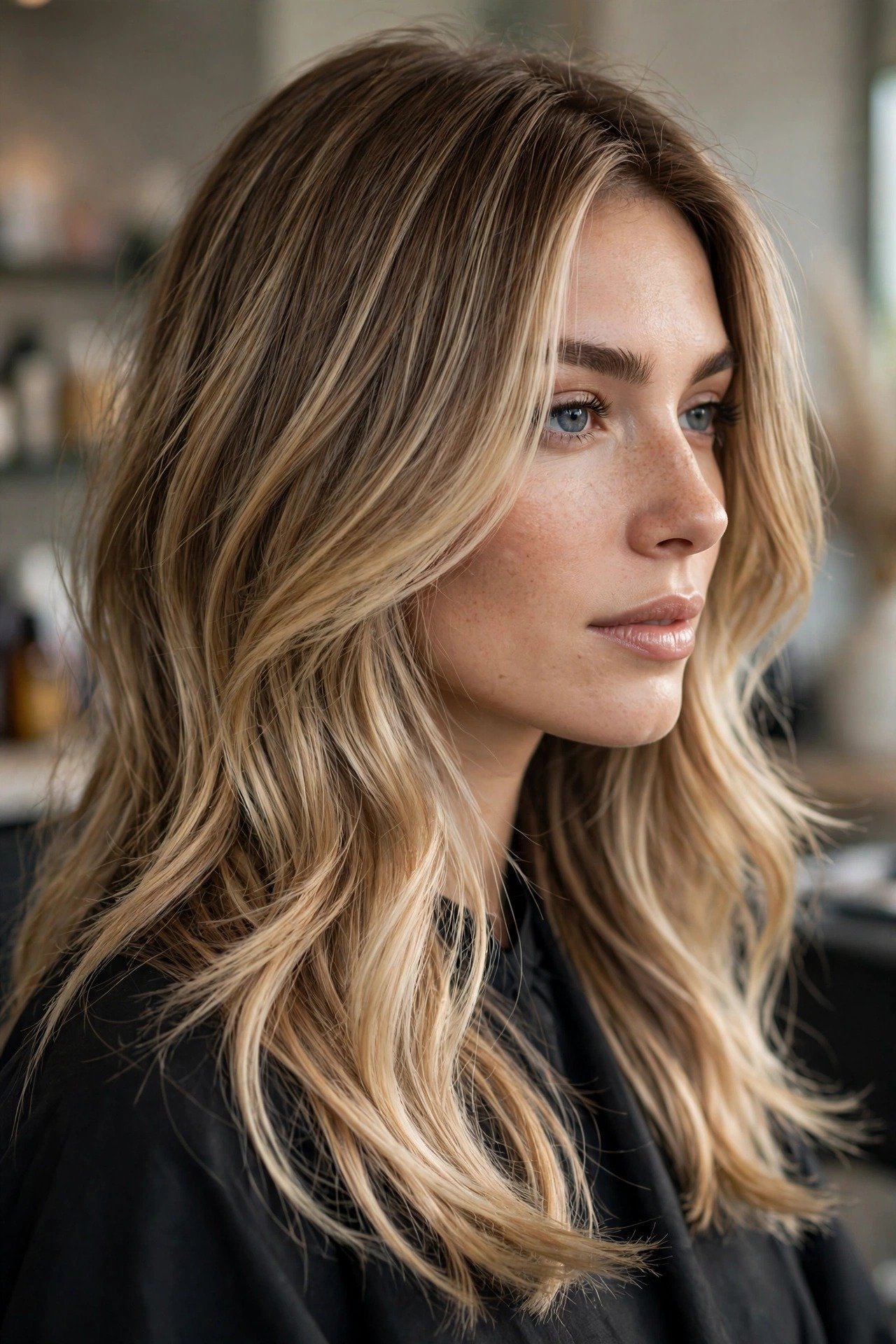
Balayage and feathered layers are a perfect pairing, because the hand-painted colour follows the same soft, graduated lines as the feathered cut. The lighter pieces sit on the feathered ends and the face-framing layers, creating dimension that moves with the hair. This style suits every skin tone, because the balayage can be customised to warm, cool, or neutral shades. Ask your colourist for a soft balayage that starts mid-length and lightens toward the feathered ends, with brighter pieces around the face.
Styling balayage feathered hair rewards a blowout: the flicked ends show off the colour gradient beautifully, and a shine spray makes the lighter pieces glow. Use a colour-safe shampoo and conditioner, and a toning treatment every few weeks to keep the balayage from turning brassy. A heat protectant is essential, because coloured ends are more fragile. The balayage also looks beautiful in soft waves, where the colour dimension is even more visible. Drying the balayage layers in an outward direction shows off the colour gradient from root to tip.
Maintenance includes a gloss or toner every eight weeks and regular trims to keep the feathered ends healthy. A weekly mask keeps coloured hair soft, and limiting heat styling helps the colour last longer. This combination is ideal if you want a low-maintenance colour that grows out gracefully, paired with a cut that shows it off perfectly. Balayage makes the feathering visible, and feathering makes the balayage move. A colour-protecting leave-in spray shields balayage from sun fading and keeps the feathered ends soft.
28. Feathered Layers with a Voluminous Crown

A voluminous crown takes feathered layers to glamorous new heights, with lift and fullness at the top balancing the flicked ends below. This style is inspired by seventies glamour, where big hair was the ultimate statement, and it suits women who love volume and drama. Oval, long, and heart-shaped faces wear it best, because the height elongates and balances the face. Ask your stylist for shorter layers at the crown, feathered ends throughout, and a cut that supports volume without collapsing.
Styling a voluminous crown starts with the roots: apply a volumising mousse to damp hair, blow dry upside down, then use a large round brush to lift each section at the crown. Velcro rollers on the top layers add extra height while the rest of the hair cools. Backcombing gently at the crown can add even more lift, and a light hairspray holds it in place. The feathered ends should be flicked outward to balance the height on top. Rollers on the crown layers while the ends cool give the voluminous shape a salon-finished hold.
Maintenance includes trims every six weeks to keep the crown layers in shape, and a focus on root care: use a clarifying shampoo occasionally to remove build-up that flattens the roots. This style is perfect for special occasions, parties, and anyone who loves big, glamorous hair. With a voluminous crown, feathered layers become a statement: bold, beautiful, and impossible to ignore. Teasing the crown lightly with a fine-tooth comb before smoothing the top layer adds height that lasts all evening.
29. Feathered Layers for Mature Women
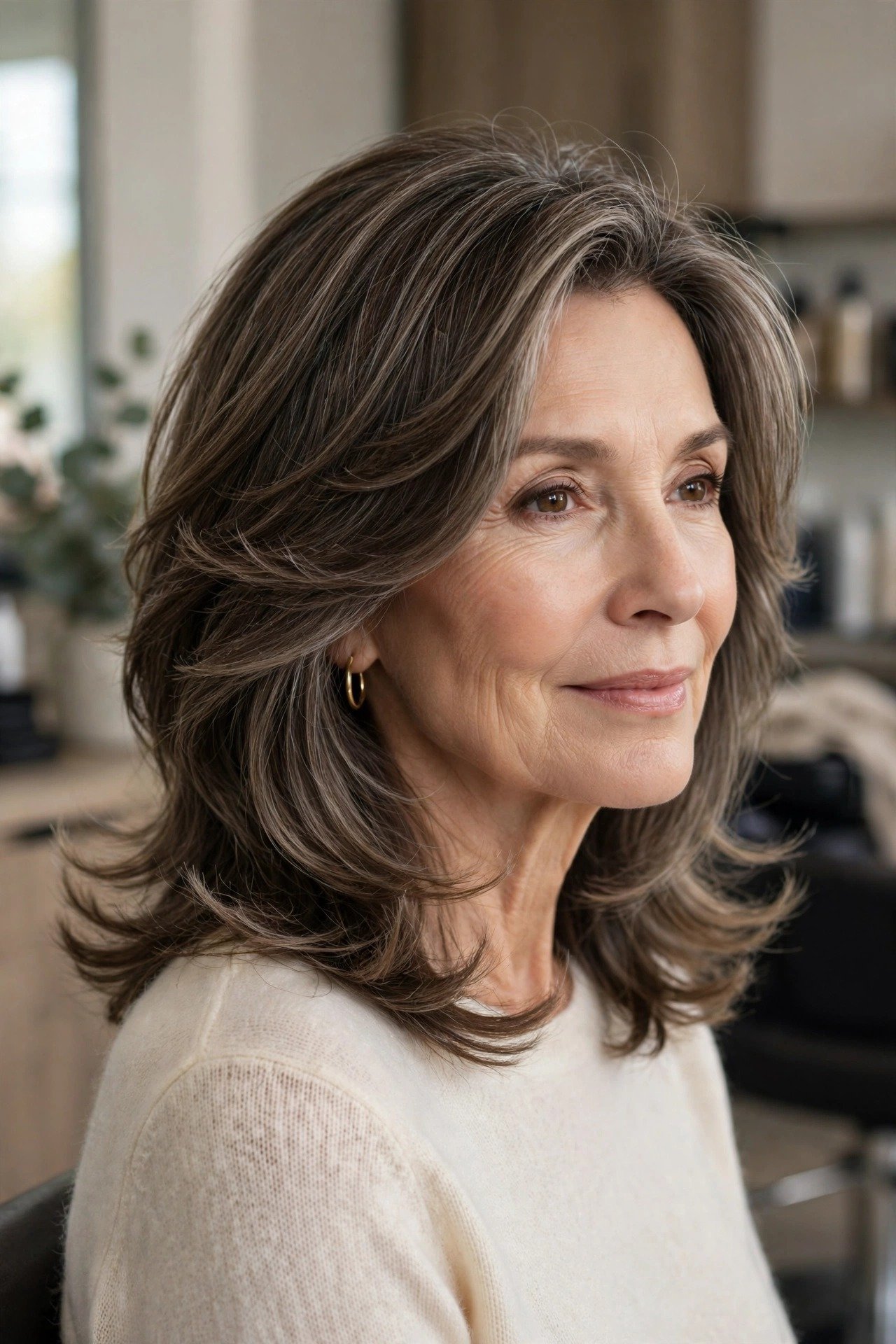
Feathered layers are a wonderful choice for mature women, because they soften the face, add movement, and create a youthful, elegant look without trying too hard. The soft, flicked ends draw attention away from fine lines and toward the hair itself, while the layers add volume to hair that may have thinned with age. This style suits every face shape, and it works beautifully at shoulder length or longer. Ask your stylist for soft, feathered layers with face-framing pieces and a length that feels comfortable and flattering.
Styling mature feathered hair should be soft and gentle: blow dry with a round brush for a smooth, polished finish, flicking the ends outward, and use a light-hold hairspray that does not stiffen the hair. A shine spray adds a healthy glow, and a root-lifting spray gives gentle volume. Avoid heavy products and excessive heat, which can dry out mature hair. The feathered cut also looks beautiful with a soft colour, such as warm highlights or a gentle balayage. A round brush used on the front pieces lifts them away from the face and opens up mature features beautifully.
Maintenance is about health: use a moisturising shampoo and conditioner, a weekly mask, and regular trims every six weeks. Princess Diana’s feathered haircut, making a major comeback in 2026, is a perfect reference for this age group, proving that feathered layers are timeless, not just trendy. With the right cut, mature women look elegant, confident, and beautifully styled. Feathered layers are ageless. A soft, warm gloss between appointments keeps mature feathered hair shiny and the colour looking fresh.
30. Feathered Layers with Soft Curls
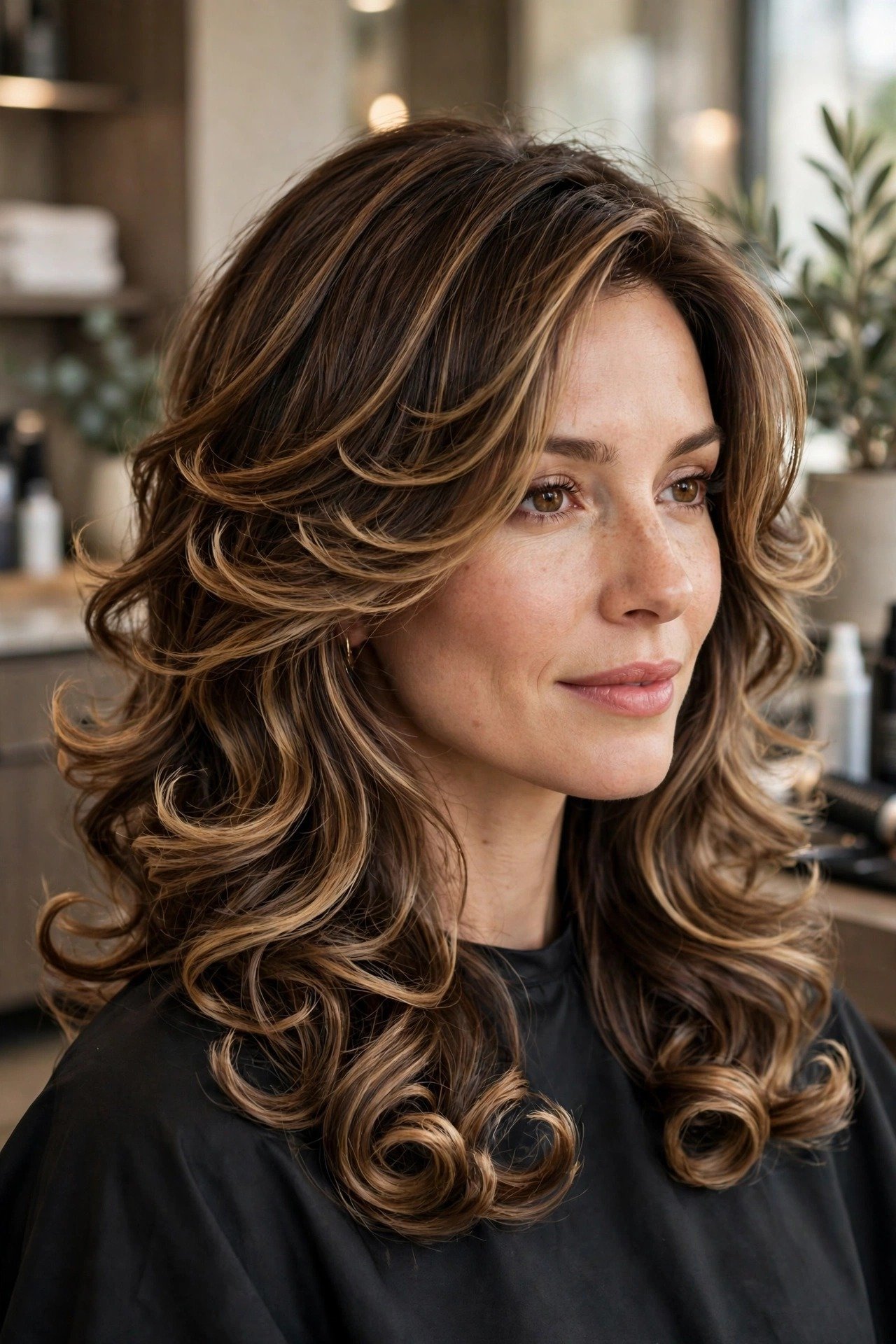
Feathered layers with soft curls combine the best of both worlds: the structure and movement of feathering with the romance and bounce of curls. The curls sit on the feathered layers, creating a soft, flowing shape that is both glamorous and approachable. This style suits oval, round, and heart-shaped faces, and it works on naturally wavy hair or on straight hair styled with a curling iron. Ask your stylist for feathered layers that support curls, with the shortest pieces framing the face and the ends light enough to hold a curl.
Styling soft curls on feathered hair starts with a heat protectant and a large-barrel curling iron, curling sections away from the face and letting them cool before brushing through gently. A round brush blowout can also create soft curls, especially on the top layers. A texturising spray adds hold without stiffness, and a shine spray gives the curls a healthy glow. The feathered ends make the curls look lighter and more defined than they would on blunt hair. Letting the curls cool completely on the iron before touching them keeps the soft curls bouncy for hours.
Maintenance includes trims every six to eight weeks, a moisturising conditioner, and a weekly mask to keep the curled ends healthy. Use a heat protectant every time you curl, and avoid over-curling the same sections. This is a wonderful choice for weddings, parties, and romantic evenings, and it also works beautifully as an everyday style. Soft curls and feathered layers together create a look that is feminine, bouncy, and full of life. Brushing curls out gently with a wide-tooth comb turns defined curls into soft, romantic waves.
31. Feathered Layers with Textured Ends
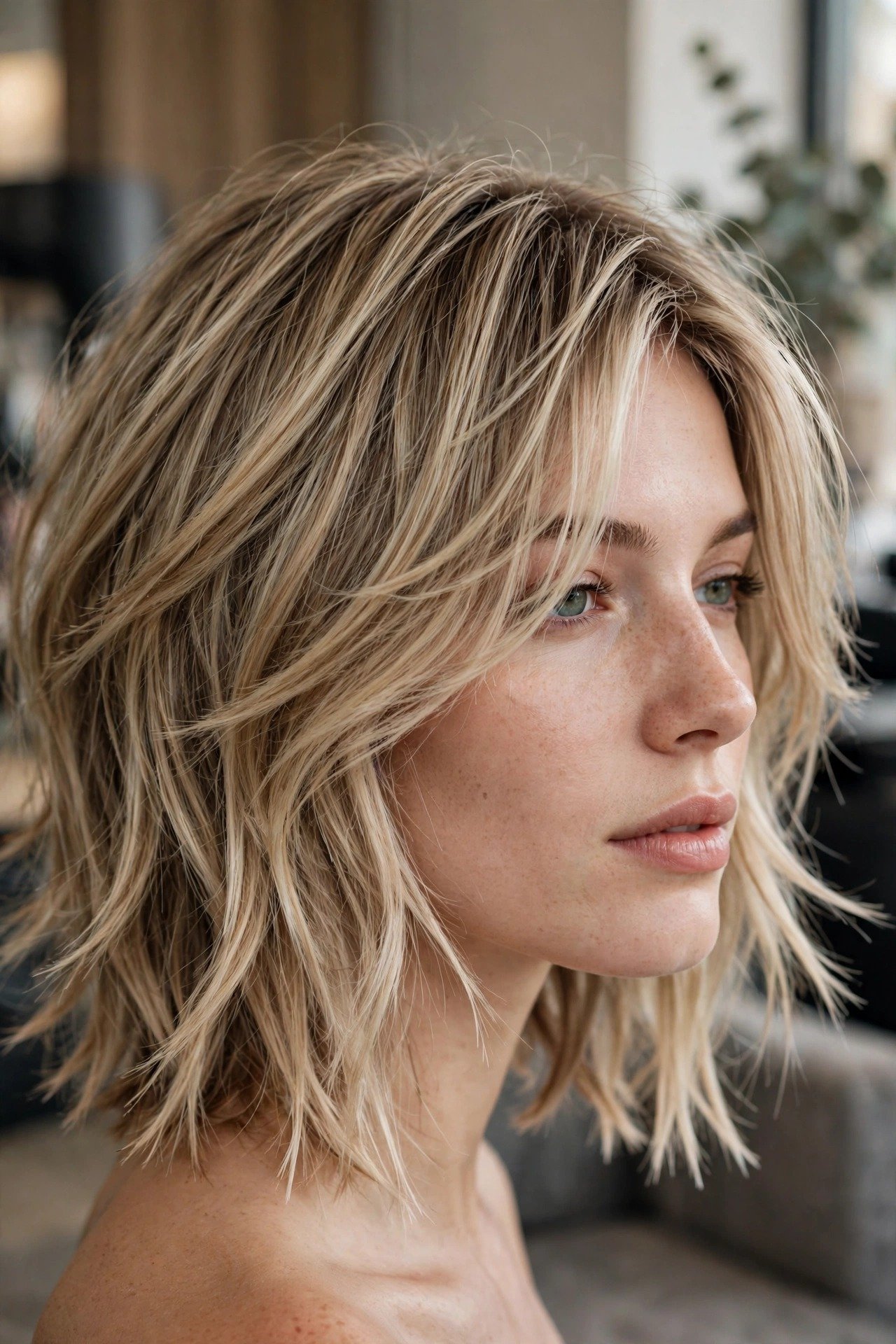
Textured ends give feathered layers a modern, edgy twist, with choppy, piecey tips that add definition and attitude to the soft feathered shape. This style suits women who love the feathered look but want something less polished and more contemporary. It works on every face shape and every hair type, and it is especially good for thick or wavy hair, where the texture shows off best. Ask your stylist for feathered layers with point-cut or razor-cut ends, creating a textured, piecey finish rather than a smooth flick.
Styling textured feathered hair is about embracing the pieces: work a texturising paste or wax through the ends, separating them with your fingers to create definition. Blow dry with a diffuser or rough dry for a tousled finish, and use a flat iron to flick individual pieces outward for extra edge. A sea-salt spray adds grip and texture, and the style looks best slightly undone. The textured ends hold their shape well and look great even on second-day hair. Scrunching the textured ends upward with a little paste creates piecey separation that lasts all day.
Maintenance is easy, with trims every six to eight weeks to keep the texture fresh. Use a lightweight conditioner so the ends stay piecey rather than weighed down, and a weekly mask to keep them healthy. This is a wonderful choice if you want a feathered cut with a modern, fashion-forward feel, or if you love the shag trend but want something softer. Textured ends make feathered layers feel current, cool, and full of personality. A matte paste on the very tips emphasises the choppy texture and stops the ends from looking fuzzy.
32. The Modern Princess Diana Feathered Cut
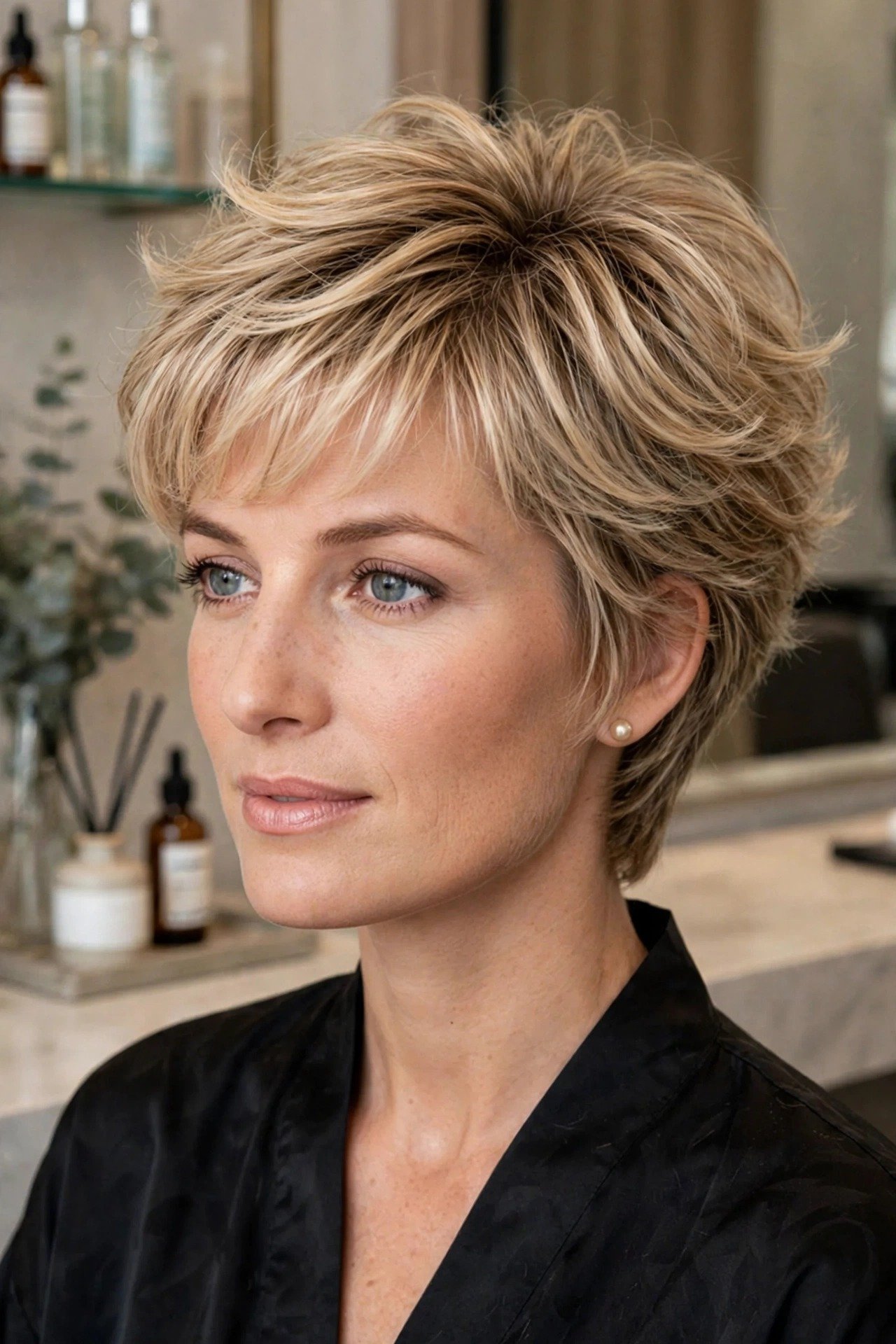
The modern Princess Diana feathered cut is the most elegant version of the 2026 feathered revival, inspired by the iconic short, feathered style that Glam reports is making a major comeback this year. The cut is short to medium in length, with voluminous, feathered layers and a soft, side-swept fringe that frames the face beautifully. It suits oval, heart-shaped, and square faces, and it is especially flattering for women who want a polished, timeless look. Ask your stylist for a Diana-inspired cut with feathered layers, volume at the crown, and a soft fringe.
Styling the Diana cut is about volume and polish: blow dry with a round brush, lifting at the roots and flicking the ends outward, and use a volumising mousse for lasting lift. A flat iron can smooth the fringe and the front pieces, while a shine spray gives the classic Diana gloss. The cut looks best with a deep side part, which adds the signature sweep across the forehead. It is a style that works for the office, for formal events, and for everyday elegance.
Maintenance includes trims every four to six weeks to keep the short, feathered shape crisp, and a focus on shine and health. Use a volumising shampoo and conditioner, a heat protectant, and a weekly mask. For more trend context, see Lovelyish on 70s feathered layers and Tressly on modern hair trends for women in 2026, both of which highlight how this retro feathered shape has returned. The modern Diana cut is timeless, elegant, and unmistakably 2026. A final blast of cool air from the dryer sets the Diana volume and gives the feathered layers their signature shine.
How to Style and Maintain Feathered Layers at Home
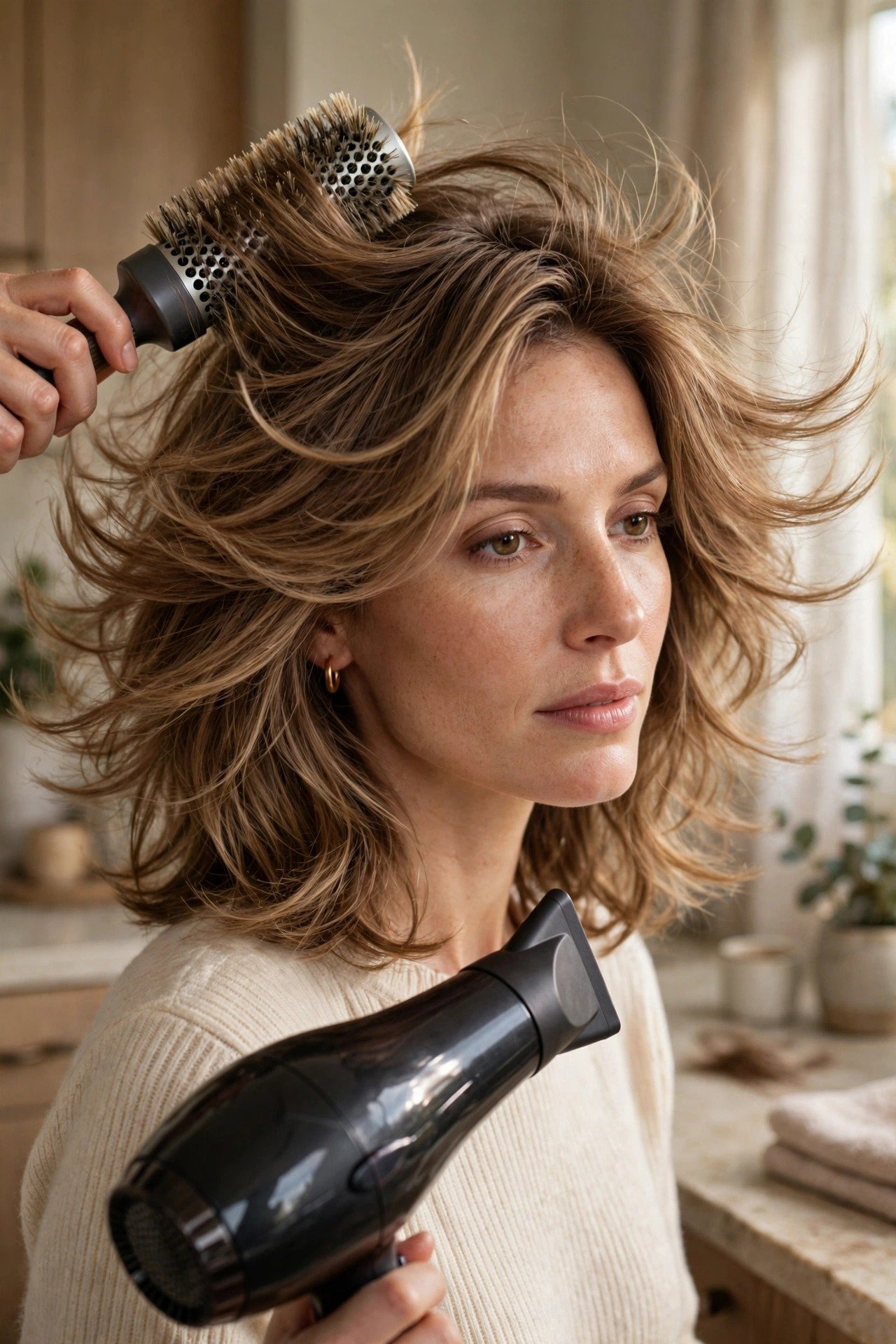
Styling feathered layers at home starts with the right wash and prep. Wash with a shampoo and conditioner suited to your hair type, then towel dry gently without roughing up the cuticle. Apply a heat protectant all over and a volumising mousse at the roots, combing through with a wide-tooth comb to distribute the products evenly. The key to a good feathered style is working in sections, so clip the top half of your hair up and start with the bottom layers. This preparation takes only a few minutes, but it makes the difference between a flat finish and a bouncy, feathered blowout that lasts.
Blow drying is where the feathered shape comes alive. Use a large round brush for long hair or a medium brush for shorter cuts, and work section by section, lifting at the roots and rolling the brush outward at the ends. Hold each section for a few seconds after the heat, letting it cool on the brush so the flick sets. For the front pieces, always dry them away from the face, rolling the brush outward and slightly back. Finish with a cool shot from the dryer to lock in the shape and add shine. The whole blow dry takes fifteen to twenty minutes once you know the technique.
If you prefer hot tools, a flat iron or curling iron can create the feathered flick quickly. With a flat iron, clamp a small section near the ends and flick the iron outward as you pull through, creating a soft bend rather than a sharp curl. With a curling iron, wrap sections away from the face on a large barrel, hold for a few seconds, and let the curl cool before touching it. Always use a heat protectant, work on dry hair, and keep the temperature moderate to protect the feathered ends. A light hairspray keeps the flicks in place without stiffness.
Daily maintenance is simple and keeps the cut looking fresh between washes. On day two, refresh the roots with dry shampoo and revive the flicks with a round brush and a quick blast of heat, or simply scrunch the ends with a little texturising spray. Sleep on a silk pillowcase or loosely pin your hair up to preserve the shape overnight. Brush gently with a paddle brush or a wide-tooth comb, and avoid over-brushing, which can flatten the feathered texture. A pea-sized amount of serum on the very ends adds shine and tames flyaways.
Long-term care keeps feathered layers healthy and beautiful. Trim every six to eight weeks to prevent split ends from travelling up the feathered layers, and use a weekly deep-conditioning mask on the mid-lengths and ends. Protect your hair from sun and chlorine, which dry out feathered ends, and use a heat protectant every single time you style with heat. Eat well, stay hydrated, and choose products for your hair type rather than following every trend. With consistent care, feathered layers grow out gracefully and stay soft, shiny, and full of movement for months.
Frequently Asked Questions
What are feathered layers?
Feathered layers are a cutting technique where the ends of the hair are thinned and angled so they flick outward or sweep away from the face, creating a light, airy, feathery edge instead of a blunt line. The layers are usually cut around the face and through the lengths, then feathered with a razor or thinning shears so each section moves freely. The result is soft, bouncy hair with ends that curve and flutter. Feathering works on bobs, lobs, shags, and long hair, and it suits most hair types because it adds movement without removing too much weight.
What face shapes suit feathered layers?
Feathered layers suit almost every face shape, which is one reason they are so popular in 2026. Oval faces can wear any version, round faces benefit from long layers and crown volume that elongate the face, square faces are softened by curved, flicked ends, heart-shaped faces gain balance from fullness through the lower lengths, and long faces are flattered by width at the sides. The key is placement: your stylist should start the shortest layer where your face needs softening or length, and keep the feathered ends working with your bone structure.
Can feathered layers work on all hair types?
Yes, feathered layers work on straight, wavy, curly, fine, and thick hair, with small changes in technique for each type. Fine hair gains movement and the illusion of fullness from long, soft feathered layers, thick hair loses bulk and gains shape, wavy hair gains definition, and curly hair gains bounce without the triangle effect. Straight hair gains swing and texture it often lacks. The only adjustment is how many layers are cut and how heavily the ends are feathered, so always tell your stylist your hair type and show photos of the result you want.
What is the difference between feathered layers and a butterfly haircut?
Feathered layers and the butterfly haircut are related but different. Feathered layers focus on the ends, tapering and flicking them outward in a seventies style, and they work at any length. The butterfly haircut, by contrast, uses two distinct layer lengths, short layers on top and long layers underneath, to create the illusion of short hair with long hair underneath. Feathered layers are about the flicked, airy finish, while the butterfly cut is about the dramatic length contrast. Many women combine the two, adding feathered ends to a butterfly base for the best of both styles.
How often should I trim feathered layers?
Feathered layers need a trim every six to eight weeks to keep the feathered ends crisp and the shape balanced. Shorter versions, such as a feathered bob or a Diana-inspired cut, need trims every four to six weeks because the shape shows growth sooner. If you wait too long, the feathered ends split and lose their flick, and the layers grow heavy and shapeless. Regular trims also keep the hair healthy, prevent split ends from travelling up the lengths, and make styling easier. Book your next appointment before you leave the salon.
What styling tools do I need for feathered layers?
You need only a few tools for beautiful feathered layers: a good blow dryer with a nozzle, a large or medium round brush, a heat protectant, and a volumising mousse. A flat iron is useful for sharpening the flick on the front pieces, and a large-barrel curling iron creates soft curls or extra bounce. Velcro rollers add volume at the crown, and a texturising spray keeps the layers separated. Avoid heavy products that weigh the feathered ends down, and always use a heat protectant before any hot tool to keep the ends healthy and shiny.
Can fine hair wear feathered layers?
Yes, fine hair can wear feathered layers beautifully, as long as the cut is adapted for it. The key is fewer, longer layers with feathered ends only, rather than many short layers that thin the hair further. This approach adds bounce, movement, and the illusion of fullness while keeping the ends looking thick. A root-lifting spray and volumising mousse help, and a round brush blowout creates lasting volume. Avoid heavy oils and creams, keep the shortest layer below the chin, and trim regularly so the ends stay full and healthy.
What is the difference between feathered layers and regular layers?
Regular layers change the shape and weight of the hair by cutting shorter pieces through the body of the hair, building volume and removing bulk. Feathered layers go further by tapering and texturing the ends themselves, so each end flicks, curves, and moves freely instead of sitting in a blunt line. In short, layers change the shape, while feathering changes how the ends behave. A cut can have layers without feathering, but a feathered cut always has layers plus that light, flicked, airy finish at the ends.
How do I ask my stylist for feathered layers?
Ask your stylist for feathered layers by name, and bring two or three photos showing the exact flick, length, and volume you want. Explain where you want the shortest layer to start, usually the cheekbone or jawline, and whether you want curtain bangs, a centre part, or a side part. Mention your hair type, how much time you spend styling, and whether you want a low-maintenance or high-glamour version. Ask for feathered ends specifically, not just layers, and confirm the plan before cutting begins so you both share the same vision.
Do feathered layers suit older women?
Yes, feathered layers suit older women wonderfully, and they are one of the most flattering cuts for mature hair. The soft, flicked ends soften the face, draw attention to the hair rather than fine lines, and add movement and volume to hair that may have thinned with age. Princess Diana’s feathered cut is a perfect example of how elegant and timeless the style is at any age. Choose a shoulder-length or medium cut with soft face-framing pieces, keep the styling gentle, and pair it with a warm colour for a fresh, confident, and youthful look.
Conclusion
Feathered layers have earned their 2026 comeback honestly: they are soft, flattering, versatile, and genuinely easy to live with. From the classic Farrah flick to the feathered bob, the retro shag, and the modern Diana cut, there is a version for every face shape, every hair type, and every lifestyle. The cut adds movement where hair is flat, removes weight where hair is heavy, and frames the face in a way that makes every woman look polished. It is nostalgia with a modern finish, and it grows out gracefully, styles quickly, and photographs beautifully.
If you have been thinking about a change, take your favourite styles from this guide to your stylist, talk honestly about your hair type and your routine, and ask for feathered ends by name. Start with the length you love, add the bangs or highlights that excite you, and give yourself a week to learn the blowout. Feathered layers reward a little practice with a lot of beauty, and once you feel that light, bouncy movement in your hair, you will understand why women have loved this cut for fifty years and why 2026 belongs to it again.