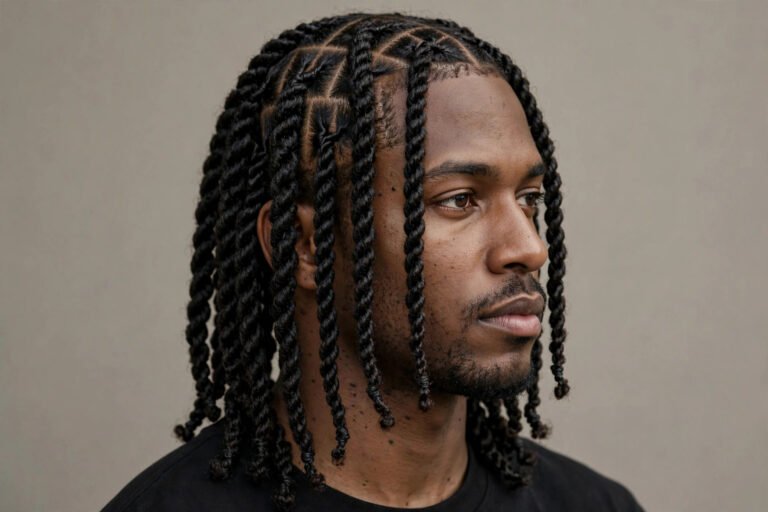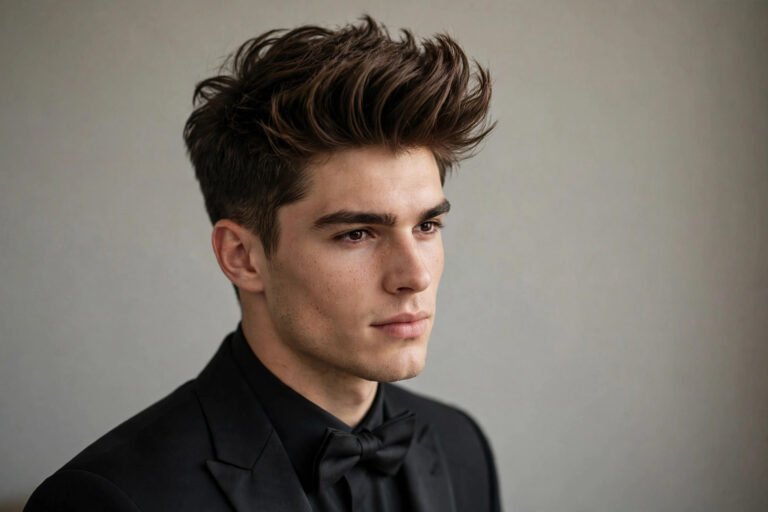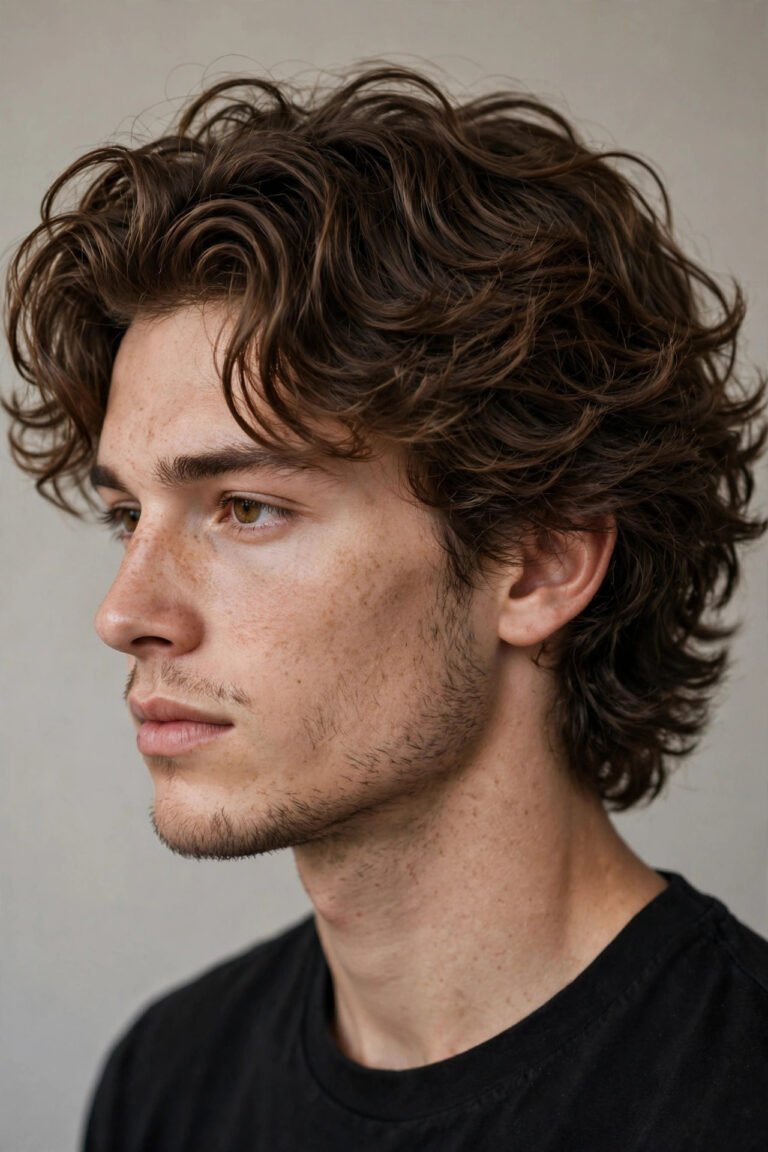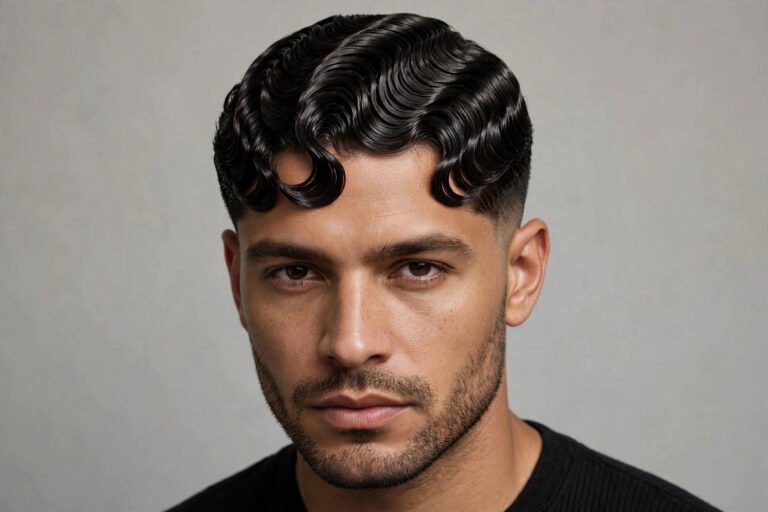

Flow Haircut Men 2026: 36 Effortless, Flowing Styles
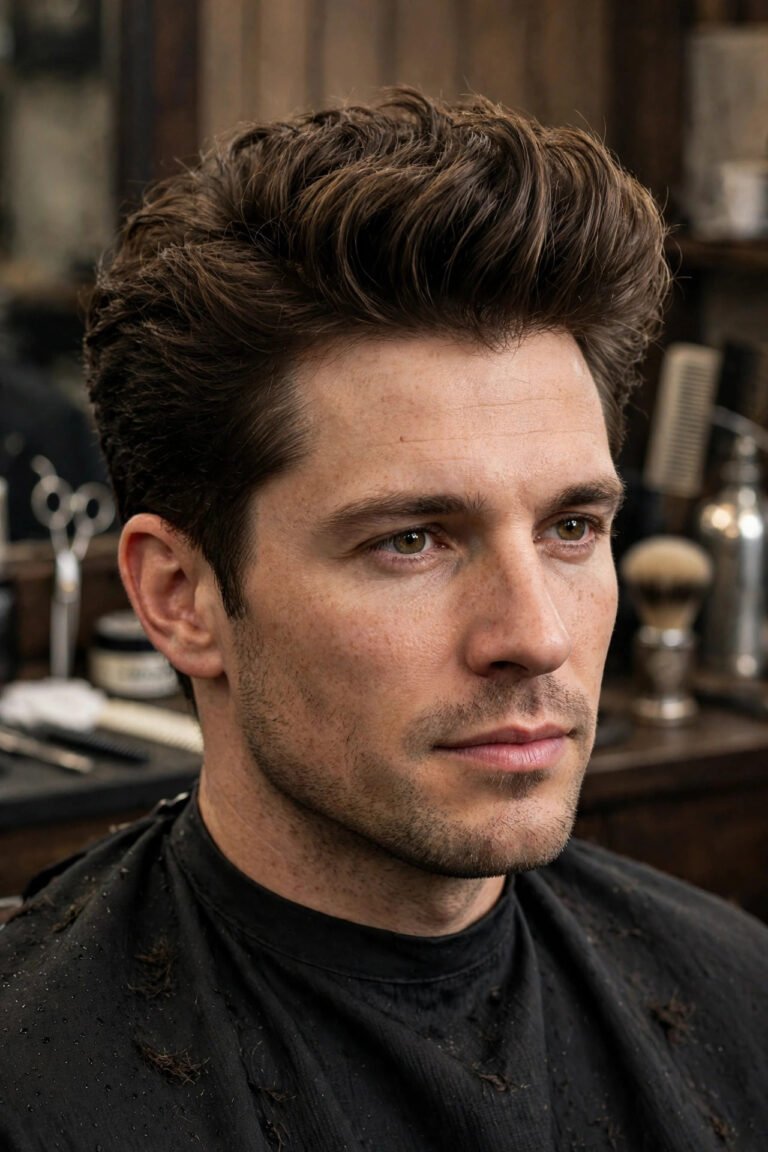
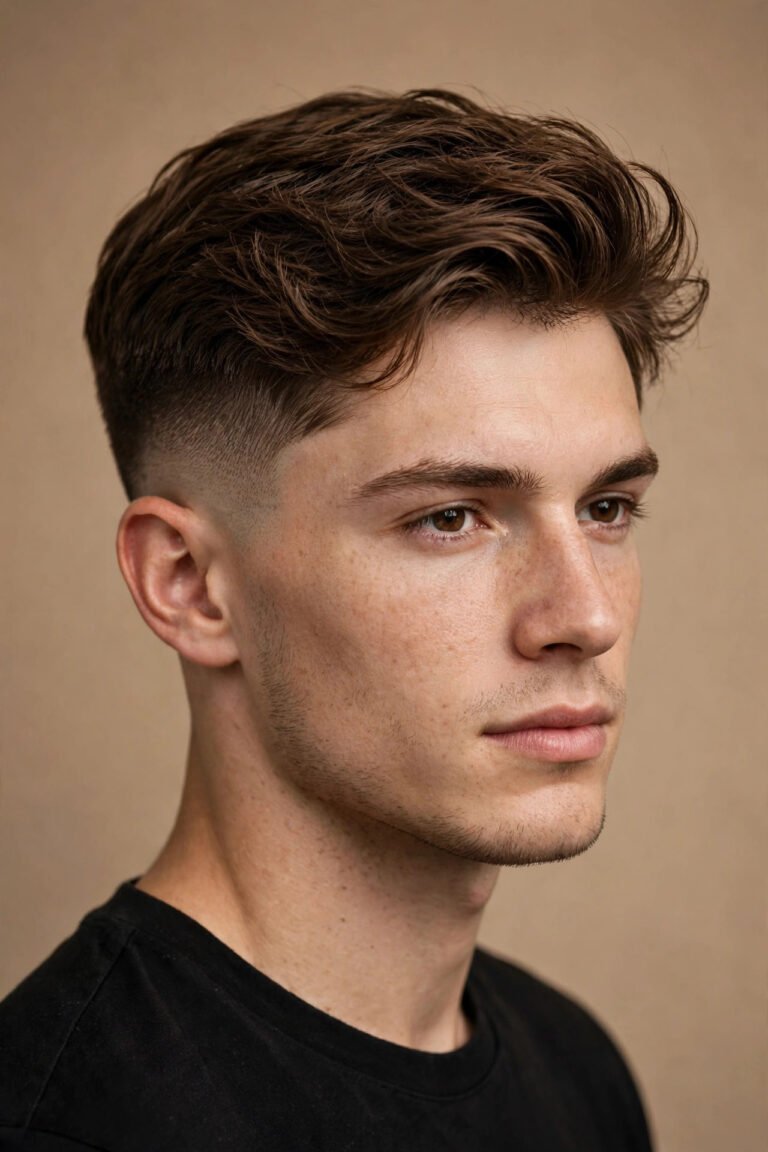
The flow haircut men are asking for in 2026 is the most relaxed, effortlessly cool cut of the year — medium-length hair that flows back naturally over the ears and collar, layered just enough to move, long enough to show texture, and short enough to stay out of your face. It is the surfer’s cut grown up, the hockey player’s signature made wearable for everyone, and the cut that turned growing it out into a deliberate, barber-crafted style. In this guide you will find 36 flow haircut styles for 2026, each with a barber-ready script, honest styling advice, and the maintenance truth nobody tells you at the chair.
Whether you wear straight hair that falls flat, waves that bend on their own, or curls that need taming, there is a flow haircut in this list built for you. We cover every length — short and tidy, medium and classic, long and flowing — alongside every finish, from low taper blends and skin-fade sides to slicked-back polish and messy, air-dried texture. Every style below follows the same proven structure: who it suits, exactly what to tell your barber (lengths and guard numbers included), how to style it in under five minutes, and how often you will need a cleanup. Let us find your version.
What Is a Flow Haircut
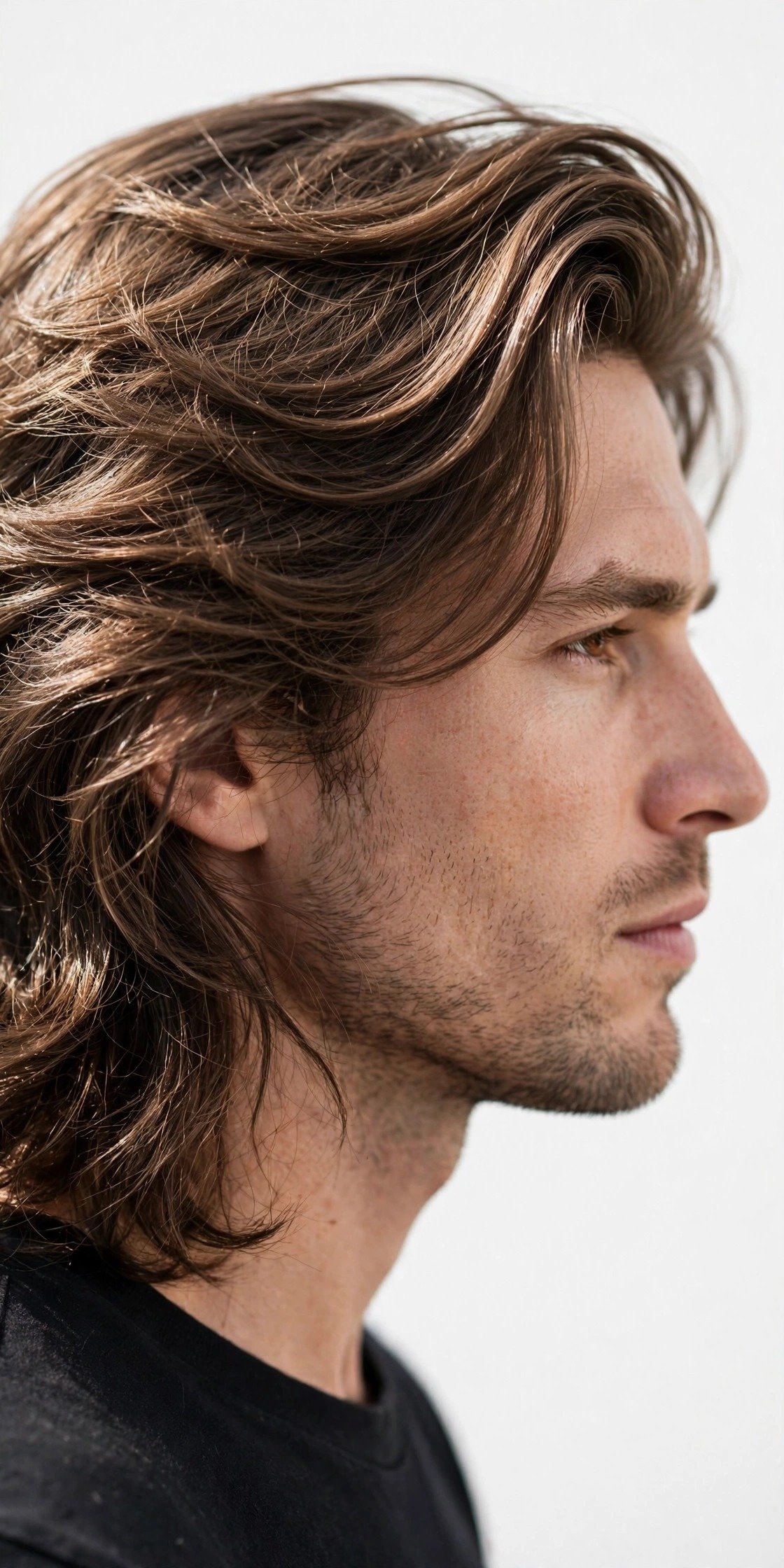
A flow haircut is a men’s haircut built around one idea: length that moves. The hair is kept medium-length — usually three to five inches on top and through the back — cut with long layers so it falls back naturally over the ears and toward the collar, instead of being pushed forward or cropped short. Unlike a textured crop, which keeps everything tight and forward, or a mullet, which creates a hard contrast between short front and long back, the flow keeps the length even and connected, so the whole head reads as one relaxed shape. The layers are what make it work: they remove bulk, let the hair fall where it wants to fall, and give the cut its signature movement.
The mechanics are simple once you see them. The barber cuts the top three to five inches with long, blended layers, then leaves the back long enough to brush the collar, with the ends shaped so they flick outward or tuck naturally instead of hanging straight. The sides are kept long enough to flow over the ears — usually scissor-cut rather than clipped — and the fringe is left long enough to sweep back, to the side, or into a curtain depending on the version you choose. The neckline is left natural and textured rather than squared, which is what gives the flow its easy, grown-out silhouette from every angle.
What makes the flow haircut so forgiving is that it is built around your hair’s natural fall, not against it. The layered structure removes the bulk that makes medium-length hair puff out sideways, while the even length lets the hair move as one piece instead of fighting itself. Change the length and you change the entire haircut: a short flow reads sharp and tidy, a medium flow reads classic and effortless, a long flow reads wild and free, and a tapered flow reads clean and deliberate. That is why this guide carries 36 versions of the same foundation. The flow also photographs exceptionally well, since the moving layers catch light differently from every angle, which is one reason it keeps going viral.
Why the Flow Haircut Is Dominating 2026
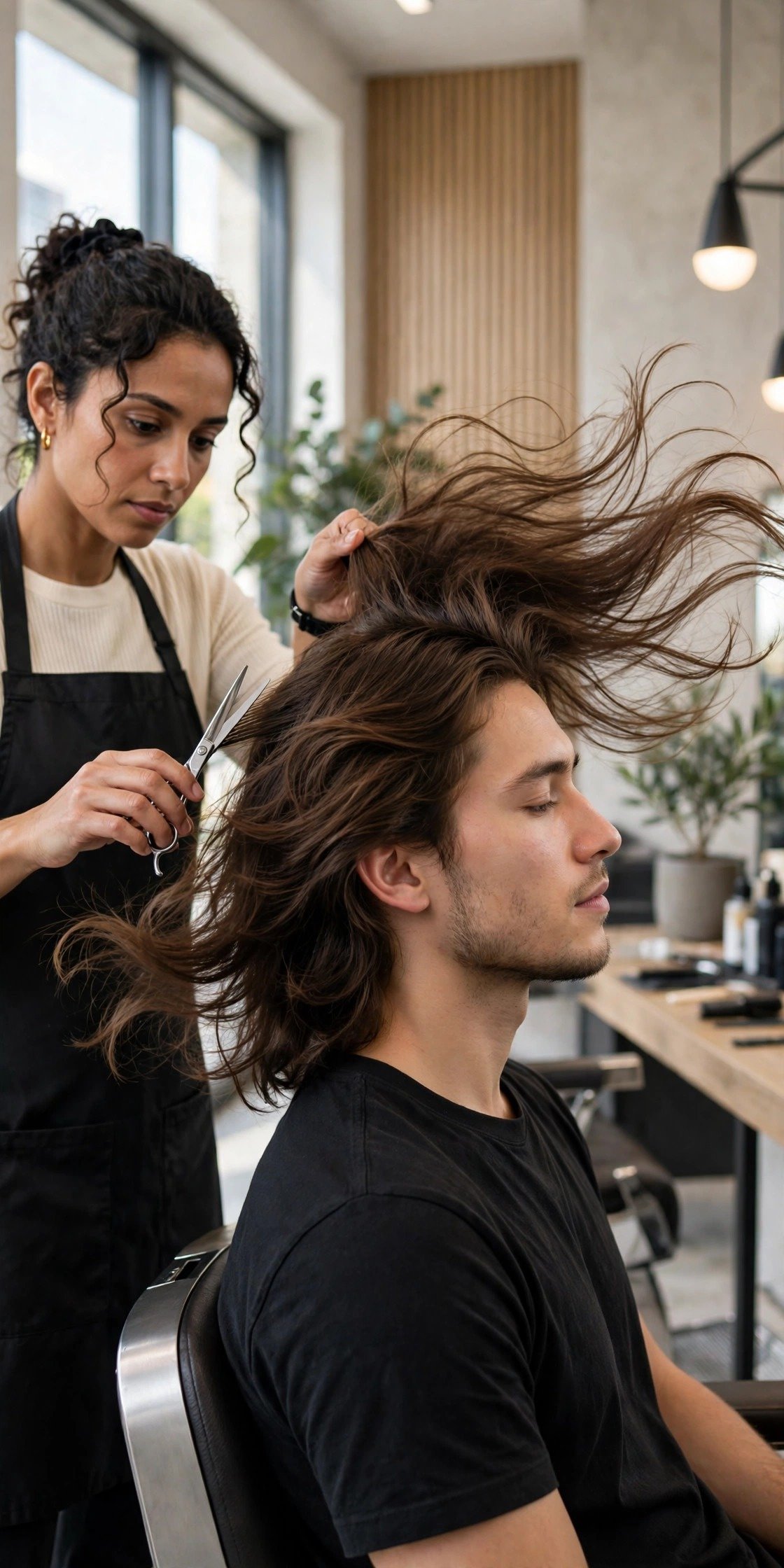
The flow haircut’s dominance in 2026 is no accident — it sits at the exact intersection of the year’s biggest men’s hair trends. According to Fresha’s October 2026 ranking of rising haircut searches, searches for the flow haircut are up 173% year over year, putting it among the fastest-growing men’s cuts of the year, right behind the Korean comma hair and the buzzcut. The message is clear: men want more length, more texture, and more movement, and the flow is the purest expression of that shift — a cut that looks like you grew it out on purpose, because you did.
The second force behind the comeback is the texture revival itself. According to MenHairCuts’ roundup of the 30 men’s hair trends for 2026, the year’s defining direction is more length on top, more texture, more movement, and sides that stay natural rather than shaved high — a description that could have been written about the flow itself. The same site’s haircut trends data shows the same direction over time: softer, longer, more textured shapes keep gaining ground, while hard, short, sculpted cuts keep losing it. The flow needs no product theatrics to look deliberate, and that is exactly what 2026 rewards.
The third reason is pure practicality. A flow haircut is one of the most forgiving cuts a man can wear. It flatters round, square, oval, and oblong faces because the length and the sweep direction can be adjusted to balance proportions. It handles straight, wavy, and curly hair alike, because the layered structure works the same way whatever grows on top. It grows out gracefully, since a flowing shape always ages better than a hard skin fade. And it scales from a five-minute morning routine to a slicked-back evening finish with nothing more than a product swap. When one cut serves that many needs, it stops being a trend and becomes the default.
1. The Classic Flow Haircut
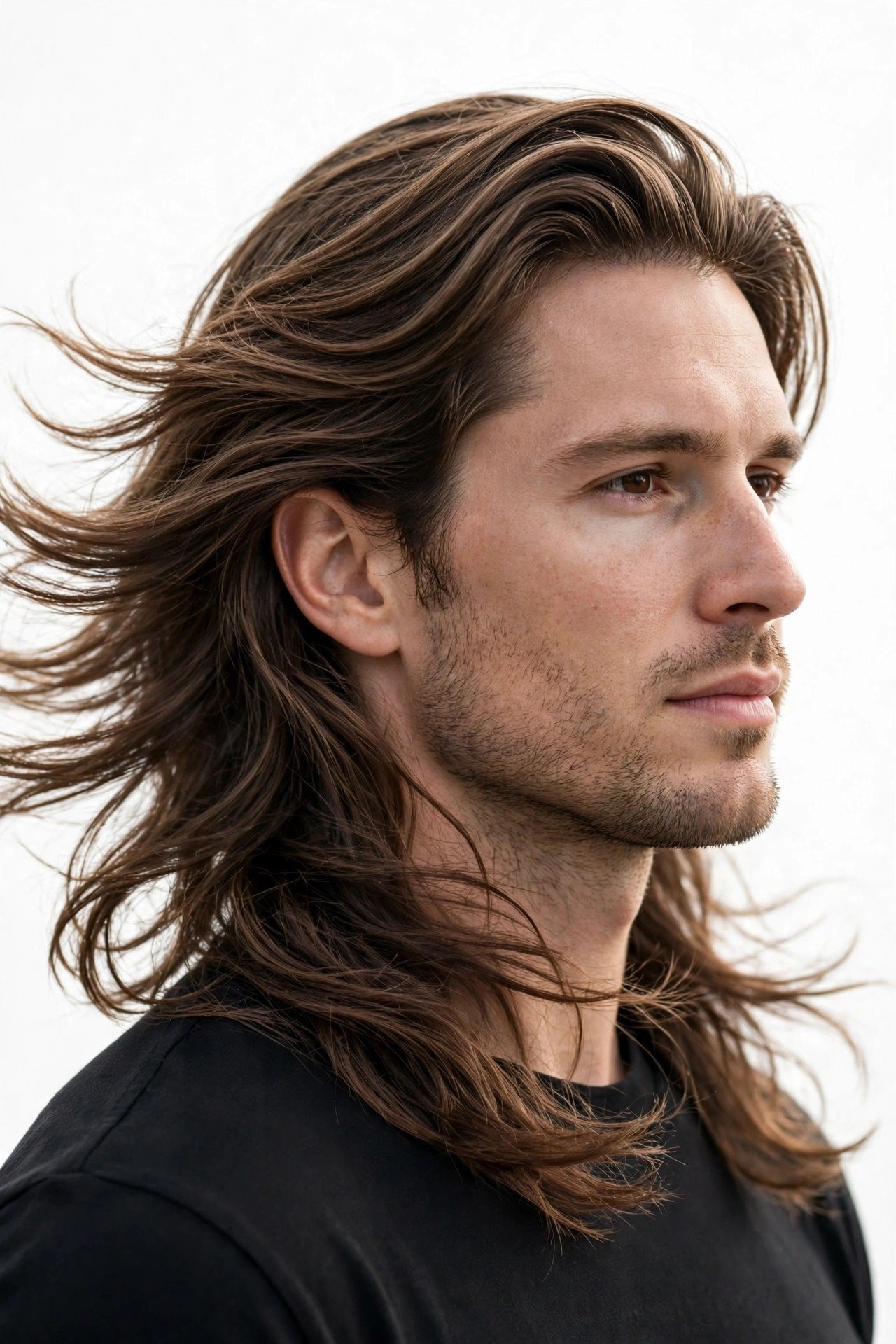
Effortless movement is the whole point of the classic flow, a medium-length cut that sweeps back from the forehead and falls naturally over the ears and collar without looking forced or overstyled. It suits straight to wavy hair best, because the natural bend gives the layers their shape, and it flatters oval, square, and oblong faces by adding balanced length around the sides. The cut works because nothing is clipped too short or stacked too high, so the hair keeps its weight and swings freely with every turn of the head. It is the timeless surfer-athlete look that never really goes out of fashion.
Barber script: keep four to five inches on top and three to four inches through the sides and back, with long layers cut point-to-point so the ends stay soft rather than blunt. Leave the perimeter over the ears and collar intact instead of tapering it away, and thin only the very heaviest bulk underneath. Ask for a natural, squared neckline with no hard line, and have the barber blend the sideburns into the flow so nothing breaks the silhouette. Finish with a light texturising pass through the ends to encourage the hair to fall back on its own.
Styling routine: towel-dry until the hair is damp, work a pea-sized amount of light cream through the lengths, then push everything back with your fingers and let it air-dry for a soft finish. A quick blast with a dryer on low heat adds lift at the roots on flat days. Avoid heavy wax or gel, which kills the movement. Maintenance: every five to six weeks; a small dusting of the ends keeps the shape without losing length. A silk pillowcase helps too, keeping the lengths smooth overnight so the morning style takes seconds.
2. Short Flow Haircut

Shorter hair can still flow, and this version proves it by keeping enough length on top to sweep back while the sides stay tidy and close to the head. It suits men who want the relaxed flow look without committing to months of growing it out, and it works especially well on straight or slightly wavy hair with medium density. Oval and square faces carry it best, since the shorter sides keep the shape clean and the swept top adds height. It is the lowest-effort entry point into the flow family, and it looks sharp in both casual and formal settings.
Barber script: ask for two and a half to three inches on top, with the sides clippered to a number four or five guard and blended upward so the transition stays soft. Keep the back just long enough to tuck behind the ears, around two inches, and leave the fringe long enough to sweep back off the forehead. Have the barber point-cut the ends for texture and keep the neckline natural rather than squared off. For extra movement, see the Korean two block guide for a sharper contrast option. Finish with a light taper around the ears only.
Styling routine: apply a small amount of matte paste to damp hair, comb it back, and let it set naturally in about two minutes. A dryer on medium heat gives extra volume at the crown if your hair lies flat. Keep the product light so the short lengths still move. Maintenance: every four to five weeks; the shorter sides grow out faster, so book the tidy-up before the blend starts to look bulky. A quick comb-through in the morning is all it takes to reset the sweep before you head out.
3. Medium Flow Haircut
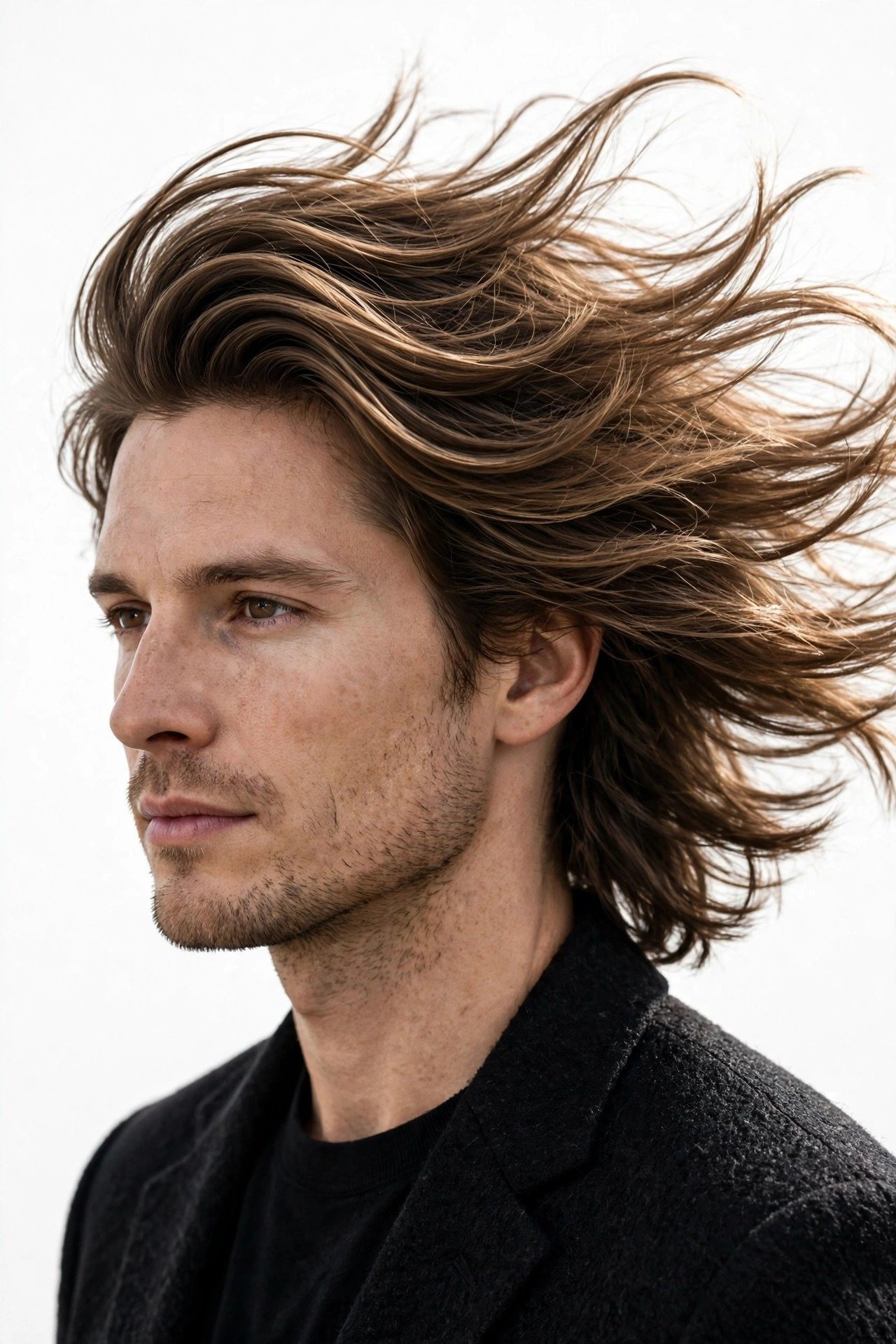
The medium flow is the sweet spot of the whole family, long enough to move and flick at the ends but short enough to stay manageable every single day. It suits most hair types, from straight to wavy, and flatters nearly every face shape because the length can be pushed back, parted, or tucked behind the ears to suit the day. Men with medium-density hair get the best result, since the weight holds the shape without collapsing. It works because the layers are long and blended, so the hair falls into place with almost no effort.
Barber script: keep four to five inches on top, three to four inches on the sides, and let the back reach the top of the collar. Cut long, slide-cut layers throughout so the ends feather instead of sitting heavy, and keep the perimeter full over the ears. Ask the barber to remove bulk from underneath with thinning shears rather than shortening the outline. Keep the neckline natural and soft, and blend the sideburns into the sides so the whole shape reads as one continuous flow. Have the barber check the balance from behind with a hand mirror so the collar length sits even on both sides.
Styling routine: work a coin-sized amount of sea-salt cream through damp hair, push it back with your fingers, and let it air-dry for a relaxed finish. A round brush and dryer add polish for smarter occasions. Use a wide-tooth comb to avoid frizz on wavy hair. Maintenance: every five to six weeks; trim the ends only, keeping the overall length so the flow never loses its swing. A wide-tooth comb keeps the long layers tangle-free without pulling out the natural wave or volume.
4. Long Flow Haircut

Long hair gives the flow its most dramatic form, with lengths that sweep past the collar and move with real weight every time you turn your head. It suits wavy and straight hair with good density, and it flatters oval, oblong, and square faces by softening the jawline with curtain-like sides. Growing it out takes patience, but the payoff is a look that feels confident, athletic, and completely effortless. The key is keeping the layers long and blended so the hair never turns into a heavy, shapeless curtain. Growing it out takes patience, but the payoff is a look that feels confident, athletic, and completely effortless at any age.
Barber script: grow the top to six inches or more, with the sides at five to six inches and the back reaching past the collar. Cut long layers from the crown downward, keeping the shortest layer no shorter than four inches so the shape stays full. Ask for a natural, un-tapered perimeter and have the barber slide-cut the ends to remove weight without losing length. Keep the parting flexible so the hair can be worn swept back or split in the middle. Ask for the layers to be cut with the head tilted slightly forward so the back falls evenly over the collar.
Styling routine: apply leave-in conditioner to damp hair, comb it back, and let it air-dry or use a diffuser on low heat for wavy texture. A drop of light oil on the ends prevents dryness. Avoid heavy products that drag the lengths down. Maintenance: every six to eight weeks; a light dusting of the ends keeps split ends away while the length keeps growing. A leave-in conditioner on the ends stops long hair from drying out, especially in winter or after swimming.
5. Flow Haircut with Low Taper

A low taper adds clean edges to the flow without stealing its relaxed character, keeping the sides neat just above the ears while the top stays long and free. It suits men who like the flow but need a tidier finish for work or formal settings, and it works on straight, wavy, and thick hair alike. Oval and square faces benefit most, since the taper sharpens the outline while the length on top keeps the balance. The result is a cut that reads polished from the front and effortless from the side.
Barber script: keep four to five inches on top with long layers, and ask for a low taper that starts just above the ears and fades down to a number one or two guard at the neckline. Keep the taper tight and low so the flow above it stays full and untouched. Blend the taper into the longer sides with a clipper-over-comb pass, and keep the sideburns short and neat. For a stronger fade reference, check the mid taper fade guide before your visit. Finish with a natural neckline.
Styling routine: push the top back with a light cream on damp hair and let it air-dry, then clean up the taper edges with a quick comb-through. A matte paste adds hold on windy days without stiffness. Keep the taper area product-free so it stays crisp. Maintenance: every three to four weeks; the taper grows out faster than the top, so regular tidy-ups keep the contrast sharp. Keep a small comb in your pocket for quick touch-ups, since the taper looks best when the top stays neatly swept.
6. Flow Haircut with Mid Taper

The mid taper sits higher than the low version, giving the flow a bolder, more modern frame while the top keeps all of its length and movement. It suits thick and wavy hair particularly well, because the taper removes bulk from the sides and lets the top do the talking. Round and square faces benefit from the added height and cleaner sides, which lengthen the overall shape. It is a strong choice for men who want the flow to look deliberate and styled rather than simply grown out. It is a strong choice for men who want the flow to look deliberate and styled rather than simply grown out.
Barber script: keep four to five inches on top, cut in long layers, and start the taper at the temple so it fades from a number three guard down to a number one at the neckline. Blend the fade into the longer hair above with clipper-over-comb work, keeping the transition smooth rather than stepped. Leave the fringe long enough to sweep back and keep the back full over the collar. Ask the barber to keep the taper skin-tight at the very bottom only. Keep the sideburns neat and short so the taper line stays visible and the longer top keeps its contrast.
Styling routine: style the top back with a medium-hold cream on damp hair, then let it air-dry for a natural finish. Use a dryer and round brush for extra lift at the front on formal days. Keep product off the tapered sides to preserve the clean fade. Maintenance: every three to four weeks; the mid taper needs frequent touch-ups to hold its sharp graduation. A boar-bristle brush smooths the top nicely and spreads the product evenly from roots to ends.
7. Flow Haircut with Skin Fade
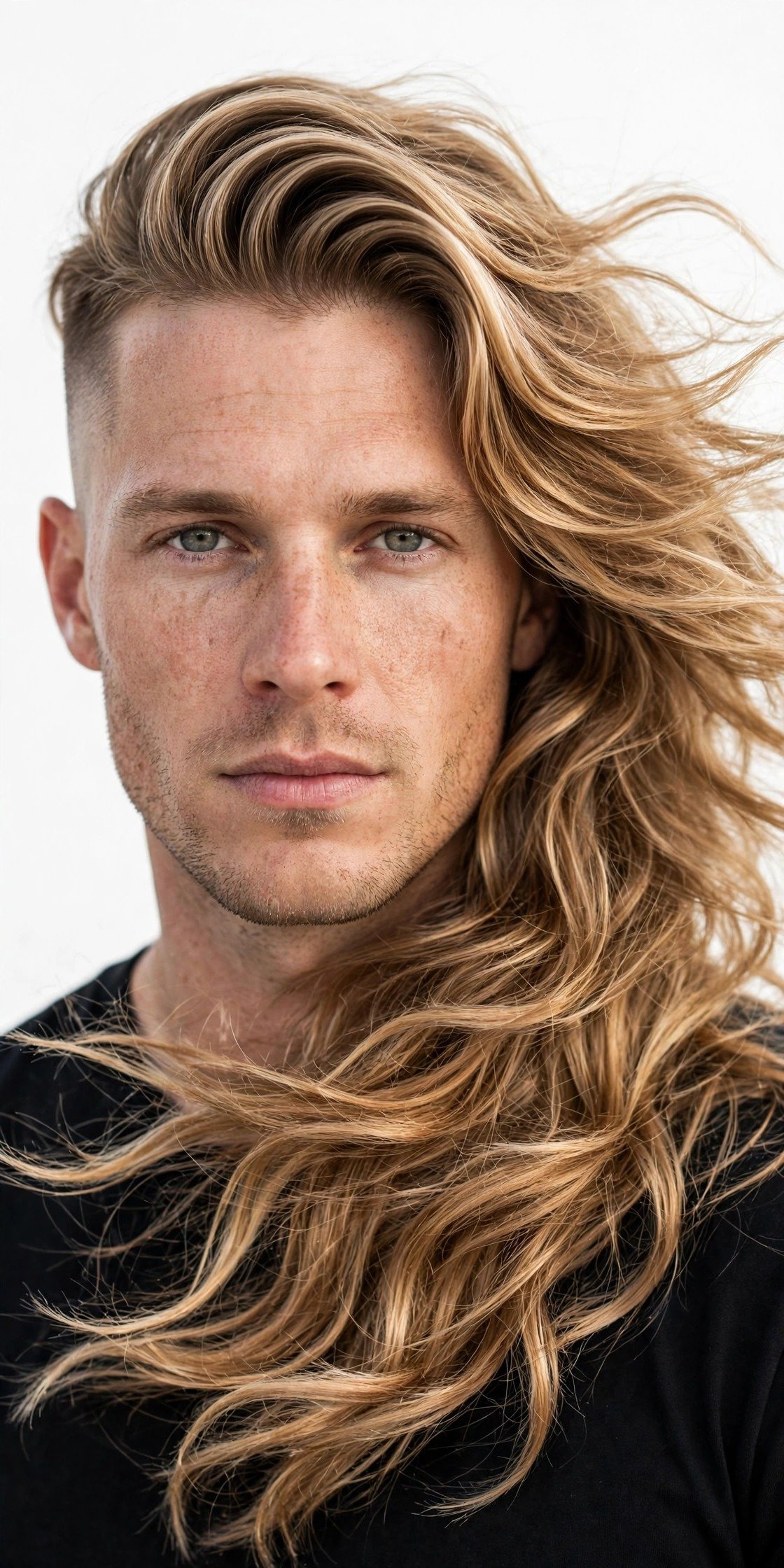
Pairing a skin fade with a flow top creates the boldest contrast in the family, with razor-clean sides that make the long, sweeping top look even more dramatic. It suits confident dressers and works best on thick or wavy hair that holds volume on top, while oval and square faces carry the sharp lines well. The cut works because the fade strips away all side bulk, so the eye goes straight to the movement above. It is a statement version of the flow, not a quiet one, and it needs regular upkeep to stay sharp.
Barber script: keep four to six inches on top with long, layered ends, and ask for a skin fade that starts at the temple and blends down to bare skin at the sideburns and neckline. Use a foil shaver for the closest finish at the bottom, and blend the fade upward with clipper-over-comb so no line shows. Keep the back long over the collar to preserve the flow, and disconnect the fade slightly from the top for a stronger contrast. Ask the barber to finish the fade with a foil shaver and a hot towel so the skin stays smooth and irritation-free.
Styling routine: blow-dry the top back with a round brush and a medium-hold pomade for a polished finish, or use matte clay for a textured look. The skin fade needs no product at all, just clean edges. A daily brush-through keeps the top smooth. Maintenance: every two to three weeks; skin fades grow out visibly fast, so book the touch-up before the blend softens. Sunscreen on the faded skin is worth remembering in summer, since the short sides expose more scalp to the sun.
8. Flow Haircut with Undercut
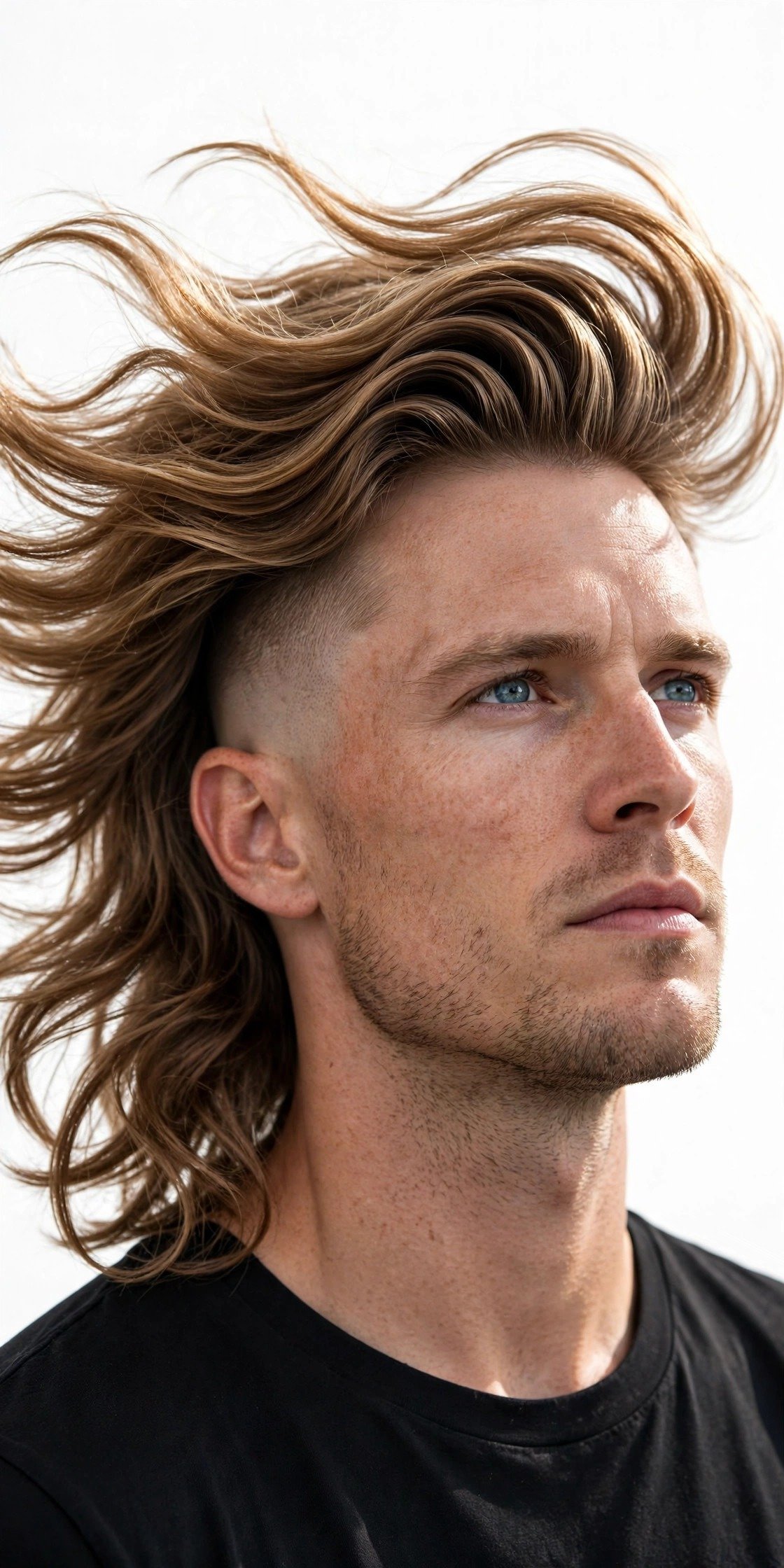
An undercut gives the flow a sharp, fashion-forward edge by disconnecting the long top from closely clipped sides, so the sweep reads louder and cleaner. It suits men with thick, straight, or wavy hair who want a bold shape, and it flatters oval and square faces by adding strong vertical lines. The cut works because the disconnected sides remove all visual noise, leaving the flowing top as the single focus. It is ideal for anyone who likes the flow but wants it to look styled rather than grown out. It is ideal for anyone who likes the flow but wants it to look styled rather than grown out.
Barber script: keep five to six inches on top with long layers, and clip the sides and back to a number two or three guard with a hard disconnect line at the temple. Keep the back length at the collar long enough to flow, and blend only the very edge of the disconnect so it stays crisp. Ask the barber to thin the underside of the top section so it sits flat over the undercut. Keep the neckline squared for a sharp finish. Keep the disconnect line crisp by asking the barber to re-cut it with clippers rather than blending it away.
Styling routine: slick the top back with a medium-hold pomade on damp hair, or use matte clay for a looser, textured sweep. A dryer adds volume at the roots for evening looks. Keep the undercut sides clean with a quick comb. Maintenance: every three to four weeks; the disconnect line needs regular re-cutting to stay sharp and intentional. A quick blast of cold air from the dryer locks the sweep in place and adds a little extra shine to the top.
9. Flow Haircut with Curtain Fringe

The curtain fringe turns the flow into a nineties-inspired classic, with the front split down the middle and falling in soft curtains on either side of the forehead. It suits wavy and straight hair with medium density, and it flatters oval, oblong, and heart-shaped faces by framing the cheekbones beautifully. The look works because the fringe adds face-framing movement while the back keeps the easy flow. It is a great pick for men growing their fringe out who want the awkward stage to look deliberate. It is a great pick for men growing their fringe out who want the awkward stage to look deliberate and stylish.
Barber script: keep the fringe at four to five inches long, cut with a centre part in mind, and keep the top at four to five inches with long layers. Leave the sides at three to four inches so they tuck behind the ears, and texturise the fringe ends so they flick outward naturally. Ask the barber to keep the back at collar length with a natural neckline. Blend the fringe into the sides so the curtains fall smoothly. Finish by having the barber dry the fringe with a round brush so the curtains fall outward instead of flat.
Styling routine: part the fringe down the middle on damp hair, add a light styling cream, and blow-dry each side outward with a round brush for the curtain flick. Let it air-dry for a softer, more casual version. A little texture spray adds grip. Maintenance: every five to six weeks; trim the fringe ends so the curtains keep their shape without covering the eyes. A centre part comb helps you place the curtains evenly each morning before the cream sets.
10. Flow Haircut with Side Part

A side part gives the flow a timeless, gentlemanly structure, channelling the long top to one side so it sweeps across the forehead and back over the ear. It suits straight and wavy hair best, and it flatters oval, square, and round faces by adding asymmetry that slims and lengthens the face. The cut works because the part creates a clear direction for the hair, so it falls into place with very little effort. It is the most office-friendly version of the flow, polished without losing its relaxed soul. It is the most office-friendly version of the flow, polished without losing its relaxed soul or easy charm.
Barber script: keep four to five inches on top, cut the part in on the natural side, and keep the sides at three inches with a soft taper at the ears. Layer the top so the longer side sweeps across smoothly, and keep the back at collar length with a natural neckline. Ask the barber to texturise the ends so the sweep does not look heavy. Blend the shorter side into the top so the part reads clean without a hard line. Ask the barber to show you the part line in a mirror so you can recreate the same sweep at home each morning.
Styling routine: comb the part in on damp hair with a light pomade, sweep the top across and back, then let it air-dry for a natural hold. A dryer and brush add shine and lift for formal days. Keep the product light so the sweep stays soft. Maintenance: every five to six weeks; re-cut the part line and tidy the sides before the shape starts to lose definition. A side-part comb with fine teeth gives a cleaner line on days when you want the look extra sharp.
11. Flow Haircut with Middle Part

The middle part gives the flow a balanced, symmetrical frame, splitting the length evenly so it falls in soft wings on both sides of the face. It suits oval and oblong faces best, and works beautifully on straight and wavy hair with medium density. The look feels modern and relaxed at once, with a hint of nineties nostalgia that pairs well with casual and smart outfits alike. It works because the symmetry draws attention to the eyes and cheekbones while the length keeps everything soft. It works because the symmetry draws attention to the eyes and cheekbones while the length keeps everything soft and balanced.
Barber script: keep the fringe and top at four to five inches, cut with a centre part, and keep the sides at three to four inches so they fall past the ears. Layer the front sections so they curve gently away from the face, and keep the back at collar length with a natural neckline. Ask the barber to texturise the ends for movement and to keep the part soft rather than razor-sharp. Blend everything so the wings fall evenly. Have the barber texturise the front pieces with thinning shears so the wings fall softly instead of flipping outward.
Styling routine: split the hair down the middle on damp hair, add a light cream, and push each side back and slightly outward. A round brush and dryer help the wings flick away from the face. Let it air-dry for a softer finish. Maintenance: every five to six weeks; keep the front layers even so the part stays balanced as it grows. A light hairspray mist holds the wings in place on windy days without making the hair feel stiff or sticky.
12. Flow Haircut with Messy Finish
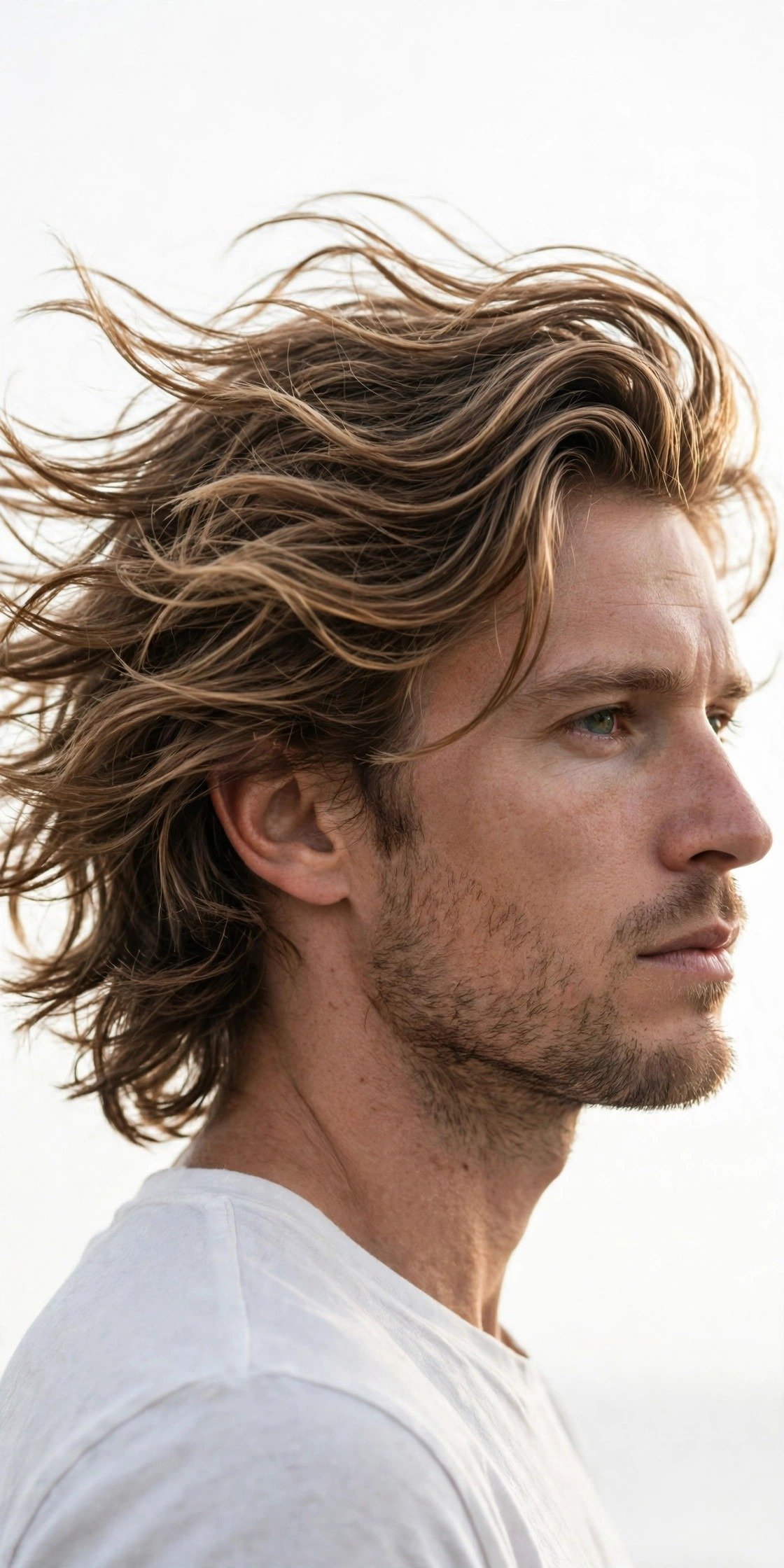
Some men wear the flow best when it looks like they just stepped off the beach, and the messy finish is built exactly for that carefree energy. It suits wavy and textured hair with natural movement, and it flatters oval and square faces by adding a relaxed, lived-in softness. The cut works because the layers are cut to fall in different directions, so the mess looks intentional rather than accidental. It is the lowest-maintenance version of the flow, and it only gets better as the day goes on. It is the lowest-maintenance version of the flow, and it only gets better as the day goes on.
Barber script: keep four to five inches on top with heavily texturised, choppy layers, and keep the sides at three inches with the ends point-cut for separation. Ask the barber to slice into the layers to create movement in different directions, and keep the back at collar length with a feathered neckline. Leave the fringe uneven on purpose so it falls naturally. Avoid over-thinning, which can make the mess look thin rather than full. Ask the barber to cut the layers with the hair dry at the end, so the messy pieces fall exactly where they will live day to day.
Styling routine: scrunch a pea-sized amount of matte clay or sea-salt spray through damp hair, then let it air-dry without combing for maximum texture. Shake the roots with your fingers once dry to add volume. Avoid brushes, which flatten the messy layers. Maintenance: every five to six weeks; a light texturising trim keeps the layers lively without losing the undone feel. A sea-salt spray is the secret weapon here, adding grit and separation that makes the messy layers look intentional.
13. Flow Haircut with Textured Layers
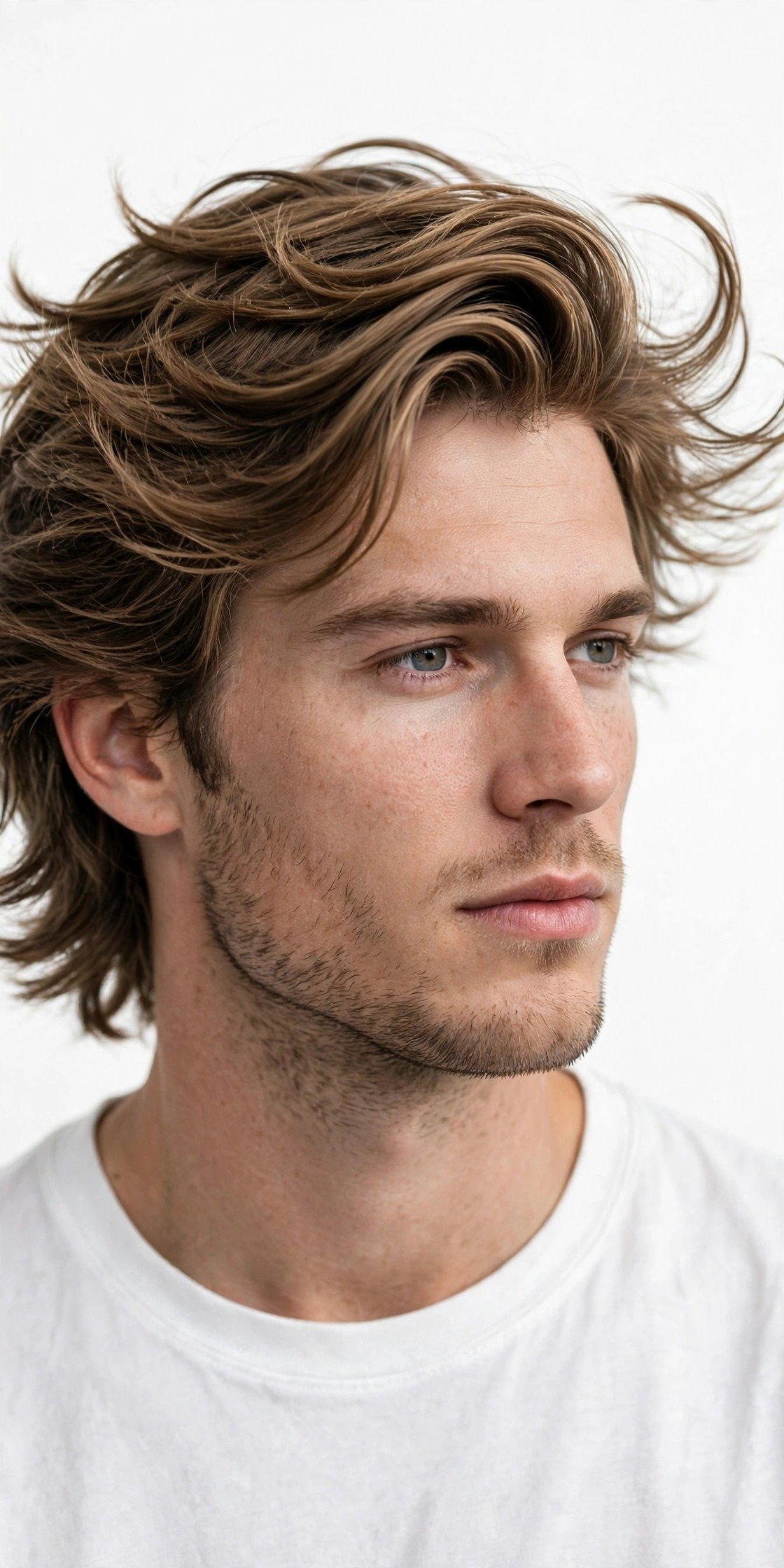
Textured layers are what turn a plain grown-out cut into a proper flow, adding movement, separation, and lightness through the whole shape. This version suits thick hair best, since the layers remove weight and let the hair move, and it flatters most face shapes because the texture softens strong jawlines. Wavy hair gets the most from it, but straight hair benefits too when the layers are cut with a razor or point-cutting. It is the version to ask for when your flow feels heavy, flat, or shapeless. It is the version to ask for when your flow feels heavy, flat, or shapeless and needs new life.
Barber script: keep four to five inches on top and three to four inches on the sides, then cut internal layers throughout with point-cutting or a razor to create separation. Ask the barber to remove bulk from underneath while keeping the outline full, and to texturise the ends so they flick rather than clump. Keep the back at collar length with a natural neckline. For a shorter textured option, see the textured crop guide for comparison. Blend the layers so no harsh steps show. Ask the barber to finish with a dry cut check, snipping any heavy corners that stop the layers from moving freely.
Styling routine: apply a light texturising cream or sea-salt spray to damp hair, scrunch the layers, and let it air-dry for natural separation. A dryer on low heat with your fingers adds lift at the crown. Avoid heavy wax, which clumps the layers together. Maintenance: every five to six weeks; regular texturising trims keep the layers fresh and the movement alive. A texturising spray between washes revives the layers and keeps the separation fresh on second-day hair.
14. Flow Haircut with Slicked Back Finish
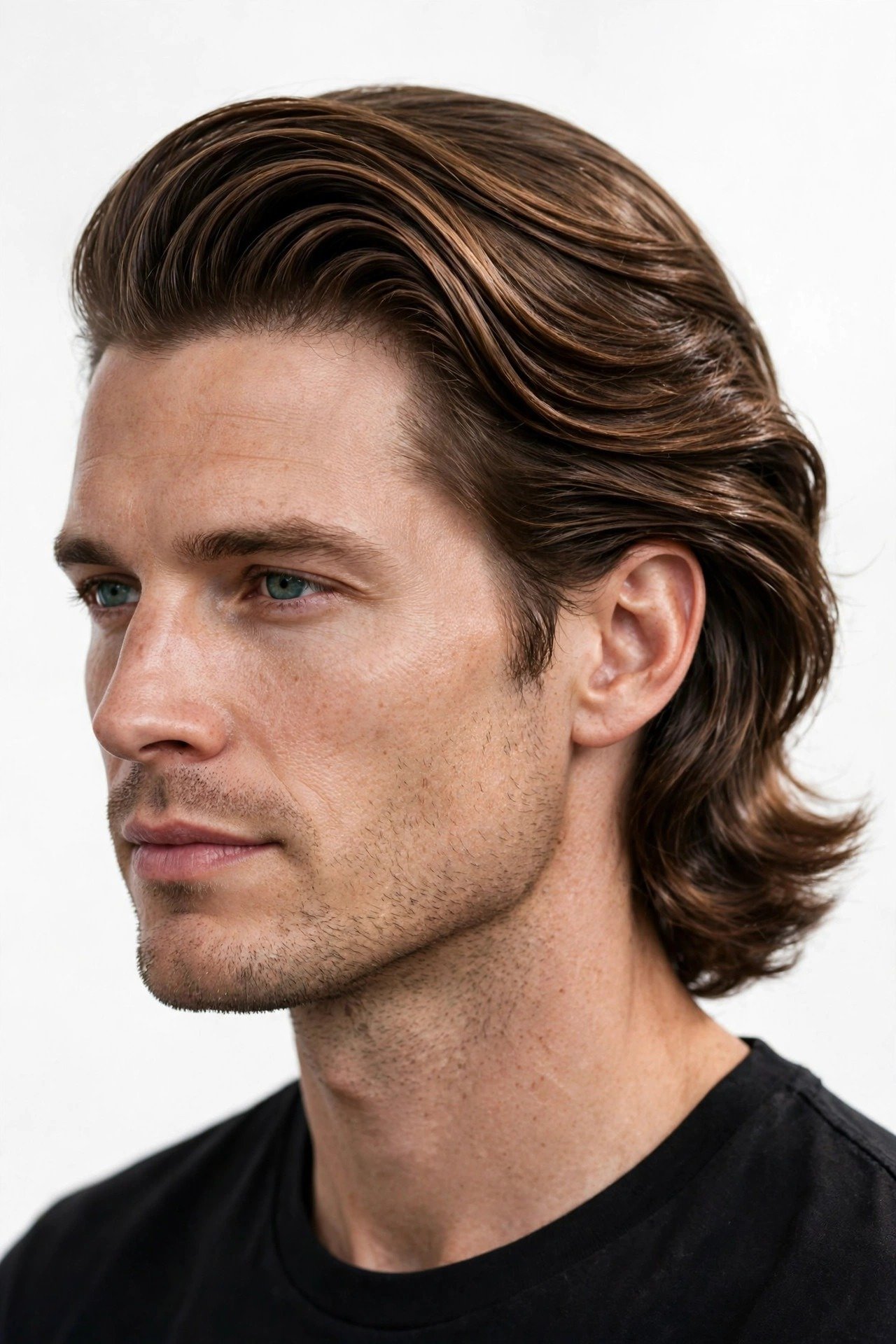
Slicking the flow back turns its relaxed energy into something polished and powerful, with every strand swept away from the face in one smooth motion. It suits straight and wavy hair with medium to thick density, and it flatters oval, square, and oblong faces by opening up the forehead and showing off the bone structure. The finish works because the length gives the slick real presence, far more than a short back-and-sides ever could. It is the flow at its most formal, perfect for weddings, evenings, and big occasions. It is the flow at its most formal, perfect for weddings, evenings, and big occasions that demand polish.
Barber script: keep five to six inches on top with long, blended layers, and keep the sides at three to four inches so they slick back smoothly. Ask the barber to keep the back at collar length and to texturise the ends lightly so the slick does not look helmet-like. Keep the neckline natural and the sideburns blended. The top should be long enough to comb straight back without the fringe falling forward. Have the barber check the slick from the side profile so the shape stays smooth and the fringe never falls forward.
Styling routine: comb a medium-hold pomade through damp hair from front to back, then blow-dry backwards with a brush for a smooth, lasting finish. A little shine spray adds polish for formal events. Re-comb once dry for a crisp line. Maintenance: every five to six weeks; trim the ends to keep the slick smooth and the shape from going puffy at the sides. A shine spray on the surface adds a polished gleam for evenings without disturbing the slick underneath.
15. Flow Haircut with Side-Swept Fringe
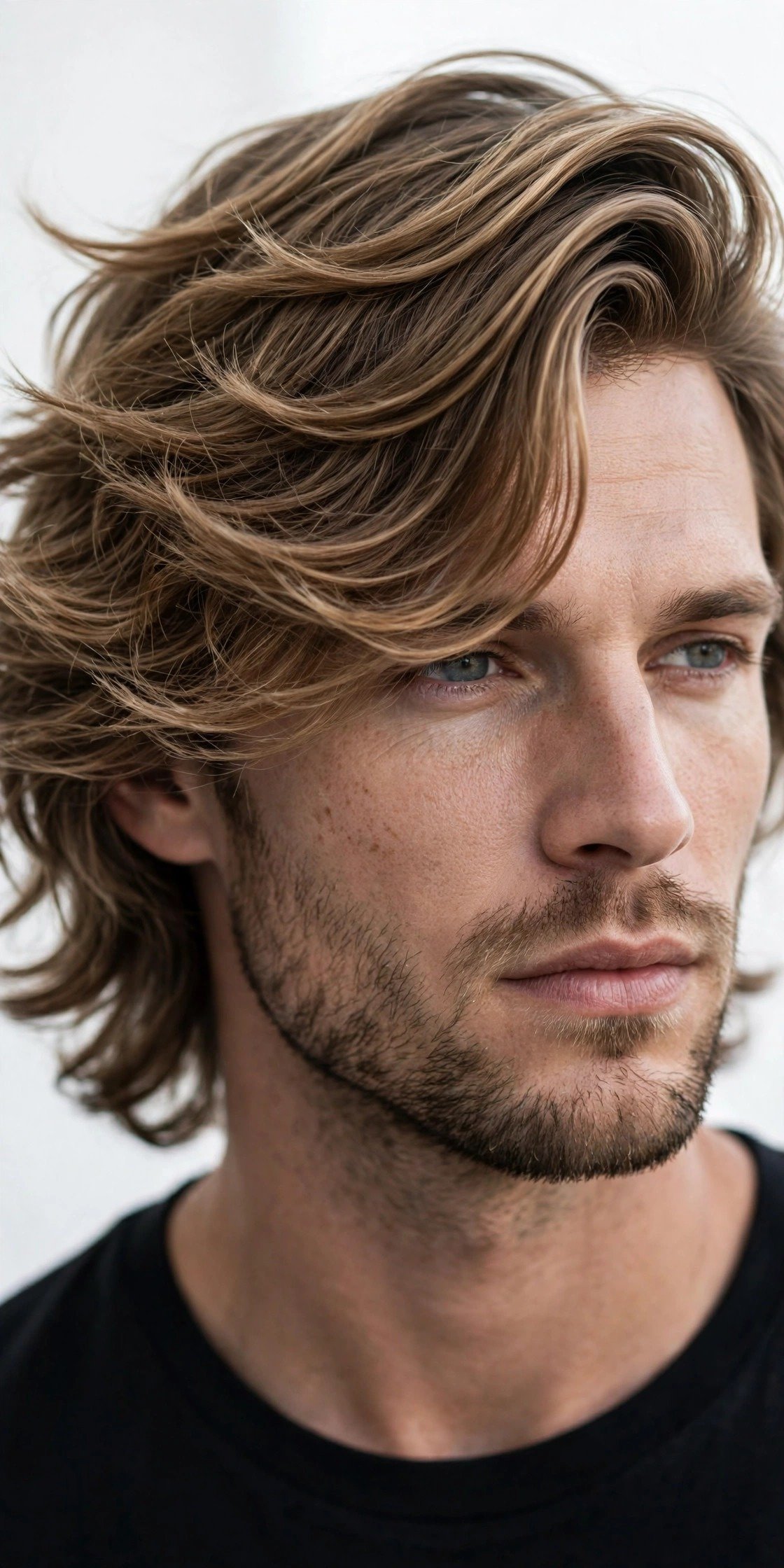
A side-swept fringe softens the flow and gives it a romantic, easy charm, with the front falling diagonally across the forehead instead of being pushed straight back. It suits straight and slightly wavy hair, and it flatters round and square faces by breaking up the symmetry and adding diagonal lines. Men with a high forehead love it because the fringe brings the proportions back into balance. It works because the sweep adds movement at the front while the back keeps the classic flow going. It works because the sweep adds movement at the front while the back keeps the classic flow going strong.
Barber script: keep the fringe at four to five inches, cut on a diagonal so it sweeps naturally to one side, and keep the top at four to five inches with long layers. Leave the sides at three inches with a soft taper at the ears, and keep the back at collar length. Ask the barber to point-cut the fringe ends so they feather across the forehead. Blend the fringe into the longer side so the sweep looks seamless. Ask the barber to leave the fringe a touch longer than you think, since a sweep that is too short will not stay put.
Styling routine: sweep the fringe across on damp hair with a light cream, then let it air-dry or blow-dry it to the side with a brush. A little matte paste keeps the sweep in place on windy days. Avoid heavy gel, which makes the fringe stiff. Maintenance: every four to five weeks; the fringe grows fastest, so trim it before it starts falling into the eyes. A small amount of styling cream on the fingertips lets you reshape the fringe during the day without re-washing.
16. Flow Haircut for Thick Hair
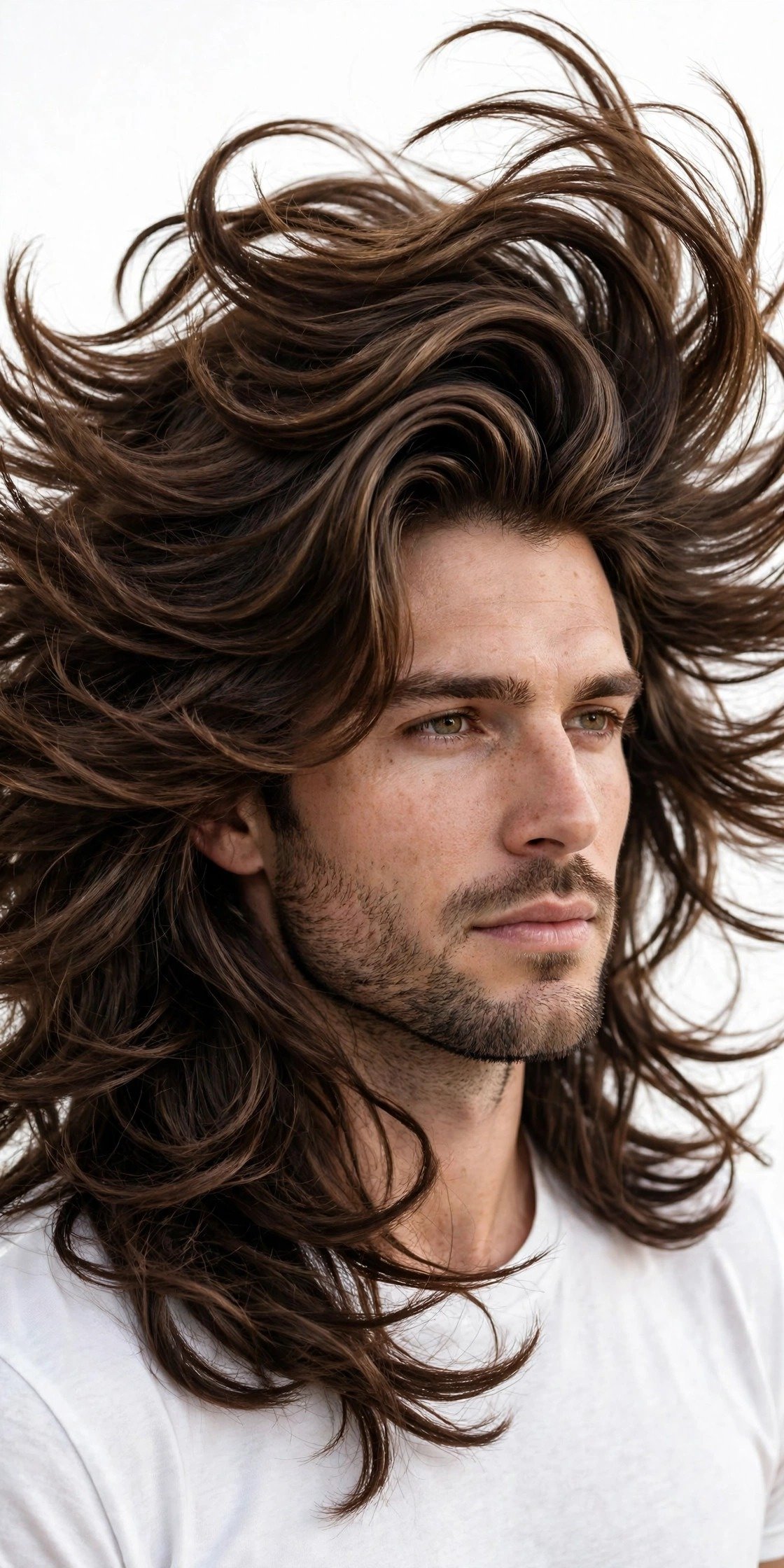
Thick hair is the flow’s natural best friend, giving the cut real body, volume, and presence that finer hair has to work for. This version uses the density to its advantage, with layers that remove weight from underneath while the surface stays full and flowing. It suits oval, square, and round faces, since the volume can be directed to balance any shape. The cut works because the thickness holds the sweep all day without collapsing, so the flow looks just as good at night as it did in the morning.
Barber script: keep five inches on top and four inches on the sides, and ask for heavy internal layering with thinning shears to remove bulk from underneath. Keep the back at collar length and cut the layers long so the weight sits at the ends, not the crown. Ask the barber to slide-cut through the thickest sections to encourage movement. Keep the neckline natural and the perimeter full over the ears. Ask the barber to thin the hair in vertical sections rather than horizontal ones, so the volume stays even all over.
Styling routine: apply a light leave-in cream to damp hair to control bulk, then push it back and let it air-dry. A dryer with a round brush tames the volume on humid days. Avoid heavy oils, which add weight to already-heavy hair. Maintenance: every five to six weeks; regular thinning keeps the shape light and the flow moving freely. A microfibre towel reduces frizz on thick hair, drying it gently without roughing up the cuticle or the layers.
17. Flow Haircut for Fine Hair
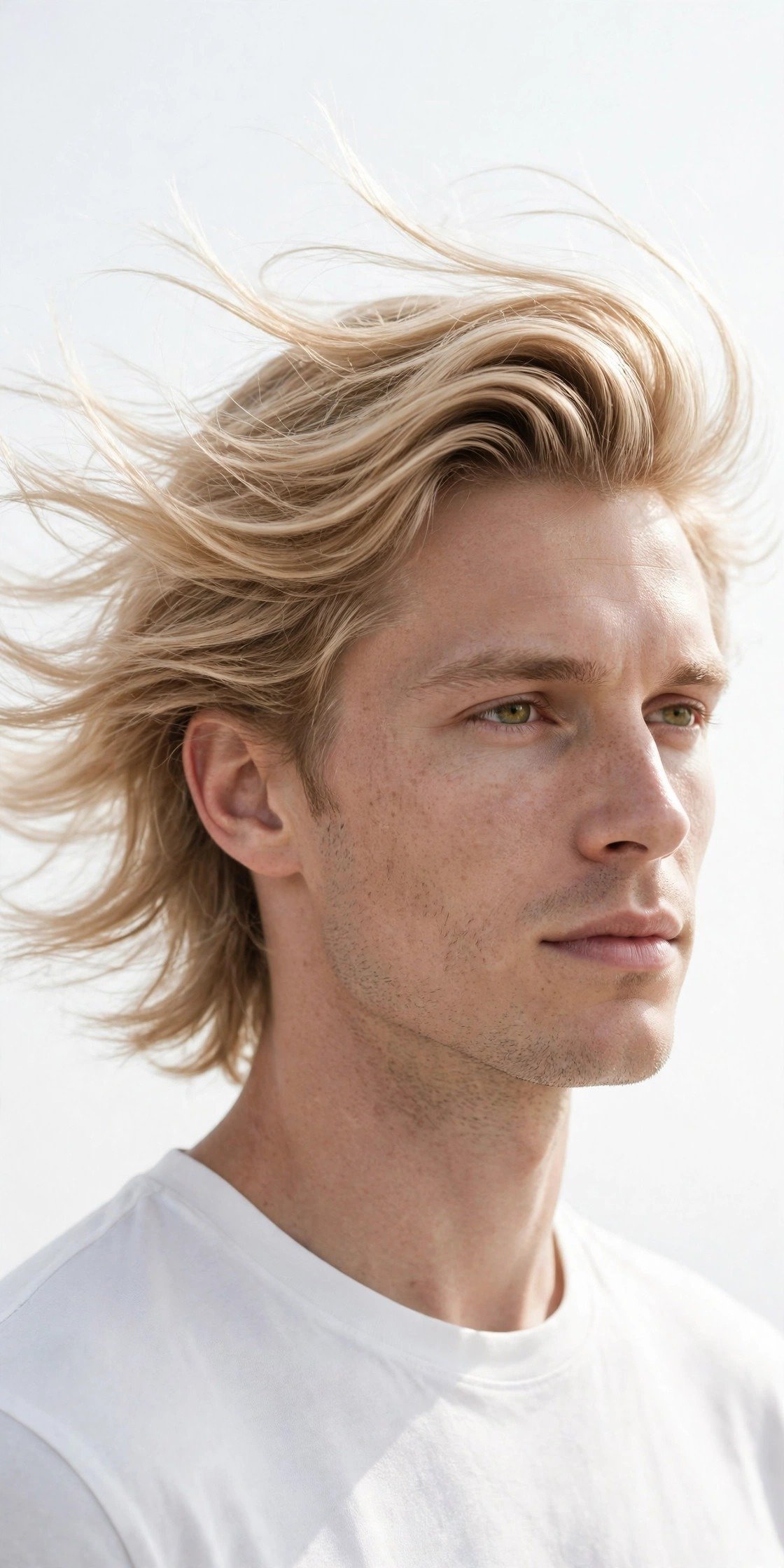
Fine hair can flow beautifully when the cut is built around lightness, with layers that add the illusion of fullness instead of removing what little weight there is. This version keeps the shape airy and moving, and it suits straight and slightly wavy fine hair best, especially on oval and oblong faces where the soft length adds gentle framing. The trick is keeping the layers long and the ends blunt enough to look full, so the hair reads thicker than it is. Done right, it looks effortless and surprisingly full.
Barber script: keep three to four inches on top and three inches on the sides, with long, blunt-cut layers that preserve density at the ends. Avoid heavy thinning, which makes fine hair look wispy, and ask the barber to texturise only the very tips. Keep the back just at collar length and the neckline natural. Use a razor sparingly, only to soften the outline without removing bulk. Have the barber cut the hair slightly damp rather than soaking wet, since fine hair shrinks as it dries and can end up shorter than planned.
Styling routine: use a volumising mousse on damp hair, blow-dry backwards with your fingers for lift, and finish with a light sea-salt spray for grip. Avoid heavy creams and oils, which flatten fine hair instantly. A quick root shake once dry adds volume. Maintenance: every four to five weeks; frequent light trims keep the ends looking thick and healthy. A root-lifting spray at the crown gives fine hair extra height that lasts through a long working day.
18. Flow Haircut for Straight Hair
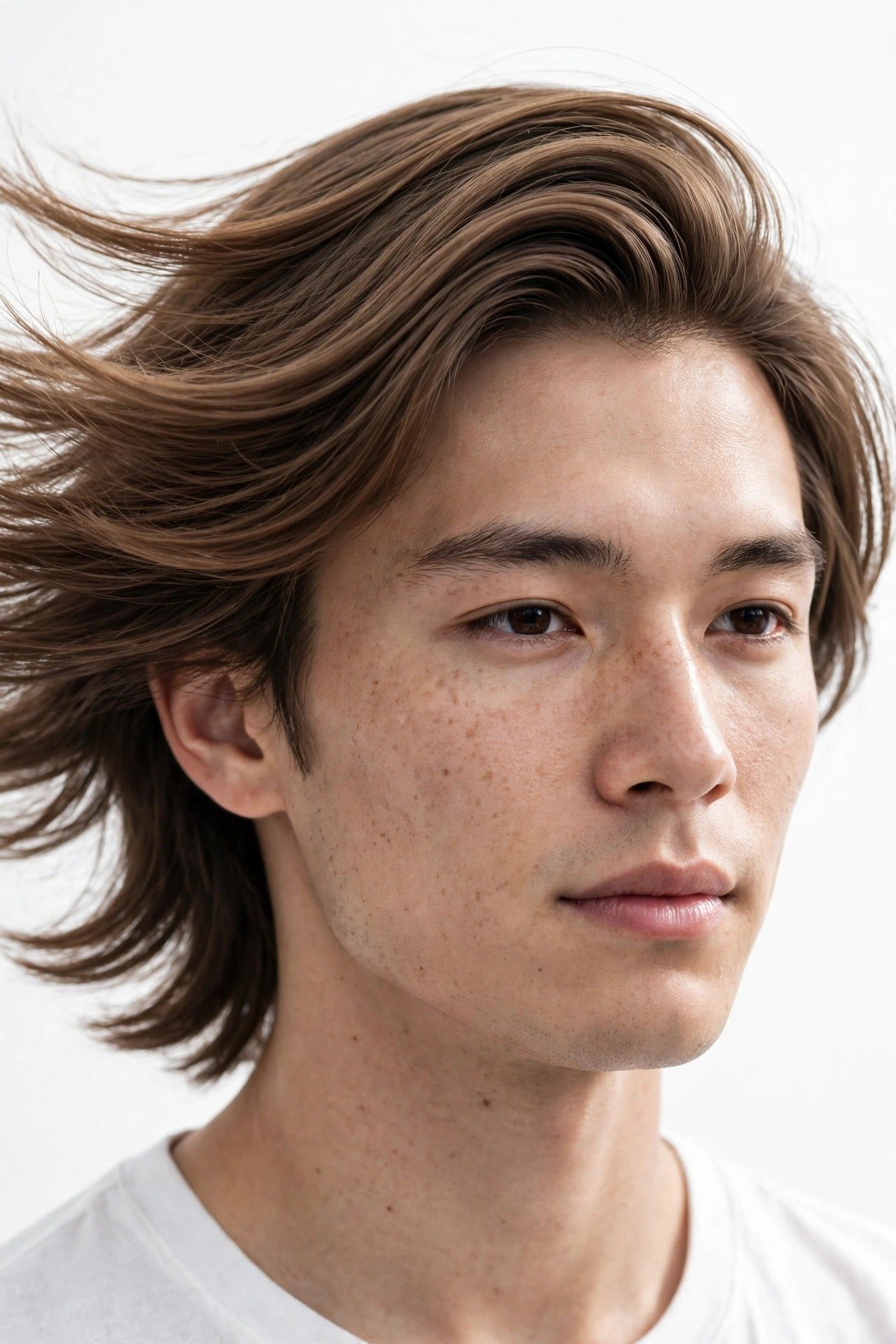
Straight hair gives the flow a clean, glossy finish, with the lengths falling in smooth sheets that catch the light as they move. This version suits men whose hair naturally lies flat and smooth, and it flatters oval and square faces by adding soft length around the jaw. The challenge is keeping straight hair from looking limp, so the layers are cut to add subtle movement at the ends. When it works, the result is the sleekest, most polished version of the flow there is. When it works, the result is the sleekest, most polished version of the flow there is today.
Barber script: keep four to five inches on top and three to four inches on the sides, with long layers cut to encourage a slight flick at the ends. Ask the barber to point-cut the perimeter so the outline looks soft rather than blunt, and to keep the back at collar length. Use slide-cutting through the mid-lengths to add gentle movement without visible steps. Keep the neckline natural and the sideburns blended into the flow. Ask the barber to finish with a light texturising pass at the very ends so the straight lengths never look blunt or heavy.
Styling routine: blow-dry the hair back with a round brush and a light volumising cream for movement and shine. A small amount of matte paste adds hold without stiffness. Let it air-dry on lazy days for a softer finish. Maintenance: every five to six weeks; trim the ends regularly so the straight lengths stay sharp and free of split ends. A heat protectant is essential before blow-drying straight hair, keeping the lengths glossy and free of damage.
19. Flow Haircut for Wavy Hair
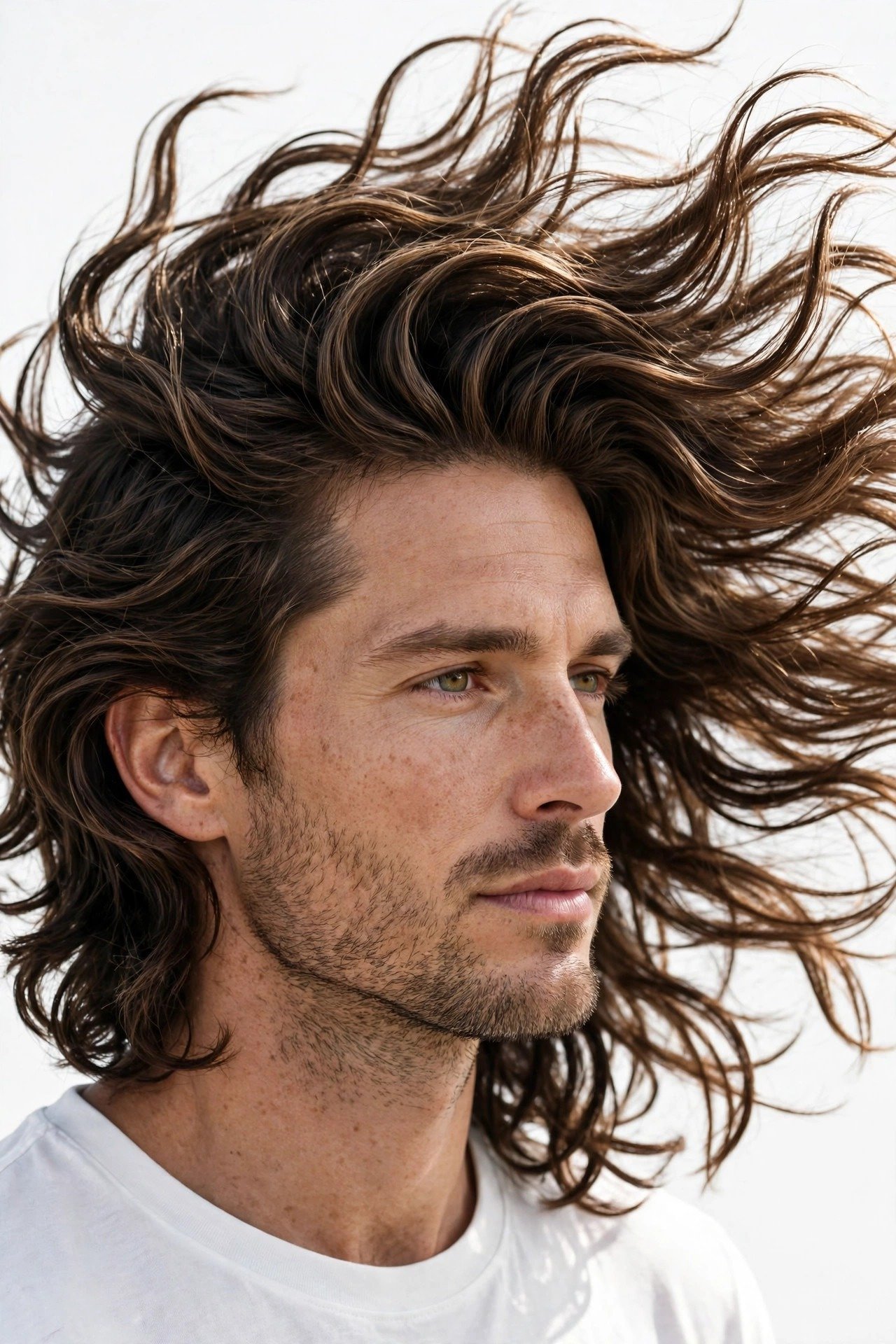
Wavy hair and the flow were made for each other, because the natural bend does half the styling work before you even pick up a product. This version lets the waves form the shape, with layers that enhance the curl pattern instead of fighting it. It suits oval, square, and round faces, since the waves add softness and width exactly where each face needs it. The result is the most natural-looking flow of all, full of texture, movement, and beach-day energy. The result is the most natural-looking flow of all, full of texture, movement, and beach-day energy.
Barber script: keep four to six inches on top and three to four inches on the sides, cutting the layers to follow the natural wave pattern. Ask the barber to cut the hair dry or slightly damp so the waves are visible, and to avoid over-thinning, which causes frizz. Keep the back at collar length with a natural, feathered neckline. Point-cut the ends to let the waves separate cleanly. Have the barber cut the waves while they are visible and dry, since wet wavy hair stretches longer than it will sit.
Styling routine: scrunch a curl cream or sea-salt spray through damp hair, then let it air-dry or diffuse on low heat for defined waves. Avoid brushing dry wavy hair, which turns waves into frizz. A wide-tooth comb keeps the shape tidy. Maintenance: every five to six weeks; trim the ends to keep the waves bouncy and the shape from going triangular. A diffuser attachment on your dryer defines the waves beautifully without blowing them into frizz or flatness.
20. Flow Haircut for Curly Hair
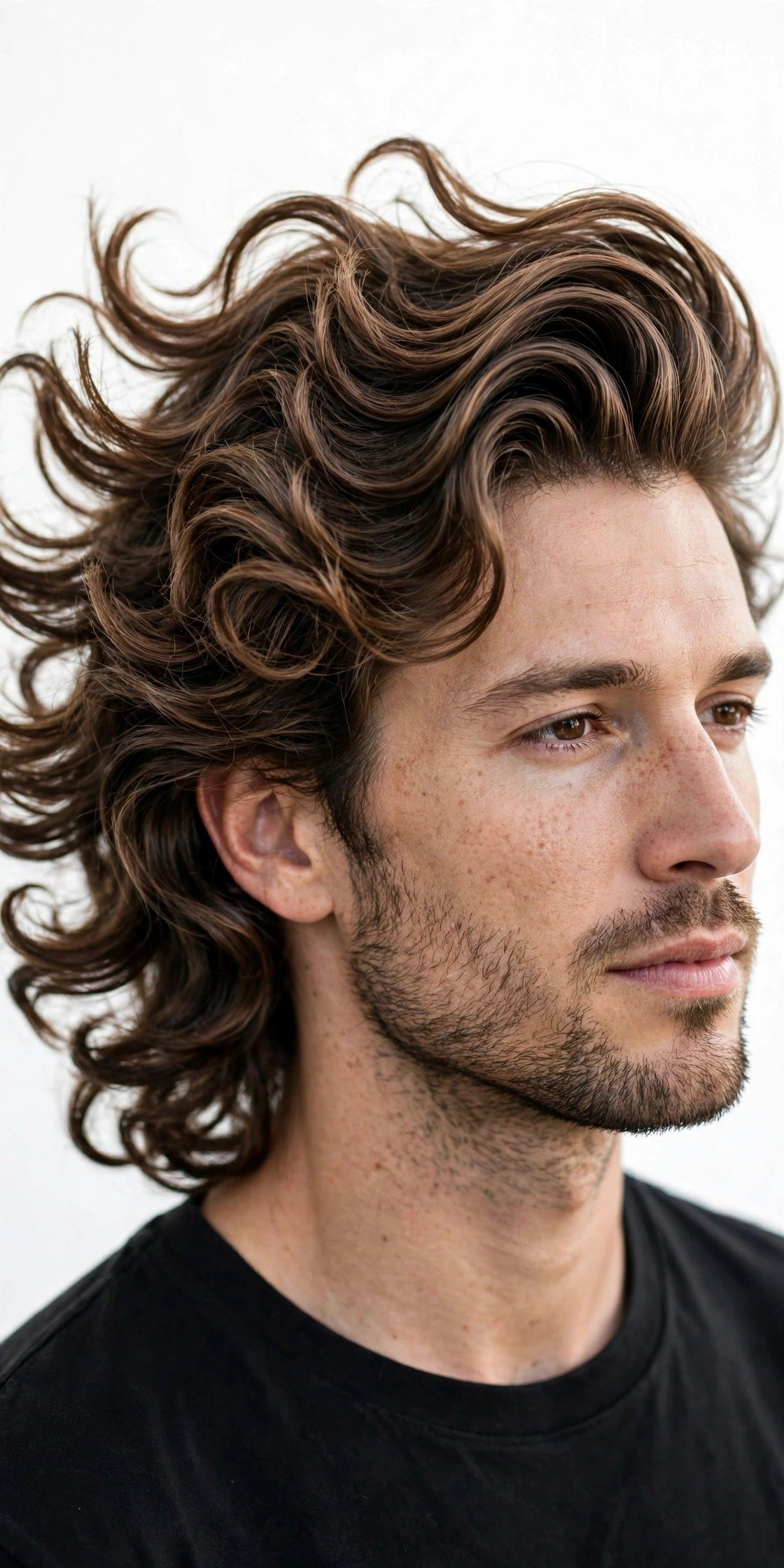
Curly hair brings a wild, textured energy to the flow, with ringlets and coils that sweep back in a shape no straight cut can imitate. This version suits tight and loose curls alike, and it flatters oval, square, and oblong faces by adding volume and softness around the sides. The key is cutting the curls to fall back naturally instead of forcing them into a shape they resist. When the layers are right, the curls form a flowing silhouette that looks both bold and completely effortless. When the layers are right, the curls form a flowing silhouette that looks both bold and completely effortless.
Barber script: keep five to six inches on top and four inches on the sides, cutting the curls dry so the barber can see the true length and spring. Ask for long layers that follow the curl pattern, and remove bulk from underneath with careful thinning. Keep the back at collar length and the neckline natural. For a wilder curly shape, see the curly wolf cut guide for inspiration. Avoid cutting the curls too short, which makes them spring up. Have the barber shape the curls one by one at the ends, removing only the weight that stops the flow from falling back.
Styling routine: apply curl cream to soaking wet hair, scrunch gently, and let it air-dry or diffuse on low heat for defined curls. A little leave-in conditioner keeps the curls soft and frizz-free. Never brush dry curls. Maintenance: every six to eight weeks; curly hair hides growth well, so trims can be spaced further apart. A satin pillowcase protects the curls overnight, stopping them from tangling and losing their shape by morning.
21. Flow Haircut with Highlights
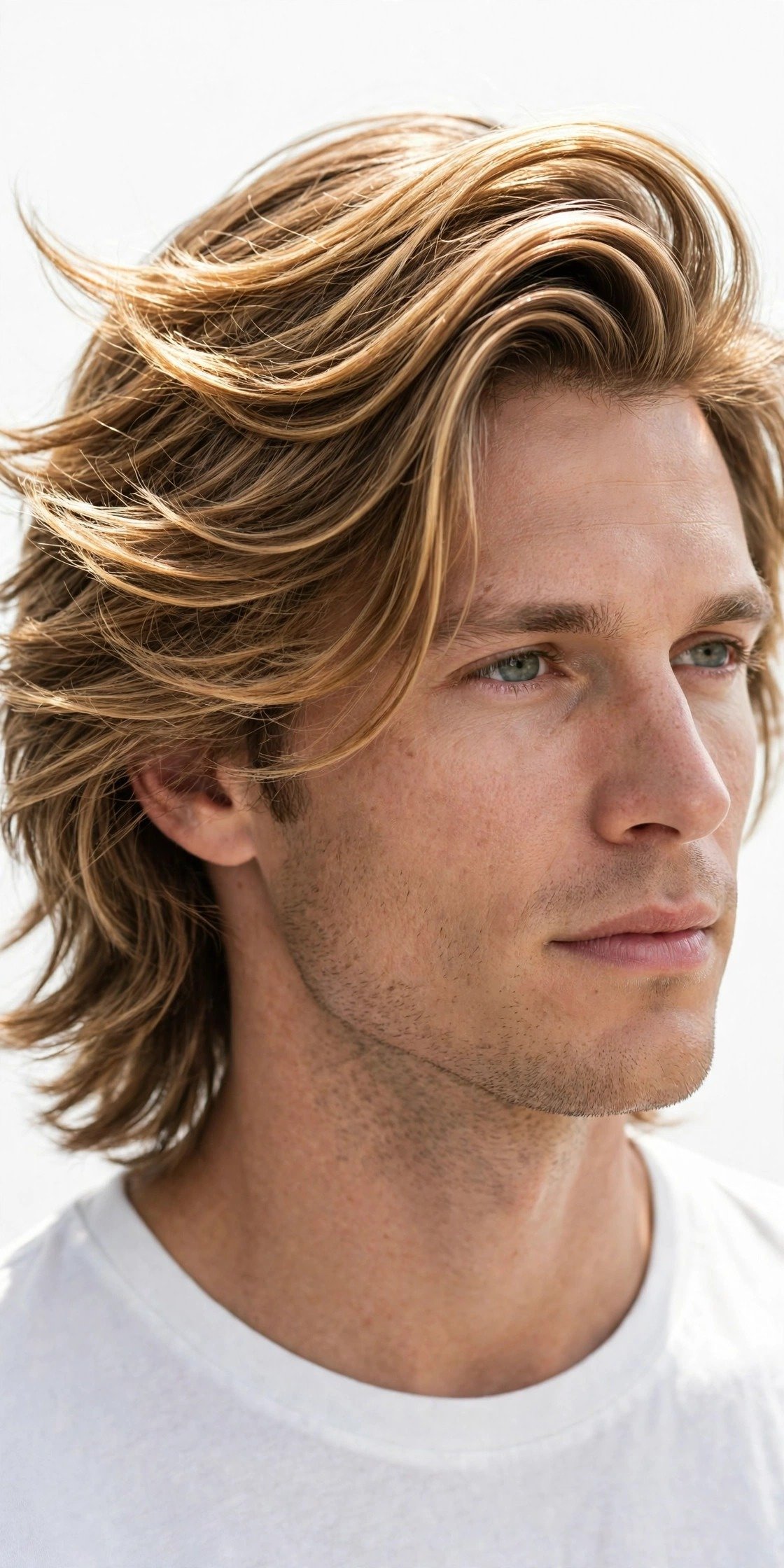
Highlights bring the flow to life by catching the light as the hair moves, adding depth and dimension to every layer. This version suits wavy and straight hair with medium to long length, and it flatters most face shapes because the lighter pieces frame the face and brighten the whole look. Subtle, sun-kissed highlights work best, mimicking the natural lightening that comes from a summer outdoors. The result is a flow that looks richer, fuller, and more expensive without shouting about it. The result is a flow that looks richer, fuller, and more expensive without shouting about it at all.
Barber script: keep four to five inches on top and three to four inches on the sides, with long layers that give the colourist plenty of surface to work with. Ask the barber to cut first, then have the highlights painted through the top layers and around the face. Keep the back at collar length with a natural neckline. The cut should be finished before colour so the highlights sit exactly on the layered ends. Ask the barber to cut the shape a week before your colour appointment, so the highlights land exactly on the finished layers.
Styling routine: use a colour-safe shampoo and a light leave-in conditioner to keep the highlights bright, then style back with a matte cream. Air-dry for a natural finish or blow-dry for polish. A purple shampoo once a week prevents brassiness. Maintenance: every six to eight weeks; refresh the highlights and trim the ends in the same visit to keep the colour and cut in sync. A gloss treatment once a month keeps the highlights shiny and stops the lighter pieces from looking dull or dry.
22. Flow Haircut with Blonde Balayage
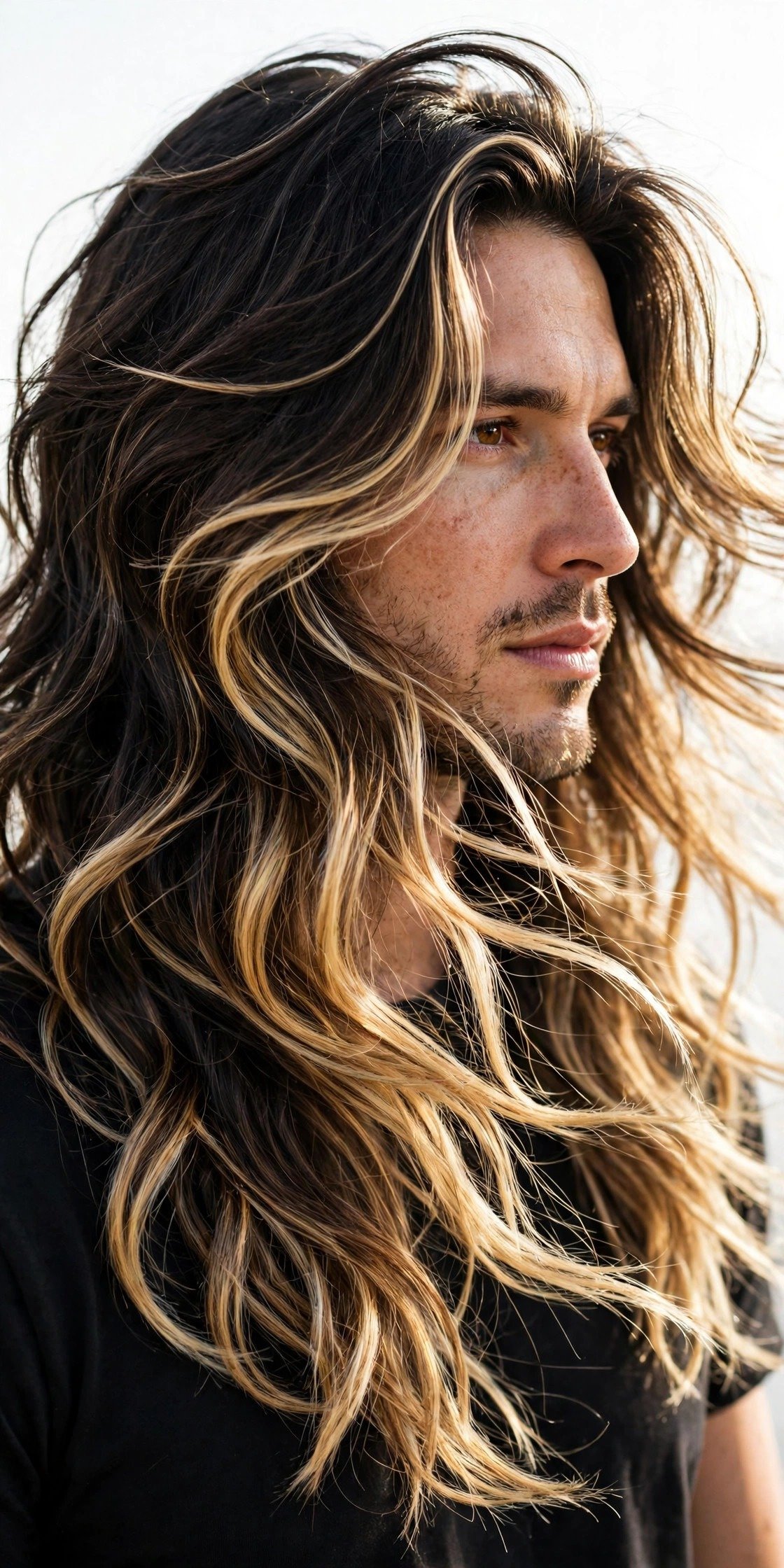
Blonde balayage turns the flow into a sun-bleached surfer classic, with hand-painted lightness that melts from darker roots into bright, beachy ends. It suits wavy and straight hair with medium to long length, and it flatters oval and square faces by adding brightness around the cheekbones. The look works because the balayage follows the layers, so every movement of the hair shows off a different shade. It is the ultimate summer flow, and it grows out gracefully without harsh lines. It is the ultimate summer flow, and it grows out gracefully without harsh lines or obvious regrowth.
Barber script: keep five to six inches on top and four inches on the sides, with long, flowing layers that show off the colour graduation. Ask the barber to cut the shape first, then have the balayage painted from mid-lengths to ends, keeping the roots natural. Keep the back at collar length with a soft, natural neckline. The layers should be long enough for the blonde to melt smoothly downward. Have the barber and colourist plan the cut together, since balayage needs long, clean layers to show the gradient properly.
Styling routine: wash with a purple shampoo once a week to keep the blonde cool, condition well, and style back with a light cream. Air-dry for a beachy finish or blow-dry for a polished look. A drop of hair oil on the ends adds shine. Maintenance: every eight to ten weeks; balayage grows out softly, so refresh the colour less often than the trim. A deep-conditioning mask once a week keeps bleached ends soft, since balayage hair dries out faster than natural hair.
23. Flow Haircut with Curtain Bangs
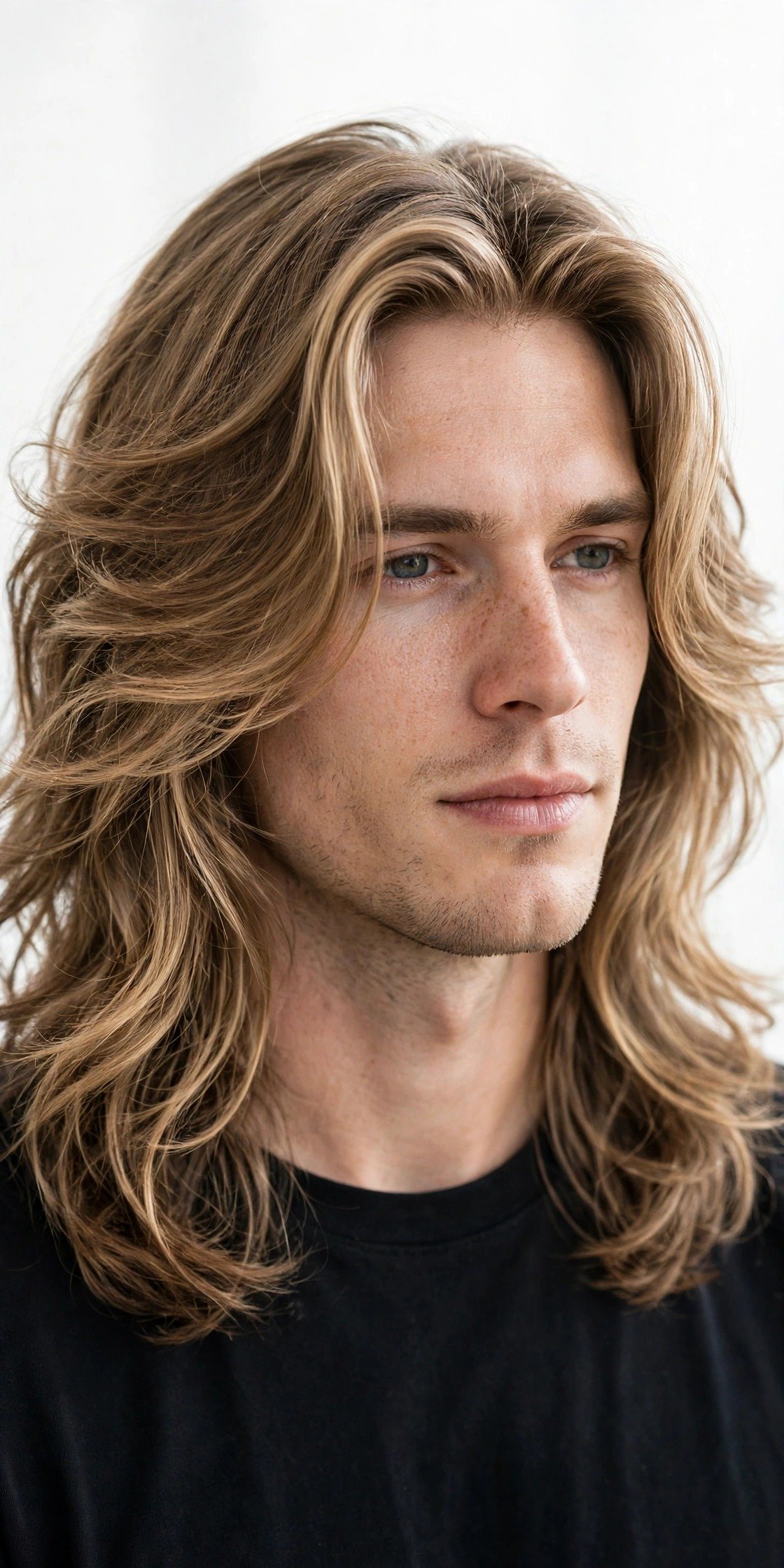
Curtain bangs add a soft, face-framing finish to the flow, with the front parted in the middle and falling gently past the cheekbones. This version suits straight and wavy hair with medium density, and it flatters oval, oblong, and heart-shaped faces by drawing attention to the eyes. The bangs give the flow a youthful, romantic feel while the back keeps the relaxed length. It is a great choice for men who want the flow to feel styled and intentional from the very first glance. It is a great choice for men who want the flow to feel styled and intentional from the very first glance.
Barber script: keep the bangs at four to five inches, cut with a centre part and longer at the sides so they blend into the flow. Keep the top at four to five inches with long layers, and the sides at three to four inches so they tuck behind the ears. Ask the barber to texturise the bang ends so they flick softly outward. Keep the back at collar length with a natural neckline. Ask the barber to cut the bangs slightly longer at first, since you can always take more off but cannot put it back.
Styling routine: part the bangs down the middle on damp hair, add a light cream, and blow-dry each side outward with a round brush for the curtain shape. Let them air-dry for a softer, more casual look. A little texture spray keeps them in place. Maintenance: every five to six weeks; trim the bangs so they frame the face without covering the eyes. A round brush with a small barrel gives the bangs their best flick, curling the ends gently away from the face.
24. Flow Haircut with Tapered Neckline

A tapered neckline cleans up the back of the flow without touching its length, giving the cut a neat, finished edge that grows out gracefully. It suits men who love the flow but hate the scruffy look a natural neckline can develop after a few weeks. Straight, wavy, and thick hair all work well, and every face shape benefits from the tidy outline. The taper is subtle from the front and smart from the back, which is exactly why barbers recommend it so often. The taper is subtle from the front and smart from the back, which is exactly why barbers recommend it so often.
Barber script: keep four to five inches on top and three to four inches on the sides, with the back reaching the collar. Ask the barber to taper the neckline with a number two guard blending up into the longer hair, keeping the taper low and soft. Keep the perimeter over the ears full and flowing, and blend the sideburns neatly. The taper should be invisible from the front and tidy from behind. Have the barber blend the taper with a clipper-over-comb pass so no harsh line appears where the short hair meets the flow.
Styling routine: push the top back with a light cream on damp hair and let it air-dry for a relaxed finish. The tapered neckline needs no styling at all, just a quick check in the mirror. Keep the back clean with a weekly neck shave if needed. Maintenance: every four to five weeks; the taper grows out faster than the top, so regular neckline tidy-ups keep it sharp. A neck trimmer at home keeps the taper tidy between barber visits, so the back never looks scruffy or overgrown.
25. Flow Haircut with Beard Blend
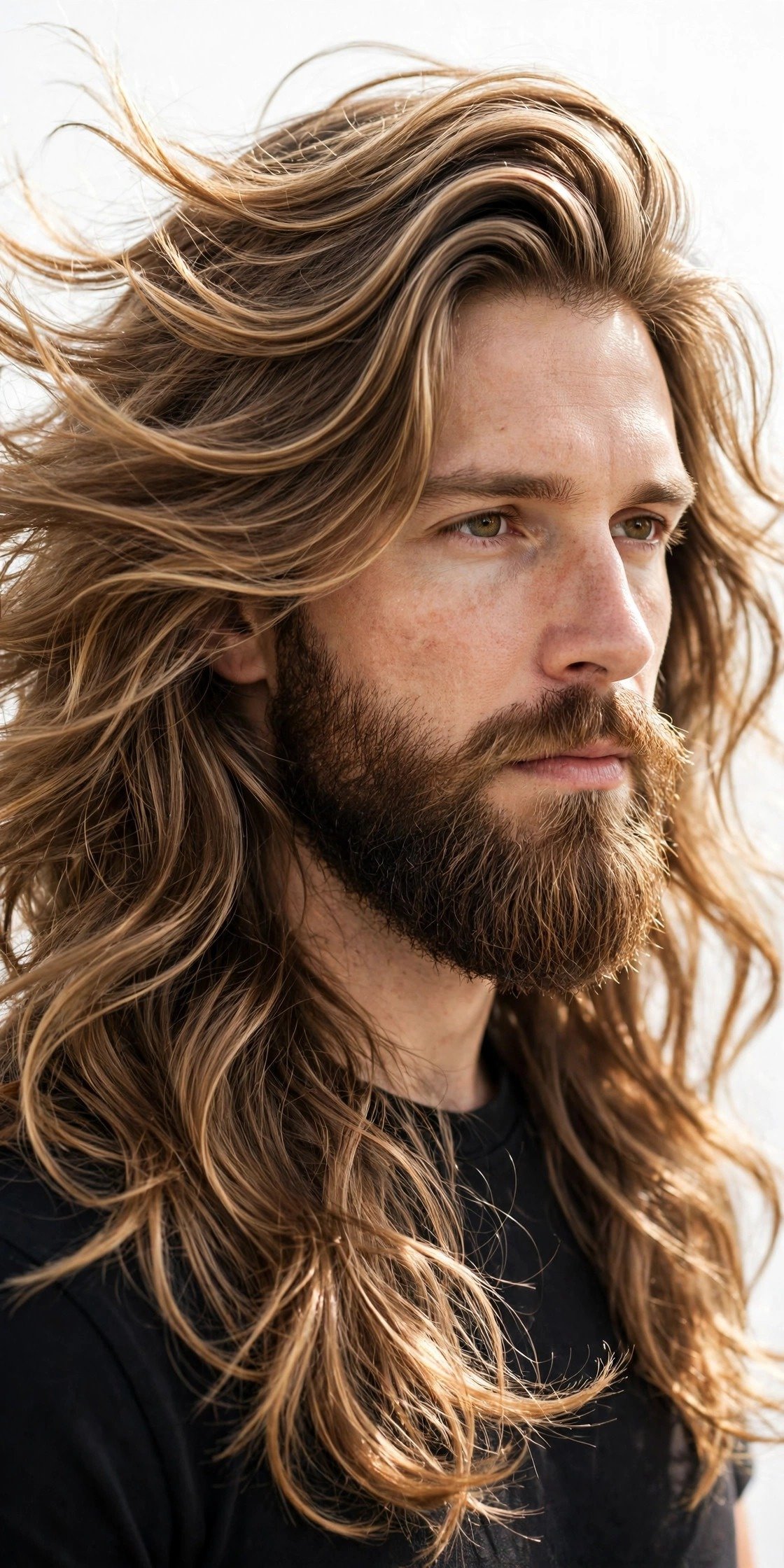
Blending the flow into a beard creates one continuous, rugged silhouette, with the sideburns melting into the beard so the whole look reads as a single statement. It suits thick and wavy hair best, and it flatters square and oval faces by adding strong, masculine framing around the jaw. The blend works because there is no hard line anywhere, just a smooth graduation from hair to beard. It is the flow for men who wear their beard as proudly as their hair. It is the flow for men who wear their beard as proudly as their hair, every single day.
Barber script: keep four to five inches on top with long layers, and grow the beard to at least half an inch so the blend has something to work with. Ask the barber to fade the sideburns into the beard with a number two guard, keeping the cheek line natural and the neckline clean. Keep the back at collar length with a natural neckline. The blend should be seamless from every angle. Ask the barber to use a beard trimmer with a guard to shape the blend, keeping the transition smooth from sideburn to beard.
Styling routine: style the hair back with a light cream, then apply beard oil and comb the beard downward for a neat finish. A boar-bristle brush keeps the beard smooth and the blend tidy. Wash both with a gentle shampoo. Maintenance: every four to five weeks; trim the beard and re-blend the sideburns in the same visit to keep the connection seamless. A wooden beard comb spreads the oil evenly and keeps the blend looking neat from every angle.
26. Flow Haircut with Short Boxed Beard
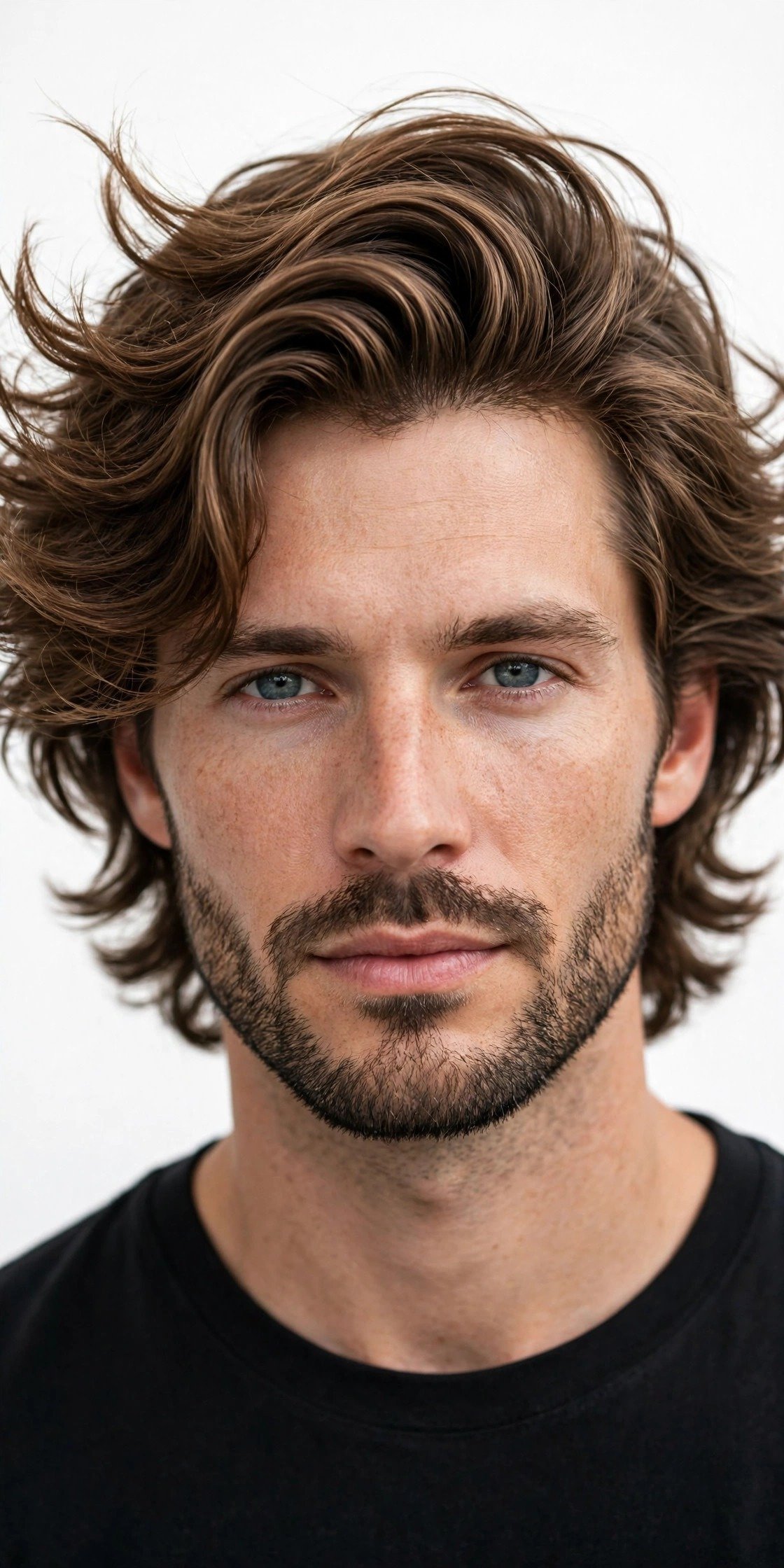
A short boxed beard gives the flow a sharp, structured partner, with clean cheek lines and a defined jaw that contrast beautifully with the soft, moving hair above. It suits men who want the flow to look groomed and deliberate, and it flatters square and oval faces by sharpening the jawline. The pairing works because the beard adds definition while the hair adds softness, balancing each other perfectly. It is the most polished version of the flow-and-beard combination. The pairing works because the beard adds definition while the hair adds softness, balancing each other perfectly every day.
Barber script: keep four to five inches on top with long layers, and ask for a short boxed beard kept to half an inch with sharp cheek lines and a clean neckline. Have the barber blend the sideburns into the beard top with a number two guard, keeping the transition tight. Keep the back at collar length with a natural neckline. The beard lines should be crisp and symmetrical. Have the barber check the beard lines from the front and both sides so the box stays perfectly symmetrical and sharp.
Styling routine: push the hair back with a matte cream, then shape the beard with a little beard balm and a comb for clean lines. A trimmer keeps the cheek lines sharp between visits. Wash the beard daily with a gentle cleanser. Maintenance: every three to four weeks; the boxed lines grow out fast, so frequent touch-ups keep the shape crisp. A beard trimmer with a guard keeps the boxed lines sharp between visits, so the shape never softens or blurs.
27. Flow Haircut with Stubble Blend
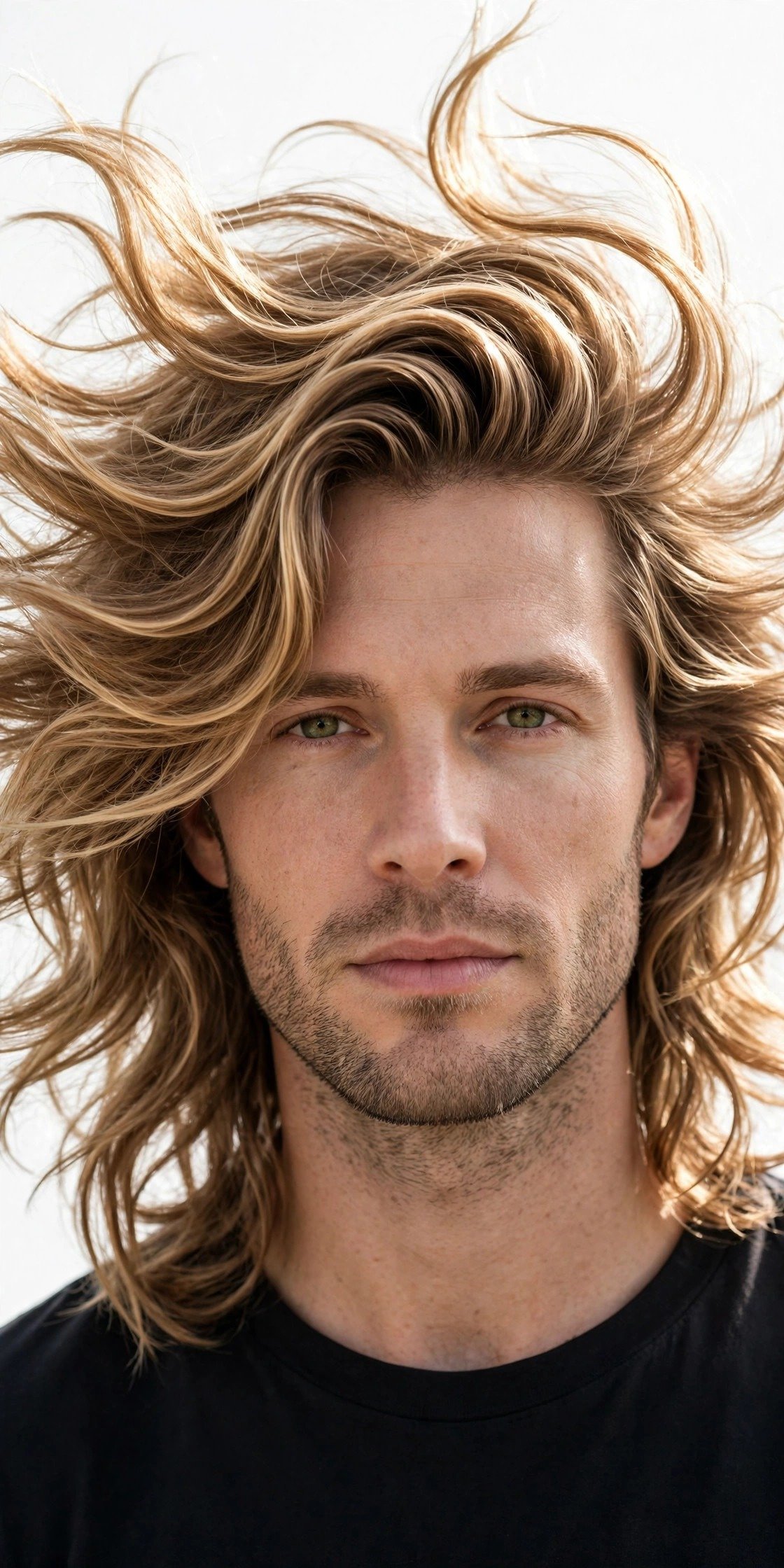
Stubble is the lightest beard partner for the flow, adding just enough rugged texture to frame the jaw without competing with the hair. It suits men who like a bit of grit but not a full beard, and it flatters most face shapes by adding subtle definition to the jawline. The blend works because the short stubble fades into the sideburns, so the hair and the stubble feel connected without any heavy lines. It is the easiest beard option to maintain, and it keeps the flow looking relaxed and modern.
Barber script: keep four to five inches on top with long layers, and ask the barber to blend the sideburns into three-day stubble using a number one guard. Keep the stubble even across the cheeks and jaw, with a natural cheek line and a clean neckline. Keep the back at collar length with a natural neckline. The sideburn blend should be soft, not a hard step. Ask the barber to set the stubble length with a trimmer guard first, then blend the sideburns down to meet it exactly.
Styling routine: style the hair back with a light cream on damp hair and let it air-dry. Keep the stubble neat with a trimmer every two to three days, using the same guard for an even finish. A little stubble oil prevents itchiness. Maintenance: every four to five weeks for the haircut; the stubble itself needs a quick trim every few days at home. A stubble trimmer with adjustable guards makes the every-few-days upkeep quick, taking barely two minutes each time.
28. Flow Haircut for Round Faces
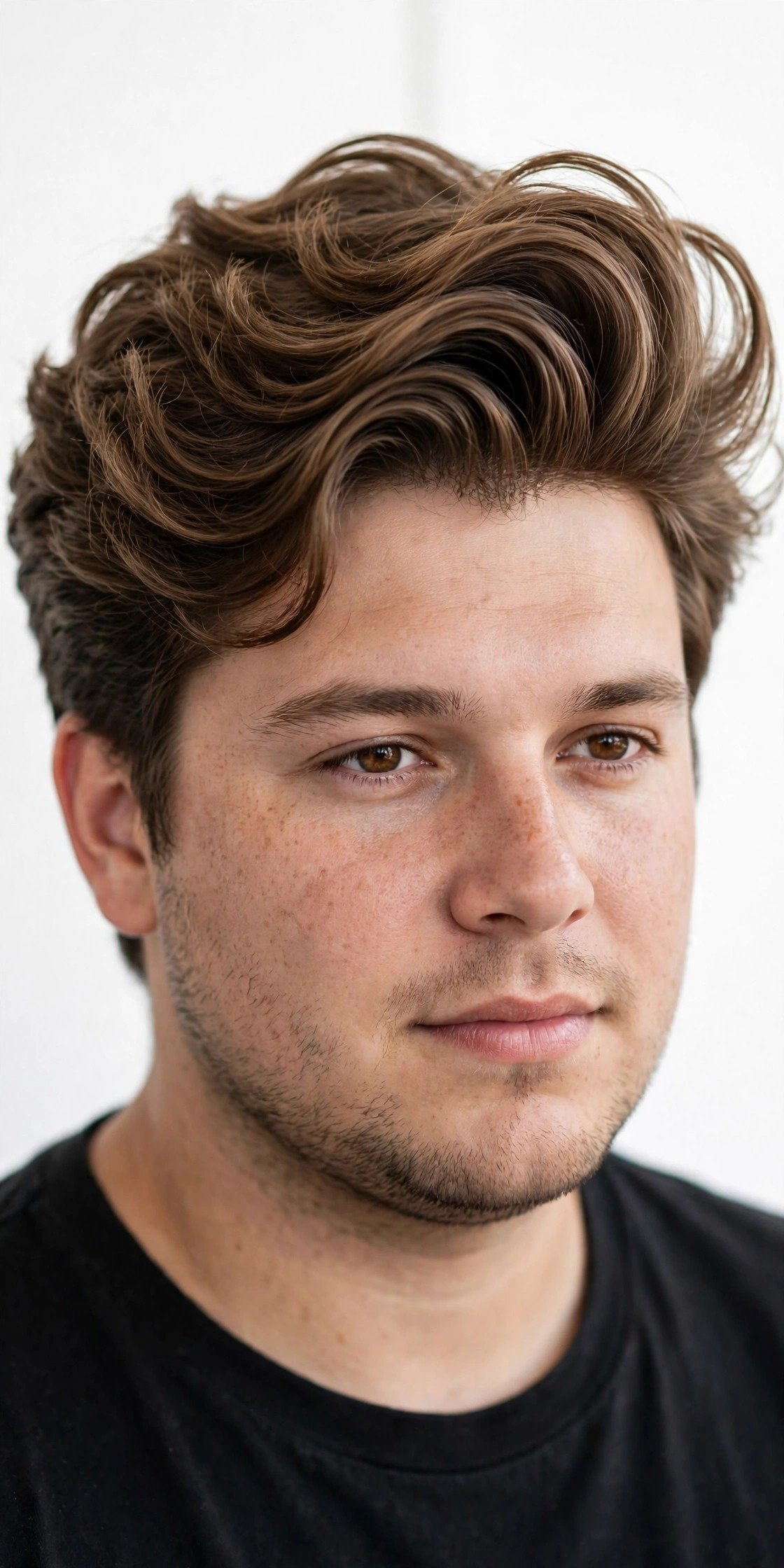
Round faces benefit from a flow that adds height and length, drawing the eye upward and making the face look longer and more balanced. This version keeps the top fuller and the sides slightly tighter, so the silhouette stretches vertically instead of widening at the cheeks. It suits straight and wavy hair with medium density, and the key is avoiding too much width at the sides. Done right, the flow slims a round face while keeping all of its relaxed charm. Done right, the flow slims a round face while keeping all of its relaxed charm and easy movement.
Barber script: keep five inches on top with long layers for height, and keep the sides at two to three inches so they sit close to the head. Ask the barber to add volume at the crown and to keep the back at collar length with a natural neckline. Avoid heavy bulk at the cheekbones, and texturise the ends so the shape stays light. The fringe should sweep back, not fall forward. Have the barber add a little extra length at the front, since a longer fringe swept back stretches a round face beautifully.
Styling routine: blow-dry the top upward and back with a round brush for height, using a volumising mousse on damp hair. Keep the sides smooth and close with a light cream. A matte paste adds hold at the crown. Maintenance: every five to six weeks; keep the sides tidy so the lengthening effect never turns into width. A volumising powder at the roots adds instant height on flat days, lifting the crown without any wet product at all.
29. Flow Haircut for Square Faces
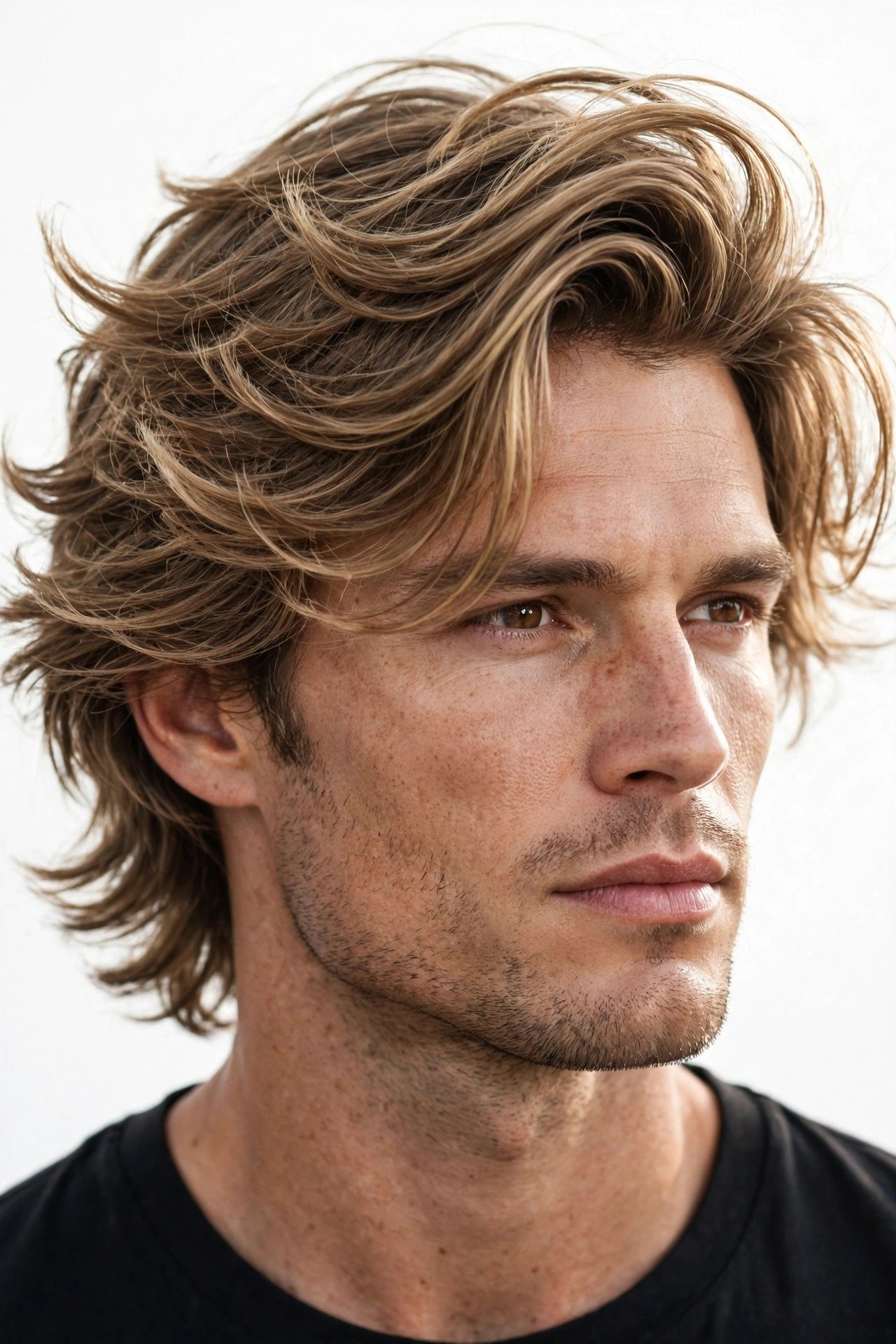
Square faces have strong, angular jawlines, and the flow softens them beautifully by adding gentle length and movement around the sides. This version keeps the layers soft and the ends feathered, so the hair frames the jaw instead of emphasising its corners. It suits straight, wavy, and thick hair, and the longer sides work like curtains that balance the face. The result is a look that keeps the masculine structure while adding a relaxed, approachable softness. The result is a look that keeps the masculine structure while adding a relaxed, approachable softness to the face.
Barber script: keep four to five inches on top and three to four inches on the sides, with soft, feathered layers that fall past the ears. Ask the barber to avoid sharp lines at the temples and to keep the back at collar length with a natural neckline. Texturise the ends so they curve gently around the jaw. The sideburns should blend softly into the flow. Ask the barber to keep the corners at the temples soft, since sharp angles there only emphasise the squareness of the jaw.
Styling routine: push the hair back with a light cream on damp hair, letting the sides fall naturally over the ears. A round brush and dryer add a soft curve at the ends. Avoid slicking the hair too tightly, which hardens the jawline. Maintenance: every five to six weeks; keep the layers soft and the ends feathered so the framing stays gentle. A soft-bristle brush smooths the sides over the ears, keeping the feathered layers curved gently around the jaw.
30. Flow Haircut for Oval Faces

Oval faces can wear almost any version of the flow, because their balanced proportions suit every length, parting, and finish in the family. This version plays to that freedom, keeping the classic medium length with soft layers that can be swept back, parted, or tucked behind the ears. Straight, wavy, and curly hair all work well, and the face shape needs no correction at all. It is the easiest face shape to cut for, and the flow shows off its balance perfectly. It is the easiest face shape to cut for, and the flow shows off its balance perfectly in every light.
Barber script: keep four to five inches on top and three to four inches on the sides, with long, blended layers throughout. Ask the barber to keep the back at collar length with a natural neckline, and to leave the parting flexible so the hair can be worn in different ways. Texturise the ends lightly for movement. The shape should be even on both sides for a balanced finish. Have the barber keep both sides perfectly even, since the oval face shows any imbalance in the parting or the layers.
Styling routine: style the hair back with a light cream on damp hair, or part it to either side depending on the day. A dryer adds polish, while air-drying keeps it relaxed. Experiment freely, since the oval face suits every finish. Maintenance: every five to six weeks; a regular trim keeps the balanced shape from growing uneven. A light styling cream is all this versatile cut needs, since the balanced shape falls into place with very little help.
31. Flow Haircut with Wet Look Finish

The wet look gives the flow a glossy, high-shine finish that looks like you just stepped out of the sea, with every strand slicked back in a smooth, reflective sweep. It suits straight and wavy hair with medium to thick density, and it flatters oval and square faces by opening up the forehead and showing off strong features. The finish works best for evenings, events, and nights out, where the shine catches the light beautifully. It is the flow at its most glamorous and dramatic. It is the flow at its most glamorous and dramatic, made for evenings when the shine catches the light.
Barber script: keep five to six inches on top with long, blended layers, and keep the sides at three to four inches so they slick back smoothly. Ask the barber to keep the back at collar length and to texturise the ends lightly so the wet finish does not look heavy. Keep the neckline natural and the sideburns blended. The top needs enough length to comb straight back without falling forward. Ask the barber to keep the ends light with a texturising pass, since heavy ends will drag the wet look flat within an hour.
Styling routine: work a high-shine pomade or wet-look gel through damp hair, comb it straight back, and let it set without touching it. A little extra product at the front keeps the sweep in place all evening. Avoid matte products, which kill the shine. Maintenance: every five to six weeks; trim the ends to keep the slick smooth and the shape from going puffy. A pocket comb lets you refresh the wet sweep during the evening, keeping the shine and the shape intact all night.
32. Flow Haircut with Matte Finish
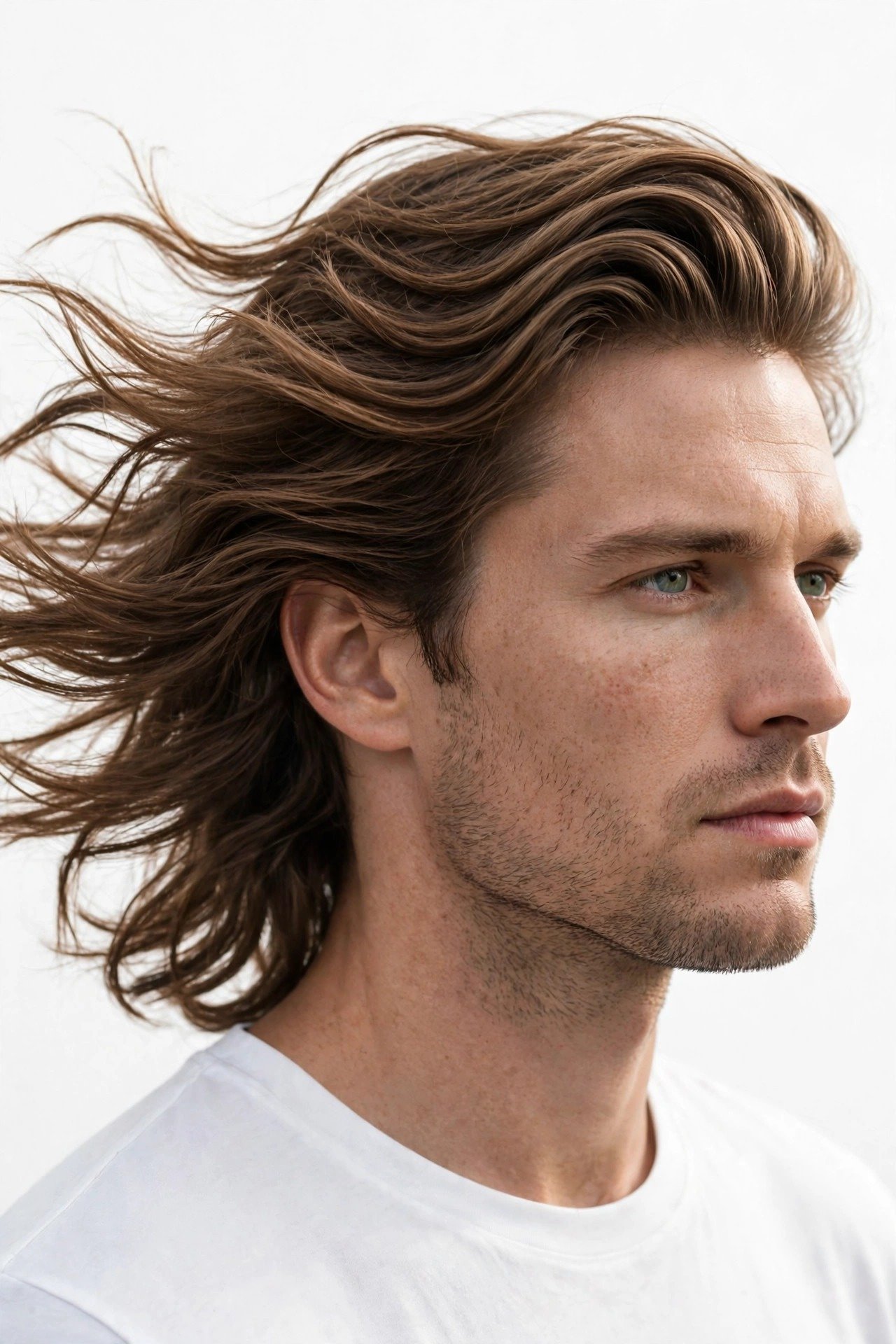
A matte finish keeps the flow looking natural and touchable, with no shine and plenty of texture that feels modern and effortless. It suits wavy and straight hair with medium density, and it flatters every face shape because the finish never draws attention to itself. The look works because the matte texture lets the layers and movement speak, instead of the product. It is the best everyday version of the flow, perfect for men who want great hair without looking like they tried too hard. It is the best everyday version of the flow, perfect for men who want great hair without looking like they tried too hard.
Barber script: keep four to five inches on top and three to four inches on the sides, with heavily texturised layers that create natural separation. Ask the barber to point-cut the ends and to keep the back at collar length with a feathered neckline. Avoid blunt lines, which look too polished for a matte finish. The layers should be cut to fall in different directions for maximum texture. Have the barber finish with a dry check under natural light, since matte texture shows every uneven layer more clearly than shine does.
Styling routine: apply a small amount of matte clay or matte paste to damp hair, scrunch the layers, and let it air-dry for a natural, touchable finish. A dryer on low heat adds volume at the roots. Avoid any shine products, which defeat the matte effect. Maintenance: every five to six weeks; regular texturising trims keep the matte layers fresh and lively. A dry shampoo on day two absorbs oil at the roots and revives the matte texture without a full wash.
33. Flow Haircut with Volume on Top
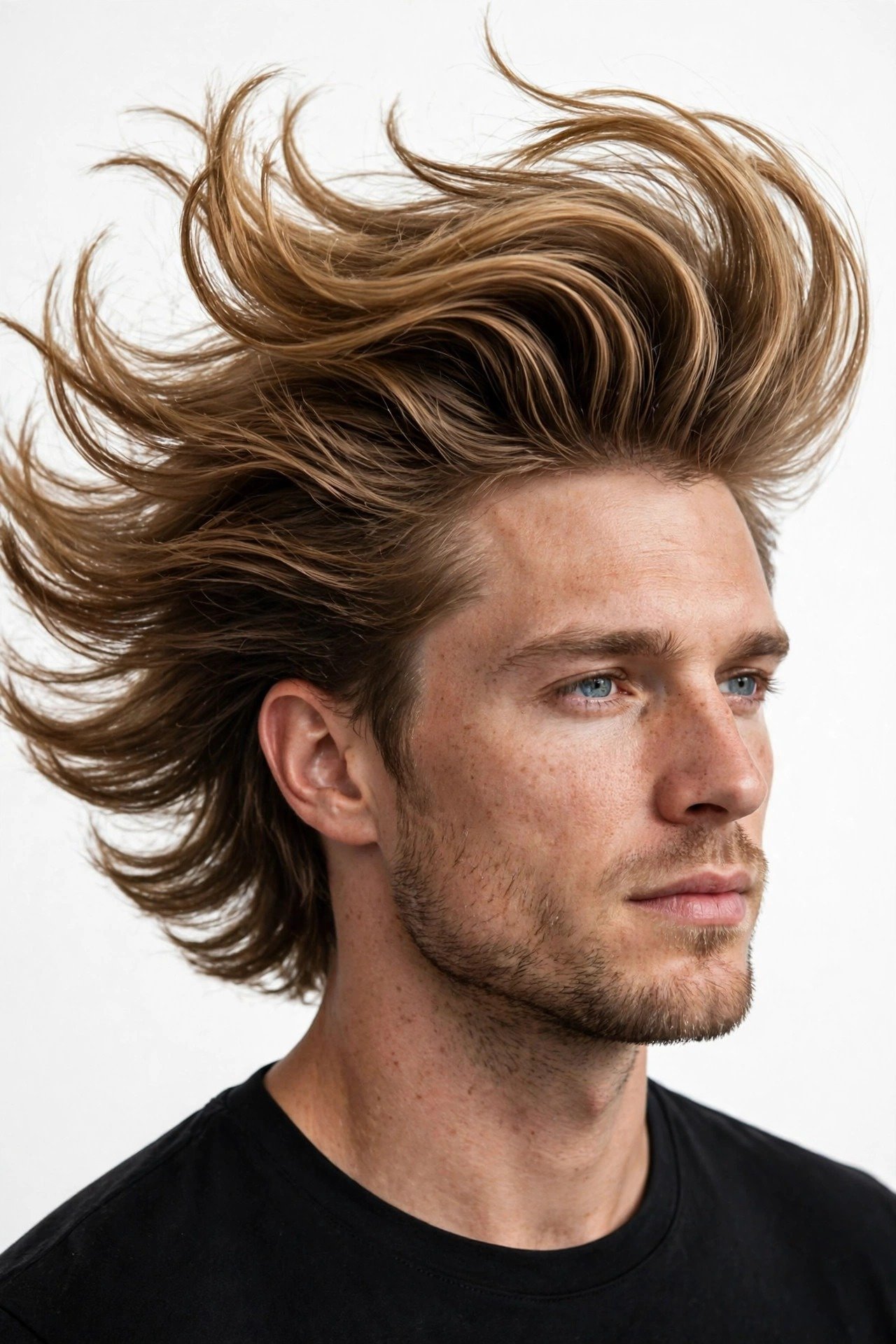
Volume on top turns the flow into a bigger, bolder statement, with the crown lifted high while the sides and back keep their easy sweep. It suits fine and medium hair best, since the lift adds fullness that the hair would not have on its own, and it flatters round and square faces by adding height. The cut works because the volume balances the length, so the flow never looks flat or heavy. It is the version to choose when you want the flow to have real presence in a room.
Barber script: keep five to six inches on top with short, stacked layers at the crown for lift, and keep the sides at three to four inches with long layers. Ask the barber to texturise the crown area to encourage the hair to stand up, and to keep the back at collar length. Use thinning shears sparingly at the crown so the volume stays full. The fringe should be long enough to sweep back. Ask the barber to build the volume with a round brush during the finish, so you can see exactly how much lift the crown holds.
Styling routine: blow-dry the top upward with a round brush and a volumising mousse on damp hair, then push it back once dry. A light matte paste holds the lift without weighing it down. Shake the roots with your fingers for extra height. Maintenance: every five to six weeks; keep the crown layers fresh so the volume never collapses as it grows. A round brush and a cool shot from the dryer lock the volume in, so the lift survives a full day.
34. Flow Haircut with Disconnected Layers
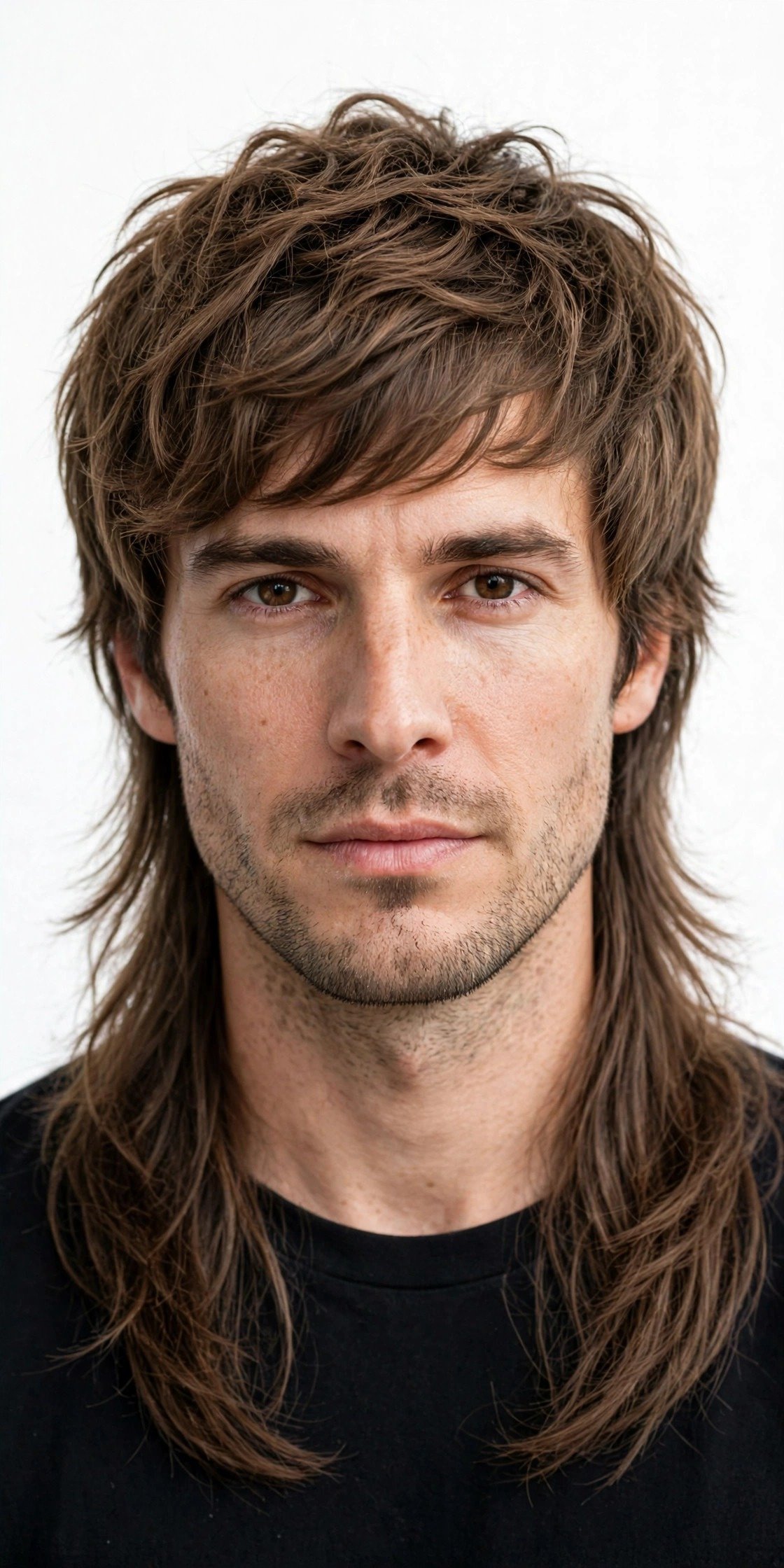
Disconnected layers give the flow an edgy, editorial feel, with visible steps between lengths that create sharp contrasts and bold movement. It suits thick and wavy hair best, since the disconnection shows up clearly in denser hair, and it flatters oval and square faces by adding strong, graphic lines. The cut works because the contrast between short and long sections makes the flow look deliberate and fashion-forward. It is the version for men who want their flow to stand out in a crowd. It is the version for men who want their flow to stand out in a crowd and turn heads.
Barber script: keep five to six inches on top and cut the under-layers two inches shorter to create a visible disconnect. Keep the sides at three inches with a disconnected line at the temple, and the back at collar length. Ask the barber to keep the disconnect crisp and to texturise only the longer top layer. The contrast should be obvious but clean, not messy. Have the barber show you the disconnect in a hand mirror from behind, since the contrast should read clearly from every single angle.
Styling routine: style the top back with a medium-hold cream on damp hair, letting the disconnected layers fall in their own directions. A dryer adds definition to the contrast. Keep the shorter layers neat with a quick comb-through. Maintenance: every four to five weeks; the disconnect grows out fast, so regular cuts keep the contrast sharp and intentional. A medium-hold cream shows off the disconnect best, since it lets the long and short layers fall in their own directions.
35. Surfer Flow Haircut

The surfer flow is the original beach-born version of the cut, with sun-bleached ends, natural texture, and a carefree shape that looks like it was styled by salt water and wind. It suits wavy and straight hair with medium density, and it flatters oval, square, and oblong faces with its relaxed, outdoorsy charm. The look works because nothing about it is forced, from the uneven layers to the natural, grown-out neckline. It is the flow in its purest, most effortless form. It is the flow in its purest, most effortless form, shaped by sun, salt, and time outdoors.
Barber script: keep five to six inches on top and four inches on the sides, with long, uneven layers cut to mimic natural sun and salt damage. Ask the barber to point-cut the ends heavily and to keep the back past the collar with a natural, untouched neckline. Avoid tapers and fades entirely, since the surfer flow should look grown out. The shape should be loose and free, never precise. Ask the barber to leave the neckline completely untouched, since a natural, grown-out edge is the heart of the surfer look.
Styling routine: spray sea-salt spray through damp hair, scrunch the lengths, and let it air-dry in the sun for the true beach finish. A little leave-in conditioner keeps the ends soft. Avoid combs and brushes, which flatten the natural texture. Maintenance: every six to eight weeks; the surfer flow is meant to grow out, so trims can be light and infrequent. A leave-in conditioner with UV protection keeps sun-bleached ends healthy through long days at the beach.
36. Hockey Flow Haircut

The hockey flow is the legendary locker-room version of the cut, famous for long hair spilling out from under helmets and caps in a glorious, untamed sweep. It suits thick and wavy hair best, and it flatters oval and square faces with its bold, rebellious energy. The look works because the length is the whole point, flowing past the collar and over the ears without apology. It is the flow at its longest and loudest, a badge of honour for players and fans alike. It is the flow at its longest and loudest, a badge of honour for players and fans alike.
Barber script: grow the top to six inches or more, with the sides at five inches and the back reaching well past the collar. Ask the barber for long, blended layers and a completely natural, untouched neckline, with no taper or fade anywhere. Keep the ends texturised just enough to prevent a heavy, triangular shape. The hair should flow freely from under a cap or helmet. Have the barber keep the back as long as possible, since the hockey flow is judged by how far the hair reaches past the collar.
Styling routine: let the hair air-dry after washing, push it back with your fingers, and add a little light cream to control flyaways. A cap or helmet does half the styling for this look. Avoid heavy products that flatten the natural flow. Maintenance: every six to eight weeks; trim only the split ends and let the length keep growing for the full hockey effect. A quick rinse after practice keeps sweat and helmet odour out of the long lengths, so the flow stays fresh.
How to Style and Maintain a Flow Haircut at Home
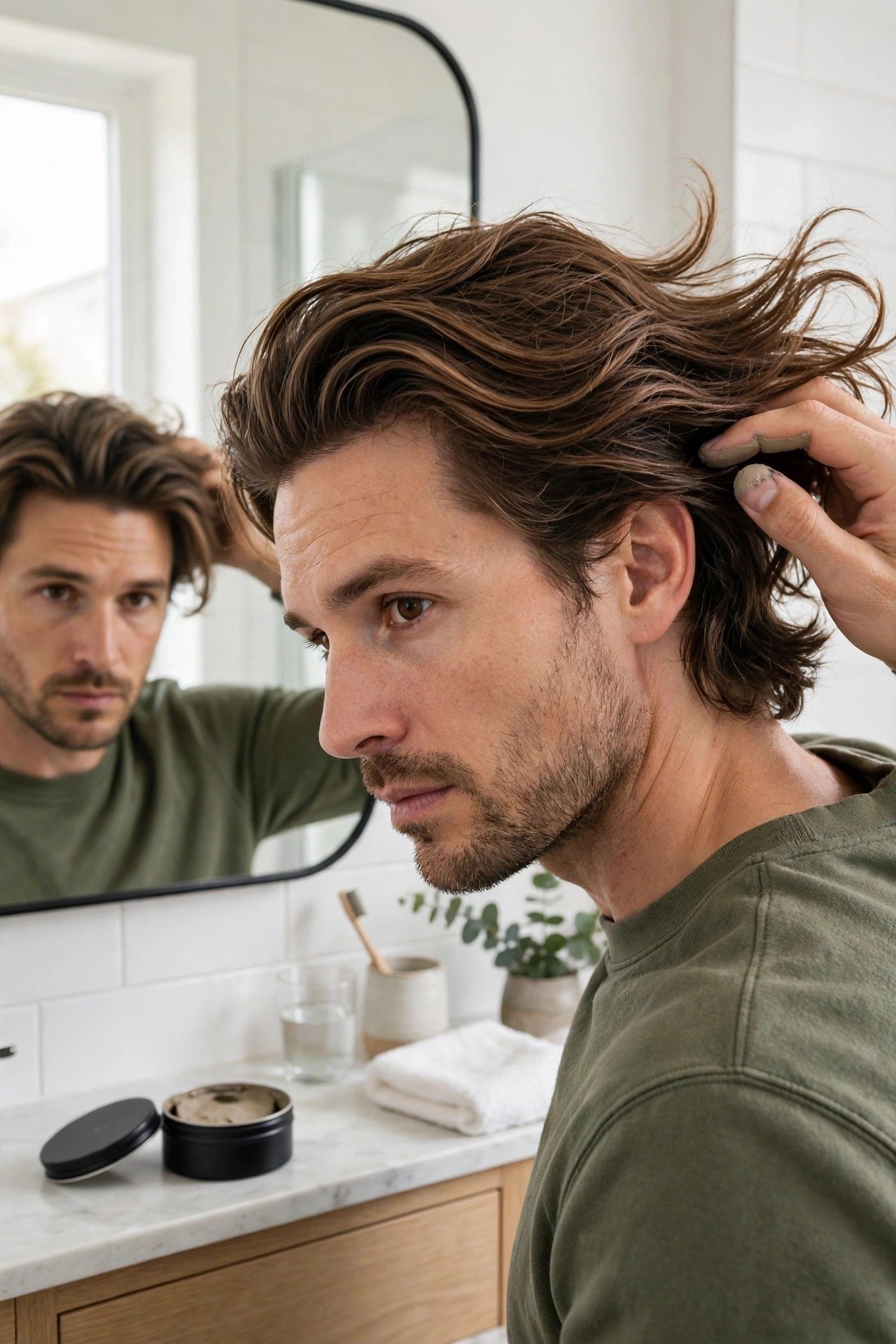
The morning routine for a flow haircut takes under five minutes, and it starts with the direction of the flow. Apply a light styling cream or sea-salt spray to damp hair, comb or push the hair back and slightly to your preferred side, and let it air-dry — never brush it forward dry, because brushing against the flow breaks the shape into frizz. If you want volume, blow-dry the crown on low heat for thirty seconds, pointing the airflow backward; if you want the relaxed look, skip the dryer entirely and let the cut do the work. The back needs no styling — that is the point of paying a barber for the layers.
For the sides and back, the routine is maintenance, not styling. Once a week, run a trimmer along the neckline and around the ears to keep the edges crisp — a flow’s layers hide growth well, but its lines do not. If your flow is paired with a beard, add two or three drops of beard oil through the beard and brush downward so the blend from the sideburns reads as one smooth surface. The single most common mistake is over-applying product on top: a heavy, greasy finish weighs the flow down and makes it look flat, while a light cream keeps the whole head reading as one design. Start with less product than you think you need.
At the barbershop, the consultation is where the cut is won or lost, so walk in with specifics. Name the structure first — flow, low taper flow, or skin-fade flow — then the length, then the finish, in that order. Bring a reference photo from the thirty-six styles above; ‘like number five but with a lower taper’ is worth a thousand words of description. Mention your hair’s behaviour — ‘it sticks up at the crown,’ ‘it gets puffy when it grows,’ ‘my hair falls to the left’ — because a good barber adjusts the layering and the length to compensate. And book your next appointment before you leave: tapered sides need refreshing every three to four weeks, standard flows every five to six. A flow is a barber-relationship haircut, not a twice-a-year one.
The last home-care rule is the simplest: wash less, condition more. A flow haircut’s layered lengths look best on second-day hair, when the natural oils give them grip, so shampoo every two to three days and rinse with water in between. Use a light conditioner on the lengths only, never heavy masks on the crown, and keep heat styling to the days you need real volume. Treat the flow like fabric — gentle handling, light product, and a trim before the layers collapse — and the cut will look as sharp on day thirty as it did on day one.
Frequently Asked Questions
What is a flow haircut?
A flow haircut is a medium-length men’s cut where the hair on top, sides, and back is left long enough to sweep back naturally over the ears and collar, usually around four to six inches. The layers are long and blended, so the hair moves freely instead of sitting in a stiff, structured shape. It is often called the hockey haircut or bro flow, and it suits straight, wavy, and curly hair. Interest in the style is booming, with Fresha reporting in October 2026 that flow haircut searches rose by 173 percent, making it one of the fastest-growing men’s cuts of the year.
What is the difference between a flow haircut and a mullet?
The flow haircut and the mullet both keep length at the back, but they are very different cuts in balance and intent. A flow keeps the top, sides, and back at a similar medium length, so the hair sweeps back evenly all around the head. A mullet cuts the top and sides much shorter while leaving the back dramatically long, creating a sharp contrast between front and back. The flow looks relaxed and natural from every angle, while the mullet is a bolder, more statement-making shape with a clear short-to-long jump.
How long does my hair need to be for a flow haircut?
You need at least three to four inches of hair on top before a barber can shape a proper flow, because shorter hair cannot sweep back over the ears or hold the layered movement. The ideal starting length is four to six inches on top, with the sides at three to four inches and the back reaching the collar. If your hair is shorter, expect to grow it out for two to four months, getting light trims along the way to keep the shape tidy. Patience pays off, since the flow only works once the length is there.
Which face shape suits a flow haircut?
The flow haircut suits almost every face shape, which is one reason it has become so popular, but a few tweaks make it even better for each one. Oval faces can wear any version, since their balanced proportions suit every length and parting. Square faces benefit from softer, feathered layers that gentle the jawline, while round faces look best with extra height on top and tighter sides to add length. Oblong faces should avoid too much height and keep the sides fuller for balance. Your barber can adjust the layers to suit your face.
How long should my hair be on top for a flow haircut?
For a classic flow haircut, the hair on top should be four to five inches long, which is enough to sweep back over the ears and hold the shape without falling forward. Shorter flows can work at three inches, but they lose some of the movement that defines the style. Longer flows go to six inches or more, giving a more dramatic, surfer-like sweep. The right length depends on your hair type and how much styling you want to do, but four to five inches is the sweet spot most barbers recommend for a first flow.
How often do I need a flow haircut touched up?
A flow haircut needs a touch-up every five to six weeks to keep its shape, with the ends dusted and the layers refreshed so the hair keeps moving freely. Versions with tapers, fades, or undercuts need more frequent visits, usually every three to four weeks, because the short sides grow out visibly faster than the long top. Long, surfer-style flows can stretch to six to eight weeks between trims, since the grown-out look suits them. Regular trims also prevent split ends, which make the flow look dry and shapeless.
Can I do a flow haircut at home?
You can maintain a flow haircut at home with careful trimming, but cutting the full shape yourself is risky, especially the layers and the back. A safer approach is to get the cut done by a barber first, then maintain it at home by dusting the split ends and cleaning up the neckline with clippers between visits. If you do try it yourself, use proper hairdressing scissors, work in small sections, and cut less than you think you need. Most men find that a professional cut every five to six weeks is worth it for this style.
What products do I need for a flow haircut?
The flow haircut needs only a few products to look its best, and less is usually more with this style. Start with a light styling cream or sea-salt spray for everyday texture and movement, then add a matte clay or medium-hold pomade when you want more control or a polished finish. A leave-in conditioner keeps the lengths soft, especially for wavy or curly hair, and a volumising mousse helps fine hair hold its shape. Avoid heavy gels and waxes, which weigh the flow down and kill the natural movement that defines the cut.
Does a flow haircut work with straight hair?
Yes, a flow haircut works very well with straight hair, giving a clean, glossy finish where the lengths fall in smooth sheets that catch the light. The key is asking your barber for long layers with point-cut ends, which add subtle movement and stop straight hair from looking flat or limp. A volumising mousse and a round-brush blow-dry add lift at the roots, while a light matte paste keeps the sweep in place. Straight-haired men often find the flow easier to style than wavy hair, since it falls neatly into place with little effort.
Is the flow haircut still in style for 2026?
Yes, the flow haircut is firmly in style for 2026, and it is one of the biggest men’s hair trends of the year. Fresha reported in October 2026 that searches for the flow haircut rose by 173 percent, showing that more men than ever are growing their hair out for this relaxed, athletic look. The style works across ages and settings, from the surfer flow to the slicked-back office version, and it pairs well with tapers, fades, and beards. With its low-maintenance styling and timeless appeal, the flow is set to stay popular well beyond 2026.
Conclusion
The flow haircut is the rare haircut idea that improves everything it touches: the hair looks more deliberate, the face looks more considered, and the morning looks shorter, all from a single layered shape that lets natural movement lead. The 36 styles above cover every length, every finish, and every hair type, so the only real decision left is which version matches your face, your hair, and the amount of time you want to spend in front of the mirror. Pick two or three favourites, screenshot them, and bring them to your barber — a picture plus the vocabulary in this guide turns a vague request into a precise one.
Start with the classic if you are unsure: a flow haircut with a medium length and a low taper is the safest entry point, and you can go bolder, longer, or shorter next time once you know how the length feels on your head. Whatever you choose, keep the maintenance honest — a flow is a relationship with your barber, not a twice-a-year event. Get both right, and the flow haircut will do what the best haircuts always do: make you look like the most deliberate version of yourself, every single day of 2026.