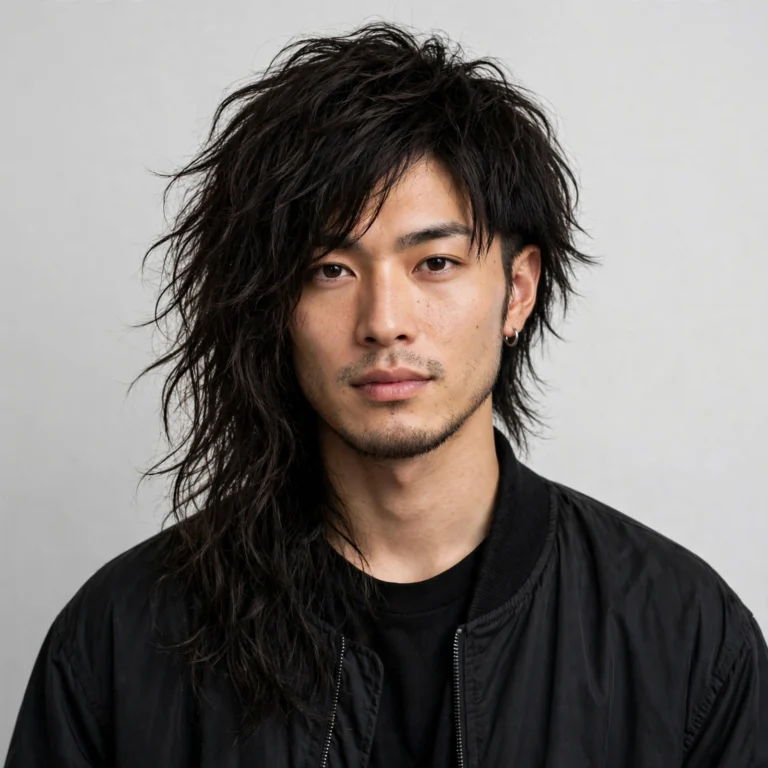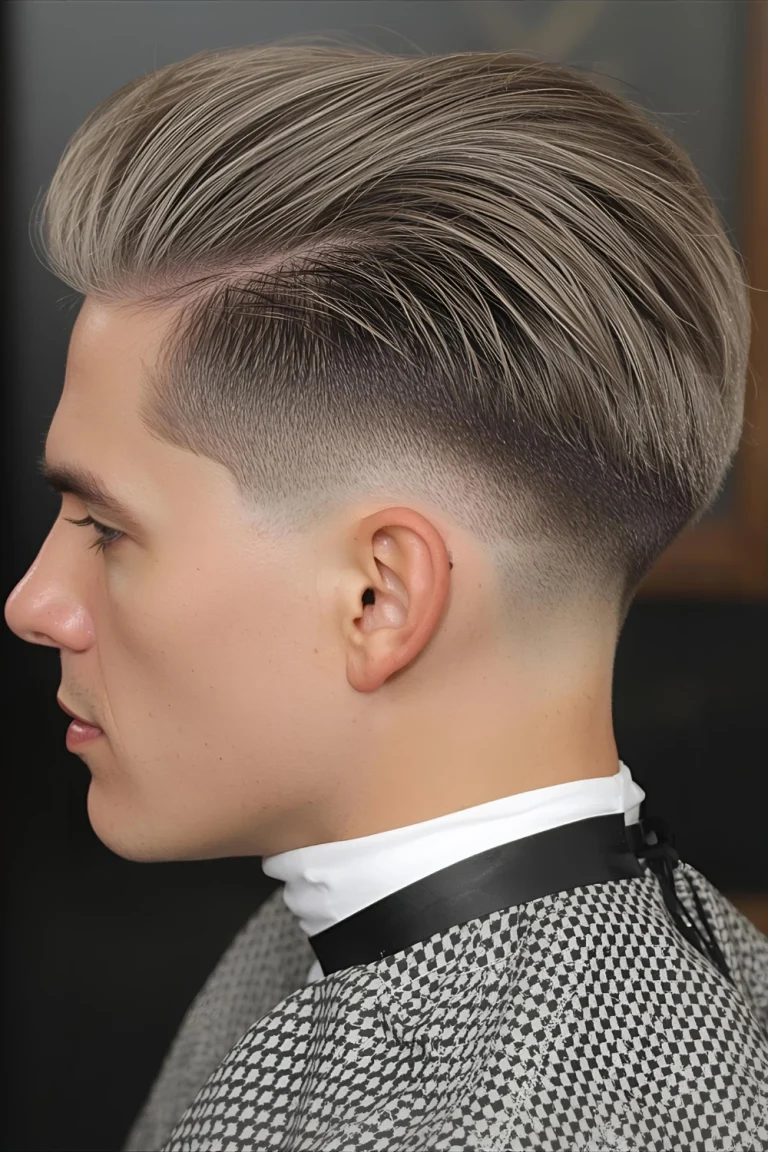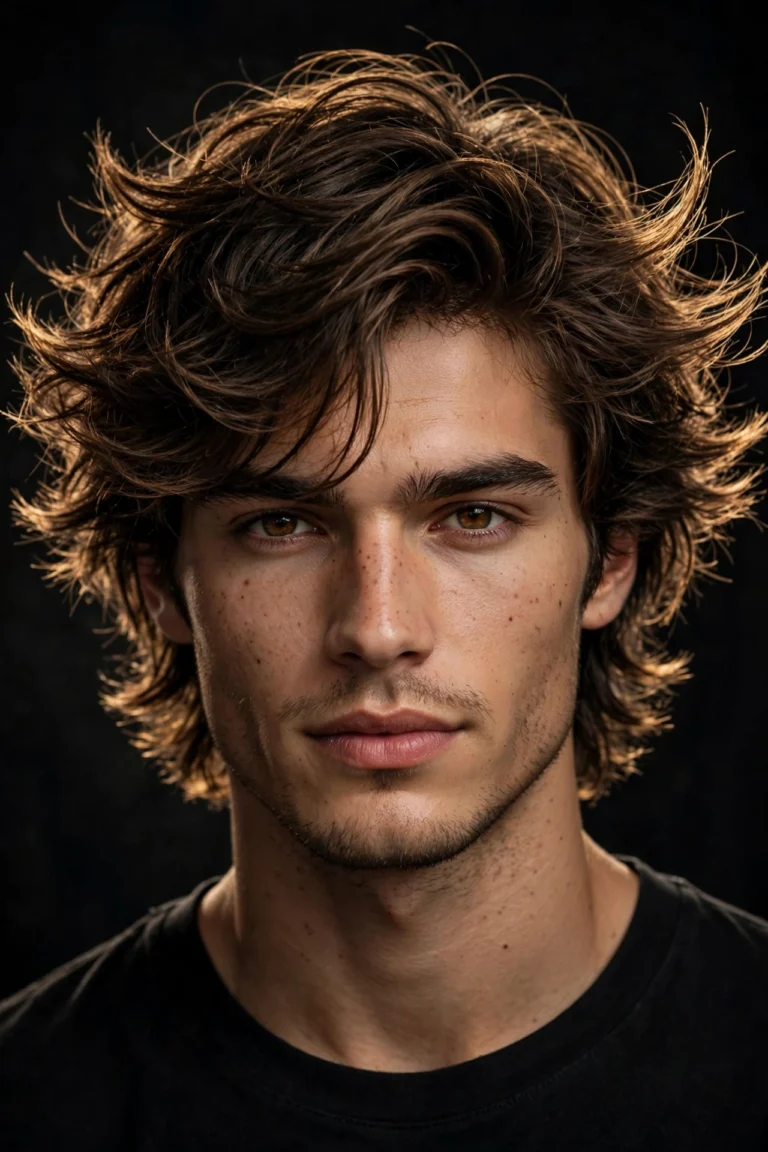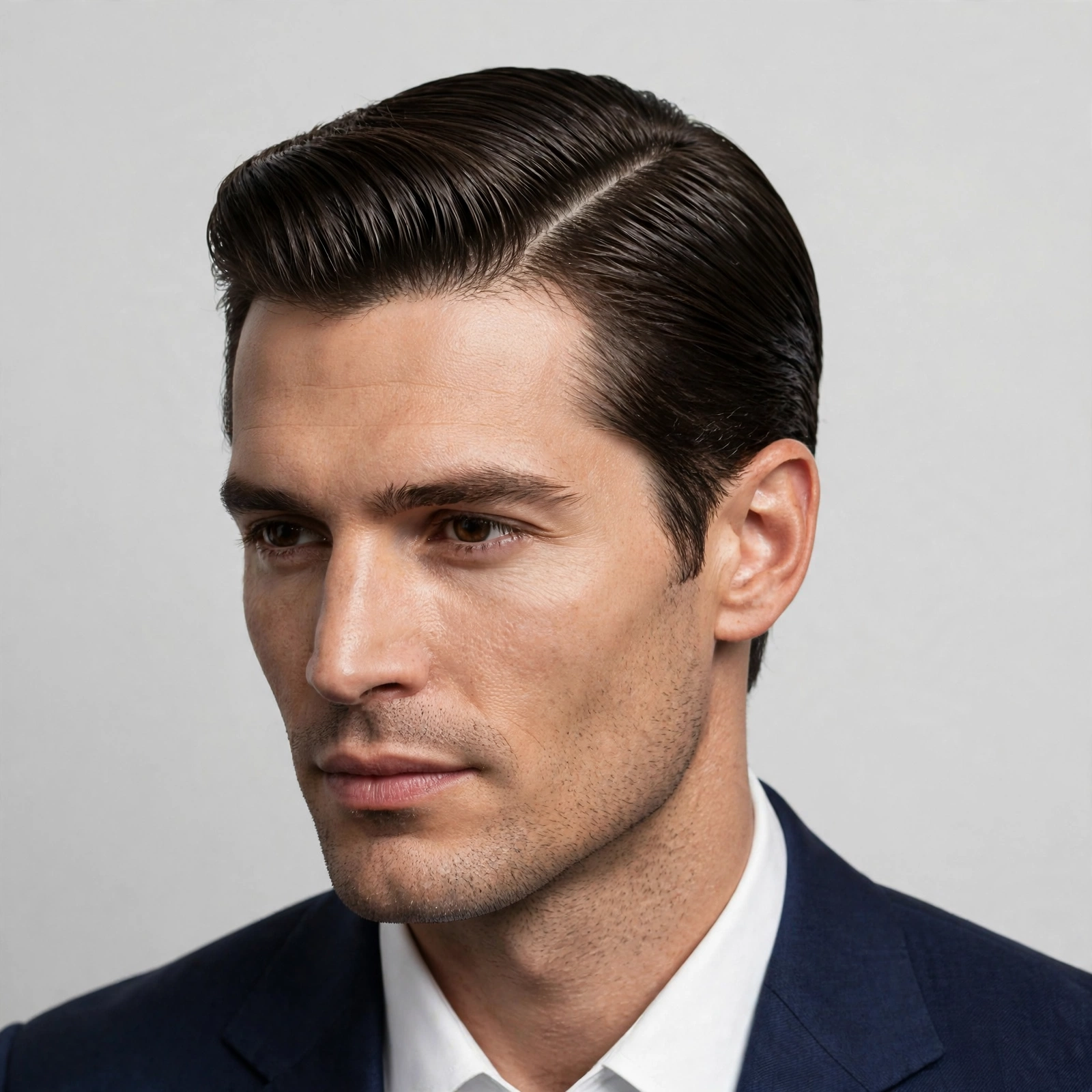
Frosted Tips Men 2026: 18 Bleached-Tip Styles Making a Comeback
Frosted Tips Men 2026: 18 Bleached-Tip Styles Making a Comeback
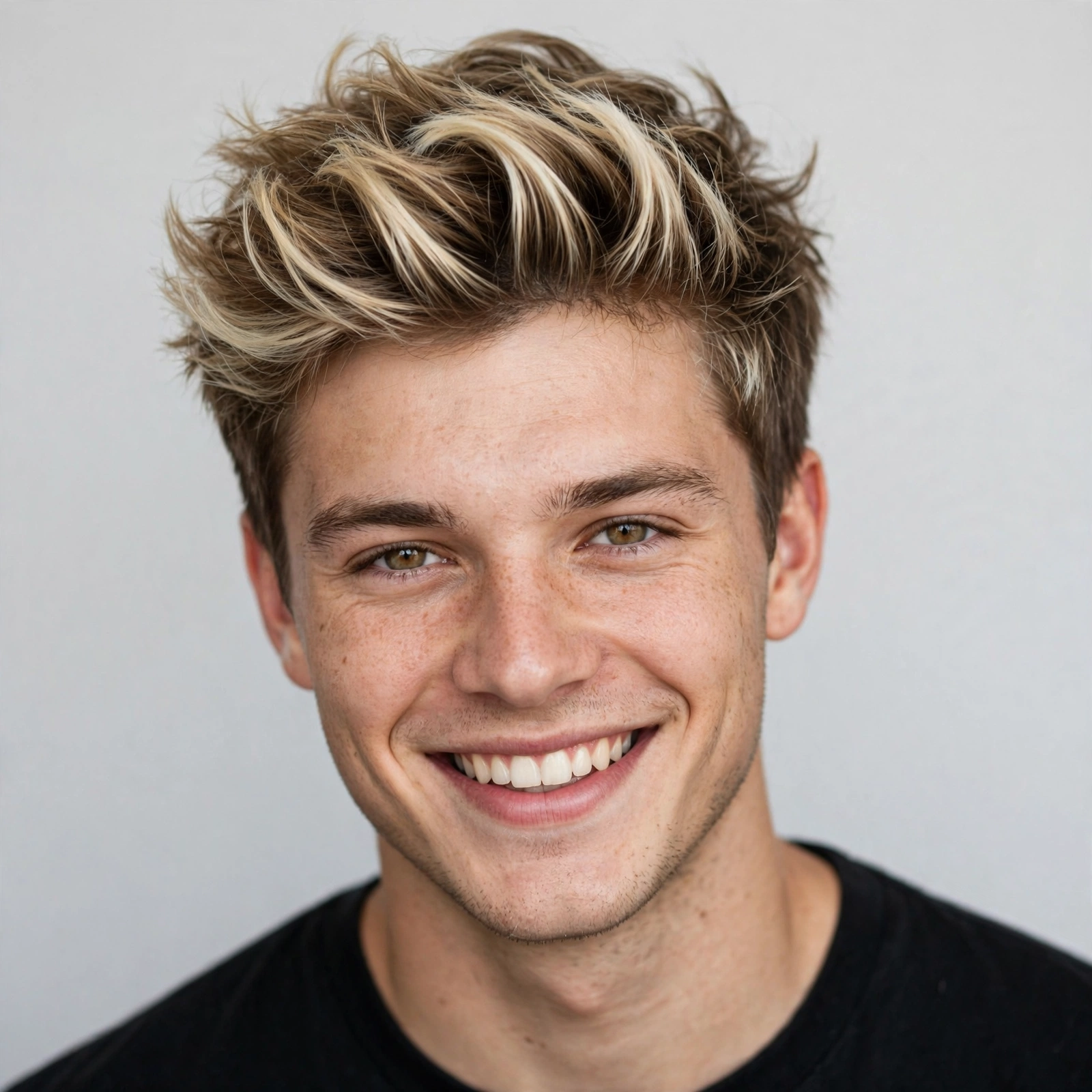
Okay, I know exactly what you’re thinking. Frosted tips? Like the crunchy gelled spikes your older cousin wore in 1999? Hear me out. Frosted tips men are wearing in 2026 look nothing like that boy-band poster on your wall. The modern version is sharper, cleaner, and honestly way cooler — think sun-kissed bleached ends on a sharp textured crop, not a porcupine dipped in lemon juice.
I’ve watched guys walk out of the barbershop with this look and get compliments before they even reach the parking lot. There’s something about that contrast — dark roots melting into bright, icy tips — that catches the eye in a way a plain haircut just can’t. And here’s the thing: it’s one of the cheapest color services you can get. You’re only bleaching the ends, not the whole head, so it takes less time, costs less money, and grows out without that awful root-line stage.
So in this guide I’m breaking down everything. What frosted tips actually are, why they’re blowing up again in 2026, the 18 best frosted tips styles for men right now, how to ask your barber for them (exact words, so you don’t walk out with something you hate), the DIY bleach method with real measurements, what salons charge, and how to keep them bright instead of brassy. Let’s get into it.
What Are Frosted Tips?
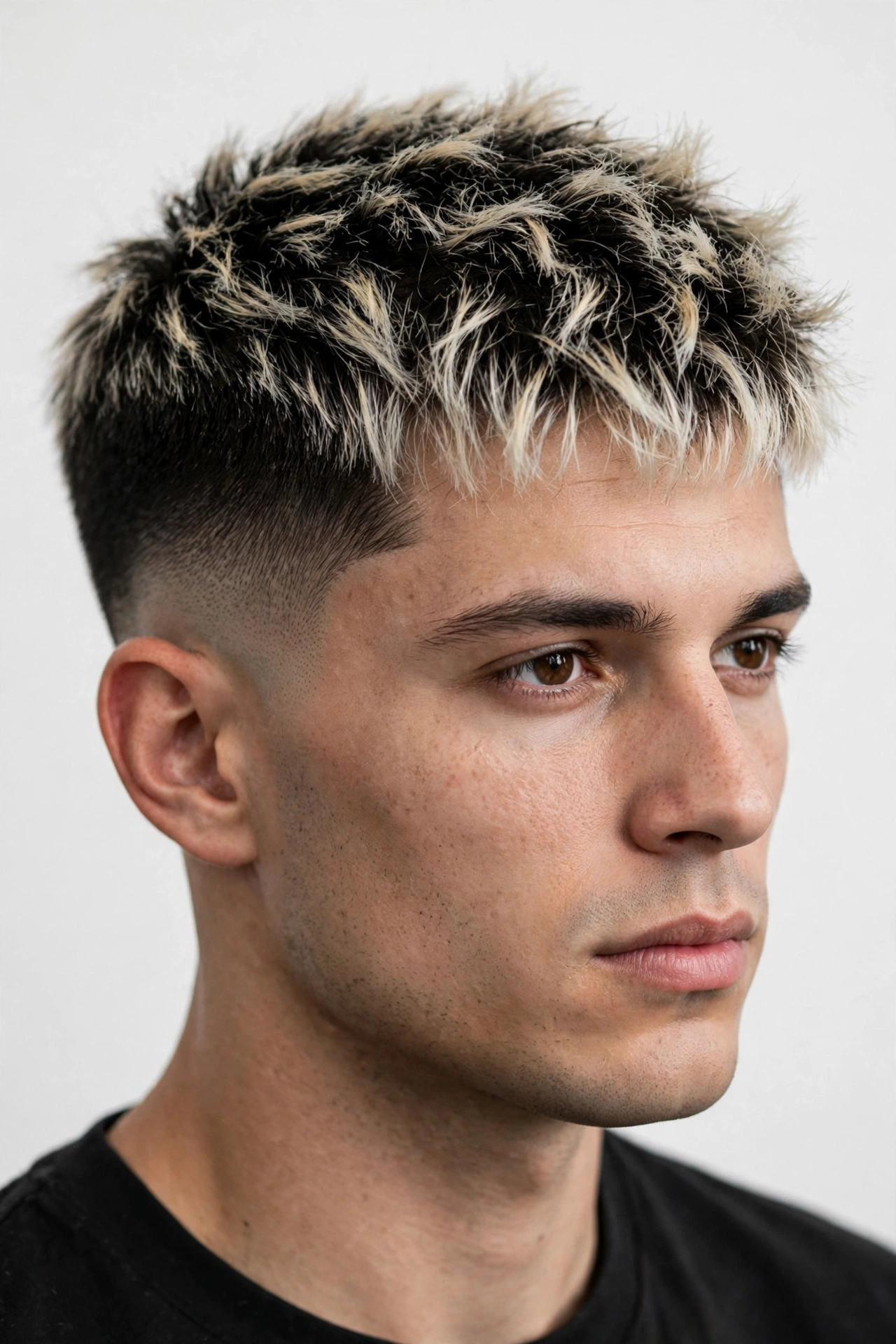
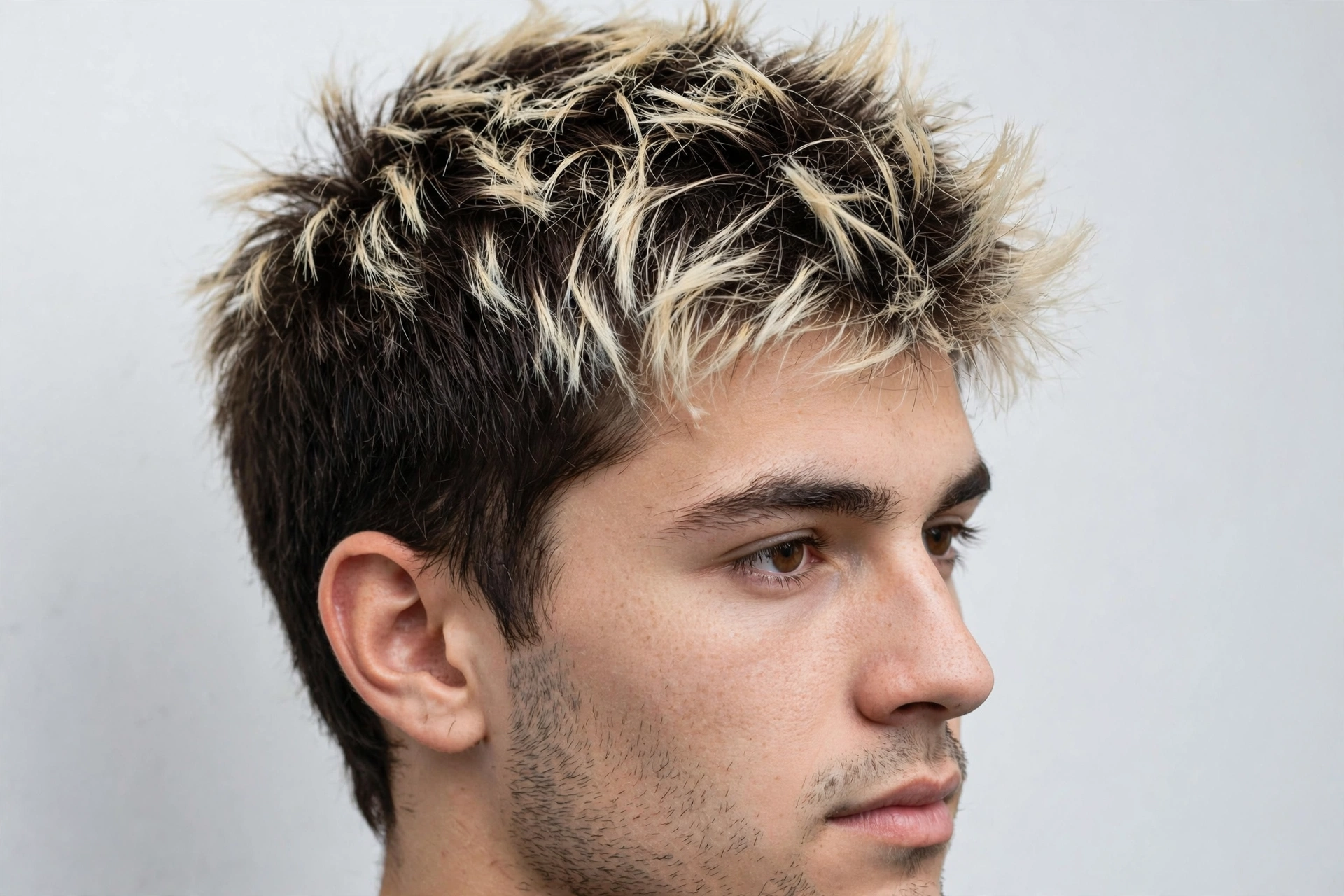
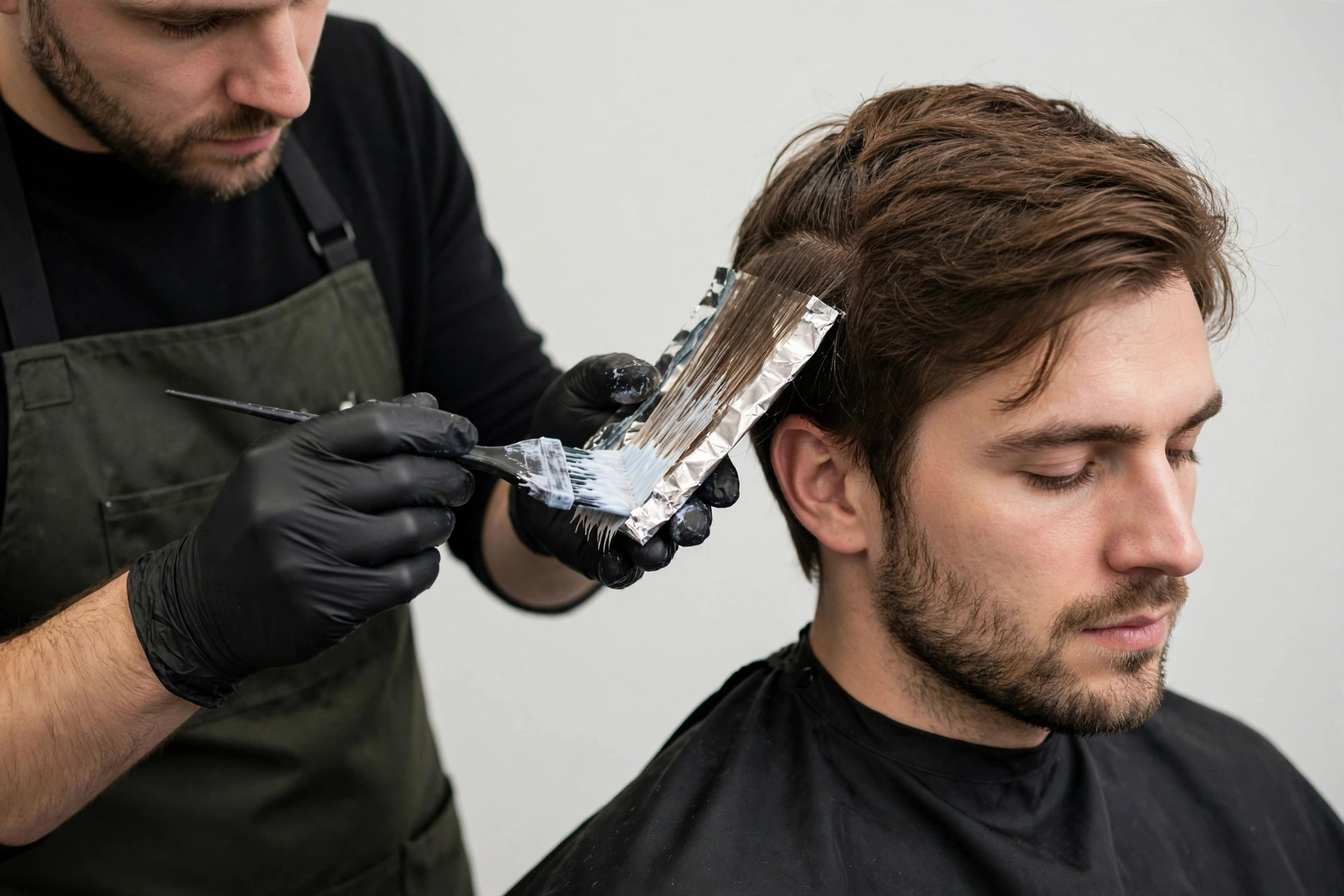
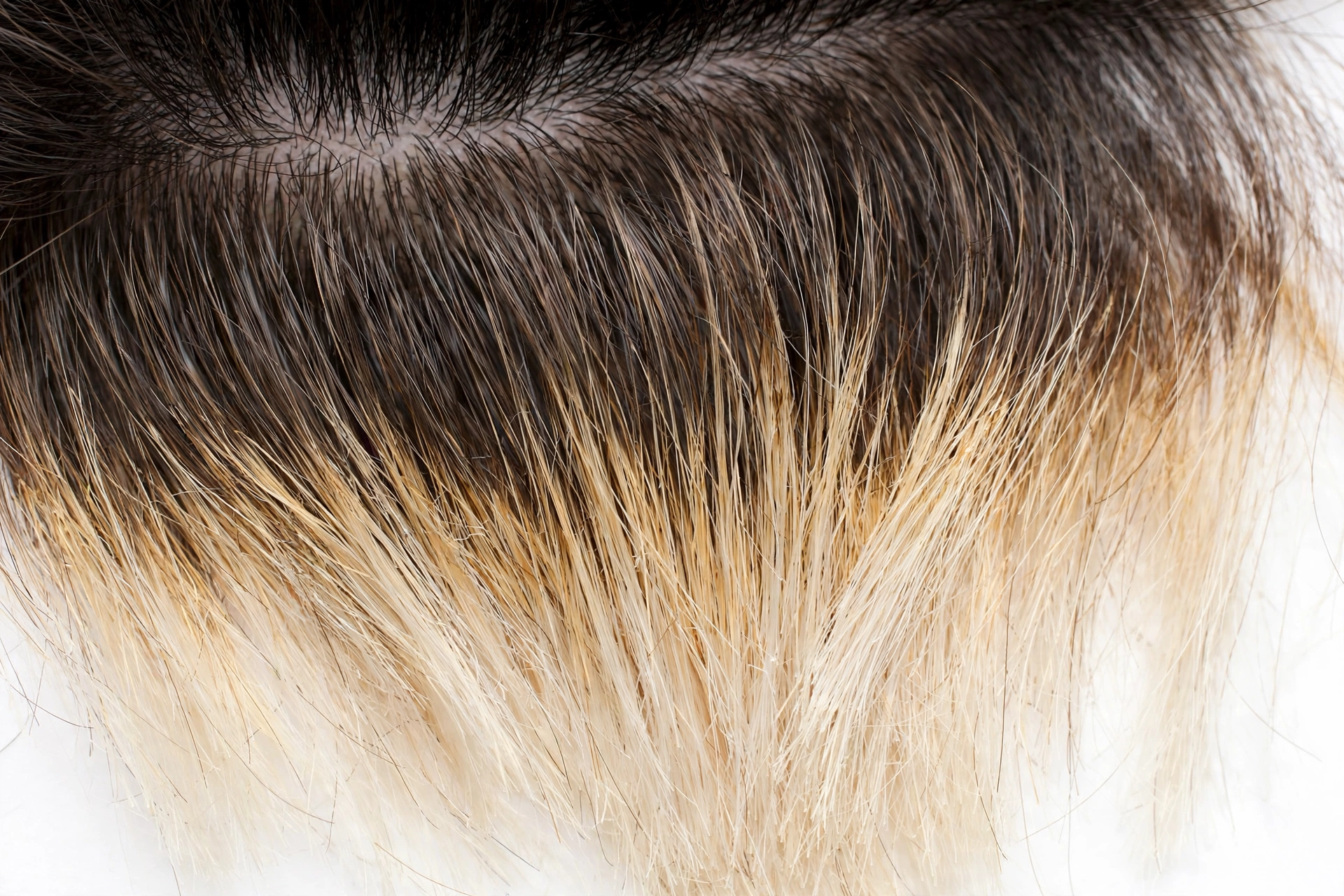
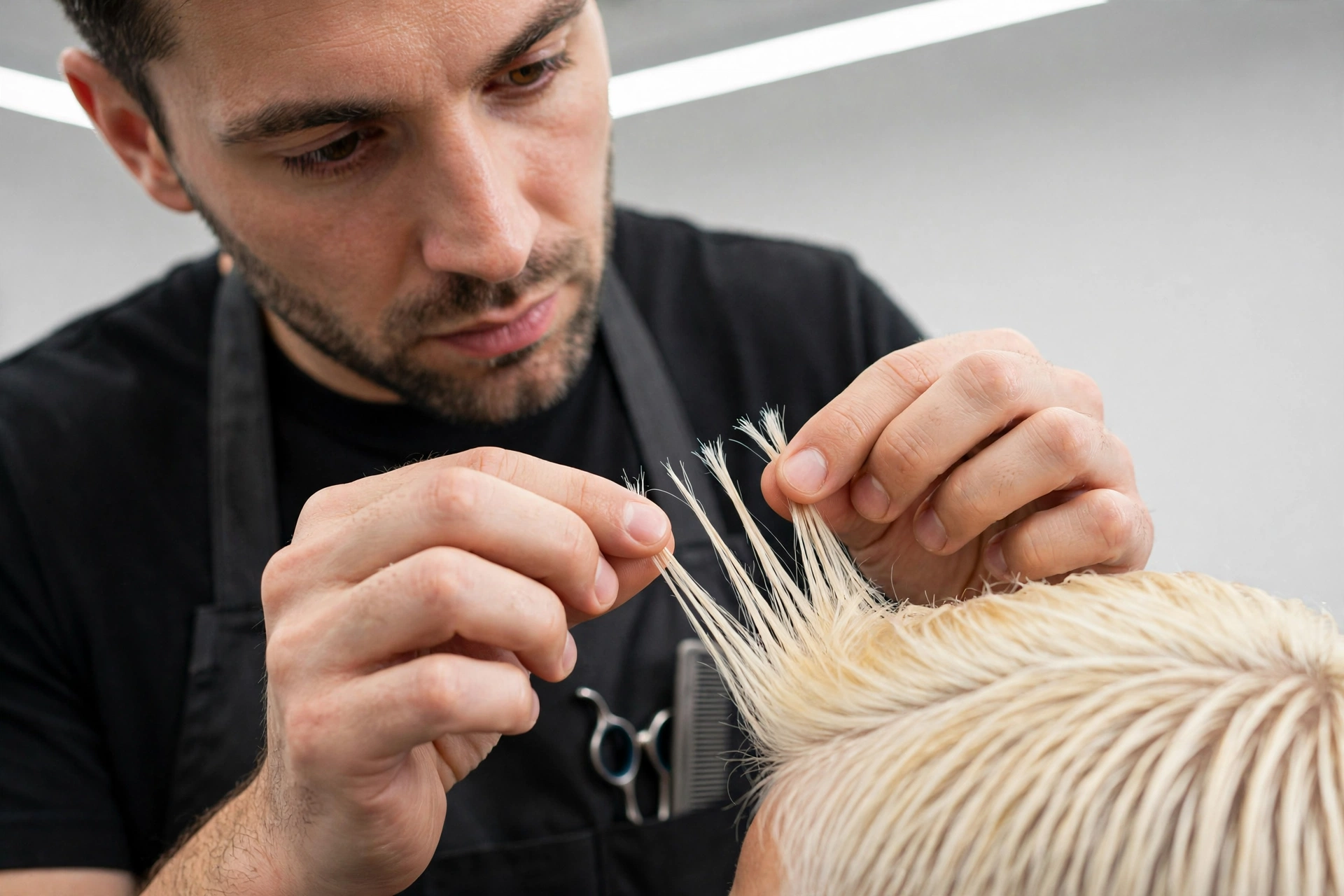
Let’s clear this up first, because half the guys I talk to think frosted tips means dyeing your whole head blonde. It doesn’t. Frosted tips are a highlighting technique where only the ends of your hair — the tips — get bleached light, while your natural color stays at the roots. The result is that two-tone contrast: darker at the base, bright at the ends. Your barber pulls small sections of hair through a cap (the old-school method) or paints bleach onto the ends freehand (the modern way), processes them to a pale blonde or platinum, and tones out the brass.
It’s different from full highlights or a full bleach job in one big way: commitment. Because the color lives on the ends, you don’t get that harsh regrowth line a month later. Your roots grow in naturally and the look just… fades into a lived-in blonde. You can refresh the tips every 8 to 12 weeks, or just let them grow out and trim them off when you’re bored. No awkward in-between phase. That’s why guys who’ve never colored their hair before start here — it’s basically the training wheels of hair color.
The 2026 version has moved on from the cap-and-spike routine. Modern frosted tips are softer. Barbers use balayage-style painting, finer sections, and better toners, so the tips look sun-bleached rather than dipped in paint. It works on textured crops, quiffs, buzz cuts, curls — pretty much any cut with a couple of inches on top. Short sides fade into it perfectly. And if you’re wondering whether your dark hair can pull it off, it absolutely can. Dark roots with icy tips is the whole point.
Why Frosted Tips Are Trending in 2026
So why now? Two words: football and nostalgia. During the World Cup cycle, guys like Enner Valencia and Nico Williams showed up with bleached tips and suddenly every barbershop in the country had a waiting list for it. When athletes at that level wear something, it stops being a throwback and starts being a trend. Search data backs it up — “frosted tips men” queries have been climbing all year, and barbers are posting the technique constantly on Instagram and TikTok.
There’s also the Y2K revival thing, which at this point has touched everything — baggy jeans, chunky sneakers, and yes, hair. But the guys getting frosted tips in 2026 aren’t cosplaying the ’90s. They’ve taken the idea and rebuilt it for now: less gel, more texture. The spikes are gone; in their place you’ve got messy crops, curtain fringes, and quiffs where the blonde ends look like they happened naturally. My barber told me the number one request is “frosted but not frosty” — people want the contrast without the frosted-flakes crunch.
And honestly? The timing makes sense. After years of everyone getting the same fade with the same dark top, guys are bored. Color is the easiest way to stand out without changing your whole cut. Frosted tips give you that pop for a fraction of the price of a full color service, and the maintenance is almost nothing. It’s low risk, high reward, and it photographs ridiculously well — which in 2026 counts for a lot.
18 Frosted Tips Styles to Try in 2026
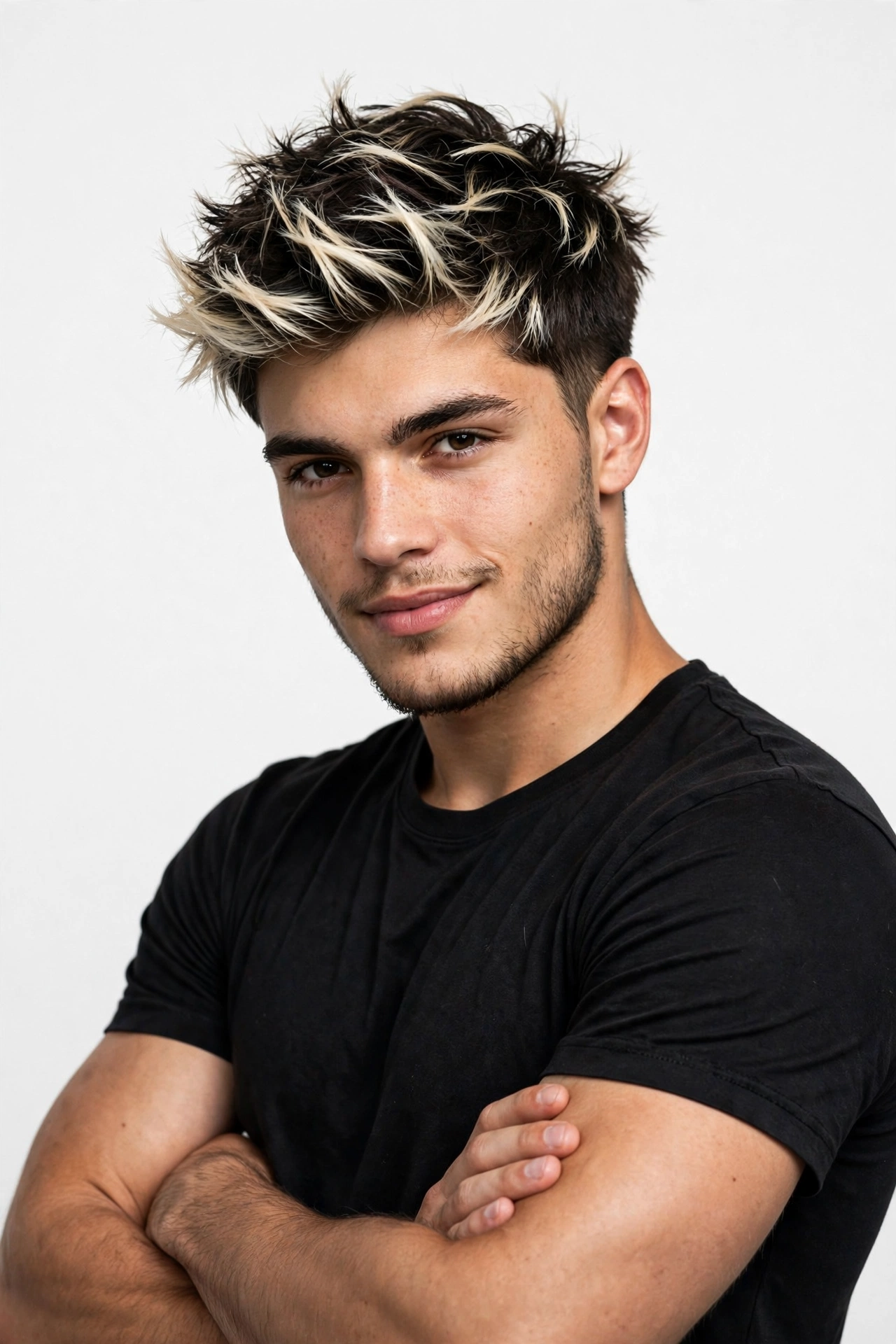
Alright, here’s the main event. I’ve gone through barbershop portfolios, footballer photos, and way too many Instagram saves to pull together the 18 frosted tips styles that actually work right now — not museum pieces from 1999. Each one pairs the bleached-tip color with a specific modern cut, so you can walk into your barber and point at exactly what you want. Whether your hair is straight, wavy, or curly, and whether you like it short or you need some length on top, there’s a version here with your name on it.
1. Classic Textured Crop with Frosted Tips
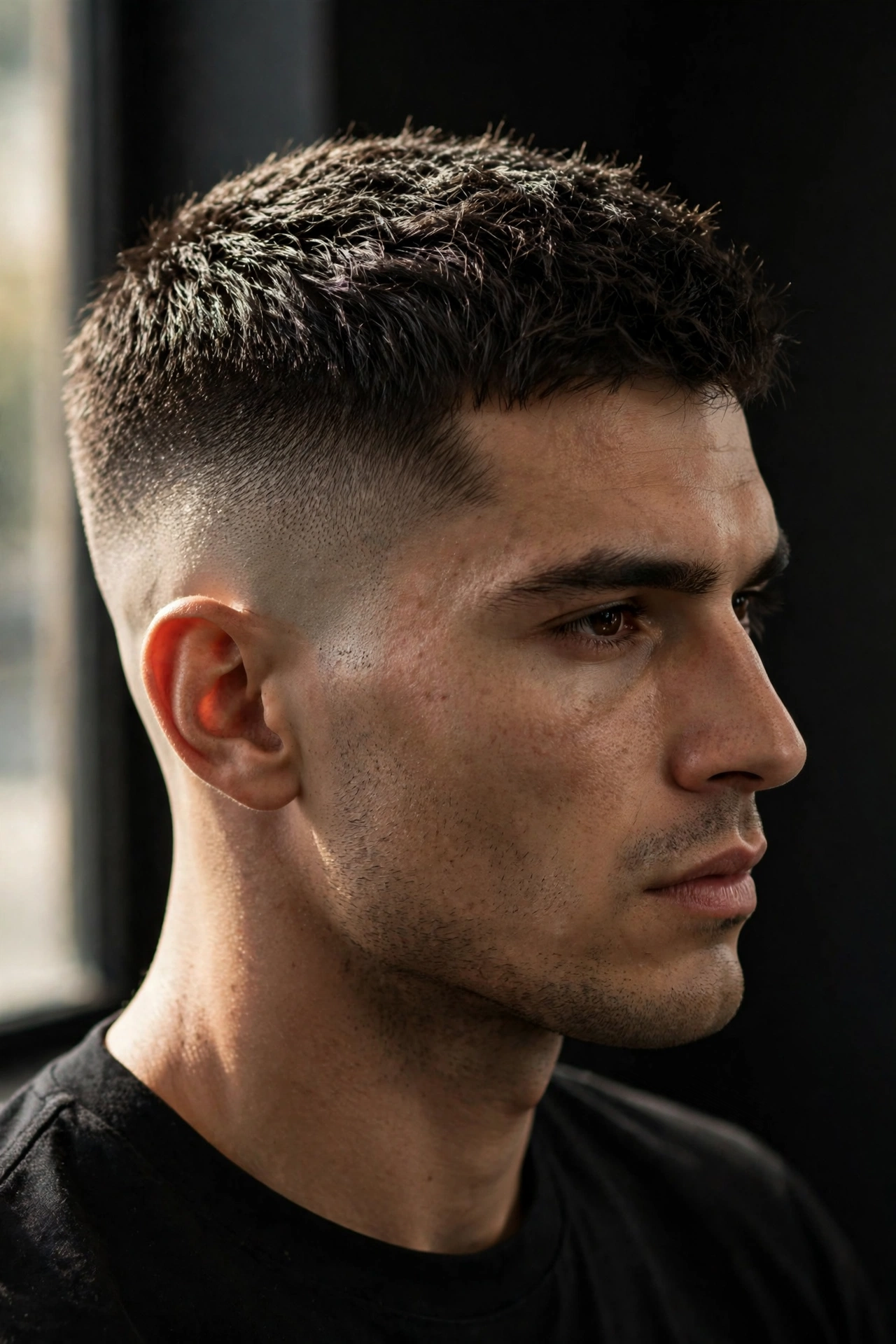
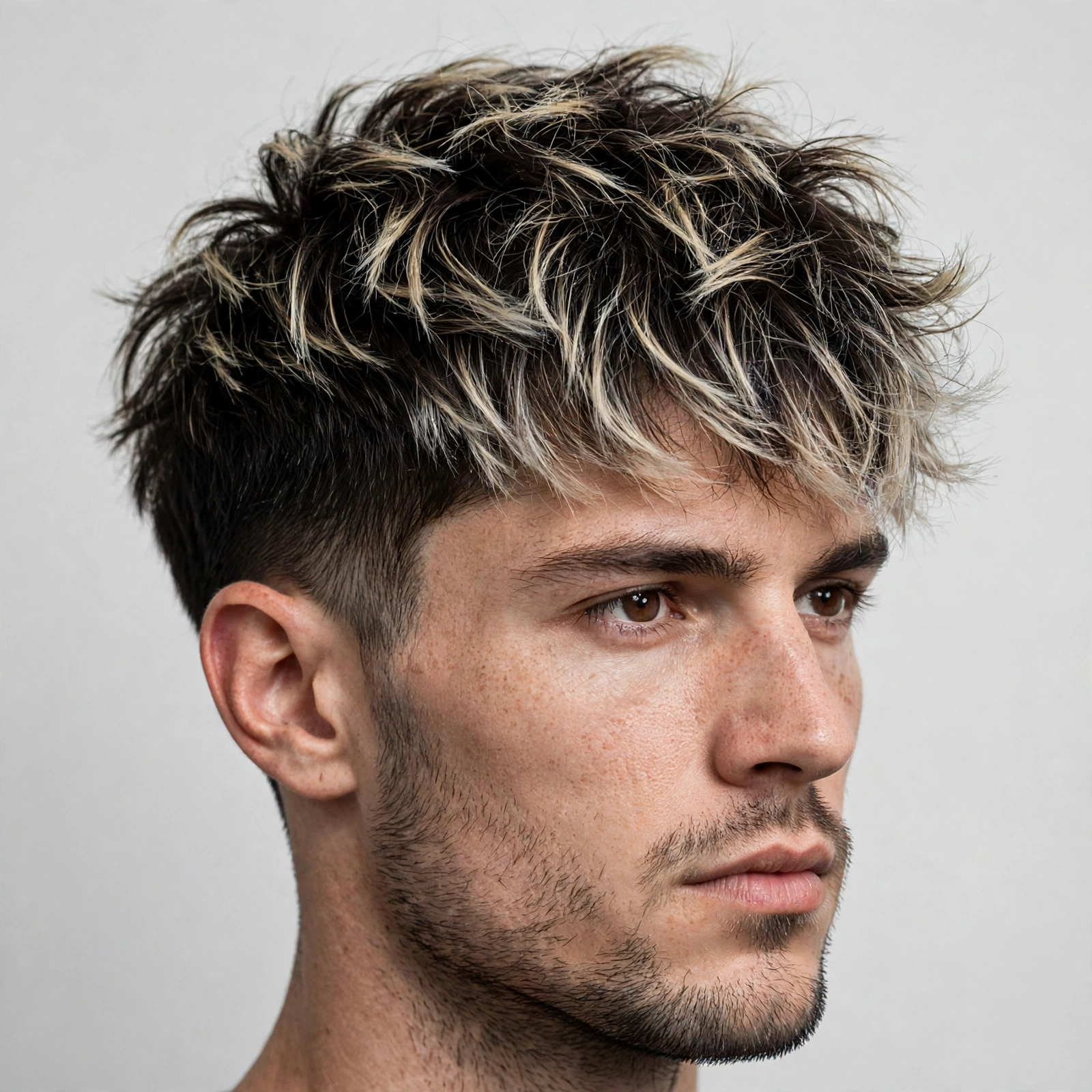
If you’re only going to pick one from this list, make it this one. The textured crop is the most requested men’s haircut in barbershops right now, and it’s basically built for frosted tips. Your barber cuts the top to about two to three inches with lots of point-cut texture, fades the sides tight, and then bleaches just the very ends. The texture is what makes it work — every little piece catches the light differently, so the blonde tips look scattered and natural instead of painted on. It’s the single best “I’m trying something new but I’m not trying too hard” haircut in this entire article.
Styling it takes about three minutes, which is the other reason guys love it. Towel-dry your hair, rub a pea-sized amount of matte clay between your palms, and push the hair forward and slightly to the side with your fingers. That’s it. No blow dryer needed, no comb, no stress. The frosted tips do all the visual heavy lifting. Ask for a mid fade on the sides (a #1 to #2 blend works for most guys) and tell your barber you want heavy texture through the top — if the top is cut blunt and flat, the bleach will sit in one solid band and look cheap. Texture is non-negotiable here.
2. Modern Quiff with Frosted Tips
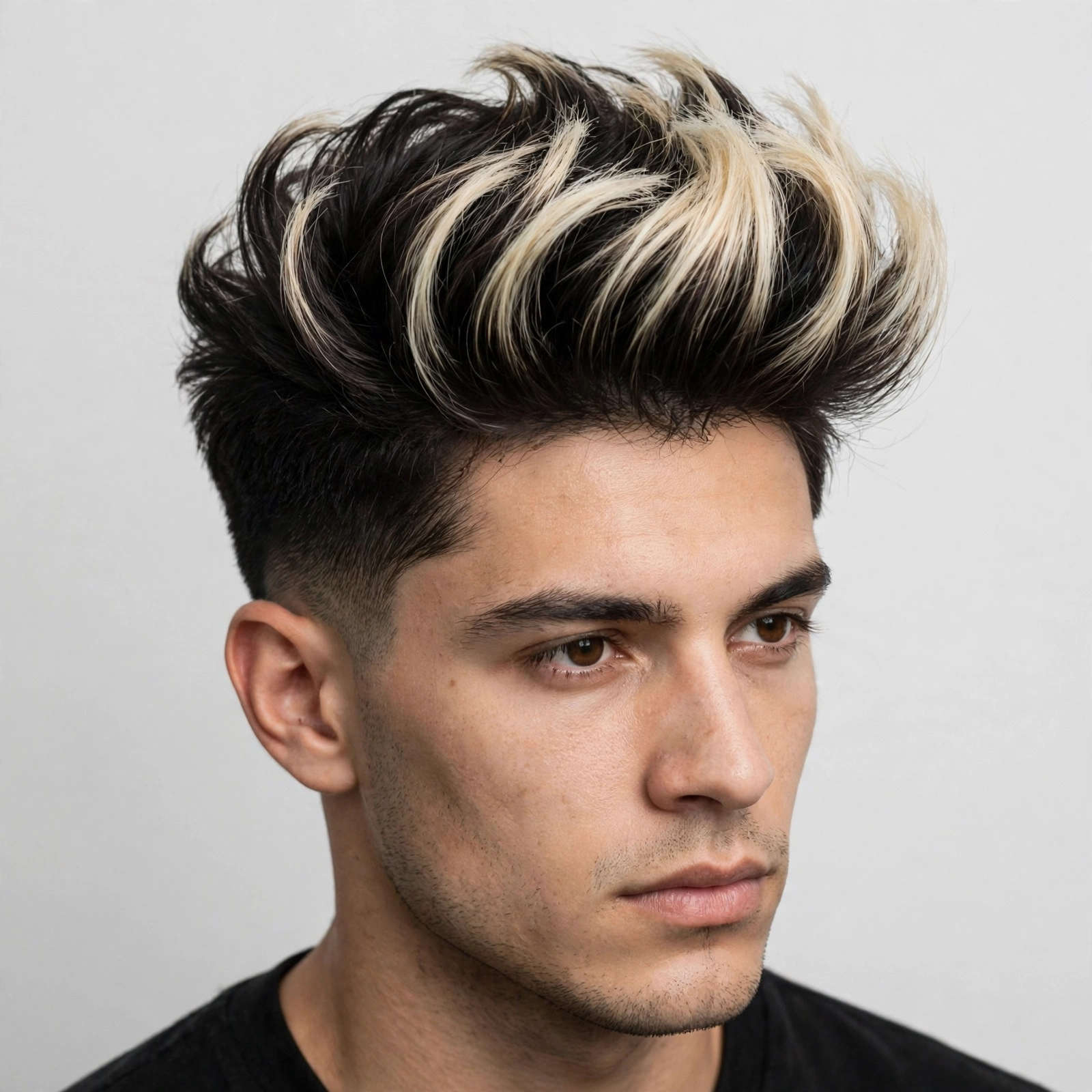
The quiff is the dress-up version of frosted tips. Instead of pushing everything forward like the crop, you’re sweeping the front up and back, which puts the bleached ends on full display — they’re literally the highest point of your haircut. This is the style for weddings, date nights, and any situation where you want to look like you actually tried. You need three to four inches of length up front for a proper quiff, so if your hair’s on the shorter side, grow it out for six to eight weeks before you book the color.
The bleach placement matters more here than on any other style, because the quiff shows everything. Your colorist should paint the tips freehand and keep the blonde concentrated on the front sweep and the top layer, leaving the underlayers darker. That gradient is what separates a salon-quality quiff from a DIY disaster. Style it with a blow dryer — brush the front up and back while the heat sets the direction — then lock it in with a medium-hold pomade or cream. The shine of a cream product actually makes frosted tips pop harder than matte products do. Try it and see.
3. Buzz Cut with Frosted Tips
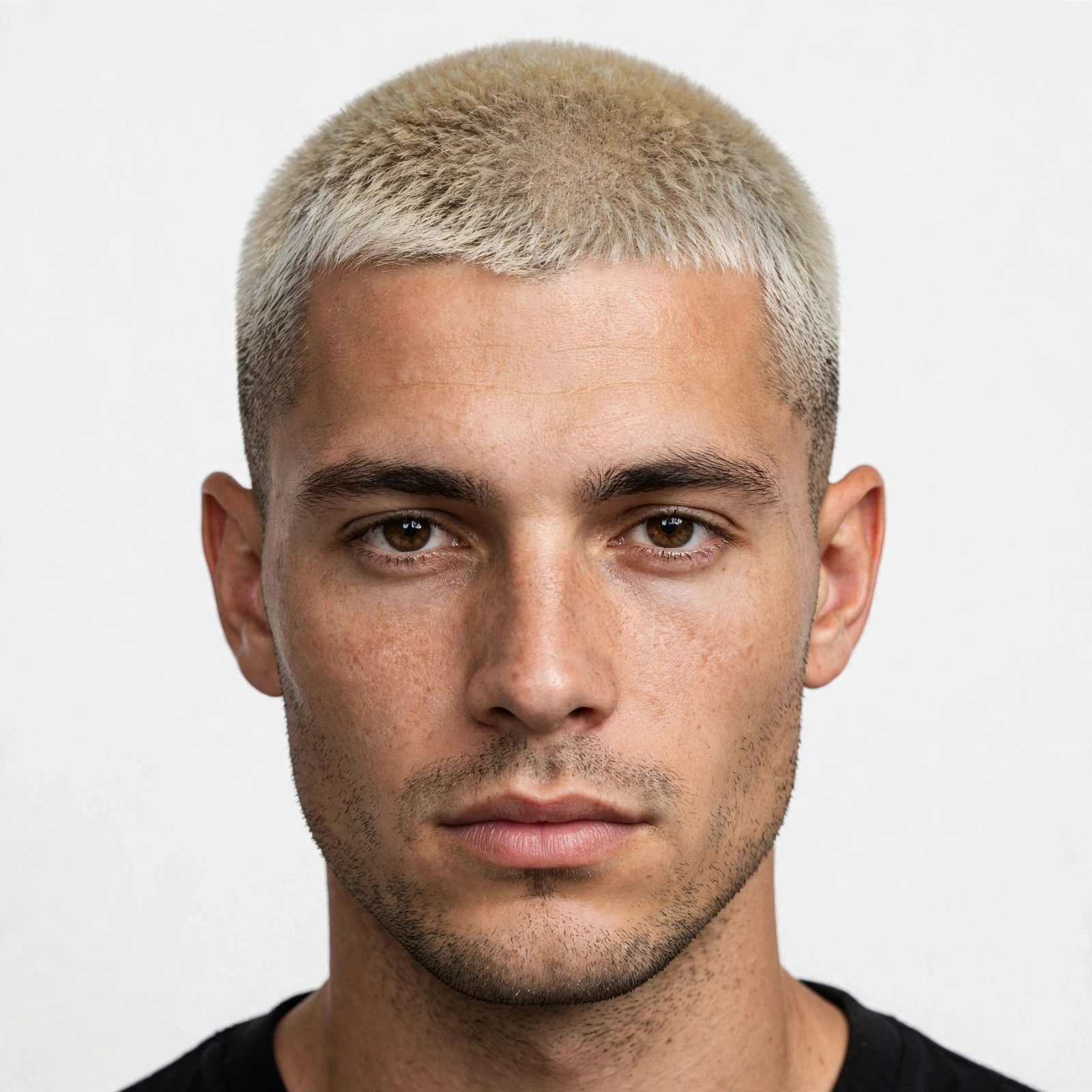
Yeah, this one sounds impossible. How do you frost the tips of hair that’s half an inch long? You don’t — you cheat. The buzz cut version of frosted tips is really a two-stage cut: your barber buzzes the sides down to a #1 or #2, leaves the top at a #4 or #5 (about half an inch to three-quarters), and bleaches the whole top. Because the hair is so short, the “tips” and the “roots” are basically the same thing, so you get a platinum or golden cap sitting on dark faded sides. It looks bold, it looks deliberate, and it’s the lowest-maintenance color on this list by a mile.
Fair warning: this is the most exposed version of the trend. There’s no texture or length to hide uneven bleaching, so don’t DIY this one unless you really know what you’re doing. At the barbershop, ask for the top bleached to a level 9 or 10 blonde (your colorist will know what that means) and toned to kill the yellow. Maintenance is just a purple shampoo wash twice a week and a re-bleach every four to six weeks as the roots come in. The whole thing takes twenty minutes in the chair. Guys with strong jawlines and oval faces absolutely own this look.
4. Fringe with Frosted Tips
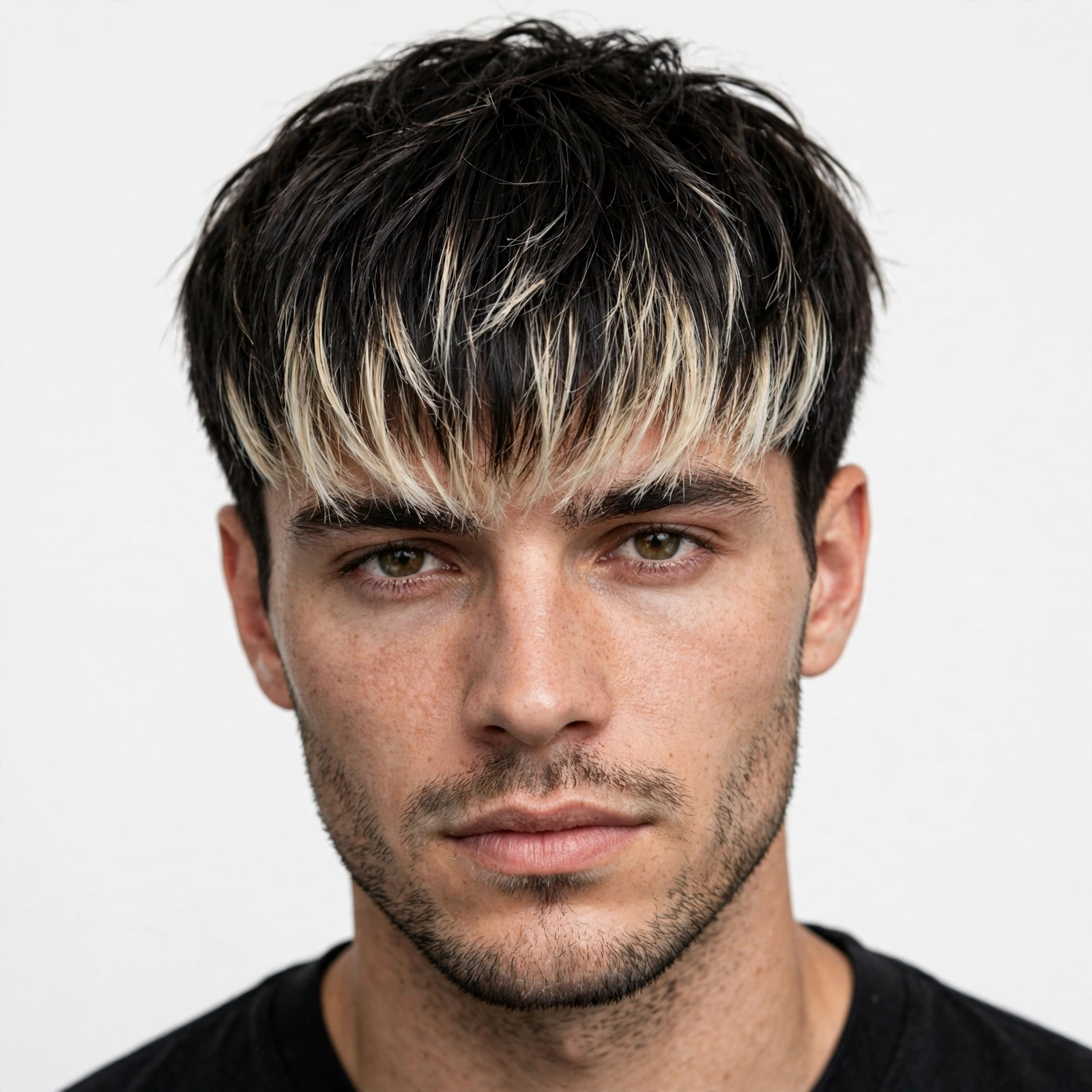
The fringe — hair worn forward over the forehead — has been quietly taking over for a couple of years, and frosted tips might be its perfect partner. When the fringe hangs down, the bleached ends frame your face, which draws attention to your eyes in a way that nothing else on this list does. It works especially well on guys with longer foreheads, since the fringe plus the light tips breaks up the vertical line of the face. Your barber cuts the front to just above or at the eyebrows, keeps the sides faded or tapered, and bleaches the last inch or so of the fringe.
Here’s what nobody tells you about this style: the fringe shows regrowth faster than anything else, because it’s the part of your haircut people look at most. Plan on a toner refresh every three to four weeks to keep the blonde from going brassy — most salons will do a quick toner for cheap if you’re a regular. Styling is dead simple. A little sea salt spray on damp hair, push the fringe forward with your fingers, let it air dry. Done. If your hair is wavy, even better — the waves make the frosted tips look beachy and effortless, like you spent the summer surfing instead of sitting in a salon chair.
5. Messy Spikes with Frosted Tips
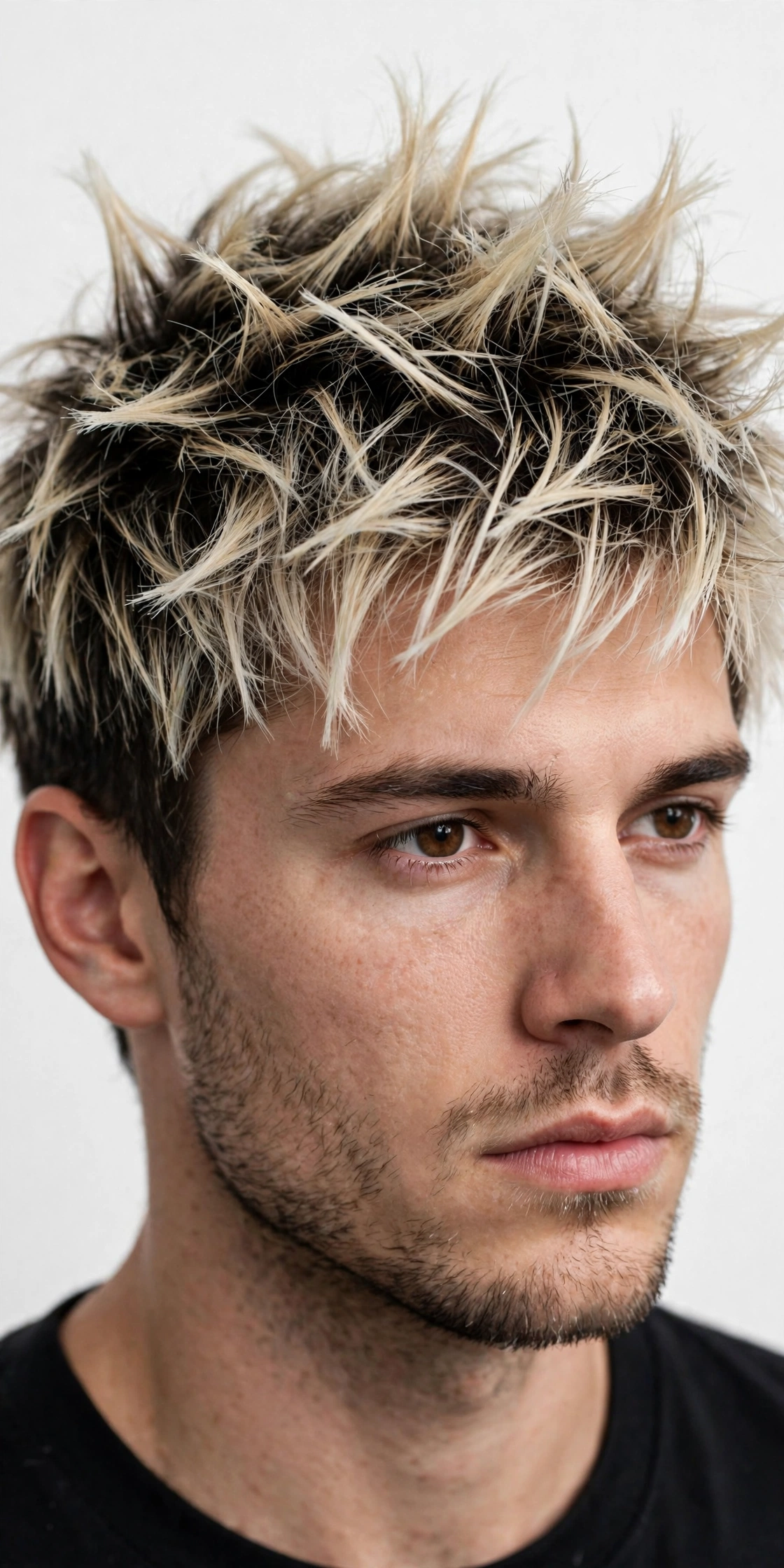
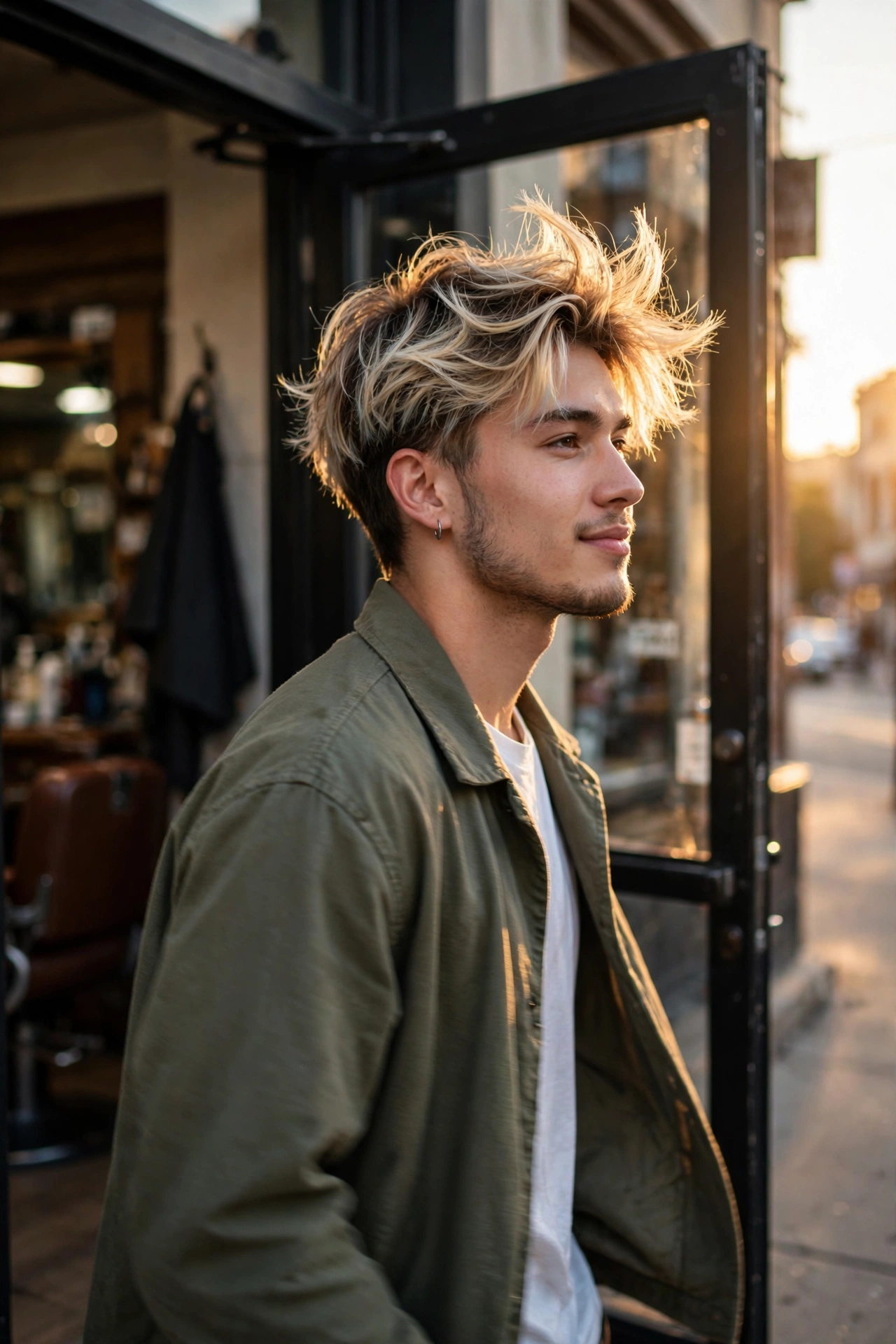
Let’s address the elephant in the room: spikes were the original frosted tips vehicle in the ’90s, and yes, they’re back. But the 2026 version isn’t the stiff, crunchy, could-poke-an-eye-out spikes of the boy-band era. Modern spikes are looser, more separated, and the bleach is lighter — think piece-y, touchable texture rather than a helmet of gel. Your barber cuts the top to two to three inches with aggressive point cutting, and the bleach goes on the ends of the spikes so each one reads as a separate blonde streak. It gives you that nostalgic hit without looking like a costume.
The product choice makes or breaks this one. Forget the hard gels — use a fiber cream or a light wax with a matte finish, and use less than you think. You want the spikes to move, not stand at attention. Work the product through dry hair, twist small sections between your fingers to define them, and leave the sides faded clean so the contrast stays sharp. This is a great pick if your hair is thick and straight, because thick hair holds spikes without much effort. Fine-haired guys can still pull it off, but you’ll need a volumizing powder at the roots first.
6. Mid Skin Fade with Frosted Tips
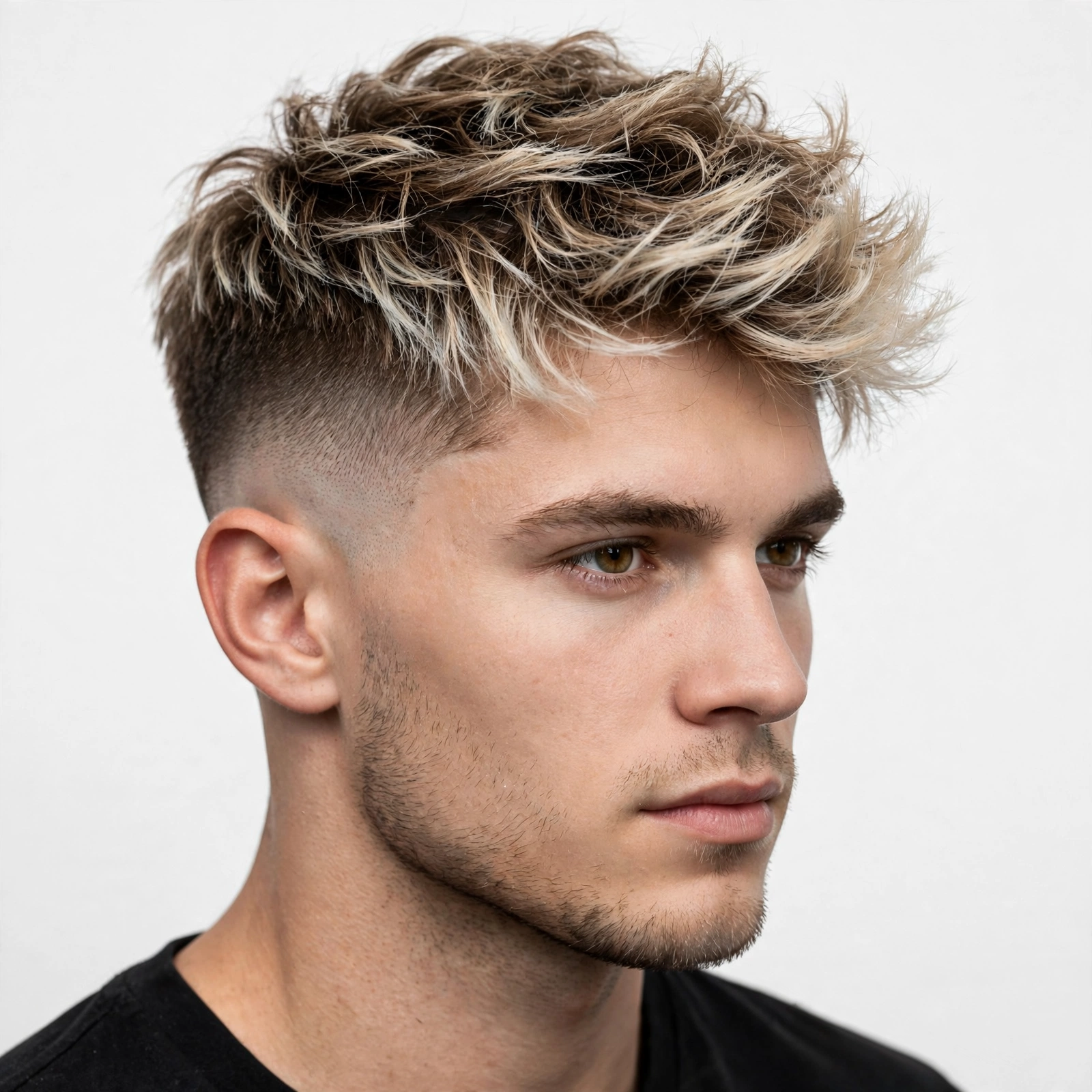
This one’s less about the top and more about the frame. A mid skin fade — where the sides go all the way down to bare skin around the temples and ears, blending up into length on top — creates the sharpest possible contrast for frosted tips. The fade keeps everything below the color clean and crisp, so the bleached ends on top look intentional instead of accidental. It’s the haircut equivalent of a tailored suit: the structure does the talking. Most guys pair this with two to three inches of textured length on top, but it works with a quiff, a crop, or even a short fringe.
The catch is upkeep. A skin fade grows out fast — you’ll see it lose its edge in about ten days — so this style commits you to a barber visit every two to three weeks. The good news is those visits are quick and cheap (usually just a fade cleanup), and you can stretch the color to eight or ten weeks since only the tips are bleached. Tell your barber you want the fade to start at the mid-point of the head and blend into a #0 or razor finish at the bottom. And if your barber suggests a textured crop on top, listen to them — it’s the pairing they recommend for a reason.
7. Curtain Bangs with Frosted Tips
Curtains — the middle-parted fringe that frames both sides of your forehead — are having a massive moment, and frosted tips turn them up another notch. The bleach gets painted onto the ends of the two curtain panels, so when they fall on either side of your face, you get these light streaks drawing the eye inward. It’s a softer, more romantic take on the trend, and it works beautifully on guys with straight or slightly wavy hair. You need about four to five inches of length in the front for proper curtains, so this one’s for the guys who’ve been growing their hair out.
The parting is everything with this style. Find your natural middle part (it won’t be perfectly centered — nobody’s is), and train it with a blow dryer for the first week: dry the hair forward and down on each side while it’s damp, and the part will start to hold on its own. Use a lightweight cream, not a heavy wax — curtains need to move. The frosted tips should be subtle here, maybe two shades lighter than your natural color rather than full platinum. It reads as sun-bleached and effortless, which is exactly the vibe curtains are going for. If you’ve been checking out highlight ideas, this is the grown-up version of that trend.
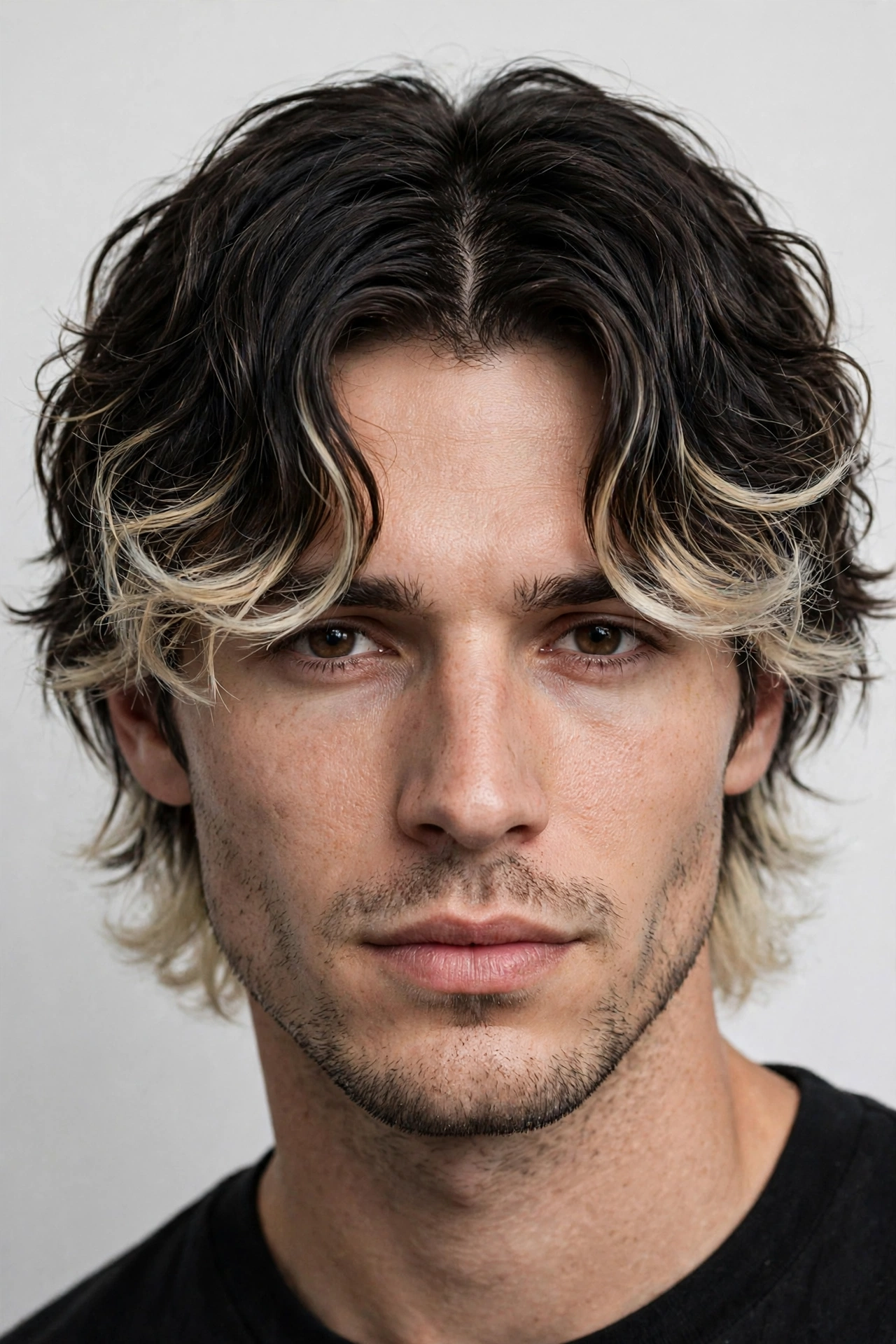
8. High-Top Fade with Frosted Tips
The high-top fade is a statement haircut, full stop — and frosted tips make it even louder. The top stands tall and flat, anywhere from two to four inches high, while the sides fade down tight. When you bleach the top section, you get this striking blonde block floating above dark faded sides, and honestly, few things in men’s hair get more attention. This is a style with roots in Black barbershop culture, and it deserves a barber who really knows how to shape a high top — the geometry has to be perfect or the whole thing looks off.
Here’s the practical side: the flat top needs to be cut every one to two weeks to keep its shape, so you’re already in the chair regularly, which makes color maintenance easy to fold in. The bleach on a high top is usually done in one solid section rather than scattered pieces — your colorist will lift the top to a level 9 or 10 and tone it. Because the hair on top is longer than a buzz but shorter than a quiff, you get the boldest blonde-to-dark contrast of any style on this list. Style it by picking the top out and using a light hold spray to keep it standing. It’s not subtle. It’s not supposed to be.
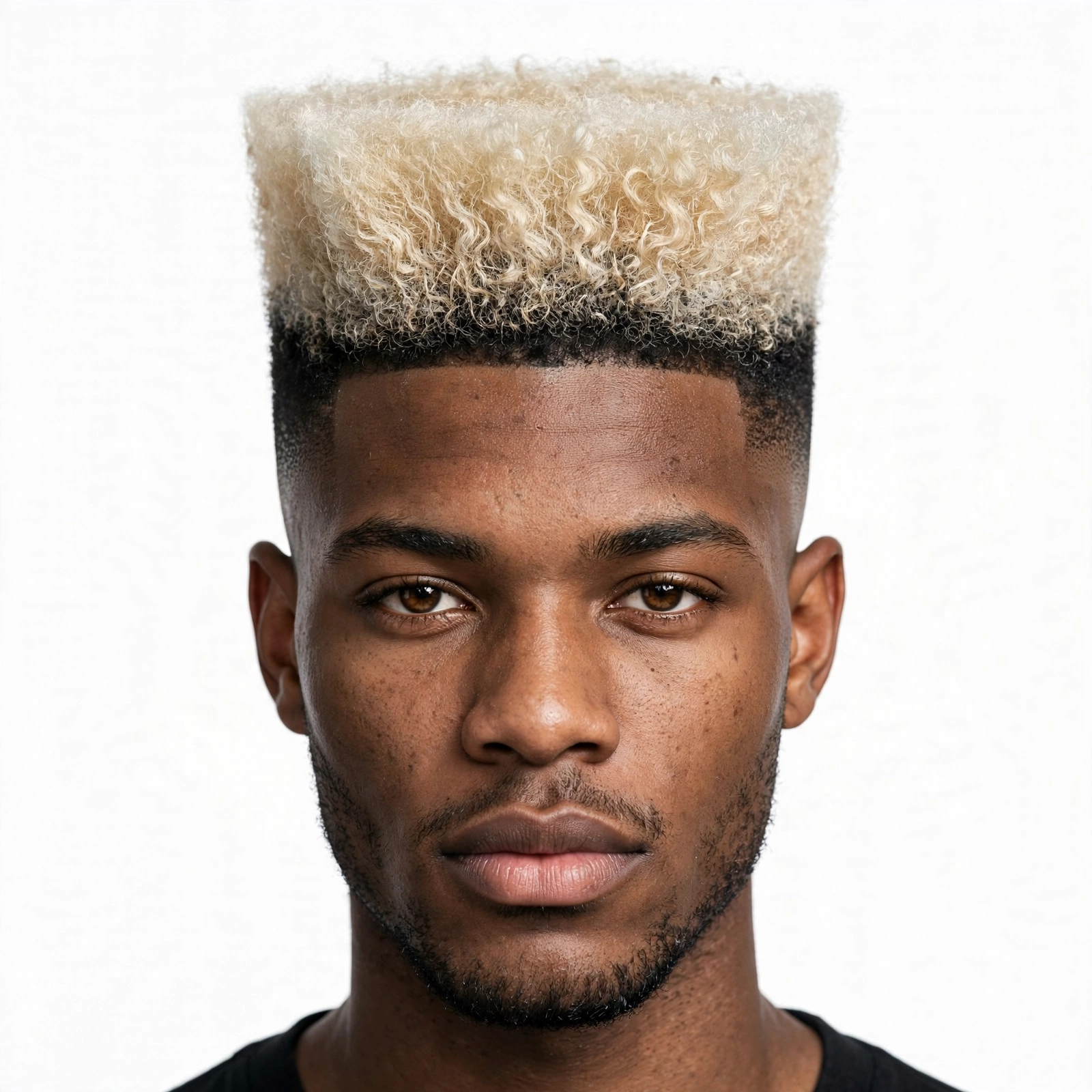
9. Wavy Top with Frosted Tips
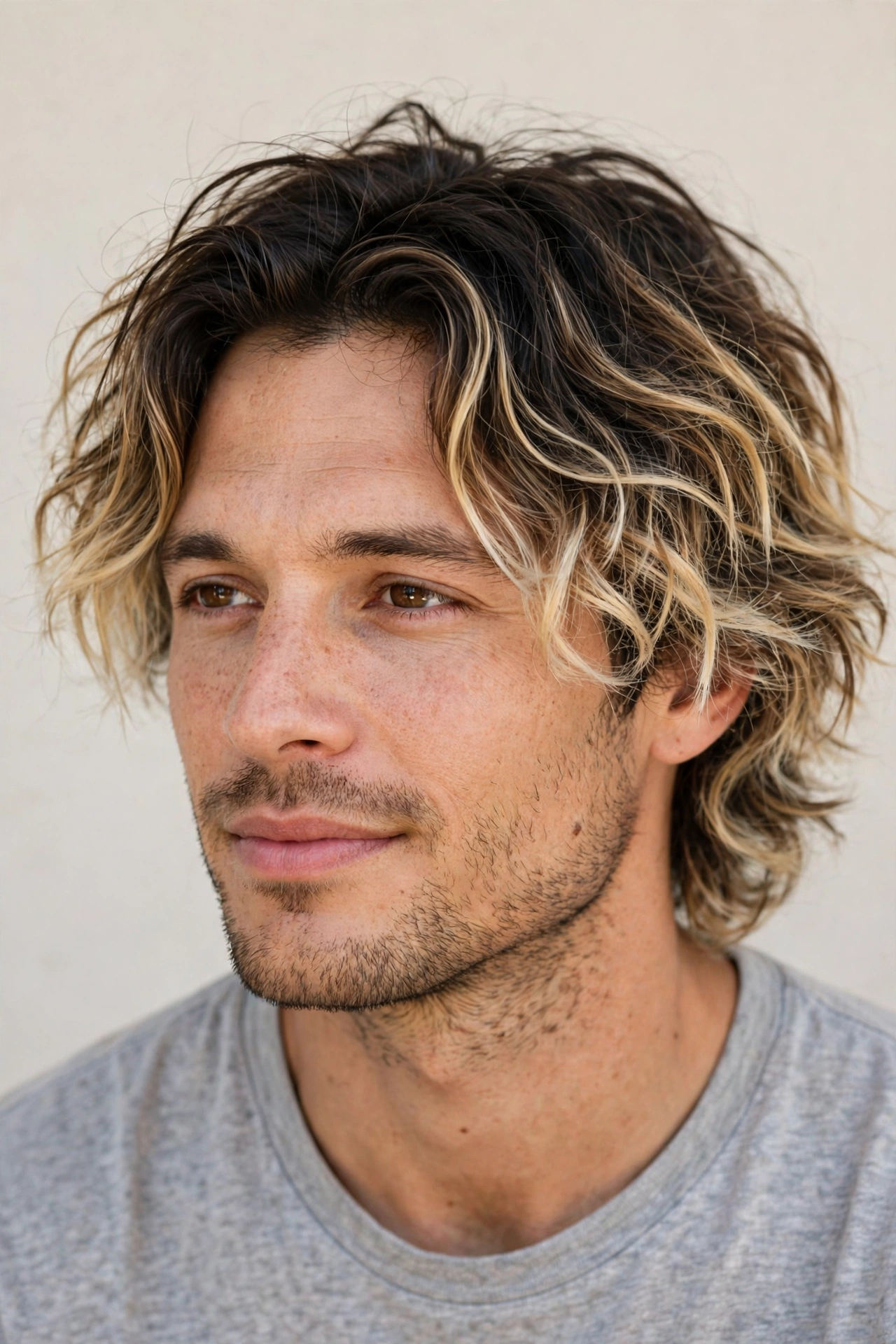
If your hair has natural wave, frosted tips were basically invented for you. Waves break up the bleach into organic, irregular streaks — no two heads look the same, and the color looks like it happened over a summer outdoors instead of in a salon chair. The best version of this is a medium-length top, three to four inches, with the sides kept shorter in a taper or low fade. Your colorist paints the bleach onto the ends of the waves freehand (no cap, no foils — just balayage), which follows the natural movement of your hair and looks completely seamless.
Styling wavy frosted tips is about enhancing what you already have, not fighting it. Sea salt spray is your best friend — mist it through damp hair, scrunch the waves with your hands, and let it air dry. If you want more definition, a curl cream does the same job with a bit more hold. The one thing to watch: wavy hair shows damage more easily than straight hair, and bleach is bleach. Use a deep conditioning mask once a week, keep the heat styling to a minimum, and your waves will stay bouncy and bright instead of dry and crunchy. Guys with type 2A to 2C waves, this is your style.
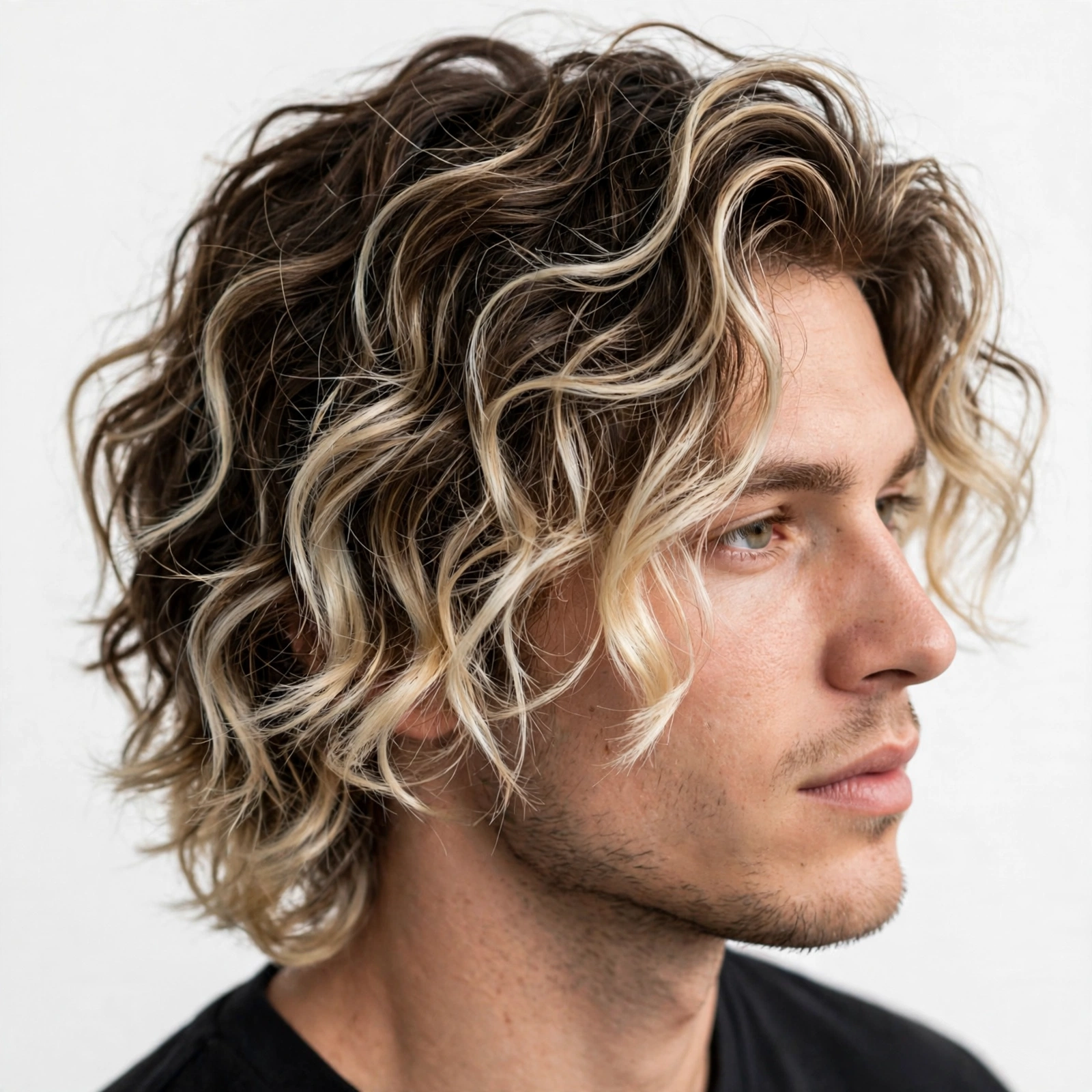
10. Classic Comb Over with Frosted Tips
Before you scroll past — no, not that comb over. The modern comb over is a sharp, side-parted style with real volume, and frosted tips give it an edge it never had before. The bleach goes on the ends of the swept-over top, so when the hair moves across the head, the blonde tips catch the light in a way that makes the whole style look thicker and more dimensional. It’s a smart pick for guys in their late twenties and thirties who want to try color without looking like they’re trying to be nineteen again.
The key detail is the part. A hard part — where the barber razors a clean line into the parting — looks incredible with frosted tips because the precision of the part contrasts with the softness of the bleached ends. Keep the top at three to four inches so there’s enough length to sweep, and ask for a low or mid fade on the sides. Style it with a blow dryer for volume (dry the hair in the direction of the part) and finish with a medium-shine pomade. The slight sheen of the pomade makes the frosted tips glow. This is also one of the most office-friendly options on the list — the color is noticeable but the cut is classic.
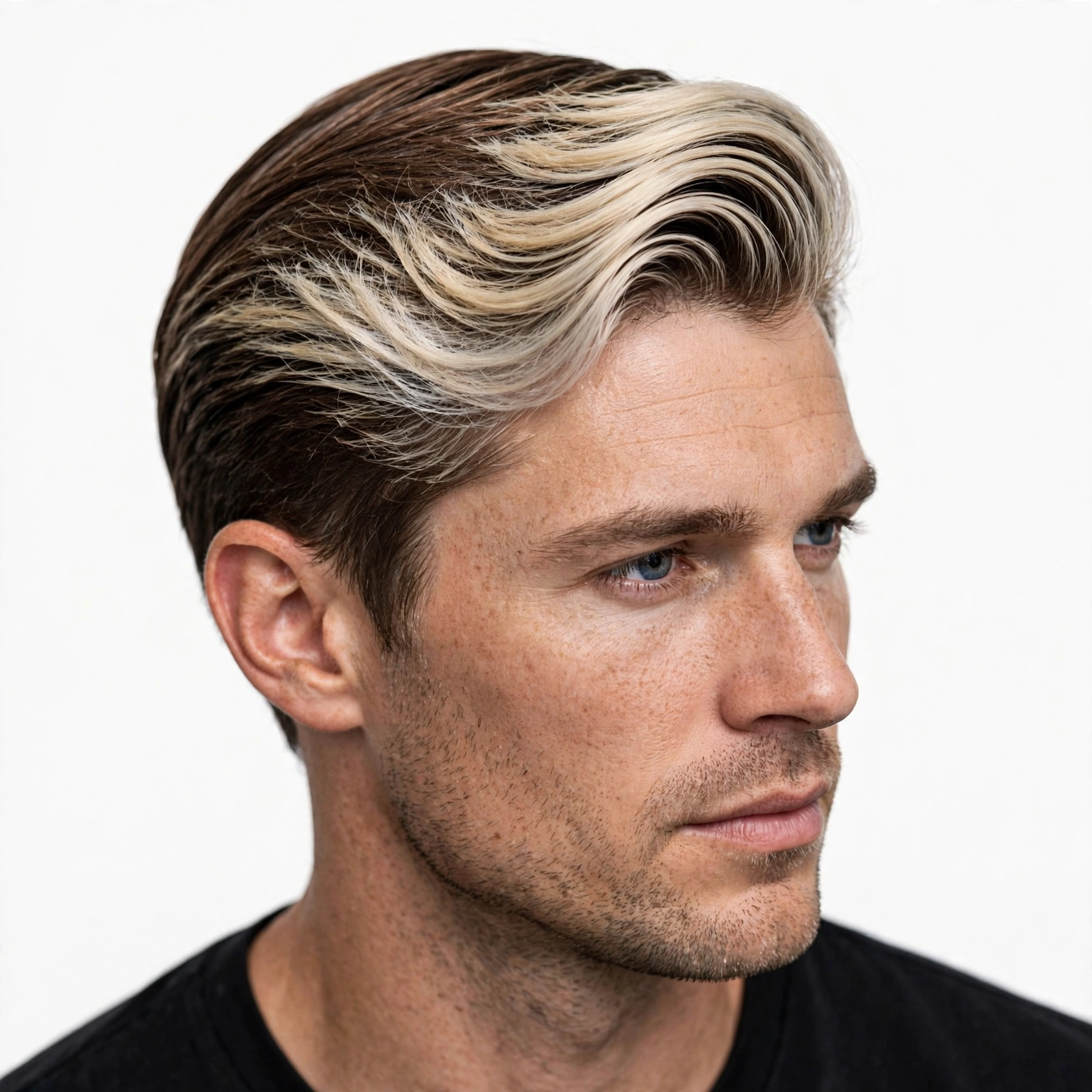
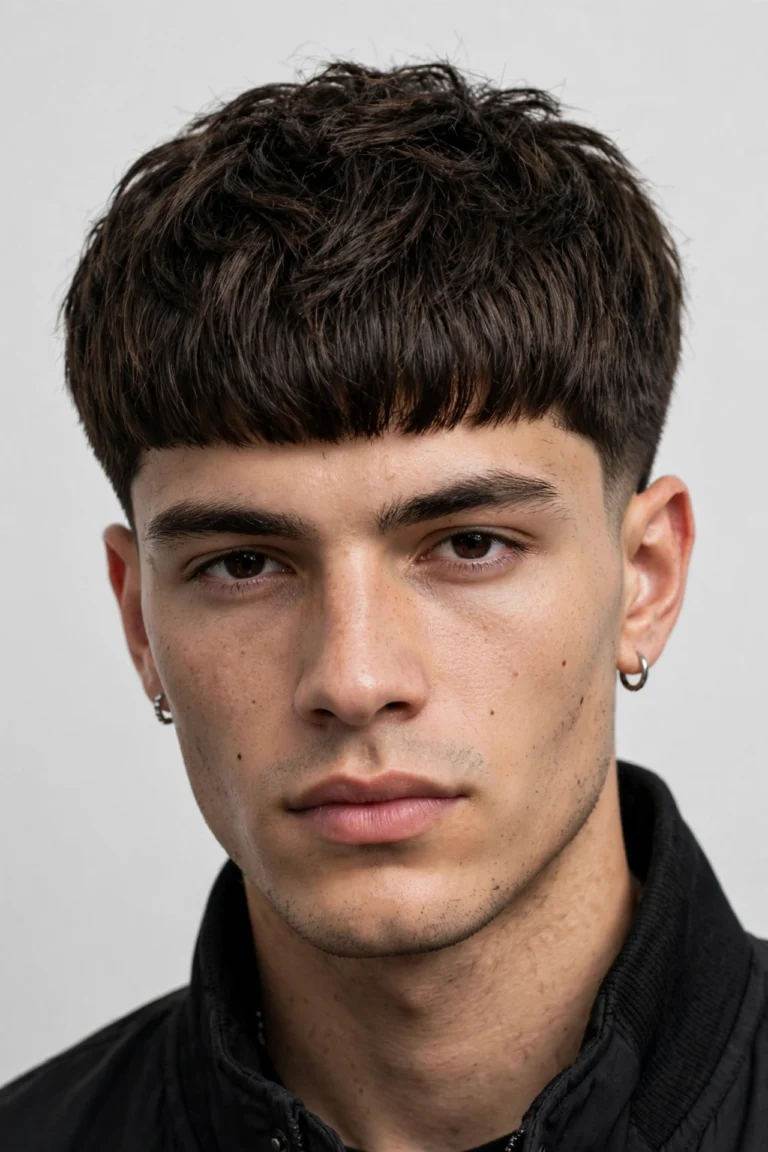
11. Caesar Cut with Frosted Tips
The Caesar — short, even length all around with a straight fringe across the forehead — is one of the oldest haircuts in the book, literally named after Julius Caesar. Frosted tips drag it straight into 2026. Because the Caesar is cut to a uniform short length (usually a #3 to #5 on top), the bleach sits in an even band around the entire head, which gives you a clean, graphic look: dark sides fading up into a blonde-tipped cap of hair. It’s minimal, it’s sharp, and it takes about ninety seconds to style in the morning.
What I like about this pairing is how it flatters different face shapes. The straight-across fringe shortens a long face, the even length adds width at the temples for narrow faces, and the frosted tips keep it from looking flat or severe. Ask your barber for a Caesar with a low skin fade on the sides — the fade keeps the silhouette modern — and have the colorist bleach just the top layer to a golden blonde rather than platinum. A softer blonde suits the Caesar’s understated vibe better. Wash, towel dry, push forward with your fingers. That’s the whole routine. If you want a style you never have to think about, this is it.
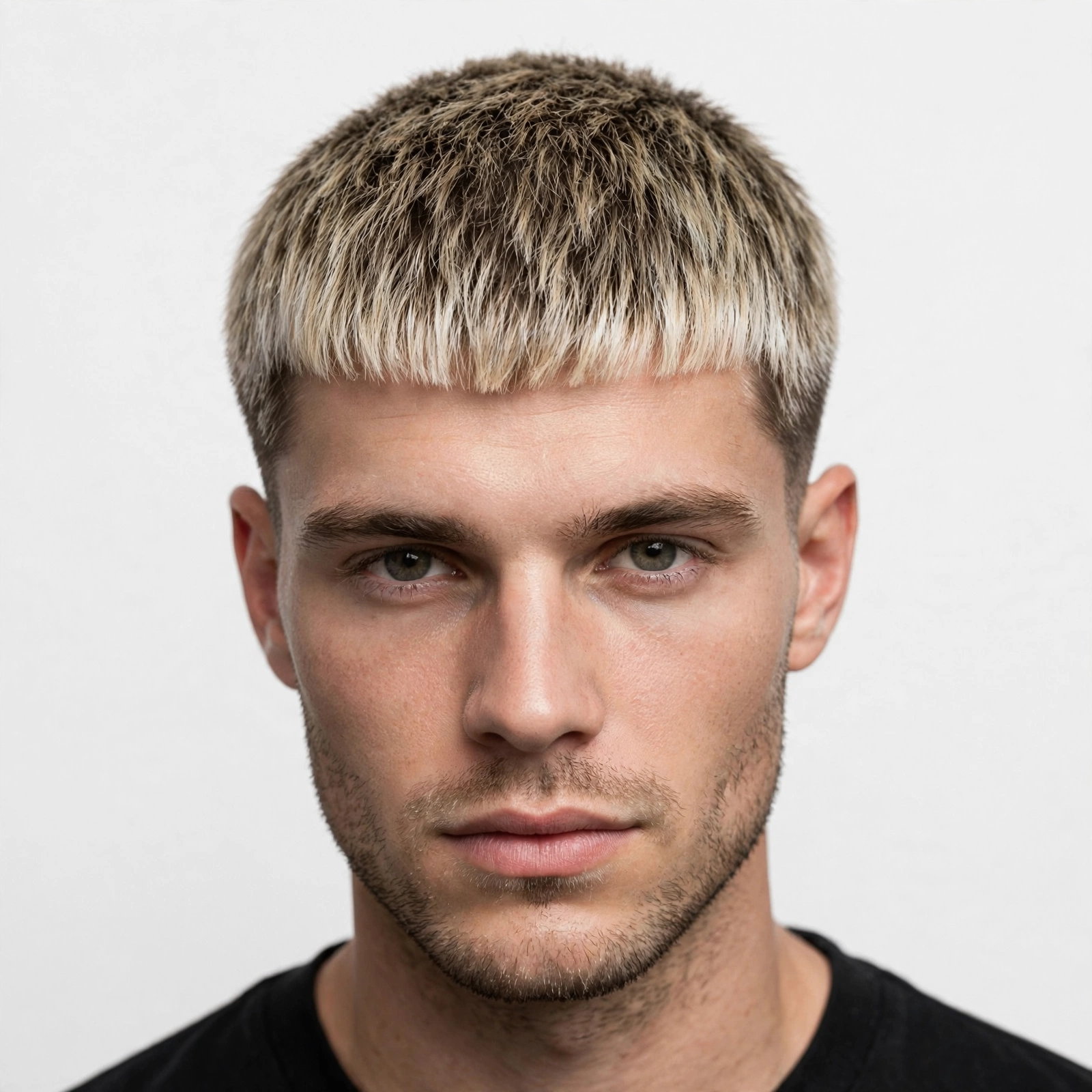
12. Slicked-Back Hair with Frosted Tips
Slicked-back hair with frosted tips is the power move of this list. The hair goes straight back — three to five inches of it — and the bleached ends sit at the back of the head and the crown, visible from every angle except straight-on. It’s a look with real presence: think less “beach day” and more “closing the deal.” The contrast between the dark roots at the hairline and the blonde ends at the back creates this depth that makes the hair look thicker than it is, which is great news if your hair is on the finer side.
You need length for this one, so plan ahead — grow the top out for three to four months if you’re coming from something short. The bleach should be painted through the mid-lengths to the ends (not just the very tips) so the color reads from the side profile. Styling takes a blow dryer and a strong-hold pomade or a matte paste if you want a more modern, less shiny finish. Dry the hair straight back with a brush, work the product through from roots to ends, and comb it smooth. The result is polished but the frosted tips keep it from looking stuffy. It’s the rare style that works at a wedding and at a concert.
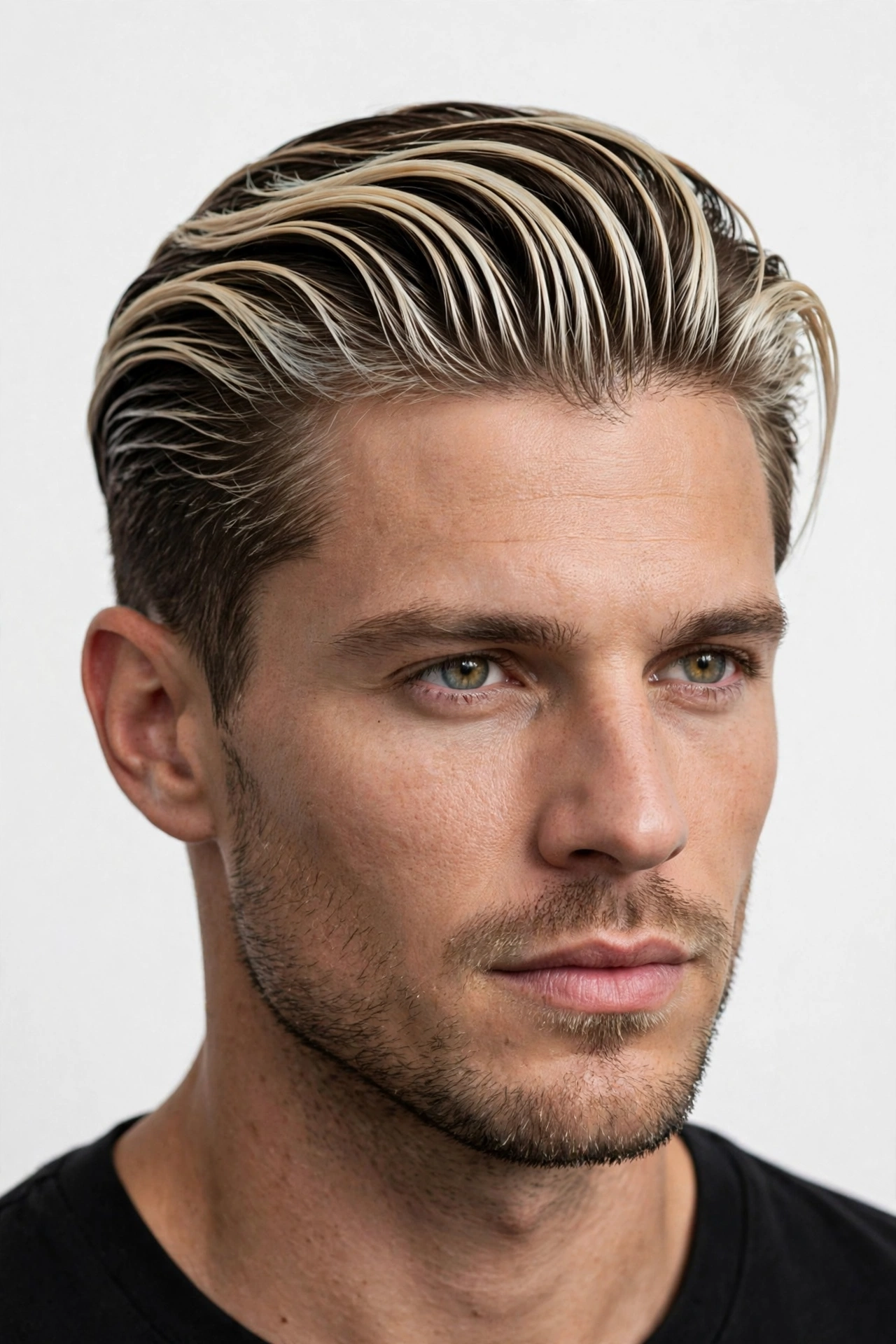
13. Curly Top with Frosted Tips
Curly hair and frosted tips are a match most guys don’t see coming, but the results are unreal. Curls naturally separate into individual ringlets and coils, which means the bleach lands on each curl’s ends independently — you get this dimensional, almost highlighted-from-within effect that straight hair can’t replicate. The best approach is a short-to-medium curly top (two to four inches) with faded or tapered sides, and the colorist paints bleach onto the outer ends of the curls, leaving the roots and the interior dark. When the curls shrink up, the blonde tips sit right on the surface where everyone sees them.
The number one rule with curly frosted tips: do not over-bleach. Curly hair is already drier than straight hair, and bleach makes it drier, so a heavy hand leads to frizz and breakage. A good colorist will use a lower-volume developer (20 vol, not 30 or 40) and process for less time — you want golden blonde, not white. Aftercare is non-negotiable: sulfate-free shampoo, a leave-in conditioner every wash, and a deep conditioning mask weekly. Style with a curl cream on damp hair and either diffuse or air dry. The payoff is a head of curls with blonde tips that looks like you were born interesting.
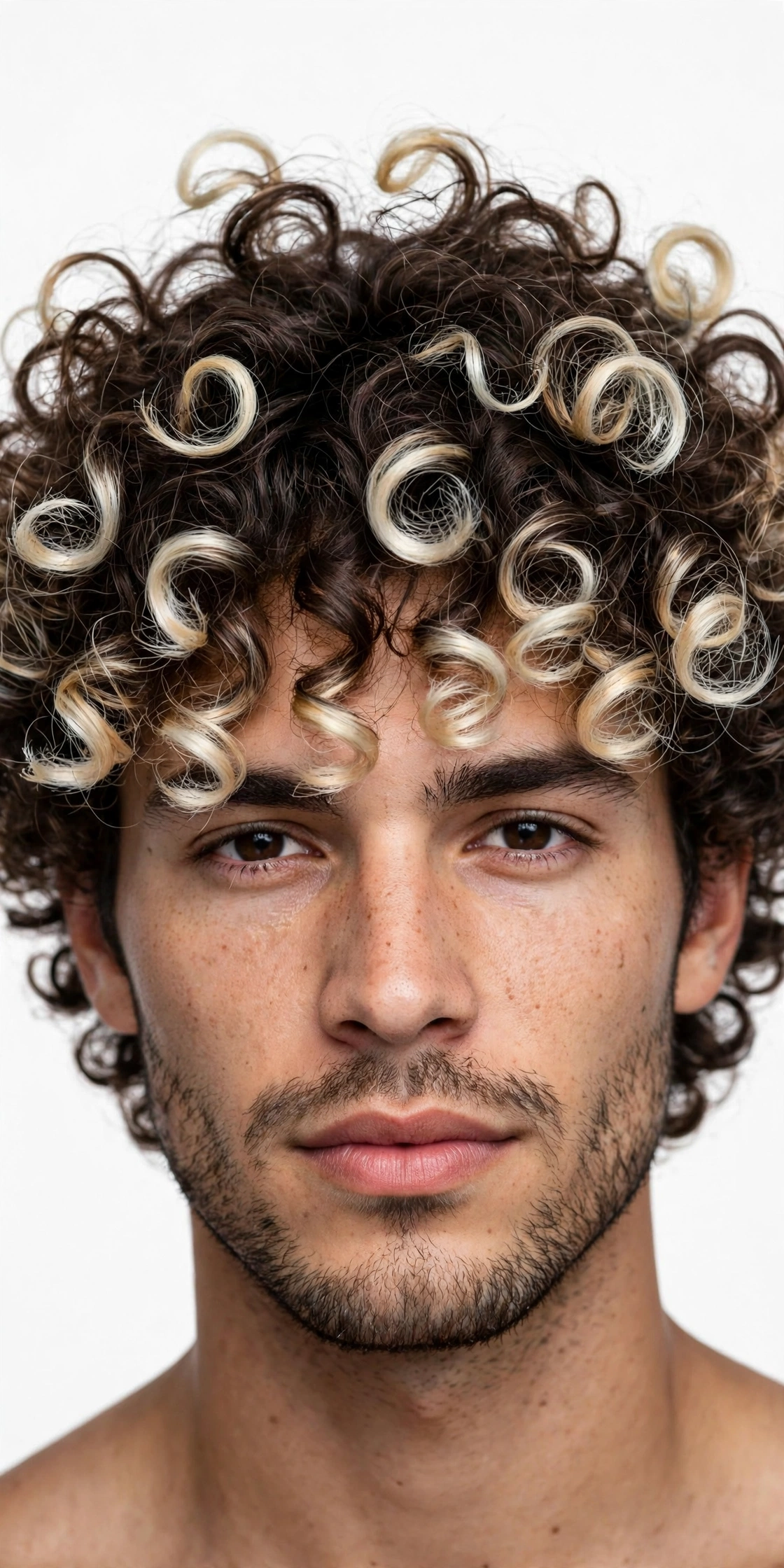
14. Undercut with Frosted Tips
The undercut — long on top, dramatically short on the sides with no blend — is the boldest frame you can put around frosted tips. There’s no fade, no taper, just a hard disconnect between the bleached top and the dark buzzed sides. That harsh line is the whole point. It makes the color look even brighter by comparison, and it gives the style an edgy, fashion-forward feel that a blended fade can’t match. You want at least three inches on top for a proper undercut; four to five is the sweet spot.
This style lives or dies on maintenance, so go in with your eyes open. The disconnected sides grow out visibly in about two weeks, which means you’re back in the chair every fourteen days for a cleanup. The top, though, is easy — the frosted tips grow out gracefully, and you only need a color refresh every eight to ten weeks. Style it by sweeping the top back or to the side with a medium-hold product; the disconnect does the visual work, so you don’t need anything complicated up top. Fair warning: the undercut doesn’t suit every workplace. But if your office is cool with it, few styles turn more heads.
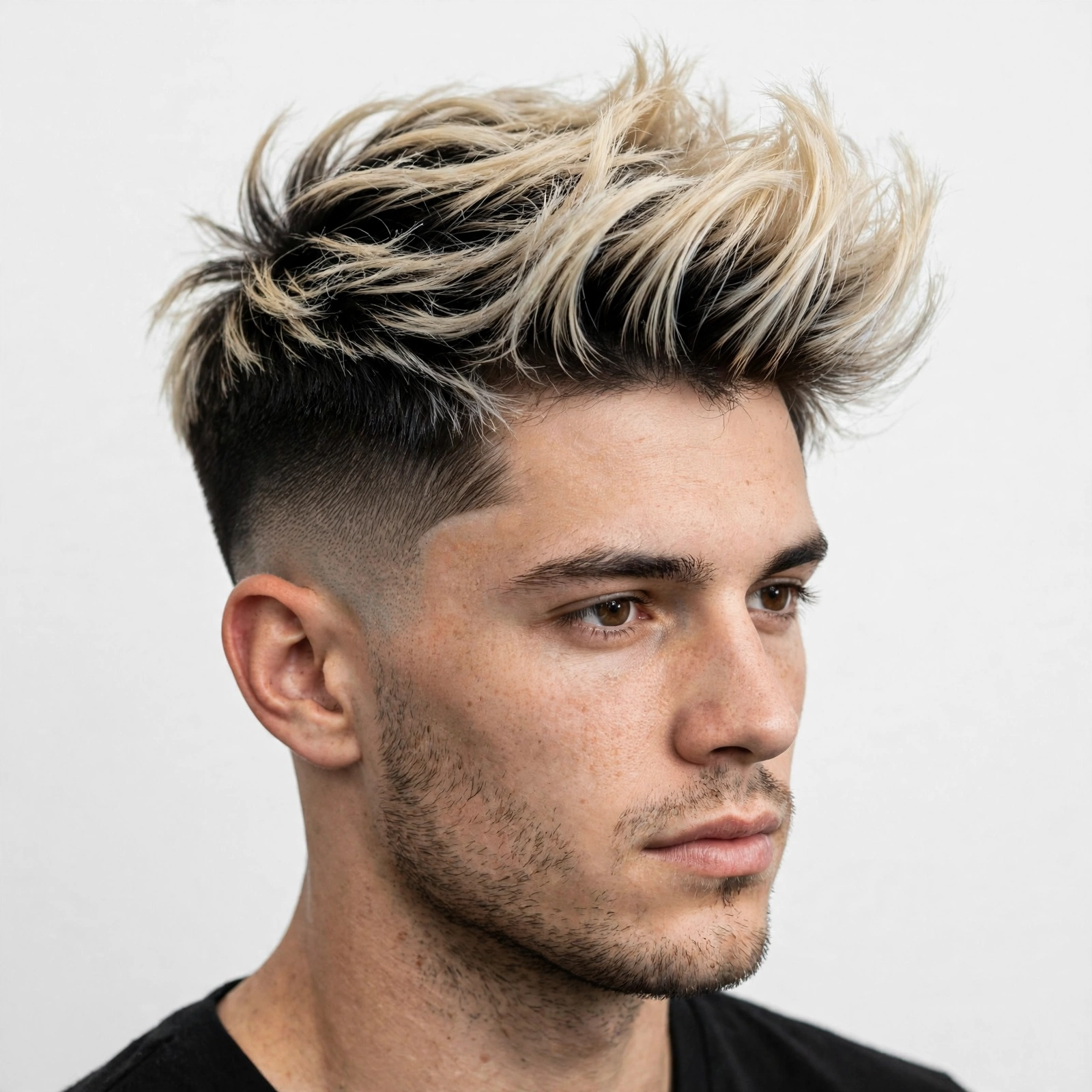
15. Taper Fade with Frosted Tips
If the skin fade feels too aggressive and the undercut feels too edgy, the taper fade is your middle ground. Instead of fading down to bare skin, a taper gradually shortens the hair around the ears and neckline while keeping more length everywhere else — it’s the most classic, most versatile fade there is. Paired with frosted tips on a textured or swept top, you get a style that works literally everywhere: the office, the gym, a wedding, a night out. Nothing about it screams for attention, but the blonde tips make sure you get it anyway.
The taper is also the most forgiving fade for growing out, which matters when you’re maintaining color. You can stretch barber visits to three or four weeks without the cut looking messy, and the frosted tips just keep doing their thing up top. Ask your barber for a low taper — cleaned up around the ears and neckline — with two to three inches of textured length on top. For the color, a honey or golden blonde reads more natural with the taper’s classic vibe than an icy platinum would. This is the “I have my life together but I’m still fun” haircut, and honestly, more guys should be wearing it.
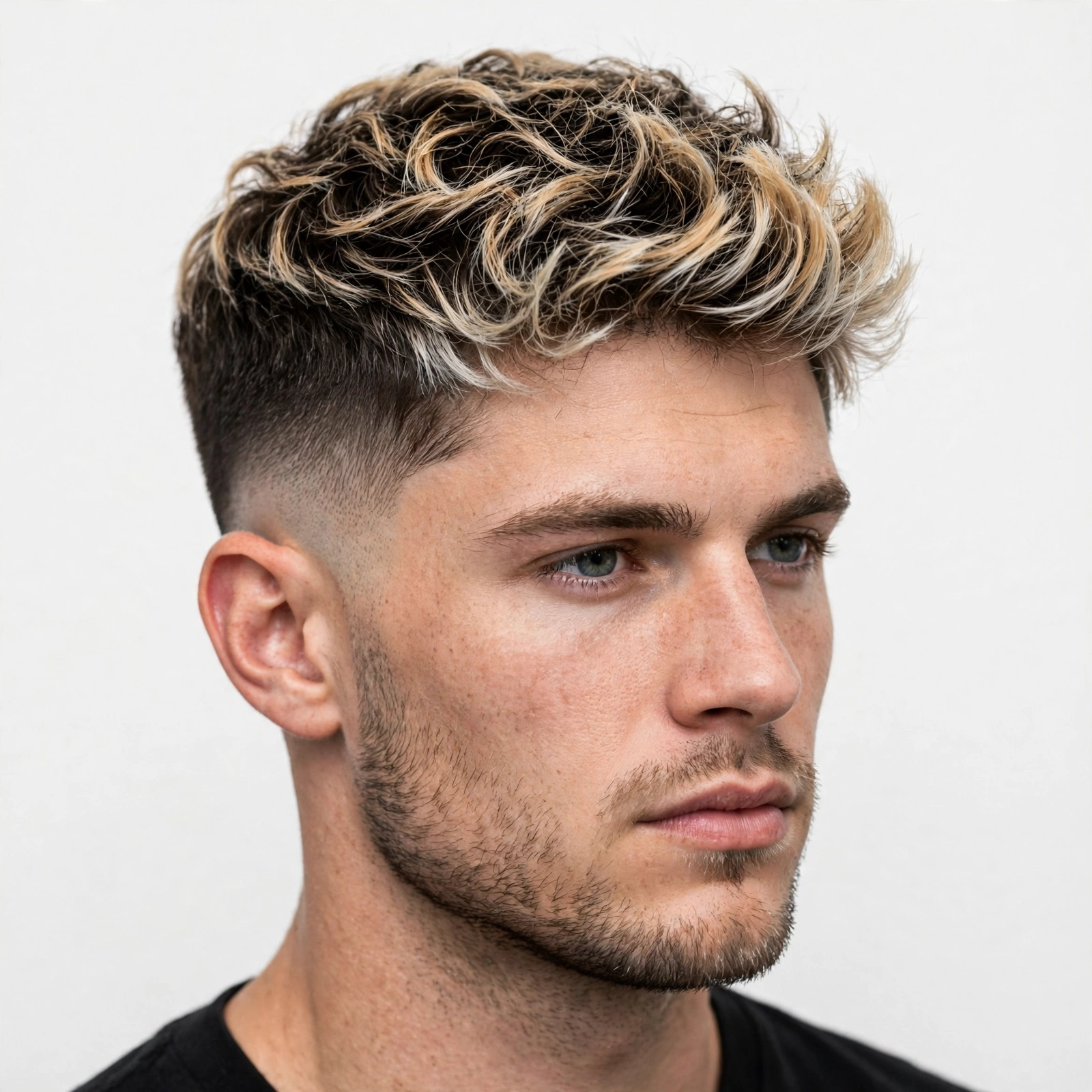
16. Platinum Tousled Crop with Frosted Tips
This is the loudest version of frosted tips on the list, and it’s not for the shy. Instead of a soft golden blonde, the tips go full platinum — near-white, icy, impossible to miss. The base is a tousled crop: choppy, uneven texture all over the top, deliberately messy, with a mid fade on the sides. The combination of the chaotic texture and the stark white tips gives you a look that’s equal parts rock star and runway model. When the light hits it, the whole head glows. I’ve seen guys get stopped on the street with this one.
Getting to true platinum takes work, especially on dark hair. Expect your colorist to do two rounds of bleach with a 20-volume developer, followed by a purple-based toner to kill every trace of yellow. That’s a two-to-three-hour appointment, and it costs more than a standard frosted tips service — budget accordingly. Maintenance is the real commitment: purple shampoo twice a week, a bond-repair treatment (your colorist will recommend one) after every few washes, and absolutely no cheap drugstore bleach touch-ups at home. Platinum is a salon-only color. But if you want the most head-turning version of this trend, this is it. For more blonde styles that get noticed, that’s where the rest of the inspiration lives.
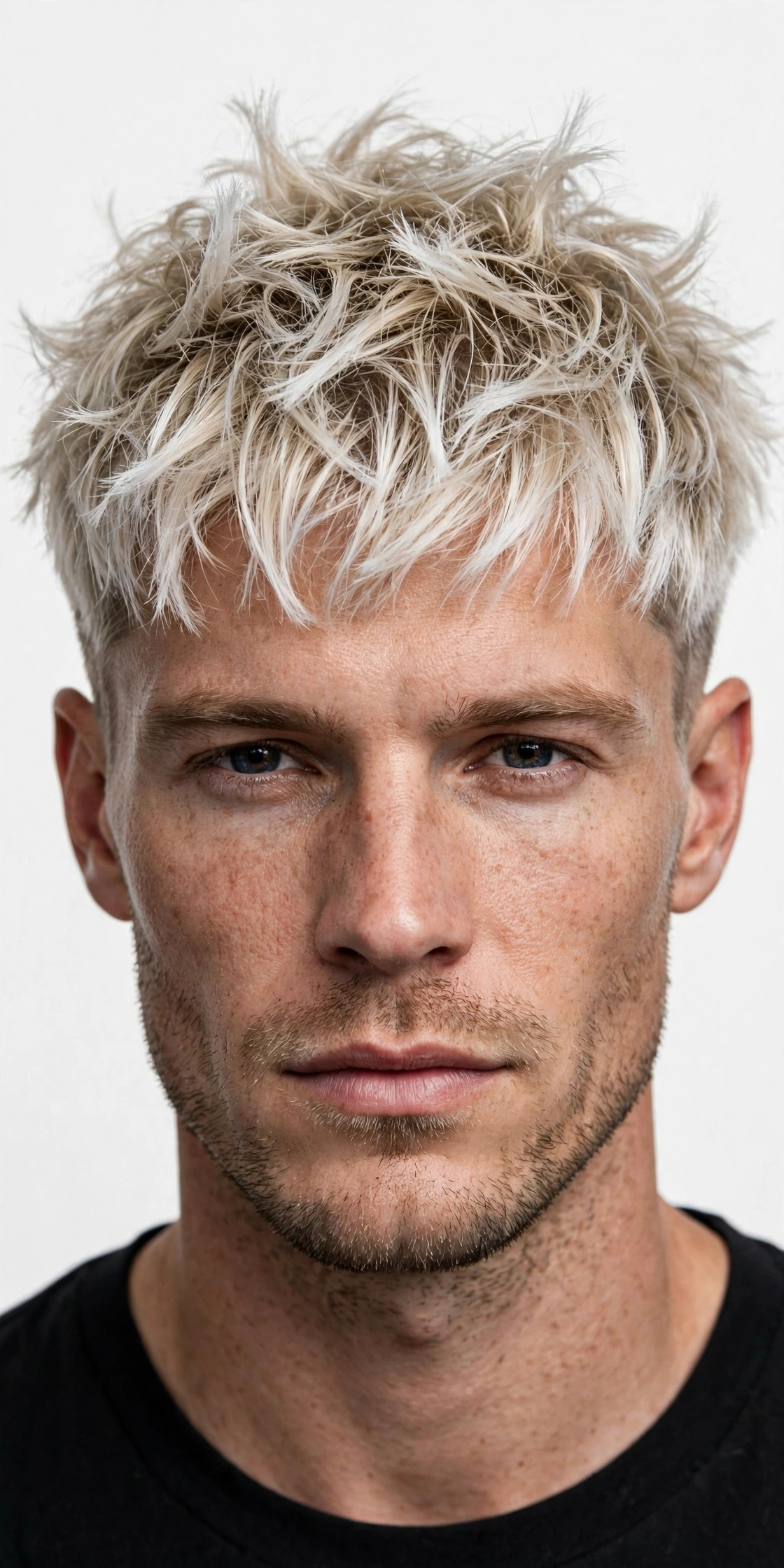
17. Asymmetric Fringe with Frosted Tips
Most fringes fall straight or part in the middle. The asymmetric fringe sweeps across the forehead at an angle — longer on one side, shorter on the other — and it gives frosted tips a whole new geometry to play with. The bleach follows the diagonal: your colorist paints the ends along the sweep, so the blonde gets progressively longer toward the long side of the fringe. The result is dynamic, a little bit artsy, and very 2026. It suits guys with angular features especially well, because the diagonal line of the fringe softens a strong jaw or sharp cheekbones.
Cut-wise, you need a barber who’s comfortable with asymmetry — not every shop does this well, so check their portfolio first. The fringe should hit around the eyebrows on the long side and sit an inch or so higher on the short side, with the sides tapered or faded to keep the focus up front. Styling is simple: a little texture cream on damp hair, sweep the fringe across with your fingers, and let it set. The frosted tips do the rest. This is a great option if you’ve tried a straight fringe before and found it boring — the angle changes everything.
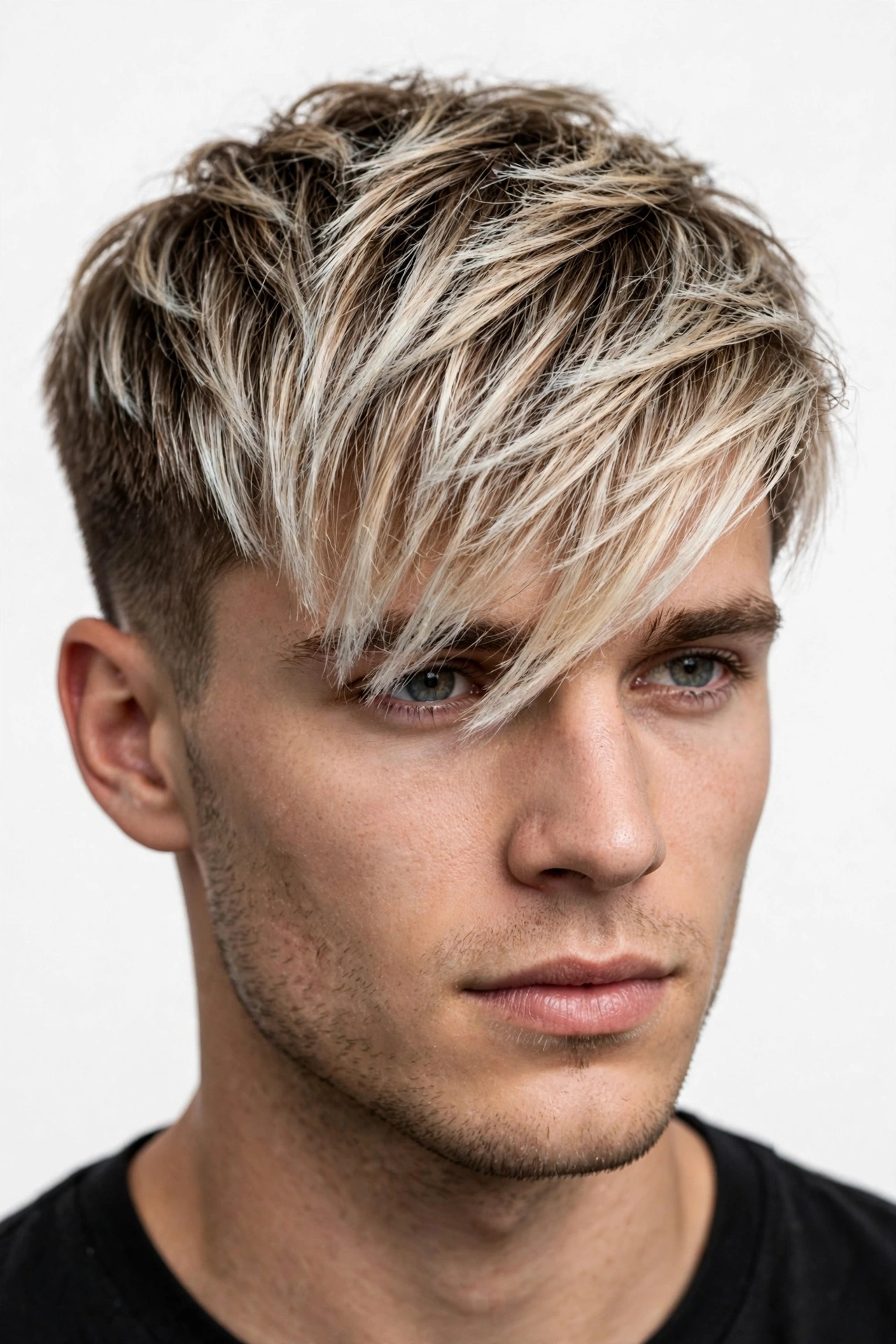
18. Long Layers with Frosted Tips
Last one, and it’s for the guys growing it out. If your hair is past the four-inch mark and heading toward collar length, frosted tips work beautifully on long layers — the bleach goes on the ends of the layers, so you get blonde streaking through the lengths every time your hair moves. It’s the most natural-looking version of the trend, because long hair with lighter ends just reads as sun-bleached, like you’ve been outdoors all summer. Layers are important here: without them, the bleach sits in one band at the bottom and looks like a dip-dye. With them, the color weaves through the whole head.
Long hair takes more bleach and more time, so expect to pay more at the salon — and expect the appointment to run long. The grow-out is the easiest of any style on this list, though: long hair hides regrowth completely, and you can go three to four months between color refreshes. Maintenance is about hydration — long bleached ends dry out faster, so a weekly hair mask and a leave-in conditioner are mandatory, not optional. Tie it back and the frosted tips peek out of the bun or ponytail; wear it down and the blonde layers frame your face. Either way, it works. If long hair is your thing, our warrior cut guide has more long-hair inspiration.
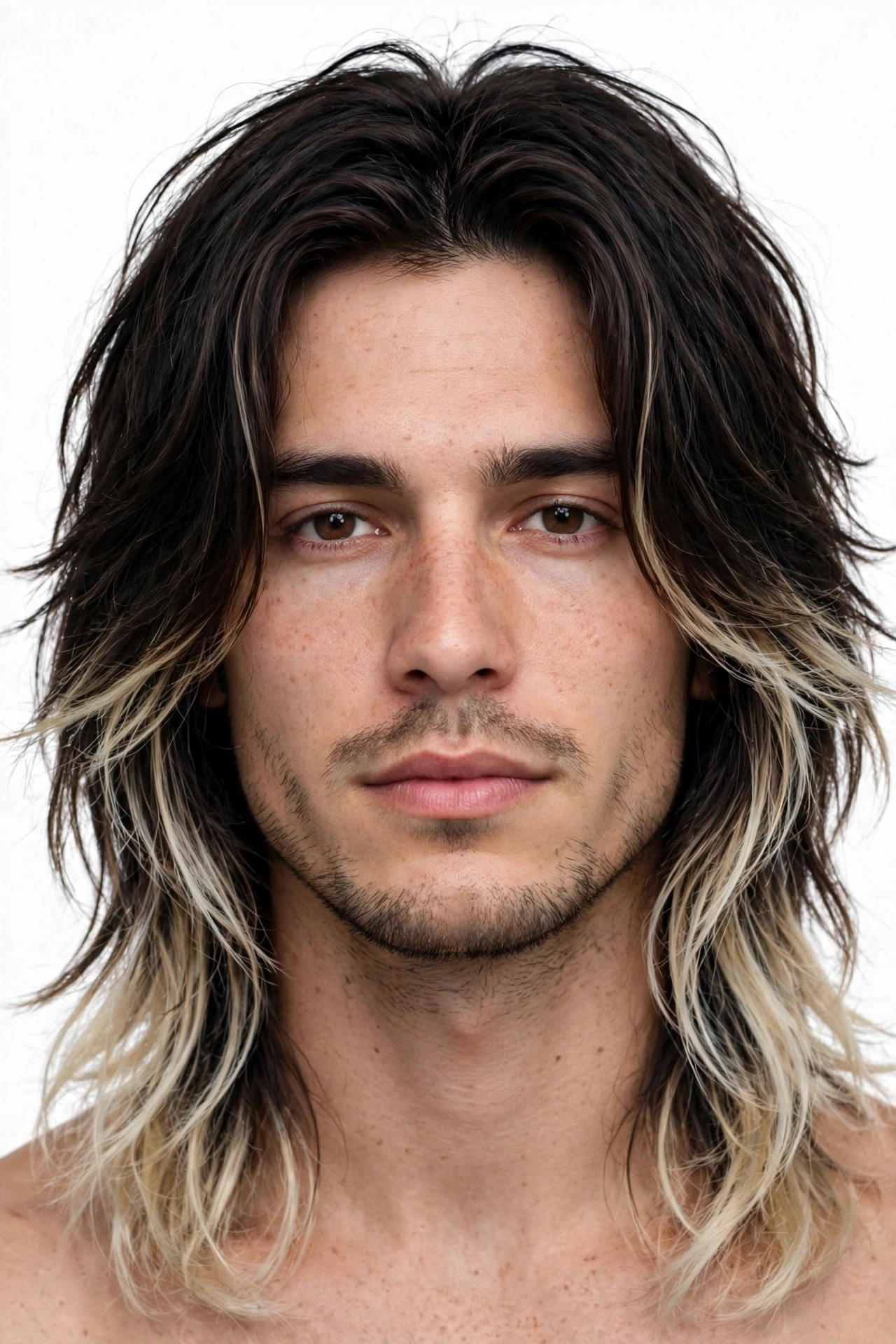
How to Ask Your Barber for Frosted Tips
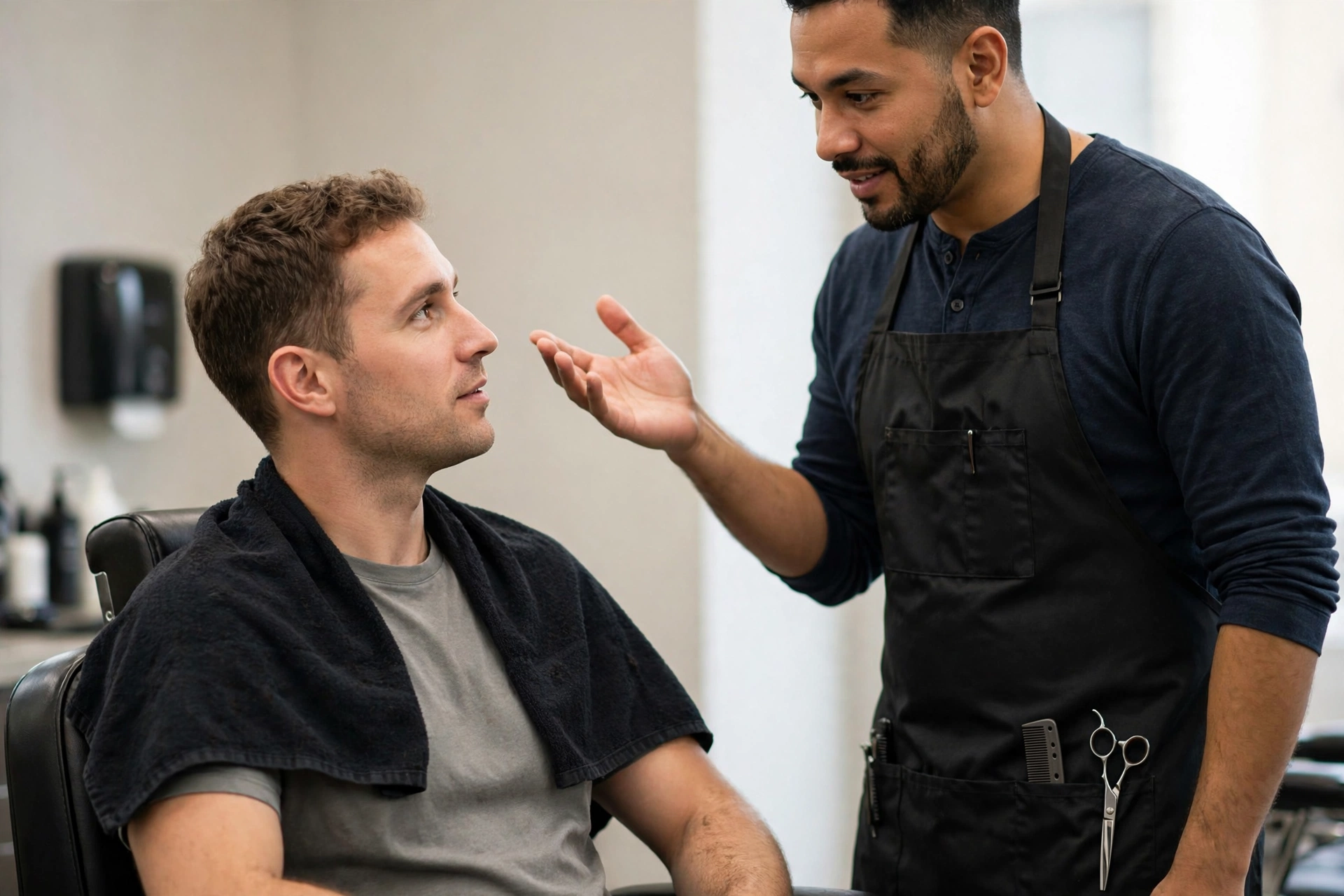
This is where most guys mess up. They sit in the chair, say “give me frosted tips,” and the barber — who might be picturing something completely different — does their own thing. Then everyone pretends to be happy. Don’t do that. Bring reference photos (three is the magic number: one you love, one that’s close, one showing the color tone), and use the exact script below. Barbers love specific clients. Specific clients get good haircuts.
Your exact script: “I want frosted tips — just the ends bleached, natural roots kept. I’m going for the modern version, not the ’90s spikes. Can you do a freehand balayage on the tips, lift them to about a level 9 blonde, and tone out the brass? I want it to look sun-bleached, not solid.” Then point at your photos and ask: “Is my hair long enough on top for this, or do I need to grow it out first?” That last question matters — if your top is under two inches, most colorists will tell you to come back in a month, and you should listen.
What it costs: At a decent barbershop, frosted tips run $40 to $80 on top of your haircut, depending on your city and how much hair you have. A full salon (not a barbershop) charges $80 to $150 because they’re doing a more careful balayage application. The platinum version — double bleach plus toner — runs higher, usually $120 to $200. Toner-only refreshes between full services are $20 to $40 and take twenty minutes. Honestly, for what you get, it’s one of the best value-for-money services in men’s grooming.
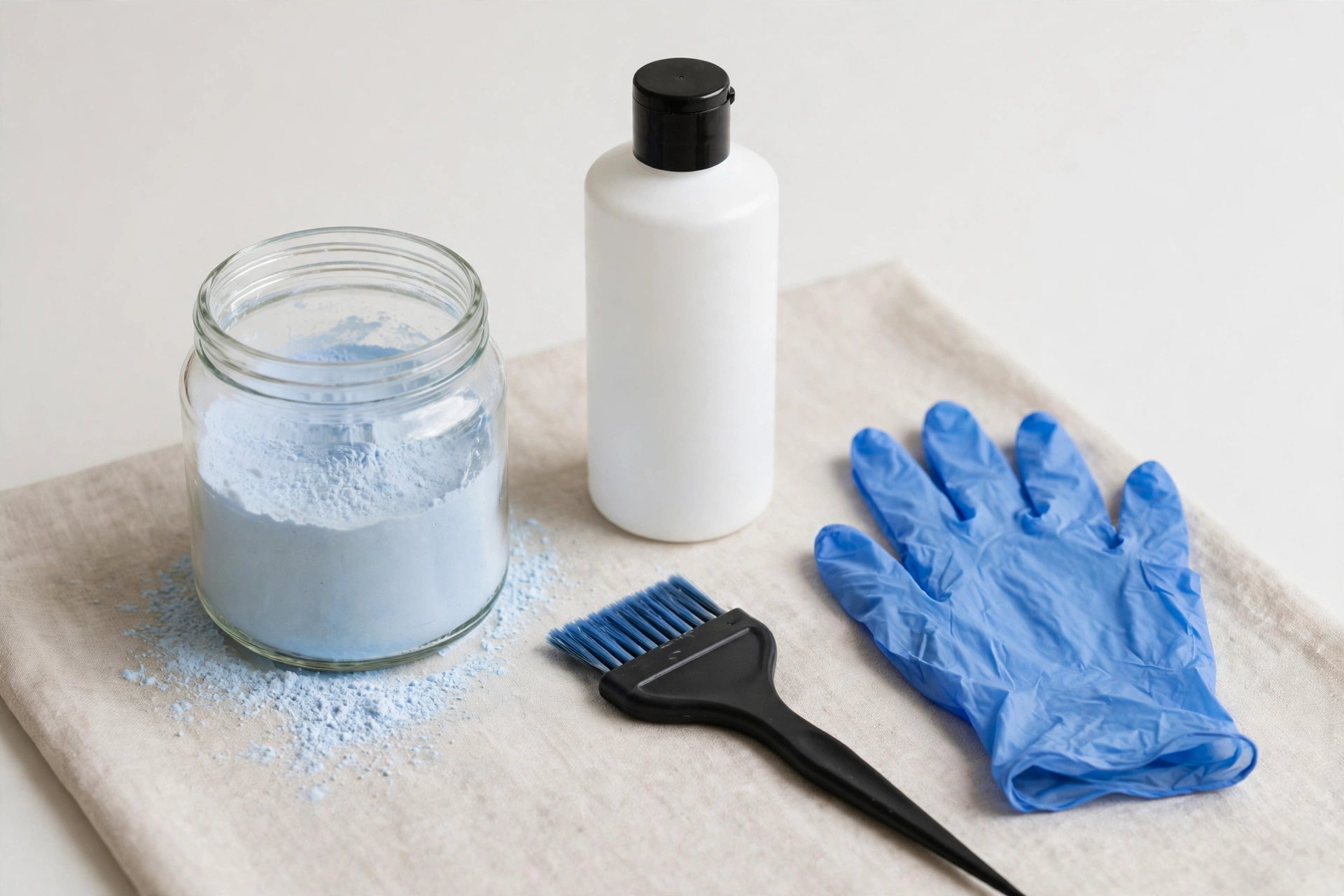
The DIY method — if you’re doing it at home: You need bleach powder, 20-volume developer (not 30, not 40 — 20 is enough for tips and way kinder to your hair), a tint brush, gloves, and a purple toner. Mix the bleach 1:2 with the developer (one part powder, two parts developer) until it’s the consistency of yogurt. Skip the cap — caps are fiddly and the holes never land where you want them. Instead, pull your hair into the style you wear it in, and paint the bleach onto the last inch or so of the ends freehand, working in small sections. Process for 20 to 35 minutes, checking every ten — dark hair lifts slower, so don’t panic if it looks orange at minute fifteen. Rinse, then apply the toner for five to ten minutes to kill the brass. Total cost: about $25 in supplies. Is it as good as a salon? No. But it’s how half the guys wearing this trend got started, and on short textured hair, freehand DIY genuinely works.
How to Style Frosted Tips at Home
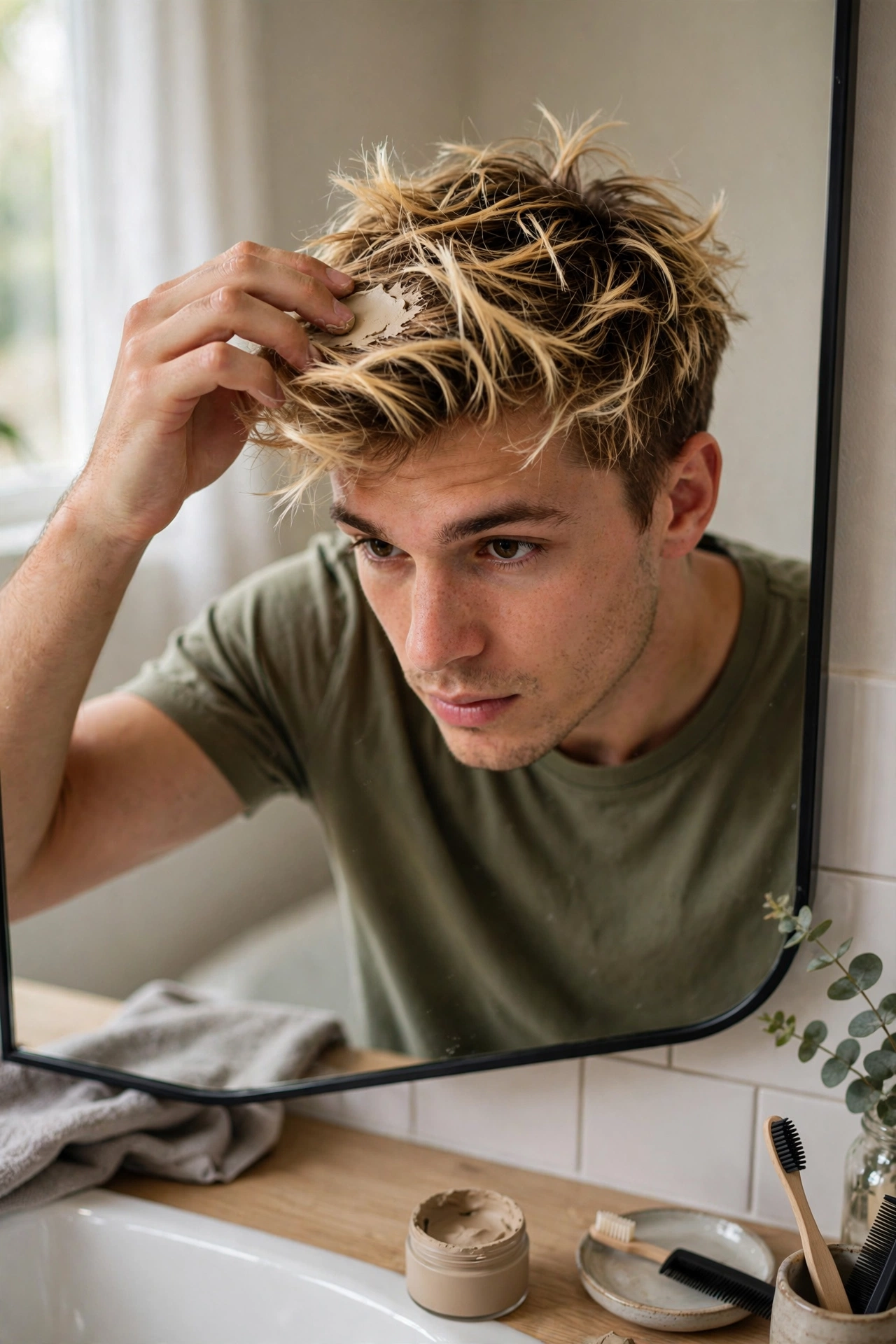
Good news: frosted tips are one of the easiest colored styles to maintain day to day. The color does the visual work, so your styling routine can stay simple. Here’s the routine that works for 90% of the styles on this list. Start with clean, towel-dried hair — not dripping wet, not bone dry. If your hair is thick or wavy, hit it with a blow dryer for sixty seconds first, directing the hair the way you want it to sit. This one step makes more difference than any product.
For products, you need two things: a matte clay or fiber cream for daily styling, and a sea salt spray for texture days. The clay goes on dry or slightly damp hair — pea-sized amount, warmed between your palms, worked through from mid-lengths to ends. Push the hair into place with your fingers, not a comb; fingers keep the texture piece-y, which is what shows off the frosted tips. The sea salt spray goes on damp hair before air drying, and it’s the secret weapon for wavy and tousled styles. One warning: skip the heavy gels and wet-look products. They clump the hair together, which hides the individual bleached tips and makes the whole thing look like one solid helmet. Matte and piece-y, always.
Wash-wise, treat bleached hair gently. Use a sulfate-free shampoo, wash every two to three days instead of daily, and work a purple shampoo into the rotation twice a week — leave it on for three to five minutes to keep the blonde bright instead of brassy. A weekly deep-conditioning mask takes ten minutes and makes a visible difference in how healthy the tips look. And here’s a pro tip my colorist gave me: cold or lukewarm water for the final rinse. Hot water opens the hair cuticle and lets the toner wash out faster. Small thing, real difference.
Will Frosted Tips Suit You? Face Shapes and Hair Types
Short answer: probably yes. Frosted tips are unusually democratic as far as trends go, because the color sits on whatever cut already suits you. The cut does the face-shape work; the color just comes along for the ride. That said, a few guidelines help. If you have a round face, pair the tips with height on top (quiff, spikes, high-top) and tight sides — the vertical lift elongates the face. Long or oblong faces do better with a fringe or a crop worn forward, which shortens the face visually. Square faces can wear almost anything, but a textured crop with frosted tips is the classic pairing. Oval faces — congratulations, you’re the mannequin head every barber learns on. Everything works.
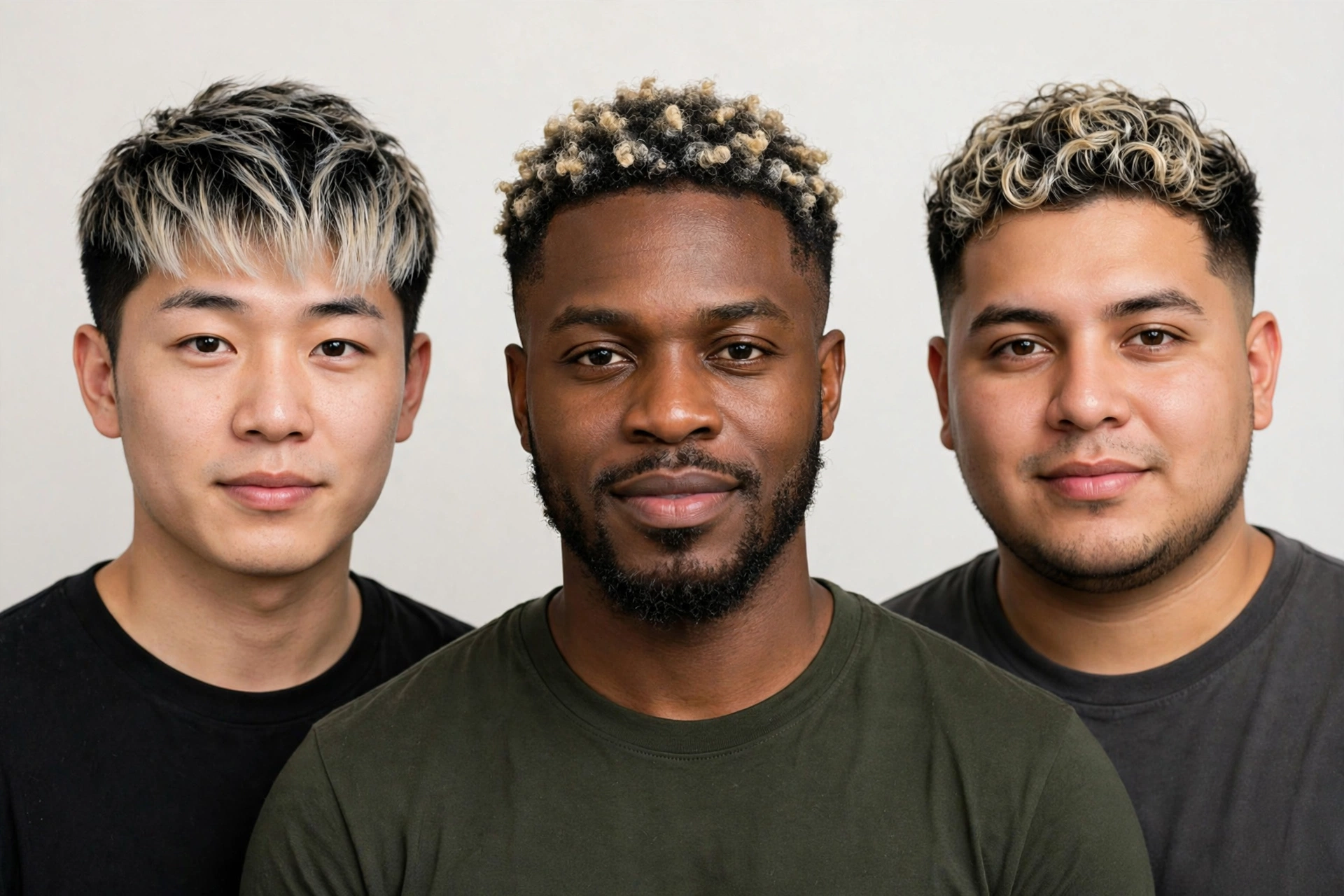
Hair type matters more than face shape here. Straight hair shows frosted tips in clean, defined streaks — great for sharp styles like the quiff and the slicked-back. Wavy hair breaks the color into organic, beachy pieces — ideal for tousled and textured styles. Curly and coily hair gets incredible dimension from frosted tips, but needs a gentler bleach process and serious conditioning (see the curly section above). The one hair type that struggles: very fine, thin hair. Bleach can make fine hair feel even thinner, so keep the blonde subtle — a golden tone rather than platinum — and ask your colorist about adding texture to the cut to create the illusion of fullness.
Skin tone is the other half of the equation. The old rule — cool skin tones suit ashy/platinum blonde, warm skin tones suit golden/honey blonde — actually holds up pretty well. Not sure which you are? Check your wrist veins in daylight: blue or purple means cool, green means warm. Cool-toned guys should ask for an ash or pearl toner; warm-toned guys should go golden or honey. Get this right and the color looks like it belongs on you. Get it wrong and it fights your complexion. When in doubt, show your colorist a photo of yourself in natural light and let them call it — this is literally what they’re trained for.
Maintaining Frosted Tips
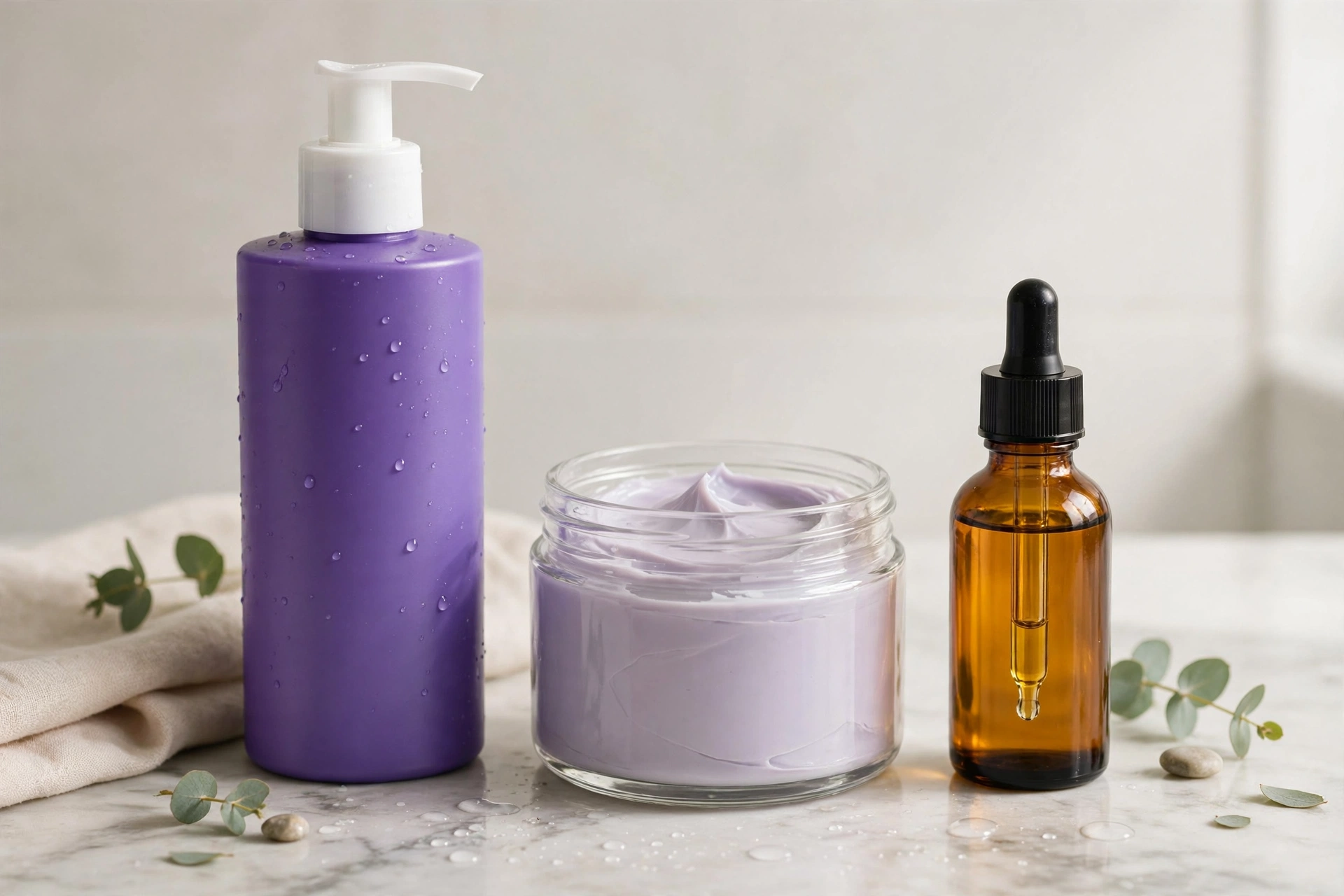
Here’s the honest truth about maintenance: frosted tips are easier to keep than a full bleach job, but they’re not zero-effort. The number one enemy is brassiness — that yellow-orange tone that creeps in as the toner fades. It usually shows up around week three or four. The fix is purple shampoo, used twice a week, left on for three to five minutes before rinsing. It deposits violet pigment that neutralizes the yellow. Don’t use it every wash, though — overdoing purple shampoo turns the blonde dull and ashy-gray. Twice a week is the sweet spot most colorists recommend.
Hydration is the other pillar. Bleached ends are thirstier than the rest of your hair, so a weekly deep-conditioning mask is mandatory. Apply it to the mid-lengths and ends (not the scalp), leave it on for ten minutes, rinse with lukewarm water. Between masks, a leave-in conditioner or a few drops of argan oil on the ends keeps them from looking straw-like. And cut back on heat: if you’re blow-drying daily, use a heat protectant spray, and keep the dryer on medium heat. High heat on bleached hair is how you get breakage and split ends.
For trims, stick to your normal schedule — every three to four weeks for short cuts, every six to eight for longer ones. Tell your barber to trim the ends lightly rather than taking off length aggressively, because every trim removes a little of the bleached hair. When the tips start looking dull or the regrowth line gets noticeable (usually around week eight to twelve), book a color refresh. Most guys find that alternating works well: full bleach refresh every ten to twelve weeks, toner-only refresh in between at week five or six. That rhythm keeps the blonde bright year-round without frying your hair.
FAQs About Frosted Tips
Before we wrap up, here are the questions I get asked most about frosted tips — the stuff guys actually want to know before they sit in the chair. If your question isn’t here, the short version of every answer is: talk to your barber, bring photos, and don’t overthink it. This is one of the most forgiving color trends in men’s grooming.
How long do frosted tips last?
The color itself doesn’t wash out — bleach is permanent — but it fades and grows out. The bright, fresh look lasts about four to six weeks before the toner fades and brassiness creeps in. After eight to twelve weeks, regrowth becomes noticeable and most guys book a refresh. The nice part: because only the tips are colored, the grow-out looks intentional rather than messy. You can stretch it to four months if you keep up with purple shampoo and trims. Compare that to a full bleach job, where roots look rough in three weeks, and you see why frosted tips are the low-commitment option.
Do frosted tips damage your hair?
Any bleach causes some damage — that’s just chemistry. But frosted tips are gentler than most color services for two reasons: you’re only bleaching the ends (the oldest, toughest part of the hair), and the roots and scalp stay untouched. A single session with 20-volume developer causes minimal damage on healthy hair. Where guys get into trouble is overlapping bleach on already-bleached hair during touch-ups, or going too light too fast on dark hair. A good colorist avoids both. Keep up with conditioning masks and you likely won’t notice any difference in how your hair feels. If your hair is already damaged or very fine, mention it upfront so the colorist can adjust.
Can you do frosted tips at home?
Yes, and plenty of guys do — but be honest about your skill level. The freehand method I described earlier (bleach + 20-volume developer, painted onto the ends, toned after) works well on short, textured hair because there’s nowhere to hide mistakes and the style is forgiving. What doesn’t work at home: platinum blonde on dark hair (needs two rounds and professional toner), long hair (you can’t see the back of your own head), and fixing a botched job (color correction costs triple). My rule: if it’s your first time coloring your hair ever, pay for the salon visit. Watch what the colorist does, ask questions, and DIY the refresh next time. Grooming publications like GQ Grooming have solid at-home bleaching guides if you want to research the process before you commit.
How much do frosted tips cost at a salon?
Expect $40 to $80 at a barbershop on top of your haircut, or $80 to $150 at a full salon for a careful balayage application. Platinum or double-process versions run $120 to $200. Toner refreshes between full services are $20 to $40. Prices vary a lot by city — a barbershop in a small town might charge $35, while a salon in New York or LA can push $200 for the full treatment. Call it a $60 to $100 average for most guys. For context, that’s roughly half what a full head of highlights costs, and the maintenance is cheaper too since you’re only refreshing the ends.
How do you grow out frosted tips?
This is the easiest part. Because the color lives on the ends, growing it out just means… letting your hair grow. There’s no harsh root line like you’d get with a full dye job — the dark roots blend into the bleached ends naturally, and it looks like an intentional ombré for months. If you want it gone faster, get the ends trimmed a little more aggressively at each barber visit; in two to three trims, the blonde is history. Or lean into it: a lot of guys discover they like the grown-out, sun-bleached look even more than the fresh version. Either way, there’s no awkward phase, no corrective color needed, and no shame in just letting it ride.
Final Thoughts
So that’s frosted tips in 2026 — not the crunchy relic you remember, but a genuinely sharp, modern color technique that works on pretty much every cut and every guy. The barrier to entry is low: $60 to $100 at the barbershop, an hour in the chair, and maintenance that amounts to purple shampoo twice a week. The payoff is high: a look that stands out in a sea of identical fades, grows out gracefully, and photographs like crazy.
My advice? Start with one of the forgiving styles — the textured crop, the taper fade, the wavy top — and go golden rather than platinum for your first round. You can always go brighter next time. Bring photos, use the script, and find a barber who’s done this before (check their Instagram — if they’ve posted frosted tips in the last six months, you’re in good hands). And when someone asks where you got the idea, tell them you read a 6,000-word guide about it. That’s commitment they can respect.
Conclusion
Frosted tips are officially back in 2026, and this time they’re cooler than ever. The modern take swaps chunky 90s spikes for softer, blended bleached ends that add dimension to textured crops, fringes, and messy styles. It’s a low-commitment way to experiment with color — just the tips, none of the full-head maintenance.
Because bleaching stresses the hair, keep your tips healthy with a weekly deep-conditioning mask and purple shampoo to fight brassiness. Touch-ups every six to eight weeks keep the frost fresh. If you’ve been tempted to try color in 2026 without going all in, frosted tips are your perfect entry point.