
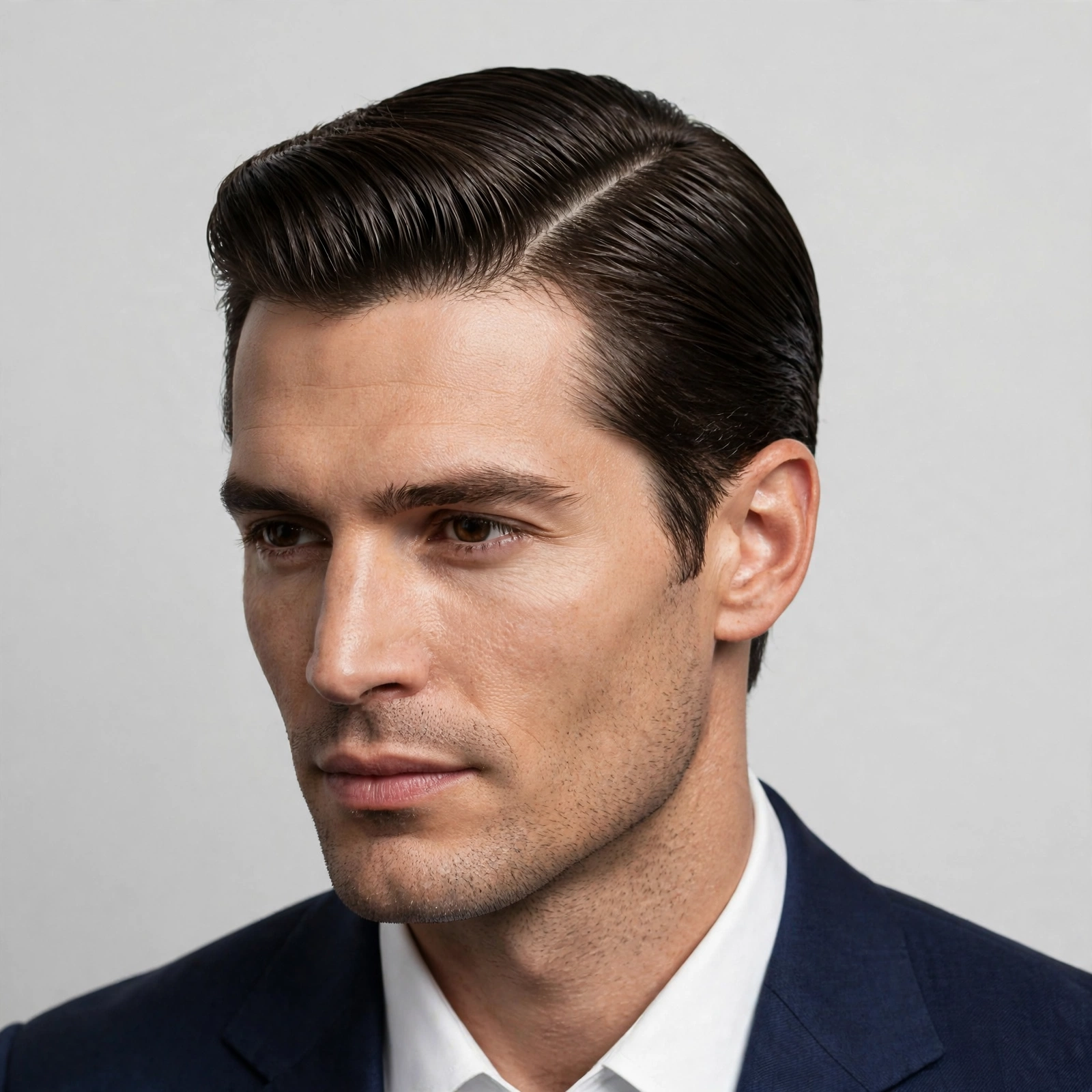
Side Part Haircut for Men 2026: 15 Classic Side Part Ideas
Side Part Haircut for Men 2026: 15 Classic Side Part Ideas
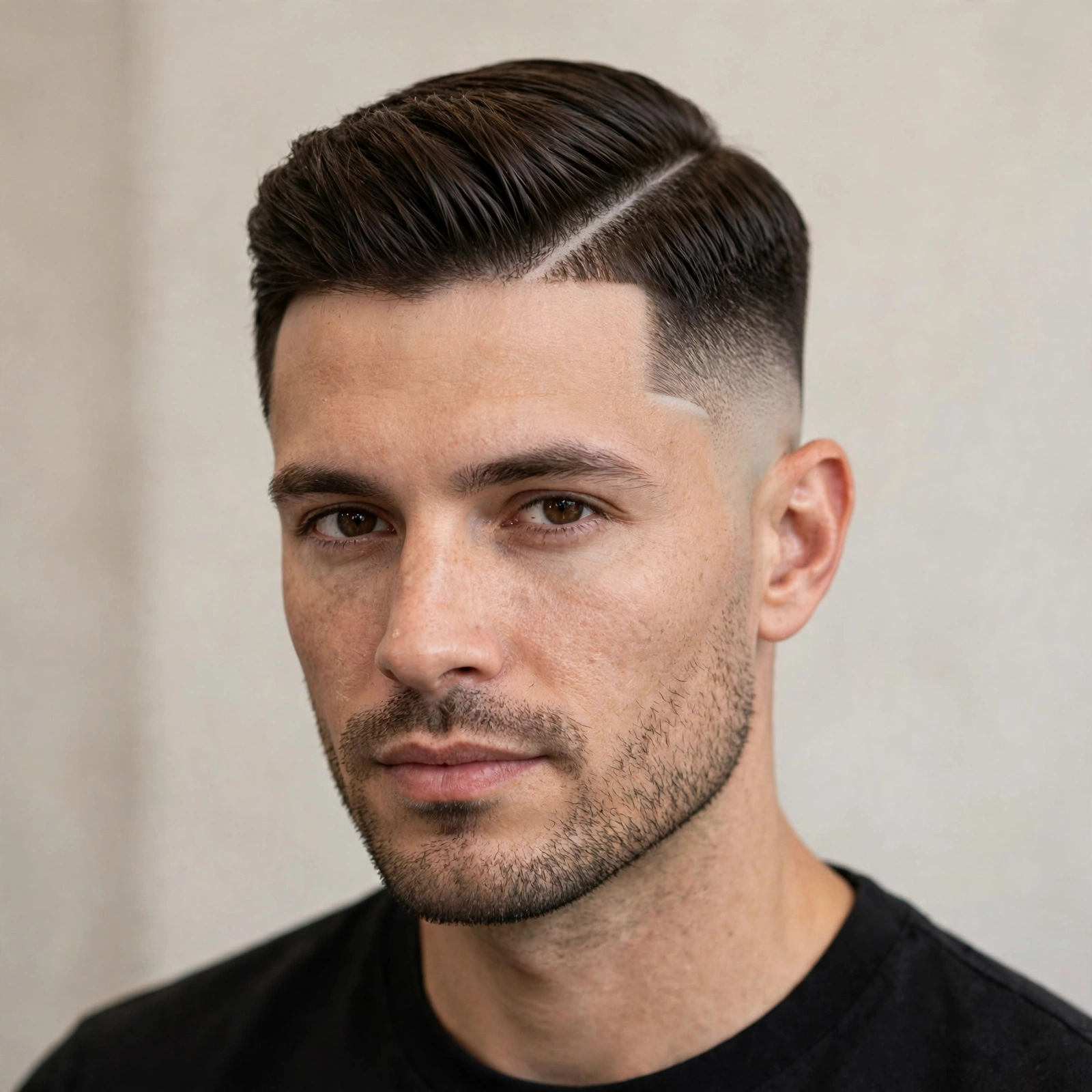
Some haircuts come and go. The side part haircut for men never really leaves — it just waits for its moment to be cool again. And in 2026, that moment is here. From boardrooms to Instagram feeds, the classic side part is showing up on every kind of guy, styled every kind of way. It’s the haircut that says you have your life together without trying too hard to say it.
If you’re new to the side part, here’s the short version: it’s a men’s haircut where the hair on top is combed to one side along a defined part line, with the sides kept shorter and neat. That’s it. No gimmicks, no extreme shaving, no forty-five minutes of styling every morning. Just clean geometry and a silhouette that has looked good on men for about a hundred years.
But don’t mistake “classic” for “boring.” The side part haircut in 2026 is not your grandfather’s stiff, helmet-shell look — unless you want it to be. Today’s versions run the full range: tight fades blended into a crisp part, loose textured tops that move in the wind, side parts paired with full beards, curly and wavy side parts that embrace natural texture. Below, you’ll find 15 side part ideas for men, plus everything you need to get one cut, style it at home, and keep it looking sharp between appointments. Here’s the whole thing, start to finish.
What Is the Side Part Haircut?
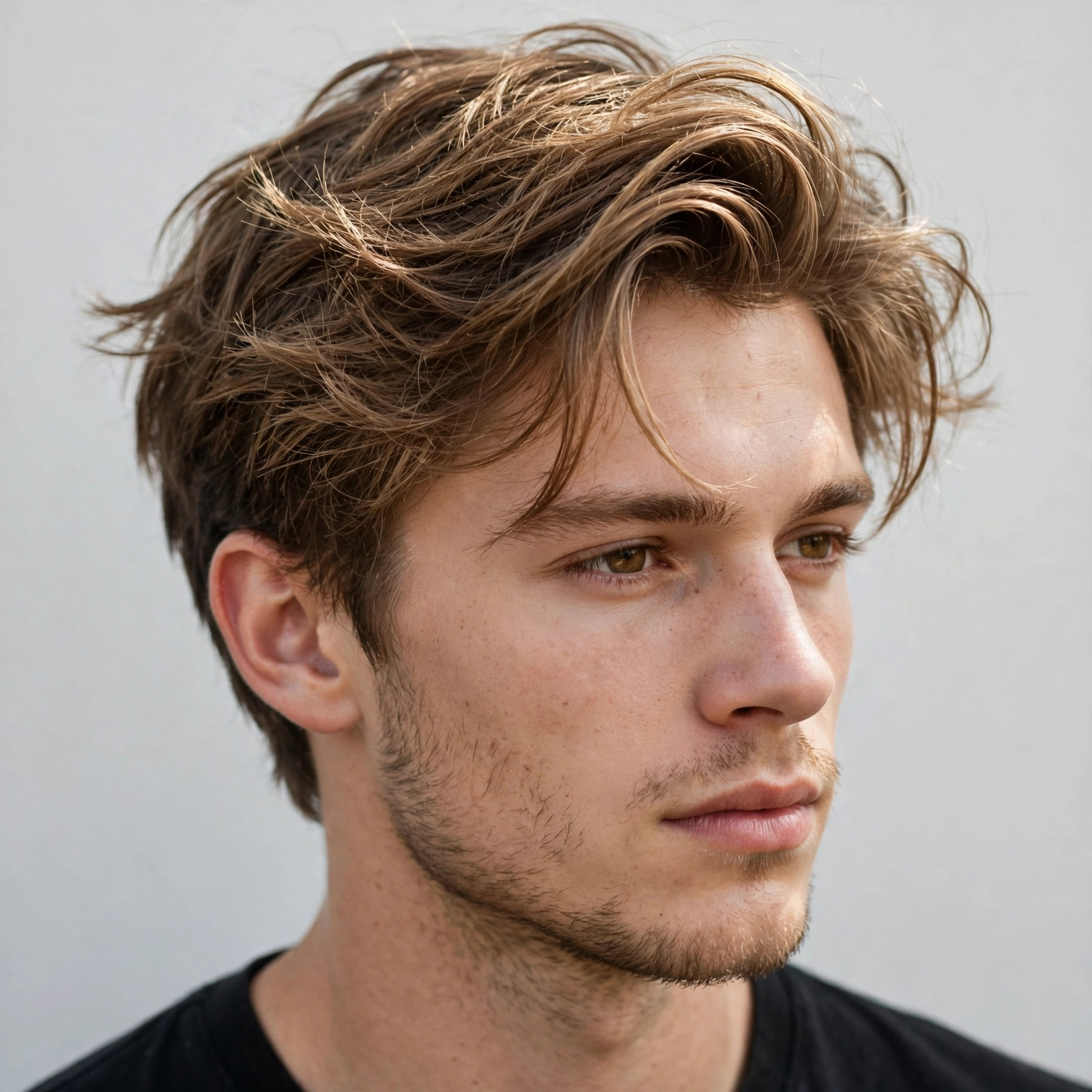
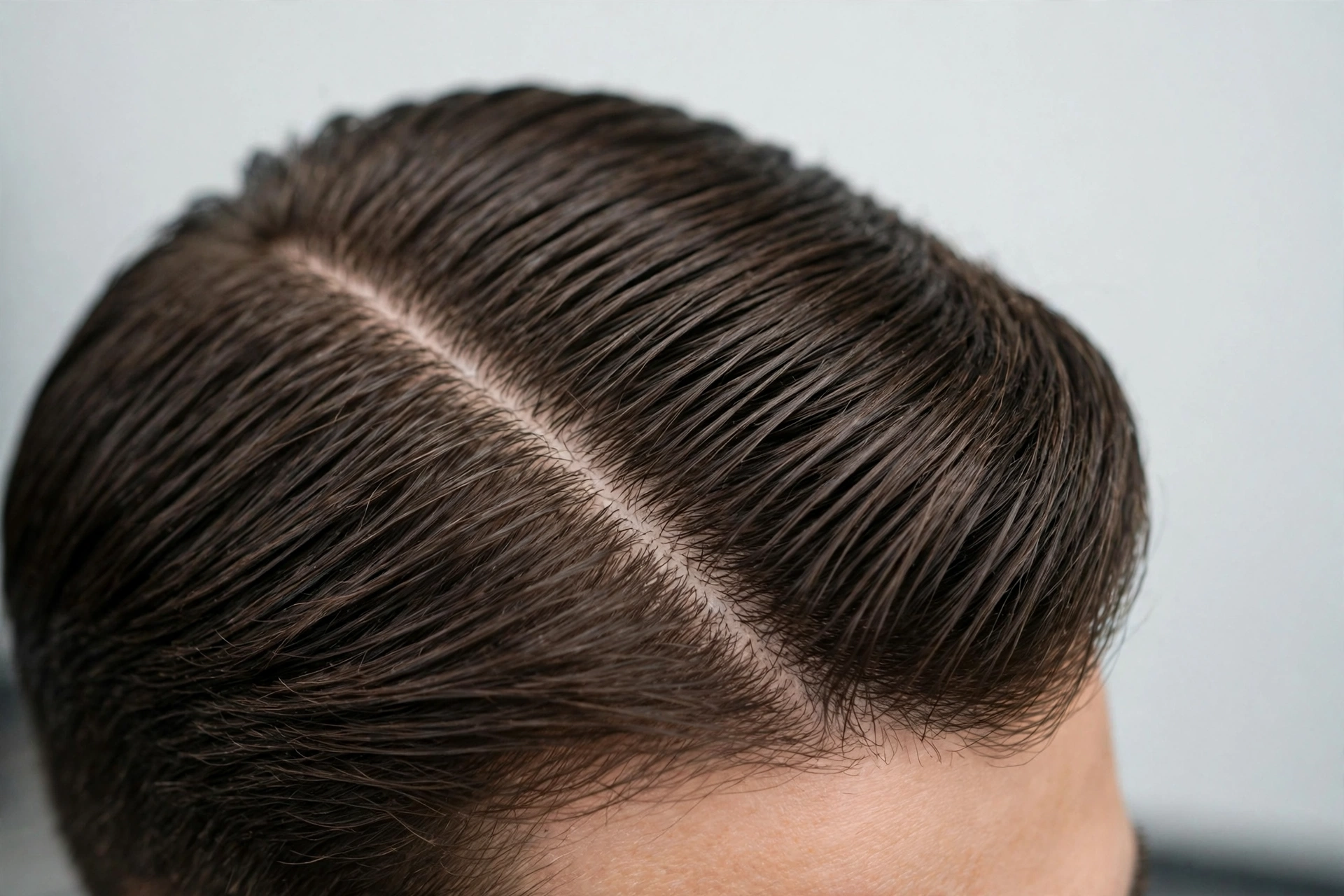
The side part haircut is exactly what it sounds like: a men’s style built around a part — a clean line, usually somewhere between the center and the corner of the head, where the hair on top changes direction. The longer top sweeps to one side, and the sides and back are cut shorter to create contrast. It’s one of the oldest documented men’s haircuts in the modern era, popularized in the 1920s through the 1950s, revived in the Mad Men era of the 2010s, and now fully back in rotation for 2026.
What makes the side part men love so much is how flexible the framework is. The “part” itself is just the anchor. Everything else — how short the sides are, how much length the top keeps, whether the finish is glossy and formal or matte and messy — is up to you. A side part haircut can be a slicked, polished classic with a skin fade on the sides, or a relaxed, textured side part where the part line barely shows and the whole thing looks effortlessly undone. Same family, completely different personalities.
There’s also the question every first-timer asks: which side do I part on? The honest answer is that most guys part where their hair naturally wants to part. Run your fingers through your hair forward, then sweep it to one side — if it falls cleanly and stays, that’s your side. Fighting your natural growth pattern every morning is a losing battle, and your barber can confirm it in about ten seconds by looking at your crown and hairline. That said, a part on the left or the right both work; some guys swear a part on the side of their stronger jaw angle sharpens the whole face. Try it in the mirror with a comb and wet hair before your appointment — it’s the fastest way to find your side.
Why the Side Part Is Trending in 2026
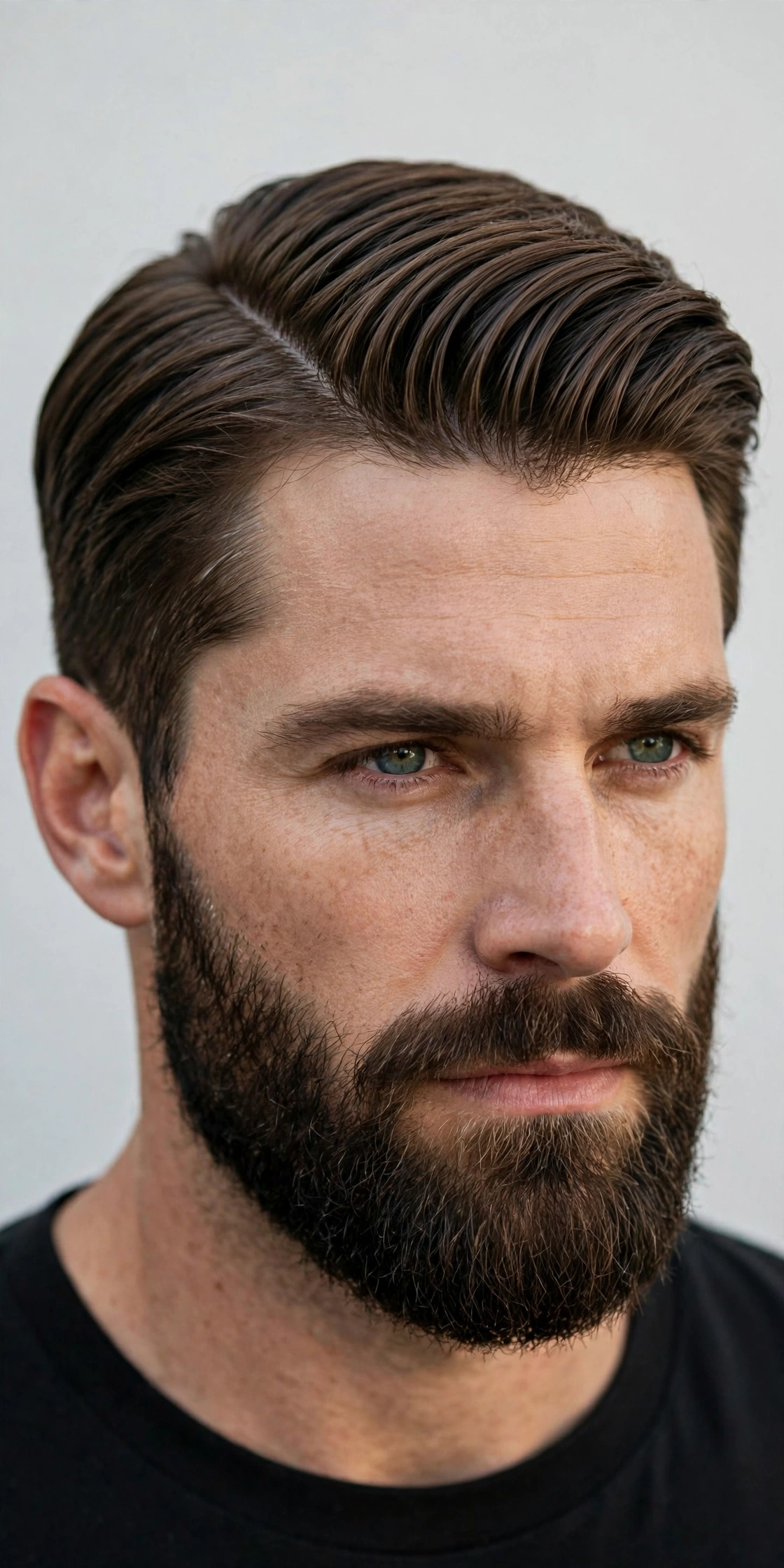
Every few years, men’s hair swings like a pendulum between wild and controlled. We’ve had years of messy crops, curtain bangs, and tousled everything. In 2026, the pendulum is swinging back toward structure — and the side part is the beneficiary. A recent 2026 roundup on perfectcorp.com, “What Is the Best Haircut for Men Right Now? 2026’s Top Styles” (updated just a day ago), lists classic side parts among the top styles to consider this year, right alongside low tapers, old money haircuts, and textured crops. When the side part shares a list with the old money haircut — the current king of polished men’s style — you know the moment is real.
The deeper reason is cultural. Men’s grooming in 2026 is leaning into what you might call quiet confidence: clean tailoring, well-fitted everything, grooming that looks intentional rather than accidental. The side part haircut fits that mood perfectly. It looks deliberate. It photographs well. It works in a job interview and at a wedding and on a date, and it never looks like you copied someone else’s trend. In a year when guys are tired of haircuts that require a styling degree, the side part’s simplicity is its selling point.
Barbers are pushing it too, and for good reason. A side part is one of the most teachable, most reliable cuts in the shop — a good barber can dial it in precisely to your head shape, hairline, and growth pattern. And social media has done its part: the “side profile” photo trend, where a crisp part line and a clean taper photograph beautifully from the side angle, keeps the style circulating. Search traffic backs it up as well — interest in classic side part terms keeps climbing as guys look for an alternative to the same three fades everyone already has.
Finally, the 2026 version of the side part is genuinely more wearable than the one your dad had. Matte products have replaced the wet-look gel that made old side parts look crunchy. Texture techniques — point cutting, slide cutting, scissor work on top — mean the hair moves naturally instead of sitting like a shell. And the pairing with modern fades and beards means the side part men wear today looks nothing like the corporate uniform of the nineties. It’s a classic that learned new tricks.
15 Side Part Ideas for Men in 2026

Here’s the main event: fifteen ways to wear the side part haircut in 2026, from the buttoned-up classic to the relaxed textured takes. Every man is different — hair type, face shape, lifestyle — so read through, save the ones that feel like you, and bring the photo to your barber. A picture really is worth a thousand “kind of like, but shorter on the sides” conversations.
1. The Classic Side Part

This is the original. Medium length on top — roughly three to four inches — combed to the side with a defined part, sides tapered neatly but not shaved aggressively. The finish is polished: a little shine, a clean silhouette, everything in its place. It’s the side part haircut your grandfather wore to work, and it’s the one that still gets compliments in every setting from the office to a wedding.
What to tell your barber: ask for a classic taper on the sides (not a fade), three to four inches on top with enough weight to comb over, and a defined but natural part. For styling, work a dime-sized amount of medium-hold pomade through towel-dried hair, find your part with a comb, and sweep the top over. Comb the sides back and slightly down. Done — five minutes, and you’ll look like you mean business. This is the best starting point if you’ve never had a side part before.
2. Side Part with Low Fade

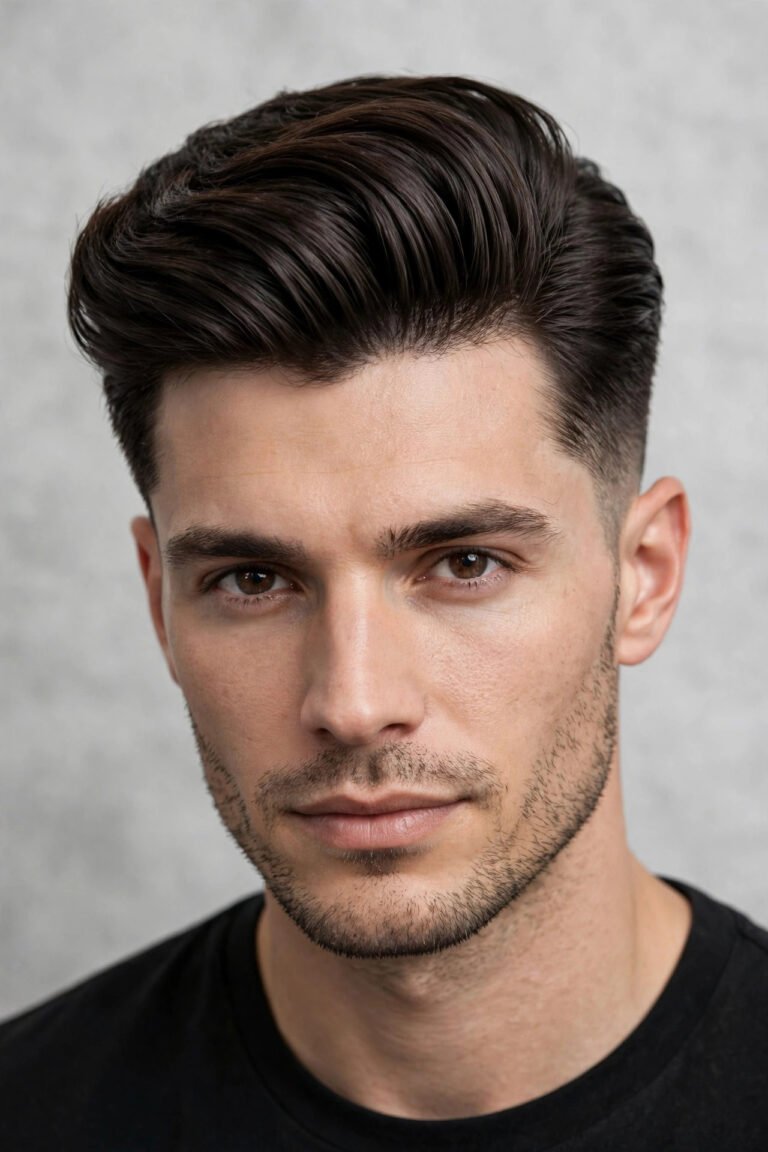
Take the classic and give it a modern edge: the side part fade. The top keeps its length and its part, but the sides drop into a low fade that hugs the head and fades cleanly around the ears. The contrast between the full top and the tight sides makes the part line pop, and the whole cut looks sharper and more current than a traditional taper.
This is the version most barbers cut the most, because it suits the widest range of guys. Tell your barber you want a low fade on the sides — specify how low you want the fade to start and whether you want skin at the bottom or a softer shadow. Keep two to three inches on top for the part. Style it with a matte clay for a contemporary finish, or pomade if you want the shine. The low fade keeps the sides maintenance-friendly, too: it grows out more gracefully than a high fade.
3. Textured Side Part
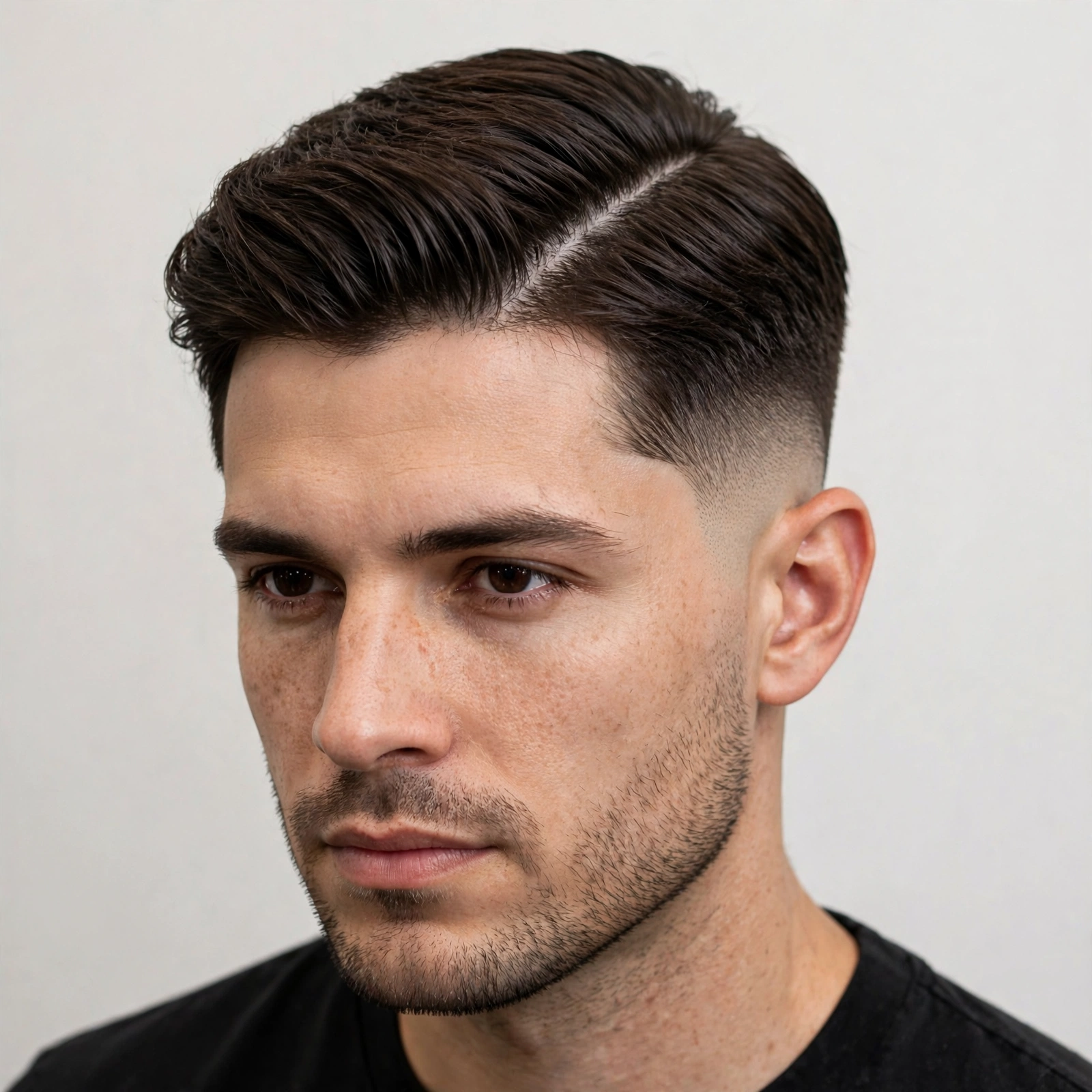
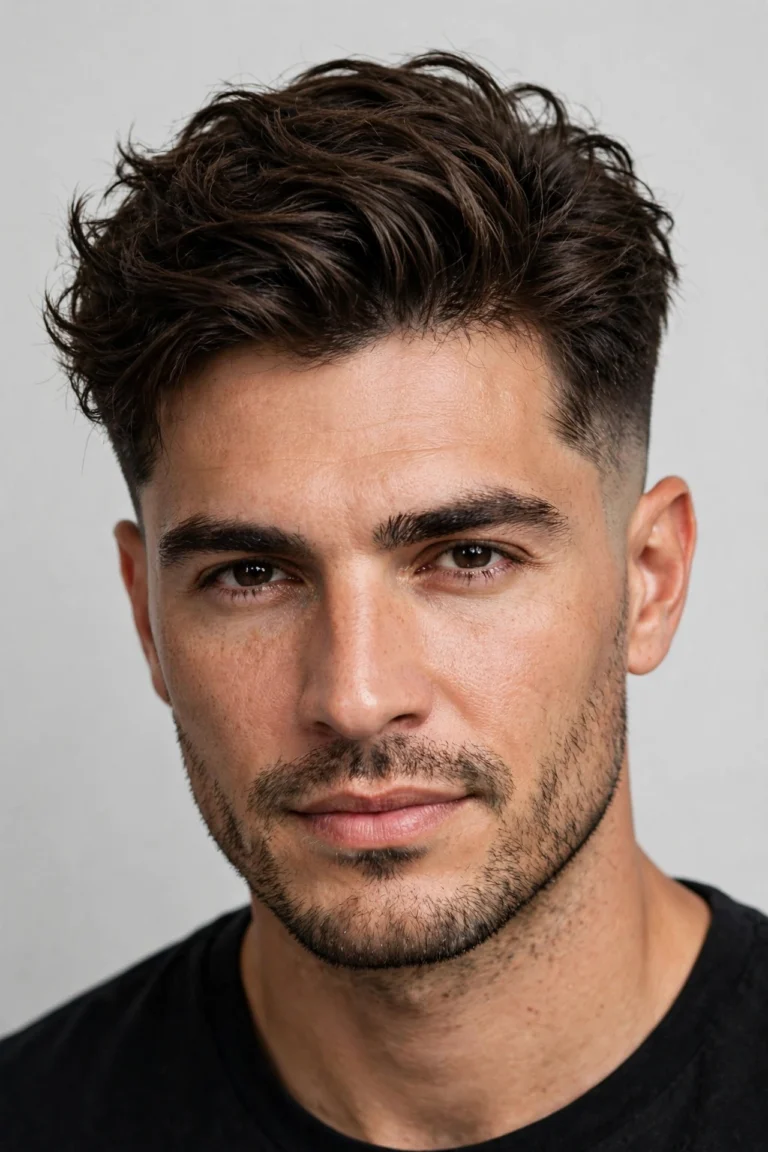
Not every side part needs to look like it was painted on. The textured side part keeps the part line but lets the top live a little — choppy ends, natural movement, a finish that looks like you ran your hands through it once and went about your day. It’s the side part for guys who like the structure of the classic but hate the feeling of “done” hair.
The secret is in the cutting, not just the styling. Ask your barber for point cutting or texture shears through the top — this removes bulk and lets the hair separate naturally instead of lying flat. Two to three inches is plenty. For styling, skip the pomade and grab a matte paste or sea salt spray: work it through dry hair, push the hair to your part side, and pinch a few pieces for definition. The result reads casual but intentional, and it photographs incredibly well.
4. Side Part with Beard

A side part paired with a beard is one of the strongest combinations in men’s grooming right now. The clean geometry of the part balances the ruggedness of the beard, and together they frame the face completely. This pairing works especially well for guys with rounder faces — the vertical structure of the haircut and the angular lines of a shaped beard add definition everywhere it counts.
Coordination matters here. Keep the sides of the haircut tight enough that they don’t visually merge with the beard into one big mass of hair — a fade or a clean taper with a defined lineup keeps the two zones distinct. Tell your barber to shape the beard’s cheek line to complement the haircut, not compete with it. Style the top with a medium-hold product, and keep the beard conditioned with oil so it reads “groomed” rather than “grizzly.” When both are dialed in, this is a genuinely striking look.
5. Wavy Side Part
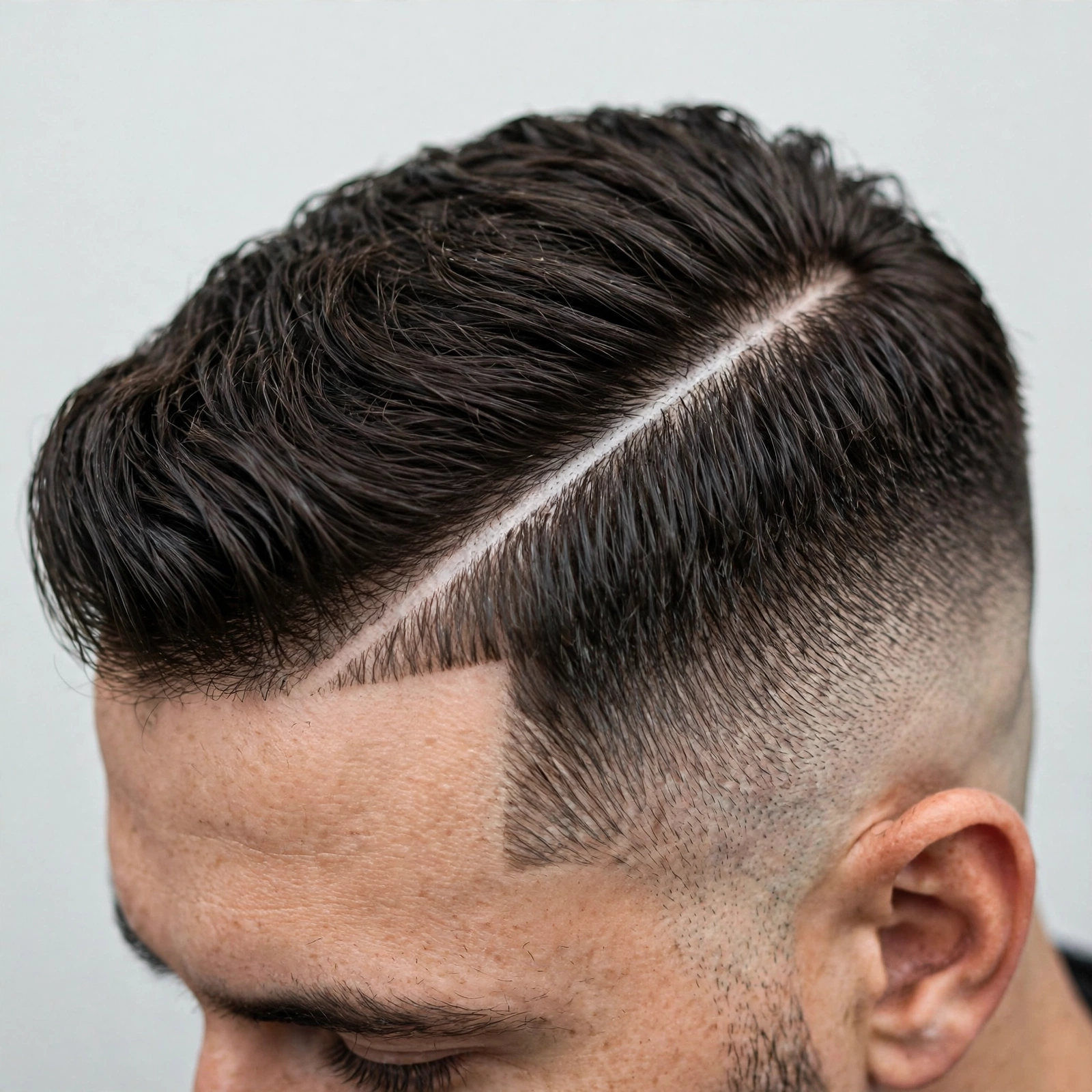
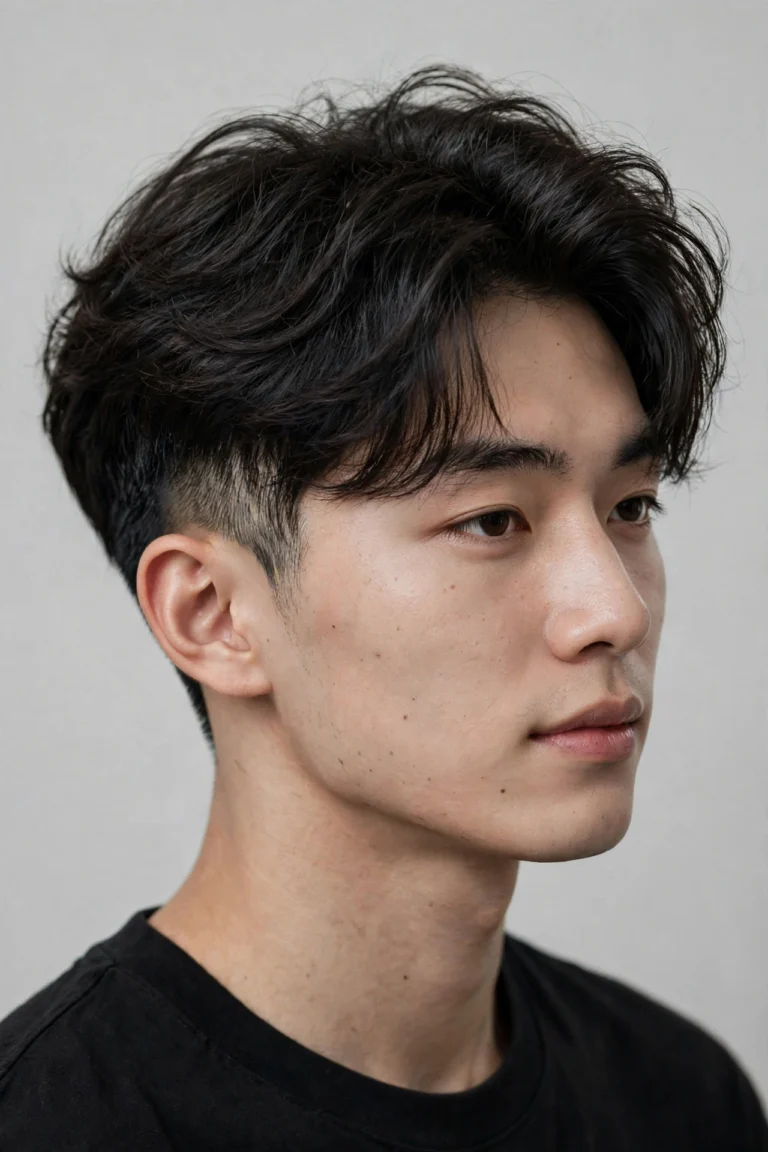
Guys with wavy hair sometimes think the side part isn’t for them — it absolutely is. A wavy side part is one of the most naturally handsome versions of the cut because the waves do half the styling work for you. The part gives the waves direction, and the waves give the part a softness that straight hair can’t replicate. It’s romantic without being fussy.
Length is your friend here: three to five inches on top lets the wave pattern show. Ask your barber to cut with your waves, not against them — long layers that follow the wave direction, and a part placed where the waves naturally separate. Styling is minimal: a light cream or curl-enhancing product on damp hair, comb the part in, and let it air dry or diffuse. Avoid heavy pomades that pull the waves flat. On humid days, a little anti-frizz serum keeps the waves defined instead of puffy.
6. Curly Side Part

Curly hair and side parts are an underrated pairing. A defined part gives curly hair something it often lacks — clear direction — while the curls bring volume and personality that make the cut anything but boring. The contrast between the tight, clean sides and the full curly top is genuinely eye-catching.
Ask your barber for a curly top with tapered or faded sides, and have them cut the curls dry or at their natural fall so the length is honest. The part on curly hair should be placed carefully — your barber will find where the curls naturally want to separate, and forcing it elsewhere just creates a cowlick battle. Style with a curl cream on damp hair, define the part with your fingers or a wide-tooth comb, and let the curls do their thing. This version needs a bit more length on top — four inches minimum — to let the curl pattern develop.
7. Slicked Side Part
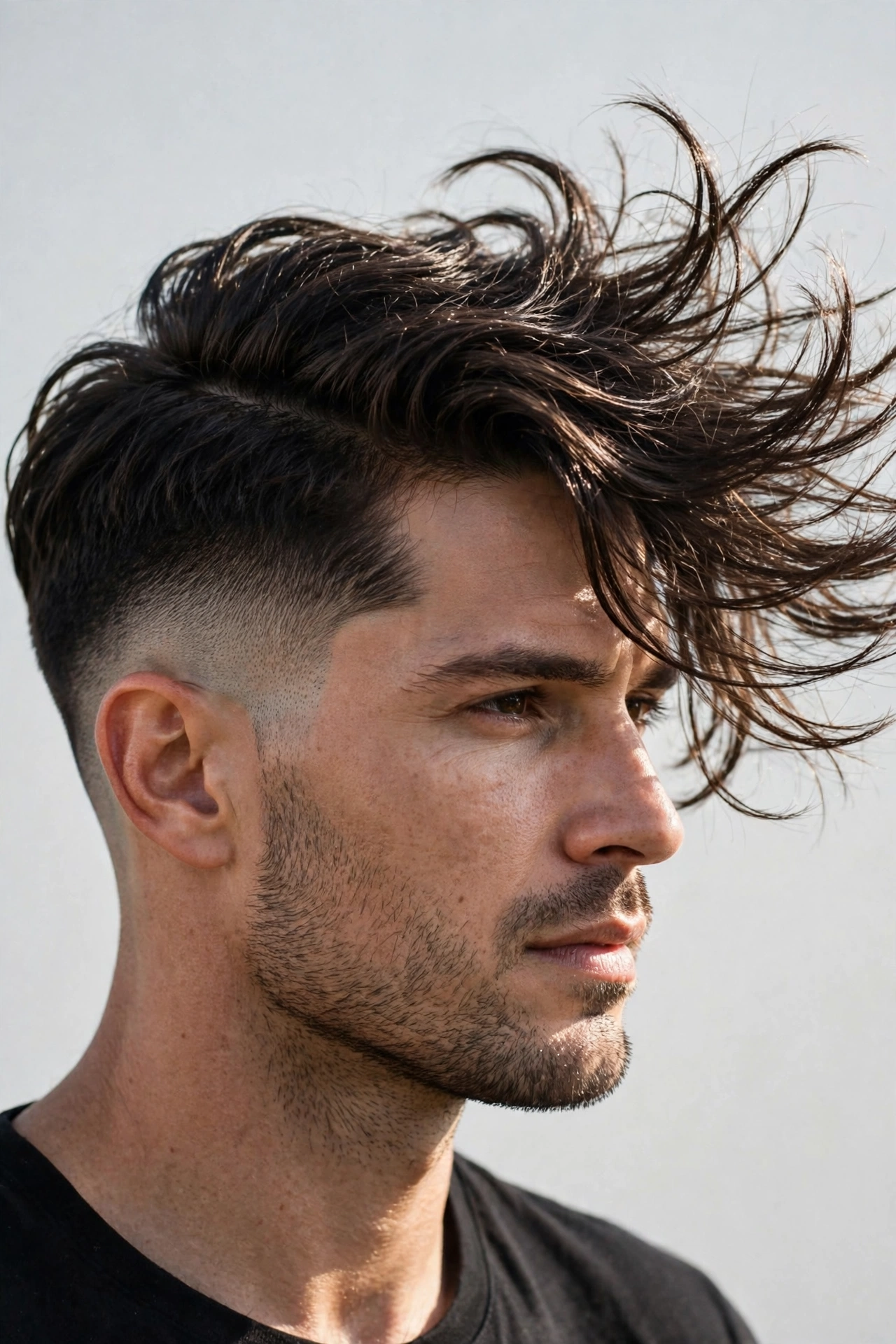
Sometimes you want the full drama: the slicked side part, with real shine and a silhouette that doesn’t move. This is the red-carpet, wedding-day, big-presentation version — hair combed close with a glossy finish that catches the light. It’s bold in 2026 precisely because matte everything has dominated for so long; shine now reads as a deliberate style choice rather than a dated one.
Product choice is everything here. Use a high-shine pomade — water-based if you want easy washout, oil-based if you want maximum hold and gloss. Apply to damp hair, comb the part in decisively, and sweep the top flat and to the side. A fine-tooth comb gives the cleanest result. Keep the sides tight — a low taper or fade — so the glossy top is the star. Fair warning: this is a high-commitment style for the day, so save it for occasions rather than everyday wear unless you genuinely love the maintenance.
8. Side Part with Mid Fade
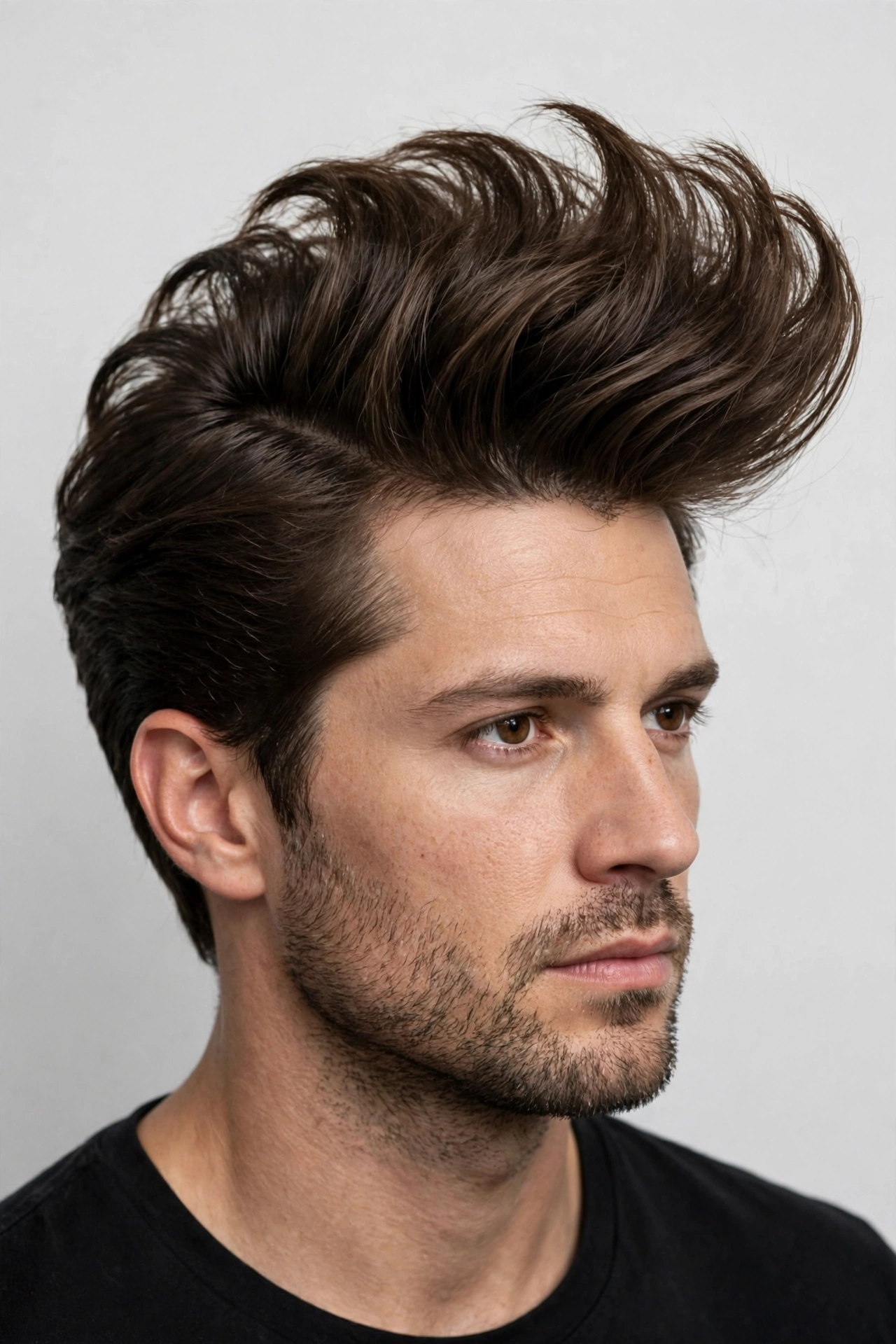
The mid fade is the Goldilocks fade for a side part — higher than a low fade, lower than a high fade, and flattering on the widest range of head shapes. Paired with a side part top, it gives you a clean, athletic, modern look that works as well with a t-shirt as it does with a blazer. If you’re unsure which fade to get, this is the safe bet your barber will probably recommend anyway.
Ask for the fade to start around the temple level, blended smoothly, with two to three inches left on top for the part. The key detail: make sure the barber blends the fade into the part zone cleanly — a harsh disconnect between the faded side and the full top can look accidental rather than intentional. Style with whatever finish you like; the mid fade side part is genuinely product-flexible. This is also a great grow-out cut — the mid fade softens evenly between appointments.
9. Long Side Part
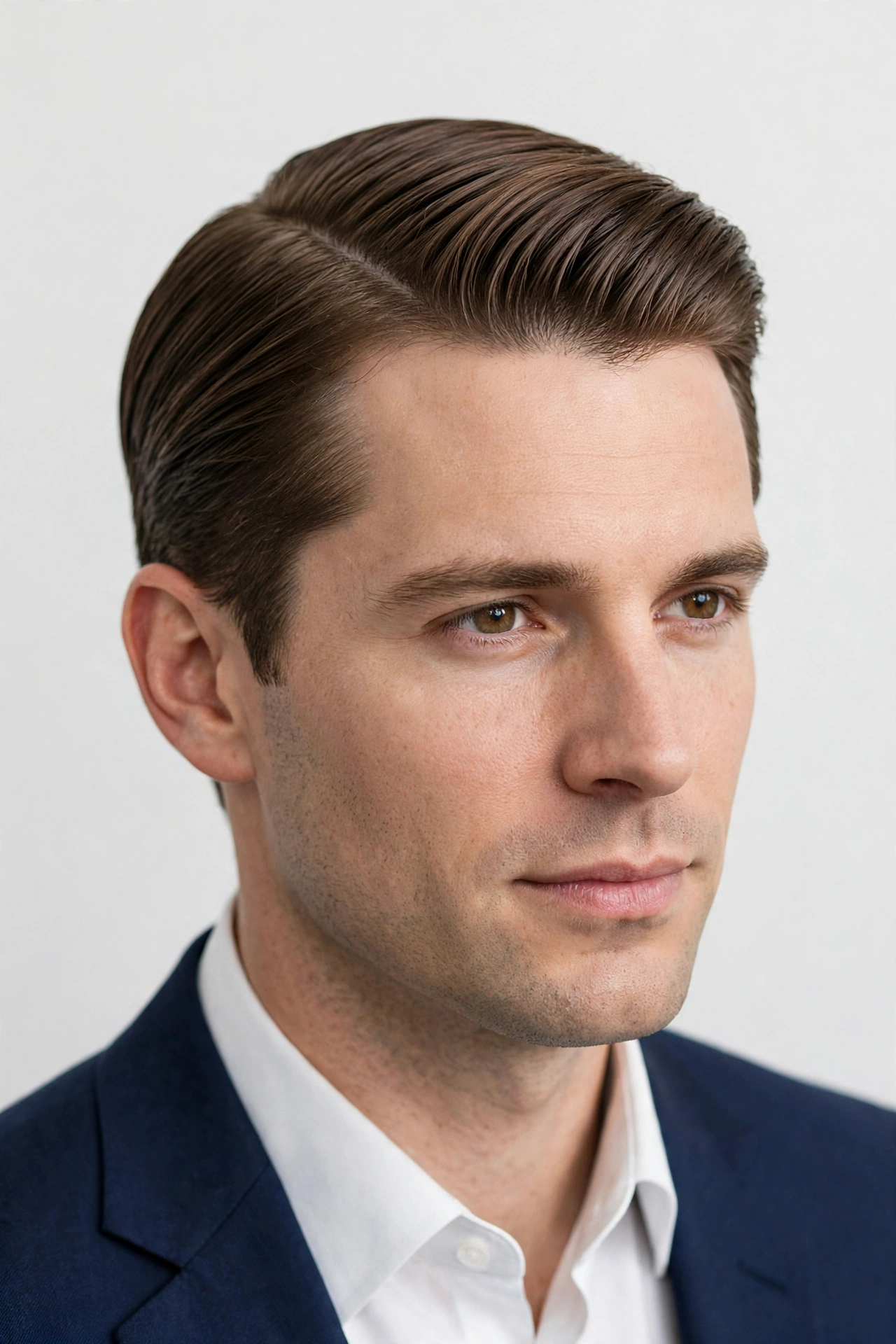
Who says a side part has to be short? The long side part keeps four to six inches (or more) on top, swept to the side in a flowing, almost editorial sweep. It’s the side part for guys growing their hair out, or for anyone who wants the polish of a part with the drama of length. Think old-Hollywood leading man meets modern creative professional.
The cut matters more than you’d think with length: ask for long layers that let the hair sweep without bulk, and keep the sides long enough to blend — a scissor taper rather than a clipper fade usually looks better here. Styling takes a bit more effort: blow-dry the top with a round brush or your fingers, directing everything toward your part side, then finish with a light cream. The payoff is a look with real presence. Just know that windy days are your enemy — keep a comb handy.
10. Side Part with Hard Part
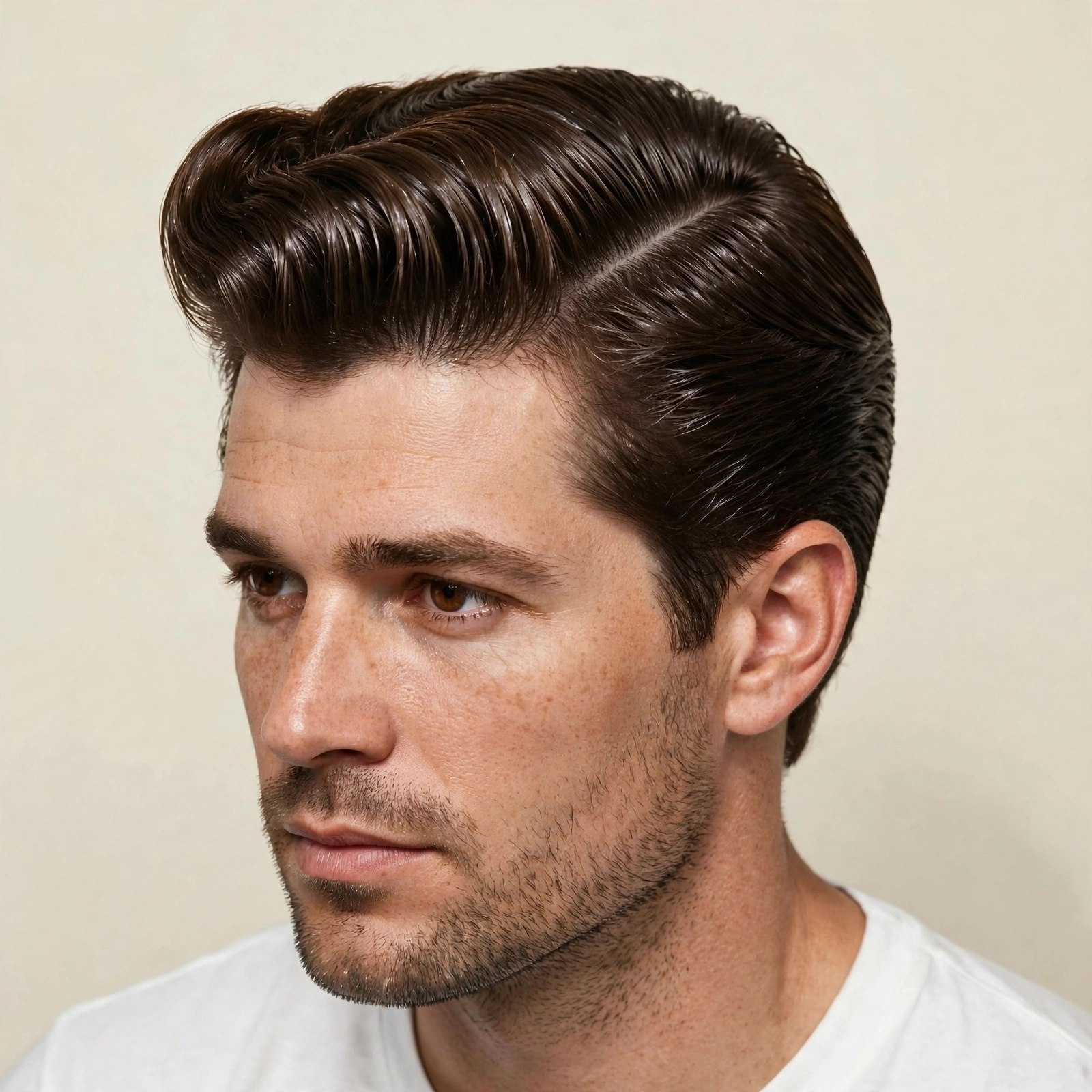
The hard part takes the side part’s defining feature — the part line — and turns it up to eleven. Your barber shaves a crisp, razor-thin line exactly where the part sits, creating a graphic, high-contrast detail that makes the whole haircut look razor-sharp. It’s precise, it’s bold, and it’s unmistakably intentional.
A hard part works best with shorter tops (one to three inches) and faded sides, where the shaved line reads clearly. Be aware of the commitment: the line grows out in about a week to ten days, so you’ll need more frequent touch-ups to keep it crisp — or ask your barber to show you how to maintain it at home with a trimmer (carefully). Tell your barber exactly where you want the part placed before they cut the line, because once it’s shaved in, you’re living with that placement. Style the top with pomade or clay combed away from the line for maximum definition.
11. Messy Side Part
The messy side part is the “I woke up like this (but better)” version — a visible part with a top that’s deliberately undone. It’s the sweet spot for guys who want the side part’s structure without looking like they’re headed to a board meeting. The part keeps it from reading as pure bedhead; the mess keeps it from reading as corporate.
Ask your barber for texture through the top and a part that’s defined but not razor-crisp. Styling is genuinely quick: a pinch of matte paste on dry hair, push the hair toward your part side, and mess it up with your fingers. Don’t overthink it — the whole point is controlled chaos. This version is forgiving on second-day hair and actually looks better slightly lived-in, which makes it one of the lowest-maintenance side parts on this list. Great for students, creatives, and anyone whose mornings are already hectic.
12. Side Swept with Taper
Somewhere between a side part and a sweep, this style keeps the part soft — more of a suggestion than a line — and pushes the top dramatically to one side. The sides get a clean taper, and all the energy goes into the top’s sideways flow. It’s dynamic, it’s photogenic, and it suits guys with thicker hair that naturally wants to move.
You’ll need three to four inches on top minimum for the sweep to have real movement. Ask your barber for a taper (not a fade) on the sides so the silhouette stays classic, and weight through the top so it sweeps rather than flips. The styling move that makes this work: blow-dry the top to the side while it’s damp, using your fingers or a vent brush — heat sets the direction far better than product alone. Finish with a light-hold cream. If your hair is fine, a volumizing mousse before the blow-dry gives the sweep something to stand on.
13. Side Part with Quiff

Take the volume of a quiff, aim it sideways, anchor it with a part — and you get one of the most head-turning side part variations there is. The front lifts up and over, the part keeps it directional, and the whole thing has a rockabilly-meets-modern confidence. It’s a bigger, bolder statement than the classic, and it suits guys who like their hair to have presence.
This one needs length up front — three to five inches at the fringe — with the sides faded or tapered short for contrast. Styling is a blow-dry job: dry the front up and to your part side with a round brush to build the lift, then lock it with a strong-hold matte product. A little pre-styler (mousse or thickening spray) on damp hair makes the volume last all day. Tell your barber you want a side part quiff specifically, because the cutting is different from a standard forward quiff — the weight needs to sit so it falls sideways, not forward.
14. Professional Side Part
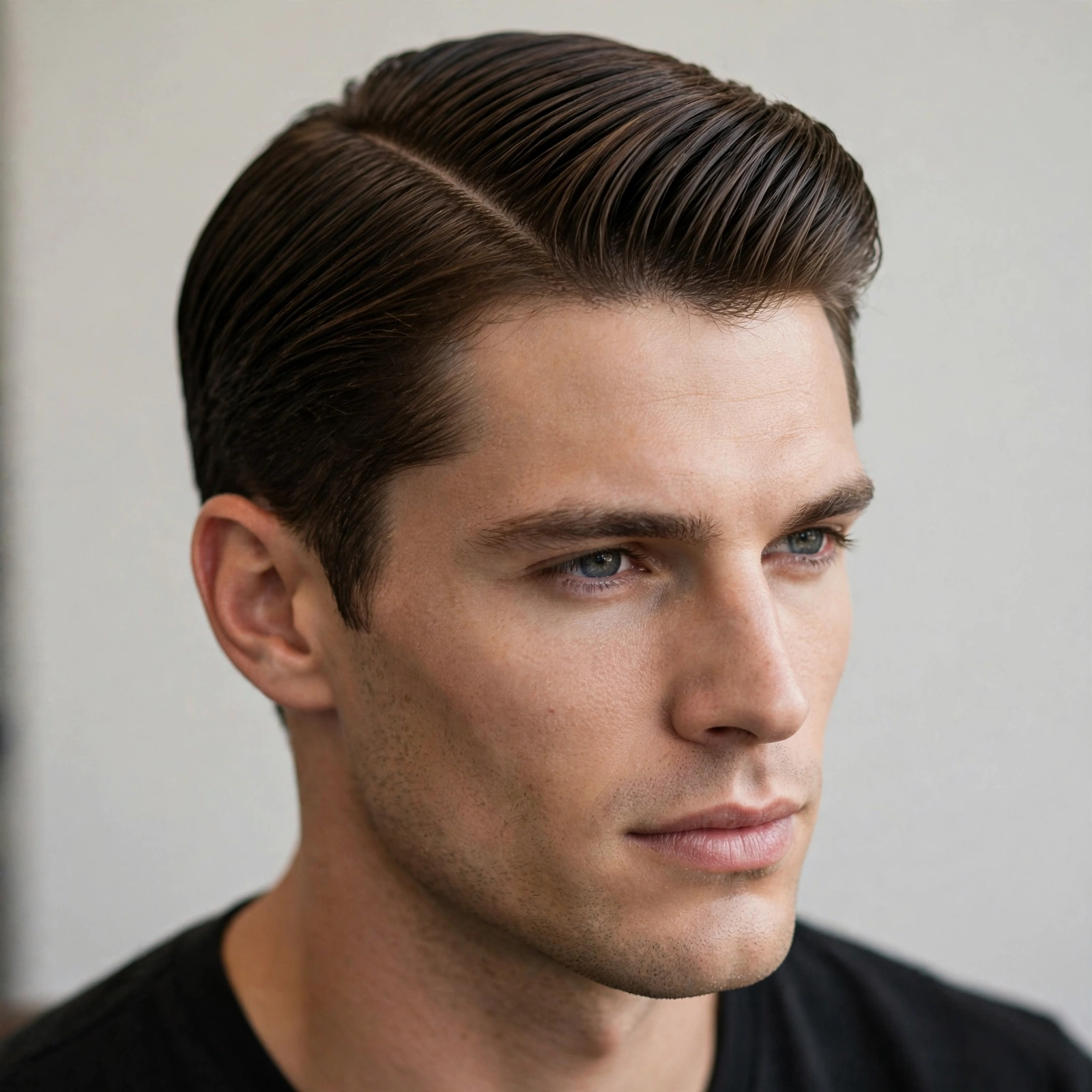
Every list needs the interview-proof option. The professional side part is the most conservative take: neat taper, moderate length, clean part, controlled finish — nothing that will raise an eyebrow in a law firm, a bank, or a client meeting. It’s not the most exciting version here, but it’s the most universally safe, and there’s real value in that.
The rules for this one are simple: sides tapered (not faded to skin), top two to three inches, part clean but natural, finish neat with a medium-hold product that has a touch of shine. Avoid hard parts, designs, and extreme fades — the whole point is that nobody notices the haircut, they just notice you look put-together. Ask your barber for a “conservative business cut with a side part” and they’ll know exactly what you mean. Maintenance is easy: trims every three to four weeks keep it boardroom-ready.
15. Vintage 1950s Side Part

Let’s close with the throwback: the 1950s side part, with its generous volume, glossy finish, and unapologetic polish. This is the Don Draper, James Dean-adjacent territory — a side part with real height through the top and a shine that means business. In 2026, wearing it reads as a confident style statement rather than a costume, especially paired with modern clothes.
You’ll need three to five inches on top with enough density for volume. Ask your barber for a classic contour cut — longer through the top, tapered sides, no fade — and a part placed to flatter your hairline. Styling is old-school: pomade on damp hair, comb everything into place with intention, and don’t be afraid of the shine. A vent brush and a blow-dryer build the height before the pomade goes in. This is the highest-maintenance side part on the list, but on the right guy, on the right night, nothing else touches it.
How to Ask Your Barber for a Side Part

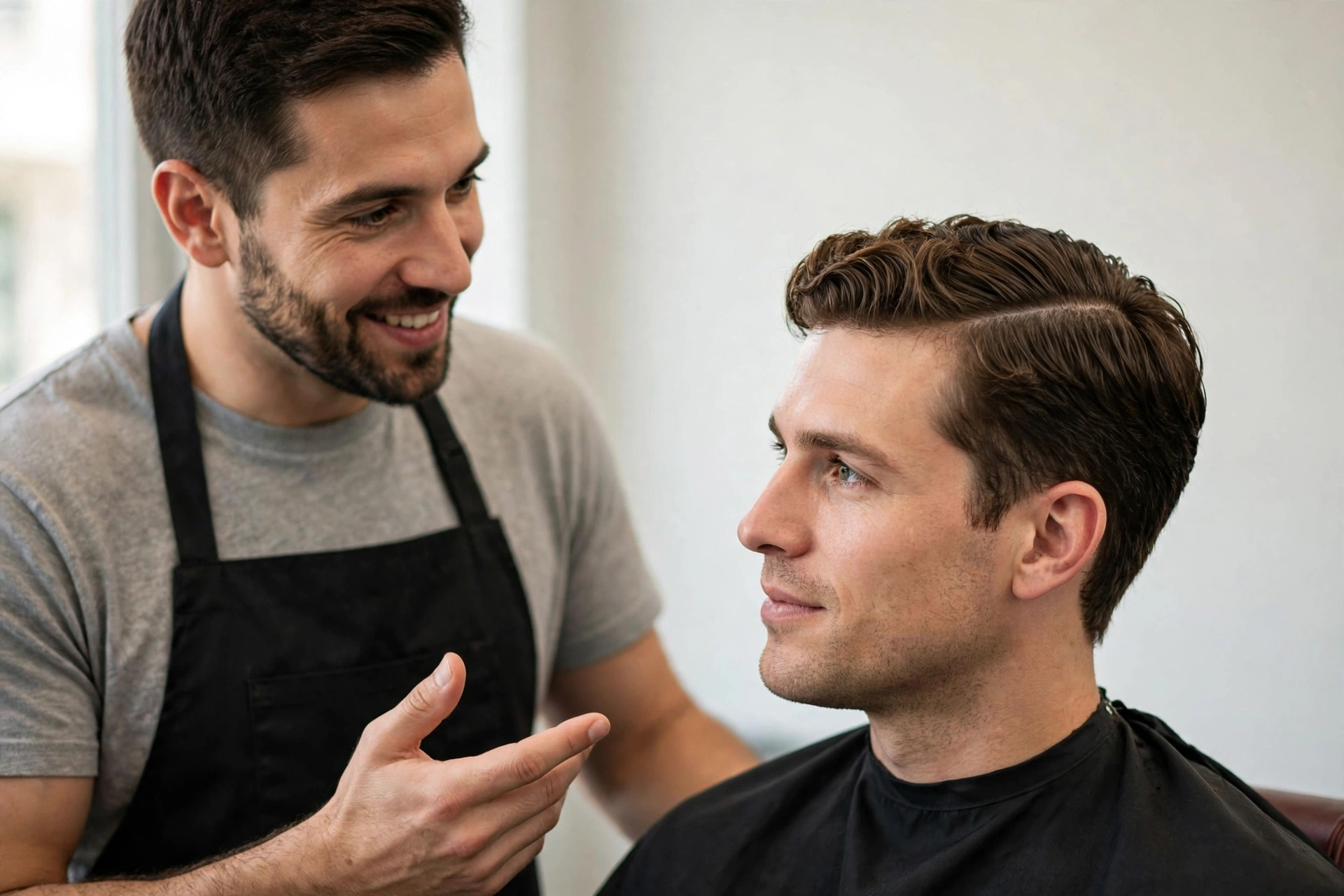
Walking into the barbershop knowing what to say is half the battle. Here’s your script: start with the family — “I want a side part” — then specify the three variables that matter. First, the top: how much length (in inches, not “a bit”), and whether you want it classic and smooth or textured. Second, the sides: taper, low fade, mid fade, or high fade — and how tight. Third, the part itself: natural part or hard part, and which side. Bring a photo of the exact version you want. Barbers love photos; they eliminate ninety percent of misunderstandings.
A few phrases that help: “scissor cut on top” if you want softness rather than clipper harshness. “Blended, not disconnected” if you want the sides to flow into the top. “Keep the weight” if your hair is thick and you’re worried about it being thinned too much. And always mention your styling routine honestly — if you never blow-dry, say so, because a cut that depends on blow-drying will disappoint you every morning. A good barber will also check your natural part and crown growth before cutting; if they don’t, ask them to.
Price and timing expectations: a side part is a standard men’s cut, so expect the shop’s normal rate and roughly thirty to forty-five minutes in the chair. If you’re getting a hard part shaved in, mention it when booking — some shops charge a small add-on. And book your next appointment before you leave: side parts look best with trims every three to five weeks, and the guys with the sharpest hair are simply the guys who never let it slide.
How to Style a Side Part at Home
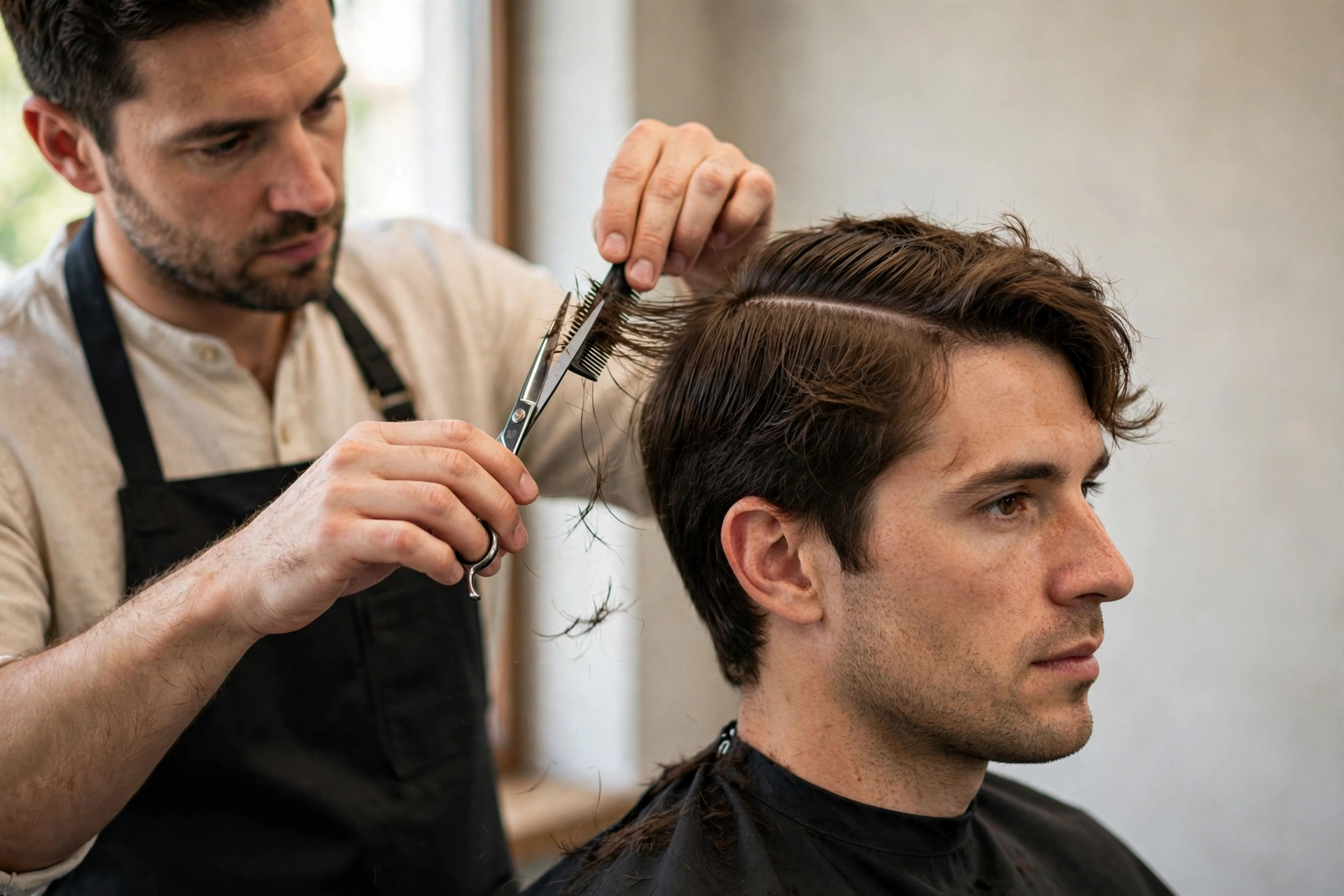
Here’s the good news: styling a side part at home is one of the easiest routines in men’s grooming. Start with damp, towel-dried hair — not dripping, not dry. Work your product through evenly from roots to ends: a dime-sized amount for pomade or clay, a bit more for cream. Then find your part with a comb — start at the crown and draw the line forward to your hairline — and comb the top over to your part side. Comb the sides back and down. That’s the entire foundation, and it takes about two minutes.
Product choice changes the character completely. For the classic polished look, use a medium-hold pomade with some shine. For the modern matte look, use a clay or matte paste — apply to dry hair for maximum texture, or damp hair for a bit more control. For wavy or curly side parts, use a curl cream and skip the comb in favor of fingers. For maximum hold on important days, layer: a pre-styler (mousse or sea salt spray) on damp hair, blow-dry into shape, then finish with your main product. The blow-dryer is honestly the cheat code most guys skip — ninety seconds of heat sets the direction so the product just has to maintain it, not create it.
A few technique details that separate good from great: comb with the grain of your hair’s growth, not against it. If you get a cowlick near the part, attack it while the hair is wettest — that’s when it’s most trainable — and consider a touch more product right on the spot. For extra polish, finish with a cool shot from the dryer to lock everything in. And keep a pocket comb with you; a side part is a style that rewards one thirty-second touch-up midday, especially in wind or humidity. Nobody will know. Everyone will just think your hair always looks like that.
Best Face Shapes for the Side Part
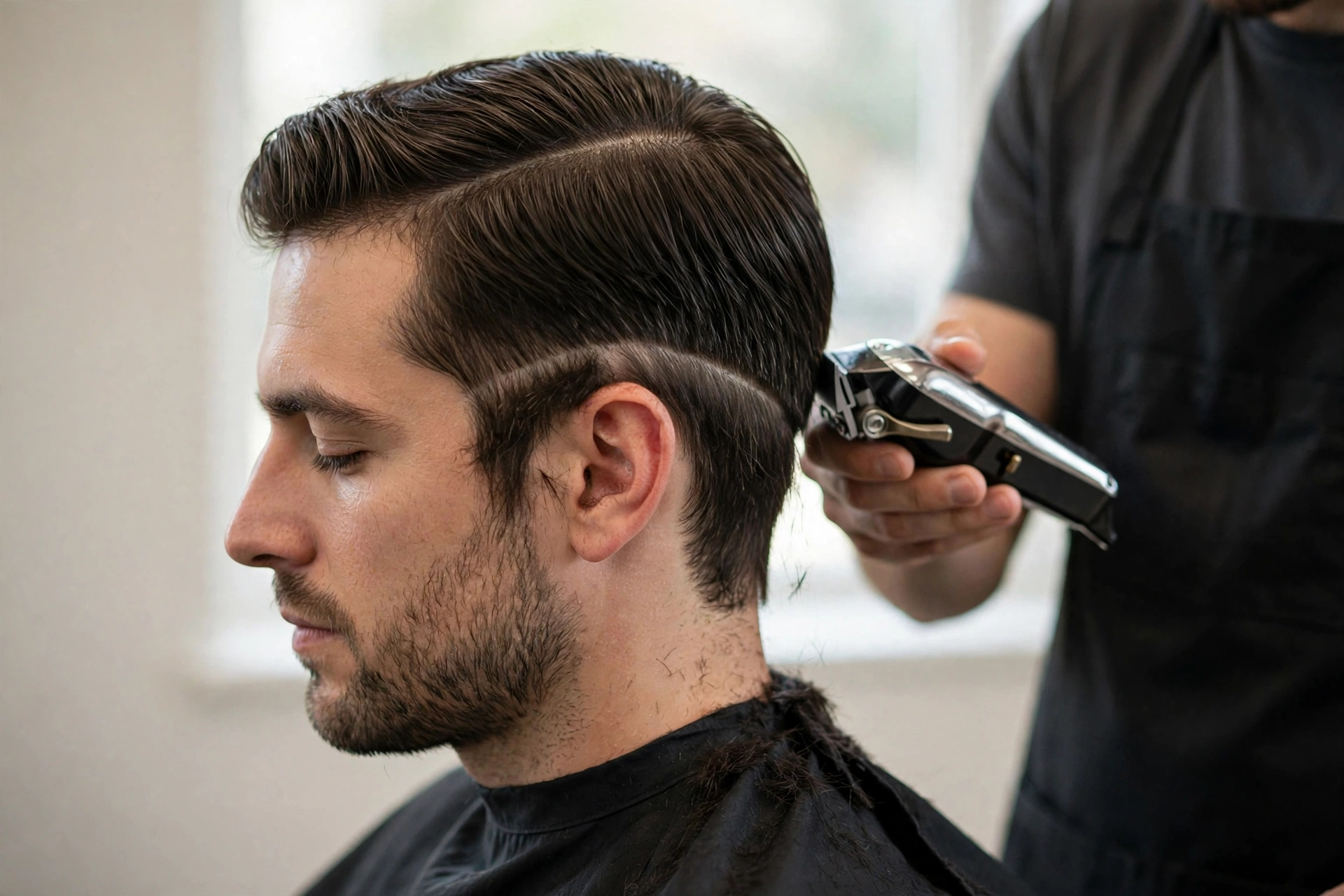
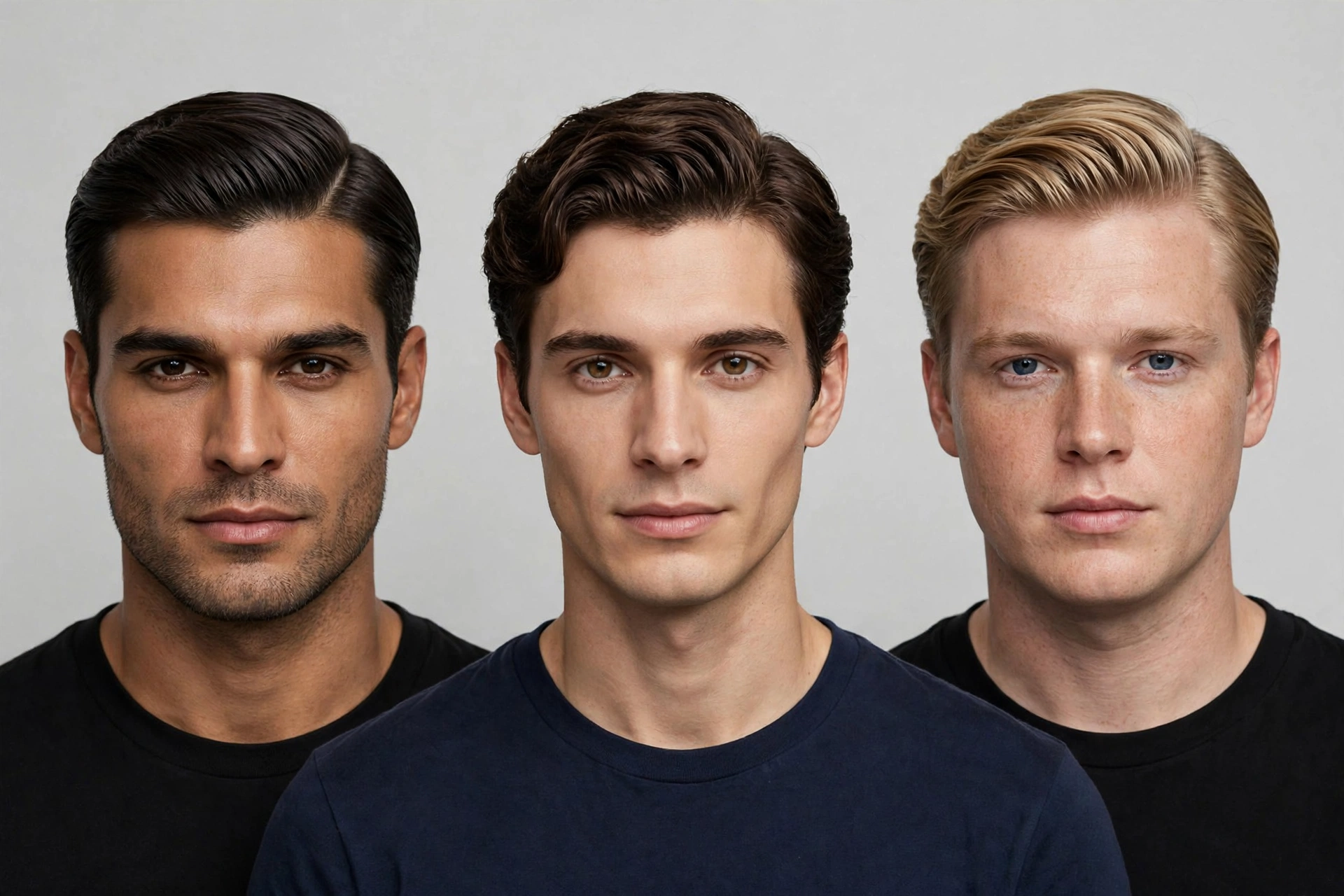
The side part is one of the most face-shape-friendly haircuts in existence — there genuinely is a version for every face. That said, the details shift. Oval faces have it easiest: the balanced proportions suit any side part variation, classic or textured, so choose based on personality rather than geometry. Round faces benefit from volume on top and tighter sides — the height elongates the face, so lean toward textured or quiff-leaning side parts and avoid anything that adds width at the sides.
Square faces — strong jaw, broad forehead — pair beautifully with the side part because the cut’s clean lines echo the face’s natural angles; a classic or slicked side part is a natural fit. Oblong or rectangular faces should be careful with too much height on top, which can stretch the face further — keep the top moderate and let the sides carry a bit more fullness. Heart-shaped faces (wider forehead, narrower chin) do well with side parts that keep some volume at the sides to balance the forehead, rather than fades that go too tight. Diamond faces suit textured side parts with softness around the temples.
The honest truth most barbers will tell you: face shape matters less than hair type, hairline, and growth patterns. A receding hairline, for instance, actually pairs well with a side part — sweeping the top to the side can camouflage thinning at the temples far better than a buzz cut does, as long as there’s enough density on top. The part should sit where your hair naturally wants to separate, not where a diagram says it should. When in doubt, book a consultation cut: tell the barber you want a side part and let them read your head. That’s literally what they’re trained to do.
Side Part Maintenance Guide
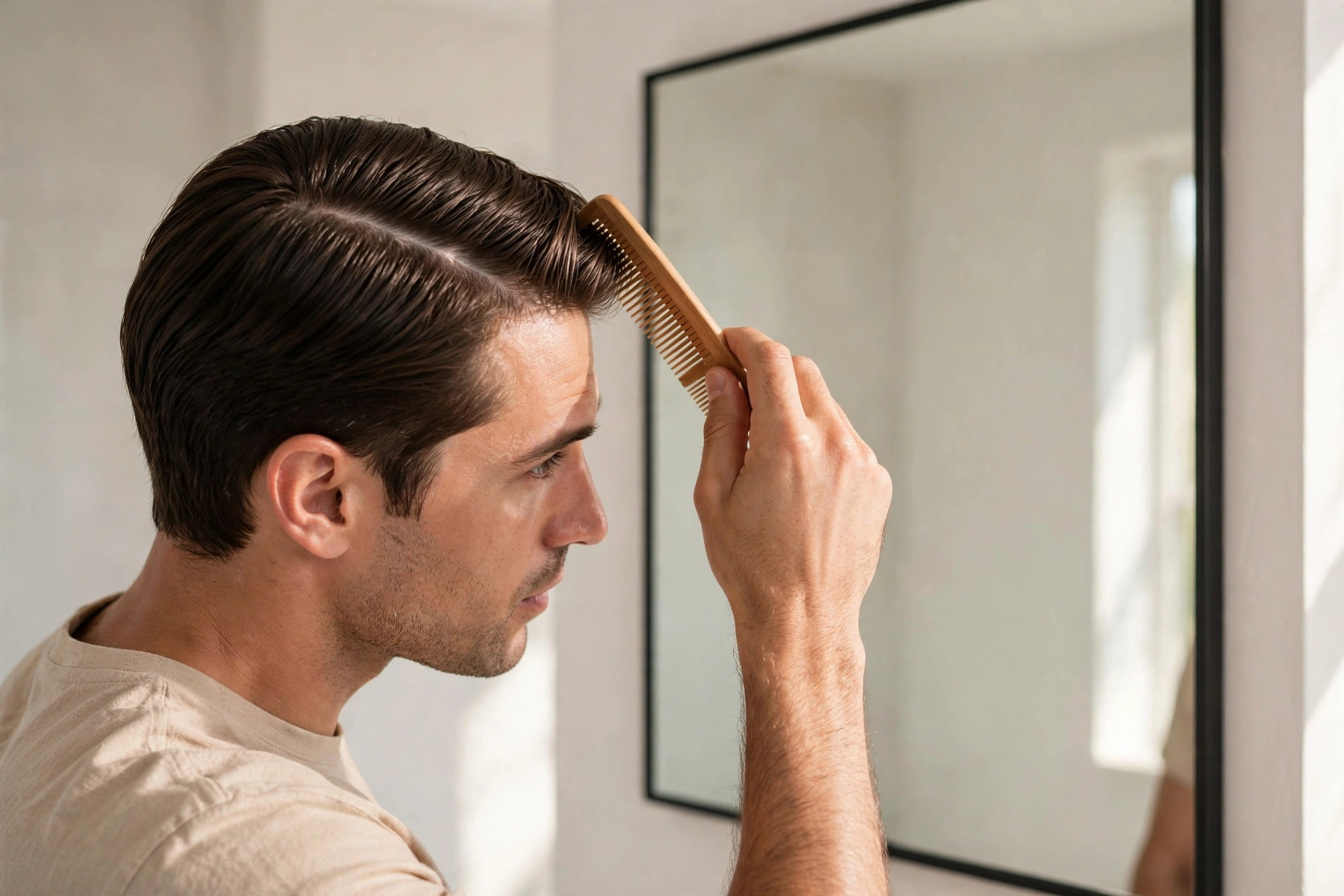
A side part is a low-drama haircut day to day, but it does ask for regular upkeep — the whole look depends on clean lines and intentional shape, and both blur as hair grows. The standard rhythm is a trim every three to five weeks: closer to three if you have a fade or a hard part, closer to five if you’re running a classic taper. Between cuts, the top can grow a bit without ruining the look, but the sides and the neckline are what keep it sharp — many guys get just the sides cleaned up between full cuts.
At home, the maintenance toolkit is small: a good shampoo (wash two to three times a week, not daily, unless your scalp runs oily), a conditioner if your hair is medium length or longer, your styling product, and a comb. If you use pomade daily, a clarifying shampoo once a week prevents buildup. Sleep matters more than you’d think — a silk or satin pillowcase reduces morning chaos, and guys with longer tops sometimes loosely tie the hair or wear a durag overnight to preserve the part direction.
Watch for the signs it’s time to book: the part line starts disappearing into grown-out bulk, the sides puff out instead of hugging the head, or your morning styling time doubles because you’re fighting length. Don’t wait until it’s a rescue mission — a side part maintained on schedule always looks better than one revived after two months. And communicate with your barber across visits: “same as last time, but take the sides a touch tighter” is how a good cut evolves into your perfect cut.
Frequently Asked Questions
How long does my hair need to be for a side part haircut?
You need at least two to three inches on top for a proper side part — that’s the minimum for the hair to lie over to one side and stay there. Three to four inches is the sweet spot for most versions. If your hair is shorter than that right now, grow the top out while keeping the sides trimmed; you’ll be part-ready in six to eight weeks.
Is the side part haircut good for thin or thinning hair?
Yes — it’s actually one of the better choices. Combing the top to the side creates coverage over thinning areas at the temples and crown, and a matte product adds the appearance of thickness. Keep the sides neat but not shaved to skin, since extreme contrast can emphasize thinness on top. If thinning is advanced, talk to your barber honestly about what the hair can still do.
Which side should I part my hair on?
Part where your hair naturally wants to part — that’s the side where it falls cleanly and stays put with minimal product. Your barber can identify it in seconds by checking your crown growth pattern. Most men part on the left, but there’s no rule; the right side works just as well and some guys find it photographs better with their stronger jaw angle.
Can I get a side part with curly or wavy hair?
Absolutely. Wavy and curly side parts are some of the best-looking versions of the cut. You’ll need a bit more length on top (three to five inches) so the texture can develop, and your barber should cut with your natural pattern rather than against it. Use curl cream instead of heavy pomade, and define the part with fingers or a wide-tooth comb.
How often should I get a side part trimmed?
Every three to five weeks keeps a side part looking sharp. Fade and hard-part versions need the shorter end of that range (three weeks), while classic tapers can stretch to five. If the part line starts vanishing or the sides puff out, you’re overdue — book before it becomes a rescue job.
What product is best for a side part haircut?
It depends on the finish you want: pomade for classic shine and hold, matte clay or paste for the modern textured look, curl cream for wavy and curly versions, and light cream for longer side parts. Start with a medium hold — you can always go stronger, but too much hold on day one makes the hair look stiff and unnatural.
Final Thoughts

Fifteen ideas, one timeless framework. The side part haircut for men has survived a century of trends for the simplest reason: it works. It works on straight hair and curly hair, in boardrooms and on weekends, on twenty-year-olds and sixty-year-olds. And in 2026, with the pendulum swinging back toward polish and intention, it might be the smartest haircut choice a man can make — a classic that the current moment happens to love.
So pick your version. Screenshot the one that feels like you, book the barber, and use the words from the guide above so you walk out with exactly what you pictured. Give it two weeks of styling — every new part needs a short training period — and you’ll wonder why you ever wore anything else. The side part isn’t just back. For a lot of guys, it never left.
Conclusion
The classic side part is 2026’s timeless gentleman’s cut — refined, versatile, and always appropriate. From boardroom to wedding, it delivers polished confidence with minimal effort. It flatters nearly every face shape, particularly when the part is placed to balance your features and complement your hairline.
Comb damp hair into place with a medium-hold pomade for shine, or matte clay for a modern twist. A clean taper on the sides keeps it fresh. In 2026, the side part proves that true style never chases trends — it sets them.

4 Comments