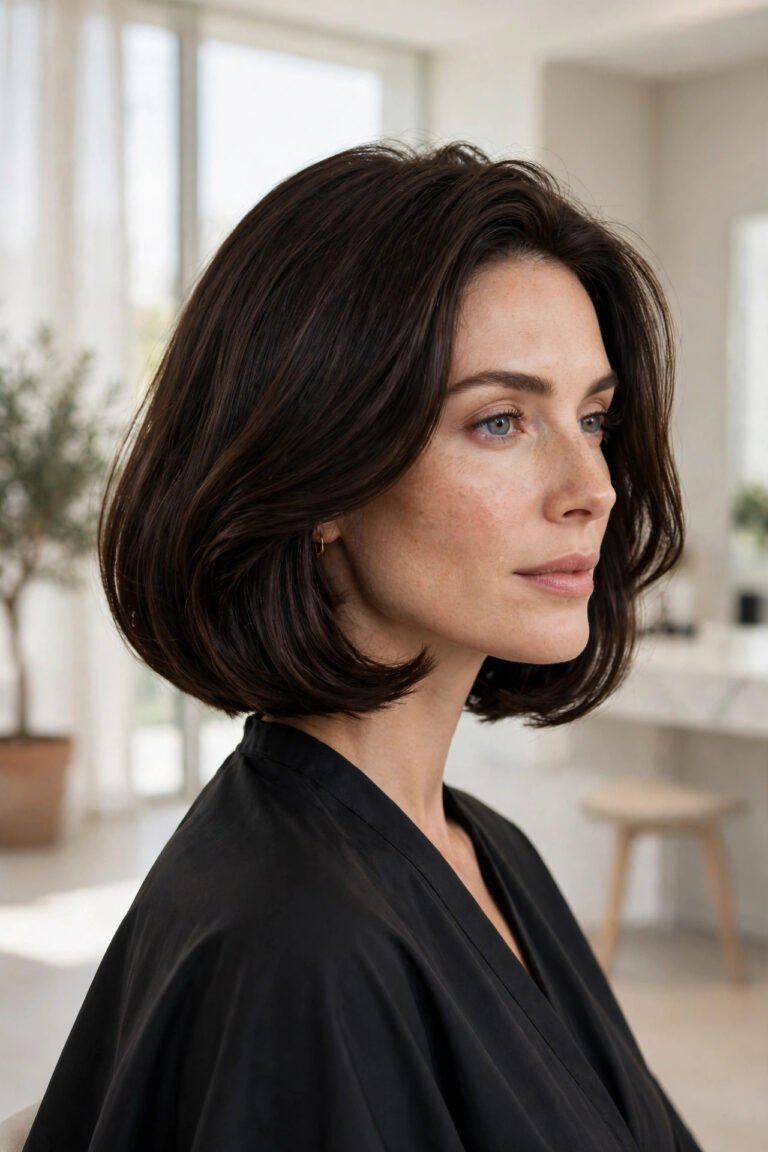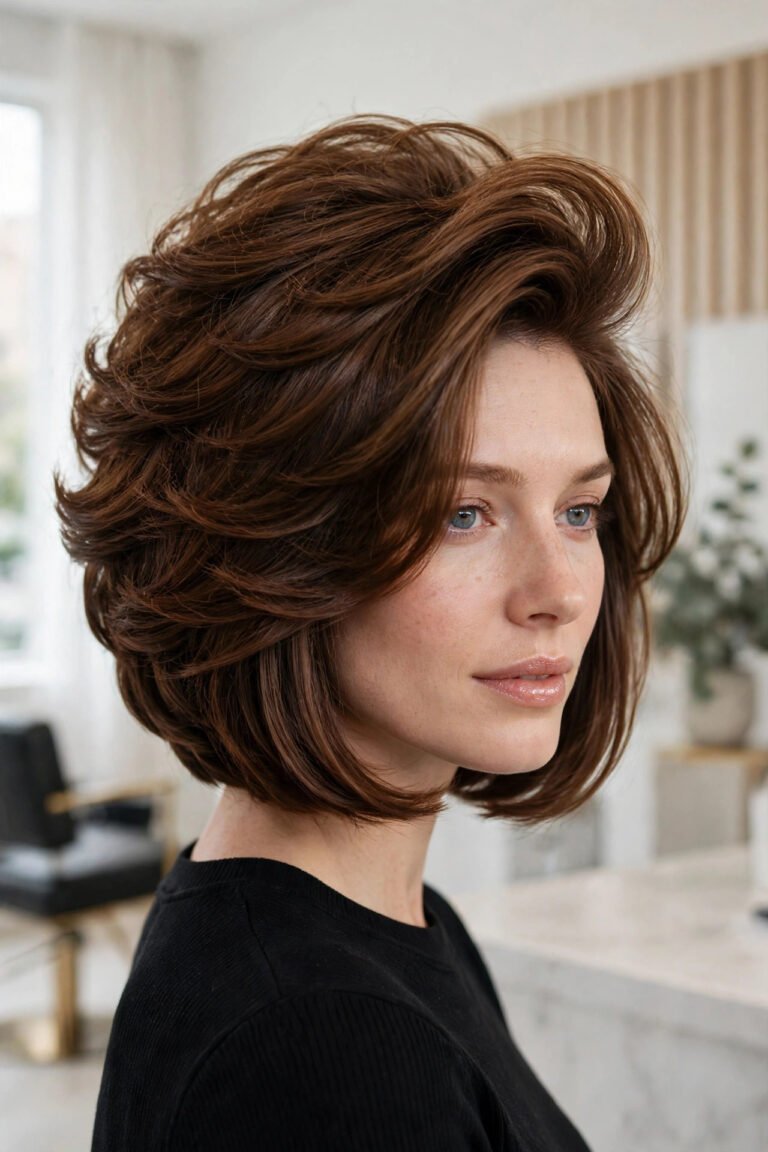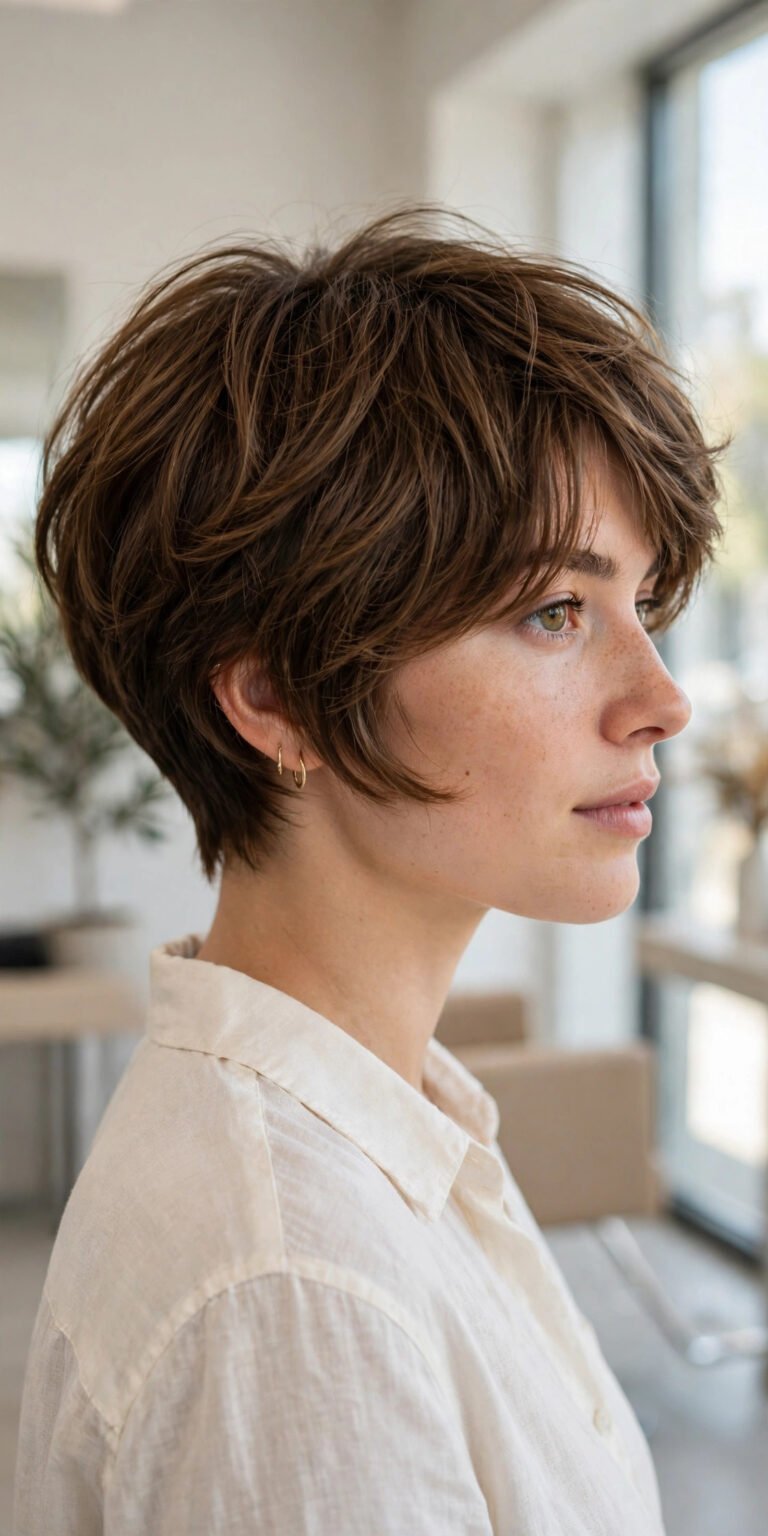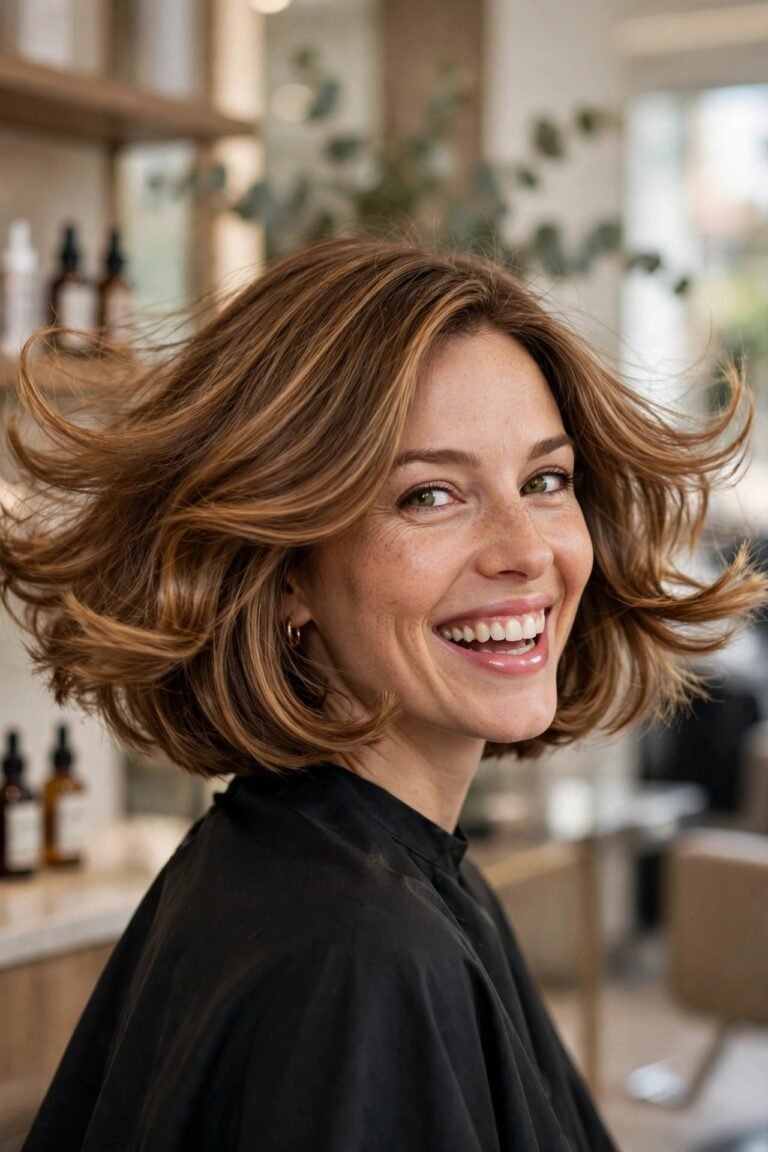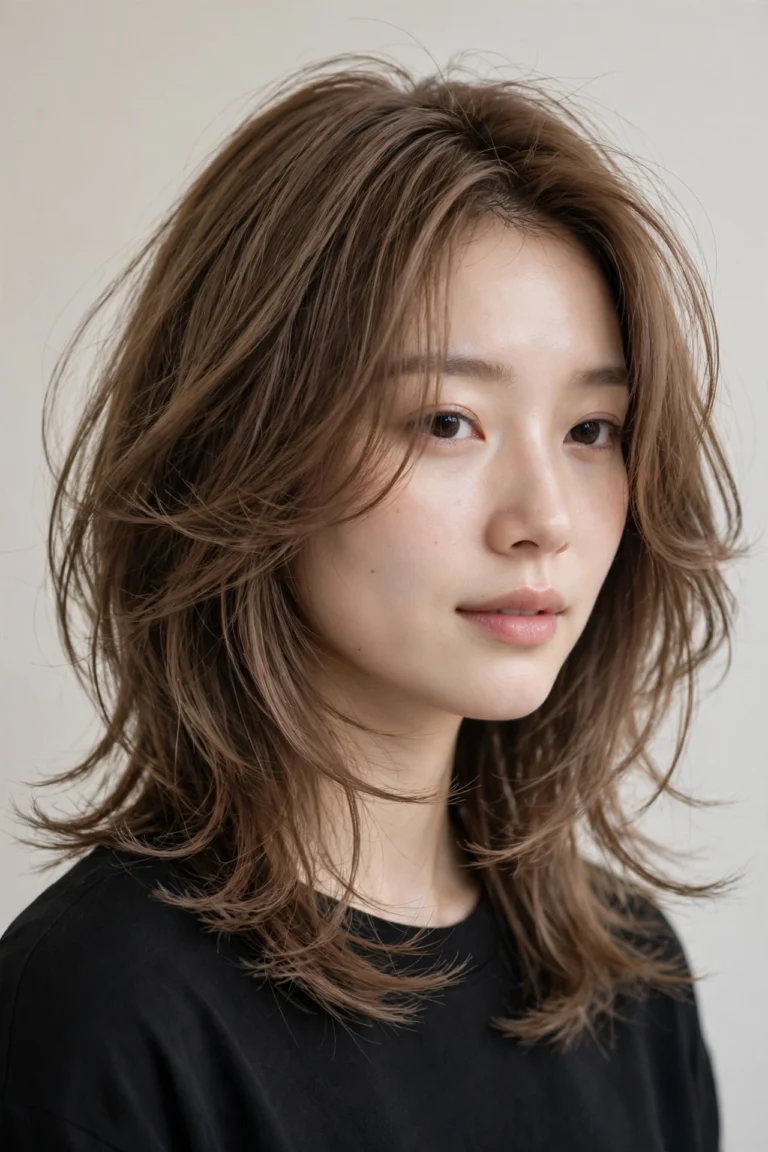
32 Auburn Hair Color Ideas for Women in 2026
Auburn Hair Color: The Richest Shade of Fall 2026
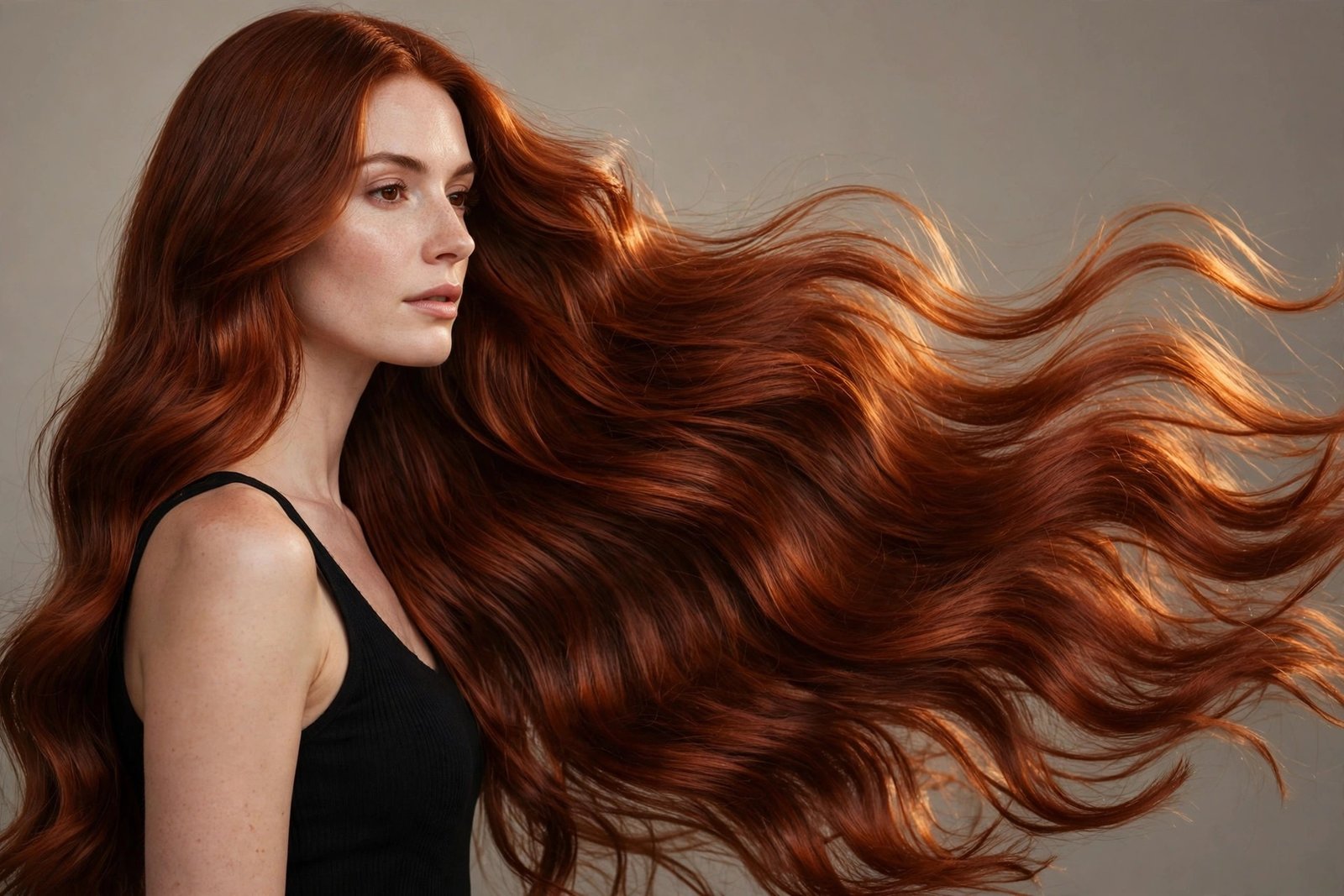
There is a moment every autumn when the light changes and suddenly every brunette starts eyeing the reds. This year, that moment arrived with a statistic attached: Pinterest’s first-ever Beauty Trend Report, published in October 2026, shows searches for “auburn copper hair colour” up a staggering 403% as part of its Copper Waves autumn palette. Auburn hair color — that deep, burnished reddish-brown that looks like it was poured from a copper kettle — has officially become fall 2026’s richest hair trend. Not the loudest. The richest. And honestly, I think that distinction matters more than people realize.
Before we go one step further, let’s clear up a confusion I see constantly, because three copper-family trends are circulating right now and they are not the same thing. Soft copper blonde — the one with searches up 845% — is a blonde with copper tones kissed through it. Light, airy, golden-copper. Cowboy copper is the opposite end: bright, fiery, unapologetic copper-red, the loudest red on the block. Auburn sits in the rich middle ground between them. It is deeper and more brown than copper-red, warmer and redder than a straight brunette. Think mahogany in candlelight. Think a chestnut that caught fire and decided to stay warm. If blonde-copper is sunrise and cowboy copper is a bonfire, auburn is the glow of embers — and it flatters more people than either of its cousins.
What I love about auburn — and what I tell every client who sits in my chair asking about it — is that it is the redhead look without the redhead commitment. Natural redheads are about 2% of the population, and that rarity is exactly why the shade turns heads. But bright coppers fade fast, clash with half your wardrobe, and announce themselves from across the street. Auburn does the same head-turning work in a lower voice. It reads expensive. It reads intentional. It catches the light in a way that makes strangers ask what your colorist did, and the answer is always more interesting than they expect.
So here is what this guide actually is: 32 auburn hair color ideas for 2026, from the deepest espresso-auburn to the brightest copper-auburn balayage, each one broken down the way a real colorist would explain it — who it suits, what to ask for at the salon, what it costs you in maintenance, and the honest downsides nobody puts on Pinterest. No fluff. Let’s find your auburn.
Table of Contents
- Auburn Hair Color: The Richest Shade of Fall 2026
- Who Should Wear Auburn Hair Color
- 32 Auburn Hair Color Ideas for 2026
- The Auburn Care Routine: Keeping the Richness Alive
- Frequently Asked Questions
- Conclusion
What Exactly Is Auburn Hair Color?
Strip away the marketing and auburn is beautifully simple: a brown base with red woven through it. On the color wheel of the salon, it lives in the level 4 to level 6 range — that’s medium to dark — with warm red and copper reflects. The brown gives it depth and wearability; the red gives it fire. That balance is the whole trick. Too much brown and you’re just a warm brunette. Too much red and you’ve crossed into copper territory. The sweet spot is where both are visible at once, shifting as the light moves.
Colorists talk about auburn in families, and knowing the family names will make your salon consultation ten times better. Deep auburn and mahogany auburn are the darkest members — brown-dominant, red in the undercurrent, visible mostly when light hits. Classic auburn is the balanced middle: clearly red, clearly brown, the shade most people picture when they hear the word. Copper-auburn leans brighter, with copper and golden-red reflects dancing on top of the brown base — this is the family Pinterest is going wild for right now. Then there are the blends: cherry cola auburn (auburn with a dark cherry-violet depth), espresso auburn (near-black roots melting into warm red-brown), and cinnamon auburn (spiced, golden-red warmth through the mid-lengths).
Here’s the part barbers and colorists won’t always volunteer: auburn is one of the most forgiving “dramatic” colors you can choose. Because the base is brown, grow-out doesn’t scream. Because the tone is warm, it flatters tired skin on no-makeup days in a way ash blondes never will. And because it sits in the mid-depth range, most people can reach it without the kind of aggressive bleaching that fries hair. It is the rare trend shade that works with your hair instead of against it.
Why Auburn Is Fall 2026’s Biggest Hair Trend
Trends don’t come from nowhere, and auburn’s 2026 moment has three engines behind it. The first is Pinterest’s Beauty Trend Report, which didn’t just note the 403% spike in “auburn copper hair colour” searches — it placed auburn at the heart of the Copper Waves palette, alongside mocha, espresso, cherry cola, and plum. That’s not a single shade trending; that’s an entire autumn color story, and auburn is its anchor. When a platform with half a billion monthly users names your shade the centerpiece of fall, salons feel it within weeks.
The second engine is the broader swing toward richness. For years the dominant salon request was brightness — lived-in blondes, money pieces, everything lighter and airier. That cycle has turned. The 2026 mood is depth, warmth, and dimension: expensive-looking color with shadow and glow rather than lightness. Auburn is practically built for this moment. It has the dimension blondes chase with balayage, except it comes baked into a single rich shade. Clients are walking in asking for “that expensive brunette but warmer,” and colorists keep landing on auburn.
The third engine is pure wearability. Fall and winter are when people actually commit to richer color — summer sun fades reds fast, but autumn’s softer light lets auburn hold its depth for months. Add the fact that auburn pairs perfectly with fall wardrobes (camel coats, burgundy knits, gold jewelry — it was made for these), and you have a trend with genuine staying power rather than a six-week viral spike. I’ll be honest: I’ve watched a lot of hair trends cycle through, and the ones anchored in a season’s actual light and clothing tend to last. Auburn has that.
Who Should Wear Auburn Hair Color
Short answer: almost everyone, with the right shade. Longer answer: auburn is unusually democratic for a red family color, because its brown base gives colorists so much room to tune it. Warm and neutral skin tones — golden, olive, peachy undertones — are the natural home of classic and copper auburns. The red warmth echoes the skin instead of fighting it, and the effect is that lit-from-within glow people pay good money for in highlighter.
Cool skin tones can absolutely wear auburn, but the shade selection gets more strategic. If your undertones run pink or rosy, steer toward the brown-dominant auburns — deep auburn, mahogany, espresso auburn — where the brown anchors the red and nothing clashes. Bright copper-auburns on very cool skin can emphasize redness in the complexion, which is the one auburn mistake I see repeated. When in doubt, your colorist can do a strand test and hold swatches to your face in daylight. Ten minutes of testing beats six weeks of regret.
Eye color is where auburn really shows off. Green and hazel eyes against auburn hair is the combination that launched a thousand Pinterest saves — the red tones make green irises look almost unreal. Brown eyes go warm and luminous. Blue eyes get a striking contrast that reads bold and editorial. As for natural hair color: medium brown hair takes auburn beautifully with minimal lifting; dark hair suits the deeper auburns with less damage; blondes need a filler first (more on that in the FAQ) but get the most dramatic transformation. The only people I’d steer away are those who genuinely hate warm tones on themselves — if you’ve always felt best in icy, ashy shades, auburn will feel like wearing someone else’s clothes. Trust that instinct.
32 Auburn Hair Color Ideas for 2026
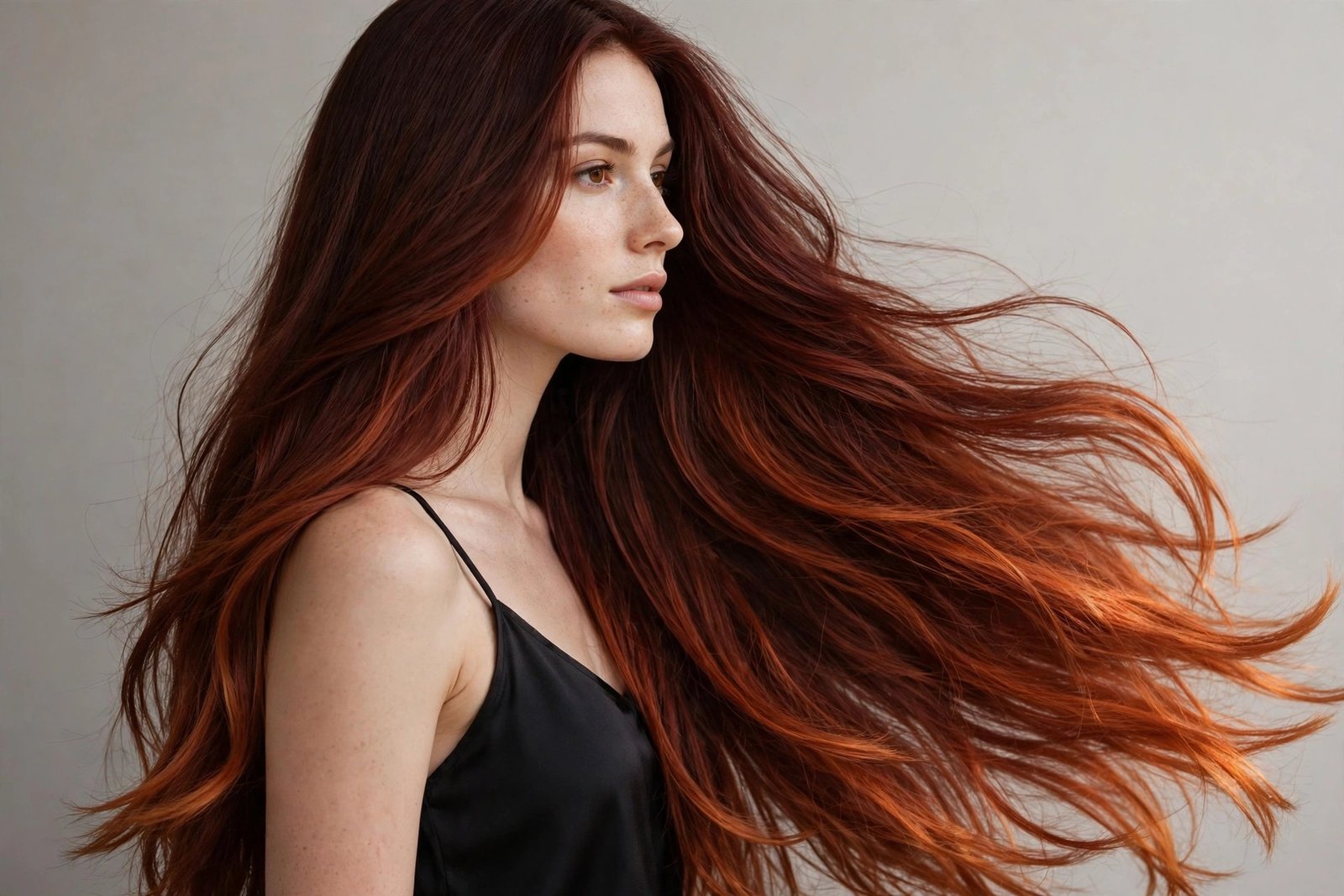
Thirty-two shades, one family. I’ve ordered these from the deepest, most wearable auburns up through the brightest copper-kissed versions, so you can stop scrolling the moment the maintenance level exceeds what you’re willing to give. Every single one includes the salon script — the actual words to say in the chair.
1. Classic Deep Auburn Waves
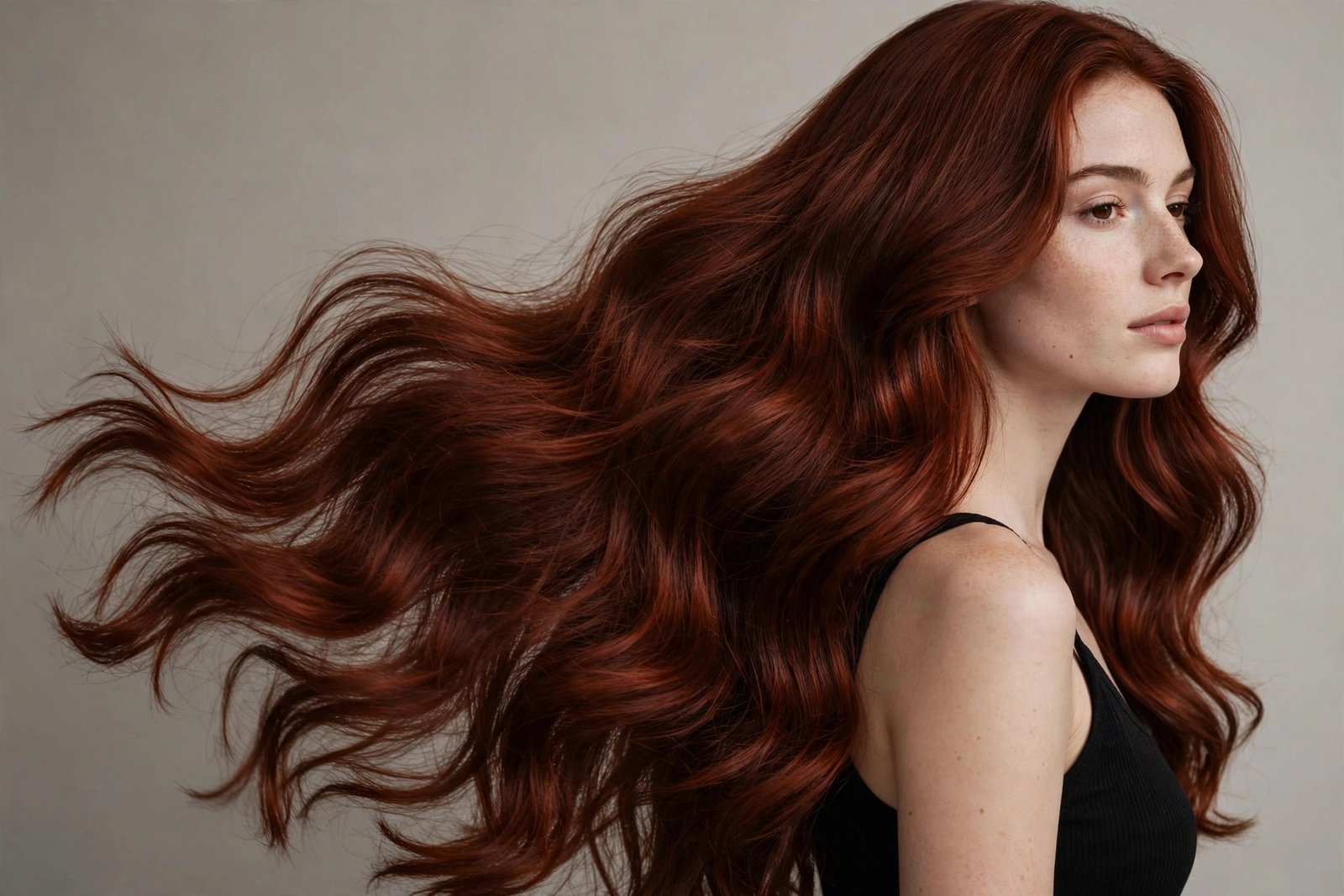
This is the auburn that started it all, and I’ll be honest with you: it’s still the one I recommend most. Classic deep auburn is a level 5 reddish-brown — brown you can see, red you can feel — worn here in soft, touchable waves that let the light move through the color. There’s nothing trendy about it, and that’s exactly the point. It doesn’t date. It doesn’t scream for attention. It just looks expensive in every lighting situation known to humanity, from office fluorescents to candlelight.
Who it suits: genuinely almost everyone. Warm, neutral, and cool skin tones all work because the depth of the brown base keeps the red polite. It’s particularly stunning on medium to long hair, where the waves create that shifting ribbon effect — dark in shadow, glowing copper-red where light hits. If your natural hair is medium brown, your colorist can often reach this with a single deposit-only color, no bleach, no drama.
The salon script: ask for “a level 5 auburn, balanced red-brown, not too copper.” Bring a photo, because “auburn” means different things to different colorists — one person’s auburn is another’s copper. Maintenance is refreshingly low for a red: a gloss every 8 to 10 weeks, sulfate-free shampoo, and you’re golden. Honest downside: on very dark hair it can read almost black indoors, only revealing its red in sunlight. If you want visible red indoors too, go one level lighter or add the copper-auburn balayage from idea 3.
2. Mahogany Auburn Melt
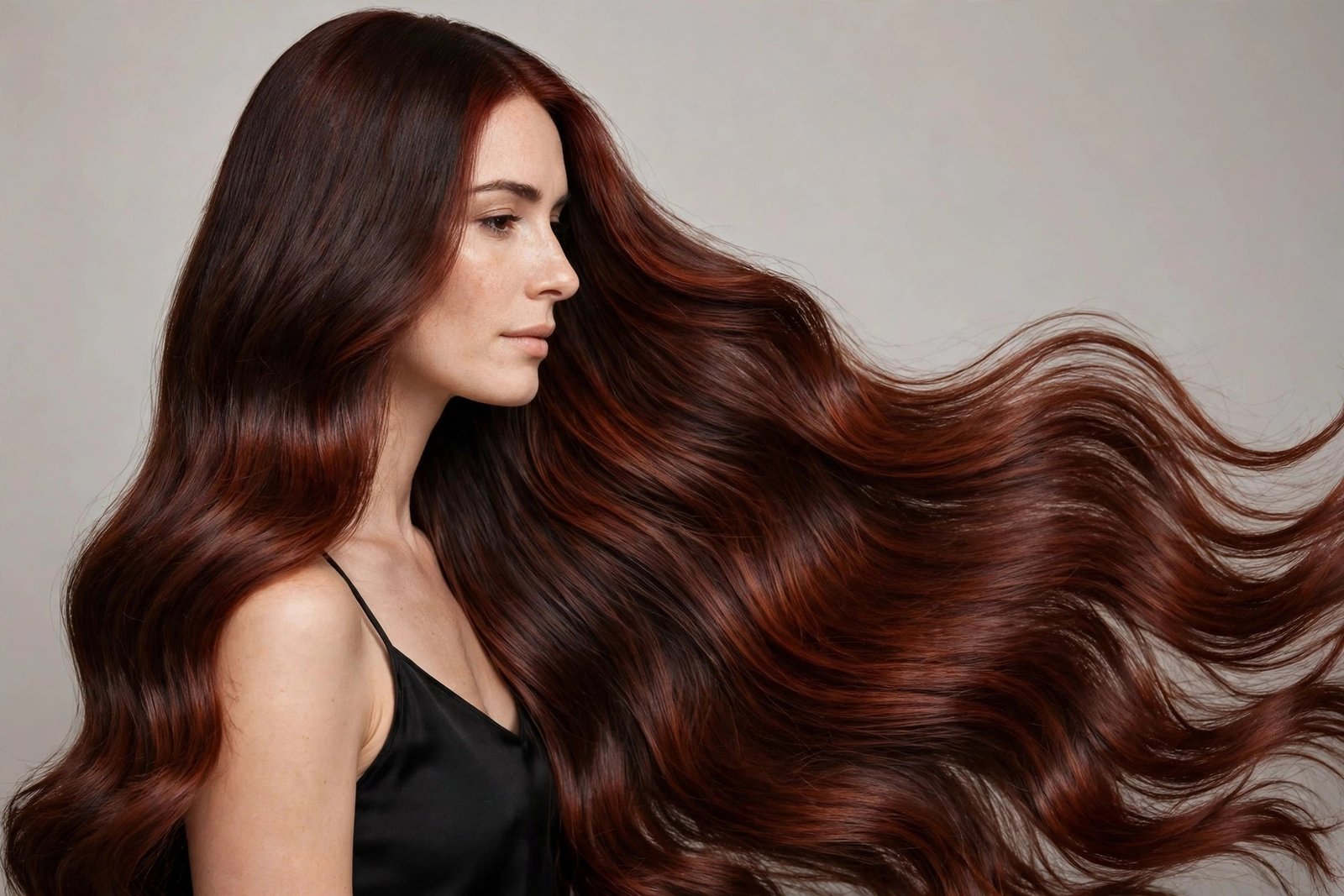
Mahogany is auburn’s moody older sister — deeper, richer, with a red-violet undertone that reads almost like polished wood. The “melt” part is the technique: your colorist blends the darker root into the mahogany lengths with zero visible line, so the color looks like it grew that way. It’s the shade I suggest when someone says “I want red, but I work in a conservative office.” It photographs like a dream because the violet-red reflects pick up camera light beautifully.
Who it suits: cool and neutral skin tones especially, since the mahogany depth flatters pink undertones instead of fighting them. It’s also the best auburn for naturally dark hair — the lift required is minimal, which means less damage and a softer grow-out. Long bobs and longer lengths show the melt best; on very short hair the blending has less room to happen.
The salon script: “a mahogany auburn melt — deep brown-red base, melted, no harsh line at the root.” Ask for a demi-permanent color if you want the gentlest option; it fades gracefully over 6 to 8 weeks. Maintenance is mid-range: the depth hides fading well, but the red-violet tone needs a color-depositing conditioner to stay rich. Honest downside: mahogany can pull slightly purple in certain lights, which some people love and some hate. Look at photos in daylight and indoor light before committing.
3. Copper-Auburn Balayage
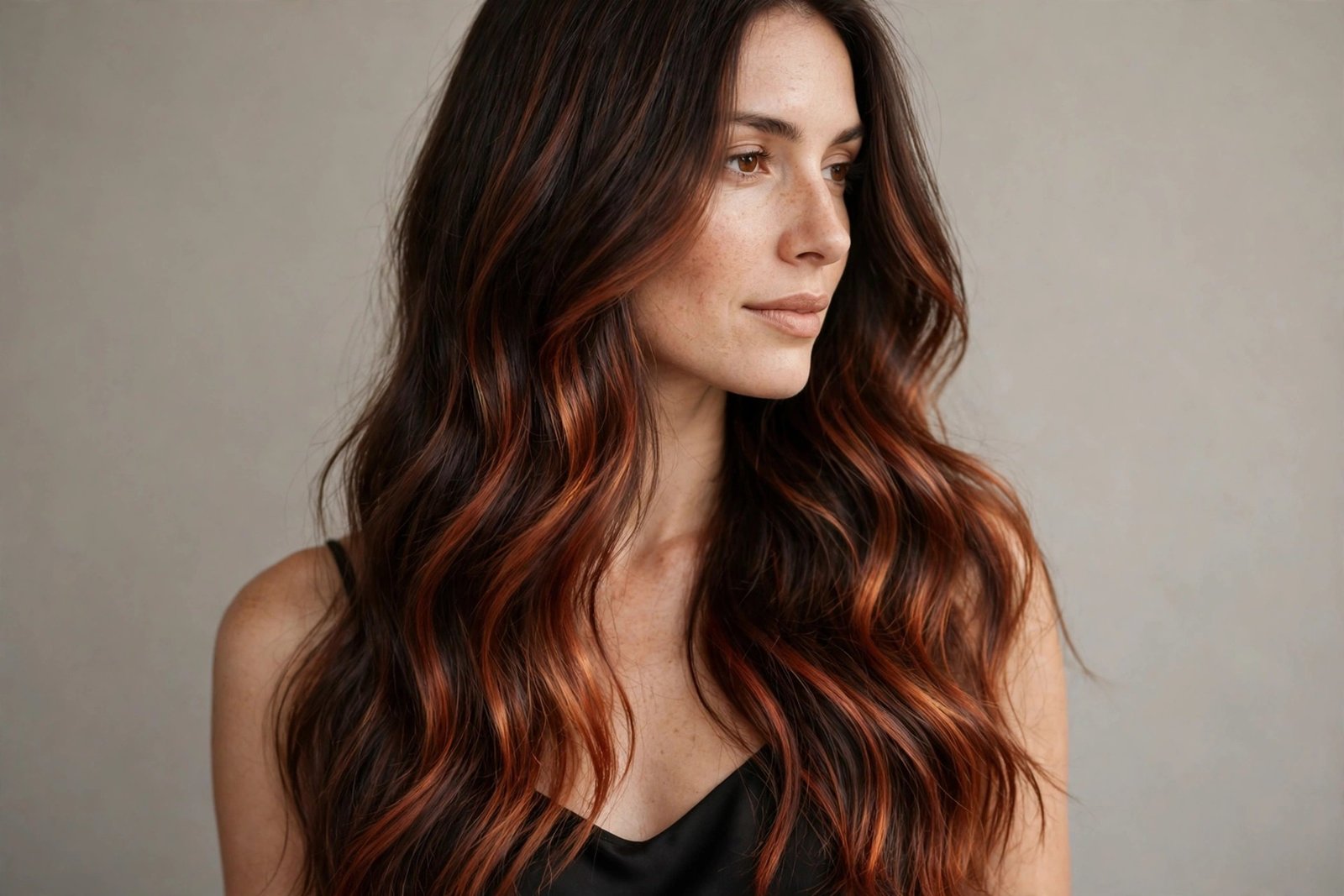
This is the Pinterest 403% spike made visible. Copper-auburn balayage keeps your natural or deep auburn base and hand-paints ribbons of brighter copper-auburn through the mid-lengths and ends — exactly the “darker bases ribboned with lighter colour” that the Copper Waves palette describes. The result is dimension for days: it looks like autumn light is permanently caught in your hair. It’s also the smartest way to try the copper trend without committing your whole head to it.
Who it suits: anyone with medium brown to dark blonde hair who wants visible red without full-head maintenance. The balayage placement means grow-out is soft by design — no harsh root line, ever. It’s especially flattering on layered cuts, where each layer catches a different ribbon of copper. Warm and neutral skin tones glow; cool tones should ask for the copper pieces to stay in the lower half, away from the face.
The salon script: “copper-auburn balayage on my natural base — ribbons, not chunky highlights, brightest through the ends.” Expect 2 to 3 hours in the chair. Maintenance is lower than full copper because the base does the heavy lifting, but the lightened pieces need glossing every 8 weeks to stay copper instead of fading brassy. Honest downside: the lightened ribbons are the fade-prone part, and they need purple… no, wait — they need blue-based care? No. Copper pieces fade warm, so they need color-depositing copper conditioner, not purple shampoo. Get the wrong product and you’ll dull the exact brightness you paid for.
4. Cherry Cola Auburn
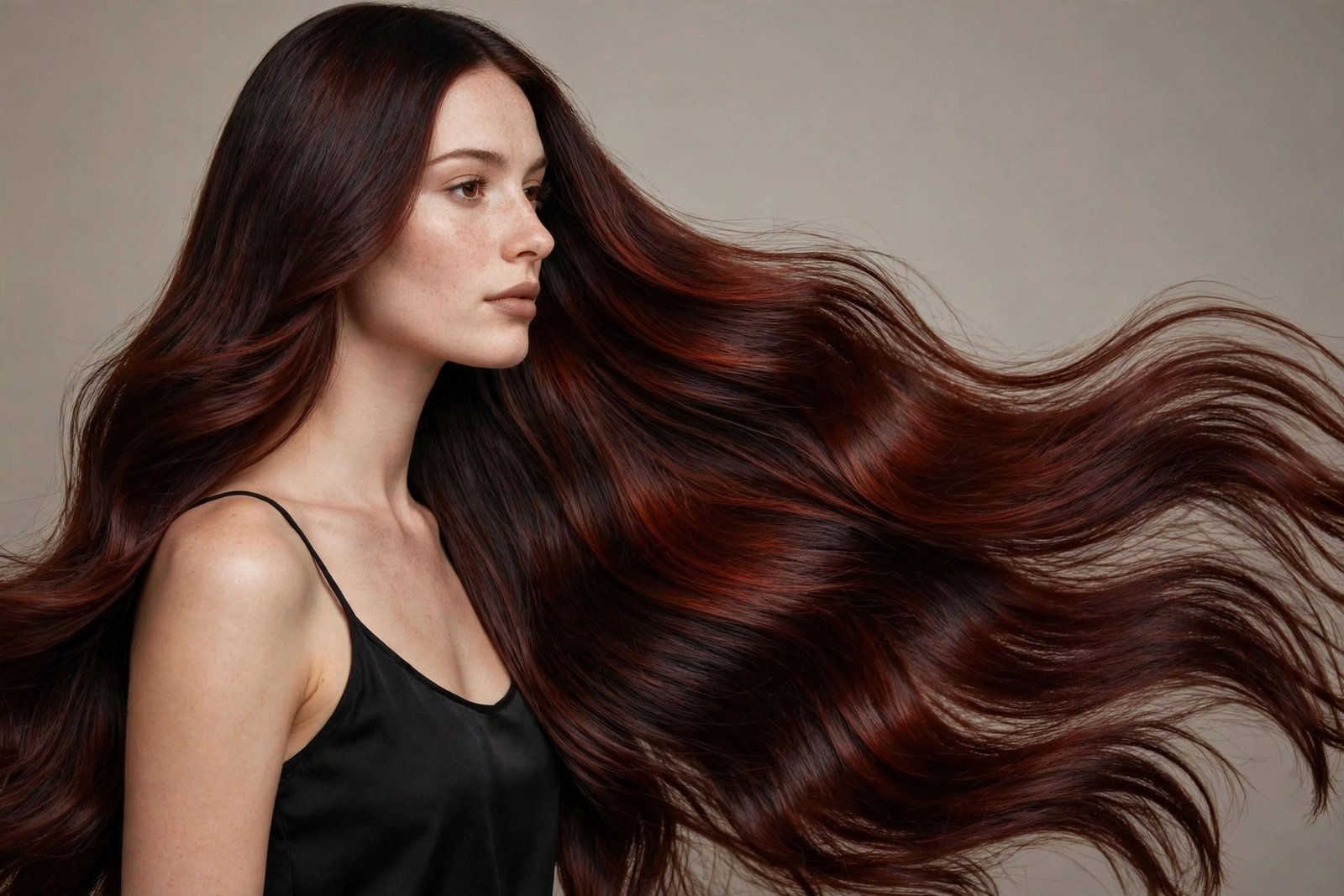
Cherry cola is what happens when auburn has a wild night out: deep brown-red with a dark cherry, almost black-cherry depth running through it. Indoors it reads as a rich, mysterious dark red; in sunlight it ignites. It’s the edgiest auburn on this list while still being completely wearable — the color equivalent of a leather jacket over a silk dress. I’ve watched this shade convert committed brunettes who swore they’d never go red, because the darkness keeps it feeling safe while the cherry keeps it exciting.
Who it suits: fantastic on deep skin tones, where the cherry depth looks regal, and on pale cool skin, where the contrast is striking and editorial. It’s also a brilliant first red for natural brunettes — the dark base means minimal lifting. Straight or sleek styles show the cherry reflects best; curls scatter the light and soften the effect.
The salon script: “cherry cola — deep auburn base with dark cherry-red depth, not bright.” The cherry tone is usually built with a red-violet demi over an auburn base. Maintenance is moderate: the darkness hides fade, but the cherry brightness needs refreshing every 6 to 8 weeks or it settles into plain dark brown. Honest downside: cherry tones are notorious for bleeding onto pillowcases and white shirts for the first week. Sleep on dark pillowcases and rinse with cool water until the bleeding stops. Your laundry will thank you.
5. Espresso Auburn Ombre
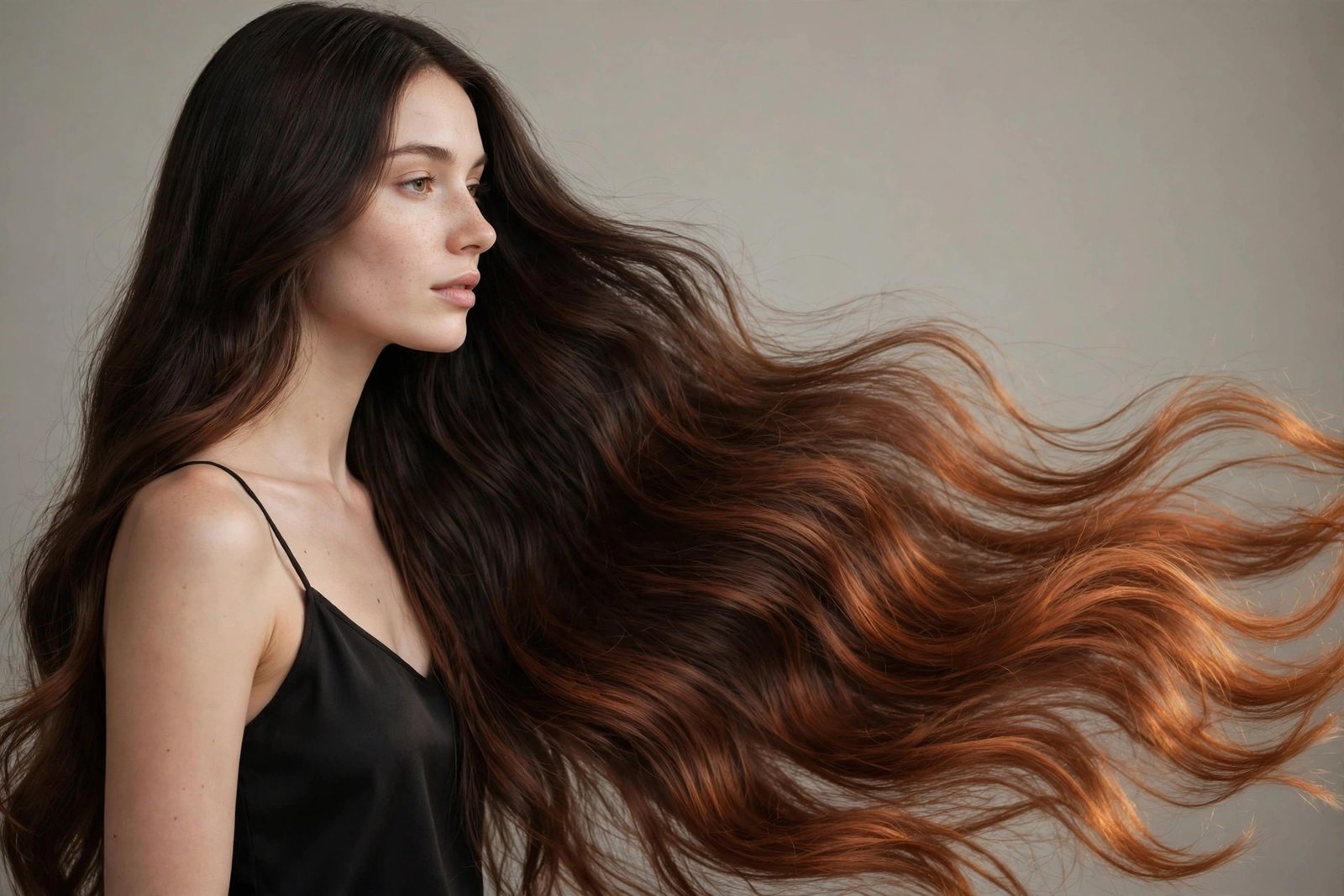
Espresso auburn ombre is the low-commitment queen of this list. Near-black espresso roots melt gradually into warm auburn ends, giving you all the richness with a grow-out so soft you’ll forget you have color in your hair. It’s technically an ombre — a deliberate gradient rather than scattered highlights — and the contrast between the dark top and glowing ends creates incredible movement, especially on long hair. This is the auburn I’d pick if I wanted maximum impact with minimum salon visits.
Who it suits: long hair, first and foremost — you need length for the gradient to unfold. Naturally dark hair is ideal since the roots stay close to natural. It suits all skin tones because the face is framed by the darker, neutral root color while the warmth lives lower down. If you’ve been growing out old color, this technique can literally incorporate your natural roots as the design.
The salon script: “espresso roots melting into auburn ends — soft ombre, not a harsh line.” Ask for the transition to start around cheekbone level for the most flattering effect. Maintenance is the lowest of any red on this list: the roots are yours, the ends just need glossing every 10 to 12 weeks. Honest downside: ombre can look dated if the blend isn’t seamless — this lives or dies on your colorist’s blending skill. Vet their portfolio for melts specifically, not just balayage.
6. Auburn Curtain Bangs
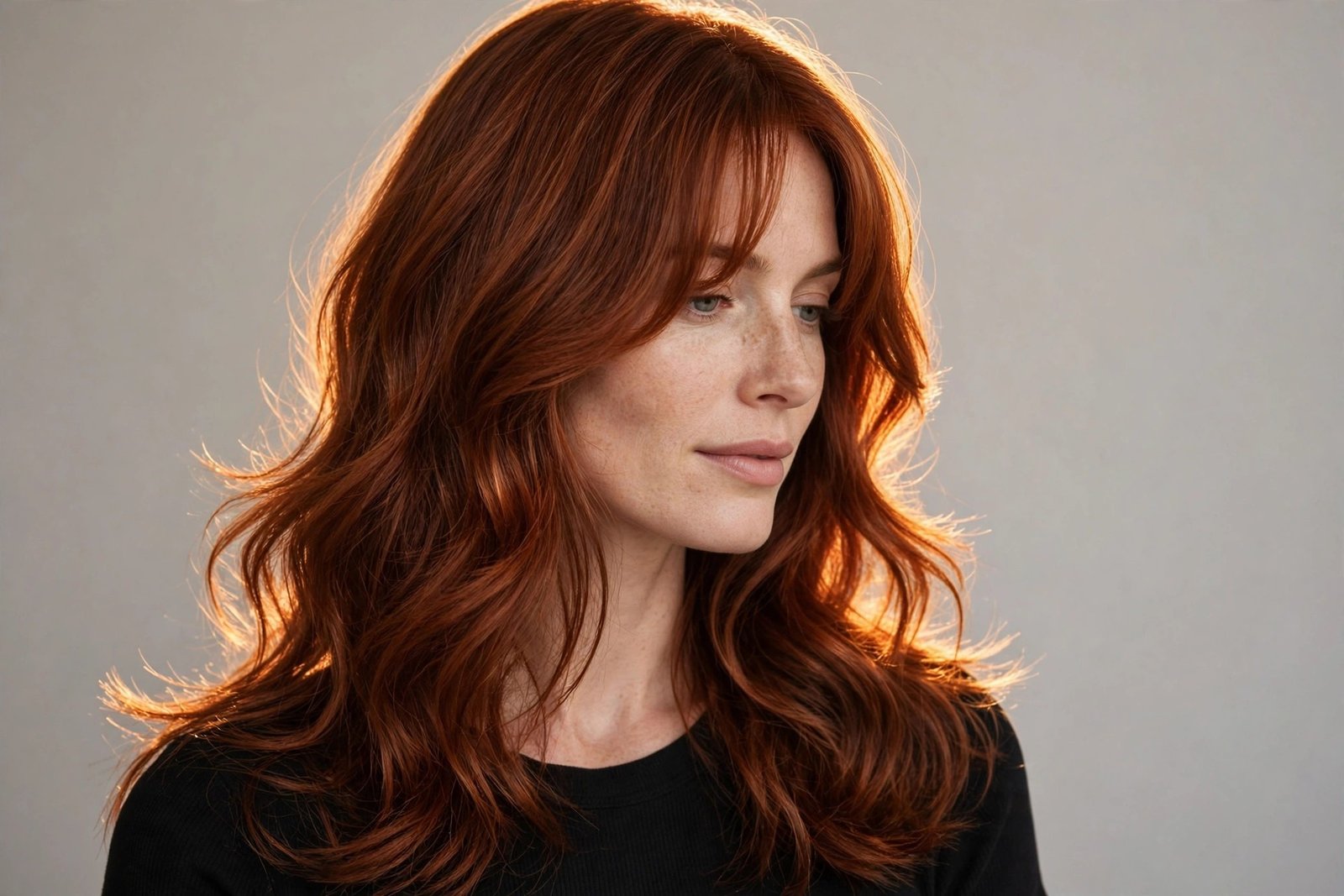
Sometimes the trend isn’t the color — it’s where the color lands. Auburn curtain bangs put the richest, brightest auburn right at the face, framing it in warm red-brown while the rest of the hair can stay deeper or more neutral. It’s a face-framing trick as much as a color idea: the warmth near the cheeks mimics the glow of good lighting, and curtain bangs themselves are still 2026’s most requested fringe. Together they’re greater than the sum of their parts.
Who it suits: anyone who wants to test auburn without coloring their whole head — the bangs and face frame can be the only colored section. It flatters round and square faces especially, since the curtain opening elongates. Warm skin tones get the full glow effect; cool tones should keep the bang color on the deeper mahogany side.
The salon script: “curtain bangs with the auburn concentrated through the fringe and face frame.” If the rest of your hair is virgin, the colorist can use a demi-permanent just on the front sections. Maintenance is wonderfully low — bang trims every 4 to 6 weeks anyway, and the small colored area is easy to refresh. Honest downside: bangs show fading fastest because they’re washed and touched most. A tiny bottle of color-depositing conditioner used just on the fringe keeps them rich between appointments.
7. Cinnamon Auburn Layers
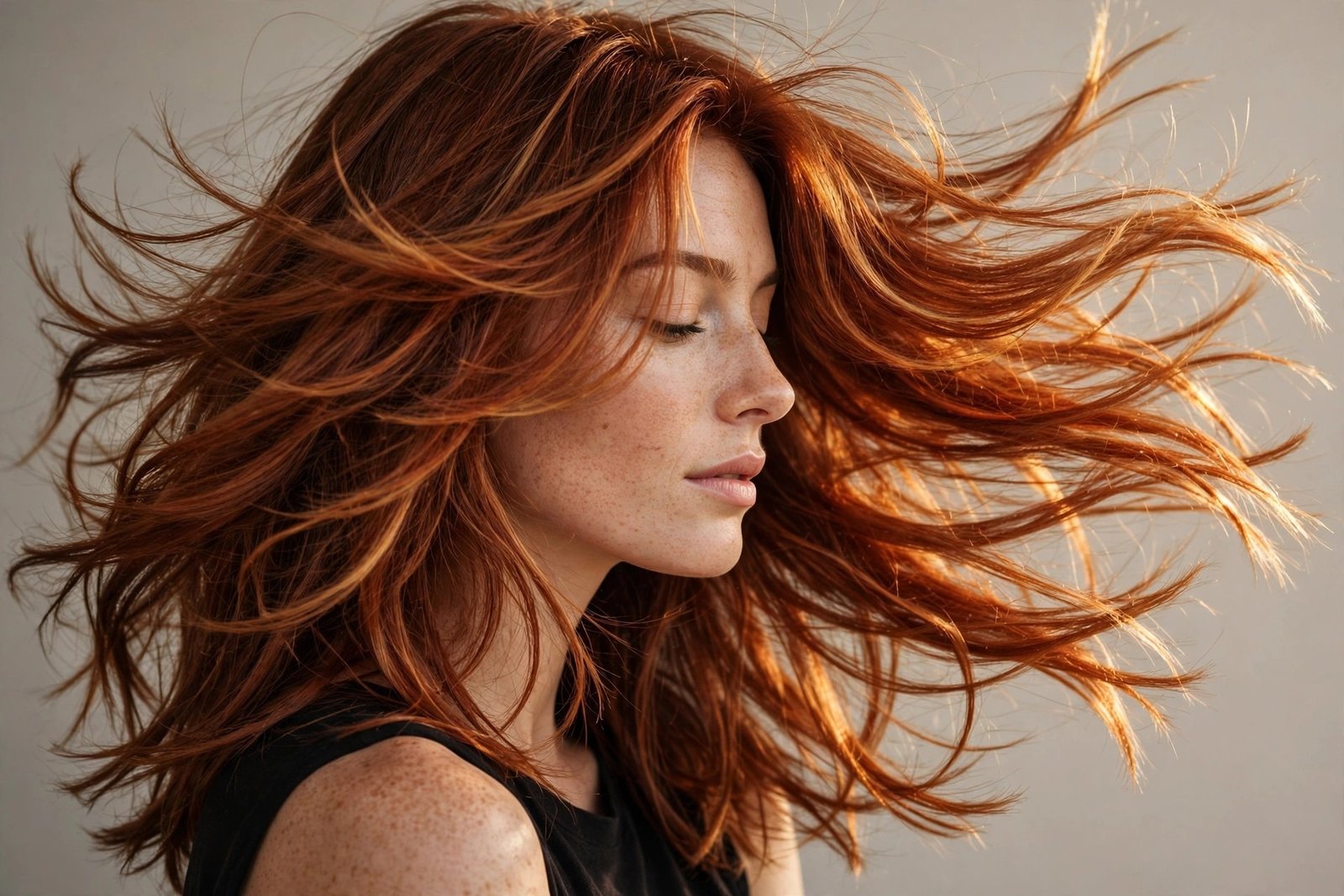
Cinnamon auburn is the spiciest member of the family — auburn warmed up with golden-red, almost gingerbread reflects through layered hair. Where classic auburn is smooth and polished, cinnamon has texture and movement baked into the color itself. The layers are doing real work here: each snipped layer catches light differently, so the cinnamon warmth flickers through the hair like it’s backlit. On medium-length hair with lots of layers, it’s genuinely one of the most dynamic shades on this list.
Who it suits: warm skin tones absolutely devour this shade — golden undertones plus cinnamon hair is a combination that looks sunlit even in December. It’s also wonderful on wavy and curly textures, where the layers and the warm reflects multiply each other. Fine hair benefits too, since the dimensional color creates an illusion of thickness.
The salon script: “cinnamon auburn — warm golden-red reflects through the layers, not a flat all-over color.” Ask for the color to be applied with the layers in mind, slightly brighter on the pieces that move. Maintenance is moderate: the golden-red reflects are fade-prone, so color-safe care is non-negotiable. Honest downside: cinnamon can go brassy if the base lifts too warm — your colorist needs to control the underlying pigment. This is not the shade for a box dye experiment; the balance is too precise.
8. Auburn Textured Bob
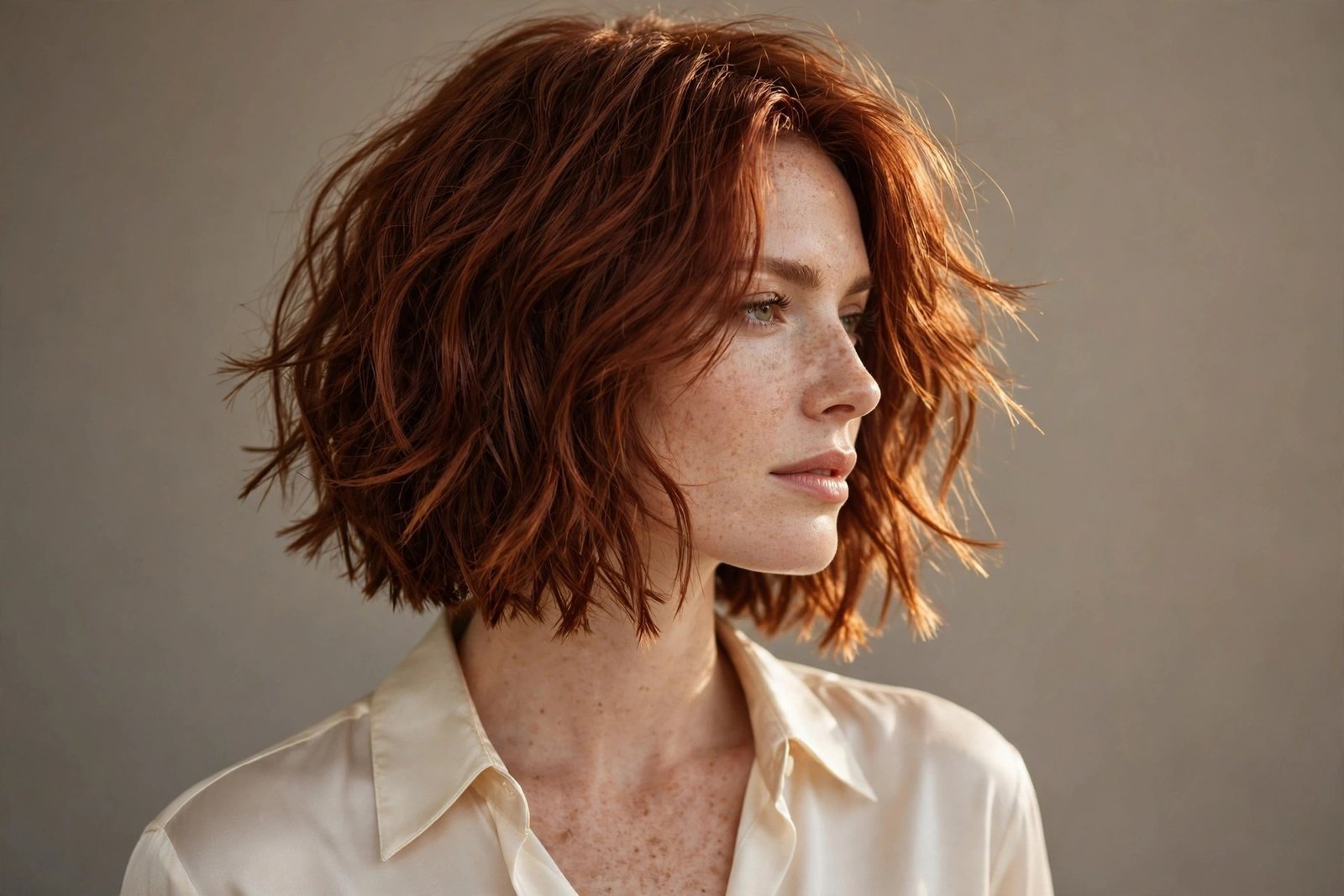
A bob in auburn hits different. There’s something about the combination of a sharp, confident cut and that rich reddish-brown that reads powerful — it’s the hair equivalent of a great blazer. The textured part matters: choppy, piece-y ends let the auburn show multiple tones at once instead of sitting as one flat sheet of color. On a chin-to-shoulder bob, the red catches light with every head turn, which means the color is constantly moving even when you’re standing still.
Who it suits: bobs flatter most face shapes when the length is tuned — chin-length for heart shapes, slightly longer for round faces. Auburn adds warmth that keeps a blunt cut from looking severe. It’s a fantastic choice for fine hair, since the rich color adds visual density and the texture adds physical volume. Professional settings love this one: polished cut, rich color, zero drama.
The salon script: “textured bob, chin to shoulder, with a rich auburn all-over color.” Ask for point-cutting on the ends for the texture. Maintenance is refreshingly simple — bobs get trimmed every 6 to 8 weeks anyway, and each trim removes faded ends. Honest downside: short hair shows regrowth faster and there’s less hair to hide fading in. You’ll want that gloss refresh on schedule, not “whenever.”
9. Deep Auburn Lob
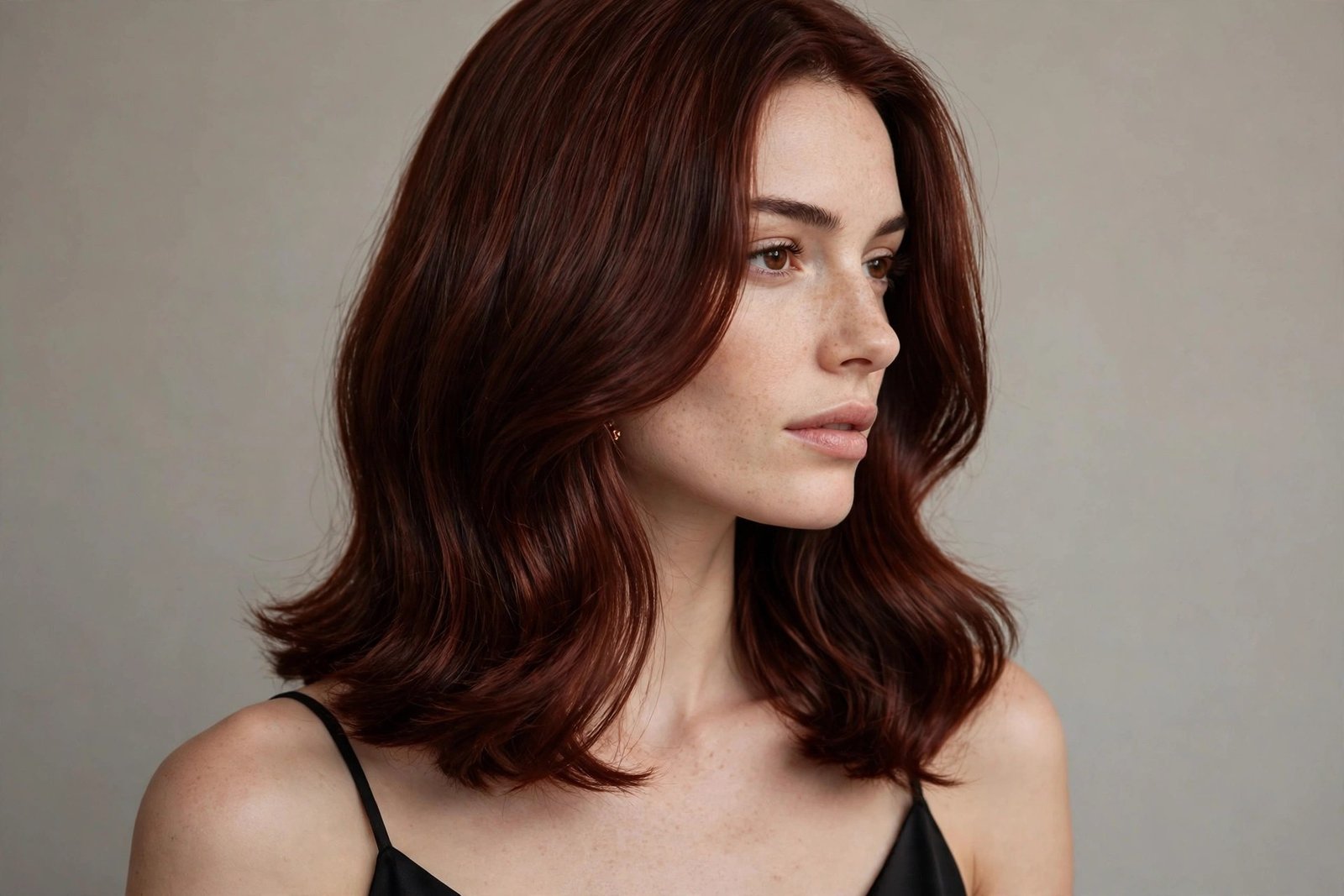
The lob — long bob — is the haircut that refuses to die, and in deep auburn it’s at its absolute best. Collarbone-grazing, one length or barely layered, in a deep auburn that’s more brown than red: this is the “I have my life together” haircut. The depth of the color gives the simple cut all its luxury. There’s a reason this combination dominates salon request photos — it’s flattering, it’s professional, it’s low-effort, and the auburn keeps it from ever looking boring.
Who it suits: everyone, genuinely. The lob’s length works on round, square, oval, and heart faces with minor tuning (a touch longer for round, a side part for square). Deep auburn’s brown-dominant tone suits cool skin tones that can’t wear brighter reds. It’s also the best auburn for thick hair — the weight of the cut controls volume while the dark richness looks impossibly glossy.
The salon script: “collarbone lob, minimal layering, deep auburn — more brown than red.” One-length or with very long layers. Maintenance is easy: trims every 8 weeks keep the shape, and the deep color hides fading better than any brighter auburn. Honest downside: it’s so wearable that it can feel “safe” — if you want the auburn to be the star, add face-framing brightness (see idea 10) or go one level lighter. Safe isn’t a flaw, but know what you’re choosing.
10. Auburn Money Piece Highlights
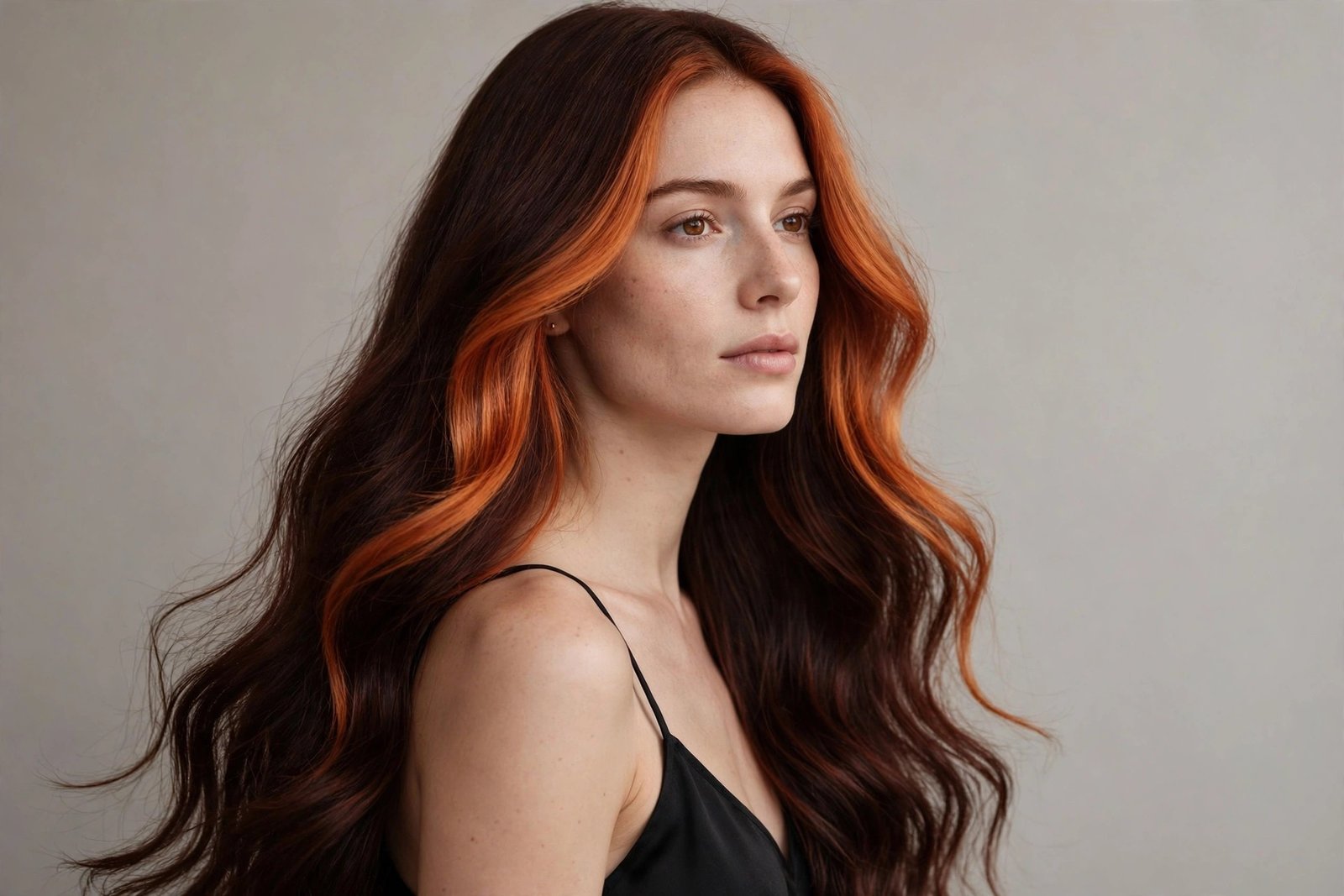
The money piece — those brighter face-framing sections — gets an auburn remix here. Instead of the usual blonde pop, the two front sections go a brighter copper-auburn against a deeper auburn base. The effect is subtle from far away and gorgeous up close: your face gets its own spotlight. It’s also the cheapest, fastest way to make an existing auburn feel brand new without recoloring the whole head. I love this as a “refresh my color” appointment rather than a full transformation.
Who it suits: anyone with an existing auburn or warm brown base who wants more brightness around the face. It draws attention to eyes and cheekbones, which makes it a favorite for photos. Warm and neutral skin tones get the most from the brightness; cool tones should keep the money piece on the deeper copper side rather than bright orange-copper.
The salon script: “keep my base, add a brighter copper-auburn money piece through the front.” Just foils around the face — a 45-minute appointment. Maintenance is minimal since it’s only two sections; a gloss on those pieces every 8 weeks keeps them bright. Honest downside: the contrast fades fastest on exactly the pieces you notice most. And if the brightness goes too light, it can read as grown-out blonde highlights rather than intentional auburn. Keep the money piece within two levels of your base.
11. Plum-Auburn Blend
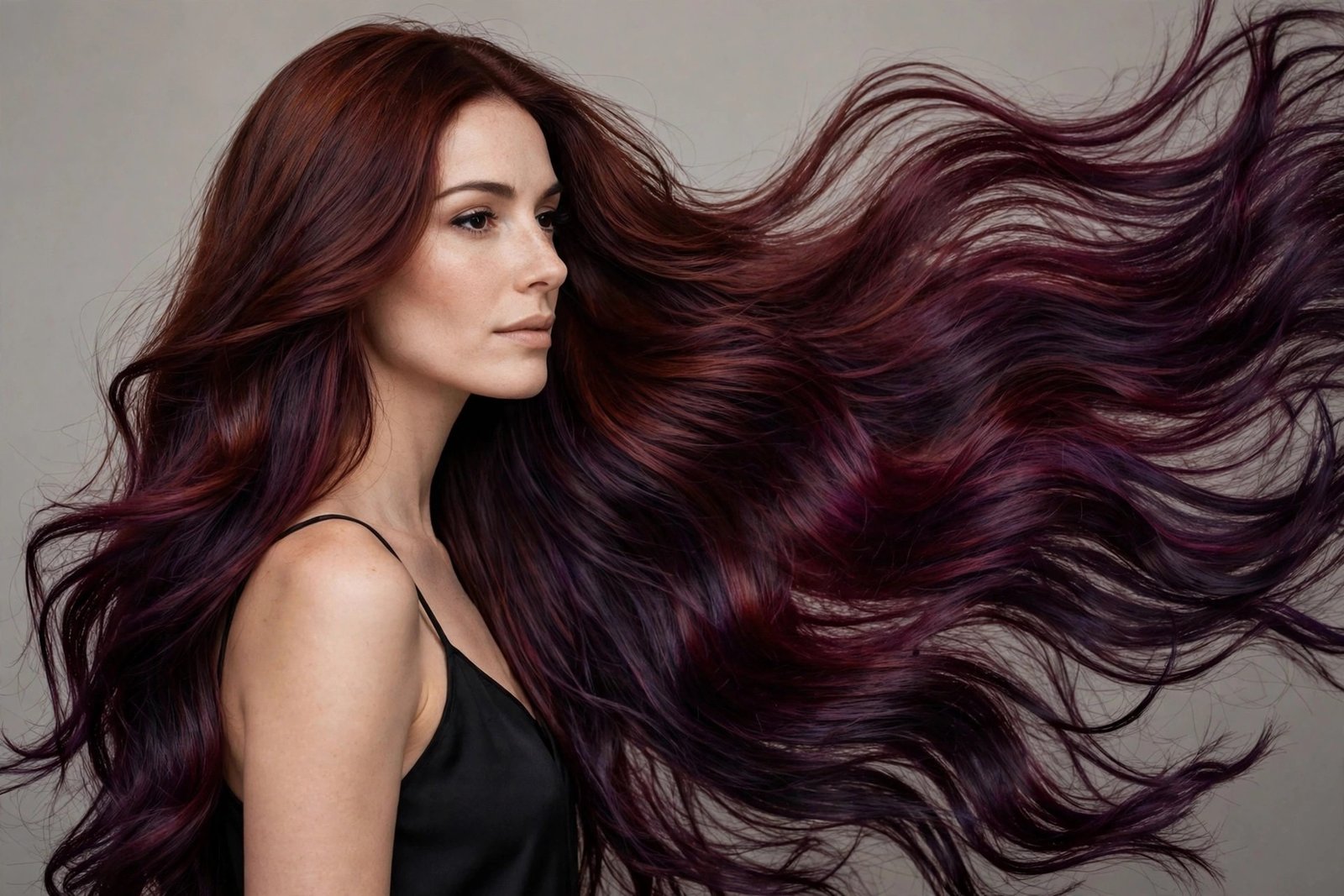
Plum-auburn is auburn after dark — the red-violet depths of plum melted into warm auburn brown. It’s one of the shades Pinterest’s Copper Waves palette name-checks alongside auburn (plum is in the palette), and the combination is pure autumn: think blackberries and woodsmoke. In indoor light it reads as a deep, mysterious brunette-red; step into sunlight and the violet-red comes alive. It’s the most fashion-forward auburn on this list without crossing into unnatural color territory.
Who it suits: cool and deep skin tones especially — the violet depth is incredibly flattering on rich skin, and striking on pale cool skin. It’s also a gorgeous choice for dark hair, since the plum depth needs minimal lifting. Straight hair shows the violet reflects most clearly; waves and curls blend the tones into something softer.
The salon script: “plum-auburn blend — auburn base with plum violet-red depth melted through.” Usually a demi-permanent violet-red over an auburn base. Maintenance is the catch: violet tones fade fastest of all reds, so expect the plum to soften within 4 to 6 weeks without color-depositing care. Honest downside: this is the highest-maintenance auburn here. If you’re not willing to use a color-depositing conditioner weekly, the plum will quietly become plain auburn — which is still pretty, just not what you paid for.
12. Toasted Auburn Curls
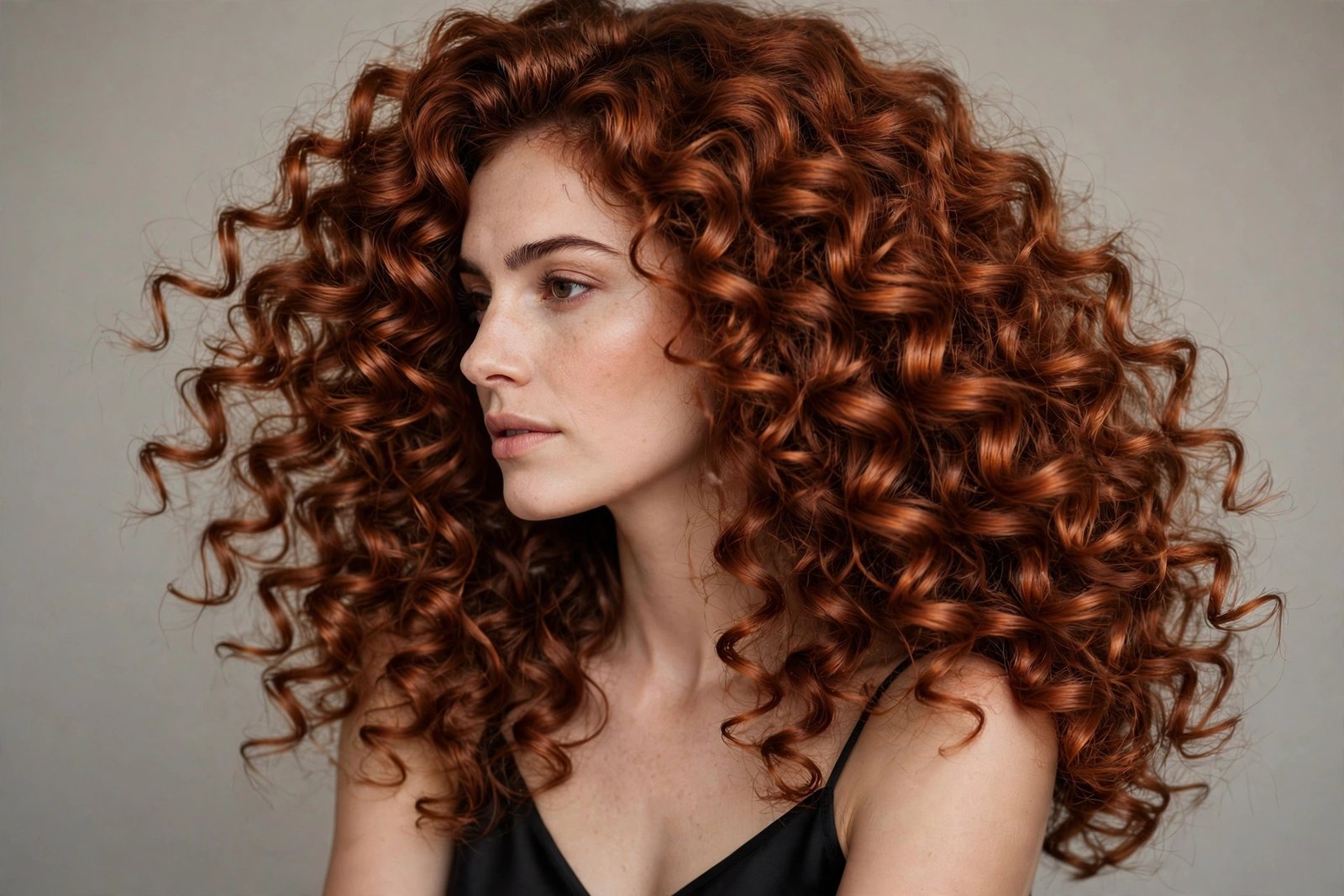
Curls and auburn were made for each other, and I’ll die on this hill. Every curl is a tiny prism, catching light on its curve and throwing shadow in its bend — which means curly auburn hair shows more color dimension than straight hair ever could. “Toasted” describes the technique: the auburn is warmed at the curves, slightly brighter where each curl bends toward light, like the whole head was gently toasted. On 3A to 3C curls it’s breathtaking. On tighter coils, the depth reads as incredible richness.
Who it suits: curly and coily textures, obviously — this shade is built for them. The warmth flatters warm and deep skin tones beautifully. It’s also a smart choice for transitioning hair, since the dimensional color disguises texture changes during grow-out. Length matters less here; the curls do the visual work at any length.
The salon script: “toasted auburn — warm dimensional auburn, slightly brighter on the curl curves.” Ask for a curl-by-curl or pintando technique rather than foils, so the color follows your actual curl pattern. Maintenance is moderate: curls are naturally drier, and red fades faster on dry hair, so deep conditioning is doing double duty. Honest downside: achieving even color on curly hair takes a skilled colorist and more time. A rushed job gives patchy results that the curls will absolutely expose. Don’t bargain-hunt this service.
13. Auburn Pixie Cut
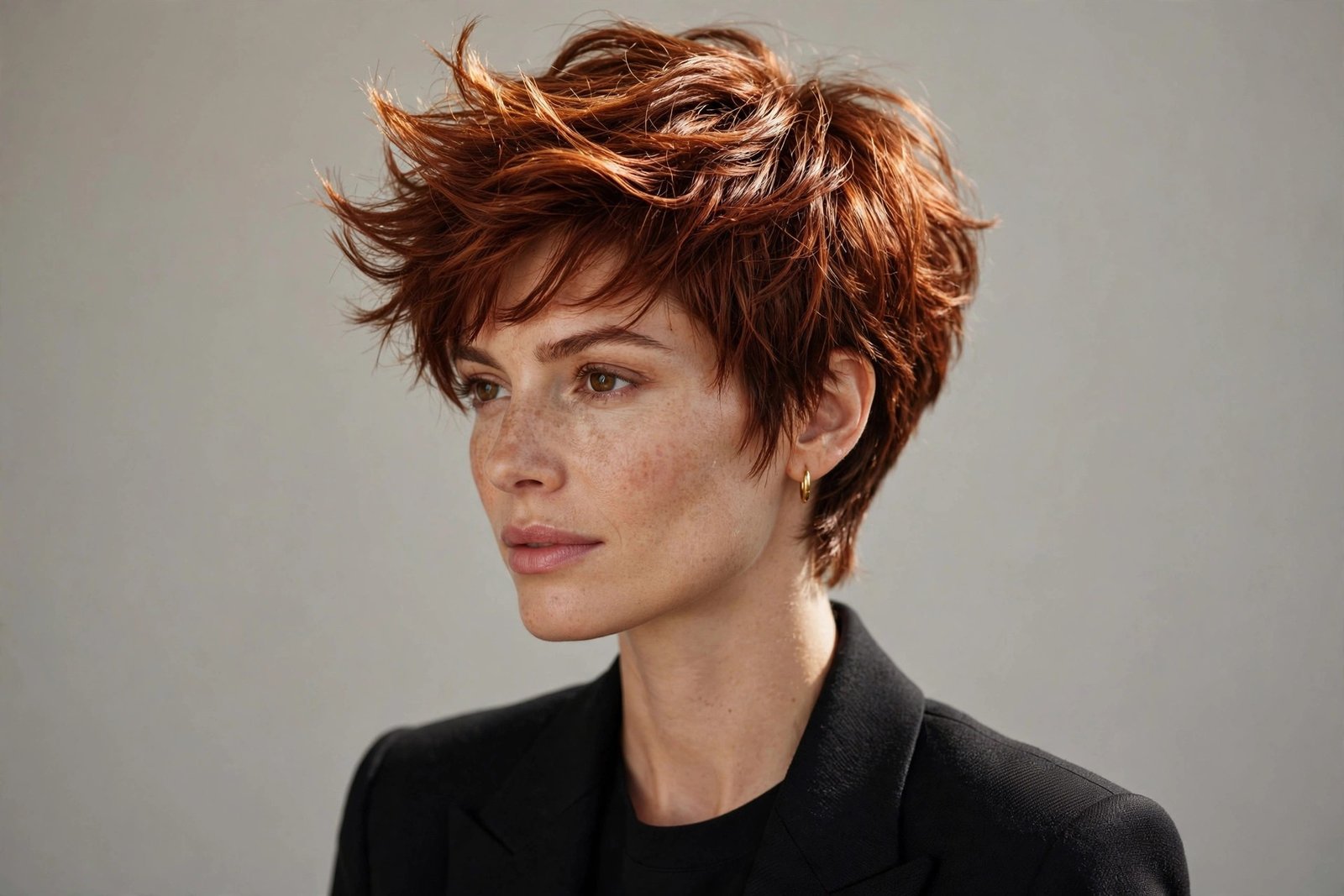
A pixie in auburn is a power move. Short hair removes every hiding place — the color has to be perfect because it’s all right there — and auburn rewards that confidence with incredible richness. The texture on top catches light in a dozen directions, so even a short pixie shows the full red-brown dimension. It’s bold, it’s chic, and it takes about four minutes to style. I’ve seen this cut convert lifelong long-hair devotees in a single appointment.
Who it suits: pixies flatter oval, heart, and square faces especially; the auburn warmth softens the cut’s edge. It’s fantastic for fine hair — short length plus rich color equals the illusion of much thicker hair. Strong features (great cheekbones, striking eyes) get a perfect frame. It suits confident dressers: the cut is a statement, and the color makes sure it’s heard.
The salon script: “textured pixie, longer on top, in a rich auburn.” The color is usually simple all-over since there’s not much hair to dimensionalize. Maintenance is frequent but cheap: pixie trims every 4 to 5 weeks, and color refreshes can piggyback on the same appointment. Honest downside: grow-out is the eternal pixie problem, and auburn’s fading is visible on short hair with nowhere to hide. Budget for regular maintenance or don’t do the cut. There’s no low-maintenance pixie.
14. Rich Auburn Shag
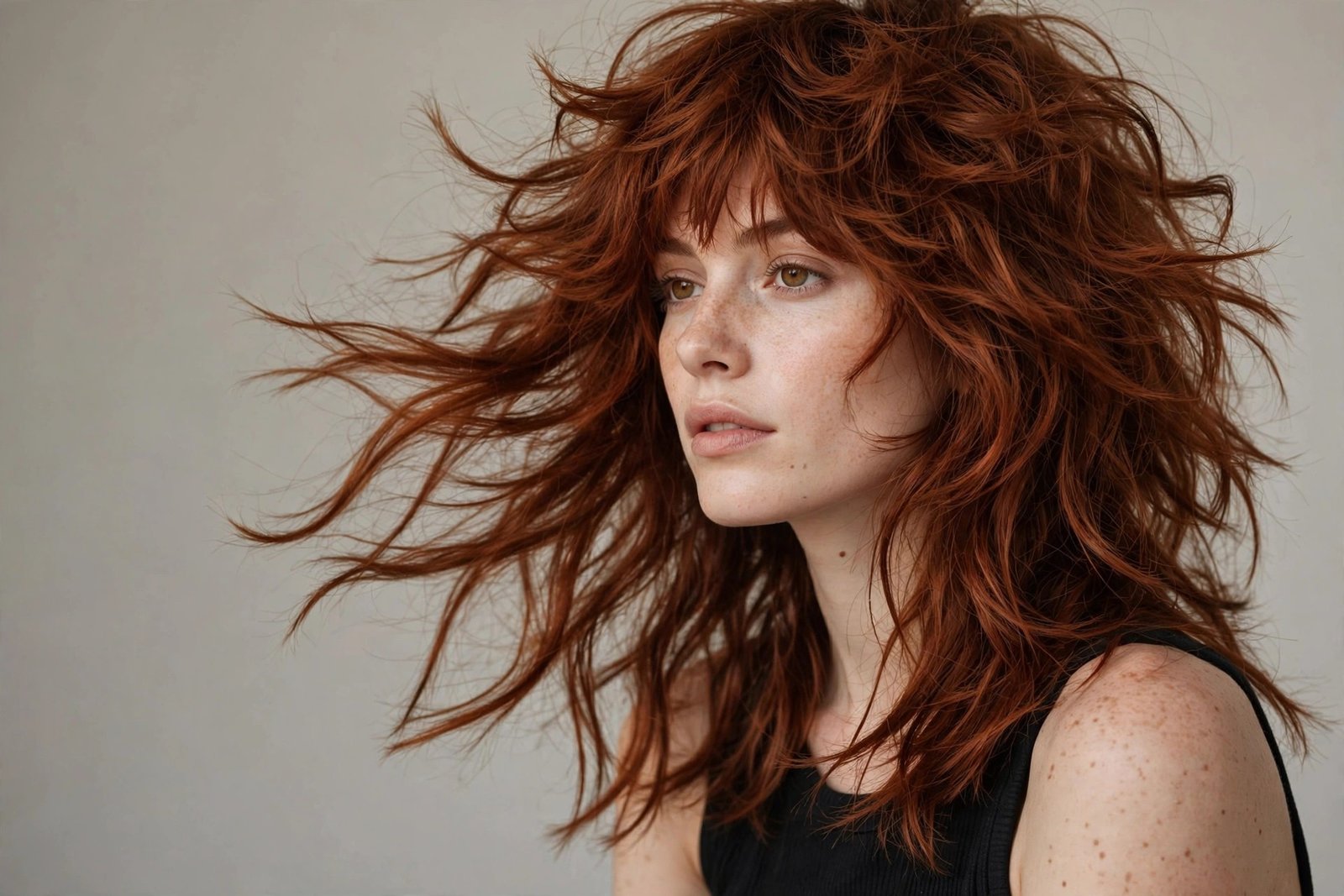
The shag is back, and auburn is its perfect partner. All those choppy layers, the curtain fringe, the piece-y texture — every snip creates a new surface for the red-brown to catch light. In auburn, the shag looks expensive rather than grungy: the richness of the color elevates the rock-and-roll cut into something editorial. It’s the haircut equivalent of vintage leather boots with a cashmere coat. Messy on purpose, rich by design.
Who it suits: the shag’s layers flatter round and square faces by adding vertical movement; the curtain fringe suits almost everyone. Medium to thick hair handles the layering best — very fine hair can look stringy if over-layered. Auburn’s warmth keeps the edgy cut feeling approachable rather than severe. It’s a great choice if your personal style leans creative or vintage.
The salon script: “modern shag — choppy layers, curtain fringe — in rich auburn.” Ask for the color to have dimension through the layers, not flat all-over. Maintenance is moderate: shags need reshaping every 8 to 10 weeks, and the textured ends fade faster. Honest downside: the shag is a styling commitment — it looks effortlessly messy only with actual effort (or naturally wavy texture). Straight, fine hair will need daily texturizing to keep the shape. Be honest about your mornings.
15. Auburn Face-Framing Ribbon Lights
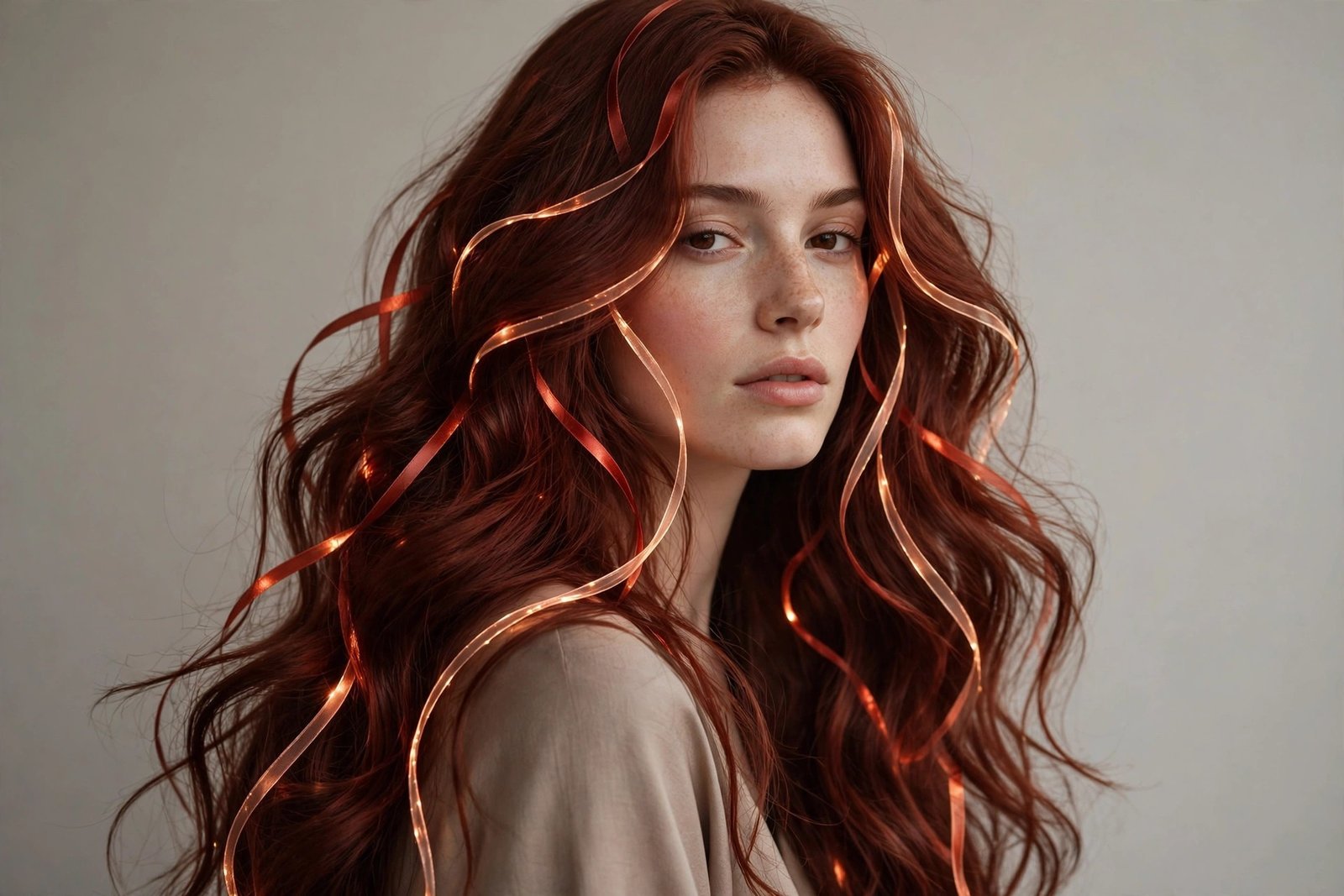
Ribbon lights are balayage’s softer, more refined sibling — thin, ribbon-like strands of lighter copper-auburn woven through a deeper auburn base, concentrated around the face and through the lengths. Where the money piece is a statement, ribbon lights are a whisper: warmth that seems to come from within the hair. It’s the technique colorists use when a client says “I want dimension but I don’t want highlights.” The face-framing placement means the brightness lives exactly where it flatters most.
Who it suits: perfect for auburn skeptics — the base stays deep and safe while the ribbons add light. It suits all face shapes since the brightness can be placed to flatter (higher for long faces, lower for round). Fine hair loves it: the dimensional ribbons create depth illusion without the damage of heavy highlighting.
The salon script: “ribbon lights — thin copper-auburn ribbons through my auburn base, face-framing.” Emphasize soft and blended, not striped. Maintenance is low: the ribbons grow out softly and only need glossing every 10 weeks. Honest downside: subtlety is the point, which means in indoor lighting the effect can nearly disappear. If you want visible dimension in all lights, you need bolder placement — say so upfront, or you’ll leave feeling like nothing changed.
16. Spiced Auburn Long Layers
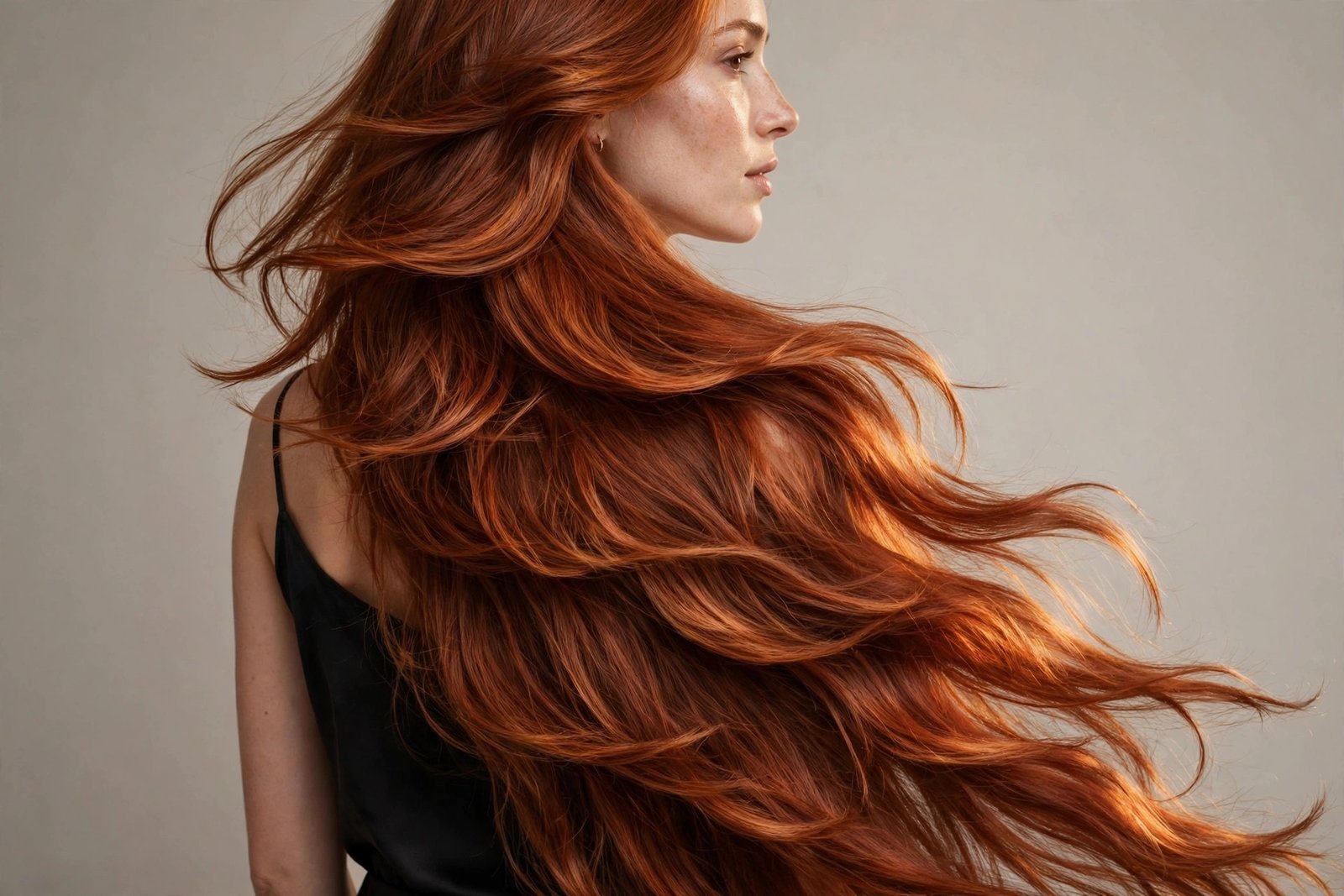
Long layers in spiced auburn is the mermaid hair of the red family — except instead of fantasy pastels, it’s all warm reality. The “spiced” part means the auburn carries extra warmth: think nutmeg, paprika, warm amber reflects layered through the brown base. On long hair, the layers create a waterfall effect where each tier shows a slightly different tone. It’s dramatic in the best way — the kind of hair that makes people turn around on the street, and yes, I’m speaking from repeated observation.
Who it suits: long hair is the prerequisite — you need the length for the layered color to unfold. Thick hair handles the layering without looking thin at the ends. Warm and neutral skin tones get the full spiced glow. It’s a commitment cut and color together, so it suits people who enjoy their hair as a hobby, not a chore.
The salon script: “long layers with spiced auburn — extra warm reflects through the lengths.” The colorist should vary the warmth by layer, brightest at the moving pieces. Maintenance is real: long hair means more product, the spiced warmth needs color-safe care, and trims every 10 to 12 weeks keep the layers from going straggly. Honest downside: this is the highest-effort hair on the list after the plum blend. Long, colored, layered hair asks for time every single day. If your mornings are chaos, admire it on others.
17. Burnished Auburn Straight Hair
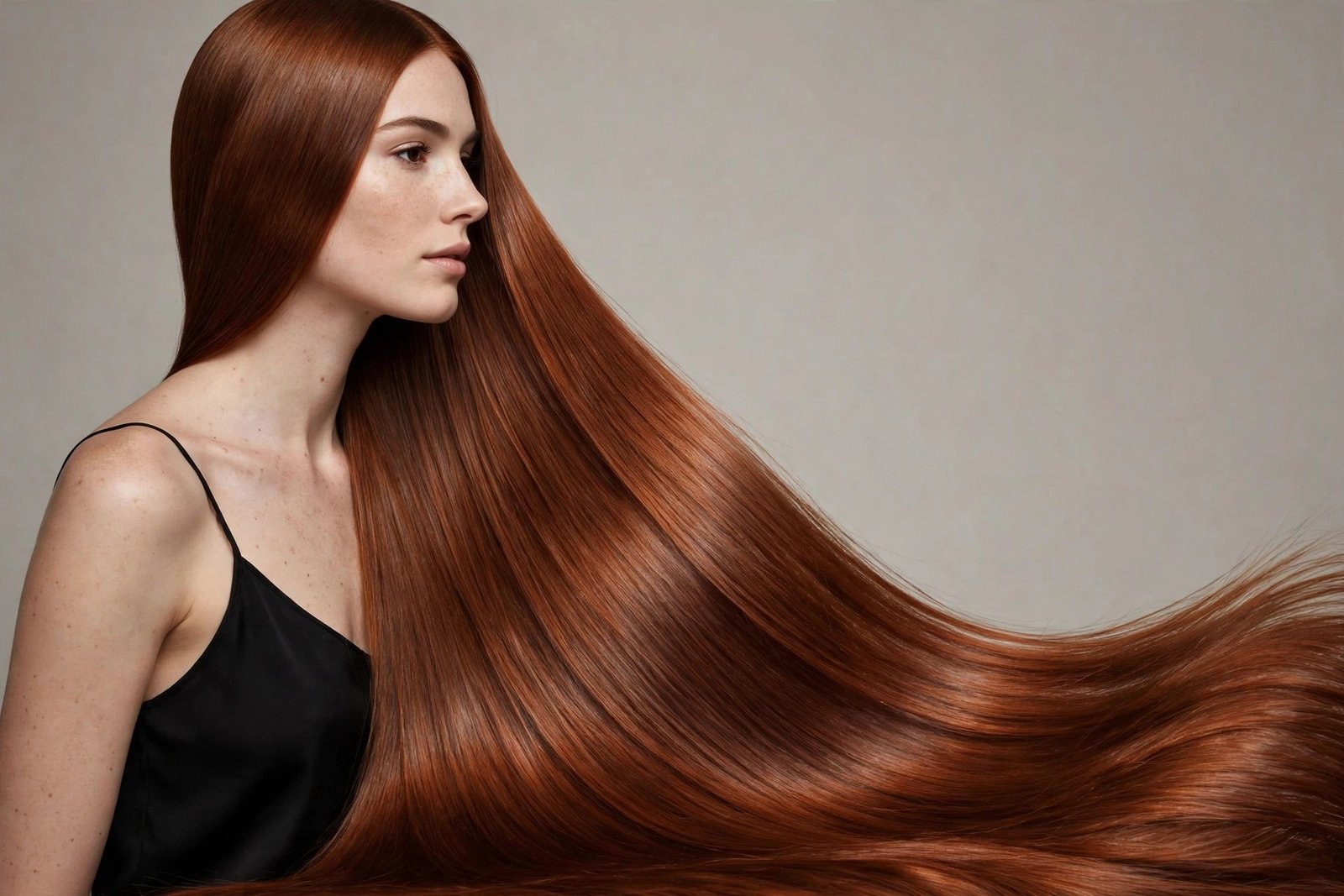
Burnished auburn is all about the finish: straight, sleek hair in auburn polished to a mirror shine, where the red-brown glows like burnished copper metal. There’s no texture to hide behind — straight hair shows color with total honesty — so the shade has to be flawless, and when it is, nothing looks more expensive. This is the glass-hair trend filtered through autumn: the shine does the talking. A good silk press or keratin-smooth blowout plus this color is genuinely one of the most luxurious looks in this entire guide.
Who it suits: naturally straight or straightened hair, obviously — fighting your texture daily to get this finish will exhaust you. It suits all skin tones since the shade can be tuned. It’s stunning on dark skin, where the burnished glow looks molten, and on pale skin, where the contrast is porcelain-and-copper. Professional environments love it: sleek, polished, powerful.
The salon script: “burnished auburn — sleek, high-shine, even color.” Ask for a clear gloss over the color to amplify the mirror effect. Maintenance is about the finish as much as the color: heat protectant every time, silk pillowcase, and glossing treatments every 6 to 8 weeks. Honest downside: straight hair shows every flaw — fading, regrowth, split ends, all of it. This look demands healthy ends; if your hair is damaged, fix the health first or the sleekness will expose everything.
18. Auburn Wolf Cut
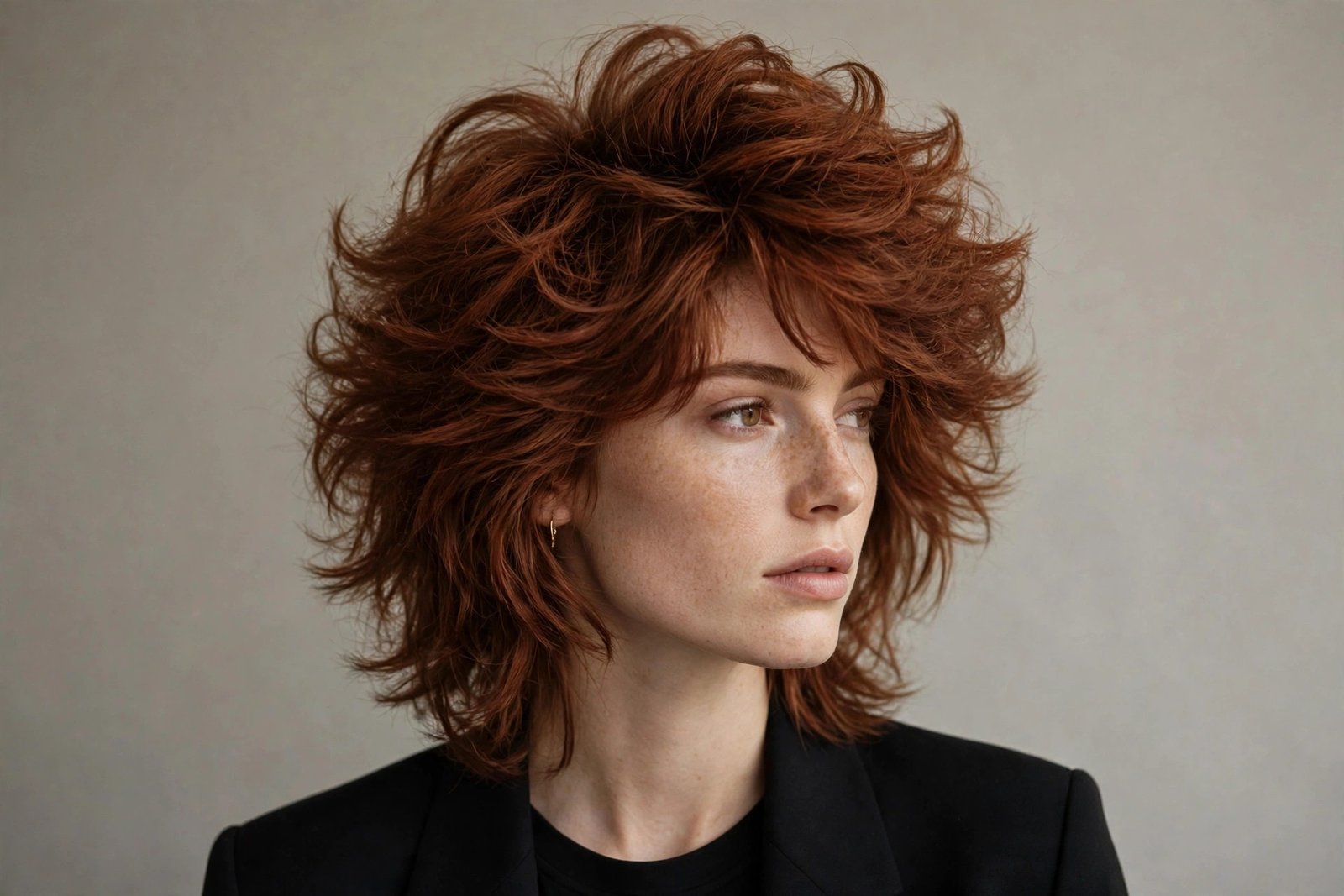
The wolf cut — shag meets mullet, all wild layers and volume — goes unexpectedly luxurious in auburn. The cut is inherently edgy and undone; the rich red-brown color gives it a polish that keeps it from reading messy. It’s the tension between wild shape and rich color that makes this work: like the shag, every layer becomes a new surface for the auburn to catch light, but the wolf’s shorter crown layers add volume that shows the color’s depth from every angle. Gen Z made the cut famous; auburn makes it grown-up.
Who it suits: thick, wavy, or curly hair is the wolf cut’s natural habitat — the cut needs texture to hold its shape. Fine straight hair will struggle without daily styling. The auburn warmth suits warm and neutral skin tones; the cut’s edge suits bold personal style. It’s not a conservative choice, and that’s the point.
The salon script: “wolf cut — heavy layers, volume at the crown — in dimensional auburn.” The color needs dimension through the layers to avoid looking flat. Maintenance is moderate: the cut needs reshaping every 8 weeks, and the layered ends fade faster. Honest downside: the wolf cut is the highest-styling-effort cut on this list for straight hair — it needs texture products and diffusing or it collapses. And it’s a nightmare to grow out gracefully. Commit or don’t.
19. Caramel Auburn Ribbons
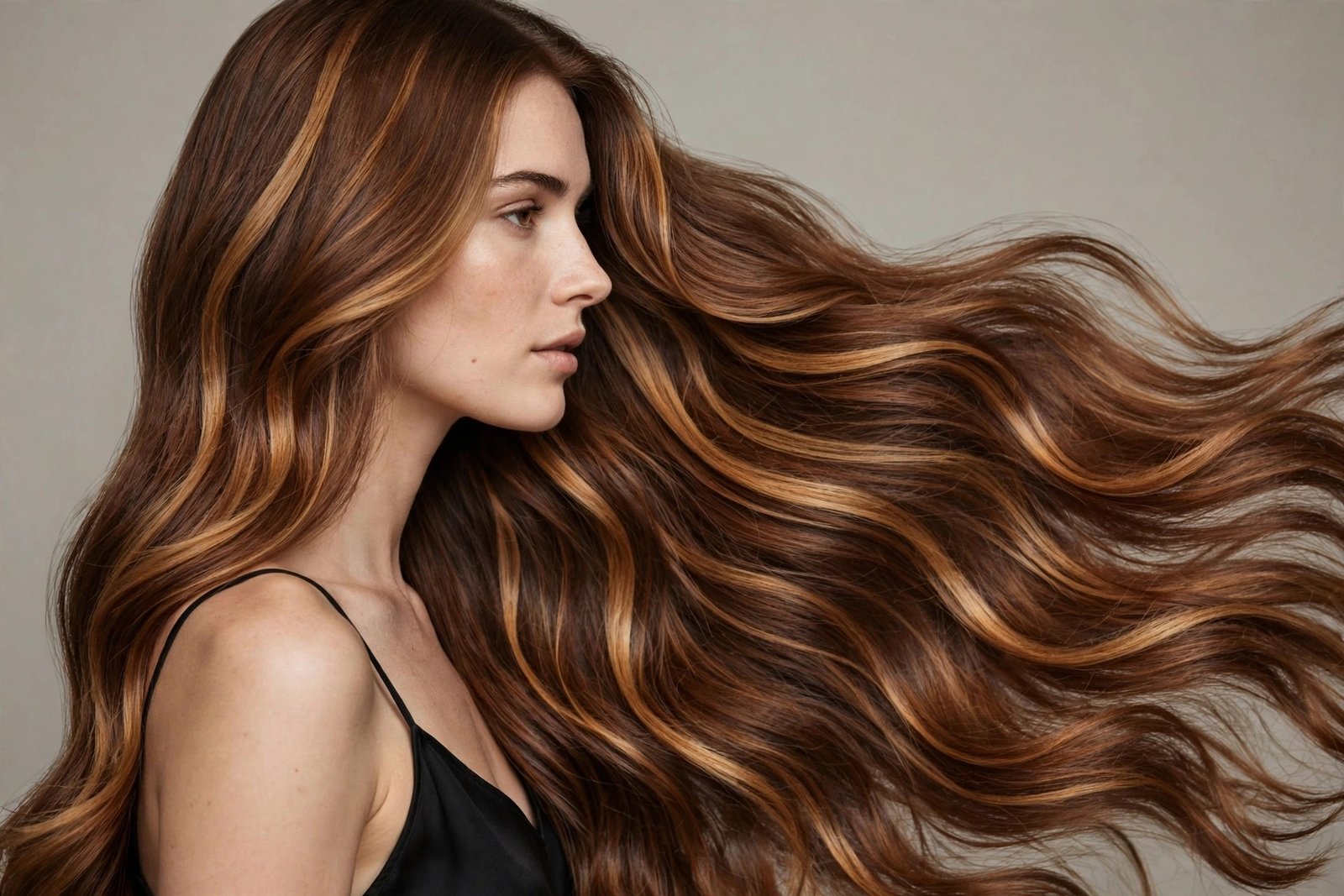
Caramel auburn ribbons are the bridge between brunette and red — a warm auburn-brown base with ribbons of golden caramel woven through. It’s the softest entry point on this list for committed brunettes: the caramel reads as “expensive brunette” while the auburn base warms everything up. In sunlight the ribbons glow golden; indoors the whole thing reads as rich warm brown. It’s dimensional, it’s flattering, and it’s the shade most likely to make your coworkers ask if you “did something different” without being able to name it.
Who it suits: natural brunettes who want warmth without red commitment — this is your shade. Warm and neutral skin tones glow; the golden caramel is especially kind to olive skin. It works on all textures and most lengths, though long layers show the ribbons best. If you’ve been staring at expensive brunette trends but want something warmer, start here.
The salon script: “warm auburn-brown base with caramel ribbons — soft, blended, not stripy.” Balayage or teasylights for the ribbons. Maintenance is low: the brunette base grows out softly and caramel ribbons fade gracefully into the warmth. Honest downside: caramel can pull brassy on some hair, and the line between “caramel” and “brassy” is entirely in your colorist’s toner. Also, red-purists will say this barely counts as auburn — and they’re kind of right. It’s auburn-adjacent, and that’s fine.
20. Deep Auburn with Blunt Bangs
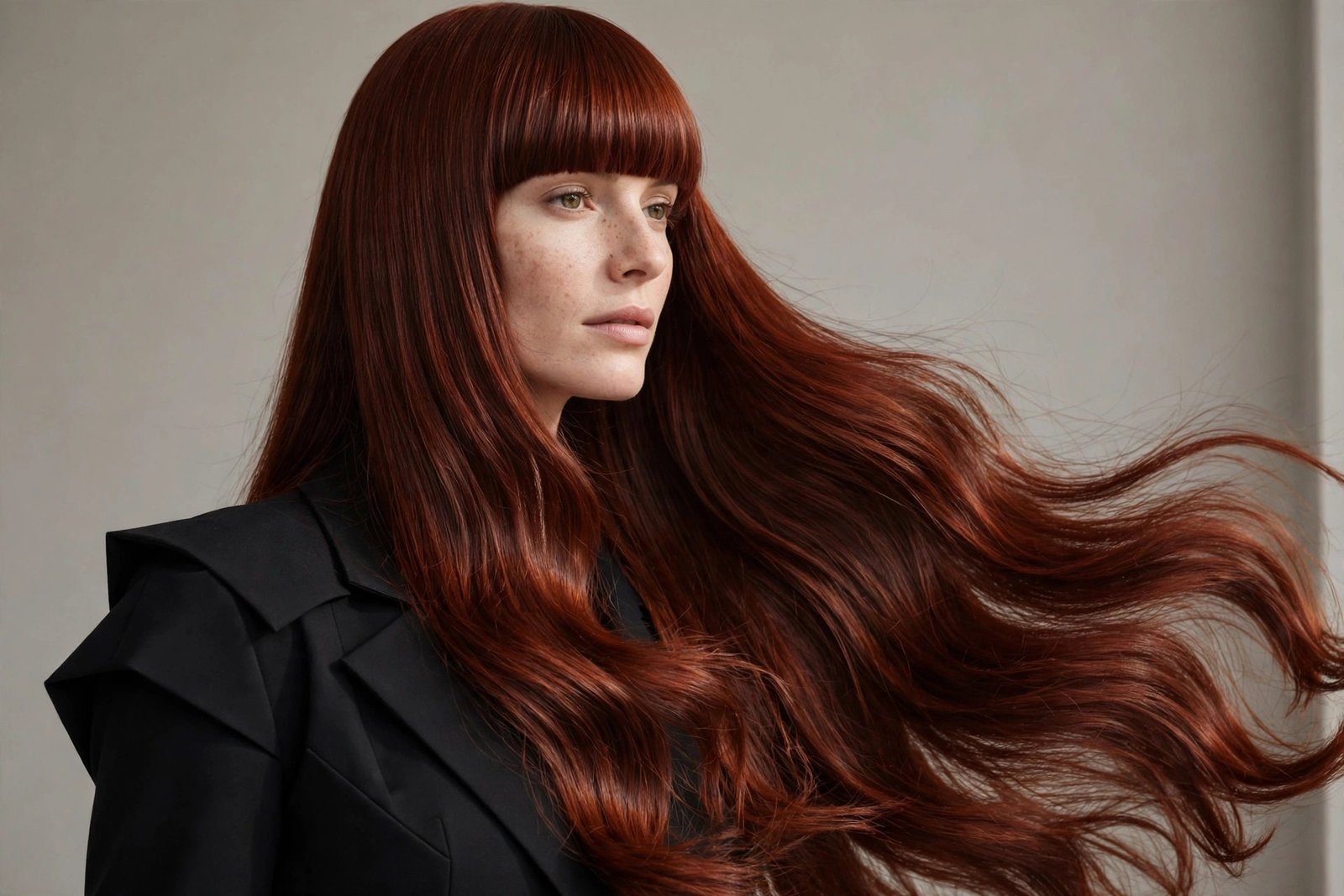
Blunt bangs in deep auburn are a whole personality. The straight-across fringe creates a strong horizontal line, and in rich red-brown that line becomes a frame of pure color right across the forehead — it’s architectural, it’s French-editorial, it’s unforgettable. The rest of the hair can be any length; the bangs are the event. There’s a reason this combination keeps appearing in fashion editorials: the geometry of the cut plus the richness of the color is a composition, not just a hairstyle.
Who it suits: oval and long faces wear blunt bangs best; they shorten the forehead visually. Strong brows get the perfect showcase. The deep auburn keeps the bold cut feeling rich rather than harsh — brighter reds with blunt bangs can read costume-y, but deep auburn stays chic. It suits confident, deliberate style; this is not a “maybe” haircut.
The salon script: “blunt bangs, cut dry, in deep auburn to match.” Bangs should be cut dry so the length is exact — wet bangs shrink. Maintenance is the most frequent on this list: bang trims every 3 to 4 weeks, or learn to trim them yourself (carefully). Honest downside: blunt bangs are a lifestyle. They need daily styling, they show oil by day two, and growing them out is a months-long awkward phase. The auburn color on the bangs also fades fastest since it’s the most-handled hair. High impact, high upkeep — no surprises.
21. Auburn Beach Waves
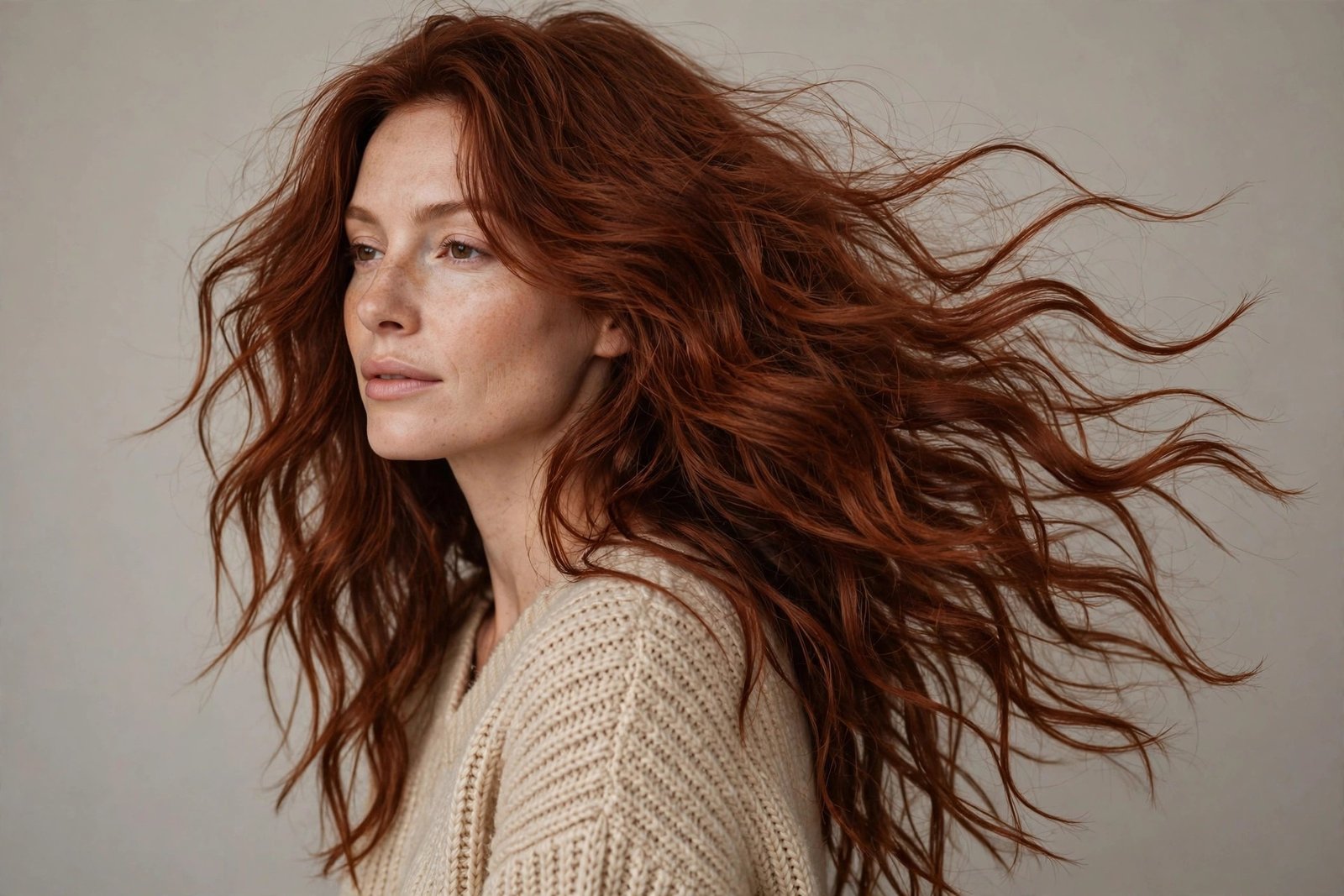
Auburn beach waves shouldn’t work — beach waves are a summer blonde thing — but that’s exactly why they do. Tousled, undone texture in rich red-brown looks like you spent autumn at a cabin, not summer at the shore: it’s cozy instead of sun-bleached. The texture breaks up the color into a dozen tones, so even a simple all-over auburn looks dimensional. And the styling is genuinely easy: the whole point is imperfection. This is the auburn for people who want rich color with zero-fuss styling.
Who it suits: medium to long hair with natural wave does this effortlessly; straight hair needs a curling wand and texturizing spray. All skin tones — the tousled texture softens the color’s impact. It’s the most casual auburn on the list, suiting relaxed personal style and busy mornings equally.
The salon script: “all-over auburn, medium depth — I’m styling it as beach waves.” The color itself is simple; the magic is in the styling. Ask your colorist for a shade with built-in dimension (a level 6 auburn with copper reflects) so the waves have tones to play with. Maintenance is easy: the undone texture hides fading beautifully. Honest downside: “beach waves” on colored red hair still needs heat protection, and salt sprays — the classic beach-wave product — are drying, which fades red faster. Use a sugar-based texturizer instead of salt spray on color-treated auburn.
22. Golden Auburn Melt
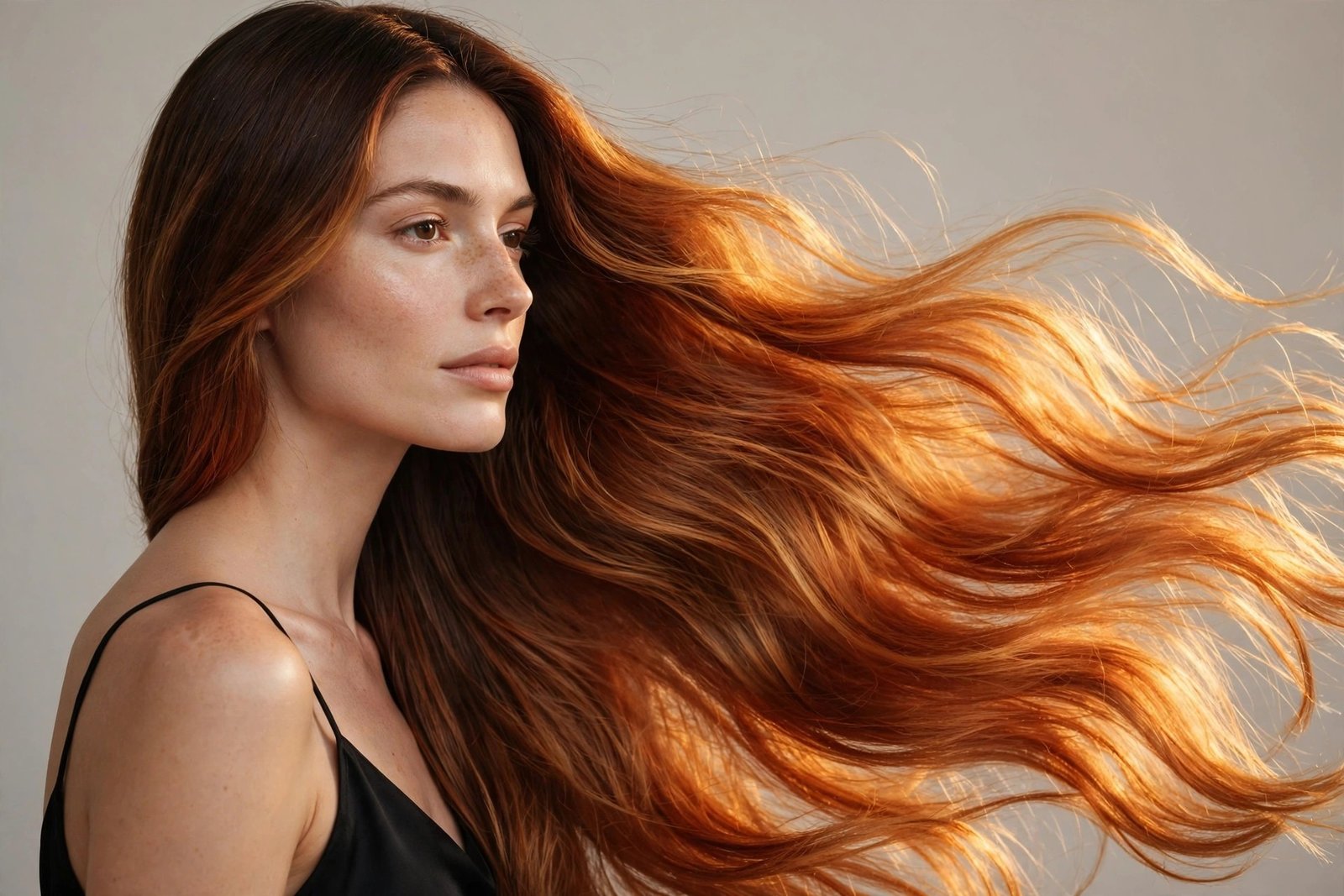
Golden auburn is auburn at its warmest and most luminous — the brown base infused with golden-red light, like honey poured through copper. The melt technique blends it seamlessly from a slightly deeper root, so the gold seems to radiate from within rather than sitting on top. It’s the glowiest auburn on this list: in golden-hour light it’s genuinely incandescent. If classic auburn is candlelight, golden auburn is the candle flame itself.
Who it suits: warm skin tones, without question — golden undertones plus golden hair is a halo effect. It’s also beautiful on medium skin with yellow undertones. Cool skin tones should approach carefully; the gold can emphasize pinkness. Green and hazel eyes against golden auburn is the combination that breaks Pinterest — the warm gold makes green irises look electric.
The salon script: “golden auburn melt — warm golden-red, melted from a deeper root.” The gold needs to be in the formula, not just the lighting — ask for gold and copper reflects specifically. Maintenance is moderate: golden tones fade faster than brown-based auburns, so color-depositing care matters. Honest downside: gold is the fade-prone part, and as it fades the shade can drift toward plain warm brown. The “golden” needs refreshing every 6 to 8 weeks or you’re just… brown. Still pretty brown, but not what you asked for.
23. Auburn French Bob
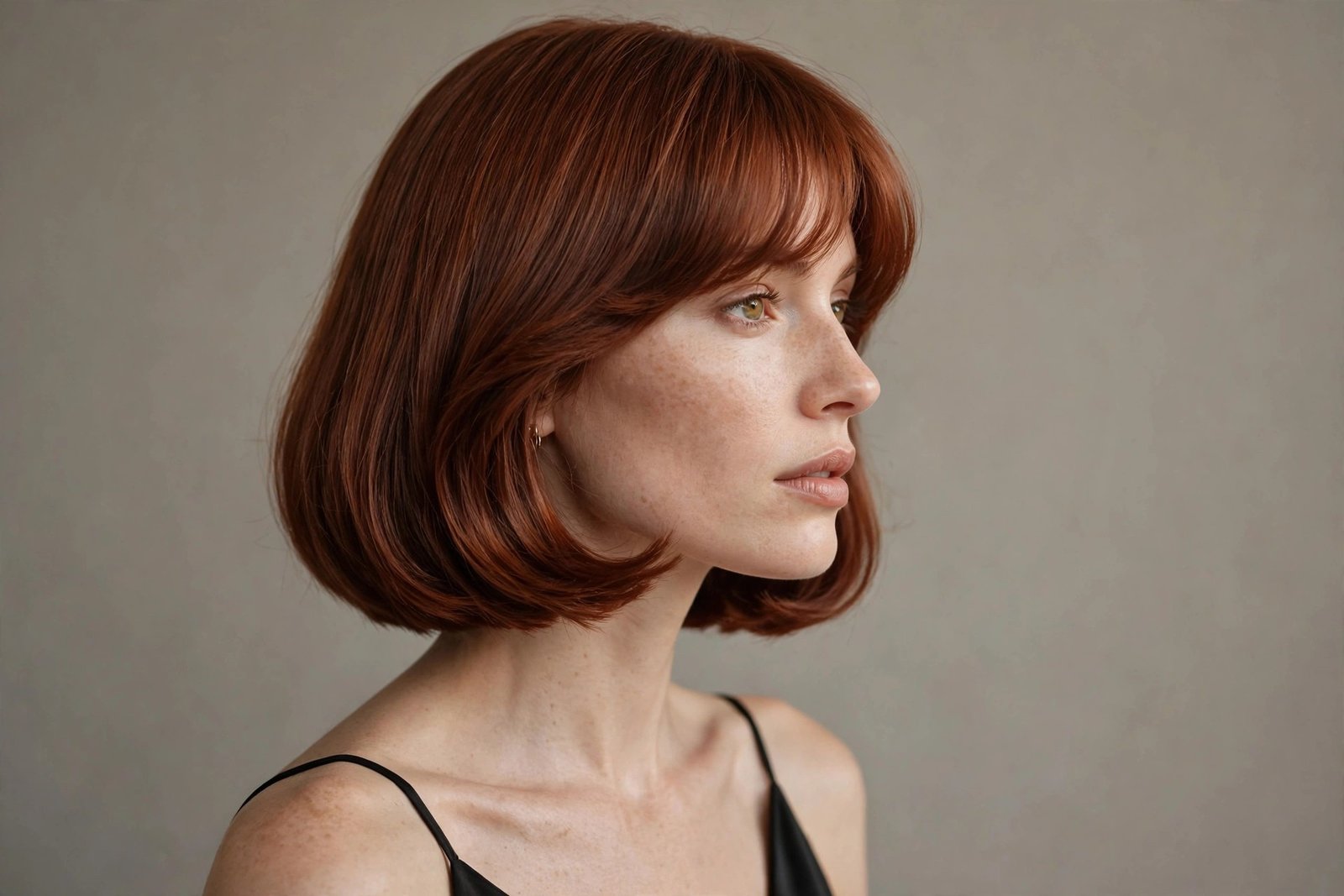
The French bob — chin-length, slightly curved under, often with a soft fringe — in auburn is pure Parisian fantasy. It’s the haircut of vintage film heroines, and the rich red-brown color gives it a warmth that the classic dark French bob doesn’t have. There’s something about auburn at chin length: the color sits right at the jawline, framing the face in warmth, and every turn of the head swings that rich color. It’s chic without trying, which is the entire French philosophy.
Who it suits: the French bob flatters oval, heart, and square faces; the chin length defines the jawline beautifully. Petite features get a perfect frame — the cut doesn’t overwhelm smaller faces the way long hair can. Auburn’s warmth keeps the graphic cut feeling soft and wearable. It suits minimal, elegant personal style.
The salon script: “French bob — chin length, curved under, soft fringe — in rich auburn.” The cut is precision work; find someone who cuts bobs dry or with great care. Maintenance is frequent trims (every 5 to 6 weeks to hold the shape) but simple color — the short length means faded ends get cut away regularly. Honest downside: the French bob grows out into an awkward in-between stage fast, and there’s no hiding it. It’s a commitment to the salon schedule. Also, thick hair may need thinning to get the classic curved silhouette.
24. Smoky Auburn Layers
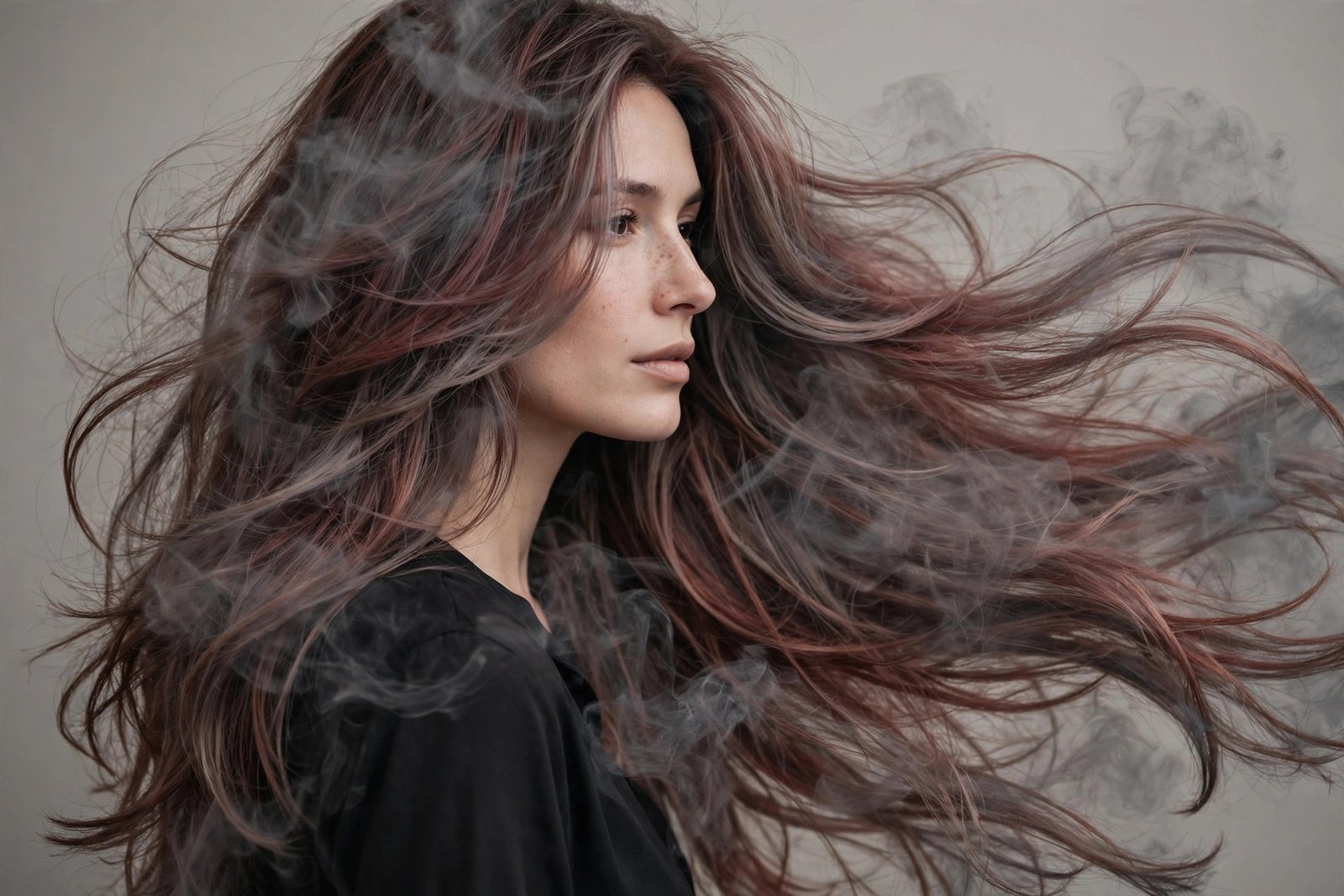
Smoky auburn is the rebel of the family — auburn with the warmth deliberately muted, a veil of cool smoke over the red-brown. It’s the answer for everyone who loves auburn’s richness but fears its warmth: the smoky overlay keeps the depth while taming the fire. The result is mysterious and modern, like embers under ash. Layered cuts let the smoke move through the hair, revealing warmer auburn underneath where the layers separate. It’s the most editorial, fashion-week shade on this list.
Who it suits: cool skin tones, finally — this is your auburn. The smoky coolness flatters pink undertones instead of clashing with them. It’s also striking on olive skin, where the muted red creates beautiful contrast. Straight and wavy textures show the smoky dimension best; very curly hair can muddy the effect.
The salon script: “smoky auburn — auburn base with a cool, muted overlay, not warm.” This requires a colorist who understands tonal control; the smoke is usually a cool demi gloss over the auburn. Maintenance is tricky: the smoky tone fades first, revealing warmer auburn underneath — which is still pretty, but the smoke needs re-glazing every 6 weeks to stay smoky. Honest downside: it’s the most technically demanding auburn here, and the fade reveals warmth whether you want it or not. If you hate warm tones, the maintenance schedule is non-negotiable.
25. Auburn Hollywood Curls
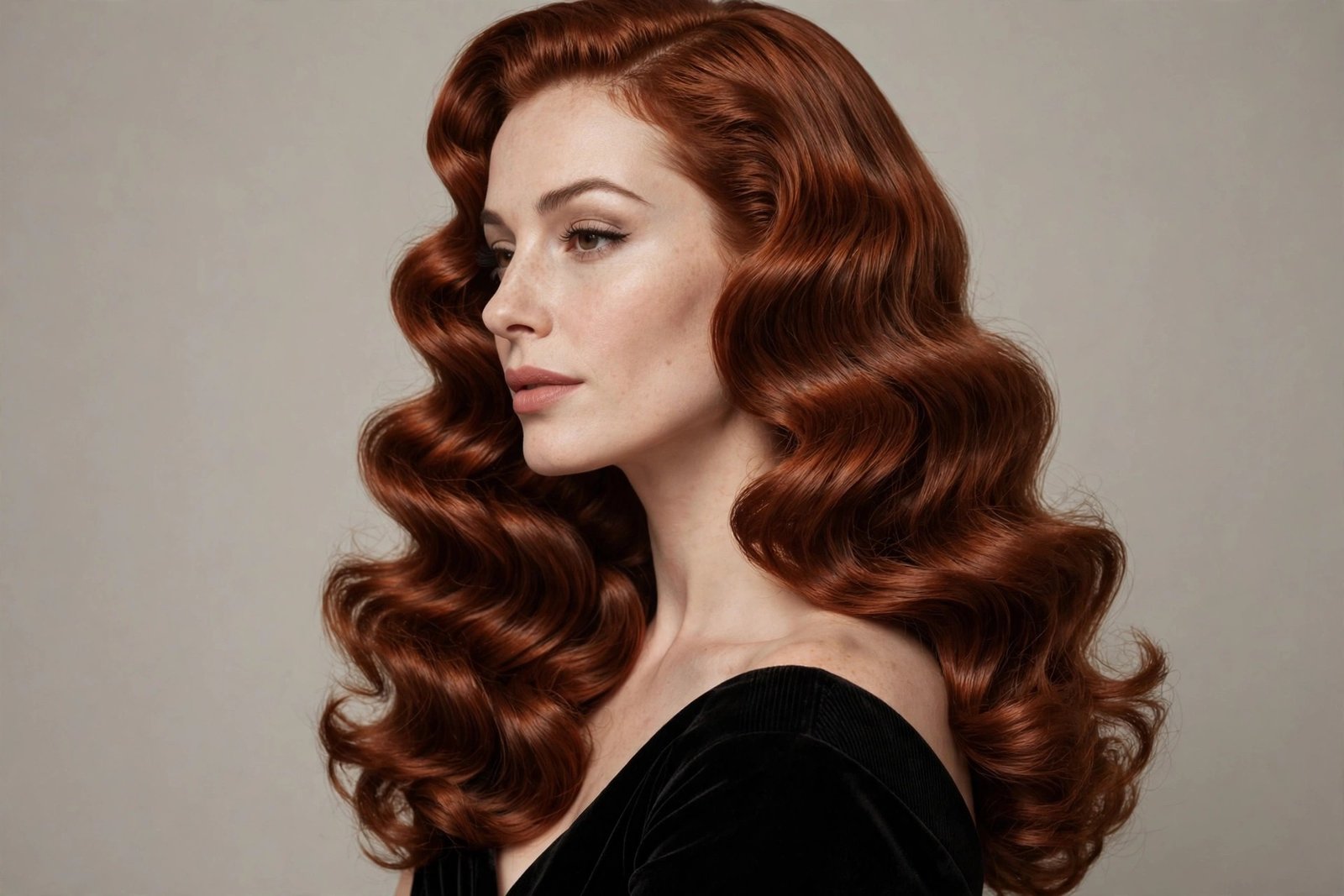
Hollywood curls — those polished, uniform, vintage-glamour waves — in auburn are pure old-screen magic. Think 1940s starlet, except the hair is rich red-brown instead of platinum. The uniformity of the curls turns the auburn into ribbons of color, each curl a perfect spiral of red-brown catching light identically. It’s the most formal auburn on this list: wedding hair, gala hair, the hair you wear when you want to be remembered. The color does half the styling work — auburn’s natural dimension makes even simple curls look intricate.
Who it suits: medium to long hair with enough density to hold the curl pattern. All skin tones — the polished finish is universally flattering. It’s ideal for special occasions rather than daily wear, though a looser version works for date nights. If your wardrobe leans vintage or glamorous, this is your signature.
The salon script: for the color, “rich auburn, medium depth, even application” — the curls need a consistent base to look uniform. The styling is a classic set: curl all in the same direction, let cool, brush out into waves. Maintenance of the color is standard auburn care; the styling itself takes 30 to 45 minutes. Honest downside: Hollywood curls are not a daily hairstyle unless you have serious patience or a stylist on retainer. And the brushing-out step terrifies people — under-brush and you get ringlets, over-brush and you get frizz. Practice on a low-stakes day first.
26. Auburn Sleek Ponytail
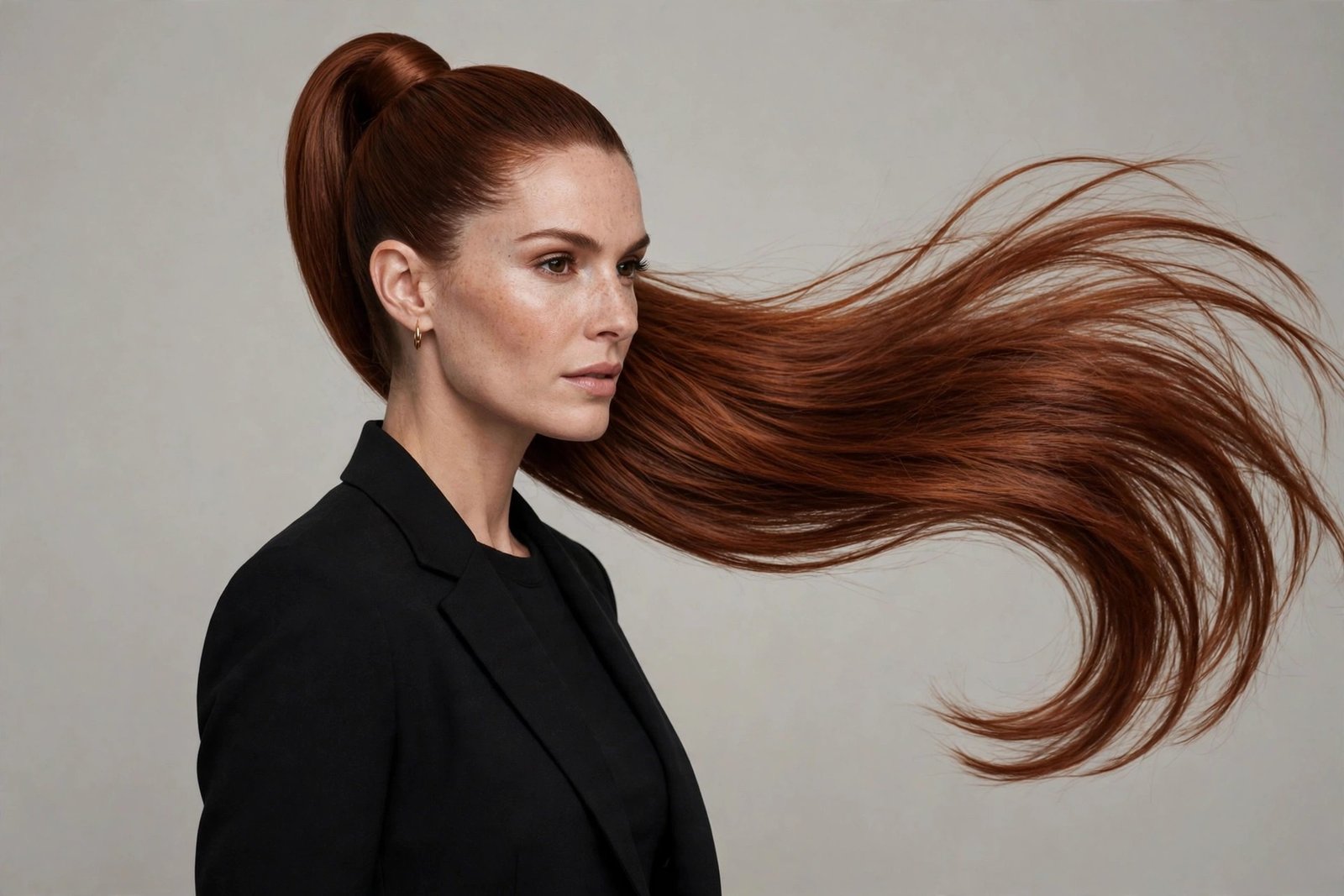
Never underestimate what auburn does in a sleek ponytail. Pulled back tight and glossy, the color compresses into a single rich ribbon of red-brown — it’s concentrated auburn, and the effect is striking. The sleekness shows the color’s depth without any texture to distract; it’s pure, saturated, burnished red-brown swinging behind you. It’s also the ultimate “my color is the accessory” style: minimal effort, maximum color impact. Gym to gala, it works everywhere.
Who it suits: everyone with enough length — the ponytail is universal. It’s particularly flattering for showing off the color itself, since all the hair is gathered into one visible mass. Strong features get a clean frame. It’s the best auburn style for active lifestyles: the color stays protected and the style stays put.
The salon script: “rich auburn — I wear it in sleek ponytails a lot, so I want saturated, even color.” Mention the ponytail habit: colorists can ensure the underlayers (visible in a pony) match the canopy. Maintenance is easy — ponytails hide fading, and the gathered hair needs less heat styling. Honest downside: constant tight ponytails cause traction stress regardless of color. Vary the position, use silk scrunchies, and give your hairline rest days. The color will outlast your hairline if you’re not careful.
27. Auburn Braided Crown
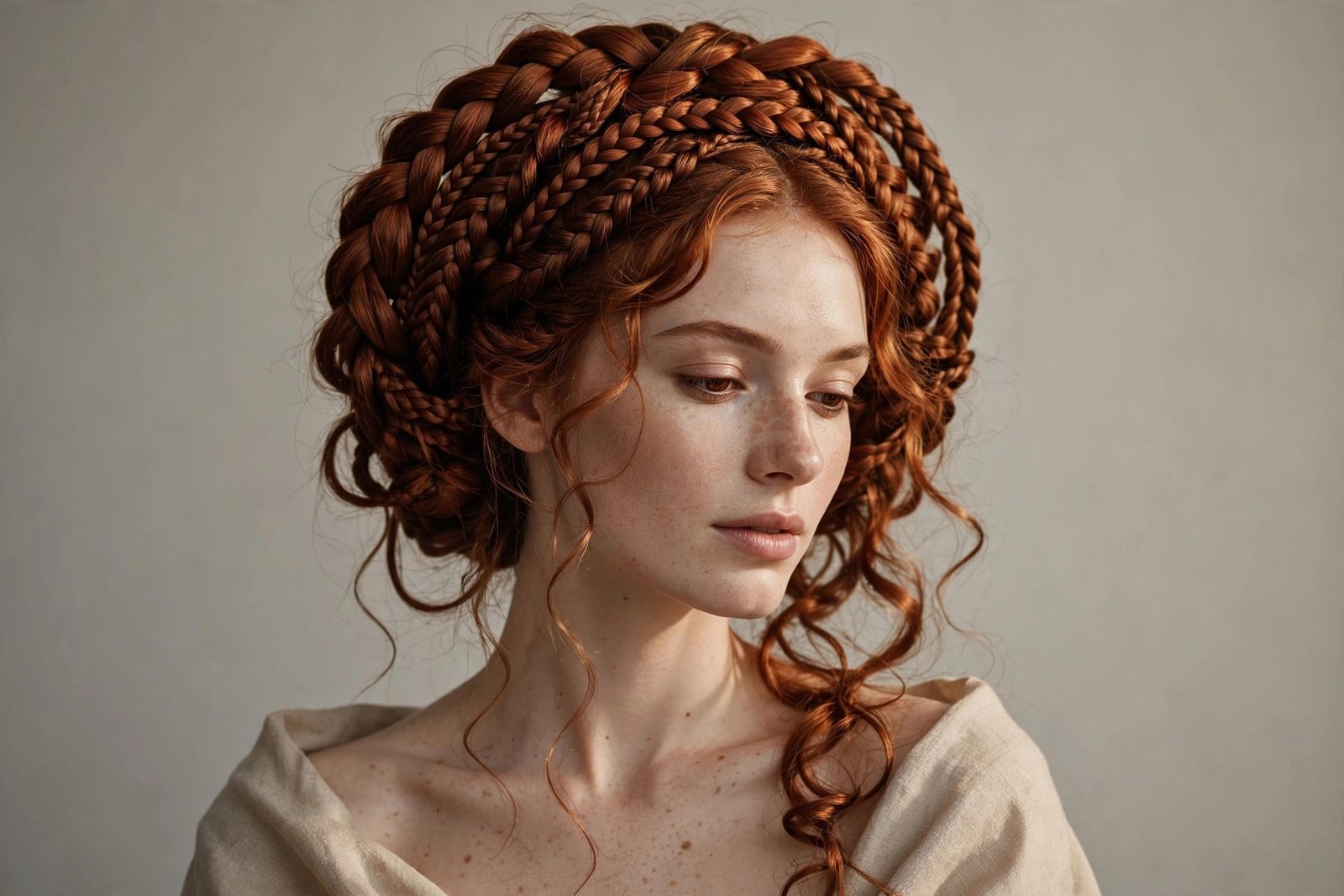
Braids turn auburn into art. A braided crown — hair woven around the head like a halo — in red-brown looks like something from a fantasy film: each twist of the braid shows a different facet of the color, light and shadow alternating along the plait. The dimension that takes balayage hours to paint happens naturally in a braid’s geometry. It’s romantic, it’s intricate, and in auburn it’s genuinely show-stopping. Wedding guests will photograph your head. I’m not exaggerating; I’ve seen it happen.
Who it suits: medium to long hair with enough length to wrap — that’s the only real requirement. All textures work; the braid adapts. It’s perfect for occasions (weddings, festivals, holidays) and for anyone whose style leans romantic or bohemian. The updo placement keeps the warmth away from the face, so even cool skin tones wear it beautifully.
The salon script: “dimensional auburn — I’m wearing it in braided styles, so I want visible variation.” Ask for slightly varied tones through the lengths; braids expose flat color mercilessly. Maintenance is standard; braided styles actually protect the color from environmental fading. Honest downside: braided crowns take skill or a patient friend — it’s not a solo-morning style for most people. And tight braiding on color-treated hair needs care: never braid soaking-wet fragile hair, and don’t sleep in a tight crown nightly.
28. Auburn Side-Swept Glam Waves
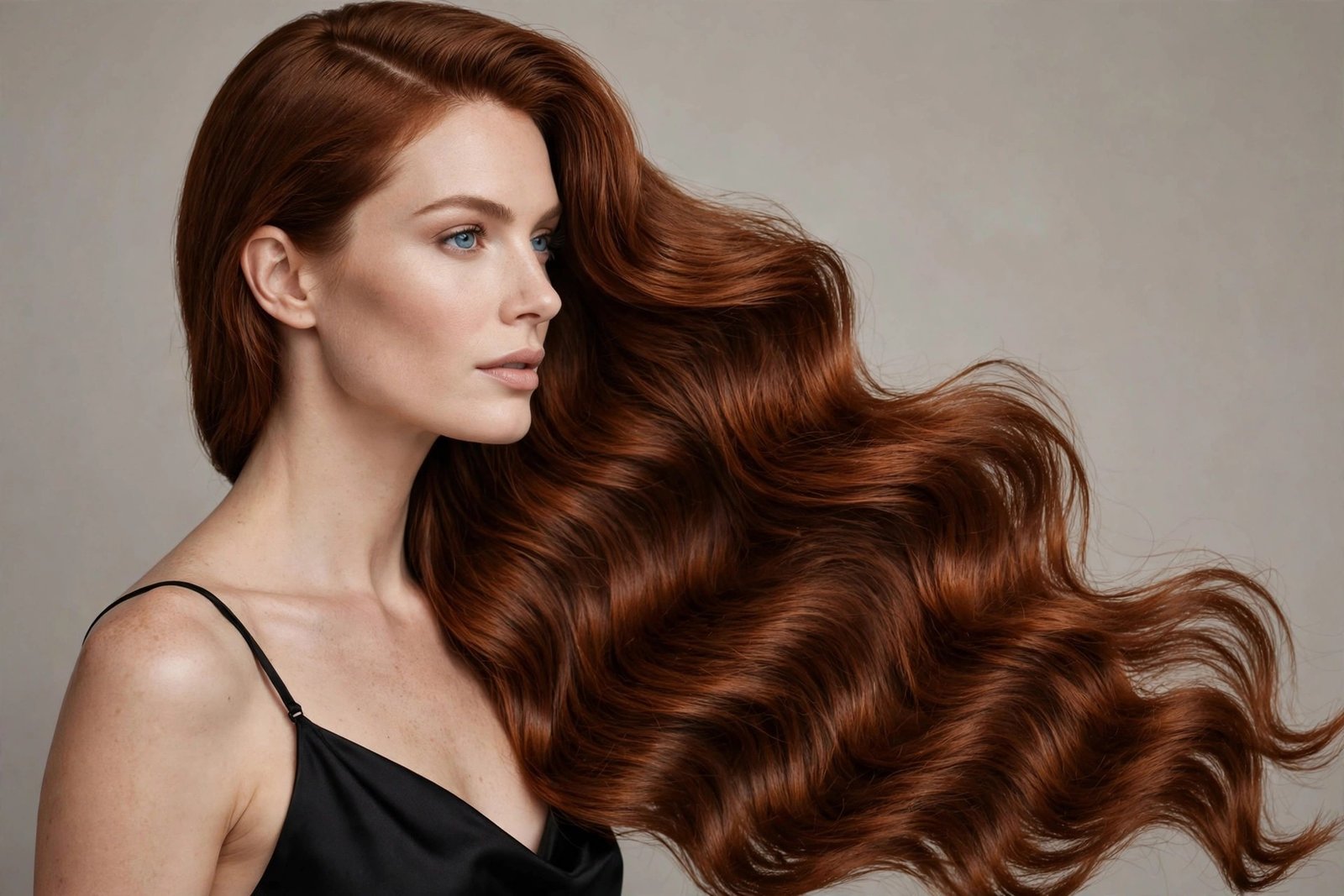
Side-swept glam waves are red-carpet hair, and auburn is red-carpet color. Sweeping all the hair to one side concentrates the rich red-brown into a cascading mass over one shoulder — it’s asymmetrical, it’s dramatic, and the auburn catches light across the whole sweep like a waterfall of copper. The deep side part adds volume at the crown, and the waves keep it soft rather than severe. It’s the hairstyle equivalent of an off-shoulder gown: one side bare, one side glorious.
Who it suits: medium to long hair; the sweep needs length to cascade. It flatters most face shapes — the asymmetry is inherently slimming and interesting. All skin tones, since the shade is tunable. It’s occasion hair that photographs phenomenally: the concentrated color mass reads beautifully on camera.
The salon script: “rich dimensional auburn — I wear it side-swept, so the color needs to look good concentrated on one side.” Even saturation matters more than usual here. Maintenance is standard auburn care. Honest downside: the style needs hold — without strong-hold products the sweep migrates back to center within hours. And sleeping on a deep side part trains a stubborn part line. It’s gorgeous, but it’s not wash-and-go.
29. Dark Auburn Pixie Bob
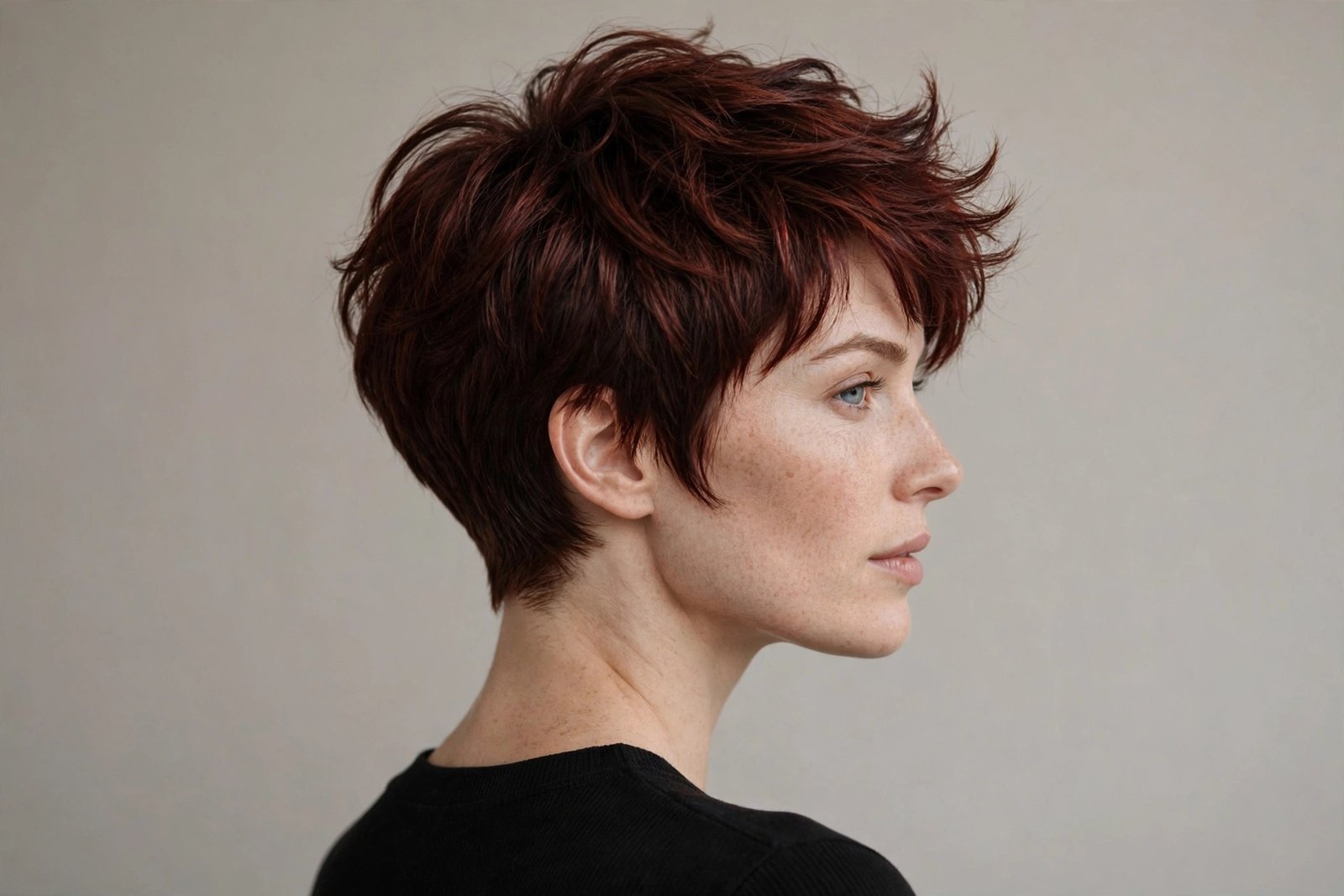
The pixie bob — longer than a pixie, shorter than a bob, tapered at the nape with length on top — in dark auburn is the thinking woman’s short cut. It has the pixie’s confidence and the bob’s softness, and the dark auburn color gives it a richness that keeps the androgynous shape feeling feminine and warm. The tapered nape shows the color’s depth in miniature: dark at the roots, glowing where the longer top layers catch light. It’s precise, it’s chic, and it’s criminally underrated.
Who it suits: oval, heart, and long faces — the volume on top balances proportions. Fine to medium hair; very thick hair needs serious thinning to avoid a mushroom silhouette. The dark auburn suits cool and neutral skin tones especially. It suits women who want short hair without the full pixie commitment.
The salon script: “pixie bob — tapered nape, length on top — in dark auburn.” The cut is the star; the color should be rich and even. Maintenance means trims every 5 to 6 weeks to keep the taper sharp, with color refreshing on the same schedule. Honest downside: the grow-out phase between pixie bob and bob is awkward — the nape grows faster than the top, and you’ll need interim trims. Short hair is never low-maintenance; it’s just low-daily-effort. Different thing.
30. Auburn Feathered Layers
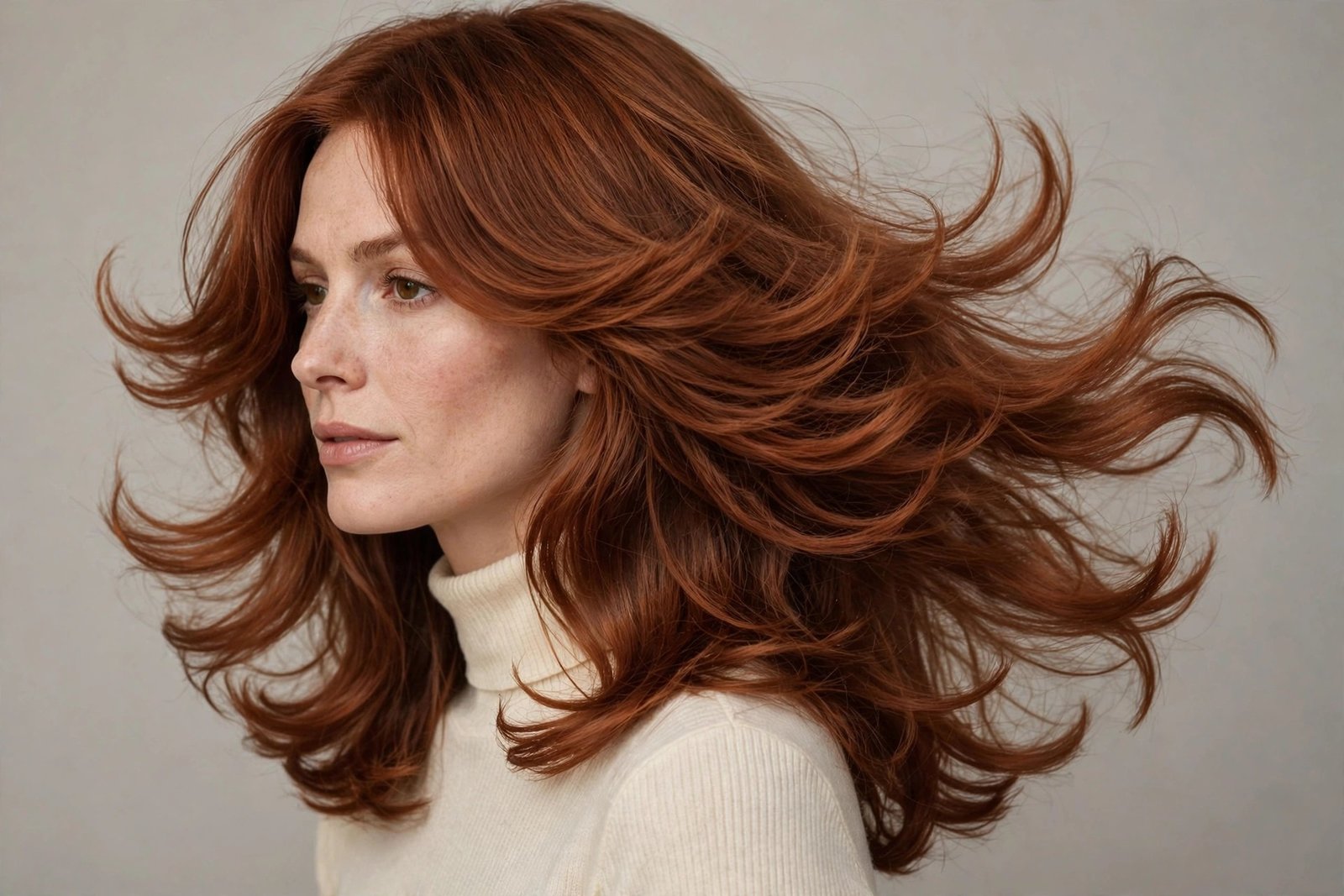
Feathered layers — the 1970s flick, soft wings of hair curving away from the face — in auburn are pure retro romance. The feathering creates movement in every direction, and each flicked layer shows the auburn’s red-brown from a new angle. It’s Farrah energy filtered through autumn: bouncy, feminine, and full of motion. The color keeps it from feeling like a costume — rich auburn grounds the retro cut in something timeless. Blowouts were invented for this combination.
Who it suits: medium to long hair with enough density for the layers to have body. The face-framing feathers flatter round and square faces by adding diagonal movement. Warm and neutral skin tones get the full retro glow. It suits anyone whose style has a vintage streak — and anyone who loves a bouncy blowout.
The salon script: “feathered layers — flicked, face-framing — in warm auburn.” The cut needs a stylist who understands layering, not just long layers. A round-brush blowout is the styling method; learn it or befriend it. Maintenance is moderate: the feathered ends fade faster and need trims every 8 weeks. Honest downside: feathered layers without styling look limp — this cut demands the blowout. Air-drying gives you stringy, not feathery. If you won’t round-brush, pick a different cut.
31. Auburn Glass Hair
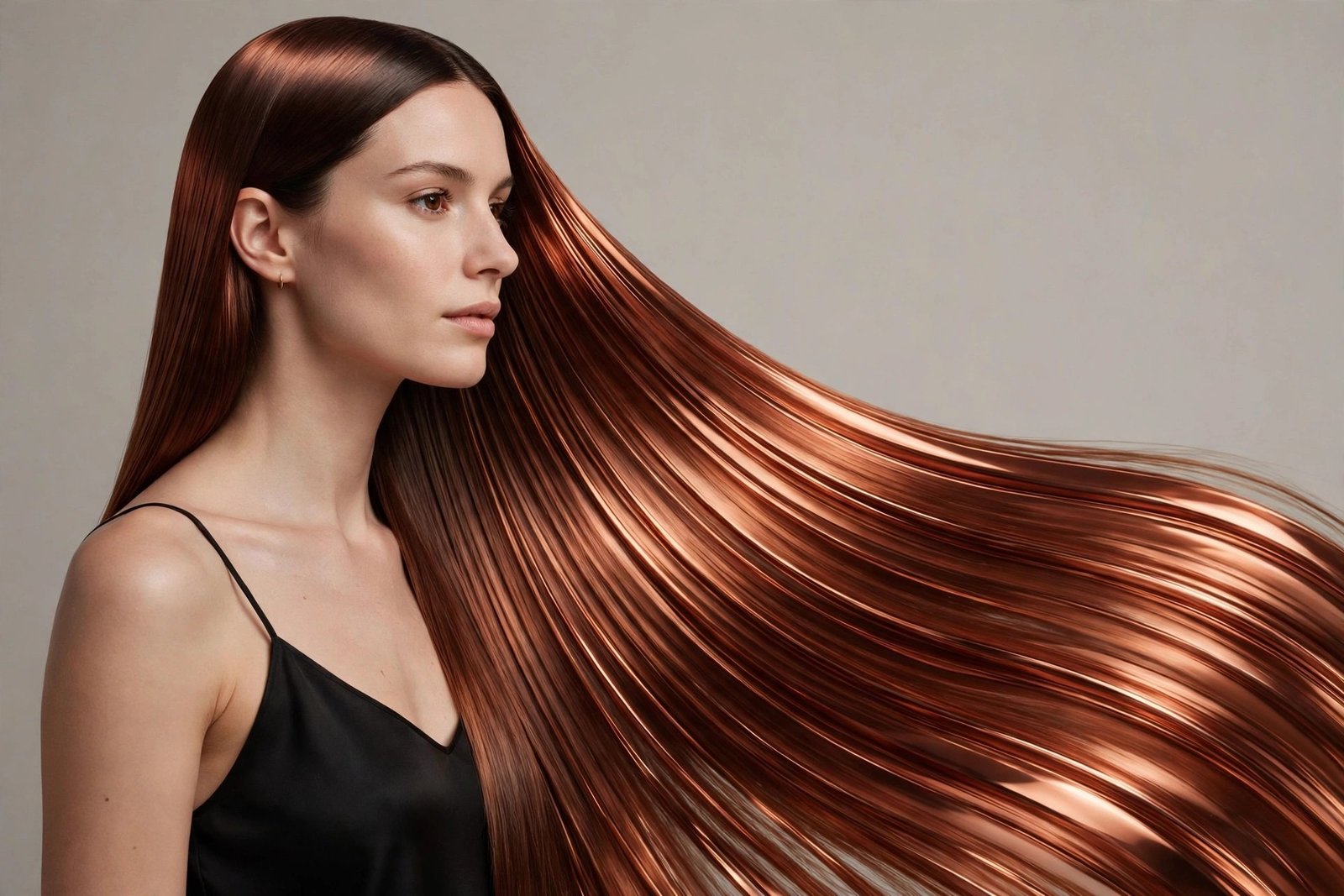
Glass hair — the ultra-sleek, reflective, almost liquid finish — in auburn looks like poured copper. The trend started with dark brunettes, but auburn might be its best expression: the red tones give the reflective surface a warmth that black glass hair doesn’t have, like the difference between obsidian and amber. Every strand aligned, every reflect identical, the whole head a mirror of red-brown. It’s minimalism as luxury: no texture, no layers of visual noise, just perfect color and perfect shine.
Who it suits: straight hair textures — glass hair on curly hair is a different (and much harder) project. Medium to long lengths show the liquid effect best. All skin tones; the shade tunes to suit. It’s ideal for minimalists: the look is one perfect thing, not ten styled things. Professional settings adore it.
The salon script: “glass-hair finish in rich auburn — I want maximum shine, even color.” Ask for a clear gloss treatment over the color; the glass effect is 50% color, 50% finish. At home: shine serums, boar-bristle brushing, and minimal washing. Maintenance is about the finish — the color itself is simple all-over. Honest downside: glass hair shows everything: oil by day two, any uneven color, every split end. It’s a high-polish look that needs high-polish upkeep. And humidity is its mortal enemy — frizz shatters the mirror.
32. Auburn Vintage Waves
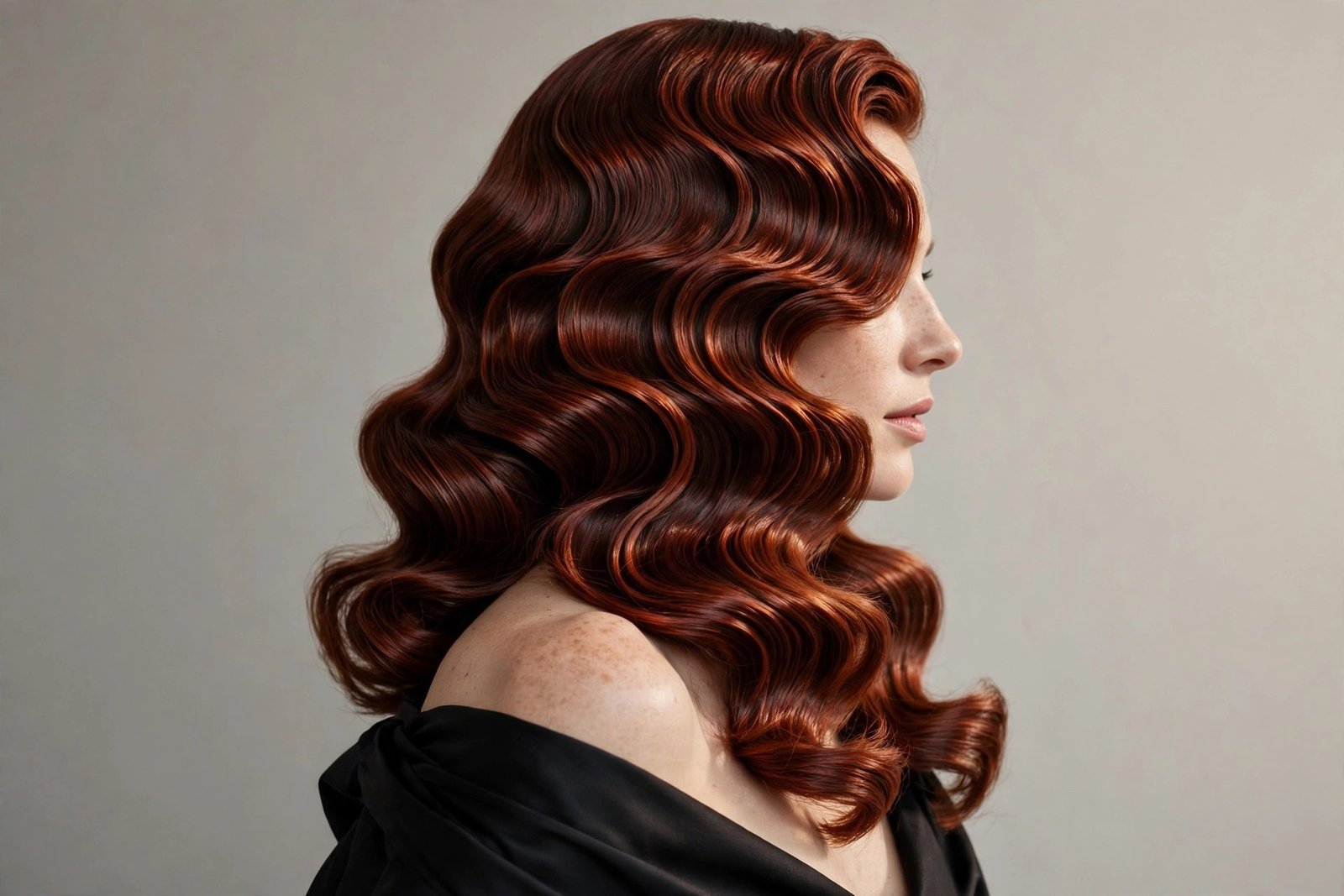
We end where glamour began: vintage waves — finger waves, marcel waves, the sculpted ripples of old Hollywood — in deep auburn. It’s the most artful shade application on this list, because vintage waves are literally sculpted: the color sits in carved ridges and valleys, light pooling in the curves, shadow settling in the troughs. In auburn, the effect is museum-worthy — red-brown rendered as sculpture. It’s not daily hair. It’s the hair you wear when the occasion deserves architecture.
Who it suits: medium-length hair is the sweet spot — long enough to sculpt, short enough to hold. All face shapes; the sculpted waves are universally flattering when done well. It’s occasion hair for vintage lovers, brides, and anyone attending an event with a dress code. The deep auburn keeps it rich rather than costume.
The salon script: for color, “deep even auburn — the waves need a consistent base.” The waves themselves are a styling technique (or a salon service for big events). Maintenance of the color is standard; the styling is the project — finger waves take practice, pins, and patience. Honest downside: this is the least wearable daily option here, and DIY finger waves have a steep learning curve. Book a stylist for the event, enjoy feeling like a film star, and wear the beach waves (idea 21) on normal days.
The Auburn Care Routine: Keeping the Richness Alive
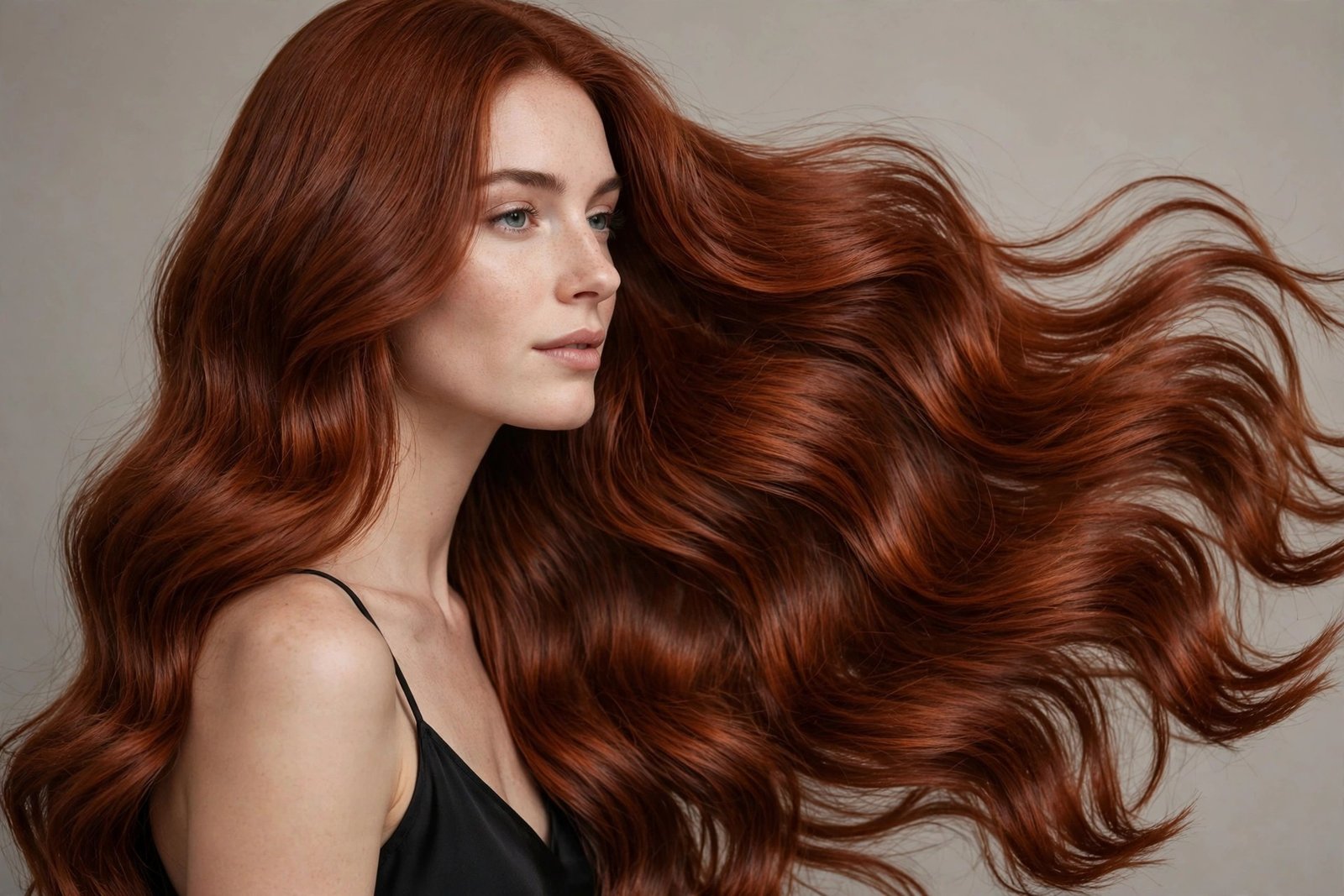
Here’s the truth nobody puts in the Pinterest caption: red-based color molecules are the smallest dye molecules in existence, which means they escape the hair shaft faster than any other color. Auburn will fade. That’s physics, not failure. But the difference between auburn that stays rich for two months and auburn that goes dull in three weeks is entirely routine — and the routine isn’t hard, it just has to be consistent. Everything below is what I’d tell you if you were in my chair.
Washing Without Fading the Red
The single biggest fade accelerator is sitting in your shower: hot water. Heat opens the hair cuticle and lets those tiny red molecules rinse straight down the drain — which is why your shower water runs pink for the first few washes. Wash in lukewarm water, always. It feels less luxurious, I know. Your color will outlast your preference for hot showers, and that’s the trade. Finish with a cool rinse if you can stand it; it seals the cuticle and locks in shine.
Frequency matters as much as temperature. Every wash fades red a little, so the goal is fewer washes, not “better” washes. Most auburns thrive on washing two to three times a week, with dry shampoo bridging the gaps. When you do wash, use a sulfate-free, color-safe shampoo — sulfates are detergents, and detergents strip color. It doesn’t need to be the most expensive bottle on the shelf; it needs to say sulfate-free and color-safe, and you need to use a small amount, focused on the scalp. The lengths get clean enough from the rinse running through.
Here’s a trick colorists use but rarely explain: on non-wash days, if your roots feel oily, apply dry shampoo the night before, not the morning. It absorbs oil while you sleep and you wake up with volume instead of powdery residue. And if you’re a daily gym-goer who can’t skip washing, a co-wash (conditioner-only wash) between shampoo days cleans sweat without stripping color. Your auburn’s lifespan is measured in washes — spend them wisely.
Weekly Treatments That Lock In Warmth
Once a week, your auburn needs a deposit — literally. A red or copper color-depositing conditioner puts fresh warm pigment back into the hair, replacing what the week’s washes carried away. Use it in place of your regular conditioner once weekly, leave it for five to ten minutes, and rinse cool. It’s the closest thing to a salon gloss you can do at home, and it’s the reason some women’s auburn looks freshly done for months while others fade by week three. Pick a deposit shade close to your auburn — copper-deposit for copper-auburns, red-brown deposit for deeper shades.
Deep conditioning is the other weekly non-negotiable, because red fades fastest on dry, porous hair. A rich mask with proteins and oils — applied to damp hair, left for fifteen minutes under a shower cap — keeps the cuticle smooth so color molecules stay put. Alternate weekly: one week the color-depositing conditioner, one week the deep moisture mask. If your hair is very dry or damaged, do both in the same week — deposit first, mask after. The order matters: pigment goes on first, sealing moisture goes second.
Sun protection is the forgotten fade factor. UV breaks down red pigment fast — a week of strong sun can do what a month of washing does. If you’re outdoors, wear a hat or use a UV-protectant hair spray; they’re the sunscreen equivalent for color. Byrdie‘s hair editors have covered this extensively: sun-faded red doesn’t just get lighter, it gets brassy and dull in a way no conditioner fully reverses. Prevention beats repair every time.
Styling for Maximum Auburn Shine
Auburn’s whole appeal is its glow, and glow is a styling achievement, not just a color one. Shine comes from a smooth cuticle reflecting light evenly — so everything that roughs up the cuticle dulls your auburn. Heat protectant before every hot tool, no exceptions; a silk or satin pillowcase to prevent overnight friction; and a boar-bristle brush for distributing natural oils down the lengths. These sound like small things. They’re the difference between “rich auburn” and “dull reddish brown” in photos.
For styling products, think smooth and reflective: shine serums with silicones or natural oils (argan, camellia) on the mid-lengths and ends, lightweight smoothing creams before blow-drying. Avoid heavy waxes and matte texturizers on the regular — they scatter light instead of reflecting it, which mutes the red. When you do want texture (beach waves, shags), use it, enjoy it, then clarify and re-smooth next wash. Texture days and shine days can coexist; they just can’t be the same day.
Blow-drying technique matters more than people think. Dry with the nozzle pointing down the hair shaft, not up into it — down smooths the cuticle, up roughs it. Finish with the cool-shot button: cool air seals everything you just smoothed. It adds ninety seconds to your routine and visible shine to your color. If you air-dry, squeeze — don’t rub — with a microfiber towel, then apply a leave-in with heat… no, with UV and smoothing protection before the hair fully dries. Wet hair is fragile hair; treat it like silk, not laundry.
Your Salon Maintenance Calendar
Mark it now: a gloss or toner refresh every 6 to 8 weeks. Not a full recolor — a demi-permanent gloss that refreshes the red tone, adds shine, and costs a fraction of the original service. This single appointment is what separates auburn that looks expensive from auburn that looks tired. Book the next one when you leave the salon; “I’ll call later” becomes three months later, and by then you’re correcting instead of refreshing.
Root touch-ups depend on your technique. All-over auburn on hair close to your natural depth: every 6 to 8 weeks with the gloss. Balayage, melts, and ombres: the grow-out is the design, so you can stretch to 10 to 12 weeks, just refreshing the tone. Gray coverage plus auburn: every 4 to 5 weeks, since gray regrowth shows against red more than against brown. Be honest with your colorist about your real maintenance tolerance — a good one will steer you toward the technique that matches your life, not the one that fills their book fastest.
Between appointments, watch for the two warning signs: the color looks flat in indoor light (needs a gloss), or the ends look lighter and duller than the roots (needs a trim plus gloss). Don’t wait for both. And if you’re ever unsure whether your auburn needs professional help or just better home care, the science of how hair dye works explains why reds behave the way they do — understanding the chemistry makes every maintenance decision easier. Knowledge is the cheapest hair product there is.
Frequently Asked Questions
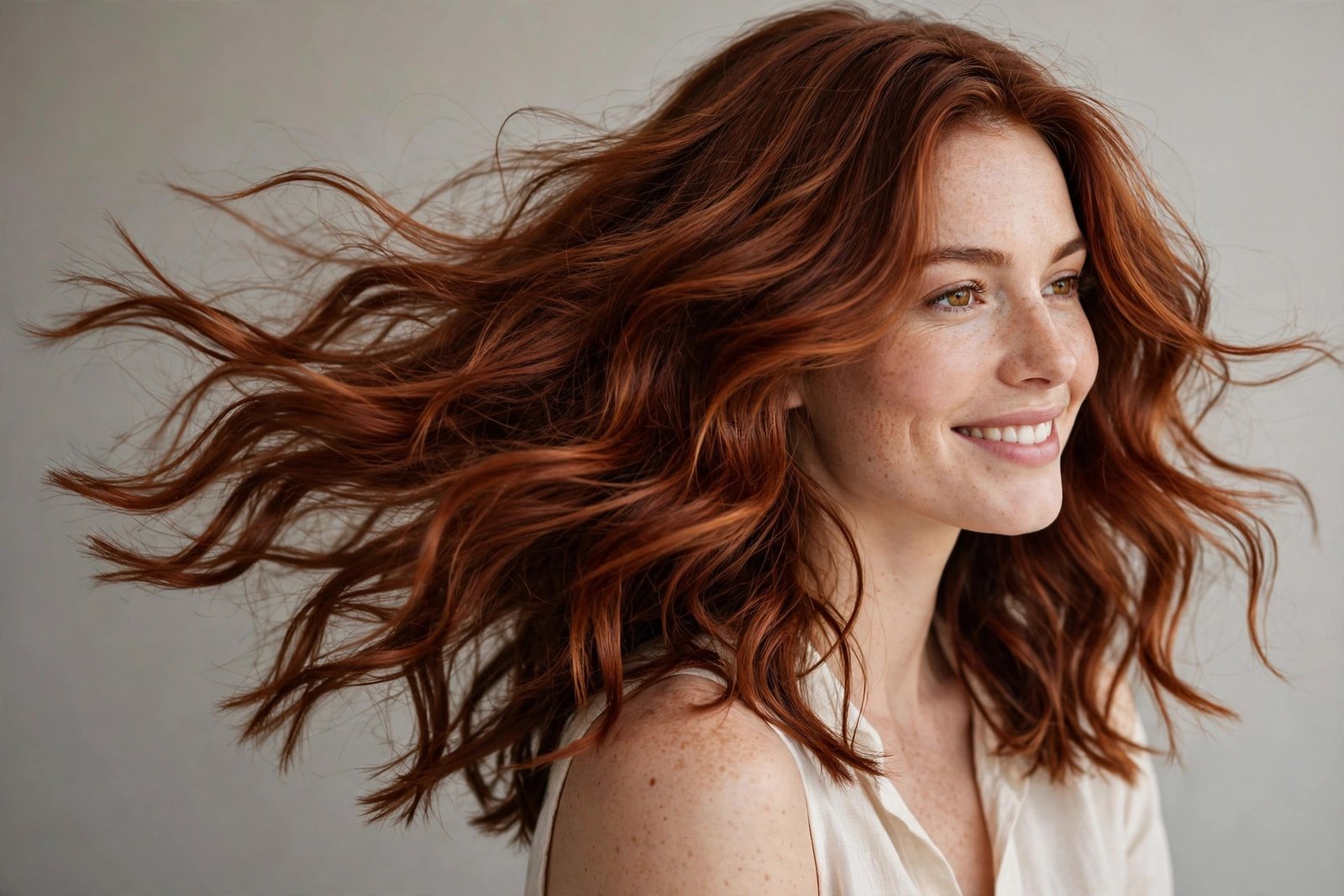
The questions I get asked most about going auburn — answered the way I’d answer them in the chair, honestly and completely.
What is the difference between auburn and copper hair color?
Auburn and copper are cousins, not twins. Auburn is a reddish-brown: brown is the base and red is woven through it, giving it depth and richness. Copper is a bright, fiery red-orange where the red and orange tones dominate and the brown takes a back seat. Put simply, auburn is darker, deeper, and more brown; copper is brighter, bolder, and more orange. There is a third cousin worth knowing: soft copper blonde, which is a BLONDE with copper tones — much lighter than both. If you want rich and understated, pick auburn. If you want loud and fiery, pick copper.
Does auburn hair color suit warm or cool skin tones?
Auburn works on both, which is half its magic, but the shade matters. Warm and neutral skin tones — golden, olive, or peachy undertones — take to classic auburn beautifully because the red warmth echoes the skin. Cooler skin tones should lean toward auburns with brown or mahogany depth (think deep auburn or espresso auburn) rather than bright copper-auburn, since cooler bases keep the red from clashing with pink undertones. Green and hazel eyes are the classic auburn match, but brown eyes glow against it too. The honest test: hold a warm rust-colored fabric against your face in daylight. If your skin looks alive, auburn will too.
How long does auburn hair dye last before it fades?
Red-based color molecules are the smallest of all hair dye molecules, so they wash out faster than brown or blonde. Expect a salon-fresh auburn to hold its punch for 4 to 6 weeks, then soften into a pretty muted version of itself over the next few weeks. Hot water, frequent washing, and sun exposure are the three biggest fade accelerators. Using a sulfate-free, color-safe shampoo, washing in lukewarm water, and using a red-tinted color-depositing conditioner once a week can stretch the rich phase to 8 weeks or more before you need a gloss refresh at the salon.
Is auburn hair color high maintenance?
Honestly? It sits in the middle. Auburn is not as demanding as platinum blonde or vivid fashion colors, but it asks more of you than a natural brunette. Plan for a salon gloss or toner refresh every 6 to 8 weeks to keep the red richness from going flat, plus color-safe home care in between. If you choose a deeper, more brown-based auburn, the grow-out is forgiving and maintenance drops significantly. Bright copper-auburn shades on pre-lightened hair are the neediest version. Pick the depth that matches the effort you are willing to give — your colorist will be honest with you if you ask.
What is the best auburn shade if I have naturally dark hair?
If your hair is naturally dark brown or black, the smartest auburns are the deep ones: deep auburn, mahogany auburn, espresso auburn, or cherry cola auburn. These shades lift your hair only slightly, so they do less damage and fade more gracefully. Bright copper-auburn on dark hair requires heavy bleaching first, which means more damage, more brassiness risk, and harder maintenance. A skilled colorist can also use auburn balayage or ribbon highlights to add red dimension without touching your base at all — all the richness, half the commitment.
Can I dye my hair auburn at home from blonde?
You can, but there is one rule that decides everything: blonde hair is missing the warm pigment that auburn needs, so going straight from blonde to auburn can turn muddy, greenish, or flat. Colorists call the fix a filler — you add warm gold or copper pigment first, then the auburn on top. Skip the filler and the color looks dull within a week. If your blonde is very light, choose a medium auburn rather than a deep one so the result does not go darker than you intended. For your first auburn, a salon visit is worth it; once the base is right, home root touch-ups become much easier.
Will going auburn damage my hair?
It depends entirely on where you are starting. If your hair is already close to the target depth — say medium brown going to auburn — the process is gentle, often a single deposit-only color with no bleach at all. Damage enters the picture when big lifting is involved: dark hair going bright copper-auburn, or previously colored hair needing correction. A bond-building treatment during the color service, plus a protein-moisture balanced routine at home, keeps most hair healthy through the change. Auburn on virgin or near-virgin hair is one of the least damaging dramatic color changes you can make.
Conclusion
Thirty-two shades, one truth: auburn is the rare trend that doesn’t ask you to become someone else. It takes the hair you have — its depth, its texture, its natural warmth — and turns the richness up. Whether you land on the deep, low-maintenance espresso auburn or go all in on the copper-auburn balayage that Pinterest can’t stop searching for, you’re choosing a color with genuine staying power: flattering across skin tones, forgiving in grow-out, and perfectly tuned to autumn’s light.
My parting advice is the same thing I tell every client: bring photos to your consultation, be honest about your maintenance tolerance, and don’t overthink the choice between two neighboring shades — your colorist will tune it in the chair. If you’re still torn between auburn’s cousins, remember the distinction: soft copper blonde is a blonde, cowboy copper is a fire, and auburn is the ember glow in between. For fall 2026, the embers are winning. If you loved exploring the copper family, take a look at the brighter end of the spectrum with cowboy copper hair color ideas, or compare with the blonde take in soft copper blonde — and if warm brunettes are more your speed, brunette hair color ideas has you covered. Now go find your auburn.