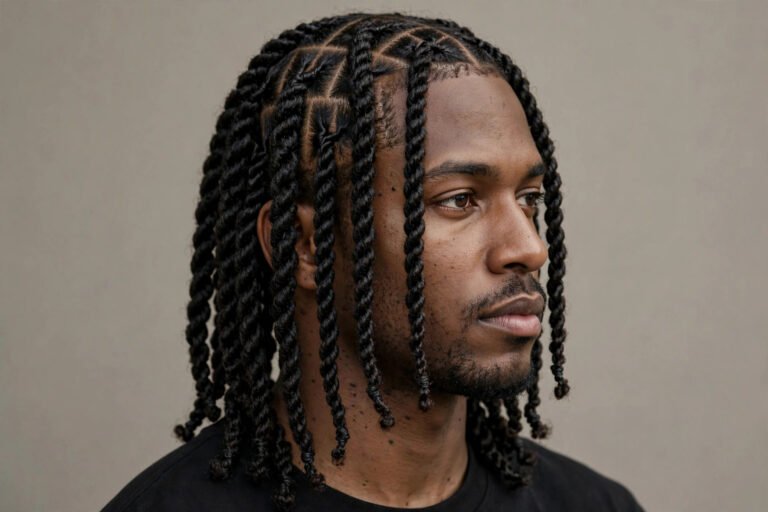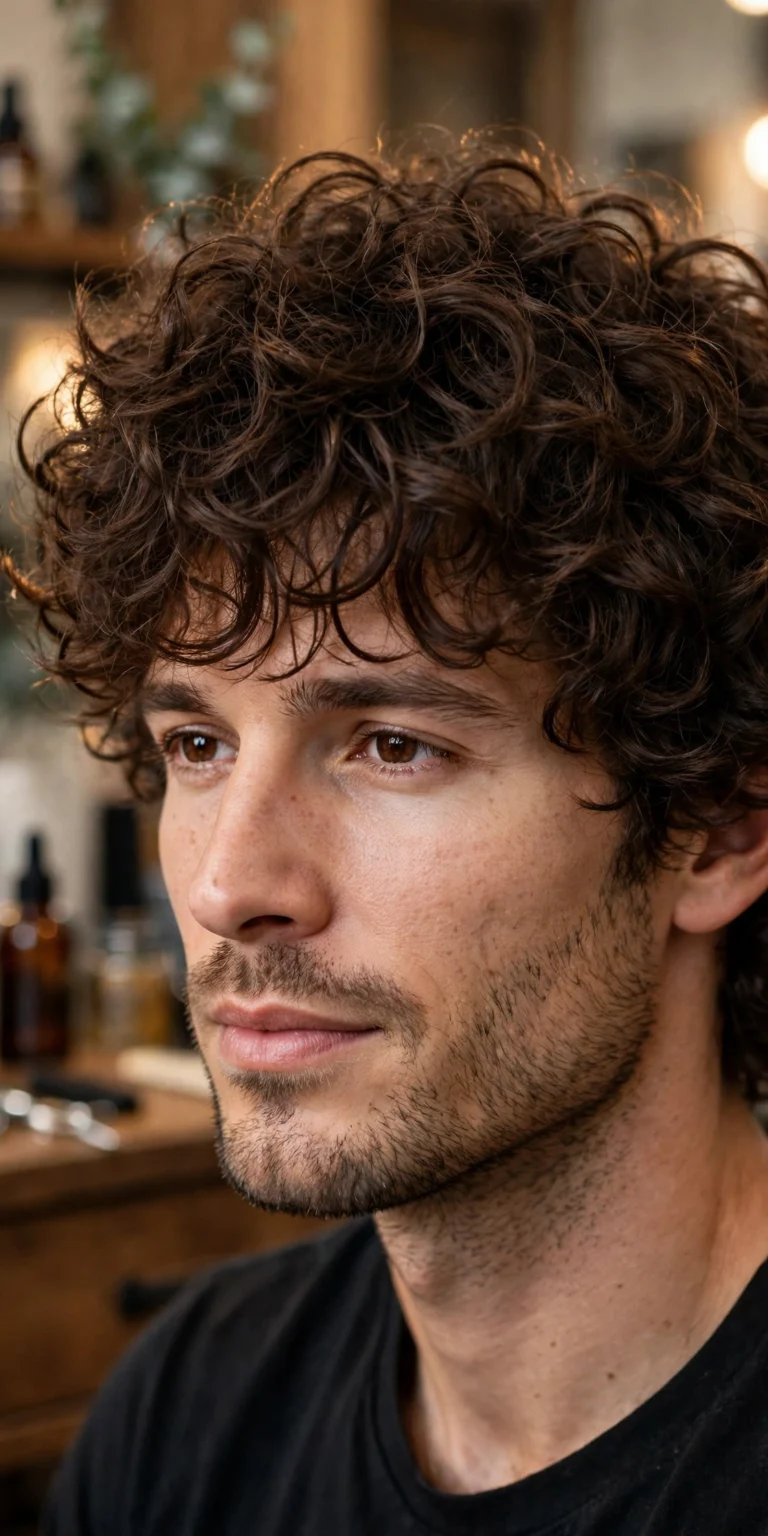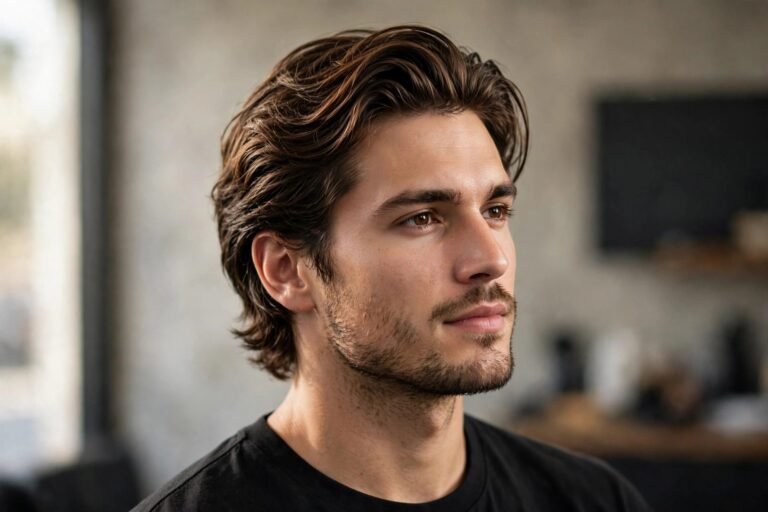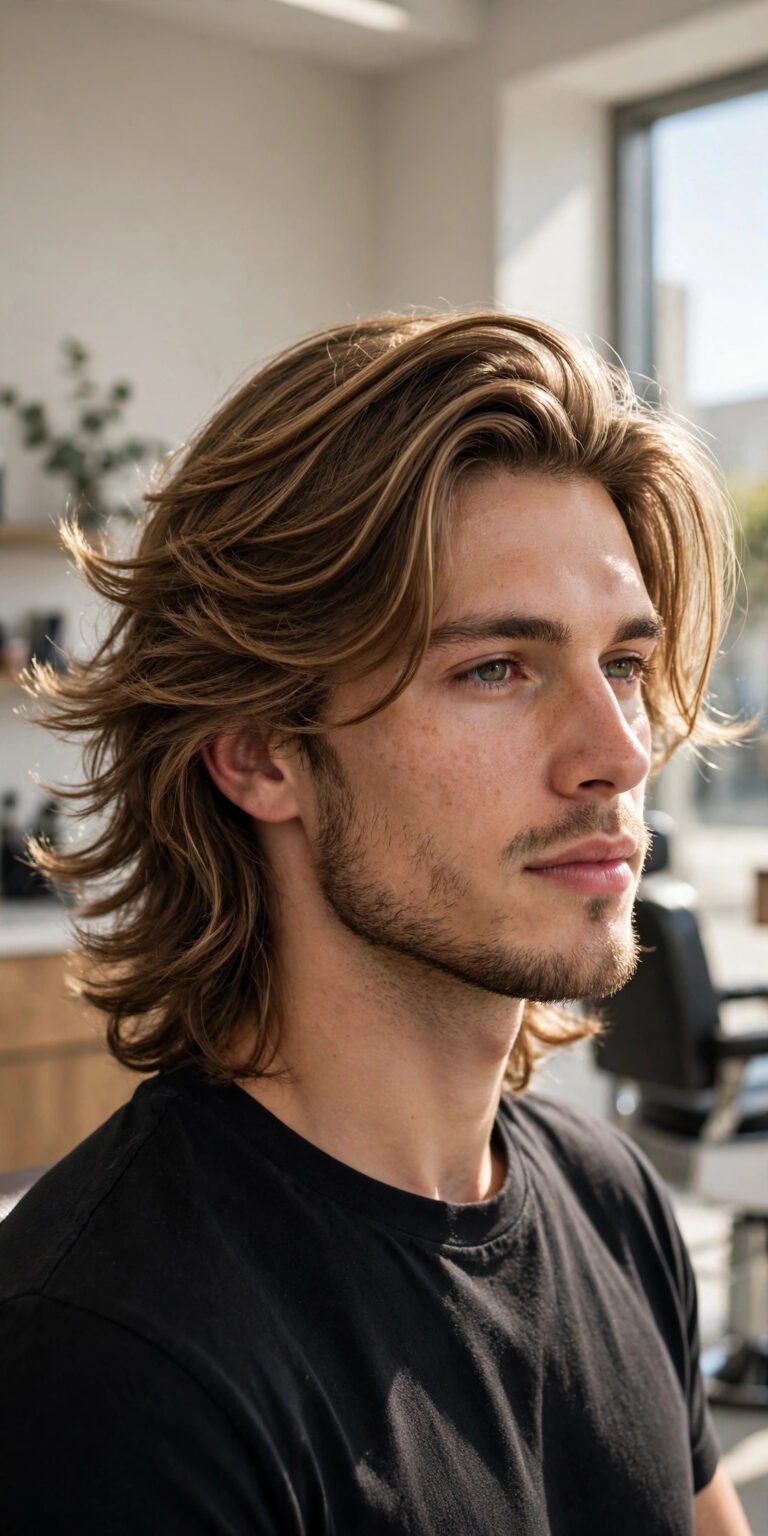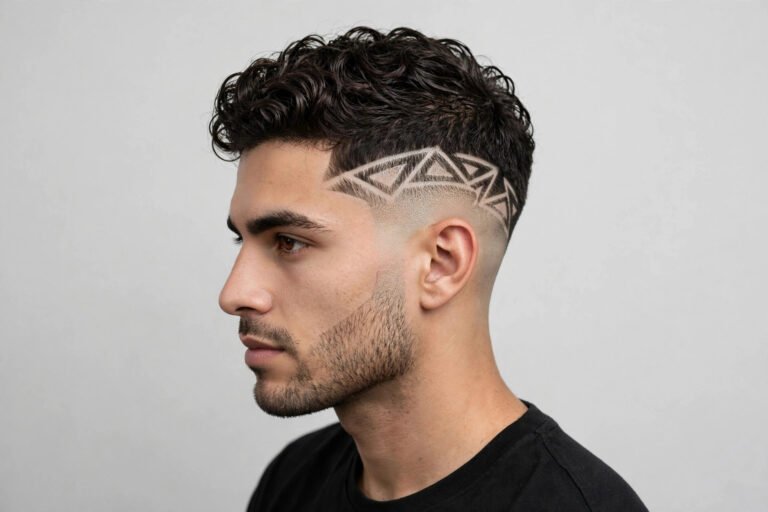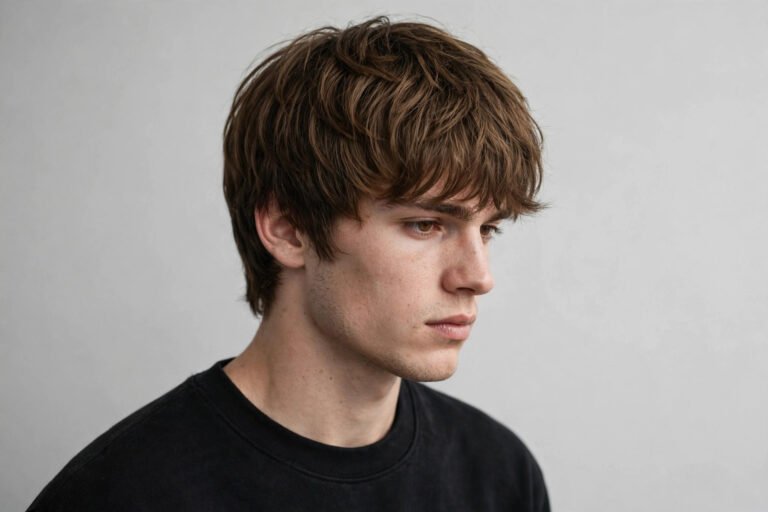
36 Emo Haircut Ideas for Men in 2026
Emo Haircut Men Are Back: The Full 2026 Revival Guide
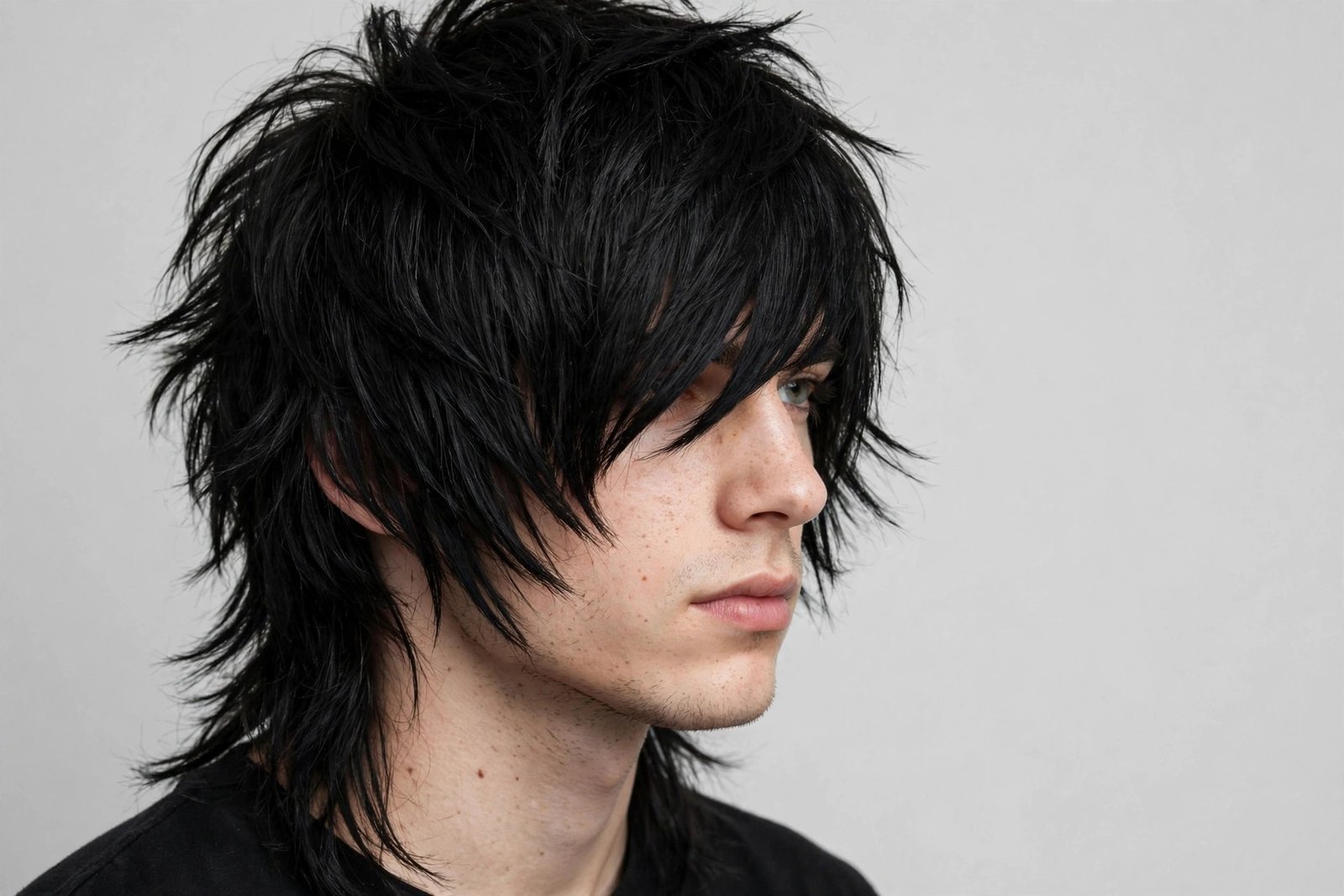
I’ll say it straight: the emo haircut men revival is the most fun thing to happen to men’s hair in years. After a decade of fades, tapers and safe little textured crops, the fringe is back — and not the polite forehead-grazer your barber has been pushing. I mean the real thing: a heavy side-swept fringe falling across one eye, choppy razor layers, jet-black dye or a skunk stripe that tells the room exactly who you are before you open your mouth.
Before we go further, let’s clear up the confusion, because I see it every single week in the comments. An emo cut is NOT a wolf cut with a different name, and it is NOT curtains with messier styling. A wolf cut builds volume on top and tapers down the back like a shag-mullet — the forehead usually stays open. Curtains split down the middle and frame the face symmetrically. Emo is fringe-forward and asymmetric: the whole cut exists to serve that forward-falling, one-eye sweep. If your forehead isn’t mostly covered, it isn’t emo. Simple as that.
What makes 2026’s version worth your attention is that it learned from the mistakes of 2007. The original scene look was often a stiff, over-straightened helmet of black hair held together by pure willpower and cheap hairspray. The 2026 revival — fuelled by TikTok hair theory videos, Lemon8 emo boards and the whole Rawring 20s anti-polish aesthetic — keeps the drama but fixes the execution. Layers are blended properly now. The colour work is intentional instead of box-dye chaos. And the finish is softer, which means it actually moves when you walk instead of sitting there like a Lego wig.
I’ve put together 36 emo haircut ideas for men that cover every variation worth wearing in 2026: the classics, the colour jobs, the short versions, the long versions, and the modern grown-up takes that work in an office without a dress-code incident. Every style comes with who it suits, exactly what to tell your barber, how to style it, and the honest downsides nobody else will mention. Let’s get into it.
Table of Contents
- Emo Haircut Men Are Back
- Emo vs. Wolf Cut vs. Curtains
- 36 Emo Haircut Ideas for Men in 2026
- Styling & Maintenance Routine
- Frequently Asked Questions
- Conclusion
What Is an Emo Haircut for Men, Exactly?
Strip away the nostalgia and an emo haircut for men is a formula: long layered top, heavy fringe worn forward or swept across one eye, choppy texture cut with a razor or deep point-cutting, and face-framing pieces that hit somewhere between the cheekbones and the jawline. Length is flexible — it works cropped short, at the ears, or down past the shoulders — but the silhouette always leads with the fringe. That’s the non-negotiable part. The fringe is the whole identity of the cut; everything else is supporting cast.
The look was born in the mid-2000s emo and post-hardcore scene, worn by kids in band tees who straightened their hair within an inch of its life and dyed it black in their bathroom sinks. Back then it was a uniform — you could spot an emo kid from across a shopping mall by the fringe alone. What it meant, culturally, was rejection of the polished mainstream: spiky gelled hair was the enemy, and the flat, dark, slightly-messy fringe was the flag. Guys wore it long over one eye partly as attitude, partly because it gave them something to hide behind. Barbers won’t tell you this, but half the appeal was always the armour.
Technically, the cut lives or dies on layering. A proper emo cut has short layers through the crown that collapse into longer lengths below — that disconnect is what creates the jagged, piecey texture instead of a smooth bob. The razor is the traditional tool because it feathers the ends so they separate naturally instead of sitting in a solid sheet. Get this wrong and you don’t have an emo cut; you have a bowl cut with aspirations. The colour is optional but historically central: jet black was the default, with skunk stripes, red streaks and later pastel panels all earning their place in the canon.
Emo vs. Wolf Cut vs. Curtains: Don’t Mix Them Up
This deserves its own section because the mix-up is everywhere, and getting it wrong means walking out of the barbershop with a cut you didn’t ask for. Here is the clean distinction. An emo haircut is fringe-forward: the fringe falls across the forehead or sweeps over one eye, and the top is kept relatively controlled so nothing competes with it. The energy is downward and inward — everything points toward the face. Think of the silhouette as a curtain of hair falling in front of the face.
A wolf cut, by contrast, is volume-driven: short, choppy layers piled high on the crown, tapering down through the back like a shag-mullet hybrid. The forehead usually stays open, and the drama lives in the crown height and the back taper, not the fringe. The energy is upward and outward. If your barber reaches for the clippers on top and leaves your forehead bare, congratulations — you asked for emo and got a wolf. They’re cousins, not twins.
Curtains — the middle-part hairstyle — are the third thing people confuse with emo. Curtains split dead centre and fall symmetrically on both sides of the face, usually with soft, blended layers. Emo is the opposite of symmetrical: the sweep is one-sided, the fringe is heavier, the texture is chunkier, and the overall mood is darker and more deliberate. A curtain says soft and romantic. Emo says don’t talk to me before my eyeliner is on. Show your barber photos of all three if there’s any doubt — five seconds of reference-checking saves five weeks of growing out the wrong cut.
Why Emo Exploded Again in 2026
Trends are never accidents, and the emo revival has about four engines behind it. First: TikTok’s hair theory community spent the last two years arguing that fringe placement changes how people read your face, and the one-eye sweep became the poster child for mysterious, high-contrast appeal. Those videos — millions of views each — sent an entire generation of Gen Z guys to the mirror pushing their fringe across one eye to see the effect. Most of them liked what they saw.
Second: the Rawring 20s. The defining aesthetic mood of the mid-2020s is deliberate anti-polish — the rejection of the clean-girl, old-money, everything-blended look in favour of something with teeth. Emo fits that mood perfectly. It’s a haircut that refuses to be neat. In a year when fashion is all deconstructed tailoring and scuffed boots, a jagged black fringe makes more sense than a perfect side part ever could.
Third: festival nostalgia. The When We Were Young festival turned mid-2000s emo from a memory into a live, breathing culture again, and the bands on that stage mostly still wear the hair. When the originators never dropped it, the revival doesn’t feel like costume — it feels like continuity. And fourth, the honest one: guys are bored. A decade of the same fade on every head in every barbershop created a hunger for something with actual personality. Emo delivers personality by the bucketload. I’ll be honest with you — I didn’t expect the comeback to stick, but the barbers I talk to say emo requests have tripled in eighteen months, and the clients asking are 18 to 28, exactly the age that drives every major hair trend.
36 Emo Haircut Ideas for Men in 2026
Below are the 36 emo haircut variations that actually matter in 2026 — no filler, no repeats with different names. I’ve ordered them from the timeless classics through the colour statements and into the modern wearable versions. Pick the one that matches your hair type, your maintenance tolerance and how much attention you actually want. Every style includes the barber script, so screenshot your favourite and show it at your appointment.
1. The Classic MySpace Sweep
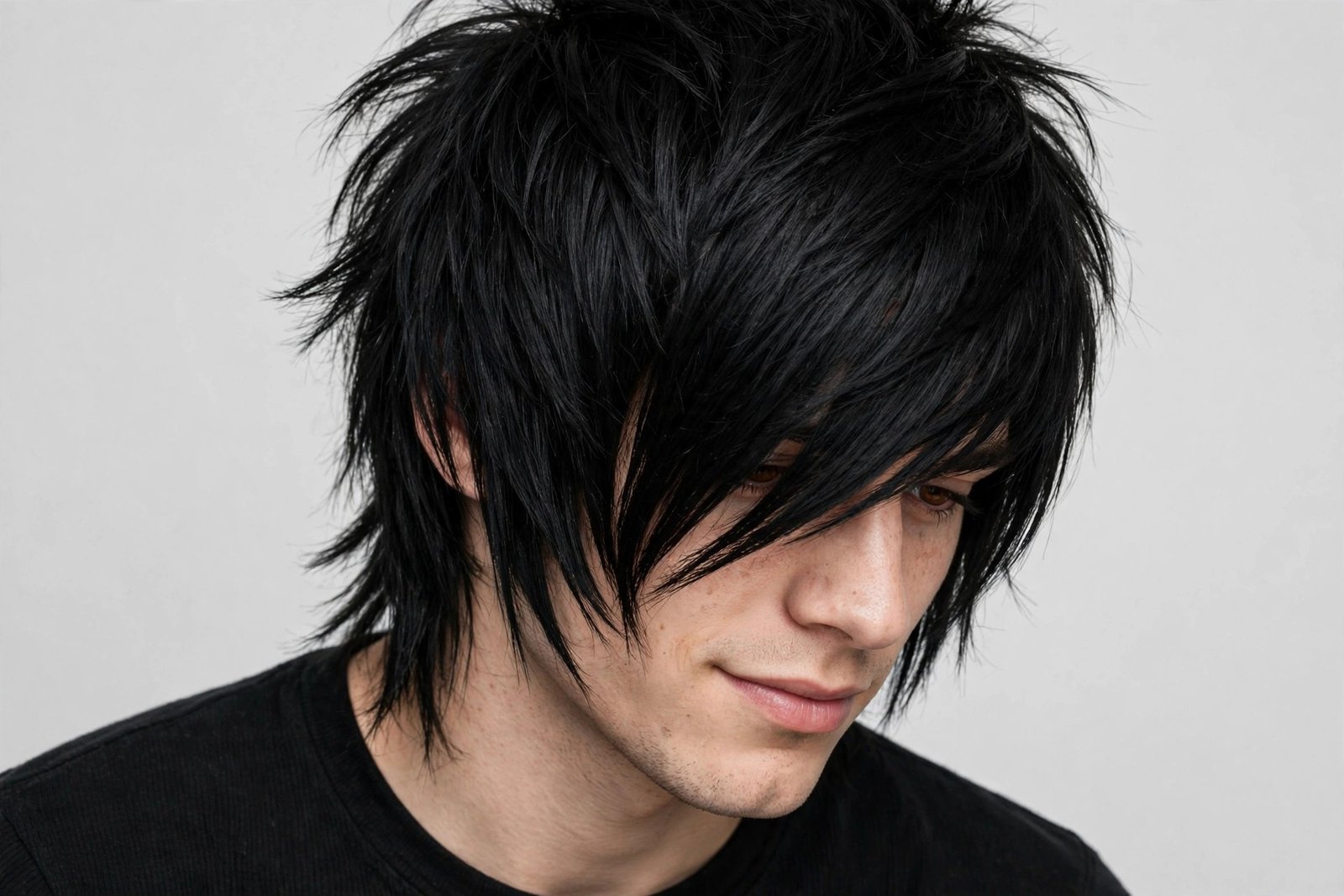
This is the one that started everything, and in 2026 it still works because the silhouette is untouchable. Jet-black hair, a long heavy fringe swept dramatically across one eye, choppy razor layers framing the face, and a tapered back that keeps the nape clean. The modern update is in the blending: the original 2007 version often had a harsh disconnect between the fringe and the sides, but today’s barbers soften that transition so it looks deliberate rather than grown-out. It suits straight to slightly wavy hair best, and it flatters oval, heart and diamond faces because the asymmetric sweep breaks up symmetry. Guys with very round faces should ask for a more diagonal sweep to avoid widening the cheeks.
Tell your barber: long layers through the top cut with a razor for feathered texture, a fringe long enough to reach past the nose when pulled forward, worn swept to your preferred side, with face-framing layers starting at the cheekbones. Keep the back tapered but not faded — a fade kills the emo silhouette. For the colour, jet black permanent dye over your natural base gives the depth this style needs; if your hair is naturally very light, a filler may be needed so the black doesn’t go muddy. Styling is straightforward: blow-dry the fringe in the sweep direction with a vented brush, press a pea of matte clay through in chunks, and mist with flexible hairspray.
Maintenance is moderate — a fringe trim every three to four weeks keeps it out of both eyes, and black dye needs root touch-ups every five to six weeks. The honest downside: this is the most recognisable emo cut on the list, so if you’re going for subtlety, this isn’t it. People will read it as full commitment, and that is exactly the point.
2. Jet Black Razor Shag
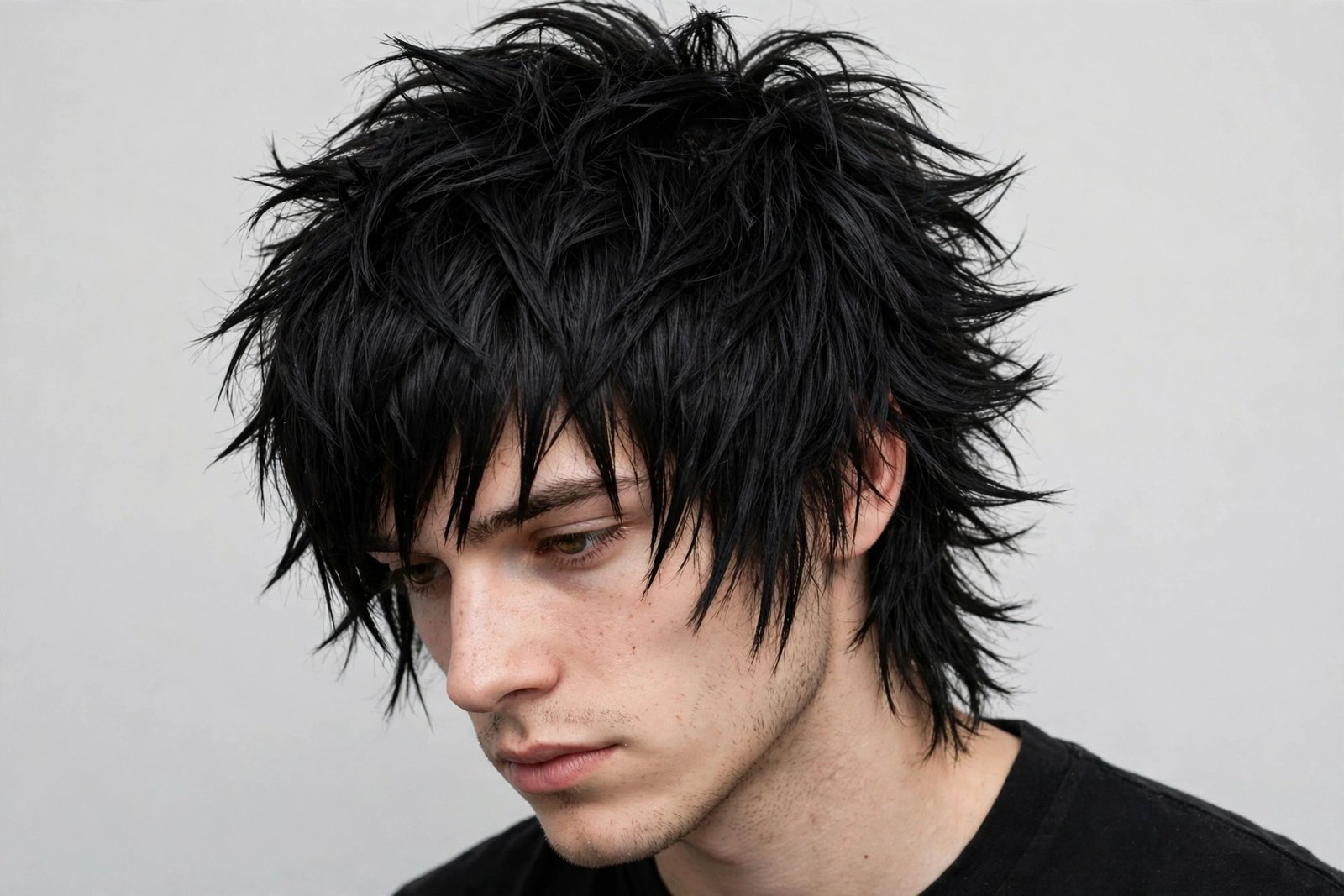
Think of this as the MySpace Sweep’s wilder sibling. Same jet-black base, same forward fringe energy, but the layering goes much harder — heavily feathered razor-cut layers through the entire crown and sides, jagged ends everywhere, and a fringe broken into uneven points instead of one solid sheet. The result has genuine movement; it looks alive in a way the stiffer classic doesn’t. This is the cut for guys who want the emo identity without the flat-helmet risk of the original, because the texture does the styling work for you.
It suits medium to thick hair beautifully — the razor work removes weight while creating separation, so thick hair actually behaves better in this cut than in a blunt one. Fine hair can wear it too, but the barber needs to be conservative with the thinning or you’ll lose density fast. Face-wise it’s forgiving: the broken fringe softens strong jawlines, and the crown texture adds height that lengthens rounder faces. Tell your barber: razor-cut throughout, short-to-long layering with the shortest layers at the crown, fringe point-cut into uneven lengths, nape left with jagged texture rather than a clean line.
Styling leans on texture products — a sea salt spray on damp hair, scrunched in and left to air-dry, gives you 80 percent of the look with zero heat. For sharper definition, a tiny amount of fibre paste twisted through the ends on dry hair. Maintenance is easy: the shaggy shape grows out gracefully, so you can stretch cuts to six or even eight weeks. The downside is frizz — razor-cut ends on dry or damaged hair will frizz in humidity, so a weekly deep-conditioning mask is non-negotiable, not optional.
3. The Skunk Stripe Statement
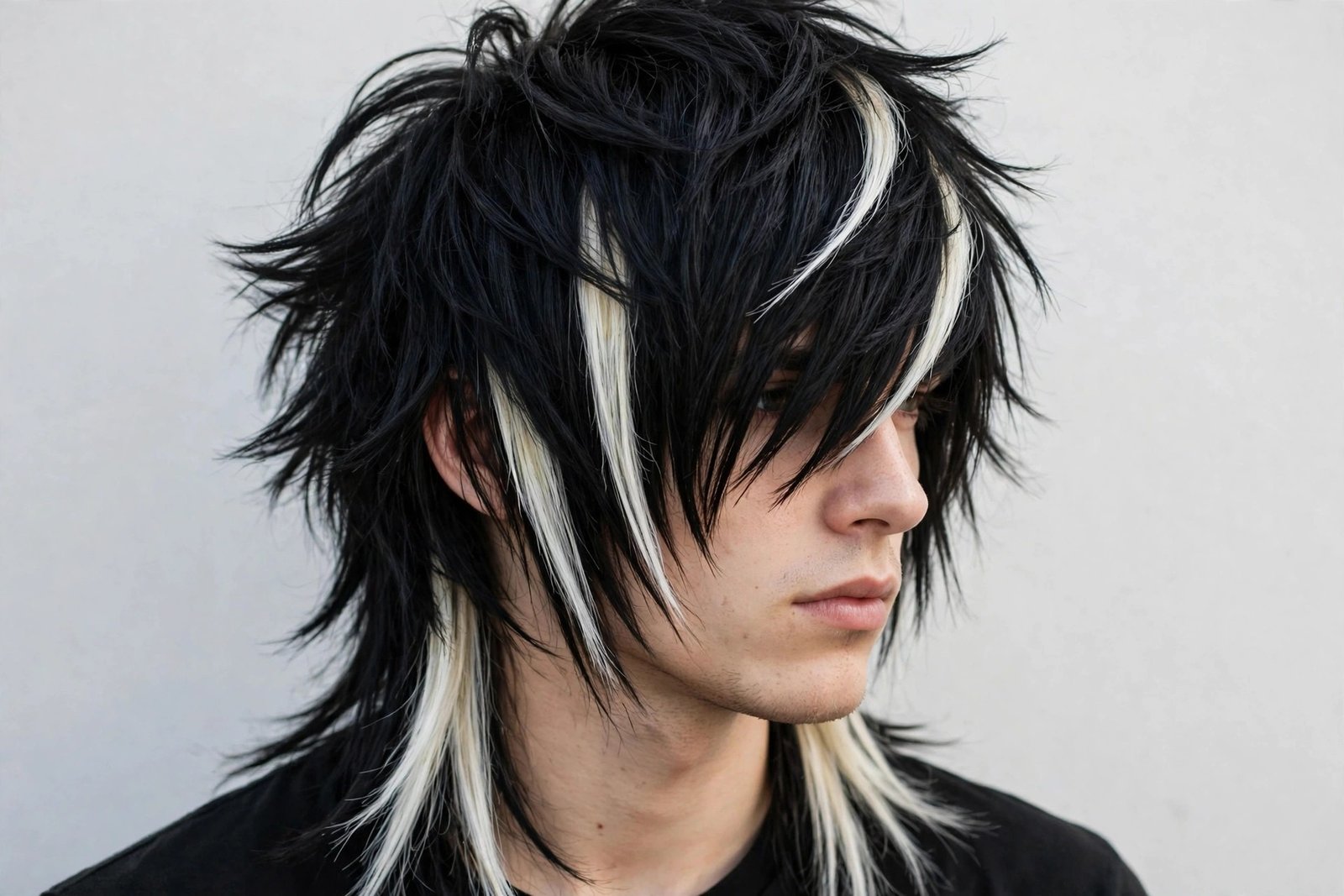
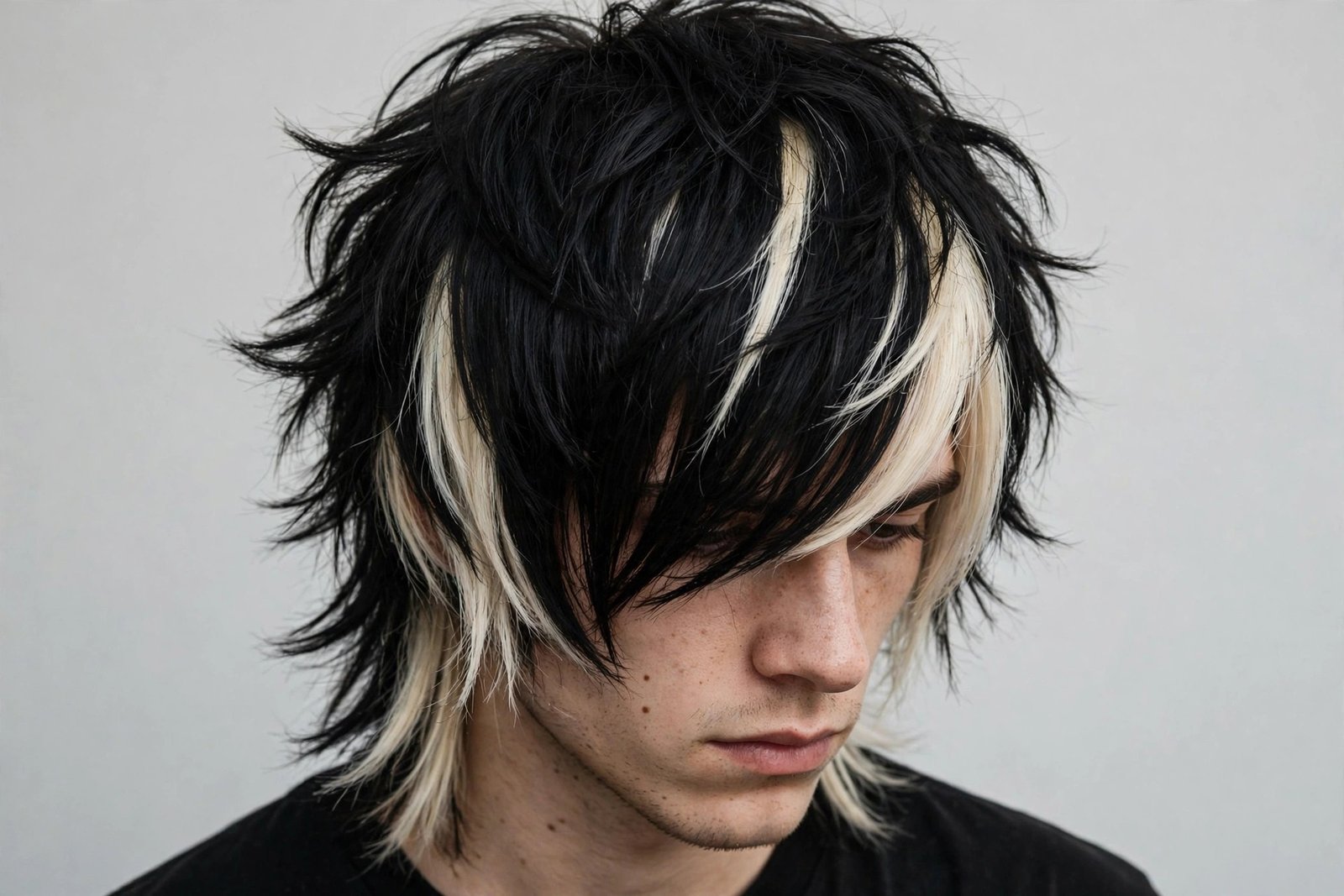
No colour pattern is more emo-coded than the skunk stripe, and in 2026 it’s having its biggest moment since the scene days. The formula: a jet-black base with one or two bold white-blonde stripes framing the face, running from the part line down through the fringe and front layers. It works on every emo base — short crops, long layers, shags — because the stripes are a colour overlay, not a cut. What makes it 2026 instead of 2008 is the precision: clean, intentional placement with proper toning so the blonde reads icy rather than brassy, and the stripes are wider and more architectural than the thin streaks of the past.
This suits everyone, honestly, because it’s about contrast, not face shape — but it hits hardest on dark natural hair, where the bleach lift is most dramatic. The barber conversation is really a colourist conversation: book a colour appointment, ask for face-framing money pieces lifted to a level 10 and toned icy, with the rest taken to a rich level 1 or 2 black. The stripes need to start at the root for maximum impact; grown-out roots on a skunk stripe look accidental rather than edgy, so this is a high-maintenance colour. Expect bleach and tone refreshes every four to five weeks.
Styling follows whatever cut sits underneath — the colour is the star. One caution from experience: double-processed stripes on hair that’s already been bleached before will snap if the colourist rushes. Insist on bond-building treatments during the service and a proper elasticity check first. The honest downside is cost and time — you’re looking at a two-to-three-hour salon visit every month. But nothing on this list photographs better, and if you want the most compliments per haircut, this is the one.
4. Platinum Emo Fringe

Flip the script entirely: take the emo silhouette and bleach the whole head to platinum. The choppy layers and heavy fringe stay, but the colour inverts the mood from brooding to striking. Platinum emo reads more fashion-forward than the black original — it’s the version that shows up in editorial shoots and on runways, and in 2026 it’s the choice of guys who want the emo shape without the MySpace baggage. The pale colour also makes the layering more visible: every jagged point and separated chunk shows up in a way black hair hides.
This is a commitment cut in the truest sense. Going platinum from dark hair takes multiple bleach sessions, and the upkeep is relentless — roots show within two weeks, and the toner that keeps it icy instead of yellow needs refreshing constantly. It suits fair to medium skin tones best, though the high contrast can look incredible on deeper skin too if the tone is right. Hair health is the real question: bleached hair needs bond builders, purple shampoo, and heat kept to a minimum. If your hair is already damaged, your colourist should tell you no, and you should listen.
Tell your barber: the emo cut first, the colour second — cut the heavy fringe and choppy layers, then lift to platinum with careful toning. Styling is about keeping it soft: a light cream on damp hair, blow-dried forward, then a tiny amount of paste for separation. Avoid heavy waxes that yellow the blonde. The honest downside, beyond maintenance, is that platinum washes some guys out — if you go pale, your eyebrows and facial hair suddenly carry all the contrast, so consider that part of the look. When it works, though, it’s untouchable.
5. Deep Cherry Red Emo
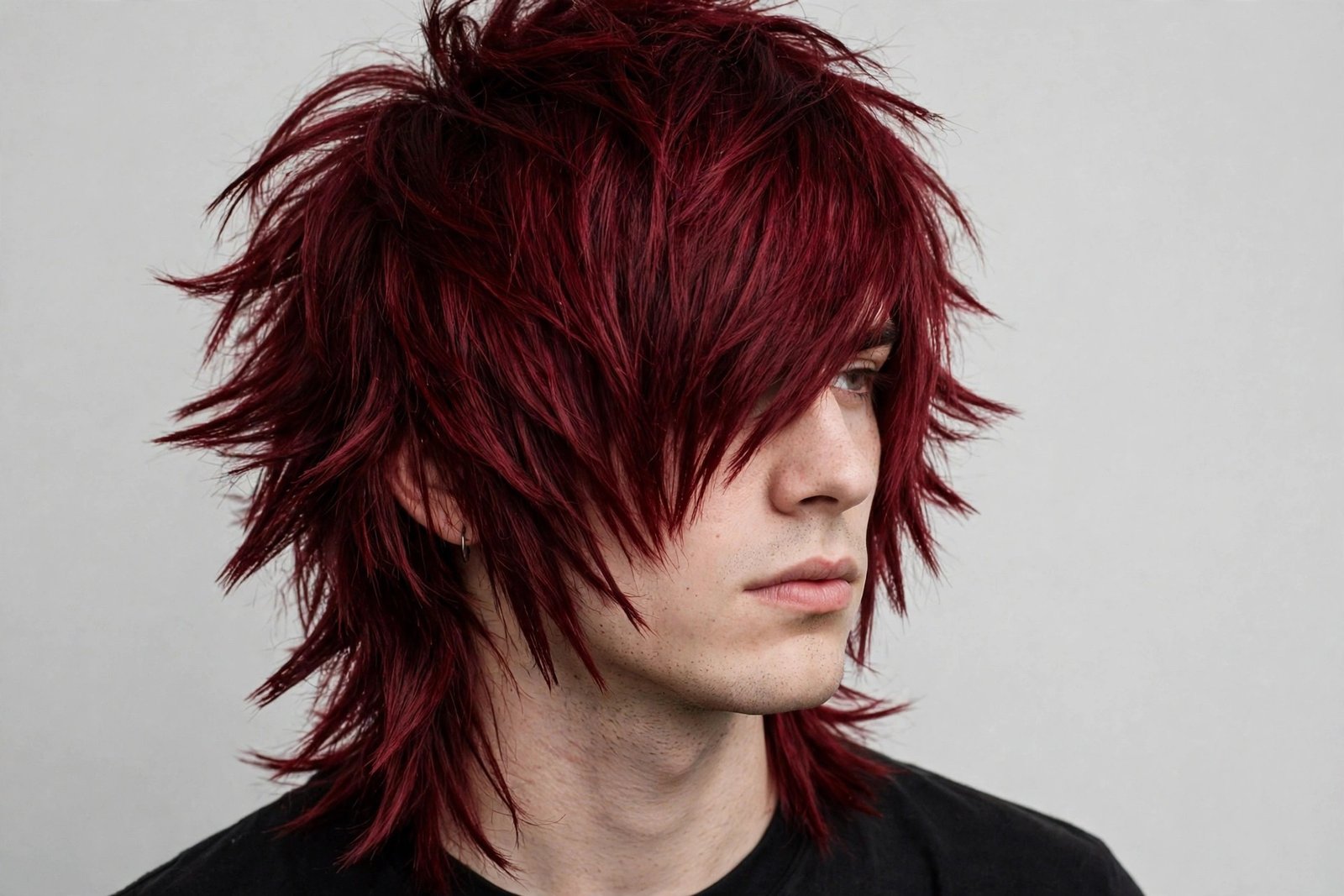
Red has always been emo’s second colour, and the 2026 take goes deep rather than bright — think dark cherry, oxblood, almost-black red that reveals itself in sunlight. The cut underneath is classic emo: heavy side-swept fringe, choppy layers, face-framing pieces. The colour adds warmth and depth that flat black can’t match, and it flatters a wider range of skin tones. Where jet black can wash out paler guys and look harsh, deep red brings life to the face. It’s the emo colour for people who find black a little one-note.
Suits straight and wavy hair equally; the colour shows best with some texture to catch the light. Tell your colourist: a level 3 or 4 base with red-violet or red-copper reflect, permanent for longevity or demi-permanent if you want to test the waters. Red fades faster than any other fashion colour — that’s chemistry, not a bad dye job — so plan on a colour-refresh gloss every three to four weeks and wash with cool water and colour-safe shampoo. Sulfate shampoos will strip it in a fortnight.
Styling is the standard emo routine: blow-dry the fringe in its sweep direction, matte clay pressed through in chunks. The red shows product buildup more visibly than black, so go lighter on product than you think you need. Honest downside: red bleeds. It will tint your pillowcase, your white shirts, and your shower for the first week. Old towels only, and warn anyone you share a bathroom with. The payoff is a colour that turns heads without screaming, which is a rare combination.
6. Midnight Blue Panels
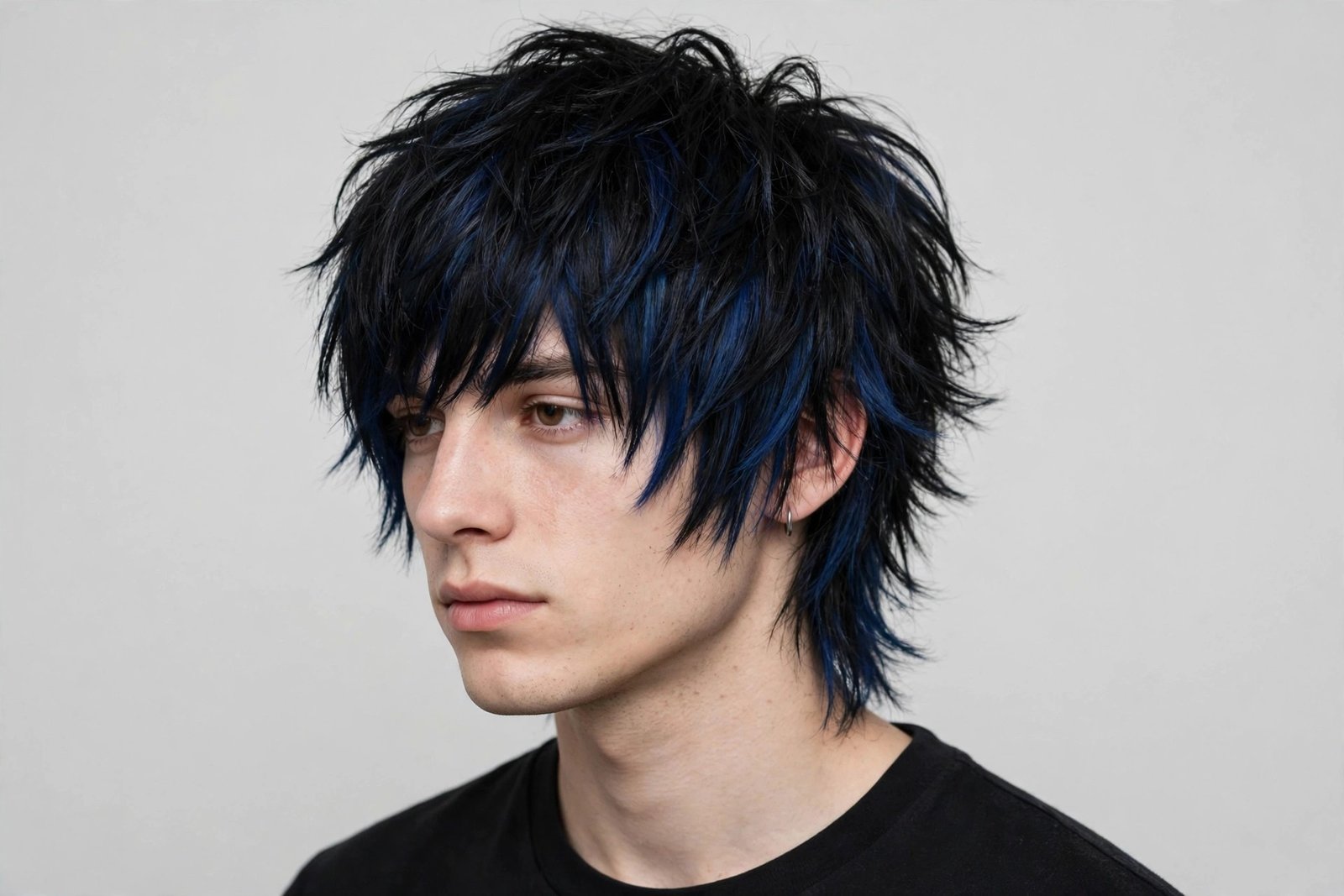
This is the colourist’s emo — black on top, vivid midnight blue panels hidden underneath that flash when the hair moves. The panels usually sit at the nape and behind the ears, with a few face-framing streaks so the blue peeks through the fringe. Standing still it reads as a black emo cut; turn your head and the blue appears. That duality is the whole appeal. It’s dramatic without being loud, which makes it one of the few statement colours that survives a conservative workplace.
Best on straight or loosely wavy hair where the underlayer actually shows through movement. The technique: the top section is dyed black (or left natural dark), the underlayer is pre-lightened and then coloured with a deep blue direct dye. Blue is a large-molecule colour — it fades fast and it fades green, so the maintenance conversation matters: colour-depositing conditioner in blue, cool washes, and refreshes every three to four weeks. Tell your colourist you want the blue deep enough to read navy, not electric — electric blue against black looks costume-y, midnight blue looks expensive.
Styling follows the base cut, but here’s a pro tip: style the top layer with a little extra separation so the panels get airtime. A centre-ish part in the fringe occasionally, swept back for a moment, shows the blue framing the face — then sweep it back across the eye for the classic look. Downside: the bleach under the blue means the underlayer takes damage, and blue-green fade is unavoidable. When it fades, it fades to teal, then seafoam — some guys love the evolution, others hate it. Know which one you are before you book.
7. Purple Peekaboo Layers
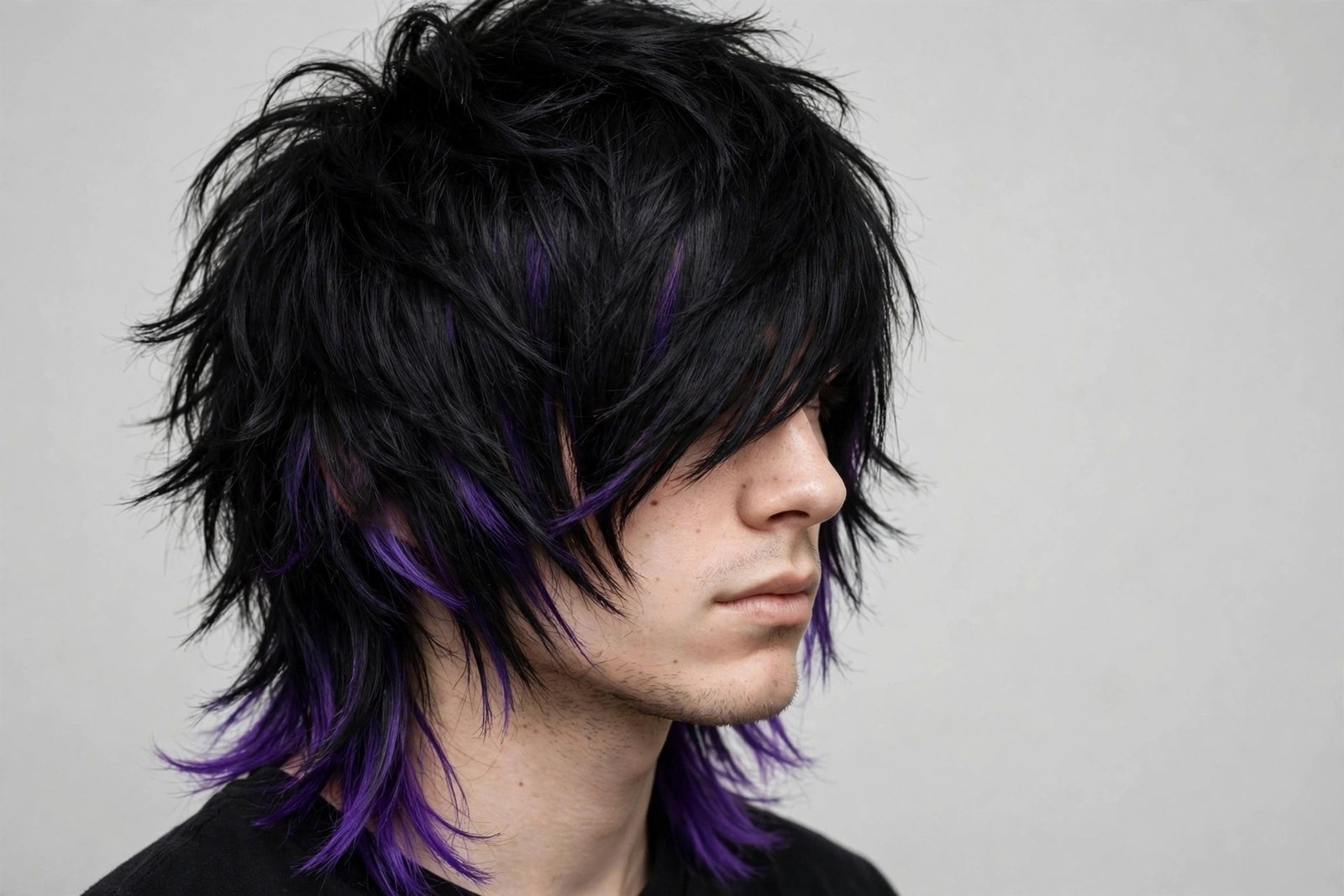
Peekaboo colour — vivid panels hidden beneath the top layer — was practically invented for emo hair, and purple is its definitive shade. Deep violet or ultraviolet sections tucked under a black or dark-brown emo cut, revealed in flashes when the hair moves or when you tuck it behind an ear. It’s playful in a way the rest of this list isn’t, and it photographs incredibly well: every head-turn becomes a colour reveal. In 2026 the trend has matured into richer, smokier purples rather than the bright grape of the 2010s.
Works on any emo base length, and it’s genuinely the lowest-commitment fashion colour here because the vivid sections are underneath — grown-out roots are far less visible than with all-over colour. That said, the panels still need bleaching, and purple fades to a dusty lavender-grey that most people actually find pretty. Tell your colourist: pre-lighten selected underlayer sections, then apply a deep violet direct dye; ask for the panels to start an inch off the root so regrowth blends. Refresh with a purple colour-depositing mask every couple of weeks.
Suits guys who want the emo attitude with a softer edge — the purple reads creative rather than aggressive. Styling is standard, but wear the fringe slightly more separated than usual; the gaps let the colour show. The honest downside is salon time: sectioning, bleaching and colouring peekaboo panels takes longer than it looks, and not every barber does colour well — go to a colourist for the dye and a barber for the cut, or find the rare unicorn who does both. Done right, it’s the most fun haircut on this list.
8. The Curly Emo Shag
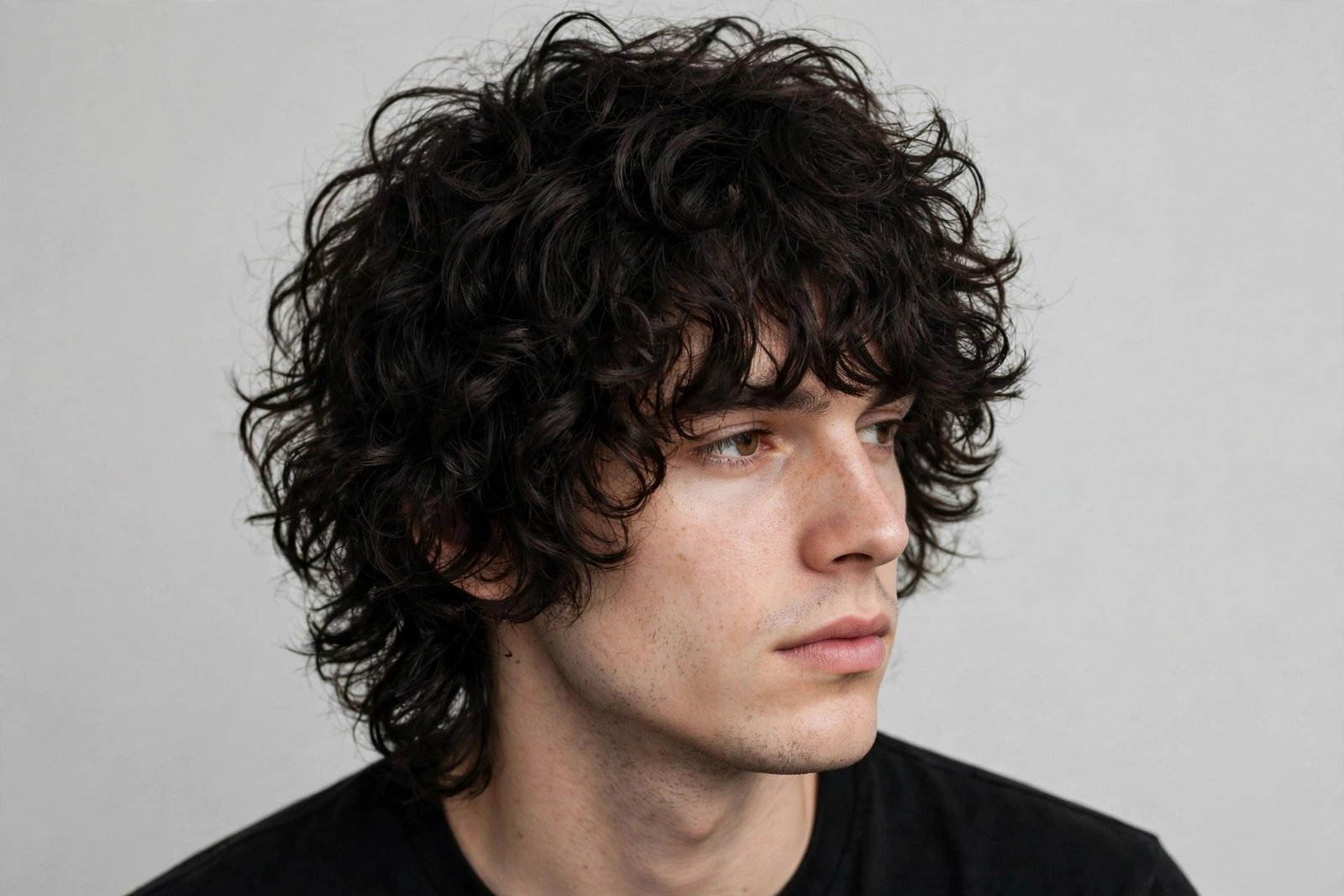
Here’s the one the 2007 scene never figured out: emo on curly hair, done properly. The old approach was to straighten curls into submission, which meant hours of flat-ironing and fried ends. The 2026 curly emo shag works WITH the texture — choppy layers cut to encourage curl formation, a heavy fringe left long enough to fall forward in curls, and the whole shape built around volume and movement instead of flat sheets. The result keeps the emo silhouette (fringe-forward, face-framing, undone) while letting curls do what curls do.
This suits wavy, curly and coily hair from 2A through 4A. The cut must be done on dry, styled hair by someone who understands curl patterns — wet-cutting curls for an emo shape is how you end up with a fringe three inches shorter than planned once it springs up. Tell your barber or curl specialist: long layers with the fringe cut at least two inches longer than the target, weight removed from the interior so the curls stack instead of pyramid-ing, and face-framing pieces that follow the natural curl fall. No razor on very coily hair — it frays the curl. Point-cutting or a curl-by-curl technique instead.
Styling is a curl routine, not an emo routine: curl cream on soaking wet hair, scrunch, diffuse or air-dry, then pick the roots gently for lift. The fringe gets scrunched forward and left alone — touching it is what creates frizz. Maintenance is refreshingly low: curls hide growth well, so eight to ten weeks between cuts is fine. Honest downside: the one-eye sweep won’t read as a flat sheet; it reads as a rounded curly fringe, which is beautiful but different from the reference photos. If you need the exact MySpace silhouette, this isn’t it — but if you want emo energy on your natural texture, nothing beats it.
9. Emo Mullet Blend
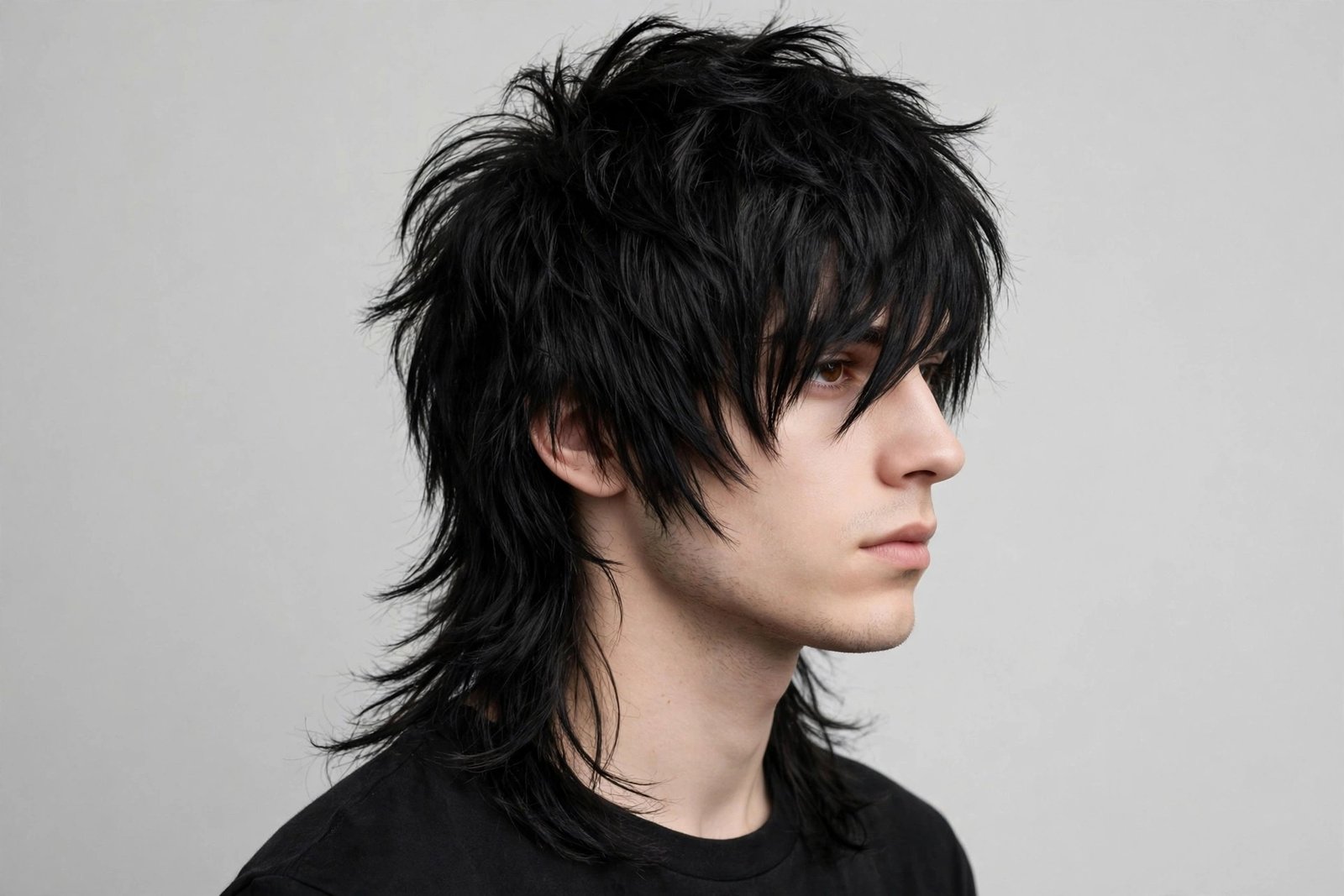
The mullet came back, emo came back — it was only a matter of time before they merged. The emo mullet blend keeps the classic emo front (heavy fringe across one eye, choppy face-framing layers) and lets the back grow into a soft, textured mullet length. It’s the best of both worlds if you find a pure emo cut a bit flat at the back: the mullet adds shape and movement behind the ears while the front stays unmistakably emo. Fair warning — this one reads louder than either parent style, so wear it with confidence or not at all.
Suits guys with medium to thick hair who can support the back length without it going stringy. Fine hair struggles here because the mullet section needs density. Tell your barber: emo fringe and crown layers up front, then a graduated mullet through the back — textured and piecey, not the sharp 80s shelf. The transition from the sides to the back should be blended with the razor so it flows instead of disconnecting harshly. Length at the nape is your call, but somewhere between the collar and the shoulders keeps it wearable.
Styling needs two approaches: the fringe gets the standard forward blow-dry and clay, while the back gets scrunched with salt spray for texture. It’s genuinely two haircuts in one, which means slightly more morning effort. Maintenance every five to six weeks to keep the mullet from going feral. The honest downside is the polarising factor — mullets still split rooms, and adding emo fringe doubles down. You’ll get compliments and side-eyes in equal measure. If that bothers you, pick a quieter number from this list.
10. The Choppy Emo Bob
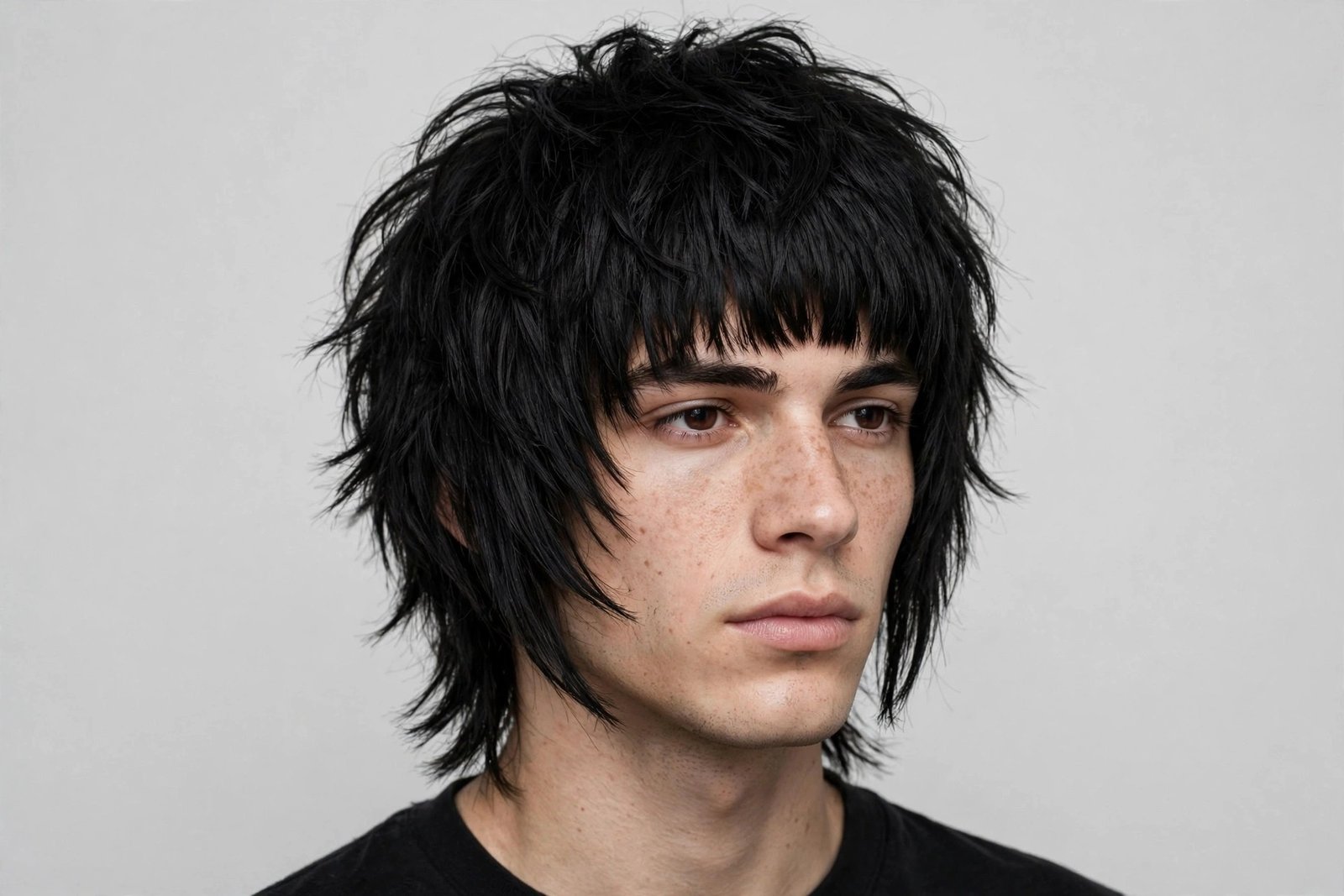
Not every emo cut needs length — the choppy emo bob proves the silhouette works at jaw length too. This is a chin-to-jaw bob with a heavy jagged fringe, razor-textured ends, and slightly longer pieces framing the front. It’s compact, sharp, and honestly one of the most wearable versions here because the shorter length keeps it neat enough for situations where a flowing emo mane would be too much. Think of it as emo distilled to its essence: fringe, texture, attitude, nothing extra.
Suits straight and slightly wavy hair; very curly hair will turn this into a rounded shape that loses the jagged edge unless the layers are cut specifically for curl. It’s excellent on oval and long faces because the jaw-length perimeter adds width where longer cuts would elongate. Tell your barber: a jaw-length bob with heavy interior layering, fringe cut long and point-cut into jagged ends, front pieces left slightly longer than the back for that forward swing. No blunt lines anywhere — every edge should be textured.
Styling is quick: blow-dry forward with your fingers, a dab of paste for piece definition, done in five minutes. That’s the real selling point — maximum emo identity, minimum morning effort. Maintenance is the trade-off: bobs show growth fast, so every four weeks keeps the shape crisp. The honest downside is versatility — at this length you can’t tie it back, sweep it dramatically, or hide a bad fringe day. What you see is what you get, every day. If you like low-drama hair with high-drama style, that’s a feature, not a bug.
11. Asymmetric Emo Fringe
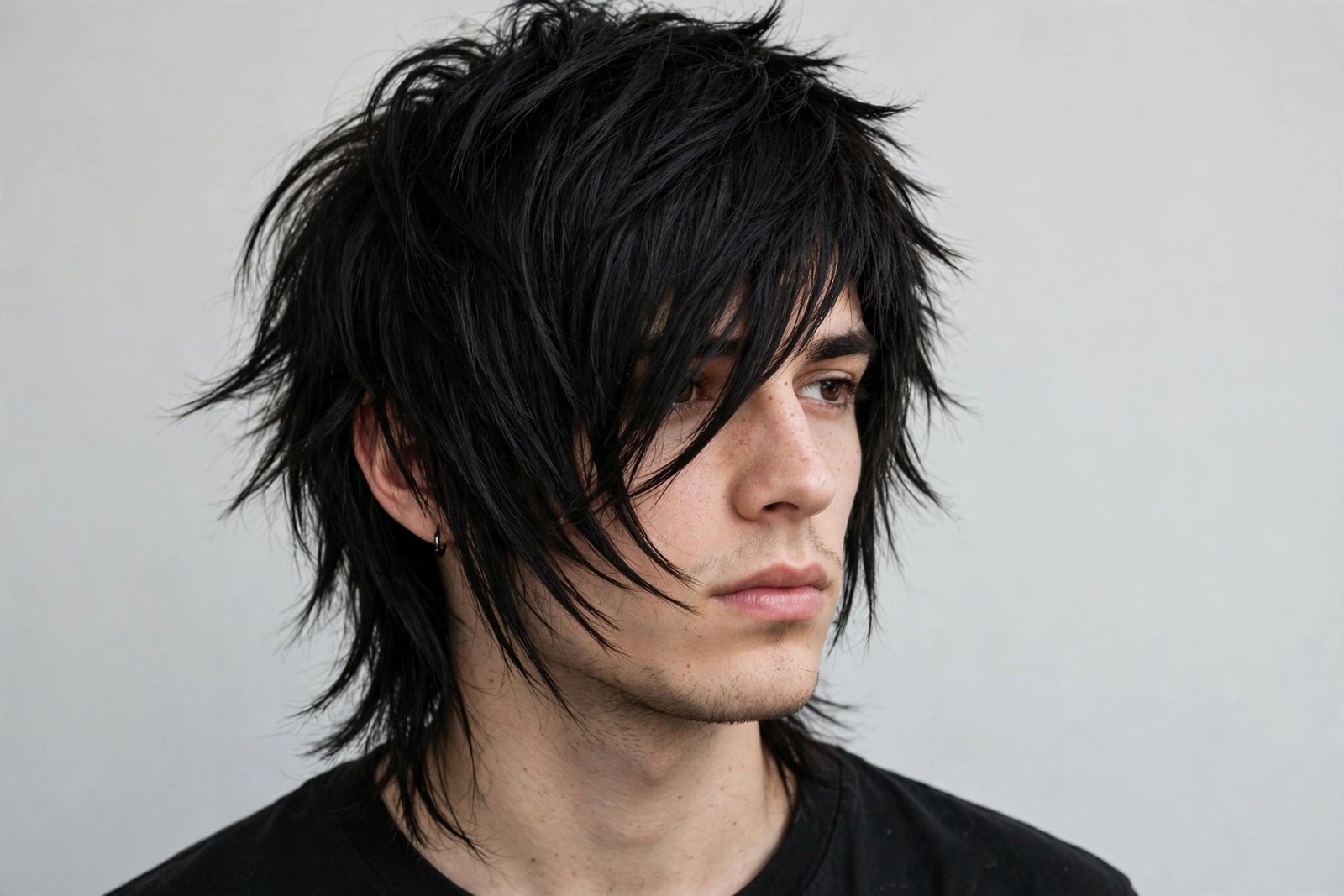
Emo has always been asymmetric at heart — the one-eye sweep is asymmetry by definition — but this version pushes it into high fashion. One side features a dramatically long fringe sweeping across the face, while the other side is cut significantly shorter with choppy, exposed layers. The imbalance is the entire point. It reads artistic and intentional, the kind of cut that gets photographed at gigs and fashion weeks. In 2026 it’s the choice of guys who find the classic sweep too safe and want the emo idea taken to its logical extreme.
Suits confident dressers and angular face shapes — the asymmetry adds so much visual interest that it can overwhelm softer features, so rounder faces should keep the length difference moderate rather than extreme. Tell your barber: pick your long side, cut the fringe to sweep fully across from a deep side part, then take the opposite side up with aggressive choppy layering that exposes the ear and cheekbone. The two sides should look like they belong to the same haircut — connected through the back, not two separate cuts glued together. That’s the difference between edgy and accidental.
Styling is directional: everything gets blow-dried toward the long side, and the short side gets a touch of paste to keep it piecey and controlled. You’ll need to re-sweep the fringe a few times a day — gravity is not your friend here. Maintenance every three to four weeks; asymmetry grows out visibly lopsided. Honest downside: this cut photographs better than it lives. In real life, wind, hats and sleep will fight the asymmetry daily. It’s a commitment to the bit, and the bit is worth it, but go in with your eyes open.
12. Long Layered Emo
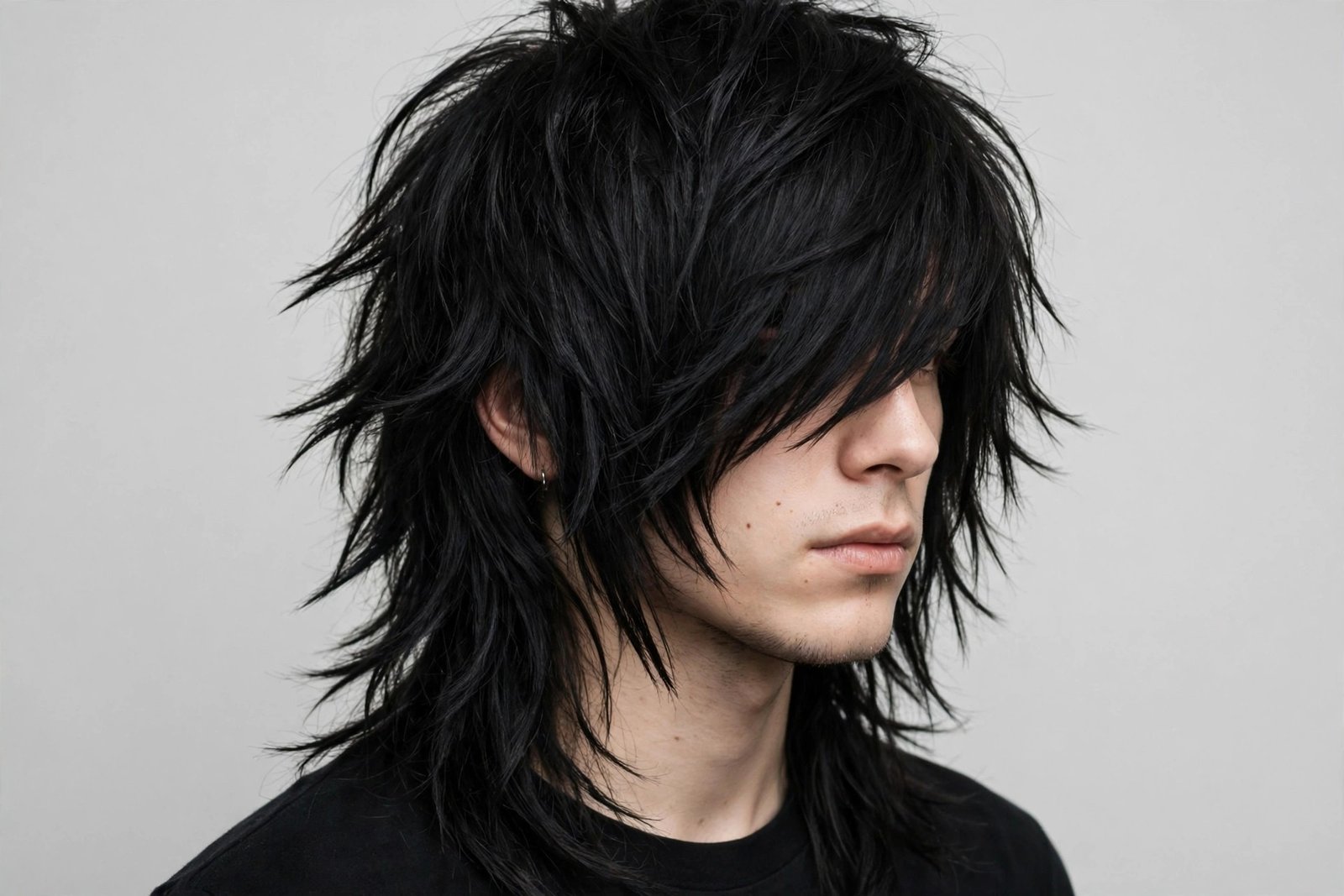
For the guys who never cut it: the long layered emo takes the classic silhouette to shoulder length and beyond. Heavy fringe across one eye up front, then long choppy layers cascading past the shoulders with jagged, feathered ends. It’s the most dramatic version on this list — hair that moves when you turn your head, fringe you can hide behind completely, the full romantic-goth-rockstar package. If the short emo cuts are a statement, this is a manifesto.
Needs commitment in every sense: growing to this length takes a year or more, and long hair demands real care — conditioning, occasional trims, protection from heat. It suits thick hair best; fine long hair goes stringy without constant layering maintenance. Tell your barber: long layers throughout with the shortest at the crown for movement, fringe kept heavy and long enough to sweep fully across one eye, ends feathered with the razor. Face-framing layers from the cheekbones down are essential — without them, long emo hair becomes just long hair with bangs.
Styling long emo hair is about controlled chaos: blow-dry the fringe forward, let the lengths air-dry with salt spray scrunched in, and separate the ends with a light oil to prevent the dreaded triangle of dryness. It tangles — a wide-tooth comb and patience are part of the lifestyle. Maintenance: trims every eight to ten weeks to keep the ends healthy, fringe touch-ups between. Honest downside: the sheer daily reality of very long hair — it gets caught in things, it takes forever to dry, and summer is a negotiation. But nothing else on this list has this presence. When you walk into a room with this hair, the room notices.
13. The Short Emo Crop
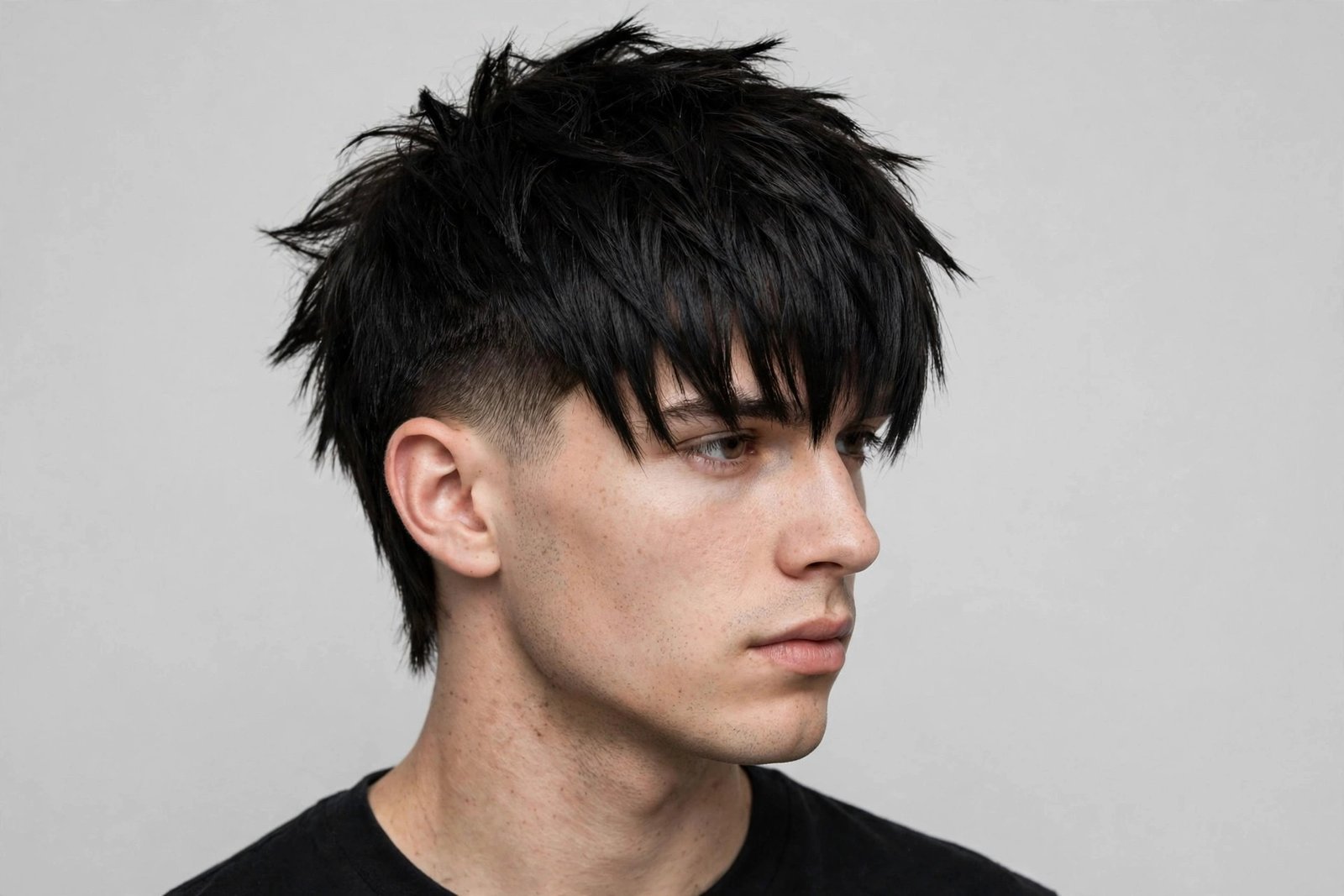
Emo doesn’t have to be long — the short emo crop keeps the identity in miniature. Textured, choppy length on top with a heavy fringe that still falls across the forehead, but everything sits above the ears and the sides stay neat. It’s the emo cut for guys who love the aesthetic but live in the real world: offices, gyms, helmets, hot weather. You get the fringe and the texture without the length that makes the longer versions a lifestyle.
Suits every hair type and nearly every face shape — it’s the most universally flattering emo variation because the shorter proportions don’t overwhelm smaller faces. Tell your barber: textured crop on top with the fringe left long enough to fall forward (at least to the eyebrows), point-cut for jagged ends, sides tapered or scissored neat but not faded to skin. The fringe is doing all the emo work here, so it needs real length — a timid fringe turns this into just a textured crop, and the whole point is lost.
Styling takes three minutes: paste through dry hair, push the fringe forward and slightly across, done. It’s the lowest-maintenance emo on this list — cuts every four to five weeks, minimal product, no dye required (though black dye still elevates it). The honest downside is impact: at this length it reads as emo-inspired rather than full emo. Scene purists might call it a compromise. But I’ll be honest with you — for a first step into the aesthetic, or for anyone whose life doesn’t accommodate a curtain of hair, this is the smartest entry point on the list.
14. Emo with a Sharp Undercut
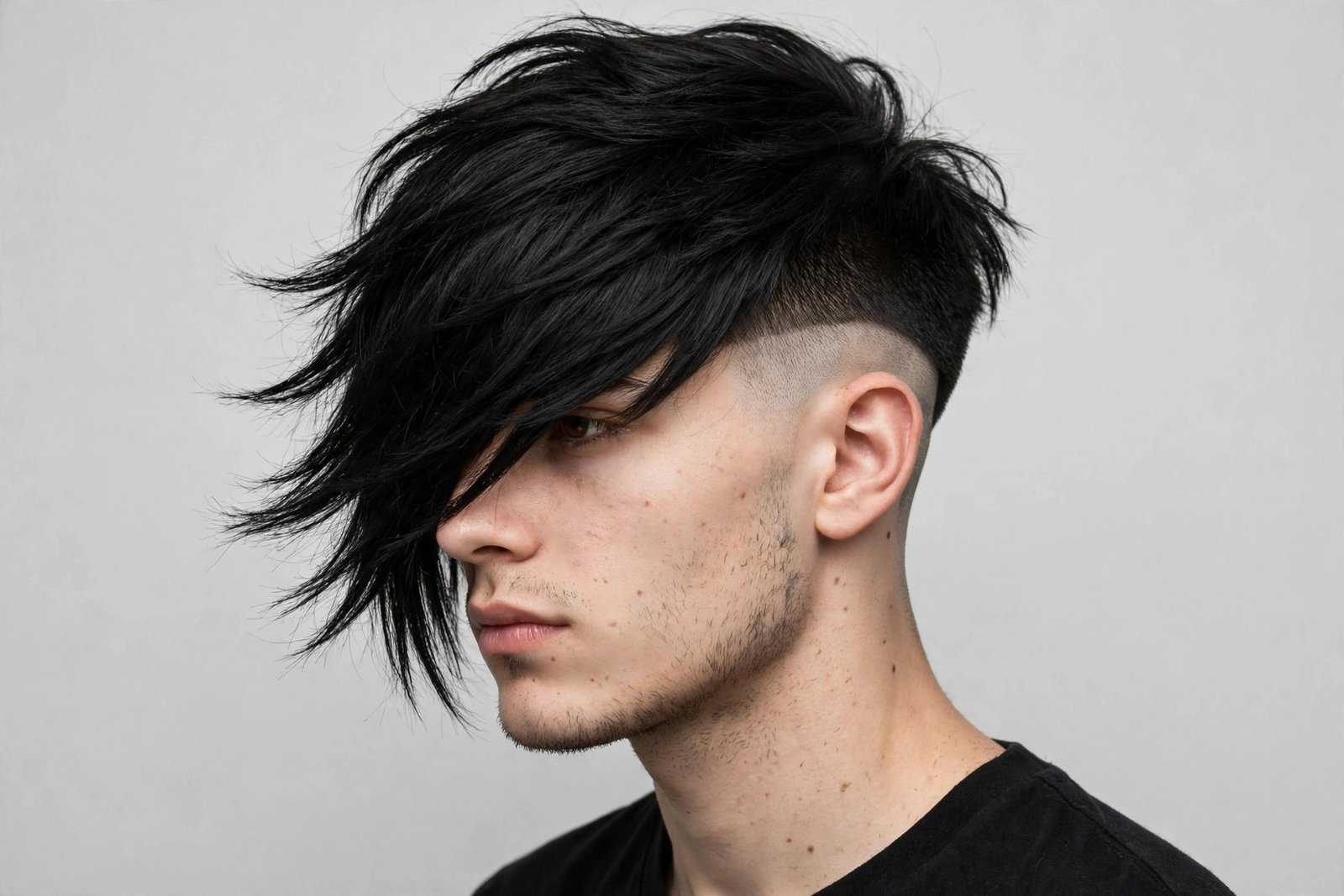
Maximum contrast, minimum subtlety: a full emo top — heavy fringe, choppy layers — sitting over a sharp, clippered undercut on the sides and back. The disconnect between the long dark top and the tight sides creates a graphic, almost architectural silhouette that reads modern and aggressive. It’s the emo cut filtered through 2020s barber culture, and it solves the biggest practical complaint about emo hair: the sides growing into a shapeless mass. With an undercut, the sides are permanently handled.
Suits thick hair especially well — the undercut removes the bulk that makes long emo tops heavy and unmanageable. It also suits guys who want edge without length everywhere. Tell your barber: disconnected undercut on the sides and back (clipper length is your call, but a 1 or 2 keeps the contrast sharp), top left long with emo layering and a heavy fringe, no blending between the two sections — the harsh line is the design. The top needs enough length to drape over the disconnect or it looks like two haircuts fighting.
Styling: the top gets the standard emo treatment, the undercut just needs keeping short — touch it up every two to three weeks or learn to do it yourself with clippers. That’s the maintenance catch: the undercut grows out visibly and ruins the contrast fast. The honest downside is the grow-out phase if you ever want to change — growing out a disconnected undercut takes months of awkward in-between. This is a commitment cut. But while you’re wearing it, nothing on this list looks sharper.
15. Bleached Fringe on Dark Base
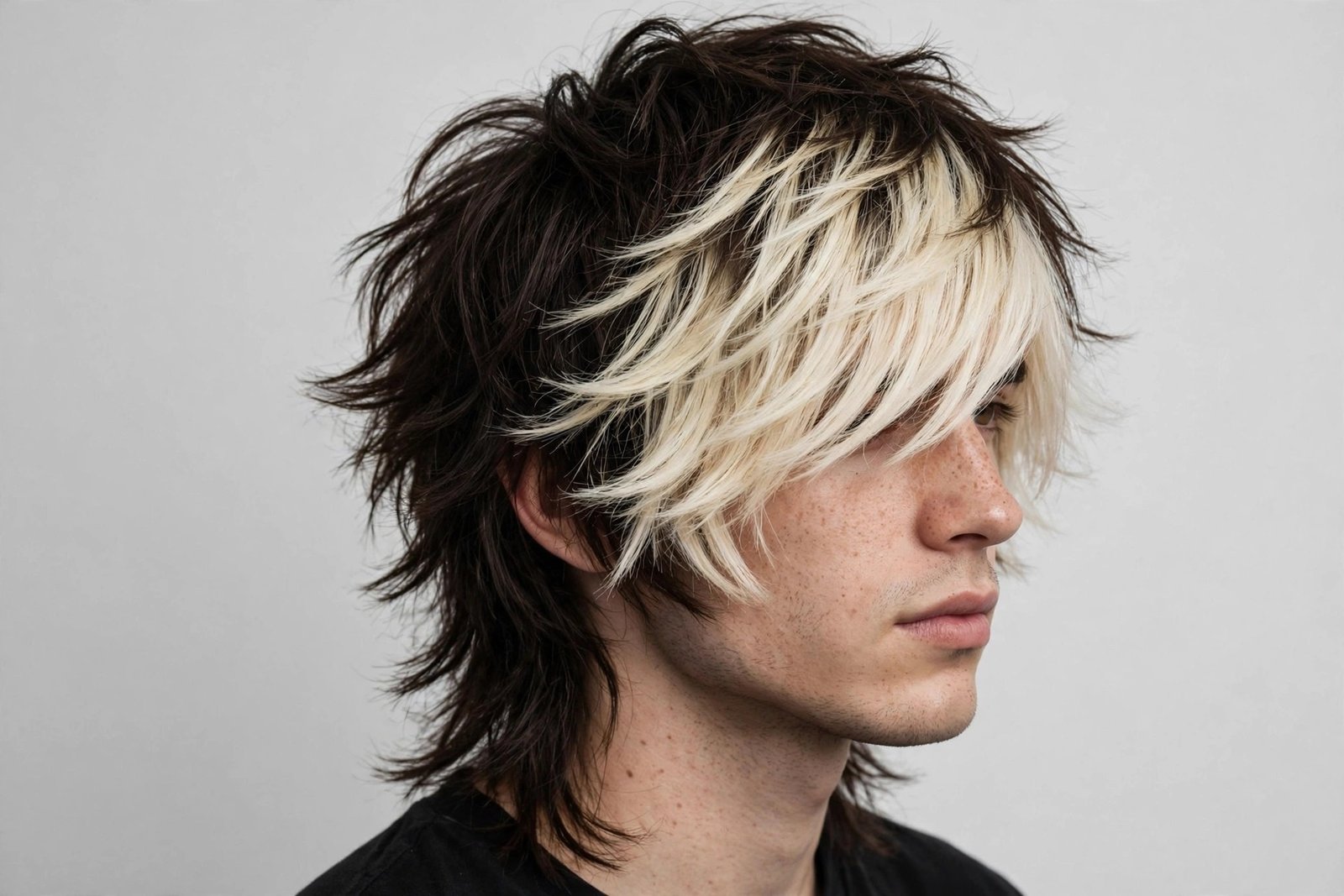
One of the smartest colour plays in the emo book: keep the base dark and bleach only the fringe. The pale fringe against the dark mass behind it creates a frame-within-a-frame effect — the eye goes straight to the face, and the contrast makes the fringe look even heavier and more dramatic than it is. It’s less work than full bleaching, less damage, and it grows out more gracefully because the dark base hides regrowth. In 2026 this is huge on TikTok, where the before-and-after bleach videos pull millions of views.
Suits dark natural hair best — the contrast is the whole trick, so the darker the base the better it works. Tell your colourist: isolate the fringe section and lift it to a clean level 9 or 10, tone to your preference (icy for drama, warm beige for softness), and leave everything else alone. The fringe bleach needs refreshing every four to six weeks as roots come in, but it’s a small section — quick appointment, lower cost than full-head work. Use purple shampoo once a week to keep the blonde clean.
Styling is standard emo, with one addition: bleached fringe is drier than the rest, so a tiny amount of leave-in conditioner on the fringe before styling keeps it from going straw-like. The honest downside is the two-texture reality — bleached hair behaves differently from virgin hair, so the fringe may need different products than the base. It’s a minor juggling act. But for maximum visual payoff per bleaching session, nothing beats this: one bleached section, entire haircut transformed.
16. Textured Crown Emo
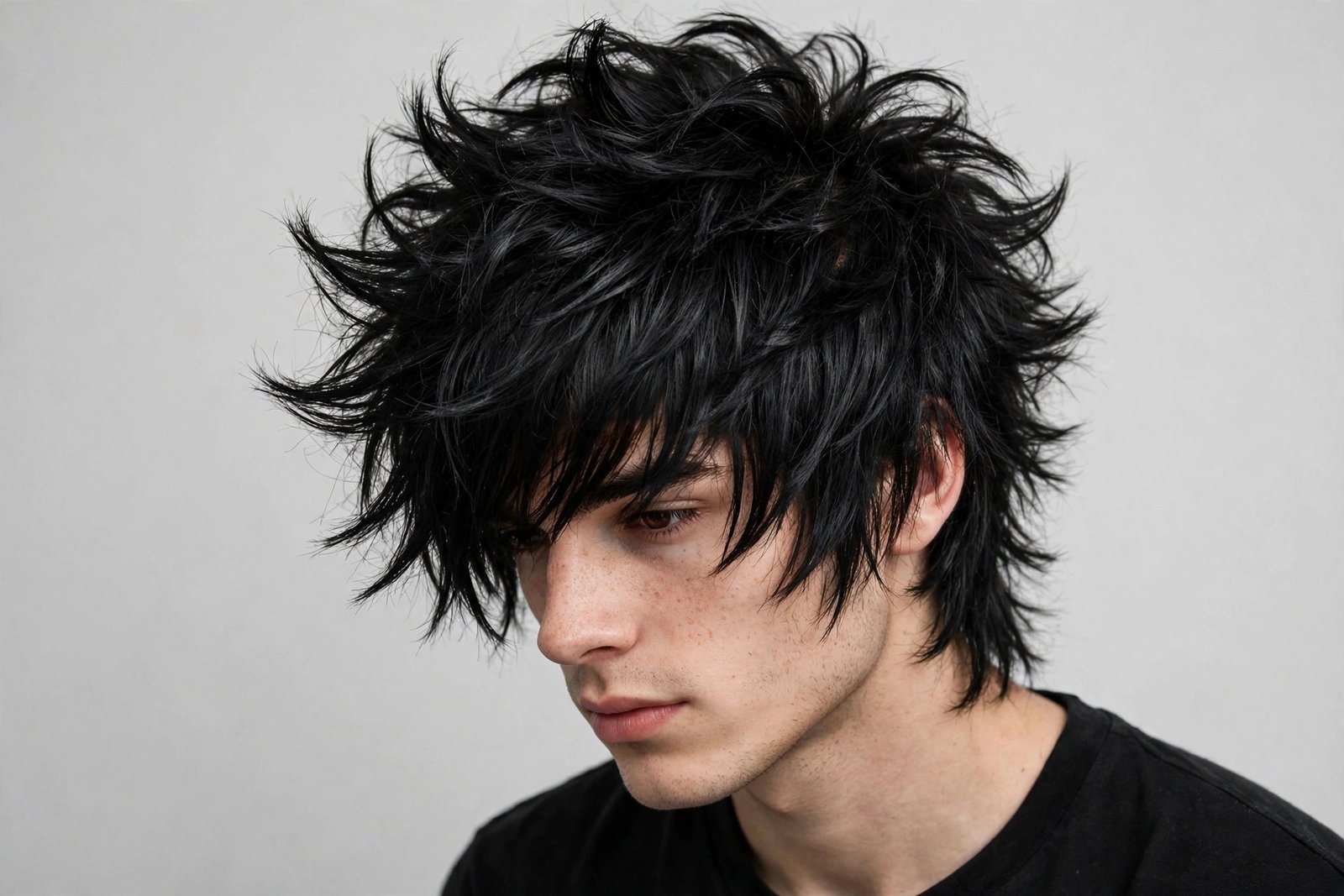
Most emo cuts focus all the drama on the fringe and leave the crown flat — this one flips the emphasis. The textured crown emo builds serious height and separation through the top with aggressive layering and piecey styling, while the fringe stays present but slightly lighter. The result has more dimension and photographs with real depth: light catches the separated chunks on the crown instead of sliding off a flat sheet. It’s the version for guys who felt the classic emo looked a bit one-dimensional.
Suits fine to medium hair brilliantly — the layering creates volume that fine hair desperately needs, and the texture makes thin hair look thicker. Very thick hair needs serious weight removal or the crown becomes a helmet. Tell your barber: short, heavily textured layers through the crown with the razor or deep point-cutting, fringe left full but slightly layered so it doesn’t compete with the crown, back and sides layered to support the shape. The crown should look deliberately piecey, not accidentally messy — there’s a difference, and it’s in the cutting.
Styling lives on texture products: volumising mousse on damp roots, blow-dried up and forward for lift, then fibre paste to define the chunks. A matte finish is essential — shine flattens the texture visually. Maintenance every five weeks to keep the crown layers from growing into a blob. Honest downside: this is the highest-effort styling on the list so far. The texture doesn’t happen by itself; skip the products and it just looks unkempt. If you’re a wash-and-go guy, pick a different number. If you enjoy the ritual, this is deeply satisfying hair.
17. The Split Dye Emo
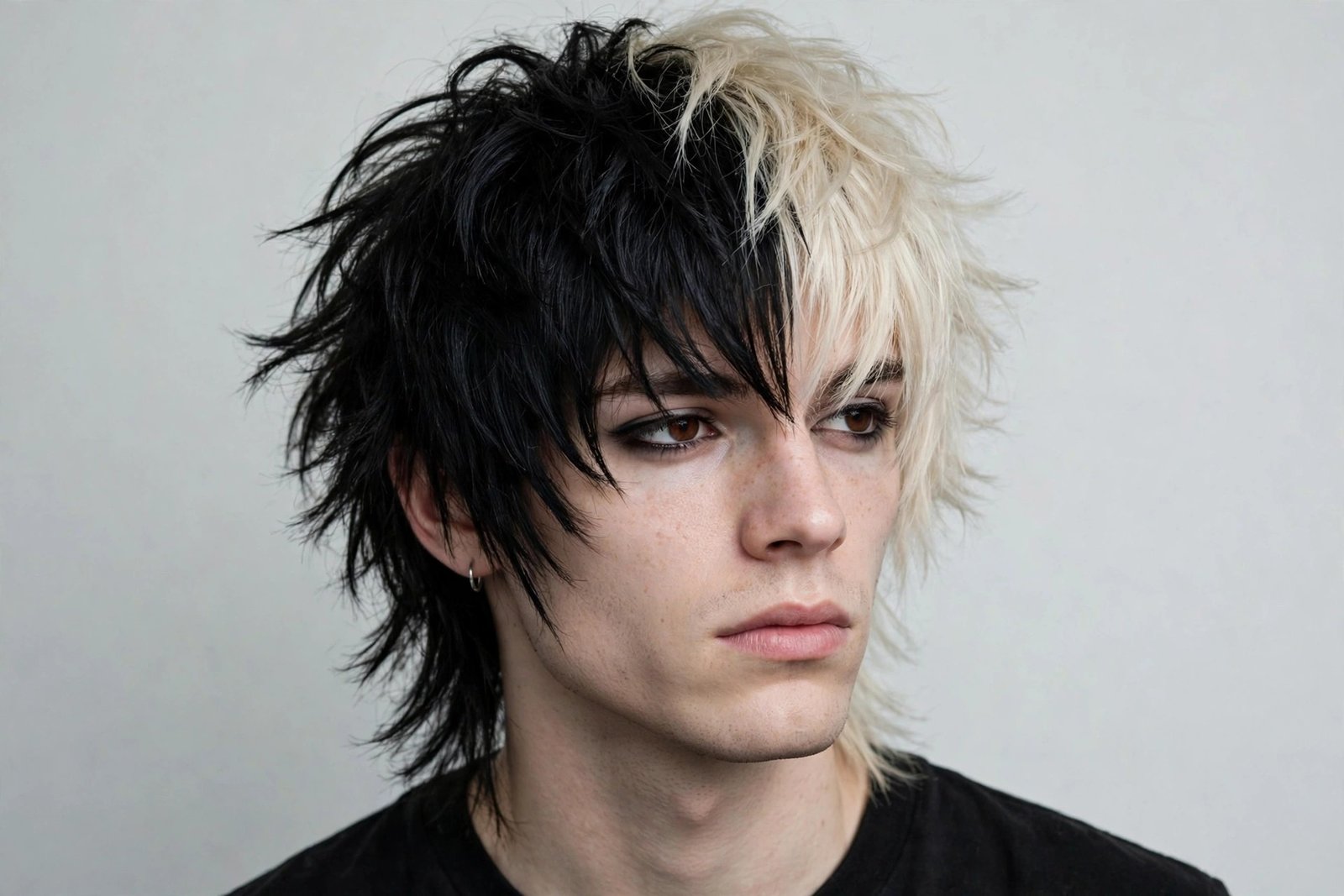
Half black, half blonde, split straight down the middle — the split dye is the most confrontational colour on this list, and on an emo cut it’s pure theatre. The emo silhouette gives it structure: the heavy fringe carries both colours across the face, and the choppy layers show the divide from every angle. It’s the haircut equivalent of a double-take. In 2026 it’s everywhere from alt TikTok to festival crowds, and it remains the fastest way to make a room remember you.
Suits anyone willing to maintain it — the cut underneath can be any emo variation, since the colour is doing the heavy lifting. The technique is straightforward but unforgiving: the hair is sectioned down the centre, one side dyed black, the other bleached to blonde. The centre part line must be crisp, which means regrowth shows immediately on the blonde side. Tell your colourist you want a hard split, not a blend — the sharp divide is the design. Bleach-side roots need attention every three to four weeks.
Styling follows the base cut, but here’s the thing nobody mentions: the two sides behave differently. Bleached hair is drier and lighter; black-dyed hair is heavier. You’ll feel the difference when styling, and the blonde side may need a touch more product to match the black side’s weight. Honest downside, beyond maintenance: this colour dominates your entire look. Every outfit, every photo, every first impression gets filtered through the split dye. Some guys love being that memorable. Others realise after a month that they miss blending in. There’s no shame in either answer — just know before you book.
18. Swoop Bang Emo
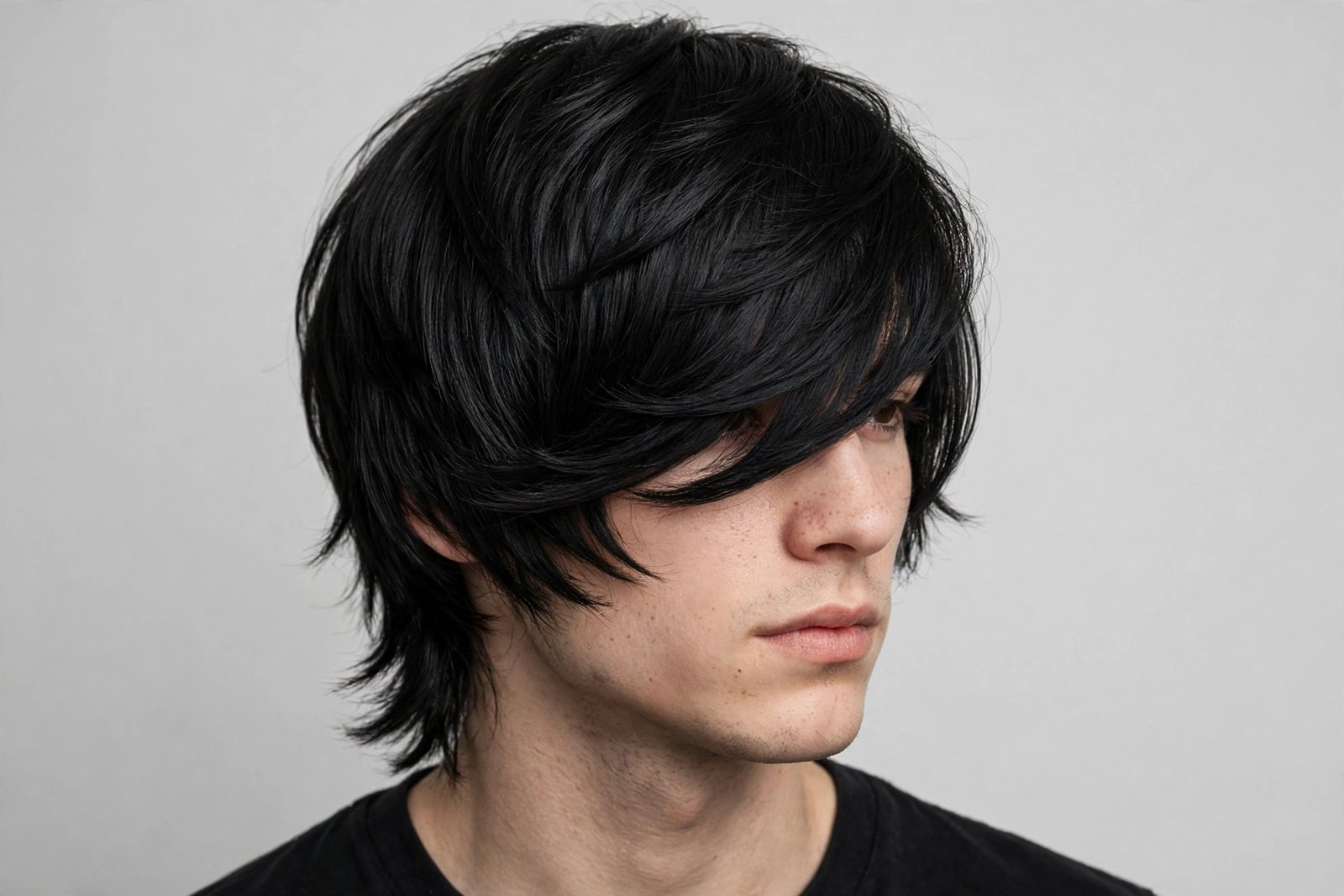
The swoop bang takes the emo fringe and gives it architecture: instead of falling straight forward, the fringe arcs in a dramatic curve across the forehead, longer at the outer edge, creating a wave-like silhouette. It’s smoother and more polished than the jagged emo standard — the swoop has a retro, almost rockabilly-meets-scene energy that stands apart from the choppy crowd. If most emo cuts shout, the swoop bang speaks in a low, confident voice.
Suits straight hair best — the swoop needs smoothness to read as a curve rather than a kink. Wavy hair can manage it with straightening, but the daily heat adds up. It flatters most face shapes because the diagonal line is universally slimming, and it’s particularly good on wider foreheads since the arc covers strategically. Tell your barber: fringe cut on a curve, longest at the sweep’s outer end, interior layers to support the shape without bulk, everything else classic emo. The swoop is cut dry or nearly dry — wet cutting can’t predict how the arc will fall.
Styling is about the curve: blow-dry the fringe following the arc with a round brush, then set it with a light-hold cream — too much hold makes it stiff and kills the flow. A flat iron touch on the fringe helps on humid days. Maintenance every four weeks to keep the arc’s geometry. Honest downside: precision cuts show mistakes. A swoop that’s slightly off looks wrong in a way a choppy fringe never does, so this demands a skilled barber, not a budget chop. Pay for the good one. Your forehead will thank you.
19. Chunky Highlight Emo
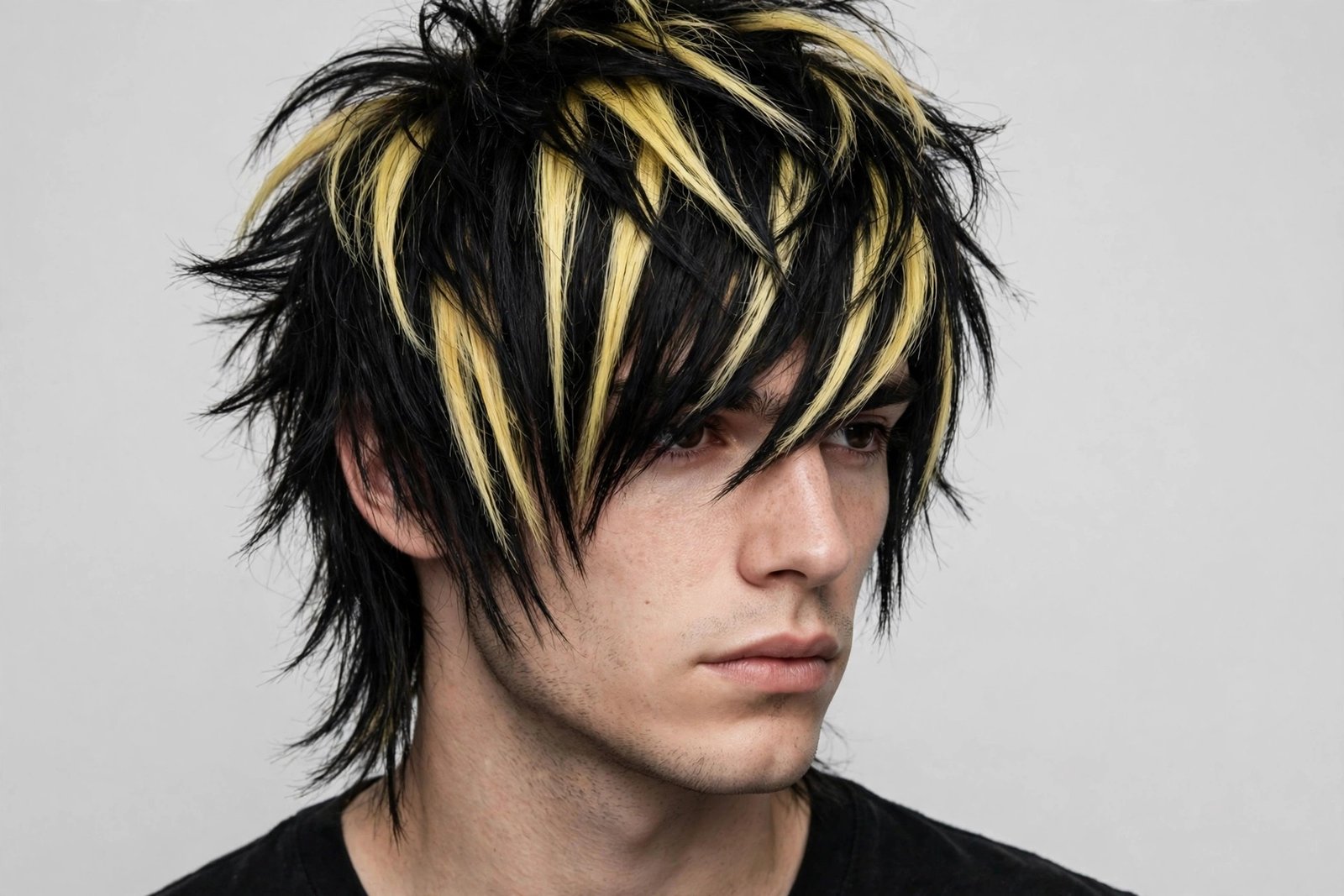
Before balayage made everything soft and blended, highlights were chunky — thick, bold streaks with visible contrast, and the emo era loved them. The 2026 revival brings chunky highlights back with better execution: bold blonde or caramel streaks woven through a dark emo base, thick enough to read as stripes of colour rather than sun-kissed dimension. On the choppy emo layers, chunky highlights do something magical — every separated piece catches a different tone, and the whole cut looks three-dimensional.
Suits dark to medium bases; the contrast needs a dark background to pop. It’s more forgiving than all-over bleach because the highlights grow out softly — no harsh root line, just gradual diffusion. Tell your colourist: weaved or sliced highlights in thick sections, lifted two to three levels past your base, toned to complement (ashy on cool bases, golden on warm ones). Fewer, thicker sections read more emo than many fine ones — ask for statement pieces, not subtle dimension. Refresh every eight to ten weeks, which is refreshingly low-maintenance for colour work.
Styling is standard emo — the colour does the talking. One tip: style with extra separation so the highlighted chunks stand apart from the base; clumped-together hair hides the contrast you paid for. Honest downside: chunky highlights are having a moment, which means they might feel dated sooner than the timeless black. Trends cycle fast now. But right now, in 2026, they’re exactly right — and hair grows, colour fades, and you can always go back to black.
20. Dusty Rose Emo
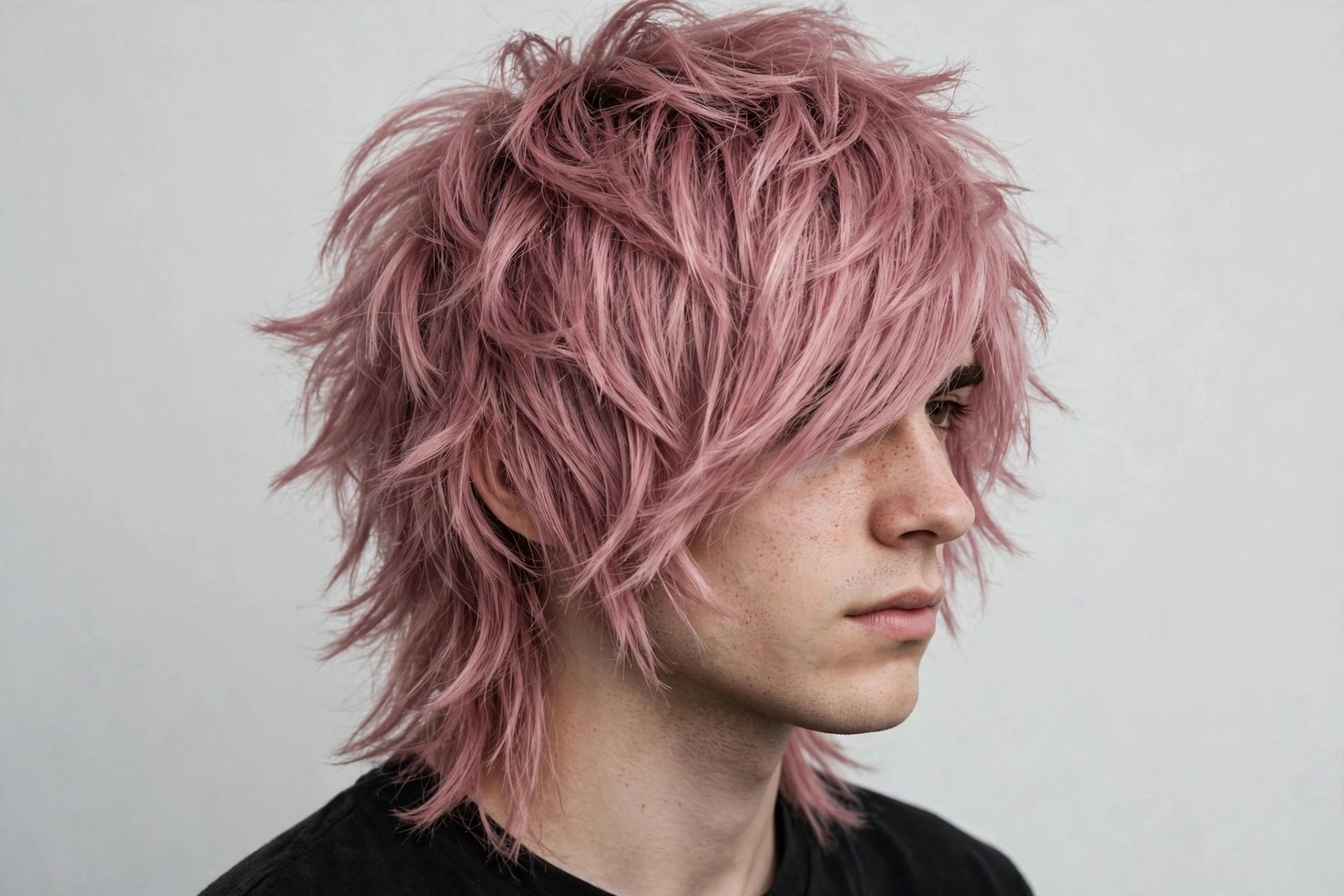
The softest entry on this list, and don’t mistake soft for weak. Dusty rose — a muted, smoky pink — over the emo silhouette creates a fascinating tension: the cut says edge, the colour says romance. It’s the emo for guys who want the shape without the darkness, and in 2026 it’s quietly one of the most-worn fashion colours in alt spaces precisely because it’s so wearable. It flatters warm and neutral skin tones beautifully, and it photographs like a dream in natural light.
Requires pre-lightening — dusty rose only reads correctly on a pale blonde base, so dark hair needs bleaching first. Tell your colourist: lift to a level 9 or 10, then apply a dusty rose direct dye or a pink toner diluted for smokiness. The colour fades fast — pinks always do — evolving through softer blush tones over two to three weeks. A pink colour-depositing conditioner extends each application significantly; without it, you’re back in the salon monthly. Wash cool, wash rarely, and accept the fade as part of the journey.
Suits straight to wavy hair; the muted tone shows texture beautifully. Styling is the standard emo routine, kept soft — heavy matte products can dull the colour’s glow, so lighter creams work better. Honest downside: the bleach-plus-pastel combination is the most damaging colour process on this list relative to its lifespan. You’re bleaching for a colour that lasts weeks, not months. Go in understanding the trade, keep the hair conditioned like it’s your job, and enjoy one of the prettiest versions of emo ever worn.
21. Slate Grey Emo
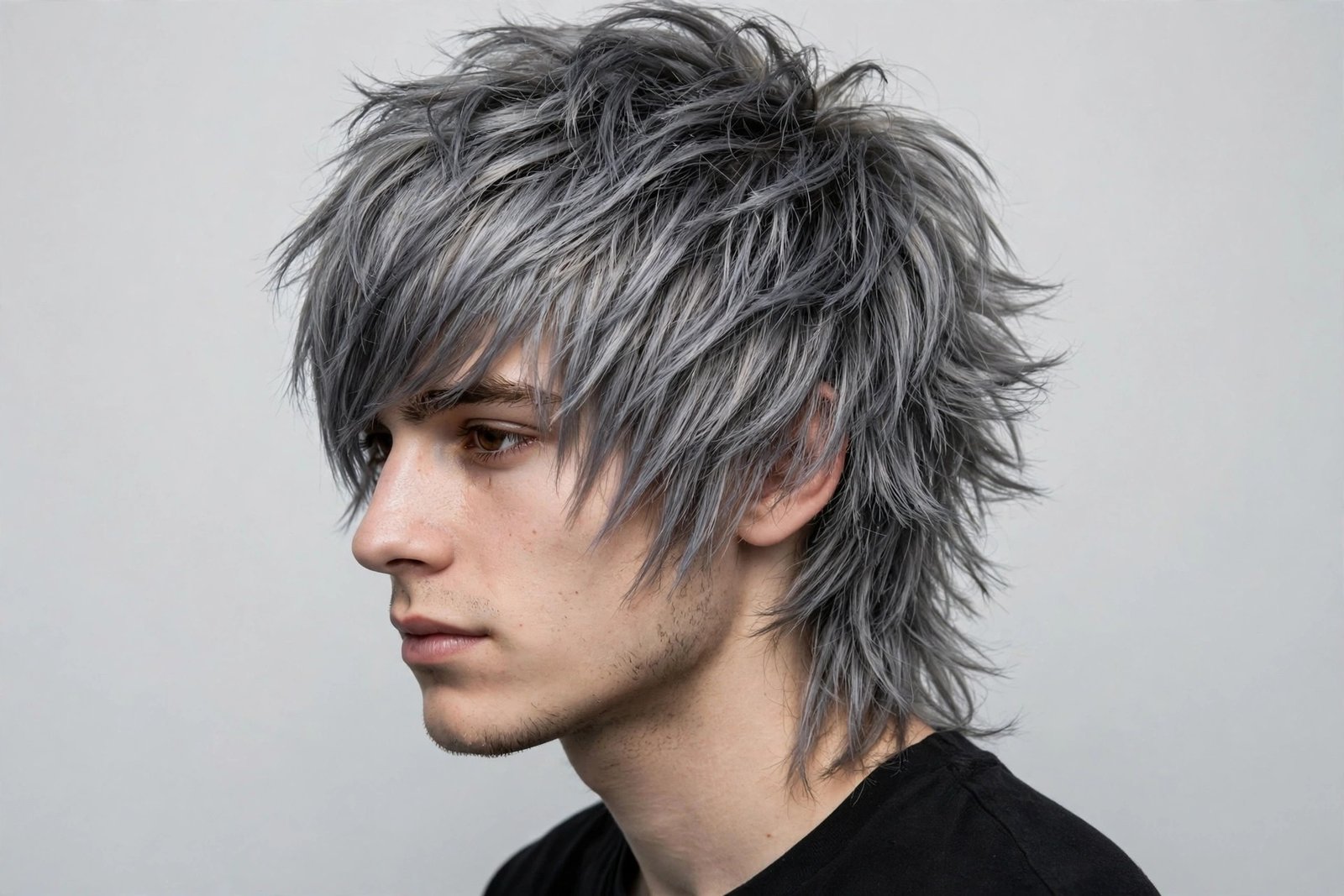
Grey hair stopped meaning old a decade ago, and the slate grey emo is the proof. A smoky, metallic silver-grey over the full emo silhouette — heavy fringe, choppy layers — creates something that looks almost otherworldly. It’s cool-toned, high-fashion, and completely distinct from the black emo crowd. In 2026 it’s the colour of choice for guys who want the emo shape with a futuristic rather than nostalgic energy. It also happens to be brutally flattering in photographs — the metallic sheen catches light in every shot.
The catch is the process: true slate grey requires lifting to a near-white blonde base, then toning with a grey/silver toner. Dark hair means serious bleaching, and grey is the fastest-fading fashion colour in existence — it washes toward blonde within two to three weeks. Tell your colourist you want a smoky slate rather than a bright silver; the smokier tone fades more gracefully. Maintenance is a purple shampoo routine, cool washes, and toner refreshes every three weeks. This is not a low-effort colour. It is a lifestyle.
Suits cool skin tones best, though the contrast can look striking on warm tones too. Styling is standard emo, but keep products light — heavy waxes dull the metallic finish that makes this colour special. A shine spray, used sparingly, actually enhances grey hair beautifully. Honest downside: the bleach damage plus the relentless fading means your hair lives in a constant state of needing attention. Guys who love the salon ritual thrive on it. Guys who want to forget about their hair for a month should admire it from a distance.
22. Emo with Buzzed Sides
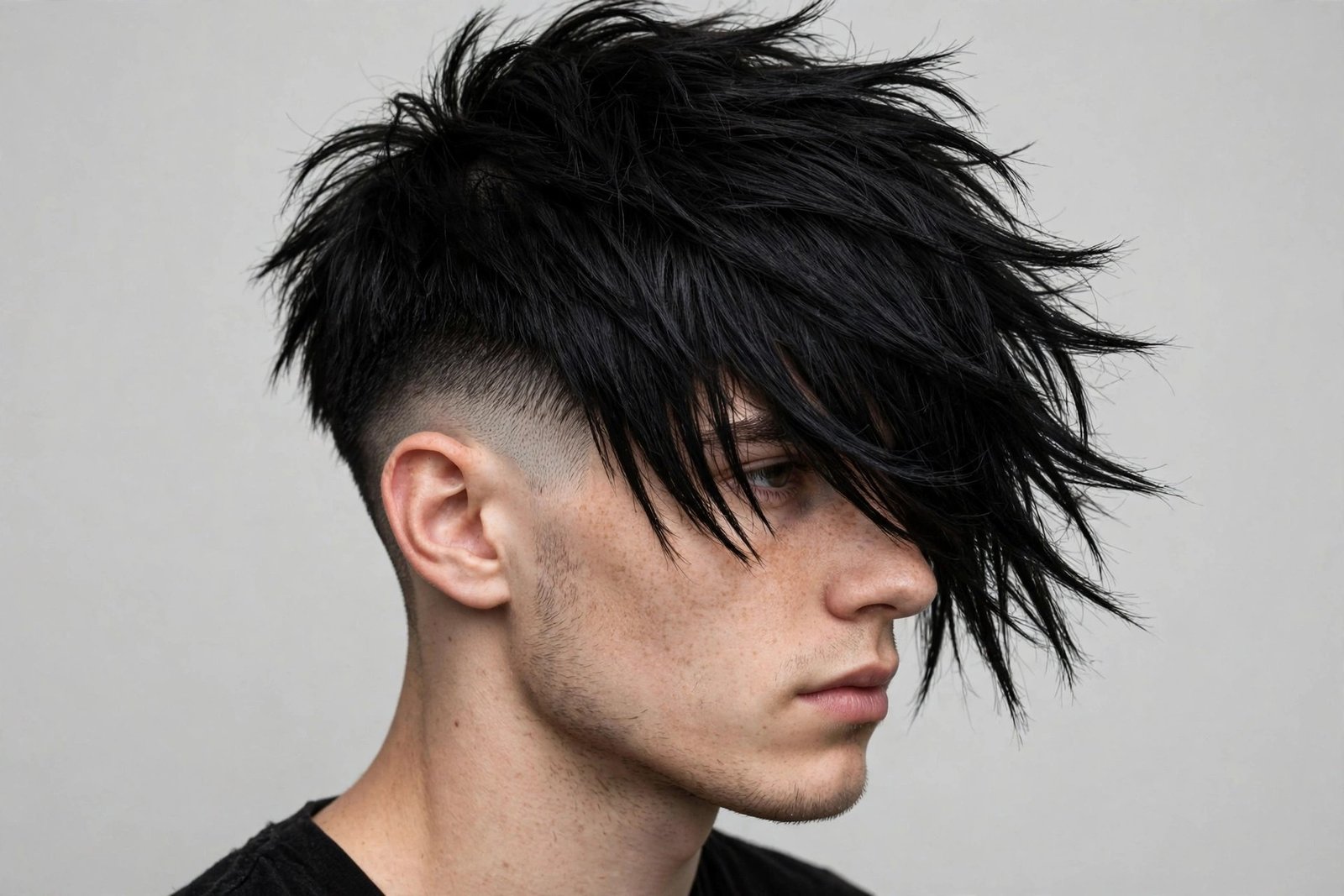
Take the emo top — heavy fringe, choppy crown — and buzz the sides down to a tight, clean finish. It’s the undercut’s more aggressive cousin: where the undercut keeps some length to blend, buzzed sides go short and stay short, creating maximum contrast with the long top. The effect is part emo, part military, entirely striking. It also happens to be the most practical emo variation for hot climates and active lifestyles — the sides never get in the way, never need styling, and keep the whole cut feeling light.
Suits guys with strong jawlines and defined features — the buzzed sides expose everything, so there’s nowhere to hide. It works on all hair types because the sides are clippered regardless of texture. Tell your barber: buzz the sides and back to your preferred guard (a 1 or 2 is the sweet spot), leave the top long with full emo layering and a heavy fringe, and keep a hard disconnect — no fade blending the two zones. The top needs real length to drape over the disconnect; too short and it looks like a grown-out buzz cut with bangs.
Styling is top-only: fringe forward, clay for texture, done. The sides need a buzz refresh every two to three weeks to stay crisp — learn to do it yourself and you’ll save a fortune. Honest downside: the contrast is extreme, and extremes polarise. This reads as a statement whether you want it to or not, and growing it out means months of awkward disconnect. But for pure visual impact per unit of effort, it’s unbeatable — ten minutes of styling for a cut that looks like an hour.
23. Messy Bedhead Emo
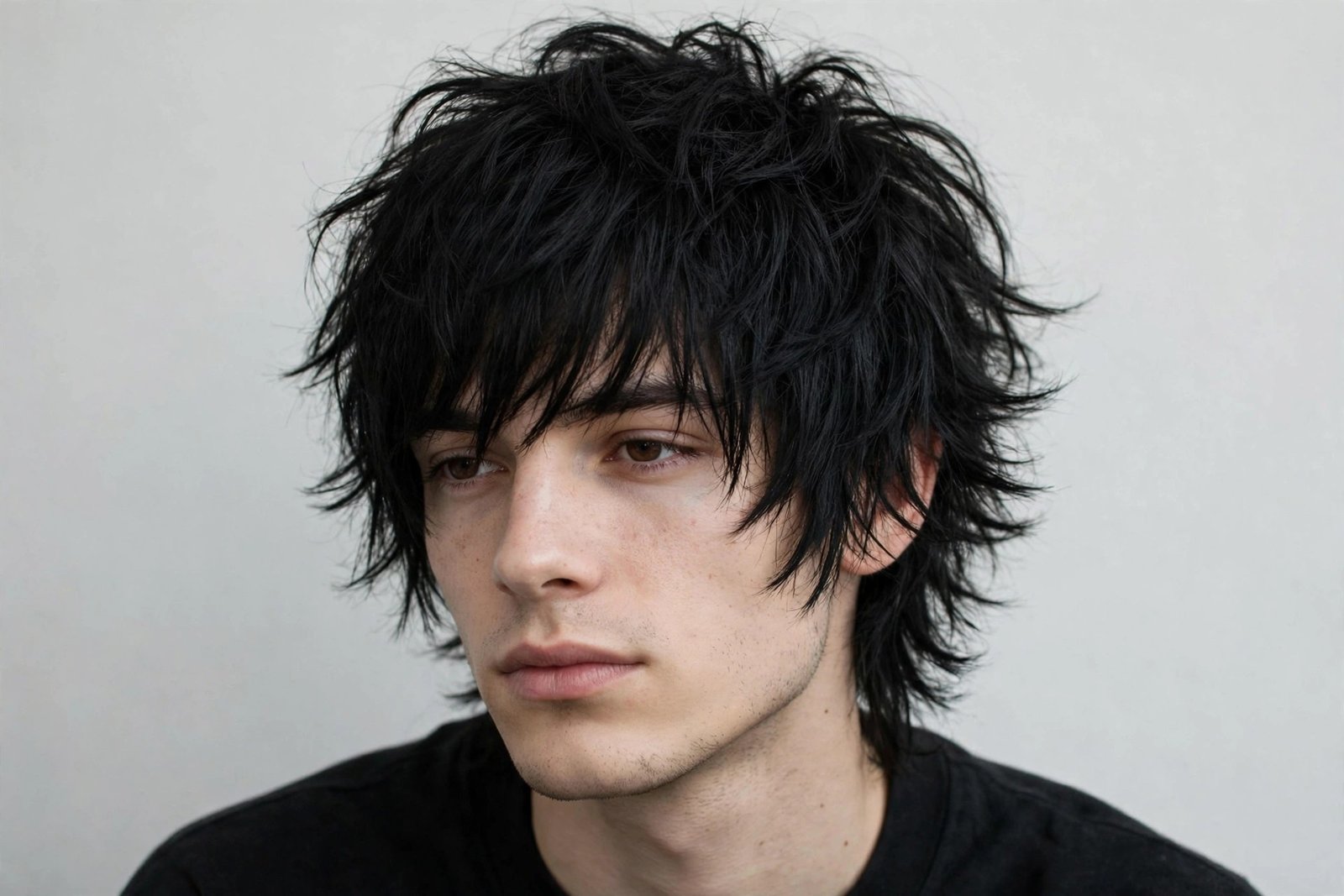
The bedhead emo is the art of looking like you didn’t try — while absolutely trying. Tousled, undone texture through the whole cut, fringe falling wherever it falls, layers separated into perfectly imperfect pieces. It’s the most naturalistic emo on this list, and in 2026 it’s huge because the Rawring 20s aesthetic rewards hair that looks lived-in rather than laboured-over. The secret nobody tells you: great bedhead is cut, not just styled. The layers have to be placed so the mess falls in the right places.
Suits wavy and thick hair naturally — the texture does half the work. Straight fine hair needs more product help to hold the tousle. Tell your barber: medium-length emo cut with interior layering designed for movement, fringe left with natural fall rather than a forced direction, ends heavily textured. Ask for the cut to be styled messy in the chair so you can see the intended result — if it looks good messy in the shop, it’ll look good messy at home. That’s the test.
Styling: salt spray on damp hair, scrunch, air-dry, then a tiny bit of paste to separate random pieces. The whole thing should take five minutes. Resist the urge to over-style — the moment it looks deliberate, the bedhead illusion breaks. Maintenance every six weeks; the messy shape forgives growth. Honest downside: there’s a fine line between artful bedhead and actually looking unkempt, and that line moves depending on the rest of your presentation. Bedhead hair with a sharp outfit reads intentional. Bedhead hair with sweatpants reads like you gave up. Dress accordingly.
24. Sleek Straight Emo
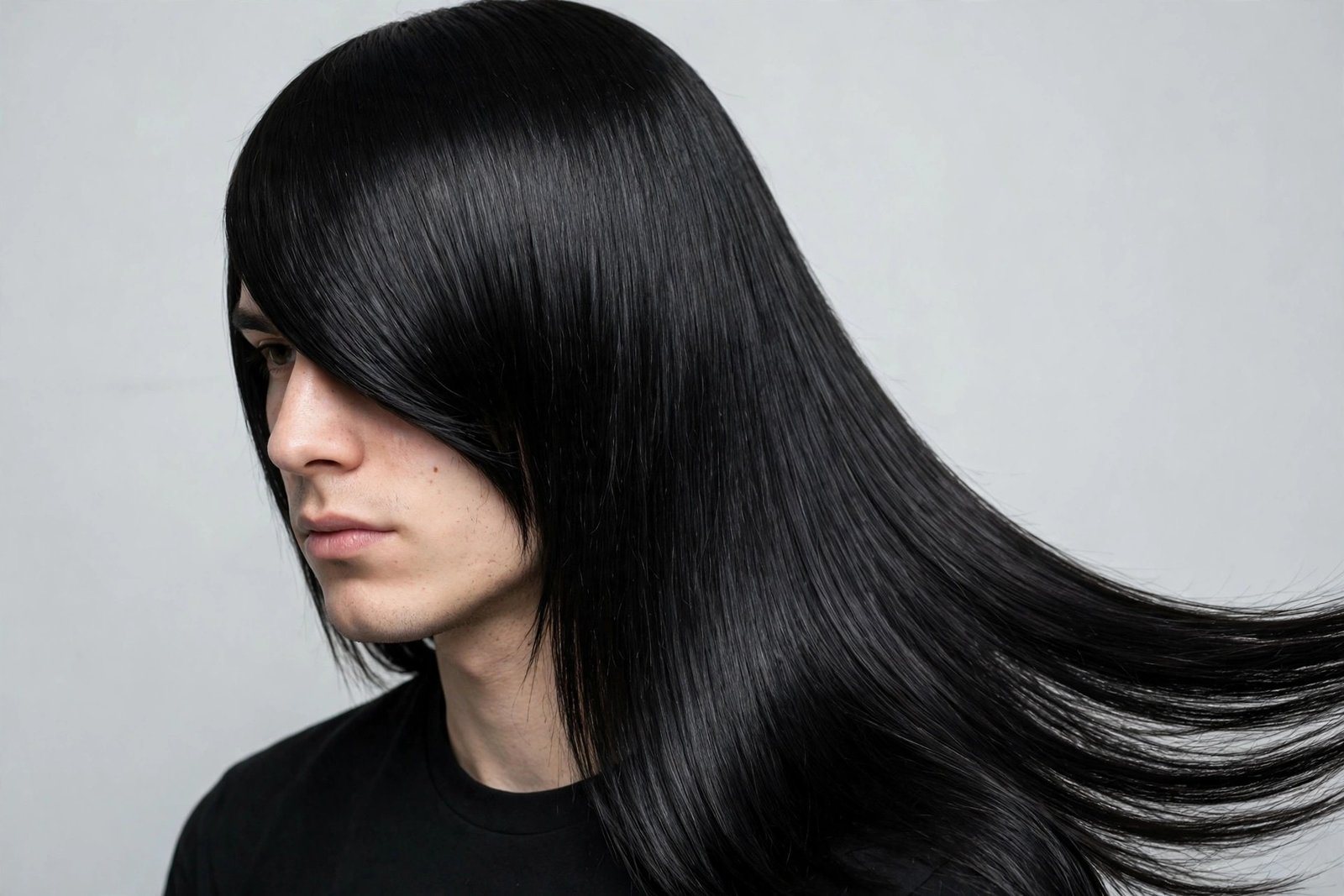
The purist’s emo: pin-straight, glossy, precise. No texture games, no tousle — just a perfectly straightened emo cut with a sharp fringe and clean lines, the way the originators wore it. In 2026 the sleek version stands out precisely because everything else got textured and messy. It’s the contrarian choice, and contrarian choices age well. There’s something powerful about the discipline of it: every strand in place, the fringe a perfect sheet across one eye, the whole thing gleaming.
Demands straight hair or a serious straightening routine — wavy and curly guys can wear it, but the daily flat-iron commitment is real and the heat damage accumulates. Tell your barber: clean emo lines with minimal texturing, fringe cut blunt-ish with just enough point-cutting to avoid a ruler edge, lengths even and precise. The cut has to be geometrically sound because there’s no texture to hide behind. Then the styling: heat protectant always, flat iron in small sections, a smoothing serum for the gloss finish.
This is the highest-maintenance daily styling on the list — fifteen to twenty minutes every morning, no exceptions, because sleek hair shows every imperfection. Humidity is the enemy; anti-frizz serum and a rain-day backup plan are essential. Honest downside: the heat damage question. Daily straightening on the same sections will eventually take a toll, so regular trims and deep conditioning aren’t optional. But I’ll be honest with you — when this cut is on point, nothing else on this list looks as sharp. It’s emo as high fashion, and it knows it.
25. Emo with a Braided Accent
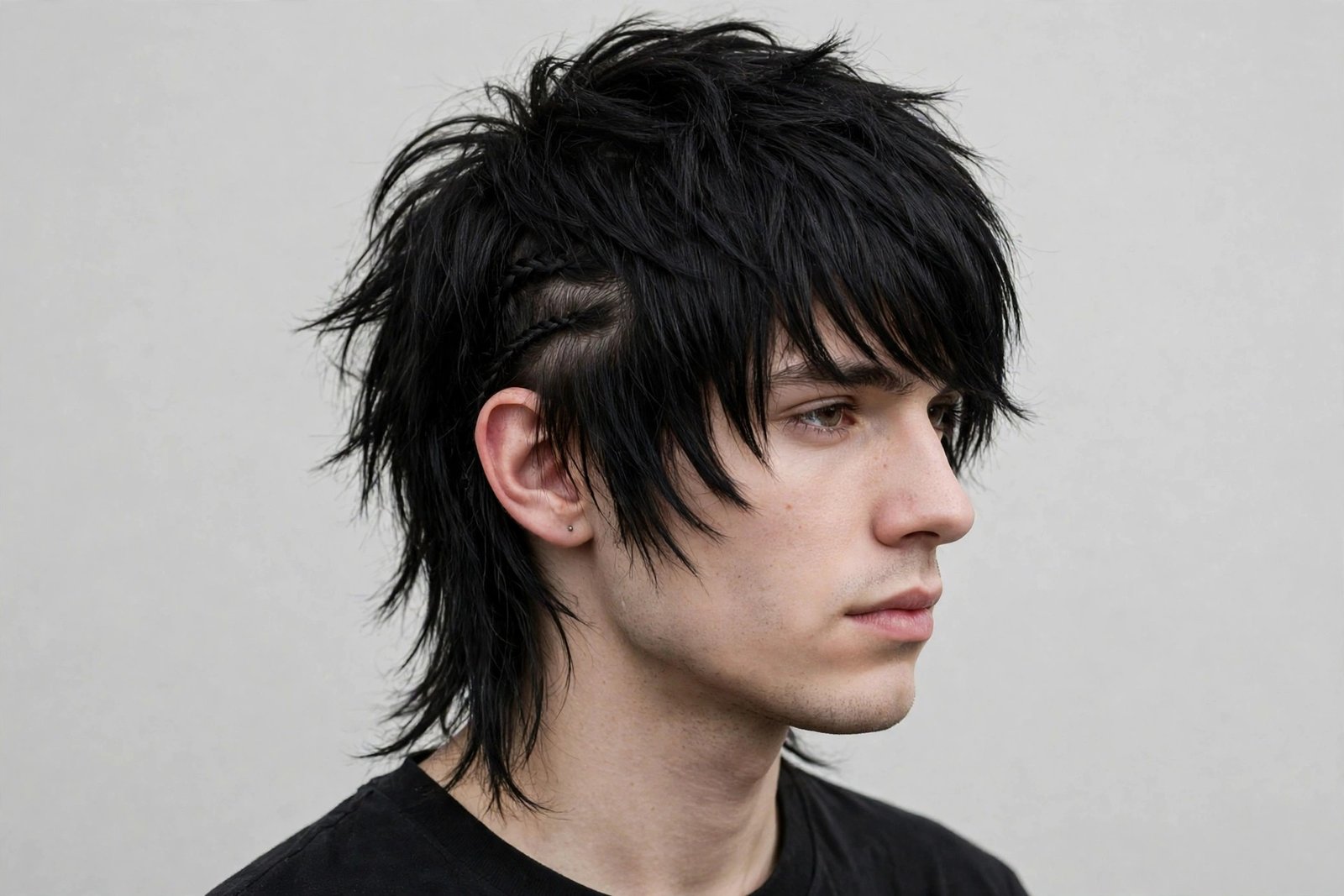
Sometimes the smallest detail changes everything. The braided accent emo keeps the full classic cut — heavy fringe, choppy layers — and adds one thin braid at the temple or woven through the fringe. It’s a tiny rebellion inside the bigger rebellion, and it gives the cut a handmade, personal quality that a plain emo lacks. In 2026 the micro-braid is everywhere in alt fashion, borrowed from festival culture and the Y2K revival, and on emo hair it reads as the perfect finishing touch rather than a gimmick.
Suits medium to long emo cuts — you need enough length for the braid to exist. The braid itself takes two minutes: isolate a thin section at the temple, three-strand braid it tight, secure with a tiny clear elastic. Some guys add a small bead or wrap the elastic with thread for extra detail. It works on all hair types, though very short or very fine hair struggles to hold the braid. Tell your barber nothing special — this is a styling addition to any emo cut, not a different cut. Just make sure you have enough length at the temple when getting trimmed.
Styling is your base emo routine plus the two-minute braid. The braid lasts a day or two before loosening; re-braid as needed. Honest downside: it’s a small detail that some people won’t even notice, which is either the charm or the problem depending on your personality. And on very formal occasions, a temple braid might raise an eyebrow. But as low-commitment customisation goes — zero damage, zero cost, completely reversible — it’s unbeatable. Try it for a week before deciding.
26. Forest Green Tint Emo
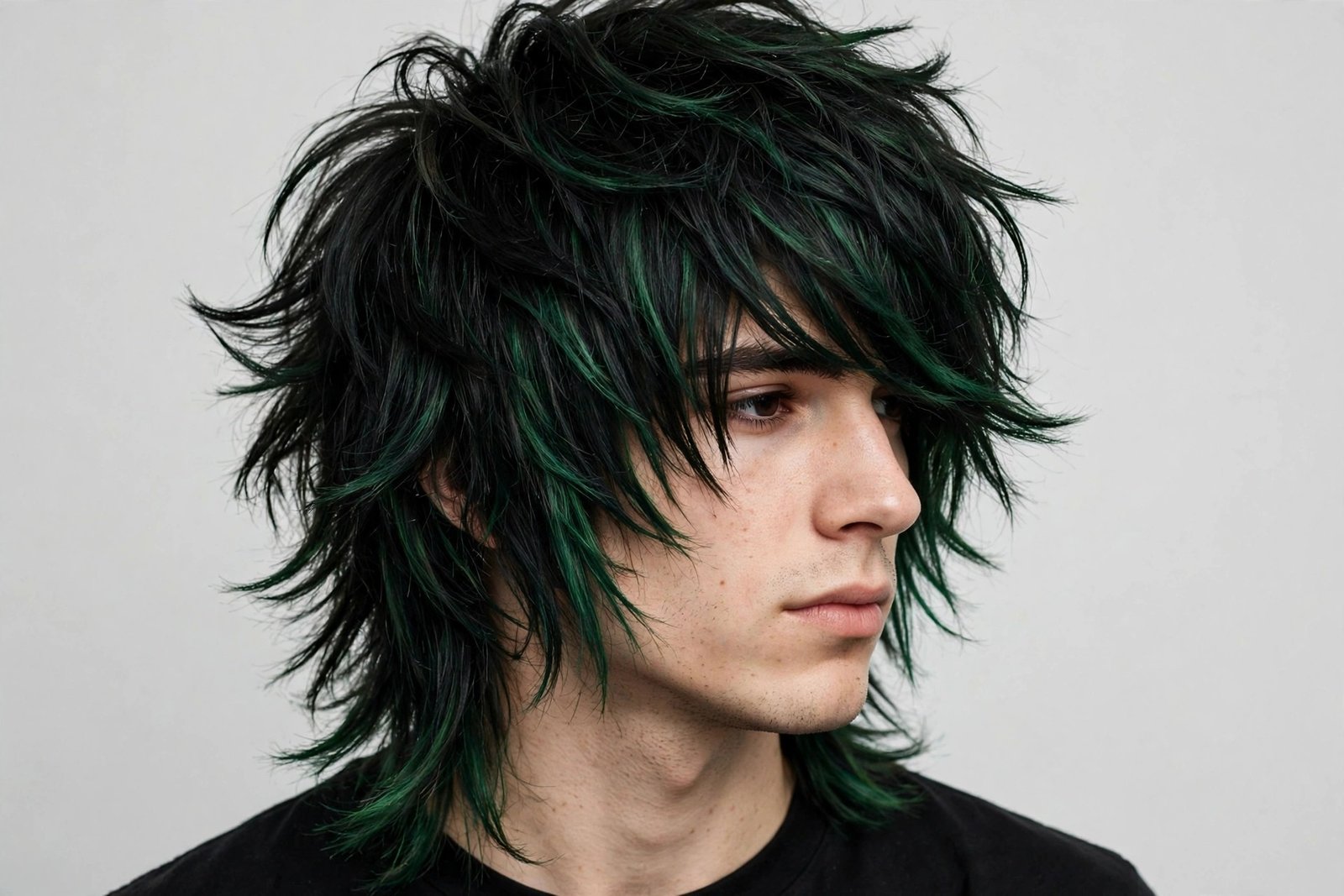
Green is the sleeper hit of emo colour — less common than red or blue, more interesting than both. A deep forest green tint over dark hair creates something that reads almost black indoors and reveals its green soul in sunlight. It’s moody, unusual, and deeply emo in spirit: the colour of deep woods and dark water. On the choppy emo layers, the green catches light differently on every piece, giving the cut an almost iridescent quality that flat black can’t touch.
Works best over dark bases — the green tint deepens black hair rather than replacing it, which means less bleaching than brighter colours. Tell your colourist: a deep green direct dye or green-toned demi-permanent over your dark base; for more intensity, pre-lighten first. Green fades toward teal and then a murky blonde, which is the honest reality of the colour — plan refreshes every three to four weeks with a green colour-depositing conditioner. It’s one of the more forgiving fashion colours because the dark base hides the fade.
Suits guys who want unusual without loud — green is a statement, but a quiet one. Styling is standard emo; the colour shows best with separation, so don’t over-smooth it. Honest downside: green is notoriously stubborn. When you eventually want to change colour, green pigment clings — colourists call it the hardest fashion colour to remove. Go in knowing that green is a relationship, not a fling. But if you’re ready to commit, it’s one of the most distinctive colours a guy can wear.
27. Wavy Emo Cut
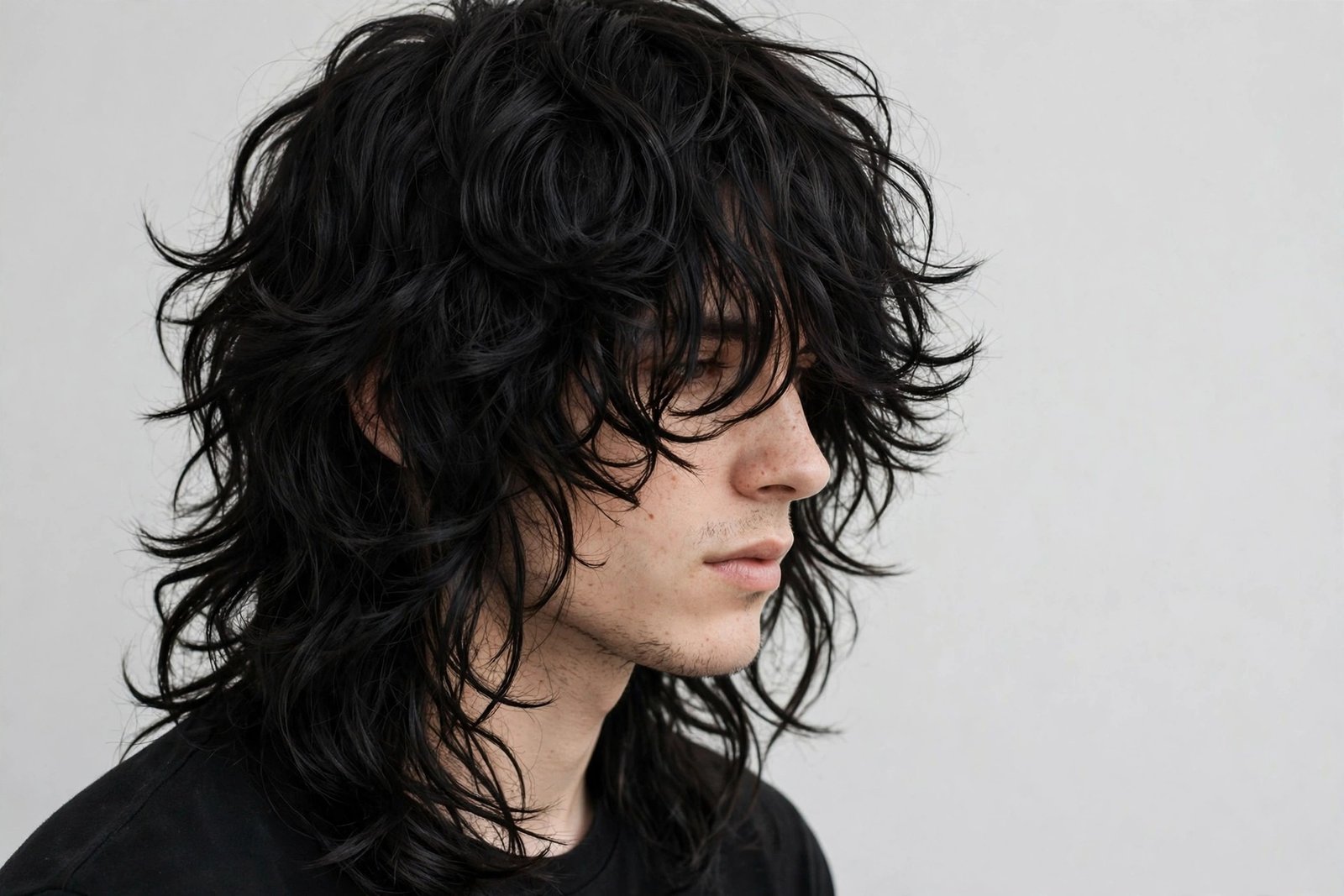
Not everyone has pin-straight hair, and the wavy emo cut is the proof that you don’t need it. Natural loose waves with emo layering create something the straight versions can’t: organic movement, soft volume, a fringe that falls in waves rather than sheets. It’s emo with a romantic streak — less severe, more approachable, and honestly more interesting to look at than the flat original. The 2026 revival has fully embraced natural texture, and this cut is the beneficiary.
Suits naturally wavy hair (2A to 2C) perfectly — the cut works with the wave pattern instead of fighting it. Tell your barber: emo layering cut to enhance the wave, fringe left long enough to fall in its natural pattern, ends textured to encourage separation. The key instruction is to cut it with the natural fall in mind — a barber who tries to impose straight-hair geometry on waves will create a cut that only looks right when straightened, defeating the purpose. Ask them to show you the air-dried result before you leave.
Styling is beautifully simple: wave-enhancing cream on damp hair, scrunch, air-dry or diffuse. The less you do, the better it looks — over-styling kills the natural wave. Maintenance every six to eight weeks; waves forgive growth. Honest downside: the fringe won’t do the dramatic one-eye sheet of the straight versions. It’ll be a wavy, softer fringe, which is lovely but different. If your heart is set on the sharp MySpace sweep, you’ll need heat. But if you can embrace what your hair wants to do, this is the easiest emo on the list to live with.
28. Flicked Fringe Emo
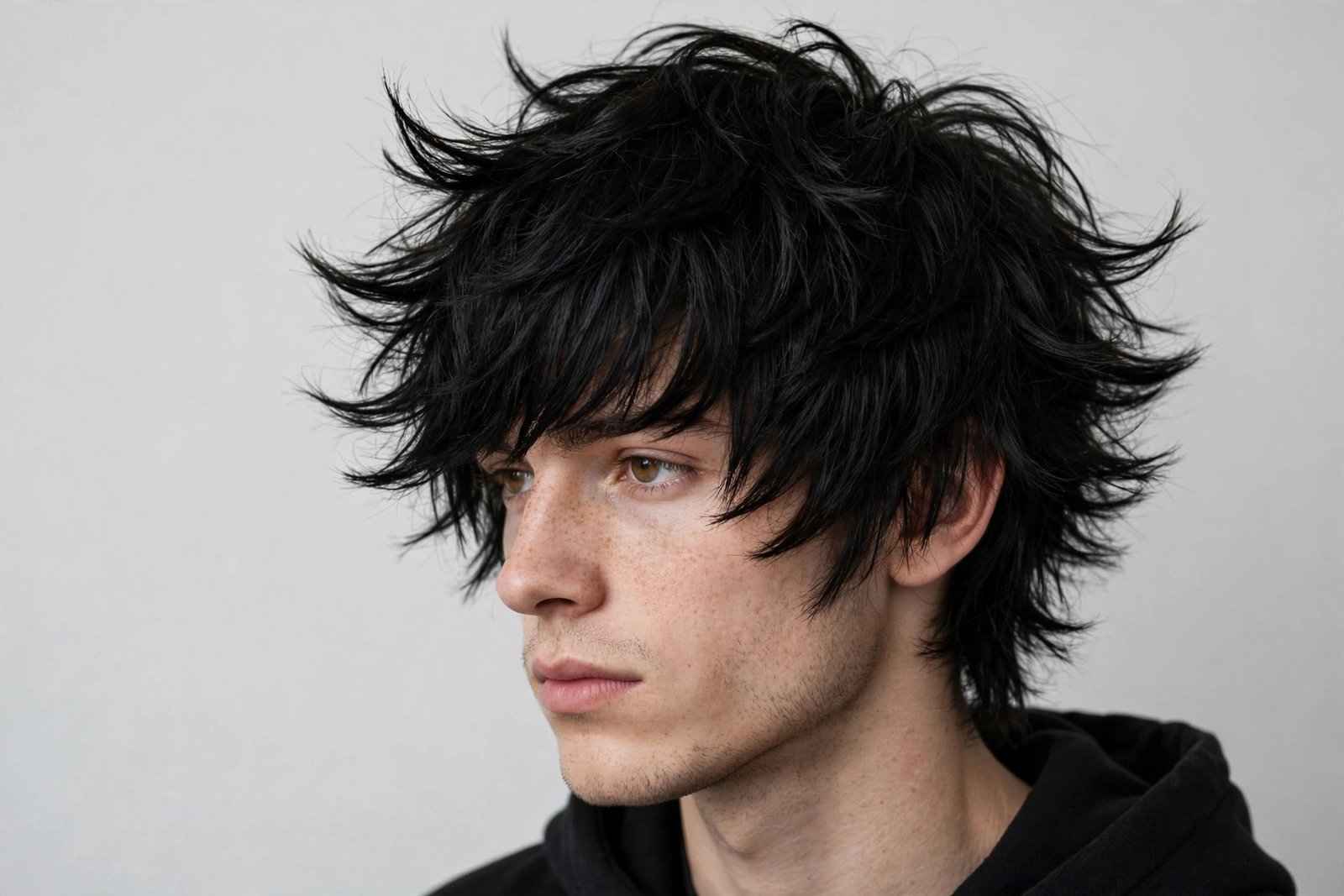
The flicked fringe takes the emo fringe and flips the ends outward — literally. Instead of falling straight down, the fringe ends kick out in piecey flicks, giving the whole cut a playful, almost anime energy. It’s a small change with a big personality shift: the same heavy fringe suddenly reads fun instead of brooding. In 2026 it’s popular with the younger end of the emo revival — the TikTok crowd loves the flick because it photographs with so much movement and character.
Suits straight to slightly wavy hair; the flicks need some cooperation from the hair’s natural direction. Tell your barber: standard emo fringe, but ask them to show you how to flick the ends — the cut supports it, but the styling creates it. The technique: blow-dry the fringe with a round brush, rolling the ends outward instead of under, then set with a light paste. A flat iron can flick individual pieces for more definition. The flicks should look piecey and separated, not curled — think texture, not ringlets.
Styling takes a few extra minutes versus the standard fringe, and the flicks drop in humidity — this is not a rainy-day hairstyle without serious hairspray backup. Maintenance is the standard four-week fringe trim. Honest downside: it’s a youthful look. The flicked fringe reads teen in a way the sleeker emo versions don’t, which is perfect if you’re 19 and questionable if you’re 39. Know your lane. But for pure fun factor, the flick delivers — it’s the emo cut that smiles back.
29. Tapered Emo Cut
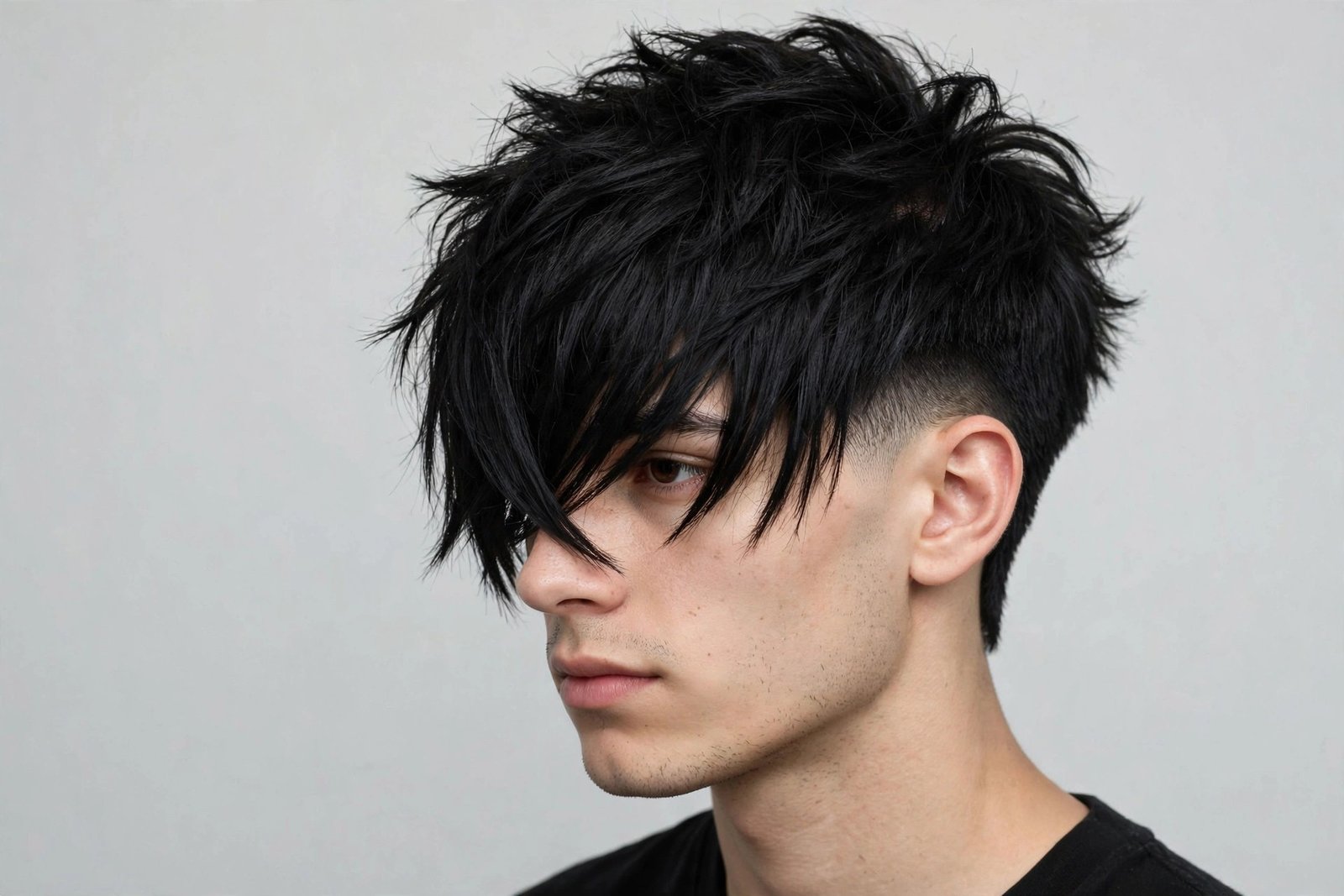
The tapered emo is the diplomat of this list — full emo attitude on top, respectable manners on the sides. The fringe and crown keep the classic emo layering, but the sides and back are tapered neatly instead of left long or buzzed. It’s the version that gets through a job interview, a family dinner and a gig without anyone questioning your life choices. For guys who love the aesthetic but answer to a dress code, this is the answer.
Suits all face shapes and hair types — the taper is universally flattering, and the emo top carries the personality. Tell your barber: emo fringe and textured crown up top, then a scissor taper on the sides and back that blends gradually. The key word is blended — unlike the undercut, there’s no harsh disconnect here. The taper should flow from the long top into the neat sides so the whole cut reads as one coherent shape. A 2 to 4 guard blend at the sides keeps it clean without going military.
Styling is the standard emo routine on top; the tapered sides need nothing. It’s genuinely the easiest emo to maintain — the taper grows out gracefully, so six weeks between cuts works fine. Honest downside: purists will say the taper dilutes the emo. They’re not entirely wrong — this is emo at maybe 70 percent intensity. But 70 percent of emo is still more personality than most haircuts manage at full volume, and the trade-off is a cut you can wear literally anywhere. For most guys, that’s the right trade.
30. Fauxhawk Fringe Emo
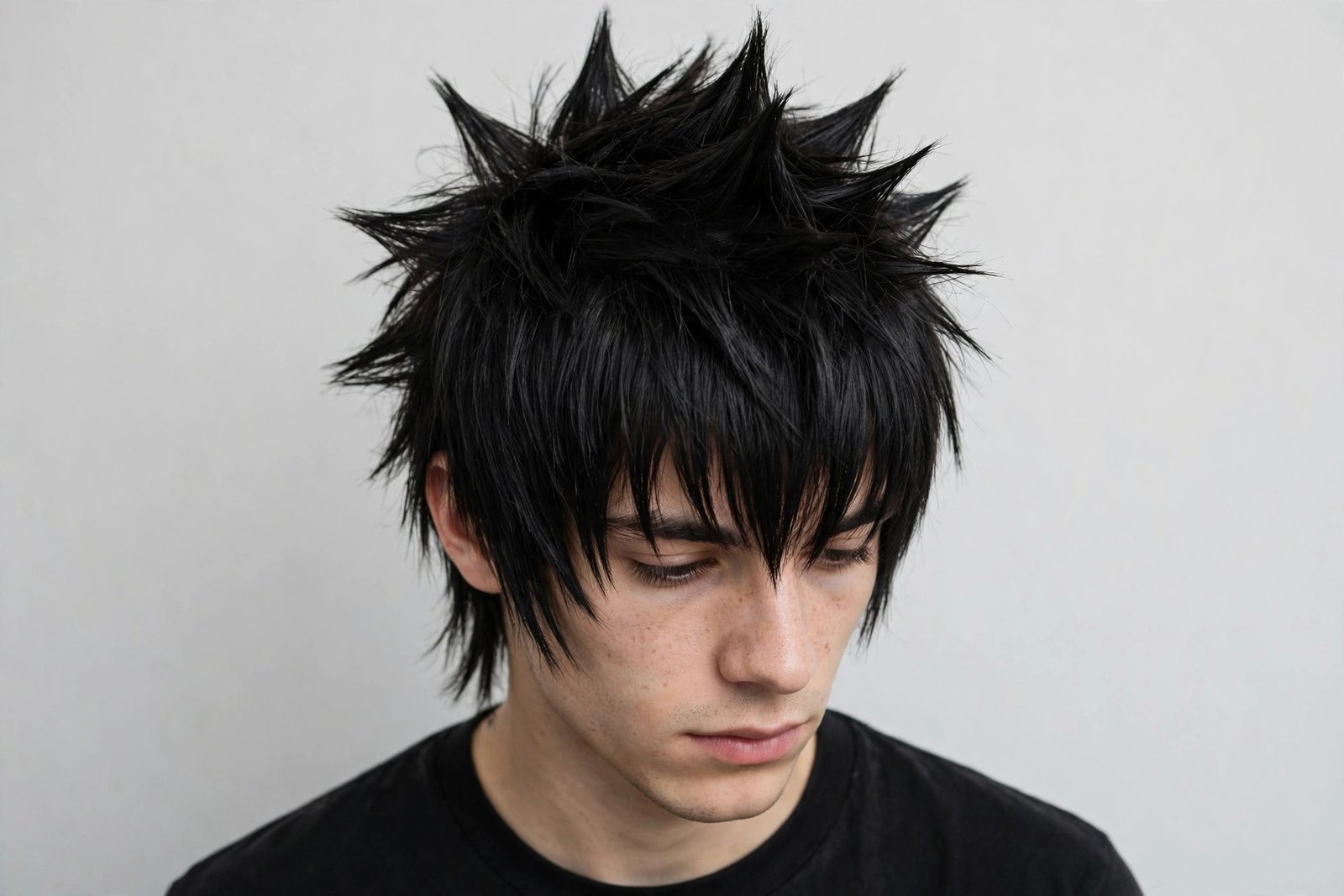
Emo and punk have always been neighbours, and the fauxhawk fringe emo is where they share a fence. A textured, spiky strip runs through the centre of the crown — fauxhawk style — while the front keeps the heavy emo fringe falling forward. It’s the most aggressive cut on this list: the spikes say punk, the fringe says emo, and together they say you don’t care what either camp thinks. Our punk-inspired styles guide covers the full punk spectrum if this hybrid leaves you wanting more of that energy.
Suits thick, straight hair that can hold the spiky texture — fine hair struggles to keep the fauxhawk strip upright without serious product. Tell your barber: shorter, textured strip through the centre crown with the sides kept tight (tapered or faded), front left long with a full emo fringe. The transition from fringe to spikes should be gradual — the fringe flows back into the textured strip. Styling needs strong product: a high-hold clay or wax, worked through the crown strip piece by piece, spikes pinched into place. The fringe gets lighter product so it still falls forward.
Maintenance every four weeks to keep the strip’s shape. Honest downside: this is a two-product, two-technique hairstyle every single morning — the spikes and the fringe want different things, and you’ll be negotiating between them daily. It’s also the loudest cut here; there’s no quiet version of a fauxhawk fringe. But if your personality is already at this volume, the hair should match. Wear it like you mean it.
31. Dip Dye End Emo
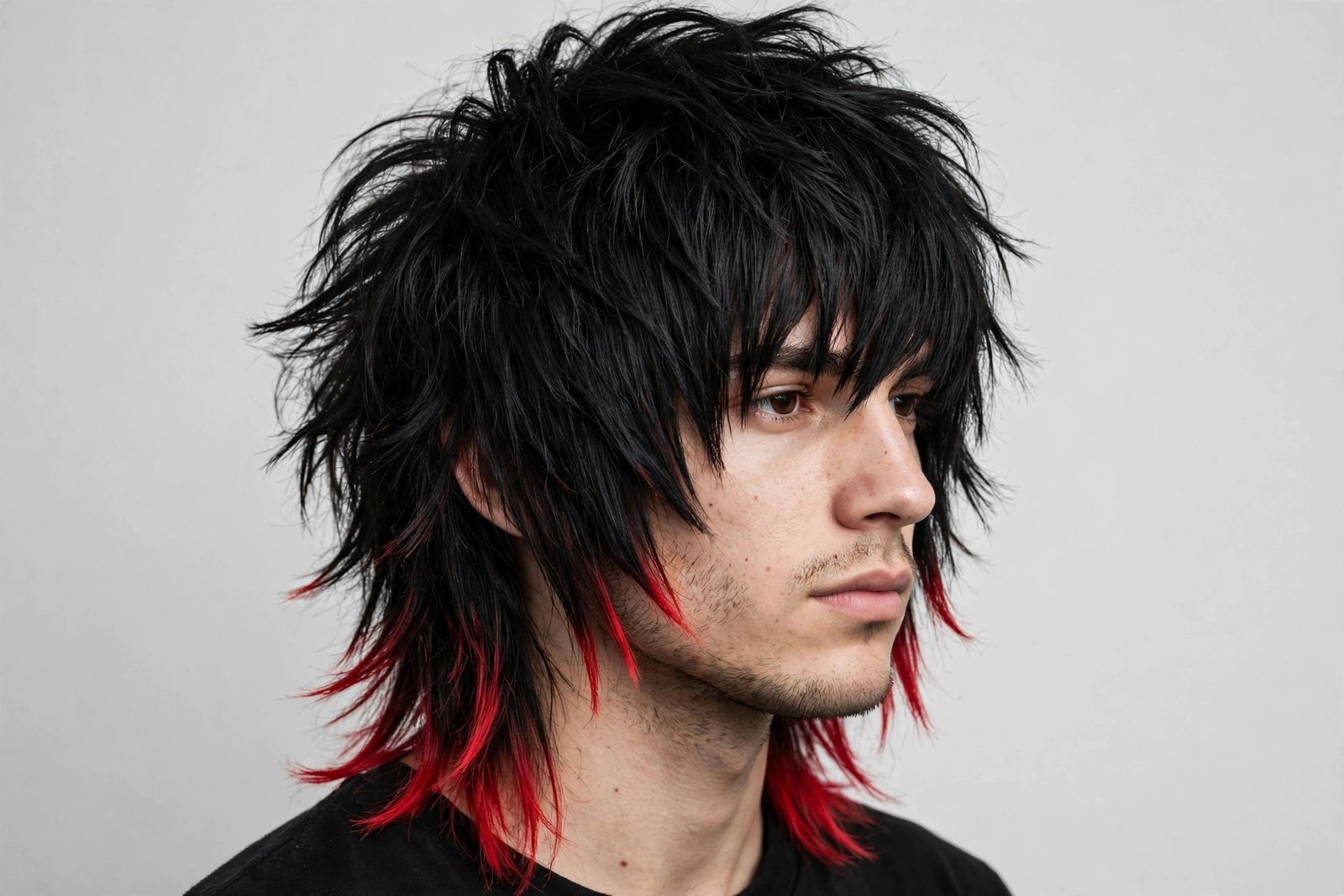
Dip dye — colour concentrated on the last couple of inches, like the hair was dipped in paint — is the lowest-commitment fashion colour in existence, and on emo layers it looks fantastic. The choppy ends become little flags of colour: red, blue, blonde, whatever you choose, tipping each separated piece. The base stays your natural colour, the roots are untouched, and when you’re bored of it, you just trim the ends. It’s fashion colour with an exit strategy.
Suits every emo length from the bob to the long layers — you need enough length for the dipped section to read. Tell your colourist: pre-lighten just the ends if your hair is dark, then apply your chosen direct dye to the bottom two inches. The line between dyed and natural can be crisp or blended; crisp reads more emo. Because only the ends are processed, damage is minimal and contained — when the ends get fried, you trim them and the colour goes with them. Refresh every six to eight weeks, or just let it fade and re-dip.
Styling is standard, but style with separation — the dipped ends need to stand apart to show the colour. Honest downside: dip dye on very short emo cuts doesn’t work; there isn’t enough length for the effect. And the colour choice matters more than you’d think — dip dye in a natural-adjacent tone (caramel, copper) reads subtle and cool, while neon tips read playful. Both are valid. Pick the one that matches the rest of your life, because the ends are in every photo.
32. Coral Pink Emo
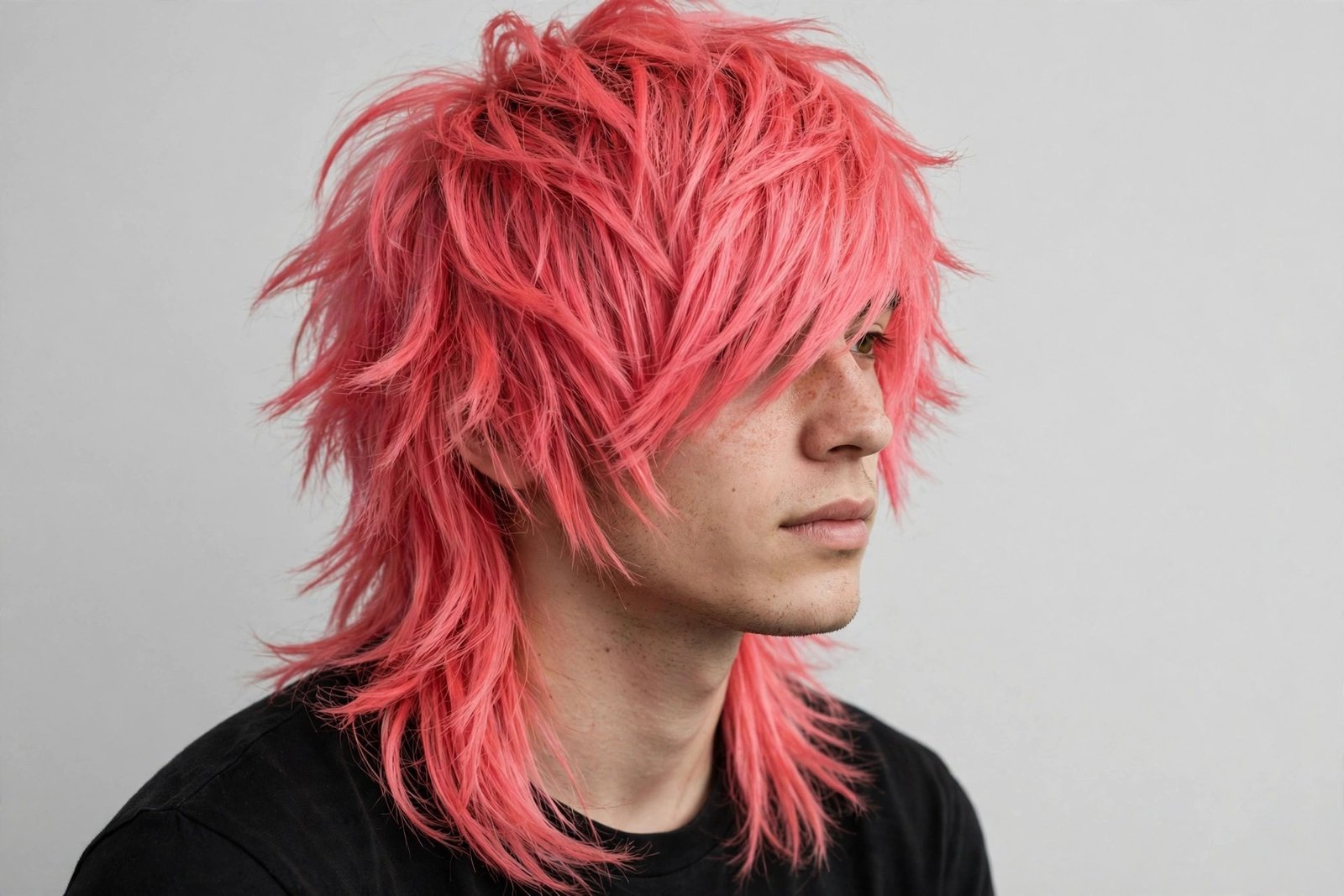
If dusty rose is the romantic emo, coral pink is its extroverted sibling — brighter, warmer, impossible to ignore. A vivid coral-pink over the full emo silhouette creates a look that’s equal parts punk show and pop art. It’s the colour for guys who want maximum visibility: coral doesn’t whisper, it announces. And on the choppy emo texture, the bright colour makes every layer and flick read like a brushstroke. In 2026 it’s a festival favourite and a street-style magnet.
Needs full pre-lightening to a pale blonde base — there’s no shortcut to vivid coral. Tell your colourist: lift to level 10, then a coral direct dye (a pink-orange blend). The colour fades fast, evolving through softer peach tones that are honestly beautiful in their own right. A coral colour-depositing conditioner between appointments stretches each application. Wash cool, wash infrequently, and keep a dark towel handy — coral bleeds enthusiastically in the first week.
Suits warm and neutral skin tones; very cool pale skin can clash with the orange undertone. Styling is standard emo kept light — the colour is the star, so don’t bury it under heavy matte products. Honest downside: this is the least subtle thing on this list, and subtlety has its uses. Coral pink emo in a conservative office is a conversation you’re having whether you want it or not. But for the guys this colour is for, that’s not a downside — that’s the entire point. Some hair is meant to be seen from across the street.
33. Soft Balayage Emo
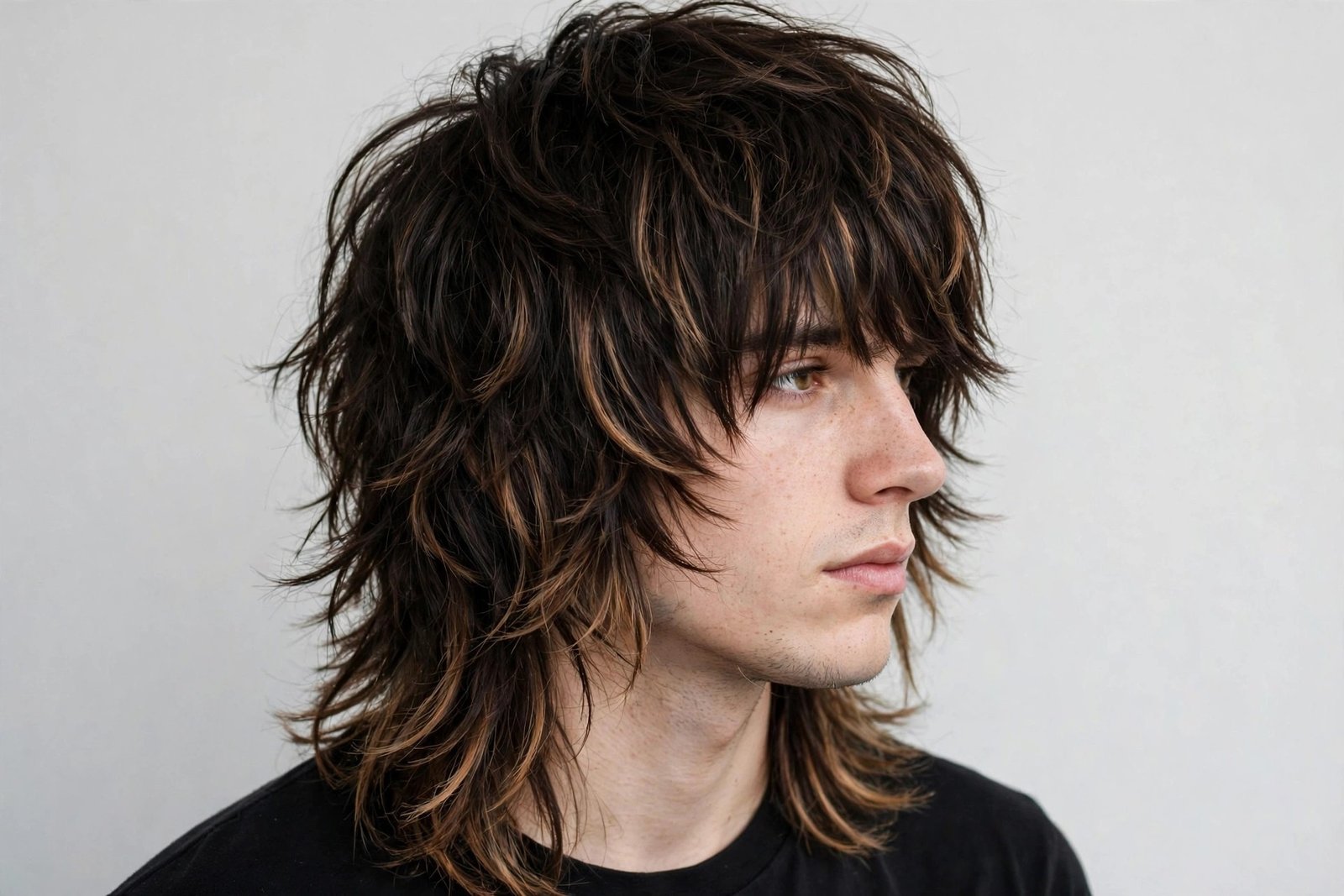
The grown-up colour option: soft, hand-painted balayage through the emo layers — caramel or honey tones melting through a dark base, concentrated through the mid-lengths and ends. It’s the least emo-looking colour on this list, and that’s precisely its role: all the cut’s attitude, none of the colour drama. For guys who want the silhouette in professional settings, or who are easing out of a bolder colour phase, soft balayage keeps things interesting without demanding attention.
Suits dark brown to black bases; the balayage adds dimension that flat dark hair lacks. Tell your colourist: hand-painted balayage in a tone two to three levels lighter than your base, focused through the mid-lengths and ends with a soft grow-out at the roots. The grow-out is the selling point — balayage has no harsh root line, so it needs refreshing only every ten to twelve weeks. It’s the lowest-maintenance colour here by a wide margin. Ask for the highlights to follow the layering so the colour enhances the cut’s texture rather than fighting it.
Styling is standard emo; the dimension shows best with separation and a touch of shine. Honest downside: on a true emo cut, subtle balayage can feel like a contradiction — the cut screams, the colour whispers. Some guys love the tension; others feel the colour undersells the cut. It’s also the priciest single service here — good balayage is skilled, time-consuming work. But spread over three months of wear, the cost per day is lower than the high-maintenance fashion colours. Do the maths before you dismiss it.
34. Wet Look Emo
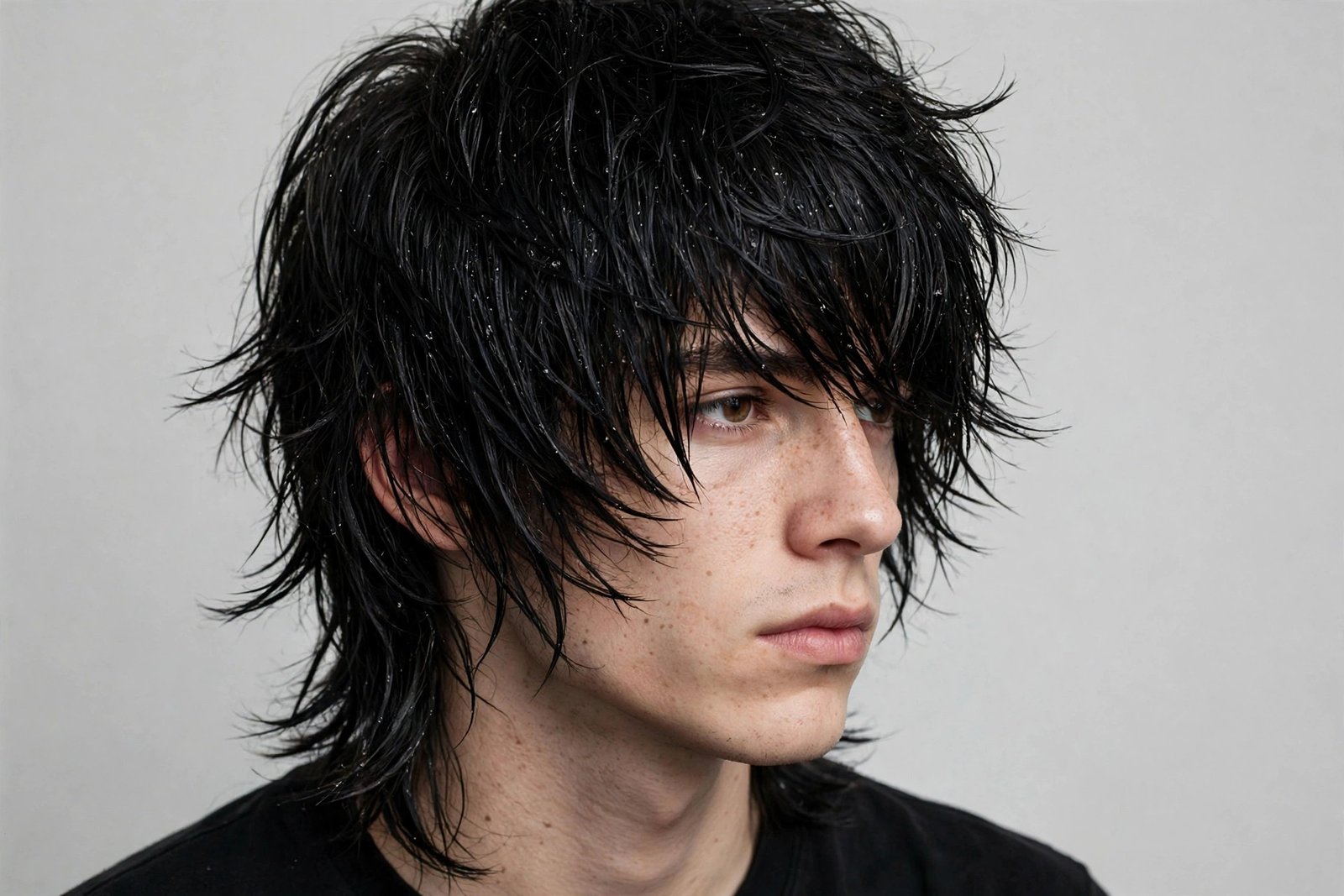
The wet look takes the emo silhouette and finishes it glossy — damp-looking, slicked with shine, editorial and dramatic. It’s a styling choice rather than a cut, which means any emo base can wear it: the heavy fringe gets combed into place with a wet-finish product, the layers get defined with gloss, and the whole thing looks like you just stepped out of the rain in a music video. In 2026 the wet look is all over editorial shoots and red carpets, and on emo hair it adds a high-fashion edge the matte versions can’t reach.
Suits straight and wavy hair; very curly hair fights the sleek wet finish. The product matters enormously: a proper wet-look gel or gloss pomade, applied to damp hair and combed through — cheap gel goes crunchy and white, so invest in a quality product. Work it through evenly, comb the fringe into its sweep, and leave it alone — touching wet-look hair creates frizz that ruins the effect. It lasts all day without touch-ups, which is the practical upside of all that product.
Honest downside: it’s a special-occasion look, not a daily driver. Sleeping in it, wearing it two days running, or wearing it in dust and wind all degrade fast. And washing out heavy wet-look product takes a proper double shampoo — skip that and you get buildup that dulls the next day’s hair. But for nights out, shoots, gigs and events, nothing on this list photographs with more drama. Keep the tub of product for when it counts.
35. Grown Out Emo Layers
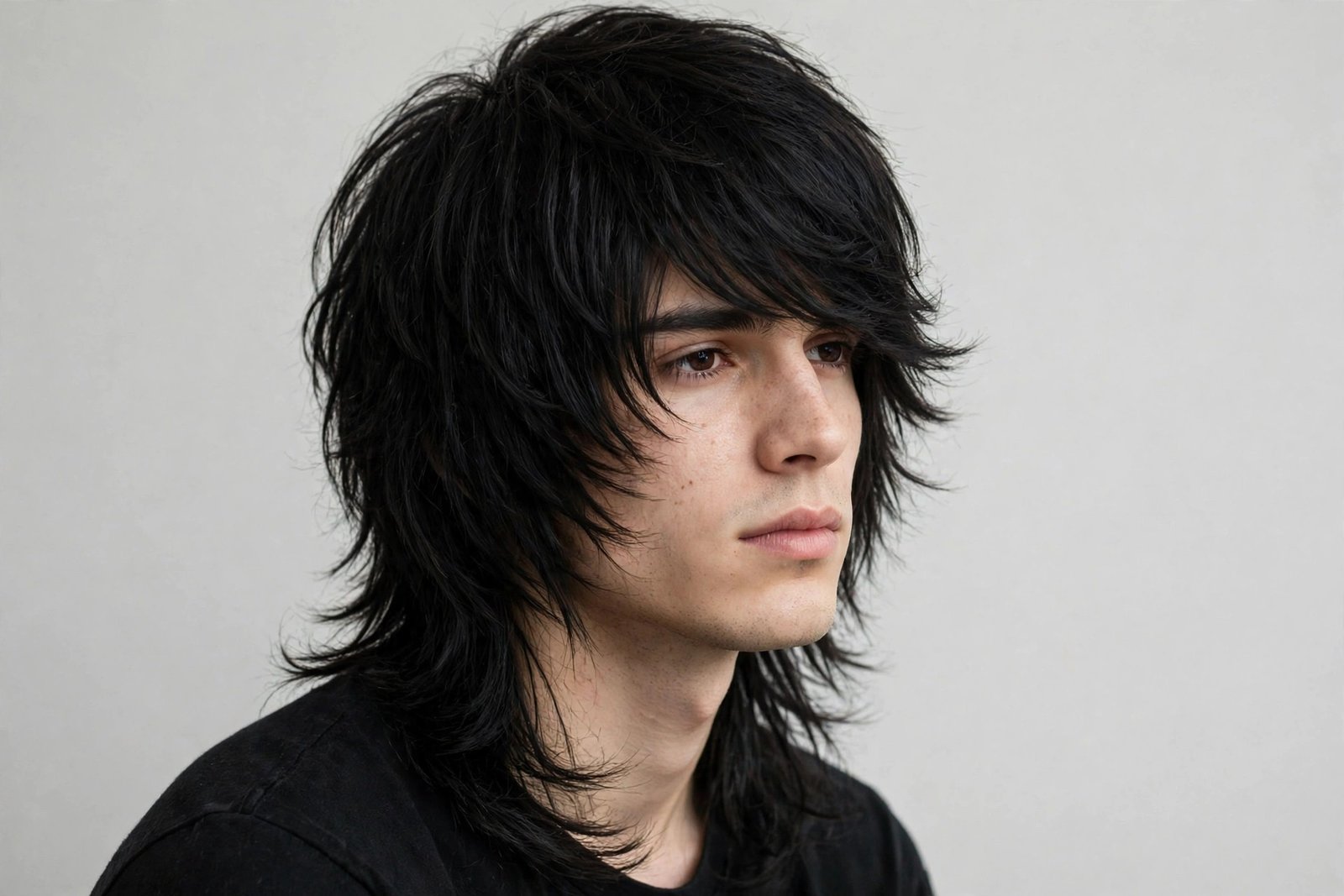
Every emo cut eventually becomes this — and that’s not a bad thing. Grown out emo layers are what happens when you let the cut evolve: the fringe gets longer and softer, the layers blend, the edges relax into something that reads more rockstar than scene kid. It’s emo with the sharp corners worn off, and plenty of guys discover it’s their favourite phase. The shape is still fringe-forward and layered, but it moves like natural long hair instead of a constructed cut.
This isn’t a cut you ask for — it’s a phase you manage. The strategy: stretch trims to ten or twelve weeks, but keep booking fringe-only touch-ups so the fringe doesn’t swallow your vision entirely. Tell your barber you’re growing it out and want the shape maintained, not reset — dust the ends, keep the layering, don’t take length. The grow-out works best if the original cut had good layering; a blunt cut grown out just looks neglected, while a layered cut grown out looks intentional.
Styling gets easier as it grows — longer hair has more weight, which tames the chaos. A little cream, air-dry, done. Honest downside: the awkward middle phase is real. There will be weeks where it’s too long to be sharp and too short to be flowing, and no product fixes that — only time does. Push through it. And know your exit: grown-out emo either becomes long layered hair (commit to the journey) or gets cut back into shape (book the reset). Drifting in between indefinitely is how good hair goes bad.
36. The 2026 Modern Emo
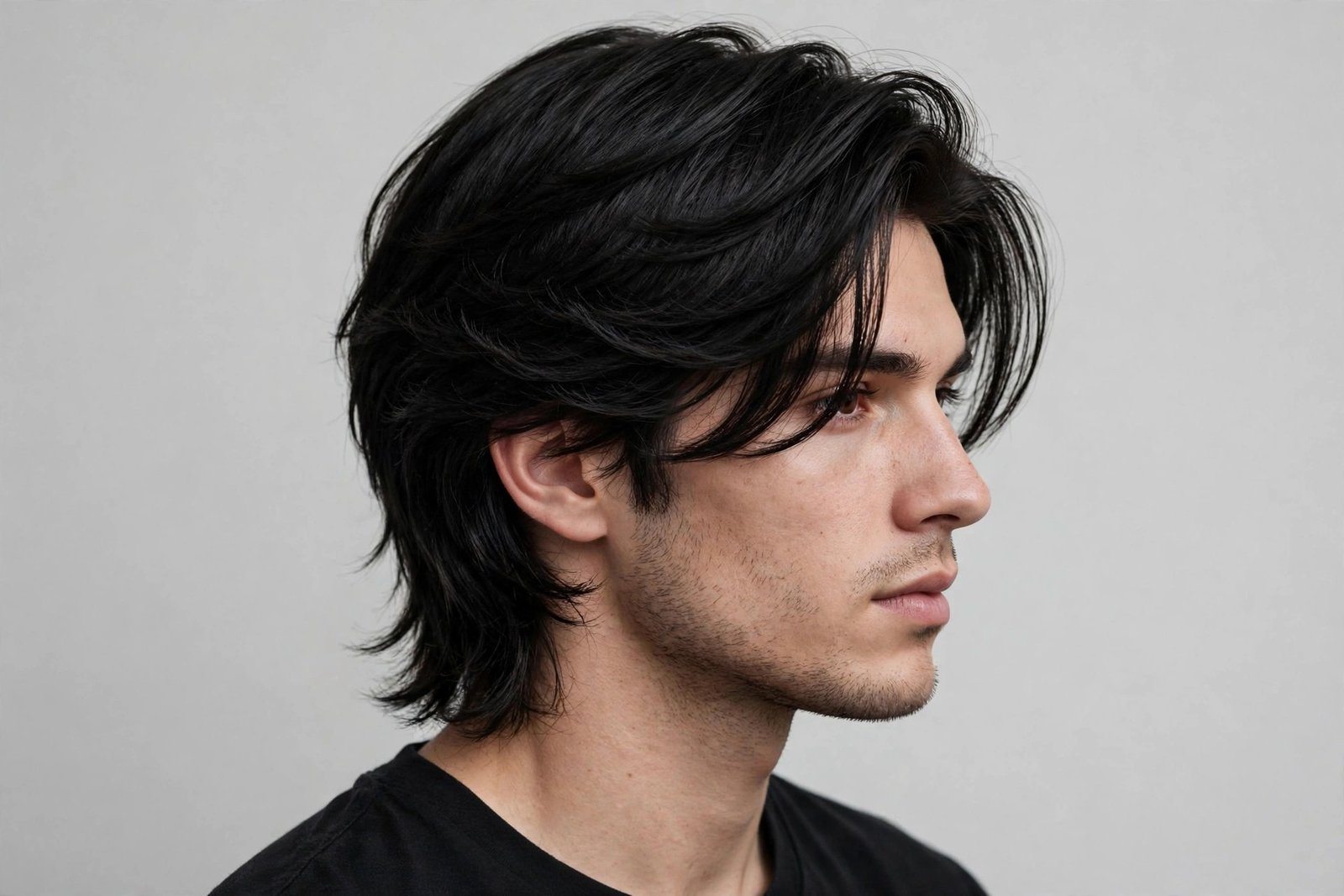
We end where the revival is heading: the 2026 modern emo. This is the cut for the guy who lived the scene era, grew up, and wants the spirit without the costume. Softer layers, a fringe that’s heavy but wearable, clean execution, healthy shine — all the emo DNA with none of the teenage angst styling. It works in offices, at weddings, on dates, and still reads as unmistakably emo to anyone who knows the language. This is the version your barber wears.
Suits everyone — it’s designed to. Tell your barber: emo-inspired layering with soft, blended ends rather than jagged razor work, a full fringe that can be worn swept across or pushed slightly back, healthy length through the back, everything polished. The difference from the classic is in the finishing: blended instead of chunky, glossy instead of matte, controlled instead of chaotic. Ask for versatile length in the fringe — long enough to sweep emo-style, manageable enough to wear back when the occasion demands.
Styling is flexible by design: blow-dry forward with a round brush for the emo sweep, or back and to the side for the professional mode. One cut, two personalities — that’s the whole concept. Maintenance every five to six weeks. Honest downside: it’s the least dramatic cut on this list, and drama is what draws most people to emo in the first place. If you want the full statement, pick an earlier number. But if you want emo as a lifestyle rather than a phase — hair that works at 25 and still works at 40 — this is the one. The revival grew up, and honestly, it looks good on it.
Emo Haircut Men: Styling Routine and Maintenance Guide
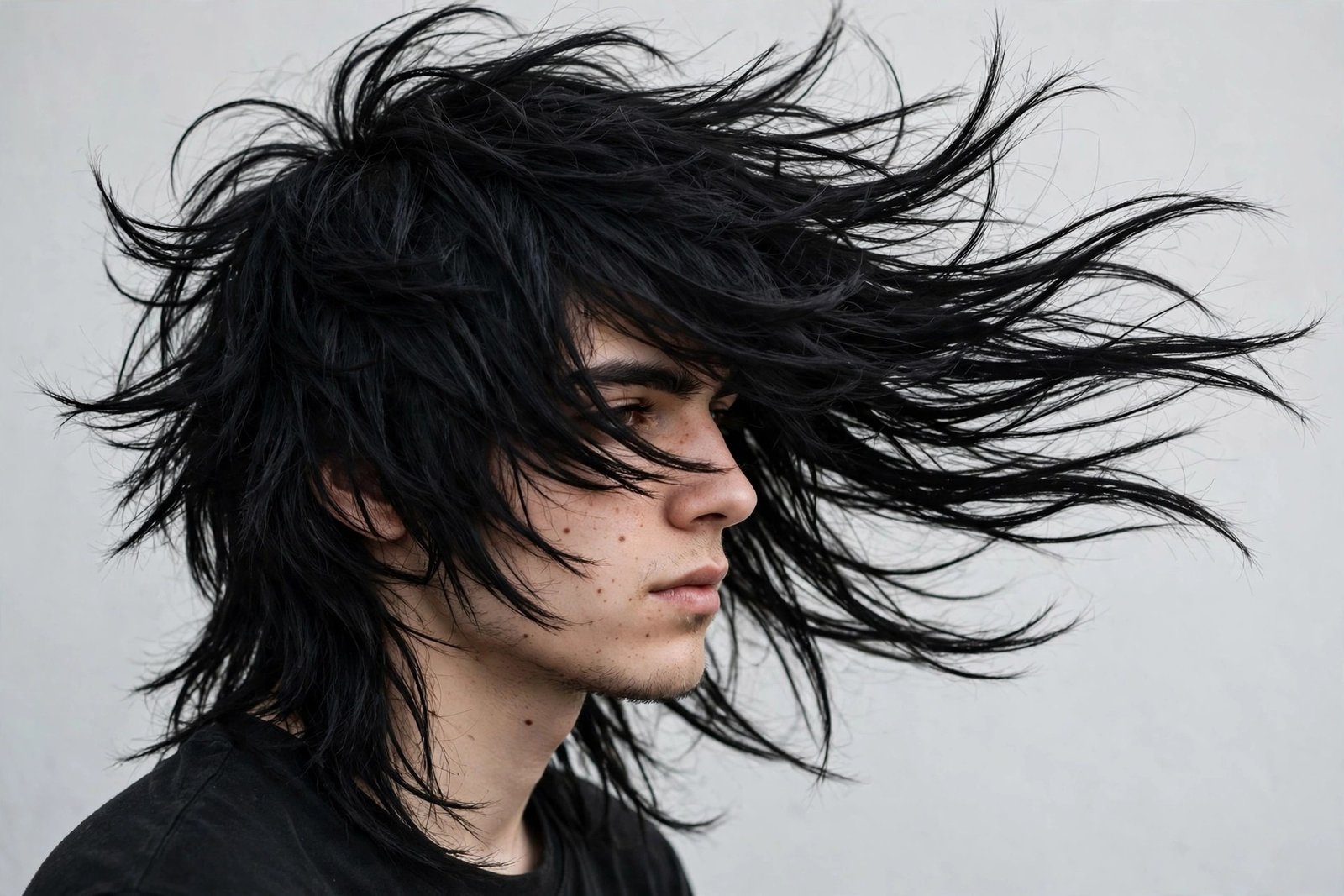
Owning an emo haircut is 30 percent the cut and 70 percent what you do with it every morning. The good news: once the routine clicks, it becomes muscle memory — most guys get the whole thing down to ten minutes. The bad news: skip the routine and even the best cut in this guide looks like you lost a fight with a pillow. Here’s the full playbook, from the daily styling to the colour care that keeps the whole thing alive.
The Daily Styling Routine: Shower to Street in Ten Minutes
Start with damp, not dripping hair — towel-dry until it stops dripping, then apply your products. The order matters more than the products themselves: heat protectant first if you’re using heat, then your styling base (mousse for volume, cream for control, salt spray for texture), then heat, then finishing product. Most guys get this backwards, applying paste to wet hair and wondering why it disappears. Paste and clay go on dry or nearly-dry hair, always. They’re finishers, not foundations.
The blow-dry is where the emo magic happens. Dry the fringe FIRST, before the rest of the hair — it’s the thinnest section and it sets fastest, so if you leave it till last, it’ll dry in whatever random direction it felt like. Point the dryer in the direction the fringe will sit (forward and across), using a vented brush or just your fingers. Then dry the crown with lift at the roots: flip your head upside down for thirty seconds if you want real volume, or dry upward with the brush for controlled lift. The back and sides just need to be dry — they’re supporting cast.
Finishing is the art part. Warm a pea-sized amount of matte clay or fibre paste between your palms until it vanishes, then press it through the fringe in chunks — press and pinch, don’t rake. Raking destroys the separation; pressing creates it. Work from mid-lengths to ends, never from the roots, or you’ll flatten everything you just built. Then step back and look: the emo fringe should have visible separation between pieces, like a curtain with gaps. If it looks like one solid sheet, you used too much product or not enough separation — work a little more paste through with pinching motions. A light mist of flexible hairspray from arm’s length locks it without the crunch. Done. Ten minutes, once you’ve done it twenty times.
Washing, Conditioning and the Products That Actually Matter
Emo hair lives or dies on hair health, because damaged hair can’t hold the piecey texture that defines the cut — it just frizzes. Wash every two to three days, not daily: daily washing strips the natural oils that keep the layers supple, and squeaky-clean hair is actually harder to style into separated pieces. When you do wash, use a sulfate-free shampoo if your hair is coloured — sulfates are colour’s worst enemy — and always follow with conditioner on the mid-lengths and ends. The fringe itself needs less conditioner than you think; over-conditioned fringe goes limp and won’t hold its sweep.
The product shelf for emo hair is small but specific. You need: a heat protectant (non-negotiable if you blow-dry or straighten), a matte clay or fibre paste for texture and hold, a light finishing hairspray, and a dry shampoo for day-two fringe rescue. That’s the core kit. Nice to have: sea salt spray for texture days, a smoothing serum for sleek days, and a shine spray for coloured hair. What you don’t need: heavy waxes (they drag the fringe flat and look greasy by noon), oils on the fringe (same problem), or strong-hold gels (they kill the soft, touchable texture that makes modern emo work). Barbers won’t tell you this, but most guys use three times too much product — start with half what you think you need.
Deep condition weekly, especially if your hair is bleached, coloured or heat-styled. A proper mask — left on for ten minutes, not the thirty seconds the bottle suggests — keeps the ends from going straw-like, and healthy ends are what separate expensive-looking emo from sad emo. If your hair is very damaged, a bond-building treatment every couple of weeks genuinely helps; the chemistry is real, not marketing. For more on keeping textured fringe healthy day to day, our textured fringe guide goes deeper on product layering for fringe-heavy cuts.
Colour Care: Keeping Black Black and Fashion Colours Alive
Black dye fades. Nobody warns you about this, but jet black — the definitive emo colour — oxidises toward a reddish brown within weeks if you don’t protect it. The fix: colour-safe shampoo, cool water (hot water opens the cuticle and lets colour escape), and a black colour-depositing conditioner every week or two to top up the depth. Wash less often, and when you do, make it count. Sun is black dye’s silent killer — UV breaks down the pigment — so a UV-protectant spray matters if you’re outdoors a lot. It sounds fussy; it’s the difference between rich black and muddy brown by week six.
Fashion colours — the reds, blues, purples, pinks and greens from this guide — fade faster and need more. The rules: wash as rarely as you can get away with (dry shampoo is your best friend), always cool water, always sulfate-free, and a colour-depositing conditioner or mask in your shade every one to two weeks. These products genuinely extend the life of fashion colour by weeks — they’re the single highest-value purchase in coloured-hair care. The emo subculture’s whole visual identity was built on DIY dye jobs, but modern colour science means you don’t have to accept the fried, faded mess of the MySpace era; today’s dyes and aftercare are leagues better, so use them.
Roots are the other battle. Bleached sections show regrowth within three to four weeks, and there’s no product that hides a harsh root line — only a salon visit does. Budget for it before you bleach: the initial appointment is the cheap part, the maintenance is the real cost. If the upkeep sounds like too much, that’s useful information — pick a lower-maintenance colour from this guide (dip dye, peekaboo, balayage) rather than fighting a battle you’ll resent. The best colour is the one you’ll actually maintain.
Growing It Out, Trimming It Up: The Maintenance Calendar
Put this on your calendar and the cut takes care of itself. Weeks 1–3: enjoy it, style daily, nothing needed. Week 4: fringe check — if it’s in your eyes (both of them, not just the one it’s supposed to cover), book a fringe trim. Many barbers do fringe-only touch-ups cheaply or even free for regulars; ask, don’t assume. Weeks 4–6: full trim window for most emo cuts. The layers lose their separation as they grow, and the cut slides from deliberate to shapeless fast — this is the appointment that matters most. For styling inspiration on keeping longer fringe cuts sharp between appointments, Byrdie’s hair section has solid fringe-maintenance tutorials worth bookmarking.
Coloured hair runs on a parallel schedule: root touch-ups every four to six weeks for bleach work, toner refreshes every three to four weeks for fashion colours, gloss refreshes every three to four weeks for reds. Line up your colour and cut appointments together when you can — a fresh cut with faded colour (or fresh colour on a shaggy cut) always looks half-finished. And if you’re growing it out, the rule flips: stretch full cuts to eight to twelve weeks, keep the fringe trimmed, and dust the ends every other visit to prevent splits from travelling upward. Growing out is a strategy, not neglect — there’s a difference, and your barber can tell.
One last honest note: know when to reset. Every emo cut has a lifespan, and pushing a grown-out cut six months past its prime doesn’t look edgy — it looks tired. When the fringe won’t sweep anymore, the layers have merged into a blob, and styling takes twice as long for half the result, that’s the cut telling you it’s done. Book the reset, go back to your favourite number on this list, and enjoy the fresh-cut feeling. The best emo hair is always the hair that’s being actively maintained, not the hair you’re hoping still looks like the reference photo from three months ago.
Frequently Asked Questions
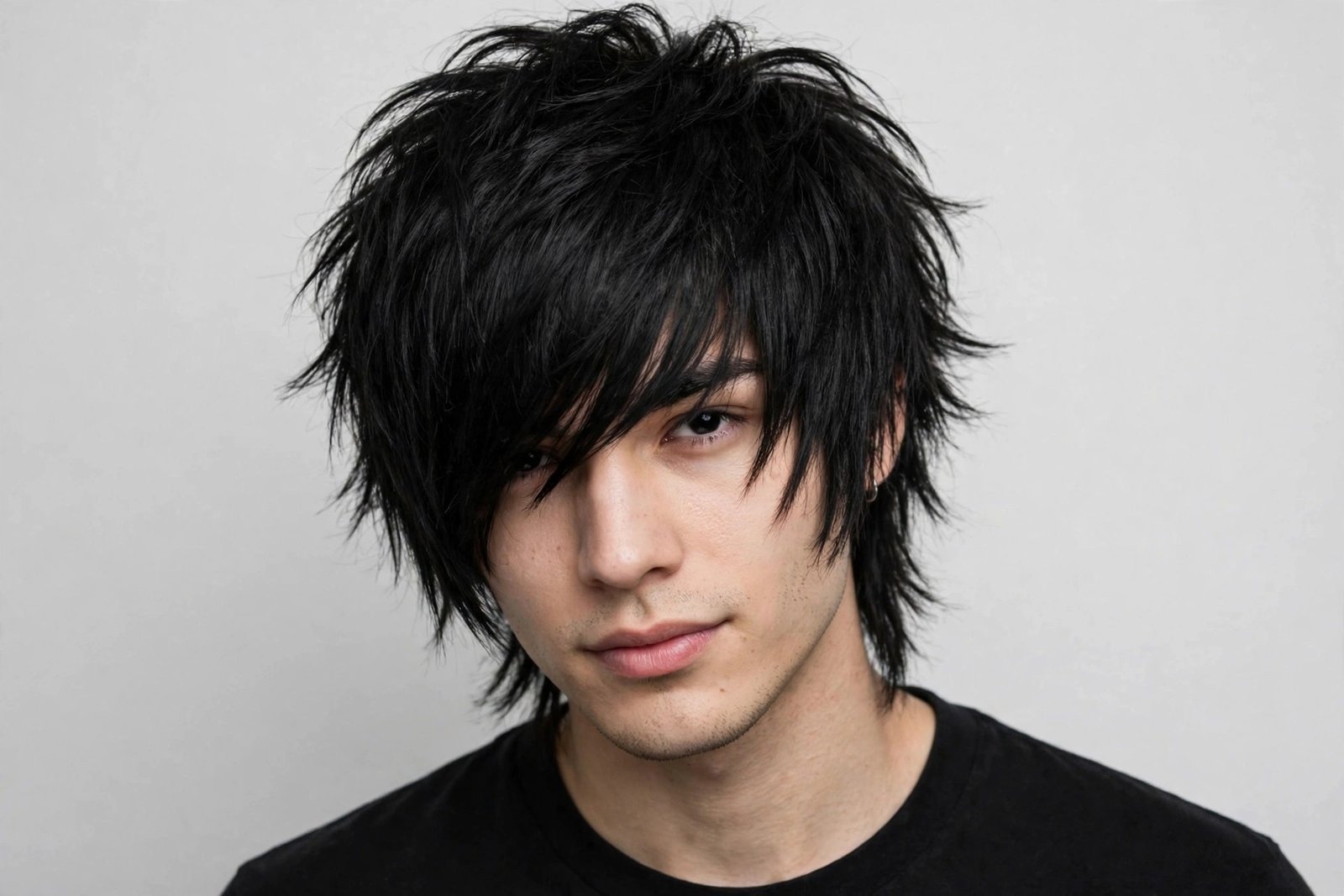
Quick answers to the questions I get asked most about emo haircuts for men — the same ones your barber wishes you’d ask before sitting in the chair.
What is an emo haircut for men?
An emo haircut for men is a layered, textured cut defined by a heavy forward or side-swept fringe that drapes across one eye, choppy razor-cut layers through the lengths, and usually a dark or colorblocked dye job — jet black, skunk stripes, muted pastels or deep jewel panels. It grew out of the mid-2000s emo and post-hardcore music scene and is defined more by its silhouette (fringe-forward, face-framing, deliberately undone) than by any fixed length. In 2026 the look has returned with cleaner execution: the fringe is still dramatic but the layers are blended better, the colour work is more intentional, and the finish is softer than the stiff, over-straightened MySpace original.
How do I ask my barber for an emo haircut?
Show your barber reference photos from three angles — front, side and back — because the word emo means different things to different people. Ask for long layers through the crown cut with a razor for choppy texture, a heavy fringe that can be worn forward or swept across one eye, and face-framing pieces that sit at the cheekbones. Specify whether you want the fringe blunt or point-cut, how much length you want to keep at the nape, and whether the sides should connect to the back or taper. If you want colour, book a separate colour appointment and discuss bleach levels, toner and maintenance before any scissors move.
Is an emo haircut the same as a wolf cut?
No, and mixing them up is the most common mistake. An emo haircut is fringe-forward: the whole silhouette is built around a heavy fringe falling across the forehead or one eye, with the top and sides kept relatively controlled so the fringe stays the star. A wolf cut is volume-driven: short choppy layers piled high on the crown with a mullet-like taper down the back, usually worn with the forehead open or a light fringe. Emo says fringe and face-framing drama; wolf says crown volume and shag-mullet energy. They can be blended, but a true emo cut always leads with the fringe.
Can guys with curly or thick hair get an emo haircut?
Yes, but the technique changes. On thick hair the barber needs to remove serious weight with thinning shears or deep point-cutting, otherwise the fringe turns into a solid curtain that refuses to separate. On curly or wavy hair the choppy layers actually work in your favour — curls add natural texture — but the fringe needs to be cut longer than the target length because it springs up as it dries, and daily styling shifts from straightening to curl-defining cream and diffusing. Very coily hair can absolutely carry an emo shape with the right layering, though the one-eye sweep will read as a rounded fringe rather than a flat sheet. Bring photos of your hair type, not just the model.
How do I style an emo fringe so it stays in place all day?
The trick is heat direction plus product in the right order. On towel-dried hair, apply a pea-sized amount of heat protectant, then blow-dry the fringe in the direction it will sit — forward and across — using a vented brush, because hair remembers the direction it dries. Once dry, warm a small amount of matte clay or fibre paste between your palms and press it through the fringe in chunks rather than raking through, which keeps the separated, piecey look. Finish with a light mist of flexible-hold hairspray from about 30 centimetres away. Skip heavy waxes and oils on the fringe itself; they pull it flat and make it look greasy by midday. A quick midday finger-comb is all the maintenance it needs.
Does an emo haircut suit round faces?
It can, with two adjustments. First, keep the fringe asymmetric and diagonal rather than straight across — a diagonal sweep breaks up the width of a round face and creates the illusion of angles. Second, keep length at the sides and nape so the eye travels downward, which lengthens the face visually. What round faces should avoid is a blunt horizontal fringe combined with a rounded bob shape, because that mirrors the face shape and adds width. Oval, heart and diamond faces take the classic emo fringe with almost no modification, while square faces benefit from softer, wispy ends around the jawline to take the edge off the corners.
How often should I trim an emo haircut?
Every four to six weeks keeps an emo cut in its sweet spot. The fringe grows into your eyes within about three weeks, and the choppy layers lose their separation as they grow out, so the cut goes from deliberate to shapeless faster than a classic taper. If you are growing it out, stretch trims to eight weeks but book fringe-only touch-ups in between — many barbers will clean up a fringe for a fraction of a full cut. Coloured sections add their own schedule: roots need attention every four to six weeks with bleach work, and fashion colours like red, blue or pastel fade fast enough to need a toner refresh every three to four weeks.
Conclusion
The emo haircut for men earned its comeback. It’s not nostalgia for its own sake — the 2026 version fixed what was broken about the original, kept the silhouette that made it iconic, and opened the door to every hair type and every level of commitment. Whether you go full jet-black MySpace sweep, a single skunk stripe, or the grown-up modern emo that works anywhere, the formula is the same: lead with the fringe, commit to the maintenance, and wear it like you mean it.
Pick your number from the 36 above, screenshot it, and book the chair. And remember the distinction that matters: fringe-forward is emo, volume on top is the wolf cut, centre part is curtains. Get the right cut for the right idea, and the hair does the talking from there.